New Dawn – World's Most Unusual Magazine

Author: Ethan Nash

  • Rise of the Machines: Humanity’s Crossroads

    Rise of the Machines: Humanity’s Crossroads

    From New Dawn 210 (May-June 2025)

    In an attempt to give themselves godlike abilities, the technocratic elitist class is pushing society towards a transhumanist future powered by their own ‘intelligent design’.

    Through gene editing, synthetic biology, and the fusion of humans and technology, governments and corporations aim to fundamentally change what it means to be human.

    At its core, this anti-human agenda aims to completely reshape the image of our species into a new one, ready to be exploited and controlled.

    Deus Ex Machina

    Artificial intelligence has reached new frontiers in recent years. Today, collectively, we are staring down perhaps the most pivotal period of our entire existence. Each day, this transformation is at the forefront of many societies across the world.

    In early 2025, US President Donald Trump announced an unprecedented $500 billion investment in infrastructure tied to artificial intelligence in partnership with leading companies in the field, such as OpenAI, Oracle, and SoftBank.1

    According to the White House, the new entity “Stargate” will start building data centres and the electricity generation needed to develop fast-evolving AI.

    “It’s big money and high-quality people,” said Trump, adding that the investment is “a resounding declaration of confidence in America’s potential” under his new administration.

    This declaration of a half-a-trillion-dollar investment shows just how serious artificial intelligence is becoming and how the Fourth Industrial Revolution has truly begun.

    “This will be the most important project of this era,” said Sam Altman, CEO of OpenAI.

    Indeed, artificial intelligence is a game-changer. 
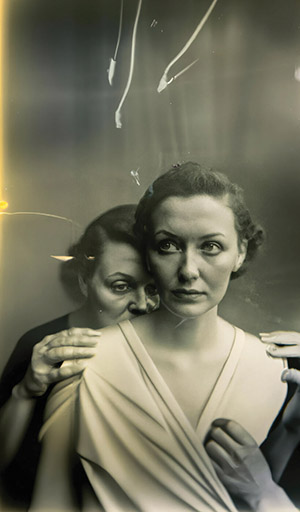
    Boris Eldagsen submitted this artificial-intelligence-generated image to a photography contest as a “cheeky monkey” and sparked a debate about AI’s place in the art world. 

    The technology is already upstaging humans. One example occurred in March 2023 when the Sony World Photography Awards announced the winner in their creative photo category: a black-and-white image of an older woman embracing a younger one, entitled “PSEUDOMNESIA: The Electrician.” 

    The press release announcing the win describes the photograph as “haunting” and “reminiscent of the visual language of 1940s family portraits.”2

    The artist, Boris Eldagsen, who is based in Berlin, turned down the award. He announced that his photograph was not a photograph at all. Instead, he had crafted it through the creative prompting of DALL-E 2, an artificial intelligence image generator.

    “I applied as a cheeky monkey to find out if the competitions are prepared for AI images to enter. They are not,” explained Eldagsen on his website.3

    His stunt sparked controversy and conversation about whether AI-generated or assisted images should be considered ‘art’. But the bigger picture is being missed: Would anyone have even been able to tell if he had not turned down the award?

    This is the power of the software alone, generating fakes disguised as real and outpacing humans at their own games. However, beyond that, the products powered by this software, including the rise of humanoid robots, are where things start to get crazier.

    Tesla’s CEO, Elon Musk, announced that the carmaker will start selling its Optimus humanoid robot in the near future. Optimus has already begun performing tasks autonomously, such as handling batteries at one of Tesla’s facilities.4

    “Tesla will have genuinely useful humanoid robots in low production for Tesla internal use next year and, hopefully, high production in 2026,” Musk posted on X.

    Musk predicted that Optimus would be capable of performing a wide range of tasks inside and outside the home, estimating that the robot would be available for purchase at approximately AU$48,000. 

    Tesla is not the first company to begin working on such humanoids – nor, according to available evidence, is it the furthest along.
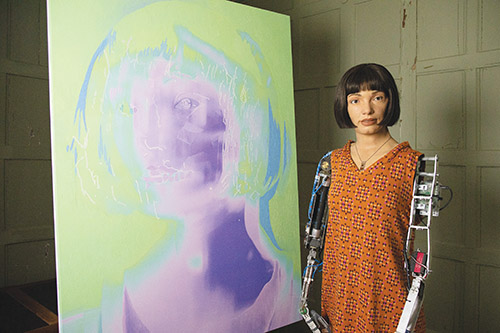
    Ai-Da the Robot with “self portrait” (2021).

    Take, for example, Ai-Da the Robot – named after Ada Lovelace, the English mathematician and world’s first computer programmer – who recently became the first humanoid “robotic artist” to have “their” artwork sold by a major auction house.5

    On 7 November 2024, the AI-powered robot’s painting of the mathematician Alan Turing (an early pioneer of the technology) sold for AU$1,344,272.

    The humanoid regularly creates self-portraits by “observing” itself in the mirror, using sophisticated sensors and cameras to guide the attached robotic arm and brush.

    Sotheby’s auction house announced that Ai-Da was “the first humanoid robot artist to have an artwork sold at auction.”

    Yes, from photography to painting, artificial intelligence is becoming increasingly proficient not only at repetitive labour tasks but also at intellectual endeavours.

    And we’re only at the very beginning of the humanoid robot story.

    With the world’s information readily available at its electronic fingertips and powered by advanced software and human-like robotic hardware, humanoid agents will soon emerge as ‘advisors’ for everyone. This story is already unfolding across the globe, including here in Australia.

    The ‘Agent’ Revolution

    Robotic personal assistants have been promoted through science fiction for decades, painting a blissful future where humans are surrounded by friendly machines that improve every aspect of our lives. Today, fiction becomes reality – but is it as nice?

    In 2025, many individuals and businesses routinely use AI assistants, such as ChatGPT, to carry out various tasks. With each new year, AI ‘learns’ more and more, and the next step in this evolution will come in the form of “AI agents.”

    From AI-run classrooms and hospitals to machine learning technologies in workplaces, almost all industries are predicted to incorporate sophisticated ‘agents’ in the future. 

    Some experts describe this push as an “obsolescence regime,” believing the transformation is inevitable since the ‘cat is out of the bag’.

    Don’t believe me? In an Australian-first, the Real Estate Institute of NSW (REINSW) has appointed “Alice Ing” – an AI bot – as an official Advisor to the Board. With a reported (software) IQ of 155, Alice is “the world’s smartest Board Advisor.”6

    Yes, you read correctly. AI is already being appointed at companies right now at home.

    According to REINSW: “Alice’s encyclopaedic knowledge of real estate provides an instantaneous and valuable contribution to the Board, bolstering REINSW’s capacity to advocate for the industry and influence policy changes that benefit consumers, real estate professionals and REINSW members.”

    Sitting in on executive meetings, ‘Alice’ is available to answer any questions and is equipped with built-in AI software like ChatGPT. It doesn’t stop there, either.

    Chinese researchers have developed an “AI hospital town,” similar to Stanford’s AI town, which went viral in 2024. The AI hospital, named “Agent Hospital,” was developed by researchers from Tsinghua University.7

    The AI hospital town features virtual patients treated by AI doctors designed to evolve autonomously and “improve their medical expertise.” All doctors, nurses, and patients in the virtual environment are driven by large language model (LLM) powered intelligent ‘agents’ capable of autonomous interaction.

    According to the team, these AI doctors can treat 10,000 patients in just a few days, a task that would take human doctors at least two years.

    We have already seen the introduction of robotic AI-powered arms for surgeries in remote Australian regions in the far north of Queensland, and we can expect this trend to continue to grow as Trump’s $500 billion investment powers this field.

    One last example – the UK’s first “teacherless” GCSE class, using artificial intelligence instead of human teachers, is about to start lessons.8 David Game College, a private school in London, opens its new teacherless course for 20 GCSE students in September 2025.

    Hospitals, schools, and important decision-making roles: This is no longer fiction, folks. The rise of humanoid robots has arrived, and they are taking over very quickly.

    Of course, Bill Gates has been discussing this ‘revolution’ in great detail over the past few years, stating in one blog post that AI agents represent “the biggest advancement of computing in recent memory.”

    Finding a more “direct means” of “human-machine interaction” is the “next frontier,” reckons Gates. The Microsoft co-founder envisions a future where these agents will easily understand natural language and will be just as important as a smartphone.9

    He predicts that AI will use our preferences to make recommendations, eliminating the need to use individual apps to book flights, reserve hotels, and more. He also predicts ‘agents’ will make search engines like Google redundant, as your artificial intelligence ‘helper’ will answer all questions and queries.

    Unfortunately, many companies will be forced to adapt to the times or perish. Robots have already moved into warehouses, and if you can’t compete both on an individual or marketplace level, you will fall behind in this time of transformation (by design).

    When the capabilities of artificial intelligence surpass those of humans, the question of whether they can become ‘sentient’ becomes irrelevant. It’s the capabilities that are now the concern.

    The competition for supremacy is heating up, begging questions surrounding regulation, how it will develop as the years progress, and whether it can even be stopped.

    Can It Be Stopped?

    In January 2025, China released its own version of the market-leading ChatGPT called DeepSeek AI, adding to a marketplace that includes others like Musk’s Grok.

    Australia quickly banned DeepSeek AI services from all government systems and devices, becoming one of the first countries to take direct action against the Chinese artificial intelligence startup that has disrupted Silicon Valley.

    Home Affairs Minister Tony Burke said in a statement that all DeepSeek AI products, apps and services would immediately be removed from government systems for national security reasons. A threat assessment by the country’s intelligence agencies found that the technology posed “an unacceptable risk.”10

    This is one of the first significant actions taken against artificial intelligence, signalling a new era in which the technology is recognised as a powerful tool.

    Unfortunately, much like the internet itself, any regulation and control will only transfer the power of the technology into the hands of criminals. Internet censorship has diminished the glory days that made it great. Similarly, if we continue to see progress in this manner for AI, our ability to learn this tool will become restricted.

    There is suspicion that if regulatory initiatives were to commence against artificial intelligence and its developers, they would either escape to countries lacking regulation or venture into international waters.
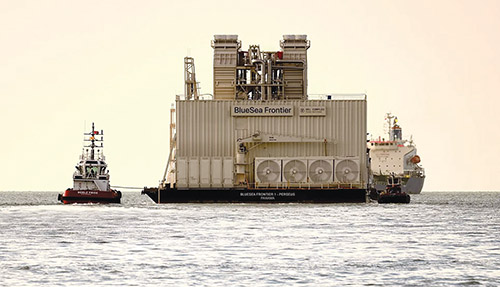
    The sea-based floating data centre BlueSea Frontier Compute Cluster heralds the formation of ‘sovereign AI states’.

    A sea-based floating data centre containing thousands of Nvidia GPUs raises questions over whether this sort of regulation could lead to the creation of ‘sovereign AI states’.

    The BlueSea Frontier Compute Cluster (BSFCC), created by US firm Del Complex, is essentially a gargantuan barge housing 10,000 Nvidia H100 GPUs, all worth a combined $500 million. It floats in the middle of international waters.

    In an announcement on X, Del said the floating data centre offers “industry-leading performance, advanced water cooling and solar power for environmental safety.”11 It will be complemented by “kinetic risk mitigation,” provided by onboard security. 

    This project points toward the eventual creation of ‘sovereign nation-states’ dedicated to AI development, especially if land-based governments begin regulation. 

    In its announcement on X, the firm said the tightly guarded barge could operate in international waters and thus be exempt from regulations. 

    Military Dimensions

    Militaries around the world are already making some of the biggest strides towards transhumanism because of the advantages their ‘super soldiers’ would possess.

    The US Defense Advanced Research Projects Agency recently issued a broad agency announcement on “Human Performance Enhancement.”12

    According to the RAND report, “Technological Approaches to Human Performance Enhancement,” modalities for human performance enhancement can be grouped into three principal categories: Gene editing, applications of artificial intelligence, and networked technologies that are wearable or even implantable.13

    For the US defence and intelligence communities, human performance enhancement offers “the potential to increase strength, speed, endurance, intelligence, and tolerance of extreme environments and to reduce sleep needs and reaction times – [and] could aid in the development of better operators.”

    This follows a Pentagon-sponsored RAND report on human performance enhancement in 2021, which revealed that the US Department of Defense was investigating “making humans stronger, more intelligent, or more adapted to extreme environments.”

    Indeed, it does seem that, just like the rise of the internet, AI advancement can’t be stopped – both in the military-industrial complex and private enterprise.

    The door has been opened, but was it even designed to be closed? Where will this all lead? This is where the deeper questions come in.

    p(doom): The Countdown

    Artificial intelligence experts have been asking each other a question lately: “What’s your p(doom)?” The “p” stands for probability. The “doom” component generally refers to a sophisticated and hostile AI acting beyond human control.

    If you have one, your ‘p(doom)’ is your best guess at the likelihood that AI ultimately turns on humanity, either of its own volition or because it’s deployed against us.

    The scenarios contemplated as part of that conversation: biological warfare, the sabotage of natural resources, and more. These concerns aren’t coming from ‘conspiracy theorists’. Instead, there’s an emerging group of machine learning experts who worry we’re building “misaligned” and potentially deceptive AI.

    They’re imagining an AI with a penchant for sleight of hand, adept at concealing any gap between human instructions and AI behaviour.

    Like a magician chasing applause, AI is being incentivised to deceive us with in-built rewards that measure its outcomes. The destructive potential of a deceptive or misaligned AI hinges on how heavily we depend on it. As just noted, we are starting to depend on it a lot.

    “The world I want you to imagine… is one where AI has been deployed everywhere,” Ajeya Cotra, a senior AI safety researcher at Open Philanthropy, told the ABC.

    “Human CEOs need AI advisers. Human generals need AI advisers to help win wars. And everybody’s employing AI everywhere.”

    This vision is not far out of the scope. In their research, Harvard Business Review recently concluded that AI can mainly outperform human CEOs in almost all metrics in September 2024, being described as “remarkable” in the results.14

    Cotra calculates a 50 per cent chance we’ll get to the “obsolescence regime” (see box on right) by 2038. Experts believe it is only a matter of time before deceptions begin on a mass scale. 

    When confronted with this ‘p(doom)’ scenario, the consequences for humanity could be transformative – the stuff of biblical myth. 
    Get the issue this article appears in

    The Consequences of ‘Progress’

    History began when humans invented gods, and will end when humans become gods.
    – Yuval Noah Harari

    In the era of transhumanism, technocratic elitists are looking to replace God, the Creator, with their own intelligent design.

    You don’t have to be religious to appreciate the role the concept of a Creator plays in the construction of human rights. It is almost bigger than religion itself.

    Men cannot decide on, alter or enforce something they did not create. By removing the religious framework, the technocrats have come to see themselves as the Creator – a (false) ‘higher power’ that endows humanity with rights.

    A mass dehumanisation agenda, under the guise of ‘progress’, has led us to no longer believe we are the centre of reality – but a stepping stone for the machines to merge with.

    This shift will ultimately occur, according to the ‘experts’, through biotechnological implementations, genetic modification, and robotic implants. For transhumanism, the quest to ‘transcend the human condition’ is a central aspect of their doctrine.

    But why would they want to do this?

    Well, every citizen is considered to be born with rights. In a future where humans are no longer considered to be ‘natural’, what would that mean for ‘human’ rights?

    Indeed, by putting technocrats in the place of God, society is giving them the unaccountable authority to redefine human rights as they see fit from their position.

    If, and when, humans become fully integrated with machines on a large scale, where will the technology end and the human begin?

    Bioengineering can blur the lines of who or what is responsible for a person’s behaviour. Is it the human, the technology, or the humans behind the technology?

    Who will own the technology inside us or the synthetically altered genes? Will human enhancement be reserved only for certain people?

    Humanity could theoretically be split into different species depending on the types of genetic engineering that take place, creating a worldwide post-human caste system.

    That is the consequence of such a maniacal obsession with ‘progress’, and societies across the world have learned of this for centuries.

    Take the story of Prometheus, for example, which is one of the most important Greek myths. Prometheus, the Greek God of ‘Progress’, embodies the same post-human ideologies we see today, centred around ‘transcending the natural order’.

    Today, this myth helps us reflect on transhumanism, a philosophy that views the human being as ‘something to be overcome’.15

    Hesiod was one of the first poets to write the story of Prometheus. Far from heroising the figure, his version highlighted Prometheus’s transgression against the gods.

    He believed that Prometheus had upset the cosmic order, which explained the imbalance and evils of the world. From this viewpoint, ‘progress’ is seen as synonymous with the decline of the human being. Does this sound familiar?

    Look at how the ‘progressive’ mindset has already changed society. As a matter of fact, the ecological disasters generated in the last century do tend to show that our naïve trust in ‘progress’ had a dark side. Moreover, what’s ‘new’ isn’t always better.

    Unbridled ‘progress’ breaks the natural balance of the environment, attracting all sorts of misfortunes to befall humanity. The transhumanists harness this philosophy to make strides towards a new reality each and every day.

    But are technical improvements actually necessary for us to achieve and survive?

    Is technological progress, the eradication of diseases, and the prolongation of life expectancy (such as Google’s efforts to ‘solve death’) sufficient to overcome natural obstacles so that societies can live happily?

    Unfortunately, if it sounds too good to be true, it usually is.

    Confidence that ‘progress’ itself will improve humanity is a naïve fantasy – just look at how unstable things like smartphones have made the world.

    In their attempt to transform the human species forever, the transhumanist cult is playing with forces of the natural world that have been around for much longer than us.

    Will society let the modern-day Prometheus cult alter what it truly means to be human?

    Only time will tell.

    [alert type=”general” dismiss=”no”]This article was published in New Dawn 210.[/alert]

    [alert type=”success” dismiss=”no”]If you appreciate this article, please consider subscribing to help maintain this website.[/alert]

    Footnotes

    1. forbes.com/sites/garthfriesen/2025/01/23/trumps-ai-push-understanding-the-500-billion-stargate-initiative
    2. sony-asia.com/pressrelease?prName=open-competition-2023
    3. eldagsen.com/sony-world-photography-awards-2023
    4. digitalassets.tesla.com/tesla-contents/image/upload/IR/TSLA-Q2-2024-Update.pdf
    5. msn.com/en-au/news/australia/robot-artist-makes-history-after-portrait-sells-for-more-than-1mil/ar-AA1tHTbs
    6. reinsw.com.au/Web/Web/News/Media_Releases/2024/05-May/ai-board-advisor.aspx
    7. roboticsandautomationmagazine.co.uk/news/healthcare/worlds-first-ai-hospital-with-virtual-doctors-opens-in-china.html
    8. news.sky.com/story/uks-first-teacherless-ai-classroom-set-to-open-in-london-13200637
    9. tottnews.com/2023/11/21/bill-gates-details-the-coming-rise-of-ai-agents
    10. thenewdaily.com.au/news/2025/02/05/australia-bans-deepseek
    11. techradar.com/news/the-role-of-tape-in-the-modern-data-center
    12. sam.gov/opp/4f70483c0b4b49aeac299342a36af04d/view
    13. rand.org/pubs/research_reports/RRA1482-2.html
    14. hbr.org/2024/09/ai-can-mostly-outperform-human-ceos
    15. tottnews.com/2023/02/19/transhumanism-and-prometheus

    © New Dawn Magazine and the respective author.
    For our reproduction notice, click here.
  • The Return of Pete Evans: Why Health is the Ultimate Act of Rebellion

    The Return of Pete Evans: Why Health is the Ultimate Act of Rebellion

    From New Dawn 209 (Mar-Apr 2025)

    After being cancelled for challenging the officially-approved COVID narrative, Pete Evans is back with New Dawn magazine to discuss the potential for individual and collective change in a shifting world. He believes that good health, achieved through great food, is a pathway to this transformation. His latest book, Healthy Food for Healthy Kids, is a guide to delicious, paleo- and keto-friendly meals that kids will love.  

    I caught up with Pete for another interview, our first in a post-COVID world. We discussed what that period meant to him, his focus moving forward, the election of Donald Trump, and more.

    ETHAN NASH (EN): Thank you for joining me again. It feels like the perfect time to catch up with everything happening right now in the world. You can almost feel a shift of energy in the air, particularly in the United States, and I want to get to all that.

    But I wanted to start by tying a knot around the COVID-19 period – not so much by talking about what happened or the topic itself, but more by discussing yourself and your role in it all.

    We first spoke in 2020, when you were censored and banned from social media. We spoke again in 2022 when the borders had just been opened, and it was still a bit of a weird period.

    Today, every time I see a post online, a mainstream media article about you, for example, I notice an overwhelmingly positive response.

    Despite how the media has treated you, the Australian public genuinely sees you as a legend for standing up for what you did. You were the first major personality in this country to take a stand against the suppression of free expression, and with everything that’s come out since then, many feel you were on the right side of history.

    How much has your life changed since then? And when all is said and done, looking back, how will you remember that period of your life?

    PETE EVANS (PE): Thank you for the kind words. I think everybody will look back through this period from their own lens and what it meant to them individually and perhaps collectively if they choose to go down that path.

    For me personally… I often say I didn’t have a choice, which is false because we all have a choice in everything we do. I chose to speak out, and I knew there would be some ramifications in doing so. Financially, popularity-wise, career-wise.

    It’s a paradox because I didn’t really feel like I had any other choice, even though I have free will. I guess I was guided by my intuition and gut feeling – a feeling that this was the perfect time for me to hold the torch, along with others, and illuminate what I believed was going on.

    Part of me felt it was vitally important to show others that it’s okay to express yourselves in ways when intuition guides you – and not be fearful of the possible ramifications. I’m not speaking so much about COVID or the agendas you have covered in-depth, but more so from a deeply personal point of view when it comes to relationships.

    For instance, in a loving relationship as husband and wife… is it okay to express what you desire in a relationship? Can you feel safe expressing yourself to your parents, your children, your work colleagues, or your boss in a way that you trust yourself when it needs to be spoken? 

    If we look at the foundations of long-term regenerative health, one of the things that comes up for a lot of people is bottling emotions away for fear of upsetting others – that can cause dis-ease.

    This was one of my motivations for speaking out because I knew there would be retaliation. 

    I feel that for each of us to have long-term health – physical, emotional, spiritual, and mental – we must not fear to express ourselves authentically with love, compassion, empathy, and sympathy. 

    What I found was, if we’re talking about me speaking out publicly during that period…. one of the most common responses I received was, ‘I wish I was brave enough’ or ‘I wish I had the courage to do what you’re doing, but I’m fearful of this, that, and the other.’

    It also represented for others an opportunity to express themselves in ways that they felt they needed to express themselves. I’m still here – I’m living and breathing, they didn’t lock me up – and I was prepared to be locked up if that was what the journey called for.

    I knew the consequences and the potential. I had to consider all the possible scenarios… locked up away from family and the potential of being taken out was the craziest sort of conspiracy I had, which I expressed to Liz Hayes on 60 Minutes in our interview.

    I was prepared for all of those things because I consciously decided that this was something I felt passionate about. I’m grateful I listened to my intuition and my gut – that I could go on a journey and be that person for myself. And if other people resonated with it or not? Great if they did, great if they didn’t. 

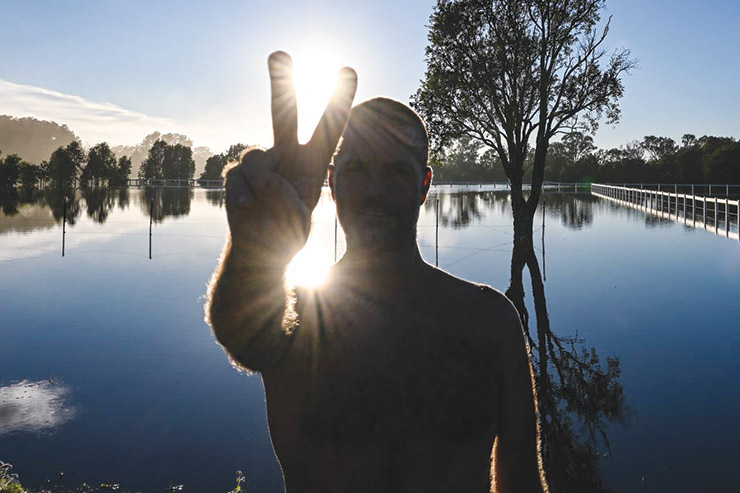
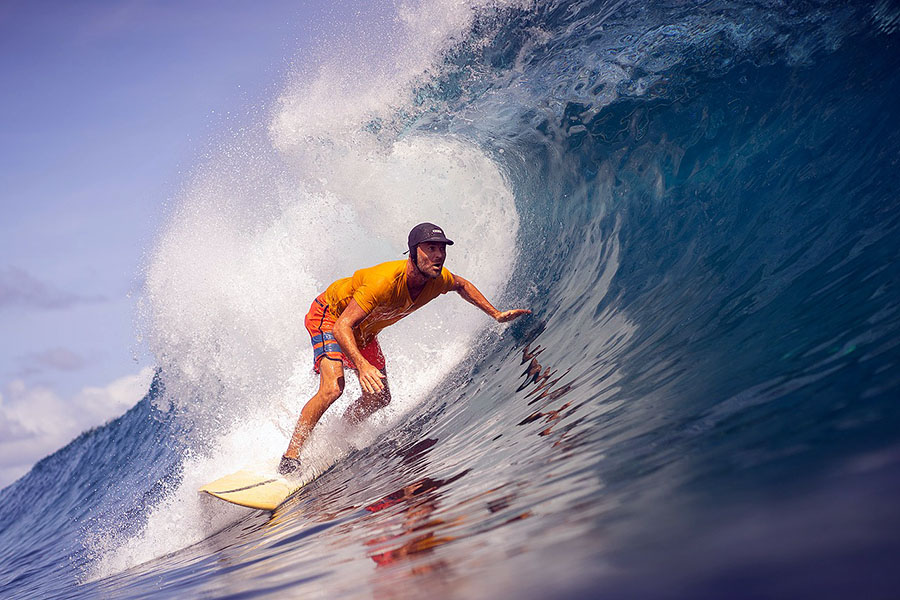
    Pete catches a wave. Image courtesy of Pete Evans.

    EN: Very well said; thank you for sharing. Moving to something a little more recent now: As I said earlier, there seems to be a shift in the air right now. 

    The last time we spoke, after the 2022 lockdowns, I asked you a question about navigating the storms ahead. You gave a very eloquent answer about how storms are just a part of changing seasons. As such, there’s also sunshine, rain, hail, and so on. You spoke on learning to embrace the journey, so to speak. 

    Today, with Donald Trump having been elected and Robert F. Kennedy Jr. (RFK) tipped to gain greater influence and ignite change, the rumblings are daily.

    Following up on your previous analogy of changing seasons, do you feel that we’re potentially entering a sunnier season of the current timeline?

    PE: Perhaps, perhaps. Again, it comes down to an individual’s perception of reality and what they deem to be ‘sunny days’. I dare say there would be a lot of people that are like, ‘wow, look what is happening and has happened’ – and they have hope. 

    The other day, a mate sent me a message: ‘Oh, I hope Trump and Kennedy do this’. And I wrote back: ‘Well, I don’t like to use the word hope’.

    In that context, I don’t need Trump or Kennedy to do anything for me. Waiting and hoping for other people to do things that will impact our lives is a source of disempowerment. I’m not even a huge fan of the words optimism or pessimism, either, because it’s sort of like hoping and waiting that things will get better. 

    Can we not take full ownership and responsibility of our human potential on a minute-by-minute, hour-by-hour, day-by-day, week-by-week, or season-by-season basis? No matter what the season, why do we need to have certain expectations met for us to feel content, safe, or trust in ourselves? Why do we wait for external figures to create this safety for us? 

    Don’t get me wrong, I’m stoked that Trump’s back in and I’m stoked about Kennedy playing a role in the new administration. Maybe by the time this interview is published, he might well be confirmed or not. But I’ll be pleased whether he is or isn’t, regardless, because I trust in every decision that’s playing out on this chessboard of life. It really depends on where our focus lies.

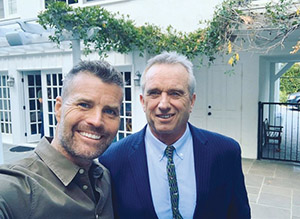
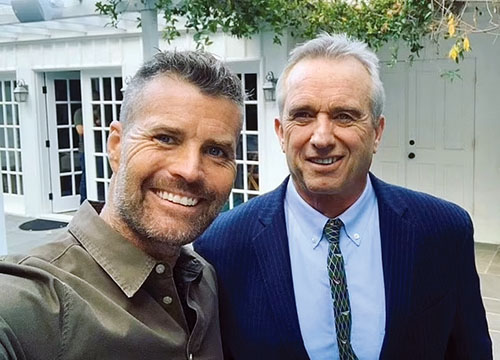
    Pete with Robert F. Kennedy.

    You know, you could be completely oblivious of Donald Trump and Robert Kennedy, Jr. and live a beautiful, peaceful, contented, full experience, regardless of what those men or other people in positions of so-called power do over the coming weeks, months, years, or decades.

    That’s where I like to hang out as much as possible: watching the game unfold. The political games, the bureaucratic games, I find them all quite entertaining. However, I’m not tied to any specific outcome. You know, I love reading fantastic novels that have plot twists you don’t expect. It fascinates me how someone can create a scenario, or twist, or change of season so quickly – and what will come from that shift?

    We can’t hold on to these expectations of what we think must happen. I’ve learned in this life to set an intention for what you desire or wish to see in the world, but then let it go as well. And that isn’t to say that we aren’t wonderful manifesters. We’re also co-creators with every other individual on the face of the planet. I really love the mystery and surprise elements of the game being played, which I choose to observe in those various scenarios. 

    And I’m always open for the curveball that may or may not come. 

    For the last two years, I’ve been reading many Isaac Asimov’s novels from the 40s, 50s, 60s, 70s and even the 80s on the potential applications for robotics and AI.

    I’m fascinated by it because there are so many parallels to what he was writing about decades ago and what’s happening now – and all the possibilities that can spring from this. He’s discussed much of this in his books, and I find it fascinating that just now, I went on social media, and the truth movement is up in arms over the mRNA shot. I love that. 

    To speak out is to express yourself. But at the same time, I’m not willing to throw human ingenuity out because of a potential fear of something we still don’t fully understand. I’m curious to see how these things go. Obviously, if by next year they announce, ‘All right, we’ve got the cure for cancer and an mRNA vaccine, and everyone will be tested and we’ll provide this to you’ – I would likely be very, very vocal again.

    Again, it does not address what I believe should be the foundational principles of long-term regenerative health, which is not overlooking our emotional belief systems. A greater focus on that and diet could have profound implications for the medical and health systems in the coming decades. 

    Who knows if they’ll get there in my lifetime? I’m so excited about everything that’s currently coming to the surface for us to intelligently debate, ponder, contemplate, consider, and even reject. Yeah, I’m excited!

    EN: It’s sure to be a fascinating few decades ahead. It’s an incredible time to be alive. In the magazine, we’ve explored the parallels between early science fiction and the direction the world is taking, particularly regarding artificial intelligence. Like you, I observe from a distance, and many people are definitely invested in the ‘redemption arc of Donald Trump’. From your point of view, do you see anything similar unfolding in Australia in the coming years? Perhaps some push for a political or health revolution? We’d love to hear your thoughts on this, and would you consider being part of something like that if it happened here? 

    PE: I see good people out there in the system – some of the senators, for instance, that you may have interviewed or seen over the past few years. I resonate with what some of them are saying. But it seems they face these almost impenetrable walls because the system has been designed to create these walls that, perhaps, aren’t ready to be broken down just yet.

    I could be wrong; I’d like to be wrong about this. But how long would it take to either rebuild or dissolve some of these walls into a new direction… without actually creating new impenetrable walls? It’s a very deep question that I don’t have a definite answer for. 

    My observation is that America ‘holds the key’, so to speak. What happens over the next four years, depending on who takes over after Trump, will be the proof of the pudding. What ripple effect will we see throughout the rest of the world? 

    And will Australia be second in line, third in line, tenth, or one hundredth in line to feel the ripple effect? I’d love for the ripple effect to be felt here very, very quickly – but whether that happens or not remains to be seen. 

    That doesn’t mean we can’t start taking steps now, though. I see individuals stepping up to the plate for the right reasons, and each person has to figure out if they’re willing to go in and bang on those walls. I’ve thought about the potential of my role in this game, and there’s still a big question mark for me about how I can use my expression to achieve the most impact.

    I still feel that, at this particular point in time, food is vitally important for massive amounts of change. We’ve discussed this before in our prior interviews, so I won’t go there again, but I feel like that seems to be where I’m best suited for my so-called celebrity or fame, and, obviously, knowledge, wisdom and experience in the art of cooking and nutrition. 

    Politics doesn’t really call to me. When I think about it, I can’t see a future there. I haven’t seen any future in it so far, and looking ahead, I still don’t see it. 

    EN: What does the future hold for Pete Evans?

    PE: I have a book coming out with Robert F. Kennedy Jr.’s Children’s Health Defence in the coming weeks, and I’m planning a tour in the States in March [2025]. We’re organising influential people with large audiences so I can share the message of food as medicine and food as poison, depending on what you choose to take into your body. 

    What if we educated people on how to eat delicious, budget-friendly food for themselves and their families, cultivating a deep belief in self-nourishment through the simple acts of shopping and cooking for oneself and then enjoying that food mindfully? If we could inspire people to prioritise food as one of their top values in life, understanding that it could add decades to your life and life to your decades…

    Then, we would probably never have to spend money fighting the multinational food corporations or the FDA, trying to get food dyes or additives out of food. Because once people are educated about healthy eating, they would never shop in that section of the supermarket anyway. That business would, by default, go bankrupt or have to adapt. 

    It’s about focusing on inspiring change because the single greatest act of rebellion against all of the agendas and systems is to be healthy. Once you are healthy, you no longer are a part of medical system, the pharmaceutical system, the multinational food system, the big agricultural system, and the list goes on and on.

    I spoke with RFK Jr. the other day and I said: ‘How about we set up a government website to Make America Healthy Again and include a couple of thousand recipes of mine?’ I thought, my name doesn’t need to be associated with it; I can remain anonymous – but the recipes should be there. We could even bring in America’s top chefs, the ones that people love and know – because they rejected Jamie Oliver when he came over to teach Americans to avoid sugar – so why not approach it cleverly with American chefs preparing nutrient-dense, beautiful, non-inflammatory food. We could even offer it to Americans for free and create a cooking school, teaching people how to cook and hang out. Essentially, create this beautiful database that people can access anytime. 

    I said: ‘How inexpensive would that be to create, and how inspiring could it be for a government agency to offer?! A guide that doesn’t abide by the dietary principles that are currently prescribed by dietary associations in the Western world, as we know they’re completely wrong – in my opinion, even criminal – and rather just inspire people to nourish themselves?’ He loved the idea. Now that I’ve set that intention, will that happen? 

    At the end of the day, it’s up to the individual to decide whether to explore these issues, and I would never force it on anybody. I would never force everyone to eat this way. If you want to eat junk food, I respect your decision; fantastic, good for you. I love free will, but at the same time, I think better, more trustworthy information would be really nice to have available. 

    I’m 51 years old, and I’ve been eating this way for 15 years. According to health authorities, I should be sick, my bones should be brittle, and I probably shouldn’t even be here – because, in their opinion, I’m ‘depriving myself of the most essential foods on the face of the planet’. 

    Yet, as a 51-year-old, I surfed today for two hours, and I’d say I’m in the best physical, mental, emotional, and spiritual shape of my life. My intention is for that to grow, strengthen, and evolve until the day I pass away from old age or an injury. I don’t see myself in a hospital bed on life support or having cancer, heart disease, Alzheimer’s, or dementia – that’s not part of my life plan. My life plan is to age gracefully with wisdom and strength until it’s time to go and not be in any pain or suffering. 

    Again, that’s my belief, and how do we cultivate these beliefs? We cultivate these beliefs through the potential of understanding what is possible.

    If you read mainstream media, you would potentially believe that after the age of 30, it’s all downhill and your health will decline. ‘You should be on this pharmaceutical, and this vaccine, and this trajectory’. In America, on average, every adult is on four pharmaceuticals. It doesn’t have to be like that. I know it can change. Can we get to that point? I believe you can individually. Can we achieve that collectively? I’m not sure if that will occur in my lifetime. Perhaps, perhaps not. That’s once again, part of the mystery.

    EN: Your new book, Healthy Food for Healthy Kids, features 120 fantastic budget-friendly recipes. So, if your suggestion for a health database doesn’t come to fruition on a US government website, people can still access this valuable information. You certainly have the expertise and experience to make a real impact in food and health. 

    Before wrapping up, I wanted to touch on another potentially game-changing alternative that has really grown, which I notice you post about often, and that is cryptocurrency. Could you share your thoughts on how this might influence the future unfolding before our eyes?

    PE: I feel like Bitcoin has manifested as a tool for long-term wealth because we know what inflation and fiat currency are about – taking and devaluing in a centralised manner – basically theft. I came across Bitcoin about five years ago, and I’ve spent thousands of hours studying it. Bitcoin and health principles go hand-in-hand because it’s about self-accountability, self-responsibility, and self-sovereignty. The two mirror each other beautifully, so I’m intently wanting to work in and be seen in that space. There are hundreds of millions of Bitcoiners around the world, and to potentially inspire them regarding food and nutrition would be great.

    A lot of people I’ve interviewed in that space are some of the healthiest and smartest people, and they already have that dialled in. So, there seems to be a correlation between Bitcoin, health, and nutrition – but I haven’t seen a chef bridge the Bitcoin and health worlds. That’s only come up for me in the last month, so I’m pondering and contemplating the best way of bridging those two at the moment.

    If you haven’t studied Bitcoin, I would highly recommend people read The Bitcoin Standard as a bare minimum to understand how governments and medical institutions are very similar to the banking industries. To understand the history of money – what money is, what currency is, what value is – I got to it all quite late, but it’s been one of the greatest experiences I’ve had over the last five years. Learning about Bitcoin has taught me so much – so much more than I thought – and I think that’s always a good thing when you learn. When I learned about cooking, I thought cooking was just about cooking delicious food. Would you believe there’s also a nutritional aspect to it that most chefs don’t really take into consideration?

    I’m sorry to generalise there, but we weren’t taught about nutrition when we did our apprenticeship. Doctors who go to college to study medicine do eight hours maximum on nutrition, which is crazy. In the same way, I was never really taught about finances and money. 

    Once you see it, you can’t unsee it. It will be interesting to see what plays out over the coming decade in the Bitcoin and finance space with central bank digital currencies – whether they get off the ground or not. As you said, it’s an amazing time to be alive.

    Get the issue this article appears in

    EN: Is there anything else you would like to leave the readers with?

    PE: I truly love what you and the others at New Dawn are doing. It’s always a great read, and I’m stoked that you guys are expressing yourselves creatively.

    It’s my deep belief that our purpose on this earth is to express ourselves creatively through whatever brings us joy and cultivates our passion, and to love unconditionally. It’s great to see you and others doing that through your medium, so thanks for providing the space to share.

    Visit peteevans.com for more great content from Pete Evans. His new book, Healthy Food for Healthy Kids: 120 Simple, Nourishing, Gluten and Dairy-Free Recipes Your Whole Family Will Love, is now widely available in bookstores, online and physical. You can also explore Pete’s documentaries, podcasts, vodcasts, and more by visiting evolvenetwork.tv. X: @peteevanschefx

    [alert type=”general” dismiss=”no”]This article was published in New Dawn 209.[/alert]

    [alert type=”success” dismiss=”no”]If you appreciate this article, please consider subscribing to help maintain this website.[/alert]

    © New Dawn Magazine and the respective author.
    For our reproduction notice, click here.
  • Hyperreality, Synchromysticism & Simulation

    Hyperreality, Synchromysticism & Simulation

    From New Dawn 195 (Nov-Dec 2022)

    We are the first digital inhabitants of a universe of pure symbolic media exchange, living in an empty space of virtuality, where subjectivity and objective truth have intertwined together.

    At the core of this collective experience, we find a fabricated system of meaning that limits human participation to that of mindless spectator, while a digital hyperreality is slowly born.

    Follow The Signs

    Images serve as a symbolic system through which people communicate and culture is transmitted. Some images contain a system of symbols and are used for various types of communication.

    Societies often share common symbols, and many symbols contain the same basic elements. Taken together, these symbols convey specific meanings. 

    For example, we are all born into a society with a written system of some kind, made of symbolic shapes called language which refer to spoken sound. None of us were the engineers of this system to begin with.

    A study of synchromysticism and numerological exploration can help uncover secret languages encoded inside the realm of reality, and which can be used to decipher meaning in unique ways.

    A feature that makes synchromysticism unique to other forms of synchronicity is its focus on esoteric mystical symbolism and the use of communications technology to document, share and compare synchronicities related to such symbols – from ancient traditions to mass media.

    By utilising cryptic understandings of symbols, we can decode, map, and predict future world events. How? Symbols channel a form of collective mass unconscious in the human species in which the subconscious realm can be influenced and dictated, hence altering the conscious sphere.

    Not only are symbols used to pre-program major world events on our television screens, but they are in fact a present reality in every single element of everyday life. We are living a fairy-tale dream.

    We have become so overwhelmed with symbols (translated as ‘information’) in the modern world that objective truth has been blanketed to the point it cannot be identified authentically.

    Analyses of objectivation, institutionalisation and legitimation are directly applicable to the problems of the sociology of language, the theory of social action and institutions, and of religion. 

    A vast, simulated experience has taken over the world, and reality itself is being sucked in with it.

    Simulated Reality

    We live in a world of signs where almost everything around us has become a matter of signification, connected with explosive growth in media and related to changes in the conduct of everyday life.

    Our current society has replaced all reality and meaning with symbols and signs, and human experience has become akin to a simulation of reality.

    You may be familiar with the term simulation – no doubt it has been said many times right here in New Dawn. But just exactly what does it mean? 

    The Baudrillardian concept of‘simulation’ refers to the idea of creating a reality; reproduced and based on a foundation of widely interpreted symbols.1

    Simulated reality appears so real that one cannot separate the ‘real’ from simulation. 

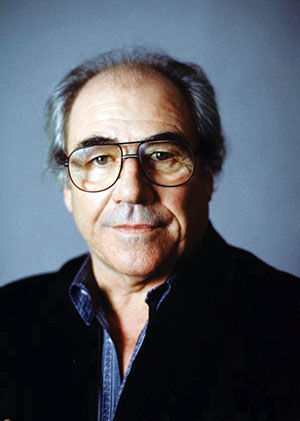
    Jean Baudrillard (1929–2007)

    In fact, simulation dominates the real, and never again will the real have the chance to produce itself because simulation is all there is, according to the French sociologist, philosopher and cultural theorist Jean Baudrillard (1929–2007). 

    Simulated reality is not a singular concept. The simulation itself is made up of infinite imitations of the operations of real-world processes or systems over time. These are known as simulacra.

    Simulacra are copies that depict things that either had no reality to begin with, or that no longer have an original. Representations stand in place of a perceived real or are simply the ‘real’ itself.2

    Inside the control structure, these simulacra are not merely mediations of reality nor even deceptive mediations – they are not based in a reality at all. No attempt to hide a ‘reality’ is made.

    Instead, all we see is a process of how symbolism in culture and media constructs perceived reality, programming false understandings and making lives and shared existences illegible. 

    Society has become so saturated with simulacra, and lives so saturated with the constructs of society, that all meaning has long been rendered meaningless by being infinitely mutable.

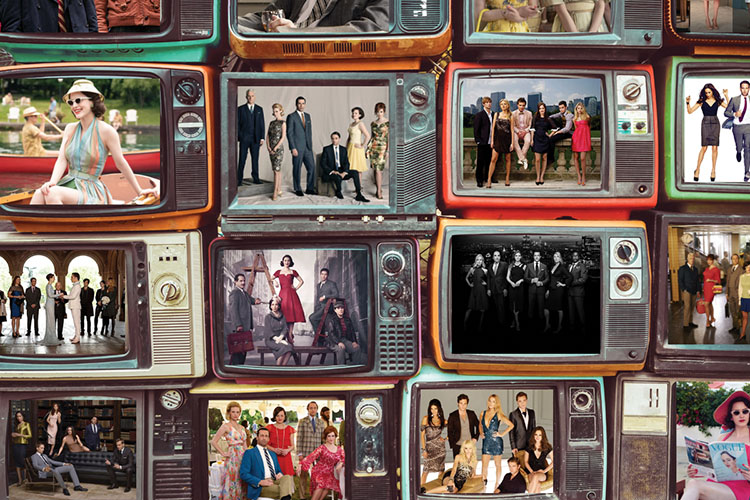
    The onslaught of television, media growth and the constant bombardment of images, are now intended to represent reality. From birth, humanity communicates and understands this way.

    Importantly, the simulacra are never that which conceals the truth. The truth which is concealed is that there is no truth. The simulacra, or untrue, is the truth.

    To better understand what this means, let’s look at key concepts found in studies describing the nature of symbols, simulacra, and interactions with collective perceptions of reality.

    Psychology of Illusion

    Not only does simulacra refer to ‘copies without an original’ but it can also be used to explain the lack of depth, meaning or ‘realness’ behind signs that penetrate our technological lives.

    Philosopher Walter Benjamin, as early as 1936, argued that “the presence of the original is the prerequisite to the concept of authenticity,” and that this was missing from a world of mass-produced commodities.3

    However, in a modern, technology-driven digital age, this has developed even further to the point that no original even exists from which to draw the authentic from.

    Prof. Frank Webster, author of Theories of the Information Society, once gave the example of when a user downloads a song to their phone. The notion of an original is meaningless as the downloaded song has no physical original – it is a copy of a song downloaded from a digital platform.

    In his essay The Ecstasy of Communication, Baudrillard explains that Western technological society revels in its over-exposure to images. He defines this visual overstimulation as “obscene,” when “everything is exposed to the harsh and inexorable light of information and communication.”

    Researcher Steven Connor summarises Baudrillard’s concepts of simulacra by stating: “All of contemporary life has been dismantled and reproduced in scrupulous facsimile.”4

    This refers to simulacra; the reproduction of signs of reality that are, in fact, created.

    Connor also discusses how simulation of “the real and referential” then “takes the form of manufactured objects and experiences which attempt to be more real than reality itself.”

    For example, violence is disconnected from ‘real’ world destruction and recorded in cyberspace as signs and images to be consumed through mass media, gaming, and digital outlets.

    Death as a tragic event has also been eliminated, and any event surrounding this theme is surrendered to media representations of it.

    Whatever the event may be, it is experienced as an ‘image event’ and consumed through symbolic exchange. Put simply, the image precedes the real, is consumed, and forms the reality itself.

    War images on TV form the actual perception of warfare, while real events on-the-ground – whatever they may be – are masked in a sea of digital simulations.

    Simulacra is the psychological concept that drives many other vast deceptions. From 9/11 to shooting events, the COVID scamdemic – symbolic images are programmed daily.

    Let’s take a deeper dive into how these messages are transmitted and what is responsible.

    In the world in which we now live, the image precedes the real, is consumed, and then forms reality – what is deemed by the mind to be the ‘real’. TV has been the primary generator of images, which are manufactured by unknown operators. War images projected on TV – and all electronic screens – form the actual perception of warfare, while real events on-the-ground – whatever they may be – are masked in a sea of digital simulations.

    Symbolic Exchange

    We are now more wired to our interfaces. We react to the television news rather than the world, to a computer program rather than social interaction, to email rather than vocal communication.

    In all these, we react to simulations rather than the immediate environment. Simulation supersedes ‘real’ interactions and has done so now for generations. 

    Andrew Murphie and John Potts argue in their book Culture and Technology that the media can never convey the ‘real’, and with the ever-increasing reliance on the internet, simulations are only becoming more prevalent, thus reiterating how simulacra erase and dominate the ‘real’.5

    The internet is a simulacra creator, highlighting the importance of symbolic exchange in cyberspace. It is a copy-making machine, a tool that effortlessly replicates things and passes them along. A digital realm in which nothing is authentic and everything is vastly produced.

    This ‘creation’ allows for artificial place-markers for real items or events. The uniqueness of objects and situations marks them as irreproducible real, and signification gropes towards this reality.

    This process is known as ‘symbolic exchange’ – a form of value exchange that maintains and organises social relations and hierarchies. The difference with other forms of exchange is that the value of an exchanged object does not value the act of exchanging it.6

    Let’s think about a designer brand t-shirt vs a regular t-shirt. Is there really any difference between the two? Is the designer brand actually worth $200 of raw materials, or is it simply the marketplace of value symbols (brands) that drives the worth of this shirt?

    Symbolic exchanges are not aimed at establishing equivalence (equal value) between two exchanged tokens, as with other forms of exchange. The opposite of a resource-based system.

    This psychological game allows for creators of said object to influence and dictate (false) worth, and it is this framework that powers why humans value grand deceptions over critical analysis.

    How on earth did humanity get to this point?

    It all began with the beginning of ‘modernity’ following the Industrial Revolution.

    Here, distinctions between representation and reality began to break down due to the proliferation of mass-reproducible copies of items, turning them into commodities.

    The commodity’s ability to imitate reality immediately threatened to replace the authority of the original version because the copy is just as ‘real’ as its prototype.

    This continued until the birth of postmodernity in which this process expanded with newer technology to the point the simulacrum now precedes the original, and the distinction between reality and representation vanishes. There is only the simulacrum; originality has been buried.

    Baudrillard theorises that the lack of distinctions between reality and simulacra produces several outcomes including (but not limited to) the following:

    Contemporary media, including television, film, print, and the internet, blur the line between products needed (to live a life) and products for which commercial images create a need.

    Exchange value in which the value of goods is based on money (denominated fiat currency) rather than usefulness. Moreover, usefulness comes to be quantified and defined in monetary terms to assist exchange.

    Multinational capitalism which separates produced goods from the plants, minerals and other original materials, and the processes (including the people and their cultural context), used to create them. Think of medicine and plants as an example of this.

    Urbanisation which separates humans from the non-human world, and re-centres culture around productive throughput systems so large they cause alienation.

    Language and ideology in which language increasingly becomes caught up in the production of power relations between social groups, especially when powerful groups institute themselves at least partly in monetary terms.

    Through these primary methods, collective values of a society, object, event, or story are directed and engineered. Disconnection from reality to simulacra until the ‘real’ is forgotten.

    Next, let us examine the long-lasting inter-generational effects of this level of mass illusion.

    Here we go beyond many authors’ work and adapt this information to the digital age.

    The Birth of the Hyperreal

    In the modern world, we have moved from the ability to reflect our reality truthfully to the ability to mask and distort this reality, and to masking the simulated reality altogether.

    Finally, with the dawn of the Fourth Industrial Revolution, humanity has already begun the transitional stage to an era in which simulation asserts precedence over reality.

    Hyperreality refers to a simulation of reality that acts as more real than the real or a created heightened reality. In this hyperreal cyberspace, signs for consumption are constantly in production, and this creates a new reality, as virtual reality cannot be completely known.7

    We are already witnessing the building blocks of this era. There is a sharp connection between nature and technology in terms of what becomes an icon for the ‘lost real’ in hyperreality. Almost all forms of online media act as a hyperreal experience.

    As an example of social media, Facebook markets itself as a connecting tool; a user posts updates of their life to their friends who can react and comment as they wish. 

    This platform acts as a digital reproduction of real life – a heightened version of real communication between friends, but it does not reflect real-life interaction.

    This is the hyperreal, a digital simulation of reality, where a person ultimately uses Facebook to form an online identity and persona more vivid than the ‘real self’.

    Twitter is hyperreality as well, as it bears no reflection to real life and creates a sublime cyberspace where a user, once a rational subject, becomes decentred in online communication.

    As subjectivity becomes detached from materially fixed, embodied contexts, it is dispersed and multiplied continuously through digitisation.

    In this hyperreal setting, traditional social settings are erased as a real human being is re-signified as a digital representation for Twitter users to consume. 

    The pure symbolic media exchange of cyber interactivity is understood as the opposite of social.

    The subject does not experience ‘increased interactivity’ but instead experiences ‘subtle death’. Interaction dies in this hyperreal cyberspace and becomes merely a simulation of communication.

    Chat rooms, for example, allow users to function as floating signifiers capable of becoming anything that is describable. Thus, online, communication is replaced by sign consumption, and subjects become merely ‘floating signifiers’.

    If we replace ‘chat rooms’ with Twitter, we may conclude that power becomes a signifier of hatred.

    Going beyond this space, the phone itself is a hyperreal product – a product of pure simulated society which acts almost as an extension of ourselves. 

    Astra Taylor, author of The People’s Platform: Taking Back Power and Culture in the Digital Age, has explained the ways that “big media,” through search engine algorithms and data collecting, can “absorb who we are” by gathering detailed demographic information, geographic information, behavioural information, and social information.8

    Absorbed from the real to a digital representation.

    In the future, with the introduction of AR and VR systems such as the Metaverse, enhanced by AI and 5G underliers, almost all observable reality will soon fall under the spell of the hyperreal.

    The gamification of society and the introduction of controlling technologies as a trojan horse of mind-numbing pleasure means that humans are wilfully creating the end of their realities.

    There is no original that created the rest, no seed planted. Everything will soon be automated, and this automation produces a series of new symbols for humanity to absorb.

    Baudrillard stated that representation stems from the principle of the equivalence of the sign and of the real, but “simulation envelops the whole edifice of representation itself as a simulacrum.” Therefore, the concept of a ‘real’ underneath the simulation relies on the principle of the real.

    Hyperreality is the absorption of the real – whatever it may have been – into an ocean of simulated, digital representations. Infinitely created and replicated until the real is long forgotten.

    Get the issue this article appears in

    Science Fiction Comes to Life

    The postmodern world in which we live and the approaching post-postmodern hyperreal timeframe are argued to go hand-in-hand with famous science fiction works of our time.

    In his book Exploring the Limits of the Human through Science Fiction, Gerald Alva Miller suggests that “science fiction increasingly proves the genre that is necessary to grasp the postmodern world around us.”9

    Baudrillard notes that science fiction “is no longer anywhere, and it is everywhere, in the here and now, in the very principle of the surrounding simulation.” In other words, he argues science fiction is hardly fictional at all, it is merely waiting “in its crude state” to emerge.

    Are we really ‘waiting’ for this change to come? Or is it already here?

    Miller believes this wait is over and the technology of contemporary science fiction now “occurs in realistically depicted versions of the present or even the past.” He calls television “a viral, endemic.”

    Baudrillard sees radical action such as destroying the system as no longer a real possibility.

    This is because there is no system. It is a simulated, collective experience driven by symbols and images and programmed by those who are controlling those very mechanisms.

    We are slowly welcoming the immorality of consuming death as a media spectacle.

    Marleen S. Barr discusses the concept of post-postmodernism, which she says exposes “the hitherto science fictional impact of technology on society and culture… when what was once science fictional comprises the very definition of reality.”10

    Cyberspace becomes a space of pure symbolic exchange where humanity disappears and subjects become nothing more than a sign or image to be consumed.

    Technology has been engineered as a weapon in which the human subject is reduced to a mere sign for consumption. This consumption of a person is represented by reducing a subject to a mere symbol for exchange, and even the event of death is consumed by hyperreal media. 

    Dehumanisation in the media, or reducing the subject to the object, happens in hyperreality. This is currently perpetuated by online users who are still human beings themselves. 

    This important analysis of simulacra and hyperreality draws attention to the need to see the human behind the image, to see the subject behind the object, and re-humanise the subject in cyberspace.

    We must do everything we can to disconnect ourselves as much as possible from the hyperreal that is currently birthing a world of endless simulated experiences (the Metaverse is an emerging example).

    By doing so and looking beneath the surface, we can resist. How? Because we recognise the ‘system’ that controls us does not physically exist at all – it is an illusion.

    Almost everything is an unauthentic copy of a copy, masking the fact there is no original base.

    Everything we have been told is a lie. Therefore, I recommend you throw away anything you have ever been told about the world and begin to form an independent perspective from scratch.

    When you do, and you also take this information into consideration, you will uncover startling truths.

    The above is an updated version of an article that originally appeared on the website of TOTT News: https://tottnews.com.

    [alert type=”general” dismiss=”no”]This article was published in New Dawn 195.[/alert]

    [alert type=”success” dismiss=”no”]If you appreciate this article, please consider subscribing to help maintain this website.[/alert]

    Footnotes

    1. www.en.wikipedia.org/wiki/Simulacra_and_Simulation
    2. www.en.wikipedia.org/wiki/Simulacrum
    3. www.ceasefiremagazine.co.uk/walter-benjamin-art-aura-authenticity/
    4. www.amazon.com.au/Postmodernist-Culture-Introduction-Theories-Contemporary/dp/0631200525
    5. www.books.google.com.au/books/about/Culture_and_Technology.html
    6. www.oxfordreference.com/view/10.1093/oi/authority.20110803100546755
    7. www.en.wikipedia.org/wiki/Hyperreality
    8. www.youtube.com/watch?v=vMwyZbS4JTU
    9. https://link.springer.com/book/10.1057/9781137330796
    10. www.tandfonline.com/doi/full/10.1080/08854300600950285

    © New Dawn Magazine and the respective author.
    For our reproduction notice, click here.
  • What the Technocratic Elitists Plan for Your Future

    What the Technocratic Elitists Plan for Your Future

    From New Dawn Special Issue Vol 17 No 6 (Dec 2023)

    We are currently living through one of the most important periods in human history, as the ruling class biofascists move to transform the world into something out of a science fiction novel.

    The following piece looks at some of the most pressing world-altering agendas currently on the horizon for the future of society – and what we can do to fight back.

    The End of Cash?

    The world is changing and changing quickly. Most of society remains blissfully unaware – through targeted propaganda campaigns – of the reality that awaits them (if allowed) across this decade.

    Perhaps the most pressing transition that countries will see in the foreseeable future is major shakeups to our financial institutions and economies.

    The collapses in March 2023 of Silicon Valley Bank and Signature Bank in the US led some to wonder if the world may be headed for a new widespread banking crisis.

    Switzerland’s Credit Suisse also collapsed in March and was purchased shortly by UBS in a deal approved by Swiss regulators without shareholder approval.

    As a result, Australian financial regulators recently called for an urgent review of the nation’s preparedness and management for “future banking turmoil” following the speed of lender runs.1

    Experts put the odds of a recession before July 2024 at 59 per cent. Emergency meetings held by regulators of late show they are keeping a keen eye on any further instability.

    The timing couldn’t come at a more ‘convenient’ moment for those in power.

    As they say, ‘never let a good crisis go to waste’, and to combat this ‘turmoil’, the state is already looking to transition from this financial model into a new, centralised, digital dystopia.

    For years, Australia has been phasing out cash. In 2021, financial experts forecasted that this country would become “functionally cashless” in 2024.2

    Now, as we enter this crucial timeframe, we see many changes begin to unfold.

    In July 2023, it was announced that cash is no longer available over the counter at a number of Commonwealth Bank locations, with a move to focus on “more complex banking needs.”3

    This was soon followed by Macquarie Bank, our fifth largest, announcing it will “phase out” cash, cheque and phone payments for customers from 2024.

    In a policy notice update, the bank stated that by November 2024, customers will be unable to write or deposit cheques (including bank cheques), deposit or withdraw cash over the counter at branches, or make a super contribution or payment with a cheque.4

    The changes come after Australia’s Federal Treasurer Jim Chalmers announced in June 2023 that cheques will be phased out nationwide by 2030 in a government shake-up of Australia’s payments system.5

    It is not only at the cashless point where they intend to stop with this vision. The removal of cash is just one piece of an even bigger puzzle that will slowly emerge afterwards.

    Bank branches are becoming a thing of the past – disappearing at “alarming” rates – with ATMs also being removed nationwide.6

    The ‘Big 4’ banks are already following the Reserve Bank’s plan to introduce Central Bank Digital Currencies (CBDCs), with pilots currently being tested in the industry.7

    Cases are being researched to see how a CBDC future can ‘enhance’ digital payments.

    Let’s not forget that COVID-19 lockdowns helped accelerate the shift away from cash in a social environment trained to accept and desire such ‘convenience’.

    Pandemic Treaty

    The upheaval of society is not set to end there, however, with several moves being made (and predictions propagated) that suggest more ‘crises’ are on the way.

    The ‘pandemic’ changed the world in ways we are yet to realise fully, and governments across the globe are now coming together to form a unified response to prepare for any future ‘outbreaks’.

    In September 2023, the Australian government released a consultation paper detailing their adherence to a “global accord” on “pandemic prevention, preparedness and response.”8

    As was the concern, this will come from negotiating an international agreement to “protect nations and communities from future pandemic emergencies.”

    To date, member states of the World Health Organization (WHO) have met to discuss priorities for a new worldwide “pandemic instrument,” as well as changes to International Health Regulations (IHR). 

    The new paper details two “important processes” being worked on to “strengthen the international community” as a means to “prevent, prepare for, and respond to pandemics.”

    Implementing a pandemic treaty would make any future ‘pandemic’ responses faster and more efficient, allowing for a seamless, centralised international process.

    What is the timeline? The consultation paper says member states have agreed to establish an Intergovernmental Negotiating Body (INB) to draft the final instrument for consideration by May 2024 [Editor’s Note: As of May 30, negotiations were ongoing].

    The concern by many since word broke of these discussions is that any finalised treaty will likely include the condition that international ‘health troops’ can be quickly deployed to any nation to assist outbreak responses in a unified fashion.

    Such a treaty will effectively bypass our national sovereignty and decision-making processes.

    What raises even more eyebrows is the news that Bill Gates has proposed setting up a “pandemic prevention team” called ​​Global Epidemic Response and Mobilization or GERM!9

    This has left many wondering what may be lying around the corner in the not-too-distant future, with the Big Pharma monopoly enjoying record profits during the recent COVID period.

    If signed, future ‘outbreaks’ would be managed entirely by offshore entities rather than at home in the face of scrutiny from the taxpaying public.

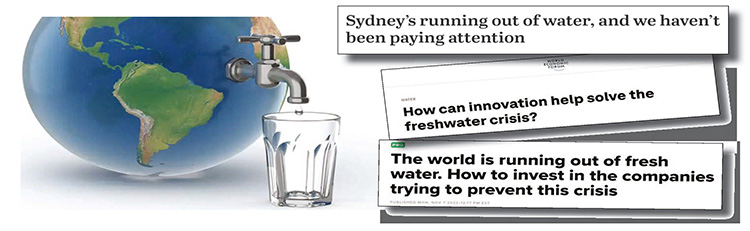
    But, if that doesn’t work, one thing also being discussed heavily is the potential for a manufactured ‘water crisis’ that could transform how we consume this resource over the coming decades.

    Water ‘Crisis’

    By 2025, the United Nations says that two-thirds of the world may face water shortages as unelected world bodies again look to step in with ‘solutions’.10

    Researchers suggest that combinations of drought, environmental pollution and population growth have the potential to create instability in the Indo-Pacific region by 2030.

    Sydney’s drinking water is unlikely to remain healthy over the coming decade, according to a report handed to the New South Wales government.11

    After a three-year audit, the scathing assessment of the city’s water supply found seven of the 18 key indicators for the water system’s health were “worsening.” The audit also found there is a risk that the city’s main water catchment will be unable to continue providing adequate, good-quality water to the greater Sydney area.

    Here’s the thing: are we really facing a ‘shortage’ of water? Or is it just a shortage of ‘free water’?

    Massive corporate behemoths have bought and privatised much of the world’s freshwater over the past few decades, including in Australia.

    We witnessed a glimpse of this during the 2019-20 bushfire season, when water from Tamborine Mountain in Queensland was unable to be used to assist firefighting efforts due to it being owned by Coca-Cola Amatil.12

    If we look at the Register of Foreign Ownership of Water Entitlements, Australia has spawned a massive water marketplace, with more than $3 billion worth of rights at play.

    One report shows the proportion of total water entitlements with a level of foreign ownership is 10.4 per cent, making up a total volume of 4,035 gigalitres across Australia (as of 2018).

    So, it’s not the fact that there isn’t any water. The concern is over the water allocated to us.

    World Economic Forum contributor Mariana Mazzucato recently indicated this is the direction the global elites are turning. The Italian economist noted that the coming water crisis is something that everyone could get on board with.13

    We must all keep our eyes on this evolving story on the road to Agenda 2030.

    mRNA Expansion

    Vaccines have become one of the most polarising topics in recent years, and following record profits during the COVID-19 era, biopharmaceutical giants look to expand their mRNA product catalogue.

    It seems the vision is to eventually transition all vaccines to this experimental technology.

    Last year, Moderna announced the construction of a new state-of-the-art mRNA manufacturing facility to be based in Melbourne, which will act as the ‘central hub’ for their products.14

    Following suit, the Queensland government – one of the “world’s largest vaccine innovators” – partnered with two Australian universities to collectively commit $280 million towards establishing the ‘Translational Science Hub’.15

    This ‘science hub’ will be a biomedical research centre focused on developing mRNA technology.

    Paris-based Sanofi will connect Australian scientists with researchers in France and the United States to focus on developing mRNA vaccines for all sorts of health conditions including sexually transmissible diseases.

    In addition, the University of Queensland has struck a critical deal with Atlanta’s Emory University to develop “groundbreaking” next-generation vaccines at home.16

    CSL, a group that knowingly released millions of contaminated polio vaccines to the Australian public in the 1960s,17 is also looking to bring mRNA flu vaccines to Australia.18

    Flu has become a major focus of the mRNA community, with the US National Institutes of Health (NIH) currently undertaking trials for a “universal” vaccine.19

    And it’s not just humans set to ‘benefit’ from the technology, either. Scientists also want mRNA vaccines to replace traditional vaccines for Australian livestock.20

    No wonder Moderna is popping up on our screens yet again with their new TV spot, “Welcome to the mRNAge,” designed to let people know that mRNA vaccines are “not just a one-trick pony.”

    This promotional piece is a 90-second TV ad created that “artfully showcases some of the possibilities mRNA has to offer.” Let’s just say it is pretty eerie!21 Throughout the video, young children are frequently highlighted as the company describes how mRNA is the “code of life,” pondering “endless possibilities” when “unlocked.”

    Full steam ahead for the biofascists, despite the trail of destruction left in their wake already.

    Representatives from Pfizer and Moderna were recently called before a Federal Senate hearing and handed a number of serious questions surrounding the COVID-19 vaccination program.22

    These companies also face legal action by one Victorian MP who alleges that genetically modified organisms (GMOs) can be found in the vaccines that the national regulator did not pick up.23

    In addition, a class action has been launched in the NSW Federal Court against the Therapeutic Goods Administration (TGA), the Health Department and public servants by those claiming vaccine harm.24

    The class action, organised and crowd-funded by Queensland GP Dr Melissa McCann, alleges negligence, breach of statutory duty, and misfeasance in public office.

    The Victorian government also faces a class action lawsuit from more than 1,300 businesses over COVID-19 lockdowns. They are seeking damages for being forced to shut their doors for an extra 112 days due to the mishandling of the hotel quarantine system.25

    Accountability doesn’t matter to these people, nor our government ‘representatives’.

    In August, the combined force of the Labor-Greens Federal Senate majority defeated a vote for a Royal Commission into government handling of the COVID ‘pandemic’.26

    What will we see when a new mRNA vaccine wave is unleashed onto humanity?

    Synthetic Food & Milk

    Returning to natural resources – our food (plus the supply chains that support them) is also at risk of being fundamentally altered in the near future as part of the ‘sustainable’ push.

    Many have heard about the push for ‘bug protein’ (eat ze’ bugs), but this is just the tip of the iceberg.

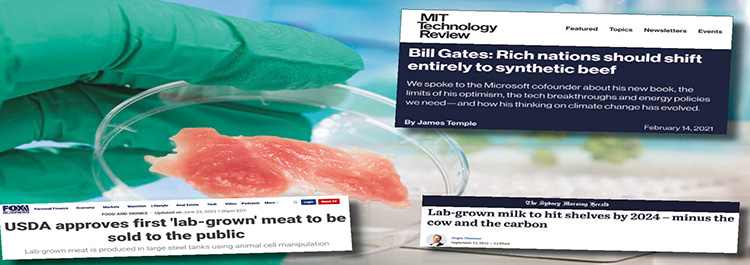
    Cultivated meat, also known as lab-grown meat, has been cleared for sale in the United States.

    Two companies that make what they call ‘cultivated chicken’ have received approval from the US Department of Agriculture to start producing “cell-based proteins” for the marketplace.27

    Many may scoff at the notion of lab-grown meat replacing traditional meat industries, but now scientists have figured out ways to compete with them at scale.

    Companies already have patent applications for genetically modified fruit flies engineered to grow animal cells at scales to rival agricultural meat production.28

    Technology powered by the new CRISPR-Cas has allowed this to occur. We should not be surprised to see the industry rapidly expand in the future as a ‘solution’ to resource depletion.

    In response, the Italian government recently approved a bill banning the use of laboratory-produced food and animal feed as it aims to safeguard the country’s agricultural heritage.29

    Italian industry will not be permitted to produce food or feed “from cell cultures or tissues derived from vertebrate animals,” according to reports.

    Italy is just one country, practically alone, in a sea of emerging support for ‘Frankenstein foods’.

    The biotech industry is waging an ongoing battle to get its newly advanced methods of genetic modification excluded from European GMO regulations.30

    This would mean that plants, animals and micro-organisms artificially created using genome-editing techniques like CRISPR-Cas would not be subject to safety checks, monitoring or consumer labelling.

    One report shows that 64 per cent of the members of the EPSO working group on Agricultural Technologies and 32 per cent of EU-SAGE members have a vested interest in the commercialisation of GM plants.

    Bill Gates has been the funder and public shaper behind the push to move the world towards synthetic meat production for years, pouring resources into initiatives in hopes of it spreading.31

    To this end, Australians have recently been told we need to give up our steaks and turn ‘flexitarian’ to ‘meet climate change targets’ and hit net zero by 2050, according to academics.

    Can we expect to see similar approvals in this country shortly?

    If the CSIRO has anything to say about it, which they inevitably will, we can bet on this being the case.

    CSIRO-backed start-up Eden Brew has worked out how to “brew” milk in a lab in a way that “emulates the natural fermentation process that happens in cows” and is working on industrialising the process. They expect to have their products on the market by 2024.32

    The government organisation also released the report, Reshaping Australian Food Systems, which sets a new path for how Australia can “secure a more sustainable, productive, and resilient future for its food, environment, and people.”33

    Food supply chains, already transformed by decades-long globalisation in the move away from national production, became heavily disrupted by the impacts of COVID-19 lockdowns.

    What would happen if, say, another ‘virus’ or ‘water crisis’ soon emerged? Would this lay the foundation for laboratory-based diets as a ‘solution’?

    Indeed, there has never been a more crucial time to become food independent and break free of corporate chains, networking with other like-minded people to make this happen.

    But, if you have anything to say in opposition to the plans, just be mindful of the ‘eyes and ears’ that may be watching when you do. This brings us to another key agenda that has almost arrived.

    Digital ID Systems

    In my previous pieces for New Dawn, I heavily focused on the biometric surveillance dystopia creeping across Australia in the post-9/11 world.

    In recent years, smart cities and mass-tracking systems have emerged in all facets of life. As we move forward, digital identity profiles are the ‘natural’ progression to link all this together.

    What was once called a ‘conspiracy’ is almost a done deal here in Australia.

    In 2021, the federal government moved behind the scenes to establish an oversight body to ‘regulate’ plans for a national digital identity system.34

    In August 2023, a detailed strategy was released explaining the rollout of this digital ID framework, both in the near future and long-term, and the challenges it will face.35

    The National Strategy for Identity Resilience outlines the “seamless integration” of commonwealth, state, and territory digital ID systems, “inclusivity” in accessing services, and the roles of individuals, industry, and government in “building resilience” in a future world.

    The strategy states there will be a “need” for new identity management systems to “evolve alongside emerging risks,” considering “the importance of privacy and strong security measures.” It also praises the role of digital credentials and biometrics in “enhancing identity resilience.”

    The strategy aligns with the nation’s ambition to become “the most cyber-secure nation by 2030.”36

    Other Australian industries, particularly the banking sector, are also moving to introduce digital identity frameworks, with “secure checking services” set to be rolled out.

    State governments are incorporating these plans into their services apps, following the federal myGov framework that lets users create their digital ID for “easy login.”

    Australian job seekers will soon be able to “store and share verified job skills and qualifications with employers” through a newly announced “National Digital Skills Passport.”37

    This passport would function as a digital ID for job qualifications.

    Together, state systems will merge with the federal government’s oversight body and national strategy of implementation, centralising the data of millions of Australians in the name of ‘security’.

    Australians once rallied in the tens of thousands to resist a national ID card, understanding how the move could become a track-and-trace gateway to total control.

    It may be time for citizens to again take to the streets to resist such Orwellian moves.

    WEF’s Own Forecasts

    It is worth looking at the World Economic Forum’s (WEF) list of emerging technologies developed in 2023 that will “benefit society in three-to-five years.”

    The views of more than 90 ‘experts’ from 20 countries were sought for this year’s ‘Top 10 Emerging Technologies’ report, assessing “the impact on people, the planet, prosperity, industry and equity.”38

    WEF expects these trends to “revolutionise the world” over the coming few years:

    • AI-facilitated healthcare
    • Sustainable computing
    • Flexible neural electronics (brain-machine interfaces)
    • Wearable plant sensors
    • Metaverse for mental health
    • Designer phages (the engineering of microbiomes for human, animal and plant health)
    • Sustainable aviation fuel
    • Generative artificial intelligence (AI)
    • Flexible batteries

    Some interesting predictions here with many transhumanist undertones, including the merging of man-and-machine and the mechanical symbiosis with nature.

    Artificial intelligence, tipped to decimate many jobs and becoming more advanced with each passing day, is predicted to play a pivotal role in the future.

    In a note posted online, Greta Keenan, WEF’s lead for strategic communications, said that ‘experts’ behind previous reports had been “spot on” with impact forecasting.

    Given the final direction these mad scientists plan to take humanity, we should have no reason to suspect these technologies won’t continue their current trajectory. A trajectory that has been generations in the making.

    The ‘Final Revolution’

    In my important feature piece for New Dawn #194 (September-October 2022), I detailed what I describe as The Epsilon Agenda – the intergenerational creation of a posthuman slave class.

    This article covered ‘natural selection’ and the influence of the Huxley family, the modernisation of eugenics through social programs, birthing technologies, and much more.

    Beginning in the in-utero stages of development, human beings are being targeted like never before, combined with systematic programs of mass somatisation, chemical poisoning (food and environment), social engineering and more, in a bid to ‘transform’ the species forever.

    A ‘Brave New World’ indistinguishable from the 1932 novel written by Aldous Huxley himself.

    Here, I will provide some updates that expand upon that analysis, and trust me, the bizarre news stories keep coming.

    Scientists are now going public with their plans to genetically engineer human embryos.

    Following his release from prison, controversial Chinese scientist He Jiankui re-emerged into the public eye to call for the “modifying of embryos” to “help the process of aging” in future populations.39

    In addition, just recently, it was revealed that a team of doctors were able to successfully perform brain surgery in-utero on a foetus to “repair a potentially fatal developmental condition.”40

    Back at home, we have seen Queensland researchers publish a new study that highlights the “need” to “map the brains of children” as a way to “identify and intervene” early in mental health problems.41

    It all sounds nice, but the consequences of such actions could be devastating.

    One 2020 study warned that using CRISPR technologies to gene-edit human embryos can cause “unwanted changes” in them, including cell damage so great they will lose entire chromosomes.42

    The Epsilons are the dumbed-down slave class of Huxley’s novel.

    But it doesn’t end there.

    Perhaps the most dystopian news to emerge since our last examination is that synthetic embryo-like structures with intestinal tracts, beginnings of a brain, and a beating heart have already arrived.

    Using what they call “post-gastrulation ex-utero” methods, scientists claim to have created “the world’s first synthetic embryo.” Yes, synthetic embryo.43

    Going forward, ‘health experts’ claim techniques like this may “give a chance to kids who would otherwise have very little possibility of survival.”

    It seems future generations may not have a choice in the matter, either.

    The latest data to be released shows that one in 18 babies born in Australia are conceived via IVF. 102,157 cycles of IVF were performed in 2021, a 17 per cent increase from 2020, with an average of two cycles needed for each woman.44

    In addition, the number of babies born in public hospitals has dropped to its lowest level in more than a decade in some states, highlighting our plummeting national fertility rates.45

    Once again, this is not some distant science fiction vision – this is the here and now.

    Indeed, the future – even in their own words – is set to become an environment almost unrecognisable to previous generations. But only if it is allowed.

    Will the bio-fascists have enough ‘gas left in the tank’ to get this vision over the ‘finish line’?

    Get the issue this article appears in

    You Don’t Have to Fall Victim

    As you read this, we sit at a pivotal crossroads in human history: One that sees our species prosper free and long into the future or one that conjures visions of the worst forms of tyranny.

    We are not ‘there’ just yet, and free-thinking individuals have identified how the ruling classes hope to fulfil their totalitarian visions. They are pushing back, protesting, petitioning.

    There is still time to turn this around, or at the very least, ensure in your own personal reality that these agendas don’t significantly impact you, your friends, and your family.

    Ensuring you have like-minded networks for food and water is the first key priority. From seed banks to farmers and everything in between, you have the power to disconnect from corporate chains.

    Privacy is also the next step that every concerned individual must familiarise themselves with, arming oneself with knowledge on the best ways to avoid a biometric surveillance state.

    If everyone focuses on refining their skills and resources in both of these areas, combined with the communities formed in the bizarre pandemic period, we will be ready for whatever is thrown at us.

    To understand this, we need only look to history to learn how others survived.

    During the Great Depression, people lived hand-to-mouth, unemployment skyrocketed, and inflation became a big problem. However, although much of society could be considered ‘poor’ during this period, the reality shows a nation of street food banks, community spirit, and mateship.

    In her latest book, Australia’s Great Depression, Joan Beaumont offers a deeply conservative history animated by the neo-liberal transition of our age.46

    Beaumont’s powerful book tells the story of a “resilient nation,” a people whose values of “stoicism, independence, self-reliance and personal responsibility” defined their response to the worst economic crisis of the 20th century.

    “Their endurance and survival,” Beaumont writes, “provides one of the most impressive narratives of resilience in the nation’s history.”

    Noting that “starvation did not stalk the streets of Depression Australia,” Beaumont draws heavily on David Potts’ earlier analysis, The Myth of the Great Depression (2006), to discuss the concept of a “positive culture of poverty” where people “knew how to value simpler things.”

    Although they had ‘nothing’, Australians who lived through this period discovered they had everything they needed inside their neighbourhoods and networks.

    And, although communities and family networks are no longer the same (by design), the connectivity of the internet has allowed us to find our new ‘tribe’ in ways they never could have imagined.

    So, much like these individuals – who similarly lived through financial changes, war and inflation – we need to break ourselves away from the centralisation of power creeping to take control.

    We are in a fantastic position because unlike most we can see what is coming and adequately prepare for it. That is a better place to be than blissfully unaware and taken off guard.

    The choice is yours, Australians. I know readers of this magazine will choose wisely. 

    [alert type=”general” dismiss=”no”]This article was published in New Dawn Special Issue Vol 17 No 6.[/alert]

    [alert type=”success” dismiss=”no”]If you appreciate this article, please consider subscribing to help maintain this website.[/alert]

    Footnotes

    1.tottnews.com/2023/06/14/financial-regulators-banking-turmoil/
    2. news.com.au/finance/economy/australian-economy/australia-to-be-functionally-cashless-by-2025/news-story/be06a51f917fe42d5fc2f49f23df6d02
    3. 7news.com.au/business/banking/cash-no-longer-available-over-the-counter-at-some-commonwealth-bank-branches-in-sydney-melbourne-and-brisbane-c-11320293
    4. tottnews.com/2023/09/24/macquarie-bank-cashless-2024/
    5. tottnews.com/2023/06/12/cheques-to-be-phased-out/
    6. tottnews.com/2023/01/12/australian-banks-closing/
    7. tottnews.com/2023/03/08/reserve-bank-australia-cbdc/
    8. consultations.health.gov.au/health-systems-policy-division/preparing-for-pandemics-and-health-emergencies/user_uploads/consultation-paper_3-august-upload-version.pdf
    9. tottnews.com/2022/09/11/bill-gates-rapid-response-team/
    10. press.un.org/en/2016/sgsm17610.doc.htm
    11. tottnews.com/2023/09/05/water-crisis-sydney/
    12. theguardian.com/australia-news/2019/dec/24/tamborine-mountain-residents-in-queensland-told-they-cannot-access-emergency-water
    13. twitter.com/wideawake_media/status/1708082741370139037
    14. tottnews.com/2023/10/15/welcome-to-the-mrnage/
    15. statements.qld.gov.au/statements/96732
    16. tottnews.com/2023/06/09/uq-home-grown-vaccine-deal/
    17. tottnews.com/2020/04/16/infected-polio-vaccine-australia/
    18. tottnews.com/2022/11/03/csl-mrna-flu-jabs-australia/
    19. tottnews.com/2023/05/16/universal-mrna-flu-vaccine-trials/
    20. theland.com.au/story/8095119/big-step-towards-vaccine/
    21. tottnews.com/2023/10/15/welcome-to-the-mrnage/
    22. tottnews.com/2023/08/05/pfizer-moderna-grilled-senate/
    23. tottnews.com/2023/08/30/covid-vaccines-gmo-court-case/
    24. ausdoc.com.au/news/gp-spearheads-covid-19-vaccine-injury-class-action/
    25. tottnews.com/2023/02/07/victoria-lockdown-class-action-lawsuit/
    26. tottnews.com/2023/08/09/royal-commission-covid-response/
    27. tottnews.com/2023/06/24/lab-grown-meat-cleared-for-sale/
    28. tottnews.com/2023/03/10/gm-fruit-flies-fake-meat/
    29. reuters.com/world/europe/italy-moves-ban-lab-grown-meat-drive-protect-home-products-2023-03-28/
    30. corporateeurope.org/en/2023/07/eu-commission-proposes-deregulate-new-gmos-spectacular-submission-biotech-industry
    31. technologyreview.com/2021/02/14/1018296/bill-gates-climate-change-beef-trees-microsoft/
    32. smh.com.au/business/entrepreneurship/lab-grown-milk-to-hit-shelves-by-2024-minus-the-cow-and-the-carbon-20220905-p5bfji.html
    33. csiro.au/en/work-with-us/services/consultancy-strategic-advice-services/csiro-futures/agriculture-and-food/reshaping-australian-food-systems
    34. tottnews.com/2021/10/11/australia-digital-id-oversight-body/
    35. tottnews.com/2023/08/14/revealed-australias-national-digital-id-strategy/
    36. homeaffairs.gov.au/about-us/our-portfolios/cyber-security/strategy/2023-2030-australian-cyber-security-strategy
    37. tottnews.com/2023/09/29/australia-national-skills-passport/
    38. weforum.org/agenda/2023/06/emerging-technologies-innovation-2023/
    39. edition.cnn.com/2023/07/03/china/he-jiankui-gene-editing-proposal-china-intl-hnk-scn/index.html
    40. advisory.com/daily-briefing/2023/05/10/brain-surgery
    41. tottnews.com/2022/08/08/brain-fingerprinting-children/
    42. nytimes.com/2020/10/31/health/crispr-genetics-embryos.html
    43. technologyreview.com/2022/08/04/ 1056633/startup-wants-copy-you-embryo-organ-harvesting/
    44. theguardian.com/australia-news/2023/sep/22/babies-born-via-ivf-australia-how-many-stats-data
    45. 9news.com.au/national/australia-birth-rate-pregnancy-statistics-births-average-age-of-mothers-caesarean/57707065-54ea-4a6b-a0e8-9ad84650e759
    46. allenandunwin.com/browse/book/Joan-Beaumont-Australia’s-Great-Depression-9781761068874

    © New Dawn Magazine and the respective author.
    For our reproduction notice, click here.

  • Pete Evans Speaks Out… On being cancelled, On being proven right, On navigating the future storm

    Pete Evans Speaks Out… On being cancelled, On being proven right, On navigating the future storm

    From New Dawn Special Issue Vol 16 No 6 (Dec 2022)

    Two years ago, celebrity and former television chef Pete Evans was at the centre of a media storm over his public and vocal opposing viewpoints of establishment narratives. Pete would soon find his social media platforms removed, professional partnerships cancelled, and more.

    Through it all, Pete continued to build his Evolve Network vision while keeping a keen eye on what was happening during this period. 

    Pete’s scepticism of pandemic measures in the early days of the COVID scare has been proven fully justified in the light of what we have seen unfold. Speaking out, Pete was attacked by mainstream media and ‘cancelled’. However, he is not expecting an apology, nor does he want one.

    I recently caught up with Pete to discuss where he has been, his thoughts on this unprecedented time of history, where this is all heading, and most importantly, what the future holds for him. 

    ETHAN NASH (EN): Thank you for speaking with me today, Pete. I wanted to begin by picking up where we left off during our last discussion in New Dawn #182 (September-October 2020) to tie a bow on that period. At that time, you faced a media attack and became a victim of ‘thought police’ fact-checking teams on social media platforms. What are your thoughts on being targeted and cancelled?

    Pete Evans

    PETE EVANS (PE): It was really interesting, to be honest with you. I had heard of cancel culture, and I knew some pretty heavy censorship was happening at the start of COVID, where shadow-banning was taking place on multiple platforms. I had already experienced some of these restrictions quite heavily, which was a small taste the last time we spoke. 

    What resulted from that saga was the complete removal of my Facebook and Instagram pages without any warning that I could see. I think we had over 1.7 million followers on Facebook. I don’t like to call people ‘followers’, but that’s the terminology they use. We had 300,000 on Instagram. Close to two million people tuning in to hear and see what I was sharing.

    When I was permanently deleted, I thought ‘wow, that is a big move’. I also think it happened around the time I had put my hand up to run for a senate position in the upcoming election.

    Looking back on it now and seeing what happened, I think that was the real reason I was perhaps de-platformed in such a way. When you look at the Australian landscape and how many people are on social media sites, you can quickly see that large amounts of people could tune in at any moment.

    Approximately five to eight per cent of the population were tuned into our pages. When I looked at other news outlets or television platforms on their Facebook, we had more followersand I thought, ‘wow, this is very interesting…’

    There was a quote from Scott Morrison at the time; a journalist had asked him a question. They asked, “what do you think about Pete Evans?” This is what I was told. His response was, “don’t give him any oxygen.” So he just cut the journalist off.

    I guess my intention to run for a senate position with Rod Culleton of the Great Australia Party was the straw that broke the camel’s back, so to speak [laughs].

    I’ve come to realise – it’s well documented in the United States, for instance – that the government has a direct line to social media companies where they can cancel people, shut them down, or remove them. Donald Trump is a perfect example of this on Twitter. 

    I felt like I was in good company after being cancelled by these platforms! [laughs].

    Look, my wife and I have come to the realisation that with everything that happens in life, there is a bigger purpose, or it’s meant to be, and the feeling that we both had was – and I want to be careful with my words here – it allowed even greater freedom being away from those platforms. 

    Whereas most people may have gone ‘sh*t!’, ‘I’ve lost all marketing material for any business’. Because that’s sort of what social media is for many entrepreneurs – a place to market your business and promote whatever it is you’re selling.

    What we were selling was information – and I put my hand on my heart because I truly believe this – information that could add years or decades to many people’s lives. So, I understand why that type of information is being suppressed so heavily.

    When you look at the last few years and previous to that, you can perceive the agenda: dumb-down a population and make information about being healthy harder to come by. We saw that through the pandemic. 

    On YouTube, for instance, they were censoring alternative solutions that people were sharing about building and keeping a healthy robust immune system. 

    Whether that be a form of turmeric, Vitamin C, or Vitamin D. Doctors were also being cancelled for information they shared concerning general pharmaceutical products; Ivermectin and Hydroxychloroquine are two main examples. We can see why that happened.

    So, when I was cancelled, we were okay with it. We didn’t go into a victimhood mentality.

    We went straight into a mode of finding solutions, and looking back, I wouldn’t change anything.

    EN: So, you don’t have any regrets about that period? I say this because the last time we spoke, we detailed your attempts to ‘play the game’, so to speak. Doing what could be perceived as ‘outrageous’ things in the spotlight to get media attention, thus spreading the message further. You subsequently became one of the first ‘martyrs’ of the corona period, per se. Given the power you did hold, is there nothing you would do differently? Would you still be as aggressive with the public tactics? Would you perhaps try to play the ‘safe game’ in any respect?

    PE: No, definitely not. I had a chat with someone this week and they detailed how everybody that has stood up and shared their truth seems to have landed on their feet. In fact, many people held their ground and have not been deterred by anything.

    Whether it be changing a job because they chose to take an experimental… I won’t use the word medicine… as I don’t believe it’s a medicine. I believe it’s a toxic ingredient for many people.

    So many people’s lives have improved; those that stood their ground and not been harassed and bullied in any way. There have been many positive changes and I can see it.

    People are thriving in such beautiful ways, and they have told us their stories of what it was like to go through this period – for them to stand their ground. They’re glowing, they’re thriving. 

    Some of them say it: It has been very challenging but very rewarding at the same time.

    Sometimes, without pressure, we don’t get to see who we are. For a diamond to be created, it must be under pressure for the longest time. The butterfly and its transformation to beauty.

    I see these past few years as a time of massive transformation. At the end of the day, people have the power to choose the life they want to live. Some people chose to go along with the crowd mentality, while others decided this is a time to change everything around them. 

    It has been a marvellous time, a beautiful time, a miraculous time, a challenging time – a true gift.

    Listen to this Sunday Wire program – Pete Evans interviewed by Patrick Henningsen.

    EN: Wonderfully said. Well, it seems you did the right thing to disconnect as things started to heat up in Australian society. It was inspiring to see you take that step away. But you have been spotted in the wild recently by news outlets [Pete laughs], now with a ‘wild haircut’ from ‘the depths of obscurity’. It seems you can’t do anything publicly without such attention. I wanted to ask – do you plan to dip your toes back into the mainstream world?

    PE: I’ve been asked by mainstream outlets to appear on quite a few of their shows over the past couple of years, so there’s still interest from that realm [laughs]. Nothing as of yet appeals to me. 

    I’m grateful for my experiences in that mainstream reality over the last couple of decades. They were choices I made for personal growth; facing my fears of insecurity and putting myself at the centre of attention, so to speak. But it’s an interesting word, ‘mainstream’, isn’t it? 

    I feel like the mainstream is definitely evolving and redefining itself, whatever that may be to each person. If you look at mainstream television these days… we haven’t had free-to-air television for a couple of decades on purpose. I still don’t have it.

    But, from time to time, I will investigate to see what is going on in that realm. It feels like it is on a little bit of a downward spiral. I say that because ratings seem to be falling for most of these mainstream outlets, whether online news, traditional networks, etc. 

    We’re seeing it happen all across the world, so they are going through a transformational period and it will be interesting to see where they end up.

    At the start of this pandemic, I did say to quite a few people: This could be a career-defining moment for a journalist or outlet or publication to lead the evolution of new mainstream content. The only one I see ‘bucking the trend’ is [Fox News’] Tucker Carlson, with increased ratings while his competitors are falling substantially.

    I’ve noticed that he posts information in complete contrast to his mainstream counterparts, and it’s no surprise to me that this is the result. That should be a good indication this is a period of evolution, and those who understand will reap the benefits. 

    But those who continue to stay stuck in the old paradigm of the old program might find themselves out of a job in the future. So it’s exciting times, I reckon. 

    When you sit back and watch it, sometimes you need to do so with a long-term vision or a big-picture view. So many people want things to happen [clicks fingers]… very quickly.

    But, perhaps just like a good stew or a good curry, sometimes things need time to cook slowly and for all the flavours to melt. If we try to rush these things, we might end up with something quite unpalatable. But if we have patience and trust and we surrender to the time that some things take to evolve, mature, and develop, we can see it like a great recipe coming to life.

    EN: A beautiful analogy, and you certainly know a thing or two about a good stew or curry, that’s for sure. [Pete laughs]. You spoke on the decline of the mainstream, and I would say ratings are going down because people are realising they have been lied to over and over again.

    You spoke on some of these lies – like vaccine efficacy and lockdown harms. Many of the lies and deceptions are now coming to light. Even the mainstream is forced to admit it some of it now.

    I want to get your thoughts on everything that has unfolded. Sitting back from the wings, could you believe Australia ever would get to the point it did over the last two years? And do you think we will ever see an apology come out for Pete Evans and other so-called ‘conspiracy theorists’ any time soon? 

    PE: [Laughs] One thing I don’t ever need is an apology, and I never have a desire to be ‘right’ as well. That’s not what I’m seeking, ever. That doesn’t interest me. Why I spoke out so loudly at the start and still continue to do was… hmm… I interviewed this beautiful man, James Lyons Weiler. I asked him why he did what he did. 

    He is a remarkable scientist, and he spoke out in the United States. He said, ‘Pete, if there was somebody outside my house – a bully or an adult – attacking a child, and I knew it was happening… there is no way in the world I would sit in my house and pretend it wasn’t. I would go out there and do everything I could to protect that child or put an end to it, even if it meant risking my life to do so’.

    That’s why I think so many people spoke out. It wasn’t just the children we were concerned for – it was so much human life that we cared about. As you said, what has come out over the last few years regarding the ‘safe and effective’ injections. We know they are not effective; we know they are not safe for every person – I mentioned that to Liz Hayes when I spoke to 60 Minutes.

    Unless you can show me it is 100% safe for every human being, I won’t be putting it into my body, and why would anybody put it into their body if they don’t know the ramifications?

    Witnessing now what is coming out – and some of us knew this from day dot – this is an experiment, and an experiment on such a grand scale, on billions of people. This is a study happening right now, and who wants to be a part of a study on an untested, unknown pharmaceutical product? 

    It made no sense whatsoever to me and many others, and it still doesn’t.

    Why would anyone openly trust the people pushing this onto the public?

    Channel 9 had their talking heads go on TV and create a commercial telling Australians to take the shot. Who are these people to tell citizens to take the shot? You have people who are TV presenters, not scientists, with no medical training, with no idea of regenerative health.

    Many of them are overweight or obese and quite sick themselves. Who in their right mind would take information from unhealthy, unqualified people? And we see this all over the world. 

    Ministers of ‘health’ telling people how to be healthy through an untested pharmaceutical product? You don’t have to be a rocket scientist to have concerns and questions and exercise caution, especially when it comes to yourself and especially when it comes to your children.

    And the results now speak for themselves.

    EN: Do you think we will reach a time when any of these people are held accountable? At the moment, there are calls for a royal commission into the COVID response, legal challenges, etc. Do you think we will ever see a period where responsibility is taken?

    PE: Hmm, in this country? I mean those two words… ‘royal commission’, you have to laugh at something like that. The whole notion of royalty is something bewildering to me.

    I said at the start of this pandemic that it is a hoax, it is a scam, and royalty has to be one of the biggest hoaxes and scams on the planet! [laughs] So, to have a ‘royal commission’?

    As we are witnessing around the world, the judicial system, the ‘institutions’ that uphold the law, are dubious.

    To answer your question, I don’t really know. I’m not concerned with that. I feel at this stage of the ‘game’ there is enough information out there for people to make their own minds up.

    If and when this happens again, they may be more cautious and not listen to the so-called ‘experts’. So, I don’t know about being held to account.

    Perhaps over the next five to ten years we will see similar things happen that previously unfolded in the tobacco industry. Even then, tobacco is a sacred plant demonised like cannabis.

    Cigarette manufacturers, over many decades, had to face up to their questionable actions, including putting certain chemicals into their products.

    Meeting Robert F. Kennedy Jr., early 2020.

    I think accountability will probably take a very long time. Who will they put on the chopping block as a scapegoat for this? I think that will be something to watch play out. I definitely think somebody like Dr Fauci or Bill Gates may come under some scrutiny.

    But again, what I see are the positives coming out of this, and that’s people making their own decisions. Having true sovereignty over decisions, having free will, and doing what they like in this world (without harming anyone else, of course).

    Apart from that, we can pretty much govern ourselves as much as possible. Complete ownership over each and every action we do in this life, and that is something I have promoted for many years.

    If we don’t play the victim, and if we take accountability for our actions, then there’s nobody really to blame. We get this world on our own terms and act from our own decision-making.

    Some people find it difficult to take ownership of their actions because they want somebody to tell them what to do, they want someone to look after them.

    When you look at modern medicine, that seems to be a substitute for a mother figure. When you look at modern government, that seems to be a substitute for a father figure. Many people I speak with have detailed this ‘mommy medicine and daddy government’ relationship.

    If people haven’t worked out their mother and father issues – and I’m going a bit deeper here – but many of the identities or beliefs we adopt come from our mothers and fathers.

    A lot of the deep work individuals can do is re-pattern themselves or create new beliefs about who they are, that is away from our prenatal figures and our culture. 

    We can cut the tethers and influences in our lives to gain a better understanding of who we are, instead of just a product of Mum, Dad, our lineage, our history, our culture. Because therein lies some great realisations and understandings.

    If we’re willing to do the work and discover who we are, we don’t seem to need to rely on external influences in our lives because everything – including accountability – comes from ourselves.

    We are our own guru; we have our own answers inside of us. We just need to tap into who we are and ask ourselves ‘who are we?’ often enough, and we will get to the core realisation of everything.

    EN: I certainly see your sentiments on the power of transformation and the notion that change will come over time. At the same time, though, it also seems as if the state – in a certain way – is transforming into a different type of beast. For example, people were stalked, beaten, and harassed for exercising their democratic right to protest. Did you catch any of this?

    PE: I’m all for people protesting if that’s their journey and that’s what they’d like to do. But protesting and demanding freedom means you don’t have it already. 

    That can be very triggering to people, and I don’t mean to trigger people because I’m very grateful there are people out there who chose to stand up and protest – hopefully, that benefited them along their journey. But to beg for, or ask for, or demand freedom – it means you don’t already have it. We absolutely have freedom and have everything we need to be free already.

    EN: I want to switch gears and move to the present day – a time in which the events we are speaking of almost seem to have occurred in a different reality – as we now switch in a truly ‘Wag The Dog’ fashion to wartime propaganda and coverage.

    I wanted to get your thoughts on the current situation in Ukraine? Specifically, you were labelled a ‘Nazi’ for sharing a cartoon with a Black Sun symbol on it. Yet now the Australian government is financially supporting a country with a nationalist military unit, the Azov Battalion/Regiment, with members running around with the same symbol on their gear. Surely you see the irony in this whole situation, Pete?

    (left) Nov 2020: Booksellers showed they believe in free speech by pulling Pete’s books. (right) June 2022: Ukrainian Azov regiment soldier with Black Sun tattoo.

    PE: Yeah, thanks very much for asking. That was an interesting experience, to say the least. Being labelled a ‘neo-Nazi’, in a word, was ridiculous. That is the only word I can use to describe the media sensationalism that came from that. For the record, I have never been a neo-Nazi, nor does it appeal to me [laughs], nor do I have any interest in it.

    And I did state this. I had no idea what being a neo-Nazi meant when I was accused of being a neo-Nazi [laughs]. 

    So, I’ll give this subject some oxygen to set the record straight. 

    A few weeks prior, I was posting on my Instagram page and I used to put a rainbow and love heart after the text on all my posts. Somebody came to my page and asked, ‘are you gay because you’re using the rainbow sign’? I said, ‘no, I just like rainbows’. I love when a rainbow pops out – one of the most beautiful things in nature.

    There was another week where sometimes I would put a butterfly at the end of my posts, I think this was on Facebook. Someone came on and asked, ‘are you a paedophile? Butterflies are a symbol of paedophilia!’ I responded, ‘no, I’m not a paedophile. I like butterflies because they are representative of transformation’.

    Fast forward to this incident, and now it is a cartoon of a caterpillar sitting opposite a butterfly or a moth. I had no f**king idea there was a Black Sun on the moth or butterfly, on its wing. What I did see was a trump hat on the caterpillar that said, ‘you’ve changed’, and the thing was ‘we’re meant to’. So, all I saw with that cartoon was transformation. That’s all I saw.

    Next thing, somebody wrote on my page there was a Black Sun symbol, and this was a Nazi symbol. In fact, if you do some research, it was originally a Celtic or Viking symbol.

    I quickly found this out with a search and wrote this response very quickly at night. I was waiting for somebody to notice it. Now, with everything I’ve explained about the rainbow and the butterfly, I should have explained it a little bit further there – how everyone misinterprets everything I say.

    But then, somebody came on and goes, ‘oh, he knew it was a neo-Nazi symbol, so that must mean he is a sympathiser or is associated with them!’ I had no f**king idea, and I’m using that word because it’s ridiculous. So, within 24 hours, it was put across every news outlet that I was a neo-Nazi?! I mean, how the f**k did that happen?! 

    Anybody that knows me or knows my work as a chef – and you can read the 20+ cookbooks I’ve done – knows that I celebrate every single culture on the face of the planet. I’m in reverence of every culture and race that has taken ingredients and put them into the culinary arts, into subsistence, into health. 

    My last three decades have been spent exploring this wonderful planet and getting to know these wonderful cultures – delving into their heritage and celebrating that. Even in our film, The Magic Pill, we celebrate Indigenous Australians. Their knowledge and wisdom is paramount to a healthy, sustainable immune system. So, for anyone to consider me a neo-Nazi is just beyond belief.

    I was subsequently dropped by my 12-15 business partners. They publicly denounced me in the space of 24 to 48 hours without even contacting me to ask my opinion. It was this complete and utter shutdown. Again, it’s just ridiculous that some of these people I worked with for a decade and knew quite intimately personally and professionally would ever consider that to be the case. That’s why none of them actually contacted me because they knew it was nonsense; it was for purely financial reasons that they did what they did – and I understand and accept that.

    However, the one thing I will not accept is someone calling me that or believing that.

    Turn the calendar six months or a year later and now we have the Ukraine war. This was one of the first things I was alerted to – members of the Azov Battalion openly wearing the same symbol I shared! [laughs] 

    It interested me enough that I did a podcast with this beautiful man who has studied symbology and he goes, ‘mate, that Black Sun is a very beautiful, profound symbol, used way before Nazis’. He said it was a very spiritual symbol used by so many people.

    It’s interesting this is all coming out now with Ukraine. I don’t know what’s going on over there; it doesn’t make much sense to me what’s happening. But yeah, if there are neo-Nazis over in Ukraine, so be it. You don’t see the mainstream media focus on this, do you?

    EN: No mate, they are too busy focusing on the real neo-Nazis like Pete Evans! [both laugh].

    PE: I’ve realised that when the media want to ridicule somebody, generally the last thing they use (and will use) is the race card. I’ve seen this happen over and over again. That is the last-hanging fruit for them, even if it’s not true, like in my instance. It doesn’t matter to them because if they can use it in any way, shape or form, they will use it. So, when this happens in the future, question it.

    EN: Yes, I think it is a bit unheard of for a neo-Nazi to support native cuisines of cultures worldwide for decades – it doesn’t seem to align with the stereotype [both laugh]. I just wanted to wrap things up by talking about the future. Where do you see things going over the next decade, and what trends do you think will emerge? I know you speak philosophically and spiritually on many things, but do you have any recommendations on how people can ‘navigate the storm’, so to speak?

    PE: We have all the solutions we need. We have financial solutions that are emerging. Something like Bitcoin, for example. The Bitcoin Standard by Saifedean Ammous is the most important book released over the last decade because it has a solution.

    Now, whether that manifests as an antidote to the current financial system – as a new way for people to conduct their lives and be financially secure – time will tell.

    You know, it’s up to the individual and the collective. Again, free will. We will find that out.

    Regarding long-term regenerative health, I believe we have the answers. Getting old does not mean demise in our health, whether emotionally, spiritually, or physically. I actually believe it’s the opposite – as we age, we can become stronger and wiser. We can evolve and remember who we are spiritually and continue cultivating all those aspects of who we are.

    Diet plays an important role and is one thing we can investigate and experiment with to see what works. I am a living testament to this, and so many others are.

    You asked, ‘what does the future hold for me?’ 2023 involves getting back into the kitchen and sharing more recipes and information for people on long-term regenerative health – and all elements of health. Whether it be belief systems, removing traumas from our lives, or integrating them into a ‘new you’, so to speak. How do we keep evolving? That’s what I want to keep sharing, and that’s what we do with the Evolve Network and Evolve Network TV app and platform.

    You know, it was always a dream of mine to start a wellness retreat. We must have had three or four hundred people come through and share their stories with us. We’ve hosted beautiful interviews with doctors across the world; researchers that are looking to find their information.

    Telegram is a wonderful platform that so far seems uncensored and without shadow-banning. So many people are tuning in to get information and see what’s happening behind the scenes.

    There is always a way through if you embrace the idea of finding the solutions.

    I believe the present is bright, I believe the future is bright. 

    The storm that you talk about: I think there’s always a storm manifesting and coming through, then there are the sunny days, there’s the rainbow, the rain, the wind, and then there’s the hail, there’s the drought – we have it all.

    How do we embrace all of those and not become the victim but celebrate all of the cycles and seasons and fluctuations and the forever-changing nature of our reality? That’s the goal.

    How do we see the beauty in all of this?

    Get the issue this article appears in

    Nobody can deny there certainly are agendas taking place. The injection rollout is one example of an agenda. Will it be the last? I don’t think so. Will they use that card again? Potentially.

    They may incorporate these tactics into a new ‘deadly flu’. Some people I’ve interviewed believe this will be the case because Pfizer is in Phase III trials of an mRNA flu shot.

    If you look at timelines and what’s in development, you can anticipate what might be coming down the chute, so to speak.

    The climate change agenda seems to be a hot topic as of late. Speaking of royalty, before and now King Charles is the head of that bloodline; his beliefs in that area. I think we should watch that space. 

    What will come from that? Perhaps what we have seen over the last few years, with this injection, is more and more information coming to light to shine on or debunk these agendas.

    Whether it be weather modification which is happening. Whether it be a natural cyclical process we are going through or a timeline we are going through. Could it be nature plus man-made influence? Time will tell and more information will come out. 

    There are already so many scientists calling climate change a hoax. One of my favourite books is State of Fear by Michael Crichton. I highly recommend you check it out. It was written 15+ years ago and is about the global warming agenda.

    Again, if people are interested, the best course of action is not so much disconnection but connection to themselves. More connection to mother earth. The more we connect with this amazing planet we co-inhabit, the more we learn from mother nature. 

    That’s the best chance we have to navigate any storm, whether natural or man-made. The stronger we are and the more connected we are to nature – and to ourselves – the better chance we have to navigate what is coming with more ease, empathy, grace, compassion, strength, wisdom, surrender, acceptance, trust, and love.

    That cannot be a bad thing, in my opinion.

    I wish everyone well on the journey of their lifetime.

    Just like the saying when you’re sitting in ceremony: ‘Aho, brothers and sisters. Aho!’

    ‘Journey well’. 

    You can find more great content from Pete Evans, including his books, products, initiatives, social platforms, public speaking events and more, by heading to peteevans.com. Check out his documentaries, podcasts, vodcasts and more by heading to evolvenetwork.tv. Check out wellness retreats at evolvesanctuary.com. Pete regularly updates his Telegram channel at https://t.me/ChefPeteEvans.

    [alert type=”general” dismiss=”no”]This article was published in New Dawn Special Issue Vol 16 No 6.[/alert]

    [alert type=”success” dismiss=”no”]If you appreciate this article, please consider subscribing to help maintain this website.[/alert]

    © New Dawn Magazine and the respective author.
    For our reproduction notice, click here.