New Dawn – World's Most Unusual Magazine

Author: Steve Taylor

  • Waking From Sleep: The Causes of Higher States of Consciousness

    Waking From Sleep: The Causes of Higher States of Consciousness

    From New Dawn 120 (May-June 2010)

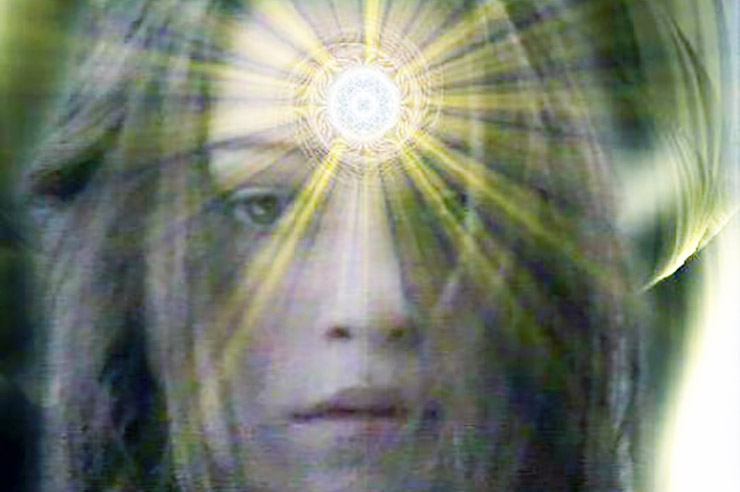
    Higher states of consciousness (HSCs) – or awakening experiences, as I prefer to call them – are moments of revelation, when we perceive reality at a heightened intensity. The world around us comes to life, and is filled with an atmosphere of harmony and meaning. A spirit-force seems to pervade all things, and the spaces between them, bringing everything into oneness.

    We experience ourselves as part of this oneness too, and feel ecstatic or serene. At the highest intensity of awakening, we might feel that we’ve become one with the universe, and attain a state of complete fullness and perfection. The whole material world may dissolve away, into an ocean of spiritual radiance.

    These experiences are sometimes associated with meditation, nature or psychedelic drugs, but what exactly is it that causes them? Why is it that the limits of our normal consciousness sometimes fall away, giving us access to a world of is-ness, beauty and meaning which is normally hidden from us?

    Neuroscientists generally believe that HSCs are caused by changes in brain activity. However, just because HSCs or awakening experiences appear to be associated with certain brain states, it doesn’t necessarily mean that the brain states produce the experiences. It could be the other way round – increased electrical activity in the frontal lobes, or less activity in the posterior superior parietal lobe, could just as easily be the result of higher states of consciousness rather than causes of them. These scientists may only be looking at the ‘footprints’ of the experiences, rather than the cause of them.

    My view is that there are two basic types of awakening experiences, which have two distinct causes. The first type are wild, ecstatic experiences that happen when the normal homeostasis of our brain and bodies is disrupted. This is a ‘loophole’ which human beings have made use of throughout history. This is why there has always been a link between fasting and spirituality, for example. A prolonged lack of food appears to make the hold which ordinary consciousness has over us looser, and bring us closer to an awakened vision of the world. Fasting puts us ‘out of homeostasis’ by causing physiological changes, such as a lower level of blood glucose, higher levels of insulin and a lower body temperature.

    Indigenous peoples often fast and deprive themselves of sleep as a preparation for rituals, dance and vision quests, using physical deprivation as a way of ‘purifying’ themselves. The Vision Quest was a spiritual exercise used by some Native American peoples as a way of building up spiritual power and communicating with spirits. The person would go to a solitary spot – often the top of a mountain – and stay there for up to four days, fasting and exposing themselves to the elements (usually wearing almost no clothes, even if the weather was cold). He or she would try to attain a state of complete attentiveness to their surroundings, since sacred powers might try to communicate with them at any moment. As a result, they might experience a higher state of consciousness (that is, higher than their normal low level higher state), with strong feelings of peace and a sense of connection to the natural world, and also be given special knowledge – such as a message or a new song or dance – from spirits.

    In ancient Greece and – at a later time – throughout the Middle East and the Roman Empire, a large number of esoteric cults existed outside conventional religions. These ‘mystery cults’ were usually centred around particular gods, but rather than just worshipping them, the participants aimed to become one with the gods, or to be possessed by them. They fasted and went without sleep before ceremonies, and used a variety of other methods of disrupting homeostasis during them: they would take drugs, beat themselves, and dance frenziedly, so that they might be – in the words of the ancient philosopher Proclus, who observed the mysteries at first hand – “filled with divine awe.”

    Pain can also be used as a way of inducing awakening experiences. We can see this in the long tradition of asceticism, for instance, which runs through all of the world’s religions and spiritual traditions. An ascetic is someone who deliberately denies his body’s needs, and inflicts pain and discomfort on himself, either through fasting, abstaining from sensual pleasures and comforts, or by physically beating or injuring himself. This sounds like sadism, and for some ascetics it probably was. It’s also likely that some ascetics were motivated by morbid self-hatred and neurotic feelings of guilt towards sex and other bodily processes, which made them want to punish themselves.

    It goes without saying that inflicting pain on yourself, or forcing yourself to go without sleep or food, are hardly ideal ways of transcending ordinary consciousness. Although some ascetics apparently managed to continue torturing themselves for years and even decades, there’s obviously a very high risk of seriously injuring yourself, or dying of self-neglect. Aside from the famous ascetics like St Simeon Stylites and Henry de Suso, there were probably many others who followed similar practices but didn’t live long enough to gain any recognition. As a short term spiritual technology asceticism is fairly futile anyway; you might gain a brief glimpse of a higher reality but this only lasts as long as the chemical changes that the pain and suffering have produced inside you. Your body always returns to homeostasis, and you always have to return your constricted normal consciousness.

    There must be easier ways of ‘disrupting the equilibrium’ than fasting, sleep deprivation or pain – and there are. If we know that all an ascetic is really doing by torturing himself is changing his normal chemistry, then surely, you might say, it’d be more sensible to just interfere with this chemistry directly – by taking drugs, for example, which would give us the same effect but wouldn’t involve any self-harm.

    Human beings have always used drugs as a means of intensifying or altering consciousness. The early Indo-European conquerors of India worshipped their drink Soma, which most scholars believe was made from magic mushrooms; while the initiates of the Greek Eleusinian mysteries used a psychoactive drink called kykeon. Indigenous peoples often use drugs for spiritual purposes too: Native Americans ingest sacred plants such as fly-agaric mushrooms and peyote, while the Australian Aborigines have a powerful form of tobacco called pituri. In the right circumstances – and the right state of mind – psychotropic drugs can, it seems, take our minds out of the ‘mould’ of ordinary consciousness, and give us access to wider and more intense realities.

    Intensifying Life-Energy

    The second type of awakening experiences are more serene and calm states which occur when our life-energy (or vitality) becomes more intensified. Normally there’s a continual outflow of our life-energy – it’s used up through mental activity (such as cognition, concentration and perception) and through our emotions and instincts. But sometimes, when we’re relaxed, fairly inactive and our minds are quiet, this outflow or energy decreases. Life-energy becomes concentrated inside us, which generates an awakening experience.

    This is why meditation often generates spiritual experiences. When we sit down to meditate, we take ourselves off the treadmill of daily tasks and activities for a while, and sit quietly and close our eyes, so that we don’t use up much life-energy through concentration and perception. Our ‘thought-chatter’ slows down too, and we normally become free of emotional activity and sexual desire. As a result, after meditation there is an inner concentration of our life-energy, it’s concentrated and intensified rather than dispersed and dissipated.

    We can see meditation is a conscious attempt to build up an intensification of life-energy and so generate awakening experiences, but there are many situations when this happens spontaneously. This is the reason why nature is such a powerful trigger for awakening experiences, for example. The beauty of nature may have a similar effect to a mantra in meditation, directing attention away from the chattering of the ego-mind. Cognitive activity may fade away, until life-energy intensifies, bringing a sense of inner peace and wholeness and heightened awareness of the phenomenal world.

    Sports can trigger awakening experiences too. This is particularly true of sports which involve long periods of monotonous rhythmic activity, such as long distance running or swimming. The activity itself serves as a focusing device, and quietens the chattering ego-mind. Similarly, the poet Ted Hughes often experienced a meditative state while fishing. He notes how poetry depends upon the ability to intensely focus the mind, and believes that he acquired this ability through fishing. He describes the effect of staring at a float for long periods: “All the nagging impulses that are normally distracting your mind dissolve… once they have dissolved, you enter one of the orders of bliss. Your whole being rests lightly on your float, but not drowsily, very alert.”

    This may also be part of the reason for connection between sex and spiritual states. The sheer pleasure of sex can shift our attention away from the ego-mind, which may fall silent as a result, bringing what D.H. Lawrence described as “the strange, soothing flood of peace which goes with true sex.” At the same time, sex may release new energy inside us, energy which is normally dormant but can arise and shoot through us like electricity.

    HD Versus ILE States

    As sources of awakening experiences, ILE (intensification of energy) states have certain advantages over HD (homeostasis disruption) states. The latter have more physical and psychological risks. Drug experiences (and other HD states) produce a powerful blast which immobilises the ego, and if this blast is regularly repeated the ego structure may dissolve, and never be able to re-form itself.

    In a sense, HD experiences are only really a shortcut too. It’s as if we’ve just stumbled on a defect in the mechanisms of consciousness, a kind of legal clause which gives us a quick and easy way of escaping ordinary consciousness, and are exploiting it. You could compare it to schoolchildren tricking their teacher into leaving the room so they can enjoy a few minutes of freedom while she’s away – but the teacher always comes back again, of course, and then everything goes back to normal. On the other hand, ILE states can bring about permanent change in a more organic and positive way. They can change the structure of the psyche without damaging it, and gradually create a new state of being, so that wakefulness becomes not just a temporary experience, but a permanent state.

    This isn’t to demean the importance of higher states of consciousness induced by drugs or other HD states. They can come as a bolt out of the blue, breaking through the familiar, taken-for-granted world and making us aware that higher realms of reality do exist. For some people, their first experiences of psychedelics might have the same effect as experiencing flashes of normal complete vision would have on a man who’s been partially blind all his life without realising it. The powerful transcendent reality they’ve been exposed to may also bring about a change in their personality, at least over the following months, and perhaps even years. It might make them more humble, less materialistic or egotistical, and give them a sense of security or hope, making them aware that the world is more meaningful and harmonious than they had believed.

    For many people, drug-induced awakening experiences have been the beginning of a spiritual journey, encouraging them to investigate Eastern spiritual traditions or more reliable and healthy consciousness-changing practices. This is what happened to the Harvard professor Richard Alpert, for example, who was one of the pioneers of research into psychedelics. He conducted experiments with psilocybin at Harvard University with Timothy Leary in 1962, and continued studying the effects of psychedelic even after he was expelled from the university. However, Alpert quickly became disillusioned with drugs, doubting that they could lead to permanent change, and travelled to India, where he learned yoga and meditation and took the name Ram Dass. He has spent the rest of his life exploring spiritual practices and teachings and spreading the wisdom he has found.

    On the other hand, using drugs as a spiritual technology may create a passive attitude, and a reluctance to make the long term disciplined effort which permanent transformation requires – as was the case with Ram Dass’ colleague Timothy Leary, whose pursuit of ‘chemical enlightenment’ degenerated into a life of self-indulgence. As the religious scholar Huston Smith put it, “Drugs appear to induce religious experiences: it is less evident that they can produce religious lives.”

    [alert type=”general” dismiss=”no”]This article was published in New Dawn 120.[/alert]

    [alert type=”success” dismiss=”no”]If you appreciate this article, please consider subscribing to help maintain this website.[/alert]

    © New Dawn Magazine and the respective author.
    For our reproduction notice, click here.
  • The Speed of Life: Why Time Seems to Speed Up and How to Slow it Down

    The Speed of Life: Why Time Seems to Speed Up and How to Slow it Down

    From New Dawn 104 (Sept-Oct 2007)

    I’m six years old, in the car with my parents and brother, travelling back from our annual two week holiday in Conwy, North Wales. It’s dark and the journey seems to take forever. I lie in the back seat, watching the orange streetlights and the houses pass by, and wonder if we’re ever going to get home.

    “Are we nearly there yet?” I ask my father.

    “Don’t be silly,” he says. “We only set off half an hour ago.”

    My mum plays the ‘Yes/No’ game and ‘Twenty questions’ with us to make the time pass faster. We listen to the radio for a while. Then I fall asleep. When I wake up it seems like I’ve been in the car for an eternity and I can’t believe we’re still not home.

    “Are we nearly there yet?” I ask again.

    “Not far now,” says my father.

    We play some more games and finally I recognise the streets of our suburb of Manchester. I feel bored and miserable and tell myself that I’m never going to spend as long in a car ever again.

    The journey from Conwy to Manchester took two hours when I was a child and still takes roughly two hours now (although slightly less due to improvements in roads). I made the journey again a few years ago and couldn’t believe how short it seemed now, from my adult perspective. Those two hours – which seemed like an eternity when I was 6 – were nothing. My girlfriend was driving, and we chatted, listened to tapes, watched the Welsh countryside give way to the urban sprawl of north-west England, and we were back in Manchester almost before we knew it. It was a little frightening – what had happened to all the time that two hours contained when I was six years old?

    A year or so ago I made another journey which gave me an indication of how much more quickly time is passing to me now. This was a 15 hour plane journey, from Singapore to Manchester, which also seemed to last forever. I’m not a very good flyer and it wasn’t a very good flight: we flew into two typhoons over India and it was rocky almost all the way. I hoped I’d be able to ‘kill’ some of the time by sleeping but it was impossible. Every time I drifted off my anxiety woke me up again. Failing that, I hoped I’d at least be able to make the time pass quickly by distracting myself with the in-flight entertainment or with books and magazines, but my mind stubbornly refused to move from the moment to moment reality of the situation. I was aware of every minute passing, and as a result time seemed to drag horribly. Every time I checked the clock – which was every few minutes or so – less time had gone by than I expected.

    My subjective sense of how long that journey took is, I realised recently, very similar to my sense of how long my childhood journey to Conwy took. To me they seemed to involve roughly the same amount of boredom and impatience and to last for roughly the same amount of time. This suggests that what was two hours to me as a child is equivalent to 15 hours to me as an adult – which means, rather frighteningly, that time is now passing around seven times faster than when I was a child.

    This story appears to fit with most people’s experience. Most of us feel that time moved very slowly when we were children and is gradually speeding up as we grow older. We’ve all remarked on it: how Christmas seems to come round quicker every year; how you’re just getting used to writing the date of the new year on your cheques and you realise that it’s almost over; how your children are about to finish school when it doesn’t seem long since you were changing their nappies…

    Questionnaires by psychologists have shown that almost everyone – including college students – feels that time is passing faster now compared to when they were half or a quarter as old as now. And perhaps most strikingly, a number of experiments have shown that, when older people are asked to guess how long intervals of time are, or to ‘reproduce’ the length of periods of time, they guess a shorter amount than younger people.

    We usually become conscious of this speeding up around our late twenties, when most of us have ‘settled down.’ We have steady jobs and marriages and homes and our lives become ordered into routines – the daily routine of working, coming home, having dinner and watching TV; the weekly routine of (for example) going to the gym on Monday night, going to the cinema on Wednesday night, going for a drink with friends on Friday night etc.; and the yearly routine of birthdays, bank holidays and two weeks’ holiday in the summer. After a few years we start to realise that the time it takes us to run through these routines seems to be decreasing, as if we’re on a turntable which is picking up speed with every rotation. As the French philosopher Paul Janet noted more than a hundred years ago:

    Whoever counts many lustra in his memory need only question himself to find that the last of these, the past five years, have sped much more quickly than the preceding periods of equal amount. Let any one remember his last eight or ten school years: it is the space of a century. Compare with them the last eight or ten years of life: it is the space of an hour.1

    This speeding up is probably responsible for the phenomenon which psychologists call ‘forward telescoping’: our tendency to think that past events have happened more recently than they actually have. Marriages, deaths, the birth of children – when we look back at these and other significant events, we’re often surprised that they happened so long ago, shocked to find that it’s already four years since a friend died when we thought it was only a couple of years, or that a niece or nephew is already ten years old when it only seems like three or four years since they were born.

    As one 83 year old man told me, “I can never guess how long ago things happened. People ask me things like ‘When did so and so get married?’ or ‘When did so and so die?’ and I’m always way out. If I say it was two years it turns out to be 5 years. If I say six months, it’s two years.” The same holds true for national and international events, like the deaths of famous people, natural disasters and wars: studies have shown that people usually date these too recently as well. And perhaps this is because time is speeding up as we get older. Time is moving more quickly than we think. It doesn’t seem like four years since a friend died or a baby was born, or since a famous person died, because during those four years time has been speeding up without you realising, making every month and year shorter than the one before.

    The Proportional and Biological Theories

    So why do we experience this speeding up of time?

    One popular answer is the ‘proportional’ theory, which suggests that the important factor is that, as you get older, each time period constitutes a smaller fraction of your life as a whole. This theory seems to have been first put forward in 1877 by Paul Janet, who suggested the law that, as William James describes it, “the apparent length of an interval at a given epoch of a man’s life is proportional to the total length of the life itself. A child of 10 feels a year as 1/10 of his whole life – a man of 50 as 1/50, the whole life meanwhile apparently preserving a constant length.”2 At the age of one month, a week is a quarter of your whole life, so it’s inevitable that it seems to last forever. At the age of 14, one year constitutes around 7% of your life, so that seems to be a large amount of time too. But at the age of 30 a week is only a tiny percentage of your life, and at 50 a year is only 2% of your life, and so your subjective sense is that these are insignificant periods of time which pass very quickly.

    There is some sense to this theory – it does offer an explanation for why the speed of time seems to increase so gradually and evenly, with almost mathematical consistency. One problem with it, however, is that it tries to explain present time purely in terms of past time. The assumption behind it is that we continually experience our lives as a whole, and perceive each day, week, month or year becoming more insignificant in relation to the whole. But we don’t live our lives like this. We live in terms of much smaller periods of time, from hour to hour and day to day, dealing with each time period on its own merits, independently of all that has gone before.

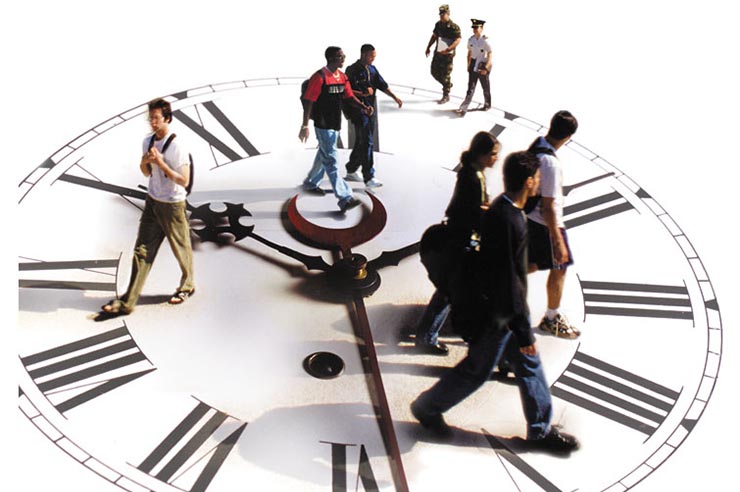
    There are also biological theories. One of these is that the speeding up of time is linked to how our metabolism gradually slows down as we grow older. Because children’s hearts beat faster than ours, because they breathe more quickly and their blood flows more quickly etc., their body clocks ‘cover’ more time within the space of 24 hours than ours do as adults. Children live through more time simply because they’re moving through time faster. Think of a clock which is set to run 25% faster than normal time – after 12 hours of normal time it has covered 15 hours, after 24 hours of normal time it has covered 30, which means that, from that clock’s point of view, a day has contained more time than usual. On the other hand old people are like clocks which run slower than normal, so that they lag behind, and cover less than 24 hours’ time against a normal clock.

    Also from a biological perspective, there is the ‘body temperature’ theory. In the 1930s the psychologist Hudson Hoagland conducted a series of experiments which showed that body temperature causes different perceptions of time. Once, when his wife was ill with the flu and he was looking after her, he noticed that she complained that he’d been away for a long time even if he was only away for a few moments. With admirable scientific detachment, Hoagland tested her perception of time at different temperatures, and found that the higher her temperature, the more time seemed to slow down for her, and the longer she experienced each time period. Hoagland followed this up with several semi-sadistic experiments with students, which involved them enduring temperatures of up to 65C, and wearing heated helmets. These showed that raising a person’s body temperature can slow down their sense of time passing by up to 20%. And the important point here may be that children have a higher body temperature than adults, which may mean that time is ‘expanded’ to them. And in a similar way, our body temperature becomes gradually lower as we grow older, which could explain a gradual ‘constriction’ of time.

    The Perceptual Theory

    However, in my view, the speeding up of time we experience is mainly related to our perception of the world around us and of our experiences, and how this perception changes as we grow older.

    The speed of time seems to be largely determined by how much information our minds absorb and process – the more information there is, the slower time goes. This connection was verified by the psychologist Robert Ornstein in the 1960s. In a series of experiments, Ornstein played tapes to volunteers with various kinds of sound information on them, such as simple clicking sounds and household noises. At the end he asked them to estimate how long they had listened to the tape for, and found that when there was more information on the tape (e.g. when there were double the number of clicking noises), the volunteers estimated the time period to be longer. He found that this applied to the complexity of the information too. When they were asked to examine different drawings and paintings, the participants with the most complex images estimated the time period to be longest.

    I have tested this myself with a simple experiment with music. During a course, I asked the participants to listen to two pieces of music. One was a mad, frenetic piano concerto by Rachmaninov, with notes cascading at a rate of about 10 per second. The other was a piece of ambient music by Brian Eno, which floated gently and sedately across the room. We listened to the pieces for different periods of time and I asked the participants to estimate how much time had passed. If time perception is related to information, they should have experienced more time for the Rachmaninov piece. It contains a lot more information than the Brian Eno piece – many times more notes, tones and different instruments. All of this extra information should have stretched time.

    And this is what the results showed. We listened to the Rachmaninov piece for 2 mins 20 secs, and the average estimate was 3 mins 25 secs. We listened to the Brian Eno piece for 2 minutes, while the average estimate was 2 mins 32 secs – still an over-estimate, but a lower one.

    And if more information slows down time, perhaps part of the reason why time goes so slowly for children is because of the massive amount of ‘perceptual information’ that they take in from the world around them. Young children appear to live in a completely different world to adults – a much more intense, more real and more fascinating and beautiful one. As the psychologist Ernest Becker writes, in childhood we experience a “vision of the primary miraculousness of creation,” and our perceptions of the world are “suffused… in emotion and wonder.” This is one of the reasons why we often recall childhood as a time of bliss – because the world was a much more exciting and beautiful place to us then, and all our experiences were so intense. Children’s heightened perception means that they’re constantly taking in all kinds of details which pass us adults by – tiny cracks in windows, tiny insects crawling across the floor, patterns of sunlight on the carpet etc. And even the larger scale things which we can see as well seem to be more real to them, to be brighter, with more presence and is-ness. All of this information stretches out time for children.

    However, as we get older, we lose this intensity of perception, and the world becomes a dreary and familiar place – so dreary and familiar that we stop paying attention to it. After all, why should you pay attention to the buildings or streets you pass on the way to work? You’ve seen these things thousands of times before, and they’re not beautiful or fascinating, they’re just… ordinary. As Becker describes it, we “repress” this intensity of vision. “By the time we leave childhood,” he writes, “we have closed it off, changed it, and no longer perceive the world as it is to raw experience.”3 Or as Wordsworth puts it in his famous poem ‘Intimations of Immortality’, the childhood vision which enabled to all things “apparelled in celestial light,” begins to “fade into the light of common day.”4 And this is why time speeds up for us. As we become adults, we begin to ‘switch off’ to the wonder and is-ness of the world, gradually stop paying conscious attention to our surroundings and experience. As a result we take in less information, which means that time passes more quickly. Time is less ‘stretched’ with information.

    Old and New Experience

    And once we become adults, there is a process of progressive ‘familiarisation’ which continues throughout our lives. The longer we’re alive, the more familiar the world becomes, so that the amount of perceptual information we absorb decreases with every year, and time seems to pass faster every year.

    There are two basic reasons why this happens. On the one hand, as we grow older there is progressively less newness in our lives. The life of a 20 year old woman is still full of new experiences. She’s still discovering new kinds of music, food, literature and other new hobbies and interests. She might be experiencing her first serious romantic relationship, learning to drive, flying and going abroad for the first time, discovering new towns or the countryside close to where she lives and so on. When she has these new experiences she is free of the de-sensitising mechanism; she perceives the ‘raw experience’ of the world and processes a large amount of perceptual information.

    The same person at the age of 30 might still be having a few new experiences. She might be having a baby, going abroad to another country she’s never been to before, learning a new language, or starting a new job. But by the time she reaches 40 the world contains much less unfamiliarity. Her life probably consists mainly of the repetition of experiences which she’s had hundreds or thousands of times before. She works at the job she’s had for the last 20 years, goes home to the same house she’s had for the last ten, devotes her free time to the same hobbies and interests she discovered when she was 20, goes away at weekends to the same countryside, to the same foreign country every year, and so on. Because of this the de-sensitising mechanism has a greater hold over her. She’s hardly ever free of it, which means that she absorbs much less perceptual information.

    But if this was the only reason why our perceptions become less fresh – and why time speeds up – as we get older, there wouldn’t be much difference between the time perceptions of a 40 and a 60 year old person. Most of us use up almost all of our ‘stock’ of new experience by the time we reach middle-age, and so there would be no real reason why time should appear to move faster for a person at these different ages. However, the second reason why our perceptions become less fresh is probably that as we get older all the experiences we’ve already had become more familiar to us. Not only do we have fewer new experiences, but the experiences which are already familiar to us become progressively less real. In William James’ words, “each passing year converts some of this experience into automatic routine.”5 As well as experiencing lots of new things, a woman at the age of 20 is still quite ‘fresh’ to the phenomenal world around her – but over the next 20 years, she’ll look at the same street scenes and the same sky and the same trees thousands of times, so that more and more of their realness will fade away.

    Incidentally, this link between time and information can explain other aspects of time too. One of the ‘laws’ of psychological time which I set out in my book Making Time is that “time seems to slow down when we’re exposed to new environments and experiences.” This is because the unfamiliarity of new experiences allows us to take in much more information. Another of the laws is that “time goes quickly in states of absorption.” This is because in states of absorption our attention narrows to one small focus and we block out information from our surroundings. At the same time there is very little ‘cognitive information’ in our minds, since the concentration has quietened the normal ‘thought chatter’ of the mind. On the other hand, time goes slowly in states of boredom and discomfort because in these situations our attention isn’t occupied and a massive amount of thought-chatter flows through our minds, bringing a massive amount of cognitive information.

    Get the issue this article appears in

    Slowing Down Time

    On the positive side though, if we know why time speeds up as we get older we aren’t powerless against it. If we know that this is caused by familiarity, then we make an effort to expose ourselves to as much newness in our lives as possible – not just new environments through travel (although this is very important), but new challenges, new situations, new information, ideas, hobbies and skills. As the expansion of time which we often experience when we go to foreign countries shows, newness and unfamiliarity stretch time. If we regularly expose ourselves to unfamiliarity, we can experience more time in our lives, and so effectively live for ‘longer.’

    If you spend all the years of your adult life doing the same job, living in the same house in the same area, doing the same things with the same people in your free time, then it’s inevitable that you experience a swift passage of time. But if you change jobs regularly, regularly travel to new places, keep investigating new ideas and giving yourself new challenges, time will pass more slowly to you. In this way, it’s possible for a person who dies before the age of 40 (like the French poet and explorer Arthur Rimbaud, who I wrote about recently in New Dawn) to live for ‘longer’ than a person who dies at the age of 80.

    A second way in which we can slow down time is by making a conscious effort to be ‘mindful’ of our experience. There are some people who seem to be as affected by familiarity than others, and see the world with something of the fresh, first-time vision of children all through their lives. These are the kind of people – sometimes seen as eccentrics by those around them – who often begin sentences with phrases like ‘Isn’t it strange that…?’ or ‘Have you ever wondered…?’ They’re the kind of people who might stop in the street to gaze up at a beautiful scene of the sun breaking through clouds or a silver moon above the rooftops; or they might stare intently at the sea, at flowers or at animals, as if they’ve never seen them before. Poets and artists often have this kind of ‘child-like’ vision – in fact it’s this that usually provides the inspiration for their work. They often have a sense of strangeness and wonder about things which most of us take for granted, and feel a need to capture and frame their more intense perceptions. These people will be less affected by the first time law of psychological time than others; time may well speed up for them, but perhaps not to the same degree.

    And in a sense, we can cultivate this attitude simply by making a conscious effort to be ‘mindful.’ Instead of focusing our attention on the ‘thought-chatter’ in our heads or on tasks or distractions like TV or computer games, we should try to live in the present, to give our attention to the experiences we’re having and to our surroundings. When you’re having a shower in the morning, for example – instead of letting your mind chatter away about the things you’ve got to do today or the things you did last night, try to bring your attention to the here and now, to really be aware of the sensation of the water splashing against and running down your body and the sense of warmth and cleanness you feel. Or on the way home from work on the bus or the train – instead of mulling over all the problems you’ve had to deal with at work or daydreaming about the attractive girl you met last night, focus your attention outside you; look at the sky, at the houses and buildings you pass, and be aware of yourself here, walking amongst them.

    Mindfulness means stopping thinking and starting to be aware, to live in the here and now of your experience instead of the ‘there and then’ of your thoughts. It stretches time in exactly the same way that new experience does: because we give more attention to our experience, we take in more information from it.

    In other words, to some extent we can control time. It doesn’t have to speed up as get older. Some of us try to extend our lives by keeping fit and eating healthy food, which is completely sensible. But it’s also possible for us to expand time from the inside, by changing the way we experience the moment to moment reality of our lives. We can live for longer not just in terms of years, but also in terms of perception.

    [alert type=”general” dismiss=”no”]This article was published in New Dawn 104.[/alert]

    [alert type=”success” dismiss=”no”]If you appreciate this article, please consider subscribing to help maintain this website.[/alert]

    Footnotes:

    1. Quoted in W. James, The Principles of Psychology, (New York: Dover Press, 1950) Chapter XV.
    2. Ibid.
    3. E. Becker, The Denial of Death, (New York: Free Press, 1973), p.50.
    4. W. Wordsworth, Poems, (London: Penguin, 1950), p.71.
    5. James, op.cit.

    © New Dawn Magazine and the respective author.
    For our reproduction notice, click here.

  • Satsang: The Power of Spiritual Presence

    Satsang: The Power of Spiritual Presence

    From New Dawn 101 (Mar-April 2007)

    Enlightened people are like spiritual dynamos: they have a very strong presence which touches the people they come into contact with, transmitting something of their enlightenment to them. Even people who aren’t at all “spiritual” usually feel a sense of well-being in their presence, and so feel attracted to them without knowing why. And for people who have made some spiritual progress already, the effect can be extremely powerful.

    Contact with an enlightened person may enable them to make the final “jump” to permanent enlightenment themselves. This is one of the reasons why many spiritual traditions place so much emphasis on the role of a guru. The guru is so important not just because of the advice and guidance he can give you, but because he can transmit his spiritual power to you, giving you a taste of enlightenment and speeding up your spiritual development. (In Sanskrit, this is called satsang, literally “good company.”)

    Paul Brunton and Ramana Maharishi

    The early 20th century author and spiritual teacher Paul Brunton became aware of this when he visited the ashram of the great sage Ramana Maharishi, while travelling around India in search of spiritual wisdom (as described in his book A Search in Secret India). Brunton knew that Ramana was a truly enlightened man the first time he met him, someone who had completely transcended his ego and become one with ultimate reality. He felt the spiritual effect of his satsang straight away. He sensed that “a steady river of quietness seems to be flowing near me, that a great peace is penetrating the inner reaches of my being.” While sitting near him, he realised that his mind was becoming more still, and suddenly all of the intellectual questions he’d had about spiritual matters no longer seemed important. The only question in his head now was, “Does this man, the Maharishee, emanate the perfume of spiritual peace as the flower emanates fragrance from its petals?”1

    At the end of his first visit to the Ashram, Brunton was sitting quietly while the sage was meditating. He felt a sense of awe building up inside him, as a powerful force started to fill the room, emanating from Ramana. Ramana opened his eyes and gazed at him and he felt that he was aware of his every thought and feeling. He felt that a telepathic current was passing between them, that Ramana was transmitting his deep serenity to him, and began to feel a sense of euphoria and lightness. He felt that his own being became one with Ramana’s, and that he had transcended all problems and all desires.

    After this, Brunton resumed his travels around India, meeting magicians and miracle workers and self-proclaimed gurus who are less enlightened than they claimed to be, and eventually returned to the Maharashi’s ashram. Again he experienced an “ineffable tranquillity” when sitting close to him, and again he experienced revelations which he was sure were “nothing else than a spreading ripple of telepathic radiation from this mysterious and imperturbable man.”2 And finally, after a period of wrestling with his own thoughts and his intellect, he had an experience of genuine enlightenment which changed him forever:

    I find myself outside the rim of world consciousness. The planet which has so far harboured me disappears. I am in the midst of an ocean of blazing light. The latter, I feel rather than think, is the primeval stuff out of which worlds are created, the first state of matter. It stretches away into untellable infinite space, incredibly alive.3

    Andrew Cohen and H.W.L. Poonja

    The American spiritual teacher Andrew Cohen had a similar experience when he first met the Indian teacher who became his guru, H.W.L. Poonja – who was, coincidentally (or perhaps not!), a direct disciple of Ramana. Cohen had had profound spiritual experiences before, but had spent many years feeling frustrated and disillusioned, yearning for spiritual liberation but being disappointed by a series of other teachers. Cohen asked Poonja whether it was important to make an effort in spiritual practice, and he replied, “You don’t have to make any effort to be free.” And at that moment Cohen experienced enlightenment:

    His words penetrated very deeply, I turned and looked out into the courtyard outside his room and inside myself all I saw was a river – in that instant I realised that I had always been Free. I saw clearly that I never could have been other than Free and that any idea or concept of bondage had always been and could only ever be completely illusory.4

    After this, Cohen spent three weeks with Poonja and found the liberation he’d been yearning for. After a week or so, he “surrendered” to his guru, let go of his own identity and everything which made up his life. He felt himself become one with Poonja, and began to experience “waves of bliss and love that at times were so strong that I felt my body wouldn’t be able to contain it.” And from that point on, although his initial euphoria faded a little, he had a constant sense of “being always in the present with much contentment and calm. I feel no desire for other than what IS.”5

    And now that he had attained moksha (freedom) himself, Cohen realised that other people were affected by his presence in the same way that he had been by Poonja’s. Friends who spent time with him found that they experienced a powerful sense of bliss and freedom too. He became a spiritual teacher, giving talks and holding retreats, and found that people were naturally drawn to him, and that around him they would “easily and often instantly… have profound realisations, insights into their true nature and powerful feelings of love, joy and bliss.”6

    My wife and I went to one of Andrew’s talks several years ago in Manchester, England, and for days afterwards Pam – my wife – felt like a different person. There was a feeling of freedom inside her, a sense that – in her words – “nothing mattered, that I didn’t have any problems. I didn’t want anything because I was happy as I was. My life was quite stressful at that point but suddenly none of the stress could affect me.” And she’s sure that this wasn’t so much because of what Andrew actually said but the effect of simply being there, in his presence.

    Russell Williams

    I was a little jealous because I didn’t have any of those feelings – at that time I was taking a more intellectual approach to spiritual matters, and was so busy trying to understand what Andrew was saying conceptually that I must have been shut off from the feeling dimension.

    A couple of years before then, I’d started to visit a spiritual teacher called Russell Williams, and also took a largely conceptual approach to his teachings. Russell – who I still go to see now – is 85 years old, and has been the president of the Manchester Buddhist Society for over 50 years, even though he’s not specifically a Buddhist. He doesn’t chant or meditate or read Buddhist scriptures, and doesn’t adhere to or promote any particular set of teachings. He’s a humble self-realised man, who talks about the most profound spiritual truths and the most intense spiritual states as if they’re the most simple and natural things.

    In my first years of going along to Russell’s twice weekly meetings, I used to wonder why most people didn’t seem to be paying attention to him. He was saying some of the most profound things I’d ever heard and people didn’t seem to be listening – they were just staring into space, or sitting with their eyes closed. They rarely asked questions, seeming content to let Russell be silent, when as far as I was concerned he was full of wisdom which I wanted to absorb.

    But about three years ago I began to realise why this was. Perhaps I’d changed, become less interested in the conceptual side of spirituality, or perhaps I’d finally completed a long process of getting attuned to the atmosphere at the meetings, but when I went there I started to experience very strange, pleasurable states of consciousness. Even when I’d been taking a conceptual approach, I’d often experienced feelings of peacefulness and well-being, which sometimes lasted for a couple of days afterwards. But this was something stronger.

    The first time it happened, I was staring at Russell while he was speaking to me, and began to feel very relaxed and calm, as if the flow of my life-energies was becoming smoother and lighter. And then, all of a sudden, everything became unfamiliar – the light became brighter, the colours began to merge and the distinctions between people and objects began to fade away. My main feeling, however, was of a powerful sense of strangeness – the scene was completely alien, as if I was suddenly on a different planet. Even though it was accompanied with a sense of exhilaration, I was a little scared and pulled away from it.

    Over the following months I had the same experience several times again, and I learned to relax and trust it. I let the sense of strangeness overcome me, as the light in the room became brighter and all objects began to shimmer and merge into one another. The light seemed to be flowing out and immersing everything in its brightness. The room was filled with this beautiful shimmering haze of golden light, and I was filled with a deep serenity, a glow of intense well-being filling my whole body. I could feel it flowing through my legs and my feet, as if I’d taken a sedative of some kind. And even when I didn’t have this particular experience at the meetings, I usually had a very powerful feeling of calmness and serenity inside. I was often aware that my breathing had slowed down dramatically, and when I left I found myself doing everything very slowly, with a natural mindfulness. My mind was still and quiet, and outside everything looked beautiful and alive.

    After a few months I was talking to one of the members of the group, and said to him, “I’ve been having really very strange experiences here over the past few months.” I tried to describe them, and he laughed and said, “So now you know why we’ve all been coming here for so long! Now you’re really a member of the society.”

    I still have these experiences now, and I’m certain that they’re the result of satsang, of being in the presence of an enlightened person. The experience of the scene becoming unfamiliar and the light becoming brighter usually only happens when Russell is talking directly to me. In these moments I can almost feel spiritual power radiating from him and flowing into me, feel my own life-energy being affected by his.

    The Sources of Satsang

    The big question is: why do enlightened people have this strange ability to generate spiritual experiences in others, this power to “transmit” their enlightenment to the people around them?

    Spiritual experiences induced by satsang strongly suggest that the esoteric concept of an “aura” has a basis in fact. They suggest that our being or life-energy isn’t just confined to our own mind or body – it radiates out from us, creating an atmosphere (or aura) which can affect the people we come into contact with. The auras of most people don’t appear to be particularly strong, or at least don’t have particularly strong negative or positive qualities, so that we don’t usually feel anything palpable from them. But we’ve all met certain people who we instinctively recoil from. We might not even exchange any words with them but they still fill us with a sense of unease or even fear or dread. These are people who have a strong “bad aura” around them, perhaps because their life-energy is heavily poisoned with negative emotions and egotism. But with enlightened people, of course, the exact opposite happens. Their life-energy is so intensified and stilled, and has such powerful positive qualities, that they “transmit” waves of calm and bliss to everyone around them.

    But spiritual experiences are more than just feelings – they are also experiences of vision, insight and revelation. And one of the most important aspects of satsang experiences, I believe, is that they show that spiritual illumination is also communicable. Feelings of bliss can certainly spread from person to person – and so can the vision of the oneness of the universe, the awareness that the essential reality of the universe is a limitless ocean of Spirit, and the experience of transcending the ego and being reborn as a deeper and higher Self. These experiences are completely transferable – under the right circumstances, they can be passed from an enlightened person to others without any loss of intensity.

    There are two basic types of spiritual experiences (in the sense I’m using the term). The first are ecstatic experiences caused by a disruption of the homeostasis of the human organism. These can occur as a result of fasting, sleep deprivation, drugs, breathing exercises, pain, dancing, and so on. All of these activities can put us “out of homeostasis” – by changing our body temperature, blood pressure or metabolic rate, causing dehydration and exhaustion or chemical changes – and when this happens there’s a chance that we’ll experience a higher state of consciousness. (Although this certainly doesn’t always happen, of course. Most of the time the only effect that depriving yourself of sleep and food often has is to make you feel miserably tired and hungry.)

    The second type of spiritual experiences are more serene and calm states which occur when there is an intensification and stillness of life-energy (or vitality) inside us. This can happen in any situation when we’re very relaxed, when there’s peacefulness around us, and when the mental chatter inside our heads fades away. In meditation, we make a conscious effort to intensify and still our life-energy by being inactive, by withdrawing our attention from the world around us, and by focusing on a mantra (or a candle flame or on our breathing or any other object) to slow down and quieten our mental chatter. As a result, meditation is probably the most effective way of generating spiritual experiences.

    However, they can also happen more spontaneously – in natural surroundings, for example, when there’s peacefulness around you and the beauty of nature has a similar effect to a mantra in meditation, focusing your attention and quietening your mental chatter. They often occur when people are listening to music or contemplating works of art. Certain sports are also very conducive to spiritual experiences, such as long-distance running or swimming. This is also probably part of the reason why spiritual experiences can occur during or after sex. The sheer pleasure of sex can have the effect of shifting our attention away from our ego-minds, which may fall silent as a result.

    Spiritual experiences caused by satsang clearly belong to this second type. Contact with an enlightened person has the effect of intensifying and stilling our life-energy. He or she gives us an extra input of energy – the “current” or “telepathic radiation” which Paul Brunton was aware of. At the same time, the sheer power of an enlightened person’s presence stuns the ego-mind into silence and brings our chattering thoughts to a halt. As a result, we attain the same state of inner stillness and intensified life-energy which we reach after periods of intense and very focused meditation.

    However, satsang isn’t just a phenomenon which can affect us as individuals; it also has an important bearing upon the concept of collective spiritual awakening. It’s now almost a cliché to state the human race as a whole may be on the threshold of an evolutionary jump, a collective shift to a higher level of consciousness which will give rise to a new era of true spirituality and harmony. Some people find this idea far-fetched – perhaps understandably so when you look at the state of the world today – but satsang experiences show us a process by which this transformation could occur. They show us that enlightenment is highly contagious.

    After all, it’s surely not just wholly enlightened individuals who affect the people around them. Anybody who has become spiritually developed to a degree will have some power to affect the people around them. And so it’s possible that a kind of positive cycle might take place – as more people become spiritually developed, they will “transmit” their insight and well-being to the people around them, who will in turn transmit their spirituality to the people around them, and so on. It may be that once a certain critical threshold has been reached – once a certain number of people have become enlightened, or once the collective spiritual power of the human race has built up to a certain degree – a great wave of spiritual illumination will spread through the world like a forest fire; a process of “spiritual transmission” building up power and intensity, and eventually leading to an Omega point of permanent change.

    This may still sound like wishful thinking – but then again, the experience of satsang itself is miraculous, showing that our apparent individuality is an illusion, and that we are parts of an indivisible ocean of consciousness.

    [alert type=”general” dismiss=”no”]This article was published in New Dawn 101.[/alert]

    [alert type=”success” dismiss=”no”]If you appreciate this article, please consider subscribing to help maintain this website.[/alert]

    Footnotes:

    1. Paul Brunton, A Search in Secret India, London: Rider, 1934/1972, p. 141.
    2. Ibid., p.280.
    3. Ibid., p. 305.
    4. Andrew Cohen, Autobiography of an Awakening, Corte Madera, CA: Moksha Press, p. 30.
    5. Ibid., pp.34-5.
    6. Ibid., p.35.

    © New Dawn Magazine and the respective author.
    For our reproduction notice, click here.
  • Before the Fall: Evidence for a Golden Age

    Before the Fall: Evidence for a Golden Age

    From New Dawn 95 (Mar-Apr 2006)

    If you asked them what life was like in prehistoric times, most people would conjure up an image like the famous opening scenes of 2001: Space Odyssey – groups of hairy savages grunting and jumping around, foaming at the mouth with aggression as they bash each over the heads with sticks. We take it for granted that life was much harder then, a battle to survive, with everyone competing to find food, struggling against the elements, men fighting over women, and everyone dying young from disease or malnutrition.

    A whole branch of “science” has grown up around this view of the human race’s early history. This is a relatively new discipline of evolutionary psychology, which tries to explain all of the negative sides of human nature as “adaptations” which early people developed because they had some survival value. Evolutionary psychologists explain traits like selfishness and aggression in these terms. Life was such a struggle that only the most selfish and aggressive people survived and passed on their genes. The people with gentle and peaceful genes would have died out, simply because they would have lost out in the survival battle.

    Evolutionary psychologists see racism and war as “natural” too. It’s inevitable that different human groups should be hostile to one another, because once upon a time we were all living on the edge of starvation and fighting over limited resources. Any tendency to show sympathy for other groups would have reduced our own group’s survival chances.

    But fortunately we don’t have to believe any of this crude nonsense. There is now a massive amount of archaeological and anthropological evidence which suggests this view of the human race’s past is completely false. Life for prehistoric human beings was far less bleak than we might imagine.

    Take the view that life was a “struggle to survive.” The evidence suggests that the lives of prehistoric human beings were a lot easier than those of the agricultural peoples who came after them. Until around 8000 BCE, all human beings lived as hunter-gatherers. They survived by hunting wild animals (the man’s job) and foraging for wild plants, nuts, fruit and vegetables (the woman’s job). When anthropologists began to look at how contemporary hunter-gatherers use their time, they were surprised to find that they only spent 12 to 20 hours per week searching for food – between a third and a half of the average modern working week! Because of this, the anthropologist Marshall Sahlins called hunter-gatherers “the original affluent society.” As he noted in his famous paper of that name, for hunter-gatherers, “The food quest is so successful that half the time the people do not seem to know what to do with themselves.”1

    Strange though it may sound – the diet of hunter-gatherers was better than many modern peoples’. Apart from the small amount of meat they ate (10-20% of their diet), their diet was practically identical to that of a modern day vegan – no dairy products and a wide variety of fruits, vegetables, roots and nuts, all eaten raw (which nutrition experts tell us is the healthiest way to eat.) This partly explains why skeletons of ancient hunter-gatherers are surprisingly large and robust, and show few signs of degenerative diseases and tooth decay. As the anthropologist Richard Rudgley writes, “We know from what they ate and the condition of their skeletons that the hunting people were, on the whole, in pretty good shape.”2

    The hunter-gatherers of Greece and Turkey had an average height of five feet ten inches for men and five feet six for women. But after the advent of agriculture, these had declined to five feet three and five feet one. An archaeological site in the lower Illinois Valley in central USA shows that when people started cultivating maize and switched to a settled lifestyle, there was an increase in infant mortality, stunted growth in adults, and a massive increase in diseases related to malnutrition.

    Hunter-gatherers were much less vulnerable to disease than later peoples. In fact, until the advances of modern medicine and hygiene of the 19th and 20th centuries, they may well have suffered less from disease than any other human beings in history. Many of the diseases which we’re now susceptible to only actually arrived when we domesticated animals and started living close to them. Animals transmitted a whole host of diseases to us which we’d never been exposed to before. Pigs and ducks passed the flu on, horses gave us colds, cows gave us the pox and dogs gave us the measles. And later, when dairy products became a part of our diet, we increased our exposure to disease even more through drinking milk, which transmits at least 30 different diseases. In view of this, it’s not surprising that with the coming of agriculture, people’s life spans became shorter.

    The transition from a nomadic hunter-gatherer way of life to a settled agricultural one began in the Middle East at around 8000 BCE, spreading into Europe and Asia over the following millennia (and developing independently in some places). Many of the world’s cultures have myths that refer to an earlier time when life was much easier, and human beings were less materialistic and lived in harmony with nature and each other. In ancient Greece and Rome this was known as the Golden Age; in China it was the Age of Perfect Virtue, in India it was the Krita Yuga (Perfect Age); while the Judeo-Christian tradition has the story of the garden of Eden. These myths tell us that, either as a result of a long degeneration or a sudden and dramatic “Fall,” something “went wrong.” Life became much more difficult and full of suffering, and human nature became more corrupt. In Taoist terms, whereas the earliest human beings followed the Way of Heaven and were a part of the natural harmony of the Universe, later human beings became separated from the Tao, and became selfish and calculating.

    Many of these myths make clear references to the hunter-gatherer way of life – for example, the Greek historian Hesiod states that during the Golden Age “the fruitful earth bore [human beings] abundant fruit without stint,” while the early Indian text the Vaya Purana states that early human beings “frequented the mountains and seas, and did not dwell in houses” (i.e. they lived a non-sedentary way of life). The garden of Eden story suggests this too. Originally Adam and Eve ate the fruit from the tree of knowledge, until they were forced to leave the garden and forced to “work hard and sweat to make the soil produce anything.” It appears that, at least in part, these myths are a kind of “folk memory” of the pre-agricultural way of life. The agricultural peoples who worked harder and longer, had shorter life spans and suffered from a lot more health problems must have looked at the old hunter-gatherer way of life as a kind of paradise.

    Warfare and Social Oppression

    There are other significant reasons why these peoples would have seen earlier times as a Golden Age. There is a great deal of evidence suggesting that prehistoric human beings were much less war-like than later peoples. Archaeological studies throughout the world have found hardly any evidence of warfare during the whole of the hunter-gatherer phase of history. There are, in fact, just two indisputable cases of group violence during all of these tens of thousands of years.

    A cluster of sites around the Nile Valley show some signs of violence from around 12,000 BCE. The site of Jebel Sahaba, for instance, has a grave containing the bodies of over 50 people who apparently died a violent death. And in south-east Australia, there are some signs of inter-tribal fighting – as well as of other kinds of social violence such as the cranial deformation of children – at several different sites dating from 11,000 and 7000 BCE. Lawrence Keeley’s book War Before Civilisation suggests several other examples of prehistoric violence and warfare, but all of these are dubious, and have been dismissed by other scholars. For example, Keeley sees cut marks on human bones as evidence of cannibalism, when these are more likely to be the result of prehistoric funeral rituals of cleaning bones of their flesh. He also interprets highly abstract and stylised drawings in caves in Australia as depicting battles, when they are open to wide variety of other interpretations. In this way, as the anthropologist R. Brian Ferguson remarks, Keeley’s “rhetoric exceeds his evidence in implying war is old as humanity.”3

    The lack of evidence for warfare is striking. There are no signs of violent death, no signs of damage or disruption by warfare, and although many other artefacts have been found, including massive numbers of tools and pots, there is a complete absence of weapons. As Ferguson points out, “it is difficult to understand how war could have been common earlier in each area and remain so invisible.” Archaeologists have discovered over 300 cave prehistoric “art galleries,” not one of which contains depictions of warfare, weapons or warriors. In the words of the anthropologist Richard Gabriel, “For the first ninety-five thousand years after the Homo sapiens Stone age began [until 4000 BCE], there is no evidence that man engaged in war on any level, let alone on a level requiring organised group violence. There is little evidence of any killing at all.”4

    There seems to have been equality between the sexes in prehistoric times too. The fact that women provided so much of the tribe’s food strongly suggests they had equal status, since it’s difficult to see how they could have low status while performing such an important economic role. The healthy, open attitude ancient hunter-gatherers had to the human body and to sex – shown by the massive numbers of sexually explicit images and objects archaeologists have discovered – suggests this too, since the oppression of women appears to be closely linked to a sense of alienation from the human body, and a negative attitude to instincts and bodily processes.

    Contemporary indigenous peoples are sexually egalitarian too. Before European conquest and colonisation, many of them traced descent and ownership of property through the mother’s rather than the father’s side of the family. And as the anthropologist Tim Ingold notes, in “immediate return” hunter-gatherer societies (that is, societies which live by immediately using any food or other resources they collect, rather than storing them for later use), men have no authority over women. Women usually choose their own marriage partners, decide what work they want to do and work whenever they choose to, and if a marriage breaks down they have custody rights over their children.5

    In prehistoric societies there were no status differences between individuals either. There were no different classes or castes, with people who had more power and possessions than others. For archaeologists, the most obvious signs of social inequality are differences in graves, in terms of size, position and the goods which are placed inside them. Later agricultural societies have larger, more central graves for more “important” people, which also have a lot more possessions inside them. Men generally have more “important” graves than women. But the graves of the ancient hunter-gatherers are strikingly uniform, with little or no size differences and little or no grave wealth.

    Almost all contemporary hunter-gatherers show a striking absence of any of the characteristics that we associate with social inequality. The anthropologist James Woodburn speaks of the “profound egalitarianism” of immediate-return foraging peoples and emphasises that no other way of human life “permits so great an emphasis on equality.”6 Foraging peoples are also strikingly democratic. Most societies do operate with a leader of some kind, but their power is usually very limited, and they can easily be deposed if the rest of the group aren’t happy with their leadership. People don’t seek to be leaders – in fact if anybody does show signs of a desire for power and wealth they are usually barred from consideration as leaders. And even when a person becomes a leader, they don’t have the right to make decisions on their own. Decisions are made in co-operation with other respected members of the group.

    Get the issue this article appears in

    The Ego Explosion

    All of this strongly argues against the idea that prehistoric human beings were brutes whose only concern was survival, and whose lives were full of cruelty and conflict, as men competed against each other for status and food and sex. Warfare, social oppression and male domination – and an existence that was “nasty, brutish and short” – belong to a later phase of human history. Evidence from artwork, cemeteries and battle sites suggests there was an “eruption” of these social pathologies during the fourth millennium BCE, starting in the Middle East and central Asia. The root cause of this change seems to have been environmental. Around this time massive areas of land which had been fertile for thousands of years started to turn into desert. This happened all over the Middle East and central Asia, creating the massive belt of arid or desert land which runs across from the Steppes of southern Russia to the Arabian and Iranian deserts. The groups who lived in the area – including the original Indo-Europeans and Semites – were forced to flee and look for new fertile lands, causing massive waves of migrations.

    This environmental disaster seems to have changed the psyche of these peoples. Whereas before they had been peaceful and egalitarian, now they became aggressive, hierarchical and patriarchal. Over the following centuries they spread over Europe, the Middle East and Asia, killing and conquering the peaceful “Old World” peoples they came across, including the civilisation of Old Europe (which was reconstructed by the archaeologist Marija Gimbutas). By 500 BCE, these peoples had more or less completely conquered the whole of Eurasia, leaving only a few indigenous peoples such as the Laplanders of Scandinavia, the tribal peoples of Siberia, and the indigenous peoples of the forests and hills of India. In mainland Europe the only surviving non-Indo-European indigenous peoples were the Basque people of northern Spain (who amazingly still survive today) and the Etruscans of Italy, who were soon to be wiped out by the Romans.

    In my book The Fall, I try to explain how these people were (and are) different from the peaceful peoples who came before them. My theory is that the environmental catastrophe (the drying up of their fertile lands) caused an “Ego Explosion.” These peoples developed a stronger and sharper sense of identity, or of individuality, which made them feel more separate to nature and to other people, and more liable to be aggressive and to lust after power and status. We – modern day Eurasians – are the descendents of these peoples, and we have inherited their strong sense of ego. This is still the main difference between us and indigenous “unfallen” peoples such as the Native Americans, Australian Aborigines and the peoples of Oceania, and the reason why they have a much more respectful attitude to nature than us, and a more spiritual vision of the Universe. Our strong sense of ego “walls us off” from other people and nature, makes us unable to sense the alive-ness of the world around us, and may ultimately be responsible for our extinction as a species.

    However, there are some signs that, as a culture, we are slowly transcending the “fallen” psyche, and going beyond our ego-separateness. Over the last 300 years or so, there has been a new spirit of empathy growing, which has led to less cruel treatment of children and animals, less severe punishments for criminals, the women’s movement, the abolition of slavery, the socialist movement, a new respect for nature, a more open and healthy attitude to sex and the human body and so on. And there has been a new sense of the sacred and of the possibility of self-transcendence, which has led to a massive upsurge of interest in esoteric/spiritual philosophies and practices like paganism, shamanism, Buddhism, meditation and so on.

    There are signs that we are reconnecting with nature, regaining our sense of the aliveness of the world and of the hidden mysteries of the cosmos. The characteristics of the prehistoric golden age may be slowly re-emerging. The only question is whether there is enough time left for these characteristics to emerge fully, before the old “fallen” psyche leads us to self-destruction.

    The idea that human history is a gradual but continual progression – starting from a state of savagery, with generations slowly making technological and social advances and passing these down, and leading to the pinnacle of western European civilisation – is a leftover from the Victorian era, part of the same colonial mentality which saw “primitive” indigenous peoples as subhumans who could be justifiably conquered and killed. Rather than a progression, the last 6000 years of war, oppression, misery and hardship are the result of a painful degeneration from an earlier, healthier state. We may finally be moving forward now – but only in the sense of turning a full circle, and rekindling glimmers of ancient harmony.

    [alert type=”general” dismiss=”no”]This article was published in New Dawn 95.[/alert]

    [alert type=”success” dismiss=”no”]If you appreciate this article, please consider subscribing to help maintain this website.[/alert]

    Footnotes:

    1. Sahlins, M. (1972). Stone Age Economics. New York: Aldine de Gruyter,. p.36.
    2. Rudgley, R. (2000). Secrets of the Stone Age. London: Random House, p. 36.
    3. Ferguson, R.B. (2000). ‘The Causes and Origins of Primitive Warfare.’ Anthropological Quarterly, 73.3, 159-164, p.159.
    4. Gabriel, R. (1990). The Culture of War: Invention and Early Development. New York: Greenwood Press, p. 21.
    5. Ingold, T., Riches, D. & Woodburn, J. (Eds.). (1988). Hunters and Gatherers, Volume 2: Property, Power and Ideology. Oxford: Berg.
    6. Woodburn, J. (1982). ‘Egalitarian Societies.’ Man, 17, 431-51, p.432.

    © New Dawn Magazine and the respective author.
    For our reproduction notice, click here.