New Dawn – World's Most Unusual Magazine

Category: Health/Wellness

  • Living Chi & Feng Shui

    Living Chi & Feng Shui

    The ancient Chinese knew that connection with the living Chi (also spelled Ki or Qi) around them can help them find their place, meaning and purpose in a dynamic, ever changing world. In these modern times we can also stay whole despite the fractured times. We do have a saving grace, in the Chinese Taoist concept that Life is full of immense possibilities. The Taoists were devoted to the spiritual holistic world view in the essential nature of things and the Way of Nature.

    30 years ago the thought of sticking needles in certain parts of the body to help it heal and repair itself was considered laughable in the West. Now you can get a medical refund for acupuncture services. Any skeptics who try to explain its benefits away on the basis of a “placebo” effect are hard put to explain why acupuncture is enjoying equal success in the veterinary field. After all, why should an animal believe that it should get better because someone has gone to the trouble of sticking a needle in a particular point?

    Other Chinese practices such as acupressure and exercise systems such as Tai Chi have also become mainstream activities. All of these practices have one thing in common: they are based on the harmonisation and regulation of Chi energy.

    Chi is often referred to as “life” energy, which can be somewhat misleading as one could then think this energy is only involved with living things. The term “animating” energy is much better as the Chinese maintain that all movement and transformation that occurs within the universe requires Chi.

    In a sense Chi is the Chinese solution to the Grand Unified Theory that we are searching for in the West. It is the name given by the Chinese to the primal energy that underlies all activity and change. We can experience the effects of this energy in various ways which we describe as heat, light, sound, gravity, time, electricity, magnetism, etc.

    Chi lies at the heart of another Chinese practice that is becoming more and more popular in the West – Feng Shui. (Feng means wind, Shui means water – in Chinese terms wind carries and disperses energy while water attracts and collects it). Whereas acupuncture, Tai Chi and the Chinese practices referred to above deal with the attempt to read, understand and regulate Chi within the human body, Feng Shui is the complementary practice dealing with the reading, understanding and regulation of Chi within the external environment.

    When the theory of Chi flowing through a series of channels or meridians first emerged in the West it was immediately derided on the basis of where was the proof? Could anyone demonstrate the existence of these meridians and show they flowed one way rather than another? How could anyone prove what influenced the flow of Chi in a meridian and even if it did, what effect this would have on the body.

    Fortunately there was a considerable body of knowledge that had been written down, particularly about the behaviour of Chi in terms of yin and yang and the five elements. Practitioners who claimed “revealed” knowledge (whether from ancient master-student lineage or more recent spiritual connections) could be called into question when what they were saying was clearly inconsistent with this established body of knowledge.

    Today of course we can measure the electro-potential changes that identify the existence of acupoints. We can trace the passage of radio-isotopes as they follow meridian pathways throughout the body and, using the latest brain-scanning technology, we can measure location and changes in electrical activity that occur in the brain as different acu­points are stimulated. In a hundred different ways modern technology has confirmed the traditional knowledge while never overturning it.

    Understanding of Feng Shui is now at about the same stage in the West as internal Chi theory was about 25 years ago. There are lots of claims for success but not a lot of proof about the mechanisms by which Feng Shui works. This is not to say that such proofs will not emerge over time as they did for internal Chi theory but it can leave us confused about Feng Shui. Should we believe everything we are told? And, if we are told different, contradictory things, how can we tell what is right?

    The essence of Feng Shui is the idea that the health of a person is influenced by the environment they live in. This fact is so self-evident in every day experience that I don’t think you would find anyone who would dispute this. But let’s see where this point of common agreement takes us. When we refer to “external environment” we tend to think of things rather than energy – but this is just cultural conditioning. (You might say that the Chinese are always talking about mountains, rivers and lakes too, but this misses the point that to the Chinese it is the nature of underlying energy that these mountains, rivers and lakes represent that is important.)

    Think, what generally concerns you about the environment where you work and rest? How hot or cold you are? Whether the place is excessively noisy or quiet? Do you accept these things will affect your health? Do you think your productivity and creativeness suffer when temperature and noise become extreme? Do your relationships work as well in such environments? Do you sleep as well? If not what does that do to you the next day?

    So without being overly presumptuous we can say with some confidence you probably accept as a matter of course that the energy in the environment that you live and work in impacts strongly on the important things in your life. Your health, productivity (at work or at home), relationships and creativity. You also probably recognise that as these things suffer so does your financial health and quality of life.

    So you buy heaters and fans and use them to maintain appropriate levels of heat. You put up blinds and curtains on your windows and have lights and lamps in your house to regulate the levels of light. You might double-glaze your windows to prevent sound or put in trees, bushes and walls to screen noise. Then you have been practicing a very elementary level of Feng Shui albeit in an ad hoc uncoordinated fashion.

    “Whoa!” I can almost hear you say, isn’t Feng Shui about mountains and rivers, about locating white tigers and green dragons, about dragon veins, compass directions and strange astrologic and numerological calculations? The answer is not difficult but needs to be broken down into a number of parts:

    First, do not confuse the objective of Feng Shui with some of the methodologies used. The objective of Feng Shui is simply to make the energy of our external environment supportive to health and quality of life. There are a number of approaches varying from the common sense and the scientific to the mystic and spiritual – you can use what you are comfortable with. In our society today we have both scientist and priest, some believe science and religion are exclusive, some find no problem in reconciling these worldviews.

    When you practice Feng Shui you can take the same approach, accept it all, or reject the scientific or mystic aspects. In the Feng Shui Academy we take the scientific approach but rather than rejecting other aspects put them into an “as yet unproven” basket. In doing this we build on our experience from our study of Chi in the internal arts knowing they function quite well without having to resort to mystic or spiritual aspects. Please note that the statement is “without having to.”

    Internal Chi arts such as Qigong (energy circulation techniques), can make use of mystic and spiritual techniques and perhaps when used in this way they can result in more success and higher quality lives. It is an individual matter.

    Second, remember that the words and images used in any practice from different cultures and times often simply reflect the words and imagery that were available to communicate concepts in that culture at that time. If the same concepts are to be successfully communicated in a different time and culture the words and imagery may need to be reinterpreted.

    Before we get carried away with our own cultural superiority we might reflect on the fact of how many of us still have an image of the atom as being like a miniature solar system. This outdated (and largely wrong!) image of the atom is, nevertheless, still a useful image for introducing the concept of the atom for those who cannot visualise the atom in non-physical mathematical terms. There just aren’t any solid lumps in an atom!

    There are a number of reasons we would like to advocate the approach to Feng Shui of only accepting what can be proven but being open minded enough to experiment with the remaining techniques. These include:

    Our firm belief that people will not only benefit from even limited experience with Feng Shui but that “a journey of ten thousand miles” does indeed start with the first step.

    Like health, the prime responsibility for Feng Shui lies with the individual. You might call on the doctor when you are sick or for a check up. It is your lifestyle – your diet and the exercise you get that will have the greatest impact on your health and quality of life. In the same way it is what you do on a day to day basis about your energetic environment that counts. Become sensitive and attentive to your environment and your Feng Shui health will tend to take care of itself.

    Such an approach is the best protection from becoming a victim of the “fear and greed” approach to Feng Shui that can otherwise develop. Most practitioners of Feng Shui are honest dedicated people who can do much to benefit their clients. Some, however, drum up business by either:

    • Terrifying their clients about the doom and disaster that will stalk them if they don’t rush out and take the (not inexpensive) advice of the Feng Shui consultant.
    • Promising a life of indolence and riches for the person who follows the advice of the Feng Shui consultant (makes you wonder why they have to charge fees at all!)

    Learning to regulate the Chi of your external environment is a valuable living skill that can significantly impact on the quality of your life. You can use either a mystic or common sense approach to Feng Shui with beneficial effects. Effort and luck almost always play a greater role in life than Feng Shui.

    This is not to say Feng Shui isn’t very important but that it should be placed in perspective. It relates to just one aspect of life, the energetic influence of the external environment, and it must be used in balance with other living skills. Devoting oneself to maintaining one’s internal health while ignoring the influence of the external environment is as silly as thinking you can ignore diet and exercise as long as you practice Feng Shui.
    [alert type=”general” dismiss=”no”]This article was published in New Dawn 96.[/alert]
    [alert type=”success” dismiss=”no”]If you appreciate this article, please consider a contribution to help maintain this website.[/alert]

    © New Dawn Magazine and the respective author.
    For our reproduction notice, click here.

  • Modern Medicine: The New World Religion

    Modern Medicine: The New World Religion

    From New Dawn 99 (Nov-Dec 2006)

    East Asia and possibly South Asia have strong traditions that offer insight into Western medical and scientific follies, but many parts of the developing world are much more vulnerable. The French author, Olivier Clerc, in his 2004 publication, Modern Medicine: The New World Religion has exposed the complex and confused mix of Christian and Enlightenment forces unleashed on many communities without effective traditional spiritual and scientific defences.

    It is perhaps no accident that Clerc comes from a nation that, like those of East Asia, has sought ways to defend traditional agricultural and food cultures from the dictates of Anglo-American free trade and market forces. France is also a nation with a uniquely strong administrative tradition capable of exercising authority over corporate interests.

    Clerc offers a unique and powerful insight into the way in which contemporary life and thought in developing nations have been perverted by a wicked mix of the power of corporate marketing, the mystique of science and the superstition of religion. He shows how illusion operates at many levels in society and how medicine and religion become entangled and almost inseparable in popular faith.

    The following summary is derived from an outline on the web of Clerc’s book. He shows that illusion and faith are central qualities of Western civilisation, which are distinguished with difficulty. They are capable of destroying spiritual and health wisdom wherever they are found.

    Clerc remarks on how Christian missionaries of the last three or four centuries sought to evangelise ‘primitive people’ by destroying or burning the various cult objects of these people in order to eradicate their religions, superstitions and customs.

    Yet, whether it was conquistadors stamping out Inca culture, the Inquisition stamping out European heresies, or Christian missionaries stamping out Voodoo or other African and Asian religions, the destruction of objects of worship did not prevent the continuation of strongly rooted inclinations, albeit with different qualities.

    Clerc shows that the supposed secularisation of present day society is also just an illusion, with the beliefs and superstitions of Judeo-Christian culture remaining deeply embedded in the modern Western subconscious, becoming identified with many secular aspects of daily lives without people realising it.

    The daily evening television news bulletins, the stars of show-business and sport, humanitarian associations, cults and all sorts of other things in modern life have become the new gods that are venerated or feared. The field of medicine, however, most displays this unconscious transposition of the religious experience and enjoys an astonishing degree of undeserved credit out of all proportion to its actual results.

    While real health regresses and great medical ‘miracles’, such as vaccines and antibiotics, display their limitations, medicine and science have replaced religion as the only certain belief in an uncertain world. Doctors and scientists are seen as the priests of the new religion, delivering through the certainties of science what the old discredited gods were not able to deliver.

    If we can no longer believe in the miracles, the cures and the curses of the old religions, we can certainly believe in the miracles, the cures and the destructive powers of the new science.

    Medicine, like religion, has taken on a saving or messianic role, with qualities that have often characterised the Roman Catholic Church, such as autocracy, centralisation, the control and manipulation of people, censorship, propaganda, total obedience, infallibility, the destruction of heretics and the stamping out of individuality. All has been done for public health and the general good, just as the church acted for mankind’s salvation.

    People, whether within the medico-pharmaceutical industry or outside it, are being subconsciously influenced by deeply rooted myths, fears and superstitions, projected onto the new screens of science and medicine.

    Although medicine sees itself as exclusively scientific and rational with no room for spiritual or human dimensions (such as psychic healers or shamans who are dismissed as charlatans), it organises itself and functions in a way that is intrinsically religious. But, by rejecting a spiritual dimension medicine in fact becomes the toy of the forces and myths it tries to ignore and cannot control.

    Clerc holds that, even though Western society considers itself to be secular, it has remained as Christian as it was a century ago but with two major differences.

    Firstly, it is not aware of it. It fails to recognise that it is still observing the old religious rituals but under a new guise. Secondly, society now lives its religious experiences through secular forms – medical ones in particular – and has transferred its hopes and aspirations from the spiritual world to the material.

    Western medicine has sought to become the new world religion. The specific myths, beliefs and rites of Christianity have been projected over medicine since Pasteur. Physicians have taken the place of priests. Vaccination plays the same initiatory role as baptism and is accompanied by the same threats and fears. The search for health has replaced the quest for salvation.

    The fight against disease has replaced the fight against sin. Eradication of viruses has taken the place of exorcising demons. The hope of physical immortality (cloning, genetic engineering) has been substituted for the hope of eternal life. Pills have replaced the sacrament of bread and wine. Donations to cancer research take precedence over donations to the church. A hypothetical universal vaccine could save humanity from all its illnesses, as the Saviour has saved the world from all its sins.

    The medical power has become the government’s ally, as was the Catholic Church in the past. ‘Charlatans’ are persecuted today as ‘heretics’ were yesterday. Dogmatism rules out promising alternative medical theories. The same absence of individual responsibility is now found in medicine, as previously in the Christian religion.

    Patients are alienated from their bodies, as sinners used to be from their souls. People are still being manipulated by their fears and childish hopes. They are still told that the source of their problems is outside them and that the solution can only come from the outside.

    They are not allowed to do anything by themselves and they must have the mediation of priest-physicians, the administration of drug-hosts, and the protection of vaccine-absolutions. In other words, the secularisation of society happened only on the surface.

    Behind the different structures of medicine and the Church of Rome we find the same fundamental concepts, the same relationships, the same characteristics, the same fears, the same hopes and expectations.

    This substitution of medicine for religion has many unfortunate consequences.

    In medical research, it influences what should be looked for and what can be discovered. Any discovery or theory that is at odds with the overarching orthodoxy is rejected and its authors called heretics. Entire areas of research, as well as promising new lines of approach, are thus disqualified.

    Furthermore, the unconscious need to bring the medical world into ‘religious’ obedience frequently leads to (involuntary) falsifications of results, as became clear with Pasteur’s discoveries. The medical credo takes precedence over reality, which remains unacknowledged if it does not correspond with preconceived ideas.

    Lastly, the hidden religious dimension of modern medicine inhibits the free debating of already fixed beliefs. Dogmatism, irrationality and passions – all characteristic of the religious experience – take precedence over calm and carefully thought out argument.

    The vehemence that led Galileo to be condemned by the Church for his theories, in spite of the scientifically demonstrable facts, is now being used by medicine to reject any thesis that is contrary to its own dogmas. Science has learned its lessons from the Church.

    With the development of science and the rise of intellectualism, the Western world has tried to rationally justify these beliefs, under the cloak of medicine and life sciences and utilising three layers of false consciousness:

    • a core of fears, from which we have learned to protect ourselves by covering it with
    • a layer of beliefs, which make us feel safe (even though those fears have not disappeared), this layer being itself dissimulated under
    • an intellectual varnish, a rational facade, which give us the illusion of having transcended superstitions and beliefs, and which shelters us from our fears, keeping us barricaded behind intellectual knowledge.

    The use of religious fears and beliefs, under a cloak of rationality, for worldly ends has a long and prestigious political history in the West. This includes the prominent figures of the Roman Emperor Constantine and the English King Henry VIII, who each took major institutional initiatives and used the power of the Church to extend their own worldly reach.

    Arguably, much of the success of East Asia in recent years can be explained by spiritual and health traditions that place the emphasis on personal discipline and direct intuitive understanding and develop strong defences against fear, belief and intellectual varnish.

    Moreover, the Confucian, Daoist and Zen (or Chan) Buddhist traditions contrast starkly with the Western political practice of using peoples’ spiritual needs as a political tool. The Falun Gong movement has fallen foul not of communist intolerance but of a long and deep tradition of Chinese political wisdom.

    Clerc emphasises that taking personal responsibility for one’s own health, one’s own inner evolution, and one’s own life at every level, without rejecting any available help or advice, remains the safest and most rewarding attitude. This is hard to separate from the essential teachings that sustain East Asian spiritual traditions.

    Moreover, the practice of refined therapeutic disciplines like qi gong and taiji quan quickly develops for the attentive student sensitivities and dimensions of spiritual, mental and physical awareness. These can be highly effective in shaping and guiding healthy behaviour.

    On the one hand, the student become aware of stretching, breathing, internal and other exercises that help create a general sense of physical well-being and a confidence that ailments can be remedied with appropriate attention.

    On the other, the student is much more conscious of harmful behaviour, excessive pressure, nutritionless food, bad air and other modern realities that are best avoided where possible.

    Overall, the student develops practices of spiritual and mental reflection and calm that are self-empowering and that liberate from the fraudulent seductions exposed by Clerc.

    The gentle but demanding disciplines of qi gong and taiji quan highlight fundamental differences between Eastern and Western approaches to well-being, understanding and consciousness.

    At the physical level, they highlight an Eastern preference for a soft approach that nurtures and explores well-being in a manner that is sympathetic with the natural order of organic life. The Western preference is more often for forms of harsh activity that promise much but do so at the cost of distracting attention from sensitivity and awareness.

    At the intellectual level, they highlight an Eastern concern to remain free from the artificial constructs of the human mind and to retain the capacity to experience reality directly and without the distractions of hidden assumptions or excessive effort.

    The Western preference seems inclined to accept the authority of predetermined structures in ordering reality and to abandon personal independence to mass convictions, whether these be religious, ideological, scientific, rational or physical.

    At the spiritual level, they highlight an Eastern preference for a disciplined, reflective consciousness that empowers the individual with confidence in personal sensitivities and life fulfilment.

    The Western preference seems more disposed to mobilise people in forms of mass conviction with promises of postponed reward of one form or another, while being careless about the ravages inflicted by hidden political and worldly ambitions.

    Chinese qi and Japanese ki, like Indian yoga, disciplines offer a sensitive, realistic and exploratory understanding of and insight into one’s own spirit, mind and body. This, in turn, begins to develop an awareness of the perils of contemporary living and eating customs and expose the dangers of faith in the assertions of modern Western scientific and medical dogma.

    They also equip the practitioner with spiritual, mental and physical tools of defence against the pressures, fashions and distractions that pose as imperatives in modern Western life and lead people into behaviour that has produced today’s epidemic of degenerative diseases.

    In particular, by cultivating an acute and positive consciousness of one’s own natural organic being they nurture an immediacy and directness of perception that transfers to other areas and that strips away many of the confusing artifices that clutter the contemporary world.

    The independent strength, nurtured by these forms of Asian spiritual, mental and physical wisdom, can help explain much of the East Asian region’s unique success in competing with the West in terms of social, economic and health well-being.

    Once Mao Zedong ridded China of its opium plague, the people of East Asia have all worked on building societies as free as possible from the seductive follies that Clerc has identified. The therapeutic and meditative disciplines of traditional Daoist and Chan Buddhist wisdom work to expose and protect against corrosive religious, medical, scientific and other superstitions.

    [alert type=”general” dismiss=”no”]This article was published in New Dawn 99.[/alert]

    [alert type=”success” dismiss=”no”]If you appreciate this article, please consider subscribing to help maintain this website.[/alert]

    The above is reprinted from the section “Transferring Christianity and Science to the Developing World” in Reg Little’s book A Confucian-Daoist Millennium? (Connor Court Publishing, 2006).

    © New Dawn Magazine and the respective author.
    For our reproduction notice, click here.
  • Marijuana Reconsidered: An Interview with Dr. Lester Grinspoon

    Marijuana Reconsidered: An Interview with Dr. Lester Grinspoon

    Dr Lester Grinspoon is associate professor emeritus of psychiatry at the Harvard Medical School. He researched the medicinal legitimacy of marijuana prohibition 45 years ago and discovered that an immense chain of lies served as a base for sending millions of people to jail. Since then he’s became an advocate for telling the truth about marijuana.

    PATRICK DEWALS (PD): Can you tell me how you became interested in marijuana?

    LESTER GRINSPOON (LG): Well it began in 1966. During my anti-Vietnam activism I met Carl Sagan and we became very good friends. When I met Carl Sagan I was convinced cannabis was a very harmful drug. Going to his house one day I discovered that he smoked cannabis and so did many of his friends. Now these were not unsophisticated people and I tried to tell Carl that marijuana was harmful, but he joyfully responded that it wasn’t harmful at all.

    With this experience came the idea of writing a paper that summarised the medical scientific basis for marijuana prohibition. At that time [in the USA] marijuana prohibition was leading to the arrest of 300,000 people a year, mainly young people, 89% for simple possession. For me it became important this prohibition was justified. It was in the library of the Medical School I found out that I was completely wrong about the harmfulness of marijuana. Not only was it not harmful, it was remarkably nontoxic, and the drug itself was not causing harm to the user, unlike the policy of arresting people. Some went to prison for possessing it and others saw their career goals compromised.

    I wrote an article about the subject and it was published in the International Journal of Psychiatry. One of the few people who read it was the editor of Scientific American. He asked me to reduce the article so it would fit in his magazine, to be published as the lead article in a coming issue. When my article was published in November 1969, it caused a huge tsunami so to speak that resulted in proposals from three different publishing companies for me to write a book about marijuana. Eventually I wrote my book, Marihuana Reconsidered, which came out in 1971, through Harvard University Press.

    Doing the research for my book, I discovered marijuana was not harmful and I started to understand why people used it, what the attraction was. And I decided, at the age of 42, that I was going to use it as well. It was just too interesting an experience to let go. But I also knew that if the book was successful there would be a good chance I’d be asked to testify before a congressional session or senate committee. Because I didn’t want my own experiences with marijuana to make my testimony less objective, in the view of others, I decided to use marijuana two years after publishing my book.

    And, indeed, I ended up testifying before a senate committee. I remember a big tall senator, who was rather doubtful about all I said, asking me, “Doctor did you ever use marijuana?” and I answered, “Senator, I would be glad to answer that question if you could tell me that if I gave you an affirmative answer would it make you more sympathetic to my answer or less?” He stared at me, “You sir, are being impertinent,” and he walked out the backdoor. Later that day, when I drove home, I said to my wife Betsy, “The time has come,” and sometime that week I experienced marijuana for the first time.

    PD: You said earlier that through researching your first book you came to understand why people use marijuana. What are the reasons people use it?

    LG: Most people are familiar with recreational use. Additional to this use marijuana has an ancient history as medicine. We know that Shen Nung, a Chinese emperor, who lived about 5,000 years ago, used marijuana as medicine. In modern Western medicine we had to wait until the mid-19th century for the introduction of marijuana through an Englishman named William O’Shaughnessy. At that time he worked in Calcutta and observed the indigenous people using marijuana as medicine. He began studies on animals to be sure it was safe and published the studies when he came back to England. Between 1849 – the year O’Shaughnessy published his first paper – and 1900 I came across about 100 critical papers on marijuana as medicine in my review of the literature.

    The third use is the enhancement of a broad range of human activities. Everybody that has used marijuana knows an ordinary meal can taste like a culinary treat and it can enhance sexual experiences. These are enhancements right there on the surface. Once one becomes more experienced with cannabis, they can experience or appreciate phenomena in another way, for example, understand art in a better way, use it for creative purposes or deepen spirituality.

    PD: When you published your first book Marihuana Reconsidered in 1971, which was a controversial book at that time, what were the reactions of your peers and other scholars?

    LG: Yes, there was a lot of reaction. I remember the most significant of all. I was put up for early professorship by my chief at Harvard Medical School. At that time I already had published about 70 papers about schizophrenia and I had some expertise in this domain. When my chief came back from the promotions committee he told me committee members loved my work on schizophrenia but they hated Marihuana Reconsidered because it was much too controversial.

    PD: Even with all the data that you used to support your work?

    LG: Oh yes, I just couldn’t believe it, I said to him, “Controversial, what do they think of the scholarship?” When I was leaving his office my chief said to me, “They asked me to ask you a question, what are you planning to do next?” I said that I was an intellectual and I did not know yet, which was a kind of lie, but that I wanted to have the freedom to go my way. The affair resulted in the turndown of my candidacy for professorship and I had to wait till 1995 to become professor at Harvard, twenty years after my first candidature. In the beginning I was heartbroken but as I was not a professor I skipped a lot of department meetings and other things which meant I had a lot of time to do my own research. Because of the free time I started to become active against cannabis prohibition that was and still is very destructive in American society.

    PD: What can you tell me about marijuana as an addictive substance?

    LG: There are still people who think it’s addictive. They say about 10% of users become addicted. I don’t see it as an addictive substance. Sure you see some people using it all the time, especially many young people, but they do it because they haven’t figured out what to do with their lives. I used it for more than four decades, almost everyday, and when there were times I could not use it I did not encounter any problems…. I don’t believe there is such a thing as marijuana addiction but common people are very concerned when they discover their kid is using marijuana. They will get upset and take him to the psychiatrist. This doctor has no other choice but to diagnose the youngster as marijuana addicted, as is mentioned in the DSM, because without putting a label on the ‘patient’ he will not be reimbursed. People use this data to ‘show’ that 9 or 10% of marijuana users are addicted. I remember that one of my students who smoked marijuana decided one day to stop using it to prove to himself he was not addicted. I thought it was a good idea and I said to myself, let’s stop for 40 days and see how it goes. I had no problem at all. The people who insist marijuana is addictive are on very thin ice.

    PD: Can cannabis cause psychosis or schizophrenia?

    LG: Absolutely not! Schizophrenia is a disorder which one is born with but it doesn’t always manifest itself. It usually starts during adolescence. The one possible connection to schizophrenia is when people who are inexperienced with cannabis start smoking it and become anxious or paranoia which is, of course, uncomfortable. I imagine that with someone who is new to cannabis, it can act as a precipitating event. Many schizophrenics say their psychotic episode started after such a precipitating event. Those events can range from an automobile accident or the death of a loved one. And I can imagine, but I have never seen this, that the naïve use of marijuana can act as a precipitating event.

    PD: What do you know about marijuana in relation to cancer?

    LG: I am glad you bring that up. I hear a lot of people talking as if cannabis can cure cancer, and that worries me. People who are not educated on this will not go to a doctor and decide to miss other treatments and just rely on cannabis. By deciding this course of action, they in fact lose a lot of time because with cancer you need to act as fast as you can. I think you cannot say cannabis cures cancer. However, there are some properties of cannabis that in my view make it very important patients use marijuana alongside modern Western oncological treatment. In the case of chemotherapy, for instance, they can use cannabis to combat the side effects of the treatment such as distressful nausea. Cannabis can help to diminish the size of tumours which is important when the tumour causes an obstruction. It also stimulates appetite, and in vitro it stops cancer cells from spreading, kills cancer cells, leaves healthy cells untouched, and interferes with the blood flow in the tumour. So there are a number of effects showing that marijuana pushes back cancer. This makes it important to use marijuana but with modern medicine. Nobody has proven to me so far that cannabis cures cancer but for sure it is a very good adjunct.

    PD: In Belgium, our minister of health, Maggie De Block, who is a doctor, says you can’t use marijuana as a medicine due to lack of proof. According to her, the only thing useful is Sativex and only for MS patients. What is your comment?

    LG: Let me start with saying that Sativex is marijuana! To say that you could use Sativex and not take marijuana for a similar effect is silly. And to state there is no evidence is nonsense. There are mountains of anecdotal evidence, you cannot deny it. We are used to the idea that medicines come from pharmaceutical companies, after they do double blind tests. But this is a plant, and you cannot patent a plant and have an exclusive license to sell it. That’s why the pharmaceutical companies are not interested in doing expensive tests with marijuana because after positive tests anyone could bring marijuana-based medications on the market.

    PD: Are you saying that marijuana is a great medicine for the people but not for the pharmaceutical companies, for them it is worthless?

    LG: Absolutely! Another reason why you should not worry is marijuana is non toxic. I remember when I had for the first time a patient with Crohn’s disease; even after surgery she was still compromised in her work because of it. I said to her, I don’t know if marijuana will help you but I would try it. If it doesn’t help you it surely is not going to hurt you. And today, if you read the medical literature, it became a very important treatment for people with Crohn’s disease. Some people say to me you should not tell people to use marijuana for this or for that. But that’s silly because it might help you and surely will not hurt you. If it does help you, you are very fortunate because it has no side effects and it will always be cheap.
    [alert type=”general” dismiss=”no”]This article was published in New Dawn Special Issue Vol 10 No 5.[/alert]
    [alert type=”success” dismiss=”no”]If you appreciate this article, please consider a contribution to help maintain this website.[/alert]
    „Dr Lester Grinspoon, a psychiatrist, is a retired professor at the Harvard Medical School and a well published author in the field of drugs and drug policy. He has authored more than 140 articles in scientific journals and twelve books, including Marihuana Reconsidered and Marijuana, The Forbidden Medicine (with Dr James B. Bakalar). Dr Grinspoon currently maintains www.marijuana-uses.com, which chronicles real life stories of people who have had positive “non-medical” experiences with marijuana.

    © New Dawn Magazine and the respective author.
    For our reproduction notice, click here.
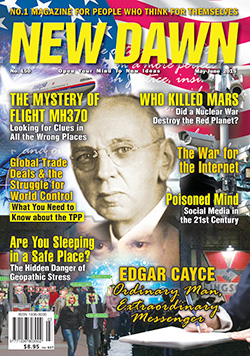
  • Are You Sleeping in a Safe Place? The Hidden Danger of Geopathic Stress

    Are You Sleeping in a Safe Place? The Hidden Danger of Geopathic Stress

    From New Dawn 150 (May-June 2015)

    The Earth has a natural background frequency of 7.83Hz, known as the Schumann Resonance, which corresponds to alpha brain waves in humans. When this frequency is thrown out of balance by other energies (either natural or manmade) we can also go out of balance. Our immune systems can weaken, thus inviting any number of illnesses to enter. NASA had to develop Earth Pulse Generators to mimic this natural frequency in spacecraft after finding astronauts lost tone and body mass living without the background 7.83Hz frequency.

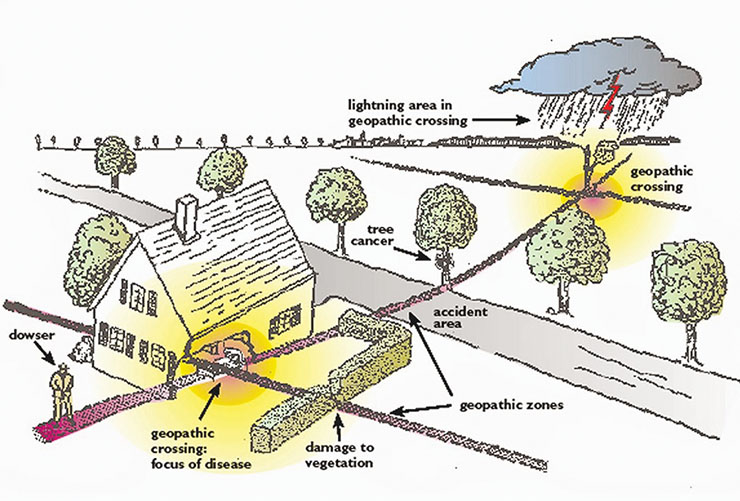
    I have worked for nearly 20 years in the fields of energy healing and geomancy (Earth energies) and have found that in most cases of illness geopathic stress can be found in the home. When these energies become harmonised again in the environment, the human body has the best chance of healing itself, regardless of the type of illness.

    Back in 1929, Gustav Freiherr von Pohl, a German scientist, found that all cases of cancer in the town of Vilsbiburg corresponded with people who slept over areas of high geopathic stress. Many other researchers have found similar results, with Dr. E. Hartman MD theorising that cancer is a disease of location caused by geopathic stress.

    In my own experience I have always found where there is high levels of geopathic stress there is illness. Research and personal experience also shows that when geopathic stress is balanced, illness can vanish. The human body is an amazing healer and self-corrector when in harmony with the environment.

    Geopathic stress comes in many forms, such as electromagnetic lines of the Earth, bad water lines, fault lines or ley lines. When unbalanced they upset the Schumann Resonance and therefore our own frequencies. When two or more unbalanced natural energies cross, they can cause high levels of geopathic stress.

    Added to this is the manmade electromagnetic pollution of radio waves, microwaves, WiFi etc. This electromagnetic pollution alone has a negative effect on the body (see the articles on the dangers of mobile phones & WiFi in New Dawn 149), but when combined with geopathic stress the results multiply.

    Fifteen years ago I could always find the geopathic stress in a home related to illness, but nowadays the illnesses seem to be of higher intensity. Once a cancer patient may have been given three years to live, now it’s more like three months. I believe this has to do with the vast amount of electromagnetic pollution we are now exposed to everywhere we go, at home, work, school, shopping centres, hospitals etc. In von Pohl’s day the cancer patients in his experiment slept over areas of high geopathic stress for a number of years, but did not have the added factor of electromagnetic pollution that we are constantly bombarded with today.

    In relation to illness, the bed is still the most important area, as it’s where we spend most of our time in one place and where our bodies are supposed to be rejuvenating. Research has found that the part of the body affected by illness is where lines of geopathic stress cross the bed.

    About 15 years ago I worked on a house that was in sight of large overhead power lines. The client called me in to look at the energy of the house as their two children were constantly sick and displayed ratty behaviour regularly. I found an unbalanced water line running from the direction of the power lines through the children’s bedroom. Water lines can be deep underground, but their energy vibrates up vertically high above the ground; they have been detected at the top of high-rise buildings. To make matters worse, the children were sleeping in bunks made of tubular metal. The bed frame was attracting and enhancing the negative energy from the water line and power lines. No wonder these kids were ‘ratty’ – they were being zapped constantly and not getting a rejuvenating sleep. Their bodies had no time to heal. I balanced the water line on the property and advised a better suited sleeping space and to get rid of the metal bed frame.

    Metal springs in a bed mattress can change the background frequency and enhance negative energy. British geobiologist Roy Riggs found an energy anomaly coming from the metal springs of a mattress belonging to a two year old with brain cancer. After changing to a non-spring mattress the child started to respond positively to treatment.

    To get a good night’s sleep, it is advisable to move all electrical equipment as far away from the bed as possible, including clock radios and mobile phones. The electrical wiring running through the wall behind your head can also be a problem. Remember to check behind the wall where your head lies as a computer, fridge or smart meter could be blasting you through the wall. Shielding products are available to lessen electromagnetic pollution if you can’t move away from it.

    If you have a serious illness, I suggest you move your bed or sleep in any other room for a while to avoid possible geopathic stress. Or you could learn to dowse to find the negative energies yourself. Do not swap sides with your partner to ‘test’ if they get sick too! You need to spend a lot of time in areas of geopathic stress for your immune system to weaken, such as sleeping or at your desk at work (but as suggested earlier, things seem to be speeding up due to the vast amount of electronics invading our lives).

    I believe that many childhood illnesses, allergies, mental focus and emotional issues can be helped by moving the child’s bed. Our kids are being blasted at school with WiFi (which is banned in many European schools), carrying mobile phones and working with computers on their laps. They are continually connected to the electrical grid. Children can also absorb higher levels of electromagnetic radiation as their skulls are thinner and they are still growing.

    When working on a house I can usually pick the bed of the child having problems at school or who is more susceptible to illness than their siblings. They are the ones sleeping in areas of geopathic stress. Geopathic stress or electromagnetic pollution on their own can cause problems to the body, however the effect is heightened when the two are combined. So if your child has chronic illness, get the electrics out of the room and move the bed. Being able to sleep and let the body rejuvenate naturally is the best first step to recovery.

    Geopathic stress can happen at any time. Natural lines that have been in the land for many years can become unbalanced by pollutants and changes to the area, such as mining and building. Some can extend across continents, while others are localised to a smaller area. About 10 years ago I balanced the energies of a house belonging to a couple in their 50s. There was a long line of geopathic stress running on the property next door, but nothing in the couple’s bedroom. I was surprised to hear two years ago that the woman had died of cancer. I went back to test the area and found that the negative energy line that previously ran through the neighbour’s property now ran through the couple’s bedroom. In the parkland behind the property two large gum trees had been cut down the year before. I believe this is what caused the line of geopathic stress to move.

    Animals can often detect geopathic stress. Cats will be attracted to unbalanced energies, while dogs will actively avoid it. So, if your cat has a favourite spot on your bed, try moving the bed and see what happens.

    Beds (and any physical item) can store energy. Often this energy, good or bad, has been built up over a number of years through intense emotion, not necessarily from geopathic stress. One client who already had three children was having trouble conceiving a fourth. The couple had had no problems the first three times. When I tested the bed, I found that the old wooden bed head and frame was storing negative energy but the new mattress was not. The couple had recently inherited the bed from an aunt who had been infertile. The aunt’s sadness at not being able to have children had seeped into the bed frame over many years. Once this energy was cleared the couple conceived the following month.

    Just a side note on new beds: a friend was having trouble breathing after buying a new mattress. I couldn’t find any geopathic stress or stored energy in the bed, but my dowsing rods detected something wrong with the mattress. Airing out the mattress for a few days, to release the chemicals used in curing the foam, and installing a salt lamp, fixed the breathing problems. So, acute illness isn’t always caused by geopathic stress or electromagnetic pollution, but I’ve found they are usually the culprits in chronic pain and illness.

    Ley lines are lines of energy that carry communication of some sort and are usually ‘sent’ by people. There are large ley lines that are intentionally laid out across countries connecting sacred sites or have an altar placed on them to energetically communicate the church’s message to the community. The leys I most frequently encounter are personal leys sent unconsciously from one person to another. These leys can be full of emotion and tend to hit the bed and stove, thus depleting the person of nourishment and rejuvenation. Over time these can have a debilitating effect on the body, depending on the intensity of the emotion attached to it. One client in her 30s developed a severe case of arthritis. After three months of trying different remedies nothing had helped. I found a ley line hitting her bed and stove. It was being unconsciously sent by a lady whose cat had been put down at the vet. My client was the vet nurse who carried the cat away and thus became the focal point of the cat owner’s grief. Together we sent loving energy back down the ley to the cat owner, thus closing the ley. The next morning the arthritis was gone, never to return.

    Energy may be unseen but it is definitely felt and absorbed by the body. So, if you suffer from chronic pain, illness or restless sleep, geopathic stress in some form is most likely a contributing factor. Make your bedroom as harmonious as possible to bring the Schumann Resonance back into balance. Use visualisation, nice music, harmonious colours, crystals, loving energy, etc. and if you still feel bad – move the bed.

    [alert type=”general” dismiss=”no”]This article was published in New Dawn 150.[/alert]

    [alert type=”success” dismiss=”no”]If you appreciate this article, please consider subscribing to help maintain this website.[/alert]

    References

    G.F. Von Pohl, Earth Currents: Causative Factors of Cancer and Other Diseases, Frech-Verlag, 1993
    www.geomancygroup.org
    ‘Geopathic Stress: A Definition And Overview’ by Richard Creightmore, www.landandspirit.net/html/geopathic_stress.html
    Roy Rigg case studies: www.landandspirit.net/html/more_case_histories.html

    © New Dawn Magazine and the respective author.
    For our reproduction notice, click here.
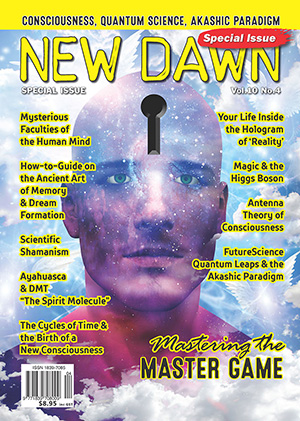
  • Sacred Plant Healing: Shamanic Medicine & the New Science

    Sacred Plant Healing: Shamanic Medicine & the New Science

    From New Dawn Special Issue Vol 10 No 4 (Aug 2016)

    In our modern age, all of us have been touched in one way or another by mental illness, either directly or indirectly. Depression, anxiety, post traumatic stress, and an ever growing list of psychotic disorders and addictions are today rampant in our modern industrialised world. Most likely a direct result of our “keeping up with the Kardashians” lifestyle and ultra competitive, capitalist “greed is good” world.

    Whilst we may never be able to go back to more simpler times, what we can do is learn from the societies who still live a simpler life. Especially in the area of mental health, where we enter the mystical realm of the Shaman and shamanic plant medicine.

    After the false start of the 1950s–1970s psychedelic research, today cutting edge science has learned from the mistakes of the past and is once more entering the realm of the Shaman, this time (by necessity) in a far more measured and scientific way. The results of which will not only save lives, but show us a way that all of us can live happier, less stressful and healthier lives.

    It is repeated time and again in the science of anthropology that indigenous societies with little to no contact with modern civilisation simply do not have the same mental health issues that we do in our modern world.

    Psychiatrist E. Fuller Torrey, who conducted research in New Guinea, described it as “an unusually good country in which to do epidemiologic research because census records for even most remote villages are remarkably good.” After examining these records, he found, “there was over a twentyfold difference in schizophrenia prevalence among districts; those with a higher prevalence were, in general, those with the most contact with western civilisation.”

    In reviewing other research, Torrey concluded: “Almost all observers who looked for psychosis or schizophrenia in technologically undeveloped areas of the world agreed that it was uncommon. The striking feature is the remarkable consensus that insanity (in the early studies) and schizophrenia (in later studies) were comparatively uncommon prior to contact with European-American civilisation.” Interestingly, in traditional cultures the people we would call ‘schizophrenic’ or ‘insane’ often become the Shaman or Medicine men/women that go on to heal and counsel their people.

    The reasons for our mental maladies are many (and worthy of an entire article in their own right), but the main reason seems to be the level of coercion (with the threat of violence) in our modern society versus those of the traditional. In other words, from cradle to the grave we are taught to fear, we are controlled by fear, and have fear reinforced on a daily basis by the mainstream media.

    To many indigenous peoples, even the supposed majority rule that most westerners call democracy is problematically coercive as it results in the minority feeling resentful. Roland Chrisjohn, member of the Oneida Nation of the Confederacy of the Haudenausaunee (Iroquois) and author of The Circle Game, points out that for his people it is deemed valuable to spend whatever time necessary to achieve consensus so as to prevent such resentment. By the standards of western civilisation, this is highly inefficient. “Achieving consensus could take forever!” exclaimed an attendee of a talk given by Chrisjohn, who responded, “What else is there more important to do?”

    Unfortunately, we in the modern world simply cannot wait for such a consensus utopia to happen by itself, and accept that our modern world is exactly how the powers-that-be want it to be. That is the entire point of having power to begin with. Our modern way of life is literally killing so many of us, and the natural world around us, whilst the one percent at the top get to live their lives of luxury, at our and the world’s expense.

    What can we do about it? How can we achieve a happy consensus, instead of the coerced consensus imposed upon us, without the use of fear and the resulting resentment that is the root cause of many mental problems? I think it begins at home, not just in our recycling bins, but in our minds and gardens. We simply must break the shackles of fear if we are to be truly happy and mentally healthy. That is where the ancient methods of the Shaman and shamanic plant medicine come in, and now with the backing of cutting edge science, it can no longer be denied.

    [alert type=”info” dismiss=”no”]If you appreciate this article, please consider a subscription to New Dawn magazine.[/alert]

    The modern research into the use of shamanic plant medicine and modern psychedelic drugs such as LSD (which work the same way in the brain) for treating mental illness began in 1953 and was conducted until 1973 and the Richard Nixon led ‘war on drugs’. Psychedelic drugs (often derived from shamanic plants) were tested on alcoholics, people struggling with obsessive-compulsive disorder, depressives, autistic children, schizophrenics, terminal cancer patients, and convicts, as well as on perfectly healthy artists and scientists (to study creativity) and divinity students (to study spirituality). The results reported were almost always positive.

    However, many of the studies were, by modern standards, poorly designed and seldom well controlled, if at all. This is not what led to the prohibition of shamanic plant medicine and psychedelic drugs in general. The current legal standpoint came from the fear induced in the powers-that-be of the ‘flower power’ generation and their increasing unwillingness to fight in foreign wars for the benefit of the elite. Nothing could put more fear into the powers-that-be than an entire generation embracing peace, love and understanding through the use of shamanic plant medicine and psychedelics, when the elites made their money (and therefore power) from war, fear and propaganda.

    In today’s world of the ‘war on terror’ (an oxymoron if I ever heard one) we must remember that little has changed at the top. Luckily for us, the new breed of scientist has learned that instead of promulgating the ‘turn on, tune in and drop out’ slogan of Timothy Leary and the ‘acid gurus’, what we need is undeniable facts, hard science and proven repeatable results.

    Which brings us to the new dawn of psychedelic research and the return of shamanic plant medicine. Unfortunately, the new science must deal with the fear and propaganda of the past, which makes scientific research incredibly difficult. The simple fact is, most reputable scientific institutes simply do not want to go anywhere near ‘psychedelic research’ because of the stigma attached to it. The main problem is there just isn’t the money for this kind of research because the big pharmaceutical companies have no interest in developing drugs that people can grow at home. People are never going to pay their hard earned money for a ‘drug’ when they can get the plant it was derived from for free. You can’t patent all of nature and the vast majority of research is funded by and designed to benefit Big Pharma, not the patient. We must remember that businesses are in the business of making money, otherwise they would be called charities.

    Another problem with receiving funding for this kind of research is that shamanic plant medicine consistently proves effective at limited doses that are non-habit forming. Meaning there is little to no scope for consistent reliance (or addiction) upon a ‘drug’, and therefore no money for Big Pharma which has no interest in cures, only ‘treatments’ that have to be continued for a long period of time to be profitable. Take a look at modern pharmaceutical ‘treatments’ for depression that usually have to be taken for years at a time and say right on the box “May cause suicidal thoughts!” Once again, the powers-that-be have put their own profits over the people.

    Thankfully this has not stopped serious scientific researchers from making major breakthroughs in the field of psychedelic research. After almost thirty years since the last serious psychedelic research, Dr. Rick Strassman began to investigate the effects of N,N-dimethyltryptamine (DMT) between 1990 and 1995 in the General Clinical Research Center of the University of New Mexico Hospital. DMT is a powerful psychedelic found in hundreds of plants from all around the world and in every mammal (including ourselves) that have been studied. Literally everywhere in nature, DMT is the active ingredient in the Amazonian shamanic plant medicine ayahuasca, which is gaining popularity around the world for its therapeutic benefits, and is currently being reviewed by the Australian Therapeutic Goods Administration for religious use.

    Strassman refers to DMT as the “spirit molecule” because its effects include many features of religious experience, such as visions, voices, disembodied consciousness, powerful emotions, novel insights, and feelings of overwhelming significance. During the project’s five years, Strassman administered approximately 400 doses of DMT to nearly five dozen human volunteers, with more than half of the volunteers reporting profound encounters with non-human intelligences whilst under the influence of DMT. His team published a companion article characterising the psychological effects and preliminary results of a new rating scale, the Hallucinogen Rating Scale, or HRS. The HRS has seen wide acceptance throughout the international research community as a sensitive and specific instrument for measuring the psychological effects of a wide variety of psychoactive substances, with over fifty articles documenting its use as of 2016.

    The next major step was taken by Roland R. Griffiths, a professor of psychiatry and behavioural sciences and his team at the Johns Hopkins University School of Medicine. In 2006 they conducted a double blind study evaluating the acute and longer term psychological effects of a high dose of psilocybin (the active ingredient in the shamanic plant medicine commonly known as ‘magic mushrooms’) relative to a comparison compound administered under comfortable, supportive conditions. The researchers found that psilocybin produced a range of acute perceptual changes, subjective experiences, easily changeable moods and increased measures of mystical experience. Seventy percent of the volunteers went on to say they had one of the five most meaningful experiences of their lives. The volunteers rated the psilocybin experience as having substantial personal meaning and spiritual significance and attributed to the experience sustained positive changes in mental outlook, life satisfaction, attitude and behaviour consistent with changes rated by their community observers (the researchers relied on both self-assessments and the assessments of co-workers, friends, and family). Griffiths believes the personality changes found in this study are likely permanent since they were sustained for over a year by many. The fact that Johns Hopkins University School of Medicine (which is widely regarded as the premier medical centre in America) was now conducting psychedelic research literally opened the floodgates to new and exciting research into shamanic plant medicine and the new psychedelics such as LSD and MDMA (the active ingredient in the street drug ‘Ecstacy’).

    This was followed by Dr. Charles Grob at UCLA, who for a Phase I pilot study assessed the safety, dosing, and efficacy of psilocybin in the treatment of anxiety and existential stress in terminal cancer patients. The Phase II trials, concluded at both Johns Hopkins and NYU, involved higher doses and larger groups. In both phases of the study researchers found after receiving just a single dose of psilocybin the subjects involved experienced immediate and dramatic reductions in anxiety and depression, improvements that were sustained for at least six months, with no clinically adverse effects being noted. The subjects involved were reported as saying things like ‘I understand love is the most powerful force on the planet’, or ‘I had an encounter with my cancer, this black cloud of smoke’. People who had been palpably scared of death lost their fear of it and were able to be at peace during such a difficult time. The fact that a substance given once can have such an effect for so long is unprecedented; there has literally never been a substance so effective in the field of psychiatry, but of course it’s long been the staple of the Shaman.

    A Norwegian study in 2013 titled ‘Psychedelics and Mental Health: A Population Study’ by Teri S. Krebs and Pål-Ørjan Johansen, showed that the use of shamanic plant medicine and psychedelics had no negative effects on mental health. In lifetime users of shamanic plant medicine and psychedelics, there was a decrease in mental health issues.

    Rick Doblin and his team at the Multidisciplinary Association for Psychedelic Studies (MAPS) in 2013 published a follow up to their 2011 study into the safety and effectiveness of MDMA (Ecstacy) in treatment resistant post-traumatic stress disorder (PTSD) patients. Their study revealed that it can be used safely and effectively against this debilitating disorder and the positive effects are long term, without risk of addiction or the need for continued use of the substance.

    In 2014 the University of Zurich reported in a fascinating study that psilocybin inhibits the processing of negative emotions in the brain and positively effected mood. In 2015, the University of Alabama at Birmingham School of Public Health showed that the use of classic psychedelics like LSD, psilocybin and mescaline (the active ingredient in peyote and San Pedro cacti) had a protective effect on mental health and in suicide prevention. Again, in 2015, another Johns Hopkins study showed that shamanic plant medicine and psychedelic use had a protective effect against mental illness and suicide. Another University of Alabama at Birmingham study this year showed psychedelic use had an inhibitory effect on domestic violence and was useful in the treatment of problem behaviours. Many similar studies are currently ongoing and will be published in the years to come. Please note: the findings mentioned above were achieved under strict clinical conditions and controls.

    In most countries around the world the use of shamanic plant medicine such as magic mushrooms, ayahuasca, peyote, San Pedro and iboga, and even the mere possession of psychedelics like LSD and MDMA, are unfortunately illegal, thanks to the ridiculous and socially damaging ‘war on drugs’, despite their proven therapeutic benefits. In the countries where the traditional use of shamanic plant medicine is still undertaken, their legal status is usually protected and has created an ever growing ‘psychedelic tourism’ market of spiritual seekers and people looking for alternative medicines that actually work. People from all over the world are flooding into countries like Peru and Bolivia looking to heal their post-traumatic stress, anxiety and conquer depression and drug addictions.

    Unfortunately, not all of us can drop everything and run off to the Amazon to drink ayahuasca, but what we can do is garden (gardening itself has proven to be an anti-depressant), and freely purchase and grow the vast majority of these shamanic plant medicines, legally. We just aren’t allowed by law to ingest them or prepare them for ingestion. We are left in the unenviable position of medical marijuana patients, having to break the law to save lives.

    [alert type=”general” dismiss=”no”]This article was published in New Dawn Special Issue Vol 10 No 4.[/alert]

    [alert type=”success” dismiss=”no”]If you appreciate this article, please consider subscribing to help maintain this website.[/alert]

    References & Further Reading

    DMT: The Spirit Molecule by Dr. Rick Strassman
    ‘How Societies with Little Coercion Have Little Mental Illness’ by Bruce Levine, http://brucelevine.net/how-societies-with-little-coercion-have-little-mental-illness/
    ‘The Trip Treatment: Research into psychedelics, shut down for decades, is now yielding exciting results’ by Michael Pollan, www.newyorker.com/magazine/2015/02/09/trip-treatment
    ‘Magic Mushrooms vs the Fear of Death’ by Anne Harding, www.mindpowernews.com/Mushrooms.htm
    ‘Psilocybin can occasion mystical-type experiences having substantial and sustained personal meaning and spiritual significance’ by Griffiths RR, Richards WA, McCann U, Jesse R., www.ncbi.nlm.nih.gov/pubmed/16826400
    ‘Pilot Study of Psilocybin Treatment for Anxiety in Patients With Advanced Stage Cancer’ by Charles S. Grob, MD; Alicia L. Danforth, MA; Gurpreet S. Chopra, MD; Marycie Hagerty, RN, BSN, MA; Charles R. McKay, MD; Adam L. Halberstadt, PhD; George R. Greer, MD., http://archpsyc.jamanetwork.com/article.aspx?articleid=210962
    ‘Psychedelics and Mental Health: A Population Study’ by Teri S. Krebs, Pål-Ørjan Johansen, http://journals.plos.org/plosone/article?id=10.1371/journal.pone.0063972
    ‘The safety and efficacy of {+/-}3,4-methylenedioxymethamphetamine-assisted psychotherapy in subjects with chronic, treatment-resistant posttraumatic stress disorder: the first randomised controlled pilot study’ by Mithoefer MC, Wagner MT, Mithoefer AT, Jerome L, Doblin R., www.ncbi.nlm.nih.gov/pubmed/20643699
    ‘Durability of improvement in post-traumatic stress disorder symptoms and absence of harmful effects or drug dependency after 3,4-methylenedioxymethamphetamine-assisted psychotherapy: a prospective long-term follow-up study’ by Michael C Mithoefer, Mark T Wagner, Ann T Mithoefer, Lisa Jerome, Scott F Martin, Berra Yazar-Klosinski, Yvonne, Michel, Timothy D Brewerton, and Rick Doblin, www.ncbi.nlm.nih.gov/pmc/articles/PMC3573678/
    ‘Psilocybin inhibits the processing of negative emotions in the brain’ by University of Zurich, www.sciencedaily.com/releases/2014/05/140507095756.htm
    ‘Classic psychedelic use protective with regard to psychological distress and suicidality’ by SAGE Publications, www.sciencedaily.com/releases/2015/01/150121093544.htm
    ‘Psychedelic drug use could reduce psychological distress, suicidal thinking, study suggests’ by Johns Hopkins Medicine,
    www.sciencedaily.com/releases/2015/03/150309174507.htm
    ‘Hallucinogen may protect against intimate partner violence, researcher suggests’ by University of Alabama at Birmingham,
    www.sciencedaily.com/releases/2016/02/160205135508.htm

    © New Dawn Magazine and the respective author.
    For our reproduction notice, click here.