The idea that consciousness is evolving is one of the most important doctrines of the New Age. But is it true?
Over the long term, the answer seems obvious. Even the stupidest of humans is far more intelligent and sophisticated than a trilobite. Although materialists have skirted the conclusion that evolution has a direction – and that this direction is toward greater complexity – they have not managed to shoot it down.
The New Age idea of evolving consciousness is a little different. Many advocates of the new paradigm insist that human consciousness has gotten more sophisticated within historical times, and that it is destined to make another grand leap. It’s a harder case to argue.
It was H.P. Blavatsky, founder of the Theosophical Society, who first introduced the idea of evolving consciousness in the late nineteenth century. The basic theory of evolution as propounded by Darwin was already well known, but it had not been connected with consciousness in any important way.
In her magnum opus, The Secret Doctrine, Blavatsky made this connection. Indeed she went further. She held that not only humans and all organic life, but everything in the cosmos, down to the smallest atom, was perpetually evolving over the course of boundless eons toward a goal of unimaginable perfection.
Blavatsky was a bit more cautious about the evolution of human consciousness. While she propounded the allegedly ancient and secret doctrine of the Root Races, whereby humans would eventually develop supernatural capacities, she did not see this as coming any time soon. According to Blavatsky, the present, Fifth Root Race – encompassing practically all of humankind currently on earth – was going to be around for a while.
Nevertheless, Blavatsky set the stage, and it is interesting, though difficult, to try to figure out how much she influenced twentieth-century advocates of creative evolution such as Henri Bergson and Pierre Teilhard de Chardin.
The man who may be most responsible for the idea that human consciousness has evolved within historical times, and is making a transition to a new stage, is the Swiss philosopher Jean Gebser. In his masterwork, The Ever-Present Origin, published in 1949, Gebser outlined a development of civilisation in five stages: the archaic; the magic; the mythical; the mental; and the integral. Gebser’s argument is hard to summarise, but he essentially said that the shifts between these phases meant a change in human consciousness, even in how we view spatial dimensions. The “mythical” stage, the age of classical antiquity, was conceptually “spaceless.” The new “integral” consciousness is, by contrast, “space-free” and “time-free.”
Gebser’s arguments do not always hold up well. For example, he said that the dawn of the mental stage of development – which included the discovery of perspective in art – started in medieval times. A crucial moment was the Italian poet Petrarch’s ascent of Mount Ventoux in southern France in 1336. This, Gebser claimed, was the first time that anyone ever climbed a mountain solely to see the view. As such, it was “the discovery of landscape.” Unfortunately for Gebser’s theory, Petrarch himself said he had been inspired by the ascent of a mountain in Greece by King Philip of Macedon in the fourth century BCE. (Gebser tries, unconvincingly, to explain why Petrarch’s climb was so revolutionary and Philip’s was not.) Besides, perspective painting had been practiced in Greco-Roman antiquity.
Gebser is not well-known in the English-speaking world, but he has been very influential, largely through the works of the American philosopher Ken Wilber, whose “integral philosophy” was inspired by Gebser and by such figures as Arthur Koestler, Sri Aurobindo, and the American guru Adi Da (Franklin Jones).
If we want to decide whether consciousness is evolving and has evolved within living memory, it might be good to consider what consciousness is. For Gebser, it was “wakeful presence.” In my work, especially The Dice Game of Shiva, I have defined consciousness as the relation of self to other. To take a simple example, you are in your bedroom. You are awake. You see the furniture, the walls, the pictures. They are other, and you are you. Then you fall into a deep sleep. There is no longer a sense of self and other; you are no longer aware of your surroundings. You are unconscious.
What, then, is higher consciousness? What makes one kind of consciousness higher, or more evolved, than another?
In his book When Beliefs Fail: Toward a Psychology of Hope, Jim Stempel sets out a clear and engaging argument for the evolutionary perspective. He says: “The goal of spiritual growth is actually quite simple. It is complete awareness, the capacity to understand all of reality as well as ourselves…. Thus we enlarge our worldview until it incorporates everything.” To use the language of my theory, consciousness evolves as our view of the other, that is the world, expands.
Thus it would seem that consciousness has evolved. For a medieval peasant, the world was his village. The people in the village five or ten miles away were remote and menacing; they may as well have been extraterrestrials. Today we log into a computer and learn about places on the other side of the world in almost no time. Presto! Our worldview is enlarged. That means our consciousness is higher, more evolved.
But it is not so simple. In the first place, not everybody believes in these great strides in cognitive evolution. The twentieth-century French philosopher René Guénon, for example, argued that, far from evolving, we have devolved from an ancient state of pristine integrity. We are now living, Guénon said, in the “reign of quantity,” the last and most pathetic stage of the Hindu Kali Yuga, the Age of Darkness. Technological advancement, and the materialistic mentality that goes with it, is a symptom of this degeneracy.
Is Guénon wrong? Is it right to equate higher consciousness with technical sophistication and the expanded view of the world that results from it? As desperately as Western civilisation wants to believe this, it is not obvious, and it may not be true.
One counterexample is Tibet. The material culture of Tibet has always been primitive, even barbarous. It has no technological sophistication and has had no interest in developing it. Nevertheless, Tibet developed an extremely sophisticated and profound understanding of the nature of consciousness that the West is only now beginning to grasp. Can we say our consciousness is higher, more evolved, than the consciousness of Tibetans?
The twentieth-century spiritual teacher G.I. Gurdjieff also ridiculed the idea that the consciousness of modern humanity has evolved. His masterwork, All and Everything: Beelzebub’s Tale to His Grandson, one of the strangest and greatest books of the twentieth century, has as its stated objective “to destroy, mercilessly, without any compromises whatsoever, in the mentation and feelings of the reader, the beliefs and views, by centuries rooted in him, about everything existing in the world.” And one of the most important of these ideas to be rooted out is the delusory belief in progress. The 1,200 pages of Beelzebub argue that modern humans are not superior, but inferior, to those of ancient times, and material progress has hastened their deterioration.
Gurdjieff taught that modern man is in a state of waking sleep, a low-grade hypnosis. Part of this sleep involves dissociation: the body walks through its daily routines while the mind ponders grievances of the past, and fantasises about the future. We are like Mr. Duffy in one of James Joyce’s stories, who “lived a short distance from his body.”
Practically everything about present-day life helps increase this dissociation. You are well-informed about the latest world crisis, but are you aware of what is going on in your own being? Very likely your body and your emotions do not care in the slightest for all of the momentous events that make your mind so agitated. Probably, in fact, these other parts of you are bored by your fixation on a computer screen and would just as soon be out for a walk, or doing nothing at all.
So the grandiose claims of “evolution,” “integral consciousness,” and so on, do not stand up very well. Of course there are people today who have attained high states of consciousness, just like the mystics of old. But do we have any reason to believe they are any more common today than they ever were?
On the other hand, I myself have as much difficulty with the proclamations of degeneracy as I have with the proclamations of evolution. It is not so simple. It is never so simple. In many ways, humanity has advanced; in other ways it has regressed. While I think it is foolish to praise indigenous peoples as the repository of all wisdom, they often seem to have preserved inner powers and abilities that have been lost to trendy smartphone addicts.
As always, there are currents and countercurrents, and there is no good reason to single out one of these and proclaim it the inevitable wave of the future. We have already had too many inevitable waves of the future, and they have usually been dead ends. It is probably wrong to claim that humanity is retrogressing, but when someone launches into optimistic jabbering about “evolution” and the “new paradigm,” it may be well to think about these lines from the Tao Te Ching: “The ancient masters were subtle, mysterious, profound, responsive. The depth of their knowledge is unfathomable.” It is hard to say that about humans today.
[alert type=”general” dismiss=”no”]This article was published in New Dawn 147.[/alert]
[alert type=”success” dismiss=”no”]If you appreciate this article, please consider subscribing to help maintain this website.[/alert]
Sources
Jean Gebser, The Ever-Present Origin, translated by Noel Barstad & Algis Mickunas, Ohio University Press, 1985 G.I. Gurdjieff, All and Everything: Beelzebub’s Tales to His Grandson, Dutton, 1964 Jim Stempel, When Beliefs Fail: A Psychology of Hope, Chrysalis, 2001
This article was published in New Dawn 142 (Jan-Feb 2014)
Much of today’s writing about spirituality is loaded with nonsense. Often it consists of little more than wild speculation, shoddy reasoning, and the repetition of a few stale truisms.
A very small number of writers and editors have climbed above this morass to combine spiritual depth with intellectual acumen and literary polish. Mitch Horowitz is one of them. A writer and publisher of many years’ experience with a lifelong interest in man’s search for meaning, he is vice-president and editor-in-chief at Tarcher/Penguin in New York and the author of the acclaimed book Occult America: White House Séances, Ouija Circles, Masons, and the Secret Mystic History of Our Nation. His website is mitchhorowitz.com.
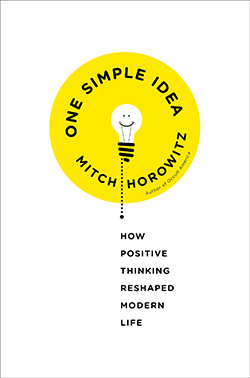
Horowitz’s latest work, published in January 2014, is One Simple Idea: How Positive Thinking Reshaped Modern Life. It is a wide-reaching and insightful history of the mind power movement and how it has changed contemporary society. In November 2013, I conducted an interview with him by e-mail about this book.
__________________
Richard Smoley (RS): Your book is entitled One Simple Idea. Could you tell us what this one idea is?
Mitch Horowitz (MH): The idea is the very American concept that thoughts are causative – which later came to be called “the power of positive thinking.” This notion has appeared, with varying degrees of orthodoxy and literalism, at different times throughout human history. New Englanders in the 1830s and 1840s used this idea to launch a vibrant culture in “mental healing,” in which trances, prayer, and affirmations were seen as a means to heal the body.
During much of the nineteenth century allopathic or mainstream medicine in America was in an abysmal state. The traditional medicine of the day often relied on painful and dangerous regimens of bloodletting, weeping wounds, draining of bodily fluids, and ingestion of toxins and harmful narcotics. Mental healing was seen as a gentler alternative.
By the late nineteenth century, experimenters in mental healing began asking what other powers the mind might possess. The mental healing culture came to believe that our thoughts could influence or shape our personal experiences, extending to matters of wellbeing, success, and, finally, money. This principle of mind power has traversed the cultural landscape, reshaping much of our religion, therapy, and ideas of self-help.
RS: The story of positive thinking, as you describe it, begins in the eighteenth and nineteenth centuries. Do you see any precedents for this approach in earlier forms of philosophy or occultism?
MH: You can find threads of the mind-power thesis within Egyptian-Greek Hermeticism, within certain strands of Neoplatonism, within elements of Idealism, Transcendentalism, and Swedenborgianism – and, significantly, within some of the experiments launched by students of the eighteenth century Viennese occult healer Franz Anton Mesmer. Mesmer believed that all of life was suffused with an invisible energy called “animal magnetism.” He theorised that if you placed a subject into a trance state – in a practice later called hypnotism – the patient’s “animal magnetism” could be manipulated to produce bodily cures. Mesmer’s students in Paris refined the master’s ideas: They edged away from Mesmer’s theory of an ethereal bodily fluid and believed that it was the mind itself that was bringing about the cures. Mesmer’s best students formed our earliest conceptions of the subconscious mind, which they believed not only could produce healing but, under certain conditions, could bring on displays of clairvoyance, telepathy, and even astral travel. The tumult of the French Revolution cut short many of these experiments – but the ideas of mesmerism began travelling to the United States. In the early decades of the nineteenth century, Americans – who love remaking ideas and finding new and broader ways of using them – took the mind-power thesis even further. American experimenters came to see the mind as a tool of metaphysical power that could be used for attracting and influencing circumstances.
RS: One of the central figures in your story is Phineas P. Quimby. Could you tell us about who he was and why he was so important?
MH: Quimby was one of the earliest and most impactful founders of New England’s mental cure scene. He was a nineteenth century clockmaker who spent most of his adult life in Maine. In the early 1830s Quimby suffered from tuberculosis, which was worsened by the side effects from harmful treatments, such as mercury ingestion. One day Quimby took a raucous horse-and-buggy ride in the Maine countryside and unexpectedly found that the excitement of the ride lifted the symptoms of his tuberculosis. Quimby marvelled at the effects of his mood on his body. He believed that this private insight revealed a mind-body connection – and searched for a theoretical model to confirm it. That confirmation arrived for him in 1836 when lecturers began visiting Maine extolling the ideas of mesmerism. Quimby believed that mesmerism revealed the connection between mind and body. He worked the rest of his life as a mental healer, refining and applying various methods, especially arousing the confidence of a patient in his ability to recover. Quimby was extremely influential on the New England scene until his death in 1866.
RS: One of Quimby’s disciples, Warren Felt Evans, introduced the concept of the New Age in a book of his called The New Age and Its Messenger, published in 1864. Could you talk a little bit about how the positive-thinking movement shaped the New Age?
MH: Evans was among a circle of Americans who were dedicated to the ideas of the eighteenth century Swedish mystic and scientist Emanuel Swedenborg. Swedenborg believed that earthly events mirrored and were controlled by laws and events in the spirit world. In Swedenborg’s view, the material and spirit worlds formed a continuum. When figures such as Quimby and Evans began experimenting with mental healing, they believed they were, in effect, channelling and applying cosmic laws. The early mental healers did not possess a psychological vocabulary – they often spoke and thought in religious terms. Hence the ideas of Swedenborg – who described a universe of spiritual laws and influences – made innate sense to mental healers. Evans believed that humanity stood on the brink of a New Age of therapeutic spirituality – of whom the “messenger” was Swedenborg. The founding idea of New Age spirituality, as articulated by Evans and his contemporaries, was the philosophy of mind power. This later came to be called positive thinking and New Thought.
RS: In the early generations, the positive-thinking movement centred on healing. Around the turn of the twentieth century, it shifted toward “prosperity thinking” and the attainment of material success. Why did this change come about?
MH: The early twentieth century French hypnotherapist Émile Coué observed that the, “French mind prefers first to discuss and argue on the fundamentals of a principle before inquiring into its practical adaptability to every-day life. The American mind, on the contrary, immediately sees the possibilities of it, and seeks… to carry the idea further even than the author of it may have conceived.” This was the pattern for most of America’s spiritual experiments, and it highlights the transformation of mental healing into the prosperity gospel. American enthusiasts came to believe that the mind could improve health – and they began seeking ever-greater ways of applying the mind’s power.
The person who first hit upon the idea of using mind-power methods to attract money was actually an English writer and political activist, Frances Lord. She visited America in the late 1880s to take part in the suffragist movement. But Lord also grew interested in mental healing – and she proposed expanding its boundaries to prosperity. Lord wasn’t a “think and grow rich” exponent; rather she believed that if labourers and working people could alter their thought patterns they could balance out economic inequality.
Critics rarely see that the prosperity gospel had its earliest roots in the ideals of the Progressive Era. Lord and her American contemporaries – who included Wallace D. Wattles, a socialist activist and the author of The Science of Getting Rich, and suffragist Elizabeth Towne – believed that the mind could serve as a force for social equity. As the twentieth century opened, the industrial economy produced a mass wave of consumer goods; and at the same time the state of American medicine greatly improved. Hence, money, rather than health, moved to the front of the American mind – and became the focus of the positive-thinking movement.
RS: The positive-thinking movement sometimes seems indifferent to social issues: poor people are poor and sick people are sick because of their own wrong attitudes. Has there been any response to this problem from within the movement itself?
MH: In the positive-thinking movement’s early days, from the late nineteenth to the turn of the twentieth century, it showed deep concern for social issues. Surprising figures adopted the positive-thinking gospel, including black nationalist Marcus Garvey, suffragist Elizabeth Cady Stanton, and many figures that identified themselves as socialists or radicals, such as Ralph Waldo Trine and Wallace D. Wattles. These people believed that the patterns of the mind were one element – and certainly not the only one – in alleviating social oppression; they believed that working people, women, and minorities needed to claim a dramatic new sense of self-worth. That tendency faded as the movement became more geared toward a philosophy of individual advancement. Within today’s New Thought churches you continue to find large numbers of very liberal people. Attendees at New Thought churches include actors, artists, experimenters, gay and lesbian congregants, and many people who work to create social openings. So the core movement has remained liberal in its makeup. However, the popular mainstream literature to emerge from the positive-thinking movement, by authors such as Napoleon Hill, Norman Vincent Peale (pictured above), and Dale Carnegie, evinces almost none of its earliest reformist aims.
RS: The positive-thinking movement is also sometimes criticised for its callousness: since you create your reality with your thoughts, it must be your fault if bad things happen to you. Is this a valid criticism? If so, is there any valid response to it?
MH: It is a valid criticism – and it is one of the problems that I try to deal with in the book, especially in the final chapter, “Does It Work?”, where I explore the failings and efficacy of the movement. In short, I believe that the positive-thinking movement’s embrace of what is called the Law of Attraction was both a theological and ethical mistake, and it overshadowed the movement’s greater promise. I believe that no one should endeavour to frame life as the product of one overarching mental super law. That simply doesn’t square with the personal experience of most sensitive people. We all encounter a mixture of joys and tragedies in life, and these experiences are attributable to myriad and sometimes inscrutable factors – not solely to tendencies or accidents of thought. We live under many laws, influences, and events. However, if the positive-thinking movement can move away from this “mind is all” concept, then we can newly appreciate the movement’s very powerful insights. As has been borne out in many reaches of the sciences, the mind provides a little-understood but persistent and traceable impact across various aspects of existence, from health to relationships to addiction recovery. The impact of the mind can also be seen – most controversially – in the findings of quantum physics. This last point is very contentious, and I try to explore it in an accurate and non-sensationalistic manner in the book.
RS: One little-known figure that you highlight toward the end of your book is Vernon Howard. Could you tell us about him and why you find him interesting?
MH: Vernon Howard was a late-twentieth century spiritual philosopher who I see as probably the most remarkable and unclassifiable figure to emerge from America’s recent metaphysical culture. Howard was loosely a part of the positive-thinking movement insofar as his books of the 1950s and early 1960s were in the mould of typical New Thought literature in which you were counselled to use your mind to attain influence, prosperity, and power. But in the mid-1960s, Howard underwent a remarkable spiritual maturation. From that point until his death in 1992 he produced an extraordinary output of writings and talks that distilled the core principles of the world’s ethical and religious philosophies. Howard taught that we live from a false, conditioned nature, which prods us to seek conventional modes of success, which, in turn, prop up our ego and self-image. This puts us on a constant cycle of seeking recognition from a world filled with people who are themselves frightened and desperately seeking approval, and who often lash out in hostility to cover their fears.
If we can see through this painful predicament, Howard wrote, we can experience a sense of our true nature, which emanates from what we call God. We experience this true self when we reach the limits of our conditioned responses to life. No other figure that I have encountered possessed a voice as practical and vivid – or an intellect as piercing of human foibles – as Howard’s.
RS: In your book, you posit Ronald Reagan as a kind of culmination of the positive-thinking movement, in both good and bad ways. Could you talk a little about how Reagan fits in with this movement, how it shaped his politics, and how the movement has shaped American politics today?
MH: Reagan is a continual mystery to journalists and biographers because he seems to them to possess no internal barometer or motivating influence. Many observers have wondered about his inner nature, about what made him tick psychologically. My contention in the book is that Reagan, to be fully understood, must be seen as a product of the positive-thinking culture. The core assumptions and phraseology of positive thinking are at the back of much of his personal philosophy. Reagan also reflects many of the movement’s strengths and weakness: He was capable of continually reconceiving of himself at different times in life to meet the challenges that he faced, and it gave him a surprising resilience and adaptability when climbing out of near-poverty as a young man and when confronting the new realities of US-Soviet relations during the Gorbachev era, during which Reagan dramatically shifted from flinty cold warrior to global peacemaker. Yet it could also contribute to an unnerving blindness in matters of policy, when Reagan would emotionally fixate on a single fact, story, or anecdote and use it to buttress sweeping political convictions, such as the belief in widespread welfare fraud or in the efficacy of the Star Wars missile defence system.
In the political realm, Reagan ushered in an age where presidents had to sing praises to the limitless potential of the American public. In President Obama’s 2011 State of the Union address he declared, “This is a country where anything is possible.” That was a direct echo of Reagan, who routinely described America as a nation where “nothing is impossible.”
RS: Even if you grant that the mind has the power to shape reality, it’s also true the mind has many facets that are not accessible to the conscious ego. What level of mind is actually shaping reality, and how can we have access to it?
MH: That’s a very intriguing question. We have a strange habit of putting a name on concepts – such as “ego” or “unconscious mind” – and then thinking we have identified a clearly definable thing and can proceed to talk about it as though we all agree upon it, as if it were an apple tree. Yet we know very little about the mind and its agencies. We can’t even agree on what produces the so-called placebo effect and how it works, though for more than a century medical researchers have tracked the persistence of some kind of physical relief related to mental expectancy. One of the things I argue in the book is that we do seem to be able to enter an exquisitely sensitive and suggestible state where mental properties are heightened. This is sometimes called the hypnagogic state, experienced in the period just before drifting off to sleep or awakening, or in times of deep relaxation or comfortable sensory deprivation. Émile Coué, and others who worked with affirmations to recondition the mind, believed this hypnogogic state possessed unique potential for autosuggestion or self-hypnosis. I won’t go into the data here, but serious psychical researchers have also detected what appear to be heightened instances of clairvoyant perception and telepathic conveyance in subjects during this state.
It’s difficult to place precise labels on what is occurring at such times but there does seem to be a state of relaxation from which the mind is unusually receptive – and which may point to the mental-emotive condition from which we can produce or revise self-conceptions, and maybe do something more.
RS: All things considered, how much truth do you see in the “one simple idea” of positive thinking?
MH: As I’ve suggested above, and as I explore in the book, I am convinced that the mind harbours some shade of influence, not only in matters of self-worth but also in circumstances of outer life, as well. I believe that our repeated thoughts – when held with determination and emotional conviction – can evince a shade of influence on external events. This is a very delicate claim, which presents more questions than answers. But I believe that if we look historically across broad disciplines – from psychology to medicine to the physical sciences – and if we consider, with care and discretion, the empiricism of personal experience, we find ourselves facing an ever-broadening conception of the mind’s influence.
Historically, the modern assessment of the mind’s reach continually broadens and never recedes. The mind is, of course, one factor among many under which we live. We are affected by environment, chance, physiology, economy, and accident. But grappling with this idea – that the mind, like other factors, produces a shade of practical impact on our experience – can help deepen and expand our sense of ourselves, and our questions about what it means to be human.
For further discussion of New Thought and its history, see New Dawn 142.
One Simple Idea: How Positive Thinking Reshaped Modern Life by Mitch Horowitz (Crown 2014) is available from all good bookstores and online retailers in hardback and on Kindle.
[alert type=”general” dismiss=”no”]This article was published in New Dawn 142.[/alert]
[alert type=”success” dismiss=”no”]If you appreciate this article, please consider subscribing to help maintain this website.[/alert]
Winston Churchill famously characterised Russia as “a riddle, wrapped in a mystery, inside an enigma.” It’s apt, then, that the father of the Russian space program – perhaps of all space programs – was an ascetic librarian who taught that humanity should work for the physical resurrection of all the dead. Nikolai Fyodorov (whose name is also transliterated as Fedorov; 1829–1903) was the first man to seriously theorise about interplanetary travel. He also coined the term “spaceship Earth” to convey a sense of humanity’s interconnection with the cosmos.
Fyodorov, little-known in his lifetime, served as mentor and inspiration for an entire philosophical school known as the Russian Cosmists. These visionaries, often neglected, sometimes persecuted by the Soviet state, conceived of such advanced ideas as rocket travel, a prolonged human lifespan, and the use of electromagnetic energy to enhance vitality. And in many cases they produced the models and formulas that would make these far-fetched ideas a concrete reality.
The ideas of the Cosmists, always visionary, sometimes fantastic, seem closer to reality now than they did a hundred years ago, and the school of the Cosmists continues to this day in Russia, with conferences and papers dedicated to the propagation of these ideas and activities. It is time that their work became better-known.
The foremost authority on the Cosmists in the English-speaking world is George M. Young, author of The Russian Cosmists: The Esoteric Futurism of Nikolai Fedorov and His Followers (published by Oxford University Press in 2012). Young grew up in Madison, Indiana, in the US and received a B.A. in English from Duke University and a Ph.D. in Slavic languages and literatures from Yale University. He has taught Russian and general humanities at Grinnell College, Dartmouth College, and the University of New England, and for many years between academic positions directed a fine arts and auction business specialising in nineteenth- and early twentieth-century American and European paintings. He is currently a research fellow at the University of New England’s Center for Global Humanities.
Young is the author of Nikolai F. Fedorov: An Introduction, published in 1979, and has published many essays and reviews on Russian literature and thought in academic and general magazines, journals, and edited collections. Other books include Hermotimus’ Voyages, a collection of poems, and Force through Delicacy: The Life and Art of Charles H. Woodbury, N.A. George and his wife, Patricia, live in rural southern Maine and are the parents of two grown children.
Richard Smoley (RS): The Russian Cosmists aren’t familiar to most English-speaking readers. Maybe you could begin by telling us a bit about who they were and why they’re important.
George M. Young (GY): In a recent issue of Quest magazine, Richard, you observed that over the centuries at crucial moments in history, small groups of people have emerged who were working from a higher plane of consciousness. Among these groups you mention the Pythagoreans, the Chartres school of cathedral builders, the late medieval Brethren of the Common Life, the Rosicrucians, and H.P. Blavatsky’s circle of Theosophists.
I think the Russian Cosmists, working in the late nineteenth and early twentieth centuries, may be another such group. They did not consider themselves a group, or even a school of thought, but individually addressed similar profound, cosmic problems, treating subjects usually considered esoteric or occult as matters suitable for serious scientific and philosophical investigation. The major Cosmists include the religious thinkers Nikolai Fyodorov, Vladimir Solovyov, Nikolai Berdyaev, Sergei Bulgakov, and Pavel Florensky; the philosophical scientists Konstantin Tsiolkovsky, Vladimir Vernadsky, Alexander Chizhevsky, Valerian Muravyov, and Vladimir Kuprevich, each of whom was a broad, polymath genius, in no way able to be pigeonholed as simply “religious” or “scientific.”
Florensky, for example, wrote seminal papers in mathematics, developed crucial processes for the electrification of Russian industry, taught in revolutionary schools for workers while wearing his priest’s cassock, and wrote The Pillar and Ground of Truth, one of the great classics of Russian Orthodox contemplative spirituality.
Others were similarly multitalented. They addressed topics such as the infinite extension of the human life span, the overcoming of death, the physical resurrection of the dead, the reconstitution of the human organism, the recreation of whole human individuals from particles of identity, the exploration and colonisation of cosmic space, the reversal of time, and the practical realisation of universal human brother-sisterhood.
The Cosmists show us today how it is possible to overcome dichotomies and bridge gaps. Theory and practice, science and religion, esoteric and exoteric, ideal and real – the Cosmists found ways to unify apparent opposites. Another quality of theirs that we might take note of is the confidence with which they addressed the most enormous, apparently insoluble questions. Can we, should we attempt to overcome death? Can we, should we attempt to remake humanity? Explore and colonise space? Yes, the Cosmists said, with a conviction not much in evidence elsewhere today, we can and should, and here is how to start!
RS: Could you talk a little bit about Nikolai Fyodorov and his work? If I understand it correctly, he coined the term “spaceship Earth” back in the nineteenth century.
GY: Nikolai Fyodorov was the prime exemplar and source of Russian Cosmism. Born in southern Russia, the illegitimate son of a Russian prince and an unknown local woman, Fyodorov led an ascetic, eccentric life, first as a rural elementary school teacher, and then as a Moscow librarian of legendary erudition. That he was also a highly original thinker was known to only a few contemporaries, but this handful included Fyodor Dostoevsky, Leo Tolstoy, and Russia’s leading philosopher, Vladimir Solovyov.
Fyodorov’s central idea was that everything we now do leads toward division, destruction, and death. Our “common task” as humans is join together in a grand “project” to use all our god-given intelligence to counter nature’s force of division and death, leading eventually to universal immortality and the resurrection of all the dead. Individual parts of the “common task” included travel beyond earth to collect the dispersed particles of our ancestors (“dust of the fathers”) in order to restore them to wholeness and life, the reconstitution of the human organism to allow us to survive in space under conditions now unable to support human life, and human control over gravity, allowing us to liberate our planet from its natural orbit and guide it through space on courses of our own choosing. More than a century before Buckminster Fuller, Fyodorov argued that we should no longer ride as idle passengers but must become “captain and crew of spaceship Earth.”
Fyodorov did not know exactly how the spiritual-scientific workers of the future would solve the technical problems of biological engineering and interplanetary voyage, but he knew what the goals should be and he believed that if humanity undertook the “common task,” future expertise would be able to find solutions.
For Fyodorov, as early as the 1860s, space colonisation was not an optional fantasy, but a necessary human step toward fulfilment of a divine plan. Dust of our ancestors is dispersed throughout the universe. The human task is to gather and revive this dust, to find homes beyond Earth for the resurrected multitudes that otherwise would overcrowd our planet, to populate the uninhabited and currently uninhabitable places in the universe, to spiritualise all the currently dead matter in the cosmos. In a sense, Fyodorov was the ultimate alchemist, attempting to turn all human knowledge and labour, all science, religion, and art, into a single task of transmuting currently dead or dying matter into eternal, universal life. His posthumously published writings seemed ridiculous to most of his early readers – perhaps less so today.
RS: I gather that Konstantin Edouardovich Tsiolkovsky, a pupil of Fyodorov’s, laid some of the groundwork for what became the Russian space program. Could you tell us a little bit about him and what he accomplished?
GY: Even before Fyodorov’s writings were published, a handful of listeners and readers recognised in him a mind far ahead of his time. Tolstoy wrote that he was proud to have lived in the same century as Fyodorov. And Solovyov wrote that since the appearance of Christianity Fyodorov’s “project” was the first forward movement of the human spirit along the path of Christ.
But the follower who did most to realise a portion of Fyodorov’s “project” was Konstantin Tsiolkovsky (1857–1935), a mostly deaf but precocious seventeen-year-old boy from a small village who moved to Moscow to educate himself and came under Fyodorov’s tutelage at the library. As Tsiolkovsky would later write, Fyodorov guided his readings, taught him to take notes, and served as his one-man university. After a few years studying with Fyodorov, Tsiolkovsky returned to his village to teach. After school hours he built wooden model rockets and spaceships, and developed and published the mathematical formulas that eventually led to the launching of the world’s first artificial satellites. In addition to his seminal scientific papers, for which he received recognition as the grandfather of the Russian space program, Tsiolkovsky published science fiction tales about space exploration that inspired generations of young Russian readers to dream of becoming cosmonauts. And though he could not publish them through official Soviet outlets, he wrote and sometimes printed and circulated numerous esoteric and theosophical speculations concerning higher sentient beings and energies alive throughout the cosmos.
RS: What does it mean to be a “Cosmist” in this context?
GY: I think one of the main features of Cosmist thought is what Fyodorov called the shift from a Ptolemaic to a Copernican comprehension of the universe. Intellectually, we have long realised that our planet is not the centre of the universe, but emotionally, culturally, aesthetically, and in almost every other way, we cling to a Ptolemaic cosmology. The Cosmists urge us not only to think but to feel and in every way realise that we are citizens of the entire universe. Not only the planet, but the cosmos is our home, and our lives are meant to span not merely seventy-odd years, but forever. The Cosmists propose that we are not the end product, but are still in the early stages of evolution. We are still children, or at best, adolescents, with all the characteristics and problems of that age, and have a long way to go to attain maturity. The insecurities, appetites, and needs – sexual, gustatory, etc. – that now drive and dominate our lives will eventually subside. We will be greatly changed from what we now are. As Fyodorov wrote, we need to realise – to make real in every way – that we are already “heaven dwellers.”
RS: How did the Cosmists conceive of interplanetary travel?
GY: Tsiolkovsky developed formulas and designed rockets for human beings as we are today. But he, Fyodorov, and others also imagined possible interplanetary, even intergalactic travel for more advanced levels of humanity. A step in that direction would be the cessation of what Fyodorov called “cannibalism” (i.e., that we stop eating organic matter, all of which he believed is made up of particles of our ancestors), and the attainment of an autotrophic way of life, in which, like certain plants and other organisms, we would feed on air, sunlight, and other elements. In Cosmist thought, we must direct our own evolution. Instead of taller, heavier bodies, we should choose to develop smaller, lighter bodies, and eventually perhaps eliminate all our mass and become bodiless minds, free from gravity, god-men able to be anywhere and everywhere in the cosmos. At that stage, interplanetary travel would be automatic and instantaneous: decide to go to Jupiter and you’re there.
RS: It seems that the Cosmists were among the first thinkers to conceive of human possibilities beyond the limits of the physical earth. What do you think were some of their most important contributions in this regard?
GY: Fyodorov and the other Cosmists tried to make literal sense of ideas such as “resurrection of the dead,” “heaven on earth,” “eternal life,” “oneness with God,” “manna from heaven,” etc. They believed that we should not merely dream and pray for “heavenly peace,” but could and should take the actualisation of such concepts as our human duty and task. So the first step for them was a shift in consciousness, changing speculations about things “not of this world,” into tasks to be realised in this world, turning metaphysics into engineering projects. Writers like Jules Verne, Prince Vladimir Odoyevsky, and others had written entertaining speculative fiction about a future with space travel, but the Cosmists said: “Let’s not just talk about these things, let’s do them.”
As far as results are concerned, Tsiolkovsky published the formulas enabling man-made objects to escape Earth’s gravity. Solovyov developed a philosophy of active love pointing humanity toward a higher, spiritually mature, androgynous level of existence. Bulgakov countered Marx’s earthly, materialist philosophy of economics with a Cosmist, spiritual “Philosophy of Economy” that casts man as responsible owner and regulator of the universe. Vernadsky developed the idea of the noösphere, a sheath of mental energy as real and influential as the stratosphere, ionosphere, and other spheres of energy surrounding our planet. Muravyov proposed new socioeconomic structures that would facilitate mass human control over time. Chizhevsky invented devices that focused electromagnetic energy to invigorate workers and increase animal productivity, and further discovered correlations between periodic solar storms and cycles of mass human activity. And Kuprevich laid the foundation for remarkable Russian advances in gerontology and human longevity research that is now being conducted. I think, then, that one of the major contributions the Russian Cosmists have made is to take seriously the idea that humans are made for infinite space and infinite time.
RS: Tsiolkovsky held not only that life is distributed throughout the universe, but that the most advanced forms of life are not to be found on Earth. How did he conceive of, and portray, these forms of life?
GY: Tsiolkovsky was a panpsychist, recognising life and sensitivity throughout the universe. He believed that a spiritual atom (atom dukh) inhered in every particle of the material universe. Tsiolkovsky’s cosmos, moreover, is teleological, rationally organised, and hierarchical. Lower life forms, consisting mainly of matter in which spirit is dormant, evolve into higher ones, in which spirit is awakened and more dominant, and eventually as we approach perfection we will outgrow our material envelopes and join the rays of cosmic energy that constitute something like the pleroma of the Gnostics.
For Tsiolkovsky, integral life is distributed throughout the universe, and the most advanced, most highly developed life forms are not to be found on earth. In cosmic evolution, higher life forms move on, leaving lower forms behind, and the higher life forms guide and shape the evolutionary paths of the lower forms. So in Tsiolkovsky’s view, we are being guided and shaped by higher life forms from somewhere beyond our planet. The past is endless, and many universes have come and gone before the present one, and the processes and forces that guide and shape our paths are real and intuited, but beyond our present rational understanding.
RS: There has been an enormous amount of interest in extraterrestrials and UFOs over the past two generations. Do the Cosmists have anything to contribute to this conversation?
GY: Most Cosmist speculation focuses on our human role in and toward the cosmos, but some attention has also been given to how cosmic beings or forces interact with us. Tsiolkovsky, as noted above, thought that higher life forms beyond Earth guide and shape our evolution. And his younger colleague Alexander Chizhevsky (1897–1964), who lived and worked in the same town as Tsiolkovsky, devoted most of his scientific research (he was also an artist and a poet) to the influence of solar and other cosmic waves and particles of energy on earthly life. He won recognition and honours for his “Chizhevsky Chandelier” – an electromagnetic device that produced negatively charged aero-ions for curative and therapeutic uses and to stimulate more productive animal and human output in henhouses. But his best-known work today is his discovery of correlations between solar and human cycles of activity. In a series of charts and graphs covering two millennia of human history, he demonstrated – though not entirely convincingly – that wars, revolutions, and other examples of mass upheaval coincided almost perfectly with the eleven-year cycle of solar eruptions, and that during the middle, less active years of the solar cycle, peace, prosperity, and creative mass movements flourished.
Chizhevsky’s argument might make sense in a general way: human life and history may well be influenced more than we now recognise by unseen, unmeasured forces from the sun and from other sources beyond our planet. But Chizhevsky’s charted and graphed correlations seem too neat for the little we actually know about “universal” mass activity in remote places and eras. A more nuanced presentation of the same overall data might be more convincing.
As for UFOs, Cosmist thinkers have little to contribute, perhaps assuming that entities wishing to interact with us and our planet would probably have passed beyond physical planes of existence, and if they did appear to us as visible entities, it would only be as illusions – adaptations dumbed down for our convenience.
RS: Could you say something about Vladimir Vernadsky (1863–1945) and his ideas of the noösphere?
GY: Of all the Cosmists, Vernadsky had the most conventionally productive life. Others were exiled, imprisoned, even executed for their Cosmist ideas, considered heretical at the time. Vernadsky, thanks in part to his international reputation and to his apolitical devotion to pure science, but perhaps mainly because of the economic and military value of his work in atomic energy, was permitted to conduct and publish his research through even the worst periods of Stalinist repression.
He is best known today for his formulation of the “biosphere” as the planet’s sheath of “living matter,” and the emergence of the “noösphere” (from nous, the Greek word for “mind”) as the biosphere’s sheath of “thinking matter.” Though better known in the West through the writings of his French colleagues Pierre Teilhard de Chardin and Edouard Le Roy, who probably developed their ideas while attending seminars taught by Vernadsky at the Sorbonne, the idea of the noösphere is most extensively developed by Vernadsky in Russian. Like Chizhevsky, Vernadsky emphasised the importance of cosmic forces on the shaping and development of our planet. The biosphere serves as a transformer converting cosmic radiation into active energy in electrical, chemical, mechanical, thermal, and other forms. Radiation from all stars affects the biosphere, but we measure and are aware of only a small portion, mainly from the sun. The noösphere, emerging through the biosphere, is a new geological phenomenon, as important as the earlier emergence of the biosphere on our inert planetary rock.
Humanity, for the first time, becomes a major geological force, and thinking matter will change the planet as thoroughly as did the emergence of living matter. Vernadsky insists that we can and must alter our habitat by labour and thought. Like other Cosmists, he is confident that our efforts are more likely to improve than destroy our environment. The noösphere is not the final, but merely the latest stage of biological evolution in geological history. He writes that many stages have preceded and many will follow but this is our present stage, and its course is only beginning to be apparent to us.
RS: Where do you think the ideas of the Cosmists can take us in the twenty-first century?
GY: The ideas of the early Cosmists have been further developed in the late twentieth and early twenty-first century. In Moscow, the Nikolai Fyodorov Museum and Library sponsors seminars, publications, research presentations, and other activities for today’s Cosmists. In Kaluga, the town where Tsiolkovsky and Chizhevsky lived and worked, the Tsiolkovsky Museum of Cosmonautics also sponsors wide ranging research and publishing projects. Other centres in St. Petersburg, Novosibirsk, and elsewhere engage in studies and activities related to but not directly linked to the Fyodorovian tradition of Cosmism.
Some of the most intense activity related to Cosmism is in the field of human longevity and immortology – the science of immortality. One scientist, Igor Vishev, has predicted that technology is advancing so rapidly that there are already people alive today who will never die. Others, of a transhumanist orientation, emphasise the coming union of man and computer, human and artificial intelligence. Other researchers have investigated alternative realities, developing mechanical devices to induce states of altered, perhaps higher, consciousness.
In remote areas of Russia and Siberia, utopian groups have emerged, attempting, as Fyodorov and Florensky did, to create an alternative human communal future by looking deeply into the Russian past. For Fyodorov and Florensky, the spiritual past with a future lay in pre-Petrine Russian Orthodox Christianity. For the communal Cosmists of today, the spiritual past with a future lies for the most part in pre-Christian Slavic paganism. At academic conferences on Cosmism, a feature of many presentations and discussions is the interdisciplinary character of the research. Since Fyodorov’s day, the division of knowledge into narrow specialties, along with the separation of thought from action, has been viewed as an example of modern intellectual decline and death. Today’s Cosmists follow their classic predecessors in fearlessly addressing the big questions and proposing bold, active, comprehensive solutions. The Cosmists are aware that the problems and solutions they discuss today may not be the ones they will be discussing tomorrow. But they are also aware that Cosmists past and present have made an important start, and the discussion will continue.
The Russian Cosmists: The Esoteric Futurism of Nikolai Fedorov and His Followers by George M. Young (Oxford University Press, 2012) is available from all good bookstores and online retailers.
[alert type=”general” dismiss=”no”]This article was published in New Dawn 140.[/alert]
[alert type=”success” dismiss=”no”]If you appreciate this article, please consider subscribing to help maintain this website.[/alert]
Politicians constantly evade the truth. Why can they get away with it? According to a recent study conducted at Harvard University, it’s because people have such terrible attention spans.
Behavioural scientist Todd Rogers of the Harvard Kennedy School and Michael I. Norton of the Harvard Business School conducted a simple experiment to see when and whether people can detect a dodge. They recorded a speaker answering a question about universal health care (a controversial issue in the US). Then they attached the same answer to three separate questions: the original question about health care, one on illegal drug use, and a third about terrorism. Amazingly, subjects found the speaker just as trustworthy when he gave the response about health care to a question about illegal drug use – a related but different subject – as when he responded to the original question about health care. Moreover, when quizzed immediately afterward, almost none of the subjects could remember exactly what question had been asked.
Part of the reason for these findings, Rogers believes, is simply that humans have poor attention spans. Poor attention is “universal to all animals that we managed to study,” says Rogers. “Though we don’t realise it, we go through our lives detecting just the gist of what’s going on. Even if we wanted to pay attention to each answer, we would have a limited capacity” to do so. Another, related reason is that when people are listening to a speaker, they are taking in nonverbal signals such as body language, facial expressions, and likability. In short, even when doing something as simple as listening to a speaker, the audience is overwhelmed by information, enabling politicians to dodge answers without appearing to.
These findings have more than a theoretical importance. Faced with economic and social crisis, and haunted by the spectre of global conflict, famine, and environmental collapse, people are demanding change. At the same time, however, there is a widespread suspicion of all political and economic ideologies. World civilisation at this point is like a sick man who shifts restlessly in bed, unable to find a comfortable position. It may be that what is needed is not a change in ideologies, but a change in consciousness.
The problem goes deeper than merely detecting whether a politician has answered a question or not. Many of the world’s great spiritual traditions frequently tell us that we live in illusion. The twentieth-century spiritual teacher G.I. Gurdjieff said, “A modern man lives in sleep, in sleep he is born and in sleep he dies.” The contemporary Tibetan lama Tarthang Tulku writes, “Because our powers of self-observation are usually not well developed, we are often blind to our suffering.” Could they be saying that it’s our poor capacity for attention that is keeping us in cognitive bondage?
Proposed remedies for this chronic and widespread attention-deficit disorder vary to some degree. For Gurdjieff, the answer lay (at least in part) in what he called self-remembering: an attention that is divided between the world outside and the world within. How does this work in practice? One Gurdjieffian teacher pointed out to me how, under ordinary circumstances, when you look out the window, your attention goes with it. In a certain sense you go out the window as well. Your sense of yourself is lost. To counter this, he suggested that when you look out a window, you keep some attention for yourself, even if it’s something as simple as a conscious awareness of a hand or a foot. “When you look out the window, you don’t go out the window,” as he put it.
For Tarthang Tulku, the answer lies along a slightly different route. He believes that our failure of attention has to do with a deep-seated fear of discomfort. Our suffering goes on under the surface, and we refuse to touch it out of avoidance of the emotional pain that it would bring. One alternative that he recommends is not only to touch the pain, but to explore it – to feel it as fully as possible. “Whenever we are caught in a physical or mental conflict, we can focus on it, heat it up, go into the centre of it,” he says. Going directly into psychological pain in this way will often transform it into a new, dynamic, and more creative energy.
There are many other approaches, but the point is the same: to sharpen and focus a capacity for attention does not forget what question was asked, that does not go out the window. In this the seed of will is sown. The British occultist Charles R. Tetworth writes about the training of a magician:
As an apprentice, he or she will have learned how to hold an image in his mind for an hour at a time. He will have learned how to maintain direction in the midst of life’s distractions. He will have learned to keep contact with what is real within him, even in the throes of passion. He will have learned something of the uneven tides that move the hearts of men. He will be independent of the movements of fashionable views and capable of taking a long-term view of humankind’s apparent tragedies. This will make him a more conscious member of the human race.
While some of this passage may have little bearing on us – not many people will be able to hold an image in their minds for a solid hour – it provides some genuine, and important, guidelines for living in the midst of today’s turmoils. The key practice is – however you manage to do it – to cultivate a centre of attention in yourself. You can do this right now, by closing your eyes and sitting attentively for a few minutes. At first you let your attention go to your bodily sensations, however they present themselves: sensations of the feet on the floor, your back against the chair, and so on. Then you let your attention go to the flow of thoughts, images, and emotions that pass before the mind’s eye. You will soon realise that you can watch these thoughts come into awareness like images on a screen, and pass away again just as readily.
The question then becomes, who exactly is doing the watching? It is not the body; the body is part of what is being observed. Nor is it the stream of thoughts that flow across the screen of the mind. You will rapidly find that you can observe them as from a distance. And if there is some distance, however slight, between you and thoughts, this immediately proves that the thoughts are not you.
This realisation is one of the principal goals of meditation. It will enable you, to use Tetworth’s words, “to keep contact with what is real” within you, even in the sorrows and disturbances of life. It will also free you from enslavements to such things as opinions, the current fashions of belief, and, what is perhaps most important, the subtle but debilitating attachment to your self-concept as a “good person.” If you pursue the inquiry of self-observation far enough, you will find that these opinions and self-concepts are merely what you have absorbed from the media, from advertising, from your family, from your friends. You will also discover that you have encompassed yourself in a circle. You read opinions that already mirror your own. You listen to “experts” who merely confirm what you believe already. You support politicians who appeal to your own fears and delusions.
I do not pretend that the exercises I have sketched out in this article are a panacea. Nor are they easy, and it will generally take a great deal of patience and effort to apply them in any but the most basic way. And you will notice that in and of themselves they do not present any brilliant solutions to the world’s multifold problems. But if you apply them, you will be a more conscious being, and you will be more free of the delusions and anxieties that press so heavily on the human race.
What comes next? A long work, in which you begin to become aware of your own special function – that is, the role that you can play to help the world most effectively. It may or may not mean embracing a cause or political program. Instead it may, for example, involve working quietly as a light shining in the dark corridors of an apparently soulless corporation. It does not matter: that is your work. As you move deeper into your reaches that some teachings call the Self or the “true I,” the more this function will come into focus for you, and you will be able to become a powerful force for change rather than a weak, worried, and anxious consumer.
[alert type=”general” dismiss=”no”]This article was published in New Dawn 132.[/alert]
[alert type=”success” dismiss=”no”]If you appreciate this article, please consider subscribing to help maintain this website.[/alert]
Sources:
P.D. Ouspensky, In Search of the Miraculous: Fragments of a Forgotten Teaching, New York: Harcourt, Brace, & Co., 1949.
Peter Saalfield, “The Art of the Dodge,” Harvard Magazine, March-April 2012; http://harvardmagazine.com/2012/03/the-art-of-the-dodge; accessed March 13, 2012.
Charles R. Tetworth, Wielding Power: The Essence of Ritual Practice, Great Barrington, Massachusetts: Lindisfarne, 2002.
Tarthang Tulku, Gesture of Balance: A Guide to Awareness, Self-Healing, and Meditation, Berkeley, California: Dharma Publishing, 1977.
Nothing is more certain than the fact that we are conscious. And yet there is something very puzzling, even uncanny, about being conscious; and the learned talk of the mystery of consciousness. The mystery centres around the origin of consciousness; the prevailing scientific view is that consciousness is a property that emerges from complex brains. The problem is that we haven’t the foggiest idea of how the stuff of our minds could conceivably come forth from anything physical. Bits of electrified meat don’t easily translate into episodes of consciousness – we have it, we know it, in some sense we are it – but what it is and where it came from escapes us.
There is also a mystery about the future of consciousness – I mean for each one of us there is the mystery of what comes after death. There’s no easy answer to the ‘after’ question, but I will offer my opinion, based on my own experience and research. We might begin by saying that the imagination of the human race is clearly in the affirmative about the ongoing journey after death. The mythic consensus is that consciousness continues after death, and does so in many forms and styles; accounts are recorded in the history of religion and poetry and more recently in the annals of psychical research. No doubt individuals have always had their private views and hunches on the great mystery. But a crucial turn of events took place in the seventeenth century; the scientific revolution began to overthrow the entire mythical worldview of humanity with its instinctive sense of gods and souls and spirits. The sky was disrobed of its divinity and turned into meaningless emptiness; according to Leopardi’s Story of the Human Race, all the illusions of the imagination were exposed and a great void of meaning settled down triumphantly in their place. Our consciousness, the new prophets of reductive materialism declared, will vanish with the brain’s entropic rot.
Are we really forced into this worm’s-eye view of reality? People generally go along with the stories, rites, and customs for dealing with death that they inherit. But some break free and think for themselves. Some are exposed to modern scientific ideas (possessed by the conceits of reductive materialism) and the idea of another world starts to seem unreal. And yet, our views (apart from fashion) continually change in the face of new and unexpected experiences. So how we view death and the fate of our consciousness is sometimes based on the kinds and intensities of experience we have. For example, I am at least open to the idea of something going on after death because of some odd experiences I’ve had. (For an account of some of these, see my Soulmaking [1997] Hampton Roads: Charlottesville, VA.) A person who has had an unusual experience is likely to be more receptive to the idea of postmortem survival. Of course, one might have such a vivid encounter, and still in the end dismiss it as some seductive delusion. Others, on the other hand, may embrace great cosmic schemes on the basis of trivial coincidences.
I have come to form my own view based on my experiences and my own thinking. My attitude toward this question of life after death is slightly odd. Three times I had encounters that were clear evidence for something smacking of survival, (including on one occasion being attacked and physically paralysed by a ghost), and yet I have doubts; I lack robust confidence that I will survive. Nevertheless, I would insist there are good reasons not to be cowed into premature disbelief.
We can be silent about the dreaded subject or we can discuss and confront it. Moreover, it seems natural enough to yearn for more life, for infinite life, and there is no reason to suppress, condemn, or feel embarrassed about these yearnings. Let me explain one reason I resist the idea of survival. If indeed consciousness is an emergent property of the brain, it’s hard to suppose it could go on when the brain dies. In spite of being acquainted with ghosts and telepathy and precognition, the initial dependence on and emergence from the brain weighs against the idea of survival. But there is a way to move ahead on this. It is to drop the assumption that consciousness must be a product of the brain. Consciousness, after all, is utterly different in kind from anything physical we are acquainted with (barring certain abstract resemblances to quantum states). If one thinks carefully about it, the idea that consciousness grows out of our brains is more a verbal construct than an intelligible idea.
Does the Brain DETECT OR Transmit Consciousness?
Some scientists and philosophers have indeed argued that consciousness is not produced by the brain; rather, they hold that the brain is more like an organ that detects or transmits consciousness than produces it. According to this view, consciousness pre-exists and transcends body and brain, although it interacts with them. The important move is this: if we deny that consciousness is born from the brain, there is no reason to believe it must disappear with the death of the brain. (This is similar to an argument used by Plato in the dialogue Phaedo.) Now this shift toward the idea that we possess or are constituted by an irreducible mental factor has certain advantages. One of them William James noticed in his Ingersoll Lecture on Immortality of 1898: we are no longer obliged to try to figure out how the brain could create consciousness. If it’s so hard trying to explain consciousness as an emergent property of brains, it may be because it does not emerge from brains in the first place. Henri Bergson makes a similar point by suggesting that the mind by its nature continually overflows the boundaries of brain and body.
This hypothesis of the irreducible nature of mind is consistent with the idea of postmortem survival. As pointed out, if the beginning of consciousness is not essentially tied to the brain, then death of the brain needn’t imply death of consciousness. This way of looking at consciousness as something basic in nature has other advantages. It is in tune with the great spiritual traditions that posit the primacy of some kind of greater mind. It also helps explain unusual mental functions like extrasensory perception. Consider something like telepathy, direct mind-to-mind contact. According to the view we have touched on, we are already mentally connected, it’s just that our minds generally cluttered with sensations and all kinds of distracting thoughts screen us (some would say protect us) from the mental life of others; if through some accident or discipline we could remove the clutter we would “see” things otherwise occluded.
But there is something else. Our revision provides a basis for a type of experimentation that promises to induce experiences, impressions, and insights into the mystery of life after death. For this very personal question of life after death, there are things we can do; alter our life style, revise attitudes and values, and adopt specific practices. Reading about case histories and weighing all the arguments and interpretations are necessary and admirable. We need to supplement this indirect method by practice. And we need to experiment with the most fascinating subject we can readily find – ourselves.
Break on Through to the Other Side
Throughout history people have engaged in practices designed to help them “break on through to the other side” (The Doors). Certain kinds of people are more suited for this kind of venture: edgy, neurotic, strong-willed. These are the people who practice divination and shamanism; inspired poets, dancers and musicians; prophets and mystics; or ordinary people who find themselves in extraordinary, dangerous, life-threatening situations. By accident or by deliberate practice, human beings have and continue to have encounters with the transcendent. In terms of our practical hypothesis, they are either forced by circumstance or choose by discipline to remove the clutter of their ordinary mental life, so as to increase the likelihood of being struck by some form of transcendent lightning.
There is nothing terribly strange about calling for this kind of self-experimentation. Traditions of the world are full of such practices. The native peoples of the Americas have always cherished their vision quest in highly individual ways. In the ancient world there were all sorts of mystery religions, which were group inductions into what Aristotle called pathe, experiences, not episteme, rational cognition. Like the native Americans, techniques of fasting, dance, chant, manipulation of symbols, etc., were used to induce contact with spirits, gods, and goddesses. Most famous were the Eleusinian Mysteries that lasted two thousand years in ancient Greece, an annual rite whose most notable effect was to create confidence in the soul’s immortality; after a nine day fast, the ingestion of a kykeon or “brew” of beer and psychoactive ergot, the rite culminated in the telesterion: the Goddess Persephone appeared in a blaze of glory. The experience was transformative as we know from testimonials of various notables, including Cicero and Sophocles and (indirectly) Plato. Different mystery rites used different gods to induce their encounter with the powers suggestive of immortality.
With the rise of Christianity, a new mystery was invented called the Mass. As Carl Jung has explained, the Mass is a classic mystery rite in which the divine and immortal powers temporarily become present on the altar and the human becomes one with the God. And in the ancient world, even philosophy, especially as practiced by Platonists and neo-Platonists, was a kind of mystery rite designed to induce direct awareness of other worlds and higher dimensions of reality. Modern analytic philosophy would be at the antipodes of ancient philosophy, which was always about radical liberty and self-transformation. So, for Plato, philosophy was defined as the “practice of death” – in short, detachment of the psyche from the soma. To “practice death” is to quiet the distracted brain and open oneself to the greater consciousness.
It is certainly an ironical fact that in this age of science and technology that seems to sponsor materialism, medical science is responsible for thousands of paradigm-challenging near-death experiences. NDEs and the Eleusinian rites have this in common: they produce feelings of confidence about the reality of another world. The near-death experience has become the equivalent of an ancient Greek mystery rite.
In 2001, the Dutch cardiologist Pim van Lommel published a paper in the Lancet that described about a hundred and fifty cases of cardiac arrest in which individuals reported NDEs. This publication made headlines around the world. What is interesting is that these people had any experiences at all. The mainline view of neuroscience is that to have any conscious experience, certain specific parts of the brain (stem, frontal cortex, etc.) must be functionally interacting. But the moment the heart stops, blood stops flowing to those brain parts, so they can’t function. Nevertheless, in these cases, not only are there conscious experiences but experiences of an exalted character; brain quits working but consciousness doesn’t; on the contrary, it expands and intensifies in cognitive scope and richness of meaning. The NDE, instead of reflecting materialist views of mind, reflects the traditional view of mind as an independent reality – to be released not annihilated at death. In a near-death incident, the ‘filter’ on the full flood of consciousness is ripped away; the famous luminous bliss-drenched experience results. According to near-death research, deprived of a functioning brain, you may still have profound, conscious experience. This is an extraordinary scientific discovery.
It would be a mistake to focus on one strand of evidence, however striking. What the diligent seeker of the mysteries must do is gain a sense of a whole family of pressure points on the belly of reductive materialism. We began by pointing to the sheer fact of consciousness, which is the basis of everything, and about which we know practically nothing. But there are specific features of consciousness that are suggestive for our purposes. Physicist Steven Weinberg, who thinks physics is inching toward a theory of everything, admits he would love to unpack the riddle of memory. Nobody even knows for sure if memory is even “stored” in the brain no less how.
Memory Puzzles
There are oddities of memory that compound the mystery of consciousness. A phenomenon only recently being studied is called ‘terminal lucidity’. These are cases widely reported of persons suffering from Alzheimer’s or other forms of brain disease unable to recognise even members of their own kin; then, at a time very near death these persons suddenly regain their memories, as if their conscious minds were starting to disengage from their brains in preparation for departure. Other puzzles about memory involve the stupendous mnemonic feats of some people afflicted-blessed with so-called ‘savant-syndrome’. And let me say that we fail to appreciate the astonishing creative power of the most common dream, in which an individual fashions for himself out of nothing a full-spectrum sensory world that one becomes completely immersed in – surely a phenomenon to give the earnest neuro-fundamentalist a headache. All these intellectually squishy spots we are palpating have something in common: the phenomena – dreams, terminal lucidity, and the enlarged mental faculties associated with arrested development – all these seem to be related to consciousness being forced back into itself. We attain to the omnipotence of dream, when (like the mystic) we cast aside reason and sense in sleep. The omnipotence of memory, whether with savant or near-death experiencer, seems to result from being robbed of the capacity to negotiate the external world. Again, the ‘filter’ is debilitated or entirely cast off.
What I’m trying to say is this: Anyone who craves a more inwardly felt conviction not only concerning their survival but the qualitative value of that survival, should head for the green fields of personal experimentation. It would, however, help to know that behind us stands a mass of human experience that seems to say, “Yes, we found something – come on! Do not fear!” It would be useful to bear in mind the lush variety of tales, stories, and authenticated reports contending or implying that real people survive bodily death.
It seems important there are many forms of experience that seem to reveal different people survived death. The manifold of breakthroughs seems to fit with the theory that has guided these reflections. The notion is that we – our individual mind-bodies – are immersed (so to speak) in a sea of consciousness. The pressure is constant on us, so to speak, and the slightest crack or fissure in our cognitive apparatus will cause a cascade into our consciousness.
There is a well-known case of a man from North Carolina being visited by his father’s angry apparition during a series of dreams. The father proved himself by instructing his son as to the whereabouts of his hidden but final will and testament. He had hid it in an old Bible, and then died. The will was found and probated in court; it led to a more fair distribution of the father’s estate. Mr. Chaffin was dead for four years; no one knew the whereabouts of the will he had hidden in the old Bible until an apparition of the dead man revealed it to his living son. Actually, there is a parallel story about the last missing Cantos of Dante’s Divine Comedy. They were said to be missing until Dante’s son received intelligence from a dream of his illustrious father. Hidden in a secret compartment sequestered in a wall, the manuscript was found. In general, there are patterns of phenomena that are like words in a language that seems to want to speak to us. Such patterns cluster around the event of death. An interesting example would be the psychokinetic events often reported to occur at the moment of somebody’s death. Ernesto Bozzano collected cases of clocks stopping at the moment of death, paintings falling off walls, glassware shattering, pianos playing themselves, and in fact a huge variety of actual occasions. What appears to be happening is that a psychic factor at the moment of death is released and expresses itself in some meaning-bearing part of the environment. Again, the idea of death as a transition to enhanced power is indicated.
As I said, the paths to post-mortem consciousness are manifold. One way is via reincarnation, and here I must mention the massive achievement of Ian Stevenson in collecting case histories all over the world. Thousands of carefully assessed cases – to use Stevenson’s word – suggest that memories, likes and dislikes, physical habits and even bodily marks may be identified usually among children no older than eight years old. Stevenson’s work has implications for understanding the depth and complexity of the human personality. These may shape our lives even if for the most part we are consciously out of touch with them. The Buddha once said that a person can see all his or her previous lives at the moment of enlightenment.
Discarnate Intelligence
Mediumship is another way that information about other worlds and discarnate intelligence may be obtained. Mediumship is found in the vicinity of ecstasy and possession. Mediums generally deploy ‘controls’, psychic constructs essential to make contact with the subliminal universe. A striking bit of evidence for life after death came about at the turn of the last century. The medium was the great Leonora Piper, under the careful investigation of the highly critical Richard Hodgson. It happened that Piper obtained a new control, called GP (for George Pelham); in life, he happened to be an acquaintance of Hodgson. The younger man was skeptical about survival, and promised offhandedly that should he die first, he would do his best to prove it to Hodgson. Soon after he fell off a horse in New York and was killed. Soon after that he was claiming to be speaking and writing through the body of Leonora Piper (as her new ‘control’). Hodgson wrote up the ensuing experiments in painstaking critical detail, and published the five hundred pages in the English Proceedings for Psychical Research. During “GP”’s tenure as control of Piper, “he” received one hundred and fifty people, thirty of whom GP in life personally knew. The personality that acted through the medium’s body behaved in a recognisably consistent manner, always in character and knowledgeable of precisely the thirty persons he knew in life, never confusing anyone he knew in life with any of the remaining strangers at the sittings. In short, the persona acting through Piper’s vocal chords and nervous system acted exactly like the real personality of a deceased person – a very difficult case to dismiss.
So there is some robust evidence for life after death – as well as much that is tantalising and dubious. In the meantime, if you are impatient, you can try to launch your consciousness out of this world here and now and not hang on mincing proof, nor care about arguments or degrees of their weightiness. It might for all we know be very easy to gain an insight into the beginning and the end of consciousness. “Imagination is Eternity,” said William Blake who also said that death was just stepping from one room into another. It may not be possible to step all the way in, but you may be able to push open the door for a peek.
[alert type=”general” dismiss=”no”]This article was published in New Dawn Special Issue Vol 6 No 2.[/alert]
[alert type=”success” dismiss=”no”]If you appreciate this article, please consider subscribing to help maintain this website.[/alert]