New Dawn – World's Most Unusual Magazine

Category: New Science/Consciousness

  • Search for the Mind of God

    Search for the Mind of God

    From New Dawn 127 (Jul-Aug 2011)

    Stephen Hawking famously ended his 1988 bestseller A Brief History of Time with the statement that, if and when physics finds its long-sought grand unified field theory “we would know the mind of God.”1 Although since then he has reportedly regretted the phrase, and famously announced in 2010 that “God did not create the universe,” his original statement was – knowingly or not – in fact simply a repetition of the underlying quest of the historical scientific revolution.

    All its great pioneers, from Copernicus to Newton, were motivated by the passionate belief that by discovering the way the universe works they were not only uncovering God’s design, but also taking humankind closer to the divine. Science was for them primarily a spiritual quest. And, given the evidence, that’s precisely what it should be now.

    Despite rather desperately cowering behind the wall of strident rationalism most of them are famous for, the startling truth is that cosmologists and quantum physicists themselves have revealed that the mind of God may be much nearer than we think. Science itself has effectively proven that ours is not a random universe. Science itself has demonstrated it was literally designed for life, which implies a designer… But as science itself – in general – is rather backward in coming forward about this, permit us to explain.

    The sensational conclusion that the universe appears to be meant began to be formulated with the famous ‘anthropic principle’ brought to the attention of the scientific community at the end of the 1970s by the seminal Nature paper by British cosmologists Bernard Carr and Martin Rees. The latter, now Lord Rees – Astronomer Royal and President of the Royal Society until 2010 – recently attracted the disdain of many colleagues by accepting the annual million-pound Templeton Foundation prize awarded for an “outstanding contribution to affirming life’s spiritual dimension.” Quite something for a mainstream scientist – and of course hugely controversial.

    The Designer Universe

    At its most basic, the anthropic principle states that all the cosmological data shows the laws of physics are, to an uncanny degree, exactly the ones needed for a bio-friendly universe. According to Paul Davies’ book The Goldilocks Enigma (2006) conditions are, like her porridge, “just right” for organic life. It needs precisely our kind of universe: relatively stable, with galaxies and stars – and this was by no means inevitable: if things were even slightly different matter could never have coalesced, or the universe would be riddled with black holes, preventing the formation of heavenly bodies. Life requires certain chemical elements, primarily carbon, which need stars to manufacture them and disperse them in their supernovae explosions. It also needs planets where the building blocks can be assembled for living beings to develop.

    All this requires not only fundamental particles and energies to possess particular values, but the relationships between them must be very precise. Carr and Rees noted that for almost every variation of the physical laws, a bio-friendly universe would be impossible. Yet as Hawking writes, “a series of startling coincidences” make the laws of physics “a system that is extremely fine-tuned” to produce conditions propitious for life.2 Freeman Dyson, the British-born American physicist, writes that there are “numerical accidents that seem to conspire to make the universe habitable,”3 while Paul Davies notes the “ingenious and seemingly contrived ways”4 the laws of physics allow the creation and dispersal of the elements necessary for life – and that we appear to live in a “designer universe.”

    More astoundingly, as all the values were ‘set’ by the big bang – if the conditions at the start of the universe had been say, bigger and bangier or smaller and less bangy (sorry for the technical terms), the physical laws would also be different – then life seems to have been an integral part of the design from the very beginning.

    One of the first examples of the fine-tuning to be recognised, back in the 1950s, is the formation of carbon – quintessential to organic life – which like all except the simplest three elements is forged in the centre of stars. However, scientists had long realised that according to conventional wisdom, carbon shouldn’t exist at all (or if it did it should be extremely rare). Even the vast temperatures and pressure in stars shouldn’t produce enough energy for stable atoms to form. But we now know there is a lucky fluke – a quantum effect known as resonance – which produces a ‘spike’ that enormously amplifies the energy to exactly the right value. This only happens for carbon.

    The scientist who worked out the process, the maverick British astronomer and mathematician Fred Hoyle, was so astonished by the coincidence that he famously described it as a “put-up job.” In a 1957 lecture he observed:

    If this was a purely scientific problem and not one that touched on the religious problem, I do not believe that any scientist who examined the evidence would fail to draw the inference that the laws of nuclear physics have been deliberately designed with regard to the consequences they produce inside the stars. If this is so, then my apparently random quirks have become part of a deep-laid scheme. If not then we are back again at a monstrous sequence of accidents.5

    The most recently-discovered example of fine tuning is perhaps the most compelling. This relates to ‘vacuum energy,’ a force arising from ‘virtual particles’ that fill even empty interstellar space, and which has a profound effect on the universe, since it determines its rate of expansion and this in turn determines how life-friendly it is. If the universe was expanding too quickly, then gravity would be unable to build galaxies, planets and stars; if too slowly, then all matter would be pulled back to the ‘big crunch’ before life had time to evolve. Obviously, our universe is expanding within that critically narrow range that allows it to be bio-friendly. But only recently has it been discovered how narrow – indeed, wafer-thin – that range is.

    It all hangs on the rate of expansion, determined by the balance between the negative and positive energy of the virtual particles. In the mid-1990s, based on new improved data from the Hubble Space Telescope and other sources, cosmologists were finally able to calculate the balance. It turns out that the negative energy cancels out all but an infinitesimal amount of the positive – all but 10120 (that’s 119 zeroes after the decimal point and before the 1).

    But the scary thing is that if this number was just one decimal place shorter – 10119 – then the universe would be expanding too quickly: there would be no stars and no planets. That tiny decimal place is the difference between life and no-life. The leading American theoretical physicist Leonard Susskind wrote: “This seems like an absurd accident and we have no idea why it should happen. There is no fine-tuning quite like this in the rest of physics.”6 Nobel prize-winning theoretical physicist Steven Weinberg commented in 1993 that if the extraordinary balancing act of the vacuum energy was confirmed then, “it will be reasonable to infer that our own existence plays an important part in explaining why the universe is the way it is,” but went on, “For what it is worth, I hope that this is not the case.”7 Unfortunately for Weinberg, it has since been confirmed. It is the case.

    It’s rather like winning the lottery (we assume). If our numbers come up we might think we’re clever or destined to win but of course it would be just chance. Not so long ago astrophysicists assumed that’s how it was with life: the right conditions just happened by accident. But the anthropic principle has shown that the game appears to have been fixed – as if only our numbers went into the machine. We couldn’t lose. In fact, the ‘coincidences’ involved in the universal fine tuning are so vast it’s more like winning the lottery week after week for several years.

    Of course this was unthinkable for most scientists – after all, design implies a designer – so they desperately searched for a get-out clause. Susskind duly came up with the now-ubiquitous multiverse as a way out of the anthropic conundrum: the theory that there are really billions – perhaps an infinity – of universes, each with its own physical laws (since conditions at the big bang were different for each one). The vast majority don’t possess life, but because we live in one of the few that does, we are mistakenly over-impressed by the coincidence that it is spot on for us.

    The multiverse hypothesis turns the virtually improbable into the inevitable. This time it’s like entering our lottery numbers into several billion games simultaneously. We’re bound to scoop the jackpot at least once. The multiverse allowed scientists uncomfortable with the implications of the anthropic principle to breathe a sigh of relief.

    There is, however, a major problem with the multiverse – and its exotic brother theories, string and M. There’s not a shred of evidence for any of it. Ironically it’s a fundamental aspect of the multiverse that there can never be any, since interaction between universes is by definition impossible. Which also conveniently makes the theory impossible to disprove. As Carr wrote in 2007, the multiverse “is highly speculative and… currently untestable. Indeed, it may always remain so…”8

    It gets worse. Being untestable means it violates one of science’s cardinal rules – that any hypotheses should be capable of being tested by experiment or observation. At best the multiverse is an interesting speculation, a possible but unprovable answer to the conundrum of the anthropic principle. But the majority of physicists take it as the answer to their prayers. If indeed they ever admit to praying.

    It’s easy to understand why. Hawking, for example, has acknowledged it’s a straight choice between intelligent design (begging the awkward question of the designer) and the multiverse.9 Naturally he champions the latter, as do most of his colleagues, keen to look cool and cutting-edge, and beguiled by the seduction of endless equations – even if by definition they can never lead anywhere or prove anything.

    The Anti-Science of the Multiverse

    One of the key principles of every other area of science is that it is contingent, the consensus at any time being based on the best data, but with the underlying acknowledgement that future discoveries may lead to major revisions. But here we have hard data pointing directly to a designer universe – and yet the overwhelming majority of scientists prefer to accept the entirely speculative and untestable multiverse, just because one day they might find a way of proving it. In other words, they accept it on faith, their belief in a non-designed universe blinding them to the overwhelming evidence for one that is obviously designed, and that science itself now points to.

    The anthropic principle has been conceptually divided between the ‘weak’ version (the universe appears to be designed for intelligent life, but this is an illusion) and the ‘strong’ version (the universe appears to be designed for us because it is). Enter the American John Archibald Wheeler (1926-2008), one of the most eminent modern theoretical physicists, discoverer of black holes and originator of the concept of space-time wormholes, who came up with a new spin: the “participatory anthropic principle.”

    Wheeler developed the concept as the logical extrapolation of another weird aspect of quantum physics, the implications of which few other physicists have dared explore. It is accepted that by observing events at the quantum level they will inevitably be changed by the act of observation. The outcome of a particular experiment often depends on how the experimenter chooses to make the observation – in effect they assign particular values to a subatomic particle.

    This is seen most famously in the ‘double slit experiment’, where the experimenter can ‘choose’ whether a beam of light behaves as a particle or a wave even when only a single photon is involved. Bizarre though it might seem, a fundamental principle of quantum theory is that the photon does not take a single path, but takes every possible path simultaneously. They exist as a series of probabilities (‘wave functions’), and only when an observation is made does the wave function ‘collapse’ and the photon take a specific position. As Wheeler declared (his emphasis): “Each photon is governed by laws of probability and behaves like a cloud until it is detected… The act of measurement is the transforming act that collapses uncertainty into certainty.”10 On a much wider scale, every particle in the universe exists as a wave function, ‘waiting’ to be given specific values by being observed.

    Wheeler showed that it wasn’t just a question of the experimenter determining through observation how a particle behaves now. In the double-slit experiment choosing how the photon is observed after it has passed through the slit produces the same effect. The observer effectively chooses how the particle behaved in the past – maybe only microseconds ago, but in the past nevertheless (‘backward causation’).

    Initially Wheeler’s proposal could only be a thought experiment as the technology allowing a choice to be made in the infinitesimally small period while a photon is in ‘flight’ wasn’t available. But in 2006 a French team devised a method of experimenting for real. Wheeler was proved right.

    He then realised the same effect could be obtained if light from a distant star was involved, but the observer on Earth would be ‘choosing’ how a photon behaved when it set out on its journey thousands, maybe millions, of light years ago. The observer effect must be truly cosmic in scale. He then developed the notion of the “participatory universe” – by observing the universe, we are actually creating it, not just now but in the past. In short, we are determining the initial conditions set by the big bang. Physicists aren’t discovering the laws of physics – they are creating them. As he noted: “The past history of the universe has no more validity then is assigned by the measurements we make – now!”11 And in a somewhat Star Trekky soundbite he declared: “We are participators in bringing into being not only the near and here but the far away and long ago.”12

    In Wheeler’s vision, human consciousness (and that of any other sentient beings out there) is an integral part of cosmic evolution. The big bang creates the subatomic particles from which galaxies, stars and planets are built. Life forms on planets and evolves to produce intelligent, conscious beings, who through their active observation actually manifest the big bang itself, “the mechanism of genesis.”13 (Wheeler pointed out that this disposes of the multiverse: if consciousness is needed to make the universe, then only a universe such as ours, with its conscious living beings, can exist.)

    In other words, there is a circular relationship between mind and the universe – human consciousness is in some way necessary for its completion: the universe is evolving from a starting point towards some end, and mind plays a key part in that process. As Bernard Carr commented: “Wheeler has suggested a more radical interpretation [of the anthropic principle] in which the universe does not even come into being in a well-defined way until an observer is produced who can perceive it. In this case, the very existence of the universe depends on life.”14

    Although to the casual reader this might seem somewhat off the wall, Wheeler’s logic holds up – and, unlike the multiverse, its predictions have been tested experimentally – winning acceptance from other prominent physicists. Among them is Stephen Hawking, who writes in The Grand Design: “We create history by our observation, rather than history creating us.”15 If Wheeler is right, then we play a part in the grand design implied by the anthropic principle. And if for ‘designer’ we read ‘God’, then we are, at least in part, God, or have a share in God’s mind.
    Back to the Future

    Perhaps the oddest – and most satisfying – aspect of this is how Wheeler’s participatory universe dovetails with the beliefs of the ancients, as Austrian astrophysicist Erich Jantsch (1929-80) noted. Based on the mass of evidence for cosmic purpose, he developed the concept of the ‘self-organising universe’, very similar to Wheeler’s. To him, the universe, through its components – including conscious beings – determines its own evolution. He wrote, “God is not the creator, but the mind of the universe.”16 But although acknowledging that the self-organising universe was prefigured in many mystical religious systems, Jantsch singled out one in particular: “the oldest recorded world view, Hermetic philosophy.”17

    Bingo! In fact we had pinpointed the very same tradition while researching our latest book, The Forbidden Universe, as the inspiration for all the great heroes of the scientific revolution: Copernicus, Kepler, Galileo, William Harvey, William Gilbert, Isaac Newton – even the allegedly arch-rationalist Francis Bacon.

    The Hermetic system is a metaphysical and magical philosophy and cosmology contained in a collection of texts known as the Hermetica, ascribed to a legendary Egyptian teacher, Hermes Trismegistus (‘Thrice-Great Hermes’). These writings, of which around twenty survive out of a much larger body, were set down in Egypt during the period of Greek domination, some time after the third century BCE.

    They were largely lost to Europe after the crackdown on pagan scholarship when Christianity became the state religion of the Roman Empire in the fourth century CE. But they survived in the Middle East (where they actually laid the foundations of medieval Arab science), and were rediscovered by Europe in the mid-fifteenth century by an agent working for the great patron of learning, Cosimo de’ Medici – the event that actually triggered the Renaissance.

    As we show in The Forbidden Universe, not only did the Hermetica go on to be the driving force behind the scientific revolution of the sixteenth and seventeenth centuries, but it also – somewhat spookily – outlines a cosmology that fits very neatly with Wheeler’s and Jantsch’s. (This may not be entirely coincidental, as Wheeler’s great philosophical hero was Gottfried Wilhelm Leibniz [1646-1716], the extraordinary intellect and contemporary of Newton, who, like him, was steeped in the Hermetic tradition – although it was expedient to downplay his interest in matters esoteric.)

    The Hermetica, too, celebrated the universe as an emanation of the mind of God, declaring: “… you must think of god in this way, as having everything – the cosmos, himself, the universe – like thoughts within himself.”18 American historian of science Ernest Lee Tuveson sums up the fundamental Hermetic principle: “the world emanates from the divine intelligence, and, as a whole in which each part is an essential component member, expresses the great Mind.”19 And modern Hermetic specialist, American philosopher Glenn Alexander Magee, writes: “Hermeticists not only hold that God requires creation, they make a specific creature, man, play a crucial role in God’s self-actualisation. Hermeticism holds that man can know God, and that man’s knowledge of God is necessary for God’s own completion.”20 Back to Wheeler’s participatory universe…

    In the Hermetic cosmology, the universe is God, everything in it is an emanation of God’s mind, and human beings play a necessary part in God’s self-actualisation. In Wheeler’s, consciousness plays a fundamental role in actualising the universe.

    But where did the writers of the Hermetic treatises get their ideas? Renaissance devotees of their philosophy believed it encapsulated the highest wisdom of the ancient Egyptian civilisation, that of the pyramid builders themselves. In later centuries there was a more critical view: the texts might have been written in Egypt, but owed more to Greek ideas. However, recent research shows that – while written for a Greek audience – the Hermetic books do indeed contain traditional Egyptian religious and cosmological ideas. In fact, there a compelling case that they came from the most ancient known Egyptian cult: the religion of Heliopolis, as set out in the Pyramid Texts, the oldest magical writings in the world. And as it was indeed the religion of the builders of the great pyramids of Giza, this would vindicate the beliefs of the Renaissance Hermeticists.

    In their complex and highly symbolic system, the Pyramid Texts too reveal many parallels with Wheeler’s participatory universe. According to the Heliopolitan theology the cosmos is an emanation flowing out from the creator-god, Atum, expanding from a single point of origin outward to the material world. But it, too, involves a flow from ourselves back to the moment of creation. As specialist in the Heliopolitan religion, American anthropologist Karl Luckert puts it, the universe not only “exhales” from Atum but “inhales.” We might need Atum/God, but he needs us.

    So perhaps instead of tying themselves in the knots of string theory and abandoning themselves to the siren seduction of the non-existent multiverse, scientists would be better advised to read the Hermetica. After all, they would only be following in the footsteps of intellectual giants. But they should be warned: there is a creative consciousness involved, as science itself shows. It is a fact: face it. But we must stress that while this ‘god’ bears no resemblance whatsoever to the petty tyrant of the Old Testament, he/she/it is not too hard to find. Simply start the quest with a mirror.

    Lynn Picknett & Clive Prince are the authors of the book The Forbidden Universe: The Occult Origins Of Science And The Search For The Mind Of God (Constable, 2011), available from all good bookstores.

    [alert type=”general” dismiss=”no”]This article was published in New Dawn 127.[/alert]

    [alert type=”success” dismiss=”no”]If you appreciate this article, please consider subscribing to help maintain this website.[/alert]

    Footnotes

    1. Stephen Hawking, A Brief History of Time, Bantam Press, London, 1988, 175.

    2. Stephen Hawking and Leonard Mlodinow, The Grand Design, Bantam Press, London, 161.

    3. Freeman J. Dyson, A Many Colored Glass: Reflections on the Place of Life in the Universe, University of Virginia Press, Charlottesville, 2007, 44.

    4. Paul Davies, The Mind of God: Science and the Search for Ultimate Meaning, Penguin, London, 1993, 197.

    5. In Mervyn Stockwood (ed.), Religion and the Scientists, SCM Press, London, 1959, 64.

    6. Leonard Susskind, ‘A Universe Like No Other’, New Scientist, no. 2419, 2003, 37.

    7. Steven Weinberg, Dreams of a Final Theory, Hutchinson, London, 1993, 182.

    8. Bernard Carr, Universe of Multiverse?, Cambridge University Press, Cambridge, 2007, 14.

    9. In the Sunday Times’ Eureka magazine, September 2010.

    10. John Archibald Wheeler and Kenneth Ford, Geons, Black Holes, and Quantum Foam: A Life in Physics, W.W. Norton & Co., New York, 1998, 334.

    11. Ibid., 337.

    12. On ‘The Anthropic Universe’, The Science Show, ABC National Radio, 18 February 2006.

    13. John Archibald Wheeler, ‘Genesis and Observership’, in Robert E. Butts and Jaakko Hintikka (eds.), Foundational Problems in the Special Sciences, D. Reidel, Dordrecht, 1977.

    14. B.J. Carr, ‘On the Origin, Evolution and Purpose of the Physical Universe’, in John Leslie (ed.), Physical Cosmology and Philosophy, Macmillan, New York, 1990, 152.

    15. Hawking and Mlodinow, op. cit., 140.

    16. Erich Jantsch, The Self-Organizing Universe: Scientific and Human Implications of the Emerging Paradigm of Evolution, Pergamon Press, Oxford, 1980, 308.

    17. Ibid., 308.

    18. Brian P. Copenhaver, Hermetica: The Greek Corpus Hermeticum and the Latin Asclepius in a New English Translation, Cambridge University Press, Cambridge, 1992, 41.

    19. Ernest Lee Tuveson, The Avatars of Thrice Great Hermes, Bucknell University Press, London, 1982, xi.

    20. Glenn Alexander Magee, Hegel and the Hermetic Tradition, Cornell University Press, Ithaca, 2001, 9.

    © New Dawn Magazine and the respective author.
    For our reproduction notice, click here.
  • A Life of Philip K. Dick: The Man Who Remembered the Future

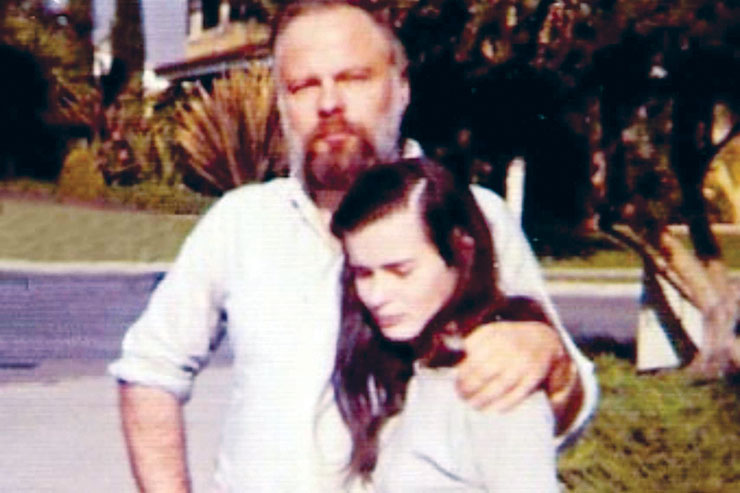
    A Life of Philip K. Dick: The Man Who Remembered the Future

    From New Dawn 139 (Jul-Aug 2013)

    This year [2013] saw the 30th anniversary of the death of one of the most influential writers of all time, the iconic Philip K. Dick. Although virtually unknown outside of science fiction circles, during his lifetime Dick’s intriguing philosophy on the nature of reality has become a staple of the modern Hollywood movie. Huge blockbusters such as Total Recall, Minority Report, The Adjustment Bureau, Blade Runner, A Scanner Darkly and Paycheck were loosely based directly on his novels or short stories, and movies such as The Eternal Sunshine of the Spotless Mind, Memento, The Matrix, The Truman Show and Inception all owe a huge debt to his vision.

    One of the most intriguing themes of Dick’s writing was the concept of the “precog,” a person who could “see” the future before it happened. In 1954 Phil introduced the concept of precognition in his novel The World Jones Made. In this novel the eponymous anti-hero Floyd Jones can see exactly one year into the future. From then on “precogs” occur regularly in his novels and short stories, most notably in his 1956 short story The Minority Report, his 1964 novel Martian Time-Slip, The Three Stigmata of Palmer Eldritch and many others.

    What was it that made Philip K. Dick interested in precognition? It had not been a particular theme within classical science fiction nor had it been part of the books that the young Philip read during his childhood years and early teens. The answer may lie in one simple fact: Philip K. Dick himself was a “precog.” He was not writing fiction but heavily disguised autobiography. Let us review the evidence.

    Like many of his schoolmates, Phil was expected to attend the University of California in his hometown of Berkeley. But in order to do so he needed to reach the entrance grades required. This possibility started to fade rapidly when, during a crucial physics test, Phil couldn’t remember the key principle behind the displacement of water. As eight of the ten questions involved this principle, he was clearly in trouble. And then it happened: a voice clearly and precisely explained to the surprised young man the scientific principles he so desperately needed to understand. All Phil had to do was write down the words in his head. Phil received an ‘A’ grade.

    Although this “voice” effectively disappeared for many years, Phil continued to sense there was a part of him that was alien in some way. Throughout the 1950s the voice remained silent and then, under somewhat prosaic circumstances, it re-appeared. In an interview with his friend Greg Rickman, recorded in October 1981, Phil described how he had been watching a TV programme about the Galapagos turtles. The fight for survival of one particular female turtle had really upset him. After laying her eggs she had turned in the wrong direction and instead of going towards the sea she crawled inland. Soon the heat had brought about extreme dehydration. She was dying. As she began to fade her legs were still seen to be moving. The film had been edited to give the impression that the dying turtle was imagining she was back in the ocean. He went to bed with this tragic image in his mind. He woke up in the night to hear a voice. In careful and deliberate terms the entity explained to Phil that the turtle actually believed she was in the water:

    I was just terribly amazed and dumbfounded to hear that voice again. It wasn’t my own voice because one of the sentences the voice said was “And she shall see the sea” and I would not use the two words “see” and “sea” in the same sentence. It tends to do that, use word choices I don’t use. One time it used the expression “a very poisonous poison” which I would not use.1

    It is clear Phil recognised the voice as being the same entity that had helped him in his physics exam all those years before. It was back. He was to continue hearing this entity for many years, but only as a faint background whisper. In another 1981 interview he stated:

    I only hear the voice of the spirit when I am falling asleep or waking up. I have to be very receptive to hear it. It’s extremely faint. It sounds as though it is coming from a million miles away.2

    The “Voice” Returns

    In February and March 1974 the voice was to reappear and stay with him. It all started quite innocently. Phil had been in considerable pain after having a wisdom tooth pulled out. His wife, Tessa, called the dentist who prescribed painkillers. As Tessa did not want to leave her husband alone in such a state of agitation she asked if somebody could deliver the prescription to their house in Fullerton. Half an hour later the doorbell rang and Phil dashed to the door. On opening it he saw a young woman clutching the much-needed painkillers. Phil stood back stunned. Around the young woman’s neck was a necklace with a fish pendant. Phil recognised this as a symbol of something deep within himself. He asked her what it was and she explained it was a sign used by the early Christians as a code to show their secret beliefs to fellow Christians.

    Dick later reported this was the first time he experienced the pink light, the same light so central to the Beatles incident (described below). He said a beam of this light shot out of the pendant and entered his brain. This light opened up a part of his brain that had long been asleep. He described it in this way:

    I suddenly experienced what I later learned is called anamnesis – a Greek word meaning, literally, “loss of forgetfulness.” I remembered who I was and where I was. In an instant, in the twinkling of an eye, it all came back to me.3

    As we have already mentioned, up until March 1974 what Dick had called “the voice” manifested itself on rare occasions such as the incident during the school exam. But after Phil’s “anamnesis” his hidden partner was to become very active in his life. It decided that Phil had become far too slovenly in his personal appearance. He was made to go out and buy a pair of nasal hair-clippers and it suggested he trim his beard. The entity even had Phil go shopping for new trendy clothes.

    It was also concerned about the health of the shared body. It had Phil go through his drugs cabinet and forced him to throw out those medications that were proving problematical to his health. It discovered that wine was too acidic for his sensitive stomach and suggested he change to drinking beer. This being had many skills that Phil sadly lacked, such as business acumen. It realised he had made quite a mess of his tax matters and within weeks the entity sorted this out. It also had Phil sack his agent after it read over his royalty statements and discovered massive irregularities.

    All of these were minor interventions compared to its apogee, the saving of Phil’s son’s life. Phil describes how one morning he was lying in a semi-sleep state when he heard the voice announce that his recently born son, Christopher, had a potentially fatal birth defect and that urgent medical attention was needed. Indeed the voice was quite precise when it stated: “Your son has an undiagnosed right inguinal hernia. The hydrocele has burst, and it has descended into the scrotal sac. He requires immediate attention, or will soon die.” Phil told various versions of this story, including one involving him listening to the Beatles and the lyrics of “Strawberry Fields” were changed to give the instruction. Tessa, acting on her husband’s frantic instructions, took Christopher to the family doctor and it was, indeed, confirmed that Christopher had exactly the problem the “voice” had described and surgery was needed.

    Dick’s “Homoplasmate”

    What was the source of this “voice” and how did it have information unknown to Phil? Phil was to conclude that it was an immortal part of himself, something he called a “plasmate.” He argued this entity had bonded with him and in doing so had taken human form, something Phil termed a “homoplasmate.” He was later to describe how his mind had been invaded by a “transcendentally rational mind, as if I had been insane all my life and had suddenly become sane.” He explained that:

    …mental anguish was simply removed from me as if by divine fiat… some transcendental divine power which was not evil, but benign intervened to restore my mind and heal my body and give me a sense of the beauty, the joy, the sanity of the world.

    This being, set free from its shackles by Phil’s “anamneses,” was able to use its powers to help Phil precognise the future. Indeed, Phil realised this being had been the source of a series of peculiar precognitive incidents that had taken place throughout his life.

    For example, in his 1974 novel Flow My Tears the Policeman Said, Phil has a sequence in which one of his characters, Felix Buckman, is distraught at the death of his twin sister, Alys. He finds himself in an all-night gas station and there he meets up with a black stranger. Buckman and the black man start up a conversation. In the summer of 1978 Phil, uncharacteristically, decided to go out late at night to post a letter. In the darkness he noticed a man loitering by a parked car. Phil posted his letter and on the way back the man was still there. In a second uncharacteristic impulse Phil walked over to the man and asked if anything was the matter. The man replied that he was out of gas and he had no money with him. Much to his surprise Phil found himself digging into his pocket and giving the man some cash. The man asked for Phil’s address and said that he would return later and pay him back. As Phil entered his apartment he realised that the money would be of no use to his new friend. There were no gas stations within walking distance. Phil went back out, found the man, and offered to drive him to the nearest all-night gas station. As he stood watching the man fill up his metal gas can he had an alarming sensation of a déjà vu-like recognition:

    Suddenly I realised that this was the scene in my novel – the novel written eight years before. The all-night gas station was exactly as I had envisioned it in my inner eye when I wrote the scene – the glaring white light, the pump jockey – and now I saw something which I had not seen before. The stranger who I was helping was black.4

    Phil drove the black man back to his car, they shook hands and Phil never saw him again. He finishes off his description of this event with a slightly chilling comment:

    I was terribly shaken up by this experience. I had literally lived out a scene completely as it had appeared in my novel…. What could explain all this?5

    Uncanny Precognition

    In early 1974 Phil started a long-term correspondence with a graduate student called Gloria Bush. As time went on Phil described to Gloria some of his deepest thoughts, including his fascination regarding his own precognitive abilities. In a letter dated 9 May of that year he described to Gloria a particularly strange recurring dream he experienced in November 1971. In the dreams he always saw what looked like a Mexican city with “square arrangements of streets and yellow cabs.” The yellow cabs suggested to Phil a location in the USA rather than Mexico or Latin America. At the time of these dreams he was living in Marin County, north of San Francisco. In 1974 he was living in Fullerton, a southern suburb of Los Angeles. Right next to Fullerton is a place called Placentia which is a strongly Hispanic area. Phil explains to Claudia that he was convinced this was the place he saw in these dreams.6

    But Phil’s dreams in 1975 took a turn to the macabre. On 25 February he wrote a letter to Bush that was very different from those he had sent before. In a fascinating postscript to an otherwise standard letter, he mentions “the entity” again. It had clearly been manifesting itself within his life at that time. How regularly and to what intensity we cannot say as we have no other source other than this letter. However, it is clear Phil wanted to bring things to a head. He told Claudia:

    I was up to 5 a.m. on this last night. I did something I never did before; I commanded the entity to show itself to me – the entity which has been guiding me internally since March. A sort of dream-like period passed, then, of hypnogogic images of underwater cities, very nice, and then a stark single horrifying scene, inert but not still; a man lay dead, on his face, in a living room between the coffee table and the couch.7

    On 9 May 1974 he wrote another typewritten letter to Claudia stating that he felt “scared.” He didn’t elaborate on this comment but at the bottom of the letter is a handwritten note that states the following: “p.s. What scares me most, Claudia, is that I can often recall the future.”

    Almost exactly seven years later Phil had failed to answer a series of phone calls to his condominium. A group of neighbours then found his front door open. One witness, Mary Wilson, entered the condo and described how she initially thought nobody was home, but then she spotted Phil’s feet sticking out from behind a coffee table. She immediately asked her mother to phone Phil’s close friend, science-fiction writer Tim Powers. Powers jumped on his motorcycle to see what he could do to help. In his introduction to The Selected Letters of Philip K Dick Volume Four Powers describes what happened next:

    As I was putting the key in the ignition of my motorcycle I heard the sirens of the paramedics howl past me down Main Street. When I got to Phil’s place the paramedics and Mary Wilson were already there and the paramedic had lifted him from between the coffee table and the couch and carried him to his bed, and Mary and I answered a few hasty medical questions about him before they got him into a stretcher and carried him downstairs to the ambulance.8

    Phil’s February 1975 dream had come true in stunning detail. He had seen the circumstances of his own death.

    Who, or what, was the “entity” that seemed to share Phil’s life and know his future? Surprisingly enough Phil believed this being to be a version of himself that existed outside of time; a being that could observe the whole of Phil’s life from a position of timelessness. Phil believed that during his dreams, in his semi-waking states and during certain times of heightened awareness, this timeless part of himself could communicate and use its foreknowledge to assist him.

    In October 1977 Phil made a very curious statement during a radio interview at the Berkeley radio station KPFA FM. He described an incident that took place in 1951:

    Back at the time I was starting to write science fiction, I was asleep one night and I woke up and there was a figure standing at the edge of the bed, looking down at me. I grunted in amazement and all of a sudden my wife woke up and started screaming because she could see it too. She started screaming, but I recognised it and I started reassuring her, saying that it was me that was there and not to be afraid. Within the last two years – let’s say that was in 1951 – I’ve dreamed almost every night that I was back in that house, and I have a strong feeling that back then in 1951 or ’52 that I saw my future self, who had somehow, in some way we don’t understand – I wouldn’t call it occult – passed backward during one of my dreams now of that house, going back there and seeing myself again. So there really are some strange things…9

    If the figure at the end of the bed was a future version of Phil then that version would have foreknowledge of all Phil’s life-experiences between 1951 and 1977. Indeed, if Phil’s interpretation can be taken at face value, we have here evidence that in some way his mind from the mid-1970s was manifesting itself back within its own past.

    Vertical Vs. “Orthogonal Time”

    But Phil was not simply happy with accepting this may be the case, he wanted to create a model to explain such a belief. Immediately after the strange events of February and March 1974, or simply 2-3-74 as he termed them, Phil started to keep a journal. Initially in hand-written form and later as page after page of typewritten sheets with diagrams and side notes, this became known as his Exegesis. In effect this was Phil’s attempt to understand the source and meaning of the visions and revelations that he continued to receive until his death in March 1983.

    We are fortunate that in November 2011 a single volume containing all the main sections of this huge work was published by Houghton Mifflin Harcourt. Running to 976 pages this is a fascinating read and in it one can discover Phil’s own understanding of how a part of him could see the future. His solution was a radical re-interpretation of time itself – something Phil called “orthogonal time.”

    He proposes there are two variations of time, both of which exist at right angles to each other. We are usually only aware of “Vertical Time,” but there is another which runs at right angles to our space-time. He calls this “Orthogonal Time.” If we could perceive both times simultaneously it would look cubical, hence his term cubic time. He proposed that events are actually located within this cubic time. As such the idea of cause and effect cannot be applied within this model. Causality can run in reverse or act simultaneously with an event in the past or the future. In other words within orthogonal time all past and future states exist at this moment. In the whole of the Exegesis Phil makes one passing reference to a physicist by the name of Herman Minkowski, the teacher of the much more famous Albert Einstein. With reference to his own precognitions, Phil wrote:

    This is a disturbing new view but oddly enough it coincides with my dream experiences, my precognition of events moving this way from the future; I feel them inexorably approaching, not generated from the present, but somehow already there but not yet visible. If they are somehow “there” already, and we encounter them successively (the Minkowski block universe; events are all already there but we have to encounter them successively), then this view might be a correct view of time and causality.10

    Phil suggested that the basic premise of his short story Adjustment Team – that there exists a way in which the past can be “adjusted” to change the present – may be another of his fictionalised accounts of something that really takes place.11 

    Phil believed that part of us exists within orthogonal time and this alternate-consciousness can, under certain circumstances, communicate with the every-day self that perceives only linear time. This was the source of “the voice” and VALIS (Vast Active Living Intelligence System, Dick’s gnostic vision of one aspect of God). This is how, in dreams, Phil found himself back in his own past observing an earlier version of himself. In this way “the voice” was his own voice speaking from his own future. This entity created his plot-lines using material from his own future. Was this how the meeting with the black man at the gas station ended up in Flow My Tears The Policeman Said? All information from all parts of our life is readily available to a mind open to receive it. Phil suggested in a letter to his friend Patricia Warrick, written in September 1981, that:

    The universe is an information retrieval system; which is to say, everything that has ever happened, ever been, each arrangement and detail – all are stored in the present moment as information; what we lack is the access or entry mechanism to this stored information… where the past of each object – all its prior manifestations along the Form axis – this is all stored in the present object and can be retrieved.12

    This is again astounding evidence that Phil seemed to be accessing information from some form of infinite data-field. It is very much in keeping with the work of modern-day researchers such as Ervin Laszlo and Bernard Haisch, both of whom suggest this “library” is, in fact, something known as the Zero-Point Field.13

    Is this the answer to the mystery of Phil’s precognitions? It certainly makes sense. The future and the past are simply illusions. Phillip K. Dick and every being that reads this article consist of two independent consciousnesses. One lives in linear time and the other in orthogonal time. And in this way we may all be immortal. After all, the transition between life and death takes place in linear, not orthogonal, time.

    In his novel Ubik Phil created a concept known as “Half Life.” This is a timeless place, hovering between life and death. Tibetan Buddhists call this the “Bardo State.” Is this from where Phil’s eternal mind communicated with him? To paraphrase the title of one of his most intriguing books, could it be we all exist in a place where “Time is Out of Joint”?

    For more on the above, read Anthony Peake’s book The Man Who Remembered the Future: A Life of Philip K. Dick.

    [alert type=”success” dismiss=”no”]If you appreciate this article, please consider subscribing to help maintain this website.[/alert]

    Footnotes

    1. Gregg Rickman, Philip K. Dick: The Last Testament, Fragments West, 1985, 23

    2. John Boonstra, Horselover Fat and The New Messiah, Hartford Advocate, 22 April 1981, reproduced in PKD Otako #06, 22

    3. ‘How to Build a Universe that Doesn’t Fall Apart Two Days Later’, published as an introduction to I Hope I Shall Arrive Soon, Doubleday, New York, 1985

    4. Lawrence Sutin (editor), The Shifting Realities of Philip K. Dick, Vintage, 1995, 268

    5. Ibid., 269

    6. The Selected Letters of Philip K Dick, 1974, Underwood-Miller, 1991, 101

    7. Philip K. Dick, Letter to Claudia Krenz, 25 February 1975

    8. The Selected Letters of Philip K Dick, 1975-76, Underwood-Miller, 1992, ix

    9. Richard A Lupoff,  A Conversation With Philip K Dick, Vol. 1, no. 2, August 1987, 45-54

    10. Philip K. Dick, The Exegesis of Philip K Dick, Hachette Littlehampton, Kindle Edition.

    11. Ibid.

    12. The Selected Letters of Philip K Dick, 1980-1982, Vol. 6, Underwood Books, 2009, 262

    13. Ervin Laszlo, Science and the Akashic Field: An Integral Theory of Everything, Inner Traditions, 2007

    © New Dawn Magazine and the respective author.
    For our reproduction notice, click here.

  • Extended Minds: The Mental Fields Within & Beyond Our Brains

    Extended Minds: The Mental Fields Within & Beyond Our Brains

    From New Dawn 140 (Sept-Oct 2013)

    We have been brought up to believe that our minds are inside our heads, that mental activity is nothing but brain activity. Instead, I suggest that our minds extend far beyond our brains; they stretch out through fields that link us to our environment and to each other.

    Mental fields are rooted in brains, just as magnetic fields around magnets are rooted in the magnets themselves, or just as the fields of transmission around mobile phones are rooted in the phones and their internal electrical activities. As magnetic fields extend around magnets, and electromagnetic fields around mobile phones, so mental fields extend around brains.

    Mental fields help to explain telepathy, the sense of being stared at and other widespread but unexplained abilities. Above all, mental fields underlie normal perception. They are an essential part of vision.

    Images Outside Our Heads

    Look around you now. Are the images of what you see inside your brain? Or are they outside you – just where they seem to be? According to the conventional theory, there is a one-way process: light moves in, but nothing is projected out.

    The inward movement of light is familiar enough. As you look at this page, reflected light moves from the page through the electromagnetic field into your eyes. The lenses of your eyes focus the light to form upside-down images on your retinas. This light falling on your retinal rod and cone cells causes electrical changes within them, which trigger off patterned changes in the nerves of the retina. Nerve impulses move up your optic nerves and into the brain, where they give rise to complex patterns of electrical and chemical activity. So far, so good. All these processes can be, and have been, studied in great detail by neurophysiologists and other experts on vision and brain activity.

    But then something very mysterious happens. You consciously experience what you are seeing, the page in front of you. You also become conscious of the printed words and their meanings. From the point of view of the standard theory, there is no reason why you should be conscious at all. Brain mechanisms ought to go on just as well without consciousness.

    The standard theory of vision applies to all species of animals with image-forming eyes. It does not explain why there should be conscious vision in any animal species, or in people. There is just unconscious, computer-like data-processing by the nervous system.

    Then comes a further problem. When you see this page, you do not experience your image of it as being inside your brain, where it is supposed to be. Instead, you experience its image as being located about two feet in front of you. The image is outside your body.

    For all its physiological sophistication, the standard theory has no explanation for your most immediate and direct experience. All your experience is supposed to be inside your brain, not where it seems to be.

    The basic idea I am proposing is so simple that it is hard to grasp. Your image of this page is just where it seems to be, in front of your eyes, not behind your eyes. It is not inside your brain, but outside your brain.

    Thus vision involves both an inward movement of light, and an outward projection of images. Through mental fields our minds reach out to touch what we are looking at. If we look at a mountain ten miles away, our minds stretch out ten miles. If we gaze at distant stars our minds reach out into the heavens, over literally astronomical distances.

    The Sense of Being Stared At

    Sometimes when I look at someone from behind, he or she turns and looks straight at me. And sometimes I suddenly turn around and find someone staring at me. Surveys show that more than 90% of people have had experiences such as these. The sense of being stared at should not occur if attention is all inside the head. But if it stretches out and links us to what we are looking at, then our looking could affect what we look at. Is just an illusion, or does the sense of being stared at really exist?

    This question can be explored through simple, inexpensive experiments. People work in pairs. One person, the subject, sits with his or her back to the other, wearing a blind-fold. The other person, the looker, sits behind the subject, and in a random series of trials either looks at the subject’s neck, or looks away and think of something else. The beginning of each trial is signalled by a mechanical clicker or bleeper. Each trial lasts about ten seconds and the subject guesses out loud “looking” or “not looking.” Detailed instructions are given on my website, www.sheldrake.org.

    More than 100,000 trials have now been carried out, and the results are overwhelmingly positive and hugely significant statistically, with odds against chance of quadrillions to one. The sense of being stared at even works when people are looked at through closed-circuit TV. Animals are also sensitive to being looked at by people, and people by animals. This sensitivity to looks seems widespread in the animal kingdom and may well have evolved in the context of predator-prey relationships: an animal that sensed when an unseen predator was staring would stand a better chance of surviving than an animal without this sense.

    Telepathy

    Educated people have been brought up to believe that telepathy does not exist. Like other so-called psychic phenomena, it is dismissed as an illusion.

    Most people who espouse these opinions, which I used to myself, do not do so on the basis of a close examination of the evidence. They do so because there is a taboo against taking telepathy seriously. This taboo is related to the prevailing paradigm or model of reality within institutional science, namely the mind-inside-the-brain theory, according to which telepathy and other psychic phenomena, which seem to imply mysterious kinds of ‘action at a distance’, cannot possibly exist.

    This taboo dates back at least as far as the Enlightenment at the end of the eighteenth century. But this is not the place to examine its history (which I discuss in The Sense of Being Stared At). Rather I want to summarise some recent experiments, which suggest that telepathy not only exists, but that it is a normal part of animal communication.

    Psychic Pets

    I first became interested in the subject of telepathy some 25 years ago, and started looking at evidence for telepathy in the animals we know best, namely pets. I soon came across numerous stories from owners of dogs, cats, parrots, horses and other animals that suggested these animals seemed able to read their minds and intentions.

    Through public appeals I have built up a large database of such stories, currently containing more than 4,700 case histories. These stories fall into several categories. For example, many cat owners say that their animal seem to sense when they are planning to take them to the vet, even before they have taken out the carrying basket or given any apparent clue as to their intention. Some people say their dogs know when they are going to be taken for a walk, even when they are in a different room, out of sight or hearing, and when the person is merely thinking about taking them for a walk. Of course, no one finds this behaviour surprising if it happens at a routine time, or if the dogs see the person getting ready to go out, or hear the word “walk.” They think it is telepathic because it seems to happen in the absence of such clues.

    One of the commonest and most testable claims about dogs and cats is that they know when their owners are coming home, in some cases anticipating their arrival by ten minutes or more. In random household surveys in Britain and America, my colleagues and I have found that approximately 50% of dog owners and 30% of cat owners believe that their animals anticipate the arrival of a member of the household. Through hundreds of videotaped experiments, my colleagues and I have shown that dogs react to their owners’ intentions to come home even if they are many miles away, even when they return at randomly-chosen times, and even when they travel in unfamiliar vehicles such as taxis. Telepathy seems the only hypothesis that can account for the facts. (For more details, see my book Dogs that Know When their Owners Are Coming Home, And Other Unexplained Powers of Animals.)

    Telephone Telepathy

    In the course of my research on unexplained powers of animals, I heard of dozens of dogs and cats that seemed to anticipate telephone calls from their owners. For example, when the telephone rings in the household of a noted professor at the University of California at Berkeley, his wife knows when her husband is on the other end of the line because Whiskins, their silver tabby cat, rushes to the telephone and paws at the receiver. “Many times he succeeds in taking it off the hook and makes appreciative miaws that are clearly audible to my husband at the other end,” she says. “If someone else telephones, Whiskins takes no notice.” The cat responds even when he telephones home from field trips in Africa or South America.

    This lead me to reflect that I myself had had this kind of experience, in that I had thought of people for no apparent reason who shortly there afterwards called. I asked my family and friends if they had ever had this experience, and I soon found the majority were very familiar with it. Some said they knew when their mother or boyfriend or other significant person was calling because the phone sounded different!

    Through extensive surveys, my colleagues and I have found that most people have had seemingly telepathic experiences with telephone calls. Indeed this is the commonest kind of apparent telepathy in the modern world.

    Is this all a matter of coincidence, and selective memory, whereby people only remember when someone they were thinking about rang, and forget all the times they were wrong? Most sceptics assume that this is the case, but until recently there had never been any scientific research on the subject at all.

    I have developed a simple experiment to test for telephone telepathy. Participants receive a call from one of four different callers at a prearranged time, and they themselves choose the callers, usually close friends or family members. For each test, the caller is picked at random by the experimenter by throwing a dice, or by using a computerised random-number generator. The participant has to say who the caller is before the caller says anything. If people were just guessing, they would be right about one time in four, or 25% of the time.

    We conducted more than 800 such trials, and the average success rate is 42%, very significantly above the chance level of 25%, with astronomical odds against chance.

    We also carried out a series of trials in which two of the four callers were familiar, while the other two were strangers, whose names the participants knew, but whom they had not met. With familiar callers, the success rate was 56%, highly significant statistically. With strangers it was at the chance level, in agreement with the observation that telepathy typically takes place between people who share emotional or social bonds.

    In addition, we have found that these effects do not fall off with distance. Some of our participants were from Australia or New Zealand, and they could identify who was calling just as well as with people down under as with people only a few miles away.

    Telepathic emails and text messages are the latest version of this phenomenon, and an extensive series of experiments with emails has given very similar results to the telephone experiments. Positive and highly significant statistically. (The details of all this research on telepathy in people and in pets are published in a series of papers in peer-reviewed journals, and the full texts are available on my web site).

    An automated version of the telephone telepathy test that works on mobile telephones is now up and running and can be accessed from the Online Experiments Portal on my web site, www.sheldrake.org.

    Extended Minds

    Laboratory studies by parapsychologists have already provided significant statistical evidence for telepathy (well reviewed by Dean Radin in his book The Conscious Universe, Harper 1997). But most laboratory research has given rather weak effects, probably because most participants and “senders” were strangers to each other, and telepathy normally depends on social bonds.

    The results of telephone telepathy experiments give much stronger and more repeatable effects because they involve people who know each other well. I have also found that there are striking telepathic links between nursing mothers and their babies. Likewise, the telepathic reactions of pets to their owners depend on strong social bonds.

    I suggest that these bonds are aspects of the fields that link together members of social groups (which I call morphic fields) and which act as channels for the transfer of information between separated members of the group. Telepathy literally means “distant feeling,” and typically involves the communication of needs, intentions and distress. Sometimes the telepathic reactions are experienced as feelings, sometimes as visions or the hearing of voices, and sometimes in dreams. Many people and pets have reacted when people they are bonded to have had an accident, or are dying, even if this is happening many miles away.

    There is an analogy for this process in quantum physics: if two particles have been part of the same quantum system and are separated in space, they retain a mysterious connectedness. When Einstein first realised this implication of quantum theory, he thought quantum theory must be wrong because it implied what he called “spooky action at a distance.” Experiments have shown that quantum theory is right and Einstein wrong. A change in one separated part of a system can affect another instantaneously. This phenomenon is known as quantum non-locality or non-separability.

    Telepathy, like the sense of being stared at, is only paranormal if we define as “normal” the theory that the mind is confined to the brain. But if our minds reach out beyond our brains, just as they seem to, and connect with other minds, just as they seem to, then phenomena like telepathy and the sense of being stared at seem normal. They are not spooky and weird, on the margins of abnormal human psychology, but are part of our biological nature.

    Of course, I am not saying that the brain is irrelevant to our understanding of the mind. It is very relevant, and recent advances in brain research have much to tell us. Our minds are centred in our bodies, and in our brains in particular. However, they are not confined to our brains, but extend beyond them. This extension occurs through the fields of the mind, or mental fields, which exist both within and beyond our brains.

    The idea of the extended mind makes better sense of our experience than the mind-in-the-brain theory. Above all, it liberates us. We are no longer imprisoned within the narrow compass of our skulls, our minds separated and isolated from each other. We are no longer alienated from our bodies, from our environment and from other people. We are interconnected.

    The new edition of Dr. Sheldrake’s classic book The Sense of Being Stared At, And Other Unexplained Powers of Human Minds, is available from all good bookstores and online retailers.

    [alert type=”general” dismiss=”no”]This article was published in New Dawn 140.[/alert]

    [alert type=”success” dismiss=”no”]If you appreciate this article, please consider subscribing to help maintain this website.[/alert]

    © New Dawn Magazine and the respective author.
    For our reproduction notice, click here.
  • The Fairytale of Materialism: How ‘Fundamentalists’ Hijacked Science

    The Fairytale of Materialism: How ‘Fundamentalists’ Hijacked Science

    From New Dawn Special Issue Vol 7 No 5 (Oct 2013)

    The theme of this special issue of New Dawn Magazine is important in more ways than meet the eye at first. The notion of forbidden ideas in science is intriguing for obvious reasons. After all, it is undeniable that the intellectual establishment has historically blacklisted some of the most important breakthroughs in science over the centuries. To mention only one example, for decades Isaac Newton’s then-revolutionary idea that an invisible force called gravity acted at a distance between bodies was considered magical woo-woo, unworthy of being taken seriously.1 What other revolutionary – and perhaps valid – ideas might have been recently proposed but continue to be snubbed today in scientific circles? Few questions are more interesting and relevant.

    Yet, the notion of forbidden science raises a less obvious but equally intriguing question: on what basis is something considered heretical in science? What are the underlying assumptions of the self-appointed police of scientific thought? After all, science is supposedly based on the neutral and objective comparison between theory and nature. Nature is the final arbiter of scientific debate and it can be queried directly through experiment. So, if that is the way to settle the questions, why do we so often witness the scientific community engaged in highly subjective and emotionally-charged debates regarding what theory is – or isn’t – reasonable or acceptable? Sir John Maddox, former editor of Nature, once called for nothing less than the burning of a book describing a new theory of biological inheritance, much in the tone of medieval inquisitors.2 Why all this fundamentalist hysteria?

    In this article, I will argue that, at the root of all this, is the fact that the intellectual establishment completely misinterprets and misrepresents what science is about. The fundamentalist hysteria we see in the culture today is the inevitable result of the consistent and outrageous abuse science has suffered, often at the hands of those who were supposed to be its guardians. These abusers – among which I count some of the biggest names in science today – have hijacked science for the benefit of their own philosophical and psychological needs, biases, prejudices, and interests. And you, dear reader, are on the receiving end of this charade. Allow me to elaborate.

    Science Isn’t Metaphysics

    The scientific method allows us to study and model the observable patterns and regularities of nature. For instance, the observation that objects consistently fall when dropped – a regularity observed anywhere on the surface of the planet – allows us to infer the law of gravity. The observation that crystals form according to symmetrical shapes allows us to infer specific patterns of crystallization for different materials. Modelling the observable patterns and regularities of nature is all that science is about, because it is all that it can be about. Nothing else can be falsified by direct comparison with nature, therefore nothing else can be considered scientific. By observing the consistency of these patterns and regularities, scientists can create mathematical models to capture them, run such models as computer simulations, and then predict how similar phenomena will unfold in the future. Such an ability to predict the phenomena of nature lies at the heart of the technological prowess of our civilisation and represents the main social value-add of science.

    But our ability to model the patterns and regularities of reality tells us little about the underlying nature of things. Scientific modelling is useful for informing us how one thing or phenomenon relates to another thing or phenomenon – this being precisely what mathematical equations do – but it cannot tell us what these things or phenomena fundamentally are in and by themselves. The reason is simple: science can only explain one thing in terms of another thing; it can only characterise a certain phenomenon in terms of its relative differences with respect to another phenomenon.3 For instance, it only makes sense to characterise a positive electric charge relative to a negative electric charge; positive charges are defined in terms of their differences of behaviour when compared to the behaviour of negative charges, and the other way around. Another example: science can explain a body in terms of tissues; tissues in terms of cells; cells in terms of molecules; molecules in terms of atoms; and atoms in terms of subatomic particles. But then it can only explain one subatomic particle in terms of another, by highlighting their relative differences. Science cannot explain the fundamental nature of what a subatomic particle is in itself, since all scientific explanations need a frame of reference to provide contrasts.4

    Capturing the observable patterns and regularities of the elements of reality, relative to each other, is an empirical and scientific question. But pondering about the fundamental nature of these elements is not; it is a metaphysical question. The problem is that, in recent decades, scientists who have little or no understanding of philosophy have begun to believe that science can be a metaphysics.5 This dangerous combination of ignorance and hubris has done our culture an enormous disservice. Childishly emboldened by the technological success achieved by our civilisation, many scientists have begun to believe that the scientific method suffices to provide us with a complete account of the nature of existence. In doing so, they have failed to see that they are simply assuming a certain metaphysics – namely, materialism – without giving it due thought. They have failed to see that the ability to predict how things behave with respect to one another says little about what things fundamentally are.

    The notion that technological prowess is proof of some deep scientific understanding of the underlying nature of reality is simply equivocated. Let us put this in context with an analogy: one needs to know nothing about computer architecture or software in order to play a computer game well and even win; just watch a five-year-old kid. Playing a computer game only requires an ability to understand and predict how the elements of the game behave relative to one another: if your character shoots that spot, it scores points; if your character touches that wall, it dies; etc. It requires no understanding whatsoever of the underlying machine and code upon which the game runs. You can be a champion player without having a clue about Central Processing Units (CPU), Random-Access Memories (RAM), Universal Serial Buses (USB), or any of the esoteric computer engineering that makes the game possible. All this engineering transcends the “reality” accessible empirically from within the game. Yet, the scientific method limits itself to what is empirically and ordinarily observed from within the “game” of reality. Scientific modelling requires little or no understanding of the underlying nature of reality in exactly the same way that a gamer needs little or no understanding of the computer’s underlying architecture in order to win the game. It only requires an understanding of how the elements of the “game,” accessed empirically from within the “game” itself, unfold relative to one another.

    On the other hand, to infer things about what underlies the “game” – in other words, to construct a metaphysics about the fundamental nature of reality – demands more than the empirical methods of science. Indeed, it demands a kind of disciplined introspection that critically assesses not only the elements observed, but also the observer, the process of observation, and the interplay between the three in a holistic manner; an introspection that, as such, seeks to see through the “game.”

    True science is metaphysically neutral and agnostic. Mistaking it for a particular metaphysical position is a profound disservice to science, because it makes it vulnerable to straw-man attacks. For instance, the materialist metaphysics is often peddled today as synonymous with science; a tragic disfigurement of the latter. Yet, as I will argue shortly, materialism is extraordinarily vulnerable to attack, which is construed by a growing number of people as evidence that science itself is failing. But this isn’t true. An attack on materialism as a metaphysical interpretation of science is not an attack on true science.

    To illustrate how true science, as we know it today, can be coherently interpreted according to a metaphysics entirely different from materialism, let us have a fresh look at the so-called “mind-body problem.”

    A Non-Materialist Take on the Mind-Body Problem

    There are undeniable correspondences between conscious experience and brain states. If you have ever been drunk, you know that the addition of alcohol to ordinary brain chemistry can severely affect how one feels subjectively. Anaesthesia and psychiatric drugs also alter consciousness by interfering with brain function. Functional MRI scans regularly reveal high-level correlations between the activation of certain areas in the brain and certain types of subjective experience. So the link between brain states and subjective experience is a scientifically observed pattern/regularity of reality. As such, it is an undeniable scientific fact, independent of metaphysics.

    The question, of course, is how to interpret the underlying nature of this link, which is not a question of science, but of philosophy. Many scientists simply assume that the materialist metaphysics explains the link by stating that the brain generates the mind. As such, the brain – and reality at large – supposedly exists fundamentally outside mind. When the brain is destroyed, mind can no longer exist. Indeed, such metaphysics does seem to explain the high-level correlations between brain states and subjective experience. But it does so at the enormous cost of, first, postulating an unprovable universe fundamentally outside subjective experience; and, second, requiring a magical step by means of which unconscious matter somehow lights up with awareness under particular circumstances – the so-called “hard problem of consciousness.”6 Since subjective experience is the only carrier of reality that anyone can ever know, and since nobody today has the faintest clue about how to solve the “hard problem of consciousness,” materialism suffers from a severe lack of parsimony, explanatory power, and provability.

    Nonetheless, many scientists still adopt materialism as the explanation for the mind-body problem. The reason is that they do not see any other reasonable metaphysical interpretation that fits the scientifically observed patterns and regularities linking brain and mind. As such, they end up making the classical error of conflating metaphysics with science itself. But there is at least another, much more parsimonious metaphysical interpretation that fits the data and has more explanatory power. I will discuss it below in order to illustrate my point that the patterns and regularities of nature can be interpreted in a variety of ways, and that true science is neutral and agnostic about which metaphysical interpretation is true.

    Here we go: think of a stream. Water can flow along the stream through its entire length; that is, water is not localised in the stream, but traverses it unhindered. Now imagine a small whirlpool in the stream: it has a visible and identifiable existence; one can locate a whirlpool and roughly delineate its boundaries; one can point at it and say “Here is a whirlpool!” There seems to be no question about how clear and concrete the whirlpool is as an identifiable object. Moreover, the whirlpool limits the flow: the water trapped in it can no longer traverse the entire stream freely but, instead, become locked in place, swirling around a specific and well-defined location. The whirlpool thus partially localises the flow of water in the stream. Yet, there is nothing to the whirlpool but water itself. The whirlpool is just a specific pattern of water movement that reflects a partial localisation of that water within the stream.

    Now here is my metaphysical interpretation of the mind-body problem: reality at large is the flow of the “stream” of mind. There is nothing to reality but subjective experience itself. The body-brain system is simply the image of a process of self-localisation of mind, just like the whirlpool is the image of a process of self-localisation of water. There is nothing to the brain but mind, yet it is a concrete and identifiable image of the partial localisation of mind, just like a whirlpool is a concrete and identifiable image of the partial localisation of water. You can point at the brain and say “Here is a brain!”

    As such, to say that the brain generates the mind is as absurd as to say that a whirlpool generates water! To say that the brain is the cause of consciousness is as absurd as to say that lightning is the cause of atmospheric electric discharge. After all, lightning is merely how atmospheric electric discharge looks, not the cause of it. Do you see what I mean? The brain is an image of the process of consciousness localisation, as viewed from a second-person perspective, in exactly the same way that flames are an image of the process of combustion, as viewed from the outside. In the same way that the patterns and colours of flames correlate well with the inner-workings of the process of combustion, measured brain activity correlates well with the first-person view of consciousness – that is, direct subjective experience.

    Notice that this eliminates the “hard problem of consciousness” entirely: the correlations between brain states and mind states are explained by understanding the former to be merely an image of the latter, as perceived from a second-person perspective. There is no attempt to reduce mind to objective brain activity outside mind, so there is no “hard problem” at all. The brain and its activity, as images in mind, are of exactly the same nature as any other subjective experience. There is no need to magically derive experience from something outside experience because there is no need to postulate anything outside experience to begin with. The brain is an experience, an image in mind of a certain process of mind.

    The whirlpool represents a partial localisation of the flow of experiences in the stream of mind. This localisation demarcates a centralised, local perspective: the very centre of the whirlpool, the vantage point from which each one of us witnesses our personal subset of the contents of mind-at-large. This is, after all, how we ordinarily experience reality: from a particular vantage point in the middle of the vortex of experiences swirling around us. Ordinarily, we are only aware of the flow of experiences captured in our respective whirlpools, not of the broader stream outside. This is a direct result of the localisation process that pins us to a particular space-time position.

    Clearly, we do not need to postulate an entire universe outside the only carrier of reality we can ever know – mind itself, the medium of all subjective experience – to make sense of the patterns and regularities of nature. We do not need to face the insoluble “hard problem of consciousness.” Instead, we just need to correct an old philosophical mistake made in the name of science: the spectacular mistake of taking the image of a process to be the cause of the process. For the same reason that lighting is simply the way atmospheric electric discharge looks – and not the cause of it – the body-brain system is simply the way consciousness localisation looks, and not the cause of it.

    The entire metaphysical interpretation I elaborated upon above is fully in accordance with the natural patterns and regularities observed and modelled by science today. None of what I said above contradicts any part of true science; perhaps only the assertions of those who hijack and misuse science. If you would like to know more about my metaphysical position, as briefly described above with the whirlpool metaphor, I refer you to my book Why Materialism Is Baloney.

    Conclusions

    The fundamentalist hysteria witnessed today stems from the fact that different factions involved in the so-called “culture war” attempt to make of science something it cannot be: a metaphysical position. In the process, they hijack and deface science, contributing to the general disorientation in our society regarding the nature of truth and the purpose of life. It is time we corrected this. It is time we understood that physics, while valuable and extremely important, just models the elements of the “game”: where to “shoot,” which “wall” to avoid, etc. The underlying nature of reality – the inner workings of the “computer running the game” – is an issue of metaphysics. It requires different methods to be properly assessed and understood. For as long as scientists like Stephen Hawking are allowed to make preposterous pseudo-philosophical pronouncements7 and not be either ignored or thoroughly ridiculed by the mainstream media – in exactly the same way that, say, a famous artist would be ridiculed or ignored for making pseudo-scientific statements – our culture will fail to understand its predicament. Part and parcel of this overdue correction in our culture is the need to see materialism not as synonymous with science, but simply as a particular metaphysical interpretation of science; one that happens to be highly inflationary and to lack sufficient explanatory power.

    Bernardo Kastrup’s book Why Materialism Is Baloney deconstructs materialism and offers a new coherent framework to help us make sense of the Universe. For full details, please visit his website www.bernardokastrup.com or go to www.amazon.com and look up “Bernardo Kastrup.”

    [alert type=”general” dismiss=”no”]This article was published in New Dawn Special Issue Vol 7 No 5.[/alert]

    [alert type=”success” dismiss=”no”]If you appreciate this article, please consider subscribing to help maintain this website.[/alert]

    Footnotes

    1. Kuhn, T. (1996). The Structure of Scientific Revolutions, Third Edition. Chicago: The University of Chicago Press, 105.

    2. Maddox, J. (1981). A book for burning? Nature, 293(5830), 245–246.

    3. Russell, B. (2007). The Analysis of Matter. Nottingham: Spokesman Books.

    4. Even in the case of String Theory, according to which subatomic particles can be explained in terms of vibrating strings, it is still the relative differences between the modes of vibration of these strings that explain reality. The fundamental nature of the strings themselves is left unaddressed. See: Davies, P. and Brown, J. eds. (1992). Superstrings: A Theory of Everything? Cambridge: Cambridge University Press.

    5. See, for instance: Hughes, A. L. (2012). The Folly of Scientism. The New Atlantis, 37, 32-50.

    6. Chalmers, D. (2003). Consciousness and its Place in Nature. In: Stich, S. and Warfield, F. eds. Blackwell Guide to the Philosophy of Mind. Malden, MA: Blackwell, 102-142.

    7. Hawking has made statements like this: “Because there is a law such as gravity, the universe can and will create itself from nothing” (Hawking, S. and Mlodinow, L. (2010). The Grand Design: New Answers to the Ultimate Questions of Life. London: Bantam Books, 227). This is incoherent, since the law of gravity is not nothing. There has been plenty of critical deconstruction of Hawking’s claims, as in: Davies, P. (2010). Stephen Hawking’s big bang gaps. The Guardian, 4 September 2010, London.

    © New Dawn Magazine and the respective author.
    For our reproduction notice, click here.

  • What Gorilla? Why Some Can’t See Psychic Phenomena

    What Gorilla? Why Some Can’t See Psychic Phenomena

    From New Dawn 112 (Jan-Feb 2009)

    Imagine you’re watching a basketball game. Your favourite team is wearing white and the other team is in black. In the midst of the action, someone in a dark gorilla suit calmly walks to the centre of the court, waves to the crowd, then walks off the court. Do you think you would notice this peculiar event? Most people might say yes. Most people would be wrong. 

    Our perceptual system unconsciously filters out the vast majority of information available to us. Because of this filtering process, we actually experience only a tiny trickle of information, by some estimates a trillionth of what is actually out there. And yet from that trickle our minds construct what we expect to see. So when we pay attention to our favourite white-shirted basketball team, the likelihood of clearly seeing darker objects moving about is substantially reduced. That includes even obvious objects, like gorillas. Psychologists call this phenomenon “inattentional blindness,” and it’s just one of many ways in which our prior beliefs, interests and expectations shape the way we perceive the world and cause us to overlook the obvious.

    Because of these blind spots, some common aspects of human experience literally cannot be seen by those who’ve spent decades embedded within the Western scientific worldview. That worldview, like any set of cultural beliefs inculcated from childhood, acts like the blinders they put on skittish horses to keep them calm. Between the blinders we see with exceptional clarity, but seeing beyond the blinders is not only exceedingly difficult, after a while it’s easy to forget that your vision is restricted.

    An important class of human experience that these blinders exclude is psychic phenomena, those commonly reported spooky experiences, such as telepathy and clairvoyance, that suggest we are deeply interconnected in ways that transcend the ordinary senses and our everyday notions of space and time.

    Exclusion of these phenomena creates a Catch 22: Human experiences credibly reported throughout history, across all cultures, and at all educational levels, repeatedly tell us that psychic phenomena exist. But Big Science – especially as portrayed in prominent newspapers and popular magazines like Scientific American – says it doesn’t.

    Well then, is this gorilla in the basketball game, or not? One way to find out is to study the question using the highly effective tools of science while leaving the worldview assumptions behind. That way we can study the question without prejudice, like watching a basketball game without preferring either the white or black team. Neutral observers are much more likely to spot a gorilla, if one is indeed present.

    This form of investigation has been going on for over a century, and despite official denials, the jury is in: Some psychic phenomena do exist. But like blindingly obvious gorillas, not everyone can see them. (Actually, like the majority of the general public, many scientists do have these experiences, but as in the parable of the Emperor’s New Clothes, fledgling science students quickly learn in college that it is not politically expedient to talk about it.)

    Here’s an example of not seeing. In the July/August 2008 issue of the Skeptical Inquirer (the Playboy of the enthusiastic debunker), neuroscientist Amir Raz and psychologist Ray Hyman describe their impressions of an invitation-only scientific meeting held on “anomalous cognition” at the University of British Columbia (UBC) in July 2007. Anomalous cognition is a neutral euphemism for psychic or “psi” phenomena, one that avoids the connotation of séances and ghostbusting associated with the touchy p-words. I was a co-organiser of the UBC meeting. Sixty prominent scientists and physicians were invited to the meeting, including a couple of Nobel Laureates, representing a variety of disciplines and perspectives.

    Not surprisingly, given the skeptical focus of the magazine in which their essays appeared, Raz and Hyman both concluded that they were not persuaded by what they heard at the meeting, that nothing interesting was going on, and that the scientific pursuit of anomalous cognition is akin to a misguided search for the Tooth Fairy (Raz’s term).

    Now, let me preface what I’m about to say by first noting that I respect Raz’s and Hyman’s opinions and I’m glad that they attended the UBC meeting. There is always room for critical debate in science; as President Dubya once said in another context, “Bring it on.” But what I am concerned about is that sometimes holding a fruitful debate stalls before it can get off the ground because one side regards the topic as fantasy. And so to make a point I’ll be ruthless in pointing out problems with these two authors’ opinions.

    One of Raz’s principal complaints was that he would “be curious to see compelling scientific demonstrations of psi (i.e., a string of multiple successful experiments by several independent investigators producing lawful and replicable outcomes). Alas, I have found none to date.”

    When I first read that statement I felt like I increasingly do these days when driving past a gas station. What did that sign say? A gallon of gas costs what? Didn’t we discuss several classes of repeatable experiments at the UBC meeting? For example, I presented an overview of “presentiment” experiments, an unconscious precognitive effect that has been independently and successfully replicated numerous times. (Nearly all of the 20 experiments I’m aware of to date have produced results in the predicted direction, and of those 10 were independently statistically significant.)

    And among researchers who have closely studied the psi literature, the vast majority have little doubt that something interesting is going on, something not easily attributable to chance or to any known conventional artefacts. These effects are in principle no more difficult to demonstrate than the efficacy of new pharmaceutical drugs or medical procedures. Such effects tend to be small in magnitude, they are highly reactive to the psychosocial context and other environmental factors, and they take substantial amounts of careful data collection to overcome the statistical noise generated by dozens of poorly understood interactive factors. But they are real, and they are repeatable in the laboratory.

    Real and repeatable, and yet what Raz meant by a “compelling” demonstration does not exist for him, at least not yet. When one regards evidence from a position where the claimed phenomenon is viewed as exceedingly unlikely, like a gorilla on a basketball court, then the evidence required to change one’s mind must be super-powerful. Not merely a string of successful experiments by independent investigators, as Raz calls for, but effects that are robust enough to be easily repeatable by anyone, anywhere, any time, and highly stable over long periods of time. And better yet, the effect should be predicted by a theory that doesn’t do much violence to orthodox dogma about how the world works.

    This is what I call the “UFO landing on the White House lawn” type of evidence. Alas, such robust evidence is rarely available when dealing with phenomena at the bleeding edge of the known. And it’s true that the evidence for psi today does not quite achieve the status of a Special New Bulletin interrupting the season finale of ‘Lost’ by reporting a UFO landing on the White House lawn (would anyone believe such a story, even if it were true?). Instead, the evidence available today for psi is more like a formation of UFOs repeatedly flying over the US Capitol, captured on film and spotted simultaneously by radar, jet pilots, and hundreds of witnesses on the ground. Well, surely that would convince a few people.

    Oh, wait. Such a UFO sighting actually did occur in Washington DC in 1952. All the major newspapers carried the story. But who remembers that today?

    Perhaps Ray Hyman does. Hyman earned his PhD in 1953 at John Hopkins University, near Washington DC. Today, Hyman is a retired psychology professor who has been one of the premier academic critics of parapsychology for over 50 years. In his essay in Skeptical Inquirer, his major complaint was the lack of easy repeatability of psi effects. To support his claim he cited “a psi proponent reported a meta-analysis of [a class of telepathy experiments] with an average effect size that significantly differed from zero with odds of more than a trillion to one while another meta-analysis… concluded that the average effect size was consistent with zero.” (A meta-analysis is a quantitative review of many similar experiments.) He bolstered this assertion by citing a few parapsychologists who have acknowledged difficulties in producing “UFO on the White House lawn” form of evidence. From this viewpoint, he concluded that parapsychology does not deserve serious scientific attention. He’s been repeating this opinion for 50 years.

    Except there’s a small problem. The parapsychologists mentioned by Hyman were expressing well known difficulties in producing robust repeatable effects on demand. But none of them doubt that the preponderance of evidence strongly indicates the presence of genuine anomalies. Hyman’s selective reporting is akin to dismissing as worthless a clearly visible formation of UFOs flying over the US Capitol, because of a stubborn insistence that the only acceptable data are UFOs landing on the White House lawn precisely at high noon, followed by alien pilots emerging from their crafts, offering tea and biscuits to the President and Vice President of the United States, and then soberly shooting the VP in the face with a projectile weapon (due to regarding that act as a sign of diplomatic friendship, having unfortunately misinterpreted a news story regarding the former Vice President’s shooting his friend in the face – but I digress).

    There’s another problem, one more substantial. Hyman’s damning denouement was that not all meta-analyses of telepathy experiments were judged to be positive. By mentioning the meta-analysis where the “average effect size was consistent with zero,” he reinforced his contention that telepathy experiments are slippery and unrepeatable, and not to be trusted. The study he cited appeared in a 1999 publication by British psychologists Julie Milton from the University of Edinburgh and Richard Wiseman from the University of Hertfordshire. They analysed a selected subset of telepathy experiments, ended up with a positive but statistically non-significant result, and then quite reasonably concluded that nothing interesting was going on. Well, as I said, there’s always room for debate. Except when conclusions are based on a mistake. It turns out that their analysis was miscalculated.

    Jessica Utts, a professor of statistics at the University of California at Irvine, explained at the UBC meeting that Milton and Wiseman had employed a technique that underestimated the actual telepathy effect. If they had used the same (simpler and more powerful) technique employed in all of the other published telepathy meta-analyses, they would have reached the same conclusion that everyone else did: There is indeed significant positive and repeatable evidence for telepathy obtained under controlled laboratory conditions.

    Hyman was in the audience during Utts’ presentation. I don’t know why he chose to ignore her analysis, although if he had acknowledged it that would have neutralised his own arguments. So perhaps its exclusion is not so puzzling.

    Speculations aside, one thing is crystal clear: It can take a White House lawn party to overcome one’s long-held beliefs, so if nothing obviously wrong can be found in a reported experiment, skeptics will still worry if the experiment was conducted by “believers,” because they imagine that believers would not be as rigorously careful as “non-believers.” Indeed, fervent skeptics are quite vocal in asserting that non-believers cannot get the same results in these experiments. Unfortunately, the fact is that skeptics hardly ever conduct these studies, and on the scant occasions when they do, they rarely publish them in sufficient detail to evaluate the results. So we really don’t know whether the suspicion is justified or not.

    That is, until recently. In 2005 two keenly skeptical psychologists, Edward Delgado-Romero from the University of Georgia and George Howard from the University of Notre Dame, conducted the same type of telepathy experiment under consideration here. To their chagrin, they not only obtained a significant positive outcome after conducting a series of eight studies, but their results were perfectly in alignment with the earlier meta-analytic estimates. That is, based on thousands of previous trials, it is possible to estimate the “hit rate” one should get when running a standard telepathy experiment. Delgado-Romero and Howards obtained exactly that value. To their credit, they published their results.

    But their article also included an astounding twist: They ended up rejecting their own experimental evidence based on a single additional study they conducted, which they based on an ad hoc, untested design they proposed, and which ultimately resulted in a statistically significant negative outcome! Strong negative outcomes are just as important statistically speaking, and just as unlikely to occur by chance, as strong positive outcomes. Both indicate that something interesting is going on.

    Another way of illustrating the invisibility of gorillas is by revealing an asymmetry in how psi experiments are reported in newspapers. In January 2008, newspapers around the world hailed the first conclusive test for telepathy conducted by two Harvard University researchers. According to the Boston Globe: “Brain scan tests fail to support validity of ESP. Research on parapsychology is largely taboo in academia, but two Harvard scientists recently set out to settle, once and for all, the age-old question: Is extrasensory perception, or ESP, real? Their sophisticated experiment answers: No, at least, not as far as they can tell using high-tech brain scanners to detect neural evidence of it.”

    Finally. Once and for all. A sophisticated magnetic resonance imaging brainscanner was used (technically, an fMRI), for the first time, to answer this age-old question. The high-tech “no” answer seems conclusive unless you read the actual article, which reported that one of 16 tests conducted showed a stupendously significant outcome exactly in alignment with what was predicted if psi were real. But the authors then took pains to explain why that result was probably an artefact, and so the newspapers didn’t mention that one intriguing outcome. (It also makes one question why they employed an experimental design which allowed positive results to be explained away so easily.)

    But the study was conducted at Harvard, for goodness sake, so surely that’s the last word on ESP. After all, for the first time ever Harvard scientists used one of those expensive and mysterious fMRI brainscanners to peer deep inside the brain, and they didn’t see any psi in there. End of story, no?

    Well, no. Was this really the first psi study conducted using an fMRI? No, it wasn’t even the second such study. Or the third. Or fourth. Or fifth. It was the sixth. And all of the earlier experiments, all conducted since 2000, showed significant evidence for psi effects. Somehow the newspapers overlooked this, despite the fact that most of those studies are freely available in an instant via PubMed.gov, the National Institutes of Health massive online bibliography of scientific articles related to health and healing.

    I could continue along the same vein ad nauseum when it comes to how scientific evidence for psi is often ignored or distorted beyond recognition. Unfortunately, there are countless other tales of ignoring other invisible gorillas at the frontiers of knowledge. They include serious scientific arguments that global warming is not being caused by human activities, analyses suggesting that HIV does not cause AIDS, repeatable electrochemical-nuclear reactions once known as “cold-fusion,” credible reports of UFOs, and so on. All of these ideas encounter strong sociopolitical resistance in academia, so credible counter-arguments are difficult to locate and even more difficult to discuss in scientific forums unless you have a phalanx of beefy bodyguards watching your back. One of the best sources of information about these “frontier” science topics is the Journal of Scientific Exploration, a peer-reviewed multidisciplinary journal published by the Society for Scientific Exploration.

    Without belabouring the point, such tales expose a skeleton in the closet of Big Science. From the popular perspective, science is portrayed as a flawlessly rational enterprise, where accumulating evidence slowly but surely overcomes stubborn skepticism. In reality, science is like any other human activity, and as such, emotions always trump reason. There is as least as much pig-headedness and motivated inattention in science as in politics and religion.

    Given the non-rational skeleton, will mainstream science ever be prepared to admit that psychic phenomena warrants serious investigation? I believe the answer is yes. Acceptance someday is inevitable. We are dealing with human experiences reported since the dawn of human history, experiences that do not go away in tightly controlled laboratory tests using the most sophisticated experimental tools and designs. So some of these phenomena will eventually become integrated into the mainstream. Exactly when I cannot say. Perhaps one to five decades.

    Will this happen because the accumulated data will overwhelm skepticism? Probably not. As Max Planck, the physicist who dreamt up the idea of the “quantum” in quantum mechanics, once wrote, “A new scientific truth does not triumph by convincing its opponents and making them see the light, but rather because its opponents eventually die, and a new generation grows up that is familiar with it.”

    Some of the 60 participants at the UBC meeting represented that younger generation, and while a handful of the older crowd are certain to remain mulishly skeptical to their deaths, based on the written opinions of many of the participants collected before, during and after the meeting, it was clear that the majority were more open to anomalous cognition after the meeting than they were before.

    I expect that trend to continue, and then one day a threshold will be crossed, and on that day some of the invisible gorillas in our midst will become a bit easier to see. The very next day no one will remember that this topic was once considered controversial.

    [alert type=”general” dismiss=”no”]This article was published in New Dawn 112.[/alert]

    [alert type=”success” dismiss=”no”]If you appreciate this article, please consider subscribing to help maintain this website.[/alert]

    © New Dawn Magazine and the respective author.
    For our reproduction notice, click here.