It’s almost a cliché. Working alone, an inventive genius pioneers new devices that ultimately change the world but his genius is barely recognised and he goes on to die in relative poverty; and whilst he dies, virtually alone and unrecognised, his inventions eventually transform life across the planet.
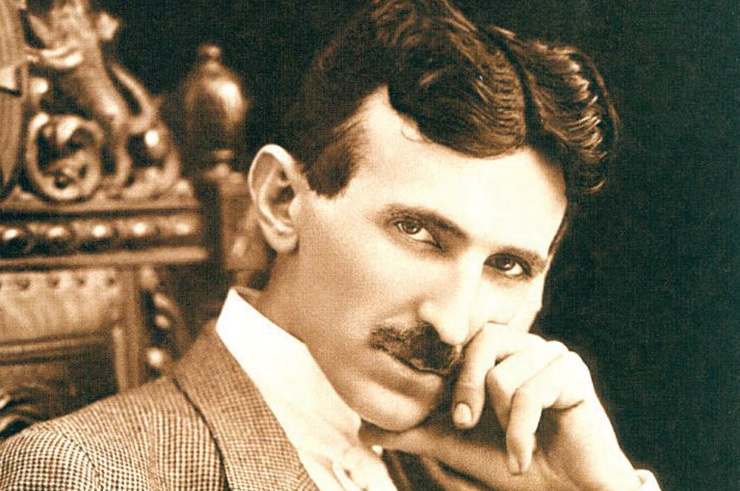
Unfortunately it’s pretty much the story of Nikola Tesla, the scientific visionary whose inventions shaped much of the 20th century, whilst the man himself has been all but forgotten. And it is no exaggeration to call Tesla a visionary.
In contrast to many scientific pioneers who spent years developing their projects, Tesla’s ideas were often conceived and perfected in his mind’s eye in an instant.
“Birth, growth and development are phases normal and natural,” said Tesla, but, “It was different with my invention(s). In the very moment I became conscious of it, I ‘saw’ it fully developed and perfected…”
In fact these extraordinary powers of memory and visualisation were to characterise much of his life and work. One day while walking with a friend in Budapest, Tesla was reciting lines from Goethe’s Faust when the idea of a rotating magnetic field suddenly appeared before him, literally. In an instant Tesla knew how to produce the alternating current.
“Can’t you see it right here in front of me, running almost silently?” He asked his companion: “It is the rotating magnetic field that does it… Isn’t it beautiful? Isn’t it simple? My motor will set man free, it will do the work for the world.”
He was in every sense of the word a scientific visionary; he initially developed the fluorescent bulb and neon lights; he pioneered the speedometer and the car ignition system, and helped reveal the basic scientific principles behind electron microscopes, and the microwave oven. Yet apart from a small but enthusiastic following that has grown around him, most people have hardly even heard of Nikola Tesla.
Born at the stroke of midnight, July 9-10, 1856 in Similjan, Croatia, the son of a priest of the local Serbian Orthodox Church, the young Tesla quickly distinguished himself as intelligent and went on to study physics and mathematics in Gospic and electrical engineering at the Polytechnic Institute in Graz, Austria.
A turning point came in 1884 when Tesla first arrived in America but initially he wasn’t too impressed: “What I had left was beautiful, artistic and fascinating in every way.” He wrote to a friend: “What I saw here was machined, rough and unattractive.”
The young immigrant arrived with four cents in his pocket, some mathematical computations and a letter of introduction from Charles Batchelor, one of Thomas Edison’s business associates in Europe.
After a short spell working for Thomas Edison, Tesla went out on his own and by December 1887 he had filed for seven US patents. These comprised a complete system of generators, transformers, transmission lines, motors and lighting. So original were the patents that they were issued without a challenge, as would normally happen. They turned out to be the most valuable patents since the telephone.
Pittsburgh industrialist George Westinghouse heard about Tesla’s inventions and decided to investigate for himself. Acting on his sharp business instincts, Westinghouse arrived at Tesla’s lab, inspected the inventions and promptly bought the patents, which ironically were to lay the foundations for the Westinghouse Corporation, one of the pillars of the Military/Industrial complex (otherwise known as the ‘New World Order’).
The Westinghouse Corporation went on to win the bid for illuminating the World’s Fair. Held in Chicago in 1893, the fair was also the world’s first ever all-electric fair. It opened on the evening of May 1 when President Grover Cleveland pushed a button and a hundred thousand incandescent lamps illuminated the fairground’s neoclassical buildings.
Tesla inventions had arrived and they were about to illuminate not only the World Fair but also the world itself.
Unlike Westinghouse though, Tesla didn’t have any business sense, nor was he driven by any overwhelming desire to make money; instead he had vision, genius, a God given creative gift that has led some observers to liken him to a Da Vinci of the modern day sciences.
In fact it’s no exaggeration to say that Westinghouse Corporation was built on Tesla’s lack of business sense. Years of fierce competition with Edison’s Corporation had left Westinghouse financially drained and by 1896 his company’s position was looking extremely precarious.
J.P. Morgan, the Stock Market’s ‘robber baron’, saw his chance. In an effort to bring the US power industry firmly under his control he began to manipulate the Stock Market, with the intention of ruining Westinghouse and buying Tesla’s valuable patents.
In desperation, Westinghouse pleaded with Tesla to revise his contract and release him from a bond to pay the inventor generous royalties. In a gesture that was typical of his true spirit, Tesla is said to have torn up the contract.
Rocky Mountain High
Around the turn of the century Tesla concluded that it would be possible to transmit electrical power without wires. To optimise results, he chose to experiment at high altitude, where the air was thinner and therefore more conductive.
As a result he ended up building a research laboratory in Colorado Springs where he conducted some of his most extraordinary experiments, tests that even to this day are shrouded in mystery.
Tesla theorised that unlimited amounts of power could be transmitted anywhere on Earth, without wires and with virtually no loss of energy. It is not clear exactly how he intended to do this, but right up until the end of his life he maintained it was quite possible and that he only needed sufficient funds to make it a reality.
The funds, however, were not forthcoming, and Tesla was eventually forced to abandon his Colorado experiments in what was to become a recurrent feature in his life: no money or insufficient finance to pursue an idea… but a constant stream of new ideas.
At the beginning of the First World War, Tesla described a means for detecting ships at sea. His idea was to transmit high-frequency radio waves that would reflect off the hulls of vessels and appear on a fluorescent screen. The idea was way ahead of its day, and at the time few quite understood it, but it was a forerunner of what we now call radar.
Tesla was also the first to see a time when flying vehicles could be remotely controlled to land with an explosive charge on an unsuspecting enemy. In effect he was describing what we know today as a cruise missile.
By 1922 Tesla was working as a consulting engineer. He was making just enough money to live on, but often the plans he drew up were rejected as impractical.
Interestingly, around this time Tesla spoke out against the new theories of Albert Einstein. In contrast to the Nobel Laureate, Tesla maintained that energy was not contained in matter, but in the space between the particles of an atom.
Toward the end of his life Tesla became even more eccentric and reclusive. He began visiting parks to rescue pigeons that he then took home to nurse.
In his final years, at the Hotel New Yorker, he had the chef prepare a special mix of seeds for the birds. He also became obsessive about cleanliness, eating only boiled foods.
Nonetheless the ideas continued to flow and in the years prior to the Second World War he announced that he had discovered a new energy source, and a technology that could end war entirely.
The New York Times of 11 July 1934 announced that: “TESLA, AT 78, BARES NEW DEATH BEAM.”
“The Death Beam,” the Times continued, “will send concentrated beams of particles through the free air, of such tremendous energy that they will bring down a fleet of 10,000 enemy warplanes at a distance of 250 miles…”
The weapon, said Tesla, would make war impossible by surrounding every country with an “invisible Chinese Wall.” It was, in effect, what we know today as a charged particle beam accelerator.
Once again though, Tesla was unable to summon sufficient finance to back his proposal and as the prospect of war became more likely so Tesla became ever more desperate.
In despair he finally sent detailed plans for his ‘peace weapon’ to the governments of the US, Britain, France, Canada, Yugoslavia and the Soviet Union. But to Tesla’s dismay, none of the Western governments took his proposal seriously, not at the time anyway.
However, in the aftermath of Tesla’s death in 1943, it became apparent that some of these governments had grown more than a little interested.
Tesla’s nephew, Sava Kosanovic went to his uncle’s rooms on the morning of his death. On arrival, according to Kosanovic, the rooms looked as if they had been searched; notebooks and crucial technical papers were missing, and two days later the Office of Alien Property seized all of Tesla’s remaining belongings.
One result of this is H.A.A.R.P.1 Situated in Alaska, exactly where Tesla first proposed it should be sited, H.A.A.R.P. is seen by some observers as a working example of a device first proposed by Tesla in 1915. Long before anyone had heard of H.A.A.R.P., before it had even been built, Tesla was talking to the press about it.
“It is perfectly practicable to transmit electrical energy without wires and produce destructive effects at a distance,” he told the New York Times in an interview published on December 8, 1915.
“I have already constructed a wireless transmitter which makes this possible, and have described it in my technical publications. . . With a transmitter of this kind we are enabled to project electrical energy in any amount to any distance [HAARP’s output is a full gigawatt] and apply it for innumerable purposes, both in war and peace.”
[alert type=”general” dismiss=”no”]This article was published in New Dawn 97.[/alert]
[alert type=”success” dismiss=”no”]If you appreciate this article, please consider subscribing to help maintain this website.[/alert]
Footnote
1. See ‘Weapons of the New World Order’, http://www.thetruthseeker.co.uk/?p=1485
Sources
www.pbs.org/tesla/ UFO Magazine (American edition), Vol. 15, No. 7, devoted to Tesla and his work. www.teslasociety.com
Where are our minds located? We have been brought up to believe that they are inside our heads, that mental activity is nothing but brain activity. Instead, I suggest that our minds extend far beyond our brains; they stretch out through fields that link us to our environment and to each other.
Mental fields are rooted in brains, just as magnetic fields around magnets are rooted in the magnets themselves, or just as the fields of transmission around mobile phones are rooted in the phones and their internal electrical activities. As magnetic fields extend around magnets, and electromagnetic fields around mobile phones, so mental fields extend around brains.
Mental fields help to explain telepathy, the sense of being stared at and other widespread but unexplained abilities. Above all, mental fields underlie normal perception. They are an essential part of vision.
Look around you now. Are the images of what you see inside your brain? Or are they outside you – just where they seem to be?
According to the conventional theory, there is a one-way process: light moves in, but nothing is projected out. The inward movement of light is familiar enough. As you look at this page, reflected light moves from the page through the electromagnetic field into your eyes. The lenses of your eyes focus the light to form upside-down images on your retinas. This light falling on your retinal rod and cone cells causes electrical changes within them, which trigger off patterned changes in the nerves of the retina. Nerve impulses move up your optic nerves and into the brain, where they give rise to complex patterns of electrical and chemical activity. So far, so good. All these processes can be, and have been, studied in great detail by neurophysiologists and other experts on vision and brain activity.
But then something very mysterious happens. You consciously experience what you are seeing, the page in front of you. You also become conscious of the printed words and their meanings. From the point of view of the standard theory, there is no reason why you should be conscious at all. Brain mechanisms ought to go on just as well without consciousness.
Then comes a further problem. When you see this page, you do not experience your image of it as being inside your brain, where it is supposed to be. Instead, you experience its image as being located about two feet in front of you. The image is outside your body.
For all its physiological sophistication, the standard theory has no explanation for your most immediate and direct experience. All your experience is supposed to be inside your brain, a kind of virtual reality show inside your head. That means your skull must lie beyond everything you are seeing: if you look at the sky, your skull must be beyond the sky! This seems an absurd idea, but it seems to be a necessary implication of the mind-in-brain theory.
The idea I am proposing is so simple that it is hard to grasp. Your image of this page is just where it seems to be, in front of your eyes, not behind your eyes. It is not inside your brain, but outside your brain.
Thus vision involves both an inward movement of light, and an outward projection of images. Through mental fields our minds reach out to touch what we are looking at. If we look at a mountain ten miles away, our minds stretch out ten miles. If we gaze at distant stars our minds reach out into the heavens, over literally astronomical distances.
Sometimes when I look at someone from behind, he or she turns and looks straight at me. And sometimes I suddenly turn around and find someone staring at me. Surveys show that more than 90% of people have had experiences such as these. The sense of being stared at should not occur if attention is all inside the head. But if it stretches out and links us to what we are looking at, then our looking could affect what we look at. Is this just an illusion, or does the sense of being stared at really exist?
This question can be explored through simple, inexpensive experiments. People work in pairs. One person, the subject, sits with his or her back to the other, wearing a blind-fold. The other person, the looker, sits behind the subject, and in a random series of trials either looks at the subject’s neck, or looks away and thinks of something else. The beginning of each trial is signalled by a mechanical clicker or bleeper. Each trial lasts about ten seconds and the subject guesses out loud ‘looking’ or ‘not looking’. Detailed instructions are given on my website, https://www.sheldrake.org/participate/online-staring-experiment
More than 100,000 trials have now been carried out, and the results are overwhelmingly positive and hugely significant statistically, with odds against chance of quadrillions to one. The sense of being stared at even works when people are looked at through closed-circuit TV.
Animals are also sensitive to being looked at by people, and people by animals. This sensitivity to looks seems widespread in the animal kingdom and may well have evolved in the context of predator-prey relationships: an animal that sensed when an unseen predator was staring would stand a better chance of surviving than an animal without this sense.
Educated people have been brought up to believe that telepathy does not exist. Like other so-called psychic phenomena, it is dismissed as an illusion. Most people who espouse these opinions, which I used to myself, do not do so on the basis of a close examination of the evidence. They do so because there is a taboo against taking telepathy seriously. This taboo is related to the prevailing paradigm or model of reality within institutional science, namely the mind-inside-the-brain theory, according to which telepathy and other psychic phenomena, which seem to imply mysterious kinds of ‘action at a distance’, cannot possibly exist.
This taboo dates back at least as far as the Enlightenment at the end of the eighteenth century. But this is not the place to examine its history (which I discuss in my book The Sense of Being Stared At). Rather I want to summarise some recent experiments, which suggest that telepathy not only exists, but that it is a normal part of animal communication.
I first became interested in the subject of telepathy some fifteen years ago, and started looking at evidence for telepathy in the animals we know best, namely pets. I soon came across numerous stories from owners of dogs, cats, parrots, horses and other animals that suggested that these animals seemed able to read their minds and intentions.
Through public appeals I have built up a large database of such stories, currently containing more than 3,500 case histories. These stories fall into several categories. For example, many cat owners say that their animal seems to sense when they are planning to take them to the vet, even before they have taken out the carrying basket or given any apparent clue as to their intention.
Some people say their dogs know when they are going to be taken for a walk, even when they are in a different room, out of sight or hearing, and when the person is merely thinking about taking them for a walk. Of course, no one finds this behaviour surprising if it happens at a routine time, or if the dogs see the person getting ready to go out, or hear the word ‘walk’. They think it is telepathic because it seems to happen in the absence of such clues.
One of the commonest and most testable claims about dogs and cats is that they know when their owners are coming home, in some cases anticipating their arrival by ten minutes or more.
In random household surveys in Britain and America, my colleagues and I have found that approximately 50% of dog owners and 30% of cat owners believe that their animals anticipate the arrival of a member of the household. Through hundreds of videotaped experiments, my colleagues and I have shown that dogs react to their owners’ intentions to come home even when they are many miles away, even when they return at randomly-chosen times, and even when they travel in unfamiliar vehicles such as taxis.
Telepathy seems the only hypothesis that can account for the facts. (For more details, see my book Dogs that Know When their Owners Are Coming Home, and Other Unexplained Powers of Animals.)
In the course of my research on unexplained powers of animals, I heard of dozens of dogs and cats that seemed to anticipate telephone calls from their owners. For example, when the telephone rings in the household of a noted professor at the University of California at Berkeley, his wife knows when her husband is on the other end of the line because Whiskins, their silver tabby cat, rushes to the telephone and paws at the receiver.
“Many times he succeeds in taking it off the hook and makes appreciative miaws that are clearly audible to my husband at the other end,” she says. “If someone else telephones, Whiskins takes no notice.” The cat responds even when he telephones home from field trips in Africa or South America.
This led me to reflect that I myself had had this kind of experience, in that I had thought of people for no apparent reason who shortly there afterwards called. I asked my family and friends if they had ever had this experience, and I soon found the majority were very familiar with it. Some said they knew when their mother or boyfriend or other significant person was calling because the phone sounded different!
Through extensive surveys, my colleagues and I have found that most people have had seemingly telepathic experiences with telephone calls. Indeed this is the commonest kind of apparent telepathy in the modern world.
Is this all a matter of coincidence, and selective memory, whereby people only remember when someone they were thinking about rang, and forget all the times they were wrong? Most sceptics assume that this is the case, but until recently there had never been any scientific research on the subject at all.
I have developed a simple experiment to test for telephone telepathy. Participants receive a call from one of four different callers at a prearranged time, and they themselves choose the callers, usually close friends or family members. For each test, the caller is picked at random by the experimenter by throwing a die. The participant has to say who the caller is before the caller says anything. If people were just guessing, they would be right about one time in four, or 25% of the time.
We have so far conducted more than 800 such trials, and the average success rate is 42%, very significantly above the chance level of 25%, with astronomical odds against chance (1026 to 1).
We have also carried out a series of trials in which two of the four callers were familiar, while the other two were strangers, whose names the participants knew, but whom they had not met. With familiar callers, the success rate was 56%, highly significant statistically. With strangers it was at the chance level, in agreement with the observation that telepathy typically takes place between people who share emotional or social bonds.
In addition, we have found that these effects do not fall off with distance. Some of our participants were from Australia or New Zealand, and they could identify who was calling just as well as with people down under as with people only a few miles away.
Laboratory studies by parapsychologists have already provided significant statistical evidence for telepathy (well reviewed by Dean Radin in his book The Conscious Universe). But most laboratory research has given rather weak effects, probably because most participants and ‘senders’ were strangers to each other, and telepathy normally depends on social bonds.
The results of telephone telepathy experiments give much stronger and more repeatable effects because they involve people who know each other well. I have also found that there are striking telepathic links between nursing mothers and their babies. Likewise, the telepathic reactions of pets to their owners depend on strong social bonds.
I suggest that these bonds are aspects of the fields that link together members of social groups (which I call morphic fields) and which act as channels for the transfer of information between separated members of the group. Telepathy literally means ‘distant feeling’, and typically involves the communication of needs, intentions and distress.
Sometimes the telepathic reactions are experienced as feelings, sometimes as visions or the hearing of voices, and sometimes in dreams. Many people and pets have reacted when people they are bonded to have had an accident, or are dying, even if this is happening many miles away.
There is an analogy for this process in quantum physics: if two particles have been part of the same quantum system and are separated in space, they retain a mysterious connectedness. When Einstein first realised this implication of quantum theory, he thought quantum theory must be wrong because it implied what he called a “spooky action at a distance.”
Experiments have shown that quantum theory is right and Einstein wrong. A change in one separated part of a system can affect another instantaneously. This phenomenon is known as quantum non-locality or non-separability.
Telepathy, like the sense of being stared at, is only paranormal if we define as ‘normal’ the theory that the mind is confined to the brain. But if our minds reach out beyond our brains, just as they seem to, and connect with other minds, just as they seem to, then phenomena like telepathy and the sense of being stared at seem normal. They are not spooky and weird, on the margins of abnormal human psychology, but are part of our biological nature.
Of course, I am not saying that the brain is irrelevant to our understanding of the mind. It is very relevant, and recent advances in brain research have much to tell us. Our minds are centred in our bodies, and in our brains in particular. However, that they are not confined to our brains, but extend beyond them. This extension occurs through the fields of the mind, or mental fields, which exist both within and beyond our brains.
The idea of the extended mind makes better sense of our experience than the mind-in-brain theory. Above all, it liberates us. We are no longer imprisoned within the narrow compass of our skulls, our minds separated and isolated from each other. We are no longer alienated from our bodies, from our environment and from other people. We are interconnected.
[alert type=”general” dismiss=”no”]This article was published in New Dawn 110.[/alert]
[alert type=”success” dismiss=”no”]If you appreciate this article, please consider subscribing to help maintain this website.[/alert]
The study of non-ordinary states of consciousness is quickly becoming an established area of scientific and philosophical inquiry. Yet, all the enthusiasm about finding out what these non-ordinary states are somehow obfuscates much bigger, important, and urgent questions: What as-of-yet unknown aspects of reality do they give us access to? And what significance do those hold for the human adventure in space-time?
In this article, I’d like to make a call-to-arms of sorts: A call for a structured, systematic, and rational inquiry into nature through non-ordinary states of consciousness, next to the now established investigation of non-ordinary states of consciousness.
What Can We Really Know?
Our Western civilisation is justifiably proud of its cultural, social, scientific, and technological achievements. Western values now pervade nearly all cultures on Earth, and Western-created technology has become an integral part of human activity. We look back at our historical past with the patronising attitude of an adult looking at a child: We have absolutely no doubt that we now know a lot more than we knew then and smile, full of hubris, at the naiveté of our ancestors. Unlike them, we now understand what nature is all about; we know who we are and what is going on; we even acquired a large measure of control, through our Faustian technology, of the forces and mechanisms underlying nature. The present is seen as the highest point ever reached in the historical mountain humanity has been climbing for about two hundred thousand years. Kings of the hill, we see ourselves.
But are we, really? Do we really know what is going on? Or have we been caught in an invisible web of self-referential epistemic trappings?
Allow me to explain what I mean here. The currently accepted view in neuroscience is that the ordinary, waking reality we experience every day is in fact a brain-constructed ‘hallucination’ analogous in nearly every way to a dream. Indeed, the same neuronal mechanisms underlie our experience of dreams and of waking reality.
The difference between the waking hallucination you live your daily life in, on the one hand, and your dreamed-up hallucination during sleep, on the other hand, is merely this: The former is believed to be modulated by electromagnetic signals emanating from a supposed external reality that we can never have direct access to, for we’re irremediably locked into our brain-generated hallucination.1 It is this abstract, assumed external reality that, supposedly, explains why our waking experiences seem to be shared with other individuals, while our nightly dreams are highly individual and idiosyncratic.
There is, in my view, a better hypothesis to explain this synchronisation of our experiences during waking states, without the need to postulate an entire, forever inaccessible, external universe.2 But this is beyond the scope of this article, whose conclusions should hold anyway, whichever hypothesis is true. What I want to stress here is that, whichever the case, what we experience in our lives every day is not reality as such, but a kind of brain-constructed ‘copy’ of reality. The original is supposedly an amorphous, colourless, soundless, tasteless realm of abstract energy fields.
The question, of course, is whether we have any reason to believe that the copy is perfect. Assuming that Darwin’s theory of evolution is correct in its more essential aspects, we have to ask ourselves whether evolution would have favoured a brain that created a complete internal copy of reality, capturing in it all aspects of relevance for our understanding of the fundamental mechanisms of nature. Furthermore, we have to ask ourselves whether evolution would have favoured a brain that, whatever part of reality it did capture in its internal copy, copied them without significant distortions that could throw us completely off track as far as putting together an accurate worldview. The answer to both questions is no.
Evolution favours physicalsurvival, not per se the accuracy or completeness of internal representations. It is reasonable to think that some matching between our brain-generated copy of reality and reality itself is favourable for survival of the physical body: If a tiger is approaching you, it is useful to see the actual tiger, and not some other non-modulated, dream-like hallucination. But most people, scientists included, far overestimate the survival usefulness of accurate, complete internal representations.
My own research on artificial neuronal networks shows that, very often, it is useful precisely to distort certain parts, and cut out other parts, of the external stimuli when creating an internal representation of reality in an artificial nervous system.3 Complete information is often confusing, drowning out the small parts that really matter. Undistorted information is often hard to act upon in a timely manner, due to the subtlety of its nuances. Therefore, these artificial nervous systems perform much more efficiently – and would stand a much better chance of survival if they had to compete in an ecosystem – when their own internal copy of reality is largely incomplete and distorted.
As such, this is what evolution would have favoured and there is absolutely no reason to believe that the copy of reality you and I live in comes even close to what is really going on. We’re intrinsically limited to watching an edited and biased version of the film we’re trying to make sense of.
Even the scientific instruments that broaden the scope of our sensory perception – like microscopes that allow us to see beyond the smallest features our eyes can discern, or infrared and ultraviolet light sensors that detect frequency ranges beyond the colours we can see – are fundamentally limited to our narrow and distorted window into reality: They are constructed with materials and methods that are themselves constrained to the edited copy of reality in our brains.
As such, all Western science and philosophy, ancient and modern, from Greek atomism to quantum mechanics, from Democritus and Aristotle to Bohr and Popper, have been and are fundamentally limited to the partial and distorted copy of reality in our brains. Western science is thus, from a certain point-of-view, a house of cards built on shaky foundations: The scientific worldview is the result of an internal model of reality whose unreliability is an inescapable implication of that very model; a self-referential epistemic contradiction.
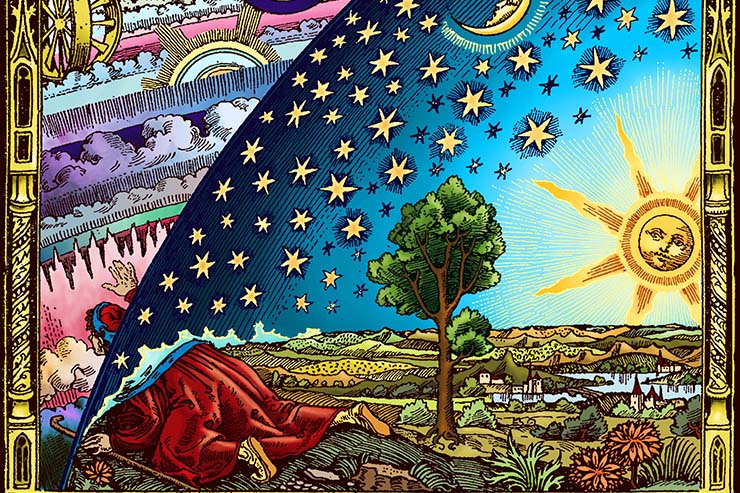
For all we know, we may be locked in a small room trying to explain the entire universe outside by looking through a peephole on the door; availing ourselves only of its limited and distorted images. This, ironically enough, may be the situation we find ourselves in while naively celebrating our understanding of the cosmos and our place in it.
Is there another alternative, or should we resign ourselves to the hopelessness of our ambition to understand reality? There is evidence to suggest that another alternative indeed exists. And, in that case, a new way to structure our inquiry into nature may offer unfathomable new possibilities.
Looking Beyond the Veil
Solid evidence has been accumulating that our minds cannot be explained solely by brain activity; the mind seems to transcend the brain.4 Yet, it is undeniable that the brain plays a significant role in our perceptions and behaviour, as, for instance, the effects of alcoholic drinks make plain and clear.
In an earlier article in this magazine,5 I elaborated upon an alternative hypothesis for explaining the relationship between the mind and the brain; a hypothesis that, since the publication of that article, has gained increased scientific momentum: Consciousness is a fundamental aspect of nature, not depending on any material structure for its existence. The function of the body-brain system is to localise and restrict conscious perception to the space-time locus of the physical body. As such, the brain modulates and limits conscious perception, this being why, in ordinary states of consciousness, mental states correlate so well with brain states.
As we’ve seen in the discussion above, such restriction and modulation of conscious perception – that is, the filtering and distortion of the copy of reality in our brains – can have a significant survival advantage, which explains why the brain evolved to perform such counterintuitive tasks.
Now, because the brain works as a kind of filter of mind, restricting and distorting our view of reality for survival purposes, bypassing certain brain mechanisms could conceivably give one access to a broader, cleaner, crisper, and more reliable view of nature. Historically, most, if not all, methods for achieving non-ordinary states of consciousness seem to do precisely that: To enable expanded perception and understanding by reducing brain activity.
The pattern here is so clear that it is surprising our culture seems to remain largely oblivious to it. For instance, many traditional Yogic breathing practices, as well as the more modern method of Holotropic Breathwork, reduce brain activity through the constriction of blood vessels that results from hyperventilation (which is precisely why you to get dizzy and ultimately faint when breathing too fast). Military pilots undergoing G-force induced loss of consciousness (G-LOC) – which forces blood out of the brain, thereby reducing its activity – are known to report transcendent narratives similar to near-death experiences. Teenagers worldwide play a dangerous, potentially fatal game involving partial strangulation in order to ‘trip’ without drugs.
Even psychedelic substances, which have always been assumed to produce ‘hallucinations’ by stimulating brain activity, have recently been shown to actually reduce brain activity.6 At least two Nobel Prize laureates – Francis Crick and Kary Mullis – have attributed their prize-winning insights to such non-ordinary states of consciousness; a powerful corroboration for the notion that such states broaden understanding and increase insight, despite reduced brain activity. Even more subtle methods, like meditation, ritual prayer, and sensory deprivation (think of isolation tanks) are likely associated to decreased brain activity.
The pattern here is as clear as it is ancient: Specific reductions in brain activity seem to consistently lead to a broadened and crisper perception and understanding of reality. The hypothesis that the brain is a mechanism to constrain and localise mind is entirely consistent with this: Reduction of brain activity impairs the filter/localisation mechanism, allowing one to temporarily and partially escape its entrapment and come closer to perceiving reality as it truly is.
A tantalising possibility suggests itself, one that has been lost to Western culture perhaps since the extinction of the Eleusinian mysteries: An unfathomably broader and more authentic inquiry into the true nature of reality can be achieved through an expansion of the investigator’s own state of consciousness. That true inquiry involves not only the transcendence of physical limitations through the use of instrumentation, but – and more fundamentally – a transcendence of one’s own brain-based mental filters. To see and understand reality for what it truly is – to see the original, not the flawed copy – we need to temporarily escape the limitations imposed on us by biology and culture.
A New Kind of Inquiry
In my more hopeful moments, I envision the emergence of a ‘New Kind of Inquiry’ (NKI); one based fundamentally on the use of non-ordinary states of consciousness to access transcendent, yet natural ‘landscapes’ otherwise unavailable to our ordinarily filtered perceptions and cognition.
Even though the use of such non-ordinary states is ancient, it has historically been restricted mostly to religious purposes and otherwise (semi-)dogmatic agendas. More recently – namely, in the 20th century – it has partly freed itself from such agendas, but become then a vehicle for purely personal, idiosyncratic insight. While valuable to the individual, the broader cultural impact of these personal insights has been extremely limited: Our culture is still dominated by the subjective belief-systems underlying the current scientific paradigm, which irrationally rejects the value of non-ordinary states.
In the meantime, Western civilisation edges ever closer to a point of irreversible unsustainability, both environmentally and psychologically. To change the culture and safeguard a healthy and sane future, we need more than isolated, personal transcendence. Many of us, for fear of being foolish, need permission to allow our belief systems to change; permission that can only be gained through the institutionalised, collective validation of new hypotheses and worldviews.
An effective NKI with contemporary appeal, capable of leading to a major paradigm shift in our modern relationship to reality, requires complete freedom from dogma and traditional symbolisms due to the baggage they carry. But such effective NKI must also entail more than personal, idiosyncratic excursions into transcendent landscapes if it is to have true cultural impact.
As a first step in that direction, I envision an institutionalised NKI think-tank whose initial charter would be the study, creation, and refinement of methods for the achievement of non-ordinary states of consciousness. Even though countless such methods have traditionally been available, no systematic, structured, modern scientific study has been done for the very practical purpose of increasing their effectiveness (and safety). With modern scientific knowledge, we should be able to achieve a degree of success in enabling non-ordinary states of consciousness that traditional cultures could only dream of.
For instance, while psychedelics have the advantage of nearly always delivering an unambiguous effect at sufficient doses, they are notoriously hard to control and the insights resulting from their use very difficult to interpret. In contrast, while meditation has historically proven to be the most fruitful method for the achievement of unfathomable but clear insights about the nature of reality, it is notoriously difficult to master to a point where truly transcendent, unambiguous experiences can be achieved. Could we synthesise the strengths of all these methods? Could new and more effective ones be invented, based on more modern technologies like, for instance, Transcranial Magnetic Stimulation (TMS)? The ultimate goal here would be the iterative refinement of a safe, reliable, effective, robust, best-in-class method for enabling any educated and healthy individual to pursue the exploration of landscapes otherwise unavailable to ordinary cognition.
And here is where the second step of this vision comes in. Another, and more important, goal of the NKI think-tank would be to put the best-in-class method discussed aboveto practical and systematic use. Instead of adventurous individuals pursuing idiosyncratic exploration in isolation, without structure or suitable preparation, and unable to contribute their insights to a growing and coherent body of knowledge, the idea here is to organise structured and coordinated expeditions into transcendence involving various individuals; to have them collect data and compare notes upon returning; to build up and progressively refine compound maps based on reports from various explorers and their different perspectives; to find commonalities and consistencies, document them, and thereby reduce the unreliability of personal interpretations.
The NKI think-tank would attempt to derive rational, coherent models for describing the underlying nature of reality; models that would take into account a broader set of data than that available to ordinary perception; models based on more than just the distorted and limited view through the peephole. Its explorers wouldn’t be random: They would be selected based on a broad skill-set. Like medieval explorers – who were selected based on their seamanship, as well as cartography, astronomy, and natural history skills – explorers in the staff of the NKI think-tank would be required to have a balanced skill-set encompassing knowledge of history, philosophy of science, epistemology, modern physics, neuroscience, psychology, mathematics, and, perhaps most fundamentally, the arts. Contemporary ‘renaissance men and women’, is what we’re talking about here.
The think-tank would provide the entire infrastructure necessary for their voyages into transcendence: meditation spaces, isolation tanks, brain entrainment and TMS equipment, appropriate medical staff and facilities in case psychoactive substances would be used, etc. It would also host facilities required for journey preparation, as well as consolidation of results: Well-stocked libraries and network infrastructure for scholarly research; discussion rooms where explorers could debate and compare notes and ideas; conference facilities; data-processing facilities to enable the building of computer models inspired by transcendent insights; laboratory facilities for testing some of these models empirically; gardens for pondering, integration, and recuperation; etc.
The NKI think-tank would also have its own publishing infrastructure: periodicals, book imprints, podcasts, video production facilities, websites, and all that is necessary for the dissemination of its results and ideas. Its independence from the currently established academic and commercial channels would initially be paramount, since the subjective values and belief systems underlying the current scientific paradigm, as discussed by Thomas Kuhn,7 would render these channels non-conducive to new, paradigm-breaking hypotheses.
Through the respectability it would build up over time, the qualification of its staff, the quality of its results, as well as its communication and out-reach efforts, the NKI think-tank would insert itself powerfully into the collective mindset of the culture. It would give legitimacy to the New Kind of Inquiry it would embody and represent. It would broaden the horizons of civilisation through the generation of coherent, appealing hypotheses regarding the nature of reality and of our condition within it, free from tradition and dogma. It would give many intelligent, educated, and perhaps influential individuals permission – as well as a little more latitude – to seriously entertain worldviews that would otherwise be considered taboo. The NKI think-tank would become a significant catalyst for a shift of paradigm in the way our civilisation relates to reality and, as a bonus, re-introduce hope and meaning into the mainstream cultural dialogue.
This is my dream for a New Kind of Inquiry. As a vision that aims at stimulating the imagination, it would be silly to restrict such a dream based on practical limitations or notions about what is ‘realistic’ to accomplish at this time. Therefore, I may have allowed myself to get a little carried away above. Still, I do believe that something along those lines is urgent and essential to the progress of our worldview as a civilisation. It may be essential even to our very physical or psychological survival.
Our current materialistic worldview is self-contradictory, self-limiting, reduces humanity to a mere accident of probabilities, empties life of all meaning and telos, and manages to make no distinction between intellectual garbage and transcendent insight. Such is an unsustainable state of affairs; it translates itself into intellectual polarisation, alienation, and hysteria, all of which are plain to see in today’s society.
A breakthrough is required, something I believe the collective unconscious is ‘cognizant’ of and which, therefore, becomes inevitable. With this article, I hope to have helped shape a mental image of how the breakthrough could begin to take place; a first of many steps required for the attainment of our true freedom.
For more on this subject and related, see Bernardo Kastrup’s books Rationalist Spirituality (O-Books, 2011), Dreamed Up Reality (O-Books, 2011), and Meaning in Absurdity (Iff Books, 2011).
[alert type=”success” dismiss=”no”]If you appreciate this article, please consider subscribing to help maintain this website.[/alert]
Footnotes
1. See, for instance: David Eagleman, Incognito: The Secret Lives of the Brain, Canongate, 2011, 44-51
2. As elaborated upon in my books Dreamed Up Reality (O-Books, 2011) and Meaning in Absurdity (Iff Books, 2011), as well as in my YouTube video ‘Bernardo Kastrup – Real or Imagined? HD (Interview series, episode 3)’
3. B. Kastrup and J. M. Seixas, ‘A Single-Neuron Weighting Technique for Classifiers,’ Proceedings of the ‘5th European Congress on Intelligent Techniques and Soft Computing,’ (EUFIT ‘97) Sept. 8-11, 1997, Vol. 1, 480-484. As well as: J. M. Seixas, L. P. Caloba, R. W. Santos, B. Kastrup, and F. S. Pereira, ‘Reducing Input Space Dimension for Real-Time Data Analysis in High-Event Rate Environment,’ Proceedings of the ‘International Conference on Artificial Neural Networks,’ (ICANN ‘95) Oct. 9-3, 1995, Paris, France, Vol. 2, 203-208
4. Edward F. Kelly et al., Irreducible Mind: Toward a Psychology for the 21st Century, Rowman & Littlefield Publishers, 2007.
5. Bernardo Kastrup, ‘Spirituality Is Not Flaky; Really,’ New Dawn, Nov-Dec 2011, 47-51.
6. Robin L. Carhart-Harris et al., ‘Neural correlates of the psychedelic state as determined by fMRI studies with psilocybin’, Proceedings of the National Academy of Sciences of the United States of America, 17 January 2012, www.pnas.org/content/early/2012/01/17/1119598109
7. Thomas Kuhn, The Structure of Scientific Revolutions, 3rd edition, The University of Chicago Press, 1996.
The passage from childhood to adulthood happens when the child begins to realise that life is hard, death is certain and the chances are pretty good that he or she is going to be struggling for the rest of their life. These harsh realities wash away the idealism, naiveté and illusions of youth. Also this maturation process causes the youth to have a new understanding of what responsibility and stewardship means as well as the desire to make an impact on reality and leave the world a better place. This process occurs as a result of both experience and information. As a youth gathers more information through the experience of life he or she reaches certain inevitable conclusions.
The initial inquiry into life involves the consumption of vast amounts of information. Some of it is fascinating and life-altering but sad to say, much of it useless within the confines of daily life. As one matures, one begins to learn the art of discernment and to weave their way through information, discarding that which is not useful and keeping that which is. This is how information becomes knowledge. Once information has gone beyond facts and has woven itself into a coherent stream of knowledge, a certain kind of confidence is engendered in the individual.
As we grasp and understand the world around us through the process of turning information into knowledge, we begin to gain experience in a multiplicity of different facets of reality. As a thinking person matures, he or she gains greater knowledge and experience of the multitude of seemingly disparate aspects of reality until they reach a clear cohesion of thought and heightened level of awareness. This new level of awareness occurs when the individual begins to not only look outward to perceive the facts and forces that shape our reality, but focuses inward to digest and distil all that they have learned and experienced. This maturation process, which happens in later adulthood, is called Gnosis or wisdom.
A key to this process is the discovery and understanding of the deceptive power inherent in the massive amounts of manipulation and psychological imprinting that has taken place over the course of life. As this occurs, one gains the ability to perceive reality from a higher perspective and detach from the storm of emotional cravings and psychological addictions, which have veiled his or her innate awareness and cohesion as a human being. Through this process, one learns to discern and clearly decide which of these varieties of knowledge is important and meaningful to his or her life and which is not.
The gathering of information and experience is the first level of this process. The activity of turning information into knowledge is the second part. Turning knowledge into wisdom is its final aspect. Our youth is a relatively short, confusing and often chaotic processing of information. Schools, religious institutions, and the media fill our heads with gigabytes of information. By the time most of us reach puberty the glut of information that has been poured into our heads makes most of us dizzy. It is at this stage in life where the separation of those who will have an effect on the future of the world and those who won’t occurs. The sudden realisation that old age is imminent, death is certain, and working for a living is a necessity causes a large number of people to recede from the act of information gathering. They stop reading. They stop questioning. They are no longer interested in the ebb and flow of the mechanisms of the larger reality. They become numb, jaded, cynical, defeated and desensitised to the power and beauty of the extraordinary gift of human life. The second group embraces the dizzying array of information being offered to them and by puberty they are turning information into knowledge. At this time in their lives, through devotion, focus and discipline, people begin to excel in their chosen areas of exploration be it math, science, sports, the arts and many other fields of endeavour.
Long after college, the birthing of children, and anxiety about employment, if they are lucky, a wonderful new mental process begins. It starts in the late 30s and 40s. Synaptic pathways in the brain that were disconnected from each other previously have now woven themselves into a situation where the countless pods of knowledge begin to interconnect. Revelations, visions and comprehension of their own gifts and unique place in the nature of human experience begin to occur. This interlinking of thought distils experience into wisdom. This next level of discernment, not only engenders the creation of books, movies, philosophical treatises, inventions, and innovation, but also it brings with it a certain inner peace and sense of fulfilment that the immature self lacked.
Fully immersed in life and creative expression, the fear of death begins to recede. From this heightened spiritual perspective, the ones who attain wisdom begin to look at the world around them and bear witness to the evidence arrayed before them. Yes, the vision of connectivity, beauty and wonder that inspired their pursuit still lives within their hearts. However, at the same time, the undeniable evidence of a pathetic and immature reality filled with destruction, divisiveness, nihilism, egotism, greed and sexual depravity is ever present. There is a reason why students are not allowed to study the Kabbalah until they are 35 years old. The human intellect cannot possibly be mature enough until that age to fully comprehend the inner dynamics of the Kabbalah or any of the other deep spiritual and esoteric traditions that have been left for us.
Until around 1992, the human race lived and operated in an extremely isolated fashion. Until the invention of the telephone, telegraph, automobile and train in the early 1900’s people were even more isolated. It is really only in the last 50 years that the human race has become fully aware of the vast and varied cultures, languages and peoples that exist on the Earth.
But in 1992, something happened. Whereas much of the human race before were like isolated babes in the woods surrounded by wolves, confused and simplistic, in 1992, the first coherent stream of information was released all across the planet at the same time. It was appropriately called the World Wide Web. For the first time in human history, any human being who had a laptop or computer could increasingly access all of the information concerning the vast wealth of human history, experience and expression.
This shift was disorienting and confusing just like school was when we first started. A startling and mind expanding compilation of the best and worst aspects of human endeavour, the Internet overwhelmed us with facts, distractions, disinformation, lies, distortions, hopes and fears, everything. It became a mirror of who we are as a species and reflection of our collective psyche. Critics arose decrying that the Internet was a jumble of false ideas, a free for all, a place where a housewife in San Antonio has the same power and voice as a columnist for the New York Times. It can be safely said that the Internet was and is a land of incredible opportunity, massive confusion and one of the most important tools that has ever been invented by the human race.
2012 represents the 20-year anniversary of this great event. Through the course of this time, through the consumption, digestion and integration of massive amounts of information, many people have begun to notice that there is a spiritual awakening occurring. It’s just a rumbling underneath the surface but we all can feel it. More and more we sense there has to be something more to human life than slavery to the manipulations and whims of what many call The Controllers. Rising like a powerful tide, the collective yearning for clarity, intimacy, community and harmony is the result of 20 years of endless information being spewed out by the Internet.
From our metaphorical perspective, the human race in the past 20 years has gone from an infant babe lost in the woods to a post puberty young adult. The same processes that turn a child into an adult are the same processes that are happening across the world at this very moment in time. At first, like school, the Internet was a jumble of information that we were taking in while not even questioning or understanding why we were doing it. In school we were force fed the prevalent conditioned perspective on mathematics, reading, science, history, philosophy and much more, without even knowing why our teachers thought these things were so important. Later when we matured, we realised that many of these skills, which we had learned earlier and frequently thought weren’t needed, suddenly were very useful tools in the game of life. The last 20 years has been a voyage of collecting millions of bits of information, much of it useless to our physical and spiritual growth and maturity as human beings.
Now the second level of this process is starting. All of the secrets, the corruption, the war, the reasons for wars, the understanding of the monetary system, the realisation that conspiracies aren’t theories, the destruction of the environment and the dawning knowledge that all of the members of the human race have a lot more in common than we have ever known before, have become apparent to a large swath of humanity. This coming to grips with the darkest and the lightest aspects of human beingness by people all over the planet marks the beginning of the maturation of the human species. No we are not wise yet. But we are waking up and becoming aware of what has to be done.
The next level in this process, what we call the wisdomification and spiritual rebirth of the human race, will begin occurring after 2012. Because the Internet is so malleable, we can speed up this crazy wisdom process. Clearly, there are among us people who are wise. Some of them have created websites espousing their unique forms of wisdom. These sites are taking the various pods of knowledge and interconnecting them so that the result generates a new clarified vision of reality. Intelligent and discerning people are attracted to these types of sites for one fundamental reason. The information that they are offering, and remember information is the foundation of wisdom, is reliable. The members of the human race who have not backed away from seeing beyond the veil of the vast mental and emotional manipulation of the times, those that know how to relax, take a deep breath, sit in stillness and reflect upon the information being offered with open and discerning minds and hearts, are all reaching the state of wisdom at the same moment. They are the wisdom keepers of the future. These are the enlightened ones who have and will come to grips with and offer solutions to the myriad of problems we collectively face.
This mental dynamic happening on a collective level across geographies, languages, and cultures is the single most earth-shaking event that has happened in human history. It will be these wisdom keepers who will come to understand that the many mistakes of the past from wars to nuclear meltdowns and environmental catastrophe are largely the result of the childlike destructive nature of our predecessors who indulged in and exhibited the most vile and juvenile aspects of themselves.
While we can forgive the excesses of youth, it would be unpardonable for us to allow these excesses to continue. That process is starting now.
What can we expect from a puerile society immersed in a spiritual paradigm that has taught us to believe that humans are essentially sinful, vile creatures, dominated by a celibate, angry, jealous god? That we do not have to be truthful or good or loving but can fully immerse ourselves in falsehood, deceit and corruption with the assurance of dispensation, that if we just ‘believe’ in some alien force, or god outside of ourselves we can be ‘saved’.
The single most important information that we humans need to understand and come to grips with is that our childhood ignorance, our addiction to distraction, has allowed a corporate criminal network to take over the entire planet. The coming wise human race needs to recognise that the only way towards a future where absolute truth, freedom and expression are allowed, is to find a way to divest ourselves of this corporate criminal network. For the last ten years we have been besieged by the darkest conspiracy stories, the most frightening descriptions of disaster, and the whisperings of rumours of an elite who rule us with an iron hand.
Facing up to these dark truths is the first level of the human maturation process. If maturity is caused by our understanding of the darker aspects of life, if maturity is the shedding of preconceived ideals, the realisation that we are responsible for our own actions, that life can be tough, then the maturation of the human race will occur when we come to understand the dark nature of this criminal network and how to rid ourselves of it.
In order for us to get to the collective wisdom aspect of this process, we as a collective are going to have to start behaving like adults. Yes, our childhood was fun and filled with many fond memories, the last 6,000 years of running roughhouse, brawling, backstabbing, living in phantasms and allowing ourselves to indulge in our most perverse fantasies may have been fun, but in retrospect, highly destructive. However, like a young person in their early 20’s, we are beginning to understand that our society, our way of life, and even the human species too can die, that we are not immortal.
With that understanding, like the young adult, the human race needs to set aside the destructive habits of youth. We need to realise that the senseless addiction to video games, pharmaceuticals, violence, rape of the environment and much more are the manifest expression of the last vestiges of childhood. A wise human race would discourage these activities. The argument these indulgences should even be allowed seems ludicrous to a wise person and a wise human race.
The leading edge of the wave of this wisdom sweeping across our planet is now reaching some seriously damning conclusions about our current situation. Like the fat, depressed food addicted boy who wakes up one day and realises he is overweight and out of touch with reality, which forces him into pursuing a healthy lifestyle, that is where we are as a collective today. We as a race are waking up to discover that we are unhealthy, corrupt, bereft of any meaningful spiritual understanding, cynical and arrogant. And now we have to clean up our act.
A wise person knows you cannot continuously dump refuse into the air and water. A wise person knows that dropping depleted uranium is a crime against nature and humanity. A wise person knows that in a world turned upside down, the spiritual dramas we call religion have become corrupted. A wise person knows that no single person should be in total power, that centralisation of power is always a bad idea. A wise person knows it is impossible to regulate the human condition. So why bother?
The world after 2012 is going to be raucous and unnerving. The maturation process, like puberty will be extremely painful to observe. But around 2020, long after the hormones have started shutting down and the pimples have disappeared, a wonderful thing is going to happen. The human race is going to emerge as a beautiful, intelligent and perceptive young adult. And this young adult will be smart enough to know that the true knowledge and wisdom of their elders is the most important thing they can cultivate.
If the Powers That Be do not destroy the freedom on the Internet and poison our environment beyond repair, by 2030 our collective human neuro-system will have matured and developed into a great font of collective wisdom. In that situation, decisions will be made not according to how much money can be made, but how much benefit can be created. The scrapes and bruises of our childhood folly will be repaired as we see the puerile remnants of these false lives and shed them. Nuclear power plants built in areas where tidal waves hit will seem ludicrous to the coming human race. Stockpiling nuclear weapons, chemical weapons, assuming a mutually assured destruction posture and much more of our current experience will seem silly to the people of the future.
It should be noted this process will meet much resistance. No one resists with more adamancy than a child. We can expect countless temper tantrums over the next 20 years. With the awakening power of Internet, the shedding of the phantasm, and the rising experience of our true spiritual nature, no one can hide from the truth.
When the contrivances and distortions of our current spiritual systems have been fully realised and rooted out, then we as a human race will collectively journey to an authentic, heart-centred spiritual path based on truth, beauty, direct knowledge, ubiquity of sources and tolerance.
Wise people know the value of spiritual truth, but they also know when someone is lying to them.
[alert type=”general” dismiss=”no”]This article was published in 2012 New Dawn Collector’s Edition.[/alert]
[alert type=”success” dismiss=”no”]If you appreciate this article, please consider a contribution to help maintain this website.[/alert]
Higher states of consciousness (HSCs) – or awakening experiences, as I prefer to call them – are moments of revelation, when we perceive reality at a heightened intensity. The world around us comes to life, and is filled with an atmosphere of harmony and meaning. A spirit-force seems to pervade all things, and the spaces between them, bringing everything into oneness.
We experience ourselves as part of this oneness too, and feel ecstatic or serene. At the highest intensity of awakening, we might feel that we’ve become one with the universe, and attain a state of complete fullness and perfection. The whole material world may dissolve away, into an ocean of spiritual radiance.
These experiences are sometimes associated with meditation, nature or psychedelic drugs, but what exactly is it that causes them? Why is it that the limits of our normal consciousness sometimes fall away, giving us access to a world of is-ness, beauty and meaning which is normally hidden from us?
Neuroscientists generally believe that HSCs are caused by changes in brain activity. However, just because HSCs or awakening experiences appear to be associated with certain brain states, it doesn’t necessarily mean that the brain states produce the experiences. It could be the other way round – increased electrical activity in the frontal lobes, or less activity in the posterior superior parietal lobe, could just as easily be the result of higher states of consciousness rather than causes of them. These scientists may only be looking at the ‘footprints’ of the experiences, rather than the cause of them.
My view is that there are two basic types of awakening experiences, which have two distinct causes. The first type are wild, ecstatic experiences that happen when the normal homeostasis of our brain and bodies is disrupted. This is a ‘loophole’ which human beings have made use of throughout history. This is why there has always been a link between fasting and spirituality, for example. A prolonged lack of food appears to make the hold which ordinary consciousness has over us looser, and bring us closer to an awakened vision of the world. Fasting puts us ‘out of homeostasis’ by causing physiological changes, such as a lower level of blood glucose, higher levels of insulin and a lower body temperature.
Indigenous peoples often fast and deprive themselves of sleep as a preparation for rituals, dance and vision quests, using physical deprivation as a way of ‘purifying’ themselves. The Vision Quest was a spiritual exercise used by some Native American peoples as a way of building up spiritual power and communicating with spirits. The person would go to a solitary spot – often the top of a mountain – and stay there for up to four days, fasting and exposing themselves to the elements (usually wearing almost no clothes, even if the weather was cold). He or she would try to attain a state of complete attentiveness to their surroundings, since sacred powers might try to communicate with them at any moment. As a result, they might experience a higher state of consciousness (that is, higher than their normal low level higher state), with strong feelings of peace and a sense of connection to the natural world, and also be given special knowledge – such as a message or a new song or dance – from spirits.
In ancient Greece and – at a later time – throughout the Middle East and the Roman Empire, a large number of esoteric cults existed outside conventional religions. These ‘mystery cults’ were usually centred around particular gods, but rather than just worshipping them, the participants aimed to become one with the gods, or to be possessed by them. They fasted and went without sleep before ceremonies, and used a variety of other methods of disrupting homeostasis during them: they would take drugs, beat themselves, and dance frenziedly, so that they might be – in the words of the ancient philosopher Proclus, who observed the mysteries at first hand – “filled with divine awe.”
Pain can also be used as a way of inducing awakening experiences. We can see this in the long tradition of asceticism, for instance, which runs through all of the world’s religions and spiritual traditions. An ascetic is someone who deliberately denies his body’s needs, and inflicts pain and discomfort on himself, either through fasting, abstaining from sensual pleasures and comforts, or by physically beating or injuring himself. This sounds like sadism, and for some ascetics it probably was. It’s also likely that some ascetics were motivated by morbid self-hatred and neurotic feelings of guilt towards sex and other bodily processes, which made them want to punish themselves.
It goes without saying that inflicting pain on yourself, or forcing yourself to go without sleep or food, are hardly ideal ways of transcending ordinary consciousness. Although some ascetics apparently managed to continue torturing themselves for years and even decades, there’s obviously a very high risk of seriously injuring yourself, or dying of self-neglect. Aside from the famous ascetics like St Simeon Stylites and Henry de Suso, there were probably many others who followed similar practices but didn’t live long enough to gain any recognition. As a short term spiritual technology asceticism is fairly futile anyway; you might gain a brief glimpse of a higher reality but this only lasts as long as the chemical changes that the pain and suffering have produced inside you. Your body always returns to homeostasis, and you always have to return your constricted normal consciousness.
There must be easier ways of ‘disrupting the equilibrium’ than fasting, sleep deprivation or pain – and there are. If we know that all an ascetic is really doing by torturing himself is changing his normal chemistry, then surely, you might say, it’d be more sensible to just interfere with this chemistry directly – by taking drugs, for example, which would give us the same effect but wouldn’t involve any self-harm.
Human beings have always used drugs as a means of intensifying or altering consciousness. The early Indo-European conquerors of India worshipped their drink Soma, which most scholars believe was made from magic mushrooms; while the initiates of the Greek Eleusinian mysteries used a psychoactive drink called kykeon. Indigenous peoples often use drugs for spiritual purposes too: Native Americans ingest sacred plants such as fly-agaric mushrooms and peyote, while the Australian Aborigines have a powerful form of tobacco called pituri. In the right circumstances – and the right state of mind – psychotropic drugs can, it seems, take our minds out of the ‘mould’ of ordinary consciousness, and give us access to wider and more intense realities.
Intensifying Life-Energy
The second type of awakening experiences are more serene and calm states which occur when our life-energy (or vitality) becomes more intensified. Normally there’s a continual outflow of our life-energy – it’s used up through mental activity (such as cognition, concentration and perception) and through our emotions and instincts. But sometimes, when we’re relaxed, fairly inactive and our minds are quiet, this outflow or energy decreases. Life-energy becomes concentrated inside us, which generates an awakening experience.
This is why meditation often generates spiritual experiences. When we sit down to meditate, we take ourselves off the treadmill of daily tasks and activities for a while, and sit quietly and close our eyes, so that we don’t use up much life-energy through concentration and perception. Our ‘thought-chatter’ slows down too, and we normally become free of emotional activity and sexual desire. As a result, after meditation there is an inner concentration of our life-energy, it’s concentrated and intensified rather than dispersed and dissipated.
We can see meditation is a conscious attempt to build up an intensification of life-energy and so generate awakening experiences, but there are many situations when this happens spontaneously. This is the reason why nature is such a powerful trigger for awakening experiences, for example. The beauty of nature may have a similar effect to a mantra in meditation, directing attention away from the chattering of the ego-mind. Cognitive activity may fade away, until life-energy intensifies, bringing a sense of inner peace and wholeness and heightened awareness of the phenomenal world.
Sports can trigger awakening experiences too. This is particularly true of sports which involve long periods of monotonous rhythmic activity, such as long distance running or swimming. The activity itself serves as a focusing device, and quietens the chattering ego-mind. Similarly, the poet Ted Hughes often experienced a meditative state while fishing. He notes how poetry depends upon the ability to intensely focus the mind, and believes that he acquired this ability through fishing. He describes the effect of staring at a float for long periods: “All the nagging impulses that are normally distracting your mind dissolve… once they have dissolved, you enter one of the orders of bliss. Your whole being rests lightly on your float, but not drowsily, very alert.”
This may also be part of the reason for connection between sex and spiritual states. The sheer pleasure of sex can shift our attention away from the ego-mind, which may fall silent as a result, bringing what D.H. Lawrence described as “the strange, soothing flood of peace which goes with true sex.” At the same time, sex may release new energy inside us, energy which is normally dormant but can arise and shoot through us like electricity.
As sources of awakening experiences, ILE (intensification of energy) states have certain advantages over HD (homeostasis disruption) states. The latter have more physical and psychological risks. Drug experiences (and other HD states) produce a powerful blast which immobilises the ego, and if this blast is regularly repeated the ego structure may dissolve, and never be able to re-form itself.
In a sense, HD experiences are only really a shortcut too. It’s as if we’ve just stumbled on a defect in the mechanisms of consciousness, a kind of legal clause which gives us a quick and easy way of escaping ordinary consciousness, and are exploiting it. You could compare it to schoolchildren tricking their teacher into leaving the room so they can enjoy a few minutes of freedom while she’s away – but the teacher always comes back again, of course, and then everything goes back to normal. On the other hand, ILE states can bring about permanent change in a more organic and positive way. They can change the structure of the psyche without damaging it, and gradually create a new state of being, so that wakefulness becomes not just a temporary experience, but a permanent state.
This isn’t to demean the importance of higher states of consciousness induced by drugs or other HD states. They can come as a bolt out of the blue, breaking through the familiar, taken-for-granted world and making us aware that higher realms of reality do exist. For some people, their first experiences of psychedelics might have the same effect as experiencing flashes of normal complete vision would have on a man who’s been partially blind all his life without realising it. The powerful transcendent reality they’ve been exposed to may also bring about a change in their personality, at least over the following months, and perhaps even years. It might make them more humble, less materialistic or egotistical, and give them a sense of security or hope, making them aware that the world is more meaningful and harmonious than they had believed.
For many people, drug-induced awakening experiences have been the beginning of a spiritual journey, encouraging them to investigate Eastern spiritual traditions or more reliable and healthy consciousness-changing practices. This is what happened to the Harvard professor Richard Alpert, for example, who was one of the pioneers of research into psychedelics. He conducted experiments with psilocybin at Harvard University with Timothy Leary in 1962, and continued studying the effects of psychedelic even after he was expelled from the university. However, Alpert quickly became disillusioned with drugs, doubting that they could lead to permanent change, and travelled to India, where he learned yoga and meditation and took the name Ram Dass. He has spent the rest of his life exploring spiritual practices and teachings and spreading the wisdom he has found.
On the other hand, using drugs as a spiritual technology may create a passive attitude, and a reluctance to make the long term disciplined effort which permanent transformation requires – as was the case with Ram Dass’ colleague Timothy Leary, whose pursuit of ‘chemical enlightenment’ degenerated into a life of self-indulgence. As the religious scholar Huston Smith put it, “Drugs appear to induce religious experiences: it is less evident that they can produce religious lives.”
[alert type=”general” dismiss=”no”]This article was published in New Dawn 120.[/alert]
[alert type=”success” dismiss=”no”]If you appreciate this article, please consider subscribing to help maintain this website.[/alert]