New Dawn – World's Most Unusual Magazine

Category: Articles

  • Christianity: The Ultimate Secret

    Christianity: The Ultimate Secret

    From New Dawn 84

    Today there is an unprecedented thirst for the innermost secrets of Christianity. The quest for these lost teachings drives the plots of best-sellers like The Da Vinci Code and Holy Blood, Holy Grail; it is discussed in major newsmagazines; and it is the subject of intense speculation and debate among believers and nonbelievers alike. What are these secrets? What difference might they make to our lives today?

    Sometimes the hidden truths of Christianity are described in terms of suppressed facts about Jesus’s life. One of the most popular at present is the idea that he was married to Mary Magdalene and even had children with her. Some say Joseph of Arimathea brought these children to Britain after Christ’s death.

    There are some intriguing hints of these ideas in the written texts. In one apocryphal Gospel, for example, Jesus is described as kissing Mary Magdalene frequently on the mouth. The other disciples become jealous and start to grumble, “Why don’t you love us as you love her?” Jesus turns to them and says, “Why don’t I love you as I love her?” – the answer, presumably, being obvious enough.

    But there is, of course, no real proof that Jesus was married to Mary Magdalene or that they had children. And even if it could be proven, what difference would it really make? What would it matter even if their descendants had survived to this day? The bloodline would have been so diluted over the course of two thousand years that the connection would be extremely tenuous in any event.

    Consequently, while speculations about Christ’s private life may fascinate us as we are fascinated by gossip about celebrities, in the end it can be little more than an entertainment. If these are the ultimate secrets of Christianity, they are rather disappointing.

    Sometimes, however, these hidden truths are portrayed in another light. In a recent article on Jesus and the lost Gospels, the American newsmagazine Time observed that, according to Gnostic teachings, Christ’s task was to transmit a “special wisdom” that confers spiritual liberation. Unfortunately, as the article goes on to say, this wisdom “is alluded to but not spelled out” in Gnostic texts.

    While the Time article is correct in saying that this wisdom is not spelled out in the Gnostic texts, the knowledge has by no means been lost. It has been preserved in the esoteric tradition of Christianity, which has survived in an unbroken line from Christ’s day to the present. It can be found in obscure texts, oral teachings – even in the canonical Gospels when they are read at a level beyond the merely literal.

    These truths have, it is true, become obscured and concealed, for a number of reasons, some good, some not so good. But before I can explain why they came to be hidden for so long, let me spell out briefly what, I believe, the essence of this wisdom is. It’s not particularly difficult to understand, although it will be somewhat easier to grasp if you have some meditative experience.

    Discovering the True “I”

    The best way to introduce it is by means of a simple exercise. Sit comfortably, in a relaxed but alert position. Have your back as straight as possible; you can prop yourself up with pillows against the back of a chair if you like. Let your attention settle down, and, to the best of your ability, allow the ordinary preoccupations of your day to subside.

    Look around the room you are sitting in. It may or may not be familiar; that does not matter. Only be sure to cultivate a sense of the presence of yourself as you sit in your chair. This is where you are; around you, outside you, is the visible and sensible world.

    Now close your eyes and bring your attention to your body. Be aware of your sensations – the breath, perhaps, or the beating of the heart, or the feelings in your back as it presses against the chair. If you pay attention, you can catch a glimpse of two things: an experience, a muscle sensation, say, and an “I” that is experiencing it.

    Go deeper still, to the river of thoughts, images, and emotions that are probably coursing in front of your mind. You may try to stop the flow of this stream of consciousness, as it has sometimes been called. Probably you will fail. The thoughts and images, memories, ideas, speculations, plans will most likely continue whether you want them to or not.

    In this realm also you can observe two things: an “I” that is experiencing and something that is experienced. As you continue, even your most intimate feelings and desires will pass before you like images on a screen. If you can remain both relaxed and alert (admittedly a difficult balance), you may have a sense of something very quiet and small in you. It seems to have no power, no volition of its own, yet it is that in you which is constantly awake and experiences all that passes for your life. In the strictest sense, you cannot even observe it, for it is actually that which observes. If you look for it, you find that it continually recedes further and further, for there is no limit to this “I” that experiences. You can follow this thread of consciousness back for as long as you like, but you may find this exercise to be of value even if you can only do it for a few seconds.

    What Is the Kingdom of Heaven?

    If you read the New Testament carefully, you will notice that the synoptic Gospels – Matthew, Mark, and Luke – often refer to a mysterious entity known as “the kingdom of heaven” or “the kingdom of God.” Christ describes it in parables, likening it to a mustard seed, to leaven, to a treasure hidden in a field. In John, on the other hand – long known to be the most “esoteric” of the Gospels – Christ does not speak in parables. Instead he describes the kingdom of heaven by using “I am” statements: “I am the door”; “I am the true vine”; “I am the way, the truth, and the life.” You will also remember from Exodus, when Moses encounters the Lord in the burning bush, that the highest name of God is “I am that I am.”

    These texts point to the same truth that you may have experienced while doing the exercise above. The kingdom of heaven is that in you which says “I.” This is not the ordinary ego, with its bundles of agendas, desires, and loathings. In its purest, most naked form, this true “I” is consciousness – a consciousness that we share with the entire universe, animate and inanimate. So when Christ says, “I am the way, the truth, and the life,” esoterically speaking, he is saying, “‘I am’ is the way, the truth, and the life.” “I am” is the door through which we must proceed to enter the kingdom – that is, to recognise and understand this truth experientially.

    The inner Christian tradition has a name for this experiential recognition: it is called gnosis, or “knowledge” in the true sense. Although gnosis is often regarded as something rather mysterious, as you can see, the fundamental insight behind it is comparatively simple. Understanding it doesn’t require vast amounts of learning or scholarship. But there are a number of things that interfere with this recognition, which suggests why this truth is so frequently lost and so frequently needs to be discovered anew.

    Remember Christ’s parable about the kingdom of heaven being “like unto a treasure hid in a field” (Matt. 13:44). In terms of the exercise above, the consciousness, the “I” that is fundamentally you, is buried in a “field.” This is the field of your own experience – your thoughts, emotions, feelings, your pleasures and pains. You become identified with this experience, forgetting that there is something beyond it – the experiencer, the “I” that is eternal and undying and immune to all destruction and decay. But if you remember the truth of what you are – or rather of what this “I” is – you unearth the treasure from the field. And as the parable goes on to say, that is worth the price of everything else put together.

    Death and Resurrection

    It is written that “God loved the world.” Like God, consciousness, this “I” that stands at the back of each of us, witnessing and experiencing our lives through us, loves the world it has made. It loves this world so much, in fact, that it rushes forth to unite with it, becoming lost in the process. In the Gnostic Gospels, this is likened to a pearl that is lost at the bottom of the sea. But the most famous metaphor for this process forms the central drama of Christianity: death and resurrection.

    When the “I” is submerged in and identified with its own experience, this is, esoterically, known as death. In Genesis God tells Adam that if he eats of the fruit of the Tree of Knowledge, he will surely die. This doesn’t refer to physical death, but to the “death” of consciousness in the darkness of its own experience. The passion, death, and resurrection of Christ portray this process allegorically. The God-man is crucified. He suffers all sorts of pain and indignities, and finally perishes in an ignominious fashion. But in the end it does not matter, because he rises again in a glorified form.

    This is Christ’s story. It is our story as well. We are crucified on a cross known as time and space. We pass through life, which often seems to offer no end of sorrow, pain, and humiliation. And in the end we die. But in fact nothing that is real or true about us dies. The true “I,” the consciousness that is the only real and eternal part of us, goes on to live in a new and different form.

    This is a universal truth, so it has always been known. The ancients before Christ expressed it in the form of mystery religions. While we don’t know exactly what went on in the Eleusinian or Dionysian mysteries, we do know that in essence they were about death and resurrection. Here the great mystery of the death and rebirth of consciousness was expressed in ritual form. As the great esoteric visionary Rudolf Steiner pointed out, with the coming of Christ, what had been conducted secretly, in the mystery religions, was now carried out publicly and in full view. And the “good news” of this truth was proclaimed to all nations.

    The Truth Hidden

    Ironically, as this truth was proclaimed far and wide, its essential meaning came to be submerged. Rites like the mass were instituted to commemorate the passion of Christ, but it was forgotten that Christ’s own passion was to remind us of our own situation.

    As the spiritual master G.I. Gurdjieff pointed out, “The Christian church is a school concerning which people have forgotten it is a school. Imagine a school where the teachers gives lectures and perform explanatory demonstrations without knowing that these are lectures and demonstrations; and where the pupils or simply the people who come to the school take these lectures and demonstrations for ceremonies, or rites, or ‘sacraments,’ i.e., magic. This would approximate to the Christian church of our times.”

    But why did this happen? How did the central message of Christianity come to be so thoroughly occluded for so long? This happened for several reasons. In the first place, the insight toward which this article has been pointing is not always that easy to grasp. It can be difficult for consciousness to look back upon itself, especially since, as I’ve suggested, this true “I” can never be seen, because it is always that which sees. As St. Francis of Assisi put it, “What you are looking for is what is looking.”

    Moreover, now as in the past, people by and large tend to want an external religion, an external God who controls their destinies and can damn them or, being duly appeased, save them from damnation. This is not really an accurate picture of the human condition, but people tend to fall back on it because it’s easy to grasp. It was even more so in the formative times of Christianity, when religions of all sorts – at least in the West – were preoccupied with coaxing the gods through sacrifice. When Christianity came onto the scene, it was almost immediately recast in the same terms. Christ’s passion, death, and resurrection were seen, not as a reminder of the deepest truth about ourselves, but as an appeasement of a petulant deity. Two thousand years later, it’s clear that this model does not make any sense, but people haven’t managed to find anything plausible in its stead. That’s why it’s time to reintroduce and restate these central truths.

    Another issue has to do with the social role of religion. Religion has two functions in society, which don’t always jibe well with each other.

    In the first place, it’s meant to help individuals make contact with the higher dimensions of their own being. In the second place, it serves as a guarantor of the social order. Since societies can’t afford to have policemen watching over everyone’s shoulder at every moment to make sure they behave, they have found it helpful to install an internalised policeman into the human psyche. This policeman usually takes the form of an all-seeing God who watches our every move and keeps an elaborate tally of our good and bad deeds, for which we will be recompensed accordingly in the afterlife.

    Unfortunately, the notion of an external God who rewards and punishes, while it is a convenient way to oil the wheels of the social order, tends to interfere with personal experience of the divine. People are led to feel guilty and unworthy. Like Cain after murdering Abel, they hide from the voice of God.

    Archons and Conspiracies

    These reflections have led some people to view the social and political order as a massive conspiracy whereby a privileged few manipulate the psyches of the masses in order to retain their position at the top. Although it’s certainly true that in many ways the social order is run by and for the benefit of comparatively few individuals, it has never seemed plausible to me that they manipulate these social mechanisms in the way they’re sometimes portrayed. Human beings, in their unenlightened condition, are simply social mammals – and mammalian societies have pecking orders. While those at the top may benefit from their position, it doesn’t follow that they’ve created the system or even understand it particularly well. They’re simply fighting to stay on top. This is no less true of the pope or the president of the United States than it is of an alpha male in a pack of wolves.

    Speaking of conspiracies, I might point out that certain esoteric Christian texts, notably those categorised as Gnostic, refer to a corrupt and wicked cosmic order. This evil system goes far beyond mere political and economic conspiracies. As the Epistle to the Ephesians puts it, “we struggle not against flesh and blood, but against principalities and powers, against the rulers of the darkness of this world, against spiritual wickedness in high places” (Eph. 6:12). The Gnostic texts speak of entities known as archons or “rulers.” These entities, which have peculiar names like “Oblivion” and “Deficiency,” are sometimes portrayed as inimical angels that bar the way to the paradise of union with God. Is there any truth to this concept?

    As sometimes happens, the truth may be both more and less terrifying than it seems at first glance. Certainly it would be disheartening to believe that evil archangels, with powers far surpassing those of mere humans, lurk over us to keep us incarcerated in our little pen in the cosmic order. It may be more dismaying still to realise these archons exist, not in the spiritual stratosphere, but within the very structure of our minds and brains.

    The archons of Gnostic mythology resemble what the philosopher Immanuel Kant called the “categories.” These are basic modalities – such as space, time, quantity, and causality – by which the human mind structures its own experience. These categories shape our experience of the world, because this is how our brains work. At the same time, the world isn’t really this way; it’s just the way we experience it. From this insight, Kant concluded that the world as it is in itself is unknowable: we will always be limited by the construction of our own minds.

    Esoteric traditions of both East and West would agree with Kant that our customary ways of seeing are limited and constrained. But they don’t agree that we are stuck here. By attaining gnosis, also known as enlightenment, we can free ourselves from the world our brains have made and see a higher reality.

    Some accomplish this realisation spontaneously: it comes unbidden and unsought, a gift from heaven. These events are real enough; you only need open a book like William James’s Varieties of Religious Experience to come across many examples of them. But this kind of instantaneous realisation doesn’t occur for most of us. We require systems of spiritual training and practice to liberate ourselves from that subtle and invidious master known as the human mind. Meditation is one of the most universal methods for achieving this end, because in most of its forms meditation stills the consciousness and helps it to cut loose, even if only for a few moments, from the constraints of ordinary experience.

    In this way, we can begin to make that most difficult journey, which leads us away from the world we know to the world as we can know it, and on which faith is only the first step toward knowledge.

    [alert type=”general” dismiss=”no”]This article was published in New Dawn 84.[/alert]

    [alert type=”success” dismiss=”no”]If you appreciate this article, please consider subscribing to help maintain this website.[/alert]

    © New Dawn Magazine and the respective author. For our reproduction notice, click here.

  • Wise Men From the East: Is There a Secret Brotherhood of Masters Who Direct the Spiritual Progress of Humankind?

    Wise Men From the East: Is There a Secret Brotherhood of Masters Who Direct the Spiritual Progress of Humankind?

    From New Dawn 91 (Jul-Aug 2005)

    There is a strange and persistent legend that probably originates in the East. It proposes that in some hidden locations on the Earth (generally the highlands of Central Asia, particularly Tibet, although other sites, such as the Andes and even some mountains in the US, such as the Grand Tetons and Mt. Shasta, are mentioned at times), there exists a group of persons who possess both exceptional powers and a highly perfected character and consciousness. They are known variously as the Hierarchy of Adepts, the Great White Lodge, the Great White Brotherhood, the Masters, or simply the Hierarchy.

    While most sources emphasise the Eastern (particularly Indian and Tibetan) nationality of these persons, Western embodiments of the legend are not unknown. Some have suggested that portions of this legend travelled westward during the Crusades or even earlier and that their sources are thus primarily to be found in secret and semisecret Islamic traditions.

    Beginning with the publication of the mysterious Rosicrucian document Fama Fraternitatis in 1614, the existence of certain “unknown superiors” or “Brothers of the Rosy Cross” who live and work in secret and yet direct much of the spiritual destiny of the world became a part of the beliefs of many Western esotericists.

    To these transmissions may be added diverse strands of legends connected with Arabian poetry, wise men wandering among the troubadours, the fabled kingdom of an adept priest-king named Prester John in Africa, alchemical masters of an elusive and potent aspect led by Elias Artista, as well as the Templars and the esoteric Freemasons. By the 19th century, the foundations for a major unfolding of the adeptic myth were laid. This unfolding took place by way of the Theosophical movement, without which the entire myth would probably have remained forever in obscurity.

    Blavatsky and Her Masters

    The position of current wisdom about the Masters is well-stated by one of the better popularisers of esoterica, Richard Cavendish, who calls it “a glamorous simplification of the tradition common to both East and West from time immemorial, of the searching spirit who asked: ‘Master, what shall I do to inherit eternal life?’”1

    This question, of biblical origin, is not without poignancy. As Jesus was regarded as a master of things relating to the life beyond earthly existence, so the Theosophical tradition of the last 130 years has looked to personages of superior insight and power to assist mortals in gaining consciousness of a greater life. Not only did it proclaim the existence and availability of such personages, but it also regarded them as the fount and origin of its teachings.

    In one of the very first academic treatises on the subject, published in 1930 in a series sponsored by Columbia University, Alvin Boyd Kuhn wrote:

    Theosophists tell us that before the launching of the latest “drive” to promulgate Theosophy in the world, the councils of the Great White Brotherhood of Adepts, or Mahatmas, long debated whether the times were ripe for the free propagation of the secret Gnosis; whether the modern world… could appreciate the secret knowledge, without the risk of serious misuse of high spiritual forces, which might be diverted into selfish channels. We are told that in these councils it was the majority opinion that broadcasting the Ancient Wisdom over the Occidental areas would be a veritable casting of pearls before swine; yet two of the Mahatmas settled the question by undertaking to assume the karmic debts of the move, to take the responsibility for all possible disturbances and ill effects.2

    These two Mahatmas eventually became known as Morya and Koot Hoomi (or Kut Humi), and their contact person par excellence was Helena Petrovna Blavatsky.

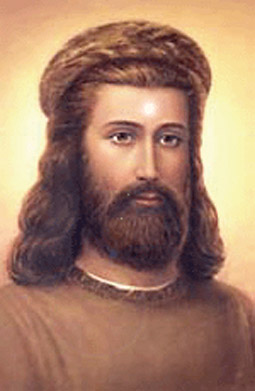
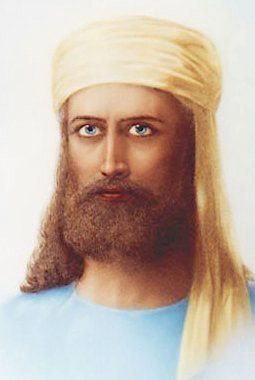
    Koot Hoomi (or Kut Humi), one of Mme. Blavatsky’s Masters, has been identified by the researcher K. Paul Johnson with a Sikh spiritual leader, Sirdar Thakar Singh Sadhanwalia.
    Koot Hoomi (or Kut Humi), one of Mme. Blavatsky’s Masters, has been identified by the researcher K. Paul Johnson with a Sikh spiritual leader, Sirdar Thakar Singh Sadhanwalia.

    The story of the colourful, controversial, erudite, and intuitive Mme. Blavatsky has been told many times, most recently and accurately by Sylvia Cranston.3 The issue of her involvement with her adeptic inspirers has also been thoroughly investigated by a most valiant researcher, K. Paul Johnson.4 Johnson’s work merits some comment here because in certain ways it represents a novel development of the treatment of the subject. It is Johnson’s thesis that the Adepts and Mahatmas of Blavatsky were all historical figures living in her lifetime, for whom she found suitable disguises in mysterious personae and a set of equally mysterious pseudonyms, under which they entered the mythos of Theosophy and of all modern occultism.

    According to Johnson, Morya was a Maharajah of Kashmir by the name of Ranbir Singh, while Koot Hoomi is identified with a Sikh spiritual leader, Sirdar Thakar Singh Sadhanwalia. Johnson also identifies other adeptic figures of Blavatsky’s, such as “the Chohan” (or Maha Chohan) and the “Master Djual Kul” (later publicised by Alice Bailey), with Sikh and Muslim gurus and leaders of the time.

    The Living Masters

    It is not without interest that Johnson should pick so many Sikh personages as the models for Blavatsky’s occult Masters. The variety of Indian spirituality that is most comparable to modern Theosophy is perhaps the Sant tradition, which some scholars regard as a close relative of Western Gnosticism. This tradition has been allied with the Sikhs since the time of Guru Nanak in the 16th century. Its latest embodiment, the Radhasoami movement, had just appeared on the scene in Blavatsky’s time in the person of Shiv Dayal Singh (1818-78), who was well-known in Indian religious circles and certainly came to the attention of the Theosophists.

    The Sant tradition has innumerable doctrinal similarities to Theosophy, including the teaching of the “living masters” who are the chief agents of the initiatory redemption of their followers.5 It is regrettable that in spite of recognising the Sikh connection, Johnson failed to trace it to the Sant tradition, where he might have found a far more valuable model for Blavatsky’s concept of the Masters. The subject is still in great need of exploration. We shall do so briefly here.

    Mahatma Morya, according to K. Paul Johnson, was a Maharajah of Kashmir by the name of Ranbir Singh.
    Mahatma Morya, according to K. Paul Johnson, was a Maharajah of Kashmir by the name of Ranbir Singh.

    For a Westerner the term “saint” denotes a person in whom the ordinary human virtues have been exercised to a heroic degree. The ancient Greeks may be credited with having first established a category of humans known as heroes, who stood between mortals and the immortal gods. The Sant tradition recognises persons of a similar kind. They are usually called sants (“saints” or “men of truth”) or satgurus (“true teachers”). Such persons have merged their own spiritual core with the Supreme Identity to the extent that they are no longer subject to any illusion or any sense of ego apart from the Divine.

    As one contemporary researcher says, “What we are confronted with in the [sat]guru is a classic hierophany: a profane object which manifests the sacred.”6 The satguru is an embodied being, a human, not a disembodied god or angel and for this reason is known as a “living master.” Neither is it sufficient in this tradition to follow a teacher who has died:

    According to the Sant tradition… one must follow a living guru. It is said that past Sants cannot take the soul back to God. This is due to two main reasons: (1) the original message of the Sants is believed to be misconstrued after the Sant passes away, while the teachings of a living Sant are pure and charged; and… devotion to one’s guru aids one’s spiritual progress; (2) it is believed to be easier to love someone alive and tangible than someone who has been dead for centuries.7

    Let us compare this with some statements concerning the Theosophical Mahatmas. According to Blavatsky,

    A Mahatma is a personage who, by special training and education, has evolved those higher faculties and has attained that spiritual knowledge, which ordinary humanity will acquire after passing through numberless series of reincarnations during the process of cosmic evolution… The real Mahatma is then not his physical body but that higher [mind] which is inseparably linked to the [spirit] and its vehicle.8

    We also have statements to this effect from what would appear to be the Mahatmas themselves. During Blavatsky’s residence in India after 1879, the Anglo-Indian journalist A.P. Sinnett became interested in her teachers. In 1880 he instituted a correspondence with Morya and Koot Hoomi. The replies to Sinnett’s letters have been preserved in the British Museum in London and have also been published in book form. In one of these letters, Koot Hoomi writes:

    An adept – the highest as the lowest – is one only during the exercise of his occult powers… Whenever these powers are needed, the sovereign will unlock the door to the inner man (the adept), who can emerge and act freely, but on condition that his jailer – the outer man – will be either completely or partially paralysed.9

    Allowing for certain differences in psychological orientation, such a statement could have readily come from a “living master” of the Sant tradition.

    Adepts Embodied and Disembodied

    These considerations leave little doubt that Blavatsky’s mysterious teachers were regarded as living human personages, albeit of a highly unusual order. At the same time it is also necessary to recognise that along with the mythos of the embodied Masters another mythos played an important part in the development of the idea of the adeptic Hierarchy. This was 19th century Spiritualism, a movement that attracted great numbers and much publicity in its day.

    Today Spiritualism is largely confined to the practice of attempting contacts with rather nondescript spirits. Professed Spiritualists are not very numerous and their social and intellectual standing is on the whole unremarkable. Yet another kind of Spiritualism has become much more prominent: the phenomenon of channelling. Here we primarily find attempts to disseminate occult information, often pertaining to humanity or the cosmos as a whole. Channellers in general do not have the personalistic preoccupations of Spiritualists, who often seem largely concerned with the exploits of their dead relatives in non-physical realms. Channellers’ utterances are frequently doctrinal, prophetic, even at times archetypal.

    It would be fair to say that Spiritualism has always possessed two sides, one personalistic and consequently shallow, the other revelatory and touching upon the numinous. The origins of the Theosophical adeptic myth are connected with the latter. At the time of the founding of the Theosophical Society in 1875, there was a spirit entity who made frequent appearances in Spiritualist gatherings in America and England and who identified himself as “John King.” Blavatsky seems to have thought quite highly of this entity and said he was in some way connected with her adeptic superiors.

    Although for some years she engaged in an uneasy cooperation with the Spiritualists and had been ordered to break with them by her superiors in 1875, her relationship with “John King” remained close. Eventually she identified him squarely as a messenger of the adepts who inspired her to found the Theosophical Society.10 It would seem that a disembodied spirit – and one who was, moreover, active in Spiritualist séances – could be an associate of the embodied adepts, who generally disapproved of the Spiritualists and their “spooks,” as Blavatsky called them.

    Another interesting episode inspired the launching of a major esoteric revival in French occult circles which still exists and has spread to several continents. Blavatsky had a friend living in France who was quite influential in the occult revival there. Her maiden name was Mary, Lady Caithness, and she was married to the Duc de Pomar. She resided in a large palace in Paris, complete with an ornate chapel in which occult activities were carried out.

    In the fall of 1889, a former Catholic seminarian, high-grade Freemason, and visionary poet named Jules Doinel was visited in this chapel by the spirit of the Cathar Bishop Guilhabert de Castres accompanied by the spirits of other medieval Cathars. The spirits, speaking through a seeress, commissioned Doinel to revive the Gnostic Church, of which he became the first Patriarch. Detailed instructions for the organisation of the Gnostic Church were given to Doinel at this time. This event marked the beginning of the Eglise Gnostique Universelle (Universal Gnostic Church, also known under other names), which became closely associated with the Martinist Order under Papus. The church has many branches in France, Haiti, and other countries.11

    Doinel’s founding of the modern Gnostic Church may be taken as an instance of a certain kind of adeptic inspiration, not entirely unlike that of Blavatsky, and possibly even known to her. Yet the messages here profess to come from disembodied beings who are of a different order from the entities encountered at most séances. As such they may be likened to some of the more valuable forms of contemporary channelling such as A Course in Miracles.

    The notion of spiritual guides who might or might not be associated with each other in some sort of mystical fraternity became widely accepted in many quarters. Even C.G. Jung, who was skeptical about many aspects of Theosophical and related teachings, was not immune to such ideas. In his Memories, Dreams, Reflections he wrote at great length about a mysterious “phantasy figure” whom he called Philemon and from whom he received much instruction. He also recounted a conversation he had with a “highly cultivated elderly Indian, a friend of Gandhi’s,” who, after informing Jung that his own guru was Shankaracharya, the long-deceased founder of Vedanta, went on to say, “Most people have living gurus. But there are always some who have a spirit for a teacher.” Jung said he was immediately reminded of Philemon.12

    A curious convergence between the Theosophical lore of embodied Masters and the channelling phenomenon occurred in 1972, when the British painter and medium Benjamin Crème, greatly influenced by Alice Bailey’s modified version of the Theosophical hierarchy of the Masters, began to channel messages stating that the appearance of the Lord Maitreya was imminent. (Maitreya, who is regarded in Buddhism as the coming Buddha, has been incorporated into the Theosophical hierarchy; early in this century Jiddu Krishnamurti was said to be Maitreya’s vehicle.) Crème fixed 1982 as the year of the reappearance of Maitreya. It was foretold that the event would be accompanied by various technological miracles, including the use of all public media in the world by the returning savior. Although the phenomenon failed to occur, devotees are still undaunted.

    Secret Directorate or Archetypal Myth?

    In the biblical legend of the Three Wise Men from the East we have an archetypal prefiguration of the myths and speculations about the mysterious adepts who are involved with the fate of the world. The term “Secret Directorate” was coined in this regard by British author Ernest Scott, who, drawing primarily on Islamic sources, has made an impressive plea for the reality of an assembly of men known in some Middle Eastern circles as the “Friends of God” or “People of the Secret.”13 Although the Theosophical dispensation of esotericism may have brought the subject into prominence, even now, when Theosophy functions mainly as a “grandfather movement” to innumerable teachings and organisations, the idea of the Adepts is far from outmoded.

    In this still quite vital idea of a hierarchy of adepts, we are faced with a mystery that no one has succeeded in solving. Recent efforts, such as K. Paul Johnson’s, have shed light on a few dark corners but have failed to illumine the whole subject. While new dimensions have been opened up, others remain obscure. The following thoughts are offered as feeble attempts to penetrate the mystery.

    First, is there evidence that the events of cosmic or terrestrial development, particularly the affairs of humankind, are subject to direction by a hierarchy of superhuman intelligences and that these intelligences have made contact with humanity at certain times? The answer, it would seem, is no. The sorrowful course of history, the fierce expressions of a “blind world-creating will” (to use Schopenhauer’s words) do not intimate the handiwork of such intelligences. If there is an “inner government” or a “secret directorate,” it would have to be a rather ineffectual one.

    By the same token, it is possible that some people possessing a high form of gnosis may indeed labor in concert, not as a hierarchical government but as a band of enlightened and compassionate helpers. Some of the statements purporting to have come from such personages (notably in connection with Blavatsky) would point to this possibility. Notions of godlike, omniscient beings pulling the strings of history from their secret residences may be inspiring to some of us, but they have little warrant in reality. Certainly Blavatsky’s Masters never claimed to be of that species. (Schools of occultism, such as the Alice Bailey movement or the descendants of the “I Am” movement of the 1930s, who insist most strenuously on the deific and all-powerful of such beings are generations removed from the original impulse of these teachings.)

    On the other hand, the image of the adept, whether as a living master or as a disembodied spiritual instructor, carries definite connotations of what might in Jungian terms be called an archetypal being. Some might counter that such a description is tantamount to substituting one mystery for another. Still it is undeniable that behind all science and mysticism, behind all the approaches of West and East, there is but one area of reality and realisation: the human psyche. Whatever preternatural realities might make themselves known to us, they must do so by way of the psyche or else go unnoticed.

    The psychic reality of archetypes may thus be taken to be of great relevance to the subject at hand. Archetypes possess many of the characteristics of numinosity, authority, and commanding power attributed to the Adepts. When indicating to her disciples how they might come closer to the greater mysteries of being, Blavatsky once stated that she “could tell them how to find those who will show them the secret gateway that opens inwardly only.” Is it so difficult to imagine that those who open such inner gateways must dwell at least in part, if not wholly, in the inward recesses of the psyche?

    And if the assembly of archetypal being resides largely within us and not in the Himalayas or on some secret plateau in Afghanistan, might it not also be present in the immediate environment of our lives? Certainly some have thought so. One was the French poet and esotericist Maurice Magre, who, in the epilogue of his book The Return of the Magi, wrote:

    There have been men whose names are unknown because they cared little for fame, and truth radiated from them without knowing it. There have been revealers who were unaware of the revelation that was in them; modest sages who mingled their wisdom with their daily life… We have all of us met, at least once in our lives, one of these unheralded initiators, and received from them a priceless gift, by a kindly word, a certain look of sadness, a sincere expression in the eyes.14

    It is in this direction that we might direct our inquires if we desire the greatest reward. Be that as it may, the myth of the adeptic assembly may still have secrets to disclose that might benefit us beyond measure.

    The article first appeared in Gnosis: A Journal of Western Inner Traditions, Vol.36, Summer 1995, and is reproduced here by the kind permission of the author.

    [alert type=”general” dismiss=”no”]This article was published in New Dawn 91.[/alert]

    [alert type=”success” dismiss=”no”]If you appreciate this article, please consider subscribing to help maintain this website.[/alert]

    Footnotes

    1. Richard Cavendish, Encyclopaedia of the Unexplained: Magic, Occultism, and Parapsychology (London: Routledge, 1974), p. 286.
    2. Alvin Boyd Kuhn, Theosophy: A Modern Revival of Ancient Wisdom (New York: Henry Holt & Co., 1930), p. 2.
    3. Sylvia Cranston, H.P.B.: The Extraordinary Life and Influence of Mme. Helena Petrovna Blavatsky, the Founder of the Theosophical Movement (New York: Jeremy P. Tarcher/Putnam, 1992).
    4. K. Paul Johnson, The Masters Revealed: Mme. Blavatsky and the Myth of the Great White Lodge (Albany, N.Y.: State University of New York Press, 1994) An earlier version of this work was In Search of the Masters: Behind the Occult Myth (South Boston, Va.: Privately published, 1990).
    5. Andrea Grace Diem, The Gnostic Mystery: A Connection between Ancient and Modern Mysticism (Walnut, Calif.: Mt San Antonio College Press, 1992).
    6. Ibid., p. 24.
    7. Ibid., p. 25. Emphasis here and in other quotes is in the original.
    8. H.P. Blavatsky, Collected Writings, vol. 6 (Los Angeles: Blavatsky Writings Publication Fund, 1954), pp. 239-41.
    9. A.T. Barker, ed., The Mahatma Letters to A.P. Sinnett, second edition (London: Rider & Co., 1948), p. 180.
    10. C. Jinarajadasa, ed., The Golden Book of the Theosophical Society (Adyar, Madras, India: Theosophical Publishing House, 1925), pp. 15-16.
    11. Massimo Introvigne, Il Ritorno dello Gnosticismo (Carnago, Italy: SugarCo Edizioni, 1993), pp. 106-08.
    12. Aniela Jaffe, ed., Memories, Dreams, Reflections by C.G. Jung (New York: Vintage Books, 1965), p. 184.
    13. Ernest Scott, The People of the Secret (London: Octagon Press, 1983).
    14. Maurice Magre, The Return of the Magi, trans. Reginald Merton (London: Sphere Books, 1975), pp. 223-24.

    © New Dawn Magazine and the respective author.
    For our reproduction notice, click here.

  • New (Reptilian) World Order

    New (Reptilian) World Order

    From New Dawn Special Issue 7 (Autumn 2009)

    What if Planet Earth was ostensibly run by a race of shape-shifting reptilians? Believe it or not, this outre’ political-science-fiction scenario has become a focus of historical researchers as well as spiritual visionaries. In fact, the resonance of corroborating evidence from science and metaphysics has a synchronicity that is nothing but astonishing.

    Serpents and flying dragons have, of course, been a staple of ancient myth and legends of indigenous people around the world. The assumption has always been, however, that they are metaphor or allegory – and not a literal description of actual beings.

    But what about the admonition of Jesus and John the Baptist when they chided the “generation of vipers” and “serpents? What if they saw these creatures with their spiritual vision – the overshadowing of humans by astral beings from another dimension? How would they communicate this vision to others?

    And what about the stories from the Book of Enoch and the Forbidden Books of the Bible which refer to the Nephilim – literally “Those Who Were Cast Down” – and the Watchers, the so-called “Fallen Angels”?

    Sumeria: The Cradle (Or Test Tube) of Civilisation

    Scholars and historians have been totally confounded by the abrupt rise of the Sumerian culture nearly 6,000 years ago in the Fertile Crescent of the Tigris and Euphrates Rivers. This “sudden civilisation” seemed to appear out of thin air and refused to conform to the popular historical theory of linear development in cultural evolution.

    Historian Professor Charles Hapgood squarely faces the issue when he writes that “today we find primitive cultures co-existing with advanced modem society on all continents… We shall now assume that 20,000 years ago while paleolithic peoples held out in Europe, more advanced cultures existed elsewhere on earth.”

    Likewise the rise of Sumeria has been a major puzzle. Joseph Campbell in The Masks of God writes, “With stunning abruptness… there appears in this little Sumerian mud garden… the whole cultural syndrome that has since constituted the germinal unit of all high civilisations of the world.”

    William Irwin Thompson puts it even more succinctly. “Sumer is a poor stoneless place for a neolithic culture to evolve from a peasant community into a full-blown civilisation,” he writes, “but it is a very good place to turn the plains and marshes into irrigated farmlands… In short, Sumer is an ideal place to locate a culture already having the technology necessary for urban life and irrigation agriculture.”

    A more stunning conclusion was reached by Professor Samuel N. Kramer, one of the greatest Sumerologists of our time. He reviewed the table of contents from the Tablets of Sumer and found that each one of the 25 chapters described a Sumerian, and in fact a world-first, type of achievement.

    The Sumerians had the world’s first medicine and pharmacopoeia. The world’s first brain surgery. The world’s first agriculture and farmer’s almanac. The world’s first cosmology and astronomy. The world’s first law codes. And they utilised a highly advanced technology capable of sophisticated metallurgy, smelting, refining and alloying as well as petroleum fuel refining. Most importantly, the Sumerians were responsible for the world’s first genetic engineering.

    Like a mystery without a suspect, the Sumerian story remained a riddle, until historian-archaeologist Zechariah Sitchin published a remarkable book called The 12th Planet (1979). In his subsequent series entitled “The Earth Chronicles,” Sitchin describes in great detail the crossbreeding program of the Sumerian “gods” through genetic manipulation.

    Having spent thirty years studying Sumerian, Assyrian, Babylonian and Hittite texts and the Old Testament in the original Hebrew, Sitchin deciphered the ancient scripts, transcribed them, transliterated them and, finally translated them.

    His conclusion? Sitchin writes that the Sumerian civilisation did indeed appear out of thin air. The forerunner of Greek and Roman civilisation was initiated by a highly advanced race of extra-planetary colonists who came to earth, established their settlements, and began their single-minded pursuit of wealth and power by mining gold and other minerals necessary to sustain their high-tech high-maintenance lifestyle.

    And who were these “colonists”? The Sumerians themselves described them as the “gods of heaven and earth.” They were also called “the ancient gods,” or the “olden gods,” and according to Sumerian lore, they had come down to earth from heaven. In the Hebrew text of the Old Testament, the Sumerian gods of heaven and earth are referred to as the Nephilim. The Sumerians themselves called the colonists the Anunnaki.

    The Bible and Strong’s Concordance does not mention the Nephilim specifically by name, but Nelson’s Concordance has several listings. Sitchin translates the biblical verses from Genesis 6:4 as:

    “The Nephilim were upon the Earth, in those days and thereafter too, when the sons of the gods cohabited with the daughters of Adam and they bore children unto them. They were the Mighty Ones of Eternity.”

    And what does “Nephilim” actually mean? Normally translated into English as “giants,” the word stems from the Semitic root NFL (‘to be cast down’). It means exactly what it says – “Those who were cast down upon Earth.”

    “Contemporary theologians and biblical scholars have tended to avoid the troublesome verses,” writes Sitchin, “but Jewish writings of the time of the Second Temple did recognise in these verses the echoes of ancient traditions of ‘fallen angels’.”

    Tracks of the Nephilim and the Watchers

    Apocryphal texts like the Book of Enoch, the Pseudepigrapha, and other politically incorrect so-called “Lost” Books of the Bible reflect a precise knowledge of fallen angels on Earth. In fact, scholars maintain that there were two accounts of separate “falls” of the angels. First, there was the archangel’s rebellion against God and his fall through pride, in which he was followed by other angels – the Nephilim. And second, there was the story of angels who “fell” (lowered their vibration and began their incarnations on Earth) through lusting after the daughters of men – the Watchers.

    According to the Book of Enoch, a band of angels led by Samyaza “became enamoured of the daughters of men” and decided to go after them, saying “come let us select for ourselves wives from the progeny of men, and let us beget children.” So they all took an oath, all two hundred of them, and descended to earth. “Then they took wives, each choosing for himself; who they began to approach, and with whom they cohabited; teaching them sorcery, incantations… Moreover Azazyel taught men to make swords, knives, shields… Then Michael and Gabriel, Raphael, Suryal and Uriel, looked down from heaven, and saw the quantity of blood which was shed on earth, and all the iniquity which was done upon it…”

    Indeed, bloodshed, including ritual abuse and human sacrifice through endless wars are the hallmarks of these creatures.

    Invasion of the Serpent “People”

    In a book called Flying Serpents and Dragons: The Story of Mankind’s Reptilian Past, R.A. Boulay, a former NSA cryptographer, writes that “from a combination of ancient secular and religious sources, it is possible to piece together the story of our ancestry which lies in the coming of the alien serpent-gods or astronauts who colonised earth many eons ago.”

    In fact, the evidence lies in a complete reappraisal of the legends, myths and “history” of the world. The Sumerian legend of Gilgamesh and Agga points to this interaction of “humans” and “serpents.” And of course, there are the well-known “serpent gods” of the Indus Valley, the Nagas or Serpent race of Ancient India, and the Hindu epics, “Ramayana” and “Mahabharata,” which also deal with the serpent- gods. In Chinese history, “Vih King” describes how man and dragon lived peacefully together and even intermarried. And the serpent gods in American mythology are described in the Mayan book “Chilam Balam” where Itzamna, the serpent god is revered by the “people of the serpent.”

    The story of St. George overcoming the “dragon” in England and St. Patrick driving the “serpents” out of Ireland are also part of Christian iconography.

    Too many “coincidences” point to a pattern which has been seemingly willfully ignored by ivory tower mainstream academics and historians.

    Before the Flood

    According to Boulay, the Anunnaki genetic engineering was done by “combining the characteristics of the native ape man or neanderthal with their own saurian nature” producing the so-called Adam of the Old Testament. “This Adam was half-human and half-reptile, however, and being a clone could not reproduce himself.”

    Berossus, the Babylonian priest writing in 3rd century BCE Athens, claimed that man’s ancestry and origin can be traced to “Oannes,” an amphibious creature that came out of the Persian Gulf to teach the arts of civilisation to man. “Berossus called them ‘annedoti’ which translate as the ‘repulsive ones’ in Greek. He also refers to them as ‘musarus,’ an abomination,” writes Boulay. “If the tradition had been invented, a more normal attitude would have been to glorify these creatures as splendid gods or heroes, yet the fact that they chose to describe their ancestors this way argues for the authenticity of the account.”

    “The Sumerian gods regarded Man as a convenience and nothing more,” says Boulay. “He supplied their wants, kept their cities, and provided cannon fodder for their various military ventures.” (Sound familiar?) “The gods could be cruel and unsympathetic masters. They considered humans merely as unruly children, not more important than pets, to be governed ruthlessly and without sentiment.”

    The ruthless “policies” of the New World Order reflects this ancient bias in the incessant propaganda that a population “crisis” exists on the planet and that the best way to remedy the situation is through wars to kill off the “cannon fodder” or through abortion to kill off future “useless eaters,” those who consume resources without the value-added productivity that the masters of Earth require.

    Boulay contends that the Old Testament begins at Sumer and there is a large body of religious literature besides the Book of Genesis which deals with the period before the Deluge. He cites sources such as the three Books of Enoch, the Book of Jubilees, Gnostic teachings, the Dead Sea scrolls, the Haggadah of the oral tradition of the Jews, the Rabbinical writings, the works of Josephus, and the Books of the Pseudepigrapha, especially the Book of Jubilees.

    [alert type=”info” dismiss=”no”]If you appreciate this article, please consider a subscription to New Dawn magazine.[/alert]

    What Was the Serpent of Eden?

    Carl Sagan cryptically titled one of his books The Dragons of Eden, but ancient Jewish legends describe the Serpent of Eden as manlike. In other words, he looked like a man and talked like a man. What does this mean?

    “The section of the Haggadah that deals with the Creation describes the Serpent who inhabited the Garden before the creation of Adam as an upright creature that stood on two feet and was equal in height to the camel,” writes Boulay. “The serpent was man-like in many ways. He was tall and stood upright on two legs. He did all the work of the gods particularly the mining and agricultural work. And above all the Serpent had an intellect superior to Man. These are all the attributes of the Anunnaki.”

    Boulay says that “according to the Haggadah, the bodies of Adam and Eve ‘had been overlaid with a horny skin’ and moreover of Adam’s skin, it was said that ‘it was as bright as daylight and covered his body like a luminous garment. Adam thus had the outward appearance of a reptile with its scaly and shiny skin. It was for this reason that Adam and Eve did not wear nor did they need clothing for protection or comfort.”

    “The reptilian appearance of the Biblical gods was a well-kept secret and only occasionally is it perceptible in the Old Testament,” writes Boulay. In a radical reinterpretation of scripture, he says that in the Haggadah, the source of Jewish legend and oral tradition, “it is revealed that Adam and Eve lost their ‘lustrous and horny hide’ as a result of eating the forbidden fruit. The Gnostics, rivals to the early Christians, relate that as a result of eating the fruit, Adam and Eve achieved knowledge, part of which was to realise that their creators were beastly forms.”

    The Haggadah also explains what happened in the Garden after Adam and Eve ate the forbidden fruit. “The first result was that Adam and Eve became naked. Before their bodies had been overlaid with a horny skin and enveloped with a cloud of glory. No sooner had they violated the command given them than the cloud of glory and the horny skin dropped from them and they stood there in their nakedness.”

    Even the bizarre ritual of circumcision may have a reptilian connection. “Just as the serpent achieves long life through sacrificing and leaving off part of himself, so man may also be saved by ritually sacrificing part of himself,” continues Boulay.

    “The rite of circumcision also served as a perpetual reminder to man that his true origins lay in the serpent-god creator and that he existed at the forbearance of these gods.”

    Why Cain Killed Abel

    In a fascinating reassessment of the well-known Bible story of Cain and Abel, Boulay proposes an alternative rationale. For instance, in the Apocalypse of Adam, a Gnostic document of the 1st century CE, Adam reveals to his son Seth “that the Lord who created us created a son from himself and Eve your mother.”

    “If the deity was the father of Cain, while Adam sired Abel,” writes Boulay, “it would explain further events – Cain would be semi-divine, part-reptilian and more ‘god’-like.” About the birth of Cain, this document observes that Eve “bore a son and he was lustrous” – a description of the shiny luminous hide of the reptile gods. The Apocalyptic version of this text also describes Eve’s dream. She tells Adam, ‘My Lord, I saw a dream last night, the blood of my son Amilabes, called Abel, being thrust into the mouth of Cain his brother and he drank it mercilessly… And it did not stay in his stomach but came out of his mouth.’ They got up to see what happened and found Abel killed Cain.’”

    The crime of Cain was apparently not only to commit fratricide but to eat the flesh and blood of his brother. “This behaviour seems more reptilian than human since Cain was sired by the deity unlike his brother who had Adam as his father,” concludes Boulay.

    The Serpent Gods

    What did the ancient ‘gods’ look like? “The coming of the Anunnaki coincided with the end of this period as the Earth began to dry out and the meat-eating dinosaurs and small mammals appeared,” says Boulay. “The reptile gods needed moisture and warmth and probably the reason why civilisations were founded at the mouth of great river systems – the Nile delta, the Indus River valley and the Tigris Euphrates system.”

    “In appearance the serpent gods were tall, at least 8 to 10 feet, and walked on two feet. They had a tail like a reptile and a tough hide somewhat like a lizard but with a large amount of horny or scaly skin. Their hide was generally lustrous and smooth, somewhat like a chameleon and probably varied in different hues of green and gray… They had short horns on their head which they considered to be a sign of divinity. Humans were repulsive to them because they were hairy, had soft skins and bony limbs.”

    “The sons of the Serpent gods, the Nephilim of the Bible, which descended before the Deluge and mated with human women also dabbled in genetic engineering,” concludes Boulay. “Eventually mankind will have to learn the truth about his origins and face the fact that his gods and ancestors were reptiles, truly monsters by any of our current definitions. There will be a great cultural shock as we have never seen before,” Boulay predicts.

    Reptilians Among Us

    “Researchers into the reptilian phenomenon conclude that at least some originate in the Draco star constellation,” writes David Icke in his book The Biggest Secret.

    “There are three suggested origins for the Anunnaki reptilian intervention in human affairs,” writes Icke. “1. They are extraterrestrials; 2. They are ‘inner’ terrestrials who live within the earth; 3. They manipulate humanity from another dimension by ‘possessing’ human bodies. I think they are all true.”

    Icke’s book is a repository of mind-bending, paradigm-shifting information which sounds like a grade-Z sci-fi movie – until you read the evidence. His premise is simple – what if the Global Power Elite are part of these reptilian bloodlines still controlling and ruling Planet Earth as their own private galactic fiefdom?

    “These bloodlines,” writes Icke, “became the British and European aristocracy and royal families and thanks to the ‘Great’ British Empire, they were exported across the world to rule the Americas, Africa, Asia, Australia, New Zealand and so on. These genetic lines are manipulated into the positions of political, military, media, banking and business power and thus these positions are held by lower fourth dimensional reptilians hiding behind a human form or by mind-puppets of these same creatures.”

    “These same reptilians have been occupying the bodies of all the main players in the conspiracy going back to ancient times,” continues Icke. “The obsession with interbreeding within the [Babylonian] Brotherhood bloodstreams comes from the need to hold the reptilian genetic inheritance and therefore maintain the vibrational connection between the human body on the third dimension and its controlling force on the lower fourth. It was to hide this truth that they arranged the destruction of ancient historical records, texts, and accounts over the centuries as they ravaged and raped the native societies of the world. The reptilians wanted to destroy all memory and records of their earlier open existence and control in the past. If they could do that, humanity would have no idea that they were being controlled through physical bodies that look human by a fourth dimensional force.”

    Incarnation of the Lizard-People

    With a background in Jungian psychology, author Barbara Hand Clow excels in shamanic cosmology, an intuitive storytelling technique that integrates history, legend and myth using her own internal guidance. In the third volume of her “Mind Chronicles Trilogy” called Signet of Atlantis, she also tackles the problem of the “lizard race” from her own perspective.

    Clow refers to the physical incarnation of this race on Earth. “They [the Anunnaki] nevertheless have received a measure of control over the planet’s surface,” she writes. “Most notably they have achieved the ability to incarnate. No longer will they have to persuade the people to build temples in order to link up to their own control centres; no longer will they require a channel to enter Earth; now they can become humans themselves.”

    “The various non-physical lizards creeping around the canals of Baalbek are considerably attracted to the idea of taking human form through incarnation,” she continues. “They look forward to creating fear more directly. These monsters are not content to lumber around as fourth dimensional reptiles, occasionally eating someone up. Much more appealing to them is the idea of actually entering the third dimension – in the twentieth century, for example, actually becoming an Adolf Hitler, a Charles Manson, a Stephen King, or making the twentieth century film that creates fear of the act of eating, the ‘Night of the Living Dead/ They will even baldly show themselves for who they really are by creating a movie called ‘V.’” 

    Other sci-fi movies with this theme of alien-reptilians on Earth include “The Arrival,” “They Live.” And “Alien Resurrection.”

    “You must realise that the Holy Land is a laboratory of stellar control patterns,” writes Clow. “In temple secrecy, we were taught everything about the visitors, but this information was taken out of the Bible. For 300,000 years, the central agenda by the Nibiruans [colonists from Nibiru, also called Marduk] has been to control the Earth and the use of its resources.”

    It is also a special time, the return of humanity’s spiritual powers and the choice of self-transcendence. “The return of these archetypal powers is also a result of your ability to perceive wider spans of the light spectrum,” she continues. “This expanding vision is your key to integrating all the dimensions into your awareness. This broader awareness is natural, but it was once taken from you by the ‘gods.’ The Nibiruans and other visitors – those demigods who felt disconnected from their Source – narrowed your perceptive abilities in order to help themselves materialise on Earth.”

    “The Nibiruan mind-set that has poisoned planet Earth has most recently manifested as the reptilian attitude that American political leaders call the ‘New World Order.’ This is a mind-set that believes in scarcity and limitation when the Earth is actually abundant and unlimited. This is the mind-set that would throw all the people into crocodile pits. The world’s power brokers are gluttons who control more resources than they need in order to protect themselves against the scarcity they fear.”

    Clow calls them the World Management Team, which she defines as “individuals in the third dimension who are controlled by the Anunnaki who impulse them to carry out plans that benefit Nibiru and not Earth. All individuals working in Team agencies – such as in the Vatican, secret societies, banks, governments, school systems, the medical system and many businesses – are agents of the Anunnaki, unless they are conscious of the Annunaki vibrations and do not carry out their plans. In recent days, the World Management Team has been calling itself the New World Order.”

    The Coming of Christ

    “Since the coming of Christos, the time has come to choose life over death,” writes Barbara Hand Clow in her book Heart of the Christos. “The death wish comes from the paralysing fear of the black place – Orion. In the wars with Orion, pain and separation were first experienced, and after that point many souls chose to cease to be. But all changed with Christos. A being of such love and compassion came to Earth that now all souls have access to the desire to be alive, to be alive just to experience the love of Christos.”

    “The fallen angels have sidetracked themselves by playing around with various experiments which have been creative but without wisdom. As the third dimension has become increasingly complex, especially during the last five thousand years, the angels have amused themselves by being voyeurs of the results of materialisations. Technology with no divine inspiration or wisdom has been the latest project of the [fallen] angels.”

    After all, Christ himself admonished his students, “Be ye wise as serpents.” What did he mean?

    The Rape of the Anunnaki

    According to many leading experts, sex has gotten a bad name ever since the trauma of the Anunnaki who came to this planet and raped the women of Earth. In The Pleiadian Agenda, Barbara Hand Clow writes that “the Anunnaki selected women to have sex with them so they could actually birth themselves into the incarnational cycles of Earth, and that was something that had never occurred before.”

    Prior to this time, she contends that “all sex was very natural. You easily merged electromagnetic fields and your physical bodies, and the vibrations of the Moon, Sun and planets flowed through your kundalini channels. You were drawn to each other by planetary affinities in your birth charts and merging was always easy and pleasurable. Sex with the Anunnaki was forced and unnatural in so many ways because there were few energy affinities. You became confused while the gods felt kundalini energy for the first time. They loved it. Male gods even had a lot of sex with each other and with the few female goddesses once they found out what sex felt like on Earth…”

    “All imbalances between men and women today come from energetic imprints of incompatible energy fusion from these ancient times,” writes Clow. “Your loathing for reptiles also comes from this phase of your evolution because the most embodied Anunnaki were very reptilian, and those Anunnaki were the ones who could mate with human females.”

    Serpents. Dragons. Reptilians. Coincidence or Conspiracy?

    Satan and the fallen angels are often pictured as serpent-reptilians themselves.

    In one of the seemingly uncensored passages in the scriptures, Jesus rebuked them saying, “Ye serpents! Ye generation of vipers, how can ye escape the damnation of hell? Wherefore behold, I send unto you prophets and wise men and scribes, and some of them ye shall kill and crucify, and some of them ye shall scourge in your synagogues and persecute them from city to city, that upon you may come all the righteous blood shed upon the earth, from the blood of righteous Zacharias, son of Barchias, whom ye slew between the temple and the altar.” (Matt. 23) The bloodlust and the modus operandi of the embodied Watchers has changed little in the two thousand years since.

    More references to the “generation of vipers” are in Matt. 3:7, Matt. 12:34-35 and Luke 3:7. They are also called “princes of this world.” Despite censoring, tampering and editing the Bible, code words or euphemisms for this reptilian race in the Old Testament include terms like “the wicked,” “mighty men,” “the giants,” and “evildoers.”

    ‘Lizzies’ and the Human Dilemma

    Barbara Marciniak, author of Bringers of the Dawn, Earth and Family of Light comes to a similar conclusion about Earth and the reptilian agenda.

    “The creator gods who have been ruling this planet have the ability to become physical, though mostly they exist in other dimensions,” she writes. “They keep energy at a certain vibrational frequency while they create emotional trauma to nourish themselves.”

    “You have only dealt with gods who have wanted to be admired and to confuse you and who have thought of Earth as a principality, a place that they own out in the galactic fringes of this free-will universe.”

    Marciniak semi-facetiously calls these hybrid part-human part-reptilian beings, ‘Lizzies.’ “These beings, who are neither spiritually informed nor learned in spiritual ways, deny the existence of a spiritual force,” she writes. “They have developed scientific principles and technologies that scatter the laws of spirituality… It is possible to become a brilliant master of manipulating matter and reality without understanding spiritual connections.”

    After all there’s nothing like a race of godless materialistic ‘Lizzies’ to diddle with your planet. And current world events reflect this reality every day.

    Transcending the Virus of Salvationist Religion

    Is “religion” itself then a virus insinuated into society by an alien extraterrestrial species for the purpose of societal control?

    In his inspired – and inspirational – book Not In His Image: Gnostic Vision, Sacred Ecology and the Future of Belief, John Lamb Lash deconstructs the “Belief Systems” (BS) of the Abrahamic religions – Christianity, Judaism and Islam, while explaining the metaphysical teachings of the so-called “Gnostics,” who have historically been disparaged as “pagans.”

    After all, even the word “Gnostic” itself means “know it all,” a pejorative invented by the Roman Church to put down their rivals, who called themselves the Children of Seth. Despite the anti-Gnostic propaganda for the last 2,000 years, the Gnostics’ enlightened and holistic worldview has now become increasingly relevant because it describes so precisely the spiritual conflicts of our day.

    The Gnostics taught that religion is the elaborate production of aliens who sold the concept of an off-planet Savior-Redeemer God (or an absentee landlord god, if you will) responsible for the patriarchal and fratricidal mindset endorsed by the Abrahamic religions.

    In his groundbreaking exposition of the Gnostic perspective on Abrahamic mythology/religion, Lash writes that the Gnostics understood the origin of redemptive religion – “‘Yaldabaoth himself chose a certain man named Abraham and made a covenant with him’ but proposed a different way to view it. Yaldabaoth is the Demiurge, a.k.a. Yahweh or Jehovah, a demented pseudo-deity who works against humanity… Salvation by superhuman powers, rather than through the divine potential innate to humanity is the hallmark of extraterrestrial religion.”

    Do the Abrahamic religions promote the reptilian-alien agenda? And are the “salvationist” dogmas and doctrines of the Abrahamic religions the work of “gods” working against the spiritual evolution of humanity?

    The Gnostics called this “god” Yaldabaoth, their name for the Demiurge, a “pseudo-deity who claims to be the creator of the natural world, identified with the biblical father god called Yahweh or Jehovah,” in Lash’s words. They taught that he is a “demented pretender who works against humanity as the leader of the Archons,” which have been variously described as soulless beings or astral-mental parasites that “exaggerate human error and intrude upon humanity by psychic stealth in order to propagate the ideological virus of redemptive religion.”

    Salvationist theology, writes Lash, promotes a belief system in “the Demiurge of the Old Testament, an arrogant demented pretender who claims that humans are ‘Made in His Image’. These four words are the corporate motto of patriarchy. Branded on the human soul, ‘Made in His Image’ signifies the total enslavement of humanity to an alien off-planet agenda. If the Gnostics were right, the rise of salvationism was a unique mistake for our species, not a new moral revelation. Nothing serves the hidden controllers for cover better than a message of cosmic love… a ruse to endorse and foster the victim-perpetrator bond. No matter how hard we try, we cannot derive a genuine message of love and goodness from divine paternalism. This is perhaps the hardest of all lessons that history can teach us.”

    Is “religion” then just another stumbling-block on the ever-winding road of spiritual evolution?

    The Gnostics’ perspective was that this alien belief system foisted upon humanity by the “Archons” was a primary cause of the spiritual stagnation that humanity endures into the 21st century.

    Lash, on his website Metahistory.org, notes that the Dead Sea Scrolls, discovered in 1947, contain explicit accounts of threatening encounters with reptilians. For instance, the Testament of Amram:

    “I saw Watchers in my vision, the dream-vision. Two of them were fighting over me, saying… and holding a great contest over me. I asked them, ‘Who are you, that you are thus empowered over me?’ They answered me, ‘We have been empowered and rule over mankind’. And they said to me, ‘Which one of us [will have you]?’ And I lifted my eyes, and looked at one of them directly. His appearance was dreadfully frightening, and his skin was multicoloured, darkly glittering scales.” (4Q542)

    “Gifted with powers of paranormal perception, such as remote viewing, Gnostic seers who had met and repelled Archons observed the persisting presence of reptilians among the Dead Sea cult of the Zaddikim,” writes Lash. The First Apocalypse of James (NHL V, 3), which contains descriptions of face-to-face encounters with the reptilian aliens, warns that “Jerusalem is a dwelling place of many Archons.”

    Is that the reason why the Middle East, and especially Palestine-Israel, are still the scene for such brutal warfare against the evolutions of Terra?

    It becomes quite evident that Gnostic-based empirical mysticism conflicts with Salvationist-based Abrahamic religions on many levels. The alien agenda of Salvationism asserts that humans are in error, flawed and sinful “by nature” and require redemption and rescue from this condition by an intermediary, a messiah or through the observance of strict ritual law, while empirical mysticism claims that divinity itself is a natural essence of humanity and can be revealed through Mystery School initiation which can be used to combat this alien ideology.

    Breaking the Spell

    So why does the spell continue? Obviously the shedding of blood through satanic ritual murders and wars replenishes the energies they feed on. Negative emotions like fear and hatred are another source of their so-called power.

    “The reptilians manipulate from the lower fourth dimension, the so-called lower astral frequency range,” writes Icke. “To control this planet they have to keep the mass of humanity at or below that level and disconnect them from anything higher. Crucial to maintaining the human psyche in disconnected ignorance is the manipulation of low vibrational emotion, fear, guilt, resentment, dislike of self and condemnation of others which in the end are all expressions of fear. These are the very emotions which resonate to the frequency range of the lower fourth dimension and once we succumb to domination by these emotions, we succumb to the control of the reptilian consciousness.”

    Icke says that “the more you open your heart, the more powerful this flow and the quicker you will synchronise with the rising vibrations and transform into a higher state of consciousness. If you close your heart and you close your mind, you will be resisting these changes and more and more of your energy will be spent fighting the very energies that will transform your life and set you free.”

    Marciniak writes that the “3-D world is headed for a collision of dimensions – not a collision of worlds, a collision of dimensions. Many dimensions are going to come crashing into each other. The test, the initiation [will come] – and initiation always means to move through another reality, to conquer it and transmute it.”

    “The battle of light and dark and good and evil is only between portions of yourself,” Marciniak continues. “These portions are multidimensional extensions or reincarnations of the same collective of energies that you are a part of as an individual… The avatars and masters have now permeated the gridwork of the world bringing with them their own tools for teaching … This hierarchy works with love, cherishes who you are and has been able to see through the time mechanisms that are keyed into the planet to know that consciousness is ready for the evolutionary leap.”

    It is an awesome choice then for the residents of Earth – to be or not to be the Christ. Especially in the face of tens of thousand of years of indoctrination. This includes lifetime after lifetime of hard-core programming that “sin” is our original legacy as well as continuous mind control through religion that guilt and fear are mankind’s “natural” estate.

    Sifting out the so-called “tares among the wheat” is an ongoing process – within oneself and the planet as a whole. On a personal level, each decision to act ethically and morally is crucial. If fear is the lock on the virtual prison of Planet Earth, then Love is the key to soul liberation. The victory over the Nephilim enslavement of humanity, however, is ineluctable. After all, we’re all playing for keeps…

    [alert type=”general” dismiss=”no”]This article was published in New Dawn Special Issue 7.[/alert]

    [alert type=”success” dismiss=”no”]If you appreciate this article, please consider subscribing to help maintain this website.[/alert]

    References

    Author interviews with David Icke, Barbara Hand Clow and Barbara Marciniak

    R.A. Boulay, Flying Serpents and Dragons: The Story of Mankind’s Reptilian Past (1990), The Book Tree, Escondido, CA, USA, www.thebooktree.com

    Gregg Braden, Awakening to Zero Point (1994), Walking-Between the Worlds (1998), Laura Lee Productions, Washington, USA, www.lauralee.com

    Barbara Hand Clow, Eye of the Centaur (1986), Heart of the Christos (1989), Signet of Atlantis (1992), The Pleiadian Agenda (1995).

    Lloyd deMause, Foundations of Psychohistory (1982), Institute of Psychohistory, New York, USA, www.psychohistory.com

    Samuel Noah Kramer, History Begins at Sumer (1959), Doubleday Anchor Books, New York, USA.

    John Lamb Lash, Not In His Image: Gnostic Vision, Sacred Ecology and the Future of Belief (2006), Chelsea Green Publishing, Vermont, USA.

    John Lamb Lash, www.metahistory.org

    Barbara Marciniak, Bringers of the Dawn (1992), Earth (1995), Family of Light (1998), Bear & Company, Vermont, USA.

    Elaine Pagels, The Gnostic Gospels (1979), The Origin of Satan (1995), Vintage Books, New York, USA.

    Zechariah Sitchin, The Twelfth Planet (1976), The Stairway to Heaven (1980), The Wars of Gods and Men (1985), When Time Began (1993), Genesis Revisited (1990), Divine Encounters (1995), The Cosmic Code (1998), Avon Books, New York, USA.

    William Irwin Thompson, At the Edge of History (1971), Harper Colophon Books, Islands in Time (1990), Bear & Co., Vermont, USA.

    © New Dawn Magazine and the respective author.
    For our reproduction notice, click here.
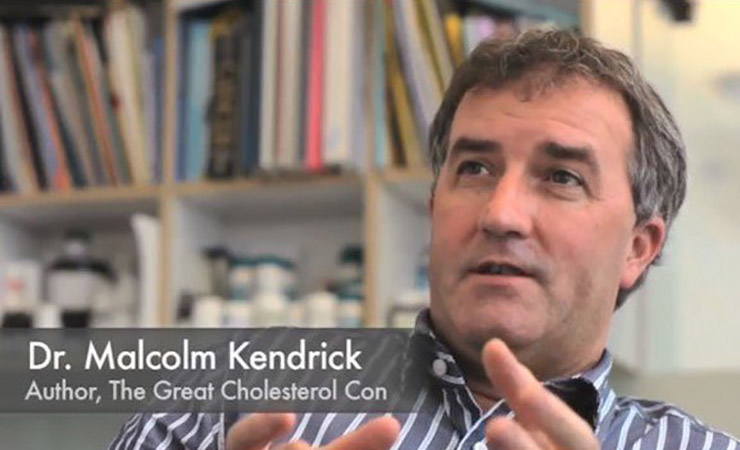
  • The Great Cholesterol Myth

    The Great Cholesterol Myth

    From New Dawn 101 (Mar-Apr 2007)

    If you eat too much cholesterol, or saturated fat, your blood cholesterol will rise to dangerous levels. Excess cholesterol will then seep through your artery walls causing thickenings (plaques), which will eventually block blood flow in vital arteries, resulting in heart attacks and strokes….

    Scientific hypotheses don’t get much simpler than this: the cholesterol, or diet-heart, hypothesis, has broken free from the ivory towers of academia to impact with massive force on society.

    It has driven a widespread change in the type of food we are told to eat, and consequently the food that lines the supermarket shelves. Many people view bacon and eggs as a dangerous killer, butter is shunned, and a multi-billion dollar industry has sprung up providing ‘healthy’ low-fat alternatives.

    At the same time, millions of people are prescribed statins to lower cholesterol levels, and each new set of guidelines suggests that ever-more lowering of cholesterol is needed. When it comes to explaining what causes heart disease, the cholesterol hypothesis reigns supreme.

    But as the US editor and critic H.L. Mencken put it, “For every complicated problem there is a solution that is simple, direct, understandable and wrong.” This is how we might view the diet-heart hypothesis: just because it is dominant does not mean it is right, and just because it looks simple does not mean that it actually is.

    The Development of the Cholesterol Hypothesis

    Landmark developments:

    1850s

    Rudolf Virchow notes the presence of cholesterol in atherosclerotic plaques, and suggests that excess cholesterol in the bloodstream may be the cause.

    Early 1900s

    Ashoff feeds rabbits on fat and cholesterol, and notes the development of atheroma.

    1912

    First heart attack described by Herrick.

    1940s

    Epidemic of heart disease hits the USA, and interest in the area explodes. Many researchers blame the high fat/cholesterol diet.

    1948

    The Framingham study on heart disease begins. It is still running today.

    1954

    Ancel Key’s seminal Seven Countries Study is published, demonstrating clear links between saturated fat intake and heart disease.

    1961

    Framingham confirms the link between raised cholesterol levels and heart disease.

    1960s

    The first cholesterol-lowering drugs are developed.

    1970s

    Brown and Goldstein find the gene leading to extremely high cholesterol levels (Familial Hypercholesterolaemia) and premature heart disease.

    1980s

    Statins are launched.

    1985

    The Nobel Prize is awarded to Brown and Goldstein.

    1990s

    Statins trials demonstrate that cholesterol lowering protects against heart disease.

    Presented in this way, it’s not difficult to see how the cholesterol hypothesis became the dominant hypothesis, effortlessly swatting alternative ideas. Indeed, to question this theory is to risk being placed on the same shelf as flat-earthers and creationists.

    However, all is not what it seems. The cholesterol hypothesis can be likened to a cathedral built on a bog. Rather than admit they made a horrible mistake and let it sink, the builders decided to try and keep the cathedral afloat at all costs. Each time a crack appeared, a new buttress was built. Then further buttresses were built to support the original buttresses.

    Although direct contradictions to the cholesterol hypothesis repeatedly appear, nobody dares to say ‘okay, this isn’t working, time to build again from scratch’. That decision has become just too painful, especially now that massive industries, Nobel prizes, and glittering scientific careers, have grown on the back of the cholesterol hypothesis. The statin market alone is worth more than US$14 billion each year.

    In reality, cracks in the hypothesis appeared right from the very start. The first of these was the stark observation by Prof. Ancel Keys that cholesterol in the diet has no effect on cholesterol levels in the bloodstream: “There’s no connection whatsoever between cholesterol in food and cholesterol in blood. And we’ve known that all along. Cholesterol in the diet doesn’t matter at all unless you happen to be a chicken or a rabbit.”1

    A bit of a blow to a cholesterol hypothesis, you might think, to find that dietary cholesterol has no effect on blood cholesterol levels. However, as everyone was by then fully convinced that something rich and ‘fatty’ in the diet was the primary cause of heart disease, nobody was willing to let go.

    So the hypothesis quietly altered, from cholesterol in the diet to saturated fat in the diet – or a bit of both. As if cholesterol and saturated fat are similar things. In reality, this could hardly be further from the truth. Saturated fat and cholesterol have completely different functions in the body, and they have very different chemical structures.

    As chemist Joseph Black warned over 200 years ago: “A nice adaptation of conditions will make almost any hypothesis agree with the phenomena. This will please the imagination, but does not advance our knowledge.”2

    Unfortunately, this adaptation did not work. It is true that Ancel Keys appeared to have proven the link between saturated fat consumption and heart disease, but when it came to the major interventional trials, confirmation proved elusive.

    The MR-FIT trial in the USA was the most determined effort to prove the case. This was a massive study in which over 350,000 men at high risk of heart disease were recruited. In one set of participants, cholesterol consumption was cut by 42 percent, saturated fat consumption by 28 percent and total calories by 21 percent. This should have made a noticeable dent in heart disease rates.

    But nothing happened. The originators of the MR-FIT trials refer to the results as “disappointing,” and say in their conclusions: “The overall results do not show a beneficial effect on Coronary Heart Disease or total mortality from this multifactor intervention.”

    In fact, no clinical trial on reducing saturated fat intake has ever shown a reduction in heart disease. Some have shown the exact opposite:

    “As multiple interventions against risk factors for coronary heart disease in middle aged men at only moderate risk seem to have failed to reduce both morbidity and mortality such interventions become increasingly difficult to justify. This runs counter to the recommendations of many national and international advisory bodies which must now take the recent findings from Finland into consideration. Not to do so may be ethically unacceptable.”3

    This quote followed a disturbing trial involving Finnish businessmen. In a 10-year follow-up to the original five-year trial, it was found that those men who continued to follow a low saturated fat diet were twice as likely to die of heart disease as those who didn’t.

    It is not as if this was one negative to set against a whole series of positive trials. In 1998, the Danish doctor Uffe Ravnskov looked at a broader selection of trials: “The crucial test is the controlled, randomised trial. Eight such trials using diet as the only treatment has been performed but neither the number of fatal or non-fatal heart attacks was reduced.” As Ravnskov makes clear, no trial has ever demonstrated benefits from reducing dietary saturated fat. At this point most people might think it was time to pull the plug.

    Far from it. In 1988, the surgeon general’s office in the USA decided to silence the nay sayers by putting together the definitive report proving a causal link. Eleven years later the project was abandoned. In a circulated letter, it was stated that the office “did not anticipate fully the magnitude of the additional external expertise and staff resources that would be needed.”

    Bill Harlan, a member of the oversight committee and associate director of the Office of Disease Prevention at the US National Institute of Health, says: “The report was initiated with a preconceived opinion of the conclusions, but the science behind those opinions was not holding up. Clearly the thoughts of yesterday were not going to serve us very well.”

    The sound of a sinking cathedral fills the air with a great sucking slurpy noise. But still nobody let go. Instead, more buttresses were desperately thrown at a rapidly disappearing pile of rocks.

    Variations on a theme emerged. It is not saturated fat per se that causes heart disease. It’s the ratio of polyunsaturated to saturated fat that is critical. Or is it the consumption of monounsaturated fats, or a lack of omega-3 fatty acids, or an excess of omega-6? Take your pick. These, and a host of other add-on hypotheses, have their proponents.

    As of today nobody can – or will – tell you which type of fat, in what proportions, added to what type of anti-oxidant, vegetable, monounsaturated fat or omega-3 is the true culprit. Hugely complicated explanations are formulated, but they all fall apart under scrutiny.

    This may all seem incredible, such has been the level of anti-fat propaganda, but it is true. With the exception of the Ancel Keys’ flawed Seven Countries Study (he pre-selected the seven countries for his study in order to prove his hypothesis), there is not one scrap of direct evidence.

    But, of course, there are two parts to the cholesterol hypothesis. The diet part, and the raised cholesterol level part. Leaving diet behind, surely it has been proven beyond doubt that a raised cholesterol level is the most important cause of heart disease?

    Cholesterol Levels and Overall Mortality

    Before looking at the connection between blood cholesterol levels and heart disease, it is worth highlighting a critically important – remarkably unheralded – fact: After the age of 50, the lower your cholesterol level is, the lower your life expectancy.

    Perhaps even more important than this is the fact that a falling cholesterol level sharply increases the risk of dying of anything, including heart disease.

    The dangers of a low cholesterol level were highlighted by a major long-term study of men living in Honolulu: “Our data accord with previous findings of increased mortality in elderly people with low serum cholesterol, and show that long-term persistence of low cholesterol concentration actually increases the risk of death.”

    Somewhat ironically, the danger of a falling cholesterol level was first discovered in the Framingham study: “There is a direct association between falling cholesterol levels over the first 14 years [of the study] and mortality over the following 18 years.”

    It seems almost unbelievable that warnings about the dangers of a high cholesterol level rain down every day, when the reality is that a low cholesterol level is much more dangerous than a high level. Given this, why would anyone want to lower the cholesterol level? On the face of it, it would make more sense to take cholesterol-raising drugs. Especially after the age of 50.

    Cholesterol Levels and Heart Disease

    The reason why everyone is so keen to lower cholesterol levels is that supporters of the hypothesis have decreed the following:

    – A high level of cholesterol causes premature heart disease.

    – A low level of cholesterol is caused by an underlying disease. It is the underlying disease that kills you, not the low cholesterol.

    Ergo, if you lower the blood cholesterol level, you will reduce the risk of heart disease, and you will not increase the risk of dying of any other disease. This could be true, but it is worth reviewing some of the evidence that linked raised cholesterol levels to heart disease in the first place. Let’s begin with women.

    Perhaps the largest single analysis of cholesterol levels, and death from cardiovascular disease (and other diseases), was published in 1992. This review included over 100,000 women, aggregated from a number of different studies and countries.

    To quote from the study: “The pooled estimated risk for total cardiovascular death in women showed no trend across TC (total cholesterol) levels.” In short, for more than 50 percent of the world’s population – women – raised cholesterol is not a risk factor for heart disease.

    Moving to men, it is true that under the age of 50 there does seem to be an association between raised cholesterol levels and heart disease. But after the age of 50, when more than 90 percent of heart attacks happen, the association disappears.

    In addition, those populations in the world with the highest rates of heart disease in younger men, including emigrant Asian Indians, Eastern Europeans, Native Americans and Australian Aboriginals, tend to have significantly lower cholesterol levels than the surrounding populations/countries.

    Perhaps the single most directly contradictory fact is that, in young Japanese men, the average cholesterol level has risen over the past 20 years, yet the rate of heart disease has fallen. But as with many facts in this area, if they don’t fit the cholesterol hypothesis, they are dismissed.

    Lowering Cholesterol Levels with Drugs

    Surely, despite everything written up to this point, all previous arguments are refuted by the knowledge that lowering cholesterol levels with statins protects against heart disease? As all good scientists know, ‘reversibility of effect’ provides the most powerful supportive evidence for a hypothesis.

    However, the flipside to this argument is as follows. How can lowering cholesterol levels prevent heart disease in people who do not have a high level? The most often quoted clinical trial in the past few years is the UK-based Heart Protection Study (HPS): a veritable triumph for statins, demonstrating protection in almost every group studied.

    What is most intriguing, however, is that protection was apparent if the starting cholesterol level was high, average or low. How can this be explained?

    At this point we enter Alice in Wonderland territory. A rational person would accept that a normal cholesterol level cannot be a risk factor for heart disease (or anything else for that matter). Therefore, people with normal cholesterol levels can gain no benefit from having their levels lowered. Therefore, if statins do protect those with normal, or low, cholesterol levels – which they clearly do – they must be doing this through some other mechanism of action, unrelated to cholesterol lowering.

    In fact, there is a growing body of evidence to support the idea that statins have a whole series of different protective actions. However, accepting that statins work ‘in another way’ would demolish the final buttress keeping the cholesterol hypothesis afloat. And so the latest argument is that nobody in modern society has a normal cholesterol level.

    An article in the Journal of the American College of Cardiology best sums up this line of thinking. Under the heading ‘Why average is not normal’, O’Keefe, the lead author, makes the claim that: “Atherosclerosis is endemic in our population, in part because the average LDL (‘bad’ cholesterol) level is approximately twice the normal physiologic level.” In short, according to O’Keefe, our cholesterol level should be about 2.5mmol/l, not 5.2mmol/l.

    This argument, if true, does neatly demolish the question, ‘How can people with normal, or low, cholesterol levels be protected against heart disease?’ O’Keefe and others would argue that we all have a high cholesterol level. Everyone is ill, and all shall have statins.

    One regularly quoted fact, which superficially seems supportive of O’Keefe’s hypothesis, is that peasant farmers in China have very low cholesterol levels and a very low rate of heart disease (although their average cholesterol levels are actually about four, not two-and-a-half).

    But when you study the figures with more care, they reveal something else. As usual, those with low cholesterol levels have by far the highest mortality rates. Liver failure and liver cancer are common causes of death. However, there is a simple explanation for this association. Many Chinese peasant farmers have chronic hepatitis, which creates low cholesterol levels, and also leads to liver failure and liver cancer. This is why people with low cholesterol levels die young.

    Does this mean that a low cholesterol level protects against heart disease? No: what the Chinese data tell us is that those with higher cholesterol levels are not chronic hepatitis carriers, so they live longer and have more chance of developing heart disease in old age. On the other hand, those with low cholesterol levels cannot die of heart disease, because they are already dead.

    Without chasing too many mad arguments around, the simple fact is that everyone in the West does not have a raised cholesterol level. Repeated studies have shown that a perfectly normal, or healthy, cholesterol level lies between about four and six, and lowering it cannot protect against heart disease, otherwise we will have introduced a new concept into medical science: normal is unhealthy and must be treated.

    People are grasping at straws in their attempts to explain why statins protect against heart disease in those with normal cholesterol levels, and in women and the elderly – where a raised cholesterol level is not even a risk factor. The only possible explanation for the results of the statin trials is that statins do not work by lowering cholesterol levels.

    The Cholesterol Hypothesis is a Complicated Mess

    The cholesterol hypothesis has always exuded the siren song of simplicity. However, once you start to examine it in any detail, the simplicity rapidly mutates into complexity.

    Even at the very start, people should have known that cholesterol in the diet was never capable of appearing, unchanged, in the bloodstream. Cholesterol is not soluble in water (thus blood) which means that after absorption, cells lining the gut pack cholesterol into a small protein/lipid sphere, known as a lipoprotein, before releasing it into the bloodstream.

    Thus, you do not have any cholesterol floating about in the blood – it is all contained within lipoproteins. You do not actually have a cholesterol level. Instead, you have a level of different lipoproteins, with the low-density lipoprotein (LDL) or ‘bad’ cholesterol being the so-called dangerous one.

    Next question, what raises the LDL level? Eating too much fat, or cholesterol? The first problem here is that the cells lining the gut do not make, or release, LDL – they make other forms of lipoprotein. So, no matter what you eat, it can have no direct effect on LDL levels.

    So where does LDL come from? LDL is, effectively, the shrunken form of a very low-density lipoprotein (VLDL). VLDLs are made in the liver and used to transport fat and cholesterol from the liver to other cells around the body. As VLDLs lose fat they shrink, transforming into LDL.

    Therefore, in order to find out what makes LDL levels rise, we must surely find out, firstly, what makes VLDL levels go up; and what makes VLDL levels go up, primarily, is eating excess carbohydrates. What makes them go down is eating fat!

    Recognising this, and a host of other problems, the supporters of the cholesterol hypothesis have twisted and turned. As of today (and this will certainly change), the original – dietary – cholesterol hypothesis has become the following: If you eat too much saturated fat, the body will reduce the number of LDL receptors (things that remove LDL from the bloodstream), forcing the LDL up. A more tenuous, and unproven, link could hardly be imagined, but that is what is left of the originally super-simple cholesterol hypothesis. The diet part anyway.

    But the difficulties of trying to establish a dietary link to heart disease actually pale into insignificance when you start trying to work out how the raised LDL level itself may cause heart disease. If it were simply a case of excess LDL seeping through the artery wall when the level gets too high, then why doesn’t this happen in all artery walls, everywhere? If I lie too long in the sun I expect to get sunburned on every bit of skin exposed. I do not expect to get discrete patches of sunburn. Yet we do see little ‘patches’ of atherosclerosis. Some people die of heart disease and are found to have perfectly clean arteries, apart from a single killer plaque (thickening). So why did the LDL seep through at only one place? What protected the rest of the arterial system?

    And why do veins never develop atherosclerotic plaques? They are exposed to exactly the same LDL level as the arteries. They are thinner than arteries, but their general structure is identical. I should add that if you use a vein as a coronary artery bypass graft (effectively turning it into an artery), it will develop atherosclerosis.

    These questions represent only the tip of a huge iceberg. In an attempt to answer some of them, the cholesterol hypothesis has turned itself into the following, complicated mess:

    – LDL, when it is oxidised, travels through the lining of the artery wall (endothelium) into the middle part of the artery. (How oxidised LDL passes straight through an endothelial cell into the artery wall behind is unexplained.)

    – In this oxidised state it attracts white blood cells from the bloodstream. They, in turn, migrate into the artery wall and start to ‘digest’ the oxidised LDL in order to remove it. (This bit is plausible.)

    – However, white blood cells, once they have started to digest oxidised LDL cannot stop. They get bigger and bigger until they burst. This, in turn, attracts more white blood cells to the area which then burst. (White blood cells that just burst? This makes no sense whatsoever. Why on earth would the body develop a scavenger system that automatically self-destructs?)

    – The burst white blood cells, in turn, release substances that trigger a whole cascade of inflammatory reactions in the arterial wall. After a period of time you have a mass of dead white blood cells, cholesterol, oxidised LDL remnants, and a whole series of other inflammatory agents all focused in one area, trapped in the artery wall. (Well, this is what is found in a plaque, among many other things.)

    This is allegedly how a plaque starts and grows. I have kept that explanation as simple as humanly possible, but it seems absurdly unlikely. Oxidised LDL – what happened to normal LDL? Well, there’s no way anyone can see of getting that through an arterial wall. Exploding white blood cells…. Another buttress?

    In truth, the current ideas on plaque formation used to keep the cholesterol hypothesis afloat are complex nonsense. But the entire area is now protected by a ring-fence of scientific jargon that frightens off all but the most dedicated seeker after truth.

    To those who have studied the hypothesis with a critical eye, it seems unbelievable that it can possibly still be standing. Dr. George Mann pronounced it dead in an editorial in the New England Journal of Medicine in 1977, referring to it as the “Greatest scam in the history of medicine.” Yet this hypothesis has never had more followers than today.

    Time, I think, that it was consigned to the dustbin of history. It is not simple, direct, or understandable – the only certain thing about it is that it is wrong.

    Dr. Kendrick’s book, The Great Cholesterol Con, is available from www.amazon.com.

    [alert type=”general” dismiss=”no”]This article was published in New Dawn 101.[/alert]

    [alert type=”success” dismiss=”no”]If you appreciate this article, please consider subscribing to help maintain this website.[/alert]

    Footnotes

    1. Ancel Keys PhD, professor emeritus at the University of Minnesota, 1997.
    2.  J. Black, Lectures of the Elements of Chemistry, 1803
    3.  Professor Michael Oliver, British Medical Journal, 1991

    © New Dawn Magazine and the respective author. For our reproduction notice, click here.
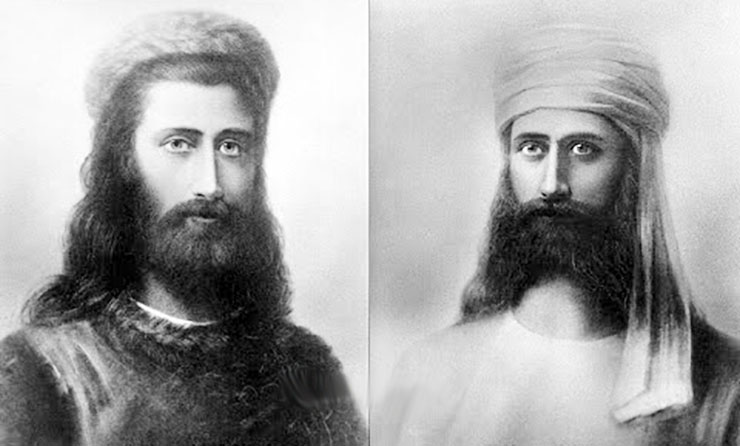
  • Have YOU Been Here Before?

    Have YOU Been Here Before?

    From New Dawn 101 (Mar-Apr 2007)

    Belief in reincarnation is one of the oldest and most durable of human traits, so old and persistent, in fact, that the psychologist C. G. Jung went so far as to call it an archetype. “Rebirth,” Jung wrote, “is an affirmation that must be counted among the primordial affirmations of mankind. These primordial affirmations are based on what I call archetypes.”1 This meant for Jung that regardless of its truth or falsity, the idea that we have lived previous lives and will, after our deaths, return in other lives, is somehow ingrained in our psyche. 

    We are, to use computer-speak, programmed to think it, and although not all of us accept the idea, it seems to share prominence with other fundamental ideas about the meaning of death and what, if anything, happens to us after it.

    These ideas seem to be surprisingly few. There’s the possibility of reincarnation or rebirth, as mentioned, with the belief that eventually one will have worked off one’s karmic debt and so have escaped the wheel of lives; one is then absorbed in some way into the all. There is also the idea of an afterlife in some “other” realm, whether the heaven of Christianity, the paradise of Islam, the Valhalla of Norse legend, or the Elysian fields of ancient Greece. I should point out that not all afterlives are desirable: fire and brimstone await the wicked in Christianity’s hell, and the Greeks, perhaps the greatest lovers of earthly life in history, regarded the idea of a shadowy eternity in the underworld with abhorrence. In any case, all these scenarios posit only one life on earth. Once we get through it, depending on how we conduct ourselves, we then go to our just reward or punishment, as the case may be.

    The pagans believe that once we die and our bodies decay, the matter they are made of returns to Nature along with the spirit or soul. We may then possibly enjoy a kind of afterlife as flowers, trees, or grass.

    There also is the belief that once we are dead, that’s the end. We no longer exist; our beliefs, ideas, feelings, values – everything important to us – are obliterated when the brain stops working. In this view, our present life is all there is, and after it is nothingness. Many associate this view with modern science, but its roots are in fact very old. The ancient Greek philosopher Democritus, who proposed an early version of the atom, argued that everything was made of little bits of matter that he called atoms (meaning “indivisible”). When we die, he suggested, the atoms that make up the self disperse.

    To these classic ideas about death we may be tempted to add one very new one: cryonics, the practice of freezing ones diseased body with the hope that in the future medical science will have discovered a cure for the illness. One can then be thawed, repaired, and brought back to life. On consideration, however, this seems to indicate less idea belief about what happens after death than a faith not only in modern medical science but in the robustness of the cryonics companies offering the service. Surely, as you lie in the freezer awaiting resurrection, the one pressing worry is whether the company keeping you on ice will stay in business. And if it doesn’t, what then? Unless you buy the notion that is hyped periodically that science will one day soon “conquer death,” this seems to me more of an attempt to put off facing death than any kind of engagement with it.

    My own feelings about death and what may possibly transpire after it fall into the camp of the agnostic. I simply don’t know – which isn’t to say that I don’t recognise the importance of having some idea about it. In truth, I’ve always been partial to the view presented by the playwright George Bernard Shaw in Back to Methuselah. Here Shaw argued that human beings die not from disease or old age but from discouragement, from loss of purpose and the will to live. Decades later, in his book Man’s Search for Meaning, the psychologist Victor Frankl corroborated this insight in the gruesome setting of a Nazi concentration camp, when he observed that the prisoners who had something to look forward to survived, while those who gave up hope were often the first to perish.

    Shaw argued that our present life span was far too short, because it is only toward the end of a long life that some people begin to have a glimpse of its value. To die at eighty just when you are beginning to have some insight into the whole affair seems pointless. Shaw envisioned the possibility that some people might learn how to live longer, so long that, barring accident, they might reach the age of three hundred. This, he thought, would allow them the time to put to some use the insights the rest of us take to the grave.

    I should point out that Shaw’s long livers – whom he calls the Ancients –  gain their longevity not through any technological or chemical means, nor through following a strict healthy regimen, although Shaw himself, who lived to be ninety-four, was a vegetarian. They accomplish this through their sheer will to live – and their willingness to fulfil the purposes of what Shaw calls “the life force,” a kind of evolutionary drive that compels life to understand and transcend itself. In his earlier play Man and Superman, Shaw spells out the philosophy of his “life force worshippers” in dramatic and comic detail, and for a time after reading Back to Methuselah I became fascinated by accounts of writers, artists, and thinkers who lived well into old age. There was Shaw himself. There was also the novelist John Cowper Powys, who died at ninety-one, the literary critic and philosopher Owen Barfield, who died at ninety-nine, the German novelist and essayist Ernst Jünger, who died at 101, and many others, including the composer Jean Sibelius, and the philosopher Bertrand Russell, whom lived into their nineties.

    In his science fiction novel The Philosopher’s Stone, Colin Wilson – a Shawian himself – suggested that there was some connection between the pursuit of ideas and longevity. His insight was that an interest in objective values – mathematics, philosophy, and, in a similar way, the kind of impersonal beauty that we find in, say, Sibelius’s symphonies, with their deep feeling for nature – is in line with the designs of “the life force,” which urges us to transcend our all too limited personal and subjective aims and goals. Someone who could perceive the objective beauty and “interestingness” of reality and sustain this would, Wilson argued, never be bored and hence have every reason to want to go on living.

    Now, whenever I’ve mentioned this idea to friends or acquaintances, the usual reply is something along the lines of “Three hundred? God, who would want to live that long? Wouldn’t you get tired and want to move on?” This is interesting, because I get a similar response whenever I bring up another idea that, for better or worse, has always had a strange appeal to me. Rather than reincarnation, which has us returning to earth again but in a different body and as a different person in a different time (though somehow with the same soul or spirit), ever since I first came upon it as a teenager in the writings of the philosopher Nietzsche, I’ve had an odd interest in the notion of “eternal recurrence.” This idea suggests that we have, as Rudolf Steiner calls them, “repeated earth lives,” but instead of different lives, we have the same one, over and over. This means that I have sat down in front of my computer an infinite number of times in the past to write this essay and that you also have read it an equally infinite number of times, and that both of us will continue to do so ad infinitum. I will be born to my parents again, go through the same childhood traumas and delights, leave home and have the same experiences, the same failures and successes, eventually die – and the whole wheel will turn around to the beginning and start again.

    Most of us on hearing this will reject the idea, wincing either at some past incident we would very much want to avoid or, more generally, at the prospect of eternal boredom such a notion offers. The idea of coming back to earth again as a different person seems much more appealing, and even the notion of complete annihilation seems preferable to going through the same round over and over again. I understand this perfectly, and I’m in no way arguing that eternal recurrence is true or preferable to reincarnation or to other ideas of what, if anything, happens after death. But I have to say that coming back to my books, friends, children, joys, and sorrows does strike me as more appealing than the eternity of blissful contentment spent floating amid cherubs and clouds that some forms of afterlife offer.

    I have to admit that one reason (and not the most important one) I’ve remained partial to this idea of eternal recurrence is precisely because of the reactions it elicits from others. Several years ago I worked at a metaphysical bookstore in Los Angeles. Among the fads and crazes of the time – crystals, the goddess, neuro-linguistic programming – one of the most popular was the idea of exploring one’s past lives. Among the many people interested in this who came to the store, I was surprised to discover that all of them seemed to have had infinitely more interesting lives before their present one. No one ever said, “God, how boring that past life was,” or “Gee, I’m glad I’m living this life now.” There were also a good number of people who, if not famous in their past lives, were still somehow important. Priestesses in Egypt, magicians in Atlantis, kings, queens. Not many tailors, butchers, or farmers. Sadly, whatever the truth about reincarnation, many of the people who spoke about it seemed to regard it as a way of making themselves more interesting in this life. So when I remarked that I was always more attracted to the idea that there is only this life and we live it countless numbers of times, I received looks implying that I was either crazy or lying. Despite the incredulous reactions it causes – or perhaps because of them – Nietzsche’s philosophy of recurrence deserves consideration.

    Far from some Machiavellian figure, Nietzsche was most troubled by the problem of human suffering, which I think he rightly saw as the central question from which the great religions emerged. Through poor translations and tragic appropriations by racist thugs like the Nazis, Nietzsche acquired a reputation as a philosopher of cruelty and tyranny, his übermensch or superman popularly depicted as a muscular fascist, lording it over the masses. In reality, however, Nietzsche was a very gentle, considerate, even timid man, so shy that he had to ask a friend to propose marriage for him to the woman he loved (not surprisingly, she declined). In fact, Nietzsche was burdened with an almost morbid sensitivity to suffering, whether human or animal. This fact is enshrined in a famous story of his final collapse, which occurred when he was already suffering from what scholars suppose was late-stage syphilis. In this story, Nietzsche saw a coachman whipping a horse. Tears in his eyes, he threw his arms around the neck of the poor creature, trying to comfort it. He then fell to the ground and when he awoke was no longer sane.

    Nietzsche didn’t believe in an afterlife in any form, and especially not the heaven of the hypocritical Christianity he attacked in one of his last books, The Antichrist. He did, though, have a powerful appreciation of the meaning and beauty of this life, a poignant, almost mystical sense of the value of our present world, an insight into its drama and mystery that most of us lack. In fact, Nietzsche believed that all ideas about an afterlife were really the product of an inability to face the uncertainty and sometimes terrifying facts of this life; they were, he felt, a kind of slander against life, a rejection of what, to him, was precious and almost painfully valuable. Rather than accept the conditions of life – which include pain, suffering, and tragedy along with beauty – and make something of it, Nietzsche believed that many preferred to consider it worthless, when compared to an ideal “other” world that we would enter after death. In many ways, ideas about an afterlife were, to him, a kind of sour grapes.

    In his notebooks – published after his death – Nietzsche did try to prove that recurrence was a fact, drawing on the science of the late nineteenth century and the enshrined law that matter can be neither created nor destroyed but only transformed. His arguments, however, are not very convincing. Given a limited amount of matter and energy but an eternity of time, he tells us, the universe will necessarily go through its astronomical but ultimately finite number of combinations. After this, it will start repeating itself, and the arrangement of forces that led to my writing this essay and you reading it will eventually recur. Subsequent philosophers have shown where Nietzsche confused things – he was never good at math – but the force of his ideas about recurrence doesn’t lie in these proofs, and, in any case, Nietzsche wasn’t really interested in devising some explanation for the mechanics of the cosmos. What appealed to him about recurrence was its poetry, the insight that such an idea invested life with a new and dramatic meaning. It was this sense that led the novelist Milan Kundera to draw upon Nietzsche’s ideas in his book The Unbearable Lightness of Being.

    The thought of recurrence, Kundera believed, gives weight to our existence, a gravity without which it is in danger of floating away in inconsequence. This is so because the idea that our actions will recur again prompts us to consider them differently. Is what I am doing now something I wish to do for eternity? Nietzsche believed that the thought of recurrence could act as a kind of test, a challenge to determine one’s attitude toward life. Think of your own life. How does the idea that it will return in all its details strike you? Are you, Nietzsche asks, crushed by the thought, meaning that your life has been such a burden that going through it again would seem the worse kind of punishment? Or have you instead experienced moments of such joy and fulfilment that you would accept the times of suffering, embarrassment, or just plain boredom in order to experience them again? Nietzsche’s view was holistic: everything was linked, part of the great chain of fate, and to say yes to one joy, he tells us, necessitates saying yes to all the pain and discontent that accompanied it.

    In The Gay Science, written in 1881 – the title refers to the kind of philosophy he proposed, light-footed and able to dance – Nietzsche summed up this idea in a motto. Amor fati, “love of fate,” was, for Nietzsche, the test of one’s character. “I want to learn more and more to see as beautiful what is necessary in things; then I shall be one of those who make things beautiful. Amor fati: let that be my love henceforth.” In his brilliant if unusual autobiography Ecce Homo, written just before his final mental breakdown, Nietzsche put it more forcefully. “My formula for greatness in a human being is amor fati: that one wants nothing other than it is, not in the future, not in the past, not in all eternity. Not merely to endure that which happens of necessity… but to love it.”

    For Nietzsche to arrive at such a philosophy was no small achievement. Throughout his life he suffered incessantly from an assortment of ailments: migraine, near blindness, and intolerant digestion are only a few. He also was one of the loneliest of men, living in poverty and forever moving from one cheap pension to another, constantly in search of the right climate, to possibly gain some brief respite from his condition. He was practically friendless and for the most part unread. Today he is one of the most discussed thinkers of the nineteenth century, on a par with Darwin or Marx, but during most of his lifetime he was unknown or ignored. That someone with such an experience of life should embrace the idea that it will be repeated eternally gives one pause.

    Other thinkers have taken up the idea of recurrence. The Russian writer P. D. Ouspensky, for example, made it the theme of his novel Strange Life of Ivan Osokin. Ouspensky looked at recurrence rather differently than did Nietzsche, and his ideas influenced another “time haunted man,” the writer and playwright J. B. Priestley. Priestley’s popular plays I Have Been Here Before and Time and the Conways are perhaps the most accessible treatments of the idea. Where Nietzsche argued that everything in our life recurs exactly as it did before, Ouspensky offered some hope of change, suggesting that in each life there are slight variations and that through these we have a chance to alter things for the better.

    In a sense, if we think about it, Nietzsche’s insistence on the exact recurrence of each detail actually leads to the conclusion that all we really have is this moment. If everything recurs exactly as it did – if it is, as he also called it, “the return of the same”  – then each recurrence is really only this moment. The next recurrence and the previous one were exactly like our present one, and so there is really no means of distinguishing one from the other. And so, in a practical sense, all we ever experience is now. Ouspensky’s version is somewhat closer to reincarnation, in that he posits the possibility that with each recurrence we have the chance to make some changes for the better and so can develop ourselves and eventually escape the treadmill.

    Nietzsche would have thought Ouspensky’s theory simply another attempt to escape the demands of life. My own feeling is that while it may be interesting to debate the two, in the end they really serve the same function. Personally, I don’t think we can ever prove recurrence one way or another. And in any case, if it is true, and if it ever was proven, then by necessity it always was. The real value of the idea for me is the meaning and significance it can give to our lives. Granted, a paranoid take on it could have us worrying about every little action, concerned that it may be the start of some infinite series of mistakes. But then, we could also say that if something is happening now, it must have already happened. In that case, we might fall prey to Kundera’s feeling of inconsequence: what does it matter what we do, if it has already been done countless times before?

    For myself, however, the idea that my life might not be merely so many years of meaningless activity but might instead have some connection to the vast eternal scheme of things is at times encouraging, even inspiring. I may or may not have been here before, but I can act as if I have. Recognising this, I can look forward to another visit.

    This article is reprinted with permission from Quest Magazine, Journal of the Theosophical Society, www.theosophical.org, March-April 2006, pages 57-60.

    [alert type=”general” dismiss=”no”]This article was published in New Dawn 101.[/alert]

    [alert type=”success” dismiss=”no”]If you appreciate this article, please consider subscribing to help maintain this website.[/alert]

    Footnote

    1. Cranston, Sylvia and Joseph Head. Reincarnation and World Thought. New York: Julian Press, 1967.

    © New Dawn Magazine and the respective author. For our reproduction notice, click here.