New Dawn – World's Most Unusual Magazine

Category: Articles

  • Morphic Resonance & Morphic Fields: Collective Memory & the Habits of Nature

    Morphic Resonance & Morphic Fields: Collective Memory & the Habits of Nature

    From New Dawn Special Issue 15 (Mar 2011)

    The word morphic comes from the Greek morphe, meaning form. Morphic fields organise the form, structure and patterned interactions of systems under their influence – including those of animals, plants, cells, proteins, crystals, brains and minds. They are physical in the sense that they are part of nature, though they are not yet mentioned in physics books.

    All self-organising systems are wholes made up of parts which are in turn lower-level wholes themselves – such as organelles in cells, cells in tissues, tissues in organs, organs in organisms, organisms in social groups. At each level, the morphic field gives each whole its characteristic properties, and coordinates the constituent parts.

    The fields responsible for the development and maintenance of bodily form in plants and animals are called morphogenetic fields.

    The existence of these fields was first proposed in the 1920s and this concept is widely used within biology. But the nature of these fields has remained obscure.

    I suggest they are part of a larger family of fields called morphic fields. Other kinds of morphic fields include behavioural and mental fields that organise animal behaviour and mental activity, and social and cultural fields that organise societies and cultures. All of these organising fields are different kinds of morphic field.1

    Morphic fields are located within and around the systems they organise. Like quantum fields, they work probabilistically. They restrict, or impose order upon, the inherent indeterminism of the systems under their influence.

    For example, of the many direction in which a fish could swim or a bird fly, the social fields of the school or flock restrict the behaviour of the individuals within them so they move in coordination with each other rather than at random.2

    The most controversial feature of this hypothesis is that the structure of morphic fields depends on what has happened before. Morphic fields contain a kind of memory. Through repetition, the patterns they organise become increasingly probable, increasingly habitual. The force these fields exert is the force of habit.

    Whatever the explanation of its origin, once a new morphic field, a new pattern of organisation, has come into being, the field becomes stronger through repetition. The more often patterns are repeated, the more probable they become.

    The fields contain a kind of cumulative memory and become increasingly habitual. All nature is essentially habitual. Even what we view as the fixed “laws of nature” may be more like habits, ingrained over long periods of time.

    Morphic Resonance

    The means by which information or an activity-pattern is transferred from a previous to a subsequent system of the same kind is called morphic resonance. Any given morphic system, say a squirrel, “tunes in” to previous similar systems, in this case previous squirrels of its species. Morphic resonance thus involves the influence of like upon like, the influence of patterns of activity on subsequent similar patterns of activity, an influence that passes through or across space and time from past to present. These influences do not to fall off with distance in space or time. The greater the degree of similarity of the systems involved, the greater the influence of morphic resonance.

    Morphic resonance gives an inherent memory in fields at all levels of complexity. In the case of squirrels, each individual squirrel draws upon, and in turn contributes to, a collective or pooled memory of its kind. In the human realm, this kind of collective memory corresponds to what the psychologist C.G. Jung called the collective unconscious.

    Morphic resonance should be detectable in the realms of physics, chemistry, biology, animal behaviour, psychology and the social sciences.

    Long-established systems, such as zinc atoms, quartz crystals, insulin molecules and muscle cells are governed by strong morphic fields, with deep grooves of habit established over millions of years, and consequently little change can be observed over a few weeks, or even years, of research. They behave as if they are governed by fixed laws.

    By contrast, new systems should show an increasing tendency to come into being the more often they are repeated. They should become increasingly probable; they should happen more easily as time goes on.

    For example, when a new chemical compound is synthesized by research chemists and crystallised, it may take a long time for a crystal to form for the first time. There is no preexisting morphic field for the lattice structure. But when the first crystals form, they will make it easier for similar crystals to appear anywhere in the world. The more often the compound is crystallised in one place, the easier it should be to crystallise elsewhere.

    New compounds do indeed tend to crystallise more easily the more often they are made. Chemists usually explain this effect in terms of crystal “seeds” from the new crystals spreading around the world as invisible dust particles in the atmosphere, or chemists learning from others how to do it. But the hypothesis of morphic fields predicts that this should happen anyway under standardised conditions, even if dust particles are filtered out of the air.

    Testing for Morphic Fields

    There are several possible ways in which the hypothesis of morphic fields can be, and has been, investigated by experiment. Some tests attempt to detect the fields as they link together different parts of a system in space; others look for the effects of morphic resonance over time.

    The easiest way to test for morphic fields directly is to work with societies of organisms. Individual animals, for example, can be separated in such a way that they cannot communicate with each other by normal sensory means. If information still travels between them, this would imply the existence of interconnections of the kind provided by morphic fields. The transfer of information through morphic fields could help provide an explanation for telepathy, which typically takes places between members of groups who share social or emotional bonds.

    One promising area for this kind of research concerns telepathy between people and domesticated animals, as discussed in my book Dogs That Know When Their Owners Are Coming Home. For example, many dogs and cats seem to know when their owners are returning, even when they come at non-routine times in unfamiliar vehicles such as taxis, and when no one at home knows when they are on the way. The animals seem to be responding telepathically to their owners’ intentions.3

    The unsolved problems of animal navigation, migration, and homing may also depend on invisible fields connecting the animals to their destinations.4 In effect, these could act like invisible elastic bands linking them to their homes, which serve as “attractors.”5 (In the branch of mathematics known as dynamics, attractors represent the limits toward which dynamical systems are drawn.)

    Morphic Resonance in Development & Behaviour

    The build-up of habits can be observed experimentally only in the case of new patterns of development and of behaviour.

    There is already evidence from experiments on fruit flies that morphic resonance occurs in developing organisms. When fruit fly eggs were exposed to a chemical (diethyl ether), some of them developed abnormally, turning into flies with four wings instead of two. When this treatment was repeated generation after generation, more and more flies developed four wings, even if their ancestors had never been exposed to the chemical.6

    There is much circumstantial evidence that animal behaviour can evolve rapidly as if a collective memory is building up through morphic resonance. In particular, large-scale adaptations have occurred in the behaviour of domesticated animals all over the world.

    One example concerns cattle guards. Ranchers throughout the American West have found that they can save money on cattle guards by using fake ones instead, consisting of stripes painted across the road. Real cattle guards are made of a series of parallel steel tubes or rails with gaps in between, which make it difficult for cattle to walk across them, and painful to try. However, present-day cattle do not usually even try to cross them. The illusory guards work just like the real ones. When cattle approach them, they “put on brakes with all four feet,” as one rancher expressed it to me. Even calves encountering them for the first times avoid them just as much as cattle previously exposed to real guards, even if they have never seen cattle guards before.7 This aversion may well depend on morphic resonance from previous members of the species that have learned to avoid cattle guards the hard way.

    There are also data from laboratory experiments on rats and other animals implying that such effects occur. In one series of experiments rats learned how to escape from a water maze. New batches of rats were tested month by month, year by year. As time went on, rats in laboratories all over the world escaped more and more quickly.8

    Connections with Quantum Physics

    Some physicists have been intrigued by the possible connections between morphic fields and quantum theory, including John Bell (of Bell’s theorem) and David Bohm, whose theory of the implicate order, based on the non-locality of quantum systems, turned out to be extraordinarily compatible with the idea of morphic fields.9

    These connections have also been explored by the American quantum physicist Amit Goswami10 and by the German quantum physicist Hans-Peter Dürr.11

    But it is still not clear exactly how morphic fields might fit in with quantum physics, if only because the implications of quantum theory for complex systems like cells and brains are still unknown.

    Get the issue this article appears in

    Implications for Human Behaviour & Creativity

    Morphic resonance has many implications for the understanding of human learning, including the acquisition of languages. Through the collective memory on which individuals draw, and to which they contribute, it should in general be easier to learn what others have learned before.

    Morphic fields could revolutionise our understanding of cultural inheritance, and the influence of the ancestors. Richard Dawkins has given the name “meme” to “units of cultural transmission,”12 and memes can be seen as cultural morphic fields. Morphic resonance also sheds new light on many religious practices, including rituals.13

    The hypothesis of morphic fields has far-reaching implications in all branches of science. In particular, it points to a new understanding of the nature of the mind, which no longer needs to be seen as confined to the inside of the head. Just as magnetic fields extend beyond the surface of a magnet, and electromagnetic fields beyond a cell phone, so the mind extends beyond the brain through mental fields. When we look at something, say a tree, the image of the tree is projected out through these fields to the place where the tree actually is. Our minds touch what we are looking at. This provides an explanation for our ability to sense when someone is looking at us from behind. There is now much evidence for the reality of this sense, discussed in my recent book The Sense of Being Stared At, And Other Aspects of the Extended Mind.14

    But the hypothesis of morphic fields has an inherent limitation. It helps explain how patterns of organisation are repeated; but it does not explain how they come into being in the first place. It leaves open the question of evolutionary creativity. This hypothesis is compatible with several different theories of creativity, ranging from the idea that all novelty is a matter of chance, to explanations in terms of divine creative power.15 Evolution, like our own lives, is an interplay between habit and creativity.

    A new, completely revised edition of Rupert Sheldrake’s book on morphic fields and morphic resonance A New Science of Life was published by Icon Books (UK) and by Inner Traditions (US) under the title Morphic Resonance.

    [alert type=”general” dismiss=”no”]This article was published in New Dawn Special Issue 15.[/alert]

    [alert type=”success” dismiss=”no”]If you appreciate this article, please consider subscribing to help maintain this website.[/alert]

    Footnotes

    1. R. Sheldrake, The Presence of the Past: Morphic Resonance and the Habits of Nature, Times Books, New York, 1988
    2. Ibid., Chapters 13 and 14.
    3. R. Sheldrake and P. Smart, A dog that seems to know when his owner is coming home: Videotaped experiments and observations, Journal of Scientific Exploration 14, 233-255; R. Sheldrake and P. Smart, Testing a return-anticipating dog, Kane, Anthrozoos 13, 203-12.
    4. R. Sheldrake, Dogs That Know When their Owners Are Coming Home, And Other Unexplained Powers of Animals, Part V, Crown, New York, 1999
    5. For a discussion of this idea, see R. Sheldrake, T. McKenna, and R. Abraham, The Evolutionary Mind, Chapter 4, Trialogue Press, Santa Cruz, 1998.
    6. Sheldrake, The Presence of the Past, Chapter 8.
    7. R. Sheldrake, Cattle fooled by phoney grids, New Scientist, Feb 11, 1988, 65.
    8. Sheldrake, The Presence of the Past, op. cit. Chapter 9.
    9. D. Bohm and R. Sheldrake, Morphogenetic fields and the implicate order. In: R. Sheldrake, A New Science of Life (second edition), Blond, London, 1985, 234.
    10. A. Goswami, Eine quantentheoretische Erklärung von Sheldrakes morphischer resonanz. In: Rupert Sheldrake in der Diskussion (eds H.P. Dürr and F.T. Gottwald), Scherz Verlag, Bern, 1997
    11. H.P. Dürr, Sheldrakes Vorstellungen aus dem Blickwinkel der modernen Physik. In: Rupert Sheldrake in der Diskussion (eds H.P. Dürr and F.T. Gottwald), Scherz Verlag, Bern, 1997.
    12. R. Dawkins, The Selfish Gene, Oxford University Press, Oxford, 1976.
    13. R. Sheldrake and M. Fox, Natural Grace, Doubleday, New York, 1996.
    14. R. Sheldrake, The Sense of Being Stared At, And Other Aspects of the Extended Mind, Crown, New York, 2003.
    15. R. Sheldrake, The Rebirth of Nature, Bantam, New York, 1990.

    © New Dawn Magazine and the respective author.
    For our reproduction notice, click here.

  • Tesla vs. Einstein: The Ether & the Birth of the New Physics

    Tesla vs. Einstein: The Ether & the Birth of the New Physics

    From New Dawn 113 (Mar-Apr 2009)

    Nikola Tesla (1856-1943) was an electrical inventor, well known as a competitor of arch rival Tom Edison. Where Edison’s inventions include the light bulb, the microphone in the telephone and the phonograph, Tesla’s inventions include fluorescent lighting, the AC hydroelectric power system and wireless communication. Tesla is therefore mostly billed as an inventor.

    The fact is, Tesla was also a physicist who studied in college such courses as analytic geometry, experimental physics and higher mathematics.1 In his early 1890s lectures at Columbia University, the Chicago World’s Fair and at Royal Societies in Paris and London, building on the ideas of Isaac Newton and Lord Kelvin, Tesla demonstrated and discussed the structure of atoms as being similar to solar systems and wave-like and particle-like aspects to what later became known as the photon. Colleagues he lectured before and corresponded with included many Nobel Prize winners like Wilhelm Roentgen, J.J. Thompson, Lord Raleigh, Ernst Rutherford and Robert Millikan and other scientists such as Elmer Sperry, Sir William Crookes, Sir Oliver Lodge, Lord Kelvin, Heinreich Hertz and Hermann von Helmholtz.

    As far as I know, no standard text on the history of physics mentions Tesla even though these ideas would lead to Nobel Prizes when they were further developed by Rutherford and Bohr (with their solar-system description of the atom with electrons orbiting the nucleus) and Einstein’s discovery of the photoelectric effect, which was equivalent to Tesla’s wave and particle-like description of light.

    However, another idea which Tesla discussed was abandoned by modern physicists, and that was the concept of the all pervasive ether. This led to a number of key differences between Tesla’s view of the world as compared to that of Albert Einstein (1879-1955). Tesla disagreed with the findings of Einstein’s Theory of Relativity in a number of ways. As far back as the turn of the century, Tesla thought that he had intercepted cosmic rays emanating from the sun that attained velocities “vastly exceeding that of light.” In the last decade of his life he also claimed that these cosmic rays could be harnessed to generate electrical power. Tesla also saw radioactivity as evidence of the material body absorbing energy as much as it was giving it up.

    On a separate front, the inventor stated that the impulses transmitted from his turn of the century Wardenclyffe wireless transmitting tower would also travel at velocities in excess of the speed of light. He likened the effect to the moon’s shadow spreading over the Earth.

    It is very difficult to explicate the first two speculations concerning tachyonic (faster than lightspeed) cosmic rays and radioactivity. However, with regard to the third claim, this suggestion that he transmitted energy at speeds in excess of the speed of light can be discussed from a variety of points of view. As the Earth has a circumference of roughly 25,000 miles, and light travels at about 186,000 miles/second, one can see that it would take light approximately 1/7th of a second to circle the Earth. But does the Earth itself exist in its own realm, that by the nature of its size transcends the speed of light? For example, does the north pole, interact/exist with the south pole instantaneously? If so, in a sense the theory of relativity is violated as nothing, accordingly, can “travel” faster than the speed of light, yet the Earth’s very electromagnetic unity belies that theory.

    Taking this concept a step further, does the solar system, or galaxy, when perceived as a functional unit, interact with itself in some way that by necessity makes a mockery of the speed of light? (The galaxy, of course, is hundreds of thousands of light years long.) In fact, when we look at photographs of galaxies, we are seeing entities that are hundreds of thousands of light years long. Certainly these systems have an orthorotational stability, and/or angular momentum which exists as a gestalt (totality) in a realm that easily transcends the speed of light and therefore, in that sense, violates relativity.2

    Concrete proof that relativity can be violated can be found in George Gamow’s watershed book Thirty Years That Shook Physics. Gamow, one of the founding fathers of quantum physics, tells us that in the mid-1920’s, Goudsmit and Uhlenbeck discovered not only that electrons were orthorotating, but also that they were spinning at 1.37 times the speed of light. Gamow makes it clear that this discovery did not violate anything in quantum physics, what it violated was Einstein’s principle that nothing could travel faster than the speed of light. Paul Adrian Dirac studied the problem. Following in the footsteps of Herman Minkowski, who used an imaginary number i, (the square root of -1) to be equivalent to the time coordinate in space-time equations, Dirac assigned the same number i to electron spin. In this way he was able to combine relativity with quantum mechanics and won a Nobel Prize for the idea in the process (1966, pp. 120-121). That was the upside. The downside was that the finding that elementary particles spin faster than the speed of light as a matter of course went the way of the passenger pigeon. No physicist talks about this anymore. What this means is that the entire evolution of 20th and nascent 21st century physics is evolving ignoring this key Goudsmit and Uhlenbeck finding. The ramifications suggest that elementary particles, by their nature, interface dimensions. Because they are spinning faster than the speed of light, the idea is that they are drawing this energy from the ether, a pre-physical realm, and converting the energy into material form.

    The Structure of the Ether

    On a body as large as the sun, it would be impossible to project a disturbance of this kind [e.g., radio broadcasts] to any considerable distance except along the surface. It might be inferred that I am alluding to the curvature of space supposed to exist according to the teachings of relativity, but nothing could be further from my mind. I hold that space cannot be curved, for the simple reason that it can have no properties. It might as well be said that God has properties. He has not, but only attributes and these are of our own making. Of properties we can only speak when dealing with matter filling the space. To say that in the presence of large bodies space becomes curved, is equivalent to stating that something can act upon nothing. I for one, refuse to subscribe to such a view.

    – Nikola Tesla3

    In Tesla’s model, a force-field would curve light around large bodies. These ideas were related to Tesla’s original theories on gravity which do not seem to have ever been published but can be ascertained by decoding related articles by or about Tesla from the 1930s and 40s. They also coincide with some of the most recent theories on physics, gravity and magnetism which challenge Einstein’s claim that nothing can travel faster than the speed of light. E. Lerner, writing about “Magnetic Whirlwinds” in Science Digest in 1985, stated that “magnetism is as fundamental as gravity.” Citing the research and theories of plasma physicist A. Peratt of Los Alamos National Laboratory, Lerner noted:

    Astronomers using [a]… radio telescope [have]… observed filaments of gas arcing far above the galactic plane. These twisting spirals appeared to be held together by a magnetic field… stretching across 500 light years…. Such magnetic vortices [may] play a major role in the universe… as important… as gravitation.4

    Another key mystery where Tesla differs from Einstein involves the paradoxical findings of Michelson and Morley who in 1887, tried to detect the ether by using two sets of mirrors pointed at each other and placed miles apart. One set was aimed in the direction the Earth was moving and the other set was aimed at right angles to the movement of the Earth. It was hypothesised that if the ether existed, once an impulse was sent, there would be a difference in the return times of each set, yet no difference was found.

    Einstein essentially agreed with the findings by stating that by its nature, the ether could not be detected. However, Einstein also upped the ante considerably by also saying that if the ether could be detected then his theory of relativity was in error.5 Einstein further stated that if light could travel like a particle it would not need a medium (i.e., the ether) to travel through. Even though most of the great scientists of the day such as Maxwell, Faraday, Kelvin, Fitzgerald and Lorentz all accepted the obvious conclusion that there had to a medium of transfer in space, i.e., the ether, all of this was glossed over. This led to a generally accepted conclusion that the ether did not exist and that is the situation today, a full century later! It would take Einstein 15 years before he addressed this glaring misconception but the damage had already been done.

    In 1920, lecturing at the University of Leiden, on the topic “Ether and the Theory of Relativity,” Einstein stated outright that the ether did exist, that is was necessary as a medium of transfer because light also had wave-like properties. He even wrote Lorentz to clarify this point.6 But by now, the damage had been done. This lecture received little notice, it was ignored in Roland Clark’s watershed biography on Einstein published in 1971, and so the 20th and early 21st centuries evolved in such a way to dismiss entirely ether theory.

    Since in the Michelson Morley experiment light travelled at the same speed in the direction the Earth was moving and at right angles to that direction, Einstein concluded that the speed of light had to be constant (according to the formulas of Special Relativity). He further suggested in 1905 that the ether of 19th century physics was not necessary although what he really meant to say was that it could not be detected. At the time, this was a radical view, it was soon widely accepted, even though it implied that there was nothing between the stars. This concept quickly became dogma as it helped solve a number of dilemmas, for instance, they no longer had to search for the ether because according to this view, it didn’t exist. “Einstein did not disprove the existence of the ether…. He only stated [in Special Relativity] that whether or not it existed, light would always travel at the same speed.”7

    From the perspective of popular science writers, “belief in the nonexistence of the ether remained alive, but in actuality, by 1916, Einstein had replaced the old ether in his theory of General Relativity by curved space-time itself. Only, this new ‘ether’ is no longer a medium in three-dimensional Euclidean space, but in four-dimensional non-Euclidean (curved) space-time.”8 It was this idea that was completely unacceptable to Tesla, and he criticised Einstein in the 1930s because of it.

    One area where they were in some agreement, however, had to do with the speculations of the German physicist Ernest Mach. Taking his ideas from monotheistic and Buddhist teachings, and from Isaac Newton, who suggested that all material bodies attract one another through gravity, Mach postulated that the mass of any material body, such as the earth, was dependent upon some type of gravitational force from all the stars. In other words, all effects in the universe were related to all others. Einstein wrote Mach to tell him that this idea was intrinsically related to his formulation of the Theory of Relativity.9

    I have yet to find a direct quote by Tesla of Mach’s Principle, but in an article Tesla wrote in 1915, clearly based upon his writings of 1893, he states exactly this position.

    There is no thing endowed with life – from man, who is enslaving the elements, to the nimblest creature – in all this world that does not sway in turn. Whenever action is born from force, though it be infinitesimal, the cosmic balance is upset and universal motion results.10

    It seems to me that the interconnectedness between all of the stars in the universe (related to Einstein’s curved space/time) is the ether.11 Similarly, Tesla’s view of the ether aligned itself with that of the Theosophists:

    Long ago [I] recognised that all perceptible matter comes from a primary substance, of a tenuity beyond conception and filling all space – the Akasa or luminiferous ether – which is acted upon by the life-giving Prana or creative force, calling into existence, in never ending cycles, all things and phenomena.

    The primary substance, thrown into infinitesimal whirls of prodigious velocity, becomes gross matter; the force subsiding, the motion ceases and matter disappears, reverting to the primary substance.12

    Removing the spiritual component from “Akasa,” Tesla postulated that everything in the universe derived its energy from external sources. This corresponded to his model of the automata or remote controlled robot, which received commands from the electrician, and also of himself, that is, of the human condition itself. Denying the Platonic concept of intrinsic motivation, as an Aristotelian, and thus a believer in the idea of the tabula rasa, Tesla assumed that all of his ideas came from external sources even though, paradoxically, his life was the very essence and expression of self-determination and the power of the will. Each hierarchical entity in his system was not endowed with a soul, per se, but rather, a self-directed electrical component which moved by attraction or repulsion.

    As a non-psychologist, Tesla also negated, by necessity, the concept of the unconscious, the archetypes, and also the Freudian id, as primary motivators. So, for instance, a dream would always ultimately derive from some extrinsic factor, never from a completely inner source. However, unlike Einstein, who negated the mental component from his model concerning the primary forces of the universe, Tesla addressed this factor with his construction of the first prototype of a thinking machine, his telautomaton or remote controlled robot which was in the form of a wireless activated boat that the inventor displayed before the public at Madison Square Garden in 1898.13 In essence, for Tesla, the mind was at its basis, a binary electrical system of attractions and repulsions, stimulated from an outside source, and wholly compatible with Pavlov’s stimulus-response reflex model for cognitive processes.

    Smashing Atoms

    Tesla also differed with Einstein and the quantum physicists in his view of the structure of the elementary particles and the possible consequences caused by the smashing of atoms. “I have disintegrated atoms in my experiments with a high potential vacuum tube… operat[ing] it with pressures ranging from 4,000,000 to 18,000,000 million volts…. But as to atomic energy, my experimental observations have shown that the process of disintegration is not accompanied by a liberation of such energy as might be expected from present theories.”14

    To Tesla, the Theory of Relativity was just “a mass of error and deceptive ideas violently opposed to the teachings of great men of science of the past and even to common sense. The theory wraps all these errors and fallacies and clothes them in magnificent mathematical garb which fascinates, dazzles and makes people blind to the underlying error. The theory is like a beggar clothed in purple whom ignorant people take for a king. Its exponents are very brilliant men, but they are metaphysicists rather than scientists.” Writing a decade before the explosion of the atom bomb, and ignoring the space curvature data from the 1919 eclipse which supported Einstein’s idea that space was curved around large bodies such as stars, Tesla suggested that the existence of a force field would account for the same mathematical results. Thus, Tesla brazenly concluded, “Not a single one of the relativity propositions has been proved.”15

    It would be shortsighted to simply judge Tesla wrong and Einstein and the quantum physicists right for at least two reasons. (1) Both relativity and quantum theory have been established as incomplete, and in some sense, incompatible, theories on the structure of the universe.16 (2) Tesla was discussing these phenomena from a different perspective that was not completely analogous to the one espoused by the theoretical physicists. In Colorado Springs, for instance, Tesla was generating over 4,000,000 volts, whereas only about 1,000,000 volts is required for separating electrons from the nucleus of an atom. Thus, Tesla was able to disintegrate atoms, but in an entirely different way than that postulated by Einstein or the quantum physicists (for Tesla did not destroy the nucleus). No atomic explosion could ever occur with his type of apparatus. Tesla completely misunderstood the ramifications of Einstein’s equation E = mc2, and the corresponding suppositions of the equivalence of mass and energy. Unfortunately, he would never live to see the proof that tremendous amounts of power were locked inside the tiny space occupied by the nuclei of atoms.17

    Gravity

    Concerning the curvature of space (Einstein) versus the idea of a force field (Tesla), I discussed this point with Edwin Gora, Professor Emeritus, from Providence College. Gora, whose teachers include Werner Heisenberg and Arnold Sommerfeld, agreed that the two concepts might actually be different viable ways of describing the same thing. Both Tesla and Einstein are trying to describe the fundamental structure of space and its relationship to the constancy of lightspeed and gravity.

    In an obscure paper I discovered on the web published by M. Shapkin but supposedly written by Tesla, Shapkin/Tesla states that the reason why light only travels at one speed, 186,000 mph, is because the ether, its medium of transfer, slows down photonic energy to that rate the same way air slows down sound to its constant speed.18 According to this view, the ether is a specific medium that restricts the speed of light to exactly the speed that it is. This is a very exciting theory because it suggests that the energy which manifests itself as light ultimately exists in a tachyonic realm, that is, in a realm that exceeds the speed of light.

    Another aspect of this ether theory which derives from Tesla and numerous other modern writers such as Price and Gibson, Ed Hatch, Vencislav Bujic, Ron Heath, Warren York and David Wilcox outlined in detail in my book Transcending the Speed of Light, is that matter is constantly absorbing ether all the time.

    If we look at the structure of matter, we see that it is comprised of atoms, which is, essentially, electrons orbiting protons and neutrons. But neutrons are, by definition, protons sandwiched to electrons. So the fundamental structure of matter is just two particles, electrons and protons and a glue that binds these atoms into molecules, which are photons. These particles spin. What keeps them spinning? Ether theory suggests that elementary particles are absorbing ether all the time to maintain their spin. And when they do this, they emanate the absorbed energy as electromagnetic fields. That is the link between gravity and electromagnetism.

    Take the Earth, for instance. Classical physics sees the force of gravity as some type of almost magical attractive force between stars and planets. Ether theory has a totally different view. The reason we fall back to the Earth when we jump up is not this mystical force of gravity, but rather it is because the Earth is constantly absorbing a tremendous amount of ether to keep all of its elementary particles spinning. We are just in the way of this influx. This view explains what gravity is, and also explains Tesla’s seemingly odd statement that the sun is absorbing more energy than it is radiating. The more you think about it, the more this seemingly nutty idea makes perfect sense. The sun requires a gargantuan amount of etheric energy to keep its integrity.

    Grand Unification

    Now we go to Einstein, who as we learn from the new Isaacson biography, came to reject Mach’s principle. Einstein did indeed see a connection between gravity and acceleration, but he was not ready to accept the etheric view, because to do so would mean to drive a stake through his precious theory of relativity. Remember, he said that if ether could be detected, then his theory was wrong.

    According to the etheric view as espoused by the various writers listed above, Price and Gibson, et al., ether is easily detected. If you are driving in a car and accelerate greatly, you will feel a G-force. This is an increased absorption of ether. That’s what a G-force is. Ether flowing into matter is gravity, matter flowing rapidly through ether, that is, acceleration, is experienced as a G-force.

    Einstein started to become aware of this in 1916, just as Louis de Broglie’s wave mechanics was coming into vogue. Where before that time physicists were looking at electrons and protons as particles, de Broglie emphasised the wave aspect of their nature. Looking at electrons as waves rather than particles makes it a lot easier to understand a quantum leap, or the shift of an electron from one orbit to another without going into an in-between state. From this de Broglie wavelike point of view, quantum leaps occur when electrons simply shift their point of focus. Once de Broglie began to gain acceptance, elementary particles including photons were now looked at more from the wave point of view and this view was more in accord with the necessity for an ether as the medium of transfer for light, for instance, to get from the sun to the Earth.

    Initially, Einstein was still too caught up in his particle view and in Mach’s principle which suggested that all matter in the universe was interdependent. Thus, concerning rotating bodies, Einstein would write the young mathematician Karl Schwarzchild on January 9, 1916, “Inertia is simply an interaction between masses, not an effect in which space of itself is involved, separate from the observed mass.” Schwarzchild, Isaacson points out, disagreed. Now, four years later, in 1920 after reconsidering the necessity of the ether, for instance, as a means to propagate light, Einstein changed his mind. He abandoned Mach’s Principle and now saw that a rotating body did not obtain its inertia from, and in relations to, all the rest of the matter in the universe [Mach’s Principle], but on its own accord due simply to “its state of rotation [because] space is endowed with physical qualities.”19

    Because of the power of de Broglie’s emphasis on particle wave theory, Einstein shifted gears to be current. Back ahead of the curve, he lectured on the ether at Leiden University (discussed above). Einstein never came to view gravity as the absorption of ether by elementary particles and electromagnetism as a product of this process, because to do so would be to abandon relativity. Einstein also never was able to integrate gravity into his grand unification scheme, a problem he wrestled with for the entire last half of his life.

    Once it is realised that electrons spin at speeds in excess of the speed of light, a new paradigm is born. The idea simply is that the elementary particles, by their nature, are absorbing ether all the time. This influx is what gravity is. As ether is absorbed two things happen. (1) The process enables the elementary particles to maintain their spin, and (2) Simultaneously, this etheric energy, probably stemming from what some physicists call the zero point energy realm, which is a vast reservoir of untapped energy, is transformed into electromagnetic energy. That is Grand Unification, Einstein’s dream of how to combine gravity with electromagnetism.

    Tesla understood ether theory a lot better than Einstein did, but obviously, Tesla also did not truly understand the ramifications of Einstein’s famous equation E=mc2. He dismissed it as mathematical poppycock. Had he lived a few more years to see the explosion of the atom bomb, Tesla would have been forced to re-evaluate what he had discarded, and had Einstein re-evaluated the full ramifications of Tesla’s ether theory, he may have been able to achieve his grand dream of unifying gravity with electromagnetism, a process explainable by a full understanding of ether theory.

    A large number of thinking physicists believe that an ether of sorts exists, and that forces of some type may transcend lightspeed. Once one begins to study ether theory, profound new insights concerning such things as particle spin, zero point energy, the fundamental structure of matter and space, the constancy of lightspeed and the link between gravity and electromagnetism begin to emerge.

    The above is excerpted and adapted with permission from Marc J. Seifer’s book Transcending The Speed Of Light: Consciousness, Quantum Physics & the Fifth Dimension (Inner Traditions, 2008). 

    [alert type=”success” dismiss=”no”]If you appreciate this article, please consider subscribing to help maintain this website.[/alert]

    Footnotes

    1. Marc Seifer, Wizard: The Life & Times of Nikola Tesla, New York: Birch Lane, 1996, pp. 18-19.

    2. One need not resort to Bell’s theorem of non-locality, or instantaneous transference of information, or the new worm hole theories, each which suggest extra dimensions, to follow the argument as far as I have taken it.

    3.Nikola Tesla, Pioneer radio engineer gives views on power. In J. Ratzlaff (Ed.), Tesla Said. Millbrae, CA: Tesla Book Company, 1984, pp. 240-242.

    4. E. Lerner, ‘Magnetic whirlwinds’, Science Digest, 6/1985, p. 26.

    5. Roland Clark, Einstein: The Life & Times, NY: World Publishing, 1971, p. 78.

    6. Walter Isaacson, Einstein: His Life & Universe, New York: Simon & Schuster, 2007, p. 318.

    7. Edwin Gora, Physics Department, Providence College, private correspondence, 1991.

    8. Ibid.

    9. Einstein had really postulated two theories. The special theory of relativity postulated in 1905, dealing with uniform motions, and the general theory, which dealt with motions speeding up and slowing down. Mach’s principle is linked to the general theory.

    10. Nikola Tesla, (1915), in Lectures, Patents, Articles, Belgrade: Nikola Tesla Museum, 1956, p. A-172.

    11. Or one hierarchical dimension of it. Further, each point in space (in a galaxy) codes for every other point, as each contain the intersecting light from every star in the system. This idea is associated with holographic principles and the “enfolded order” where the whole is distributed throughout each part, as expounded by such theoreticians as David Bohm.

    12. Nikola Tesla, 7/6/1930; J. Ratzlaff, (Ed.), Solutions to Tesla’s Secrets, Milbrae, CA: Tesla Book Company, 1981, p. 91.

    13. Einstein, however, did not negate the conscious component from his philosophy. “I want to know how God created the world,” Einstein said. “I want to know his thoughts; the rest are details” [from E. Mallove, ‘Einstein’s Intoxication with God and the Cosmos’, Washington Post, 12/22/1985].

    14. Nikola Tesla, ‘Radio power will revolutionize the world’, Modern Mechanix & Invention, 7/1934, pp. 40-42; 117-119.

    15. Nikola Tesla, ‘Tesla, 79, promises to transmit force’, New York Times, 7/11/1935, 23:8; in Nikola Tesla, 1981, pp. 128-130.

    16. “A principle of physics that Einstein held even more dear than determinism was the principle of local causality – that distant events cannot instantaneously influence local objects without mediation. What the EPR [Einstein, Podolsky, Rosen] argument did… was to show that quantum theory violated causality. This finding startled most physicists, because they held the principle of local causality sacred. This mean that either quantum physics was incomplete or non-local events [i.e., instantaneous information transmission] occurred.” The Cosmic Code, by Heinz Pagels, Bantam Books, NY, 1982, p. 139.

    Einstein’s Theory of Relativity is also incomplete, as physicists have not, as yet, obtained a Grand Unification Theory based upon it. See, for instance ‘Einstein’s Dream’, by Gary Taubes, Discover, 12/1983, p. 48, whereby an 11 dimensional graviton (gravity particle) has been postulated as the ultimate particle to explain supergravity, quarks, electrons, etc.

    17. It would take approximately 55 million volts to vaporise carbon, but only 4.37 million volts to change carbon into helium, the latter case within the parameters Tesla was capable of achieving [calculations performed by E. Gora]. A pound of carbon, on the other hand, if converted into nuclear energy, could provide enough electricity to run the country for an entire month [from Coleman, 1958, p. 54].

    18. Mikhail Shapkin, “Unknown Manuscript of Nicola Tesla.” Farshores.org/wmtesla.htm.

    19. Marc Seifer, Transcending the Speed of Light, p. 96; Isaacson, p. 125.

    © New Dawn Magazine and the respective author.
    For our reproduction notice, click here.
  • At the Threshold: How Near-Death Experiences Transform People

    At the Threshold: How Near-Death Experiences Transform People

    From New Dawn Special Issue Vol 6 No 2 (April 2012)

    My research has shown me that the near-death experience is not some kind of anomaly, but is, rather, part of the larger genre of transformations of consciousness. The clue most researchers miss is stress; specifically, the intensity which comes from that stress (known in shamanism as “high stress”). The entire pattern of aftereffects and the degree to which people change, can be traced to that factor. It’s the intensity that shifts experiencers into what is called a “threshold experience” – one that straddles the boundary between this world and other worlds, between the brain and that which lies beyond what the brain can access, between reality and miracles, mind and spirit, life and death, heaven and hell, sanity and insanity.

    Once we understand this shift, we can begin to unravel how the transformational process works. At the threshold of who we think we are and what lies beyond body and brain, is the core of ancient mysteries. We are transformed by the Oneness we find there.

    My research of near-death states spans 33 years and covers nearly 4,000 adult and child experiencers. Not counted in this are the many sessions I held with significant others. Before my own near-death experiences in 1977, I was equally involved for over a decade studying and experimenting with altered and mystical states, psychic phenomena, and the transformational process, involving over 3,000 people. For some reason unknown to me, my research projects were never small. I have always preferred looking at things from multiple angles and differing views. Police investigative techniques have been my protocol throughout. Since this method relies heavily on observation, comparison, and analysis, it is never constrained by words, language, or culture. Numerous sources of verification are used, and this can include questionnaires for double checking previous findings.

    This work has enabled me to recognise that near-death experiences are not some kind of anomaly, but are rather part of the larger genre of transformations of consciousness. We single them out as “different” because near-death states occur mostly at accident scenes, in hospitals, or in environments where devices are available to record vital signs thanks to trained emergency personnel. Contrary to the notion of how these episodes form, the scenarios they cover, and the pattern of physiological and psychological aftereffects that usually increase overtime – is the fact that near-death-like experiences (where death is not imminent) and impactual spiritual transformations (regardless of how caused) manifest the same patterning.

    What links these types of in-depth transformational experiences is stress; more importantly the intensity of that stress.

    Before such an episode occurs there are stressors, conditions in the experiencer’s life, that point to either unrest or inattention. And these are present universally. What caught my eye with near-death and near-death-like states were episodes that occurred under these conditions:

    • during major life junctures;
    • when a decision needed to be made, and at times of deep dissatisfaction,
    • disappointment, frustration;
    • when feeling hurried all the time or excessively strained;
    • while “running a tight ship,” insisting on personal control;
    • as lifestyle maintenance toppled one’s ability to keep it going;
    • alongside pushing limits – at work, at play, in everything;
    • when demanding and strict rules limit one’s beliefs and activities;
    • without existence of meaningful goals, or when in strong denial;
    • during “happy” times that were really a façade;
    • when overly satisfied or complacent.

    The common thread present in each situation is stress. Even with babes and the unborn. Mother’s stress, as well as that of the father, can readily become the child’s stress. Sometimes it’s as if children have their experience for parents or doctors or significant others… to relieve or heighten their stress.

    And the type of stress I recognised was the kind that pushes a person beyond his or her limits, beyond that which is “safe”… a threshold experience.

    On February 29, 2000, the Daily Progress Newspaper in Charlottesville, Virginia, reported that Bruce Greyson, M.D., a professor of psychiatry and near-death researcher at the University of Virginia, was able to show a link between the phenomenon of near-death experiences and a natural physical response to trauma. He found that experiencers have more dissociative episodes – the normal kind, not the pathological kind – than those who were close to dying but did not have a near-death experience. Greyson was quoted as saying: “It’s basically narrowing your focus so much that you block out things that are going on around you.”

    What he is describing is what shamans, spiritual, and mystical folk have for aeons of time referred to as the goal of “high stress”… what it takes to push one past the threshold or boundary of what is known.

    Reaching the Stress Threshold

    Through the ages sacred initiations of the greatest order demanded a “death” – seldom physical. They required the death of the ego. One had to “die unto the self,” leaving behind previous desires and wants, to take on the trusted role of healer-guide who then dedicated the rest of his or her life in service to others. The core of shamanic vision quests (“calling for a vision” – or asking the spirits for guidance) still today consists of ceremonial rituals that mimic or come close to actual physical death. Probationers are prepared for this; still, there is no real preparation for that overwhelming, “over the top” fear that pushes one’s panic button. Once that threshold is breached, the individual either passes into madness or breaks through the passageway into otherworlds of spirit that engender a transformation of consciousness.

    Consider the mythological traditions of the “hero’s journey” or the making of “wise ones.” High stress was always the deciding factor: how the individual faced “the watcher at the gate” (fear at the stress threshold), overcame that fear (passed through/ascended), entered into the otherworlds of spirit (that null space where everything is said to converge/suspend/expand into the collective whole), and is imprinted from the aftereffects (bears the “mark” of ascension). This “journey” is what establishes the extent to which the individual changes or is transformed.

    The formula then for a transformation of consciousness (the basic energetics) is: intense period of change, high stress that narrows one’s focus, feeling driven or accelerated beyond states of fear/panic, encountering a threshold or boundary, maybe meeting a greeter of some kind, passing into a null space of energy convergence, becoming infused with knowing, imprinted or altered by null space exposure, returning as one who has been expanded or enhanced by the experience – as if forever “marked” by the pattern of aftereffects.

    I’ve seen this thousands of times – experiencers who behave as if they have been punched, jerked, hit, pushed, or somehow spun around. Something physical happened to them, something separate from any mind play or otherworldly visitation or event that put them at death’s door. And that “something” shifted their futures by pushing them into a unique arena of experience. The “something” that set them apart I call a “power punch.” It is a force. It is an energy. It is intense.

    This intensity, what narrows a person’s focus in high stress, is the key, the hinge, to understanding near-death and near-death-like experiences and impactual spiritual transformations.

    Of the 21% in my near-death research who claimed they did not have aftereffects worth mentioning, or any at all, these were the people whose episode seemed so superficial to them that they described it as if a fleeting dream. Sixty percent were openly expressive about how intense their episode was and how it had altered their lives in dramatic ways. These experiencers exhibited most or all of the aftereffects pattern. Many seemed stunned at how much they had changed once they compared “before” with “after.”

    The 19% who were so radically affected that it seemed as if they had become a different person or at least an altered version of who they had once been, bore the full brunt of the “power punch” – and showed it. Before and after photos illustrated the depths of what they had been through and how it had changed them. Almost to a person they displayed the full pattern of physiological and psychological aftereffects.

    And, with the 73% in my research who had electrical sensitivity afterwards, I was able to establish that it was the intensity of their near-death episode that had been the determining factor in causing this condition – not how long or short their episode, or, how much light they had been exposed to during their scenario. No matter how I approached this, cross-comparing brief and longer near-death states, complicated and simple – regardless even of imagery or how it was described – I still reached the same conclusion: what mattered most in every respect was the intensity of the episode, not the episode itself.

    The Colloidal Condition

    Reaching the threshold, or boundary between realities, and then crossing through, compares almost exactly with what science calls a colloidal condition.

    A colloidal condition is where forces suddenly collapse and then converge. This in-between state creates antiforce, which is antigravity. Particles caught in this unique state between implosion and explosion transmute, and remain forever changed by that transmutation. On a molecular level, these particles show evidence of enlargement and of having taken on different and enhanced characteristics. An example of this is what happens when water is stirred.

    There are several ways water can be stirred. For the sake of this discussion, we’ll rotate it. Spin the water. Round and round. Faster and faster. Really spin it. Stop suddenly and reverse the direction. When the spin stopped, the water collapsed into itself, creating an implosion. But just before a reverse spin could be initiated, where the water could explode back out again, conditions mysteriously changed. Both the water and everything contained within it were briefly held in suspension. This is called a colloidal condition; the particles caught therein are referred to as colloids.

    The same thing can happen to the human brain if suddenly hit, jarred, or severely jiggled, especially during trauma or in an accident or fall. Typically, a colloidal-like suspension of consciousness will follow whereby the environment appears to expand out as time slows to a standstill. The individual feels somehow caught in-between realities, as if he or she slipped through a crack in time and space and suddenly became resident of a world neither here nor there. This peculiar feeling of being suspended in between realities affects a person so deeply that it can permanently alter the way the individual regards the world at large and his or her place in it.

    The colloidal condition best describes what we can know of passing into and through a threshold experience. Once again, here’s how it works:

    • forces suddenly collapse, then converge;
    • a momentary state of suspension results;
    • everything caught in that suspension expands and enlarges as antigravity is created;
    • inherent or unlimited potential is released;
    • whatever is present is imprinted (becomes permanently altered by what happened);
    • whatever is present then transmutes (takes on different characteristics);
    • as reversal of motion is completed, forces are restored, suspension ends, but the imprinting (transmutation) remains.

    The majority who go through such a process experience an enlargement and expansion of consciousness, exhibit the sudden surfacing of latent abilities, face a confusing array of psychological and physiological aftereffects, and are never quite the same again.

    It is my belief that the reason this process of convergence and transmutation is universal, is because all of us, now and through the ages, are and have always been imprinted by the same creative impulse that originated us. The mark of our creation is what we display whenever our consciousness is set free to rediscover itself and the source of its being. After a threshold experience, we feel as if we have found “home” because the home we think we’ve found already exists within us – and always has. We recognise the place because we never left it to begin with.

    High stress pushes us to where we must face that legendary boundary that separates worlds readily accessible (what we know), from those either infra or ultra to our sense of perception (what seems as if fantasy, imagination, or mystery). In mythology, fear is the “watcher” at the threshold gate. Intercessories who can act as guides are loved ones who have previously died, angels, religious figures, visitors from other worlds, special animals, maybe birds. The final arbitrator, though, is always the heart.

    The Key Role of Our Heart

    Tradition says that it is the heart that decides: if you make it through the threshold gateway, where you go once you pass, and if you can return to the life you left. Drawings from ancient Egypt illustrated this final step by showing a set of scales for weighing a person’s heart at death. If the heart was weightless like a feather (indicative of a selfless life), the individual passed into the worlds of spirit. If heavy (indicative of being ego bound), the individual was rejected and had to face punishment or some type of abandonment.

    How can the heart organ, unique as it is, be the final arbitrator of what happens at the passageway?

    Let’s take a moment to examine how this might be true. Research has shown that 60 to 65% of all heart cells are neural cells. This enables the heart to function in many ways like our brain does. Yes, the heart is the major glandular structure in the body, but it also produces an electromagnetic field 5,000 times more powerful than that of the brain. Shaped like a torus doughnut, the heart field busily converts one form of energy into another as it generates an infinite number of harmonic waves. These harmonics run throughout all bodily systems, and are so sensitive that they react to conditions four to five minutes before actual occurrence. This futuristic awareness tells the heart if what’s coming is positive or negative so it can prepare. First the heart feels the coming event, then the brain is aware of it, then the eyes see it. The heart, literally, is our first responder.

    Harmonic heart-waves come into coherence when you feel good, are in love, experience happiness, have bonded with someone in a positive way, or are in a supportive relationship. When the heart’s energy coheres, it taps into higher energy fields to empower itself, while emoting feelings of love and connectedness. This feeling sense operates like a thinking mind and with an unbelievable memory. Heart harmonics entwine worldwide. Spiritual traditions claim this is so because our heart is the centre of our soul. A soul set free by these harmonics, serves – as foretold in ancient Egypt and from wise ones who recognise the power of the heart.

    Love, or lack of it, dominates near-death, near-death-like, and spiritually transforming experiences. The fullness of love, being loved, and discovering the power of love appears to determine the overall effect transformational states have on experiencers, their significant others, and anyone who hears their stories. It is no exaggeration to say that the majority of threshold experiencers return “in love with love.” Being bathed in love beyond measure, pales anything less. A challenge experiencers have afterwards is to “step down” this power a few degrees so as not to freak out people.

    The heart’s code is love: love of Source, love of others, love of self. To talk about threshold experiences is to talk about the heart’s ability to expand, embrace, and include the fullness of waveform harmonics. Where does this take us? Always to the same place… Oneness.

    All transformative experiences throughout what we can know of time reflect this… what is now termed “the perennial philosophy.” All the great thinkers have spoken of this, going back to Plato and beyond. All native peoples draw pictures of this or speak of it in their songs and stories. All of those who successfully passed the “tests” of the hero’s journey, who made it through the boundary and returned infused with a new wisdom and a new knowledge – described what they discovered as Oneness:

    • One God.
    • One people.
    • One family.
    • One existence.
    • One law – love.
    • One commandment – service.
    • One solution to problems – forgiveness.

    This, the perennial philosophy, is what many believe to be the only true religion. All religious thought, irrespective of denomination, creed, or messiah figure, takes its root from this type of experience. If threshold energy is intense enough, and affects experiencers deeply enough, individuals return as if “God instructed.” This is why so many near-death researchers believe that religion itself sprang from individual narratives of near-death experiences.

    In whatever manner this is debated, there is a wonderful corollary that comes from China. Historically, there is a lineage in China of Tibetan Storytellers, usually illiterate peasants, who are known as “Gesar Artists.” These storytellers recount numerous lines of extraordinary sophistication – tales of their most venerated hero, Gesar, a Knight from the Kingdom of Heaven, sent to earth to save and protect Tibetans. Gesar’s story has been passed from generation to generation, but not by memorising it! To be a true Gesar Artist (not just a story-teller), one must experience something akin to a near-death state or what shamans call “dying unto the self” (an ego death)… in order to achieve the personal experience of what Gesar came to earth to teach. They must become as if “God instructed.”

    There is no denying that the early teachers of humankind came from the otherworlds beyond the passageway. Shamanic beings, visionary images, spirit manifestations, near-death and near-death-like experiences, the dead come to life – what some label as paranormal occurrences – are actually more akin to spiritual awakenings than to what is often tossed off as paranormal or psychic phenomena.

    We have endowments to assure life’s continuance: procreation/birth. We also have endowments to assure life’s evolution: renewal/rebirth. This is not imagination. The spiritual, what enables renewal and rebirth, is real.

    Human Transformation & The Master Plan

    After a total of 43 years researching, experimenting, and studying a gamut of historical and first-hand, spiritually-transforming states, I can say that there is a biological imperative not only for life to exist and to continuously evolve in form, capacity, and intellect, but to reach an even higher order as if following a “Master Plan.” What happens as a result of transformational states feeds that plan because of how an individual’s experience and the consequences of that experience, can be passed from parent to child, generation to generation, biologically. Many have suspected this, but thanks to the DNA research currently being conducted, the markers of how this happens have been found. Jean-Baptiste Lamarck (1744-1829) was a French naturalist who argued that traits acquired in life by parents could be passed on to their offspring (in violation of Darwin and his theory of natural selection). His work was shunned in his time. Scientists have now rediscovered his work; naming what they have verified… “Lamarckism” (refer to www.qimr.edu.au/research/labs/emmaw/index.html).

    Take a good look at historical patterns. Each sudden evolutionary lift and/or period of discovery, as well as each renaissance, was preceded by stories of people who described threshold-type experiences, and to the degree that, it appeared as if the masses were “waking up.” These physical and spiritual energetics led to bursts of new ideas, creativity, invention, and healing. Each breakout period seeded generations to follow, as if a biological imperative existed to ensure that the human race could reach a greater potential. We know now that if the numbers of those who change are high enough, evolutionary adaptation – even of this magnitude – can happen in a single generation.

    The science that puts this into perspective is the study of fluid dynamics.

    Fluid dynamics shows how birds in flight maintain organised formations even when individual birds make mistakes, how rotating colonies of bacteria stay together regardless of challenge, how a herd of buffalo maintains order even in full gallop, how crowds of people pour out from an event as if “directed.” Whenever an energetic wave pattern forms, a natural rhythm of movement emerges. Whatever is present when this happens functions as if “one mind.”

    Fluid dynamics tells us that it only takes 4 to 5% of any group, condition, or situation to change, for the whole assembly to follow. Once that tipping point of 4 to 5% is reached, energy excites and becomes highly charged. This creates what is called “superfluidity”… a state of energy that cannot be contained.

    Currently the conservative estimate worldwide for people having had a near-death experience is 4 to 5% of the general population. This estimate does not take into consideration near-death-like and spiritually transforming experiences that are also intensely life changing. Counting them too could easily double or triple that figure, indicating that a realignment of global consciousness toward a higher order is well on its way to becoming highly charged.

    Freedom tops that higher order, along with open communications, human rights, improved health benefits, equality in education, participatory governance, cooperative incentives for advancement, creativity and the arts.

    The idea that near-death aftereffects constitute “a benevolent virus” is true. Regardless of whether one thinks in terms of a “Christ Consciousness” that can be achieved by anyone willing to follow the teachings of Jesus, or the act of becoming “god instructed” by practicing the disciplines of Gesar Artists, today’s revolution bears all the markings of a “soulquake.” Forget any linkage to the so-called “New Age” beliefs of the 1960s. This is more of a “New Thought,” the validation of a higher order of existence, of reality.

    The goal of every spiritual and religious tradition is to “release the soul from exile,” to teach that no one is ever separated from his or her divine essence. It is the transformational process, though, that actually reconnects soul with Source. Near-death states model this, the reawakening we can all attain.

    For further research, please read Near-Death Experiences: The Rest of The Story by P.M.H. Atwater, L.H.D., Charlottesville, VA; Hampton Road, 2011.

    [alert type=”general” dismiss=”no”]This article was published in New Dawn Special Issue Vol 6 No 2.[/alert]

    [alert type=”success” dismiss=”no”]If you appreciate this article, please consider subscribing to help maintain this website.[/alert]

    References

    P.M.H. Atwater,  Near-Death Experiences: The Rest of the Story, Charlottesville, VA: Hampton Road, 2011

    H. W. Dresser, A History of the New Thought Movement, New York, NY: Thomas Y. Crowell, 1919.

    T. Hongkai, “Legacy of a Tibetan Storyteller”, China Daily.

    F. O’Brien, A Benevolent Virus, Norwich, England: John Hunt, 2010.

    R. Rees, “Electrophysiology of Intuition”, Paper presented at the ChildSpirit Conference, Chattanooga, TN, 2007.

    A. Rogers, “Going With the Flow”, Newsweek Magazine, 1998.

    C. B. Schmitt, “Perennial Philosophy: From Agostino Steuco to Liebniz”, Journal of the History of Ideas, 27, 505–532, 1966.

    D. Williams, “At the Hour of Our Death”, Time Magazine. Available at www.time.com/time/magazine/article/0,9171,1657919,00.html. I originally picked up on the issue after reading the article, “The Sins of the Fathers, Take 2”, written by Sharon Begley, Newsweek Magazine, 26 January 2009.

    Daniel K Morgan & Emma Whitelaw, “The Case for Transgenerational Epigenetic Inheritance in Humans”, Mammalian Genome: Official Journal of the International Mammalian Genome Society; 19 (6): 394-7, 2008.

    © New Dawn Magazine and the respective author.
    For our reproduction notice, click here.
  • Messages from The Light: Near-Death Experiences & Communication from the Other Side

    Messages from The Light: Near-Death Experiences & Communication from the Other Side

    The closest contact with our afterlife is when we have a near-death experience (NDE). More and more people report such an experience. The reason being, that medical science gets better every day. We are more capable to bring back to life a growing number of people who go through a critical medical situation. But also without a critical medical situation people can have a NDE.

    What messages do near-death experiencers (NDErs) get out of this? And what messages can non-experiencers get out of it? A lot I can assure you, and these messages are extremely valuable. When we learn to understand them, they can lead to a much better and more rewarding life.

    NDEs are extraordinary experiences. They overwhelm those who have had them and their lives completely change. They are absolutely convinced these experiences are real. Many even assert they are more real than everyday life. This is because their awareness grows tremendously. They seem to become awareness themselves. They can sense everything there is to sense. All knowledge is freely available to them and they just need to tap into it. Every question is answered immediately. On top of all this there appear to be no physical limitations, and neither does time form a limitation. It doesn’t exist, or rather, it exists all at the same time.

    The most overwhelming aspect of their experience is that NDErs feel they are immersed in the most wonderful feeling of peace, acceptance and unconditional love. Especially the unconditional nature of the love they feel is something that leaves a lasting impression on the NDEr, because just think of what it means. Unconditional love means that there are no conditions to be met in order to receive this love. We don’t have to do anything specific in order to get it. In addition, the love that is felt is indescribable due to its completeness and all-embracing aspect. An NDEr described it as follows: “When I would add all the love I had received throughout my life together, it would still be a fraction of what I felt there.”

    Many NDErs feel that what they have experienced is their “Home.” They are sure that it is where they originate from and they know they belong there. They are also convinced this home is where we will eventually go back to when we die. This apparently means that the moment we are born we acquire the right to return to this wonderful place. It is our birthright. As a consequence, their fear of death completely disappears.

    All of this seems too good to be true. Actually, there is a slight problem, because NDErs start to long to return back to that place again. This is why they often become seriously homesick after their NDE. On average it takes about seven years for an NDEr to settle with the idea they are here and not there, and there is a purpose to it. So having the experience has its little drawbacks.

    Except for the good news that there is a wonderful place where we will all go to, there is also a bit of “other” news. It needs to be acknowledged that a non-negligible number of people haven’t experienced a completely blissful NDE, and some people have even experienced terrifying NDEs.

    At this moment it still isn’t clear what causes this kind of NDE. Apart from the problem we have in defining ‘bad’ and ‘good’, there is no way we can assert that terrifying NDEs are there only for ‘bad’ people, and positive ones only for ‘good’ people.

    Are these experiences not just the result of a lack of oxygen, or of some chemical reactions and neurological processes in the brains of a dying patient?

    Good scientific so-called prospective research indicates this is not the case. In this kind of research a specific procedure was followed to create an objective pool of people who had experienced a cardiac arrest. A number of people from that pool turned out to have had an NDE. These people could then be compared with the people of the same pool that didn’t have one. Differences between both groups would be interesting, because they could give an indication of what causes NDEs.

    This kind of research was conducted in different countries throughout the world, and in none of these did the researchers find any significant differences between the two groups.

    For instance, no differences were found with respect to physiological changes in the brain, because people from both groups had a loss of oxygen and had brain cells dying. This means these factors cannot be the cause for NDEs, something that has often been asserted. In some research, pharmacological factors (drug treatments during resuscitation) and psychological reactions to approaching death were investigated, but neither could these factors explain NDEs.

    The Light

    From a scientific point of view it is still to be determined what really causes NDEs, but for me it is clear these experiences truly are the first step into heaven, or however you want to call it. I have several reasons to believe this. One of them is The Light that some NDErs get into contact with. Like everything else in a NDE, The Light is something NDErs find very difficult to describe. It communicates as if it is some kind of intelligent being, but then again there are NDErs who find themselves to be part of this Light. The Light is often described as the centre of all unconditional love.

    In the presence of The Light some NDErs have their life-review, which to me is a second reason to believe NDEs are true. They see their life as a film, but in fast forward mode, or they just see pictures. Some describe their life-review as a stream of memories. The overall feeling was something like “this is you.”

    Interestingly, the life-review can be extremely detailed. The smallest details of our life are still there and we are able to relive them. Moreover, we can relive these details in a very peculiar way. We can feel our life from our own point of view, but also from the viewpoint of everyone else. It means that we are able to feel what we did to others as if we are those others.

    In this way we can feel the wonderful things we did to others, but also the less optimal things. The remarkable thing is that there is no judgement. The Light doesn’t judge us, nor does anyone else. If there is anyone judging us, it is ourselves. An NDEr said that the life-review seems not to be a matter of wrong or right, but a matter of becoming conscious of what happened and how we chose between the many options we get in life.

    Unity Universe

    This very direct kind of feeling of what others felt is extraordinary and in a way unearthly. It can only be possible when there is a profound interconnectedness between all people. Even without life-review NDErs say they experienced a very deep connection with others, with nature and even with The Light. This interconnection is so complete that one could even conclude that, in fact, I am you, and you are me, and we are nature. There is no difference. NDErs feel we all have a particle of The Light within us, which actually means that we all participate in The Light. And to briefly come back to people who had a distressing NDE: The Light is also within them and they will always have the possibility to return home to where The Light is. A full separation from The Light is utterly impossible, because we all are and will always be an indispensable part of it.

    When we consider this profound interconnection and also remember the other aspects of NDEs such as a tremendous awareness, limitless and freely available knowledge, no physical or time constraints, we can only conclude that we are part of one Unity Universe.

    No Lesser Souls

    There is more good news. Since we are all interconnected and all carry The Light within us, we are all important. There are no lesser souls. One NDEr said:

    No-one is more than another. God wants the best for us, more than we can ever dare to dream of. But He wants the best for all of us. He doesn’t draw boundaries. God is also freedom. We pose restrictions on ourselves. We make prisons in our own head. We even allow others to make prisons in our own head by accepting the restrictions they pose upon us.

    Our importance is not only based on us partaking in The Light, but also because we all have an important task to fulfil while here on earth. As one NDEr put it: “No-one would be here unless we have a task.” The exact task is unknown. NDErs who return to their body are unable to recall what that task is. They are unable to take with them all the knowledge that seemed so freely available during their experience. It simply is too much and too elaborate to hold on to. Moreover, our physical body and brain are inadequate to take it all in. Only a few people were able to remember what their task is, but the majority only knows they are here for a purpose.

    Creative Power

    One task that NDErs seem to agree on is to learn about love. We do that in a world limited by time and space where we have to make our choices. Many NDErs will agree we have a free will and we are free to choose our way through our world. But since we are part of a Unity Universe our interconnectedness makes that everything we do has an effect somewhere else. All our actions, even the seemingly insignificant ones, ripple through the universe. They have an effect. They do something. They create. Actually, we create. We have a creative power through what we do and think. One NDEr said:

    Everything I do has influence on everything.… Nothing is lost. It is a kind of law of conservation of energy. That is why we shouldn’t do to others what we don’t want for ourselves. Moreover, what we send, we’ll attract. We should also be mindful of our thoughts, because we create with our thoughts.

    Through our choices we learn about love. From life-reviews we know that we always have many options in life. And the more difficulties we have in life, the more interesting the options become that we can choose from. It seems to be very beneficiary when we would choose for those options that bring love and peace. This means that it is best to act in accordance with our inner core, which is our particle of The Light. When we do that, we create positive ripples that travel through the universe. They have a soothing, healing, energising and/or inspiring effect somewhere, and it is bound to return to us in some or other form.

    Much Needed Changes

    In the last few decades we used our freedom of choice to pursue only our ‘short-term self-interest’. We were indifferent to other people’s suffering and indifferent to the suffering of nature. By doing that we created an ‘I don’t care about you’ society. Our system is primarily focused on our own financial wealth. There is little place for spiritual wealth. Many people have even started to believe that ‘greed is good’ and there are too many who think it is perfectly acceptable to cheat other people with the only intention of benefiting themselves.

    Somehow we have acquired the idea that we are not interconnected and that we are immune for the consequences of our actions. The negative ripples we created have backfired at us through the Great Recession, which still affects especially the US, Europe and Japan. We in fact created this ourselves. One NDEr explicitly told me that the crisis was based on the combination of greed and indifference. And another NDEr had a clear warning, because she says that our extreme self-interest also has to do with how we treat nature: “The credit crisis is really just the tip of the iceberg. Our greed is bringing disorder to the whole system of earth.”

    From my many interviews with NDErs I strongly got the impression that our world is going through a period of much needed changes. These are crucial times, for we have arrived at a crossroads. One NDEr told me: “At the moment humanity is going through the struggles of its adolescence. Who am I now? Who do I want to be? Will we choose for our soul or for our ego?” And another NDEr said: “There is a different way of living and loving that does justice to ourselves, others and the earth. We live on the edge of a number of crises that can give humanity a very rough time.”

    Long Term “Our-Interest”

    It is my assumption that the Great Recession is there to remind us that we can’t just do something and have the illusion that we can simply walk away from what we did. We can’t think that the fallout of our actions would not affect us even if we run away fast. The recession shows that we are interconnected in a profound way. Therefore, it would be better if we were to abandon the flawed idea that we are not interconnected. This means that we should take the next step in our development. We should expand our short-term self-interest to include everyone else’s interest and the interest of nature, and it should be a focus on the longer term. In short: We should start focusing on a long-term “our-interest.” This is the most important message that can be derived from NDEs.

    What does it mean to focus on a long-term “our-interest”? At least it means that we have to develop respect for each other, for the animal world and nature as a whole. This means to have good intentions; to cherish integrity within ourselves and others; to be honest, incorruptible and non-greedy; to allow others to have something we would like to have and still be genuinely happy for them; to be truly satisfied with the many things we have and to be grateful; to continuously create positive ripples. This list can be extended because it is far from complete, but in short it means that it would be more optimal if we would use our free will to become aligned with The Light.

    Align with The Light

    How do we become aligned? Praying and meditating to get closer to the Light is ok. But not everyone wants to pray or is able to meditate. Fortunately, both are not necessary. It can be much easier than praying or meditating. Remember, The Light is very close by. Actually, it is part of us. It is within us. We just have to start realising that, every day. Realise that we are participating in The Light and that through this Light we are profoundly interconnected with all and everyone. If we would realise that every day, over and over again, then this awareness of our interconnectedness will automatically lead to the alignment with The Light.

    Read more in Christophor Coppes’ book Messages from The Light: True Stories of Near-Death Experiences and Communication from the Other Side (New Page Books, 2010), available from all good bookstores or www.amazon.com.

    [alert type=”general” dismiss=”no”]This article was published in New Dawn Special Issue 14.[/alert]

    [alert type=”success” dismiss=”no”]If you appreciate this article, please consider subscribing to help maintain this website.[/alert]

    © New Dawn Magazine and the respective author.
    For our reproduction notice, click here.
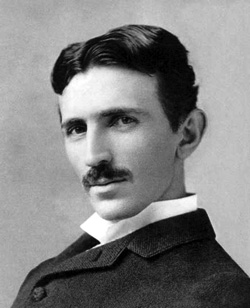
  • Mercury Rising: The Life & Writings of Julius Evola

    Mercury Rising: The Life & Writings of Julius Evola

    This article was published in New Dawn 111 (Nov-Dec 2008)

    If the industrious man, through taking action,
    Does not succeed, he should not be blamed for that –
    He still perceives the truth.
    – The Sauptikaparvan of the Mahabharata (2,16)

    If we select a single aspect by which to define Julius Evola, it would have been his desire to transcend the ordinary and the world of the profane. It was characterised by a thirst for the Absolute, which the Germans call mehr als leben – ‘more than living’. This idea of transcending worldly existence colours not only his ideas and philosophy, it is also evident throughout his life which reads like a litany of successes.

    During the earlier years Evola excelled at whatever he applied himself to: his talents are evident in the field of literature, for which he is best remembered, and also in the arts and occult circles.

    Born in Rome on the 19th of May 1898, Giulio Cesare Andrea Evola was the son of an aristocratic Sicilian family, and like many children born in Sicily, he received a stringent Catholic upbringing. As he recalls in his intellectual autobiography, Il cammino del cinabro (1963, 1972, The Cinnabar’s Journey), his favourite pastimes consisted of painting, one of his natural talents, and of visiting the library as often as he could in order to read works by Oscar Wilde, Friedrich Nietzsche, and Otto Weininger.1

    During his youth he also studied engineering, receiving excellent grades, but chose to discontinue his studies prior to the completion of his doctorate, because he “did not wish to be bourgeois, like his fellow students.” At the age of nineteen Evola joined the army and participated in World War I as a mountain artillery officer. This experience served as an inspiration for his use of mountains as metaphors for solitude and ascension above the chthonic forces of the earth.

    Evola was also a friend of Mircea Eliade, who kept in correspondence with Evola from 1927 until his death. He was also an associate of the Tibetologist Giuseppe Tucci and the Tantric scholar Sir John Woodroffe (Arthur Avalon).

    During his younger years Evola was briefly involved in art circles, and despite this being only a short lived affair, it was also a time that brought him great rewards. Though he would later denounce Dada as a decadent form of art, it was within the field of modern art that Evola first made his name, taking a particular interest in Filippo Tommaso Marinetti and Futurism.

    His oil painting, ‘Inner Landscape, 10:30 a.m.’, today hangs on a wall of the National Gallery of Modern Art in Rome.2 He also composed ‘Arte Astratta (Abstract Art)’ but later, after experiencing a personal crisis, turned to the study of Nietzsche, from which sprang his ‘Teoria dell, individuo assoluto’ (Theory of the Absolute Individual) in 1925.

    By 1921 Evola had abandoned the pursuit of art as the means to place his unique mark on the world. The revolutionary attitudes of Marinetti, the Futurist movement and the so-called avant-garde which had once fascinated him, no longer appeared worthwhile to Evola with their juvenile emphasis on shocking the bourgeois. Likewise, despite being a talented poet, Evola (much like another of his inspirations – Arthur Rimbaud) abandoned poetry at the age of twenty four. Evola did not write another poem nor paint another picture for over forty years. Thus, being no longer enamoured of the arts, Evola chose instead to pursue another field entirely that would one day award him even greater acclaim.

    Evola & The Ur Group

    To this day, the magical workings of the Ur Group and its successor Krur remain some of the most sophisticated techniques for the practice of esoteric knowledge laid down in the modern Western era. Based on a variety of primary sources, ranging from Hermetic texts to advanced Yogic techniques, Evola occupied a prominent role in both of these groups. He wrote a number of articles for the esoteric journal Ur and edited many of the others. These articles were collected in the book Introduction to Magic: Rituals and Practical Techniques for the Magus, which alongside Evola’s articles, include the works of Arturo Reghini, Giulio Parese, Ercole Quadrelli and Gustave Meyrink. The original title of this work in Italian, Introduzione alla Magia quale scienza dell’lo, literally translates as Introduction to Magic as a Science of the “I”.3 In this sense, the ‘I’ is best interpreted as the ego, or the manipulation of the will – an idea also found in the work of that other famous magician, Aleister Crowley, and his notion of Thelema. Ur started out as a monthly publication, with the first issue released in January 1927.4

    Contributors to this publication included Count Giovanni di Caesaro, Emilio Servadio, a distinguished psychoanalyst, and Guido de Giorgio, a well-known adherent of Rudolf Steiner and an author of works on the Hermetic tradition. It was during this period that Evola was introduced to Arturo Reghini (1878-1946), who subsequently invited him to join the Ur group. Arturo Reghini was interested in speculative Masonry and the anthroposophy of Rudolf Steiner, introducing Evola to French author and intellectual René Guénon’s writings. Ur and its successor Krur gathered together a number of people interested in Guénon’s exposition of the Hermetic tradition and Vedanta, Taoism, Buddhism, Tantra, and magic.

    Arturo Reghini was to be a major influence on Evola, being himself a representative of the so-called Italian School (Scuola Italica), a secret order that claimed to have survived the downfall of the Roman Empire. It is said to have re-emerged with Emperor Frederic II, inspiring the Florentine poets of the thirteenth and fourteenth centuries, up to Petrarch. Like Evola, Reghini also wrote articles, one of which was entitled ‘Pagan Imperialism’. Appearing in Salamandra in 1914, Reghini summed up his anti-Catholic program for a return to a glorious pagan past. This piece profoundly impacted Evola, and served as the inspiration for his similarly titled ‘Imperialismo pagano’.

    Appearing in 1928, ‘Imperialismo pagano’ chronicled the negative effects of Christianity on the world. In the context of this work, Evola advocated an anti-Roman Catholic pagan imperialism. According to Evola, Christianity has destroyed the imperial universality of the Roman Empire by insisting on the separation of the secular and the spiritual. It is from this separation that arose the inherent decadence and inward decay of the modern era. Out of Christianity’s implacable opposition to the healthy paganism of the Mediterranean world arose the secularism, democracy, materialism, scientism, socialism, and the “subtle Bolshevism” that heralded the final age of the current cosmic cycle: the age of “obscurity,” the Kali-Yuga.5

    ‘Imperialismo pagano’ was later revised in a German edition as ‘Heidnischer Imperialismus’. The changes that occurred in the text in its German translation five years later were not entirely inconsequential. Although the fundamental concepts that comprised the substance of Evola’s thought remained similar, a number of critical elements were altered that transformed a central point in Evola’s thinking. The “Mediterranean tradition” of the earlier text is consistently replaced with the “Nordic-solar tradition” in this translation.6 In 1930 Evola founded his own periodical, La Torre (The Tower). La Torre, the heir to Krur, differed from the two earlier publications Ur and Krur in the following way, as announced in an editorial insert:

    Our Activity in 1930 – To the Readers: “Krur is transforming. Having fulfilled the tasks relative to the technical mastery of esotericism we proposed for ourselves three years ago, we have accepted the invitation to transfer our action to a vaster, more visible, more immediate field: the very plane of Western ‘culture’ and the problems that, in this moment of crisis, afflict both individual and mass consciousness […] for all these reasons Krur will be changed to the title La Torre [The Tower], ‘a work of diverse expressions and one Tradition.’”7

    La Torre was attacked in official fascist journals such as L’Impero and Anti-Europa, and publication of La Torre ceased after only ten issues. Evola also contributed an article entitled ‘Fascism as Will to Imperium and Christianity’ to the review Critica Fascista, edited by Evola’s old friend Giuseppi Bottai. Here again he launches vociferous opposition to Christianity and attests to its negative effects, evident in the rise of a pious, hypocritical, and greedy middle class lacking in all superior solar virtues that Evola attributed to ancient Rome. The article did not pass unnoticed and was vigorously attacked in many Italian periodicals. It was also the subject of a long article in the prestigious Revue Internationale des Sociétés Secrètes (Partie Occultiste) for April 1928, under the title ‘Un Sataniste Italien: Jules Evola’.

    Coupled with the notoriety of Evola’s La Torre was also another, more bizarre, incident involving the Ur Group’s reputation, and their attempts to form a “magical chain.” Although these attempts to exert supernatural influence on others were soon abandoned, a rumour quickly developed that the group wished to kill Mussolini by these means. Evola describes this event in his autobiography Il Cammino del Cinabro.

    Someone reported this argument [that the death of a head of state might be brought about by magic] and some yarn about our already dissolved “chain of Ur” may also have been added, all of which led the Duce to think that there was a plot to use magic against him. But when he heard the true facts of the matter, Mussolini ceased all action against us. In reality Mussolini was very open to suggestion and also somewhat superstitious (the reaction of a mentality fundamentally incapable of true spirituality). For example, he had a genuine fear of fortune-tellers and any mention of them was forbidden in his presence.

    Evola’s Works

    It was also during this period that Evola also discovered something that profoundly influenced many of his ideas: the lost science of Hermeticism. Though he undoubtedly came into contact with this branch of ancient philosophy through Reghini and fellow members of Ur, it seems Evola’s extraordinary knowledge of Hermeticism actually arose from another source. Jacopo da Coreglia writes that it was a priest, Father Francesco Olivia, who made the most far-reaching progress in Hermetic science and sensing a prodigious student, granted Evola access to documents that were usually strictly reserved for adepts of the inner circle. These were concerned primarily with the teachings of the Fraternity of Myriam (Fratellanza Terapeutica Magica di Myriam), founded by Doctor Giuliano Kremmerz, pseudonym of Ciro Formisano (1861-1930). Evola mentions in his The Hermetic Tradition that the Myriam’s ‘Pamphlet D’ laid the groundwork for his understanding of the four elements.8 Evola’s knowledge of Hermeticism and the alchemical arts was not limited to Western sources either, for he also knew an Indian alchemist by the name of C.S. Narayana Swami Aiyar of Chingleput.9 During this era of history, Indian alchemy was almost completely unknown to the Western world, and it is only in modern times that it has been studied in relation to occidental texts.

    In 1926 Evola published an article in Ultra (the newspaper of the Theosophical Lodge in Rome) on the cult of Mithras in which he placed major emphasis on the similarities of these mysteries with Hermeticism.10 During this period he also wrote the book Saggi sull’idealismo Magico (1925; Essays on Magic Idealism), and ‘L’individuo ed il divenire del mondo’ (1926; ‘The Individual and the Becoming of the World’). This article was to be followed by the publication of his treatise on alchemy, La Tradizione ermetica (The Hermetic Tradition). Such was the scope and depth of this work that Carl Jung even quoted Evola to support his own contention that, “the alchemical opus deals in the main not just with chemical experiments as such, but also with something resembling psychic processes expressed in pseudo-chemical language.”11 Unfortunately, the support expressed by Jung was not mutual, for Evola did not accept Jung’s hypothesis that alchemy was merely a psychic process.

    Taking issue with René Guénon’s (1886-1951) view that spiritual authority ranks higher than royal power, Evola wrote L’uomo come potenza (Man as Power); in the third revised edition (1949) the title was changed to Lo yoga della potenza (The Yoga of Power).12This was Evola’s treatise on Hindu Tantra, for which he consulted primary sources on Kaula Tantra, which at the time were largely unknown in the Western world. Decio Calvari, president of the Italian Independent Theosophical League, introduced Evola to the study of Tantrism.13Evola was also granted access to authentic Tantric texts directly from the Kaula school of Tantrism via his association with Sir John Woodroffe, who was not only a respected scholar, but also a Tantric practitioner himself, under the famous pseudonym Arthur Avalon. A substantial proportion of The Yoga of Power is derived from Sir John Woodroffe’s personal notes on Kaula Tantrism. Even today Woodroffe is regarded as a leading pioneer in the early research of Tantrism.

    In the words of Evola himself:

    During the last years of the 1930s I devoted myself to working on two of my most important books on Eastern wisdom: I completely revised L’uomo come potenza [Man As Power], which was given a new title, Lo yoga della potenza [The Yoga of Power], and wrote a systematic work concerning primitive Buddhism entitled La dottrina del risveglio [The Doctrine of Awakening].14

    Evola’s opinion that the royal or Ksatriya path in Tantrism outranks that of the Brahmanic or priestly path is readily supported by the Tantric texts themselves, in which the Vira or active mode of practice is exalted above that of the priestly mode in Kaula Tantrism. In this regard, the heroic or solar path of Tantrism represented by Evola is a system based not on theory, but on practice. An active path appropriate to be taught in the degenerate epoch of the Hindu Kali Yuga or ‘Dark Age’, in which purely intellectual or contemplative paths to divinity have suffered a great decrease in their effectiveness.

    Evola’s work on the early history of Buddhism was published in 1943. The central theme of this work is not the common view of Buddhism as a path of renunciation. Instead it focuses on the Buddha’s role as a Ksatriya ascetic, for it was this caste that he belonged, as found in early Buddhist records.

    The historical Siddharta was a prince of the sakya, a ksatriya (belonging to the warrior caste), an “ascetic fighter” who opened a path by himself with his own strength. Thus Evola emphasises the “aristocratic” character of primitive Buddhism, which he defines as having the “presence in it of a virile and warrior strength (the lion’s roar is a designation of Buddha’s proclamation) that is applied to a nonmaterial and atemporal plane… since it transcends such a plane, leaving it behind.”15

    The book considered by many to be Evola’s masterpiece, Rivolta contra il mondo moderno (Revolt Against the Modern World), was published in 1934. This book was influenced by Oswald Spengler’s Decline of the West (1918) and René Guénon’s The Crisis of the Modern World (1927), both of which had been previously translated into Italian by Evola. Spengler’s contribution in this regard was the plurality of civilisations, which then fell into patterns of birth, growth and decline. This was combined with Guénon’s ideas on the ‘Dark Age’ or Hindu Kali Yuga, which similarly portrays a bleak image of civilisations in decline. The work also draws upon the writings of Bachofen in regard to the construction of a mythological grounding for the history of civilisations.

    The original version of Julius Evola’s The Mystery of the Grail formed an appendix to the first edition of Rivolta contra il mondo moderno, and as such is closely related to this work.16 Three years later he reworked that appendix into the present book, which first appeared as part of a series of religious and esoteric studies published by the renowned Laterza Publishers in Italy, whose list included works by Sigmund Freud, Richard Wilhelm, and Carl Jung, among others. In this book Evola poses three main premises concerning the Grail myths: That the Grail is not a Christian Mystery, but a Hyperborean one; that it is a mystery tradition; and that it deals with a restoration of sacred regality. Evola describes his work on the Grail in the epilogue to the first edition (1937):

    To live and understand the symbol of the Grail in its purity would mean today the awakening of powers that could supply a transcendental point of reference for it, an awakening that could show itself tomorrow, after a great crisis, in the form of an “epoch that goes beyond nations.” It would also mean the release of the so-called world revolution from the false myths that poison it and that make possible its subjugation through dark, collectivistic, and irrational powers. In addition, it would mean understanding the way to a true unity that would be genuinely capable of going beyond not only the materialistic – we could say Luciferian and Titanic – forms of power and control but also the lunar forms of the remnants of religious humility and the current neospiritualistic dissipation.17

    Another of Evola’s books, Eros and the Mysteries of Love, could almost be seen as a continuation of his experimentation with Tantrism. Indeed, the book does not deal with the erotic principle in the normal sense of the word, but rather approaches the topic as a highly conceptualised interplay of polarities, adopted from the traditional use of erotic elements in Eastern and Western mysticism and philosophy. Thus what is described here is the path to sacred sexuality, and the use of the erotic principle to transcend the normal limitations of consciousness. Evola describes his book in the following passage:

    But in this study, metaphysics will also have a second meaning, one that is not unrelated to the world’s origin since “metaphysics” literally means the science of that which goes beyond the physical. In our research, this “beyond the physical” will not cover abstract concepts or philosophical ideas, but rather that which may evolve from an experience that is not merely physical, but transpsychological and transphysiological. We shall achieve this through the doctrine of the manifold states of being and through an anthropology that is not restricted to the simple soul-body dichotomy, but is aware of “subtle” and even transcendental modalities of human consciousness. Although foreign to contemporary thought, knowledge of this kind formed an integral part of ancient learning and of the traditions of varied peoples.18

    Another of Evola’s major works is Meditations Among the Peaks, wherein mountaineering is equated to ascension. This idea is found frequently in a number of Traditions where mountains are often revered as an intermediary between the forces of heaven and earth. Evola was an accomplished mountaineer and completed some difficult climbs such as the north wall of the Eastern Lyskam in 1927. He also requested in his will that after his death the urn containing his ashes be deposited in a glacial crevasse on Mount Rosa.

    Evola’s main political work was Men Among the Ruins, the ninth of Evola’s books published in English. Written at the same time as Men Among the Ruins, Evola composed Ride the Tiger which is complementary to this work, even though it was not published until 1961. These books belong together and cannot really be judged separately. Men Among the Ruins shows the universal standpoint of ideal politics; Ride the Tiger deals with the practical “existential” perspective for the individual who wants to preserve his “hegomonikon” or inner sovereignty.19

    Ride the Tiger is essentially a philosophical set of guidelines entwining various strands of his earlier thought into a single work. Underlying the more obvious sources that Evola cites within the text, such as Nietzsche, Sartre and Heidegger, there are also connections with Hindu thoughts on the collapse of civilisation and the Kali Yuga. In many ways, this work is the culmination of Evola’s thought on the role of Tradition in the Age of Darkness – that the Traditional approach advocated in the East is to harness the power of the Kali Yuga by ‘Riding the Tiger’ – which is also a popular Tantric saying. To this extent, it is not an approach of withdrawal from the modern world which Evola advocates, but an asceticism of contemplation in which we are advised to act in the modern world, while remaining intellectually and spiritually detached from and above it. Similarly, his attitude to politics alters here from that expressed in Men Among the Ruins, calling instead for a type of individual that is apoliteia.

    […] this type can only feel disinterested and detached from everything that is “politics” today. His principle will become apoliteia, as it was called in ancient times. […] Apoliteia is the distance unassailable by this society and its “values”; it does not accept being bound by anything spiritual or moral.20

    In addition to Evola’s main corpus of texts mentioned previously, he also published numerous other works such as The Way of the Samurai, The Path of Enlightenment According to the Mithraic Mysteries, Il Cammino del Cinabro, Taoism: The Magic, The Mysticism and The Bow and the Club. He also translated Oswald Spengler’s Decline of the West, as well as the principle works of Bachofen, Guénon, Otto Weininger and Gabriel Marcel.

    In 1945 Evola was hit by a stray bomb and paralysed from the waist downwards. He died on June 11, 1974 in Rome. He had asked to be led from his desk to the window from which one could see the Janiculum (the holy hill sacred to Janus, the two-faced god who gazes into this and the other world), to die in an upright position. After his death the body was cremated and his ashes were scattered in a glacier atop Mount Rosa, in accordance with his wishes.
    [alert type=”general” dismiss=”no”]This article was published in New Dawn 111.[/alert]

    [alert type=”success” dismiss=”no”]If you appreciate this article, please consider subscribing to help maintain this website.[/alert]

    Footnotes

    1. Julius Evola, The Yoga of Power: Tantra, Shakti, and the Secret Way, (Vermont: Inner Traditions, 1992), ix

    2. Ibid., x

    3. Julius Evola, Introduction to Magic: Rituals and Practical Techniques for the Magus, (Vermont: Inner Traditions, 2001), ix

    4. Ibid., xvii

    5. A. James Gregor, Mussolini’s Intellectuals (New Jersey: Princeton University Press, 2005), p.198

    6. Ibid., p.201

    7. Julius Evola, Introduction to Magic: Rituals and Practical Techniques for the Magus, xxi

    8. Julius Evola, The Hermetic Tradition: Symbols & Teachings of the Royal Art, (Vermont: Inner Traditions, 1992), ix

    9. Ibid., ix

    10. Ibid., viii

    11. Julius Evola, The Yoga of Power: Tantra, Shakti, and the Secret Way, xii

    12. Ibid., xiv

    13. Ibid., xiii

    14. Julius Evola, The Doctrine of Awakening: The Attainment of Self-Mastery According to the Earliest Buddhist Texts, (Vermont: Inner Traditions, 1996), xi

    15. Ibid., xv

    16. Julius Evola, The Mystery of the Grail: Initiation and Magic in the Quest for the Spirit, (Vermont: Inner Traditions, 1997), vii

    17. Ibid., ix

    18. Julius Evola, Eros and the Mysteries of Love: The Metaphysics of Sex, (Vermont: Inner Traditions, 1991), p.2

    19. Julius Evola, Men Among the Ruins: Post-War Reflections of a Radical Traditionalist, (Vermont: Inner Traditions, 2003), p.89

    20. Julius Evola, Ride the Tiger: A Survival Manual for the Aristocrats of the Soul, (Vermont: Inner Traditions, 2003), pp.174-175

    © New Dawn Magazine and the respective author.
    For our reproduction notice, click here.