New Dawn – World's Most Unusual Magazine

Category: Articles

  • The Gympie Pyramid: Evidence of an Ancient Civilisation in Australia?

    The Gympie Pyramid: Evidence of an Ancient Civilisation in Australia?

    From New Dawn 132 (May-June 2012)

    The Gympie Pyramid near the town of Gympie in Queensland, Australia has long been a source of fascination for people from around the world as well as Australia, and the subject of a great many claims about its origin and true purpose.

    Archaeologist Greg Jefferys, who has worked on the pyramid, refers to it as “a serious, famous and unexplained archaeological anomaly.”1 Unfortunately, academia and the government dismiss the pyramid on the grounds that it is a nineteenth century or even more recent construction for the purpose of growing grapes, ignore evidence to the contrary and refuse to conduct an excavation which would settle the matter.

    What is known as the Gympie Pyramid is the rounded eastern end of a sandstone ridge north of the town of Gympie that had stone terraces cut into the sides, giving it a pyramidal shape. It is not a pyramid in the Egyptian or South American sense. The pyramid is approximately 5 km from the centre of Gympie, and is located north of the town on the Tin Can Bay road.

    Its interior remains unknown and has been a source of speculation, and there are believed to be three or four entrances, some blocked, leading into it. The pyramid is 30.4 metres (100ft) high and has six stone terraces varying from 10 metres wide at the bottom to two metres wide towards the top, and incorporate some natural rock features. Stone for many of the terraces has been shaped, and squared and some of the larger stones used would be extremely heavy.

    On the summit is a sort of ‘turret’, an upstanding section made of drystone walls with a depressed centre, and nearby there are two very heavy stone grinders, which may have been used to prepare ritual offerings. There is also a pile of stones that look like a collapsed building. Three large flat stones roughly shaped as diamonds have been found on the site. These have slots in the centre, which may have been for offerings and iron bars have been found on the site that fit the slots.2

    The terraces were believed to have been up to three metres high, but have become lower due to cattle and weathering. The pyramid is originally thought to have been terraced on three sides, but much of these were destroyed by bulldozing or early (or later) settlers carting away the stone for building purposes. An interesting little stone lined cell has recently been found at the base of the pyramid.

    The pyramid currently has large trees growing on it, which make it difficult to recognise at any distance, or to photograph.

    The would-be researcher of the Gympie Pyramid has to wade through a great deal of oral history and myth associated with it, and also try to sort out the different variations on the stories.

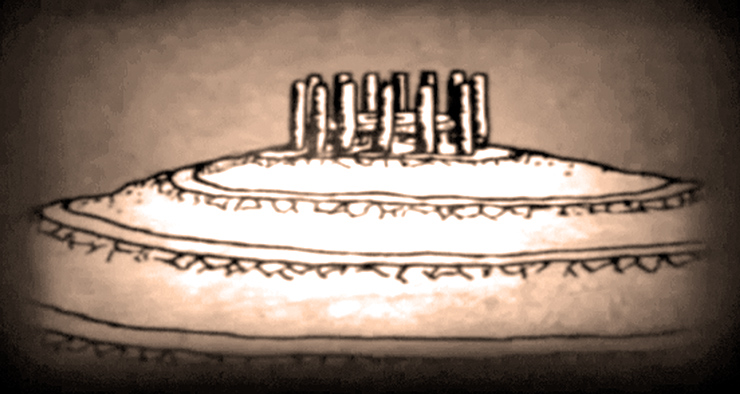
    When the pyramid was first discovered the summit is believed to have had thirteen pillars surrounding a round stone table with a hollow centre standing on the summit, and a stone gateway standing on the lower slopes of the pyramid, and other standing stones inscribed with symbols. Most of these are believed to have been removed by early settlers. Fortunately they were recorded in a diary by John Green, a great grandfather of Brett Green, a local historian who has spent much of his life researching the pyramid, and is the author of a book entitled The Gympie Pyramid Story.3

    Gold was found at Gympie in 1867, and settlement began from that year. Early settlers naturally regarded the pyramid as an easy source of stone and it was quarried to supply new buildings, doing much damage and removing all the inscribed stones. Inscribed stones from the gateway were apparently found quite recently under the floor of one of the Gympie churches – from where they vanished.4

    The pyramid became a source of much speculation and interest as unusual phenomena were reportedly seen or experienced on it, and unusual artefacts found nearby suggesting contact with earlier civilisations, and was given publicity by writer Rex Gilroy.

    Other Pyramids

    Another pyramid, or a building which looked like one, is believed to have existed at what is now Tin Can Bay, on the coast from Gympie. (Tin Can Bay has nothing to do with tin cans. The name is believed to be a corruption of tuncumba, the aboriginal name for dugong, possibly the indigenous name of the bay.) The area was taken over as an army base, and the story relates that the pyramid was covered with earth and used for target practice. However, subsequent damage to the pyramid resulted in the discovery of carved stones used in its construction. At this point the army became worried about losing land to heritage purposes, and destroyed the pyramid. The carved stones were reputedly crushed and used to fill a creek, or else taken out and dumped in deep water. This is believed to have taken place either in the 1940s, after World War II or in the 1950s. One of the people who took part agreed to be interviewed years later, and mysteriously died on the day of the interview, the large police presence at the death causing some surprise.5

    Other pyramids have reputedly been found around Australia. The well-known surveyor Len Beadell is said to have found a pyramid on the Nullabor plains, and was told by the local aborigines that the pyramid was outside the dreamtime, and that it was very bad luck to talk about it. This pyramid is said to be made of stone, and largely buried, which is why it has not been located on Google Earth.

    More recently, a passenger flying across central Australia saw a pyramid in the desert north of Alice Springs. One needs to bear in mind that central Australia used to be a lush area several millennia ago. A prophecy exists to the effect that a pyramid will be found in central Australia sometime this century, and that this site will be a major spiritual centre. Other pyramids are believed to have been seen in New South Wales.

    Archaeological Surveys

    There has been no major archaeological excavation of the Gympie Pyramid. An archaeological survey was undertaken by Michael Morwood in 1967 (for some unknown reason this report is unobtainable). He attributed the construction of the terraces to Italian wine growers or other immigrants in the nineteenth century. This idea was laid to rest by archaeologist Greg Jefferys, who did a survey while a student in 1990,6 and another survey and a limited excavation in 2007.7

    Jefferys found that the terraces were in some cases constructed with very heavy stones, some in excess of one ton in weight. And the terraces were too high for cultivation, the more so when you consider that they become more pronounced towards the top of the pyramid. Inspection of the soil in the terraces reveals only poor or rather thin native soils, becoming sandy in the top trenches, and show no sign of backfilling with more fertile soils. There is no trace of old vine stems, or roots or trellises, such as one would associate with former vine cultivation, and there is no equipment for wine making in the way of vats, etc. There would have been a major problem with watering the terraces, and there is no visible sign of any of the pipes and pumps that would be necessary.

    Greg also found that the existing side of the pyramid faces south-east, making it unsuitable for wine growing, Vine cultivators are advised to use areas facing north. He also found there had been no Italian community in Gympie before World War II, and research in the land titles office indicated that in any case the land had not been owned by the people credited with farming it. Greg points out that it would also be very unlikely for would-be cultivators to go to the trouble and effort of constructing the terraces when there is better and far more suitable land nearby.8 Terraces are not usually constructed for agricultural purposes unless there is a shortage of arable land, which is certainly not the case in Gympie. Work with a bobcat in 2007 revealed how very poor the soils in the terraces were.9

    The aborigines did not build the pyramid, and are not known too have constructed stone terraces anywhere in Australia, or to have shaped stones. If anything, they were afraid of the site and left it alone. Aboriginals taken to it in recent times declared they felt sick, and wanted to leave. Quite possibly it was regarded as a place of evil spirits. Jefferys has pointed out that the Polynesians had a tradition of terracing hills for forts and religious purposes, of which examples exist on Raiaiti and Tonga that bear a resemblance to the Gympie terraces, so the pyramid could be of Polynesian origin. If so, nothing else has been found on it to support this theory.10

    Dowsing has indicated there are a number of burials on the pyramid, but these have not been dug.11 If so, this would suggest a sacred site.

    The purpose of the pyramid is not known. Greg Jefferys points out that it would have made a good fort given its location,12 but there is no evidence for this, and it does not ‘feel’ like one. It quite possibly had a ritual function, particularly given the pillars on the summit, and was possibly also used as an observatory. If it involved a ritual function then very possibly there would have been connections with the stars. However, at the present time it can only be concluded the pyramid was built by unknown people for an unknown purpose.

    Reports from Dowsers & Psychics

    Dowsers have found the pyramid is on a major energy line, and energy rays out in four directions, like a Maltese cross. It is also connected by energy lines with what may be other pyramids or energy centres in the area.13 The pyramid may serve the function of drawing energy down (or up) and then radiating it over the countryside. Normally the destruction of such a centre would have very serious consequences. There is a powerful healing vortex at the top, near the grinders, and three people, including local resident and pyramid supporter Mick Dale, have, on separate occasions, experienced considerable healing for back problems there.14

    Psychics maintain the Gympie Pyramid has links with nearby and as yet undiscovered pyramids in the Gympie area, with pyramids in central Australia and the Nullabor, and with remains in Antarctica. It will be interesting when we are finally able to put together maps of the psychic centres around Australia.

    There has been considerable consistency in the findings of psychics and clairvoyants visiting the site. Brett Green mentions that local residents used to see ‘Nim Nim’ lights on top of the pyramid,15 and other phenomena have been encountered. One of the most frequently encountered apparitions are soldiers wearing bronze helmets and armour and holding shields. Since the 1960s people have encountered white-clad female spirits, who identified themselves as guardians of the site. Jefferys mentions a Betty Dodd who encountered a white clad apparition.16 

    The most recent encounter took place last August when clairvoyant Michael English, who had no knowledge of previous reports, encountered a soldier in bronze armour and then two white clad ladies on the summit. One of these was blond and wore a heavy gold necklace. She gave her name as Nitarla, and said she was one of three such guardians (this name was also given to Mick Dale by another source as the name of the guardian. Michael had no knowledge of this). Nitarla said they had lived on the pyramid in antiquity, which was when the pyramid was bombarded, but they had elected to stay to try to protect it. Unfortunately they had been unable to stop the damage to the pyramid.17 

    The present writer also unexpectedly encountered a white-clad lady, this one with black hair, a couple of days later on the topmost terrace. This lady said nothing but bade him welcome by gestures. People about to ascend the pyramid frequently experience being ‘stopped’ by invisible means, and have to obtain permission before going up. The writer also found that an L-shaped dowsing rod, when held loosely in the hand, spun around freely by itself on the pyramid, usually a sign of a powerful site.

    Michael English said the pyramid originally had a vortex on the top used to help spacecraft take off. This was destroyed when the pyramid was bombarded by banana shaped aircraft, possibly from Atlantis. This account has since been corroborated by another clairvoyant, Richard Shar, while using psychometry (reading the past) long distance from Adelaide.18 Visiting psychics report seeing an inner chamber in the pyramid containing various artefacts, and in particular, commonly report seeing a large dark crystal. If so, this crystal would very probably be essential to the energy functions of the pyramid.

    Individuals have had spiritual experiences equating to what is called ‘cosmic consciousness’ (a spiritual realisation of higher consciousness and unity with all things) on the pyramid, and others have seen what may be the future (one person saw New Zealand splitting in two and sinking).19 There is also thought to be antimony underground, which attracts lightning.20

    In the 1960s the summit of the pyramid was bulldozed by a person wanting to build a house. In doing so he is said to have destroyed the remaining two columns and dumped them in a mineshaft. Afterwards it is said he suffered illnesses, bad dreams and mechanical trouble, and started seeing figures in his house near the pyramid. He was thoroughly ‘spooked’ and left the area.21

    Unusual Objects

    Several unusual objects have been found in and around the Gympie area. These include among other things (refer to illustrations on page 50): a carved, yellow stone head suggesting South American influence; an ancient statuette of the Indian goddess Lakshmi; a Grecian urn; an ancient Chinese bronze teapot, and an apparent stone statue of an ape-like figure, known as ‘The Gympie Ape’. The archaeological value of these objects has been reduced by them being taken out of context, but they are still interesting. A piece of ‘bloomery’ iron was found more recently on the pyramid. According to aboriginal legend, lakes or seas used to extend from the coast almost to the base of the pyramid, which is apparently supported by geological evidence. This would account for foreign contact in the area, and seismic uplift has since emptied the lakes.22

    The carved yellow stone head was found next to the pyramid in 1985 after the construction of the railway line alongside the pyramid. The head is carved from a yellow conglomerate stone, usually an unlikely material for sculpture, which is not found anywhere near Gympie, if indeed it is found in Australia. The head has strong central or South American connotations, and it has been suggested it is of Olmec origin. The head has healing properties. It’s also suggested that in constructing the railway, workers found either an entrance to the pyramid, or a large underground chamber containing artefacts. Either way, the railway is said to have removed the artefacts and filled up the chamber. The yellow head is thought to have been one that was mistakenly dropped during the excavation.23

    What is known as ‘The Gympie Ape’ was found in a paddock diagonally opposite the pyramid, by Dell Barry and Ken Blakemore, a former owner of the pyramid. It was considered possibly to be a statue of the Egyptian god Thoth in ape form, or the Indian god Hanuman. The statue is in the Gympie Museum.24

    A bronze statuette depicting either the Indian goddess Lakshmi or the Tibetan goddess Tara was found in clay in a creek bed in the Gympie region. The amount of corrosion on the statuette suggests that it must be of ancient origin.25 

    An ancient and unusual bronze and copper Chinese teapot or wine pot was found on Fraser Island, near Tin Can Bay. The corrosion on it indicates its age, and it may possibly have come from a shipwreck. The fact that it has three legs suggests it was a wine pot.26

    A bronze Grecian urn was found in the hills north of Gympie by Brett Green.27 

    A piece of bloomery iron was found on the pyramid along with other fragments during the 2007 visit by Greg Jefferys suggested smelting on the pyramid. This form of smelting has not been used in Australia as it died out in the Middle Ages, with some exceptions in parts of Asia. Other smelting related objects were found on the site, suggesting that smelting was done on site. So far three iron bars have been found on the pyramid, and at least one of these fits exactly into the central piercing of the flat diamond shaped stones. To date their purpose in doing so remains unknown.28

    Australian Eucalyptus was apparently and inexplicably found in Tutankhamen’s tomb. So were boomerangs believed to be of Australian origin.29 Gympie was a gold-mining area, which would account for members of other civilisations being there. It is rumoured the gold in the funeral mask of Tutankhamen has been traced to Gympie.

    Pyramid Site to be Bulldozed

    The Gympie Pyramid is a tourist attraction for the town of Gympie, which otherwise does not have a great deal to offer, and has brought in people from around the world. For all that, many Gympie residents still dismiss it as a myth.

    Irrespective, the Queensland government intends to bulldoze the pyramid in the near future and put a highway through the site. Local objections have been overruled, and no attempt is being made to excavate or find out more about the pyramid while it still exists.

    A lecturer in archaeology at the University of Queensland, Dr. Pranganell, said in an interview with the editor of the Gympie Times on 9 September 2006: “The University has no intention of trying to test the myth as any digging on the site (of the Gympie Pyramid) would just give credibility to something that was impossible.”30 

    People feel there is much more to be learnt from the Gympie Pyramid, and it should at least be properly excavated. It is an energy centre, and also a tourist attraction for Gympie.

    Normally, destruction of a major energy centre such as this would have very serious consequences for the nearby community. In the Scottish highlands, moving even so small a sacred object as a standing stone is considered to bring bad luck, and crofters go to a lot of trouble to preserve the stones in situ. If so, destruction of a large site would result in more than bad luck. But the pyramid may have ways of striking back, which will be interesting to see.

    If the pyramid is bulldozed and skeletons found, it will create a serious problem for the plans of the Queensland government, since it would have to regard it as a sacred site.

    Efforts should be made to save the pyramid. One can also meditate on saving the pyramid, and ask meditation and ritual groups to work to preserve the pyramid. Much will be lost if the Gympie Pyramid is destroyed, especially if it goes unexcavated and unexplored.

    Thanks to Brett Green and Mick Dale for oral assistance and permission to use photos and drawings from The Gympie Pyramid Story. Thanks are also due to Daphne Salt for much help with the photographs, and to Laurie de Lia for making the visit to Gympie possible. You can view all the photos by downloading a copy of this issue of New Dawn.

    [alert type=”general” dismiss=”no”]This article was published in New Dawn 132.[/alert]

    [alert type=”success” dismiss=”no”]If you appreciate this article, please consider subscribing to help maintain this website.[/alert]


    Further Reading

    Brett J. Green, The Gympie Pyramid Story, De Grene Enterprises 2000, Tel: 07 5482 3909

    Brett J. Green and Mick Dale, The Gympie Pyramid Story, DVD.

    Greg Jefferys, The Gympie Pyramid – The Big Dig Report, 27 March 2007

    Greg Jefferys, The Gympie Pyramid; a nice little mystery that Australian Academia like to ignore (incorporating his 1990 archaeological report).

    Footnotes

    1. Greg Jefferys, The Gympie Pyramid – The Big Dig Report, 27 March 2007

    2. Ibid.

    3. Brett J. Green, The Gympie Pyramid Story, De Greene Enterprises 2000, page 148

    4. Mick Dale, Personal Communication (PC)

    5. Ibid.

    6. Greg Jefferys, The Gympie Pyramid; a nice little mystery that Australian Academia like to ignore, 2006, (incorporating his 1990 report on the site.)

    7. Jefferys, The Big Dig Report.

    8. Jefferys 2006.

    9. Jefferys 2007.

    10. Jefferys 2006, page 4.

    11. Mick Dale (PC).

    12. Jefferys 2006.

    13. Mick Dale and Michael English (PC).

    14. Mike Dale (PC).

    15. Greene, The Gympie Pyramid.

    16. Jefferys 2006, page 3.

    17, Michael English and Mick Dale (PC).

    18. Richard Shar (PC).

    19. Mick Dale (PC).

    20. Ibid.

    21. Mick Dale and Brett Greene (PC).

    22. Mick Dale (PC).

    23. Ibid.

    24. Ibid.

    25. Mick Dale (PC) and Jefferys 2007, page 2.

    26. Jefferys 2006, page 5 and Mick Dale (PC).

    27. Mick Dale (PC).

    28. Jefferys 2007 and Mick Dale (PC).

    29. Brett Greene, The Gympie Pyramid Story, page 82.

    30. Jefferys 2006, page 1.

    © New Dawn Magazine and the respective author.
    For our reproduction notice, click here.
  • Nostradamus: Prophet of Hope

    Nostradamus: Prophet of Hope

    The jury is still out on the millennial prophecies of Michel Nostradamus, the French master physician, astrologer and Kabbalist of the sixteenth century. Many regard him as the greatest prophet in Western history, while others find his predictions, especially those concerned with our own era around the second millennium, irrelevant or simply too deep or too equivocal to interpret successfully.

    Did he predict war or peace for our time? Did he foresee a coming Utopia or a descent into a Dark Age? The end of the world or a Golden Age a thousand years long? The appearance of a great spiritual Teacher or an Anti-Christ? These are the confronting questions that inevitably arise when considering the work of this famous Renaissance seer.

    I believe the key to Nostradamus’ undoubted genius and equally undoubted capacity for paradox lies in the breadth of his religious affiliations, which, astonishingly, embraced all three Semitic religions: Judaism, Christianity and Islam. Without acknowledging this secret propensity for religious syncretism, regarded as heretical even in our own free thinking day, it is difficult to throw any light on the contradictions inherent in Nostradamus’ work. His religious beliefs simply cannot be left out of any in-depth evaluation of his prophetic legacy: they made him what he was, a mirror laid to the very heart of our polarised, suffering civilisation.

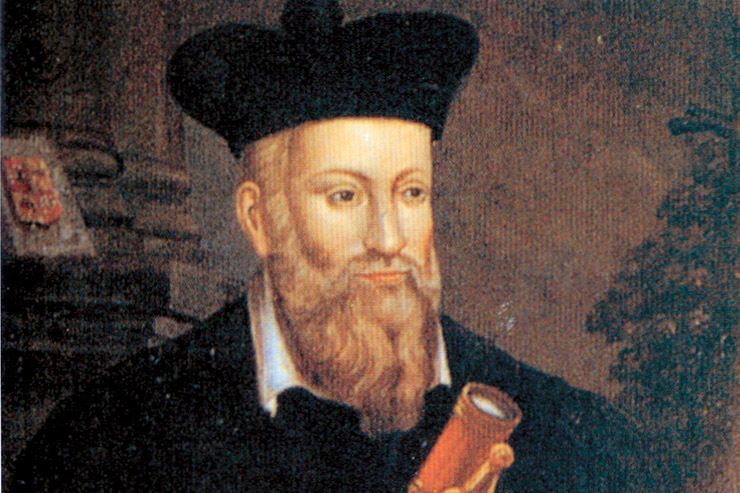
    A true child of medieval Provence, the home of chivalric poetry and mysticism, Nostradamus was born in 1503 in Saint-Rémy-en-Provence of Christianised Jewish parents, was brought up as a committed Christian and died as one in 1566 in the small town of Salon-en-Provence.

    At an early age his two grandfathers, who preserved in secret their Hebrew religious and cultural traditions, gave him a comprehensive classical education in literature, history, herbal medicines, Greek philosophy and a range of languages, as well as the ‘celestial science’ – astrology – in which he took a deep and abiding interest. As well, his two Jewish mentors clandestinely introduced the boy to the Judaic esoteric culture. He learned the occult arts and sciences forbidden by the Church, and acquired a knowledge of alchemy and the Jewish Kabbalah, the latter a mystical initiatic system of ten levels of consciousness akin to Hindu Kundalini Yoga. Yet he is believed to have remained at the same time a loyal son of the Christian Church.

    Later, for fear of the Inquisition, Nostradamus burned the old Jewish family books on Kabbalistic magic that he had acquired from his grandfathers, along with other occult texts on alchemy, hermeticism and Chaldaean and Assyrian magic. But his most secret religious affiliation linked him to a belief-system that at that time was virtually unknown in Europe and its presence in his life was therefore to remain safe from discovery for almost five hundred years.

    Not until the most recent decades has modern Western research discovered that this remarkable Jewish doctor and occultist, trained in Hebrew wisdom, was not only deeply committed to both Judaic and Christian principles but was also a member of a Sicilian Sufi brotherhood loyal to Islam. A true man of the Renaissance, Nostradamus secretly believed in the underlying unity of the three religions, and his prophecies yield their deepest meaning only on this basis.

    Nostradamus’ Prophetic Genius

    Nostradamus’ life has been chronicled from a variety of different perspectives by a great number of commentators. What emerges most clearly from these studies is confirmation that his prophetic genius owed much to this hidden background of wide-ranging religious connections. The principle of syncretism lies at the very heart of Sufism and was evidently espoused by the doctor. He was the very embodiment of a universal theosopher, a prophet without dogmatic or theological boundaries who would foreshadow and greatly influence the coming explosion of Renaissance universalist thinking. Nostradamus’ academic training was to reinforce this unusual spiritual breadth.

    In Europe at the end of the Middle Ages, plague, famine and superstition were rife, men of enlightenment few. Nostradamus was one of those few. He attended the prestigious universities of Avignon and Montpellier where he qualified with high honours as a doctor of medicine and philosophy, and became renowned as a ‘plague’ doctor who effected amazing cures in times of severe pestilence. He was also an adviser to royalty and a deeply learned writer of philosophical works, as well as writing a book on food and cosmetics.

    During his wanderings through Europe after the death of his wife and two children from the plague, Nostradamus came into contact with an underground network of ex-Jewish occultists practising Hermetic and Kabbalistic magic, and gained training from them. This, allied to natural clairvoyant abilities, led to his dedication to the prophetic art. His cryptic book of prognostications, Prophéties, has vied with the Bible for being continuously in print since it was first published in complete form by Benoit Rigaud in 1568.

    In the first part of the book, which was called Centuries and written in 1555, Nostradamus attempts to describe his method of divination. It is that of the fourth-century neo-Platonist Iamblichus, whose reprinted book was published in Lyons only a few years before Centuries was written, and had no doubt been perused by Nostradamus. A bowl of steaming water is laid on a tripod placed in the prophet’s study at the top of his house. He works at his magic practices while the household sleeps.

    Sitting alone at night in secret study, it rests solitary on the brass tripod. A slight flame comes out of the emptiness… (Century 1 Q1) The wand in the hand is placed in the middle of the legs of the tripod. He sprinkles with water both the hem of his garment and his foot. Fear, a voice runs trembling through the sleeves. Divine splendour; the God sits nearby. (Century 1 Q11).

    Nostradamus notes that fear, dread, accompanied the parting of the veil that revealed daemonic powers; but tells us that when the God came and sat invisibly beside him, fear departed. In this picture of divine collaboration in a herculaean human task there is something very moving. The God has often been interpreted as the magician’s own god-given gift, but it is more likely to have been the invisible presence of a higher being who accompanied him in order to give comfort, reassurance and guidance. For there is no doubt Nostradamus was treading a wild, uncharted path outside tradition, and an emissary from higher realms might well have been sent to companion him… as he himself apparently believed.

    20th Century a Key Period

    In the preface to Centuries, written in the form of rhymed quatrains grouped in hundreds, Nostradamus discusses his clairvoyant visions of the future in revolutionary terms. In them he foresees “great events, sad and prodigious and calamitous adventures approaching in due time,” events that would, however, precede, or perhaps accompany, a great transformation in humanity’s level of consciousness and spiritual understanding. His apocalyptic intimations clustered around the twentieth century, “the Century of the Sun,” and predicted the rise of new mystical teachings leading to radical changes in our traditional religious beliefs before 1999 – as indeed we are surely now seeing.

    Nostradamus saw the twentieth century as humanity’s rubicon, a pivotal moment in history yielding a unique crisis of choice, of decision – a century of paradox in which enlightenment would spring from the deepest tribulation. He is often accused of being a prophet of doom, but if his prophecies are contemplated from a spiritual perspective, Nostradamus brings us a message of sublime hope. In biblical times seers like the doom-laden prophet Jeremiah were often killed for their pains, their messages rejected; but today the essentially ethical and optimistic philosophy at the core of Nostradamus’ predictions can strike a deeply positive chord in his readers. Right choices bring blessings, he is saying, out of pain comes spiritual regeneration.

    After many wanderings after the death of his family, Nostradamus became a successful doctor of the plague in Marseilles and was rewarded with large sums of money by the government of the city. He then remarried and set up a medical practice in Salon, where he lived and worked for the rest of his life. When many of his published predictions came true, Nostradamus became famous in his own lifetime and won the patronage of France’s then Medici royal family, Henri II and his consort, Queen Catherine de Medicis. At the Queen’s behest the prophet travelled to Paris to cast the horoscopes of her six Valois children.

    Yet as an ex-Jew and a radical thinker suspected of dubious supernatural practices, he lived all his life as a stranger in society and in danger of the displeasure of the Church of Rome. Surviving by various stratagems in a violent and unforgiving century, he worked against a background of forbidden Jewish and Islamic mysticism and the threat of Inquisitorial persecution. It is in this context of religious tyranny and repression that Nostradamus’ enigmatic visions must be understood. At first he determined not to publish them for fear of a public backlash, but later understood that the Church’s hold on the minds and hearts of its people would one day give way to a new climate of religious freedom, and this gave him the heart to go public.

    Because of foreseeing the advent of the common people, I decided… [to declare] in dark and cryptic sentences the causes of the future changes of mankind.

    So the seer wrote in the preface to Centuries dedicated to his son César, in celebration of a coming age of democracy – an age of freedom from the tyranny of the Inquisition. His words were an expression of the longing Nostradamus felt for a future time of intellectual and moral liberty in which advanced views like his own would be vindicated.

    Because if the present kingdoms, sects and religions were to see the future kingdoms, sects and religions to come, and see how diametrically opposed they are to their pet fantasies, they would condemn that which future centuries will know to be true…

    Although the prophet was forced to mix up his verses and present them out of their proper order as a means of obscuring their message, so avoiding the attention of the Inquisition, they have nevertheless time and again been found to present uncannily accurate forecasts of historical events over the ensuing centuries, and never more so than in those of the climactic twentieth century that would usher in a new millennium.

    Interpreting Nostradamus’ Predictions

    Some of the Centuries have proved to be indecipherable as predictions, but Erica Cheetham, one of Nostradamus’ most respected modern translators and interpreters, notes how fascinating she found it to be, while reading the Prophéties for the first time, to come across so many familiar names and historical events. “Names such as Hitler, Napoleon, Franco, Pasteur sprang to the eye. There were many dates too…”1 The prophet accurately predicted that the city of London would be destroyed by fire in 1666, he foretold the violent end of the French monarchy and the assassination of the two Kennedy brothers in recent times, and many more famous historical events.

    Subscribing to the Chaldaean astrological tradition fashionable in his era, Nostradamus’ prophecies were concerned with a time frame of seven thousand years, spanning what he called the Age of Man. Jean-Charles de Fontbrune, a modern authority on the prophet, believes that by counting five thousand years from Adam to Christ, the seer arrived at 1999 as the end of the seventh millennium and the climax of a great evolutionary cycle.2 Actually, says Fontbrune, according to biblical chronology the prophecies end with the conclusion of the Piscean age, approximately CE 2000. And according to Cheetham, there are indeed many indications in the text that Nostradamus seemed to see the period around the second millennium as the possible date of Armageddon in the form of a Third World War, and perhaps the end of the world, although he sometimes contradicts this. In any case, projected throughout the prophecies in shadowy outline, Cheetham glimpses the idea of a great polarisation of good and evil at the beginning of the third millennium, and a stark choice for humanity.

    In common with the Book of Revelation and with the mystical ideas of the Renaissance then incubating in Europe, Nostradamus foresaw in the twentieth century the advent of democracy and the resultant transformation of consciousness that would bring in sweeping new religious reforms and a new, more enlightened dispensation for humanity. At the same time, the seer was not blind to the terrible downside of the twentieth century and acknowledged that it would be a most fateful and afflicted century in which to be born. The historian Barbara Tuchman notes its phenomenal parallels to the calamitous fourteenth century with its plagues and famines, which she qualifies as a “violent, tormented, bewildered, suffering and disintegrating age… when there was no sense of an assured future.”3 In the sixteenth century Nostradamus predicted of the twentieth “evil century” that its final quarter would be “filthy, pestilent and violent,” and would culminate in unprecedented catastrophes.

    Cheetham, like many other researchers, has exclusively focused on these negative aspects of the prophecies: our great plagues such as the AIDS epidemic, famines and floods, appallingly destructive wars, the decline of the Catholic church and the resurgence of militant Islam. She sees little light penetrating this gloomy picture of a civilisation on the edge of destruction, and links it to the coming of the series of Anti-Christs predicted by the seer. With the increasing incidence of earthquake activity, spreading deserts and political malfeasance, it will be a time of great calamity for humanity and even for the planet itself, a time of death – and yet, in the view of Fontbrune, of new life from the East. For according to his interpretation of the prophecies, many spiritual leaders would arise at the threshold of the second millennium to give warning of the disasters to come and would simultaneously bring hope to the world with their new religious teachings.

    Before these [apocalyptic] events, many rare birds will cry in the air, ‘Now! Now! And some time later will vanish.

    According to this prediction, then, a window of spiritual opportunity will open in the millennial era, but for a time only.

    Fontbrune notes that a full two-thirds of Nostradamus’ prophecies are devoted to this millennial theme of apocalypse and spiritual rebirth. In fact, he believes that the great French magus and doctor of medicine wrote his quatrains in the sixteenth century for the express purpose of depicting the twentieth, knowing that “his text would be expounded and understood only in the century which was the focus of his vision” – the century of the common people. Nostradamus shared the hopes rife in Renaissance circles of the time, of an end to feudalism and religious bigotry, hopes that were closely bound up with the spiritual Solar principles from the past which still dominated the worldview of Europe’s esoteric luminaries.

    In the symbology of the old Sun temples whose influence had once dominated the entire planet, the sun, birth, life and the brilliant energies of the daytime were identified with the East, while twilight, the moon, death and the shadows of the afterworld were identified with the West. In Minoan Crete new life was brought into the temples by the eastern gate, while the dead were carried out through a western portal and ferried across a stream to the necropolis built on the western side of the city; and these principles reigned throughout pagan times and passed in secret into Christendom, largely through Gnostic channels.

    The same esoteric symbolism played its part in the conviction held by Renaissance astrologers that, however dark the end of the millennium might be, a new and wondrous epoch surely shone on the eastern horizon, promising the rise of new nations, new democratic and utopian principles and a new spirit of religious liberty. It is significant therefore that in Nostradamus’ prognosticative scheme the Solar sign should have fallen precisely to that century that has seen the burgeoning in the Pacific region of new civilisations and ideologies, and that in some of these cultures we are witnessing the birth of the most creative concentration of clairvoyance and spirituality, of egalitarian idealism – however distorted in form – to be found at any time in history. The Pacific lands – China, eastern Siberia and Russia, North and South America, Japan, Indonesia, Malaysia, New Zealand, Australia – while by no means immune to geological disasters, may well represent the most viable cradles of new life, new acculturation, in the millennia to come.

    Nostradamus prophesied that the twentieth century would see developments in keeping with its Solar sign, which signifies material expansion and power but as well wisdom, the Christ as Logos, the Solar Word; the whole body of Hermetic-Kabbalistic knowledge inherited from the ancient world; inner harmony and integration. Another authority on Nostradamus, John Hogue, suggests in his first book on the subject that this spiritual knowledge foreseen by Nostradamus shows similarities to Hindu Tantra.

    [Nostradamus’] Hermetic mysticism… has many parallels with the Eastern school of Tantra or Shivaic Hinduism, which saw the universe as a divine play or dance of paradoxes.4

    The Teacher from the East

    Hogue notes further that in the midst of world cataclysms and wars, Nostradamus predicted that a great spiritual teacher, a man from the East, would be born who would become the scourge of outworn religions and the revelator of spiritual mysteries the world over. The quatrains dealing with the “long-awaited one,” the sage from the East mentioned in C10 Q 75, Hogue believed might possibly refer to the coming of Maitreya, the fifth Buddha.5 The quatrain says: “He will appear from Asia, [and be] at home in Europe, one who is issued from great Hermes.” “He will fly through the sky, the rains and the snows and strike everyone with his rod [of Hermes, of enlightenment]. (C10 Q 75, C2 Q29)

    As has been said, while at the same time professing Christian beliefs, Nostradamus’ Sufic initiation was one of the most important keys to his genius. Hogue tells us that, like so many of the Renaissance scholars and mystics who never disclosed the source of their exceptional talents, the Provencal prophet succeeded in keeping secret his membership in a Sufi brotherhood. Although he was familiar with all the occult systems of magic and self-transformation then known and with the writings of Iamblichus, the alchemists Paracelsus and Cornelius Agrippa, Pythagoras and the Kabbalistic Keys of Solomon, the main source of the seer’s grasp of Tantra and the trance techniques that underlay his prophetic visions was the Sufis he met during his travels in Sicily.

    The island of Sicily had been a strong centre of Islamic mystical activity since the thirteenth century, when the Templar Crusaders brought back to it much of the Saracens’ wisdom acquired in the East. It was in Sicily that Nostradamus would have learned the secrets of ‘magic and alchymia’ and the ‘ministry of angels’ on which his visions depended, and would have understood the correspondence between the sephirothic ‘rays’ of the Kabbalah and the human chakras. Proficient in Sufic alchemy, few would have been more familiar than he with the Sufi-inspired ‘Rose garden of the philosophers’, the alchemical-tantric work that gave symbolic instructions for the union and transformation of inner energies. By uniting the two opposing archetypes of the psyche, the Solar king and the Lunar queen (the mind and the heart), the practitioner, so it was said, was led to the ultimate goal, the birth of the ‘divine child’ of enlightenment.

    “The flame of a sect shall spread the world over…” So Nostradamus foresees in a letter to Henry II of France. He speaks of a new religious consciousness which culminates in a new religion during the final decade of the twentieth century, and of “the rose [appearing] upon the middle of the world… Then at the time of need the awaited one will come late.” (C5 Q96). Fontbrune has identified the rose symbol with socialism, a valid enough interpretation; but a mystical association for the rose is contextually also probable. As we shall see, in the Sufi terminology with which Nostradamus was familiar the rose is the symbol of Tantra and the fire of kundalini, of spiritual love. The rose was an important chivalric icon in the Sufi-inspired occult societies of the time, as it was later to be in Rosicrucianism.

    One of the most influential and widespread of the Sufi Orders was the Qadiri Order, probably a vital influence in Nostradamus’ life. Founded by the followers of the so-called Rose of Baghdad, an eleventh-century Sufi from Central Asia named Abdul Qadir el-Gilani, it taught a dervish technique leading to ecstatic trance states and specialised in the science of psychic states. It invested its initiates with extraordinary psychospiritual powers that were said to put them in touch with angels. In the Qadiri Order, as in Rosicrucianism, the rose symbol figured prominently.

    The rose, lily and lotus are traditional symbols of the chakras, and in the Qadiri Order the rose (ward in Arabic) was an emblem and symbol of the rhyming word wird, which referred to the ecstatogenic dervish method practised by its members to open the heart chakra.6 The rose symbol also had a sexual connotation much employed in the chivalric romances of the time, linking it with the love energy of the heart awakened by initiation, and many illustrations in Rosicrucian literature were to feature angels, roses and lions, the latter the Solar animal of the zodiac.

    The rose symbol entered the Christian mystical stream with the cult of chivalry, whose secret message of initiation, dedication and metamorphosis informed every aspect of medieval culture. It would appear in England in the red cross of St. George, in the Order of the Garter, in the rose windows of European cathedrals and in a certain grade or set of Masonic rituals. In alchemical parlance it symbolised the fiery spiritual energy released during the transmutations of the magus’s laboratory. The symbol of the rose may therefore be seen as virtually synonymous with Sufism, as with Rosicrucianism also. And so when Nostradamus refers to the rose taking the centre of the world stage, he may well be making a highly significant statement about the new role of Sufism in modern times as the bearer of a specifically mystical and esoteric type of spiritual awakening.

    Not all researchers agree on this point, however.

    The Riddle of the Three Anti-Christs

    Nostradamus mentions three negative influences or Anti-Christs in the course of his work, the third to be expected before the millennium (C8 Q77); and some writers, Erica Cheetham among them, identify this definitive figure of evil with the man from the East, “the long-awaited one” who will visit the Western nations by air. For Hogue the man from the East is a spiritual avatar, whereas for Cheetham he is the third Anti-Christ, bearing with him to the West what she sees as “dangerous” and “pernicious” cults that have broken away from the mainstream religious traditions. Coupling this evil guru figure with the current rise of occultism and the spread of esoteric New Age cults, she regards many of “these so-called covens… as worshipping Satan as their God.”7

    Cheetham is not the only scholar to take a negative view of the New Age counter-culture that deviates from traditional religious teachings, whatever their hue. Frithjof Schuon, a Sufi metaphysician who belongs to the austere modern school of Neo-Traditionalists, gives little comfort to those looking forward to a new spiritual paradigm as part of the reforming agenda of the future. Sacred tradition, Schuon insists, belongs to an immutable, everlasting, incorruptible and unchanging order. If it is abandoned today in the hope of better things to come, it is not because it has outlived its usefulness or because people no longer understand its language, but because they don’t wish to understand.8

    Cheetham would agree with this traditionalist viewpoint. There is, she contends, a demonic aspect to our present era, “a malevolent side to all these [psychic] happenings, very often desired by those who dabble in them.”9 Unlike Hogue, she therefore interprets Nostradamus’ twentieth-century predictions as giving biblical warning that many evil cults, offspring of the Anti-Christ, will undermine civilisation and its traditional religions around the time of the millennium.

    Here we encounter once again the extreme polarisation that seems to accompany everything to do with Nostradamus’ forecasts centring on the second millennium – yet another instance of the many symptoms of terminal social crisis and transformation that are today clustering around the Mayan calendar end date in 2012. The Quechua shamans of Peru refer to the time period between 2002 and 2012 as “Pachacuti,” “the time when everything is turned upside down and reality is restructured.”10 At such a time, and it is now upon us, humanity is confronted with the paradox that “the path toward extinction is very likely also the path toward a more enlightened state.” Nostradamus seemed to be well aware of this paradox.

    Yet neither the text of his Renaissance prophecies with their emphasis on Hermes, the Greek god of wisdom, nor his reverence for his family’s magical and occult background which furnishes the basis for his prophetic gifts, offer likely grounds for Cheetham’s interpretation of C10 Q75 as a warning about the satanic nature of the cults arising in the Century of the Sun and beyond. Indeed, as a closet Sufi Nostradamus was the least likely of all the occultists of his day to denigrate in his prophetic writings the very sects he was helping to bring into being. Rather, there is much in the Centuries to suggest that he may have had access to the ancient star charts preserved by the Arab scholars of Cairo and known to the medieval poet Dante, and that as a Sufi astrologer as well as a Judaic and Christian philosopher he was aware of the very positive spiritual trends that would flower in our epoch.

    Alberto Villoldo, a long-time student of Quechuan shamanism, speaks of another Quechuan belief, one that may throw light on the strange paradoxes of the present time. The shamans say that at the time of Pachacuti there may be a break between Homo sapiens and what Villoldo refers to as an emerging new species, Homo luminous. We are reminded here of today’s ‘Indigo Children’. 

    As a species begins to collectively realise that it is dying out, an inner mechanism, possibly built into the blueprint of the DNA, begins to create the next level of being, a new species.11

    Are we, then, undergoing, or about to undergo, a mutation of the race? And was Nostradamus aware of this possibility nearly five hundred years ago? If so, it would explain why his more enigmatic utterances clustered around the second millennium continue to baffle commentators with their profoundly prescient and yet ultimately elusive significance. Was the prophet unwilling to reveal the full extent of the transformation that may await our species?
    [alert type=”general” dismiss=”no”]This article was published in New Dawn Special Issue 4.[/alert]

    [alert type=”success” dismiss=”no”]If you appreciate this article, please consider subscribing to help maintain this website.[/alert]

    Footnotes:

    1. Erica Cheetham, The Final Prophecies of Nostradamus, Macdonald & Co., London, 1989, p.7.

    2. Jean-Charles de Fontbrune, Nostradamus: Countdown to Apocalypse, Pan Books, London, 1983.

    3. Barbara Tuchman, A Distant Mirror, Macmillan, London, 1979.

    4. John Hogue, Nostradamus and the Millennium, Bloomsbury, London, 1987.

    5. John Hogue, Nostradamus: New Revelations, Element, Shaftesbury, Dorset, 1993.

    6. Ernest Scott, The People of the Secret, Octagon Press, London, 1983, p.257.

    7. Cheetham, op. cit., p.38.

    8. Frithjof Schuon, “No Activity Without Truth” from The Sword of Gnosis, ed. Jacob Needleman, Routledge & Kegan Paul, London, 1986.

    9. Cheetham, op. cit., p.38.

    10. Jay Weidner and Vincent Bridges, The Mysteries of the Great Cross of Hendaye, Destiny Books, Rochester, 1999, 2003, p.392.

    11. Ibid., p.392.

    © New Dawn Magazine and the respective author.
    For our reproduction notice, click here.
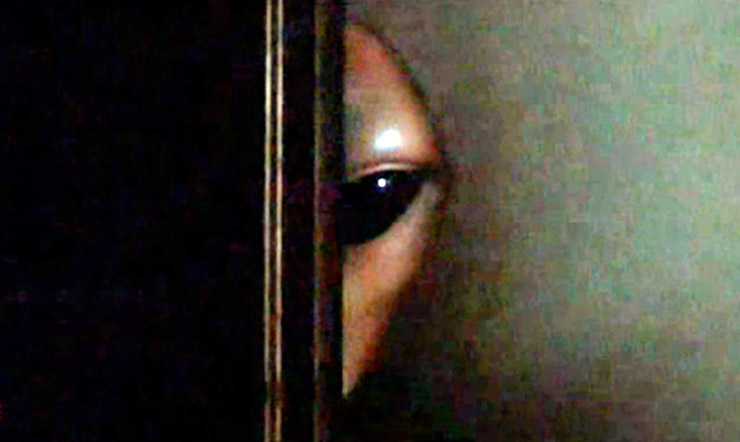
  • Aliens, Predictions & the Secret School: Decoding the Work of Whitley Strieber

    Aliens, Predictions & the Secret School: Decoding the Work of Whitley Strieber

    From New Dawn Special Issue No 4 (Feb 2008)

    Anyone who knows anything about the subject of UFOs and alien abduction would have heard of Louis Whitley Strieber, the successful horror novelist, who, in 1987, published a book called Communion which still stands as one of the most terrifying, factual and powerful accounts of alien abduction ever written.

    But far from being just an abductee and author, Strieber is also something of an undeclared mystic and prophet. It seems he has much to say about humanity’s spiritual, political and environmental future. Is he, as some have claimed, nothing but a prophet of doom, or do his words contain genuine wisdom and an important message?

    Now a host of the online radio program Dreamland, which covers the latest news in paranormal phenomena, Strieber continues to write about the mysterious non-human beings he calls the ‘visitors’, and has recently been doing so in a fictional way. Within the last two years Strieber has published two new novels, The Grays and 2012: The War for Souls, both of which are soon to be made into big budget films.

    The grays, says Strieber, are just one of the many different types of non-human being, or visitor, that he has been in close contact with. “These people were not androids or robots. They were complex, richly alive beings who were obviously incredibly and totally different from us,” he says. The grays feature commonly in accounts of alien abduction, and are believed to be behind much of the UFO phenomena witnessed in our skies. Strieber says he decided to write The Grays because the truth about these beings “is too elusive to bring to genuinely sharp focus in factual narrative.”

    Strieber came up with the term ‘visitor’ to replace ‘alien’ because he does not necessarily believe that aliens, in the true sense of the word, are behind the close encounter phenomenon, preferring instead to leave the question of their origin open until further evidence comes to light. Plus, he considers the word ‘alien’ to have a negative connotation. The word ‘visitor’, on the other hand, could not be more neutral, and was chosen for this very reason.

    Strieber was already a successful author before he decided to risk his reputation by publishing Communion. His previous books, of which there are many, deal with issues like nuclear war and environmental catastrophe. Along with childhood friend James Kunetka, Strieber wrote the 1984 New York Times bestselling novel Warday, which concerns the subject of nuclear holocaust. He also wrote a number of highly acclaimed horror novels, such as The Hunger and The Wolfen, both of which were adapted into films.

    When Communion was first published, it quickly shot to number 1 on the New York Times non-fiction bestseller list. It then went on to become an international bestseller. Although Strieber allegedly received six figures from publishing company William Morrow (now an imprint of HarperCollins), it seems unlikely that Communion was a hoax, and that he wrote it for the money – which is what some critics have claimed. In a 1987 interview for the San Francisco Examiner, Strieber said: “I didn’t need to write it. I could have written another novel… Why would I hold myself up to the ridicule that a book like Communion brings? I felt that I had to write this book.”

    POST-COMMUNION

    Following the publication of Communion, Strieber went on to write four additional books about his intimate contact experiences, each one (with the exception of Confirmation) far more ‘spiritual’, and a little more ‘out there’, than the last. First came Transformation, then Breakthrough, then The Secret School and, lastly, Confirmation. Along the way, Strieber lost a few members of his readership – those who wanted to read about his bloodcurdling abduction experiences, rather than the spiritual significance of the contact phenomenon.

    Referring to these books in a recent interview, Communion and Transformation in particular, Strieber described them as “texts about the articulation of certain questions.” What is important about these books, he said, “is the way they lead you to thinking about questions about the nature of perception and what exactly the physical world is.”

    Considering that Strieber was a student of the Gurdjieff Foundation for more than fifteen years, it is perhaps not surprising that his work revolves around such matters. “Gradually I branched out from the readings from Gurdjieff himself and the people around him to much deeper studies,” he says. Speaking about his spiritual orientation in a recent interview, Strieber remarked that he was brought up a Roman Catholic, and has always considered himself one.

    Those familiar with the deeper meaning of Strieber’s work would realise that each and every one of his non-fiction books, including some of his novels, are all connected in some way, and on a very deep and obscure level. One could describe them as pieces of a puzzle that make up a message – a message about mankind’s future. There can be little doubt, moreover, that all of his books about the visitors have been trying to push an agenda, beginning, of course, with Communion, which was largely responsible for catapulting the alien abduction phenomenon into public consciousness. According to journalist Randall Fitzgerald, Communion, along with Budd Hopkin’s Intruders (also published in 1987), “heralded, or helped initiate, a major wave of abduction stories continuing through the remainder of the 20th century.”

    Given the nature of his writing, Strieber is a highly controversial figure, who’s been criticised by just about everyone, even by those in the UFO community. In his book Architects of the Underworld, UFO researcher Bruce Rux points out that Strieber’s numerous books about the visitors have earned him “well-timed millions of dollars,” having been published at very ‘suspicious’ times, when he desperately needed to be pulled out of debt. Rux even goes so far as to suggest that Strieber may be a member of the intelligence community, “a cat set among the pigeons by interested parties to keep a close tab on abductees, not to mention researchers.”

    That Strieber is somehow a part of the secret government – possibly a CIA agent – is a rumour that’s persisted for some time. Budd Hopkins has implied as such many times in his lectures, saying that Strieber probably knows a great deal about what goes on inside the government. Referring to this accusation, Strieber said he “loathes the whole concept of insiders,” and considers “official secrecy a crime against the constitution.”

    Although it’s highly questionable as to whether or not Strieber is a member of the intelligence community, the same cannot be said of his now deceased uncle, Colonel Edward Strieber. An Air Force officer, Edward Strieber spent much of his career at Wright-Patterson Air Force Base, which, incidentally, is where the debris from the alleged Roswell UFO crash is supposed to have been sent. Edward Strieber was a close friend of General Arthur Exon’s, and a member of his command. Exon was the commanding officer at Wright-Patterson from 1964 – 1966.

    According to what Strieber was told by Exon and his uncle, the Roswell incident was indeed caused by a crashed alien spacecraft. Furthermore, both men claimed to have first-hand knowledge of the incident. Among other things, Strieber was told by his uncle that “alien materials, artefacts and biological remains” had been delivered to Wright Field from the Roswell Army Air Base.

    When asked about his uncle in a recent interview, Strieber had very little to say, beyond “mostly his career remains classified.”

    THE SECRET SCHOOL

    By far the most ambiguous of Strieber’s books about the visitors would have to be The Secret School. Strieber claims to have been contacted by the visitors from a very early age, and it is in this book that he explores some of those childhood memories, many of which, he says, remained repressed for a very long time.

    As a child growing up in San Antonio, Texas, in the 1940s and 1950s, Strieber says he lived a kind of double life, in which he and numerous other ‘child abductees’ belonged to a ‘secret school’, run by the visitors. While a member of this school, Strieber was taught nine important lessons, presented in three triads. The first lesson involved an apparently non-physical journey to Mars, where Strieber caught a glimpse of the so called ‘Face’, many decades before the first satellite photos of the Cydonia region were taken in 1976 by the Viking Orbiter.

    In 1986 Strieber was shown a photo of the ‘Face on Mars’ by scientist friend Dr. John Gliedman, “an enormous event in my life, far larger than I could ever have imagined or even – until recently – understood.” He even suggests that the event may have triggered his first conscious meeting with the visitors on December 26, 1985, which eventually led to the writing of Communion. “The mystery of Mars and the secret school, it would turn out, were deeply bound together,” writes Strieber.

    In Breakthrough, Strieber mentions having been acquainted with Richard C. Hoagland, whom he met through Gliedman in 1984, three years before the publication of Communion. Hoagland, of course, was involved in a group known as the Mars Anomalies Research Society (MARS), and has written several books claiming that ancient civilisations once existed on the Moon, Mars and on some of the moons of Jupiter and Saturn.

    Hoagland believes that evidence of these civilisations, such as the ‘Face on Mars’, have been kept secret by NASA and the US government. Strieber donated money to Hoagland’s group, and soon became a member. The aim of the group was to conduct further research on the ‘Face on Mars’ photograph – which they succeeded in doing. Among those involved in the group were Dr. David C. Webb, a former member of Reagan’s National Commission on Space, astronaut and planetologist Dr. Brian O’Leary, physicist John Brandenburg, and an imagining specialist named Dr. Mark Carlotta, who, according to Strieber, was a contractor for an intelligence agency.

    “It should be remembered,” insists Strieber, “that my encounters started after I became interested in the face, not before.”

    TIME TRAVEL

    The Secret School is primarily concerned with the subject of time-travel, and how this relates to prophecy. “The nine lessons,” writes Strieber, “involved the manipulation of time, because learning how to use time as a tool is the key to reaching higher consciousness…” Unbelievable though it sounds, Strieber claims to have physically journeyed through time on a number of occasions. According to him, the ninth lesson of the secret school involved such an experience, whereby, in the summer of 1954, at age nine, he found himself suddenly transported into the future.

    During the experience, Strieber saw a flat-screen TV, obviously unlike any kind of TV available in 1954. The TV was switched to a news channel, and on the screen he saw a number of scenes that have “remained in my mind all of my life – not exactly as a conscious memory, but rather as a reservoir of visual images that I have come to draw on in my work.” Some of the scenes were of catastrophic events that appear to have since come true, such as the Great Malibu Fire of 1993.

    The other scenes that he witnessed – most of them also catastrophic – were of events that have not materialised, but which, according to Strieber, could materialise in the not-so-distant future. Images from these scenes, says Strieber, feature in his 1986 book Nature’s End, written in collaboration with James Kunetka. Set in the year 2025, Nature’s End concerns the subject of environmental destruction and overpopulation.

    Strieber says that he and Kunetka “prophesied effectively” during the writing of Nature’s End, “not because we were special, but because we tried.” Apparently, in 1985, Kunetka wrote a description of a nuclear accident that unfolded in exactly the same way as the one at Chernobyl in 1986, and which also took place in a similar reactor. But because the event was deemed too improbable at the time, this description was edited out of the published version of the book. As further proof of the book’s prophetic nature, Strieber cites the name of a Korean-made car that features in the book, called the Hunyadi, which he came up with long before the Hyundai was introduced.

    At the end of The Secret School is a tenth lesson, involving another time travel experience, which Strieber says took place in late 1995. The significance of the way the book is structured, with nine lessons in three groups of three, followed by a tenth lesson, can be found in Transformation. In it, Strieber describes a visitor experience that occurred in 1986, in which he was sitting downstairs late at night reading a book on quantum physics, when suddenly there came, on the side of the cabin, nine loud knocks, “in three groups of three, followed by a tenth lighter double knock that communicated an impression of finality.” Strieber says the knocks could not have been produced by ordinary human means, but formed a cryptic message from the visitors.

    Although Strieber makes no reference to it in his work, the nine lessons – or nine knocks – seem to be related to the Kabbalistic Tree of Life, with its ten holy Sephiroth. The first nine Sephiroth exist in groups of three, as equilibrated triangles. But the final Sephirah, Malkuth, the kingdom of the earth, does not. In The Mystical Qabalah, Dion Fortune describes it as a “fallen Sephirah, for it was cut off from the rest of the Tree by the Fall…” Considering that Strieber is very much a student of Western esotericism, it’s fair to assume that he’s familiar with the Kabbalah, and has probably studied it.

    As for Strieber’s 1995 time travel experience, this involved a journey into the future, to the year 2036. Regarding the question of whether or not the experience was physically real, Strieber says it seemed to be, but that it “also bore some reference to dream.” He adds: “I would argue just as vehemently that it was no conventional dream and that we have not even begun to understand this state.”

    Strieber was shocked to find his surroundings in almost total ruins. Because, he says, he was able to gain access to some of the memories of his future-self – the one living in 2036 – Strieber was aware of what had caused the destruction. Apparently it was due to an atomic bomb planted by terrorists. The bomb had been detonated in Washington, D.C., effectively destroying the government. As a result, the US had become a corrupt military dictatorship. Strieber offers few more details than this.

    But no matter how bleak the future may seem, says Strieber, there is still hope, because one day time will “come to be a tool, and travel in time will become practical.” This, by the way, is just one of the many prophecies that Strieber has included at the end of The Secret School. In an interview concerning the subject of the book, Strieber said: “The purpose of prophecy is to warn us against negative events that will transpire if we continue on the path that we’re on at the time that the prophecy is made…” He explains this further:

    “We need to unlearn the assumption that the future is in front of us, the present is where we are, and the past is behind us. That is a false view of time. The visitors offer a much better idea of time. They say the future is to the right, and it’s like water. The present is here and now, and it’s like a compressor. And the past is like ice. The water has now been turned into ice because the present has decided the shape the water will take, the shape the past will take. And this leaves room for entry into many different possible futures. We can change that water into any number of different shapes simply by the way we address it… What we have to learn to do – and this is as much an inner movement as an artefact of some potential technology – is to learn to move out of the time stream so that we can examine it more carefully and come to understand its real meaning.”

    THE ‘MASTER OF THE KEY’

    In his book The Uninvited, British UFO expert Nick Pope gives a humorous description of the time he met Strieber in London, in 1996. Pope mentions that Strieber “seemed so casual about the most bizarre experiences. Here was a man, I suspected, who would describe these [visitor] encounters in the same sentence as an account of a trip to the shops, and might well use the same tone of voice.” Slightly critical though these words sound, Pope says he did not find Strieber to be “a crank and an eccentric,” as he is commonly reputed to be.

    It would be easy to dismiss Strieber’s paranormal experiences – particularly those that involve travelling through time – as nothing more than the delusions of someone with an over-active imagination. He is, after all, a horror/sci-fi novelist, and a highly acclaimed one at that. Strieber has even admitted publicly that some of his claims are rather difficult to swallow, and that he is not asking anyone to believe the things he says. In a 1998 journal entry, he wrote: “Who knows what a mind like mine might dream up? All I can say is this: I believe myself. But I don’t want that to convince YOU. You weren’t there, you didn’t see. So don’t believe me. Listen, observe, and keep the question.”

    Provided Strieber is telling the truth about his experiences, it would not be a stretch to classify him as a kind of shaman, an intermediary between this world and the world of the gods – the gods being the visitors. In an interview with Sean Casteel, Strieber made a comment that seems to support this view. “You know, Sean, I wonder who the hell I am. I wonder who I am… There are many things that have happened that I’ve never even put into books. Just incredible. It’s like I live with my two feet in two different worlds. And they’re both equally real.” In the introduction to his book The Key, Strieber makes a similar statement: “I have had the incredible privilege of living between the worlds, in the sense that I have actually spent a substantial amount of time in my life with people who were not physical in the way that we know the physical.”

    If Strieber is indeed a shaman of sorts, it might help explain an alleged incident that occurred in the pre-dawn hours of June 6, 1998, in which Strieber met an apparent human who claimed to “belong to many worlds.” Strieber says he was awoken by the man knocking on his hotel room door. As soon as he opened the door, the man burst into the room. They then proceeded to have a “remarkable” conversation about spiritual matters, with Strieber taking notes. Strieber describes the man, whom he has come to refer to as the ‘Master of the Key’, as he did not give a name, as someone “in possession of the most incredible knowledge that I’ve ever encountered in my life about the meaning of mankind. Where we came from, where we’re going, what’s happening to us and why.”

    Strieber’s 2001 self-published book The Key is a transcript of this discussion, though not an exact transcript, because Strieber says his notes did not cover the entire conversation word for word. Some of it he committed to memory. Interestingly, he says the notes “had a strange quality to them, as if each word was capable of causing a whole spring to flow in my mind,” and that they “unlocked something in my mind.”

    Among other things, the ‘Master of the Key’ spoke about sudden environmental change, and the ending of this current age. There is, he said, a great cycle of climate change, involving “sudden shifts back and forth from ice ages to temperate periods.” Although this cycle is natural, it has been sped up by human activity, and we are about to enter a new ice age, “that will lead to the extinction of mankind, or to a massive reduction in population.” To avoid this, he said, we must find a way to expand off the planet.

    Strieber says that this information served as an inspiration for his 1999 book The Coming Global Superstorm, written in collaboration with Art Bell. It’s a little-known fact that the 2004 science-fiction blockbuster The Day After Tomorrow is a rough adaptation of this book. That Strieber’s work has had a significant impact on public thinking cannot be denied.

    As regards the Mayan calendar end date of December 21, 2012, a topic that has received much attention of late, Strieber says he’s not sure if anything particularly special will occur on this specific date, but sees it more as a general marker for global and spiritual transformation. The Mayan 2012 end date seems to tie in with the information given by the ‘Master of the Key’ – which is something that Strieber acknowledges. In a 2007 journal entry, he wrote: “Just as the Maya predicted, an age is indeed ending now. No matter what happens, in 50 years, this world is going to be a radically different place…”

    Strieber’s latest novel, 2012: The War for Souls, is an imaginative exploration of what might occur in 2012, when the Mayan Long Count calendar finally completes its cycle, and a new age is believed to begin. In the novel there are three parallel earths, one positive, one negative, and the other a balance between the two. As 2012 approaches, the barriers between these universes begin to collapse, and those from the positive side of the triad begin to attack those on the negative side of the triad, attempting to take over their world. “The harmonising side of the triangle becomes involved, when a man there has to balance between dark and light in order to take the whole species to a new level,” explains Strieber. Interestingly, the character in the story referred to by Strieber is a sci-fi author named Wiley Dale, and the only difference between the names ‘Whitley’ and ‘Wiley’ is the exclusion of two letters…

    Throughout Strieber’s work there are countless references to triads. The visitors, he says, often present themselves in groups of three, while there have been numerous sightings over the years of triangular UFO formations, often appearing over large crowds. In Communion, Strieber devotes a whole chapter to the importance of triads, and how this relates to mankind’s relationship with the visitors. He writes: “We could be part of a triad that includes the visitors. They might be the aggressive force, entering us, enforcing our passivity, seeking to draw from the relationship some new creation.”

    The importance of triads in Strieber’s work can be better understood when one considers the Kabbalistic Tree of Life with its two side pillars – the pillar of mercy and the pillar of severity, and, balancing these, the pillar of equilibrium. The two side pillars are opposite in polarity, “each of which is evil when carried to success, both of which give rise to evil if insufficient for equipoise,” explains Fortune. This proves, once again, that Strieber’s work is heavily encoded with rich esoteric significance.

    Get the issue this article appears in

    STRIEBER VERSUS PINCHBECK

    Regular listeners of Dreamland radio would have heard the much talked about argument between Strieber and Daniel Pinchbeck, who appeared on the show in September 2007. A journalist, author and ‘psychedelic advocate’, Pinchbeck recently published a new book entitled 2012: The Return of Quetzalcoatl. It was the subject of this book that Strieber and Pinchbeck’s discussion centred around.

    Pinchbeck’s view of the alleged transformation that will occur on, or around, the year 2012 is almost the complete opposite to Strieber’s, being unrealistically optimistic. This very marked difference of opinion is what caused the argument, especially after Strieber said that the supposed 2012 transition will lead to “a tremendous decline and dieback of the human species…”

    Pinchbeck told Strieber that he “has a tendency to harp on the negative perspective.” And perhaps this statement contains a grain of truth. He even accused Strieber of being “in league with dark alien forces that do not have the best interests of the human species at heart.” He was, of course, referring to the grays. Pinchbeck writes: “On a subliminal or subconscious level, Strieber appears to have made a Faustian pact with these Mephistophelean entities, and unfortunately he is helping disseminate their negative and destructive frequency into human culture and consciousness, at this point in time.”

    Having been told that his mind was being manipulated by so called evil entities, Strieber was rather offended – and understandably so. He responded by saying that Pinchbeck doesn’t know “jack shit about those entities, because you’ve never had any contact with them at all.” Later in the ‘discussion’, after much shouting back and forth, Strieber said: “Nature is numbers. There is nothing mysterious about it… There are too many human beings on the planet now. There will not be this many in 50 to 100 years… The environment cannot sustain the number of human beings who are here, living as they do now.”

    Whoever ‘won’ the argument is simply a matter of opinion, and is probably of little importance. It should be borne in mind, however, that if Pinchbeck had come on the show with a much deeper understanding of Strieber’s work, the argument would probably not have occurred, because Strieber’s perspective of the alleged transition that is about to take place is far from pessimistic. Proof of this can be found in the following quote, taken from the final chapter of The Secret School: “Our moment in time, when population reaches its limit and the world as we know it ends, is not about death at all. It is about ascending into a new kind of life. Such is the message of the secret school, secret no more.”

    These words can be better understood when linked to another quote of Strieber’s, taken from Transformation, which reads: “Perhaps our fate is eventually to leave the physical world altogether and join them [the visitors] in that strange hyper-reality from which they seem to emerge.”

    [alert type=”general” dismiss=”no”]This article was published in New Dawn Special Issue 4.[/alert]

    [alert type=”success” dismiss=”no”]If you appreciate this article, please consider subscribing to help maintain this website.[/alert]

    REFERENCES

    Dion Fortune, The Mystical Qabalah, Williams and Norgate, Ltd., UK, 1935

    Jim Marrs, Alien Agenda, HarperCollins, USA, 1997

    Nick Pope, The Uninvited, Simon & Schuster, UK, 1997

    Bruce Rux, Architects of the Underworld, Frog Ltd., USA, 1996

    Whitley Strieber, Communion, Century, UK, 1987

    Transformation, Century Hutchinson Ltd., 1988

    Breakthrough, HarperCollins, USA, 1995

    The Secret School, Simon & Schuster, UK, 1997

    Confirmation, Simon & Schuster, UK, 1998

    The Grays, Tom Doherty Associates, LLC, UK, 2006

    The Key, Walker & Collier, Inc., USA, 2001

    © New Dawn Magazine and the respective author.
    For our reproduction notice, click here.
  • Reincarnation, the ‘Interlife’, Universal Consciousness & the Holographic Soul

    Reincarnation, the ‘Interlife’, Universal Consciousness & the Holographic Soul

    This article was published in New Dawn 116 (Sept-Oct 2009)

    Modern studies repeatedly suggest that a significant proportion of people in the Western world now believe in reincarnation. Although this phenomenon can be traced back to various esoteric movements that flourished from the second half of the 19th century, it gained significant ground with the explosion of popular interest in Eastern spiritual approaches in the 60s. And it was reinforced by a proliferation of therapists offering to regress people into their past lives.

    Yet now the tide seems to be turning again. For some years the emphasis has been moving more towards the idea that we are all part of the One, the All, the Source, the Absolute, the Ultimate, the Great Spirit or whatever we choose to call the ‘universal consciousness’. Of course this is not a new idea. But what is changing is that especially more intellectually minded spiritual seekers are tending towards the view that anything outside of the ‘One’ is mere ‘illusion’.

    In fact this word illusion is used a great deal in spiritual circles these days, although actually in quite different contexts, and it is perhaps worth considering what these are. Of course readers would all agree that the physical world itself is to some extent an illusion, at least inasmuch as it is underpinned by the nonphysical planes and states of being that science is increasingly pointing towards. But what about the idea that we only reincarnate for as long as we fail to see through the ‘illusion’, and that as soon as we gain ‘enlightenment’ we can ‘break the bonds of karma’ and ‘reunite with the Source’? More radical still, what about the idea that any notion of individuality is completely illusory on all levels, and that as soon as we die there is no sense of continuation of any sort of individual soul consciousness?

    Whether or not they make it explicitly clear, these latter two are the ‘illusion models’ supported by a significant proportion of our best-known spiritual commentators of modern times – be they proponents of, for example, the ‘power of now’, or of ‘cosmic ordering’, or of ‘quantum mysticism’. Yet to see the world in this way is entirely at odds with what we might call the ‘experience model’, which holds that we lead many lives in order to see all sides of every emotional coin, and to learn to deal with the manifest challenges that life on this planet provides. In other words, a model in which the emphasis is on an individual soul growing by experience over many lifetimes.

    If we are to adopt a rational approach then, rather than relying on ‘revealed wisdom’ ancient or modern, it is surely sensible to consider which of these models is best supported by logical analysis and the available evidence.

    We can start with the premise that there must exist some sort of ultimate force or energy that underlies the entire universe, both seen and unseen, which is the Origin or Source of everything in it. However ineffable it may be, this principle of a universal consciousness is almost a logical necessity, and it is certainly supported by scientific research at both the quantum and the macrocosmic level. The idea that ‘we are all one’ is also a common element of transcendental experiences, whether spontaneous, meditative or induced by hallucinogens. So our next step must be to investigate whether, at the same time, there is any real evidence to support the idea of an individual consciousness that exists or survives independent of the physical body.

    The most relevant area of research here is near-death experiences. In particular we are interested in cases that involve subjects returning with factual information that is subsequently verified, and yet so obscure that they could not reasonably have acquired it in any ‘normal’ way.

    Near-Death Experience & Reincarnation Cases

    One of the most fascinating cases on record took place in the early 70s, and involves a gifted young Russian scientist called George Rodonaia. His work on chemical brain transmitters was sufficiently valued by the KGB that they were not prepared to lose his expertise to the US by letting him take up an invite to further his research at Yale. On the day of his departure, as he stood on the pavement in Tbilisi waiting for a taxi to the airport, he was deliberately mown down by a car and pronounced dead at the scene. His body lay in a morgue for three days, but as the autopsy began his eyelids flickered and he was rushed to surgery.

    As a man of science George had never had any time for religion. So those close to him were bewildered when, three days into his lengthy recovery, he began to describe what had happened while he was ‘dead’. In fact his was a relatively non-typical and highly transcendental experience, but for our current purposes he also claimed he had also been able to travel anywhere he liked while ‘out of body’. In particular he was drawn to a newborn baby in the hospital adjoining the morgue because she would not stop crying, and doctors had been unable to diagnose the problem. Much to his surprise he found that he was able to communicate with her telepathically, and also to scan her body and establish that her hip had been broken, probably at birth. Incredibly, as soon as George was well enough to pass on this information, the doctors x-rayed the baby and found that she did indeed have a fractured hip.

    There are other, similar cases of near-death experiences involving obscure, factual information that combine to strongly suggest that our individual awareness or consciousness does indeed continue to exist even when the physical brain is absolutely non-functional. So far so good. But is there any evidence to support the further idea that individual souls have many lives?

    Here we encounter two important areas of research, the first involving children who have spontaneous memories of past lives. Although historically most of these cases have come from Asia, one of the finest involves a young American boy called James Leininger of Lafayette, Louisiana. Born in 1998, his fascination with toy planes from the earliest age took a more sinister turn as he approached his second birthday, when vivid nightmares began. He would thrash around in his sleep, kicking out with his legs up in the air and moaning: “Airplane crash, on fire, little man can’t get out.” His mother Andrea had no particular religious convictions but, when her mother suggested these might be memories of a past life, she began to encourage little James to talk about them. And he began to reveal startling details, such as that the pilot of the plane was also called James; that he had been shot down by the Japanese; that he had flown Corsairs; and that one of his fellow pilots went by the name of Jack Larsen. He also mysteriously mentioned the single word Natoma.

    His father Bruce remained dubious about any sort of spiritual explanation, but he knew that neither he nor any other member of their family had any particular interest in aircraft or the war. So he began to research, and quickly established that an aircraft carrier called the USS Natoma Bay had been stationed in the Pacific during World War II and had taken part in the notorious battle for the Japanese island of Iwo Jima early in 1945. He ordered a book about this, and was flicking through it one day when James pointed to the island of Chichi Jima on a map and exclaimed, “Daddy, that is where my plane was shot down.” He then made contact with the ‘Natoma Bay Association’, who confirmed that Jack Larsen had been one of the pilots, and also that only one pilot had been lost at Chichi Jima: 21-year-old Lt James M. Huston Jr.

    Bruce also knew that Huston had flown Wildcats, not Corsairs, on the Natoma Bay. But when he made contact with Huston’s elderly sister she kindly sent him some photos – including one of her brother standing proudly next to a Corsair. Military records then showed he had originally been part of an elite special squadron who test-flew these planes. But the real clincher involves three ‘GI Joe’ dolls. When Bruce asked his son why he called them Leon, Walter and Billie he replied, “Because they greeted me when I went to heaven.” Again military records confirmed that three of Huston’s fellow Natoma Bay pilots were Lt Leon S. Conner, Ensign Walter J. Devlin and Ensign Billie R. Peeler – and that all three had died before Huston on other engagements. None of this detailed information is available on the internet pages about the Natoma Bay even now, let alone in popular books and so on.

    Past Lives & Hypnotic Regression

    The second area of past-life research is hypnotic regression. With this we must first appreciate that the human brain appears to store a complete record of everything we have ever been exposed to, no matter how briefly or how long ago, and that although most of these memories remain inaccessible to our normal consciousness they can be accessed in trance. So apparently authentic and detailed past lives, even including strong emotions and strange accents and so on, have sometimes been proved to come from perfectly normal sources – not least historical fiction, which is often overlooked by spiritual researchers. Nevertheless, there remain some cases involving information so obscure that only a paranormal explanation seems appropriate.

    One of the finest involves a young woman dubbed Jane Evans, who was one of many subjects regressed by the Welsh hypnotherapist Arnall Bloxham. She first visited him in the late 60s and proved a responsive subject who, over the course of a number of sessions, regressed into six separate lives from Roman times onwards. She would go on to be the star of a 1976 documentary made by the initially sceptical BBC producer Jeffrey Iverson, entitled ‘The Bloxham Tapes’. Her most celebrated past life was that of a persecuted Jewess in 12th century York, but on close investigation this case is somewhat inconclusive. In fact her strongest life in terms of obscure evidence involved Alison, a young servant to the 15th century French financier and merchant, Jacques Coeur.

    Some of the historical information Jane came up with in trance was relatively obscure, and could only be verified by professional French historians. For example, she said that Charles VII’s nickname was “heron legs”; that his son Louis had poisoned his wife; that his mistress Agnes Sorel had two pet dogs clothed in “coats of white fur with jewelled collars”; and that Coeur was Jewish and his father was a goldsmith. Perhaps more impressive was her knowledge that Coeur was an avid collector of art, with paintings by Jean “Fouquet,” the court painter to the king and one of Coeur’s debtors; by Jan “van Eyck,” the court painter to the nearby Duke of Burgundy; by “Giotto,” an Italian master from the previous century; and by the little-known “John of Bruges” who, Iverson established only with great difficulty, was also known as John Bondolf and was a Flemish court painter for the king’s grandfather. More impressive again was her report that Coeur had a “body servant” called Abdul, who was “dressed differently from the others” – because it was only from obscure French court records of the time that Iverson was able to confirm that he did indeed have an Egyptian body slave.

    Impressive enough, yet the clincher in this case is Jane’s recall of a “beautiful golden apple with jewels in it” that she said had been given to Coeur by the Sultan of Turkey. All of Iverson’s initial attempts to verify the existence of such a piece drew a blank until his last night in Coeur’s home town of Bourges, when he returned to his hotel to find a message from a local historian. The latter reported that he had been searching through contemporary archives when he found “an obscure list of items confiscated by the Treasury from Jacques Coeur”; and in that list was a “grenade” of gold – a pomegranate. Of course this is so like an apple in shape and size that the English word contains the French root pomme. It is also worth noting that one sceptic’s supposed attempt to trace all these details to a historical novel is a complete travesty, because the novel has an entirely different plot and contains virtually none of these obscure details.

    Again there are other, similar cases of both childhood recall and regression that involve equally obscure yet verifiable information about past lives. But could all these merely result from subjects tapping into some sort of universal memory, or even from possession by the deceased? Probably the strongest evidence that these are indeed memories from the subjects’ own, individual, past lives comes from subjects also being regressed into the time between lives, or ‘interlife’.

    This stems from the research of a number of pioneering psychologists and psychiatrists around the world, who each stumbled on the interlife independently in the 70s and 80s. Their subjects’ reports are extremely consistent, so that the experience can be broken into five main elements: transition and healing, past-life review, soul group interaction, next-life planning and returning. This evidence from what now constitute thousands of subjects from diverse backgrounds suggests strongly that there is a continuity of individual soul identity across many lives.

    The Holographic Soul

    So how do we properly bring this evidence of individual soul survival and reincarnation together with the idea of a universal consciousness that underlies everything? Although the most profound spiritual sources have hinted at the truth throughout the ages, the most simple yet elegant solution has only become available to us in recent decades with the discovery of the hologram. And it involves applying this principle not to the brain, nor to memory, nor even to the universe as a whole, but instead to soul consciousness itself:

    Soul consciousness is holographic. We are both individual aspects of the Source, and full holographic representations of it, all at the same time. However this does not mean that soul individuality is in itself an illusion. The principle of the hologram is that the part contains the whole, and yet is clearly distinguishable from it.

    The other message that comes through loud and clear from interlife research, as well as from the most profound spiritual sources, is that free will and personal responsibility reign supreme. This is what allows us to learn from our mistakes, and to grow as souls. So any next-life previews seen between lives merely represent major probabilities and lesser possibilities, and there is no karmic punishment or predestiny. Indeed the idea of karma itself has arguably outlived its usefulness, because it is clear that the dynamics of how our attitudes, intentions and experiences feed into the futures we create for ourselves, both across and within lives, are far too complex to be reduced to simplistic ‘laws’.

    In conclusion it appears that there are no ‘flaws in the grand plan’. The physical world is not an abomination created by fallen angels. Nor is the reincarnation cycle something to be escaped from at all costs, either by suddenly gaining the enlightenment to see through the illusion, or by learning to give up all ‘attachment’ so as to generate no more karma. Although we would do well to aim for a degree of emotional detachment and balance, and regular meditation is absolutely invaluable in trying to bring our ‘higher selves’ to the fore, life is to be lived and experienced!

    So where does it all end? Interlife evidence, again backed by the most profound spiritual sources, suggests that we continue to reincarnate until we have exhausted all the possibilities for growth in the physical plane. And this is only the ‘end of the beginning’ of the soul’s journey, because there are many other opportunities for new experiences in other realms. As for the idea of ‘reuniting with the Source’, the concept of the Holographic Soul suggests that we never split off from It in the first place, and that It is always within us and us within It.

    What about the million dollar question from which ‘illusionists’ tend to shy away? What is the whole point of the universe in the first place, and how do we humans fit into the ‘big picture’?

    The Source’s primary aim, in diversifying into all the billions of holographic soul aspects of itself that operate in the various realms throughout the universe, is to experience all that is and can be. So as individualised aspects of the Source who have chosen to reincarnate on this planet, we are merely fulfilling a small part of that objective by gaining a balance of all the experiences available via this route.

    James Leininger’s amazing story is documented in the book Soul Survivor: The Reincarnation of a World War II Fighter Pilot. 

    [alert type=”success” dismiss=”no”]If you appreciate this article, please consider subscribing to help maintain this website.[/alert]

    © New Dawn Magazine and the respective author.
    For our reproduction notice, click here.
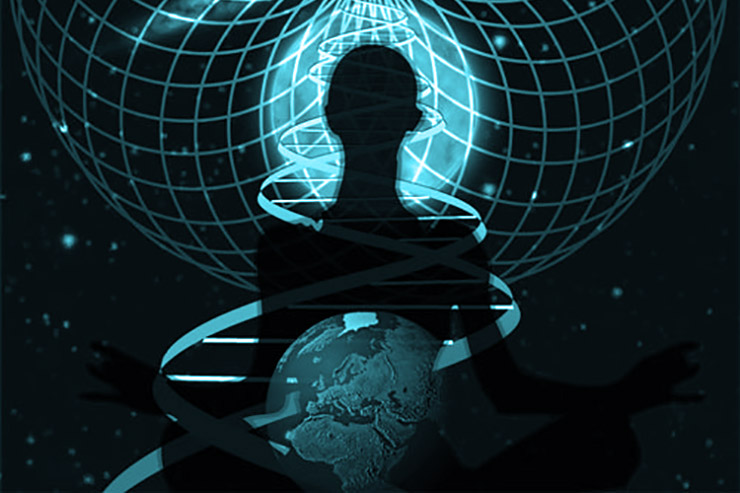
  • Waking From Sleep: The Causes of Higher States of Consciousness

    Waking From Sleep: The Causes of Higher States of Consciousness

    From New Dawn 120 (May-June 2010)

    Higher states of consciousness (HSCs) – or awakening experiences, as I prefer to call them – are moments of revelation, when we perceive reality at a heightened intensity. The world around us comes to life, and is filled with an atmosphere of harmony and meaning. A spirit-force seems to pervade all things, and the spaces between them, bringing everything into oneness.

    We experience ourselves as part of this oneness too, and feel ecstatic or serene. At the highest intensity of awakening, we might feel that we’ve become one with the universe, and attain a state of complete fullness and perfection. The whole material world may dissolve away, into an ocean of spiritual radiance.

    These experiences are sometimes associated with meditation, nature or psychedelic drugs, but what exactly is it that causes them? Why is it that the limits of our normal consciousness sometimes fall away, giving us access to a world of is-ness, beauty and meaning which is normally hidden from us?

    Neuroscientists generally believe that HSCs are caused by changes in brain activity. However, just because HSCs or awakening experiences appear to be associated with certain brain states, it doesn’t necessarily mean that the brain states produce the experiences. It could be the other way round – increased electrical activity in the frontal lobes, or less activity in the posterior superior parietal lobe, could just as easily be the result of higher states of consciousness rather than causes of them. These scientists may only be looking at the ‘footprints’ of the experiences, rather than the cause of them.

    My view is that there are two basic types of awakening experiences, which have two distinct causes. The first type are wild, ecstatic experiences that happen when the normal homeostasis of our brain and bodies is disrupted. This is a ‘loophole’ which human beings have made use of throughout history. This is why there has always been a link between fasting and spirituality, for example. A prolonged lack of food appears to make the hold which ordinary consciousness has over us looser, and bring us closer to an awakened vision of the world. Fasting puts us ‘out of homeostasis’ by causing physiological changes, such as a lower level of blood glucose, higher levels of insulin and a lower body temperature.

    Indigenous peoples often fast and deprive themselves of sleep as a preparation for rituals, dance and vision quests, using physical deprivation as a way of ‘purifying’ themselves. The Vision Quest was a spiritual exercise used by some Native American peoples as a way of building up spiritual power and communicating with spirits. The person would go to a solitary spot – often the top of a mountain – and stay there for up to four days, fasting and exposing themselves to the elements (usually wearing almost no clothes, even if the weather was cold). He or she would try to attain a state of complete attentiveness to their surroundings, since sacred powers might try to communicate with them at any moment. As a result, they might experience a higher state of consciousness (that is, higher than their normal low level higher state), with strong feelings of peace and a sense of connection to the natural world, and also be given special knowledge – such as a message or a new song or dance – from spirits.

    In ancient Greece and – at a later time – throughout the Middle East and the Roman Empire, a large number of esoteric cults existed outside conventional religions. These ‘mystery cults’ were usually centred around particular gods, but rather than just worshipping them, the participants aimed to become one with the gods, or to be possessed by them. They fasted and went without sleep before ceremonies, and used a variety of other methods of disrupting homeostasis during them: they would take drugs, beat themselves, and dance frenziedly, so that they might be – in the words of the ancient philosopher Proclus, who observed the mysteries at first hand – “filled with divine awe.”

    Pain can also be used as a way of inducing awakening experiences. We can see this in the long tradition of asceticism, for instance, which runs through all of the world’s religions and spiritual traditions. An ascetic is someone who deliberately denies his body’s needs, and inflicts pain and discomfort on himself, either through fasting, abstaining from sensual pleasures and comforts, or by physically beating or injuring himself. This sounds like sadism, and for some ascetics it probably was. It’s also likely that some ascetics were motivated by morbid self-hatred and neurotic feelings of guilt towards sex and other bodily processes, which made them want to punish themselves.

    It goes without saying that inflicting pain on yourself, or forcing yourself to go without sleep or food, are hardly ideal ways of transcending ordinary consciousness. Although some ascetics apparently managed to continue torturing themselves for years and even decades, there’s obviously a very high risk of seriously injuring yourself, or dying of self-neglect. Aside from the famous ascetics like St Simeon Stylites and Henry de Suso, there were probably many others who followed similar practices but didn’t live long enough to gain any recognition. As a short term spiritual technology asceticism is fairly futile anyway; you might gain a brief glimpse of a higher reality but this only lasts as long as the chemical changes that the pain and suffering have produced inside you. Your body always returns to homeostasis, and you always have to return your constricted normal consciousness.

    There must be easier ways of ‘disrupting the equilibrium’ than fasting, sleep deprivation or pain – and there are. If we know that all an ascetic is really doing by torturing himself is changing his normal chemistry, then surely, you might say, it’d be more sensible to just interfere with this chemistry directly – by taking drugs, for example, which would give us the same effect but wouldn’t involve any self-harm.

    Human beings have always used drugs as a means of intensifying or altering consciousness. The early Indo-European conquerors of India worshipped their drink Soma, which most scholars believe was made from magic mushrooms; while the initiates of the Greek Eleusinian mysteries used a psychoactive drink called kykeon. Indigenous peoples often use drugs for spiritual purposes too: Native Americans ingest sacred plants such as fly-agaric mushrooms and peyote, while the Australian Aborigines have a powerful form of tobacco called pituri. In the right circumstances – and the right state of mind – psychotropic drugs can, it seems, take our minds out of the ‘mould’ of ordinary consciousness, and give us access to wider and more intense realities.

    Intensifying Life-Energy

    The second type of awakening experiences are more serene and calm states which occur when our life-energy (or vitality) becomes more intensified. Normally there’s a continual outflow of our life-energy – it’s used up through mental activity (such as cognition, concentration and perception) and through our emotions and instincts. But sometimes, when we’re relaxed, fairly inactive and our minds are quiet, this outflow or energy decreases. Life-energy becomes concentrated inside us, which generates an awakening experience.

    This is why meditation often generates spiritual experiences. When we sit down to meditate, we take ourselves off the treadmill of daily tasks and activities for a while, and sit quietly and close our eyes, so that we don’t use up much life-energy through concentration and perception. Our ‘thought-chatter’ slows down too, and we normally become free of emotional activity and sexual desire. As a result, after meditation there is an inner concentration of our life-energy, it’s concentrated and intensified rather than dispersed and dissipated.

    We can see meditation is a conscious attempt to build up an intensification of life-energy and so generate awakening experiences, but there are many situations when this happens spontaneously. This is the reason why nature is such a powerful trigger for awakening experiences, for example. The beauty of nature may have a similar effect to a mantra in meditation, directing attention away from the chattering of the ego-mind. Cognitive activity may fade away, until life-energy intensifies, bringing a sense of inner peace and wholeness and heightened awareness of the phenomenal world.

    Sports can trigger awakening experiences too. This is particularly true of sports which involve long periods of monotonous rhythmic activity, such as long distance running or swimming. The activity itself serves as a focusing device, and quietens the chattering ego-mind. Similarly, the poet Ted Hughes often experienced a meditative state while fishing. He notes how poetry depends upon the ability to intensely focus the mind, and believes that he acquired this ability through fishing. He describes the effect of staring at a float for long periods: “All the nagging impulses that are normally distracting your mind dissolve… once they have dissolved, you enter one of the orders of bliss. Your whole being rests lightly on your float, but not drowsily, very alert.”

    This may also be part of the reason for connection between sex and spiritual states. The sheer pleasure of sex can shift our attention away from the ego-mind, which may fall silent as a result, bringing what D.H. Lawrence described as “the strange, soothing flood of peace which goes with true sex.” At the same time, sex may release new energy inside us, energy which is normally dormant but can arise and shoot through us like electricity.

    HD Versus ILE States

    As sources of awakening experiences, ILE (intensification of energy) states have certain advantages over HD (homeostasis disruption) states. The latter have more physical and psychological risks. Drug experiences (and other HD states) produce a powerful blast which immobilises the ego, and if this blast is regularly repeated the ego structure may dissolve, and never be able to re-form itself.

    In a sense, HD experiences are only really a shortcut too. It’s as if we’ve just stumbled on a defect in the mechanisms of consciousness, a kind of legal clause which gives us a quick and easy way of escaping ordinary consciousness, and are exploiting it. You could compare it to schoolchildren tricking their teacher into leaving the room so they can enjoy a few minutes of freedom while she’s away – but the teacher always comes back again, of course, and then everything goes back to normal. On the other hand, ILE states can bring about permanent change in a more organic and positive way. They can change the structure of the psyche without damaging it, and gradually create a new state of being, so that wakefulness becomes not just a temporary experience, but a permanent state.

    This isn’t to demean the importance of higher states of consciousness induced by drugs or other HD states. They can come as a bolt out of the blue, breaking through the familiar, taken-for-granted world and making us aware that higher realms of reality do exist. For some people, their first experiences of psychedelics might have the same effect as experiencing flashes of normal complete vision would have on a man who’s been partially blind all his life without realising it. The powerful transcendent reality they’ve been exposed to may also bring about a change in their personality, at least over the following months, and perhaps even years. It might make them more humble, less materialistic or egotistical, and give them a sense of security or hope, making them aware that the world is more meaningful and harmonious than they had believed.

    For many people, drug-induced awakening experiences have been the beginning of a spiritual journey, encouraging them to investigate Eastern spiritual traditions or more reliable and healthy consciousness-changing practices. This is what happened to the Harvard professor Richard Alpert, for example, who was one of the pioneers of research into psychedelics. He conducted experiments with psilocybin at Harvard University with Timothy Leary in 1962, and continued studying the effects of psychedelic even after he was expelled from the university. However, Alpert quickly became disillusioned with drugs, doubting that they could lead to permanent change, and travelled to India, where he learned yoga and meditation and took the name Ram Dass. He has spent the rest of his life exploring spiritual practices and teachings and spreading the wisdom he has found.

    On the other hand, using drugs as a spiritual technology may create a passive attitude, and a reluctance to make the long term disciplined effort which permanent transformation requires – as was the case with Ram Dass’ colleague Timothy Leary, whose pursuit of ‘chemical enlightenment’ degenerated into a life of self-indulgence. As the religious scholar Huston Smith put it, “Drugs appear to induce religious experiences: it is less evident that they can produce religious lives.”

    [alert type=”general” dismiss=”no”]This article was published in New Dawn 120.[/alert]

    [alert type=”success” dismiss=”no”]If you appreciate this article, please consider subscribing to help maintain this website.[/alert]

    © New Dawn Magazine and the respective author.
    For our reproduction notice, click here.