New Dawn – World's Most Unusual Magazine

Category: Articles

  • The Shocking Truth About Pfizer

    The Shocking Truth About Pfizer

    From New Dawn 197 (Mar-Apr 2023)

    When Elon Musk took over Twitter, the hashtag #PfizerLiedPeopleDied immediately trended as people posted about the lies and corruption of the pharmaceutical giant Pfizer. The hashtag previously appeared before Musk took ownership but had been quickly removed thanks to mass censorship, often at the direction of Pfizer.

    Pfizer was exercising its powerful influence over social media, mass media, academia, governments, and global public health, despite a record of fraud, corruption, and lies that began long before its quest to vaccinate every man, woman, and child on earth with its experimental gene therapy.

    Now they were poised to do just that, with complete legal immunity to any lawsuits from vaccine injuries and death, thanks to a clause that Pfizer execs included in contracts with governments before releasing their ‘vaccine’.

    History of Fraud & Corruption

    The lies and cover-ups surrounding the COVID-19 pandemic brought to life a host of independent citizen journalists to fight the power. One of these journalists has made a significant impact through the highly popular Substack blog Kanekoa News. In early 2023, Kanekoa News published “Pfizer Has a Long History of Fraud, Corruption and Using Children as Human Guinea Pigs.” Pfizer’s partial list of offences includes (the following is quoted directly from Kanekoa News):

    In 1992, Pfizer agreed to pay between $165 million and $215 million to settle lawsuits arising from the fracturing of its Bjork-Shiley Convexo-Concave heart valve, which at the time had resulted in nearly 300 deaths, and by 2012 had resulted in 663 deaths.

    In 1994, Pfizer agreed to pay $10.75 million to settle US Justice Department claims that the company lied to get federal approval for a mechanical heart valve that had fractured, killing hundreds of patients worldwide.

    In 1996, Pfizer administered an experimental drug during a clinical trial on 200 children in Nigeria but never told the parents that their children were the subjects of an experiment. Eleven children died, and many others suffered side effects such as brain damage and organ failure. Pfizer did not obtain consent or inform the patients that they were the subjects of an experiment, not the recipients of an approved drug.

    In 2002, Pfizer agreed to pay $49 million to settle allegations that the drug company defrauded the US federal government and 40 states by charging too much for its cholesterol treatment Lipitor. Lipitor had sales of $6.45 billion in 2001.

    In 2004, Pfizer agreed to plead guilty to two felonies and paid $430 million in penalties to settle charges that it fraudulently promoted the drug Neurontin for unapproved uses. Pfizer’s tactics included planting company operatives in the audience at medical education events and bribing doctors with luxury trips.
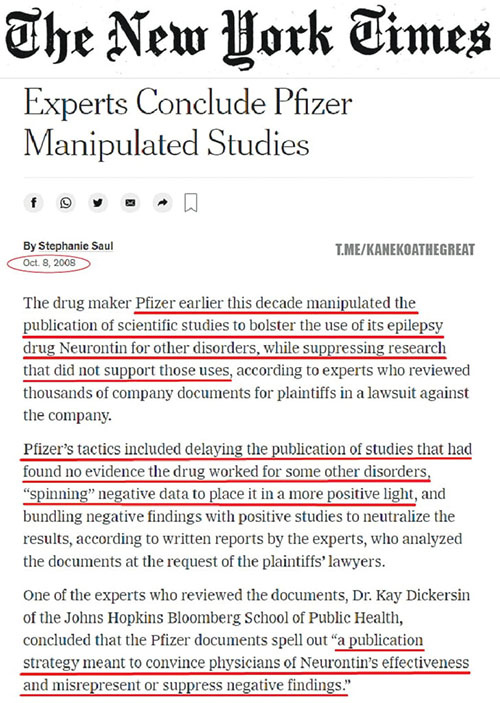
    In 2008, the New York Times published an article entitled “Experts Conclude Pfizer Manipulated Studies.” Pfizer delayed the publication of negative studies, spun negative data to place it in a more positive light and controlled the flow of clinical research data to promote its epilepsy drug Neurontin. In 2004, the company paid $430 million to settle US federal criminal and civil claims that one of its subsidiaries had promoted the drug for unapproved uses.

    In 2009, Pfizer was fined $2.3 billion, then the largest healthcare fraud settlement and largest criminal fine ever imposed in the US. Pfizer pled guilty to misbranding the painkiller Bextra with “the intent to defraud or mislead,” promoting the drug to treat acute pain at dosages the FDA had previously deemed dangerously high. The government alleged that Pfizer paid kickbacks to compliant doctors and promoted three other drugs illegally: the antipsychotic Geodon, an antibiotic Zyvox, and the antiepileptic drug Lyrica.

    In 2009, Pfizer paid $750 million to settle 35,000 claims that its drug, Rezulin, was responsible for 63 deaths and dozens of liver failures. Rezulin’s withdrawal from the US market on March 21, 2000, followed negotiations between the drug’s manufacturer and the FDA.

    In 2010, Pfizer was ordered to pay $142.1 million in damages for violating US federal anti-racketeering law by its fraudulent sale and marketing of Neurontin for uses not approved by the FDA. The jury found that Pfizer’s marketing of Neurontin violated both the Racketeer Influenced and Corrupt Organizations Act and California’s Unfair Competition Law.

    In 2010, the New York Times published an article entitled “Pfizer Gives Details on Payments to Doctors.” Pfizer admitted that it paid about $20 million to 4,500 doctors and other medical professionals for consulting and speaking on its behalf in the last six months of 2009. Pfizer also paid $15.3 million to 250 academic medical centres and other research groups for clinical trials in the same period.

    In 2010, Blue Cross Blue Shield filed a lawsuit against Pfizer, accusing the pharmaceutical giant of illegally bribing 5,000 doctors with lavish Caribbean vacations, golf games, massages and other recreational activities to convince doctors to use Bextra for off-label use.

    In 2010, leaked cables between Pfizer and US officials in Nigeria showed that Pfizer had hired investigators to unearth evidence of corruption against the Nigerian attorney general to blackmail him to drop legal action over the controversial 1996 Trovan trial involving children with meningitis.

    In 2012, the US Securities and Exchange Commission charged Pfizer Inc. with violating the Foreign Corrupt Practices Act when its subsidiaries bribed doctors and other health care professionals employed by foreign governments in Bulgaria, China, Croatia, Czech Republic, Italy, Kazakhstan, Russia and Serbia to win business.

    In 2012, Pfizer paid $1.2 billion to settle claims by nearly 10,000 women that its hormone replacement therapy drug, Prempro, caused breast cancer. The Prempro settlements came after six years of trials. Several plaintiffs were awarded tens of millions of dollars, including punitive damages for the drug maker’s actions in withholding information about the risk of breast cancer from Prempro.

    In 2013, Pfizer agreed to pay $55 million to settle criminal charges of failing to warn patients and doctors about the risks of kidney disease, kidney injury, kidney failure and acute interstitial nephritis caused by its proton pump inhibitor, Protonix.

    In 2014, Pfizer paid $35 million to settle a lawsuit accusing its subsidiary of promoting the kidney transplant drug Rapamune for unapproved uses, including bribing doctors to prescribe it to patients.

    In 2016, Pfizer was fined a record £84.2 million for overcharging the UK National Health Service for its anti-epilepsy drug, Phenytoin, by 2,600% (from £2.83 to £67.50 a capsule), increasing the cost to UK taxpayers from £2 million in 2012 to about £50 million in 2013.

    Moving onto COVID

    The corruption and fraud continued with Pfizer’s ongoing campaign to hide the truth about its ineffective, dangerous, even deadly COVID-19 injections. As a result, the general public is still in the dark thanks to Pfizer’s unprecedented influence over mainstream media narratives and the ‘science’.

    Pfizer, which has long captured US Congress with its lobbying efforts and injected billions into mainstream media to exercise influence, also done everything in its power to suppress and censor doctors and medical professionals who dared speak out about its mRNA product.

    Fortunately, we have the recent revelations of the Twitter Files that exposed the extent to which Big Pharma lobbied Big Tech. The manufacturers of COVID-19 vaccines, including Pfizer, BioNTech, and Moderna, heavily lobbied Twitter and other social media platforms to set moderation rules that would flag purported COVID-19-related ‘misinformation’.

    Reporting on the Twitter Files, investigative journalist Lee Fang for The Intercept said, “The Pharmaceutical industry lobbied social media to shape content around vaccine policy.” Fang cited as an example BIO – Biotechnology Innovation Organisation – the lobbying group of Pfizer and Moderna, which “fully funded a special content moderation campaign designed by a contractor called Public Good Projects (PGP), which worked with Twitter to set content moderation rules around COVID ‘misinformation’.”

    PGP has direct links to the US Centers for Disease Contorl (CDC), the US Food and Drug Administration (FDA), and the US Department of Health and Human Services and has partnered with the Rockefeller Foundation. The Rockefeller Foundation, in turn, partnered with many non-profit organisations to fund behavioural psychology research intended to “nudge” more people to get the COVID shots.

    Fang noted that lobbying efforts on the part of COVID-19 vaccine manufacturers against the production of low-cost generic equivalents afforded those companies massive revenues, as they “saw the crisis as an opportunity for unprecedented profit.”

    The Twitter Files also expose the actions of Pfizer board member Dr Scott Gottlieb, a former FDA commissioner, to suppress debate. Independent journalist Alex Berenson, writing in his Unreported Truths Substack, revealed that Gottlieb hired the same Twitter lobbyist the Biden White House had worked with to shut down posts by former acting FDA commissioner Dr Brett Giroir.

    “It’s now clear #COVID19 natural immunity is superior to #vaccine immunity, by ALOT. There’s no science justification for #vax proof if a person had prior infection,” claimed Giroir’s tweet. After pressure from Gottlieb to Twitter lobbyist Todd O’Boyle, Giroir’s tweet was later labelled “misleading,” and the ability to like or share it was disabled, with the message: “Learn why health officials suggest a vaccine for most people.” Why would Gottlieb do this? Maybe because the mRNA vaccine had become a cash cow to the tune of $81 billion and Gottlieb was paid $365,000 as a Pfizer board member in one year alone.

    The FDA has been in bed with Pfizer and Big Pharma for years, with nine of the last 10 FDA commissioners having gone on to work for pharmaceutical companies. It’s the classic “revolving door” of high-level employees from public-sector jobs moving into private sector jobs – a recipe for corruption.

    The one hold-out who did not join the pharma ranks, David Kessler, explained to Quartz: “[The American people] believe that the FDA is making their decisions in their interest and no one else’s.” Kessler expressed concern about politicisation at the FDA, which he views as a threat to “its ability to base decisions on independent, scientific analysis.”

    So those hired to protect the public are in bed with industry.

    Safe & Effective

    It is shocking also to learn that the member of an allegedly independent “data monitoring committee” charged with ensuring the safety and efficacy of the Pfizer/BioNTech COVID-19 product was once a paid consultant and advisor to Pfizer!

    Dr Kathryn Edwards’ conflicts of interest were revealed by Del Bigtree, the founder of the Informed Consent Action Network (ICAN). In an interview with ICAN lead attorney Aaron Siri, details were revealed in court transcripts showing multiple instances where Edwards was coached while her testimony was in progress to downplay her prior involvement with vaccine manufacturers.

    Despite the clear proof otherwise, Edwards, a world-renowned vaccinologist, denies a conflict of interest. Her case highlights the many associations and affiliations between researchers, medical scientists, and the industries they are ‘independently’ monitoring and evaluating. You cannot assess the safety of a Pfizer product while being paid by Pfizer.

    Siri participated in the now-famous lawsuit to have the FDA release hundreds of thousands of Pfizer’s documents related to the licensing of the Pfizer-BioNTech COVID-19 product. Pfizer had pressured the FDA to hold off the release for 75 years, but the lawsuit forced their hand. As thousands of pages hit the public stage, it became apparent that the vaccines were not only ineffective at stopping COVID transmission but exhibited deadly side effects, including myocarditis, and are now being linked to infertility and miscarriages etc. But Pfizer and the ‘health’ authorities kept promoting them as “safe and effective,” even pushing regular boosters.

    We already know about the thousands of emerging cases of post-vaccination myocarditis, mostly in teenage or young males, but now reports are coming in about the Pfizer shots adversely affecting the elderly!

    An RT news story, “CDC Must Investigate Deadly Vaccine Side Effects,” reported that the US House Committee Chair Cathy McMorris Rodgers has called upon the Centers for Disease Control to “rapidly investigate a potential link between Pfizer’s COVID-19 vaccine and strokes among elderly people. The CDC acknowledged the risk yet continues to recommend that everyone over six months of age receive booster shots.”

    Alternative news media has been covering the explosion of cases of young and healthy athletes dropping dead on the playing field. The deaths, and those of celebrities and citizens alike, including children, are called “coincidental” or “sudden death syndrome,” but now more doctors and researchers are speaking out.

    Excess Deaths

    When Dr Michael Yeadon, a former VP at Pfizer, retired and began speaking out about the propaganda surrounding COVID-19, including the “lie” of deadly new variants and the potential dangers of the vaccines, he was censored, banned, and ridiculed.

    Yeadon continued to speak out about the mass vaccine campaigns, “injecting some superfluous genetic sequence for which there is absolutely no need or justification.” His “conspiracy theories,” as the media called them, and his concerns that mass vaccination was a pathway for depopulation are now front and centre after new government data showed mortality rates skyrocketed in 2022.

    A news report in The Exposé on 23 January 2023, “Vaccine Genocide: Pfizer lied and 20 Million people died in just a handful of Countries according to Secret Government Reports,” claimed the following: “Secret reports from the Governments of the USA, Canada, Australia, New Zealand, the UK and most of Europe have raised alarm bells as they confirm that approximately 20 million deaths have been recorded resulting in 2 million excess deaths since Pfizer lied to enable the mass roll-out of the COVID-19 injections. Sadly, further reports quietly published by the UK Government also confirm that mortality rates are lowest among the unvaccinated in every single age group. Therefore, this strongly suggests that Pfizer’s lies have caused millions to die, and the COVID-19 injections are the largest contributing factor to the millions of excess deaths seen across the ‘Five Eyes’ and most of Europe.”

    Australia alone suffered 11,068 excess deaths in 2021 and then 22,730 excess deaths by week 38 of 2022, in stark contrast to 2020, when only 1,306 excess deaths were recorded at the height of the COVID pandemic and prior to the rollout of the injections. “This means Australia suffered a shocking 1,640% increase in excess deaths in just 39 weeks throughout 2022 compared to 53 weeks throughout 2020.”

    Are people just guinea pigs in this relentless pursuit of profits to feed the insatiable Big Pharma beast?
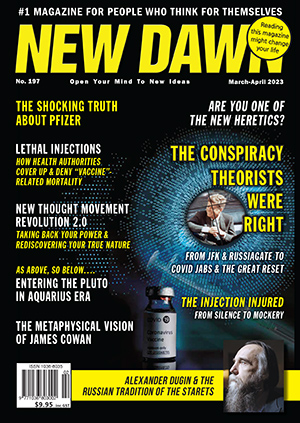
    Get the issue this article appears in

    New Mutations & New Products

    As if it couldn’t get any worse for Pfizer, in January 2023, Project Veritas – a media watchdog group – published undercover footage of a Pfizer executive discussing experiments the company is running on COVID-19 and their vaccine’s effect on women’s reproductive health.

    The video, which went viral on social media and was totally ignored by mainstream media, recorded Pfizer Director of Worldwide R&D Strategic Operations and mRNA Scientific Planning, Jordan Tristan Walker, claiming that Pfizer is exploring a way to “mutate” COVID via “Directed Evolution,” similar to gain-of-function that involves “a mutation that confers new or enhanced activity on a protein” and can make COVID more potent. Walker, who was being secretly filmed and thought he was on a date at a restaurant, even acknowledges that “people would not like this information if it went public.”
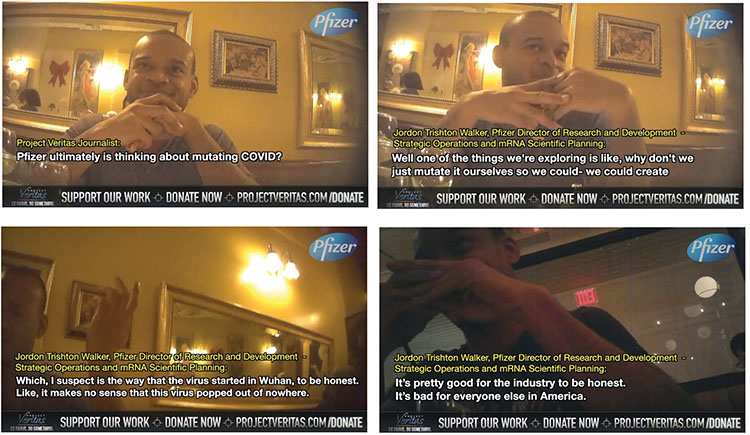
    Screenshots from the Project Veritas sting that netted a senior Pfizer employee into making damaging admissions.

    “One of the things we [Pfizer] are exploring is like, why don’t we just mutate it [COVID] ourselves so we could create – preemptively develop new vaccines, right? So, we have to do that. If we’re gonna do that though, there’s a risk of like, as you could imagine – no one wants to be having a pharma company mutating f**king viruses,” Walker said. “Don’t tell anyone. Promise you won’t tell anyone. The way it [the experiment] would work is that we put the virus in monkeys, and we successively cause them to keep infecting each other, and we collect serial samples from them.”

    As the fake date progressed, Walker revealed: “You have to be very controlled to make sure that this virus that you mutate doesn’t create something that just goes everywhere. Which, I suspect, is the way that the virus started in Wuhan, to be honest. It makes no sense that this virus popped out of nowhere. It’s bullshit.”

    Not only was Walker admitting that Pfizer was toying with the idea of attempting something similar to gain-of-function, which is supposed to be illegal, but that the virus itself was not of natural origin.

    In the video, Walker also lists reasons why Pfizer’s COVID jab could potentially cause issues with women’s menstrual cycles and even insinuates that the company doesn’t know the long-term effects of the vaccine.

    “There is something irregular about their menstrual cycles. We will have to investigate that down the line, because that is a little concerning. Because, if you think about the science, it shouldn’t be interacting with the hypothalamus-pituitary-gonadal axis – the hormones that regulate their menstrual cycles and things like that.”

    A second video showed Project Veritas founder James O’Keefe and his journalists confronting Walker, who attempted to destroy an iPad containing the recordings and called the police. When O’Keefe tried to grab back the iPad, Walker smashed it to the ground. The Project Veritas team left the restaurant before the police arrived.

    Pfizer quickly released a statement denying they were conducting directed evolution research regarding vaccine development, but they did not deny Walker’s statements nor that Walker worked for them. While mass media ignored this shocking story, Mr Walker and all his former employment associations with Pfizer were promptly scrubbed from all company listings and the entire internet – however, Project Veritas and other researchers had already captured proof of his employment and work history.

    Pfizer has on its website, “We’re in relentless pursuit of medicines and vaccines that will benefit patients around the world.”

    In late January, Pfizer CEO Albert Bourla announced that profits were way down for their mRNA COVID vaccine product. In an earnings release to Wall Street, Bourla stated, “Our focus is always on what is next. As we turn to 2023, we expect to once again set records, with potentially the largest number of new product and indication launches that we’ve ever had in such a short period of time.”

    In just the first three months of 2021, Pfizer made $3.5 billion from its mRNA product. Pfizer went on to make a staggering $36.8 billion in 2021. It predicts revenue of $29 billion in 2022, despite recently admitting that the vaccine does not stop transmission nor stop people from getting sick.

    In her Substack blog, the writer Karen Hunt says Pfizer’s massive success with COVID-19 has put CEO Albert Bourla under pressure to “come up with the next blockbuster drug. And we will all be expected to take it.”

    “There’s a plethora of illness out there. Which ones are most likely to turn the biggest profit is the question,” notes Hunt. “In the past twelve months, Pfizer launched 16 new products. On its website, Pfizer describes itself as a ‘pipeline’ of potential breakthroughs in the making.”

    Pfizer is not going away soon, and we can expect it to pound out more propaganda as it pushes a whole array of new vaccines for every possible ailment.

    Will we keep going along with this and take the new shots? “Some of us will refuse,” writes Hunt, “But how many of us can say that at some point in our lives we have not fallen under the spell of a drug company and the promises they gave us?”

    It’s high time that spell was broken.

    [alert type=”general” dismiss=”no”]This article was published in New Dawn 197.[/alert]

    [alert type=”success” dismiss=”no”]If you appreciate this article, please consider subscribing to help maintain this website.[/alert]

    Sources

    https://kanekoa.substack.com/p/pfizers-history-of-fraud-corruption
    childrenshealthdefense.org/defender/kathryn-edwards-pfizer-COVID-vaccine-conflict/
    childrenshealthdefense.org/defender/twitter-files-big-pharma-COVID/
    theintercept.com/2023/01/16/twitter-covid-vaccine-pharma/
    qz.com/1656529/yet-another-fda-commissioner-joins-the-pharmaceutical-industry
    childrenshealthdefense.org/defender/pfizer-albert-bourla-fraud-corruption/
    cnn.com/2023/01/31/investing/pfizer-earnings-covid-vaccine-paxlovid/index.html
    rt.com/news/569867-cdc-pfizer-vaccine-strokes/
    khmezek.substack.com/p/why-everyone-must-get-sicker-for
    expose-news.com/2023/01/22/pfizergate-2million-excess-deaths
    expose-news.com/2023/01/25/vaccine-genocide-pfizer-lied-20-million-died
    naturalhealth365.com/pfizer-moderna-sold-fake-vax-to-the-world-eu-politicians-demand-accountability.html
    naturalhealth365.com/pfizers-long-criminal-history-shows-following-the-science-is-a-terrible-idea.html
    lifesitenews.com/news/exclusive-former-pfizer-vp-your-government-is-lying-to-you-in-a-way-that-could-lead-to-your-death/
    politico.eu/article/ursula-von-der-leyen-pfizer-eu-prosecutors-office-opens-investigation-into-COVID-vaccine-purchases/
    projectveritas.com/news/pfizer-executive-mutate-COVID-via-directed-evolution-for-company-to-continue/
    stevekirsch.substack.com/p/adverse-events-in-pfizer-trial-may
    bmj.com/content/379/bmj.o2628

    © New Dawn Magazine and the respective author.
    For our reproduction notice, click here.
  • Alexander Dugin & the Russian Tradition of the Starets

    Alexander Dugin & the Russian Tradition of the Starets

    From New Dawn 197 (Mar-Apr 2023)

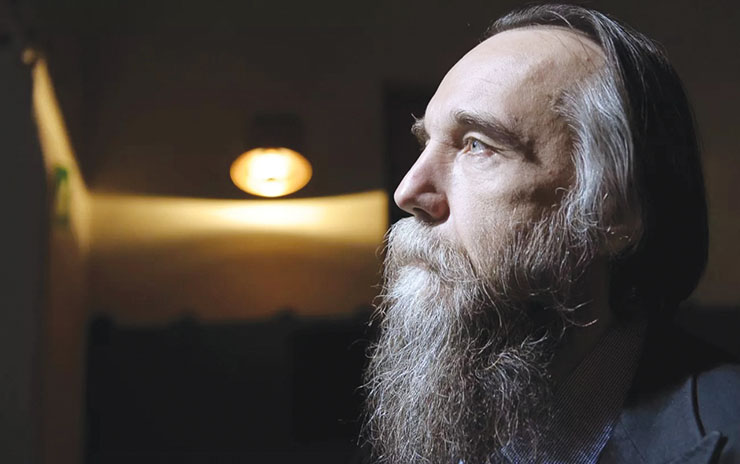
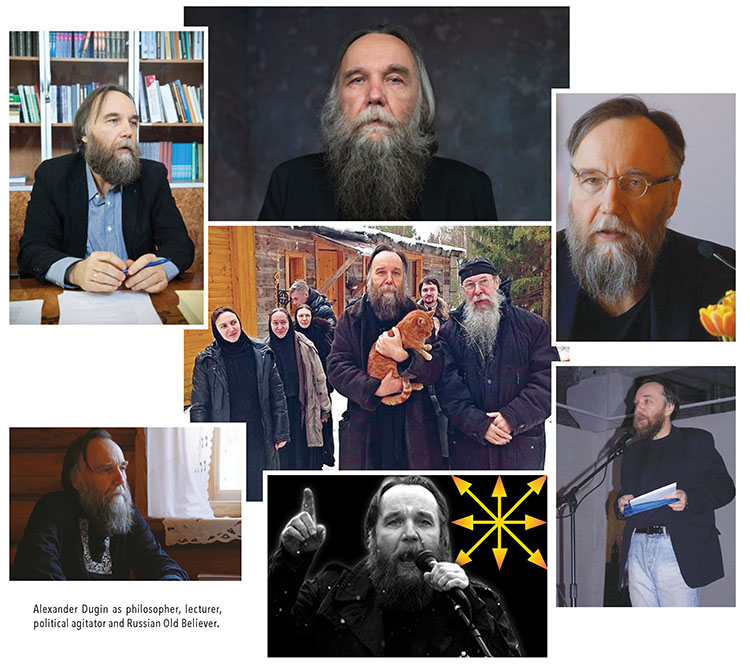
    In the Western media, the Russian philosopher and political analyst Alexander Dugin has been labelled variously as a modern Rasputin, a neo-fascist, a reactionary nationalist, an eminence grise of Putin’s Russia and much else. In order to understand where Dugin is coming from, one has to see him in the light of the time-honoured Russian tradition of the starets, the wise elder, a figure who repeatedly appears in Russian history and literature.

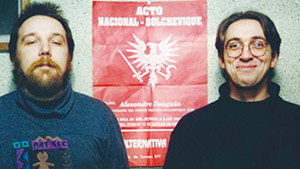
    In the run-up to elections for the Russian State Duma (parliament) in 1996, one of the contending parties was the relatively new National Bolshevik Party (NBP), whose emblem was a double-headed eagle clutching a wreath enclosing a hammer and sickle and bearing on its breast an image of Saint Michael spearing a dragon – a combination of symbols that, like the party itself, was calculated to defy all the usual political pigeon-holes.

    In one St. Petersburg constituency, a rock concert was organised to support the NBP candidate and at the same time to celebrate the memory of the English magus Aleister Crowley. The star performer was Sergei Kuryokhin (1954–1996), an avant-garde composer and virtuoso pianist. The candidate for the Duma was a young man from Moscow named Alexander Dugin (born 1962), who had been active in the Soviet counter-culture and then became a polemical journalist, publisher and political thinker and activist, achieving fame for his controversial writings on geopolitics. A memorable part of the proceedings was when a moment of silence was observed in honour of Crowley’s memory, after which Dugin read a passage from Crowley’s Book of the Law. Dugin won less than one per cent of the vote in the ballot, and he withdrew from the NBP two years later.

    Alexander Dugin & Sergei Kuryokhin in the mid-90s.

    Evidently, Crowley’s concept of magic appealed to Dugin and Kuryokhin because in the previous year they had issued a remarkable joint declaration entitled Manifesto of the New Magi, divided into 22 numbered paragraphs – 22 being the number of letters in the Hebrew alphabet and of the Tarot trumps. The manifesto called for a new impulse to overcome the fatigue and degeneracy that had overtaken culture and politics in the modern world. The manifesto declared:

    “Magic is not events, things and objects, but causes; magic does not simply describe but actively operates. Magic precedes art and politics. Art and politics became autonomous only upon being detached from their magical source. This source has not disappeared but merely slipped away to the periphery from where it exerts indirect influence. Secret societies, lodges and orders have governed history and inspired artists.… Indirect influence has not been sufficient as politics and art forgot the necessity of constantly appealing to magic. Only the direct, total replacement of art and politics with MAGIC can save the situation.”1

    Regardless of the somewhat messianic tone of the manifesto, the authors bring out an important point, namely that the way to influence and motivate large numbers of people is not through logic and reason but through symbols, rituals, drama, archetypes and mythical motifs – in other words through what many would call magic.

    Russian Egregores

    According to the 19th-century French occultist Eliphas Lévi, magic works through what he called the “astral light,” an invisible, subtle field or fluid that connects all things and can be manipulated by the magician to affect people’s thoughts and behaviour and bring about changes in the world. The concept is similar to akasha in traditional Indian thought as well as to Franz Anton Mesmer’s magnetic fluid, and to what Karl von Reichenbach termed the odic force. While the work of Mesmer and Reichenbach was rejected by the mainstream science of their time, certain of their findings have since gained wide acceptance. For example, the phenomenon of hypnotic trance is now generally recognised by the medical profession as an identifiable state that can be induced both in individuals and in groups, although the exact mechanism by which this works is still a matter of dispute. Several scientists, such as the Russian biologist Alexander Gurwitsch (1874–1954), the German biophysicist Fritz-Albert Popp (1938–2018) and the English biologist Rupert Sheldrake (born 1942), have opened up what has come to be termed a field-based approach, arguing that objects in the physical world, both animate and inanimate, possess fields of energy that give all objects their properties and interact with other energy fields. These interacting energy fields are surely consistent with the notion of an all-pervading etheric fluid, whether termed akasha, the astral light or the od.

    I suggest that in this field – call it what you will – are stored the perennial mythical motifs, archetypes and egregores, or collective thought-forms, of a culture. I also suggest that in Russia the veil between this field and the ordinary, everyday world is unusually thin, with the result that these egregores are more vividly present to the Russian mind than they are in most other cultures. In my book Occult Russia, I have identified a number of these egregores, including the notion of Holy Russia, the legend of the faraway Never-Never Land, the figure of the rustic sage and that of the Woman Clothed with the Sun, as described in Revelation. To these I would add another typically Russian figure, that of the starets. In one sense, the word simply means “elder,” but used in the religious context, it means a revered sage, prophet, holy man and often a wandering pilgrim and preacher. Can we consider Alexander Dugin as exemplifying this tradition, and to what extent?

    Dugin as a Starets

    The starets is often, but not necessarily, a priest or monk attached to a monastery or religious community. Typically these individuals possess great charisma and attract large numbers of people seeking healing, solace, advice for their problems or forecasts for their future. The figure of the starets overlaps somewhat with the rustic sage and also with the holy fool (yurodiviy in Russian), a man or woman who adopts an apparently crazy manner of living and often blatantly ignores conventions but is intensely devout and has miraculous powers of healing and prophecy. Such a one was the 16th-century Saint Basil, who went about naked even in the coldest of weather. These holy fools were also truth-speakers who in certain ways fulfilled the function of the court jester. They were not afraid to speak unpalatable truths, even to a monarch.

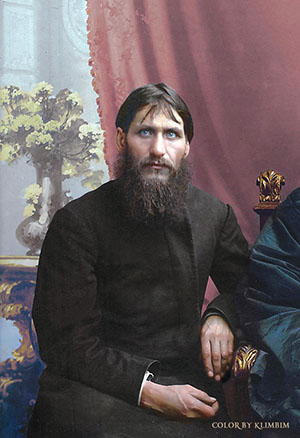
    Grigorii Rasputin (1869–1916)

    We frequently encounter the starets in the annals of Russian history and the pages of literature. One well-known example from history is Grigorii Rasputin (1869–1916). A whirlwind of a man, part pious visionary, part healer and prophet, part drunkard and reprobate, he is mainly remembered for the way in which he gained the confidence of the royal family, especially the Tsarina Alexandra, on account of his skill in treating the young Tsarevich Alexis, who suffered from haemophilia. On the eve of the revolution, he was murdered by a group of aristocrats, worried by what they saw as his dangerous influence at the court.

    Dugin has often been compared to Rasputin, but in fact there is little similarity between them apart from a high degree of charisma. Rasputin was from a peasant family in Siberia and remained illiterate until early adulthood. He was a man of religious fire and piety but not an intellectual. Dugin, by contrast, is a philosopher and a man of immense erudition who comes from a privileged family of the Soviet elite. He is perhaps more readily comparable to another starets, Grigorii Skoworoda (1722–1794), who was born into a Cossack family in a region of the Ukraine that was then part of the Russian empire. Known as the “Russian Socrates,” he was a polymath, philosopher, theologian, composer and much else. After a short teaching career, he became a kind of itinerant sage in the starets tradition.2

    In many cases, a person will become a starets after passing through a wild phase in the early years of their life. This was certainly true of the writer Tolstoy, who became a sort of rustic starets in his old age. It is also true of Dugin, who in the 1970s was a member of the Iuzhinsky circle in Moscow, a group of rebellious young intellectuals who went out of their way to defy convention. After perestroika, he explored a variety of different political movements, from the ultra-nationalist Pamyat to the National Bolsheviks. His spiritual path eventually led him to fully embrace the Orthodox religion in the form practised by the Old Believers, a sect that broke away from the main Orthodox Church in the 17th century over doctrinal issues. He also pursued a varied education, including a period of study by correspondence, obtaining a doctorate in sociology. Subsequently, he held a professorship for a time at Moscow State University. By then he had become a celebrated figure, a scholar who could speak with authority on philosophy, politics, culture and religion, and a charismatic public speaker. He had become, in a word, a starets.

    To become a starets is to step into a role that has all the force of the corresponding egregore and centuries of tradition behind it. The starets plays partly according to a collectively prepared scenario, but at the same time brings his own particular style and script to the role. Among the various types of starets, two categories stand out: those who care for the souls of individuals and those who address a large audience and proclaim a grand vision. Dugin belongs to the latter group.

    He is unusually many-faceted and multi-lingual. One moment he is discussing Nietzsche, post-modernism or the traditionalism of René Guénon, the next he is talking about mythology, geopolitics or the Eurasian movement. He is also equally at home in an academic setting, in a television studio or on the platform at a political gathering. He can talk in the thoughtful, measured tones of a university professor or hold forth like a fiery Old Testament prophet. Highly eloquent, he can hold an audience spellbound. He is the voice of tradition, patriotism, Orthodox piety, profoundly held values and the time-honoured Russian way as opposed to what he sees as the decadent ways of the West.

    This is not the place to go into his ideas in detail – his concept of an emerging Eurasian realm, his notion of a perennial conflict between the land powers and sea powers of the world, and his plea for a fourth political theory to replace communism, fascism and liberal democracy. His words are often disquieting, and one may or may not agree with them, yet they can open up fascinating horizons, as when he talks about his concept of “noomachia” (the battle of minds). Here he amends Nietzsche’s dichotomy between Apollo and Dionysus by adding a third deity, namely the goddess Cybele. In a monumental series of some 27 volumes, he explores how these three types of logos, as he calls them, interact in various ways from one culture to another and can give rise to profound cultural differences.

    Dugin, voice of tradition and Orthodox piety, opposes the decadent ways of the West.

    Dugin laments the fact that the wisdom of old age is no longer revered as it used to be. In an interview in 2011, he said:

    “In a traditional society an older person was considered to be a role model and a normative figure. Human life was seen to develop from an unreasoning and witless childhood through a foolish and not very focused youth to adulthood and, finally, to the ideal of a fully-fledged person, an elder… But a person was called an elder not so much according to their age, but rather according to their spiritual maturity. Everyone aspired to become an elder. Old age was a state of perfection – one grew towards consciousness, towards the spirit. In our time, we see a radical reversal of this. The role model for society is a young person… a teenager… Infantilism, juvenility, adolescence have become the social norm.”

    Dugin paints a bleak picture of a future in which the elderly will have lost all social status and there will be no place for a noble and worthy old age, whether religious, spiritual, or simply wise. “As we modernise, we humiliate and trample the old people more and more. The future takes the place of the past, and the past is scrapped.”3

    In a society that ceases to value old age, what is to become of the starets? Despite Dugin’s pessimism the tradition of the starets does not seem likely to disappear any time soon.

    One famous example from the cinema screen is the character of the monk Anatoly in the film Island, released in 2006. Anatoly is both a starets and a fool for Christ, who drives his fellow monks to despair through his strange behaviour, but in the end is recognised by them as a true holy man. The part of Anatoly was played by the former rock singer Pyotr Mamonov (1951–2021), who converted to Orthodoxy and became a kind of starets himself. His performance, which has been highly praised by Dugin, had an intensity that could only have been achieved by someone who closely identified with the role. It is a very Russian portrayal of a very Russian phenomenon that is still alive and well, as I believe Dugin himself demonstrates.

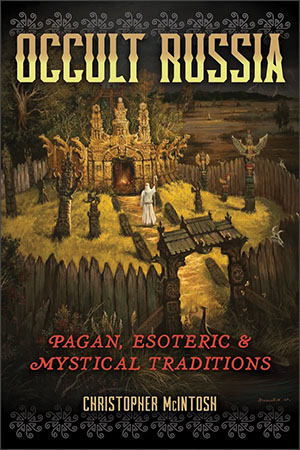
    The spiritual currents and esoteric traditions of Russia are explored in Christopher McIntosh’s new book Occult Russia: Pagan, Esoteric, and Mystical Traditions, available from Inner Traditions.

    [alert type=”general” dismiss=”no”]This article was published in New Dawn 197.[/alert]

    [alert type=”success” dismiss=”no”]If you appreciate this article, please consider subscribing to help maintain this website.[/alert]

    Footnotes

    1. Dugin, Alexander, and Sergei Kuryokhin, “Manifesto of the New Magi” in New Dawn Special Issue Vol. 15, No. 3 (2021), 70-71.
    2. See Michael Evdokimov, Russische Pilger. Salzburg: Otto Müller Verlag, 1990, 53-56.
    3. The text of the interview is posted on vz.ru/opinions/2011/7/21/508970.html, accessed 20 December, 2022.

    © New Dawn Magazine and the respective author.
    For our reproduction notice, click here.
  • Building Magical Power: The Secret of Occult Thailand

    Building Magical Power: The Secret of Occult Thailand

    From New Dawn 180 (May-June 2020)

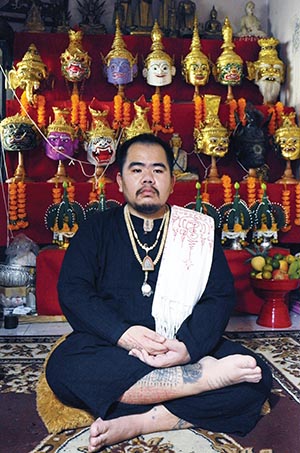
    The Thais call it Samathi, the crucial element when constructing magical items or using magic to influence events and people. Pronounced sa-ma-tee, Samathi is sharply focused intention, and a major contributing factor in the efficiency of all forms of magic as it facilitates access to various sources of power.

    Samathi is acquired and enhanced through dedicated practice and rigorous training using some or all of the techniques discussed in this article. In some individuals, it manifests innately.

    A controlled, highly focused but calm mind can access further magical power by harnessing a spirit – such as a stillborn child or person who died a violent death. These spirits then act as a spirit familiar to aid magical tasks. One branch of Thai magic trains practitioners to directly manipulate the intimate products of a target person, such as sperm, hair, fingernails and even clothing – to harm, bind in love, bring good fortune, or remove spirit attachments. Additionally, Samathi aids magic with the utterance of spells and kata (mantra). In general, there is a combination of some, if not all, of these elements. But Samathi is essential for each of these available sources of power. 

    The practices within Buddhism in the pursuit of enlightenment in this lifetime can also bestow various magical abilities. Many of the Buddha’s disciples attained these powers even though the Buddha himself rejected the practice of magic as a distraction.

    • Telepathy – the ability to know the thoughts of others.
    • Clairaudience – the ability to hear across long distances.                                                 
    • Clairvoyance – the ability to see the imperceptible.
    • Astral Travel – the ability to travel to celestial realms.
    • Telekinesis – the ability to move items from a distance.

    There are accounts of these abilities manifesting to varying degrees in most of the famous Thai monks and Ajarns (lay practitioners). The powers are perceived both as a boon to their followers and evidence of a heightened state of being. Possessing such magic is also seen as a measure of a person’s dedication to their studies and their moral goodness. Many monks and Ajarns exemplify the quality of Metta (loving-kindness), which in turn attracts more devotees. There are Ajarns considered to be an old magician on their latest cycle of life; they bring with them enhanced abilities and an uncanny speed of learning. Many Ajarns come from a familial lineage of sorcerers dedicated to following the magical path, committing themselves to the study of occult magic that requires the use of numerous written scripts, the ability to perceive the supernatural, and an encyclopaedic knowledge of spells, rituals, plants, woods and kata. 

    The system of magic in Thailand intertwines with knowledge accumulated by an ancient culture. It is considered one of the few complete systems in the world today, and a system that absorbed numerous influences over the centuries. At its core, it is pure Animism, with the magician working with supernatural products, spirits and ghosts.

    The supernatural products come from both nature and the remains of people who died in what is known as a ‘Prai Death’ which grants their body products magical potency. These types of death are related to dying before one’s time through violence, accident, suicide or killed by nature. This system existed before the introduction of Buddhism, but without the influence of that great philosophy, it would appear to be akin to Haitian Vodou and some of the traditional African practices. The influx of Buddhism brought control to magic through its associated practices, acting as a refuge when needing protection from some of the violent supernatural forces existing within the Thai Occult. Buddhism also brought mantras (kata) and the written language, which helped preserve the knowledge and practices of the magical path.

    It is not the purpose of this article to outline meditation techniques as there are many teachers for that. Instead, here are some of the techniques used by the Thai people who choose a spiritual path to build their Samathi to extraordinary levels.

    Tudong – A ‘shaking off’ of mental defilement, derived from a Pali word meaning ‘ascetic practices’

    “It does not matter how strong or good is the magic from any tattoo or amulet that you may possess; if you are not a good person, these things will not help you. When you have an amulet or a Sak Yant tattoo you should keep the five precepts and say the kata with the aim of improving yourself.”
    – Ajarn Suea, Chiang Mai, Thailand

    Buddhism flourished in Asia by accommodating the native beliefs of the cultures with which it came into contact. Regional differences within Thailand resulted in a vast number of sects, with eighteen in Chiang Mai alone. A process of reform was undertaken that resulted in the Tammayut sect which drew heavily from the strict discipline of a Burmese monastery. The aim was one Buddhism within the country that overrode local traditions. One of the features of the Tammayut sect is the tradition of wandering in the wilds, where hardship leads to self-knowledge – the first great monk to practice this was the legendary Ajarn Man. 

    Until relatively recently, Thailand was a wild place. Dangerous animals ruled the wilderness, roads were few, and the fear of ghosts and spirits was intense. In Buddhism, fear is considered a defilement that needs rooting out. Perilous places acted as a training ground for the monks of the Tammayut sect, the aim being spiritual liberation. Samathi is an important component of this process as the mind’s energies are focused for great strength and the ability to uproot attachments, cleansing it so that it is bright and clear.

    These monks often stayed in cemeteries, but in those times, unlike today, there were rotting and relatively fresh unburied bodies everywhere. The monks would have encounters with ghosts and local spirits. Experienced monks sought these places to practice meditation undisturbed. For monks who were afraid of ghosts, the experience was transformative. The dead were carried to the grounds on a bamboo platform. To overcome fear, monks on Tudong – ‘shaking off’ mental defilement – often chose these platforms to rest for the night. During such trials, monks confronted these fears in the process of uprooting the cause, understanding death and the realms of ghosts and spirits. These monks were tough and resilient with a magical potency that we can only hanker for in the modern world.

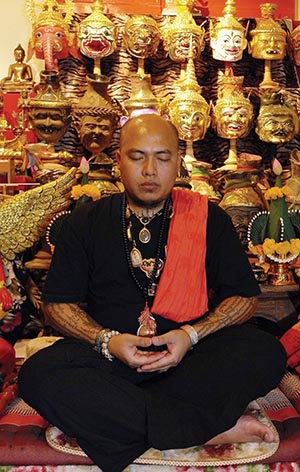
    Ajarn Perm Rung in meditation. Meditation builds Samathi and with enough practice it fills the body. Meditation also brings merit, which raises our worth and at high levels becomes like honey to ghosts and spirits, enabling the Ajarn to easily work with them.

    Through his training, Ajarn Man possessed the ability to communicate directly with beings from different realms of existence. He was said to be in continual contact with beings from the higher and lower celestial realms, the spirits of the terrestrial realms, ghosts of many sorts, and even the denizens of hell through his inner psychic faculties. Ajarn Man’s training included a period where he used the image of a bloated, seeping corpse. He contemplated it at all times until it changed into a translucent disc that appeared suspended before him. As he focused on the disc, it continued to change, and he followed these changes for three months. It was a seemingly endless series of developing images, permanently in flux. Ajarn Man eventually realised that he was not attaining the beneficial results of calmness and peace which would have convinced him this was the correct method to attain an iron Samathi – so he changed it. Instead of travelling with the mind, he focused internally, on his own body, to investigate every part, and bring everything within. It worked.

    Ajarn Man possessed a mastery of psychic skills. Over the years, his proficiency grew to the point where the monks living with him took great care to be mentally self-controlled at all times. They couldn’t let their minds wander lest their wanderings became the subject of a Dharma talk that evening, and they had to hold extreme focus when meeting him because he made an issue of any stray thoughts. It became the subject of much joy for his disciples, always waiting to hear who got caught.

    Students of Ajarn Man continued his teachings after he passed away, giving rise to such remarkable monks as Luang Phor Pina, and what is termed the great generation of magical Thai monks, almost all of whom have now passed away.

    Although the tradition of wandering meditator ascetics eventually fell victim to Thailand’s relentless modernisation and rampant deforestation, Tudong is still undertaken in the more remote parts of the country. A period for Tudong continues to be part of training for some monks, Ajarns and Lersi (seers) who observe the thirteen ascetic practices mentioned in the Buddha’s discourses. These include eating only one meal per day, sleeping outdoors in a forest or cemetery, and being content with the fewest possessions. The ascetic life tests their skills and offers the chance to hone the piercing focus that comes with such practices. All this can then be put to use in any aspect of the Thai Occult.

    The 32 Parts of the Body Meditation

    A significant form of meditation undertaken in Thailand is the exploration of the “32 parts” of the body for building Samathi and an understanding of impermanence. As with many techniques discussed here, this form of meditation also has an occult usage. This practice aids in the knowledge of the true nature of the body, eventually bringing a comprehension that the body consists of the four elements earth, water, air and fire. The idea is for the devotee to use their Samathi to discover their own body, every single component of it. The practice also aids the understanding that there is no self – there is just a body with all its frailties. The levels of sensitivity attained through this system can be astonishing. As the meditation develops, some parts of the body begin to break down, in the practitioner’s mind, into the primary elements of solidity, liquidity, motion and temperature, expressing the link between this and the use of the four elements in Thai Occult practices. 

    The Thai Ajarns, through their knowledge and understanding of the 32 parts, worked out a way to construct a spirit akin to reversing engineering from their study of the body parts in themselves. This is the first thing studied in the process of making talismans. The 32 parts of a body can be divided into sections depending on the associated element. The four elements in Thai are Na Ma Pa Ta or earth, water, wind and fire stated in the Western way. This knowledge and practice applies when making amulets, combining the four elements with the 32 parts of the body to create a spirit that works for the benefit of the devotee. Some Ajarns even give the spirit an outward image.

    A combination of the four elements creates everything. A human being consists of these four elements – breath is the wind, blood is the water and flesh is the earth, etc. Na is the earth element, Ma is the water element, Pa is the wind element, and Ta is fire. When combining these, elemental Kata can be used to assist in raising the power of an amulet. The water element is used for Metta because water is the coolness, the ease, the comfort. If an Ajarn wants to add attraction, the wind element is needed to help pass the power to the person and carry the message of attraction. The earth element is vital for invincibility magic. Combining the earth and water element helps with protection, i.e., if fire was the danger, water puts it out. If a person needs protection from black magic, the fire element is used to burn away dangerous forces.

    Get the issue this article appears in
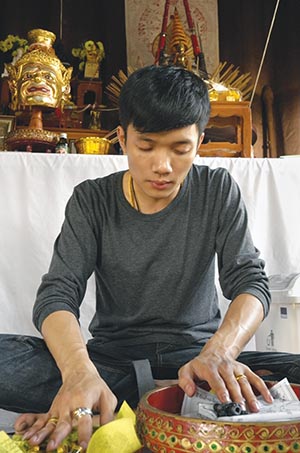
    Ajarn Apichai of Chiang Mai blessing amulets, using his acquired Samathi.

    Kata (mantras) are an integral part of the processes mentioned above and carry a power of their own. They are normally assembled from Buddhist passages, although some kata are older than Buddhism and others are condensed forms of magic for a specific purpose. All deities, spirits and Buddhist entities have kata associated with them, and each act as the key to bringing out their assigned magic. Kata are also associated with the actual properties of Thai magic, be it for charm and attraction, good fortune or authority. The practice and understanding of kata is another of the core elements undertaken by the magician, to eventually become the magic itself, to embody kata, which is why entering the monkhood for a period of time is highly valued by the members of the Thai Occult community. Being a monk is the best practice to rise above the mundane and to raise Samathi because it powers every other practice.

    The final element of this discussion on available sources of power in Thai magic is the power of lineage. Most Thai magicians come from lineages, long lines of astute occultists who embodied their form of magical knowledge known as Wicha. No one knows the extent of the Wicha of Thailand (and yes, it comes from the same root word for Wicca). These lineages hold great power, and the living magician can call on this power to help with any work he is undertaking. Some occultists in these lineages are incredibly powerful, and there are instances where they cannot be named, else they ‘come’. The magic available from this source cannot be underestimated.

    Peter Jenx is the author of a series of books on Thailand’s occult/magical practices. The Thai Occult 2 – Regions of Power is available here. The Thai Occult Appendix, is available from Timeless Editions of France (limited to 399 copies) at www.timeless-shop.com/product/appendix-jenx/. A previous edition is available in PDF from www.thethaioccult.com. Through the website you can also obtain a range of Thai-produced occult items including amulets.

    [alert type=”general” dismiss=”no”]This article was published in New Dawn 180.[/alert]

    [alert type=”success” dismiss=”no”]If you appreciate this article, please consider subscribing to help maintain this website.[/alert]

    © New Dawn Magazine and the respective author.
    For our reproduction notice, click here.
  • Healing in the Akashic Field: The Quantum Science of Information Medicine

    Healing in the Akashic Field: The Quantum Science of Information Medicine

    From New Dawn Special Issue Vol 14 No 6 (Dec 2020)

    In the modern world, remote healing has been relegated to the realm of fiction. This is now changing. Compelling evidence has been amassed in experimental parapsychology and the quantum sciences that the phenomena of information-based healing are real and important. The Akashic Field theory developed by the Hungarian philosopher of science, Ervin Laszlo, explains these phenomena and represents an important development in the contemporary healing arts. In this article, I link the new paradigm pioneered and developed by Laszlo with the phenomena I encountered in my twenty year-plus experience as a healer. 

    A new paradigm is entering mainstream science. Scientists realise that space is not empty and that what they have been calling the quantum vacuum is, in fact, a cosmic plenum. It is a fundamental field validating the ancient concept of the Akasha. As Laszlo tells us, the Akashic Field interconnects all things and conserves the trace of all things. It is a constant and complete memory-store of the universe. The existence of interconnection and memory in nature is no longer fantasy: it is an established fact. And it is directly relevant to the practice of healing. 

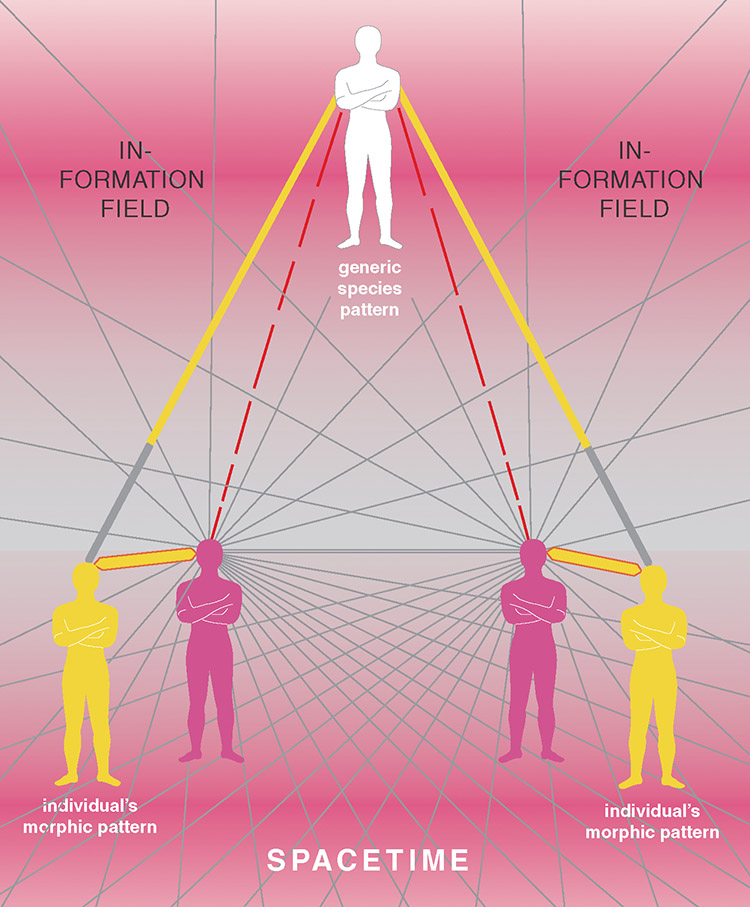
    Healing can be practised not only locally, but also nonlocally – at a distance. This is possible due to a direct connection between the mind and consciousness of the healer and that of the patient. This connection is mediated by a universal information field that Laszlo calls the Akashic Field (see Figure 1). 

    FIGURE 1: The above graphic illustrates the hypothesis that all people, including the healer and the patient, are embedded in a cosmic information field that connects people and conserves the trace of their thinking and acting. Every living system has his/her cluster of waveform vibration constituted by information in the Akashic Field. The information that constitutes the cluster is real, and it is conserved. It is retrievable, in principle, from the Field. 

    The living individual, as all quanta and systems of quanta in the world, is not above or beyond the Akashic Field but embedded in it. The morphic pattern of one individual – his or her informational trace – interacts with the morphic pattern of other individuals. Their interactions shape the cluster of vibrations that defines the species. I call this collective cluster “the generic pattern of the species.” It is the norm of viable functioning for all members of that species. 

    The generic pattern of the species integrates the morphic pattern of the members of the species. In the generic pattern, differences between individuals are cancelled out. In the context of healing, the generic is the pattern of reference for health and vitality. 

    We are capable of maintaining our organism in a state of health as long as our individual morphic pattern matches the generic pattern of the species. The information that determines the functioning of individual organisms is distributed throughout the atoms, molecules, tissues, cells, and organs of the body. Every deviation of the individual’s morphic pattern from the generic pattern means a weakening of the individual’s life-energy and the diminishing of his or her level of health. If not corrected, it invites the onset of disease even before the symptoms of a disease appear in the body. 

    The subject’s mind and consciousness orient the match between the individual’s morphic pattern and the generic pattern of the species. If the mind and consciousness of the subject are open and sensitive to alignment, the health-promoting match can be achieved. The information sent by the healer to the patient promotes and reinforces this match. When it is achieved, the patient’s organism can maintain its vital functions in the domain of health and viability. 

    Malady and malfunction are errors in the way individuals match their individual morphic pattern to the generic species pattern in the Field. Life on the planet could emerge and persist because a significant percentage of living systems achieve the match of their individual morphic pattern with the pattern of their species. 

    In traditional societies, people made intuitive and spontaneous use of the information they needed to create this match. Shamans, medicine-men, and spiritual leaders above all in ancient Egypt, China, India and Mexico have been promoting this match intuitively. Thereby they not only reinforced their own vitality but contributed to a higher level of health in their tribe and society. 

    Ancient cultures accepted the reality of subtle energies and used the bioenergetic processes that take place within and around the physical body in their healing. Although they go by different names, subtle energies and related spiritual elements have been basically the same in all cultures and all periods in history. 

    Healers now know that psychological attributes such as constructive beliefs, positive thinking, and healthy aspirations have an important role in redressing the disorders of the body. Western medicine dismisses these psychological approaches and focuses almost entirely on the biochemical and physiological manifestations of disease. 

    This predilection has historical origins. When the mechanistic/materialistic paradigm of classical physics became dominant, the healing of the body and the healing of the mind went separate ways. The observation and therapy of the body became limited to the domains of the natural sciences, and the functioning of mind and consciousness were assigned to religion. Nonlocal information-based healing was relegated to the domain of religion and spirituality. Today, this separation of science and spirituality is ever more questioned. Some age-old ‘spiritual’ insights are being rediscovered as bona fide elements in science. 

    In my practice, I use information as the instrument by which to effect healing. Since all organisms are basically information-based entities – imbued by the active form of information that David Bohm called “in-formation” – through in-formational means we can treat the cause of an organic malfunction, and not only its symptoms. 

    Given that the information imbuing the myriad processes of the organism is nonlocal (intrinsically interconnected and conserved), we can treat the condition that is the cause of a disease even if it occurred in the past. This contrasts with the mainstream method of Western medicine where (except for branches such as neuropsychoimmunology) diagnosis and treatment are largely limited to the actual physical-physiological condition of the patient. 

    PRACTICING SPACE- AND TIME-TRANSCENDING HEALING

    Healing with information is space- and time-independent. In light of my experience, it is rendered possible by the “tuning” of the healer to the Akashic information and memory field – the field that conserves and conveys the morphic pattern of the individual as well as the generic pattern of the species. The healer selects the information that creates an improved match between the individual and the generic patterns, thus reinforcing the energy balances of the patient. 

    The process of tuning oneself to patterns in the field can be compared to tuning a radio, a TV, or an online computer to the electromagnetic field. We need an artificial device to transduce the signals in the frequency range that is decodable by our device. In the case of information-based healing, that device is the brain. Our brain picks up the signals that reach it from the patient as well as from the world at large. But it can do so only within a limited range. In the normal waking state, this range is relatively narrow. 

    Because of the widespread belief that our bodily senses convey all the information that reaches our brain, most people maintain that their experience is limited to the domain of sense-perceivable information. However, now we know that when we enter into an altered state of consciousness, we extend the range of our perception beyond the receptive scope of our senses. 

    There are a variety of methods at disposition for selecting and fine-tuning the healer’s receptivity. We can make use of any suitable device and modality for this purpose, such as a pendulum, a dowsing rod, direct touch, imaginative “channelling,” and others. We can also designate a substance or an object as a “witness” and focus on it. The witness can be a photo of the patient, a sample of his or her writing, an audio or video recording, a lock of hair, or a sample of blood or saliva. Every sample of the patient’s body facilitates the retrieval of information from the organism of the patient. 

    If patient and healer are emotionally connected – as members of the same family or as close friends – there is no need for a witness: the healer can tune into the field and retrieve information on the patient’s condition through that intermediary person. If healing takes place in a group, and someone in the group knows the patient intimately, it is nearly as easy to attune to information on the patient as if he were within the group. 

    In the next step, the healer evaluates and orders the information he or she gleaned by accessing the patient’s individual morphic pattern. Experience shows that every healer has his or her own system for doing this; many modes of diagnosis and healing are available, and the difference between them is often a matter only of cultural preference. 

    In the Western world, the handiest approach is to make use of the instruments of mainstream medicine, examining and testing the pertinent patient’s organs and organ systems one by one. Homeopathic healers can proceed according to the classical homeopathic system developed by Hahnemann, and physicians working with the method of psionic medicine can complement mainstream and homeopathic treatments by using the radiesthetic method. Anthroposophic healers diagnose with the help of the anthroposophic system. The healer can also work on the basis of the major Eastern diagnostic systems, such as the Chinese, the Ayurvedic, and the Tibetan. Healers who can perceive the aura of the human body can perform their diagnosis based on the appearance of the various auric layers. The colour and density of the aura offers clues for diagnosis. All these methods can help the healer ascertain the particular points in the organism that require treatment and to evaluate the information regarding the condition of the patient. 

    The information received by the healer indicates both the physical condition of the patient and the nature of his or her problem. This information is not limited to the time the examination is carried out: it is distance- as well as time-independent. A diagnosis from a remote location and from a point earlier in time may be as detailed and thorough as one based on direct examination. The healer can discover whether the health problem is temporary or chronic and whether it originated recently or further back in the past. He or she can also determine the causes of the problem, and to what extent they are due to harmful environmental conditions (even of such relatively “soft” varieties as electrosmog and earth radiation). Then the healer needs to decide whether it is necessary to change the patient’s milieu, or whether more favourable conditions can be created in the patient’s current milieu. 

    The therapy to be recommended by the healer can be based on any of the available diagnostic systems. The healer can also prescribe a variety of remedies, including standard allopathic cures, diet, phyto-therapy, homeopathic remedies, and others, and can advise the patient to procure the substances and create the conditions for the cure. 

    It is not necessary for the patient to be aware of the therapy. The important thing is that he or she invites and welcomes it. A negative approach of out-of-hand rejection, and even dogmatic scepticism, can block the transmission of healing information.

    When the transmission is achieved, the entire organism of the patient is affected, not only the dysfunctional parts. The effectiveness of the healing can be measured by follow-up diagnosis, conducted either by conventional or information-based methods. 

    In regard to the physics of the healing process, we should note that space- and time-independence suggests that besides electromagnetic waves, scalar and other, still more esoteric quantum waves are involved in the transmission of the information. This is possible because the healing information is unlikely to be carried by electromagnetic waves alone. In that case, the effects would attenuate with distance in space and in time. But there is evidence this is not the case. 

    On the basis of my own experience, I am convinced that the information I receive and send is transmitted by the universal information- and memory-field we call the Akashic Field. The grounds for this conviction are evident. The pertinent information could not be transmitted directly from the organism of the patient because that information is limited to the patient’s present location and current condition. But other healers and I can receive information on the state of the patient from any point in space and from any point in his or her life – even just after birth, and sometimes before that, from the period of gestation in the mother’s womb. I can concentrate on any period I wish and find the point in time that is pertinent to the health problem of the patient. Often I can pinpoint the traumatic event that created the health problem in the childhood of the patient by interviewing the mother or a friend or family member who witnessed the problem-generating event. The pertinent point may even have preceded the current lifetime of the patient. Although most health issues have roots in one’s own lifetime, there are deep-rooted problems that could have originated in a previous life. 

    I can get information about the patient’s earlier condition and relate it to his or her current condition. Doing so is essential for effective diagnosis, as many and perhaps all organic ills and dysfunctions have their origins in the patient’s past. The fact that I can move back in his or her life-history to any point after birth, sometimes to the period of gestation, and even to a prior existence, is a meaningful indication that a nonlocal field is conserving and conveying the information I receive on the patient’s condition. 

    Testing the Coherence of the Organism

    In the human body there are various forms and manifestations of coherence. Of particular importance is the organisation of the energy flow. Its dominant direction is from the top of the head to the tip of the toes. The polarity of the cells and cellular systems is aligned to produce this flow, and this ensures communication between the parts and the organs crucial for the body’s functioning. 

    If the polarisation of a part of the system is reversed, the coherence of the flow is broken and an energy blockage results. With the methods of new information-based medicine, we can detect the disturbance in the energy flow of the organism even before it provokes physical symptoms. In an energy blockage, the affected organ or body-part is isolated from coherent communication in the rest of the body; a disturbance occurs in the flow of information between the affected part and the central nervous system. To detect energy blockages is an important task of diagnosis in information-based medicine. 

    If we want to preserve the healthy functioning of the organism, we need to sustain the coherence of the body. The self-healing potentials of the body cannot operate unless this coherence is present. However, there are also disadvantages to the coherent operation of the organism. If there is a local lesion (an injury) in the body, owing to the coherence of the affected part with the rest, this will affect the entire organism, and this can produce a diminished sense of wellbeing in the whole organism. The local problem is amplified by the coherence of the body’s information and communication system. 

    Information-based medicine explores how energetic influences and information processes outside the organism affect the overall coherence of information in the body. It maps these connections regarding the extent to which adaptive resonance is created between the body and the environing world. Disease is a disturbance of the resonance between the environing world and the body. The highest level of adaptive resonance means health. 

    In my method of healing, the nature of the energetic condition of the body is shown by the movement of the bioindicator. Changes in the information affecting the various parts of the body produce changes in the energy flow. We need to identify information that is harmful to the body and attempt to neutralise it. We can transform harmful inputs into beneficial ones and thereby improve the capacity of the organism to use coherent energy flows.

    Get the issue this article appears in

    The functionality of the vital processes of the organism is determined by the interaction of the body with the embedding electromagnetic field. Nobel laureate brain researcher Roger Sperry has experimentally shown this. Sperry demonstrated that the consciousness associated with the neocortex displays the functioning of the entire nervous system. Consciousness reflects the functioning of the brain and the neuronal networks. Positive or negative contents of consciousness affect all the cells of the body. Positive contents of consciousness promote the coherent functioning of the system. For good health, every cell in the system needs to function in harmony with every other cell. Any stimulus, whether external or internal, which proves positive promotes the coherence – the harmonious functioning – of the system.

    Sperry’s discovery has been confirmed by Bruce Lipton’s experiments on endothelial cells. Lipton succeeded in demonstrating on the cellular level that instructions arriving from the mind can overwrite instructions from the organism. The experimental finding is that endothelial cells in a tissue culture change their behaviour in line with signals from their environment. If the environment is rich in food, they move rapidly toward the source of nourishment. In a toxic environment, the cells distance themselves from the source of harmful stimuli. But Lipton found that signals coming from the central nervous system have priority over signals of local origin. 

    Austrian scientist Erich Körbler found that positive contents of consciousness bring an energy surplus to the organism, while negative contents depress the energy levels. With favourable inputs, cell voltage builds up to -60 mV and even higher. The molecular structure of the cell develops to enable further connections. Because of the coherence of this process, effects spread over the entire organism. 

    In my experience, the bioindicator reacts sensitively to changes in the psychosomatic condition of my patient: it indicates whether a subtle psychological factor, such as a thought or idea, is tolerable or intolerable for him or her. It also shows how psychological changes act on the physical state of the body. Negative, destructive or harmful events affecting the mind reappear on the physical level and affect bodily function. This holds true even if the harmful event concerns another person, or we merely see it on the screen. All survival threatening acts trigger one of the standard responses: flee, fight, or freeze. 

    Learn more on this subject by reading Dr. Maria Sági’s book Remote Healing: Nonlocal Information Medicine and the Akashic Field. 

    [alert type=”general” dismiss=”no”]This article was published in New Dawn Special Issue Vol 14 No 6.[/alert]

    [alert type=”success” dismiss=”no”]If you appreciate this article, please consider subscribing to help maintain this website.[/alert]

    © New Dawn Magazine and the respective author.
    For our reproduction notice, click here.
  • The Metaphysical Vision of James Cowan

    The Metaphysical Vision of James Cowan

    From New Dawn 197 (Mar-Apr 2023)

    The world is a silent poem waiting for my mind to render up its promise.
    – James Cowan .

    The author, poet, and traveller James Cowan was in pursuit of the metaphysical vision for most of his life. He even attempted to define a new literary genre with it – one that he called metaphysical realism. In his own words, he had been grappling with the concept of metaphysical realism for more than fifty years.

    He recognised that the ordinary realist perspective of the world had served us well; but that it had also proved to be one of limitation. James felt that it had ultimately diminished the importance of the imagination. The modern age was seen to be dominated by action and the outward gaze.

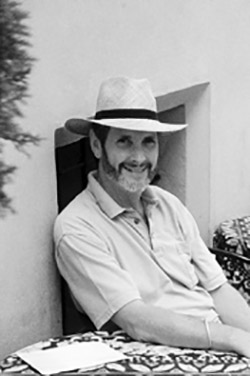
    James Cowan (1942–2018)

    How the mind works inwardly through the intellect – to contemplate how and why things should be done – was, according to James, being neglected and superseded by the imminently practical. The development of the mind’s inner powers began to mean less and less to modern humanity.

    James wrote, “I had to find a way whereby my creative intellect might acquire space in which to operate. I soon understood that my thought needed to contemplate forms that were timeless if I were ever to bring into fruition a more robust form of fictive expression.”1 Words had to be “not simply comprehensible markings on a page” but “photons capable of irradiating the mind of a reader…”2

    James felt that he needed a way to access a different form of consciousness. In his own words, he felt he was left with no choice:

    I was left with no choice but to find another way of dealing with time in the context of creative fiction. It was then that I made the decision to return to a period in social history when time did not exist as a framework for human existence. I journeyed into Central and northern Australia to begin my encounter with elderly Aboriginal tribesmen in order to understand how they viewed time in the context of their Dreaming narratives.3

    This was how James Cowan began his adventures into the Aboriginal landscapes of the Dreaming. James began to learn from the Aboriginal Elders how myth could be used as a vehicle for metaphysical expression.

    Through his Dreaming journeys in the desert, the raw young artist was shown how landscape and language worked in tandem. Words were “more than cerebral” – they also contained the residue of an endlessness that had become embedded into the physical artefacts of our human realm.

    James Cowan began to read classic tales as that of Gilgamesh, the Arthurian legends, and early Coptic hagiographies of desert anchorites – realms that were inhabited by the miraculous. The idea was to seek out examples of a timeless construct where the very best of human nature could find experiences to nurture it.

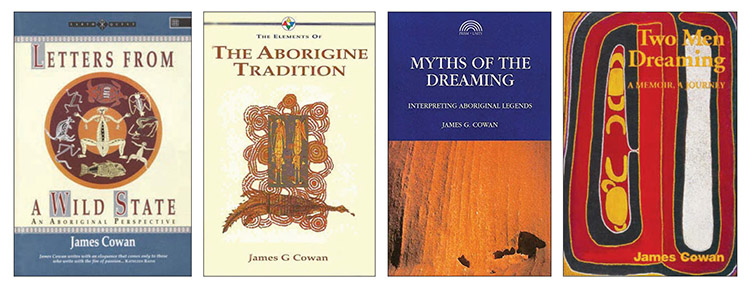
    James spent several years living, travelling, and learning from the Aboriginal culture. This culminated in several well-received books, including Letters from a Wild State: An Aboriginal Perspective (1991), The Element of the Aborigine Tradition (1992); Myths of the Dreaming: Interpreting Aboriginal Legends (1994); and Two Men Dreaming: A Memoir, A Journey (1995).

    In the 1990s, James spent two years living in Balgo Hills, a remote Aboriginal settlement in the Tanami Desert where he had set up a cultural institute to promote and sell the work of Aboriginal painters.4 James considered the Aboriginal artists of the Balgo Hills to be among the most innovative painters working in Central and Western Australia.

    When I asked him why he had chosen to go from the life of a writer to that of an art coordinator, I received an unexpected reply. He told me he had wanted to pay back his debt to the Aboriginal community. What debt? I asked. They had given me their stories, he had said. When an Aboriginal Elder shares with you their story, they are giving something from their community, and they too incur a debt. Their stories are community possessions, their treasures. You cannot treat them lightly. They gave me great gifts over the years, and this debt I feel I must pay back. And I am doing this by promoting their work to the world. It is the least they deserve.

    It was a humbling reply. And it was indicative of how James viewed the world. It was not a solid place, peopled by physical objects and remnants. It was a living mythos. And it ran on the power of stories.

    During the 1990s James also went to visit the village elders and shamans in the longhouses of Borneo. He saw how these tribes ‘stored’ narratives through the random juxtaposition of storyboards on the floor of their longhouse. These storyboards were “like wafers: on them were a rudimentary script made up of markings.”

    Rather than being confined to the rigor of sacred texts, language could be placed in the category of uncertainty. The patterns that were found in nature transcended the literalness of words placed on paper, and myths could find a new dance of life to transmit their secrets.

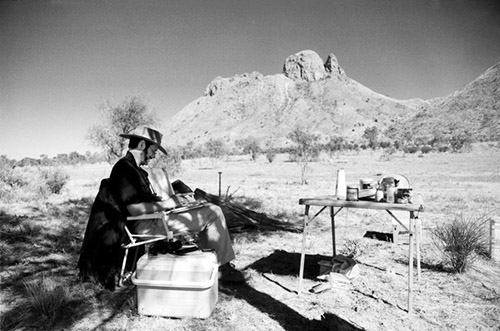
    James sitting outside his tent in the outback. Photo courtesy of Kingsley Dennis.

    James wrote up his experiences among the natives of northwestern Australia, Borneo, and the Torres Strait Islands in his book Messengers of the Gods: Tribal Elders Reveal the Ancient Wisdom of the Earth (1993).

    To further polish his learning, James reread ancient and medieval texts, particularly those associated with the development of early philosophy and theology. He discovered that writers of these periods had developed a way of saying something by referring to what it is not (apophasis). James felt himself at home amongst the medieval writers, many of which stayed with him throughout his life. Writers such as Dionysius the Aeropagite (late 5th–6th c. CE), John Scotus Erigena (815–877), Ibn Masarra (883–931), and John of Ruusbroec (1293–1381).

    True language, James felt, should be able to express itself not only in new and exceptional ways but also in a manner that the reader may not be accustomed to. He didn’t wish for thought to be subjected to the constraints of language; and in order to reconstitute a reality of a higher order, he first had to disrupt the current mode of expression. Language was seen as an incantation. This was the aim of James Cowan’s metaphysical realism – to tell a story within a story. And this meant it was necessary to dispense with the objective realism of storytelling.

    In James’ writings, telling a good story alone was not good enough. Western materialism, he felt, had exhausted the notion of the unending linear narrative. It was necessary to investigate an inner dimension that is timeless, regardless of whether it goes against literary tradition. James was seeking to capture the essence of the inward event within the experiences of the human condition. And in doing so, he realised that his work may be regarded as subversive for it was willing to go against the grain of what is considered reality.

    Yet James Cowan was not the first writer in history to expound metaphysical realism. According to James, metaphysical realism, as a creative method, was first acknowledged by Parmenides in the sixth-century BCE. He had written a philosophic poem, “Way of Truth,”which formulated the principles of logic that continue to govern our thought today. This poem profoundly influenced thinkers such as Socrates, and later Plato, because he paved the way for them to develop a system of logic that we now use.

    James felt that Parmenides was the first to present the idea of the way, the path, as a new form of narrative; an idea later shared by Peter Kingsley.5 In Parmenides’ words:

    A chariot bore me as far as my heart desired
    Urging me upon the Way of the Goddess
    That leads wise men from town to town.
    On that Way I was hauled by trusty steeds
    Hitched to a chariot, & driven by maidens.
    Its axle glowed fiery red in their hubs, heated by
    Spinning wheels at each end, both emitting sounds
    Of a panpipe, while the Daughters of the Sun
    Wishing to transport me into the light, tossed aside
    Veils from their faces as we left Night’s abode.6

    Such writing as given by Parmenides makes the reader aware that there is a way to rise to a certain state of being. And upon this path there is one thing of supreme importance: the human imagination. It is through the imagination that a person can break from the real to venture forth into the realm of the spirit.

    James realised that this was the same technique used by Aboriginal Elders, and other natives such as the Iban people, that he had spent time amongst. It is a path that enables the listener/reader to enter into the world that exists within the underlying language. This was the realm of the divine utterance – the very essence of metaphysics. Writing, for James, was a pathway to reach into these ‘divine utterances’ in a bid to understand, and consequently to present, the revelations of transcendent experience through language. James was well aware that he would never fully master this technique. Yet he put his hand to the task.

    In 1996 James Cowans’ A Mapmaker’s Dream was published to critical acclaim. I remember James laughing gently as he told me the tale of how his most widely read book came into publication. He said he had sent it to various publishers but none of them knew what to make of it. Saddled with an unusual book, just about every publisher preferred not to take the economic risk, so they put it aside. Except one.

    The editor of Shambhala Publications finally gave James a call. He told James how they had read the book, enjoyed it, yet thought it was unmarketable. And so, like every other publisher, they had put the book aside. Yet, a strange thing happened. Each person at Shambhala who had read the book could not stop thinking about it. It would not leave their thoughts. It hung around in their heads, lingering like the vestiges of some peripheral dream. It would not let them go.

    Finally, the editor knew the book had to be released. He was on the phone now with James, asking if he would sign their contract. “I’m going away in a couple of days on a journey,” James replied. “Maybe when I get back, I can look over the contract.” There was a pause on the other end of the phoneline. “Too late,” came the reply. “I’ll fly over to Australia tomorrow and you can sign the contract.” James was bemused. As good as his word, the editor at Shambhala Publications flew from America to Australia and handed the contract to James. He signed it, then went off on his trek.

    James was not expecting the future success that A Mapmaker’s Dream would generate. The book, being ‘The Meditations of Fra Mauro, Cartographer to the Court of Venice’ (to give its full subtitle) explored a whole world across time and space, and realities that exist within other realities.

    In my own PhD thesis, almost fifteen years before finally meeting James, I had quoted from A Mapmaker’s Dream as an opening citation to my chapter on hyper-complexity. I quoted:

    “Every man who had ever lived became a contributor to the evolution of the earth, since his observations were a part of its growth. The world was thus a place entirely constructed from thought, ever changing, constantly renewing itself through the process of mankind’s pondering its reality for themselves… No continent or people have turned out to exist except in relation to themselves. Their geographic location has also proved to be deceptive. The inescapable conclusion is that the true location of the world, of its countries, mountains, rivers, and cities, happens to lie in the eye of the beholder.”7

    A perfect reflection of our inter-connectivity as a global species: geographic location has “proved to be deceptive.” Our world – that is, our reality – is a place entirely constructed from thought. As such, it is ever changing, and constantly renewing itself. This is our world perfectly described. Everything within it, including ourselves, only exist in relation to one another. Everything thus lies within the eye of the beholder. We are the mapmakers, and we are each living through our dreams.

    The story of the world is told more through the languages, thought, and beingness of its characters (us) rather than in the do-ing of the characters. And this was what James reflected in his writings; especially so in A Mapmaker’s Dream which was perhaps his own first full exposition of metaphysical realism. Commercially, it was a success. A success that James was not to repeat in his lifetime.

    A Troubadour’s Testament (1998) followed from this.8 The book was another journey: a contemplation of love enacted both outwardly and through the inward gaze. “Solitude is a difficult encampment,” wrote James within its pages. “Its guy ropes grow rigid on frosty mornings.” James was exploring the soul as a solitary substance: “it wanders through space, a lonely at times disfigured star, torn this way and that as it struggles to maintain its course.” James felt compelled to pursue his metaphysical vision through the struggle of the human soul.

    His next series of books turned away from fiction towards an outer and interior travelogue of how the human heart and soul endures and finds nourishment through the world: Journey to the Inner Mountain: In the Desert with St. Antony (2001);9 Francis: A Saint’s Way (2002); and Fleeing Herod: Through Egypt with the Holy Family (2013).

    By this time, James had decamped and left Australia to live in Italy for several years, to absorb the culture, learn the language, and to research the life of Saint Francis. James’ vision was to explore the world through whispers rather than shouts. To probe into the phantasms of the human soul; to trace the movements of an ant’s foot across a black stone in the darkness of night.

    According to James, the metaphysical vision is “a rare flower” – Novalis’s blue flower, perhaps? He respected the writings of Novalis, Friedrich Hölderlin, Victor Segalen, Borges, and later, W.G. Sebald. He saw all such writings as seeds that were seeking their cultivation through the reader. James’ own wish in his writings was to create a realm to allow the reader to change places with himself. The reader, he felt, should not be required to remain bound by the limits of his or her world perspective.

    James lived the final months of his life as a literary meditation. The Book of Letters was the last completed full work from James Cowan. It was written during his final months, and he intended it to be his ultimate testimony and love letter to the sanctity of language. Of this book, he said:

    It is a pure work, and goes to the heart of our time. We have distanced ourselves from the purity of language, hence the grave time in which we live. The Book of Letters is a cris de coeur for a return to the sanctity of words… my final attempt at genuine metaphysics of language.10

    Still, the metaphysical gaze would not rest. James began working on a new composition in the final weeks of his life, which was left almost completed. Within the scarcity of life, James was more concerned with thoughts than with titles. James had no name for the final book he was composing: “The question I next asked myself was: what should I call it?”11

    And so, the book became the Liber sin Nomine (a book without name). It was James’ original intention to create a type of spirit-full collection, or sacred “tag-ends of my own thoughts.” In his final days he spoke of the book as an ongoing flow of thoughts and aphorisms. He often referred to it as “my Aphorism book.”

    Get the issue this article appears in

    Yet it was more than a humble collection of “tag-ends.” The book became James’ own meditation on death and dying, and the relationship between a sacred life and the passing of that life. Within the book there are various places where James is acutely aware of the nature of his dying body – also, the rebellious behaviour of his body. He states that, “Let there be no mistake: my body has chosen to leave me! I did not give it permission to depart, at least not yet.”12 Here are the words of a heart and mind, an active and alert consciousness, coming to terms with a disintegrating, and dissenting, body: “My body, now, is in violent disagreement with me. It simply refuses to concur with my pre-disposition towards health.”13

    The book without name is a reflection on the act of dying. As a person who spent his whole life seeking to unravel the sacredness and mystery of life, James was now the participant in his own passing, and witnessing first-hand the departure from a world he so lovingly, and desperately, sought to embrace.

    Ultimately, the writing of this final book was a tool that allowed him to realise his death consciously rather than through an unconscious submission. As within his own writings, James was preparing the mind for new vision, for an extension of consciousness. The metaphysical vision of James Cowan was forever attempting to “cut away dead flesh” in order to get at the essentiality of words and their meaning. And this was perhaps his route to self-revelation.

    Readers are encouraged to read the latest posthumous release of the work of James Cowan, One: Parmenides and his Vision (Balgo Hills Publishing, 2022), available from online booksellers.

    [alert type=”general” dismiss=”no”]This article was published in New Dawn 197.[/alert]

    [alert type=”success” dismiss=”no”]If you appreciate this article, please consider subscribing to help maintain this website.[/alert]

    Footnotes

    1. ‘Metaphysical Realism in Modern Literature’ (unpublished)
    2. Ibid.
    3. Ibid.
    4. Balgo: New Directions (Craftsman House, 1999)
    5. Reality by Peter Kingsley (The Golden Sufi Center, 2003)
    6. One. Parmenides and his Vision. Trans. by James Cowan (Balgo Hills Publishing, 2022).
    7. A Mapmaker’s Dream (1996). In 1998 Cowan was awarded the prestigious Australian Literature Society’s Gold Medal for this novel.
    8. A Troubadour’s Testament (Shambhala Publications, 1998)
    9. Later republished as Desert Father (2006)
    10. THE BOOK OF LETTERS: A meditation on the alphabet (Balgo Hills Publishing, 2020)
    11. Liber sin Nomine (Balgo Hills Publishing, 2020)
    12. Ibid.
    13. Ibid.

    © New Dawn Magazine and the respective author.
    For our reproduction notice, click here.