New Dawn – World's Most Unusual Magazine

Category: Articles

  • Australia’s Cosmic Capital: Canberra’s Geomantic Powers

    Australia’s Cosmic Capital: Canberra’s Geomantic Powers

    From New Dawn 194 (Sept-Oct 2022)

    If you stand on top of Canberra’s Mt. Ainslie and look west, your eye will pass over the top of the War Memorial and run along the brown strip down the middle of Anzac Parade towards Lake Burley Griffin. In the middle distance you will see the ‘Wedding Cake’ (old Parliament House) and the ‘Crouching Spider’ (new Parliament House) behind it. The Brindabella Ranges rise in the background.

    The roads and buildings below Mt. Ainslie are arranged in circles and lines – flag poles topped with the Australian flag line up reinforcing each other. Straight lines bring strength and harmony into the landscape. Geomancers say that leys (lines linking points) are power paths for ideas and feelings to run along. Such linked points are interactive and become similar over time.

    Look down again, and you will see, between the buildings and trees, cars and people. There is a maze of interactions, people going to meetings, shopping, and racing home. Within all this, far more is taking place than the eye can see; the whole makes up the geomancy1 of Australia’s national capital.

    Now, look at the War Memorial. There are name plaques for every soldier who died as a personal contribution to the development of the Australian nation. The rising ‘Dome of Remembrance’ contains the body of an ‘unknown soldier’ who acts as a link between the location and the hellish battlefields of Europe in 1917. And it all points down Anzac Parade, along the main Canberra axis line, which ends in Bimberi Peak. Built on either side of the axis line are memorials to the dead. It is here that Australia celebrates Anzac Day, its most prominent ritual of nationhood.
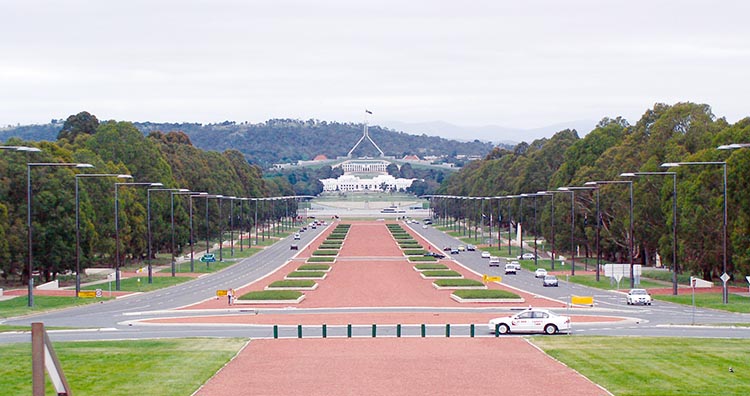
    With your back to Canberra’s Mt. Ainslie and standing on the steps of the War Memorial looking down towards Lake Burley Griffin, one can just make out Commonwealth Place. Behind this is Old Parliament House, the “wedding cake,” and then we see the new Parliament House, the “crouching spider.” (photo courtesy of the author)

    In geomantic terms, our rituals of nationhood are a plea to the essences of the dead to help fulfil the aims of the Australian nation. A request to the souls of the dead who died for “God, King and Country” to help their descendants live peacefully under the symbol of the Australian flag with its Union Jack and Southern Cross.

    Why The Canberra Site?

    I asked myself this question when I wrote my first Canberra piece, a school text published by Jacaranda Wiley in 1977. The history of the site bears repeating because the thoughts that went into its inception, which carry through in its design, have made Canberra the place it has become.

    In the last decades of the 1800s, Australia was occupied by separate British colonies (today’s states) that all referred back to England and not each other. The Germans were in New Guinea and there was the possibility of a German invasion. A combined and effective military force was considered a smart move. There were other reasons – a better postal service, a more effective taxation system, the problem of the vast number of male Chinese immigrants left over from the gold rush, and even the virtual slavery of Islanders in Queensland. It took years for the separate colonies to compromise and sort out these issues, but they finally did, and in 1901 the Australian nation was born.

    An unresolved national issue was the location of the seat of Government. Where would the Federal Parliament House be built? Where would the public service work? Neither Sydney nor Melbourne wanted the other city to become the Australian capital, so a compromise was reached. The capital would stay in Melbourne until the new Federal Parliament House was built. And the new capital had to be at least 100 miles from Sydney.

    A dozen country towns were considered, from Armidale to Eden, Junee to Bombala, but no decision was made. Then, finally, the ‘Limestone Plains’ location was chosen. Why? It was so inaccessible that Melbourne politicians felt it would take many years for the move to be made from Melbourne – and they were right. The site also had some good things going for it – a bracing climate (memories of Simla, the virtual summer capital of the British Raj in India) but no winter snowfalls. A good clean water supply. An accessible route for a railway link to Goulburn and a further possible route to the Jervis Bay naval base, intended to be developed as Canberra’s harbour. And due to its inland location, the site was safe from the most fearsome and dangerous weapon known to the world in 1910 – bombardment from warships!
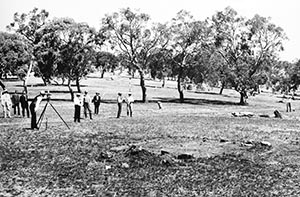
    First survey in 1910 of the Canberra site.

    The site was called Limestone Plains because it is enclosed by hills to the south, east, and west, with limestone caves under the surface. There are many caves, caverns and sinkholes under central Canberra. Some have strange stories attached to them… aboriginal art, witchcraft covens and unfathomable sinkholes that swallow up foundation piers.

    Canberra’s geology is broken and varied with intense underground activity. There are vast amounts of water underneath – probably more than enough for a city of half a million people.

    The site’s openness, lack of undergrowth, and treelessness puzzled the first settlers and remained a mystery until the 2003 Canberra bushfires. The blaze, started by lightning strikes in the Brindabella Ranges, swept into Canberra and destroyed 600 houses in an afternoon. Willy willies carried it from updrafts generated by the westerly winds skimming over the ranges. It seems these waves of fire can be expected when enough regrowth provides new fuel.

    Hills on three sides contribute to making Canberra seem a place apart, an island in the middle of nowhere. A nowhere from which something new could start. Walter Burley Griffin and his wife Marion Mahoney certainly saw it that way.

    The Griffin Design For Canberra

    An international competition was held for the best design. But the competition rules displeased many British and Australian architects who refused to compete. Even so, 137 entries were received by the January 1912 closing date.

    On 23 May 1912, entry number 29, by Walter Burley Griffin, landscape architect of Chicago, Illinois, USA, was declared the winner of the competition to design Australia’s new federal capital.
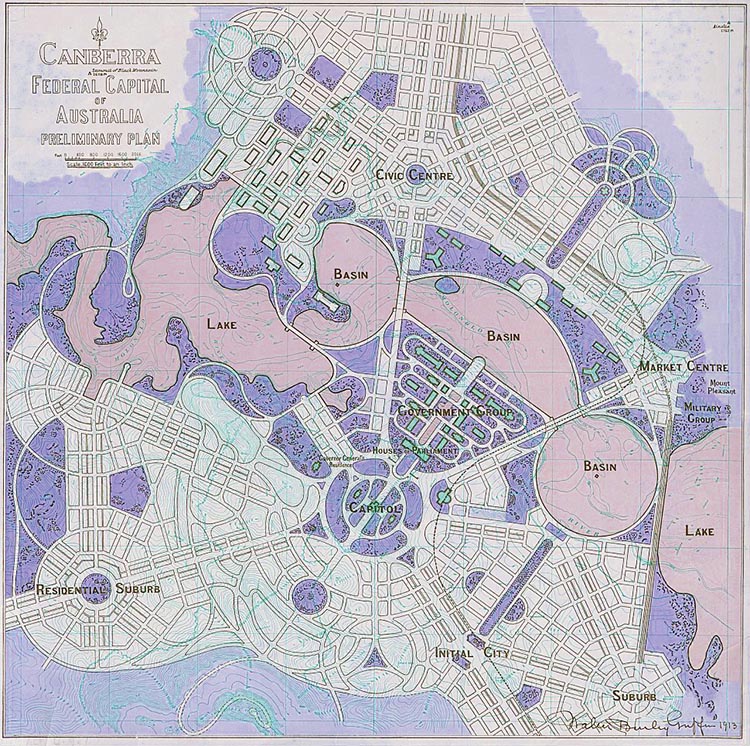
    Walter Burley Griffin’s original plan for Canberra. Notice all the circles. In the days before computer-aided drawing, the tools of an architect were ruler and compass. Many of the Griffin’s circles found their way into the layout of Canberra’s streets, so the tourist can follow the same street to its never-ending beginning!

    The judge was the Minister for Home Affairs, King O’Malley. By one of those quirks of fate, King, to use his Christian name, was an American real estate developer who gave his birthplace as Canada so that, as a British subject, he could sit for a seat in the Australian Parliament. As an aside, Griffin and O’Malley became friends of sorts but their wives continued to dislike each other throughout their many years of association.

    How did they get started on the design? Well, Walter thought about the possible city and did nothing. On weekends, Walter and Marion often took ‘Allana’, their Indian canoe, into the maze of streams near Chicago. One day they paddled 45 miles in stinking hot weather…

    The sand was as hot as the top of a stove; we ate our meals in the water. Perhaps it was the torture of those sunburnt legs, perhaps it was just that well-known mean disposition of mine, or it may have been those spiritual advisers, of whom I was unconscious at the time, who said to me, “We can’t do anything with him without some human help. Won’t you do something to make him start on the important matter he has in mind?” – or perhaps it was the suggestion of the Devil himself as Walt was later inclined to think.

    Anyway the storm of wrath broke over his head on some such lines as follows: “For the love of Mike when are you going to get started on those Capital plans? How much time do you think there is left anyway? Do you realise that it takes a solid month to get them there after they have started on their way? That leaves exactly nine weeks now to turn them in. Perhaps you can design a city in two days but the drawings take time and that falls on me. Nine weeks! It isn’t possible to do them in nine weeks. I may be the swiftest draftswoman in town but I can’t do the impossible. What’s the use of thinking about a thing like this for ten years if when the time comes you don’t get it done in time? Mark my words and I’m not joking, either you get busy on this very day, this very minute (with rising tones) or I’ll not touch a pencil to the darn things. Serve you jolly well right if I refuse to take it on now. (No, not jolly. Such language only came later).”

    And Walt said nothing (he was such an amiable man) but started sawing wood. And so a new adventure was started.2
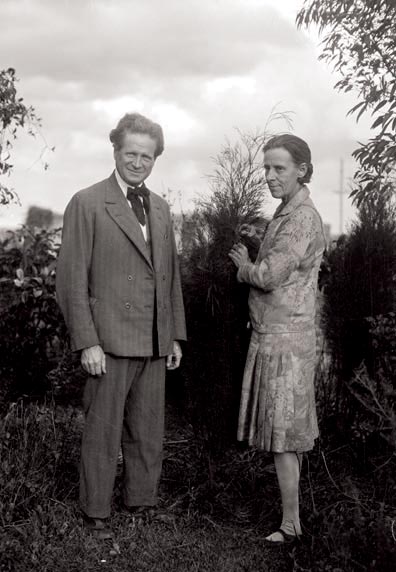
    Walter Burley Griffin and Marion Mahoney, Castlecrag, Sydney, 27 July 1930.

    Marion’s artistic skills were outstanding. She created perspectives in purple and gold that reached from the top of Mt. Ainslie across the Limestone Plain to show a dreamscape of a city to be realised in the morning… it took much longer than that.

    I must point out that in those days, the Griffins had no known interest in any esoteric philosophy. Their involvement with Theosophy was to come later in Australia, and it was not until their Castlecrag ‘new age’ community developed that Rudolf Steiner’s Anthroposophy reached their lives. Furthermore, the Griffins didn’t knowingly insert esoteric ideas into their design; Walter just followed ideas he had seen that worked.

    A crucial conceptual starting point was the 1893 Chicago World Fair, which aired designs linking avenues, locations, and water. One of those attending the fair, the 17-year-old Walter Burley Griffin, must have been duly impressed.

    For Canberra, Griffin used a compass and ruler to draft his design, using the hills marked on the maps as the starting points for his ideas. That’s why Canberra continues to trap the casual tourist – who can expect roads to curve back on themselves?

    When the Griffins arrived in Australia in 1913 to oversee the development of the capital, they got into trouble before they started. Walter tended to express himself in complex, even grandiose terms. This added to his dislike by local architects, on top of his disparaging statements about local designs and Australia’s dependency on the British Empire. Government also changed and with it intentions about the building of the new capital, a capital which few – if any politicians – wanted to move to in the first place. And then the First World War swallowed all available funds, and in the midst of conflict the new nation struggled to find itself in the wake of the Anzac debacle.

    There was a long and complex Royal Commission into Griffin’s handling of Canberra’s development. Records of the proceedings show that the results were inconclusive. Yes, bureaucracy certainly set out to make his life as difficult as possible. But Griffin was not a good communicator, and one thing led to another. As a result, Canberra’s development and the Griffins parted company in 1920. The couple went on to have a reasonably successful private practice in Sydney and Melbourne.

    For anyone curious about the personality and relationships of the Griffins, there is considerable material in the National Library including oral history tapes of interviews with all the people who knew them in the 1930s in their Castlecrag years (also visit the website of the Walter Burley Griffin Society: www.griffinsociety.org)

    The Canberra Landscape Temple
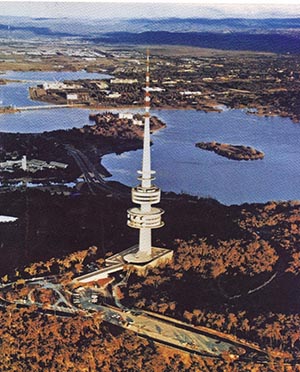
    Canberra’s ‘space needle’ is Telstra Tower which rises 195.2 meters above the summit of Black Mountain, as seen in this 1970s photo. 

    Let’s return to Mt. Ainslie and across to the hill on the right, looking over the downtown area. It’s topped with one of those revolving restaurant ‘space needle’ telecommunications towers that all respectable cities seemed to need in the last century. The hill is known as Black Mountain. Ahead, just to the left of the axis line and near to the ‘crawling spider’ is Red Hill. Below is Canberra’s diplomatic cluster.

    That’s three hills, each with different geology and each with its own mood. I’ve travelled from one to another, taking visitors on tour. Our discussions reflect mood changes. On Mt. Ainslie, we look down at the city, think about the future and discuss possibilities. We seem to discuss cars, machines and economics on Black Mountain with its hard, dark rocks and telecommunications hum. Red Hill often results in a clash of personalities between myself and visitors, “You’ve taken me around, and now you want me to believe your perceptions, I don’t see why I should!” It makes me feel I’ve just stepped into a diplomatic meeting or question time in Parliament.
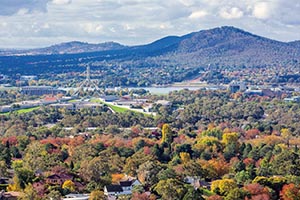
    View from Red Hill lookout.

    Yes, each of the three hills has its own “personality,” its resident consciousness that affects the people standing inside its energy field. These natural “Dreaming” locations are as real as the spaces we make inside our buildings. The strength and size of these radiating fields vary – nothing in geomancy is truly stable. Times of day, astrological conditions, rituals performed – all have an effect. Sometimes Mt. Ainslie is strong, extending across the Limestone Plain to affect the mood of people below; at other times and on other days, Black or Red is larger and more powerful.

    The energy of these three mountains is reflected in the three apexes of the Parliamentary Triangle that Griffin put in place. City Hill, in downtown Canberra, watches over money and construction. Parliament House Hill is about personal power and arrogance – reflecting the proximity of Red Hill. The apex near the War Memorial is about the love for the dead Australian soldiers who gave their lives for the nation. There is a little hill at the apex of this corner of the triangle, between houses and defence department offices, called Peace Harmony Hill. Griffin’s original plans placed Australia’s National Cathedral (non-denominational) at this location.
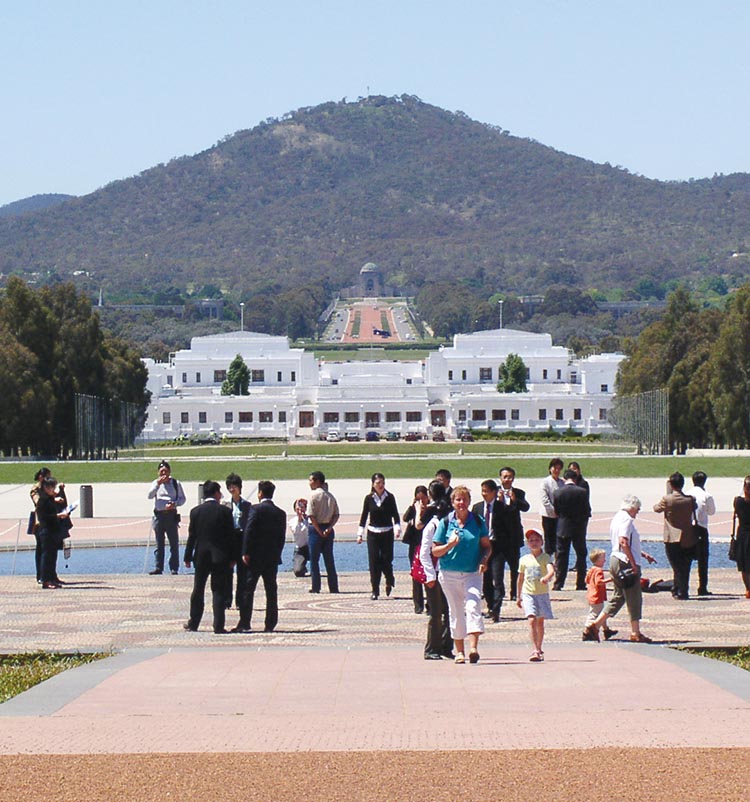
    View from the front entrance to Parliament House. In the middle distance is the rear of the old Parliament House. In the background, at the end of Anzac Parade, at the base of Mt. Ainslie, is the Australian War Memorial. (photo courtesy of the author)

    There are two triangles in Canberra that interlock and interrelate. Inside these the business of the nation is carried out. When politicians sat inside the Wedding Cake – the original Parliament house – the interflows between love, money, and pride worked reasonably well. The Australian nation’s Dreaming, more or less, worked. New Parliament House is located on the apex where Griffin conceived a garden with a central gazebo-style monument to celebrate the Australian nation. It is the strongest site in Canberra, connected to the central axis and the parliamentary triangle. Griffin saw it as a people’s park belonging to everyone in the nation.

    But alas, the new Parliament House swallowed the Capital Hill site. This creates an unfortunate situation that makes pride and personal power far too important in the minds of those who control the nation. It is not just the proximity of Red Hill that is an issue, there is also the architectural oddity of a building that replaces a hill. Capital Hill was removed, a billion-dollar building put in its place, and grass planted on top. To make matters even more geomantically undesirable, the whole structure is cut into the large and unstable Lake George fault line. In the symbolic language of geomancy, one could say the building is a gateway to the underworld, and lacks a Buddha and chanting nuns to keep the necessary balances between the spiritual worlds, Earth and the underworlds.

    As for Old Parliament House, a visit is a good lesson in how the energies of place interact with our moods and thoughts. Wander down the corridors and go into the Prime Minister’s office. Sit down on a visitor’s chair, lightly meditate, and you may get the same feeling of complexity I got when I did this exercise. Being PM in this office was a difficult job. How does one control situations rather than be controlled by the whirl of events? The old reading rooms give one the feeling of a gentleman’s club. For decades, Canberra wasn’t on the artistic, social, or cultural map.

    One evening I was at a wedding reception in the lightly remodelled member’s bar and restaurant in the back of the building when suddenly, at 10 o’clock, the mood changed. The atmosphere filled with what is known in Buddhist metaphysics as “hungry ghost” energy forms (desire elementals) that searched out the heavy wine and spirit drinkers in the room, compelling a recharge of glasses. Many of Australia’s early parliamentary processes must have taken place in a haze of hangovers and alcohol.

    Down The Main Axis Linking The Past To The Future

    Let’s journey down the main Anzac Parade axis, lined with monuments to people who fought and died in wars, making links between the nation’s past, present and future. There are vacant spaces for more monuments – reserved for the future when there will be more heroes and certainly more deaths to keep the Australian nation alive.
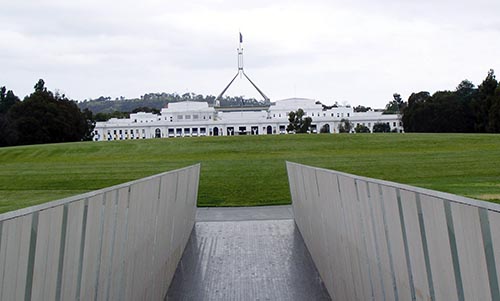
    A marble-lined cutting links Commonwealth Place to Reconciliation Place, which is located behind Old Parliament House. It rises above the grassed-over mound and reminds the author of a burial site, suggesting this is the way the Commonwealth of Australia ‘reconciled’ their Aboriginal obligations. (photo courtesy of the author)

    Crossing the lake, one comes to Commonwealth Place, a lakefront forecourt where bands occasionally play. An almost subterranean passageway links it to a grassy hill named Reconciliation Place. The location is a weird bit of geomancy, an attempt to show how British Commonwealth Australians and Aboriginal people have reconciled their differences. By what one would hope is an error of judgement – rather than a result of conscious intent – Reconciliation Place resembles a burial mound or perhaps a mass grave. I’ve been told that, like so many places in Canberra, it links the city to the underworld; in this case, to Aboriginal ancestors who emerge to participate in events when they feel the need and disappear when their mission is complete.

    There are many other sites to tell of Canberra. But to keep the story in line with revealing how the geomantic past creates frameworks for future decisions, I need to tell the National Museum story that involved me because of my geomantic interests.

    Alas, for Australia, the Museum is a geomantic opportunity lost. The site is touched on three sides by Canberra’s central lake and was the site of Canberra’s original hospital. The hospital reached its use-by date and was demolished, leaving the site open for redevelopment. Many groups claimed the site, and much community discussion followed.

    Finally, the National Museum of Australia won the site. Guidelines for a competition to create the prize-winning design were drawn up. The guidelines were exciting – they called for a multicultural museum and a complex of separate buildings spread over the peninsula. Each cultural group was to have its own building, the Aboriginal building was to be large, so were the Greek and Italian buildings. Smaller groups were to have use of buildings for periods. The whole was conceived as a place of continual festival, a celebration of the unfolding strengths that multiculturalism gives Australia.

    But it was not to be. Instead of structures that used the energetic potential inherent in the site – with its water and vistas – a building was chosen that looked more at home in an industrial area in Berlin, inward-looking with the vistas hidden behind dense shade cloth. The building opened in 2001 and cost $152 million to complete. The museum’s initial displays radiated out from the time of “Coronation Australia,” the period in the 1950s when the British colonial perspective still made sense.

    Why did this happen? Why wasn’t the site made a location for the ongoing celebration of a multicultural Australia, an Australia built on constant immigration?

    The Whitlam years, with their Al Grassby openness, gave Australian power brokers an awareness that a new Australia was possible, but also one in which power might shift away from the ruling concepts and frameworks locked into the idea of “God, King and Country” enshrined in the War Memorial and Anzac Parade.
    Get the issue this article appears in

    I think it is a shame Australia’s self-perception as a multicultural nation, brimming with new life and activity, has been stultified. Instead, we struggle in an underworld linked to the past, to souls that “gave of themselves so that we could live.”

    Foundations are very important because the original intentions of founders – like energy – stream forth into structures like cities to shape the future for their inhabitants. Well before the word Canberra had entered his mind, Walter Griffin – like so many other thinkers of the time – was inspired by the influential book Progress and Poverty by Henry George, written in the late 1870s.

    George dedicated the book with the following words, which I believe inspired the Griffins on their Australian adventure:

    To those who, seeing the vice and misery that spring from the unequal distribution of wealth and privilege, feel the possibility of a higher social state and would strive for its attainment.

    I see the spiritual basis of Australia’s capital city as originating from this short quote. The rationale behind Canberra was that it would serve to unite the rivalries that separated State capitals and make the development of a united Australia possible.

    Perhaps things would change for the better if we allowed Canberra’s spiritual forces to work into our doings. What can we do to overcome the forces of hindrance that hold us back from developing our future potential?

    This article originally appeared in New Dawn 94 (Jan-Feb 2006).

    [alert type=”general” dismiss=”no”]This article was published in New Dawn 194.[/alert]

    [alert type=”success” dismiss=”no”]If you appreciate this article, please consider subscribing to help maintain this website.[/alert]

    Footnotes

    1. Chinese geomancy, generally called Feng Shu, is a collection of systems that evolved to help people understand and adjust the spirits of place – whether these are resident above or below or linked to the past or the future.
    2. From The Magic of America, Marion Griffin’s writings compiled in the later years of her life (she was 91 when she died in Chicago). Extracted from Ron Evans’ collated and edited version titled Marion’s Magic (1991), page 26.

    © New Dawn Magazine and the respective author.
    For our reproduction notice, click here.
  • Primal Vision &  ‘Active Seeing’

    Primal Vision & ‘Active Seeing’

    From New Dawn Special Issue Vol 9 No 3 (June 2015)

    It is almost impossible for modern man to understand how he can be ‘blind’. We see what is in front of our noses, and we could not see more even if we opened our eyes as far as they will go.

    But there is another kind of blindness, which American philosopher and psychologist William James describes in his essay ‘On a Certain Blindness in Human Beings’. James recounts how he was being driven, in a buggy, through the mountains of North Carolina, and looking with revulsion at the newly-cultivated patches of land (called coves) and reflecting how ugly they were. He asked the driver what kind of people lived here, and the driver replied cheerfully: “We ain’t happy unless we’re getting one of these coves under cultivation.” And James suddenly woke up to the fact that these homesteaders regarded each cove as a personal victory, and saw it as beautiful.

    We become blind to things by imposing our concepts on them and looking at them with a kind of indifference, which arises from our conviction that we know what they are already. James was quite sure that the coves were ugly, without seeing that the ugliness lay in his own eyes.

    But even when we know this, it is still very difficult for us to grasp just how the ancient Egyptians – or our Cro-Magnon ancestors – somehow saw the world quite differently, and might consequently have developed their own ‘high levels of science’. The following example should make it clearer.

    One of the few men to whom this ‘ancient seeing’ came quite naturally was the German poet [Johann Wolfgang von] Goethe. And Goethe’s vision of science can enable us to grasp what it is all about.

    It would simplify what follows if I explain how I happened to stumble on Goethe’s vision of science.

    I had been an admirer of his work ever since my teens, when I first read Faust in the old Everyman edition. His vision of a scholar rendered miserable by his sense of the meaninglessness of life struck a deep chord with me at the age of sixteen. Good English translations of his work are rare, but over the years, I went on to collect every volume I could lay my hands on.

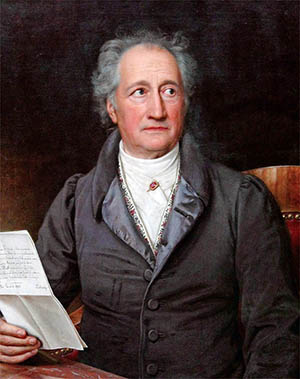
    The qualitative, holistic way of viewing nature was expressed by Johann Wolfgang von Goethe (1749-1832).

    A few years ago, I came across a translation of Goethe’s Theory of Colour, but was of two minds whether to buy it. I knew Goethe was an enthusiastic amateur scientist, but felt that basically he was no more than that – an amateur. All the same, I bought the book – and it stayed unread on my shelf.

    I should have been aware of the risk of dismissing any aspect of Goethe. For example, I knew that he had finally been proved correct about the intermaxillary bone. This is a bone in the upper jaw that holds the incisors, and all animals possess it. But in the 1780s, a famous Dutch anatomist named Peter Camper announced that what makes man quite unique is that he has no intermaxillary bone in his jaw. And Goethe, who was an evolutionist long before Darwin or Lamarck, was sure this had to be nonsense. So he proceeded to search through piles of animal and human skulls, and found signs of the intermaxillary bone in man, although it was now little more than a seam uniting the halves. But when he announced this to Camper and other scientists, they dismissed him as an amateur. By the time of Darwin, Goethe was recognised to be right, and Camper wrong.

    However, where colour was concerned, I simply could not see how Goethe could question the accepted theory. We were all taught at school that white light actually consists of the seven colours of the rainbow – red, orange, yellow, green, blue, indigo, violet. And Newton proved this by a simple experiment. He made a small hole in his blind, to admit a narrow beam of light, and then passed this through a prism. And the light split into the seven colours. Surely that is quite conclusive?

    Goethe borrowed a prism and set about repeating Newton’s experiment. And he immediately came upon an anomaly. If he looked at a white tabletop through the prism, it did not turn into a rainbow-coloured table. It stayed white, and the only rainbow colours were around its edges. And this proved to be generally true. Colours only appeared when there was one kind of boundary or edge.

    Goethe took a sheet of paper in which the top half was white and the bottom half black. When he looked through a prism at the halfway line, he saw that the colours red, orange and yellow run up into the white half. But when he stared intently at the black boundary, he saw that the darker colours of the spectrum are there – light blue closest to the boundary, then dark blue (indigo) and violet. So the order of the colours does not run in the proper rainbow sequence: red, orange, yellow, green, blue, indigo, violet, but yellow, orange, red, blue, indigo, violet, apparently defying Newton’s law.

    All this led Goethe to what will seem to us a strange conclusion. If you look at the sky on a hot day, it is deep blue overhead, and becomes lighter as your gaze travels towards the horizon, where the atmosphere – loaded with light – is thicker. But if you could travel upwards in a rocket, the sky would become steadily bluer and darker until it turned into the blackness of space.

    On the other hand, when the sun is directly overhead, it is yellow. As it moves down to the horizon, its light turns to red. So where the sun’s light is concerned, the atmosphere produces the three light colours, yellow, orange and red. Where darkness is concerned (outer space), the atmosphere creates the three dark colours, blue, indigo and violet.

    To express this crudely, Goethe is suggesting that the dark colours – blue, indigo, violet – are made by diluting blackness, while the light colours – yellow, orange, red – are made by thickening the light.

    My own reaction, when I read all this, was a desire to tear my hair and throw the book out of the window. Where, I wanted to know, was Goethe’s theory superior to Newton’s? And anyway, what did it matter?

    At that point, my friend Eddie Campbell lent me a copy of The Wholeness of Nature: Goethe’s Way of Science by Henri Bortoft, a scientist who had been a pupil of the physicist David Bohm. It looked so difficult that I decided it would take years to read, and I had better buy my own copy – which I then allowed to sit on my shelf for over a year. But when I finally came to read it, I realised that it is among the most important books I had ever bought.

    Bortoft’s book offered some interesting new facts. To begin with, when Goethe had been observing the colours, he would close his eyes, and envisage what he had just seen. He would try to see the colours, in their right order, inside his head, and would do this until he could conjure it up with as much reality as the actual colours.

    He was practising what I described as ‘eidetic vision’. (German philosopher Edmund Husserl, who established the school of phenomenology, introduced the term ‘eidetic vision’ to describe the ability to observe without “prior beliefs and interpretations” influencing understanding and perception.)

    For what purpose? Let Bortoft explain:

    “When observing the phenomenon of colour in Goethe’s way it is necessary to be more active in seeing than we are usually. The term ‘observation’ is in some ways too passive. We tend to think of an observation as just a matter of opening our eyes in front of the phenomenon… Observing the phenomenon in Goethe’s way requires us to look as if the direction of seeing were reversed, going from ourselves towards the phenomenon instead of vice versa. This is done by putting attention into seeing, so that we really do see what we are seeing instead of just having a visual impression. It is as if we plunged into seeing. In this way we can begin to experience the quality of the colours.”

    And after describing Goethe’s way of re-creating the colours in his imagination, Bortoft explains:

    “The purpose is to develop an organ of perception which can deepen our contact with the phenomenon…”

    Goethe called this “active seeing.”

    And this, I would suggest, is the difference between modern man and ancient man. Ancient man, because of his closer contact with nature, was far more accustomed to active seeing.

    I happened to be sitting in bed at about 6.30 on a bright summer morning as I read Bortoft on Goethe. Suddenly I understood what he meant. I looked out of my window at the garden, with its trees and shrubs, and deliberately did what Goethe recommends: that is, I tried to see it actively.

    This made me aware that when I normally look out at the garden, I am seeing it passively, taking it for granted, feeling I know every inch of it. Instead I tried to suspend all ideas, all preconceptions, and simply to look as if it was somebody else’s garden and I was seeing it for the first time. The immediate effect was a feeling of being drawn into nature. The grass, the trees, the shrubs, suddenly seemed more real and alive. Moreover, they seemed to be communicating with me. There was an odd sense of being among old friends, as if I belonged to a club in which I felt perfectly at home.

    I also realised that Goethe, like many poets, possessed this kind of perception naturally. In Faust he talks about nature as “God’s living garment.” In his lyric poetry there is a tremendous, surging vitality that reminds me of certain of Van Gogh’s later paintings – ‘The Road With Cypresses’ and ‘The Starry Night’ – in which the trees seemed to have turned into green flames roaring upwards towards the sky.

    There is a well-known story about how Goethe and the poet Schiller left a rather dull scientific lecture in Jena, and Goethe remarked that there ought to be some other way of presenting nature – not in bits and pieces, but as a living actuality, striving from the whole to the parts. And Schiller shrugged and remarked: “Oh, that’s just an idea.”

    But he was wrong. For Goethe it was not just an idea; it was something he saw when he looked at trees and flowers and grass. They looked alive, as if nature was, in some way, a single organism.

    As an exercise, try looking at a garden with ‘active seeing’. Instead of seeing it as a kind of still life, like a painting, make an effort to recognise that it is in continual motion – very slow motion, but motion nevertheless – and that plants are as alive as insects or birds or bees.

    No doubt this was not true all the time; like the rest of us, Goethe must have had his periods of fatigue in which he saw things mechanically. But in his wide awake moments, he seems to have seen nature as Van Gogh painted it.

    And, as Bortoft recognised, this is not just a matter of making more effort. It is a matter of developing an organ of perception.

    William Blake said: “If the doors of perception were cleansed, every thing would appear to man as it is, infinite.” Aldous Huxley quoted it in his book The Doors of Perception, in which he recorded his experiences with the psychedelic drug mescalin, during which everything suddenly appeared far more real. This is clearly the kind of thing Bortoft is talking about.

    This ‘organ’ is what the German writer Gottfried Benn called “primal vision.”

    How did we lose it? By developing a kind of mechanical perception to cope with the complications of our crowded lives. Wordsworth understood all about it, as he shows in the ‘Intimations of Immortality’ ode. For a child everything seems new and exciting, “the glory and the freshness of a dream.” This is because he lives in the present, and everything appears sharp and clear. Then “shades of the prison house begin to close” upon the growing youth, as life becomes more difficult and demanding. And by the time he reaches adulthood, he is always in a hurry, and the “glory” has faded into the light of common day.

    All that this means, of course, is that he no longer puts the effort into seeing things. When a child sits in front of his favourite television programme, he turns his full attention on it – so much so that he often fails to hear when you speak to him. And everyone can remember that delightful feeling of listening to the rain pattering on the windows – one girl I knew told me she used to roll herself into a ball and say: “Isn’t it nice to be me?” And indeed, it is nice to be you – provided you turn your full attention on it, and don’t permit any ‘leakage’. But this is precisely what we do as we grow up – we spread our attention too thin, and then accept that diluted version of reality as the real thing. And so the ‘certain blindness’ sets in.

    Animals don’t do that. They live comfortably in the present, and turn their total attention to anything that interests them. We ‘civilised’ humans have forgotten how to do this. And we are not even aware we are short-changing ourselves, because we think this is the way things are.

    One of the worst effects of this diluted and degraded consciousness is that it fills us with stress, and causes us to direct attention at worries that don’t deserve it. And when we occasionally experience a breath of real consciousness – for example, setting out on holiday – we assume that it is simply due to the holiday, and fail to draw the lesson that we habitually misuse our powers of attention. The problem is rather like breathing too shallowly until you begin to suffer from oxygen starvation.

    Now according to Princeton psychologist Julian Jaynes, all this began to happen fairly recently. In The Origin of Consciousness in the Breakdown of the Bicameral Mind (1976), Jaynes offers the evidence of “split-brain research” to argue that the consciousness of modern man has contracted so much that he now lives in only one half of his brain – the left hemisphere (which is devoted to language, logic, and ‘coping’ with everyday life). The right half, he claims (which deals with intuitions, insights and feelings) has become a stranger. And Jaynes suggests that man became a ‘left brainer’ as recently as 1250 BCE.

    During the great wars that convulsed the Mediterranean during the second millennium BCE, the old child-like mentality could no longer cope; man had to become more narrow, more obsessive – and at the same time, more brutal and ruthless. (Tension tends to make us cruel.) And in this new state of mind, man lost touch with the gods, and with his own deeper self. About 1230 BCE, the Assyrian tyrant Tukulti-Ninurti had a stone altar built, which shows the king kneeling before the empty throne of the god. But all earlier kings had portrayed themselves sitting beside the god on his throne. Now the god has vanished, and man is ‘on his own’.

    It is an interesting theory, and Jaynes argues it very convincingly; but of course, we have no way of knowing whether it is correct. All we can say is that something of the sort must have happened to us at some point during our evolution.

    All this raises another interesting point. Since it is the left hemisphere of the brain that deals with calculation, we tend to assume that this is the mathematical hemisphere. But any good mathematician will tell you that mathematics requires the same kind of intuition as poetry or art. This would explain how Oliver Sacks’s subnormal twins could exchange enormous prime numbers. They must have been able to see them, in the same way that Michelangelo could ‘see’ the statue inside a block of marble while it was still in the quarry, or Nikola Tesla could ‘see’ a machine he had not yet even committed to paper. The strange implication would seem to be that, in becoming a ‘left brainer’, modern man actually lost an important part of his rational faculty.

    All of which seems to offer interesting glimpses into how our remote ancestors might have possessed ‘high levels of science’ without inventing the concrete mixer.

    Everything seems to indicate that high levels of science require intuition rather than reason. Any good scientist would agree. But it also seems to suggest that intuition might be able to create higher levels of science than most scientists would be willing to concede.

    Get the issue this article appears in

    Eddie Campbell, the friend who introduced me to the work of Henri Bortoft, offered the following advice:

    “Shut the door where you work then sit, bent over your computer keyboard. Put your hands edge-wise on the sides of your head so your line of vision is inside of a tunnel. Stare at the keyboard and let your eyes drift in and out of focus. With a bit of luck you will suddenly find the same sort of ‘shift’ which you get when trying these three-dimensional ‘dazzle pictures’ sold in books. If you are lucky, you’ll suddenly find a strange new version of the familiar keyboard. It satisfies Goethe’s description of active seeing – ‘the perception of an object standing in its own depth’.”

    Its aim is the disappearance of normal subject-object perception. Subject and object somehow become one.

    Eddie Campbell speculates that “there was a line of transmission from a German school, which used active seeing as a means of scientific discovery, perhaps from the early Middle Ages onwards…. Copernicus ‘saw’ his version of the universe in 1543, some three hundred years before the observational data to support it became available.”

    If he is correct, then it might offer us a clue to how ‘high levels of science’ could be possessed by societies that we would regard as primitive.

    Excerpted with permission of the publisher from Atlantis and the Kingdom of the Neanderthals: 100,000 Years of Lost History by Colin Wilson (published by Bear & Co, © 2006 Inner Traditions International, www.InnerTraditions.com).

    [alert type=”general” dismiss=”no”]This article was published in New Dawn Special Issue Vol 9 No 3.[/alert]

    .

    [alert type=”success” dismiss=”no”]If you appreciate this article, please consider subscribing to help maintain this website.[/alert]

    © New Dawn Magazine and the respective author.
    For our reproduction notice, click here.
  • Joséphin Péladan: How to Become a Mage

    Joséphin Péladan: How to Become a Mage

    From New Dawn Special Issue Vol 16 No 5 (Oct 2022)

    We do not believe in progress or in salvation. For the Latin race, which goes to its death, we prepare a final splendour, to dazzle and gentle the barbarians who are to come.” These words, published in Le Figaro on 2 September 1891 as part of an essay titled “Manifesto of the Rose+Cross,” heralded the major work of one of the most astonishing figures in the history of Western occultism – a teacher and visionary with a message that still resonates today.

    Joséphin Péladan was born in 1858 in Lyon, that perennial hotbed of French occultism, in a devout but eccentric Catholic family with occult connections: his father was a member of a Templar order and his older brother Adrien, a homeopathic doctor, studied alchemy and occultism.

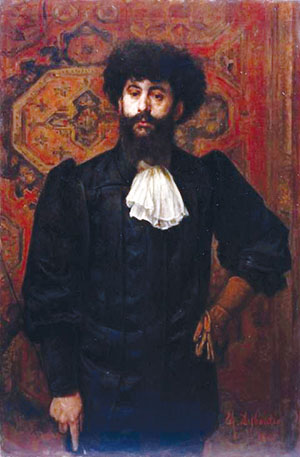
    Portrait of Péladan by Marcellin Desboutin (1891).

    In 1882 Joséphin came to Paris. After a brief period of couch-surfing with friends, he found a job working for the magazine L’Artiste. Jules Bois, a friend of his, reminisced: “He shook his opulent hair above twenty-centime plates of beans at the corner wine merchant. When the cuisine of Paris tired him, he went to decimate the hearts of sentimental provincials. One saw him in a medieval doublet going through the cafés of Marseilles, and he would hide a walking stick beneath his opera cloak so that it looked, under the folds, like a sword.”

    His art criticism, which lambasted the stereotyped Academic style of the period, won him an immediate following, and he added to it by playing the part of a Parisian eccentric. “Do you know what is meant by the expression ‘That man is a character’? Well, a mage is that above all,” Peladan wrote, and he certainly was.

    He’s the man Oscar Wilde was imitating when Wilde went strolling through London in velvet clothes with a drooping lily in his hand. He claimed descent from the kings of ancient Babylon, grew a long square beard in the Babylonian style, and took the Babylonian title Sâr, “prince.” These extravagances aside, his real fame began in 1884 with the publication of his first novel, Le vice suprême (The Supreme Vice).

    Lush, erotic, vivid, and bold, The Supreme Vice became an overnight sensation and helped feed the passion for occultism that made fin-de-siècle Paris one of the wellsprings of modern magic. Its main characters, Princess Leonora d’Este and the magus Merodack, act out a process of initiation that Péladan explored in more detail in many other novels and in a valuable instructional text, Comment devient un mage (How To Become A Mage), published in 1891.

    Become an Individual

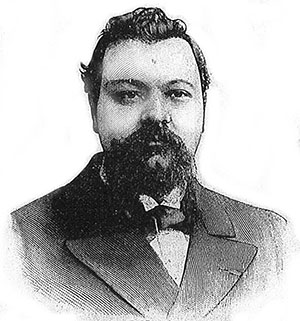
    Gérard Encausse (Papus).

    To Péladan, the point of magic was the creation of the free individual. We are not born individuals, Péladan taught, and our education and upbringing are designed to keep us from achieving individuality. “Society,” he wrote, “is an anonymous enterprise for living a life of secondhand emotions.”

    To become an individual, it is necessary to break free from the mental grip of your culture, and that requires sustained effort guided by a clear awareness that a great deal of what you consider “your thoughts” and “your feelings” belong to society, not to you. That was Péladan’s magic, and it is just as possible and just as important now as it was in his day.

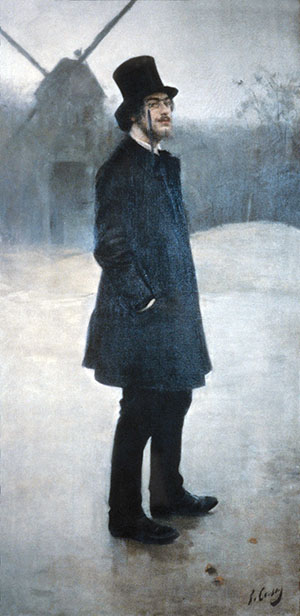
    Erik Satie by Ramon Casas (1891).

    Paris in the late nineteenth century was awash with magical orders and secret societies, and it was inevitable that Péladan would try to bring this vision of magic into one of them sooner or later. In 1888 he joined together with Stanislaus de Guaita, Gérard Encausse (who wrote important occult works under the name Papus), and a circle of other leading occultists to found L’Ordre Kabbalistique de la Rose+Croix (the Cabalistic Order of the Rose+Cross). Differences in opinion, particularly over Péladan’s Catholic loyalties, eventually drove Péladan to break with the others. In 1890 he founded an order of his own, L’Ordre Catholique du Rose+Croix, du Temple, et du Graal (the Catholic Order of the Rose+Cross, the Temple, and the Grail).

    Salons de la Rose+Croix

    With the help of a wealthy patron, Count Antoine de la Rochefoucauld, and a circle of enthusiastic followers, Péladan set out to make as big a splash for his new organisation as he could. Erik Satie, then a rising star in the Paris music scene, became the order’s official composer and wrote three Sonneries de la Rose+Croix (Fanfares of the Rose+Cross) for its meetings. 1891 saw the publication of How to Become a Mage and the “Manifesto of the Rose+Cross.” 1892 brought Péladan’s greatest triumph – the first of the Salons de la Rose+Croix.

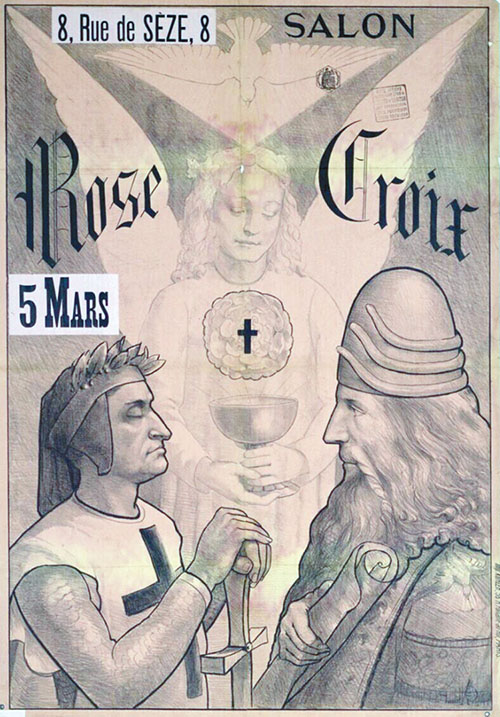
    Lithographed poster by Gabriel Albinet for the 3rd Salon Rose-Croix (1894). 

    At that time, the official Salon, held annually in Paris, was the bastion of Academic art in France. Péladan conceived the plan of sponsoring an alternative Salon under the aegis of his order, providing a venue for the more innovative and esoterically inclined art of the Symbolist movement, which he favoured but which was strictly excluded from the official Salon. His alternative show opened on 9 March 1892 in the Galeries Durand-Ruel, 11 rue le Peletier, Paris. It was a roaring success, proving once and for all that the art being created outside the official salon was far superior to the art produced inside it.

    Anticlimax followed. Péladan’s order sponsored five more Salons de la Rose+Croix, but none of them succeeded as brilliantly as the first. The occult movement in France crested and began to ebb as the political pressures that eventually resulted in the First World War seized the public imagination. Through it all, Péladan kept writing and teaching, turning out novels, plays, essays, instructional works, and pamphlets for an audience that gradually dwindled over time. When he died in 1918, he was nearly forgotten.

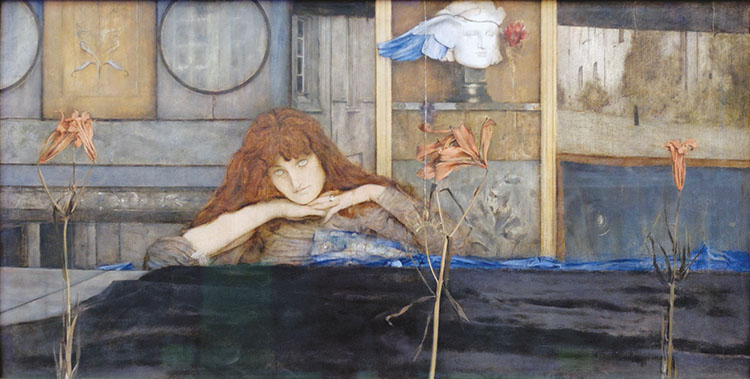
    I lock my door upon myself by Fernand Khnopff (1891). Exhibited at the 2nd Salon Rose-Croix (1893).

    Magic in a Dying Civilisation’s Twilight Years

    All this labour was in the service of an utterly serious purpose. Péladan belonged to that large minority of nineteenth-century thinkers who recognised that the European societies of their day were headed for disaster. What set him apart from the sentimental conservatives of his time and ours is that he recognised that the heritage of old Europe was already past saving and that he worked his magic in the twilight years of a dying civilisation.

    Of course, he was quite correct. The great cultures of Europe, in every sense Péladan would have recognised, died in the trenches of the First World War. The forty years from Sarajevo in 1914 to Dien Bien Phu in 1954 saw Europe’s nations flattened to the ground by two catastrophic wars, overwhelmed by cultural change, and reduced from the status of masters of the planet to pawns in a game of bare-knuckle politics played with gusto by the United States and the Soviet Union. All this made Péladan’s lessons more than usually relevant because the catastrophe he foresaw had a clear magical dimension.

    Read contemporary accounts of the way that Europe stumbled into war in 1914 and it’s hard to miss the weirdly trancelike state of mind in the warring nations, as vast crowds cheered the coming of hostilities that would cost millions of them their lives, and left-wing parties that had pledged themselves to nonviolent resistance in the event of war forgot all about their pledges and swung into step behind the patriotic drumbeats.

    The collective consciousness of the age was primed for an explosion, partly by the sorcery of competing political and economic interests, and partly by the rising pressures of intolerable inner conflicts that were prevented by the limits of the mass mind from finding a less catastrophic form of expression.

    It took an extraordinary degree of mental independence to stay clear of the trance state and its appalling consequences, but that was one of the things the magical training available in those days was intended to do.

    How To Become A Mage

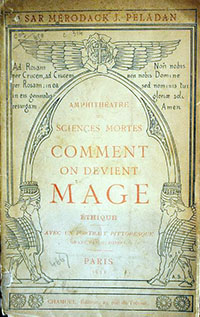
    How To Become A Mage, originally published in 1891

    Péladan was inevitably the most outspoken of the period’s occult writers on this subject, as on so many others, and filled a good many of the twenty-two chapters of How To Become A Mage and long passages in his novels with advice on how to open up an insulating space between the individual mind and the pressures that surround it. Many of the same points, though, are made in quieter ways by other writers of the time, and in the instructional papers of magical lodges of the same period. All this advice is aimed at the social habits of another time and has not necessarily aged well, but the basic principles still stand.

    The first of those principles is to limit and control the channels by which the mass media and their wholly owned subsidiary, public opinion, get into your nervous system. Now, of course, that raises the hackles of quite a few people nowadays, but it’s essential. Mass-produced popular culture exists solely for the purpose of emptying your wallet and your brain, not necessarily in that order. Popular culture is a vehicle for the mass mind; it works, as negative magic always works, by inducing you to think less and react more. Thus, in the strictest sense of the word, it makes you more stupid. That’s not a useful habit to cultivate.

    One point Péladan made that remains valid today is that spending time among a crowd of people whose minds and conversation are utterly conditioned by popular culture is not noticeably different from getting your popular culture firsthand from the media. If anything, this is even more of an issue these days than it was in his; I suspect most of us have had the experience of hearing a conversation between two people in which every single word spoken was a sound bite from some media source or other. There’s no need to become a hermit, but it’s a good idea to choose your crowds with some care.

    Steps such as these will cut down on the influence that the pop culture of our time has over your thoughts, feelings, and decisions. Still, the empty space has to be filled with something better, or there won’t be much of an improvement; this is the second of Péladan’s principles. It avoids the perennial mistake of Romanticism, the notion that all you have to do is fling aside the fetters of social expectations and do what comes naturally. The problem here, of course, is that “what comes naturally” to every one of us is the product of a lifetime spent absorbing social cues from people around us and from the media, all of which triggers unthinking and unconscious reactions we share with our nonhuman relatives: social primate see, social primate do.

    Being who he was and living when he did, Péladan phrased that dimension of the work in terms of art, music and literature, and those are certainly among the available options. If you happen to be a dandy and an aesthete and live in a city with good art galleries, concert venues, and the like, you could do worse than to follow his recommendations – he was particularly partial to Renaissance paintings, German classical and romantic music from Bach through to Wagner, and Shakespeare’s plays – but I don’t recommend copying him and Oscar Wilde and strolling down the streets with a lily in your hand. Their wives clearly had to put up with a lot. (You didn’t know that Wilde was married, did you? Her name was Constance; she was an initiate of the Hermetic Order of the Golden Dawn, the most influential magical order in late nineteenth century Britain; and yes, she did have to put up with a lot.)

    Still, that’s only one option, and the last thing you should do in this sort of practice is rely on someone else’s notions of what ought to feed your mind. “‘Fear the example of another, think for yourself’,” wrote Péladan; “this precept of Pythagoras contains all of magic, which is nothing other than the power of selfhood.” The important thing is simply to choose things to read, watch, hear, and do that you consider worthwhile instead of passively taking in whatever the sorcerers-for-hire of the media and marketing industries push at you. What falls in the former category will vary from person to person, as it should.

    All this seems relatively straightforward, and indeed it’s quite possible to get to the same decision by plain reasoning starting, say, from the shoddy vulgarity of mass-produced entertainment and going from there to the realisation that there’s much more interesting mind food to feast upon. That making such choices also makes it easier to think clearly would, in that case, be merely a pleasant side effect of good taste. The operative mage in training does the same thing deliberately, not just to think clearly but to feel and will clearly as well. As the training proceeds, however, those effects begin to reveal another side, which is their effect on other people.

    Péladan hinted at this effect in How To Become A Mage, though custom in the occult scene back in his time didn’t favour spelling out the details. “Do not look for another measure of magical power than that power within you, nor for another way to judge a being than by the light that he sheds to perfect yourself by becoming luminous, and like the sun, to excite the ideal life latent around you – there you behold all the mysteries of the highest initiation.” What he did not quite say is that “the ideal life latent around you” is in other human beings. Especially in times of cultural crisis, stepping outside the lowest common denominator of the mass mind has an effect rather like induction in electrical circuits. Put another way, it can be as catchy as a lively new tune.

    Get the issue this article appears in

    You can catch that tune, so to speak, from a person; you can catch it from a book, which is why Péladan wrote his twenty-two novels, each of them exploring some aspect of the relation between the initiate and a corrupt society; you can catch it from other sources, the way Rainier Maria Rilke did from a statue of Apollo; you can also catch it all by yourself, by climbing out of collective consciousness for some other reason and discovering that you like the view.

    Far more often than not, those who step out of the collective consciousness of their society promptly jump back into the collective consciousness of a congenial subculture, which from a magical perspective is no better – thinking the same thoughts as all your radical friends is just as much secondhand living as is thinking the same thoughts as the vacuous faces on the evening news – but there’s always the chance of getting beyond that.

    To get beyond that is the central theme of Péladan’s work. His books are readily available on the internet at present, though only a few of them have been translated into any language but French; his ideas remain vital and important. To take up the challenge he offered is to begin working the most powerful magic of all – the creation of yourself as a free individual.

    John Michael Greer wrote the foreword to the first English translation of Péladan’s How to Become a Mage (subtitled A Fin-De-Siecle French Occult Manifesto), published in 2019 by Llewellyn.

    [alert type=”general” dismiss=”no”]This article was published in New Dawn Special Issue Vol 16 No 5.[/alert]

    [alert type=”success” dismiss=”no”]If you appreciate this article, please consider subscribing to help maintain this website.[/alert]

    © New Dawn Magazine and the respective author.
    For our reproduction notice, click here.
  • Sound Healing & Energy Medicine: Can Raga Therapy Calm the Emotions?

    Sound Healing & Energy Medicine: Can Raga Therapy Calm the Emotions?

    From New Dawn 190 (Jan-Feb 2022)

    Energy is a unique expression of Nature – it can neither be created nor destroyed, but it can be converted from one form to another. Amongst all forms of energy, the capacity of sound energy to evoke emotions has been investigated by scientists,1 and it was common knowledge in ancient cultures.2

    In the USA, healing by use of sound was pioneered in the late 1950s.3 Since human emotions are defined in Latin as ‘energy in motion’, and music is sound energy, I’ve wondered for quite some time if sound energy, as music, can be used to bring about positive and lasting changes in our bothersome emotions.

    When an opportunity arose to interview a leading clinician-scholar and musician, Dr Rajan Sankaran, I had several questions on this subject, and his answers (excerpts below) were quite illuminating.

    VATSALA SPERLING (VS): Music is sound energy. Emotions have energy. Can music be used for healing our emotional state?

    Dr Rajan Sankaran

    RAJAN SANKARAN (RS): Yes. Can a random selection of music help, or is there a possibility of matching a person’s emotional state with music and have them listen to specific music that might lead to a therapeutic experience? To answer this question, I looked into like cures like, a principle based on matching of frequencies. Ill-matched frequencies lead to disharmony. Well-matched frequencies express harmony. My research of over three decades is based on the paradigm that within us, a tune is playing that I have named as “the other song.” This tune, an energy pattern that we borrow from the natural world, is the loudest when we are unwell. When we find an energy pattern that is a match for the ‘other song’ playing within us, we experience healing, and in the current context, I am exploring Hindustani classical music ragas as a source of matching energy patterns.

    VS: What are ragas? How to find an energy pattern from the ragas that matches our emotional state?

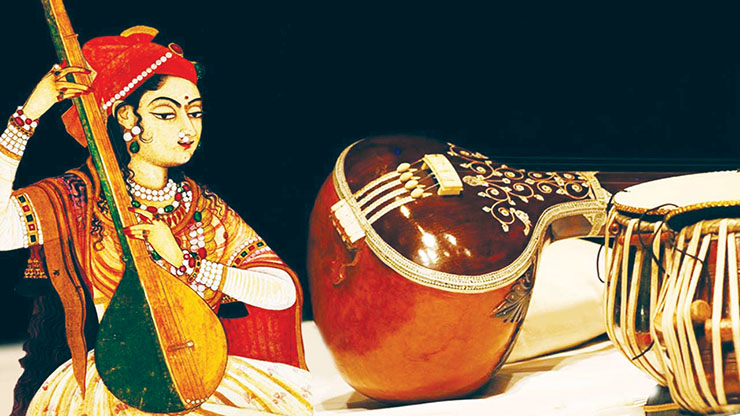
    RS: A raga is an energetic expression of a certain musical note in a certain harmonic pattern. Differences in patterns differentiate one raga from the other. Based on my research,4 I am proposing that a specific type of person must have an affinity for a specific type of raga. When a raga is selected per the principle, like cures like, this specific raga is able to elicit a healing response. You can find matching ragas in the Raga App and hear them using your phone.

    VS: How did you create a Raga App?

    RS: During the pandemic lockdown, for 26 days, I gathered volunteers from around the world online and sang to them a raga each day. I sang solo at a particular speed or tempo with just one string instrument. The listeners wrote down their responses at the physical, emotional, imagery and sensation levels, and if they experienced speed, vibration, thermal sensitivity, perception of colours, etc. The common theme emerging from these responses was considered as the essence of the raga. The result of this research is distilled in my Raga App.

    VS: Please describe your Raga App.

    RS: The Raga App includes 26 of the most well-known ragas. Simple questions spread over a few frames allow you to identify your emotions and choose a raga that matches your emotional state. You listen to the raga singing for the next uninterrupted fifteen minutes or so, you get to rate it and click on the effect the raga has on you. You can also send detailed feedback to the email address provided with the App.

    VS: What feedback has come in so far?

    RS: Some people had brief relief, but many others experienced lasting improvement and deeper healing after listening to ragas that matched their emotional state.

    VS: What is coming next?

    RS: My research team is trying to find ragas specific for various disease states. Ragas, as pure music, do not have coherent words. They do not engage the mind in deciphering any meaning. Mind is free to experience the sound of the ragas as an energy signature. When chosen per like cures like, the energy signature of the raga can mirror the innate energy pattern of an individual and initiate healing.

    If we see disease and healing as a dynamic process, then freedom from disease must come from deploying energy as a healing agent. Energy cannot have a better representation than music. Music cannot have a better representation than a raga, which is pure energy. Energy medicine is the future of medicine, and raga therapy is a step in that direction.

    The Raga App is free for download. For Android phones and iOS, https://play.google.com/store/apps/details?id=com.unthinkable.raga&hl=en_IN&gl=US. For Apple phones: https://apps.apple.com/us/app/raga-therapy/id1553586373.

    Dr Rajan Sankaran is a practitioner, research scientist, teacher and author of Homoeopathy System of Medicine. He lives and practices in Juhu area of Mumbai, India. Websites: www.theothersong.com & www.sankaransclinic.com. Email: raga@sankaransclinic.com.

    Dr Vatsala Sperling’s book The Ayurvedic Reset Diet was reviewed in New Dawn 188.

    [alert type=”general” dismiss=”no”]This article was published in New Dawn 190.[/alert]

    [alert type=”success” dismiss=”no”]If you appreciate this article, please consider subscribing to help maintain this website.[/alert]

    Footnotes

    1. https://news.berkeley.edu/2020/01/06/music-evokes-13-emotions
    2. https://hampi.in/vittala-temple; https://en.wikipedia.org/wiki/Airavatesvara_Temple; https://en.wikipedia.org/wiki/Singing_Stones_of_Brittany; https://svaram.org/wp-content/uploads/2020/10/BRO-Stones-low.pdf; Clarke J, Unexplained!: 347 strange sightings, incredible occurrences and puzzling physical phenomena. Visible Ink, 1993.
    3. Psychiatric music therapy in the community: The legacy of Florence Tyson. Barcelona Publishers, 2004.
    4. Sankaran, R. The substance of Homeopathy. Homeopathic Medical Publishers, India, 2004.

    © New Dawn Magazine and the respective author.
    For our reproduction notice, click here.
  • Exploring the Shamanism–Alien Abduction Connection – Part 2

    Exploring the Shamanism–Alien Abduction Connection – Part 2

    From New Dawn 189 (Nov-Dec 2021)

    A comparison of the two types of experiences – shamanic and alien abduction – is revealing. Folklorist Dr T.E. Bullard lists the following elements of UFO abduction narratives: 

    • capture

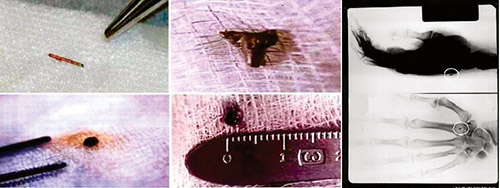
    • examination (which includes tales of specimen taking, reproductive examinations, implanting of small artefacts inside the abductees, and removal of organs)

    • conference (the witness talks with abductors) 

    • tour

    • otherworldly journeys

    • theophany (the witness has a religious experience or receives a message from a divine being) 

    • return

    Michael Harner, Holger Kalweit and others list the following recurring elements of shamanic experiences:

    • selection or capture

    • initiation experiences (which include accounts of implanting artefacts, removal of organs, etc.)

    • ‘magical flights’ including ‘celestial ascents’ to strange realms dialogues with mythic personages or spirits 

    • return

    Consider the following. Disembowelment is undoubtedly one aspect you would not expect to find in contemporary UFO abduction accounts but astonishingly enough, such features do occasionally appear. 

    In the bizarre Apache Junction, Arizona case of 1971, the subject underwent a frightening examination in which he felt his chest opened and his heart briefly left his body. Sandy Larson, another abductee, reported that her abductors even removed her brain from her skull! Such experiences, on whatever level of reality or unreality they occur, are common fare in shamanic accounts.

    Examples of implants, believed to be ‘alien’, surgically extracted by Dr Roger Leir, author of The Aliens and the Scalpel.

    Both classes of experiences talk about the placement of artefacts within the body. In shamanism, it is crystals and the like. With UFO abductions, it is ‘implants’. Celestial ascents are common to both genres. 

    Even the descents into ‘other realms’ – the underworld or under the sea – that occur in shaman stories also occasionally feature in UFO abduction stories. 

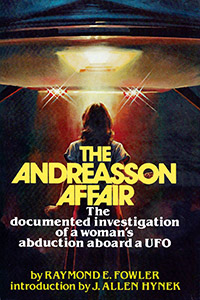
    In the strange Filiberto Cardenas abduction story, Cardenas spoke of being taken by three human-like entities to a beach where the aliens apparently worked a combination lock on a rock. The rock opened, revealing a tunnel, “and they rushed down into the sea at a ‘great velocity’.” Even the extraordinary Andreasson affair, the subject of books by UFO researcher Raymond Fowler, featured a journey down a tunnel into a strange subterranean realm. 

    Animals often feature in both experiences. In the case of shamanism, they take the form of ‘power animals’ or ‘spirit allies’. Jean Achterberg, in Shirley Nicholson’s Shamanism, states: “Deer are widely associated with shamanic work. In Siberia, real-life reindeer shared the fly-agaric journeys with the shaman… The deer spirit is believed to leave the sacred peyote buttons as tracks to guide the shamans on their supernatural course …Even in prehistoric times, the deer had healing significance, based on man/deer shaman art forms that have been found on caves and artefacts.” Harner describes how the shaman utilises deer, birds, fish, wolves, bears, and other animals.

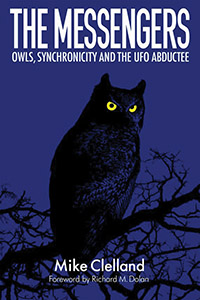
    In UFO abduction accounts, the presence of animals is rationalised as “screen memories” of aliens. In his book Missing Time, Budd Hopkins describes Virginia Horton’s magical encounter in a French wood with a talking deer! In Whitley Strieber’s books, owls and wolves are often referred to. He also refers to the experience of Barry Maddock, who had “the bizarre impression that an enormous grey owl with big, black eyes” was in a room with him. It took Maddock into “a large vaulted chamber that reminded him of the Sydney Opera House. There it turned into a bird of paradise.” And again, in the Andreasson affair, Betty Andreasson encountered the Phoenix bird during one of her abduction experiences. More recently, experiencer Mike Clelland has written The Messengers: Owls, Synchronicity and the UFO Abductee (2015) and Stories from the Messengers: Accounts of Owls, UFOs and a Deeper Reality (2020).

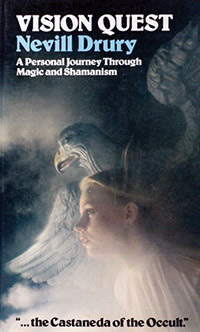
    Nevill Drury (1947–2013) explored the links between shamanism and contemporary Western occultism. In his book Vision Quest (1984), Drury gives a fascinating account of his introduction to shamanic tutelage under Dr Michael Harner at a transpersonal conference in Victoria in November 1980. His shamanic journey was complete with tunnel imagery, a palace of crystal, Phoenix imagery, having a crystal placed in his chest, and seeing saint-like figures rimming the tunnel he journeyed through. To him, “the shaman’s journey, in a very real and personal way, is a pathway to sacred space… our inner being.” 

    Note, however, that the Andreasson affair – an “otherworldly journey” told from the perspective of a UFO abduction narrative – also featured tunnel imagery, a large crystalline structure, a “vision” of the Phoenix, and encountering saint-like figures. She also told of having an “implant” placed inside her, behind the eyes. The correspondences were fascinating! The first of the Andreasson series of books appeared in 1979 and 1982. Nevill Drury’s initial shamanic journey occurred in 1980. He had no awareness of the Andreasson books.

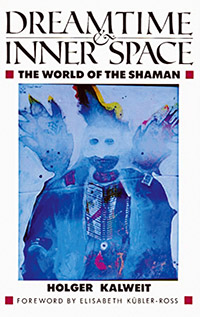
    The sexual/reproductive element also appears in both shaman and UFO abduction narratives. In shaman accounts, we even have stories of “spirit weddings” and “spirit children” off-spring  – the results of liaisons between shamans and the “spirits.” Holger Kalweit gives a fascinating account of such a situation in his book Dreamtime and Inner Space. The “shamaness” gave birth to a child by (a spirit) in the spirit world, and “he would bring it to her at night for her to breastfeed it. He came when everyone was asleep. The people in the village heard the child cry, but her own family slept as if they were dead.” It is fascinating to compare that sort of story with the accounts Budd Hopkins describes in his book Intruders – tales of ova sampling, baby presentation and baby bonding! 

    Shamanism, Abductions & Healing

    Finally, there appears to be a growing correspondence in UFO abduction accounts with one of the primary goals of shamanism – healing. 

    Nevill Drury (1947–2013) explored the links between shamanism and contemporary Western occultism, primarily in his book Vision Quest (1984). 

    In Gary Doore’s compilation, Shaman’s Path: Healing, Personal Growth and Empowerment, Stanley Krippner writes: “Shamans were the world’s first healers, first diagnosticians, first psychotherapists, etc… There are shamanic healing methods that closely parallel contemporary behaviour therapy, chemotherapy, dream interpretation, family therapy, hypnotherapy, milieu therapy, and psychodrama. It is clear that shamans, psychotherapists, and physicians have more in common than is generally suspected. For the shaman, however, the spiritual dimension of healing is extremely important, whereas contemporary physicians and psychotherapists typically ignore it.” 

    Therapies have emerged with shamanic perspectives, including Stanislav Grof’s “Holotropic Therapy” and Michael Harner’s “Shamanic Counselling.” Many “close encounter” therapies, some with questionable efficacy, have emerged, with tenuous roots in early abduction experiences.

    In the classic watershed UFO abduction case – that of Betty and Barney Hill – as told in the 1966 best-selling book The Interrupted Journey, Dr Benjamin Simon, a Boston psychiatrist, investigating the cause of stress-related problems experienced by the couple, used hypnotherapy to explore the UFO abduction story and arrive at a therapeutic outcome. The complex abduction story that emerged under hypnosis had a positive psychological and cathartic effect on the couple. The psychotherapeutic benefits of confronting the abduction story were obvious.

    The growing number of health professionals who began to examine the UFO abduction mystery contributed to a therapeutic enrichment of the witness’s interaction with researchers. For example, Dr Rima Laibow, a New York psychiatrist, had been working with Budd Hopkins. More than half of the abductees she worked with were what she referred to as “dual victims.” They reported not only UFO abduction experiences but also child abuse. Some researchers suggest this aspect explains the origin of the abduction tales, i.e., the abduction story was a “screen memory” for child abuse. Dr Laibow rejected this hypothesis, pointing out the consistency of the accounts, the physical evidence in many cases, the emergence of many of the abduction narratives under hypnosis (“an uncommon mode of presentation for screen memories”) and the presence of similar abduction scenarios in the “unabused.” 

    Further still, she found in a number of cases, “following the abreaction of the abduction, therapeutic work could occur spontaneously about material which was not abreacted: the early physical and/or sexual abuse.” Elaboration of the abduction material often led to a reassessment of memories of abuse and a positive reintegration of the individual. Physiological symptoms were occasionally overcome, leading to a positive therapeutic outcome. 

    Dr Laibow concluded in an article in the International UFO Reporter that “the need for additional study, deeply intermeshed with, not separate from, the active therapy of those who have this set of realities in their lives, is a matter of urgent public health concern (whatever we now feel the locus of the reality to be).” Dr Laibow’s involvement tapered off with some controversy beyond the scope of this limited review.

    Budd Hopkins remarked in Intruders that the long-term effect of these complex abduction experiences is psychological. He stated: “Though some of the resulting behaviour may be similar, UFO abductees are not like people who’ve had a single traumatic experience, such as the victims of automobile accidents or brutal muggings. They are people who have been, at intervals over the years, involuntarily subjected to a frightening and invasive ‘secret life’…. The emotions this secret life engenders can include fear, dread, helplessness, profound maternal confusion and loss, the sense of physical – even sexual – vulnerability, and a thousand other things, ranging all the way up to basic uncertainty as to where one really belongs, where home really is. And all along this road lies a terrible sense of self-doubt, a questioning of one’s very sanity.” 

    Initially, very few of the people who allegedly experienced an abduction sought out publicity. Indeed, most were terrified of it. They were more like the victims of assault than starry-eyed seekers of a new world reality. They seemed to be haunted by their experiences, and most were seeking answers. Instead, they were confronted by shallow, ridiculing media reporting and a general public that had no awareness of the controversy. The inevitable response from a position of ignorance was to either ridicule or reject – “They must all be nuts.” Given the extent of the problem, this was a very unwise approach. Something was happening. While some thought the issue might turn out to be a quantum leap in the field of anomalistic psychology, others felt otherwise. 

    Opening Up New Avenues

    A full appreciation of UFO abduction and shaman experiences may also provide a quantum leap in understanding in another direction. 

    Whitley Strieber had viewed shamanism as “the shattered remnants of mankind’s early attempts to control this (visitor) phenomenon.” Perhaps the reverse may have been more likely? Shamanism involved individuals who seemed to have a strong measure of control over the set of realities they operated in. In UFO abduction experiences, the generally helpless victims have no control over the bizarre ‘reality’ that overwhelms them. It appeared a phenomenon operating on two opposite ends of a control continuum. Perhaps we, as a culture, had lost an ability that other cultures and generations may have had to some extent? 

    For abductees or experiencers, perhaps there are ‘rites of passage’ in achieving some level of understanding and control over the UFO abduction experience. Some experiencers or abductees have in recent times collectively developed communities of support. Many have gone “underground” to avoid connections. Others have become activists taking control of their experiences, resisting or avoiding those they did not see as understanding or embracing their realities. What the future holds for these changing dynamics remains to be seen.

    Alien abductions may yet prove to be remarkable testimony to the eccentricities of the human condition – that is, these experiences may spring from the realm of the hoaxer, the deluded, the alienated of our society, or may yet be about something truly extraordinary. This complexity demands we keep an open mind and keep the matter properly in question until we have enough information to determine what is going on. The range of intelligent and qualified people looking into the UFO abduction mystery grew over the decades. People who have these experiences are also contributing in substantial and fascinating ways to bringing understanding to these strange realities.

    Experiencers should not be unrealistically encouraged by advocates of alien presence nor, at the other extreme, should they be ridiculed by the sceptical among us. Instead, they should be helped to confront the reality of their experiences, whether or not it is eventually found to be prosaic, profound, or extraordinary. Only time will tell whether the search for answers will give us more insights into the human mind and the UFO phenomenon. Could it be that it will do both? 

    The Wandjina

    It is fascinating when sacred art and the UFO subject intersect. Such intersections occur in occasionally unusual ways that are controversial and yet potently rich in potential meaning. 

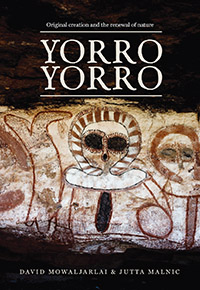
    In my 2005 book Hair of the Alien, I wrote: “For the woman, the most strikingly similar image to that of the beings [she encountered in an experience Whitley Strieber described as ‘the best description of the gray beings’ among the thousands of letters that were sent to him in the wake of the success of his book Communion] is the Wandjina – the haunting Australian aboriginal rock paintings that reveal figures with large dark eyes and no mouth.” 

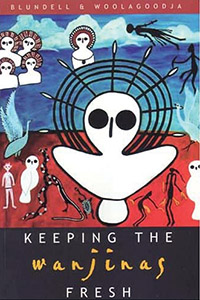
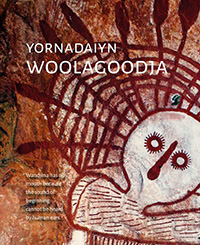
    The Wandjina (or Wanjina) are beautifully evoked in such works as Yorro Yorro: Everything Standing Up Alive by David Mowaljarlai and Jutta Malnic, Keeping the Wanjinas Fresh by Valda Blundell and Donny Woolagoodja, and most strikingly to a worldwide audience rising up from the floor of the Sydney Olympic stadium in 2000 during the opening ceremony. 

    Such striking resonances are hauntingly fascinating in their possibilities. I was pleased I had met David Mowaljarlai in the company of John Mack and Stephen Larsen (the co-author of Joseph Campbell: A Fire in the Mind: The Authorized Biography) a year before his passing in 1997. Donny Woolagoodja continues the tradition in his biography Yornadaiyan Woolagoodja, a wonderful exploration of his personal interaction and relationship with the Wandjina images. 

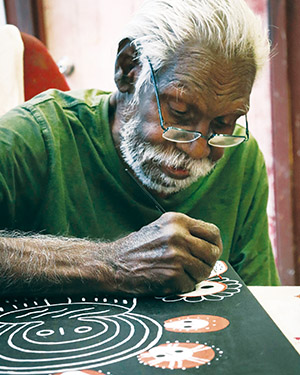
    Keeping the Wanjinas Fresh documented the Wanjina (Wandjina) rock paintings and the living tradition that are being kept “fresh” through “touching” up the old rock paintings and creating new “modern” expressions of the Wanjina – “eternal manifestations of the sacred life force… the supernatural ancestors” of the local aborigines (including the Worrorra, Ngarinyin and the Wunambal). Donny Woolagoodja has a direct linkage to the “retouching” tradition through his father, Sam Woolagoodja.

    The book highlighted that “the Wanjinas created the countries that their human descendants belong to and they made the laws that guide their everyday lives. Visible as paintings at hundreds of rock art sites throughout their countries, the Wanjinas remained sources of strength for Sam and his people during the tumultuous years of colonisation. Even after the Worrora were displaced from their countries, the Wanjinas continued to instruct them in their dreams.” Also: “Expressions of the Wanjinascan be seen in the night sky, for instance the Milky Way. They are also closely associated with clouds and water… Sam once told (Blundell) that the Wanjinas ‘came through clouds’. ‘That’s their home’, he said, ‘they come from rain’. People are ‘born in sunlight’, while Wanjinas are ‘born in the dark’.”

    Donny Woolagoodja and his biography Yornadaiyan Woolagoodja, which is subtitled ‘Wandjina has no mouth because the sound of beginning cannot be heard by human ears’. A range of Donny’s prints featuring the Wandjina are available from Mowanjum Arts at www.mowanjumarts.com.

    People around the world would have seen the Wanjina rising from the ground in the opening ceremony of the 2000 Sydney Olympics. Donny Woolagoodja was the traditional artist behind that extraordinary display. Most pivotal in the book, beyond the beautiful contemporary Wanjina artwork, is the “refreshing” tradition among chosen local people.“While most of the Wanjinas have lost their mouths, they are still able to instruct people in their dreams.” According to Donny, those aspects of recent paintings that appear to be ‘new’ are actually contemporary revelations of Lalai (“the primeval era of creation” or “the Dreaming” – an eternal sense of “living cosmology”). Donny explains: “When I paint, I follow the dream.”

    Those tempted to speculate that the Wanjina (or Wandjinas – the original widespread spelling variant) are evidence of “extraterrestrials” visiting Earth should consider these works. I have been a cautious traveller in this context. On my website (www.theozfiles.com) and in my earlier book The OZ Files: The Australian UFO Story, I stated:

    “The legends and lore of the indigenous aborigines also provide material suggestive of interactions with anomalous aerial phenomena. Of course, in speculation about such data, it should be realised that the accounts are of historical and anthropological nature and therefore care should be taken not to interpolate too much into them. Aboriginal myths incorporate the idea of ‘sky-beings’, with the Wandjina being among the most interesting to consider. The Wandjina have been preserved in a fascinating oral tradition and in a large collection of rock paintings scattered throughout the Kimberley region of northern Australia. The paintings have received all manner of interpretations from stylised representations of a pervasive myth system to naive ‘ancient astronaut’ theories. It is however fascinating to see that the indigenous tribes viewed the Wanjina as ‘the spirit in the cloud’. Indeed, the unique painting style shows a logical sequence from human figures to stylised representations of clouds. This duality of anthropomorphic form and ‘clouds’ is widespread in primitive cultures and finds an interesting parallel in the biblical accounts in ‘Exodus’. While this line of thought is suggestive of superior ‘sky beings’ acting as cultural catalysts for primitive societies, I should point out that making mythological component comparisons can make for interesting exercises, full of emotive similarities, but are purely speculative.”

    Such speculations need to have their anchor points in the living and preserved traditions of the people who view the Wanjinas as their primary “religious” focus. To not do so is to ignore a primary and fascinating source of oral and pictorial knowledge about these extraordinary beings and risks disrespecting an extraordinary age-old and living tradition.

    Fourth Level of Meaning

    Another insightful book emerged in 2006. Treading Lightly: The Hidden Wisdom of the World’s Oldest People by Professor Karl-Erik Sveiby (a specialist in Knowledge Management) and Tex Skuthorpe (an aboriginal Nhunggabarra cultural custodian) described “a unique journey into traditional Aboriginal life and culture, and offers a powerful and original model for building sustainable organisations, communities and ecologies. It is a compelling message for today’s world.” 

    In 2004, Professor Sveiby approached researcher Steve Walters and me to get our opinions on a strange photographic anomaly – a possible aerial anomaly – he had recorded during April 2004 at Mount Oxley near Bourke, New South Wales, while in the company of Tex Skuthorpe and his partner. Karl-Erik presents the unusual photo in the book as a possible manifestation of the Fourth Level of meaning in aboriginal stories – the spiritual realm. Through the fascinating aboriginal story of How the Nhunggabarra got flowers, Mount Oxley (or Wubi-Wubi) was a focus of shamanic contact between aboriginal men of high degree (or wiringins) and the ancestral being Baiame (Baayami).

    Mount Oxley (Wubi-Wubi), near Bourke, New South Wales

    Mount Oxley had already become an interesting place for me. I visited it back in September 2003, exploring its fascinating sense of presence and its enigmatic lore of strange phenomena. I was already aware of the legend of the flowers through the renderings of K.Langloh Parker of local aboriginal tales she collected in the late 1890s. It was fascinating to see the story retold through the words of local custodian Tex Skuthorpe and its “Fourth Level” of meaning and beautiful evocation through Tex’s great paintings.

    While prosaic explanations may be evident for the photo anomaly Karl-Erik recorded (such as moisture condensation effects), it is fascinating to consider the context he and Tex explored in their important book. I certainly did not want to detract from the central message of Treading Lightly, given its significance as a potent intersection between a unique ancient culture and modern knowledge management theory.

    There may have been fascinating resonances between the concepts of “Fourth Level” (through Treading Lightly – shamanic spiritual interactions) and “Fourth Kind” (through “alien abductions”) – intersections I had been contemplating for some time. Treading Lightly describes powerful and important matters that need to be focused upon by our modern culture.

    Get the issue this article appears in

    Encounters Throughout Asia

    My trips in Thailand and China during 2005 and 2006, exploring the Asian UFO experience and evidence for an “alien DNA paradigm,” also yielded evidence possibly supportive of the shamanic alien abduction connection. I focused on genetic connections at a very specific and detailed level because of the unusual nature of the rare Asian mongoloid sequence, revealed in the Khoury sample described in my book Hair of the Alien. They occurred in the DNA signatures of an isolated group of people, the Lahu, who were limited to the region of the southern Chinese province of Yunnan, and the immediate region bordering that locality – northern Thailand, Myanmar (Burma), and Laos. The areas of Yunnan and northern Thailand yielded considerable data and research, particularly with fascinating UFO and unusual light phenomena connections in both regions.

    Bill Chalker with a Lisu (Lahu) village member in the foothills north of Chang Mai, Thailand, in 2006.

    Strange light phenomena and possible UFO connections are found in the shamanic type elements of Lahu society. Dr Anthony Walker’s 907 page Lahu study Merit and the Millennium: Routine and Crisis in the Ritual Lives of the Lahu People revealsone of the more fascinating Lahu shaman-like contact experiences involving a leading Lahu figure, Ca Nu, who claimed the Sky beings/spirits visited him and gave him a mysterious glowing stone with inscriptions. He also reported seeing strange “hole” shapes crossing the sun, along with anomalous “stars.” Ca Nu connects his experiences with spiritual prophecy, a dynamic revealed on numerous occasions in not only shaman lore but in many contact and abduction situations.

    A ball of light was encountered by dissident Chinese writer Ma Jian in 1986 in Lahu territory in southern Yunnan China. Escaping from custody, he was trying to find his way through dangerous terrain. Suddenly,“a light appeared in the darkness. It was neither a torch nor a candle, nor a glow-worm shaking in the breeze. It seemed to come from another realm. It rose from a stream and floated through the trees then stopped by some branches ten meters away and slowly dropped to my eye level… I walked forward and the ball of fire followed me through the branches, guiding my way for twenty kilometres until the sky turned white.” 

    He described the encounter in his book Red Dust. I met Ma Jian during the 2003 Sydney Writers Festival. He confirmed that his account was not a literary metaphor for his sense of alienation with contemporary China. Instead, it was a real experience with a ball of light about the size of a rockmelon. This Lahu region phenomena near the Lancang (the Mekong) River echoes the intriguing Naga light phenomena that most prominently plays out near Nong Khai, on the Mekong, as the mighty river enters Thailand. I witnessed and filmed the Naga light balls coming out of the Mekong in 2006. My investigations resisted the straightforward explanation of hoaxing for tourism purposes.

    Yang Zheng of the Kunming UFO Research Association indicated his “most dramatic case” occurred in November 2006 (the month after my visit to Yunnan) when thousands of villagers in Zhenyuan Yi, Hani and Lahu Autonomous County of Yunnan Province witnessed seven white hemispherical shaped objects hovering directly above the property of a local CPC (Chinese Communist Party) cadre for nearly two hours. The objects appeared to keep changing shape. As it was a small village, word soon spread and many villagers arrived to witness the sighting. They started pursuing the objects, but the UFOs disappeared. I had been in the Lahu territory only a few weeks earlier. 

    All this seems a compelling confirmation of the potential breakthrough research focus provided by the alien DNA paradigm and the shamanic alien abduction perspective.

    Click here for Part One of this article.

    The above was originally published in Nature & Health (Australia), Vol. 11, No. 1, Autumn 1990, and has been revised and updated by the author.

    [alert type=”general” dismiss=”no”]This article was published in New Dawn 189.[/alert]

    [alert type=”success” dismiss=”no”]If you appreciate this article, please consider subscribing to help maintain this website.[/alert]

    © New Dawn Magazine and the respective author.
    For our reproduction notice, click here.