New Dawn – World's Most Unusual Magazine

Category: Articles

  • Windows to the Sacred: Occult Art in Australia

    Windows to the Sacred: Occult Art in Australia

    From New Dawn 133 (Jul-Aug 2012)

    I think contemporary art is a myth. It’s like a fashion, there’s only ever been one idea in art, all the arts deal with it, and you have to look beyond fashion to see it…. The question of life and death?… Exactly, Gauguin’s old question.
    – An interview with Damien Hirst, 20061

    For most people, the term ‘occult art’ tends to conjure up images of devils, demons, pentagrams, and obscure and shocking imagery far removed from what many see as acceptable and valid contemporary art. In an industry which prides itself on being cutting edge, the mainstream art world remains largely distrustful and reasonably uneducated on occult art and all that comes with it, yet when one looks at its origins, one is actually looking to the origins of art itself.

    The term ‘occult’ means simply ‘hidden’, and is derived from the Latin, occullere, meaning to cover over, to hide, or conceal, and essentially occult art is Man’s search for hidden knowledge of himself and his place in the universe. Removed from the usual commercial modes of contemporary art, it has heavily influenced major movements including Symbolism and Surrealism, and often the process of creating work is more important than the result.

    Occult art is an exploratory practice for divining, decoding, re-visioning, and re-reading the human condition and takes us beyond the screen of our everyday senses to evoke a dimension of creativity operating powerful archetypal images and symbols. Hidden deep in the psyche are concepts which can be both enlightening and terrifying, and many artists have been able to uncover these worlds via trance, meditation or comparable methods, gaining an insight into the unbounded potential of human creativity and the range of positive and negative impulses which dwell within us all.

    Origins

    Art as a pure spiritual pursuit has its origins in early human evolutionary prehistory. Scientists have put forward that along with various forms of rhythmic expression such as dancing and singing, visual art developed very early in human evolution by the forces of natural selection in order to reach an altered state of consciousness.2 Researcher Joseph Jordania wrote recently that in this state, early humans lost their individuality, and acquired a “new collective identity, where they were not feeling fear or pain, and were religiously dedicated to the group interests, in total disregards of their individual safety and life.”3

    Ritualistic actions involving heavy rhythmic music and movement coupled with body painting, were universally practiced in traditional cultures before hunting or military sessions in order to induce specific altered states of consciousness and raise the morale of participants.4 From the outset, art served a dual purpose of recording life, as in Palaeolithic cave drawings, and also as a spiritual and ritual practice reserved to achieved a specific end.

    With the invention of writing, along with the rise of the great civilisations of Egypt and Mesopotamia, the pictorial and ideographic system found an expression in the cuneiform script, which emerged circa 3500 BCE. In ancient Egypt hieroglyphic writing developed, with one of the earliest examples appearing on the Narmer Palette, circa 3100 BCE. Here the practice was formalised under the direction of the High Priest, the only one charged with commissioning the creation of artwork for the land, and often the only one allowed to read and write the sacred hieroglyphic symbols inscribed on ritual objects and public monuments. The high arts of writing, painting and magic were inextricably linked and presided over by the same deity, Tahuti or Thoth (the Greeks later equated Thoth with Hermes). Tahuti maintained the balance of good and evil within the universe, stood with Maat as one of the two deities on either side of Ra’s boat, was the judge of godly disputes, judge of the dead and keeper of all secrets of arts and magic.5

    Artistic practice during this period was a function reserved for the initiate as a communion with the sacred. This line of practice continued throughout the following period into the classical era where temples and divinatory statues were designed in keeping with universal geometry based on star patterns, earth lines and the movement of the Sun.

    Modern Manifestations

    Occult art provided windows to the sacred for both the initiate and the non-initiate to reach the divine, but never entered the public gallery system until the Salon of the Rose-Croix, a series of six art and music salons hosted by Joséphin Péladan in 1890s Paris. These were followed by various underground exhibitions throughout Germany and Europe in the 1930-1940’s.

    The genre entered the domain of the critic during the 1960’s when art historians began looking deeper into this forgotten spiritual and mystical explanation for the modern art avant-garde. In Germany, Otto Stelzer looked to the early Symbolist origins of abstract art, while Sixten Ringbom researched how occultism had inspired painters such as Wassily Kandinsky.6 In America, Robert P. Welsh presented the theosophical influences of Piet Mondrian7 and Rose-Carol Washton Long illustrated hidden images within Kandinsky’s greatest works.8 In 1984, Robert Rosenblum drew his own conclusions from these new discoveries in proposing a Northern Romantic tradition leading directly from Caspar David Friedrich to Mark Rothko, taking in on the way the cosmogonies of William Blake and Philipp Otto Runge, Vincent Van Gogh’s quest for religious truth and Mondrian’s transcendental abstraction.9

    Over the following years, major exhibitions devoted to the spirituality of the artistic avant-garde were organised in Germany, the Netherlands and the United States, with the best-known and most important of these – directly inspired by these new art-historical researches – being The Spiritual in Art: Abstract Painting, 1890-1985. Opening in November 1986, the exhibition presented 257 works by 95 artists, and inaugurated the new wing at the Los Angeles County Museum of Art. Taking its title from a famous essay by Kandinsky, the curator, Maurice Tuchman, proposed that Abstract Art be reviewed through the modes of occultism, mystical thought, Theosophy and Anthroposophy. The exhibition opened with a substantial selection of Symbolist works including works by Gauguin, Redon and Ranson, along with occult and mystical books from the 17th to the 20th century, leading on to the principal rooms devoted to five pioneers of abstraction: Kandinsky, Kupka, Malevich, Mondrian and Hilma af Klint.

    The staging of such a major exhibition in a high profile museum achieved a great deal in bringing the occult roots of contemporary art to public awareness, and paved the way for the innovative and highly attended 2008 exhibition at the Pompidou Centre in Paris entitled, Traces du Sacre. Its aim was to address more than a hundred years of art’s response to what Max Weber diagnosed as “the disenchantment of the world,” and what the curators call the “irrepressible need for spirituality.” A broad selection of paintings, sculptures, installations and videos brought together some 350 major works by almost 200 artists of international renown.

    Across twenty four thematic sections, the exhibition looked at art history from the late nineteenth century to the present day, showing contemporary pieces alongside Romantic and Modern works and so bringing out the continuing importance of the question of the sacred in the art of the present day.10 The exhibition included works by de Chirico, Brancusi, Caspar David Friedrich, and Eduard Munch alongside spiritual works by Wassily Kandinsky, Frantisek Kupka, Piet Mondrian, and those by iconic magicians Aleister Crowley and Austin Osman Spare. A highlight of this exhibition was the satellite showing of The Nightmare Paintings by Aleister Crowley at the Palais de Tokyo. Sixteen never before seen works were exhibited to the public, all of which were painted during the artist’s creation of the infamous Abbey of Thelema in Sicily.

    Australian Manifestations

    The fascination of Australian culture with the occult is something unique and enduring. The writer Keith Richmond wrote,

    In the late nineteenth century Australians welcomed Theosophy and Spiritualism with a zeal surpassing that of most other nations, and during the First World War local interest in the occult reached such a level that for nearly two years one Sydney newspaper was able to run a column in which it satirised a different occult group (and sometimes a number of them) every week.11

    Along with Richmond, writers such as Neville Drury did much to create a dialogue on occult art in Australia during the seventies and eighties. Drury is credited with the first serious overview of occultism in Australia with his 1980 book co-authored by Gregory Tillet, Other Temples, Other Gods, that featured, in particular, the forgotten Sydney artist Rosaleen Norton.

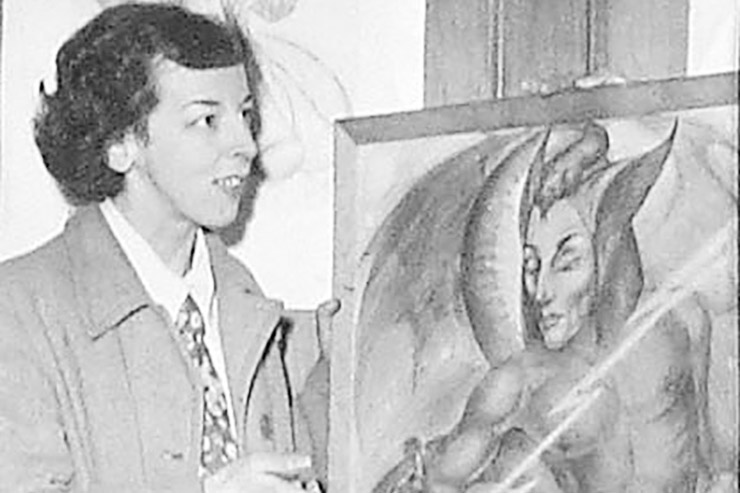
    Dubbed the “Witch of Kings Cross” by the popular press, she remains without doubt the most famous Australian occult artist. Born in Dunedin, New Zealand in 1917, Norton moved with her family to Sydney in 1924, where they established themselves in the middle-class suburb of Lindfield. Norton was expelled from the Church of England Girls’ School, Chatswood, at the age of 14 for producing ‘depraved’ drawings of vampires, ghouls and werewolves thought likely to corrupt the other girls. She later studied for two years at East Sydney Technical College.

    A key influence on the young Norton was her lecturer George Rayner Hoff. A skilled sculptor, he is credited as transforming the face of Australian sculpture in his adoption of art deco principles and redirecting monumental statuary in Sydney towards classicism. In 1919, Hoff began studies at the Royal College of Art, London, under the professor of sculpture Francis Derwent Wood. He exhibited two sculptures at the Royal Academy Summer Exhibition in 1920 and one in 1922. He won the Prix de Rome scholarship in 1921 and was awarded the Royal Society of British Sculptors’ diploma in 1923. After meeting the Australian architect Hardy Wilson at Naples, and discussions with Derwent Wood in London, he accepted appointment as teacher of drawing, modelling and sculpture at East Sydney Technical College in May 1923 and reached Sydney in August.

    Joining the Society of Artists, Sydney, in 1924, Hoff served on its executive and became a force for liberal ideals combined with stylistic moderation in art. The medal for the Society of Artists was created by Hoff in 1924. Later he produced, among others, the Sir Peter Nicol Russell memorial medal for the Institution of Engineers, Australia (1927), the Sir John Sulman medal for the Institute of Architects of New South Wales (1932) and the contentious Victorian centenary medallion (1934). He showed sculpture regularly with the Society of Artists, the Victorian Artists’ Society and the Australian Sculptors’ Society. He entered various official and prize exhibitions, and was awarded the Wynne prize in 1927.

    The most significant contribution Hoff made was his large-scale sculpture for various buildings and public memorials: he produced the large reliefs of the war memorial at Dubbo, New South Wales, in 1925, the figures for the National War Memorial, Adelaide, in 1927-31, and the more numerous and controversial sculptures for the Anzac Memorial, Sydney (made with the aid of students and assistants) in 1930-34. Hoff was also responsible for fine decorative reliefs in the now demolished Liberty Theatre (1934) and Hotel Australia (1934-35). He began work on the King George V Memorial, Canberra, in 1936, which was completed posthumously by John Moorfield. He also interestingly created the famous “lion and stone” logo for Holden Motors in 1928, based on a prehistoric fable, in which observations of lions rolling stones led to the invention of the wheel.

    At East Sydney Technical College Hoff taught drawing and sculpture, and amongst his students were Norton, James Gleeson and many others who both revered and imitated him – and were particularly inspired by his openly pagan approach to creation. Along with Norman Lindsay and Kenneth Slessor, Hoff pioneered the pagan movement known as “heroic vitalism” which was entering the mainstream of early twentieth century Australian art. The early works of James Gleeson shows elements of this approach in depicting an overtly sensual and writhing landscape dotted by idealised male figures.

    Norton no doubt would have seen first hand the vilification of Hoff’s friend Norman Lindsay and his flight from Australia in 1931 under the continual backlash against what were considered his “pornographic and occult artworks.” In response, Lindsay wrote in 1920:

    To whom does one offer the gift of a thought? To him who already thinks it. The mission of the thinker is not to enlighten, but to confirm. The material for enlightenment is already there, like a piled-up beacon; the new thought is but a spark that sets it alight. Anger at the stupidity of common minds is foolish, save in youth, when it is a stimulus. Yet all high minds wish to offer the gift of thought to mankind, and because it is rejected they become bitter. But gold is no use to a savage. He prefers iron, which is useful to him. And here the savage is wise. One cannot blame the common mind, because it seeks common thoughts – vulgar utilities – for these things help it. If the common man is also able to catch a little at higher thoughts, so much the better; but he has caught something in passing not addressed to him. The message of the Creative Effort is to him whose mission is to carry on the Creative Effort.12

    Hoff’s sculpture in contrast, while remaining robustly erotic, was never prurient, embodying a neo-paganism different in quality and kind from Lindsay. His work, Idyll: love and life in the collection of the Art Gallery of NSW, “might be described as chaste, despite the languor of its poses.”13 His work was softer and less obvious but held the same ideals. For many years he managed to avoid public outcry until later in his years. In 1932, he was embroiled in controversy with the Catholic Archbishop Kelly, the Master Builders’ Association of New South Wales, and the local chapter of the Royal Australian Institute of Architects over the morality of the form and symbolism of the Anzac Memorial Group ‘Sacrifice’, ‘Crucifixion of Civilisation’ and ‘Victory’. He was also attacked over his design of the Victorian centenary medal in 1934 for its depiction of a Ram’s head as the central motif.

    Rosaleen Norton

    Amongst the basics of art technique, Hoff would have shown Norton that art has the potential to make the artist a significant target to the public, a warning most likely lost on the young artist at the time. Despite her admiration for Hoff, Norton generally found it hard to take direction and preferred to follow her own path rather than the set college curriculum.

    In December 1933, whilst still at college, she submitted the first of three short stories to Smith’s Weekly that immediately drew the admiring attention of the editor Frank Marien. He saw promise at the author’s “vivid imagination” that was “quite beyond the ordinary,” and offered Norton a cadetship as a writer and illustrator. However, her graphic illustrations were deemed too controversial, and soon she lost the job. From there, Norton’s life took many turns, punctuated with high profile legal cases and often vehement vindication by the media.

    Her focus throughout her time remained on the core principle of developing and exhibiting her art and magical practice. However, the art world in Australia was generally far from responsive to Norton, and she found it all but impossible to have work accepted by any serious galleries. The dubious honour of being the first Australian artist to have her work seized by the government did little to help, and the book on her art, The Art of Rosaleen Norton, was also banned. Unable to reach a wider audience and forced to find some sort of income, Norton had to rely on selling her paintings to friends and acquaintances, and found it impossible to rid herself of the ‘Witch’ image. She died on 5 December 1979, at the age of sixty-two, having spent the last few years of her life as a semi-recluse. In 2000, an exhibition of Norton’s paintings was held in Kings Cross, Sydney, organised by writer Keith Richmond, and artist/curator Barry William Hale.

    It was not until the early 1940s that Norton began to seriously study the occult, starting with Eastern and theosophical texts, and slowly moving to the Western esoteric tradition, practicing Ritual Magic, and studying the texts of Aleister Crowley, Eliphas Levi and Dion Fortune. She became an active proponent of sex magick, and made regular use of drugs in her ceremonies, all of which contributed to Norton’s true lasting legacy, the techniques she developed to heighten her artistic perception. Through self-hypnosis she learned how to transfer her attention at will to inner planes of awareness in what could be termed “astral projection.” She wrote in her diaries that this practice “produced a number of peculiar and unexpected results… and culminated in a period of extra-sensory perception together with a prolonged series of symbolic visions.”

    In an interview conducted with Norton at the University of Melbourne in 1949, she explained further:

    I decided to experiment in self-induced trance, the idea being to induce an abnormal state of consciousness and manifest the results, if any, in drawing. My aim was to delve down into the subconscious mind and, if possible through and beyond it. I had the feeling (intuitional rather than intellectual) that somewhere in the depths of the unconscious, the individual would contain, in essence, the accumulated knowledge of mankind; just as his physical body manifests the aggregate of racial experience in the form of instinct or automatic reaction to stimulus.

    In order to contact this hypothetical source, I decided to apply psychic stimulus to the subconscious: stimulus that the conscious reasoning mind might reject yet which would appeal to buried instincts as old as man, and which – I hoped – cause psychic ‘automatic reflexes’. (Religious cults use ritual, incense etc for the same reason.) Consequently, I collected together a variety of things such as aromatic leaves, wine, a lighted fire, a mummified hoof etc… all potent stimuli to the part of the unconscious that I wished to invoke. I darkened the room, and focusing my eyes upon the hoof I crushed the pungent leaves, drank some wine, and tried to clear my mind of all conscious thought. This was a beginning (and I made many other experiments which were progressively successful).

    Following a surge of curious excitement, my brain would become emptied of all conscious thought: my eyes would shut, and I was merely aware that I was drawing on the blank sheet of paper in front of me… I seemed while experiencing a great intensification of intellectual, creative and intuitional faculties, to have become detached in a curiously timeless fashion from the world around me, and yet to be seeing things with a greater clarity and awareness than normally…

    Through these practices, Norton came to have a special reverence for the pagan deity Pan, regarding him as, “Totality of All Being and the true God of the World and Overlord of the Balance of Nature.” Various manifestations of Pan became a regular feature of her painting from the late 1940’s to the time of her death. While she also depicted Lucifer, Baphomet, Hecate and other similar deities, Pan was a regular visitor to her trances and held a special place in her consciousness.

    According to Norton, the other gods only appeared to her in trance visions if it pleased them – they could not be conjured. Some of the magical entities appearing in her artistic works seem to be atavistic hybrids – half-human, half-animal and often naked – revealing the primeval aspects of humanity’s spiritual evolution. Neville Drury saw great similarities between Norton and the English occult artist Austin Osman Spare:

    There are distinctive parallels between Austin Spare and Rosaleen Norton. Both were influenced by witchcraft and the occult traditions of western magic, both utilised trance states, and both believed that the realm of the gods had its own intrinsic existence – the artist simply serving to manifest these archetypal energies by acting as an inspired channel. It is also interesting that both employed mental focusing techniques – using sigils or specific physical objects to induce a state of trance. As in the Eastern forms of meditation which utilise “one-centredness of mind,” it seems that the focusing of intent is a valuable way of unleashing stored psychic energy.14

    Perhaps the most widely known occult artist, Austin Osman Spare died in 1956, similarly a recluse like Norton. In his younger days his work was applauded by the artistic establishment, until in the 1920’s he ceased showing commercially and returned to his native East End and created works almost entirely as part of his magical practice. He is particularly noted for his automatic drawing where images manifest through the artist, rather than being consciously devised. This was a practice inspired by the Surrealists of the early 1920’s who believed that art accessed through the unconscious or subconscious was more “real” or “true” than rationalist art works.

    Surrealism’s initial proponent was Andre Breton, who during World War I, served in a neurological hospital where he used Freud’s psychoanalytic methods with soldiers suffering from shell shock. After returning to Paris to find many of the local writers and artists scattered, he joined the anti-art movement, Dada, and started the literary journal Litterature. Along with other writers, he began experimenting with automatic writing, which was essentially a trance inspired form of spontaneous writing without self-censoring. He also started recording dreams in the same way and published them alongside the automatic writings in the journal. These works became the pointers for writers and artists across Europe to start looking to the unconscious and trance practice to create ‘true art’. Freud’s work with free association, dream analysis, and the unconscious became of utmost importance to the Surrealists in developing methods to liberate imagination and unlock the true creative mind. As Salvador Dali explained it: “There is only one difference between a madman and me. I am not mad.”15
    Get the issue this article appears in

    The Australian Surrealist James Gleeson

    While not considered an esoteric or occult art form, Surrealism is saturated with occult ideals and practices all of which manifested openly in the work of its practitioners, and has maintained a central conceptual association between fine art and occult dialogues. The Australian father of surrealism, James Gleeson, was a skilled practitioner of trance technique in creating his unique landscapes, and influenced a great deal of contemporary occult and esoteric artists locally including Barry William Hale.

    Gleeson said that as a young artist, he caught the idea, “there existed a whole world behind what we see with our eyes, and my artwork became a way of finding and understanding that world.”16 At its heart Surrealism was an exploratory process demanding a level of mental discipline unlike any other of its day. The automatic drawings of James Gleeson remain full of insight, and up until his passing in 2008, he was at the height of his powers channelling the unconscious.

    A student at East Sydney Technical College around the same time as Rosaleen Norton, and also under Hoff, he discovered Dalí, De Chirico, Ernst and Magritte, but also Freud and Jung’s theories on the unconscious mind. His most famous work features writhing nightmarish landscapes, full of sometimes violent and disturbing imagery, ranging to serene and soft humanoid forms. The early paintings, it is said, made women faint, and at least one hysterical girl had to be escorted from an exhibition. The middle period of his life saw Gleeson better known as an art critic, author, poet and curator, until the age of 65, when he devoted himself to art full-time, and went on to produce more than 400 canvases. Unlike his contemporaries, who merely dabbled in Surrealism, Gleeson remained true to its philosophy until his death at the age of 92, securing his place as the Father of Australian Surrealism.

    This last phase of his artistic life is widely regarded as his most brilliant, yielding some truly monumental paintings, which Gleeson called “psychoscapes.” A key work, entitled Icons of Hazard, drew further dark inspiration from the atmosphere generated by 9/11 and the war in Iraq. One critic wrote of these works: “Representing an ineffable world in the furthest recesses of the human mind, these form an imaginary coastline, not of water, rock and sand, but a disturbing, organic morass of muscle, sinew, carapace, shell, hair and dripping membrane.”

    Another work that Gleeson suggested was amongst his most successful, The Wheel Has Come Full Circle, is a major study in what the artist described as the “great return.” A pure unconscious journey back to the source of life. Another entitled, A Moment in the Process depicts the glimpse “behind the curtain” to the world behind the world we see around us. An exceptionally talented draughtsman and painter, Gleeson never received the recognition he deserved, and his major 2004 retrospective, Beyond the Screen of Sight, was belated. Some blame his subject matter. While near-contemporaries such as Sidney Nolan and Russell Drysdale focused on Australian themes, Gleeson described the world of the imagination. On his passing, the director of the Art Gallery of NSW, Edmund Capon, said: “James saw into our inner soul.” More than any other Australian artist, Gleeson successfully mapped the unconscious and opened the doors for local curators, critics and museums to consider esoteric and occult art.

    This article includes a range of artwork, including a spread of Aleister Crowley paintings, courtesy of Buratti Fine Art. To view this, purchase the digital version of this magazine.

    Part 2 of this article, published in New Dawn 134, examines The contemporary Australian artists working in the occult tradition, including the work of Wolfgang Grasse, Norman Lindsay and Barry William Hale.

    [alert type=”general” dismiss=”no”]This article was published in New Dawn 133.[/alert]

    [alert type=”success” dismiss=”no”]If you appreciate this article, please consider subscribing to help maintain this website.[/alert]

    Footnotes

    1. Damien Hirst, The Death of God, Conversation Between Damien Hirst and Hilario Galguera, 2006, 11
    2. Joseph Jordania, Why do People Sing? Music in Human Evolution, 2011, 98-102
    3. Ibid.
    4. William McNeil, Keeping Together in Time: Dance and Drill in Human History, 1995, Cambridge: Harvard University Press
    5. Budge, The Gods of the Egyptians Vol. 1
    6. Sixten Ringbom, Occult Elements in the Early Theory of Abstract Painting, 1966; Sixten Ringbom, The sounding cosmos: a study in the spiritualism of Kandinsky and the genesis of abstract painting, 1970
    7. Robert P. Welsh, PIET MONDRIAN 1872-1944, 1966
    8. Rose-Carol Washton Long, doctoral thesis on the hidden images in Kandinsky, 1972
    9. R. Rosenblum, Modern Painting and the Northern Romantic Tradition, 1984
    10. Traces du Sacre, Editions du Centre Pompidou, Paris 2008
    11. K. Richmond, The Occult: An Exhibition of material from the Monash University Library Rare Book Collection, Monash University, 1998
    12. N. Lindsay, Creative Effort: An Essay in Affirmation, 1920, Art in Australia, Sydney
    13. Art Gallery Handbook, 1999, Art Gallery of NSW
    14. N. Drury, Three Magical Artists: Austin Spare, Rosaleen Norton & H.R. Giger, 1984
    15. S. Dali, Diary of a Genius, quoted in The Columbia World of Quotations, 1996
    15. R. Buratti, Interview with James Gleeson, 2006

    © New Dawn Magazine and the respective author.
    For our reproduction notice, click here.

  • The Healing Power of Fever

    The Healing Power of Fever

    From New Dawn 133 (Jul-Aug 2012)

    Fever is generally regarded as an enemy to be fought and defeated. The majority of patients and their families feel fear at the appearance of a fever, a fear that grows stronger with the intensity of the fever and faithfully follows its ups and downs. Peace of mind for the patient or the parent of a feverish child returns only when the fever has vanished.

    Yet fever is an intentional action produced by the body to defend itself. Fever’s beneficial nature has been emphasised by numerous health professionals.

    Édouard Auber (1804-1873), an expert on the work of Hippocrates, states in his own Philosophie de la medicine, “Fever is one of the most powerful healing methods employed by nature.”

    André Passbecq (1920-2010), one of the best known naturopathic doctors in France, writes: “Nothing works as well against illness as a good fever…. Fever can be a source of discomfort but, thanks to it, pathogenic substances and toxins are promptly broken down and eliminated. The temperature will remain high as long as the bulk of the toxins have not been eliminated.”

    French naturopath Pierre Valentin Marchesseau (1911-1994) echoes this sentiment: “Fever is a means of self-defense.”

    What To Do with a Fever: Using Fever as Therapy

    Fever possesses so many therapeutic benefits that a variety of practitioners, aware of its usefulness, have sought means for creating it artificially. These pyrotherapy techniques included injections of substances that would not be tolerated by the body in order to force the body to defend itself by creating a fever. For the most part, these pyrotherapy methods have been abandoned because of the numerous problems they caused due to their anti-physiological nature. The fact remains, nonetheless, that the practice was based on a correct evaluation of the healing virtues of fever.

    Fortunately, there is a physiological process that exists for intentionally creating fever: thermal baths. With a hot bath, a person can easily and rapidly escalate and intensify the metabolic activities and defense reactions of the body, which will produce a temporary fever. This method is something that can be turned to for preventive purposes. By correcting the biological terrain, you can prevent illnesses from finding an opportunity to develop.

    Good or Bad? Fever Is a Welcome Friend Not a Foe to Slay

    Many people find it surprising that fever can be considered a friend and ally. But, fever is evidence of the intense labour performed by the body to break down and eliminate toxic substances and germs. Fever is nothing but the consequence of the defensive activity engendered by the body itself as a means of protection. Countering it would therefore be extremely disadvantageous.

    During infectious diseases, the salutary effect of fever is twofold. On the one hand, raising the temperature of the body makes the environment untenable for the germs. These high heats are, in fact, fatal to them. Germs can thrive at the regular body temperature of 98.6°F but let the temperature rise a few degrees to 102°F, 103°F, or 104°F and their living conditions are made adverse to their continued existence. The heat will greatly weaken the germs and severely limit their ability to reproduce.

    Using Fever for Purification of the Cellular Environment

    Fever also alters the living conditions of germs by purifying the terrain, the interior cellular environment of the body. Just like mosquitoes require the stagnant waters of marshes and swamps to thrive, germs need a terrain overloaded with wastes in order to survive and multiply. So, once the biological terrain has been cleansed, it becomes unfavourable for their continued existence and precipitates their disappearance.

    Fever is the body’s preferred method for treating itself. Consequently, fevers should not be lowered or eliminated thoughtlessly. Cutting a fever short goes against common sense. It would amount to hoping a patient can be cured while opposing every attempt that is made to heal them.

    Fever Can Be Your Friend: The Benefits of Fever

    • Burns away toxins
    • Eliminates toxins
    • Weakens germs
    • Stimulates the immune system
    • Accelerates the transportation of lymphocytes to the site of infection

    When to Stop a Fever

    Stopping a fever is justified only when the profusion of germs overtaxes the patient’s weakened state. If the germs have multiplied in too high a number and are too virulent, the defenses of the patient may no longer be powerful enough to counter them. There is a risk of irreversible and fatal lesions.

    In these extreme cases, which are also extremely uncommon, a treatment based on antibiotics and antipyretics is essential. The antipyretic or febrifuge artificially lowers the temperature of the body and provides relief to the patient. Antibiotics will kill the germs in place of the body’s defense system.

    In the majority of cases, though, the fever should be respected; the body is fully capable of stamping out the infection with its own forces. The immune system exists precisely for this purpose.

    The Downside of Stopping a Fever

    Halting a fever prevents the body from killing the germs attacking it and from burning away the poisons that are stagnating in its terrain. It also prevents these toxins from being transported to the excretory organs where they can be eliminated. In addition, when antipyretics are used the body also has to deal with the poisons imported by these medicines.

    The propensity to cut fevers short has certainly brought about a diminishing number of acute illnesses, but the consequence of this has been an increase in the number of chronic diseases. By systematically thwarting the body’s natural healing efforts, anti-fever therapies that repress symptoms only increase the contaminants in the biological terrain, which, over time, leads to the major lesions and functional disorders of chronic disease.

    The objection that is most commonly raised against taking a more respectful approach to fever is based on the danger to the patient’s very survival caused by too high a rise in temperature. Of course, this danger is real. But refusing to cut short a fever, in other words, respecting its existence and purpose, does not mean doing nothing. Respecting fever means understanding its action, supporting its work (when, and if, necessary), and temporarily curbing it if it becomes too severe.

    Remedies to Stimulate the
    Body’s Immune System

    By Christopher Vasey, N.D.

    The body is therefore not always up to the task of properly protecting itself. It is sometimes necessary, depending on the case, to strengthen and stimulate, or reawaken, the body’s defense mechanisms. There are a host of various remedies that make this stimulation of the immune system possible. We will look at a few of the most effective ones.ll humans have a defense system at their disposal to confront whatever dangers threaten them. But the effectiveness of the immune system is more or less dependent on the basic physiological forces received at birth, though its abilities can also vary over time. The immune system can also be diminished by fatigue, stress, poor nutrition, and the body’s accumulation of toxins and poisons.

    Echinacea Root Helps Get Rid of Toxins

    Echinacea angustifolia, a member of the Asteraceae family, is a native of the North American prairies. It was used often and with great success by Native Americans to treat all kinds of ailments, and it plays a very helpful role in fevers.

    It has an exceptional ability to stimulate the body’s defense system by, among other things, producing white blood cells (macrophages) that attack and destroy the germs and poisons in the body’s biological terrain. Echinacea also stimulates perspiration, which helps rid the body of these toxins. Furthermore, it reduces cellular exposure to infection and has an antibiotic effect against certain pathogenic germs. For all these reasons, echinacea is a major remedy for supporting the body’s fight against disease.

    The root of the plant is the primary part that is used. It is prepared in the form of an easy to use tincture. Several small doses repeated throughout the day have a better effect than larger doses taken less frequently.

    Dosage: Take 10 to 20 drops of the tincture, five to six times a day, with a little water.

    Vitamin C Kills Microbes and Viruses

    Vitamin C is a useful substance for maintaining the body’s general functioning, but when taken at higher doses it has amazing therapeutic virtues that have been confirmed by modern studies.

    Vitamin C stimulates the body’s defenses by making white blood cells and antibodies more effective in their battle against infection. It kills microbes and viruses, and neutralises numerous poisons.

    Because it stimulates the overall health of the body, vitamin C is always recommended for the additional support it provides the struggling body during a fever. During a fever the body needs more than 1,000 mg of vitamin C a day. According to some authors, the daily amount ingested can even be equal to several grams. The natural vitamin C supplements available in the market generally have a fairly low dosage (50 to 100 mg), but there are some preparations that are 500 to 1,000 mg. These are the ones you should obviously use to obtain effective therapeutic results.

    Dosage: Take 1 to 3 grams a day, broken up into several doses over the course of the day.

    Trace Elements: Tiny Sparks That Keep the Body’s Motor Running

    Trace elements are minerals that are present in very small amounts in foods. They contribute to the sound and proper functioning of the body. A deficiency in a trace element will cause reduced capacity of the function dependent on it. This reduction in the physiological function will grow worse as long as the body receives no intake of this trace element.

    Trace elements are like tiny sparks that keep the body’s motor running. They are therefore even more valuable when the body becomes exhausted in its struggle, as can be the case during a fever, and requires assistance to perform all its functions properly.

    The trace elements of copper, gold, and silver are most apt to stimulate the exhausted defenses of the body. There are liquid preparations available commercially that contain all three of these trace elements. To encourage maximum absorption, it is best to take the remedy on an empty stomach and hold it beneath your tongue for a minute before swallowing. This part of the mouth has a vast number of blood vessels, which permits the active properties of these elements to enter the bloodstream rapidly.

    Dosage: One dose is generally around 30 drops of the preparation* and should be taken once or twice a day before eating.

    * Always follow manufacturer’s instructions to account for different preparation strengths.

    Reprinted from The Healing Power of Fever with permission of the publisher, Healing Arts Press, an imprint of Inner Traditions International. © 2012 (English translation). www.InnerTraditions.com

    [alert type=”general” dismiss=”no”]This article was published in New Dawn 133.[/alert]

    [alert type=”success” dismiss=”no”]If you appreciate this article, please consider subscribing to help maintain this website.[/alert]

    © New Dawn Magazine and the respective author.
    For our reproduction notice, click here.
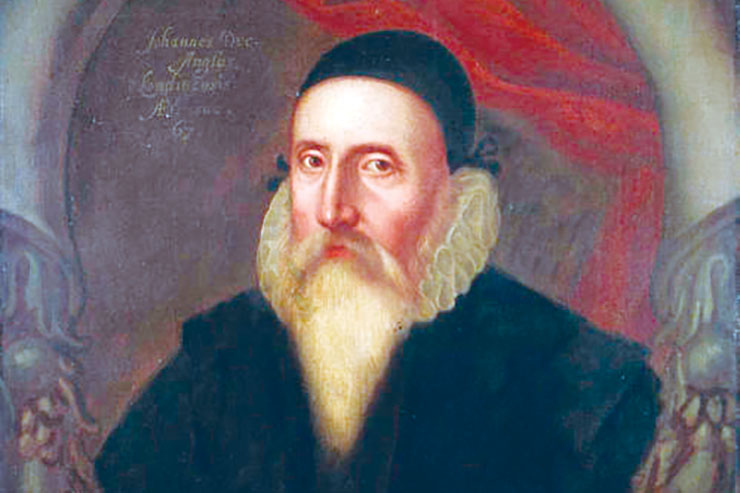
  • Doctor John Dee: The Dream of Empire, The Nightmare of History

    Doctor John Dee: The Dream of Empire, The Nightmare of History

    From New Dawn Special Issue Vol 11 No 3 (June 2017)

    I grew up and went to school in England, and am just old enough that when, age 12, I went to the newly mixed Comprehensive Secondary (which had been until the year before the Girl’s Grammar School), all the atlases and textbooks still spoke proudly of the British Empire.

    Our classroom walls were adorned with increasingly outdated maps, showing something like a third of the world coloured red as territories of that Empire – even if by then they had faded to a slightly dusky pink, perhaps faster than memories of British imperialism had faded in the minds of the adults tasked with teaching us about ‘Great’ Britain, its place in history, and the world.

    With all of the recent fracas over Brexit, withdrawal from Europe, Scottish and Welsh lobbying for independence, and uncertainty regarding the future of the ‘special relationship’ with its increasingly self-interested and self-isolating Big Brother, America, surely any lingering echoes of that Britain of yesteryear must be long gone? Is it perhaps time to examine the curious origins of the Empire on which, famously, it was boasted the Sun would never set? With all the confusion and pessimism, would it help or make things worse to reflect that the British Empire was birthed amid hopes of re-uniting the faithful of Christendom, and building a New Jerusalem? That its primary architect – indeed, the man who conjured the words ‘British Empire’ for the first time – was in his own lifetime accused of alchemy, necromancy, and worse, and spent the latter part of his life ‘conversing’ with Angels.

    It is almost a cliché to speak of Doctor John Dee (1527–1608) as one of the greatest minds of the Elizabethan Renaissance. Professor Ronald Hutton, an expert on Early Modern Britain and authority on historical and contemporary paganism, has said that if one wanted a latter-day comparison for Dee, you could do no better than a figure like Stephen Hawking.

    Dee has been largely overlooked, at least until relatively recently, by regular historians and more orthodox commentators on the Elizabethan Age. They are comfortable enough with the idea of Dee the polymath, a sort of one-man clearinghouse for information, putting his knowledge of cartography, optics, and navigation to good use where English expansionism was concerned – but not so sure what to make of a man mostly remembered by posterity, if at all, as a kind of eccentric ‘Merlin’ to Queen Elizabeth I’s ‘King Arthur’.

    Alchemist, necromancer, and (alleged) communicator with Angels… a man with the ear of the Queen, involved in Court intrigue, and likely a spy – the good Doctor Dee turns up as a convenient clothes-horse on which to hang all manner of conspiracy theories, historical and supernatural. This is the Dee that performed a ritual with playwright and spy Christopher Marlowe to mark the founding of the British Empire – very possibly the siting of the zero degrees longitude marker at Greenwich Observatory as an act of magical intent, making Britain the centre of Time & Space, a New Jerusalem – and Marlowe was really killed to ensure his silence about this act; Dee not only predicted the storm that favoured the British encounter with the Spanish Armada in 1588, but literally conjured the winds, like a real-life Prospero; Dee designed the mysterious Newport Tower, a massive ruin that stands in the town of Newport, Rhode Island (the approximate location of his proposed North American colony). All extend the already remarkable Dr. Dee into the realm of fantasy.

    Undoubtedly true is that Dee put his not inconsiderable energies into a series of works aimed at shifting English foreign policy into a new, expansionist, adventurous mode. The main work – a veritable magnum opus setting forth his ideas regarding a proposed “Brytish Impire” – was the four-volume General and Rare Memorials Pertaining to the Perfect Art of Navigation (1577), previously believed lost, but recently come to light again (shown on page 26). Ensuring his proposal of a British Empire was not missed, Dee designed a frontispiece featuring Elizabeth enthroned at the helm of a ship named Empire, masts topped by symbols of Christ, led on by a winged, sword-brandishing angel – while alongside, Britannia kneels on the shore, beseeching the Queen to protect her Empire by strengthening the Navy. It is as if Dee had woven a veritable spell to enchant Elizabeth: magicians of today would probably consider it a form of Sigil Magic. Roy Strong, author of Gloriana: The Portraits of Queen Elizabeth I, described it as a “British hieroglyphic.”

    Dee also delivered a smaller, concise work, written especially and exclusively for the Queen, his Brytanici Imperii Limites – “The Limits of the British Empire” – in which he summed up his belief that England’s territorial claim extended far beyond the British Isles, even including a map he had drawn up, indicating what he felt Elizabeth could claim dominion over (sadly, now lost.) Dee’s argument was based on accounts of the voyages of King Arthur, said to have sailed as far as the seas around the Pole in 530, bolstered with references to Brutus, the equally-legendary founder of Britain, and Welsh Prince Madoc, who was believed to have crossed the Atlantic in 1170, proving that:

    [of] a great part of the sea coasts of Atlantis (otherwise called ‘America’) next unto us, and of all the isles near unto the same, from Florida northerly, and chiefly of all the islands Septentrional [=northerly], great and small, the Title Royal and supreme government is due.

    Arthur, Brutus, and Madoc were all thought authentic historical figures at that time. This was the entire basis of the claim Dee set before Queen and Court: if the so-called ‘New World’ of America was, in fact, the legendary continent of Atlantis, which had been discovered already by these earlier British rulers, then surely Elizabeth, as their descendent, had prior claim?

    Dee was not above profiting from the proposed expansion himself. In 1583, Sir Humphrey Gilbert – the man who started the search for the Northwest Passage, thought a route to the Orient, and, like Dee, a believer that America was really Atlantis – succeeded in getting royal backing for a company set up with his brother, Adrian, and half-brother, Sir Walter Raleigh, to “discover and settle the northerly parts of Atlantis, called Novus Orbis” (i.e. North America.) Gilbert agreed with Dee that if their mission succeeded, he would get “the royalties of discoveries all to the north above the parallel of the 50th degree of latitude” – in other words, most of Canada and all of Alaska.

    In an age ravaged by the schism between Catholic and Protestant, Dee believed in the need for reconciliation. He had been imprisoned as a young man, accused of conjuration and heresy by Queen Mary’s Catholic Inquisition, and was lucky to have survived when many of those around him were tortured or put to death. When his beloved Elizabeth became Queen, the Protestants took their revenge, but Dee wanted the hatred, fear and bloodshed to end. He proposed that in the colony of the New World, all men and women – Catholic, Protestant, and Native – be allowed to live together, peacefully: it would be an example for all Christendom, a veritable New Jerusalem.

    At first, Dee’s plans were well received, his sheer daring catching the mood of grand ambition at Court. He helped define the sense of mission, even of destiny, that drove adventurers across the Atlantic. Writing of how English Gentlemen could consider themselves equal to any Frenchman, German, or Spaniard, diplomat Charles Merberry also boasted how “this most Royal Prince (her Majesty’s highness)” [i.e. Elizabeth] could likewise consider herself equal, if not superior, to any foreign monarch, on the basis that:

    Master Dee hath very learnedly of late… shewed unto her Majesty, that she may justly call herself LADY, and EMPERESS of all the North Islands.

    But it was not to be. Elizabeth’s ever-conservative chief minister, William Cecil, was alarmed by Dee’s vision. He feared antagonising powerful Catholic Spain, and doubted the North American lands would be of much value. Dee had worked hard to conjure a vision that might build a New Jerusalem and ultimately re-unite fractured Christendom, initially capturing Elizabeth’s interest, and the enthusiasm of courtiers such as Robert Dudley and Philip Sidney, but in the end it was all undermined by Cecil.

    Get the issue this article appears in

    Not long after, Dee withdrew from such concerns, and ultimately from Court, Elizabeth, and England itself. In March 1582, Dee met a man who would be instrumental in leading him on a voyage of discovery every bit as exciting and, ultimately, hazardous as any exploration into unknown territories. He was none other than Edward Kelley, the man who facilitated his attempts to communicate with otherworldly, non-human intelligences. Soon after, Dee & Kelley embarked on adventures all their own, consuming them for the next seven years, taking them into new worlds beyond this one: The Angelic Conversations – but that is another story…

    Ironically, much of what Dee set forth in the writings he put before his Queen did come to pass, one way or another. England broke the monopoly of the Spanish once-and-for-all, with the spectacular defeat of their Armada in 1588 – and, as Dee had proposed, building up the Navy would be the key to English strength on the world stage. North America was colonised, and – although it later required a War of Independence to throw off British rule – the foundations of this particular new world order were indeed based on ideas of equality, fraternity, and freedom from religious persecution.

    Certainly the British Empire came into being, and undoubtedly the expeditions Dee suggested and helped plan played a significant part in laying its foundations. But it is hard to believe Dee would have recognised his dream of a New Jerusalem, a utopia worthy of Christ’s return, in the birthing of an empire built on the nightmare of colonialism and imperialism. Ultimately, Doctor Dee’s kingdom was not of this world.

    [alert type=”general” dismiss=”no”]This article was published in New Dawn Special Issue Vol 11 No 3.[/alert]

    [alert type=”success” dismiss=”no”]If you appreciate this article, please consider subscribing to help maintain this website.[/alert]

    © New Dawn Magazine and the respective author.
    For our reproduction notice, click here.
  • Polar Inversions & Other Cosmic Catastrophes

    Polar Inversions & Other Cosmic Catastrophes

    From New Dawn Special Issue Vol 11 No 3 (June 2017)

    The great George Ivanovitch Gurdjieff taught that even though our brains and minds may ‘wake up’ every morning allowing us to function as social beings, that in no way means we are truly Awake in a philosophical and spiritual sense. ‘Waking up’ every morning only means we continue in our social roles as in a ‘wakeful dream’. A fact that becomes painfully evident whenever we come to terms with the vast and deep unknown of the Collective Psyche and its impingement on each of us.

    Often, the dreams we have when our bodies are asleep may be construed as metaphors of how the psyche tends to represent deep truths and feelings in rather simplistic, even literal ways. If we’re about to venture on a hard and perilous journey, we won’t be surprised if the night before we have nightmares of horrific airplane, ship or bus accidents, of any manner of physical misadventure. If when awake we watch a movie about a great and fearful fire, we may that night have nightmares of being trapped inside a flaming house… In short, dreams are often literal, childish renditions of far more complex matters churning in our minds or deep inside our souls.

    Ages Come; Ages Go

    We all dream as individual, social persons, but we seldom ask if we might also dream as a race? If we do, how long do those collective dreams endure? If individual dreams last one night, do collective dreams go on for whole decades, a century, or even a millennium?

    Just as individual dreams may be triggered by everyday experiences, worries and angst, are collective dreams governed by more subtle long-term forces of a more genetic, even cosmic nature? Does such collective dreaming impinge upon the individual psyche, becoming potential untapped sources of perilous and primordial forces and group experience, and if so, how may we tap into them?

    Today, people live longer than our forebears. An average person in the West may live 75, perhaps 80 years, less for people in other regions of the world. Interestingly, if modern man lives on average, say 72 years, that is equivalent to one degree (i.e., 1/360th) of a Great Year or Platonic Year of 25,920 years (i.e., 72 years x 360 degrees = 25,920 years).

    Which brings us to the transitional upheavals upon our Collective Psyche today, as the end of the Platonic Month or ‘Age’ of Pisces draws nigh. This period also marks the end of an entire Great Year in the 25,920-year ‘Precession of the Equinoxes’ cycle, as we transit into the next 2,160-year period, or ‘month’, as the Sun rises at the vernal equinox with the constellation of Aquarius as stellar backdrop.

    Yes, we are transitioning into the so-called ‘month’ of Aquarius, symbolically marked by the Water Bearer, Ganymede,1 and its astrological opposite, Leo, the Lion. Back in the 1970s, the Hippie culture sang hymns to the dawning ‘Age of Aquarius’, naively believing the Aquarian archetype of the New Age would be filled with light, joy and happiness. They did not realise archetypes are ambivalent psychic beasts. Whilst you may wishfully think you are on its ‘light-ward side’, with the shining Sun above and the archetype at your feet, instead you might unwittingly – and far more likely – find yourself beneath the archetype: in its shadow, with all its darkness, gloom and confusion.

    Even now, as Pisces wanes and Aquarius waxes, the human race seems trapped on the ‘dark side’ of both archetypes, with their darkest shadows covering our world in blackest night.

    During these cosmic transitions, which impact the collective psyche, the dawning Platonic Month activates deep-rooted archetypes in the Collective Psyche. At the same time, the ‘used up’ waning archetypes plunge into slumber and deactivation, as the ‘dying’ month falls ‘asleep’ below the horizon.

    No one human being can actually experience these long-term changes because they literally span thousands of years. However, we can see them reflected – as in the wall of Plato’s Cave – in collective symbols, social paradigms and human behaviour as they ‘dawn’ and ‘wane’.

    The now waning Age of Pisces grew strong and powerful at the start of Christianity, two millennia ago, as the Trinity and Crucifixion resonated age-old archetypes – the Father-Mother-Son Triad, the Hero-Avatar, the sacrificial Cross or Yggdrasil Tree – and spontaneously linked it all to the Piscean fishes. Christ miraculously fed multitudes with baskets filled with fish, followed by His fishermen Apostles, walked on the Sea of Galilee, marking His clandestine fish symbol – ICHTHYS – deep into the catacombs of the Western psyche. Pisces, in turn, was balanced by its astronomical counterpart Virgo – the Virgin Mary/Isis – acting as a flywheel.

    In spite of its present decadence and materialistic rationalisations as a worldly institution, unworthy today of its luminous ancient roots, the Roman Catholic Church has nevertheless stood its ground on the profound significance of this cosmic symbol. Today, it continues to uphold the Pisces-Virgo Axis, something Protestant sects abandoned half a millennium ago, severing links to these subtle vital cosmic forces.

    When speaking of Platonic Months, we speak not so much in terms of physical sequential time – i.e. Chronos – but rather in terms of sacred time, Kairos: significant and meaningful points in time. Thus, the ‘end’ of Pisces and ‘beginning’ of Aquarius carry no specific date in chronological time. Rather, we are dealing with an imprecise, complex overlapping as one age gives way to the next and powerful forces are suddenly unleashed, as if both ages were psychic ‘tectonic plates’: long silent until sudden cataclysmic upheavals unleash psychic earthquakes shaking the collective unconscious!

    Some constellations of the Zodiac occupy large swathes of sky whilst others are more modest by comparison. Accordingly and true to Kairos, the Zodiac is not a mathematically exact definition of a specific geography in the heavens centred on the sidereal equator; much more it is a symbol, an anagram, a reflection of earthly matters in the sky (and vice-versa), and as such no causal relationships exist – nor indeed need be found or ‘scientifically’ proven – between human affairs on Earth and the imagery of signs and shapes Man projects upon the heavens by literally ‘joining the dots’ in the sky, something he’s been doing for thousands of years.

    Rather, we should think in terms of Carl Jung’s synchronicities: certain events have no direct causal link, but project ‘meaning’ for us in our individual and collective life experiences.

    Thus, if you’re born a Pisces, Leo, or Scorpio, people around you will notice certain traits, patterns, tendencies and attitudes that somehow ‘fit’ the way Pisceans, Leos or Scorpions behave. Understanding and nurturing these meanings is more of an Art than a science. Seek no elusive Cartesian causal links, because none are to be found. That’s how synchronicity works: qualitative leaps towards a higher order of things, which in its jagged and labyrinth-like trajectory are not concerned with sequential logic.

    We thus dive deep into the sacred realm of Meaning and the deep-seated mystery of Becoming, where archetypes, synchronicities and Platonic Months are the compasses that ensure we do not lose our way.

    Worlds in Collision

    In this train of thought, there is deep-seated lore pointing to ‘polar inversions’ taking place over eons of time. In its materialistic interpretation, they seem to resolve in End Times, when Earth’s poles switch place. Proponents of this theory claim the planet performs some sort of somersault on its own axis leading to all manner of geological catastrophes bringing ghastly fire and brimstone raining upon all of us, 200-metre tsunamis sweep across continents obliterating cities and lands, killing billions of people and flattening civilisation.

    That’s the History Channel version, which does naught but reflect American materialism gone ballistic as Hollywood makes millions of dollars cashing in on ‘Coming Catastrophe Syndrome’. Especially after the 11 September 2001 False Flag event, with that overpowering vision of the two mighty Twin Towers collapsing free fall into their footprints in just eleven seconds.

    Rather than explaining the otherwise unexplainable (save for Deep State conspiracies), Hollywood plays on our irrational anguish, delivering to the masses nightmarish catastrophe after catastrophe, explosion after explosion, cataclysm after cataclysm, unleashing and tapping into deep-seated collective psychic forces. Is their hidden agenda to prepare us for even fiercer False Flag events? As wizard’s apprentices, they may also unleash terribly dark forces that feedback from the collective psyche into the physical world of climate, war, violence and real tectonic plates slipping one into the other. A real case scenario of Velikovsky’s ‘worlds in collision’!

    Polar Inversions

    As the Great Year draws to the end of its current cycle, the ‘polar inversion’ we’re already seeing might be a mutually influencing synchronistic ‘dance’ emanating from Man’s collective psyche. Mankind is coming fast to understand that the present Western-dominated civilisation has come up against an inescapable dead-end.

    Those usurping all the wealth and power of the world do so at the cost of raping our planet of its resources. They destroy people’s psyche by levelling them into mental slavery, poverty, humiliation and death. All at an alarmingly fast pace, spinning ever-faster like a drain down a cosmic sinkhole. While billions exist in a ‘hell-on-earth’, a tiny minority harness technology to their service, preserving a status quo that allows them to retain and steal more and more of the world’s resources.

    Who are ‘they’? This clique has been called various names: the Establishment, the Elite, One-Worlders, the Controllers, the Globalists… As a researcher into global geopolitical power structures, I prefer to simply call them the ‘Global Power Elite’ (GPE): ‘Global’ because they have planet-wide reach and mismanage the world instead of preserving this beautiful planet belonging to us all; ‘Power’ in that they illegitimately usurped almost all the world’s material power – economic, financial, media, social, military, intellectual – hijacking it to serve their selfish objectives; and ‘Elite’ (even though they do not deserve an aristocratic description) in that they are an illegitimate ruling class.

    To date, their power base is mainly in the northern hemisphere, structured into geographically small, dense and highly focused power nodes or centres they call ‘major cities’: New York, London, Paris, Berlin, Moscow, Beijing, Tokyo, Los Angeles, Chicago, Paris, Mexico City, and Bombay, spinning like a runaway merry-go-round, particularly their virtual, vampire-like parasitic financial system. These nodes have spilled southwards too: Sydney, Sao Paulo, Buenos Aires.

    In part, this evolution is easy to understand considering 68% of Earth’s landmass lies north of the equator whilst only 32% lies south of it. That 71% of our planet is underwater makes the 29% landmass quite crowded, especially in the north.

    This overcrowding is one of the GPE’s main concerns, potentially impacting them, and they seem to be taking evasive action as discretely as possible. The northern hemispheric crisis includes growing geopolitical dangers facing Europe, the Middle East and other regions of the north, where the largest countries today are the Russian Federation and China, neither of which are in the least bit willing to share their huge landmass with the GPE.

    A geopolitical imperative noted over a century ago by British geographer Halford Mackinder holds that the vast Eurasian region is the ‘Heartland’, and whoever controls it controls the ‘World Island’ and thus the entire world. Today, the ‘Heartland’ is firmly under the control of Russia and its Asian allies: China & India. The US, UK and the European Union, where the GPE is based, understand their weakness all too well.

    For centuries, the UK and the US have had an insular geopolitical strategy. Not only is Britain an island, but in geopolitical terms the US can be likened to a giant island with only a small connection to its South American ‘backyard’ through the Isthmus of Panama. The US and UK have made strenuous efforts to ensure no one country should control the ‘World Island’, using a ‘divide and conquer’ strategy, whether against Napoleon, Hitler or Stalin.

    The nightmare for the GPE is as follows: what if Russia, which is rediscovering its soul after shrugging off seventy years of foreign-imposed Bolshevism, joins forces with Germany, once that country too finally frees itself from US occupation? [Germany is home to the largest US airbase outside North America.] Imagine such a phenomenal geopolitical alliance: Berlin-Moscow-Beijing.

    “Go South, Young Man…”

    The GPE are looking further afield for new lands and places of conquest, migration, refuge and re-settlement: Earth’s landmass lying south of the equator. This is roughly two-thirds of South America, one-third of Africa, Australia, New Zealand, and a myriad of island and island-states in the south Pacific, south Atlantic and Indian oceans… plus mysterious Antarctica!

    In South America, the GPE have financed puppet governments in all its weak, nominally ‘free and democratic’ countries. They’ve purchased gigantic swathes of land for their private use, or corporate control if they sit on the oil, gas, minerals, potable water and arable soil. The writing is on the wall.

    There are clear signs the northern hemisphere will soon be impacted by uncontrollable turmoil: political, financial, physical, and environmental. Our Southern Lands hold the key to survival for them. They are thus increasingly transforming their financial – virtual – wealth into economic – concrete – wealth, centred on land ownership and control.

    Major moves can be seen on their ‘Grand Chessboard’: the breakup of the European Union, the demise of NATO, the exhaustion of oil, the re-invention of the British ‘Empire’ after Brexit (where Britain reverts to ‘Imperial Mode’, as recent sabre-rattling with Spain over Gibraltar shows), the collapse of the US Dollar through hyperinflation and of the Euro through political break-up.

    Yes, it’s true. The GPE are making furious plans to mitigate the impact of the Armageddon syndrome on them. Hollywood described this in their blockbuster film 2012, alluding to a so-called ‘Mayan Calendar’ prophecy of planetary meltdown on 21 December 2012. But – alas – nothing happened! End Times, pole shifts and Age transitions don’t work that way. Maybe the GPE cannot fathom anything outside their materialistic sequential thought patterns and paradigms. For them, everything has a fixed ‘due-date’ as if there’s always some fancy report or financial sheet that needs to be ‘submitted by…’ They seem to be scared frozen, not understanding that this time it’s not about money – and that leaves them totally helpless.

    When South Becomes North

    A Pole Shift actually points to where the Light of Mankind will shine from. The most Ur-ancient lore of the Indo-European tradition says we incarnated into this planet from God’s Cosmos through a point in coldest, darkest and farthest north. Greek poet Pindar nailed it when he wrote of “Hyperboreans.” The Indian mystic Bal Lokmanya Tilak wrote of these ideas in his book The Arctic Home in the Vedas.

    As the eternal light of spirit becomes brighter and brighter, emanating from the South, the Arctic ‘cosmic door’ will ‘close’ and become darker and darker in spiritual terms, as the southern Antarctic door ‘opens’. The coming battle is not to save the North, but to give birth to the South.

    Only this time, the ‘rules of engagement’ are very different: the South has a plentiful landmass in Antarctica which the North lacks, a fact clearly understood by the GPE as reflected in their renewed interest in Antarctica, for ‘scientific purposes’, of course.

    Their mistake, however, is to consider this an egotistic blank check to wriggle their way out of history’s coming justice and their accountability for the disasters they wrought against Mankind over past centuries. They believe they can use their wealth and gold to buy up the tastiest chunks of Patagonia, Amazonia, the Pampas, New Zealand, Australia, even Tasmania, and, of course, consolidate their hold over Antarctica. This explains why they will never let go of their Falkland Islands enclave, and their control over the south Atlantic via Ascension Island, the south Pacific via Hawaii, and the Indian Ocean via Diego Garcia.

    For them it’s a question of money, money and more money. Every time their sick pranks go into self-destructive overdrive, as their banking system did in 2008, they organise to dump all their toxic financial waste onto the working people, giving it a smart-sounding name like ‘subprime crisis’, ‘financial cycle crisis’ and ‘quantitative easing’.

    They make-believe these catastrophes are ‘not their fault’. No sir, it was just ‘business as usual’, as their media puppets painstakingly try to explain. Where ‘usual’ means privatising all profits for them, and socialising all losses by dumping them on ‘We The People’. It then becomes a sanitised problem of ‘financial-cycle management’, where global war is part of financial whitewashing and ‘reconstruction’. If 10, 20 or 30 million die in the course of any one of these ‘cycles’, well… you know the explanation: it’s business-as-usual’s ‘collateral damage’. This time, however, they know only too well that the upheavals will be of a titanic nature. Most worrying for us Southern Peoples is they are coming this way. Make no mistake, the next ‘global reset’ will not be an orderly and peaceful experience.

    We Hold the Key

    We understand what it’s all about. It’s not about money; our war is not money-based. It’s about understanding and awakening. It’s about establishing the foundations of a New Society on a different set of pillars. It’s about becoming attuned to the cosmic nature of our planet. It’s about understanding and listening to the music of our planet which is exuding a new song as its melodies echo into the Heavens, announcing a New Sky, for the old sky shall be no more. It means shedding fear and understanding that mind-slavery and taboos – like the Orwellian ‘2 + 2 = 5’ – are outright lies.

    Perhaps what failed to save the North will now re-awaken in new spirit in the South, in a totally different garment, one aligned to our Southern lands, winds and our peoples’ different origins. Eternal archetypes flourish here with a different flavour, aroma and melody. That is our greatest challenge: to understand the next step in Man’s cosmic evolution, and to take that step boldly and without wavering. For as the Australian poet Henry Lawson wrote, “The South must look to the South for strength in the Storm that is to Come…”

    [alert type=”general” dismiss=”no”]This article was published in New Dawn Special Issue Vol 11 No 3.[/alert]

    [alert type=”success” dismiss=”no”]If you appreciate this article, please consider subscribing to help maintain this website.[/alert]

    Footnote

    1. Ganymede was the loveliest born of the race of mortals. The Olympian “gods caught him away to themselves, to be Zeus’ wine-pourer, for the sake of his beauty, so he might be among the immortals” (Homer, Iliad, Book XX). A model for the ancient Greek social custom of paiderastia, the socially acceptable erotic homosexual relationship between an adult male and an adolescent male; Ganymede poured wine for Zeus. No wonder the age-old homosexuality archetype is waking up today!

    © New Dawn Magazine and the respective author.
    For our reproduction notice, click here.
  • The True Story of Archaic & Predynastic Egypt

    The True Story of Archaic & Predynastic Egypt

    From New Dawn Special Issue 13 (Sept 2010)

    In my book Egyptian Dawn, I challenge many aspects of the conventional opinions about the history of Egypt before 2000 BCE. Not only do I put forward a lot of new evidence, I show that some of the old evidence is faked.

    For instance, it can be demonstrated that the Egyptian annals known as the ‘Cairo Fragments’ are the product of antiquities forgers in 1909/10. These were sold in the Cairo Bazaar in 1910 and credulously accepted by most Egyptologists. As a result, large portions of the reconstructed history of Archaic Egypt are false.

    My colleague Professor Ioannis Liritzis, of the University of the Aegean at Rhodes, and I have re-dated several key Egyptian monuments using a revolutionary new dating technique. It is called optical thermoluminescence (not the same as ordinary thermoluminescence which is used for pottery). It was invented by Ioannis, who as a former nuclear physicist has come up with this new method for dating stone structures directly for the first time. Most of our results show that the structures tested are older than they should be.

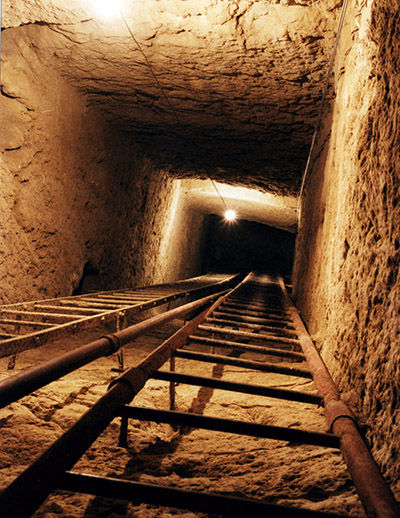
    From the sarcophagi within it, we have dated the famous Osiris Shaft which extends 114 feet below the surface of the Giza Plateau, and made surprising discoveries about it. We have re-dated the pyramids of Giza and proved that they could not have been built by Cheops, Chephren, and Mycerinus.

    A 75 foot drop down the central portion of the Osiris Shaft at Giza. Photo courtesy of Robert Temple.

    I describe the suppressed details of the royal pyramid of King Enezib, fifth king of the First Dynasty, at Saqqara, which was 75 long and 43 feet high, but is never mentioned in histories of pyramid evolution because it is ‘too embarrassing’. I show the surprising connection between it and the Step Pyramid of the later King Zoser, built by Imhotep. I translate for the first time the names of seven predynastic kings of Lower [northern] Egypt which are recorded on the Palermo Stone, an ancient annal.

    I believe I have discovered the precise locations of no fewer than seven intact royal tombs at Giza, and I publish the photos and plans. These include the tombs of Cheops, Chephren, and Mycerinus, which have never been entered since those pharaohs were buried. Those pharaohs were never buried in pyramids as naively imagined today, but within the Plateau, as insisted upon by Herodotus as long ago as the 5th century BCE, though everyone ignores his explicit statements because of ‘consensus blindness’. I believe the tomb of Sneferu is also one of them.

    As for the other three, I do not know whose they are. One is probably a gigantic Hall of Sokar (later referred to as Sokar-Osiris, Ptah-Sokar-Osiris, or simply as Osiris). This may be what enthusiasts tend to call ‘the Hall of Records’. A much larger ‘Tomb of Osiris’ is probably down there than the tiny one at the bottom of the Osiris Shaft. It would contain another subterranean canal surrounding an island with a sarcophagus, but on a very grand scale. I have discovered evidence connecting King Send (Sened), fifth king of the Second Dynasty, with Giza. It is possible that he is buried there. Only excavation and opening of these sealed time-capsules will answer our questions.

    I have been able to prove that large underground caverns were hollowed out of the limestone plateau of Giza, and that enormous complexes of subterranean chambers exist beneath the Giza Plateau, as many people have long suspected. I suspect that these locations must contain texts as well as the usual treasures, gold, etc. Frankly, I am more interested in texts than gold. Any sensible person would be.

    I have previously suggested in my earlier book The Sphinx Mystery (2009) that the Giza Plateau was a unified design complex, and that all three main pyramids and the Sphinx were constructed as one single concept. I produce much more proof of this in this new book.

    I have been able now to reconstruct the remaining two (of three) superimposed ‘Giza plans’ which explain the essentials of Giza. They consist of two separate but overlapping squares. One I call the ‘Shadow Square’ and the other I call the ‘Perfect Square’. These are merely names I have given them for convenience, but I believe them to be appropriate.

    The fundamental aspects which everyone else has missed in trying to reconstitute the concealed design plans of Giza are these: (1) there are three superimposed plans, each separate from the other, but complementary, and this was done on purpose to prevent anyone from ever discovering more than one, a kind of ‘triple lock’, and (2) the ‘key’ to unlocking the secrets of two of the plans is the shadow cast at noon on the winter solstice by the Great Pyramid. (Hence the name ‘Shadow Square’.) If you do not take this shadow into account, you cannot find the true northern boundaries to the Giza Plans. (One of them has the shadow tip define that distance, and the other is a secondary derivative of it.) In my study of the geometry of Giza I have achieved an accuracy to within two feet in an area of just under 11 million square feet.

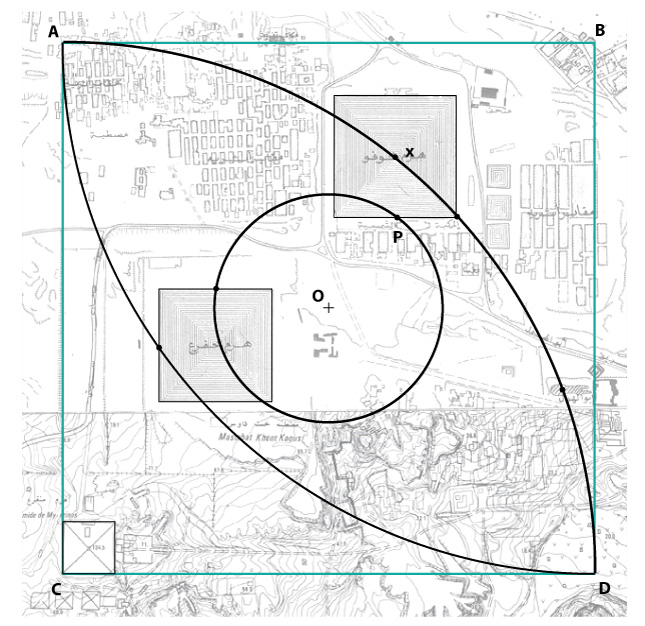
    The ‘Perfect Square’ of Giza gives an Eye of Ra design staring up at the zenith of the sky. I reproduce this here (see illustration, courtesy of Robert Temple, on page 41). Only if this particular square is used can a compass point put at the NE and SW corners of the square swing arcs which make the vesica piscis (which constitutes the Egyptian hieroglyph for the letter ‘r’, thus writing ‘Ra’ or ‘Re’, and which also means ‘fraction’ in Egyptian mathematics) that cuts key points on the Giza monuments. When the correct circle is drawn within this using the centre of the Square as its origin, to form the iris of the eye, an Eye of Ra intersecting six key points is formed staring straight up at the sky.

    This Eye of Ra occurs throughout the entire history of Egyptian art for thousands of years. But its largest and finest expression was the invisible Eye of Ra formed upon the Giza Plateau as a consequence of the Giza Plan which gave rise to the precise sizes and positions of the three main pyramids. The Eye, seen in the illustration, intersects the apex, southeast corner, and midpoint of the base of the south face of the Great Pyramid, the midpoint of the Sphinx, and the midpoints of the bases of the northern and western faces of the Pyramid of Chephren.

    ‘The Eye of Ra’ at Giza. This can meaningfully be inscribed only in the Perfect Square (where it intersects many key points of the monuments), not in the Shadow Square (where it intersects none). If you put a compass point on B and inscribe an arc between A and D, and put a compass point on C and inscribe an opposite arc between A and D, you get the eye shape. In geometry this is known as a vesica piscis, and is usually derived by the intersection of two circles of equal size. It is the Egyptian hieroglyph for the letter ‘r’ and in Egyptian mathematics it is also the sign meaning ‘fraction’. Since the Egyptians did not write vowels, it also means ‘Re’ or ‘Ra’, which is the name of the sun god. This inscribed hieroglyph intersects (1) the apex of the Great Pyramid, (2) the southeast corner of the Great Pyramid, (3) the midpoint of the waist of the Sphinx, (4) the midpoint of the base of the western face of the Pyramid of Chephren. If you take a compass point and put it on the centre of the Perfect Square, point O, and draw a circle of radius OP, it intersects both point P (the midpoint of the base of the southern face of the Great Pyramid) and the midpoint of the base of the northern face of the Pyramid of Chephren. The ‘Eye of Ra’ thus intersects six key points of the monuments within the Perfect Square of Giza. Because these are curves inscribed on the sloping surface of the Plateau rather than straight lines, as we find with all the other monument point correlations, the accuracy is slightly fuzzier than it is with the straight lines, and may be within a few feet of some points rather than within only one or two feet. However, as the Perfect Square contains nearly 11 million square feet, such a slightly diminished level of accuracy is still rigourous and acceptable. This ‘Eye of Ra’ gazes straight up at the sky, at the central point which we call the zenith. It is a fitting symbol of the solar nature of the entire Giza complex. (source: http://www.egyptiandawn.com/chapter1.html)

    One might well wonder why the ancient Egyptians should go to all this trouble to design an Eye of Ra which no one could ever see, and which is invisible, and even if it weren’t could only be seen looking down from the sky, since it exists only on a geometrical plan or in the mind, and nothing whatever can be seen on the ground. The answer to this may well be found in a strange text surviving amongst the collection of ancient wisdom texts known as the Hermetica, Tractate Five. (These texts are of mixed date, having been written in their present form in Greek under the rule of either the Ptolemies or the Romans, thus possibly as late as the 2nd century CE.) Many of them were reworked as Greek philosophical works mixed with ancient Egyptian material in a complete hodgepodge. No one has ever been able to come up with a definitive list of which material is Egyptian and which is Greek, as these are all mixed up, though a few of the tractates such as this one seem relatively undiluted. In this text, the Egyptian god of wisdom and writing, Thoth (in the guise of his Greek name, Hermes), is addressing his disciple called Tat:

    You must understand how something that seems invisible to the multitude will become entirely visible to you. Actually, if it were not invisible, it would not always be. Everything seen has been begotten because at some point it came to be seen. But the invisible always is, and, because it always is, it does not need to come to be seen. …Clearly, the one who alone is unbegotten is also unimagined and invisible… understanding… is invisible, sees the invisible, and if you have the strength, Tat, your mind’s eye will see it. …Can you have a vision of the image of god?… If you want to see god, consider the sun. …Would that you could grow wings and fly up into the air, lifted between earth and heaven, to see the solid earth… Oh, this is a most happy sight to see, my child… This is the order of the cosmos, and this is the cosmos of order.

    The answer is that the ancient Egyptian priests believed that the true image of the divine could only be invisible. This is the deeper truth of the Egyptian sacred mysteries, ironical in a civilisation normally believed to worship idols. In fact, the Egyptian did not ‘worship idols’ in the sense we think of those words at all. There was no word in ancient Egyptian meaning ‘belief’, just as there was no word meaning ‘religion’. They communed with the cosmic order, and all the gods and goddesses were personified images and facets of that One.

    Just as your parent or your spouse may keep an album or a computer folder of photographs of you, all different, some smiling, some frowning, some dressed as Santa Claus, so the Egyptians had their portrait gallery of the One Supreme Being looking like different personifications of the endless aspects of himself/herself, arrayed as statues and relief carvings and paintings in all the temples throughout the land. At one moment, God was Osiris, at another moment God was Isis, and at yet another God was Amun, which significantly means ‘the Hidden One’ who cannot be seen and is invisible. I believe that the sacred concept that the invisible is more important than the visible existed from predynastic times in Egypt and explains the thinking behind all the empty sarcophagi, tombs, pyramids, and secret chambers.

    What I have just said about invisible patterns does not appear in my book, it is an extension of what that book contains. Amongst the many other ‘invisibles’ and hidden things which I reveal is an elaborate network of secret passages, shafts, and chambers riddling the walls of the Valley Temple of Giza like a honeycomb. The book and its website www.egyptiandawn.com contain many, many photos of these previously unknown features of the only intact temple surviving from the Old Kingdom of Egypt. I have also translated from German the only excavation report of this structure, published in 1912, which does not mention these passages and chambers at all. This translation can be downloaded from the book’s website.

    Oh yes, and I almost forgot to mention that the final chapter of the book contains a solution to the riddle of Atlantis. What and where was it? Did it have any connection with ancient Egypt? All this is answered. I also publish photos and a description of the world’s largest megalithic ring, of which few people have until now had any knowledge at all.

    Illustrations courtesy of the author. Egyptian Dawn by Robert Temple is available from all good bookstores.

    [alert type=”general” dismiss=”no”]This article was published in New Dawn Special Issue 13.[/alert]

    [alert type=”success” dismiss=”no”]If you appreciate this article, please consider subscribing to help maintain this website.[/alert]

    © New Dawn Magazine and the respective author.
    For our reproduction notice, click here.