New Dawn – World's Most Unusual Magazine

Category: Articles

  • Freemasonry’s Secret Science of Symbolism: Resurrection, Immortality, and the Secret Elixir

    Freemasonry’s Secret Science of Symbolism: Resurrection, Immortality, and the Secret Elixir

    From New Dawn Special Issue 11 (Mar 2010)

    It was during its transitional phase of the early nineteenth century that Freemasonry began to change its public symbolism. During the eighteenth century, the skull and crossbones were used to mark the grave of a Freemason, the symbol being recognised by fellow Freemasons as the resting-place of a Master Mason. Though the skull and crossbones can be interpreted as a symbol of mortality, the use of the symbol on the figurative grave in the third degree ‘raising’ ceremony symbolises immortality, with the Master Mason being symbolically resurrected.

    The symbolism on Masonic tombstones began to change in the early 1800’s, and the traditional and somewhat terrifying skull and crossbones, was replaced by the much more ‘modern’ square and compass. This more scientific and modern symbol began appearing on many headstones marking the grave of Freemasons after the unification of the ‘Modern’ and ‘Antient’ Grand Lodges in 1813, and was adopted as the official public symbol of the new United Grand Lodge.

    The theme of immortality within Freemasonry is represented by a further array of symbolism. The symbolism of the snake which is also used in the Knights Templar ritual alongside the skull and crossbones, is also used as a representation of life and resurrection. The snake swallowing its own tail symbolises eternity within Freemasonry and can been seen as a stylised symbol of infinity.

    The sprig of Acacia, which is used as a symbol in the third degree, also represents immortality.1 The Acacia tree supposedly grew on the grave of Hiram Abbif and could be seen as a continuation of the life cycle, his death giving life to the tree. The Ark of the Covenant and the Alter of the Tabernacle, both of which resided in Solomon’s Temple, were both, according to legend, made of Acacia wood, as was Christ’s crown of thorns, and also the cross on which he was crucified, which represents the Christian belief in the Resurrection.2
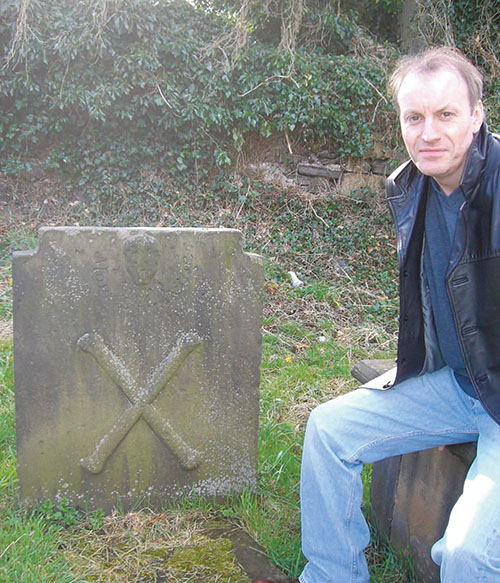
    The author alongside a mysterious Masonic gravestone situated in St. Collen’s churchyard, Llangollen, Wales. During the eighteenth century, the skull and crossbones were used to mark the grave of a Freemason. (Photo courtesy of the author)

    Christ’s resurrection is presented in the Knights Templar ritual, presenting a similar theme to the third degree of Craft Masonry, with the raising of Christ being entwined with the search for hidden knowledge.3

    Pomegranates, though they symbolise fertility in Freemasonry today, represented re-birth and resurrection, and were used in the third degree ‘raising’ ceremony, during the eighteenth century, being displayed around the figurative grave.4

    The pentagram, representing the five wounds of Christ, and the five points of fellowship, which is the embrace used in the raising of the Mason, is a powerful and potent symbol, and also symbolises ‘resurrection’, especially with the representation of the resurrection of Christ after receiving the five wounds during crucifixion.

    The use of the pyramid as a Masonic symbol can also be seen to represent ‘resurrection’, as the mummified Pharaoh’s were buried within the pyramid, only to ‘rise’ again in another world. The pyramid also symbolises another form of sacred Temple, constructed using sacred geometry. The significance of the Mason completing three degrees is seen as a journey from birth, through maturity and then on to death, only to be reborn as an enlightened Master Mason, having discovered the secrets of the Craft.

    This theme had been discussed by Sir Isaac Newton, who envisaged that during the millennium, the ‘children of the resurrection’ would reside in the New Jerusalem, the spirits of just men being made perfect. Newton devoured works on alchemy, philosophy and the Old Testament, searching for ancient knowledge to understand biblical prophecies and mystical alchemy. His research, which appeared wide and varied on anything remotely related to alchemy, also included Rosicrucian works such as the Fama and Confessio.5

    The mysterious Rosicrucian Brotherhood during the seventeenth century were believed to be immortal and ‘invisible’, the supposed secrets of everlasting life attracting the interest of early Freemasons like Ashmole and Moray. The Rose symbolised immortality, and the rose placed on a cross, was meant to symbolise the secret of immortality.6 Later Rosicrucian societies also held the symbolism of immortality in its ritual. The resurrection of the mysterious mythical founder of the order, Christian Rosencreutz, was re-enacted within the ritual, the symbolic figure rising from his tomb.

    The Rosicrucian symbolism of immortality is also reflected in Arthurian myth, such as the expected ‘resurrection’ of King Arthur and the Holy Grail which in some legends had the ability to heal and give immortality. The Holy Grail was also seen as a symbol for alchemy,7 a sacred life-giving vessel which had contained the blood of Christ, also becoming linked to the Rosicrucians. The importance of this symbolism still resounds today with speculative writers such as Michael Baigent using the Holy Grail in connection with Freemasonry and other secret societies.8

    The Rosicrucian order, like Freemasonry, focused on a holy building, called the House of the Holy Spirit, which immediately echoes the focus of Solomon’s Temple in the Masonic ritual. The rediscovery of ancient knowledge was also featured, and the opening of the tomb of Christian Rosencreutz (which itself was seen as a representation of the Universe) reinforced the belief within the mysterious Rosicrucian Order of the second coming of Rosencreutz and led the way to the revealing of the secrets of the Universe itself. The Kabbalistic and Hermetic themes of immortality and the discovery of the hidden secrets of Nature symbolised in Rosicrucianism is certainly reflected in Freemasonry, and the journey made by the Mason as he experiences the three degrees.

    The journey is also a spiritual and educational one, the Mason gaining ultimate wisdom and an understanding of the hidden secrets of Nature and Science. The Charge given to the candidate during the third degree in Freemasonry refers to the search for knowledge which will lead to the ultimate discovery:

    Continue to listen to the voice of nature, which bears witness, that even in this perishable frame resides a vital and immortal principle, which inspires a holy confidence that the Lord of Life will enable us to trample the king of terrors beneath our feet…9
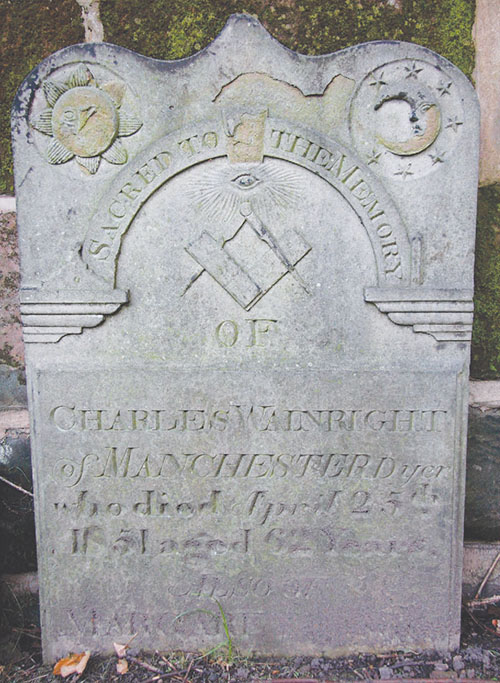
    The elaborately decorated Masonic gravestone of Charles Wainwright, a Manchester Freemason, buried in St. Elphin’s Parish Church, Warrington, in 1851. This gravestone has an array of Masonic symbols around the centralised square and compass, with the sun symbol to the left, and the crescent moon and seven stars to the right. The All-Seeing Eye is situated above the compass, which is set within an archway.
    (Photo courtesy of the author)

    The apparent paradox of the modern third degree ‘raising’ ceremony is that the newly made Master Mason is first told of the emblems of mortality which lies before him, only to be told that he is reborn to a new awareness, an awareness of immortality. Death and rebirth is a constant theme, and the ritual became popular, spreading quickly throughout Europe. In the eighteenth century Masonic ritual exposé ‘Three Distinct Knocks’, a description to the climax of the French version of the third degree ritual is eerily given:

    The French have a very solemn way of representing (Hiram’s) Death; for when you come into the Lodge to be made a Master, there is a Brother laid down in the Place where you are to lie, with his Face all besmear’d with Blood; and they say to you, Brother, don’t be frighten’d, for one of our Brothers is kill’d, because he would not deliver the Master’s Word and Gripe to Three Fellow-Crafts, that had no Right to it; and it is the Duty of us all so to do; to die before we will deliver any Part of Masonry to them that have no Right to it. When you kneel down to receive the Obligation the supposed dead Man lies behind you; and while you are reading the Obligation and History of his Death, he gets up unknown to you, and you are laid down in his Place…10

    The theatre of necromancy presented within the third degree ritual produces excellent dramatic effect, the death and rebirth of the Master Mason symbolising the endless search for lost ancient knowledge.

    The skull and crossbones very likely represented necromancy themes within the medieval Knights Templar order. The legend of the ‘Skull of Sidon’ reveals the story of a Templar Knight who had a relationship with a woman. The woman died, and as to consummate the relationship, the Templar Knight dug up the woman’s grave, and made love to her, which resulted in the birth of a son nine months later. This bizarre birth came in the form of a skull and crossbones which protected the Knight and endowed him with magical powers.

    Again, the skull and crossbones seem to symbolise immortality, with the continuation of life after death, entwined with secret wisdom. In the third degree, the Mason, as he lies in the figurative grave, also has his right leg crossed over his left, which is also similar to effigies of the buried Templar Knights.

    Another legend, which portrays the theme of immortality, is the account of the exhumation of the Scottish King, Robert the Bruce. When his grave was opened, the remains of Bruce was said to have been found with his leg bones crossed beneath his skull. Bruce has been linked to the Templar order by a number of speculative writers, who suggest, despite the lack of evidence, the order survived in Scotland, eventually influencing modern Freemasonry.11

    The necromancy traditions within the Templar movement are also reminiscent of the tale of the raising of Noah by his three sons who are searching for his secret knowledge. The attainment of gaining lost knowledge from the dead was a popular theme during the seventeenth century, with biblical references to the raising of the dead being well known.12 With notorious necromancers such as John Dee practising their art so openly, the search for the lost knowledge of the ancients became an exploration into the realms of the dark arts.

    The popular image of the skull being used as an occultist tool may also have originated as part of the process of alchemy. During the process, a phase called the Dead Head occurred, which was said to have transpired just before the discovery of the philosopher’s stone, which produced the elusive Elixir of life. The imagery that is constantly portrayed is one of the spiritual student attaining liberation and sacred knowledge, and it is only after the symbolic death of his old self that the new enlightened master craftsman can enter a new level of existence.

    The skull is also symbolic of the Sign of Sympathy, which consisted of the striking of the skull three times. This also takes place during the ‘raising’ ceremony, and may also represent the mystical Masonic number seven, as there are supposedly seven openings to the skull. Stevenson in his Origins of Freemasonry discusses the skull as an early Masonic symbol in Scotland representing death and rebirth, the skull, compass and square featuring on a list of symbols included in a poem displayed at the end of the early eighteenth century Dumfries No.4 Manuscript.13

    Another Masonic symbol, which sometimes appeared on gravestones during the eighteenth century, was the hourglass, which, though represented mortality, was in certain cases, displayed alongside the skull. The hourglass, however, was also linked to alchemy, and appeared in many contemporary prints and works of art which covered the theme of alchemy and Rosicrucianism. The hourglass, though reminding man of his time on Earth, could be turned over, letting the sand run again, and therefore giving an endless, limitless existence. The shape of the hourglass is also reminiscent of the infinity symbol (∞) and is displayed alongside other related symbols such as the scythe, Noah’s Ark and the sprig of Acacia in Masonic artwork during the eighteenth century. The Greek philosophers believed that time could be defeated, and the Metaphysical poets of the seventeenth century, such as Donne, expressed the same ethos in their poetry. Yet, as a Masonic symbol on gravestones, the hourglass became disused, and like the skull and crossbones, was replaced by the square and compass after the unification in 1813.
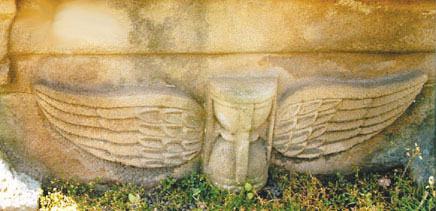
    An example of how the hourglass is used on a Freemason’s tomb. (Photo courtesy of www.pharmcat.demon.co.uk/cemetery/emblem.htm)

    Public perception of these symbols would have differed greatly from the small percentage of the population that were Freemasons. A fellow Freemason would have recognised the symbolism, though public opinion may have been confused, leading to misconceptions regarding the image. The skull and crossbones signified danger and conjured up fear and is highly reminiscent of the ‘jolly roger’, the pirate flag which began to be used in the early seventeenth century. The skull and crossbones displayed on flags were also used by some Masonic lodges, such as the old South Saxon Lodge which was erected from Lewes Castle when the lodge met there during the early nineteenth century.14 Another symbol used on the flags of pirates and privateers was the hourglass that, as we have just seen, was also used in Freemasonry.

    Perhaps the change of symbolism may have been an attempt to move away from the older, magical, mysterious, terrifying imagery; the new United Grand Lodge adopting a more modern and scientific symbol for the gravestones as a recognition of the new science and God’s reason, though it was a symbol which still represented the same meaning, that of life, death and re-birth.
    Alchemists and the Search for the Elixir

    The search for immortality within Freemasonry clearly drew upon the Rosicrucian links to alchemy and the search for the Philosophers Stone. The Philosophers Stone was identified with the Elixir, the mythical substance which would bestow eternal life, and could be gained after years of study and learning.

    This was still seen during the seventeenth century as a form of old science, Sir Isaac Newton actually practising alchemy and interpreting biblical prophecy, alongside his other, more ‘modernist’ experimental work. Biblical characters such as Moses, who were noted in the Bible as having an unnaturally long life, were seen as early alchemists, and Newton became obsessed with the search for hidden codes in Greco-Roman mythology and in the biblical texts. Newton believed that these ancient stories hid the codes which could reveal the secret of alchemy, the ancient mythological and biblical characters literally transmuting their hidden knowledge to the modern philosophers through their encoded texts. Newton saw himself as the chosen One, chosen by God himself to decipher the mysteries of Nature and biblical prophecy, unlocking the secrets of God’s Universe using a combination of ancient scripture and modern experimental natural philosophy.15

    One strange and mysterious figure who was said to have discovered the secret of immortality was Nicolas Flamel. Flamel was a fourteenth century scribe who was based in Paris, and supposedly discovered an ancient Kabbalistic manuscript. This supposedly enabled Flamel to turn base metal into gold and gave him eternal life. Flamel’s work in alchemy created many legends, and supposed sightings of him were recorded well into the eighteenth century.16

    A legendary mysterious figure who was linked to Freemasonry and the Rosicrucians in the eighteenth century was Count St. Germain.17 St. Germain, like Flamel before him, was said to have experimented with alchemy and the occult, and became well known throughout the courts of Europe. He was said to have been a Freemason himself and had known the Freemasons Casanova and Voltaire, the later referring to St. Germain as the “man who never dies and knows everything.”18

    Certainly historical alchemists such as Johann Baptista Van Helmont (1577–1644), contributed to early chemistry, and inspired Newton’s research into this field, but even Van Helmont was supposed to have transmuted mercury into gold by using the Philosophers Stone.19 The search for hidden knowledge was part of the alchemists work, and the popular imagery surrounding this esoteric research resounds in the necromantic themes of the ‘Modern’ Masonic third degree ritual, a ritual revised by Desaguliers, a disciple of Newton who was fully aware of the power of alchemy.

    Another mysterious, though historical figure who was linked to necromancy, alchemy and the occult, was Johannes Faust. Little is known of Faust, though he seems to have been granted a BA in divinity at Heidelberg in 1509, and like Flamel and St. Germain, gained mythical status as a man who sought hidden knowledge in an attempt to gain eternal life. Faust was also the inspiration for Christopher Marlow’s play ‘Doctor Faustus’ and the Freemason Goethe’s ‘Faust’, both telling of how Faust sold his soul to the devil, paying the ultimate price for his search for forbidden knowledge. Marlow’s play, published not long before Bacon’s ‘Advancement of Learning’, sets the scene with vivid necromantic Masonic-like imagery describing a mixture of early natural philosophy, magical symbolism and ritualistic practices:

    These metaphysics of magicians and necromantic books are heavenly; lines, circles, letters, characters – ay, these are those that Faustus most desires.20

    Marlow describes a ritual which is reminiscent of third degree Masonry, a ritual which certainly has parallels with John Dee and Edward Kelley’s ritual practices, having Faustus searching for hidden knowledge to raise the dead, using magical symbols in a mysterious ritualistic ceremony.

    Dee was an Elizabethan mystic and alchemist who became deeply involved in necromancy, his accomplice Edward Kelley, supposedly having attempted to ‘resurrect’ a corpse in a graveyard in Walton-le-Dale in Lancashire. Kelley allegedly exhumed the corpse and apparently forced it to speak using magic so it could reveal the whereabouts of a hidden fortune.21 The mysterious ritual that Kelley performed on the corpse also reflects the third degree in Freemasonry, the use of necromantic imagery and the theme of immortality entwined with the search for lost knowledge.

    The third degree Masonic ritual charges the newly made Master Mason that ‘he may finally arise from the tomb of transgression’, the search for lost knowledge culminating in a performance of necromancy. Though all of these figures are enveloped in myth, they may have inspired many Rosicrucian visionaries and early Freemasons, such as Ashmole and Moray, into researching the hidden mysteries of nature and science.

    Certainly Elias Ashmole became fascinated by the work of Dee and his accomplice Kelley, referring to them in his ‘Theatrum Chemicum Britannicum’, stating how they had mysteriously found a large quantity of the Elixir in the ruins of Glastonbury Abbey (a traditional resting place for King Arthur).

    The themes of resurrection within Freemasonry, and the symbolism attached to Masonic gravestones, certainly seem to represent a belief in the eternal cycle of life, and the educational processes, which led the Mason to discover spiritual purity and immortality of the soul. This is perhaps a more symbolic natural approach to everlasting life, and the influence of mysterious figures such as St. Germain, Flamel, Faust and Dee, may also be symbolic, all of whom were supposedly learned in ancient knowledge, all having completed an educational journey of discovery in connection with alchemy and magic.

    The above is abridged and excerpted with permission from Dr. David Harrison’s book The Genesis of Freemasonry, available from all good bookstores and through www.amazon.co.uk. His book is a revealing but thoroughly enjoyable journey through the intricate history of English Freemasonry. Freemasons and the general public will find much of interest in this fascinating exploration of the very beginnings of Freemasonry, still one of the most mysterious brotherhoods in the world.

    [alert type=”general” dismiss=”no”]This article was published in New Dawn Special Issue 11.[/alert]

    [alert type=”success” dismiss=”no”]If you appreciate this article, please consider subscribing to help maintain this website.[/alert]

    Footnotes

    1. For a detailed description of modern Masonic symbolism and regalia also see Anon., Constitutions of the Antient Fraternity of Free & Accepted Masons Under the United Grand Lodge of England, London: United Grand Lodge, 1919, 140-54.
    2. See Waite, New Encyclopaedia of Freemasonry, Vol.I, 1-2.
    3. Carlile, Manual of Freemasonry, 140-1.
    4. Anderson, Constitutions, London: 1769, 25-6.
    5. F.E. Manuel, The Religion of Isaac Newton, London: Clarendon Press, 1974, 45-6.
    6. K. Mackenzie, The Royal Masonic Cyclopedia, Worcester: Aquarian Press Edition, 1987, 609. Originally pub. 1877.
    7. Waite, New Encyclopaedia of Freemasonry, Vol.I, 368-78.
    8. See Baigent, Leigh and Lincoln, Holy Blood and the Holy Grail.
    9. Carlile, Manual of Freemasonry, 71.
    10. Anon., The Three distinct Knocks, Or the Door of the most Antient Free-Masonry, Dublin: Thomas Wilkinson, c.1785, 43-4.
    11. Baigent and Leigh, Temple and the Lodge, 182-3. See also Baigent, Leigh and Lincoln, Holy Blood and the Holy Grail, 74-81, and Knight and Lomas, Hiram Key, 384-91.
    12. Stevenson, Origins of Freemasonry, 144-5. Stevenson discusses the case of Patrick Ruthven in Scotland in 1623, who, thinking himself bewitched, received a visitation from Isobel Haldane, later to be executed for witchcraft, who attempted to cure him by lying on him ‘hir heid to his heid, hir handis ower him, and so forth’. This incident in trying to ‘raise’ the inflicted man, was similar to biblical incidents of ‘raising the dead’ such as Elisha who lay upon a child’s body, mouth to mouth, eyes to eyes and hands to hands, which, according to Stevenson, also recalls the five points of fellowship used in the raising ceremony of the third degree.
    13. Ibid., 137-3, 142 and 160-1. The Dumfries No.4 Manuscript is described by Stevenson as being an early eighteenth century manuscript and includes elements of the ritual regarding the opening of a lodge.
    14. N.B. Cryer, Masonic Hall of England: The South, Shepperton: Lewis Masonic, 1989, 80, 83.
    15. See Rob Iliffe, Newton: A Very Short Introduction, Oxford: Oxford University Press, 2007.
    16. Charles Mackay, Memoirs of extraordinary popular delusions, London: Samuel Bentley, 1841, 40-9.
    17. Waite, New Encyclopaedia of Freemasonry, Vol.II, 28.
    18. Isabel Cooper-Oakley, The Comte de St. Germain: The Secret of Kings, Milano, G. Sulli-Rao, 1912, 96. Voltaire discusses St. Germain in correspondence with Frederick of Prussia dated 15th of April, 1758.
    19. Frederick Ferré, Being and Value: Toward a Constructive Postmodern Metaphysics, New York: State University of New York Press, 1996, 167.
    20. S. Barnet, (ed.), Doctor Faustus by Christopher Marlow, New York: Signet, 1969, 26.
    21. Smith, Life of John Dee, 77.

    © New Dawn Magazine and the respective author.
    For our reproduction notice, click here.
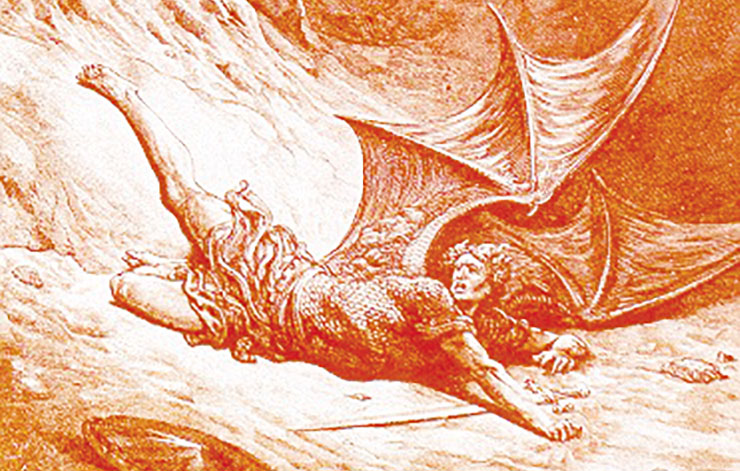
  • A Lucid Look at Lucifer

    A Lucid Look at Lucifer

    From New Dawn Special Issue 10 (Dec 2009)

    We have to literarily, philosophically and theologically deconstruct certain concepts before we can really understand them. This is a process where we look beneath and beyond the commonly assumed folklore.

    Some readers may think Lucifer is a clearly designated biblical character, the same figure as Satan. Lucifer is the fallen angel in the Bible, in the Book of Genesis. Right? Of course, the answer is no on all counts.

    Surprisingly, the word Lucifer appears only once in the Bible in Isaiah 14:12, translating the Hebrew word helel meaning shining one. In the Greek Septuagint translation, it was rendered as heosphoros (Ηωσφόρος) or light-bearer. This word comes from Hesperus, a Greek goddess of the dawn. When the Romans took over the Christian scriptures in the 300s, Jerome translated helel and heosphoros as Lucifer in his Latin Vulgate Bible. Whether in old Hebrew, Greek or Latin, the word was the common name for Venus, the brightest planet, the Morning Star, the Light-Bearer, the Day Star. So in the real meaning of Isaiah 14:12, Lucifer merely describes the vainglorious image that the arrogant King of Babylon would seek to affect.

    Some Protestant translations from John Wycliffe and others followed the Vulgate. But the respected Protestant biblical exegete Matthew Henry (Matthew Henry’s Commentary, 1721) says nothing about Lucifer being Satan, focusing on the real meaning of the text, which has to do with the nation of Babylon and its rulers who oppressed the Old Testament Hebrews.

    It goes without saying that a simple internet search will bring up mountains of material to the contrary, supporting the “traditional” view that Lucifer is the fallen angel, the Devil, the same as the Satan cited in Luke 10:18. But in truth, the very same term, Day Star, is also applied to the Christ himself in II Peter 1:19, Revelation 22:16, and in the ancient Latin Easter hymn, the Exultet.

    In an interesting coincidence, an early Christian theologian and bishop back in the 300s was named Lucifer, so it was obviously not a negative name back then. What’s more, I’m pretty sure Jerome would have known of him since they were contemporaries in the early Church.

    In some ways, the personification of Lucifer as Satan is crucial to certain versions of Christianity. Otherwise, if the so-called Fall of Lucifer does not account for the origin of Satan, then the Old Testament is silent on the matter. Regardless of that, only a few Bible versions follow Jerome’s translation. Early Protestants differed. The English King James version used Lucifer, but Martin Luther’s German translation did not. When Luther was in seminary, he studied the Vulgate, so he purposefully differed from Jerome by not using Lucifer. We begin with the King James version:

    “How art thou fallen from heaven O Lucifer, son of the morning? How are thou cut down to the ground which didst weaken the nations!” (Isaiah 14:12, King James version)

    “Quomodo cecidisti de caelo Lucifer, qui mane oriebaris corruisti in terram qui vulnerabas gentes?” (Jerome’s Latin Vulgate)

    “O Lucifer who didst rise in the morning! How art thou fallen to the earth, that didst wound the nations!” (Douay Rheims English translation of the Vulgate)

    “Du schöner Morgenstern.” (You beautiful morning star.) (Luther Bible)

    “O morning star, son of the dawn!” (New International)

    “O Day Star, son of the morning.” (Revised Standard)

    “Bright morning star.” (New Revised Standard)

    “O Day Star, son of Dawn!” (New English Bible)

    “O star of the morning, son of the dawn!” (New American Standard)

    Lucifer or Dawn or Venus is also a figure in ancient Canaanite mythology, having nothing to do with Satan or an evil.

    The dwelling of the gods and the riding of the clouds are both known to us from the Ras Shamra texts at Ugarit in N. Syria, and so too is Dawn a deity, of whom this figure is described as a son. The most high is Elyon, the title so often used of God…. All these elements may be paralleled in the Old Testament, suggesting how richly Canaanite religion and mythology have influenced Old Testament thought. (Interpreters One Volume Commentary of the Bible, 1971)

    Old and new reference sources tell us more:

    Lucifer Isa. 14:12. This word, signifying light bearer, occurs but once in our Bible, and then applies to the king of Babylon to indicate his glory as a morning star, or figuratively, a son of the morning. Tertullian and some others suppose the passage to relate to the fall of Satan; and hence the term is usually applied in that way; though, as it seems, without specific warrant. (The Union Bible Dictionary, 1842)

    Its application, from St. Jerome downwards, to Satan in his fall from heaven, arises probably from the fact that the Babylonian Empire is in scripture represented as the type of tyrannical and self-idolizing power, and especially connected with the empire of the Evil One in the Apocalypse. (Smith’s Bible Dictionary, 1884)

    In spite of this rendering, the proper name ‘Lucifer’ is not in the original Hebrew text. In Hebrew ‘Lucifer, son of the morning’ is helel ben shachar. It could be translated ‘shining one, son of the dawn.’ It is not a proper name, but an epithet for the king of Babylon. (Bryan Knowles, ‘Who Is Lucifer?’, www.godward.org)

    Hence, Jerome’s use of Lucifer as a capitalised proper name is not correct. The Roman Church concocted the Lucifer-as-Satan myth after they took over emergent Christianity in the early 300s, as evidenced by references to both Tertullian and Jerome.

    If Lucifer is so important, why is nothing else ever said? Light Bearer, Morning Star; nothing negative about that. Lucifer not only does not mean anything negative, as a matter of fact, it doesn’t really seem to mean anything at all, biblically speaking. Out of the over 800,000 words in the Bible and the Apocrypha, Lucifer appears once, and then in an ambiguous reference. Whatever the word means to certain Christian sects, theosophical and metaphysical groups, or secret societies, as you can clearly see it does not come from the Bible!

    The Pagan Origins of Satan

    Satan (Hebrew ha-Satan, in Arabic Shaitan) translates as adversary or accuser. In all three Semitic religions, Satan refers to the opposite of the good god, or the so-called Devil. This is, of course, a direct transplant from Persian Zoroastrianism into the ancient Hebrew religion and then into the Talmud, Kabala, the New Testament and lastly in the Qur’an. Zoroastrianism poses two gods, one responsible for good and another responsible for evil. The polyglot god traditions found in Genesis reflect this Persian pagan influence.

    For some, the image and persona of the Satan is quite fascinating, indeed, perhaps even noble. As readers of English literature know, John Milton addressed this theme in his famous 1667 poetic magnum opus, Paradise Lost. Consider the following hypothesis, based on the multiple Semitic deities portrayed in Genesis.

    El in Egyptian is also the Child, who in the early Sabean age, was Sut, the planetary type, Saturn. Later El was transformed into Satan, whom Job introduces as one of the sons of god. Satan was accounted a son and an Angel of God by all Semitic nations. The learned Kabalist, Eliphas Lévi, speaks of Satan thus:

    ‘It is the angel who is proud enough to believe himself god; proud enough to buy his independence at the price of eternal suffering and torture; beautiful enough to have adored himself in full divine light; strong enough to reign in darkness amidst agony, and to have built himself a throne on his inextinguishable fire.’

    He further says that the true name of Satan is that of Jehovah reversed, for Satan is not a black god but the negation of Deity. The Devil of the early Christians, with horns, hoofs and tail was introduced from Babylon through the Jewish Talmud. The Christian religion transforms Satan into an enemy of God, whereas in reality by Satan the highest divine spirit or Occult Wisdom on earth is meant. (E. Valentia Straiton, Celestial Ship of the North)

    Eliphas Lévi explains the symbolism of Lucifer:

    What is more absurd and more impious than to attribute the name of Lucifer to the devil, that is, to personified evil. The intellectual Lucifer is the spirit of intelligence and love; it is the Paraclete, it is the Holy Spirit, while the physical Lucifer is the great agent of universal magnetism. To personify evil and exalt it into an intelligence which is the rival of God, into a being which can understand but love no more – this is a monstrous fiction. To believe that God permits this evil intelligence to deceive and destroy his feeble creatures is to make God more wicked than the devil. By depriving the devil of the possibility of love and repentance, God forces him to do evil. Moreover a spirit of error and falsehood can only be a folly which thinks, nor does it deserve indeed the name of spirit. The devil is God’s antithesis, and if we define God as He who is we must define His opposite as he who is not. (Eliphas Lévi, The Mysteries of Magic)

    Alexander S. Holub in his The Gospel Truth: The Heresy of History (2004), notes:

    The Yahwists and Elohists reflected a very early stage of the Israelite religion. This is when it was still essentially a nature/fertility religion much the same as the other pagan religions of the same time and region. It contained things like angels (in the text called Elohim), talking animals, dreams, and the idea of an anthropomorphic deity. This deity brought forth both good and evil as any anthropomorphic deity does. There was no Satan to bring the natural disasters. It was God. It was God also when (he was) displeased with someone simply ‘removed’ him by taking his life. So it was necessary to propitiate and worship this deity in order not to anger him in any way. It was later, after the Babylonian ‘captivity’, that this God became patient, just, and merciful, just like [the Zoroastrian good god called] Ahura Mazda.

    When we deconstruct the words, symbols and images, it turns out that Lucifer-Satan-Devil, the source of all evil, is originally neither a Hebrew, Christian nor a Muslim concept, springing directly from much earlier Persian pagan roots. Naturally, all this biblical revisionism is not popular with the priests and preachers. If they couldn’t scare you with Lucifer, the Devil and visions of burning with Satan in Hell, there might be fewer donations. We can’t have that!

    Lucifer in Theosophy and Secret Societies

    Now that we understand more about the real origins of the word as misused in the Vulgate Bible, we see that various metaphysical groups, Illuminati orders and secret societies essentially created their own deity centred on the image of Lucifer as Light Bearer. Madame Blavatsky, like Eliphas Lévi, said the Holy Spirit and Lucifer are the same entity.

    Lucifer, or Luciferus, is the name of the angelic Entity presiding over the light of truth as over the light of day… to the profane [the uninitiated] the Astral Light [universal Soul, the Matrix of the Universe] may be God and Devil at once…. Lucifer is divine and terrestrial light, the “Holy Ghost” and “Satan” at one and the same time…. The Fall was the result of man’s knowledge, for his “eyes were opened.” Indeed, he was taught Wisdom and the hidden knowledge by the “Fallen Angel”…. And now it stands proven that Satan, or the Red Fiery Dragon, the “Lord of Phosphorus,” and Lucifer, or “Light-Bearer,” is in us: it is our Mind – our tempter and Redeemer, our intelligent liberator and Saviour from pure animalism. Without this principle – the emanation of the very essence of the pure divine principle Mahat (Intelligence), which radiates direct from the Divine mind – we would be surely no better than animals. (Helena Petrovna Blavatsky, The Secret Doctrine, 1888)

    For those wanting to explore beyond this, all the sources cited, and lots more, are not hard to find. Neither have we dealt with the myriad of modern belief systems called Satanism, yet another complex and diverse topic, but that will have to be at another time. For now, read the quotes on page 63 and see what the secret initiatic orders and their high adepts have to say about their god/demigod/demon-god/holy spirit.

    Get the issue this article appears in

    Lucifer in Summary

    Several conclusions present themselves. Firstly, the Lucifer of the Bible is a minor character at best, mentioned only once, not really standing out or signifying much of anything. The real character portrayed in the Isaiah text is an arrogant Babylonian monarch who oppressed the Hebrew people. Secondly, the mystical interpretations about Lucifer as Satan were added by Kabalistic rabbis, Catholic priests, Islamic mullahs, and Protestant preachers, all with clearly vested self-interests. Thirdly, various occult philosophers and metaphysicians explored and enlarged the Lucifer paradigm, creating an odd sort of god-demigod figure. Lastly, on the outer fringes of this magic and mysticism are the secret societies and Illuminati initiatic orders, especially Freemasons of one kind or another.

    Remember, there are secret lodges, degrees and rituals, unknown outside the upper level adepts of the Illuminati orders. Their peculiar Luciferian doctrines and dogma always have had and still do have a significant impact on world history and geopolitical affairs. Not so much because of the rituals themselves, but because of the people who practice this strange cultic religion. Like any belief system, its dogma and doctrines, its morals and values, colour the decisions made by its truly devoted believers. Certain ones are in very high positions in government, the churches and the social order.

    I hope some of you will continue your explorations into the occult underground and its impact on the world around us. If my deconstruction of the Lucifer legends and lore has been a literary Light Bearer, then let it be!

    [alert type=”general” dismiss=”no”]This article was published in New Dawn Special Issue 10.[/alert]

    [alert type=”success” dismiss=”no”]If you appreciate this article, please consider subscribing to help maintain this website.[/alert]

    © New Dawn Magazine and the respective author.
    For our reproduction notice, click here.
  • The Magic & Mysticism of Eliphas Lévi: The Father of Modern Occultism

    The Magic & Mysticism of Eliphas Lévi: The Father of Modern Occultism

    From New Dawn Special Issue 10 (Dec 2009)

    The most influential figure in the centuries old story of Western magic and the Judaic Kabala (“the receiving”) was neither a Jew by birth or conversion. That being said and further contributing to the confusion, he learned Hebrew in order to master Kabala and adopted a Hebraic name.

    The famous philosopher, metaphysician and sorcerer has a magical seal containing his name. Seals are a vital part of ceremonial magic rooted in the Kabala, and greatly popularised through the works of our protagonist. Those who follow Kabalistic numerology and gematria see that his name is spelled differently on the seal, thus changing its magical meaning.

    Eliphas Lévi is one of the most important figures in magical theory and practice during the nineteenth century metaphysical literary renaissance. He probably coined and certainly popularised the modern usage of the word occult.

    While some say he was a Roman priest who became a Jew (or vice versa), they are mistaken. Born a French Catholic and son of a modest shoemaker, Alphonse Louis Constant (1810–1875) trained to be a priest. But the precocious young man fell in love while in seminary. As a matter of fact, he had almost graduated, having already been ordained a celibate deacon. Because of this amorous affair, he was never ordained to the priesthood. Further confusing the issue, French newspapers often referred to him as Abbe Constant, since he spoke of spiritual matters and often wore black robes reminiscent of Catholic clerical garb. Even though rejected by the church, he did not give up Catholicism, writing Christian books and tractates.

    In 1846 at age 36, he married a girl half his age. They had a child who died shortly after birth, but produced no other offspring. The couple separated in 1853 when the younger woman fell in love with another man. Constant, apparently still observing some Catholic dogma, later had the marriage annulled.

    During the revolutionary era around 1848, he wrote some rather radical leftist political works, and spent two short terms in jail. It was only after this that he fully turned his mind and life toward spiritual and esoteric matters. New Age was not a term in vogue in his era, but through his work, the great majority of the teachings coming under this genre today have their roots in his writings.

    His esoteric and occult interests began when he was in seminary. One of his professors was quite interested in Mesmerism, Animal Magnetism and Spiritualism, and the young seminarian began exploring metaphysical literature and connecting with French occultists and mystics of the day.

    The intelligent young Parisian not only discovered and deeply adopted both European occultism and Hebraic Kabalism as his own faith, in a rather short time he became a major voice and influence. While he learned Hebrew and mastered Kabala as well as most of the mystical Hasidic rabbis, he did not formally convert to Judaism. But, as some converts do, Alphonse Louis changed names. His new moniker and nom de plume was a somewhat loose translation of his two birth names into Hebrew.

    His influence is still quite pervasive. Eliphas Lévi’s writings on mysticism and magic as well as his personal magnetism spoke boldly. His books are sometimes a bit arcane, but always thoroughly organised and presented in a clear and honest way, without the pretensions often found in such literature.

    After his marriage failed, he visited England in 1854. He quickly connected with British authors and occultists, being accepted into their social circles. While in the company of these spiritual and literary comrades, he wrote a profound work of higher metaphysics. His classic two volume Dogme et Rituel de la Haute Magie came out in 1855, but it was not until 1896 that it was translated by leading English occultist and writer Arthur E. Waite as Transcendental Magic, Its Doctrines and Rituals. Here is a short selection from the Introduction. As Lévi says, all magic utilises similar forces and rituals from primordial archetypal origins.

    Behind the veil of all the hieratic and mystical allegories of ancient doctrines, behind the darkness and strange ordeals of all initiations, under the seal of all sacred writings, in the ruins of Nineveh or Thebes, on the crumbling stones of old temples and on the blackened visage of the Assyrian or Egyptian Sphinx, in the monstrous or marvellous paintings which interpret to the faithful of India the inspired pages of the Vedas, in the cryptic emblems of our old books on alchemy, in the ceremonies practised at reception by all secret societies, there are found indications of a doctrine which is everywhere the same and everywhere carefully concealed.

    Who/What is Baphomet?

    Haute Magie is perhaps most famous for the image and hypothesis about the occult entity called Baphomet. This is exemplary of Lévi’s metaphysical revisionism. Before making a decision based on your immediate reaction to the graphic image, please read what Lévi said and my short comments.

    The goat on the frontispiece carries the sign of the pentagram on the forehead, with one point at the top, a symbol of light, his two hands forming the sign of hermetism, the one pointing up to the white moon of Chesed, the other pointing down to the black one of Geburah. This sign expresses the perfect harmony of mercy with justice. His one arm is female, the other male like the ones of the androgyn of Khunrath, the attributes of which we had to unite with those of our goat because he is one and the same symbol. The flame of intelligence shining between his horns is the magic light of the universal balance, the image of the soul elevated above matter, as the flame, whilst being tied to matter, shines above it. The ugly beast’s head expresses the horror of the sinner, whose materially acting, solely responsible part has to bear the punishment exclusively; because the soul is insensitive according to its nature and can only suffer when it materialises. The rod standing instead of genitals symbolises eternal life, the body covered with scales the water, the semi-circle above it the atmosphere, the feathers following above the volatile. Humanity is represented by the two breasts and the androgyn arms of this sphinx of the occult sciences.

    All of this had a direct effect on the symbology of modern occultism. It was Eliphas Lévi who wrote about the pentagram as a symbol for both good and black magic. The goat god Baphomet was incorporated into the inverted pentagram, making it a symbol of evil. Some neo-pagans disagree, pointing to the inverted pentagram as an earlier and more ancient Indo-European symbol. According to my understanding, they are correct. But even so, this does not distract from the brilliance of Lévi’s Baphomet paradigm and symbology, yet another major development in modern ceremonial magic (thaumaturgy) and occultism. As to any evil spirits or diabolic developments, in most cases we “magically” create our own reality. Hence, we create our own possessive demons as well! It seems Lévi understood this quite well.

    When one creates phantoms for oneself, one puts vampires into the world, and one must nourish these children of a voluntary nightmare with one’s blood, one’s life, one’s intelligence, and one’s reason, without ever satisfying them.

    Kabala and Tarot

    One of his major accomplishments was recreating and reinvigorating not only Western interest in the Judaic mysticism of the Kabala, but combining this with the powerful Tarot symbolism.

    Lévi proposed a close relationship between Tarot and Kabala. Some occultists and scholars of magic scoffed at this, saying he imagined the relationships he wrote about. Whatever the case, his speculation was prolific, well written, ongoing and long-lasting. In Haute Magie he wrote 22 chapters based on the 22 Major Arcana of the Tarot, matching each to one of the 22 letters of the Hebrew alphabet and all the accompanying myriad of Kabalistic symbolism. This was supplemented by a later work, Magical Rituals of the Sanctum Regnum. Many readers found all of this to be quite profound and intriguing, and as a result of his writings and teachings Tarot became an important tool in divination, Western magic and occultism.

    Both Tarot and Kabala are ubiquitous topics for New Age devotees of all sorts, not to mention a host of books, magazines, websites, DVDs, seminars and workshops. This did not just spontaneously pop up. Today’s fascination with Kabala and Tarot and all the accompanying symbolism is largely due to the groundwork of Eliphas Lévi.

    Eliphas Lévi and Christianity

    While many of his critics love to characterise him as evil, Luciferian and Satanic, a close reading shows that, in some ways, he never really turned all that far away from the basic Christian faith. This may surprise some readers, both Christians and occultists. Read from the Sanctum Regnum, beginning with words from its editor in the first paragraph below.

    The very curious manuscript volume, from which the preceding pages have been translated, concludes with a passage which appears to retract the whole of the foregoing instruction. It is a very notable illustration of the second mind of its author. Mr. Waite, who published an English translation of much that Lévi has written, has in his Preface called especial attention to the evidence that Lévi was drawn in a most mysterious fashion in two different directions by opposing forces. From his early training he tended to be a devout Catholic; from his Hebrew studies he became a Kabalist and a Magician. So even in this short occult treatise we find him, after carefully giving magical instruction through twenty-two chapters, making at its end a solemn recantation, and pointing out that the duty of a Christian is to the Church of Christ, which is the best and highest aim to which a man can attain….

    You will now need to learn the last secret of magical force and the final grade of human will power. It is Resistance to the Universal Attraction; this is the conquest of nature, it is the Royal Authority of Soul over Body – it is Continence. To have the power and opportunity to do what give pleasure, yet to abstain because one wills it; this shows the Royal power of Soul over body. Happy is the man who can be so placed, and yet so act: thus it is that the most sublime use of liberty is absolute obedience. Without obedience no society can continue to exist. This is why the Magi worshipped the Christ in the stable at Bethlehem. Christ, that son of God, greatest of initiates, and the last initiator.

    But Christ had, as all great teachers have had, one teaching for the people and also an esoteric doctrine. To John, the beloved disciple, he confided the deepest mysteries of the Holy Kabalah; and John in after years revealed or re-veiled them in his Apocalypse, which is indeed a synthesis of all earlier magical, prophetic, and Kabalistic works.

    The beauty of self-sacrifice is taught in the Church of Christ, Catholic and Roman; and it is an article of faith, that anyone who denies himself and takes up this cross, and follows the Mediator to the Altar, assumes at once the offices both of Priest and Victim.

    Glory be to the Christ, who has brought to their completion the symbols of the Ancient Mysteries, and who has prepared the reign of knowledge by faith. Will you now be greater than all Magi? Hide away your science in the recesses of your mind. Become a Christian, simple and docile; be a faithful servant of the Church, believe, mortify yourself, and obey.

    Well, if you’re feeling a bit confused, don’t feel alone. These are truly deep thoughts, whether you are a professed Christian or not.

    The Passing of a Sage and Savant

    The great magus and mystic passed away at age 65. It is said that he reconciled with the Roman Church while on his deathbed, and this may be so. Catholicism, especially when including a seminary education, does have a lifelong effect. Under a different set of circumstances, Alphonse Louis Constant might have become yet another happy and satisfied parish priest or perhaps even an important Catholic theologian. From a psychological standpoint, one might speculate that after he was alienated from the Roman Church, he then created his own religion in response.

    While quite influential during his lifetime, he was even more so after his departure. Eliphas Lévi was both an inspired and very inspiring writer, motivated by a strong inner spiritual force combined with a scholarly mind working to provide knowledge for those willing to receive it. While he did earn a living from his writings and his work as a consultant and ceremonial magician, he never earned a great fortune. Indeed as the case was, he died in poverty. As has been shown year after year, his readers are his sons and daughters, his successors and heirs. Their writings and speculations based on his groundwork have projected his philosophy well into the future.

    Maxims and Aphorisms

    If you have not yet read this author, rest assured there are many more jewels to be found. These are compiled from his various works.

    Every idle word is a fault.

    Show your learning by your actions.

    The Word is Life, and the First Principle of Life.

    The quality of a life is shown by its actions.

    An idle word is either without meaning or is of the nature of a lie.

    An idle word in religious matters is a sin.

    He who is content with idle words is as if he were dead.

    He who does not make his worship manifest has no religion.

    Better is superstition than impiety.

    God judges actions rather than vain thoughts.

    He who is religious will do works which accord with the Word of his religion; he who has no religion and believes not in any word, yet he also must be judged by his actions, for to every man shall it be according to his works.

    True religion is that which showeth a form of worship which is pure and living; the perfection of worship, however, lieth in self-sacrifice, which is complete and enduring.

    No man has ever seen the Light; but we see by reason of it those objects which reflect the light.

    There is nothing occult which shall not be known: there is nothing concealed which shall not be revealed.

    The Word is the garment of the Truth.

    To tell the Truth to those who cannot understand it is to lie to them. To unveil the Truth to such persons is to profane it.

    [alert type=”general” dismiss=”no”]This article was published in New Dawn Special Issue 10.[/alert]

    [alert type=”success” dismiss=”no”]If you appreciate this article, please consider a contribution to help maintain this website.[/alert]

    Bibliography

    Lévi was a very productive and prolific author. Below is a partial listing of his many works; some publication dates may vary. Almost all his books are in print or available online. A simple internet search will produce a myriad of results.

    Des Moeurs et des Doctrines du Rationalisme en France (Of the Moral Customs and Doctrines of Rationalism in France), 1839.

    L’Evangile du Peuple (The Gospel of the People) 1840.

    La Mère de Dieu (The Mother of God), 1844.

    Le Testament de la Liberté (The Testament of Liberty), 1848.

    Dogme et Rituel de la Haute Magie, 1855. A. E. Waite translation, Transcendental Magic, its Doctrine and Ritual, two volumes, 1896.

    Histoire de la Magie, 1860.

    La Clef des Grands Mystères (The Key to the Great Mysteries), 1861.

    Fables et Symboles (Stories and Images), 1862.

    La Science des Esprits (The Science of Spirits), 1865.

    Magical Rituals of the Sanctum Regnum, c.1870.

    Le Grand Arcane, ou l’Occultisme Dévoilé (The Great Secret, or Occultism Unveiled), posthumous, 1898.

    © New Dawn Magazine and the respective author.
    For our reproduction notice, click here.
  • Sufism & The Nine Unknowns

    Sufism & The Nine Unknowns

    The French diplomat Louis Jacolliot (1837 – 1890) first alerted the West to the legend of the Nine Unknowns. Jacolliot claimed these unknown adepts were still alive and that he was in touch with them. But another French mystic, Saint-Ives d’Alvedre (1824 – 1909), claimed that the legend was far older. He said that the Nine Unknowns were beings from the star Sirius who came originally to the Tarim Basin in Central Asia in 34,000 BCE and there established their Shambhalic headquarters. Their sojourn in Atlantis came much later.

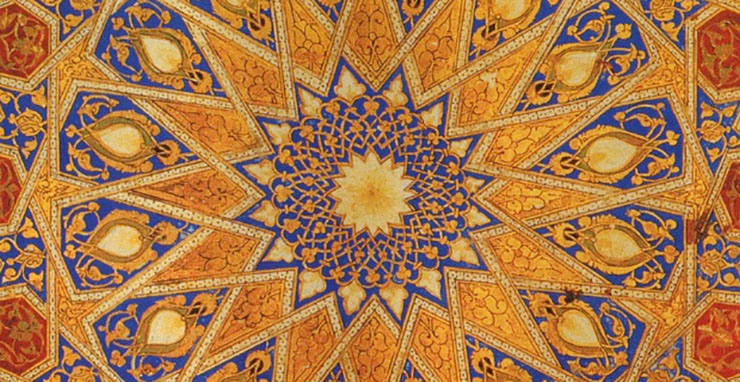
    Sufis attribute great mystical significance to their tradition of the Nine Unknown Masters as it is expressed in the No-Koonja, the nine-pointed Sufi diagram also known as the Naqsh or Seal. They say that this metaphysical glyph “reaches for the innermost secrets of man”; and the Sufi writer Ernest Scott in his classic The People of the Secret implies that it stands for one of the highest and most authoritative echelons in the Sufi hierarchy.

    In Indonesia, which covers all the islands of the Sunda Strait, Sufic Islam has dominated the culture since the fourteenth century CE. For seven centuries – that is, until the twentieth century and the rise of Modernist Islam – the dominant religion has been a syncretic blend of Sufic Islam, Hindu-Buddhism, Tao and animism, with an increasing infusion of Christian and Theosophical elements. The Indonesians are a deeply spiritual people, and in the largest island, that of Java, the Nine Unknowns are a household word, an integral part of the rich mythological fare that sustains the whole society.

    A story circulates widely in Javanese esoteric schools that in the early part of the twentieth century the circle of Nine Unknown Sages met in Java to bring a new spiritual practice into the world. For this purpose they formed a closed meditative circuit that generated powerful cosmic energies. They knew that humanity was on the threshold of a higher stage in consciousness involving the awakening of the Spiritual Soul, an organ still relatively dormant in most people on earth today; and the Nine elected to become a spearhead into that future.

    There are three soul centres – animal, human and spiritual – in each individual, with the last-named, the Spiritual Soul, under the governance and direction of the divine Will. When awakened in the course of evolution, the Spiritual Soul profoundly energises and unifies the various lower instruments that normally compete and jostle within human consciousness. The animal and human souls then come under its dominance, and the union of the three under divine Command immeasurably elevates and spiritualises the individual’s state of being. To aid in this evolutionary process the Nine Masters sought to lay down a path capable of stimulating in men and women a greater consciousness and control of the love/wisdom powers of the Spiritual Soul.

    The result of the Nine’s meditations was that one night a brilliant beam of light descended from the sky onto a young Javanese Muslim called Muhammad Subuh who was returning home from a Sufi Nachshbandi meeting. The beam of light “programmed” him, thus opening the way to a spiritual revelation. This seed-revelation developed into a new practice and teaching called Subud that would presently be taken to the West.

    One of the Javanese sects that indirectly emerged as a result of this event was Sumarah, “the Way of Surrender” – surrender being the essential meaning of the word Islam. Sumarah has become a large-scale movement in Indonesia. It teaches that all the world religions have their roots in the same esoteric source. The same truth underlies them all. All have germinated from a divine seed that lies deep in the Soul of humanity and share equally in its grace. Sumarah’s method therefore calls for universal peace between religions. It raises consciousness from the ordinary mind, whose dualistic and divisive nature breeds images of evil, warfare and religious conflict, to an intuitive state beyond divisions. In that unified state the enlightened mind pursues visions of inwardness, of oneness, of spiritual redemption, of a peaceful coexistence of the family of religions.

    Excerpted from ‘Sufism and The Nine Unknowns’ by Victoria LePage, http://vlepage.newteam.org.

    [alert type=”general” dismiss=”no”]This article was published in New Dawn Special Issue 10.[/alert]

    [alert type=”success” dismiss=”no”]If you appreciate this article, please consider a contribution to help maintain this website.[/alert]

    © New Dawn Magazine and the respective author.
    For our reproduction notice, click here.
  • The Nine Unknown Men & the Power of Conspiracy

    The Nine Unknown Men & the Power of Conspiracy

    Looking down from the watchtower of their hidden glory, the Nine Unknowns watched civilisation being born, destroyed and born again, tolerant rather than indifferent – and ready to come to the rescue – but always observing that rule of silence which is the mark of human greatness.
    – Louis Pauwels and Jacques Bergier1

    We live in the most exciting time in the history of humankind. Technology is developing in leaps and bounds, not only in the form of computers and mass communication, but also toward helping us understand the secrets of the human brain.

    In the West, our traditions, institutions and power structures are challenged and crumbling. The rest of the world is also undergoing transformation in all these areas.

    Has something brought us to this point? Could a group of enlightened people have guided humanity since time immemorial?

    This idea has drifted through history for eons, and manifested in different forms. A prime example is the legend of the Nine Unknown Men, the keepers of sacred and celestial knowledge, sharing out as much in whimsy, as they are with will.

    The best-known story about the origins of the Nine Unknown Men comes from India. The group’s formation is connected to the Indian Emperor Ashoka the Great, who reigned from 304 BCE–232 BCE.

    Ashoka the Great, Emperor of India’s Maurya Dynasty, sought to propel his grandfather’s dreams of unification across the continent. Being the grandson of Chandragupta, the first known ‘Emperor’ of India, may well have left Ashoka with large shoes to fill, but fill them he did, and the lines he drew on the map of India are largely in place to this day. At the height of Maurya power, the borders of India stretched from Afghanistan to Pakistan, Iran to Bangladesh.

    However, like most of human history, big changes are achieved with high costs, and the final war of Ashoka’s push for unity left the biggest impact on the fabled emperor.

    Kalinga (modern day Orissa) is a region on the east coast of India, and was one of the last strongholds against Maurya power. The people of Kalinga had successfully repelled Ashoka’s father, but this fact did little to help them withstand the might of Ashoka’s army.

    A huge battle lead to the death of 100,000 Kalinga, men, women and children, as well as 10,000 of Ashoka’s forces. The Daya River ran red with blood. Upon seeing this massive wave of death and destruction committed in his name, Ashoka vowed to take the path of non-violence and embraced Buddhism. Ashoka also vowed to place specific knowledge in the hands of a council of nine men who would not only guard but also dispense the knowledge at appropriate times along the course of human history.

    Many interpretations and adaptations have been added to the legend of the Nine Unknown Men. One theory has the legend extending back to Atlantis, where the Nine supposedly ruled with their higher knowledge and consciousness.

    Nine Sacred Books

    For the sake of this article, let us stick to the Ashoka version, which also tells of the nine books of knowledge, each entrusted to individual members of the council.

    The nine books contain knowledge deemed too powerful to be unleashed on the human psyche, except for when the time is right. The Nine literally teach humanity, seeding the information and watching it grow as the human species moves along its evolutionary road.

    The secrets of psychology, sociology, physiology, microbiology and biotechnology, alchemy, communication on all levels, the cosmology of the universe, as well as mastery of gravity and light, are espoused on the pages of the nine sacred books.

    Ancient, yet new developments, in all nine aspects covered by the books are drip-fed to the species over the course of time, leading to its eventual enlightenment and departure from this planet. So called ‘leaks’ of information are claimed to have occurred at various points along human history. In these cases, humans attained too much knowledge, too much power, way too soon.

    The martial arts ‘Touch of Death’ technique, in which a practitioner can kill a human with one touch, is said to have been leaked from the sacred book centring on physiology. While still unknown to the vast majority of people, this lethal technique that stops energy and blood flow supposedly exists.

    One can look upon the Touch of Death from two points of view, the first being purely scientific. It is possible to interfere with the timing of a person’s beating heart, such as striking it hard enough or applying a heart massage technique such as CPR to someone whose heart is beating. Both of these techniques can interrupt the heart’s natural rhythm, sending it into cardiac arrest that can lead to death.

    The second is the mysterious Chinese martial arts practice known as Dim Mak. The system of Dim Mak relies on pressure points and chi energy centres, which ones to attack and in what order to be most effective. By successfully shutting down a chi passage in the human body, the build up of chi is said to stagnate which supposedly leads to death.

    However, this is notoriously hard to verify, as practitioners of Dim Mak are nigh on possible to come by, let alone contact and learn from, apart from the occasional one that popped up in the 70’s and 80’s to demonstrate the Touch of Death, and almost immediately debunked as frauds.

    While it is easy to postulate on examples of information that may have ‘leaked’ from these books, it is important to remember that no one on this planet, maybe not even on this plane of existence, knows the plan of the Nine Unknown Men, except the Nine Unknown Men themselves. Leaks can be perceived as no more than the Nine’s plan unfolding perfectly, even if humanity clearly suffers.

    The Nine and Hitler

    This group of Ashoka’s nine esoteric ones still continues because there are many conditions which help it continue. One is, it never comes directly in contact with the masses itself. It has still other groups in between. It always remains unknown, hidden, you can never know its whereabouts. And any person who is initiated in the group, the very moment he is initiated he disappears from your world – completely disappears.
    – Osho (1931–1990)

    The Indian mystic and spiritual teacher Osho (Bhagwan Shree Rajneesh) claimed that the Nine orchestrated the rise and fall of Adolf Hitler and the Nazis. Perhaps they exposed Hitler to esoteric ideas and devices of power.

    “Hitler was just a vehicle for other forces… He was just a means, he was used. Someone else was behind him, some other forces were working,” explains Osho in I Am The Gate.

    Witnesses claim to have seen Hitler almost possessed at the height of his powers. He was able to make vast audiences eat from the palm of his hand, and make implausible yet brilliant military manoeuvres while his generals scoffed at the ideas.

    But then the power driving Hitler started failing. Again, witnesses say he became a different man. His armies in retreat, battles being lost on all fronts, while Hitler shrank, sweated, mumbled and shuffled towards his doom.

    In his 1925 work Mein Kampf, Hitler explained how he chose the swastika that was to become the infamous symbol of Nazism:

    I myself, meanwhile, after innumerable attempts, had laid down a final form; a flag with a red background, a white disk, and a black swastika in the middle.

    Significantly, the Nazis reversed this ancient and powerful symbol that is widely used throughout Asia. Osho says “…the swastika was chosen and used in reverse. It had never existed in this way before, but due to this, events took altogether a new shape.”2

    Why the Nine Unknown Men, supposedly benevolent and desiring to take the best course of action to enlighten the human race, chose to send the species through one of its darkest periods, is a mystery. Perhaps it was just another in the long line of ‘Dark Nights of the Soul’ for humanity. Maybe these stages are necessary to speed up our development – wiping the slate clean so to speak – and bring about new conditions conducive to the hidden plans of the Nine.

    Where are the Nine Unknown Men?

    Legends abound as to where the Nine could reside or exist. Talk to David Icke and he will tell you they are deep underground, living in partnership with shape-shifting lizard people. Nicholas Roerich or G.I. Gurdjieff may have said they reside in the mythical kingdom of Shambhala, somewhere in Central Asia.

    The idea of a hidden city, secret paradise or Invisible College has entranced humans for hundreds of years, and especially occult experts in the West, once the East truly opened up to exploration.

    The Greek-Armenian mystic and spiritual teacher George Gurdjieff reported that he contacted secret masters while journeying through Central Asia. It is said he was given access to secret knowledge and then sent back to ‘civilisation’ with it. He never revealed the identity of these men, the school they may or may not have belonged to, and of course, he did not disclose their secret location. Many people postulate that Gurdjieff visited the kingdom of Shambhala, hidden somewhere in Inner Asia.

    The Russian painter, philosopher, and writer Nicholas Roerich also explored the area in the 1920s and 30s, making many expeditions to Central Asia, but primarily focusing on the Himalayas. Nicholas and his wife Helena acted as conduits for a ‘Wise Man of the East’, known as Mahatma Morya. El Morya, as he was called, directed the founding of the Agni Yoga Society and dictated the Agni Yoga book series through Helena.

    El Morya gives hints in his work about Shambhala, and ended up becoming quite literal regarding the mythical paradise, even describing some of the trials one must go through to gain access to the hidden kingdom. Andrew Tomas writes:

    At a certain spot not to be mentioned to outsiders, there is a chasm spanned by a frail bridge of woven grasses and with a raging torrent underneath. The bravest member of your Alpine clubs would scarcely dare to venture the passage, for it hangs like a spider’s web and seems to be rotten and impassable. Yet it is not: and he who dares the trial and succeeds – as he will if he is right that he should be permitted – comes into a gorge of surpassing beauty of scenery, to one of our places and to some of our people, of which and whom there is no note or minute among European geographers.3

    Thus, access to Shambhala is gained by permission of the Nine, but more importantly, the worthy aspirant can only penetrate the veil.

    The Christian idea of Heaven, we are lead to believe, is an actual place where our souls go if we have been ‘good’ in life. Clouds, harps, Angels, the Palace of God – this sounds very similar to the paradise known as Shambhala. A place of spiritual comfort and bliss, where time stops because time has no meaning to the enlightened.

    One of the best descriptions on gaining access to Shambhala is found in Andrew Tomas’ book, Shambhala: Oasis of Light:

    They have renounced all, yet they possess the world… The disciple’s heart is aflame with compassion for mankind. His mind is illuminated by an unseen light from cosmic depths. A cold mind, a warm heart and a fiery will – these are the passwords to Shambhala…4

    The Number 9

    The number 9 has a long history, so it should not come as much of a surprise that it still pops up in places where you least expect it. There are Nine Unknown Men, controlling sacred information, and letting it loose upon the world at appropriate times in order to facilitate the evolution of humankind.

    Why 9? 9 is the number with the highest numerical value within the Base Ten numerical system we currently follow, therefore symbolising perfection and completeness. It is at an almost instinctual level and can affect us as such.

    The number 9 is revered in Hinduism and considered a complete, perfected and divine number because it represents the end of a cycle in the decimal system, which originated from the Indian subcontinent as early as 3000 BCE.

    In the Bahá’í Faith, a 9-pointed star is used to symbolise the religion. Nine is important in Islam also. The holiest month, that of Ramadan, is the ninth month on the Islamic calendar. The Qur’an was revealed to Mohammad in the ninth month of the year. In observance with Mohammad’s own fasting, fervent prayer and eventual contact with Allah, all Muslims are expected to do the same.

    It is not only an important number in religion, but also in popular culture. John Lennon, arguably one of the most gifted songwriters of last century, incorporated the number into one of the Beatles more esoteric tracks, ‘Revolution 9’, on the immortal ‘White’ album, produced in 1968. The primary vocals throughout the song are the repeating phrase, ‘number nine’. Given that Lennon wrote this song after spiritual activities in India, using sounds like a mashed up remix of a radio being tuned, it is more than likely that he came to understand the significance of nine as the number of completion/perfection, incorporating it not only in this song, but also a solo recording he completed named ‘#9 Dream’.

    Numbers do have vibrational power, they are ‘something’ that can be relied on in this world, they spell out certain secrets of reality and existence, but we must also be careful of the meanings we thrust upon them.

    The Power of Conspiracy

    People like to think they are not in control of their lives. Ask any one of the 1.9 billion Christians, or the 1.1 billion Muslims on this planet, whom they think is running everything, and they will say ‘God’ or ‘Allah’. Ask a banker who they think is in charge, and they may reply, ‘the market’; a politician might say that the prime minister or president is in charge, but really mean the banker.

    Yes, people love to shift the blame around. We love to run from responsibility, just as much as we love to run senselessly into situations when these blame-centres are called to account.

    Many conspiracy theories lead up to an ‘End of the World’ scenario. Western society was run on the idea of M.A.D (Mutually Assured Destruction) since the nuclear bombing of Japan in 1945 up until the fall of the Soviet Union in 1991. Unlike almost every other doomsday, with M.A.D. we see how our world can end by our own hands. The power this held over populations was unlike anything ever experienced before, and its spectre still hangs over humanity to this day with the invention of new and more efficient weapons.

    Have we grown numb to the idea? That it has not happened yet only adds to our confusion, explains Sufi-anarchist Hakim Bey in T.A.Z.: The Temporary Autonomous Zone, Ontological Anarchy, Poetic Terrorism:

    What does it mean that we have invented a way to destroy all life on earth? Nothing much. We have dreamed this as an escape from the contemplation of our own individual deaths. We have made an emblem to serve as the mirror image of a discarded immorality. Like demented dictators we swoon at the thought of taking it all down with us into the Abyss.5

    Seeing that finally we are more than capable of taking out not only our own species, but all life on the planet, has clearly done something to our collective psyche. For the last 70 years we have ridden this wave of reckless self-destruction, trying to get as much as we can before we die, or we all die. Running a race where the winners have not only already finished, but are making bets on who else is going to make it over the finish line. Or scampering, hoping to get clear of the blast zone. These ideas have driven Western society over the last century, but again, Bey helps us clear things up:

    The A.O.A (Association for Ontological Anarchy), declares itself bored with the End of the World. The canonical version has been used since 1945 to keep us cowering in fear of Mutual Assured Destruction and in snivelling servitude to our superhero politicians… We suggest that the End of the World be declared a fiat accompli; the exact date is unimportant. The ranters in 1650 knew that the millennium comes now into each soul that wakes to itself, to its own certainty and divinity. ‘Rejoice, fellow creature’, was their greeting. ‘All is ours!’6

    Something new must be born. Not new in the sense that is just a copy of an old idea, clad in a new guise of ‘hope-it-works-this-time’. Beware those espousing the importance of freedom. Beware of the groups saying they have the answers, and that you must believe them.

    The youth of today, like all youth, are in revolt against society, and that is a good thing in itself, but revolt is a reaction and that reaction sets up its own pattern and you get caught in that pattern. You think it is something new. It is not; it is the old in a different mold. Any social or political revolt will inevitably revert to the good old bourgeois mentality.7

    In the early years of the 20th century, Jiddu Krishnamurti was groomed for messianic purposes by the Theosophical Society. Brought up within the Society, he was to usher in a new religion to a world lost on the faded ideals of bygone traditions. In a surprise turn of events, he turned his back on his master’s plans and followed his own path, which perhaps is the simplest way to find the new.

    So, dear reader, do not spend too much time thinking about the Nine Unknown Men, who they are, where they could be, and what they may or may not be doing to make your life better or worse. Simply step back, take stock, some deep breaths, and know that life is truly what you make it.

    Victoria LePage, author of the highly regarded book Shambhala: The Fascinating Truth Behind the Myth of Shangri-La, concludes:

    So who are the Nine, really? A dense veil falls over these mysterious Beings the more we seek to penetrate it. Many of the current myths about them can be discounted. The truth is that we know almost nothing about these shadowy Guides of humanity. They remain a mystery, an X factor in the story of human evolution, an elusive presence that Sufis call the Hidden Directorate, but about whose hierarchy – or even existence – we can only speculate.8

    [alert type=”general” dismiss=”no”]This article was published in New Dawn Special Issue 10.[/alert]

    [alert type=”success” dismiss=”no”]If you appreciate this article, please consider a contribution to help maintain this website.[/alert]

    Footnotes

    1. Louis Pauwels and Jacques Bergier, The Morning of the Magicians, Stein & Day, 1960
    2. Osho, I Am The Gate, Rebel Publishing House, 1990
    3. Andrew Tomas, Shambhala: Oasis of Light, Sphere, 1977, 36
    4. Ibid., 38
    5. Hakim Bey, T.A.Z.: The Temporary Autonomous Zone, Ontological Anarchy, Poetic Terrorism, Autonomedia, 1991, 34
    6. Ibid., 35
    7. Jiddu Krishnamurti, Freedom From The Known, Harper & Row, 1969, 68
    8. ‘Sufism and The Nine Unknowns’ by Victoria LePage, www.victoria-lepage.org

    Further Reading

    Ernest Scott, The People of the Secret, Octagon Press, 1983
    Andrew Tomas, Shambala: Oasis of Light, Sphere Books, 1977
    Lynn Picknett & Clive Prince, The Stargate Conspiracy, Little, Brown & Company, 1999
    David Icke, The Biggest Secret, Bridge of Love Publications, 1999
    Hakim Bey, T.A.Z.: The Temporary Autonomous Zone, Ontological Anarchy, Poetic Terrorism, Autonomedia, 1991
    Jiddu Krishnamurti, Freedom From The Known, Harper & Row, 1969
    Osho, I Am the Gate, Rebel Publishing House, 1990

    © New Dawn Magazine and the respective author.
    For our reproduction notice, click here.