New Dawn – World's Most Unusual Magazine

Category: Articles

  • Sacred Plant Healing: Shamanic Medicine & the New Science

    Sacred Plant Healing: Shamanic Medicine & the New Science

    From New Dawn Special Issue Vol 10 No 4 (Aug 2016)

    In our modern age, all of us have been touched in one way or another by mental illness, either directly or indirectly. Depression, anxiety, post traumatic stress, and an ever growing list of psychotic disorders and addictions are today rampant in our modern industrialised world. Most likely a direct result of our “keeping up with the Kardashians” lifestyle and ultra competitive, capitalist “greed is good” world.

    Whilst we may never be able to go back to more simpler times, what we can do is learn from the societies who still live a simpler life. Especially in the area of mental health, where we enter the mystical realm of the Shaman and shamanic plant medicine.

    After the false start of the 1950s–1970s psychedelic research, today cutting edge science has learned from the mistakes of the past and is once more entering the realm of the Shaman, this time (by necessity) in a far more measured and scientific way. The results of which will not only save lives, but show us a way that all of us can live happier, less stressful and healthier lives.

    It is repeated time and again in the science of anthropology that indigenous societies with little to no contact with modern civilisation simply do not have the same mental health issues that we do in our modern world.

    Psychiatrist E. Fuller Torrey, who conducted research in New Guinea, described it as “an unusually good country in which to do epidemiologic research because census records for even most remote villages are remarkably good.” After examining these records, he found, “there was over a twentyfold difference in schizophrenia prevalence among districts; those with a higher prevalence were, in general, those with the most contact with western civilisation.”

    In reviewing other research, Torrey concluded: “Almost all observers who looked for psychosis or schizophrenia in technologically undeveloped areas of the world agreed that it was uncommon. The striking feature is the remarkable consensus that insanity (in the early studies) and schizophrenia (in later studies) were comparatively uncommon prior to contact with European-American civilisation.” Interestingly, in traditional cultures the people we would call ‘schizophrenic’ or ‘insane’ often become the Shaman or Medicine men/women that go on to heal and counsel their people.

    The reasons for our mental maladies are many (and worthy of an entire article in their own right), but the main reason seems to be the level of coercion (with the threat of violence) in our modern society versus those of the traditional. In other words, from cradle to the grave we are taught to fear, we are controlled by fear, and have fear reinforced on a daily basis by the mainstream media.

    To many indigenous peoples, even the supposed majority rule that most westerners call democracy is problematically coercive as it results in the minority feeling resentful. Roland Chrisjohn, member of the Oneida Nation of the Confederacy of the Haudenausaunee (Iroquois) and author of The Circle Game, points out that for his people it is deemed valuable to spend whatever time necessary to achieve consensus so as to prevent such resentment. By the standards of western civilisation, this is highly inefficient. “Achieving consensus could take forever!” exclaimed an attendee of a talk given by Chrisjohn, who responded, “What else is there more important to do?”

    Unfortunately, we in the modern world simply cannot wait for such a consensus utopia to happen by itself, and accept that our modern world is exactly how the powers-that-be want it to be. That is the entire point of having power to begin with. Our modern way of life is literally killing so many of us, and the natural world around us, whilst the one percent at the top get to live their lives of luxury, at our and the world’s expense.

    What can we do about it? How can we achieve a happy consensus, instead of the coerced consensus imposed upon us, without the use of fear and the resulting resentment that is the root cause of many mental problems? I think it begins at home, not just in our recycling bins, but in our minds and gardens. We simply must break the shackles of fear if we are to be truly happy and mentally healthy. That is where the ancient methods of the Shaman and shamanic plant medicine come in, and now with the backing of cutting edge science, it can no longer be denied.

    [alert type=”info” dismiss=”no”]If you appreciate this article, please consider a subscription to New Dawn magazine.[/alert]

    The modern research into the use of shamanic plant medicine and modern psychedelic drugs such as LSD (which work the same way in the brain) for treating mental illness began in 1953 and was conducted until 1973 and the Richard Nixon led ‘war on drugs’. Psychedelic drugs (often derived from shamanic plants) were tested on alcoholics, people struggling with obsessive-compulsive disorder, depressives, autistic children, schizophrenics, terminal cancer patients, and convicts, as well as on perfectly healthy artists and scientists (to study creativity) and divinity students (to study spirituality). The results reported were almost always positive.

    However, many of the studies were, by modern standards, poorly designed and seldom well controlled, if at all. This is not what led to the prohibition of shamanic plant medicine and psychedelic drugs in general. The current legal standpoint came from the fear induced in the powers-that-be of the ‘flower power’ generation and their increasing unwillingness to fight in foreign wars for the benefit of the elite. Nothing could put more fear into the powers-that-be than an entire generation embracing peace, love and understanding through the use of shamanic plant medicine and psychedelics, when the elites made their money (and therefore power) from war, fear and propaganda.

    In today’s world of the ‘war on terror’ (an oxymoron if I ever heard one) we must remember that little has changed at the top. Luckily for us, the new breed of scientist has learned that instead of promulgating the ‘turn on, tune in and drop out’ slogan of Timothy Leary and the ‘acid gurus’, what we need is undeniable facts, hard science and proven repeatable results.

    Which brings us to the new dawn of psychedelic research and the return of shamanic plant medicine. Unfortunately, the new science must deal with the fear and propaganda of the past, which makes scientific research incredibly difficult. The simple fact is, most reputable scientific institutes simply do not want to go anywhere near ‘psychedelic research’ because of the stigma attached to it. The main problem is there just isn’t the money for this kind of research because the big pharmaceutical companies have no interest in developing drugs that people can grow at home. People are never going to pay their hard earned money for a ‘drug’ when they can get the plant it was derived from for free. You can’t patent all of nature and the vast majority of research is funded by and designed to benefit Big Pharma, not the patient. We must remember that businesses are in the business of making money, otherwise they would be called charities.

    Another problem with receiving funding for this kind of research is that shamanic plant medicine consistently proves effective at limited doses that are non-habit forming. Meaning there is little to no scope for consistent reliance (or addiction) upon a ‘drug’, and therefore no money for Big Pharma which has no interest in cures, only ‘treatments’ that have to be continued for a long period of time to be profitable. Take a look at modern pharmaceutical ‘treatments’ for depression that usually have to be taken for years at a time and say right on the box “May cause suicidal thoughts!” Once again, the powers-that-be have put their own profits over the people.

    Thankfully this has not stopped serious scientific researchers from making major breakthroughs in the field of psychedelic research. After almost thirty years since the last serious psychedelic research, Dr. Rick Strassman began to investigate the effects of N,N-dimethyltryptamine (DMT) between 1990 and 1995 in the General Clinical Research Center of the University of New Mexico Hospital. DMT is a powerful psychedelic found in hundreds of plants from all around the world and in every mammal (including ourselves) that have been studied. Literally everywhere in nature, DMT is the active ingredient in the Amazonian shamanic plant medicine ayahuasca, which is gaining popularity around the world for its therapeutic benefits, and is currently being reviewed by the Australian Therapeutic Goods Administration for religious use.

    Strassman refers to DMT as the “spirit molecule” because its effects include many features of religious experience, such as visions, voices, disembodied consciousness, powerful emotions, novel insights, and feelings of overwhelming significance. During the project’s five years, Strassman administered approximately 400 doses of DMT to nearly five dozen human volunteers, with more than half of the volunteers reporting profound encounters with non-human intelligences whilst under the influence of DMT. His team published a companion article characterising the psychological effects and preliminary results of a new rating scale, the Hallucinogen Rating Scale, or HRS. The HRS has seen wide acceptance throughout the international research community as a sensitive and specific instrument for measuring the psychological effects of a wide variety of psychoactive substances, with over fifty articles documenting its use as of 2016.

    The next major step was taken by Roland R. Griffiths, a professor of psychiatry and behavioural sciences and his team at the Johns Hopkins University School of Medicine. In 2006 they conducted a double blind study evaluating the acute and longer term psychological effects of a high dose of psilocybin (the active ingredient in the shamanic plant medicine commonly known as ‘magic mushrooms’) relative to a comparison compound administered under comfortable, supportive conditions. The researchers found that psilocybin produced a range of acute perceptual changes, subjective experiences, easily changeable moods and increased measures of mystical experience. Seventy percent of the volunteers went on to say they had one of the five most meaningful experiences of their lives. The volunteers rated the psilocybin experience as having substantial personal meaning and spiritual significance and attributed to the experience sustained positive changes in mental outlook, life satisfaction, attitude and behaviour consistent with changes rated by their community observers (the researchers relied on both self-assessments and the assessments of co-workers, friends, and family). Griffiths believes the personality changes found in this study are likely permanent since they were sustained for over a year by many. The fact that Johns Hopkins University School of Medicine (which is widely regarded as the premier medical centre in America) was now conducting psychedelic research literally opened the floodgates to new and exciting research into shamanic plant medicine and the new psychedelics such as LSD and MDMA (the active ingredient in the street drug ‘Ecstacy’).

    This was followed by Dr. Charles Grob at UCLA, who for a Phase I pilot study assessed the safety, dosing, and efficacy of psilocybin in the treatment of anxiety and existential stress in terminal cancer patients. The Phase II trials, concluded at both Johns Hopkins and NYU, involved higher doses and larger groups. In both phases of the study researchers found after receiving just a single dose of psilocybin the subjects involved experienced immediate and dramatic reductions in anxiety and depression, improvements that were sustained for at least six months, with no clinically adverse effects being noted. The subjects involved were reported as saying things like ‘I understand love is the most powerful force on the planet’, or ‘I had an encounter with my cancer, this black cloud of smoke’. People who had been palpably scared of death lost their fear of it and were able to be at peace during such a difficult time. The fact that a substance given once can have such an effect for so long is unprecedented; there has literally never been a substance so effective in the field of psychiatry, but of course it’s long been the staple of the Shaman.

    A Norwegian study in 2013 titled ‘Psychedelics and Mental Health: A Population Study’ by Teri S. Krebs and Pål-Ørjan Johansen, showed that the use of shamanic plant medicine and psychedelics had no negative effects on mental health. In lifetime users of shamanic plant medicine and psychedelics, there was a decrease in mental health issues.

    Rick Doblin and his team at the Multidisciplinary Association for Psychedelic Studies (MAPS) in 2013 published a follow up to their 2011 study into the safety and effectiveness of MDMA (Ecstacy) in treatment resistant post-traumatic stress disorder (PTSD) patients. Their study revealed that it can be used safely and effectively against this debilitating disorder and the positive effects are long term, without risk of addiction or the need for continued use of the substance.

    In 2014 the University of Zurich reported in a fascinating study that psilocybin inhibits the processing of negative emotions in the brain and positively effected mood. In 2015, the University of Alabama at Birmingham School of Public Health showed that the use of classic psychedelics like LSD, psilocybin and mescaline (the active ingredient in peyote and San Pedro cacti) had a protective effect on mental health and in suicide prevention. Again, in 2015, another Johns Hopkins study showed that shamanic plant medicine and psychedelic use had a protective effect against mental illness and suicide. Another University of Alabama at Birmingham study this year showed psychedelic use had an inhibitory effect on domestic violence and was useful in the treatment of problem behaviours. Many similar studies are currently ongoing and will be published in the years to come. Please note: the findings mentioned above were achieved under strict clinical conditions and controls.

    In most countries around the world the use of shamanic plant medicine such as magic mushrooms, ayahuasca, peyote, San Pedro and iboga, and even the mere possession of psychedelics like LSD and MDMA, are unfortunately illegal, thanks to the ridiculous and socially damaging ‘war on drugs’, despite their proven therapeutic benefits. In the countries where the traditional use of shamanic plant medicine is still undertaken, their legal status is usually protected and has created an ever growing ‘psychedelic tourism’ market of spiritual seekers and people looking for alternative medicines that actually work. People from all over the world are flooding into countries like Peru and Bolivia looking to heal their post-traumatic stress, anxiety and conquer depression and drug addictions.

    Unfortunately, not all of us can drop everything and run off to the Amazon to drink ayahuasca, but what we can do is garden (gardening itself has proven to be an anti-depressant), and freely purchase and grow the vast majority of these shamanic plant medicines, legally. We just aren’t allowed by law to ingest them or prepare them for ingestion. We are left in the unenviable position of medical marijuana patients, having to break the law to save lives.

    [alert type=”general” dismiss=”no”]This article was published in New Dawn Special Issue Vol 10 No 4.[/alert]

    [alert type=”success” dismiss=”no”]If you appreciate this article, please consider subscribing to help maintain this website.[/alert]

    References & Further Reading

    DMT: The Spirit Molecule by Dr. Rick Strassman
    ‘How Societies with Little Coercion Have Little Mental Illness’ by Bruce Levine, http://brucelevine.net/how-societies-with-little-coercion-have-little-mental-illness/
    ‘The Trip Treatment: Research into psychedelics, shut down for decades, is now yielding exciting results’ by Michael Pollan, www.newyorker.com/magazine/2015/02/09/trip-treatment
    ‘Magic Mushrooms vs the Fear of Death’ by Anne Harding, www.mindpowernews.com/Mushrooms.htm
    ‘Psilocybin can occasion mystical-type experiences having substantial and sustained personal meaning and spiritual significance’ by Griffiths RR, Richards WA, McCann U, Jesse R., www.ncbi.nlm.nih.gov/pubmed/16826400
    ‘Pilot Study of Psilocybin Treatment for Anxiety in Patients With Advanced Stage Cancer’ by Charles S. Grob, MD; Alicia L. Danforth, MA; Gurpreet S. Chopra, MD; Marycie Hagerty, RN, BSN, MA; Charles R. McKay, MD; Adam L. Halberstadt, PhD; George R. Greer, MD., http://archpsyc.jamanetwork.com/article.aspx?articleid=210962
    ‘Psychedelics and Mental Health: A Population Study’ by Teri S. Krebs, Pål-Ørjan Johansen, http://journals.plos.org/plosone/article?id=10.1371/journal.pone.0063972
    ‘The safety and efficacy of {+/-}3,4-methylenedioxymethamphetamine-assisted psychotherapy in subjects with chronic, treatment-resistant posttraumatic stress disorder: the first randomised controlled pilot study’ by Mithoefer MC, Wagner MT, Mithoefer AT, Jerome L, Doblin R., www.ncbi.nlm.nih.gov/pubmed/20643699
    ‘Durability of improvement in post-traumatic stress disorder symptoms and absence of harmful effects or drug dependency after 3,4-methylenedioxymethamphetamine-assisted psychotherapy: a prospective long-term follow-up study’ by Michael C Mithoefer, Mark T Wagner, Ann T Mithoefer, Lisa Jerome, Scott F Martin, Berra Yazar-Klosinski, Yvonne, Michel, Timothy D Brewerton, and Rick Doblin, www.ncbi.nlm.nih.gov/pmc/articles/PMC3573678/
    ‘Psilocybin inhibits the processing of negative emotions in the brain’ by University of Zurich, www.sciencedaily.com/releases/2014/05/140507095756.htm
    ‘Classic psychedelic use protective with regard to psychological distress and suicidality’ by SAGE Publications, www.sciencedaily.com/releases/2015/01/150121093544.htm
    ‘Psychedelic drug use could reduce psychological distress, suicidal thinking, study suggests’ by Johns Hopkins Medicine,
    www.sciencedaily.com/releases/2015/03/150309174507.htm
    ‘Hallucinogen may protect against intimate partner violence, researcher suggests’ by University of Alabama at Birmingham,
    www.sciencedaily.com/releases/2016/02/160205135508.htm

    © New Dawn Magazine and the respective author.
    For our reproduction notice, click here.

  • Can We See the Future? Exploring the Science of Precognition

    Can We See the Future? Exploring the Science of Precognition

    This article was published in New Dawn 155 (Mar-Apr 2016)

    The theme of this article is precognition. I will begin by relating an example, one included in a collection of precognitions compiled by the great psychical researcher of the late nineteenth century Frederic W. H. Myers (1843-1901).1

    Mr. Haggard of the British Consulate, Trieste, Austria, gives the following account of a premonitory dream and its fulfilment:—

    September 21st, 1893.

    A few months ago I had an extraordinarily vivid dream, and waking up repeated it to my wife at once. All I dreamt actually occurred about six weeks afterwards, the details of my dream falling out exactly as dreamt.

    There seems to have been no purpose whatsoever in the dream; and one cannot help thinking, what was the good of it.

    I dreamt that I was asked to dinner by the German Consul General, and accepting, was ushered into a large room with trophies of East African arms on shields against the walls. (N.B. – I have myself been a great deal in East Africa.)

    After dinner I went to inspect the arms, and amongst them saw a beautifully gold-mounted sword which I pointed out to the French Vice-Consul – who at that moment joined me – as having probably been a present from the Sultan of Zanzibar to my host the German Consul General.

    At that moment the Russian Consul came up too. He pointed out how small was the hilt of the sword and how impossible in consequence it would be for a European to use the weapon, and whilst talking he waved his arm in an excited manner over his head as if he was wielding the sword, and to illustrate what he was saying.

    At that moment I woke up and marvelled so at the vividness of the dream that I woke my wife up too and told it to her.

    About six weeks afterwards my wife and myself were asked to dine with the German Consul General; but the dream had long been forgotten by us both.

    We were shown into a large withdrawing room which I had never been in before, but which somehow seemed familiar to me. Against the walls were some beautiful trophies of East African arms, amongst which was a gold-hilted sword, a gift to my host from the Sultan of Zanzibar.

    To make a long story short, everything happened exactly as I had dreamt – but I never remembered the dream until the Russian Consul began to wave his arm over his head, when it came back to me like a flash.

    Without saying a word to the Russian Consul and French Vice-Consul (whom I left standing before the trophy) I walked quickly across to my wife, who was standing at the entrance of a boudoir opening out of the withdrawing room, and said to her:– “Do you remember my dream about the Zanzibar arms?” She remembered everything perfectly, and was a witness to its realisation. On the spot we informed all the persons concerned of the dream, which naturally much interested them.

    Myers and members of the Society for Psychical Research (SPR, founded in London, 1882) thoroughly researched and verified to their satisfaction all cases that were published in their official Proceedings. In this example, there was a separate signed corroboration from Mr. Haggard’s wife as well as signed statements from the Russian Consul and the German Consul General.

    Mr. Haggard’s dream illustrates some salient points of a precognition as opposed to a prediction. It includes various details, in this case details that are apparently quite trivial, which could not have been foreseen rationally by inferring from past and present information. I can rationally predict (or calculate), based on past experience, that the Sun will rise above the horizon tomorrow morning. If I dream that a dear friend whom I have not seen in five years, and last I heard was in excellent health (and indeed is in excellent health at the time of the dream as far as anyone is aware), will die of a heart attack three weeks hence, and this in fact occurs (as I later learn from a mutual colleague), such would be a precognition and not a prediction. Sometimes the term premonition is used as somewhat synonymous with precognition (as Myers did in introducing Mr. Haggard’s dream as a “premonitory dream”), but usually a premonition is more of a vague feeling that something – generally something of a negative nature – is going to happen. A strict premonition lacks the specificity of a fully developed precognition; for purposes of discussion, premonitions can be considered poorly developed precognitions. Genuine premonitions are probably quite common, but easily ignored as simply coincidences and also difficult to verify as genuine and fulfilled due to the lack of specificity as to what the future event will be.2 Retrocognition is the equivalent of precognition, but in the opposite temporal direction; that is, the reception of information about the past by other than ordinary means.

    There are literally thousands of well-attested cases of spontaneous (as opposed to laboratory induced) precognition recorded in the literature.3 In an early overview, Harold Francis Saltmarsh (1881-1943) analysed and evaluated records of spontaneous precognitions collected by the SPR during the first fifty years of the society. After sifting through 349 cases of apparent precognition and rejecting 68, Saltmarsh identified 134, which he was satisfied were well documented and contained the necessary details to establish true precognition (as opposed to prediction); Mr. Haggard’s dream was included among them. Saltmarsh counted another 147 cases, which “by themselves… would not afford a sufficient basis for belief in precognition, but when they are considered as a part of the whole evidence, they certainly lend collateral support…”4 Due to the careful work of the members of the SPR, collections such as that analysed by Saltmarsh remain a mainstay of spontaneous precognition research. Personally I agree with Saltmarsh and other researchers in the field who contend that the evidence for precognition is so overwhelming that it cannot be ignored.

    To suggest, as some sceptics (a.k.a. debunkers and scoffers) assert, that it is all due to false memories, chance coincidence, misunderstandings, or pure lies and fabrications, is simply a convenient but invalid way to dismiss data that perhaps threatens one’s deepest beliefs and philosophical premises concerning such topics as cause and effect, temporal relationships, and free will versus determinism. As Saltmarsh noted, “Many people overcome the difficulties involved in the problem by the simple expedient of ignoring the whole thing: they refuse to listen to the evidence and behave as though it did not exist.”5

    Beyond spontaneous cases, there are numerous laboratory studies that confirm the reality of precognition. Classic precognition experiments are of the forced-choice kind. For instance, a participant is told that there is a picture behind one of two curtains and the task is to guess behind which curtain the picture is located. If no paranormal means are involved, the correct answer should be chosen by chance 50% of the time. As described so far, this would be a test of “clairvoyance.” However, if the position of the picture (and in some cases, the picture itself drawn from a number of possibilities) is not determined until after the participant makes a guess (for instance, the picture position can be subsequently determined using a random number generator), then the experiment becomes a test of precognition.6 Another example of a forced-choice precognition experiment is simply to guess which of two lights will flash next, where of course the guess is placed first and the randomly generated decision of which light will flash is made after the guess.7

    Hundreds of forced-choice precognition experiments have been carried out in numerous laboratories around the world with positive results indicative of the presence of precognition.8 Meta-analyses have been carried out on such studies (taking into account experiments that included both positive and negative results), reconfirming the reality of some sort of anomalous processes taking place. For instance, in one meta-analysis of 309 such studies reported by 62 different senior authors, statistically significant results were found overall. Particularly interesting is the finding that immediate feedback (as to whether the guess was correct or incorrect) to the participant resulted in the most significant evidence for precognition (highest number of correct hits) whereas progressively delayed feedback resulted in decreasingly significant results. In studies where the participant was never told the results, the evidence for precognition apparently dropped to effectively zero. As Jessica Utts (University of California, Davis) summarised the situation, “The mean effect sizes [a measure of the significance of the data, where larger values indicate higher significance] showed a clear trend, decreasing in order as the time interval increased from minutes to hours to days to weeks to months.”9 This confirms somewhat anecdotal observations from spontaneous cases of precognition that the numbers of such cases overall drop off with increasing amounts of time between the precognition and the actual event. Complicating factors in real life occurrences include the “strength” or “significance” of the precognition and event. Thus, the precognition of the death of a loved one (a not uncommon type of spontaneous precognition) may be “stronger” or send a “stronger signal,” and thus be more likely to be received “earlier” than a precognition of a more “trivial” nature. Even in laboratory studies, the nature of the object or event can have an effect on the success of a precognition being received; for instance, in one particular forced-choice precognition experiment with college undergraduates, significant results were obtained only when erotic pictures were used.10

    Laboratory studies have also been carried out to test for the reality of “premonitions.” Here I am referring to a series of experiments on phenomena known as presentiments or “pre-sponses.” These are essentially a form of short-term vague and subconscious “premonitions” as measured by physiological parameters (heart rate, electrodermal activity, and so forth). Numerous replicated experiments have demonstrated physiological responses of individuals to disturbing photographs, for instance, a second or two before they are actually viewed by the person. According to conventional wisdom, it should not be possible for a person to respond to a stimulus that has not yet occurred, even if the response is only a second (or less) before the stimulus. However, modern experiments show that this does happen.11 If we have a physiological precognition or premonition ability at a basic subconscious or unconscious level, this only reinforces for me the possibility that precognition at a conscious level might also be manifested.

    Given the strong evidence that precognition really does occur, what does this say about the future? Does it already exist? Is the future fixed? What are the implications of genuine precognition for free will? As Saltmarsh astutely noted, just because some future events have been foreseen by precognition, it does not follow that all future events can be foreseen. Occasional instances of precognition do not prove that the future is completely determined (if the future were fully determined, it could be argued that free will does not exist).12 Rather, the future may, indeed it seems it must, exist to a certain extent, but some aspects of the future may also be plastic, malleable, subject to change depending on what occurs in the present (and has occurred in the past and perhaps will occur in the more distant future, if influences can traverse time in all directions). Although I cannot argue the case here, based on the evidence, I am of the opinion that certain aspects of the past are “malleable” and in a state of “uncertainty” until “fixed.”13 Ultimately these are deep and thus far unresolved issues that most people might prefer to brush off and ignore; however, the reality of even a few well-documented occurrences of precognition should force us to face them honestly.

    Precognition is just one form of what is often referred to collectively as psi phenomena.14 Besides precognition (and retrocognition), psi phenomena are generally considered to include: 1) telepathy – direct mind-to-mind transfer of information from one person to another through some means other than the normal senses and without the intervention of any conventionally known or understood processes, 2) clairvoyance (remote viewing) – the reception of information about objects or events in the physical world by means other than telepathy, and 3) psychokinesis – mind over matter effects, where thoughts or intentions can influence directly physical processes (psychokinesis acting upon biological systems, whether human or non-human, is sometimes distinguished as psychic healing or DMILS (Direct Mental Interactions with Living Systems). I will not address psychokinesis further here, as this is a complex topic (including both laboratory studies and spontaneous incidents, such as poltergeist phenomena), which is not directly relevant to our current discussion of precognition.15

    I have long been of the opinion that telepathy, clairvoyance, and precognition (in a broad sense, including premonitions and retrocognition, as discussed above) are not distinguishable from one another, and all may be different (or not so different) aspects of the same basic phenomenon. The way I usually think about these psi phenomena is that they are all forms of telepathy – with the understanding that telepathic information transfer can occur not only in the present, but rather telepathically transmitted information may also be transmitted from the future to the present or past and vice versa. Telepathy that transcends the present can be viewed as precognition (if the information comes from the future) or retrocognition (if it comes from the past). It also appears that telepathic information transfer is favoured between “minds” (whether human or otherwise) that are somehow “close” or “bonded” (one can think in terms of close emotional bonds). Typically, the individual who is closest to a particular person is himself or herself. That is, the person one will typically have the strongest telepathic rapport with is oneself. In this sense, many well-documented cases of precognition can be viewed as the telepathic reception of information by a person from their future self. Thus, simplistically, one has a precognition of seeing an event or learning about an event (transferred telepathically from one’s future self), and this is subsequently fulfilled in terms of later seeing the event or learning about the event in the “present.”

    However, one can turn the issue around and suggest that perhaps all phenomena generally viewed as telepathic might actually be forms of precognition. For instance (to give a genuine example), waiting to be served at a restaurant, I mentally concentrated on the number 46 and my wife commented that for some reason the number 46 had popped into her head and she could not shake it. I then told her verbally that I was concentrating on 46 and attempting to send it to her telepathically. Could it be rather that “telepathically” receiving the 46 from me, she “precognized” that I would tell her that I had attempted via telepathy to place the number 46 in her head? Likewise, in typical tests of telepathy and clairvoyance, the subject is told or learns the correct answers afterwards, so perhaps when she or he arrives at a correct answer paranormally it is via precognition and not by telepathy nor by true clairvoyance – or it is by telepathy from one’s future self who knows the answer. Thus, in my assessment, the case can be made that telepathy and precognition are (at least in many cases) functionally indistinguishable and perhaps two different aspects of the same underlying phenomenon.16

    Regarding clairvoyance, which now often goes by the name “remote viewing,” I have never viewed this as a phenomenon distinct from either telepathy or precognition. In many cases of “clairvoyance” there are other minds involved, for instance persons at the scene or event that is being “clairvoyantly viewed,” that could be tapped into telepathically. Or, in the case of “clairvoyant viewing” of a scene or event with no persons present, later some person will view the scene or learn of the event and thus this information can be transmitted telepathically or precognitively to the person performing the clairvoyant viewing (this is particularly true if the viewer is given feedback as to whether or not she or he was correct in the information that was gained “clairvoyantly”).

    Thus, one might view telepathy, clairvoyance, and precognition/retrocognition as different names for diverse aspects of what is ultimately the same underlying phenomenon. The focus of this article is the aspect generally recognised as precognition. Arguably a new name to encompass the entire complex of phenomena may be advisable – perhaps a term such as “teletempocognition” (distance and time transcendent cognition). Such terms as “anomalous cognition” or “ESP” (extrasensory perception) might serve the same purpose as teletempocognition, except that they have been used in various ways, more or less restrictively, and also carry the baggage of various connotations, both negative and positive. To use the “46” example, the number was shared by my wife and me “teletempocognitively”; we need not ask whether it was a telepathic incident (and perhaps further ask, who was the “sender” and who was the “receiver”?) or alternatively whether it was an example of precognition. Indeed, the reality may be that the universe (or whatever or however one wants to think of such things) does not distinguish between senders and receivers, telepathy or clairvoyance or precognition/retrocognition. Rather, to use a perhaps over popularised and often misunderstood term from quantum theory, the persons or minds involved are “entangled” in mutual relationships that transcend linear distance and time differentiation.17 In this context, entanglement might be viewed as a metaphor, but not necessarily. Recent theoretical work in quantum mechanics suggests that entanglement at the quantum level may be the essence of what we know as space-time. To quote physicist Mark Van Raamsdonk (University of British Columbia, Vancouver), “Space-time is just a geometrical picture of how stuff in the quantum system is entangled.”18

    Rather than being some sort of anomalous phenomenon of a rather trivial nature, and thus easily ignored or dismissed, precognition (teletempocognition) may be inherent in the very fabric of our universe at the most fundamental level.

    [alert type=”general” dismiss=”no”]This article was published in New Dawn 155.[/alert]

    [alert type=”success” dismiss=”no”]If you appreciate this article, please consider subscribing to help maintain this website.[/alert]

    Footnotes

    1. Quoted from: Proceedings of the Society for Psychical Research, 1895, vol. XI, 491-492. Also note that the first name of Myers is spelled “Frederic” and not “Frederick.”
    2. Premonitions may occur, and in some cases be acted upon, at a subconscious or unconscious level. Here is a possible example: In late 2007 or thereabout, I was driving on a crowded highway in a torrential downpour, doing my best to focus and not lose my way. By “mistake” I took a wrong branch where the highway split and found myself on an exit where I did not want to be. I circled around and got back on the highway again, only to encounter the cars just beginning to back up. I saw that a multi-car accident had just occurred, and I suddenly realised that if I had not taken that wrong turn, there was a very high likelihood that I would have been involved in the accident. Is it possible that at an unconscious level I had a premonition of the accident about to happen and took the wrong turn to get off the highway briefly so as to avoid it? It makes me wonder.
    3. See references and discussion in: Daryl J. Bem, “Feeling the Future: Experimental Evidence for Anomalous Retroactive Influences on Cognition and Affect.” Journal of Personality and Social Psychology, vol. 100, no. 3, 407-425 (2011); E. Douglas Dean, “Precognition and Retrocognition,” in Edgar D. Mitchell and John White, editors, Psychic Exploration: A Challenge for Science, New York: A Perigee Book, G. P. Putnam’s Sons, 1974, 153-177; Michael S. Franklin, Stephen L. Baumgart, and Jonathan W. Schooler, “Future Directions in Precognition Research: More Research Can Bridge the Gap Between Skeptics and Proponents.” Frontiers in Psychology, vol. 5, article 907, 1-4 (August 2014); Archie E. Roy, A Sense of Something Strange. Glasgow, Scotland: Dog and Bone, 1990; Robert M. Schoch and Logan Yonavjak, editors and compilers, The Parapsychology Revolution: A Concise Anthology of Paranormal and Psychical Research, New York: Jeremy P. Tarcher/Penguin, 2008.
    4. H. F. Saltmarsh, Foreknowledge, London: G. Bell & Sons, Ltd., 1938, page 9. (Reprinted in full, with a foreword by Charles T. Tart, in: H. F. Saltmarsh, The Future and Beyond: Evidence for Precognition and the Survival of Death, Charlottesville, Virginia: Hampton Roads Publishing Company, Inc., 2004.)
    5. Saltmarsh [note 4, above], page 67.
    6. See, for example, Bem 2011 [note 3, above] for a more detailed description of this type of forced-choice precognition experiment.
    7. George Karolyi, An Excursion into the Paranormal (revised edition), Upper Sturt, South Australia: The Paranormal Research Foundation, 2009. If one accepts the concept of psychokinesis (mind over matter effects), then it is also possible to hypothesise that certain of these experiments are actually testing for psychokinesis – that is, the subject psychokinetically influences the machine (such as a random event generator) to turn on the light that the subject previously guessed.
    8. See for instance references cited in Franklin et al. 2014 [note 3, above].
    9. Jessica Utts, “Replication and Meta-Analysis in Parapsychology.” Statistical Science, vol. 6, no. 4, 363-403 (1991); reprinted in Schoch and Yonavjak 2008 [note 3, above]; quotation is from page 194 of The Parapsychology Revolution.
    10. Bem 2011 [note 3, above].
    11. See Schoch and Yonavjak 2008 [note 3, above], 339-340, for more details.
    12. Saltmarsh 1938 [note 4, above], 108-109.
    13. See discussion in: Robert M. Schoch, Forgotten Civilization: The Role of Solar Outbursts in Our Past and Future, Rochester, Vermont: Inner Traditions, 2012, 247-249.
    14. Psi phenomena are known by many diverse names, and include a variety of phenomena, such as parapsychological phenomena, paranormal mental phenomena, anomalous cognition and anomalous perturbation or anomalous energy transfer, ESP [extrasensory perception] and psychokinesis, and psychical phenomena, to name just a few. See discussion in Schoch and Yonavjak 2008 [note 3, above].
    15. See Schoch and Yonavjak 2008 [note 3, above] for discussions of psychokinetic phenomena.
    16. For similar ideas see: Jessica Utts, “An Assessment of Evidence for Psychic Functioning.” Chapter 3, Review 1, in Michael D. Mumford, Andrew M. Rose, and David A. Goslin, An Evaluation of Remote Viewing: Research and Applications. [Washington, D.C.]: The American Institutes for Research, 1995, 3-2 to 3-40.
    17. This is not to say that all entanglements are “stable” over vast distances of space and time. Rather, as the distance (either in space or time) increases, the coherence or strength of the entanglement may decrease, as is often seen in telepathy (see discussion in Schoch and Yonavjak 2008 [note 3, above], 346-347) and precognition (as noted in the text of this article).
    18. Quoted on page 291 of: Ron Cowen, “Space. Time. Entanglement.” Nature, vol. 527, 290-293 (19 November 2015).

    © New Dawn Magazine and the respective author.
    For our reproduction notice, click here.
     

  • William S. Burroughs: His Search for “The Visitors”

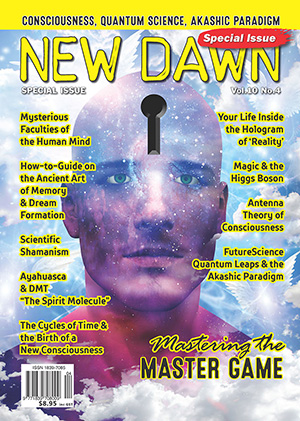
    William S. Burroughs: His Search for “The Visitors”

    From New Dawn Special Issue Vol 11 No 2 (Apr 2017)

    I get these messages from other planets. I’m apparently some kind of agent from another planet but I haven’t got my orders clearly decoded yet.
    – William S. Burroughs

    In 1989, the American author William S. Burroughs (1914–1997) wrote to Whitley Strieber, a writer previously best known for his successful horror fiction, such as The Wolfen and The Hunger, about his alleged experiences of alien contact and abduction. In his first supposedly non-fiction book, Communion (1987), and its sequel Transformation (1988), Strieber asserts that he was abducted from his cabin in upstate New York on the evening of 26 December 1985 by non-human beings. Although the books are generally thought of as accounts of alien abduction, Strieber draws no conclusions about his alleged abductors nature, referring to them as “the visitors” – a name he chose to be as neutral as possible. Burroughs read both Strieber’s first two books on his experiences with the visitors, and wrote saying he would very much like to contact them.

    Strieber’s wife, Anne, wrote back, saying they received a lot of crank letters and had to be sure he really was who he said he was. His next letter, in which Burroughs assured the Striebers, “I am indeed really me,” convinced them, and they invited him to spend the weekend at their cabin in upstate New York, where the experiences were alleged to have occurred.

    Burroughs later said:

    I had a number of talks with Strieber about his experiences, and I was quite convinced that he was telling the truth. He told me this. ‘When you experience it, it is very definite, very physical, it’s not vague and it’s not like an hallucination, that they are there’.

    For his part, Strieber said Burroughs was almost overly polite during his visit, but was clearly genuinely interested, and very curious about every detail of his experiences. Although the visitors he describes do travel in what appear to be ‘nuts-and-bolts’ physical craft, which manifest very much in the classic ‘flying saucer’ mode – and as for the beings themselves, roughly humanoid, mammalian beings, wearing at one point what appear to be blue overalls – Strieber himself had not ruled out the possibility they may not be extraterrestrials at all, but rather exist in his mind. Burroughs, himself no stranger to altered states, other realms of perception, and psychic manifestations, and a lifelong champion of Count Alfred Korzybski’s General Semantics – which opposes the so-called “Aristotelian straitjacket” of either/or thinking – could certainly concur.

    Regrettably, the visitors did not choose to manifest themselves when he was around, but he remained open-minded about the possible reasons for this:

    It may mean that it was not propitious for them to come and pick me up at that particular time. It may mean that they would contact me at a later date or it may mean that they regard me as the enemy… We have no way of knowing what their motives are. They may find that my intervention is hostile to their objectives. And their objectives may not be friendly at all.

    Strieber referred to the visitors in his books also by the name “grays” – a meme which took on a life of its own, and has become very much the standard way of referring to at least one type of alien being that is apparently a regular visitor to our world: small, roughly humanoid, with a large, bald domed head, and usually large, black, wraparound eyes. This idea and image soon found its way into Burroughs’ own personal cosmology. He continued to be fascinated by them, and in a diary-entry for 3rd February 1997, written just five months before his death, and later published posthumously as part of Last Words: The Final Journals of William S. Burroughs, he wrote:

    The Grays apparently [are] Control Aliens, who have lost the ability to create, a dying race that needs blood and semen from humans. Bad folk those Grays.

    I recall that Whitley Strieber was accused of working for the Grays… Why are abductions and contacts always to mediocre or inferior minds? Why don’t they come and see ME?

    Because they don’t want to, are afraid to contact anyone with advanced spiritual awareness.

    The Grays want to make people stupider. Anyone with real perception is a danger to them. A deadly danger.

    The following exchange from an interview conducted by his friend, David Ohle, shows how much the whole business of Whitley Strieber and his experiences with “the visitors” had made an impression on Burroughs:

    DO: You went to New York a few weeks ago to see some aliens. What happened?

    WB: I talked to Whitley Strieber, who wrote Communion, and he invited me up to his cabin. I just read his book, Majestic, about the cover-up that followed the alleged crash of an alien ship [referring to the infamous Roswell, New Mexico case of 1947, as documented by Kevin D. Randle & Donald R. Schmitt in their UFO Crash at Roswell of 1991.]

    They recovered a body which was taken to Los Alamos for autopsy. It had no stomach. Apparently these creatures are nourished by some kind of very sophisticated photosynthesis. Chlorophyll people. They also have very large eyes and they cluster together in their space-ships, which are like hives.

    All this upset [then President of the United States] Truman a great deal: ‘They live in hives’. He said. ‘It makes my blood run cold. Got no stomachs and their genital organs are vestigial. Are they Communists?’ he wanted to know.

    My God, the dumbness, to alienate the aliens.

    The fact that the recovered alien body was allegedly taken to Los Alamos would have been a particularly portentous detail for Burroughs: it was where he had been sent to a ‘boy-scout’ style ranch school as a boy, which he had hated – and was the facility later taken over by the US military to be used as a Top Secret base for the development of the atom bomb, details that recur with ominous significance throughout a number of his works….

    Later, towards the end of the same interview, Ohle asks, “Is there something out there?”, and Burroughs’ reply shows, among other things, an interesting knowledge of UFO lore:

    There’s something out there. It may be far away in Space and Time, but remember – Time itself is a human invention, as are measurements.

    Remember Betty and Barney Hill, the two people abducted by aliens in Exeter, New Hampshire? Well, the aliens noticed that Barry had false teeth… They asked about this, and Betty said, ‘Well, they’ve worn out. Age, you know. Length of time’. And the aliens said, ‘What is time? What is age?’ They had no concept of it. Time is both a human invention and a human affliction.

    In a collection of essays published in 1986 as The Adding Machine, Burroughs summed up a lifetime of musing on the intricate and mysterious relationship between the creative impulse he had explored, both as a writer and, in later years increasingly as a painter, and the mysterious ‘other’ realms of altered perceptions and expanded consciousness that he had long sought to come to terms with, characterised in terms of the impulse to get into Space – in which he contrasts the ‘nuts-and-bolts’ efforts of the Space Program, with perhaps more subtle and creative methods:

    We are not setting out to explore static pre-existing data. We are setting out to create new worlds, new beings, new models of consciousness. As Brion Gysin [painter, poet, and Burroughs’ long-term friend and collaborator] said, When they get there in their trillion dollar aqualung they may find that artists are already there.

    What you experience in dreams and out of body trips, what you glimpse in the works of writers and painters, is the promised land of Space.

    Towards the end of the 1980s, not showing any signs of slowing down and still reaching out to new forms of creative expression, Burroughs collaborated with American avant garde theatre director, Robert Wilson, on an opera called The Black Rider. It was based on a German folktale, Der Freischütz, in a version that had come down via “English Opium Eater” Thomas De Quincey, and Burroughs wrote the libretto to accompany music by Tom Waits. Flushed by the apparent success, towards the end of 1991, Wilson approached Burroughs about a further collaboration, and Burroughs put forward an idea he was calling Paradise Lost:

    I had an idea… of an opera based on Paradise Lost, where Lucifer and the fallen angels have been the victims of an atomic attack and they’re picking themselves up out of the ruins of Hiroshima.

    Based in part on Milton’s original poem, it would also include material to do with aliens, abductions, UFOs, and in particular, the infamous crash alleged to have taken place at Roswell, New Mexico, in 1947. [Although nothing came of this at the time, following Burroughs’ death, his former companion and manager – now literary executor – James Grauerholz gave the material to former Hüsker Dü drummer, Grant Hart, who used it as the basis for his 2013 album, The Argument.]

    As part of the promotion and publicity for The Black Rider, Burroughs was interviewed at home in Lawrence, Kansas, on 10 June 1991, by Nicholas Zurbrugge. Asking him about his current interests and reading material, Burroughs showed the interviewer some books on Native American Indian Shamanism, then explained:

    So I’m interested in shamanism. I’m also very interested in all of these space aliens – their flying saucers, and all that… I’d just like to see some myself, that’s all. As a matter of fact, there’s been sightings in Kansas, and some out at the lake – where I have my house on the lake – but I have not been favoured.

    That same year, the writer Victor Bockris visited his old friend at home in Lawrence to talk with him for Interview magazine. During a discussion about Strieber’s alleged experiences – and how Burroughs was finding the Nineties “a very un-funny… very grim decade” – at one point Bockris was very upset about “a sense of being invaded,” and the reply shows that for William S. Burroughs, many of the old concerns about Control and possession had not gone away:

    You are no more invaded than the rest of us. When I go into my psyche, at a certain point I meet a very hostile, very strong force. It’s as definite as somebody attacking me in a bar… What you have to do is confront the possession. You can do that only when you’ve wiped out the words.

    For Burroughs, any escape into the altered state of consciousness that he saw represented by the freedom of Space would always be achieved in SILENCE. Back in the 1960s, amid the all-too-often drug-fuelled paranoia of Sci-Fi Conspiracy Theories, in which he seriously considered the possibility women were an alien species, and that, famously, “Language is a virus from Outer Space,” Burroughs had written:

    To travel in space you must leave the old verbal garbage behind: God talk, country talk, mother talk, love talk, party talk. You must learn to exist with no religion, no country, no allies. You must learn to live it alone in silence. Anyone who prays in space is not there.

    As the decades progressed, and the Space Race failed to deliver on its promise of Brave New Worlds and the High Frontier of the Stars, Burroughs’ interest waned in the possibility of ‘nuts ‘n’ bolts’ solutions to getting out of the body and off the planet. His already longstanding interest in magic, the occult, and psychic phenomena took him further in the direction of astral projection, dream control, remote viewing, and the like, as well as actual forays into ritual magic.

    During his final years in the Midwest, as well as his interest in UFOs and possible alien contacts, such as those written about by Whitley Strieber, Burroughs explored the possibilities offered by an encounter with an anthropologist neighbour who was working with a Lakota Indian Medicine Man, Black Elk, and was also initiated into the Chaos Magic order, the Illuminates of Thanateros. [All of this is detailed at length in my book, The Magical Universe of William S. Burroughs (Mandrake of Oxford, 2014.)]

    Later, in the collection of Notes from his dream-journals and related musings that were published as My Education: A Book of Dreams (1995), Burroughs wrote:

    I was convinced that the aliens, or whatever they are, are a real phenomenon. The abductions, in several accounts, involved sexual contacts. Indeed, that would seem to be their purpose.

    After some consideration, Burroughs came to the opinion that the aliens – if “the visitors” were indeed beings that originated physically outside of the collective unconscious, or some other such psychic realm – were, in fact, abducting people primarily to have sex with them. He was struck by the fact that in one of Strieber’s accounts of just such a “close encounter,” the beings wanted him to get a bigger erection than the one they had somehow been able to induce in him.

    In an attempt to attract them to his home in Lawrence, Kansas, Burroughs decided to let the grass grow long on his lawn, and then had somebody cut a patch of it into the shape of an erect penis – like making a crop-circle – in the hope this would attract their attention. Although Whitley Strieber continued to receive further visitations, which he would write about in subsequent works such as Breakthrough: The Next Step (1995) – and, latterly, Solving the Communion Enigma: What Is to Come (2011) – the visitors never came for William S. Burroughs.

    [alert type=”general” dismiss=”no”]This article was published in New Dawn Special Issue Vol 11 No 2.[/alert]

    [alert type=”success” dismiss=”no”]If you appreciate this article, please consider subscribing to help maintain this website.[/alert]

    © New Dawn Magazine and the respective author.
    For our reproduction notice, click here.

  • What Do You Mean The Occult? A Brief Introduction

    What Do You Mean The Occult? A Brief Introduction

    MITCH HOROWITZ was raised in a world of Bigfoot stories, UFO sightings, and Carlos Castaneda books. He grew determined to find the truth behind it all – and today is a PEN Award-winning historian and the author of Occult America and One Simple Idea: How Positive Thinking Reshaped Modern Life.

    Mitch cares deeply about outsider spiritual views, particularly with regard to the esoteric, supernatural, and occult. He has written on everything from the war on witches to the secret life of Ronald Reagan for a wide range of publications. The Washington Post says Horowitz “treats esoteric ideas and movements with an even-handed intellectual studiousness that is too often lost in today’s raised-voice discussions.”

    “Many academics and journalists simply cannot wrap their minds around the principle that you can study an arcane topic without propagating it,” Mitch noted recently in an on-line article. He continued by pointing out that the “false choice to ‘take it or leave it’ is perhaps the most limiting factor in how people view the world. It makes it difficult to discuss esoteric topics….”

    New Dawn magazine asked Mitch to share his thoughts on the theme of Special Issue Vol 11 No 4.

    NEW DAWN (ND): What do you mean by the Occult?

    MITCH HOROWITZ (MH): The term itself comes from the Latin occultus, meaning secret. It was adopted by Renaissance thinkers looking for a way of discussing the Greco-Egyptian and other pre-Christian teachings being rediscovered and newly translated, particularly the Hermetic literature. The occult, very simply, is the inquiry into an unseen dimension of life whose forces can be felt on and through us.

    ND: Why do people often associate the occult with evil, negative powers, satanism and alike?

    MH: That is, in many respects, a leftover from the religious struggles of late antiquity when the ascendant church fathers characterised the pagan powers in maleficent terms, associating them with demonology, which the pagan world had never identified with. It’s human nature to depict one’s theological or ideological foes in terms chosen by the victor, and often negatively.

    ND: You’ve written extensively about the influence of occult ideas on modern society. Can you share some examples of how the occult has impacted contemporary America?

    MH: In many respects, America’s alternative spiritual culture, and much of its self-help movement, had its earliest roots in occult thought. Consider, for example, the widely domesticated idea of “positive thinking.” The notion that thoughts are causative, and that events and circumstance respond to thought, was very much an occult-mystical principle, and it remained so until the late 19th and early 20th centuries, at which time writers like James Allen and Prentice Mulford reframed these ideas in language that drew less upon Mesmerism and related movements, and more upon Scripture. The language of occult and mystical movements has been rendered into terms that prove acceptable to large swaths of the public. Plus, many current mainstream practices, from yoga to meditation to acupuncture, first entered public awareness from the margins of occult subcultures. It is nearly impossible to meet anyone today who does not know their “sun sign” and something about it. That, in a sense, reflects how deeply occult ideas permeate everyday life.

    ND: Much media coverage of the occult is either wildly sensationalist or treats the area with disdain and credulity. Why is this?

    MH: A great deal of conformity touches all aspects of our society – this is true in almost every walk of life. Educated people and many people in the media are brought up to believe that occult figures like Madame Blavatsky, if they’ve heard of them at all, were carnival-type characters, whose lives hold nothing of interest for serious people. I’m personally very interested in ESP research, and I work hard to get people in the mainstream media to understand this research, which is almost impossible if they rely upon ‘what they’ve heard’, or the top five Google search results. Misunderstanding of the occult is really just a kind of conformity, and this way of thinking touches all of us.

    ND: When examining the broad spectrum of ideas and practises categorised as occult, what is the best approach?

    MH: I think it is vitally important to have an ethical teaching at your back, whether the Gospels, the Bhagavad Gita, the Talmud, or another ancient ethical source. Without that, it is very easy to get lost.

    [alert type=”general” dismiss=”no”]This article was published in New Dawn Special Issue Vol 11 No 4.[/alert]

    [alert type=”success” dismiss=”no”]If you appreciate this article, please consider subscribing to help maintain this website.[/alert]

    © New Dawn Magazine and the respective author.
    For our reproduction notice, click here.

  • Antarctica in Myth, Fantasy & Reality

    Antarctica in Myth, Fantasy & Reality

    From New Dawn Special Issue Vol 11 No 1 (Feb 2017)

    At the Bottom of the World

    Athanasius Kircher (1602-1680), in his book about the subterranean world, compares the earth to a human body. It drinks in the oceans at the North Pole, digests them in its interior, extracts the minerals, and expels the remains at the South Pole.2 This undignified image of Antarctica is not merely northern chauvinism, for the earth itself presents a marked contrast between its two polar regions. In the north, cities such as Oslo, Helsinki, Tallinn, and Leningrad cluster around the sixtieth parallel, to say nothing of Reykjavik at 64ºN. To their north extend vast tracts of useful land, supporting agriculture and abundant forest life. Coal and other minerals are mined on Norway’s Svalbard Islands (Spitsbergen), which reach beyond the 80th parallel. In the rosy days before the Nazis coopted the myth of Thule, the Canadian explorer Vilhjalmur Stefansson (1879-1962) claimed that “there is no northern boundary beyond which productive enterprise cannot go until North meets North on the opposite shore of the Arctic Ocean as East has met West on the Pacific”3 – and he should know, having spent five months marooned on an ice-floe. Nowadays ice-breakers open the Northwest Passage every spring for a busy sea traffic; airplanes crisscross the Pole, and nuclear submarines pass beneath the thin ice of the Arctic Ocean, even breaking through at the North Pole itself, as the USS Skate did in March 1959.

    In the South, things are quite different. As Charles Fort (1874-1932) phrased it, “History, like South America and Africa, tapers southward. […] Preponderantly peninsulas are southward droops.”4 Cape Horn, the last landfall of Chile, has drooped away by 56ºS, and by the sixtieth parallel one is nearing the uninhabited South Orkney Islands, the first straggling harbingers of the Antarctic Peninsular. There are beautiful things about Antarctica, still miraculously free from mining and territorial claims; one can enjoy real and imaginary pictures of its unspoilt scenery and largely untroubled wildlife. But the unattractive things about this continent, as big as the United States and Europe combined, are such that none but scientists want to live there. It is hard to reach, being surrounded on all sides by seas of notorious roughness. It is much colder than the Arctic, thanks to the absence of warming currents like the Gulf Stream; the eccentricity of the earth’s orbit, which makes the Antarctic summer a week shorter than that of the north; and the perpetual rolling down of chilled air from the icecap that covers the continent to a depth of up to three miles. Finally, apart from the creatures on its fringes supported by the krill – whales, seals, penguins, gulls, mites, etc. – virtually the only life of its interior is the alien one of clouds and frozen water.

    At least, that is the view in educated and scientific circles. But the kind of people who write about Commander Richard E. Byrd’s (1888-1957) flight beyond the pole into the hollow earth are also quick to ascribe to him the sighting of lushly vegetated lands, preferably with a mammoth blundering through the undergrowth. The German Antarctic expedition to Queen Maud Land in 1938-39 made some surprising discoveries, including “a group of low-lying hills sprinkled with many lakes and completely free of ice and snow,” resembling the barren hot springs region of Iceland.5 Claiming this Norwegian sector with swastika flags, the Germans renamed it Neuschwabenland (New Swabia).

    According to the Chilean diplomat Miguel Serrano (1917-2009), the Germans also found there a way of communication with the Hollow Earth and its secret cities, where the First Hyperboreans had taken refuge from the disaster that reversed the Poles.6 There a secret base was prepared during the war years, and thither Adolf Hitler escaped in a vimana (flying saucer plane) to direct the “esoteric war” to this day. Serrano states this as fact in his philosophical testament, and supplies a diagram that blends the physical with the mythological: partly a cutaway diagram of the inner earth, it is also an explanation of the subtle currents at the two poles and their complementarity (see image to the left).7

    But Serrano was only repeating a favorite theme of neo-Nazi and sensational literature. In his well-documented study The Hitler Survival Myth (1981), Donald McKale identifies the earliest source of the myth of Hitler’s escape to the southern hemisphere as the unexpected surrender of a German submarine in early July 1945 at Mar del Plata, Argentina. Several Buenos Aires newspapers, in defiance of Argentine Navy statements, said that rubber boats had been seen landing from it, and other submarines spotted in the area. One paper, Critica, carried on 17 July 1945 the report that Adolf Hitler and Eva Braun had landed from a U-530 in Antarctica, and mentioned the 1938-39 expedition, as a result of which a “new Berchtesgaden” was “likely to have been built.” This report received wide distribution through quotation in Le Monde and the New York Times on 18 July; on the 16th, the Chicago Times had carried a sensational article on the Hitlers having slipped off to Argentina.8

    The myth of an Antarctic refuge, armed with flying saucers, reached its apotheosis in W. A. Harbinson’s thriller Genesis (1980). This develops the Jules-Vernian theme of a “Master of the World” who, thanks to the Nazi régime, has become a technocratic power before which even Washington and Moscow must quail. Harbinson supplements his fiction with an excellent list of factual sources about Nazi saucer-planes and Antarctic explorations.9 Another version of the myth appears in Opération Orth (1989), a strange and surely ironic work by Jean Robin, one of the foremost authorities on the Traditionalist René Guénon and no lover of the “Counter-initiation” of which he holds Hitler to have been a primary, if unconscious, agent.

    Jean Robin writes, supposedly on the evidence of a friend who had been there, of a subterranean complex of high technology entered near Valparaiso by a vimana which could pass through solid rock. There was found the new Asgard or Agartha, the headquarters of the Black Order, where 350,000 initiates await “Him Who Shall Come.”10 A mysterious green flame suspended in a niche of stone and called the Cheskin serves to recharge their energies and focus their cult.11

    Is Adolf Hitler “He Who Shall Come,” as Miguel Serrano believed him to be? No: in Robin’s book Hitler died in this subterranean retreat in 1953, and his body is enshrined and visible in a hexagonal casket – side by side with that of Raoul Wallenberg, the Swedish diplomat who saved thousands of Hungarian Jews during the war, and was “kidnapped” by the Soviets in Budapest.12 This dual presence, Robin’s friend was given to understand, poses no problem to the many Jews who belong to the Black Order: they blame their fellows for their “refusal to collaborate” with the evolutionary process.13

    Opération Orth poses every manner of problem, however, to the reader, who can only wonder what prompted Jean Robin to present the images of Hitler and Wallenberg reconciled, and the casual dismissal of the Holocaust by the Jews of his Black Order. In the context of Guénonian attitudes, which are nothing if not respectful of the Jewish people and their tradition, there is nothing to be said, unless it be that Robin actually accepts his friend’s account, and is warning us of the Counter-initiation’s final obscenity.

    Those who believe in the Nazi Antarctic bases, with or without Hitler alive or dead, will find it significant that Richard Byrd went there in 1946-47, and again in 1956, on expeditions massively supported by the United States Navy. But here is the most extraordinary thing: according to the official maps of his many flights, shown here,14 Byrd’s expeditions left Queen Maud Land absolutely unvisited. The conspiratorial literature has no difficulty in explaining this: Byrd was scared away by the protective power demonstrated by the secret center, and after losing four planes, kept his distance.15

    Poe, Verne, Lovecraft

    Writers of fictions about Antarctica seem anxious for their work to be mistaken for fact. This was a common affectation in nineteenth-century fiction, and often used by the first great imaginative writer on Antarctica, Edgar Allen Poe (1809-1849). The South Pole appears in the short story MS. Found in a Bottle (1833), which employs the common literary device of a ship blown off course to discover new worlds. Poe’s narrator, of course, goes one better: his own ship wrecked, he is hurled onto the rigging of a grotesquely antique, oversized galleon, manned by the living dead, which heads straight for the Pole. Scribbling frantically in the face of certain doom, he writes of his descent into a gigantic whirlpool:

    Oh, horror upon horror! – the ice opens suddenly to the right, and to the left, and we are whirling dizzily, in immense concentric circles, round and round the borders of a gigantic amphitheatre, the summit of whose walls is lost in the darkness and the distance. But little time will be left to me to ponder upon my destiny! The circles rapidly grow small – we are plunging madly within the grasp of the whirlpool – and amidst a roaring, and bellowing, and thundering of ocean and of tempest, the ship is quivering – oh God! and – going down!16

    Poe, who tried to be accurate in his facts, later felt obliged to add a note to the end of this tale, saying that it was only many years afterwards that, “I became acquainted with the maps of Mercator, in which the ocean is represented as rushing, by four mouths, into the (northern) Polar Gulf, to be absorbed into the bowels of the earth; the Pole itself being represented by a black rock, towering to a prodigious height.”17 Poe would make good his error in A Descent into the Maelstrom, which is set in the North. But his polar masterpiece, and the longest piece of fiction he ever wrote, was The Narrative of Arthur Gordon Pym (1838).

    At the time of Poe’s writing, Antarctica had been touched on but not yet “discovered” in any real sense. Captain James Cook, in 1775, had reported after his circumnavigation of Antarctica, that “no continent was to be found in this ocean but must lie so far south as to be wholly inaccessible on account of ice.”18 Subsequent explorations by the British and Russians were inconclusive, and mostly limited to the islands and peninsular. In 1825, John R. Reynolds of Ohio began vigorous agitations in favor of an American Antarctic expedition, twice addressing the U.S. Congress. (One notes circumstantially that John Cleves Symmes’ petition to explore the hole at the North Pole had been made to the General Assembly of Ohio, in 1824.) Public opinion eventually came to his aid, and in 1836 an Exploring Expedition was authorized. After all manner of controversies and delays, the expedition set sail in August 1838 under Charles Wilkes. Poe’s Narrative thus appeared in serial form in the full light of public interest and excitement about the Antarctic.

    The Narrative of Arthur Gordon Pym is too well-known a literary work to delay us long. Suffice it to recall that the narrator discovers, beyond the ice-floes, a warm land inhabited by disagreeable black-toothed savages who bring about the deaths of all but himself and the half-breed Dirk Peters. The natives of this black land have a superstitious horror of anything white, which draws from them the cry Tekeli-li! Although they now live in the most primitive of shelters, Pym discovers a system of underground passages that seem to have been made in significant shapes, and also records what may be archaic script from the wall of one of the chambers. After the usual privations and hair-raising adventures, the two men escape and enter a calm polar sea that becomes ever warmer and whiter in hue, while flocks of gigantic white birds pass overhead crying Tekeli-li! At last they find themselves driven towards a silent cataract of white vapor.

    And now we rushed into the embraces of the cataract, where a chasm threw itself open to receive us. But there arose in our pathway a shrouded human figure, very far larger in its proportions than any dweller among men. And the hue of the skin of the figure was of the perfect whiteness of snow.19

    Thus the Narrative ends; a Postscript apologizes for the loss of the “few remaining chapters” upon Pym’s recent death.

    There is little doubt that Symmes’ theory of the hollow earth furnished Poe with the unacknowledged basis for his story. The Antarctic hole would have to be far smaller than the 6,000-mile diameter Symmes gave to it – about 500 miles would fit Pym’s bearings. But Poe could well be describing the unknowing traversal of its rim and the entry into an inner world which, like Symmzonia, is entirely white.

    One person who could not bear to leave Pym’s narrative unfinished was Jules Verne (1828-1905). In his Le Sphinx des Glaces (The Sphinx of the Icy Regions, 1897), he reintroduces Dirk Peters on a voyage to Antarctica whose secret object is the rescue of Arthur Gordon Pym – not returned and dead as Poe’s informant had it, but abandoned and perhaps still alive in that mysterious polar land.

    Verne’s story takes his characters on open sea to the same black land, now devoid of its inhabitants who have perished in an earthquake. Still seeking Pym, they proceed northwards on the other side of the Pole until they find the curtain of mist which lifts to reveal the Sphinx of the title, presumably identical to the giant white figure of Poe’s conclusion. It is a mountain shaped naturally into a crouching sphinx – but a magnetic mountain, so powerful as to suck every piece of iron out of a ship. There they find Pym’s last and tragic resting-place, pinioned to the rock by his own musket. Dirk Peters dies of a broken heart at thus finding his “poor Pym”; the others just manage to clear the ice-barrier before winter freezes it, and so they come home.

    In a typically didactic digression, Jules Verne’s narrator tries to account for this magnetic mountain:

    The Trade-winds bring a constant succession of clouds or mists in which immense quantities of electricity not completely exhausted by storms, are stored. Hence there exists a formidable accumulation of electric fluid at the poles, and it flows towards the land in a permanent stream. […] it would suffice that a block of iron should be subjected to [these currents’] action for it to be changed into a magnet of power proportioned to the intensity of the current, to the number of turns of the electric helix, and to the square root of the diameter of the block of magnetized iron.20

    The turns of the coil of this giant electro-magnet are supplied, he supposes, by the windings of a metallic lode in the ground, connected with the base of the block. So the south polar vortex in this case is not a watery but an electrical one.

    Now we turn to the inheritor of Poe’s literary mantle, Howard Phillips Lovecraft (1890-1937). This writer of fantastic literature sketched in a handful of stories a whole mythological complex dealing – as any complete mythology must – with the origins of the human race. After Lovecraft’s death it was elaborated by other writers, especially August Derleth, into what the latter called the “Chthulhu Mythos,” after the monstrosity let loose upon the world in Lovecraft’s The Call of Chthulhu (1926). So far this resembles the continuation of Poe’s tale by Jules Verne. But in Lovecraft’s case there is more: the mythology which he himself regarded as no more than dream-inspired fiction was accepted as factual by the aficionados of the Shaver Mystery on the one hand, and, on the other, by certain highly educated practitioners of the “Magick” of the Left Hand Path, led by the prestigious mage of the Ordo Templi Orientis (OTO), Kenneth Grant.

    One of Lovecraft’s longest and by general consent finest tales, At the Mountains of Madness (written 1931, published 1936), is set in Antarctica, whither the narrator has gone on an expedition sponsored by the fictitious Miskatonic University. As Peter Cannon points out,21 Lovecraft had been fascinated by the Antarctic since boyhood; he was surely inspired by the recent expedition of Richard Byrd, who in 1929 was the first to fly over the South Pole; and he pays explicit tribute in the story to Poe’s Narrative of Arthur Gordon Pym.

    At the Mountains of Madness tells of the discovery of the star-headed, barrel-bodied, five-winged Old Ones,22 who came to earth before there was any life upon it, and when the continents had not yet drifted apart (Lovecraft was an early follower of Wegener’s theory). They created life on earth and built on the Antarctic “Plateau of Leng” a gigantic city of obsidian, which the explorers discover by airplane. Landing there at the risk of their lives, the narrator and one companion explore the city and learn from elaborate bas-reliefs of the incredible history of the Old Ones and the planet for which they have cared; of the other races that have evolved or arrived from elsewhere, usually to the detriment of the Old Ones’ utopian civilization. Lovecraft evokes sympathy for these primordial beings, gentle scientists and historians by nature, and for the pathetic end of the ones awoken by the explorers from their age-long sleep, only to be eaten by their own creations, the ghastly Shoggoths.

    Lovecraft’s mythopoeic methods were the antithesis of those of a Tolkien, who supported his mythology with carefully worked-out philological and geographical documents. This is why August Derleth took it upon himself to improve the Chthulhu Mythos through his own fictional contributions, filling out gaps and giving it a tighter organization. A case of Lovecraft’s casual accretion is the “Plateau of Leng.”23 In The Hound (1922), just after the first mention in any of Lovecraft’s works of the grimoire Necronomicon, comes an allusion to “the corpse-eating cult of inaccessible Leng, in Central Asia.”24 A few years later, in The Dream-Quest of Unknown Kadath (1927), the Plateau of Leng is a dream-place where the protagonist confronts a high priest masked in yellow silk. Finally, in At the Mountains of Madness, the explorers find an endless plateau and identify it as the true Plateau of Leng. “Mythologists,” explains the narrator, “have placed Leng in Central Asia; but the racial memory of man – or of his predecessors – is long.

    A hidden center in Central Asia inevitably recalls Agarttha, first described by Saint-Yves d’Alveydre (1842-1909),25 publicized by Ferdinand Ossendowski in Beasts, Men and Gods (1922), and confirmed by René Guénon in Le Roi du Monde in the same year (1927) as Lovecraft’s Dream-Quest. In the Traditionalist version of prehistory, the supreme spiritual center of the globe moved there from its previous Arctic location in “Hyperborea.” A separate study would have to be made of Arctic archetypes in modern fantasy-literature and the games derived from it. For a start, two of Lovecraft’s friends set their fantasy-novels in the uttermost North: Robert E. Howard, with his series on Conan the Barbarian, and Clark Ashton Smith, with his Commorian legends also set in frozen Hyperborea.

    Lovecraft’s ancient civilization in Antarctica is placed so far back in time that those who wish can actually reconcile it with geology. I follow here the scientific account of the Polar medalist Margaret Bradshaw,26 who writes that Antarctica, as part of the supercontinent of Gondwana, was probably in equatorial latitudes during the Cambrian Period (about 500 million years ago). By the beginning of the Permian Period (300 my), Gondwana was polar, the South Pole migrating in the course of twenty million years from the region that would later become Africa/South America, across Antarctica, to Australia. In the Triassic Period (240-190 my), Antarctica was richly forested and inhabited by reptiles. After that came the period of violent volcanic activity that eventually led to the breakup of Gondwana and the beginning of the continents’ progress to their present situations. In the course of the Tertiary Period (65-1.5 my), the major mountain chains were built on the continent, and the present ice-sheet was formed. The continent has been thoroughly glaciated for about twenty million years, so any later habitation is out of the question.

    While this is the large-scale story, there may have been variations within shorter spans of Antarctic history. Charles Hapgood (1904-1982), in his Maps of the Ancient Sea Kings (1979), reproduces the findings of geologists of impeccable credentials that show, in his words, that “during the last million years or so there have been at least three periods of temperate climate in Antarctica when the shores of the Ross Sea must have been free of ice.”27 In particular, there was a longish warm period that ended about 4,000 BCE. Hapgood’s book is subtitled Evidence of Advanced Civilization in the Ice Age, and presents a wide variety of ancient maps that show uncannily accurate knowledge not only of lands undiscovered until the modern age, such as the Antarctic coast, but also of lands invisible at any age of human existence, namely the shores of the Ross Sea. Alas, history has no room in its limited imagination for theories such as Hapgood’s, however persuasively argued and well-documented, because they would require too thorough a revision of the status quo. It is one thing for analyses of Antarctic sea-floor cores to be published in the Journal of Geology; it is quite another to ask prehistorians to imagine a civilization 6,000 years ago which was capable of mapping the whole globe. Like the cardinals who refused to look through Galileo’s telescope, lest they should see what he saw and suffer the same delusions, most prehistorians simply do not read books with subtitles such as Hapgood’s.

    Polarity of North and South

    The mythology surrounding the North Pole has tended to be positive: it is always the Arctic that is imagined as the location of the endless springtime and the cradle of noble races. The Antarctic, on the other hand, is negative: it evokes tales of gloom and destruction, and is populated by primordial horrors, or else by their recent representative, the Nazis. If the Arctic Ocean is still imaginable as open to the world within, from which the Aurora Borealis streams in all its wonder and beauty, any hole at the South Pole is firmly shut with a lid of ice three miles thick. In short, the North is the positive and the South the negative pole of the earth.

    In the accounts of this from “illumined” sources, there seems either to be confusion of the physical with the non-physical – magnetism and electricity with the soul, for instance – or else there is evidence of some occult unity which modern science, ignorant of the ways of souls, cannot fathom. For example, in 1845 an uneducated girl gave in mesmeric trance a number of answers to questions of cosmology and occultism that have a bearing on our subject. Her answers were recorded by Zadkiel (Richard Morrison) in his Almanac, and reprinted in Peter Davidson’s Occult Magazine.28 One of them states:

    The magnetism of the Earth is another modification of electricity, and also circulates through the system. It passes off from the Earth at the North Pole, producing the Aurora Borealis, circulates through the other planets, and returns to the Earth in a purified state…

    Another evokes the situation in which the earth’s axis lies parallel to the ecliptic, which would give each hemisphere six months of light and heat, and six of cold and darkness:

    [Question] Will you look at the Earth and say whether the pole be turned away from its course – the same as it was 10,000 years ago – or be less turned away?

    [Answer] Yes, it is less turned away. The Sun once went over the Pole of the Earth, but that was a long time ago – that was before Adam – there were other kinds of men on the Earth then.

    In Ghostland, an occult novel of 1876, the anonymous author writes of the great spirit Metron, tutelary angel of this planet. (Possibly he means Metatron, who in Kabbalah is the spirit of the Primum Mobile.) Metron governs the “electric life evolved from the galvanic action of metallic lodes threading their way like a gigantic nervous system through every globe; vast reservoirs of polar force generated in the Arctic North and Antarctic South.”29 These regions, we are told, “form the brain and feet of the living Earth,”30 but Metron’s station is in the “brain regions of the polar North.”31

    H.P. Blavatsky (1831-1891) concurs with this polarization of the earth. She writes in The Secret Doctrine (1888) of how when the first Atlanteans were born on Lemuria, they very soon began to divide into those who worshipped “the one unseen Spirit of Nature, the ray of which man feels within himself,” and those who offered “fanatical worship to the Spirits of the Earth, the dark Cosmic anthropomorphic Powers, with whom they made alliance.”32 It was the latter, one understands, who gravitated to the South Pole, called “the pit, cosmically and terrestrially – whence breathe the hot passions blown into hurricanes by the cosmic Elementals, whose abode it is.”33 Elsewhere she explains that the earth’s seven zones correspond to the Seven Principles of man, Mount Meru or the North Pole answering to the Seventh principle, “the region of Atma, of pure soul, and Spirituality.”34 Therefore the South, although Blavatsky does not spell it out, is probably to be taken as corresponding to the physical body, the lowest of the principles.

    We meet an interesting reference to Meru in Saint-Yves d‘Alveydre’s Mission de I’lnde:

    Everything has been plumbed [by the Agarthians], from the fiery entrails of the Globe to its subterranean streams of gas and water, both fresh and salt, even to the living beings who inhabit these flames, gases, and waters,

    Everything has been plumbed across the breadth and depth of the oceans, even the role of magnetic currents which interfere with one another longitudinally from pole to pole, and latitudinally from tropic to tropic. […]

    Everything has been revealed, even to the universal harmonies that produce the terrestrial seasons, and the ascending migrations of souls by the North Pole: that unfindable Mount Meru and that undecipherable Alborj of the Vedic and Pahlevi books.35

    Movement of souls, it seems, is from South to North, and that is what one would expect if the North is closer to the spiritual world.

    Among more recent philosophers whose polar theory is in accord with that of Theosophy, Schwaller de Lubicz (1887-1961) compares the poles to the active (North) and passive (South), or male and female principles.36 Commenting on ancient symbolism, he depicts the movement from one to another as literally as the circulation of Kircher’s oceans:

    Let us note something not generally known: that is, that the North Pole and the South Pole repels, with respect to the masses of these rotating bodies [planets, etc.]. Our North Pole hollows out the earth and it can be said to absorb the continents, whereas the South Pole extrudes earth and it can be said to create the continents. The entire mass of our continents is projected in a spiral motion toward the North Pole.37

    This passage, written in 1949, bears study in the context of what is now known of Continental Drift. In the scientists’ reconstruction of Gondwana, Antarctica lies between Africa, India, and South Australia. The other continents have gradually moved away from it to their present positions surrounding the Arctic Ocean. As for the extrusion and absorption of earth, one can at least say that ancient maps of the North Atlantic and Arctic Oceans record islands and mainland regions that have since disappeared.38

    The reversal of the two poles of the earth relative to the celestial poles, already a persistent theme in esoteric prehistory, naturally raises questions about this matter of polarity. Does the negativity of Antarctica derive from its position on earth, or from its orientation in space? Miguel Serrano thought that the reversal of the poles during the cataclysm of Hyperborea had raised Antarctica to the place of honor, and that for the “Last Avatar” to take up residence there in a revived Hyperborea was absolutely appropriate. But being Chilean must give one a certain parti-pris, which in Serrano’s case goes to the logical extreme of making his homeland, the southernmost country on earth, into the refuge for the Kali Yuga and the spiritual center of the New Age.39

    Another aspect of reversal occurs in the work of Kenneth Grant (1924-2011), dedicated to the exaltation of the god Set, or Shaitan, or Satan. “Shaitan,” he says in The Magical Revival (1972), “is the God of the South, yet his votaries face North when invoking him.” He explains this by the fact that “on entering Capricorn, the zodiacal house of Shaitan [Saturn], the sun turns northward. Consequently the worshipper identifies himself with the sun – Horus – which is therefore not the object of worship, for he is the god that dies and is reborn on entering the House of Set (Capricornus).” Grant also hints at a physical reversal of poles as he continues: “There was a time when the South had precedence and was the primary station of the Pole Star.”40 Later he says that Set “was Lord of the (South) Pole, first born of the seven sons, or stars, represented by the Northern Constellation of Typhon, the Great Bear. When primitive man moved northward from Equatoria, the Star of Set in the South sank beneath the horizon and was supposed to have ‘fallen’.”41

    It is a small step from Antarctica as the house of Satan or of the Führer, alive or dead, to the myth of the lurking Old Ones and Shoggoths of Lovecraft’s fantasy – and from there to the astonishing number of people who take this kind of myth literally. Here is an account of the “arch enemies of mankind” as presented by Robert Ernst Dickhoff in his Agharta:

    Agents of Venus are hidden in places on earth and in the earth, only known to themselves, which are at present in suspended animation, awaiting the coming of their rescuers from Venus when they are sure of success. […]

    If Kadath is one of the remaining ice-bound cities in Antarctica, of which there were an original seven, including Rainbow City now open for operation, and nature turns the keys of release at a time yet to come, it will reveal of what Rhani Khatani speaks, when she hints that there too will be found rows upon rows of crypts filled with serpents, awaiting this release from the strange gas which keeps them alive in suspended animation. They should be destroyed if found, before they are released by sympathetic humans obeying serpent commands.42

    Dickhoff was not making this up. He was merely reproducing and elaborating on the Rainbow City myth, which has its roots in a document known as the Hefferlin Manuscript, circulated privately since the 1940s.43 In a summary of this work by Timothy Green Beckley, we read that William C. and Gladys Hefferlin are now believed to be living in this Antarctic refuge, described as:

    an ancient center of culture called “Rainbow City,” which currently is in the hands of reincarnated descendants of the first colonizers from outer space who made tropical Antarctica the “Mother Land of the World” some two and a half million years ago. There also exist six other cities (all connected by vast underground tunnels), completely dormant, while “Rainbow City” is protected on all sides by warm hot springs. However to prevent its being discovered, and exploited by outsiders, ice walls some ten thousand feet high have been built around the city so that it can be reached only by those who know its exact location.44

    Rainbow City derives its name from its construction, which, like some monstrous Legoland, is entirely out of colored plastic blocks. It is part of the network of underground cities founded aeons ago by Martians, the first colonizers of our planet. Rani Khatani, mentioned by Dickhoff, is one of the “Ancient Three,” Martians reincarnated in human form. (One notices a correspondence to the triple rulership of Agartha’s Brahmatma, Mahatma, and Mahanga.) The serpent or crocodile-people are later interlopers from the planet Venus, enemies of the Martians and hostile to mankind whom they have periodically forced or tricked into worshipping them.45 It is H. P. Lovecraft who supplies the name of Kadath, and, in At the Mountains of Madness, anticipates the pattern of good colonizers usurped by evil ones; while in The Nameless City (1921) he describes a crypt-passage leading to an inner earth, lined with caskets holding the bodies of an unknown, pseudo-crocodilic race. The entrance to the Nameless City is in “the desert of Araby”; others place it at the North Pole, or under Mount Shasta – but that is another story.46 It little matters, if as the Hefferlins say the whole earth is honeycombed with passages through which trains pass at 2,000 m.p.h.47

    The Antarctic continent, fully discovered only in the twentieth century, is the ideal location for the favorite myths of our time: those of extraterrestrial visitations, secret technology, the eternal war of good against evil, and the coming New Age. Even as I write [in 1992], the Antarctic myth is taking on other accretions. What could be more appropriate than the reflection of the fabled hole at the South Pole in the ozone layer, allowing the ingress of evil influences which threaten us with cancer, and the whole region with the demise of its sustaining krill? What more symbolic than the placing of a United States base under a giant geodesic dome at the South Pole, where it can study impotently the rent in the sky, and, if the reports in the tabloids are to be believed, the chasm opening beneath its feet?48 And what exactly prompts the United States to dissent from the community of nations and refuse to sign an agreement to ban Antarctic mining for fifty years?49

    Postscript, 2017. As anyone can discover from the Internet, these questions can now be answered. After 30 years, the ozone hole is diminishing. The geodesic dome was taken down in 2009. The ban on mining, now with US support, has held up for 25 years.

    Joscelyn Godwin’s Arktos: The Polar Myth in Science, Symbolism, and Nazi Survival is available from all good bookstores.

    [alert type=”general” dismiss=”no”]This article was published in New Dawn Special Issue Vol 11 No 1.[/alert]

    [alert type=”success” dismiss=”no”]If you appreciate this article, please consider subscribing to help maintain this website.[/alert]

    Footnotes

    1. First published in Joscelyn Godwin, Arktos: The Polar Myth in Science, Symbolism, and Nazi Survival, Phanes Press and Thames & Hudson, 1993. Reprinted Adventures Unlimited, 1996; editions in French, Spanish, Italian, German, Greek, and Japanese. This excerpt is changed only by adding some dates and definitions, and clarifying references to other chapters of the book.
    2. Athanasius Kircher, Mundus Subterraneus, Rome, 1678, 169, 171.
    3. Vilhjalmur Stefanssson, The Northward Course of Empire, Macmillan, 1924, 19.
    4. Charles Fort, The Books of Charles Fort, Henry Holt, 1941, 732.
    5. Walter Sullivan, Quest for a Continent, McGraw Hill, 1957, 125-26; Christof Friedrich, Germany’s Antarcttic Claims: Secret Nazi Polar Expeditions, Samisdat, 1979, 60-72 with illustrations.
    6. Miguel Serrano, Adolf Hitler, el último avatãra, La Nueva Edad, 1984, 288.
    7. Serrano, 1984, 396, by permission.
    8. Donald McKale, The Hitler Survival Myth, Stein & Day, 1981, 62-63.
    9. See W. A. Harbinson, Genesis, Dell, 1982, 589-605; also Walter Kafton-Minkel, Subterranean Worlds, Loompanics, 1989, 217-42.
    10. Jean Robin, Opération Orth, ou l’incroyable secret de Rennes-le-Château, Trédaniel, 1989, 231.
    11. Robin 1989, 232.
    12. Robin 1989, 257.
    13. Robin 1989, 261.
    14. Sullivan 1957, 199, 341, by permission.
    15. See Friedrich Mattern, UFOs, Nazi Secret Weapon? Samisdat, 1979, 98; Friedrich 1979, 106, 111, with maps.
    16. Edgar Allen Poe, Poetry and Tales, Library of America, 1984, 199.
    17. Poe 1984, 199.
    18. Lawrence Kirwan, A History of Polar Exploration, Penguin, 1962, 69.
    19. Poe 1984, 1179.
    20. Jules Verne, Works, F. Tyler Daniels, 1911, XIV, 385.
    21. Peter Cannon, H. P. Lovecraft, Twayne, 1989, 101.
    22. See the analyses in S. T. Joshi, ed., H. P. Lovecraft: Four Decades of Criticism, Ohio University Press, 1980, 148-51; Cannon 1989, 102-5; Maurice Lévy, Lovecraft: A Study in the Fantastic, Wayne State University Press, 1988, 69-71.
    23. See Donald R. Burleson, H. P. Lovecraft: A Critical Study, Greenwood Press, 1983, 85.
    24. H. P. Lovecraft, Cry Horror! Avon, 1947, 158.
    25. See Joscelyn Godwin, “Agarttha: Taking the Lid off the Underground Kingdom,” New Dawn 109 (2008): 59-61.
    26. M. A. Bradshaw, “Geological History,” in Trevor Hatherton, ed., Antarctica: The Ross Sea Region, Dept. of Scientific and Industrial Research, 1990, 42-63.
    27. Charles Hapgood, Maps of the Ancient Sea Kings, Turnstone, 1979, 82.
    28. “Truths from Humble Sources,” The Occult Magazine, I/8 (Sept. 1885): 58.
    29. Ghostland, or Researches into the Mysteries of Occultism, Progressive Thinker, 1897, 262.
    30. Ghostland 1897, 291.
    31. Ghostland 1897, 293.
    32. H. P. Blavatsky, The Secret Doctrine, Theosophical Publishing Co., 1888, II, 273.
    33. Blavatsky 1888, II, 274.
    34. Blavatsky 1888, II, 403.
    35. Saint-Yves d’Alveydre, Mission de l’Inde en Europe; Mission de l’Europe en Asie, Bélisane, 1981, 89-90.
    36. R. A. Schwaller de Lubicz, Symbol and the Symbolic, Autumn Press, 1978, 67.
    37. R. A. Schwaller de Lubicz, The Temple in Man, Autumn Press, 1977, 85.
    38. See Hapgood 1979, 132.
    39. Serrano 1984, 50.
    40. Kenneth Grant, The Magical Revival, Frederick Muller, 1972, 55.
    41. Grant 1972, 61.
    42. Robert Ernst Dickhoff, Agharta, Bruce Humphries, 1951, 75-76.
    43. See Kafton-Minkel 1989, 154-67; Michael X, Rainbow City and the Inner Earth People, Saucerian Books, 1969, 14-18.
    44. Timothy Green Beckley, The Shaver Mystery and the Inner Earth, Health Research, 1985, 56; see also John Godwin, Occult America, Doubleday, 1972, 177-78.
    45. Dickhoff 1951, 28.
    46. See Kafton-Minkel 1989, 119-32; Joscelyn Godwin, Atlantis and the Cycles of Time, Inner Traditions, 2011, 246-47, 257-58.
    47. Beckley 1985, 62.
    48. See unidentified newspaper report in publisher’s appendix to Beckley 1985.
    49. New York Times, June 23, 1991.

    © New Dawn Magazine and the respective author.
    For our reproduction notice, click here.