New Dawn – World's Most Unusual Magazine

Category: Secret History

  • Libya Then & Now: An Overview of NATO’s Handiwork

    Libya Then & Now: An Overview of NATO’s Handiwork

    From New Dawn Special Issue Vol 8 No 5 (Oct 2014)

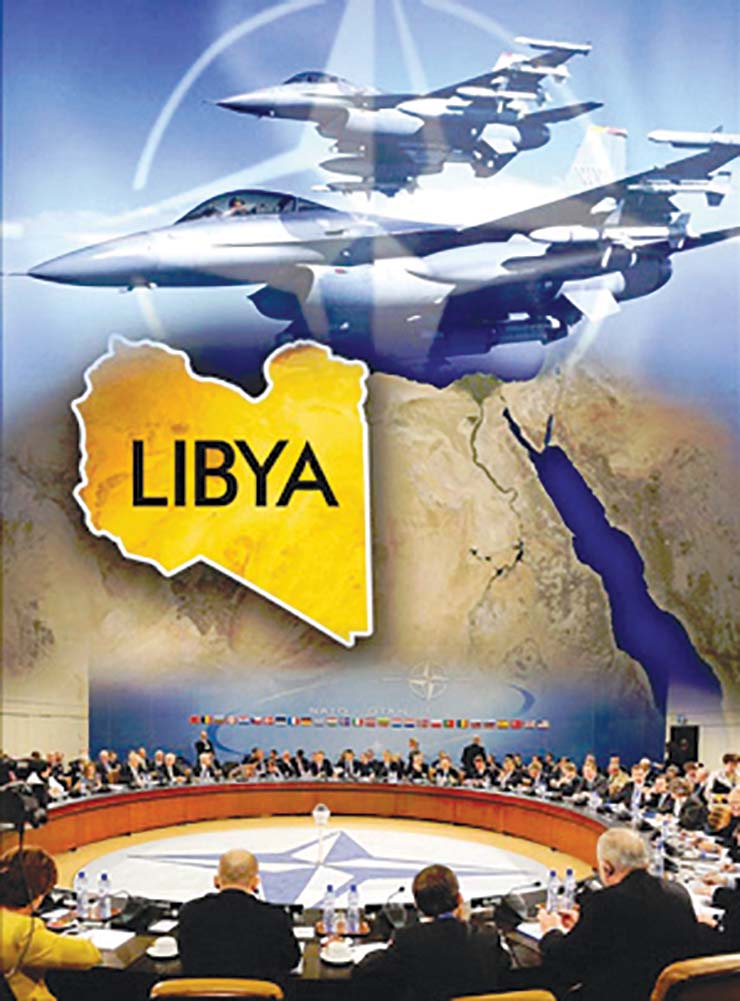
    In 2011, as the entire world watched the Arab Spring in amazement, the US and its allies, predominately working under the banner of the North Atlantic Treaty Organization (NATO) and the Gulf Cooperation Council (GCC), militarily overran the Libyan Arab Jamahiriya.

    The peaceful civilian protesters they claimed to be intervening to protect were not really what the US and its cohorts presented to the world. Many of these so-called “protesters” were armed, and when this became apparent they eventually began to portray themselves as “rebel forces.” These so-called “rebels” in Libya were not a military force that emerged spontaneously for the most part, but an insurgency movement cultivated and organised before any opposition activities were even reported in Libya.

    After Libya’s rapprochement with the US and the European Union, it was unthinkable to many that Washington and any of its allies could even have been preparing to topple the Libyan government. Business and trade ties between Libya and the US, Britain, Italy, France, Spain, and Turkey had bloomed since 2003 after Colonel Muammar Qadhafi opted for cooperation with Washington. No one imagined that Saif Al-Islam Qadhafi’s “New Libya” with its neo-liberalism could be on a collision course with NATO.

    Yet, the US and its EU partners for several years made preparations for taking over Libya. They had infiltrated the Jamahiriya’s government, security and intelligence sectors. Longstanding imperialist objectives existing since the Second World War, aimed at dividing Libya into three colonial territories, were taken out of government filing cabinets in Washington, London, Paris and Rome, and circulated at NATO Headquarters in Brussels.

    In league with these colonial plans, the US and its allies had been cultivating ties with different members of the Libyan opposition and had always reserved the option of using these opposition figures for regime change in Tripoli. Putting together their colonial designs and mobilising their agents, the US and its allies began organising the stage for establishing the Transitional National Council (TNC) – simply called the Transitional Council – and similar bodies to govern Libya as its new puppet leadership. The British and French even held joint invasion exercises months before the Libyan conflict erupted with the Arab Spring in 2011, while various intelligence services and foreign military commandos from NATO and GCC countries were also on the ground in Libya helping to prepare for the destabilisation of the North African country and the toppling of the Jamahiriya’s government and institutions.

    Realities have been turned upside down and the victims were grossly portrayed as the aggressors in the conflict. While the Transitional Council’s forces, augmented by mercenaries and foreign fighters, were torturing, raping, and murdering civilians and those that were standing in their way with the aid of NATO and the GCC, Muammar Qadhafi was inflexibly and exclusively blamed for all the violence inside Libya. Nor were the atrocities an exclusively Libyan versus Libyan matter. During the conflict, NATO committed serious war crimes and crimes against humanity in its effort to overrun and control the North African country. Not only did foreign journalists help justify and sustain the war, but they played major roles in assisting NATO’s war effort by passing on information about Libyan targets and checkpoint locations to the Jamahiriya’s enemies. The war, however, did not go as planned and Libyan resistance proved far stronger than the Pentagon and NATO initially imagined.

    In the course of the confrontation and at the international level, a series of human rights organisations and think-tanks were utilised for preparing the stage for the conflict in Libya and the toppling of its government. These organisations were mostly part of a network that had been working to establish the mechanisms for justifying interventionism and creating the net of individuals and public faces needed for creating a proxy government in Libya in the false name of “democracy.” When the time came, these bodies coordinated with the NATO powers and the mainstream media in the project to isolate, castrate, and subjugate the Libyan Arab Jamahiriya. These so-called human rights organisations and the mainstream media networks worked together to propagate lies about African mercenaries, Libyan military jet attacks on civilians, and civilian massacres by Muammar Qadhafi’s regime. International news networks extensively quoted these human rights organisations in what would amount to a self-fuelled cycle of misinformation, while the same human rights organisations continued to make claims on the basis of the media’s reports. In other words, each side fed the other. It was this web of lies that was presented at the Human Rights Council in the United Nations Office at Geneva and then handed to the United Nations Security Council in New York City as the basis for the war in Libya. These lies were accepted without any investigation being launched by the United Nations or any other international bodies. Any Libyan requests for international investigation teams were ignored. It was from this point onward that NATO used the UN Security Council to launch its war of aggression against Libya under the pretext of protecting civilians and enforcing a no-fly zone over the Arab country. Although not officially accepted by the United Nations Security Council, the “Responsibility to Protect” (R2P) doctrine was being showcased as a new paradigm for military intervention by NATO.

    All known advocates of Pentagon militarism and global empire demanded this war take place, including Paul Wolfowitz, John McCain, Joseph Lieberman, Elliott Abrahams, Leon Wieseltier, John Hannah, Robert Kagan, and William Kristol. The Project for the New American Century (PNAC) and the neo-conservative crowd was the realist foreign policy camp in Washington. The entire US establishment lined up to pick off Tripoli and reduce it a weak and divided African protectorate.

    Libya & the New “Scramble” for Africa

    To put NATO’s war in Libya within the framework of historic analysis, one only needs to be reminded that the main thrust of the sudden physical European colonisation of Africa, called the “Scramble for Africa,” started when an economic recession originally called the “Great Depression,” but in retrospect renamed as the “Long Depression,” hit much of Europe and North America from roughly 1873 to 1893. In this period the entire tempo of Western European contact with African nations transformed.

    Prior to this economic recession, Western European companies and enterprises were content dealing with African leaders and recognising their authority. Few Western European colonies in Africa had existed aside from a few coastal strips based on strategically-placed trading posts in Sierra Leone and Lagos in the possession of Britain; Mozambique and Angola in the possession of Portugal; and Senegal in the possession of France. At this time the biggest external force in Africa was the Ottoman Empire, which was beginning its long decline as a great power.

    Even with Western European colonial incursions into Africa by Britain, France, and Portugal, most of the African continent was still free of external or alien control. Intensified European economic rivalries and the recession in Western Europe, however, would change this. Britain would lose its edge as the world’s most industrialised nation as the industrial sectors of the USA, France and Germany all began to increasingly challenge British manufacturers. As a result of the recession and increased business rivalries, the corporations of Western European countries began to push their respective governments to adopt protectionist practices and to directly intervene in Africa to protect the commercial interests of these corporations. The logic behind this colonial push or “scramble” was that these Western European governments would secure large portions of Africa as export markets and for resource imports for these corporations alone, while these African territories would effectively be closed off to economic rivals. Thus, a whole string of Western European conquest began in Africa to secure ivory, fruits, copal (gum), cloves, beeswax, honey, coffee, peanuts, cotton, precious metals, and rubber.

    Although appropriating Libya’s financial and material wealth were objectives of the NATO war in 2011, the broader objectives of the criminal war were part of the struggle to control the African continent and its vast wealth. The “Scramble for Africa” was repeating itself. Just like the first time, recession and economic rivalries were tied to this new round of colonial conquest in the African continent.

    The emergence of Asia as the new global centre of gravity, at the expense of the nations of the North Atlantic in North America and Western Europe, has also primed the United States and its allies to start an endeavour to close Africa off from the People’s Republic of China and the emerging centres of power in Russia, India, Brazil, and Iran. This is why the Pentagon’s United States Africa Command (USAFRICOM/AFRICOM) played a major role in the war.

    The London Conference on Libya, where the Libya Contact Group was formed on 29 March 2011, was a modern version of the Berlin Conference of 1884, which attempted to solidify the gains made by European colonial powers in their first rush to control African societies and territory. The Istanbul Conference on Libya, where the Libya Contact Group met for the fourth time on 15 July 2011, was virtually a declaration of the intentions of the US and these countries to appropriate Libya’s vast wealth. This is a template for usurping the wealth of other countries in Africa and beyond. In this regard, the Transitional Council has served as nothing more than a proxy that was designed to help embezzle Libya’s vast wealth.

    Moreover, Libya had to be neutralised in line with the intentions of this project to reclaim Africa, because of Qadhafi’s pan-African ambitions to unify the African continent under Libyan leadership. Libya and its development and political projects were effectively erecting a barrier to the re-colonisation of the African continent. In this regard, the war was launched by “Operation Odyssey Dawn.” This name is very revealing. It identifies the strategic intent and direction of the campaign in Libya. ‘The Odyssey’ is an ancient Greek epic by the poet Homer that recounts the voyage and trails of the hero Odysseus of Ithaca on his voyage home. The main theme here is the ‘return home’. In other words, the military assault’s codename meant that countries like the US, Britain, France, Italy, Germany, Belgium, and Turkey were on their own odyssey of ‘return’ into Africa.

    [alert type=”info” dismiss=”no”]If you appreciate this article, please consider a subscription to New Dawn magazine.[/alert]

    The Crown of Africa

    Libya is a lucrative prize of massive economic value. It has immense oil and gas resources, vast amounts of underground water from the Nubian Sandstone Aquifer System, important trade routes, substantial foreign investments, and large amounts of liquid capital. Up until 2011, Libya was blessed with a rare gift in regard to its national revenue in that it saved a significant amount. In fact Libya possessed more than US$150 billion in overseas financial assets and had one of the largest sovereign investment funds in the world at the start of 2011.

    Until the conflict in Libya ignited, there was a very large foreign work force in the Jamahiriya. Thousands of foreign workers from every corner of the globe went to Libya for employment. This included nationals from places like the Philippines, Turkey, sub-Saharan Africa, China, Latin America, Belarus, Italy, France, Bulgaria, Romania, Canada, Russia, Ukraine, Serbia, and every corner of the Arab world. For years, these jobs inside Libya were an important source of economic remittances in the cases of some African economies, such as Niger. Moreover, many foreign workers from places like the Philippines and Italy even chose to make their lives in Libya and open their own local businesses.

    Before the NATO war, Libyan society had come a long way since 1951 when it became an independent African country. In 1975, the political scientist Henri Habib described Libya on the dawn of its independence as a backward country saying:

    When Libya was granted its independence by the United Nations on December 24, 1951, it was described as one of the poorest and most backward nations of the world. The population at the time was not more than 1.5 million, was over 90% illiterate, and had no political experience or knowhow. There were no universities, and only a limited number of high schools which had been established seven years before independence.

    According to Habib, the state of poverty in Libya was the result of the yoke of Ottoman domination followed by an era of European imperialism in Libya that started with the Italians. He explained that, “[e]very effort was made to keep the Arab inhabitants [of Libya] in a servile position rendering them unable to make any progress for themselves or their nation.” This colonial yoke, however, began its decline in 1943 after Italy and Germany were defeated in North Africa during the Second World War.

    In 1959 Libya’s oil reserves were discovered. Despite political mismanagement and corruption, since 1969 these Libyan oil reserves were used to improve the standard of living for the country’s population. In addition to the revenue from Libyan energy reserves, the Libyan government played an important role in maintaining Libya’s high living standards. Although never fully nationalised, Libya’s oil would only, in progressive steps, fall under the control of Libyans after the 1969 coup against the Libyan monarchy by Qadhafi and a group of young military officers. Before 1969 most of the country’s oil wealth was actually not being used to serve the general public. Under Qadhafi’s leadership this changed and the National Oil Company was founded on 12 November 1970.

    To a certain extent the isolation of Libya in the past as a pariah state played a role in insulating Libya economically and maintaining its standards of living. From an economic standpoint, most of the Arab world and Africa have become globalised as components of an integrated network of regional economies tied to the United States and the European Union. Libyan integration into this global economic system was delayed because of the past political isolation of the Libyan Arab Jamahiriya when Washington, London, and Paris were openly at odds with Tripoli.

    Despite having vast sums of money stolen and squandered by Qadhafi’s family and their officials, social services and benefits, such as government housing and numerous subsidies, were available to the Libyan population. It has to be cautioned too that the apparatus of a modern welfare state does not mean that neo-liberal restructuring and poverty were not afoot in Libya, because they very much were. What this means is that economics was not the driving force for the internal dimension of the fighting in Libya. For years, up until 2011, Libya had the highest standards of living in Africa and one of the highest in the Arab world. There is an old Libyan proverb, “if your pocket becomes empty, your faults will be many.” In this regard, Libya’s faults were not many in economic terms.

    In 2008, Libya had protests that were reportedly caused by unemployment. Most protests in Libya from 2003 to 2011, however, did not have any real economic dimension dominated by breadbasket issues. This set the Jamahiriya apart from Arab countries like Tunisia, Egypt, and Jordan where breadbasket issues were important factors behind the protests that erupted during the same period in 2011. This, of course, does not mean the protest movements in the latter Arab countries were strictly the result of breadbasket issues and economics either. Demands for personal freedoms and backlashes against corruption were major motivating factors behind the fuelling of public anger in all these Arab states. In Libya, if anything, the frustration tied to the rampant corruption rooted amongst Jamahiriya authorities and officials had created shifting tides of resentment towards the government.

    As briefly mentioned, Libya also has vast amounts of underground water stored in the ancient Nubian Sandstone Aquifer System, which is situated under the territories of Chad, Egypt, Libya, and Sudan. Libya and Egypt hold the largest shares of this water source. In a joint initiative, called the Nubian Aquifer Project, the International Atomic Energy Agency (IAEA), the United Nations Development Programme (UNDP), and the financial organisation Global Environment Facility (GEF), have all worked with the governments of these four African countries to study this vast source of underground water beneath the Sahara Desert. Using isotopes, the IAEA three-dimensionally mapped the Nubian Sandstone Aquifer System.

    In the Jamahiriya, the Great Man-Made River Project was initiated under the orders of Colonel Qadhafi followed by the establishment of the Great Man-Made River Authority in 1983 to exploit the Nubian Sandstone Aquifer System for the benefit of Libya and the other regional countries in the Sahara and the Sahel regions. The project was domestically funded mostly by taxes on fuel, tobacco, and international travel, with the remainder of funding provided directly by the Libyan state. Up until 2008 the Libyan government had spent about US$19.6 billion dollars on the water project.

    According to the Isotope Hydrology Section of the IAEA, the Nubian Sandstone Aquifer System is the world’s largest fossil aquifer system and will be “the biggest and in some cases the only future source of water to meet growing demands and development” amongst Chad, Egypt, Libya, and Sudan. As fresh water supplies become limited globally, it was forecast Libya’s water supplies will be of greater value domestically and regionally. Huge water multinationals in the US, France and elsewhere were salivating at the idea of privatising Libyan fresh water and controlling the Nubian Sandstone Aquifer System.

    The Libyan Investment Authority (LIA) had shares and invested in major international corporations such as oil giant British Petroleum (BP), the world’s largest aluminium producer United Company RUSAL in Russia, the US conglomerate General Electric (GE), the Italian bank and financial giant UniCredit, the Italian oil corporation Ente Nazionale Idrocarburi (ENI), the German engineering and electronic conglomerate Siemens, the German electricity and gas company Rheinisch-Westfälisches Elektrizitätswerk (RWE), British publishing giant Pearson, and British telecommunications giant Vodafone (UK). Libya had purchased Exxon Mobil’s subsidiary in the Kingdom of Morocco, Mobil Oil Maroc, and bought half of Kenya’s oil refinery. The LIA bought all of Royal Dutch Shell’s service stations in Djibouti, Ethiopia, and Sudan in 2008. Tripoli announced in the same year that it was buying a major share of Circle Oil, an international hydrocarbon exploration company with operations in Egypt, Morocco and Tunisia. A Libyan agreement was also made with the Democratic Republic of Congo (DRC) to build a pipeline in the western part of its territory. Large investments were made by Libya in agricultural, industrial and service projects in Africa from Egypt and Niger to Mali and Tunisia.

    In 2008 Goldman Sachs was given US$1.3 billion dollars by the Libyan Investment Authority. In unfathomable terms, Goldman Sachs told the Libyans that 98% of their investment was lost overnight, which means the Libyans lost almost all the money they gave Goldman Sachs. To Tripoli and other observers it was clear Goldman Sachs had merely appropriated the Libyan investment as a cash injection, because it needed the funds due to the global financial crisis. Afterwards, Jamahiriya officials and Goldman Sachs executives tried negotiating a settlement under which Goldman Sachs would give Tripoli huge shares in the Wall Street financial giant. These negotiations between Libya and Goldman Sachs for a settlement finally ended in 2009 with both sides failing to agree on a formula to replace the Libyan money that Goldman Sachs had effectively appropriated from Tripoli.

    Goldman Sachs was not alone in filching Libyan investment funds: Société Générale S.A., Carlyle Group, J.P. Morgan Chase, Och-Ziff Capital Management Group, and Lehman Brothers Holdings were also all in possession of vast Libyan investments and funds. In one way or another, NATO’s war on Libya and the freeze of Libyan financial assets profited them all. They and their governments were also not happy with Qadhafi’s ideas and proposal to the United Nations that the former colonial powers owed Africa almost US$800 trillion dollars.

    The fact that Libya happened to be a rich country was one of its crimes in 2011. Oil, finance, economics, and Libyan natural resources were always tempting prizes for the United States and its allies. These things were the spoils of war in Libya. While Libyan energy reserves and geopolitics played major roles in launching the 2011 war, it was also waged in part to appropriate Tripoli’s vast financial holdings and to supplement and maintain the crumbling financial hegemony of Wall Street and other financial centres. Wall Street could not allow Tripoli to be debt-free, to continue accumulating international financial possessions, and to be a creditor nation giving international loans and investing funds in other countries, particularly in Africa. Thus, major banks in the United States and the European Union, like the giant multinational oil conglomerates, had major roles and interests in the NATO war on Tripoli.

    An Overview of the African Geopolitics of the War on Libya

    NATO’s operations in the Libyan Arab Jamahiriya have helped erode Libyan political unity, which has had clear implications for the North African country’s spatial unity and all the nations bordering Libya. Libya and its region have been destabilised. The domino effect can clearly be seen at work in Niger, Mali, and the Central African Republic where there has been fighting as a result, at least in part, of the NATO war on Libya.

    Within a strictly African context, Libya sits at an important geographic point. The country is a geographic gateway into Africa and connects the northeast and northwest sections of the continent. Libya’s national territory falls within the Sahara and Sahel regions and events in Libya directly influence Sudan, Egypt and the regions of the Maghreb, West Africa, and Central Africa. Libya is also one of the states that provide access to the open sea for landlocked Chad and Niger. Aside from Tunisia, all of the countries on Libya’s borders touch and connect the bulk of Africa’s regions with the exception of the southern region of the continent. Casting out the Tunisian Republic, these bordering African states are Egypt, Sudan, Chad, Niger, and Algeria. Libya’s position is very special in this regard and this territorial embrace with these other large African states bordering multiple countries and regions is very important and would be pivotal if the Libyan project to connect the continent through a north to south and east to west transportation and trade corridor were to be developed fully.

    From a socio-cultural standpoint, Libya has tribal and cultural ties to all of the bordering countries. Ethnic differences in Libya exist too, but are minor in degree. Libyans predominately consider themselves to be Arabs. The largest Libyan minority are the Berbers, which can roughly be divided into northern groups and southern groups. There was always awareness that tribalism in Libya, if given antagonistic political connotations, could be a very dangerous thing for Libya and the bordering countries. The tribes that Libyans belong go beyond Libyan borders and form a chain in an overlapping tribal network extending all the way from Niger into Burkina Faso and Mauritania. Tribal fighting in Libya could destabilise countries like Senegal and Mali in West Africa, Chad in Central Africa, Algeria in North Africa, and Sudan in East Africa. It is in this context that NATO powers began speaking about an Arab-Berber divide in North Africa in 2011. Regime change in Tripoli has left a political vacuum where politics has fuelled tribalism and regionalism in Libya, which is now warily watched by all of the countries bordering Libya and affecting them.

    “A New Beginning” in Cairo: Obama’s attempts to Manipulate Islam

    Identity politics and faith have also wound up as factors in the competing exchange of geopolitical currents governing the sea of events surrounding Libya. The questions of what is a Libyan and what is an ethnic Arab have been superimposed as factors in the war on the Jamahiriya as a means of attacking the pan-African movement and separating Libya, and North Africa in broader terms, from the rest of Africa. Faith and religiosity have also been mounted as dynamics that are being sought as geopolitical tools and weapons of influence.

    President Barack Hussein Obama was elected by tapping into the hopes of the US public and presenting himself as a “prince of peace” and “messiah of hope.” Amongst his elegant speeches, he claimed to have a desire to reengage with the so-called Muslim World. Since 2009 Obama has consistently tried to utilise what he sees as both his African and Muslim credentials on the basis of having a Kenyan father who was a Muslim, to present himself as a “Son of Africa” and as someone sympathetic to Muslims. As part of his outreach to Muslims, President Obama gave a highly promoted speech at Cairo University on 4 June 2009. Obama’s presidential speech was named “A New Beginning” and was supposedly meant to repair the damages in the relationship between the US and the so-called Muslim World. The speech is described as such by the White House:

    On June 4, 2009 in Cairo, Egypt, President Obama proposed a new beginning between the United States and Muslims around the world, based upon mutual interest and mutual respect. Specifically, the President said that the U.S. would seek a more comprehensive engagement with Muslim-majority countries, countries with significant Muslim populations, and their people by expanding partnerships in areas like education, economic development, science and technology, and health, among others, while continuing to work together to address issues of common concern.

    Many people in predominantly Muslim states were fooled by his pledges of peace and mutual respect. In his actions, Barack Obama proved to be no less of a war hawk than his predecessors in the Oval Office. His Cairo speech was significant because it actually marked the start of a new campaign by the US to geopolitically use Muslims and their hopes and aspirations. In the same timeframe as his speech, the US State Department began to engage with the Muslim Brotherhood and even prior to the speech asked for members to attend Cairo University to hear him.Almost as if foreshadowing the coming of the so-called Arab Spring, the speech in Cairo’s fourth point was about the rise of democracy and the instability of regimes suppressing democratic values. Many of the organisations and figures that became involved in the Arab Spring and supportive of the war in Libya would all hasten to Obama’s calls for a “New Beginning.” Amongst them was Aly (Ali) Abuzaakouk, who helped found the Transitional Council.

    From Jakarta, Indonesia, in late-2010, Obama would go on with his themes of engagement with the Muslim World and speak about democracy, faith, and economic development in his second speech addressing Muslims. From that point on Al-Qaeda faded from the spotlight of US foreign policy and, well into the upheavals of the Arab Spring, the US worked to put the ghost of Osama bin Laden to rest by declaring in statements that were altered several times that the Al-Qaeda leader was killed in Pakistan by a team of CIA agents and US Navy commandos on 2 May 2010. What this all amounted to was the preparations for the fielding of US agents amongst opposition groups in the predominately Muslim countries of the Arab world and an attempt to subordinate the faith of Islam as a tool of US foreign policy by using fighters and proxy political parties that used the banner of Islam. Thus, Washington’s alliance with deviant militant groups claiming to fight under the banner of Islam was rekindled in 2011. This alliance manifested itself in the fighting in Libya and later further east on the shores of the Mediterranean in Syria and Lebanon.
    Get the issue this article appears in

    Libya Now: Destitute, Divided, & in Conflict

    The historic project to divide Libya dates back to 1943 and 1951. It started with failed attempts to establish a trusteeship over Libya after the defeat of Italy and Germany in North Africa during the Second World War. The attempts to divide Libya then eventually resulted in a strategy that forced a monarchical federal system onto the Libyans similar to that established over Iraq following the illegal 2003 Anglo-American invasion. If the Libyans had not accepted federalism in their relatively homogenous society they could have forfeited their independence in 1951.

    During the Second World War the Libyans aided and allowed Britain to enter their country to fight the Italians and the Germans. Benghazi fell to British military control on 20 November 1942, and Tripoli on 23 January 1943. Despite its promises to allow Libya to become an independent country, London intended to administer the two Libyan provinces of Tripolitania and Cyrenaica separately as colonies, with Paris to be given control over the region of Fezzan, which is roughly one-third of Libya, the area to the southwest of the country bordering Algeria, Niger, and Chad (see map on page 60). Following the end of the Second World War, the victors and Italy attempted to partition Libya into territories that they would govern as trust territories. The American, British, French, and Soviet governments referred the matter to the UN General Assembly on 15 September 1945. There, the British and the Italians made a last-ditch proposal on 10 May 1949, called the Bevin-Sfora Plan for Libya, to have Libyan territory divided into an Italian-controlled Tripolitania, a British-controlled Cyrenaica, and a French-ruled Fezzan. This failed because of the crucial single vote of Haiti, which opposed the partition of Libya.

    The British then turned to King Idris to softly balkanise Libya through the establishment of a federal emirate. A National Assembly controlled by King Idris and an unelected small circle of Libyan chieftains was to be imposed. This type of federalist system was unacceptable to most Libyans as it was intended to be a means of sidestepping the will of the Libyan people. The elected representatives from the heavily populated region of Tripolitania would be outweighed by the unelected chieftains from Cyrenaica and Fezzan.

    This did not sit well with many Arab nationalists. Cairo was extremely critical of what the US and its allies were trying to do and called it diplomatic deceit. Nevertheless, even with the opposition of most Libyans, federalism was imposed on Libya in 1951 by Idris. Libyans popularly viewed this as Anglo-French treachery. Idris was forced to abolish the federalist system for a unitary system on 27 April 1963.

    The imperialist project to divide Libya was never abandoned; it was just temporarily shelved by different foreign ministries in the Western bloc and NATO capitals. In March 2011, US Director of National Intelligence James Clapper, Jr. testified to the US Senate Armed Services Committee that at the end of the conflict in Libya, the North African country would revert to its previous monarchical federalist divisions and that it would have two or three different administrations. NATO’s Supreme Commander, Admiral Stravridis, also told the US Senate Armed Services Committee in the same month that Libyan tribal differences would be amplified as the NATO war carried on. There were even multilateral discussions held about dividing the country, but the exact lines were never completely agreed upon and negotiations kept on waxing and waning with the frontlines in the desert and mountains.

    US plans to topple the Libyan government that were put together in 1982 by the US National Security Council under the Reagan Administration were also revised or renovated for NATO’s war in 2011. One can clearly see how these plans played out through the dual use of an insurgency and military attack. According to Joseph Stanik, the US plans involved simultaneous war and support for CIA-controlled opposition groups that would entail “a number of visible and covert actions designed to bring significant pressure to bear on Qadhafi.” To execute the US plan, Washington would first have to encourage a conflict using the countries around Libya “to seek a casus belli for military action” while they would take care of the logistical needs of CIA-controlled opposition groups that would launch a sabotage campaign against the economy, infrastructure, and government of Libya. The code name for these secret plans was “Flower.” In the words of Stanik:

    The NSC restricted access to the top-secret plans to about two-dozen officials. Flower contained two subcomponents: “Tulip” and “Rose.” Tulip was the code name for the CIA covert operation designed to overthrow Qadhafi by supporting anti-Qadhafi exile groups and countries, such as Egypt, that wanted Qadhafi removed from power. Rose was the code name for a surprise attack on Libya to be carried out by an allied country, most likely Egypt, and supported by American air power. If Qadhafi was killed as a result of Flower, Reagan said he would take the blame for it.

    It also just so happened that the Obama Administration’s US Secretary of Defence Robert Gates, who was the deputy director for intelligence at the time, endorsed Rose, the military subcomponent of Flower.

    Since NATO toppled the Jamahiriya government, this is exactly what has happened in Libya. A free for all has come about, which has spilled over into neighbouring states such as Niger. There are multiple factions and different administrations including the Transitional Council in the District of Tripoli, the Misrata Military Council in the District of Misrata, several self-styled Emirates in Cyrenaica, and Jamahiriya loyalist and tribal governments in the Western Mountains and Fezzan. There have even been fusions where Jamahiriya loyalists and anti-Jamahiriya militias have joined to fight all others. The end product has been lawlessness and Somali-style civil war. The state has basically been “failed” by the US and its allies. Post-Jamahiriya governmental authority is only exercised by those in power outside of their offices and a few spaces. Violent crime has proliferated. Tripoli and other major cities are being fought for by different factions and Libyan weapons are being smuggled into different countries. Even US officials, which helped midwife the groups running rampant in Libya, have not been safe from the turmoil they helped create; the murder of US Ambassador John Christopher Stevens in Benghazi on 12 September 2012 is testimony to this.

    Oil and gas production has been stopping. National assets have been sold off to foreign corporations and privatised. Libya is no longer a competitive economic power in Africa anymore. Nor is Libya a growing financial power. Tripoli virtually transformed from a debtless country to an indebted one overnight.

    There is also a great irony to all this. The warplanes of the US-supported Libyan regime that has replaced the Jamahiriya began bombing Libyan citizens in 2014 as battles for control of Tripoli raged. The US, European Union, and NATO have said nothing about this whereas in 2011 they started a bombing campaign and war on the basis of false accusations the Jamahiriya government was doing exactly this. The deceit of these players is more than evident.

    [alert type=”general” dismiss=”no”]This article was published in New Dawn Special Issue Vol 8 No 5.[/alert]

    [alert type=”success” dismiss=”no”]If you appreciate this article, please consider subscribing to help maintain this website.[/alert]

    © New Dawn Magazine and the respective author.
    For our reproduction notice, click here.
  • The Counterfeit Culture & the Fall of the US Empire

    The Counterfeit Culture & the Fall of the US Empire

    “The Counterfeit Culture” is the title of an article on 2 September 2011 by Mike Adams in his widely distributed daily health email newsletter NaturalNews. He used it to express a dismay that is increasingly widespread, essentially as a result of the corporate takeover and corruption of America.

    Amongst his protests were the following:

    The Federal Reserve is in the business of counterfeiting money.

    The mainstream media is in the business of counterfeiting news.

    The pharmaceutical industry is in the business of counterfeiting medicine.

    The medical schools are in the business of counterfeiting medical degrees.

    Doctors are in the business of counterfeiting false medical authority.

    The mega-sized food corporations are in the business of counterfeiting food.

    The global consumer product companies counterfeit consumer products (“baby oil” from petroleum).

    Social networks like Facebook are in the business of counterfeiting friends.

    Home builders construct counterfeit homes (that won’t stand in 20 years).

    Public schools counterfeit school diplomas. (Who needs to learn to write?)

    The Pentagon counterfeits war. (Bomb the World Trade Centre & blame someone!)

    Mainstream historians counterfeit history.

    Apart from his initial noting of counterfeit money and counterfeit news, understandably Adams focuses mostly on healthcare counterfeits. His inclusion of the September 11, 2001 atrocity as “The Pentagon counterfeits war,” almost as an afterthought, captures something perverse about the contemporary American psyche. After all, this event transformed America more than any other nation in the following ten years, rarely for the better. Adams identifies it as a counterfeit but allows it to be hidden amongst a number of even more troublesome counterfeits.

    There are many more iatrogenic deaths each year than the 9/11 deaths in 2001, but they do not normally serve as a cause for public outrage (iatrogenic refers to complications caused by medical errors). Certainly, they are far from being a credible justification for bankrupting the nation with foreign invasions and unwinnable small wars. Indeed, a commentator of the insight, knowledge and judgement of Mike Adams is so overwhelmed by the corruptions and counterfeits pervading healthcare that he seems to be exhausted by simply recounting his grievances and unable to do much more than list the abundance of counterfeits.

    An article by Gary Null PhD et al reveals something of the extent of the medical counterfeits that preoccupy Adams.

    “A definitive review and close reading of medical peer-review journals, and government health statistics shows that American medicine frequently causes more harm than good. The number of people having in-hospital, adverse drug reactions (ADR) to prescribed medicine is 2.2 million. Dr. Richard Besser, of the CDC, in 1995, said the number of unnecessary antibiotics prescribed annually for viral infections was 20 million. Dr. Besser, in 2003, now refers to tens of millions of unnecessary antibiotics.

    “The number of unnecessary medical and surgical procedures performed annually is 7.5 million. The number of people exposed to unnecessary hospitalisation annually is 8.9 million. The total number of iatrogenic [induced inadvertently by a physician or surgeon or by medical treatment or diagnostic procedures] deaths is 783,936.

    “The 2001 heart disease annual death rate is 699,697; the annual cancer death rate is 553,251. It is evident that the American medical system is the leading cause of death and injury in the United States.”1

    Shocking as it sounds initially, the immediate death toll from 9/11 of close to 3,000 was nothing in comparison. Moreover, annual expenditure per person on American health care is more than double that in most comparable nations, dwarfing the comparable impact and cost of 9/11 and highlighting the pervasive nature of American counterfeits. The subsequent reactions and wars that followed 9/11 incurred costs to rival those of the American medical system.

    Related to the above, but still poorly understood, American deficit finance (the Fed’s counterfeit money), is beginning to threaten the viability of the US dollar as the world’s reserve currency. This casts dark clouds over the future authority of a nation that would have to reduce its spending (much of it medical and military) each year by at least $1.5 trillion were it not able to continue printing at whim the global currency.

    Like the other counterfeits, this attracts surprisingly little reflective analysis. The direct link between the problems of the Fed’s counterfeit money, the waste inherent in the American counterfeit medical system, and the never-ending War on Terror forever maintained by the counterfeit commemoration of 9/11, is rarely remarked. This reflects the pervasiveness of Adams’ “counterfeit culture.”

    The Cost of the US Response to 9/11

    Joseph Stiglitz, a Nobel laureate, notes in an article for Al Jazeera that:

    “The September 11, 2001, attacks by al-Qaeda were meant to harm the United States, and they did, but in ways that Osama bin Laden probably never imagined. President George W Bush’s response to the attacks compromised the United States’ basic principles, undermined its economy, and weakened its security.

    “The attack on Afghanistan that followed the 9/11 attacks was understandable, but the subsequent invasion of Iraq was entirely unconnected to al-Qaeda – as much as Bush tried to establish a link. That war of choice quickly became very expensive – orders of magnitude beyond the $60bn [billion] claimed at the beginning – as colossal incompetence met dishonest misrepresentation.
    “Indeed, when Linda Bilmes and I calculated the United States’ war costs three years ago, the conservative tally was $3-5tn [trillion]. Since then, the costs have mounted further. With almost 50 per cent of returning troops eligible to receive some level of disability payment, and more than 600,000 treated so far in veterans’ medical facilities, we now estimate that future disability payments and health-care costs will total $600-900bn. But the social costs, reflected in veteran suicides (which have topped 18 per day in recent years) and family breakups, are incalculable.”2

    Stiglitz captures succinctly the manner in which America often harms itself more than its “enemies.” Whether al-Qaeda was responsible or not for 9/11, and there are many who question the official story, the response has profoundly damaged US military, political, moral and financial credibility and authority. Moreover, the evolving situations in Libya and Syria could threaten to expose another counterfeit – increasing reports suggest that the US-led NATO alliance is relying on al-Qaeda identities, possibly originally part of some Saudi mercenary group, to advance rebellion in states that fall into disfavour.

    It is the counterfeiting in news, education and history however, that ensures that all these other counterfeits go largely unremarked in serious political, administrative and public debate and comment. This has created a major anomaly in the present global environment where the world is being precipitated into a new order by the ineptness and incomprehension of American and other Western elites. These are trapped in narrow, short-term frameworks of information and thought. They have become defined by rigid ideologies that make them subservient to a chaotic collection of corporate interests. Corporate profit seekers have captured control of critical political, legal, academic and other processes in the major English speaking powers, and through them they cling with self-destructive desperation to the power to dominate and define much international interaction.

    The Internal Decay of Corporate Power

    The attempt to shore up corporate privileges, often related to access to energy in less developed nations, has led to seemingly endless entanglement and draining of resources in small unwinnable wars. In this process, the Pentagon has been given unlimited license to plunge the US budget ever deeper into deficit and its own activities ever further into dependence on foreign, and not necessarily friendly, financiers.

    Moreover, the readiness of American corporations to become ever more dependent on cheaper and more efficient foreign production ensures both the increasing depletion of their own productive capacity and the growing vulnerability of their financial institutions. It is extremely difficult to identify anyone who has strategic responsibility for what seem to be a confusion of disjointed policies that plunge America ever further into a morass of crises.

    Policies are overseen by those who win a few minutes in the political spotlight. Yet they are forever distracted and preoccupied by trying to win favour and approval by servicing the corporate lobbies that fund and endorse their campaigns. They have no time left to even reflect on echoes of more productive strategies from a dimly recalled past.

    As the “counterfeit culture” suggests, the lack of coherent strategic thought has wreaked havoc within the United States. Although a multi-cultural community, America’s academia, media, corporate and political cultures display no capacity to generate meaningful policy discussion that allows for other than very narrow and stereotyped cultural assumptions. This cripples the capacity to comprehend the increasingly complex dynamics of the global community.

    Corporate America has brainwashed a priesthood of trained economists to rehearse endless counterproductive economic theory. This has been successful in deceiving domestic populations but has been disastrous by leaving the nation totally vulnerable and defenceless before other cultures that have mastered American corporate dogma and identified and exploited its weaknesses.

    The fragmented, short term and narrow corporate domination of the political process gives the highest priority to a cacophony of disputing corporate interests over any coherent recognition of community priorities and strategies. It makes it easy for external interests to associate closely with and achieve their goals through domestic corporate lobbies. In the midst of this self-serving and self-destructive corporate confusion, is it any wonder that medical and military systems have strayed far from the businesses of health care and national defence.

    [alert type=”info” dismiss=”no”]If you appreciate this article, please consider a subscription to New Dawn magazine.[/alert]

    An End of Empire Moment

    It is highly questionable that the events of 9/11 could have produced the outcome they did in any other than such a community as contemporary America. There is in the United States an almost total breakdown of culture, whether political, strategic, financial or military. In a sense the task for rivals is now simply a matter of feeding these weaknesses and being patient. Yet, the frenetic character of American society makes this seem unbelievable, only making it more inevitable and ever closer.

    The corporate adventurism that built the British Empire has become the corporate self-indulgence and corruption that devastates the contemporary American Empire. All the elite groups that exercise real power and influence in the United States – such as politicians, financiers, Pentagon strategists, corporate managers, pharmaceutical executives, food scientists and agricultural entrepreneurs – have assumed a type of unchallenged authority in their areas and a variety of alliances of convenience with the other groups. This ensures that little reform is imaginable, let alone possible. All politically correct information is designed to reinforce the interests of the very groups that have brought the country to its present plight. Deviation from such information signals the end of any personal professional aspirations. Even successful presidential candidates have no option but to negotiate a modus vivendi with such groups and, in the process, abandon any aspiration to dealing with the real challenges at the end of an empire. This shows some surprising similarities with those at the end of other empires, even including the Chinese Qing Dynasty.

    America’s end of empire moment is unique in an important respect. Even Britain was still controlled by a type of inherited aristocracy when it entered into decline. All previous empire collapses tended to be associated with aristocracies that had become ineffective. Apart from a few inter-generational banking families, America’s fate has been guided and dictated by privileged professional groups who have a monopoly on “expert knowledge.” They have become accustomed to a type of indolent privilege based on this “expert knowledge,” which, unfortunately for them, is no longer competitive, or even relevant, in a rapidly changing world. Consequently, they have become the guardians of little more than their own illusions, indulgent privilege and the nation’s decline. This is the source of dismay about the counterfeit culture, whether in medical, military of other areas.

    Disintegration of the Existing Global Order

    There is a growing body of observation, particularly but not exclusively in financial commentary, on the imminent collapse of a global system based on American pre-eminence. This takes on particular importance because it signals not just a decline in American power and authority but also the end of a period of what might be called loosely Anglo-American global order.

    Marc Faber, Mr. Doom and Gloom himself, who is well respected in the financial world, spells it out: “I think we are all doomed. I think what will happen is that we are in the midst of a kind of a crack-up boom that is not sustainable, that eventually the economy will deteriorate, that there will be more money-printing, and then you have inflation, and a poor economy, an extreme form of stagflation, and, eventually, in that situation, countries go to war, and, as a whole, derivatives, the market, and everything will collapse, and like a computer when it crashes, you will have to reboot it.”3

    Irish journalist Eamonn Fingleton recalled a pertinent observation by the late American historian Chalmers Johnson: “The United States today is like a cruise ship on the Niagara River upstream of the most spectacular falls in North America. A few people on board have begun to pick up a slight hiss in the background, to observe a faint haze of mist in the air on their glasses, to note that the river current seems to be running slightly faster. But no one yet seems to have realised that it is almost too late to head for shore.”4

    They foreshadow the end of an Anglo-American order that can be traced back more than four centuries to the founding of the British East India Company. This gave birth to a new form of dynamic human organisation, the corporation, largely independent of government oversight. This led to a freewheeling corporate form of foreign adventurism that built the foundations of the British Empire.

    Anglo-American power and authority, largely based on the discreet but ruthless use of corporate initiative, has established a global pre-eminence over the past two centuries. In the process it established forms and norms of modern life that have until recently assumed the character of certainties, largely beyond meaningful questioning or criticism.

    Mounting and varied American difficulties and uncertainties have, however, intensified serious doubts about the continued viability of this order. Indeed, many of the international organisations founded in 1945 after World War II, whether the United Nations itself, the World Bank, the International Monetary Fund, the GATT and later the World Trade Organisation, or other less prominent organisations like the World Health Organisation and CODEX, seem to be approaching a use-by date.

    The reason for this is simple. These were all defined by the leading victorious powers in 1945 to serve discreetly their own, particularly corporate, interests. Accordingly they have many built in privileges for the United States, the United Kingdom and their close allies. These are rapidly becoming anachronisms, and unacceptable burdens on newly empowered emerging states that can insist on fundamental reform.

    It is unlikely, however, that such reform will prove acceptable to the United States and its developed allies and it seems inevitable the existing international institutional system will become dysfunctional and marginal to important international activity. Already, the establishment of the BRICS (Brazil, Russia, India, China and South Africa) offers an indication of likely future developments. The rise of other important states like Turkey, Indonesia and Iran will likely advance this process as none of these communities has any interest in preserving Anglo-American privileges.

    The situation might be redeemable were America and its close allies not widely understood to be bankrupt, propped up only by the continued tolerance of creditors. Were that withdrawn, the US dollar would cease to be the global reserve currency, the Pentagon budget would collapse, American troops could not be maintained offshore, the impoverishment of large numbers of Americans could raise questions of civil unrest and the poor productivity and competitiveness of the “counterfeit” American economy would be exposed and leave little prospect of recovery.

    It is not surprising there is an increased body of English language commentary that implies a situation where global order and activity as it is known can no longer continue. Little effort is made, however, to explore the likely character of a new order with new opportunities. Why is there not more strategic realism and flexibility in the English language world that seemed dominant and assured for so long?

    The events of 9/11 have provided a great distraction from the deteriorating situation outlined above. Many of the aspects of counterfeit culture mentioned by Mike Adams predate 9/11 by decades and have long been corroding and undermining the foundations of the Anglo-American global order.

    The hyping of the 9/11 atrocity and the lust for crude vengeance met little resistance in a counterfeit culture where not only media but also academia had long been accustomed to serving causes backed by powerful corporate, political or other interests.

    The 9/11 psyche is a symptom and a symbol of a counterfeit culture. Vast resources are squandered on the preservation and promotion of a simplistic, misguided, popular sense of righteousness as Anglo-American corporate power and privilege declines and disintegrates.

    [alert type=”general” dismiss=”no”]This article was published in New Dawn 129.[/alert]

    [alert type=”success” dismiss=”no”]If you appreciate this article, please consider subscribing to help maintain this website.[/alert]

    Footnotes

    1. “The American Medical System Is The Leading Cause Of Death And Injury In The United States” by Gary Null PhD, Carolyn Dean MD ND, Martin Feldman MD, Debora Rasio MD, Dorothy Smith PhD, www.ourcivilisation.com/medicine/usamed.htm

    2. “The price of 9/11: Ten years after 9/11, al-Qaeda has been greatly weakened; but the price paid by the US was enormous, and unnecessary” by Joseph E Stiglitz, 5 Sep 2011, http://english.aljazeera.net/indepth/opinion/2011/09/20119572556433850.html

    3. http://marcfaberchannel.blogspot.com/2011/02/marc-faber-we-are-in-midst-of-crack-up.html

    4. Nemesis: The Last Days of the American Republic by Chalmers Johnson, Holt Paperbacks, www.americanempireproject.com/bookexcerpt.asp?ISBN=0805087281, cited in “Chalmers Johnson: The passing of a true scholar” by Eamonn Fingleton, www.fingleton.net/?p=712

    © New Dawn Magazine and the respective author.
    For our reproduction notice, click here.

  • The Hidden History of China’s Secret Societies

    The Hidden History of China’s Secret Societies

    From New Dawn Special Issue 11 (Mar 2010)

    Thanks to the latest Hollywood martial arts blockbuster along with a steady stream of Hong Kong action films, audiences around the world have been entertained by wild and colourful portrayals of Chinese secret societies.

    These extravagant fictional tales often obscure the plain truth that for at least two thousand years secret societies did play a vital part in the dynamics of China’s political, social and religious life. Right up to the birth of the People’s Republic in 1949, secret societies were a special characteristic of old China.

    “The officials draw their power from the law; the people, from the secret societies.” This Chinese saying sums up the centuries-old conflict between rulers and ruled, privileged and oppressed in imperial China. Secret societies were directly involved in all the peasant rebellions in Chinese history. As early as the second century, the armed uprising that eventually overthrew the Han dynasty was instigated by a Taoist sect called the Yellow Turbans, whose leader was renowned for his gift of spiritual healing and supernatural powers. The Yellow Turbans in their mixture of religion and political dissatisfaction may be regarded as the forerunners of the secret societies that sprang up all across China.

    By organising opposition to excessive taxation and the despotism of corrupt bureaucrats, secret societies gained widespread support. In the words of Chinese historian Teng Ssu-Yu, they were the “nerve centres” of opposition to the imperial government, “which profit from favourable circumstances to start insurrections and rebellions.” The secret society formed a hidden parallel empire, a state within a state, and this was a major source of its strength. Nocturnal initiation ceremonies, arcane teachings, secret signs, symbols and passwords, all helped bind a member’s loyalty to the fraternity. As China expert Jean Chesneaux explains:

    The secret societies claimed a rival order to that of emperor and mandarins. Vis-à-vis established society they constituted an ‘anti-society’ in the sense in which modern physicists talk of an anti-matter or an anti-universe… Their rites, secrets, oaths of initiation, conventional ideograms – features of which the Triad has provided very typical examples but which are found also in all similar associations – made a powerful contribution towards the consolidation of this autonomous order. The discipline was extremely strict, and any violation, betrayal, or collusion with the authorities was punished by death.1

    One of the most influential of China’s secret societies went by the name White Lotus. It often had to change its name in order to conceal its identity, and was associated with other groups, principally the Society of Heaven and Earth (also called the Hung society or Triad). The White Lotus functioned primarily as a spiritual body, but in times of political dissatisfaction and social upheaval it quickly took on the outer characteristics of a radical political movement. As a Chinese imperial decree written in 1813 points out:

    In normal times the society was engaged in daily worship… and preached that by reciting scriptures and verses, one can escape the dangers of swords and arms, water and fire…. But in times of famine and disorder they might plot for the Greater Enterprises (the founding of a new dynasty).

    The White Lotus society led one of the largest rebellions in the second quarter of the fourteenth century against the foreign rule of the Mongols. Known as the Red Turban Rebels (due to their distinctive red headbands) White Lotus members were behind the formation of the Ming dynasty (1368–1644) headed by former Buddhist monk Chu Yuan-chang, who assumed full imperial powers under the title Hung Wu. According to Professor Chesneaux:

    Chu Yuan-chang [Hung Wu], the leader of a peasant rebellion against the Mongol Yuan dynasty in the fourteenth century, belonged to the White Lotus sect, of Manichaean origin, and the name of the new dynasty which he founded, the Ming (which means ‘light’ in Chinese), originated in the esoteric vocabulary of the Manichaeans.2

    That the Ming emperor Hung Wu was both a former Buddhist monk and a Manichaean initiate is significant because the White Lotus teachings blended Buddhism and native Taoism with Gnostic elements which had entered China from Central Asia with Manichaean missionaries. Later secret societies venerated Hung Wu above all other historical figures and pledged their allegiance to the Ming dynasty that he established hundreds of years after its collapse. In 1644 the foreign Manchus, who had menaced the Chinese Empire for centuries, claimed the Dragon Throne and established the Ch’ing dynasty. The secret society networks were united in a common purpose: “Overthrow the Ch’ing and restore the Ming.”

    By the nineteenth century the cruel and despotic misrule of the Manchus had resulted in nearly a century of political and religious turmoil, leaving China in chaos and unable to effectively confront Western incursions. In the history of all the popular rebellions the name of the White Lotus appears and disappears. They have been linked with the famous Shaolin Temple of Chan Buddhism, reputedly where Chinese martial arts originated, and the Shaolin monks who took a blood oath to resist the Ch’ing dynasty. After the failure of the two great insurrections of the late eighteenth century, the White Lotus was the victim of violent persecution. In 1813 White Lotus members called the Eight Diagrams (named after geometrical figures used in Taoist divination) nearly took over the Forbidden City in Beijing.

    The Society of Heaven and Earth or Triads absorbed much from the White Lotus tradition, and is sometimes regarded as its successor. Persecuted and hunted down by government forces, White Lotus initiates either organised new societies under new names or assimilated with the Triads. All these secret fraternities while clearly united in one political aim summed up in the slogan, “Overthrow the Ch’ing and restore the Ming,” also had their core mystical elements and ceremonial rites. They believed in, and taught, occult techniques to their members, among them the use of ‘magic amulets’ and numerology. J.S.M. Ward, an early twentieth century British expert on secret societies and bishop of an esoteric Christian community, concluded that, “the Hung or Triad Society seems justly entitled to claim that it is a lineal descendant of the Ancient Mysteries. Its signs are of primeval antiquity…” Bishop Ward published an exhaustive study of Triad practices, documenting the striking similarities to those of many other secret organisations.

    At this point it is worth commenting on a strange connection between the secret societies of the Far East and Western esotericism. In the 1880s a young French aristocrat deserted the Foreign Legion in Indochina to join a network of secret societies, the T’ien-ti hui and the Bac Lieu. These Triads were of Chinese origin and viewed as Taoist societies. Count Albert de Pouvourville (1861–1940) thus described his membership in the Triads as a “Taoist initiation.” On his return to Paris, de Pouvourville became a successful writer and journalist, publishing under his Taoist initiate’s name Matgioi. In his writings he condemned French colonial policy in Southeast Asia and explored Chinese and Vietnamese history. He also undertook important translations of Taoist texts. At the same time Albert de Pouvourville, the Taoist secret society initiate, joined the Gnostic Church in Paris and was consecrated a bishop with the spiritual name of Tau Simon. Around 1904 he launched the journal La Voie, and published Les Enseignements secrets de la Gnose (The Secret Teachings of Gnosis). Stanislas Guaita, another French writer and occultist, was strongly influenced by de Pouvourville, as was Rene Guenon who acknowledged him as “one of my Masters” in 1918. Through Count de Pouvourville, Guenon received a Taoist initiation and was led to write his own studies of the metaphysics of the Taoist tradition.

    By the start of the twentieth century China’s secret society networks had grown into a considerable force. They had long experience of resistance to the imperial bureaucrats and could rely on the support of the peasants and the poor. Writing in 1908, a young Chinese radical living in exile in Paris noted how throughout the Chinese Empire there existed, “secret revolutionary associations whose importance in the history of China has been great and whose activity in the contemporary [revolutionary] movement is considerable.”

    The hated Ch’ing dynasty continued on until 1911 when it was overthrown by Dr. Sun Yat Sen’s Republican Party, with the considerable aid of the Triads. A Triad member of long standing, Sun Yat Sen had made use of the secret society networks to recruit supporters, raise funds, and disseminate propaganda on behalf of the Republican cause. The 1911 Revolution fulfilled one of the Triad’s traditional aims – “Overthrow Ch’ing.” On a visit to the tombs of the Ming emperors, China’s first president declared that the Ch’ing had finally been dethroned.

    Mao Zedong is known to have been a keen student of Chinese history particularly China’s numerous peasant uprisings. Mao studied the structure and role of secret societies in these tumultuous events, and used this knowledge in building the Chinese Communist Party and waging a successful guerrilla war against both the Japanese invaders and the right-wing forces of Chiang Kai-shek. In these struggles Chairman Mao appealed directly to the ‘revolutionary spirit’ of the secret societies, urging them to join the ant-Japanese resistance and work for the liberation of China.

    [alert type=”general” dismiss=”no”]This article was published in New Dawn Special Issue 11.[/alert]

    [alert type=”success” dismiss=”no”]If you appreciate this article, please consider subscribing to help maintain this website.[/alert]

    Footnotes

    1. Jean Chesneaux, Secret Societies in China in the Nineteenth and Twentieth Centuries

    2. Jean Chesneaux, Peasant Revolts in China, 1840-1949

    © New Dawn Magazine and the respective author.
    For our reproduction notice, click here.

  • Imperial End Times, Progress & the Water Dragon

    Imperial End Times, Progress & the Water Dragon

    English speaking people who have benefited from the past 200 years of Anglo-American global order have reason to view progress through 2012 with some sense of trepidation.

    Almost everywhere, comfortable certainties are under challenge, whether from the widespread sense of economic decline and overwhelming debt or from the sense of tectonic shifts in geopolitical power blocs. Clumsy responses to these challenges are beginning to raise serious questions about the viability of some leading democratic powers. This is particularly so as their ever more desperate initiatives engage them in lands where unfamiliar cultures and local resentment offer little more than quicksands to devour military and other already depleted resources.

    At the end of 2011 various commentators foreshadowed this from very diverse perspectives.

    The prolific Bartle Professor (Emeritus) of Sociology at Binghamton University New York, James Petras, titled an article that appeared on the Global Research website on 25 December 2011 Unrelenting Global Economic Crisis: A Doomsday View of 2012 and concluded it with the following words:

    “All indications point to 2012 being a turning point year of unrelenting economic crisis spreading outward from Europe and the US to Asia and its dependencies in Africa and Latin America. The crisis will be truly global. Inter-imperial confrontations and colonial wars will undermine any efforts to ameliorate this crisis.”

    The peripatetic Brazilian born journalist, Pepe Escobar, in a German interview by Lars Schall carried by Consortium News on 29 December 2011, gave a much more geopolitical slant. He commented on the evolving global scene with passages that highlighted the possible further substantial growth of the BRICS grouping, the Russian and Chinese dominance of Central Asia, the pervasive influence of the Chinese diaspora throughout South East Asia, the fact that US policy shapers know absolutely nothing about other cultures and don’t even travel and the way that US action and Chinese inaction is inevitably drawing Pakistan closer to China.

    The geopolitical environment was presented even more starkly by the Canadian based Mahdi Darius Nazemroaya in an article on the Global Research website on 1 January 2012:

    “Neither Russia nor China will be able to stand idly in the case that a war is launched against Iran. In one way or another, if Russia enters a war against the US and NATO then countries like Belarus, Ukraine, Kazakhstan, Kyrgyzstan, Tajikistan, and Moldova would all be dragged into the conflict as it broadens. The Collective Security Treaty Organisation (CSTO) and Shanghai Cooperation Organisation (SCO) would be collectively involved.”

    The Nobel prize winning economist, Joseph Stiglitz, in the Australian Financial Review of 2 January 2012, offered a profoundly gloomy assessment of leadership in the US, without even referring to the above geopolitical challenges:

    “Americans will have to choose between a leader who has proven that he can’t lead the US out of its economic morass and one who has not yet proven his inability to do so – but who could make matters even worse through policies that increase inequality and slow growth.”

    In other words, it will be difficult to emerge from 2012, the Chinese Year of the Water Dragon, without an escalation of recent trends that have witnessed a steady decline in Western economic strength and a discreet but relentless growth in Asian wealth. This has been accompanied by the restructuring of political and economic order beyond the effective reach of Western power. On occasions, these trends can prompt acts like the “humanitarian intervention” in Libya and activities in Syria and Iran that may provide brief pyrrhic victories that only serve to strip away the last remaining threads of Western (NATO) credibility and authority.

    While Escobar hinted that China often has to do little more than allow American misjudgements and misadventures to run their course to advance its interests, Nazemroaya suggested that the SCO, including China, may be approaching the moment where it is pressed to openly oppose American initiatives.

    The weight of evidence suggests that China has been intent on a peaceful rise, committed to preserving the post-1945 Anglo-American United Nations based global order. The desperation that increasingly seems to infuse US leaders confronted with problems on many fronts has the capacity, however, to lead to a hastened decline in the authority of American led institutional structures, adding further to a sense of disintegration throughout the West.

    As someone who has followed closely the rise of Asia and the decline of the US for almost half a century, since arriving in Tokyo as a diplomatic language student in 1964, it has been a matter of profound puzzlement that US policy has increasingly shown itself to be totally inept in responding to the creative energies of diverse Asian peoples. These have all at various times sought to align themselves closely, and as tacit subordinates, with the world’s “indispensable power.”

    Today, the ASEAN plus Three grouping comprises over 2 billion people who lead the world in financial reserves, manufacturing production, applied technology, educational excellence and much else, and who are all led by administrative and commercial elites shaped by the Confucian tradition that derives from China. Over more than a decade since the 1997 Asian Financial Crisis, they have been exploring prospects for a new currency order and the recent China-Japan currency arrangement confronts America with a number of challenges with which it is ill equipped to cope. These include the further weakening of the US dollar as the global reserve currency, the growing consolidation of understanding across ideological boundaries between the Confucian communities of Asia, heightened questions about the longer-term allegiance of assumed US allies like Japan and Korea and the increasingly irresistible attraction of China’s economic dynamic, particularly when compared with American decline and financial distress.

    East and South East Asia showcase perhaps the fundamental weakness of the US, which is an inability to think beyond popular stereotypes and work strategically with peoples of unfamiliar cultural character. American policy has proven vulnerable to over-reliance on using its financial leverage to buy alliances and wield military muscle, while neglecting serious diplomacy that seeks to build bonds informed by an understanding of educational, economic and political values and practices.

    While America’s takeover of the British heritage of empire was skilfully managed by Franklin D. Roosevelt prior to and after 1945, it might be suggested that it has failed to use the British legacy to innovate successfully its own imperial tools. Perhaps the two central aspects of British success might be seen as fundamental to US failure. The invention of the modern corporation was used brilliantly by British leaders to motivate and mobilise young men to adventure out and discover and exploit wealth far from British shores. Moreover, the British were first movers in identifying and exploiting the power of fossil fuels – coal and oil – in seeking to extend power across the world’s seas.

    Unfortunately, American corporations might be described as having gone feral, shipping American manufacturing and technology to countries that now do it better than the US and all too often harming human well-being and environments by focusing on short-term profit rather than on adding quality to human lives. Added to this, the concern to maintain a near-monopoly hold over fossil fuels seems to have been a major motive in initiating several recent disastrous wars. Moreover, there is growing evidence that the US has failed to master all the financial tricks that Britain developed as a centre of empire and may have fallen victim to practices of rehypothecation encouraged by the City of London.

    In contrast, the peoples of East Asia, led initially by Japan but now by China, informed by the world’s longest continuous written tradition, and matured by the most colourful and enduring experience of imperial strength and weakness, have responded with tact, caution, imagination and strategy to the opportunities offered by poorly educated American political and business leaders. Indeed, education is probably the critical factor in the success of Asian communities, shaped as it is largely by a Confucian tradition that placed it above almost any other human endeavour. Educational deficiencies also seem to be a critical factor in US failures, as it repeatedly ignores clear warnings about its declining capacities.

    Confucian education has qualities the West has never properly recognised and that place ignorant people from advanced economies at a serious disadvantage. These include early rigorous rote learning that builds a lifetime skill for mastering new subjects quickly, a knowledge of key classics and historical experience that is rare in today‘s West, a highly disciplined and social approach to life from an early age, a broad foundation in lifetime knowledge and skills and a lively and active intelligence behind the most discreet and obedient of manners. In many ways, it is the antithesis to the profit driven corporate spirit that initially built and then sought, with less success, to maintain an empire.

    [alert type=”info” dismiss=”no”]If you appreciate this article, please consider a subscription to New Dawn magazine.[/alert]

    The excellence of Asian and Chinese education is increasingly taking on a new relevance. Many, of course, still dismiss rote learning as being a poor preparation for life where innovation and adjusting to continuing change plays a critical role, but this is simply pandering to comforting and deceiving delusions and prejudices. Those educated by rote practices may be allowed a little longer by their societies to mature and apply the benefits of their learning but their success is demonstrated by the manner in which first Japan and later China have taken monopoly leadership positions in many of the hi-tech materials and components that are now fundamental in technological innovation. Moreover, competition for the world’s fastest computer seems now to be a two horse race between China and Japan. Asian graduates regularly make up large numbers in advanced courses in science, technology and engineering at Western universities where they tend to excel. And China is now said to graduate more students from domestic universities each year than America and India combined. As a consequence, it is difficult to see America even today retaining any technological military advantage, except in the minds of poorly educated political aspirants.

    The situation is made no better by a little examination of American corporate culture. With the growing employment of mercenaries to undertake US military initiatives this has become even more critical in the projection of US power. Unfortunately, whether it is synthetic pharmaceuticals that not infrequently kill people quickly, processed food that poisons more slowly, chemical agriculture that depletes nutrition or financial services that can bankrupt a nation, the focus of US corporations on short-terms profit results has failed to guarantee quality in their products. It is difficult to believe that US military-industrial corporate culture is fundamentally different in basic quality.

    The recent Iranian hacking and capture of a US drone with the latest technology can only reinforce such conjecture. Moreover, an article on 9 January 2012 titled The Heritage Foundation: Then and Now released by Counterpunch reveals fundamental and shocking inadequacies in the latest US fighters, F22 and F35, and is explicit about a web of institutional corruption that feeds defense mega-corporations:

    “Here is a paradigm of the moral decay so visible among contemporary Washington defense ‘intellectuals’. These dabblers in defense pretend to serve seriously the real needs of our national defense and our people in uniform – when, in fact, they are serving the needs of foundations, universities, non-profits or politicians funded by defense mega-corporations seeking to expand their sources of government largesse.”

    The unique and curious dilemmas posed by America’s decline and China’s peaceful rise for Australia, a country with Western history and culture but overtaken by Asian geo-political and geo-commercial realities, were captured acutely by another 2 January 2012 article, this by Andrew Clark, in the Australian Financial Review:

    “So China – Australia’s biggest trading partner, the biggest foreign investor in Australia, the nation that generated the resources boom, transformed Australia’s terms of trade and has accumulated more spare cash than any other country – is about to take another great leap forward. This means a pervasive Chinese presence spreading from mining to farming, services, education, manufacturing, high tech industries, medicine and tourism and presenting a dilemma for Australian foreign policy traditionally wedded to retaining a strong US presence in the western Pacific.”

    By highlighting apparent Australian dilemmas, without seriously addressing the sources of the West’s economic and political malaise or the East’s unique cultural and educational strengths, the article can be seen to illustrate the lack of informed forward strategising in even a front-line Western community like Australia. As elsewhere, a narcissistic assumption of Western, and American, superiority has caused a prosperous, but critically situated, nation to neglect even basic preparations for a world that would be profoundly reshaped by another decade of 10 percent per annum Chinese growth.

    Of course, recently there have been a number of commentators warning of a bust in Chinese real estate and the decline of Chinese manufacturing markets in Europe and America. These, however, often have the character of wishful thinking or some form of political posturing and correctness. Invariably, they ignore China’s internal development strategies, growth of domestic markets and external strategic positioning in alternative global markets. In other words, there has been little or no reflection in the West on how best to accommodate China’s “peaceful rise.” In contrast, the “peaceful rise” itself has been achieved through careful and far-sighted strategising and sensitive diplomatic manoeuvring.

    The harsh reality from a Western perspective is that numerous dangers and uncertainties loom large as the Mayan calendar foreshadows an approaching critical moment in December 2012. Yet these are likely to be viewed somewhat differently from an Asian perspective, where the Year of the Water Dragon accompanies a pervasive if discreet understanding of Chinese political and strategic tradition. It would seem that China has now advanced to a strategic position of economic and technological power and influence where anything other than informed and disciplined understanding and acceptance will prove highly damaging to would be rival powers. In other words, the biggest threat to a world already confronting a growing number of problems may derive from ignorant attempts to defend positions of privilege that have already been surrendered through neglect and complacency.

    It is from this position that it will become increasingly important to address China’s peaceful rise from a perspective informed by an understanding of Chinese culture and history and accept with some resolution that those who achieve the best deals are likely to negotiate them by anticipating Chinese needs, goals and intentions. In this respect Russia’s Vladimir Putin seems to be well ahead of his Western rivals as he continues to show a keen interest in Chinese martial culture and traditions during frequent visits to his dynamic neighbour.

    While it remains to be seen how Hu Jintao’s successor, Xi Jinping, defines his responsibilities, he dropped some hints in a 1 September 2011 address to the Communist Party school when he strongly recommended the careful study of Chinese history, particularly since the mid-19th century Opium Wars. Western behaviour in China in the second half of the 19th century is not something that puts it in the best light. The time may be approaching for some serious and objective work on strategies of how to negotiate with a revitalised Confucian civilisation and how to move on from the false and misleading stereotypes of Communist authoritarianism that remain popular in Western discourse.

    Yet some Western comment suggests that many recent developments have been driven by a determination to strengthen the influence of the inter-generational financial families that control the West’s central banks and move towards a new and dominant global order. If this is true, such interests are approaching a decisive moment where they are far from well positioned to achieve their goals. Rather they seem to have created a global situation where they are in inevitable retreat and where a reluctant China will find itself in a dominant economic, technological and political position, desperately seeking to define strategies that do not impose on it the burdens of a monolithic global order.

    Nevertheless, it is hard to see any other power that is positioned to play a comparable role in the post Anglo-American world. Given its likely role in shaping the ASEAN plus Three and SCO communities, with which it has geo-political and historical intimacies and its likely capacity to influence events in most parts of the world through the growing reach and importance of the BRICS community, both America and Europe may find themselves struggling to establish their relevance and importance if present trends continue. Their disposition to understand the character of changes taking place around them in terms of their recent, but declining, global dominance and to disparage unfamiliar cultural norms and standards leaves them particularly vulnerable to the unintended consequences of their own actions.

    In this context, it is possible to see a situation evolving where the US, the UK and their close allies are the least aware and clear-sighted about the increasingly likely consequences of present trends and policies. Corporate and financial power, which fragmented private interests exercise within democratic communities, has so taken over media and academia that only the most determined and experienced alternative thinkers are likely to be able to formulate a sense of the rising influence of groups like ASEAN plus Three, SCO and BRICS and the inept and self-destructive actions of the global communities erstwhile leaders.

    The processes touched on above are now so far advanced that attempts to address and reverse them are only likely to harm the personal and professional fortunes of those so bold to attempt such work. The corporate energies and fossil fuels that built and maintained imperial structures have not been able to nurture a more subtle and mature sense of civilisation and means of exercising power. The Chinese experience of imperial decline at various times over three millennia will suggest to them that these situations are rarely if ever reversed. The absence of a comparable interest in and knowledge of history in the contemporary West only further reinforces, through neglect, the dynamics leading to Western decline.

    The concluding words of an article, appearing in Global Research on 7 January 2012, by Dr. Paul Craig Roberts, a senior Treasury official in the Reagan administration, reminds that US policies offer little hope of reversing its present decline:

    “I cannot predict how long policymakers can hold economic armageddon at bay with spin, money creation, currency swaps, intervention in gold and silver markets, and outright lies. The onset could be sudden and take place this year, but we shouldn’t underestimate the power of spin over a gullible public that trusts ‘their’ government and fervently believes that Muslim terrorists are out to get them and that the demise of the Constitution, the product of an eight hundred year struggle that produced Anglo-American civil liberty, is worth the price of ‘safety’.

    “There is no safety in a police state and a debauched currency. The comfortable world that Americans have known is falling apart at the seams.”

    Of course, US attempts to maintain its standing in the world through increasing and disruptive involvement in the domestic politics of those who are not “with us” and the incessant rhetoric and posing about Muslim terrorists has made the movement towards “a police state” an almost inescapable defence measure, necessary to avoid the deployment of US tactics against “the home of the free.” The simultaneous peaceful rise of China is in some respects the restoration of a global order where China led the world with forms of production and political authority until the Western intrusion into China’s domestic affairs with the Opium Wars in the mid 19th century.

    A peculiar question emerges from the probable end of a period of Anglo-American Empire – does it also signify the end of the mythologies of universal values that derive from the European Enlightenment, such as democracy, rule of law, human rights and, most intriguing of all, progress? After all, the innovative culture of the modern world has depended on a close alliance between capital and science and it might in future be said that this must be seen to have failed in terms both of human politics and natural order. While the profoundly cyclical and holistic consciousness of Chinese civilisation is unlikely to surrender its recent technological conquests, it remains to be seen whether it will continue to be enamoured with the Western illusion that humanity can continuously reconstruct nature for the better.

    [alert type=”general” dismiss=”no”]This article was published in 2012 New Dawn Collector’s Edition.[/alert]

    [alert type=”success” dismiss=”no”]If you appreciate this article, please consider subscribing to help maintain this website.[/alert]

    © New Dawn Magazine and the respective author.
    For our reproduction notice, click here.
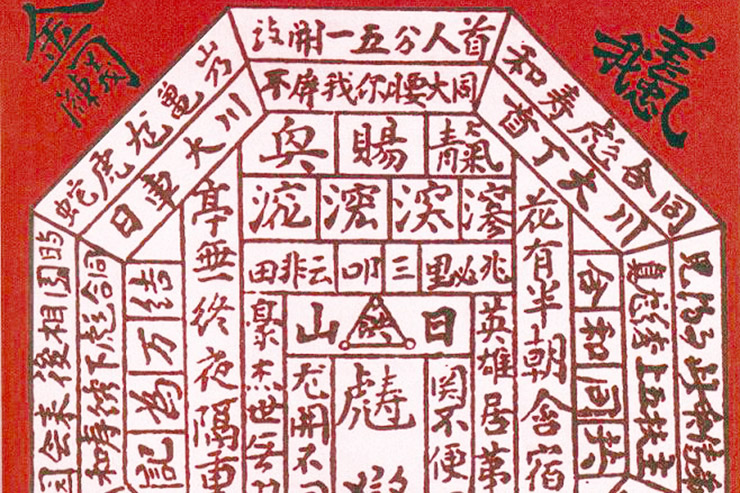
  • Russian President Steers a Straight Course

    Russian President Steers a Straight Course

    From New Dawn Special Issue Vol 7 No 6 (Dec 2013)

    Today we need new strategies to preserve our identity in a rapidly changing world, a world that has become more open, transparent and interdependent. This fact confronts virtually all countries and all peoples in one form or another: Russian, European, Chinese and American – the societies of virtually all countries.
    – V. V. Putin, Valdai Club, 19 September 2013

    Vladimir V. Putin has maintained his ideological position, and reiterated Russia’s determination to maintain her sovereignty and identity in the face of globalisation. Putin’s course for Russia was unequivocally stated in a September 2013 speech at a plenary session of the Valdai Club, which included foreign dignitaries and Russian luminaries from politics, academia and media. (https://valdaiclub.com/a/highlights/vladimir_putin_meets_with_members_the_valdai_international_discussion_club_transcript_of_the_speech_/)

    Putin stated that while every nation needs its technical strength, at the basis of all is “spiritual, cultural and national self-determination” without which “it is impossible to move forward.” “[T]he main thing that will determine success is the quality of citizens, the quality of society: their intellectual, spiritual and moral strength.” Putin rejects the economic determinism of the modern era, stating:

    After all, in the end economic growth, prosperity and geopolitical influence are all derived from societal conditions. They depend on whether the citizens of a given country consider themselves a nation, to what extent they identify with their own history, values and traditions, and whether they are united by common goals and responsibilities. In this sense, the question of finding and strengthening national identity really is fundamental for Russia.

    Putin pointed to the threat posed to Russian identity by “objective pressures stemming from globalisation,” as well as the blows to Russia inflicted by the attempts to erect a market economy, which it might be added, was sought by internal oligarchs and outside plutocrats; attempts that are ongoing. Putin moreover points to the lack of national identity serving these interests:

    In addition, the lack of a national idea stemming from a national identity profited the quasi-colonial element of the elite – those determined to steal and remove capital, and who did not link their future to that of the country, the place where they earned their money.

    President Putin meets Russia's religious leaders
    President Putin meets Russia’s religious leaders

    What the globalists and oligarchs wish to impose on Russia from the outside cannot form an identity, which must arise from Russian roots, and not as a foreign import in the interests of commerce:

    Practice has shown that a new national idea does not simply appear, nor does it develop according to market rules. A spontaneously constructed state and society does not work, and neither does mechanically copying other countries’ experiences. Such primitive borrowing and attempts to civilise Russia from abroad were not accepted by an absolute majority of our people. This is because the desire for independence and sovereignty in spiritual, ideological and foreign policy spheres is an integral part of our national character. Incidentally, such approaches have often failed in other nations too. The time when ready-made lifestyle models could be installed in foreign states like computer programmes has passed.

    “Russia’s sovereignty, independence and territorial integrity are unconditional,” states Putin. He has called for unity among all factions, above ethnic separatism and urges an ideological dialogue among political factions.

    Putin also recognises that what is today called the “West,” with the USA as the “leader of the Western world,” as the media and US State Department constantly remind us, shows little evidence of any vestige of its traditional foundations:

    Another serious challenge to Russia’s identity is linked to events taking place in the world. Here there are both foreign policy and moral aspects. We can see how many of the Euro-Atlantic countries are actually rejecting their roots, including the Christian values that constitute the basis of Western civilisation. They are denying moral principles and all traditional identities: national, cultural, religious and even sexual.

    In this demise of Western values, Putin attacks “political correctness,” where religion has become an embarrassment, and Christian holidays are, for example, changed or eliminated. This nihilism is being exported over the world and will result in a “profound demographic and moral crisis,” resulting in the “degradation” of humanity. While multiculturalism is problematic for many states in Europe, Russia has always been multiethnic and this diversity should be encouraged in forging local identities, but within the context of a Russian state-civilisation.

    Simultaneous with the moral and religious decline is the attempt to impose a “standardised, unipolar world” where nations become defunct, rejecting the “God-given diversity” of the world in favour of “vassals.” Above this, Putin is promoting a “Eurasian Union,” a geopolitical bloc that will enable the states of the region to withstand globalisation.

    Putin’s Valdai speech shows that he has a fully developed world-view on which to base Russia’s future course. It also indicates that while Putin might have his faults (and I can’t think of what they might be offhand) he is the only actual statesman in the world today, and has established Russia as the most likely axis of a new civilisation and a new era.

    Gain a deeper understanding of the conflict between Putin's Russia and the West. Check out New Dawn Special Issue Vol 8 No 5, with an article by KR Bolton entitled "The Great Conspiracy Against Russia: What is Really Behind the Campaign Against Putin". 

    [alert type=”general” dismiss=”no”]This article was published in New Dawn Special Issue Vol 7 No 6.[/alert]

    [alert type=”success” dismiss=”no”]If you appreciate this article, please consider subscribing to help maintain this website.[/alert]

    © New Dawn Magazine and the respective author.
    For our reproduction notice, click here.