New Dawn – World's Most Unusual Magazine

Category: Secret History

  • Yukio Mishima: The Man and the Mythology

    Yukio Mishima: The Man and the Mythology

    From New Dawn 123 (Nov-Dec 2010)

    Yukio Mishima (pen name of Kimitake Hiraoka) is perhaps the most commanding and tragic figure in 20th century Japan. Born into a samurai-bureaucrat family in 1925, he committed ritual suicide (seppuku) on 25 November 1970. He had just failed, predictably, in a call on the Japanese Self Defence Forces to revolt and re-establish the traditional authority of the Japanese Emperor. Mishima was at the peak of a brilliant literary career and on the day of his death he had completed the fourth and final volume of The Sea of Fertility, summing up his vision of the Japanese experience in the 20th century.

    Mishima’s life and work seems to be a continuous exercise in yin and yang, exploring the mutually nurturing activity of complementary (or contending) qualities like beauty and destruction, pride and shame, strength and weakness, loyalty and betrayal, sacrifice and indulgence. Of even more weighty and lasting importance, his work appeals as an exhaustive and exhausting exploration of mythologies that might revive and reinvigorate the Japanese spirit. Nothing was more important or more taunting after Japan’s humiliation and devastation – the result first of Western socialisation and second of Western conquest.

    No one could better represent and articulate the burden borne by the Japanese elite in the 20th century than Mishima. He won a citation from the Emperor as the highest ranking honour student at graduation from the Peers’ School in 1944, as Japan approached defeat and humiliation. He graduated from Tokyo Imperial University School of Jurisprudence in 1947, as Japan accommodated an alien occupation. He then joined the Ministry of Finance at the pinnacle of Japanese government and published his first novel in 1948. His samurai family’s code of complete control over mind and body, loyalty to the Emperor and the austerity and self sacrifice of Zen pervade his life and writing.

    The maturing years of a puny and youthful Mishima make it possible to see him as a mirror for the post-war growth of a weak, bewildered and defeated Japan. Both progressed through much painful soul-searching to build their strength and emerge, at least temporally, as giants in the Asian consciousness.

    Mishima’s life is a little less exotic than his stories. As a young boy he was captive to the needs and whims of a possessive grandmother with aristocratic airs. Nothing could better reflect the strict hierarchical and authoritarian values of his family and society or, perhaps, better nurture a young literary genius. His youth was a struggle towards self-assertion and self-empowerment in a competitive school environment where respect was not won easily and where his unmanly literary interests could invite aggression. Some coughing at his physical examination after being called up for military service gained him a diagnosis of incipient tuberculosis and a reprieve. He emerges as an elite bureaucrat, only to sacrifice that to become a widely celebrated novelist.

    His qualities of self-discipline and self-motivation rarely appear outside their social and political context. His later emergence with a strong and muscular, even beautiful body, all the product of dedicated discipline and purpose, is easily seen as the ultimate expression of a refined and socially conscious human being, albeit in a samurai spirit. The semi-military scenes with his “private army” appear as a statement of a profound determination not to lose touch with the political and historical processes of his time. Even his writing, undertaken to a strict schedule each evening, appears almost as part of a military routine. The odd homosexual dalliance and humiliation was hardly a distraction – seemingly subject to severe, if sensitive, formalities. Indeed, his homosexuality possibly reflected a military culture of encouraging same sex liaisons as a means of strengthening battlefield loyalties.

    Discovering Asian Civilisation

    40 years after Mishima’s death, I encounter a personal set of contradictions and confusions in re-examining and attempting to re-evaluate his life and work. I arrived in Tokyo in 1964 as a diplomatic language student and left in 1969. At a time that was critical in my discovery of Asian civilisation, Mishima loomed large in my imagination as the living embodiment of Japanese cultural and political consciousness. He loomed even larger when I was cross-posted to Laos where his brother was serving as First Secretary in the Japanese Embassy, only to be replaced before my arrival by another officer married to the sister of Mishima’s wife, evidence of the close-knit character of the elite Japanese bureaucracy.

    Mishima’s subsequent samurai seppuku while I was still in Vientiane provided a taunting comment on the Indo-China War, which was the focus of my then professional duties. Unlike the Pacific War where it defeated Japan, America did not succeed in the Indo-China War in defeating Vietnam. This echoed many of the troubling contradictions that haunted Mishima’s life.

    Mishima observed all the correct forms of Japanese surrender yet explored in the most relentless and captivating manner the need to keep the Japanese spirit alive until the time came to express his convictions in actions rather than words – actions that are likely to echo into the future as long as there is art and as long as there is a Japanese spirit. Moreover, perhaps no contradiction was more profound than Mishima’s criticism, common in his writing, of the Japanese capitalists who had usurped the authority of the samurai ethos.

    It is possible to see Mishima, his colleagues in the Ministries of Finance (and Foreign Affairs), and Japan’s capitalists all observing the same disciplined, politically correct forms of surrender, while all discreetly working in their own ways towards a victory (initially commercial) over an America that had humiliated Japan in war. By the end of the 1980s, American authors in books like Japan as Number One were warning of a possible Japanese victory that Mishima was most unlikely to have foreseen.

    These personal recollections and reflections and my own voyage of discovery of an even larger and more dynamic Asia, where China has taken a leadership role once thought reserved for Japan, cannot but colour the way I approach any evaluation of Mishima’s legacy. It places that legacy inescapably in the context of my own exploration of the remarkable character of East Asian civilisation and its economic and cultural renaissance over the past half century. During the four decades since Mishima’s death, I have become acutely aware of fundamental differences between an Anglo-American global order that has largely defined the past two centuries of global history (and all of modern Australian history) and an ascendant East Asian Confucian order likely to define the indefinite future.

    My recent reading of Thinking from the Han: Self, Truth and Transcendence in Chinese and Western Culture by the American authorities on Chinese civilisation, David Hall and Roger Ames, is of particular relevance to my recollection of Mishima. The idea of “self” often looms large for those who examine Mishima’s life and work from a Western perspective. Yet “self” seems to misrepresent totally the essence of Mishima’s life in the Japanese and East Asian environment. Mishima was unquestionably a product of Japan’s intellectual and administrative samurai aristocracy, whose energies and talents are today concentrated in achieving educational and intellectual excellence. The sentiments he evoked are unlikely to die away simply because China and Vietnam have won overt political successes seemingly denied Japan. At the same time, I suspect that Mishima’s elite colleagues and successors, now more than ever defined by relentless academic competition, will find more in common with counterparts in China, Vietnam and elsewhere in Asia than with partners distanced by vast oceans and even vaster cultural divides.

    Mishima and His Work

    Any choice of particular works from Mishima’s voluminous output will be invidious. Nominated three times for the Nobel Prize, Mishima wrote 40 novels, 18 plays, 20 books of short stories, at least 20 books of essays, one libretto and one film. More than 20 of his novels have been translated and published in English. The richness, maturity and insight of his work from an early age often make it difficult to place without careful thought a work in a particular period of his life. All were characterised by the heroic efforts of their protagonists to find a meaningful mythology for their own physical lives in a bewildering kaleidoscope of unrelenting and unpredictable cultural, social, and political change. Almost invariably, this was laced with various physical and spiritual temptations. A quick review of a few of these works offers a glimpse of Mishima’s virtuosity.

    It is surprising, for instance, to realise that a book like Forbidden Colours, which demonstrates Mishima’s uncompromising character in searching out the most difficult and confronting issues in human experience, was written when he was 28. This was the age at which I arrived in Tokyo, green, immature, inexperienced and ill-equipped to envisage such a reality, despite a university education in Russian and English literature.

    A brief outline of the story offers a glimpse of the author’s mastery of the darkest recesses and greatest heights of Japanese society in the immediate post war years.

    This major novel, regarded in Japan as Mishima’s masterpiece, is as much a vivid and shocking panorama of the corrupt life of Tokyo five years after the end of the war and an attack on oppressive Japanese marriage customs as it is the affecting story of Yuichi Minami, a handsome young man with homosexual inclinations.

    Yuichi is caught between his impulses and the demands of his family. Out of his loveless marriage his anguished homosexuality burgeons, and his wife’s dreams depart. The first chapter irresistibly brings to mind “Death in Venice.” An old and famous writer is captivated by Yuichi, and like Mann’s Aschenbach he is never again the man he was. He becomes Yuichi’s mentor, spouting satanic philosophies much like those Oscar Wilde imparted to the young Andre Gide.

    He persuades Yuichi to pursue and disappoint a number of beautiful women who have slighted the writer. Yuichi involves himself with lovers young and old, male and female. We meet ex-aristocrats dabbling in the black market, newly rich couples living promiscuously, blackmailers and male prostitutes. There are remarkable descriptions of parks of assignation, of gay bars and of gay parties, often frequented by Americans. The signs, the argot, the evasions, the frustrations, the humour, the joys and the tragedies of this strange and hidden world are brought out with sympathy and great candour, but also with irony and aversion.

    The richness of Mishima’s adventures can take the reader on a voyage of discovery into a world rarely imagined but full of taunting truths and undeniable realities. Many readers are likely to be left haunted by previously unimagined human interaction.

    The Temple of the Golden Pavilion was written three years later and captures the trials of another young man, Mizoguchi, who is disabled by a crippling stutter but is fascinated by the beauty of the Temple of the Golden Pavilion. Taken by his dying father, a poor rural priest, to become an acolyte at the Temple, he has heard throughout his childhood about its splendid beauty. But the beautiful things in his new life as a monk – the temple, sexual possibility, and personal autonomy – leave Mizoguchi feeling overwhelmed and insignificant, until he seeks to resolve his painful perplexity by burning down the Temple of the Golden Pavilion. It is not hard to see in it a theme that runs through much of Mishima’s work – namely a fascination with beauty leading to destruction, often self destruction.

    Three years later Mishima wrote Kyoko’s House, which was not well received and has not been translated into English. It explores four sides of Mishima through the stories of a boxer, a painter, an actor and a businessman. The American film director Paul Schrader has made the story of the actor available to English speakers in his film “Mishima: A Life in Four Chapters.” Interestingly, it was only included after the writer’s wife objected to the use of Forbidden Colours. The actor’s story is, however, just as confronting as any of Mishima’s other stories. It tells of an actor who becomes involved in a sado-masochistic sexual relationship to settle his mother’s debts. This plunges him into a double suicide for himself and his lover, his mother’s creditor. There is less of a sense of rarefied spirituality, fascination with beauty and struggle against carnal debasement than in The Temple of the Golden Pavilion, highlighting Mishima’s capacity to move amongst all areas and levels of society. He seems to have an unlimited ability to discover and reveal the grand dramas being played out in mundane life. The actor seems totally absorbed in carnal pursuits and yet to be willing to literally give up his life for both his mother and lover. This heroic dimension does not loom as large as the garish décor of the mother’s bar and the trivia of the dialogue. The pact to commit a dual suicide is entered into almost as a casual convenience. Described as “terrifying” by Mishima’s biographer and translator, John Nathan, the novel’s importance to Mishima was reflected in the unprecedented fifteen months it took to write and the fact that, unusually, it was not published in magazine instalments. It is reported that poor sales and reviews hurt him seriously.

    The following year (1960), Mishima wrote After the Banquet. Uncharacteristically, it is a story about a successful, worldly, head strong, older woman. She runs a business in the “water trade” and throws her heart and her money into a marriage with an aging, idealistic but naive aristocrat. When her support for his political aspirations becomes a source of conflict, highlighting irreconcilable values and life experiences, she has no practical option but to return to her trade – tending commercially the physical and psychological needs of her aristocrat’s political rivals. She again serves the very forces she had hoped to assist her idealist to defeat. The story can be described as a clash of love, politics and money but it also gives Mishima the means to explore characters and political activities that are rare in his work, offering an intriguing insight into the nature and processes of Japanese politics. The accuracy of Mishima’s story was subsequently confirmed by a successful law case mounted for invasion of privacy.

    Mishima followed this fine account of confused ideals and political machinations in Tokyo the next year with a work described by one reviewer as “barbaric lyricism.” The Sailor who Fell from Grace with the Sea (“Afternoon of Glory” reflects the Japanese title more accurately) can be expected to shock almost any reader. A group of adolescent boys resolve to revenge themselves on the sailor who disappoints their romantic sense of masculine life at sea by falling for and committing himself to the mother of one of them. The erstwhile hero is seduced by the boy’s apparent adulation to subject himself to the cruellest of fates, all depicted in Mishima’s finely crafted poetic style.

    This brief sampling of some of Mishima’s stories cannot reproduce his evocative and beautiful imagery or the way in which his genius invariably draws one into new and unfamiliar worlds in the most convincing ways, only to then present a shocking, almost unbelievable, conclusion. Desire and resentment are never far apart and one is often left asking questions that have never previously been encountered.

    It has been suggested that Mishima’s psychological exploration is so profound that it is possible to find in his stories an account of the obsession, the hopelessness, and the desperation inspired by types of spiritual purity that can motivate acts of terrorism. Rather than focusing on terrorism, however, I believe it is more accurate to see Mishima’s writing as an exploration of the obstacles and confusions that confront all human aspiration. He creates a sense of the great difficulty encountered in reconciling ideals nurtured by a lofty human imagination with the mundane, perplexing and corrupting realities of existence.
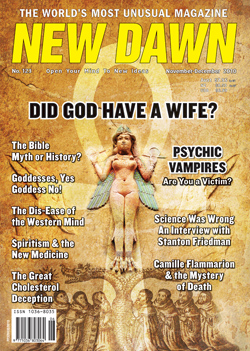
    The Sea of Fertility

    “The Sea of Fertility” (a reference to the Mare Fecunditatis, a “sea” on the Moon) is the four volume work that Mishima completed on his final day. It contains Spring Snow (1966), Runaway Horses (1969), The Temple of Dawn (1970) and The Decay of the Angel (1971). It stretches from 1912 to 1975 and in all four books uses the viewpoint of Shigekuni Honda, who matures from a law student to a wealthy retired, but world weary and desiccated, judge. Honda’s life focuses on four reincarnations of his school friend Kiyoaki Matsugae and his attempts to save them from early deaths. This results in Honda’s personal and professional embarrassment and eventual destruction, somehow symbolic of those who cannot rise above the inevitable corruption of respectable social goals. The ill fated Matsugae is successively a young aristocrat, an idealistic nationalist, an indolent Thai princess and a manipulative and sadistic orphan. Significantly, the idealistic nationalist foreshadows Mishima by committing seppuku, but after assassinating a prominent symbol of Japanese leadership. Described by Paul Theroux as “the most complete vision we have of Japan in the twentieth century,” the book reflects Mishima’s endless quest to explore and comprehend the workings of individual lives in the destructive context of contending and conflicting certainties.

    Some Concluding Thoughts

    For a foreigner who studied Japanese language and remains committed to trying to comprehend the powerful sense of civilisation that defines East Asia, Mishima has always represented an irreplaceable source of insight and inspiration. His exotic and defiant character seemed to guarantee an incisive, authentic quality that is usually difficult to find. Today’s problems of globalisation and recurring crises in the West give, perhaps, extra dimensions to Mishima’s thought.

    My memories of the mystique surrounding the living Mishima – the vital symbol of the Japanese spirit in the aftermath of defeat and occupation – manifests itself in almost infinite forms in his work. His task was made all the more problematic for someone with an elite sense of leadership responsibility at a time when the national character was burdened with a sense of defeat, humiliation and dishonour at the hands of an alien conqueror. Mishima’s achievement reflects the disciplined and self-effacing manner in which Japan accepted its defeat, apparently subjecting itself to all that it had fought so fiercely to reject.

    This quality of disciplined, self-sacrificing purpose, in the midst of all the temptations and confusions of modern life, is central to Mishima’s legacy. It is a quality that has distinguished the Vietnamese in Indo-China and the Chinese under Mao and his successors. It is a quality that has been taken from the Confucian tradition throughout history and throughout East, and also South East Asia, although often in a form that is not immediately recognisable. In Mishima’s case his energies were dedicated to recording in a highly literate and informed manner the toils of the Japanese soul in the aftermath of defeat and occupation. In this he reflected a complex sense of community awareness, a quality of literary and educational excellence and a depth of intuitive discipline that characterises Confucian civilisation, even when given a unique form of Japanese relevance.

    One must regret that Mishima is not alive today, wrestling at the age of 85 in his inimical way with the economic resurrection first of Japan, then of many other parts of Asia and finally of China. Most interesting would be his perception of an accompanying cultural renaissance that has been made possible by the victories of a leadership class of which he was critical.

    Would he find contemporary public notions of reform in Japan out of touch not only with his preferred Japanese traditions but also with an emerging mainland rejection of Western fashions and the rediscovery and reinvention of values close to those that he lamented had been swept away forever by the tide of Western modernisation?

    [alert type=”general” dismiss=”no”]This article was published in New Dawn 123.[/alert]

    [alert type=”success” dismiss=”no”]If you appreciate this article, please consider subscribing to help maintain this website.[/alert]

    © New Dawn Magazine and the respective author. For our reproduction notice, click here.
  • Rock’s Sympathy for the Devil

    Rock’s Sympathy for the Devil

    From New Dawn 121 (Jul-Aug 2010)

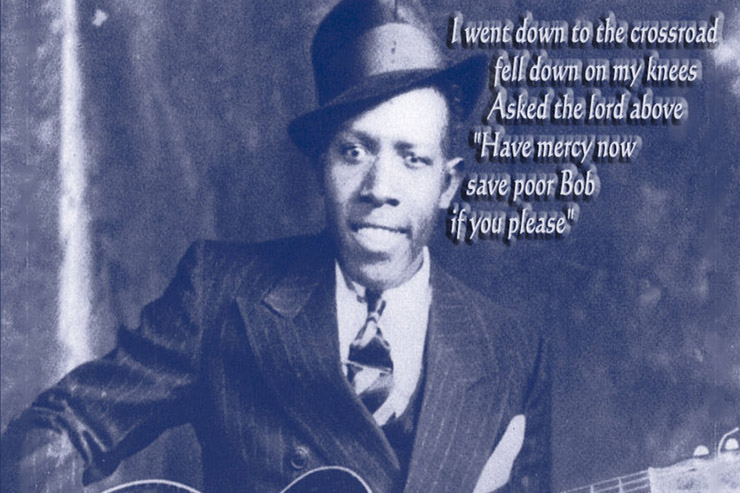
    It was popularly believed in the 1930s that the legendary bluesman Robert Johnson, who inspired Muddy Waters, Bob Dylan, the Rolling Stones and Eric Clapton, sold his soul to the Devil in exchange for his musical gifts. It was believed Johnson had the ‘Evil Eye’ and was murdered because of his alleged power over women. He seduced the wife of a beer hall owner who in revenge laced the musician’s whisky with arsenic. Many moralists saw his fate as a punishment for dealing with the powers of darkness.

    Johnson is said to have sold his soul to Old Nick during a midnight ceremony at a crossroads. However, that story did not originate with him. In the 1920s and 1930s there are numerous tales of black musicians and gamblers signing a pact with a mysterious ‘man in black’ at the crossroads. Famous examples are the black singer Clara Smith and Robert Johnson’s namesake Tommy Johnston, a decade before him. The dark stranger has been identified by some writers as either the Christian Devil or the West African trickster god Eshu, worshipped in voodoo and taken to the southern states of America by black slaves.

    While there is little evidence of modern pop and rock musicians actually ‘selling their souls’ to the ‘Devil’, the link between popular music and the occult is a strong one. Christian fundamentalists have predictably seen the widespread use of magical and occult symbols in rock music as evidence it is the work of Satan, but the truth is far stranger than their religious fantasies.

    Sometimes the alleged connections of famous rock musicians with occultism surfaced in apocryphal showbiz gossip or rumour. For example, everyone knows that ill-fated glam rock star Marc Bolan studied as a sorcerer’s apprentice with a magician in a French chateau (in fact he actually admitted it), that the late pop diva Dusty Springfield allegedly belonged to a satanic group called the Temple of the Prince in Manchester, and that Jim Morrison of The Doors married a Wiccan high priestess (which was true).

    Then there was the 1970s British musician Graham Bond, accused by his fellow R & B artist Long John Baldry of sacrificing his pet cat in a magical ritual. Bond told his groupies he was one of the illegitimate sons of the infamous ‘black magician’ Aleister Crowley, and that his musical output was designed to contact “higher forces.” Bond also believed he had been cursed by a fellow occultist. When in 1974 the musician fell in front of a train on the London Underground in mysterious circumstances, many thought the curse had worked.

    The Beatles & the Rolling Stones

    The Beatles are well known for flirting with Eastern mysticism and transcendental meditation during their psychedelic hippy stage in the late 1960s. They may also have had darker interests. For instance, the Great Beast 666, Aleister Crowley, is featured (top left corner above) in the photomontage of “people we most admire” on the cover of the Fab Four’s famous album Sergeant Pepper’s Lonely Hearts Club Band.

    Antiquarian bookseller and Crowley bibliographer Timothy D’Arch Smith relates how the Beatles attended an exhibition of rare books on witchcraft and the occult he held in Swinging London. Jane Asher, Paul McCartney’s then girlfriend, had suggested the visit to him and, according to D’Arch Smith, encouraged him to buy rare books as an investment.

    If the Beatles were mildly interested in the occult, then their main rivals for the pocket money and affection of teenage girls, the Rolling Stones, were definitely involved in a more dramatic way. Despite their respectable middle-class backgrounds, in the Sixties the Stones were deliberately promoted as the ‘bad boys of pop’. It now seems this was a marketing ploy by their then manager Andrew Oldham, and is summed up in the famous newspaper headline, ‘Would you let your daughter marry a Rolling Stone?’ If the parents of Middle England had known about their dabbling in the occult, the answer may have been in the negative.

    Lucifer Rising

    The so-called ‘satanic’ influence on the Stones was through the avant-garde filmmaker, Luciferian and Tinseltown gossip-queen Kenneth Anger. He had become interested in the band’s career and particularly in guitarist Brian Jones and his girlfriend Anita Pallenberg, a German film actress and model. Jones had some unusual interests, and both he and the pop singer Robert Palmer were fascinated by the master musicians of Joujouka in the Atlas Mountains of Morocco in North Africa. These musicians claimed to be still practising the ancient rites of the goat-footed god Pan. Jones went so far as to travel to North Africa to record an album of the tribal music performed by this pre-Islamic cult.

    In an interview with Rolling Stone magazine Robert Palmer described how he had witnessed one of these rites to Pan. He said the dancing tribesmen appeared to be in an ecstatic trance with their eyes rolled back in their heads. Palmer said that when “the power came down” the dancer was suddenly “not there.” In fact “something else” was looking out of his eyes, which began to “glow like ruby lasers” (Rolling Stone, 23 March 1989).

    Kenneth Anger believed that Anita Pallenberg and Brian Jones, who was to drown in mysterious circumstances in the swimming pool of his Sussex mansion, were witches. Allegedly, Jones showed the filmmaker an extra nipple he had on his inner thigh and told him: “In another time they would have burned me [as a witch].” Extra nipples were regarded by witch-hunters as a sign of the Devil’s Mark. A friend of Anita Pallenberg, Tony Sanchez, believed she kept her drug stash hidden in an old carved wooden chest in her flat. One day he looked inside. Instead of drugs he found it contained bones and pieces of fur and skin from “strange animals.” Mick Jagger’s one time girlfriend Marianne Faithfull described how she and Pallenberg used to sit for hours reading aloud passages from Robert Graves’ book The White Goddess and studying the ancient Celtic tree alphabet.

    In her autobiography Marianne Faithfull claims the gay Anger had a crush on the bisexual Stones’ singer which was not reciprocated. When the filmmaker’s sexual overtures were rejected he became a bit of a nuisance. One day he turned up at the couple’s house in Cheyne Walk, Chelsea and bizarrely threw several books by the 18th century poet and mystic William Blake through the window. Jagger responded in disgust at this stunt by burning all the copies of the occult works that Anger had given him by Crowley and the French occultist Eliphas Levi.

    Despite this, Marianne Faithfull got involved in Anger’s experimental movie Lucifer Rising, allegedly financially sponsored by Anita Pallenberg, and with a score originally to be composed by Mick Jagger. Initially the Stones’ singer was to play the leading role in the film, but he got cold feet and backed out of the project altogether. In the first version, made in 1967, the lead was taken by his brother Chris Jagger. Marianne Faithfull became involved in the second version filmed in 1972 and she agreed to take the part of the demon-goddess Lilith.

    Faithfull described the baby-slaying Lilith as one of the classic female archetypes and compared her with pagan goddesses such as Diana, Astarte, Ishtar, Aphrodite and Demeter. However, she added: “From the view of patriarchy, of course, she was the pure incarnation of evil” (Faithfull by Marianne Faithfull with David Datton, 224). Interestingly, the part of the ancient Egyptian god Osiris in the film was played by Donald Cammell, son of Charles Cammell, a friend and biographer of Crowley. The younger Cammell made his own films including the controversial Performance in co-operation with Nic Roeg. It starred Mick Jagger, Anita Pallenberg and the archetypal English actor Edward Fox. Donald Cammell committed suicide in the 1990s.

    The shooting of Lucifer Rising took place in Egypt and Faithfull claims that as soon as the crew and cast arrived in the country it was obvious Anger did not know what he was doing as either a film director or a magician. At that stage in her life Faithfull was seriously addicted to heroin and admits she did not know what she was doing on the set either. The whole thing was a recipe for disaster. The last sequence of the film was a winter solstice rite shot at a Neolithic site in Germany. During it, Faithfull managed to fall off a mountain. She somersaulted and landed on her feet without sustaining any injury. This convinced her that her magic was stronger than Anger’s. In her autobiography she dismissed him as a “kitsch occultist” and “a witch out of a Hollywood tabloid.”

    Marianne Faithfull claims that both Mick Jagger and the Stones’ lead guitarist Keith Richards were also sceptical about Anger’s “satanic hocus-pocus” and did not take any of it seriously. However, after an incident involving the magician at the house in London now shared by Richards and Anita Pallenberg, Faithfull became seriously spooked out. As a result, she believed she was under psychic attack. Allegedly, she wore a clove of garlic around her neck and slept in a circle of lit candles for protection. Whether this paranoid behaviour was connected to her heroin addiction is not known.

    One of Marianne Faithfull’s tracks on her comeback album Broken English is called ‘Witches Song’. She dedicates it as “my ode to the wild pagan woman I know and have always around me.” Faithfull says she got the idea for the song after she and Mick Jagger visited an exhibition in Madrid of paintings on the theme of the Witches Sabbath by the Spanish artist Goya. Her autobiography also describes an incident when she and Jagger took LSD before visiting Primrose Hill in North London “where the ancient ley lines are supposed to run” and where modern neo-druids hold their seasonal ceremonies. Under the influence of the acid the couple saw “a great face in the sky” they were convinced was the head of the Celtic giant god Bran. This seems to fit with Faithfull’s professed pagan beliefs. In her autobiography she says she believes not in God the Father, but in the Great Goddess and her consort Pan.

    Jimmy Page & Aleister Crowley

    In 1969 the satanic aura around the rock mega-group Led Zeppelin reached such a pitch that, in echoes of Robert Johnson, rumours circulated in the Los Angeles music scene that its members had signed a pact in their own blood with the Devil to gain fame.

    James Patrick ‘Jimmy’ Page’s well-known interest in the occult fuelled these rumours of the group’s alleged satanic activities. Described by the magazine AllMusic as “one of the all-time most influential, important and versatile [rock] guitarist and songwriters,” Page had been interested in alternative religions since childhood. While a member of the Yardbirds, he had hung out with Brian Jones and Anita Pallenberg at their studio flat in South Kensington. Page has never hidden his interest in Aleister Crowley, and Led Zeppelin’s famous album Rune has a photograph of the Great Beast on its cover. In an interview with Sounds magazine in 1976 Page is quoted as saying that Crowley was “a misunderstood genius of the twentieth-century.”

    Jimmy Page purchased as many artefacts and first edition books belonging to Crowley that he could find. In 1969, Kenneth Anger rented Crowley’s old (seriously haunted) house Boleskine on the shores of Loch Ness where he lived in the 1900s for a few months. When it came on the market for sale, Anger suggested to Page he should buy it. This he did and hired an occult artist called Charles Pace to paint suitable atmospheric magical murals in each room. The Led Zeppelin guitarist could be seen driving around the area like a Scottish laird in a Land Rover with a stack of stag’s antlers on the bonnet. Page also visited Sicily and contemplated buying the old villa where Crowley established his ‘Abbey of Thelema’ in the 1920s.

    In the early 1970s Page opened an occult bookshop in Kensington called The Equinox. It was done out in a futuristic style with glass bookshelves and display cabinets and chrome steel pillars. Under its auspices, Page published a facsimile of Crowley’s 1904 edition of the medieval grimoire Goetia.

    Kenneth Anger approached Jimmy Page and asked him to provide a soundtrack for his ongoing film project Lucifer Rising. Unfortunately, the two men fell out when Page only managed to produce 23 minutes of music and Anger wanted 28 minutes. The filmmaker accused Page of being a mere dabbler in the occult and a drug addict so out of his mind he could not finish the film score. However, in 1976 Page lent Anger the basement of his London house for film editing purposes. Again, the two men did not see eye to eye and Page allegedly cursed the filmmaker. Page later branded the incident as “silly and pathetic” and said he still respected Anger as an occultist.

    There has been a lot of debate about whether Jimmy Page ever belonged to one of the modern versions of Crowley’s magical group the OTO (Ordo Templis Orientis or Order of the Eastern Temple). In fact, the jury seems to be out on whether Page is an actual magical practitioner at all. In this respect New Musical Express journalist Nick Kent dismisses rumours the guitarist spends his time with “his head in a cowl ritually slaughtering various species of livestock.” Kent instead says from his experience Page is “just another seeker after esoteric knowledge, a collector of dusty old books, and committed student of the ‘magical’ information that was supposedly contained in their yellowed pages.”

    Although Jimmy Page’s interest in Crowley and the occult is well known, his Led Zeppelin colleague Robert Plant also has esoteric interests. These manifest in a study of folklore, Norse and Germanic mythology, and reading ‘sword and sorcery’ novels. Plant spent most of his life living on the Welsh Border and in an interview with the rock music magazine Kerrang! he said he often visited the Black Mountains in South Wales. There he rediscovered his roots in the local Celtic culture. Using an ordnance survey map, he wandered the hills visiting Bronze Age sites and places where the Welsh had battled with the Saxons.

    David Bowie

    Another famous rock star who openly admits an interest in the occult, magic and Crowley is David Bowie (born David Robert Jones). In the 1970s he says he studied the Kabbalah and “Crowleyism” and more recently became interested in Gnosticism. On a practical level the singer used Tarot cards and a crystal ball for divination, an ouija board to contact spirits, and performed magical rituals for exorcism and psychic protection. His early album Hunky-Dory features a song called ‘Quicksand’ that references both Crowley and the Victorian magical group Hermetic Order of the Golden Dawn.

    According to David Bowie’s wife Angie in her autobiography, her husband’s interest in the occult was due to his desire to outdo Jimmy Page. Allegedly, he saw the Led Zeppelin guitarist as a magical rival. Bowie eventually decided, possibly because of Page’s interest in him, that Crowley and his works were “small shit.” For that reason he began studying Tibetan magic which he claimed was far more powerful than anything the Great Beast or Page had ever done.

    In an interview with New Musical Express (February 1997) David Bowie admits he had been into “old fashioned magic” in the 1970s, and said he always believed Crowley was a charlatan. He reveals that Arthur Edward Waite, a member of the Order of the Golden Dawn, and the Welsh-born occultist Dion Fortune, author of Psychic Self-Defence, have been important to him. In fact, Bowie used Fortune’s book extensively when he believed he was under psychic attack. Talking of a house he rented in Los Angeles in 1975, Bowie said he decorated it with ancient Egyptian artefacts. This was because, “I had this more than passing interest in Egyptian mysticism and the Kabbalah…” (Stage Fascination: David Bowie the Definite Story by David Buckley, 235).

    Angie Bowie says the musician was heavily involved with occult activities in 1975-76. This coincides with a period when he used cocaine and she believed this made him paranoid. Apparently, Bowie stored bottles of his own urine in the fridge and carefully disposed of his nail and hair clippings. This was in case magical practitioners obtained these personal items in order to cast spells on him. He also set up an altar in his sitting room with black candles on it, painted occult symbols on the walls, and performed magical banishing rituals for protection. Angie Bowie once witnessed him exorcise a swimming pool he believed was haunted.

    When the couple were viewing properties to rent or buy in Hollywood they came across an old house with a pentagram of five-pointed star painted on the floor. Bowie freaked out and said he could not live there as the building had been used for black magic rites. One day he phoned his wife and told her witches were trying to steal his semen. Allegedly they wanted to create a test-tube baby and then sacrifice it in a satanic rite. It turned out the ‘witches’ were just some innocent groupies he met in a bar.

    At this difficult point in his life Bowie also flirted with neo-Nazism. He explained in an interview with the British rock music journalist Tony Parsons in 1993 that this was only because he was fascinated by the use of occult symbols like the swastika by the original Nazi Party in Germany. He was interested in their quest for the Holy Grail because he was also searching for its meaning (Stage Fascination: David Bowie the Definite Story by David Buckley, 235-236). Bowie once said that it might be a good idea to have a fascist dictatorship in Britain, although he later denied he was serious and claimed it was a joke.

    Black Sabbath & Heavy Metal

    Partly as a reaction to the hippy ‘flower power’ and ‘peace and love’ movement of the late Sixties, heavy metal bands began to appear using violent satanic imagery and playing loud over-amplified rock music. Groups such as Warlock, Saxon, Venom, Motley Crue, W.A.S.P., Slayer, Iron Maiden, Incubus and Bathory put out albums with covers decorated with human skulls, pentagrams, hooded figures, gravestones, goat-headed demons and vampires. One of the most famous and pioneering heavy metal bands Black Sabbath came out of Birmingham in the industrial Midlands of England in 1969. They combined heavy guitar riffs with satanic inspired lyrics and an obsession with the gothic dark side that soon gave them a dedicated, if rather odd, fan base.

    The band’s distinctive name was taken from an old horror movie starring English actor Boris Karloff, famous for his movie interpretation of Dr. Frankenstien’s monster. Originally, Black Sabbath started out as a jazz-blues band until they became influenced by the ‘black magic’ novels of the thriller writer Dennis Wheatley and books by Aleister Crowley. Their leader ‘Geezer’ Butler was lent a 16th century grimoire or book of magic. Its contents so freaked him out that he locked it in a cupboard before going to bed. During the night he had a spectral visitation from a dark shadowy figure who stood at the end of his bed. In the morning when Butler opened the cupboard the grimoire had vanished and it was never seen again.

    Butler claims the band was invited to play a gig at a Witches Sabbath at Stonehenge, which sounds like something out of a Dennis Wheatley novel. When the boys refused the chief “warlock” of the coven ritually cursed the band. Geezer says he consulted a “white witch” to get the curse lifted and was told the band had to wear crosses to ward off the evil forces directed at them. Apparently, lead singer Ozzy Osbourne’s father, who was a bit of a handyman, made the crosses for each of the band members to wear.

    Ozzy Osbourne always denies he was seriously into the occult, although he did have his Tarot cards read – twice. Famously he said the only evil spirits that interest him are whisky, gin and vodka! He describes the strange people attracted to the band, who habitually wear white face make-up and black hooded robes, as “freaks.” Ozzy says the only good thing about all the satanic stuff is it gave the band free publicity increasing their record sales and bank accounts.

    Some of the heavy metal bands took their interest in witchcraft and magic more seriously. One of these, for a while, was Black Widow who played a mixture of progressive rock and folk music and used demonic imagery in their act based on serious research. In 1968 the group’s manager approached Maxine and Alex Sanders, the so-called ‘King and Queen of the Witches’. He wanted to know if the couple could recommend a nubile young witch with dancing skills to take part in their new stage act. This featured a magician played by one of the band’s members conjuring up a demon who was once an ancient goddess called Ashtaroth.

    Several professional dancers auditioned for the part of the demon-goddess. Each one suffered fainting fits during rehearsals and felt they were being possessed by an evil spirit. In desperation the band wanted to hire a real witch who would not be fazed by the magical goings-on. Black Widow’s manager said the Sanders were happy to help and he described them as “clever business people” only interested in making money in any way they could.

    A member of the Sanders’ coven volunteered for the role and the rehearsals were successful. Unfortunately, on the day of the first performance at the Lyceum Theatre in London, she fell ill. Alex Sanders volunteered his wife and the high priestess of the coven Maxine as a suitable stand-in. When the lead singer of Black Widow playing the sorcerer invoked the demon-goddess and accidentally stepped out of the protective magical circle, she was supposed to attack him. In her autobiography Maxine Sanders says the singer complained afterwards about the bruises he suffered from the physical assault by the ‘Queen of the Witches’.

    Danny Carey

    Another more contemporary band called Tool and its lead singer Danny Carey are well known for their interest in all things magical. Carey collects rare limited edition publications by such modern occult practitioners as Crowley, Kenneth Grant, Austin Osman Spare and Andrew D. Chumbley. During their recordings of albums, Tool use magical banishing rituals to get rid of unwelcome influences left in the studio by previous performers. They have also been known to employ talismans and occult sigils used by the Elizabethan magician and astrologer Dr. John Dee in their gigs. During a South American tour, local Christian workers refused to handle the band’s equipment because it was “satanic.”

    The 1990s saw a sinister link established between rock music and Satanism with the rise of the so-called ‘black metal’ or ‘death metal’ groups. These new bands were committed to an anti-Christian philosophy of anarchism, nihilism, violence and an obsession with death that made Black Sabbath stage appearances look like a vicar’s tea party. Possibly the most dramatic and violent manifestation of this new trend was in Scandinavia. A new cultural trend united satanic beliefs with atavistic forms of neo-paganism and extreme nationalist right-wing politics promoting racism and white supremacy. This deadly combination was to lead to arson and murder.

    In 1992 an ancient wooden stave church was burnt down in a firebomb attack. Rumours began circulating that hard-core black metal fans were responsible for the outrage. It was alleged they were pagan Viking revivalists who expressed neo-Nazi views. Further church burnings and graveyard desecrations took place followed by murders involving rival groups of black metal fans and biker gangs. Media reports said that self-styled teenage satanists saw neo-Nazism and rock music as cultural stepping stones to a revival of Aryan-based paganism. Because the historic Christian churches were built on the site of pagan temples, they had to be destroyed before the heathen ‘old religion’ could be established again.

    Today the number of rock bands using satanic and occult imagery is increasing. The new ‘high priest’ of the Church of Satan in the USA, Boyd Rice, is himself a musician. Critics have dubbed his musical output as “sonic terrorism as an art form.” Strangely enough, his satanic master, Anton LaVey, who found the Church of Satan in the 1960s, preferred Gershwin and Cole Porter with his bedtime cocoa.

    It seems certain that in the future wherever and however rock music is played, there will always be those who claim, quite literally, the Devil has the best tunes.

    [alert type=”general” dismiss=”no”]This article was published in New Dawn 121.[/alert]

    [alert type=”success” dismiss=”no”]If you appreciate this article, please consider subscribing to help maintain this website.[/alert]

    Bibliography

    Heavy Metal Thunder by Neil Aldis and James Sherry, Mitchell Beazley, 2006

    Backstage Passes: Life on the Wild Side with David Bowie by Angie Bowie and Patrick Carr, Orion, 1993

    Stage Fascination: David Bowie the Definite Story by David Buckley, Virgin Books, 1999

    Robert Plant: Led Zeppelin, Jimmy Page & the Solo Years by Neil Daniels, Independent Music Press, 2008

    The Lives of John Lennon and the Beatles by Hunter Davies, McGraw Hill Books USA, 1985

    Hammer of the Gods: Led Zeppelin Unauthorised by Stephen Davies, Pan Books, 1995

    The Book of the Beast by Timothy D’Arch-Smith, Mandrake Press 2010

    Faithfull by Marianne Faithfull with David Datton, Michael Joseph, 1994

    No One Gets Out of Here Alive: Jim Morrison and the Doors by Danny Hopkins and Sugarman, Warner Books USA, 1980

    Apathy for the Devil: A 1970’s Memoir by Nick Kent, Faber and Faber Limited, 2010

    I Am Ozzy by Ozzie Osbourne with Chris Agnes, Sphere, 2009

    Firechild: The Life and Magic of Maxine Sanders ‘Witch Queen’ by Maxine Sanders, Mandrake Press, 2008

    Bowie: Loving the Alien by Christopher Sandford, Little, Brown and Company, 1996

    When Giants Walked the Earth: A Biography of Led Zeppelin by Mick Wall, Orion Books, 2008

    Led Zeppelin: From Early Days to Page and Plant by Ritchie Yorke, Virgin Books, 1999.

    © New Dawn Magazine and the respective author.
    For our reproduction notice, click here.

  • Synarchy: The Hidden Hand Behind the European Union

    Synarchy: The Hidden Hand Behind the European Union

    From New Dawn Special Issue 18 (Dec 2011)

    While questions remain about the existence of a single global elite with an agenda that goes beyond simply keeping itself very, very rich, there are certainly groups that want to run the world for quite other reasons. And with the increasing globalisation of political and economic institutions, it has become easier for a relatively small group to inveigle itself into quite staggeringly influential positions. One cabal in particular reveals – alarmingly – what a small group, driven by a fanatical belief system, can achieve from the shadows. And writing as we are in the United Kingdom, this group is on our doorstep, and has been for over a century. And although perhaps small in number, its reach is big.

    Our research into this subject – detailed in The Stargate Conspiracy (1999) and The Sion Revelation (2006) – demonstrated that every major step in the development of the European Union from a simple trading body to a borderline superstate can be traced back to a very specific ideology, which upholds rule by an elite from behind the scenes. But this isn’t just about politics. Astonishingly, this ideology is also about mysticism and magic.

    This shadowy politico-occult movement is synarchy, which was developed by the Frenchman Joseph Alexandre Saint-Yves, the Marquis d’Alveydre, in opposition to the rise of anarchy in the second half of the nineteenth century. To him the ideal synarchist state would be a rigid social hierarchy topped by an elite that is predestined to rule – absolutely at odds with the then emerging concepts of democracy, individual liberty and social mobility.

    Central to Saint-Yves was the creation of a united Europe, a call for which appears on the first page of his first book on synarchy, Keys to the East (1877). He believed that his perfectly balanced society reflected deep cosmic laws, with which his elite perfectly resonated. They are also directly guided by the powers that rule the universe – as he believed himself to be.

    Saint-Yves claimed that in the ancient past an advanced civilisation – based, of course, on synarchic principles – had governed the whole world. This golden age lasted from 7500 to 4000 BCE, before imploding due to a global catastrophe, remembered in legends such as Atlantis. Since then the occult powers-that-be have periodically reintroduced the revelation of synarchy, sending or inspiring figures such as Moses and Jesus – and, naturally, Saint-Yves himself.

    He adopted the idea, popular in nineteenth-century esoteric and theosophical circles, that spiritually advanced masters – to him preservers of the synarchic revelation – existed in Agartha, a hidden realm in the Himalayas. He confided in his closest associates that he had been visited by its emissaries.

    Another significant aspect of his version of history was that clandestine societies had transmitted the secret of synarchy throughout the ages. It comes as no surprise to discover that his ‘spiritual fathers of synarchy’ were the usual suspects – the Knights Templar.

    For a time in the 1880s and 90s Saint-Yves’ ideas were seriously discussed in political circles in France and elsewhere in Europe. In 1886 he formed the Syndicate of the Professional and Economic Press to promote synarchy to political and business leaders. Several members of the French Parliament joined, including government minister François Césaire Demahy – later a founder of the influential nationalist movement Action Française – and Paul Deschanel, who became President of France in 1920. Saint-Yves was made a chévalier of the Légion d’honneur in 1893.

    In the end, however, Saint-Yves’ followers realised things would have to change radically. After his death in 1909, and particularly in the uncertain aftermath of the First World War, they knew they could never achieve their ambitions through conventional means – and turned to stealth. They decided on inveigling their members into key positions in political and economic institutions intending on creating, in the words of Richard F. Kuisel, a specialist in twentieth-century French political history, “a world government by an initiated elite.”1 Synarchy came to stand for ‘rule by secret society’, which in practice makes it difficult to distinguish between card-carrying synarchists and those merely under their influence.

    Towards Europe’s ‘United States’

    The most high-profile late nineteenth-century devotee of Saint-Yves was the physician Gérard Encausse (‘Papus’), a leading light among French esoteric societies. He blended the teachings of his ‘spiritual master’, the eighteenth century occult philosopher Louis-Claude de Saint-Martin, and his ‘intellectual master’ Saint-Yves. Encausse founded the Martinist Order, into which he absorbed synarchist principles – so that, unusually, it had political ambitions, including the formation of ‘a United States of Europe’. Delusions of grandeur, one might have thought…

    Encausse’s death in 1916 resulted in a schism in the Martinist Order over its involvement in politics. The activists, under Victor Blanchard – head of the secretariat of the Chamber of Deputies of the French Parliament – formed the breakaway Martinist and Synarchic Order, which established the Synarchic Central Committee in 1922, designed to pull in promising young civil servants and “younger members of great business families.”2 The Committee soon became the Synarchic Empire Movement, or MSE (Mouvement Synarchique d’Empire) in 1930, under dedicated firebrands Jeanne Canudo and Vivien Postel du Mas.

    Canudo is best remembered today as an energetic campaigner for European unity and founder of several youth organisations in the 1930s, select members of which were inducted into the esoteric synarchist orders that she led together with Postel du Mas.

    An important witness to these events was the celebrated Parisian litterateur Maurice Girodias (publisher of scandalous sensations such as The Story of O, Lolita, Henry Miller’s Sexus and William S. Burrough’s The Naked Lunch). As a teenager in the 1930s he was involved both with Canudo’s European groups and an esoteric society that met at Postel du Mas’ luxurious apartment to hear the ‘secret masters’ speaking through teenage trance medium Laurette. Girodias said of Postel du Mas’ magical salons: “I saw at his feet men of science, company directors, and bankers.”3

    Beyond Top Secret

    The MSE produced an important but beyond Top Secret document – its very existence unknown to outsiders until 1941 – entitled The Synarchist Revolutionary Pact for the French Empire, usually known simply as the Synarchist Pact. The exact authorship is uncertain but the main candidates are Postel du Mas and the businessman Jean Coutrot. It was only as a result of Coutrot’s apparent suicide under the Nazi Occupation, when copies were found among his possessions, that anyone knew the Pact existed.4

    This highly scary document set out a programme for “invisible revolution” or “revolution from above”: that is, taking over a state from within by infiltrating into high office. The first step was to take control of France, before creating the “European Union” – then, tomorrow…

    Saint-Yves did not invent the concept of a federal Europe. For example, Victor Hugo is credited with first using the term ‘United States of Europe’, although – probably not coincidentally – he was a close friend of Saint-Yves in the French ex-pat community in the Channel Islands in the 1860s.

    But it became a serious political force when the Pan-European movement was established in 1923 by the Austrian Count Richard Coudenhove-Kalergi, described by Otto von Habsburg – in rather telling terms – as the “guide and prophet” of a united Europe. He famously won over Winston Churchill, who began espousing European unity from 1930 and wrote a foreword to the Count’s 1953 book An Idea Conquers the World. The Count was a committed believer that cosmic forces shape events, giving him at least the profile of a synarchist. (Sadly we have no information about Churchill’s views on the more occult aspects.) But there is evidence of a closer connection with the French synarchists.

    In their 1968 Synarchy and Power, André Ulmann and Henri Azeau interviewed one of the inter-war members of the MSE, who claimed it had “inspired the action of Coudenhove-Kalergi and his pan-Europeanism.”5 Coudenhove-Kalergi also lent his support to pro-Europe groups formed by the MSE’s Jeanne Canudo.

    Maurice Girodias’ involvement with the synarchists began as a 16-year-old when, at a Theosophical Society lecture in 1935, he was intrigued by a group in flamboyant Templar garb led by Postel du Mas and Canudo. He was told they were “schismatic theosophists with political designs, and they are linked to Count Coudenhove-Kalergi… who is a champion of the United States of Europe… Their aim is to launch a pan-European political party and to institute in the entire world, commencing with Europe, a society obedient to a spiritualist idea.”6 In conversation with Girodias Postel du Mas named Coudenhove-Kalergi as one of the two major promoters of his and Canudo’s plans.

    The Hood and the Illuminati

    In the tumultuous aftermath of the First World War, like the rest of Europe France became polarised between communism and fascism. The mid-1930s saw the creation of several clandestine far-right groups, both civilian and military, which were integrated into a single network under the control of a three-man Superior Council. Although it gave itself no particular name, the press dubbed it the Cagoule – or the sinister-sounding ‘Hood’.

    Indeed, the Chicago Tribune’s correspondent in Paris, William Shirer, summed up the Cagoule as “deliberately terrorist, resorting to murder and dynamiting, and its aim was to overthrow the Republic and set up an authoritarian régime on the model of the Fascist state of Mussolini.”7 Italy supplied the Cagoule with funds and arms and, in return, the Cagoule assassinated anti-fascist Italian refugees in Paris.

    The Cagoule was led by chévalier of the Légion d’honneur Eugène Deloncle, with the other Council members being Dr Henri Martin and Colonel Georges Groussard, who oversaw cabals within the military. It was funded by wealthy industrialists, including Eugène Schueller, founder of L’Oréal – who obviously thought synarchy was “worth it” – in whose company’s headquarters the group met.

    Although most of the Cagoule were simply anti-communist extremists, who had probably never heard of synarchy, there’s no doubt that there was a strong connection between the MSE and Superior Council, particularly Deloncle. The connection was acknowledged by Shirer8 and by Richard Kuisel, who writes: “Strangely enough, although the Cagoule was an archenemy of Freemasonry, it imitated Masonic ritual, symbolism, and method of recruitment. The head of the Cagoule, Eugène Deloncle, even likened its recruiting procedures to the ‘chain method’ of the Illuminati.”9 

    Basically, through the Cagoule, the synarchists had taken over terrorist groups for their own ends, planning to precipitate a state of emergency that would enable its chosen man to step in as a strong leader to restore order “in the interests of public safety.” And their chosen man was Marshal Philippe Pétain.

    In September 1937 a series of bomb explosions rocked Paris, intended to kick-start a wave of armed attacks to spread chaos and confusion. But a lucky break led the police to caches of arms and ammunition around the city and Deloncle was arrested.

    An official report pointed to the MSE, noting “affiliates of the Synarchic Movement were very numerous and already in place within, and at the head of, the major organs of the state, ready to take charge.”10

    It is hard to overestimate the influence of the synarchists. They were – and no doubt still are – hardly a bunch of nobodies. A major player in this story was none other than François Mitterrand, later France’s longest-serving President. Although he was to reinvent himself as a socialist, before and during the Second World War he was very much of the extreme right.

    Even at the time it was rumoured that Mitterrand was a member of the Cagoule. But more sensationally, Henri Martin’s family claimed he had actually planted the 1937 bombs.11 But while no firm evidence exists to support Mitterrand being a cagoulard, and he strenuously denied it when confronted with his shady past in the 1990s, he certainly had the connections, besides the relevant political – and indeed, esoteric – views.

    Mitterrand believed in rule by an elite – preferably an elite of one: himself. Although from a relatively modest background, he always had an unshakeable belief in his personal superiority, even seeing significance in his family’s origins in the town of Bourges, where a field called the Champs de Mitterrand marks the exact centre of France. ‘Mitterrand’ means ‘middle of the land’.

    When the ultra-ambitious Mitterrand finally achieved power he notoriously governed through his ‘clan’ of friends and relatives, famously remarking that he needed only “fifty well-placed friends to run the country.”12 And he began building the clan during those pre-war days, around leading cagoulards, particularly those close to Deloncle.

    Mitterrand was a close friend of conspirator in the assassination of the Italian anti-fascist Rosselli brothers, Jean Bouyver, and of François Méténier, Deloncle’s assistant who was sentenced to 20 years for his part in the 1937 bombings. But the closest family connection was with Deloncle: Mitterrand’s brother Robert married Deloncle’s sister-in-law just before the outbreak of war. It is inconceivable that Mitterrand never met the Cagoule’s mastermind and top synarchist. Also, as we will see, like Deloncle Mitterrand was deeply fascinated by esoteric and mystical matters.

    Secrets of the Hitler-friendly State

    Although the Cagoule’s plans to create a state of emergency to bring Pétain to power failed, of course this was achieved three years later by an even greater crisis. In June 1940 France fell to Nazi Germany, Pétain emerging as the leader of the new Hitler-friendly French State, based in Vichy.

    Almost immediately after France’s ignominious surrender some claimed elements in the military had connived in the defeat, believing that jumping into bed with the Nazis would enable Pétain to achieve his cherished national reorganisation.

    So it is all the more disturbing that one of Ulmann and Azeau’s ex-MSE informants told them that a senior figure behind the group and “one of the mentors” of the young men being groomed for future greatness in the 1920s and 30s was none other than General Maxime Weygand.13 No doubt not coincidentally married to Saint-Yves’ great-niece, he was Supreme Commander of French and British forces at the outbreak of the Second World War, and in June 1940 it was he who advised the French government to ask Hitler for terms.

    French researcher Roger Mennevée argued that Vichy represented the climax of the first phase of the plan outlined in the Synarchist Pact – taking power in France in preparation to extend it to Europe – using the Germans to do what the Cagoule had failed to three years earlier.14 Ulmann and Azeau note that, coincidence or not, Vichy was organised precisely on synarchist lines.

    Both the Occupation and Vichy were seen as an opportunity by the synarchists. In Paris, Postel du Mas and Canudo positively welcomed the German overlords. One investigator into synarchy notes of one of her pro-Europe organisations, “the majority were found, after 1940, either in the corridors of power in Vichy, or in the collaborationist circles in Paris.”15

    In Vichy, unsurprisingly, former cagoulards rose to the top, particularly in the dreaded Milice, Vichy’s equivalent of the Gestapo. Deloncle was freed from prison – and formed a political party to build a ‘new Europe’, while Henri Martin and Colonel Groussard enjoyed high-level roles in the intelligence and surveillance network. Historian John Hellman states bluntly that former cagoulards were behind the “manipulation, control, and orientation of Pétainist France.”16

    Although a one-to-one connection between the Cagoule and the synarchs may sometimes be something of a leap, the latter were undoubtedly active in Vichy. Shirer declares there is “no doubt” that synarchists “infiltrated the highest posts in business and finance and in the government bureaucracy.”17 Certainly many of the young hopefuls groomed by the MSE rose to Vichy’s upper echelons – including Yves Bouthillier, Minister of Finance from 1940 to 1942.

    What about Mitterrand? Imprisoned in June 1940, he escaped from the Occupied territory in December 1941 to the Vichy zone. He was welcomed by ex-cagoulards who got him various government jobs (his main sponsor was the father-in-law of both his brother and Deloncle) and was even awarded Vichy’s highest honour for services to the state, the Francisque Gallique, in 1943.

    Soon afterwards Mitterrand hastily changed sides, joining the Resistance and making his way to London to ally himself with the Free French – the only episode allowed to be remembered after the war. He wasn’t the only Vichyite to jump ship. Many French synarchists began cosying up to the Allies, as it was increasingly obvious that the tide had turned against Hitler. Henri Martin joined the American covert organisation, the OSS, and Deloncle established contact with the British SOE, although he was killed in a gun battle with the Gestapo in January 1944.

    In November 1943 a group of Free French analysts drew up a report explicitly examining synarchists in Vichy and, lately, in the Resistance, acknowledging the reality of synarchy and its considerable influence.18

    Unbelievably, Mitterrand emerged from the conflict a Resistance hero and a left-wing politician, his connections with Vichy and his far-right background assigned to the collective amnesia that conveniently gripped France after the war.

    But as he clearly had cagoulard sympathies and connections, he must have shared their aims – despite his later bluster to the contrary. And with his interests, associations and chameleon-like changing of political colours in order to achieve his goals he certainly looks like the perfect synarchist. But most suspicious by far are his extraordinary efforts to create the European Union…

    The EU: An Alternative History

    The ‘European project’ began on 9 May 1950 with French Foreign Minister Robert Schuman’s announcement that France and West Germany had agreed to co-ordinate their coal and steel industries. Italy, Belgium, the Netherlands and Luxembourg took up his offer to join in, leading seven years later to the Treaty of Rome that established the European Economic Community (EEC).

    Schuman was only the front man. The prime mover was actually Jean Monnet, the most influential businessman and economist in post-war Europe. Period. The massive international power base he had built up before and during the war gave him immense political influence while keeping out of the public eye. It was Monnet who had secured the Allies’ backing for General de Gaulle against Roosevelt’s opposition, and in return, de Gaulle gave him responsibility for rebuilding the French economy and industry – a position he used to achieve his great dream, laying the foundations for the EEC.

    The ‘Schuman Declaration’ was the result of intrigue, trickery and subterfuge by Monnet,19 his most audacious trick being to get French and West German governments to set up a supranational organisation to co-ordinate their industries without realising exactly what they had signed up to. This radical new concept, of an organisation with control over individual nations’ industries but with its own, outside autonomy, laid the foundation for all that came after. Unsurprisingly, Monnet became president of the new body, called – with a chillingly Orwellian tone – the High Authority. Shuman became the first president of the European Parliament in 1958.

    What was really going on? A rather large clue lies in the fact that Monnet was another pre-war protégé of the Synarchist Empire Movement. In 1936, Vivien Postel du Mas told Maurice Girodias that, alongside Coudenhove-Kalergi, Monnet was an influential promoter of the synarchist agenda. He certainly publicly supported Canudo’s pro-Europe groups. And one of Ulmann and Azeau’s ex-MSE informants went so far as to describe Monnet as a “true synarch… whose membership of the movement was never in doubt for the true initiates.”20 (Note the occult-sounding “initiates.”)

    Schuman, too, had pre-war synarchist connections, although not as direct: he had worked closely on political reform in France and European integration with the professor of law Louis Le Fur, a synarchy activist.

    Power for Power’s Sake

    The Single European Act of 1986, which established free trade and movement between EEC states, was the culmination of the process set in motion by the Schuman Declaration. Over the years the EEC had come to include the UK and Ireland, among others, but the original idea had gone as far as it could.

    It was Mitterrand who went beyond the original concept by proposing not just closer economic, but also political, union. The 1992 European Union (‘Maastricht’) Treaty not only turned the EEC into the EU, but for the first time gave the European Parliament powers over member nations (until then it had only an advisory role). Was this the beginning of a European superstate? It also agreed on a single currency, establishing the ‘eurozone’ and the European Central Bank – now terrifyingly beleaguered. All this was Mitterrand’s initiative (aided by German Chancellor Helmut Kohl), including changing the name to the ‘European Union’. Straight out of the Synarchist Pact.

    Mitterrand made his second bid for the presidency in 1981 – but unlike the first sixteen years before, backed by Jean Monnet, this one was successful. He held the office for two seven-year terms, only being prevented from a third term by the onset of the cancer of which he was to die in 1996. His presidency is remembered for its corruption and the blatant nepotism of his ‘clan’ being rewarded with positions of power.

    Political historians accept that Mitterrand was purely interested in power for power’s sake, and for the enrichment of himself and his clan, with no real political agenda or vision – except when it came to the ‘European project’. There, he was driven by the desire to see a fully integrated Europe, which he declared “takes precedence over everything.”

    But was Mitterrand a card-carrying synarchist? He moved in the right circles, through his pre-war associations with the Cagoule’s leadership. His pursuit of closer European integration certainly fits the synarchists’ core objective. And his interest in esoteric matters also fits the profile – which tends to be downplayed by Mitterrand’s biographers, although it is explored in Nicolas Bonnal’s Mitterrand, the Great Initiate (2001). He employed astrologers – even for major foreign policy decisions – believed in reincarnation, and was interested in UFOs.

    Even more intriguing to Dan Brown fans – and indeed, our own – is the fact that he had a special veneration for Mary Magdalene, focused on her cult centre at Vézelay. And much has been made of him visiting the celebrated ‘village of mystery’ of Rennes-le-Château (actually only the most high-profile of several visits) during his 1981 election campaign.

    Nicknamed ‘the Sphinx’, Mitterrand was also fascinated by ancient civilisations: as President he oversaw a great accumulation of Egyptian antiquities by French museums and universities, believing there was some connection between that civilisation and ancient France. Saint-Yves would have agreed.

    As President, Mitterrand also spent some 30 billion francs on a major programme of public building, mostly in Paris. Like all egomaniacs he was driven to leave his solid, tangible mark on history. But apparently, there was more to it than that. His monuments’ esoteric symbolism is acknowledged even by mainstream writers, such as Marie Delarue in her 1999 study, tellingly entitled A Republican Pharaoh. She refers to the Parisian buildings as “a journey for initiates,” noting they “seem to relate more to personal destiny and François Mitterrand’s pronounced taste for hermeticism and the Sacred Science, than to the politics of socialist governments.”21

    The most famous of his monuments is the great glass pyramid outside the Louvre, unveiled in 1993 to mark the bicentenary of the French Revolution, and clearly reflecting a link between ancient Egypt and France. But the most imposing public work is the Grande Arche de la Fraternité in the La Défence area of Paris, completed in 1989 and designed by the Danish architect Otto von Spreckelsen. Bizarrely – and rather ambitiously – it represents a three-dimensional ‘shadow’ of a hyperdimensional cube that he called a “porte cosmique”: ‘cosmic gateway’ or perhaps even ‘stargate’…

    But “the most beautiful, most esoteric and least known of the Mitterrandian Great Works”22 – and his personal favourite – is the 1989 Monument to the Rights of Man and the Citizen in the Parc du Champs-de-Mars, in the shadow of the Eiffel Tower. Modelled on an Egyptian funerary temple and aligned to the Sun on the summer solstice, it is literally covered in esoteric symbolism, much of it obviously Masonic. After Mitterrand’s death his staff revealed that he often visited it at night, silently meditating.

    In both action and belief Mitterrand certainly fits the profile of the synarchist. But remember that synarchy’s elite believed itself to be in direct contact with powerful non-human intelligences who effectively pulled the strings of those in power. Or perhaps Mitterrand was simply under the synarchist elite.

    So…

    Nobody can pretend the journey from the Schuman Declaration to today’s EU has been untroubled. It has been repeatedly obstructed by those opposed to a federal Europe, and diverted by vested interests – political, economic and even criminal – seeking to turn it to their advantage. The whole thing simply can’t have been planned and directed exclusively by the synarchist elite. But on the other hand, it is undeniable that things have turned out how Saint-Yves and his followers would have wanted. And given that all the major steps along the way were the initiative of individuals with direct synarchist connections, it would equally be wrong to dismiss their influence on the EU’s creation.

    Of course, Saint-Yves’ vision did not end with the creation of the EU and the eurozone. They merely marked the beginning of the ultimate synarchist dream of a true United States of Europe. Building on those foundations, and bringing about even closer integration, depends on overcoming the individual nations’ interests, which has always presented a problem – unless the situation changes drastically.

    [alert type=”general” dismiss=”no”]This article was published in New Dawn Special Issue 18.[/alert]

    [alert type=”success” dismiss=”no”]If you appreciate this article, please consider subscribing to help maintain this website.[/alert]

    Footnotes

    1. Richard F. Kuisel, ‘The Legend of the Vichy Synarchy’, in French Historical Studies, spring 1970, 378.

    2. André Ulmann and Henri Azeau, Synarchie et pouvoir (Julliard, 1968), 63.

    3. Maurice Girodias, Une journée sur le terre (Éditions de la Différence, 1990), vol. I, 411.

    4. The Pact was finally published in 1946 by Raoul Hussan, writing under the pseudonym Geoffrey de Charnay, in Synarchie: Panorama de 25 années d’activité occulte (Médicis).

    5. Ulmann and Azeau, 64.

    6. Girodias, vol. I, 149.

    7. William L. Shirer, The Collapse of the Third Republic: An Enquiry into the Fall of France in 1940 (William Heinemann, 1970), 209.

    8. See Shirer, 217-20.

    9. Kuisel, 385.

    10. Quoted in Jean-Raymond Tournoux, L’Histoire secrète (Plon, 1962), 173.

    11. The allegation was made to journalist Pierre Péan, during his research for Une jeunesse française: François Mitterrand 1934-1947 (Fayard, 1994), see page 109.

    12. Quoted in John Laughland, The Death of Politics: France under Mitterrand (Michael Joseph, 1994), 60.

    13. Ulmann and Azeau, 116.

    14. Writing in Action, 2 November 1945.

    15. De Charnay, 69.

    16. John Hellman, The Knight-Monks of Vichy France: Uriage, 1940-1945 (Liverpool University Press, 1997), 331.

    17. Shirer, 218.

    18. The report is reproduced in Ulmann and Azeau, pages 293-310. Ulmann was one of the Free French analysts, who worked alongside Mitterrand after his ‘defection’.

    19. See, for example, Merry and Serge Bromberger, Jean Monnet and the United States of Europe (Coward-McCann, 1969).

    20. Ulmann and Azeau, 63.

    21. Marie Delarue, Un pharaon républicain (Jacques Grancher, 1999), 8.

    22. Delarue, 50.

    © New Dawn Magazine and the respective author.
    For our reproduction notice, click here.

  • The Coming World Government

    The Coming World Government

    This article was published in New Dawn Special Issue 18 (Dec 2011). While much of the information relates to events of the period, the trend towards greater global control continue. The question remains: who will ultimately call the shots in the post-2020 world?

    Lucid and aware people observing world events unfold over the past decade or so – say, since September 11, 2001 – will have surely asked themselves what on Earth is going on here? We see ever-growing violence, war, outright lies, invasions, false flags, social upheavals, poverty, ruin and the death of millions… The world’s become a pretty dangerous and pitiful place to live in, and it only gets worse…

    Which leads us to the obvious question: Why? Why is all this happening? Can we explain it away as Man’s wicked nature? Or his folly and ignorance? Perhaps just a series of bad mistakes and wrong turns on key issues?

    Most everybody will have a ready reply, no doubt coloured by his or her own philosophical outlook. The more rational will say it’s just wrong decisions taken by normal people in an environment of growing complexity. Optimists will shrug their shoulders playing things down with the quaint statement that there’s always been war, persecution, poverty and corruption… Pessimists, as always, will complain that we’re all doomed, especially if they are “2012-repent-the-end-of-the-world-draws-nigh” types. What, then, should we think?

    First, A Word About “Conspiracies…”

    If you don’t buy any of the above explanations, and you feel that today’s calamities are being purposefully engineered – that some group of people somewhere control the course of world events – then be careful because you risk being branded another paranoid, hallucinating, conspiracy theory kook.

    Don’t let that worry you too much because those who disqualify as mere “conspiracy theories” any attempt to put together an alternative model of how global power really works are either, (a) blissfully ignorant and believe in the “world according to CNN and FoxNews”; (b) near-sighted on key long-term geopolitical processes; or (c) purposely deceptive and thus have an axe to grind protecting the Global Power Elite, which always reacts with uneasiness whenever someone shines a light on them. I will only deal with the last of these options.

    Debunking “conspiracy theory” accusations is really not all that hard because what is thus branded is really just normal human behaviour. Or should we yell “Conspiracy!” every time two or more people having common interests and goals come together to coordinate and articulate their actions, joining forces to promote such goals and objectives more easily and with a higher degree of certainty? We see this at work in our community, schools, even in our own families. Such normal human behaviour is so ubiquitous that nobody bothers to mention it – that is not until you point out the highest echelons of world power also do exactly the same.

    Every time somebody says very powerful individuals and entities quite predictably also engage in common actions, planning, and agreements in order to achieve common goals, the “C-word” kicks in with all its might ready to kill any such line of thought or investigation dead in its tracks.

    How dare you say that global bankers plot to manipulate money and finance so they can control economies, markets, governments and the media! How dare you insinuate that the rich and powerful create organisations like the Council on Foreign Relations (CFR) or the Trilateral Commission to do their geopolitical mega planning supporting long-term Global Power Elite interests bent on imposing World Government on Mankind! How can you be so paranoid as to even suggest that Money Power uses its clout to place “their people” in the White House, Parliament, Downing Street, the Casa Rosada, and Editors’ desks in all major media outlets?

    That is the mainstream reaction whenever we speak of bankers, oil men, defence contractors, politicians, journalists and their respective corporations, organisations, banks, lobbies, lodges, armies – who all most clearly do have common interests and objectives – coming together and using their vast money flows to exert iron-fist control over society. This is all so obvious that only very naïve people (or very cheeky “analysts” on the Elite payroll!) conclude otherwise. What is really naïve is to think that George Soros never picks up the phone to discuss mutual plans with Sir Henry Kissinger or Christine Lagarde; or that David Rockefeller never dines with his Rothschild, Morgan and Warburg brethren.

    Don’t be taken aback by the “C” word. Whoever uses it to silence lucid and aware people do so because they know nothing is more dangerous to them than… lucid and aware people! 

    Let’s now take a look at how the world really works, call it “conspiracy” or otherwise.

    World Government

    The dream of erecting a world government controlled by a very small, extremely powerful and elusive minority goes back several centuries. Its roots lie not just on the political stage but, more so, in social, cultural and religious spheres, often with symbolic, “occult” overtones.

    In our time it has been variously described under the guise of “New World Order,” “One World,” “Over-World” and, more recently, “Globalisation.” Call it what you will, the facts are that national sovereignty, which is the ability of the People to organise around nation-states, to make the final decisions on their own affairs, from being a sharply defined concept is now so eroded and diffuse that no one can readily define exactly what sovereignty means today.

    Maybe this would be acceptable if national sovereignty were lessened for the sake of better coping with global problems affecting Mankind as a whole – for the Common Good – however increasing famine, disease, contamination and war shows a very different picture. Why? The reason is that basically World Government is not emerging around robust global public institutions that have (or should have) the Public Good of We the People in the forefront, but rather around private organisations that have sectorial profit and interests at their forefront. In fact, the World Government we see rising before our eyes has one key, seldom mentioned, characteristic: it’s private.

    Private Power

    Let’s start from basics: what drives the world today is not justice, it’s not the pursuit of the Common Good, nor international law, nor ethical values, nor democracy. What governs the world is Power and today Power has been illegitimately amassed in the hands of a tiny usurping minority. What do we mean by “Power”?

    Firstly, Power is the concrete ability to plan, promote, organise, and carry out actions, the results of which invariably lead to specific and desired objectives and goals in the short, medium and long terms. Power is the capacity and ability to make certain things happen irrespective of any resistance, and at the same time blocking certain other things from happening irrespective of their force; if need be by war…

    This definition spans political, economic, industrial, financial, business, technological, cultural, psychological and (usually, in the last instance) military stages. The exercise of Power requires coordinated and intelligent use of all resources at hand – whether plentiful or lean, physical or virtual – with the view of achieving concrete objectives and goals.

    Secondly, we should differentiate Formal Power from Real Power. What the media show us are the very high profile visible results of actions carried out by Formal Power structures, i.e., national governments, financial markets and the media. However, Real Power levers that make things happen are far less visible. They plan out what happens in the world, when it happens, where, and who makes it happen. Symmetries between Real Power and Formal Power help explain how our global system works. Let’s recap:

    Real Power is centred on discrete proactive structures and organisations that drive concrete and effective political, economic and social processes in a nation, a region, a social class, a public or private institution, or a combination of these. Its effectiveness stems from its continuity in time that allows it to grow and leverage its capacity for world domination. Real Power structures drive causes which, although themselves not visible, nevertheless generate highly visible results.

    Formal Power is centred on structures that are for the most part reactive executors of strategies and decisions emanating from Real Power structures. These include high profile structures like major multinational corporations, transnational banks, multimedia monopolies, key universities and the top echelons of government in all countries (presidents, cabinet members, congressmen, judges). Formal Power structures are accountable for high-profile effects that have their roots in low profile causes emanating from Real Power structures.

    The conquest and use of power has much in common with surfing: a dangerous staying balanced, a perilous not falling off the board, a flexible control of speed, direction and pitch. Good surfers “ride the wave” just as Italian philosopher Julius Evola recommended we learn to “Ride the tiger...” Come to think of it power also seems to have a feline, hunting and preying style and gait to it.

    This leads to the need of clearly grasping a fundamental and harsh “Law of Power”: Those who have Power use it to promote and drive their objectives and interests; those who do NOT have Power must suffer the consequences of the actions of those who do have the Power to promote and drive their objectives and interests. 

    Here lie the roots of the dramatic situation most countries suffer today because power is no longer in the hands of people and organisations working towards the Common Good.

    The Pyramid

    It helps to approach Power from a Corporate viewpoint. After all, the modern corporation developed, thrived and survived enormously over centuries of time becoming a key driver in the on-going shift that “privatised” power, transferring the reins of control from public political institutions to eminently private economic structures articulated in three vertical hierarchical levels:

    Shareholders, who are the real owners and controllers of the Corporation, even if they seldom or ever become involved in its operational and administrative processes. Shareholders focus on finance, not economic production;

    Directors, who represent shareholders and supervise/oversee the correct, efficient and proper operation of the Corporation in accordance with shareholder interest. They are accountable for ensuring maximum growth of present and future stock yields with minimum expense, thus making the capitalist corporation intrinsically an antisocial agent.

    Managers, who are well-paid employees accountable for the day-to-day running of the Corporation. Normally, they are trained and hard working specialists who add value to the Corporation through their talent, organisational skills and discipline.

    Today the superstructure of a veritable World Government already exist, but for the most part we do not recognise it as such because the paradigms normally associated with the concept of “government” are not readily visible. Rather, since power has become privatised, today’s World Government has much more in common with traditional private power structures described above. This lies at the very foundations of “globalisation,” where power is private and “democracy” is the preferred political system through which private power structures control public government i.e., through money.

    Therefore public power – “government” – in almost every country can only occupy the lower level of decision-making (President, Prime Minister, Congress, Parliament, etc.). Medium and upper level decisions all lie above or outside national governments and countries, so we the People have no access or control over them, even though they deeply affect us all. Let’s have a closer look at how this hierarchy of global power plays out in practice:

    Top Level Decisions (i.e., the “Owners” of this world) – Geopolitical Scope

    In the private corporate world, upper level decisions are taken by shareholders. In the public World Government this is done by the Global Power Elite. Save in major countries as the US, UK, Russia, China and France, national governments have little or no access to this upper decision level where the “Masters of the World” wield Real Power. This is all coordinated by and grouped around the following major axes dealing with the geopolitical:

    Think Tanks – A compact, hierarchical, seamless and very powerful global network of geostrategic planning centres – so-called “think tanks” – notably, the Council on Foreign Relations (CFR), Trilateral Commission (TC), Bilderberg Group, Royal Institute of International Affairs (“Chatham House”), World Economic Forum, Project for a New American Century (PNAC), amongst others. Their job is to plan out the long-term development of complex political, economic, financial, technological, military and cultural processes, integrating them into consistent, sustainable and complex geopolitical models, geared to achieving growing long-term national, regional and global domination.

    Finance Dynastic Families wielding immense economic, financial and social power and fortune since generations, even centuries: i.e., Rothschild, Rockefeller, Morgan, Mellon, Bin-Laden, Bush, Buffet and others.

    Royal Dynasties and Noble Bloodlines who wielded social, economic, religious and financial Power for centuries (i.e., the ruling nobilities of Britain, Holland, Spain, Belgium, as well as the “uncrowned nobilities” in France, Germany, Austria, Italy and Portugal). They closely link-in with their counterparts in Islamic sheikdoms and patrician financial “nobilities” in the US and Far East.

    Religious Organisations – Political structures of key religious faiths, notably The Vatican, Church of England, Lutheran and Calvinist Churches, the Jewish Sanhedrin, Evangelical and Pentecostal organisations, many of them staunchly pro-Zionist;

    Supranational Political Structures – Freemasonry, Zionism, International Social Democracy, International Christian Democracy, various NGO’s and lobbies. Here we find the highest echelons of global power coming together at its pyramidal apex. No doubt, whatever lies behind “Illuminati” tradition dwells here: a compact Round Table of “Elders” representing money power, Dynastic families, Kings, Queens and Sheiks, Vatican priests, Rabbis, Lutheran and Anglican clergy, and the bloodlines from where the future “King of the World” shall arise. The buck stops there.

    Organised Crime – Not surprisingly organised crime interacts with “legitimate” power structures and may even be created by them under various “operational agreements.” This brings under the fold various Mafias, arms dealers, drug cartels, money launderers, plus their respective financial managers. Boundaries are not clear-cut because organised criminal groups seem to have successfully embedded themselves into “legitimate” organisations, including the CIA, MI6, Mossad, DEA, FBI, SEC, financial institutions, stock exchanges, and armed and security forces. The New World Order power structure contains pacts and agreements forged with major criminal organisations willing to respect and abide by unwritten guidelines and rules of engagement.

    Mid-Level Decisions (the “Deciders”) – Strategic Scope

    In the private corporate world, these are in the hands of the Directors. In the public World Government this refers to a set of major players: multinational corporations, transnational financial institutions, media monopolies, major universities, and specific sectors in all national governments, notably in the areas of foreign policy, economics and defence.

    They direct and channel huge resources to finance political campaigns that promote previously screened, selected and approved political parties and candidates, maintaining a credible balance and image in order to ensure the electorate always have the – albeit, false – impression that “the people elect those who govern them”: let’s call this the “democracy game.”

    Monopoly multimedia organisations, in turn, execute intense short-term PsyOps campaigns (e.g., right before an election), whilst the educational system executes medium- and long-term psychological pressure to ensure the population at large believe, accept, embrace and play the “democracy game” questioning little or nothing about it.

    Lower Level Decisions (Day-to-Day “Operators”) – Operational Scope

    In the private corporate world, these are in the hands of Managers. In the public World Government, these are “the Authorities”: i.e., governments, law enforcement agencies, armed & security forces, controlling and supervisory entities, and the like. It includes “The President” or “Prime Minister” as head of the Executive Branch, Congressmen and women (or Parliamentarians) in the Legislative, and judges in the Judiciary branches of public government.

    A nation’s president or prime minister is thus limited to merely executing short-term management level decisions during their short tenures in office (usually, three or four years with, perhaps, one possible re-election term: clearly too short a span to consolidate continuity of power). They can be described as the “CEO’s” of our countries with clipped wings and permanently challenged by a similar tightly controlled group of pre-selected “opposition” candidates, also canvassed, screened and approved by the “Directors” and “Shareholders” of the Global Power Elite who control the whole democracy game, financing costly election campaigns and media-based PsyOps.

    Dynamics

    Another major cause of violence and conflict today is that financial, economic and social processes have very different dynamics and their own “time” factors, so to speak:

    Finance (High Speed Change) – Modern technology allow finance to move instantaneously as financial operators and players around the world speculate, invest, divest, migrate from one market to another, from one currency to another, using extremely powerful computer, software and telecom networks at the speed of light, 24 hours a day, 7 days a week.

    Dynamics: Finance’s “time” runs in seconds and minutes, and has become highly automated. This huge advantage helps to explain why Finance today reigns supreme over us all.

    Economy (Moderate Speed Change) – Economic processes run at a much slower pace because building cars, airplanes, and TV sets; manufacturing cookies and clothing; rendering services, erecting plants and factories; training and recruiting workers, requires planning, knowledge, time and effort.

    Dynamics: Economy’s “time” runs in days, weeks, months, even years. The Real Economy thus operates at a slower speed than Virtual Finance to which it is unnaturally subordinated.

    Societal (Slow Speed Change) – Collective processes governing changes in mental paradigms, ethical values, social customs, habits and styles, etc., are much, much slower still. Today, we experience unprecedented social and cultural “re-engineering” on a planetary scale. The two main instruments driving Social Change are:

    The School System – Education on social, cultural, economic and political matters has become distorted, contaminated, deconstructed, eroded, emptied of content and turned upside down, on all manners that need accommodating and alignment to support and promote the mental profile that Global Power Elite planners demand.

    The Media – Aside from distorting our world view of reality through the press, it also uses “entertainment” and “show business” to promote demoralising, destructive, often perverse content, inspired by the age-old collective dumbing-down method prevalent in the latter days of the Roman Empire – panem et circenses: bread and circuses – with the “added value” of today’s technologies.

    Dynamics: Social and cultural change is very slow. Its “time” runs in decades, generations; even centuries.

    The “Wheel” of World Power

    Today’s global geopolitical power architecture would look something like this:

    Major Multinational Industrial Corporations – The Fortune 500 of industry, services, retailing, oil, energy, mining, R&D, defence, aerospace, foodstuff, agricultural, chemical, construction, shipping, consulting, etc.

    Private Financial Institutions – Inter- and trans-national banks, financial consultants, risk-rating agencies, stock exchanges, fund managers, insurance and reinsurance companies, pensions and investment funds, etc.

    Multilateral National and Supranational Entities – The International Monetary Fund (IMF), World Bank, Inter-American Development Bank (IADB), Bank of International Settlements, all national central banks, notably the US Federal Reserve Bank and the European Central Bank, the United Nations, and others.

    Universities and Academia – In political science, international and government relations, and economics (i.e., Harvard, MIT, Columbia, Princeton, Yale, Johns Hopkins, Chicago, Stanford, Georgetown, Oxford, Cambridge, London School of Economics).

    Multimedia Monopolies The New York Times, Washington Post, Newsweek, CNN-Time Warner, CBS, MSNBC, Fox, BBC, The Economist, Der Spiegel, Foreign Affairs, Reuters.

    Government – Key domestic and foreign policy, economic, financial and monetary posts.

    In order to serve New World Order goals and interests, this “Wheel of Power” must spin in a specific direction, steered from its hub which is controlled by a discrete, though not secret, network of think-tanks and geopolitical planning centres, acting flexibly, sequentially and consistently. It gives each of the major axes of power their specific “libretto,” to act out so that each, at the right time, does what it needs to do within a much wider plan spanning the world for decades to come.

    This is a highly hierarchical, disciplined, pyramid-like scheme and as we observe its operators and players further down the pyramid they become increasingly numerous and less aware of the “full picture.” As in the intelligence community, each player operates on a “need to know” basis, where only those at the very top or near the apex can have a bird’s eye view of what is happening, and how everything ties in neatly into a long-term Master Plan. For those with a taste for the symbolic, that’s the All-Seeing Eye symbol on the US one-dollar bill…

    Big Money Power

    Big money power is profoundly anti-democratic. It has always surprised me the way politicians, the media, “intellectuals,” academics and opinion-makers speak mouthfuls about “democracy” insisting it be imposed upon everybody everywhere and yet we never hear a word about the urgent need of democratising finance and the economy. There’s a taboo around that idea, even though it is absolutely plain for all to see that finance and the economy are governed by strict authoritarianism of a most undemocratic flavour. However, none of the people who should point this out to global public opinion – journalists, analysts, politicians – dare do so.

    Poderoso Señor es Don Dinero” – Money is a Powerful Lord – wrote Spanish poet Don Francisco de Quevedo y Villegas four centuries ago. And it is certainly sobering to see how this powerful gentleman, “Lord Money,” marches ever so strong in our terrible 21st century.

    World Government is already upon us. For many decades it has functioned as a sort of global “shadow government” preparing to take a major leap to become a formal and “legally” binding World Government. It confronts the world with a system of thought in which “democracy” and capitalism contain their own values, which means that in order to participate in them, we must accept those values; even transcendental values on such matters as justice, happiness and the like. Citizens must therefore give up their minds to the System, which is neither political nor economic, but rather a system of consciousness.

    Democracy and capitalism are systems of consciousness. People do not realise this but their minds are determined by these systems. This is why democracy and capitalism represent a totalitarian regime. Totalitarianism means total control of society… never has there been totalitarianism as strong as we have today. The totalitarianism of the democratic and capitalist systems is so sophisticated, that even our desires are determined by the System. We desire that which society wishes we desire.

    It cannot be said loud enough. If true democracy is government of, by and for the majority of We the People for the purpose of protecting and promoting the Common Good, and the “democracy game” we’re all forced to play today is fully subservient and subordinated to UNdemocratic money power, then it follows that there is NO democracy, anywhere.

    Not to understand this is not to understand how the global power system really works which, in turn, means not being able to arrive at a correct diagnosis as to why things are going badly in this world. And if we don’t get our diagnostics right, then no cure will ever be found for this sickly state of affairs. It’s high time we open our minds and eyes to this!
    [alert type=”general” dismiss=”no”]This article was published in New Dawn Special Issue 18.[/alert]

    [alert type=”success” dismiss=”no”]If you appreciate this article, please consider subscribing to help maintain this website.[/alert]

    © New Dawn Magazine and the respective author.
    For our reproduction notice, click here.
  • The Elite Plan for a New World Social Order

    The Elite Plan for a New World Social Order

    From New Dawn 128 (Sept-Oct 2011)

    When the Industrial Revolution began in Britain, in the late 1700s, there was lots of money to be made by investing in factories and mills, by opening up new markets, and by gaining control of sources of raw materials. The folks who had the most money to invest, however, were not so much in Britain but more in Holland. Holland had been the leading Western power in the 1600s, and its bankers were the leading capitalists. In pursuit of profit, Dutch capital flowed to the British stock market, and thus the Dutch funded the rise of Britain, who subsequently eclipsed Holland both economically and geopolitically.

    In this way British industrialism came to be dominated by wealthy investors, and capitalism became the dominant economic system. This led to a major social transformation. Britain had been essentially an aristocratic society, dominated by landholding families. As capitalism became dominant economically, capitalists became dominant politically. Tax structures and import-export policies were gradually changed to favour investors over landowners.

    It was no longer economically viable to simply maintain an estate in the countryside: one needed to develop it, turn it to more productive use. Victorian dramas are filled with stories of aristocratic families who fall on hard times, and are forced to sell off their properties. For dramatic purposes, this decline is typically attributed to a failure in some character, a weak eldest son perhaps. But in fact the decline of aristocracy was part of a larger social transformation brought on by the rise of capitalism.

    The business of the capitalist is the management of capital, and this management is generally handled through the mediation of banks and brokerage houses. It should not be surprising that investment bankers came to occupy the top of the hierarchy of capitalist wealth and power. And in fact, there are a handful of banking families, including the Rothschilds and the Rockefellers, who have come to dominate economic and political affairs in the Western world.

    Unlike aristocrats, capitalists are not tied to a place, or to the maintenance of a place. Capital is disloyal and mobile – it flows to where the most growth can be found, as it flowed from Holland to Britain, then from Britain to the USA, and most recently from everywhere to China. Just as a copper mine might be exploited and then abandoned, so under capitalism a whole nation can be exploited and then abandoned, as we see in the rusting industrial areas of America and Britain.

    This detachment from place leads to a different kind of geopolitics under capitalism, as compared to aristocracy. A king goes to war when he sees an advantage to his nation in doing so. Historians can ‘explain’ the wars of pre-capitalist days, in terms of the aggrandisement of monarchs and nations.

    A capitalist stirs up a war in order to make profits, and in fact our elite banking families have financed both sides of most military conflicts since at least World War 1. Hence historians have a hard time ‘explaining’ World War 1 in terms of national motivations and objectives.

    In pre-capitalist days warfare was like chess, each side trying to win. Under capitalism warfare is more like a casino, where the players battle it out as long as they can get credit for more chips, and the real winner always turns out to be the house – the bankers who finance the war and decide who will be the last man standing. Not only are wars the most profitable of all capitalist ventures, but by choosing the winners, and managing the reconstruction, the elite banking families are able, over time, to tune the geopolitical configuration to suit their own interests.

    Nations and populations are but pawns in their games. Millions die in wars, infrastructures are destroyed, and while the world mourns, the bankers are counting their winnings and making plans for their postwar reconstruction investments.

    From their position of power, as the financiers of governments, the banking elite have over time perfected their methods of control. Staying always behind the scenes, they pull the strings controlling the media, the political parties, the intelligence agencies, the stock markets, and the offices of government. And perhaps their greatest lever of power is their control over currencies. By means of their central-bank scam, they engineer boom and bust cycles, and they print money from nothing and then loan it at interest to governments. The power of the elite banking gang (the ‘banksters’) is both absolute and subtle…

    Some of the biggest men in the United States are afraid of something. They know there is a power somewhere, so organised, so subtle, so watchful, so interlocked, so complete, so pervasive that they had better not speak above their breath when they speak in condemnation of it.
    – President Woodrow Wilson

    The End of Growth – Banksters vs. Capitalism

    It was always inevitable, on a finite planet, that there would be a limit to economic growth. Industrialisation has enabled us to rush headlong toward that limit over the past two centuries. Production has become ever more efficient, markets have become ever more global, and finally the paradigm of perpetual growth has reached the point of diminishing returns.

    Indeed, that point was actually reached by about 1970. Since then capital has not so much sought growth through increased production, but rather by extracting greater returns from relatively flat production levels. Hence globalisation, which moved production to low-waged areas, providing greater profit margins. Hence privatisation, which transfers revenue streams to investors that formerly went to national treasuries. Hence derivative and currency markets, which create the electronic illusion of economic growth, without actually producing anything in the real world.

    For almost forty years, the capitalist system was kept going by these various mechanisms, none of which were productive in any real sense. And then in September 2008 this house of cards collapsed, all of a sudden, bringing the global financial system to its knees.

    If one studies the collapse of civilisations, one learns that failure-to-adapt is fatal. Is our civilisation falling into that trap? We had two centuries of real growth, where the growth-dynamic of capitalism was in harmony with the reality of industrial growth. Then we had four decades of artificial growth – capitalism being sustained by a house of cards. And now, after the house of cards has collapsed, every effort is apparently being made to bring about ‘a recovery’ – of growth! It is very easy to get the impression that our civilisation is in the process of collapse, based on the failure-to-adapt principle.

    Such an impression would be partly right and partly wrong. In order to understand the real situation we need to make a clear distinction between the capitalist elite and capitalism itself. Capitalism is an economic system driven by growth; the capitalist elite are the folks who have managed to gain control of the Western world while capitalism has operated over the past two centuries. The capitalist system is past its sell-by date, the bankster elite are well aware of that fact – and they are adapting.

    Capitalism is a vehicle that helped bring the banksters to absolute power, but they have no more loyalty to that system than they have to place, or to anything or anyone. As mentioned earlier, they think on a global scale, with nations and populations as pawns. They define what money is and they issue it, just like the banker in a game of Monopoly. They can also make up a new game with a new kind of money. They have long outgrown any need to rely on any particular economic system in order to maintain their power. Capitalism was handy in an era of rapid growth. For an era of non-growth, a different game is being prepared.

    Thus, capitalism was not allowed to die a natural death. Instead it was brought down by a controlled demolition. First it was put on a life-support system, as mentioned above, with globalisation, privatisation, currency markets, etc. Then it was injected with a euthanasia death-drug, in the form of real-estate bubbles and toxic derivatives. Finally, the Bank of International Settlements in Basel – the central bank of central banks – pulled the plug on the life-support system: they declared the ‘mark-to-market rule’, which made all the risk-holding banks instantly insolvent, although it took a while for this to become apparent. Every step in this process was carefully planned and managed by the central-banking clique.

    The End of Sovereignty – Restoring the Ancien Régime

    Just as the financial collapse was carefully managed, so was the post-collapse scenario, with its suicidal bailout programs. National budgets were already stretched; they certainly did not have reserves available to salvage the insolvent banks. Thus the bailout commitments amounted to nothing more than the taking on of astronomical new debts by governments. In order to service the bailout commitments, the money would need to be borrowed from the same financial system that was being bailed out!

    It’s not that the banks were too big to fail, rather the banksters were too powerful to fail: they made politicians an offer they couldn’t refuse. In the USA, Congress was told that without bailouts there would be martial law the next morning. In Ireland, the Ministers were told there would be financial chaos and rioting in the streets. In fact, as Iceland demonstrated, the sensible way to deal with the insolvent banks was with an orderly process of receivership.

    The effect of the coerced bailouts was to transfer insolvency from the banks to the national treasuries. Banking debts were transformed into sovereign debts and budget deficits. Now, quite predictably, it is the nations that are seeking bailouts, and those bailouts come with conditions attached. Instead of the banks going into receivership, the nations are going into receivership.

    In his book, Confessions of an Economic Hit Man, John Perkins explains how the third world has been coerced over the past several decades – through pressure and trickery of various kinds – into perpetual debt bondage. By design, the debts can never be repaid. Instead, the debts must be periodically refinanced, and each round of refinancing buries the nation deeper in debt – and compels the nation to submit to even more drastic IMF diktats. With the orchestrated financial collapse, and the ‘too big to fail’ scam, the banksters have now crossed the Rubicon: the hit-man agenda is now operating here in the first world.

    In the EU, the first round of nations to go down will be the so-called PIGS – Portugal, Ireland, Greece, and Spain. The fiction, that the PIGS can deal with the bailouts, is based on the assumption that the era of limitless growth will resume. As the banksters themselves know full well, that just isn’t going to happen. Eventually the PIGS will be forced to default, and then the rest of the EU will go down as well, all part of a controlled-demolition project.

    When a nation succumbs to debt bondage, it ceases to be a sovereign nation, governed by some kind of internal political process. Instead it comes under the control of IMF diktats. As we have seen in the third world, and is happening now in Europe, these diktats are all about austerity and privatisation. Government functions are eliminated or privatised, and national assets are sold off. Little by little – again a controlled demolition – the nation state is dismantled. In the end, the primary functions left to government are police suppression of its own population, and the collection of taxes to be handed over to the banksters.

    In fact, the dismantling of the nation state began long before the financial collapse of 2008. In the USA and Britain, it began in 1980, with Reagan and Thatcher. In Europe, it began in 1988, with the Maastricht Treaty. Globalisation accelerated the dismantling process, with the exporting of jobs and industry, privatisation programs, ‘free trade’ agreements, and the establishment of the regulation-busting World Trade Organisation (WTO). Events since 2008 have enabled the rapid acceleration of a process that was already well underway.

    With the collapse, the bailouts, and the total failure to pursue any kind of effective recovery program, the signals are very clear: the system will be allowed to collapse totally, thus clearing the ground for a pre-architected ‘solution’. As the nation state is being dismantled, a new regime of global governance is being established to replace it. As we can see with the WTO, IMF, World Bank, and the other pieces of the embryonic world government, the new global system will make no pretensions about popular representation or democratic process. Rule will be by means of autocratic global bureaucracies, which will take their orders, directly or indirectly, from the bankster clique.

    In his book, The Globalization of Poverty, Michel Chossudovsky explains how globalisation, and the actions of the IMF, created massive poverty throughout the third world over the past several decades. As we can see, with the dramatic emphasis on austerity following the collapse and bailouts, this poverty-creation project has now crossed the Rubicon. In this new world system there will be no prosperous middle class. Indeed, the new regime will very much resemble the old days of royalty and serfdom (the ancien régime). The banksters are the new royal family, with the whole world as their dominion. The technocrats who run the global bureaucracies, and the mandarins who pose as politicians in the residual nations, are the privileged upper class. The rest of us, the overwhelming majority, will find ourselves in the role of impoverished serfs – if we are lucky enough to be one of the survivors of the collapse process.

    Today Americans would be outraged if UN troops entered Los Angeles to restore order; tomorrow they will be grateful. This is especially true if they were told there was an outside threat from beyond, whether real or promulgated, that threatened our very existence. It is then that all peoples of the world will plead with world leaders to deliver them from this evil. The one thing every man fears is the unknown. When presented with this scenario, individual rights will be willingly relinquished for the guarantee of their well being granted to them by their world government.
    – Henry Kissinger speaking at Evian, France, May 21, 1992 Bilderbergers meeting

    The End of Liberty – The Global Police State

    For the past four decades, since about 1970, we’ve been experiencing a regime-change process, from an old global system to a new global system. In the old system, first world nations were relatively democratic and prosperous, while the third world suffered under police state tyranny, mass poverty, and imperialism (exploitation by external powers). As discussed above, the transition process has been characterised by ‘crossing the Rubicon’ – the introduction of policies and practices into the first world, that were formerly limited, for the most part, to the third world.

    Thus debt bondage to the IMF crossed the Rubicon, enabled by the collapse-bailout scam. In turn, mass poverty is crossing that same Rubicon, due to austerity measures imposed by the IMF, with its new bond-holding powers. Imperialism is also crossing the Rubicon, as the first world comes under the exploitative control of banksters and their bureaucracies, a power nexus that is external to all national identities. Unsurprisingly, police state tyranny is also crossing the Rubicon: the imposition of third world poverty levels requires third world methods of repression.

    The anti-globalisation movement can be taken as the beginning of popular resistance to the process of regime change. Similarly, the police response to the Seattle anti-globalisation demonstrations, in November 1999, can be taken as the ‘crossing of the Rubicon’ for police state tyranny. The excessive and arbitrary violence of that response – including such things as holding people’s eyes open and spraying pepper into them – was unprecedented against non-violent demonstrators in a first world nation.

    Ironically, that police response, particularly as it was so widely publicised, actually strengthened the anti-globalisation movement. As demonstrations grew in size and strength, the police response grew still more violent. A climax of sorts was reached in Genoa, in July 2001, when the levels of violence on both sides began to resemble almost a guerilla war.

    In those days the anti-globalisation movement was dominating the international news pages, and opposition to globalisation was reaching massive proportions. The visible movement was only the tip of an anti-systemic iceberg. In a very real sense, general popular sentiment in the first world was beginning to take a radical turn. Movement leaders were now thinking in terms of an anti-capitalist movement. There was a political volatility in the air, a sense that, just maybe possibly, enlightened popular sentiment might succeed in shifting the course of events.

    All of that changed on September 11, 2001, the day the towers came down. The anti-globalisation movement, along with globalisation itself, disappeared almost totally from public consciousness on that fateful day. Suddenly it was a whole new global scenario, a whole new media circus – with a new enemy, and a new kind of war, a war without end, a war against phantoms, a war against ‘terrorism’.

    Earlier we saw how the orchestrated financial collapse of September 2008 enabled certain ongoing projects to be rapidly accelerated, such as the dismantlement of sovereignty, and the imposition of austerity. Similarly, the events of September 2001 enabled certain ongoing projects to be greatly accelerated, such as the abandonment of civil liberties and international law.

    Before the towers had even come down, the ‘Patriot Act’ had already been drafted, proclaiming in no uncertain terms that the police state was here (in the USA) in force and here to stay – the Bill of Rights was null and void. Before long, similar ‘anti-terrorist’ legislation had been adopted throughout the first world. If any anti-systemic movement were to again raise its head in the first world (as it did, for example, recently in Greece), arbitrary police powers could be brought to bear – as much as might be necessary – to put the resistance down. No popular movement would be allowed to derail the banksters’ regime-change designs. The anti-globalisation movement had been shouting, ‘This is what real democracy looks like’. With 9/11, the banksters replied: ‘This is what real oppression looks like’.

    The events of 9/11 led directly to the invasions of Iraq and Afghanistan, and in general helped create a climate where invasions of sovereign nations could be readily justified, with one excuse or another. International law was to be as thoroughly abandoned as was civil liberties. Just as all restraint was removed from domestic police interventions, so was all restraint being removed from geopolitical military interventions. Nothing was to stand in the way of the banksters’ regime-change agenda.

    The technetronic era involves the gradual appearance of a more controlled society… dominated by an elite, unrestrained by traditional values… this elite would not hesitate to achieve its political ends by using the latest modern techniques for influencing public behaviour… Persisting social crisis, the emergence of a charismatic personality, and the exploitation of mass media to obtain public confidence would be the stepping-stones in the piecemeal transformation of the United States into a highly controlled society… In addition, it may be possible – and tempting – to exploit for strategic political purposes the fruits of research on the brain and on human behaviour.
    – Zbigniew Brzezinski, Between Two Ages: America’s Role in the Technetronic Era, 1970

    Get the issue this article appears in

    The Post-Capitalist Era – New Myths for a New Culture

    2012 might not be the exact year, but it’s difficult to see the endgame lasting much beyond that – and the masters of the universe love symbolism, as with 911 (both in Chile and in Manhattan), KLA 007, and others. 2012 is loaded with symbolism, eg. the Mayan Calendar, and the Internet is buzzing with various 2012-related prophecies, survival strategies, anticipated alien interventions, etc. And then there is the Hollywood film, 2012, which explicitly portrays the demise of most of humanity, and the pre-planned salvation of a select few. One never knows with Hollywood productions, what is escapist fantasy, and what is aimed at preparing the public mind symbolically for what is to come.

    Whatever the exact date, all the threads will come together, geopolitically and domestically, and the world will change. It will be a new era, just as capitalism was a new era after aristocracy, and the Dark Ages followed the era of the Roman Empire. Each era has its own structure, its own economics, its own social forms, and its own mythology. These things must relate to one another coherently, and their nature follows from the fundamental power relationships and economic circumstances of the system.

    Whenever there is a change of era, the previous era is always demonised in a new mythology. In the Garden of Eden story the serpent is demonised – a revered symbol in paganism, the predecessor to monotheism. With the rise of European nation states, the Catholic Church was demonised, and Protestantism introduced. When republics came along, the demonisation of monarchs was an important part of the process. In the post-2012 world, democracy and national sovereignty will be demonised. This will be very important, in getting people to accept arbitrary totalitarian rule…

    In those terrible dark days, before the blessed unification of humanity, anarchy reigned in the world. One nation would attack another, no better than predators in the wild. Nations had no long-term coherence; voters would swing from one party to another, keeping governments always in transition and confusion. How did anyone ever think that masses of semi-educated people could govern themselves, and run a complex society? Democracy was an ill-conceived experiment that led only to corruption and chaotic governance. How lucky we are to be in this well-ordered world, where humanity has finally grown up, and those with the best expertise make the decisions for the whole globe.

    Capitalism is about growth, progress, and change. Under capitalism the virtues of ambition, initiative, and competitiveness are praised, because those virtues serve the dynamics of capitalism. People are encouraged to always accumulate more, and never be satisfied with what they have. Under capitalism, people need to have a bit of liberty, and a bit of prosperity, so that the dynamics of capitalism can operate. Without some liberty, ambition cannot be pursued; without some prosperity, how could accumulation be pursued? In the post-capitalist world, the capitalist virtues will be demonised. This will be very important, in getting people to accept poverty and regimentation…

    The pursuit of money is the root of all evil, and the capitalist system was inherently corrupt and wasteful. Anarchy reined in the marketplace, as corporations blindly pursued profit, with no concern for human needs or for the Earth. How much more sensible are our production brigades, producing only what is needed, and using only what is sustainable. Capitalism encouraged greed and consumption; people struggled to compete with one another, to ‘get ahead’ in the rat race. How much wiser we are now, to live within our ration quotas, and to accept our assigned duties, whatever they might be, in service to humanity.

    In this regime change, ushering in the post-capitalist era, we’re seeing a conscious orchestration of economics, politics, geopolitics, and mythology – as one coordinated project. A whole new reality is being created, a whole new global culture. When it comes down to it, the ability to transform culture is the ultimate form of power. In only a single generation, a new culture becomes ‘the way things are’. And what, we might inquire, might stand in the way of any future manipulations of the cultural regime that the bankster royal family might contemplate?

    Ever since public education was introduced, the state and the family have competed to control childhood conditioning – and it is in childhood that culture is transmitted to the next generation. In the micromanaged post-capitalist future, we’ll most likely see the ‘final solution’ of social control, which is for the state to monopolise child raising. This would eliminate from society the parent-child bond, and hence family-related bonds in general. No longer is there a concept of relatives, just fellow members of the hive. The family must be demonised. Already, here in Ireland, there are daily TV spots dramatising the plight of children who are being abused or neglected by their parents…

    How scary were the old days, when unlicensed, untrained couples had total control over vulnerable children, behind closed doors, with whatever neuroses, addictions, or perversions the parents happened to possess. How did this vestige of patriarchal slavery, this safe-house den of child abuse, continue so long to exist, and not be recognised for what it was? How much better off we are now, with children being raised scientifically, by trained staff, where they are taught discipline and healthy values.

    [alert type=”general” dismiss=”no”]This article was published in New Dawn 128.[/alert]

    [alert type=”success” dismiss=”no”]If you appreciate this article, please consider subscribing to help maintain this website.[/alert]

    © New Dawn Magazine and the respective author.
    For our reproduction notice, click here.