New Dawn – World's Most Unusual Magazine

Category: Secret Wisdom

  • To Be or Not to Be: Daria Dugina’s Vision of the Apocalypse

    To Be or Not to Be: Daria Dugina’s Vision of the Apocalypse

    From New Dawn Special Issue Vol 18 No 1 (Feb 2024)

    In the year and a half since 29-year-old Daria Dugina was killed in a car bombing near Moscow, the question “Who is Daria Dugina?” has not gone away. On the contrary, as the smoke cleared, this question only intensified and broadened.

    This is perhaps one of the reasons why, just this past October [2023], The Washington Post released an “exposé” admitting what most sober people already knew: Dugina’s young life was cut short in an act of state-sponsored terrorism carried out by Ukrainian spec-ops created, trained, armed, and funded by the CIA.1 Of course, the US and Ukrainian officials who confirmed this to the Post “spoke on the condition of anonymity citing security concerns as well as the sensitivity of the subject,” as Kiev and Washington still officially refuse to comment. In other words, it is the “same old story” with the same old actors now playing with their latest “junior partners.”

    These assassins still find themselves at a loss for words out of “concern” for the “sensitivity” of what they have done: killing a young thinker, writer, and activist, whose death opened a Pandora’s box into the real Daria Dugina – her thoughts and writings, and what her activism and death mean for many people around the world.

    Daria Dugina

    Following the publication of her posthumous book, Eschatological Optimism, Daria ‘Platonova’ Dugina – the philosopher – emerged into the spotlight.2 Readers across the entire planet now know what many in her native Russia already did: Dugina was not only the daughter of the leading Russian philosopher, Aleksandr Dugin, but a profound, radical philosopher in her own right.

    On the eve of her death, Dugina was working on a PhD in ancient political philosophy and beginning to present key ideas to the public.

    She was a lifelong activist of the International Eurasian Movement, whose vision advocates the (re)establishment of a multipolar world in which diverse civilisations and cultures are not subordinated to the diktat of the US imperialist bloc and the Modern West.

    Hand in hand with her (geo)political activism, Dugina’s young yet far-flung and veteran career as a daring journalist and analyst has been revealed. Daria was also a woman of the arts: she had a music project (Dasein May Refuse), authored poetry, and frequented and curated art exhibitions and theatre.3 She planned to try her hand at film.

    On a more personal note, those who read Russian can learn from her recently published diaries that Daria was a human being who constantly struggled with melancholy and exhaustion. She constantly pushed herself to be the best she could be for others and a higher purpose.

    The same Western media that rushed to celebrate her death as a loud and clear “message” have begun to complain about a rising “Daria Dugina cult” and worry about the actual message that her life and death now signify.

    Indeed, perhaps they should be concerned because one of Dugina’s messages rings loud and clear in our days: We are on the brink of the abyss. In one of her most significant public lectures delivered just days before COVID-19 lockdowns began in March 2020, Dugina emphasised: “We are likely living in the era of the end of the world – this can be seen in the pandemic, in the various natural disasters that have become more frequent, and in the fundamental shifts in politics, geopolitics, and philosophy.”4

    In a talk a year later, Dugina spoke of a “sharp apocalyptic feeling of an approaching end,” and she referred to our age as the Kali-Yuga, the final “dark age” in the Hindu cycle.5 When an audience member asked what dissidents could draw from modern culture, Dugina quipped sceptically: “Through modern culture? Which one? Through the culture of object-oriented ontology, cyborgs, and mutants?”6

    In another talk on post-feminist philosophy, Dugina spoke of the need to “save humankind from approaching death,” and she proceeded to warn of the consequences of the advent of Transhumanism in no uncertain terms: “When the feminine and the masculine are finally abolished and replaced by cyborgs, it will signal the End of the World… Together with the loss of man and women, we will lose being itself.”7

    In other words, the young woman whose life was heinously taken while driving home one night saw her life – and all of ours – as facing an apocalyptic dusk on the eve of a doomsday-midnight.

    According to Daria, the end rushing towards us entails none other than the end of humanity, of humankind as such. The most glaring aspect of this end is the rise of an omnipotent technological matrix in which, in her words, “modern man finds himself under the destructive influence of matter, under the clichés of the consumer society, under the proliferating pressure of technology, which represses him and dictates to him the need to follow its intrusive, alienating algorithms.”8

    The human of the “high-tech” 21st century is a creature that finds itself “thrown into a space in which technology and matter essentially destroy him, in which he loses his axis of rebellion and sovereignty in the face of materiality and illusoriness.”9

    Soon enough – and Dugina was by no means the first nor the last person to forecast this – the technology that increasingly governs our lives will drown out our ability to think, act, and even exist. Everything we understand or suspect to define the human being – mortality, thought, freedom, will, heart, soul, the capacity for relationships with others, as well as relationships with the sacred and the beyond – is slated to be controlled, simulated, replaced, or displaced by the technological forces we unleashed and which we naively think we can stably control.

    Dugina sought to uncover the roots of our technologically aligned apocalypse in Modern and Postmodern philosophy. She saw herself as a reconnaissance scout in the cosmic War of the Mind(s) (“Noomakhia”): One of her missions was intensely studying and exposing the thinking that enables and prefigures this, on that subtle philosophical plane too few pay attention.

    The central concept of her philosophy is eschatological optimism. Daria Dugina’s vision of the apocalypse was revolutionary in the original sense of this word – a “turning around” or transforming our way of being in the world. 

    Dugina insisted that Postmodern philosophising – which most people dismiss as mere “word salads” or idle “theorising” confined to academic departments and so-called “identity politics” – is the incubation chamber, laboratory, and Achilles’ heel of the outward apocalyptic crisis.

    Decades before Transhumanism, one of the godfathers of Postmodern philosophy, Gilles Deleuze, argued that because the human being is too hierarchical, oppressive, and problematic of a subject, it therefore needs to be transformed – or deformed – into a mucus-like slime-web that randomly spreads out and coagulates like a rhizome.

    “Object-oriented ontology,” one of the latest ‘fashionable’ trends in philosophy, claims that existence needs to be liberated from human thought so that the real nexus of being can be “returned” to the inanimate objects and machines around us. Daria Dugina did not mince words when she said: “This is the real end of philosophy.”10 Of course, “philosophy” here should be understood as Dugina meant it: not as superfluous thought experiments but as a radical, essential capacity of being human, as the spiritual architecture of the “software” behind the “hardware” – and even, as in her case, a matter of life and death.

    Two anecdotes illustrate Daria’s daring forays into the dark trends of our Zeitgeist.

    During the launch of the Russian edition of Iranian-American philosopher Reza Negarestani’s Cyclonopedia (about a demon in the Earth’s core that is increasingly empowered and released by oil extraction), an audience member seized the opportunity to ask for Dugina’s hand in marriage. She responded by stating she would agree only if he learned Cyclonopedia by heart in English. In other words: “Know thy enemy.”

    On another occasion, Dugina attended an exhibition by English-American philosopher Timothy Morton, during which Morton yelled at his hand for not living its own separate life and rising up against its human oppressor.
    Dugina spent her time thinking with the likes of Negarestani and Morton because she believed – or rather knew – that they represent the thinking and way of (not-)being behind the technological, Transhumanist, “object-oriented” dystopia into which we are dragging and (not-)thinking ourselves into. For probing this territory and philosophical “no-man’s-land,” for naming names and exposing certain ideas, Daria’s philosophical activism posed a real threat.11

    Yet, this rising philosopher of the end times – cut down before her time – was not merely a deep thinker and observer. The central concept of her philosophy is eschatological optimism. Daria Dugina’s vision of the apocalypse was revolutionary in the original sense of this word – a “turning around” or transforming our way of being in the world. Turning around and seeing what is happening around us, turning around and seeing that others in the past and present have alternative orientations to offer, turning around all the preconceptions and ideologies that reigned over our age and now lead us towards doom.

    In a time when we are fixated on screens, plugged into so-called ‘social media’, and bound (“connected”) to forces and signals beyond our wanting and doing, Dugina says there is only one way out for the conscientious human being, the dissident, the authentic thinker: accept the challenge – the fate – of living, thinking, and speaking out, here and now, at this point in time. By so doing, our being reflects and attunes to the same stream of dissidents and thinking in societies, systems, and situations before and elsewhere; we are profoundly human at this last moment when emasculated, thoughtless, clicking-and-scrolling human entities are slated for “troubleshooting.”

    Dugina offers a simple but brutal truth as the starting point: “Everyone has their own place in the world, their spiritual Homeland… What is certain is that wherever we find ourselves in the modern world, we are in the centre of hell. It is difficult to see authenticity anywhere. We are cursed. But this is no reason not to rush toward salvation.”12

    We are challenged to seize the opportunity to be radicals in an age of machines, bots, algorithms, and the rise of the non-human and the inhumane.

    Of course, none of the above is found in any mainstream journalism or AI-assisted news reports on Daria Dugina’s life, thoughts, and death. All they can repeat is that Dugina was a Russian “propagandist” whose “aggressive rhetoric” against Ukraine justified civilian assassination.
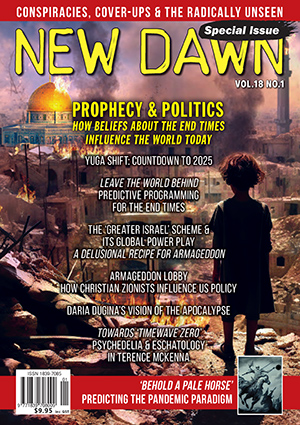
    Get the issue this article appears in

    Dugina had insisted that Russia’s “Special Military Operation” in Ukraine was a daring offensive-defensive manoeuvre to stop the Postmodern virus and apocalyptic deluge, already consuming the West, from overtaking one of Russia’s historical and cultural heartlands (or borderlands). Regardless of one’s interpretation of the conflict, it nevertheless fits into Dugina’s eschatological optimism concept: against all the odds, no matter what, we are obliged to wage a final struggle against the “End of History,” which, as we now can foresee, will no longer include humans – not to mention cultures and peoples like Russians, Ukrainians, Americans, Australians, etc.

    Daria Dugina’s favourite, oft-recited quote comes from René Guénon, an author of prophetic eschatological works: “The end of a world never is and can never be anything but the end of an illusion.”13
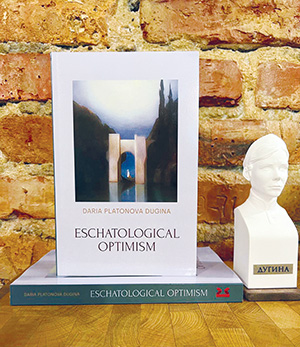
    According to Dugina, the scenarios ahead of us are the apocalyptic culmination of a deep, perfidious illusion. Our task is to end this illusion by and in ourselves, reclaim reality, and do so against all odds as humble, daring, inspired, aspiring eschatological optimists. For this reason, this young woman with a grand, startling awakening message was assassinated, and her death and life are of the utmost significance to us all.

    Daria Platonova Dugina’s Eschatological Optimism is available from Prav Publishing at pravpublishing.com/product/eschatological-optimism.

    [alert type=”general” dismiss=”no”]This article was published in New Dawn Special Issue Vol 18 No 1.[/alert]

    [alert type=”success” dismiss=”no”]If you appreciate this article, please consider subscribing to help maintain this website.[/alert]

    Footnotes

    1. Greg Miller, Isabelle Khurshudyan, Shane Harris, and Marya Ilushina, “Ukrainian spies with deep ties to CIA wage shadow war against Russia,” The Washington Post, washingtonpost.com/world/2023/10/23/ukraine-cia-shadow-war-russia
    2. Daria Platonova Dugina, Eschatological Optimism, trans. Jafe Arnold, ed. John Stachelski (PRAV Publishing, 2023); Jafe Arnold, “Life in the End: The Message of Daria Dugina,” Continental-Conscious, 19 December 2023, continentalconscious.com/2023/12/19/life-in the-end-the-message-of-daria-dugina
    3. Daria was close with Alexey Belyaev-Guintovt, on whom see David Herbst, “Alexey Belyaev-Guintovt: Court Painter of the Eurasian Empire,” New Dawn Special Issue Vol 15 No 3 (2021)
    4. Dugina, Eschatological Optimism, 39
    5. Ibid., 73-74
    6. Ibid., 107-108
    7. Ibid., 137-138
    8. Ibid., 55
    9. Ibid., 54
    10. Ibid., 39
    11. See: Askr Svarte, Tradition and Future Shock: Visions of a Future that Isn’t Ours (PRAV Publishing, 2023)
    12. Dugina, Eschatological Optimism, 114
    13. René Guénon, The Reign of Quantity and the Signs of the Times, trans. Lord Northbourne (Hillsdale: Sophia Perennis, 2004), 279

    © New Dawn Magazine and the respective author.
    For our reproduction notice, click here.

  • Awakening the God Within: Secret Teachings of Richard, Duc de Palatine & The Brotherhood & Order of the Pleroma

    Awakening the God Within: Secret Teachings of Richard, Duc de Palatine & The Brotherhood & Order of the Pleroma

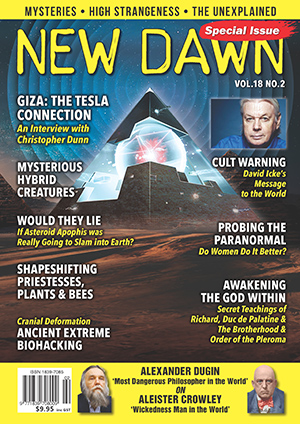
    From New Dawn Special Issue Vol 18 No 2 (Apr 2024)

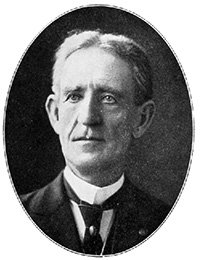
    One of the most remarkable spiritual teachers of modern times, Richard, Duc de Palatine (1916-1977), is little known today outside of a handful of modern Gnostic churches and initiatory orders.

    His biography was capably summarised by Mehmet Sabeheddin in an earlier article in New Dawn, which was the first introduction many people have had to de Palatine’s work.1 The teachings he handed down are even less well-known than the man himself. Yet the spiritual path de Palatine taught in his public writings and the private lessons passed on to his students is as relevant now as it was in his own time. It shows a way past the corrupt hierarchies of politicised religion to a spirituality founded squarely on individual human freedom.

    Many of those who knew de Palatine personally were profoundly impressed by the authority and the sense of “knowingness” that shaped his public presence even when he was a young man. His own writings confirm the impression of a man guided by inner certainties rooted in spiritual experience. Though his core insights were always his own, those insights were shaped in important ways by the esoteric traditions he studied and the initiatory lineages that were communicated to him. A brief survey of de Palatine’s own spiritual journey will therefore help set the stage for an outline of the teachings themselves.


    Richard, Duc De Palatine was born on 4 July 1916 as Roland (Ronald) John Powell in the Melbourne (Australia) suburb of North Fitzroy, the son of William John Powell and Annie Powell (Hancock). He studied at Melbourne University, serving with Australian military intelligence in WWII. He legally changed his name to Richard John Duc de Palatine after relocating to England from Australia in the late 1940s.

    A Quest For The Light

    His birth name was Ronald Powell, and he was born in Melbourne in 1916. From earliest childhood, he had a sense that some unseen power guided and protected him. Raised as a Christian, he dabbled briefly in rationalism, then entered the Catholic Church and attended Mass regularly for some years. By 1935, however, his disagreements with Catholic doctrine had become impossible to ignore, and he left the Church and began a period of spiritual seeking.

    In 1938 he joined the Theosophical Society, then an influential presence in the alternative spirituality scene in Australia and elsewhere. Theosophical teachers Geoffrey Hodson and John A. Farquharson guided Powell through the Society’s teachings. At least as influential was the Melbourne Theosophical Lodge’s library, which included G.R.S. Mead’s groundbreaking translations of surviving Gnostic literature and a wealth of works on the Essenes and the ancient Mysteries – subjects that would be central to Powell’s teachings later in life. The evidence of his later writings shows that he studied books by all the important Theosophical authors as well as the works of two American Rosicrucian teachers, Max Heindel and George Winslow Plummer.

    Collins St, Melbourne, in the 1930s.

    Probably by way of the Melbourne Theosophical library he also encountered the works of another extraordinary teacher, George Washington Carey. Born in 1845, Carey was an American mystic and healer whose work focused on the twelve biochemic tissue salts, a form of homeopathic medicine that uses the mineral salts found in the human body. Carey’s handbook of the tissue salts was for many years a standard text in this branch of alternative medicine. However, his interest in the tissue salts was not limited to their healing powers. Later in his life, he came to focus on one of the inner secrets of esoteric spirituality: the role played by hidden aspects of human biology in the quest for transcendence.

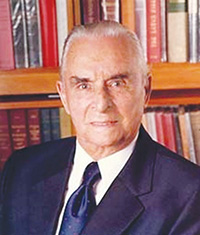
    For over 70 years, Geoffrey Hodson (1886–1983) was a leading light in the Theosophical Society.

    Carey’s work also drew on Christian tradition in a fascinating way. Having studied the work of many earlier writers, Carey came to understand that the Christian Gospels were not historical documents meant to be taken literally but skilfully crafted parables based on a deep understanding of the subtle anatomy of the human body. Through the myth of the birth, life, death, and resurrection of Jesus, they communicated a powerful system of personal spiritual transformation. Carey’s works, especially his last book God-Man: The Word Made Flesh, had a profound impact on Powell, who quoted Carey at length in his own writings and included material on the biochemic cell salts in his private lessons for students.

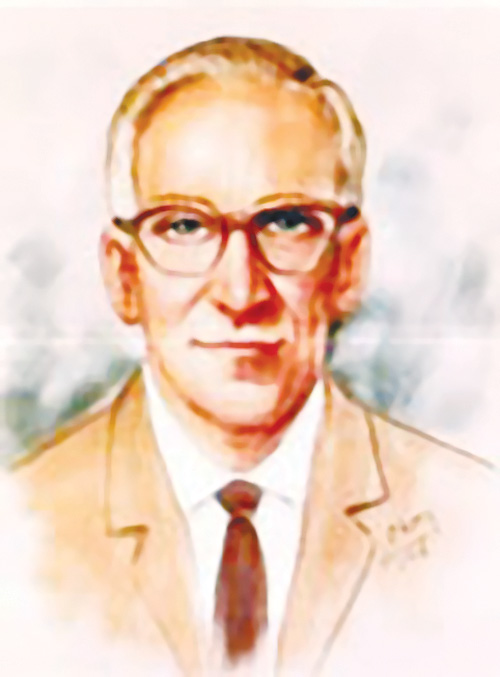
    George Washington Carey

    By 1948 Powell had become a teacher in his own right in the Melbourne area, with a circle of committed students. However, the “invisible presence” that guided him had other plans for him, and he travelled to London that year, settling in Kensington. Frequent visits to France brought him into contact with a wide range of European esoteric orders, and he received initiation into a series of potent spiritual lineages.

    The sources of some of these lineages may raise hackles in today’s alternative culture, as they were preserved in European royal and aristocratic families. It needs to be remembered, however, that the old aristocracies of Europe were never monolithic. To borrow a metaphor from Dune, there were plenty of Harkonnens amid European nobility but there were also equivalents of the Atreides. Over the centuries, it was by and large the Harkonnen-equivalents that triumphed, but some of the others survived in relative obscurity.

    It was from certain of these latter lineages that Powell received a series of initiations passed down for centuries from the Knights Templar and other initiatory bodies that preserved the ancient wisdom. In the course of these initiations, he was ennobled, taking the new name Richard Jean Chretien, Duc de Palatine. He was also consecrated as a bishop in 1953 by Mar Georgius (Hugh de Willmott Newman), Patriarch of Glastonbury, one of the most influential figures in the movement of free bishops, then evolving a sacramental Christianity independent of established religious hierarchies.

    All these influences came together in 1953. Late in that year, Bishop Richard, Duc de Palatine founded the Pre-Nicene Gnosto-Catholic Church to restore the Gnosis of the Soul – the secret teachings of the Gnostics and their heirs – to the Christian Churches. He also received a charter from the Fratres Lucis (Brothers of Light), an esoteric order that traces its origins to the fifteenth century, authorising him to establish an initiatory order alongside the church. Thereafter he devoted his time to teaching and writing, publishing a monthly magazine and a series of booklets on the Gnosis of the Soul through his Pre-Nicene Publishing House, and writing and circulating correspondence lessons to students throughout the world. In 1971, he relocated to the United States and remained there, always busy, until his death in 1977.

    The Gnosis of the Soul

    In the course of his work, de Palatine wrote more than two dozen essays of various lengths, as well as two correspondence courses for his students. These still survive and are available to students of the Gnostic churches and initiatory lineages he set in motion. As with most of the old traditions of initiation, some aspects of the work are kept private by their current custodians, just as they were by de Palatine himself. The first steps in the teachings can be outlined readily enough.

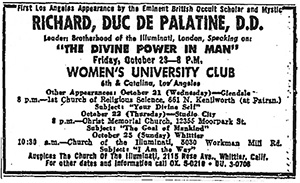
    In October 1959 – on the eve of the 1960s ‘occult explosion’ in the US – Richard, Duc de Palatine commenced his historic lecture tour of North America, as announced in the Los Angeles Times (from the archives of the Brotherhood & Order of the Pleroma – Australia). 

    The first and in many ways the most crucial point about de Palatine’s teachings is that he never claimed that they were original. In his view, one Wisdom Religion has been passed on by enlightened saints and sages since human beings first incarnated on this planet. That tradition has never died, though it has been obscured in some ages by corrupt priesthoods and tyrannical governments, and it is endlessly renewed by emissaries from the inner realms of being – human souls who have passed beyond the need for incarnation but return to material existence to help their fellow humans find their way to the path of the spirit.

    Central to the Wisdom Religion that de Palatine taught is a clear sense that God is not “out there” somewhere, an external presence exercising an arbitrary despotism over all things. “The Kingdom of God is within you,” said Jesus. Turn within and you will find that behind your personality, or Personal Soul, is the individuality or Higher Ego, the self that passes from life to life in the course of reincarnation. Behind the Higher Ego, in turn, is the Higher Self or Christos Body, an inseparable ray of the One Life which is God. Thus the spiritual quest always leads within, and seeks to awaken that inner knowing that brings the Personal Soul into harmony with the Higher Ego and the Higher Ego into harmony with the Higher Self.

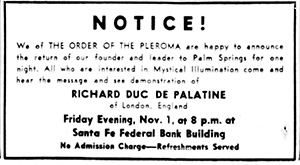
    Richard, Duc de Palatine regularly lectured across the United States in the 1960s, before relocating to California in 1971. 

    The Christos Body, in turn, is the Christ that matters in terms of personal salvation. In his book Christ or Jesus? de Palatine argued that the life of Christ in the four canonical Gospels is an invented narrative meant to communicate a path of spiritual transformation. It was based to some extent on the life of the Jewish spiritual teacher Jeshu ben Pandira, who lived and died around 100 BC. But the “Jesus Christ” of the canonical Gospels never actually existed as a living person, and the cult of Jesus as a historical person promulgated by the mainstream Christian churches is based on a cascade of misunderstandings circulated by early Christian teachers too literal-minded to grasp the profound metaphors of the Gospel myth.

    The life of Christ, in de Palatine’s teachings, thus has to be understood not as the story of one divine person but as a guide to the transformation of each individual soul. Just as there are five traditional stages in the Gospel narrative, there are five stages along the path to complete enlightenment. We can examine them one at a time.

    1. Birth. This is not the physical birth of the individual but the birth of the Christos, the radiant presence of divinity in the self, within the individual heart. This is the beginning of genuine spirituality, the replacement of outward forms with inward transformation. Inevitably the lower or animal self pushes back. Its instruments are the “images of menace,” parasitic forms created by unbalanced thoughts, feelings, and cravings, which reside in the subconscious and are stirred up by any effort at spiritual growth. These parasitic forms try to suppress the newborn spiritual potential of the individual; this is the real meaning of King Herod’s attempt to slaughter the infant Christ.

    2. Baptism. In the myth of the Christos, the baptism of Jesus by John the Baptist was the beginning of Christ’s earthly ministry. In the Gnosis of the Soul, it is the awakening of the power to perceive the inner regions. Psychic potentials such as telepathy begin to manifest themselves, and these powers unfold step by step until the individual becomes a risen Son of God emerging from the sepulchre of his own material body.

    3. Transfiguration. The narrative of Christ’s transfiguration is enacted by the individual seeker when the light of the higher self begins to illuminate the vestures or subtle bodies that surround it. In order to achieve this stage, the last vestiges of egoistic desire must be released. Once that has been accomplished, the individual becomes aware of his unity with the Supreme Soul, and he begins to function on the abstract planes of being where all things are perceived as one.

    4. Crucifixion. The animal self has not yet been wholly defeated, however, and the final battle between it and the awakening soul remains to be fought. This is the equivalent, in the path of the individual, of the crucifixion in the mythic narrative of the Christos. This final struggle completes the soul’s earthly pilgrimage; after this, there is no need to reincarnate further in a body of flesh, for the soul has learned everything this planet can teach it.

    5. Ascension. Having completed the journey set out symbolically in the Gospel narratives, the soul then ascends to become one with its own Divine Soul in those higher realms of being that traditional Christian mythology calls “heaven.” Having become an adept of the Gnosis and a member of the communion of saints, the fully awakened soul may then choose either to descend again to earth to help other souls complete the great journey or labour in other, subtler spheres of existence for the betterment of all.

    Get the issue this article appears in

    Beginning the Path

    The system of spiritual development passed on by the ancient Gnostic Christian churches, before they were driven into hiding by the political religion of Constantine and his successors, was called the Disciplina Arcani or the Arcane Discipline. This was the name de Palatine used for the system of training he passed on to his students.

    In de Palatine’s vision, religion was always a way of life and not just a set of beliefs. Students of the Arcane Discipline are given a set of ideals to embody in their lives. The hard work necessary to enact these ideals develops the inner capacities needed to proceed on the path. What are these ideals? First and most essential, control of thought; next, purity of mind, emotions, and body; third, compassion toward all beings. As these three qualities become habitual, the aspirant begins to receive attention from his or her inner Teacher, the spiritual being who will supervise that person’s training. Much of this training will take the form of trials and tests in everyday life. According to the aspirant’s response to these trials and tests, new lessons will be forthcoming.

    The ideals just listed are the most important capacities to develop in the early stages of the path, but certain others can also be pursued at the same time. The lessons de Palatine wrote for his students specify the ideals needed for the path as discrimination; indifference to worldly objects; control of the mind, the body, and the senses; tolerance; endurance; faith; equilibrium; and the desire for liberation. In addition, training in concentration and meditation also plays an important part in the practical work. One basic meditation from de Palatine’s writings is included here (see page 37). There are many others the aspiring student receives as the lessons proceed.

    At present, the teachings passed on by Richard, Duc de Palatine are still preserved by a handful of small organisations, as noted earlier, and interested students must make an effort to find them. He liked to point out that truth ever reveals itself to the sincere seeker. The basic elements of training summarised here are suitable for beginners. Those who practice them and set out in quest of more light are unlikely to be left in darkness for long.

    To read a Meditation Exercise by Richard, Duc de Palatine and see the additional informational graphics of this article, purchase a paper or digital copy of this magazine by clicking here.

    Recommended reading: “Meeting with a Magus: The Untold Story of Richard, Duc de Palatine & The Brotherhood and Order of the Pleroma” by Mehmet Sabeheddin in New Dawn Special Issue Vol. 13 No. 2, available as a digital download at www.newdawnmagazine.com/product/new-dawn-special-issue-vol-13-no-2.

    [alert type=”general” dismiss=”no”]This article was published in New Dawn Special Issue Vol 18 No 2.[/alert]

    [alert type=”success” dismiss=”no”]If you appreciate this article, please consider subscribing to help maintain this website.[/alert]

    Footnote

    1. Mehmet Sabeheddin, “Meeting with a Magus: The Untold Story of Richard, Duc de Palatine & The Brotherhood and Order of the Pleroma,” New Dawn Special Issue Vol. 13 No. 2, 65-70.

    © New Dawn Magazine and the respective author.
    For our reproduction notice, click here.
  • Carlos Castaneda: The Myth and the Man

    Carlos Castaneda: The Myth and the Man

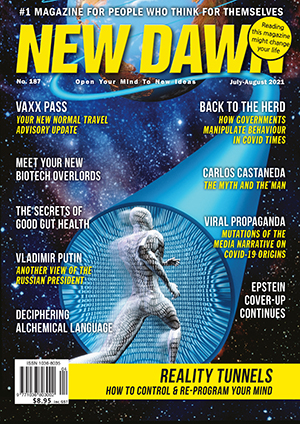
    From New Dawn 187 (Jul-Aug 2021)

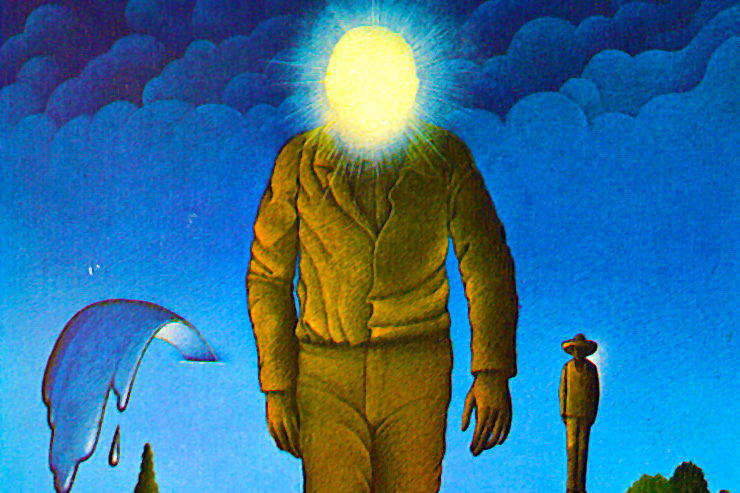
    Carlos Castaneda burst onto the scene in the 1960s after rave reviews of his early books, The Teachings of Don Juan and A Separate Reality. This was during the early heyday of psychedelics and here was an anthropologist telling the world how to do it right – and by right, I mean using drugs to enter advanced states of consciousness while guided by his Native American teacher, don Juan Matus. Over the next couple decades, Castaneda went on to publish several best-sellers about an ancient lineage of shamans who originated in central Mexico.

    During those years, Castaneda has been the subject of acclaim, almost to mythological proportions from adoring fans. He was also, and continues to be, the target of ruthless criticism among assertions that he was a fraud, that he made the whole darn story up, and delights in laughing at us all on the way to the bank.

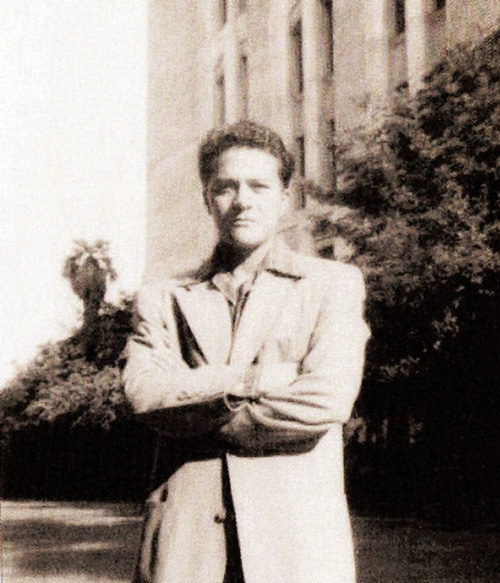
    A young and scholastically inclined Carlos Castaneda in his early UCLA years.

    In my view, he is neither deserving of being placed on a pedestal, which is contrary to shamanic teachings he espoused, nor of having people decry his work without accurate foundation. I rest my considerations on having implemented the teachings in his books and subsequently finding my own teacher, which it turned out was to be don Juan, himself. I also used Castaneda’s books as a primary reference to fully engage the path and crystalise don Juan’s instructions to me. In other words, I replicated Castaneda’s experiment.

    I think Castaneda was a brilliant anthropologist. His books clearly paved the path for others to enact. But he shouldn’t be equated as having the knowledge of don Juan, as even with Castaneda’s extensive learning their worlds remained far apart. However, with his artful renditions of encountering a world seen and lived by only a few, it is easy to allow him a meritorious rise to stardom.

    The Teachings

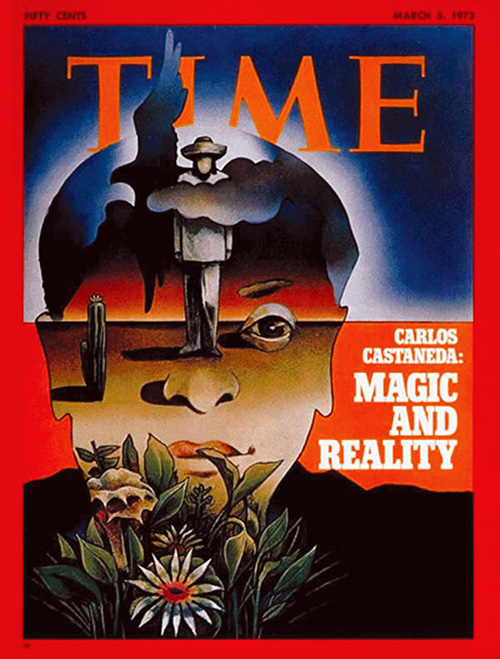
    The popularity of Carlos Castaneda’s books was such that he made the front cover of TIME, Mar. 5, 1973. Back then, a cover feature in TIME had a huge impact for the person profiled.

    Don Juan hooked Castaneda into learning the craft by giving him an anthropologist’s dream, that of introducing him to a foreign cultures’ practices of using lizards as dreaming emissaries, visiting inorganic worlds, and learning the social machinations of shamans. But this didn’t speak to the main agenda of don Juan’s teachings: engaging Castaneda with his complete energy body, accelerating the development of consciousness, and doing so in a way that would move him away from ancient perspectives and into contemporary practices.

    In the early stages of Castaneda’s apprenticeship, mind-altering substances – power plants – were integral to his learning shamanism. He initially thought they were the basis of don Juan’s teachings. However, he later realised that this thinking was erroneous. Castaneda came to understand that don Juan gave him several types of psychoactive plants to alter his awareness in order to gain experience.Without using them, don Juan thought that Castaneda was too slow to catch onto the teachings. But once Castaneda grasped the meaning behind their use, he stopped using them, noting that the most meaningful events and personal changes occurred when he was sober and clear-headed, and not from having ingested drugs.1 As a result of his research efforts, Castaneda was awarded a doctorate in anthropology from University of California, Los Angeles (UCLA).

    An important consideration, Castaneda’s conversations with don Juan were in Spanish, so Castaneda translated them into English. Initially, he used the term “sorcery” for the philosophy, translating from don Juan’s use of the word “brujo” which has many connotations. Early in his apprenticeship, Castaneda also relegated the teachings to Yaqui culture. But don Juan regarded the teachings not to be associated with any culture and found both sorcery and Yaqui connections to be inadequate. In his later work, Castaneda settled on the terms “shaman” and “seer.”2-4

    My Task

    Becoming immersed in Castaneda’s accounts of a wholly new relation with life, I experimented with disrupting routines, a way to begin looking at the world with a fresh lens. I used the inevitability of death as an advisor for how I wished to live my life. I also practiced with reasonable skill techniques such as the gait of power, a means of running at night unencumbered by rough terrain. The grand experiment took place when I packed my bags and left Florida for Arizona determined to find my own teacher, one who was on a par with don Juan. Once in Tucson, I found him in short order. It was beyond my wildest imagination that I would meet don Juan himself. I had successfully employed the instructions on how to find a teacher as presented in Castaneda’s writings by treating them as textbooks. 

    Castaneda’s task given to him by don Juan was to bring to light shamanic teachings, not by what he thought about them but in line with don Juan’s verbatim instructions and explanations. Don Juan later gave me the task of writing about Castaneda’s books. As part of my training with don Juan, I had to rely on Castaneda’s books for many of the details concerning shamanic practices. My apprenticeship was similar to yet different than Castaneda’s. While I have had many experiences that parallel his, our characters and temperaments are not well-matched. This resulted in contrasting methods of instruction by don Juan. For instance, Castaneda was with don Juan for extended periods; I was with him only for short visits. Don Juan fully explained his teachings to Castaneda; don Juan required that I obtain additional instruction from a wide variety of sources in order to expand and elaborate on his teachings to Castaneda. 

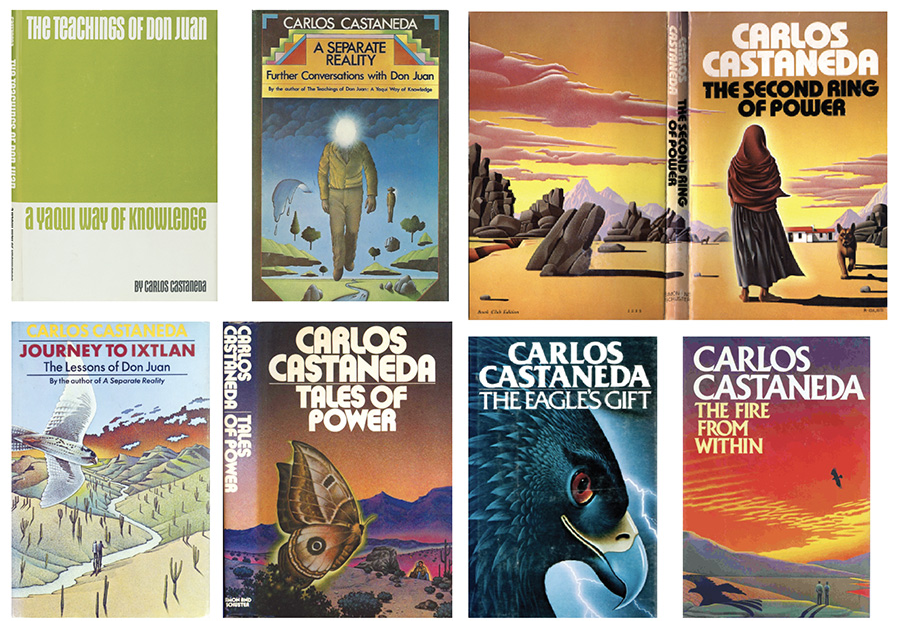
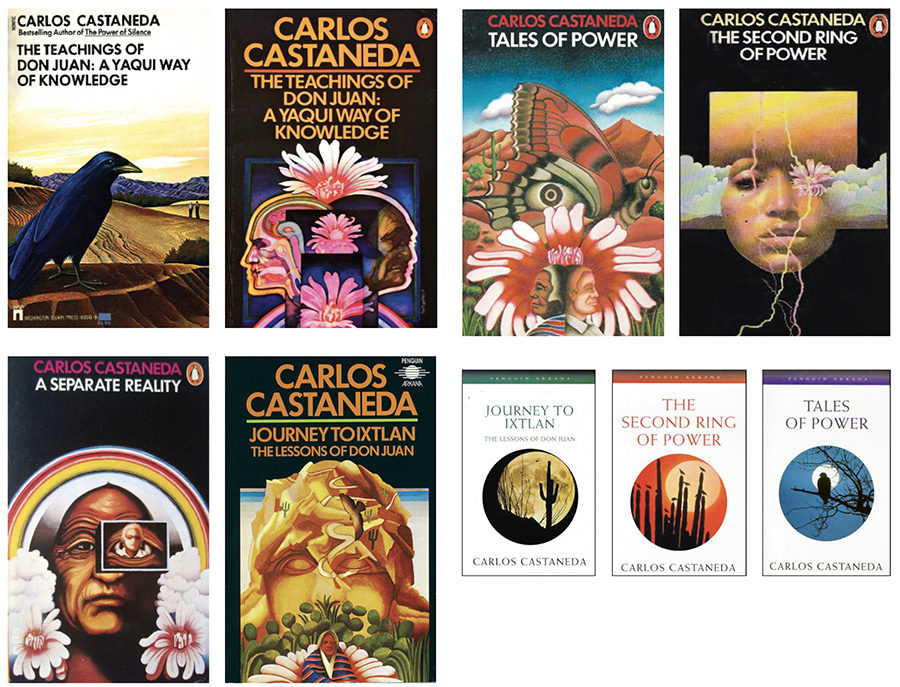
    Down memory lane… Hardback editions of Carlos Castaneda’s first seven books.

    The Great Debunking

    Castaneda’s work was and continues to be controversial. People of high esteem claim that awarding Castaneda a doctorate was UCLA’s worst mistake ever. Everyone knows his books are fiction (really?… everyone?). Castaneda is a fraud, continued a litany of accusations. He never talked with me about it, so it must be false. Such shamans could not possibly exist. Their worldview is simply preposterous. You won’t find one anthropologist who doesn’t think Castaneda to be a clever con man. It’s a hoax. UCLA has revoked his PhD! On and on….

    Debunking the Debunkers

    I’ve found that much of the criticism is baseless, often riddled with errors. While I rely on my experience as evidence of Castaneda’s legitimacy, there are other factors. Hearing well-credentialed scientists decry Castaneda, stating that his PhD had been revoked, I wanted to verify the claim. A representative of the UCLA anthropology department told me that it wasn’t true, that Castaneda was viewed as any other PhD graduate and, oh, by the way, the anthropology department hears such erroneous claims and rumours all the time.5

    It is noteworthy that jumping on the debunking bandwagon (any bandwagon) is a fallacy of logic, of good reasoning. People enjoying their bandwagon ride tend to studiously disregard corroborations of Castaneda’s work. A body of evidence supporting Castaneda’s efforts includes an assortment of books written by both academics and laypeople.6-15 But, hey, let’s not pay attention. Too messy to do so. Our worldview, and so the world itself, might crumble.

    To balance things out, I’ve met academic notables who support Castaneda’s efforts, even saying that anthropology students would do well to verse themselves in Castaneda’s books because he demonstrated a high level of proficiency in conducting himself as an anthropologist in the field when dealing with don Juan and other shamans.16

    It’s also important to assess the work of the debunkers. It is often the case that they commit the same mistakes of research methodology that they accuse Castaneda of committing. (Projection, plain and simple.) And they take to their bank the claims of their colleagues without critical evaluation, a dereliction of scientific duty. As a result, part of the arguments against Castaneda stands on compiling and continuing prior research errors. As don Juan maintained, the intent for most people is to shun information that doesn’t conform with their thoughts.17

    Selection of paperback editions of Carlos Castaneda’s books.

    An Emic Style

    Another factor in addressing Castaneda’s legitimacy is understanding his style of anthropological investigation, which he stated was an emic approach, a classic but seldom used method.18 This is an accounting based on the point of view of a participant rather than an etic approach where the researcher is on the outside looking in. Etic practitioners often say that theirs is the more objective method whereas those in the emic camp say you really don’t know until you’ve been there yourself.

    If we apply an emic standard, and so regard his research as originating from inside the shamanic tradition rather than the more common and seemingly detached observing and reporting, Castaneda’s books are entirely consistent with that body of teachings. His books may then be viewed as the culmination of a learning project where he was required to perform the teachings to achieve anthropological insight. In this light, his books represent having personally learned about and then reported on shamanism, a true representation of emic anthropology.

    Wavefield Science

    Controversies surrounding Castaneda are no different than those surrounding new scientific theories or pretty much any other advance in thinking and understanding. For example, modern quantum wavefield physics is also controversial as are and were many scientific discoveries. It often takes a couple generations for new views, especially those at a cosmological level, to take hold.19

    It turns out that the emerging field of wavefield physics supports what shamans have known for centuries (with scientific publications occurring after Castaneda began publishing): the world is exclusively energy, physical objects only appear to be material due to a coherence of energy, other dimensions exist, and any point of view or method is an interpretation. Modern wavefield science deals exactly with the same central pillars of cosmology shamans have investigated. It is therefore accurate to say that the considerations of a new breed of wavefield researchers are now catching up to those of ancient shamans.20 Emerging wavefield theory stands to be key evidence in validating Castaneda’s work. 

    The Man

    Aside from professional controversy, there was (and maybe still is) concerns that Castaneda had somehow slipped off the path don Juan helped him navigate only to entertain the dark side of life a bit too much. This line of thinking presents a host of problems, some of which I’ll address. First, though, darkness is a common element among mystics, shamans being one type. For example, old cycle shamans referred to the dark sea of awareness because its content was beyond their grasp, and so the unknown was dark, as in not yet grasped.

    And then there’s the dark side of the old cycle that don Juan struggled to get Castaneda to turn away from, things like controlling others, seeking recognition, and succumbing to the unknown in a way that prevented more robust growth. In addition, given that he was a three-prong nagual (a certain type of energy body) subject to erratic behaviour and that he also had old cycle tendencies, a dimension of darkness was within him. Castaneda illuminated these personal foibles throughout his books, adding immeasurable insights to his writings.

    It may be that Castaneda placed too much emphasis on achieving academic recognition. He may have not made the full shamanic cut in that he placed more emphasis on anthropology than on don Juan’s wisdom of trying to get him to avoid those types of pitfalls.

    As portrayed in his books, Castaneda may also have fallen too much under the influence of those around him. At a given point, don Juan was out of the picture and Castaneda’s sense of membership hinged on those with whom he associated. As a result, once ardent followers lamented that his work had become darker than the higher-end shamanism of don Juan. This was something don Juan warned him about (another testament to the books and author) but he evidently struggled.

    Furthermore, in his later years Castaneda suffered from terminal illness, something that can derail the best of us. He died on 27 April 1998, 72 years old, due to complications arising from liver cancer.21

    Get the issue this article appears in

    Closing Thoughts

    When Castaneda codified a once oral tradition, a new mould was cast of the teachings. He provided a formative body of information for common reference. Since the tradition is rooted in exploring the energy body rather than instilling a set philosophy, this strain of shamanism often takes different turns in the road. As don Juan said, there is no official version of shamanic knowledge, and the passage of time requires new ways of interpreting and explaining it.22

    Carlos Castaneda eloquently set the tone for subsequent shamanic literature as his books established the framework of this mystical tradition. In so doing, he also standardised much of the terminology in a manner similar to any academic, scientific, or trade discipline. Quite a feat. All said and done, as don Juan had taught, a shaman’s task is paramount over personal considerations – a challenge to which Castaneda performed impeccably.

    Kenneth Smith’s new book Power Up Your Energy Body: Out-of-Body Experience & Expanding Consciousness, is available from Amazon.com.

    [alert type=”general” dismiss=”no”]This article was published in New Dawn 187.[/alert]

    [alert type=”success” dismiss=”no”]If you appreciate this article, please consider subscribing to help maintain this website.[/alert]

    Footnotes

    1. Castaneda, Carlos. Tales of Power. New York: Washington Square Press, 1974, 243.
    2. Castaneda, Carlos. The Art of Dreaming. New York: HarperCollins, 1993, vii.
    3. Castaneda, Carlos. The Power of Silence. New York: Washington Square, 1987, xi.
    4. Castaneda, Carlos. Journey to Ixtlan. New York: Washington Square Press, 1972, viii.
    5. Personal telephone conversation and e-mail correspondence with UCLA Department of Anthropology, October 2005.
    6. Noel, Daniel. Seeing Castaneda, Second Edition. New York: TarcherPerigee, 1976.
    7. Williams, Donald Lee. Border Crossings: A Psychological Perspective on Carlos Castaneda’s Path of Knowledge. Toronto: Inner City Books, 1981.
    8. Tomas. The Promise of Power: Reflections on the Toltec Warriors’ Dialogue from the Collected Works of Carlos Castaneda. Charlottesville, VA: Hampton Roads Publishing, 1995.
    9. Tart, Charles. States of Consciousness. Lincoln, NE: iUniverse.com, Inc., 2000.
    10. Eagle Feather, Ken. Traveling with Power: The Exploration and Development of Perception.Charlottesville, VA: Hampton Roads Publishing, 1992, 1996.
    11. Smith, Kenneth. Shamanism for the Age of Science: Awakening the Energy Body. Rochester, VT: Bear & Company, 2011.
    12. Sanchez, Victor. The Teachings of Don Carlos: Practical Applications of the Works of Carlos Castaneda. Santa Fe, NM: Bear & Co., 1995.
    13. Classen, Norbert. Das Wissen der Tolteken (The Knowledge of the Toltecs). Eurasburg, Germany: Edition Tonal, 1992.
    14. Abelar, Taisha. The Sorcerers’ Crossing: A Woman’s Journey. New York: Viking, 1992.
    15. Donner, Florinda. Being-in-Dreaming: An Initiation into the Sorcerer’s World. New York: HarperCollins, 1991.
    16. Personal conversation with Edward Spicer, Professor Emeritus of Anthropology, University of Arizona, Tucson, September 1976.
    17. Castaneda. Power of Silence, 165-166.
    18. Dissertation Abstracts International, Xerox University Microfilms, 33B (May-June 1973): 5625-B.
    19. Kuhn, Thomas S. The Structure of Scientific Revolutions, Third Edition. Chicago: University of Chicago Press, 1996.
    20. Smith, Kenneth. The Energy Body: A Space Age Exploration of Consciousness, Life, and Reality. Kure Beach, NC: EB Dynamics, LLC, 2021.
    21. County of Los Angeles, California, Certificate of Death 090130425, April 28, 1998.
    22. Castaneda, Carlos. The Fire from Within. New York: Simon & Schuster, 1984, 49.

    © New Dawn Magazine and the respective author.
    For our reproduction notice, click here.

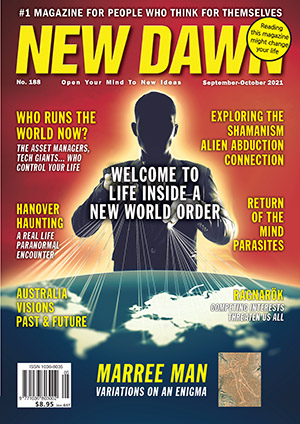
  • Return of The Mind Parasites: Lovecraft, Wilson, & Phenomenological Science Fiction

    Return of The Mind Parasites: Lovecraft, Wilson, & Phenomenological Science Fiction

    From New Dawn 188 (Sept-Oct 2021)

    In 1959, while staying at the farmhouse of an old friend, the British existentialist Colin Wilson came across a book seemingly designed to attract his attention; the fact that it was the only one in the house practically ensured that it would. Its title was The Outsider and Others and its author was H. P. Lovecraft, the American pulp horror fiction writer from the pages of Weird Tales, who in recent time has been promoted to the rank of a Penguin Modern Classic. Wilson had never heard of Lovecraft but his own first book, the one that had made his name as an “angry young man” a few years back, was called The Outsider, so naturally he was interested. 

    Wilson’s book was an account of modern alienation and the extreme mental states of creative individuals trying to overcome it. Lovecraft’s brand of “eldritch,” “grotesque,” “nameless” horror – these are only a few of his hyperbolic adjectives – seems far away from the angst and la nausée of existentialism, and yet appearances can be deceiving. Wilson took the mouldy volume off the shelf – it was published in 1939, two years after Lovecraft’s death – its yellowing pages almost crumbling at his touch, and settled down to read. Before turning in that night Wilson knew that he had come across an “outsider” indeed. If anyone fit the bill of the isolated, alienated man of genius, loathing the mediocrity of the modern age, Lovecraft did.

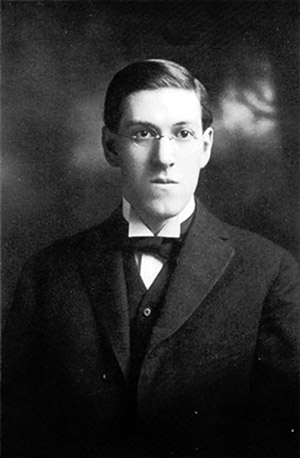
    H. P. Lovecraft, circa 1915.

    Wilson was so taken with Lovecraft that reading him inspired one of the books in his “Outsider Cycle,” in which he attempts to provide the foundation of what he called a “new existentialism,” to replace the dreary rive gauche version of Sartre and Camus, and the gloomy Schwarzwald meditations of Professor Heidegger.1 Wilson believed that all three had taken a wrong turn at Edmund Husserl, the founding father of phenomenology, out of which existentialism emerged. The books in Wilson’s “Outsider Cycle” methodically spell out his objections to what had become a philosophy of meaninglessness and despair, in an attempt to regain existentialism’s original object: the vision of freedom. In outsider figures like Blake, Nietzsche, Gurdjieff, and others, Wilson had discovered experiences of a “Yea-saying,” affirmative consciousness that Sartre and the others had left out of their analyses. Central to his analysis of these moments of “affirmation” was Husserl’s dictum that consciousness is intentional. It is not the passive recipient of sense impressions impinging from without, but an active reaching out to reality, in order to grab it with the talons of the mind. It was this, Wilson believed, that the old existentialists had lost sight of.

    Wilson’s book, The Strength to Dream (1962), a study in what he called “existential criticism,” focused on how different writers used the imagination to present their values, their vision of the world. He started with Lovecraft and were he alive to have read it – which is entirely possible; he would only have been in his early seventies – Lovecraft would no doubt had been gratified that he was taken seriously, and perhaps not a little bemused at the literary company he was keeping. Wilson put him in the context of W. B. Yeats, August Strindberg, and, perhaps surprisingly Oscar Wilde, as agents of what he called “The Assault on Rationality,” writers who reject the everyday world and create an alternative more to their liking. Yet Lovecraft might not have been amused at Wilson’s assessment of him as “that man of dubious genius” who “carried on a lifelong guerrilla warfare against civilisation and materialism,” and who was a “somewhat hysterical and neurotic combatant.”2 

    Aside from his atrocious style, filled with phrases like “black clutching panic” and “stark utter horror” – Lovecraft always had a bad habit of overwriting – what repelled Wilson about Lovecraft was his “soured romanticism.” He was a man so revulsed by the triviality of modern life, it seemed, that he reminded Wilson more of the Düsseldorf mass murderer Peter Kürten, who dreamed of blowing up whole cities, in fantasies of revenge against the inequities of life, than of his tragic predecessor, Edgar Allan Poe.3 Lovecraft never engaged in any of the violent acts that filled Kürten’s horrific career, but his tales of ancient evil and exiled gods – Cthulhu and Co. – returning to their lost domain – planet Earth – were, Wilson believed, the literary and psychological equivalents of Kürten’s brutal assaults on “society.” Both, Wilson argued, were engaged in acts of ressentiment against a world that negated them.

    Wilson’s estimation of Lovecraft, however, increased over time, helped by a visit to Providence, Rhode Island, where Lovecraft spent most of his short life. Wilson was a visiting lecturer at Brown University and took the opportunity to read Lovecraft’s letters and other works held in the library. His interest eventually led to a correspondence with August Derleth, the man more than anyone else responsible for Lovecraft being known at all today. After Lovecraft’s death Derleth became his literary executor and through his Arkham House Press kept Lovecraft in print. Derleth had read Wilson’s criticisms of Lovecraft and thought he had been unfair. Wilson was open enough to Derleth’s comments to revise some of his remarks about Lovecraft for the American edition of the book. Yet Derleth still felt Wilson had short changed Lovecraft. In a letter to Wilson he wrote, “If you’re so critical of Lovecraft, why don’t you write a fantasy novel, and see whether it’s any good…”4

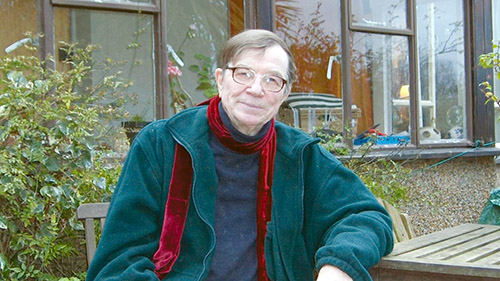
    The English writer, philosopher and novelist, Colin Wilson (1931–2013)

    Wilson Takes Up the Challenge

    Not one to ignore a challenge, Wilson brooded on the idea. His interest was not in terrifying people as Lovecraft’s had been. It was, in fact, more along the lines of the sort of quasi-science fiction Lovecraft was writing towards the end of his life, in stories like The Shadow Out of Time. With its vision of ancient alien races sending their consciousness out into the depths of time and space, this produces more a sense of awe than a shudder – something we find in H.G. Wells and Olaf Stapledon, two other writers with a “cosmic” point of view. Wilson’s own vision was that of a consciousness free from time, able to rise above the “triviality of everydayness” that revulsed Lovecraft (the phrase is Heidegger’s) and become aware of the “reality of other times and places,” and not only of the one in front of your nose. 

    It was while working on his Introduction to the New Existentialism (1966)that Wilson came upon an idea that would give the old Lovecraftian theme a new twist. Lovecraft’s fellow Weird Tales writers all added to Lovecraft’s Cthulhu Mythos, inventing gods, ancient races, lost cities, and, most effectively, fictional texts such as Lovecraft’s Necronomicon, that give the tales a flavour of authenticity. But Wilson’s contribution wouldn’t be another god, like Clark Ashton Smith’s Tsathoggua, although he will draw on this, nor a forbidden text like Robert E. Howard’s Unaussprechlichen Kulten, nor will his protagonists meet their doom in a ruined temple on some unknown South Pacific island. Wilson’s monsters would come from somewhere else. They would come from the mind.5

    Wilson’s first foray into what we can call “phenomenological science fiction,” The Mind Parasites (1967), came on the back of a series of novels in which Wilson used the constraints of genre fiction for philosophical purposes.6 His first novel, Ritual in the Dark (1960), is an existential thriller about a sexual killer, and could best be described as Jack the Ripper meets the Brothers Karamazov in duffle-coated early 1950s London. It works out in fictional form some of the themes of The Outsider. This was a practice Wilson continued with detective novels (Necessary Doubt (1964)), psychological crime thrillers (The Glass Cage (1966)), erotica (The Sex Diary of Gerard Sorme (1961)), and later with espionage, police procedural, soft porn, and, as we will see, science fiction.

    Wilson’s engagement with Lovecraft led to several works, some serious attempts at using Lovecraft’s themes for philosophical purposes, some, like his contributions to the Lovecraft sendups The Necronomicon (1978) and The R’lyeh Text (1995) more tongue in cheek pastiche than anything else.7 The two novels I look at here, The Mind Parasites and its follow-up The Philosopher’s Stone (1969), are Wilson’s masterpieces in the genre. In them Wilson managed to put into gripping fictional form the essence of his “new existentialism,” and the insight that would inform his decades long investigation into the occult and paranormal, his search for “Faculty X,” the ability of the human mind to free itself of the constraints of time and space and occupy “other times and places.” 

    Wilson wrote another science fiction novel, The Space Vampires (1976), that uses some Lovecraftian ideas – sadly it was made into the dreadful film Lifeforce (1984) – and his later epic Spider World series(1987-2002)is his attempt at a Tolkienesque fantasy. Yet it is in The Mind Parasites and The Philosopher’s Stone that Wilson managed to find, to my mind at least, the perfect balance between the ideas and a narrative to convey them. The books are, borrowing a title from Alfred North Whitehead, “adventures of ideas.” Like the late novels of H.G. Wells, that Wilson, against critical opinion, rated highly, they are compelling because of Wilson’s ability to make the ideas come alive. The reviewer who said of his work that he had a “narrative style that can make the pursuit of any idea seem exciting detective work” knew what he was talking about.

    The Mind Parasites

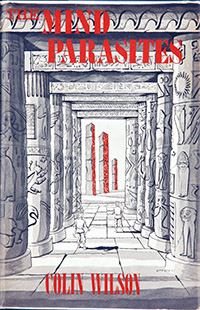
    First edition hard cover of The Mind Parasites.

    The Mind Parasites begins in 1994 – the future for its first readers, the past for us – when the archaeologist Gilbert Austin learns that his friend, the psychologist Karel Weissman, has committed suicide. The death, of course, was enough to shock him. But suicide? “It was impossible.” Weissman “had not an atom of self-destruction in his composition.” What could have driven him to take his own life? It was true that the suicide rate had increased considerably over the years. But Weissman was a follower of the humanistic psychology of Abraham Maslow (who shares billing with Husserl in the new existentialism). It was unthinkable. What made him do it? 

    The answer to that, Austin suspects, could be found in the collection of papers Weissman left behind. Yet before Austin can attend to them, his own work takes him to Turkey where he and his colleagues make an incredible discovery. Strange figurines of an unknown origin lead them to tunnel below the surface only to discover a huge block seventy feet long two miles underground. It is the remains of a cyclopean city, a metropolis built by giants eons ago… 

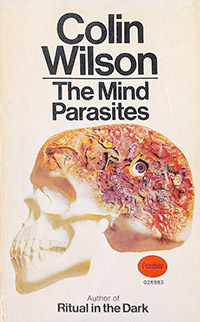
    First edition paperback of The Mind Parasites.

    Yet these allusions to the Great Old Ones and Elder Gods of Lovecraft’s mythos are really a red herring, for the truly evil creatures – who, borrowing from Clark Ashton Smith, Wilson calls the Tsathogguans – are not, like Cthulhu, resting in sunken R’lyeh, waiting to be awakened, but inhabit a much more intimate space: that of the mind. Austin discovers why his friend had killed himself: he had become aware of psychic vampires that have been bleeding human consciousness dry for the past two centuries, and they had got rid of him… Just as they had got rid of the generation of creative geniuses, the Romantics, who Wilson sees as the first sign of a new stage in the evolution of human consciousness.

    Wilson’s The Outsider sought to answer the question why so many creative individuals of the 19th and early 20th centuries either died young, went mad, committed suicide, or in some way came to a bad end. Nietzsche, Baudelaire, Ibsen, Keats, Shelley, Kleist, Novalis, Poe; this list, chosen at random, could go on. These men and others, lesser known, experienced eruptions of the imagination unlike anything that had been seen before. The poets of the previous age said that the “proper study of man is man.” The Romantics disagreed and sought to embrace the entire universe. The ecstasies they experienced convinced them that men were really sleeping gods. Yet when they returned to earth from their ecstatic excursions, they were struck by the banality of the world they were forced to inhabit, and their inability to revive the vision of inner freedom and space, the “bird’s eye view” over space and time. Self-pity, depression, weariness set in. Baudelaire compared the poet to the albatross: when aloft, the bird’s great wings enable him to soar gracefully, yet on land they are encumbrance, tripping him up. This brutal world was not meant for such noble creatures, and so many of them succumbed.

    Wilson’s mind parasites are an allegory of how the mind can collapse on itself, of how easy it is for it to slip into existential despair and a self-produced insanity. In The Outsider Wilson relates several experiences of what Swedenborg called “vastation,” a total emptying out of any sense of meaning, of any reality propping up your existence. One night on the desert, meditating on the reality of history, and on the knowledge of that reality housed within his mind, Gilbert Austin becomes aware that within his own consciousness, there is a universe as strange and unknown as the one he gazes out on at the stars… the essence of the Romantic vision. It was then that something odd happens. Austin catches a glimpse of “some alien creature” in his own mind. He then discovers that his friend Weissman had had the same experience. Weissman’s research into the growing suicide rate uncovered a disturbing fact: the human race was losing its power of self-renewal. “For more than two centuries now,” Weissman reports, “the human mind has been constantly a prey to energy vampires.” 

    Around the turn of the eighteenth century, a kind of change came over the western mind: the powerful optimism of the early Romantics – Beethoven, Goethe, Blake – is followed by a gloomy pessimism, a despair the mind parasites feed on. “The artists who refused to preach a gospel of pessimism and life-devaluation were destroyed.” Some individuals, like the Marquis de Sade, were completely in the vampires’ control. Pessimists, like Schopenhauer, lived to a ripe old age. Nietzsche, the life-affirmer, goes mad. Men may really be gods, but it is in the parasites’ interest that they never find this out. Those who suggest as much are quickly done away with…

    Having become aware of the parasites, Weissman is a threat to them, so they attack him with waves of depression and despair until he can stand it no longer and kills himself. When the parasites discover that Austin is aware of them, they try the same tactic. But in the meantime he has learned of Husserl’s work in phenomenology and of the central insight that consciousness is intentional. In one of the most remarkable battle scenes in all literature, a campaign that takes place entirely within the mind, Austin fends off the waves of suicidal emptiness and cosmic despair until his increased powers of intentionality rout the parasites.8 Now that their cover is blown, it is all out war.

    The rest of the novel relates Austin’s gathering together a team of other intellectuals – psychologists, historians, scientists – who become the human race’s vanguard against the parasites. Through mastering Husserl’s phenomenological techniques, they learn how to direct their intentionality as if it were a laser beam of consciousness. One by-product of this is that they all become psychokinetic, their consciousness able to reach out and “grab” the world in a very literal way. Their psychokinetic powers are enormous. In an attempt to unite the world against the parasites, they use their combined mental energies to disintegrate the “Kadath block” on live television, claiming it was destroyed by the parasites. When they discover that the parasites have a base on the moon, they decide the only way to rid humanity of these deadly pests is to move the moon out of its orbit. Wilson’s use of the moon as the source of mankind’s afflictions is a nod to Gurdjieff, who saw “sleeping humanity” as “food for the moon.” He also makes use of the theories of Hanns Hörbiger, enamoured by Hitler, about the different moons the earth has had in the past. 

    By the end of the novel, not only have Austin and his colleagues got rid of the moon, they have fended off a race war, prompted by the parasites, who glut themselves on the negative energies given off. The discovery of the ancient cyclopean city that started the book is of relatively minor importance compared to the revelatory insights into consciousness the team has achieved. At one point in the story, Austin becomes aware of other intelligences, benevolent ones, out in space, beyond the orbit of Pluto. He and his colleagues ride off, not into the sunset, but in the direction of that distant planet, their spaceship propelled by the powers of their minds… They are eager to join the other “policemen of the universe,” and to learn exactly how powerful a consciousness free of the parasites really is. Their mysterious voyage becomes a myth for future exploration into the vastness of existence, inner and outer.

    Get the issue this article appears in

    The Philosopher’s Stone & Relationality

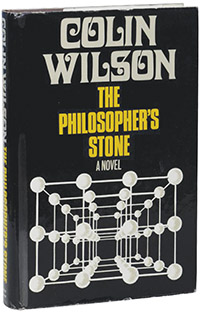
    First edition hard cover of The Philosopher’s Stone.

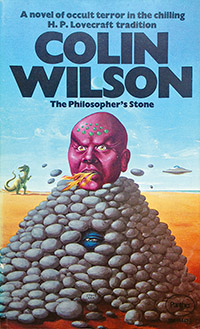
    In The Mind Parasites Wilson explores the possibilities inherent in Husserl’s intentionality. In The Philosopher’s Stone it is another power of consciousness, relationality, Wilson’s own coinage, that takes centre stage. Readers of Wilson’s little book Poetry and Mysticism (1968), written at the behest of the poet Lawrence Ferlinghetti for his City Lights imprint, will recall that in it Wilson’s speaks of “duo-consciousness” and of what he calls the “web-like” character of consciousness, when thoughts and recollections spread out and link together, forming a kind of “net” of awareness. In The Philosopher’s Stone the relationality of consciousness leads to what Wilson calls “time-vision,” the ability to look into the past as if through a telescope. If in The Mind Parasites the heroes discover their psychokinetic powers, in The Philosopher’s Stone it is psychometry, the ability to know the past of an object simply through touch, that Wilson’s heroes discover they possess. It is through this that the protagonists become aware of the Great Old Ones, brooding in some dimension outside our own, waiting for their chance to return

    First edition paperback of The Philosopher’s Stone.

    But again, they are a red herring. The real subject of the novel is once again consciousness; this time, its potential to slow down and even to stop the aging process. In Back to Methuselah, Bernard Shaw argued that human life is too short to make any good use of it; humans needed to live to at least three hundred in order to mature. Wilson took up Shaw’s challenge as to how this could be done. His answer: the fountain of youth – or at least of immortality – lay in the prefrontal lobes of the brain.9

    In search of a phenomenological elixir vitae, Wilson’s hero, Howard Lester, discovers that the “value experiences” of the psychologist Aaron Marks (Maslow’s “peak experiences”) seem able to slow down our biological clocks. He arrives at this insight after his research leads him to conclude that, statistically, philosophers, composers, scientists, mathematicians – anyone who makes a practice of trying to view life objectively, and not through the gauze of their emotions – live longer than other people. He discovers that the source of the “VE” are the brain’s prefrontal lobes, its most evolutionarily advanced part. Through a series of experiments introducing a minute quantity of “Neumann alloy” into their own prefrontal lobes, Lester and his colleague, like Gilbert Austin and his team, discover unknown powers of consciousness. Their “relationality,” the intuitive glue that spreads across reality like the ripples on the surface of a deep, still pond, increases enormously, until they are able to use their imagination to peer into time. 

    Wilson has a long section in which Lester, sinking into a state of “contemplative objectivity,” finds himself in sixteenth century London, rather as Charlotte Ann Moberly and Eleanor Jourdain, authors of An Adventure (1911), found themselves transported to the Versailles of Marie Antoinette. This is a time travel novel with a twist. Actual, physical time travel, the kind his hero H. G. Wells wrote about in The Time Machine, Wilson argues, is an absurdity. There is no “time” to travel through; “time” is a word we use to refer to process, and to think of “process travel” is nonsense. But the mind is not limited by the logic that constrains physical reality, as J.W. Dunne, author of An Experiment With Time (1927), discovered with his “precognitive dreams.” Just as Dunne was able to see into the future, Wilson’s phenomenological alchemists, in search of their own philosopher’s stone, can turn their vision to the past. The imagination, Wilson said, is “the ability to grasp realities not immediately present.” The past isn’t present, but it is a reality, and through their increased powers of relationality – awareness of the connectedness of everything – Wilson’s heroes can imaginatively grasp it.

    One result of this new faculty is proof that Francis Bacon was really the author of Shakespeare’s plays. Another is that K’ tholo – Lovecraft’s Cthulhu – was one of the founders of human civilisation. Another is that the Great Old Ones are not dead, only sleeping, but their influence can be felt. They have erected barriers to the heroes’ time-vision which prevents them from reaching far enough back into the past to solve the mystery of… but that would be telling. En route the reader learns the truth about Stonehenge, the Maya, the Voynich Manuscript – a Wilsonian standby, that surfaces in more than a few places – poltergeists and much more. 

    Wilson said that the aim of his writing was to get people to think. His novels are more fables or parables, than the kind of character analysis we associate with most modern fiction, which sticks obsessively to “everyday” consciousness and its trivial concerns. They share this character with the late novels of Wells, which use the barest structure of a novel for didactic purposes. Readers who find ideas exciting will find Wilson’s – and Wells’ – didactic fictions breath-taking. (“I apologise for sounding didactic,” Wilson’s hero says at one point. “It is impossible to say anything that is not commonplace without sounding didactic.”) I have read them a number of times yet each time I discover new things and come away exhilarated. If, as Wilson says, “close-upness deprives us of meaning,” his phenomenological fictions are cable cars to the heights, to the “bird’s eye view,” that enables us to enter that inner universe from which we can view the outer one with “contemplative objectivity.” “The will feeds on enormous vistas,” Wilson tells us. “Deprived of them, it collapses.” In The Mind Parasites and The Philosopher’s Stone the reader will find vistas enormous enough to feed his will no end.

    Footnotes

    1. The Outsider (1956), Religion and the Rebel (1957), The Age of Defeat (The Stature of Man in the US) (1959), The Strength to Dream (1962), Origins of the Sexual Impulse (1963), Beyond the Outsider (1965), and Introduction to the New Existentialism (1966).
    2. Colin Wilson, The Strength To Dream (London: Abacus, 1979) p. 1.
    3. Colin Wilson and Pat Pitman, Encyclopedia of Murder (London: Arthur Baker, 1961) pp. 326-335.
    4. Colin Wilson, The Mind Parasites (Rhinebeck, NY: Monkfish Press, 2005) p. xvii.
    5. Wilson admits to being inspired by the science fiction film Forbidden Planet (1956), in which Walter Pidgeon portrays Morbius, a scientist who has increased his mental powers through contact with the technology of an ancient, more highly evolved race. He was unaware that he was at the same time increasing the power of his unconscious mind. Because of this he releases “monsters from the Id.”
    6. Recently the book has been the object of some renewed interest, seeing Wilson’s allegorical creatures as the possible agents of our contemporary malaise. See www.awakeninthedream.com/articles/mind-parasites-of-colin-wilson 
    7. Wilson also contributed two shorter works, “The Return of the Lloigor,” in Tales of the Cthulhu Mythos, ed August Derleth (Sauk City, WI: Arkham House, 1969) and “The Tomb of the Old Ones” in The Antarktos Cycle, ed Robert M. Price (Oakland, CA: Chaosium Publications, 1999).
    8. I can only mention here that in another novel, The Black Room (1971), an espionage tale set around the effort to defeat a sensory deprivation chamber, Wilson works out the same ideas.
    9. This was before Wilson became aware of the significance of “split brain” psychology surrounding the left and right cerebral hemispheres, which he will write about in Frankenstein’s Castle (1981) and Access to Inner Worlds (1983).

    © New Dawn Magazine and the respective author.
    For our reproduction notice, click here.
  • The Eurasian Vision in the Great South Land

    The Eurasian Vision in the Great South Land

    From New Dawn Special Issue Vol 15 No 3 (July 2021)

    ‘Eurasia’ was not a name you heard in Australia thirty years ago. Apart from an obscure reference in academic publications focused on the Soviet Union, ‘Eurasia’ (Ezrasia) would occasionally be mentioned by emigres from the former Russian Empire who had made their way to Australia in the post-war period. Many of these Russians had lived for years in Harbin, Manchuria after fleeing the 1917 Bolshevik Revolution and resulting Russian Civil War.

    My earliest recollection of ‘Eurasia’ was in a talk on the Russian artist Nicholas Roerich’s 1924-28 Central Asian expedition given to a meeting of the Melbourne-based Gnostic group the Order of the Pleroma. The speaker, an elderly gentleman who had corresponded with Professor Roerich in the 1940s, captivated his listeners with a vivid account of the Russian explorer’s extraordinary journey through Siberia, Mongolia, across the Gobi desert to Tibet and the scarcely known Trans-Himalayas. Covering vast unexplored regions of Eurasia, Roerich visited ancient monasteries, holding discussions with lamas, hermits and sages. He heard of ancient legends about the holy mountain, the planetary axis, and of the mysterious sacred land of Shambhala. Roerich immediately recognised how the vivid stories of Shambhala matched the Siberian myth of ‘Belovodye’ – the mystical ‘Golden Land’ also known as the ‘White Waters’.

    While in Kashmir, Roerich’s encounter with long-forgotten wisdom inspired him to undertake a series of paintings dedicated to the Great Teachers of humanity – The Banners of the East. Roerich’s experiences led him to conclude that all cultures stem from a single source disseminated during the great migrations of people in distant historical times. This common source, he believed, should be searched for in Eurasia.

    The Russian writer Maxim Gorky called Nicholas Roerich “the greatest intuitivist of modern life.” However, Roerich and his wife Elena always maintained they were directed in their undertakings by ‘Messengers of Wisdom’, the same mysterious personages who guided another Russian mystic, Madame H.P. Blavatsky, in the nineteenth century.

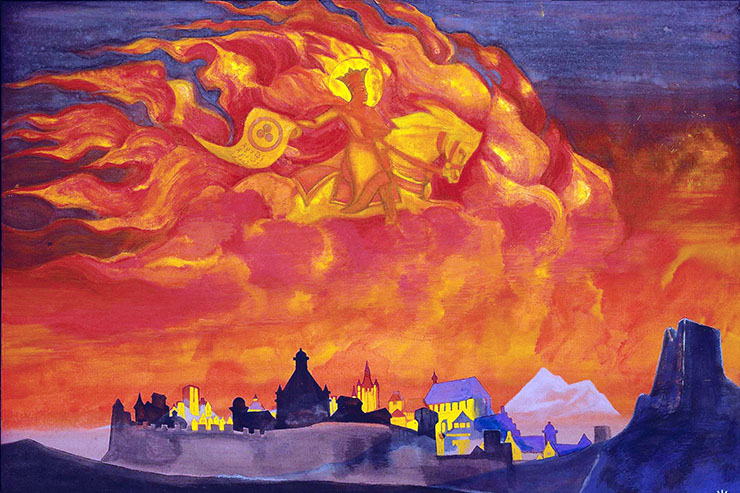
    Prior to setting out in 1924 on their grand Central Asian expedition, the Roerich’s were instructed by their spiritual guide to launch the ‘Great Plan’, a Sacred Union of the East. A truly visionary geopolitical program, the Great Plan called for the union of Mongolia, Tibet, parts of India and China, with Siberia. This vast Eurasian Sacred Union was to have as its capital the equally visionary city of Zvenigorod that Roerich believed would appear in the Altai Mountains. While Roerich’s mystical Eurasian Sacred Union never materialised, his adventures in the service of this ‘utopian’ dream did capture the imagination of the world, drawing attention eastward to the great wonders of Central Asia.

    According to historian John McCannon, “Aside from its breathtaking scope and fantastic nature, the most striking thing about the Great Plan is the way in which it wed political aspiration with esoteric belief… any attempt to understand Roerich’s political actions without taking into account his occult convictions…. is fruitless or inadequate.”

    Nicholas Roerich was held in high regard by Russian emigres in Australia who were devoted to esoteric teachings. The writer Andrew Tomas, who was born in the Russian imperial city of St. Petersburg in 1906, considered Nicholas Roerich to be his Master. Tomas, who lived in China before settling in Australia in 1948 and becoming an Australian citizen, wrote of first meeting Roerich in Shanghai in 1935. The profound impact that Roerich had on Tomas is evident in two of his books published in the 1970s, Shambhala: Oasis of Light and Beyond the Time Barrier. Today, Tomas is remembered as a pioneering Australian UFO researcher, the author of popular paperbacks like We Are Not the First: Riddles of Ancient Science and On the Shores of Endless Worlds.

    Fascinated by Nicholas Roerich’s journeys, I asked a Russian-Australian ‘old time’ esotericist for more information on Eurasia. He kindly gave me a book, A New Party in Russia by P. Malevsky-Malevitch, one of the first books about Eurasianism written in English way back in 1928. Nicholas Roerich was indeed inspired by a thoroughly Eurasian vision. One centred on the reconciliation of apparent opposites, the transcending of ideological differences, from which a new grand synthesis can emerge and a new day dawn for the peoples of earth, neither exclusively Western nor wholly Eastern, but truly Eurasian. 

    When in 1991 it was decided to publish a magazine that explored conspiracies, cover-ups and metaphysics, with a positive eye on the future, the title ‘New Dawn’ was suggested. Then those involved remembered Nicholas Roerich’s enigmatic statement, “The East has said that when the Banner of Shambhala encircles the world, verily the New Dawn will follow.” So, on the 1st May 1991, the first issue of New Dawn magazine appeared.

    [alert type=”general” dismiss=”no”]This article was published in New Dawn Special Issue Vol 15 No 3.[/alert]

    [alert type=”success” dismiss=”no”]If you appreciate this article, please consider subscribing to help maintain this website.[/alert]

    © New Dawn Magazine and the respective author.
    For our reproduction notice, click here.