New Dawn – World's Most Unusual Magazine

Author: Paul V Young

  • The Abbey: Custodian of an Esoteric Legacy in Australia

    The Abbey: Custodian of an Esoteric Legacy in Australia

    From New Dawn 157 (Jul-Aug 2016)

    Every July, thousands gather in Queensland, Australia, for one of the Southern Hemisphere’s largest medieval festivals. But past the jousting and pageantry lies a far stranger reality: the site was originally built as an esoteric sanctuary. Founded by Cambridge scholar and mystic J.S.M. Ward, the Abbey was created to safeguard sacred relics and ancient stained glass rescued from a collapsing Europe. Decades on, the Abbey stands as a rare, tangible link to preserved ancient wisdom.

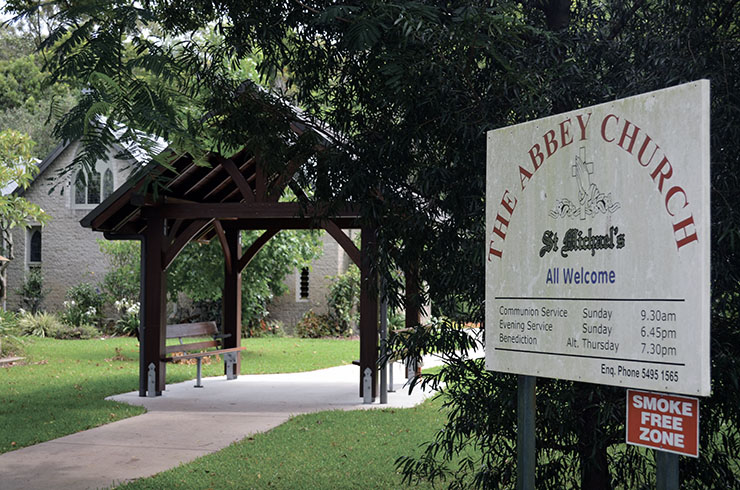
    On a 135 hectare property 60 km north of the Queensland state capital Brisbane, a religious community maintains a museum, church and college. Many Brisbane residents are familiar with the annual Medieval Tournament and Banquet held on its grounds every winter, and the Abbey Museum is well-known and loved by school students and local history buffs alike. While the small Abbey Church, boasting windows that contain imported historical stained glass panels (including fragments from Winchester Cathedral), is a popular choice for weddings, baptisms and funerals, not all of its admirers are aware of its fascinating heritage.
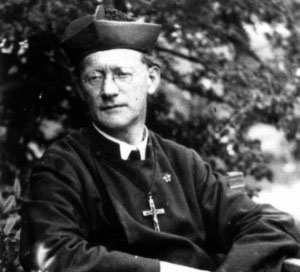
    John Sebastian Marlow Ward (1885–1949)

    Known today as the Orthodox Catholic Church of Christ the King, the Confraternity is linked to the Great Schism of the Western and Eastern Orthodox Churches in the 11th century, thus featuring a blend of Eastern and Western Rites. However, the Abbey represents something more than just an East/West mix, having been established by the followers of J.S.M. Ward, an enigmatic Englishman who drew his inspiration from Christianity, Freemasonry, Spiritualism and a number of other esoteric traditions.

    JSM Ward – A Complex Character

    The Abbey owes its existence to the vision and dynamism of John Sebastian Marlow Ward. This snippet taken from his autobiographical recollections less than two years before his death, and quoted in the final pages of Geoffrey Ginn’s insightful book on Ward’s life, captures a glimpse into his background:

    I was born in Belize, British Honduras in Central America on Dec. 22nd 1885. What terrible changes have taken place, since I was born, in world affairs. My lifetime has seen the decline and fall of Europe and her leadership in the world, particularly is this true of her loss of control in Asia.1

    He referred, of course, to the two World Wars and he especially lamented the apparent unravelling of the British Empire. He enjoyed a stint as a headmaster in Burma just as World War I broke out, and was saddened at its independence from Britain in 1948, the year before he died.

    John’s father, an Anglican minister, had returned to England from Belize with his wife and young son in 1888, just prior to the birth of their second child, Rex. Growing up in the culturally stimulating atmosphere of Victorian times, John developed a love of history and heritage buildings, amassing a large collection of artefacts and natural curiosities during his boyhood. 

    His dutiful Christian upbringing gave rise to a sense of enquiry, which would later broaden to encompass Mysticism, Spiritualism, Theosophy and Metaphysics. It was during his time at Cambridge University, at the age of 20, that he was initiated into Freemasonry, which was considered quite a respectable step to take for a modern middle class man, in what was by then the Edwardian Era. This would provide valuable introductions into the social and professional arenas, while also satisfying Ward’s attraction to the intrigue of the esoteric underground of the day. Soon after graduating in 1908, he took up teaching history and literature, and also married his cousin Carrie.
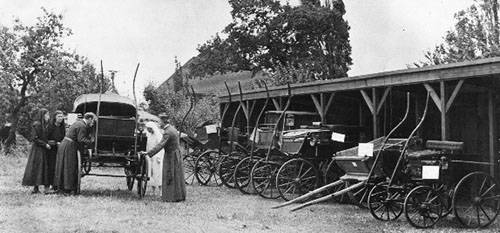
    John Ward and members of his community with some of the carriages that formed part of the Abbey Folk Park in London.

    Psychic occurrences, which were to guide John throughout his adult life, first began five years later with the regular visitation of his late uncle (also Carrie’s father), Henry Lanchester (HJL), to him during lucid dreams. The visions would occur at regular times of night on set days of the week and provided personal messages as well as information about the afterlife. Contact with the astral plane expanded to include his brother Rex who died in 1916 (identified in John’s writings as RLW); it later became a dominant feature of his life and work, with his introduction to the angelic ‘Master of the Work’.
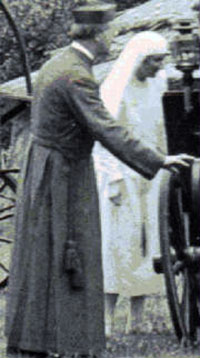
    Ward with his second wife, Jessie about 1936.

    Carrie, although a believer in her husband’s visions, did not share his preoccupation with spiritual matters and this led to their separation in 1923. John had already met the woman who would prove to be his soul-mate, the schoolmistress and Theosophist Jessie Page, with whom he had co-founded a publishing imprint to promote his own works a couple of years earlier. The couple married soon after Carrie’s death in 1926, embarking on a lifelong partnership during which they shared their prophetic visions. They actually began to participate in one another’s dreams when, it is claimed, “they both dreamt that they were summoned into the presence of a great Angel, told that Christ was about to begin His Descent through the Celestial Planes to the Earth and asked to help in the Preparation for His Coming. This great Angel, of the order of the Thrones, was to become their constant Guide and helper in the years ahead.”2

    John Ward’s beliefs and practices comprised elements that many Christians today would feel uncomfortable with. We should keep in mind that Spiritualism was popular in England a century ago. During the onset of World War I, Ward spent time teaching in Burma where he took a keen interest in Buddhism, Hinduism and Eastern traditions, strengthening his own convictions about reincarnation. It was these esoteric influences, combined with his sometimes turbulent association with Freemasonry, that paved the way for what he came to consider his life’s mission.

    Freemasonry Woven into the Rich Tapestry

    John Ward was born into a world of blossoming spiritual exploration and experimentation. The esoteric landscape of late Victorian England was dotted with communities devoted to Eastern mysticism, the Kabbalah and Hermetic texts, as well as scores of Rosicrucian and Theosophist groups. Geoffrey Ginn points out: “Although Freemasonry was not generally seen as occult, initiates were able to use its lodge meetings and reading groups to pursue esoteric topics and interests. Consequently, active Freemasons were in the vanguard of the occult revival at the end of the nineteenth century.”3 A number of Masonic researchers argued that the symbols and rituals of the Craft derived their roots from ancient Egyptian mystery cults. With the objective of establishing this claim, John became the founding secretary of the Masonic Study Society (MSS) in 1921. It was a pursuit he relished, continuing to attend the MSS meetings even after he later severed other links to Freemasonry and delivering more than a dozen papers to them over the next fifteen years.4

    Not only did Ward appear untrue to his Christian origins as he delved deeper into ancient mysticism, he also succeeded in alienating many of his fellow Masons. He saw in Freemasonry the characteristics of, “The ancient Egyptian Mysteries, the Eleusinian Mysteries of Greece, the Mithraic Mysteries of Persia, the Adonaic Mysteries of Syria, the Cabiric Mysteries of the island of Samothrace, the Druidic Mysteries of primordial Britain, and the Gnostics of the early Christian era…”5 For him, these mysteries concurred with the knowledge of the afterlife imparted to him by his beloved departed relatives, HJL and RLW.

    It was in 1929 that John and Jessie Ward began their ‘public work’ as religious leaders, establishing the original ‘Confraternity of the Kingdom of Christ’ and setting up an altar in a spare room in their house. John adopted the title ‘Reverend Father’ and celebrated communion in the traditional Christian manner, at the same time conducting a group of devotees in prayers and hymns that he had written himself. Jessie would come to be known by their followers as ‘Reverend Mother’. Notwithstanding the use of Christian titles, their practices continued to embrace the essence of Hinduism and Buddhism, mingled together with the doctrines of Spiritualism and reincarnation. 

    The small band of founding members – some of whom stayed in the Confraternity for the rest of their lives – pooled their assets and, when John resigned his job of twelve years and could add his generous separation bonus of seven hundred and fifty pounds, they purchased Hadley Hall on London’s northern outskirts. This mansion had been designed as two houses under one roof and sat on three acres of gardens. One of these dwellings now became The Abbey of Christ the King.

    The Original Abbey in England

    Life at London’s Abbey in the 1930s could best be described as monastic, with a strict daily routine of work and prayer. In addition to Father Ward’s study and library, the basement became a gallery for his treasured collectibles: antiquities, rare books and artefacts, tapestries and paintings. A small private school was set up on the estate and named St Michael’s College – a forerunner of today’s school bearing the same name alongside the Abbey in Queensland, Australia. And, like the modern-day Abbey complex, the founding members put their greatest effort into establishing a substantial and well-respected museum. As the Wards continued to add thousands of items to their collection, the exhibition extended out into the gardens in the form of replica historic and prehistoric buildings, eventually christened as the Abbey Folk Park. It proved extremely popular with the public, providing much-needed income for the community. 

    Surviving site plans of the Folk Park reveal how far the Confraternity went in not only entertaining but educating students and adults alike. It included a Roman Villa, African Bazaar, Chinese Temple of Initiation, Japanese garden, a conservatory, greenhouse, a forge and smithy shop and even a witch’s cottage. 

    John Ward had another motivation for developing the site that was not well known to the general public: he believed the world was in the ‘End Times’ and expected the imminent return of Christ, making The Abbey Folk Park an ‘ark for the ages’, a kind of time-capsule to preserve part of the old civilisation for the coming New Age. He envisaged it as the ‘Kingdom of the Wise’.

    The Threads of Christian Traditions & Western Orthodoxy

    One challenge to be met was the fact that neither John Ward nor any of his followers were ordained clergy, making their celebration of communion and other sacraments technically invalid. Soon after moving into The Abbey, ‘Father Ward’ managed to secure an endorsement as an affiliate of the Church of England from the Bishop of St Albans, on the recommendation of a mutual friend who was an Anglican Canon and fellow Freemason. However, this was only meant to authorise him as a lay preacher to his own community and the Anglicans made it clear it did not allow him to ‘minister the word of God’. A rift between them was inevitable and, after it occurred at the start of 1935, Ward would go on to have himself ordained in no less than three different religious organisations.
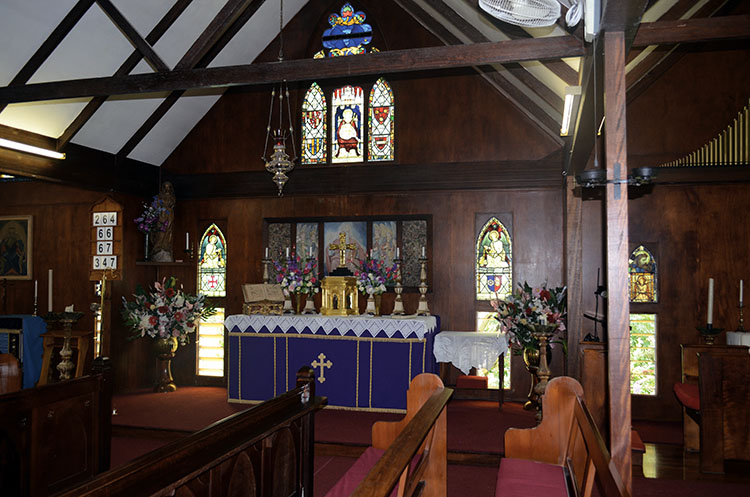
    Inside the Abbey Church, Caboolture, Queensland, Australia.

    John Ward was what church officials called an episcopi vagantes, meaning ‘wandering bishop’ or ‘bishop at large’. His first affiliation outside the Anglicans was with the Autonomous African Universal Church when he was consecrated as a bishop by its London-based Primate, Mar Kwamin. Soon after that, when doubt was cast over Mar Kwamin’s authority to hold office in England, Father Ward sought advice from the elderly Archbishop John Sibley of the Orthodox Catholic Church. The two men clicked and agreed that the Abbey of Christ the King should be incorporated into the Orthodox Catholic Church, contributing much needed numbers to Sibley’s congregation, while at the same time granting Ward’s Abbey Church the institutional affiliation it craved. His second ordination is recorded by Geoffrey Ginn thus: 

    Ward was baptised and re-confirmed, ordained deacon and, finally, solemnly admitted to the Sacred Office of the Priesthood by the authority of Archbishop Sibley’s hand and seal. In further ceremonies the following day, Ward was solemnly consecrated as a Bishop in the Church of God and commissioned as its Chancellor of the Province (England).6

    During World War II John and Jessie Ward struggled financially and were dragged through a court case brought by the parents of a teenage girl in their community, the charge being enticement of a minor. This resulted in damages of five hundred pounds being awarded against them, taking a toll on their funds as well as their health, reputation and confidence. Wartime saw membership numbers and income of many other itinerant English bishops flounder too, leading to an initiative to unify the various strands of the episcopi vagantes – and to the third ordination of Father Ward.
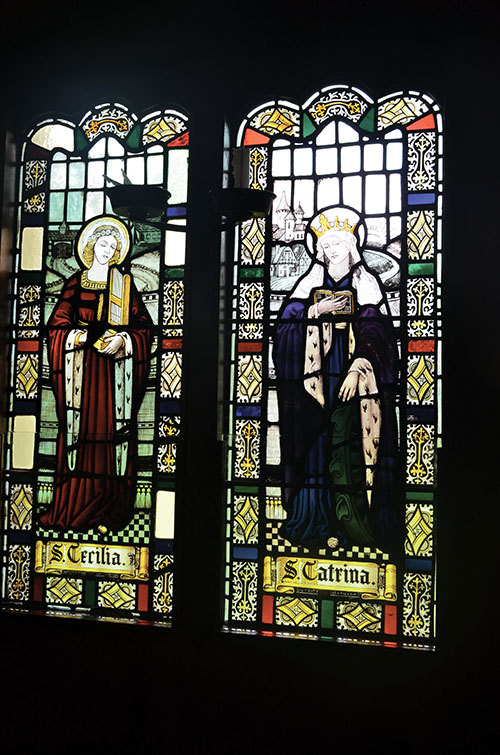
    The Abbey Church features many beautiful stained glass windows.

    A group of six autonomous Christian churches merged under the leadership of Hugh George de Willmot Newman, who had recently been disavowed by the Syrian Orthodox (Jacobite) Patriarch on whose authority he depended. Forming a council, they declared the Syrian Church to be in schism and re-constituted themselves as a Western Orthodox Church. This was in contrast to Eastern Orthodoxy, which sprang from the first century Christian missionaries in the Eastern, Greek-speaking part of the Roman Empire. Newman took for himself the title Mar Georgius, Archbishop of Glastonbury, which he called the Occidental Jerusalem. Thus Father Ward received from this new church his third consecration as its ‘Archbishop of Olivet’, thereby bringing his Orthodox Catholic Church into its fold.

    “Orthodox Catholicism offered itself to Ward as a religious vehicle that was necessarily flexible in matters of formal doctrine, but charged with a sense of history and a living heritage of faith,” writes Geoffrey Ginn in his departmental journal, Crossroads, adding, “In the first instance, then, Orthodox Catholicism appealed to his sense of historical drama. Ward took seriously the claims of Orthodox Catholicism to be an historic rapprochement between Christianity’s two great warring factions: ‘the Orthodox Catholic Church in itself’, he wrote, ‘marks the reunion of the Eastern and Western Churches, which mutually excommunicated each other in the 11th century, since when Christendom has been divided into camps’.”7
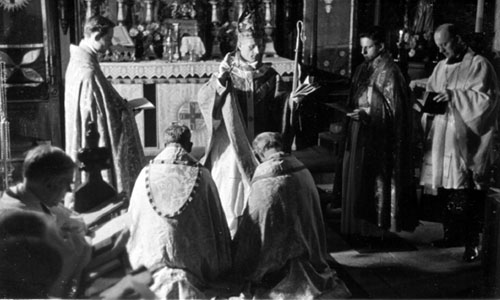
    Conditional consecration of John Sebastian Marlow Ward as Archbishop of Olivet in the Catholicate of the West by Mar Georgius assisted by other prelates; Abbey Church of Christ the King, Barnet, 25 August 1945.

    This refers to the mutual excommunication of the Eastern and Western Orthodox Churches in 1054. The identity of today’s Orthodox Catholic Church at the Abbey in Caboolture can be further linked to a later separation in 1870, when a number of Roman Catholics renounced their allegiance to Pope Pius IX following his declaration of infallibility. Having no bishops of their own, the breakaways could not be confirmed or ordained, so they contacted the Old Catholic Church of Holland, which had already become disassociated from the Vatican but retained valid Orders. Another historical figure, the priest Francis Xavier Alvarez and his followers in India, severed ties with the Papacy and obtained consecration by turning to the Syrian Christians, whose bishops on the Malabar Coast were under the jurisdiction of the Patriarch of Antioch, thereby adding to the bewildering melting pot of ‘bishops at large’.

    Thus these ‘Old Catholics’ (the breakaways) could claim two possible lines of ordination: the first from St Peter and the Western Church in Rome via St Augustine, the fourth century Bishop of Hippo; the other from the Eastern Church, this lineage tracing itself back directly to the church founded in Antioch in 34 AD by St Peter himself. 

    Stations on the Journey

    By 1945 the effects of the war and the legal proceedings against them left the Wards disillusioned with Britain, and it occurred to them that their Kingdom of the Wise might be destined to emerge in a foreign land. Fortuitously, John Ward’s old friend Gerald Gardner, who had designed the witch’s cottage for him, expressed an interest in taking over the cottage and its artefacts in exchange for a piece of land with a farmhouse he owned in Cyprus and wanted to offload. Cyprus held great appeal for the Confraternity – it was an English territory in the Eastern Mediterranean with a pleasant climate and, most importantly, it already embraced the tradition of Orthodox Christianity. The following year, after selling off the more valuable of their antiquities and library books, the small community packed up whatever they had left and made the two-week voyage from Southampton to Cyprus.
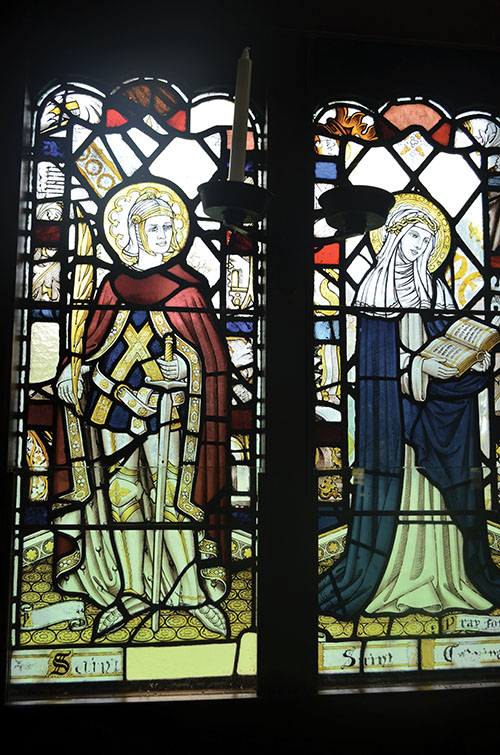
    The Abbey Church features many beautiful stained glass windows.

    Disappointingly, Gardner’s farmhouse turned out to be derelict and sat on barren land but, undeterred, they simply walked away from it and immediately purchased a more suitable property on the coast close to Limassol. This land was more than a hectare and boasted an orange orchard with a furnished two-storey house plus gardener’s cottage, outdoor brick oven and a chicken house with poultry. At a cost of two and a half thousand pounds, it was a drain on their funds, so they were relieved a few months later when they received over four thousand pounds from the sale of Hadley Hall back in London. Here they would stay for more than eight years, earning their living from farming and handicrafts they produced.

    For the Reverend Father John Ward, Cyprus was to be the last station on his life journey. Before his passing due to a stroke in mid-1949, he fathered a child with one of the ladies among his flock, Ursula Cuffe, and their son John was raised by Jessie Ward as her own. Growing up with Father Ward’s tradition and principles, the mature son would go on to be known as Bishop John Cuffe, presiding over an off-shoot of the present-day Orthodox Catholic Church in Queensland. A number of the older members of the original Confraternity were to pass away soon after Ward and the remaining followers had become restless by the mid-fifties, scouting around for a new home base. After looking first at Ceylon (Sri Lanka) and India, they decided to head for Australia where they settled briefly in Sydney and then in the Blue Mountains. When Jessie suffered a bout of pneumonia, she decided to head to the warmer climate of Queensland to recover, accompanied by a few others, including the nine year-old John Cuffe.

    The influence of John Sebastian Marlow Ward lives on and the depth and diversity of his legacy can be gleaned from the titles of some of his books: Gone West: Three Narratives of After-Death Experience; Freemasonry and the Ancient Gods; The Hung Society; The Kingdom of the Wise: Life’s Problems; The Psychic Powers of Christ; and articles: ‘The Hindoo Symbol of the Point Within the Circle’, ‘The Knights Templar’, ‘The Aims and Ideals of Freemasonry’, ‘Chinese Secret Societies’.8 Author Geoffrey Ginn neatly sums up his character in the final paragraph of his book: 

    In J.S.M. Ward we find, indisputably, a man of many parts. A historian with a strong sense of the romantic, a visionary with heightened spiritual sensibilities, he was a questing soul, curious until his last days about the human past, how we might comprehend its mysteries, and the life beckoning beyond that of everyday sense experience.9
    Get the issue this article appears in

    The Ongoing Legacy in Queensland

    The community began settling at its present site of the Abbey at Caboolture, Queensland, half a century ago, and Jessie Ward survived until three years later, providing a clear link back to the organisation she co-founded with her husband in the late 1920s. What makes today’s Orthodox Catholic Church stand out from other Christian sects are their teachings on the afterlife, their representation of the Holy Spirit as the feminine aspect of the Godhead, and how at the very core is their belief in the imminent return of Christ. Concerning reincarnation they say, “that the journey of each Soul encompasses many lives to complete its journey back to God”; and concerning Catholic traditions, they affirm their church “holds to the tenets of the Christian Faith as enunciated in the Nicene Creed.”10

    Its followers seek spiritual development, both on a personal level and also collectively as a Confraternity. According to their publicity material:

    Community members strive to live a balanced life that revolves around attending Church Services, devotion and personal prayer and the practicalities of everyday life. The four main areas of the work of the Confraternity include the Church, the Farm, the College and the Museum. Holding public services, visiting the sick, undertaking works of charity and giving public lectures form part of the ongoing work of the Confraternity members.11

    In keeping with the values established at the original Abbey Folk Park in England over eighty-five years ago, the tranquil setting at Caboolture is also home to the Abbey Museum, as well as the independent co-ed school, St Michael’s College. Describing itself as a welcoming community, their church and museum at The Abbey Place are open to the public.

    Further reading: Archangels & Archaeology: J.S.M. Ward’s Kingdom of the Wise by Geoffrey Ginn

    [alert type=”general” dismiss=”no”]This article was published in New Dawn 157.[/alert]

    [alert type=”success” dismiss=”no”]If you appreciate this article, please consider subscribing to help maintain this website.[/alert]

    Footnotes

    1. Geoffrey Ginn, Archangels & Archaeology: J.S.M. Ward’s Kingdom of the Wise, Sussex Acad. Press 2012, 261 
    2. ‘Orthodox Catholic Church of the New Age, Life of J. S. M. Ward’, http://orthodoxcatholicnew.tripod.com/id7.html
    3. Geoffrey Ginn, Op. cit. 29
    4. Ibid 106
    5. Ibid 109, quoting from Secret Societies by Noel Gist, 1940
    6. Ibid 197
    7. Crossroads, Special Issue 2006, AEN Conference (page 11) www.uq.edu.au/crossroads/Archives/Vol%205/Issue%201%202010/Vol5Iss110%20-%207.Ginn%20%28p.45-57%29.pdf
    8. For full catalogue of publications, see Archangels & Archaeology, Op. cit., 297–310
    9. Geoffrey Ginn, Op. cit. 265
    10. http://abbeychurch.com.au/history-of-the-church/ 
    11. http://abbeychurch.com.au/history-of-the-confraternity/

    © New Dawn Magazine and the respective author.
    For our reproduction notice, click here.
  • Mouni Sadhu: The Adept From the West

    Mouni Sadhu: The Adept From the West

    From New Dawn 166 (Jan-Feb 2018)

    Twentieth-century Australia was a greenhouse of spirituality and occultism in their many colourful varieties, offering a revolving door to a diverse range of international teachers and practitioners who graced our shores. Among them was a mystic who drew together the threads of Hinduism, Christianity, Theosophy, Rosicrucianism and Hermeticism, assuming the nom de plume Mouni Sadhu (meaning silent monk) and spending most of the final two of his seven-odd decades in Australia. 

    Mouni Sadhu (1897–1971)

    Although there are conflicting opinions about his early life, mainly because he was reluctant to disclose his background, it appears he was born as Mieczyslaw Sudowski in Poland around the turn of the last century, raised as a Catholic and served in the army in World War II before leaving his homeland.1 Thereafter he spent time in France, then Brazil, before migrating to Australia in 1948. It was here in this country that he disseminated an ideology that was to gain currency in the ensuing decades: Superconsciousness.

    Mouni’s friends and followers invariably described him as a devotee of both spirituality and occultism, however he took great pains to stress that he considered these as two very distinct paths. In the foreword to his book Ways to Self-Realization: A Modern Evaluation of Occultism and Spiritual Paths he wrote, “Occultism is neither a synonymous term nor a substitute for spirituality, and spiritual men do not necessarily come from the ranks of occultists. They are two different things.”2

    Having been attracted to all pathways of an esoteric nature from an early age, Mouni earned his occult label by joining local branches of the Rosicrucian Hermetic Order and the Theosophical Society in Europe during the 1920s and 30s, while at the same time studying and writing about the Tarot. He openly expressed admiration for Theosophical luminaries Madame H.P. Blavatsky, Annie Besant and Charles W. Leadbeater.

    A Search in India

    Mouni Sadhu’s spiritual guide and Master, the great Indian sage Ramana Maharshi (1879–1950).

    After some years, he and other members became disillusioned with these groups, leading them to break away and form their own occult lodge. A turning point came for Mouni when, during the period in France at the end of the war where he was studying the works of Paul Sédir, a friend lent him a copy of Paul Brunton’s book, A Search in Secret India. This triggered his interest in Indian spirituality and philosophy, resulting in a visit to India and his enduring reverence for the teacher he described as “the last Great Indian Rishi” – Sri Ramana Maharshi. Although Brunton’s book was first released in England in 1934, it found prominence in other Western countries during the post-war years, providing many baby-boomers with a springboard into wider esoteric explorations.

    Pursuing this compelling inner urge to find his true self, or Overself as Brunton dubbed it, Mouni Sadhu sought out the Maharshi’s ashram at the foot of the sacred Arunachala Mountain in South India. Like many other devotees, he believed that just being in the presence of a genuine spiritual Master could raise one’s level of consciousness. While at the ashram Mouni claimed to have attained an enlightened state known by the Sanskrit name Nirvikalpa Samadhi, wherein duality is dissolved and the knower becomes as one with what is known. 

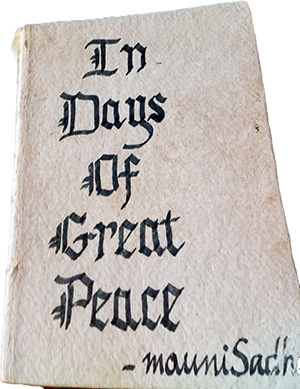
    While writing a number of books about his time in India, including his ‘Mystic Trilogy’ In Days of Great Peace, he did not try to recount his Master’s teachings verbatim, preferring instead to record what he called the “real experiences of an average man” in the presence of a great sage, describing the influence it had on him personally. It was at this point that he replaced the anglicised name Michael Sadau, by which he had become known to his friends, with the spiritual title Mouni Sadhu, with Mouni meaning silent and Sadhu being translated either as wandering holy man or more simply monk. His constant theme and guiding principle was the ancient maxim, ‘Know Yourself’.

    Meetings in Melbourne

    On settling back in the suburbs of Melbourne after his pilgrimage to India, Mouni found work plying his skills as an electrical engineer with the Electricity Commission of Victoria. He soon linked up with other Australian devotees of Ramana Maharshi and formed an association known as the ‘Arunachala Group’, while at the same time getting involved with yoga schools around the city where he conducted classes on meditation and Eastern spirituality. Following the placement of advertisements at branches of the Theosophical Society as well as libraries and appropriate bookshops, he began delivering lectures to public assemblies of interested people, plus smaller groups of private individuals, meeting with his more permanent pupils once a month. An ad he ran in 1963 read: “The Arunachala Group is an independent group of seekers beyond all sects and religious organisations, who accept as their spiritual guide and Master, the last Great Indian Rishi – Sri Ramana Maharshi”3

    At times Mouni was visited by devotees of Bhagavan’s maha samadhi from Brazil. During his time in that country in the late 1940s, Mouni wrote a booklet which was translated into Portuguese, titled Quem Sou Eu? (Who Am I?), and followers from those days kept in contact, considering him a guide and living link with their guru, Sri Ramana Maharshi. A mysterious incident occurred during one such visit to Melbourne when Mouni’s van was involved in an accident, after which he looked to be in serious condition with no sign of breathing. The Brazilians surrounded him and started chanting some Sanskrit slokas (Hindu prayers), and in due course, Mouni got up and carried on as if nothing had happened.4 Thus a certain aura and reputation grew around him.

    Sydney and the Occult

    Each February Mouni Sadhu would do a road-trip to Sydney in his VW campervan, and it seems, on the face of it, that he left his ‘spiritual’ label behind to revert to his more ‘occult’ side as he headed north. There he would stay at the home of his friend Nicholas Tereshchenko, who noted that Mouni met with, and gave talks to, members of the Theosophical Society, the G.I. Gurdjieff group, and students of the Tarot. He was also known to meet with the Scientologists. Tereshchenko reports that during Mouni’s 1964 Sydney visit, he helped him start a Tarot group. They developed a system whereby at each weekly meeting the person who presided over it would nominate a lecturer to speak on a chosen topic for the next meeting, and the speaker for that week would nominate the following week’s president. That way every member got to lead several meetings a year while also having to present a certain number of talks annually. “We therefore heard many different views on the Tarot, as seen by diverse people with many different occupations in life and ‘specialties’ in their interests in the occult. The meetings were held in the house of one of the librarians in the Theosophical Society,” Tereshchenko recalled.5

    In this way Mouni seemed able to vent the ‘occult side’ of his personality, which he associated with the West, while he was in Sydney, in contrast to the influence of Eastern spirituality that guided his activities back home in Melbourne. One of his close associates, Bruce W. Du Vé, wrote of him: “Mouni Sadhu was to my knowledge the last practising master in the great European tradition of occultists and White Magicians. He was thoroughly versed in the history and methods of these covert arts and when I knew him lived two parallel lives. Publicly, he was a jovial, intelligent and rather mischievous though polite and formal European gentleman of the Victorian era.… The other life was a more secret one.”6 Mouni himself elsewhere asserted that he had, “reached the firm conviction that Western adepts knew as much, if not more about the value of a one-pointed mind in spiritual achievement, than their Eastern brothers.”7

    On Superconsciousness

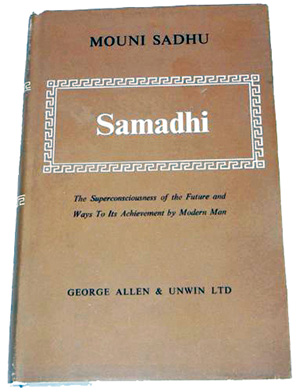
    To view Mouni’s contribution to our esoteric legacy through the rose-coloured glasses of 1960s’ hippiedom, à la the faddish transcendental adventures of the Beatles, would be to devalue it. The real linchpin of his life’s work was sharing his vision for ‘Superconsciousness’ as the way forward for humanity. This is a belief that, in addition to our normal waking consciousness and our subconsciousness, we possess a third higher state of awareness that is often said to be either dormant or veiled from our everyday cognition. This central theme is highlighted by the title of his 1962 book, Samadhi – The Superconsciousness of the Future (And Ways to its Achievement by Modern Man). He taught that the most effective way to achieve such a state was through samadhi, which in India was said to exist in a number of different forms, while in some Buddhist countries such as Thailand the word is defined simply as ‘meditation’.

    In his writings Mouni often referred to the philosophies not only of India but also that of Ancient Greece. It is worth noting that two and a half thousand years ago when the Buddha, Siddhartha Gautama, was attaining and teaching about enlightenment, the Ancient Greek philosophers were also considering the nature of the mind. The notion of a divided consciousness developed over a period of half a millennium, from the works of Homer down to Plato and Aristotle.8 And, just like some of the teachers in Athens in fourth century BCE, Mouni felt that the path to higher awareness should be open to the world at large, not confined to students of arcane mystery schools. He readily admitted that not everyone who sought knowledge had what it takes to persevere with it, and that Western minds often struggled to absorb Eastern traditions. He lamented that the dogmatic religions of the West were not producing the results intended by their founders. He was convinced the advancement of the human race would best be served by his ‘Superconsciousness-Samadhi’.

    Mouni believed his vision for the future could be reached most expediently by promoting spiritual meditative practices rather than the occult, which held negative connotations for many members of the public. It should not be thought that he felt conflicted or tried to deny his occult skills; in fact, he considered supernatural and magical pursuits to be very worthwhile. They were not for everyone, however, and could be a distraction to the novice setting out on his or her journey towards Superconsciousness. 

    Mouni the mystic could not be accused of creating division among the arcane disciplines, considering that he drew elements of Hinduism, Buddhism and Yoga from the East together with teachings of Theosophy, Rosicrucianism and Christianity from the West. He held himself to be a Catholic right until the end of his life, and this was most likely in respect for his beloved Maharishi, who took the position that one should never convert from one religion to another, but rather convert from ‘Ignorance to Wisdom’. In his Samadhi book, Mouni summed up this devotion to the religion of his birth by describing Christ as the ‘Master of Masters’ – an expression he said was used by both Sri Ramana Maharshi and Paul Sedir.9

    Get the issue this article appears in

    Marching to His Own Drum

    Although Mouni Sadhu never managed to meet Paul Brunton, the two corresponded for some time by mail. Sadly, that was to end on a sour note when Mouni disagreed with the British author’s change of direction later in life, which, according to Andrew Bukraba, involved drifting towards the Buddhist practice of ‘guru bhava’.10 After Mouni’s final letter expressing his disapproval, he would not even mention Brunton’s name again. His single-mindedness in adhering to his principles caused an earlier falling out with another man he admired, G.I. Gurdjieff, who he finally got to meet during the latter’s final year of life in 1949. According to friend Nicholas Tereshchenko, the famous occultist known for the Fourth Way had insulted Mouni in his native tongue, possibly using a taunt that was common between Armenians and Poles.11 Instead of letting it slide by bowing down and paying Gurdjieff the respect he thought he deserved, the offended Polish mystic stormed out of the room, thereafter renouncing his affiliation with the Fourth Way. Nevertheless, as we have seen, the incident did not prevent him from having cordial meetings with followers of Gurdjieff in Sydney in later years.

    As the eagle of the mountains, having soared high in the air above the earth,

    Wings its way back to its resting place, being fatigued by its long flight,

    So does the soul, having experienced the life of the phenomenal relative and mortal,

    Return finally unto itself, where it can sleep beyond all desires, and beyond all dreams…

    – Excerpt from the Upanishads, as quoted in Mouni Sadhu’s Concentration

    In the forty-five years since Mouni Sadhu (17 August 1897 – 24 December 1971) passed away, there has been no major organisation formed in his wake, although he remained in the hearts of his followers and friends. These days the term ‘Superconsciousness’ might well conjure up the speculations of modern quantum physics rather than Eastern mysticism. Such an association would probably not displease Mouni – after all, his stated aim was to see it carry us “beyond religion.” If anything ever unites science and religion, quantum physics would be the ideal candidate, with its claims that the observer affects the thing being observed, a close match to the ideal of samadhi, wherein duality is dissolved and the knower becomes as one with what is known.

    In one final practical legacy, Mouni’s literary estate was left to the Australian Society of Authors, of which he was a member. The royalties that have accrued from the estate now provide services to Australian authors.12

    New editions of Mouni Sadhu titles are available here: https://spirit.aeonbooks.co.uk/author/mouni-sadhu/23722

    [alert type=”general” dismiss=”no”]This article was published in New Dawn 166.[/alert]

    [alert type=”success” dismiss=”no”]If you appreciate this article, please consider subscribing to help maintain this website.[/alert]

    Footnotes

    1. The most reliable data comes from www.mounisadhu.com although other commentators such as Andrew Bukraba, Nicholas Tereshchenko and Bruce W. Du Vé all state on their websites that he was Russian.
    2. The source for this quote is en.m.wikipedia.org/wiki/Mouni_Sadhu
    3. www.mounisadhu.com/tereshchenko-on-sadhu.html
    4. From the notes of Andrew Bukraba, www.mounisadhu.com/bukraba-on-sadhu.html
    5. www.mounisadhu.com/tereshchenko-on-sadhu.html
    6. From Bruce W. Du Vé’s site: www.mounisadhu.com/duve-on-sadhu.html
    7. Source for this quote is en.m.wikipedia.org/wiki/Mouni_Sadhu
    8. For more on the Ancient Greek view of consciousness see en.wikibooks.org/wiki/Consciousness_Studies/Early_Ideas 
    9. en.m.wikipedia.org/wiki/Mouni_Sadhu
    10. www.mounisadhu.com/bukraba-on-sadhu.html
    11. www.mounisadhu.com/tereshchenko-on-sadhu.html
    12. en.m.wikipedia.org/wiki/Mouni_Sadhu

    References

    Quem Sou Eu? (Who am I?), 1948
    In Days of Great Peace – at the Feet of Sri Ramana Maharshi – Diary Leaves from India, first published in 1952, printed by Ramnarayan Press, Bangalore, India
    In Days of Great Peace – the Highest Yoga as Lived, 2nd ed. revised and enlarged, 1957, George Allen and Unwin
    Concentration – A Guide to Mental Mastery, 1959 (USA) edition published by Harper and Brothers, New York. Published in Great Britain as Concentration – An Outline for Practical Study, 1959, George Allen and Unwin
    Ways to Self-Realization – A Modern Evaluation of Occultism and Spiritual Paths, 1962, in the USA by The Julian Press, and in 1963 in Great Britain by George Allen and Unwin
    Samadhi – The Superconsciousness of the Future, 1962
    The Tarot – A Contemporary Course on the Quintessence of Hermetic Occultism, 1962
    Theurgy – The Art of Effective Worship, 1965
    Meditation – An Outline for Practical Study, 1967
    Initiations by Paul Sédir; translated from the French by Mouni Sadhu, 1967

    © New Dawn Magazine and the respective author.
    For our reproduction notice, click here.
  • The Intriguing Life of Andrew Tomas: The Mystic Who Chased UFOs

    The Intriguing Life of Andrew Tomas: The Mystic Who Chased UFOs

    From New Dawn Special Issue Vol 12 No 2 (April 2018)

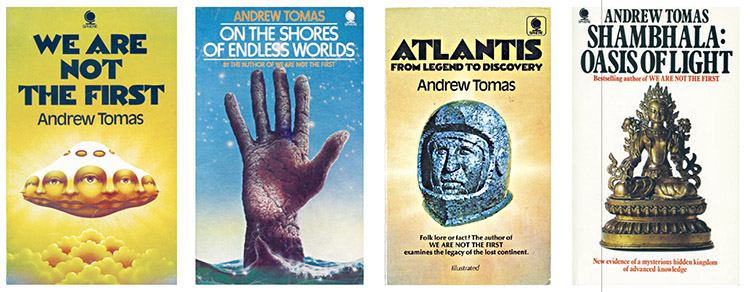
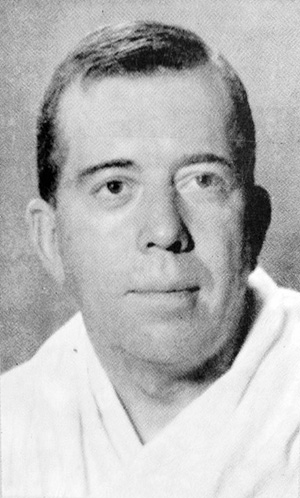
    ‘Ancient Aliens’ is the title of a popular show running on the History Channel, now in its 12th season, but the same title was used on a book published in 1973 by Andrew Tomas. It followed his 1971 bestseller – We Are Not the First – just a couple of years after the English version of Eric Von Däniken’s Chariots of the Gods attained worldwide success. In fact, Tomas had published a book titled The Planetary Doctrine as far back as 1935. While the modern TV namesake ‘Ancient Aliens’ takes pains to promote the idea that extra-terrestrials are made of flesh and blood, probably in deference to scientifically minded viewers, Tomas had no qualms about presenting his aliens as being otherworldly supra-humans, consisting of what was described as ‘mind-born’ bodies.

    Andrew Tomas (1906–2001)

    Some readers may hold the view that, just like science and religion, Ufology and spirituality are mutually exclusive. Not so if Andrew Tomas is any guide. He entwined both belief systems into a single coherent strand that yielded his impassioned advocacy for world peace.

    Born in Russia in 1906 and moving around as a result of his father’s work, Andrew left his homeland after the Bolshevik revolution and settled in China, where he completed his schooling and forged a career as an accountant. In 1948 he again fled social upheaval, this time when Mao Tse Tung forced the nationalists out of China. Tomas headed for Australia where he spent the best part of twenty years and dwelled successively in each of the mainland capitals. In the mid-1950s, at a time when he was involved in organising the NSW branch of the Australian Flying Saucer Research Society (AFSRS), he was viewed with suspicion by some other members and tarnished with the label ‘white Russian’.

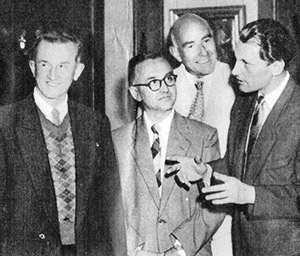
    Andrew Tomas (second from left) with fellow ufologists of the NSW UFO Investigation Centre, 1957.

    Well known ufologist and author Bill Chalker has recorded his recollections of that era: “I am well aware of the paranoia that existed during those years, but I do believe that any suspicion of the Victorian and Sydney groups by any individual, or body, could not have been further from the reality. While it is true that Andrew Tomas was indeed Russian, along with George Tararin (who I believe was from the region now known as Belarus), Dr Lindtner (Slovenia) and Joseph Gjerki (Croatia) and for all I know, maybe a few others also from Iron Curtain countries, the fact is that these people had all gone to Australia to get away from that sort of thing. George used to tell me he was ‘stateless’, having come more or less the same route as Andrew, which is to say, by way or Harbin or Shanghai. The latter two men had been educated by Americans – they had rather quaint accents with strong American overtones!”1

    The 1950s was the high point of McCarthyism in Australia, particularly with the Petrov affair. Unfortunately, even if you were not a communist sympathiser, the mentality of the era meant a ‘white Russian’ such as Andrew Tomas was probably under observation by intelligence agencies. This prompted him to request a name change from his Russian one, A. Boncza-Tomaszewski, under the ironically titled “Aliens Act 1947.” It was a further irony that Andrew Tomas should have drawn criticism because of his ethnic origins as he was a committed pacifist. Perhaps it was, in fact, his lobbying of politicians and other public figures with his peace agenda that drew attention. He had clung dearly to his Shambhala-inspired ‘peace doctrine’ ever since writing Planetary Doctrine two decades earlier.

    In 1954 Andrew Tomas met mystery writer Edgar Jarrold, the director of Australia’s first public flying saucer group. Tomas showed Jarrold his 1935 book The Planetary Doctrine, which had been published in Shanghai, China. He focused Jarrold’s attention on the passage: “Travellers and explorers often notice in the heights of the Himalayas strange shiny objects or creatures soaring high above the mountain crests, which are an eternal puzzle to Europeans. Whether these mysterious objects are vehicles belonging to supermen we dare not assert, though such an explanation is quite plausible. Cannot the reader believe that by such means, utilising unknown energies, communication is maintained from planet to planet?”2

    Books by Andrew Tomas

    The book Shambhala: Oasis of Light, written in 1977, was arguably Tomas’ most insightful and enduring legacy. In it, he describes how he ascended the snowy Himalayan slopes to a Tibetan monastery where he received spoken wisdom from a learned Lama, along with non-verbal illumination during a privileged initiation in a secret cave below the temple. Not only does Tomas assert the reality of the Bodhisattvas and Arhats, or Mahatmas, in this work he also draws together timeless mysteries from the East and West, Buddha and Jesus, Essenes and Templars, Hindu and ancient Greek; he connects Rosicrucianism, Masonry and Theosophy; the teachings of ancient philosophers flows through to unseen Guardians who continue to guide the planet today. 

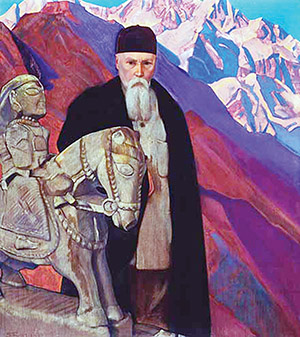
    He first met Nicholas Roerich in Shanghai during 1935 (the same year Tomas published The Planetary Doctrine). Roerich had just completed an expedition to Central Asia and talked about beings he called ‘Guardians’ who dwelt in the Gobi Desert. From that time onwards, Tomas would refer to Roerich reverently as his Master. For those unfamiliar with Roerich (1874–1947), he was a Russian painter, writer, archaeologist and theosophist, perceived as an ‘enlightener’, philosopher, and public figure, who in his youth was influenced by a spiritual movement in Russian society.

    Painting depicting the artist and mystic Nicholas Roerich. Tomas referred to Roerich as his ‘Master’.

    Trained as an artist and a lawyer, Nicholas Roerich was a dedicated activist for the cause of preserving art and architecture during times of war, earning several nominations for the Nobel Peace Prize. Among his most notable achievements was the Roerich Pact,3 which was signed into law by the United States and most nations of the Pan-American Union in April 1935. Andrew Tomas went on to devise a pact of his own. In March 1958, as secretary and organiser of the International Organising Committee of the Planetary Pact, he sent a draft of the pact to the world’s leading news agencies.

    Two years prior he published a 48-page booklet in Sydney titled Signs, Stars and Seers – An Experiment in Historical Prediction. In this book he stated he had already issued unheeded warnings to Hitler, Mussolini and Hirohito, through their embassies in China in 1935, regarding the folly of war. He also claimed to have approached a “responsible Soviet diplomat” four months after the defeat of Japan – well before the Cold War – with a project aimed at establishing friendly cultural relations between the USSR and the USA & UK. Although the project was not adopted, Tomas felt that his mission on behalf of world peace had been fulfilled. The booklet contained the ominous admonition: “If the national governments ignore this last warning, motivated by a desire to save this planet from destruction and mankind from self-annihilation, they will have to bear all responsibility for opposing the Cosmic Law of Unity.”4

    Not much was known in the West about the legendary Shambhala until revelations were made by Madame H.P. Blavatsky in the late nineteenth century. Andrew Tomas presented impressive evidence from Tibetan sources that this hidden kingdom really does exist and is the home base of higher beings who continue to guide us into the coming new age of Homo Noeticus. In that regard he issued warnings of coming calamities, while at the same time holding optimism for our long-term future. We will conclude with two of his predictions, one coming from his ‘Cosmic ET friends’, and the other from his Tibetan guides. 

    At the end of an article in the last issue of Jarrold’s Australian Flying Saucer Magazine, “Are you ready for a planetary crash?”, (page 7, February 1955), he wrote: “In the circles of the duly initiated Brethren of Space, fantastic stories are told of saucers, messages from space and cosmic decrees.… Anyway, my cosmic friends tell me not to worry about what other people say, but just place this information before the public. ‘It won’t be long now’, they say. Jokes aside, let us think more of the stars. Let us all become the children of Heaven. Let us dream of a Utopia where there is no hatred and no wars. But before we see that Utopia a red sign will flash in the skies, ‘Tighten your belts’. As Ripley says, ‘believe it or not’, but we are heading for a planetary crash.”5

    Get the issue this article appears in

    And finally, at the close of his book Shambhala: Oasis of Light, Andrew left us with predictions from the Tibetan Kalachakra tradition:

    “The twenty-first Ruler of the Land of Shambhala, Ma-gag-pa, is now enthroned on his lion-supported golden throne. He has ruled for forty-nine years before the present Fire Dragon year (1976). After another fifty-one years (2027), the twenty-second Holder of castes, Mi-yi Seng-ge, will ascend the throne and rule for one hundred years…

    “The twenty-fifth Holder of castes, Drag-po K’or-lo-chan, will ascend Shambhala’s golden lion-supported throne in the Fire Sheep year of the twenty-second cycle (twenty-fifth century) and propagate the Dharma teachings…

    “The La-lo king… will gather his legions west of India in a place called Tri-li… then the ministers will conduct an air surveillance. When they see numerous signs of wealth and happiness in the Land of Shambhala in the north, their jealousy will have no bounds and they will attack Shambhala. This will be in the Water Sheep year of the twenty-second cycle (2425)…

    “The Ruler of Shambhala will then assume command of the assembled forces of the twelve great gods – of the skyships flying faster than sound, fire- and steam-powered vehicles, armoured chariots, as well as the different types of atomic weapons…

    Tomas notes that these words were written down many centuries before the discovery of steam, aviation, nuclear physics or astronautics. He ends with these words:

    “Thus the evil forces will be destroyed by the might of the twelve gods. After that the precious Dharma will come under the direct protection of the Buddha. The King of Shambhala will change his residence and then the Perfect Age will dawn anew.”6   

    [alert type=”general” dismiss=”no”]This article was published in New Dawn Special Issue Vol 12 No 2.[/alert]

    [alert type=”success” dismiss=”no”]If you appreciate this article, please consider subscribing to help maintain this website.[/alert]

    Footnotes

    1. Bill Chalker, http://ufoicaustralia.blogspot.com.au/2007/09/ufologists-defiled-ufoic-asio-and-alien.html
    2. Ibid.
    3. For more on the Roerich Pact, see https://en.wikipedia.org/wiki/Roerich_Pact
    4. Ibid., Bill Chalker
    5. Ibid.
    6. Andrew Tomas, Shambhala: Oasis of Light, Sphere, 1977

    References & Further Reading

    Andrew Tomas, Beyond the Time Barrier, Sphere Books, 1974 
    Andrew Tomas, Chun’gang Wang, Xiangyang Xin, Xiaohong Zhang, Kua Yue shi kong di Qi ji, 1992
    Raymond De Becker, Las maquinaciones de la noche, 1973 
    Andrew Tomas, Mirage of the Ages: A Critique of Christianity, Exposition Pr of Florida, 1983
    Andrew Tomas, On the Shores of Endless Worlds – The Search for Cosmic Life, Bantam Books, 1974
    Andrew Tomas, Shambhala: Oasis of Light, Sphere, 1977 
    Andrew Tomas, The Home of the Gods: Atlantis from Legend to Discovery, Robert Hale & Co., 1972
    Andrew Tomas, We are Not the First: Riddles of Ancient Science, GP Putnam’s, 1971

    © New Dawn Magazine and the respective author.
    For our reproduction notice, click here.

  • A Link in the Golden Chain: The Life & Times of Vyvyan Deacon, Australia’s Pioneer  Metaphysical Teacher

    A Link in the Golden Chain: The Life & Times of Vyvyan Deacon, Australia’s Pioneer Metaphysical Teacher

    From New Dawn 161 (Mar-Apr 2017)

    Early twentieth century Australia saw a flowering of alternative spirituality when a number of communities, particularly in Sydney and Melbourne, embraced the influx of occult and spiritualistic practices from Victorian England. 

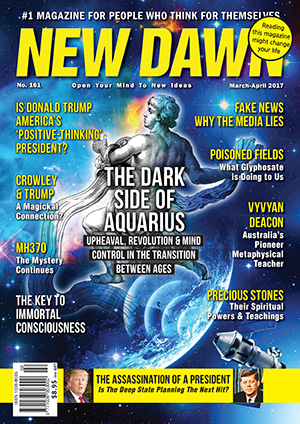
    A central figure linking many of the well-known characters and societies of the era was the young Vivian (later Vyvyan) Deacon (1895–1938), a medium, herbalist and respected public speaker. Among his circle of associates were Aleister Crowley, Krishnamurti, Annie Besant and Charles Webster Leadbeater, the author and spiritualist Sir Arthur Conan Doyle, and the artist Norman Lindsay. Deacon’s affiliations, that started out with the Order of the Star of the East, would go on to include Theosophy, Gnosticism, the Golden Dawn, Crowley’s OTO, and his own Christian Mystics of the Rosy Cross.

    Vyvyan Deacon (1895–1938)

    Certain recurring themes in Vyvyan’s life were established during his boyhood in England where he grew up, before setting out for Australia via India at the age of seventeen. From his father Cornelius he took on, probably at a subconscious level, the pattern of an itinerant healer, dispensing unconventional remedies to a needy public. ‘Corrie’, as he was affectionately known, came and went from the family home until, eventually, he just never came back. Although little Vyvyan was led to believe his father had died, Corrie lived on and was briefly reunited with his son before his actual death at Christmas in 1930. His passion for herbalism and alternative therapies passed on to Vyvyan, woven into the rich tapestry of his life and guiding his purpose. His absence was also to impress itself on the psyche of his offspring, resulting in Vyvyan’s own inability to settle down, with frequent separations from his future wife and family.

    As a boy Vyvyan was frail and sensitive, given to bouts of ill health and often needing care. In place of formal schooling he received his education largely from Sunday schools, drama lessons and some home tutoring. Like many youngsters deprived of paternal attention, he was drawn to older father figures from an early age. At first these were clergymen and teachers, such as his local vicar Rev. Horsfall and drama teacher Rev. Mills, then on his arrival in Australia in 1912 he was taken under the wing of middle aged actor Roy Redgrave. In Sydney, he made the acquaintance of Theosophist Charles W. Leadbeater who, no doubt, also had appeal as a father figure. 

    C.W. Leadbeater c. 1916

    The predominant driving force pulsing through his veins, however, came from his mother Elizabeth, an intriguing personality who projected her own spiritual aura. Elizabeth Deacon, nee Browning, was the cousin of Robert Browning who, with his family’s claimed Rosicrucian lineage, introduced her to a wealth of colourful characters, including Oscar Wilde, who would become the Deacons’ next-door neighbour. Elizabeth was close to Oscar’s wife Constance, sharing her interest in the occult, with the pair attending séances together. In fact, Vyvyan’s name was a copy of Wilde’s own son’s name and, although the Deacons originally used the spelling ‘Vivian’ to differentiate them, he was to later change the spelling himself, noting a mystical significance in the letter ‘Y’. The Browning’s referrals also included W.B. Yeats who, in turn, opened the doors for Elizabeth to eminent members of the Golden Dawn. It was in 1895, the year of Vyvyan’s birth, that she made the acquaintance of a young James Ingall Wedgwood – a regular correspondent of Robert Browning – who would one day become one of Vyvyan’s teachers.

    James Ingall Wedgwood, 1925

    The trait that was to place Vyvyan in the ranks of Charles W. Leadbeater, Annie Besant and Aleister Crowley was that he, like they, did not simply follow and uphold traditional beliefs and philosophies. They claimed to actually communicate directly with otherworldly beings and, at times, act as vehicles in transmitting their messages to the Earthly realm. 

    Vyvyan first realised this ability when he was only eight years old. The occasion was an open-air Sunday school service where the regular preacher failed to show up. As the service was about to be cancelled, Vyvyan arose, walked to the dais and spontaneously began preaching. While this impressed the congregation, he himself was left feeling bewildered, especially in the face of some adults present who accused him of being demonically possessed. One kindly woman, however, comforted him by explaining that he had the rare and special gift of being used by those who dwelt on a higher plane. The event was publicised by the Daily Mirror, which hailed him as the ‘Boy Preacher’.

    A Meeting of Minds in Australia

    Sister Veni Cooper-Mathieson

    Vyvyan had met Eunice Mary Lew Tong, who was five years his junior, when he first arrived in Melbourne, and was besotted with her right from the start. In early 1916 he decided that a move to Sydney was in order and, not wanting to leave fifteen-year-old Eunice behind, they successfully sought permission from her recently widowed mother to marry and travel interstate together. It was his friend Veni Cooper-Mathieson, herself a Sydney-sider, who persuaded them that her city offered a more appropriate environment in which Vyvyan could establish himself as a healer, psychic medium and speaker. Sister Veni, as she called herself, was the voice of the New Thought movement and knew that their mutual acquaintance Charles W. Leadbeater, a member of the Theosophical Society (TS) and the Liberal Catholic Church (LCC), would open a whole new avenue for Vyvyan.

    The Deacons lived rough when they first arrived in Sydney, moving accommodation from one spot to another, and it was only with the assistance of Theosophists Frank Bennett and James Wedgwood that they were able to set up a small herbal dispensary in Junction St, North Sydney. Bennett was said to be Aleister Crowley’s appointed representative in Australia for the Ordo Templi Orientis (OTO)1 and Vyvyan immersed himself in the activities of this group as well as the TS and their Esoteric Section, before going on to found his own society in 1917 called Christian Mystics of the Rosy Cross (CMRC).

    Vyvyan had already befriended Krishnamurti, who was the same age, and on Sundays would often attend his meetings of the Order of the Star of the East, after having first participated in the Liberal Catholic Church service and then, later in the evening, going on to deliver his own lectures in public halls.

    All these activities naturally kept him away from Eunice, often for days at a time, and she was left feeling lonely and depressed. Like her mother-in-law before her, Eunice had to adjust to the continual comings and goings. Notwithstanding the absences, the couple eventually had two daughters, Sybil, born 1918, then Vivienne in 1922, who would go on in adult life to write an in-depth account of her father’s life. 

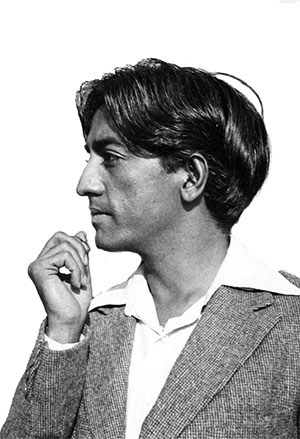
    Krishnamurti

    Concerning the scandal around Leadbeater’s relationship with Krishnamurti and other young men, she writes: “Vyvyan and Krishnamurti were born within a few months of each other and each received training from Leadbeater. It would be logical to surmise that their treatment by Leadbeater was similar. Vyvyan certainly admitted that Leadbeater had regressed him to previous incarnations. […] We know from his past that Vyvyan was particularly susceptible to the influence of older men, father figures that filled the void left by his own father’s disappearance from his early childhood. My own recollection of Leadbeater is of his being rather creepy, in contrast with the attractive Wedgwood.”2

    Along with practicing hypnotism as a means to achieving higher levels of consciousness, Vyvyan, as a herbalist, had access to mind-altering drugs with which he experimented together with Frank Bennett and another friend, Vincent Pantin. He often stayed out overnight with them rather than at home with his wife. There were several occasions when a shortage of funds forced Vyvyan to seek labouring work and one such time was mid-1918, when he and Pantin went off fruit picking for a couple of months in Wyalong, in country New South Wales. Eunice busied herself in his absence, acting as his proxy in filling medicinal scripts for patients back in Sydney.

    William Chidley

    Vyvyan remained close to Leadbeater during 1919 while they studied the ‘Egyptian Rite of the Ancient Mysteries’ together. This was the year the scandal broke around Leadbeater’s involvement with young men, so the Deacons thought it prudent to distance themselves for a while by moving into a commune that had been founded by the late renowned naturist and sex-reformer William Chidley. 

    Early the following year, when ardent Spiritualist Sir Arthur Conan Doyle was preparing to tour Australasia, Vyvyan was approached by a prominent New Zealand Spiritualist group to visit them and pave the way for the events there. Knowing he already had a good reputation in that country, he eagerly set off for Christchurch in May 1920 for what was to become a two year stay. His daughter would later write about the spiritual atmosphere at the time and the flavour of his lecture material which blended Theosophy, Fabianism and New Thought together with Marx, Freud and Darwin, plus more than a hint of the New Testament. From a lecture in January 1921, she quotes a passage that underlines how he viewed the “constitution of man,” in what is now accepted by modern-day psycho-spirituality as the “triune nature” of humankind:

    Man’s consciousness can be divided into three. The conscious mind corresponds to the economic world, the object world, and is the mind one always used in the present. Man’s subconscious mind corresponds to the subject world and from the depth of the subconsciousness come the demands for those things that are termed ‘the rights of the people’. […] Man’s super-conscious mind corresponds to the ideal world and holds within it all the desires and possibilities of the future. Intuitions from the super-conscious mind might be said to emanate from the spirit of man – the highest part of him.3

    Shortly after moving on to Wellington, Vyvyan was joined by his mother Elizabeth, who had already followed him out from England to Australia, then soon afterwards Eunice also sailed to New Zealand to be with him when he fell ill. All the while he managed to earn sufficient income but when they all returned to Sydney in Easter 1922, to coincide with the arrival of Theosophical Society leader Annie Besant, the only means of earning a living was to conduct séances. He enhanced his reputation through the novelty of using aluminium trumpets as the passive recipients of sounds created on the psychic plane. The number of sitters he allowed to attend his “direct voice séances” was high, frequently twenty-three to twenty-eight people per session, as he needed to make each meeting pay as much as possible. It came as no surprise to Eunice then that, after receiving a letter from the Melbourne Spiritualist Society offering him a contract for steady work as a lecturer and medium, he quickly packed and set off, leaving her behind once again.

    Public Lectures and Bad Press

    It was 1924 and Vyvyan’s residence in the inner Melbourne suburb of West Richmond became known as ‘The Abbey’. Although Eunice and their two young daughters were soon reunited with him there, the relationship proceeded in an intermittent fashion, with them often living separately and Vyvyan engaging in a number of affairs. During such times Eunice tried to remain philosophical and console herself with prayer. She frowned on his increasing consumption of alcohol and would keep her distance from him when he drank. When they did share residence together, it was often with Eunice and her two daughters sleeping in one room and her husband in another. This was a repetitive pattern that continued right to the end.

    The press published articles about Vyvyan from time to time, some of them expressing genuine interest in his work, while others were not so flattering. It was a defamatory piece in the Melbourne Truth in October 1928, under the headline “Vyvyan Deacon is a Fraud,” that set off a chain of life-changing consequences. The story accused him of being a parasitic charlatan who extorted money from his followers, describing him as a “Humbug churchman who is subject to two spiritual influences, ethereal and bottled.”4

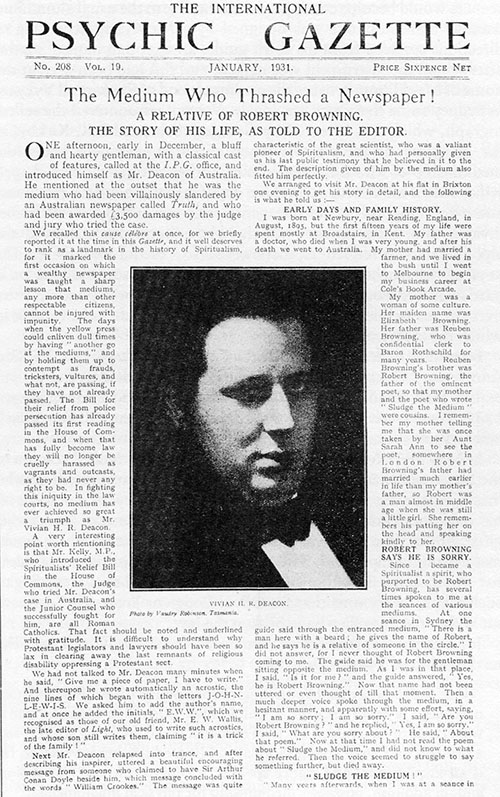
    Vyvyan engaged a solicitor and instigated a case of libel against the paper. In spite of the Truth engaging the legal services of the up-and-coming lawyer Robert Gordon Menzies – later to become Australia’s longest serving prime minister – the following year a jury ruled in Vyvyan’s favour, awarding him a record amount of 3,500 pounds. Naturally the Truth appealed the decision and it would be a year later in mid-1930 before they finally settled out of court. 

    Vyvyan Deacon’s successful defamation suit against the Melbourne Truth is celebrated in the International Psychic Gazette, 1931

    In the meantime Vyvyan had already decided to do a series of lectures in Tasmania, where Spiritualism and New Thought had gained wide popularity. His initial trip to Launceston was well received and covered favourably in the press. An overall view of his teachings can be gleaned from talks he delivered in early November 1929, as reported by The Examiner.

    In the first of these, in the city’s Kings Hall on 1 November titled “Spiritual Science,” he revealed his underlying belief in the priority of spirit over matter, saying:

    [T]he spiritual world warned mankind many years ago of the coming world war, and it could be shown that many recent discoveries in the scientific world were foretold from the spirit world years before the verification ultimately transpired. Spiritualism contended that the world had never been without adequate spiritual guidance at any time; that to every age and clime had just so much of the divine been made manifest as was suited to the proper growth of that particular age and clime.5

    On the following Sunday night in his lecture “What Happens after Death” he decried the fact that Christendom was unable to provide positive knowledge about the afterlife. From The Examiner’s report we read:

    As a matter of fact there are, broadly speaking, two ways whereby actual knowledge may be gained as to the fate awaiting our dear ones who have passed through the portal of death into the larger and fuller life of the spiritual world. The first way is accessible to all, without very much trouble being necessary. It is the way whereby knowledge is given to a person through some outside agency or at mediumship. The second way, the more satisfactory way, is that entailing some years of training and hard work, nevertheless truly worth-while, whereby one develops one’s own psychic faculties and observes the facts for oneself. Men like Sir William Crookes, Alfred Russell Wallace, and Sir Oliver Lodge are pioneers of the first way, and Andrew Jackson Davis, Rev. Stanton Moses, M.A. and Dr. Rudolf Steiner are pioneers of the second way.6

    A week later he gave a talk on “Personal Magnetism” at the Mechanic’s Hall. This theme continues to be topical in its present-day form as ‘The Law of Attraction’. Vyvyan’s angle provided insight and guidance to his attentive audience. 

    Once we understood the nature of mental currents, we would learn that we each were a mental storage battery pregnant with potency. […] The saying in the Scriptures: To him that hath, shall be given, and from him that hath not, shall be taken away, even the little that he hath, could only be intelligible to the person who understood magnetic force. […] Desire in all forms is a mental current charged with power, and recognition of this fact and the utilisation of the power contained in desire by refusing to gratify each desire, thus extracting its power for one’s use, is the secret of personal magnetism. A certain restraint in thought, feeling, and word, is the insulation of magnetic power.7

    Vyvyan Deacon in costume

    It is hard to discern whether his ideas on this subject may have been influenced by contemporary American New Thought exponents like Wallace Wattles and Napoleon Hill. Of course, by this time the fifth Solvay conference had taken place in Brussels where Einstein, Plank, Heisenberg and Bohr had acknowledged the existence of ‘mind over matter’.8 The practical element of this work was famously revisited with the release of Rhonda Byrne’s The Secret in 2006, putting personal magnetism and ‘The Law of Attraction’ back in vogue.

    The Final Years

    Being flush with funds from the defamation settlement, Vyvyan found himself yearning to return to England and, in late 1930, bought tickets for Eunice, Sybil, Vivienne and himself for the voyage from Melbourne to Southampton on the SS Jervis Bay. He would never set foot on Australian soil again.

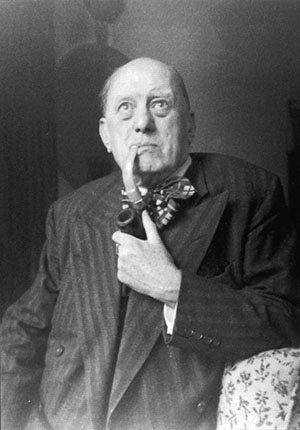
    Vyvyan Deacon passed away at the age of 42 on 19 Febuary 1938. On 15 April 1938 Aleister Crowley (above) wrote in his diary: “Vyvyan Deacon came in about 7 am. Taller, thinner, paler than in life. Dressed in white suit of ‘flannels’. Seemed to want to speak, but I heard nothing.”

    Although Vyvyan shared mutual acquaintances with Aleister Crowley, the pair did not actually meet until 1931. Crowley particularly admired his new friend’s skill in filing lawsuits against defamation and used the same tactic successfully himself. While their relationship essentially revolved around occult matters, Vyvyan did find himself constantly called upon to help scrape together enough cash to keep Crowley solvent. They remained close over the next seven years as Vyvyan supported himself by conducting séances, demonstrating hypnotism on-stage, performing psychic services and delivering lectures – one of the last ever being a joint presentation with Alice Bailey in late 1937 titled ‘The Cosmic Christ’. 

    A few months prior to that he had collapsed in the street, sustaining a skull fracture that was never properly treated and then, following a second fall and hospitalisation shortly afterwards, he passed away peacefully on 19 February 1938. He was 42 years of age.

    Thus, the curtain fell on one of our most gifted proponents of psychic mediumship – one who formed a pivotal link in the golden chain of Australia’s esoteric legacy.

    [alert type=”general” dismiss=”no”]This article was published in New Dawn 161.[/alert]

    [alert type=”success” dismiss=”no”]If you appreciate this article, please consider subscribing to help maintain this website.[/alert]

    Footnotes

    1. For OTO reference on Bennett see: www.collective777.com/#!oto–thelema/c1kx2 
    2. The Uncommon Medium by Vivienne Browning, 1993, Skoob Books Publishing Ltd, London, 46
    3. Ibid., 77
    4. Ibid., 123
    5. National Library of Australia, http://trove.nla.gov.au/newspaper/
    article/51629162
    6. National Library of Australia, http://trove.nla.gov.au/newspaper/
    article/51629583
    7. National Library of Australia, http://trove.nla.gov.au/newspaper/
    article/51630954
    8. For more on the mind-over-matter debate see websites such as www.newthoughtwisdom.com/quantum-communication-mind-science-
    consciousness.html

    © New Dawn Magazine and the respective author.
    For our reproduction notice, click here.
  • The Secret World of Pamela Travers

    The Secret World of Pamela Travers

    This article was published in New Dawn 170 (Sept-Oct 2018)

    The masterfully told stories of a magical nanny that held adults and children alike spellbound for decades might incline readers to think that Australian author Pamela (P.L.) Travers merely had an over-active imagination. The truth is that her talent blossomed out of a fertile garden of occult teachings and paranormal experiences, nurtured and inspired by some real-life, exceptionally gifted personalities. 

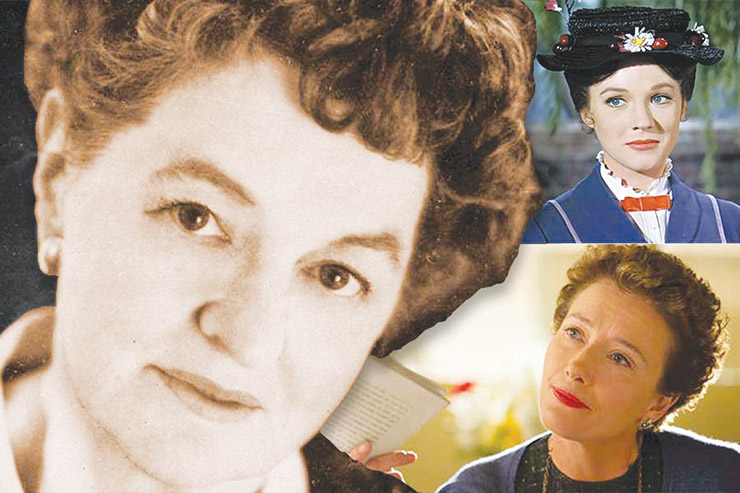
    The movie Saving Mr Banks and the documentary The Real Mary Poppins treated the public to insights into her relationship with her father, the influence of the Auntie she called Sass, and her tumultuous association with Walt Disney. Of equal gravity was her lifelong attraction to mystical pursuits and the guidance of the philosopher and mystic George (G.I.) Gurdjieff.

    Travers was born in Maryborough, Queensland, as Helen Lyndon Goff in 1899. Her father, Travers Robert Goff, whom she adored, moved the family to the small community of Allora on the Darling Downs in 1905, where he died of tuberculosis at the age of 43. It was then that Christina Saraset, or Aunt Sass as she liked to be called, came on the scene to help out, and Pamela and her family moved once again, this time to Bowral in New South Wales. 

    It is now common knowledge that the character of Mr Banks in her novels was based on her father, Travers Goff, while Aunt Sass, who ‘flew in from the east’, would serve as the model for Mary Poppins herself, who famously blew in from the east with her parrot umbrella and magical carpetbag. The real-life Aunt Sass was a strong, no-nonsense presence in her niece’s life, as well as her work. Travers described her as a “bulldog with a ferocious exterior” but with a “heart tender to the point of sentimentality.”

    Pamela Travers has been described by some observers as “mysterious and prickly,” and one could form the opinion, based on Emma Thompson’s portrayal of her – as praiseworthy as it was from an artistic point of view – that the writer was full of herself, close-minded and perhaps even emotionally cold. And this notion might be further reinforced by the fact that she never married, bore children of her own or formed a family unit in the conventional sense. Yet such an impression would be completely false.

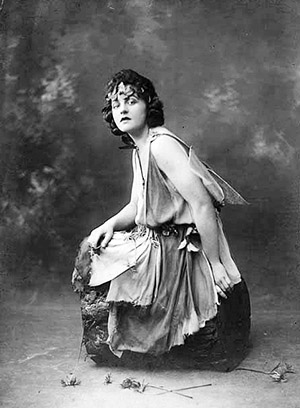
    P.L. Travers in the role of Titania in a production of A Midsummer Night’s Dream, c. 1924

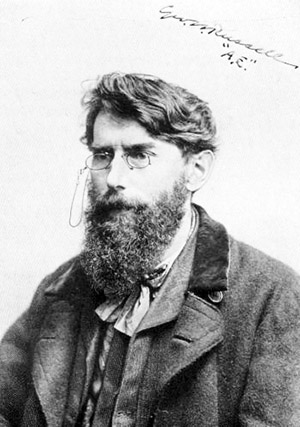
    As a young woman Helen Goff was an actress, dancer and a poet before turning her hand to journalism. She toured Australia and New Zealand as a member of Allan Wilkie’s Shakespearean Company, adopting the stage name Pamela Lyndon Travers. At the age of twenty-four she travelled to Ireland, where the Irish poet and mystic George (A.E.) Russell became her mentor. As editor of the Irish Statesman, Russell, whose kindness towards younger writers was legendary, initially accepted some of her poems for publication. From 1925 onward she was introduced to Theosophical thought and literary figures familiar with the Theosophical Society, including T.S. Eliot, Oliver St. John Gogarty and William Butler Yeats, the latter being one of the leaders of the Golden Dawn.

    Gurdjieff, Mysticism & Spirituality

    Travers studied the Gurdjieff system under Jane Heap, and in March 1936, with the help of Jessie Orage (widow of The New Age editor Alfred Richard Orage), she met the mystic George Gurdjieff, who in turn introduced her to the paths of Sufism and Zen. He encouraged her to explore Eastern religion and, during her thirties and forties, she delved into Buddhism, later gravitating to Jiddu Krishnamurti.

    The successful writer travelled to New York City during World War II while working for the British Ministry of Information. At the invitation of her friend, the US Commissioner of Indian Affairs, John Collier, Travers spent two summers living among the Navajo, Hopi and Pueblo Indians, studying their mythology and folklore.1 Episodes such as these reveal something of Pamela Travers’ true character and her perpetual thirst for occult knowledge. She had no qualms about lodging at a reservation and formed a close bond with the Navajo people in Arizona who did the honour of bestowing an Indian name on her, although it was one that she always kept secret.2 After the war, she remained in the USA and became Writer-in-Residence at Radcliffe College and Smith College, Massachusetts. 

    Journalist and critic Jerry Griswold, in an essay tribute to Pamela Travers after her death, asserted that she had “lived for several years” with the Navajos and, during another period, had “studied for several years” in Kyoto under a Zen master,3 although in his recollections he probably exaggerated the time spans somewhat. After her American sojourn, she returned to England, making only one brief visit to Sydney in 1960 while on her way to Japan to study Zen mysticism.

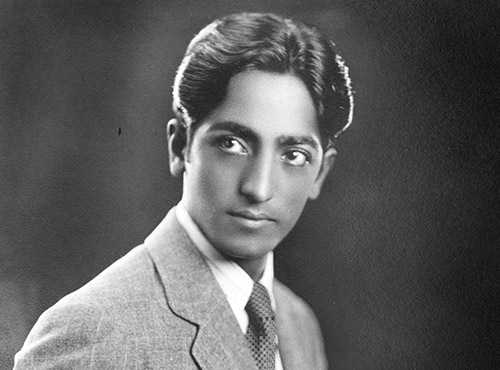
    Jiddu Krishnamurti, c. 1920s

    Arcane Influences & Didactic Writings

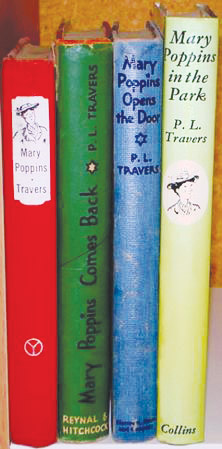
    The question arises as to what degree the writings of Pamela Travers were influenced, guided or even manipulated by her spiritual masters? She met George Gurdjieff some years after the first edition of Mary Poppins had been published (in 1934), followed by the equally well-received Mary Poppins Comes Back (1935). Any direct influence by Gurdjieff is more likely to be found in the later Mary Poppins books, particularly Mary Poppins Opens the Door (1944) and Mary Poppins in the Park (1952).

    In 1970 Pamela Travers authored a contribution on Gurdjieff for Richard Cavendish’s encyclopedia Man, Myth & Magic (see page 48), then went on to publish an insightful ten-page booklet George Ivanovich Gurdjieff three years later. In that tract she reflects on the various traditions that were woven into Gurdjieff’s work and, by extension, her own thought and philosophy: 

    What was the source of his teaching? True to his role, Gurdjieff never openly disclosed it. By examining his writings and the numerous commentaries upon them it might be possible to discover parallels in various traditions: Tantric Buddhism, Hinduism, Sufism, Greek Orthodoxy – possible, but hardly profitable. For the fundamental features of his method cannot be traced to any one source. Ouspensky quotes him as admitting, I will say that, if you like, this is esoteric Christianity. There seems no reason to reject this when one remembers that Christianity, as Gurdjieff knew it, was the heir of the ages and must have drawn to itself elements from very early pre-Christian traditions, Hittite, Assyrian, Phrygian, Persian; and there is nothing so explosive as old ideas restated in contemporary terms as the Western world was to discover when Gurdjieff burst upon it.4

    In the same publication she lists several celebrated editors and writers of the day who socialised with Gurdjieff:

    Great feasts where, under the influence of good food, vodka and the watchful eye of the Master, opportunities were provided, for those who had the courage, to come face to face with themselves. The hardiest among them, those who could rise to the level of being serious, were allowed to transmit something of the teaching to newer pupils.5

    This issue of the transmission of the teachings poses the further question as to whether the novels penned by Travers carried veiled arcane messages intended only for the more astute, esoterically inclined among her audience. We should, nevertheless, resist the temptation to read too much of Gurdjieff into the Mary Poppins’ stories. In an interview which appeared in the Paris Review in 1982, the interviewers asked Travers whether “Mary Poppins’ teaching – if one can call it that – resemble that of Christ in his parables.”6 Travers replied: “My Zen master, because I’ve studied Zen for a long time, told me that every one (and all the stories weren’t written then) of the Mary Poppins stories is in essence a Zen story. And someone else, who is a bit of a Don Juan, told me that every one of the stories is a moment of tremendous sexual passion, because it begins with such tension and then it is reconciled and resolved in a way that is gloriously sensual.” The answer is clarified by the following question (posed by the interviewer): “So people can read anything and everything into the stories?” Travers’ response: “Indeed.”

    In Man, Myth & Magic, Pamela Travers wanted to make it clear that the work of her Master in no way constituted Black Magic. She wrote: 

    It is clear from Gurdjieff’s writings that hypnotism, mesmerism and various arcane methods of expanding consciousness must have played a large part in the studies of the Seekers of Truth. None of these processes, however, is to be thought of as having any bearing on what is called Black Magic, which, according to Gurdjieff, “has always one definite characteristic. It is the tendency to use people for some, even the best of aims, without their knowledge and understanding, either by producing in them faith and infatuation or by acting upon them through fear. There is, in fact, neither red, green nor yellow magic. There is ‘doing’. Only ‘doing’ is magic.” Properly to realise the scale of what Gurdjieff meant by magic, one has to remember his continually repeated aphorism, “Only he who can be can do,” and its corollary that, without “being” nothing is “done,” things simply “happen.”7

    Travers insisted that the Mary Poppins stories had not come from herself but that there are “ideas floating around that pick on certain people.” She believed that her books were gifts of God, “given” to her, and quoted C. S. Lewis saying, “There is only one Creator, we merely mix the ingredients He gives us.”8 She declared that she was not a creator, simply a vessel, and never wrote specifically for children but was “grateful that children have included my books in their treasure trove.”

    [alert type=”success” dismiss=”no”]If you appreciate this article, please consider subscribing to help maintain this website.[/alert]

    What the Bee Knows

    The Irish poet and mystic George (A.E.) Russell.

    In addition to her well-known collection of novels, Pamela Travers wrote numerous non-fiction essays and books, especially in her later years. What The Bee Knows is a collection of spiritual essays. The back of the book describes it as “a honeycomb of essays pointing to the truth-of-things handed down in the great popular stories of cultures around the world.” And that is just what it is, a labyrinth of brief dissertations covering a range of esoteric, myth-based and biographical themes. She shares tales of her friendships with literary figures such as W.B. Yeats and A.E. Russell, of her studies among many religions of the world, of her early experience with fairy tale and folklore which shaped her character.

    The Sphinx, the Pyramids, the stone temples are, all of them, ultimately, as flimsy as London Bridge; our cities but tents set up in the cosmos. We pass. But What The Bee Knows, the wisdom that sustains our passing life – however much we deny or ignore it – that for ever remains.9

    Why did Pamela Travers choose the Bee as her metaphor? She wrote: 

    I thought of Kerenyi – “Mythology occupies a higher position in the bios, the Existence, of a people in which it is still alive than poetry, storytelling or any other art.” And of Malinowski – “Myth is not merely a story told, but a reality lived.” And, along with those, the word “Pollen,” the most pervasive substance in the world, kept knocking at my ear. Or rather, not knocking, but humming. What hums? What buzzes? What travels the world? Suddenly I found what I sought. “What the bee knows,” I told myself. “That is what I’m after.”

    But even as I patted my back, I found myself cursing, and not for the first time, the artful trickiness of words, their capriciousness, their lack of conscience. Betray them and they will betray you. Be true to them and, without compunction, they will also betray you, foxily turning all the tables, thumbing syntactical noses. For – note bene! – if you speak or write about What The Bee Knows, what the listener, or the reader, will get – indeed, cannot help but get – is Myth, Symbol, and Tradition! You see the paradox? The words, by their very perfidy – which is also their honourable intention – have brought us to where we need to be. For, to stand in the presence of paradox, to be spiked on the horns of dilemma, between what is small and what is great, microcosm and macrocosm, or, if you like, the two ends of the stick, is the only posture we can assume in front of this ancient knowledge – one could even say everlasting knowledge.”10

    An Esoteric and Occult Bequest

    Toward the end of her life Travers became increasingly interested in Sufism, a form of Islamic mysticism, particularly the Persian branch of it, through meetings with members of the fraternity and their publications in Britain. We can assume that she continued her search for life’s meaning among the world’s mystical and spiritual traditions right until the end. Perhaps she never felt she had reached the ultimate aim of Gurdjieff’s Work or ‘Fourth Way’, which held the goal of shattering one’s pretensions and ego, the stripping away of the personality and awakening to a higher consciousness.

    It is no secret that the great success of author J.K. Rowling with that other fictional champion of magic in book and film, Harry Potter, owes something to Pamela Travers. Rowling was an admirer of Travers and adopted both her enigmatic disguise in initialling her first names and also her theme of flight, just as Travers had herself been inspired by J.M. Barrie’s ‘Peter Pan’. Rowling now ranks highly in the tradition of authors of youth fantasy classics, joining C.S. Lewis, J.R.R. Tolkien, J.M. Barrie and, of course, P.L. Travers. She also borrowed the name when she created the character of the Death-Eater wizard called Travers in her novels, portrayed by actor Tav MacDougall in the film adaptation of Harry Potter and the Order of the Phoenix.

    In 1977 Pamela Travers was made an Officer of the Order of the British Empire and in 1978 received an honorary degree from Chatham College, Pittsburgh, USA. She would spend the final years of her life in London’s Chelsea district, dying from the effects of an epileptic seizure, on 23 April 1996 at the age of ninety-six. What she contributed to literature is now legendary. What she bequeathed us in the way of mystical knowledge ought not be underestimated either. Her lifelong pursuit of spiritual wisdom significantly enriched the storehouse of esoteric teachings available to all those she called the ‘Seekers of Truth’.

    [alert type=”general” dismiss=”no”]This article was published in New Dawn 170.[/alert]

    [alert type=”success” dismiss=”no”]If you appreciate this article, please consider subscribing to help maintain this website.[/alert]

    Footnotes

    1. https://en.wikipedia.org/wiki/P._L._Travers
    2. www.biography.com/people/pl-travers-21358293
    3. Revealing Herself to Herself: REMEMBRANCES by Jerry Griswold, Los Angeles Times, 16 June 1996
    4. www.gurdjieff.org/travers1.htm
    5. Ibid.
    6. As quoted by Massimo Introvigne at: www.academia.edu/29792559/Mary_Poppins_goes_to_Hell_Pamela_Travers_Gurdjieff_and_the_Rhetorics_of_Fundamentalism
    7. “Gurdjieff” in Man, Myth and Magic: Encyclopedia of the Supernatural (1970)
    8. www.independent.co.uk/news/people/obituary-p-l-travers-1306698.html
    9. What the Bee Knows: Reflections on Myth, Symbol, and Story by P.L. Travers (1989)
    10. “What the Bee Knows” in Parabola: The Magazine of Myth and Tradition, Vol. VI, No. 1 (February 1981); later published in What the Bee Knows: Reflections on Myth, Symbol, and Story (1989)

    © New Dawn Magazine and the respective author.
    For our reproduction notice, click here.