New Dawn – World's Most Unusual Magazine

Category: Behind the News

  • Psycho-Power: ‘Automaton Conformity’ & ‘Freedom’ in a Post-COVID World

    Psycho-Power: ‘Automaton Conformity’ & ‘Freedom’ in a Post-COVID World

    From New Dawn 186 (May-June 2021)

    The role of biopower from the last century onwards represented a shift into forms of ‘disciplinary power’ over people, as I have discussed in previous New Dawn articles.1 

    The move into industrialisation necessitated a form of bodily discipline to adapt workers to the manner of machinic production. Now that modern societies across the globe are transitioning from industrial to digital life, power is no longer solely over the ‘docile body’ but intra-body – the genetic, programmable cellular life – as well as the conscious life of a person. Disciplinary power was all about training the body, subjecting it to drills and rules. However, now control over the ‘docile body’ is expanded to include control over the ‘docile psyche’ – to reach into, influence, and steer the psyches of the population. 

    Brought about by the COVID-19 pandemic and infecting governments worldwide, this new reign of biopower seeks to secure its dominion through a combination of a carefully controlled “administration of bodies,” a calculated “management of life,” and a persistent “programming of consciousness.”2 In the words of Jose Delgado, a professor of neurophysiology at Yale University and a famed mind control researcher: we are shifting into a psychocivilised society.3 In psycho-power, the human being is the target site, including their conscious and unconscious thought patterns. 

    To frame human life under a reign of comprehensive biopower, State authorities must also render conscious life under its rule. The contents of an individual’s mind is another aspect of our existence and, as such, also is to come under State jurisdiction. For all human life born into this world, the State automatically assumes the power to dictate the conscious thought of that new life. This means not only external control over an individual’s body but also techniques to interiorise this control – both mentally (conditioning, programming) and biologically (health treatment, vaccination, etc.). 

    As the reign of biopower continues to unfold, the situation may be increasingly managed so that each person is limited in how they make health decisions. I refer to this as a form of psycho-power that, aligned with the biopower agenda, seeks dominion over external and internal realms through the rhetoric (or double-talk) of claiming to represent the power of well-being. The result will be less ‘well-being’ and more control of the human being. The very process of how we determine human well-being is at the core of what is transpiring. 

    New ‘Consensus Reality’

    I propose that biopower is transforming into a control system for human consciousness. The current biological ‘state of emergency’ is forcing people, on a global scale, to accept previously unimagined ideas to the point where the human psyche is tested to its limits. A new narrative is being established and seeded into mass human consciousness. This new ‘consensus reality’ imposed on the world attempts to colonise our private senses. It propagates a new shared affinity of conditioned thought. And yet, this is more likely to cause dissonance than cohesion. The question of freedom, especially freedom of thought, is now bringing forth its own forms of constraint and generating new forms of coercion. German-Korean philosopher Byung-Chul Han has stated this new form of power, emerging from post-industrial capitalism, is psycho-politics.

    Byung-Chul Han

    Under psycho-politics, those being ruled think they act freely, but in fact they act in accordance as directed by the rulers. The individual’s apparent freedom is exploited as they are carefully guided – nudged – to make the right choices through precise control of the psyche. 

    In turn, we direct our frustration back on ourselves. As Han notes, people are less liable to revolt when they are depressed: “Psychic maladies such as depression and burnout express a profound crisis of freedom. They represent pathological signs that freedom is now switching over into manifold forms of compulsion.”4 

    Current forms of biopower do not overtly interfere with the human psyche in a systemic fashion, but it has prepared the groundwork for the newly emerging biology of control to gain influence over the intra-space of the human psyche.

    New forms of modern governance, being put into place right now, will manage and exploit a ‘psycho-power’ technology of domination. What we are witnessing, and Han agrees, is the emergence of a new form of psycho-governance. Governance imposed not only by traditional nation-state bodies but also through the harnessing of technology to influence the human mind and how people think. This system will employ digital technologies and the digital-surveillance architecture as its dominant, pervasive medium of control. 

    Further, psycho-power is not about controlling the past but about manipulating memory so that the present can be forged anew. The new consensus reality is already erasing pre-pandemic history. We can sense this already occurring. The world, pre-2020, now seems like a bygone age. It is surprising how many people readily accustomed themselves to the ‘new normal’ with its biosecurity regulations. 

    Another point is that within the new biopower regime, emotions are actively encouraged and often deliberately targeted and heightened. This is in contradistinction to earlier disciplinary societies where emotions were considered distractions from orderly and mechanical functioning. The “Fourth Industrial Revolution (4IR),” as the World Economic Forum labels it, is about a new functionality – a digitally-managed gameboard of simultaneous disruption, diversion, and entanglement. As part of this increased emotional engagement, certain ‘technologies of the self’ are promoted.

    ‘Self-Optimisation’ in the 4IR

    With more and more people working from home, we can only imagine how practices for ‘self-optimisation’ are going to be peddled even more than previously. These may include online motivational retreats, digital management workshops, Zoom personality seminars, etc. All designed and pushed to make people operate more efficiently within the system, like a cog in a machine. Within such a system, weak points are targeted and ‘worked on’ to gain increased ‘efficiency and performance’. 
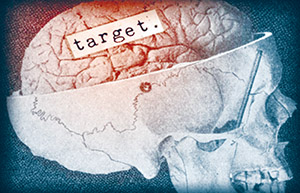
    We would do well to remember that the ‘good self’ is not the same as living the ‘good life’. It is more likely that under the new system of psycho-power, the ‘good self’ will be exploited in the increasingly corporate-aligned ‘Consciousness Industry’. Being fed on a carefully formulated diet of ‘Positive Thinking’ teachings can actually distract a person from deeper self-directed interior examination. Sophisticated techniques of ‘self-optimisation’ will be forged to manipulate people for optimal engagement and participation in the new consensus – rather than its opposite of self-empowerment for individual emancipation and sovereignty. As Han notes, constantly ‘working’ on oneself, as per the self-improvement industry, can become a new form of work ethic: “Now, instead of searching out sins, one hunts down negative thoughts.”5 

    Italian philosopher Franco Berardi takes an even stronger position. In his perspective, a new fascism is arising as people become subsumed in their own panic and a psychological “depressive rage of impotence.”6 The once prevalent will to power, he says,has now been replaced by impotent rage. 

    Berardi sees a psychopharmacological addiction and disorientation as the new despondency – a form of confused passiveness amidst mental mayhem, within which dwells an impotent desire for revenge. It is a sign of painful irony that in an age of impotence, as Berardi calls it, human fertility is rapidly declining and looks set to diminish even further. As the grip of psycho-power continues to imprint new patterns on human thinking, this ‘impotent rage’ feeds into a rising social architecture of human ‘unfreedoms’.

    Unfreedoms & (In)Securities

    With the lockdowns of 2020 continuing into 2021, many people are finding it very difficult to endure enforced confinement in their homes, cut-off from social engagements and networks. It has caused great personal unrest and psychological discomfort as people were previously accustomed to what they considered a life of ‘freedom’ and leisure. What is now surfacing is that many people harbour unconscious fears about the risks of freedom. 

    Erich Fromm (1900–1980)

    The German-born philosopher and social psychologist Erich Fromm spent most of his life trying to understand freedom in relation to the human condition. Fromm posited that a struggle for freedom is a dynamic between the interior world of an individual and external institutions and systems. Under the prevailing pandemic of personal fears of social isolation and uncertainty, people have willingly given up freedoms and empowered outside agencies. Eventually, this leads to people becoming instruments in the hands of powers external to them. The alternative is seeking a form of self-independence based on personal trust and belief. However, this form of self-belief is constantly undermined by institutions in the modern world. 

    Fromm says that when individuals attempt to become more independent and self-reliant, they also become more isolated from social systems, which creates fear of isolation. Similarly, the new consensus reality is attempting to strengthen a dependency upon external systems – through the fear of the virus – biosecurity. This dependency is either compelled by triggering people’s fears (through heightened narratives of risk) or enforced through regimes of biopower and psycho-power strategies. 

    Fromm noted we are fascinated by power wielded outside ourselves yet are blinded to the condition of our inner restraint in the form of compulsions and fears. These individual and social conditions make for the suppression of human life and its tendency for control and management. 

    I suggest that underneath governmental and State forms of psycho-power is an agenda to manipulate people’s fears about the risks of freedom. People are more liable to turn to authoritarian systems to provide a ‘safe freedom’, especially within the heightened environment of biosecurity risks. In his Fear of Freedom, Fromm proposes that our inherent, often unrecognised, fear of personal freedom and self-independence results in the following escape mechanisms:

    Automaton conformity: changing one’s ideal self to conform to a perception of society’s preferred type of personality and losing one’s true self in the process; Automaton conformity displaces the burden of choice from self to society. 

    Authoritarianism: giving control of oneself to another. By submitting one’s freedom to someone else, this act removes the freedom of choice almost entirely.

    Destructiveness: any process that attempts to eliminate others or the world as a whole, all to escape freedom.7

    Fromm saw that people turned to external dependencies as a way to save themselves from being crushed by their unprocessed fears. He wrote: “Because we have freed ourselves of the older overt forms of authority, we do not see that we have become the prey of a new kind of authority. We have become automatons who live under the illusion of being self-willing individuals.”8 
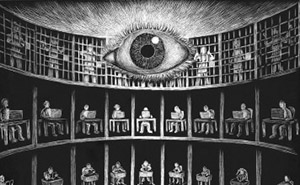
    This “new kind of authority,” to operate under psycho-power, is an insidious form of power that literally gets into peoples’ heads and gives them the “illusion of being self-willing individuals.” Under this new regime, people willingly comply and place themselves under external control. Most people ‘believe’ they are already free, as ‘self-willing individuals’, but in fact they are complying with society’s consensus narrative. This is what Fromm called automaton conformity, which eventually leads to the condition of authoritarianism. The only other alternative is Destructiveness – a rage to eliminate others or the world.

    Under psycho-power, humans are to be constantly reminded they are open to attack – the risk of infection – at any time. Anyone who internalises the emotions of derivative fear will more willingly respond to a perceived ‘threat’, even in the absence of a genuine threat. Such behaviour is self-managed – internally programmed – and precisely what psycho-power seeks. 

    Today, power is no longer solely exercised through the façade of political institutions – it has shifted into the extraterritorial space beyond boundaries, nations, laws, visibility, and accountability. Under the new regime of psycho-power, the only form of security is inclusion. By excluding yourself from the over-arching systems of social management, you bring increased risk upon yourself and your loved ones. 
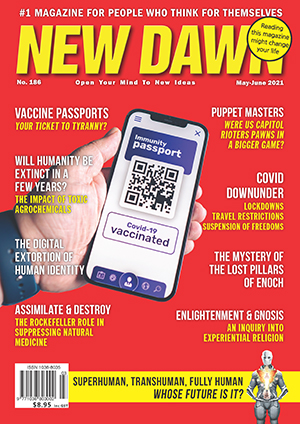
    Inclusion and exclusion are significant factors in psycho-power. As with disease outbreaks, there is a division between the ‘infected’ (excluded) and the ‘healthy’ (included). This will be brought into stark effect with the imminent introduction of health passes and vaccine passports. Psychological programming by mainstream media generates the required fear of exclusion from state-sponsored health security (biosecurity). The ingenuity of psycho-power will likely be its production of ‘security anxiety’ (playing on people’s fears) in which the collective public mindset is further conditioned with feelings of insecurity, strengthened by relentless repetition by politicians and the media. Insecurity begets increased state security – a self-fulfilling cycle. The state of being in security (insecure)requires our willing compliance. 

    Erich Fromm was prescient in recognising that a hugely influential, almost secret, power is exercised over the whole of society that conditions our ways of thinking and how we perceive reality. Today, I refer to that ‘almost secret’ power as an expression of psycho-power. 

    The peril of the moment is that many people continue to live under the illusion of thinking they are self-willing individuals. Despite this state of affairs, every individual really does have personal agency and the power of sovereignty. But we can only perceive the truth of our power if we extricate ourselves from the emerging new consensus reality that incorporates biopower, biosecurity, and increasing narratives of unfreedom. 

    Kingsley Dennis’ new book on this topic is Hijacking Reality: The Reprogramming & Reorganization of Human Life, available in paperback and ebook from online booksellers.

    [alert type=”general” dismiss=”no”]This article was published in New Dawn 186.[/alert]

    [alert type=”success” dismiss=”no”]If you appreciate this article, please consider subscribing to help maintain this website.[/alert]

    Footnotes

    1. See New Dawn 183, Nov-Dec 2020
    2. See New Dawn 184,  Jan-Feb 2021
    3. Jose Delgado, Physical Control of the Mind: Toward a Psychocivilised Society, 1969
    4. Byung-Chul Han, Psycho-Politics: Neoliberalism and New Technologies of Power, Verso, 2017, 2
    5. Ibid, 30
    6. Franco Berardi, The Second Coming, Polity Press, 2019, 11
    7. Erich Fromm, The Fear of Freedom, Routledge & Kegan Paul, 1960
    8. Ibid., 177

    © New Dawn Magazine and the respective author.
    For our reproduction notice, click here.
  • The Sickness Industry: How Big Pharma Invents Crises & Normalises Dependency

    The Sickness Industry: How Big Pharma Invents Crises & Normalises Dependency

    From New Dawn Special Issue Vol 14 No 2 (Apr 2020)

    The pharmaceutical industry is worth $1 trillion, half of which comes from US-based sales. The alternative health industry, by comparison, is worth just $59bn. Big Pharma bribes doctors, dominates advertising, and drives the anti-natural health narrative. 

    The biggest, multibillion-dollar companies are Pfizer (US), Novartis (Switzerland), Roche (Switzerland), Johnson & Johnson (J&J US), Merck & Co. (US), Sanofi (France), GlaxoSmithKline (GSK UK), AbbVie (US), Takeda (Japan), and AstraZeneca (UK-Sweden). The bulk of their profits come from prescription drugs. Big Pharma kills people in two ways: 1) pricing life-saving drugs out of the market and 2) aggressively marketing potentially dangerous products. 

    It often is cheaper for Big Pharma to break the law and pay fines than follow regulations that hinder profits. Every year at least one major drug company is fined for one or more of the following: bribery, drug safety, false claims, fraud, foreign corruption, off-label and unproven promotion, price-fixing, and violating consumer protection. Since 2000 in the US alone Pfizer has been fined by federal authorities 47 times totalling $4.4bn; Merck 42 times for $3bn; J&J 28 times for $3.4bn; Abbott 25 times for $2.3bn; Novartis 22 times for $1.2bn; and GSK 13 times for $3.9bn.

    Profits are boosted by what Elaine Hollingsworth calls “the sickness industry.” Despite living longer, obesity, depression, dementia, increased cancer and other morbidities mean that Westerners are now less healthy than just a few generations ago. Big Pharma pathologises minor ailments and makes people dependent on drugs instead of encouraging the use of natural alternatives. The crisis of the industry’s influence over the medical profession, from reporting trial results to influencing doctors, prompted the British Medical Journal (BMJ) to launch a “Commercial Influence in Health Initiative” to expose Big Pharma’s deadly influence. 

    “Fictionosis”: From Fake Disease To Fake Journals

    Marketing fake medicine dates back at least to 19th century America when ‘patent medicine shows’ – which promoted products that were neither patented nor medicines – promised cures for fatigue, baldness, and scrofula. Million-dollar enterprises included Ayer’s Hair Vigor and Scovill’s Sarsaparilla. Dr Larry Dossey writes that in the 1900s, medical companies sought “to inflate a common, everyday condition to the level of pathology.” This was the beginning of what the science writer Julie Deardoff calls “fictionosis.” 

    To prove how easy it is to invent new illnesses, doctors Ray Moynihan and David Henry claimed to have discovered a new, potentially fatal, laziness disease: “motivational deficiency disorder.” Data was supposedly supplied by one Dr Leth Argos; a pun on lethargy. Their fake research was published in the BMJ

    The term “disease mongering” was coined by Lynn Payer who identified ten methods used by Big Pharma to convince us that we are sick: abnormalising normal conditions; portraying potential consumers as sufferers; identifying common conditions to maximise target audiences; defining conditions as diseases; working with medical professionals to gain credibility; selecting issues; using selective statistics; using endpoint references; implying that technology is risk-free; and devaluing real ailments for which no cures exist.

    In the 1960s, Dr Keith Connors was paid by the drug company CIBA to trial Ritalin. Connors set a precedent for trialling Big Pharma-sponsored drug studies on children via university-affiliated clinics. Connors watched this model get out of control to the point where he called misdiagnoses of Attention Deficit Hyperactivity Disorder (ADHD) “a national disaster.” Journalist Alan Schwarz revealed that although only 5 per cent of US children actually have ADHD, 15 per cent are diagnosed with it. This is largely due to Big Pharma pushing its products on doctors and families. Thirty per cent of all boys in the American South (i.e., the poor states) are misdiagnosed. Schwarz claims that Big Pharma paid “all the top researchers” to publish studies claiming that ADHD drugs are safe. Big Pharma then took the false data from their subsidised studies and constructed advertisements targeted at worried parents. The advert for Adderall XR, for instance, claimed that the drug boosts the child’s grades to match their intelligence. Schwarz says that “[e]very ADHD drug – Adderall XR, Concerta, Vyvanse, Metadate, you name it – has received a formal reprimand from the [US Food and Drug Administration] for false and misleading advertising.” Yet, many remain on the market. 

    Medical ghostwriters do not disclose their paymasters and are paid by companies to influence both policymakers and doctors. Elsie Langdon-Neuner estimates that over 10 per cent of journal publications are ghostwritten. Ghostwriting becomes apparent thanks only to whistleblowers and court orders. Researchers Healy and Cattell discovered 85 academic papers written by drug companies with the author’s name still to be determined. Fifty-five were written by Pfizer, and 30 were either funded by Pfizer or based on Pfizer’s data. Just two articles declared a conflict of interest, and every single one reported positive results. In 1999, Merck introduced the painkiller Vioxx. By 2004 it was withdrawn after being linked to cardiovascular disorders. Merck had previously hired ghostwriters despite having internal knowledge that the drug may increase the risk of thrombus formations.

    Big Pharma has even paid for the publication of fake peer-reviewed journals that report positive results of drug trials without disclosing funding. Elsevier’s Australia office published six such journals between 2000-05: Australasian Journal of General Practice, Australasian Journal of Neurology, Australasian Journal of Cardiology, Australasian Journal of Clinical Pharmacy, Australasian Journal of Cardiovascular Medicine, and Australasian Journal of Bone & Joint Medicine.

    Lobbying: “They Sell Lies”

    The number of deaths caused by alternative medicines and therapies is so small that no generalised statistics have been compiled with the exception of cancer; namely, that complementary cancer therapy patients are reportedly five times more likely to die than allopathic cancer patients. Compare this to the UK alone, where prescription errors kill 20,000 patients a year. In the US, prescription errors kill a quarter of a million. The World Health Organization says that by 2012, 80 per cent of the world’s population was using alternative health therapies, including people in so-called developed countries. Around that time, 400 high-profile Australian doctors and scientists formed Friends of Science in Medicine, a lobby to remove alternative health degree courses from universities. 

    Today, Big Pharma spends $50 billion a year – almost the value of the entire alternative health industry – on advertising and PR. Ex-salesman and former leader of the Nordic Cochrane Centre, Dr Peter C. Gøtzsche, writes: “Drug companies don’t sell drugs, they sell lies about drugs.” He quotes The Lancet as saying that medical journals “devolved into information laundering operations for the pharmaceutical industry.” By 2010, 85 per cent of drug company-funded trials of new medicines yielded positive results for the top five products (e.g., antidepressants), compared to just half for government-funded studies. In Australia in 2017, Lisa Bero of Sydney University’s Charles Perkins Centre found that drug industry-sponsored trials of medicines and equipment were 30 per cent more likely to report favourable results. “Currently, we have no validated way to detect or evaluate these subtle but systematic biases.” Lobbying means that drug prices in Australia are double those of the UK and three times the cost of medicines in New Zealand. By 2017, Australians were paying $500m above the average for seven common drugs. 

    In the US, Big Pharma is the single largest lobbyist, spending over $200m in 2018 compared to electronics and manufacturing companies, and insurance, which spent over $100m each. In 2015, US Congressman Tom Price bought stock in Innate Immunotherapeutics. A year later, he purchased stock in Amgen, Biogen, Bristol-Myers Squibb, Eli Lilly, McKesson, and Pfizer. Price then went to Australia as part of a Congressional visit where he lobbied the government to drop its protectionist measures in the US-led Trans-Pacific Partnership deal. Innate Immunotherapeutics, which has a Sydney office, offered Price a discount on additional stock, making him a $150,000 profit. Price went on to become Donald Trump’s Health and Human Services Secretary. 

    Part of the Big Pharma PR strategy includes funding patient advocacy groups: AstraZeneca’s launch of Breast Cancer Awareness month to boost sales of its Tamoxifen; Pfizer’s association with the Alzheimer’s Association; and Hoechst-Russel’s promotion of the arterial drug Trental via its support for the National Council of Ageing. Additional blurring occurs in the promotion of drugs, including Viagra and Prozac, as lifestyle drugs in which the judgmental competence of the consumer is weighed against that of the qualified physician. As part of their marketing strategy, Australian drug companies engage in so-called asset exchanges with community organisers, patients, and GPs. They anonymously pay speakers to promote the wonders of drugs at conferences, take GPs out to dinner, infiltrate online patient chatrooms, and so on.

    Death and Addiction: “Just Like Doritos”

    By the year 2001, 100 million women worldwide used hormone replacement therapy drugs (HRT), generating $3.8bn for several companies, particularly the US-based Wyeth which dominated the market. In the absence of scientific evidence, the producers of HRT drugs spent billions of dollars on PR groups like HRT Aware and RED Consultancy, promoting HRT as a “cure” for dementia, heart disease, menopause and its symptoms, mood, osteoporosis, sexual function, and vitality. HRT Aware featured women claiming to have improved their careers, overall health, sex lives, and general wellbeing – all thanks to HRT. HRT Aware turned out to be an industry group comprised of oestrogen producers, including Janssen-Cilag, Novo Nordisk, Organon, Solvay, and Wyeth. After the truth emerged in 2002 – that HRT drugs increase the risk of heart disease and double the risk of breast cancer – the drug-maker Novo Nordisk hired the German PR firm Haas & Health Partner to write letters to GPs downplaying the deadly results.

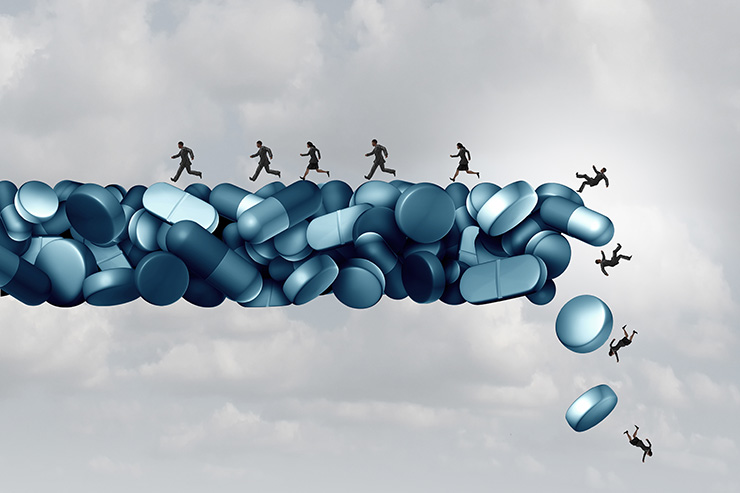
    Consider also America’s opioid (painkiller) crisis. Around 170,000 Americans die annually in accidents: at home, car crashes, workplace injuries, etc. Included in that statistic is 70,000 deaths by drug overdose, meaning that drug overdose is the leading cause of death-by-accident in the US. Nearly seven in ten overdose victims did not die of heroin, crack-cocaine, or ecstasy but from opioids taken illicitly or on prescription. Each year, 18 million Americans misuse prescription drugs, including opioids, antidepressants, and stimulants. Every day, over 5,400 Americans misuse painkillers for the first time. 

    Opioids include carfentanil (an elephant tranquiliser), fentanyl (50 times stronger than morphine), oxycodone (50 per cent stronger than morphine), Tylenol (for head and body aches), and Vicodin (combining hydrocodone and paracetamol). Producers including Purdue Pharma – which “aggressively” marketed OxyContin (spending $200m in 2001 alone) – deliberately targeted doctors serving ethnic minority patients known to be at risk of addiction in de-industrialised areas like Kentucky and Ohio where disaffected communities succumb to “deaths of despair.” One of the big opioid dealers, Mallinckrodt (tax-haven in Ireland), went bust after paying $1.6bn in settlements over its opioid scandal. Between 2006 and 2012, Mallinckdroft flooded the US with 76 billion hydrocodone and oxycodone pills. Ohio-based distributor Steve Cochrane joked: “It’s like people are addicted to these things or something. Oh, wait, people are…” Accounts manager Victor Borelli responded: “Just like Doritos keep eating. We’ll make more.”

    Each year, one in four adults in England alone (12 million people) are prescribed addictive drugs including antidepressants and opioids. At least one million people in England are potentially hooked on painkillers as are 1.4 million Australians. Each year, around 1,000 Australians die of opioid overdose: seven out of ten from pharmaceutical opioids. In 2018, 4.3 million Australians took 39 million prescribed drugs for mental health issues. Indicative of the ease with which physicians diagnose and prescribe, 86.3 per cent of prescriptions came from GPs compared to just over 12 per cent from mental health specialists. The overwhelming majority of prescriptions were antidepressants (over 70 per cent), compared to just 10 per cent for antipsychotics and 5.6 per cent for sedatives and hypnotics.

    Fighting Back

    There’s plenty of action against Big Pharma. Countries from South Africa to Thailand are saying ‘no’ to international treaties that allow giants to monopolise patents and charge unaffordable prices. Big Pharma recognises the public appetite for natural products, hence its effort to corner the market. Accountability journalists like those at ProPublica expose GPs’ conflicts of interest via the “Dollars for Docs” project, such as the 2,500 physicians who received over $500,000 each between 2014 and 2018 from drug and medical device companies (700 of whom received $1m). The money came in the form of consultancy and lecture fees. The Alliance for Natural Health International documents efforts by the so-called Good Thinking Society, Quackwatch, and others, to delete the Wikipedia profiles of natural and alternative health advocates and/or insert potentially libellous material into their bios. Victims include doctors Malcolm Kendrick, Aseem Malhotra, Joseph Mercola, and Nina Teicholz.

    Growing numbers of people are eating more healthily and looking for non-allopathic treatments. The Hartman Group notes that “[p]rogressive consumers are a window in to the future of health and wellness.” The year 2019 saw the biggest growth in herbal dietary supplements in the US in over two decades, totalling $8.8bn. Adaptogens, Ayurvedic, cannabinoid oils, goji berries, and natural cough drops and lozenges are among the bestsellers. 

    Although most GPs are good people who do great work, it is important to also see them as potential proxies for a huge, unethical industry, and learn to distinguish the necessary drugs from the unnecessary ones. 

    [alert type=”general” dismiss=”no”]This article was published in New Dawn Special Issue Vol 14 No 2.[/alert]

    [alert type=”success” dismiss=”no”]If you appreciate this article, please consider subscribing to help maintain this website.[/alert]

    Footnotes

    1. Eric Whiteside, Investopedia, 4 January 2020
    2. Grand View Research, March 2018
    3. Matej Mikulic, Statista, 31 January 2020 
    4. Good Jobs First, “Violation Tracker Industry Summary Page: Pharmaceuticals,” https://web.archive.org/web/20190907170912/https://violationtracker.goodjobsfirst.org/industry/pharmaceuticals
    5. (2013) Take Control of Your Health and Escape the Sickness Industry, published by the author
    6. G. Hulsegge et al. (2013) European Journal of Preventative Cardiology, doi: 10.1177/2047487313485512
    7. www.bmj.com/commercial-influence
    8. See my (2018) Real Fake News, Red Pill Press
    9. Larry Dossey (2006) Explorations, 2(5): 379-85
    10. Chicago Tribune, 9 April 2006
    11. Ibid. See also Ray Moynihan (2006) BMJ 332: 745
    12. Ray Moynihan et al. (2002) BMJ 324(7342): 886-91
    13. Alan Schwarz (2016) Royal Statistical Society 13(6): doi.org/10.1111/j.1740-9713.2016.00979.x
    14. Gareth Cook, Scientific American, 11 October 2016
    15. Elise Langdon-Neuner (2008) Mens Sana Monographs 6(1): 251-73
    16. Bob Grant, The Scientist, 7 May 2009 & Alan Burdick, New Yorker, 22 March 2017
    17. Alex Matthews-King, Independent, 23 February 2018.
    18. Ray Sipherd, CNBC, 22 February 2018
    19. Sarah Schwager, ABC (Australia), 20 February 2012
    20. Peter C. Gøtzsche (2013) Deadly Medicines, London: Radcliffe
    21. F.T. Bourgeois et al. (2010) Annals of Internal Medicine 153(3): 158-66
    22. Quoted in Lucy Cormack, Sydney Morning Herald, 20 February 2017
    23. Stephen Duckett, “Cutting a better deal,” Grattan Institute, 5 March 2017
    24. Karl Evers-Hillstrom, Center for Responsive Politics, 25 October 2019
    25. Robert Faturechi, Business Insider, 1 June 2017
    26. Andrew Edgar (2013) Medical Health Care and Philosophy, 16: 295-304
    27. Lisa Parker et al. (2019) BMJ, 367(l6694): doi.org/10.1136/bmj.l6694
    28. Jocalyn Clark (2003) BMJ, 327: 400
    29. Centers for Disease Control and Prevention (US), “Leading Causes of Death,” no date, National Center for Health Statistics, cdc.gov
    30. Centers for Disease Control and Prevention (US), “Opioid Overdose,” no date, cdc.gov
    31. National Institute on Drug Abuse (US), “Misuse of prescription drugs,” no date, drugabuse.gov
    32. Art Van Zee (2009) American Journal of Public Health, 99(2): 221-27
    33. Sarah DeWeerdt (2019) Nature, s10-s12: doi: 10.1038/d41586-019-02686-2
    34. Scott Higham et al., Washington Post, 19 July 2019
    35. National Health Service (UK), “1 in 4 people take ‘addictive’ medicines, finds review,” 10 September 2019 
    36. Nick Triggle, BBC, 10 September 2019 
    37. Addiction Center, “The Tragedy of Addiction in Australia,” no date, www.addictioncenter.com
    38. National Drug and Alcohol Research Centre, October 2018
    39. Australian Institute of Health and Welfare, “Mental health services in Australia,” 30 Jan 2020
    40. Charles Ornstein et al., ProPublica, 17 October 2019
    41. www.anhinternational.org/2018/12/12/wikipedia-censorship-of-natural-non-drug-therapies/
    42. Forbes, 19 November 2015
    43. Nutraceuticals World, 23 September 2019

    © New Dawn Magazine and the respective author.
    For our reproduction notice, click here.

  • The New Reign of Biopower: The Rise of Control-Biology

    The New Reign of Biopower: The Rise of Control-Biology

    From New Dawn 184 (Jan-Feb 2021)

    It is a tragic fact that humanity has been living amidst a regime of perpetual warfare since known history. From the last 100 years alone, we have seen (amongst many others), two major European world wars, the Korean War, the Vietnam War, the Cold War, the War on Terror, and now the Virus Wars. In line with the unfolding trend of technology, the ‘wars’ are shifting from inter-bodies (between bodies) to intra-body (within bodies). In this current state of ‘perpetual warfare’, there are now attempts to colonise the terrain within our most sacred space – the human biological body. 

    In my previous essay on biopower (see New Dawn 183), I noted there had been a shift from the disciplinary societies as described by French philosopher Michel Foucault toward more fluid networks of biopower control. As Foucault noted, the biopower model functions to tax rather than organise production, and to rule on death rather than to administer life. The older biopower models focused on the exterior modes of enclosure – school, factory, hospital, prison, etc. – whereas what I put forth in this essay is that the new reign of biopower is about gaining access to our interior spaces. Older exterior institutions (school, factory, etc.) have an expiration date – the human being, in contrast, is an ongoing and continuous ‘body’ available for generational control. The new regime seeks an ongoing vested interest in the exterior and interior spaces. These are the reconfigured social-body politics of control – or, the politics of control-biology. The new reign of biopower is concerned with continual modulation, adapting to ongoing events more like a wavelength than a fixed broadcast.

    Psychological warfare in the new biopower reality.

    The ‘virus wars’ (to use their terminology) represent an enemy that attacks and infiltrates not only inter-bodily but especially intra-bodily. Human societies exist in open, not closed, systems. As such, the emerging biopower regimes need to gain access through these porous social-body systems. To gain control, they thus need to have proprietary dominion over an individual’s body, outside and within. We only have to recognise the rise in molecular engineering, genetic manipulations, and pharmaceutical interventions to see how external systems have been increasingly gaining interior ground. 

    The rapid rise in city and nationwide COVID-19 testing stations gives the impression of an open-society granting permission for mobile freedoms – yet they are the facades for the encroaching control systems. As an example of what is to come, Liverpool in the UK began a city-wide ‘mass testing’ program with walk-through and drive-through testing stations set up around the city.1 Liverpool was chosen as the pilot for a new ‘Lateral Flow System’ testing scheme. Broadgreen International School is running a pilot scheme with Public Health England that will: 1) bring in the military to run COVID-19 tests; 2) test children without parental consent; 3) identify each individual with a “unique barcode,” and 4) “isolate” and “secure” anyone who tests positive.2 

    No-one should be complacent under the illusion this is ‘one-off’ mass testing. It potentially represents the beginning of forms of continual control – persistent or ‘perpetual testing’.

    Perpetual Testing, Tracking & Tracing

    The new regimes of biopower are establishing continuous variations of ‘testing,’ with continual iterations of ‘being at risk’. If we are to be continually ‘at risk’, then we have to be perpetually monitored – the two concepts go hand in hand. And in the present age of heightened mobility, we cannot expect a fixed ‘administration of control’. Instead, it will come through the fluid flows of always-on, surveillant tracking/tracing. 

    As I write this, UK Prime Minister Boris Johnson had placed himself in self-isolation after receiving notification from his track-and-tracing app. He stated in a video address, with a tone of deprecating ‘programming’ humour, that: “The good news is that NHS Test and Trace is working ever-more efficiently, but the bad news is that they’ve pinged me and I’ve got to self-isolate.”3

    ‘Track and trace’ record-keeping is now being imposed not only on the hospitality sectors but also places of worship, businesses, and other organisations. For example, governments in Australia are mandating businesses and organisations to collect data on “every person including staff, patrons and contractors entering the premises.”4 Further, any records collected on paper must, by law, be digitised within 24 hours. Similar measures have been implemented by the UK hospitality sector, although not yet across the whole board or fully digitised. Also being implemented is government access to card payment data for tracking people in “coronavirus hotspots,” as announced by the Australian government recently.5 

    In Spain, where this author currently lives, all arrivals into the country from 23 November will need to show certification of a negative COVID-19 test taken 72 hours prior to arrival. Such procedures are likely forerunners to the ‘soon to be expected’ arrival of digital health passports, such as CommonPass which is being trialled by a small number of passengers flying from the UK to the US.6 

    At the G20 summit – an online meeting of heads of state from the world’s 20 largest economies hosted by Saudi Arabia over the 21-22 November weekend – Chinese President Xi Jinping called for a “global mechanism” that would use QR codes to open up international travel.7 As if in direct response to this, a day later (23 November) the boss of Qantas Airways announced that international air travellers would, in the future, need proof they have taken a COVID-19 vaccine to board Qantas flights. He claims it will be a “necessity” once vaccines are available and that it’s going to be a “common thing” in other airlines around the globe.8 As with risk and monitoring, the tracking goes hand in hand with testing. And in order to undergo testing, people must succumb to giving up their biological data. Intra-body data will enter the burgeoning biometric data-machine of huge corporations. 

    In an interview with the Wall Street Journal in October 2020, the US administration’s appointed ‘vaccine czar’, Moncef Slaoui, stated that tech giants Google and Oracle were to “collect and track vaccine data.”9 In a previous interview, Slaoui referred to this tracking “data-driven timeline” as a “very active pharmacovigilance surveillance system.”10 

    This almost real-time biosecurity testing and tracking will soon be necessary for most everyday activities, such as going to a live music concert. Ticketmaster, which merged with Live Nation in 2010 to create the music industry’s foremost concert promotion and ticketing agent, announced in November 2020 that it would check the COVID-19 vaccination status of ticket buyers before issuing passes when live events return in 2021.11 Ticketmaster has been working on developing what they call a system for “post-pandemic fan safety” to verify fans’ vaccination status or whether they’ve tested negative for the coronavirus within a 24 to 72-hour window. Ticketmaster plans to combine the Ticketmaster digital ticket app with third party health information companies like CLEAR Health Pass or IBM’s Digital Health Pass, and testing and vaccine distribution providers. When the person receives their test/vaccine certification via their “health pass company,” the health pass would verify COVID status to Ticketmaster. If all was ‘clean’, Ticketmaster will issue the fan the credentials needed to access the event. On the other hand, if a person tested positive or didn’t have a valid, up-to-date vaccine certificate, they would not receive a ticket. Ticketmaster president Mark Yovich is on record saying that he expects the demand for “digital screening services” will attract a new wave of investors and entrepreneurs to “fuel the growth of a new COVID-19 technology sector” (i.e. biopower capitalism). Marianne Herman, co-founder of a company that focuses on assisting entertainment companies develop COVID-19 strategies, stated: “In order for live events to return, technology and science are going to play huge roles in establishing integrated protocols so that fans, artists, and employees feel safe returning to venues.”12 Welcome to the new biopower capitalism of “integrated protocols.”

    Biopower ‘Good for Business’

    Some major players in healthcare and business have already come together to declare what these “integrated protocols” may likely consist of. The Riyadh Declaration on Digital Health was formulated during the Riyadh Global Digital Health Summit, 11-12 August 2020. It called itself a “landmark forum” for highlighting the importance of digital technology, data, and innovation for “fighting pandemics.” According to their Health Summit webpage: “It aims to bring together leaders of healthcare systems, public health, digital health, academic institutions and businesses in order to discuss the vital role of digital health in the fight against current and future pandemics.”13

    The Lancet medical journal did a feature on The Riyadh Declaration in which a “panel of 13 experts” articulated seven key priorities and nine recommendations “for data and digital health that need to be adopted by the global health community to address the challenges of the COVID-19 pandemic and future pandemics.”14They outline that the first priority for the health and care sectors to adopt is applied health intelligence (HI). According to the report, “HI is used for the surveillance, monitoring, and improvement of population and patient outcomes.” The second priority relates to “interoperable digital technology” and for this technology to be scaled up and sustainable. The third priority is to support the adoption of artificial intelligence. 

    From the nine recommendations, the following are of particular interest: 2) Work with global stakeholders to confront propagation of misinformation or disinformation through social media platforms and mass media; 3) Implement a standard global minimum dataset for public health data reporting; 7) Ensure surveillance systems combine an effective public health response; and 9) Maintain, continue to fund, and innovate surveillance systems as a core component of the connected global health system for rapid preparedness and optimal global responses.

    At the very least, these recommendations sound ominously like the framework for establishing a biosecurity apparatus of a biocapitalist consortium of healthcare businesses, digital health corporations, and governments.15 Do not think for a moment that the average working person will not need to pay for this apparatus. It was recently announced that Deutsche Bank researchers propose a 5% tax for people choosing to work from home rather than the office. The reality, as we know, is that many people will not be given a choice; yet, as per the new report from the German bank, the average person would be “no worse off if they paid this tax” because by working remotely “they save money on travel, food, and clothes.” One of the report’s authors (a research strategist at Deutsche Bank) said: “Working from home will be part of the ‘new normal’ well after the pandemic has passed. We argue that remote workers should pay a tax for the privilege… That means remote workers are contributing less to the infrastructure of the economy whilst still receiving its benefits.”16 In other words, within the new biopower regime, people may not be contributing enough ‘into the system’ if they are working from home – and so must be taxed for the privilege. 

    What we are seeing through this increased regulation and intrusion between and within human bodies is a direct curtailing of human sovereignty. 

    The Question of Human Sovereignty

    The new enclosures are no longer disciplinary institutions (as identified by Foucault) but the fluid flows and networks of inter and intra-body spaces and the new regimes that are arising to govern these social-biological terrains. The individual human body is being fully incorporated into the global body politique. There are no ‘fixed markets’ for biopower; instead, there are flexible networks of exchange. Yet the question remains – who sets the parameters of legal authority on these exchanges? 

    We have truly entered the age of the erosion of biological boundaries. We are all being targeted as possible mobile hosts for our own crippling disease – regardless of the true potency of the viruses – just as a person could be a suspect in the War on Terror. In both cases, the human being has been re-cast as a site of suspicion and risk. The body is now re-classified as a ‘site of weakness’ – which may itself play into a later transhumanism agenda. 

    Becoming ever clearer is that the new reign of biopower will deny us our rights to keep the frontiers of the human body closed. The fundamental right to health (health safety) is being reconstituted as a legal obligation to health (biosecurity).17 This process, overtly and covertly, attempts to reorganise human citizenry in a way to create maximum obedience to institutions of governance and security. This is also a process that will eventually lead to denying each person their individual sovereignty. 

    The rise of biosecurity amid the converging health intelligence (HI), along with tech-based “integrated protocols,” and increased reliance on Artificial Intelligence both within healthcare systems as well as state-sponsored surveillance, all point towards a worryingly cohesive ‘full spectrum dominance’ over human life. It is a biopower-enforced control system not only between bodies and within bodies but also within the human mind. 

    Biopower is also, I propose, a control system for human consciousness. This is confirmed by rapid moves on the internet to censor any information that criticises or is contrary to consensus narratives and programming. A case in point: the UK Shadow Health Secretary Jonathan Ashworth (Labour) is demanding a law be put into effect, with financial and criminal penalties, to “stamp out dangerous” anti-vaccine content online. It is time for all political parties, says Ashworth, “to work with the government on a cross-party basis to build trust and help promote take-up of the vaccine.”18 

    According to a report in the Sunday Times, UK ministers are preparing to launch a massive public information campaign to convince people to get vaccinated. The Times reported that the British Army mobilised the 77th Brigade’s Defence Cultural Specialist Unit to monitor and “counter online propaganda against vaccines.”19 The news report admits the 77th Brigade specialises in creating “behavioural change.”

    The current biological ‘state of emergency’ is forcing people, on a global scale, to accept previously unimagined ideas to the point where the human psyche is tested to its limits. A new narrative is being established and seeded into mass human consciousness. The usual response to anomalous data is to try to fit it into pre-existing parameters of thought – our existing ‘reality boxes’ – to maintain a sense of stability. When the irrational encroaches upon consensus reality, a person is forced to accept the abnormalities as the ‘new normal’ or to undergo critical, often radical, change at a personal level. Which do you think is the easiest, most popular option?

    Polarising events have the result of affecting both the conscious and the unconscious mind. A person can be both consciously and unconsciously torn between what they are told to believe and what actually is. This can easily create a schism in the human psyche and result in further social divisions and polarisations within familial and cultural groupings. This is not the time to be fostering mental, emotional, and socio-cultural dissociations. On the contrary, we should be asking ourselves: what does human sovereignty and empowerment mean to me? The question of human sovereignty applies to each and every one of us. It is not a privilege or a luxury – it is a basic right and necessity. 

    As the reign of biopower continues to unfold, we are going to be seeing – and receiving – many more instances where control-biology situates itself into our daily lives. It is a calculating narrative because, after all, does not everyone wish for good health and well-being? The situation, though, is being managed and coerced into a state where each person will have no choice over how they make their own health decisions. Biopower forces dominion over our external and internal realms through the rhetoric (or double-talk) of representing the power of well-being. The end result is more on the side of controlling the human being, and few people, it seems, have an adequate response to this. Too many people continue to respond as if caught off-guard in the coming headlights. 

    The very nature of how we recognise human well-being is at the core of what is transpiring now. This is the fundamental issue we need to address. It is no longer simply a matter of whether we need to wear masks or not – it is a question of our humanity being masked.

    [alert type=”general” dismiss=”no”]This article was published in New Dawn 184.[/alert]

    [alert type=”success” dismiss=”no”]If you appreciate this article, please consider subscribing to help maintain this website.[/alert]

    Footnotes

    1. https://liverpool.gov.uk/communities-and-safety/emergency-planning/coronavirus/how-to-get-tested/symptom-free-mass-testing/
    2. https://off-guardian.org/2020/11/07/covid19-british-army-to-begin-testing-children-without-parental-consent/
    3. www.bbc.com/news/uk-54956076
    4. www.nsw.gov.au/covid-19/covid-safe/customer-record-keeping
    5. www.smh.com.au/politics/federal/card-payment-data-to-be-used-to-track-people-in-coronavirus-hotspots-20201113-p56eea.html
    6. https://tottnews.com/2020/11/15/commonpass-digital-health-passport/
    7. www.bbc.com/news/business-55039662
    8. www.bbc.com/news/world-australia-55048438
    9. www.wsj.com/articles/the-captain-of-operation-warp-speed-11602278486
    10. www.nytimes.com/2020/10/05/opinion/sway-kara-swisher-moncef-slaoui.html?showTranscript=1
    11. www.billboard.com/articles/business/touring/9481166/ticketmaster-vaccine-check-concerts-plan/
    12. www.billboard.com/articles/business/touring/9481166/ticketmaster-vaccine-check-concerts-plan/
    13. https://rgdhs2020.com/
    14. www.thelancet.com/journals/lancet/article/PIIS0140-6736(20)31978-4/fulltext
    15. The renewed push for a biocapitalism agenda was discussed in my previous essay, ‘Biopower in the Age of the Great Reset’, New Dawn 183. 
    16. www.businessinsider.com/deutsche-bank-working-from-home-tax-staff-workers-businesses-2020-11
    17. See the work of Patrick Zylberman, Tempêtes microbiennes, Gallimard 2013.
    18. www.bbc.com/news/uk-politics-54947661
    19. www.thetimes.co.uk/edition/news/army-spies-to-take-on-antivax-militants-mfzsj66w2

    © New Dawn Magazine and the respective author.
    For our reproduction notice, click here.
  • Bubbles of Hate: How Social Media Keeps Users Addicted, Alone, & Ill-Informed

    Bubbles of Hate: How Social Media Keeps Users Addicted, Alone, & Ill-Informed

    From New Dawn Special Issue Vol 14 No 6 (Dec 2020)

    Internet communication has gone from emails, messaging boards, and chatrooms, to sophisticated, all-pervasive networking. Social media companies build addictiveness into their products. The longer you spend on their sites and apps, the more data they generate. The more data, the more accurately they anticipate what you’ll do next and for how long. The better their predictions, the more money they make by selling your attention to advertisers. 

    Depressed and insecure about their value as human beings, the younger generations grow up knowing only digital imprisonment. Older users are trapped in polarised bubbles of political hate. As usual, the rich and powerful are the beneficiaries. 

    Masters of Manipulation

    Humans are social animals. But big business wants us isolated, distracted, and susceptible to marketing. Using techniques based on classical conditioning, social media programmers bridge the gap between corporate profits and our need to communicate by keeping us simultaneously isolated and networked.

    The Russian psychologist, Ivan Pavlov (1849–1936), pioneered research into conditioned reflexes, arguing that behaviour is rooted in the environment. His work was followed by the Americans John B. Watson (1878–1958) and B.F. Skinner (1904–90). Their often cruel conditioning experiments, conducted on animals and infants, laid the basis for gambling and advertising design. As early as the 1900s, slot machines were designed to make noises, like bell sounds, to elicit conditioned responses to keep the gambler fixed on the machine: just as Pavlov used a bell to condition his dogs to salivate. By the 1980s, slot machines had incorporated electronics to advantage particular symbols whilst giving the gambler the impression that they are near victory. “Stop buttons” gave the gambler the illusion of control. Sandy Parakilas, former Platform Operations Manager at Facebook, says: “Social media is very similar to a slot machine.”

    Psychologist Watson’s experiments “set into motion industry-wide change” in TV, radio, billboard, and print advertising “that continued to develop until the present,” says historian Abby Bartholomew. Topics included emotional arousal in audiences (e.g., sexy actress → buy the product), brand loyalty (e.g., Disney is your family), and motivational studies (e.g., buy the product → look as good as this guy). 

    Many of these techniques involve stimulating so-called “feel good” chemicals like dopamine, endorphins, oxytocin, and serotonin. These are released when eating, exercising, having sex, and engaging in positive social interactions. Software designers learned that their release can be triggered by simple and unexpected things, like getting an email, being “friended,” seeing a retweet, and getting a like. The billionaire co-founder of Facebook and Napster, Sean Parker, said that the aim is to “give you a little dopamine hit every once in a while because someone liked or commented on a photo or a post.” But Parker also said of his company: “God only knows what it’s doing to our children’s brains.” 

    Facebook’s former Vice President of User Growth, Chamath Palihapitiya, doesn’t allow his children to use Facebook and says “we have created tools that are ripping apart the social fabric.” Tim Cook, the CEO of the world’s first trillion-dollar company Apple, on whose iPhones the addictions mainly occur, bluntly said of his young relatives: “I don’t want them on a social network.”

    With the understanding that “the biggest companies in Silicon Valley have been in the business of selling their users” (technology investor, Roger McNamee), social media designers built upon the history of behaviourism and game addiction to keep users hooked. For example: In the good ol’ days, sites including the BBC and YouTube had page numbers (“pagination”), which gave users a sense of where they were in their search for an article or video. If the search results were poor, the user knew to skip to the last page and work backwards. But pages were phased out and replaced with “infinite scroll,” a feature designed in 2006 by Aza Raskin of Jawbone and Mozilla. Pagination, for instance, gives the user a stopping cue. Designers have systematically removed stopping cues. Likening infinite scroll to “behavioural cocaine,” Raskin said: “If you don’t give your brain time to catch up with your impulses, you just keep scrolling.” 

    How They Do It & How It Hurts

    Users think that they have control over their social media habits and the information being fed to them, including news and suggested webpages, are coming to them organically. But, unbeknownst to them, the framework is calculated. The US Deep State, for instance, helped to develop social networks. Sergey Brin and Larry Page developed their web crawling software, which they later turned into Google, with money from the US Defense Research Projects Agency. Referring to the Massive Digital Data Systems, the CIA-funded Dr Bhavani Thuraisingham confirmed that “[t]he intelligence community’s MDDS program essentially provided Brin seed-funding.”

    Consider how the technologies were commercialised. “Growth” means advertising money accrued from sites visited, content browsed, links clicked, pages shared, etc. “Growth hackers” are described by former Google design ethicist Tristan Harris as “engineers whose job is to hack people’s psychology so they can get more growth.” Designers build applications into software that manipulate users’ unconscious behavioural cues to lead them in certain directions. 

    To give an example: The feel-good chemical oxytocin is released during positive social interactions. It is likely stimulated when social media companies send an email alert that family have shared a new photo. Other human foibles include novelty-seeking (for potential rewards) and temptation (fear of missing out or FOMO). These are linked to the feel-good chemical dopamine. Rather than including the new family photo in the email, the email is designed with a URL feature to tempt the user to click the link which directs them to the social media site in order to see the new photo. The chemical-reward response chain is as follows: family (oxytocin) → novelty/new photo (dopamine), temptation to click/FOMO → reward from positive social interaction after clicking and seeing the new photo (oxytocin-dopamine stimulation). 

    This convoluted chain of events is designed to sell the user’s attention to advertisers. The more time spent doing these things, the more adverts can be directed at the user and the more money for the social media company. Harris says “you are being programmed at a deeper level.” 

    In addition, tailored psychological profiles of users are secretly built, bought from, and sold to data brokers, like Experian. User behavioural patterns feed deep learning programmes which aim to predict the user’s next online move according to their personal tastes and previous browsing patterns. The more accurate the prediction, the more likely their attention is drawn to an advert and the more money social media firms accrue. Says former Mozilla’s Raskin: “They’re competing for your attention.” He asks: “How much of your life can we get you to give to us?”

    Instagram was developed in 2010 by Facebook as a photo and video sharing service. It is used by a billion people globally and, unlike the teen-loving Snapchat, is used mainly by 18-44-year-olds. Instagram falls into the so-called “painkiller app” category. One designer explains that such apps “typically generate a stimulus, which usually revolves around negative emotions such as loneliness or boredom.”

    Snapchat is a messaging app designed in 2011 that stores pictures (“Snaps”) for a short period of time. The app is used by 240 million people per day. Unlike YouTube, most of whose users are male, the majority of Snapchat users are female. Only 17 per cent of users are over 35. Its model is Snapstreak: a tracker that counts the days since the user replied to the Snap. Designers built FOMO (noted above) into Snapchat. The longer the user’s non-reply, the greater their credit score decline. This can lead to addiction because, unlike Facebook, Snapchat tags are “strong ties” (e.g., close friends, family), so the pressure to reply is greater.

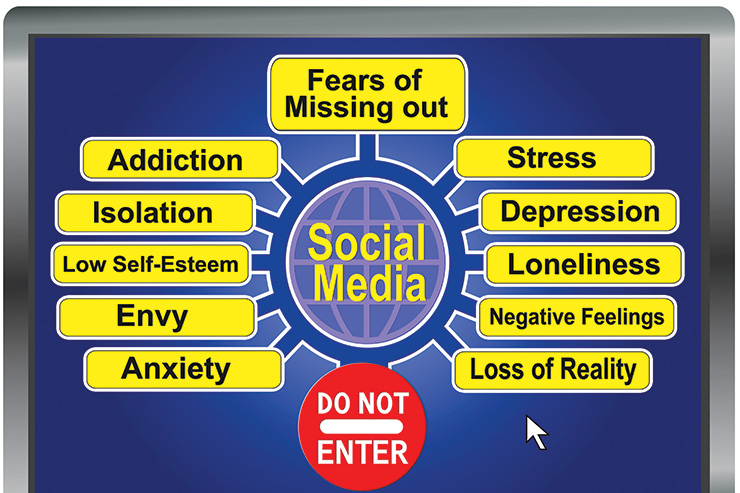
    In addition to the harmful content of social media – sexualised children, impossible and ever-changing beauty standards, cyberbullying, gaming addiction, loss of sleep, etc. – the very design of social media hurts young users. We all need to love ourselves and to feel loved by a small circle of others: friends, family, and partners. Young people are particularly susceptible to self-loathing and questioning whether someone loves them. 

    The introduction of social media has been devastating. A third of all teens who spend at least two hours a day on social media, i.e., the majority, have at least one suicide risk factor. The percentage increases to nearly half for those who spend five hours or more. A study of 14-year-olds found that those with fewer social media likes than their peers experienced depressive symptoms. Teens who are already victimised at school or within their peer-group were the worst-affected.

    Divided & Conquered

    Another feature built into social media is the polarisation of users along political lines; a phenomenon that mainly concerns people of voting age. One of the many human foibles exploited by social media designers is homophily: our love of things and people similar and familiar to us. Homophily makes us feel safe, understood, validated, and positively reinforced. It stimulates feel-good chemicals and, in social media contexts, is exploited to keep us inside an echo-chamber so that our biases are constantly reinforced, and we stay online for longer. But is this healthy?

    Referring to Usenet group discussions, the lawyer Mike Godwin formulated the Rule of Hitler Analogies (or Godwin’s Law), which correctly posits that the longer an online discussion, the higher the probability that a user will compare others to Hitler. The formula was a reflection of users’ lack of tolerance toward the views of others. 

    A projection published in 2008 asked if people will be more tolerant due to the internet. Nearly six in 10 participants disagreed, compared to just three in 10 who agreed. In many ways, the industry specialists were fatalistic. Internet architect, Fred Baker of Cisco Systems, said: “Human nature will not have changed. There will be wider understanding of viewpoints, but tolerance of fundamental disagreement will not have improved.” Philip Lu of Wells Fargo Bank Internet Services said: “Just as social networking has allowed people to become more interconnected, this will also allow those with extreme views… to connect to their ‘kindred’ spirits.” Dan Larson of the PKD Foundation said: “The more open and free people are to pass on their inner feelings about things/people, especially under the anonymity of the Internet – will only foster more and more vitriol and bigotry.”

    Users can artificially inflate their importance and the strength of their arguments by creating multiple accounts with different names (“sock puppets”). Some websites sell “followers” to boost users’ profiles. It is estimated that half of the Twitter followers of celebrities and politicians are bots. Gibberish-spewing algorithms have been programmed to write fake reviews on Amazon to hurt competitors’ sales. In at least one case, a pro-Israeli troll was unmasked posing as an anti-Semite in order to give the impression that anti-Semitism is rampant online and thus users should have more sympathy with Israel. Content creators increasingly find themselves de-platformed because of their political views while others’ social media accounts are suppressed by design (“shadow-banning”). 

    In the age of COVID, disinformation on both sides is spread: the severity of the disease, efficacy of vaccines, necessity of lockdowns, etc. As with US politics, Brexit, climate change, etc. neither side wants to talk rationally and open-mindedly with the other. The very designs of social media make this very difficult. 

    It should be emphasised that some social media are designed to create echo-chambers, and others are not. Cinelli et al. studied conversations about emotive subjects – abortion and vaccines – and found that while Facebook and Twitter show clear evidence of the echo-chamber effect, Reddit and Gab do not. Sasahara et al. demonstrate that due to users’ need for validation, when likes and friendships are withdrawn the network tends to descend into an echo-chamber. 

    Conclusion: What Can We Do?

    Noted above is Google’s seed-funding from the Deep State. More recently, the ex-NSA contractor Edward Snowden revealed that Apple, Facebook, Google, Microsoft, and others were passing user data onto his former employer. Government and big tech became “the left hand and the right hand of the same body.” In the UK, the NSA worked with Government Communications Headquarters on the Joint Threat Research Intelligence Group. Leaks revealed an unprecedented, real-time surveillance and disruption operation that included hacking users’ social media accounts, posting content in their name, deleting their accounts, luring them into honey-traps, planting incriminating evidence on them, and more. 

    To beat the antisocial social network, we need to remember who we are and what real communication is. We need to protect the young from the all-pervasive clutches of “social media” and to realise that we are being sold. 

    Ask yourself: Do you use social media solely to organise protests, alert friends to alternative healing products, and spread anti-war messages? Or do you use it to send irrelevant information about your day-to-day habits in anticipation that an emoji or “like” will appear? 

    Taking a step back can allow us to see outside and indeed prick the bubble of digital hatred in which the Deep State and corporate sectors have imprisoned us. 

    Dr Tim Coles’s new book The War on You can be obtained from online booksellers & www.amazon.com/exec/obidos/ASIN/B08HB68N97

    [alert type=”general” dismiss=”no”]This article was published in New Dawn Special Issue Vol 14 No 6.[/alert]

    [alert type=”success” dismiss=”no”]If you appreciate this article, please consider subscribing to help maintain this website.[/alert]

    Footnotes

    1. Roger Collier (2008) Canadian Medical Association Journal, 179(1): 23-24
    2. Quoted in Hilary Andersson, BBC Panorama, 3 July 2018, www.bbc.co.uk/news/technology-44640959
    3. Abby Bartholomew (2013) University of Nebraska, https://digitalcommons.unl.edu/cgi/viewcontent.cgi?article=1042&context=journalismdiss
    4. Quoted in Mike Allen, Axios, 9 November 2017, www.axios.com/sean-parker-unloads-on-facebook-god-only-knows-what-its-doing-to-our-childrens-brains-1513306792-f855e7b4-4e99-4d60-8d51-2775559c2671.html
    5. Quoted in James Vincent, The Verge, 11 December 2017, www.theverge.com/2017/12/11/16761016/former-facebook-exec-ripping-apart-society
    6. Quoted in Samuel Gibbs, Guardian, 19 January 2018, www.theguardian.com/technology/2018/jan/19/tim-cook-i-dont-want-my-nephew-on-a-social-network
    7. Interviewed in The Social Dilemma (2020), Netflix. 
    8. Adam Alter (2017) Irresistible, London: Penguin
    9. Quoted in Sean Keane, CNet, 4 July 2018, www.cnet.com/news/facebook-twitter-are-designed-to-be-like-behavioural-cocaine-for-users-insiders/
    10. Quoted in Nafeez Ahmed, Insurge Intelligence, 22 January 2015, https://medium.com/insurge-intelligence/how-the-cia-made-google-e836451a959e
    11. Interviewed in The Social Dilemma (2020), Netflix
    12. Ibid. 
    13. Ibid. 
    14. J. Clement, Statista, 29 October 2020, www.statista.com/statistics/325587/instagram-global-age-group/
    15. Quoted in Hannah Schwär & Qayyah Moynihan, Business Insider, 5 April 2020, www.businessinsider.com/facebook-has-been-deliberately-designed-to-mimic-addictive-painkillers-2018-12
    16. J. Clement, Statista, 21 October 2020, www.statista.com/statistics/545967/snapchat-app-dau/
    17. J. Clement, Statista, 29 October 2020, www.statista.com/statistics/933948/snapchat-global-user-age-distribution/
    18. Sara Fischer, Axios, 17 October 2017, www.axios.com/teens-are-addicted-to-snapchat-1513306234-2b836b56-97c9-4b50-af8e-391fe68681ff.html
    19. Leah Shafer, Usable Knowledge (Harvard), 15 December 2017, www.gse.harvard.edu/news/uk/17/12/social-media-and-teen-anxiety
    20. Hae Yeon Lee et al. (2020) Child Development: DOI: 10.1111/cdev.13422
    21. Rebecca Moore (2018) Nova Religio, 22(2): 145-54
    22. All quoted in Janna Quitney Anderson and Lee Rainie, The Future of the Internet III, Pew Internet and American Life Project, 14 December 2008, pp. 38-46, www.pewresearch.org/internet/wp-content/uploads/sites/9/media/Files/Reports/2008/PIP_FutureInternet3.pdf
    23. Caroline Forsey, HubSpot, 18 October 2020, https://blog.hubspot.com/marketing/buy-instagram-followers
    24. Rand Fishkin, SparkToro, 9 October 2018, https://sparktoro.com/blog/we-analyzed-every-twitter-account-following-donald-trump-61-are-bots-spam-inactive-or-propaganda/
    25. See my CounterPunch article, 4 October 2019, www.counterpunch.org/2019/10/04/robot-trolls-on-amazon-how-fake-reviews-could-undermine-progressive-politics/
    26. Lance Tapley, Common Dreams, 20 August 2014, https://www.commondreams.org/hambaconeggs
    27. Caroline Forsey, HubSpot, 27 August 2019, https://blog.hubspot.com/marketing/instagram-shadowban
    28. Matteo Cinelli (2020) “Echo Chambers on Social Media: A comparative analysis,” arXiv:2004.09603
    29. Kazutoshi Sasahara et al. (2020) Journal of Computational Social Science: https://link.springer.com/content/pdf/10.1007/s42001-020-00084-7.pdf
    30. Quoted in Katie Collins, CNet, 4 November 2019, www.cnet.com/news/edward-snowden-says-facebook-amazon-and-google-engage-in-abuse/
    21. JTRIG (2014) The Art of Deception: Training for a New Generation of Online Covert Operations, https://assets.documentcloud.org/documents/1021430/the-art-of-deception-training-for-a-new.pdf

    © New Dawn Magazine and the respective author.
    For our reproduction notice, click here.
  • Secret State Uncovered: The Monitoring of Australia

    Secret State Uncovered: The Monitoring of Australia

    From New Dawn 177 (Nov-Dec 2019)

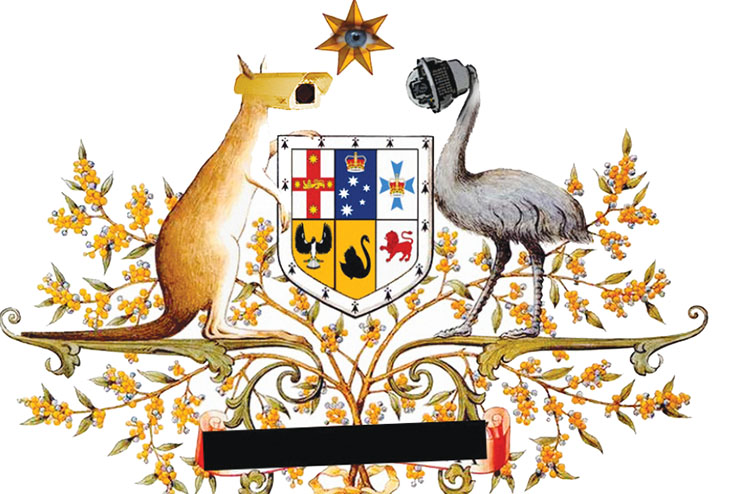
    Australia has ushered in a host of ‘pre-crime’ surveillance measures over the last decade that permit the state to closely monitor society and restrain individuals based on ‘anticipated future harm’ rather than past or present wrongdoing.

    An unprecedented raft of legislation has whittled away freedoms and expanded spying by secretive police and intelligence networks in Australia. The absence of a national bill or charter of rights, warns ETHAN NASH, further imperils individual freedom.

    In the years since the events of 11 September 2001, Australia experienced significant shifts in traditional legal frameworks. The federal government’s ‘hyper-legislative’ response to the ‘war on terror’ has proven to be only the beginning of that shift. 

    Through the interplay between law and order policy platforms in the states, territories and courts, Australia witnessed a multi-dimensional normalisation of mass surveillance in new contexts. 

    Once a novel and exceptional measure, this system has now been implemented in every state and territory. This worrying development has unfolded parallel to the proscribing of organisations as criminal or terrorist and the use of secret evidence in judicial proceedings.

    Even the process by which new powers are enacted, particularly the rhetoric supporting the rapid passage of many provisions, has been replicated across jurisdictions. 

    The ‘war on terror’ has become a war on freedom.

    These activities are all maintained by a network of hidden government intelligence elements. 

    While the daily activities of Australians are overseen by federal agencies such as police and government departments, unbeknown to most, the country has six primary intelligence organisations that exist in a realm of secrecy beyond the scope of scrutiny.

    These organisations include Australian Security Intelligence Organisation (ASIO), Australian Secret Intelligence Service (ASIS), Office of National Assessments (ONA), Australian Geospatial-Intelligence Organisation (AGIO), Defence Intelligence Organisation (DIO) and the Australian Signals Directorate (ASD).

    These organisations regularly engage in domestic and international intelligence operations and enjoy unfettered reach when conducting surveillance activities in Australia.

    For example, unlike the Central Intelligence Agency (CIA), US National Security Agency (NSA) and Federal Bureau of Investigation (FBI), as well as other overseas entities, ASIO is exempt from Freedom of Information requests from the public.1

    This networkhas established a spider web of operations, with disclosures over the years revealing major spy programs in multiple facilities across the country.

    This list includes the US-Australian Joint Defence Facility at Pine Gap, the Shoal Bay Receiving Station near Darwin, the Australian Defence Satellite Communications Facility at Geraldton and the Naval Communications Station HMAS Harman in Canberra. 

    Pine Gap, approximately 18 kilometres south-west of Alice Springs, is partly run by the CIA, NSA and the US National Reconnaissance Office (NRO). The facilities at the base consist of a massive computer complex with 38 radomes protecting radio dishes and over 800 employees.

    A long-term NSA employee at Pine Gap, David Rosenberg, revealed in his book Inside Pine Gap: The Spy who Came in from the Desert, that the chief of the facility was a senior CIA officer. 

    This group of agencies continues to grow in size and power each year that passes.

    Intelligence Reach

    “We’ve already taken some pretty dangerous steps in this country towards the surveillance state, and not that many of us are either interested or aware that it’s going on, including people like me who should know better… Our friend and ally the United States is transitioning quite rapidly into an authoritarian state.”
    –  Scott Ludlam, speaking when he was a Senator in 2012

    From beginnings as spies in the Cold War, Australia’s intelligence community developed over the last century to become a behemoth with technical capabilities rivalling their international counterparts.

    Since 2005, the size and workforce of ASIO increased by 62%. ASIO grew from a $60 million organisation in 2001 to a budget of $533 million today. From 12 employees in 1949, ASIO has grown to 1,980 professional spies as of 2017/2018, and based in a new $630 million headquarters.2 

    ASIO’s special powers, under warrant, allow the Organisation “to enter and search premises, intercept and examine items in the mail, install and monitor surveillance devices, monitor telecommunications, and remotely access computers.”3 Citizens can be legally detained up to seven days for questioning by an ASIO officer.4

    In 2013, Edward Snowden leaked the most significant archive of classified intelligence documents in US history since the Pentagon Papers. 

    Amongst the revelations of spying and ‘Orwellian’ surveillance overreach, the documents revealed that Pine Gap, amongst three other locations in Australia and one in New Zealand, contribute to the NSA’s global interception and collection of internet and telephone communications. Journalist Brian Toohey, an expert on intelligence and national security matters, and author of the new book Secret: The Making of Australia’s Security State, states that Pine Gap intercepts electronic communications from Australian citizens including phone calls, emails and faxes as a consequence of the technology it uses.

    “It’s a reasonable deduction that the DSD [now the Australian Signals Directorate, called Defence Signals Directorate until 2013] is doing exactly the same thing as the NSA because of the bilateral relationship we’ve got,” said Clinton Fernandes, an intelligence analyst and professor of international and political studies at the University of New South Wales.

    “You can assume based on the NSA leaks that they have access to all the metadata of your phone calls and your emails as well as the context of your phone calls and your email, who rang you, where you were, where they were, where you went next, who else you talked to, which coffee shop you went to…”5

    As a result of this obsession with spying, on a per capita basis, Australian law enforcement agencies are 20 times more likely to intercept telephone calls than in the United States.6 Even before metadata laws were enacted (see below), Victoria Police sought access to people’s phone and internet data at an astonishing 1,200 times a week.7 ACT Policing admitted this year it had unlawfully accessed citizens’ metadata a total of 3,365 times – the tip of an iceberg of unauthorised spying on the general population.

    ‘Counter-Terrorism’ & Hyper-Legislation

    The Australian parliament has responded to the threat of ‘terrorism’ by enacting dozens of new laws that give intelligence organisations greater powers.

    In 2011, University of Toronto Professor Kent Roach famously described Australia’s kneejerk response as one of “hyper-legislation.” Another expert, UNSW Professor George Williams, calculated that between 9/11 and the end of the Howard federal government in 2007, a new ‘anti-terror’ law was enacted on average every 6.7 weeks.8

    The scale and pace of the enactment of laws and the impact of these measures on our legal system has realigned our whole approach due to the extensive new powers granted to government and the subsequent deterioration of fundamental freedoms.

    More National Security Legislation

    Starting in 2014, existing powers were overhauled and expanded in three tranches of legislation, allowing the state to further violate personal freedoms and liberties in the pursuit of broadened ‘safety’ and ‘security’.

    The first instalment of legislation introduced in 2014 gives ASIO officers greater power to access computers, computer systems and computer networks. There is no limit on the number of computers that can be accessed if a warrant is issued. Legal experts warned this extremely broad power could theoretically permit ASIO to monitor the entire internet.9

    The National Security Legislation Amendment Act (No 1) 2014 also allows ASIO to define any activity as a ‘Special Intelligence Operation’. This means any operation conducted under the definition exempts ASIO officers from civil and criminal liability.10

    Furthermore, the bill introduced prison penalties for journalists if they report on ‘Special Intelligence Operations’.11 And not just journalists, but any person who shares or republishes this material. In addition, harsher penalties were put in place for intelligence whistleblowers who take documents or records and disclose them. This clause has left national security reporting stagnant across the country.

    According to Brian Toohey: “No major party seems bothered by the use of new surveillance technology that allows governments to detect contact between journalists and their sources, effectively denying whistleblowers the opportunity to reveal abuses of power and criminal behaviour.”

    Pre-Emptive Detention

    This second bill expanded the 2005 Howard-era preventive detention and control order regime. These are highly controversial because they allow people to be subject to police restrictions or detention without charge and with limited judicial oversight.

    This legislation introduced a new offence of “advocating terrorism.” A person violates the new law if they “intentionally counsel, promote, encourage or urge the doing of a terrorist act or the commission of a terrorism offence.”

    The amendment broadened the range of circumstances where control orders can be sought, including restricting the movement or associations of people by enforcing a 12-hour curfew period that forces people to stay in a given location for a maximum of 12 hours in every 24 hours.

    The bill also enables the prosecution of people who intentionally enter a “declared area” in a foreign state when the Australian government has determined they “are engaging in hostile activities.”

    Metadata Retention

    The third major reform that caused the most outrage required all telecommunications providers operating in Australia to retain users’ data for up to two years.

    Such data retention schemes have been subjected to much debate, with civil liberties groups saying it is the first step in the systematic erosion of privacy online.

    In the 2013-2014 financial year, there were over half a million disclosures of metadata to various agencies including Centrelink, the Tax Office, Australia Post and traditional policing agencies. Australia’s data retention regime is one of the most comprehensive and intrusive collection schemes in the Western world.

    Since the overhaul, metadata from our phone calls, text messages, emails and internet activity is now tracked by the government and accessible by intelligence and law enforcement agencies.

    Metadata – or data about data – can be highly revealing and provide a comprehensive depiction of our daily activities, communications and movements.

    Most Australians would be unaware that numerous organisations other than federal, state and territory police and security agencies such as ASIO can get access to this information, including agencies that collect government revenue, for example, the RSPCA, the Australian Crime Commission, the Australian Tax Office, Centrelink, Medicare, Australia Post, the Australian Fisheries Management Authority, local councils and foreign law enforcement agencies.12

    Highly concerning is the fact that more than 100 federal, state and local government agencies are known to be accessing metadata despite not being among the list of enforcement agencies included in the data retention legislation.

    Industry group Communications Alliance said it had identified 81 government organisations accessing the metadata of Australian citizens, and that in the first few months of 2019 the organisation had identified 27 further “non-authorised entities” seeking metadata from telecommunications carriers.13

    Metadata is broad in scope and tells more about us than the actual content of our communications. Any claims that data retention laws do not seriously compromise our privacy should be considered naïve, ill-informed or dishonest.

    The Draconian Wave

    In the five years since the passing of these bills, 19 more anti-terrorism laws have come into effect. That brings the total number enacted by parliament to 82 since 11 September 2001 – with further bills either currently before parliament or about to be introduced. This staggering number of laws far exceeds the volume in the United Kingdom, Canada and even the United States.

    New anti-encryption legislation also recently passed compels communications providers to grant spy agencies access to encrypted information. Analysts say this will have broad implications for digital privacy.

    Following consultations with a range of international and domestic companies about the proposed reforms, the Telecommunications and Other Legislation Amendment (Assistance and Access) Bill 2018 passed despite much criticism from privacy advocates and technology experts all over the world.

    Under the new law, companies can be forced to reveal technical characteristics of digital systems that could help intelligence agencies exploit weaknesses that have not been patched.14

    The legislation empowers law enforcement and spy agencies to compel companies to a long list of potential requirements including: removing one or more forms of electronic protection, providing technical information, facilitating access to services and equipment, installing software, modifying technology, and concealing that the company has done any of the above.15

    The new measures force communications providers to work closely with government agencies so they can gain access to a target’s data. Internet Service Providers and alike are compelled to create new interception capabilities so all communications data – including encrypted data – is accessible to law enforcement and intelligence agencies.

    For all intents and purposes, providers are coerced into building backdoors into their encryption platforms, despite authorities continuing to deny this is the case.

    Experts assert there is no way a backdoor can be built to access encrypted communication that doesn’t result in “systemic weakness.”

    Moving Forward

    The above developments underline the shift in Australia from constitutional values to draconian legislative incursion. Without protections for liberty in the Constitution, which only guarantees a handful of rights, we rely on the state’s respect of implied freedoms based on common law. 

    Privacy groups have repeatedly warned against the dangers, arbitrariness and abuses of these laws by governments to stifle freedom of expression. In many instances, the legitimate exercise of freedom of speech has been criminalised.

    In the broader context, the Australian experience now serves as a cautionary tale for the rest of the world, with the potential for measures to lead to new extremes within a relatively short period.

    Australians must stand up against those forces which continue to push for more legislation that erodes our long-recognised freedoms and rights to speech and liberty.

    [alert type=”general” dismiss=”no”]This article was published in New Dawn 177.[/alert]

    [alert type=”success” dismiss=”no”]If you appreciate this article, please consider subscribing to help maintain this website.[/alert]

    Footnotes

    1. www.naa.gov.au/collection/fact-sheets/fs53.aspx
    2. https://en.wikipedia.org/wiki/Australian_Security_Intelligence_Organisation
    3. www.asio.gov.au/special-powers.html
    4. http://fair.org.au/your-rights/what-are-your-rights/
    5. www.abc.net.au/news/2013-06-28/brissenden-data-practice/4786782
    6. www.aph.gov.au/Parliamentary_Business/Bills_Legislation/bd/bd0304/04bd044
    7. www.smh.com.au/politics/federal/police-access-phone-and-internet-data-1200-times-a-week-20150113-12nga3.html
    8. www.sbs.com.au/news/a-new-law-every-6-7-weeks-australia-has-enacted-82-anti-terror-laws-since-2001
    9. www.smh.com.au/technology/new-laws-could-give-asio-a-warrant-for-the-entire-internet-jail-journalists-and-whistleblowers-20140923-10kzjz.html
    10. www.smh.com.au/politics/federal/australias-new-security-laws-explained-20140926-10mh6d.html
    11. www.theguardian.com/commentisfree/2014/sep/26/journalists-and-whistleblowers-will-go-to-jail-under-new-national-security-laws
    12. https://en.wikipedia.org/wiki/Mass_surveillance_in_Australia
    13. www.computerworld.com.au/article/664085/dozens-more-government-agencies-accessing-metadata/
    14. www.aph.gov.au/Parliamentary_Business/Bills_Legislation/Bills_Search_Results/Result?bId=r6195
    15. www.theguardian.com/technology/2018/dec/08/australias-war-on-encryption-the-sweeping-new-powers-rushed-into-law

    © New Dawn Magazine and the respective author.
    For our reproduction notice, click here.