New Dawn – World's Most Unusual Magazine

Category: New Science/Consciousness

  • Destiny Calling: Experiments with Dreaming, Time & Synchronicity

    Destiny Calling: Experiments with Dreaming, Time & Synchronicity

    From New Dawn 181 (Jul-Aug 2020)

    This article about synchronicities and precognitive dreams was originally published in Quest magazine in 1997. At the time I wrote it, I didn’t have access to the dream journals I mention in it, and so had to rely on memory. Since then I have retrieved the journals from Los Angeles – where they were slumbering in storage – and at present am working on a book about dreams, time, and the strange relationship between. This article can serve as a taster for the full-length treatment to come.

    Since around 1980, I have kept, more on than off, a dream journal. Some years are less accounted for than others, but on the whole I have a fairly well-stocked entry book for what was going on in my sleeping mind over the last seventeen years.
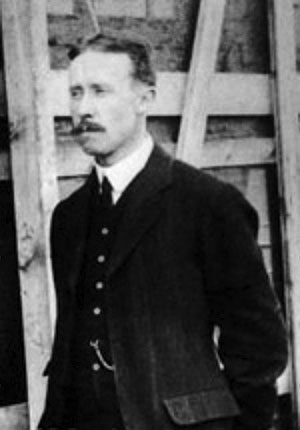
    J. W. Dunne (1875–1949) 

    I began the journal after reading an amazing book, An Experiment with Time, by J. W. Dunne. In it, Dunne, an aeronautics engineer,tells how he discovered that he could dream the future. One night heawoke from a dream in which he had been arguing with someoneabout the time. He said it was 4:30 a.m. In the dream Dunneassumed, with the strange logic of dreams, that his pocket watchmust have stopped; he reached for it to check, and found that it had. He then woke up.

    A curious sort, Dunne decided to see what time it “really” was. He found his pocket watch and looked: it had stopped at precisely 4:30. Dunne assumed he must have noticed this earlier, forgotten it, also forgotten to wind the watch, and dreamed about it. He wound the watch and went back to bed. When he woke later, he assumed he’d have to fix the time, since he had no idea what time it was when he wound the watch the night before. When he checked the watch against a clock, he was surprised to discover it was correct. The watch had stopped at 4:30 a.m.

    More odd things happened. Lying in bed one morning, Dunne found himself wondering what time it was. He tried an experiment. He closed his eyes and “fell into one of those semi-dozes in which one is aware of one’s situation” – what we’d call a “hypnogogic state” – and concentrated on knowing what time it was. He saw an image of his watch, poised in front of him. It said two and a half minutes past eight (Dunne is meticulous with details). He opened his eyes and reached out for his watch. His vision was correct: the time was two and a half minutes past eight.

    Not long after, Dunne had a dream in which he was in Egypt, near Khartoum. He saw three men approaching from the south, dressed in ragged army uniforms, very much like those of the soldiers he had recently been fighting in the Boer War in South Africa. In the dream he wondered why they should travel on foot from the bottom of the continent to the top, and asked them. They replied that was precisely what they did. The next morning he saw a news headline: “The Cape to Cairo: Expedition at Khartoum,” over a story describing the expedition he had dreamed about.
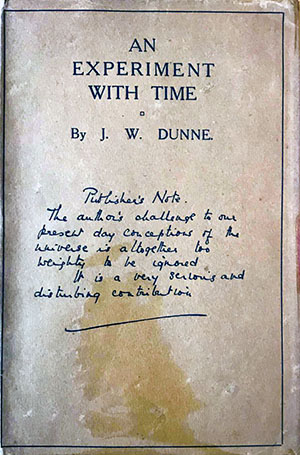
    First edition of An Experiment with Time.

    But perhaps the most thrilling dream was of the eruption of Mont Pelee on the island of Martinique in 1902. Dunne dreamed he was on an island, and that cracks and fissures had opened under his feet. Steam escaped from these openings, and in the dream Dunne realised that the island was about to explode. He knew he had to escape, and tried to help the 4,000 people he knew would be killed. The next morning the newspaper carried a story about the disaster. Dunne was off on the number of people lost; it was 40,000, not 4,000. But this discrepancy proved a key to his experience. When reading of the disaster, Dunne had hastily read that 4,000 people had been killed. It was only later that he went back and saw that he had misread the newspaper. Dunne realised that he wasn’t dreaming about the actual events – the volcano or the expedition – but about his reading about them in the morning paper. He had dreamed the future, but it was his own, specific future – in which he misread the number in the newspaper.

    This led Dunne to believe that what he was experiencing was, odd as it sounds, “normal.” He hadn’t developed some strange power to see the future; our ideas about time, he believed, were wrong. We usually think of time moving in a definite order: past, present, future. Dunne’s dreams were giving him his usual experience but in a different order. After studying many dreams, Dunne concluded that they were made up of a mixture of past and future events. We usually don’t notice this because, for one thing, we easily forget our dreams, and for another, we usually pay very little attention to our experience.

    Dunne went on to write a series of interesting books in which he developed his philosophy of “serialism,” a somewhat complicated metaphysic of different “times,” each encompassing the other. While making for fascinating reading, Dunne’s theory leaves us with an infinite regression of “selves,” each one, as it were, looking over the previous self’s shoulder. Dunne argued that the only way we can notice that one time is different from another is for there to be a consciousness outside of the two times and able to compare them. So, Time 1 is everyday time of past, present, and future. Time 2, which includes Time 1, is the time of dreams, where the future mixes with the past and present. Time 3 looks at Time 2 and compares it to Time 1, and so on until we arrive at the ultimate timekeeper, God, who is aware of all times simultaneously. The vision is inspiring but, to me at least, unsatisfying. If you think of the infinite reflections we get when we hold one mirror up to another, you’ll see what I mean.

    After reading Dunne’s books, I decided to keep a dream journal. I had been interested in dreams already through reading C. G. Jung and had occasionally written down unusual ones. And I had been interested in the strange character of time through reading the Russian philosopher P. D. Ouspensky. In Tertium Organum, New Model of the Universe, and his novel, The Strange Life of Ivan Osokin, Ouspensky, like Dunne, started from the recognition that our usual ideas about time are inadequate. Ouspensky explored the idea of eternal recurrence – the notion that our lives repeat over and over again. Ouspensky believed this was responsible for déjà vu, and speculated on a six-dimensional time. Time is strange, Ouspensky knew, and like Dunne he felt that our usual account of it was sadly inaccurate. Other writers followed, including T. C. Lethbridge and J. B. Priestley.

    Lethbridge is best known for his work with pendulums, but in his last years he wrote about “Dunne type dreams.” Priestley called himself a “time haunted man,” and was influenced by both Dunne and Ouspensky. His reflections on time and dreams can be found in his books Man and Time and Over the Long High Wall. He also wrote plays based on Ouspensky’s theories – Time and the Conways and I Have Been Here Before.

    Future Dreams

    Having said this, I should mention that I don’t have a theory to account for “future dreams.” Dunne’s serialism doesn’t satisfy me. Ouspensky’s speculations on the fourth, fifth, and sixth dimensions offer more to go on, but I think they are a beginning, not an “answer.” To tell me I dream the future because time is six-dimensional is fine, as long as you also tell me how that answers it. Unfortunately, when I discuss this with friends, I usually get an answer similar to this, which suggests to me more a disinclination to take on the difficult business of thinking than a sure grasp of the metaphysics of temporal displacement.

    What I first discovered in following Dunne’s example is that he was right: bits of the future did turn up in my dreams, but nothing as thrilling as a volcano (although they did turn up later). What came through were trivial items. I dreamed of playing a red guitar. I didn’t own one, nor did I know anyone who did. But later that day, through a chance meeting, I wound up at someone’s apartment, and this acquaintance handed me a red guitar, asking me to “check this out.” I started strumming and only then remembered I had written about this in my journal that morning. I dreamed of sitting cozily with an attractive woman I knew slightly; I chalked that one up to Freudian wish fulfilment until, again through a chance connection, I found myself in a more intimate setting than I would have expected with the woman in question. Similar dreams followed, enough to convince me that something more than mere coincidence was at work here.

    One of my earliest “future dreams” proved to be a “vision” of an event that took place months later. I had dreamed of riding on the back of a motor scooter with someone I didn’t know through an unfamiliar neighbourhood. The landscape was hilly, with palm trees and other vegetation not native to Manhattan, where I was living at the time. In a particularly memorable part of the dream, we were passing large trucks with the words “cosmic consciousness” painted on the side. An odd enough dream to begin with, but then, months later, I found myself on the back of a Vespa, riding with a newly made friend through the Silverlake district of Los Angeles, to where I had just moved from Manhattan. We passed the hills I had seen in the dream, also the palm trees. But in place of the trucks, something else was there. As we passed a street with the same name as my friend – I remember pointing it out to him – I remembered the dream. Suddenly I was hit with a strong dose of déjà vu, and a feeling that walls of some sort had just fallen, and that my awareness of things expanded in all directions: a close enough description of a snippet of “cosmic consciousness” to get me thinking about what exactly was going on. Around the same time as this “waking” event I had a very powerful lucid dream – these are dreams in which we know we are dreaming – featuring the same friend that generated the same odd feeling of expanded awareness.

    Two things came from that dream: the realisation that some future events appear “distorted” – or “symbolically,” depending on how you look at it – in dreams, and that the recognition that “you have dreamed this” is accompanied by a peculiar sensation and emotion. The dream was, as it were, fulfilling its own prophecy: I had dreamed about cosmic consciousness, and remembering the dream when in the same situation in waking state produced a sensation of expanded awareness. Ouspensky said certain kinds of knowledge aren’t available unless we’re in the right emotional state. I had begun my experiment in a spirit of scientific objectivity but soon saw that I couldn’t treat dreams as we do other objects of study. They aren’t dead specimens, as many “scientific” dream researchers seem to regard them. To understand them fully, a certain emotional warmth, much as we direct toward people, is necessary.

    In the years that followed I collected more “future dreams.” Certain patterns emerged, as well as more characteristics that Dunne didn’t mention. My reading of Jung had made me aware of the psychological value of dreams, their meaning as indicators of what Jung called the “individuation process,” an approach to dreams apparently unfamiliar to Dunne. This meant that I began to think not only of the puzzles of time and consciousness that “future dreams” present, but also what these glimpses meant for me. Two books deal with related phenomena from this perspective: Ray Grasse’s The Waking Dream [1996] and Victor Mansfield’s Synchronicity, Science, and Soul-Making [1995].

    Some of the patterns dealt with time itself. The dreams came in cycles. There would be several in a week, then none for a few months, then another flurry. Some of the most spectacular related to films. During a period of intense Jungian study, I dreamed about a film of the old 1930s pulp character the Shadow – not unusual for a reader of Jung. I knew of no such film and, though I had been a great fan of the pulp revival in my youth, I hadn’t thought of this character in years. In the dream, the Shadow appeared as a two-dimensional figure on a wall, then popped out and became three-dimensional. I had this dream in 1990. In 1994, I went to see the film The Shadow, starring Alec Baldwin, and saw exactly what I had seen in my dream. Sometime before, a friend who was working on Francis Coppola’s version of Dracula had invited me to a screening. A few nights before, I had a frightful nightmare in which I rescued a woman friend from some gruesome face in a strange, Hieronymous Bosch-like village. Wolves hung upside clown on crosses, fires burned, throwing up blood-red shadows and thick, black smoke, and foul-looking characters waded through arms, legs, and other body parts, carrying axes and pikes. It was a charnel house, something out of one of Emanuel Swedenborg’s hells. Truly evil. I went to the screening and saw what I had dreamed: the film begins with a scene of Vlad the Impaler’s handiwork – crucified wolves, fires, blood and gore. In both instances the “feeling” was there, what I started to call the “timeslip.”
    Synchronicity Cloud

    Along with emotionally charged dreams, there were many about trivial, everyday matters. I would be standing at a street corner and notice a car pass by and realise I had dreamed this the night before. I dreamed of a fountain, with terracotta steps rising on either side. In the dream, this was somewhere in Italy. That day, by chance, I got a lift from a friend into Hollywood and decided to get out a few blocks from my destination and walk the rest of the way. When I got out of the car, there were the fountain and steps; it was not Italy, but Sunset Boulevard. And the feeling. Not exactly déjà vu, but an odd mixture of this and another sensation described by Ouspensky, from his studies with Gurdjieff, called “self-remembering.” Jungian friends “explained” my dreams as “synchronicities.” I had no doubt they were, but didn’t see how calling them this rather than “coincidence” told me anything about how they happened.

    I noticed that certain psychological conditions seemed, if not to cause the dreams, at least to accompany them more than others. States of tension or, conversely, of great interest and happiness seemed to be preferable to an even keel. Tension produced an uncomfortable feeling that the membrane separating dream from reality – shaky distinctions at best – had been perforated. Situations in which I would hear, metaphorically, the Twilight Zone theme would produce a feeling that I was “dreaming” while awake, and it took some effort to keep up appearances and not turn tail. It seemed then that the dream feeling was seeping into my waking life and that my consciousness consisted of a muddle of the two. Conversely, when happy, alert, and expectant, I would find synchronicities popping up almost a dime a dozen.

    Once, on a weekend trip to San Francisco, it was as if I had stepped into a “synchronicity cloud.” Not only had I dreamed several small events of the day, but I found myself bumping into coincidences left and right. For example, I had been reading Edgar Allan Poe’s stories and had just read about a particular character with an unusual name. I looked up at the building I was standing in front of: the same name was emblazoned across the storefront. Several similar things happened. Likewise, at the start of a move to Europe, I was waiting for my flight at JFK airport, reading The Glass Bees by the German writer Ernst Junger, himself a connoisseur of dreams and psychic phenomena. The hero was describing how, during his military training, his cavalry sergeant had taught him the value of learning how to fall by deliberately arranging a slip from the saddle. The moment I read this, I looked up to see a large man fall flat on his back.

    I mention synchronicities because, although some of my “future dreams” were clearly related to my psychological development, many weren’t. Jung defines synchronicities as “meaningful coincidences,” having to do with our “individuation,” our growth and maturity. I mentioned volcanoes earlier. Several years ago, I woke from a dream in which my ex-wife and I were with her uncle in Japan. He was helping us escape from a flood of lava and urging us to hurry. I had never met her uncle nor been to Japan; I also hadn’t heard about the volcano that had erupted there that week until after the dream. Synchronicity? But what had volcanoes in Japan to do with my psychological growth? Again, a few years ago, I dreamed of tremendous explosions and devastated landscapes; only later that day I realised it was August 6, the anniversary of Hiroshima, something I hadn’t remembered until then. Some “future dreams” were perhaps telepathic; my ex-wife may have been in rapport with her uncle in Japan, and I may have picked up her intuition, but she didn’t mention it to me, nor was she aware of the volcano. In any case, this seems to me a case of synchronicity with no particular meaning for me. Yet some other dreams clearly did have meaning. One night I dreamed of a man’s face directly in front of mine; it was nasty, and he was shouting. That night I went to an outdoor concert at the Hollywood Bowl. There was a misunderstanding about my seat, and I lost my temper with an usher; naturally enough, he replied in kind. Only later did I realise his was the face in the dream. Had I been more aware, I could have avoided a foolish argument.

    The Invisible Writing

    But my most striking dreams are ones in which I feel some “intelligence” is communicating with me, giving guidance and advice. With these, I’m convinced something not “myself” is at work. I dreamed of dancing in a circle of Tibetan monks. We were passing a ball of yarn back and forth; when the ball came to me it began to unravel. We held onto the edges and danced; the yarn opened up and a beautiful mandala appeared. I woke feeling that something extraordinary had happened. That day, in the bookstore I managed, a colleague told me he had found a picture of me in my past life. I laughed as he pulled out a copy of Alexandra-David Neel’s Secrets of Tibetan Yoga and showed me the back cover. There was a photo of a pudgy, cherubic monk with round glasses, the kind I wore. I hadn’t mentioned the dream. The friend said this meant I should take up Tibetan Buddhism. I thought it meant I was on the “right path” already.
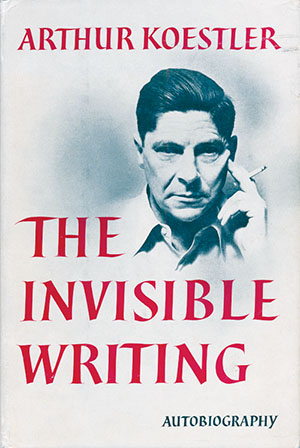
    One last dream. At the same bookstore I made a habit of putting books aside, thinking I might buy them. One was The Invisible Writing, Arthur Koestler’s autobiography. Koestler wrote of how he had abandoned the “scientific” materialist outlook of his youth while waiting to be shot as a prisoner during the Spanish Civil War. To pass the time in his cell, Koestler worked out the mathematical proof that there is no highest prime number. He became so absorbed in this that he had a kind of mystical experience; only a small nagging at the back of his mind distracted him. “Oh, yes,” he remembered, “I may be shot tomorrow. Is that all?” Koestler then realised he had been wrong to think the reality of the world could be found in the Marxist rationalist thought he had been trained in, the visible proofs of history, economics, and sociology. Reality lay in what he called “the invisible writing,” the intuition, poetic and mystical. The experience changed his life. He left Marxism and devoted himself to exploring human creativity and the meeting points of science and mysticism.

    At the time I found Koestler’s book, I was facing a crisis: I had to decide whether to carry on with a PhD program or take a chance on writing, as I had always wanted to do. The doctorate would mean security, a job, prestige, but it would also mean letting go of my unorthodox interests, such as future dreams, and becoming a “serious” scholar. I decided not to buy the book. That night I dreamed that I returned to the store and bought The Invisible Writing. Wish fulfilment? But “bought” in slang means to accept, to believe. The dream was telling me to buy more than the book; it told me to “buy” the idea of “the invisible writing,” a point that came home literally when I borrowed a biography of Jung that night and opened it at random to a chapter describing his ideas about dreams as messages from a hidden self. The chapter’s title? “The Invisible Writing.” I didn’t finish graduate school.

    The above article originally appeared in Quest: Journal of the Theosophical Society in America, Vol 85, Issue 12.

    Gary Lachman’s new book is Dreaming Ahead of Time: Experiences with Precognitive Dreams, Synchronicity and Coincidence, available from all good bookstores and online retailers.

    [alert type=”general” dismiss=”no”]This article was published in New Dawn 181.[/alert]

    [alert type=”success” dismiss=”no”]If you appreciate this article, please consider subscribing to help maintain this website.[/alert]

    © New Dawn Magazine and the respective author.
    For our reproduction notice, click here.
  • Robert Anton Wilson & Guerrilla Ontology

    Robert Anton Wilson & Guerrilla Ontology

    From New Dawn Special Issue Vol 15 No 1 (Jan 2021)

    Although we are in the midst of an ‘information revolution’, many of us rarely question the world around us. As the political domain becomes increasingly polarised, there is a greater need for people to expose themselves to alternative viewpoints and opinions. 

    In theory, the internet should function as an open platform in which mainstream narratives are continually challenged, questioning the institutional authority of governments, multinational corporations and the mainstream press. 

    Thankfully, we can question the ‘status-quo’ thanks to numerous websites, online forums and podcasts dedicated to alternative points of view and research, including parapsychology, geopolitics and ‘conspiracy culture’. At the same time, the rise of social media has resulted in more subtle yet dangerous forms of propaganda and mind control where people are often unknowingly exposed only to those who hold similar views to their own, stuck in a ‘social validation feedback loop’.

    How can we stay open-minded, questioning and pragmatic in today’s world? Guerrilla ontology may provide the answer.

    What is Guerrilla Ontology?

    Guerrilla ontology is a term coined by Robert Anton Wilson in his 1980 book The Illuminati Papers. Wilson defines it as an approach adopted in his novels that mixes “the elements of each book so that the reader must decide on each page, ‘How much of this is real and how much is a put on?’”1 In other words, it functions as an exercise in cognitive dissonance, where “readers are left to form their own interpretation as to which, if any, of the numerous and contradictory viewpoints presented by the characters are valid or plausible.”2 This is similar to the postmodernist claim that textual discourse can be interpreted in a number of different ways (potentially infinite) since there is no singular interpretation. Guerrilla ontology is much more than a literary technique, however. As Wilson stated in an interview: 

    The Western World has been brainwashed by Aristotle for the last 2,500 years. The unconscious, not quite articulate, belief of most Occidentals [Westerners] is that there is one map which adequately represents reality. By sheer good luck, every Occidental thinks he or she has the map that fits. Guerrilla ontology, to me, involves shaking up that certainty. I use what in modern physics is called the “multi-model” approach, which is the idea that there is more than one model to cover a given set of facts… It’s important to abolish the unconscious dogmatism that makes people think their way of looking at reality is the only sane way of viewing the world. My goal is to try to get people into a state of generalised agnosticism, not agnosticism about God alone, but agnosticism about everything… That’s what guerrilla ontology is – breaking down this one-model view and giving people a multi-model perspective.3

    In other words, the primary aim of guerrilla ontology is to remain in a permanent state of agnosticism and interpret reality through a multitude of cultural, political, economic, philosophical, scientific and spiritual perspectives. Instead of subscribing to a single belief system, guerrilla ontology promotes a radical form of intellectual pragmatism in which contrasting ideologies are synthesised, integrated and assimilated to provide a more complex and dynamic understanding of the world. 

    Wilson assumes there is no ‘objective’ reality; even basic statements such as “there are 24 hours in a day” or “the world is round” are subjectively determined. This multi-modal approach results in an expansion of human consciousness in which all explanatory models are considered both ‘true’ and ‘false’ simultaneously. 

    To fully appreciate the implications of guerrilla ontology, it is crucial to know the meaning of the terms. Ontology is the branch of metaphysics concerned with the nature of existence or being, while guerrilla in this context refers to military tactics used by fringe groups to obtain political power – acts of sabotage, ambushes, raids and hit-and-runs. Guerrilla ontology could be considered a form of philosophical warfare in which the ontologist attempts to undermine authority by subverting the symbols, signs and semiotic systems through which power is exercised and maintained. Using specialised tactics such as culture jamming, reality-hacking, subvertising and meme-magic, the ontologist becomes an active participant in the cultural arena and generates new locations of meaning. Fomenting contradictory ideas induces a sense of confusion and disorientation, causing a malfunction in the psychological programming required for ideological control to function effectively. In this sense, guerrilla ontology is a subversive exercise, a rebellion against all ‘reality tunnels’ that govern perception and narrative. 

    For Wilson, internet technologies can play a fundamental role in challenging our ideological assumptions, creating a decentralised matrix of information where no singular worldview is predominant. Various public and private actors compete for cultural authority, undermining the very concept of ‘truth’ as we know it. As communication networks become increasingly globalised, there is greater exposure to different ideas, theories, concepts and perspectives. People find themselves in a position where they can no longer distinguish between ‘fact’ and ‘fiction’. While there are dangers that this could lead to new forms of manipulation and control, it will also result in a new era of intellectual creativity, dynamism and fluidity. As Wilson states, this ‘information revolution’ is merely a continuum of an ongoing historical trend towards cultural relativism:

    When people started trading and having commerce with one another, they had to learn things the way other people saw them. As a result, some sense of cultural relativism appeared in the ancient Greeks, who were great traders. I think that’s what’s responsible for the rise in Greek Philosophy. Unfortunately, this has always remained a minority point of view because of the entrenched power of dogmatic thought. With the rise of modern electronics, however, things have begun to change faster. We’re now living in the global village which Buckminster Fuller and Marshall McLuhan have long been predicting. I’ve actually met people in their 20s who have travelled to as many as 30 different countries in their lives. With that amount of travel and the emergence of modern electronic media, more and more people are developing a sense of cultural relativism [Wilson made these statements in 1980].4

    In this sense, guerrilla ontology enables us to navigate the new ‘post-truth’ age, where user-generated content undermines the informational monopoly of mass-media gatekeepers and popularises alternative narratives, which would have previously remained on the fringes of society. 

    As previously noted, the purpose of guerrilla ontology is to induce a state of cognitive dissonance in which seemingly contradictory worldviews are assimilated in order to expand the boundaries of human consciousness. For Wilson, internet technologies are part of this expansion of consciousness as more and more people are exposed to different models of reality. 

    Cognitive Dissonance & Quantum Mechanics

    While the multi-model approach described by Wilson seems at odds with the notion of ‘scientific truth’ – that we can establish certain facts about the world through empirical observation – even scientists are required to adopt a multi-model approach when describing phenomena at a quantum level. 

    When examining the behaviour of sub-atomic particles, the principles of Newtonian physics are no longer applicable. Instead, scientists must explain such phenomenon in terms of ‘probabilities’, the different outcomes that occur within a quantum system until the act of measurement results in the occurrence of a single outcome. For example, quantum mechanics demonstrates that light functions as both a particle and a wave, despite the fact that the former has a gravitational mass while the latter does not.5 In this sense, we are limited by the linguistic models that we have at our disposal when observing scientific phenomena. 

    Niels Bohr, the Danish physicist who proposed the Copenhagen Interpretation of quantum mechanics, believed that mathematical equations do not describe the universe with objective precision. Rather, they describe the “mental processes that we have to put ourselves through to describe the universe.”6 For example, when we describe the universe as a three-dimensional space-time continuum, we are actually describing how our minds organise sensory experience; another life-form may experience reality as fourth or even fifth dimensional, and therefore the equations they use to describe reality will be radically different from our own. For Wilson, guerrilla ontology (or cognitive dissonance) is based on the idea that by embracing seemingly contradictory models of the world, we become aware of our own relativistic position within the universe. 

    Religions have known for centuries that cognitive dissonance expands the parameters of the mind. As Wilson states, “most of the occult literature of the world – aside from the 95% of it that is sheer rubbish – consists of tricks, gimmicks and games to trigger meta-programming consciousness.”7 

    The Upanishads, an ancient text central to Hinduism, is full of various paradoxes, intended to spiritually enlighten the reader. For example, it describes Brahman (the ultimate reality) as “non-differentiated, infinite, having neither cause, nor example, immeasurably extensive and without beginning… There is no dissolution, nor creation, neither one bound, nor the novice, neither the seeker after freedom, nor the liberated one.”8 These contradictions reveal what modern science is only beginning to discover – that reality is merely an expression of dynamic conscious thought. 

    Changing the Brain

    In his book Prometheus Rising, Wilson provides numerous techniques to achieve a state of cognitive dissonance. For example, he asks his readers to buy a copy of Christian Science Sentinel and read all the faith healings that month, then buy a copy of The Peyote Cult by anthropologist Weston LeBarre which attributes all this to auto-suggestion, and then read Brain/Mind Bulletin and observe that similar healings are attributed to endorphins in the brain. After that, re-read all the miracles in the New Testament, using each of these filters: Jesus had the correct teaching; Jesus was employing auto-suggestion; the sufferers’ brains released endorphins when Jesus gave them positive auto-suggestion. By examining the phenomenon of faith-healing through a multitude of perspectives, one realises that no single explanation is valid, causing a paradigmatic shift in understanding. 

    According to Wilson, when a paradigm shift occurs – when we go from seeing things one way to seeing them another – “the whole world is remade.”9 All we can possibly ‘know’ is what our mind registers – reality is made up of nothing but thoughts. The brain, in the process of performing 100,000,000 calculations per minute, edits, organises and labels all raw “existential” experience and then classifies according to our belief systems. These systems will vary from culture to culture. What is ‘real’ to a native Inuit will not be the same as what is ‘real’ to a London taxi-driver. They occupy different ‘reality-tunnels’ since their social, economic, political and environmental perceptions of the world are radically different. Wilson describes this phenomenon as “neurological relativism” – each individual has a neurological system different from other members of the same society, enabling them to perceive reality in a unique way. 

    Through the practice of guerrilla ontology, one is aware that the mind and its contents are ‘functionally identical’ – the distinction between ‘me’ (mental awareness) and ‘not me’ (external reality) is merely a linguistic one. We become what Wilson calls “metaprogrammers,” individuals with the ability to continually recalibrate our “reality-tunnels.” 

    The metaprogramming circuit – known as the “soul” in Gnosticism, the “no-mind” in China, the “White Light of the Void” in Tibetan Buddhism, Shiva-darshana in Hinduism, the “True Intellectual Centre” in Gurdjieff – simply represents the brain becoming aware of itself.10

    Wilson describes it as “the artist seeing himself in his painting, seeing himself seeing himself in his painting… It is a conscious mirror that knows it can always reflect something else by changing the angle of its reflection.”11

    Modern psychology demonstrates that neural networks in the brain are able to change through reorganisation, a phenomenon described as neuroplasticity. These changes “range from individual neurons making new connections, to systematic adjustments like cortical remapping.”12 Neuroscientists used to believe that neuroplasticity only occurred during childhood, but modern research has now proven the brain can be altered during adulthood as well. Learning a new language is particularly valuable in this regard; various studies suggest that multilingualism not only restructures the brain but also boosts its capacity for plasticity. As Wilson argues, guerrilla ontology is similar to learning a language since it provides us with new ways of interpreting sensory experience. In the same way that foreign words and phrases allow us to see the world differently, so too do new belief systems expand the boundaries of human consciousness. Through meta-programming (exposing oneself to contradictory models of reality), we are able to rewire the very circuitry of our brains, resulting in more fluid and dynamic modalities of thought. 

    Conclusion

    Guerrilla ontology is a powerful tool for breaking free from the shackles of ideology. As our world becomes increasingly complex, due to the forces of globalisation and technological acceleration, it is important that we possess the ability to transform our social, political, economic, philosophical, scientific and religious beliefs. 

    Those who remain in bondage to a single ‘reality-tunnel’ will inevitably get swept up in the tsunami of information and manufactured narratives. Many people will undoubtedly experience ‘existential crises’ as they encounter numerous theories, models, concepts and frameworks that challenge the stability of their foundational worldview. 

    To navigate what French philosopher Guy Debord called “The Society of the Spectacle,” in which authentic social life has been replaced with its representation – “All that once was directly lived has become mere representation”13 – we must learn to embrace a multi-model approach. While it is important that we remain sceptical of how internet technologies are used to manipulate our thinking, the ‘information age’ allows us to become more open-minded than ever before. As Aleister Crowley once famously stated, “Man is ignorant of the nature of his own being and powers. Even his idea of his limitations is based on experience… There is no reason to assign theoretical limits to what he may be, or what he may do.”14

    [alert type=”general” dismiss=”no”]This article was published in New Dawn Special Issue Vol 15 No 1.[/alert]

    [alert type=”success” dismiss=”no”]If you appreciate this article, please consider subscribing to help maintain this website.[/alert]

    Footnotes

    1. https://guerrillaontologies.com/about/
    2. https://en.wikipedia.org/wiki/The_Illuminatus!_Trilogy#Cognitive_dissonance 
    3. J. Elliot, (1980) ‘Robert Anton Wilson: Searching for Cosmic Intelligence’, available at http://rawilsonfans.org/searching-for-cosmic-intelligence-interview-1980/ 
    4. Ibid.
    5. https://en.wikipedia.org/wiki/Light
    6. R. Wilson, (1983) Prometheus Rising, New Falcon Publications
    7. Ibid.
    8. The Yoga Upanishads (available at) https://archive.org/stream/TheYogaUpanishads/TheYogaUpanisadsSanskritEngish1938#page/n63/mode/2up
    9. R. Wilson, Prometheus Rising
    10. Ibid. 
    11. Ibid. 
    12. https://en.wikipedia.org/wiki/Neuroplasticity
    13. https://en.wikipedia.org/wiki/The_Society_of_the_Spectacle
    14. A. Crowley, (1929) Magick in Theory and Practice, Dover Publications

    © New Dawn Magazine and the respective author.
    For our reproduction notice, click here.
  • Magical Words: General Semantics & the Power of Language

    Magical Words: General Semantics & the Power of Language

    From New Dawn 181 (Jul-Aug 2020)

    Words hold incredible power. When used poetically, they can evoke the most primal of passions within us. When used destructively, they can wage war and create conflict. When used imaginatively, they can create fantastic worlds of fantasy. When used persuasively, they can seduce us into the empty promises of commercial advertising. When used benevolently, they can facilitate social, economic and political change. Words can be used to control us, motivate us and inspire us, and yet many of us are unaware of their hidden esoteric power. 

    It could be argued that words have a life of their own. They have a reality independent of our own existence. As the writer William Burroughs observed, certain words and phrases function in a similar way to a virus (see page 40); they spread from person to person until they become embedded in our collective consciousness. One only has to look at the countless memes that become ‘viral’ on the internet to acknowledge their inherently infectious quality. 

    The biologist and writer Richard Dawkins argues that words operate in a similar way to DNA. Concepts and ideas battle against each other for survival and those which are successful become populated across societies. He writes: “Just as genes propagate themselves in the gene pool by leaping from body to body via sperms or eggs, so memes propagate themselves in the meme pool by leaping from brain to brain via a process which, in the broad sense can be called imitation.”1

    Politicians are particularly aware of the power that language holds over us. During the US presidential campaign in 2008, Barack Obama employed a lexicon of ‘hope’ to instil a feeling of optimism in marginalised communities, and envision a more compassionate America. When Donald Trump was elected to the White House in 2016, the term ‘alternative facts’ became popular among the conservative right of politics to discredit what different news outlets were reporting on various scandals surrounding the new administration. The use of rhetoric proved highly important during the UK’s ‘Brexit’ referendum in 2016, which saw both sides of the political spectrum using highly emotive language to divide voters on key issues. As the linguist Noam Chomsky observes, words are the ultimate currency of political power and are manipulated to create a sense of tribal kindship within certain electoral factions.2 

    Commercial businesses are also aware of the hypnotic effects of language. Each year, corporations spend billions of dollars investing in advertising campaigns to promote products and target consumer demographics. Much of the time, they use loaded language – words with positive or negative connotations to describe a product or that of a competitor. These words appeal to consumers’ emotions, rather than their logical faculties, thereby fetishizing the product being sold. For years, the Coca-Cola Company used the phrase, “the pause that refreshes,” to convey the image (and implant the memory) of the refreshment brought on by consuming a bottle of fizzy coke. These advertising phrases have a memetic quality and become embedded in our collective unconscious, acquiring a mythological status as they get passed on from person to person. 

    Occultists, mystics and shamans have always been familiar with the power of words. One only has to look to religions such as Hinduism and Buddhism and the use of mantras to recognise how language invokes intense feelings of spiritual connection. In Christian cosmology, one of its key precepts reads: “In the beginning was the Word, and the Word was with God and the Word was God.”3In all forms of magic and occultism, secret words and combinations of words were of paramount importance. The fact that the word ‘spell’ is used to denote how certain words are organised is testament to the magical power of language. 

    But how powerful is language? We know that language can affect how we feel but can it also shape our perception? To what extent are our experiences of the world influenced by the modes of communication we use each day? 

    Korzybski & General Semantics 

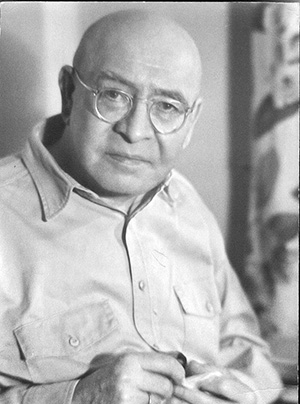
    Alfred Korzybski (1879–1950)

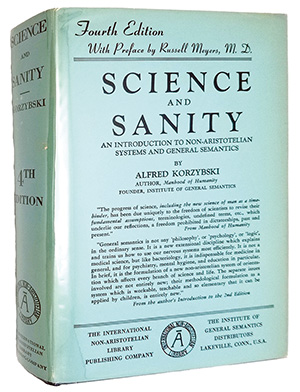
    In 1933, the Polish-American scholar Alfred Korzybski published his seminal work, Science and Sanity: An Introduction to Non-Aristotelian Systems and General Semantics.4 The book established a new school of thought, General Semantics, which studies the relationship between language and reality. 

    Although the book was criticised at the time of publication, Korzybski’s ideas were subsequently developed by the American academic S.I. Hayakawa in Language in Thought and Action.5 Since then, General Semantics has become a systematic philosophy of linguistics, influencing a variety of academic disciplines. As the American linguist Benjamin Lee Whorf noted, General Semantics is the examination of how language “isolates the world of phenomena into categories and organise[s] the categories in our minds by means of our linguistic system; our speech communities slowly codify the patterns of language in such a way that its terms become absolute and obligatory and therefore we cannot communication without subscribing to the organisation and classifications that the language decrees.”6 

    The first premise of General Semantics is that language never constitutes reality but merely describes it. As Korzybski stated, “every language having a structure, by the very nature of language, reflects in its own structure that of the world as assumed by those who evolve language.” Because language is diagrammatic, the words we use are never equal to the event, person, object or experience that we are describing. For instance, an individual who has acted outside the law may be described as ‘criminal’, however, another person may describe them as ‘responsible’ because they are a good father to their children; neither description is true but neither description is false either. In this sense, language cannot be considered a representation of the world since it depends on the exclusionary categorisation of phenomena to effectively function as a communicative tool.7 

    The second premise of General Semantics if that language never describes reality in its entirety. Korzybski famously said “the map is not the territory.” For example, when I describe a person as ‘happy’, I am excluding all the times that they have experienced anger, depression or jealousy. When I describe a person as ‘respectable’, I am disregarding all the times they have jumped a red light or pushed into a queue. In other words, our linguistic models may be considered inaccurate since they describe events, experiences, objects and people from a single position of space-time, rather than all potentialities simultaneously.8 

    The third premise of General Semantics is that in order for us to use language more meaningfully, we must constantly re-evaluate our assumptions about reality. As Korzybski stated, “no map can be accurate unless it contains itself within the map.” That is to say, when we attempt to describe reality using a particular linguistic model we must be aware that our descriptions are limited by the information that we have at that particular time. For example, prior to Einstein’s theory of relativity, it was common for scientists to describe space and time as separate aspects of the physical universe; we now describe them as being part of a space-time continuum. In this sense, all linguistic models are grounded in the limited knowledge we have of the world around us; they must be constantly updated and revised to account for recent developments in our understanding.9

    As Korzybski observed, language can influence our thoughts, feelings and behaviour. I may call a person an ‘idiot’ because they have acted foolishly or made an error of judgement, but labelling them in such a categorical manner may result in me acting differently towards them than if I had said, “at this particular time, in this particular place, this person is acting foolishly.” By recognising the assumptions that underlie our linguistic models, we can become more pragmatic in our descriptions of the world; we can assume greater control over language and use it to our advantage. The American author, poet and futurist Robert Anton Wilson said: “Those who control symbols control us. You might as well say those who control symbols have the whole world hypnotised. You better become a controller of symbols yourself or you’re going to remain in a trance, a self-hypnotic ideational trance that somebody else laid on you.”10 

    Korzybski is not alone in thinking that language and thought are inextricably linked. Cognitive scientist Lera Boroditsky claims that, “Linguistic processes are pervasive in most fundamental domains of thought, unconsciously shaping us from nuts and bolts of cognition and perception to our loftiest abstract notions and major life decisions.”11 David Ludden, professor of psychology at Georgia Gwinnett College, also believes that “each language carves up the world somewhat differently… each language provides its speakers with a particular worldview that won’t be quite the same as the one that speakers of other languages have. In other words, we see the world according to the framework our language imposes on us.”12

    When you think about it, the notion that language and cognition are fundamentally connected is not a particularly radical one; our thoughts, feelings and behaviours are constantly influenced by our choice of words. Anyone who has been around a person with an exceptionally optimistic attitude knows that positivity is infectious, it rubs off on you. In the same way, negative words and phrases become part of a psychological feedback-loop that reinforce our feelings of depression and negativity. Advertising is such a powerful tool of the capitalist system because language can be strategically used to place us in a hypnotically induced state of emotion, whereby we associate certain feelings with specific words, logos and expressions. 

    Language & Sensory Perception

    Many academics criticise Korzybski’s assertion that language shapes experience, arguing that our linguistic models embody the neurological structure of the brain. However, scientific research into the relationship between language and sensory perception demonstrate that the scope of our vocabulary can actually modify our experiences of reality. In 2008, psychologists from the University of London tested how speakers of English and Himba – a language spoken in northern Namibia – categorised colours presented to them on a computer screen. The Himba language classifies colours in a different way to English. For example, Himba does not contain separate words for green and blue (both use the word buru), whereas English does. Moreover, Himba uses different words to distinguish between various shades of green (dambu and zuzu to light and dark green), while English classifies both dark green and light green as members of the general category ‘green’.13

    The researchers found that this linguistic difference also translated into a perceptual difference: when shown a circle with 11 green squares and one blue square, Himba speakers struggled to indicate which one was different from the others. However, when they were presented with 12 green squares, one of which was slightly lighter than the others, the pattern reversed: Himba speakers readily identified the different shade, however English speakers failed to do so. In other words, speakers of both languages were better at distinguishing between colours that had a linguistic distinction in their language. English speakers, whose language classifies ‘green’ and ‘blue’ separately, found it easier to distinguish between the two. Himba speakers, on the other hand, whose language encodes differences between shades of green, had no difficulty in differentiating between various green hues. 

    Similarly, a study conducted by Jonathan Winawer and his research colleagues at the Massachusetts Institute of Technology found that native speakers of Russia discriminated between light and dark shades of blue differently to their English-speaking counterparts. Unlike English, the Russian language makes a linguistic distinction between light blue, pronounced ‘goluboy’, and dark blue, pronounced ‘siniy’. The researchers tested English and Russian speakers in a timed colour discrimination task, using blue stimuli that spanned the siniy/goluboy border. The data revealed that Russian speakers were much quicker at discriminating between the two colours because of this linguistic differentiation. The research demonstrates that when people have access to wider vocabulary to describe colours, their sensory perception of colour actually becomes more acute.14 

    It turns out that grammatical structures can also influence perception. Many languages are gendered, meaning that speakers are required to modify pronouns, adjectives and verb-endings depending on whether a noun is ‘feminine’ or ‘masculine’. In the Russian language, for example, the word ‘chair’ is considered masculine and therefore any sentence containing the word must adhere to a ‘masculine’ grammar structure. Assigning a gender to a particular word does not just change the structure of a language but also our perception of certain objects. In a study conducted by Lera Boroditsky, Assistant Professor of Cognitive Science at University of California San Diego, researchers found that when asked to describe an object, speakers were more likely to use adjectives associated with its assigned gender. For example, in the German language, ‘bridge’ carries a feminine pronoun, and therefore Germans were more likely to refer to a bridge as ‘beautiful’ or ‘elegant’. Spanish speakers, on the other hand, were more likely to refer to a bridge as ‘strong’ or ‘sturdy’ because the word is masculine in the Spanish language.15

    The Implications of General Semantics 

    The fact that language can shape our reality so viscerally has significant implications. It demonstrates that words have the power to contextualise our perceptual experiences and influence how we see the world. If we are to engage in open and honest discussions about social, political and economic issues, we need to understand how language can be manipulated, controlled and even abused. 

    In the age of social media, where our thoughts and opinions are condensed to 140 characters, we must question the biases, assumptions and preconceptions that underlie our current linguistic models. Much of our disagreements stem from the fact that we are limited by our language; we are prisoners to a particular linguistic system that does not account for the nuances of our reality. 

    Take the abortion debate. Many people are divided on this particular issue because they have different perceptions of what is meant by the word ‘life’. Some believe that a small cluster of cells constitutes ‘life’, while others believe that ‘life’ must possess a consciousness; a human awareness. In this sense, the boundaries of political engagement are essentially calibrated by the linguistic models to which we have access. 

    If language has the potential to alter our perception of colour, it surely has the potential to alter our perception of people, communities and societies. Once we understand the power that words have over us, we can begin to assume greater control over the symbol-systems that govern our lives; we can recognise when language is being used to control, deceive and misinform us. It is only then that we can use language more honestly and meaningfully. 

    [alert type=”general” dismiss=”no”]This article was published in New Dawn 181.[/alert]

    [alert type=”success” dismiss=”no”]If you appreciate this article, please consider subscribing to help maintain this website.[/alert]

    Footnotes

    1. The Selfish Gene by Richard Dawkins, Oxford Paperbacks, 1989
    2. Language and Politics by Noam Chomsky, AK Press, 2004
    3. John 1:1, The Holy Bible, New International Version, 2011
    4. Science and Sanity: An Introduction to Non-Aristotelian Systems and General Semantics by Alfred Korzybski, Institute of General Semantics, 1995
    5. Language in Thought and Action by S. I. Hayakawa, George Allen & Unwin Ltd., 1959
    6. Language, Thought and Reality by Benjamin Lee Whorf, MIT Press, 1964
    7. Science and Sanity, Korzybski
    8. Language in Thought and Action, Hayakawa
    9. Science and Sanity, Korzybski
    10. Lecture by Robert Anton Wilson, www.generalsemantics.org/wp-content/uploads/2011/04/gsb-65-wilson.pdf
    11. How does our Language Shape the Way We Think? by Lera Boroditsky, https://www.edge.org/conversation/lera_boroditsky-how-does-our-language-shape-the-way-we-think
    12. How Language Shapes Our World by David Ludden Ph.D, https://www.psychologytoday.com/gb/blog/talking-apes/201509/how-language-shapes-our-world
    13. Knowing Colour Terms Enhances Recognition: Further Evidence from English and Himba by Julie Goldstein, Jules Davidoff and Debi Roberson, Journal of Experimental Child Psychology 102 (2009) 219-238
    14. The Russian Blues Reveal Effects of Language on Colour Discrimination by Jonathan Winawer, et al, Proceedings of the National Academy of Sciences of the United States of America, 2007; 104(19): 7780-7785 
    15. Language in Mind: Advances in the Study of Language and Thought, edited by Dedre Gentner and Susan Goldin-Meadow, MIT Press, 2003

    © New Dawn Magazine and the respective author.
    For our reproduction notice, click here.
  • Hermes Trismegistus & the Consciousness Revolution of the Renaissance

    Hermes Trismegistus & the Consciousness Revolution of the Renaissance

    From New Dawn Special Issue Vol 14 No 4 (Aug 2020)

    The Hermetic revival in the Renaissance was inspired by a belief that humanity could remake its own destiny. Was this promethean arrogance, or the recognition of powers that we need to acknowledge?

    The philosopher Jean Gebser argued that a profound shift in human consciousness took place in 1336 when the Italian Renaissance poet Francesco Petrarch made his ascent of Mt. Ventoux in France.1 This, Gebser said, was the first time someone had bothered to climb a mountain in order to see the view. Men had, of course, encountered mountains before, but always as obstacles. Petrarch made his climb on purpose.

    Gebser relates Petrarch’s climb to the rise of perspective in European painting, and to a “new, realistic, individualistic, and rational understanding of nature.” No longer “fixed” in place, one creature among others, as their medieval ancestors were, human beings could now “rise above their station,” survey the vast landscape of creation and map out their destiny.

    Gebser, I believe, is correct. And I would argue that perhaps some of the greatest exponents of this new consciousness were the Hermeticists of the Italian Renaissance. 

    In her classic work Giordano Bruno and the Hermetic Tradition, the British scholar Frances Yates writes that “The great forward movements of the Renaissance all derive their vigour, their emotional impulse, from looking backwards.”2 That the Renaissance was a time of rediscovery, of the resurrection of classical learning, is a truism. But what is not so well known is that it was also a return to the ancient teachings of the most famous magician of all time, Hermes Trismegistus, “thrice-greatest Hermes.” The writings that came to be known as “Hermetic” – including the Emerald Tablet, perhaps the most famous magical text in history – were considered by the Renaissance to be of profound antiquity. They were believed to have been set down in a distant Golden Age when men and gods still walked and talked together. For Hermeticists like Marsilio Ficino (1433–1499), Giovanni Pico della Mirandola (1463–1494), and Giordano Bruno (1548–1600), the rediscovery of the Hermetic books meant that the way back to an original divine state, to mankind’s true heritage, had been given to them.

    A 15th-century edition of the Corpus Hermeticum (translated by Marsilio Ficino).

    As the Greek god of writing, learning, language, and speech, Hermes held tremendous importance for Renaissance man, whose consciousness was profoundly attuned to the text. It is difficult for us to grasp just how central he was. In 1460, when the humanist patron Cosimo de’ Medici received a Greek copy of the Corpus Hermeticum, a collection of magical texts believed to be authored by Hermes, he ordered his scribe, Marsilio Ficino, to break off translating Plato in order to start work immediately on the Hermetic texts. Even Plato, to whom all of Western philosophy is said to be a “footnote,” must step aside for the thrice-greatest one, presumably so that Cosimo could read him before he died.3

    The Renaissance desire to drink the waters of wisdom at their source dictated this urge. For the Renaissance mind, Hermes Trismegistus was identified with the Egyptian god Thoth and his profound knowledge of occult mysteries; hence he was far older than Plato and was, in fact, the source of the divine Plato’s mystical philosophy. As Yates writes, “Renaissance respect for the old, the primary, the far-away, as nearest to the divine truth, demanded that the Corpus Hermeticum should be translated before Plato’s Republic or Symposium.”4

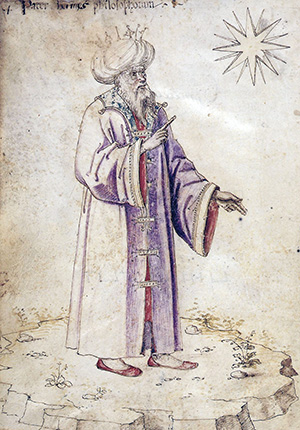
    Hermes Trismegistus portrayed as an ancient sage with turban and royal crown in an alchemical manuscript, c.1475.

    Yet as Yates points out, this Renaissance reverence for a Golden Age of Hermetic wisdom, however pious, was misguided. The works which inspired the Renaissance magician, and which he believed to be of ancient, primordial pedigree, are now thought to have been written in the early centuries of the Christian era, c.200-300 CE, products of the gnostic syncretism that characterised the decline of Greek philosophy.

    Far from being contemporary with Moses, farther still from the pristine rays of the original Egyptian sun, the Hermetic texts that ousted Plato were written not in the ancient past by a philosopher god, but by unknown scribes a little more than a millennium earlier. Nevertheless, the “historical truth” about the author of the Emerald Tablet, Picatrix, and the Divine Pimander seems less important than the influence he and the works attributed to him had on a pivotal time in the evolution of Western consciousness.

    The Hermetic message of knowledge, symbolised in Hermes’ role as guide and scribe, offers the central contrast with the medieval image of man as a sinful creature whose only chance of salvation lies in the consciousness of his imperfections: Knowledge is power for Hermetic man – power over nature, himself, and his destiny. As Virgil (who resembles Hermes in his role of psychopomp) guided Dante through the darkness of the nether realms, so Hermes Trismegistus, fount of wisdom and source of the prisca theologia – the ancient wisdom behind the religions of the world – guided Renaissance man through the shadows of his lower nature and the snares of the astral demons to his true heritage as magus, master of the world. 

    Escape from the Stars

    For Renaissance man, the universe was a living intelligence, a hierarchy of powers whose influence was felt through the emanations of the stars. We who read our daily horoscopes half tongue-in-cheek, half eager for instruction, can barely grasp the fascination of astrology for the Renaissance mind. The untutored endured their destiny, solaced only, if at all, by the thought that their misfortunes were the result of their fallen nature. 

    Hermetic knowledge meant that Renaissance man was no longer wholly subject to this astral influence; he now had it in his power to modify, even master, his fate. Knowing the correspondences between microcosm and macrocosm, the Hermeticist could create a magical “strange attractor,” drawing or repelling what astral influence he chose. Understanding the links among the various symbols, scents, colours, metals, numbers, dates, times, places, states of mind, and astral influences, the Renaissance Hermeticist had gained a power his medieval brother lacked – or avoided, as such knowledge was considered demonic. To challenge fate was a mark of hubris, rejection of divine providence, and alliance with the Evil One. The hurdle facing the Renaissance Hermeticist was to show that the wisdom of the thrice-greatest one was not antithetical to the received Christian doctrine. Some, like Giordano Bruno, were not successful. Others, like Marsilio Ficino, were.

    Ficino’s Natural Magic

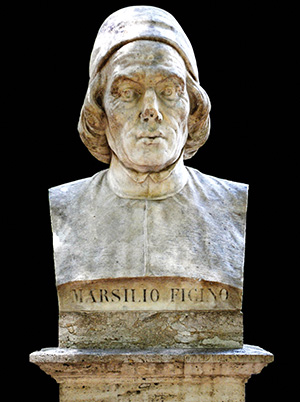
    Bust of Marsilio Ficino

    The world of Marsilio Ficino’s magic has a strange, melancholy atmosphere, an eerily familiar landscape of anxiety and dread. As in Kafka’s fictions, the sense of an over­arching power whose ebb and flow determines our fate pervades his Hermetic investigations. Author of the influential Commentaries on Plato’s Symposium (1469), Ficino was subject, he believed, to the restrictive influence of Saturn, a complaint common to students and scholars. He sought to escape its melancholic emanations by surrounding himself with the symbols of more beneficent solar, jovial, and venereal powers. For James Hillman and the school of archetypal psychology, Ficino’s magic represents an attempt to “consider all events in terms of their meaning and their value for soul.”5

    Yates, writing some years earlier than Hillman, had ironically previsioned Ficino’s value for psychotherapy. Commenting on his prescriptions for a non-Saturnian environment, she remarks, “We might be in the consulting room of a rather expensive psychiatrist who knows that his patients can afford plenty of gold and holidays in the country.”6 Ficino’s Hermetic antidotes to devitalising Saturn are collected in his treatise on medicine, Libri de vita, first published in 1489. 

    It was not unusual for a Renaissance medical text to offer astrological advice; assumptions about the relation between different zodiacal signs and parts of the body and the influence of the planets on temperament were as fundamental then as our ideas about genetics are now. What was daring about Ficino’s prescriptions were his use of magical talismans, a practice condemned by the Church Fathers. 

    In Ficino’s time it was still possible to advocate a “good,” “natural” magic that employed the beneficent forces of the anima mundi, or “soul of the world,” rather than the demonic energies of the stellar spirits. But time was running out on this tolerance. Hedging his advocacy of the Hermetic art with detailed qualifications, Ficino suggested that the use of talismanic magic was a natural outcome of the Platonic wisdom that ran parallel to religious dogma. The basic idea behind his “astral magic” – and behind Hermeticism in general – is that correspondences exist between the world of the Divine Intellect (Plato’s Ideal realm) and the created world. The magician’s own imagination is the bridge linking the two.

    Intermediary between these is the “soul of the world,” an idea prominent in Plotinus and the Neoplatonists of late antiquity. This “soul” was found in images which, in true Platonic fashion, were not mere signs but symbols, potent vessels retaining an element of the original, supersensible Idea. For the Renaissance Hermeticist, the images found in the Hermetic texts, close to the fundamental source, had exceptional power. 

    One aspect of this magic was a kind of “reparation” of the sensible world, which, through its distance from the divine source, was subject to deterioration. By refashioning images of the external world in his imagination, the Renaissance magus could channel the divine influence into the imperfect world of the senses. By thus employing the talismanic devices fashioned through his knowledge of the Hermetic books, Ficino had delivered to Renaissance man the means of becoming co-creator with God. This was a far cry from the humble, sinful creature of the Middle Ages.

    Pico Della Mirandola and the Dignity of Man

    With Giovanni Pico della Mirandola, the hesitancy that characterises Ficino’s magic disappears and the new-found confidence in man as a spiritual power arrives in full force. Where Ficino was content to open the natural forces of the anima mundi to the philosopher-magus, Pico is determined to bring human consciousness to the very source of being itself. In the technical magical sense, this means mastering the arcane secrets of Cabala, the ancient Hebrew mystical tradition of deciphering the divine import, the hidden logos, locked in numbers and the alphabet. In the broader sense of humankind’s consciousness of itself, it means a new awareness of our powers and strengths, our “dignity,” a term hardly applicable to medieval man.

    The influence of Hermes on Pico is evident in the opening paragraph of his most famous work, Oration on the Dignity of Man, which he delivered in Rome in 1486, at the hoary age of 24. He begins by remarking that the esteemed Abdala the Saracen, when asked what in the world was most worthy of wonder, had answered “man.” Pico supports this conclusion by quoting Hermes. “What a great miracle is man,” the thrice-greatest one remarks in the Hermetic text known as Asclepius. Pico sets off his rhetorical fireworks in order to state this case as persuasively as possible. 

    Pico’s Cabalistic investigations opened doors for Christian variants on an adamantly Jewish tradition. It made possible the kind of Cabalistic magic associated with modern Hermetic societies such as the Hermetic Order of the Golden Dawn, whose membership included luminaries like W.B. Yeats and dark stars like Aleister Crowley. Critical of Ficino’s merely “natural” magic, Pico argued that for magic to be effective, it must reach beyond the stars, into the higher, supercelestial spheres. Pico’s Cabalistic magic tapped the forces that lay behind the sensible world: angels, archangels, the ten sefirot or powers of God of the Cabalistic Tree of Life, even God himself – as aspiration the cautious Ficino would never openly avow.

    Instead of merely manipulating astral effluvia, knowledge of the secret import of numbers and the Hebrew alphabet meant the Cabalist magus could refashion the very matrix of being. But Pico’s Hermetic message is not limited to this specific magical practice. His basic argument is that man is a god who, as a contemporary writer put it, “has forgotten his heritage and come to accept that he is a beggar.”7 It is Pico’s mission to remind us of our roots.

    Central to Pico’s message is that unlike all other created beings, man has no fixed nature. “The Supreme Maker decreed,” he states in the Oration, that man “should have a share in the particular endowment of every other creature…. We have given you, O Adam, no visage proper to yourself”8 – a belief echoed centuries later by Jean-Paul Sartre, who argued that man had existence but not essence. Thus man is protean, able to participate in all dimensions and spheres of reality.

    The microcosm is the macrocosm, at least potentially. “We have made you a creature neither of heaven nor of earth, neither mortal nor immortal, in order that you may, as the free and proud shaper of your own being, fashion yourself in the form you may prefer”9 – a Hermetic proposition if there ever was one. No longer secure in his medieval slot, man now can make of himself what he will. He can “descend to the lower, brutish forms of life,” or ‘’rise again to the superior orders whose life is divine… Whichever of these a man should cultivate, the same will mature and bear fruit in him.”10 With the works of Plato, the Gospels, the writings of the Church Fathers and, above all, the books of the incomparable Hermes Trismegistus at his disposal, Pico goes for the alchemical gold, opts for the life divine, and strives to actualise his high inheritance. 

    This supreme self-confidence is a sign of the hubris that for some is the most pervasive gift our Renaissance forefathers have left us. Yet, as Yates writes, ‘’The profound significance of Pico della Mirandola in the history of humanity can hardly be overestimated.”11 After him, European man had the confidence to act upon the world and to control his destiny through knowledge. Unfortunately, Pico himself did not long enjoy his newly won status, dying of fever at the age of 31. His incendiary rhetoric suggests a bright but short-lived flame. 

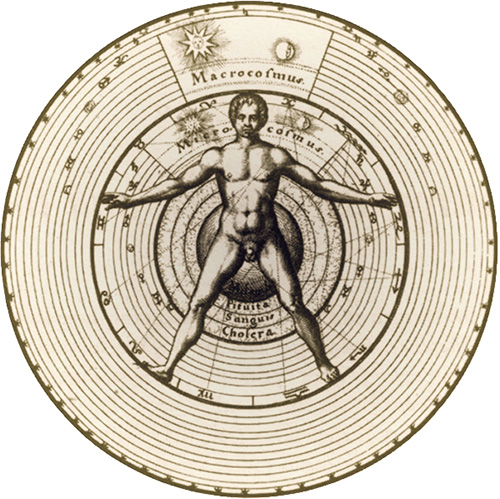
    Robert Fludd’s famous illustration of man as the microcosm within the universal macrocosm, inspired by the Hermetic axiom, “As above, so below.”

    Bruno and the Egyptian Revival 

    Speaking of flames in the context of Giordano Bruno brings other images to mind. Bruno is remembered as a martyr for the Copernican heliocentric solar system: he was burned at the stake by the Catholic Church in 1600 for his heresies. Yet the picture of Bruno as a champion of a “modern” cosmology is inaccurate. The godless, meaningless universe of big bangs and black holes that grew out of the Copernican revolution would have been as repellent to Bruno as his own Hermetic aspirations were to the churchmen who immolated him. 

    Bruno did not burn because he favoured a cosmos reduced to mere energy and matter, drained of its magical, spiritual character. Bruno took Pico’s challenge to reclaim our divine heritage so seriously that he attempted to revive the ancient Egyptian, Hermetic religion – an injudicious if heroic project. Bruno wished to break the hold of the Church over men and to erect in its place the pantheon of mankind’s true spiritual guides, the gods of ancient Egypt. It is for this, and not for his place in the standard histories of “the warfare between science and religion,” that he should be remembered.

    Bruno’s contribution to the Hermetic Renaissance is central and cannot be adequately reviewed here. But two aspects of his work stand out: his proposed Egyptian revival and his mastery of the Art of Memory. 

    Yates has written at length on this ancient art, and the interested reader can get a definitive account of it in her book The Art of Memory. Known to the rhetoricians of antiquity, revived by Renaissance scholars, and used in magical practices by modern esotericists, “magical memory,” as Bruno’s mnemonic discipline is known, is a sine qua non of the true magus. A central theme in Bruno’s Hermetic magic was the reflection of the universe in the mind of the magus. 

    In The Mind to Hermes, book XI of the Corpus Hermeticum, the mens, or Divine Mind, addresses Hermes about this discipline. “Unless you make yourself equal to God, you cannot understand God,” the Divine Mind advises the thrice-greatest one. “Like is not intelligible save to like. Make yourself grow to a greatness beyond measure, by a bound free yourself from the body; raise yourself above all time, become Eternity; then you will understand God.”12

    One way in which Bruno strove to accomplish this end was by engraving on his consciousness the divine images, the celestial archetypes, which, as the title of his early work De umbris idearum (1582) suggests, were the shadows of the Platonic Ideas. He used a method familiar to rhetoricians of antiquity. The ancient Roman orators would memorise a series of places in an imaginary building and attach to these places images to remind them of the points of their speech. As they gave the speech, they mentally “walked” through the building, prompted by the memorised images. If we think of a virtual reality tour of an architectural site or a trip through a castle in a video game, we have a fair idea of the process, except that the practitioners of the art used nothing but their own powers of imagination. As Yates points out, it is difficult for us to imagine a memory capable of the complex, vivid detail achieved by the ancient mnemotechnicians. 

    Reviving this practice, Bruno adapted it to his magical projects. Taking the divine images from the Hermetic books, the Renaissance magus fixed these in his imagination, thus furnishing his inner world with a blueprint of the universe. In the process, he acquired magical powers enabling him to act upon the world.

    By thus reflecting the universe in his mind, the Renaissance magus became a co-creator with God, fulfilling Pico’s injunction that man must embody the highest and greatest good, a privilege vouchsafed to him alone. The magical images were arranged in the mnemonic system with images of the terrestrial world – plants, animals, minerals – and with the sum of human knowledge symbolised by the images of great thinkers and inventors. The possessor of this system thus stood above space and time, reflecting within his consciousness the entire universe of nature and man. He thus met the Hermetic challenge of “becoming Eternity.” 

    In practising this magical memory, Bruno hoped to break through the dense matter of the terrestrial world and to return to his true stature as an agent of the divine mind. This gnostic heresy – that man is not a mere creature but embodies the archetypal energies behind the world of appearances – is a radical development of Ficino’s more subtle “astral magic.” It is a move away from manipulating natural forces toward actualising the divine powers dormant within us. 

    Bruno’s “Egyptian revival,” in which he hoped to bring back the ancient Hermetic religion with its appreciation of man as magus, was powered by his profound antipathy to the image of man promulgated by the Church. A central part of the Asclepius is the lament over the decline of the ancient teachings, the darkening of mankind’s spiritual light, and the fall into forgetfulness of its divine heritage.

    Hermes Trismegistus was identified with the Egyptian god Thoth, depicted here in this artwork by Jean-François Champollion, 1823 (on display in the Brooklyn Museum).

    For Bruno, the Christian church was one of the agents responsible for this decline. Like Pico, Bruno considered it his mission to awaken men to their true place in the cosmos. In the Spaccio della bestia trionfante (1584), Bruno glorifies the magical, Hermetic religion of the Egyptians, and throws Ficinian caution to the wind by declaring that the return of that religion is nigh. There are no half-measures here: Bruno’s reformation begins with a cleansing of the zodiac by the divine Sophia, Isis, and Momus, archetypal powers of the Hermetic doctrine. Not only man’s life on earth, but the entire cosmos, must regain its magical heritage. 

    In the Cena de le ceneri (1584), a satire on the academic pedants who reject his Hermetic wisdom, Bruno proclaims the new Copernican theory of a heliocentric solar system as evidence that the Hermetic revival has come. His use of Copernicus, coupled with the bombastic, aggressive personality often found in men of genius and spirit, led to his death. After years of bitter struggle against the papal forces, the avatar of the new Hermetic age was burned alive at the hands of the Inquisition in 1600 on the Campo de’ Fiori in Rome. 

    In recent years a critical attitude toward the Renaissance magicians has grown up among some “anti-modern” thinkers. The eco-feminist Charlene Spretnak, recognising that the “core concept of the Ancient Wisdom is that man is a terrestrial god who can shape his own destiny and control nature,” sees the Renaissance magicians as ultimately “triumphal self­proclaimed titans, desperately denying the existence of a larger reality… of which human intelligence is only a part.”13 Their patriarchal, egocentric world views are out of touch with the more feminine, “nature-friendly” sensibilities that Spretnak advocates. 

    That our contemporary abuse of nature has its roots in the rise of modern science, associated with the Renaissance, is, I think, true. Yet the urge to “put man in his place” exhibited by “ecologically correct” thinkers carries some dangers of its own, not the least of which is a dampening of self-belief and a nurturing of cosmic laziness. As the eighteenth-century theosopher Louis Claude de Saint-­Martin wrote of the men of his time, “They have believed themselves to be obeying the dictates of humility when they have denied that the earth and all that the universe contains only exists on man’s account, on the ground that the admission of such an idea would be only conceit. But they have not been afraid of the laziness and cowardice which are the inevitable result of this affected modesty…. Where is the pilot that will guide us between these hidden reefs of conceit and false humility?”14

    Nearly three centuries later, we are still faced with Saint-Martin’s question. Humility, acceptance of fate, and knowing our station in the scheme of things may make for a more secure cosmos. Yet having once glimpsed our powers, it would be inauthentic, not humble, to turn away from them. We are still faced with the choice given to Renaissance man: to actualise our godlike potentials or to ignore them. Extravagance, passion, fierce individualism: our modern consciousness has its roots in these Renaissance virtues. Our task is to refine, not deny them.

    This article was originally published in GNOSIS #40 (Summer 1996) under the title ‘The Renaissance of Hermetic Man’ and later incorporated into Gary Lachman’s book The Quest for Hermes Trismegistus (Floris Books 2011). 

    [alert type=”general” dismiss=”no”]This article was published in New Dawn Special Issue Vol 14 No 4.[/alert]

    [alert type=”success” dismiss=”no”]If you appreciate this article, please consider subscribing to help maintain this website.[/alert]

    Footnotes

    1. Jean Gebser, The Ever-Present Origin (Athens, Ohio: Ohio University Press, 1985), 15
    2. Frances Yates, Giordano Bruno and the Hermetic Tradition (New York: Vintage Books, 1964), 1
    3. Ibid., 13
    4. Ibid., 13-14
    5. James Hillman, Loose Ends (Dallas, Texas: Spring Publications, 1986), 155
    6. Yates, 63
    7. Colin Wilson, The Occult (London: Hodder & Stoughton, 1971), 320
    8. Giovanni Pico della Mirandola, Oration on the Dignity of Man (Chicago, ID.: Gateway Editions, 1956), 6-7
    9. Ibid.
    10. Ibid., 8
    11. Yates, 116
    12. Ibid., 198
    13. Charlene Spretnak, States of Grace: The Recovery of Meaning in the Postmodern Age (San Francisco: HarperSanFrancisco, 1991), 197, 202
    14. Quoted in Wilson, 318-19

    © New Dawn Magazine and the respective author.
    For our reproduction notice, click here.
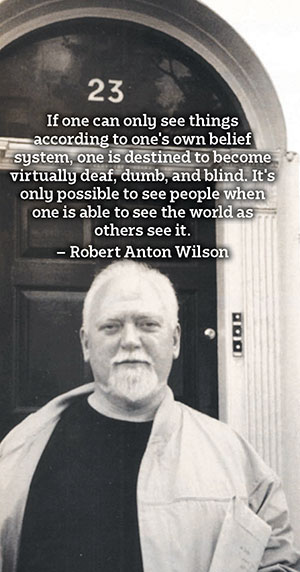
  • Rupert Sheldrake, the Most Controversial Scientist on Earth, Speaks Out

    Rupert Sheldrake, the Most Controversial Scientist on Earth, Speaks Out

    From New Dawn 169 (Jul-Aug 2018)

    Author and biologist Rupert Sheldrake has courted considerable controversy during his long career. Perhaps best known for his hypothesis of morphic resonance (that the so-called laws of nature are more like habits subject to change – see ‘What is Morphic Resonance’ in this issue of New Dawn), his tussles with the scientific establishment reveal a great deal about the dogmatism of mainstream science. Beginning with A New Science of Life – published in 1981 – his many books about science also include Dogs That Know When Their Owners Are Coming Home, The Sense of Being Stared At, and The Science Delusion, a powerful and compelling response to Richard Dawkins’ The God Delusion and materialist reductionist thinking in general. 

    Sheldrake’s work often explores what he refers to as ‘the extended mind’, the idea that the mind is more than just the brain and that it has the power to affect both the body, and by extension, the external environment. There is also evidence to suggest that one mind can affect another and that all minds are somehow linked. Our individual minds may even be individuated, seemingly-isolated nodes of a much greater mind, or overmind. We are the rain and the overmind is the sea.

    These ideas, far from being new, are in fact ancient and reflected in many belief systems, worldviews, and cosmologies whose origins reach into high antiquity, and perhaps beyond. Sheldrake is among a pioneering group of researchers from many fields and diverse disciplines working doggedly to deepen our understanding of the world around us and account for the many phenomena of both our inner and outer world which science alone simply cannot explain. 

    The response from mainstream science and mainstream media has thus far been, for the most part, wearily predictable. Derision and condescension have been combined with censorship and ad hominem attacks, although as already suggested, such tactics tell their own story, not least that the work of so-called ‘mavericks’ such as Sheldrake is becoming increasingly difficult to ridicule or ignore. 

    The scientific thought police famously blew a gasket and showed their true colours when Sheldrake addressed an event organised by TED spin-off TEDx. Recorded in 2013, Sheldrake’s talk – simply entitled The Science Delusion – proved enormously popular with viewers when the video was posted online. TED’s administrators quickly pulled the video1 from their official outlets claiming that Sheldrake’s presentation “crossed the line into pseudoscience,” contained “serious factual errors” and made “many misleading statements.” The ensuing public backlash, however, was swift and severe and TED found itself charged with attempting to shut-down freedom of speech.

    At the root of the problem here is a tendency or desire – perhaps even a need – among many mainstream scientists to deny their own subjective experience and inner life, the source of some of most profound human experiences possible with widely ignored implications. Despite the fact that many scientists claim to be religious, especially in the US, the official stance is that scientists should effectively all be materialist atheists – dispassionate, detached and thoroughly objective observers of a mechanistic and meaningless universe.

    “There are two or three different issues here,” says Sheldrake. “One is that of course scientists are people, but since the 19th century they’ve tried to pretend, at least in their writing style, that they’re not people. That’s why there was a fashion for a long time of the passive voice. Instead of saying, ‘I took a test tube’ they’d write ‘A test tube was taken’, as if all these things were just unfolding in front of the scientist who was a detached observer. I think now there’s the sociology of science, the philosophy of science, and science and technology studies have all shown what’s obvious, that scientists are people. They have prejudices, they have emotions, they have ambitions, they have fears, they have rivalries, and so on. So that’s just saying scientists are human, which is of course obvious. But it does rather dent this idea that scientists are completely objective, like automata, just simply registering facts. They’re not. They have ideas, they have hypotheses, they want things to be true, they tend to notice things that fit their beliefs more than those that don’t. And recently it’s turned out that a great deal of the scientific literature, at least half of published papers in those subjects, turn out not to be replicable because what scientists do is publish their best results which fit their theory best and tend to ignore the results that don’t.

    “All of this leads to a very subjective element to science,” explains Sheldrake. “But the point that I’m more concerned with in The Science Delusion is the kind of dogmatic framework which is not just in individual scientists, it’s institutionalised. The official doctrine of science at the moment is the materialist worldview. The doctrine that the only reality is matter, and that matter’s unconscious. So the universe is made up of unconscious matter which has no purpose or direction, and evolution is just blind chance and necessity. And this worldview, the materialist worldview, is not something that’s proved by science, it’s something assumed. It’s part of the standard paradigm or assumption on which science is currently based. A lot of scientists don’t actually believe it, but they usually have to pretend to believe it when they’re at work just to fit in and to make sure they get their career advancement and grants and that kind of thing.”

    The Dawkins Delusion

    Although Sheldrake has met self-styled nemesis Richard Dawkins several times (on one occasion Dawkins even visited Sheldrake’s home accompanied by a film crew), the pair have never really moved beyond superficial skirmishes to engage in a serious dialogue about the actual science of their respective worldviews.

    “Richard Dawkins personifies this kind of particularly dogmatic materialist atheist view,” says Sheldrake. “I know a lot of atheists and many of them are good people. So the problem isn’t that he’s an atheist, the problem is that he thinks other scientists ought to be atheists too, and that isn’t science, it’s his personal opinion. He is also a so-called sceptic. I would say a dogmatic sceptic. Scepticism is a good thing, but dogmatic scepticism is the intent to dismiss anything that doesn’t fit with your view of the world. And he has a view of the world, the materialist view, that the mind is nothing but the brain, it’s inside the head, and is nothing but the activity of the brain. Therefore things like telepathy, psychic phenomena, are impossible because if your mind is nothing but something happening in your brain then your thoughts can’t possibly affect someone hundreds of miles away as they seem to in telepathy.

    “[Dawkins] asked to come and interview me, or at least a TV company asked to come and interview me about my research on telepathy, particularly telephone telepathy on which I had done many experiments which show that people really can tell when someone’s about to ring them. In our tests they have four potential callers, one of them selected at random, and each test they have to guess who’s calling, and they score well above the chance level of 25%. Anyway, the TV company asked if they could come and interview me about this research. I had seen his previous Channel 4 programme called The Root of All Evil?2 which was against religion. It was extremely polemical, completely one-sided, and so I said to them, ‘No, I don’t really want to take part in another of his debunking programmes. It’s completely polemical, it’s one-sided. Why would I want to be part of that?’ And so they said, ‘Oh, well he’s changed, he’s really interested in the evidence. He wants to discuss the evidence with you’. I said, ‘Well, if that’s the case, he really wants to talk about evidence, then put that in writing, and I’ll agree to see him’. They put it in writing, came to see me and when he arrived it turned out he wasn’t in the slightest interested in the evidence. He wanted to trap me into saying something silly so he could put it on his programme and debunk me in my research. When I said to him, ‘Let’s just look at the evidence, that’s what we’ve met to do’, he said, ‘No, that’s not what we’re here for. I don’t want to discuss the evidence’. I said, ‘Well why not?’ He said, ‘It’s too difficult’ and I said, ‘Well most people can understand it’. He said, ‘It’d take too long’ and I said, ‘A few minutes’ and he said, ‘Anyway, it’s not what this programme’s about’. The director said ‘Cut!’ and the cameras stopped. I said, ‘Well what is it about? I made it very clear I didn’t want to be part of another low-grade debunking programme’, and he said, ‘It’s not a low-grade debunking programme, it’s a high-grade debunking programme’.

    “It turned out it was another of his polemics and I’d been severely misled. I had only agreed to see him on the grounds it was a discussion of evidence. And when he told me he wasn’t interested in the evidence, which I think is a very unscientific attitude, I said, ‘Well, then in that case you’re here under false pretences’, so I had to ask him and the TV crew to leave. It was a shame in a way. I’d be very happy to have a proper discussion with Richard Dawkins about evidence, but on the few occasions we’ve met and the possibility has been there, he’s refused to do it. I think in this example you see someone for whom science is a matter of prejudice and dogma, and that’s not the way science ought to be. It’s particularly bad in the sense that he was Professor for the Public Understanding of Science at Oxford. He was not a professor of biology. And I think this dogmatism gives completely the wrong view about science. It’s counterproductive.”

    Science and the Spiritual

    If we choose to oppose the religious, we should not become too religious in our opposition. Sheldrake’s latest book Science and Spiritual Practices: Reconnecting through Direct Experience explores the extent to which science itself can actually help validate the efficacy of various spiritual practices including meditation, rituals, singing and chanting, pilgrimage, and reconnecting with nature. Such practices generally make people happier and healthier, and the possible science behind this is now being researched as never before, despite mainstream antipathy. 

    We live in a world where stress, anxiety, and depression are on the increase, particularly in modern industrial nations, so any insights that can help us become more balanced and fulfilled, individually and collectively, are to be welcomed. 

    “If we have a worldview that says the universe is unconscious, meaningless, and when we die that’s it and there’s nothing beyond, and that all legends, all spiritual paths are pointless and illusory, it’s a deeply depressing point of view,” says Sheldrake. “It’s not surprising that in modern societies, which have become very secularised and influenced by this materialist worldview, that depression is the commonest form of mental illness. It’s endemic. And it’s an isolating view. We’re all isolated in the privacy of our skulls, we’re separated from each other. It’s a deeply depressing worldview that often goes hand in hand with a progressive worldview, the idea that we’re a part of progress driven by science and technology, which gives a somewhat more optimistic tinge to the whole thing. But I think without a sense of purpose and meaning in life, without a sense of connection to something bigger than ourselves, it’s difficult for humans to thrive. And that’s exactly why I think spiritual practices are so important.”

    Since the wholesale exportation of Eastern philosophies to the West began in earnest with the emergence of spiritual teachers and gurus such as Alan Watts, there have been many attempts at restoring balance in industrial societies suffering serious side-effects from the secularisation of almost every aspect of life. Many of the billions chasing happiness and fulfilment in hedonistic consumerism find only fleeting pleasure, discovering to their cost that the best things in life aren’t things. From Zen to the power of positive thinking, the response has varied from the re-introduction of religion by the back door to the re-branding of religious practices in pop-science books about everything from psychology to quantum physics.

    “Positive thinking is really a form of secularised prayer,” says Sheldrake. “In prayer – which I don’t discuss in this book, I discuss meditation which is a separate activity – in most religious traditions the prayer is, if it’s praying for something, petitionary prayer, and then it’s put in the context of the greater good. In the prototypic Christian prayer it says, ‘Thy kingdom come, Thy will be done’, and then it goes on to other things. But it’s put in the context of the kingdom of God coming first, the reign of peace, brotherhood and love. But positive thinking is mostly about getting something for yourself, success in love and business. It’s not based on the idea the power is coming from God, it’s coming from one’s own mind. So in that sense it’s a reduced form of prayer. I think that it can work, it can have effects. We know that the mind affects the body, and this is the basis of the placebo effect. In the chapter in my book on pilgrimage, I talk about some of the benefits, the healing effects of pilgrimage. For example, at Lourdes in France where the famous healing shrine and healing well are, a lot of people go there and some of them are cured of severe diseases in a way that appears miraculous. Now the sceptics say, ‘Well that’s nothing but the placebo effect’. But really the point is, what’s the difference? The placebo effect happens when somebody hopes they’re going to get better, they believe they’re doing something that will make them get better, and when they’re surrounded by supportive people who want them to get better. Those are the conditions under which the placebo effect happens in clinical trials. The placebo effect means that our attitudes and our expectations can affect our health and the healing process.”

    Separation from Nature

    One particularly egregious side-effect of the Western industrial lifestyle which Science and Spiritual Practices directly addresses is our separation from nature. Combined with our growing separation from each other and ultimately from ourselves, it does much to explain the mounting destruction and degradation we witness all around us. Events in the wider world simply reflect our inner world. They are a projection of collective consciousness.

    “Our whole culture is split,” says Sheldrake. “There’s a sense in which many of us have connections with nature as children. This is a theme that the romantic poet William Wordsworth wrote about in his famous poem Ode: Intimations of Immortality from Recollections of Early Childhood, the sense of connection with nature, of being part of something much bigger than ourselves. Then we become more and more separated from it. And our scientific worldview is imparted to people in the course of their education, that nature’s nothing but inanimate mechanisms made up of unconscious matter – the official worldview of our whole civilisation at school, at university, in work, in industry, in business, in the media, in politics. Nature’s just there as raw materials for us to exploit for economic growth and human progress. And there are now lots of children who hardly ever go outdoors because they’re on screens all the time.

    “Most people go along with the mechanistic worldview because that’s the official orthodoxy and that’s what business and education are all about. But especially at weekends and in the evenings and on holidays people revert to a completely different view of nature, seeing it as alive and themselves connected with it, the more romantic view of nature. Which is why the great cities of the Western world are clogged with cars on Friday evenings as millions of people try to get back to nature in a car. A lot of people who spend their lives exploiting nature trying to get rich don’t want to get rich because they hate nature, they want to get rich because they love nature. They think if they make enough money they can buy a little place in the country away from it all and go on retreats to a beautiful cottage in an unspoiled village with their family and friends. It’s a kind of crisis in our civilisation.”

    Sheldrake continues: “I think losing connection with spiritual practices impoverishes life, and regaining that connection conversely enriches life, and as I show in my book, it’s quite easy to do. And most of these practices cost nothing. I feel that all our lives can become better, more satisfying. And through feeling more connected we can also do more for other people. It makes us feel more generous if we feel ourselves to be more connected. And the common feature of all these practices – meditation, gratitude, connecting with more-than-human nature, relating to plants, singing and chanting, ritual, and pilgrimage – they’re all about creating a greater sense of connection with that which is greater than ourselves, and with each other. That is something that makes us happier and healthier and more able to help other people.”

    And that, ultimately, is the message of Science and Spiritual Practices – restore balance, heal yourself, help others, renew the world. Science relating to neuroplasticity and Sheldrake’s morphic resonance shows that our minds are malleable, even at the physical level. So-called ‘human nature’ appears more like a work in progress. This is not a road of no return; the future is what we make it. From timeless spiritual teachings to cutting-edge science, it is clear – or at least very strongly suggested – that everyone and everything is interconnected, interdependent, and from a single source. The implications of this are vast and cannot be ignored. When we change the way we look at things, the things we look at change.

    [alert type=”general” dismiss=”no”]This article was published in New Dawn 169.[/alert]

    [alert type=”success” dismiss=”no”]If you appreciate this article, please consider subscribing to help maintain this website.[/alert]

    Footnotes

    1. See the full talk here: www.youtube.com/watch?v=hO4p3xeTtUA. A TEDx talk by Graham Hancock entitled ‘The War on Consciousness’was also removed and caught up in the ensuing controversy.
    2. Later re-titled The God Delusion.

    © New Dawn Magazine and the respective author.
    For our reproduction notice, click here.