New Dawn – World's Most Unusual Magazine

Category: Articles

  • Rudolf Steiner, Secret Societies & ‘The Ahrimanic Deception’

    Rudolf Steiner, Secret Societies & ‘The Ahrimanic Deception’

    From New Dawn 136 (Jan-Feb 2013)

    Many believe there is an ‘occult’ or ‘spiritual war’ taking place between forces of ‘light’ and ‘darkness’, or ‘good’ and ‘evil’, and that this ‘war’ manifests on the material and mortal planes politically, culturally, spiritually, and economically.

    It is often surprisingly difficult to discern the affiliations in this ‘battle’, with the multitude of occult Orders, Schools and personalities. These often use similar or even identical terminologies and symbols, and draw on the same traditions and origins. In such a situation well-meaning people are easily duped into supporting long-range aims of which they do not understand.

    Occult War: Adepts ‘Black’ & ‘White’

    The definition of ‘good and evil’, or ‘light and dark’, metaphysically can – from an esoteric perspective – be regarded as a dichotomy between those who seek a higher spiritual path for mankind, and those who seek to enchain man to matter. This dichotomy is well portrayed in the standard depictions of ‘The Devil’ trump in the Tarot Major Arcana.1 Paul Foster Case, founder of the Builders of the Adytum, gave a particularly apt explanation:

    In its most general meanings, it signifies Mammon and thus big business, the conventions of society, the injustice and cruelty of a social order in which money takes the place of God, in which humanity is bestialised, in which war is engineered by greed masquerading as patriotism, in which fear is dominant. Students of astrology will have no difficulty in seeing how this corresponds to Capricorn, the sign of big business, and the sign of world fame.2

    One sees in this Trump a male and female human each starting to take on the appearance of wild beasts – with horns and tails – enchained to a solid block, representing matter, with the Devil enthroned. As Case states, it is symbolic of the reign of Mammon, which is ushered in by materialistic doctrines such as Capitalism and Marxism, keeping humanity focused on lower pursuits in the guise of ‘progress’ and ‘freedom’.

    Occultists such as René Guenon, Aleister Crowley and Julius Evola3 have sought to identify contending Schools as ‘White’ and ‘Black’ Brotherhoods, or as ‘Right’ and ‘Left’ Hand Paths.

    Given the confusion that exists – because individuals and occult currents that are diametrically opposed often claim to represent the same traditions – the biblical injunction ‘by their fruits ye shall know them’ is the best formula for identifying motives, although this also is often obscure. For example, the notorious English occultist Aleister Crowley, whose ‘evil’ antics played up to the tabloid press, could easily be regarded as a ‘Black Adept’. Although Crowley claimed to work in the tradition of, among others, and for unclear reasons, the 18th century Black Adept Adam Weishaupt and his crypto-Masonic Illuminati, Crowley sought to expose the spiritual war that was taking place between the ‘White’ and ‘Black’ Adepts,4 while his doctrine of Thelema is antithetical to the doctrine of the Illuminati.5 Also, while having been a Freemason, as was Eliphas Levi,6 Rene Guenon7 condemned the Black Adepts who had subverted and redirected Masonry.8

    Steiner and The Ahrimanic Deception

    Rudolf Steiner (1861-1925), founder of Anthroposophy, whose influence has gone far beyond ‘occult’ circles for his prominence in alternative education, architecture, and organic agriculture, was one of those seminal personalities who believed in the existence of such an ‘occult war’. Again, as with Crowley, difficulties are encountered due to Steiner’s own affiliations with Freemasonry.9 However, Steiner, like Guenon, Evola, Levi and Crowley, forthrightly sought to expose a Dark current at work within the secret societies, and in particular within Freemasonry, whose influence was being directed in the world politically.

    In a 1919 lecture delivered in Zurich entitled ‘The Ahrimanic Deception’, Steiner stated that, “a great part of mankind today is already under the control, from one side or another, of Ahrimanic forces of a cosmic nature which are growing stronger and stronger.” Steiner had an unusual perception of what he called the “Luciferic Impulse,” which he stated manifested on Earth in 3000 BCE. The Luciferic Impulse prepared the way for the “Christ Impulse” in Steiner’s cosmology. Both ‘Impulses’ began to fade and mankind has therefore become increasingly materialistic. Steiner stated this Ahrimanic Deception emanates from an actual being:

    The Ahrimanic impulse proceeds from a supersensible Being different from the Being of Christ or of Lucifer.… The influence of this Being becomes especially powerful in the Fifth Post-Atlantean Epoch. If we look at the confused conditions of recent years we shall find that men have been brought to such chaotic conditions mainly through the Ahrimanic powers.10

    While the Luciferic Impulse pushed humanity into what Nietzsche might have called the Dionysian passion that gives birth to arts and brings humanity outside of itself, albeit, according to Steiner, with a “false spirituality,” “Ahriman is the power that makes man dry, prosaic, philistine – that ossifies him and brings him to the superstition of materialism.”11 Ahriman would seem to equate with the Christian perception of the Antichrist. The Christ Impulse balances the two poles, in what in some respects seems akin to a Hegelian dialectic.

    And the true nature and being of man is essentially the effort to hold the balance between the powers of Lucifer and Ahriman; the Christ Impulse helps present humanity to establish this equilibrium…. [T]he Ahrimanic influence has been at work since the middle of the fifteenth century and will increase in strength until an actual incarnation of Ahriman takes place among Western humanity.12

    Preparing the Way for Ahriman

    The relevance of this concept of the Ahrimanic Deception in regard to an ‘occult war’ for world rule, is that:

    Now it is characteristic of such things that they are prepared long in advance. Ahrimanic powers prepare the evolution of mankind in such a way that it can fall a prey to Ahriman when he appears in human form within Western civilisation… Ahriman will appear in human form and the only question is, how he will find humanity prepared. Will his preparations have secured for him as followers the whole of mankind that today calls itself civilised, or will he find a humanity that can offer resistance.13

    The way in which humanity looks at the cosmos under the Ahrimanic Deception is not with the spiritual awe and sense of place of those of past Civilisations, including, we could add, those of Gothic man in Western Civilisation’s cycle of youth, as the philosopher-historian Oswald Spengler pointed out,14 but as merely part of a mechanical and mathematical process. Steiner said of this:

    Today man gazes from his earth up to the star-world and to him it is filled with fixed stars, suns, planets, comets, and so on. But with what means does he examine all that looks down to him out of cosmic space? He examines it with mathematics, with the science of mechanics. What lies around the earth is robbed of spirit, robbed of soul, even of life. It is a great mechanism, in fact, only to be grasped by the aid of mathematical, mechanistic laws.…15

    We might state of this Ahrimanic Deception that it motivates Rationalism and Materialism, the dominant ideologies of the Late West.16 Steiner warned that the Ahrimanic Deception aims to imbue Man with “scientific superstition,” an “external illusion,” that while necessary (it was far from Steiner’s intent to repudiate the sciences) has made what we can identify as Rationalism and Materialism into a dogma.

    The second method of the Ahrimanic Deception is to split society into contending factions. Steiner aptly identified Marxism, a product of Scientism, as a primary method of the Ahrimanic Deception.

    Since the times of the Reformation and the Renaissance the economist has emerged as the new priest into the increasingly materialistic world, while Steiner also pointed out that Christian religion had also become desacralised.

    Since that time the economist has been in command. Rulers are in fact merely the handymen, the understrappers of the economists. One must not imagine that the rulers of modern times are anything but the understrappers of the economists.17

    Steiner next alludes to a very important matter, the power that the bankers have assumed:

    In the nineteenth century the ‘economical’ man is replaced for the first time by the man thinking in terms of banking, and in the nineteenth century there is created for the first time the organisation of finance which swamps every other relationship. One must only be able to look into these things and follow them up empirically and practically.18

    This statement provides the key to the history of the ‘modern world’ for the past several hundred years, and the human agency pushing for a world state – a ‘New World Order’ – enchained to the dead weight of matter.19 The power of the international banking cabals prepares the way for an Ahrimanic World Order by reorienting the spirit of Man:

    If men do not realise that the rights-state and the organism of the Spirit must be set against the economic order called up through the economists and the banks, then again, through this lack of awareness, Ahriman will find an important instrument for preparing his incarnation.20
    Role of Secret Societies

    The ‘Ahrimanic Deception’ equates with what Guenon and Evola referred to as the ‘Counter-Tradition’. The secret societies it uses behind the façade of the Perennial Tradition are the ‘Anti-Tradition’. Steiner lectured on the role of these secret societies in the occult war.

    While referring to both the “humanitarian works” and the spiritual evolution that is supposedly at the foundation of Freemasonry,21 Steiner, like Levi, Crowley, Evola and Guenon, also spoke of the manner the ‘Ahrimanic Deception’ operates through Freemasonry. Steiner even went further than anti-Masonic ‘conspiracy theorists’ such as Nesta H Webster22 and the eminent Scottish scholar, Prof. John Robison,23 himself a Grand Lodge Freemason, both of whom accepted English Masonry’s innocence of intrigue. Steiner, however, made a particular point of discussing the origins of Continental Masonry in the English Lodges. Despite its repudiation of ‘irregular’ Grand Orient Masonry that predominates on Continental Europe and Latin America, English Grand Lodge Masonry, stated Steiner, was also involved in a struggle for world power. He said the British Government was subverted by the secret societies, and that in particular foreign affairs was taken over by “an inner committee.”24 Steiner, in tracing the origins of Grand Orient Masonry to the Grand Lodge, wrote that:

    But everywhere in a different way, in many places outside the actual British realm, Freemasonry pursues exclusively or mainly political interests. Such political interests in the most palpable sense are pursued by the ‘Grand-Orient de France’, but also by other ‘Grand Orients’. One might now say: what has that to do with the English?… But view this in conjunction with the fact that the first High-degree Lodge in Paris was founded from England, not France! Not French people but Britons founded it; they only wove the French into their Lodge…25

    After listing the Lodges that were founded under the impetus of the English Grand Lodge, from Spain to Russia, Steiner adds that, “these Lodges were founded as the external instruments for certain occult-political impulses.” These impulses included the “fury of the Jacobins,”26 (who launched a Reign of Terror over France in the name of ‘Liberty, Equality, Fraternity’); Weishaupt’s Illuminati and the Italian Carbonari. Although Steiner admits these began without “evil” intent (which I would dispute), they “continued their underground work in many different forms,” after being driven underground. Steiner alludes to the disingenuousness of Grand Lodge Masonry in being able to say:

    ‘[L]ook at our Lodges, they are very respectable – and we are not concerned with the others’. But if one can see through the historical connection and the driving forces in an interplay of mutual opposition to one another, then it is indeed high British politics that is concealed behind it.27

    Of the “occult-political” societies, Steiner observed they serve a materialistic aim behind the façade of spirituality: what Guenon and Evola called “Anti-Tradition,” and Levi called “profanity.” These “various Orders” are “not spiritual, because of their purposes and goals.” They are the secret societies that work in the name of “democracy” and a “universal republic” (as did the Jacobins and the Illuminati). Steiner warned:

    If one wants as a person of modern times to see clearly in order to meet the world openly and understand it, then one should not let oneself be blinded by democratic logic, which is justified only in its own sphere, or by phrases concerning democratic progress etc. One would have also to point to the interposing of something that reveals itself in the attempt to give rulership to the few through the means available within the Lodges – namely, ritual and its suggestive effect.28

    While genuine mystical lodges exist(ed) – even Guenon sought initiation in them, as did Steiner – both pointed out that one must be cognisant of those Orders with mystical trappings and claims to ancient pedigree as a mask for other motives, as they are “often nebulous, maybe even fraudulent”… “For power is of special importance for these secret societies, not insight.”29

    [alert type=”general” dismiss=”no”]This article was published in New Dawn 136.[/alert]

    [alert type=”success” dismiss=”no”]If you appreciate this article, please consider subscribing to help maintain this website.[/alert]

    Footnotes

    1. For example, the popular ‘Rider-Waite Tarot Deck’.

    2. Paul Foster Case, Oracle of The Tarot: A Course on Tarot Divination, Chapter 6, ‘The Major Trumps: 15. Le Diable’, http://tarotinstitute.com/free/Oracle2.pdf.

    3. Julius Evola, Men Among the Ruins, Inner Traditions, 2002, 250-251.

    4. Aleister Crowley, Magick Without Tears, Falcon Press, 1983, 66.

    5. K R Bolton, ‘Aleister Crowley as Political Theorist’, Crowley: Thoughts & Perspectives Vol. II, Troy Southgate, editor, Black Front Press, 2011, 5-27; Keith Preston, ‘The Whole of The Law: The Political Dimensions of Crowley’s Thought, ibid., 68-84.

    6. Eliphas Levi, The History of Magic, translated by A E Waite, 1913, Rider, 1982, 310. Levi in condemning the “profanity” of Freemasonry and its involvement in political subversion, including the French Revolution, was doing so as an initiate of the 18°, the Rosicrucian Degree. This is indicated in a footnote to his History of Magic, where he states: “Having attained by our efforts to a grade of knowledge which imposes silence, we regard ourselves as pledged by our convictions even more than by an oath.… and we shall in no wise fail to deserve the princely crown of the Rosy Cross….” (286). Levi here states that he was staying true to what he considered the genuine Tradition of Masonry, whilst condemning what he saw as the perversion of Masonry by the Counter-Tradition. His reference to the Masonic oath attached to the ‘Rosy Cross’ indicates he had reached as far as the 18° of Knight of the Pelican & Eagle & Sovereign Prince Rose Croix of Heredom.

    7. Robin Waterfield, René Guenon & the Future of The West, Sophia Perennis, 2002, 21.

    8. René Guenon, The Reign of Quantity and the Signs of the Times, New York, Sophia Perennis, 2001, 260-261.

    9. ‘Was Rudolf Steiner a Freemason?’, www.fourhares.com/freemasonry/Steiner_and_masonry.html

    10. Rudolf Steiner, ‘The Ahrimanic Deception’, Zurich, 27 October 1919, http://wn.rsarchive.org/Lectures/AhrDec_index.html

    11. Ibid.

    12. Ibid.

    13. Ibid.

    14. Oswald Spengler , The Decline of The West, George Allen & Unwin, 1971. Spengler, writing in the early 20th century, contended that history is not lineal-progressive, but that each Civilisation is self-contained and goes through its own analogous organic cycles of birth, youth, maturity, old age and death. During the latter epochs of a Civilisation, culture becomes ossified and materialistic and money-thinking dominates. This is the cycle of present Western Civilisation. Broadly, the historical-cyclic theories of both Steiner and Spengler can be used in tandem.

    15. Rudolf Steiner, ‘The Ahrimanic Deception’, op. cit.

    16. Vide, Spengler, op. cit.

    17. Ibid.

    18. Ibid.

    19. For the political agendas of the International Bankers, including the connections with Marxism, see: K R Bolton, Revolution from Above, Arktos Media Ltd, 2011.

    20. Rudolf Steiner, ‘The Ahrimanic Deception’, op. cit.

    21. Rudolf Steiner, ‘The Work of the Secret Societies in the World’, Berlin, 23 December 1904, http://wn.rsarchive.org/Lectures/19041223p02.html

    22. Nesta H Webster, Secret Societies & Subversive Movements, Britons Publishing Co., 1964, Chapter 6, ‘The Grand Lodge Era’, 128-129.

    23. John Robison, 1798, Proofs of a Conspiracy, Western Islands, 1967, ‘Introduction’, 6.

    24. Rudolf Steiner, ‘The Karma of Untruthfulness’, ‘Rudolf Steiner Archive, GA 173’, 18 December 1916, www.rsarchive.org/Lectures/GA/index.php?ga=GA0173

    25. Rudolf Steiner, ‘Karma of Untruthfulness, Part II’, GA 174, 8 January 1917, www.rsarchive.org/GA/index.php?ga=GA0174

    26 Ibid.

    27. Ibid.

    28. Ibid.

    29. Rudolf Steiner, ‘The History & Actuality of Imperialism’, Dornach, Switzerland, 21 February 1920.

    © New Dawn Magazine and the respective author.
    For our reproduction notice, click here.
  • Interview with a Time Traveller

    Interview with a Time Traveller

    As someone who has personally known the author of Seven Secrets of Time Travel: Mystic Voyages of the Energy Body for more than twenty years, I can vouch for Von Braschler’s really profound comprehension of practical spirituality. Nowhere is this more apparent than in his latest book, which is not some New Age, airy-fairy attempt at wish-fulfilment.

    Rather, from his grasp of classical philosophy and science, he has developed a convincing methodology for transcending time, not via a device or machine, but through the agency of human consciousness. It is not some futuristic technology, but present-day technique, Von Braschler demonstrates, that allows us to cross the time barrier.

    His conclusions are drawn from a lifetime of complimentary research, beginning as a faculty member at New York’s Omega Institute for Holistic Studies, where he led workshops throughout North America and Britain. A lifetime member of the Theosophical Society, he is today its regional head in the Upper Midwest of the US, and the author of Chakra Reading & Color Healing (2005), A Magical Journal: A Personal Journey Through the Seasons (2003), Conversations with the Dream Mentor (2003), and Perfect Timing: Mastering Time Perception for Personal Excellence (2002).

    A former newspaper and magazine editor, Von Braschler hosted his own weekly radio program, “Healing with Your Pet: Our Psychic, Spiritual Connection.” But it is his present effort that readers may find the most immediately engaging of all his singular achievements.

    I began by asking him an obvious question…

    Frank Joseph (FJ): What is time? Or, more to the point, what is your definition of time?

    Von Braschler (VB): Time is always now. As light intersects us each in turn, we experience an instant. This is our now. It energises you and fills you with opportunity of the moment. You are experiencing a different now than I am – miles away, as the sunlight strikes us at a different instant. Electromagnetic radiation that descends upon the earth from the heavens above in the form of light rays defines time. In truth, then, we only experience solar time on this physical earth plane in our mundane existence.

    While most people think of time as linear and progressing like a never-ending movie that unfolds in front of us, what we experience is an instant or a series of individual snapshots. The 17th-century rational philosopher Leibniz said that time doesn’t really exist, but is a conceptional order that our minds place on existence. Furthermore, there are two levels of creation – God above and our physical world of illusion below. Time and space as we conceive them are illusion. With guides such as Leibniz, Kant, Einstein and Barbour, we might say today that we live in the manifest or material realm that is fixed, frozen, and limited by laws of physics that allow little change or progress.

    On the other hand, the unmanifest realm of creation above us is unlimited in potential as filled with spirit and energy. The only way I know to leave the restrictions of the manifest level of creation and rise to the unmanifest level is by leaving our physical body in a consciousness body that can transcend time and space as we ordinarily experience things.

    FJ: How and why did you become interested in time travel?

    VB: I’ve always been fascinated by time, timelessness and time travel. It always occurred to me that each one of us experiences time differently and that most people have a funny idea how to control time or stretch time. We try to cheat time by burning the candle at both ends, getting less sleep, or better managing our time. Sadly, we are two-dimensional thinkers who live in a little box and cannot see outside our little compartment to a level of existence where multiple dimensions and multiple realities exist just beyond us.

    Personally, I have on occasion experienced timelessness where time seems to stand still or stretch at will in crisis situations where I had to get outside myself. For most people, these glimpses into expanded reality occur during an accident. These sorts of experiences piqued my interest in time and space and our potential to overcome our normal human condition. My first book was simply about the power in the present moment.

    Other books explored expanded human consciousness and ways to overcome the limits of our manifest world. Now I’m fully engaged in exploring the limits of time and space. Most people are introduced to this sort of exploration in their dreams. I’m interested in doing it with my eyes wide open.

    FJ: Since the publication of H.G. Wells’ The Time Machine in 1895, people interested in the subject have generally assumed that some kind of advanced technology will perhaps make time travel possible. How is your approach different?

    VB: Einstein pretty well convinced most of us that the universal speed limit was the speed of light and that matter such as our physical form would turn into pure energy if we were to reach the speed of light in attempts to time travel. And that’s how fast you would need to travel to move backward or forward in time.

    Time travel, therefore, remains the realm of energy (spirit). My approach to time travel accepts Einstein’s Special Theory of Relativity and focuses on leaving the limitations of the physical body in a consciousness body. This is your higher consciousness, that part of you that cannot be measured physically, but can exist and experience a broader reality outside your physical encasement. It is your spirit body or energy body. So my approach follows the reliable example of Native American dream walkers and Hindu Samadhi mystics who enter a state of higher consciousness and leave the body. In this way, they prove that a person’s higher self can transcend time and space.

    There are other shamanic and mystic traditions that transcend time and space in the same way, entering a very deep and active meditation with the focused intent to leave the body and go somewhere far away. Many other people have demonstrated prophetic dreams that prove an ability to transcend time and space out of body in higher consciousness, as well. This is a practical approach to time travel that is available to all us, without the amazing contraption of H.G. Wells.

    FJ: You write about the human “energy body.” What is it?

    VB: I believe in the Hindu and Theosophical model of the subtle energy bodies that surround and complete our dense, physical body of the material plane. Our subtle energy bodies include our astral plane or etheric double, our mental body, our causal body, our Buddha plane of individualised consciousness, our spiritual plane of energised conscious awareness, and our divine plane. So in order to move beyond the material plane at our physical core, we need to move with these subtle energy bodies that correspond to planes above the material plane.

    We commonly refer to these subtle bodies that surround our dense core as our energy body. It allows us to enter the planes of existence outside the physical restraints of our material world in a world of pure energy and spirit where change is more readily possible and can be realised in a flash. Now these planes are not normally visible to the physical eye, but can be seen by clairvoyants and anyone trained in aura reading. They have soft, pastel colouring that relate to the light energy vibrational rate of the various planes they represent. Another way to appreciate their very real existence is to put your hands out from the physical body at different intervals to feel their vibrational warmth and tingle.

    FJ: You mention “timelessness,” but how can anything be outside or without time?

    VB: I consider timelessness my fourth secret of time. Timelessness is just beyond time, as we commonly know it. We experience timelessness during deep meditation when time, as we commonly experience it, seems to stand still. We also experience it to a degree in profound, lucid dreams where you seem to live an entire lifetime in a flash with seemingly no time elapsing. This is where most people stop. It is like the eternal present moment that is pregnant with potential. It exists outside time and outside space as we normally experience life in our mundane, earthbound plane of manifest creation.

    We travel outside ordinary space and time of this world in a state of heightened consciousness as our higher self – a spirit body of pure energy. Most meditation ends with timelessness. Here you can listen to universal intelligence with your heightened awareness. It also can be a departure point for time travel, if you focus your higher consciousness on leaving the body and going somewhere else in time and space outside the room where you are meditating or dreaming.

    FJ: Indian mystics and Friedrich Nietzsche have written about the Eternal Now. How does it figure into your own research?

    VB: Ah, yes – the Eternal Now. My research has included the mystic East, as well as the West, both of which acknowledge it. The Eternal Now is the power of the present moment. We can embrace it by focusing our attention on the present moment and the potential that it holds for us. In truth, earthbound creatures only have the present moment or the now. Everything else is conjecture inside our little pocket calculator brains that attempt to run our lives by analysing and projecting everything in ways that make us feel comfortable about ourselves and where we think we are going. So our little brains are clogged, generally speaking, with worries about yesterday and concerns about tomorrow – moments that are not available to us, but only idle reflections on moments past and worries about an uncertain future beyond our immediate grasp.

    The Eternal Now is the universal truth of the power in the present moment. Everything is happening now, and potential change agents like us need to gain traction in the present moment to become heroes in our own lives.

    FJ: Many people today have a sense that time is speeding up. Are they somehow deluded, or experiencing a real phenomenon? If so, why is time speeding up?

    VB: It would seem so. Aside from the trajectory of the earth clipping a second or so off our annual clocks each year, there is a common human perception today that things are speeding up. Just about every philosopher and scientist who has ever seriously considered the meaning of time, however, has noted the importance of personal perception. There was Kant who said time and space are forms that the human mind projects on external things. Einstein said that the time interval between two events depends on the observer’s reference frame and that very reference body has its own particular time.

    Always remember, though, that time is measured in change. When change occurs, time has elapsed. We are living in an age of much change. As energised agents of change, we are fully aware of this. As energised agents of change, we find our own place on the wheel of life and make time spin with our attention. Fully engaged, we perceive time moving rapidly with changes that involve us.

    FJ: You state that travelling into the future is possible, but how can we move into a state or condition that does not yet exist?

    VB: Time is not really a linear progression, with us standing fixed at one point. This is the illusion of physical existence on this mud ball world of ours. In truth, time outside our inflexible, manifest world is fluid and looped. The unmanifested world of spirit and energy above us is fluid and flush with potential to move forward and backward at will. The trick is simply having enough conscious awareness to move forward and backward in time.

    With the right focused intent, a person in a state of heightened consciousness can leave the physical constraints of this manifest world and travel freely backward or forward in time. That involves your higher mind that can exist and function outside the physical body and independent of the brain or lower mind. Mystics and shamans have demonstrated this amazing potential to transcend time and space.

    FJ: Are there any real benefits to time travel, other than satisfying one’s curiosity?

    VB: Goodness, yes! Shamans experience reality outside normal time to bring back helpful insights to their people about dangers ahead or examination of past events that produced current situations. Eastern mystics visit worlds beyond worlds to understand the nature of cosmology and the potential of the human condition. On a personal level, one can go back into the past to better understand how you got to the point where you are today.

    There we more easily heal. There we can deal with buried recovery issues. We can gain better understanding. We suffer because we do not understand. But whether we go forward or backward in time for personal or broader reasons, we always go in an invisible conscious body or energy body without arms, legs, or vocal chords. We go as witnesses to bring back insight, much like the shaman.

    FJ: If we are able to move into the past or future, can we change history or alter what would otherwise occur? Is this what you mean by “an energised change agent”?

    VB: This is always a tricky question and probably one of the reasons why esoteric exercises have often been withheld from the masses. Are you ready to go forward or backward in time as a perfect witness for your own spiritual evolution and the betterment of your people? It’s an ethical concern. Fortunately, we do not time travel with the physical form necessary for us to interact outside our normal time. We travel in spirit body. The information that we retrieve, if we are able to fully comprehend it and recapitulate it upon return to normal consciousness represents tendencies of how things will turn out. There is not total certainty.

    In the case of personal information when you time travel for personal reasons, you become a witness to your own life. That life is totally yours to perfect. The greater concern would be for insights gathered outside personal observation and how it might affect the free will of others to determine their own destiny. I’m not totally concerned about that either, however, since free will of other people took them to the future you might have glimpsed. The future has already happened. We are just peeking into it.

    FJ: How does the ancient concept of karma appear into your work?

    VB: Quite a lot. Karma is a key component of my third secret of time, timelessness and time travel. I say that time=energy=karma=opportunity. Remember the story of the hero in The Bhagavad-Gita? Like Job in the Bible, he argues with a manifestation of God that his actions in a battle might have unforeseen, dire consequences and incur karma. His battle represents the life struggle that all of us live. The Lord tells him to get in the battle and take action, choosing the right action as best he can without concern for how things might turn out. It’s really about opportunity.

    People can be energised agents of change, but need to seize the opportunity. The moment at hand, the instant when light strikes you and energises you, is your opportunity to make a difference. We should not fear karma to the point we are reluctant to act, but recognise it as nature’s huge balancing act. It is nature’s unerring balancing act to measure cause and effect. Karma, as it affects all living things in orderly universe, acts as a moral law to restore order, balance, harmony, and opportunity for right action.

    FJ: Have you personally experienced any time travels you’re able to share with us?

    VB: Yes, I have. In a state of heightened consciousness, I have gone back and reviewed past lives pretty vividly. I know that all of it was very real, because I have been able to find people from past lives as a result of going back. This has helped me understand who I am in terms of my overall mission in life and what I’m all about. I have gone out of body and experienced timelessness, which has been great in “stretching” time when needed. I drove all across Montana one early morning in a blizzard on an empty tank of gas. (It does seem that during life-threatening situations our spirit evacuates the physical body and begins to function on its own, as others in emergency situations will attest.)

    I also remember an incident when I was wounded and trying to walk miles to my home without any concrete sense of direction and instantly found myself standing in front of my front door. All of that seemed pretty amazing then, but makes a little more sense to me now.

    FJ: What is the most important point you would like our readers to come away with after acquainting themselves with the Seven Secrets of Time Travel?

    VB: You can affect real change as an energised being who absorbs and processes electromagnetic radiation in the form of light rays that descend on us as waves. This energising process and the instant when light intersects you gives you a divine gift and the opportunity to make meaningful changes.

    We are part of the greater electromagnetic field and dynamic in that we can transform this light energy. We are light beings encased in physical forms that can be transcended in higher consciousness as pure energy that is unrestricted outside the laws of physics once outside the physical body.

    We can realise dimensions and realities beyond the mundane world of the flesh as pure energy travelling at the speed of light beyond ordinary time and space. Eastern mystics and shamans have demonstrated this is possible; and exercises in Seven Secrets of Time Travel explain how to practice this on your own.

    Seven Secrets of Time Travel: Mystic Voyages of the Energy Body (Destiny Books, 2012) is available from all good bookstores & online retailers.

    [alert type=”general” dismiss=”no”]This article was published in New Dawn 132.[/alert]

    [alert type=”success” dismiss=”no”]If you appreciate this article, please consider subscribing to help maintain this website.[/alert]

    © New Dawn Magazine and the respective author.
    For our reproduction notice, click here.
  • The Chinese Nostradamus

    The Chinese Nostradamus

    From New Dawn 129 (Nov-Dec 2011)

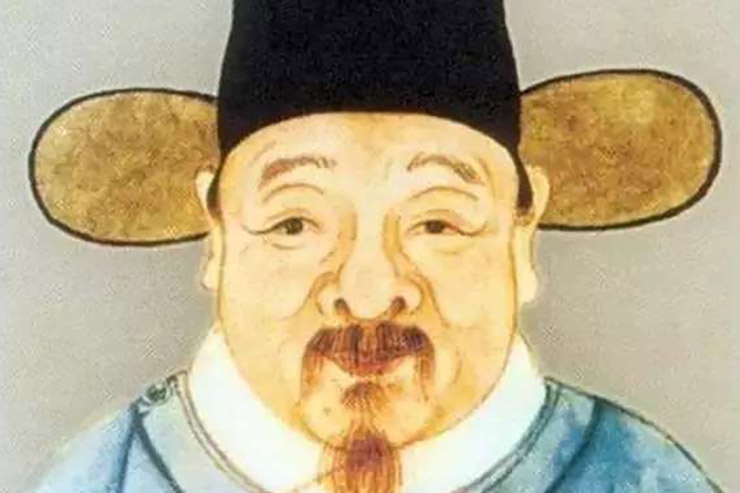
    This year [2011] is the 700th anniversary of the birth of Liu Ji (1311-1375), military commander of Chinese forces both on land and on sea and long-time advisor to the first Ming emperor Zhu Yuanzhang, whom he helped bring to power.

    Liu Ji, who eventually became grand chancellor at the imperial court, was a man of protean interests and the author or co-author of books on warfare including comprehensive treatises on the use of gunpowder in firearms (Huolongjing), and, in particular, on the use of the medieval Chinese firearm known as the fire lance. Liu Ji (who is at least as well-known by his honorific or “courtesy” name of Liu Bowen) also wrote works on astronomy, the calendar, magnetism, geomancy, feng-shui, and other subjects skirting the supernatural.

    In this latter category, he wrote one book that holds the same fascination for us today as it did for Liu Ji’s contemporaries. This is the Shaobing ge (The Baked Cake Ballad), a collection of prophecies of future events. The predictions are cloaked in a welter of abstract, allusive and arcane language. They seem to be stunningly accurate in their prediction of future events (such as the coming of Sun Yat Sen, founder of the Chinese Republic, in 1911). They bid fair to being compared to the prophetic Centuries of Michel de Nostradamus, the French prognosticator who wrote 200 years in Liu Ji’s future.

    Basing his calculations on knowledge of cycles covering 50-year periods, this Chinese Nostradamus prophesied that the 50-year period from 1860-1910 would unfold as follows:

    Strong nations will seek to subdue weak ones while oppressed nations and people will rise in strife to throw off their unvirtuous rulers. The people in China, likewise, will agitate and revolt against their foreign rulers from the North. The country will be weak and divided as it will be suffering from all these conflicts and other calamities.1

    In a discussion of Liu Ji and his prophecies, in Occult magazine, Sybil Leek writes that,

    In more specific terms, Liu Ji pointed out that his people would see great floods in the years of the swine (1873), the snake (1887) and the goat (1893) and 1911, another year of the swine. He indicated that within twenty-four years after the greatest flood, the existing rulership of the country would meet with great difficulties and dangers of an overwhelming nature, and the Wise Man in the name of the Moon would arise as the new sage and statesman to act for the cause and destiny of the country. The ‘Wise Man in the Name of the Moon’ is the birth name of Sun Yat Sen, the founder of the Chinese Republic.

    Leek goes on to explain:

    China was weakened by the Taiping Rebellion and the actions of the revolutionaries from 1860 onwards. The great flood took place in 1877, the year of the swine. There were wars with France, England and Japan in 1865, 1884 and 1895, each of which brought humiliation and losses of territory to the Manchu dynasty. The final crisis took place in 1911 when the Chinese revolution broke out to overthrow the once great and long Manchu regime, exactly 24 years after the great flood of the Yellow River. Other important historic events in this 50-year era were: the Russo-Japanese War of 1904-1905; the Japanese conquest of Korea in 1911; the Spanish-American War of 1898-1899; and the French annexation of Indochina in 1883.2

    Does the warrior, politician, prognosticator of the future and explorer of ancient “New Age” lore known as Liu Ji or Liu Bowen have the right to be called “the Chinese Nostradamus?”

    There are those who think so. Others contend that, while Liu Ji genuinely was a figure of great power and importance amidst the clashing ideologies, peoples, and life styles of fourteenth-century China, much of Shaobing ge was composed hundreds of years later, after many of the events it “predicts” had taken place, and was fraudulently credited with Liu Ji’s name in order to bestow divine legitimacy on those events. This school of thought traces the inception of the Shaobing ge not to the Ming or even the Qing era, but to the work of fiction writers and the propagandists of anti-Manchu sectarian organisations and secret societies that flourished in the early eighteenth century.3 

    Some hold there really was a Shaobing ge, composed by Liu Ji and consisting of prophetic messages – but it was greatly adumbrated, added to, and revised in later centuries, becoming the centrepiece of a number of Chinese messianic documents built on, in the words of Barend J. ter Haar, “the concrete expectation that one or more saviours will descend to earth to rescue a select group of human beings from imminent or currently raging apocalyptic disasters.”4

    What really happened may be a complex mixture of all the above – including the exciting if uncomfortable fact that Liu Ji may really have produced predictions for the future, some of which have come true in stunning fashion.

    The Chinese World of the 14th-15th Centuries

    A brief look at the tumultuous times in which Liu Ji lived and left his mark may provide the beginnings of an answer.

    Late fourteenth-century and early fifteenth-century China under the Ming dynasty saw the last great flowering of Chinese culture before a lengthy period of stagnation that ended only at the beginning of the twentieth century. Paper (100 BCE), the seismograph (132 CE), gunpowder (220 CE), and printing (movable wooden blocks by the sixth century CE, movable type by the eleventh) – all these were only a few of the inventions that China had developed centuries before the West, and it had pioneered such devices as the compass, the stirrup, suspension bridges, canal locks, iron chains, and water-powered mills and looms as well.

    Under the Ming, China brought these advanced technologies to the height of efficiency. Art (particularly pottery), printed texts of every sort (a preponderance of them being scholarly), and architecture (both sacred and profane), flourished as never before. Defences, paved highways, bridges, temples and shrines, stupas, tombs, memorial arches and rock gardens were built in profusion. The walls of some five hundred cities were reconstructed. According to a legend that has followed him up to modern times along with that of his prowess as a prognosticator, Liu Ji himself was “an ingenious builder of imperial cities.”5 

    From 1405 to 1433, the eunuch admiral Zheng He, born four years before Liu Ji died, would lead at least one expedition of 200 (perhaps even 371) ships, some of them the tallest in the world, on a diplomatic and exploratory mission to South-east Asia, Africa, the Indian subcontinent, the Persian Gulf, the Arab states and the Red Sea. Gavin Menzies speculates, in 1421: The Year China Discovered America, that this fleet, captained by its Chinese Vasco da Gama and carrying a crew of 28,000, even penetrated as far as the west coast of North America.6 To cap the achievements of this era in a literary mode: in 1403-1408 three thousand scholars laboured to compile and copy what is still the longest encyclopaedia ever produced, the Yung-Lo Ta Tien (Grand Encyclopedia of the Yung-Lo Ta Tien Reign-Period) – an astonishing 11,095 volumes, containing 50 million Chinese characters. (Only 370 volumes have survived, scattered in libraries around the world.)7

    Who Was Liu Ji (Liu Bowen)?

    Liu Bowen was an exemplar of, and helped to mould, this world of vibrant and many-faceted activity. He was born in Qingtian County (modern-day Wencheng County, Zhejiang Province) in 1311. Tall, wiry, eager and precocious, he rose swiftly in the imperial civil service, acquiring the skills of engineer, writer, soldier and administrator, and others. When one of the leaders of the Red Turban secret society, a former travelling monk, grotesque in appearance but highly capable, Zhu Yuanzhang (1328-1398), seized Nanking from the Mongols in 1356, Liu Ji was at his side. Twelve years later, Zhu drove the descendants of the Great Khan out of Beijing and became the first Ming emperor.8 Liu served in many administrative posts under Zhu Yuanzhang. He was a commanding officer in sea and land battles. He studied and wrote on a wider range of topics than any other man of his time, particularly in the fields of warfare and divination.

    Joseph Needham writes of him, in Science and Civilization in China (Volume Five, Part Seven), that, “Liu Chi [Ji]… was a striking personality, of remarkable qualities both civil and military. In philosophy he was a skeptical naturalist, interested in all kinds of science and proto-science – astronomy, the calendar, magnetism and geomancy – and a friend of the eminent mathematician and alchemist Chao Yu-Chin. But he was also concerned with administration, and for long an advisor to the first Ming emperor. In war he commanded at battles both on land and afloat, having in one instance (+1363) his flagship destroyed by a ‘flying shot’ (fei phao) just after he had transferred to another vessel.” Needham sums up Liu’s unique abilities: “Liu Chi was the sort of man who could successfully conjure a change in the wind just when the commander-in-chief needed it.”9

    Needham’s vivid description of Liu Ji brings out the adventurous side of his life, as no account of this remarkable man can fail to do. This action-oriented dimension of the prognosticator-warrior was exploited in full by Taiwanese TV in a 404-episode mega-series, Shen Ji Miao Suan Liu Bo Wen (The Amazing Strategist Liu Bowen), that aired five nights a week from August 23, 2006, to March 12, 2008. This TV spectacular tells how Liu Bowen’s amazing ability to predict the future helped Zhu Yuanzhang overthrow the Yuan emperor and establish the Ming empire. In actual fact, Liu Bowen’s death in 1375 is shrouded in mystery: his multifarious talents may have incurred the jealousy of Zhu, who, increasingly perceiving his lieutenant as a threat, harassed Liu Bowen so much that he died of sorrow and indignation; the emperor then erased much evidence of the warrior-seer’s accomplishments. The TV mega-series takes advantage of these blank spaces, writing in a passionate love affair between Bowen and Princess Nanfeng, daughter of the deposed Mongol emperor. (Did this high-powered liaison really take place? The best that can be said is that there is no strong reason to suppose that it did not.)

    In the early stages of the story, Princess Nanfeng tries to assassinate Emperor Yuanzhang, is blinded for her failed attempt, and seeks refuge in the shop of A Tian, who turns out to be Bowen’s best friend. There she meets Liu and his sister, A Xiu, who is training in the martial arts. When Liu discovers who this refugee is, he tries to restore her sight and keep her from trying to assassinate Emperor Yuanzhang again; Bowen wants to promote good relations between the present Ming emperor and the former Mongol emperor.

    A treacherous Ming official, Hu Weiyong, tries, for personal gain, to persuade the Ming emperor to have Nanfeng killed. A battle of wits ensues that pits the noble Liu Bowen against the evil Hu Weiyong. It’s this battle, filled with bloody combat, sizzling romance, and the wrenching encounters of Bowen with the gods from whom he channels searing images of the future, that kept millions of Taiwanese glued to their TV sets for more than eighteen months. At the end of 404 episodes, when the contest is decided in favour of the Ming dynasty, the aid of Liu and his paranormal powers has been indispensable.10 

    How much truth is there in this TV production, and the depiction of Liu Ji as a man of magical clairvoyant power? Did he really “channel” future-event predictions that, gathered into a volume called Shaobing ge, rival those of Nostradamus in their beguiling obscurity and – when they can be interpreted – their occasional striking accuracy?

    Liu Bowen’s Specially Encoded “Moon Cakes”

    Many modern scholars, as we’ve seen, tend to think not. Ter Haar writes that in the nineteenth century,

    One of the first paragraphs of the 1811 initiation manual [put together by secret societies plotting the downfall of the Manchu dynasty and the resurrection of the Ming in a series of divinely-ordained, messiah-led, apocalyptic battles] states that in 1643 an ‘Inscription by Liu Bowen’ was spit out by the (Yellow) River in Kaifeng… It predicted the return of the Ming under the Zhu family, bringing peace.11

    Perhaps not conscious fraud as much as powerful, self-deluding, emotional need – it must have seemed to the members of the society as if they were channelling the document! – wafted Liu Ji’s imprimatur into the ritualised agendas of these anti-Manchu secret societies. Nevertheless, there is a story, with some claim to historical truth, that suggests just how cryptic messages in baked cakes, prophesying China’s future, might have come to be associated with Liu Ji.

    The Chinese have a custom, said to date from the end of the Yuan Dynasty (1271-1368) of eating baked “moon cakes” at yearly mid-autumn festivals. The custom had its origins in the revolutionary times preceding the fall of the Yuan, when the general populace, lashed into fury by the oppressive regime, rose up again and again against their Yuan masters. The messages had to be transmitted in secret so that the insurrectionists could meet at the right time and the right place. Zhu Yuanzhang and Liu Bowen had the idea – or so the story goes – of spreading the rumour among the peasants that a deadly plague was afoot in the land and the only way to prevent it was by eating specially-prepared mooncakes. These special cakes were to be quickly distributed – each containing an encoded message coordinating the Han Chinese revolt for the fifteenth day of the eighth lunar month.

    The messages were in the form of a simple puzzle or mosaic printed on the surface of the cake. To read it, you had to cut the four mooncakes per package into four pieces each. The sixteen parts would then be put together in the right order to reveal the message. The evidence would be destroyed by eating.

    But Yuan government officials were everywhere, and it was almost impossible to send the messages without their being detected.

    Liu Bowen devised a new plan: the messages, particularly the critical one of “Uprising on August 15,” would be baked inside the mooncakes. This was done, and the buried-message cakes were successfully distributed. The insurrectionary armies converged on Beijing on August 15, and soon the city fell to Zhu Yuanzhang.

    The memory of this conspirators’ device, enhanced by legend and the life story of the charismatic Liu Bowen, could have been transformed into a legend of cryptic prophetic messages from the gods “hidden” inside a book called The Baked Cake Ballad.12

    According to legend, the Shaobing Song, as it is also known, predicted the future of China including the 1449 Mongol invasion, the 1911 founding of the Republic of China and much, much more.

    To further quote Sybil Leek:

    The next era of Liu Ji’s visions was the 50-year period from 1911 to 1960. Liu Ji predicted the Chinese-Japanese war which would come in the year of the ox (1937) and would last for 1,085 days. He did not see the end of the war as a lasting peace. But he foresaw that around 1947 a great statesman would arise to lead the Chinese into an era of peace.

    Among other major predictions he made were that a world war would involve every country and that 1917, the year of the snake, would be one of the most ominous dates in the period. He predicted an earthquake in Japan in 1923, the year of the swine; the great world depression in 1931, the year of the snake; and the European war in 1939, the year of the rabbit.

    Other interpreters believe that the Shaobing ge contains cryptic allusions to the rise of the great eunuch admiral of Ming times, Zheng He, the establishment of the Quin dynasty, the Opium Wars, and the first Sino-Japanese War, along with the founding of the Republic of China in 1911.13

    Another Text Accurately Forecasted China’s Future

    Liu Ji was not the first Chinese prognosticator of the future to be spoken of in the same breath as Nostradamus. In the reign of Emperor Tang Taizong (599-649 CE), Li Chun-feng and Yuan Tian-gang wrote a book that seems to contain a startlingly accurate forecast of China’s struggle against Japan in World War Two.

    This strange and ancient text, called Tui bei tu (“Back-Pushing Sketch,” apparently an allusion to the sixtieth, final, and farthest-in-the-future prophecy in the book), has never been translated into English. Dr. Yow Yit Seng writes in Chinese Dimensions: Their Roots, Mindset and Psyche that this prophetic work consists of

    sixty illustrated diagrams [called ‘surreal drawings’ by other commentators], each with lyrics and descriptions in a cryptic style. Each scenario uses a ‘Celestial Stem and Terrestrial Branch’ used in [the] Chinese calendar, as well as a scenario from the I Ching. Each scenario seems to have accurately predicted events in Chinese history from the Táng dynasty onwards. It accurately predicted that there would be twenty-one emperors in the [Tang] dynasty from the [Li] family, with one of them from outside the family. It also foretold the rise of Empress Wu Zetian, the only ruling empress in the history of China.

    To illustrate the difficulty of translating the Tui bei tu into English – or any language – in intelligible fashion, Dr. Yow provides a rough translation of Scenario 39, which depicts a bird standing on top of a mountain, with the rising sun at the bottom of the picture.

    The lyrics run somewhat as follows:

    Bird without leg, moon in the mountain.

    The sun rises, everyone cries.

    Disharmony in mid-December.

    Sparrows to the south of the mountain, traps to the north.

    One morning cries from metal rooster is heard.

    The sea is lifeless, the day is over.

    Dr. Yow writes that,

    the Chinese character of a legless bird with a mountain is the character ‘Island’. Hence the event refers to an island nation. The island nation is linked to the rising sun; hence, Japan. When a million soldiers invade China with unprecedented cruelty and inhumanity, everyone cries.

    In December of 1941, the Japanese talked peace in the United States, while secretly attacking Pearl Harbour. [This] fits the description ‘Disharmony in December’.

    There are sparrows (small birds) south of the mountain, referring to small nations in South East Asia being captured. In the picture there is certainly an eagle that could trap it, coming from in the North, symbolising the United States. (Incidentally, the word luo is also the first word of the Chinese name for President Roosevelt, the US president who subdued Japan.)

    Japan surrendered in August 1945. This corresponds to the Chinese calendar year of [the] rooster. The month of surrender was August, a ‘metal’ month.

    The sea is lifeless when Japanese troops surrender unconditionally. Ri refers either to the day, or in this case to Japan (riben).

    Dr. Yow concludes: “While the earlier scenarios depict events from the various dynasties, the later scenarios could probably describe events outside China.”14 

    The Tui bei tu, like the Shaobing ge (though in its vastly expanded form as the youthful adventures of Liu Bowen), had its moment in the television sun. From April 16, 2007, to May 11, 2007, Chinese TV aired in twenty instalments a serial called A Change of Destiny about two young men who hope to change their destiny by making use of the scenario-diagrams of the Tui bei tu. One tricks the other into buying a fake set of diagrams. This is straightened out; but the hopes of the two for an extraordinary future are dashed when they see that, every which way they interpret the scenarios, courting the future with the help of the Tui bei tu is always to court disaster. The future is our own responsibility, and not that of sixty predictive drawings. The 20-episode Change of Destiny series was extremely popular all across China, and shows the hold that divinatory practices still have on this country now embracing cut-throat capitalism.15 

    So odd and cryptic are the predictions of Shaobing ge that there are no translations, into any language, that are not to some extent creations of the translator almost as much as they are creations of Liu Ji and whatever gods, if any, communicated his predictions to him.

    Below are a few lines of text from the Baked Cake Ballad, in a translation so rough, so raw, and obscure, that it is virtually impenetrable. To try to interpret it is to be left fending for yourself in a forbidding if provocative jungle of words that are seemingly stand-alone because they seem to be completely unconnected.

    Yet a translation like this is so rough that it can never really mislead, even while it illuminates only with the greatest difficulty. Perhaps these words are worth trying to interpret, though, if only to catch a mention of what’s going to happen in 2012, in China and in the world.

    World hunger and cold are strange, the pillars of Germany by the baby dragon.

    10,000 Sun sub-stack layer, (Wanli descendants) ancestral mountain shell clothing line.

    Wu Zi Ji-Chou tangled everywhere, people are not at home, occasional famine bandits hair, safe guarding the good sweet-scented osmanthus.

    Chaos to the former pro-Western thief, no one dared to Zhongliang admonition, glad to see descendants of shame see the day, recession gas transported back to heaven, lack of ears on Kyrgyzstan in the middle and a Machine made to go West, East.

    Red Head Boy and Girl are bleeding, upside-down triple the total before I go, shall be synthesized Sichuan pages, (predicted emperor) eighteen wins between the fire and water.

    [alert type=”general” dismiss=”no”]This article was published in New Dawn 129.[/alert]

    [alert type=”success” dismiss=”no”]If you appreciate this article, please consider subscribing to help maintain this website.[/alert]

    Footnotes

    1. Leek, 42; 2. Ibid; 3. ter Haar, 154; 4. Ibid, 163; 5. Needham, Vol. 1, 144; 6. Seng, 100; 7. Needham, Vol. 1, 145; 8. Roberts, 444; 9. Needham et al, Vol. 5, Part 7, 25, 232; 10. Wikipedia: Addicts, http://wiki.d-addicts.com/Shen_Ji_Miao_Suan_Liu_Bo_Wen; 11. ter Haar, 158; 12. Liu Bowen and the Moon Cakes, http://history.cultural-china.com/en/47H2345H11800.html; 13. Leek, 43; 14. Seng, 252-254; 15. Wikipedia: Change of Destiny, http://en.wikipedia.org/wiki/A_Change_of_Destiny

    Works Consulted

    Sybil Leek, “Sybil Leek’s Psychic Notebook,” Occult: New Dimensions of Life in the Field of Psychic Phenomena 5 (3) (October 1974): 42-45+.

    Liu Bowen and the Moon Cakes on Mid-Autumn Festival, http://history.cultural-china.com/en/47H2345H11800.html

    Gavin Menzies, 1421: The Year China Discovered America, New York: HarperCollins/Harper Perennial, 2008.

    Joseph Needham, Science and Civilization in China, Vol. 1, Introductory Orientations. Cambridge: Cambridge University Press, 1954.

    Joseph Needham, Gwei-Djen, Lu; Ping-Yi, Ho; and Ling, Wang. Science and Civilization in China. Vol. 5, Chemistry and Chemical Technology, Part 7, Military Technology: The Gunpowder Epic. Cambridge: Cambridge University Press, 1986.

    J.M. Roberts, The Penguin History of the World, London: Penguin Books, 1980.

    Yow Yit Seng, Chinese Dimensions: Their Roots, Mindset and Psyche, Selangor Darul Ehsan, Malaysia: Pelanduk, 2006.

    Barend J. Ter Haar, “Messianism and the Heaven and Earth Society: Approaches to Heaven and Earth Society Texts,” David Ownby en Mary Somers Heidhues, Eds., “Secret Societies” Reconsidered, New York: M.E. Sharpe, 1993, 153-176.

    Wikipedia: Addicts, http://wiki.d-addicts.com/Shen_Ji_Miao_Suan_Liu_Bo_Wen

    Wikipedia: Change of Destiny, http://en.wikipedia.org/wiki/A_Change_of_Destiny

    © New Dawn Magazine and the respective author.
    For our reproduction notice, click here.
  • From Ancient Egypt to Modern Science: The Forgotten Link

    From Ancient Egypt to Modern Science: The Forgotten Link

    From New Dawn 129 (Nov-Dec 2011)

    The ‘Scientific Revolution’ describes the sixteenth- and seventeenth-century watershed in the basic attitude to the scientific method, laying the foundations for the modern technological age. Starting when Copernicus went public with his heliocentric theory in 1543, and ending when Isaac Newton published Principia Mathematica in 1687, textbooks say there was a window of just 150 years when European thinking was transformed from superstition to science.

    But that’s not the way it was. In reality, science owes its origins to beliefs that the high priests of modern science such as Richard Dawkins would regard as even more irrational than Christianity. Far, far worse to them would be the fact that the particular ‘superstitions’ in question were unprecedentedly influential.

    In fact, the Scientific Revolution was driven by a very specific magical philosophy and cosmology, set out in a set of texts that inspired all the pioneers of science, directly or indirectly.

    The Books that Really Changed the World

    Bluntly, these texts have had a greater influence on Western civilisation than any other set of texts apart from the Bible – and the greatest effect on modern Western civilisation than any texts including the Bible. The scandal is that so few people today have even heard of them.

    They are a collection known as the Hermetica, setting out an uncompromisingly magical and mystical philosophy and cosmology. Their name comes from their attribution to the legendary Egyptian teacher, Hermes Trismegistus (‘Thrice-Great Hermes’). According to the Hermetica, he was a descendant of the god of that name – Hermes in Greek, identified with the Egyptian god of learning, Thoth, scribe to the gods.

    In medieval Europe, with the exception of the one treatise Asclepius, they had been lost, thanks to the fourth-century crackdown on pagan learning by Christian zealots. However, the books survived in the Middle East, becoming the foundation for the famously advanced medieval Arab science. All knowledge-hungry Europeans could do was hope – and pray? – that they might be rediscovered.

    Eventually they were. In 1463 an agent of the great patron of the early Renaissance, Cosimo de Medici, returned to Florence with a set of 14 Hermetic treatises, written in Greek, which he had acquired in Macedonia. Famously, Cosimo’s top scholar, Marsilio Ficino, was working on the first translation of the complete works of Plato into Latin – but Cosimo, beside himself with excitement at the new discovery, ordered him to drop it in favour of the Hermetic books.

    Through his translation – the Corpus Hermeticum – and allied esoteric writings, Ficino is a major figure in the restoration of Hermeticism, setting it at the heart of the Italian Renaissance. And thanks to the sensational new technology of the printing press, the Hermetic books fomented the greatest furore among European intelligentsia. It is impossible to overstate their impact, both then and much, much later. Hermeticism influenced everyone from Leonardo da Vinci to Shakespeare, and can be said without exaggeration to have kick-started the Renaissance. But the Hermetic books’ significance has always been downplayed by academics, particularly historians of science and philosophy.

    The Hermetic works were so enthralling largely because they were believed to preserve the wisdom of the most ancient period of the Egyptian civilisation, that of the pyramid builders, predating even the Old Testament. But the most important reason for their huge impact was the image of humankind they presented – diametrically opposite to Man-the-doomed-worm so beloved of the Vatican.

    According to the Corpus Hermeticum human beings are brilliant, amazing creatures of unlimited potential. Treatise X even declares that “the human is a godlike living thing,”1 reinforced by the Hermetic adage ‘Magnum miraculum est homo’ (‘Man is a great miracle’). This also applies to women: the Hermetic tradition had great respect for the feminine – a reason by itself for the Catholic Church’s horrified reaction to this audacious philosophy.

    Although to the Church it was bad enough to promote ideas of a divine-spirited Man, to include women as inherently god-like was considerably worse. Some clerics were still debating whether they had souls, and here come these vile pagans with outrageous beliefs that women were dazzling beings of ultimate light…

    Many authors have written at length about the Hermetica’s influence in generating the surge of self-confidence that inspired the great flowering of art and literature that is the Renaissance. We, however, take it further and link this Hermetic epiphany with the history of science.

    Copernicus’ ‘Visible God’

    The Scientific Revolution famously began with Nicolas Copernicus’ On the Revolution of the Celestial Spheres (1543), which set out the sensational theory that the Earth circles the Sun and not the other way round. But where did he get the idea?

    A rather large clue is there on the very page showing his celebrated diagram of the Earth and other planets orbiting the Sun. Just four lines below, he explicitly references the Hermetica in relation to the metaphysical implications of the diagram, quoting a passage where Hermes Trismegistus describes the Sun as the ‘visible god’.

    This is no coincidence. All Copernicus’ radical notions can be found in the Hermetica.

    Copernicus’ famous proposition is found several times in the Corpus Hermeticum, for example, in Treatise XVI: “For the Sun is situated at the centre of the cosmos, wearing it like a crown.”2 And “Around the Sun are the six spheres that depend from it: the sphere of the fixed stars, the six of the planets, and the one that surrounds the Earth.”3 ‘Spheres’ correspond to our ‘orbits’…

    Essentially, Copernicus was claiming to have found mathematical and physical proof for principles that are set out – without proof – in the Hermetic books. Contemporary Hermeticists certainly regarded him as a hero for vindicating their sacred texts.

    The Hermetic influence spread and spread. There isn’t a major character in the Scientific Revolution who wasn’t steeped in the tradition: Kepler, Tycho Brahe, William Gilbert, William Harvey, Leibniz. The list even includes the likes of Galileo and Francis Bacon, generally considered proto-reductionists.

    The list of the discoveries either taken directly from the Hermetica or discovered indirectly by applying its basic principles to particular problems is truly impressive. Apart from the world-changing theory of heliocentricity, they include:

    The circulation of the blood

    The Earth as a magnet

    The concepts of an infinite universe and that the stars are in fact distant suns

    The idea of other inhabited worlds, some with more advanced inhabitants

    The basic principles of computer science and information theory

    Most of these were actually developed by the great Hermetic genius Giordano Bruno, as we will explain in our next article.

    Perhaps the Hermetica’s greatest – but most deliberately downplayed – impact was on the work of Isaac Newton who first put forward the theory of gravity and the other laws of motion in his Principia Mathematica in 1687: the apotheosis of the Scientific Revolution and the real start of the modern world. However, although his admirers today tend to humour his obsession with alchemy – usually very condescendingly – the extent to which he was influenced by Hermeticism is still rarely mentioned.

    Briefly, by Newton’s day the new reductionist, mechanistic thinking developed by René Descartes in the mid-seventeenth century was all the rage in scientific circles. Undoubtedly Newton began his own academic career as a mechanist but in the mid-1670s he became heavily influenced by a group of philosophers at Cambridge University known as the Cambridge Platonists.

    In fact these ‘Platonists’ were the spiritual heirs of Ficino’s Academy in Florence, founded on Hermetic principles at the very beginning of the Renaissance, the initiators of a magical brotherhood that transmitted the Hermetic tradition from Florence to Cambridge, and to Newton… And they changed his thinking – but in the opposite way to what is usually claimed. American historian of science and Newton biographer Richard S. Westfall, wrote that, as a result of his contact with the Cambridge group “the Hermetic influence bade fair to dominate his picture of nature at the expense of the mechanical.”4 Instead of moving from magic to mechanics, he moved from mechanics to magic.

    A few, such as Westfall, now acknowledge that Newton’s breakthroughs came from applying the Hermetic principles – to understand the mystery of gravity, for example.

    Newton didn’t make his great discoveries despite his occult beliefs, but because of them.

    The same is true of all the great figures of the Scientific Revolution – really the Hermetic Revolution – a very different picture from steady march of rationalism painted by the likes of Dawkins. Science’s real origins were occult and therefore, according to the modern misunderstanding, irredeemably irrational. And deeply embarrassing.

    It was only after Newton that science as we know it emerged, through the gradual separation of Hermeticism from the scientific method. History was then rewritten to pretend the magic had never been there in the first place, or that it was only ever a derisory novelty.

    However, it was the magic that did the trick. It’s often stated that if Newton had never written the Principia the modern technological world would not exist – but the fact is if he had never read the Hermetica he would never have written the Principia. For that alone we owe the ancient texts a huge debt. But did these momentously influential books really come from ancient Egypt?

    Out of Egypt

    As we saw above, when they were rediscovered everybody believed the Hermetic books originated at the most venerable period of the Egyptian civilisation, the pyramid age. Depending on one’s viewpoint, they were either humanity’s purest wisdom or devil-inspired pagan occultism, but either way their immense antiquity was accepted.

    Then in 1614 the French scholar Isaac Casaubon compared the Hermetica’s language and style to other Greek texts, arguing that they were of relatively late composition. He also believed that the Hermetic writers had borrowed from Greek philosophy and sections of the New Testament, concluding they were a second- or third-century hoax, although – to him, laudably – one that was intended to bring Egyptian pagans to Christianity.

    Hermeticism’s enemies, particularly among French Catholics (then fiercely combating its academic influence) seized on Casaubon’s work as ammunition. Meanwhile, Hermeticists, naturally, were slower to acknowledge his reasoning. Although accepting his linguistic arguments, many – particularly the Cambridge Platonists – argued that, while the books may have been written during the Greek period, their ideas were much older.

    While most historians still agree that the Hermetica came from Egypt during the period of Graeco-Roman domination, they now only accept the part of Casaubon’s case based on the style, considering his conclusion that the Hermetic writers borrowed from the New Testament a particular howler. In fact, it is now known that the gnostic theology in question pre-dated Christianity (although Casaubon couldn’t have known that). The consensus now is that the texts were written a few centuries earlier than Causabon thought. But when were their ideas first developed?

    The Hermetic books are clearly an Egyptian and Greek mix. As western academia has always been biased in favour of classical Greece, regarding it as the fount of all things worthwhile in philosophy and science, the Greek parts have been traditionally considered more important than the Egyptian. However, during the twentieth century it became increasingly obvious that native Egyptian ideas played a larger part than previously thought. Today it’s not a question of if there’s an Egyptian influence, but of how much. One faction even argues that the books are mostly Egyptian, with ideas from Plato and other Greek thinkers being crowbarred in only to help explain the underlying concepts to that particular audience.5

    The evidence is considerable: the books fit the Egyptian model of wisdom literature more obviously than the Greek tradition; the authors remain anonymous and attribute their works to Hermes – typically Egyptian – whereas Greek writers sought personal celebrity; the texts use the Egyptian, rather than Greek, system of astrology.

    Perhaps most compelling, though, is the fact that the Hermetica are not only populated with Egyptian gods and goddesses – either ‘straight’ Egyptian deities such as Isis, Thoth and Horus or Greek gods that were specially venerated in Egypt such as Asclepius and Hermes himself – but also rely on Egyptian concepts of divinity. Although Greek Hermes is customarily identified with the Egyptian wisdom-god Thoth, scribe of the gods, the two did not share identical characteristics – and Hermes Trismegistus’ are those of Thoth, not Hermes.

    The honorific ‘Trismegistus’ also makes sense as a Greek rendering of a characteristically Egyptian custom. In Egypt a person or deity was venerated simply by repeating the glyph for ‘great’, either twice or, for exceptional greatness, three times. It would be natural for a Greek translator to render a text literally reading ‘great great great’ as ‘three times great’ – or ‘Trismegistus’.

    Indeed, the practice seems to have been reserved for Thoth himself (left). An inscription from Saqqara in 160 BCE calls him “the three times great” – repeating the Demotic character for ‘great’ three times.6 Not only is this the earliest known inscription using the ‘three times great’ form, but it comes from the period of Greek domination when the Hermetic books were being composed, making the link to Thrice-great Hermes even more compelling.

    The case for a native Egyptian influence on the Hermetica is now so persuasive that many specialists believe the books originated with a specific Egyptian wisdom-cult – which obviously honoured Thoth. Borrowing ideas from Greeks such as Plato would have helped make alien Egyptian concepts seem more familiar, and ensuring Egyptian traditions were inveigled into the Greek conquerors’ own literature would have effectively preserved them for posterity. But who created the Hermetica?

    From the City of the Sun

    A clue comes from another movement that emerged in Greek-dominated Egypt and which is closely entwined with Hermeticism – and may be regarded as Hermeticism’s esoteric twin.

    Academics may have called this school, off-puttingly, ‘Neoplatonism’ – because it borrowed some concepts from Plato’s more mystical writings – but the movement is entrancingly profound and very Egyptian: a magical system intended to reconnect directly with God during life – rather than after death – and empower the practitioner.

    It is known that the school was founded on the works of the Egyptian philosopher Plotinus (c.205-270 CE), pupil of the mysterious Egyptian sage Ammonius Saccas. And although originally it was thought to be entirely Greek-based, the presence of other influences, including native Egyptian, was acknowledged. And now some argue that the core ideas are wholly Egyptian and the Greek parts just a veneer.

    One of the main proponents of the latter is the German-born American professor of religious history Karl W. Luckert, who argues in Egyptian Light and Hebrew Fire (1991) that rather than Neoplatonic the philosophy should be called ‘neo-Egyptian’. He declares: “Plotinus has given us Egyptian religion [and] theology in the linguistic garb of Hellenic philosophy.”7 The most obvious example is Plotinus’ account of a two-part soul, corresponding exactly with the well-known Egyptian ka and ba, but failing to match any Greek beliefs.

    And now there’s a huge amount of evidence that Neoplatonism preserves spiritual traditions that go right back to the very foundations of the Egyptian civilisation. Luckert has found compelling parallels between the Neoplatonic writings and the beliefs expressed in the famous Pyramid Texts. The oldest known religious writings in the world, these are inscribed on the walls of pyramids constructed between 2500 and 2200 BCE, but are unquestionably just examples of writings that originated many centuries earlier. In fact, they encapsulate the beliefs of the religion whose cult centre was at Heliopolis, the City of the Sun, close to Giza – which inspired the building of the great pyramids.

    The similarities between Neoplatonism and Hermeticism have been obvious since Ficino’s day, and clearly they are simply alternative expressions of the same worldview. For example, Iamblichus of Syria (c.245-c.325 CE), labelled a Neoplatonist philosopher by contemporary historians, opens his masterwork On the Egyptian Mysteries with an appeal to Hermes “who presides over true knowledge of the gods,”8 showing the close connection with Hermeticism. Significantly, too, Iamblichus emphasises the custom of Egyptian writers of attributing their books to Hermes while remaining anonymous.

    Given the close association of Hermeticism and Neoplatonism they obviously share a common source. And if Neoplatonism derives from ancient Heliopolis – then so must the Hermetica. Indeed, a comparison of the latter’s core spiritual and cosmological ideas does reveal them to be very similar, if not identical, to the Pyramid Texts.

    To the Heliopolitans, the universe was not merely an emanation from the creator-god Atum but also as an emanation of Atum. This fits both the Hermetic concept of the cosmos as God’s thought and the part-divinity of humanity. It also parallels the Hermetic belief in an evolving, expanding and growing universe, becoming ever more complex and multidimensional as it develops from the spiritual to the material.

    And in the Heliopolitan system, as the cosmos evolves Atum generates eight other deities, representing new forces and levels of complexity, which make up the Great Ennead – nine gods – the most famous of which are Isis and Osiris, and of which Atum is the chief. But a second ‘octave’, repeating the pattern on the level of physical matter, is generated through Isis and Osiris’ child Horus, who has the same relationship with the material universe as Atum does to all creation, and is therefore god of the material world. Not only does this seem to be the origin of Gnostic (and Platonic) ideas of the Demiurge or lesser god of this world, but also, through Horus’ association with the Sun, of two important ideas that Copernicus picked up on. The first is the Sun as the ‘visible god’ (as opposed to the invisible one, Atum). The second is that, since Atum is the centre of the entire universe, the Sun must be at the centre of our solar system.

    Although Egypt’s most ancient religion, the Heliopolitan tradition survived throughout the civilisation’s three-millennia history. In early Egypt mystical and religious wisdom were not separate from practical, technical and scientific knowledge. Both were the preserves of priests, a practice that continued through to classical times, as witnessed by the association of the great libraries, such as that of Alexandria, with temples. Even by the time the Greek traveller Herodotus visited Heliopolis in the fifth century BCE it was still considered to be “where the most learned of the Egyptians are to be found.”9 The famed third-century BCE priest and sage Manetho (‘Beloved of Thoth’) was a priest of Heliopolis – who worked to preserve his land’s religious beliefs by making them more accessible to the new Greek rulers, the very same motive ascribed to the writers of the Hermetica. But there is another important clue to the origins of the Hermetica at the very beginning of the civilisation’s history, in the person of the earliest recorded priest of Heliopolis.

    This was Imhotep, priest of Heliopolis and the genius who conceived and oversaw the building of the first great pyramid, the Step Pyramid of Saqqara, in 2650 BCE. He was so endowed with genius and divine gifts that he was worshipped by later generations – making him the perfect role model for the Hermetic belief that humans can achieve godhood through their endeavours.

    Imhotep’s cult survived through the ages. The second-century-BCE inscription to ‘three times great Thoth’ discussed above was written by a priest named Hor (Horus) who belonged to the ‘chapel of Imhotep’ in the city of Heliopolis.

    Imhotep also lives on, thinly disguised, in the pages of the Hermetica. The major character of the treatises is Hermes’ pupil, Asclepius – a descendant of Asclepius, Greek god of healing. The Greeks identified Asclepius with Imhotep – and in the Hermetic work that bears his name, the identification with Imhotep is heavily reinforced.

    So the latest scholarship vindicates the belief of the Renaissance Hermeticists such as Ficino and Bruno that their revered texts contained the wisdom of Egypt’s pyramid age. But this also means that the Scientific Revolution – and therefore the whole basis of modern science – was also inspired by the authentic wisdom of the ancient Egyptians. Where they might have got it from is quite another question, sadly beyond the scope of this article…

    [alert type=”general” dismiss=”no”]This article was published in New Dawn 129.[/alert]

    [alert type=”success” dismiss=”no”]If you appreciate this article, please consider subscribing to help maintain this website.[/alert]

    Footnotes

    1. Brian P. Copenhaver, Hermetica: The Greek Corpus Hermeticum and the Latin Asclepius in a New English Translation, Cambridge University Press, 2003, 36.

    2. Ibid., 59.

    3. Ibid., 61.

    4. Richard S. Westfall, ‘Newton and the Hermetic Tradition’, in Allen G. Debus, Science, Medicine and Society in the Renaissance, Science History Publications, 1972, vol. II, 194-5.

    5. A major figure in this development was the French orientalist Jean-Pierre Mahé, in his Hermès en Haute-Egypt, published in two volumes in 1978 and 1982. Another important study is British professor of antiquity Garth Fowden’s The Egyptian Hermes (1986).

    6. See J.D. Ray, The Archive of Hor, Egypt Exploration Society, 1976.

    7. Karl W. Luckert, Egyptian Light and Hebrew Fire: Theological and Philosophical Roots of Christendom in Evolutionary Perspective, State University of New York Press, 1991, 257.

    8. Iamblichus (trans. Clarke, Dillon and Hershbell), De mysteriis, Brill, 2004, 5.

    9. Herodotus (trans. de Sélincourt and Burn), The Histories, Penguin, 1972, 130.

    © New Dawn Magazine and the respective author.
    For our reproduction notice, click here.
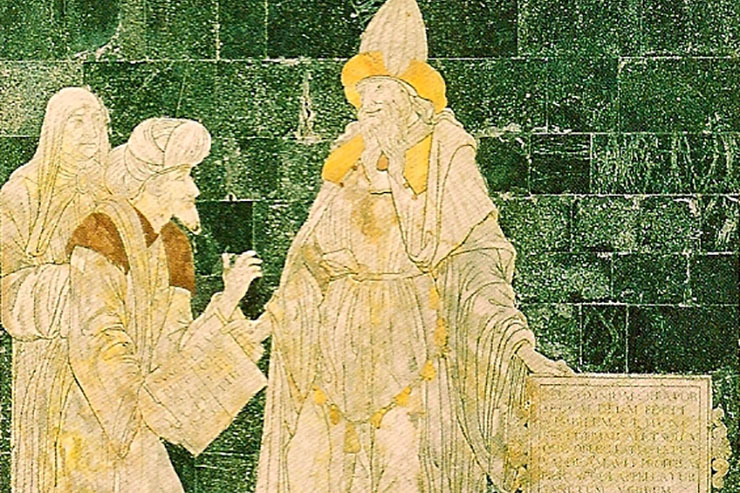
  • Beyond the Five Senses: The Powers Latent in Humankind

    Beyond the Five Senses: The Powers Latent in Humankind

    From New Dawn 129 (Nov-Dec 2011)

    The traditional five senses – sight, hearing, smell, taste, and touch – are these the only ways to perceive the world, to gain information, to experience reality? In fact there are more than five senses, taking different forms, in various types of organisms, including humans. For instance, humans can also sense balance and acceleration, temperature, and pain due to nerve damage. There are other types of physiological receptors as well, some found in humans, some found in other organisms. To cite just a few examples, directional awareness based on Earth’s magnetic field occurs in birds and bacteria, various species of fishes as well as dolphins can detect electric fields, and for many types of fishes water pressure detection used to maintain buoyancy is critical.

    But is there something more than the sorts of physiological-based senses described in the last paragraph? The answer to this question is of profound importance, as it fundamentally divides the world into two philosophical and metaphysical camps.

    On the one hand we have the “physicalists-materialists” who believe there is nothing more to reality beyond matter and energy as construed by classical physics and western science more generally. This position devolves to a dogmatic scientism (sometimes referred to as naturalism1) that posits the so-called scientific method, involving empiricism, observations, and laboratory experiments (generally with a heavy emphasis on measurements), as the only way to gain knowledge.

    On the other hand, in sharp contrast to extreme scientism, are found a wide array of “ways of knowing.” These include a diverse range of experiences with equally diverse labels: religious insight, ecstasy, spiritual knowledge, meditative contemplation, divine illumination, aesthetic and symbolic revelation, visionary trances, out-of-body experiences, soul travelling, channelling of supernormal entities, and so forth.

    In sum, scientism is often contrasted with spirituality, religiosity, and the preternatural, supernatural, or supersensitive in all of their disparate forms. Another way of putting this is that scientism denies any inner or beyond this material world aspects, such as the concept of consciousness, that are divorced from or in addition to physical matter and energy as perceived either directly or indirectly (using appropriate instrumentation) via the five senses. Those following the dogmatism of scientism often make a sharp distinction between the objective and the subjective; based on my research, this is a false dichotomy that often blurs under close scrutiny.

    In terms of the mind-body problem, scientism essentially denies that consciousness is anything more than an epiphenomenon arising from physical-chemical processes taking place in the brain. The alternative extreme view is that consciousness exists outside of and beyond matter, and it is consciousness that in fact infuses the universe and makes matter manifest. Based on his understanding of modern physics, Amit Goswami (author of a standard textbook on quantum mechanics2) has written:

    “I propose that the universe exists as formless potentia in myriad possible branches in the transcendent domain and becomes manifest only when observed by conscious beings.”3

    It is not only from a quantum mechanical point of view that one can reach the conclusion that consciousness may be prior to matter. Erik Verlinde (Institute for Theoretical Physics, University of Amsterdam) developed a new theory of gravity based on the concept that the universe is essentially a holograph where the structure of space-time emerges from information.4 Elaborating on Verlinde’s work, I came to the following conclusion:

    “The most fundamental aspect of the universe… is information. Information can be equated with thought or mind or mental constructs independent of any material everyday conception…. The universe of mass and energy and forces, as we experience it on an everyday practical level, may have had its origin in a thought that inserted information into an otherwise blank (data free) holographic system…. Inserting more thoughts, more information, expands and changes the system…”5

    For me the bottom line is that not only can consciousness exist independent of matter, but consciousness – thought, information – is prior to matter in a most fundamental sense. This position is diametrically opposed to dogmatic scientism and opens, even demands, the acknowledgment that not only is there more to reality than can be perceived by the “five senses,” but in order to gain a complete picture and understanding of reality we must gain knowledge in ways that go well beyond the five senses, beyond the simplistic so-called scientific method. We need philosophical, religious, transcendent experiences and the genuine knowledge such experiences bring. Those who limit themselves to their material physiology can never aspire to understand the ultimate nature and meaning of the universe.

    This assertion that consciousness is beyond matter is not just an empty statement for me. We have latent powers to exercise, and such powers have been expressed in a variety of contexts through the ages. Various forms of paranormal and parapsychological experiences elicit and highlight these latent powers, most often expressed as telepathic interactions (direct mind-to-mind, direct consciousness-to-consciousness, connections) or psychokinetic interactions (consciousness directly affecting matter and energy).6

    Make no mistake; telepathy and psychokinesis are genuine.7 Remote viewing, which is essentially telepathy and clairvoyance8 dressed in modern terminology, has been successfully demonstrated over and over again under controlled laboratory conditions.9

    Indeed, telepathy may be the most fundamental way to connect directly with the universal consciousness, with the numinous, with the divine. What is silent prayer but telepathy put to action to communicate with one’s god?

    Numerous techniques can be used to cultivate and elicit paranormal experiences, experiences that scientism either dismisses or fails to take seriously, and these have been developed within many different religious and cultural contexts, from the rituals of tribal African societies to the yogis of the Indian subcontinent to Zen practitioners to classic shamanism to séances in all their diverse forms to western occult and esoteric studies.10 All, at their core, elicit different but complementary ways of gaining access to legitimate knowledge that is beyond the five senses.

    [alert type=”general” dismiss=”no”]This article was published in New Dawn 129.[/alert]

    [alert type=”success” dismiss=”no”]If you appreciate this article, please consider subscribing to help maintain this website.[/alert]

    Footnotes

    1. Alex Rosenberg, “Why I Am a Naturalist”, 17 September 2011, article posted at: http://opinionator.blogs.nytimes.com/2011/09/17/why-i-am-a-naturalist/?ref=opinion (Accessed 26 September 2011); Timothy Williamson, “What Is Naturalism?”, 4 September 2011, article posted at: http://opinionator.blogs.nytimes.com/2011/09/04/what-is-naturalism/ (Accessed 26 September 2011).

    2. Amit Goswami, Quantum Mechanics (second edition), New York: McGraw-Hill, 1997.

    3. Amit Goswami (with Richard E. Reed and Maggie Goswami), The Self-Aware Universe: How Consciousness Creates the Material World, New York: Jeremy P. Tarcher/Putnam, 1993 [paper trade edition, 1995], 141, italics in the original.

    4. Erik Verlinde, “On the Origin of Gravity and the Laws of Newton”, paper dated 6 January 2010, 29 pages, available from http://arxiv.org/PS_cache/arxiv/pdf/1001/1001.0785v1.pdf (Accessed 28 July 2010).

    5. Robert M. Schoch, “Moving the Moai: Easter Island as a possible psychokinetic laboratory”, Darklore, vol. 5 (2010), pp. 134-155, 268-270 [endnotes]; quotation from page 145.

    6. It has not escaped my notice that some forms of paranormal and parapsychological phenomena may ultimately be explainable, or at least partially elucidated, by “conventional” physical and energetic systems, such as if for instance cases of telepathy (or some forms of telepathy) are electromagnetic phenomena in the extremely low frequency range. However, I am not convinced that all paranormal and parapsychological phenomena can be explained using a purely physicalist/materialist paradigm.

    7. The reality of these phenomena has been established despite the numerous charlatans who make fraudulent claims; as the saying goes, just because counterfeit money exists, that does not mean genuine currency does not exist. For evidence supporting the reality of paranormal and parapsychological phenomena, see: Robert M. Schoch, “Thoughts Have Wings”, New Dawn, January-February 2011, page 11; Robert M. Schoch and Logan Yonavjak, compilers and commentators, The Parapsychology Revolution: A Concise Anthology of Paranormal and Psychical Research, New York: Jeremy P. Tarcher/Penguin, 2008; and references cited therein.

    8. “Clear vision,” or the reception of information about objects, persons, or events, whether in the past, present, or future, by other than normal sensory means.

    9. Paul H. Smith, “Remote Viewing: State of the Field”, Edgescience, Number 8, July-September 2011, 13-16.

    10. See for instance: P. G. Bowen, The Occult Way, London: Rider and Company, circa 1936; Ernesto de Martino, Primitive Magic: The Psychic Powers of Shamans and Sorcerers, Bridport, Dorset: Prism, 1972/1988/1999; Caesar de Vesme, A History of Experimental Spiritualism (two volumes), Volume I, Primitive Man, Volume II, Peoples of Antiquity, London: Rider and Company, 1931; S. M. Shirokogoroff, Psychomental Complex of the Tungus, London: Kegan Paul, Trench, Trubner, 1935 [Reprinted: Berlin: Reinhold Schletzer Verlag, 1999.].

    © New Dawn Magazine and the respective author.
    For our reproduction notice, click here.