New Dawn – World's Most Unusual Magazine

Category: Articles

  • Psychic Protection: Immunise Yourself Against Negative Energy

    Psychic Protection: Immunise Yourself Against Negative Energy

    Have you ever entered an empty room, or office, and felt “uncomfortable”? Feeling perhaps quite happy to get out of that room, or office, as soon as possible? Maybe you have found somewhere that feels “bad” at one time yet feels “okay” at another time? This could be where we work, live, or somewhere we are visiting or passing through.

    What about people? Do you know anyone who seems to have a “negative” aura? When­ever you are near them you feel more depressed, angry or fearful, than you normally do? How about the opposite? Do you know anyone who seems to make you feel better just by being around you, not even needing to say anything to you to improve things?

    Apart from feeling worse around certain people and/or in certain places, do you find that you sometimes lose a lot of energy (psychic draining) in these circumstances? Do you have a problem with such things as insomnia, poor sleep, nightmares or low energy levels? Perhaps you are constantly lacking in energy? Maybe being diagnosed as having chronic fatigue? Or maybe you always seem to be getting colds, illnesses or other problems?

    If the answer is “yes” then chances are you may be under intentional, or unintentional, negative psychic influence. What some people call being under psychic attack. Can anything be done about such situations? Yes, psychic protection is what one can learn to counter such things. Before talking about psychic protection however, we may wonder what it is and how it works.

    To better understand this we need to understand these negative influences. Put simply they are usually categorised into two types. Thought energies (or if they have a shape – thoughtforms) and negative spirit influence. Now, you may instantly think I am talking about dead people. I am not. We are all “spirits”. Some of us are physically alive and some of us aren’t. We do notbecome a spirit when we physically die. We are already one.

    One may also say, “But I cannot see/hear spirits. This is proof they don’t exist”. Well, I cannot see radio, or television waves in this room. Does that mean they aren’t here? I wouldn’t think so. Much the same as hearing. I cannot hear a dog whistle. But dogs can! It would be rather foolish for me to conclude such a whistle made no noise simply on the grounds that “I didn’t hear it.”

    Negative thought energies are created by someone (dead or alive) thinking negative thoughts, e.g. anger, hatred, fear etc. If the person is thinking these thoughts about us then they are automatically projected in our direction. In addition, as negative spirits are attracted to negative energy these people will often accompany the energies. Particularly if this is done “formally”, i.e., a spell.

    Fortunately there is defence against these things. Positive energies will dissolve negative ones and we can arrange for positive spirits to help protect us against negative ones. There is nothing particularly profound about it. To cancel out a fire, water is a good response. The principle of using the opposite response to a spell is along the same lines.

    The negative thought content of a spell, or any other form of psychic attack, can be “cancelled out” by directing a positive thoughtform of the same, or greater, strength at it. When they meet, the negative thoughtform will dissolve. This can be achieved by such things as prayer, visualisation, etc. A common example of the latter is to imagine you are surrounded by a “protective” bubble of light. One can also imagine oneself being a hot ball of light. Like the sun. Radiating a hot, bright, light outwards.

    The effect of negative entities can be “can­celled out” by positive entities of the same, or greater, strength. If the positive spirits predominate then many of the negative entities can be “cleared” (permanently) to spirit worlds.

    Getting help from positive spirits is arranged by requesting it. Prayer in other words. It should be remembered we can do more than arrange “protection” this way. A good wording for such a prayer, and a list of recommended approaches is at http://home.vicnet.net.au/~johnf/aprayer.htm For those without internet access here is a way of arranging this, say/think:

    “I ask the Divine Light Forces (Forces of God) for…

    (1) Protection against all that is not of the light (alive and dead).

    (2) Healing on all levels

    (3) Guidance with my life. Especially in the area of ____________________ e.g. knowing what I should be doing spiritually, help with becoming a channel for love, light, healing, guidance and inspiration. Preparing for meetings and/or seminars etc.

    (4) Divine love, light and healing en­ergies to go to __________________ (people we live/work with) as well as all who are working against our spiritual progression.

    Other points worth noting :

    (1) There are some interesting books that can be purchased on this topic in­cluding a booklet I have written. The authors range from psychics to medical doctors, psychologists, psychiatrists, etc. There is a list of some of the books primarily related to the topic of psychic protection on my web site. Those with internet access might find http://home.vicnet.net.au/~johnf/bookprot.htm a help.

    (2) Light coloured clothes tend to en­courage light coloured energies. For best health never wear dark colours.

    (3) If someone is currently sending you negative effects, as in a spell, then you need to direct light, etc. to them constantly until you feel they have stopped. If you “clear” yourself today then there is no reason why they cannot dump you with new discordant energies tomorrow!

    (4) Negative thinking/emotions such as anger, fear, etc. weakens our aura and reduces our “protection”. Positive thinking/emotions such as love, etc. strengthen our aura and improves our “protection”.

    (5) Keep in mind that things take time. Some people think praying for one night and imagining white light around them for five minutes will solve all their problems. This is unlikely. Suppose discordant effect had built up around you and/or your house for ten years. Do you think it reasonable to expect it to go in five minutes? Think of it this way. If you had a blow torch could you melt an ice­berg? The answer is, of course, yes, but it would take more than five minutes!
    [alert type=”general” dismiss=”no”]This article was published in New Dawn 80.[/alert]

    [alert type=”success” dismiss=”no”]If you appreciate this article, please consider subscribing to help maintain this website.[/alert]

    © New Dawn Magazine and the respective author.

    For our reproduction notice, click here.

  • The Dawn of Aquarius: A New People, A New Consciousness, A New Era

    The Dawn of Aquarius: A New People, A New Consciousness, A New Era

    This article was published in New Dawn 78 (May-June 2003)

    Aquarius will be the new age, the new life. First there will be disastrous events, gigantic upheavals, turmoil and change of all kinds….
    – Omraam Mikhael Aivanhov (1900-1986)

    The transition to a new zodiacal age is altering the political map of the world. For the last two thousand years much of human history has been determined by events in Europe and the near Middle East. From Greece and Rome, the great power centres of two millennia ago, with their inheritance from ancient Egypt and Mesopotamia, a distinct civilisational impulse spread westward into Europe, eventually reaching North America. Decisions made in the grand capitals of Europe and, for much of the last century in New York and Washington, have impacted the lives of millions of people in every part of the planet.

    The advent of the Age of Aquarius coincides with the emergence of new world power centres. Just as old Egypt, Babylon and Sumeria were eclipsed by Greece and Rome, so too the ‘old world’ of Western Europe and North America will be overtaken by new geopolitical alliances and fresh centres of global influence. And this will be accompanied by a dramatic change in consciousness, as the worn-out Western values and Eurocentric rationalist thought prevailing for the last few centuries surrender to the new Aquarian thinking.

    The current turmoil and conflict unleashed on the planet by the United States and Britain is only the beginning of the climax of a struggle between cosmic influences of which most people are completely unaware. Today, America and Britain embody atrophied and degraded Piscean energies. The Anglo-Americans, as the standard bearers of bankrupt Western materialism, are trying to reorganise the world, imposing their imbalanced, egoistic approach to life on all societies. Yet their latest brutal and insane actions, witnessed in the tragic invasion of Iraq, are part of a frantic effort to prolong their collapsing system. Despite all their apparent power and wealth, Anglo-American universalism is in a state of rapid decline leading to death.

    A new era, a new consciousness and a new people are on the horizon, as the planet goes through a turbulent transitional period paving the way to the Aquarian Age.

    Aquarian Consciousness

    Whether the earth is shaken by natural catastrophes, or nuclear warfare, or both, earth and the life upon it does survive. More than that, however: A New Age emerges and the devastating changes that have preceded it are understood to have been necessary purgations effecting the transformation of humanity into a new mode of being. By analogy, just as the individual near death experiencer may have to endure the pain and suffering associated with the trauma of almost dying before positive personal transformation can take place, so the world may need to undergo a “planetary near-death experience” before it can awaken to higher, more spiritual, collective consciousness with universal love at its core.
    – Kenneth Ring, Transpersonal Psychologist

    Two thousand years ago, at the time of transition from the Age of Aries to that of Pisces, there were secret schools, most notably the Essenes, trained and taught to align themselves with the spiritual impulses of the incoming age. These small communities worked quietly, in retreats; but with the discovery of the Dead Sea Scrolls we now know they were actually the ‘seedbed’ from which came the original Christian revelation.

    These separated mystic communities provided the necessary environment for the message of Jesus the Christ. With their unique synthesis of Zoroastrian, Pythagorean, Egyptian and Israelite spirituality, the Essenes acted as a bridge between the ‘old age’ religions and the unfolding new revelation. Above all, they represent the budding of a new consciousness which would impact history for two millennia. The declining Roman Empire’s embrace of Christianity led to the triumph of the new religion in Europe. With the arrival of the Age of Pisces, Christianity became synonymous with ‘Western civilisation’.

    Writing a century ago, the gifted Englishman Edward Carpenter speculated about Man’s evolutionary future and the development of a new humanity imbued with a new consciousness. “We do not know,” he observed, “what possible evolutions are to come, or what new forms of permanent place or value, are being already slowly differentiated from the surrounding mass of humanity.” Carpenter noted that “at the present time certain new types of humankind may be emerging, which will have an important part to play in the societies of the future – even though for the moment their appearance is attended by a good deal of confusion and misapprehension.”

    Throughout the writings of the 20th century’s most influential spiritual teachers from Charles W. Leadbeater and Rudolf Steiner, to Bhagwan Shri Rajneesh and Omraam Mikhael Aivanhov, we find numerous references to the immanent emergence of a new human type. With one voice they link this new humanity to the dawn of the Aquarian era, which they warn will be ushered in by a major purging of mankind. In the words of Omraam Mikhael Aivanhov: “The Age of Aquarius is fast approaching, and it is going to overturn and shatter all the old forms and values that human beings thought of as permanent.”

    According to all the great mystic teachers and seers, the Age of Aquarius is heralded by a time of immense conflict and turmoil never before witnessed in recorded history.

    Writing in his book Love and Sexuality, Aivanhov notes:

    Human beings need to suffer before they begin to wish for harmony and peace and the splendour of the new life. If they are not ground down by all kinds of sufferings, they will never understand or make up their minds to work for the Kingdom of God.

    John White, a respected New Age author, observes in Science and Spirit that if modern civilisation is destroyed, “some people will survive, according to the predictions and prophecies. The great loss of life will open up niches in the environment where new life forms can emerge. Those most deeply attuned to cosmic processes will become the seedbed from which, it is said, a new race, a higher humanity will evolve in accelerated fashion.”

    The survivors of this ‘great tribulation’ ushering in the Aquarian Age will be those men and women who have not been ensnared by the ‘strong delusions’ of the dying old order.

    A remnant, who like the ancient Essenes before them, renounce the ephemeral fleeting attractions of the old era, will also live on to protect the law of the truth and lead the survivors in the new era.

    Most professing Christians are looking for the return of Christ who they expect to establish a new age. But how many Christians are willing to prepare themselves, after the manner of the Essenes and the Gnostic secret schools, for this new era? Christians are fighting each other over dogmas and doctrines. They are like the Pharisees of Christ’s day, searching the Scriptures in vain, unable and unwilling to see the plain truth in front of their eyes! Christians spend their time serving the very System of Money and Power which crucified Jesus the Christ and persecuted his early followers. The True God is not to be found in any of today’s Christian Churches. Christianity, a religion of the Piscean Age, has chosen to stay with the old order and will invariably perish with it.

    A new community is now being prepared in response to the first impulses of Aquarius. They are the ‘seedbed’ of the new era, a Noah’s Ark of Safety and Light in a time of turmoil, confusion and chaos.

    New Eurasia

    The Truth of Life descends from the world of Eternal Light to illuminate the minds, regenerate the hearts, raise and renew the souls of all the sons of Truth destined to constitute the nucleus of the new humanity of which the Slavs will be the cradle.
    – Peter Deunov, Bulgarian Mystic, 1898

    The inspired Gnostic Master Teacher Peter Deunov (Beinsa Douno), who lived in Bulgaria from 1864-1944, prophesied the birth of “a new type of man” on Earth to coincide with the astrological Age of Aquarius. According to Deunov, the final stage of the previous Piscean Age, transmitted by the Anglo-Saxons, was passing. In the new aeon the Slavic people are predestined to play a leading role. Speaking to his early Gnostic students, Deunov announced: “You are the chosen children of truth who were preordained to form the seed of the new humanity of which Slavdom as a family, descendants of Judah, will become the hearth.”

    The 20th century, in Deunov’s prophetic scheme, was a preparatory period distinguished by the waxing and waning of Anglo-American civilisation. From this perspective the collapse of the British Empire and the rise of the USA at the end of the Second World War marked a key turning point in history. Anglo-American culture having reached its peak is now in its death-throes, and the first light of the new culture is dawning in keeping with the incoming Aquarian influences.

    Russia constitutes the largest Slavic nation, and the last hundred years may rightly be said to have been the time of Russia’s ‘Golgotha’ or ‘crucifixion’. A hundred years of incredible human suffering and enormous national sacrifice claimed millions of Russian lives. Within the first five decades of the 20th century the Apocalyptic Horseman of Famine and War ravaged the vast Russian land. Archaic landmarks swept aside and old values overturned only to be replaced by radical new ways which themselves were soon found wanting. Spectacular material triumphs accomplished at the cost of personal liberty and paid for by human sacrifice. Was such collective suffering a preparation for the new era?

    Could it be Russia, a land that has endured so much in the 20th century, will finally find its prophetic destiny in this third millennium? Revolutions, civil war, famine, two world wars, political repression…. were these all part of a cleansing process signaling the beginning of a new era in which Russia discovers her true mission?

    Alice A. Bailey, who is credited by many as the founder of the contemporary New Age movement, saw a unique role for Russia in ushering in the new era. Writing at a time when Russia was firmly behind the communist iron curtain, she predicted:

    Behind the closed borders of that mysterious and magnificent country [Russia], a great and spiritual conflict is proceeding, and the rare mystical spirit and the truly religious orientation of the people is the eternal guarantee that a true and living religion and culture will finally emerge.

    Rudolf Steiner (1861-1925), who established the Anthroposophical society, believed the Slavic “folk soul” would play a major role in the future development of a new humanity. He saw the Slavs as a bridge between the Orient (East) and the Occident (West). According to Steiner, the religious thought of the Orient belongs to the past; the Occident’s philosophical-scientific thought to the present; the Slavic soul will bridge the two and create a pathway to a spiritual future. More than any other national soul, claimed Steiner, the Russian group soul strives to realise the world of the spirit. In Russia the synthesis of the highest features of both Eastern and Western cultures would one day be achieved.

    “Its geographic location places Russia between two extreme, monolithic cultures – between the materialist countries of the West and the passive, world-denying countries of the East. It is appropriate that Russia creatively unite these extremes,” wrote Nikolai Belotsvetov, one of Steiner’s leading Russian followers.

    “Our country is a peculiar country, placed between the hammer of Europe and the anvil of Asia, destined to reconcile them in one way or another,” wrote the world famous chemist Dmitri Mendeleev. “It is my deep conviction that Russia is called to allay the age-old hostility between Europe and Asia, to reconcile and unite those two different worlds, and find a proper balance between the progressive but proud and inconsequent individualism of Europe and the sense of social and political cohesion of Asia…”

    For the last two thousand years of the Piscean Age, civilisation has traveled the course of the Sun from East to West, reaching its apogee in the modern USA. With the end of the Piscean era, history and civilisation is reorienting. We are seeing a return to origins with the emergence of a new power centre at the cross-roads of the East and West, in Eurasia, the great heartland of Russia.

    The history of Russia is not the history of a country, but of a world. It is, in fact, the history of a vast organic whole which had for its cradle the immense open spaces of Eurasia. In the words of one author:

    The Eurasian world, as such consists of vast plains which extend, broken here and there by low mountain ranges, between the Arctic Ocean, the Pacific, the Black Sea, the Caucasian Range, the Iranian plateau, the heights of the Pamir and the Hindu Kush, and join up, through the tortuous valleys and foothills of the Tian Shan and the Altai ranges, with the plains of Eastern Turkestan and Mongolia.1

    According to the Ancient Wisdom teachings, in remote prehistory a spiritual disaster accompanied by a catastrophic shift in the Earth’s axis caused a great migration to Eurasia from the primal northern region of Hyperborea. Theosophical writers believe that millions of years ago Eurasia was the homeland of the people who:

    …later descended into the Indian peninsula those peoples who call themselves ‘Aryans,’ the ‘High Caste,’ who later were divided into Four Castes: Brahmanas, Kshattriyas, Vaisyas, and Sudras. From the southeastern parts came later the Babylonians, the Assyrians, the Medes and the Persians; and the peoples of Europe, Greeks, Romans, especially.2

    Viewed in the light of the Ancient Wisdom teachings, the appearance of Eurasia on the global stage is not only an affirmation of arcane origins but also of the Shambhala influence in our day. Eurasia, the Russian heartland, has long been called “Northern Shambhala” by Buddhist teachers. Having studied Tibetan Buddhism, Nikolai Roerich developed a deep interest in Shambhala and led a scientific expedition through Eurasia to look for traces of the hidden kingdom.3 He later remarked, “The East has said that when the Banner of Shambhala would encircle the world, verily the New Dawn would follow.”

    At this crucial period in world history we see the first signs of a Eurasia-oriented geopolitical alliance between Germany, Russia, India and China, as a counter balance to the Anglo-American order. Russia, together with the former Soviet states of Central Asia, constitutes the Eurasian ‘kernel’. In the West this Eurasian alliance reaches to Germany, while in the far East it includes China and north Korea. Iraq, Iran and Afghanistan make up the southern flank of Eurasia. The geopolitical struggles and wars of the first years of the 21st century are the outcome of not only political and economic factors, but of resistance to incoming cosmic energies. All around us we’re confronted with clear proof of the passing of one age and the dawn of a new era in human history.

    Britain and the United States represent the final phase of a Western civilisation which succeeded a decaying Rome at the start of the Piscean Age. And like ancient Rome before its collapse, the Anglo-American rulers are desperately seeking to expand what the writer Philip K. Dick termed the ‘Black Iron Prison’. However, the West at its zenith can only be the ‘evening land’, the place where the Sun sets to rise again in the East. To the ancient Egyptians the western lands were, after all, the kingdom of the dead.

    The End & The New Beginning

    For as the lightning cometh out of the East, and shineth even unto the West; so shall also the coming of the Son of Man be.
    – Jesus, Matthew 24:27

    The time in which we now live is charged with cosmic significance as nations and peoples unconsciously struggle to align themselves either with the old aeon influences or the incoming forces of the new Aquarian Age. The prophecies and predictions of so many gifted seers leave us in no doubt – we are right now in a turbulent, even chaotic, transitional period. Nations who cling to the dying old order will fall, to be finally swept away in the coming cataclysm, eclipsed by new global powers, of which Eurasia is preeminent.

    Out of this world catastrophe will come a new era attuned to Aquarius. Now is the time of decision, preparation and separation. People who separate from the old order and prepare themselves by harmonising with the rhythm of Aquarius will form the ‘seedbed’ from which develops a new culture and a new consciousness. Those who today place their trust in rampant materialism and the exploitation of the planet, all the while glorying in their wealth, power and might, will be debased.

    One hundred years ago the venerable European monarchies looked safe and secure, impervious to change. The British Empire, on which it was said the ‘sun never sets’, straddled the globe triumphant. Less than a century later the British Empire is no more and the traditional European monarchs a vague memory. A similar fate awaits today’s triumphalist powers. The victims of history will soon be the victors as the Earth is bathed in the Great Light of the Aquarian Age.

    [alert type=”success” dismiss=”no”]If you appreciate this article, please consider subscribing to help maintain this website.[/alert]

    © New Dawn Magazine and the respective author.
    For our reproduction notice, click here.

  • Wisdom for the Wolf-Age: A Conversation With Dr. Stephen Flowers

    Wisdom for the Wolf-Age: A Conversation With Dr. Stephen Flowers

    This article was published in New Dawn 77 (Mar-Apr 2003)

    One of dominant paradigms of modern society is fragmentation. In the world of popular culture this translates into dazzling distractions and endless ephemera, while in the world of academia it engenders over-specialisation and an unspoken refusal to even attempt to understand the “bigger picture,” especially from a metaphysical perspective.

    In this atomised environment, anyone extolling a cohesive vision that is marked by traditional values – not to mention high standards – automatically becomes an anomaly. So it is the case with Dr. Stephen Flowers, who is the rarest of breeds: a scholar with spirit, one who is single-minded yet open-minded. For more than a quarter-century he has dedicated his energies toward unraveling the mysteries not only of the ancient symbolic alphabet of the Runes, but also of the deepest realms of the Germanic myth and culture from which they arose. For Flowers, this quest is summed up in a single word, RUNA, which is the old Gothic language form of “rune” and was equivalent to the Greek term mysterion(“mystery”). It was in the early 1970s that Flowers heard this word audibly whispered in his ear, and since that time he has tirelessly pursued a path of understanding its implications.

    Following graduate work in Germanic and Celtic philology under the esteemed professor Edgar Polomé (1920–2000), Flowers received his Ph.D. in 1984 with a dissertation entitled Runes and Magic: Magical Formulaic Elements in the Elder Tradition(later published by Lang, 1986).In the mid-1980s Flowers also began a more public writing career under the name Edred Thorsson. His books on the Runes and Germanic magic (Futhark, Runelore, At the Well of Wyrd, Rune-Might, Northern Magic, The Nine Doors of Midgard, and A Book of Troth) have become classics of sorts, and although they are aimed at the occult book market, they reveal a depth of understanding and degree of knowledge that is unusual to find in this genre.

    Under his own name he also published less speculative material, for example Fire & Ice, about the German magical order the Fraternitas Saturni, and his translation of the Galdrabók, a medieval Icelandic grimoire. His interest in Germanic topics extends not only to the distant past, but also into more recent and controversial manifestations, such as the völkisch period at the turn of the 19th century or the esoteric aspects of the Third Reich, and his translations of Guido von List’s Secret of the Runes, S. A. Kummer’s Rune-Magic, or the writings of Karl Maria Wiligut (The Secret King: Himmler’s Lord of the Runes) all shed scholarly light on these topics. He has also written Lords of the Left-Hand Path,a lengthy study of darker occult currents, and an innovative analysis of ancient Greek magical texts entitled Hermetic Magic.

    Unlike many who possess academic credentials, Flowers was never content to relegate his interests to a purely intellectual level, and thus he has long been active in the contemporary revival of Germanic heathenism, variously called Odinism or Ásatrú (a coinage derived from Old Norse, meaning “loyalty to the gods”). He was an original member of Stephen McNallen’s seminal organisation the Ásatrú Free Assembly (which still exists today as the Ásatrú Folk Assembly), and in 1979 founded his own initiatory group, the Rune-Gild, dedicated toward the serious exploration of the esoteric and innermost levels of the Germanic tradition, as well as the greater Indo-European culture of which it is but one branch.

    Underlying all of his work is a belief in the profound importance of traditional Germanic thinking and the eternal relevance of its mythological expression. After all, English is a Germanic tongue, and our society – fragmented or decayed as it now may be – owes its true origins as much, if not more so, to northern Europe than to Athens or Rome. Dismayed at the ongoing erosion of support for Germanic studies at most universities across the Western world, Flowers has recently unveiled his latest project: the Woodharrow Institute. This non-profit educational institution aims to maintain and foster the tradition of Germanic scholarship, offering courses and publications, and interacting with academic circles wherever possible. Besides administering the Institute, Flowers and his wife Crystal also direct the Rûna-Raven publishing house, which issues an ongoing catalog of titles concerning varied aspects of ancient Germanic culture, along with specialised language studies and works in related areas.
    – Michael Moynihan

    Michael Moynihan: Can you recall what initial event or events led to your setting out upon the path you’ve taken toward understanding the mysteries of the Germanic tradition?

    Stephen Flowers: I started out my “career” in understanding the mysteries of the Germanic tradition as what I would later come to understand as an “occultizoid nincompoop.” I was interested in a variety of pretty nutty things. One of my first passions was monster movies. Perhaps Famous Monsters of Filmland was my first bible. My “favourite monster” was the one created by Frankenstein. There was simply something about the “Gothic,” Germanic origin of the myth that appealed to me. Before that I can remember being drawn to all things Germanic (and Scandinavian) the films The Vikings (which I saw during a childhood trip to San Antonio) and the Fall of the Roman Empire vaguely inspired me with certain scenes of Germanic “barbarism.” Later this slightly matured into an interest in the Morning of the Magicians/Spear of Destiny mythology, and culminated in my “hearing” the word RUNA in 1974. This was a catalyst for a quantum leap in my development. It caused me to delve into the scientific and academic basis of what it was that had so fascinated me from childhood. All of this experience laid the foundation of the nature of my own teaching, following this pattern: (irrational) inspiration, leading to (rational) objective study, leading to (subjective) internalisation, which ultimately leads to objective enactment (= understanding/personal transformation).

    Michael: What brought about your initiation into organised Ásatrú or Odinism, and how do you look back on this period now?

    Stephen: Back in the mid-1970s there were only a very few individuals entertaining the idea of the revival of the old Germanic religion. My own individual journey started as early as 1972. However, I will say that it remained rather haphazard and undirected until 1974 when I heard the word RUNA whispered in my ear. But even then, with the inspiration from a higher source, the struggle to understand the full significance of it all was a significant one that had to be carried out in the earthly plane. I saw notices in places like Fatemagazine for the Ásatrú Free Assembly and was intrigued, but for some reason I thought it unwise to contact this group until I had something significant to offer. By 1975 my work had taken the direction of being more guided by scholarly discipline. Once I had made significant progress in the reformulation of my runic philosophy (which found expression in the manuscript that became Futhark) and in my graduate studies at the University of Texas at Austin, I felt prepared to make contact with Ásatrú groups.

    I first met the leader of the AFA, Stephen McNallen, at the first AFA Althing in the summer of 1979. Meeting Steve was a life-changing experience for me. He is an embodiment of a kind of Germanic spirituality that puts words into action. It was at that time that I was named a godhi [the Old Norse designation for a spiritual leader] in the AFA. It is now the only credential that I hold as being of any significance in the world of Ásatrú /Odinism. Despite whatever history might have passed in the late 1980s and early 1990s, there can be no doubt that Stephen McNallen is the guiding light of American Ásatrú. I count Steve McNallen as a friend and colleague and very much value the fact that it was from him that I received my godhordh – or “authority as a godhi.”

    Michael: You have often spoken about how essential disciplined scholarly training can be for understanding the esoteric aspects of the religion and how to most effectively put these into practice. Presumably, such an exchange also functions simultaneously in the reverse direction – in other words, what positive ways did your active involvement with the religion impact your academic work?

    Stephen: The esoteric, spiritual aspects function as initial forms of inspiration to the mind. This is essential to the Odian approach to life. First there is an “irrational,” or supra-rational, impulse – a bolt out of the blue that sets the conscious mind on its mysterious course. That impulse can, for many, be a disorienting stroke from which they never recover. They simply sink deeper and deeper into a sea of subjectivity. For another group, the subjectivism is eventually re-balanced with rational work. Understanding of the inspiration is gained, without “explaining it away.” The allowance of subjective inner experience and insight to coexist with objective, rational analysis is essential to the process of truly understanding the tradition in a scientific way, as well as to the process of personal development based on the traditional symbology.

    It was noted by outside observers, my mentors in the academic world, that I had an uncanny ability to make sense of obscure myths and to apprehend the hidden connections between and among various mythic structures. This ability stemmed from my inner experience which was constructed on a basis lying outside the purely rational models. If one is trying to delve into the mysteries of the symbolic culture of an archaic world – one very much separated from our own contemporary society and values – then obviously some key must be found which is something other than plodding logic or wild speculation. For me this key is the balanced openness to the mythic spirit of Odin. I was lucky enough to have academic mentors who supported me in this approach, who were themselves spiritual men. Without their inner support I could not have achieved whatever it is I have achieved.

    Michael: Why is the notion of a scholar of pre-Christian religion who actually adheres to the spiritual ideas that he also studies such a radical one? Is this simply a byproduct of the situation in the West where any religious path outside of the “mainstream” monotheistic faiths is painted as cultic and marginal?

    Stephen: I think this attitude stems almost entirely from two sources: 1) the antagonism of the materialist worldview toward the traditional spiritual one, and 2) the opportunity the adherents to the materialistic worldview have taken to attack the spiritual view based on historical events surrounding World War II. This materialist worldview is “monotheistic” in the sense that it allows for only one set of orthodox values. In this way it is really a secularised form of monotheistic religion. The Judeo-Christian system of thought has lent itself very well to being secularised in such a way that it can be turned into a model for modern political and economic theories. As a side-note, Islam has been much more stubborn in its adherence to its original values, which has caused it to be very much “out of step” with its monotheistic cousins.

    Judaism and Christianity can be tolerated by the establishment scholarly world because they can be viewed as theoretical prototypes of the materialistic and positivistic model that now dominates thought in the West. Earlier traditional models are seen not so much as a threat to religion as they are seen as a threat to the monolithic political and economic order. The pre-Christian, traditional philosophies are too divergent and multivalent to be coerced into one single “market” of ideas. This points to the fatal hypocrisy of the current crop of modernistic “thinkers,” who spout off about “multiculturalism” and tolerance, but who exclusively support monolithic socio-economic models that enact the opposite of what they publicly espouse. Surely the ancient, traditional and pre-Christian world is more in line with what really sounds best to most people. Are not ancient, pre-Christian Athens or Alexandria more ideal models for the future over medieval Rome or Constantinople?

    Clearly the animosity to those who see value in pre-Christian models stems not from the religious side of the debate, but rather from the secular challenge traditionalism poses to the current political order. What is needed is a campaign for the re-education of the academic world to show that the idealised future is one that is more likely to be based on the mosaic of pre-Christian traditions than it is to be based on the monolithic Christian model.

    Scholars of pre-Christian tradition must indeed be sympathetic and even empathetic to the paradigms they are studying. If they do not have a subjective link to the paradigm they are seeking to understand, then they have categorically placed an insurmountable barrier between themselves and the “object” they seek to understand. Hence they have in fact disqualified themselves from ever being able to really understand the patterns of thought in question.

    Michael: You have always tried to encourage those involved in neo-heathenism to uphold a higher intellectual standard, and whenever possible to actively pursue serious academic study. Have you noticed any significant number of people willing to rise to the challenge?

    Stephen: To this point I would say that there has indeed been a significant number of people who have taken up the challenge to pursue academic goals as a way to put their inner, spiritual lives on a more firm foundation. The number may be significant, but not large. It is hoped that with the advent of the new Woodharrow Institute a greater number of people will “get” what it is I am trying to convey in this trend. The whole “neo-pagan” world has been made a part of the Bohemian “underground” sort of mentality of the Anglo-Saxon (this includes the imitative American) culture. What I am trying to do is simply call the Anglo-Saxon culture back to its more organic Germanic roots. This includes the way in which the idea of “neo-paganism” is approached.

    As I outlined in my essay “How to Be a Heathen,” printed in the volume Blue Runa (Rûna-Raven, 2001), there was a time when “pagan knowledge” indicated something that was rigorous to begin with, and gradually evolved to higher realms of the ordinarily ineffable. “Christian faith” was something which opposed “pagan knowledge” and was characterised by subjectivism and infinite appeals to unverifiable authorities from the beginning to the end of the process. In this way it can be seen how the typical “New Ager,” or “wiccan” [sic] is in fact paradigmatically much closer to the original Christian model of thinking than is the average “Christian believer” today. Serious Christian seminarians would not think of ignoring the study of Latin, Greek and Hebrew, yet the many aspirants to the “priesthood” of Ásatrú today think that learning Old Norse is an unreasonable thing to require. It is remarkable to note how many people don’t even get the grammar of their supposed “Norse name” right!

    The reasons for this apparent virtual hostility to learning are a part of the Anglo-Saxon “anti-egghead” mentality. By contrast it can be noted that some of the turn-of-the-century German revivalists were in fact professors, e.g. Jakob Wilhelm Hauer (Tübingen) and Ernst Bergmann (Leipzig). This inner cultural bias must be first recognised before it can be overcome. Do not think for a minute that I am extolling the great wisdom or character of the typical modern academic. The academy is presently in decay. However, the basic and systematic knowledge possessed by those who have spent decades in specialised studies, and who have been the traditional recipients of knowledge handed down from several previous generations of scholars is a resource that is indispensable to us.

    Michael: While your focus is usually on traditional Germanic or northern European culture and religion, you have also addressed other areas in some of your work, such as with the book Hermetic Magic. What was your reason for doing so – and how do these seemingly distinct realms fit together or cross-fertilise?

    Stephen: In Hermetic Magic I concentrated on the operations from the Greek magical papyri that made use of the symbolic power of language and the alphabet (i.e., the more Greek-influenced operations). Indeed there is a great deal of possible cross fertilisation between the Germanic and Greek traditions of verbal and alphabetic magic. The book Hermetic Magic was an experiment in the use of the principle of RUNA in the decoding of a tradition other than the Germanic. It proved to be generally successful. Much of what Hermetic magic was all about has been lost in the Golden Dawn/OTO-style magic of the Victorian gents. Hermetic Magic is an attempt to go ad fontes, i.e., back to the sources of what Hermetic magic is, in order to arrive at a fresh and eternal perspective on the power of the human will. This is an exercise in the power of RUNA,Mysterion, as I see it. Hermetic Magic shows what can be done with the principle of RUNA/Mysterion. That it has been generally ignored by the run-of-the-mill “hermetic” crowd is a sign of just how esoteric the actual tradition is.

    Michael: The work of Georges Dumézil, the French scholar of Indo-European comparative religion, has been a strong influence on your own outlook. What do you consider to be the most important aspects of his work, and why did they resonate with you to such a degree?

    Stephen: First of all, I suppose I came to it as a matter of tradition. My own teacher, and Doktorvater, Edgar Polomé, was a (qualified) Dumézilian. Beyond what I learned in his classrooms, however, I saw that his objective studies (which involved making detailed dossiers of the various Indo-European Gods, etc.) coupled with his structuralist approach allowed for the beginnings of a contemporary and living synthesis of ancient ideas with those of Jung and others. The ideas of Dumézil are 1) accurate and objectively verifiable to a great degree, and 2) are potent tools for current self-transformational work.

    Michael: In recent years there seems to be a consistent effort on the part of certain segments of the academic community to discredit Dumézil’s work, and especially his formulation of the tripartite/tri-functional model. Such attempts are reminiscent of those directed against Mircea Eliade and other scholars of religion and myth. Why this animosity, and what are these discreditors so afraid of?

    Stephen: They are afraid of the resurgence of Indo-European culture. They have intellectually invested in the idea that internationalism is good and that anything that glorifies the non-European world is preferable to anything that seems to lend prestige to European culture. All of this is so ironic because the ideals from which they draw are entirely of European origin. Nevertheless, as a matter of ideology, but probably more as a matter of an intellectual fashion trend, the academic establishment frowns on anything that they see as “glorifying” the European culture. They would probably argue that their reasons for this vaguely have something to do with Germany in the 1930s. In conversations with German academics in runology I discovered that the same things are happening at German universities now as happened in American ones in the 1980s and 1990s – anything relating to ancient or medieval northern Europe is being dismantled.

    There is also the fear that Europe will really be able to make peace within itself based on the Indo-European model, rather than the Christian and/or Marxist model. This would discredit their intellectual prejudices once more. Specifically on Dumézil and the tripartite theory, his theories have the potential of forming the basis of a pan-Indo-European cultural unity. They are the greatest challenge to Christianity and to materialistic positivism in the 20th century. So it is not without some justification that Dumézil has been so widely attacked. His theories do pose a challenge, and are not merely intellectual curiosities. They call for some sort of action and some sort of change on the part of the reader of his ideas.

    The dirty little secret is probably merely that in academia the study of old languages and ancient history is hard, whereas what they are replacing all of this with is relatively easy. So that the “war on the Indo-Europeans” is really part of the general “dumbing down” of the academy.

    Michael: Not so long ago you attended an international scholarly conference on runology in Denmark. What were your impressions about how this discipline is faring in today’s academic world?

    Stephen: The academic field of runology, like any other academic discipline, is subject to the dictates of fashion and changing intellectual trends. (This is where an academic discipline differs from a Traditional discipline.) Most of the 19th and early 20th century runologists accepted the relationship between religion or magic and the runes as a given fact. They accepted this uncritically because it appeared to them (perhaps rightly) as the most obvious conclusion based on all prima facie evidence. Because they were uncritical in their acceptance, however, this left the door open to a subsequent generation of runologists to question the earlier generation’s assumptions. In the world of science this is a good thing. If those who did not question the “magical” nature of the runes had not been so uncritical, then a deeper and more insightful exploration of the idea of runes and magic might never have been undertaken.

    I was very gratified to have younger individuals – many still students – at the runic conference discreetly approach me and tell me that part of the reason they came to the conference was to meet me, and that they had first been exposed to the wondrous world of the runes and the esoteric Germanic tradition through my more “popular” works.

    The changing face of academia dictates that what is “in” today, will be “out” tomorrow. The seeds of the next generation of runologists have already been planted. On some level, perhaps, those who are foes of tradition have sensed this. Their strategy is perhaps to prevent the seeds from growing by not allowing the seeds to exist in fertile soil. The whole fields of runology, comparative religion, Indo-European studies, etc., are being systematically rooted out of academic institutions. Especially in America this is occurring with simultaneous impetus both from the “right” and from “left.” The international left sees the European tradition as being in power, and their myth of the dialectic determines they should seek to disestablish whatever is in power for “revolutionary” reasons. The right, on the other hand, is dominated in America by a Christian sentiment, which sees interest in our ancient traditions as being hostile to the Christian model. It is interesting to note that these apparently divergent interests of the “left” and “right” are, in America at least, in agreement that at least one of their common “enemies” is the organic national traditions of Europe.

    This is occurring not just in America, but in Europe as well. Recently the position of Prof. Dr. Klaus Düwel at the University of Göttingen in Germany was terminated by the administration of the university. At the runic conference in Denmark the runologists signed a petition aimed at the university administration to ask that this prestigious position be maintained. The roots of the academic study of runes at that institution go back to the Grimms.

    Michael: Is the founding of the Woodharrow Institute for Germanic and Runic Studies in some ways a response to the current situation regarding these areas of study?

    Stephen: The Woodharrow Institute is not only a response to this current situation in academia, but also to shortcomings, as I see them, in the “esoteric subculture.” The Institute stands apart from the current “magickal subculture” in that it is informed by, and on its most basic level must conform to, all the legitimate rules and regulations of scientific procedure – all of which are beneficial to the overall process if kept in perspective. These methods infiltrate our way of approaching esoteric areas, or areas of inner work, as well. As has always been the case with the Rune-Gild – which in the future will be re-established within the context of the Woodharrow Institute – we start with what is objectively known and move from that base into an exploration of the darker corners of the unknown.

    So the Woodharrow Institute is intended to meet a challenge from two ends of a pole: it is to bring an objective and scientific basis to the beginning of inner work, and to re-envision the final purpose or aim of intellectual work itself as a completion of the self. It is to bring objective standards to a morass of subjectivity (the occultizoid culture) and to bring inner purpose to the often sterile and pointless pursuits of academia. This is a formidable challenge, to be sure. Yet this is what makes it worth undertaking.

    Michael: What role do you see the Institute ultimately fulfilling, and how might it interact with more established or formal academic institutions?

    Stephen: It is clear from what has already been said that the academic discipline of runology, as well as those of older Germanic studies and Indo-European studies, etc., are in trouble. If scientific runology is left to its normal cycle of intellectual fashion, there is no harm done. The radical traditional runologist would be free as always to partake of the fruits of that intellectual labour and have his inner work enriched by it. However, if the traditional academic fields are uprooted and marginalised to extinction then this would no longer be possible.

    The Woodharrow Institute is designed to be a refuge for the academic tradition – and to foster to some extent a sort of guerrilla scholarship. The basic work for the Institute must not in any way be compromised by “occult thinking”; it should be entirely historical and academic. We will “play the scholarly game” according to its rule and according to its standards. Then and only then can the Institute fulfill another of its major tasks: to act as a “think tank” for those interested in inner work. The fact that the word “academic” is used to describe only that kind of work which is “purely scientific,” is in a sense a misuse of the term. Plato’s school, the Academy, from which our modern use of the term is ultimately derived, did not have as its final aim the production of scientific data limited to what can be quantified and objectively known. That was only a stepping stone to the true purpose of the school, which was the transformation of the individual into a higher form of being – in other words, the final “product” was the completed soul. This whole ultimate purpose has been lost in the modern academic institution, except perhaps where secret pockets of scholars might preserve it unofficially.

    The Woodharrow Institute seeks to restore the complete model of the old Academy in a Germanic context. As such its ultimate purpose is transformational, and not merely “scientific” as understood in modern parlance. Participants in, or members of, the Institute will, however, not be required to pursue this inner work as any sort of prerequisite for membership. The Institute will develop a full range of areas of interest and research.

    It is hoped that the Institute will in the future be able to establish good relations with mainstream academia. We could offer practical programs in language study, experimental archeology and, most importantly, experimental or experiential ideology. Our mission in mainstream academia would be merely to restore traditional areas of study where they have been lost and to help retain them where they are in jeopardy.

    The Institute then has two main purposes in the world:

    1) to act as a refuge for displaced scientific work in the fields of runology, Germanic studies, and general Indo-European studies; and 2) to act as a think tank for individuals interested in making use of the scientific work as a basis for inner development. The Woodharrow Institute is a weapon in the struggle against both modernism and occultizoid subjectivism.

    Michael: In the ancient Germanic cosmology, a cyclical dynamic exists where the old order collapses and is torn apart from both within and without, but this is a necessary step that precedes the unfolding of a new beginning. Is it a stretch to look at contemporary events in this light? And if not, what is the best way for the aware individual to approach the present situation?

    Stephen: It is my contention that traditional views are eternally valid and ever-meaningful. The Germanic cosmology, ragnarök, which can actually refer to the beginnings, middle or end of the cosmological process, involves at the end of the process certain ages. These are referred to in the poems of the Elder Eddawith terms such as the “Wolf Age,” which refers to the “greedy,” “covetous,” or “appetitive” nature of the age. Clearly the world as a whole is in a “Wolf-Age.” The individual, and certain groups of elect, can, as Julius Evola put it, “ride the tiger.” This means that certain individuals and groups can, exercising their will against the grain of consensus reality as informed by Tradition, lay the personal and transpersonal foundations for the next (inevitable) cyclical development. This next cycle will (naturally) be more imbued with Tradition, as the developmental wheel turns.

    [alert type=”success” dismiss=”no”]If you appreciate this article, please consider subscribing to help maintain this website.[/alert]

    © New Dawn Magazine and the respective author.

    For our reproduction notice, click here.
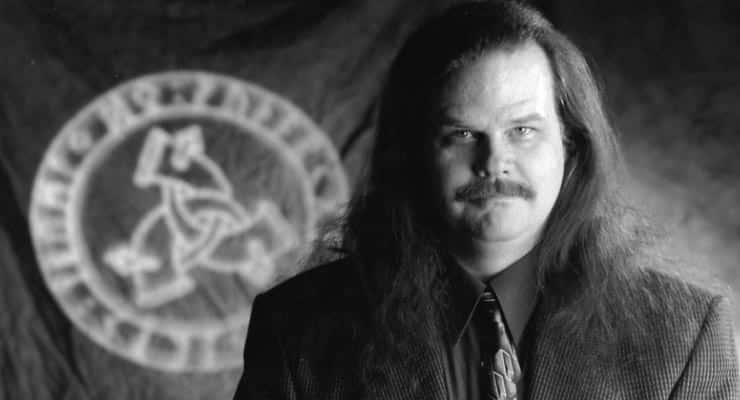
  • Michael Moynihan Speaks With José Argüelles

    Michael Moynihan Speaks With José Argüelles

    This article was published in New Dawn 75 (Nov-Dec 2002)

    Editor’s Note: Dr. José Argüelles passed away in 2011. 

    It doesn’t take a crystal ball to discern that ours is a chaotically dysfunctional world. To point the way toward a solution does, however, require someone with a sense of vision that transcends the present-day labyrinth of commercialised and egotistical dead ends. A visionary is simply someone who can see beyond these ordinary confines, and a prophet is someone who can read the “writing on the wall” that most people pass by without ever looking up to notice. Dr. José Argüelles (1939-2011), aka Valum Votan, is both a visionary and a prophet.

    Argüelles began working as an art historian and artist in the late 1960s, and his creative sensibilities contributed greatly to an ability to peer through the veils of maya that opaquely shroud the modern realm. But alongside an artistic outlook, he also bears the mind of a scientist – just not the type of narrow-minded positivistic scientist that has come to exemplify the term in the West. Argüelles is a “whole-systems scientist,” and here again visionary skills come into play. In order to understand the complexity of life on Earth, and to recognise the deleterious factors that have put the entire biosphere in increasing jeopardy, the old reductionism and scientism of the West must be abandoned in favour of a more all-encompassing knowledge.

    As the following interview demonstrates, José Argüelles has always welcomed new experiences. He and his wife Lloydine have travelled the globe to share their insights, always on the frontlines of the effort to expand consciousness and awareness. And among many other achievements, Argüelles is also the author of a series of seminal works, the most well-known of which is probably The Mayan Factor: Path Beyond Technology (1987). It was here that he first revealed the understandings he gleaned from a deep study of Mayan time science.

    His latest endeavour, Time and the Technosphere: The Law of Time in Human Affairs (2002), may be his most crucial. In it, Argüelles looks at recent human events and worldwide developments from his whole-systems vantage point. With the courage to face an apocalyptic diagnosis, he offers evidence that the Earth has come to be dominated by the “technosphere,” an envelope of inhuman mechanisation that practically has a mind of its own and has us careening toward a cataclysmic future.

    But despite the bleak circumstances we now find ourselves in, Argüelles’s message is one of hope. The shattering “Inevitable Event” of September 11th, 2001 – seen almost simultaneously by a vast section of the world’s population via high-speed electronic media – represented a rupturing of the technospheric bubble, and therefore an opportunity for humans to establish a genuine alternative paradigm on a global scale. This is where the World Thirteen Moon Calendar Change Peace Movement steps in, offering a vision and a model for a new time.

    As Argüelles persuasively argues, it is largely dissynchronous timing standards that have kept human beings off-balance and alienated from the natural cycles of the Earth they inhabit. The worst culprit is the Gregorian calendar, and by extension the “12:60 frequency” that it fosters – together these have become, in essence, the inescapable time clock of globalist capitalism. But is there really no escape? Through the medium of his work, and through the example of a life artistically lived, Argüelles points the way to a new beginning. The choice is in our hands, and now it is truly a question of time.
    – Michael Moynihan

    Michael: The best description for you and your work might be that of a “visionary.” When and how did you first realise that your interpretation of larger events was something you felt compelled to communicate to others?

    José: I always knew I was an “outsider,” to use Colin Wilson’s phrase. But it wasn’t until after I experimented with LSD that I realised I was a visionary. That was back in 1965 and 1966. I then felt compelled to express myself, first in painting. I did a series of paintings which came to be known as “The Doors of Perception” (Humphrey Osmond himself, who coined the word psychedelic, gave those paintings that name). But I saw that as fantastic as painting was, it was a limited medium in terms of audience. And besides, visionary artists – really visionary artists – don’t usually get much exposure in their time. Especially me – I made it a point of never signing my painting because I felt I was simply the channel, the cosmic ballpoint pen, drawing down the visionary flow from the cosmic realm of endless archetypal form. And I also wanted to get away from all this individualistic ego trip of modern art and artists. “Ownerless in the ownerless land of vision,” I used to say to characterise my attitude.

    Because of this I also knew that I would have to tackle the medium of the written word to get out my message. My vision and message were always very simple. History is a fall from grace. We are at the end of time and the end of history. Therefore a renewal of vision, the Great Return, the creation of the Great Work of the Art of Harmony must be reestablished in order to save fallen humanity from the graceless state of merciless materialism and the fragmented exhaustion of the profane order of mechanised history. By the time I was 28 or so I felt very compelled to get out this message. I envisioned a monumental work dealing with this issue to be entitled Art at the Dawn of a New Magic. I also knew my trip was so far out that the only way I could establish credibility was to get a Ph.D. So I did. My thesis was turned into a book, my first book, Charles Henry and the Formation of a Psychophysical Aesthetic (1972). Sounds pretty academic, but look at the very first words in my very first book, and you’ll see the theme from which I have never veered: “Many are the attempts that are made and the words that are spoken with regard to the age-old ideal of harmony: the union of all faculties, of all senses, of all knowledge. The highest dreamers would proclaim that the true art and science are one…”

    Michael: Could you tell us a bit about Charles Henry and what drew you to him and his ideas?

    José: Charles Henry was a French psychomathematician born in 1859 and who died in 1926. During the 1880s his ideas of a “scientific aesthetic” were a great influence on what came to be known as the post-impressionist painters, especially the pointillist Georges Seurat. That is actually how I came to discover Charles Henry, when I was in Paris doing my Ph.D. research on neo-impressionism in 1965 and ’66. I discovered LSD at the same time, and as I read some of Charles Henry’s later works, I thought his theories on sense impressions, perceptions and consciousness confirmed my psychedelic experiences. After the LSD I found the art history neo-impressionist stuff a bit tedious, and so I decided I would forget it and paint instead. But something about Charles Henry intrigued me.

    I decided to delve into him a bit further, and decided that I would get my Ph.D. after all, but my thesis would be on this enigmatic, little-known explorer of consciousness, Charles Henry. I had the feeling that he was a special type of incarnation, like a French reborn sufi-saint or some kind of bodhisattva who was carrying on the tradition of the “invisible college” and St. Germain, setting out a bunch of clues that only I could decipher and decode. His last works were on the nature of consciousness, specifically “Post-mortem survival and the Nature of Consciousness,” in which he wrote: “Death is but a physiochemical change. It is only after death that I will truly begin to amuse myself.” I also found it interesting that he was talking about synergy and synergetics well before Bucky Fuller, a fact I brought to Fuller’s attention in some correspondence with him in 1969. That was a good thing because Bucky answered back and agreed that it must have been Charles Henry’s post-mortem synergetic thought form that he received in 1927, when the idea of synergetics first came to him. That connection was very fruitful, because Bucky also suggested to me the idea of a psi bank around the Earth in which all of the ideas and thoughts of all the ages keep recirculating. I knew he was right. Anyway, that gives you some idea of Charles Henry and my process.

    Michael: Given your non-materialistic outlook, was entering the academy to obtain your Ph.D. a bit like diving into the belly of the beast?

    José: Well, kind of. But I knew that it was my survival. I got my B.A. degree from the University of Chicago as well, and found out that all I could do was get a job as an insurance salesman. That really didn’t cut it for me. I knew I was made for other things. That was back in 1961. I seesawed between being a full-blown beatnik on the road or going back to school. So I ended up going back to the University of Chicago for a degree in art history. I had to be on good behaviour because I had actually been thrown out of the undergraduate program in 1960 for being a full-blown beatnik, accused of being the ringleader of a pot-smoking set of thugs meant to undermine the freshman women. But in this life you have to experience everything and academia was part of that experience. As William Blake put it, “The road to the palace of wisdom is paved with excess.” I was as good an academic as I was a beatnik, in fact I really excelled. But I knew by my inner guidance, it was but a means to an end – discipline, for sure, to keep my many-levelled mind on track, and credibility for something I knew not yet what.

    Michael: Getting back to the subject of your early paintings, some people will be familiar with them due to their appearance in your book Mandala. How would you characterise the relationship between your own artistic endeavours and these traditional forms? Did one inform directly the other?

    José: Actually the mandala principle seemed to be a very natural and inevitable consequence of the psychedelic experience, affirmed for me by my studies of Charles Henry and my free-form exploration at that time of Tibetan mysticism. I never thought of the mandala form as particularly traditional, but instead rather timeless. I thought of using the Doors of Perception and other large mandala-style paintings to create an actual environment where someone could sit and experience this timelessness, get lifted from their ego and see the white light. In 1971, when I finally met a real Tibetan, Chogyam Trungpa Rinpoche, who ended up being my friend and teacher for the next sixteen years, he took a good look at my paintings, and with a sly grin looked at me and said, “I see you already know all about tantra.” I think tradition is good if it gets you to that place of timelessness and self-transcendence. That’s what Trungpa meant by his comment. There are many ways to get to the same place. But you should also know I stopped painting mandalas around 1973. I started to do one, and I said to myself, “What does the world need with another gimmick?” I didn’t paint like that again for almost another 20 years, though I have done a lot of other artistic things.

    Michael: From a few of the comments you’ve been making, I get the feeling you don’t place any great emphasis on the modern obsession with “originality” and novelty, which fuels so much of the commercial art world.

    José: No, I don’t. Modernist “originality” is a fall from the sacred into the profane, the exaltation of ego. There is a true originality, but that is what is usually called revelation. That is, revelation that is genuine and is meant to light a new path for a fallen humanity. I think the true artist is meant to be a creative channel and not an inventor of cheap tricks or clever mannerisms.

    Michael: Chogyam Trunga is well known as one of the first people to bring Tibetan Buddhist teachings to a contemporary Western audience. In your mind, what are some of the most important aspects of his legacy?

    José: Trungpa Rinpoche was a truly interesting human being. As much as he was a teacher of the way of “crazy wisdom,” he was also an artist at heart. His two greatest legacies were his emphasis of mindfulness training and his vision of dharma art – art as everyday life, but an everyday life in which the sacred is the normative experience. Here we can define the sacred as being the sense of awe that breaks your heart, that touches and moves you mysteriously and poignantly even though and maybe just because it is an ordinary experience of reality. But you cannot have dharma art without mindfulness training, meditation without an object. So art is how you organise your life moment-to-moment with an all-consuming awareness or sense of mindfulness. Take nothing for granted. Elegance and a simple sense of ceremony transform your everyday environment and place you in cosmic harmony – dharma art is the ceaseless expression of the universal norm of existence.

    Michael: As part of living a creative existence outside the workaday world, you and Lloydine spent years travelling the globe and interacting with people to share your visions and ideas. Surely this was also part of your own fulfillment of “dharma art.” What lessons did you learn from the experience?

    José: Yes, for over a decade beginning late in 1991, we have been galactic peace mercenaries bringing the message of the new time, a message of peace through time. We were “commanded” to take the tools and research of our investigation into the natural timing frequency as represented by the Mayan calendar to all the peoples of the world. We did this essentially without any visible means of support. And we did this always without asking for monetary recompense for delivering our message that the old time was over, and that a new time is already prepared. In this way when we said our message was the truth we were not compromising it by asking for money.

    The truth cannot be bought or sold, and we stuck to this premise. It took us on a mighty trail of adventures, too. We had some patrons from time to time give us support. But we had to go places where we had never been. We had to go Berlin and Russia after the end of the Cold War, we had to travel throughout Latin America. We were in South Africa and Egypt, India, Hong Kong and Japan. Much of the time we spent living with the people who shared with us their lives, their food, their dwellings. Our dharma art and mindfulness training was our survival. It allowed us to blend in and participate fully in the various cultures as if we were natives. It was also really helpful not to ask for anything. It doesn’t do you any good to be a fussy vegetarian in a culture that survives harsh winters on mutton. Our task was to see if people from different cultures could not only understand our message, but act on it as well. In the presentation of our message, art was of supreme value.

    I always play my flute, and together we do a prayer to the seven directions that is a simple ceremonial piece of art. We also always present the banner of peace to show that we are emissaries of peace through culture and that we are to demonstrate a new positively constructive approach to peace. We found that people generally respond very positively to this kind of approach. As a result we have been privileged to have many, many cultural experiences that even natives of some countries rarely have. For instance, we were taken deep inside the Ise shrine in Japan as special guests, and attended a special performance of bugaku(ancient court music and dance). I was even able to play my flute – a Japanese Shakuhachi – in the ceremonial grounds, which is usually not allowed even for Japanese. You see, when you practice living art as everyday life, it creates a path of genuineness and gentleness which people are often very willing to accommodate.

    Michael: Somewhere along the way you encountered the work of Nicholas Roerich, the Russian painter, poet, and traveller into the Himalayas. When did you become aware of him?

    José: Back in 1967 when I was teaching art history at Princeton, I was looking for signs of Tibetan art wherever I could find them in New York City. And I found that one of the places was the Roerich Museum on the upper West Side. I liked his paintings and read about him, becoming aware that he was an early explorer of Tibet. I realised what an interesting artist he was, having designed the stage sets for Stravinsky’s Rite of Spring and then gone on his various pilgrimages.

    Michael: Julius Evola once wrote that Roerich’s images convey a spirit capable of awakening a “primordial and powerful sensation that has been buried in the subconscious due to the restless and prisonlike life of the modern Western world.” What meanings did his paintings evoke for you?

    José: Sacred awe and visionary splendour. A universalism of cultural or spiritual values as well. His writings on art show that he was seeking to restore the sense of the sacred to the modern world. I became aware of his work with the Banner of Peace sometime not too long after that. Roerich’s idea of peace through culture I found of enormous value and easy to integrate into my perceptions of the purpose of dharma art. Trungpa used to say, “The artist has tremendous power to change the world.” But how? The Banner of Peace seemed to provide a way of making a change by promoting a broad scale revolution of cultural values.

    So it was that early 1980s, my wife Lloydine and I decided to resurrect the idea of peace through culture, especially the Banner of Peace. In 1983 we incorporated it into our creation of the Planet Art Network (PAN). The original idea of the PAN was to create a network of artists – creative thinkers of every kind – who would become a force for creative non-political change in the world, or who would show the world that change can be attained through creative means and that political change could be superseded by something far more inspiring. However, the principle notion of Planet Art is that the Earth itself is a work of art, and that the next evolutionary wave of art – beyond modernism – would be the realisation and fulfillment of the Earth as a work of art.

    In the 1990s when we became totally involved in the Thirteen Moon Calendar Change Peace Movement, we moved the Banner of Peace and the Peace through Cultural initiative into the forefront of our peace plan. The Banner of Peace is now one of the official emblems of this Movement. Intended to protect cultural monuments in times of war, we now view the Banner of Peace as the symbol meant to protect the biosphere, the cradle of culture currently very seriously threatened by the war of globalisation.

    Michael: The difference between artists and politicians seems fundamental. Generally two artists can mutually respect one another and find common ground beyond whatever differences they may have. But people who are driven by or infused with materialistic political ideologies become like automatons, unable to acknowledge anything that doesn’t fit into their “correct” worldview. Not surprisingly, most artists want nothing to do with politicians – even less so since the latter are beholden to money values rather than creative values. How do you see a chance for creative values to take precedence in the world, given these circumstances?

    José: First of all we must see a further breaking down of all values and institutional structures which will continue to diminish the credibility in the way we have been doing things as a species. This process is already occurring and manifests as the increasing social, political and military-terroristic chaos so rampant in the world today. When people talk about the end times, well these are the end times. But it is only the end of the corrupted world, the end of the world as we know it, and to paraphrase R.E.M., we feel fine. Why? Because this means that a new world is already being born, a world which will inevitably and of necessity see a radical pole shift in values. If the predominant value of the corrupt world is “time is money,” supported by ruthless military supported monetary politics, then the new value system will be characterised by “time is art.” It is the difference between a value system stressing quantity of material abundance and a value system emphasising spiritual and aesthetic quality as the standard of life. This change is already in the evolutionary program of the biosphere, the evolving system of life on earth.

    We have reached a critical stage in which we are faced with planetary suicide – genocide – or planetary renewal. The system of life on Earth can only go in the direction of planetary renewal which means a total change in direction and way of life of humanity. This is already being prepared for and the first step will be a change in the timing frequency by which the human species governs itself. Currently the dominant order is governed by an anachronistic, irrational and irregular timing device, the Gregorian calendar, which has had and continues to have a debilitating effect on the mind and moral sensibility of the species. Combined with the mechanisation of time through the clock, and the worship of money as the be-all and end-all of existence, this has created an out-of-control species no longer in tune with nature or the natural order. Once this change of timing frequency is made and the species is returned to the harmonic order of natural time, artistic and cultural values will very soon supersede the witless determinism of monetary politics. Do not doubt it: the sentiment and comprehension for making this change, as well as the instrument for implementing this change – the 13 Moon/28-day calendar – are now a growing force throughout the world.

    Michael: Recently you travelled to the Altai region, where Roerich had explored three-quarters of a century ago. What brought you there, and what significance does a remote place such as Altai have for an increasingly globalised world?

    José: Actually we had received an official invitation from the government of Altai to be special guests and to share our message with the people. When The Mayan Factor was published in Russian, it reached the hands of some shamans in Altai – it is an autonomous republic, member of the Russian federation, with only 205,000 people on 92,000 square kilometres. Anyway, between the shamans and contacts that had already been made through official representatives of Altai government in one of our more recent trips to Russia, we were then ready to visit. We found it an interesting opportunity because our trip was timed precisely 75 years after the Roerichs had passed through Altai on their famous expedition Altai-Himalaya, 1926-28. In fact we visited the Roerich Museum, the house where Roerich had stayed, facing Mt. Belukha, the highest mountain in the Russian Federation, precisely on the day he had first arrived there 75 years earlier.

    Set between Khazakstan, China, Mongolia and Russia, Altai is an amazing piece of territory. There really is only one city, if you can call it that, Gorno-Altaisk, and once you leave that place, you enter a country that you didn’t think existed anymore on this planet. Endless valleys with wild horses roaming freely as if it were still 30,000 years ago. We visited shaman elders and little villages that are literally off both the beaten and the unbeaten paths. People were always already waiting for us. They knew who we were. And they shared with us many interesting aspects or facets of their history, a history that traces back to the stars.

    Some of the shamans felt the cosmology of The Mayan Factor confirmed or was even identical to their cosmology. But they were also feeling the pressures of the globalised world. A highway from China to Russia was in the works when we were there. We were in strong support of the government declaring the entire region a biospheric reserve. The thinking there is already advanced in this direction.

    We proposed the establishment of an International Foundation for Peace through Culture that would help establish Altai as a biospheric reserve, preserving the land and the culture in its entirety, and providing a world model for other cultures or peoples who wished to learn from this model. We presented this idea to the national Parliament and we know that it is still being discussed. It is interesting that among some of the shamans and locals, Roerich is not greatly liked. They feel that he was exploiting the people and the culture. And we have experienced some of that too, though we are still in communication through our representative there with key elders. Even now, the people of Altai are in the struggle between preservation of traditional values and the encroaching technosphere.

    But of all the places I have been, Altai is the most magical and incredible. It is truly another world, a doorway into timelessness. And I was very fortunate to have met so many of the holders of the ancient culture. One shaman, Anton Yudanov, gave me a topshure – a two-stringed fretless Siberian guitar – which I have treasured and learned how to play, singing spontaneously my own forms or versions of shaman rock and shaman blues. I truly pray that Altai will be preserved and stand as a model for the rest of the world as culture living in harmony with the biosphere.

    Michael: You’ve spoken of spiritual convergences there that indicate a “sign of the coming of Shambhala.” Can you elaborate on what you mean by this?

    José: Altai prides itself on the fact that Islam, Christianity and Buddhism all exist there side by side. One shaman we visited showed us a diagram in which the three religions are represented by signs from playing cards – Christianity, clubs; Islam, hearts, and Buddhism spades. Next to these three signs are two diamonds. These represent the old and the new shamanism of Altai. The new shamanism is called Ak Burkhan or the white faith and though it was introduced over two hundred and fifty years ago, it only became official in 1904. Through Ak Burkhan the prophecies of Shambhala or Belevodye, the White Land, are maintained. The spiritual convergence of Buddhism, Islam and Christianity is certainly one of the signs of the coming of Shambhala.

    Trungpa Rinpoche, as you know, also taught much about Shambhala, which can also be said to represent a spiritual harmony of the different traditions of the world religions. In Altai, however, there is no question that the native religion, Ak Burkhan, is a great factor in creating a sense of harmony with the land, as well as a spiritual harmony. At different points in our visit to Altai witnessing the dancing and the throat singing to the accompaniment of the topshure, it felt like the living culture of Shambhala was still shining through.

    Michael: Certainly the culture of Shambhala does not operate according to Gregorian time, or what you call the “12:60 frequency.” A major theme of your new book Time and the Technosphere concerns the discovery of the Law of Time. Can you briefly expound upon what this means?

    José: The Law of Time is a fundamental law, like that of gravity. And just as no one knew about that law until Newton discovered it, so it is with the Law of Time. That also means that the Law of Time, like gravity, has always operated – it is fundamental to the universe. We just didn’t know about it until now. I wouldn’t have known about it if I hadn’t delved so deeply into the mathematics behind the Mayan calendar. To test it out, Lloydine and I began to live the cycles of that calendar: 13-day cycles, 20-day cycles, 52-day cycles. That changes your life. We had begun doing that before the Harmonic Convergence in 1987, and continued doing that in the years just after. Then, as destiny would have it, we found ourselves in Geneva, Switzerland one cold and dreary Sunday – December 10, 1989, to be precise. To entertain ourselves we decided to take a busman’s holiday and visit the Museum of Time. After two or so hours looking at one archaic proto-clock after another, leading from the cuckoo up to the pendulum clock and then on down to digital quartz and cessium timepieces, we had a grand “Aha!” This place should be renamed the Museum of Mechanised Time! Because we had been living the Mayan cycles we had a contrast, both experientially and mathematically, by which to evaluate what we were experiencing in this Museum.

    We knew immediately that there are two timing frequencies. The natural one codified by the Maya we understood to be the frequency 13:20; the artificial one canonised in this museum we knew to be the 12:60 – the irregular 12-month calendar and artificial, mechanised 60-minute hour. We understood that the combination of these two timing standards unconsciously accepted by the human species established an artificial timing frequency which regulates the human race today in virtually every aspect of its existence. Since time is fundamentally of the mind, this 12:60 frequency has produced a species whose system of operations is a mechanised irregularity. And since a calendar is the macroprogram that governs a people or a culture, this means that all of these mechanised irregularities are programmed into that calendar. No wonder there are so many problems and no solutions! Change the calendar and you’ll change the program.

    The Mayan calendar cycles summarised by the mathematical ratio 13:20 we understood to represent the natural timing frequency which is the universal factor of synchronisation. Yes, the chief quality of natural time is synchronisation! That is why the ancient Maya operated with as many as seventeen different calendars. We are all fascinated by synchronicity, which is an anomaly only because we live a life of mechanised irregularities. But in the natural order of time, synchronicity is the norm. This also defines a whole order of reality, the synchronic order. This is fundamentally the fourth dimensional order of reality which regulates the third dimensional plane of existence. But we have a hard time dealing with this or knowing about it because our minds are so conditioned to artificial time which is linear and anything but synchronic. You can see what a dilemma this is. For this reason we immediately understood as well that to get the human race back on course, the first step would be to change the calendar, to replace it with a calendar of perfect harmony so the human race could straighten its mind out again. The means for doing that is the absolute perfection of the Thirteen Moon 28-day Calendar – 364 days 52 perfect weeks, plus a 365th Day Out of Time for forgiveness, and to give expression to “time is art.” Celebrated on old Gregorian July 25, this past year alone more than 500 Day Out of Time celebrations occurred planet-wide.

    That gets us to the other aspect of the Law of Time, and that is its formulation: T(E) = Art, energy factored by time equals art. That is to say, because time is the universal factor of synchronization – the ratio constant 13:20 – everything participates in a natural elegance. There is no such thing as an ugly sunset. Spiders and scorpions have their aesthetic elegance. Beauty is the basic norm of the universe. That gets us back to that dharma art thing. Only modern man has lost this innate artistic sensibility and prefers three-legged pink poodles to the real thing. Artificial time deforms the mind; mechanisation dehumanises it. Art and beauty really will save the world, but only if humanity returns to living in the perfect harmony of the Thirteen Moon Calendar and thus becomes synchronised again with the whole of the universal order of the cosmos. Then art as everyday life will be natural and inevitable – how can harmony do anything but enhance itself and produce more harmony? This is the point of what we call the Great Calendar Change of 2004 – July 26, 2004, to be precise. People get ready, there’s a new time a-coming… it is humanity’s last best hope, the untried solution: get a new calendar.

    Michael: There are apocalyptic warning signs all around us – a glance at a daily paper will confirm that. You don’t shy away from the reality of our precarious situation, yet you also offer a message of hope. How can people rise above the sort of nihilistic, numbed state that the powers-that-be seem to want everyone to remain in?

    José: Well, most people have a hard time accepting that it really is the end times, that they are living in the middle of the apocalypse. That’s why they are numbed-out and that is what keeps them numbed-out. They don’t want to face it, and certainly the media isn’t going to tell them to face it. Instead the media thrives on fear and violence and so the whole syndrome is self-perpetuated. From the point of view of the Law of Time this is the inevitable conclusion to absolute entrainment in an erroneous timing frequency which only produces increasingly dissynchronous states of mind. People have to understand this fundamental point. Because when you do, you also realise there is a solution, a radical fundamental change. Yes, so radical that it will end history. But if we don’t end history, history will end us.

    Ever since 1990 when we realised that the calendar change was the only solution, the first step toward getting out of an otherwise “geocidal” dead end, we have been promoting this change. At first it was very difficult. People would say, “How can a calendar have an effect on my mind?” or, “How could changing the calendar change anything?” or, “We tried that already.” Not really. The first calendar change movement that was promoted by the League of Nations did not succeed – it floundered on the Day Out of Time issue, which we have now proven to be a day of universal harmony – so that means we never really tried the calendar change as a solution. People have to understand that the Gregorian calendar is the world’s most insidious dogma, that this calendar is a tool of the Vatican, and that therefore, the Vatican maintains mind control over the human species with this calendar. And everybody knows that it is irregular and irrational as well – so why still follow it?

    By 1993 we knew we had to get serious with promoting the Thirteen Moon Calendar, and so we gave birth to the World Thirteen Moon Calendar Change Peace Movement. We saw the calendar change as the perfect opportunity to declare world peace, call for a universal cease fire, begin a disarmament process and also call for a work stoppage so as a species we could begin to shift priorities. My optimism comes from the fact that in less than a decade the use of the Thirteen Moon Calendar has spread to some 54 countries and the Day Out of Time has become very widespread as a Planetary Festival of Peace and Culture. The previous calendar change movement was a top-down thing. We knew that our efforts had to be a people’s revolution. Bob Marley sings, “It takes a revolution to make a solution,” and that’s so true. If enough people from many different countries and cultures are already following this calendar, then when we got to the point of notifying the world leadership it will be backed up by the people. Not that we haven’t already presented this to the U.N., the Vatican, and many other top leaders. But that has been a matter of course. If we hadn’t done that we wouldn’t be doing our jobs. Of course the Vatican chose to conceal our information and ultimately ignore it. Kofi Annan, however, did give us a positive letter of support. But of course, no one wants to take personal responsibility. So we say, that’s OK, show us a better, more comprehensive solution. We are ready anyway, and everyone who knows that this is real and true is getting ready to say goodbye to the Gregorian calendar and its self-fulfilling apocalypse in 2004 and walk right into a time of peace and harmony. If the rest of the world wants to join, it is an open invitation. Leave the old time and enter the new time. It is the only sure way to rise above the numbed-out nihilism of the decade without a name. Besides, the Mayan prophecy says that 2012 is the end of the cycle, and if we want to get there in one piece, we have to shift gears now. Believe it or not, to paraphrase Crosby, Stills, Nash and Young, I know we will “get back to the garden.”

    By the way, all of this calendar change activity is also a Mayan prophecy. In that regard, I am nothing but a messenger, and as a messenger, my name is Valum Votan, Closer of the Cycle. I would be avoiding my responsibility if I didn’t mention that. Thanks for the opportunity. I hope you have found this to be an interesting interview.

    [alert type=”success” dismiss=”no”]If you appreciate this article, please consider subscribing to help maintain this website.[/alert]

    © New Dawn Magazine and the respective author.
    For our reproduction notice, click here.
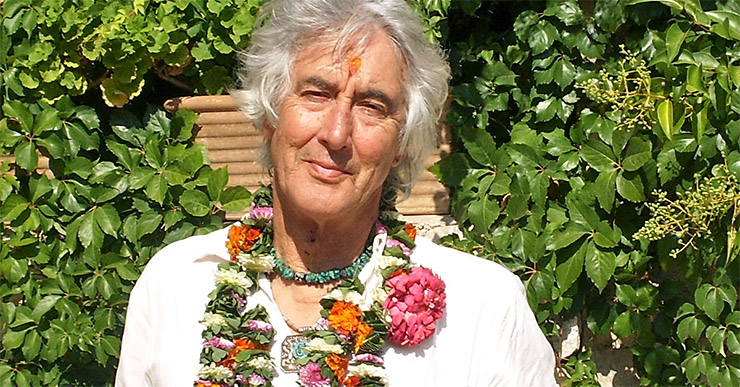
  • The Political Gnosis of Philip K. Dick

    The Political Gnosis of Philip K. Dick

    This article was published in New Dawn 74 (Sept-Oct 2002)

    It seems hard to imagine that it has been nearly twenty years since Bladerunner was released. That riveting and influential film was the first movie to be inspired by the writings of science-fiction author, Philip K. Dick. Other films, of varying success, have followed, including Total Recall and Screamers, but the until now the most Dickian movies have been those that copped his dystopian and paranoid sensibility without directly basing themselves on one of his books or short stories. The Truman ShowThey Live!,Pleasantville, and most notably, The Matrix, were all Dick films at heart, despite his absence from their credits.

    The recently released Spielberg film, Minority Report, returns to directly dipping from PKD’s deep well of inspiration, and despite the inevitably Spielbergian ending, succeeds in evoking one of Dick’s favourite themes: how does one elude the suffocation of an encroaching police state? In Minority Report, this trope takes the form of the local Department of Precrime in Washington D.C., which has succeeded in eliminating murders by arresting and incarcerating the perpetrators before they commit their crimes. This is accomplished by drawing on the abilities of three precogs (for precognitives), who have the involuntary talent of seeing into the near future and glimpsing the murders-to-be in progress. As the film unfolds, in the year 2054, a national referendum is about to occur on whether to expand precrime prevention to a national policy.

    Given the recent moves by the Bush Administration in the US to indefinitely detain those who have committed no crimes, but who may have planned to, the timeliness of Minority Report is almost uncanny. Dick’s original short story appeared in 1956, and the script for the film was written well in advance of the shock of 9/11. But somehow, Dick’s intuitions of precrime enforcement have been brought to the big screen at just the moment when their analog is being enacted in real life. PKD, who died in 1982, would savour the irony, were he still with us.

    Gnosis

    Gnosticism is a name commonly applied to numerous early Christian sects who emphasised the necessity of receiving “gnosis” (divine knowledge of true reality) in order to be saved. While they considered themselves to be Christian, the Gnostics diverged from both Judaism and Catholic Christianity in their belief that this world was a flawed and ensnaring creation of a despotic Demiurge who had usurped the position of God. Through the agency of a redeemer Christ and his bride, Sophia (Wisdom), the Gnostics hoped to return, upon death, to the most high realm of the Pleroma (Fullness) to unite with the true Unknown God.

    The Penultimate Truth (1964)
    “Most humans live in tank cities far below the surface of the Earth, believing themselves to be safe from the ongoing nuclear war above their heads. In fact, the war has been over for ten years, and instead of a radioactive ruin, the planet is a vast park, ruled by feudal barons who are playing power politics with the buried masses of their fellow men.”1


    That, at least, is the standard potted summary of Gnosticism. If one takes a broader view, there have been many gnosticisms, and many “gnosi” – some predating the Christian Era and some quite independent of Christianity. Gnosis, as a synonym for illumination or mystical union, is equivalent to marifah(Arabic) or irfan (Persian) in esoteric Islam, for example. However, while we might assume that the state of consciousness signified by the term “gnosis” is universally accessible (or at least potentially so), it is not at all certain that those using the term were always referring to the same thing.

    For instance, the gnosis of the Sufi mystics of Islam includes no admission of the existence of a Demiurge or false, lower God. Indeed, tawhid, the Unity of God and Creation, is such a fundamental assumption of Islam, that a spiritual realisation pointing to a Higher God than that of the Creator would be immediately rejected as a delusion. On the other hand, Hindu yogis might readily agree with many Gnostics that this world is a veil or delusion (maya in Sanskrit), and that there is an Absolute God behind or above lesser gods. But few yogis would share the Gnostic assessment that this indicates a moral flaw in the universe.

    What exactly is the nature of the divine knowledge that the Gnostics and other mystics have sought? It is impossible to describe precisely, because of the non-discursive nature of that knowledge. Frithjof Schuon refers to gnosis as “our participation in the ‘perspective’ of the divine Subject which, in turn, is beyond the separative polarity, ‘subject-object’….”3 G.E.H. Palmer refers to it as “Wisdom made up of Knowledge and Sanctity,” and underscores the distinction “between knowledge acquired by the ordinary discursive mind and the higher Knowledge which comes of intuition by the Intellect, the term Intellect having the same sense as in Plotinus or Eckhart.”4

    In other words, gnosis, according to this definition, is an experiential “knowing” that results from the expansion of the Gnostic’s consciousness to the level of the divine Intellect, where the illusion of the separate self (ego) is obliterated – at least temporarily – in the vast perspective of the higher Self. Such a state cannot, of course, be sustained indefinitely. What goes up must come down. But having risen to such heights, the ego that is reassembled upon its descent, is permanently affected. It now “knows” its own place in the cosmic scheme of things.

    Such “knowledge” is not easily communicated to others, in part because shared reference points are few, and because any attempt at describing the experience is bound to diminish and reify it. Thus, those who have been blessed with gnosis have used oblique strategies to impart the ineffable: poetry instead of prose; myths instead of clear-cut analysis; paradoxical statements instead of declarations.

    There is still another factor contributing to the proliferation of gnosi and gnosticisms: while the experience of gnosis may be ahistorical, i.e., beyond time and place, the gnostic himself is obviously not. A Tibetan Buddhist in the recesses of the Himalayas, who takes reincarnation for granted and believes in numerous gods, is not going to clothe his gnosis in the garments of a Muslim Sufi in Andalucia, who believes in one lifetime and one God. And vice versa.

    The Crack in Space (1966)
    “Frozen sleep seems like a humane way to end unemployment and over-population pressures: Send the excess citizens to the future. The government warehouses are filled with bibs when a political fight erupts over whether or not to dispose of them through a space-warp. Then some unknown outside agency helps the sleepers to awake.”2


    A gnostic whose historical era and cultural milieu is one of war and persecution is likely to have his circumstances seep into his post-gnosis explication of reality. There may still be a higher Reality beyond conflict and violence that he experiences in gnosis, but his mythic version of the journey to the Truth may feature a harsher struggle to get there than would otherwise be the case.

    Finally, there is the personality and psychological condition of the gnostic to be considered. Contrary to contemporary holistic assumptions that assume that the combination of a good diet, a good life, and a good attitude are most likely to lead one to higher spiritual consciousness, this is not always so. Higher states may also be triggered by asceticism, psychoactive substances, disciplined practice, or sheer happenstance. True, an absence of cravings and obsessions may make meditative practice easier, but gnosis can also erupt in someone who is by no means a saint. In such a case, his post-gnosis understanding of the Real may well be tinged with his neurotic predisposition.

    The Divine Invasion

    Which brings us back to Philip K. Dick.

    In February, 1974, Dick was living in Fullerton, California, an undistinguished city in Orange County. He’d fled his long-time residency in Northern California out of fear for his life and his sanity. He’d been mixed up in long-time illicit drug use, tax refusal in protest against the Vietnam War, and chronic poverty. In 1971, his previous home in San Rafael, north of San Francisco, had been broken into by persons unknown, his safe blasted open, and things taken. He’d attempted suicide, checked himself into drug rehab in Vancouver, and in 1972 had flown from there to Fullerton.5

    By 1974, he’d married his fifth wife, Tessa, and had a new child, Christopher. But most immediately, in February, he’d just had two impacted wisdom teeth removed and was awaiting the delivery of prescribed medicine from the drug store.6

    The doorbell rang and Dick answered the door. The delivery girl from the drug store stood before him, wearing a delicate necklace from which hung a golden fish, a symbol of Christ often worn by evangelical Christians.

    As Dick later recounted it – possibly in mythologised form – a laser-like pink beam shot from the fish to Dick’s third eye. It had an extraordinary effect:

    I suddenly experienced what I later learned is called anamnesis – a Greek word meaning, literally, ‘loss of forgetfulness.’ I remembered who I was and where I was. In an instant, in the twinkling of an eye, it all came back to me. And not only could I remember it but I could see it. The girl was a secret Christian and so was I. We lived in fear of detection by the Romans. We had to communicate in cryptic signs. She had just told me all this, and it was true.7

    There was plenty more to follow. For the next year or so, Dick felt his psyche invaded by a “transcendentally rational mind, as if I had been insane all my life, and suddenly had become sane.”8 He experienced hypnagogic visions, auditions, tutelary dreams, and an eight hour all night vision of thousands of coloured graphics resembling “the nonobjective paintings of Kandinsky and Klee.”9

    Dick came to nickname the invasive rational mind as VALIS (for Vast Active Living Intelligence System), which became the name of his 1981 novel recounting his mind-boggling experience in fictional form.

    Perhaps most significantly, he perceived that “real time had ceased in 70 C.E. with the fall of the temple at Jerusalem. It began again in 1974 C.E. The intervening period was a perfect spurious interpolation aping the creation of the Mind….”10

    PKD’s life-long preoccupation with the questions of “what is reality?” and “what is man?” wouldn’t allow him to resolve his 1974 experiences into a single easy explanation. He variously explained them to himself as communications from God or from a satellite orbiting Earth, or most baroquely as psychic invasions courtesy of Soviet Academy of Sciences psychotronic transmitters. They provided fodder for several more novels before his untimely death at age 53 in 1982.

    The question might be fairly asked whether Philip K. Dick’s 1974 experiences constituted a form of gnosis. Judging from his many stories and novels, Dick operated throughout his life from a gut feeling that reality, as we commonly perceive it, is a façade. He sensed that there was something morally wrong in a universe where a friend’s innocent cat could walk across the street and be blithely run over by a passing car. His novels returned, time and again, to the theme of the little man caught in the machinations of powers beyond his kin or control. Dick may have nominally been an Episcopalian, but he was constitutionally a gnostic.

    VALIS (1981)
    “A coterie of religious seekers forms to explore the revelatory visions of one Horelover Fat; a semi-autobiographical analogue of PKD. The group’s hermeneutical research leads to a rock musician’s estate where they confront the Messiah; a two-year old named Sophia. She confirms their suspicions that an ancient, mechanical intelligence orbiting the Earth has been guiding their discoveries.”11


    But, here’s the paradox: not every gnostic receives complete gnosis. Some Gnostics, such as the Cathars of southern France, recognised this in dividing their members between mere believers and the elect (perfecti), and it is safe to assume that not every perfecti had achieved full mystical awareness.13

    The Gnostics taught that there are several planes or spheres between our material world and the purely spiritual realm of the Pleroma, “home” of the Unknown God. These planes were ruled by Archons, and part of the challenge for the Gnostic’s soul, at death, was to navigate past these cosmic authorities without becoming ensnared.

    The Gnostic who realised complete gnosis prior to his own death, (an awareness referred to in Sufi terminology as “to die before you die,”) was blessed with the key to safely make that post-death journey. But not every gnosis is complete and some experiences might provide only a partial realisation – perhaps of an intermediate Archonic realm that more resembles our veiled world than it does the Pleroma.

    Although incomplete, this Archonic gnosis could still be useful in shedding light on our present predicament – as long as its insights were not taken as the final word or the total picture.

    Philip K. Dick’s gnosis, I’d suggest, was of this partial sort: troubling, compelling, ambiguous, and as political as it was spiritual. His predisposition towards paranoia – exacerbated by amphetamine abuse, and the temper of the McCarthy era and the political upheaval of the ’60s – led him to write dozens of novels prior to 1974 that were broadly gnostic in their exploration of hallucinogenic realities, the individual’s struggle with hostile higher authorities, and in their questioning of conventional morality.

    Dick’s February-March ’74 gnosis – which he experienced in a dissociated manner as the intrusion of a higher rational mind into his consciousness – came to be understood by him as a revelation of profound political implications. Given his political preoccupations, which were already in place, this is hardly a surprise.

    Human history might seem to be an endless series of recurring cycles: power held by the few consolidates itself, corruption ensues, the regime falls and is replaced, and so on. PKD, however, in the thralls of his pink beam gnosis, arrived at an urgently mythic conclusion: real time stopped in 70 C.E., a spurious dream-time was thrust upon us for nineteen centuries, and then, through external intervention, real time was begun again. Beneath the ordinary appearance of our modern world, Dick (and select others) were really early Christians in conflict with the Roman Empire, which was still in power.

    Is this really a grand cosmic truth? I think not. Even in the 1970s it had its trivial side, such as Dick’s notion that President Nixon’s resignation after Watergate was an event of cosmic significance.

    But in a metaphorical, and even archetypal, manner, PKD’s gnosis did unveil a politico-spiritual reality that is increasingly relevant to us, twenty years after his death. “The Empire never ended,” wrote Dick, and who would argue with that, as we watch the reigning Superpower rattling its sabres at its minions and designated foes. The cultural collossi of the media conglomerates and Hollywood have spun a dreamlike fog that subsumes the past and future into an everlasting present of novelty and distraction. An effort to merely think clearly, free of clichés, cant, and consumables, takes a heroic effort, akin to dodging the Archons at every turn.

    The Divine Invasion (1981)
    “An air collision jeopardized the successful conclusion of the Second Coming. Emmanuel’s Appolonian and Dionysian selves are divided by partial amnesia. Their reintegration is opposed by Belial’s forces of decay, which control the Earth. The Paraclete’s foster father, Herb Asher, faces problems with his own redemption. Herb finds allies in the prophet Elijah, his partner in a retail audio store; and in singer Linda Fox, his own true love, and a construct energized by VALIS.”12


    Dick thought that 1974 was a turning point – a time when Truth was beginning anew to penetrate the veil of appearances. One wishes that this were really true, but the shock of 9/11 and the subsequent psyops war, lead one to conclude that there is plenty of veiling still in place – perhaps more than ever.

    To the degree that it slightly parts the veil, Minority Report imparts a whiff of Philip K. Dick’s political gnosis. Despite all the hypnotic baffling in place, sometimes a liberating signal makes it through. But no movie – and no book – is a substitute for one’s own rendezvous with the Unknown God.

    Any genuine gnosis – whether partial or complete, whether political or spiritual – is more valuable than all the words that have been written about it. Above all, stay alert, and when that knock comes at the door, say a quick prayer that it’s the girl with the fish necklace and not the police from the Department of Precrime.

    [alert type=”success” dismiss=”no”]If you appreciate this article, please consider subscribing to help maintain this website.[/alert]

    Recommended Reading:

    Gospel of Thomas; The Gnostic Gospels by Elaine Pagels.

    Footnotes:

    1. Summary from Daniel J.H. Levack, PKD: A Philip K. Dick Bibliography (San Francisco, CA: Underwood/Miller, 1981), p. 24.
    2. Ibid, p. 53.
    3. Frithjof Schuon, Gnosis: Divine Wisdom (Bedfont, Middlesex: Perennial Books, 1990) p. 76.
    4. Ibid, G.E.H. Palmer, “Translator’s Forward,” p. 8.
    5. For a full account of Dick’s life, see: Larry Sutin, Divine Invasions: A Life of Philip K. Dick (New York, NY: Harmony Books, 1989).
    6. Dick’s own account has him eagerly awaiting pain medicine. His wife’s account suggests he was already on codeine and was awaiting medicine for his blood pressure.
    7. From “How to Build a Universe that Doesn’t Fall Apart Two Days Later,” published as an introduction to I Hope I Shall Arrive Soon (New York, NY: Doubleday, 1985.)
    8. From interview in Charles Platt, Editor, Dream Makers: The Uncommon People Who Write Science Fiction (New York, NY: Berkeley Books, 1980) p. 155.
    9. PKD letter to Peter Fitting, June 1974.
    10. Philip K. Dick, VALIS (New York, NY: Bantam Books, 1981) p. 228.
    11. Levack, p. 70.
    12. Ibid, p. 27.
    13. Yuri Stoyanov, The Hidden Tradition in Europe (London: Penguin/Arkana, 1994) p. 162.

    © New Dawn Magazine and the respective author.

    For our reproduction notice, click here.