New Dawn – World's Most Unusual Magazine

Category: Articles

  • The Gospel of Mary Magdalene

    The Gospel of Mary Magdalene

    From New Dawn 84 (May-June 2004)

    Of all the earliest followers of Christ, none has sparked the level of interest generated by one particular woman – the biblical figure known as Mary Magdalene. Revered as a saint, maligned as a prostitute, imagined as the literal bride of Christ, Mary of Magdala stands apart as an enigmatic individual about whom little is actually known, despite centuries of scholarly scrutiny and wild conjecture.

    All that most Western Christians know about her is presented in the New Testament Gospels, and even that information is disputed. But there is some general agreement: She was a faithful disciple of Jesus Christ whom he had delivered from “evil spirits and infirmities.” Along with several other women, she ministered to Christ and witnessed his death on the Cross. She was there when his body was placed in the tomb, when the stone was rolled away to reveal an empty chamber, when an angel announced that Christ had risen from the dead – and when he made his first post-Resurrection appearance to the living. She brought the news of his Resurrection to the other disciples.

    For 1,500 years, Mary Magdalene was portrayed, in art and theology, as a prostitute whose life was transformed by Jesus’ forgiveness. This notion, based on Luke 7:38, was the result of an erroneous sermon preached in 591 by Pope Gregory the Great. Noted French author Jean-Yves Leloup states that “only in 1969 did the Catholic Church officially repeal Gregory’s labeling of Mary Magdalene as a whore, thereby admitting their error.”

    The stain of immorality attached to the figure of Mary Magdalene averted attention away from the significant role she plays in the unfolding of Christ’s teachings. The importance of Mary is especially apparent in Gnostic texts – some among the earliest accounts of Jesus’ ministry – which have been largely suppressed and ignored by Church authorities.

    The Gnostic picture of Mary departs – in some ways, dramatically – from the historical and biblical image of perhaps the most significant female follower of Jesus.

    The second-century Gospel of Mary was found in the late 19th century by archaeologists but remained largely ignored and untranslated for 50 years. It is the only account named for a woman and offers a different view of Christianity – one that describes an “interior spirituality,” says Karen L. King, author of The Gospel of Mary of Magdala: Jesus and the First Woman Apostle.

    In the Mary Magdalene account, “salvation is not something that comes from an external saviour,” says King. “One has to seek salvation within.” Thus, the Magdalene gospel depicts Jesus as a teacher rather than as a saviour who dies to atone for humanity’s sins.

    In her introduction in The Complete Gospels, King says:

    …the Gospel of Mary communicates a vision that the world is passing away, not toward a new creation or a new world order, but toward the dissolution of an illusory chaos of suffering, death, and illegitimate domination. The Saviour has come so that each soul might discover its own true spiritual nature, its ‘root’ in the Good, and return to the place of eternal rest beyond the constraints of time, matter, and false morality.

    Another Gnostic text – the Gospel of Thomas – reveals that women were disciples of Christ. However the New Testament only includes gospels written by men and distinguishes between the women of Christ’s life, and the ‘disciples’ – who are all male.

    “You find in the [Gnostic] Gospel of Thomas that six disciples are named: Matthew and Thomas, James and Peter, Mary Magdalene and Salome,” says Prof. Elaine Pagels, professor of religion at Princeton University, and author of The Gnostic Gospels and Beyond Belief: The Secret Gospel of Thomas.

    “Here, explicitly, Mary Magdalene is Jesus’ disciple. In the Gospel of Thomas and also the Gospel of Mary Magdalene, she is seen as an evangelist and a teacher, somebody who is gifted with revelations and teachings from Jesus which are very powerful and which enable her to be a spiritual inspiration to others.”

    The Gnostics honoured equally the feminine and masculine aspects of nature, and Prof. Pagels argues Christian Gnostic women enjoyed a far greater degree of social and ecclesiastical equality than their orthodox sisters.

    For Jean Yves-Leloup, the founder of the Institute of Other Civilisation Studies and the International College of Therapists, Mary Magdalene is the intimate friend of Jesus and the initiate who transmits his most subtle teachings.

    His translation of the Gospel of Mary is presented in his book The Gospel of Mary Magdalene along with a commentary on the text which was discovered in 1896, nearly 50 years before the Gnostic Gospels at Nag Hammadi were found.

    The Gospel of Mary can easily be divided into two parts. The first section (7,1-9,24) describes the dialogue between the risen Christ and the disciples. He answers their questions concerning matter and sin.

    “Christ teaches that sin is not a problem of moral ignorance so much as a manifestation of imbalance of the soul,” says James Robinson, Professor Emeritus of Religion at Claremont Graduate University in The Nag Hammadi Library in English. “Christ then encourages the disciples to spread his teachings and warns them against those who teach of spirituality as an external concept rather than as an internal, Gnostic experience,” says Robinson.

    After he departs, however, the disciples are grieved and in considerable doubt and consternation. Mary Magdalene comforts them and turns their hearts toward the Good and a consideration of Christ’s words.

    The second section of the text (10,1-23; 15,1-19,2) contains a description by Mary of special revelation given to her by Christ. At Peter’s request, she tells the disciples about things that were hidden from them. The basis for her knowledge is a vision of the Lord and a private dialogue with Him. Unfortunately four pages of the text are missing here so only the beginning and end of Mary’s revelation are available.

    This fragment of the gospel describes Mary’s vision of the soul’s ascent beyond the “powers” including the powers of fear. For the Gnostics, these “powers” are the Archons which act as cosmic prison wardens, attempting to prevent souls ascending to the True God. “It (the soul) has to overcome the powers of fear and the powers that threaten it as it proceeds into a life beyond death,” Prof. Elaine Pagels explains.

    After Mary finishes recounting her vision to the disciples, Andrew and then Peter challenge her on two grounds. First of all, Andrew says, these teachings are strange. Secondly, Peter questions, would Christ really have told such things to a woman and kept them from the male disciples. Levi admonishes Peter for contending with the woman as against their adversaries and acknowledges that Christ loved her more than the other disciples. He entreats them to be ashamed, to put on the “perfect man”, and to go forth and preach as Christ had instructed them to do. They immediately go forth to preach and the text ends.

    This confrontation between Mary and Peter is well documented in a number of Gnostic scriptures. Mary exposes the small mindedness and superficiality of Peter and Andrew who find it difficult to comprehend, let alone accept, the deeper spiritual understanding Mary acquired through her personal experience and closer relationship with Christ.

    James Robinson observes:

    Indeed Peter and Andrew seem to prefer the very thing against which Christ warned them – a religion based on arbitrary ideas (in this case represented by Peter’s male chauvinism and Andrew’s ignorance). And yet many of their ideas have shaped modern Christianity while, paradoxically, Mary Magdalene’s spirituality, which here seems more consistent with the teachings of Christ, is unheard of today.

    [alert type=”general” dismiss=”no”]This article was published in New Dawn 84.[/alert]

    [alert type=”success” dismiss=”no”]If you appreciate this article, please consider subscribing to help maintain this website.[/alert]

    © New Dawn Magazine and the respective author.

    For our reproduction notice, click here.

  • Dr. Wilhelm Reich: Scientific Genius – or Medical Madman?

    Dr. Wilhelm Reich: Scientific Genius – or Medical Madman?

    From New Dawn 84

    In my medical research into the infectious cause and origin of cancer, I never imagined I would become enmeshed in the strange world of Wilhelm Reich. For two decades I had studied the work of scientists linking bacteria to cancer, but never once did I come across Reich’s important experiments with the deadly “T-bacilli” that he discovered in cancer.

    I first learned about Reich in 1982 from Lorraine Rosenthal who heads the Cancer Control Society in Los Angeles. Her mother worked in his laboratory in the 1950s, and Lorraine was sure his cancer work was related to my cancer microbe research. She recommended I read Reich’s two most revolutionary books: The Bion Experiments on the Origin of Life (1938) and The Cancer Biopathy (1948). These two volumes provide valuable and fascinating insights into the origin of the cancer cell and his discovery of cancer “T” bacteria.

    During his life, Reich was portrayed as a mad psychiatrist and scientist who advocated free love, abortion, communism, and a multitude of other so-called perversions. The medical establishment regarded him as quack who tried to dupe the public into believing he had a cure for cancer. Eventually the US government took legal action to suppress Reich’s research, and the closing years of his life were filled with tragedy. Persecuted and hounded by the government, he was finally sacrificed on the altar of science.

    Who was Wilhelm Reich? And why was he condemned for his beliefs? Was he merely a crack-pot psychiatrist? Or was he one of the greatest and most misunderstood scientific geniuses of the twentieth century?

    Reich’s Sex Experiments and Orgone Energy

    Reich was born on March 24, 1897, on a small farm on the eastern outreaches of the Austro-Hungarian empire in what is now known as the Ukraine. At age twelve his childhood was shattered by his mother’s suicide. Provoked by marital unhappiness and infidelity, and beatings by her husband, she swallowed a kitchen poison. Reich watched her die a slow and agonising death. His father died of tuberculosis in 1914, and twelve years later his only brother also died of TB. Orphaned at age 17, Reich entered the Austrian army and experienced the brutality of World War One and the ensuing breakup of the Austro-Hungarian Empire.

    After the war he resumed his studies in Vienna and entered medical school. He was a brilliant student who developed a strong liking for the new speciality of psychiatry. At age twenty-three he became one of Sigmund Freud’s prized associates and began private practice as an analytic psychiatrist.

    As a pioneer in the study of human sexuality, he used novel experimental methods to examine, analyse and measure various aspects of physical lovemaking. He concluded that the ability to love was dependent on one’s physical ability to make love with “orgastic potency.” Reich coined this term to denote a kind of super-lovemaking in which the mental, physical and emotional aspects of sexuality were all functioning at a high level. Experimenting with electrical stimulation of erogenous zones, he showed that sexual feelings of touch, pleasure, and pain could all be measured in the laboratory.

    The physiologic process of erection of the male penis provided the beginning formula for Reich’s great scientific discoveries. Before male orgasm, he noted four distinct and separate processes that had to take place physiologically. First is the necessary psychosexual build-up or “tension.” Second, the “charge” that accompanies tumescence of the penis, which Reich measured electrically. Third, the electrical “discharge” at the moment of orgasm. And fourth, the final “relaxation” of the penis.

    Reich observed these four essential stages (tension, build-up, discharge and relaxation) in all aspects of life forms he examined. In the orgasm process of sex, he discovered a unique energetic life force that pervaded all nature. Reich named this force “orgone energy.”

    With Freud’s professional support, Reich quickly rose to the highest ranks of academia. His classic book, Character Analysis (1933), recounts his original contributions to psychiatry and introduces Reich’s novel concept of “body armoring.” Reich discovered that unreleased psychosexual energy could produce actual physical “blocks” within the muscles and organs of the body. These blocks act as an unfortunate “armor” preventing the release of blocked sexual energy. The orgasm, along with the convulsive body spasms which accompany orgasm, is the mechanism through which “orgone energy” is released by the body.

    Reich believed a healthy and loving sex life is everyone’s right. In fact, he considered a good sex life absolutely necessary for the proper functioning of the body. He stressed that the social and political ills of the world stemmed largely from society’s repression of sexuality. This repression leads to unhappiness, depression, and the inability to express joyous sexual love. For countless people the sexual energy is blocked because of personal body armoring. As a result of this armoring, such people often fall victim to various aspects of the “emotional plague.”

    In his practice of analytic psychiatry Reich broke with tradition. Instead of sitting passively, notebook in hand while his patients talked, Reich took an active role in the therapy. He frequently touched his patients, felt their chests for breathing, and repositioned their bodies. Sometimes he badgered and goaded them to physical action. In order to observe their body response during analysis, he sometimes insisted that all or part of the clothing be removed. Men were often reduced to shorts; women to bra and panties. Reich’s colleagues publicly protested against these unorthodox and radical psychiatric practices, and his most vociferous opponents accused him of immorality.

    Reich, Communism and the Nazis

    As a young man in post-war Vienna during the 1920s and 30s, Reich was active politically. Disliking the anti-sexual right-wing conservatives and repelled by the fanaticism of the fascists, he migrated to Marxism and the sexual freedom proclaimed by the communists. Although Reich was a sex expert, his expertise did not carry over to the state of matrimony. In 1922 he married Annie Pink, a psychiatrist. Their first child Eva was born in 1924, and a second daughter in 1928. No matter how hard he tried, it was impossible for Reich to conform to marital convention and the marriage was chaotic.

    In his writings the outspoken Reich went so far as to propose that a series of romantic relationships (“serial monogamy”) was a better alternative to marriage. In The Function of the Orgasm (1927) he declared: “Marriage is only one of the many issues where social scientists go astray, especially since they fail to see marriage for what it really is – a sexual union, based primarily on genital love. They prefer to ignore that fact and merely view it as an economic union or means to perpetuate the human race. Actually very few people marry for money or to have children; marriages of today really limit peoples’ freedom and may lead to economic deprivation.”

    For professional, political, and social reasons, Reich moved his practice to Berlin in 1930. He joined the German Communist party, convinced the sexual freedoms of Marxism would liberate the common man and foster his mental health. As a spokesman for the Party, Reich advocated free contraceptives, birth control, abortion on demand, and sex education in schools.

    By 1933, Reich’s marriage was on the rocks and he was already in another passionate love relationship. The German communists were increasingly disenchanted with the controversial Reich due to some of his outrageous ideas on sexual-political matters. The Party finally expelled him. He was also in a career crisis. His psychiatric writings and left-wing political activities became progressively more out of tune with Freud’s ideas and their relationship cooled considerably. In a supreme blow to Reich’s career, the Psychiatric Association revoked his membership.

    All this personal turbulence was compounded by the rise of Hitler and Nazism. The Nazi press damned Reich as a radical psychiatrist, an anti-Nazi communist, a womaniser, and a Jew. Berlin was no longer safe. Disguised as a tourist on a ski trip to Austria, he luckily got out of the city by the skin of his teeth.

    Returning to Vienna, he soon realised he was no longer professionally welcome there either. He emigrated to Denmark but soon became embroiled in disputes with Danish communists. From there, he relocated to Sweden, but was again harassed by the authorities. Finally, through the help of Norwegian colleagues, he secured residence in Oslo, where he had a new laboratory and enough money to continue his research.

    By 1934 Reich’s divorce was finalised. Escaping the Nazis, Annie and his children resettled in Austria. Reich was madly in love with Elsa Lindenberg who had dutifully followed him in his exodus to Austria, Denmark, Sweden, and finally to Norway. In Norway he was determined to continue his research into the orgone life force that he had discovered in his orgasm experiments.

    The Bion Experiments and the Origin of Life

    His experiments began simply by close microscopic examinations of the smallest form of cell life known to man: the so-called “protozoa.” Reich marveled at the squirming amoebae that developed from his grass and water “infusions.” Swimming in his microscopic preparations, the one-celled organisms were seemingly structureless blobs, yet they were also exceedingly complex forms that ate, digested, contracted, expelled, and multiplied. He playfully applied a small electric current and watched the protozoa contract and elongate.

    During the years 1934-1937 Reich was totally absorbed in his experiments on the origin of life. His preparations consisted of infusions of various substances, such as grass, beach sand, earth, coal, iron fillings and animal tissue. He tested various combinations and added potassium, gelatin and other biochemicals to the mixtures. Boiling the preparations resulted in a marked increase in the number of “vesicles” that could be cultured.

    After much experimentation, Reich concluded the cultured vesicles were intermediate “transitional” forms which were “midway between life and non-life.” “Dead” inorganic substances (such as sand, earth, and coal) gave birth to vesicles which pulsed with life. Reich named these energetic vesicles “bions.” He suspected bions were a heretofore unrecognised elementary stage of life.

    After cooling the boiled bion cultures, he poured some of the boiled material onto laboratory nutrient culture media designed to grow ordinary bacteria. An unbelievable phenomenon resulted: the boiled bion cultures gave birth to peculiar-looking bacteria, and amoeboe!

    To eliminate the possibility of contamination, Reich heated the cultures to the intense, flaming, glowing temperatures of incandescence (150 degrees Centigrade), and repeatedly sterilised his lab culture media by autoclaving it at a high temperature (180 degrees Centigrade) and pressure. At the time it was thought no known bacteria or any other life forms could possible survive such a high temperature and pressure.

    Reich believed he had discovered an indestructible life force that defied death. He concluded: Bions are preliminary stages of life; they are transitional forms from the inorganic and non-motile – to the organic, motile, and culturable state.

    When Reich’s The Bion Experiments On the Origin of Life was published in Oslo in 1938, the book created a furore. His critics latched onto one paragraph in the book that intimated Reich might have inadvertently found a cancer cure. Reich wrote that preliminary studies showed bion-like structures could be cultured from human blood and “bion research proved particularly fruitful for an understanding of cancer.” He was attacked by the scientific and lay press as a “Jew pornographer” who was tinkering with life and promoting a quack cancer cure.

    Instead of discouraging him, the attacks lured him deeper and deeper into orgone research. Reich was determined to prove, beyond doubt, the reality of the new life energy forms he had discovered.

    The T-Bacilli, Cancer and Reich’s Bions

    The unfair accusations surrounding the publication of The Bion Experiments goaded Reich into trying to solve the mystery of cancer. Weeks earlier he had placed some sterile cancer tissue (provided by the surgeons at a local hospital) into flasks containing liquid nutrient broth. Now in his anger, he scurried around to retrieve the bottles. To his astonishment, “all these cultures showed a green-blue coloration. Taking material from the margin, [Reich] inoculated a new agar plate and saw, for the first time, the T-bacilli, the discovery of which would help break down the mystery surrounding the cancer problem.”

    The finding of bacteria in cancer filled Reich with a curious mixture of fear and awe. With fear because he knew that solving the secrets of cancer would be a Herculean task, further antagonising the medical establishment against him. With awe, because he intuitively knew these bacilli were involved in the agonising cancer deaths that affected countless millions. After much study, Reich named his newly-discovered cancer microbes “T” bacilli, after the German word “Tod”, meaning death.

    The years 1934-1937 in Norway were Reich’s happiest. The bion work was exceedingly productive, and he was deeply in love with Elsa Lindenberg. In August 1938, Hitler annexed Austria. Miraculously, Annie and his children had emigrated to America the month before. Reich’s lingering presence in Norway increasingly angered the authorities, and the newspaper attacks against him were unrelenting.

    Aggravated by depression and bouts of jealously and pettiness, his relationship with Elsa cooled. An American colleague strongly urged Reich to emigrate to the United States. In August 1939, on the last boat to leave Norway before the war, Reich left for America. Half-heartedly he had asked Elsa to come, but their tempestuous love affair was over and beyond repair. By this time Reich was also completely disillusioned with the communists and their false promises and their perversion of Marx’s humanitarian ideals. Never again would their philosophy interest him, and he became an ardent anti-communist.

    When he embarked for America, Wilhelm Reich was no longer young. He was 42 years old and he would again be a stranger in a strange land. He rented a house in Forest Hills, Long Island, and soon began a new love affair with Ilse Ollendorf, who was extremely helpful in assisting him with his research. They were married in 1946 and Ilse bore him a son, Peter.

    The cancer work continued with the T-bacilli proving to be the key to the origin of cancer. Reich’s experiments showed that all life contains orgone energy and when this energy diminishes in the cells, either through injury or aging, the cells undergo a death process that Reich termed “bionous degeneration.” As a consequence of this degeneration, the deadly T-bacilli begin to form in the cells.

    Reich could demonstrate these bacteria microscopically in living (and unstained) cancer cells. Cultures of T-bacilli injected into mice caused inflammation and eventual death from cancer. The T-bacilli that formed in the cells provoked a reaction in the tissues resulting in the formation of vesicular swellings. Microscopically, these vesicles gave off a bluish glow, and Reich called them “blue PA bions” because they resembled the clumped “PAcket” bions that were experimentally produced when he heated substances (such as grass and coal) to high temperatures.

    In degenerating cancerous tissue, the blue PA bions seriously affected the orgone energy of the cells. In other mouse experiments, Reich injected blue bions into the tissue and observed the resulting cancerous cell changes and the development of actual protozoa. These cancerous changes were similar to what had occurred in Reich’s earliest experiments during the death process of cut blades of grass immersed in his water infusions. First the tissue cells swelled and formed vesicles; and eventually transformed into protozoa.

    Reich found that cancer cells have less orgone energy than normal, healthy cells. As the energy-depleted cancer cells break down and degenerate into T-bacilli, putrefaction of the body occurs. It is the overwhelming infection with T-bacilli and the massive breakdown of cancer tissue that causes most deaths from cancer. Cancer is literally death in the living body.

    Reich discovered T-bacilli not only in the cancer tumours, but also in the blood, the body fluids, and the excreta of cancer patients. He originally thought the T-bacillus was the specific infectious agent of cancer. But these cancer microbes were eventually found by Reich in persons with other diseases – and Reich also observed the T-bacilli in the blood and excreta of normal healthy people!

    The blood of cancer patients produced T-bacilli easily and quickly. In contrast, normal blood produced the bacilli slowly. Reich concluded “the disposition to cancer is therefore determined by the biological resistance of the blood and the tissues to putrefaction. This biological resistance, in turn, is itself determined by the orgone energy content of the blood and tissues, which is to say, by the organotic potency of the organism.”

    Reich in America, the Oranur Experiment, and Orgone Energy

    Reich’s early years in America were comparatively quiet compared to his turbulent years in Europe, but his biomedical activities did not go unnoticed by the authorities. In December 1941, under the guise of subversive activity, the FBI arrested Reich and detained him at Ellis Island for three weeks. The exact reasons for the arrest were never made clear, but the harrowing experience further embittered him against his real and imagined enemies.

    Along with his cancer discoveries, Reich had first noticed biological energy radiating from a beach sand bion culture in his Oslo lab back in January 1939. Now, in America, Reich would follow his hunches that would lead him to discover a new energy pervading the entire planet.

    Reich and his lab co-workers frequently experienced headaches, irritability, and other unpleasant psychological and physical effects when working with certain radioactive bion cultures. It was theorised the beach sand had absorbed considerable quantities of radiation from the sun. When the sand was experimentally heated to incandescence (1,500 degrees Centigrade), Reich believed the solar radiation energy contained within the sand was released. Whatever the reason, there was no doubt orgone radiation was real and bion cultures had to be handled with extreme care because of their radioactivity.

    In July 1940 Reich discovered orgone energy in the atmosphere! In order to study the effects of this radiation, he designed a specially-constructed box to house and concentrate this energy. Boxes were constructed to house lab animals. Eventually larger boxes were constructed in which a person could sit comfortably. Reich was interested in determining the effect of atmospheric orgone energy on humans, particularly persons with far-advanced and incurable forms of cancer.

    It was this “orgone accumulator box” and its use in human cancer experimentation that caused the US Food and Drug Administration (FDA) to begin an intensive investigation of Reich’s scientific activities in the late 1940s. There were all sorts of rumours that the accumulator was a “sex box” which induced uncontrollable erections and stirred up intense and immoral sexual passions. As a result, Reich was harassed and intimidated by the authorities. Condemnatory articles in the professional and lay press added fuel to the fire by alluding to Reich’s mental problems and his sex-tinged research.

    In the early 1940s Reich bought a summer house and acreage in Maine. He dearly loved the clean air, the clarity of the atmosphere, and the peacefulness of the place. A research lab was eventually built on the site, and in 1950 he moved permanently to the site he named Organon. He was fifty-three years old and tired of the stress of his psychoanalytic practice. Over the years his continuing practice had helped tremendously to support Reich’s studies and family, but now he wished to devote the remaining years of his life exclusively to orgone research.

    At Organon a dangerous experiment began. Reich was deeply concerned with the planetary dangers unleashed by atomic warfare at Hiroshima and Nagasaki, and in the early 1950s it was feared the Korean War might provoke another nuclear holocaust. Reich believed orgone energy could be harnessed as a possible antidote for nuclear radiation. He began testing the effects of orgone energy (OR) on nuclear energy (NR), and named the experiment “Oranur.”

    During the Oranur experiment, radioactive radium was brought to Reich’s lab and housed in a special room containing orgone energy. The slow mixing of the two energies produced a nuclear chain reaction with devastating consequences. As a result of this nuclear accident, Reich learned that nuclear energy drastically changes orgone energy – converting it into “deadly orgone energy” (DOR). The laboratory accident seriously affected the physical, mental, and emotional health of Reich and his co-workers and necessitated a complete shut down of the lab until the dangerous radiation levels cleared.

    Reich’s daughter, Eva, almost died in the mishap. Eva had been estranged from her father for years, but after finishing medical school, she joined him at Organon to help with the Oranur experiment. The stressful changes wrought by Oranur, and the increasing harassment by the FDA, put Reich under great pressure. He was never quite the same again.

    The experiment undoubtedly contributed to Reich’s worsening relationship with Ilse. The marriage become more and more stormy as he tormented Ilse with accusations of infidelity and was physically abusive. Few people understood the clinical nature of feelings and emotions better than Reich; and yet he could be cruel, unyielding, and insanely jealous in his love relationships. He preached sexual freedom for all but he practised a sexual double standard in marriage that allowed him to be unfaithful, but never his mate.

    While Reich was immersed in the problems of Oranur, Ilse developed uterine cancer. She was convinced her cancer was connected with the radiation experiments at Organon. While she convalesced from surgery, Reich cruelly filed for divorce. After it was finalised in September 1951, he began another relationship. The following month he suffered a major heart attack.

    According to David Boadella’s biography of Reich, “The Oranur experiment had exposed Reich and all those who worked with him to severe strains. The remainder of his life was to be devoted to working on the many problems that the atmospheric chain reaction provoked by Oranur opened up, and it was particularly unfortunate for Reich that just at the time when he was struggling to cope with the dislocation to the normal activities of the Institute, he should become victim of a sustained campaign to belittle, discredit and attack his work on many fronts.”

    Reich’s Trial, Book Burning and Imprisonment

    Despite constant attacks by the FDA, Reich pursued his experiments undaunted. He built a “cloud buster” in order to affect the orgone energy in the atmosphere. In the Arizona desert he induced rain by forcing clouds to form and disperse. Like a god, he began to control the forces of nature, as no one before him had ever done.

    He was convinced the scientific world would recognise the value of his work and would appreciate the great benefit orgone energy could bring mankind. Long before such subjects were popular, Reich was concerned about toxic waste, nuclear energy, and planetary pollution; he knew their detrimental and damaging effects on the atmospheric orgone energy. He was sure the FDA would never destroy his research which held so much promise for the planet and its healing. Reich also had implicit faith in the fairness of the American legal system. He fully believed that American justice would never allow his important work to be discontinued.

    Whether from ignorance or arrogance, or both, Reich severely underestimated the power of the FDA and the campaign against him. In February 1954 the FDA issued an injunction forbidding the interstate shipment of orgone accumulators. The injunction also denied the existence of orgone energy, and proclaimed all Reich’s books and publications were promotional materials for the worthless accumulator.

    As demanded by the terms of the injunction, Reich foolishly refused to appear in court. He was adamant his scientific work could never be properly argued or evaluated in court. His legal counsel pleaded with him to reconsider, but he stood firm in his position. His unyielding decision had disastrous consequences. The FDA won the injunction by default.

    The legal maneuverings culminated in a trial that took place in Portland, Maine, in May 1956. Reich was arrested in Washington, DC, on contempt of court charges, and was forcibly brought to Portland in chains. His refusal to cooperate with the court did not bode well with the judge.

    Time was running out for Reich. Years earlier he had been abandoned by the psychoanalytic establishment. The communists drummed him out of the Party, and the Nazis wanted him dead. He had offended the Austrians, the Danes, the Swedes and the Norwegians. Now the Americans would have the opportunity to destroy the mad psychiatrist and his new god of orgone.

    Reich was finally done in. He had played into the hands of his enemies, and now they had him where they wanted him. Reich was sentenced to two years in federal prison.

    Before imprisonment, the FDA had its final vengeance. On June 5, 1956, FDA officials came to Organon. Reich and his young son Peter watched in silence as the federal officials axed the accumulators. On June 26, Reich’s many books and journals at Organon were burned by government authorities. On August 23 in New York City the final destruction of Reich’s literature took place. Six tons of books, journals and papers were burned in a scientific holocaust. And not a single major newspaper in the Land of the Free protested this unprecedented action, so reminiscent of Nazi Germany.

    In early March 1957 Reich was imprisoned at Danbury Federal Prison. The psychiatrist who examined Reich recorded the diagnosis: “Paranoia manifested by delusions of grandiosity and persecution and ideas of reference.” A few weeks later, Reich was transferred to the federal penitentiary in Lewisburg, Pennsylvania.

    The United States government won. Officially, orgone energy did not exist. Reich was certified as a mentally ill, quack psychiatrist who tried to foist a sex box and a cancer cure on the American public. The Reich affair was terminated.

    In his prison cell towards the end of October he began to feel poorly, but he was afraid to bring the matter to the attention of the prison officials. He told friends that his jailers would try to kill him in prison, and believed he would never get out alive. On November 3, 1957, Reich was found dead in his cell, an apparent victim of a heart attack.

    Reich’s Scientific Legacy

    The body was taken to Organon for burial. A small band of loyal followers, including Ilse, Eva, and Peter, paid their last respects. Elsworth Baker, M.D., who had studied with Reich for eleven years, gave the eulogy. “Friends, we are here to say farewell, a last farewell to Wilhelm Reich. Once in a thousand years, nay once in two thousand years, such a man comes upon this earth to change the destiny of the human race. As with all great men, distortion, falsehood, and persecution followed him. He met them all until an organised conspiracy sent him to prison and there killed him.”

    Years later, Dr. Baker also wrote: “Reich’s attitude, in fact his entire life, was unconventional and as difficult for the world to understand as were his discoveries. Many legends, probably even religions, will develop about him. Already, some people look upon him as a superman who could not err, or as a spaceman come to earth; others have rationalised and written articles attempting to prove him insane, a charlatan, or a fraud, He was very human, natural, and open, and foremost, a great and genuine scientist. He could be as soft and warm as a summer breeze or as violent and angry as a thunderstorm.”

    Was he a genius or a madman? For those who consider Reich an enemy of the people, his official sins are duly recorded in the dusty archives of office buildings in Vienna, Berlin, Copenhagen, Oslo and Washington. For those willing to take the time to investigate Reich’s writings, a different sort of man emerges.

    It is my feeling that Reich desperately wanted to show the world God existed in the realm of the orgone. Through the study of orgonomy, Reich believed man and science could prove, beyond doubt, that God is real. Like God, the orgone is indestructible. And like God, orgone energy exists everywhere in the universe. Man’s spirit constantly reflects the orgone, eternally imbued with new life rising from the ashes of death.

    Almost a half-century after his death, his scientific legacy persists. Reichian (Orgone) therapy is practised by some psychiatrists and psychologists. The American College of Orgonomy publishes the Journal of Orgonomy devoted to his work, and maintains a web site (www.orgonomy.org). Reich’s laboratory and burial place at Organon is now a Museum with a bookstore open to the public. Cloud-busting followers like Jim DeMeo have established an Orgone Biophysical Research Laboratory in Ashland, Oregon. The lab conducts yearly seminars reproducing Reich’s bion experiments and demonstrating Reich’s blood test procedures.

    Reich’s T-bacilli are obviously connected to still controversial and current bacteriologic findings of so-called nanobacteria, pleomorphic bacteria, cell-wall-deficient bacteria, and mycoplasma. In addition, newly discovered bacteria have been found in the blood of all human beings. All of these microbial life forms have been implicated as possible cancer-causing and disease-causing agents.

    In some ways Reich was childlike and surprisingly naïve. His downfall was overestimating the goodness of science; and underestimating the dark forces of science. In human terms, he paid for this error with his life.

    Science, as we know it, is becoming increasingly “dark.” As this new century begins, scientists continue to discover all sorts of new ways to kill mass numbers of people and other living things with chemical, biological, and nuclear warfare. Perhaps it is time to take another look at Reich’s discoveries and his dream to harness orgone energy for planetary healing. Rather than automatically placing Dr. Wilhelm Reich in the trash bin of medical science, he might eventually prove to be the most inventive and far-sighted physician-scientist of the twentieth century.

    [alert type=”general” dismiss=”no”]This article was published in New Dawn 84.[/alert]

    [alert type=”success” dismiss=”no”]If you appreciate this article, please consider subscribing to help maintain this website.[/alert]

    References:

    Baker EF: “My eleven years with Reich”. Journal of Orgonomy 18:155-171, 1984.

    Boadella D: Wilhelm Reich: The Evolution of His Work. Vision Press, Chicago, 1973.

    Cantwell AR, Blasband RA: “Bionous tissue disintegration in AIDS”. Journal of Orgonomy 22:220-228, 1988.

    Cantwell AR: The Cancer Microbe. Aries Rising Press, Los Angeles, 1990.

    Cantwell AR: “Bionous breakdown in degenerative disease”. Journal of Orgonomy 25:191-202, 1991.

    Cantwell AR: “Bacteria, cancer and the origin of life”. New Dawn, November 2003, pp 71-76.

    Reich W: The Bion Experiments on the Origin of Life. Ferrar, Straus and Giroux, New York, 1979.

    Reich W: The Cancer Biopathy. Ferrar, Straus and Giroux, NY, 1973.

    Reich W: Passion of Youth; An Autobiography, 1897-1922. Ferrar, Straus and Giroux, New York, 1988.

    Sharaf MR: Fury On Earth: A Biography of Wilhelm Reich. St. Martin’s Press/Marek, New York, 1983.

    © New Dawn Magazine and the respective author.

    For our reproduction notice, click here.
  • Lenin, the Red Avatar of Rage

    Lenin, the Red Avatar of Rage

    From New Dawn 84 (May-June 2004)

    I didn’t like [Vladimir Ilyich] Lenin (1870–1924) before. Everyone around me was saying: “Lenin, Lenin….” The majority is always wrong. During the Soviet Era, I used to take my small son out to spit on Ilyich statues. At the time, I read Evola and Malynsky and believed that Lenin was a main counter-initiatic agent of the “modern world,” who destroyed the last stronghold of Tradition: the Russian Orthodox Empire.

    I scoffed at Lenin and despised Leninists, and on seeing citations from his works, I felt like pouring boiling water on the authors who used these citations. Let us remember that, in those days, the overwhelming majority of present-day liberal reformists were enthusiastic Leninists, glorifying Ilyich with their always ready little tongues, coiling in their jackets, wriggling and squealing as in a damp, cozy hole.

    I was born too late to witness a period when people sincerely believed in Lenin (and Stalin) as a divinity. I came to live in a sickening decomposing Sovdepia, where no one knew or believed in anything any longer, bending over to whomever was in power at the moment. I thought that Lenin was a dark idol (tagut), raping the later-day Soviet Untermenschen while they grunted with pleasure.

    I was mistaken. I too was completely seized by the general atmosphere of decomposition, but came to a conclusion (absolutely inadequate, though) opposite of the conformist crap. I thought Leninism was the name of the anti-traditionalist hypnosis. Simply put, I hadn’t been to the West, and I couldn’t imagine that humanity could have degraded so much even without any Leninism. I assumed that the fourth proletarian estate was below the third, the bourgeois estate (as asserted by Evola), and, therefore, treating the far-away and unknown capitalism as an evil (but of the second order). I sincerely believed that Lenin was one of the faces of the Antichrist, a Russophobe, Westerner, and enemy of Traditionalism.

    My attitude towards Lenin changed during perestroika. I was particularly shocked during my first trips to Europe. The picture I saw was so repellent, so degenerative, stiff, totalitarian, untermenschist, only with the untermenschism of the people in the West, as opposed to that of the Soviets. It was not passive and absurd, but rather so triumphant, conceited and optimistic, complete and aggressive that I began to reconsider my attitude to the Soviet Fatherland.

    Prof. Alexander Dugin, Russian philosopher

    At the same time in Russia itself, the most repulsive scum that most exasperated me physiognomically and typologically in the Later Sovdepia turned into “democrats” and “reformists”. The more vile and ugly the person was, for example, Yegor Yakovlev, the author of the most mendacious “Leniniana” of them all, or his namesake Alexander “Small Shoe” Yakovlev, of the CPSU Political Bureau, the “architect of perestroika,” the more shamelessly and harshly he abused and destroyed the Soviet system. On the contrary, in the position of diehard Soviet conservatives, one could definitely discern hardly expected dignity, ethics, stoicism, and fidelity.

    Gradually, these emotions became stronger through my research of common geopolitical themes. A distance, although small, from the Later Soviet period allowed me to view the situation all the more dispassionately, and then a concept began to grow on me that the Soviet society was by no means an expression of the modern spirit and anti-traditionalist Western plague, but a special, confused, and muddy, but nevertheless violent, thrust of a great people to break free from the dark clutches of the present-day Antichrist. In other words, I perceived in Soviet society a paroxysmal attempt to defend certain fundamental principles of traditional society against Western liberal-capitalist entropy.

    The Marxist model cannot be called “traditional” in the normal sense of the word, but in comparison with the liberal model, it has far more features of a traditional society. When it comes to a historical choice, this distinction acquires a special great meaning.

    At this stage, the pro-Soviet positions of Eurasianists and National-Bolsheviks became quite clear and close to me. They turned out to be the only positions sustained by history, whereas the narrow communist constructions or white-guard myths were obviously untenable and disproved by history.

    Incidentally, political history has also disproved Evola’s predictions about the triumph of Soviets as the fourth caste. Evolaism required a revision. The theoretical basis of such a revision was put forward in my speech at the academic conference in Rome devoted to the twentieth anniversary of Evola’s death. Today, it has become an integral part of traditionalist research (my theses “Evola: A View From The Left” is quoted in new Italian reissues of Evola, in professor Giorgio Galli’s works, and is focused on in discussions in many traditionalist circles). I expanded on this theme in my article “Julius Evola E Tradizionalismo Russo,” which is available in French and Italian versions.

    Thus, the name Lenin has changed its meaning. I think that simply history has occurred in such a way that this new meaning has appeared all by itself. It is indicative that even such a fierce hyper-reactionary and anticommunist as Geidar Jemal has recently devoted some heartfelt lines to Lenin.

    The mutation of the metaphysical quality of Vladimir Lenin is an objective fact. When his skull ceased to be sucked at, as some profitable candy, by dirty crowds who have gone (at last) into the sewerage expanses of “liberal reforms,” the features of a continental Titan began to appear on the horizon of the secret line of things.

    A Titan who lost his way, a strange Titan possessed by a great force, Starke von Oben, a magic Eurasian dwarf who declared an unthinkable, impossible jihad on the web of global percentage, the world of exploiters of financial entropy and oppressive vice, and… and… triumphantly won the great fight.

    Lenin smashed the brain of the philistine, razed to the ground the stock exchange and banks, completely exterminated the persistent pre-revolutionary worms (the Gusinskis and Berezovskis of the time), turned upside down the stratified, alienated Later Romanov Russia built on Old-Believers’ corpses, pawned and re-pawned to European nonentities, etc.

    Lenin mobilized the nation for a total upheaval. Yes, it was bloody, but blood is inherent to the birth of all things. Yes, it was allegorical, but the ideological discourse of Tradition has already been for many centuries compelled to disguise itself in dubious formulas of compromise, otherwise the kali-yugical mankind simply would not understand anything, as it has grown dull and bestialized beyond measure.

    However, a new perception of Lenin and Leninism is not an easy job. The vulgarity of plain nostalgia or non-reflexive dogmatism would be out of place as much as the hackneyed preaching of anti-Sovietchiks (incidentally, today’s anti-Sovietchiks are the most disgusting of yesterday’s Sovietchiks; it is not accidental that true dissidents and real fighters against the regime never managed to occupy any position of significance in the political hierarchy). New Leninism should be perceived magically, euroasiatically, eschatologically, and geopolitically.

    His is a solemn and mournful figure, a subtle maniac, through whom the unrestrained winds of the Continent were blowing. Burring, restless, mobile, cunning, stunned, rapaciously carnal, with half a brain and piercing little eyes, he is more vital and perfect than any athlete or orator, more vivid, lofty, and idealistic than any demagogue of “idealism” or “traditionalism.” In Europe I met many Guenonians and Evolians. Some of them were sloppy schizophrenics, others obedient and politically correct Philistines (many work in banks, while others teach the basics of marketing). They are a bunch of misfits, incapable of original thinking, deeds, terrorist acts, or any effective historical action of the slightest importance. The only thing they do is whine, squabble over some trivia, and grumble at the world around, which they do not understand at all and are pathologically afraid of.

    Any halfwit terrorist from the Red Brigades or RAF is a hundred times more attractive then the majority of European “traditionalists.”

    Lenin is a tragic and powerful Angel, one of the Angels of Apocalypse, pouring out the dreadful contents of the final goblet on the insane Earth. The angel of the last winds… The angel of blood and pain…

    I think that Vladimir Ilyich Lenin was a little Eurasian Avatar. He wanted to stop time and open the cycle of Eternal Recurrence. He was our Lenin. But he is dead. You killed him. You and I.

    [alert type=”general” dismiss=”no”]This article was published in New Dawn 84.[/alert]

    [alert type=”success” dismiss=”no”]If you appreciate this article, please consider subscribing to help maintain this website.[/alert]

    Translator’s notes: This article was first published in LENIN electronic weekly run by Misha Verbitsky. http://imperium.lenin.ru/LENIN/. Emmanuel Malynski, the Polish Catholic conspiracy theorist, together with Leon de Poncine, have issued several strong anti-Semitic brochures. Tagut in Arabic. Alexander Yakovlev, the so-called architect of Perestroika, cult figure in Russian liberal circles. The name ‘small shoe’ was given to him because of his lameness. Vladimir Gusinski, notable banker and media tycoon. Boris Berezovski, notable banker, the so-called Usurer of the Family (Yeltsin’s family). Starke von Oben, “the strong one from the skies”, term primarily used by Guido von List. The collective spirit of the perished heroes later embodied in the new generations or certain persons.

    © New Dawn Magazine and the respective author.

    For our reproduction notice, click here.
  • The Dawn of the Genesis Race: Our Extraterrestrial DNA and the True Origins of the Species

    The Dawn of the Genesis Race: Our Extraterrestrial DNA and the True Origins of the Species

    The mysteries of ancient history, such as how the Great Pyramid was built and by whom and why, have been well established over the past four decades. Similar archaeological enigmas litter the landscape around the planet and they raise many difficult questions about the origin of human civilisation.

    Erik Von Daniken’s series of books, which began with Chariots of the Gods, presented archeological evidence while recounting many mythological traditions that have “gods” arriving on Earth from a distant world and bringing technology and the arts of civilised life to primitive human tribes.

    Many writers followed Von Daniken’s lead and an entire school of alternative historical thought called the “ancient astronaut” theory emerged over the years. This school must be distinguished from another branch largely defined by such writers as Graham Hancock, which we can sum up as the “lost civilisation” school.

    The latter does not figure into this discussion nor is it covered in my book The Genesis Race because it never really addresses the issue of the ultimate origins of Man or civilisation. Even if you accept the idea ancient Egypt and Sumer had their origins in Atlantis, who created that civilisation and from what precursors?

    The essential questions the author has been studying over the past three decades are: 1) how did life originate and evolve on Earth?, and 2) how did civilisation suddenly emerge from mankind’s primitive roots? To my mind it seemed the ancient astronaut theory could be defeated if Darwin’s theory proved to be correct, which “official science” claims it has been. That premise can be justified using several valid arguments.

    The “ancient astronaut” theory generally includes the idea summed up in the first chapter of Genesis, which indicates the “gods” genetically engineered a proto-human race. The actual verse reads, “Let us make man in our image.” If Darwinism is accurate then this assertion would be untrue and the notion of cosmic intervention by an advanced race would fall apart.

    The second reason is Darwin’s theory has not only been applied to biology, it is also used to explain the emergence and development of human civilisation by a process referred to as cultural evolution.

    At its core Darwinism is based on a simple concept: life evolves slowly via a process of incremental adaptations to a wide variety of external stimulus. He applied it to biology and anthropologists, archaeologists and historians applied the same principles to culture and human history. If this is correct then we should not find any abrupt transformations in human “evolution” either biological or historical.

    I reason that if Darwinism is accurate then there may not be any valid scientific basis for the “ancient astronaut” theory, which posited intervention and rapid-fire metamorphosis in both the biological and historical spheres. The results of this research proved surprising. Darwinism is not only unproven – it has been shown by scientists to be fatally flawed. This is where my book, The Genesis Race, begins. Chapters two and three clearly show the flaws in the theory of evolution. It has failed exactly where Darwin feared it might – in the fossil record. Here we find – instead of widespread confirmation – a large number of missing links.

    The general public is given to believe the only “missing link” in the fossil record exists between apes and man. This is not true. The fossil record contains hundreds of gaps between ancient and modern plant and animal species. Darwin referred to the gap separating the primitive non-flowering plants (gymnosperms) and flowering plants (angiosperms) as the “abominable problem.” Why? Because the gymnosperms, like ferns, existed for billions of years and they still exist today. The angiosperms, like roses, appeared on the scene about 150 million years ago and they exist today. Where is the evidence showing the fern evolved through a series of slow, incremental changes into a rose?

    According to Darwinism the angiosperms evolved from the gymnosperms. If this is true then where are the intermediate forms linking the two very different types of plants? They have not been found in the fossil record and none exist today. This seems impossible and it is if you accept the principles of Darwinism.

    There is no scientific explanation for the lack of intermediate plants linking the ancient and modern types. In fact, there should be millions of such fossils since they would have been evolving for hundreds of millions of years, far longer than flowering plants.

    Scientists also have no explanation why gymnosperms and angiosperms exist side by side. Somehow all the intermediate plants they say connect the two kingdoms mysteriously vanished from the fossil record and became extinct. Logic would dictate that the older, ancient plants (non-flowering) should have been the ones to go the way of extinction. This is actually enough evidence to kill Darwinism. Official science would have us believe the only dissenters against Darwinism are Creationists that come from the ranks of the Religious Right. However, I present numerous references to bona fide scientists that slam the door on Darwin’s theory of natural evolution.

    What is, or should be, of great interest to anyone interested in the pursuit of science – as it applies to getting to the truth of human origins and the emergence of civilisation – are the works of Francis Crick and Fred Hoyle.

    While Von Daniken’s books were becoming popular in mainstream culture, these two eminent scientists wrote books about the origins of life on Earth. Both were highly critical of Darwinism and posited that life did not originate on Earth. They said the seeds of the biosphere originated in the cosmos.

    In his book Life Itself, Crick – a Nobel prize-winner and the co-founder of the shape of the DNA molecule – claimed an advanced civilisation transported the seeds of life to Earth in a spacecraft. Hoyle, an astronomer who gave the world the steady state theory of the Universe, proposed that life came from the stars borne on comets or riding on the currents of light waves. The unfortunate thing is these rigorous scientific arguments were largely dismissed or completely ignored by “official science”, and also overlooked by the same folks embracing Von Daniken’s relatively unscientific, yet popular approach. (Erik did make people question and think.)

    I want to clarify what I mean by that statement. Von Daniken claimed he was presenting a theory yet the title of his first book ended with a question mark. A new theory is normally offered by presenting arguments against the currently accepted theory, as Crick and Hoyle did, and it is presented assertively with equal measures of humility and confidence that do not end in a question mark. His somewhat insecure and uncritical approach has characterised much of the “ancient astronaut” literature, which official science finds easy to debunk.

    That is why The Genesis Race begins with a serious critique of Darwinism. That is followed by several chapters re-examining the account of human genesis and the early history found in the Bible. A revolutionary analysis of the first three chapters clearly shows there were two creation events of life (and mankind) on Earth. It also shows the history given in the Bible agrees with the findings of paleontology and anthropology. In the first chapter we find that an early proto-human race was created and lived in the wilderness, like other animals, as hunter-gatherers. They were given “every green thing to eat” by the gods andGenesis 1 ends with that covenant.

    However, in the second chapter we are told Adam is created to be a gardener and Eve is taken from Adam’s rib and the “gods” give them clothing and self-awareness. The chronological account of Creation in the second chapter is entirely different than that of the first chapter of Genesis.

    This is a critical point. Not only do the two accounts differ completely, we find Adam is not to live in the wilderness as an animal but is intended to be a caretaker and farmer. If the two accounts are compared side by side the difference is obvious: Adam and Eve are not equivalent to the race created inGenesis 1; and Genesis 2 and 3 are not a detailed elucidation of the events described in the first chapter, which is normally implied or taught in church Bible classes.

    What the first three chapters of Genesis actually describe are: 1) the creation of a proto-human race, the pre-Neanderthals and Neanderthals who live as hunter-gatherers in an innocent state as described in chapter 1, followed by, 2) the genesis of modern Homosapiens (Adam) fit for the agricultural revolution. That is exactly the history given in Genesis and it agrees with everything modern science establishes about the chronology of human pre-history.

    This is a radical revision giving much stronger support to the Biblical version of human genesis and how and why the agricultural revolution took place. It also clarifies who the “us” refers to when God is abruptly referred to as ‘a plurality’ that intervenes and genetically alters life on Earth, the Genesis Race; and it sets the stage for a presentation of the enigmatic archaeological and additional evidence that further supports the theory of intervention by a technologically advanced extraterrestrial race.

    Archaeology has never even addressed all the questions raised by the sudden emergence of agriculture and highly advanced civilisations in Mesopotamia and Egypt in the 3rd millennium BCE, let alone answered the most critical ones.

    From the perspective of conventional archeological and anthropological thinking, the origins of humankind and the emergence of civilisation from the Stone Age remain enigmatic. We have incontrovertible proof our ancestors could not have built the Great Pyramid with the tools and methods they possessed. Yet official science simply ignores or tries to explain away many serious questions and issues such as how the Great Pyramid – the world’s largest precision-engineered stone structure – was constructed using only hammer-stones, ropes, manpower and sledges.

    However, there are other issues that need to be addressed and today’s genetic research is shedding new light on this field. The implications of several important recent findings seem to have escaped the attention of many independent investigators. Established archaeologists and anthropologists have either ignored or railed against the findings of these controversial DNA studies. I am referring to genetic studies into the origin of the domesticated dog and into the diet of our Paleolithic and early Neolithic ancestors.

    You may ask what do the dog and Stone Age dietary habits have to do with solving the enigmas of mankind’s ancient past? The answer is everything. Until recently it was believed dogs (Canis familiaris) came from a variety of wild canines such as wolves, coyotes, dingos, jackals, etc. But the latest DNA research shows that the wolf alone is the ancestral race of all dogs.

    This poses a set of very difficult problems. The first dog would have been a mutant wolf. However, wolves are extremely sensitive to the genetic fitness and strength of each member of the pack. They are constantly testing and establishing a stringent social pecking order and only the alphas reproduce. So how would a mutant ever have survived and reproduced given the rigours of pack behaviour? No wolves in captivity have produced viable mutants and geneticists tell us mutants are normally unfit and do not survive.

    We are faced with a real conundrum. If we pose that early human tribes intervened and bred wolves into dogs we are faced with an equally impossible scenario. How could primitive humans have known it was possible to selectively breed a wild animal into one possessing only those traits beneficial to them? We take the characteristics of dogs for granted, however, they present us with a profound mystery. A dog is the embodiment of only those wolf traits that people find useful, attractive and safe. How did genetically illiterate Stone Age humans achieve this feat of genetic engineering?

    This problem is compounded when we are confronted by evidence from our earliest civilisations showing that salukis, sighthounds and the pharaoh’s hound, had already been bred in ancient Sumeria and Egypt. How is it possible our ancestors, recently emerged from the Stone Age, could have successfully engineered purebred lines at the onset of civilisation? In addition, dogs are not only temperamentally different than their wild progenitors, they differ physiologically as well.

    A wild alpha male and female only breed once a year, whereas dogs can breed any time. Wolves shed their winter coats, dogs do not. These diverging physiological characteristics take time to develop, in fact, many generations. Again, how did our ancestors at the onset of civilisation accomplish this?

    This mystery is underscored by the fact most of the modern dog breeds originated thousands of years ago. Science has not even addressed most of these issues let alone have the experts satisfactorily explained how wolves became dogs – 100,000 years ago – nor have they shown the step-by-step transitions. Purebred dogs just suddenly appear in the archeological record as if by magic. This is also true of agriculture and our key cereal and legume crops. Wheat, corn, beans and rice pose a second set of genetic enigmas.

    Research into the dietary habits of Stone Age tribes around the globe show our ancient hunter-gatherer ancestors subsisted on leafy plants and lean muscle meats. This makes perfect sense because these foods were readily available, took little or no processing, and wild game could be cooked over an open fire. The problem with our grain crops, and they are the basis of civilisation, is wild grass seeds are so miniscule the cost/benefit of harvesting them was not in favour of it. They also require harvesting, threshing and cooking technology since they have to be boiled extensively. This was technology Stone Age Man lacked.

    The reason grains have to be cooked is that the human gut is not adapted to digest wild grains. This makes it very clear the use of wild grass seeds as a primary food source is of recent origin. Our Paleolithic ancestors did not subsist on them. Once again, this poses a set of formidable problems that need to be studied rigorously. If our ancestors did not harvest and eat wild grains, how could they have domesticated and bred the wild species so quickly?

    Without many generations of trial and error experimentation – culminating in a vast body of agronomic knowledge and agricultural practices that would have included genetics and breeding – it is all but impossible to understand how the agricultural revolution was brought about. Official science tries to explain the evolution of nomadic hunter-gatherers into sedentary, crop-growing farmers by claiming they discovered crops quite by accident. We are told it happened when a primitive villager tossed a seed bearing plant into the trash pile and noticed that it sprouted.

    But that trite tale can hardly explain how they selected the best wild species to use as the basis for the agricultural revolution. There are thousands and thousands of potential wild plants that could be turned into agricultural crops. How is it people with very little experience with wild grasses were able to pick the best varieties to breed? This represents a quantum leap. What we are asked to believe is that our ancestors, without much experience at the seminal stage of civilisation, were able to select and breed the very best varieties of wild grass species.

    How do we know this is true? Because we still grow the very crops they supposedly selected even after 5000 years of continuous technological and agricultural development. We are asked to suspend disbelief and accept they also constructed the largest precision-engineered stone building the world has ever seen – the Great Pyramid of Giza – using only primitive hand tools and backbreaking labor. Something is obviously wrong with this picture.

    Is it logical to assume our Earthly ancestors could (or would) have thrown together the agricultural revolution and then the entire civilisations of Sumer and Egypt out of whole cloth? No it is not; and neither do these suppositions represent sound science.

    For those of us in the alternative history camp, one of the most fundamental questions we must impress upon the public and upon ‘official science’ is to ask where are the antecedents and precedents? Show us the slow Darwinian stages of development that official history presupposes. How can you explain the sudden appearance of genetically altered food crops and advanced engineering techniques at the onset of human civilisation?

    We need step-by-step documentation and incontrovertible evidence and it ought to be copious and devoid of missing links since we are supposedly talking about events that occurred thousands and not tens or hundreds of millions of years ago, as is the case with biological evolution.

    Where did our Paleolithic ancestors acquire the knowledge and skills to breed wild plants into food crops while also constructing planned cities? How did they achieve an exacting command of the principles of civil engineering as exhibited in Sumeria and the Harrappan civilisation of the Indus Valley? How did humans go from mud huts and collecting leafy plants to building ziggurats, flush toilets, public bathhouses (Mohenjo Daro), making bread in ovens, and inventing process metallurgy seemingly overnight? In plain language, where is the proof – the missing links – demonstrating your (official science) theories are confirmed in the archaeological record and meet simple standards of logic and commonsense?

    Turning to what our ancestors in Sumer, Mexico, Egypt and Peru have to say about the origins of agriculture and civilisation we find a very different story. According to the ancient records, written and oral traditions, none of the earliest civilisations claimed they invented it. What is of profound interest is they are in unanimous accord in claiming they were given the arts of civilisation by the ‘gods’.

    It is very unlike human nature to give credit to anyone else for anything we have invented or achieved. The ancient Egyptians left copious records of every aspect of their culture in a huge collection of artwork, hieroglyphics and texts. Yet we find no reference in their 3,000 year history as to how or why ‘they’ built the pyramids. What a curious lapse of documentation for such a communicative race assuming they did indeed built the pyramids. Would they have omitted any reference to their most important monuments?

    That seems a preposterous supposition and yet Egyptologists gloss over it as they do the lack of mummies in the alleged ‘pyramids-as-tombs’ scenario they embrace without blushing.

    These are all clues, pieces of a vast planetary puzzle, telling the story of the Genesis Race. The references to these ‘gods’ that arrived on Earth to uplift man are described in the Bible and other ancient texts and traditions. Their megalithic calling cards are found in Egypt, Mexico, Peru and China.

    The Darwinian-based theories of ‘official science’, concerning the origin of Man and human civilisation, lead to a series of intellectual dead ends. If we closely examine the record we find civilisation was founded upon five primary inventions: 1) Agriculture, 2) Urbanisation, 3) Writing, 4) The Wheel, and 5) Process metallurgy.

    Now, what happens when we try to uncover the origins of these key inventions in the archaeological and historical record? We find anthropologists and historians positing that agriculture was probably discovered by accident when our primitive ancestors tossed plants into the garbage heap and noticed the seeds produced new plants. Of course that does not explain what motivated them to plant and harvest wild grass seeds (they almost never ate) and how they learned to selectively breed and domesticate (alter) these plants genetically.

    Well, they brush aside these queries with the same logic. This, too, was probably a serendipitous process that moved forward by a series of benign and happy coincidences. We are given to imagine the first domesticated animal, an example of perfect selective breeding, also took place when Paleolithic tribesman – via unknown techniques – domesticated a line of mutant wolves. Then we learn that process metallurgy, too, was the result of an accident, when someone dropped a piece of malachite into a campfire and observantly noticed that as it melted it produced copper.

    In short, the fundamental paradigm ‘official science’ has formulated on how human life originated and how we created civilisation rests on a series of ‘miraculous’ accidents and impossible knowledge and skills! Egyptologists would have us believe the primitive tribes living along the Nile in oval huts who used mud-bricks to build mastabas for millennia were suddenly capable of advanced quarry operations, stonemasonry, architecture and corporate engineering.

    Of course, they cannot explain how these primitive peoples built a massive, precision-engineered pyramid using only round hammerstones, wooden sledges and human labor. The Egyptian’s could not have built it, did not build it, and never claimed they were the pyramid’s creators. It is simply not possible to quarry, lift, drag and transport 70-ton blocks of granite 500 miles from the Aswan quarry to Giza and up 150 vertical feet and precisely position them in the King’s Chamber as Egyptologists claim was done.

    I have repeatedly challenged Egyptologists, and their irrational, unscientific fellow travellers to demonstrate how the blocks of granite in the King’s Chamber can be quarried and lifted out of the quarry-bed and transported using the primitive tools and methods they claim were used. It cannot be done! Furthermore, this author claims he can show that any academics – mathematicians, anthropologists and/or engineering professors – who believe and teach these absurdities to students are lunatics running the asylums – our scientific institutions and universities.

    This is certainly a serious, bold indictment and yet it must be made because it is true and it is high time to expose the intellectual chicanery and fraud perpetrated upon generations. I am not making these claims to create a controversy but to resolve a long-standing debate that has profound ramifications since it involves eliminating falsehoods and getting to the historical facts. How can I make such strong accusations with complete confidence?

    First, the author has studied the engineering problems intensively and extensively comparing the building of modern-day monuments using state-of-the-art technology to the construction of the Great Pyramid using primitive tools and methods. Second, I have examined the recent record of tests conducted by Egyptologists and others trying to prove they could quarry, move and lift blocks of stone using nothing but ancient tools and techniques. Both studies yielded the same results: the Great Pyramid could not have been built with hammerstones, sledges and ramps.

    One test filmed by Nova was organised by Egyptologist Mark Lehner and involved leading experts in a variety of fields. The team set out to quarry, move and lift a 35-ton obelisk into place. They failed miserably at every step. The master stonemason could not quarry the block using the primitive tools he was given. A Cat was called in to quarry the block and lift it onto a flatbed truck; sensing defeat they never even tried to transport it using a wooden sledge. The block was half the weight of one those used in the King’s Chamber.

    A Nissan funded Japanese team conducted another serious test in 1978. They set out to build a small-scale duplicate of the Great Pyramid also using the primitive tools and techniques Egyptologists claim the ancients employed. This group was confident they could demonstrate how it was done. However, when they tried to quarry the blocks they found the hammerstones were not equal to the task. They called in pneumatic jackhammers. When they tried to ferry the blocks across the river on a primitive barge, they sank. They called in a modern tugboat for help.

    Then they loaded a block onto a sledge only to find that it stubbornly sank into the sand when they tried to drag it to the site. They called for trucks and loaders. The final coup d’ grace was delivered when they were forced to call in helicopters to lift and position the blocks into place. Even using modern technology the Japanese team found, to their utter embarrassment, they could not bring the apex of their tiny 60 feet tall replica together. They suffered a bitter and quite humbling defeat in the unforgiving Egyptian desert. Their replica of the Great Pyramid turned out to be a joke.

    We are supposed to believe men using tools marginally better than Stone Age equipment, quarried, lifted and hauled millions of blocks of stone to form a precision-engineered 4-million ton tomb. Stuff of nonsense! The conventional scenario is not just an absurd proposition that can only be maintained using intellectual smoke and mirrors, it is downright silly. The real question is, how could anyone with any commonsense have ever believed it?

    There are, of course, many other problems with the primitive tools and methods scenario and the Great Pyramid. To begin with Mark Lehner commissioned an engineering firm to study the site. They found that the 13-acre base had been leveled with an accuracy equal to that achieved by modern day lasers. Are we to believe a 13-acre limestone bench was planed with that degree of precision using rounded hammerstones to grind down the rock until it was almost perfectly flat?

    Furthermore, the Descending Passage was actually the next phase of this massive construction project. It too had to be dug out of solid bedrock. The problems with this phase of the project are manifold. The passageway was only about 3 by 4 feet, just large enough to accommodate one worker at a time. It was dug 150 feet underground maintaining a precise angle of 26 degrees and a negligible deviation from side to side and bottom to top throughout its length. Then it was opened up into several rooms and another passageway. How?

    Why would the ancients dig a straight tunnel under a 4-million ton tomb and how was the passageway kept straight and true? Egyptian ‘engineers’ had no more than ropes in their toolkits. The author can also prove these two phases alone – leveling the base and digging the Descending Passageway – would have required half the time Egyptologists have allotted to the entire construction project. They, in fact, never even include these two phases in their calculations.

    But we have other important fish to fry.  During decades of research the author noted some curious similarities between Sumer, Egypt and the Indus Valley – the sites of our earliest civilisations – that do not add up. As we all know now, the ruins of Sumer are located in modern day Iraq. Our history and anthropology books routinely tell us that agriculture and civilisation were given birth in benign and highly fertile river valleys. But when we stop and closely examine these locations we find they are some of the hottest, driest and most inhospitable places on the planet.

    The temperatures in these locations for 6 months out of the year are typically between 35-48 degrees Celsius. It is true the alluvial flood plains of the Nile, Tigris-Euphrates and ancient Indus rivers were fertile. But it takes considerable agronomic and hydrological knowledge to know this and to convert the marshes and control the floods to turn these wetlands into productive farmland. The question is how did our ancient ancestors, so recently emerged from the hunter-gatherer way of life, so quickly acquire this knowledge and develop these skills?

    When we peer out from the ziggurats of ancient Sumer, the sandblasted pyramids of Egypt or the ruined cities of the Indus Valley, we do not see fruited-plains but vast, blistering, desert expanses. Is it not difficult to envision our primitive ancestors rolling out their blueprints for civilisation while squinting into the sun and deciding this is where the first cities and great monuments would be built and the first real cropland cultivated?

    The scenario jars the mind and makes hash out of the comfortable fantasies painted by ‘official science’. Is something starting to smelly funny or is the author’s nose just too sensitive? I do seem to detect the subtle aroma of too many skeletons and enigmas – having been shoved hurriedly into too many closets and musty catacombs – wafting up from ancient stones and bones…

    We have to examine several other items that do not pass the smell test. Sumer, Egypt and the Indus Valley share some other critical features in common which make them unlikely places for primitive peoples to have developed our firstcivilisations. We should expect to find civilisations evolving where people had immediate access to a wide variety of resources. The most logical scenario would be in river valleys near forested, mineral rich mountains.

    This is a logical expectation since people needed water, fuel (wood) for fires, tool handles and building materials as well as copper, gold and silver to make jewellery and tools and so on. We would expect to find this association not just to establish they had immediate access to these necessary resources, but also that they had been engaged in a prolonged period of extracting, processing and working with these resources.

    Unfortunately, Sumer, the birthplace of civilisation, was completely lacking in forests, minerals and even stones. This is a curious, illogical fact. How did this strange tribe, speaking an odd tongue and calling themselves ‘the black-headed people’, invent civilisation in the middle of a barren desert wasteland? Egypt was also bereft of forests, as was the Indus Valley. The point is not that civilisation was or is impossible in these areas, but that it is supposed to have originated in these harsh, desert environs lacking many basic resources.

    Yet we find the Sumerians ingeniously mining copper and tin and creating the first alloy, bronze, in kilns around 3000 BCE. In rapid-fire succession they invented the wheel, the chariot, the sailboat, writing, cities, labor specialisation, civil engineering and on and on. Ostensibly, the tribes of the Indus Valley and the Nile would soon follow. They did all this while most of the world’s tribes were still living as hunter-gatherers, another fact that demolishes the theories of cultural Darwinists. You cannot explain the radical departure from the human norm by several tribes without invoking some form of racism or inexplicable genetic deviations.

    The other curious features we find in common among Earth’s ‘first’ civilisations are that none of them claimed they invented agriculture, laws, morality or the other prime tools of civilisation.

    The Sumerians claimed they owed everything to the ‘gods’ (Annunaki) that had descended from the heavens to Earth to create and teach mankind the arts of civilised life. The ancient Egyptians referred to the Nefertu who ruled over them during the Zep Tepi (First Time) for thousands of years until they handed over the reigns to the human pharaohs.

    Our real human history as handed down by our ancestors is far more exciting and incredible than the pabulum ‘official’ science has been force feeding us for many generations. Mankind is indeed on the threshold of a re-awakening to a new dawn; the time of profound revelations about the truth of our astonishing origins and history is at hand.
    [alert type=”general” dismiss=”no”]This article was published in New Dawn 81.[/alert]

    [alert type=”success” dismiss=”no”]If you appreciate this article, please consider subscribing to help maintain this website.[/alert]

    © New Dawn Magazine and the respective author.

    For our reproduction notice, click here.
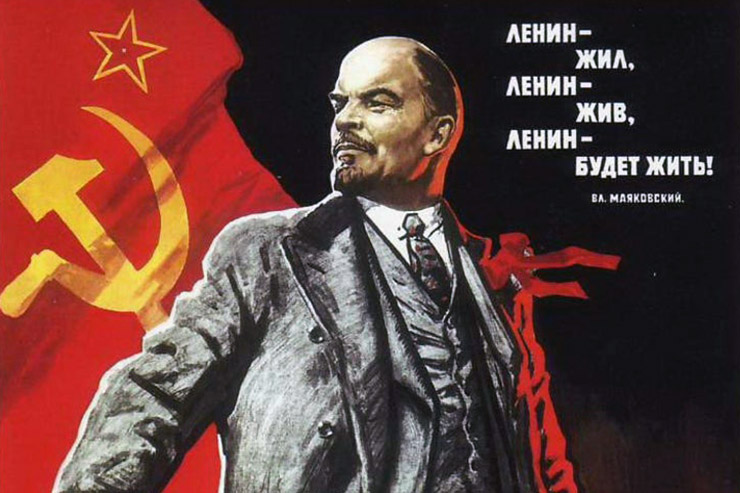
  • Unfolding the Secrets of the Copper Scroll of Qumran

    Unfolding the Secrets of the Copper Scroll of Qumran

    Qumran lies close to the Dead Sea at its north western end, some 40 km east of Jerusalem. Here, in an incredibly dry and sun bleached area there is, strangely enough, no need for zinc oxide protective blocker, or life guards. Lying some 1200 feet below sea level at the lowest point on earth, the damaging rays of the sun are screened out by the extra layer of atmosphere, and the concentration of salts in the Dead Sea is so high that anyone falling in immediately pops to the surface and cannot sink.

    If a settlement is ever reached between Israel and the Palestinian Arabs, under the so-called Road Map for Peace, due to reach its conclusion in 2005, it is likely Qumran will fall into the area of a new Palestinian State and one of the most important of all the Jewish historical sites will no longer be under Israeli jurisdiction. Prior to 1967 the area around Qumran was controlled by the Jordanians and had been since the end of the war which saw Israel established as an independent State in 1948.

    So why is Qumran so important in historical and biblical terms?

    Part of our modern awareness of its significance derives from a day back in the Spring of 1947 when the first of some 85,000 textual items, ranging from tiny fragments to almost complete scrolls were discovered in hillside caves behind Qumran. They turned out to contain biblical texts, written in ancient Hebrew, Aramaic, and Greek from virtually every book of the Old Testament, and as such, predated any previously found Hebrew material by over 1,000 years. For the first time scholars and theologians had the astounding opportunity to look at parts of the Bible in its original language, rather than from handed down versions copied, and re-copied, and altered over the intervening millennium.

    In essence these biblical texts, which comprise part of what are known as the Dead Sea Scrolls, showed we received most of the Old Testament in its authentic ancient form – but there were significant differences. These variations are now being incorporated into modern translations of the Bible. There are also commentaries amongst the scrolls which help explain and enhance, not only parts of the Old Testament but also the New Testament.

    A third group of texts describes the peculiar monastic like sect that lived at Qumran between about 150 BCE and 68 CE, who wrote and collected the Dead Sea Scrolls.

    Generally understood to be part of the Essene movement of the Second Temple period, the community at Qumran had a strong hierarchical structure with the ‘right teacher’ as its leader. He was backed by priests aided by Levites, who dictated the doctrine of the group. At any one time there were about 200 members living near Qumran and all members could vote in an assembly on other non doctrinal matters, whilst general day-to-day administration was in the hands of a triumvirate of three priests and 12 helpers. Everyone had a ‘pecking order’ in relation to their level of learning and holiness, as determined by their peers.

    The Qumran Essenes considered themselves ‘Sons of Light’ destined to fight the ‘Sons of Darkness’ – those who did not believe in their ultra-strict code of Judaism. They thought of themselves as the keepers of the original Covenant of Moses and as part of a direct line of priests that attended the Tabernacle during the Exodus from Egypt. For them the Second Temple, reconstructed by Herod the Great, who ruled Judaea on behalf of the Roman conquerors, from 37 to 4 BCE, was a corrupt place they would not visit.

    One of the most startling of their beliefs related to the calendar, which for them had to be solar based, giving a year containing 364 days. The intriguing thing about this practice is the Essene calendar differs from the Rabbinic Jewish calendar, which was based, and still is based, on lunar movement giving a year of 354 days. This meant the Essenes celebrated religious festivals at different times to the rest of their Jewish counterparts.

    Discovery of the Copper Scroll

    In March 1952, Henri de Contenson, an archaeologist seconded from France to work with the team at the École Biblique in East Jerusalem, was leading a team of ten Bedouin, when he discovered two lumps of what is now known as the Copper Scroll, in a hillside cave, some 2 km from Qumran.

    The Copper Scroll was in an highly oxidised condition, and had broken into two separate rolled up sections. In its original state it measured 0.3 m in width, 2.4 m in length, and was about 1 mm thick. No one knew quite how to open it up without damaging the text. One lunatic suggestion was to try to reduce the copper oxides with hydrogen, or even electrolysis, to recover the copper! After considerable preparatory research, John Allegro of Oxford University, a member of the original international translation team working on the Dead Sea Scrolls in Jerusalem, persuaded the École Biblique team to let him take one of the copper pieces to England. There the first piece of scroll was finally ‘opened’ by Professor H. Wright Baker at Manchester College of Science and Technology (now UMIST) in 1955, followed by the second piece in 1956. The technique Wright Baker used was to coat the outside of the scroll with Araldite adhesive and then slice the scroll, using a 4,000th/inch thick saw, into 23 separate sections. Ever since that time Manchester has retained a special interest in the Copper Scroll.

    Language of the Scroll

    In academic circles the Copper Scroll is known as 3Q15, the 3Q indicating it was found in Cave 3 at Qumran. It was written in an early form of Hebrew – a square form script – and has been shown to have linguistic affinities to pre-Mishnaic Hebrew and Aramaic, with some terms only comprehensible through study of Arabic and Akkadian. Other Dead Sea Scrolls were written in square form Aramaic script, or the so-called ‘Paleo-Hebrew’ script, derived from ‘Proto-Canaanite’ – itself an evolution from ‘Ugarit’, Egyptian hieroglyphs and ‘Phoenician’.

    The language was a major puzzles for scholars. The Hebrew palaeography (style of script) and orthography (spelling) in the Copper Scroll is quite unlike anything found in other texts of the time, from Qumran or from elsewhere. It has, nevertheless, been almost unanimously classified as one of the Dead Sea Scrolls, and now resides in the Archaeological Museum of Amman, in Jordan.

    John Allegro, a religious renegade, amongst a team of predominantly Catholic members, must have been the first person to translate the ancient Hebrew of the Copper Scroll into English. What he read, started a controversy that has raged for over 50 years amongst scholars. It contained a list of some 64 locations where fabulous treasures had been hidden, over a wide geographical area, including large quantities of gold, silver, jewellery, precious perfumes, ritual clothing, and other scrolls.

    The Jerusalem team refused to let him publish his findings, nervous that treasure hunters would come swarming down to disturb their work at the Qumran site. They had also already made up their minds the Qumran Essenes were essentially uninterested in worldly goods and shared their possessions amongst themselves.

    This mind set attitude runs throughout the academic and theological community studying the Dead Sea Scrolls, and as we shall see later on, they have preconceived ideas on what many of the scrolls ought to say and dare not entertain new ideas that conflict with long established dictums. New Dawn’s approach of trying to free up these types of entrenched views is highly pertinent to this particular field of study.

    The mixture of frustration and excitement soon became too much for Allegro as he began to realise there were other more sinister reasons for the strictures being put on him. He relieved his excitement about the prospect of rolling in treasure by mounting two archaeological expeditions to Jordan, in December 1959 and again in March 1960. Like many who get lost in the desert, he wandered around in a circle eventually coming back to where he started from, having found absolutely nothing.

    His frustration was, in the end, vented when Allegro disregarded his ‘masters orders’ and published his English version of the translation in 1960, under the title The Treasure of the Copper Scroll.

    Scholars, notably Father P’ere de Vaux, Head of the École Biblique et Archéologique Française de Jerusalem, and Father Joseph Milik, members of the original Dead Sea Scrolls translation team, denounced Allegro’s translation as defective and even cast doubts on the authenticity of the Copper Scroll’s contents, assigning them to folklore. Others were not so sure, and today the generally accepted view is the Copper Scroll contains a genuine list of real treasures.

    The Jerusalem team’s translation came out in 1962, entitled ‘Les “Petites Grottes” de Qumran, in the Discoveries in the Judaean Desert series. Although it is the ‘official’ version there is no accepted ‘definitive’ translation of the Copper Scroll to date, and all of the numerous editions published have many significant variants.

    In conventional translations of the Copper Scroll the weight of gold mentioned in various locations is generally given as adding up to a staggering 26 tonnes and silver 65 tonnes.

    When the weights of the treasures itemised in the Copper Scrolls are totalled, we come to the following:

    Gold – 1285 Talents
    Silver – 666 Talents
    Gold and Silver – 17 Talents
    Gold and silver vessels – 600 Talents
    Mixed precious metals – 2,088 Talents

    Items with unspecified weights are as follows:

    Gold ingots – 165
    Silver bars – 7
    Gold and Silver vessels – 609

    In Biblical Talent terms the sheer weight of the gold and silver is enormous. One Talent is estimated to be about 76 lb or 34.47 kg.

    The Copper Scroll seems to be referring to precious metals worth around $2 billion at current prices, but whose intrinsic historic value would be many times this figure!

    Where Did the Treasures Come From?

    The Scroll does not reveal by whom, or when, the treasures were buried, let alone why. But from some of the recognisable place names mentioned, the treasures are generally assumed to have been hidden within Judaea or near to Mount Gerizim, in Samaria (parts of modern Israel) and to relate to treasures of the Second, or possibly First Temple of Jerusalem. Both temples were known to be places where considerable wealth was accumulated through the donation of sacrificial gifts and ‘tithes’ by the general community.

    Controversy over the origins of the treasures listed in the Copper Scroll has led to the proposition of almost as many ‘conspiratorial’ theories as those promulgated for the President Kennedy assassination.

    There are over-riding problems with all of the current theories which, until now, have not been resolved. Scholars have puzzled over how so much gold could have come from the First or Second Temples of Jerusalem, let alone come into the ownership of an ascetic, relatively impoverished sect like the Qumran Essenes. More significant is the fact none of the conventional theories have led to the discovery of any of the treasures listed in the Copper Scroll.

    My own view is rather different. Whilst part of the treasures may well have come from the First or Second Temples at Jerusalem, as descriptions in the Copper Scroll certainly refer to Temple associated objects, when the secrets of the Copper Scroll are unravelled it becomes patently clear that another Temple is involved in the descriptions – and the Qumran Essenes were guardians, not just of treasure.

    Although, from palaeographic studies, the Copper Scroll is now thought to have been copied at a date between 150 BCE and 70 CE, there are enigmatic passages which correspond to early Biblical Hebrew, dating back to 700 or 800 BCE, and it contains many unique word constructions not in use in mainstream Judaism at the time of its production.

    The presence of Greek letters interspersed at the end of sections of the text aroused my curiosity, as their meaning was not understood and they appeared to be some kind of cryptic code. Many theories have been put forward to try to explain these apparently random Greek letters. They are variously considered to be made by scribes as reference marks of some sort, initials of place names, entry dates, or location directions, but none of these explanations is accepted as conclusive and they remain a puzzle.

    The numbering units given in the text, which relate to the amounts of treasure, are also not clearly understood by modern translators. The numerals are in an unsophisticated long-hand form involving apparently unnecessary duplication.

    There were other ‘anomalies’ for which there appeared to be no satisfactory answers. No other Dead Sea Scroll was engraved on copper, nor any known Hebrew texts from anywhere else, prior to the period.

    Why should this be? Why should a non materialistic community go to such trouble to preserve the information on the Copper Scroll? Where did they get the extremely pure copper (99%) from? How could they afford its very high cost ?

    When my metallurgical background attracted me to the subject, these questions were not being confronted.

    When I looked closely at the numbering units and weights used in the scroll, it soon became clear they were not of Canaanite or Judaean origin, where the Qumran Essenes resided, but Egyptian! Indeed, the numbering system in the Copper Scroll is typical of that in use in Egypt around 1300 BCE. The Egyptian system used repetitive single vertical strokes, up to the number 9, combined with repetitive decimal units for larger numbers.

    If the numbering system was Egyptian, why not the weight terms also? The ancient Egyptians had developed a system of weights specifically designed for weighing precious metals, and this system was based on the ‘Kite’, a unit weighing approximately 10g, but sometimes used as a double unit (KK) of 20.4g. I believe it is no coincidence the ‘hard ch’ sound of the weight term used in the Copper Scroll text equates to the Egyptian ‘K’ in ‘Kite’! When these ancient Egyptian weight units are applied, typical of the period prior to 1000 BCE, to calculate the quantities of gold, silver and jewellery mentioned in the Scroll, rather more realistic weights are obtained than those given earlier. The approximate totals of precious metals mentioned in the scroll now become:

    Gold – 26 kg
    Silver – 13.6 kg
    Mixed precious metals – 55.2 kg

    We were now looking at weights which are a fraction of those given in modern translations of the Copper Scroll, but they are at least plausible values, quite consistent with the amounts of gold and silver in circulation for the period. For example, if we look at the Harris Papyrus, an ancient text in the British Museum, dating to about 1180 BCE, it gives the total gold holdings accumulated over a 31 year period by Egypt (by far the most wealthy country in the ancient Middle East), as 387 kg. The downside is that the value of our treasure has diminished somewhat! However, we are still talking about hundreds of millions of dollars in real terms.

    The strange thing is that, although the type of numbering system used in the Copper Scroll might have persisted in Egyptian temple writing for some time after the Greek conquest of Egypt (in 330 BCE), its use was always specific to Egypt and it was not in use outside Egypt, except in the period of Egypt’s campaigns in Canaan from 1400 to 1100 BCE. The use of the ancient Egyptian system for weighing metals died out around 500 BCE and had previously always been specific to Egypt.

    Why would a document, ostensibly written by a devout, unorthodox Jewish community living near the Dead Sea in Judaea around the time of Jesus, have so many Egyptian characteristics? And why would the writing material, numbering system and system of weights used, be typical of Egyptian usage from a period at least 1,000 years earlier?

    Egyptian Influences

    From as early as 3000 BCE right up to 1200 BCE, Egypt had maintained an armed presence in Canaan, often as a stepping stone to further conquests to the east. Egypt’s shadow had obviously been cast over the early Hebrew’s experience, and yet, like other blind spots, modern theology shies away from considering the Egyptian connection too closely. Yet, all the major characters of the Bible, from Abraham and Sarah, to Jesus and Mary, had strong links to Egypt. Joseph, Jacob, all the founders of the 12 tribes of Israel, as well as Moses, Aaron and Miriam, Joshua, Jeremiah and Baruch, all lived for long periods in Egypt and were influenced by its culture and religions.

    After a lengthy analysis I came to the conclusion that Joseph had interacted with a pharaoh by the name of Akhenaten – a monotheistic pharaoh – and many of the basic tenets of Judaism, and by extension Christianity and Islam, came out of Egypt. The river that branches from the Nile at Amarna (ancient Akhetaten), Pharaoh Akhenaten’s capital city, is to this day know as ‘Bahr Yusuf’, ‘Joseph’s River’, and there are many other clues.

    When I started comparing descriptions of the treasure locations given in the Copper Scroll with sites at Amarna, it soon became apparent there were many close parallels. Not only that, some of the locations have already yielded archaeological finds of treasures that match very closely the descriptions and weights given in the Copper Scroll. Many of these treasures can be seen in Museums in Britain and Egypt. Having made a connection for the Copper Scroll to Akhenaten’s Holy city in middle Egypt, it was not surprising a most powerful piece of evidence emerged when I looked again at the strange Greek letters scattered in the Scroll. When the first 10 are put together they spell out the name Akhenaten!

    The validity of this conclusion is re-enforced by the opinion of Professor John Tait, of University College London, who considers the reading of the Greek letters as quite plausibly the name of the Pharaoh in question.

    Academic Responses

    Since publication of the first edition of my book, The Copper Scroll Decoded, in 1999, the main theory has been tested against a broad spectrum of academic and scholarly opinion, and in many instances response to the main thrust of the theory has been favourable and enthusiastic. Where there has been a negative response, it has been in the form of guarded scepticism, particularly as the theory presents a radically new view of religious evolution which strongly conflicts with enshrined orthodoxy.

    Response from academics, on specific areas of their own expertise, has generally been supportive. On alternative interpretations of the meaning of the Copper Scroll, for example, particularly in the context of the weight and number terms given in the Scroll, there has been a considerable consensus of acknowledgement that previous interpretations have not been correct. Amongst those scholars conceding previous translations are deficient, one of the world’s experts on the Copper Scroll, Judah Lefkovits, of New York, has reiterated the Scroll is much more problematic than some scholars would allow. He has written a number of books on the subject, including a recent classic work The Copper Scroll 3Q15: A Reevaluation; A New Reading, Translation, and Commentary, and now does not think the conventional translation of the weight term as a Biblical talent is necessarily correct. He has suggested it might be a much smaller weight, such as the Persian karsch. In supporting my claim, against the views of previous researchers, he now believes the total precious metal weights have been greatly exaggerated.

    One eminent scholar, Professor Harold Ellens, of the University of Michigan, has come out strongly in favour of the generalised theory, which he says is almost certainly basically correct.

    If there is a partial acceptance of the possibility of a connection between the Qumran Essenes and the Jacob-Joseph-Pharaoh Akhenaten period, it is in demonstrating the detailed historical links that most hesitancy arises.

    In the Kingdom of the Blind….

    Ben Zion Wacholder is a partially blind Professor of the Hebrew University in Cincinnati, but he has the ability to see through the tangled undergrowth of intertwined scrolls and is a king and much respected father figure in the land of his peers. In the celebratory 50th anniversary conference of the finding of the first of the Dead Sea Scrolls, held in Jerusalem, he created a major sensation by going against his colleagues in claiming Ezekiel as the first Essene.

    He perceives many of the sectarian Dead Sea Scrolls of the Qumran Essenes, such as the Temple Scroll, New Jerusalem Scroll, the Aramaic Testament of Levi, Qahat, and Amran, Jubilees, and the Cairo-Damascus documents, as derivative of Ezekiel’s thinking in refusing to recognise the legitimacy of the Second Temple and standing outside normative Judaistic authority. In a sense he recognises two quite separate sets of biblical texts – Ezekielian and non-Ezekielian.

    One of the most interesting aspects of this theory relates to Ezekiel descriptions of a Temple, which is generally taken to be a visionary Temple that would one day be built in Jerusalem. However, when you compare the descriptions Ezekiel gives in the Old Testament to those of the archaeological reconstructions of the Great Temple that stood in Akhenaten’s Holy City, it is quite clear he was talking about that actual Temple and not one which would one day stand in Jerusalem.

    Other Dead Sea Scrolls confirm this finding in incontrovertible detail. The New Jerusalem Scroll, for example, which by the way never mentions Jerusalem, ties its descriptions to Akhenaten’s Holy Temple. Recently Michael Chyutin, and Shlomo Margalit, Israeli architects, have conducted independent studies on the Scroll and come to the conclusion it is almost certainly describing Akhenaten’s city at modern day Amarna. Without the explanation I have put forward, for a link from Amarna down to the possessors and authors of the New Jerusalem Scroll, conventional history has no answer to the problem.

    Incidentally these studies show that two other Egyptian cities also exhibited similar characteristics to those described in the New Jerusalem Scroll – namely Sesebi, a city located between the second and third cataract of the Nile, and the Hebrew settlement on the Island of Elephantine, near Aswan in southern Egypt. A connection to Sesebi is not so surprising as it was, like Akhetaten, built by Akhenaten. Why the strange pseudo-Hebrew settlement on Elephantine Island, which is dated to at least the 7th century BCE, should show similarities is more intriguing. The people there worshipped Yahwe, the Israelite name for God, and built a temple as a place of worship. The explanation of how this isolated community came into existence has never been satisfactorily resolved.

    My own theory is they were a residual enclave that formed after the destruction of Akhenaten’s Holy City when survivors, mainly the earliest monotheistic Hebrews, fled south for safety. An Australian scholar, E. Maclaurin, of the University of Sydney, adds weight to my theory in a paper entitled Date of the Foundation of the Jewish Colony at Elephantine’, published in The Journal of Near Eastern Studies, Volume 27, 1968. He concluded that the style of worship at Elephantine, “…was of a form which could not have existed in a Hebrew group which had been exposed to the influences of Sinai and Canaan after the settlement.”

    In other words Maclaurin rules out any possibility of the community at Elephantine having derived from outside Egypt after the Exodus (c. 1200 BCE) let alone at the time of Solomon or the kings of Israel. Another Australian scholar, Ian Wilson, seems to date the Exodus to around 1500 BCE, but the general consensus is it took place some time in the 13th century BCE. These are not the only students of Dead Sea Scroll study with an Australian connection. I, too, have a warm affection for the country, having spent seven years of my early life in Sydney, where my mother was born!

    Another scroll, the Temple Scroll, spells out the dimensions of the longest Temple wall as 1600 cubits, equivalent to 800 m. Conventional scholarship has nowhere to go in Jerusalem to accommodate the Qumran Essenes’ concept of this building. The Temple Mount in Jerusalem measure only 550 m x 185 m. So they conclude it must be the description of a fictitious temple. The length of the longest wall of the Great Temple at Amarna has been measured, from detailed archaeological excavations, as being 800 m.

    The logical conclusion is the information in the Temple Scroll, in its original form, existed before Moses, and it described the plan of a real temple that was not the Temple at Jerusalem. The details must have been handed down in secret through a distinct line of Levitical priests, to the Qumran Essenes, who based their copy on the original version.

    When the Qumran Essenes built their main settlement building at Qumran in ‘exact’ alignment to the main walls of Akhenaten’s Temple, and constructed 10 ritual washing pools, they were echoing a recorded memory of that Temple. Uniquely, and unknown from anywhere else in Israel, one of the ritual washing ‘Mikvaot’ has four divisions  just as one of the ritual washing basins in the Temple at Akhetaten exhibited.

    That the name of Aten or Aton, the name by which Akhenaten knew his God, is embedded throughout the Old Testament, has many attesters, from Sigmund Freud onwards. Many Egyptian names are read with the letter ‘D’ or the letter ‘T’  Touchratta or Douchratta, Taphne or Daphne, and in Egyptian Coptic the letter D can be pronounced ‘D’ or ‘T’ . Thus, Aton could well be written ‘Adon -ai’ where ‘ai’ relates God to the Hebrews in the sense of ‘my master’.

    Earlier in this article the question was posed as to why Qumran was so important to historical and biblical history. Part of the explanation has now been outlined in this article, and is described in more detail in my latest book The Mystery of the Copper Scroll of Qumran, published by Bear & Co, part of Inner Traditions, in June 2003. However, as yet there is no complete answer to the question as the modern story of Qumran is still being written. There are more secrets to be revealed and I hope to do that in a sequel book now in preparation.
    [alert type=”general” dismiss=”no”]This article was published in New Dawn 80.[/alert]

    [alert type=”success” dismiss=”no”]If you appreciate this article, please consider subscribing to help maintain this website.[/alert]

    © New Dawn Magazine and the respective author.

    For our reproduction notice, click here.