New Dawn – World's Most Unusual Magazine

Category: Articles

  • Major Geopolitical Changes Now Underway

    Major Geopolitical Changes Now Underway

    From New Dawn Special Issue Vol 16 No 4 (Aug 2022)

    The following was one of the final pieces written by the late Australian geopolitical analyst James O’Neill. For several years, James had been writing on these matters for New Dawn. Today we are witnessing the beginning of the new multipolar world.

    The annual meeting of the Saint Petersburg International Economic Forum (STIEF) was held in June 2022. As usual, it received very little coverage in the Western mainstream media, which prefers to ignore developments in Russia or, if it mentions them at all, denigrate the importance of what is happening.

    The theme of the 2022 meeting was appropriately ‘New Opportunities in a New World’. Representatives of 115 countries and regions attended. Absent were representatives of Western countries.

    This year’s conference was notable on several grounds. It featured a groundbreaking speech by Russian President Vladimir Putin (of which more below), but perhaps even more importantly, it foreshadowed major changes in geopolitics and the world economic system.

    The war in Ukraine has undoubtedly triggered many of the responses observed in Saint Petersburg, but they have been in the making for some time. Developments such as China’s Belt and Road Initiative (BRI) have instigated new relations between countries that mark a significant transition away from the system created and dominated by the Western powers of Europe, North America and Australasia over the past 300 years. That era is rapidly drawing to a close. However, it won’t be a peaceful transition and things will likely get a lot more fractious before the new world order is established.

    The BRI has several smaller groupings, each important and contributing to the fundamental realignment of the world’s nations. But, again, these developments scarcely rate a mention in the Western media, long transformed by its own sense of importance and used to dealing with the developing world in other than an exploitative way.

    This has included the use of force by the Western powers to sustain what it perceives as its right to dominate the world and force recalcitrant countries to comply with its image of how the world should be run.

    Western interventions are almost invariably based on lies. One only needs to recall the invasions of Afghanistan and Iraq by United States-led forces based on allegations that Afghanistan was sheltering Osama bin Laden, the alleged mastermind of the “9/11” attacks in the United States in Sept 2001, and in the case of Iraq that they possessed weapons of mass destruction. Bin Laden died from natural causes in December 2001. His obituary was even reported in the New York Times. However, his death did not result in the Americans and their allies withdrawing from Afghanistan with apologies.

    There was a similar complete absence of apology and withdrawal when the American allegations about Iraq’s alleged weapons of mass destruction also proved to be a complete lie. Now, 20 years later, the Americans still occupy Iraq and show no inclination to leave that country, much less apologise and pay compensation. They are joined by their Australian colleagues who similarly refused a 2001 demand by the Iraqi government to vacate their country.

    Even the fake arrest and death of “bin Laden” in May 2011 did not result in the Americans and their friends withdrawing from Afghanistan. On the contrary, they stayed a further decade before staging an ignominious retreat.

    This prolonged occupation of the country gave rise to several theories about the real reasons for the invasion and occupation. Thwarting the development of Afghanistan was one reason. Others included control of the world’s opium trade, a long-standing American preoccupation where Afghanistan was responsible for more than 80% of the world’s opium supplies. Preventing Afghanistan from joining the Chinese-led Belt and Road Initiative was also a motivation. Unfortunately, none of these real motives for the invasion and prolonged occupation of Afghanistan were ever given much coverage in the Western media.

    BRICS & Putin’s Speech

    The Saint Petersburg forum was also crucial in connecting to other developments helping transform the world economy. The first of these is the emergence of what some have called the “new G8,” which combines four of the BRICS nations (Brazil, China, India and Russia – but excluding South Africa) with four other emerging nations: Iran, Indonesia, Mexico and Turkey. The BRICS heads of state recently participated via video link in the 14th BRICS Summit held in China.

    The combined gross domestic product of these eight nations exceeds the GDP of the original eight (as it was when Russia belonged.) The inclusion of Turkey in the grouping is perhaps the only surprise, given that country’s membership of NATO, but it marks the increasingly independent stance taken by Turkey in managing its affairs.

    Putin highlighted these developments in his speech at the Saint Petersburg meeting. It is worth noting some of the highlights of the speech that the official news outlet of the Kremlin noted was “extremely important.” Putin said that new centres of power had emerged and that the old unipolar world order was not coming back. Its colonial “way of thinking” had proven a failure.

    Putin noted that the United States had declared itself the victor of the Cold War and subsequently saw itself as the leader of the world in which its views were paramount. Putin rejected United States unilateralism. He referred to the “truly revolutionary, tectonic changes in geopolitics, in the global economy, and the technological sphere, and in the entire system of international relations.” Those changes were, he said, “fundamental, pivotal and inexorable.”

    Over the past two years, Putin noted, the money supply in the United States has grown by 38%. In the past, similar rises took decades but now it grew by 38% or $5.9 trillion in two years. The European Union money supply also dramatically increased over the same period. It grew by about 20% or €2.5 trillion.

    While at the end of 2020, imports of goods to the United States amounted to about $250 billion a month, now it has grown to about $350 billion a month. They printed and distributed money and used it, Putin alleged, to wipe out goods from third-world markets.

    The Western world tried to undermine and even crash the Russian economy with its sanctions. The reverse has been the case with the cost of living in Europe being driven up. The European Union has lost its political sovereignty and instead of damaging Russia it damaged its own population and economy. The direct cost of the sanctions imposed on Russia will cost the European economies over $400 billion in one year.

    The West says high energy prices are “Putin’s price hike,” which is a profoundly ignorant attempt at misdirection. Putin labelled this a “stupidity, designed for people who could neither read nor write.” The Russian leader assessed that the Western establishment’s disconnection from the people “will inevitably lead to a surge in populism and extremist and radical movements, major socioeconomic changes, degradation and a change of elites in the short term.”
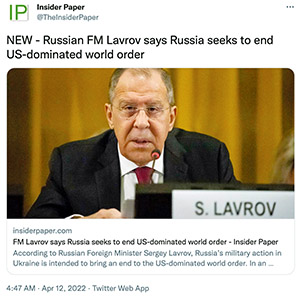
    Troubles with the food supply did not arise over recent months but can be traced back several years. The West caused those problems, Putin argued, in what he described as the “short-sighted actions of those who are accustomed to solving their problems at the expense of others.” Trade flows have been disrupted and distorted by printing money and what he described as a “predatory colonial policy.”

    On Russia’s intervention in Ukraine, Putin described it as a forced consequence of the genocidal policies pursued by the Kiev regime, whose “neo-Nazis have received the full protection of the West.” It is difficult to argue against that analysis. The Kiev regime did nothing to implement the provisions of the Minsk accord of 2015, and their total lack of action in this regard, apart from the inevitable breaking away of the two Donbass republics and Crimea, led directly to the war that has now broken out.

    The Ukrainian government has just banned two more political parties, bringing the total number of banned parties to nine. This is an open power grab by the Ukrainian president and his government, removing any opposition to their rule. This power grab and the cancellation of the legitimate existence of opposition parties receives no attention in the Western media. Instead, the Ukrainian president appears to be the darling of the West, with a willingness to overlook his manifest flaws and anti-democratic tendencies and policies to an astonishing degree.

    Ukraine’s president still indulges in the fantasy of Crimea being returned to Kiev’s control, a fantasy shared with Western nations who disregard entirely the history of how Crimea became part of Ukraine in 1954 and, more recently, the overwhelming vote of its population to reunite with Russia. This is an event the Western media persistently misreports as Russia’s “annexation” of Crimea.

    The President of China, Xi Jinping, delivered an address by video at the Saint Petersburg conference. Xi’s message was clearly directed to the whole of the global South. He evoked what he called “true multilateralism” in which the emerging economies of the world – not coincidentally making up the bulk of the nations in China’s Belt and Road Initiative – had to have “a say in global economic management.”

    The world, said Xi, is now entering a new period of turbulence and transformation amid the ongoing radical changes and the coronavirus pandemic. The growing divide between the South and the North and weakening cooperation in the area of development could plunge the erratically reviving global economy into a deep recession. Xi quoted in his speech what he described as ancient Chinese words of wisdom, where a clever man sees a seed of crisis in every opportunity and an opportunity in every crisis.

    Constructing an Alternative World Order

    A good example of the emerging nature of key economic groupings is the focus on the increasingly important relationship between members of the Eurasian Economic Union (Armenia, Belarus, Kazakhstan, Kyrgyzstan and Russia) and membership of the ASEAN Group of nations (Brunei, Cambodia, Indonesia, Laos, Malaysia, Myanmar, the Philippines, Singapore, Thailand and Vietnam).

    These two groups of largely developing nations are uniting in a common interest of closer international agreement. Countries that have been outside the Western-centred economic structure are combining to promote a genuine system of international cooperation.
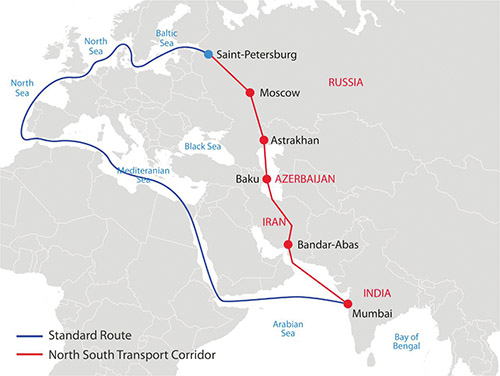
    Russia and Iran are accelerating the construction of a new International North-South Transport Corridor from Mumbai to the Baltic through Iran, the Caspian Sea, South, and Central Russia. Launched in 2002, the route is a shorter and cheaper alternative to the Suez Canal route.

    This is marked, among other things, by a rejection of the United States and the so-called “rules-based international order” which in practice means following the rules devised by, and for the benefit of, the United States. The development of a new order was one of the themes developed by Putin in his speech. This theme is finding favour not only in the international groupings noted above but is symbolised by developments on the ground like the International North-South Transport Corridor linking Russia with the Persian Gulf via the Caspian Sea and Iran. Russia has started using this new route to ship goods, bypassing the Mediterranean Sea/Suez Canal route.

    During STIEF’s ‘Russia – Africa’ Business Dialogue, the Russian academician and Eurasian Economic Union (EEU) Minister for Integration and Macro-Economics, Sergei Glazyev, pointed out that the time has come to go beyond shifting payments to national currencies. He advocates creating a unified exchange space in the EEU for price formation in national currencies rather than relying on currency exchange rates based on the US dollar.
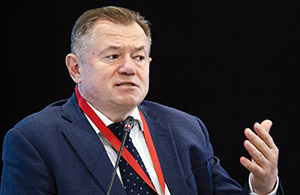
    The liberal, “rules-based” order is under challenge, both from a recognition induced by economic crisis and war, and the unfair advantage it offers Western powers. An alternative economic order is now taking shape. For example, at the recent 23-24 June BRICS+ summit, Russian President Vladimir Putin announced that BRICS (Brazil, Russia, India, China, South Africa), is “exploring the possibility of creating an international reserve currency based on the basket of BRICS currencies.” Eurasian Economic Union official, Sergei Glazyev (above), is the leading proponent for an independent international monetary and financial system based on sovereign equality of all nations.

    Glazyev argued for a completely different attitude to partnership and cooperation. In the hybrid war that the Western world is currently waging against the whole of humanity, he emphasised common interests with African countries. He says we are on the same front line, and to survive this war we need to strengthen economic ties, especially if a common exchange base was created to unite the Eurasian, Asian and African continents. Glazyev invited listeners to develop cooperation in creating this new monetory, financial, trade and economic architecture.

    Mikhail Myasnikovich, chairman of the board of the EEU’s Eurasian Economic Commission, told the forum that it was urgent the EEU discuss the development of not only trade and payments in national currencies but construction of an independent monetary system.

    These new organisations represent a major break from the old Western-dominated arrangements. They are the way of the future for countries like Australia, which has largely ignored the realities of its geography and will face considerable challenges as it is forced to turn away from the United States to ensure its economic survival.

    The Belt and Road Initiative, the largest of these emerging developments, represents an existential threat to the United States’ view of the world. One can expect the United States to take steps, which it is already doing, to combat this challenge to their previous supremacy. The pressure put on Germany to cancel the Nord Stream 2 project is one example of the United States fighting the emergence of a new system that challenges its previous dominance.

    As the Russia affairs expert Gilbert Doctorow (www.gilbertdoctorow.com) recently noted, Putin “argued the case that the present grave challenges to the global economic, financial and political systems have their source in wrong-headed policies in the collective West.” In Putin’s view, he wrote, “the West has not absorbed the lessons handed down in elementary school and are now trying, in the global Information War, to put the blame” for their inflation on Putin.

    The emergence of new multinational arrangements and multiple new trade routes approve a more powerful force than the old United States-dominated system. This is not to suggest the transition will be easy. The United States can be expected to fight hard and dirty to try and retain its previous dominance. To invoke a Chinese curse: we live in interesting times. The trick will be to maintain the changes without a war. That may prove the greatest challenge.

    It is clear from the meeting in Saint Petersburg and the BRICS summit in China that the world is undergoing epochal changes to the European system that has dominated the past 300 years. It will not be a change without challenges. It is the chance to recreate the world’s economic and social system in a new way. The challenge should be welcomed.

    [alert type=”general” dismiss=”no”]This article was published in New Dawn Special Issue Vol 16 No 4.[/alert]

    [alert type=”success” dismiss=”no”]If you appreciate this article, please consider subscribing to help maintain this website.[/alert]

    © New Dawn Magazine and the respective author.
    For our reproduction notice, click here.
  • The Outsider in the Twenty-First Century

    The Outsider in the Twenty-First Century

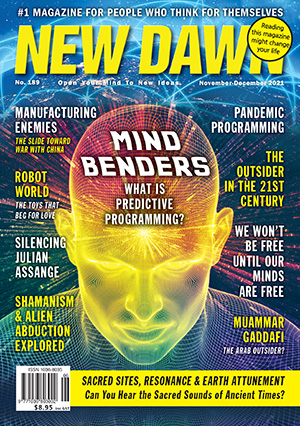
    From New Dawn 189 (Nov-Dec 2021)

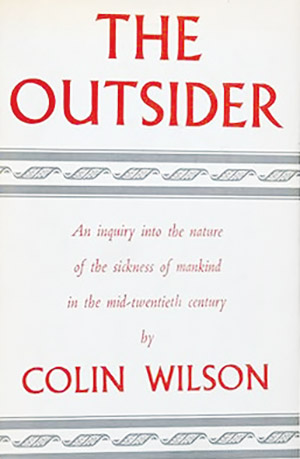
    In his debut book, The Outsider, the twenty-four-year-old British existentialist Colin Wilson (1931–2013) made his first attempt at analysing a character he felt was peculiar to our age, or at least to that of the mid-twentieth century, when the book appeared. 

    In the midst of the buttoned-down, conforming 1950s, published in the same year as Allen Ginsberg’s Howl (1956)and a year before Kerouac’s On the Road (1957), Wilson’s “inquiry into the nature of the sickness of mankind in the mid-twentieth century” was the surprise bestseller of the season. Prestigious reviewers like Philip Toynbee, Cyril Connolly, J. B. Priestley, Edith Sitwell and others tripped over themselves, heaping praise upon the duffle-coated, polo-necked young Midlands genius, who had “walked into literature as a man walks into his own house.” 

    True, his investigation into the tortured lives of Nietzsche, Nijinsky, T.E. Lawrence (“of Arabia”), Van Gogh, and other creative individuals, straining against the banality of the modern world and their own psychological barriers, made for some heady holiday reading. But it was the summer of the Angry Young Men, and for a time, Wilson’s Outsider was in the news as much as Elvis Presley and James Dean, two rebels of a different sort.

    The twenty-four-year-old British existentialist Colin Wilson basks in the glory of his debut bestselling book, The Outsider. He was later discarded by the intelligentsia of the day – which only proved his point and made him the quintessential voice for Outsiders. 

    As Wilson described him, his Outsider was someone with a pressing hunger for meaning and purpose in a world that was seemingly bent on denying him these.1 In the Middle Ages these individuals may have found a place in the church, which at that time still took such hunger seriously. 

    But in our modern – now post-modern – society, geared toward comfort, security, and conformity – what Wilson diagnosed in a later book as “other directedness” – there was no place for these individuals. They could find no home for their creative energies, and because of this, many of them came to a bad end. Nietzsche went insane, as did Nijinsky. Van Gogh killed himself. Lawrence committed a kind of “mental suicide,” retreating into anonymity as a private in the RAF, after the hollow celebrity following his Arab campaign. Many other Outsiders succumbed to drugs or alcohol or depression; only the strongest among them were able to break through the “fallacy of insignificance” and reach the source of “power, meaning, and purpose” within them. As one of Wilson’s Outsiders, the poet William Blake, put it in his Proverbs of Hell: “When thought is closed in caves, then love will show its roots in deepest Hell.” As Wilson’s many studies of “criminal Outsiders” show, when creative energy is frustrated, it turns upon the world before turning upon itself.

    Hardcover first edition of Wilson’s The Outsider.

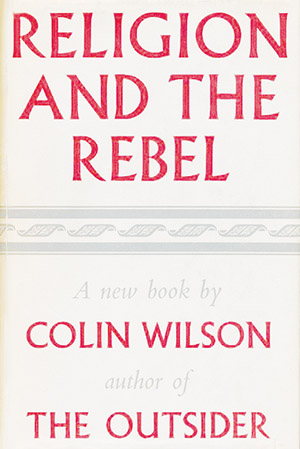
    Outsiders, Wilson wrote in Religion and the Rebel, his follow-up to The Outsider, “appear like pimples on a dying civilisation.” In his most savage attack on the “lack of spiritual tension in a materially prosperous civilisation,” Wilson said that “the heroic figure of our time” was “the man who, for any reason at all, felt himself lonely in the crowd of the second-rate.” Ours was a time of “cheapness and futility, the degrading of all intellectual standards.” In response, the Outsider could be “a maniac carrying a knife in a black bag, taking pride in appearing harmless and normal to other people,” as the sex-murderer Austin Nunne in Wilson’s first novel, Ritual in the Dark, does. Or he “could be a saint or visionary, caring for nothing but one moment in which he seemed to understand the world, and see into the heart of nature and of God.”

    Hardcover first edition of Wilson’s Religion and the Rebel.

    The Wilson of The Outsider and Religion and the Rebel was convinced that western civilisation was in decline, and indeed, one of the thinkers whose work he looks at in Religion and the Rebel is Oswald Spengler, author of the monumental The Decline of the West. Yet even here, Wilson’s pessimism is more emotional than intellectual and may have been fuelled by the critical volte-face he received when the initial celebrity of The Outsider faded, and the intelligentsia decided that they were wrong about the “messiah of the milk bars.” 

    By the time he had finished writing Religion and the Rebel, whatever anger Wilson had felt, had been expressed. He later came to feel that his “world-rejection” and attack on a “sick civilisation” was a bit much, although he understood them to be necessary steps in the Outsider’s attempts to know himself, to become, in Nietzsche’s phrase, “who he is.” The later books in Wilson’s “Outsider Cycle” offer a patient, detailed, wide-ranging analysis of contemporary culture, philosophy, science, and psychology from the point of view of the Outsider’s peculiar challenge: to find a means of triggering the “visionary faculty,” the moments of “yea-saying” and “affirmation” that free him from his paralysis, and show him his true place, as one of civilisation’s creators, not its misfits.

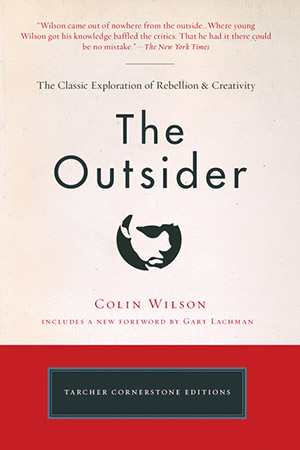
    The 2016 edition of The Outsider (TarcherPerigee)

    Wilson died in 2013, at the age of eighty-two. In the years following his debut, he produced an enormous number of books on a wide range of subjects and an equal number of essays, articles, reviews, lectures, and introductions to the work of others, myself included. He remained upbeat and positive, even during the difficult years following a stroke that left him practically paralysed and unable to read or speak. He is one of the most optimistic voices in the literature and thought of the past two centuries, although his optimism isn’t based on ignoring the reality of a world shot through with pain and suffering, the “chaos” of which the Outsider sees “too deep and too much,” as much of our “mind, body, and spirit” “positivity” is. He saw the world without a blindfold and took it neat, if I can mix my metaphors, maintaining the “bird’s eye view” that looked out on distant horizons of meaning, to the end.

    Wilson died just on the cusp of the world getting, well, strange – or at least stranger than it had been. He passed away before Brexit, before Trump, before Covid-19, before Conspirituality, before the climate crisis became impossible to deny, and before the general ontological and epistemological crises that I talk about in some of my books set in, although these were indeed on their way. 

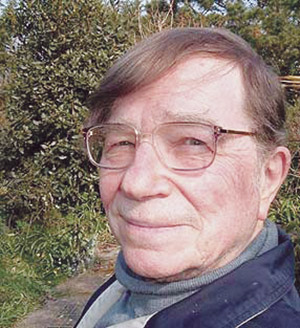
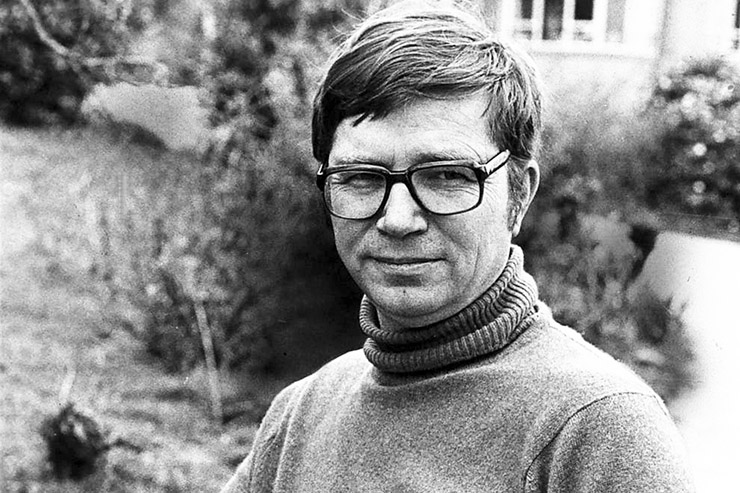
    A middle-aged Colin Wilson.

    A few years after his passing, my book about Wilson, Beyond the Robot: The Life and Work of Colin Wilson, appeared. As it turned out, my publisher had the rights to The Outsider and thought the time was right for a new edition, to which I contributed a new foreword. So the two books appeared at the same time. I was, of course, happy about this. But I admit I wondered if The Outsider would appeal to contemporary, younger readers, to whom names like Sartre, Camus, Hesse, and Dostoyevsky may not ring the same bells as they did for my generation and that of Wilson’s earliest readers. 

    Do Outsiders Still Exist?

    Is existentialism anything more than a topic on someone’s philosophy exam these days? In our post-everything world, do Outsiders still exist, and do their challenges mean anything? If there are Outsiders out there, what are they doing?

    Wilson’s answer to this, I believe, would be yes, Outsiders are still around. And I think he would add that they have never had it so good.

    The Outsider’s problem is freedom. Not political or social or economic or sexual freedom – all of which are, of course, important. The kind of freedom that obsesses the Outsider is an inner freedom, a kind of inner expansiveness and deepening, that lifts him out of the confines of the present, and the limitations of his own personality, and makes him aware of the potentialities of life of which he is usually unaware. It is essentially a widening of consciousness and a strengthening of its grip on reality. Freedom, for the Outsider, is equivalent to reality. His moments of freedom are moments when he is more in touch with reality, and not the pasteboard substitute which he usually takes for that elusive commodity. 

    Yet, although these moments reveal to him a world of overwhelming meaning and complexity, of infinite interest, they are fleeting and no sooner is “reality” glimpsed, and he loses sight of it. This is why in The Occult, Wilson defined the central obsession of his work as “the paradoxical nature of freedom.” 

    Why is freedom paradoxical? Because when our freedom is threatened, its value becomes indubitable, and we will fight tooth and nail to preserve it. Yet, imperceptibly and involuntarily, once our freedom is secured, we begin to “de-value” it. It becomes subject to what Wilson calls “the indifference threshold,” a kind of automatic loosening of our grip on the reality of our freedom or any of our real values. We “take it for granted” and may even come to feel our freedom is a burden, something to endure until something distracts us from it, like the latest pablum on NetFlix. Hence Erich Fromm’s once-influential book Escape From Freedom and Sartre’s dour one-liner telling us that “man is condemned to be free.” 

    Dominant .005% & Self-Actualisers

    Wilson’s subsequent body of work can be seen as an attempt to arrive at a method of inducing these moments of inner freedom, what the psychologist Abraham Maslow, on whose ideas Wilson draws, called “peak experiences,” moments of sudden, “absurd” joy and well-being. And we can also see Wilson’s work as a characterological study of the kind of people Maslow called “self-actualisers,” who are prone to peak experiences, and who share many traits with Wilson’s Outsiders, and with another demographic type, individuals whom Wilson calls the “dominant .005%.” All three have a need for this inner freedom in a way that most of their contemporaries do not, although in one way or another, we all have an appetite for this inner expansiveness, even if we satisfy it with the simple expedient of a glass of wine and a film. 

    But for these peculiar individuals it is a need as absolute as the need for food and other basic necessities. In fact, it is often greater than the need for these; more than one Outsider has faced starvation and poverty in his quest for the widening of inner space, just as more than one has succumbed to alcoholism or drug addiction in his pursuit of it. 

    Wilson tells us that the need for this inner freedom is an expression of what he calls the “evolutionary appetite,” the urge to grow, absorb experience and develop, and use our freedom, however clumsily, to gain more freedom. Wilson’s Outsiders and “dominant .005%,” and Maslow’s “self-actualisers,” are people driven by a compulsion to evolve, to gain deeper insight into and control over the mechanism of their own consciousness. And Wilson believed that since the nineteenth century, when Romantics first opened the gates to “inner worlds,” the number of people feeling this compulsion has grown.

    Nevertheless, when The Outsider first appeared, the number of people interested in inner freedom was still relatively few. As Wilson soon discovered, because of his focus on existential questions – questions, that is, about meaning – and disregard for political and social ones, he was quickly branded a “fascist” by his left-oriented, “socially conscious” contemporaries. Yet it was with The Outsider and books like Kerouac’s The Dharma Bums and other Beat productions that the widespread popularity of a kind of grassroots “spirituality” began, with the importation of Zen and other forms of “Eastern wisdom” into the west. By the mid-1960s, the taste for lux ex orient had fused with the burgeoning psychedelic movement and “counterculture” to form a generation of “seekers,” dissatisfied with the increasingly materialistic character of modern life. The Outsider was in no small part responsible for the Hermann Hesse craze of the late 60s and early 70s, which numbered an adolescent me among its many adherents. By the end of the mystic decade, the beatniks who had been vaguely “on the road,” were now moving in a more purposeful direction, on a “journey to the East,” the title of a short novel by Hesse.

    By now, the strange, threatening, “revolutionary” character of the “mystic Sixties” has become thoroughly domesticated, with yoga centres, “mind, body, spirit” emporiums, meditation classes, New Age bookshops, online Tarot readings, and any number of other “mystical” enterprises available at a click on the internet. Needless to say, not all of this is of equal value; a great deal is rubbish. Wilson’s generous view would be that yes, much of what is available today on the internet is junk and one must discriminate, but on the whole it is a good thing. Better a glut than a famine. And in any case, what differentiates the Outsider from his fellows is that he is “capable of a seriousness, a mental intensity, that is completely foreign to the average human animal.” Such a seriousness will have no problem separating the wheat from the chaff. The Outsider’s challenge requires him to ignore 99% of the chatter around him, to dismiss the noise and focus on the signal. 

    Obstacles & the “Indifference Threshold”

    Wilson came to see that ultimately the greatest obstacle to the Outsider “becoming who he is,” to finding a means of expressing the creative energies within him, is himself. Not society, not the government, not the bosses, or his friends, but his own tendency to self-pity and laziness. He needs to overcome his own neurotic self-division, to arrive at a discipline that focuses the mind so that his grip on reality remains firm. He needs to find a way to avoid the “indifference threshold” that allows him to take his freedom for granted. 

    Wilson came from a working-class background and before his debut worked at dozens of menial and manual labour jobs. More than once he pointed out that compared to how things were for many of his Outsiders, people today have secure, comfortable lives. The welfare state, nationalised medicine, and other safety nets are in place. They may not catch everyone, but compared to earlier times, the general standard of living today means that most of us live practically like royalty of old – better, with the internet and other tech at our fingertips. 

    He points out that optimists, like himself, and two of his literary heroes, Bernard Shaw and H.G. Wells – socialists both, I might point out – tend to come from difficult backgrounds. They are forced to “pull their cart out of the mud” from an early age and so are less inclined to give way to despair. Pessimists tend to come from comfortable backgrounds and are spoiled and lazy. Wilson’s bête noire, Samuel Beckett, famously spent most of his time in bed because it struck him that there was no reason to get out of it. No wonder many of the characters are paralysed or in other ways unable to move. That his nihilist, absurdist plays were awarded the Nobel prize for literature is a sign, Wilson believed, that we have come to accept his pessimistic conclusions – “there is nothing to be done” – as given. 

    Maslow also pointed out that adverse conditions are often more favourable to “self-actualising” than comfortable ones. We are at our best when we are “up against it” when meeting a challenge. Calls for government support for the arts may be the sociological equivalent of giving fertilizer to weeds. 

    Wilson’s most important discovery in his analysis of the “indifference threshold” is that crisis or inconvenience seems to stimulate the mind out of its lethargy when even “positive” inducements fail to do the trick. We all know how difficult it is to cheer someone up if they are in a bad mood; even the most pleasant things won’t do it. Yet, more often than not, if suddenly faced with some difficulty they can overcome, the bad mood vanishes and the grumpy individual is now happy. The inconvenience has awakened his will, with the paradoxical outcome that a real problem cheers him up. 

    Wilson’s Outsiders instinctively know that “the comfortable life causes spiritual decay just as soft sweet food causes tooth decay.” That is why so many of them followed Nietzsche’s advice and “lived dangerously.” Wittgenstein gave away a fortune to live as a schoolteacher in some Austrian backwater. Sartre never felt as free as when he was working for the resistance and could be arrested by the Gestapo. Another example that Wilson often gives is of the writer Graham Greene, another pessimist. 

    Waking Up with Russian Roulette

    As a teenager, Greene was so bored that he took to playing Russian Roulette to relieve his ennui. A minute before almost blowing his brains out, the world seemed so uninteresting that the only thing Greene could think of doing was killing himself. Yet, when he heard the hammer fall on an empty chamber, suddenly the world was positively exploding with meaning and interest, so much that the idea of killing himself seemed an absurd joke. Wilson points out that we have created civilisation to overcome inconvenience and eliminate crisis. Must we point a gun to our heads to enjoy it?

    What had happened? According to Wilson, the prospect of blowing his brains out caused Greene to involuntarily concentrate, to, as it were, make a fist with his mind and thereby strengthen his grip on reality. When he heard the hammer hit the empty chamber, he relaxed and was suddenly overwhelmed by the reality that in his boredom he was ignoring. The meaning and interest of which he suddenly became aware were always there, but Greene was on the wrong side of the “indifference threshold” and so could not see them, just as a colour-blind person is oblivious to a blazing sunset, or a deaf person to the birdsong accompanying it. The process ran like this: sudden total concentration, then – completely relaxation. (As Doctor Johnson pointed out, the thought of one’s imminent hanging concentrates the mind wonderfully, an insight shared by the philosopher Heidegger and the esoteric teacher Gurdjieff.) 

    Wilson points out that the poet Wordsworth explained to his friend Thomas De Quincey how he wrote his poetry. One evening Wordsworth had his ear to the road, listening for the mail cart, when he suddenly caught sight of a star, which struck him as extraordinarily beautiful. He then told De Quincey the secret of his poetry. It was that whenever he concentrated on something that had nothing to do with poetry – like listening for a mail cart – then suddenly relaxed, the first thing he saw always struck him as beautiful.

      Wilson realised that not only had Wordsworth revealed the secret of his poetry, he also hit on a means of inducing peak experiences. Readers of Wilson will know that all his work is essentially aimed at spelling out the significance of Wordsworth’s observation, and of developing methods of putting it into practice.

    Maslow’s Hierarchy of Needs

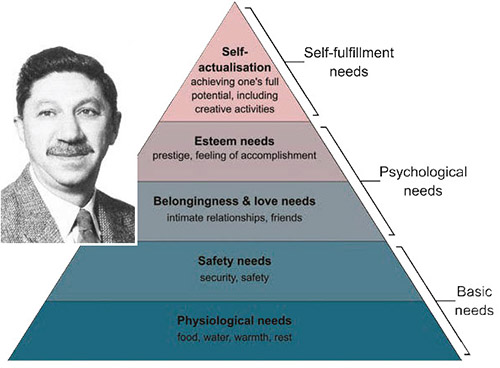
    Colin Wilson drew on psychologist Abraham Maslow’s (1908–1970) “hierarchy of needs” theory.

    What of the characterological types, Maslow’s self-actualisers, Wilson’s Outsider and his “dominant .005%”? Maslow believed that our need to grow, to develop – what Wilson calls our “evolutionary appetite” – is as basic as our need for food or sex. He developed what he called a “hierarchy of needs” to help understand human motivation. At the bottom is the need for food. Once this is satisfied, our need for shelter, a home of some sort, kicks in. When we have achieved this, we feel a need to share it with someone, that is, for love – and sex. The next need to awaken is what Maslow calls the need for “self-esteem,” the good opinion of others. These first four needs Maslow called deficiency needs; they are for things we lack. At the top of his hierarchy, Maslow put the need to “self-actualise,” to “become who we are,” to make real our potentials, to use our creativity and intelligence. This is a need to use what we have.

    Maslow believed that we all have these needs. But toward the end of his life, he was troubled by the observation that not everyone reaches the top of the hierarchy. That is, not everyone self-actualises. Many people seem happy to remain at the self-esteem level and do not feel the need to be creative. In Wilson’s terms, they do not feel the pangs of the “evolutionary appetite” so painfully as his Outsiders do. Nevertheless, a substantial percentage of the population do feel them and work toward “actualising” themselves.

    Wilson’s “dominant .005%” share some characteristics with Maslow’s “self-actualisers.” Wilson learned from the writer Robert Ardrey, author of The Territorial Imperative, that “dominant” individuals make up 5% of all animal groups. This is also true of humans. The human dominant 5% comprises politicians, pop singers, sports figures, film stars, television personalities, high profile academics, successful businessmen, internet influencers – just about everyone who displays “natural” leadership qualities and has “push” and “drive” and perhaps a bit of talent; it also includes not a few criminal types. 

    Wilson discovered an interesting thing. This dominant 5% does not include the most dominant characters. They make up only a minute fraction of the population, .005% perhaps. These individuals share something with Maslow’s self-actualisers, just as the dominant 5% share something with his “self-esteemers.” Both the self-esteem oriented individual and the dominant 5% need other people; the one for his good opinion of himself, the other to express his dominance. Without others, they are lost. The ruthless businessman is not so impressive without his anxious underlings, just as a pop star without ogling crowds seems absurd. Without those around him patting his back, the self-esteemer is at a loss. Yet both the self-actualiser and the .005% are free of this liability. In fact, for both, other people are often a problem.

    The .005% and “self-actualisers” pursue creative activities for their own sake, for the sheer challenge and joy of it, for the inner expansion that accompanies creative work of any kind. Yes, the artist wants his paintings seen, the writer his books read, and the musician his music played and appreciated. But they do not paint, write, or compose for that reason, at least the real artist, writer, or composer doesn’t. They are less influenced by their personal needs than they are by impersonal ones, i.e., the urge to grow beyond their personalities, into the realms of objective meaning and reality. Into, that is, that reality that the Outsider glimpses in his moments of power and strength.

    In his study of crime, Wilson makes some interesting use of Maslow’s hierarchy of needs, seeing it as a way of understanding the changing character of murder over the centuries. I can’t go into detail about this here, but the basic idea is that in the twenty-first century we have entered a strange era in which the self-esteem murder – the murder in which the killer “becomes somebody,” with his name in the news – common to the late twentieth century, has shifted into murder as a warped form of creativity, the strange seemingly “motive-less murder.” This, indeed, seems a rather dark way of recognising a society’s psychological growth. But I think we can apply the same idea in a perhaps less gruesome area, that of social media. 

    Get the issue this article appears in

    An Evolutionary Leap?

    I submit that, at least in the developed world, society as a whole has entered the self-esteem rung on Maslow’s hierarchy and that the evidence for this is social media. Here we compete for “likes” and “friends,” and draw attention to ourselves in any way possible, hoping to stand out for a few moments in the “stream” of everyone else doing exactly the same thing. Otherwise mediocre personalities become “influencers” and Instagram stars at the tap of a phone. Yet this may be a good sign. Because if Maslow is right, it means that there are quite a few self-actualisers out there who are too busy satisfying their evolutionary appetites to bother tweeting about it or to ask for their friend’s approval. Along with the .005%, they are quietly working away at “becoming who they are” and aren’t concerned if anyone knows about it. They are Outsiders whether they have ever read Wilson or not.

    I also believe that just as elementary particles no longer in contact with each other continue to behave as if they were – through the miracle of quantum entanglement – and just as neurons in the brain involved in the same operations fire at the same time, although they are not contiguous, the people making up Maslow’s self-actualisers, Wilson’s .005% and Outsiders, spread out all over the planet, act, in someone unknown to them, in a similar manner. They may not know each other – most likely they are too busy to get acquainted – but their individual actions may add up to something that transcends their individual situation. And that may be the evolutionary leap that Wilson firmly believed was on its way.

    [alert type=”general” dismiss=”no”]This article was published in New Dawn 189.[/alert]

    [alert type=”success” dismiss=”no”]If you appreciate this article, please consider subscribing to help maintain this website.[/alert]

    References (books by Colin Wilson):

    The Occult (London: Watkins Books, 2015)
    The Outsider (New York: TarcherPerigee, 2016)
    Religion and the Rebel (London: Aristeia Press, 2017)
    The Age of Defeat (London: Aristeia Press, 2018)

    Footnote

    1. I should point out that Wilson had originally sketched a chapter of the book dealing with female Outsiders, but this had to be scrapped. It does exist in pamphlet form, Outline of The Female Outsider (Abraxas Collector’s Series 1), although its availability is uncertain. Feminists would do well to read it, as in it they will discover an unexpected ally.

    © New Dawn Magazine and the respective author.
    For our reproduction notice, click here.

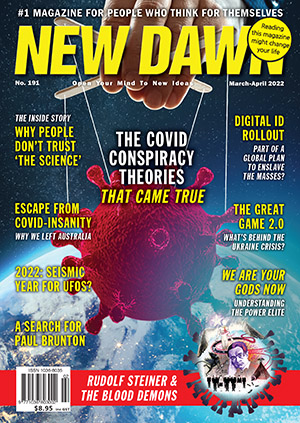
  • Why People Don’t Trust ‘the Science’: The Inside-Story of Injection Hesitancy

    Why People Don’t Trust ‘the Science’: The Inside-Story of Injection Hesitancy

    From New Dawn 191 (Mar-Apr 2022)

    The following article, published in early 2022, is a reminder of how the “science” of the COVID-19 pandemic was relentlessly politicised which in turn subjected it to constant mutations to conform to official narratives.

    One of the answers to the title of this article is: “trust” has to be earned. We “trust” the science that enables aviation because, in the overwhelming majority of cases, planes do not fall out of the sky. Theories of aerodynamics were tested and demonstrated in repeated experiments until they could be proven, as much as anything can be “proven.” This is not the case when it comes to the anti-COVID-19 injections and certain other public health measures.

    Governments and health authorities marketed the jab as a necessary intervention to reduce hospitalisations, initially implying that being injected would end the pandemic. This is not how vaccines traditionally worked. Another answer to the title is that, in this pandemic, vaccinology has not been a “science.” 

    The definition of “vaccine” has been changed by health authorities, not merely to update the latest technologies but to change the meaning of the effect of vaccination and immunisation. Standard procedures for vaccine development, particularly the ten-year timeframe, have been abandoned. A small number of top-level, pro-injection scientists ignored by media have cheerfully described the jab and its implementation as an “experiment,” yet the same media that hide these scientists say that the injection is not an experiment. 

    Nationalistic propaganda has selectively demonised certain injectable products and favoured others, even though the alleged vaccines are similar in terms of development timeframes and efficacy rates. 

    After being told that the injection will allow the public to return to “normal,” governments and health authorities then introduced – and many imposed – a second injection, followed by a third, then a proposed fourth. With no large-scale clinical trials, people were told that they could “mix and match” the injectable products (e.g., an AstraZeneca first dose, a Moderna second, a Johnson and Johnson third. This is called “heterologous vaccination”). 

    With COVID-related hospitalisations continuing, along with mask-wearing and social distancing, many who chose to be injected, as opposed to being coerced, began to question the validity of government claims. 

    EYEING THE NEEDLE

    So, who exactly doesn’t – or didn’t – trust the injection “science”? An October 2020 survey found that attitudes toward proposed vaccination varied significantly from country to country. 

    In 2020, only a third of adult Americans surveyed wanted a vaccine “as soon as possible.” Those who did had good reason. Most of them were over-65, i.e., in the most COVID-vulnerable category and had or had lived with someone with underlying health conditions. Four in ten respondents of all ages were split between those who would definitely get vaccinated and those who wanted to wait and see. Lumping “definitely” with “wait and see” is a strange way to tabulate poll data, but there it is. The pollsters found that 9 per cent of respondents would get the jab only if coerced (i.e., in order to continue their education or employment). Fifteen per cent said that they would never get injected. Unlike the “as soon as possible” group, the “never” cohort tended to be Republican (41 per cent to 25) and most had no higher education (53 per cent to 38). This paints refuseniks as reactionary rubes. But other polls show that vaccine hesitancy is high among PhDs, who also tend to be Democrat voters.

    An online survey of five million people took place between January and May 2021, when the injections were rolled out. Hesitancy across all groups decreased from a quarter to 16 per cent. The hesitant reported fear of side effects as their main reason. It is also worth noting that for millions of people in our “capitalist” order, a missed workday can mean no pay or even the sack. The survey authors found a U-shaped curve; the least and most educated alike were the most injection-hesitant: 20.8 per cent of people with a “high school or less” education were reluctant, as were 23.9 per cent of PhDs, compared to 8.3 per cent who had master’s degrees and 18.3 who had “some college” education. Apparently, this revelation – that those in the “hesitant” cohort included so many people with PhDs – was too embarrassing for the PLoS journal to publish because it goes against the “trust the science” narrative. This information appears in the pre-print, but not in the final publication. It is not disputed or analysed but simply removed.

    POLITICAL PARTISANSHIP

    Science should be objective. Can an aeroplane travel at high altitudes repeatedly without falling, regardless of the politics involved? Does gravity act on an object regardless of the political affiliation of the person dropping the object? 

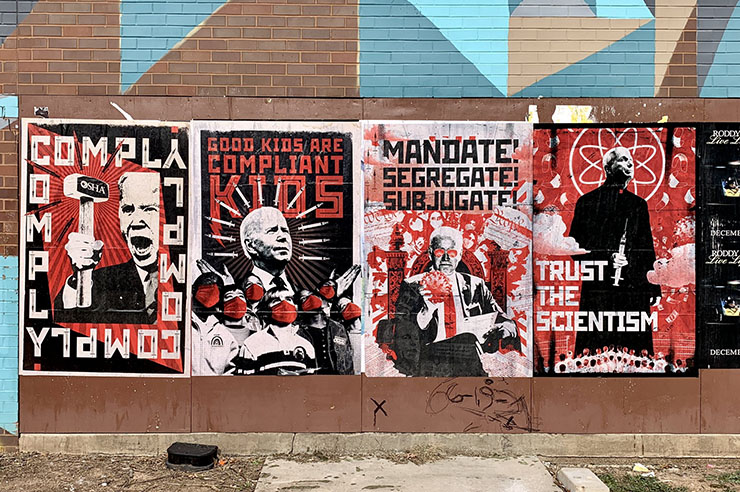
    People don’t “trust the science” of the alleged vaccine because it is politicised. In July 2020, 15 per cent of Americans said that an endorsement of the injection by US President Donald Trump would encourage them to take it. However, more than 30 per cent said that Trump’s endorsement would put them off. 

    In September 2020, US presidential candidate Joe Biden undermined public confidence by implying that Trump’s Operation Warp Speed had rushed the development of the jab in order to score political points. Even mask-wearing was politicised. At the start of the pandemic in March 2020, Dr Anthony Fauci, Chief Medical Advisor to Presidents Trump and Biden, and head of the National Institute of Allergy and Infectious Disease, told 60 Minutes, “There’s no reason to be walking around with a mask. When you’re in the middle of an outbreak,” he continued, “wearing a mask might make people feel a little bit better and it might even block a droplet, but it’s not providing the perfect protection that people think that it is.” Three months later, after mask-wearing policies had been changed, Fauci told TheStreet that his flip-flop occurred because “it was at a time when personal protective equipment, including the N95 masks and the surgical masks, were in very short supply.” Fauci claimed he wanted to ensure health care workers received masks as a priority.

    The same thing occurred during the US Democratic caucuses at the start of the pandemic. The advice of the US Centers for Disease Control and Prevention (CDC) was to stay home. Democrat-majority cities and states, including San Francisco and New York, didn’t wait for lockdown mandates. Yet, as the Democratic National Committee (which runs the Party) attacked Trump for minimising the seriousness of the virus, they also told their voters, poll workers, and volunteers to go to booths and elect left representatives; i.e., ignore the CDC advice and stand maskless close to elderly and ethnic minority voters and volunteers (i.e., the most vulnerable). Biden tweeted on 15 March: “If you are feeling healthy, not showing symptoms, and not at risk of being exposed to COVID-19: please vote.”

    Another reason people don’t “trust the science” is that media are blatantly partisan. For instance, in March 2020, Twitter Safety announced that it would censor misinformation concerning the pandemic. But the “misinformation” they censored tended to come from the political right. For instance, Biden’s lowering of public confidence in the jab and his violation of CDC guidelines by insisting people vote were not removed by Twitter: the company that, under pressure from the FBI, later deleted President Trump’s account. 

    VACCINE NATIONALISM

    Either a “vaccine” works or it doesn’t. Science doesn’t care if the vaccine is American, British, Chinese, or Russian. Yet, the COVID-19 jabs have been demonised and discredited or promoted and canonised, according to their country of origin. The British Army’s psychological warfare unit, the 77th Brigade, has been targeting injection sceptics as possible enemies of the state linked to Russia. To pre-empt Russia’s success in producing the first COVID-19 jab, Western intelligence agencies claimed that Putin stole research from Western pharmaceutical companies. But if public health was the priority, not nationalistic point-scoring, wouldn’t the West happily share information with the East?

    Nations rushed their purported vaccines to win the global battle of ideas and enjoy international prestige. Russia happened to get their first with Gamaleya’s Sputnik-V. The American journal Nature quoted vaccinologists as denouncing the Russian jab as “reckless.” The same criticism was applied neither to American companies nor to the UK and Sweden, which quickly rolled out their joint AstraZeneca jab under the same reckless circumstances. AstraZeneca used trial “volunteers” in poor countries like Brazil, one of whom died. Britain outsourced some of its vaccine production to its former colony, India’s Serum Institute. In November 2020, alleged links between the Institute and jab-induced neurological damage were reported. The Indian-produced version of the jab did not receive approval from the European Union’s Medicines Agency, meaning that the estimated five million Brits injected with the India-produced version of the AstraZeneca jab had to abide by EU quarantine rules when holidaying. Again, either a “vaccine” works or it doesn’t. 

    Intelligence agencies are concerned about industrial espionage and invoke vague and legally undefined notions of “national interest” to use surveillance to maintain national prestige. Just as the moon landing in the 1960s was America’s way of getting one up on the USSR in the court of global technological public opinion, the race to beat COVID with injections was largely influenced by prestige propaganda. 

    In April 2021, European Union member states exploded the 77th Brigade’s efforts to promote the “British jab” on behalf of AstraZeneca. The leading EU nations – Germany, France, Italy, and others – cited health concerns, particularly blood clots, as the reason for banning AstraZeneca’s (AZ) jab. Despite the jab being co-produced by a Swedish (i.e., EU) company, it is likely that the real reason for the ban was to punish the UK for its recent Brexit (leaving the Union). It is also possible that because BioNTech is a German company and Germany is the leading economy in the EU, the member states wanted to privilege the US-German Pfizer/BioNTech jab. We also don’t know what kind of lobbying against AZ occurred behind the scenes by rival companies like Pfizer. In addition, while the US approved AZ’s antibody products, it did not authorise the AZ jab. 

    This did not boost the confidence of “vaccine” sceptics. Either the AZ jab is safe or it is not. How come the AZ injection is safe for British people but not for Europeans or Americans?

    WHAT DOES “SAFE AND EFFECTIVE” MEAN?

    US Centers for Disease Control and Prevention’s (CDC) evolving definition of “vaccination” in the space of a few years. These changing definitions on the CDC website were tracked by accessing the ‘Wayback Machine’, a digital archive of websites (Source: twitter.com/repthomasmassie/status/1435606845926871041)

    Vaccines take a decade to design, produce, test, and distribute for a reason. Humans are complicated beings who live in even more complicated societies, and much can go wrong. In a vaccine trial, some questions include the dose-to-antibody stimulation ratio according to age, comorbidities, and pregnancy. If a small dose of vaccine stimulates a large antibody response, this is one measure of efficacy. If the ratio of death and injury is considered by health authorities to be “acceptable,” another measure of efficacy can be added, such as: how much viral load is present in the vaccinated when contracting the given virus (“breakthrough cases”) compared to antibody numbers? This also relates to transmissibility among the vaccinated. If safety, dose-to-antibody ratios, breakthrough cases, and low transmissibility can be determined in large groups (typically tens of millions of people by the end of the trials), then the given vaccine can be said to be safe and efficacious: at least by pre-COVID vaccine standards. In addition to all of the above, these measurements must also be specific to the given virus strain. 

    These measures went out the window with the COVID jabs. Both peer-reviewed journals and mainstream media boasted that the biggest vaccine candidates – Pfizer, AZ, Gamaleya, etc. – were safe and effective. Even though the EU and US banned AZ over blood clots, the academic literature continued to vouch for the product’s safety. So: is the AZ product safe and merely a victim of vaccine nationalism and perhaps secret lobbying, or is it dangerous by pre-COVID vaccine standards? 

    The Lancet published an extraordinary paper on vaccine efficacy, which the mainstream media tried to discredit with their self-appointed “fact-checkers.” The study pointed out that when absolute risk reduction measures are added to the data of the major vaccine candidates, “efficacy” drops from the 70-90 percentiles claimed by other peer-reviewers down to literally point one or just above one per cent, depending on the “vaccine.” 

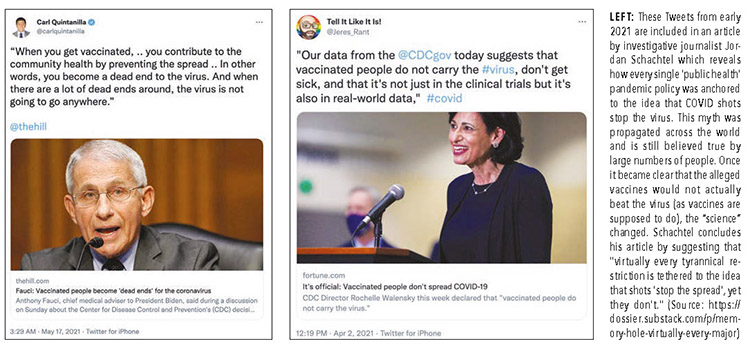
    Another factor in not trusting the “science” is that politicians were initially eager to promote vaccines as a way of ending the pandemic and “getting on with our lives.” But once it became clear that the alleged vaccines would not actually beat the virus (as vaccines are supposed to do), the “science” changed. Fauci not only lied about masks, he also kept changing his mind on herd immunity. Fauci initially said that vaccination rates among the population need to be 70 per cent for herd immunity to be achieved. A few months later, when it became clear that the injections were neither safe nor effective, Fauci said that 90 per cent injection would be required to achieve herd immunity. The “science” of who or what constitutes “vaccinated” also changed. Because politicians and health officials like Fauci were not clear from the outset that the public would likely need to be put on a vaccine schedule (i.e., to have more than one dose), people wrongly assumed that a single shot would suffice. It was then reported that a course would be required. 

    After some controversy over the necessary length of time between the two injections, the definition of “fully vaccinated” became someone who has had three doses: even though brands can be mixed and matched without large-scale clinical trials on the efficacy of heterologous COVID vaccination. For example, while the propaganda machine continues to claim that the Pfizer jab is “90 per cent effective” (again, what does that even mean?), the credible pre-print literature now concedes that the Johnson and Johnson jab, for example, is three per cent (more consistent with findings in The Lancet’s study noted above). How could one be fully vaccinated with two Pfizers and a near-zero efficacy J&J? All of this explains why we’ve gone from “get jabbed and get your life back” to “vaccines lessen severe symptoms but do not prevent symptoms or viral spread.” 

    From this, we can conclude that they are not real vaccines, as understood by the previously used definition. Another reason that people don’t “trust the science” is because most people have contracted or will contract COVID. As most cases are either asymptomatic or mild and confer better immunity than the injections, the question remains for most people: why risk the jab? 

    However, whatever they are, the jabs do seem to play an important role in reducing the risk of severe illness that requires ICU treatment. Patients must therefore make informed choices with a personal risk-reward analysis. Non-injection measures, such as vitamin D increase and monoclonal antibodies, might, depending on the patient, have the same or better results as the jabs. We can’t know because Big Pharma and government has favoured the blunt instrument of injection over the gentler measures of vitamins and therapeutics. 

    Get the issue this article appears in

    Is this Science?

    Lies and nonsense continue, both in mainstream media and in the academic literature. For instance, the numbers presented in a recent peer-reviewed paper show a clear (though small) increase in early-pregnancy miscarriages in “vaccinated” women. But the paper’s words conclude that there is no such increase. Likewise, mainstream media lie about the risks of COVID to children. In October 2021, the New York Times retracted its claim that 900,000 American children had been hospitalised with COVID, when the real number was (still an awfully high) 63,000. Many media are sponsored by Pfizer. CNN even went as far as awarding Pfizer’s boss, Albert Bourla, its CEO of the Year 2021 award. 

    Pfizer’s media-buying power is such that in November 2021, NBC’s senior medical correspondent, Dr John Torres, had a Freudian slip. He said: “Last week, 118,000 children ended up with Pfizer…” Err, did he mean COVID? Torres either lied or got the numbers preposterously wrong. He went on to claim that “unfortunately, there have been 146,000 deaths, which according to the American Academy of Pediatrics, puts COVID now in the top-ten causes of death for children” in the US. People also don’t “trust the science” because the Twitter police did not remove NBC’s misinformation – that’s because NBC is part of the Democrat-supporting mainstream media. In reality, by January this year, over 120,000 children worldwide had died of/with COVID (or “Pfizer,” as Torres said). In the US, the number by December 2021 was 1,000: still appallingly high but nowhere near the 146,000 figure claimed by Torres.

    It is rare but not unheard of that people need to follow a month or two-month-long vaccine schedule with two or even three injections, such as the hepatitis B vaccine. But four doses? At the point where the “vaccine” is most efficacious (again, meaning what?) Israel health officials privately warn that the body risks “immune system fatigue,” where the immune system has been so shot with attenuated virus, spike protein and/or mRNA, that it is worn out. Is this science or one big, pre-scientific, profit-driven experiment using a desperate and frightened public, coerced with mandates, as lab animals? 

    [alert type=”general” dismiss=”no”]This article was published in New Dawn 191.[/alert]

    [alert type=”success” dismiss=”no”]If you appreciate this article, please consider subscribing to help maintain this website.[/alert]

    Footnotes

    1. Amo Spiro, “Pfizer exec calls Israel ‘a sort of laboratory’ for COVID vaccines,” Times of Israel, 12 September 2021, www.timesofisrael.com/pfizer-exec-calls-israel-a-sort-of-laboratory-for-covid-vaccines/ and Dr. Eric Rubin, Food and Drug Administration Center for Biologics Evaluation and Research Office of Vaccines Research and Review, 170th Meeting of the Vaccines and Related Biological Products Advisory Committee, 26 October 2021
    2. Liz Hamel, Ashley Kirzinger, Cailey Muñana and Mollyann Brodie, “KFF COVID-19 Vaccine Monitor: December 2020,” Kaiser Family Foundation, www.kff.org/coronavirus-covid-19/report/kff-covid-19-vaccine-monitor-december-2020
    3. Wendy C. King et al. (2021) “Time trends and factors related to COVID-19 vaccine hesitancy…,” www.medrxiv.org/content/10.1101/2021.07.20.21260795v1.full.pdf
    4. Wendy C. King et al. (2021) “Timeline trends…,” PLoS One: 10.1371/journal.pone.0260731
    5. Joseph Ax, “Democrat Biden warns against rushing out coronavirus vaccine, says Trump cannot be trusted,” Reuters, 16 September 2020, www.reuters.com/article/us-usa-election-biden-idUSKBN2671NW
    6. Ewen Callaway, “Russia’s fast-track coronavirus vaccine draws outrage over safety,” Nature, 11 August 2020, www.nature.com/articles/d41586-020-02386-2
    7. Eduardo Simões and Ludwig Burger, “AstraZeneca COVID-19 vaccine trial Brazil volunteer dies, trial to continue,” Reuters, 21 October 2020, www.reuters.com/article/us-health-coronavirus-brazil-vaccine-idUSKBN2762MO
    8. Sanjay Kumar, “‘Malicious and misconceived.’ Indian vaccine producer hits back at complaint from trial volunteer,” Science, 2 December 2020, www.science.org/content/article/malicious-and-misconceived-indian-vaccine-producer-hits-back-complaint-trial-volunteer
    9. Schengen Info, “5 Million Britons With Indian-Made AstraZeneca Vaccine May Face EU Travel Ban,” 3 July 2021, www.schengenvisainfo.com/news/5-million-britons-with-indian-made-astrazeneca-vaccine-may-face-eu-travel-ban
    10. Samantha McGrail, “European Countries Suspend Use of AstraZeneca’s COVID-19 Vaccine,” PharmaNews Intelligence, 8 April 2021, https://pharmanewsintel.com/news/european-countries-suspend-use-of-astrazenecas-covid-19-vaccine
    11. Piero Olliaro et al. (2021) The Lancet: doi.org/10.1016/S2666-5247(21)00069-0
    12. Barbara A. Cohn (2021) “Breakthrough SARS-CoV-2 infections in 620,000 U.S. Veterans, February 1, 2021 to August 13, 2021,” medRxiv, doi.org/10.1101/2021.10.13.21264966
    13. Elyse O. Kharbanda et al. (2021) “Spontaneous Abortion Following COVID-19 Vaccination During Pregnancy,” JAMA, 326(16): 1629-31
    14. Isaac Schorr, “New York Times Retracts Massive Exaggeration of Children Hospitalized by COVID-19,” National Review, 8 October 2021, https://news.yahoo.com/york-times-retracts-massive-exaggeration-163906675.html
    15. UNICEF, “Child mortality and COVID-19,” January 2022
    16. Jack Dutton, “Over 1,000 Children in U.S. Have Been Killed by COVID,” Newsweek, 16 December 2021, www.newsweek.com/over-1000-children-u-s-killed-covid-1660124
    17. Isabel Kershner, “Israel Considers 4th Vaccine Dose, but Some Experts Say It’s Premature,” New York Times, 23 December 2021, www.nytimes.com/2021/12/23/world/middleeast/israel-vaccine-4th-dose.html

    © New Dawn Magazine and the respective author.
    For our reproduction notice, click here.

  • Exploring the Shamanism–Alien Abduction Connection – Part 1

    Exploring the Shamanism–Alien Abduction Connection – Part 1

    From New Dawn 188 (Sept-Oct 2021)

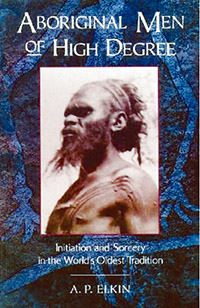
    Baldwin Spencer and Frank Gillen, in their book, The Northern Tribes of Central Australia (1904), provided a classic account of an extraordinary tradition. An Aborigine, Kurkutji, was set upon by two spirits, Mundadji and Munkaninji, in a cave:

    “Mundadji cut him open, right down the middle line, took out all of his insides and exchanged them for those of himself, which he placed in the body of Kurkutji. At the same time, he put a number of sacred stones in his body. After it was all over, the youngest spirit, Munkaninji, came up and restored him to life, told him that he was now a medicine man and showed him how to extract bones and other forms of evil magic out of them. Then he took him away up into the sky and brought him down to earth close to his own camp, where he heard the natives mourning for him, thinking that he was dead. For a long time, he remained in a more or less dazed condition, but gradually he recovered and the natives knew that he had been made into a medicine man. When he operates the spirit, Munkaninji is supposed to be near at hand watching him, unseen of course by ordinary people.”

    This is a striking description of the initiatory experience of an Australian aboriginal shaman. A.P. Elkin aptly referred to these individuals as “aboriginal men of high degree.”

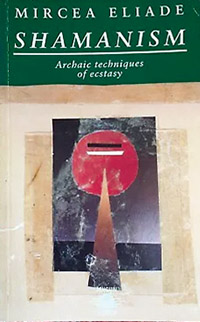
    There are numerous accounts of this kind from the past, from recent times, the present, and right around the world. In addition, there are many excellent works covering shamanism, like the classic study by Mircea Eliade, Shamanism: Archaic Techniques of Ecstasy and his analysis of the Australian tradition, Australian Religions; Carmen Blacker’s The Catalpa Bow: A Study of Shamanic Practices in Japan; Michael Harner’s The Way of the Shaman; Joan Halifax’s Shamanic Voices; Holger Kalweit’s Dreamtime & Inner Space: The World of the Shaman; Shamans Through Time edited by Jeremy Narby and Francis Huxley; Shamans of the World edited by Nancy Connor with Bradford Keeney; and The Beauty of the Primitive: Shamanism and the Western Imagination by Andrei Znamenski.

    Ritual death and resurrection, abduction by powerful beings, ritual disembowelment, implanting of artefacts, aerial ascents and journeys into strange realms, alien tutelage and enlightenment, personal empowerment, and transformation – these and many other phenomena are recurring elements of the extraordinary shamanic tradition.

    Incredibly, these worldwide native aboriginal experiences share an impressive connection with a bizarre complex of human experiences that have attracted a lot of attention since the late 1960s. 

    Whitley Strieber’s “visitors”

    One of the best-known accounts of this contemporary mirror of the shamanic tradition appeared in 1987 in a best-selling book that sold more than four million copies worldwide. The story behind it was made into a film by Australian director Philippe Mora. I am referring to Whitley Strieber’s book Communion. Its sequels, Transformation (1988), Breakthrough (1995), The Secret School (1996), The Communion Letters (with Anne Strieber, 1997), Confirmation (1998), Solving the Communion Enigma (2012), The Supernatural (with Jeffrey Kripal, 2016) and A New World (2020) continued Whitley Strieber’s story of a claimed “elaborate personal encounter with intelligent non-human beings” and his attempts to understand the mystery. Whitley Strieber’s story emerges from the perspective of the alien UFO abduction. Whatever its factual reality or physical basis, Strieber’s account of his experiences is one of the most potent personal expressions of the UFO abduction mystery.

    Artwork of Whitley Strieber by Ted Seth Jacobs that appeared on the cover of Report on Communion by Ed Conroy. 

    Strieber describes how he was taken from his upstate New York cabin on 26 December 1985 by unknown “visitors.” From the nearby woods, he recollected being taken up into the air and suddenly finding himself in “a messy round room.” Strange beings were there. A needle-like thing was allegedly inserted behind his right ear. A grey and scaly object with a sort of network of wires on the end was briefly inserted into his rectum. An incision was made on his right forefinger. He had no further conscious recollections beyond that point. 

    The memory of what he thought happened came back to him over the next few days. The impact was shattering. He thought he was losing his mind. He even contemplated suicide. Instead, he was helped by UFO researcher Budd Hopkins who arranged for him to see a psychiatrist, Dr Donald Klein.

    Dr Klein’s hypnosis sessions provided further details of the 26 December 1985 episode and earlier experiences. As Strieber searched further into his past, he uncovered not explanations and certainty but instead more mysteries. He concluded: “I had a relationship with them, despite the fact that I could not even be sure they existed.”

    By the time the December 1985 experience overwhelmed him, Strieber may have had these sorts of encounters at least a dozen times. He embarked on an intellectual journey through the vast UFO and related literature, trying to grapple with the mystery that had enveloped him. 

    Strieber also describes how others around him were witnessing the “visitors.” Quite a number of people who stayed at his New York cabin allegedly witnessed the “visitors.” Is this baseless contagion or evidence of the paradoxical reality of the “visitors,” as seen by Whitley Strieber? As a highly successful novelist, Strieber has had to face claims that Communion and its sequels are works of clever fiction. He insists it is all true. Having met him and spoken at length with him on several occasions, I feel it is clear he is trying to convey the ‘impossible’ as best he can.

    Whitley Strieber felt that the “visitors” represented “the most powerful of all forces acting on human culture. They may be extraterrestrials managing the evolution of the human mind. Or they may represent the presence of mind on another level of being. Perhaps our fate is eventually to leave the physical world altogether and join them in that strange hyper-reality from which they seem to emerge.”

    Further, he wondered “if the shamanic language of symbol and myth would offer a better insight into the visitors’ motives”? In Transformation, Strieber contemplates, “Like the shamanic aspirants of old, I would be forced to confront death.” A friend of Strieber’s, Dora Ruffner, felt “the visitor experience was initiatory in nature – a journey into the underworld.” In an interview for Terror Australis magazine, Strieber suggested “that shamanism is the shattered remnants of mankind’s early attempts to control this (visitor) phenomenon.” 

    Budd Hopkins & ET Genetic Experiments 

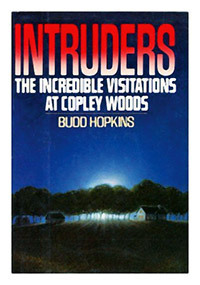
    Budd Hopkins (1931–2011), author of Intruders which established him as a major figure in the UFO movement.

    The field of Ufology has developed a range of positions on ‘alien abductions’, but the most popular view appeared to be that of the late researcher Budd Hopkins, author of Intruders, Missing Time, Witnessed, and (with Carol Rainey) Sight Unseen, and his memoir Art, Life and UFOs. 

    The “alien abductors,” in Hopkin’s view, were extraterrestrial and are involved in some sort of extraordinary genetic experiment. Human beings are first abducted when children. A cell sampling operation occurs. These lead to certain individuals being followed closely. After puberty, ova and sperm cells are taken during follow-up abductions. The goal of this activity is “the merging of human and ‘alien’ genetic material for the production of a hybrid race.” The hybrids are then apparently brought to term in laboratory “nurseries” inside large UFOs. The involuntary contributors are later abducted yet again and are shown the results – tiny hybrid infants or children. This bizarre “baby presentation” apparently involves the abductees being asked to pick and hold their “offspring” in a kind of binding experience!

    In the book Phenomenon (1988) edited by Hilary Evans and John Spencer, Hopkins concedes: “I am the first to admit the sheer outrageousness of such ideas, but outrageousness doesn’t mean untruth. I find the evidence, unfortunately, compelling. I have every reason to conclude that these ‘impossible’ breeding experiments are actually taking place… I am convinced that, for good or ill, these genetic procedures are at the heart of the UFO abduction phenomenon.”

    Hopkins is credited with bringing abductions into the central focus of UFO study and research in the 1980s. There was furious debate amongst many UFO researchers about the legitimacy of these developments. Not all accepted that the abduction claims were the key to the UFO mystery. Many saw the abduction stories as an inevitable outgrowth of a psychological response to the ostensibly more objective manifestations of mainstream UFO ‘reality’. Others saw such events in a more positive light, with a transformational aspect. Others argued that the richness of the human mind and dynamic interplay with UFO researchers spawned these accounts, not aliens. 

    However, the UFO abduction mystery was not simply an artefact of a few investigators. It’s seemingly worldwide in its dimensions. English researcher Jenny Randles’ book Abduction (1988) carries details from over 200 ‘abduction’ reports from some 35 countries, as diverse as Zimbabwe, Finland, China, USSR, Tibet and India.

    Reports occur in Australia. I have investigated many cases myself. My book Hair of the Alien: DNA and Other Forensic Evidence for Alien Abductions (2005) examined the experiences of Peter Khoury and the hair sample that yielded fascinating results. It led me to develop what I referred to as “the alien DNA paradigm,” focusing on the possibility of evidence for alien genetic “intelligent intervention” in various cultures (particularly indigenous cultures) around the world. It was driven by locations with high strangeness/breakthrough activities with UFOs, light phenomena, alien abductions, by cultures that feature claims of “sky beings,” diverse UFO phenomena, by possible unusual DNA markers within these cultures or present selectively or generically in human DNA, and by locations or regions which bring together each of these factors (UFO “haunted” location, alien mediated culture, DNA aspects). 

    John Mack & the Psychology of the ET Experience

    In his book Passport to the Cosmos, John Mack (1929–2004) presented a shamanic envisioning of the alien abduction mystery. 

    Alien abduction narratives became a central focus for many researchers. The late John Mack was a potent and articulate spokesman for a transformational focus. With his 1994 book Abduction: Human Encounters with Aliens, and more particularly his 1999 book Passport to the Cosmos: Human Transformation and Alien Encounters, he signalled and mapped out his perspectives. In essence, Passport presented a shamanic envisioning of the whole alien abduction mystery. The transformative aspects of the phenomenon held sway for John Mack, and examination of the physical dimensions seemed secondary or even unimportant. 

    The kind of information I have focused on such as DNA, albeit not without ignoring the shamanic correlations, perhaps conflicted with the numinous dimensions of the hyper-reality John Mack speculated may be at the heart of the abduction phenomenon. It seemed that in alien abductions, Mack saw affirmations of important concerns and perspectives he had held for some time. They sat well with the transpersonal and environmental issues he had championed for some time, certainly long before the alien sirens beckoned him into their seductive embrace. 

    The Believer: Alien Encounters, Hard Science, and the Passion of John Mack (2021) by Ralph Blumenthal (co-author of the December 2017 New York Times UAP/UFO breakout story), for me, enhanced the contexts of his Australian visits and gives insights into John Mack’s conflicted dance with physical evidence of alien abduction claims. He was more interested in its ultimate meaning, nature and impact. When he was in Australia, I supported his research into indigenous aboriginal abduction and UFO experiences – an area we both had a strong interest, particularly its shamanic dimensions. 

    John Mack argued in Passport to the Cosmos: “There are problems with an entirely literal physical interpretation. To begin with, despite liberal use of words like genetic, DNA, and mitochondria, there is not solid material evidence of which I am aware to support the notion that any of this, including the creation of the hybrids themselves, is occurring on the material plane to the extent that detectable or measurable changes are happening at the molecular level. At best what we have in the physical domain are small lesions (which skeptics say could be self-inflicted, but I have found no evidence for this) and bodily symptoms that might be manifestations of subtle forces, real energies originating on another plane of reality.” 

    These statements puzzled me somewhat because during his research visits to Australia and afterwards, John Mack had become well acquainted with Peter Khoury and the fact that the hair sample related to his 1992 experience was being subjected to mitochondrial DNA sequence analysis. Our first report on the work, ‘Strange Evidence’, appeared in the Spring 1999 issue of the International UFO Reporter and information about it was widely reported in the UFO media from June 1999 onwards. Before that, we were circulating the preliminary results of the research. In addition, while the words genetic and DNA might have been liberally used in the abduction research field, I was not aware of similar usage of the term mitochondrial until the appearance of my ‘Strange Evidence’ report.

    Mary Rodwell champions the transformational perspective in her books, Awakening: How Extraterrestrial Contact Can Transform Your Life (2002) and The New Human: Awakening to our Cosmic Heritage (2016). The extensive study, ‘Beyond UFOs: The Science of Consciousness and Contact with Non Human Intelligence’, edited by Rey Hernandez, Jon Klimo, and Rudy Schild (2018), gives a framework for this viewpoint.

    Some critics argue that sufficient explanations for the UFO abduction mystery are found in the physiological or psychological domain, such as sleep paralysis, temporal lobe sensitivities, fantasy-prone personalities, and a host of other avenues bound by the human condition. 

    The Imaginal Realm

    Another interpretation of UFO abduction accounts also appears to strengthen the shamanic perspective of the abduction narratives. I refer here to the imaginal interpretation. Note that I wrote imaginal, not imaginary. There is a big difference if you believe the proponents of the idea.

    Dr. Kenneth Ring, the noted researcher within the field of near-death studies

    Dr Kenneth Ring of the Department of Psychology at the University of Connecticut, and author of the near-death experience studies Life at Death and Heading Toward Omega, described his theory of imaginal UFO abductions in the MUFON UFO Journal of May 1989, and incorporated these ideas into his 1992 book The Omega Project: Near-Death Experiences, UFO Encounters, and Mind at Large. 

    He included a quote from me: “Aboriginal shamans have a powerful and consistent tradition of ritualistic initiation, the elements of which bear amazing similarities to many modern-day UFO abductions and contact accounts.” This had come from a research paper I presented way back in 1977 at an Australian UFO conference. I stated that while, at least then, we appeared to lack contemporary cases which demonstratively show, among other things, the elements of abduction, “contact,” and “time-lapse,” Australia, unbeknown to most researchers, enjoyed a rich indigenous tradition of similar accounts – the tribal initiation accounts of aboriginal medicine men – men of “high degree” as A.P. Elkin aptly puts it.

    Kenneth Ring’s ideas struck a responsive chord with speculations I had been considering for more than a decade. By 1990 I had examined the works of the great French Islamic scholar Henry Corbin. In a paper first published in 1964 entitled ‘Mundus Imaginalis or the Imaginary and the Imaginal’, Corbin coined the term “imaginal” to account for the Islamic mystical notion of a hidden realm (“a third kingdom” – the Alam Al-mithal as contained in the Sufism of the Islamic mystic Ibn’ Arabi).

    According to proponents, the “imaginal realm” could be accessed in certain altered states of consciousness – for example, via “mythical consciousness” (to use James Hillman’s archetypal psychology term) or “shamanic states of consciousness” (to use western shamanic exponent Dr Michael Harner’s terminology).

    Kenneth Ring made the critical point that the imaginal realm was as real as everyday reality but usually separate and invisible to us. It apparently had form, dimension, and, he contends, “most important for us, persons.” 

    In this Islamic “imaginal” realm of Alam Al-mithal, there were claimed to be quite a number of strange denizens, some having characteristics that bear an extraordinary likeness to the entities that dominate UFO abduction stories. One species, the Jinn, was described in 1983 by veteran English UFO writer Gordon Creighton in a fascinating piece in the Flying Saucer Review, entitled ‘A brief account of the true nature of the “UFO entities”.’

    Ring highlights shamanism as one of the most potent expressions of the imaginal realm. He states: “The shaman is the prototypic ‘otherworld traveller’, a man (or woman) who is at home in both worlds, recognises the reality of each, and can easily journey between them.”

    Get the issue this article appears in

    Richard Noll succinctly states the critical issue in his essay, ‘The Presence of Spirits in Magic and Madness’ (in Shirley Nicholson’s compilation, Shamanism): “Humankind has traditionally consulted extra-mundane entities for expanded knowledge and empowerment, for they are traditionally considered ‘sources of wisdom’ that are transpersonal and able to convey crucial information beyond the normal constraints of space and time …The practitioner usually initiates dialogues with spiritual entities by first inducing an altered state of consciousness, which allows these ‘invisible guests’ to be seen and heard. However, in some instances it is they who knock first on the doors of imaginal perception. Called or not called, they offer symbolic potential for transformation, whether for oneself, for others, or for desired changes in the physical environment…” 

    These beings are not imaginary in the sense of being not real, pure fantasy, or artificially made up. They are imaginal, existing in a realm of experience in which they inhabit a reality of their own, a mundus imaginalis or “imaginal world,” as Henry Corbin deems it, which is co-existent with the mundane experiential world of our ordinary state of waking consciousness. Imaginal beings are part of our experienced reality and have probably been so since the birth of human consciousness.

    The concept of an imaginal realm sits very well with the paradoxical reality of the UFO abduction mystery, however, it is just as unprovable as the extraterrestrial hypothesis. Some proponents of the imaginal view argue that confirmation comes through experience. It is difficult to see how the idea can be substantiated. 

    Dr Ring’s suggestion that his theory could be easily disproved by the arrival and open contact of extraterrestrial abductors, falls short with the lack of explicit mainstream confirmation of such visits. He argued it was high time that we jettisoned “our out-worn cartesian habits of thought” and approach “these phenomena from an imaginal/folkloric perspective. This will necessarily take us down a psychological road that will lead not only into folkloric territory but into the realm of myth itself.” 

    That approach, while fascinating, asks us to abandon the scientific ethic and mainstream conventions of consensus reality. Given the extraordinary claims and uncertainties that attend this strange area of human experience, it may be premature to do that. More cautious and tested approaches would seem more worthwhile. Such approaches, led by collaborations with experiencers, may yet confirm we are dealing with extraterrestrials, imaginal entities, and other hitherto unfathomed explanations for this extraordinary phenomenon. An open mind would be our best council. 

    The second part of this article appears in New Dawn 189 and explores accounts of alien abductions that have shamanic elements; the Wandjinas of Australian aboriginal spirituality; and the author’s trip to Thailand and China which revealed connections between UFO sightings and local shamanic traditions. Click here to obtain that issue.

    [alert type=”general” dismiss=”no”]This article was published in New Dawn 188.[/alert]

    [alert type=”success” dismiss=”no”]If you appreciate this article, please consider subscribing to help maintain this website.[/alert]

    © New Dawn Magazine and the respective author.
    For our reproduction notice, click here.
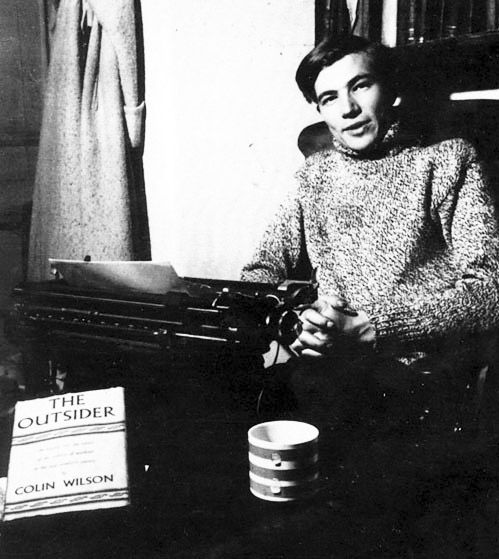
  • Steiner & the Blood Demons

    Steiner & the Blood Demons

    From New Dawn 191 (Mar-Apr 2022)

    Is the human race under spiritual attack? And did the esoteric philosopher and clairvoyant Rudolf Steiner warn about it over a century ago when he said a ‘vaccine’ would be the delivery system for the defeat of humanity?

    For many, the overly-authoritarian response by governments worldwide to COVID-19 pointed to some deeper, more sinister driving force. But it hasn’t just been the governments that seemed to be acting strange. Over the last two years, we’ve witnessed people across a broad spectrum of society meekly submit to draconian attacks on their freedoms, many even fiercely defending the assault. In the same way, we’ve seen politicians and parties who once ran on platforms of personal freedom and economic autonomy almost overnight turn into overbearing control freaks, intent on micromanaging every aspect of our lives. How has this happened?

    Recently, the term ‘mass formation psychosis’ has been on everybody’s lips. It’s defined as a psychological phenomenon whereby a mass of people voluntarily go through a process of deindividuation, and a herd mentality forms. Due to their contagious nature, the thoughtforms affecting these deindividuated people, catalysed by the positive feedback loops of news programmes, social media and peer interaction, spread like wildfire throughout the population. In the past, this used to be called mob psychology, or more plainly, the madness of crowds.

    Psychology: from Science to the Occult

    Rudolf Steiner (1861–1925)

    Someone for whom the events of the past couple of years would not have been so surprising was the Austrian esoteric philosopher and mystic Rudolf Steiner, who died almost a century ago. Throughout his life, Steiner wrote numerous books and delivered thousands of lectures on his theories, contributing greatly to diverse spheres from architecture to education and agriculture to beekeeping. His highly unique – and sometimes controversial – insights and methods led to the founding of the spiritual movement known as Anthroposophy, which emphasises the existence of a boundless potential for human beings.

    Unlike some esoteric thinkers, Steiner saw the great importance of materialistic science but argued that it was vital to see it as only a single aspect of reality which should ideally be combined with what he called ‘spiritual science’ – gained by mystical experience – in order to present the full picture. After all, breakthroughs often occur when scientists receive insights from beyond the material realm, as in the famous case of James Watson, credited with the discovery of the double helix shape of DNA which came to him in a dream featuring two intertwined serpents. Similarly, Dmitri Mendeleev created the periodic table after a dream of “… a table where all the elements fell into place as required.” These cases go to show that not all scientific discoveries are the result of logical deduction and experimentation.

    In fact, Steiner, who had been on the receiving end of mystical insights since childhood, honed his clairvoyant skills to such an extent that the information he received from non-conventional sources became more than the occasional flash of insight. His quest became the establishment of methods for obtaining objective extrasensory perception – a task he considered of paramount importance, for he believed an epic battle was being fought in the spiritual realm that would have disastrous consequences for humankind unless it was addressed head-on.

    Spirits of Darkness

    His clearest warnings about the future fate of humanity came in a series of lectures delivered towards the end of his life in Dornach, Switzerland; these lectures are reproduced in the book The Fall of the Spirits of Darkness. Although Steiner’s detractors say his prose can be leaden, his lectures meandering, and his concepts difficult to grasp, he is remarkably clear and straightforward when it comes to the fate that awaits humanity if our obsession with scientific materialism is allowed to reign free without being pulled back into balance by the counterbalancing forces of spirituality.

    This is most clearly illustrated in the final two lectures in the series – 13 and 14 – which are respectively titled The Fallen Spirits’ Influence in the World and Into the Future. Steiner posits that an unseen battle took place in the early 19th century which certain ‘spirits of darkness’ lost. These spirits were duly ejected from their heavenly realms and cast down into a more material plane of existence, i.e. here. He is remarkably precise about when this occurred: autumn 1879.

    These newly arrived spirits joined those who were already here – the ones that have been existing alongside and influencing humanity since the mythological times associated with the Fall. Given that it takes time for these malign spirits to work their way through human societies, it wasn’t until 1914 that their malign influence manifested in human society in the form of the First World War – a disastrous event the cause of which still puzzles secular historians.

    Lucifer and Ahriman – the Leaders of the Pack

    The spirits Ahriman and Lucifer have been hacking humanity for thousands of years, says Steiner, with Lucifer being the ‘light bringer’ intent on making us more spiritual and granting us more free will, and Ahriman doing the opposite and making us more materialistic and easier to control. In simplistic terms, Lucifer is an ascending influence, while Ahriman is a descending one.

    Steiner’s carving of the face of Ahriman

    Why should they want to do this? Well, we just don’t know – it’s difficult for our human minds to figure out what makes angels and demons tick. But whenever there’s one of those periodic battles in the spirit world, Steiner said, it tends to result in a new batch of reinforcements being thrown down into the material realm to join forces with those already here.

    Steiner told us that Ahriman – a demon first identified by the Zoroastrians in ancient Persia – has the upper hand right now. He had a personal beef with Ahriman and had seen his face in vision – in fact, he was still carving a likeness of it out of wood at the time of his death. Ahriman’s main aim seems to be to drag humankind into a purely materialistic state devoid of any form of spirituality, removing even the impulse to connect with our souls. The method of attack would be through science and technology, and by taking possession of the minds of powerful and influential people in order to push through this agenda. These controlled people could be scientists, politicians, religious leaders, or anyone with any influence. Thus, demonic forces would work through these people, and the people themselves, blinded by all-too-human failings such as greed or a lust for power, would lack the basic awareness to recognise what was occurring.

    A New Religion for a New Age

    The background to this power grab was the rise of atheism and the worship of science and progress. Now, we have a situation in which a purely materialist perspective is presented as the only explanation for all creation. Atheism has become a de facto religion for some, while the rich traditions of native spirituality have been side-lined and crushed under its heel. People, animals and all life is regarded in the same cold manner; merely receptacles of proteins and genetic code that can be exploited. The endgame of this play is presented as a bleak, monochrome world expunged of spirit and light, where humans – their minds and spirits broken – are herded together and monitored like lab animals.

    We can see how this scenario is being expedited. The CEOs of tech corporations are viewed almost as saints or Bodhisattvas, dangling the carrot of eternal life in the form of uploading the ‘data’ contained within our brains onto microchips. At the same time, politicians, corporate scientists, civil servants and economists are regarded as technocratic engineers tasked with ensuring the smooth functioning of the juggernaut of the material economy. Free will? The implicit assumption is that this will be unnecessary once the AI-powered algorithms – which know us better than we do – reach escape velocity. At this stage, human life would have no intrinsic value, and the shells of our former selves would be occupied by the demonic army that Steiner warned us was waiting for its moment.

    In the Blood

    Some people say that Rudolf Steiner predicted a vaccine would appear which would be the delivery system for the final defeat of humankind. In light of the clandestine efforts made over the last two years to inject almost everybody on the planet with a gene-editing treatment, his prescience seems remarkable – but how true is it? 

    Amazingly, Steiner was remarkably clear (by his own standards) about the physical process by which this takeover would occur. In his final lecture in The Fall of the Spirits of Darkness, he states that the spiritual world where entities such as angels, demons, and archangels dwell is within the human blood. He meant this quite literally, saying:

    “Both the Archangels and the Angels had their dwelling place in the blood, as it were. Truly, the blood is not something merely for chemists to analyse; it is also the dwelling place of entities from higher worlds.”

    To that end, he speculated that the delivery mechanism would be in the form of a vaccine injected directly into our bodies.

    “Today [in 1917] bodies are vaccinated against one thing and another; in future, children will be vaccinated with a substance which it will certainly be possible to produce, and this will make them immune so that they do not develop foolish inclinations connected with spiritual life – ‘foolish’ here, of course, in the eyes of the materialists.”

    This ‘vaccine’, he goes on to say, would block off any communication from the spirit world, meaning no messages or impulses would be able to get through from the ‘spirits of light’ whose aim is always to help humanity progress and fulfil our destiny. The vaccine would permanently lock out positive impulses which were once transmitted to us, and instead the hapless victims would only be able to receive the impulses coming to them from disruptive sources, which we can imagine today might include the media, the education system and even established religion. He says there would be great confusion, and Ahrimanic forces will turn people’s thoughts upside down and inside out. Everything that once was good and sensible will appear evil and crazy, while everything that was once considered insane and evil will be presented as sensible and good.

    Squid Games: From Wetiko to The Matrix

    Does this sound implausible, the ramblings of a long-dead mystic? Many will no doubt say that it does and that there are more earthly and plausible explanations for the psychic epidemic that has gripped the world. Perhaps Steiner was speaking metaphorically, after all, some may reason. Nevertheless, the phenomenon to which Steiner alluded bears striking similarities to the Native American concept of wetiko. The author Paul Levy has written extensively about this, defining it as “a contagious psychospiritual disease of the soul, a parasite of the mind that is currently being acted out en masse on the world stage via a collective psychosis of titanic proportions.”

    Listening to a recent Legalise Freedom podcast entitled ‘COVID-19: War on Humanity’, Emma Farrell, a plant healer who uses shamanic techniques to access inner realms, observed that she and others in the same field had seen a veritable horde of spiritual parasitic entities attached to people over the last two years – as if a floodgate had been opened and they had poured through it. These entities, she says, come in all shapes and sizes, but there are two very common and recognisable ones, one of which is squid-like. These squid-like beings, she says, attach themselves to unprotected people and harvest their spiritual energy by causing division and discord among us.

    ABOVE:  Promotional graphic depicts the squid-like robot which appears in the 2003 film The Matrix Revolutions.   TOP:  Netflix’s hit series of 2021, Squid Game, is a grim and violent survival thriller that posits human nature as intrinsically barbaric.

    This struck me as interesting as we’ve seen this squid archetype move into human consciousness over the past few years, not least becoming apparent through popular culture. Many people have reported having dreams of octopus or squid-like creatures, and artists such as Peter Yankowski have painted pictures of these visions. Indeed, the villainous machines that control humans and harvest their energies in the Matrix movies look like robotic squids, while one of the top Netflix series of 2021 was Squid Game, a grim and violent survival thriller that posits human nature as intrinsically barbaric. What’s more, the resurgence in popularity of H.P. Lovecraft’s supernatural tales of horrors from the deep adds another tentacled layer to this rugose cake.

    And let’s not forget when Goldman Sachs, one of the world’s largest investment banks, was memorably described by Rolling Stone journalist Matt Taibbi as a “great vampire squid wrapped around the face of humanity, relentlessly jamming its blood funnel into anything that smells like money.” The description is apt; after all, what is the purpose of an investment bank other than to turn every aspect of the sacred world into a monetised asset that can be traded, exploited and leveraged?

    Get the issue this article appears in

    The Path Back to Sanity

    Could this manifestation of a squid/octopus archetype into human consciousness be what Steiner warned us about? Are there really spiritual entities within our blood that could account for billionaire technocrats’ obsession with injecting substances into us that are said to contain nanoparticles we know very little about? And how does this sit with the psychospiritual disease of wetiko outlined by Paul Levy and the concept of ‘mass formation psychosis’ being discussed in alternative media?

    Perhaps the truth lies somewhere in the nexus of these concepts, with the implicit suggestion that we should not rest in our deep enquiry into the manner of the affliction that is currently so prevalent across the world. Only by doing so can we hope to find the necessary tools and weapons for fighting back against it.

    Or maybe the Ahrimanic demons that Steiner warned us about, the wetiko mind parasites Paul Levy writes of, and the tentacled entities that have squirmed into our collective consciousness via popular culture, are all playing on the same team. If so, what does our team look like? And how do we win this game? Perhaps the fight is a necessary one at this juncture in human development, and that by defeating these ‘spirits of darkness’ we can progress to a higher level.

    Whatever the case, referring back to the old adage alluded to earlier… people, it’s said, might go mad in crowds, but the path back to sanity happens one person at a time.

    Original artwork ‘Blood Demons’ by Michael Cox. See his art on Instagram, www.instagram.com/michaelcoxart.

    [alert type=”general” dismiss=”no”]This article was published in New Dawn 191.[/alert]

    [alert type=”success” dismiss=”no”]If you appreciate this article, please consider subscribing to help maintain this website.[/alert]

    © New Dawn Magazine and the respective author.
    For our reproduction notice, click here.