New Dawn – World's Most Unusual Magazine

Category: Articles

  • Saint-Yves d’Alveydre & The Synarchy of Agarttha

    Saint-Yves d’Alveydre & The Synarchy of Agarttha

    From New Dawn 151 (Jul-Aug 2015)

    The French writer Alexandre Saint-Yves d’Alveydre (1842-1909) was an extraordinary figure, a strange mixture of occultist and political philosopher. Born into humble circumstances, he led an adventurous life before marrying the wealthy former Countess of Keller. After settling down in Paris he threw himself wholeheartedly into the study of ancient texts, languages and Eastern wisdom. Amassing an enormous library of rare books and manuscripts, Saint-Yves took lessons in Sanskrit, Hebrew and Arabic. His tutor was a mysterious Afghan who was known by the Muslim name Haji Sharif (or Hardjji Scharipf, 1838-?).1

    Professor Joscelyn Godwin says of Saint-Yves’ enigmatic teacher:

    His name may have been a pseudonym; he may have been an Afghan; some called him Prince… The manuscripts for which Hardjji [Haji] was responsible, now in the Library of the Sorbonne in Paris, show that he was a learned and punctilious teacher, and the source of two still unsolved enigmas: the holy land of Agarttha, and its sacred language of Vattanian.2
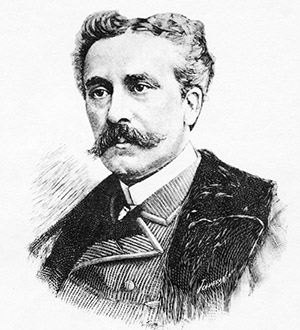
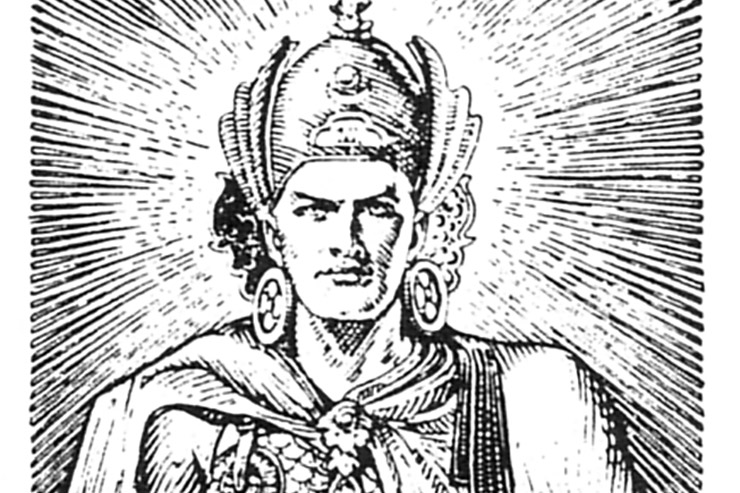
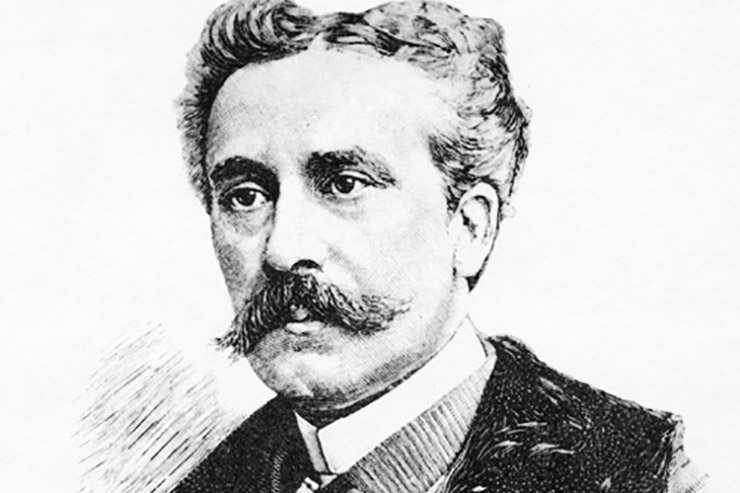
    Artist’s sketch of Alexandre Saint-Yves d’Alveydre (1842-1909) – who was called one of the last utopians of the nineteenth century.

    Haji Sharif, said Saint-Yves, was an “emissary” of “Agarttha” [Saint-Yves’ preferred spelling], the great initiatory centre in Central Asia presided over by a “Sovereign Pontiff” who “directs the entire life of the planet in a discreet and unseen way.” French researchers are convinced a shadowy group of Eastern initiates, who had been forced to flee their homeland for political reasons, contacted Saint-Yves in an effort to seed certain powerful ideas in the West. Saint-Yves also made an oblique reference to another Eastern guide, a “more serious” Guru who communicated to him the “secret teachings of the Brahmins.” Despite the ridicule heaped upon him by his numerous detractors, Saint-Yves steadfastly maintained that the highest officials of what he called the “Brahminical Church” had initiated him into the deep mysteries of Oriental wisdom.

    In Western Christendom Jerusalem and often Rome are referred to as ‘Holy Cities’, ancient centres permeated with religious significance. Due to the notions imparted to him by his mysterious Asian teachers, Saint-Yves would come to be regarded as the leading exponent of the idea, then starting to gain attention in nineteenth century Europe, that the primordial Holy Land was concealed below the surface of the Earth somewhere in Central Asia. Protected from inquisitive, avaricious Westerners, the spiritual powerhouse of the planet was, Saint-Yves declared, the subterranean realm of Agarttha. Originally on the surface, Agarttha was transferred underground and concealed from humanity at the onset of the Kali Yuga in around 3200 BCE.

    A focus on the regions of Central Asia as the ‘homeland’ of ancient wisdom was not in itself new. The Swedish savant Emmanuel Swedenborg asserted: “Henceforth it is among the sages of Tibet and Tartary that we must look for the Lost Word.” The Catholic mystic Anne-Catherine Emmerich had very clear visions of the “Mountain of the Prophets,” situated far beyond Tibet, where all true knowledge is preserved. The old legend of the “Wise Men from the East,” who were miraculously guided to the Christ child, may be a thinly disguised pointer to that Eastern spiritual centre from where emissaries are dispatched to the outer world. Saint-Yves assured his readers it is from Agarttha that such “divine envoys” as Orpheus, Moses, Jesus and many others have come “when humanity requires them.”

    Modern day commentators on Agarttha, “that underground realm placed at the centre of the Earth, where the Lord of the World reigns,” conclude it is more or less symbolic. Some say it is primarily metaphorical, since the name “Agarttha” is itself said to mean “inaccessible” or “inviolable.” Agarttha is of no one country, of no one nation, but universal; the mysterious hierarchy of enlightened masters, gnostic magi, yogis and perfected adepts – headed by the Lord of the World – maintain subtle links with their emissaries in the outer world. “Agarttha is a faithful image of the eternal Word throughout all Creation,” wrote Saint-Yves.

    The French journalist and eminent Orientalist Jean Marquès-Rivière explains:

    There is an even greater mystery, that which the Asian doctrines call THE MYSTERY OF REFLECTIONS. This is what the Wisdom of Egypt put on the Emerald tablet: ‘As above, so below’. There is a strange harmony between the different levels of manifestation. Man has a sign that is found both on earth and in heaven. The Centre of transhuman power has indeed a reflection on earth; it is a constant tradition in Asia and this Centre (earthly? I do not know to what extent) is called, in Central Asia, Agartha. It also has other names that there is no need to include here. This Centre has as its mission, as its ‘raison d’être’, to lead the Earth’s spiritual activities. To do this it uses every possible means…3

    Synarchy

    Saint-Yves d’Alveydre also drew inspiration from the medieval Knights Templar, long held by occultists to have been Europe’s hidden rulers during the Middle Ages. He believed the Templars’ immense wealth and power came from their adherence to a socio-political system he termed Synarchy. For thousands of years Agarttha had “radiated” Synarchy to the upper world. Synarchy views society as a living organism like the human body. As Saint-Yves explained: “The first function corresponds to nutrition and that is economics. The second can be defined as the will, and that is legislation and politics. Finally, the third corresponds to the spirit and that includes science and religion.”

    Synarchy stood in total opposition to “government by brute force, that is, military conquest, political tyranny, sectarian intolerance, and colonial rapacity.” André Chaleil in Les Grands initiés de notre temps points out that:

    Synarchy, as Saint-Yves understands it, is the old dream of the meeting of left and right, of workers and capitalists, of scholars and priests, under the same banner and in the same spirit. It is already, in some way, the myth of the defence of the West against itself in face of the threat of Anarchy, or government without principles.

    To Saint-Yves the Knights Templar, as faithful adherents of Synarchy, stood for universal peace, friendship between peoples, and co-operative federalism. With the demise of the Templar Order early in the fourteenth century, Europe strayed far from the path of Synarchy, succumbing to the forces of chaos and dissolution. As long as Europeans persisted in their chaotic, unprincipled government systems, Agarttha would remain closed to them.

    While his enemies openly questioned his sanity, a small group of supporters hailed Saint-Yves as a gifted visionary. Jean Saunier remarked in his 1971 book La Synarchie:

    Saint-Yves d’Alveydre was not such a strange author as one might believe. On the contrary, might he not appear to have been one of the last of the utopians of the nineteenth century?
    Enter Eurasia

    The hugely influential French occultist and prolific author known as Papus (Dr. Gérard Encausse, 1865-1916) declared Saint-Yves d’Alveydre his “intellectual master.” Papus introduced the master’s books to members of the Russian Court and made his ideas well known in Russian mystical circles. But the master also had his own intimate connections with the Russian aristocracy through his wife’s family. In his book Mission de l’Inde, written in 1886, Saint-Yves noted approvingly:

    The deeply religious sentiment of the Russian masses, their instinctive occultism, their language, their legends, their prophecies, and the Hermetic interpretation that some sects keep of the sacred scriptures, are all so many ties indicative of an intellectual and social alliance with Asia.4

    He continued by urging Britain’s Queen Victoria to “craft an understanding between Your government and that of Russia.” With repeated references to benevolent Agarttha and the enlightened system of Synarchy, he criticised “the egotistical brutality that presides not only over the relations of Christian peoples with each other, but over the relations of their Colonial regime toward other continents and other communities of believers.” Saint-Yves saw Russia as the potential liberator of the Asian peoples from colonialism, writing in an open letter to the Russian Tsar:

    Sire, have caution when touching Afghanistan and do not advance into the territory of these amphictyons without pronouncing the ancient password of the Kingdom of God… Then, if, in the regions of India, England does not bring about its downfall by establishing Synarchy, Providence will put wind in your sails, because marching in the footsteps of Ram, Sire, You will only have fought in the name of Christ and Saint Michael, the Solar Archangel, to redeem the peoples after having freed them.5

    Expressing a thoroughly Eurasian outlook, Saint-Yves added: “The peoples of Central Asia feel great sympathy toward Russia and toward its sovereign.”

    A decade later, in 1896, echoing his intellectual master, Papus sent a message to Nicholas II calling on the Russian tsar to “immortalise his Empire by its total union with Divine Providence.” By 1899 Papus was warmly received by the imperial family and established a lodge of his Martinist Order at the Russian Court in St Petersburg. The Martinist Order, with its strong emphasis on Christian mysticism, set itself in opposition to what Papus saw as the growing atheism and secularism of Freemasonry. Central to the inner teachings of Papus’ Martinist Order were the legend of Agarttha and the visionary writings of Alexandre Saint-Yves d’Alveydre.

    Most secret societies and esoteric groups have, like the great world religions, a ‘founding myth’. A story imbued with sacred meaning, said to originate in the most ancient past and faithfully preserved down through the ages. In Freemasonry this is the legend of the building of King Solomon’s Temple. Today’s Rosicrucians claim a special connection to ancient Egypt. Many esoteric orders trace their origins to encounters with ‘other worldly’ entities. The Abrahamic faiths are full of seminal accounts of prophets instructed and empowered by heavenly emissaries and divine messengers. Asian secret societies also preserve detailed stories of their legendary heroic beginnings, usually connected to mysterious sacred centres. So it is no surprise that Agarttha, along with its complex socio-political system of Synarchy, became part of the mythos of certain powerful European secret societies.

    After his death in 1909 the “Friends of Saint-Yves” assembled the master’s papers and took on the task of disseminating his many books. Foremost among these was the posthumous publication in 1910 of Mission de l’Inde (Mission of India) with its incredible revelations of the secret subterranean kingdom. In the 1920s, René Guénon cited Saint-Yves approvingly in Le Roi du Monde (The King of the World) a study of symbolism and myth. Other notable followers included Victor Blanchard, Nizier Anthelme Philippe, René A. Schwaller de Lubicz and Émile Dantinne.

    Synarchy continued within the closed ranks of secret societies and esoteric study circles in France as well as abroad. Synarchy heavily influenced the development of Rudolf Steiner’s political thought and his ideas for social reform. Conspiracy researchers link Synarchy to a number of open political movements ranging from the 1930s leftist “X-Crise Club” to pro-Hitler Vichy France. Synarchy played a role in South American politics, particularly in Mexico. British writers Lynn Picknett and Clive Prince charge Synarchy with being the driving force behind the European Union.

    As recently as 2011, hundreds of people were arrested or detained in Turkey on suspicion of involvement in a national revolutionary secret society known as “Ergenekon/Agartha.” Turkish authorities claimed “Agartha” members were planning a coup with the help of senior leaders in the country’s military and security forces.6

    The fascinating Franco-Romanian novelist and esoteric researcher Jean Pârvulescu (1929-2010), who undertook a detailed study of the works of Saint-Yves d’Alveydre, suggested a secret brotherhood called “Agartha” existed in the Soviet Union’s special intelligence service, the GRU. According to Pârvulescu, the current Russian President Vladimir Putin is an envoy of this clandestine “Agartha” Order and is carrying forward their Eurasian plan.

    [alert type=”general” dismiss=”no”]In 2008 Inner Traditions published the first English language version of Saint-Yves d’Alveydre’s ‘Mission de l’Inde’ under the title The Kingdom of Agarttha: A Journey into the Hollow Earth (with an extensive Introduction by Prof. Joscelyn Godwin).[/alert]

    [alert type=”general” dismiss=”no”]This article was published in New Dawn 151.[/alert]

    [alert type=”success” dismiss=”no”]If you appreciate this article, please consider subscribing to help maintain this website.[/alert]

    Footnotes

    1. It is suggested by some conspiracy researchers that ‘Haji Sharif’ was in fact the renowned Islamic thinker and anti-colonial political activist Sayyid Jamal ad-Din al-Afghani (1838-1897). In 1885, the year Saint-Yves met ‘Haji Sharif’, Afghani was in Paris, where he began publishing an Arabic newspaper entitled “The Indissoluble Blond.” Among the members of Afghani’s anti-colonialist circle in Paris were Asians involved with the Theosophical Society as well as Christian and Jewish Middle Easterners. Regarded by his enemies as an inveterate intriguer and political chameleon, Jamal ad-Din al-Afghani is also believed to have been associated with Madame H.P. Blavatsky.
    2. Introduction by Prof. Joscelyn Godwin, The Kingdom of Agarttha: A Journey into the Hollow Earth (Inner Traditions, 2008)
    3. Introduction by Jean Marquès-Rivière, Asia Mysteriosa: The Oracle of Astral Force (Polair Publishing, 2012)
    4. Introduction by Prof. Joscelyn Godwin, The Kingdom of Agarttha: A Journey into the Hollow Earth (Inner Traditions, 2008)
    5. Ibid.
    6. In Turko-Mongol creation stories Ergenekon is a hidden land located in the inaccessible valleys of the Altay mountains.

    © New Dawn Magazine and the respective author.
    For our reproduction notice, click here.

  • The Power of the Mind to Heal

    The Power of the Mind to Heal

    From New Dawn 144 (May-June 2014)

    Physician heal thyself – Luke 4:23

    In the past, cures that occurred in shrines, cathedrals, old temples, and evangelical crusades (tent revival meetings, healing camps), faith healing, spontaneous remissions, and inexplicable medical recoveries were considered “miracles” or exceptional occurrences beyond scientific explanation. The cure was credited or ascribed to a saint or a relic, or it was supposedly the result of the intervention of a healer, hypnotist, priest, shaman, minister, etc, who usually had a reputation of having charisma and prestige in the healing business.

    The aim of my research is precisely to find a rational and scientific explanation for those cases. The main hypothesis of my new book Healing Without Medicine: From Pioneers to Modern Practice is that all methods of mind/spiritual healing are self-healing. Man has an inner capacity to heal himself. It is said the effectiveness of healing with medicine is due to the fact that medicine and other medical implements remove obstacles that enable the body’s recuperative capacity.

    I also have examined the exceptional healing of the most prominent contemporary religious leaders of the New Thought Movement, who recovered their health by mental and spiritual means from supposedly “incurable” diseases, and I elicit the mechanism that triggered their healing. Healing Without Medicine also explains why some people do not respond to any kind of treatment whether with medicine or without it.

    The phenomenon of mental/mind healing started in the mid-1800s with a layman known as Phineas P. Quimby (1802–1866); he was an unschooled clock maker in New England,1 who after curing himself without medicine, reached the conclusion that negative beliefs create most human illnesses.

    Quimby was diagnosed with a terminal illness by the medical profession of the time; his kidneys were disintegrating and he was also suffering from tuberculosis. Disillusioned with life he abandoned his successful business and retired to his farm expecting to die. To make a long story short, he healed himself with the help of his assistant Lucius Burkmar and discovered what is called Mental/Mind healing. Subsequently, he started curing all kinds of diseases by just changing the frame of mind of the sick person. Quimby came up with bold concepts such as:

    • Man creates his own illness in his mind. Change the beliefs and you will cure the disease.
    • Illness is an invention of man and has no bearing in the spiritual realm.
    • Illnesses are embraced in our belief, and so forth.

    In time, Quimby became known as the father of the New Thought Movement, which is a movement that advocates healing by mental and spiritual means. Quimby believed that he rediscovered the method Jesus used to heal people, and freely gave his curing technique to anyone interested in it. Some people who were healed by Quimby became his disciples and also began practicing mind healing on others; that was the beginning of a new way of thinking known as the “New Thought Movement.” Thus, the end of the nineteenth century and beginning of the twentieth centuries saw a boom in New Thought churches with practitioners spread all over America and abroad. They were devoted to healing without medicine based on the teachings of Quimby. Nowadays there are hundreds of such organisations and churches thriving around the world, including Religious Science, Divine Science, Unity Church, Science of Mind, Quimby Memorial Church and other offshoots in addition to Christian Science.

    New Thought is a new way of understanding the world and the position of man in the world. It has been appropriately called an “American practical spirituality.” The beauty of this practical American philosophy is that it empowers man as the creator of his own reality and circumstances of life. The basic postulate of New Thought is that changing the frame of mind of an individual can change his reality. New Thought ideology is the origin of Positive Thinking and other programs of enhancing human potential. Moreover, the application of these metaphysical principles as inspirational tools has been proved to be of extraordinary value to achieving success in all areas of life.

    The major contribution of these leaders and their organisations to the welfare of humanity is that millions of people around the world have benefited, recovering their health free of medicine; in some cases, the healing was not only circumscribed to the body but had a ripple effect on their mental and spiritual wellbeing. Additionally, the application of these principles as a motivational device has been shown to be of extraordinary incentive toward achieving success in all areas of life: material prosperity, relationships, and peace of mind.

    The Mind & Spontaneous Healing

    My investigation of this matter and based on my own experience led me to believe that people can be restored to health using the power of their minds. Modern mainstream medical circles are gradually accepting the mind-body relationship in the healing process. In addition, medical doctors are now propounding a more humanistic and holistic means of healing rather than clinging to the old traditional and materialistic conception based heavily on technology and chemicals. This is exemplified by the medical profession’s incorporation of techniques such as meditation, yoga exercises, unconditional love, fasting, etc. The interesting thing is that this phenomenon of healing without medicine continues developing today through the emerging practice of what is called Energy Psychology, which includes Thought Field Therapy and its derivatives such as Emotional Freedom Technique and other similar modalities.

    The capacity of the body to regain health by itself has been called spontaneous healing or inexplicable remission. The problem is that mostly when people develop symptoms of an ailment, instead of seeking detoxification and cleansing the body to give it an opportunity to recuperate its balance, we usually rush into taking harmful medication and drugs that debilitate the body’s immune system; under this condition the body is subject to being attacked by microbes, germs, and virus. They are three fundamental concepts for any healing to take place:

    • The mind is the charioteer of the body. This is called mind-body medicine.
    • The human body has the capacity to regain health by itself.
    • Most of the healing with or without medicine is due to placebo effect.

    The irony is that most people get sick due to a negative suggestion given unintentionally and sometimes with “good intentions” by family members, teachers, and neighbours, who believe that sickness is normal and that we will all be affected sooner or later. The same message is conveyed by the news and the mass media, and by the publicity generated by companies that manufacture prescription drugs. Pharmaceutical companies spend billions of dollars in proposing new illnesses with every change of seasons; the medical industry encourages people to have surgeries when most of the time these are not needed. Most people believe in these messages that are usually endorsed by medical doctors; these are potent suggestions for unaware individuals. Another indirect way of promotion is through medical doctors – pharmaceutical companies often give doctors free samples of prescription drugs to encourage physicians to prescribe them.

    “Healing Suggestions”

    One of the conclusions I reached in my studies on this topic is that the healer and whatever technique he practices only gives the patient a suggestion (or placebo). In other words, the healer impresses a “healing suggestion” upon the mind of the individual. Furthermore, the so-called “miraculous healings” that take place in religious places such as the Shrine of Lourdes, old cathedrals, etc., are plain and simple “collective suggestion.” I call this the phenomenon of an “egregore.”2 Therefore, the person who takes on the role of healer actually does not do the healing per se; he or she only activates the inner mechanisms within the sick person for the healing to take place. In other words, the healer’s effort is a placebo in action. In these cases, the subconscious mind needed the incentive, the “push” to activate the healing power of the body. The positive expectation and desire of the sick person for the cure to happen is also very important; in other words, his/her belief will do the work.

    Hence, the effectiveness of a placebo lies in the fact that it bypasses the conscious mind and instils a positive healing suggestion in the subconscious mind. The role of a real healer is to bring the sick person from a place of fear to a place of empowerment.

    To the question of why people get cured with different methods or therapies, consider the old saying, “Different strokes for different folks,” which encapsulates the idea. There is another aphorism, “One man’s meat is another man’s poison.” The healing realm works by the same principle. A specific therapy that is effective for one person may not be so for another. Among all the healing modalities on the market, one will fit the specific individual needs and the healing will follow. The above is also true in the medical field where different medicines work for different kinds of ailments; a specific medication that is beneficial to someone could have negative consequences for another. Likewise, varied kinds of complementary and alternative therapies work for different people; this is because everybody is unique and has special idiosyncrasies and predispositions.

    In the realm of “complementary and alternative medicine” (CAM), sometimes the confidence of the healer positively influences the sick person. This is in accordance with the principle that every human being has psychological dispositions to respond positively or negatively to different kinds of treatments. It is well known that some people feel relief from their maladies by writing journals or poems, others by dancing, or being close to nature in a forest; for those who are inclined to religious or spiritual practices, engaging in praying, contemplation, spiritual retreats or reading biographies of saints and spiritual topics will do the job. Others are inclined to ascetic practices, and for them fasting and meditation are good alternatives. Some people have gotten well just by being cheerful, laughing at funny movies or TV shows, and reading the cartoons of newspapers, as described by the American editor and author Norman Cousins.3

    One question remains: why is it that people are not healthier in our society where medical technology and medicine have made huge progress? My take on this is that in our modern materialistic and consumerist societies it appears there is a huge conspiracy to keep humans in misery, illness and suffering. The main reason being there is a social consensus that covertly holds the thesis that getting sick is a natural part of being human. This ‘conventional wisdom’ in reality is not ‘wisdom’ at all but half-truths that humans take for granted. This ‘conventional wisdom’ leads humans to believe that when we get sick, it is because the illness runs in our family, or it is in our genes, or it is due to the change of seasons, and so on. We have been socially indoctrinated that drugs and medication are the solution. This idea is supported and emphasised by the mass media. In addition, pharmaceutical companies spend billions of dollars in well-crafted advertisements to promote their medicines.

    Mind as Charioteer of the Body

    The way to counteract this social suggestion (or egregore) is to acknowledge that the mind is the charioteer of the body, that the body has the capacity to heal itself, and to redirect the mind from a negative condition to uplifting and constructive ones. The metaphysical conception is that we live in an ocean of pure electromagnetic energy called ‘Life-force’ energy or ‘universal consciousness’. This school holds the theory that this Life-force energy is available for anybody. Indeed, we have been using it all our lives through our thoughts and emotions. The problem is that most people are unaware of this and misdirect their energy to negative thoughts and feelings, such as anger, resentment, hate, envy, etc. In doing so, they build a shield of negative energy around their bodies that prevents the free flow of the Life-force. Thus, the body becomes depleted of the vital Life-force, and is predisposed to the invasion of viruses, germs, and microbes from the external world.

    The right use of this Life-force is attunement with the feeling of peace and love for ourselves and humankind. This activates one’s inner mechanism, allowing the Life-force to flow through the body. The results will be reflected in a balance and harmony with one’s inner nature and with the corporeal body. This requires gaining access to our inner Self, which has been overshadowed by the influence of the material world and the demands of the physical senses.

    The metaphysical truth is that thoughts and feelings create our reality. Whatever one’s subconscious mind accepts as true will take place in his or her reality sooner or later. Think of illness as inevitable and natural, and you will get it. Maintain an optimistic attitude and things will work out favourably. You have the power under your belt to control what kind of ideas are running through your mind. Therefore, it is recommended that instead of dwelling on depressing and negative thoughts, a person should feed his or her subconscious mind with constructive and uplifting thought-patterns, and the result will be the crystallisation of those thoughts into his or her reality. “For as he thinketh in his heart, so is he” (Proverbs 23:7).

    CAM & Placebo

    Healing Without Medicine also analyses most of the alternatives and complementary therapies, and provides coherent explanations for their success and failure. Regarding this aspect, R. Barker Bausell, Ph.D., a retired University of Maryland professor and Research Director of the National Institutes of Health-funded Complementary and Alternative Medicine program, wrote a book entitled Snake Oil Science: The Truth about Complementary and Alternative Medicine, where he makes a comprehensive investigation of most of the complementary and alternative therapies in the market. The author claims that he penned the book after he had enough scientific evidence to permit a rigorous evaluation of complementary and alternative medicine (CAM). He concludes that all complementary and alternative therapies are only placebos. He closes the book with the following two statements:

    CAM therapies are nothing more than cleverly packaged placebos.

    And that is almost all there is to say about the science of CAM.4

    Dr. Rick Ingrassi complements the above idea when he says, “The placebo effect offers dramatic proof that all healing is essentially self-healing.”5 Another M.D., Bruce Moseley, a celebrated orthopaedic surgeon, conducted a study regarding the effectiveness of placebo on people with debilitating knee pain. He concluded: “In this controlled trial involving patients with osteoarthritis of the knee, the outcomes after arthroscopic lavage or arthroscopic débridement were no better than those after a placebo procedure.”6 In lay language the result of the surgeries he performed were no better than the result of the “fake surgeries” that patients were told to believe were performed.

    Bausell’s book is well documented by many years of research and written at a rigorous academic level and endorsed by physics professors and medical doctors; however, and there is always one however, he neglects to consider the tremendous ability of the human body to regain its health; a phenomenon that medical scientists refer to as “spontaneous healing” or “spontaneous remission.”

    All Placebos are Hidden Suggestions

    My take on the issue is that the placebo effect can only be understood in psychological and metaphysical terms. The effectiveness of the placebo resides in the capacity to make the patient believe that something was done. A placebo is a suggestion that bypasses the conscious mind and instils a suggestion in the subconscious mind; once the subconscious mind accepts the suggestion, the healing process will occur as long as the patient has an authentic desire to get well. Thus, all placebos are hidden suggestions; they change the expectation of the subject from a mindset of illness to “get well.” There resides the whole matter.

    The issue is also with the patient’s belief – if the individual does not believe in the practitioner or in the treatment, the placebo will not work and the healing will not occur. The reason that different therapies work for different people is because one will ‘strike a chord’ with the patient and activate his subconscious mind. The whole matter of the placebo effect comes down to the individual’s belief. Ultimately the patient heals himself with the help of a placebo that acts as ‘psychological support’.

    My definition of placebo among the thousands already formulated is that placebo is a psychological phenomenon, a concealed suggestion that is conveyed to the patient through means such as pharmacologically innocuous substances, complementary and alternative therapies, New Thought modalities, and so forth, with the aim of making the patient believe that something was done to alleviate his or her ailment. That is, to change his/her mindset from the state of illness to the state of healthiness whether by using fake medicine, CAM, or positive thinking. Once the belief is accepted by the subconscious mind, the healing occurs.

    Interestingly, Bausell offers scientific evidence to corroborate the ideas expressed in my book. Furthermore, another scientist in the medical field, Edzard Ernst, M.D., Ph.D., and his team researched CAM for 20 years and arrived at the same conclusion as Bausell. Ernst asserts that even some conventional medical procedures are placebos.7

    A comprehensive discussion of the subjects discussed in this article can be found in Albert Amao’s book Healing Without Medicine: From Pioneers to Modern Practice (Quest, 2014), available from all good bookstores and online retailers.

    [alert type=”general” dismiss=”no”]This article was published in New Dawn 144.[/alert]

    [alert type=”success” dismiss=”no”]If you appreciate this article, please consider subscribing to help maintain this website.[/alert]

    Footnotes

    1. The New England region is one of the earliest English settlements in the northeastern part of the USA. The New Thought movement is an American made “product” that originated and flourished in New England and then spread around the world.
    2. “A composite thought-form charged with psychic energy. It is an ‘astral entity’ usually generated by a collective group mind when people come together for a common purpose or espouse collective aspirations and ideals.” (See my book, Healing Without Medicine, 167)
    3. See Norman Cousins, Anatomy of an Illness: As Perceived by the Patient, W.W. Norton & Company Inc., 1979.
    4. R. Barker Bausell, Snake Oil Science, The Truth about Complementary and Alternative Medicine, Oxford University Press, 1977, 275.
    5. Quoted in Marilyn Ferguson, The Aquarian Conspiracy: Personal and Social Transformation in the 1980s, Tarcher, 1980, 249.
    6. Bruce Moseley, “A Controlled Trial of Arthroscopic Surgery for Osteoarthritis of the Knee’, www.nejm.org/doi/full/10.1056/NEJMoa013259
    7. Edzard Ernst, MD, Ph.D., indicates in his official website, “I have researched alternative medicine for two decades. My team and I have conducted about 40 clinical trials and published more than 100 systematic reviews of alternative medicine. We were by far the most productive research unit in this area. For 14 years, we hosted an annual international conference for researchers in this field. I know many of the leading investigators personally, and I understand their way of thinking. I have rehearsed every possible argument for or against alternative medicine dozens of times.” Accessed March 30, 2013, http://edzardernst.com/2012/10/a-new-blog-on-alternative-medicine-why/

    © New Dawn Magazine and the respective author.
    For our reproduction notice, click here.
  • Spirituality in Today’s Vietnam

    Spirituality in Today’s Vietnam

    From New Dawn 148 (Jan-Feb 2015)

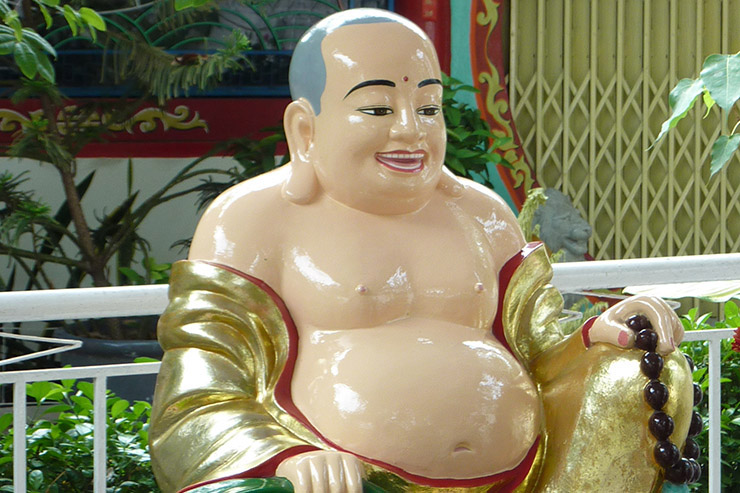
    The Vietnamese Buddha I have a great reverence for is Di Lac Phat, the Maitreya Buddha, the fat, laughing Buddha of the future. It is impossible to gaze upon his form for even a moment and not feel slightly amused, slightly more hopeful. Di Lac represents hope for the future, the wealth and abundance of which is represented in his bodily form. As such, he is a worthy symbol for the new Vietnam, a forward thinking, vastly energetic nation with a huge population and a great thirst for renovation and renewal. As depicted in Vietnam, Di Lac Phat is always smiling and often carries a mysterious sack which most say is filled with gold. The Maitreya hasn’t arrived yet, but his day is just around the corner.

    The spirit realm is ever-present in Vietnam, in homes, businesses, temples and busy intersections. On street corners, even in sophisticated downtown Ho Chi Minh City (old Saigon), you can come across small shrines dedicated to the wandering ghosts and the spirits of place. These shrines are actively tended by people in the community who offer fruit and incense every day. They speak to an ancient animist tradition that still holds great sway in Vietnam.

    Streets and suburbs are possessed of their own protective spirits, but even more so are mountains, old trees and waterfalls. There is a shrine atop Nui Ba Den, the Black Lady Mountain that rises up out of the plains of Tay Ninh that stretch from Ho Chi Minh City to Cambodia. It is a place of immense mystical significance, said to house a Black Goddess whose power is so great that all around the mountain is a mystically obsessed Holy Land that was and is something of a spiritual powerhouse in Vietnam.

    Cao Dai altar

    The Black Lady Mountain dominates the landscape in Tay Ninh City, about two hours drive from Ho Chi Minh City. Perhaps it is no accident that from this extraordinary place emerged the Cao Dai religion, Vietnam’s greatest indigenous religious experiment and one that has fascinated authors and observers ever since it first emerged in the 1930s.

    Cao Dai means High Tower, which is one of their names for God. This extravagantly colourful, hierarchically structured religion was founded by a group of men experimenting with automatic writing. It has always captured the imaginations of visitors, and Graham Greene wrote about it in his book about Vietnam, The Quiet American. The Cao Dai Holy See at Tay Ninh sits in the shadows of Nui Ba Den, and the population of this city of over one million people is almost exclusively of that religion.

    The Cao Dai faith reveres all religions and hopes that one day humanity will be united. Their shrines feature a central image of a single eye, which represents the all-seeing eye of a universal God. Followers of Cao Dai are strict vegetarians, and the Cao Dai elder priests wear brilliantly coloured robes that signify the branch in which they are reincarnated – Buddhist, Taoist or Confucian. The Cao Dai religious structure is based on the Catholic Church, with popes, cardinals, a holy city and saints – some of their saints include Victor Hugo, Sun Yat Sen, the Virgin Mary and Kuan Yin. There is only one God in Cao Dai, and he/she overlooks all people, regardless of what religion they profess. Their scriptures say: “we all know there is something over our heads.”

    But, of course, Buddhism is the principal religion of Vietnam, and is represented in a surprising number of varieties. The Buddhist nuns and monks of Vietnam are a huge unpaid workforce that is the spiritual powerhouse of the nation. Almost alone they represent the only social welfare structures that exist in the country. They care for the orphaned, the sick, the elderly and the disabled, and temples operate as community welfare and meeting centres.

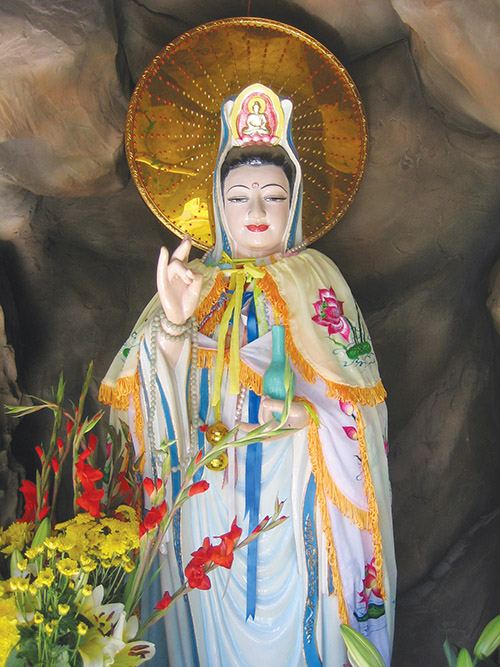
    Kuan Yin

    Vietnamese Buddhism, noteworthy for its laid-back character, has become something of a successful religious export. The second-most-famous Buddhist in the world is Vietnamese Zen Master Thich Nhat Hanh, and he has established monasteries and meditation groups across the Western world. He has also written numerous best-sellers and has appeared on Oprah.

    There is, too, a very old reverence for Confucius and the Confucian tradition in Vietnam. The Temple of Literature in Hanoi – constructed in 1070 – was an early Confucian University. It is evidence of the Vietnamese reverence for learning, and the grounds of the temple feature carved stone turtles with steles on their backs recording the names of graduates from 1484–1788. These were recently declared special objects of protection by UNESCO.

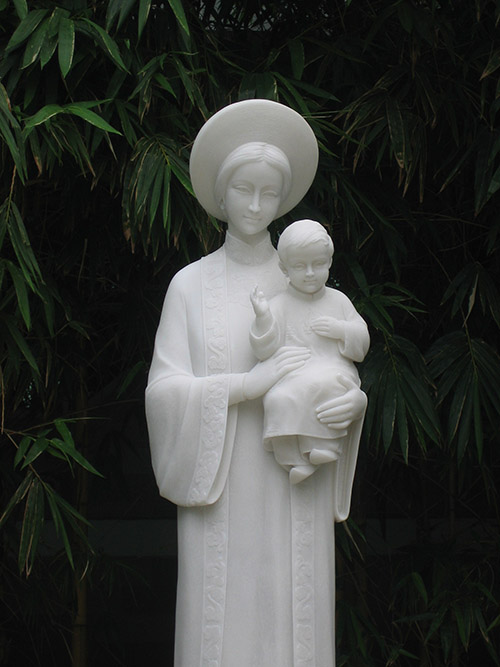
    Our Lady of La Vang

    Kuan Yin, the Buddhist Goddess of Mercy, or Bodhisattva of Compassion, is one of the most popularly revered religious figures in Vietnam. Indeed, her images are so ubiquitous that she might seem to be the great patron saint and protector of the Vietnamese people. Her name (Quan The Am in Vietnamese) means “The Hearer of All the World’s Cries.”

    Shrines to her are to be found everywhere, in people’s houses, on streetsides and, of course, at temples. She embodies the qualities of compassion and unconditional love. Vietnam’s culture has a great reverence for the mother, and people indulge in a great deal of devotion directed toward this Divine Mother – one of her appellations is Me Hien, the Gentle Mother.

    Interestingly, for Vietnamese Catholics (a sizeable minority, particularly in the South), there is another Vietnamese mother who is greatly revered. This is Our Lady of La Vang, an apparition of the Blessed Virgin Mary that appeared to the Vietnamese Catholic faithful during a period of religious repression during the 18th century. Her beautiful form – representing the Madonna and Child as entirely Vietnamese, in traditional dress and often rendered in white marble or plaster, just like Kuan Yin – is to be seen all over Vietnam.

    [alert type=”general” dismiss=”no”]Image credits: Di Lac Phat, Kuan Yin & Our Lady of La Vang by Walter Mason; Cao Dai altar Franzfoto[/alert]

    [alert type=”general” dismiss=”no”]This article was published in New Dawn 148.[/alert]

    [alert type=”success” dismiss=”no”]If you appreciate this article, please consider subscribing to help maintain this website.[/alert]

    © New Dawn Magazine and the respective author.
    For our reproduction notice, click here.
  • Transformed by Lightning: Real Life Stories

    Transformed by Lightning: Real Life Stories

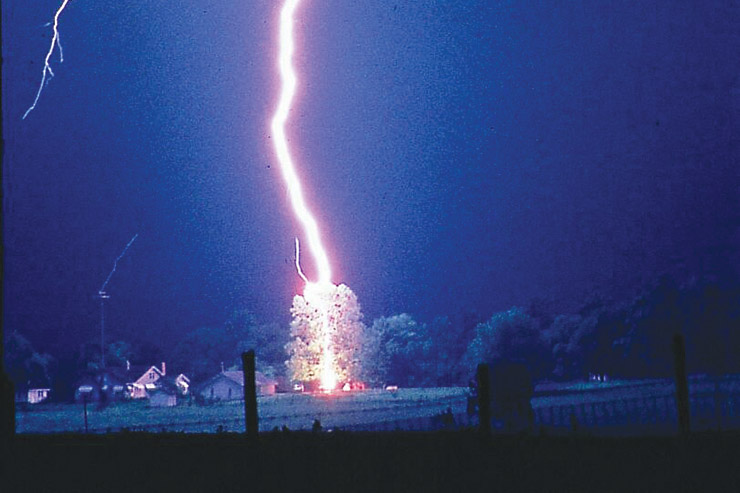
    There is little that’s positive about being struck by lightning. Generally, those unfortunate enough to be struck either die more or less instantly or, more likely, survive yet sustain much damage to their bodies. Most lightning strike survivors battle with depression and some commit suicide.

    Partly as a result of the changes in personality experienced by many lightning strike survivors, which can involve becoming grouchy, short-tempered, and irritable, it’s not uncommon for marriages to break down and for survivors to end up living in isolation. Yet it’s not all doom and gloom. Cases exist where people have been healed of medical conditions after being struck by lightning. Then there are cases where survivors have developed alleged psychic abilities. Some survivors insist they are better for the experience and even grateful they were struck.

    Harold Deal

    One survivor who views his ordeal in a remarkably positive light is Harold Deal, a former maintenance electrician in his 70s from Greenwood, Missouri. After being struck by lightning on 26 July 1969, while standing in the driveway of his home (in Lawson, Missouri), Deal developed severe memory problems, whereby occasionally he could no longer recall how to talk, walk, and perform other simple tasks. Strangely, he also lost his sense of smell and the ability to experience pain and cold. Because he doesn’t “notice the cold like most people,” some of his fellow townsfolk call him “Weird Harold.”1 He explains: “They call me this because I never wear a coat or long-sleeve shirt no matter what the weather is outside… I have worked outside in twenty-six degrees [F] below zero, plus I have worked in weather with a wind chill as low as fifty-six degrees below zero… I have also worked in twenty-three degrees below zero for up to seven hours at a time. A T-shirt and overalls is what I always wear… whether it is summer or winter.”2 Today a dedicated Christian and charity worker, Deal feels that, looking back on the accident, it made his life “so much richer and so much fuller.”3

    Betty Galvano

    Betty Galvano of Sebring, Florida, a former high-fashion model and widow of the late celebrity golfer Phil Galvano, is a remarkable example of someone who’s been healed by lightning. In 1993, Galvano fell off a seawall and broke her right leg. The accident necessitated an operation in which two 14-inch steel bars were permanently inserted in her leg. Although the operation enabled Galvano to walk again, it left her in pain and unable to use her leg to the extent she could before the accident. She explains: “[I] couldn’t jump or raise my leg. I couldn’t stand on one leg. I couldn’t walk without dipping. My leg always felt like a sandbag.”4

    On the afternoon of 11 June 1994, while cutting up broccoli in her son’s kitchen with the window open, Galvano heard “the most unbelievable tremendous blast of thunder.”5 The next thing she knew, she was slumped over the counter, the knife and broccoli having flown from her hands. The bolt of lightning that struck Galvano had entered via the open window. Her husband, who’d been sitting four feet away from her when the incident occurred, helped her to the couch so she could lay down.

    While lying on the couch, Galvano experienced a strange sensation in her crippled right leg, as though “a thousand needles had entered the toes and foot.”6 All of a sudden her leg felt “full of vitality.”7 She recalls: “I stood up and everything was fine. I could walk normally.”8 The pain had also vanished. Galvano claims that not only did the lightning strike “miraculously heal” her leg, but that she didn’t suffer any ill effects from it, not even the slightest amount of memory loss. The day after the incident she paid a visit to her doctor, who confirmed that her leg had indeed been healed.

    Although the effects of being struck by lightning vary from one individual to another, no one is ever the same as before they were struck. Some survivors undergo a kind of “spiritual awakening,” or at the very least acquire a deeper interest in spiritual matters. Something of this nature happened to Galvano. At the moment she was struck by lightning she saw “gold particles everywhere” and experienced “a beautiful, peaceful feeling that God loves us [and] that the only thing that’s worth anything is love.”9 She adds: “Lightning was a spiritual experience for me. It energised me, it made me feel better.”10 It also left her feeling “totally immersed in God,” so that now “He is with me all the time.”11

    According to Galvano, her unique relationship with lightning dates back to when she was a newborn infant in Atlanta, Georgia, in 1935. She claims that a tremendous thunderstorm occurred on the day her mother brought her home from the hospital. The storm caused an electrical cable outside the house to break, which then produced an electrical shortage inside the house and much electrical arcing. Later, when she was three months old, she developed blue baby syndrome and fell into a coma. There was a high chance she might die. As the infant Galvano lay ill in hospital, a raging thunderstorm took place outside. Galvano picks up the story: “My mother looked out the window, and on the lawn she saw a ball of lightning. It floated up, came through the window, and rested on top of me. At that moment a nurse came into the room and watched with her mouth wide open as I came out of the coma.”12

    As tempting as it is to dismiss Galvano’s ball lightning story as the product of an overactive imagination, it’s not unheard of for ball lightning to approach an individual and brush against their body without causing any harm. So it’s conceivable she had a ball lightning encounter as an infant where the object “rested on top of me.” Whether the object healed her, though, is another matter entirely.

    Robert Davidson

    The case I’m about to describe is hardly an example of someone being healed by lightning, though it involved a healing of sorts. In June 1980, Robert Davidson, then aged 38, was riding his motorbike down Interstate 74 on his way to Indianapolis when suddenly it started to rain. Seated behind him on the motorbike was his wife. The two decided to pull off the road to put on their wet weather gear. Davidson’s wife dismounted the motorbike first. Just as Davidson was dismounting, with his left foot on the ground and his right leg still on the seat, he was struck on the shoulder by a bolt of lightning. Davidson was sent flying through the air and landed on the ground without a pulse. A physician who happened to be driving by at the moment the accident occurred pulled over to assist Davidson, giving him CPR and calling an ambulance.

    Both the physician and the team of ambulance paramedics desperately tried to restore Davidson’s heartbeat, but with no luck. As their attempts continued without success, it began to look inevitable that Davidson wouldn’t make it. What happened next sounds like something out of a Stephen King novel. A woman carrying a Bible and wearing an old fashioned-style black dress suddenly arrived at the scene. “Let me touch him,” she yelled out, as she made her way toward Davidson.13 Given the hopeless nature of Davidson’s condition, the paramedics decided they had nothing to lose by letting the woman approach him. “She knelt down beside me,” Davidson said, “and placed the Bible and one hand on my chest and the other hand on the ground. She proceeded to lift the Bible to the sky and muttered something that no one understood.”14 The woman – who came to be known as the “woman in black” – then got up and walked away, and was never seen again. Moments later Davidson had a pulse.

    The identity of the woman in black remains a mystery to this day. She appeared in an instant and vanished in an instant. Although some of the witnesses and paramedics at the scene say they didn’t see the woman, others are adamant they saw her and that she indeed saved Davidson’s life. Paramedic Marylou Shafer belongs in the latter group. “There is no doubt in my mind,” she commented. “She was there.”15 Davidson was taken immediately to hospital, where he remained in a comatose state for seven weeks then spent several additional weeks relearning how to walk. The lightning strike damaged his vocal cords, and it was two years before he was able to talk again and nine years before he was well enough to return to his job at General Motors.

    Peculiar Aftereffects

    Davidson claims that for many years following the accident he was unable to wear a wristwatch without it malfunctioning within a matter of days. The only watch he could wear that didn’t malfunction (and in fact continued to keep perfect time) was the one he had on his wrist at the time of the accident. Actually, many lightning strike and electric shock survivors claim they exert an odd effect on wristwatches. Furthermore, the claims don’t apply exclusively to wristwatches but involve all manner of electrical gadgets – from computers to automatic garage doors to streetlamps.

    In June 1989, former storm chaser Steve Melvin of Ohio, now in his early-50s, happened to get struck by lightning at the precise moment he was taking a photo. The camera was partly melted by the lightning, yet the film inside was undamaged. Remarkably, the photo he took at the moment he was struck shows the ghostly outline of a human surrounded by lightning, even though neither he nor anyone else was situated in front of the lens at the time. Melvin commented: “Some say it was me having an out-of-body experience. Some say it was my grandmother coming down from heaven to push me out of the way of the lightning. Some say it was a glimpse of an entirely different dimension. I’ll never know.”16 Ever since the incident, Melvin has had to replace on a frequent basis the batteries inside the pager he carries on his person; they go flat within days yet are supposed to last for months.

    Could there be a mundane reason why the batteries in Melvin’s pager appear to mysteriously go flat? Perhaps the device is damaged in such a way that it uses more power than it should. Or perhaps, due to brain damage sustained during the accident, Melvin has difficulty remembering when he last put batteries in the device. The only reliable way to get to the bottom of the matter would be to carry out a series of experiments involving Melvin and his pager. This aside, the fact that many lightning strike and electric shock survivors make claims similar to Melvin’s means we’re faced with a genuine mystery.

    In a 2009 USA Today article titled “Florida Lightning Survivors Share Stories,” one of the stories featured is that of Ralph Weidner of Bonita Springs. Since being struck by lightning in 1968 during a camping trip in Colorado, Weidner has had “difficulty using electronic devices.”17 He elaborates: “Battery-operated watches last only a few months and cellphones are a problem as well. I have had my cellphone keypad fail to work, but when I hand it to someone else, it works just fine. This has happened several times.”18

    In Out of the Blue, Friedman presents a number of cases where “lightning survivors have claimed electrical or magnetic powers…”19 One of the cases presented is that of Gabrielle Blanstein. After being struck by a bolt of lightning that entered through the open window of her home in Haydenville, Massachusetts, in 1996, Blanstein became “supersensitive to electrical current.”20 She can tell when an electrical device is plugged in nearby because she can feel in the form of vibrations the EM field surrounding the device. Blanstein claims to have demagnetised by accident two bank cards and a credit card. Could it be that Blanstein suffers from electromagnetic hypersensitivity (EHS)? Her ability to sense EM fields certainly suggests as much.

    Another case presented by Friedman is that of Nina Lazzeroni, a dental assistant and part-time motorcycle safety instructor in her late-50s from Dover, Delaware. On the afternoon of 8 April 1995, Lazzeroni was struck by lightning while standing in a parking lot in Troy, Ohio, in front of a number of students to whom she was delivering a lesson on motorcycle safety. Her students witnessed the entire event. She said, “They told me I flew up like a rag doll and landed on my head.”21 Lazzeroni spent a week in hospital. The accident left her with a shattered left eardrum (which later healed but developed into tinnitus), an abnormal heart rhythm, permanent numbness in parts of both feet, memory issues, personality alterations, and difficulty reading and talking. Lazzeroni surmises that the lightning entered her brain and fried her pituitary gland and other parts of her endocrine system, because after the accident she began to experience “such drenching menstrual periods that I was forced to have a hysterectomy.”22

    Fortunately, Lazzeroni has made a dramatic recovery and now finds it much easier to read and talk. Of those symptoms that remain from the accident, one is extremely peculiar: Lights of all kinds, particularly ones in public places like streetlamps and billboard lights, have a tendency to switch off in her presence, though at unpredictable moments. She explains: “They come back on after I leave the area and turn off again if I return. It’s not uncommon to have three or four go out while I’m driving somewhere at night. I feel no electricity or any other sensation – I just find myself in the dark periodically.”23 The phenomenon described by Lazzeroni falls into the category of streetlamp interference (SLI). [For more on this, see Louis Proud’s article “Streetlamp Interference: A Modern Day Paranormal Mystery” in New Dawn Special Issue Vol.7 No.2.]

    Kurt Oppelt, who with Sissy Schwarz won a gold medal at the 1956 Winter Olympics in the pairs figure skating event, was struck by lightning in 1989 while standing in his bathroom. Doctors he consulted the following day could find nothing wrong with him. And yet, explains Oppelt, “audio receivers, cash registers, and computers broke when I touched them… A friend of mine gave me a laptop, but I can’t use it. I told my cardiologist that my ‘electrical system’ was disturbed, but the doctors say they have no scientific proof. I told another doctor what happens when I touch electrical gadgets, and he said, ‘So don’t touch them’.”24

    Psychic Abilities

    The alleged development of psychic abilities is not an uncommon feature among cases where people have survived a lightning strike. While looking through the many lightning strike “survivor stories” posted on the National Oceanic and Atmospheric Administration (NOAA) website, I came across two claims of psychic ability. The first claim concerns a woman named Missy. Missy was struck by lightning through a landline telephone while ordering pizza during a thunderstorm. At the moment the strike occurred, she heard a “loud explosion” and noticed at her feet “a bright white light… which was football shaped and had spikes.”25 (This is a perfect description of ball lightning, which can indeed emerge from telephone handsets and also assume a “spikey” appearance.)

    The explosion knocked Missy backwards, and for a moment she remained on the floor in an unconscious state. She then experienced a strange “numbing feeling” work its way up one side of her body. Missy was taken to the hospital emergency room, where doctors confirmed she’d been struck by lightning. After the accident, according to Missy, she developed as a “side effect” (her term) extrasensory perception (ESP). She explains: “There have been times where I speak someone’s name, someone that I haven’t heard from or seen in many years and all of a sudden they walk in the door… I’ve had eerie feelings about things just before they actually happen… Most people that know me are amazed. And so am I. This periodic thing only started after my lightning incident.”26

    The second claim of psychic ability on the NOAA website concerns a nurse in Nashville, Tennessee, named Thais. Thais was struck by lightning on two separate occasions. The first time, in May 1985, she had been standing next to an open window drawing blood from a patient seated on a chair when lightning entered the building through the window and struck both her and the patient. The event was witnessed by the patient’s wife, who described the bolt of lightning as orange in colour and added that it appeared to go around as well as pass through the bodies of both Thais and the patient.

    Thais’s encounter with lightning left her with few if any injuries. A couple of months after the incident, however, she noticed two strange aftereffects. First, she could no longer wear a watch without it “losing 10-20 minutes and becoming unreliable.”27 She adds: “At first I kept thinking I was buying watches that were too inexpensive. It took a couple [of] years to realise it wasn’t the watches but me that was the problem!”28 The second strange aftereffect is that her psychic abilities became heightened. She comments: “This [heightened psychic abilities] is not something I previously had interest in and definitely not something I was looking for. I have always been a very private person and didn’t want to know things about other people, but I found myself somehow knowing things about folks I didn’t know well.”29

    The second time Thais was struck by lightning was while talking on the telephone during a Thanksgiving weekend some six to eight years after the first strike. Since then, she says, the well pump at her home has been struck by lightning twice.

    Greta Alexander

    Greta Alexander (1932–1998) of Delevan, Illinois, was a famous psychic whose expertise included palmistry, numerology, “medical intuition,” and assisting police with missing persons cases. Born on a farm in Manito, Illinois, she spent the first part of her adult life as a regular mother and housewife. One night in April 1961, while pregnant with her fifth child, she was lying in bed watching a thunderstorm out the window when “a white light came at me through the window, and the next thing I knew the Venetian blinds were wrapped around me and there was a fire burning a hole in the bed.”30 Although the bolt of lightning damaged her bedroom window, knocked down the chimney, and set fire to her bed, it didn’t harm her or her unborn child in any apparent way.

    Shortly afterwards, she suffered an electric shock while plugging a second-hand refrigerator into a faulty electrical outlet. It was soon after the lightning strike and subsequent electric shock that Alexander’s psychic abilities were “awakened.” She found herself answering the telephone moments before it rang, and noticed she was able to “read” the minds of others. She eventually established herself as a professional psychic, being paid by clients to perform palm readings and the like.

    Her work assisting police with missing persons cases (for which she received no payment) began in 1974. Perhaps the best known case in which her psychic talents proved useful was the 1983 murder of Mary Cousett by her boyfriend Stanley Edward Holliday Jr. At the time Alexander was asked to assist in the case, Holliday had already been charged with Cousett’s murder, yet the whereabouts of Cousett’s body remained unknown. Thanks in part to Alexander’s help, the police located Cousett’s body on 29 October 1983. “She told us a lot of things that turned out to be true – 20-some points that fit,” commented Lt. Donald Sandidge, “like that the head and foot would be separated from the [victim’s] body, [and] that a man with a crippled hand would find her.”31 (The man who found her body, an auxiliary officer by the name of Stephen M. Trew, had a deformed left hand due to an injury he’d sustained in the past.)

    That Alexander was highly psychic is difficult to refute. However, the reason she deserves mention here is not to illustrate the fact that psychic abilities are genuine and can be used to help solve crimes but that both lightning strike and electric shock play an important role in the “awakening” or attainment of psychic abilities. Given that Alexander was struck by lightning then soon after sustained an electric shock, there’s no way to know which of the two incidents was responsible for her “psychic awakening.” Very likely both were.

    Lightning Shamans

    Had Alexander lived in a society where shamanism is practiced, it’s likely she would have been considered a shaman as opposed to a mere psychic. According to German ethnologist and psychologist Holger Kalweit, in shamanic traditions the world over, being struck by lightning is one of the ways by which people are initiated into shamanism. “The Greeks believed a person struck by lightning was in possession of magical powers,” he explains, “and in tribal cultures throughout the world lightning shamans are often venerated and feared as the mightiest of shamans.”32

    To be initiated into shamanism is to take up the shamanic path. Apparently, this happens not by personal choice but under the will of a higher power. During shamanic initiation, the initiate symbolically dies (undergoes dismemberment) and is reborn (put back together). They acquire as a result of this challenging and traumatic process mediumistic and other psychic abilities.

    There is a belief among the North American Indian tribes known collectively as the Sioux that when a person is struck by lightning or has visions featuring Wakinyah (“thunderbirds” or “thunder beings”) it can indicate they’ve been chosen to become a special type of medicine man called a Heyoka (“thunder dreamer.”) A Heyoka differs from a conventional medicine man in that he does everything in a contrary fashion. He is a sacred fool, whose clownish antics are a source of amusement to others. The powers with which Heyokas are gifted derive from the thunderbirds. A thunderbird is a spirit of lightning and thunder in the form of a huge Eagle-like bird. Lightning they produce from their beaks; thunder they produce through the beating of their wings. They are also responsible for the production of rain.

    The famous Sioux Indian warrior and holy man Black Elk (1863–1950) followed the path of Heyoka. At the age of nine he was taken deathly ill and confined to bed for approximately twelve days. During this period of illness, he experienced a great vision in which he was visited by the thunder beings and taken to see the “grandfathers.” The grandfathers taught him important lessons that contributed to his eventually becoming a shaman. “Only those who have had visions of the thunder beings of the west can act as heyokas,” he explains. “They have sacred power, and they share some of this with all the people, but they do it through funny actions.”33 These “funny actions” can include running around naked in the middle of winter and shivering and complaining of the “cold” in the middle of summer; answering “yes” when one actually means “no”; and wearing one’s clothing and boots back-to-front. (One is reminded of Harold Deal’s inability to feel the cold.)

    Since, in spiritual terms, lightning is sacred and powerful because it originates from heaven, to be struck by lightning and survive is to be rendered powerful and sacred. To be struck by lightning and die, on the other hand, is to be punished for having done something to challenge fate.

    [alert type=”general” dismiss=”no”]Reprinted, with permission of the publisher, from Strange Electromagnetic Dimensions: The Science of the Unexplainable, © 2015 Louis Proud. Published by New Page Books a division of Career Press, Pompton Plains, NJ, USA, 800-227-3371. All rights reserved.[/alert]

    [alert type=”general” dismiss=”no”]This article was published in New Dawn 148.[/alert]

    [alert type=”success” dismiss=”no”]If you appreciate this article, please consider subscribing to help maintain this website.[/alert]

    Footnotes

    1. John S. Friedman, Out of the Blue: A History of Lightning: Science, Superstition, and Amazing Stories of Survival, Random House, 2008, 183
    2. Ibid, 183
    3. Megan Varner, “We Are All Survivors of Some Sort,” Index-Journal, 10 May 2006, www.zoominfo.com/p/Harold-Deal/851209311 (accessed 31 December 2013)
    4. Friedman, Out of the Blue, 184
    5. Ibid, 184
    6. Friedman, Out of the Blue, 184
    7. Ibid, 184
    8. Ibid, 184
    9. Dayna Harpster, “Florida Lightning Survivors Share Stories,” USA Today, 1 July 2009, http://usatoday30.usatoday.com/weather/2009-07-01-lee_lightning_survivors_N.htm (accessed 31 December 2013)
    10. Mireya Navarro, “When Lightning Strikes, Lives Are Changed,” 1 September 1998, The New York Times, www.nytimes.com/1998/09/01/us/when-lightning-strikes-lives-are-changed.html (accessed 31 December 2013)
    11. Ibid, 201
    12. Ibid, 202
    13. Ibid, 219
    14. Ibid, 219
    15. Ibid, 219
    16. Chris Rodell, “Unlucky Strikes,” The Independent, 7 November 1999, www.independent.co.uk/arts-entertainment/unlucky-strikes-1124177.html (accessed 31 December 2013)
    17. Dayna Harpster, “Florida Lightning Survivors Share Stories.”
    18. Ibid
    19. Friedman, Out of the Blue, 186
    20. Ibid, 186
    21. “The Will to Live,” Prevention, November 2011, www.prevention.com/health/healthy-living/stories-medical-miracles?page=3 (accessed 31 December 2013)
    22. Ibid
    23. Friedman, Out of the Blue, 187
    24. Ibid, 187
    25. “Survivor Story: Missy: High Price for Pizza? Supernatural Side effect?,” NOAA, www.lightningsafety.noaa.gov/survivors/story_missy.htm (accessed 31 December 2013)
    26. Ibid
    27. “Survivor Story: Thais: Open Window Results in Strike,” NOAA, www.lightningsafety.noaa.gov/survivors/story_thais.htm (accessed 31 December 2013)
    28. Ibid
    29. Ibid
    30. Wes Smith, “Seeing Things: Downstate Psychic Greta Alexander Is Known Worldwide As A Woman of Visions,” Chicago Tribune, 9 June 1991, http://articles.chicagotribune.com/1991-06-09/features/9102210281_1_psychic-abilities-unsolved-murder-case (accessed 1 January 2014)
    31. “Psychic Key to Cops Finding Remains of Slain Woman,” The Evening News, 16 November 1983, http://news.google.com/newspapers?nid=1982&dat=19831116&id=2tBeAAAAIBAJ&sjid=t20NAAAAIBAJ&pg=2498,1826524 (accessed 1 January 2014)
    32. Holger Kalweit, Shamans, Healers, and Medicine Men, Shambhala Publications, Inc., US, 1992, 46
    33. John G. Neihardt, Black Elk Speaks: Being the Life Story of a Holy Man of the Oglala Sioux, State University of New York Press, US, 2008, 149

    © New Dawn Magazine and the respective author.
    For our reproduction notice, click here.

  • A Prophecy for Our Time?

    A Prophecy for Our Time?

    From New Dawn Special Issue Vol 11 No 3 (June 2017)

    One of the world’s oldest legends tells of a vast underground network of tunnels and passageways connecting the great continents of the earth to a subterranean realm somewhere beneath the heart of Central Asia.

    “Among the Mongolian tribes of Inner Mongolia,” claimed the British journalist H. T. Wilkins, “there are traditions about tunnels and subterranean worlds which sound as fantastic as anything in modern novels. One legend – if it be that – says that the tunnels lead to a subterranean world of Antediluvian descent somewhere in a recess of Afghanistan, or in the region of the Hindu Kush. It is Shangri-La where science and the arts, never threatened by world wars, develop peacefully, among a race of vast knowledge. It is even given a name: Agharti.”

    In The Mysterious Unknown, the French writer Robert Charroux, drawing on the Ancient Wisdom, describes Agharti as “a mysterious subterranean kingdom that is said to lie under the Himalayas and where all the Great Initiators and the Masters of the World in the present cycle are still living. Agharti is an initiatory centre…”

    ‘Agharti’, also rendered ‘Agarttha’ and sometimes ‘Agartha’, owes its popularity to the 1920s best-selling book Beasts, Men and Gods. Written by the Polish academic and explorer Dr. Ferdinand Ossendowski (1876–1945), it is a chronicle of his adventures in Central Asia in the tumultuous years following the Russian Revolution.

    What makes Ossendowski’s account unique is his claim that everywhere he went in Central Asia he encountered the shadowy legend of “The King of the World” – reigning over the subterranean power-centre of Agharti – who “knows all the forces of the world and reads all the souls of humankind and the great book of their destiny.” This unseen ruler of the planet and his council of Masters wield telepathic influence over persons in our ‘outer’ world. Often visiting disciples in their dreams, they send forth messengers at fortuitous times to confer with their agents, scattered among the nations.

    Occasionally, the King of the World came out in person. He would visit some holy place, arriving and leaving mysteriously. He had done so at a temple in the Mongolian town of Narabanchi in the winter of 1890/91.

    A Prophecy for Today?

    In Beasts, Men and Gods, Ossendowski recounts a quite remarkable prophecy given by the King of the World. A Buddhist lama, the Hutuktu of Narabanchi, told Ossendowski in 1921 that the King of the World made the following pronouncement “thirty years ago,” which corresponds to winter 1890/91:

    “More and more the people will forget their souls and care about their bodies. The greatest sin and corruption will reign on this earth. People will become as ferocious animals, thirsting for the blood and death of their brothers. The ‘Crescent’ will grow dim and its followers will descend into beggary and ceaseless war. Its conquerors will be stricken by the sun but will not progress upward and twice they will be visited with the heaviest misfortune, which will end in insult before the eye of the other peoples. The crowns of kings, great and small, will fall… one, two, three, four, five, six, seven, eight… There will be a terrible battle among all the peoples. The seas will become red… the earth and the bottom of the seas will be strewn with bones… kingdoms will be scattered…whole peoples will die… hunger, disease, crimes unknown to the law, never before seen in the world.

    “The enemies of God and of the Divine Spirit in man will come. Those who take the hand of another shall also perish. The forgotten and pursued shall rise and hold the attention of the whole world. There will be fogs and storms. Bare mountains shall suddenly be covered with forests. Earthquakes will come… Millions will change the fetters of slavery and humiliation for hunger, disease and death. The ancient roads will be covered with crowds wandering from one place to another. The greatest and most beautiful cities shall perish in fire… one, two, three… Father shall rise against son, brother against brother and mother against daughter…. Vice, crime and the destruction of body and soul shall follow…. Families shall be scattered…. Truth and love shall disappear…. From ten thousand men one shall remain; he shall be nude and mad and without force and the knowledge to build him a house and find his food…. He will howl as the raging wolf, devour dead bodies, bite his own flesh and challenge God to fight…. All the earth will be emptied. God will turn away from it and over it there will be only night and death.

    “In the fiftieth year only three great kingdoms will appear, which will exist happily seventy-one years. Afterwards there will be eighteen years of war and destruction. Then the peoples of Agharti will come up from their subterranean caverns to the surface of the earth.”

    Immediately following this prophecy Ossendowski writes:

    “Afterwards, as I travelled farther through Eastern Mongolia and to Peking, I often thought: ‘And what if…? What if whole peoples of different colours, faiths and tribes should begin their migration toward the West?’”

    After again quoting the Buddhist lama, Ossendowski ends his book: “Karma may have opened a new page of history! And what if the King of the World be with them? But this greatest Mystery of Mysteries keeps its own deep silence.”

    The Year 2030

    If we accept that the mysterious King made this prediction in the winter of 1890/91, as Ossendowski was told, then the 50 years of strife and misery (marked by the First World War, the end of the European monarchies, revolutions, famine, disease, class/ethnic/religious conflicts, the financial chaos of the Great Depression) would take us through to the years of the Second World War. This followed by 71 years of happy stability under three great kingdoms (perhaps a reference to the East-West stand off at the end of 1945). Bringing us remarkably close to 2012, a year made famous by its association with the supposed end of the Mayan calendar. Then commences 18 years of war.

    Many modern day commentators believe we’re in the initial stage of a long ‘war’, with the Anglo-Americans and the Western alliance locked in a new kind of ‘asymmetric warfare’ with Russia, China and their allies in the global South. Others, notably American politicians, see an endless ‘War on Terror’ as currently underway between the West and radical Islam. The culmination of this 18-year period of global conflict brings us to the years 2029-2030. This is when the people of the “subterranean” realm will come “to the surface of the earth,” making their existence known to all.

    Leaving aside the esoteric and mystical symbolism implicit in the Agharti mythos, some further observations are worth making. As we approach the year 2029, the date prefigured in the King of the World’s prophecy delivered in 1890/91, we look back on a century of bloodshed and misery unprecedented in history. World wars, genocides, social and political upheavals, ecological crisis, economic instability, are only some of the terrible catastrophes to befall mankind in the last hundred years.

    Against this background, some contemporary visionaries see the wars in Iraq and Afghanistan, threats against Iran, even the destabilisation of the Chinese province of Xinjiang, as part of the working out of an ancient plan. Added to all this is the spectacular rise of the peoples of Asia. A great awakening is quietly underway in Central Asia, fuelled in large part by China’s grand scheme to re-establish the ancient Silk Road. Will we see the dawn of a powerful Great Eurasian confederation by 2029? Many expect so.

    As the mystic Baron Roman Ungern von Sternberg (1886–1921) told Ferdinand Ossendowski:

    “I shall die! But no matter, no matter… The cause has been launched and shall not die… The tribes of Jenghiz Khan’s successors are awakened… In Asia there will be a great state from the Pacific and Indian Oceans to the shores of the Volga… It will be the victory of the spirit.”

    Is this the ‘victory of the spirit’ for which certain Eastern mystics and their allies in the Eastern-orientated occult circles in the West have long been labouring in secret? For at least the last one hundred years a select few Western occultists have known that the rise of Asia was near and inevitable. Back in 1888, Madame H. P. Blavatsky, who spoke openly of being guided by ‘The Masters of the East’, predicted an inevitable show down between East and West:

    “Then, perhaps, there will be a new invasion of an Atilla from the far East. One day the millions of China and Mongolia, heathen and Mussulman, furnished with every murderous weapon invented by civilisation, and forced upon the Celestial of the East, by the infernal spirit of trade and love of lucre of the West, drilled, moreover, to perfection by Christian man-slayers – will pour into and invade decaying Europe like an irrepressible torrent.”

    Secretive mystic-politico groups, known to history by various and sundry names: the ‘Grand Lodge of Vril’, the ‘Order of the Green Dragon’, ‘Society of Green Men’, ‘Black Dragon Society’, ‘Han Temple of Buddha-Shakti’… Claiming a link with Agharti, these have all worked quietly in the shadows to lay the foundations for a sort of fraternal union between Eastern and Western occultists. In a document issued by one of these occult orders, we’re informed:

    The Master of the Three Worlds, whose initials are K.R.T.K.M, reigns over a community of Magi… The next Buddha will come from the North, and will be the Kalki-avatar of the Hindus, or Kundaliniavatar, who will wear on his finger the metal ring of Genghis Khan. His coming will mark the return of the Golden Age, and will precede the advent of the luminous race, contemporary with the resurrection of Mu or Tao-Land.

    It will be the end of the Kali Yuga, the casting out of the Jotün and the cacodamons from the governmental centres of the earth, and of 100,000 years of evil karma inherited from the darkness of Atlantis.

    Here we have hints of a link between the King of the World’s prophecy and the end of the Kali Yuga. A connection that did not escape the attention of French esotericist Rene Guenon (1886–1951) who wrote his own study of the King of the World, Le Roi du Monde, in 1927. Guenon was also interested in the work of scholar Gaston Georgel who claimed, based on his extensive research, that the end of the Kali Yuga would come in the northern hemisphere winter of 2029/2030.

    Time, as they say, will tell.

    [alert type=”general” dismiss=”no”]This article was published in New Dawn Special Issue Vol 11 No 3.[/alert]

    [alert type=”success” dismiss=”no”]If you appreciate this article, please consider subscribing to help maintain this website.[/alert]

    © New Dawn Magazine and the respective author.
    For our reproduction notice, click here.