New Dawn – World's Most Unusual Magazine

Category: Articles

  • Gematria: The Link Between Numbers & Letters

    Gematria: The Link Between Numbers & Letters

    From New Dawn 148 (Jan-Feb 2015)

    Count the numerical values

    Of the letters in Nero’s name,

    And in “murdered his own mother”:

    You’ll find the sum is the same.

    This piece of doggerel, written on a wall in Rome around 60 CE, points to a widespread (and very likely true) rumour that was circulating about the wicked emperor Nero: that he had his mother, Agrippina, killed.

    It is one of the earliest recorded uses of gematria, or isopsephy. By this technique, you add up the number equivalents of letters in the alphabet. If the numbers are the same for two different words or phrases, they are pointing to a connection between the two things – and may even suggest they are identical. This particular calculation was done in Greek. If you add up the numerical values for the Greek letters in Neron (Nero) and in the phrase idian metera apekteine (“killed his own mother”), they both equal 1005.

    The verse above was quoted by the Roman historian Suetonius. If Suetonius was right about this story, the use of gematria was so well-known in first-century Rome that it could be used by a juvenile delinquent (although a highly educated one) scrawling a nasty comment on a wall.

    Gematria is based on the fact that the alphabets of some languages do double duty as letters and as numbers. This is certainly the case for both ancient Greek and Hebrew, and it makes gematria a particularly fascinating technique when those languages are involved.

    Curiously, the most famous use of gematria also concerns Nero. In all likelihood, he is the famous Beast of Revelation 13:18, which reads, “Here is wisdom. Let him that hath understanding count the number of the beast: for it is the number of a man; and his number is Six hundred threescore and six.” Scholars generally agree this refers to Nero, because the Hebrew letters for the words “Nero Caesar” do in fact add up to 666.

    This identification also fits the time, since Revelation, at least in part, probably dates from the era of the Jewish War of 66-73 CE, in which the province of Judea rebelled from Rome and was crushed by the Roman army. Nero, whose cruelty was excessive even by Roman standards, was overthrown in 68.

    The number 666, being of the Beast, is sometimes contrasted with 888, which by Greek gematria is the number of Jesus.

    So where does gematria come from? It is a Hebrew word, derived from the Greek geometria (“geometry”) or possibly grammateia (“grammar”). As we’ve just seen, one of the earliest instances of gematria is based on Greek letters. But the Greeks did not invent it. Perhaps the Babylonians did. The oldest known use of gematria appears in an inscription from the reign of the Babylonian king Sargon II (727-707 BCE). It says that Sargon built the wall of the city of Khorsabad “equivalent to the value of his name,” which, according to Babylonian calculation, was 16,283 cubits.

    Nevertheless, it was the Jewish tradition, particularly its mystical strain known as the Kabbalah, that took gematria the furthest. The single best-known use of gematria has to do with the word chai (“life”), whose numerical value equals eighteen, making eighteen a traditionally lucky number for Jews.

    Thirty-six, twice eighteen, thus pointing to two lives (presumably a heavenly as well as an earthly one), is a still more important number. According to Jewish tradition, at any given time there are thirty-six righteous people on Earth for whose sake the world is preserved, no matter how wicked it may become. Their identity is known to no one, for the most part not even to themselves. If anyone claims to be one of them, it is a sure sign that he is not.

    Thirty-six may have another meaning as well: it is written with the Hebrew letters lamed and waw, or vav, which equal thirty and six respectively. These letters spell the word lo, “to him,” possibly indicating these thirty-six belong specially to God. The thirty-six righteous are sometimes known as “lamed-vavniks.”

    Far more famous than gematria, of course, is numerology, which is based on the same principle. Although this method seems more artificial in English and other modern languages, whose alphabets do not serve as numerals, it has been undyingly popular. It generally focuses on determining an individual’s fate by adding up the numbers associated with the letters of her name, or sometimes the numbers of her birthdate. There are innumerable guides to numerology available. One concise account I found helpful can be found in chapter 2 of Richard Cavendish’s book The Black Arts (published in the UK under the title The Magical Arts).

    Gematria in its most standard form (there are many variants) uses the actual numerical value of the Hebrew letters. Vav, the sixth letter, stands for the number six. Yod, the tenth letter, stands for ten, and so on. But there is another, more esoteric value for numbers based on a complex but fascinating system.

    There are twenty-two Hebrew letters as there were in the Phoenician alphabet from which it derives. And the number twenty-two has a little-known mystical significance. It comes from the fact there are exactly twenty-two regular polygons that can be inscribed in a circle.

    Why should this idea have any importance? Probably because the circle, whose dimensions are based on pi, an irrational number, represents the unseen – thus heaven. The polygons, all of which have dimensions that can be expressed in rational numbers, represent the visible – thus the earth. These twenty-two figures would thus symbolise the interaction of heaven and earth.

    This schema is, as far as I can tell, almost unknown in the English-speaking world. I have come across it in two sources, both originally published in French: La Bible, document chiffré (“The Bible: A Coded Document”) by Raymond Abellio, and Gnosis: Study and Commentaries on the Esoteric Tradition of Eastern Orthodoxy by Boris Mouravieff. The latter has been translated into English; the former has not.

    Abellio points out that the esoteric numerical value of each Hebrew letter corresponds to the number of sides of the polygon to which it relates. For example, the first Hebrew letter, aleph, corresponds to the triangle, the first of the regular polygons. Hence the esoteric value of the aleph is three. (Its value in more familiar versions of gematria is one, because it is the first letter of the alphabet.) The second letter, beth, has the value of four, because it corresponds to the next polygon, the square, which has four sides, and so on.

    Mouravieff adds another dimension to this picture. In the first place, he says this system was expounded esoterically in the 118th Psalm. This psalm, the longest by far, consists of twenty-two stanzas, each of which corresponds to one of the Hebrew letters. The eight lines of each stanza all begin with that letter. I have never found it easy to find these deeper meanings in this psalm, but that doesn’t mean they don’t exist.

    In the second place, Mouravieff gives a table of the esoteric meanings of these numbers. Although he insists they are not equated with images in the esoteric Christian tradition and he does not mention the Tarot, his list bears a striking resemblance – at least at some points – to the Major Arcana of the Tarot deck.

    For example, according to Mouravieff the key of three has the meaning “Love (coming from the feminine principle), Queen of the Heavens.” It’s easy to see the resemblance between this description and the Empress card, the third of the Tarot trumps. The key of thirteen has the meaning “fall, decomposition, death.” Anyone familiar with the Tarot will immediately see that this corresponds directly to the thirteenth trump, which is Death. The key of fifteen has the meaning “thought, calculation, lie, illusion,” which again corresponds neatly to the Devil card.

    The last number is of particular interest. The twenty-second trump has the meaning “the Whole, in Space and Time as well as out of Space and Time, comprising the perceptible and the imperceptible, the imaginable as well as the unimaginable.” The twenty-second figure is the 360-gon, which has 360 sides. Although I have never seen a drawing of this figure, I would imagine that its sides would be so small that you could be fooled into thinking it was a circle. It is striking, then, to recall that the twenty-second Tarot trump is the Fool. Moreover, its number is given as zero in most decks, which again resembles a circle.

    This system of polygons in the circle may provide a link between the Tarot and the Hebrew letters, which was posited by the French magus Éliphas Lévi in the nineteenth century, but most scholars today no longer take seriously. It’s possible, then, that the Tarot trumps were not modelled on the Hebrew letters or vice versa, but they were both inspired by the same geometrical schema.

    What is the value of this numerological knowledge? I doubt it has the kind of practical application that will enable one to cure cancer or blow up cities. Its power lies at another level. Mouravieff hints at how one might use it: “Each of these Numbers in its turn contains a whole bundle of ideas, bound together by a general idea that often escapes the mind that is still untrained in this contemplative research.” Contemplation of these ideas and figures is as much the point as any factual knowledge it may convey.

    Thus, as with other esoteric codes, mere information is only a small part of the picture. The knowledge involved is not merely a collection of facts, but the perception of interconnections between things that had previously seemed separate and isolated. This kind of practice, we can surmise, is a way of training and integrating the mind. In this way it helps the individual consciousness to correspond more closely to the primordial, integrated Unity that underlies all things.

    [alert type=”general” dismiss=”no”]This article was published in New Dawn 148.[/alert]

    [alert type=”success” dismiss=”no”]If you appreciate this article, please consider subscribing to help maintain this website.[/alert]

    Sources

    Raymond Abellio, La Bible, document chiffré, 5th ed., Gallimard, 1950

    Kieren Barry, The Greek Qabalah: Alphabetic Mysticism and Numerology in the Ancient World, Samuel Weiser, 1999

    Richard Cavendish, The Black Arts, G.P. Putnam, 1967

    Boris Mouravieff, Gnosis: Study and Commentaries on the Esoteric Tradition of Eastern Orthodoxy, vol. 3, edited by Robin Amis, Praxis Institute Press, 1993

    Gershom Scholem, Kabbalah, Dorset, 1987

    © New Dawn Magazine and the respective author.
    For our reproduction notice, click here.

  • An Introduction to Western Sexual Mysticism

    An Introduction to Western Sexual Mysticism

    From New Dawn 109 (Jul-Aug 2008)

    Very few people are aware that there are long-standing traditions of sexual mysticism in the West. During the last quarter of the twentieth century, many in the West became aware of Hindu and Buddhist forms of Tantra, but Tantric traditions were often distorted in the process of transmission or transference to the modern West, where they often became commodified and trivialised. This never happened to esoteric Western traditions of sexual mysticism, primarily because they were entirely unknown. Even today, The Secret History of Western Sexual Mysticism is the first book to outline the hidden history and nature of Western sexual mysticism.

    Of course, we should begin by outlining what we mean by ‘sexual mysticism’ in the first place. After all, the very term ‘mysticism’ is ambiguous, for some even synonymous with ‘woolly-minded’. The word ‘mystic’ derives from the Greek word mustein, meaning ‘silent’ or ‘closed-lips’, and has the same origin as the word ‘mystery’. The words ‘mysticism’ and ‘mystery’ are associated with the ancient Greek Mystery (revelatory and initiatory) traditions of antiquity, which, as we shall see, certainly had sexual dimensions. As far back as we can trace, the word ‘mysticism’ refers to religious traditions that point us toward inexpressible transcendence of the apparent division into subject and object, or self and other, and toward realisation of the Divine.

    When we look back into Greek and Roman antiquity, we see that the Mystery traditions almost always had sexual dimensions, and there is good reason for this. The Mystery traditions, be they Bacchic, Dionysiac, Eleusinian, or Orphic, were closely bound up with the cosmic cycles, and in particular with the cycles of agricultural and human fertility. In fact, the earlier forms of the Mystery traditions, including during the Hellenistic period, were in the domain of women. Only later were men allowed to be priests in many of the traditions, and the orgia (orgiastic celebrations) took place under the auspices of women. What we are looking at, in the ancient Mystery traditions, corresponds to something quite different from the modern stereotype of femininity as demure, coquettish, or ‘passive’. The women described in some of the ancient Mystery traditions seem to our eyes (as to those of their contemporaries) frenzied, wild, and dangerous, but this authentic wildness expresses a dimension of nature itself that we moderns often fail to recognise.

    We should recognise the profound connection between nature and the Mystery traditions during the entire period of antiquity and late antiquity. The Dionysiac rites and the Bacchanalia took place outdoors, and often at night; and while the rites were associated with the fertility of nature, that is not their only dimension. The Mysteries entailed direct contact with the transcendent forces of the cosmos, which although they are expressed in the natural world, have their origins in pagan divinity. There is a fierceness in the Mystery traditions, and a dissolution of civilisation, that is very important in understanding both their power and their dangers.

    When we turn to the appearance of Christianity within the declining pagan world, we see something quite different and in many respects new. There really is a changing of the age represented by the shift from the ancient Mysteries to the mysteries of Christianity. It is true that there were Stoic and other ascetic or semi-ascetic traditions within Greco-Roman antiquity, but there is a very real and profound shift that took place from the orgiastic traditions of antiquity to the extreme asceticism of Christianity as emblematised in the Desert Fathers.

    Consider on the one hand the bacchanals of antiquity, and on the other Origen’s self-castration – it would seem that we are observing a shift from one pole to the other. Admittedly, there were Mystery traditions that involved emasculation too, but those underscored the primacy of the feminine powers, whereas Origen represents those who are ‘eunuchs for the sake of heaven’. Hence even the apparent similarities between the two broad traditions turn out to be differences.

    And yet there is a notable kind of continuity in one respect. Although it is almost never discussed except in the works of specialists, early Christianity also entailed a sexual dimension. As we shall see, one should not simply dichotomise between, on the one hand, the orgiastic traditions of Greco-Roman antiquity, and Christian asceticism on the other. Christianity, after all, was not a single movement or sect, but a whole series of phenomena that emerged in the midst of late antiquity and that included a whole gamut of possibilities, all the way from asceticism to license. And even within what later became known as ‘orthodox’ Christianity, there was a mysterious tradition of subintroductae, in which men and women lived and slept together, but without male ejaculation. Thus there was a Christian tradition from very early on – it is mentioned by Paul himself – of sexual mysticism: that is, of drawing on sexual tension and power, but harnessing it to spiritual transcendence.

    There is, of course, much more also to discuss in the Christian traditions of late antiquity. One cannot consider Christianity as a single entity, but rather as a group of very different currents of thought and practice, which we see exemplified both in the Apocrypha and in the various Gnostic traditions and compendia. In fact, a good case could be made that ‘pagan’ orgiastic traditions did not disappear, but were subsumed into some forms of Christianity, sometimes called ‘gnostic’.

    At the very least, one has to recognise that Christianity was never a monolithic single tradition. What I have been sketching are only tendencies. Nor was it the case that pagan traditions totally vanished, as if someone had flicked a switch. History does not work that way. Rather, pagan traditions fed into the currents of Christianity in Northern and Southern Europe, as in Russia and in England, often in subterranean ways. What is more, the various currents of Christianity – including Gnostic streams – did not vanish entirely, but also went underground or were transmitted through Judaism, Islam, or other traditions, only to re-enter Christianity again later on. And above all, Western Christianity included a whole series of recurrent ‘heretical’ religious traditions that kept reappearing. But the most important of these recurrences is during the modern era.

    As I discussed in my book Restoring Paradise, Western esoteric traditions are transmitted mostly via books or manuscripts – that is, via the written word and image. This means that a given spiritual possibility or even initiatory line may be dormant within a particular work for centuries, even millennia, only to reappear in a new era when the conditions are ripe for its restoration and reawakening. Hence, while it is true that Gnosticism ‘died out’ in late antiquity, it is also true that Gnosticism as a range of spiritual possibilities within Christianity remained latent until being periodically rediscovered in one form or another, whether by medieval ‘heretics’ or by modern seekers.

    The nineteenth century is the period when sexual mysticism re-emerges into broader consciousness in the West, as we see not only in figures like the poet and artist William Blake, but also in American utopian communities like Oneida, under the direction of John Humphrey Noyes (1811–1886), and Fountain Grove, under the direction of Thomas Lake Harris (1823–1906). Another important figure during what we may call the American renaissance of sexual mysticism is Alice Bunker Stockham (1833–1912). Suddenly, as if out of nowhere, one finds numerous practitioners and advocates of sexual mysticism in the West.

    At this point, it becomes necessary to distinguish between sexual mysticism and sexual magic. For during the nineteenth and twentieth centuries, one also sees various currents of sexual magic emerge, most having inception with Paschal Beverly Randolph. Randolph himself had travelled across the Atlantic, and the currents of sexual magical traditions moved back and forth across from Europe and England to North America and back again. There is much yet to be written about sexual magical traditions of the nineteenth and twentieth centuries. But here we distinguish clearly between sexual mysticism and sexual magic, because whereas sexual magical practices are focused on particular worldly gains or, to put it another way, on the acquisition of power to achieve particular ends, sexual mysticism is strictly gnostic in the sense that its adherents aim not for power but for inner or spiritual union and realisation. While there may be magical dimensions to a mystical practice, or mystical dimensions to a magical one, in general one can distinguish one from the other without too much trouble.

    Of course, the twentieth century was marked by a new syncretism, and by the end of the century it was no longer possible to strictly divide Western and Eastern traditions or currents because each had taken on some properties of the other. Asian traditions, including Tantric traditions both Hindu and Buddhist, had Western adherents and were also subject to New Age commodification, while at the same time Western currents had also made their way around the globe via printed works and electronic communication media. One could find hybrid forms of virtually every tradition imaginable, and furthermore, the intrinsic hybridisation that takes place when, for example, Westerners draw from Asian Tantric traditions. This syncrasis (from the Greek krasis, or ‘mixing’) is also, and increasingly, part of the secret history of Western sexual mysticism.

    Modernity’s unprecedented secular environment, and the dissolution of previous cultural norms, makes possible new ways of seeing and understanding sexuality or eros in relation to the religious impulses of humanity. Christianity opens up into an array of possibilities – a pluralistic world exists once again, just as it did in late antiquity before the vanquishing of the Gnostics. It is true that there are traditionally warnings about the dangers of sexual mysticism – indeed, this is arguably why erotic practices were condemned by some of the early Church Fathers and saints, especially as the Church became institutionalised and at the same time, more and more ascetic. But one also has to wonder whether it is really a matter of only one or the other – whether it might also be possible to find a balance between the poles of license and ascesis, and whether the traditions of erotic mysticism may have important things to offer us today.

    In any case, it is important at least to know about and to understand the range of possibilities for erotic mysticism that has always existed within the Western traditions more broadly. By understanding the hidden erotic traditions within the West, we have a richer, more profound range of perspectives to draw from; history becomes more multidimensional. But it is also possible that, as we uncover these secret erotic traditions of the West, they will in turn feed into new movements and generate new ways of understanding. Each era draws upon the past in its own way, and perhaps it is time for us – at least those who are interested and who feel some calling to do so – to reconsider the Western currents of erotic mysticism.

    Broadly speaking, there are four main characteristics of sexual mysticism in the West:

    1. Nature and Magic

    Why is it that so many groups and individuals to whom history attributes one or another form of sexual mysticism, also were said to prefer the wilderness to urban society, deserts and forests to towns? The opposition to such teachings tended to arise in cities, host to bureaucratic institutions and to those busybodies who, from papal Rome to Calvin’s Geneva, sought to manage the personal lives of others. On the other hand, the reach of bureaucracy is generally weaker, the further from urban concentrations of power one goes, and it peters out altogether once one passes over into the wilderness. Hence it is perhaps not surprising that, from the ancient Mysteries to the early Christian encratic groups, from medieval groups like the Brethren of the Free Spirit, the Waldensians, and the Cathars to more recent proponents of sexual mysticism like Thomas Lake Harris or those influenced by Taoism, wild nature is an inevitable refuge and home.

    Where the cultural memory of the Mystery traditions survived – particularly in rural and tribal regions – one also often finds folk magical traditions that appear to be of great antiquity. These magical traditions are intimately bound up with the currents and rhythms of nature, upon which they draw and which they seek to augment or divert. The arts of encouraging or discouraging rain, of making or keeping livestock fertile, of planting at the proper time, and of nurturing proper growth in plants and orchards, these are closely allied with the arts of erotic magic and of procreation, of averting or finding thieves, and of protecting one’s land, crops, livestock, and family. Both the Mysteries on a macro level, and folk or natural magic on a micro level, served to sustain and augment human life with the larger natural and cosmic rhythms, and the advent of Christianity represented a new overlay on these existing and continuing traditions.

    It is not surprising, therefore, that ancient Gnosticism and numerous subsequent ‘heresies’ like Bogomilism were said to carry on magical practices: the attitudes toward nature, the cosmos, and cosmic powers was closer to those found in earlier Mystery traditions than to Pauline and Augustinian Christianity. Through such practices, one comes into direct contact with and draws upon cosmic powers rather than broadly rejecting or dismissing them as is implicitly or explicitly the case in many forms of ascetic ‘orthodox’ Christianity. It is not a coincidence that the victims of the Inquisitions were alleged to be heretics or magicians. These two categories do not entirely overlap, to be sure, but where they do, one often also finds an unorthodox embrace of nature or wildness, and of the powers of nature.

    2. Egalitarianism, Spiritual Marriage, and Spiritual Hierarchy

    When we look back over the history of sexual mysticism, we also see that women take on particularly strong roles as spiritual guides, leaders, and sometimes prophets. Among the Gnostics in antiquity, among numerous medieval groups, and in early modern groups and individuals associated with sexual mysticism, we find consistent emphasis not on male authority or, for that matter, female authority, but rather on a paradoxical union of egalitarianism and what we may term spiritual aristocracy, both of which in turn derive from the experience of the spiritual marriage.

    As we will recall, the operative dimension of sexual mysticism is supraphysical, from great antiquity onward: throughout the history of Western sexual mysticism, what matters is vertical or transcendent union, that is, union of the two individuals not as individuals, but as transcendent beings. This transcendent union is often described in the ‘pagan’ Mysteries, as in Valentianian and some other forms of Gnosticism, as the spiritual marriage or sometimes later as the mystical wedding. The spiritual marriage as a symbolic term describes the reunion of humanity with the divine, and as the term ‘marriage’ implies, this reunion could hardly be restricted as an experience only to one gender.

    Authority within small mystical circles thus accrues to those who have experienced the inner or spiritual marriage, and the most experienced are the elders or guides within the tradition. By and large, it is a matter of indifference whether that individual is male or female, a perspective that irritated Church Fathers like Irenaeus or Tertullian just as much as it subsequently irritated the representatives of the Inquisition who set about investigating groups like the Brethren of the Free Spirit who held similar views during the medieval period. What matters to adherents of such mystical teachings is the extent to which an elder has direct inner knowledge of the spiritual marriage, for that, in their view, is the sole origin of authentic authority.

    It would seem that the various adherents of sexual mysticisms in the past seem chiefly to have lived before their time. So many of their beliefs and even some practices may have seemed outlandish in their own time, but are not so any longer in the wake of modernity (and in particular, feminism), with its widespread dissolution of previous socio-cultural inhibitions. During the modern period, perhaps for the first time in Western history, sexual mysticism either as theory or as practice was not likely to get one imprisoned or killed, and, at least in outward aspects, was not even all that far from latitudinarian mainstream thought.

    3. Secret Teachings and Gnosis

    But there is one critical aspect of sexual mysticism, and indeed, mysticism more generally, that remains entirely alien from modern perspectives. And that is the idea of gnosis, or direct inner spiritual knowledge. The notion of secret teachings of Jesus, given to the disciples and transmitted from them into subsequent initiates – this is comprehensible because it refers to history. Such an initiatic transmission exists on an historical horizon, even if we aren’t quite certain what knowledge was transmitted. Both such a secret history and the knowledge transmitted exist in the world of subject/object duality: there is alleged to be a secret history of a particular kind of knowledge, and, schooled in the premises of modern scientific rationalism, we naturally think of that secret knowledge as information or as technical in some rarified way. But gnosis is not like the kinds of knowledge with which we are familiar.

    There are two kinds of gnosis, broadly speaking, in Christian tradition. These two kinds of gnosis correspond to the terms of Dionysius the Areopagite: via positiva, and via negativa. The via positiva or via affirmativa is usually defined as perception of higher realities via symbols or images, but those symbols or images are like passageways or portals into visionary worlds, into what Henry Corbin termed the mundus imaginalis, or “imaginal world.” The visionary sphere of the mundus imaginalis is not imaginary, or a mere reflection of this world – it is, rather, an archetypal revelatory sphere akin to lucid dreaming, in which we encounter divine or angelic beings and visionary oneiroscapes, exactly what we find in many of the Nag Hammadi gnostic writings. But we also find there the via negativa, that is, the path of transcendence of all symbols or analogies.

    What the secret history of sexual mysticism suggests is that sexual union or communion can open out into a via positiva experience in which through intimate communion we begin to perceive and even enter into the archetypal sphere that Corbin termed the mundus imaginalis, or imaginal world. Sexual union is potentially conducive to such an experience because in it a man can become an archetypal man encountering archetypal woman – angel or god unites with angel or god (depending on whether one is drawing on Christian or pagan language).

    What we see, in the Mystery traditions and again in gnostic traditions of the inner or gnostic marriage, as again in gnostic visionary works – in other words, in the foundational period of Western history – is the possibility of an inner or divine union of which sexual union between a man and a woman is the sign or symbol. The key here is the inner or archetypal union between above and below, which is in fact the touching and intermingling of another, archetypal, revelatory divine world with this mundane, earthly one. The horizontal sexual union between man and woman is consummated not in their union with one another, but inasmuch as this horizontal union has a vertical or transcendent dimension.

    4. Realisation of the Transcendent

    Clearly, sexual union, as the most intimate mingling of two people, represents a potential opening into kinds of consciousness that transcend our ordinary individuality. We each intuitively know this; we understand that sexual union – and especially those moments when a couple’s union is an opening for a new life to begin to take form – itself is a rare and mysterious union not only of man and woman, but, in principle, of humanity and nature with the divine.

    Sexual union becomes sexual mysticism not when two individuals join, but when each lover becomes for the other an opening into the transcendence of I and thou, an entry into a new dimension beyond selfhood. In this new dimension, one encounters not only another individuality, but also the powers behind and beyond nature, the principles that inhere in the cosmos. The Mystery traditions of Greco-Roman and Egyptian antiquity become comprehensible when we begin to understand why in those traditions sexuality – including orgiastic sexuality – is so intimately linked to seasonal cycles, wilderness, fields, and orchards.

    And perhaps we also begin to glimpse the multivalences of sexual mysticism in the age-old and always-present, always-renewed font of romantic love. It may be that when we fall in love, we find ourselves engulfed in a monsoon of hormonal intoxication that inexorably fades away into the cold, long day of routine life – yet if this happens, perhaps it was not inevitable, but the result of not entering into a unitive alchemical process. Erotic mysticism no doubt may be dangerous. Obsession, immersion in a world of fantasy, sexual manias – who knows how many detours and pitfalls there are? Very probably it is indeed better to follow the path of asceticism.

    Nonetheless, there are those who feel drawn toward an erotic mysticism, or who find themselves in a relationship that becomes a spiritual path. For them, it may be useful to know that there are very long and very rich Western traditions of sexual mysticism that can be traced back before the origins of Christianity, and that for all the efforts of the ‘orthodox’ to extirpate it, erotic mysticism still recurs time and again, perpetually renewed like the phoenix.

    [alert type=”general” dismiss=”no”]This article was published in New Dawn 109.[/alert]

    [alert type=”success” dismiss=”no”]If you appreciate this article, please consider subscribing to help maintain this website.[/alert]

    © New Dawn Magazine and the respective author.
    For our reproduction notice, click here.

  • What Is Consciousness?

    What Is Consciousness?

    From New Dawn 120 (May-June 2010)

    One of the central themes of our age is consciousness. Mystics, scientists, philosophers alike have cast their eyes on this elusive entity, but no one seems quite able to say what it is. If you look up “consciousness” in a dictionary, you will often find that it is circularly defined with such terms as “awareness” and “perception.” To be conscious is to perceive; to perceive is to be aware; to be aware is to be conscious; and so on.

    Admittedly, it’s difficult to define basic terms without some circularity: right is the opposite of left, and left is the opposite of right. But consciousness is especially problematic because it is so central to our life and experience.

    Furthermore, no one has ever figured out how the human brain produces consciousness. In a recent issue of Scientific American, neuroscientists Christof Koch and Susan Greenfield sum up the state of current knowledge when they write, “Neuroscientists do not yet understand enough about the brain’s inner workings to spell out exactly how consciousness arises from the chemical and electrical activity of neurons” (their emphasis). Neuroscientists know that the brain affects consciousness, but that was known as far back as the fifth century BCE, when the Hippocratic text On the Sacred Disease argued (radically for the time) that epilepsy was not caused by divine possession: rather “the brain is the cause of this affection, as it is of other very great diseases.” If you have any doubts on this score, you can prove it for yourself by gulping down three or four shots of vodka: when the body drinks alcohol, the mind gets drunk. Research into the neurological mechanisms that regulate these processes add more detail but no more insight into what philosophers call the “mind-brain problem.”

    Personally I believe that this is in large part because up to now no one has clearly defined what consciousness is. Gregory Sams echoes a common sentiment when he writes in the September-October 2009 issue of New Dawn: “There is no accepted standard definition for consciousness. Mystics and philosophers have devoted books to it or summed it up with the two words ‘consciousness is’.”

    I would like to propose a very simple, but, I believe, extremely fertile definition: consciousness is the capacity to relate self and other.

    How do we know this? It’s quite simple. If there is no sense of self versus other, there is no consciousness. The most obvious example is the state of deep, dreamless sleep. You are unconscious at that time, and there is no sense of self or other – not even the elusive and tenuous sense of self that we possess while dreaming.

    No sooner have we said this, however, than we realise that consciousness, this capacity to relate self and other, admits of innumerable gradations. You are not conscious of the physical world when you are dreaming, but you are still possessed of consciousness of a kind. Even dreamless sleep is not utterly devoid of this quality. What, after all, is the most universally prescribed remedy for all sorts of ailments? Sleep, which enables the “self” of the body to fight off the “others” known as pathogens.

    We can go further. Anyone with even the slightest experience of animals knows that they too are capable of relating self and other. Dogs and cats can’t reason except in the most rudimentary sense, and yet they have emotional lives that are enough like our own to be more or less understandable. Can we, then, say they are conscious, not as we are, but conscious nonetheless? What about more primitive creatures, going down as far as plants and even protozoans? We may be fairly sure that they don’t engage in Cartesian introspections, but their fierce attachment to life, to perpetuating their own existence, indicates that they too have some sense of themselves over and against an external world.

    Like many of the discoveries of the past few centuries, these insights seem to erode the human sense of privilege in being the sole possessors of the magnificent gift called consciousness, but there are some consolations. The problem of human consciousness becomes less confounding if we see it not as something sprung mysteriously out of nowhere but as a stage on a continuum. Moreover, if it is taken to heart, this outlook may help mitigate the feeling of isolation and separation that is the unhappy side effect of our arrogant sense of uniqueness.

    Where, then, do we draw the line? At inanimate things? That apparently inanimate objects contain a rudimentary form of consciousness has long been known to the philosophy of India. The British scholar Sir John Woodroffe explains it thus: “In the mineral world Cit [consciousness] manifests as the lowest form of sentiency evidenced by reflex response to stimuli, and that physical consciousness which is called in the West atomic memory.” This ostensibly Eastern idea appears in the West as well, sometimes in unexpected places. Here is an excerpt from an 1890 interview with Thomas Edison by the American writer George Parsons Lathrop:

    “I do not believe,” [Edison] said, “that matter is inert, acted upon by an outside force. To me it seems that every atom is possessed by a certain amount of primitive intelligence. Look at the thousand of ways in which atoms of hydrogen combine with those of other elements, forming the most diverse substances. Do you mean to say that they do this without intelligence?… Gathered together in certain forms, the atoms constitute animals of the lower orders. Finally they combine in man, who represents the total intelligence of all the atoms.”

    But where does this intelligence come from originally?” I asked.

    “From some power greater than ourselves.”

    Restating the point, we could say that a hydrogen atom “knows” how to recognise an oxygen atom and, under certain circumstances, how to combine with it to form water. It can, in a manner of speaking, perceive something outside of it and relate to it; it is, in a very rudimentary sense, conscious. If an atom could not take a stance in the physical world and draw some kind of line between itself and what is not itself, it could not exist. Perhaps this is the secret of those tenuous submolecular particles about which today’s physics so tantalisingly speculates. They seem to flash in and out of existence, or, in certain instances, not to exist at all unless they are observed. It is as if their sense of themselves is so frail and ambiguous that it takes an external perceiver to bring them into being, much as the eighteenth-century Anglo-Irish bishop and philosopher George Berkeley claimed that the universe would vanish if God were not there to perceive it.

    The sense of self versus other underlies our entire sense of the world. In a human context, it has produced a very strange effect: the pervasive sense that something is wrong. Indeed, we could say that man is the animal that believes something is wrong. A proverb tells us, “A man may have many problems; a man who is hungry has only one.” Granted – but if the man’s hunger is satisfied, the other problems that were waiting in the wings now come on stage. To all appearances, this is not true of other species – a dog or cat that is warm and well-fed and in comfortable circumstances does not seem to be aware of any problems. (We often envy them for this.) The sense that existence itself is problematic is basic to practically every religion – whether it calls that problem “sin” or “the Fall” or “samsara” or “maya.” Nor is it eliminated if we take religion out of the picture; it is then simply called something like “existential angst.”

    What is this “something wrong”? To make an extremely broad generalisation, Western religion has tended to portray it in moral terms – chiefly sin. At some point man chose to go his own way apart from God, and he has been in a vale of tears ever since. Eastern religions, on the other hand, have tended to portray this problematic nature of existence in cognitive terms. It is a matter of illusion or ignorance. As I say, this is an extremely broad generalisation, and many exceptions can be found. Socrates and Plato, for example, the fathers of Western philosophy, said that the human condition is characterised by ignorance and delusion. But by and large the generalisation holds true.

    The moral aspect of the human condition has been overemphasised in the West. No doubt there is a moral dimension to the universe – whether we call it the Tao, dharma, the will of God, or something else – and it is possible within this dimension to do evil. At the same time, it seems an exaggeration to say that we are conceived and born in sin, as conventional Christianity has too often done. One has the impression that Christianity created original sin as a problem to which it could then offer itself as the solution. It is as if a doctor were to make up a disease for which, of course, only he would have the cure.

    For Western civilisation today, then, it would make sense to look more deeply into the cognitive nature of this problem, and as a matter of fact that is what many people are doing. The popularity of Buddhism and certain forms of Hinduism, such as Advaita Vedanta, indicates as much. In this context it may be possible to say more clearly what this problematic nature of existence has to do with the relation of self and other that we call consciousness. One of the most profound myths to cast light on this issue, taken from the Hindu tradition, is the curious tale of the dice game of Shiva.

    One day the embraces of the Hindu god Shiva and his consort, Parvati, who have spent eternity rapt in lovemaking, are interrupted by a sinister yogi named Narada. Narada says he can show them something that is even more delightful than love. It is a game of dice – an ancestor of today’s Parcheesi.

    Intrigued by his offer, the divine couple begin to play. Each of them cheats as much as possible, but no matter how long they play, the outcome is always the same: Shiva loses and Parvati wins. Shiva may have the advantage for a round or two, but he can never win a game.

    At one point Shiva is ahead; he has won a couple of Parvati’s jewels, enraging her. Noticing that the angrier she becomes, the more beautiful she grows, he coaxes her into continuing. Parvati agrees to play if Shiva will wager his chief attributes: his trident, the crescent moon, and a pair of earrings.

    Of course Shiva plays and loses. But he refuses to accept this fact; after all, he is Shiva, the lord of the universe. “No living being can overcome me,” he tells her. She replies, “No living being can overcome you, it’s true – except me.” In spite, she leaves him. She takes not only the trident and moon and earrings but a pair of snakes and even his last item of clothing, his loincloth.

    Shiva is not troubled. He withdraws to the wilderness and leads the life of an ascetic, free from the preoccupations of the world, meditating in solitary peace. Parvati, on the other hand, feels lonely and frustrated without him. Intent on winning him back, she takes the form of a lovely tribeswoman (an untouchable in the Hindu caste system) with red lips, a graceful neck, and magnificent full breasts. She is so beautiful that even the bees in the forest are overcome with love.

    Shiva, roused from his meditation by the noise of the bees, sees Parvati in the guise of the tribeswoman and is overcome with desire for her. Coquettishly she says, “I am looking for a husband who is omniscient, who is free and fulfils all needs, who is free of mutations and is the lord of the worlds.”

    Shiva says, “I am that one.”

    Parvati replies, “You shouldn’t talk to me that way. I happen to know that you have a wife who won your devotion by many austerities, and you left her in a flash. Besides, you are an ascetic, living free from duality.”

    “Even so, I want you.”

    Parvati says that he must ask permission of her father, Himalaya, the lord of the mountain chain. Shiva approaches him, but Himalaya says, “This is not right. You should not be asking me. You are the one who gives everything in all the worlds.”

    At this point Narada reappears and tells Shiva, “Listen. Infatuation with women always leads to mockery.”

    “You’re right,” Shiva replies. “I have been a fool.” And Shiva withdraws to a remote part of the universe where even yogis cannot go.

    At this point Narada convinces Parvati and Himalaya to implore Shiva to return, and they do so by praising him lavishly. Mollified, Shiva comes back, and he and Parvati resume their reign in unity.

    Contrary to Einstein, this myth seems to be saying that God not only plays dice with the universe but constantly loses. Why should Shiva, the lord of the universe, be lured into indulging in a version of strip Parcheesi? How can he lose? Who is his consort? Why does she win?

    In essence, we could say, Shiva represents consciousness – what the Hindu tradition often calls purusha. Sometimes translated as “spirit,” it signifies consciousness in a sense much more universal than mere human awareness. Parvati represents prakriti. This is sometimes translated as “matter” or “nature,” but it signifies something far more encompassing – the contents of consciousness, experience in all its forms, internal and external – what esoteric Christianity calls the “world.” At the beginning of the myth they are locked in union. There is no distinction between consciousness and its contents. Therefore there is no world. The Hindus call this state pralaya, the state of primordial sleep that prevailed before the universe bestirred itself to manifest. The Hindu scripture known as the Rig Veda describes it:

    Then [before the beginning]
    there was neither death nor no-death,
    no sign of night or day.
    The One breathed, breathless,
    through its own impulsion,
    and there was no Other of any kind.

    Note that it’s precisely the absence of the “Other” that characterises this primal repose. The dice game, introduced by Narada, the personification of discord, symbolises the beginning of manifestation. No manifestation can exist without a distinction between self and other. But this distinction is not the property only of conscious subjects such as we imagine ourselves to be. It is characteristic of everything, because, as I have indicated, even an atom or electron must have some sense of itself simply to cohere at all. It must perceive an other in order to distinguish itself from that other and so maintain a stable existence.

    The fundamental dynamic of reality, then, is that of Shiva and Parvati: consciousness, or self, in all its forms, and experience, or the other, in all its forms. After all, if consciousness consists of the ability to relate self and other, this polarity is and must be primary. If there is no self and other, there is no universe.

    Nothing in manifest existence is absolutely a self or an other. They are merely matters of perspective. A hydrogen atom has some consciousness, demonstrated by its ability to recognise an atom of oxygen and interact with it under certain circumstances to form water and other compounds. From its point of view, it is a self and the oxygen atom is the other. To the oxygen atom, exactly the opposite is the case: the hydrogen atom is the other, just as I am other to you and you are other to me. This fact indicates that the relation between self and other, between “I” and the “world” outside, is a constant, dynamic interplay for all entities at all scales and levels of complexity. We can find metaphor for this in the game known as Othello, or Reversal, which employs disks that are black on one side and white on the other. Each player takes turns setting them down on a grid, and the player who has more disks of his own colour on the board at the end of the game wins. If, say, you are the black player and you manage to cap a line of white disks with your own black disks at both ends, the whole line of white disks flip over to black. In the course of the game, whole lines of disks flip from white to black and back again. This process hints at the ever-shifting reversal of self and other that prevails in the universe at all levels.

    But to return to the dice game, where does it fit in? And why does Shiva always lose?

    Shiva represents what one of the Upanishads calls the “seer of seeing.”5 Seeing in all its forms – that is, consciousness – imparts existence to the world. Nothing exists unless it is seen. Paradoxically, this includes Shiva’s own attributes. They do not, strictly speaking, belong to consciousness, which in its pure form has no attributes; it simply sees. (This may explain why philosophers are frustrated in their attempts to define it.) Any qualities that we can ascribe to consciousness are immediately seen; they are part of the world; and the world is Parvati. And so Parvati always wins. Her victory strips Shiva down to his pure, naked essence, which is seeing alone. For all the possible throws of the dice – that is, for all the possible directions manifestation can take – Shiva will always lose.

    Nevertheless, Shiva takes his defeat with aplomb and simply retreats to the forest. That is to say, consciousness can detach itself from its experience; it can free itself from its own contents. This detachment is the goal of many forms of meditation. It suggests why Shiva is described as an ascetic.

    Consider your own experience now. Most likely you are not aware of yourself, except as part of a vague background. But if you bring your attention to yourself, you can feel yourself as an “I” having experiences. Many of these are sensory: this room, this chair, this magazine. You can go still deeper. You can be aware of your thoughts and feelings as they pass over the screen of your awareness (which is generally easier to do if you close your eyes). If you can be aware of even these most private and intimate thoughts as somehow “other,” then where is the “I”? Who or what is it? It has no attributes as such, no qualities; it simply sees. Hence the Hindu sage Sri Ramana Maharshi says that the question “Who am I?,” taken back far enough, will lead to enlightenment.

    Enlightenment as customarily conceived is a shadowy concept. About all one can say of it is that it is a higher state of consciousness than we’re accustomed to or for that matter usually believe possible. In light of the ideas I’ve sketched out, however, we might be able to say a bit more. The consciousness that causes the world to arise is common to all things, human and nonhuman, animate and inanimate; there is nothing that does not possess it to some degree. But we almost never experience it in this universal way. On the contrary, it is always me, my consciousness, fenced in with rigid lines to insulate it from all others. It is precisely this rigid distinction, which is to a great extent artificial and delusory, that constitutes the problematic nature of existence, the sense of something wrong that pervades our souls. As the Greek sage Heraclitus said, “Consciousness is common to all, but most people live as if they had their own private minds.”

    Enlightenment, it would seem, lies precisely in the recognition of these truths, not conceptually but directly and intuitively. It may and often does come in an instant. Such insight may be dazzling for the one who experiences it, but it may also not be. For many people, I suspect, it appears “as a thief in the night,” and they cast it aside in the belief that enlightenment means the heavens open and one sees ladders full of angels going up and down, or that one becomes instantly omniscient.

    In any event, this experience of insight – whether we call it enlightenment, illumination, gnosis, or something else – marks a fundamental shift in an individual’s orientation. Afterward she is not necessarily immune to the vicissitudes of life: joys and sorrows and aches and pains come as they always have. But in a subtle way they have lost their hold on her. They are no longer absolutes, to be taken at face value. She is aware of a dimension of mind that is above the passing thrills and irritations of existence. This is supernally real and can never be taken away, and so is to be valued above all things. As Christ puts it in the Gospels, “The kingdom of heaven is like unto treasure hid in a field: which when a man hath found, he hideth, and for joy thereof goeth and selleth all that he hath, and buyeth that field” (Matthew 13:44).

    [alert type=”general” dismiss=”no”]This article was published in New Dawn 120.[/alert]

    [alert type=”success” dismiss=”no”]If you appreciate this article, please consider subscribing to help maintain this website.[/alert]

    © New Dawn Magazine and the respective author.
    For our reproduction notice, click here.

  • Camille Flammarion & the Mystery of Death

    Camille Flammarion & the Mystery of Death

    From New Dawn 123 (Nov-Dec 2010)

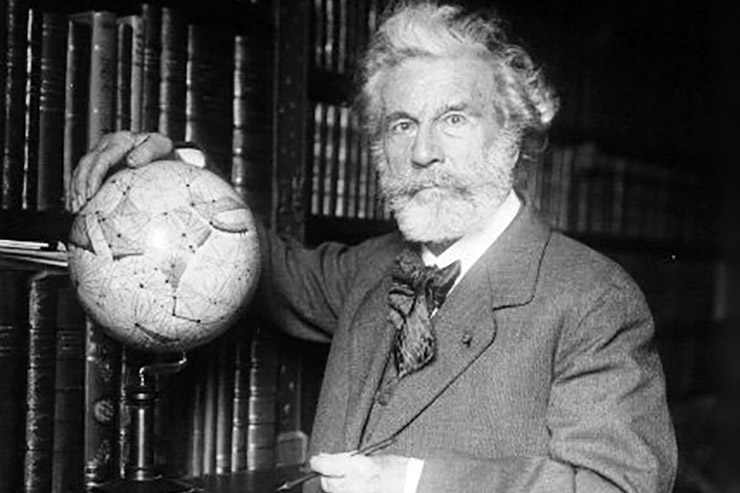
    In late nineteenth- and early twentieth-century France, a famous, and favourite, personality was the astronomer, science populariser, and science fiction writer Camille Flammarion (1842-1925).1 It is difficult today to gauge the celebrity status that Flammarion held. Men, at least some men, admired and emulated Flammarion, and many a woman swooned over him. As the saying goes, some would “give their right arm” to be in any way associated with the great Flammarion – indeed, in a bizarre but true story, Flammarion received a body part from a deceased young female admirer. How this may have influenced his serious scientific interest in the possibility of life after death is unclear.

    The Skin Off Her Back

    A young French Countess became amorously infatuated with Flammarion. She is reported to have had an image of Flammarion tattooed on her body. She came down with tuberculosis and, before dying prematurely, she instructed her physician, upon her death, to cut a large piece of skin from her back and deliver it to Flammarion with the request that he have it tanned and use the leather as the binding of his latest book, in honour of her (and thus she would always be close to him, at least in some sense). The desires of the Countess were carried out, and the skin delivered to Flammarion. He duly had it prepared and used to bind a copy of his book Les Terres du Ciel (The Land of the Sky), which he kept in the library of his private observatory in Juvisy-sur-Orge, France. On the cover in gold he placed the following inscription: “Pious fulfilment of an anonymous wish. Binding in human skin (woman) 1882.”2

    The basic truth of this story has been confirmed (the skin was received and the book bound with it), but there are tantalising details and variations that may or may not be true. In one version, before her death the beautiful Countess invites Flammarion to her chateau, he compliments her on her shoulders, and as a way to ensure that he will never forget her, she arranges for the macabre gift upon her death. In another variation which Flammarion stated was the real truth of the matter, he had never met the Countess in life, and may not have known her name.3

    The Mystery of Death

    Apart from his anthropodermic adventures, Flammarion had a long and continuing fascination with psychical studies (in modern terms, we would call them parapsychological studies) and the question of what, if anything, lies beyond bodily death. Indeed, this was apparently one of the consuming passions of his life.

    By his own account, Flammarion’s serious researches into psychical studies began in 1861 and continued until his death some six and a half decades later. In his lifetime he published such works as The Unknown (1902) and Mysterious Psychic Forces (1907), but his masterpiece and grand synthesis was the three-volume work Death and Its Mystery (1921-1923) – volume 1, Before Death; volume 2, At the Moment of Death; and volume 3, After Death.4

    Death and Its Mystery is a massive compilation of evidence, with Flammarion’s analyses, bearing on psychical phenomena and the evidence for an afterlife. In many ways it encapsulates the work of the first generation of serious afterlife researchers, beginning in 1882 with the founding of the Society for Psychical Research (SPR) in London. Yet despite the wealth of case studies it contains, many modern investigators of the afterlife have not cited Flammarion’s opus.5 I find this situation rather strange, even inexplicable, unless it is possibly due to Flammarion’s style, which can be rather opinionated, to the point of perhaps alienating the modern reader. Be that as it may, here I will briefly introduce some of Flammarion’s main themes, and also place his work into historical context.

    A Plurality of Worlds, in this Life and the Next

    One reason Flammarion was so popular with the public is that he was not afraid to speculate. He was not satisfied with simply recounting data and hard facts, but would extrapolate from those facts, mixing in his own speculations. This is seen in his astronomical work from the start. His first book, La Pluralité des Mondes Habités (The Plurality of Inhabited Worlds),6 originally published in 1862 (Flammarion had barely reached adulthood), was a bestseller, going through dozens and dozens of editions. Part of its amazing success was no doubt due to the stance taken by Flammarion, namely that the universe is teaming with life, exotic species, and even intelligent beings on other worlds. Extraterrestrial life, at least according to Flammarion, undoubtedly exists. Such themes were followed up in many of the dozens of books, both nonfiction and fiction, that Flammarion authored during his lifetime.7

    Given this “speculative” and “open” attitude of Flammarion, many of his devoted readers expected him to also be open, even supportive of, the concept that there may be more to life than simple material existence – more than the physicists’ matter and energy, as we know it. That is, if there is life on other planets out there in the universe, could not there be the continued existence of life, or something, in some “dimension” or “space” after the dissolution of our material bodies? As Flammarion wrote,

    When the first editions of my book “La Pluralité des Mondes habités” were published (1862-64), a certain number of readers seemed to expect the natural sequel: “La Pluralité des existences de l’âme” [The Plurality of the Existence of the Soul]. If the first problem has been considered solved by my succeeding books…, the second has remained an open question, and the survival of the soul, either in space or on other worlds or through earthly reincarnations, still confronts us as the most formidable of problems.8

    But, though they may have had to wait nearly sixty years, ultimately Flammarion’s readers received their answer with publication of Death and Its Mystery.

    Spiritualism & Psychical Research

    The nineteenth century saw the rise of modern Spiritualism, essentially the belief in both survival after death and the ability to communicate with the deceased, for instance during a séance.9 Flammarion was not the only person of the educated classes to take a serious interest in the subject. The SPR was established by a group of Cambridge scholars to seriously and scientifically investigate, among other subjects, spiritualist claims and the possibility of an afterlife.10

    Before addressing the question of life beyond the grave directly, the SPR first explored the issue of the reality of telepathic (direct mind-to-mind) interactions. This was seen as important both in its own right and as a possible way that discarnate spirits might communicate with living body-bound individuals. The initial study, spearheaded by SPR member Edmund Gurney (1847-1888), polled 5,705 people concerning possible telepathic experiences and resulted in the two-volume 1886 work titled Phantasms of the Living.11 The evidence in Phantasms of the Living supported the reality of telepathy, but not everyone was convinced, so more data were collected, resulting in a truly massive study.

    Between April 1889 and May 1892, 17,000 sane and healthy people were polled as to whether they had ever had any hallucinatory experiences (the vast majority had not), and if so, the details of their experiences. The large number of people polled for the Census of Hallucinations was necessary in order to develop meaningful statistical analyses of the data.12 As the authors of the study realised, given the labour it involved, it was unlikely that such an extensive study would ever be undertaken again. So far, this is true.

    While information on all kinds of hallucinations was collected, a special focus of the study was to collect data that could add to the “examination of the evidence for telepathy.”13 In particular, there was a special examination of death coincidences. Here is an example, which I have paraphrased, collected as part of the Census:

    Mr. S. Walker-Anderson was living in Australia, while an aunt of his, Mrs. P., was in England. During the night of 17 November 1890 Mr. Walker-Anderson woke up from his sleep and saw his aunt standing near the foot of his bed. He watched her lips move, and although he could hear no sound, he understood that she meant to say “good bye.” The figure of his aunt then gradually vanished. Early the next morning he told his wife about the incident, being convinced that his aunt had died. Both Mr. Walker-Anderson and his wife made written notes of the time and date of the hallucination (or apparition). Some weeks later they learned from first an English newspaper, and later via a personal letter, that the aunt died on the same day and about the same time as Mr. Walker-Anderson’s hallucination (within a few hours, taking the time difference between England and Australia into account).14

    This, like all material collected for the study, was carefully examined and cross-examined by the researchers, so that no false evidence would be included.

    The authors analysed 65 attested death coincidences collected as part of the Census. A death coincidence was defined as a hallucination, similar to the case described above, occurring within twelve hours before or after the death of an individual. Eliminating all questionable cases, for the purposes of statistical calculations, only 30 of these death coincidences were accepted. These death coincidences were compared to other hallucinations found among the Census participants, the probability of a person dying on any particular day, and various other factors.

    Ultimately, the result was that even though death coincidences are very rare, they occur at least 300 to 400 times more often than should due to chance alone! The authors wrote,

    Between deaths and apparitions of the dying person a connexion [connection] exists which is not due to chance alone. This we hold as a proved fact.15

    The authors of the Census were less sanguine concerning possible evidence for postmortem existence. Although they had received some tantalising suggestions of possible communication from the dead, they did not regard the evidence as conclusive.

    Frederic W.H. Myers (1843-1901), who had helped author both Phantasms of the Living and the Census of Hallucinations, continued to study the issue of the afterlife until his own death. In his massive, posthumous, two-volume work Human Personality and Its Survival of Bodily Death, Myers assembled the best evidence up to his time for life after death.16 His conclusions are summarised as follows:

    I hold that certain manifestations of central individualities, associated now or formerly with certain definite organisms, have been observed in operation apart from those organisms, both while the organisms were still living, and after they had decayed.17

    Thus, in a limited and somewhat circumspect way, Myers asserted that there is an afterlife, at least to some degree for at least some people (and possibly other organisms). This was farther than Phantasms or the Census had taken the subject, but still did not match either spiritualistic or everyday conceptions of an afterlife. Enter Camille Flammarion.

    The Psychic Soul

    The first task that Flammarion set for himself was to prove the existence of the soul independent of the material body. The second task was to demonstrate that the soul persists even after the dissolution of the physical organism. Let us see how he approached each issue.

    Flammarion devotes much of the first volume of his trilogy, Before Death, to a discussion of the evidence for, in his terminology, “supra-normal faculties.” These include the ability to receive information psychically at a distance, classic telepathy, and precognition. Like the SPR studies, Flammarion is absolutely convinced of the reality of telepathy.18 He also argues strongly for the reality of precognition. Flammarion essentially equates the “psychic element differing from the material organism”19 with the concept of the soul. As he states at the end of volume one,

    To solve the mystery of death, to establish the survival of the soul, we first had to prove that the soul does exist, individually, an existence proved by special, extra-corporeal faculties, which cannot be included among the properties of the material brain, or among chemical or mechanical reactions; faculties essentially spiritual, such as the will, acting without the spoken word; …telepathy; …the sight by the spirit of a far-off country, of a future scene or event – all phenomena outside the sphere of our physical organism, lacking any common measure with our organic sensations and proving that the soul is a substance which exists in itself.20

    Flammarion discusses the possibility that at least some psychic phenomena might be due to unknown, but nonetheless physical or material or energetic causes, for instance something analogous to radio waves as the mode of telepathic transmission, but essentially dismisses such arguments as unrealistic.21 In particular, Flammarion places great importance on the fact that precognition can occur. Even if there is some chance that other “psychic” phenomena, such as telepathy, might ultimately be explainable by some sort of matter or energy phenomena, currently not understood, in Flammarion’s opinion there is no conceivable manner by which precognition – seeing or knowing the future – will ever be explainable by “conventional” physics. (I am not so sure this is actually true given recent developments in physics.22) For Flammarion the reality of precognition proves incontrovertibly that the “psychic element,” the soul, is real and distinct from the physical, mechanical, and chemical organism.

    Given its importance to Flammarion’s reasoning, what evidence is there for the reality of precognition? Flammarion cites several examples to make his case, but perhaps the best can be summarised as follows.

    On June 27, 1894, at nine a.m. Dr. Gallet (at the time a medical student) was absorbed in studying for an examination in Lyons, France, when he was suddenly obsessed with a sentence that came to his mind: “Monsieur Casimir-Perier is elected President of the republic by four hundred and fifty-one votes.” He not only wrote down the sentence, but told a fellow student. After lunch the two students met a couple of other friends, and all had a good laugh at the “prophecy” since Casimir-Perier was not considered a serious candidate. The election took place at Versailles at two p.m., and that afternoon the students heard a newsboy shouting “Monsieur Casimir-Perier is elected President of the republic by four hundred and fifty-one votes!”23

    Given the fact (at least as established to Flammarion’s satisfaction) that the soul can somehow access the future, Flammarion posits that the soul, as an independent being, can survive into the future after the dissolution of the physical body. Volume 3 of Death and Its Mystery is devoted to the supposed occurrences or manifestations of the once living at time periods that clearly fall well after physical death. (The second volume is devoted to manifestations of the dying, death coincidences, that may be explainable by telepathy among the living, even if some of the “living” are about to die or in the throes of death.)

    Flammarion cites numerous reputed manifestations and apparitions of the dead. Here is one, which for the sake of space, I have paraphrased.

    On September 2, 1916, Madame A. Clarinval suddenly and inexplicably “knew” that her son, a pilot with the French air forces, was in danger. Two days later she was informed that at that very day and hour her son had disappeared behind German lines. After the end of the war, the family found out that the son had died and was buried in a soldiers’ graveyard at Dieppe, France. Madame Clarinval and her husband made four trips to the graveyard, but were unsuccessful in locating their son’s body. Then, on May 25, 1920, Madame Clarinval had a vision. She saw the face of her son in a group of trees, and on either side of him were the faces of two young men, a Russian and a German. It was subsequently discovered that her vision happened when, to the day, bodies were being exhumed from the graveyard and moved. Ultimately she and her husband went back to the cemetery area and found the body of their son buried between that of a Russian soldier and a German soldier. Madame Clarinval was convinced that her son had come back from the grave to direct her to the location of his bodily remains.24

    As Flammarion acknowledged, the issue is whether or not such cases necessarily require the manifestation of the dead to explain all the details.

    In general we can eliminate only with great difficulty the possibility of influence exerted by living persons’ minds.25

    In the incident of Madame Clarinval, everything could conceivably be explained by telepathy (between her and her son when he died, and possibly between her and grave workers, although she did not know the grave workers), perhaps combined with her own precognition of the future – namely a precognition of finding her son’s grave. However, if we are to posit a precognition on her part of finding the grave, that precognition also seems to be the very factor that allows her to find the grave. How can this be? Flammarion and like-minded thinkers find the argument that the son is actually communicating from the beyond more convincing.

    Reincarnation on Venus and Mars

    Flammarion, like Myers before him, concluded that apparitions or manifestations of the dead are real, but they decline sharply with time after death.26 The vast majority occur within the first days and weeks after death, and by the end of the first year, manifestations of the dead are exceedingly rare, although Flammarion contends that some have occurred up to decades after death.

    What do we make of this pattern? Do the deceased, perhaps occasionally, remain in our everyday terrestrial realm for a short period of time, before leaving? The longer the temporal duration after bodily death, perhaps the more likely it is that the deceased will have left the terrestrial realm? Such a hypothesis would account for the rapid drop off of apparitions as we become farther removed temporally from the death incident. But what happens to the deceased? Where do they go? I will conclude this article with Flammarion’s speculations:

    In our total ignorance, from a scientific point of view, of the conditions of ultra-terrestrial life, we can only make conjectures as to this life. We know, and shall know henceforth, that the soul exists. To admit this survival leads us to admit preëxistence. Earthly life is but a phase in the life of the spirit. The doctrine of reincarnation is, moreover, the only one which remains admissible after we have pondered all metaphysical considerations, and it is the oldest of definite religious beliefs. There must be both a previous existence and an after life.27

    Ever the astronomer, Flammarion adds,

    There is no reason for thinking that the reincarnations of the human soul are limited to our planet. Nor is it unscientific to attribute to psychic monads the faculty of voyaging through the immensities of space, of passing from one planet to another – from the earth to Mars, Venus, or some other world.28


    [alert type=”general” dismiss=”no”]This article was published in New Dawn 123.[/alert]

    [alert type=”success” dismiss=”no”]If you appreciate this article, please consider subscribing to help maintain this website.[/alert]

    Footnotes

    1. His full name was Nicolas Camille Flammarion, but he went by Camille Flammarion.
    2. The original French reads, Exécution pieuse dun voeu anonyme. Reliure en peau humaine (femme) 1882; see, Steven Connor, The Book of Skin, Ithaca, New York: Cornell University Press, 2004, 45. See also, Dan Alban, “Books Bound in Human Skin; Lampshade Myth?”, Harvard Law Recored, article dated 11 November 2005, updated 29 September 2009, posted at: www.hlrecord.org/2.4462/books-bound-in-human-skin-lampshade-myth-1.579032?pagereq=2 (Accessed 18 September 2010); David Darling, “Flammarion, (Nicolas) Camille (1842–1925)”, posted at: www.daviddarling.info/encyclopedia/F/Flammarion.html (Accessed 18 September 2010).
    3. With regard to the bookbinding incident, Flammarion wrote to Dr. Cabanès, editor of a French medical journal: “My Dear Doctor: The story has been somewhat elaborated. I don’t know the name of the person whose dorsal skin was delivered to me by a physician to use for binding. It was a matter of carrying out a pious vow. Some newspapers, especially in America, published the portrait, the name, and even the photograph of the chateau where ‘The Countess’ dwelt. All of that is pure invention. The binding was successfully executed by Engel, and from then on the skin was unchanging. I recollect I had to carry this relic to a tanner in the Rue de la Reine-Blanche, and three months were required for the job. Such an idea was assuredly bizarre. However, in point of fact, this vestige of a beautiful body is all that survives of it today, and it can endure lastingly in a perfect state of respectful preservation. The desire of the unknown woman was to have my last book published at the time of her death bound in this skin: the octavo edition of the Terres du ciel, published by Didier enjoys this honor. Your reader and admirer, Flammarion.” Note that even though Flammarion supposedly did not know the name of the person who left him her skin, he considered it a “vestige of a beautiful body.” My instinct is that he may well have known what she looked like, and may have admired her physically, or else he would have written something to the effect of “a beautiful soul,” especially in the light of his studies, even in the early 1880s, of the distinction between the material body and the immaterial soul. I suspect he had an eye for the young, beautiful, intelligent woman. His second wife, astronomer Gabrielle Renaudot (1876–1962; they married in 1919), was over thirty years younger. [English translation of Flammarion’s letter quoted from: Kathy Lechuga, “Flesh and Ink: A Brief Overview of Books Bound in Human Skin”, paper dated Fall 2007. Posted at: www.ischool.utexas.edu/~klechuga/human%20skin%20bindings%20paper.pdf (Accessed 18 September 2010).]
    4. Here I am here citing the American versions of his books: Camille Flammarion, The Unknown, New York: Harper and Bros., 1902; Camille Flammarion, Mysterious Psychic Forces, Boston: Small, Maynard and Co., 1907; Camille Flammarion, Death and Its Mystery: Before Death: Proofs of the Existence of the Soul (Translated by E. S. Brooks), New York: The Century Co, 1921 [there was also a 1922 Century Co. edition]; Camille Flammarion, Death and Its Mystery: At the Moment of Death: Manifestations and Apparitions of the Dying; ‘Doubles;’ Phenomena of Occultism (Translated by Latrobe Carroll), New York: The Century Co, 1922; Camille Flammarion, Death and Its Mystery: After Death: Manifestations and Apparitions of the Dead; The Soul after Death (Translated by Latrobe Carroll), New York: The Century Co, 1923. Death and Its Mystery was originally published in France under the title La Mort et son Mystère, in three volumes, 1) La Mort et son Mystère: Avant la Mort, 2) La Mort et son Mystère: Autour de la Mort, and 3) La Mort et son Mystère: Après la Mort, Paris, Ernest Flammarion [Camille Flammarion’s brother], 1920-1922. In France tens of thousands of copies of La Mort et son Mystère were printed in the first few years after initial publication, and Flammarion revised and added to subsequent printings.
    5. For instance, I failed to find any discussion of Flammarion in: Stephen E. Braude, Immortal Remains: The Evidence for Life after Death, Lanham, Maryland: Rowman and Littlefield, 2003; David Fontana, Is There An Afterlife?, Ropley, Hants, UK: O Books, 2005 [reprinted 2007]; Gary Doore, editor, What Survives? Contemporary Explorations of Life After Death, Los Angeles: Jeremy P. Tarcher, 1990.
    6. Camille Flammarion, La Pluralité des Mondes Habités: Étude où l’on expose les conditions d’habiabilité des Terres célestes (septieme edition), Paris: Didier, 1865.
    7. For examples of his fictional work, see: Camille Flammarion, Omega: The Last Days of the World, New York: The Cosmopolitan Company, 1894; Camille Flammarion, Urania, Boston: Estes and Lauriat, 1890.
    8. Flammarion, 1921, 3-4.
    9. According to Latrobe Carroll, translator of volumes 2 and 3 of Death and Its Mystery into English, Flammarion considered Spiritualism to be “the general doctrine that departed spirits hold intercourse with mortals” while Spiritism refers to “mediumistic research” (footnote to Flammarion, 1923, 319). Mediumistic research is basically the concept of using a person, a medium, as the go-between for communication between this world and the next.
    10. See: Robert M. Schoch and Logan Yonavjak, editors and compilers, The Parapsychology Revolution: A Concise Anthology of Paranormal and Psychical Research, New York: Jeremy P. Tarcher/Penguin, 2008, 15; William G. Roll, “My Search for the Soul,” Chapter 2 (50-67) in Body, Mind, Spirit: Exploring the Parapsychology of Spirituality, edited by Charles T. Tart, Charlottesville, Virginia: Hampton Roads Publishing Company, 1997, 52; Charles E. Tart, “World Parliament of Superstition? Scientific Evidence for a Basic Reality to the Spiritual,” Chapter 1 (33-49) in Body, Mind, Spirit: Exploring the Parapsychology of Spirituality, edited by Charles T. Tart, Charlottesville, Virginia: Hampton Roads Publishing Company, 1997, 44.
    11. Edmund Gurney, Frederic W. H. Myers, and Frank Podmore, Phantasms of the Living, two volumes, London: Rooms of the Society for Psychical Research and Trübner and Co., 1886.
    12. Henry Sidgwick, Alice Johnson, Frederic W. H. Myers, Frank Podmore, and Eleanor Mildred Sidgwick, “Report of the Census of Hallucinations”, Proceedings of the Society for Psychical Research, vol. 10, part 26, 25-422 (1894).
    13. Sidgwick, et. al., 1894, 26.
    14. Sidgwick, et. al., 1894, 211-213.
    15. Sidgwick, et. al., 1894, 394, italics in the original.
    16. Frederic W. H. Myers, Human Personality and Its Survival of Bodily Death, two volumes, New York: Longmans, Green and Co., 1903 [1954 reprint].
    17. Frederic W. H. Myers, Human Personality and Its Survival of Bodily Death (edited and abridged by his son Leopold Hamilton Myers), New York: Longmans, Green, and Co., 1907, 27.
    18. In my opinion, any open and unbiased thinker, after carefully reviewing all of the evidence, will conclude that telepathy can genuinely occur; see Schoch and Yonavjak, 2008.
    19. Flammarion, 1922, 12.
    20. Flammarion, 1921, 321, italics in the original.
    21. See Chapter 1, “The Positive Method”, in Flammarion, 1922, 3-33.
    22. For discussions of precognition, see: Robert Schoch, “Can We See into the Future? A Scientist Looks for Evidence of Precognition”, Atlantis Rising, no. 71, 40, 67-69 (September/October 2008); Robert M. Schoch, “Grasping the Future: Can We Change It or Is Free Will an Illusion?”, Atlantis Rising, no. 73, 23, 59-61 (January/February 2009); Robert M. Schoch, “E’ possibile prevedere il futuro? La realtà della precognizione”, Hera, no. 123, 80-81 (April 2010).
    23. Flammarion was particularly impressed by this case, and he cites it both in volume 1 (pages 270-272) and volume 2 (pages 11-12) of Death and Its Mystery.
    24. Flammarion, 1923, 282-290.
    25. Flammarion, 1923, 282.
    26. Flammarion, 1923, 299; Myers, 1903/1954, vol. 2, 14.
    27. Flammarion, 1923, 388.
    28. Flammarion, 1923, 391.

    © New Dawn Magazine and the respective author.
    For our reproduction notice, click here.
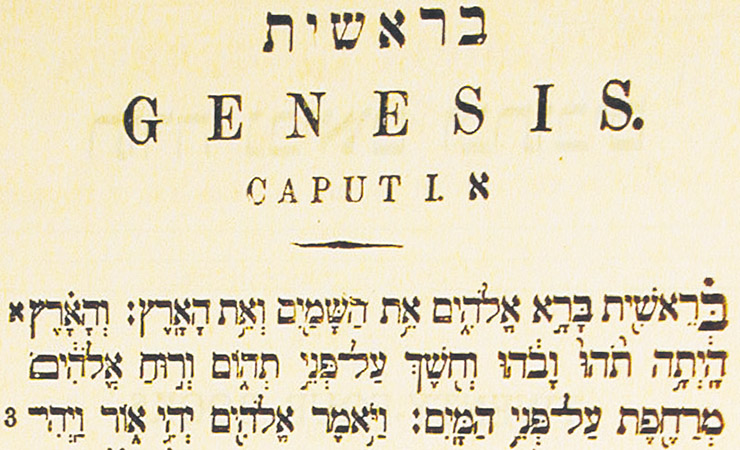
  • Agarttha: Taking the Lid Off the Underground Kingdom

    Agarttha: Taking the Lid Off the Underground Kingdom

    In 1884 the French occultist Saint-Yves d’Alveydre (1842-1909) decided to take lessons in Sanskrit. Having just published his definitive work on the secret history of the world, called Mission des Juifs (“Mission of the Jews”),2 he was anxious to deepen his understanding of the sacred languages which, he felt sure, concealed the ultimate mysteries. Hebrew had already revealed much to him; now it was time to tackle the even more ancient language of Sanskrit, parent of all the Indo-European tongues.

    Saint-Yves’ Sanskrit teacher, who called himself Hardjji Scharipf, was a character of hazy origins and the subject of various rumours. Born on December 25, 1838, he supposedly left India after the Mutiny of 1857 and set up in the French port of Le Havre as a bird-seller and professor of Oriental languages. His name may have been a pseudonym; he may have been an Afghan; some called him Prince. But whatever his story, the manuscripts now in the Library of the Sorbonne in Paris show that Hardjji was a learned and punctilious teacher, and the source of two still unsolved enigmas: the underground kingdom of Agarttha, and its sacred language.

    Three times a week, Hardjji would come to Saint-Yves’ luxurious home with a beautifully scripted lesson of grammar and a reading from some Sanskrit classic. But his diligent pupil became more and more fascinated by Hardjji’s mysterious hints, which began when he signed the very first lesson as “Teacher and Professor… of the Great Agartthian School.”

    Saint-Yves must have asked him what this “Great Agartthian School” was. He might already have read in the books of the popular travel writer and historian Louis Jacolliot of an “Asgartha,” supposedly a great city of the ancient Indian priest-kings, the “Brahmatras.”3 Does such a place still exist, then? Apparently Hardjji gave him to believe so, and, what is more, that it preserves a language and a script, known as “Vattan” or “Vattanian,” that are the primordial ones of mankind. For someone in quest of the secret and sacred roots of language, the mention of such things must have been unbearably exciting.

    Curiosity overcame him on Christmas Day, 1885, when he asked Hardjji to write out his own name in Vattanian characters. The guru obliged, writing it on the back of the lesson sheet and adding wryly: “Here, according to your ardent desire; but really you are not yet sufficiently prepared for Vattan. Slowly and surely!” Later he must have taught Saint-Yves the Vattanian alphabet and the principles behind its 22 letter-forms, which Saint-Yves would correlate with the Hebrew alphabet and with the zodiacal and planetary symbols.

    By the end of the course of lessons, Agarttha and Vattanian had evidently become regular topics of conversation, while Saint-Yves’ interests shifted from Sanskrit to a kind of comparative Hermeticism. With Hardjji’s approval, he created a splendid manuscript in red and gold ink containing invocations, sigils, many alphabets, designs and arabesques made from Sanskrit and Vattanian letters; a list of Vedic and Biblical names encoded in a so-called “Hermetic or Raphaelic Alphabet”; eighty “Vedic” symbols representing the development of the cosmos; a passage on the “Hermetic Significance of the Zodiac” encoded in planet and zodiac signs; correlations of these signs with the names of angels and with Vattanian, Sanskrit, Hebrew, and Hermetic characters; breathing exercises for the hearing of the inner sound “M” and for soul-travel; notes on the properties of herbs; alchemical recipes.4

    Saint-Yves Writes a Book About Agarttha

    And this was not all. Did Hardjji know that Saint-Yves was writing another book – The Kingdom of Agarttha: A Journey into the Hollow Earth – under the influence of his Oriental studies? It seems doubtful, but in 1886 the book was finished, typeset, and printed by his regular publisher (Calmann Lévy).

    To put it bluntly, this book takes the lid off Agarttha. The reader will learn that it is a hidden land somewhere in the East, beneath the surface of the earth, where a population of millions is ruled by a Sovereign Pontiff, the “Brahatmah,” and his two colleagues the “Mahatma” and the “Mahanga.” This realm, Saint-Yves explains, was transferred underground and concealed from the surface-dwellers at the start of the Kali Yuga (the present dark age in the Hindu system of chronology), which he dates to about 3,200 BCE. Agarttha has long enjoyed the benefits of a technology advanced far beyond our own, including gas lighting, railways, and air travel. Its government is the ideal one of “Synarchy,” which the surface races have lost ever since the schism that broke the Universal Empire in the fourth millennium BCE, and which Moses, Jesus, and Saint-Yves strove to restore. (This was the theme of Mission des Juifs.) Now and then Agarttha sends emissaries to the upper world, of which it has a perfect knowledge. Not only the latest discoveries of modern man, but the whole wisdom of the ages is enshrined in its libraries, engraved on stone in Vattanian characters. Among its secrets are those of the true relationship of body to soul, and the means to keep departed souls in communication with the living. When our world adopts Synarchical government, the time will be ripe for Agarttha to reveal itself, to our great spiritual and practical advantage. In order to speed this process, Saint-Yves includes in the book open letters to Queen Victoria, Emperor Alexander III of Russia, and Pope Leo III, inviting them to join in the great project.

    Perhaps the oddest thing about this book is Saint-Yves’ own stance. Far from presenting himself as an authorised spokesman for Agarttha, he admits that he is a spy. Dedicating the book to the Sovereign Pontiff and signing it with his own name in Vattanian characters (just as Hardjji had written it out for him), he expatiates on how astounded this august dignitary will be to read the work, wondering how human eyes could have penetrated the innermost sanctuaries of his realm. Saint-Yves explains that he is a “spontaneous initiate,” bound by no oath of secrecy, and that once the Brahatmah gets over the shock, he will admit the wisdom of what Saint-Yves has dared to reveal.

    How did Saint-Yves obtain this information? Already in his first book, Clefs de l’Orient (1877), he was writing with the confidence of an eyewitness of the psychic phenomena accompanying birth, death, and the relation between the sexes.5 In the present work he seems to have extended his psychic vision, to say the least, and one can glean from here and there an idea of his methods.

    There is, for instance, a passage here describing in detail how the Agartthian initiates travel in their souls while their bodies sleep. Then there is the passage in the notebook already mentioned, on yogic exercises for separating the soul from the body. Thirdly, there is a snippet of occult gossip in a conversation with Saint-Yves recorded on August 16, 1896, by a psychical researcher, Alfred Erny:6

    “He has talked to Papus and [Stanislas de] Guaïta, but did not tell them what they wanted to know: the method of disengaging and re-engaging oneself in the astral body. It is dangerous: ‘I don’t want (he said) to put a loaded revolver into your hands which you don’t know how to use.’

    “A magnetiser, he said, runs less danger than others in duplicating himself, because he is more trained.

    “When one goes out of one’s body into the Astral, another evil spirit may replace you.”

    Saint-Yves presumably possessed the secret of this “somnambulistic” faculty, and used it to gather the information he presents in this book. But did he gather it, as he claims, from spying on a physical Agarttha beneath the surface of the earth? Or was it the result of his own projected fantasies or hallucinations? Or, again, did it come from some non-physical location or state which can be accessed under certain conditions, but which then merely supports the psyche’s own subjective expectations and prejudices? We will return to these questions at the end.

    No sooner was the book printed and ready for the bookshops than Saint-Yves withdrew it, destroying every copy but one. The work narrowly escaped oblivion, but this one copy passed after Saint-Yves’ death to Papus, who published it in 1910, with some omissions, under the auspices of a group of disciples, the “Friends of Saint-Yves.” Decades later, it turned out that the printer, Lahure, had secreted another copy.7 The late Jean Saunier, biographer and chief authority on Saint-Yves, used this as the basis for the complete French edition of 1981, now translated into English.

    Whatever reasons and motives were responsible for the sudden withdrawal of the book, there is no doubt that Saint-Yves remained true to his vision. For instance, he mentions Agarttha and names its three rulers in his epic poem of 1890, Jeanne d’Arc victorieuse. In his conversations with Erny in 1896, he stated outright that there exists a secret “Superior University” with a “High Priest” who is currently an Ethiopian, and other details just as they appear in this book. Finally, he mentions Agarttha in veiled terms in L’Archéomètre, the major work of his last years.

    Ossendowski Revives “Agharti”

    After the trauma of World War I, the very name of Agarttha might have been forgotten, as Saint-Yves himself was. But in 1922, a Polish “scientist” named Ferdinand Ossendowski (1876-1945) published a sensational travel and adventure book.8 It told of his flight through Central Asia in the aftermath of the Russian Revolution. While in Mongolia, he heard tell of a subterranean realm of 800,000,000 inhabitants called “Agharti”; of its triple spiritual authority “Brahytma, the King of the World,” “Mahytma,” and “Mahynga,” of its sacred language, “Vattanan,” and many other things that corroborate Saint-Yves. The book ended on a dramatic note of prophecy from one of Ossendowski’s informants: that in the year 2029, the people of “Aghardi” will issue forth from their caverns and appear on the surface of the earth. The prophecy was attributed to the King of the World when he appeared before the lamas in 1890. The King had then predicted that there would be 50 years of strife and misery, 71 years of happiness under three great kingdoms, then an 18-year war, before the appearance of the Agarthians.9

    An unprejudiced reader, finding in three chapters of Ossendowski’s book a virtual outline of Saint-Yves’ Agarttha, not omitting the most improbable details, would conclude that the author had capped an already good story with a convenient piece of plagiarism, altering the spellings so as to make his version, if challenged, seem informed from an independent source. At first Ossendowski denied this indignantly. When he was introduced to the esotericist René Guénon (1886-1951), he said that if it were not for the evidence of the daily journal he had kept, and of certain objects he had brought back, he would have thought that he had dreamed parts of this story, adding: “I’d much prefer that!”10

    Back in 1908, the young Guénon had taken part in automatic writing séances in which Agartthian matters had come up, though whether through the questioners or the channelled entity is now unclear.11 Now his interest was rekindled, and in 1925 he wrote about the striking parallels between Saint-Yves’ Agarttha and the Agharti of Ossendowki, whose sincerity, according to Guénon, there was no reason to doubt.12

    Two years later, Guénon took the matter into his own hands. In his most controversial book, Le Roi du Monde, he announced: “Independently of the evidence offered by Ossendowski, we know from other sources that stories of this kind are widely current in Mongolia and throughout Central Asia, and we can add that there is something similar in the traditions of most peoples.”13 Unfortunately Guénon does not support his claim to privileged access by telling us what these sources are, nor what degree of similitude is meant by “stories of this kind.”

    Near the end of Le Roi du Monde, Guénon faces the question of whether Agarttha really exists:

    Should its setting in a definite location now imply that this is literally so, or is it only a symbol, or is it both at the same time? The simple answer is that both geographical and historical facts possess a symbolic validity that in no way detracts from their being facts, but that actually, beyond the obvious reality, gives them a higher significance.14

    So Guénon at the very least did not deny a geographical Agarttha. To his way of thinking, if one were found to exist beneath the surface of the earth, it would only corroborate the superior reality of the symbolic one.

    Ossendowski’s account was later investigated by Marco Pallis (1895-1985), the traveller, writer on Buddhism, and translator of Guénon, with the advantage of his own contacts with highly-placed Indians, Tibetans, and Mongolians.15 One of the latter, now very old, had been the head lama of a monastery at the time of Ossendowski’s visit there. He testified that the latter’s stories of the King of the World and of Agarttha bore no relation to any authentic legend or doctrine whatsoever, and that Ossendowski’s command of the Mongolian language had not been nearly sufficient to understand what he claimed to have heard. Pallis’s Hindu friends, similarly, disclaimed any Sanskrit source for Agarttha. The inevitable conclusion was that the credulous Guénon had been misled by Saint-Yves’ fantasy, and that promoting belief in Agarttha in Le Roi du Monde had been a foolish mistake.

    Ossendowski himself had back-pedalled in November 1924 when pressed to appear before a group of prominent intellectuals and scholars. He confessed to this hard-boiled audience that Beasts, Men and Gods was not “scientific” but “exclusively a literary work,” and stated the same in a letter to the Royal Geographical Society.16 Never mind: once his best-seller had brought the Agarttha myth out of the esoteric closet, it began to enjoy a new lease on life. Often confused or contrasted with Shambhala, the spiritual city of Tibetan Buddhism, it became a recurrent theme of popular occult writers.17

    If we set aside Saint-Yves and Ossendowski, for reasons already explained, there remain only two independent witnesses to an Indian Agarttha tradition. Louis Jacolliot was led to place it in the past, as the ancient Brahmanic capital. For Hardjji Scharipf it was a living initiatic school with its own secret script. Until a reputable scholar comes forward with data on the myth of Agarttha, and especially on the Vattanian alphabet,18 my working hypothesis is that these were part of a mythology belonging to a restricted and obscure Indian school, which has only surfaced to Western notice on these two occasions.

    However, Saint-Yves wanted more than the tantalising taste that his Sanskrit teacher allowed him. He therefore decided to use his gift for astral travel to explore Agarttha further, and was rewarded by visions of an underground utopia and its Sovereign Pontiff, the spiritual Lord of the World. What is the source, and the ontological status, of such visions?

    The Astral World and Delusions of Grandeur

    There are, one gathers, definite places or complexes in the Astral World (also known as the “Inner Planes” of magic), which present to the clairvoyant visitor certain invariable features. But the incidental circumstances of such a place vary, according to the visitor’s own cultural conditioning and expectations. Some find themselves, for example, in what they believe to be the Alexandrian Library, or in Atlantis, i.e., a place of the past. To others, it seems current and contemporary, though preferably in an inaccessible location like the Himalayas. The décor is a trivial matter, of course, in comparison to the philosophical truths to be discovered there, but the glamour of it sometimes overwhelms the traveller. Then his attention fixates on irrelevant details, and an inflated sense of self-importance may result. Thus Saint-Yves, convinced that he has penetrated to the realm of the world’s spiritual ruler, writes about four-eyed tortoises, two-tongued men, levitating yogis, and ends up addressing pompous letters to Queen, Emperor, and Pope.

    I can accept that in some state of altered consciousness he saw what he claims to have seen. But like many who habitually indulge in altered states, he was not able to situate his visions, nor himself as witness to them, with the requisite philosophical detachment. The result is a classic case of the occupational hazard of occultists: misplaced concretism.

    Yet there is a grandeur to this book. Its vivid and elegant prose lift it far above the tedious wordiness of visionary and channelled writing. In sheer weirdness of imagination it rivals the fantasy fiction of H.P. Lovecraft or Jorge Luis Borges, while in deadpan seriousness and titanic self-confidence it compares to prophetic works like the Book of Ezekiel or the various Apocalypses. And it reminds us that the earth is a very strange place, with many unexplored corners, many enigmas, and many surprises in store for us surface-dwellers.

    [alert type=”general” dismiss=”no”]This article was published in New Dawn 109.[/alert]

    [alert type=”success” dismiss=”no”]If you appreciate this article, please consider subscribing to help maintain this website.[/alert]

    Footnotes

    1. Abbreviated from the author’s Introduction to Saint-Yves d’Alveydre, The Kingdom of Agarttha: A Journey into the Hollow Earth, trans. Jon Graham, Rochester, Vt.: Inner Traditions International, 2008.
    2. Saint-Yves d’Alveydre, Mission des Juifs (Paris: Calmann Lévy, 1884; reprinted Paris: Editions Traditionnelles, 1971, 2 vols.).
    3. See especially Louis Jacolliot, Le Fils de Dieu (Paris: Lacroix, 1873), 263-266, quoted in Jean Saunier, Saint-Yves d’Alveydre, une Synarchie sans énigme (Paris: Dervy, 1981), 350-353.
    4. Sorbonne, Ms. 1423, page 118 onwards. Some of this material would appear in the posthumously published work L’Archéomètre (Paris: Dorbon, 1911); English translation by Ariel Godwin as The Archeometer: Key to All the Religions and Sciences of Antiquity. Synthetic Reformation of All Contemporary Arts (n.p.: Sacred Science Institute, 2008).
    5. Saint-Yves d’Alveydre, Clefs de l’Orient (Paris: Didier, 1877; reprinted Nice: Belisane, 1980).
    6. Sorbonne, Ms. Carton 42, fragment G, pp. [7-8]. Erny was the author of Le Psychisme experimentale (Paris: Flammarion, 1895). His notes on conversations with Saint-Yves, dated August, 1896, are divided between the Sorbonne and the Bibliothèque Municipale de Lyon, Ms. 5493.
    7. See Introduction by Jean Saunier to Saint-Yves d’Alveydre, Mission de l’Inde (Nice: Bélisane, 1981).
    8. Ferdinand Ossendowski, Beasts, Men and Gods (New York: Dutton, 1922). The book was written in English, with assistance from Lewis Stanton Palen.
    9. Beasts, Men and Gods, 413.
    10. Quoted in Paul Chacornac, La Vie simple de René Guénon (Paris: Editions Traditionnelles, 1958), 77n.
    11. See Robert Amadou, “L’Erreur spirite de René Guénon,” in Sphinx (Beaugency), no. 3/4 (Autumn 1978), 21 unpaginated pages; no. 5 (Spring 1979), 45-60; no. 7/8 (Autumn/Winter 1979), 83.
    12. René Guénon, “Le Roi du Monde,” in Les Cahiers du Mois, 9/10: Les Appels de l’Orient (Paris: Emile Paul Frères, 1925), 210. This statement was modified in Guénon’s Le Roi du Monde (Paris: Bosse, 1927); see next note.
    13. René Guénon, The Lord of the World, trans. Anthony Cheke (Ellingstring: Coombe Springs Press, 1983), 2-3.
    14. The Lord of the World, 66.
    15. See Marco Pallis, “Ossendowski’s Sources” in Studies in Comparative Religion, vol. 15, no. 1/2 (1983), 30-41.
    16. See the anonymous review, “The Ossendowski Controversy,” in The Geographical Journal, 65/3 (1925), 251-254, which reproduces Ossendowski’s statements in French and English.
    17. See my Arktos: The Polar Myth in Science, Symbolism, and Nazi Survival (Grand Rapids: Phanes Press/London: Thames & Hudson, 1993; reissued Kempton, IL: Adventures Unlimited Press, 1996), 79-104, and the references given there.
    18. On Vattanian, see Mike Jay and Joscelyn Godwin, “Licked by the Mother Tongue,” in Fortean Times, 97 (April, 1997).

    © New Dawn Magazine and the respective author.
    For our reproduction notice, click here.