New Dawn – World's Most Unusual Magazine

Category: Articles

  • The Knights Templar: Yesterday & Today

    The Knights Templar: Yesterday & Today

    They came from the West to the Middle East, imposing themselves on the native population, and fending off insurgent attacks that were to last for generations. They were feared by many, hated by some, and lionised by others. No, I’m not speaking here of the US and coalition forces in Iraq, but of the twelfth century warrior-monks, the Order of Poor Knights of the Temple of Solomon, best known as the Knights Templar.

    Now, at a time when the West is once again waging a war in the Middle East, a new fascination with the Templars has been growing. At first glance this fascination would seem to be all out of proportion to the actual track record of the order, which could be considered equal parts failure and success. But verifiable history has never been the focus of the Templar phenomenon. As long ago as the early 1700s the Order had already passed into the same realm of heroic myth as inhabited by King Arthur and the Knights of the Round Table. Everyone loves a good heroic yarn, and the Templar myth has become one of the best.

    While many readers may have first heard of the Knights Templar through references to them in Dan Brown’s runaway best seller, The Da Vinci Code, a revived interest in the Templars has been percolating in the collective unconscious for over forty years. In the 1960s, French authors such as Louis Charpentier and Gerald de Sede, building upon earlier instalments of the myth, such as those of the nineteenth century occultist Eliphas Lévi, tied the Templars to the lost Ark of the Covenant, to alchemy, and to the construction of the gothic cathedrals.

    By 1972, Henry Lincoln was authoring documentaries for British television on Templar-related topics such as “The Lost Treasure of Jerusalem.” The Templars, along with every other secret society under the sun, made an appearance in Robert Shea and Robert Anton Wilson’s popular Illuminatus Trilogy, circa 1974, while 1981 saw the publication of Peter Partner’s The Murdered Magicians: The Templars and their Myth, an accessible history book that remains one of the better treatments of the order.

    The following year, Holy Blood, Holy Grail by Michael Baigent, Richard Leigh, and Henry Lincoln appeared, linking the Templars to the Holy Grail and the largely mythical Priory of Sion.1 A further book by Baigent and Leigh, The Temple and the Lodge, and John J. Robinson’s Born in Blood came out in 1989, both books alleging that some Templars escaped their suppression and may have been a key factor in the rise of Freemasonry. Bit by bit, and book by book, the myth has grown until now alternative history books about the Knights Templar practically constitute a burgeoning publishing genre all by themselves. Meanwhile, as this is being written, there are two mystery novels involving the Templars in the Top Ten of the New York Times fiction bestseller list.

    Clearly, the Knights Templar are the men of the hour, but before we discuss the significance of the Templar revival, we should briefly review what is most agreed upon by historians about the Knights.

    Who Were the Templars?

    The Knights Templar were first formed in Jerusalem in 1119 or so, in the wake of the First Crusade. A French noble, Hugh de Payens, had come to the Christian-held city along with somewhere between 9 to 30 men (accounts vary). The order’s ostensible purpose was to help guarantee the safety of European pilgrims making their way to the Holy Land, particularly along the dangerous road from the seaport of Jaffa to the inland Jerusalem. Baldwin II, the King of Jerusalem, offered quarters to the knights on Temple Mount near the spot traditionally ascribed to the Temple of Solomon.

    The concept of a monastic order of warrior-monks was something new and by 1128 seemed to require a more formal “rule” to bring it in line with other monastic orders. This rule was provided by Bernard of Clairvaux, founder of the Cistercian order. Under the rule, Templar knights took vows of poverty, chastity, and obedience, and committed themselves to a regular office of prayers and devotions. And perhaps most significantly, the order was recognised as an autonomous religious body answering only to the Pope.

    Over time, as the Knights Templar attracted support and donations, they increased in wealth and property, an ironic situation for men who had taken vows of poverty.

    The status of the various Crusader colonies was always touch and go, and by 1187 the Franks had been driven from Jerusalem by Saladin. With the fall of Acre in 1291, the Templars retreated to Cyprus and thence to their preceptories across Europe. Relieved of their task of protecting pilgrims and defending Crusader states, the Templars had already taken up the role of international bankers, lending money to Kings and protecting royal treasuries, collecting Papal taxes and disbursing funds for the Crusades, and enabling the movement of funds through letters of payment.

    However, power and wealth bring with them the temptations of corruption, as well as envious accusations from others. The Knights Templar ran afoul of the French King Philip the Fair, who pressured his captive Avignon Pope, Clement V, to unleash the Inquisition upon the order in 1307, extract confessions through torture, and make the knights stand trial.

    The Templars were accused of heresy, sodomy, desecration of the cross, and idolatrous worship of a head mysteriously named Baphomet, among other things. Just how many of these accusations had any basis in reality remains unclear as torture usually results in the torturers receiving the answers that they want to hear.

    Indeed, the final Templar Grand Master, Jacque DeMolay, initially confessed to certain crimes, but later recanted his confession. This led to the culmination of the war upon the Knights Templar: DeMolay’s burning at the stake in Paris in 1314.

    Dazzling Possibilities

    Most reputable historians would agree on the basic facts of the preceding summary. And even were we to leave it at that, the order’s rise and fall still constitute a colourful chapter in medieval history. However, the present fascination with the Templars derives not so much from such verifiable history as from the beguiling realm of legend and conjecture.

    Did the Templars find a treasure through excavating beneath the Temple site in Jerusalem? If so, what became of it? Were any of the Inquisition’s accusations about heresy and blasphemy true? If so, does this imply the Templars had a secret doctrine, perhaps linking them to Gnostic sects or Ismaili secret societies? Was there some direct link between the Templars and Freemasonry? If so, does that shed light upon the rise of “speculative” (philosophical) Freemasonry in the 1600s in the British isles?

    Most academic scholars wouldn’t even ask these questions in the first place, because there is no concrete evidence pointing in their direction. From the perspective of traditional scholarship, the questions are non sequiturs conjured out of thin air. One might as well be asking whether there was really a monster under your bed when you were a child. It was the premise of the film Monsters, Inc. that there really were such monsters – in fact, a whole organised strata of them. But Monsters, Inc. was an animated feature, not a documentary – a significant distinction.

    Of course one could argue that, in terms of the Templar myth, the verifiable facts are beside the point. A myth embodies an archetypal story from which people derive pleasure and inspiration. In this sense, the alternative historians and esoteric interpreters are more like storytellers around the campfire embellishing an age-old legend of bravery, hubris, martyrdom, and redemption.

    That said, I believe it can still be interesting to consider the different elements of the Templar myth and to tease out what makes them so meaningful in our present time. If the Templars are back in vogue, there must be a reason. Let us see what that might be.

    The Myth as Mystery

    The Templar Myth in its present form goes something like this: While stationed in Jerusalem on Temple Mount, the Knights excavated beneath the former site of King Solomon’s Temple and found something wondrous and invaluable. Perhaps the legendary lost Ark of the Covenant, perhaps the Holy Grail, perhaps some portion of Solomon’s riches, or some cache of secret scriptures or teachings. While in the Holy Land they also made contact with, and imbibed secret wisdom from, local non-Christian sources: maybe Sufis or Ismaili “Assassins” or Johannite followers of John the Baptist, or perhaps the secretive Druze. Or, then again, perhaps Gnostic upholders of the Divine Feminine. When forced to leave the region, they brought their treasure and their heretical doctrines with them back to Europe.

    The Order, having amassed immense wealth, in part from aristocratic members and patrons and in part from its resident alchemists, played a crucial role in the sudden spurt of gothic cathedral building. In this they may have been assisted by masons brought back from the Middle East. When the Order was suppressed by King Philip and Pope Clement V, some Templars escaped to Scotland which was then ruled by Robert the Bruce who had been excommunicated by the Pope. They assisted him at the battle of Bannockburn in 1314, and then took cover under the guise of Freemasons.

    Certain versions of the myth have the Templar fleet sailing to the New World a hundred years prior to Columbus, with William Sinclair giving clues to this through the sculpted décor at Rosslyn Chapel near Edinburgh. Another version has the Templar fleet transforming themselves into pirates plaguing the Mediterranean – quite a switch for an order of monks under vows.

    But in any event, most versions of the myth culminate in the Freemasons being the successors to the Templars, which helps explain the Masons’ fixation on Solomon’s Temple (and even treasures buried beneath it) within their degree rituals.

    It is possible to pick apart each and every component of this myth – something that Robert L.D. Cooper, Librarian and Curator of the Grand Lodge of Scotland has done at great length.2 But, for our purposes, we will view them as elements of a myth that has evolved and expanded over the course of the last three hundred years, with a particular spurt of growth over recent decades.

    Crusading We Will Go

    It is important to keep in mind that the Knights Templar’s original reason for being, and the focus of their most celebrated years, was their participation in the Crusades and the occupation of the Holy Land by European Christians. While it is possible to view the Crusades as a pious and moral enterprise triggered by oppression that Christians in the Levant were experiencing under Muslim rule, there is no question the Crusades were experienced by the majority of local residents as a geopolitical incursion and expansion of European power. Certainly the final eviction of the Crusaders from the Holy Land (circa 1291) was seen by Europe as a traumatic shrinkage of its sphere of influence.

    Hence, the root symbolism of the Templars, beneath all the later accretions and accusations, is that of a self-righteous European proto-imperialism knocking heads with a rival Muslim empire (or series of empires). But as tidy as it might be to see the current popularity of the Templars as a result of an unconscious wish to re-fight the Crusades all over again, I don’t think this is what is at work here. After all, most of the Templar fascination has much more to do with treasure hunting or concealed heretical and esoteric doctrines than it does with actual battles in the Holy Land. For many Templar buffs, the things most interesting are those that are most tangential to the Templars as actual fighting knights: the Templars beneath the earth (whether excavating a treasure beneath Temple Mount or concealing one beneath Rosslyn Chapel), the Templars at sea (whether sailing to the New World or taking up piracy), the Templars as powerful bankers, and the Templars as heretics (be they secret Gnostics or covert magicians). Perhaps the Templars have become so popular, it would seem, because as their myth has evolved, it has drawn together the threads of numerous hidden and esoteric traditions into a rich tapestry of romance and betrayal.

    Templars & Masons

    The evolution of the Templar myth is intertwined with the evolution of the Freemasonic myth, a circumstance that has provided researchers with a double opportunity for speculation. At first glance, the gap of four centuries between the Templars’ demise in 1314 and the rise of the first Masonic Grand Lodge in London in 1717 would seem to make any connection between the two organisations highly unlikely. And, in fact, there is no historical evidence linking the two groups. The Templars did employ stonemasons of course in building their preceptories and churches, but so did other monastic orders and Church bodies.

    To complicate matters even more, any actual linkage between the medieval stonemasons and the “speculative” Freemasons of 1717 and later is tenuous at best. The new breed of symbolic Masons crafted rituals, lectures, and legends in the eighteenth century that implied an unbroken tradition of Freemasonry dating all the way back to King Solomon (in fact even earlier to Adam himself!) But, as the saying goes, wishing don’t make it so.

    Nevertheless, it didn’t take certain Masons very long before they added the Knights Templar to the Masonic family tree. When speculative Freemasonry spread from the British Isles to the Continent in the decades after 1717, the French and German Masons set about improving upon the three basic “blue lodge” degrees of Masonry by inventing all sorts of ever grander “high degrees,” including a Knight Templar degree.

    Soon, orders conferring such degrees, such as the Rite of Strict Observance in Germany, were claiming the Templars had survived their abolishment by (pick one) either secreting themselves within Scottish Masons’ lodges or changing their name (to the Knights Elu, in one case) and later amalgamating themselves with continental Masons.

    Exactly why, one might ask, would some Masons wish to claim descent from the Templars if it were not actually so? Why link themselves to a disgraced and controversial chivalric order when it would have been both wiser and safer to never raise the issue in the first place? It is from this genuine puzzle that all the speculation on a Templar-Masonic link has arisen.

    Yet, interestingly enough, by the end of the 1700s, Masonic claims of Templar origins had largely subsided and the Masonic Templar orders that consolidated themselves for long-term survival (largely in the British Isles and North America) simply saw themselves as latter-day pious knights with hardly a whiff of heresy or revenge in the air.

    The Neo-Templar Revival

    However, claims of a Templar continuity didn’t die with the subsiding of Masonic pretensions. Such claims simply shifted to wider circles, the best known being an Order of the Temple led by the notorious French esotericist, Bernard Raymond Fabré-Palaprat, circa 1804, whose bona fides were supported by a curious parchment document known as the Larmenius Charter, supposedly dating from 1324, but apparently fabricated by a doctor named Ledru.

    The nineteenth and twentieth century saw scores of Neo-Templar orders founded and laid to rest. One of the most audacious was the Order of Oriental Templars established as early as 1906 but no later than 1912 in Germany by Theodor Reuss, a reputed police spy and fringe Mason.

    According to Reuss and his more famous compatriot, Aleister Crowley, the O.T.O. was the repository of the wisdom and knowledge of no less than 20 bodies, including the Gnostic Catholic Church, the Order of the Illuminati, the Order of the Temple (Knights Templar), the Order of the Knights of the Holy Sepulchre, the Hidden Church of the Holy Grail, the Rosicrucian Order, the Order of the Holy Royal Arch of Enoch, the Rite of Memphis (97 degrees), the Rite of Mizraim (90 degrees), the Ancient and Accepted Scottish Rite (33 degrees), the Order of Martinists, the Hermetic Brotherhood of Light, among others.3

    In contrast to other Neo-Templars who cast the Knights as slandered Martyrs, the O.T.O. embraced the accusations against the historical Templars, avowing that the celebrated secret of their heretical ancestors (indeed, of all esotericism) was that of a quasi-Tantric sex magic. This beat out all other Templar claimants for sheer audacity, but it is worth noting that none of the other Neo-Templar orders founded either before or after Reuss’s O.T.O. made any such claim. But perhaps they just weren’t invited to the right parties.

    The O.T.O. was but one of several Neo-Templar orders trawling for members in Germany at the time. Jorg Lanz von Liebenfels’ Order of the New Templars added a racist/Ayran twist to the trend. According to historian Nicholas Goodrick-Clarke, Lanz described his O.N.T. as “an Aryan mutual-aid association founded to foster racial consciousness through genealogical and heraldic research, beauty contests, and the foundation of racist utopias in the underdeveloped parts of the world.”4 While Lanz’s order probably never achieved more than 300 members, as Goodrick-Clarke notes, it was symptomatic of impulses bubbling beneath the German cultural surface that ultimately burst forth as the Nazi movement.

    This is not to say that all Neo-Templar impulses were inherently reactionary – a perspective put forth by Umberto Eco in his novel, Foucault’s Pendulum – but it is important to understand that the Templar myth is capable of sustaining both a leftist and rightist spin. For every New Age feminist arguing the Templars were champions of the Divine Feminine in their stated devotion to “Our Lady,” one can find a Neo-Templar heralding the order as a spiritual fighting legion battling the forces of Darkness.

    Templarism Today

    In recent decades Neo-Templar groups have proliferated like rabbits, with schisms and splits leading to ever more grouplets, with most of them claiming in some fashion to be the real inheritors of the Knights Templar. Objectively speaking, no present order can substantiate claims of direct descent from the original Templar order and the endless squabbles over legitimacy that some groups engage in are clearly a waste of time and energy.

    Yet, despite such petty disputes, ever more men and women are attracted to the image of the noble Christian knights and, in joining one Neo-Templar order or another, hope to emulate the Templar myth. The mission statement of one of the latter-day orders expresses their hope: “To draw upon the great knowledge, wisdom, faith and strong charitable and ethical values embodied within the Order, to guide and protect humanity on the pilgrimage to the future.”5

    These are admirable sentiments, but in closing it must be asked whether a revival of the Templars at this time is really in everyone’s best interests or not. When American President George W. Bush made his famous ill-considered statement likening his declared “War on Terror” to a “Crusade,” it only fanned the flames of resistance in the Islamic world.

    Author Gaetan Delaforge, in his 1987 book The Templar Tradition in the Age of Aquarius, suggested that one task of the Templars might be to facilitate a better understanding between Jews, Christians, and Muslims. But in the post-9/11 world, with Muslim militants sensitised to any incursion by Western powers into Islamic cultures, it is hard to imagine that tromping around in a white Crusader’s tunic with a red cross emblazoned upon it would gain anyone a fair hearing.

    The archetype of the warrior-monk or soldier of God is a potent one, but it is all too easy for it to simply mirror the jihadis’ militance back at them, with shadow warriors on both sides brandishing swords at each other. We already have such a closed loop of hostility at work between the Israelis and Palestinians, and it would be foolish for any present day Neo-Templars to think things could be made any better by injecting Christian “knights” into the centre of things.

    Nevertheless, as attractive as being dubbed a knight may be to some, most fans of the Templar myth are content to experience the order within the pages of speculative books offering sensational revelations. There’s little harm in this as long as one doesn’t confuse myth with verifiable history. Like their mythic cousins, the Knights of the Round Table and the Grail Knights, the Templars retain the power to inspire us across centuries, and that perhaps is the real Templar Treasure.
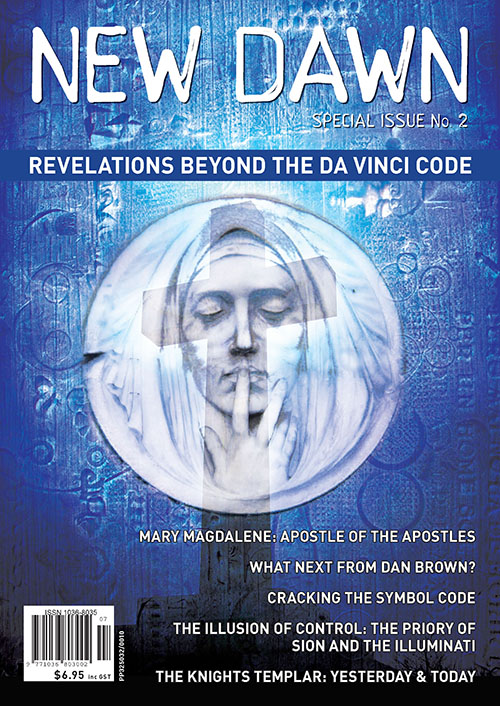
    [alert type=”general” dismiss=”no”]This article was published in New Dawn Special Issue 2.[/alert]
    [alert type=”success” dismiss=”no”]If you appreciate this article, please consider a contribution to help maintain this website.[/alert]
    Footnotes

    1. See Robert Richardson, “The Priory of Sion Hoax,” Gnosis Magazine No. 51, Spring 1999, pp. 49-55. (www.gnosismagazine.com)
    2. See his paper “The Knights Templar in Scotland: the Creation of a Myth,” in Robert L.D. Cooper, Freemasons, Templars & Gardeners, (2005), published by the Australian and New Zealand Masonic Research Council, P.O. Box 332, Williamstown, Victoria 3016, Australia.
    3. Ellic Howe and Helmut Möller, “Theodor Reuss: Irregular Freemasonry in Germany, 1900-23,” in Ars Quatuor Coronatorum, vol. 91, (QCCC, 1978), p. 39.
    4. Nicholas Goodrick-Clarke, The Occult Roots of Nazism (The Aquarian Press, 1985), p. 109.
    5. See “About the Order,” at www.austemplar.org, website of the Sovereign Military Order of the Temple of Jerusalem, the Knights Templar of Australia.
    © New Dawn Magazine and the respective author.
    For our reproduction notice, click here.
  • The Illusion of Control: The Priory of Sion & the Illuminati

    The Illusion of Control: The Priory of Sion & the Illuminati

    From New Dawn Special Issue 2 (May 2006)

    This whole secret society business is a slippery one. What is a secret society? How far back do they go? Human beings have been forming exclusive clubs ever since the first moment they developed enough intelligence to distinguish differences among their fellow human beings. Women had their own club, the warriors had another, and the priests still another.

    In ancient Egypt the simple act of reading was considered sacred knowledge, meant only for the priest caste. Not even the Pharaoh knew how to read. Imagine the leader of an entire country being dependent on a small sect lurking behind the scenes in order to enact even the simplest of proclamations. How would such a country ever survive?

    Perhaps this is what poet T.S. Eliot meant when he wrote in 1936, “You have to consider that any esoteric occult ritual is today socially acted out by the daily publishing and consuming of newspapers.” The simple act of reading would have been considered a magical ritual to the “uninitiated” of ancient Egypt. Therefore, merely by reading these words, you can consider yourself part of the original Inner Circle. How does it feel to be illuminated?

    It always serves the purpose of the Inner Circle to keep as much knowledge away from the profane as humanly possible. If you’re dependent on me to interpret the holiest of sacred texts, then my job security is quite higher than it would be otherwise, isn’t it? The job of any priest caste is to convince the underlings that God (i.e., the Mysteries) is accessible only through them.

    For example, Jesus was not officially made divine until the Council of Nicea voted on the issue in 325 CE.1 Amusingly, Jesus almost lost out on this, the Heavyweight Championship Title of the Cosmos, by only a few votes. It was necessary to transform Jesus into the Son of God because the Church wished to maintain control over the image of Godhood in the minds of the masses.

    If Jesus isn’t divine, why do people need to flock to our Church leaders who act as a direct conduit to Him? No one goes to Church every Sunday to talk to Gandhi, no matter how many great deeds he performed in his lifetime. Nobody ever sees Gandhi in a tortilla or on a billboard on the side of the freeway. Such devotion does not exist for kind-hearted philanthropists like Martin Luther King or Mother Teresa. No, the only game in town is divinity, and if you don’t have that you don’t have a Church, and if you don’t have a Church you don’t have parishioners, and if you don’t have parishioners you don’t have money flowing into the coffers of the Vatican on a daily basis. Simply put, the Council of Nicea had to trademark the image of God, and the only way to do it was to make Jesus “theirs,” to make him divine. Those who dared to remove the thin veil of divinity from Jesus, particularly in the fourteenth century, were burned at the stake.

    Unfortunately for the Church, the Gnostics and the Knights Templar were doing just that. Both organisations could be considered remnants of the Essenes, a hermetic secret society of Jews who flourished in Palestine from the second century BCE to the first century CE. Questioning the divinity of Jesus is one of the main reasons these “secret societies” were considered to be so dangerous. This is what forced them to go underground and develop secret signs and handshakes in order to pursue the rigours of genuine knowledge as opposed to the dogma of religious belief.

    The significance of the Essenes’ philosophy is a central teaching embedded in the Rose Croix degrees of Scottish Rite Freemasonry, particularly the 17th degree. In his encyclopedic book Morals and Dogma, which concerns itself with the esoteric roots of Freemasonry, Albert Pike writes extensively about the Essenes and their connection to Jesus. Pike believed that Jesus himself was an initiate of the Essenes.

    Thus, we see the need for secret societies emerge from two different impulses: one group feels the need to control, while the other feels the need to defend themselves against control. The Hegelian dialectic as warfare between opposing human impulses… between opposing secret societies. Fortunately, as William Burroughs once said, “Control is controlled by its need to control.”2 Some people need to feel as if they are in control every second of the day; this requires knowing what other people are doing at all times instead of tending to their own business. But if one is clever enough, it’s not difficult to control the controllers while allowing them to maintain the illusion they’re still calling the shots.

    Knowing the enemy is on your trail, it’s sometimes necessary to create false fronts – red herrings, as it were – to keep the controllers off-balance and confused. When a lizard knows it’s being pursued by a predator, it will often shed its tail in order to distract its would-be killer. The predator will waste time pouncing on the tail; meanwhile, the lizard is scurrying off into the underbrush, where it can recoup and wait to reemerge, far stronger than before.

    The same is true of secret societies. It’s sometimes necessary to create faux secret societies in order to capture the public’s attention, while the real important deeds are being performed in the shadows. What’s the use of a secret society even your mother is fully aware of?

    Most mainstream Americans – indeed, mainstream citizens of any country – would be amazed at how many obscure secret societies are operating under their noses at all times. Some of these societies are insignificant, others quite powerful. From their names alone, most people wouldn’t be able to separate the wheat from the chaff. For example, have you ever heard of The Royal Order of the Jesters? How about The Mystic Order of the Veiled Prophets of the Enchanted Realm? Or the Order of the Trapezoid? Or the Royal Order of Quetzalcoatl?

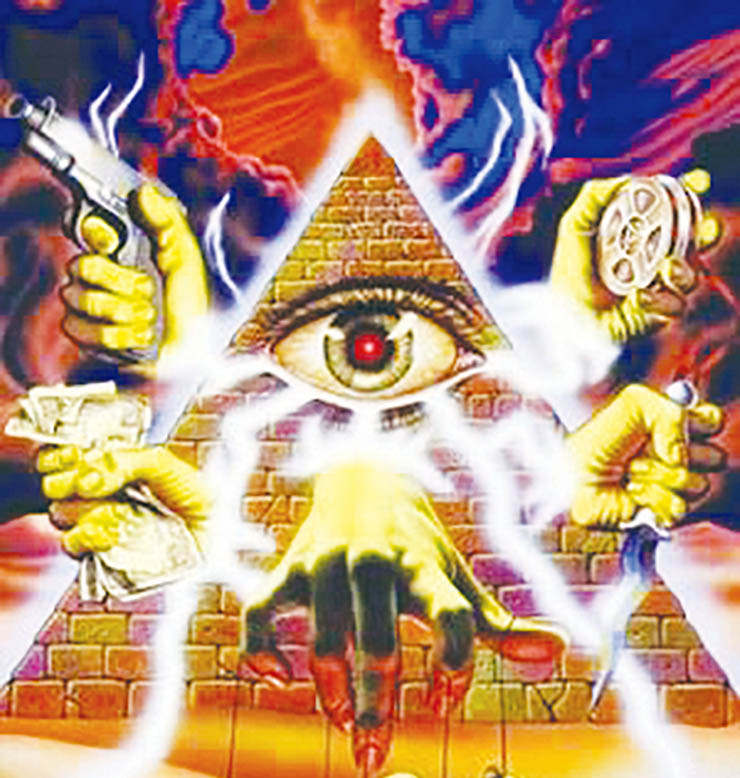
    By now, almost everybody has heard at least a whisper of such secret societies as the Priory of Sion and the Illuminati. They were real organisations, that much is certain, but in both cases their actual influence was very short-lived.

    The Priory of Sion

    As anybody who has read the best selling novel The Da Vinci Code already knows, the Priory of Sion is said to be an ancient secret society that has controlled world affairs for centuries. In truth, the man who started the Priory of Sion in 1956 was a rightwing confidence man named Pierre Plantard who was eventually imprisoned over allegations concerning fraud, embezzlement, and child corruption. His reputation as a charlatan was established early on. A French police report in 1941 states:

    Plantard, who boasts of being in contact with numerous men of politics, appears to be one of those illumines and pretentious young people, heads of more or less fictitious groups, wanting to give themselves importance and who take advantage of the current movement in favour of youth to attempt to get themselves taken into consideration by the government.3

    Plantard loved to weave tall tales about the Priory, boasting an impressive list of Grand Masters that stretched all the way back to the fourteenth century, perhaps even earlier. Alchemists like Nicolas Flamel and Robert Fludd, scientists like Leonardo da Vinci and Isaac Newton, and accomplished novelists like Victor Hugo and Jean Cocteau, were all High Muckety-Mucks at one point or another, according to the good Monsieur Plantard.

    Plantard even claimed the Priory of Sion linked back to the Knights Templar and the Crusades. The Priory, however, is actually far younger. Researchers Lynn Picknett and Clive Prince determined that although the Priory “was established in 1956, it draws almost exclusively on late-nineteenth-century material for its history and folklore, suggesting that whoever the shadowy figures were behind Plantard and the Priory, they belonged to that era.”4 After a great deal of detective work, Picknett and Prince determined that a group of French synarchists were the true architects of the Priory of Sion myth.

    The concept of synarchy was developed in the late nineteenth century by Joseph Alexandre Saint-Yves as a response to the anarchist movement so prevalent in Europe at that time:

    Saint-Yves’s concept of synarchy was essentially a reaction to the rise of anarchy and therefore its opposite – a highly ordered method of government based on what he believed were universal laws and principles. Everything and everybody has its place and purpose; harmony is achieved by keeping to that place and fulfilling that purpose, whereas any circumvention of those natural laws leads to disaster. Everyone has to remain in his or her allotted station in life. (Papus likened the individual’s relationship to a nation or race to the cells’ relationship to the body. As each was preordained to fulfil a specific function, attempting to do anything else would only cause problems for both the individual and the organism as a whole.)

    His works outlined an ambitious, visionary program for establishing synarchy in France and beyond. Each state must be highly organised at every level, with everyone in his or her own specific place; otherwise anarchy would triumph. Challenging one’s status would not be tolerated.5

    Picknett and Prince choose to believe the synarchist influence, and therefore the Priory influence, has been influential to this very day in forging a European Union.

    Though Picknett and Prince both admit the Priory story is a hoax, they suspect it is a hoax “in the same way that intelligence deceptions are hoaxes.”6 They believe the Priory is a mask the synarchists have worn over the years for various reasons. In 1956 the purpose was to act “as a front for groups plotting Charles de Gaulle’s return to power […]. Later, in the 1960s, it was revived with a new purpose, a misinformation exercise” that popularised the myth of an existing bloodline of Jesus Christ for the purpose of diverting “other esoteric groups from seeking out certain archives.”7

    The truth of Picknett and Prince’s theories is impossible to know; some simply do not wish to know. For many people, the truth does not matter. After all, the theories of Picknett and Prince were colourful enough to pique the imagination of Dan Brown, who based his novel The Da Vinci Code, in part, on their 1997 book The Templar Revelation: Secret Guardians of the True Identity of Christ.

    Dan Brown and Plantard are very similar in some ways. Brown, like Plantard, has a vivid imagination and a gift for telling an exciting tale. Plantard, like Brown, employed almost every significant historical figure and esoteric organisation, such as the Knights Templar, in order to make his myth seem palatable. But if Plantard was right, that the Priory links all the way back to the Knights Templar, the connection is a tenuous one. The two organisations are as much connected as a severed tail is to a panicked lizard.

    The Illuminati

    The same can be said of the Illuminati, a secret society formed in Germany by the dean of the faculty of law at Ingolstadt University on May 1, 1776. According to Masonic historian Manly P. Hall, Weishaupt’s secret society sprang out of the academic setting in which he worked every day: “There can be no doubt that Adam Weishaupt found himself in the midst of scholastic plotting and counterplotting. To him, the campus of the university was a microcosm of the world, and the conspiracies which flourished in the school symbolised the larger strife between reactionary and progressive factions.”8

    Anyone who has had the slightest contact with modern academia can sympathise with Weishaupt’s position. The struggle between conservative and progressive factions has never been more Machiavellian than now. In this context I am by no means using the traditional political terms of “conservative” and “progressive.” In fact, the conservative factions in academia are, for the most part, represented by people who would be considered “liberal” by the outside world; alas, their liberal views do not extend toward their students. They are authoritarians who wish to control the minds of their students with extreme regimentation and useless rules. It is this same type of authoritarianism that Weishaupt found himself up against in the 1700s.

    Two Freemasons named Baron Adolf von Knigge and Johann Joachim Christoph Bode helped Weishaupt form the Illuminati for the purpose of combating this authoritarian strain, not only in academia but in German society in general. The Illuminist Order never boasted more than two thousand members at a time, but these members were the brightest and most influential intellectuals of the day. However, their political goals did not constitute the entire purpose of the organisation; these goals were merely a natural outgrowth of their esoteric philosophies. As Hall states:

    Certainly there was an undercurrent of things esoteric, in the most mystical sense of that word, beneath the surface of Illuminism. In this respect, the Order followed exactly in the footsteps of the Knights Templar. The Templars returned to Europe after the Crusades, bringing with them a number of choice fragments of Oriental occult lore, some of which they had gathered from the Druses of Lebanon, and some from the disciples of Hasan Ibn-al-Sabbah, the old wizard of Mount Alamut.

    If there was a deep mystical current flowing beneath the surface of Illuminism, it is certain that Weishaupt was not the Castalian Spring […]. Weishaupt emerged as a faithful servant of a higher cause. Behind him moved the intricate machinery of the Secret Schools. As usual, they did not trust their full weight to any perishable institution. The physical history of the Bavarian Illuminati extended over a period of only twelve years. It is difficult to understand, therefore, the profound stir which this movement caused in the political life of Europe. We are forced to the realisation that this Bavarian group was only one fragment of a large and composite design […].

    The ideals of Illuminism, as they are found in the pagan Mysteries of antiquity, were old when Weishaupt was born, and it is unlikely that these long-cherished convictions perished with his Bavarian experiment. The work that was unfinished in 1785 remains unfinished in 1950.9

    Indeed, just as it remains unfinished today. Like a magician waving a handkerchief in order to distract his audience from the shenanigans occurring in the shadows, the Secret Schools sometimes find it necessary to feed bread and circuses to the profane in order to satiate their uncontrollable need to feel in control at all times.

    Bread and circuses can take many forms. Recently, they’ve taken the form of pulp best sellers and multi-million dollar movies. In the past, they took the form of sermons and impressive stained glass windows and bells ringing atop church steeples all across the countryside. The opium of the masses is constantly morphing and adapting to the times.

              Control is controlled by its need to control.  

    [alert type=”general” dismiss=”no”]This article was published in New Dawn Special Issue 2.[/alert]

    [alert type=”success” dismiss=”no”]If you appreciate this article, please consider subscribing to help maintain this website.[/alert]

    Footnotes

    1. Michael Baigent, Richard Leigh and Henry Lincoln, Holy Blood, Holy Grail, (Dell, 1983).
    2. William S. Burroughs, Dead City Radio (Island Records, 1990).
    3. Lynn Pickett and Clive Prince, The Sion Revelation (Simon & Schuster, 2006), p. 65.
    4. Lynn Pickett and Clive Prince, The Sion Revelation (Simon & Schuster, 2006), pp. 317-18.
    5. Ibid, pp. 338-39.
    6. Ibid, p. 429.
    7. Ibid, p. 430.
    8. Manly P. Hall, The Adepts In the Western Esoteric Tradition Vol. IV: Masonic Orders of Fraternity (Philosophical Research Society, 1950), pp. 76-77.
    9. Ibid, pp. 78-80.
    © New Dawn Magazine and the respective author.
    For our reproduction notice, click here.
  • The Quest for the Grail

    The Quest for the Grail

    For most of us, the Grail is a mirage or a rainbow’s end. We may catch a glimpse of it, but if we allow ourselves to be led in its direction, we soon find that it recedes; if we steal a few steps closer, it disappears. And so the Grail has become the quintessential metaphor for all that is beautiful but unattainable.

    The Grail is usually imagined as a cup or chalice, specifically the cup used by Jesus Christ during the Last Supper (or used to catch his blood as it flowed on the cross). Legend says that after Christ’s death and Resurrection, Joseph of Arimathea – who had lent him his tomb for a few days – took this cup to Glastonbury in Somersetshire, England.

    Glastonbury is the site of innumerable legends and fables connected not only with Joseph of Arimathea but with King Arthur and his knights; indeed it was said the bones of Arthur and Guinevere were unearthed there in medieval times. While this may be mere fable, it’s unquestionably true that Glastonbury functioned as the site of an abbey from the seventh century till 1536, when Henry VIII ordered the dissolution of all the monasteries in England. The Gothic ruins of Glastonbury Abbey can still be seen today, and the town remains a popular destination for New Age pilgrims.

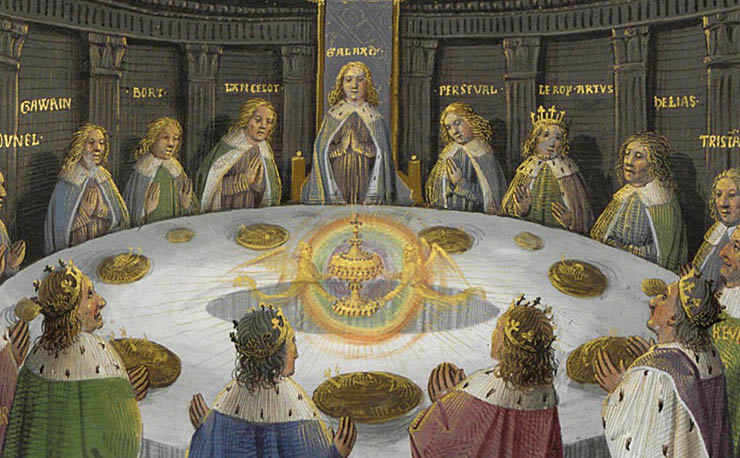
    The Grail too has become intertwined with the legends of Arthur and his knights; this motif first appears in courtly romances written in the late twelfth and early thirteenth centuries. The oldest is the Perceval of Chrétien de Troyes, a kind of Bildungsroman in which a young man proves himself as a knight. During his adventures, he comes to a castle where he witnesses a strange procession:

    A squire entered from a chamber, grasping by the middle a white lance… All present beheld the white lance and the white point, from which a drop of red blood ran down to the squire’s hand…

    Then two other squires came in, right handsome, bearing in their hands candelabra of fine gold and niello work, and in each candelabrum were at least ten candles. A damsel came in with these squires, holding between her two hands a grail. She was beautiful, gracious, splendidly garbed, and as she entered with the grail in her hands, there was such a brilliant light that the candles lost their brightness, just as the stars do when the moon or sun rises. After her came a damsel holding a carving platter of silver. The grail which preceded her was of refined gold; and it was set with precious stones of many kinds.

    The young man is curious about this strange procession, but, minding his manners, he does not say anything about it. The next morning he awakes to find the castle empty, and he rides off. Only later, when he describes the episode to a maiden he meets, does he discover that he has been the guest of “the rich Fisher King.”

    “He is still in such pain that he cannot mount a horse,” the maiden says, “but when he wishes to divert himself, he has himself placed in a boat and goes fishing; therefore he is called the Fisher King.” The maiden also tells the young man that if he had asked the meaning of the Grail procession, he “would have cured the maimed King, so that he would have recovered the use of his limbs and would have ruled his lands and great good would have come of it!”

    The Grail here seems to be a familiar object. In fact the word “grail” is derived from the Old French gradale or graal, and often simply means a large serving-dish. Later on a hermit tells Perceval, “The rich Fisher is the son of the King who causes himself to be served with the Grail. But do not think that he takes from it a pike, a lamprey, or a salmon. The holy man sustains and refreshes his life with a single Mass wafer. So sacred a thing is the grail, and he himself is so spiritual, that he needs no more for his sustenance.”

    There have been other images for the Grail as well. In the thirteenth-century Parsifal of Wolfram von Eschenbach, the Grail is not a cup but a stone fallen from heaven – the lapsit exillis. This obscure Latin phrase has evoked many explanations. Lapsit is a garbled word, meaningless in Latin, but evoking associations of lapis, “stone,” and lapsus, “fallen.” Exillis resembles exilis, “meager” or “poor,” also exsilium, “exile,” elixir, and even ex illis, “from those.” Most likely it is either a mistake – another instance of the barbarous Latin common in the Middle Ages – or a kind of Joycean portmanteau word, deliberately cryptic and meant to evoke a rich nexus of meanings.

    The image of the stone is itself ancient; in describing his version of a Grail Castle, an ancient Greek novelist known as Pseudo-Callisthenes says, “A precious stone, which took the place of a fire, lit the whole temple.”

    All of which leaves us asking, what is the Grail? It does not seem to be a mere object, however sacred. For the Swiss psychiatrist C.G. Jung, the Grail was no less than the principium individuationis (“principle of individuation”) that in us which strives to realise itself and become conscious. For R.J. Stewart, a well-known writer on Celtic themes, the Grail is preeminently “the mystery of regeneration.”

    To integrate these different perspectives, it may be helpful to recollect that in most of the legends the Grail is the cup Christ used at the Last Supper, and which was later used to catch his blood on the cross. Thus it is a cup that holds blood. This, I think, provides the key to the true meaning of this enigmatic symbol. Each of us has within us a cup that holds blood. It is the heart. The Grail is the heart, illumined and awakened so that it may serve as a receptacle for divine energies.

    Few people, in our era or indeed in any era, have their hearts awakened to this extent. This fact helps explain one of the central themes in the Grail mythos: many are called but few are chosen. It would also explain why the few successful candidates are those who are pure of heart, for the heart must be pure before it can be illumined.

    That the Grail is a metaphor for the illumined heart also casts light on two other details in the legends. The Grail is sometimes seen as a serving-platter; moreover, in some versions the question the seeker is supposed to ask is, “Whom does it serve?” Once the heart is illumined and awakened, it becomes a vehicle for service. The question then becomes, whom or what does it serve? That the Grail heroes usually forget to ask this question indicates that it does not admit facile or ready-made answers.

    While few of us are going to be knights or warriors like the Grail heroes, our emotions, refined and purified by insight and integrity of purpose, can form a chalice into which divine energies can flow. Like the Grail itself, this ideal may seem remote, elusive, and unattainable.

    Yet, as the old legends suggest, there is something in the very quest that may serve as its own justification and reward. And once we reach it, we will be asked – or we will ask ourselves – whom or what are we serving?

    A version of this article appeared in Gnosis magazine #51.
    [alert type=”general” dismiss=”no”]This article was published in New Dawn Special Issue 2.[/alert]
    [alert type=”success” dismiss=”no”]If you appreciate this article, please consider a contribution to help maintain this website.[/alert]
    © New Dawn Magazine and the respective author.
    For our reproduction notice, click here.

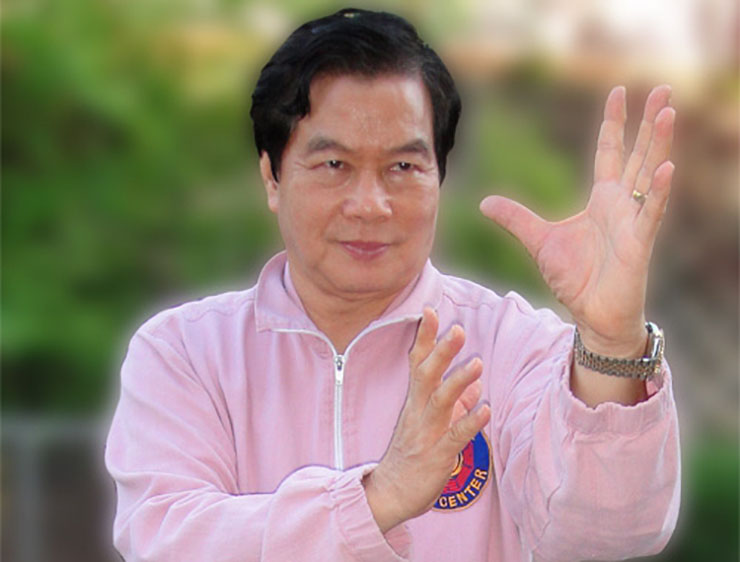
  • Taoist Cosmic Healing: Energetic Medicine for Health & Spirit

    Taoist Cosmic Healing: Energetic Medicine for Health & Spirit

    The word “Tao” means way, or path. In Chinese thought, Tao includes both meanings. On the cosmic level, the Tao means the war of Nature, the subtle laws and forces animating the patterns of change in the universe. On the human level, Tao is the path or war of life that we must follow in order to discover the universal laws and to live in accord with them. Then we can live our lives in balance and harmony with Nature, with ourselves, and with society.

    Those who seek to incorporate the cosmic laws into the microcosm of their own lives are called Taoists. I have studied the Tao under many great masters. Through my studies I discovered that out of all the methods in the Tao, ranging from meditation, Chinese Medicine and Chi Kung to the martial arts, successful practice all comes down to one thing: understanding Chi. Out of this understanding, I have created a straightforward and systematic approach to working with Chi that I have named Universal Tao.

    What is Chi?

    Chi is the force that moves everything in the universe. Chi is energy. In humans, it is our life force energy, that which enables us to see and hear, to walk, to work, to think, and to feel. Thus, Chi is not just some philosophical idea; it is the essence of our everyday life.

    When we get angry, it’s angry Chi. When we feel love and when we make love, it’s sexual Chi. The stars, the Sun, the Moon, and the wind, the ocean are all Chi, but it is energy with no intelligence.

    Living things have the intelligence to take in the Chi of the Universe and combine it within themselves to create a living Chi, one that can create and build things.

    How We Come into this World

    Our Chi is intimately connected with the Chi of the Universe. When our parents made love, the Yang Chi of our father in his sperm met the Yin Chi of our mother. The two became one; the meeting of their sexual energy formed a new cell called a zygote, our first cell. The Chi of this cell is our Original Chi, the Chi that we inherited from our parents.

    Our Original Chi then drew in from the Universal energies, the Chi of Earth and Heaven, our Cosmic Mother and Father. Out of this meeting and blending of Heaven Chi, Earth Chi, and Human Chi, came the power to make that original cell divide and subdivide trillions of times until it eventually formed into a fully grown human being.

    How Negative Chi Affects Us

    In the Healing Tao, physical health, mental health and spiritual growth are different parts of the same process; they are all related to keeping the Chi flowing strongly and smoothly through our body. Our emotions are intimately related to both our health and our spiritual development.

    Negative emotions, like anger, explode and chase the energy out of our body. Similarly, when we feel afraid, we contract so much that we literally squeeze the Chi out of our body. I am sure that you have noticed how depleted you feel after bouts of strong negative emotions. This is not to say that you should never feel fear or get angry; these emotions are natural and appropriate at certain times, and if you didn’t feel them then, something would be wrong.

    But if they become your chronic way of responding, your energy becomes stuck in these emotions and you feel them at times that are inappropriate. Your Chi will become blocked and will drain out. Emotions can be one of our biggest energy drains, and without strong Chi, health will eventually suffer and spiritual practice will feel difficult or impossible.

    Our Good Virtue Chi

    Our positive emotions are also Chi. Chi is the basis of our love, happiness, kindness, and gentleness. These emotions nourish our life and health, and enhance our energetic flow. Sadly, many people today hardly know how to love, and feel guilty or selfish about letting themselves feel happiness. Part of this comes from distortions and misunderstandings of religious truth, and part comes from poor or “toxic” parenting.

    The True Inner Child:
    The Immortal Fetus

    Many people today talk about rediscovering their Inner Child, and this is very good. In Taoism we refer to the true Inner Child as the Immoral Fetus. Taoist practice provides a time-tested method for achieving just this.

    We don’t try to suppress our negative emotions, condemn and hate ourselves for feeling such negative things. Nor do we wantonly express our anger, fear and sadness in ways that are not constructive, complicating matters and causing even more problems as we dump our feeling like garbage on other people and injure the ones we love.

    Instead, we listen to our child within, we turn our attention with unconditional love and acceptance to what we are feeling inside, to what our Inner Child is trying to say; you yourself become the perfect loving parent for your Inner Child. In this way, our feelings are acknowledged and respected, and thus they can be transformed into healthy and productive attitudes and actions that can constructively change and shape our lives.

    We can clear out our negative feeling and allow the Chi that is associated with those emotions to flow freely once again. That also clears and cleanses our inner energy channels and organs, it opens us to receive a purer frequency of Chi from the Universe.

    We can then work with this pure frequency of Cosmic energy to affect real and lasting inner transformations and growth on all levels of our being; we call this “giving birth to the Immortal Child” or giving birth to our Higher Self.

    When you can open your heart and feel happy, feel love, feel joy, then you will also feel a strong surge or Chi releasing and moving in your body. This in itself is an important part of Inner Alchemical transformation.

    How To Do It

    In the Universal Tao System, we use a “three pronged approach”; that is, we have many different practices from which to choose, practices that approach the processes of health, healing and spiritual transformation from three angles: body, Chi, and mind. Depending upon the personality of the individual student, one approach may work better than another.

    For example, some people are out of touch with their body tensions and sensations, but are very much in touch with their thought and emotion. For this type of person, affecting and healing the body and Chi can be approached on a mind/emotion/spirit level, such as the meditation practice of the Inner Smile. Still another person may be very much in touch with his physical side, but out of touch with his feeling and energy.

    The doorway for this person’s opening to their totality of being may initially be the Microcosmic Orbit Meditation, Tai Chi Chi Kung, Iron Shirt Chi Kung, or the Six Healing Sounds, practices that are more physical in nature, but which will in time connect that person with his or her emotions as well as his or her physical body.

    Taoism Follows The Way of Nature

    The Taoist approach follows the way of Nature. We do not try to force the student to adapt to one method; instead, we have many different practices to suit the nature, capacity, and unique needs of each student. Ultimately the goal is to know ourselves as we really are, and to reclaim all aspects of ourselves on every level. And since part of who we are is our energy body, our Chi network, all of these Taoist practices help us to discover and sense Chi as a part of our continuum of being: the Chi in our bodies, in other people, and the Chi of Nature all around us.

    Thus, in the Taoist system, body, Chi, and spirit are interrelated aspects of the totality of who we are. Over centuries and millennia, Taoists have devised man exercises and training to nourish all three aspects, or “three bodies.” But, it is not enough just to understand that working with our energy is important. You have to do it! If you practice, you will soon see results that will transform your life.
    [alert type=”general” dismiss=”no”]This article was published in New Dawn 92.[/alert]
    [alert type=”success” dismiss=”no”]If you appreciate this article, please consider a contribution to help maintain this website.[/alert]
    © New Dawn Magazine and the respective author.
    For our reproduction notice, click here.

  • Living Chi & Feng Shui

    Living Chi & Feng Shui

    The ancient Chinese knew that connection with the living Chi (also spelled Ki or Qi) around them can help them find their place, meaning and purpose in a dynamic, ever changing world. In these modern times we can also stay whole despite the fractured times. We do have a saving grace, in the Chinese Taoist concept that Life is full of immense possibilities. The Taoists were devoted to the spiritual holistic world view in the essential nature of things and the Way of Nature.

    30 years ago the thought of sticking needles in certain parts of the body to help it heal and repair itself was considered laughable in the West. Now you can get a medical refund for acupuncture services. Any skeptics who try to explain its benefits away on the basis of a “placebo” effect are hard put to explain why acupuncture is enjoying equal success in the veterinary field. After all, why should an animal believe that it should get better because someone has gone to the trouble of sticking a needle in a particular point?

    Other Chinese practices such as acupressure and exercise systems such as Tai Chi have also become mainstream activities. All of these practices have one thing in common: they are based on the harmonisation and regulation of Chi energy.

    Chi is often referred to as “life” energy, which can be somewhat misleading as one could then think this energy is only involved with living things. The term “animating” energy is much better as the Chinese maintain that all movement and transformation that occurs within the universe requires Chi.

    In a sense Chi is the Chinese solution to the Grand Unified Theory that we are searching for in the West. It is the name given by the Chinese to the primal energy that underlies all activity and change. We can experience the effects of this energy in various ways which we describe as heat, light, sound, gravity, time, electricity, magnetism, etc.

    Chi lies at the heart of another Chinese practice that is becoming more and more popular in the West – Feng Shui. (Feng means wind, Shui means water – in Chinese terms wind carries and disperses energy while water attracts and collects it). Whereas acupuncture, Tai Chi and the Chinese practices referred to above deal with the attempt to read, understand and regulate Chi within the human body, Feng Shui is the complementary practice dealing with the reading, understanding and regulation of Chi within the external environment.

    When the theory of Chi flowing through a series of channels or meridians first emerged in the West it was immediately derided on the basis of where was the proof? Could anyone demonstrate the existence of these meridians and show they flowed one way rather than another? How could anyone prove what influenced the flow of Chi in a meridian and even if it did, what effect this would have on the body.

    Fortunately there was a considerable body of knowledge that had been written down, particularly about the behaviour of Chi in terms of yin and yang and the five elements. Practitioners who claimed “revealed” knowledge (whether from ancient master-student lineage or more recent spiritual connections) could be called into question when what they were saying was clearly inconsistent with this established body of knowledge.

    Today of course we can measure the electro-potential changes that identify the existence of acupoints. We can trace the passage of radio-isotopes as they follow meridian pathways throughout the body and, using the latest brain-scanning technology, we can measure location and changes in electrical activity that occur in the brain as different acu­points are stimulated. In a hundred different ways modern technology has confirmed the traditional knowledge while never overturning it.

    Understanding of Feng Shui is now at about the same stage in the West as internal Chi theory was about 25 years ago. There are lots of claims for success but not a lot of proof about the mechanisms by which Feng Shui works. This is not to say that such proofs will not emerge over time as they did for internal Chi theory but it can leave us confused about Feng Shui. Should we believe everything we are told? And, if we are told different, contradictory things, how can we tell what is right?

    The essence of Feng Shui is the idea that the health of a person is influenced by the environment they live in. This fact is so self-evident in every day experience that I don’t think you would find anyone who would dispute this. But let’s see where this point of common agreement takes us. When we refer to “external environment” we tend to think of things rather than energy – but this is just cultural conditioning. (You might say that the Chinese are always talking about mountains, rivers and lakes too, but this misses the point that to the Chinese it is the nature of underlying energy that these mountains, rivers and lakes represent that is important.)

    Think, what generally concerns you about the environment where you work and rest? How hot or cold you are? Whether the place is excessively noisy or quiet? Do you accept these things will affect your health? Do you think your productivity and creativeness suffer when temperature and noise become extreme? Do your relationships work as well in such environments? Do you sleep as well? If not what does that do to you the next day?

    So without being overly presumptuous we can say with some confidence you probably accept as a matter of course that the energy in the environment that you live and work in impacts strongly on the important things in your life. Your health, productivity (at work or at home), relationships and creativity. You also probably recognise that as these things suffer so does your financial health and quality of life.

    So you buy heaters and fans and use them to maintain appropriate levels of heat. You put up blinds and curtains on your windows and have lights and lamps in your house to regulate the levels of light. You might double-glaze your windows to prevent sound or put in trees, bushes and walls to screen noise. Then you have been practicing a very elementary level of Feng Shui albeit in an ad hoc uncoordinated fashion.

    “Whoa!” I can almost hear you say, isn’t Feng Shui about mountains and rivers, about locating white tigers and green dragons, about dragon veins, compass directions and strange astrologic and numerological calculations? The answer is not difficult but needs to be broken down into a number of parts:

    First, do not confuse the objective of Feng Shui with some of the methodologies used. The objective of Feng Shui is simply to make the energy of our external environment supportive to health and quality of life. There are a number of approaches varying from the common sense and the scientific to the mystic and spiritual – you can use what you are comfortable with. In our society today we have both scientist and priest, some believe science and religion are exclusive, some find no problem in reconciling these worldviews.

    When you practice Feng Shui you can take the same approach, accept it all, or reject the scientific or mystic aspects. In the Feng Shui Academy we take the scientific approach but rather than rejecting other aspects put them into an “as yet unproven” basket. In doing this we build on our experience from our study of Chi in the internal arts knowing they function quite well without having to resort to mystic or spiritual aspects. Please note that the statement is “without having to.”

    Internal Chi arts such as Qigong (energy circulation techniques), can make use of mystic and spiritual techniques and perhaps when used in this way they can result in more success and higher quality lives. It is an individual matter.

    Second, remember that the words and images used in any practice from different cultures and times often simply reflect the words and imagery that were available to communicate concepts in that culture at that time. If the same concepts are to be successfully communicated in a different time and culture the words and imagery may need to be reinterpreted.

    Before we get carried away with our own cultural superiority we might reflect on the fact of how many of us still have an image of the atom as being like a miniature solar system. This outdated (and largely wrong!) image of the atom is, nevertheless, still a useful image for introducing the concept of the atom for those who cannot visualise the atom in non-physical mathematical terms. There just aren’t any solid lumps in an atom!

    There are a number of reasons we would like to advocate the approach to Feng Shui of only accepting what can be proven but being open minded enough to experiment with the remaining techniques. These include:

    Our firm belief that people will not only benefit from even limited experience with Feng Shui but that “a journey of ten thousand miles” does indeed start with the first step.

    Like health, the prime responsibility for Feng Shui lies with the individual. You might call on the doctor when you are sick or for a check up. It is your lifestyle – your diet and the exercise you get that will have the greatest impact on your health and quality of life. In the same way it is what you do on a day to day basis about your energetic environment that counts. Become sensitive and attentive to your environment and your Feng Shui health will tend to take care of itself.

    Such an approach is the best protection from becoming a victim of the “fear and greed” approach to Feng Shui that can otherwise develop. Most practitioners of Feng Shui are honest dedicated people who can do much to benefit their clients. Some, however, drum up business by either:

    • Terrifying their clients about the doom and disaster that will stalk them if they don’t rush out and take the (not inexpensive) advice of the Feng Shui consultant.
    • Promising a life of indolence and riches for the person who follows the advice of the Feng Shui consultant (makes you wonder why they have to charge fees at all!)

    Learning to regulate the Chi of your external environment is a valuable living skill that can significantly impact on the quality of your life. You can use either a mystic or common sense approach to Feng Shui with beneficial effects. Effort and luck almost always play a greater role in life than Feng Shui.

    This is not to say Feng Shui isn’t very important but that it should be placed in perspective. It relates to just one aspect of life, the energetic influence of the external environment, and it must be used in balance with other living skills. Devoting oneself to maintaining one’s internal health while ignoring the influence of the external environment is as silly as thinking you can ignore diet and exercise as long as you practice Feng Shui.
    [alert type=”general” dismiss=”no”]This article was published in New Dawn 96.[/alert]
    [alert type=”success” dismiss=”no”]If you appreciate this article, please consider a contribution to help maintain this website.[/alert]

    © New Dawn Magazine and the respective author.
    For our reproduction notice, click here.