New Dawn – World's Most Unusual Magazine

Category: Articles

  • The Soul in the Sea: Re-Uniting with the Dolphins

    The Soul in the Sea: Re-Uniting with the Dolphins

    “What mystery is the sea,” exclaimed Herman Melville, “whose stirrings speak of a hidden soul beneath!”1 I only understood what the great American meant for the first time two years ago, while visiting the Roatán Institute for Marine Sciences in Honduras. It was located at an otherwise uninhabited islet just off the mainland, where a shallow barrier corralled more than thirty dolphins within some six square acres. The top of the fence stood so low above the water, all but the most arthritic dolphin could easily hop over it. In fact, several have made good their escape in this manner, I was told, only to jump back inside a few days later.

    As part of their daily routine, all the resident dolphins are herded together and taken out to sea, where they often frolic with their friends and relations in the wild for an hour or so – much like walking one’s pet dogs – before returning to the fenced-in islet. Perhaps they regard it as a sanctuary from sharks, enjoy its largesse of flattering attention from scientists and tourists, are bribed by free squid and herring – among their favourite delicacies – or all these amenities and more no human can guess.

    Together with fellow tourists guided by a local handler, we waded into shallow depths and were immediately met by a female dolphin, which allowed us to come quite close, even touch her. Expecting to feel a hard or at least tough, scaly exterior, I was surprised by her supple, smooth, warm skin, so human-like.

    “No one who has ever touched the skin of a dolphin,” wrote famed oceanographer, Jacques-Yves Cousteau, “is likely to forget the silken, elastic, soft feel of it.”2 But a deeper impression was made by her light brown eyes. Behind the anticipated high intelligence and complex awareness, there was something even more compelling lurking deeper inside. If, as the old French saying has it, “the eyes are the mirror of the soul,” then her gaze betrayed a core mystery comparable only to a kindred connection.3

    The feeling is not uncommon. Cetacean researcher Ann Spurgeon spoke for many, when she observed, “We looked often into the dolphins’ eyes, and the quality of the look they returned was unlike that of any animal we have known.”4

    According to no less an authority on the sea than Cousteau himself, “it is obvious that dolphins are often motivated by curiosity, and especially by curiosity about man. One literally can see it in their eyes. This is a fact that can be doubted only by someone who has never really looked a dolphin in the eye. The brilliance of that organ, the spark that is so evident there, seems to come from another world. The look which the dolphin gives – a keen look, slightly melancholy and mischievous, but less insolent, conniving and cynical than that of monkeys – seems full of indulgence for the uncertainties of the human condition.”5

    Belgium’s pioneering underwater archaeologist and the world’s first aquanaut went further: “The glimmer of interest which sparkled in their eyes seemed to be a human glimmer.”6 Robert Sténuit’s radical suggestion articulated my, as yet, unformulated suspicion – a wordless knowing beyond understanding, much less expression, as though my own mind had been somehow confronted with or partially overtaken by a significant truth too grand or potent for me to really comprehend or to put into words.

    Richard Wagner’s Hans Sachs articulated my perplexity in The Mastersingers of Nuremberg: “I feel it, but cannot understand it; cannot completely recall it, but can never forget it. I can grasp it entirely, ’though cannot measure it. But how can I grasp that which seems immeasurable? … It seemed so old, and yet was so new.”7

    Cousteau was no less taken by his first, personal contact with a wild dolphin. “It was an extraordinary situation,” he confessed, “as though the barrier between man and animal no longer existed. There was some sort of strange understanding between us. It would be very difficult for me to say exactly what our feelings were for one another, but there was undoubtedly something.”8

    Such an inexpressibly profound impression is not unknown to other persons touched by the creature’s singular energy field. “Those who have come very close to dolphins feel it inside themselves,” stated Dr. Horace Dobbs, a leading delphinologist, “yet cannot explain it. Exactly what it is remains a mystery. For want of a better word, let us call it spirit of the dolphin.”9

    Dolphin Meets Humans

    From the moment the Roatán dolphin first approached our gaggle of tourists, I could not escape the strong impression – realisation, perhaps – that it was very rapidly probing us with the powerful energy of some unseen and inconceivable instrument; scanning each one of us individually; psychically scoping us out down to the absolute bottom of our souls; reading everything in our conscious and subconscious minds; assessing the totality of our identity; determining our threat or friendly potential; yes, judging us – completely and thoroughly within the matter of a few seconds.

    Being in the ocean with a living, breathing dolphin close enough to touch it was nothing like seeing one perform at Sea World, watching it on television, or reading about cetaceans in a library. No “virtual reality” approximates sharing the same water with such a singular creature. Although common enough these days, and similarly enjoyed by many thousands of tourists around the world, my dolphin encounter near Roatán was nevertheless a memorable, if ineffably real occurrence.

    I approached it with no expectations, no preconceived ideas, but left myself open to whatever might or might not happen. I did not endeavour to “mind meld” with the creature, nor force any such boorish impertinence upon it, and instead hoped to learn something not otherwise available in less personal circumstances. To be honest, the experience was somewhat tinged with fear, not for what the dolphin would do, but what it could do. However amiable it outwardly appeared, being at the mercy of a nine-foot-long, three-hundred-ten-pound, mentally sharp beast moving through the water seven times faster than the best human swimmer and with the agility of a bull-whip in an environment where bodily inferior men are sluggish and clumsy, gave me pause. Aristotle and his 4th century BCE colleagues believed the dolphin was the fastest creature in the sea, and they may have been right.

    In 1975, Jacques Cousteau wrote of his personal experience aboard a French Navy cruiser “in the waters of the Far East… I realised that the school of dolphins, in catching up to and then passing the Primauguet, as it moved at full power, must have been swimming at a speed of no less than fifty miles per hour!” Later, he calculated that a dolphin needed to beat its tail one hundred twenty times per minute, or two strokes every second, to reach a speed of just ten knots, or 11.5 miles per hour.10

    Professor Paul Budker, director of the National Museum of Natural History and the Laboratory of Colonial Fisheries in Paris, found that dolphins “move as though by magic, and are capable of producing more power per pound of muscle than any other animal.”11

    Cambridge University’s Sir James Gray observed that “the form given by Nature to the dolphin is more effective than that of any submarine or torpedo conceived by man.”12

    Dolphin Aggression Rare

    While friendly toward humans, dolphins do have a temper and occasionally show aggressive behaviour, not always for obvious reasons. “A dolphin could kill a man with a blow of its snout,” writes Sténuit. “It could dismember him with a snap of its jaws, because it possesses a double row of strong, conical teeth, eighty-eight in all, which sink in with precision. But never, absolutely never, has a dolphin or a porpoise attacked a man, even in legitimate defence, with a harpoon in its side, or when, with electrodes in its skull, it has been massacred in the name of science.”13

    Since Sténuit made this statement in 1968, three humans have, in fact, been killed by Orcas, the first on 21 February 1991, at Canada’s Sealand of the Pacific, in British Columbia, which thereafter closed its doors for good; again in 1999, but most recently and famously, eleven years later in Shamu Stadium at San Diego, California’s Sea World, by the largest Orca in captivity, weighing six-and-a-quarter tons and measuring over twenty-two feet long.

    In spring 1985, author Timothy Wyllie was brutally attacked at Key Largo, Florida by a sexually aggressive male dolphin intent on raping him. All these incidents and similarly negative encounters occurred with captive dolphins, whose naturally amiable dispositions were perverted by the unnatural conditions imposed on them

    For example, the “Seaworld of Hurt” web site reports that an Orca called “Tilikum” was “held captive against his will; all he could do was swim in small circles and float aimlessly at the surface of the water, far away from the expansive ocean in which he had swum a hundred miles a day alongside his family members.” His artificial environment was a “barren one-hundred-foot-by-fifty-foot pool – just thirty-five feet deep… He was forced to perform every hour, on the hour, eight times a day, seven days a week. When ‘Tilikum’ did not perform a trick correctly, food was withheld from both him and his tank-mates, which caused a great deal of tension, and as a result, ‘Haida’ and ‘Nootka’ would bite ‘Tilikum’ and rake the entire length of his body with their teeth. The constant stress and exhaustion gave him stomach ulcers.

    “When the park closed its doors at the end of each day, the three incompatible Orcas were crammed into a tiny, round, metal-sided module for more than fourteen hours until the park reopened the next morning. Over the course of twenty-one years at SeaWorld, where he is confined to a tank containing 0.0001 percent of the quantity of water that he would traverse in a single day in nature, ‘Tilikum’ has been involved in multiple incidents of aggression. The stress of captivity drives ‘Tilikum’ to exhibit abnormal repetitive behaviour, including chewing on metal gates and the concrete sides of his tank – so much so that most of his teeth are completely worn down.”14

    These typical seaquarium conditions – less hideous than those in so-called “Third World” countries – are on a par with the worst penitentiaries, which similarly bring out the worst in human behaviour. “No aquarium, no tank in a marine land, however spacious it may be,” Jacques Cousteau pointed out, “can begin to duplicate the conditions of the sea. And no dolphin who inhabits one of those aquariums or one of those marine lands can be considered normal… There is no doubt that a dolphin who lives among humans for any length of time undergoes a deep psychological modification.”15

    Aggressive confrontations between dolphins and ourselves take place mostly under captive environments. Free dolphins in the wild are not known to have ever deliberately killed or injured anyone. That said, there are accounts, however rare, of their overt sexual interest. Wyllie writes that the only man he ever knew who truly hated dolphins was a father who claimed that his son was raped by one, although under what circumstances, he did not specify.16

    If real enough, the isolated and extreme rarity of these incidents must nevertheless be stressed to put them into balanced perspective. Guilt for negative encounters with dolphins, however, has been and continues to be virtually entirely on the human side. They are, after all, our fellow mammals, still imperfect, for all their admirable qualities, and far more typically dedicated to refraining from killing us, for which, in view of our past and present atrocities committed against all cetaceans, they have abundant justification.

    “When we work to save them,” stated Frank Robson, New Zealand’s leading cetologist of the last century, “we are, in a sense, acting to save ourselves.”17 In spite of the horrific abuses we continue to heap upon them, wild dolphins continue, as they always have, to seek out and enjoy our company, even volunteering to rescue unknown numbers of us from otherwise certain death at sea. In this, they are either abysmally naive or angelically high-minded. Given their prodigious brain, however, the former alternative is less likely. It is as though they remember how, more than twenty-five centuries ago, Greeks made killing dolphins a capital offense, and enacted their own form of reciprocal legislation against taking human life. However rarely observed, Pacific killer whales occasionally encircle a pod, individually seizing and devouring a victim, until all the dolphins have been devoured, behaviour from which the species’ original term derived: Orca gladiator.

    No less appropriately, the genus name Orcinus means “of the kingdom of the dead,” from the original Etruscan and later Roman god, Orcus, punisher of evil souls in the Afterlife. Among themselves, killer whales, as well as dolphins, commit infanticide, similarly practiced by raptors, most notably eagles, as well as elite human societies, such as those made famous by the Spartans and Vikings. Alpha males of our own, pre-modern, militaristic ancestors routinely inspected newborns for the slightest indication of physical deformity or any other inherent anomaly, as predatory birds still do. If discovered, the baby or hatching was, or is, discarded to safeguard the species’ genetic integrity.

    Such behaviour may contrast with but cannot detract from the dolphins’ over-riding amiability toward fellow mammals, us included. Even the dolphin I met off the coast of Honduras, while certainly congenial, pointedly refused to obey some of its human handler’s instructions. As Robson discovered, “there is absolutely no way a wild dolphin can be forced to comply with the wishes of a human. If it suits him, he’ll comply. If he doesn’t feel like it, he won’t.”18
    [alert type=”success” dismiss=”no”]If you appreciate this article, please consider subscribing to help maintain this website.[/alert]

    Dolphin Conference

    Of all the enigmas Jacques Cousteau observed during almost seven decades of underwater exploration, perhaps his most bizarre encounter took place sixty years ago, off a reef in the middle of the Indian Ocean. In the process of gathering material for his now-classic film, The Silent World, he “saw a dolphin rise to the surface to breathe, and then let himself sink down into the water again, without swimming.” This sighting followed several days of other, unusual delphine behaviour, when, “every morning at about ten o’clock,” a small pod of dolphins swam by his anchored research vessel. Intrigued, Cousteau and a fellow diver slipped into the sea.

    “To this day, I have not forgiven myself for not taking a camera,” he recalled. “The sight that greeted us was one that we have never seen again. There were about fifteen dolphins – probably the school that we had seen going past Calypso every morning – in the crystal-clear water, on the side of the reef. They were sitting on the bottom, in a group, as though they were holding a conference. I say ‘sitting;’ I mean that they were literally poised on their tails.

    “They remained where they were, stirring a bit and looking at one another. Then they continued with their meeting. But when we tried to move in closer to them, they swam away immediately. It was a unique and extraordinarily impressive sight. The truth is that I still have no idea what they were doing.” Telepathically communicating with each other, most likely. Cousteau himself wrote that their “meeting” suggested “an underwater congress.”19

    More intriguing still, about what did they confer? Given their proximity to Calypso, they were probably discussing the untypical presence of anthropomorphic divers in an otherwise unvisited area of the vast Indian Ocean; what could have brought the strangers here, how should the pod regard them, and related issues of the moment. The dolphins sat together, as humans do, yet another comparison between both species – like eye similarity, the soft spot at the top of our head corresponding to the dolphin’s blow hole, human-like fingers, hands, thighs, knees, feet and toes in the dolphin embryo, etc., etc. – indicating a shared evolution of some kind.

    Can all this mean that we were once dolphins before our ancestors returned to dry land, where primate attributes are more useful? If so, do the dolphins still preserve a cultural or collective memory of our aquatic past, and regard us on account of it as their mammalian relatives? Is that the real basis for their demonstrable love of humankind? Given their immense intellect, they may know much more; everything, in fact, there is to understand concerning the illimitable bounty of the sea. What they might teach us about it could mean the difference between our annihilation or survival in an age of extinction.

    Poisoning of the Oceans

    The animals’ wholesale slaughter by Japan has assumed international notoriety, but even more devastating is progressive poisoning of the planet’s water resources. Just how far rising levels of toxicity have already gone to reduce dolphin world population is difficult to determine. But cetologists do know that the first birth given by a dolphin mother dies from all the human toxins it ingests, while a second birth usually survives, because its immediate predecessor absorbed most of the toxins. This process, even if it continues at present levels – which, of course, it won’t – must result in at least cutting dolphin populations in half.

    “The growing presence of toxic chemicals in the marine environment presents a crisis unlike any ever faced on this planet,” warns Blue Voice, an ocean conservation organisation founded in 2000. “Vast quantities of toxic chemicals enter the waterways and oceans of the world each day and accumulate, then bio-magnify in the marine food chain. In a time when we have reduced the number of large pelagic fish by ninety percent and the bio-mass of the oceans by seventy percent, we are poisoning much of the living marine resources that remain. This has staggering global implications for ocean life and human health. A level of one hundred parts per million of mercury has been found in a bottlenose dolphin killed for food in Japan – a level more than one hundred times that accepted by Japanese health authorities… Dolphins, toothed whales, large tuna and swordfish are among the marine creatures with highest levels of contamination, because they feed at the apex of the food chain.”20

    Whenever greed and self-interest are at issue, Man’s indifference to the suffering and extermination of his fellow creatures – even if their plight endangers himself – is human nature. As such, it cannot be eradicated by education or legislation, but will only disappear with himself. This was what Cousteau and other scientists realised and advocated in the last century.

    “Redemption will come only when we return to the water, as sea mammals did in the past,” Cousteau repeatedly declared; “gravity is the original sin… The sea, the great unifier, is man’s only hope… We must plant the sea and herd its animals using the sea as farmers instead of hunters. That is what civilisation is all about – farming replacing hunting… If we go on the way we have, the fault is our greed, and if we are not willing to change, we will disappear from the face of the globe, to be replaced by the insect. If we were logical, the future would be bleak, indeed. But we are more than logical. We are human beings, and we have faith, and we have hope, and we can work.”21

    That work, as he envisioned it, was gradually returning us to our aquatic origins in the baptism of a new species to wash away the original sin of our human-all-too-human nature. Nor is the prospect as fantastic as it may seem. Some human populations living in an intimate relationship with the sea are already developing marine mammal characteristics.

    Projecting what we have learned or suspect about such transformational potentials and our own aquatic origins into some inconceivably distant future, we can imagine an Earth entirely restored to its original, pristine condition. All its creatures roam free – unhunted, unexploited, and unharmed, save by natural predators, as part of the eternal balance of life – through an unpolluted environment of worldwide fresh air and water.

    The wheel of organic existence runs on undisturbed, because no trace may be found of the viral species that formerly dominated this exquisitely beautiful planet, save among the last vestiges of its overgrown and crumbling cities. Their former inhabitants are gone, for the good of the world and themselves. Nor can the descendants of this lost race be found among the deserted, disintegrating ruins, because they have – all of them – reunited with their brother and sister dolphins in the sea.

    [alert type=”general” dismiss=”no”]This article was published in New Dawn 153.[/alert]

    [alert type=”success” dismiss=”no”]If you appreciate this article, please consider subscribing to help maintain this website.[/alert]

    Footnotes

    1. Herman Melville, Typee: A Peep at Polynesian Life, Penguin Classics, 1996
    2. Jacques-Yves Cousteau, Dolphins, Doubleday & Company, 1975
    3. Gregory Y. Titelman, “Les yeux sont le miroir de l’dme,” Dictionary of Popular Proverbs and Sayings, Random House, 1996
    4. Splurgein cited by Amada Cochrane & Karena Callen, Dolphins and Their Power to Heal, Healing Arts Press, 1992
    5. Cousteau, op. cit.
    6. Robert Stenuit, The Dolphin, Cousin to Man, Sterling Publishing Co., Inc., 1968
    7. Richard Wagner, The Mastersingers of Nuremberg, G. Schirmer, Inc., 1932
    8. Cousteau, op. cit.
    9. Horace Dobbs, Dolphin Healing, Judy Piatkus Publishers, 2000
    10. Cousteau, op. cit.
    11. John C. Lilly, Lilly on Dolphins, Anchor Press, 1975
    12. Eleanor Devine & Martha Clark, The Dolphin Smile, The Macmillan Company, 1967
    13. Stenuit, op. cit.
    14. Seaworld of Hurt, www.seaworldofhurt.com/features/30-years-three-deaths-tilikums-tragic-story/
    15. Cousteau, op. cit.
    16. Timothy Wyllie, Dolphins, Telepathy and Underwater Birthing, Bear and Company, 1993
    17. Frank Robson, Pictures in the Dolphin Mind, Sheridan House, 1988
    18. Ibid.
    19. Cousteau, op. cit.
    20. www.bluevoice.org/news_sharedfate.php
    21. Cousteau, op. cit.

    © New Dawn Magazine and the respective author.
    For our reproduction notice, click here.

  • Intuitive Linked Communication: A Practical Way to Connect

    Intuitive Linked Communication: A Practical Way to Connect

    This article was published in New Dawn 146 (Sept-Oct 2014)

    You can communicate with minds on the other side. In fact, you already do, whether or not you know it. It’s just a matter of learning to do so consciously. You already use the necessary techniques. Communication is communication, whether with physical beings or non-physical.

    I have been doing this for more than 25 years. After some fumbling experiments with automatic writing, I learned how to engage in written dialogue, and in the next few years I learned how to get into closer touch with what I now call The Guys Upstairs (TGU). Early in 1993 I allowed them to come through in speech as I held myself in a conscious but altered state, and this led to years of my acting as conduit for them to answer the questions posed by others.

    What I can do, you can learn to do, and I’ll show you how. It isn’t really difficult. Employing this technique correctly, within its limitations, will provide you with information. Once you obtain that information, you have to weigh it, just as you do with information you obtain in other ways. Verification is always going to be an issue. But that merely amounts to saying, don’t check your common sense at the door.

    Intuitive Linked Communication

    I don’t use the word “channelling,” chiefly because it makes the process seem more mysterious, more “special” than it is. So one day I asked the guys for a better way to describe the process we were engaged in, and they came up with Intuitive Linked Communication, or ILC. I like that. It is a good descriptor that doesn’t exalt either the process or those engaged in it. It is simply a method of mind-to-mind communication.

    A little thought will show you that mind-to-mind communication is the same process whether we think of it as telepathy, or access to guidance, or channelling, or after-death communication. In each case, your mind directly contacts another mind. The variable is not the process, but the other mind.

    Telepathy connects you to a mind in another physical body.

    Accessing guidance connects you to minds specifically attuned to yours.

    What is commonly called channelling connects you to minds on the other side that are, by definition, within your range, but are not necessarily specifically attuned to you.

    And after-death communication is nothing but connecting with specific minds on the other side that have had lives on earth.

    You see? What at first seems like four different processes is actually one process, connecting with four different kinds of mind.

    In the past decade my conversations have come to include specific individuals of three types: some of my own “past lives”; deceased people I have known closely, such as my father, a brother, and friends; and historical figures such as Carl Jung and Ernest Hemingway. They seemed to be familiar with anything I knew, even if it was long after their own time. So, Hemingway could talk about Star Trek videos. Lincoln could discuss the 2006 elections. Joseph P. Kennedy could talk about the cover-ups that followed his sons’ assassinations. How could this be?

    TGU say that it is because the mind is subject to the laws of the non-physical world, rather than the physical world, and because all times continue to exist, and because all communication involves the creation of a temporary joint mind.

    Let’s look at those three statements:

    The mind is subject to the laws of the non-physical world, rather than the physical world. The physical and non-physical worlds differ from each other in two main ways.

    In the physical world, we have no way to move our bodies forward or backward in time, but our minds do it all the time, effortlessly. We can no more fall forward into the future than we can fall backward into the past, physically, but in the non-physical world, apparently all times are equally available. This suggests that although the brain is located in the physical world, mind is in the non-physical, because mind obeys non-physical laws.

    The non-physical world does not experience the illusion of separation that we do in the physical. Although our bodies keep even the most ardent of lovers separate, our minds know no such boundary. Everything connects and knows it connects. And this suggests that communication always takes place between minds operating under non-physical conditions, even when you are talking to your neighbour.

    All times continue to exist. Physical-matter 3D reality is divided by time as it is by space, and we necessarily experience ourselves as always balancing on the knife-edge of the present moment, as though the past ceased to exist and the future had not yet come into existence. But from a perspective outside of time-space, either no times exist or all times exist, and the guys say it is the latter. (They also say it isn’t a matter of one past and future, but of many pasts and futures, available for us to choose.) All times continuing to exist within their own frame of reference, communication between minds in different times becomes not only conceivable, but commonplace.

    Communication involves the creation of a temporary joint mind. Especially when communication is not funnelled through the senses, knowing jumps from one mind to another. I have concluded that it is this temporary joint mind, in connection with the fact that all times are equally alive within their own frame of reference, that allows Hemingway to experience Star Trek with me.

    A Working Model of Minds on the Other Side

    Over the course of several days in 2007, TGU discussed the nature of the soul. As they said, “It is from lack of a plausible model more than from any other single thing that the division between seen and unseen world has come to seem so absolute.” I put the entire 5,000-word discussion (and two diagrams) as “A Working Model Of Minds On The Other Side” on my blog, I of my own knowledge… www.hologrambooks.com/hologrambooksblog. Here is the part relevant to communication.

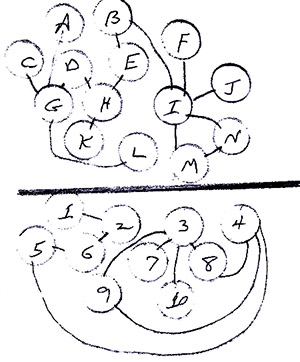
    ‘The Guys Upstairs’ had Frank draw this diagram, a radically simplified look at how minds can connect across time and different worlds.

    TGU had told me that the pattern of mind we create by living survives on the other side, and is available for us to contact. I asked them to spell out what they meant.

    They started by having me draw a diagram, and letter the circles arbitrarily, not implying hierarchy.

    In the diagram the lettered circles represent minds on the non-physical side of life, then there is the dark line representing the “veil between worlds” separating 3-D and non-3-D, and then the numbered circles representing minds in 3-D. The lines between circles are links of affiliation, temperament, etc. that organise the fields.

    This is radically simplified. It takes no account of the multiple overlapping layers of relationship that become more obvious as you look more deeply in time and space. Nonetheless, you can see that things connect not simply and uniformly like single-cell organisms, but complexly like the physical body.

    Suppose A knows chemistry, B psychology, F practical politics, and J is an artist. Perhaps A connects to G because one is parent and the other is child. Perhaps G in turn connects to C, D and L by profession, affection, and kinship respectively. (And here you see the tip of the iceberg of complexity: if G is kin to A and L, L is in some way kin to A as well as G.)

    Now if 3, say, inquires about chemistry, he may need to talk to A. If they are not close enough in wavelength that it may be done directly, then, either silently and unobserved by 3, or openly and described to 3 (as a “control,” say), 3 gets linked to A by whatever route serves. So it may be that 3 can link to I, a good networker. The chain may have to go like this: 3 -> I -> B -> E -> H -> D -> G -> A and back! But as soon as 3 and A have once linked up, they will have established a direct link. In future exchanges, 3 could then perhaps go by way of A (silently or explicitly) to reach G, and any that connect via G, by a shorter or more direct route. Thus the network is ever changing.

    (Remember, explanations are analogies that try to explain the unfamiliar by comparing it to the nearest similar thing. You could say that the colour orange is “like” red, and also “like” yellow, but the statement would be incomprehensible to those who have experienced red and yellow until they have also experienced orange. Thus, the circles in the diagram are not units but are complex meeting-points, different parts of which may come into play in different circumstances.)

    The difference between the nature of the physical and nonphysical world makes us as valuable to the other side as it can be to us. The ability to form ever more complex relationships is central to the universe (to physical and nonphysical reality considered as one). And – since we are in contact with the part of the universe that is outside of time, in which all moments of time exist equally – we may contact all the past, all the future, anyone and everyone in the physical or nonphysical part of the world. So what can’t we reach? The key is to redefine ourselves, redefine the world, so as to disable the thought systems that persuade us that it is not possible. It is that simple, that easy, that overwhelmingly powerful. But it can only be done one by one.

    Practicing ILC

    It’s much like talking on the telephone. When you go to use the phone, you don’t ask permission, or engage in elaborate rituals, or wonder if the phone really exists or if you are worthy to use it. You just take it for granted and talk! This isn’t all that different. Here’s the process, step by step.

    1. Form a question or have in mind something you want to discuss. Until you are entirely comfortable with the process, don’t ask life-or-death questions, don’t ask about your health, and don’t ask your source to predict the future. I’ll explain why, below.
    2. Write the question down. Not only does the process of phrasing the question focus the mind, it provides a record of what you ask, to remind you later what your starting-point was.
    3. Get in a quiet, receptive mental space, and wait. Be open to whatever comes. You may get words, or general ideas, or “knowings,” or what seem like stray thoughts out of nowhere.
    4. Whatever comes, write down whatever will help you to remember what you got. Don’t judge the information’s relevance or accuracy at this point, just receive it as best you can.
    5. Ask follow-up questions as they occur to you, and again be open to whatever comes. Continue until the process dries up.
    6. While you’re still in the process, don’t judge what you’re getting. The payoff will come later, when you re-examine what you got and find yourself saying, “holy cow, where did that come from?”
    7. After you are back in a more or less normal mental state, take another look at what you received, in light of the question you started with, which you wrote down. See what you can make of it. Don’t treat it as gospel, and don’t dismiss it as fantasy. Treat it at least as seriously as you would if you were interpreting a dream.

    That’s all there is to it.

    “What? That’s it? That’s all there is?”

    Well, there’s always practice, practice, practice, but yes, that’s all there is. Let’s look at the process.

    The Process and the Information

    It is critically important to bear in mind the two-stroke way the mind processes information. First it perceives, then it interprets what it perceived. These are complementary functions, both necessary, but they function alternately. While you are in the process of perceiving, you can’t be interpreting. While interpreting, you can’t be receiving. Eliminating either function, or cutting either one short, distorts the results. Indeed, it may prevent you from acquiring anything at all.

    Ideally, while perceiving, we function as temporary know-it-alls, accepting without question anything we receive. While perceiving, we don’t judge. Remember, as soon as you start interpreting, and for as long as you continue interpreting, you have ceased perceiving. Perceive first. Interpret later. It’s the only way it can be done. Don’t let that left-brain logic machine prevent you from perceiving. But then, after you have perceived, it’s the interpreter’s moment. The process of analysis is just as important as the process of perception – but each in its own time.

    In your analysis, there are two useless worries that you might as well dismiss immediately: Is it true, and who or what is the source?

    1) Is it true? It’s natural to ask this question because we don’t want to be fooling ourselves. But ask yourself, how do you know what’s true in the rest of your life? I think it comes down to two things. Either it resonates (feels true) or doesn’t, and it either is supported by whatever data we have, or it isn’t. I don’t know any other tests we can employ, either in ordinary communication or in Intuitive Linked Communication. As with the rest of life, you don’t take it for Gospel, and you don’t refuse to even look at it. You use your judgment.

    2) Who or what is the source? This is another good and natural question. But again, ask yourself, what is the source of your dreams? Your intuitions? Your inexplicable certainties? What is the source of your thoughts or ideas? Ultimately, it’s all a mystery. I don’t know of anything to do other than to follow the advice Jesus gave long ago, to judge things by the fruits they bear.

    Obstacles

    Herewith, a list of obstacles that may present themselves in your practice of ILC. Overcome these, and you’re good to go. Merely being aware of them is more than half the battle.

    • False expectations. Don’t prejudge how the information is going to come. I have had it come in so many ways: visuals or ideas that I have had to interpret; words that arise within me, that I speak without trying to shape or edit them; knowings; hunches; urges; vague impressions. What I get doesn’t always “make sense” – that is, it can’t always be immediately understood or interpreted.
    • Fear of what you might encounter. Set your intention to contact only those beings who have your highest good at heart. The intention itself will protect you.
    • Stepping on the hose. If you ask questions that raise too much anxiety, your own anxiety about the answer may prevent you from getting anything. That’s why, earlier, I said you shouldn’t start off asking life-or-death questions.
    • Keeping score. It doesn’t matter when you “get it.” There are no prizes for finishing first. Inventor Thomas Edison used the trial-and-error method with great success, and regarded failures as steps to ultimate success. Don’t discourage yourself by your expectations.
    • Illusion of separation or of distance. If we were really separate, connecting would involve overcoming some obstacle. But distance is not involved in non-physical communication, and the way to overcome the illusion of separation is to practice empathy, such as that which connects mothers and their new-born children.
    • Ego, too large or too small. Succeeding at ILC is no big deal. Don’t let your ego swell because you succeed. It is, after all, a universal human ability. Why get puffed up because you learned what somebody taught you? At the other extreme, you don’t need to be “special” to do it.
    • “I can’t do it.” There’s no harm in trying. If at first you get no results, pretend, if necessary to get started. Answer the question as if you really had someone on the line. Often this will quickly segue into the real thing, and when it does you will know the difference. The only thing is, if you use this method to prime the pump, remember that you did. Even at best, you might sometimes fool yourself inadvertently. Don’t do it deliberately or from carelessness.
    • “I don’t want someone reading my mind!” This fear of people overhearing what we’re thinking is a misunderstanding of what’s going on. You aren’t reading, or overhearing, or collecting data. As I said earlier, it’s closer to active empathy.
    • Finally, two complementary errors that stem from ignoring the necessarily complementary nature of this form of communication. If you neglect the process of analysis, you may fall into what I call Psychic’s Disease. If you neglect perception, the pitfall might be called Over-Rationalism.
    • Psychic’s Disease: Beware of thinking that if you feel it strongly, it must be true. Trust, but verify.
    • Over-Rationalism: Equally, beware of the reaction that says, “I don’t have a logical reason for what I just perceived, so it must be false and needn’t even be examined.”

    Problems Arising

    As you can imagine, a world in which we all knew we could extend our awareness to the other side would be a very different place. Will be a very different place, I hope. But it won’t come without problems, and here’s a few that come to mind.

    What do you do about the information people bring back? How are we to judge? They aren’t right just because they’re sure they’re right; they aren’t wrong just because we’re sure they’re wrong.

    Of course there are going to be the fakers, the hoaxers. One more reason to keep our faculties of discernment polished.

    And there are those with Psychic’s Disease, sincere but unbalanced in their belief and perhaps their need to believe.

    And the pretentious, who will claim false authority, speaking as if delegated by the person they are convinced they spoke to. They may be sincere, but they also may be motivated at least partially by the need to bolster their own importance. I spent many months discussing Hemingway’s life and work with him. Can I claim to be his authorised spokesman? I don’t think so. I connected with those aspects of Hemingway for which I had resonance – the writer, the romantic, the family man, political observer, above all – but I know nothing of other sides of him, for instance the hunter, the warrior, the fisherman, the celebrity, the prodigious consumer of alcohol. I would doubt anyone claiming to encompass all aspects of anyone they connect to, no matter how strongly they feel. Nonetheless, this is a problem that’s going to grow with time, I suspect, as the practice of ILC widens.

    Still, if ILC is a real ability (and I am convinced it is), we have to decide how to deal with its down side. I don’t see that we can do more than we do in the rest of life: use our judgment, look at the person’s track record and general air of reliability, and preserve a cautious scepticism.

    Another problem, at an entirely different level. Once we know that we can contact the dead, do we have obligations to do so? If we know we can help them (and sometimes we can), how far does our implicit obligation extend? Does it exist at all? What are the ground rules? Probably we’re going to have to make them up (or discover them) as we go.

    Get this issue this article appeared in

    Conclusion

    We already extend beyond time/space. Because we do, it is easy to get information from the part of ourselves that is already on the other side, and easy for that part of us to get information from others. In fact, many people have learned to do it almost without noticing because they were focused on other goals.

    Some who read this will hear an inner voice saying “yes, that’s the way it is; this actually can be done, though it may require practice.” Just listening to the voice helps break the logjam. Making your own attempts helps more. Overcoming your own scepticism and making the effort to not negate results by declaring that you made it all up helps even more.

    Working with friends is another step. Coming out into the open about your experiments and your experiences adds vastly to the effect. Every attempt – even if made in silence in a darkened room on an island without telephones, so to speak – adds its weight to the scales. And so it goes, as each one pioneers as best he or she can. You can do this, and you will find it well worth doing.

    [alert type=”general” dismiss=”no”]This article was published in New Dawn 146.[/alert]

    [alert type=”success” dismiss=”no”]If you appreciate this article, please consider subscribing to help maintain this website.[/alert]

    © New Dawn Magazine and the respective author.
    For our reproduction notice, click here.
  • Space Weather Its Effect on Human Health & Behaviour

    Space Weather Its Effect on Human Health & Behaviour

    Solar energy and cosmic radiation have electrical influences over a multitude of human activities including human health. Mainstream science has begun to accept these effects, and to investigate the topic in a serious way, but the science itself is by no means ‘new’.

    At the December 1926 annual meeting of the American Meteorological Society, Russian Professor Alexander Tchijevsky (also spelt Chizhevsky) presented the paper “Physical Factors of the Historical Process.” The paper examined the cyclical variations in the sunspot number of the Solar Cycle in order to create a mass index of human excitability throughout history. He found that revolutions and periods of intense fighting seemed to occur during Solar Maxima – the period of greatest activity in the 11-year solar cycle of the Sun – while cultural flourishing and social cohesion tended to occur during Solar Minima.

    It was in this paper that Tchijevsky wrote:

    The Sun is an enormous generator of electric energy and emits it in the form of radiation and induction. The Sun is surrounded by an electromagnetic field, the limits of which reach beyond the farthermost planet Neptune, and therefore the Earth with its electromagnetic field is in the Sun’s field of tremendous power.1

    Tchijevsky and other observers at this time noticed that during the period of maximum solar activity, all of the Sun’s phenomena would acquire tremendous size and strength, and that, “The Sun ejects streams of anode and cathode rays which ionize the Earth’s atmosphere (Birke, Arrhenius, Nordmann, Paulsen, Villards) and create certain effects.”

    Based on previous research, Tchijevsky postulated that:

    The influence of the Sun on the human organism results in chemical changes in the pigment of the skin, in the chaining of the heart-beat, in the alterations in the chemical composition of the blood and the latter results in changes in the general condition of the organism and its nervous tonicity (Lenkei, Behring, Hasselback, Nogler, Aimes, Rollier, Revillet, Marques, d’Oelsnitz, Robin, Moleshott, Loeb, I. Newton, Professor Bechtereff, Lombroso).

    Given that the varying amount of the Sun’s energy received by the different climatic zones has such a great influence on humanity, Tchijevsky posed the question: do the periodical changes of the Sun’s activity resulting in the amount of the emitted innumerable streams of electrical particles and electromagnetic waves also have an influence upon humanity?

    It wasn’t until 1942 that Soviet leader Joseph Stalin became aware of this paper and Tchijevsky’s research. Tchijevsky was subsequently asked to retract his ideas and writings on the influence of Solar Cycles on human behaviour, “which contradicted Soviet theories of the reasons for the Russian revolutions of 1905 and 1917. He refused, was arrested and spent eight years in a forced labour gulag in the Ural mountains.”2

    Nonetheless, his ideas were central to the budding field of Space Weather research. In a paper from 2007, “Solar Activity, revolutions and cultural prime in the history of mankind,” Prof. Miroslav Mikulecký’s research is in agreement with Tchijevsky’s hypothesis that “revolutions culminated near to solar maxima while cultural flourishing usually distinctly near to solar minima. This conclusion is based on the level of statistical significance alpha=0.05” (Mikulecký, 2007).3

    Space Weather

    When we talk about ‘Space Weather’ we’re discussing the conditions on the Sun and in the solar wind, which contains charged plasma that is emanating away from the Solar surface and stretching all the way out past Pluto.

    In this space, charged ions are all flowing along electromagnetic currents, tethers that are connecting each planet to the Sun. Known as the Interplanetary Magnetic Field, this dynamo of sphere magnets (planets) revolving around one central, powerful sphere magnet (the Sun) makes up the protective shell of our Solar System known as the Heliosphere.

    The Earth has its own protective interface from the various effects of Space Weather, called the Magnetosphere. According to the European Space Agency, there are concerns the “force that protects our planet is weakening and may even be on the verge of reversing polarity. Over the last 150 years, the magnetic field has lost about 15% of its strength.”4

    But that’s not all. This decline in Magnetospheric strength on Earth has also been accompanied by a weakening in Solar Magnetics,5 as a Sunspot Grand Minima is quite possibly knocking at our door. Recent research into the modes of Solar Activity have revealed there is, on average, a 400 year Sunspot Grand Minima Cycle,6 with the last one occurring about 400 years ago during what’s commonly referred to as the Maunder Minimum:

    During the Maunder Minimum (MM) period extremely few auroras were recorded (Chapman, 1967) suggesting that atmospheric/magnetospheric processes were significantly affected. Reduced solar irradiance such as during the MM and Dalton Minimum, is correlated with the negative shift of the North Atlantic Oscillation (NAO) index leading to enhance north easterly wind which results into cooling of Europe, whereas enhanced solar irradiance is correlated with positive NAO index (Singh et al. 2011).7

    Whether or not a Global Warming or a Global Cooling scenario will play-out is still very much ‘up in the air’ (see our article ‘Global Warming or Global Cooling?’ in New Dawn 144), and the proposed, often exaggerated claims of warming proponents attempt to ignore the natural factors and cyclical variations that are taking place, untamed by any of the anthropogenic ‘climate forcing’ factors. The 11-year Solar Cycle and 22-year Magnetic Cycle will continue to unfold, unhindered, into the foreseeable future; this periodicity was first discovered by H. von Schwabe in 1851.

    The Heliosphere and Magnetosphere both protect the Earth from the harsh effects of Galactic Cosmic Rays, which are high-speed energetic particles capable of stripping away the Earth’s Ozone and atmosphere. Cosmic Rays are thought to induce cloud formation in the lower atmosphere8 and charge-up lightning strikes, thereby impacting regional temperatures.

    Both the Heliosphere and Earth’s Magnetosphere are stronger during Solar Maximum (offering more protection from Galactic Cosmic Rays) and weaker during Solar Minimum (offering less protection from the harmful effects of Cosmic Rays).

    This inverse relationship between Solar Activity (SA) and Cosmic Ray Activity (CRA) has been well-established in scientific literature. What this means is that whenever SA is high, CRA will be low, and vice versa, whenever SA is low, CRA will be high.

    A coronal mass ejection (CME) is a massive burst of solar wind and magnetic fields rising above the Sun’s corona or being released into space. A danger arises when these are directed towards Earth, and the term geoeffectiveness is used when determining a CME’s ability to generate geomagnetic storms on Earth.

    An important aspect of geoeffective CMEs is how large of a Forbush decrease (drop in galactic cosmic radiation) they produce. In the 2005 NASA article ‘Who’s Afraid of a Solar Flare?’, Dr. Tony Phillips wrote that

    Magnetic fields deflect charged particles, so when a CME sweeps past Earth, it also sweeps away many of the electrically-charged cosmic rays that would otherwise strike our planet. This is the ‘Forbush decrease’.9

    Large CMEs that become geoeffective often spark geomagnetic storms, which are marked by the appearance of the Aurora Borealis throughout the Auroral Ovals, which circle both of Earth’s polar regions and expand towards the equator during intense magnetic storms.

    A geomagnetic storm induced blackout was the case in 1989, after a large Earth-directed solar flare occurred on Friday, 10 March, which reached the Earth on Monday, 13 March 1989. The most significant damage occurred to Canada’s Hydro-Québec power utility grid, which crashed “when safety systems sensed a power overload caused by the currents pulsing through the ground.”10

    These ‘ground induced currents’ knocked out electricity for nine hours to as many as six million people in northeastern Canada. We know for a fact that extreme geomagnetic storms can induce ground currents that will affect all of sorts of sensitive electronics.

    Effects on the Human Body

    There are a wide variety of effects that Space Weather exerts on the electricity of the brain, heart and central nervous system inside of our own bodies.

    Recent research suggests the solar wind actually modulates lightning intensity here on Earth, and that an, “increase in Galactic Cosmic Ray flux may directly trigger lightning through ‘runaway breakdown’ of electrons, leading to breakdown (Roussel-Dupré et al 2008)” (Scott et al. 2014).11

    This is important given that, according to NASA, at any moment “2,000 thunderstorms roll over Earth, producing some 50 flashes of lightning every second. Each lightning burst creates electromagnetic waves that begin to circle around Earth captured between Earth’s surface and a boundary about 60 miles up…”12 and lightning is associated with local emission of photons.

    The Schumann Resonances (SR) are a set of frequencies ranging from 3 Hz to 60 Hz, increasing in 6.5 Hz intervals, with the ‘fundamental’ frequency of the Schumann Resonance standing at 7.83 Hz. The Schumann Resonances are easily detectable on any planet on which lightning takes place, and so far the SR signals have been detected on Venus, Mars, Titan, Jupiter and Saturn.

    In the paper “Schumann Resonance Frequencies Found Within Quantitative Electroencephalographic Activity: Implications for Earth-Brain Interactions,” Dr. Michael Persinger discusses the “bulk velocity of action potentials within the cerebral cortices, the approximate standing wave or resonance for a 60 cm circumference skull would be ~7.5 Hz. This bulk velocity would require ~20 to 25 milliseconds to traverse the cerebral length and is equivalent to about 40 to 45 Hz” (Persinger 2014).13 This 40 to 45 Hz band is the classic frequency associated with ‘consciousness’, as well as other complex biological functions.

    It is apparent that disruptions in the Schumann Resonances via external factors, such as natural variations in Space Weather intensity, can have a profound impact on the physiological and psychological health of an organism.

    The brain is a “massive source of extremely-low-frequency (ELF) signals that get transmitted throughout the body via the nervous system, which is sensitive to magnetic fields. Brainwaves and natural biorhythms can be affected by external factors” (Babayev & Allahverdiyeva 2007).14

    The late Dr. Neil Cherry wrote:

    The first five Schumann Resonances coincide with the frequency range of the first four EEG bands. The primary EEG bands are: Delta 0.5 to 4 Hz, Theta 4-8 Hz, Alpha 8-13 Hz and Beta 13 to 30 Hz (Malmivuo & Plonsey 1995). Hence resonant absorption and reaction is biophysically plausible…” (Cherry 2001).15

    Dr. Cherry had collected and conducted research showing that the effects to human health via solar and geomagnetic activity (S-GMA) are biophysically possible through changes in Schumann Resonance intensity. The effects include,

    altered blood pressure and melatonin, increased cancer, reproductive, cardiac and neurological disease and death. Many occupational studies have found that exposure to ELF fields between 16.7 Hz and 50/60 Hz significantly reduces melatonin levels (Cherry 2001).

    Melatonin is a potent anti-oxidant with receptors in every major organ, and it is released from the pineal gland when the natural boundary of light is missing.16 Melatonin production peaks at night, around 4 am when the temperature is at its lowest and the melatonin level is at its highest.

    The variable changes in Space Weather and solar wind parameters lead to perturbations in the environmental electromagnetic fields, certain frequencies of which can “significantly alter the cellular calcium ion fluxes and Electromagnetic Radiation (EMR) waves in brain tissue” (Cherry 2001).17

    The collected evidence reveals that the effects can go from environmental ULF/ELF signals to directly altering our cellular calcium ion homeostasis, which is capable of altering primate and human EEG waves, thereby affecting cell-to-cell communication and impacting reaction times.

    There is evidence that “at days with high neutron activity (CRA) there were more medical emergencies and more deaths… A strong trend of Sudden Cardiac Death (SCD) (mostly of fatal cardiac arrhythmia, fibrillation) occurred more often on days of high CRA (neutron activity)” (Stoupel et al. 2014). During periods of low Solar Activity and ‘zero’ geomagnetic activity, data showed that those at risk were more likely to die of SCD; this illustrates the inverse correlation between Solar Activity and Cosmic Ray Activity.

    On the other hand, in the scientific paper “Geomagnetic Storms Can Trigger Stroke,” the authors purpose was to present evidence for the impact of geomagnetic activity on stroke occurrence, which has been “limited and controversial.” They conclude that, “Geomagnetic storms are associated with increased risk of stroke and should be considered along with other established risk factors” (Feigin et al. 2014).18 Perhaps it is the balance, the middle ground, which is most prevalent compared to high Solar Activity and CRA, which are short-term events and less prevalent than active conditions.

    Previous research shows that geomagnetic variations of a solar origin have been correlated with enhanced anxiety, sleep disturbances, altered moods, and greater incidences of psychiatric admissions (Persinger, 1987).19 Babayev and Allahverdiyeva’s findings indicate, “there were an indisposition, weakness and presence of indistinct localised headaches during the days with severe Geomagnetic Storms in experiment participants.” They concluded that “geomagnetic disturbances affect mainly the emotional and vegetative sphere of human beings… changes in geomagnetic conditions mostly affect the activity of the regulating systems of the right hemisphere and the ability to adapt to changes in a physical environment.”

    There have been numerous papers that explore even more connections between human health and energy from space. Infant mortality, suicide, traffic accidents, crime rates, and numerous other significant events and human conditions have been statistically matched with fluxes in solar and cosmic energy. Although this field of study is by no means new, it is just now becoming accepted, understood, and investigated in a serious manner.

    For more information on the work of Ben Davidson and David Hyde, go to www.Suspicious0bservers.org & www.youtube.com/user/Suspicious0bservers

    [alert type=”general” dismiss=”no”]This article was published in New Dawn 146.[/alert]

    [alert type=”success” dismiss=”no”]If you appreciate this article, please consider a contribution to help maintain this website.[/alert]

    Footnotes

    1. A.L. Tchijevsky, ‘Physical Factors of the Historical Process’, Translated edition published January 1971, www.cyclesresearchinstitute.org/
      cycles-history/chizhevsky1.pdf
    2. Alexander Chizhevsky, http://en.wikipedia.org/wiki/
      Alexander_Chizhevsky
    3. M. Mikulecky, ‘Solar Activity, revolutions and cultural prime in the history of mankind’, Neuro Endocrinology Letters [2007, 28(6):749-756], http://europepmc.org/abstract/MED/18063926
    4. ESA, ‘The Force That Protects Our Planet’, European Space Agency.
    5. Tony Phillips, ‘Cosmic Rays Hit Space Age High’, NASA Science News, 29 September 2009, http://science1.nasa.gov/science-news/science-at-nasa/2009/29sep_cosmicrays/
    6. Arnab Rai Choudhuri, ‘The irregularities of the sunspot cycle and their theoretical modelling’, arXiv.org, Solar and Stellar Astrophysics, 12 December 2013, http://arxiv.org/abs/1312.3408
    7. A.K. Singh, Devendraa Siingh, R.P. Singh, ‘Impact of galactic cosmic rays on Earth’s atmosphere and human health’, Atmospheric Environment (2011) 3806-3818, www.sciencedirect.com/science/article/pii/S1352231011004055
    8. Ibid
    9. Tony Phillips, ‘Who’s Afraid of a Solar Flare?’, NASA Science News, 7 October 2005, http://science.nasa.gov/science-news/science-at-nasa/2005/07oct_afraid/
    10. Adam Hadhazy, ‘A Scary 13th: 20 Years Ago, Earth Was Blasted with a Massive Plume of Solar Plasma’, Scientific American, 13 March 2009, www.scientificamerican.com/article/geomagnetic-storm-march-13-1989-extreme-space-weather/
    11. C.J. Scott, R.G. Harrison, M.J. Owens, M. Lockwood & L. Barnard, ‘Evidence for solar wind modulation of lightning’, Environmental Research Letters, Vol. 9, No. 5, 15 May 2014, http://iopscience.iop.org/1748-9326/9/5/055004
    12. Jim Wilson, ‘Schumann Resonance’, NASA, www.nasa.gov/mission_pages/sunearth/news/gallery/schumann-resonance.html
    13. Michael A. Persinger, ‘Schumann Resonance Frequencies Found Within Quantitative Electroencephalographic Activity: Implications for Earth-Brain Interactions’, International Letters of Chemistry, Physics and Astronomy (2014), www.ilcpa.pl/wp-content/uploads/2013/10/
      ILCPA-111-2014-24-32.pdf
    14. Elchin S. Babayev & Aysel A. Allahverdiyeva, ‘Effects of geomagnetic activity variations on the physiological and psychological state of functionally healthy humans: Some results of Azerbaijani studies’, Advances in Space Research 40 (2007), 1941-1951, www.sciencedirect.com/science/article/pii/S0273117707009404
    15. Neil Cherry, ‘Schumann Resonances, a plausible biophysical mechanism for the human health effects of Solar/Geomagnetic Activity’, 8 September 2001, www.salzburg.gv.at/cherry_schumann_resonances.pdf
    16. www.sleepdex.org/melatonin.htm
    17. Op. cit., Neil Cherry
    18. V. L. Feigin, et al. ‘Geomagnetic Storms Can Trigger Stroke’, Stroke – American Heart Association, published online 22 April 2014, http://stroke.ahajournals.org/content/early/2014/04/22/STROKEAHA.113.004577.short
    19. M.A. Persinger, ‘Geopsychology and geopsychopatology: mental processes and disorders associated with geochemical and geophysical factors’, Experientia 43 (1), 92–104, 1987, www.ncbi.nlm.nih.gov/pubmed/3792507

    © New Dawn Magazine and the respective author.
    For our reproduction notice, click here.

  • Thoughtforms, Tulpas & Egregores

    Thoughtforms, Tulpas & Egregores

    From New Dawn 146 (Sept-Oct 2014)

    What are thoughts – are they real, and once created are they things that exist independent of our minds? Are they constructs created by our soul’s mental and emotional faculties? If so, how do these faculties mould consciousness into the creation of thoughts? In many of the world’s religions, mystical and esoteric traditions there is a belief that once a thought comes into being it becomes a real entity that exists separately from the thinker.

    The first time I became aware that our thoughts had a profound effect on our personal reality was as an adolescent in reference to Mark 7:15 in the Bible. In this passage Jesus says, “There is nothing that enters a man from outside which can defile him; but the things which come out of him, those are the things that defile a man.” In explaining that we are not what we eat but what we think, Jesus was alluding to Proverbs 23:7: “For as he thinketh in his heart, so is he.” It was during this time I began seriously contemplating what these two passages meant, but could not fathom their true implications.

    In the late 1960s I began studying a Kabbalistic meditation known as pathworking and had some profound experiences in which I could visualise mythological figures on the lower paths of the Tree of Life. The questions I asked then was, am I creating these figures out of my own thoughts and are those figures real on some level? I had no answers.

    Several years later I began studying a new method of meditation form – the Diamond Way tradition of Tibetan Buddhism – a form of Vajrayana or Tantric Buddhism. In studying Buddhism, it became evident from their teachings the physical world we experience is created from our thoughts and our reality is an illusion. Trying to sort through the implications of what I was learning, I stumbled upon the writings of Prentice Mulford, one of the founders in the late 1800s of the New Thought movement. In his book Thoughts Are Things he explained how our thoughts influence our spiritual, mental and physical health. Our thoughts create sickness as well as wellness.

    I was becoming convinced that our thoughts in some way were creating our reality. It was at this point I re-connected with the Kabbalah, this time magical Kabbalah. This led me into the many streams of magic, especially Renaissance magic and later Tibetan Buddhist magic. I soon discovered in the Western magical traditions the practitioner, through ceremonial rituals, moulds reality into their bidding through their thoughts and emotions. I also discovered this was true with Tibetan Buddhist magic as well.

    I became very curious; do these rituals actually work? So I began an intense study of rituals from various Renaissance grimoires (magical books) and performed a specific ritual with a specific intention. To my surprise, within a few months I got the results I asked for. I asked myself, did I actually use my thoughts in the ritual to produce the results? And if so, was there a scientific basis for my experience? At the time I was a polymer researcher in the chemical industry and ordered a book on quantum mechanics from a scientific book club that added some clarity. It, too, presented a picture of reality similar to Buddhism in that reality does not exist until it is observed in some way, which means that through our thoughts we create the world around us.

    On the heels of being exposed to quantum physics, I discovered two related concepts on reality creation, one from Jungian psychology on the imaginal realm and the other from the theosophical literature on thoughtforms. I discovered there is a reality that exists separate from physical reality called the imaginal realm. In the imaginal realm there exist animated beings that are created by our thoughts and emotions called thoughtforms and tulpas. Thoughtforms in general are created by our intentions both consciously and unconsciously. However, tulpas are thoughtforms that are created with conscious intention.

    What are Thoughtforms and Tulpas?

    The word thoughtform has various spellings. In some cases, it is spelled thought form or thought–form, but I have put the two words together as one word, thoughtform, reflecting a single construct. Thoughtforms and tulpas are created by focusing on a single thought and infusing that thought with intense emotions, becoming a separate mental/energetic thing. Once created, thoughtforms and tulpas exist in all spiritual realities and make up what is known as the imaginal realm. The imaginal realm interpenetrates all existence and is the repository of collective thought formations and energies. Thoughtforms and tulpas can be experienced physically, but in most cases they are experienced as apparitions. Nonetheless, they exist as separate entities manifesting both as physical and apparitional formations.

    Tulpas are thoughtforms that have their origin in Tibetan Buddhism and the Bön religion. In these traditions tulpas are consciously created beings or objects. The word tulpa literally means to build or to construct. In Tibetan Buddhism those who create tulpas are naljorpas and tulkus. Naljorpas are ascetics possessing magical powers and tulkus are special lamas that consciously incarnate into their next lifetime as bodhisattvas (highly evolved spiritual beings). In the Bön religion, magicians known as ngagspas create tulpas.

    According to Theosophists Annie Besant and C.W. Leadbeater,1 there are three classes of thoughtforms. The first class is “that which takes the image of the thinker.” The second class is “that which takes the image of some material object.” The third class is “that which takes a form entirely its own, expressing its inherent qualities in the matter which it draws around it.” To this list I will add a fourth class – that which takes the collective form of a group mind known as an egregore. Although there are four distinct classes of thoughtforms presented here, they nonetheless have overlapping qualities that will be evident in the following cases.

    The thoughtform of the first class, taking the image of the thinker, is when a person intensely imagines and focuses that they are somewhere else, such as in another city, an area of the city or another country. With intense focusing they see themselves in another locale performing various activities. They have created a thoughtform of themselves that exists separately from them, has autonomy and mental awareness. In some cases other people can see and sense the thoughtform of that person as an apparition.

    The Franciscan friar Padre Pio is one such case. He was able to be at the friary and then project the thoughtform of himself to various locales. People in those locales would see him or smell the fragrance of roses indicating his presence. In one documented case during World War II, Padre Pio projected his thoughtform appearance in the air over San Giovanni Rotondo in southern Italy. American bombers were getting ready to bomb the city when a brown-robed friar appeared before their aircraft and all attempts to bomb the city failed.

    The possible explanation for this case is that Padre Pio, through intense prayer to keep the city safe, focused intensely on protecting his city. The intense prayer coupled with detailed images of how he would keep the city safe created a thought structure. Added to that thought structure were strong emotions solidifying the thought structure into a specific form. Once solidified, an image of Padre Pio split off creating a thoughtform of himself, which manifested before the airplane as the brown-robed friar.

    In another case, the philosopher Michael Grosso2 reported an experience he had with a lover named Windy. He met Windy in London and they had an intense love affair. Michael had to return to New York and Windy was to join him there soon, but there were visa problems that prevented her from joining him. They could not get each other out of their minds. At times, in their intense imagination they could see, feel, smell and touch each other. One night, Michael in an intense imaginative love experience projected the thoughtform of himself to Windy.

    [alert type=”info” dismiss=”no”]If you appreciate this article, please consider a subscription to New Dawn magazine.[/alert]

    Several days later Michael received a letter from Windy that read, “I’m writing this in haste before I go to work. A strange thing happened to me this morning. It was Sunday morning, about eight o’clock. I was lying in bed, half-awake, wishing I didn’t have to get up. In the back of my mind, I kept thinking I had to go to the loo, but I didn’t move. I was somewhere between sleeping and waking, when it happened. Believe me, I’m not crazy, and my life’s not so miserable that I have to make stories up. But the truth is, suddenly you were in bed with me. You were there! Making love to me! I knew it was you, I couldn’t see, but I knew it was you. I felt your body, recognised your voice. I knew I wasn’t asleep, it wasn’t a dream. I would appreciate it, philosopher, if you would explain this to me. Nothing like this has ever happened to me before. It was very peculiar. I do hope this isn’t a prelude to my going completely mad.”

    The possible explanation for this case is similar to Padre Pio. Michael in an intense love making fantasy created a detailed image with strong emotions of making love with Windy. The inner image coupled with intense emotions created a thoughtform of him making love in a real situation. The thoughtform of himself split off and was projected to Windy. That thoughtform took on some physical characteristics allowing Windy to know it was Michael.

    The second class, taking the image of some material object, can be applied to the phenomenon called doppelgänger as well as tulpas. In these instances, the doppelgänger and the tulpa exist as separate material objects. In 1991 Debra Mann reported on an unusual case of the doppelgänger manifestation of George Hensley.3 George was heading back to college in Laramie, Wyoming and discovered the route he was taking through Telephone Canyon was blocked by snow and police were redirecting traffic onto another route. George decided he would take the route anyway because it was the shortest. He waited until the police left and started driving his jeep down the canyon. He noticed a hitchhiker along the road, picked him up and asked the hitchhiker if he wouldn’t mind driving because he (George) was very tired and needed to sleep.

    The hitchhiker accepted the invitation, got in the driver seat and started driving. George noticed the hitchhiker looked like a younger version of himself even wearing his good-luck Eisenhower jacket that he wore during World War II. Unbeknownst to George, while he slept the middle of the canyon was completely blocked with snow, but somehow when he awoke the hitchhiker had made it through the canyon. Near Laramie at Bosler Junction, the hitchhiker got out of the jeep and later George discovered that Telephone Canyon had been totally blocked with snow. How did George get through the canyon and who was the hitchhiker?

    I can only give a partial explanation for this case. George intensely focused on getting back to college going the shortest route. On some level, he knew the trip was fraught with danger. Knowing that danger, he created in his mind detailed images coupled with intense emotions for a safe route through the canyon. This created a thoughtform of himself as a doppelgänger. The doppelgänger was a split-off part of himself manifesting as a protective guardian angel thoughtform, smoothing out a safe route. In this case, the thoughtform was a solid physical manifestation that took on a life of its own. The part of the story that baffles me is how the material thoughtform manoeuvred the jeep through the blocked snow filled canyon.

    The next case is that of Alexandra David-Neel4 the Tibetan explorer and the first female lama from the Western world. Alexandra studied the dubthabs rite5 that is used in Tibet to create Yidams, which are particular types of tulpas. In most cases, in Tibetan Buddhism, Yidams are deities that are created through intense focusing and imagination. Alexandra had heard that certain lamas could create tulpas, so she decided to see if she could create one as well. Rather than creating a Yidam deity, which she saw all around her in painting and statues, she chose instead to create a short fat jolly monk.

    Alexandra shut herself in tsams, which means living in seclusion. In Tibetan tsams literally means a barrier or border, usually a tent, hut or cave. In some cases, tsams are non-material in which the lama isolates himself or herself in a state of meditation. While she was in tsams, most likely a tent, Alexandra performed the required thought concentration of the dubthabs rite as well as other rites. Within several months, the monk tulpa manifested and grew into a life-like figure becoming her companion. The monk became animated and visible even to others. At times, she could feel his robe and his hand touching her shoulder.

    Over time, the monk began to change into a slender creature with a “sly malignant look.” He became so animated that she could no longer control him. At this point, she decided to dissolve him. It took her six months of constant struggle, but she finally succeeded. In reference to what she created, Alexandra wrote: “There is nothing strange in the fact that I may have created my own hallucination. The interesting point is that in these cases of materialisation, others see the thought-forms that have been created.”

    The explanation for this case is similar to the creation of the doppelgänger. However, Alexandra consciously created the tulpa by using the dubthads rite, which means a method of success. In similar fashion as to the doppelgänger, Alexandra’s tulpa became a solid material object at times, took on a life of its own and manifested physically in which others could see it. Once animated and having a life of its own, the tulpa became a separate entity in which Alexandra was losing control. Eventually, she was able to reverse the process dissolving her creation.

    The third class, taking a form entirely its own, expressing its inherent qualities in the matter which it draws around it. In this class, a positive or negative thoughtform is projected into an individual’s aura, the protective energy field surrounding the body. The mental and astral bodies of the soul create this energy field. The auric field is either strongly intact preventing outside influences from entering, or weak and diffused allowing unwanted influences to invade. There are cases where mothers intensely pray for a guardian angel to protect her child. She creates an angelic thoughtform using her energetic thoughts coupled with the energetic material of her child’s aura. Once created, the thoughtform penetrates her child’s aura and remains there to keep out negative influences.

    In Western magical traditions there are protection rituals the magician uses to strengthen and protect their auric field. In the late 1800s the magical fraternity The Hermetic Order of the Golden Dawn used a specific ritual known as the Lesser Banishing Ritual of the Pentagram to create a strong auric field to protect the magician from intruding influences.

    In creating guardian angels and using the Banishing Ritual, the mental and astral bodies of the soul uses the energetic properties of the aura and surrounding energies to create the protective field as a positive thoughtform. However, there are cases in which the auric field’s thoughtform is not positive but negative. The following two cases pertain to the third class of thoughtforms and they come from my personal archives when I was a psychotherapist and paranormal investigator.

    The first case is a male client I worked with around issues regarding his possessive mother. After the father died when my client was a child, his mother became over protective, fearing something would happen to him. She focused on protecting him with intense emotions to keep him safe. Her intense focusing intruded into his aura, setting up a strong symbiotic relationship in which her protective thoughtforms mingled with his auric energetic field. Their two mental and emotional energies merged creating an unconscious possessive thoughtform that prevented him from separating from her and maturing.

    My client moved from the state of Washington to Cincinnati, Ohio to get away from his mother, but she still possessed him. He could constantly feel the thoughtform of her all around him and could see her image in his mind’s eye continuously. We used various imagery techniques and protective rituals to strengthen his aura. Finally, after a year we were able to cut the energetic stream that animated her possessing thoughtform. Once free of her possessing thoughtform, he continued daily protective rituals to keep his auric field strong.

    The explanation for this case is my client’s mother had good intentions in trying to protect her child, but her own fears and insecurities got in the way. She intentionally created a protective thoughtform that went awry because unconsciously she infused her fears and insecurities into the thoughtform. Being a child when this happened, his auric field was weak and diffused allowing his mother’s thoughts and emotions to invade and use his auric energies along with hers to create the thoughtform. Her constant focusing on his safety allowed the thoughtform to become possessive as well as using the energies from his auric field to exist.

    The second case is of a woman who contacted me regarding her haunted house. After working with her for a while, I managed to convince her to move. After she moved, the haunting activity ceased. Within a few months she contacted me again, the haunting activity had reoccurred and it was now more like a poltergeist. She moved again, only for the haunting activity to follow her. It became evident at this point that she was haunted and not the houses. As I dug deeper into the case, I discovered soon after her divorce was when the haunting activity began. It became evident that either she or her husband had created a negative thoughtform that had affected her auric field and was haunting her. Now being part of her auric field, the thoughtform followed her from place to place. With all the methods I used, including spirit releasement techniques, we were unable to free her from the thoughtform. It was this fact that persuaded me to believe she was the one creating the thoughtform and not her former husband.

    The explanation for this case is my client created the poltergeist thoughtform out of anger and frustration over her failed marriage. She resented and hated her husband over the way he had treated her, but would not stand up for herself. Rather than releasing her anger onto her husband, she turned it inward affecting her auric field, which was already weak and diffused. Her negative thoughts and emotions created the thoughtform that remained attached to her and her anger and resentment kept it alive.

    Egregores: Collective Thoughtforms

    The fourth class is the collective form of a group mind known as an egregore. An egregore is a special class of thoughtforms experienced mentally as images, feelings, complete structures with or without animated beings. According to Gaetan Delaforge6 egregores are “created when people consciously come together for a common purpose. Whenever people gather together to do something an egregore is formed, but unless an attempt is made to maintain it… it will dissipate. However… (if) people wish to maintain it and know the techniques of how to do so, the egregore will continue to grow in strength and can last for centuries. An egregore has the characteristic of having an effectiveness greater than the mere sum of its individual members. It continuously interacts with its members, influencing them and being influenced by them…. If this process is continued a long time the egregore will take on a kind of life of its own, and can become so strong that even if all its members should die, it would continue to exist on the inner dimensions (the imaginal realm)…”

    In this description, Delaforge is discussing egregores in general. However, when egregores are created through “spiritual or esoteric activities its influence will be even greater. People who discover the keys to tap in on a powerful egregore representing… a spiritual or esoteric tradition,” as described above, they can activate the egregore, gaining “access to the abilities, knowledge, and drive of all that has been accumulated in that egregore since its beginnings.”

    Delaforge’s focus is creating egregores through conscious intention by group minds. However, as with all thoughtforms, egregores can also be created unconsciously by group minds such as political parties, organisations of various kinds, religious denomination as cited above, ethnic groups as well as a variety of inner world structures within the imaginal realm. These egregores exist separately and can be accessed consciously or unconsciously. If accessed, the energies and thought formations can have a profound influence on individuals and groups motivating them into specific directions and actions.

    I have had several spontaneous experiences with egregores as well as creating four with conscious intention. There are two spontaneous experiences, I wish to discuss, one visual and the other emotional. Living in North Carolina I have made many trips to the coast driving on a road in the southern part of the state. On one occasion I was passing a cotton field I had driven by many times. I glanced over at the field and saw the cotton in bloom as I had seen many times before, except this time I saw many African Americans in period clothes picking cotton. I turned back to the road and then back to the cotton field, and this time I saw no one in the field just cotton in bloom. On that occasion, I tapped into the visual egregore of the slaves who had worked that field before the Civil War.

    The second experience occurred when I took a retreat in a Trappist Monastery. I hiked up a small mountain to a large cross overlooking the monastery grounds. It was July and the day was very hot. By the time I reached the top of the mountain where the cross stood, I was exhausted. I sat down to rest leaning against the cross when suddenly my exhaustion was lifted; finding myself in a deep state of calmness and not at all tired, but energised. I was bathed in the sacred egregore energies left there by people who had meditated and prayed at that very spot.

    After being introduced to the imaginal realm and egregores, I decided to create my first egregore in the mid-1980s. This egregore was a cave where a wise woman lived and was created specifically to help one of my psychotherapy clients. My second egregore was an inner temple based on the Hermetic Order of the Golden Dawn. My third egregore was a special room in a large house which I used to contact those who have passed on. The fourth egregore I created recently and it is a combination of the special room and the inner temple. All of these egregores I created consciously and they worked for the purpose they were created.

    Keep in mind the imaginal realm is the plasticised reality we mould through our thoughts, emotions, imagination and focused intention. The imaginal realm is that reality that exists between the physical reality and the realm of the light, which we experience at death. This landscape of the imaginal realm also includes our material reality as well.

    Summary

    Thoughtforms are created from the soul’s mental and astral bodies through imagination, desire, willpower and intention. In many cases, once thoughtforms are created they exist as real things separate from their creator. Thoughtforms are created from energised thoughts, and from this perspective thoughts are real things. Once created, thoughts exist as separate entities all on their own. The take-a-way lesson – beware of what you desire because you may actually create it.

    [alert type=”general” dismiss=”no”]This article was published in New Dawn 146.[/alert]

    [alert type=”success” dismiss=”no”]If you appreciate this article, please consider subscribing to help maintain this website.[/alert]

    Footnotes

    1. Annie Besant & C.W. Leadbeater, Thought-Forms, 1901, 26-30
    2. Michael Grosso, ‘Trans-Atlantic Sacred Sex: A Psi-Related Story’ Ecstasy: The Journal of Divine Eroticism, 1993, Vol. II, Num. 3, 5-9
    3. Debra D. Mann, ‘George Hensley and the Doppelgänger’, Fate Magazine, Feb 1991, 70-75
    4. Alexandra David-Neel, Magic and Mystery in Tibet, Dover, 1971, 306-320
    5. Alexandra David-Neel, Initiation and Initiates in Tibet, Dover, 1993, 91-99
    6. Gaetan Delaforge, ‘The Templar Tradition Yesterday and Today’, Gnosis, 1988, No. 6, Winter, 8-13

    © New Dawn Magazine and the respective author.
    For our reproduction notice, click here.
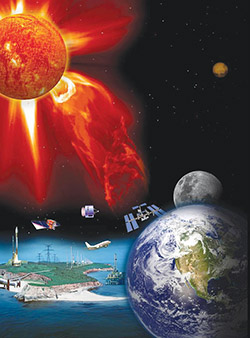
  • Nothing Is True, Everything is Permitted: The Untold Story of Brion Gysin

    Nothing Is True, Everything is Permitted: The Untold Story of Brion Gysin

    From New Dawn 154 (Jan-Feb 2016)

    If Brion Gysin had not existed, it probably would have been necessary to invent him, as the saying goes. Pre-eminent multimedia psychedelic shaman of the latter-half of the twentieth century, Gysin was something of a jack-of-all-trades: artist, calligrapher, entrepreneur, kinetic sculptor, novelist, performance artist, photographer, poet, raconteur, restaurateur, and traveller in this-and-other worlds. Brion did it all.

    Even a brief list of the names he crossed paths with sounds like a veritable who’s who: Laurie Anderson, Francis Bacon, David Bowie, Paul Bowles, Ira Cohen, Ornette Coleman, Max Ernst, Marianne Faithfull, Leonor Fini, Jean Genet, Keith Haring, Billie Holliday, Brian Jones, Timothy Leary, Iggy Pop, Genesis P-Orridge, Patti Smith, Gore Vidal – and, of course, his long-term friend and collaborator, William Burroughs – are among the friends, fellow-travellers and sometimes collaborators that have spoken of their admiration for the man and his work. As his biographer, John Geiger, wrote:

    Brion Gysin may be the most influential cultural figure of the twentieth century that most people have never heard of.

    ‘Brion Gysin’ was originally John Clifford Brian Gysin, born 19 January 1916 in Taplow, Buckinghamshire, England. He never knew his English-born father, who had emigrated to Canada, just in time to marry and father a child, before joining up and getting sent back to Europe to die in the First World War. After moving back to Edmonton in Canada with his young widowed mother, Gysin always preferred to stress his Swiss ancestry via his paternal grandfather, but even then he would complain later in life concerning the ‘delivery’ of his birth:

    Wrong address! Wrong address! There’s been a mistake in the mail. Send me back. Wherever you got me, return me. Wrong time, wrong place, wrong colour.

    The young Gysin wanted to “have adventures and see visions” and figured that Paris was the place. Moving there at 18, his career as a painter should have got off to a spectacular start: a chance encounter with Marie-Beth Aurenche – then still the first Mrs Max Ernst – gave access to the hottest scene in town, the Surrealists. Without formal art tuition, Gysin got some basic tips from the Argentinian spitfire, Leonor Fini, but the main lesson came from visiting Ernst’s studio and seeing that the objective was “to make the paint make the painting.” Barely 19, Gysin was soon invited to exhibit alongside Ernst, Fini, and Valentine Hugo – as well as Dali, Magritte and Picasso – but before the show’s opening his work was taken down by poet Paul Eluard, on orders of the ‘Pope’ of Surrealism, André Breton. Gysin never really found out why, but he was sure the fact he had just come out as homosexual had something to do with it. Whatever the reason, it was a crushing blow.

    Disillusioned, Gysin took off travelling, first to Greece and then Algeria. On his return to the States in 1939 he met a number of former Surrealists who had fled war in Europe. He shared a studio with the Chilean Roberto Matta, the beginning of a lifelong friendship, and also worked on Broadway as a scene painter, befriending the successful songwriter John La Touche. A lifelong enthusiast of cannabis, Gysin also started to hang out and ‘turn on’ with Black Jazz musicians such as Billie Holliday. Another significant connection was Eileen Garrett, celebrated society medium and psychic, whose abilities landed her in trouble with the authorities. During a séance, Garrett had apparently been contacted by the spirit of the captain of the British dirigible R-101, who gave such convincing details concerning the airship’s terrible crash that she was arrested under the Official Secrets Act on suspicion of espionage!

    “That’s My Music!”

    Serving during the Second World War, Gysin became a naturalised American, changing his name officially from ‘Brian’ to ‘Brion’. In the army Gysin was sent on a 18-month course to learn Japanese, including calligraphy, later to have a major impact on his art. He also met Tex Hanson, grandson of Josiah Hanson – inspiration and basis for Harriet Beecher Stowe’s 1852 bestselling novel Uncle Tom’s Cabin. Through this friendship and the access it gave him to the world of Black Canadians, Gysin wrote To Master – A Long Goodnight, which was published in 1946 thanks to Eileen Garrett. This and the related text, A History of Slavery in Canada, won Gysin one of the first-ever Fullbright Scholarships. He used the money to travel to Tangier, Morocco with his new friend, composer and novelist Paul Bowles. Together they would explore the trance music of the ecstatic brotherhoods, and one day in 1950, attending a festival on the beach outside Tangier, Gysin had what would be for him a decisive encounter:

    …it was the first time I’d seen large groups of people going into trance – [that in itself] was enough to have kept my attention, but beyond and above all of that I heard this funny little music, and I said: “Ah! That’s my music! – I just want to hear that music for the rest of my life. I wanna hear it every day all day.”

    It turned out to be the music of the Master Musicians of Joujouka, a collective of Berber Sufi trance musicians originating from the small village of that name, south of Tangier in the foothills to the west of the Rif Mountains in northern Morocco. As Gysin would later write in respect of his first encounter with the stirring, primal, hypnotic music of reeds, pipes, and goat-skin drums:

    Magic calls itself The Other Method for controlling matter and knowing space. In Morocco, magic is practiced more assiduously than hygiene though, indeed, ecstatic dancing to music of the brotherhoods may be called a form of psychic hygiene. You know your music when you hear it one day. You fall into line and dance until you pay the piper.

    After managing to attend the Festival of Bou Jeloud in Joujouka for the first time, Gysin recognised that:

    Their secret, guarded even from them, was that they were still performing the Rites of Pan under the ragged cloak of Islam.

    Gysin’s interpretation was that Bou Jeloud was an avatar of the Greek god Pan that survived from pagan times, as had been put forward by the pioneering socio-biologist, Edvard Westermarck, in his 1933 study Pagan Survivals in Mohammedan Civilization. So, the “magical music” of the Master Musicians was, quite literally, a manifestation of the Pipes of Pan.

    Meeting William S. Burroughs

    In Tangier, Gysin would also meet the American writer William S. Burroughs – who later became his greatest friend and collaborator – but at first neither made a particularly favourable impression. Burroughs was still in the throes of a full-on heroin addiction, and had not yet written the monstrous masterpiece, Naked Lunch, that would make his name. He dismissed Gysin as catering – quite literally – to Tangier’s expat community of “uppity queens” with his restaurant, The 1001 Nights. It boasted Arab dancing boys, an in-house residency by the Master Musicians of Joujouka, and Gysin’s friend Hamri – ‘The Painter of Morocco’ – was main cook. It all ended in tears, though. Brion would later tell how he had been the target of a curse intended to oust him from his business:

    …while getting the restaurant ready I found a magic object, which was an amulet of sorts, a rather elaborate one with seeds, pebbles, shards of broken mirror, seven of each, and a little package in which there was a piece of writing, and the writing when deciphered by friends who didn’t even want to handle it, because of its magic qualities, which even educated Moroccans were not anxious to get in touch with, but it said something like, an appeal to one of the devils of fire, the devil of smoke – to take Brion away from this house: as the smoke leaves this chimney may Brion leave this house and never return…

    The Third Mind

    Relocating to Paris, after briefly enjoying the hospitality of the Princess Ruspoli, Gysin moved to completely the other end of the social spectrum, moving in to the nameless fleapit hotel at 9 Rue Gît-le-Cœur in the Latin Quarter. It was here in Paris that Gysin would run into Burroughs again, and this time they hit it off. Burroughs, likewise, moved into the so-called ‘Beat Hotel’ and the two of them embarked on their own equivalent of the poet Rimbaud’s “sustained and systematic derangement of all the senses” – the psychic fusion they referred to as “The Third Mind.” Gysin helped steer his new friend through the emotional rapids of heroin withdrawal, and allowed Burroughs to watch him at work on his art. Burroughs was wide open without the safety blanket of junk, and Gysin felt vulnerable and exposed working in front of his new friend. He rarely if ever let people see him paint, saying it was a more private act than masturbation. It must have been incredibly raw bonding indeed. It was as if the first cut-up they created together, this “project for disastrous success” as they called it, was with their very souls: and it was out of this commingling that all their subsequent collaborations would proceed. The very notion of ‘The Third Mind’ was itself a kind of psychic cut-up, named for the idea in Napoleon Hill’s 1937 self-help book, Think and Grow Rich:

    No two minds ever come together without, thereby, creating a third, invisible, intangible force which may be likened to a third mind.

    The atmosphere around Burroughs and Gysin in those early days at the Beat Hotel was steeped in the occult, with daily experiments in mirror-gazing, scrying, trance and telepathy, all fuelled by a wide variety of mind-altering drugs. Scrying is the very old and almost universal practice of gazing into a crystal ball, mirror, or other reflective surface, so as to access a form of spirit vision, usually for the purpose of divination. Brion conducted scrying marathons, sitting cross-legged in front of the mirrored armoire in his tiny room for up to 36 hours, tears streaming down his face from unblinking eyes, as friends passed the occasional cigarette, cup of coffee, or joint to help keep him going. He described how:

    …you see great galleries of characters, running through… scientists… in their sort of 19th century labs… whole events or whole scenes sort of frozen… And faces which never existed, and great chieftains of unknown races, and so forth and so on, going back and back further and further in time and history… after certainly more than 24 hours of staring… where there seemed it was a limited area that one could see only a certain distance into, uh, where everything was covered with a gently palpitating cloud of smoke which would be about waist-high… that was the end, there was nothing beyond that…

    From tales of Hassan-i Sabbāh, Old Man of the Mountain and Master of the Assassins, to magic and music in Morocco, Brion was a spellbinding storyteller. As psychedelic guru Timothy Leary later wrote:

    Brion dispenses blessings, visions, communications, poetic sermons, and wicked gossip – the world of the occult is his planet. Gysin is one of the great hedonic mystic teachers.

    [alert type=”info” dismiss=”no”]If you appreciate this article, please consider a subscription to New Dawn magazine.[/alert]

    The Cut-Up Technique

    September 1959, and Brion Gysin was using a Stanley knife to cut through paper to make mounts for some drawings he was working on. In the process Gysin sliced into copies of the New York Herald Tribune spread out as a cutting mat. Seeing the various strips of paper and reading the chance combinations his blade had produced, he laughed so uproariously the neighbours were concerned for his sanity. When Burroughs returned, Gysin showed him the results – almost as an afterthought, “an amusing Surrealist diversion” – but Burroughs was immediately struck by the technique and its potential:

    The cut up method brings to writers the collage which has been used by painters for fifty years. And used by the moving and still camera… And photographers will tell you that often their best shots are accidents… writers will tell you the same. The best writing seems to be done almost by accident but writers until the cut up method… had no way to produce the accident of spontaneity. You cannot will spontaneity. But you can introduce the unpredictable spontaneous factor with a pair of scissors.

    Gysin himself felt that, ultimately, he was unable to make the cut-ups work for him the way they worked for Burroughs. Instead, he focused more on permutations: he would take short, simple phrases and run them through every conceivable combination and juxtaposition, producing hypnotic, mantra-like formulae, such as:

    Come to free the words
    To free the words come
    Free the words to come
    The words come to free
    Words come to free thee!

    But even with such an apparently impersonal process as this, Brion the self-mythologiser was able to see occult forces at work, claiming:

    The permutations discovered me – because permutations have been around for a long time; in the whole magic world permutations are part of the Cabalistic secret…

    The notion of ‘Cabalistic secrets’ also applied to the latest developments in Gysin’s visual art: he had begun painting calligraphic works, based on the writing of Japanese in vertical columns and Arabic to be read right-to-left, overlaid in grids inspired by the very ‘magic square’ that had been used to curse him in Tangier. The results ranged from the subtle to the truly complex, each uniquely his own. As the painter George Condo would later remark:

    [Gysin] built up an authentic Eastern painting in an authentic Western manner.

    The Dreamachine

    A startling visionary experience Gysin had in the back of a bus in December 1958 lead to the next experimental revelation. As he recorded in his diary:

    Had a transcendental storm of colour visions today in the bus going to Marseilles. We ran through a long avenue of trees and I closed my eyes against the setting sun. An overwhelming flood of intensely bright colours exploded behind my eyelids: a multidimensional kaleidoscope whirling out through space. I was swept out of time. I was out in a world of infinite number. The vision stopped abruptly as we left the trees. Was that a vision? What happened to me?

    When Burroughs later read The Living Brain by W. Grey Walter, he made the connection with his friend’s strange visionary experience immediately. Walter, an American-born British neurophysiologist, had been researching the effect of controlled flicker on states of consciousness via the use of precisely calibrated stroboscopes, and with the help of early EEG equipment had put forward a model of varying brainwave frequencies corresponding to different states of consciousness. Apparently a flicker rate of 8-to-13 cycles a second induced what Walter dubbed “alpha rhythms” which “predominantly originate… during wakeful relaxation with closed eyes” and, interestingly, also during REM sleep (i.e. during dreaming.) Obviously Brion had experienced a spontaneously-occurring flicker experience, no doubt caused by the exact rhythm of the sunlight flickering through the trees as the bus drove past, thought Burroughs. The question was, though, how to reliably reproduce the flicker effect? The answer came from their young friend, Ian Sommerville, a gifted mathematician, who had also read Walter’s book, and wrote:

    I have made a simple flicker machine; a slotted cardboard cylinder which turns on a gramophone at 78 rpm with a light bulb inside. You look at it with your eyes shut and the flicker plays over the eyelids. Visions start with a kaleidoscope of colours on a plane in front of the eyes and gradually become more complex and beautiful, breaking like surf on a shore until whole patterns of colour are pounding to get in…

    Gysin was quick to promote both the ‘Dreamachine’ and his discovery of it – going so far as to register a patent, Procedure and apparatus for the production of artistic visual sensations (although many later felt that the credit really should have gone to Sommerville.) Ever the charismatic raconteur and self-mythologiser, Gysin spun a web of wonder about “his” flicker device, creating a suitably esoteric and esteemed pedigree, telling interviewers:

    …one knows of cases – in French history, Catherine de Medici for example, had Nostradamus sitting up on the top of a tower… and he used to sit up there and with the fingers of his hands spread like this would flicker his fingers over his closed eyes, and would interpret his visions in a way which were of influence to her in regard to her political powers… they were like instructions from a higher power… Peter the Great also had somebody who sat on the top of a tower and flickered his fingers like that across his closed eyelids…

    Of course, it was too good to be true. For all that the “cosmonauts of inner space” of the Beat Hotel thought that the Dreamachine could be “the drugless turn-on of the 60s” illuminating the world for the price of a light-bulb, it was never really going to have the kind of mass appeal they might have hoped for. Marianne Faithfull – who would meet Gysin for tea in Mayfair during her “lost years” – recalled her first impressions of the Dreamachine, and her answer gives some sense of the associations that probably stopped the device from catching on commercially:

    I remember going to an exhibition of Brion Gysin, and there was the Dreamachine… I mean I knew it was really special ‘cos I think I was tripping… Only a magical creature could think up something like that – it is like a wonderful idealistic idea, but you know it’s never gonna fly…

    Here To Go

    In his 1969 novel The Process, Gysin declared rather grandly:

    Of course the sands of Present Time are running out from under our feet. And why not? The Great Conundrum: ‘What are we here for?’ is all that ever held us here in the first place. Fear. The answer to the Riddle of the Ages has actually been out in the street since the First Step in Space. Who runs may read but few people run fast enough. What are we here for? Does the great metaphysical nut revolve around that? Well, I’ll crack it for you, right now. What are we here for? We are here to go!

    In 1974 Gysin was hit badly by a diagnosis of cancer, followed first by unsuccessful cobalt treatment and then a colostomy. He returned to Paris “to die” he said – but eventually began to rally, and with the help and encouragement of friends resumed work. He wrote to William Burroughs:

    …I have decided to come back and finish my life’s work. Like the Old Chinese Painter I intend to work on to the point where I can bow three times and disappear into my picture.

    At the recommendation of David Bowie, Iggy Pop looked up Brion in Paris, later remembering: “Brion Gysin – what a beautiful guy. His painting is beautiful. He was a real human being.” English Cut-Up writer Terry Wilson recorded interviews with Gysin for what would become his definitive statement, Here To Go: Planet R-101, and also helped edit The Last Museum. New York graffiti artist Keith Haring visited Brion and later paid this moving tribute:

    I feel honoured to have known Brion and shared a short but timeless moment of our lives. He was my teacher, a role he took on with great passion. Perhaps the greatest teacher I will ever have, for he taught by example…

    Others that made the pilgrimage to Paris to see Gysin included Genesis P-Orridge and Peter ‘Sleazy’ Christopherson of Industrial music pioneers Throbbing Gristle. They had been vocal about the influence of Burroughs, Gysin, Cut-Ups and the Third Mind from the beginning, and continued to pay tribute in successive projects Psychic TV and Coil. P-Orridge would later write, “Gysin was a transmediator, a 20th century renaissance man, a multi-media explorer and innovator,” and also that he and Burroughs were “cultural alchemists and practicing magicians,” while Christopherson’s partner in Coil, John Balance, simply acknowledged “Brion Gysin is a Teacher.” After his death, in a video tribute recorded for the Dublin Here To Go Show in 1992, Burroughs stated unequivocally:

    Brion Gysin is the only man I have ever respected, the only person of either sex. He was completely enigmatic because he was completely himself.

    In the final analysis, Gysin was perhaps right to complain that, as well as being born the “wrong colour” in the “wrong place,” he had also been born in the “wrong time”: what becomes more clear with each passing decade is that the single biggest misfortune of his various lives and careers was to have been born too soon. Brion Gysin is a prime example of the 21st century magical multimedia artist, psychedelic explorer, and techno-shaman, and he belongs to the Future. His Time is Now.

    I talk a new language. You will understand. I talk about the springs and traps of inspiration. Who Runs May Read.
    – Brion Gysin (1916–1986)

    [alert type=”general” dismiss=”no”]This article was published in New Dawn 154.[/alert]

    [alert type=”success” dismiss=”no”]If you appreciate this article, please consider subscribing to help maintain this website.[/alert]

    FURTHER READING

    Back In No Time: The Brion Gysin Reader, ed. Jason Weiss (Wesleyan Univ. Press, 2001)

    Brion Gysin: Dream Machine by L. Hoptman, w/ J. Geiger, J. Grauerholz, et al. (Merrell, 2010)

    Brion Gysin: Tuning in to the Multimedia Age, ed. J. Ferez Kuri (Thames & Hudson, 2003)

    Here To Go: Planet R-101 by Brion Gysin & Terry Wilson (RE/Search, 1982; Creation, 2001)

    The Last Museum by Brion Gysin (Grove/Atlantic, 1986)

    Nothing Is True, Everything Is Permitted: The Life of Brion Gysin by John Geiger (Disinformation, 2005)

    The Process by Brion Gysin (Jonathan Cape, 1969; Overlook, 2005)

    The Third Mind by William S. Burroughs & Brion Gysin (Viking, 1978; Grove, 1982)

    William S. Burroughs, Throbbing Gristle, Brion Gysin, ed. Vale & Juno (RE/Search, 1982)

    © New Dawn Magazine and the respective author.
    For our reproduction notice, click here.