New Dawn – World's Most Unusual Magazine

Category: Secret History

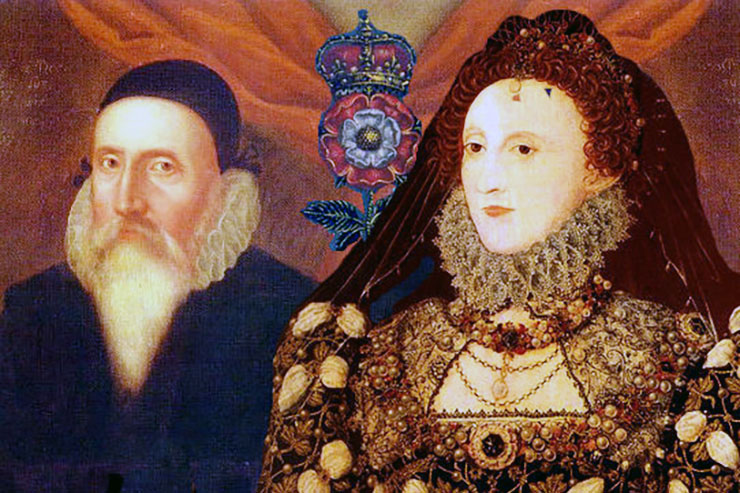
  • John Dee & the Magical Origins of the British Empire

    John Dee & the Magical Origins of the British Empire

    From New Dawn 133 (Jul-Aug 2012)

    At last, the true purpose of John Dee’s invention of the ‘British Empire’, previously hidden, can now be revealed. Conventional wisdom holds that he was responsible for naming that empire, which became identified with a progressive Protestant mission to bring enlightenment to a benighted world. However, that picture is the complacent result of intervening centuries of imperial history. From neglected manuscripts and hints within Dee’s writings, we now discover that, for Dee, the real purpose of the British Empire was to fulfil its prophetic and apocalyptic destiny. He drew upon ancient prophecies of a Last World Empire under an Emperor (or Empress) who would reform global religion, society, and politics before the return of Christ to rule the world for a millennium.

    In fact, Dee was not a Protestant of the kind assumed by later centuries. He was born into a Catholic London family in 1527, baptised in a ritual which the Church taught exorcised demons from the infant, and brought up to believe in the magical powers of the priesthood and its rituals. His patrons at St John’s College Cambridge, where he studied as an undergraduate, and Trinity College, where he became a Fellow in 1547, were all conservative Catholics. Dee also studied at Louvain, when that university had become a bastion of Catholic orthodoxy. Therefore it is no surprise that Dee finally became a Catholic priest in February 1554, partly to please his master, the Earl of Pembroke, who needed to ingratiate himself with Queen Mary, and partly to escape suspicion through his family’s connections with the Wyatt Rebellion, which had just been bloodily suppressed. Dee served ‘Bloody’ Bonner, Bishop of London, as chaplain, making rather ineffectual attempts to convert the Protestants whom Bonner persecuted. Dee was not a very doctrinaire Catholic; he belonged to an ecumenical generation of European intellectuals who hoped for a ruler who would heal the dreadful schisms in Europe. Many believed that alchemy would produce this end, for the Last World Emperor would wield the philosopher’s stone to reform all of decaying Nature, including human beings.

    Dee was persuaded by these ideas, which had been repeated by European intellectuals and seers for many centuries. The prophecy had originated in an apocalyptic text known as Pseudo-Methodius, after a semi-legendary bishop. Written c.674-8 CE in remote Syrian Mesopotamia, recently conquered by Islamic invaders, the prophecy was influenced by Jewish messianic expectations of an earthly ruler over a period of peace and plenty. It promised a mighty Last World Emperor who would destroy Islam, recover Jerusalem, and rule benevolently until Gog and Magog appeared. Pseudo-Methodius prophesied that the Emperor would defeat them and rule in Jerusalem for ten and a half years until Antichrist appeared, when the Emperor would resign his powers into God’s hands and die. The short, troubled reign of Antichrist would end with his destruction by Christ, and the end of time.

    Translated from Syriac into Greek, this prophecy of a great imperial destiny rapidly proliferated in the Byzantine Empire. Already by 800 CE it had been translated into Latin, as the expansion of Muslim power increasingly threatened western and southern Europe. Together with the biblical books of Daniel and Revelations it became the most widely-read of medieval apocalyptic texts and exercised a powerful fascination over the Western imagination for the next thousand years. Printed broadsheet excerpts describing God’s apocalyptic Emperor were distributed to stiffen the Christian defence of Vienna against the Ottomans in 1683.

    The complex text known as the Tiburtine Sibyl eventually incorporated another variant of this story. Its Greek original was written in response to the disastrous defeat suffered by Byzantium at Adrianople in 378 CE, but the Latin text was often rewritten to keep it relevant. Originally it retrospectively ‘prophesied’ Constantine the Great, who would rule for 30 years, advance true religion, fulfil the law and do justice. Later it prophesied an Emperor Constans would reign for 112 years in peace and plenty over all the Christians, destroy pagan lands, baptise them and convert their temples to churches. After 120 years the Jews would be converted. Gog and Magog would appear and be defeated by the Emperor, who would surrender his rule over all Christians to God at Jerusalem before Antichrist appeared to battle Elijah and Enoch.

    The Last World Emperor prophecy enormously enhanced the apocalyptic aura of eleventh-century Jerusalem and helped stimulate the first four Crusades. However, because Augustine of Hippo insisted that Christ’s Kingdom would not be a millennial or ‘chiliastic’ earthly kingdom, even in the fullest version by Godfrey of Viterbo in the late twelfth century, the Emperor’s triumph is almost immediately followed by the appearance of Antichrist.

    Within a few years a twelfth-century Cistercian Abbot, the Calabrian Joachim of Fiore (d. 1202), revolutionised Augustine’s teaching that Christ’s Kingdom would only be established outside history. The enormously influential Joachim predicted human renewal in the third ‘status’ within history. After the ‘status’ of the Father and of the Son these ages would combine their natures in a long Sabbath Age within history. This spiritual and charismatic prediction added a powerful aura of apocalyptic expectation to both Joachim’s own prophecies and those that his later followers fathered upon him.

    Furthermore, as Joachim’s ideas ‘went viral’ amongst a host of medieval followers, the Joachimist tradition absorbed texts that adapted Byzantine apocalyptic ideas to Western imperial needs. Later redactors blended prophecies about the Last World Emperor into pseudo-Joachimist prophecies. In the process they altered Joachim’s prophecies of apocalyptic troubles from the North, by looking to another scriptural tradition, in which threats originated in the hot, desert East. In Genesis, Cain, the first follower of Satan, dwelt in the land of Nod east of Eden (Gen. 4:16), whence came the east wind that blasted crops and dried up the waters (Gen. 41:6, Ezekiel passim), and in Exodus 10:13 brought plagues of locusts. Throughout the Old Testament story ‘the children of the east’, the descendants of Abraham’s concubines, persecuted Israel (Gen. 24:6). The Old Testament used the east wind as a metaphor for vain knowledge such as divination (Isaiah 2:6), and in Revelation 16:12 the vial poured out by the sixth angel prepared the way for the apocalyptic ‘kings of the east’ by drying up the Euphrates.

    Therefore, the first apocalyptic text explicitly awarding the western emperors an apocalyptic role, the Frankish Abbot Adso’s Letter on the Origin and Life of the Antichrist (950 CE), drew on this pre-existing tradition. Adso not only became the most influential propagandist for the translation of empire from East to West, but also implicitly stigmatised the East by turning the Last Emperor from a ‘King of the Romans and Greeks’ to the ‘King of the Franks’ who would restore a chaotic world.

    The Joachimist tradition also took up and publicised a text of Ps Methodius from which three quarters of the original text had been removed, in order to fit it to the rise of emperors in the West. The redactors added further references that envisaged a western power, rather than the Byzantine Empire, conquering Islam, now identified as the threat from the East.

    The Tiburtine Sibyl was also shortened, to make room for new prophecies that German rulers would face threats from “a king from Babylonia, meeting place of Satan,” who would bring great calamities. Traditionally, Antichrist was to be born in Babylon from the tribe of Dan deported to Babylonia. This may refer to the sultans of the Seljuk Turks. In this way the East became the source of threats, countered by the rulers of the West, such as a descendant of Henry IV, who as Last Emperor sets out from Byzantium to defeat the Muslims, and to establish the universal kingdom of the Christians for an indeterminate but long period until the End.

    Imperialists were particularly attracted to another apocalyptic text, the Erithrean Sibyl, which first appeared in the 800s but became so popular that its predictions were frequently revised to keep abreast of political developments. The most influential version was created c. 1195 by Eugenius of Palermo (d. 1203), Admiral to the King of Sicily. Written, therefore, at the front-line of the long struggle against the Saracens in the Mediterranean, this version of the prophecy describes Mohammed as a “horrible beast coming from the East” confronted by “a most mighty lion” from the West who would rule for 500 years.

    The Hohenstaufen Emperor Frederick II sponsored interpretations of biblical prophecies that awarded him a messianic role, and adapted Joachimist prophecies for his own ends. The Erithrean Sibyl, revised about 1249-54, now served western powers, threatening the Greeks with the power of a Hohenstaufen as the Last World Emperor.

    Throughout the 14th and 15th centuries the Kings of France contended with German emperors in claiming the inheritance of Charlemagne’s empire in the West and the prophetic status of the future Last World Emperor, especially because the weak fifteenth-century German emperors inspired few messianic hopes. However, with the accession of Maximilian I (1493-1519), Habsburg fortunes began to recover, and the emperor’s patronage of propaganda increasingly identifying the House of Habsburg with the role of messianic emperor began to drown out French claims in the sixteenth century. Skilful manipulation of printed texts and images by Habsburg publicists helped revive western Europe’s apocalyptic conception of the East, a revival exacerbated by the House of Habsburg’s struggle against the inexorable expansion of the Ottoman Empire. By the early sixteenth century, this cosmic conflict abundantly and increasingly fulfilled ancient western assumptions about the rise of the Whore of Babylon, the Antichrist, in the East.

    The vision of the Last World Emperor enabled the Renaissance to hold in tension expectations of imminent Antichristian calamities with the positive prospect of a returning classical Golden Age and a Joachimist hope of a renovated world after Antichrist’s defeat. The prophetically-charged imperial election of Charles V in 1519 seemed to bring these hopes towards final fulfilment, because Charles united the French and German royal bloodlines. His early victories over both the Turks and Protestant heretics also seemed to fulfil a multitude of Sibylline prophecies, now clearly pointing to his destiny in the East. Ever since Virgil’s Iliad, imperial aspirants had appropriated the solar god Apollo, guarantor of the migration of sovereignty from East to West. This thousand-year-old tradition fed into prophecies of the Last World Emperor taken up by Charles’ grandfather, Maximilian I, and vigorously exploited by his son, Philip II, whose astrologers emphasised how his solar emblem prophesied the conquest of the East, conversion of the infidel, and perpetual establishment of universal peace.

    The Mysterious & Enigmatic Dr. John Dee

    Dee encountered Habsburg claims to the role of Last World Emperor at Maximilian of Habsburg’s coronation as King of Hungary at Bratislava in September 1563. In early 1564 Dee wrote his Monas Hieroglyphica to advise the soon to be Emperor Maximilian II. His contribution to Maximilian’s prophetic destiny, of uniting the world by defeating the Antichristian East, took the form of promising the philosopher’s stone. His Monas applied kabbalistic techniques, and ideas borrowed from Joachim of Fiore, to construct and then deconstruct a symbol he entitled his hieroglyphical Monad (right), which secreted the stone within it. This combined the astrological symbols for the Sun, Moon and Aries with the Cross. By now all these had become identified with Habsburg universal ambitions, and Charles V had elevated the Cross to a particular symbol of Habsburg veneration.

    When Dee returned to Elizabeth I’s Court in the summer of 1564, he tutored the Queen in the arcane mysteries of his symbol. Some of his lessons probably concerned the alchemical mystery of the philosopher’s stone, which fascinated Elizabeth. Other lessons may have concerned the solar, Arian and cruciform symbolism supporting universal Empire. The decline in political relations between Elizabethan England and Habsburg Spain over the following decades created an ideological rivalry over ancient imperial iconography and prophecy, particularly about the destiny waiting the western empire in the East. The Tudors stole the Habsburgs imperial clothes.

    In Elizabethan England such ideas became entangled in wider struggles between radical and conservative Protestants for influence over policy. Ancient imperial ideologies included Virgil’s prophecy in his Fourth Eclogue, addressed to Augustus Caesar, which celebrated the return of the Golden Age of peace and plenty under the virgin goddess of justice, Astraea. From her accession Elizabeth had claimed an imperial authority over both State and Church that reached back to Constantine. By the mid-1570s events enabled some of her courtiers to promote her as the imperial virgin, and to exploit a previously overlooked English strand of Joachimite expectation, in order to advance the aggressive anti-Catholic, anti-Habsburg foreign policy which they made synonymous with “the Protestant Cause.”

    The collapse of Spanish Habsburg control in the Netherlands in 1576 persuaded the Earl of Leicester and his followers that Elizabeth could usurp the Habsburg role of Last World Emperor, and with it advance her ambitions in the East. They encouraged her to accept the proffered sovereignty of Holland and Zealand in 1576. John Dee supported these ambitions in a series of writings sponsored by Leicester and circulating at Court, which urged Elizabeth to recover her ‘British Empire’. This name did not look forward, but backward, to the empire of Arthur, King of the Britons. Part of this certainly included North America, where, Dee believed for a time, remnant Arthurian colonies controlled the fabled North West Passage to the Indies. But Dee’s writings placed more emphasis on the vast European empire of Elizabeth’s ancestor, Arthur, to the “south, and east” of the British Isles. Despite his association with Britain, Arthur had been a favoured Habsburg imperial hero, so here again the Tudors challenged the Habsburgs. Dee’s General and Rare Memorials, published in September 1577, included iconography connecting Elizabeth with Constantine, at a time when, Dee later recalled, “great hope was conceived, (of some no simple politicians), that her Majesty might, then, have become the Chief Commander, and in manner Imperial Governor of all Christian kings, princes, and states.” In 1576 Elizabeth also imagined herself bringing peace to the whole of Christendom.

    As Dee well knew, a long tradition of astrological calculations added to the excited atmosphere surrounding the ‘British Empire’ in the 1570s. A flurry of apocalyptic prophecies had surrounded the election of Charles V as Holy Roman Emperor in 1519, predicting that he would restore unity to Christendom, shattered by the Reformation, and would prove the divinely chosen instrument against the Antichristian Turks in the East. One of the most influential prophecies for the later Habsburgs was the 1564 book On the Greatest Conjunction by the Bohemian Astrologer Cyprian Leowitz, which predicted apocalyptic consequences from the conjunction of the superior planets Jupiter and Saturn in the zodiacal sign of Aries in April 1584. Leowitz pointed out that such conjunctions occurred in Aries only every 800 years, that one foreshadowed the beginning of the Roman Empire and the birth of Christ, the next the transfer of the empire to Charlemagne. This must be the final conjunction, for the world could not last more than 6,000 years.

    Leowitz knew that the zodiacal sign of Aries the Ram had particular significance for the Habsburgs. Ancient theories considered it first amongst zodiacal epochs, for the world had been created with the sun in Aries, meaning that the sign immortalised the first Age of Gold, mystically transfigured into the Ram’s Golden Fleece. The Habsburgs inherited the sovereignty of the Order of the Golden Fleece, whose members considered themselves God’s Elect, chosen to prepare the way for the return of Jesus Christ, the Lamb of God signified by the Golden Fleece, who would rule his earthly kingdom from Jerusalem. Leowitz argued that the imminent return of the heavenly bodies to their positions at the Creation pointed to cosmic struggles for the Habsburgs in Eastern Europe, from Bohemia to Constantinople, where they would battle the Antichristian power of the Ottomans in the Last Days, before planting their banners in Jerusalem and ushering in the second coming of Christ. Dee’s copy of Leowitz’s book survives, with his enthusiastic marginal annotations about the final battles against Antichrist and the foundation of an apocalyptic empire in the East.

    In 1576 Dee’s associate in magical learning James Sandford, another Leicester client, dedicated his Houres of Recreation to Elizabeth’s favourite, Christopher Hatton. Sandford put Elizabeth’s universal pretensions into the cosmic apocalyptic context previously reserved for the Habsburgs. Citing Leowitz’s predictions about the great 1583 conjunction, and prophetic visions seen in Poland, Sandford added for good measure the widespread expectation that either the world would end in 1588, or “at leaste governementes of kingdomes shall be turned upside downe.” Elizabeth, in whom “there must needes be some diviner thing… than in the Kings and Queens of other countries” would play a leading role in the End Times. During the Royal Progress at Norwich in August 1578, court poets introduced a new theme into their masques and declamations, celebrating Elizabeth as the Virgin Queen for the first time. A few years later Sandford applied Joachim’s prophecies of the End when he dedicated to Leicester his translation of Giacopo Brocardo’s The Revelation of St John Reveled (London, 1582). This thoroughly Joachimite Protestant prophecy imagined Christ’s Kingdom soon covering “the whole worlde. No other religion, no other lawe, and rule to heare then that of the Gosple.” By now the idea that Elizabeth would prepare the way for Christ by triumphing over the East had permeated the excitable underworld of popular prophecy, and manuscripts circulated declaring that “Elizabeth now Queen of England is ordained of God to be Queen of Jerusalem.”

    The ‘British Empire’ John Dee envisaged for Elizabeth I was profoundly different from that which actually emerged in later centuries. It drew upon an ancient prophetic tradition that had become interwoven with widely-held beliefs in astrological influence on earthly events, and with a profound belief in the ability of alchemists to create the philosopher’s stone, through which the Last World Empress would rule. Elizabeth certainly believed in alchemy’s transformatory powers, for she employed male and female alchemists in distilling houses at her palaces of Hampton Court and Whitehall, and in her Privy Chamber. She also believed in the power of astrological forces, on which Dee advised her many times. In the mid-1570s she found the prospect of becoming the universal ruler over a pacified globe deeply attractive.

    Why then has Dee’s magical vision of the ‘British Empire’ been condemned to historical obscurity? The answer lies in the reactions of political conservatives at Elizabeth’s Court, particularly her long-time favourite, Sir Christopher Hatton, of more obscure figures who supported his rise, and of Hatton’s protégé, John Whitgift. From the mid-1570s these men became influential at Court, and Whitgift became Archbishop of Canterbury in 1583. From then on he and Hatton worked hard to drive prophetic expectations of a magical Empire out of politics, because they believed such ideas stirred up the ‘mob’, whom they feared above all, to follow radical, ‘popular’ politics. Once the Earl of Leicester died in 1588, Hatton and Whitgift became even more influential over the ageing Elizabeth. Throughout the 1590s they and their many followers used all the government propaganda machinery at their disposal to suppress the kind of magical ‘British Empire’ Dee had envisaged. They had already forced Dee’s students, the brothers Richard and John Harvey, to recant their beliefs in Leowitz’s astrological predictions of the Apocalypse. They now sponsored attacks on astrological prediction altogether, and others that denigrated alchemists as deluded fools. Whitgift made sure that Dee was blocked from the promotions and appointments he sought, and his career declined in consequence.
    During the reign of James, the first English settlements in Virginia helped to switch attention away from the apocalyptic ‘British Empire’ in Europe to its real development in North America. The chaotic events of the Civil War sealed the fate of the magical Empire. The collapse of royal authority meant that press censorship also disappeared, and in the 1640s and 1650s there was a wild explosion of excited apocalyptic prophecies by obscure writers, again calling upon astrological and alchemical ‘proofs’ that their envisaged empire would come to pass. The restored monarchy of Charles II set out to suppress such ideas once and for all. It imposed a rigorous press censorship and made it clear that magical, prophetic thinking would disqualify anyone with pretensions to social or political advancement. As a result, magical ideas were driven underground, and members of ‘polite’ society, such as the Fellows of the Royal Society, felt constrained from discussing them in public, though they continued to do so in private letters. The success of the Establishment’s reaction can be measured by how forgotten ‘magical’ ideas of empire remain today. Thus the utopian ‘British Empire’ Dee imagined survived only in ‘popular’ culture, amongst the powerless and marginalised.

    At the end of the day, if we still seek such ideas, we should perhaps look at what motivated migrants to leave Britain for its empire in recent centuries. Perhaps we will find a distant echo of John Dee’s belief in his magical ‘British Empire’ in their belief that Australia or New Zealand would prove a better world.

    Glyn Parry is author of the new book The Arch-Conjuror of England (Yale University Press, 2012), the first full-length biography of John Dee based on primary historical sources. The book is available from all good bookstores or online book outlets.

    [alert type=”general” dismiss=”no”]This article was published in New Dawn 133.[/alert]

    [alert type=”success” dismiss=”no”]If you appreciate this article, please consider subscribing to help maintain this website.[/alert]

    Further Reading

    Marjorie Reeves, The Influence of Prophecy in the Later Middle Ages. A Study in Joachimism, Oxford, 1969
    Marjorie Reeves, Joachim of Fiore and the Prophetic Future, London, 1976
    Glyn Parry, The Arch-Conjuror of England: John Dee, New Haven and London, 2011
    Bernard McGinn, Visions of the End. Apocalyptic Traditions in the Middle Ages, New York, 1979
    Ann Williams, ed., Prophecy and Millenarianism. Essays in Honour of Marjorie Reeves, London, 1980
    N. Cohn, The Pursuit of the Millennium, London, 1957
    Marie Tanner, The Last Descendant of Aeneas, New Haven and London, 1993
    Frances A. Yates, Astraea. The Imperial Theme in the Sixteenth Century, London and Boston, 1975
    Margaret Aston, ‘The Fiery Trigon Conjunction: An Elizabethan Astrological Prediction’, Isis, Vol. 61, No. 2 (Summer, 1970), 159-187

    © New Dawn Magazine and the respective author.
    For our reproduction notice, click here.
  • Doctor John Dee: The Dream of Empire, The Nightmare of History

    Doctor John Dee: The Dream of Empire, The Nightmare of History

    From New Dawn Special Issue Vol 11 No 3 (June 2017)

    I grew up and went to school in England, and am just old enough that when, age 12, I went to the newly mixed Comprehensive Secondary (which had been until the year before the Girl’s Grammar School), all the atlases and textbooks still spoke proudly of the British Empire.

    Our classroom walls were adorned with increasingly outdated maps, showing something like a third of the world coloured red as territories of that Empire – even if by then they had faded to a slightly dusky pink, perhaps faster than memories of British imperialism had faded in the minds of the adults tasked with teaching us about ‘Great’ Britain, its place in history, and the world.

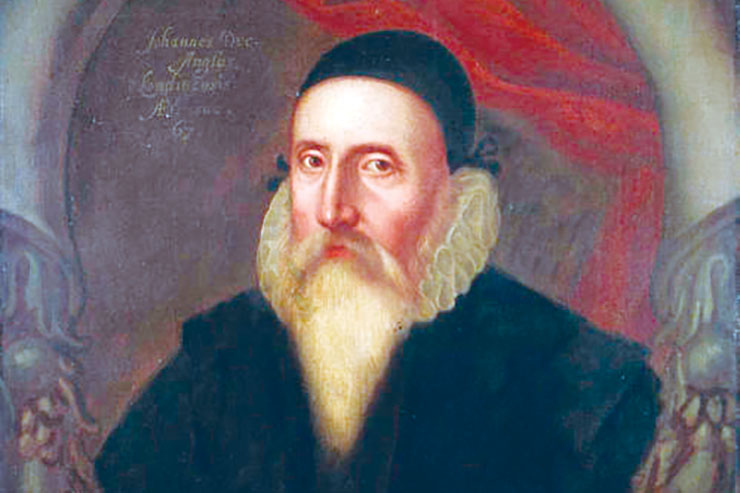
    With all of the recent fracas over Brexit, withdrawal from Europe, Scottish and Welsh lobbying for independence, and uncertainty regarding the future of the ‘special relationship’ with its increasingly self-interested and self-isolating Big Brother, America, surely any lingering echoes of that Britain of yesteryear must be long gone? Is it perhaps time to examine the curious origins of the Empire on which, famously, it was boasted the Sun would never set? With all the confusion and pessimism, would it help or make things worse to reflect that the British Empire was birthed amid hopes of re-uniting the faithful of Christendom, and building a New Jerusalem? That its primary architect – indeed, the man who conjured the words ‘British Empire’ for the first time – was in his own lifetime accused of alchemy, necromancy, and worse, and spent the latter part of his life ‘conversing’ with Angels.

    It is almost a cliché to speak of Doctor John Dee (1527–1608) as one of the greatest minds of the Elizabethan Renaissance. Professor Ronald Hutton, an expert on Early Modern Britain and authority on historical and contemporary paganism, has said that if one wanted a latter-day comparison for Dee, you could do no better than a figure like Stephen Hawking.

    Dee has been largely overlooked, at least until relatively recently, by regular historians and more orthodox commentators on the Elizabethan Age. They are comfortable enough with the idea of Dee the polymath, a sort of one-man clearinghouse for information, putting his knowledge of cartography, optics, and navigation to good use where English expansionism was concerned – but not so sure what to make of a man mostly remembered by posterity, if at all, as a kind of eccentric ‘Merlin’ to Queen Elizabeth I’s ‘King Arthur’.

    Alchemist, necromancer, and (alleged) communicator with Angels… a man with the ear of the Queen, involved in Court intrigue, and likely a spy – the good Doctor Dee turns up as a convenient clothes-horse on which to hang all manner of conspiracy theories, historical and supernatural. This is the Dee that performed a ritual with playwright and spy Christopher Marlowe to mark the founding of the British Empire – very possibly the siting of the zero degrees longitude marker at Greenwich Observatory as an act of magical intent, making Britain the centre of Time & Space, a New Jerusalem – and Marlowe was really killed to ensure his silence about this act; Dee not only predicted the storm that favoured the British encounter with the Spanish Armada in 1588, but literally conjured the winds, like a real-life Prospero; Dee designed the mysterious Newport Tower, a massive ruin that stands in the town of Newport, Rhode Island (the approximate location of his proposed North American colony). All extend the already remarkable Dr. Dee into the realm of fantasy.

    Undoubtedly true is that Dee put his not inconsiderable energies into a series of works aimed at shifting English foreign policy into a new, expansionist, adventurous mode. The main work – a veritable magnum opus setting forth his ideas regarding a proposed “Brytish Impire” – was the four-volume General and Rare Memorials Pertaining to the Perfect Art of Navigation (1577), previously believed lost, but recently come to light again (shown on page 26). Ensuring his proposal of a British Empire was not missed, Dee designed a frontispiece featuring Elizabeth enthroned at the helm of a ship named Empire, masts topped by symbols of Christ, led on by a winged, sword-brandishing angel – while alongside, Britannia kneels on the shore, beseeching the Queen to protect her Empire by strengthening the Navy. It is as if Dee had woven a veritable spell to enchant Elizabeth: magicians of today would probably consider it a form of Sigil Magic. Roy Strong, author of Gloriana: The Portraits of Queen Elizabeth I, described it as a “British hieroglyphic.”

    Dee also delivered a smaller, concise work, written especially and exclusively for the Queen, his Brytanici Imperii Limites – “The Limits of the British Empire” – in which he summed up his belief that England’s territorial claim extended far beyond the British Isles, even including a map he had drawn up, indicating what he felt Elizabeth could claim dominion over (sadly, now lost.) Dee’s argument was based on accounts of the voyages of King Arthur, said to have sailed as far as the seas around the Pole in 530, bolstered with references to Brutus, the equally-legendary founder of Britain, and Welsh Prince Madoc, who was believed to have crossed the Atlantic in 1170, proving that:

    [of] a great part of the sea coasts of Atlantis (otherwise called ‘America’) next unto us, and of all the isles near unto the same, from Florida northerly, and chiefly of all the islands Septentrional [=northerly], great and small, the Title Royal and supreme government is due.

    Arthur, Brutus, and Madoc were all thought authentic historical figures at that time. This was the entire basis of the claim Dee set before Queen and Court: if the so-called ‘New World’ of America was, in fact, the legendary continent of Atlantis, which had been discovered already by these earlier British rulers, then surely Elizabeth, as their descendent, had prior claim?

    Dee was not above profiting from the proposed expansion himself. In 1583, Sir Humphrey Gilbert – the man who started the search for the Northwest Passage, thought a route to the Orient, and, like Dee, a believer that America was really Atlantis – succeeded in getting royal backing for a company set up with his brother, Adrian, and half-brother, Sir Walter Raleigh, to “discover and settle the northerly parts of Atlantis, called Novus Orbis” (i.e. North America.) Gilbert agreed with Dee that if their mission succeeded, he would get “the royalties of discoveries all to the north above the parallel of the 50th degree of latitude” – in other words, most of Canada and all of Alaska.

    In an age ravaged by the schism between Catholic and Protestant, Dee believed in the need for reconciliation. He had been imprisoned as a young man, accused of conjuration and heresy by Queen Mary’s Catholic Inquisition, and was lucky to have survived when many of those around him were tortured or put to death. When his beloved Elizabeth became Queen, the Protestants took their revenge, but Dee wanted the hatred, fear and bloodshed to end. He proposed that in the colony of the New World, all men and women – Catholic, Protestant, and Native – be allowed to live together, peacefully: it would be an example for all Christendom, a veritable New Jerusalem.

    At first, Dee’s plans were well received, his sheer daring catching the mood of grand ambition at Court. He helped define the sense of mission, even of destiny, that drove adventurers across the Atlantic. Writing of how English Gentlemen could consider themselves equal to any Frenchman, German, or Spaniard, diplomat Charles Merberry also boasted how “this most Royal Prince (her Majesty’s highness)” [i.e. Elizabeth] could likewise consider herself equal, if not superior, to any foreign monarch, on the basis that:

    Master Dee hath very learnedly of late… shewed unto her Majesty, that she may justly call herself LADY, and EMPERESS of all the North Islands.

    But it was not to be. Elizabeth’s ever-conservative chief minister, William Cecil, was alarmed by Dee’s vision. He feared antagonising powerful Catholic Spain, and doubted the North American lands would be of much value. Dee had worked hard to conjure a vision that might build a New Jerusalem and ultimately re-unite fractured Christendom, initially capturing Elizabeth’s interest, and the enthusiasm of courtiers such as Robert Dudley and Philip Sidney, but in the end it was all undermined by Cecil.

    Get the issue this article appears in

    Not long after, Dee withdrew from such concerns, and ultimately from Court, Elizabeth, and England itself. In March 1582, Dee met a man who would be instrumental in leading him on a voyage of discovery every bit as exciting and, ultimately, hazardous as any exploration into unknown territories. He was none other than Edward Kelley, the man who facilitated his attempts to communicate with otherworldly, non-human intelligences. Soon after, Dee & Kelley embarked on adventures all their own, consuming them for the next seven years, taking them into new worlds beyond this one: The Angelic Conversations – but that is another story…

    Ironically, much of what Dee set forth in the writings he put before his Queen did come to pass, one way or another. England broke the monopoly of the Spanish once-and-for-all, with the spectacular defeat of their Armada in 1588 – and, as Dee had proposed, building up the Navy would be the key to English strength on the world stage. North America was colonised, and – although it later required a War of Independence to throw off British rule – the foundations of this particular new world order were indeed based on ideas of equality, fraternity, and freedom from religious persecution.

    Certainly the British Empire came into being, and undoubtedly the expeditions Dee suggested and helped plan played a significant part in laying its foundations. But it is hard to believe Dee would have recognised his dream of a New Jerusalem, a utopia worthy of Christ’s return, in the birthing of an empire built on the nightmare of colonialism and imperialism. Ultimately, Doctor Dee’s kingdom was not of this world.

    [alert type=”general” dismiss=”no”]This article was published in New Dawn Special Issue Vol 11 No 3.[/alert]

    [alert type=”success” dismiss=”no”]If you appreciate this article, please consider subscribing to help maintain this website.[/alert]

    © New Dawn Magazine and the respective author.
    For our reproduction notice, click here.
  • Caodaism: How a Secretive Sect Based on Spirit Communication Shaped the Destiny of Vietnam

    Caodaism: How a Secretive Sect Based on Spirit Communication Shaped the Destiny of Vietnam

    From New Dawn Special Issue 11 (Mar 2010)

    Caodaism was always the favourite chapter of my briefing to visitors. Caodaism, the invention of a Cochin civil servant, was a synthesis of the three religions. The Holy See was at Tanyin. A Pope and female cardinals. Prophecy by planchette. Saint Victor Hugo. Christ and Buddha looking down from the roof of the Cathedral on a Walt Disney fantasia of the East, dragons and snakes in technicolour. How could one explain the dreariness of the whole business: the private army of twenty-five thousand men, armed with mortars made out of the exhaust pipes of old cars, allies of the French who turned neutral at the moment of danger?

    So writes Thomas Fowler, the disillusioned narrator of The Quiet American, Graham Greene’s 1955 novel set in Vietnam in the final months of France’s doomed struggle to hold onto its Far Eastern possession. Fowler, a British journalist covering the war, has taken the day off from his desk in Saigon to go northwest to Tanyin (actually, Tay Nim) province, where he watches a Caodaist religious ceremony.

    His cynical description of Caodaism makes it sound as if this esoteric religion, founded in Vietnam in the 1920s, is nothing more than a cover for one of the many private and/or secret armies running wild in Indochina during its rebellion against France. But Caodaism is seen here only through the narrow, atheistic eyes of the embittered Fowler, and is accordingly twisted.

    The real Caodaism, however bizarre its trappings, is a vibrantly spiritual faith. It is practiced today by more than five million people in Vietnam, Cambodia, Japan, Australia, Canada, and parts of the US, particularly California. It announces the Tam Ky Pho Do, or Third Period of Salvation, when heaven will reveal itself directly to earth and all religions will unite in mutual understanding.

    And, though it’s not even a century old, it sprang largely from the convergence of two rich and ancient cultural traditions in Vietnam: the Chinese and Indian spiritual and religious practices – i.e., Confucianism, Taoism, Buddhism – that were brought to Vietnam over two thousand years ago, and the indigenous belief systems of Vietnam – i.e., the land as a place of benign, malignant, and mystical spirits; Hau Bong, or spirit mediumship in the shamanic mode – that stretch back before recorded history.

    Channelling and “Saint Victor Hugo”

    Two odd phrases stick out in Fowler’s description of a Caodaist ceremony that tell us unequivocally this new religion also has a jarringly modern, esoteric – even beguilingly mysterious – side. The first phrase is, “Prophecy by planchette;” the second is, “Saint Victor Hugo.”

    What exactly is “prophecy by planchette?”

    A planchette is the tiny, heart-shaped, three-legged marker that scurries across the letters of the alphabet written on an Ouija board and spells out words and phrases said to be communicated by disembodied spirits. It’s the descendant of the three-legged table that, placed on a larger table, with the hands of the medium and one other person lying on its surface, tapped out spirit messages by raising and lowering one leg. Such “table-tapping” was the mode of otherworldly communication preferred by the aristocrats and literati of France when, in the mid-nineteenth century, a tidal wave of enthusiasm for this occult pastime swept across the country.

    And “Saint Victor Hugo?”

    In 1853–1855, while in exile on the Channel island of Jersey from the dictatorship of Napoleon III, the great French author of The Hunchback of Notre-Dame and Les Misérables participated in over 100 table-tapping séances. While other political exiles and members of his family looked on, Hugo chatted with the illustrious dead such as Shakespeare, Molière, Galileo and Luther; legendary animals like Balaam’s Ass and the Lion of Androcles; abstractions like The Novel and India; spirits that had never been alive, like the Shadow of the Sepulcher and Death; extra-terrestrials from Mercury and Jupiter; and the occasional errant Jersey island ghost.

    On five occasions – February 11 and 18 and March 8, 15 and 22, 1855 – the spirit of Jesus Christ (or so the transcripts tell us) held forth through the tables to the assembled guests. His subject was the coming of a “third” religion that would supersede Christianity just as Christianity had superseded Druidism (the ancient religion of Britain). Victor Hugo was to be the prophet of this new religion, which held that (1), not only do men and women have individual conscious souls, but animals, plants and stones do as well, and (2), God is in the process of bringing a “universal pardon” to our world, and in fact to every soul in the universe; even Satan will be granted amnesty.

    A painting inside the Tay Ninh Holy See depicting Caodai’s Three Saints signing a covenant between God and humanity. From left to right: Sun Yat Sen, Victor Hugo and Nguyen Binh Khiêm. (Photo courtesy of Ernie Lo, January 2007, http://en.wikipedia.org/wiki/Cao_Dai)

    This all sounds strangely familiar to devotees of Caodaism. Some seventy years after Hugo spoke to the spirits on Jersey, 8,000 miles away in Vietnam, the newly-aborning religion would announce itself through spirit guides as, “The Third Great Universal Religious Amnesty.” According to its tenets, God would grant a pardon to all the religions of the world and in so doing bring peace to the universe. At an historic “summit” séance in Saigon on Christmas Eve 1925, attended by members of the Pho Loan group, the powerful spirit having overall responsibility for communicating Caodaism to our world would reveal his true name and declare that he was the reincarnation of Jesus Christ.

    All this would happen seventy years after the Jersey séances. Back on that windswept island in the early 1850s, the mysterious process that would somehow transmit the spirit of Jesus Christ’s channelled pronouncements to Saigon in the 1920s and elevate Victor Hugo to the status of Caodaist saint, was putting forth its roots in another direction. The séance transcripts tell us that on September 12, 1853, the “living phantasm” of Napoleon III came to Victor Hugo while the dictator was asleep. A three-hour “trial” of the channelled Emperor ensued, at the end of which Napoleon III humbled himself abjectly before the writer and apologised for the wrongs he had inflicted on Hugo and the world.

    This was the last “spirit communication” with the Emperor. But Victor Hugo would never cease to attack the real, living French dictator virulently and publicly. In 1860, Napoleon III, with the British, invaded China. His ostensible motive was to protect Roman Catholicism in that country. The allies inflicted a crushing defeat on a defending army of Tatars that greatly outnumbered them but was short on modern firearms; when the battle was over, 3,000 Chinese, two British, and three French lay dead. Once arrived in Peking (now Beijing), the French and British troops spent days looting, burning and ransacking China’s Imperial Summer Palace, one of the seven wonders of the modern world. The Chinese capitulated immediately.

    This piece of imperialist vandalism redoubled Hugo’s hatred of Napoleon III. He wrote, “Imagine some inexpressible construction, something like a lunar building… suppose in a word a sort of dazzling cavern of human fantasy with the face of a temple and palace, such was this building…. One day two bandits entered the Summer Palace. One plundered, the other burned. Victory can be a thieving woman [Queen Victoria], or so it seems… It contained not only masterpieces of art, but masses of jewelry… One of the two victors filled his pockets; when the other saw this he filled his coffers. And back they came to Europe, arm in arm, laughing away. Such is the story of the two bandits.”

    The Chinese would gratefully remember Hugo’s rebuke to Napoleon III. The great writer spoke out just as vehemently when, in 1862, the French Emperor invaded Cochin China, again to “protect” Catholicism. By 1869, all of Indochina had been subdued. Vietnam was now a province of the French colonial empire.

    When the Vietnamese began to foment rebellion against the French in the early 20th century, Napoleon III was bitterly remembered as the author of all their woes. The Vietnamese held the memory of Victor Hugo dear; he was their defender and their friend.

    The Emergence of Caodaism

    The séances ended in 1855. In 1870, Victor Hugo, now free to return to France (the Emperor had been deposed), packed the copious transcripts away in a trunk. He had kept all news of the séances away from his political enemies, fearing they might hold up the transcripts as proof that he was a lunatic. The great author died in Paris in 1885. Certain stipulations in his will governed when and if the transcripts could be published.

    In 1900, the energies that would create Caodaism began to coalesce around the person of Ngo Minh Chieu (1878–1932), a young Confucian scholar who joined the French civil service in Saigon in 1899. Chieu combined learning in Chinese philosophy with a knowledge of ancient Vietnamese spiritistic-shamanic traditions and Taoist Shamanism, abetting this with wide reading in nineteenth-century European spiritists such as the astronomer/psychic researcher Camille Flammarion; the founder of Spiritism Allen Kardec; Leon Denis; and probably Theosophical Society leader Annie Besant.

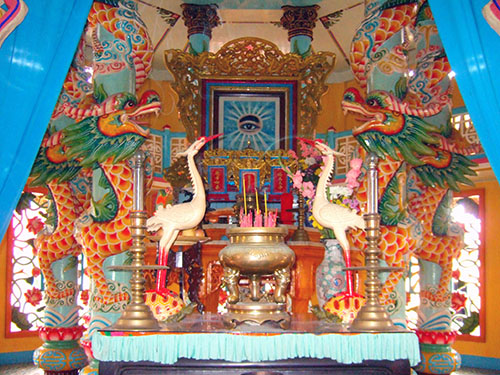
    Closeup of a traditional Caodai altar. (Photo courtesy of http://en.wikipedia.org/wiki/Cao_Dai)

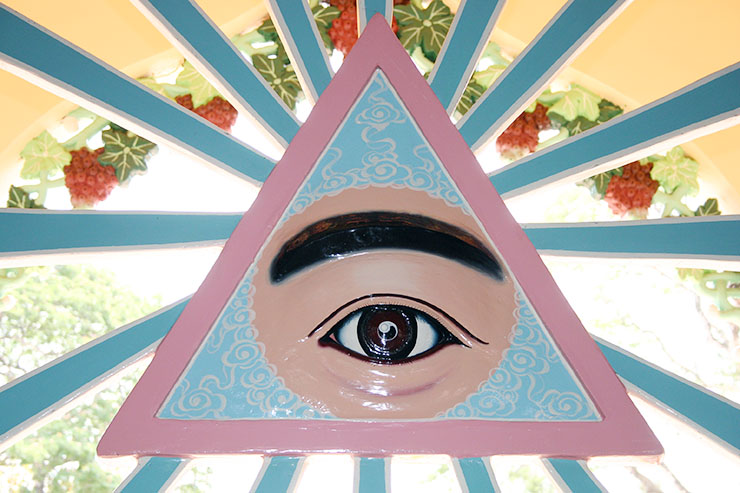
    Transferred to Phu Quo island, the shy, now isolated adept immersed himself in mediumistic phenomena, using the Cau Co or “spirit pen” to communicate with traditional Chinese deities like the red-faced demon slayer Guan di Gong. He encountered a powerful entity that revealed itself only through the mystical name of Cao Dai Tien Ong Dai Bo Tat Ma-Ha-Tat. He was vouchsafed a vision, probably in mid-1920, of a large eye encompassed by rays of light; this was to become the “Divine Eye,” or “Left Eye of God” (Thien Nhan) that, signifying universal and individual consciousness, is a key icon of Caodaism. Arrived back in Saigon in 1924, the humble modern-day shaman/administrator drew disciples to himself as he studied how to worship Duc Cao Dai.

    Now a signal event took place. In 1923, the first collection of the transcripts of Hugo’s channelling experiences – Chez Victor Hugo: Les Tables Tournantes de Jersey – was published in Paris. The volume was highly incomplete, excluding many of the transcripts of the more tradition-challenging séances. It did include Hugo’s five sessions with the “spirit of Jesus Christ.”

    Available in Vietnam, and reviewed in the Saigon newspaper L’écho Annamite, the book seized the attention of the many who were still grateful to Victor Hugo. It galvanised a group of young French-speaking Vietnamese civil servants into conducting their own table-tapping experiments. Soon, a spirit calling itself Thuong-De viet Cao-Dai giao-dao Nam-Phuong, or “Jade Emperor, Supreme Deity, alias Cao-Dai, religious teacher of the Southern Quarter,” manifested to announce that it had come to “teach the truth to the people of Annam.”

    The group called itself Pho Loan. It was soon instructed to switch from table-tapping to the use of the corbeille à bec (“basket with beak”). Central to this procedure was a wicker basket shaped like an upside-down crow. Four ropes were attached to the basket, each held by a different medium so that no one personality could control the communication. The basket was suspended in such a way that its “beak” could make contact with a flat, fine surface of sand beneath; thus the spirit writings were written in the sand.

    On Christmas Eve, 1925, at the previously mentioned landmark séance, the commanding spirit previously calling itself A.A.A. (the first three letters of the Romanised Vietnamese alphabet) now manifested to reveal that its true name was Ngoc Hoang Thuong De Viet Cao Dai Giao Dao Nam Phuong and to affirm its reincarnational identity with Jesus Christ.

    It declared:

    Be joyful tonight on this the anniversary of my appearance to teach the religion in the West. Your allegiance brings much happiness to me… Soon you must help me establish the religion. Have you seen my humility? Imitate me so that you may genuinely claim to be religious men.

    Now Ngo Minh Chieu, whose lived experience of mediumship would be essential to the development of Caodaism, was invited to join the group. It became apparent that he and the Pho Loan members worshipped the same supreme being.

    On October 7, 1926, a spirit-dictated petition, signed by 247 Caodaists, gave the French authorities notice that a new religion had been established. The religion held that the world’s misery was caused by the disunity existing between all religions, and that its aim was to perfect the Tam Giao (“three teachings,” that is, Confucianism, Taoism and Buddhism) of Vietnam. The religions of the world would be brought into equilibrium.

    Increasingly, spirit visitors of world stature manifested through the corbeille à bec. They included Lao-Tzu; Li Po, China’s great 8th century Taoist poet; the female Bodhisattva Quan Am; Joan of Arc; Louis Pasteur; René Descartes; Vladimir Lenin – and, very soon, Victor Hugo. Martin Ebon writes in the Introduction to Victor Hugo’s Conversations with the Spirit World: A Literary Genius’s Hidden Life:

    Adherents have meticulously recorded that the first, momentous encounter with this spirit took place on April 20, 1930, at 1:00 a.m., the earthly interviewer being one Ho-Phap. A bit later, the entity said that one prominent Caodaist, Tran-Quang-Vinh, was, actually, a reincarnation of the French poet’s third son, François-Victor Hugo (1828–1873). Tran later became head of the Cao Dai Army, and eventually Minister of Defense (1948–1951) in the ill-fated government of Bao Dai. During a session of the Cao Dai’s legislative body, the deceased Victor Hugo was appointed titular head of the movement’s ‘foreign missions’, that is, its actual ambassadorial representation abroad.

    In The Quiet American, Greene’s narrator Fowler fingers General Thé (the name is a pseudonym), the Caodaist Chief of Staff, as a savage and out-of-control ally of the Americans who, already in Vietnam, are attempting, through the “quiet American” Alden Pyle, to create a “Third Force” that will stand up to the French and Vietminh armies. Fowler (but perhaps not Greene) seems almost to assume that politics was the real raison d’être behind the creation of Caodaism, and that it is already badly compromised in what will become the Vietnam quagmire.

    Others have wondered about this. In “Through God’s Left Eye” (Underground, Summer 2008), author Paul La Farge asks himself, perhaps with tongue partly in cheek, if some of the more obscure spirit messages might not be coded messages, detailing the movement of troops and supplies. He quotes a message from the spirit of Victor Hugo: Yes, it’s this kind of gas, which they call hydrogen. More or less dense, which makes the healthiest part, When they say that the Spirit of God swam above the waters, It’s in that sense that the word must be understood…” Professor La Farge wonders if this bizarre message might not be “a Caodaist cipher behind which some violent activity lurked” [meaning, perhaps], “The mortar shells will arrive at midnight, by boat.”

    In fact there may be elements of this in Caodaist communications. But the vast majority of Caodaist spirit messages are transparently of deep spiritual intent. In other messages, Hugo spoke eloquently of beauty, divine peace, harmony, science and wisdom. He revealed that “there are… other universes than ours in the infinite and that their creatures know not the word ‘war’.” Moreover, in these worlds “soul-power is master of human weakness.” The Hugo entity averred that “death will be vanquished by uplifted conscience. There is no difference between the living and the dead.”

    Caodaism in Modern Times

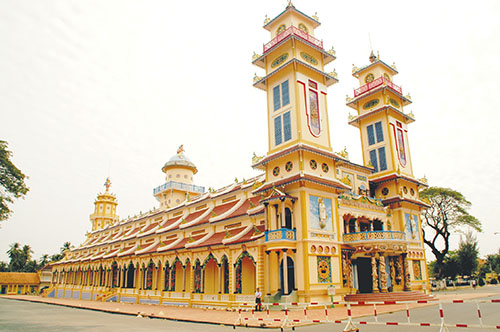
    Caodai’s “Vatican,” called the Tay Ninh Holy See,
    is located in Tay Ninh, Vietnam. (Photo courtesy http://en.wikipedia.org/wiki/Cao_Dai)

    Certainly, in welcoming the spirit of Victor Hugo – and of that great Resistance fighter Joan of Arc! – Caodaism had found a way of allying itself with a hidden Western tradition of anticolonialism. As the number of Caodaist adherents increased almost exponentially, multiplying the need for administrative entities, Caodaism shaped itself into three “powers.” The first – the Eight Sided Temple – consisted solely of spirits, with the 8th century Tang Dynasty poet Li Po serving at one point as “spiritual Pope” in this power. The second power, that of The Heavenly Union Temple, was comprised entirely of mediums, and served as the administrative branch. The third, The Nine-sphered Temple, inspired by the organisation of the Roman Catholic Church, was host to nine hierarchies, including adepts, student priests, priests, bishops, archbishops, principal archbishops, cardinals, legist cardinal, censor cardinals, along with the Pope; this became the executive branch. Women were early on accepted in all these roles. Caodaism’s expanding membership soon called for a church or temple. Spirit guides indicated appropriate land near the capital of Tay Ninh province. Over a twenty-year period, the Tay Ninh Great Divine Temple, with its multiple acres and numerous attendant structures, was built here, emerging as the “Vatican City” – the Holy See – of Caodaism.

    The Tay Ninh temple, although neutered by Vietnam’s post-1975 communist regime and today a quasi-Caodaist theme/amusement part, remains the holiest of the Caodaist places of worship. In The Quiet American, narrator Thomas Fowler lays out for us, if sardonically, its most striking attributes. Entering the temple, he notes a famous mural on the wall:

    Saint Victor Hugo in the uniform of the French Academy with the halo round his tricorn hat point at some noble sentiment Sun Yat Sen [the founder of modern China] was inscribing on a tablet, and then I was in the nave. There was nowhere to sit except in the Papal chair, round which a plaster cobra coiled, the marble floor glittered like water and there was no glass in the windows… The dragons with lion-like heads climbed the pulpit: on the roof Christ exposed his bleeding heart, Buddha sat, as Buddha always sits, with his lap empty. Confucius’s beard hung meagerly down like a waterfall in the dry season.

    Unremarked by Fowler is best-known feature of the temple: the picture of the “Divine Eye,” or “Left Eye of God” that signifies universal and individual consciousness. This was the eye first seen in a vision by Ngo Minh Chieu.

    In the fifth year of its existence, Caodaism boasted 500,000 members. By the 1950s, an estimated one in eight South Vietnamese was a Caodaist. The religion treated Tay Ninh province as if it were a feudal theocracy, collecting taxes for itself and maintaining a standing militia of tens of thousands of men. At the same time, the movement was beginning to splinter into a number of factions, some with marked ideological differences.

    The Phnom Penh Post reporter Sebastian Strangio offers a succinct summary of the history of Caodaism from the fall of the French garrison in Dien Bien Phu in 1954 (bringing with it the French surrender) to the present:

    But when South Vietnamese President Ngo Dinh Diem, a staunch Catholic, came to power in 1955, the domestic political calculus began to turn against the Caodaists. In 1956, Diem forcibly disbanded the Caodaist militias and other nationalist rivals. Following the fall of Saigon in 1975, the communists took their revenge, confiscating Caodaist property and arresting or exiling many of its leaders. Relations between the Cambodian Caodaist and the Vietnamese government were difficult during the occupation of the 1980s, but have since improved.

    But despite some positive changes, rights groups and exiles say the Vietnamese government continues to ban participation in independent Caodaist factions and oversees all internal Caodaist affairs. “Undercover government agents have infiltrated the administration of Caodaism, and the religion has to function according to the government’s [rules] without respecting the current religious constitution,” said Hum Dac Bui [a spokesman for www.Caodai.org, a California-based non-profit organisation]. “The Tay Ninh Holy See has become more or less a place of tourist interest for the profit of the government and is totally paralysed from a religious point of view.”

    “Brad Adams, Asia director of Human Rights Watch, said that only the government-approved Caodaist sect is legally recognised and that those who belong to splinter groups are subject to ‘harassment, arbitrary detention, and imprisonment’.”

    The persecution of Caodaists by the post-1975 Communist regime saw a steady exodus of adherents out of Vietnam. Approximately 50,000 have settled in the United States, half of them in California. There are twenty temples in California, most of them small; a temple is under construction in Garden City that will be a miniaturised version of the Great Divine Temple in Tay Ninh.

    There are approximately 2,000 Caodaists in Australia today. A large temple was constructed over a period of nine years in Wiley Park, New South Wales. Like the semi-completed temple in Garden City, California, it is modelled after the Great Divine Temple in Tay Ninh.

    There are currently over 1,300 Caodaist temples in Vietnam; these serve the great majority of the five million adherents to Caodaism that are spread around the world today.

    All that is required in the practice of Caodaism is a vegetarian diet ten days a month and biweekly attendance at services. Doctrinal loyalty is not required. During services Caodaists bow before the Divine Eye, chant, and meditate; sometimes there are addresses. In California, as in other Western places of worship of Caodaism, séances are no longer carried out. If the spirit of Victor Hugo still hovers over this faith, no doubt he has moved on to California, where the dark-blue Pacific can remind him of the dark-blue Atlantic pounding on the shores of Jersey island, where so much of it, so mysteriously, began.

    [alert type=”general” dismiss=”no”]This article was published in New Dawn Special Issue 11.[/alert]

    [alert type=”success” dismiss=”no”]If you appreciate this article, please consider subscribing to help maintain this website.[/alert]

    © New Dawn Magazine and the respective author.
    For our reproduction notice, click here.
  • Truth About the Knights Templar

    Truth About the Knights Templar

    From New Dawn Special Issue 11

    So many books, articles and academic treatises have been written about the Order of Poor Knights of the Temple of Solomon in Jerusalem – usually shortened to the Knights Templar – that it is difficult to separate fact from fiction, or fantasy.

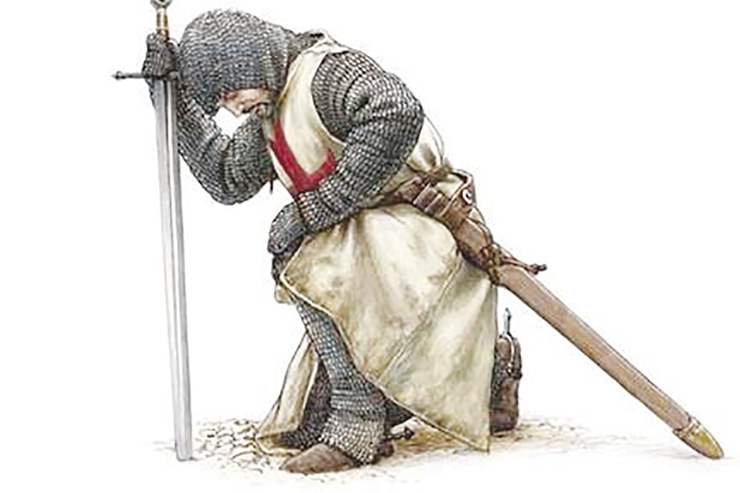
    Founded in CE 1118 by a French nobleman to protect the pilgrim routes from southern Europe to the Holy Land or Palestine, it was originally a company of only nine knights. It increased in size in the next ten years until it had 15,000 warrior monks and 40,000 lay members and was the richest religious community in Christendom. Its eventual downfall and destruction was just as dramatic as the chaste Christian knights were accused of practising ‘unnatural sin’, blasphemy, heresy, and devil worship.

    The sudden rise of the Templars, their considerable wealth obtained by loading their empty ships with spices, silk and other luxury goods on the journey back to Europe, and their special status within the Roman Catholic Church, brought criticism and created powerful enemies.

    Even the Vatican became critical of the Order, and in 1207 Pope Innocent III denounced the knights for their excesses and for “employing doctrines worthy of demons.” A year later he issued a papal bull because the knights had refused to accept his authority and replaced it with that of their own Grand Master. In 1238 Pope Gregory IX even accused the Templars of practising heresy but no charges were brought against them.

    The term “pride of a Templar” became commonplace as a description for any arrogant person. In battle, despite their religious beliefs or perhaps because of them, the Templars were renowned for their courage and ruthlessness. When sacking cities and towns in Palestine the knights showed no mercy, killing men, women and children indiscriminately so that the streets literally ran with the blood of the massacred. This was despite the fact that the Order was rumoured to have made secret alliances and deals with the Saracens. It is possible these were of the same nature as the financial deals allegedly made between some NATO troops and Taliban forces in the modern Afghan war.

    In France the Templars owned large tracts of land and many properties including whole villages that they ruled as feudal landlords. The Order owed no allegiance to the French crown and paid no taxes to the states on their income as merchants and farmers. Eventually this brought them into open conflict with the French king Philip IV, also known as Phillipe Le Bel or the Fair. When he came to the throne he found the kingdom he had inherited was bankrupt. Vast sums of money had been spent in funding the crusades to the Holy Land and in real terms the Templars were wealthier than the king. At first Philip turned on the Jews as a source of income, and then he began to consider the Templars and plotted how he could discredit them and seize their assets.

    To move against the Order Philip first needed to get rid of the incumbent pontiff, his arch-enemy Pope Boniface VIII. The king publicly accused him of atheism, blasphemy and immorality and in 1305 managed to get him replaced by his own puppet pope, Clement V, who ruled the Church from Avignon in France instead of Rome.

    Rumours about strange activities within the Order of the Temple and their heretical beliefs had been circulating for some years. It was said they had an inner circle who worshipped a golden calf, a human head or skull, or a cat or goat-headed idol with obscene rites. Their monastic rule of chastity was apparently a sham as the knights practised the ‘unnatural vice’ of homosexuality as part of their secret rituals of initiation into the Order.

    When three knights were expelled from the Order for grave misconduct and offered to inform on their former comrades, King Philip saw his chance to act. He tricked the Grand Master of the Templars, Jacques de Molay, into leaving his headquarters in Cyprus and travel to Paris on the pretence that the king wanted to discuss launching a new crusade. De Molay duly arrived at the French court bearing 150,000 gold florins and ten horse-loads of silver ingots as a gift to the king. While De Molay and his personal bodyguard were staying at the Templar commanderie in Paris, King Philip closed his trap on the Order.

    On 13 October 1307 the king ordered dawn raids on the Paris headquarters and De Molay and sixty of his knights were arrested. Orders had also been issued to provincial governors all over France and simultaneously all the Templar religious houses were raided, their members arrested and, most importantly for the king’s cunning plan, their physical assets were seized by the crown.

    A month later Pope Clement V meekly issued a papal bull addressed to the monarchs of Europe informing them the Templar Order had been declared heretical and they should arrest all its members in their lands. Some obeyed the papal decree but in some countries the Templars were virtually unharmed and its members were assimilated into other chivalric orders.

    In total eighty-eight charges were brought against the Templars in France with the support of the pope, who in fact got involved in the legal proceedings against them. Two early charges, of consorting with women and being inclined to Islam, were dropped. However, the other charges remained, and these were that the knights had denied Christ as the saviour and redeemer of humanity, spat and trampled on the cross at their initiations into the Order, adored an unspecified idol, perverted (desecrated) the sacrament, practised ritual murder, wore a cord “of heretical significance,” performed “ritual kisses” during naked initiation ceremonies, and were traitors to the other Christian forces in the Middle East.

    Knights who had been inducted into the inner circle of the Order confessed that the Templar priests had forced them to deny and renounce Christ. They were told he was a false prophet and made to spit three times on a crucifix and trample it underfoot. Some candidates were reluctant or too scared to carry out this blasphemous act and were forced to do it at sword point. Others who still refused were punished by being flogged daily and put on a ration of bread and water until they agreed.

    New Evidence about the TemplarConfessions

    In 2003 the historical researcher Dr. Barbara Frale was allowed access to documents previously held in the ‘secret archive’ of the Vatican library relating to the trial of the French Templars at Chinon in 1310. Known as the Chinon Parchment, this document describes the confessions of the leading Templars in France including the Order’s French Grand Master. The confessions were freely given without torture and the trial took place with Pope Clement present. Evidence was provided of the initiation rite into the Order involving spitting on the cross. However, in their defence, the knights said that this act was merely carried out as an ordeal to test the candidate’s mettle. It was to see how they would cope if captured by the Saracens and forced to renounce their faith.

    One of the charges made against the Templars was that at their initiation they had to strip naked. The priest who was presiding over the ceremony then kissed the candidate on the mouth, the naval (solar plexus), the ‘base of the spine’ and on their penis. This evidence was regarded by the Inquisitors as proof the knights had broken their sworn vow of chastity and indulged in the sin of homosexuality. In fact this practice may be linked with the accusation the Templars were traitors who made pacts with their Saracen enemies. In 1166 twelve Templar knights were hanged in Jerusalem for betraying a Christian fortress in Jordan to the army of the emir of Damascus.

    It was claimed the Templars had made a secret pact with the infamous Order of Assassins and also had connections with the heretical Islamic sect of Sufis. It is possible that through these contacts the Templars had been exposed to certain mystical or occult practices of the Saracen mystery schools. In these the master breathes on certain parts of the initiate’s body to stimulate the psychic centres or chakras. This practice could be easily misinterpreted as kissing.

    As we have seen, the Templars were accused of worshipping a non-Christian god represented as an idol or image. This took variously the form of a human head or skull, sometimes with two or three faces, a large black cat or a goat, and even a cockerel-headed man, that has been identified by some writers with the Gnostic deity Abraxas. In fact, a figure of this description has been found on Templar seals. Descriptions of the head described it as having ‘old skin’ as if it had been embalmed or mummified and eyes that ‘flashed like lightning’. Others said it was a skull made of silver or black metal. One Templar from the Parisian commanderie said the head had a long beard and the knights knelt before it and kissed it calling it their saviour. One Irish knight said the skull had spoke and it was claimed that such oracular sacred heads were common among the Syrians.

    Some have suggested the image worshipped by the Templars was the Shroud of Turin. Dr. Barbara Frale claims to have found the confession of a French Templar called Arnaut Sabbalier in the Vatican’s secret archives. In it he said he was shown “a linen cloth on which was impressed the image of a man.” He was told to kiss the feet of this image three times in veneration. Dr. Frale said the Shroud, which is supposed to be a medieval forgery, went ‘missing’ between the fall of Constantinople (modern Istanbul) in 1204 and the early fourteenth century. During this period Dr. Frale claims it was in the guardianship of the Order of the Temple.

    When the idol was in the form of an image of a black cat or cat-headed god, it was associated with fertility and was supposed to bring good harvests to the farms owned by the Order. In England a Templar called Stephen of Stapelbrugge was interrogated in June 1311 and asked if he knew anything about the adoration of a cat. He replied that such an idol was not known in England but he had heard of its adoration by the Order “in overseas parts.” Some writers suggest this feline deity may have represented the ancient Egyptian cat and lion-headed goddesses Bast and Sekhmet.

    One image found in a French commanderie depicted a demonic figure with a feline face, beard, female breasts, bat wings, cloven feet and horns. The 19th century French occultist Eliphas Levi (Alphonse Louis Constant) identified this figure as ‘Baphomet’. His famous illustration of it shows a hermaphrodite figure with a goat’s head, a human torso with female breasts, and goat’s legs with hoofed feet. On its forehead is a pentagram, the five-pointed Morning Star of Lucifer the Lightbearer, and between its horns blazes a candle representing the Gnostic light of spiritual illumination. Levi described Baphomet as a pantheistic image of the Absolute. Other occultists identify him with Azazel, the biblical scapegoat and leader of the Watchers or fallen angels who taught civilisation and the magical arts to early humans.

    Although the persecution of the Templars was concentrated in France, the papal bull issued by Clement V to the royal heads of Europe spread it all over the Continent. The pope sent a separate letter to King Edward II of England instructing him to arrest all Templars in the country. At first the king refused to obey, even telling the pope the English Templars were innocent and remained faithful to the Roman Catholic Church. However, politics intervened, as not only was King Edward betrothed to the daughter of the French king, but he also needed the support of the pope in his struggle to keep the throne of Scotland threatened by Robert the Bruce. Reluctantly Edward issued orders to all the sheriffs in England to detain the Templars in their areas. But he commanded they should not be held in “harsh conditions” or subjected to torture.

    Many English Templars had already gone underground and the sheriff of York was rebuked by the king for allowing Templar knights to “wander throughout the land” disguised in secular clothes. Because Edward had forbidden the knights to be tortured, very little evidence was gathered against them. In one case the only evidence of wrongdoing was the testimony of a young boy who said a common saying among his contemporaries was “Beware the kiss of a Templar.” Where evidence was found the knights concerned were sent to monasteries as penance and the Order’s estates and properties were seized by the crown or handed over to rival military-religious organisations such as the Knights of St John. In 1292 it was said there were still over fifty estates in England in Templar hands.

    How the Templars Became Linked with Freemasonry

    In Scotland the situation was more complicated due to the ongoing struggle for the throne. King Edward had to keep the pope’s approval and he did that by accusing the Templars of heresy. The first trial of the Scottish knights began in October 1309 at the royal palace of Holyrood House, but only two defendants were brought before the court and both of them were Englishmen. Masonic sources claim that when the Order was suppressed in France the Templar commander of Auvegne fled by ship with eight knights and landed at Mull in Scotland. There they allegedly joined up with other Templars who had escaped from England and the Order survived. An alternative version says the Order survived under the auspices of the Knights of St John or Hospitallers and became associated with the operative lodges or guilds of stonemasons that eventually became Freemasonry.

    In the fifteenth century King James II of Scotland is supposed to have appointed Sir William St Clair of Sinclair as the “patron and protector of Scottish masons” and decreed it would be a hereditary title. Sir William is famous as the architect and builder of Rosslyn Chapel, whose unique medieval stonework has carvings of images drawn from biblical, pagan, Masonic and Gnostic sources. Rosslyn also has connections with the Scottish Templars and is said that, like King Solomon when he built his temple in Jerusalem, Sir William hired “artificers from foreign kingdoms.” In fact, the ground plan of the chapel is said to be based on that temple.

    In a lecture called ‘The Origins of Freemasonry’ given in the Albert Halls in Stirling, Scotland, in 2001, the Masonic historian Dr. Robert Lomax claimed that the layout of Rosslyn Chapel was an exact replica of the third temple in Jerusalem built by King Herod and destroyed by the Romans in the first century CE. He also claimed a carving in the lower frame of the window in the south-west of the Scottish chapel depicts the first degree initiation of Entered Apprentice in Freemasonry. In the image a man is shown kneeling between pillars, the twin pillars at the entrance to Solomon’s temple and also seen in Masonic lodges. He is depicted as blindfolded with a halter or noose around his neck. The end of the rope is held by a second man who appears to be wearing the tunic of the Knights Templar with its distinctive equal-armed cross. The candidate is holding a book – the Bible? – which has an identical cross on its cover.

    Dr. Lomas pointed out in his talk that the only other figure depicted in the carvings at Rosslyn with a noose around its neck is an image of Shemyaza, one of the alternative names for the leader of the Watchers or fallen angels mentioned in the Bible and the apocryphal Book of Enoch. He went on to claim from Masonic insider knowledge that William St Clair built the chapel at Rosslyn to house or conceal certain artefacts excavated by the Templars from beneath the ruins of the temple at Jerusalem. Other writers have speculated that the chapel is the repository for the Holy Grail or even the head of St John the Baptist.

    It is known that when the king of Jerusalem granted land to the nine founding fathers of the Templars, they spent several years excavating under the ruins of Solomon’s temple. The tunnels they dug were re-excavated in the nineteenth century by Lt. Charles Warren of the Royal Engineers. Warren was a prominent 33 degree British Freemason who was later knighted and became the Commissioner of the Metropolitan Police. In that role he was responsible for the investigation, or possible cover-up, of the infamous Jack the Ripper murders in East London, which some writers claim had a Masonic connection.

    Considerable speculation has surrounded the mysterious excavations made by the medieval knights under the temple. It has been claimed they unearthed an ancient buried treasure, such as gold and silver ceremonial vessels used in the original temple, and that was the source of that immense wealth. More fantastically it has been suggested they may have found the Holy Grail, the Ark of the Covenant or the Pillars of Tubal Cain, on which were carved all the knowledge preserved from pre-antediluvian times.

    HRH Prince Michael of Albany, the present claimant to the Stuart throne, believes the Templars unearthed several manuscripts saved from the fire that destroyed the Great Library of Alexandria. These allegedly contained lost knowledge on the esoteric nature of music, geometry and metallurgy. Gaeton Delaforge, a member of one of several modern occult groups who use the Templar name, has claimed the knights found relics and documents relating to the spiritual traditions of ancient Egypt and Israel.

    As is well known, Solomon’s temple is extremely significant in the mythology and symbology of Freemasonry and this links it with the Templars. The Masonic initiation is based on the ritualistic murder of Hiram Abiff, the architect and master builder of Solomon’s temple, by three fellow stonemasons using the tools of the trade. Solomon himself is depicted in rabbinical legend as a sorcerer and magician who summoned and employed elemental spirits to help build the temple. His marriages to several foreign princesses is also denounced in the Old Testament where it is said he “sacrificed and burnt incense in high places” (I Kings 3:3). In fact, these ‘high places’ were the hills outside the city crowned with sacred groves dedicated to the worship of the Canaanite goddess Ashtaroth, the ‘Queen of Heaven’ and her consort Baal with offerings of spiced cakes, honey and libations of wine.

    It was not until the eighteenth century that the Order of the Temple, allegedly driven underground four hundred years previously, began to emerge again under the guise of Freemasonry. In 1736 one of the most famous figures in contemporary Masonry, the Chevalier Andrew Ramsey, a Scottish supporter of the Jacobite cause and a tutor to the sons of the exiled Stuart dynasty in France, said that Freemasonry was the heir to the Templar tradition. Although Chevalier Ramsey hinted at the connection between the medieval knights and Masons, it was Baron Karl Gottlieb von Hund, who established a Templar degree within Freemasonry with the creation of the Strict Observance Rite.

    Von Hund had been initiated into a Masonic lodge in Paris led by Lord Kilmarnock, the Grand Master of Scottish Freemasonry, which claimed to have inherited a Templar tradition. Von Hund said he was initiated by a mysterious masked figure known as the ‘Knight of the Red Feather’, who he later identified as Prince Charles Edward Stuart, popularly known to his Jacobite followers as Bonnie Prince Charlie. Whoever this person, he allegedly gave Von Hund permission to start a Masonic lodge in Germany working the higher degrees of Templarism.

    Baron von Hund had a rival in this neo-Templar revival in Germany called Johann Augustus Starck. He claimed to have been inducted into a Masonic-Templar lodge in St Petersburg in imperial Russia. He had also made independent connections with a surviving Templar tradition in southern France connected with the medieval Cathar heresy. Starck believed the original Templars had learnt occult lore from contacts in Persia, Syria and Egypt and a secret society they had encountered while fighting in the crusades.

    In 1807 a Portuguese member of the former knights of the Society of Jesus Christ, a name allegedly adopted by the Templars in Portugal and Italy when the Order was outlawed, travelled to Paris. There he is supposed to have founded a new Masonic lodge combining Freemasonry with Templarism. A rival Masonic-Templar lodge already existed in the city claiming descent from a knight who was anointed by Jacques de Molay as the new Grand Master of the Order before he was burnt at the stake by the Inquisition. It allegedly owns a charter of foundation that is dated 13 February 1324.

    It is difficult to establish or definitively prove any historical connection between the Knights Templar and Freemasonry. However, some Masonic historians have drawn comparisons between the three knights who betrayed the Order to King Philip of France and the three murderers of Hiram Abiff in the Masonic myth. References are also made to the assassination of a prominent Templar commander, Charles de Monte Carmel. He was murdered shortly before the suppression of the Templars and his killers concealed his body by burying it under a thorn tree, where it was found by his fellow knights.

    [alert type=”general” dismiss=”no”]This article was published in New Dawn Special Issue 11.[/alert]

    [alert type=”success” dismiss=”no”]If you appreciate this article, please consider subscribing to help maintain this website.[/alert]

    Bibliography

    Michael Baigent and Richard Leigh, The Temple and the Lodge, Jonathan Cape, 1989
    A. Bothwell-Gosse, The Knights Templars, The Co-Mason n.d.
    Simon Brightman, In Search of the Knights Templar: A Guide to Sites in Britain, Weidenfeld & Nicolson, 2006
    Michael Haag, The Templars: History & Myth, Profile Books, 2008
    Alexander Horne, King Solomon’s Temple in the Masonic Tradition, The Aquarian Press, 1972
    Alain Demurger, The Last Templar, Profile Books 2009
    Helen. J. Nicholson, The Knights Templar on Trial: The Trial of the Templars in the British Isles 1308-1311, The History Press, 2009.

    © New Dawn Magazine and the respective author.
    For our reproduction notice, click here.
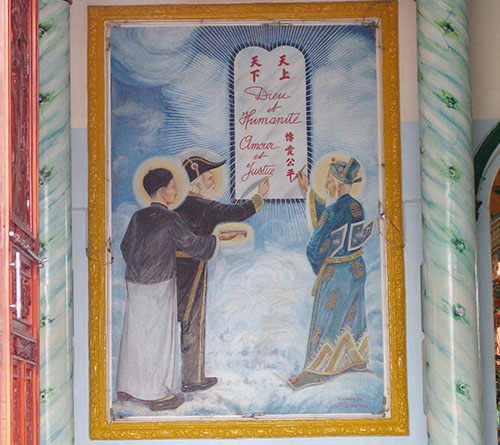
  • Freemasonry’s Secret Science of Symbolism: Resurrection, Immortality, and the Secret Elixir

    Freemasonry’s Secret Science of Symbolism: Resurrection, Immortality, and the Secret Elixir

    From New Dawn Special Issue 11 (Mar 2010)

    It was during its transitional phase of the early nineteenth century that Freemasonry began to change its public symbolism. During the eighteenth century, the skull and crossbones were used to mark the grave of a Freemason, the symbol being recognised by fellow Freemasons as the resting-place of a Master Mason. Though the skull and crossbones can be interpreted as a symbol of mortality, the use of the symbol on the figurative grave in the third degree ‘raising’ ceremony symbolises immortality, with the Master Mason being symbolically resurrected.

    The symbolism on Masonic tombstones began to change in the early 1800’s, and the traditional and somewhat terrifying skull and crossbones, was replaced by the much more ‘modern’ square and compass. This more scientific and modern symbol began appearing on many headstones marking the grave of Freemasons after the unification of the ‘Modern’ and ‘Antient’ Grand Lodges in 1813, and was adopted as the official public symbol of the new United Grand Lodge.

    The theme of immortality within Freemasonry is represented by a further array of symbolism. The symbolism of the snake which is also used in the Knights Templar ritual alongside the skull and crossbones, is also used as a representation of life and resurrection. The snake swallowing its own tail symbolises eternity within Freemasonry and can been seen as a stylised symbol of infinity.

    The sprig of Acacia, which is used as a symbol in the third degree, also represents immortality.1 The Acacia tree supposedly grew on the grave of Hiram Abbif and could be seen as a continuation of the life cycle, his death giving life to the tree. The Ark of the Covenant and the Alter of the Tabernacle, both of which resided in Solomon’s Temple, were both, according to legend, made of Acacia wood, as was Christ’s crown of thorns, and also the cross on which he was crucified, which represents the Christian belief in the Resurrection.2

    The author alongside a mysterious Masonic gravestone situated in St. Collen’s churchyard, Llangollen, Wales. During the eighteenth century, the skull and crossbones were used to mark the grave of a Freemason. (Photo courtesy of the author)

    Christ’s resurrection is presented in the Knights Templar ritual, presenting a similar theme to the third degree of Craft Masonry, with the raising of Christ being entwined with the search for hidden knowledge.3

    Pomegranates, though they symbolise fertility in Freemasonry today, represented re-birth and resurrection, and were used in the third degree ‘raising’ ceremony, during the eighteenth century, being displayed around the figurative grave.4

    The pentagram, representing the five wounds of Christ, and the five points of fellowship, which is the embrace used in the raising of the Mason, is a powerful and potent symbol, and also symbolises ‘resurrection’, especially with the representation of the resurrection of Christ after receiving the five wounds during crucifixion.

    The use of the pyramid as a Masonic symbol can also be seen to represent ‘resurrection’, as the mummified Pharaoh’s were buried within the pyramid, only to ‘rise’ again in another world. The pyramid also symbolises another form of sacred Temple, constructed using sacred geometry. The significance of the Mason completing three degrees is seen as a journey from birth, through maturity and then on to death, only to be reborn as an enlightened Master Mason, having discovered the secrets of the Craft.

    This theme had been discussed by Sir Isaac Newton, who envisaged that during the millennium, the ‘children of the resurrection’ would reside in the New Jerusalem, the spirits of just men being made perfect. Newton devoured works on alchemy, philosophy and the Old Testament, searching for ancient knowledge to understand biblical prophecies and mystical alchemy. His research, which appeared wide and varied on anything remotely related to alchemy, also included Rosicrucian works such as the Fama and Confessio.5

    The mysterious Rosicrucian Brotherhood during the seventeenth century were believed to be immortal and ‘invisible’, the supposed secrets of everlasting life attracting the interest of early Freemasons like Ashmole and Moray. The Rose symbolised immortality, and the rose placed on a cross, was meant to symbolise the secret of immortality.6 Later Rosicrucian societies also held the symbolism of immortality in its ritual. The resurrection of the mysterious mythical founder of the order, Christian Rosencreutz, was re-enacted within the ritual, the symbolic figure rising from his tomb.

    The Rosicrucian symbolism of immortality is also reflected in Arthurian myth, such as the expected ‘resurrection’ of King Arthur and the Holy Grail which in some legends had the ability to heal and give immortality. The Holy Grail was also seen as a symbol for alchemy,7 a sacred life-giving vessel which had contained the blood of Christ, also becoming linked to the Rosicrucians. The importance of this symbolism still resounds today with speculative writers such as Michael Baigent using the Holy Grail in connection with Freemasonry and other secret societies.8

    The Rosicrucian order, like Freemasonry, focused on a holy building, called the House of the Holy Spirit, which immediately echoes the focus of Solomon’s Temple in the Masonic ritual. The rediscovery of ancient knowledge was also featured, and the opening of the tomb of Christian Rosencreutz (which itself was seen as a representation of the Universe) reinforced the belief within the mysterious Rosicrucian Order of the second coming of Rosencreutz and led the way to the revealing of the secrets of the Universe itself. The Kabbalistic and Hermetic themes of immortality and the discovery of the hidden secrets of Nature symbolised in Rosicrucianism is certainly reflected in Freemasonry, and the journey made by the Mason as he experiences the three degrees.

    The journey is also a spiritual and educational one, the Mason gaining ultimate wisdom and an understanding of the hidden secrets of Nature and Science. The Charge given to the candidate during the third degree in Freemasonry refers to the search for knowledge which will lead to the ultimate discovery:

    Continue to listen to the voice of nature, which bears witness, that even in this perishable frame resides a vital and immortal principle, which inspires a holy confidence that the Lord of Life will enable us to trample the king of terrors beneath our feet…9

    The elaborately decorated Masonic gravestone of Charles Wainwright, a Manchester Freemason, buried in St. Elphin’s Parish Church, Warrington, in 1851. This gravestone has an array of Masonic symbols around the centralised square and compass, with the sun symbol to the left, and the crescent moon and seven stars to the right. The All-Seeing Eye is situated above the compass, which is set within an archway.
    (Photo courtesy of the author)

    The apparent paradox of the modern third degree ‘raising’ ceremony is that the newly made Master Mason is first told of the emblems of mortality which lies before him, only to be told that he is reborn to a new awareness, an awareness of immortality. Death and rebirth is a constant theme, and the ritual became popular, spreading quickly throughout Europe. In the eighteenth century Masonic ritual exposé ‘Three Distinct Knocks’, a description to the climax of the French version of the third degree ritual is eerily given:

    The French have a very solemn way of representing (Hiram’s) Death; for when you come into the Lodge to be made a Master, there is a Brother laid down in the Place where you are to lie, with his Face all besmear’d with Blood; and they say to you, Brother, don’t be frighten’d, for one of our Brothers is kill’d, because he would not deliver the Master’s Word and Gripe to Three Fellow-Crafts, that had no Right to it; and it is the Duty of us all so to do; to die before we will deliver any Part of Masonry to them that have no Right to it. When you kneel down to receive the Obligation the supposed dead Man lies behind you; and while you are reading the Obligation and History of his Death, he gets up unknown to you, and you are laid down in his Place…10

    The theatre of necromancy presented within the third degree ritual produces excellent dramatic effect, the death and rebirth of the Master Mason symbolising the endless search for lost ancient knowledge.

    The skull and crossbones very likely represented necromancy themes within the medieval Knights Templar order. The legend of the ‘Skull of Sidon’ reveals the story of a Templar Knight who had a relationship with a woman. The woman died, and as to consummate the relationship, the Templar Knight dug up the woman’s grave, and made love to her, which resulted in the birth of a son nine months later. This bizarre birth came in the form of a skull and crossbones which protected the Knight and endowed him with magical powers.

    Again, the skull and crossbones seem to symbolise immortality, with the continuation of life after death, entwined with secret wisdom. In the third degree, the Mason, as he lies in the figurative grave, also has his right leg crossed over his left, which is also similar to effigies of the buried Templar Knights.

    Another legend, which portrays the theme of immortality, is the account of the exhumation of the Scottish King, Robert the Bruce. When his grave was opened, the remains of Bruce was said to have been found with his leg bones crossed beneath his skull. Bruce has been linked to the Templar order by a number of speculative writers, who suggest, despite the lack of evidence, the order survived in Scotland, eventually influencing modern Freemasonry.11

    The necromancy traditions within the Templar movement are also reminiscent of the tale of the raising of Noah by his three sons who are searching for his secret knowledge. The attainment of gaining lost knowledge from the dead was a popular theme during the seventeenth century, with biblical references to the raising of the dead being well known.12 With notorious necromancers such as John Dee practising their art so openly, the search for the lost knowledge of the ancients became an exploration into the realms of the dark arts.

    The popular image of the skull being used as an occultist tool may also have originated as part of the process of alchemy. During the process, a phase called the Dead Head occurred, which was said to have transpired just before the discovery of the philosopher’s stone, which produced the elusive Elixir of life. The imagery that is constantly portrayed is one of the spiritual student attaining liberation and sacred knowledge, and it is only after the symbolic death of his old self that the new enlightened master craftsman can enter a new level of existence.

    The skull is also symbolic of the Sign of Sympathy, which consisted of the striking of the skull three times. This also takes place during the ‘raising’ ceremony, and may also represent the mystical Masonic number seven, as there are supposedly seven openings to the skull. Stevenson in his Origins of Freemasonry discusses the skull as an early Masonic symbol in Scotland representing death and rebirth, the skull, compass and square featuring on a list of symbols included in a poem displayed at the end of the early eighteenth century Dumfries No.4 Manuscript.13

    Another Masonic symbol, which sometimes appeared on gravestones during the eighteenth century, was the hourglass, which, though represented mortality, was in certain cases, displayed alongside the skull. The hourglass, however, was also linked to alchemy, and appeared in many contemporary prints and works of art which covered the theme of alchemy and Rosicrucianism. The hourglass, though reminding man of his time on Earth, could be turned over, letting the sand run again, and therefore giving an endless, limitless existence. The shape of the hourglass is also reminiscent of the infinity symbol (∞) and is displayed alongside other related symbols such as the scythe, Noah’s Ark and the sprig of Acacia in Masonic artwork during the eighteenth century. The Greek philosophers believed that time could be defeated, and the Metaphysical poets of the seventeenth century, such as Donne, expressed the same ethos in their poetry. Yet, as a Masonic symbol on gravestones, the hourglass became disused, and like the skull and crossbones, was replaced by the square and compass after the unification in 1813.

    An example of how the hourglass is used on a Freemason’s tomb. (Photo courtesy of www.pharmcat.demon.co.uk/cemetery/emblem.htm)

    Public perception of these symbols would have differed greatly from the small percentage of the population that were Freemasons. A fellow Freemason would have recognised the symbolism, though public opinion may have been confused, leading to misconceptions regarding the image. The skull and crossbones signified danger and conjured up fear and is highly reminiscent of the ‘jolly roger’, the pirate flag which began to be used in the early seventeenth century. The skull and crossbones displayed on flags were also used by some Masonic lodges, such as the old South Saxon Lodge which was erected from Lewes Castle when the lodge met there during the early nineteenth century.14 Another symbol used on the flags of pirates and privateers was the hourglass that, as we have just seen, was also used in Freemasonry.

    Perhaps the change of symbolism may have been an attempt to move away from the older, magical, mysterious, terrifying imagery; the new United Grand Lodge adopting a more modern and scientific symbol for the gravestones as a recognition of the new science and God’s reason, though it was a symbol which still represented the same meaning, that of life, death and re-birth.

    Alchemists and the Search for the Elixir

    The search for immortality within Freemasonry clearly drew upon the Rosicrucian links to alchemy and the search for the Philosophers Stone. The Philosophers Stone was identified with the Elixir, the mythical substance which would bestow eternal life, and could be gained after years of study and learning.

    This was still seen during the seventeenth century as a form of old science, Sir Isaac Newton actually practising alchemy and interpreting biblical prophecy, alongside his other, more ‘modernist’ experimental work. Biblical characters such as Moses, who were noted in the Bible as having an unnaturally long life, were seen as early alchemists, and Newton became obsessed with the search for hidden codes in Greco-Roman mythology and in the biblical texts. Newton believed that these ancient stories hid the codes which could reveal the secret of alchemy, the ancient mythological and biblical characters literally transmuting their hidden knowledge to the modern philosophers through their encoded texts. Newton saw himself as the chosen One, chosen by God himself to decipher the mysteries of Nature and biblical prophecy, unlocking the secrets of God’s Universe using a combination of ancient scripture and modern experimental natural philosophy.15

    One strange and mysterious figure who was said to have discovered the secret of immortality was Nicolas Flamel. Flamel was a fourteenth century scribe who was based in Paris, and supposedly discovered an ancient Kabbalistic manuscript. This supposedly enabled Flamel to turn base metal into gold and gave him eternal life. Flamel’s work in alchemy created many legends, and supposed sightings of him were recorded well into the eighteenth century.16

    A legendary mysterious figure who was linked to Freemasonry and the Rosicrucians in the eighteenth century was Count St. Germain.17 St. Germain, like Flamel before him, was said to have experimented with alchemy and the occult, and became well known throughout the courts of Europe. He was said to have been a Freemason himself and had known the Freemasons Casanova and Voltaire, the later referring to St. Germain as the “man who never dies and knows everything.”18

    Certainly historical alchemists such as Johann Baptista Van Helmont (1577–1644), contributed to early chemistry, and inspired Newton’s research into this field, but even Van Helmont was supposed to have transmuted mercury into gold by using the Philosophers Stone.19 The search for hidden knowledge was part of the alchemists work, and the popular imagery surrounding this esoteric research resounds in the necromantic themes of the ‘Modern’ Masonic third degree ritual, a ritual revised by Desaguliers, a disciple of Newton who was fully aware of the power of alchemy.

    Another mysterious, though historical figure who was linked to necromancy, alchemy and the occult, was Johannes Faust. Little is known of Faust, though he seems to have been granted a BA in divinity at Heidelberg in 1509, and like Flamel and St. Germain, gained mythical status as a man who sought hidden knowledge in an attempt to gain eternal life. Faust was also the inspiration for Christopher Marlow’s play ‘Doctor Faustus’ and the Freemason Goethe’s ‘Faust’, both telling of how Faust sold his soul to the devil, paying the ultimate price for his search for forbidden knowledge. Marlow’s play, published not long before Bacon’s ‘Advancement of Learning’, sets the scene with vivid necromantic Masonic-like imagery describing a mixture of early natural philosophy, magical symbolism and ritualistic practices:

    These metaphysics of magicians and necromantic books are heavenly; lines, circles, letters, characters – ay, these are those that Faustus most desires.20

    Marlow describes a ritual which is reminiscent of third degree Masonry, a ritual which certainly has parallels with John Dee and Edward Kelley’s ritual practices, having Faustus searching for hidden knowledge to raise the dead, using magical symbols in a mysterious ritualistic ceremony.

    Dee was an Elizabethan mystic and alchemist who became deeply involved in necromancy, his accomplice Edward Kelley, supposedly having attempted to ‘resurrect’ a corpse in a graveyard in Walton-le-Dale in Lancashire. Kelley allegedly exhumed the corpse and apparently forced it to speak using magic so it could reveal the whereabouts of a hidden fortune.21 The mysterious ritual that Kelley performed on the corpse also reflects the third degree in Freemasonry, the use of necromantic imagery and the theme of immortality entwined with the search for lost knowledge.

    The third degree Masonic ritual charges the newly made Master Mason that ‘he may finally arise from the tomb of transgression’, the search for lost knowledge culminating in a performance of necromancy. Though all of these figures are enveloped in myth, they may have inspired many Rosicrucian visionaries and early Freemasons, such as Ashmole and Moray, into researching the hidden mysteries of nature and science.

    Certainly Elias Ashmole became fascinated by the work of Dee and his accomplice Kelley, referring to them in his ‘Theatrum Chemicum Britannicum’, stating how they had mysteriously found a large quantity of the Elixir in the ruins of Glastonbury Abbey (a traditional resting place for King Arthur).

    The themes of resurrection within Freemasonry, and the symbolism attached to Masonic gravestones, certainly seem to represent a belief in the eternal cycle of life, and the educational processes, which led the Mason to discover spiritual purity and immortality of the soul. This is perhaps a more symbolic natural approach to everlasting life, and the influence of mysterious figures such as St. Germain, Flamel, Faust and Dee, may also be symbolic, all of whom were supposedly learned in ancient knowledge, all having completed an educational journey of discovery in connection with alchemy and magic.

    The above is abridged and excerpted with permission from Dr. David Harrison’s book The Genesis of Freemasonry, available from all good bookstores and through www.amazon.co.uk. His book is a revealing but thoroughly enjoyable journey through the intricate history of English Freemasonry. Freemasons and the general public will find much of interest in this fascinating exploration of the very beginnings of Freemasonry, still one of the most mysterious brotherhoods in the world.

    [alert type=”general” dismiss=”no”]This article was published in New Dawn Special Issue 11.[/alert]

    [alert type=”success” dismiss=”no”]If you appreciate this article, please consider subscribing to help maintain this website.[/alert]

    Footnotes

    1. For a detailed description of modern Masonic symbolism and regalia also see Anon., Constitutions of the Antient Fraternity of Free & Accepted Masons Under the United Grand Lodge of England, London: United Grand Lodge, 1919, 140-54.
    2. See Waite, New Encyclopaedia of Freemasonry, Vol.I, 1-2.
    3. Carlile, Manual of Freemasonry, 140-1.
    4. Anderson, Constitutions, London: 1769, 25-6.
    5. F.E. Manuel, The Religion of Isaac Newton, London: Clarendon Press, 1974, 45-6.
    6. K. Mackenzie, The Royal Masonic Cyclopedia, Worcester: Aquarian Press Edition, 1987, 609. Originally pub. 1877.
    7. Waite, New Encyclopaedia of Freemasonry, Vol.I, 368-78.
    8. See Baigent, Leigh and Lincoln, Holy Blood and the Holy Grail.
    9. Carlile, Manual of Freemasonry, 71.
    10. Anon., The Three distinct Knocks, Or the Door of the most Antient Free-Masonry, Dublin: Thomas Wilkinson, c.1785, 43-4.
    11. Baigent and Leigh, Temple and the Lodge, 182-3. See also Baigent, Leigh and Lincoln, Holy Blood and the Holy Grail, 74-81, and Knight and Lomas, Hiram Key, 384-91.
    12. Stevenson, Origins of Freemasonry, 144-5. Stevenson discusses the case of Patrick Ruthven in Scotland in 1623, who, thinking himself bewitched, received a visitation from Isobel Haldane, later to be executed for witchcraft, who attempted to cure him by lying on him ‘hir heid to his heid, hir handis ower him, and so forth’. This incident in trying to ‘raise’ the inflicted man, was similar to biblical incidents of ‘raising the dead’ such as Elisha who lay upon a child’s body, mouth to mouth, eyes to eyes and hands to hands, which, according to Stevenson, also recalls the five points of fellowship used in the raising ceremony of the third degree.
    13. Ibid., 137-3, 142 and 160-1. The Dumfries No.4 Manuscript is described by Stevenson as being an early eighteenth century manuscript and includes elements of the ritual regarding the opening of a lodge.
    14. N.B. Cryer, Masonic Hall of England: The South, Shepperton: Lewis Masonic, 1989, 80, 83.
    15. See Rob Iliffe, Newton: A Very Short Introduction, Oxford: Oxford University Press, 2007.
    16. Charles Mackay, Memoirs of extraordinary popular delusions, London: Samuel Bentley, 1841, 40-9.
    17. Waite, New Encyclopaedia of Freemasonry, Vol.II, 28.
    18. Isabel Cooper-Oakley, The Comte de St. Germain: The Secret of Kings, Milano, G. Sulli-Rao, 1912, 96. Voltaire discusses St. Germain in correspondence with Frederick of Prussia dated 15th of April, 1758.
    19. Frederick Ferré, Being and Value: Toward a Constructive Postmodern Metaphysics, New York: State University of New York Press, 1996, 167.
    20. S. Barnet, (ed.), Doctor Faustus by Christopher Marlow, New York: Signet, 1969, 26.
    21. Smith, Life of John Dee, 77.

    © New Dawn Magazine and the respective author.
    For our reproduction notice, click here.