New Dawn – World's Most Unusual Magazine

Category: Secret History

  • The Secret Elite & the Origins of the New World Order

    The Secret Elite & the Origins of the New World Order

    From New Dawn Special Issue Vol 9 No 4 (Aug 2015)

    Secret societies, the unseen hands that steer national and international affairs from the shadows, go back to the dawn of Western civilisation. The individual most famously linked to these occult forces is Adam Weishaupt (1748-1830), a Jesuit trained philosopher and lay professor of canon law at the University of Ingolstadt in southern Germany. On 1 May 1776 Weishaupt founded a secret society called the ‘Perfectilibists’ (which soon became known as the ‘Order of the Illuminati’.) The Illuminati recruited over 2,000 influential followers, but apparently lasted only until March 1785 when the Bavarian Government uncovered the conspiracy, exiled Weishaupt and outlawed the Order.

    Some investigators suggest that rather than being wound up in 1785, the Illuminati (‘enlightened ones’) continued in existence to the present day. For the past 200 years controversy persisted over its role in influencing global affairs. In 1798 John Robison, professor of philosophy at the University of Edinburgh, published Proofs of Conspiracy, a book alleging an Illuminati/Freemasonry plot to conspire against all religions, kings and governments of Europe.1 According to Robison, the Illuminati had been instrumental in fomenting the worst excesses of the French Revolution. That same year the Jesuit Abbé Augustin de Barruel published Memoires pour Servir a lHistoire de Jacobinisme which supported Robison’s thesis.2 A century and a half later, Nesta Webster and William Guy Carr revived conspiracy theories about the Illuminati.

    Nesta Webster (1876-1960), who was linked to the British Union of Fascists, wrote that rather than being banished, the Illuminati remained active and within a few years had “multiplied its hotbeds all through the south of Germany, and as a consequence in Saxony, in Prussia, in Sweden, and even in Russia.”3 William Guy Carr, an English born Canadian naval officer and lay Christian preacher, supported this thesis, maintaining that Weishaupt had been retained by moneylenders, including the House of Rothschild. Carr claimed there was an evil force at the forefront of an international conspiracy to destroy religious institutions and national governments in order to bring about a “Satanic One World Government.”4

    According to Carr, the conspirators use a variety of methods to help them accomplish their aims, including:

    1) Monetary and sex bribes to obtain control of individuals already occupying important positions. Such recruits are then held in bondage through blackmail, threats of financial ruin, public exposure or physical harm or death of their loved ones.

    2) Illuminati in colleges and universities recruit students possessing exceptional mental ability.

    3) Individuals trapped into Illuminati control are placed behind the scenes of all governments as ‘experts’ and ‘specialists’ who advise adoption of policies which serve the secret plans for one world government.

    4) Control of the press and all other agencies which distribute information to the public.5

    However, Illuminati researcher Dr. Tony Page says that Webster and Carr totally misrepresented the situation and were anti-Semites indulging in madcap conspiracy theory. Page translated Weishaupt documents from the original German and presents him as a much maligned moral and virtuous man whose intentions were “assuredly high minded and benign.” A man who “strove for far nobler and morally exalted goals than are properly ascribed to him. In fact, his intention (naive perhaps) but in my view, sincere, was to promote and disseminate human virtue, equality and freedom, and the happiness and dignity that flow from them.”6

    Today, some see the Illuminati “as a major factor and influence in international power politics, allegedly fomenting wars, civil disorder and revolutions in their attempt to establish a one-world government.”7 It appears the jury is still out on whether the Illuminati is an ongoing occult force.

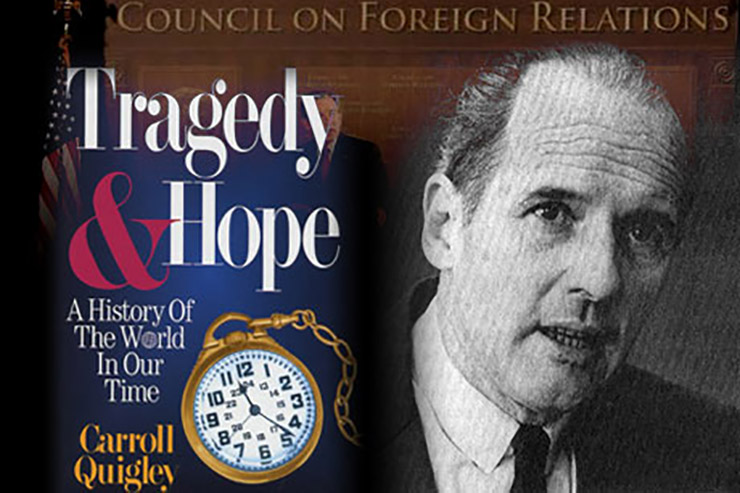
    What we can say is that in our own intensive research over the past 10 years on the true origins of the First World War, we found no direct connection whatsoever to Weishaupt’s creation. The secret society that we identify as responsible for the war employed similar tactics, but was a very different, very English creation. Furthermore, it remained concealed until exposed by the late Professor Carroll Quigley in the latter half of the 20th century. Quigley (1910-1977) was a highly esteemed American historian who moved in Establishment circles, lectured at top universities, including Harvard, Princeton and Georgetown, and was a trusted consultant to both the US Department of Defense and US Navy. He studied this secret network for 20 years and was permitted to examine its records. In 21st century parlance, Carroll Quigley was the whistle-blower par-excellence.

    THE QUIGLEY ENIGMA

    Professor Quigley wrote that the Rhodes secret society, or the ‘Milner Group’ as he called it after Cecil Rhodes’s death, was “one of the most important historical facts of the twentieth century” and of such significance that “evidence of its existence is not hard to find, if one knows where to look.”8 The ‘Milner Group’ exposed by Quigley is now widely recognised and variably named by others as the ‘Hidden Power’, the ‘Money Power’, the ‘Deep State’, or ‘the men behind the curtain’. All these labels are pertinent, but we call them, collectively, the Secret Elite.

    Without Quigley’s revelations, the lid on this secret society would still be closed today. By opening Pandora’s Box and revealing some of the evils therein, he enabled others to see the truth. His work exposing this powerful group has been enhanced and developed through years of careful research by other investigators into an explanation of how control of the civilised world has steadily been acquired through wars, economic manipulation and political chicanery by generations of privilege and money.

    Our own work, including the book Hidden History: The Secret Origins of The First World War, closely examines the men involved and reveals their nefarious global influence was greater even than Quigley believed. We garnered solid evidence that its members were directly responsible for taking the world to war in 1914 and deliberately prolonged the terrible carnage for over four long years while making massive fortunes from it. The immensely rich and powerful Secret Elite controlled the British and US governments from behind the scenes, then as now, and much of the global mayhem over the last century arose at their instigation.

    While Professor Quigley did mankind a great service, he remains an enigma. He exposed this ruthless, anti-democratic, totalitarian organisation and anguished over their determined attempts to suppress his writings, yet back-tracked on some of his original findings as if in fear of his life. He also side-stepped a number of key issues and failed to discuss the Secret Elite’s role in the genesis of the 1914-18 war, or their audacious coup d’etat in 1916 whereby they literally took over the British government. Rather bizarrely, Quigley stated that he agreed with their goals and aims.9 He did, however, disagree with their methods.

    Their tendency to place power and influence into hands chosen by friendship rather than merit, their oblivion to the consequences of their actions, their ignorance of the point of view of persons in other countries or of persons in other classes in their own country – these things, it seems to me, have brought many of the things which they and I hold dear close to disaster. In this Group were persons… who must command the admiration and affection of all who knew them. On the other hand, in this Group were persons whose lives have been a disaster to our way of life. Unfortunately, in the long run, both in the Group and in the world, the influence of the latter kind has been stronger than the influence of the former.… I feel that the truth has a right to be told, and, once told, can be an injury to no men of good will.10

    There is something deeply puzzling about Quigley’s assertion that while their methods brought much of what he held dear “close to disaster,” he agreed with their goals and aims for global control. These powerful men intended to replace democratically elected governments, arguing that their rule would be the rule of the best, whether or not the people wanted it.

    A few researchers raise the possibility that Quigley was at some stage an actual member of the secret society, but failed to admit it. We believe it far more likely his strange statements of support were down to self-preservation. In his major works – Tragedy and Hope and The Anglo-American Establishment – he narrated a history peopled by men who successfully concealed their power and influence, their connivance and common purpose. These individuals (and their descendants and agents ever since) conspired in secret towards the establishment of a world government that ultimately they, and they alone, would control.

    It is worth noting that Quigley’s histories have themselves been subject to suppression. Tragedy and Hope was removed from bookstore shelves by unknown persons and withdrawn from sale shortly after its release. His publisher, the Macmillan Company, destroyed the book’s original plates and lied to him for the next six years.11 Quigley believed that powerful people suppressed the book because it exposed matters they did not want known. In this instance, unlike his exposure of the British Establishment, he did not name his tormentors.
    IN THE BEGINNING

    The opening passage of Quigley’s The Anglo-American Establishment may read like a John le Carré thriller, but it is no spy fiction:

    One wintry afternoon in February 1891, three men were engaged in earnest conversation in London. From that conversation were to flow consequences of the greatest importance to the British Empire and to the world as a whole.

    The staunch British imperialists who met that day – Cecil Rhodes, William Stead and Lord Esher – were well-known public figures but it should be noted from the outset that each was linked to infinitely greater wealth and influence. They were joined weeks later by Lord Alfred Milner and Lord Nathaniel Rothschild, the international merchant banker and richest man in the world. He was inducted together with Lords Salisbury and Rosebery, whose families had for generations controlled the Conservative and Liberal parties in Britain and ruled the country as their personal fiefdom. Rothschild provided the financial clout while Salisbury and Rosebery provided the long-standing patronage and political networks.12

    Cecil Rhodes, in association with Rothschild, had made his fortune in the gold and diamond mines of South Africa. Stead was the most prominent English journalist of the day and a moral crusader of great standing. Esher represented the interests of the monarchy from Queen Victoria’s final years, through the exuberant excesses of King Edward VII, to the more sedate but pliable King George V. It was through Esher that the monarch was kept fully appraised of Secret Elite business.13

    Alfred Milner, a contemporary of Rhodes at Oxford University, was a self-made man of ability and ideas who began his working life as an aspiring lawyer, turned to journalism, led the political agitation against the Boer separatists in South Africa, and eventually emerged as an immensely powerful and successful power-broker. Milner was the master manipulator, the iron-willed assertive intellectual who offered that one essential factor: strong leadership. On Cecil Rhodes’s death in 1902, he became the undisputed leader of the world’s most powerful and far reaching secret society. These were the founding fathers of what we recognise today as the ‘New World Order’ movement.

    They met at private town houses and magnificent stately homes. These might be lavish weekend affairs or dinners in private clubs which provided suitable London bases for their intrigues. The heady mix of international finance, political manipulation and the control of government policy was at the heart of this small clique who set out to dominate the world. They drew up their plan for a secret society that would take political control in Britain and, later by extension, the United States of America. They renewed the Anglo-Saxon bond between the two countries – the ‘special relationship’ – expanding their power base to bring Anglophile Americans into the secret brotherhood; men who would go on to dominate the world through financial institutions, global corporations and dependent governments. Wars, revolutions and other major events of the last 100 years are directly attributable to these individuals. The Boer War and the destruction of Germany in 1914-18 were merely the first steps in their long-term strategy.

    The secret society comprised concentric circles with an inner core of trusted associates known as “The Society of the Elect” who unquestionably knew that they were members of an exclusive cabal devoted to taking and holding power worldwide. A second circle “The Association of Helpers” was larger and quite fluid in its membership. A third outer ring comprised members who may or may not have been aware they were either an integral part of, or inadvertently being used by, a secret society, though “it is more likely they knew it.”14

    The overlapping rings are themselves concealed, hidden behind formally organised groups of no obvious political significance. As Quigley put it, the group was able to “conceal its existence quite successfully, and many of its influential members, satisfied to possess the reality of power rather than the appearance of power, are unknown even to close students of British history.”15 In the early 20th century its tentacles spread throughout the British Empire to America, Russia, France, the Balkans and South Africa. Their targets were agents in the highest offices of foreign governments who were bought and nurtured for future use.

    What’s more, they had the power to control history, to turn history from enlightenment to deception. The Secret Elite dictated the writing and teaching of history from the ivory towers of academia down to the smallest of schools. They carefully controlled the publication of official government papers, the selection of documents for inclusion in the official version of history, and refused access to any evidence that might betray their covert existence. Incriminating documents were burned, removed from official records, shredded, falsified or deliberately rewritten, so that what remains for genuine researchers and historians is carefully selected material. Their ambitions overrode humanity and the consequences of their actions have been minimised, ignored or denied.

    [alert type=”info” dismiss=”no”]If you appreciate this article, please consider a subscription to New Dawn magazine.[/alert]

    SPREADING THEIR TENTACLES

    One of the problems facing anyone who turns to Quigley’s seminal The Anglo American Establishment is that it makes for a difficult read. Like several of the early chapters of the Christian Bible, his inter-connecting lists name many from the aristocracy, big business, high finance, politics and the press. Some were linked by matrimonial alliances while others by their gratitude for titles and positions of power.20 He devotes an entire chapter revealing how the Secret Elite controlled The Times (then Britain’s most influential newspaper) for more than 50 years with the exception of the period 1919-1922.21

    A list of Oxford graduates, especially those given fellowships at All Souls College, included Milner’s heir apparent, Lionel Curtis, and numerous others who later gained positions of great significance and power. Indeed, they all did, every single name listed by Quigley. Oxford gave the Secret Elite access to influential professorships, some of which they created and funded themselves, such as the Beit Chair of Colonial History, established in 1905. It remains a serious concern that Carroll Quigley was absolutely correct when pointing an accusing finger at those who monopolised “so completely the writing and the teaching of the history of their own period.”22 There is no ambivalence in his accusation. The Secret Elite controlled the writing and teaching of history through numerous avenues including the press, but none more effectively than at Oxford University where they held huge influence over Balliol, New College and All Souls, and largely dominated the intellectual life of Oxford in the field of history.23 They ensured we learn only those ‘facts’ that support their version of history. The influence was so powerful that they controlled the Dictionary of National Biography, meaning the Secret Elite wrote the biographies of its own members. They created their own official history of key members for public consumption, striking out any incriminating evidence and portraying the best public-spirited image that could be safely manufactured. Has anything changed?

    Oxford University was also the Secret Elite base for the Rhodes Scholarships, funded by the legacy left by Cecil Rhodes when he died in 1902. Rhodes’s wish was to create a “worldwide” secret group devoted to English ideals and to the Empire as the embodiment of these ideals,24 and the scholarships brought that international dimension to the society. They “were merely a facade to conceal the secret society, or, more accurately, they were to be one of the instruments by which members of the secret society could carry out his purpose.” Professor Quigley leaves us in no doubt that the secret society is the real power behind the scholarships.25 From its inception, Rhodes Scholarships favoured American students, with 100 places allocated, two for each of the 50 states and territories, whereas only 60 were made available for the entire British Empire and, strangely, several from Germany. The ‘best talents’ from the ‘best families’ were to be nurtured at Oxford University and imbued with an appreciation of ‘Englishness’ and the importance of the “retention of the unity of the Empire.”

    In The Anglo-American Establishment, Quigley concluded that the secret cabal advanced its power-base through a triple-front penetration in politics, the press and education.26 We would go further, and can but wonder why he omitted banking and the military-industrial complex from his analysis. Politicians will always be easy targets. Ambition, greed and sexual proclivity can be nurtured and harnessed. Sometimes men of real stature come to the fore and bring strong leadership to the cause. In the early years Alfred Milner assumed that mantle. Fired by a zeal forged by Ruskin at Oxford, he was consumed by the need to establish the primacy of upper-class Englishness at the pinnacle of world power. He believed in the need to bring the British Empire and the American ideal together to sweep aside any rival for world domination.

    Milner went to South Africa in 1897 to save it from falling to the Boers. He deliberately started the Boer War and saved the diamond and gold mines for fellow Secret Elites Rhodes, Rothschild, Beit and Bailey. He was idolised by Cecil Rhodes who placed his legacy in Milner’s safekeeping, and he was rewarded by the King with a knighthood and then a Viscountcy. Critically, in South Africa between 1897 and 1905, he built a personal following of young carefully chosen civil servants who loyally followed his every decision behind the scenes in British and world politics. Lord Alfred Milner was arguably the most important man living in the first decades of the 20th century, yet his name remains virtually unknown outside academic and political circles. Why?

    MILNER’S LEGACY

    To demonstrate the privileged path that the Secret Elite created in their quest to establish a ‘New World Order’, we have chosen to follow the trail that began with Alfred Milner, the undisputed leader for 23 years following Rhodes’s death in 1902. Critically, his most important achievement in South Africa was the creation of a network of extremely able acolytes to whom he entrusted the future direction of his cause: the domination of the world by the Anglo-Saxon race. His secretariat in South Africa comprised young men of “breeding, ability and conviction” from Oxford University, All Souls College in particular. Dubbed “Milner’s Kindergarten,” they absorbed his commitment to Ruskin’s philosophy, his disdain for career politicians and his concern that democracy as it had developed in the Western world was corrupt and untrustworthy. It was akin to “a religious brotherhood like the Jesuits, a church for the extension of the British Empire.”27

    From 1909 Milner began expanding the Kindergarten into a highly secretive organisation called the “Round Table,” with branches in South Africa, Canada, New Zealand, Australia and, crucially, the United States. (It is not to be confused with a benign charitable organisation of the same name.) The grand Arthurian title suggested equality of rank and importance, nobility of purpose and fairness in debate, but was nothing of the kind. Milner, and most of the Group, held democracy in contempt, and far inferior to rule by those who had an “intellectual capacity for judging the public interest” and “some moral capacity for treating it as paramount to their own.”28 Wealth, of course, also counted and “the key to all economics and prosperity was considered to rest with banking and finance”29 which the Secret Elite controlled. Alfred Milner acted as both elder statesman and father figure to the Round Table with his role described as “President of an Intellectual Republic.”

    The Round Table groups across the world kept in touch through regular correspondence and a quarterly journal called The Round Table that was controlled by the Secret Elite. They saw Britain as the defender of all that was fine or civilised in the modern world. Her “civilising mission” was to be carried out by force if necessary, for the “function of force is to give moral ideas time to take root.” Asians, for example, would be compelled to accept “civilisation” on the grounds they would be better off under British rule than that of fellow Asians. “To be sure, the blessings to be extended to the less fortunate peoples of the world did not include democracy.” They would simply be educated up to a level where they could appreciate and cherish “British ideals.”30 The ‘White Man’s Burden’ is indeed great.

    Milner, his Round Table, and the Secret Elite generally saw the new Germany with its economic, industrial and commercial strength as the great threat to their global ambitions. In The Round Table journal of August 1911, Lord Lothian, a member of the Secret Elite’s inner core, wrote: “There are at present two codes of international morality – the British or Anglo-Saxon and the continental or German. Both cannot prevail.”31 Alliances with France and Russia were created for the specific task of destroying Germany through a prolonged war.32 These men had no fear of war, though they rarely put themselves in the direct firing line.

    EXPANDING THE ANGLO-AMERICAN PRIMACY

    Cecil Rhodes had long dreamed of Anglo-American unity, and in 1891 actually discussed the possibility of achieving it by Britain joining the United States.33 On his death, the Secret Elite developed an even greater appreciation of America’s vast potential and the need for closer union. They adjusted the original concept of British race supremacy to Anglo-Saxon supremacy, so that Rhodes’s dream had only to be slightly modified. They created a common ideology and world outlook among the peoples of the United Kingdom and the United States, and the instruments and practices of cooperation in order to pursue parallel policies.34

    Alfred Milner believed these goals should be pursued by a secret political and economic elite influencing “journalistic, educational and propaganda agencies” behind the scenes. The flow of money into the United States during the 19th century advanced industrial development to the immense benefit of the millionaires it created: Rockefeller, Carnegie, Morgan, Vanderbilt and their associates. The Rothschilds represented British interests, either directly through front companies or indirectly through agencies they controlled. Small groups of massively rich individuals on both sides of the Atlantic knew one another well, and the Secret Elite in London initiated the very select and secretive dining club, the Pilgrims, that brought them together on a regular basis. On 11 July 1902, an inaugural meeting was held at the Carlton Hotel of what became known as the London Chapter of the Pilgrims Society. It was to have a select membership limited by individual scrutiny to 500. Ostensibly, The Pilgrims was created to “promote goodwill, good friendship and everlasting peace” between Britain and the United States, but its highly secretive and exclusive membership leaves little doubt as to its real purpose.35

    Seven months later the American chapter was formally created on similarly exclusive lines. This was the pool of wealth and talent that the Secret Elite drew together to promote its agenda in the years preceding the First World War. Behind an image of the Pilgrim Fathers, the persecuted pioneers of Christian values, this elite cabal advocated the idea that “Englishmen and Americans would promote international friendship through their pilgrimages to and fro across the Atlantic.” It presented itself as a spontaneous movement to promote democracy across the world, and most of the membership probably believed that. But the Pilgrims included a select collective of the wealthiest figures in both Britain and the United States who were deeply involved with the Secret Elite. They shared Rhodes’s dream and wanted to be party to it.36

    In Britain, at least 18 members of the Secret Elite, including Lords Rothschild, Curzon, Northcliffe and Esher, and Sir Edward Grey and Arthur Balfour, attended Pilgrims dinners, though the regularity of their attendance is difficult to establish. Such is the perennial problem with secret groups. We know something about the guests invited to dinner but not what was discussed between courses. In New York, members included both the Rockefeller and Morgan dynasties, and many men in senior government posts. The power elite in America was New York centred, carried great influence in domestic and international politics, and was heavily indulgent of Yale, Harvard and Princeton universities. Within a short period of time they created an American version of what Carroll Quigley termed the triple-front penetration of politics, the press and education. The Pilgrims Society brought together American money and British aristocracy, royalty, presidents and diplomatic representatives. It was indeed a special relationship.37

    Because closer ties with the United States were considered of such crucial importance, a Round Table group was also established in New York to further develop links between Westminster and Washington, and high finance in the City of London and Wall Street. It was supported by Rockefeller and Morgan, managed in secret, hidden from the electorate and the politicians, and normally its meetings went unreported in the press. Members aimed to gain political influence and set the political agenda in the US, but they were rarely willing to speak out in public. All was to be carried out in secret.38 How dangerous are those who believe they have the capacity to think and plan for the world’s good, impervious to the will of the people and disdainful of democracy itself?

    The first American to be directly associated with the Round Table was George Louis Beer, an outspoken Anglophile academic and writer who contributed reports and articles to their magazine for many years. Beer called Alfred Milner “the intellectual leader of the most progressive school of imperial thought throughout Europe,” and was one of the chief supporters of America’s intervention in the First World War. His link to the Secret Elite opened many associated doors and Beer became the recognised expert on colonial questions at the Paris Peace Conference in 1918-19. In the manner which typifies how these powerful men write their own histories, Beer and his Secret Elite compatriot, Lord Eustace Percy, later drew up the outline plan for the History of the Peace Conference. In other words, the Secret Elite made sure that the record for future generations was one they dictated. They supported Beer’s appointment to the head of the Mandate Group of the League of Nations and he was one of the creators of the Royal Institute of International Affairs in London (Chatham House), its American branch, The Council on Foreign Relations (CFR) and sister organisation the Institute of Pacific Relations.39 Lest there be any doubt, these were all Secret Elite creations. Milner’s Kindergarten had been expanded into the Round Table and that, in turn, had been expanded into the Royal Institute of International Affairs in London, the CFR in New York, and other Institutes across the globe.

    The dominant role of the CFR in controlling American policy and politics cannot be overstated because almost all of America’s leadership has stemmed from this elite group. That includes US presidents and their advisors, cabinet members, ambassadors, members of the board of the Federal Reserve, directors of the largest banks and financial houses, presidents of universities and heads of metropolitan newspapers, news services, and television networks. “It is not an exaggeration to describe this group as the hidden government of the United States.”40 It is no less than a carbon copy of how the Secret Elite took control of Britain in the 20th century. These organisations were direct extensions of the Round Table Groups and have helped drive the Secret Elite agenda through the 20th century and beyond.

    Carroll Quigley was the trailblazer in unmasking the Secret Elite, and it is plain to see they still dominate the British and American governments among others; still control banking and finance, politics, the press, the military-industrial complex, the universities and the key offices of state.

    Wherever you live, ask yourself this, “is it happening here?” The grotesque plan set in motion by Rhodes and Milner at the end of the 19th century rolls on. Can it be stopped from reaching its ultimate destination – totalitarian, elite-controlled one world government? The challenge is to reach beyond what Gore Vidal described as a conditioned response to the word ‘conspiracy’ where people react with a smirk and a chuckle; where historical analysis and contemporary evidence that demonstrates the power these people wield is dismissed as the product of ‘nuts and loners’ or fringe extremists.41 If we give up trying to educate the doubters, give up telling it as it really is, we the people are doomed to an Orwellian nightmare.

    Readers are encouraged to obtain a copy of the authors’ book Hidden History: The Secret Origins of the First World War and visit the authors’ blog at firstworldwarhiddenhistory.wordpress.com. Hidden History is available from all good bookstores and online retailers.

    [alert type=”general” dismiss=”no”]This article was published in New Dawn Special Issue Vol 9 No 4.[/alert]

    [alert type=”success” dismiss=”no”]If you appreciate this article, please consider subscribing to help maintain this website.[/alert]

    Footnotes

    1. E-book available at www.sacred-texts.com/sro/pc/pc03.htm
    2. E-book available at https://books.google.com.pe/books/about/M%C3%A9moires_pour_servir_a_l_histoire_du_ja.html?id=y8NWAAAAMAAJ
    3. Nesta H Webster, Secret Societies and Subversive Movements, HRP edition, 254
    4. William Guy Carr, Pawns in the Game, X
    5. Ibid., X-XI
    6. Tony Page, A Brief Justification of My Intentions by Adam Weishaupt, www.amazon.com/Brief-Justification-Intentions-Adam-Weishaupt-ebook/dp/B00M4TL9RS
    7. ‘The Enlightened Ones: The Illuminati and the New World Order’ by Michael Howard, New Dawn Special Issue 11
    8. Carroll Quigley, The Anglo-American Establishment, IX-X
    9. Ibid., XI
    10. Ibid., IX-X
    11. www.youtube.com/watch?v=JeuF8rYgJPk
    12. Gerry Docherty & Jim Macgregor, Hidden History: The Secret Origins of the First World War, 17-29
    13. Carroll Quigley, Tragedy and Hope: A History of the World in Our Time, 137
    14. Quigley, The Anglo-American Establishment, X
    15. Ibid., 4-5
    16. www.youtube.com/watch?v=JeuF8rYgJPk
    17. D. J. Markwell, ‘Zimmern, Sir Alfred Eckhard (1879–1957)’, Oxford Dictionary of National Biography, Oxford University Press, 2004, www.oxforddnb.com/view/article/37088
    18. Quigley, The Anglo-American Establishment, X
    19. Docherty & Macgregor, Hidden History, 14
    20. Quigley, The Anglo-American Establishment, 15
    21. Ibid., 101-116
    22. Ibid., 197
    23. Ibid., 84-100
    24. Ibid., 37
    25. Quigley, Tragedy and Hope, 131
    26. Quigley, The Anglo-American Establishment, 15
    27. Ibid., 34
    28. Ibid, 134
    29. Ibid., 122
    30. Ibid., 133-6
    31. Ibid., 329
    32. Docherty & Macgregor, Hidden History, 75-96
    33. Quigley, The Anglo-American Establishment, 38
    34. Ibid., 150
    35. Docherty & Macgregor, Hidden History, 210-224
    36. Ibid.
    37. Ibid.
    38. Ibid.
    39. Quigley, The Anglo-American Establishment, 168
    40. G. Edward Griffin, The Creature From Jekyll Island, 110
    41. Gore Vidal, Perpetual War for Perpetual Peace

    © New Dawn Magazine and the respective author.
    For our reproduction notice, click here.

  • Secret Societies and The First World War

    Secret Societies and The First World War

    From New Dawn 146 (Sept-Oct 2014)

    This August [2014] the centenary of the beginning of the First World War was marked by the release of new books, magazine articles, radio programmes and television documentaries. There has also been considerable public discussion among mainstream academics and historians about the causes of the war and whether the slaughter of millions on both sides was justified.

    It has been suggested World War One was a struggle for power between rival empires, the political and economic control of Europe, and the colonial dominance of the Far East. It was certainly the end result of a gradual military build-up and arms race since the early 1900s by the main protagonists. However, there were darker and more sinister forces at work involving secret societies that wanted to overthrow the European monarchies and change the traditional order in Europe.

    As early as the end of the 19th century some observers were predicting a major European war. In a series of lectures on ‘Occult Science, Theosophy and the Catholic Faith’ given to a gathering of occult students in 1893, this idea was mooted by the lecturer C.G. Harrison. These talks were published in book form three years later under the title The Transcendental Universe (George Redway & Co, 1896). In general they dealt with occult subjects such as the Cabalistic Tree of the Life, the difference between Satan and Lucifer, the celestial hierarchy of angels, the Theosophical Society and the ‘Hidden Masters’ of Madame Blavatsky. In the second lecture, however, Harrison deviated from esoteric matters to refer to the Russian Empire and a confederation of Slavic states in south-eastern Europe that had recently broken away from the Ottoman Empire. He predicted these “little states” would only remain independent until the “next great European war.” He also said that it was the destiny of the Russian Empire to die “so the Russian people may live” and referred to “experiments in Socialism” that would create a higher form of civilisation. These developments, Harrison suggested, would cause innumerable political and economic difficulties in Western Europe.

    Assassins, Emperors & Occultists

    The French Martinist and occultist Dr. Gerard Encausse (aka ‘Papus’) was closely associated with the Russian royal family. He claimed before the First World War that a “large financial syndicate” was behind the current political problems and upheavals in Europe, especially in France and Russia. Specifically, he identified the Freemasons and the Carbonari, an anti-clerical Italian secret society, as the organisation’s prime movers and claimed the centre of the conspiracy was in the City of London banking district with branches in Germany. Dr. Encausse said the aim of this shadowy group of financiers was to gain control of the world’s gold reserves. To do this they planned to create social, political and economic instability and possibly even war between the major European powers.

    The actual flashpoint that led to the First World War was a tragic event in the Bosnian city of Sarajevo. On 28 June 1914 Archduke Franz Ferdinand, the heir to the Austro-Hungarian Empire, and his Czech wife Archduchess Sofia, were on an official visit. As their car drove through streets lined with cheering crowds a small group of fanatical assassins attacked the royal party. One threw a crude bomb at the vehicle that bounced off the bonnet and exploded on the road. The car’s occupants were unharmed but the explosion injured twenty bystanders. The would-be assassin fled the scene and was later arrested by the police after trying to commit suicide using cyanide. Having survived this attack and believing they were safe, the royal couple proceeded on. Unfortunately their driver took a wrong turn and brought his passengers into a fateful and deadly contact with the remaining assassins. One walked up to the side of car and fired two shots with his pistol, killing the archduke and his wife instantly.

    The three main assassins in Sarajevo were a teenager named Gavrilo Princip, who was the shooter, and two of his equally young friends. They were all Serbian nationalists belonging to a secret society called the Order of the Black Hand. The group’s members included military officers, lawyers, civil servants and university lecturers. However, the Sarajevo assassins were young students with socialist and anarchist views who had decided to make a violent gesture against the Habsburg monarchy. When the case came to court it was claimed the young men had not acted alone and were part of a wider conspiracy with more universal objectives.

    In his book L’Attentat de Sarajevo (1930) Alfred Moussett recorded that at the trial of Gavrilo Princip (Gabriel Prince in English) it was claimed a Masonic lodge in France had financed the Order of the Black Hand in their political activities. When he testified, Princip’s co-defendant Vaso Cubrilovic (1897-1990) made the fantastic claim that the assassination of Franz Ferdinand had been planned two years earlier at a meeting of senior French Freemasons in Toulouse. Allegedly at this secret gathering a sentence of death was passed on the archduke. Cabrilovic also said that the Browning automatic pistol used in the assassination had been provided by a Serbian Freemason called Ziganovic. It was also stated in court that Princip was a Mason (although he was far too young to have been one) and the group of assassins had been trained by another member of the fraternity called Tankosi.

    Gavrilo Princip died in an Austrian prison in 1918 from tuberculosis, but Cubrilovic was released in November 1918 when the Allied powers won the war. After he came out of prison Cubrilovic turned into a model citizen. He was a schoolteacher and a professor at the University of Belgrade, a member of the Serbian Academy of Arts and Sciences, and after the Second World War served as a Yugoslavian government minister during the communist regime of Marshall Tito. Cubrilovic’s anti-Albanian writings in the late 1930s calling for ethnic cleansing are said to have influenced the terrible events of the Bosnian War in the 1990s.

    It was widely known that Austrian Emperor Franz Josef I was paranoid about secret societies and Masonry in particular. His wife the Empress Elizabeth had been brutally stabbed to death by an assassin with secret society links in 1898. The emperor himself had been the subject of an assassination attempt by the Black Hand in 1911. Franz Josef believed French Freemasons were plotting to start a war between Austria-Hungary and Russia. The aim of such a conflict was to bring down both monarchies. His worst fears would have been confirmed by the revelation during the trial of his nephew’s murderers that the Russian military attaché in Belgrade had passed 8,000 roubles from his government to the Black Hand leadership. With this gift came a personal assurance from Tsar Nicholas II that he would support Serbia in any armed conflict with the Habsburg Empire.

    The German Kaiser

    Kaiser Wilhelm II of Germany was a friend of Archduke Ferdinand and was shocked when he heard of his death. He immediately offered German support to crush the Order of the Black Hand.

    Events soon spiralled out of control when on 28 July a still distraught Emperor Franz Josef declared war on Serbia because of the murder of his nephew and heir. In response Russia began to mobilise its military forces to defend their Serbian ally. The German kaiser told Tsar Nicholas that unless the Russian army stood down Germany would also mobilise. The demand was ignored and on 1 August Kaiser Wilhelm declared war on Russia. France and Britain were asked by the German government to remain neutral in the conflict. But two days later the German ambassador in London informed Sir Edward Grey, the British Foreign Secretary, that his country’s troops planned to march through neutral Belgium into France. In defence of the Belgians and the French, Britain declared war on Germany and its allies and the First World War began. Four years later it is estimated about 16 million soldiers and civilians had been killed.

    Kaiser Wilhelm, who was related through his grandmother Queen Victoria to most of the European royal families, believed the popular conspiracy theories about Freemasonry and other secret societies. These beliefs coloured both his domestic and foreign policy. Throughout the kaiser’s reign until his forced abdication in 1918 he believed Jewish elements in the German press, left-wing politics and international banking were plotting to overthrow him. When he abdicated the kaiser blamed an international conspiracy for starting the Great War, engineering Germany’s defeat and his own downfall.

    Ironically, when hostilities began Kaiser Wilhelm was effectively sidelined and became a puppet ruler controlled by a military junta led by his generals. As a result he was increasingly excluded from political decisions and the day-to-day running of the war. Any support that Wilhelm had from the public and the ruling officer class faded away in 1918 when it became clear Germany was losing the war and the kaiser became a convenient scapegoat. Many blamed Wilhelm for getting the country involved in the first place. When he was told the army’s officer corps would no longer support him and popular uprisings began, Wilhelm fled by train from Berlin to a self-imposed exile in neutral Holland. There he formally announced his abdication and ended the 400 year old reign of the Hohenzollern royal dynasty in Germany.

    [alert type=”info” dismiss=”no”]If you appreciate this article, please consider a subscription to New Dawn magazine.[/alert]

    According to the British occultist Lewis Spence in his book The Occult Causes of the Present War (1941), at his Dutch retirement home Wilhelm had an extensive library. Among the hundreds of books he collected and read were many volumes on esoteric subjects such as Freemasonry, Luciferianism, secret societies and the occult. The ex-kaiser had always been interested in occultism and Spiritualism. In fact in 1888 it was reported he had even attended a séance held to contact the spirits of the dead. However, later in life, he was to criticise and condemn some civil servants who had become involved in occult activities. Wilhelm’s interest in Spiritualism and alternative spirituality was shared by his cousin the Russian tsar and also the tsarina, who patronised the ‘holy man’ Rasputin because of his healing powers.

    One of Wilhelm’s friends and regular correspondents was an English occultist with German links called Houston Stewart Chamberlain (1855-1927), the husband of the composer Richard Wagner’s step-daughter, Eva. Chamberlain and Wilhelm shared similar views and the Englishman also had his own idiosyncratic ideas about German racial superiority. In the 1920s these ideas influenced the ideology of Adolf Hitler and his emerging National Socialist Party. Wilhelm invited Chamberlain to his royal court in Berlin and even arranged for his writings to be distributed among army officers and placed in school libraries.

    Rudolf Steiner & the Great War

    The German kaiser’s interest in the occult and esotericism was shared by the Chief of Staff of the Army, General Helmuth Von Moltke (1848-1916). He was influenced by his wife’s Austrian spiritual mentor Rudolf Steiner (1861-1925), the founder of the Anthroposophical Society. Today Steiner is best known for his radical education methods taught in Waldorf schools and his promotion of biodynamic agriculture.

    Von Moltke first met Rudolf Steiner in 1904 and they remained friends until the end of the general’s life. One of Von Moltke’s critics, Dietrich Graf Von Hulson-Haeseler, Chief of the Military Cabinet, opposed his appointment as Chief of Staff because of his occult interests. He condemned Moltke as an irrational religious dreamer who believed in “nonsense” such as guardian angels and faith healing. Because of the criticism of his appointment, Kaiser Wilhelm ordered Von Moltke to “stop dabbling in the supernatural,” or at least keep his unusual interests private. This did not prevent the general and his wife frequently contacting Rudolf Steiner and secretly following his esoteric philosophy and teachings on subjects such as the lost continent of Atlantis, karma, reincarnation and the spiritual realm.

    Rudolf Steiner was also a firm believer in the hidden power and influence of secret societies on world events and generally regarded them as satanic in nature. He believed their ultimate aim was the enslavement of the human race. In 1916 and 1917 Steiner strayed into the political arena during a series of lectures in Switzerland. In one he suggested that secret societies were responsible for the current war. Transcripts of the talks were later published in two volumes under the title The Karma of Untruthfulness: Secret Societies, the Media, and Preparations for the Great War. In one of the lectures, given on 8 January 1917, Steiner claimed that secret cabals wanted to preserve the economic position of the English speaking countries (Britain and the United States) in Europe and destroy the dominance of Germany and Austria-Hungary. The First World War certainly achieved that aim as the ruling monarchies of both power blocs were overthrown. The Austro-Hungarian empire was dismembered, while Germany became a republic. The Russian Empire collapsed to be replaced with one of the “experiments in Socialism” that resulted in the Soviet Union, as predicted by the English occultist C.G. Harrison in his lectures given over a decade before in 1893.

    Ahead of his time, Steiner also warned his students of the future threat to personal freedom. He told them the Anglo-American materialistic worldview would lead to the social control of the human race and the suppression of spiritual development. Predicting the present global economic situation, Steiner said individual governments were not really in control of national finances. Instead, the international banking system was the real controller. It was infiltrated or being used by secret societies working towards an “Ahrimanic [satanic] world order” based on rationalism and materialism.

    With regard to the First World War, Steiner seems to have laid the blame on a plan hatched by the British to manipulate France and Russia and create a pan-Slavic federation in south-eastern Europe. He also said that the agenda of the occult secret societies from their origin in ancient times was to preserve a monopoly on knowledge. They allegedly taught their followers that the destiny of the Anglo-Saxon race was to rule the world and Steiner gave the British Empire as an example of this process. According to the Austrian occultist, it was also the plan of the secret societies for “centuries into the future.” Steiner later identified the Russian Revolution as the work of these clandestine groups. This was because it furthered their mission of social control over millions of people using a totalitarian political system, i.e. communism.

    In November 1918 the Armistice was signed between the Allied and Central European powers at the former royal palace of Versailles in France. It is said that at the signing the British Foreign Secretary, Lord Curzon, remarked it was not a real peace treaty and represented only a truce in hostilities between the major European powers. He even correctly predicted that a new war would break out between the Allies and Germany within twenty years. In September 1939 Lord Curzon’s prediction came true when Britain declared war on a Nazi Germany led by Adolf Hitler. Many historians have said it was the severe conditions of the Treaty of Versailles that humiliated the Germans which led to the Second World War.

    The Hidden Hand

    After what was called the Great War ended, fingers of suspicion began pointing towards hidden influences that might have been responsible for it. The famous American industrialist and founder of the Ford Motor Company, Henry Ford (1863-1947), had no doubts. Talking in the 1920s about the First World War, Ford blamed it on the machinations of a secret cabal of “Jewish bankers.” It was a belief that was not unusual and found support in many quarters, not least among those politicians and senior military personnel who had actually been involved in the Great War.

    For instance, during the war Winston Churchill was the First Lord of the Admiralty in charge of the then powerful Royal Navy that ruled the world’s seas. In the 1920s Churchill expressed his admiration for the anti-Semitic conspiracy theorist Nesta Webster, who believed the Illuminati were responsible for the French and Russian Revolutions. Churchill even wrote about an international conspiracy operating behind world affairs. He mentioned Adam Weishaupt of the 18th century Bavarian Illuminati and attempts to overthrow Western civilisation in the same sentence as Karl Marx and Leon Trotsky.

    On the German side, General Erich von Ludendorff, the Chief of Staff of the Army after Von Moltke, put the blame for his country’s defeat on the forces of “international Freemasonry.” He also held it responsible for bringing the United States into the war in 1917, which dramatically changed the military balance in the Allies’ favour after two years of stalemate in the trenches. Von Ludendorff was also another anti-Semite who regarded Masonry as a cover and a source of power for “international Jewry.” The general believed Kaiser Wilhelm had metaphorically been “stabbed in the back” by conspirators led by “Judeo-Freemasons” and international bankers.

    On 7 March 1919 a public meeting of the Citizens’ Association in Vienna, Austria was organised by Count Czernin, the former foreign minister of the Austro-Hungarian Empire. A lecture was given by Dr. Richard Schuller, once an economist in the Austrian foreign office, on the subject of ‘Freemasonry and the World War’. A nationalist politician and lawyer called Dr. Friedrich Georgi Wichtl also told the audience, which included members of local Masonic lodges, that the assassination of Archduke Franz Ferdinand had been organised by Serbian Freemasons using the Order of the Black Hand as their tool. Dr. Wichtl also accused Masons of involvement in the assassination of King Carlos I of Portugal in 1908. He was another cousin of Kaiser Wilhelm of Germany and had been murdered by two anti-monarchist republicans while visiting Lisbon.

    One of the assassins, Alfredo Luis de Costa, was a journalist working for socialist publications and a Freemason. Previously he had been involved in an abortive coup against the Portuguese government. In common with Gavrilo Princip who assassinated Franz Ferdinand six years later, the killers of King Carlos had used Browning automatic pistols.

    It is obvious from the overwhelming evidence that before, during and after the First World War, there was a widespread belief that the subversive activities of secret societies set the world on course for a murderous global conflict.

    The notion of secret cabals manipulating world events – like sinister puppet-masters – is a powerful one in history. It is an idea that still exists today among conspiracy theorists, except that in the early 21st century secret cabals like the Illuminati, renegade Freemasons and ‘international bankers’ are said to be planning World War III. If the 1914-1918 conflict was, as optimistically claimed afterwards, the ‘war to end all wars’ then the next global war will definitely be the one that ends civilisation.

    [alert type=”general” dismiss=”no”]This article was published in New Dawn 146.[/alert]

    [alert type=”success” dismiss=”no”]If you appreciate this article, please consider subscribing to help maintain this website.[/alert]

    © New Dawn Magazine and the respective author.
    For our reproduction notice, click here.
  • The Secret Origins of the First World War

    The Secret Origins of the First World War

    From New Dawn Special Issue Vol 9 No 1 (Feb 2015)

    The history of the First World War (1914–1918) is a deliberately concocted lie. Not the sacrifice, the heroism, the horrendous waste of life or the misery that followed. No, these were very real, but the truth of how it all began and how it was unnecessarily and deliberately prolonged beyond 1915 has been successfully covered up for a century. A carefully falsified history was created to conceal the fact that Britain, not Germany, was responsible for the war. Had the truth become widely known after 1918, the consequences for the British Establishment would have been cataclysmic.1

    To the victors go the spoils, and their judgment was reflected in the official accounts. At Versailles in 1919 Britain, France and the United States claimed that Germany had planned the war, deliberately started it, and rejected all Allied proposals for conciliation and mediation. Millions of documents were destroyed, concealed or falsified to justify that verdict. Germany rightly protested she had been forced into war by Russian aggression. German delegates at Versailles, under threat of occupation, dismemberment and starvation, were left with little choice but to accept the blame and agree to massive reparations. As The Economist put it, the Treaty of Versailles was the final crime whose harsh terms would ensure a second war.2

    Our research proves that the true origins of the war are to be found not in Germany, but in England. In the late nineteenth century a secret society of immensely rich and powerful men was established in London with the stated aim of expanding the British Empire across the entire world. They deliberately caused the South African War of 1899–1902 in order to grab the Transvaal’s gold from the Boers. Their responsibility for that war, and the horror of British concentration camps in which 20,000 children died,3 have been airbrushed from official histories. The second stage of their global plan was the destruction of the rapidly developing industrial and economic competitor, Germany.

    Carefully falsified history? Twenty thousand children dying in British concentration camps? A secret society taking control of the world? Britain responsible for the First World War? Should you jump immediately to the conclusion that this is some madcap conspiracy theory, please consider the work of Professor Carroll Quigley, one of the twentieth century’s most highly respected historians. Quigley’s greatest contribution to our understanding of modern history is presented in his book The Anglo-American Establishment. It carries explosive details of how the secret society of international bankers, aristocrats and other powerful men controlled the levers of politics and finance in Great Britain and the United States. Quigley explains that very few people knew about this because the society was able to conceal its existence and “many of its most influential members are unknown even to close students of British history.”4

    Plotting to Destroy the ‘Teutonic menace’

    Cecil Rhodes, the South African diamond millionaire, formed the secret society in London in February 1891.5 Its members aimed to renew the bond between Great Britain and the United States, spread all they considered worthy in English ruling-class values, and bring all habitable portions of the world under their influence and control. They believed that ruling-class men of Anglo-Saxon descent rightly sat at the top of a hierarchy built on predominance in trade, industry, banking and the exploitation of other races.

    Victorian England sat confidently at the pinnacle of international power, but could it stay there forever? That was the question exercising serious debate in the great country houses and smoke-filled parlours of influence. The elites harboured a deep rooted fear that unless they acted decisively, British power and influence across the world would be eroded and replaced by foreigners, foreign business, foreign customs and laws. The choice was stark. Either take drastic steps to protect and further expand the British Empire, or accept that the new, burgeoning Germany might reduce it to a minor player on the world’s stage. In the years immediately after the Boer War, the decision was reached. The ‘Teutonic menace’ had to be destroyed. Not defeated, destroyed.

    The plan began with a multi-pronged attack on the democratic process. They would: (a) Wield power in administration and politics through carefully selected and compliant politicians in each of the major political parties; (b) Control British foreign policy from behind the scenes, irrespective of any change of government; (c) Draw into their ranks the increasingly influential press-barons to exercise influence over the avenues of information that create public opinion, and (d) Control the funding of university chairs, and completely monopolise the writing and the teaching of the history of their own time.6

    Five principal players, Cecil Rhodes, William Stead, Lord Esher, Lord Nathaniel Rothschild and Alfred Milner, were the founding fathers, but the secret society developed rapidly in numbers, power and presence in the years before the war. Influential old aristocratic families that had long dominated Westminster were deeply involved, as was King Edward VII who operated within the inner core of the Secret Elite. The two great organs of imperial government, the Foreign Office and the Colonial Office, were infiltrated, and control established over their senior civil servants. They likewise took over the War Office and the Committee of Imperial Defence. Crucially, they also dominated the highest echelons of the armed forces through Field Marshall Lord Roberts7 in what we have termed the “Roberts Academy.”8 Party-political allegiance was not a given prerequisite for members; loyalty to the cause of Empire was. They have been referred to obliquely in speeches and books as ‘the money power’, the ‘hidden power’ or ‘the men behind the curtain’. All of these labels are pertinent, but we have called them, collectively, the Secret Elite.

    Leading Role Played by Alfred Milner

    The leading figure in the Secret Elite from around 1902 until 1925 was Alfred (later Viscount) Milner. Remarkably, few people have ever heard his name. Professor Quigley noted that all biographies of Milner had been written by members of the Secret Elite and concealed more than they revealed. In his view, this neglect of one of the most important figures of the twentieth century was part of a deliberate policy of secrecy. Milner became the undisputed leader of the Secret Elite. On his return from South Africa in 1905 he set about preparing the British Empire for war with Germany. Though not a member of parliament, he sat in the inner-circle of Lloyd George’s Imperial War Cabinet from 1916 onwards.9 What was so precious about Lord Alfred Milner that he has been virtually airbrushed from history?

    In goading the Boers into war, Milner displayed the cold objectivity that drove the cause. War was unfortunate but necessary. It had to be. The very future of the Secret Elite’s global ambitions depended on a victorious outcome. By May 1902, the Transvaal’s gold was in their hands at the cost of 32,000 deaths in the concentration camps. Though the Boer War finally ended in victory it came at a cost greater than the 45,000 Empire troops killed or wounded.10 Britain had fewer friends than ever. Up to that point, Britain didn’t care. Living in ‘splendid isolation’ and devoid of binding treaties with any other nation had not been viewed as a handicap as long as no other power on earth challenged the Empire.

    But in the early years of the twentieth century there was a serious challenger. If the Secret Elite were to achieve their dream of world domination, the first step had to be the removal of the upstart German competitor and destruction of her industrial and economic prowess. This presented considerable strategic difficulty. Friendless in her isolation, Britain could never destroy Germany on her own. As an island nation her strength lay in her all-powerful navy. Friendship and alliances were required. “It would have been impossible for Britain to have defeated Germany by itself. Therefore, it needed the large French army and the even larger Russian army to do most of the fighting on the continent.”11 Diplomatic channels had to be opened and overtures made to old enemies Russia and France. This was no mean task since Anglo-French bitterness had been rife over the previous decade and war between them a real possibility in 1895.12

    Step forward the Secret Elite’s most special weapon, Edward VII, whose greatest contribution lay in engineering the much-needed realignments, and addressing the Secret Elite’s prerequisite need to isolate Germany. Ultimate responsibility for British foreign policy lay, by precedent, with the elected government and not the sovereign, but it was the King who enticed both France and Russia into secret alliances within six short years. The great armies of France and Russia were integral to the mammoth task of stopping Germany in her tracks. Put simply, the Secret Elite required others to undertake much of their bloody business, for war against Germany would certainly be bloody.

    The treaty with France, the Entente Cordiale, was signed on 8 April 1904, marking the end of an era of conflict that had lasted nearly a thousand years. The talk was of peace and prosperity, but secret clauses signed that same day aligned the two against Germany. The Secret Elite then drew Russia into their web with a promise they never intended to deliver – Russian control of Constantinople and the Black Sea Straits following a successful war with Germany. This empty promise was the root cause of the Gallipoli disaster.

    Secret Elite Control Both Sides of Politics

    British democracy, with regular elections and changes of government, was portrayed as a reliable safety net against despotic rule. It has never been this. Both the Conservative and Liberal parties had been controlled since 1866 by the same small clique that consisted of no more than half a dozen chief families, their relatives and allies, reinforced by an occasional incomer with the ‘proper’ credentials.

    The Secret Elite made an art form out of identifying potential talent and putting promising young men, usually from Oxford University, into positions that served their future ambitions. With the demise of the Conservative government in 1905, the Secret Elite had already selected their natural successors in the Liberal Party: reliable and trusted men immersed in their imperial values. Herbert Asquith, Richard Haldane and Sir Edward Grey were Milner’s chosen men. Grey moved into the Foreign Office and Haldane the War Office, and within two years Asquith was Prime Minister. Continuity in foreign policy was assured. A complete root-and-branch reorganisation of the War Office began in preparation for the coming war with Germany. How the Secret Elite must have laughed in their champagne at the notion of parliamentary democracy.

    [alert type=”info” dismiss=”no”]If you appreciate this article, please consider a subscription to New Dawn magazine.[/alert]

    Secret Elite’s Propaganda Arm: The Press

    Control of politics had never been a problem, nor was control of the press. Lord Northcliffe, the most powerful press-baron, was a valuable contributor to the Secret Elite in their drive to vilify Germany and prepare the nation for eventual war. His ownership of The Times and Daily Mail allowed them to create the impression that Germany was the enemy. In story after story, the message of the German danger to the British Empire, to British products, to British national security, was constantly regurgitated. Not every newspaper followed suit, but the right-wing press was particularly virulent. A large and influential section of the British press worked to the rabid agenda of poisoning the minds of the nation. It was part of a propaganda drive sustained right up to, and throughout, the First World War. If The Times was their intellectual base, the popular dailies spread the gospel of anti-German hatred to the working classes. From 1905 to 1914, spy stories and anti-German articles bordered on lunacy in what was an outrageous attempt to generate fear and resentment.

    Tapping the Colonies for Cannon Fodder

    Sir Alfred Milner set himself the mammoth task of preparing the Empire for war. Britain had only a small, highly trained Expeditionary Force, but the Empire remained a vast untapped source with over six million men of military age. Milner knew that when war came he had to be sure Australia, New Zealand and Canada would stand shoulder to shoulder with Britain. A Colonial Conference was held in London in 1907 to wrap the Union Jack around the Empire. Australia’s Prime Minister Alfred Deakin was Milner’s prime target. They shared a platform at the Queen’s Hall on which Milner praised Deakin and Australia’s commitment to the Empire and stressed the links of race and loyalty that bound the two nations. They adopted a plan to organise the dominion military in line with the reorganised British army so that they could be integrated in “an emergency.” This led to the complete reorganisation of the Australian and New Zealand forces.13

    Canada, likewise, had a huge reserve of young men, and in 1908 Milner undertook a coast to coast rail tour praising Canadian spirit, patriotism and loyalty to the Empire.14 In June 1909 he threw his energies into an Imperial Press Conference in London that brought together over 60 newspaper owners, journalists and writers from across the Empire. Every effort was made to impress – indeed, overawe – the visitors, with lavish praise and hospitality. He was determined to rally the support of the Empire for the mother country in time of war. Travelling by private first class train, they visited armaments factories in Manchester and a shipyard in Glasgow where destroyers were being built for Australia. Honorary degrees were conferred on several leading newspapermen from Canada, Australia, India and South Africa. In the keynote address Lord Rosebery, a member of the Secret Elite, warned that never before in the history of the world was there “so threatening and overpowering a preparation for war.”15 Though Germany was not mentioned by name, the clear inference was that the Kaiser was preparing for war, and Britain and the Empire must quickly to be made ready. Lord Rosebery called on the delegates “to take back to your young dominions across the seas” the message that “the personal duty for national defence rests on every man and citizen of the Empire.”16 Milner later sent his most trusted acolytes to organise influential local groups throughout the Empire. Their message repeated the mantra of loyalty, duty, unity and the benefits of Empire… Empire… Empire. In the final analysis, Australia placed its navy under British command, and a total of 332,000 Australians went to war. New Zealand sent 112,000 men. The Empire did ‘its duty’, yet what have you ever heard about Lord Alfred Milner?

    A Convenient Assassination

    Two conditions had to be met before the Secret Elite could start their war. Firstly, Britain and the Empire had to be made ready. Secondly, in order to heap blame on Germany, she had to be goaded into making the first move. The assassination of the heir to the Austro-Hungarian throne, Arch-Duke Franz Ferdinand on 28 June 1914 provided the excuse for monstrous manipulation. It has often been cited as the cause of the First World War. What nonsense. On its own it was just one more political assassination in an era of such murders. The blame rested with a group of Serbian officials who trained, armed and aided the assassins, and Austrian retribution was generally accepted as a valid reaction. What we have demonstrated in our book, Hidden History, is that connections linked the Serbians, the Russian Ambassador in Belgrade, the Foreign Office in St. Petersburg and the Secret Elite in London.17 Austria demanded the Serbian government take specific action against the perpetrators and allow Austrian involvement in the investigation. Serbia refused. Russia, having assumed the spurious role of protector, voiced total support for Serbia.

    In London, the Secret Elite purposefully fanned the orchestrated antagonisms into a crisis. When Serbia and Austria squared up to each other in what should have been a localised conflict, Russia, with the full support of London and Paris, began in secret to mobilise her massive armies on Germany’s eastern border. Everyone was aware that once the general mobilisation of an army began, it meant war and there was no turning back. Germany faced invasion along her eastern front, and, as the French army mobilised to the west, the Kaiser repeatedly made valiant attempts to persuade his cousin the Tsar to stand down his armies. In the full knowledge that France had promised to join with her immediately, and that Britain, though not openly admitting her collusion, was secretly committed to war, the Tsar refused. Russia’s dream of taking Constantinople could at last be realised.

    Backed into a corner and forced into a defensive war, Germany was the last power in Europe to mobilise her army. In order to deal with the French who had secretly mobilised to the west, the Kaiser ordered the German army to advance into France through Belgium. He had little other option. Continental Europe was at war.

    The Secret Elite watched and waited. Though joint preparations for war had been ongoing since 1905, they had been kept so secret that only five out of twenty Cabinet ministers in the British government knew of Britain’s commitments. Sir Edward Grey addressed the House of Commons on 3 August and promised that no action would be taken without the approval of parliament, yet that approval was never put to a vote. The crux of his argument lay in Belgian neutrality though he knew full well that such neutrality was a grotesque charade. Among others, the American writer Albert J Nock later revealed that Belgium had been a secret, but solid ally of Britain, France and Russia long before August 1914.18 The fiction of Belgian neutrality provided the legal and popular excuse for Britain to declare war on Germany on 4 August 1914. Sir Edward Grey, loyal servant of the Secret Elite, lied the British Empire into war.

    Documentary Evidence Destroyed & History Falsified

    Over the last 100 years facts have been twisted and falsified by court historians. Members of the Secret Elite took exceptional care to remove traces of their conspiracy, and letters, telegrams, official reports and cabinet minutes which would have revealed the truth have disappeared. Letters to and from Alfred Milner were removed, burned or otherwise destroyed. Incriminating letters sent by King Edward were subject to an order that, on his death, they must be destroyed immediately.19 Lord Nathan Rothschild, a founder member of the Secret Elite, likewise ordered that his papers and correspondence be burned posthumously lest his political influence and connections became known. As his official biographer commented, one can but “wonder how much of the Rothschild’s political role remains irrevocably hidden from posterity.”20

    Professor Quigley pointed an accusatory finger at those who monopolised “so completely the writing and the teaching of the history of their own period.” There is no ambivalence in his damning accusation. The Secret Elite controlled the writing and teaching of history through numerous avenues but none more effectively than Oxford University. Milner’s men largely dominated Balliol College, New College and All Souls which, in turn, largely dominated the intellectual life of Oxford in the field of history. They controlled the Dictionary of National Biography which meant the Secret Elite wrote the biographies of its own members. They created their own official history of key members for public consumption, striking out any incriminating evidence and portraying the best public-spirited image that could be safely manufactured. They paid for new chairs of history, politics, economics and, ironically, peace studies.21

    There was a systematic conspiracy by the British government to cover all traces of its own devious machinations. Official memoirs covering the origins of the war were carefully scrutinised and censored before being released. Cabinet records for July 1914 relate almost exclusively to Ireland, with no mention of the impending global crisis. No effort has been made to explain why crucial records are missing. In the early 1970s, the Canadian historian Nicholas D’Ombrain noted that War Office records had been “weeded.” During his research he realised that as much as five-sixths of “sensitive” files were removed as he went about his business.22 Why? Where did they go? Who authorised their removal? Were they sent to Hanslope Park, the government repository behind whose barbed-wire fences over 1.2 million secret files, many relating to the First World War, remain concealed today?23 Incredibly, this was not the worst episode of theft and deception.

    Herbert Hoover, the man who fronted the Belgian Relief Commission and was later the 31st President of America, was closely linked to the Secret Elite. They gave him the important task of removing incriminating evidence from Europe, while dressing it in a cloak of academic respectability. Hoover persuaded General John Pershing to release 15 history professors and around 1,000 students serving with the American Forces in Europe and send them, in uniform, to the countries his agency was feeding. With food in one hand and reassurance in the other, these agents faced little resistance in their quest. They made the right contacts, “snooped” around for archives and found so many that Hoover “was soon shipping them back to the US as ballast in the empty food boats.” The removal of documents from Germany presented few problems. Fifteen carloads of material were taken, including “the complete secret minutes of the German Supreme War Council” – a “gift” from Friedrich Ebert, first president of the post-war German Republic.24 Hoover explained that Ebert was “a radical with no interest in the work of his predecessors,” but the starving man will exchange even his birthright for food. Where now is the vital evidence to prove Germany’s war guilt, had they been guilty? Had there been proof it would have been released immediately. There was none. What has been hidden or destroyed will never be known, and it is a startling fact that few if any war historians have ever written about this illicit theft of European documents: documents that relate to arguably the most crucially important event in European and world history. Why?

    Get the issue this article appears in

    Hidden History: The Secret Origins of the First World War

    The evidence for every statement in this article can be found in our book, Hidden History: The Secret Origins of the First World War. In addition, we have been blogging regular articles since June 2014 on what really happened 100 years ago, not the pre-packaged history on which the British government would like us to concentrate. Amongst the disturbing ‘history’ to be exposed as a lie is the disgraceful Gallipoli campaign, a sordid and unworthy ‘distraction’ which resulted in tragic consequences for so many Anzac lads. A few historians have questioned why the attack on the Straits was so badly mismanaged but we go further, much further. In our next article for New Dawn, we will prove that the Gallipoli disaster was not due to misjudgement in London or the incompetence of naval and military leaders on the spot. Young men from Britain, France, Australia and New Zealand were needlessly sacrificed on the damned beaches and slopes of the Dardanelles to serve a very different purpose. Gallipoli was deliberately designed to fail.

    After a century of propaganda, lies and brainwashing about the First World War, cognitive dissonance renders us too uncomfortable to bear the truth that it was a small, socially advantaged group of self-styled English race patriots, backed by powerful industrialists and financiers in Britain and the United States, who caused the First World War. The determination of this London-based Secret Elite to destroy Germany and take control of the world was ultimately responsible for the deaths of millions of honourable young men who were betrayed and sacrificed in a mindless, bloody slaughter to further a dishonourable cause.

    Today, tens of thousands of war memorials across the world bear witness to the great lie, the betrayal, that they died for ‘the greater glory of God’ and ‘that we might be free’. It is a lie that binds them to a myth. They were the victims. They are remembered in empty roll calls erected to conceal the war’s true purpose. What they deserve is the truth, and we must not fail them in that duty.

    To read exclusive extracts from their book Hidden History: The Secret Origins of the First World War and also their latest research, please visit the authors’ blog at firstworldwarhiddenhistory.wordpress.com. Hidden History is available from all good bookstores and online retailers.

    The authors contributed the article “Gallipoli: The Untold Story – ‘The first casualty of war is truth’” for New Dawn 149, March-April 2015.

    [alert type=”general” dismiss=”no”]This article was published in New Dawn Special Issue Vol 9 No 1.[/alert]

    [alert type=”success” dismiss=”no”]If you appreciate this article, please consider subscribing to help maintain this website.[/alert]

    Footnotes

    1. Gerry Docherty & Jim Macgregor, Hidden History: The Secret Origins of the First World War, Mainstream Publishing, 2013, 11
    2. The Economist, 31 December 1999
    3. www.sahistory.org.za, politics and society, 20th Century South Africa
    4. Carroll Quigley, The Anglo-American Establishment, G S G & Associates Pub, 1981, 4
    5. Ibid, 3
    6. Ibid, 197
    7. Nicholas D’Ombrain, War Machinery and High Policy, Oxford University Press, 1973, 143
    8. Docherty & Macgregor, Hidden History, 194-202
    9. A.M. Gollin, Proconsul in Politics: Study of Lord Milner, Blond, 1964, 390-441
    10. Will Podmore, British Foreign Policy since 1870, Xlibris Corporation, 2008, 29-30
    11. Pat Walsh, The Events of 1915 in Eastern Anatolia in the Context of Britain’s Great War on the Ottoman Empire: A Talk Given by Dr. Pat Walsh at the London School of Economics on February 15th 2013, 4
    12. Niall Ferguson, The Pity Of War: Explaining World War I, Basic Books, 1999, 41
    13. J. Lee Thompson, Forgotten Patriot: A Life of Alfred, Viscount Milner of St. James’s and Cape Town, FDU Press, 2007, 257
    14. Viscount Milner, Speeches delivered in Canada in the Autumn of 1908, 1-12, https://archive.org/details/cihm_72889
    15. J. Lee Thompson, Northcliffe: Press Baron in Politics 1865-1922, John Murray, 2000, 168
    16. Ibid, 169
    17. Docherty & Macgregor, Hidden History, 242-251
    18. Albert J Nock, The Myth of a Guilty Nation, B.W. Huebsch, 1922, 36-7
    19. Lord Arbuthnott Fisher, Memories and Records, Vol. 1, George H. Doran company, 1920, 21
    20. Niall Ferguson, The House of Rothschild: Volume 1: Money’s Prophets: 1798-1848, Penguin Books, 1999, 319
    21. An in-depth analysis of the extent of this control can be found in our blogs of 18-19 June 2014 at firstworldwarhiddenhistory.wordpress.com/2014/06/18/
    22. Nicholas D’Ombrain, War Machinery and High Policy, Oxford University Press, 1973, xiii
    23. firstworldwarhiddenhistory.wordpress.com/2014/08/25/
    24. http://whittakerchambers.org/articles/time-a/hoover-library/

    © New Dawn Magazine and the respective author.
    For our reproduction notice, click here.
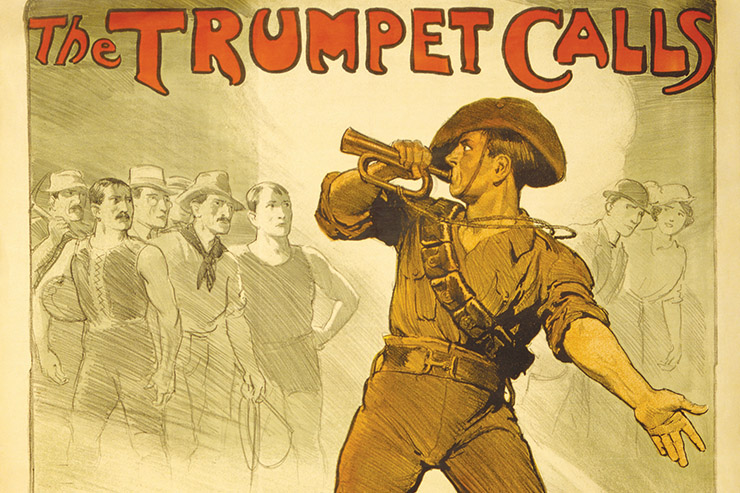
  • The Mystique of the Manor: Australia’s Occult Centre Revealed

    The Mystique of the Manor: Australia’s Occult Centre Revealed

    From New Dawn 152 (Sept-Oct 2015)

    Pilgrims have been drawn to the other-worldly auras of hallowed sites, both natural and man-made, all around the globe since antiquity. One such sanctuary sits right in the heart of Sydney and, although it has slipped from prominence today, it played a significant role in Australia’s spiritual and esoteric history.

    While its narrative has primarily been expressed through the descriptions of the characters who have occupied it, the magnetism of the building and the ground it stands on are worthy of examination in their own right. Today it has become less visibly conspicuous, surrounded as it is by so many other grand dwellings. However, a century ago the world was a different place and it was quite the topic of conversation in Sydney society.

    The late nineteenth century saw a surge of spiritual and metaphysical pursuits in the Western world, springing from Europe and Britain and streaming into the United States, Canada, Australia and New Zealand. While the British Victorian era is generally associated with industrial and scientific advances, not to mention Darwinism, many Victorians (including the Queen herself) embraced Spiritualism, séances and other forms of mysticism. At what is now considered the birth of the New Age movement, independent thinkers in England freed themselves from centuries of religious dogma and placed their faith in the powers of ESP, experimenting in telepathy and clairvoyance. Many enthusiastically explored new branches of knowledge with exotic names like mesmerism, electro-biology and crystal-gazing.

    On the other side of the Atlantic, Americans felt no sense of conflict in having a Ouija board on their desk alongside the Bible. Spiritualism seemed quite compatible with Christianity inasmuch as it provided reassurance on the existence of souls and the afterlife. Madame Helena Petrovna Blavatsky (HPB) was the daughter of a White Russian princess and had been involved in the Spiritualist movement early on.1 On moving to the USA she befriended Henry Steel Olcott and together they founded the Theosophical Society (TS) in 1875. In the early twentieth century, as Americans were becoming fascinated with psychic phenomena, Harvey Spencer Lewis was initiated into a Rosicrucian order during a visit to France, thereby enabling him to establish the order known as AMORC on his return to the USA.

    Australia was not impervious to the ground-swell of New Age beliefs and Sydney became a focal point for their proponents – some of them more colourful than saintly – along with their mystical doctrines, which concocted a curious blend of Christianity with the occult. The popularity of Spiritualism soared, counting among its adherents such notables as Prime Minister Alfred Deakin and the newly arrived American architect Walter Burley Griffin. A hundred years ago, while James Wedgwood was founding the Liberal Catholic Church (LCC) back in Britain, his friend Charles Webster Leadbeater had already decided to settle in Sydney and would, in the succeeding years, establish the Australian headquarters of both the LCC and Theosophy, together with various other societies, at Mosman in Sydney. A number of theosophists first rented, then purchased under trust deed, the capacious 55-room mansion and its grounds at Clifton Gardens that was to be known as The Manor.

    Gateway to Heaven or Simply a Grand Old Mansion?

    While The Manor became the focal point for Theosophy and associated societies almost a century ago, it had originally been built by wealthy businessman William Bakewell and was known to the locals as ‘Bakewell’s Folly’. He purchased six building blocks of what is now prime real estate at Clifton Gardens. The entire district of Mosman is rich with Aboriginal heritage, with over a hundred known sites found across the municipality, particularly along the foreshore area. After the North Shore population of several thousand original inhabitants witnessed the arrival of the first British colonisers, their numbers were decimated by the smallpox epidemic of 1789.

    Was this grand and mysterious building at Mosman, which had been described by a TS member almost eight decades ago as a “specially selected Centre of the power of the Masters of the Wisdom,”2 really a kind of cosmic portal and, if so, should it be revered as a sacred site today? Perhaps we should consider the possibility that an other-worldly force guided even William Bakewell from the outset when he selected the location for his construction. Quoting Nicholas Van Gelder:

    He began with a simple purpose: to build an eight-room house. What passed through his mind over the next 8 years is not known. Suffice that by 1913 the house had become a rambling 55-room mansion with many rooms lined with copper. Perhaps he foresaw the days when the Australian security service could listen in on conversations by using laser or microwave devices.3

    The fact that most rooms have pressed metal ceilings, as well as copper lined walls, is claimed by some occultists to serve the purpose of conserving magnetism. Following his death in 1917, William’s family declined to live there and the house stood vacant for five years, until it was acquired by TS members.

    In 1922 the imposing building would become home to a commune of fifty-plus people. As explained by Theosophy Forward on their website:

    It was Theosophist Lucius Van Gelder who had the idea for an experimental community to make life more “reasonable, cheaper, and more useful” for the families and individuals concerned.… Leadbeater, who became the focus for the community, invited Van Gelder to assume the task of managing it; and the residence became known as “The Manor”…. A trust was formed, whose purposes were “the formation of a spiritual centre where people may be trained in religious matters and the formation of a community based on Theosophical ideals.” The appointment of trustees was placed in the hands of Annie Besant, then the International President of the Theosophical Society, and her successors.4

    According to the authoritative booklet The Manor: A Short History5, The Manor became an important centre for the Society and was regarded as a great “occult forcing-house.” Curuppumullage Jinarājadāsa (known simply as Raja), the Theosophical Society’s international vice-president, asserted that Leadbeater was directed to the house by command of the King of Shamballa, and promptly settled in it, declaring, “In June 1922, the Great White Brotherhood established in the City of Sydney an occult Centre, charged directly from Shamballa.” “Thus was born the notion that The Manor was the occult nexus for the Southern Hemisphere.” And writer C.V. Williams added: “In 1922 Theosophist families began to move in with him (Leadbeater), feeling secure in the idea that they were close to heaven.”

    What marks The Manor as a keystone in Australia’s alternative spiritual heritage is that it served as a passageway, like the neck of an hourglass, by which so many doctrines and societies were funnelled into this country, before being disseminated throughout the land. The sheer number of activities including Theosophy, Co-Freemasonry, the LCC and other less well-known societal offshoots anchored to this geographical location at Mosman, poses the question: was it, and is it still, an occult centre of power? Had it always been, as the commune’s founders believed, a kind of heavenly gateway, or did it really derive its power from the “égrégore”6 of its human participants?

    The following are some of the principal known organisations, alongside their commonly used acronyms:

    TS         The Theosophical Society
    OSE      Order of the Star in the East
    LCC      The Liberal Catholic Church
    ES         The Esoteric Section; also The Eastern School
    Co-M   Co-Masonry

    According to a biographical study of Charles Webster Leadbeater (CWL) by Gregory Tillett:

    The arrangement of a weekly schedule posed no small difficulty, since it involved regular meetings of the TS, both those for members only and those open to the public, and of the OSE, together with the ES and Co-Masonry, and now the Liberal-Catholic Church. The considerable overlap between the TS, the LCC and Co-Masonry can be seen from examining lists of Co-Masonic Lodge officers around this time: the officers of Sydney Lodge No.404 in 1918 included Mr and Mrs Kollerstrom, Leadbeater, Hazel, and L.W. Burt, all of them (as they were by then being described) TS, ES, OSE, LCC and Co-M.7

    Gregory Tillett adds, in a book co-written with Nevill Drury:

    Another ceremonial movement which he (CWL) established, the Egyptian Rite of Ancient Freemasonry, also meets there (The Manor); in this rite Leadbeater hoped to bring together the angels of Freemasonry and of the Church, and it was regarded as “the most powerful occult rite in the world.”8

    One newspaper article reports that, in the 1920s,

    The Manor had its own theatre company performing Shakespearean plays on the gently sloping lawns. Painters, writers and poets congregated in its meeting rooms to discuss modernism, materialism and the importance of patriotism in nation building. There were Greek garden fetes, fairy dances, light operas and musicals.9

    In keeping with the times, TS launched radio station 2GB in 1926, using The Manor and two outlying cottages on the property. The initials GB stood for sixteenth century philosopher Giordano Bruno, whom they believed was a former incarnation of Annie Besant. The station is still a household name in Sydney radio ninety years on. Alfred Edward ‘A.E.’ Bennett (not to be confused with Frank Bennett) was appointed general manager and the first broadcast took place on Armistice Day, 1926. Bennett wrote, “The intention is to conduct the station on ideal principles and solely with the object of uplifting our Australian people.”10 Raja, however, was concerned this sacred ground was being disturbed by the psychically enervating signals emanating from the antennae.

    A Hidden Fraternity

    What unseen guiding hand drew this array of key personalities together and why at this particular location? Was the torch being lit for an ‘Antipodean Utopia’ and, if so, did the flame fizzle out, or does it continue to flicker away from the public eye in preparation of a new Golden Age? Those confraternities we dub ‘secret societies’ always have twin facets: the overt aspect, consisting of their beliefs and philosophies, which these days can be readily researched in books and online; then their practical agenda which forms the basis of their secrecy – the initiation rites, rituals and techniques that are intended to raise consciousness, quicken one’s psychic abilities and ultimately allow communion with higher intelligence, sometimes including ‘invisible Masters’.

    Who are these ‘Masters’ that are said to have appeared to, and spoken with, the likes of Madame Blavatsky, Annie Besant, Alice Bailey and Charles Leadbeater? They are called by various names, including The Ascended Masters, The Great White Brotherhood, The Elder Brothers or The Secret College. They form a Hierarchy, which Phillip Lindsay defines as a “Group of spiritual beings on the inner planes of the solar system who are the intelligent forces of nature and who control the evolutionary processes. Divided into twelve hierarchies. The Occult Hierarchy or Masters of Wisdom, of which disciples and initiates are a reflection.”11 They exist on subtle planes known as the Etheric or the Astral, transparent to normal physical sight. In addition to Masters there are angelic, devic and elemental entities.

    [alert type=”info” dismiss=”no”]If you appreciate this article, please consider a subscription to New Dawn magazine.[/alert]

    Also known as Mahatmas, the Masters of Ancient Wisdom are those who once lived as human beings. The enlightened ones who most often imparted their teachings to Theosophists and other occultists from the late nineteenth century are identified as Morya, Kuthumi (or Koot Hoomi), Djwal Kul (usually just known by the initials DK), and Count Saint Germain – although there are many more. While many of these Masters dwell on a non-physical plane, some do take corporeal form and they often attach themselves to specific earthly retreats, the most well-known being in and around the Himalayas.

    Author Edmund Harold states:

    There are momentous periods in our evolution, times when we recommence the age-old search for self-purpose. At such times we re-acquire awareness of the existence of a spiritual hierarchy, one that is represented by highly evolved beings. These are known as The Great White Brotherhood, or the Brotherhood of the Light.12

    The voices of the masters have been silent at The Manor for a long time, but perhaps another one of these ‘times’ approaches again.

    The Pioneering Spirit

    The modern Theosophical movement first reached Australia in 1879 when Gilbert Elliot of Melbourne joined the TS. By 1891 when Henry Steel Olcott, as the Society’s international president, came for a brief tour, there were enough branches to form what was called “a Section.” While in Sydney, Olcott also chartered the Sydney Lodge. The Australian Section was given a further boost in 1894 when Annie Besant, a persuasive orator, arrived to give a series of lectures on Theosophical topics. In 1905 Charles Leadbeater toured the country to wide acclaim and then, three years later, membership skyrocketed on Besant’s return.

    The LCC and the Co-Freemasonry movement that developed alongside the TS in Sydney can be traced to one man: James Ingall Wedgwood (JIW). In 1915 Wedgwood, who first met Leadbeater in 1906, arrived in Sydney. As a gay clergyman, JIW suffered an ongoing inner turmoil between “the angel and the beast within” – a dilemma that haunts some clerics to this day. He swung between alternating extremes of spiritual fervour and the temptations of the flesh. Eminent British Theosophist E.L. Gardner said of him privately, “JIW was a ‘dual’ – at times skilled, able and impressive. Then, a bout of sensualism of the worst grade, sexual perversion.”13

    In 1909 Leadbeater identified the 14 year-old Jiddu Krishnamurti as a vehicle for the coming World Teacher, the Bodhisattva Maitreya, by way of clairvoyant perception of his aura. From then on Krishnamurti was groomed by both CWL and Annie Besant, eventually coming to Sydney in 1925. He did not stay at The Manor, but lived at a nearby house in Mosman with his brother, Nitya, with whom he was very close. The OSE’s raison d’être was to prepare the way for the arrival of this new messiah. With this advent in mind, CWL and Besant guided the construction of the ambitiously conceived Star Amphitheatre at nearby Balmoral Beach.14

    Built in ancient Greek style and completed in 1924, the Amphitheatre had seating accommodation for 2,500 people and was intended as a venue for lectures by the expected World Teacher, embodied by Krishnamurti. Just as The Manor earned the reputation of being a folly, surely the Amphitheatre is to be remembered as an extravagance – perhaps even an eccentric one at that. Stories circulated that it was located for the best view of the expected ‘second coming’ that would see “Jesus Christ come through the Heads of Sydney Harbour.”15 Clearly this never eventuated and, a quarter of a century later, the Star Amphitheatre was demolished. These days a rather ordinary looking apartment block stands on the site.

    In the same year The Manor was first occupied by TS members, Krishnamurti and Nitya travelled from Sydney to Ojai in California, where they experienced a new sense of freedom accompanied by a fresh perspective on worldly matters. A big upheaval for Krishnamurti came when he was asked to attend a function in India marking the golden anniversary of TS in 1925, while his brother stayed in Ojai. Nitya had been in poor health, but George Arundale (more about him shortly) had assured Krishna that he would not die, promising that the Masters would protect him. But Nitya did die, causing Krishnamurti’s dedication to the TS to wane, until finally in 1929 he dissolved the Order of the Star in the East (OSE) and stated he was not going to be the new messiah, with the famous words, “The moment you follow someone you cease to follow Truth.” He did not renounce public life, however, continuing on his own path with the Krishnamurti Foundation. His mentors at the TS felt sadly let down and distanced themselves from him over the years.

    The Momentum of The Arundale Years

    George Sydney Arundale joined the TS in England during 1895 and, seven years later, followed Annie Besant to India where he became principal of her Central Hindu College. Life there revolved around Krishnamurti, who had become Besant’s adopted son. Arundale instituted the OSE in Europe and also took on the role as regional bishop for LCC in India. Soon after, he claimed himself to be clairvoyant and then, late in 1925, began openly expressing doubts about Krishnamurti’s intended role as the earthly vehicle for Maitreya. This caused a slight rift with Besant, after which he transferred to Sydney to join Charles Leadbeater at Mosman.

    He launched himself so enthusiastically into the affairs of The Manor that the ensuing period is remembered as ‘The Arundale Years’. In quick succession he became general secretary, chairman of 2GB, editor of the Australian Theosophist, and co-editor of the Australian Star News. An able preacher and experienced publicist, he competently formulated political commentary and supported advanced causes, from a Theosophical angle. Together with his wife Shrimati Rukmini Devi, a well-known Indian dancer, he stayed at The Manor until 1931. It seems George Arundale’s assessment of Krishnamurti was correct and in fact the 1930s was the last great decade for the TS at The Manor.

    Attention Wanes

    The defection of Krishnamurti along with the deaths of Annie Besant and Charles Leadbeater led to a period of decline for the TS in the 1930s, from which it never fully recovered. It appears the Society, like many temporal vehicles on this material plane, carried at its nucleus the elements of its own decline. Author Nicholas Van Gelder portrays the Esoteric Section as the cause of the eventual downturn in the fortunes of the TS, although today’s Manorites deny there has ever been a schism in Theosophical ranks. HPB formed the ES as an inner group back in 1888, consisting of students who were members of the Society, but separate from it and controlled solely by her. Unfortunately it came to be seen by some non-members as an elitist group. It remains a separate entity today.

    Perhaps the reason that a number of the groups that put down roots at The Manor failed to endure is that Charles Webster Leadbeater held no clear vision for their future nurturing and growth. As noted by author Frank Joseph, he “departed for Australia, settling in Sydney in 1914, where he felt particularly called to fulfil some as yet ill-defined mission (italics added). His instinct was correct, judging from the profound public success he enjoyed there.”16 CWL left Australia for India in 1929, to take over the leadership of the TS from Annie Besant, whose health was failing. He returned to Sydney for short periods but died during a stopover in Perth in 1934.

    James Wedgwood left Australia and in the late 1920s resumed his activities with the TS in Holland, allegedly with increasingly frequent visions and meetings with masters, angels, archangels and denizens of the higher realms. He would eventually return to England in poor health and battling dementia, dying in 1951 after a heavy fall.

    George Arundale ended up returning to India where he died in 1945. The ‘Arundale Years’ had helped stabilise the TS and perhaps presented a more acceptable, scandal-free image to the Australian public.

    There is a conviction held by organisations and individuals concerned with esotericism that Australia has a special role to play in the dawn of a new Golden Age. In a series of lectures delivered in Sydney in August 1915, CWL had proclaimed “Australia and New Zealand as the home of a new sub-race.” He detected in Australia “children and young people of a distinctly new type.” A new antipodean human type characterised by intuition and the powers of synthesis.17 This is consistent with the New Age concept of ‘Indigo Children’. In the last years of his life, CWL claimed to have been instructed by the ‘World Mother’ to establish a ministry for her worship, including an apostolic succession to be passed on through women and for the foundation of a feminine religion to parallel the masculine-dominated Christianity. To date this has not made any public appearance, but the tradition is said to be perpetuated within Theosophical circles privately.

    Guarding its Secrets and its Grandeur, A Century On

    Today, as one approaches The Manor from the road above, its sprawling grandeur first reveals itself by way of the dormers and gables of the red tiled roof, including the impressive 18-metre long studio perched atop the eastern wing. Most first-time visitors can’t resist trying to count the host of chimney pots that crown it. The very ground that The Manor stands on exudes a palpable magnetism and benign spiritual presence. One does not have to be psychic to experience the peaceful calm emanating from the mansion’s walls, and it is not hard to see why many have claimed to feel closer to the divine here.

    Whether or not Australia fulfils its secret occult destiny and hosts a new Golden Age remains to be seen. So long as the Manorites maintain the high energy levels through their esoteric rites, this site will remain sacred and, should the Masters decide the time is right to publicise their messages once again and guide the populace, surely this will be the prime spot for their transmission.

    This article’s graphics are viewable in the print or digital version of New Dawn 152.

    [alert type=”general” dismiss=”no”]This article was published in New Dawn 152.[/alert]

    [alert type=”success” dismiss=”no”]If you appreciate this article, please consider subscribing to help maintain this website.[/alert]

    Footnotes

    1. It should be noted that Madame Blavatsky (and Theosophy) rejected Spiritualism, however: “By the early 1870s, Blavatsky was involved in the Spiritualist movement; although defending the genuine existence of Spiritualist phenomena, she argued against the mainstream Spiritualist idea that the entities contacted were the spirits of the dead.” (https://en.wikipedia.org/wiki/Helena_Blavatsky)
    2. ‘The Manor Family: Australia’s oldest urban commune’ by Bill Metcalf, JRAHS Vol 100, 9
    3. ‘The Manor: A Short History’ by Nicolas Van Gelder, Theosophical History Occasional Papers, Vol XIV, 1
    4. www.theosophyforward.com/theosophical-encyclopedia/521-manor-the
    5. Nicolas Van Gelder, 14-15
    6. An egregore is a ‘group thought form’ or ‘collective group mind.’ See: http://en.wikipedia.org/wiki/Egregore
    7. ‘Charles Webster Leadbeater 1854-1934: A Biographical Study’ by Gregory John Tillett, http://leadbeater.org/tillettcwlchap17.htm
    8. Other Temples Other Gods by Nevill Drury & Gregory Tillett, Hodder & Stoughton, 1982, 32-33
    9. ‘Age of reason’ by John Zubrzycki, Sydney Morning Herald, Good Weekend supplement, 29 Nov 2014
    10. Nicolas Van Gelder, 24
    11. Masters of the Seven Rays by Phillip Lindsay, Apollo Publishing, 2000, 119
    12. The Ascended Masters of The Great White Brotherhood by Edmund Harold, Grail Publications, 2002, 13
    13. http://en.wikipedia.org/wiki/J._I._Wedgwood
    14. “Mary Rocke, a retired doctor, member of the Theosophical Society, secretary and physician to Leadbeater, purchased three adjacent blocks of land sloping from Wyargine Street, Balmoral to the beach. With a loan of 4,000 pounds and the rest of the cost raised by selling subscription seats, the Star Amphitheatre was built on this site.” (www.mosman.nsw.gov.au/file_download/1865/The-Star-Amphitheatre-Balmoral.pdf)
    15. “Leadbeater, Charles” by Garry Wotherspoon, http://dictionaryofsydney.org/entry/leadbeater_charles
    16. ‘C.W. Leadbeater: Saint or Sinner?’ by Frank Joseph, New Dawn 96 (May-June 2006)
    17. ‘Esoteric Australia’ by Mehmet Sabeheddin, New Dawn Special Issue 3

    © New Dawn Magazine and the respective author.
    For our reproduction notice, click here.
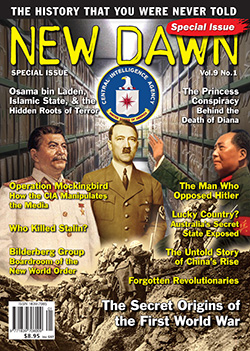
  • The Nightmare World of Austin Osman Spare

    The Nightmare World of Austin Osman Spare

    From New Dawn Special Issue Vol 9 No 2 (April 2015)

    If you were an art student in Britain in the last decades of the 20th century, you would have been extremely fortunate to learn of the existence of Austin Osman Spare (1886-1956), “one of the greatest living draughtsmen” as he was described within his lifetime, and certainly “the greatest artist you’ve never heard of,” as the cliché goes.

    In an item on the BBC’s ‘The Culture Show’ aired to coincide with a major retrospective of Spare’s work in 2010, no less a commentator than Andrew Graham Dixon introduced him as:

    An intriguing Edwardian artist of the magical, the otherworldly and the grotesque, whose claims that mystical practices lay behind his disturbing imagery brought him admirers and detractors in equal measure.

    As the subtitle of a recent highly acclaimed biography of Spare described him, he was truly “London’s Lost Artist” – or perhaps even England’s… But Austin Spare, the ‘lost’ artist, is apparently lost no more, judging by the fact that his popularity is on the increase, and his work fetches ever-higher prices these days.

    If you had a talent for drawing and were deeply interested in representing the human figure – not just by itself, but also within a meaningful, erotic and maybe esoteric context – you would not have had the inspiring and stimulating example of this ‘lost’ artist at your disposal. And you certainly would not have known about Spare’s later years, when he led an almost liminal existence but still created amazing images.

    There are the now well-known pictures of him in his dingy basement flat, which doubled as his studio, surrounded by stray cats and his drawings and paintings, looking like an old vagrant, which by all accounts he had almost become. You would most likely have been greatly moved by it, and perhaps shocked.

    Maybe you had a friend who knew someone in the occult-inspired underground bands of the 1980s, like Psychic TV or Coil, or the subculture that sprung up around them. In these circles Spare was celebrated, rightly or wrongly, as an ‘outsider’ hero for apparently turning his back on the mainstream and embracing a life of poverty, like some sort of Cockney ascetic.

    You might have heard he was admired and collected by such unlikely figures as Barry Humphries, or guitarist Chris Stein from Blondie. You may have caught wind of the emerging Chaos Magic movement that claimed Spare as a kind of spiritual forebear: an artist shaman, a spiritual currency with ever-increasing status.

    The near-mythic image of Spare – the arch-individualist who thumbed his nose at authority and worldly success to go his own way, living only for his visions and his art – had something for everybody.

    Kenneth & Steffi Grant

    Most people caught wind of Austin Spare through the books of Kenneth Grant, former acolyte of the ‘Great Beast’ Aleister Crowley, and tireless documenter of the 20th century ‘magical revival’. Grant and his wife Steffi, herself a talented artist, had personally known Spare in the last years of his life, and were instrumental in supporting and promoting his work from the 1970s onward.

    Acclaimed author, graphic novelist, and self-confessed magician Alan Moore acknowledges Grant’s contribution in his Introduction to Phil Baker’s fine biography Austin Osman Spare: The Life and Legend of London’s Lost Artist (Strange Attractor, 2011):

    … without the tireless championing of Kenneth Grant the vast majority of us would, in all likelihood, have never heard of Austin Osman Spare.

    Kenneth and Steffi were both magicians themselves, she working more with magic in her art, he in his writing: the nine volumes of “The Typhonian Trilogies,” which Grant wrote from the early 1970s up to the Millennium, and for which Steffi provided illustrations, nearly all featured artwork by, and information on, Spare. Additionally, the Grants produced two fine volumes dedicated solely to him: the now-classic Images & Oracles of Austin Osman Spare (originally published in 1975, but reissued by Fulgur in 2003), and a lavishly illustrated volume – Zos Speaks! (Fulgur, 1998) – reproducing much of their correspondence with Spare, that gives a moving and insightful account of their friendship.

    In her Introduction to Zos Speaks!, Steffi writes a vivid account of her first meeting Spare at his address off Brixton Road, a run-down Victorian terrace house that narrowly escaped the Blitz. The old man in front of her was “bent and decrepit looking.” He was unkempt and wore tattered clothes he had probably slept in, and his hands trembled. The contrast could hardly have been greater to the precocious boy star who wooed the Royal College of Art many years before. Herbert Budd, an art teacher, in whose classes Steffi sometimes posed, told her that back in the day, Spare was considered:

    A god-like figure of whom the other students stood in awe, a fair creature like a Greek God, curly headed, proud, self-willed, practising the black arts, taking drugs, disdainfully apart from the crowd.

    In Australia, the late Nevill Drury (1947-2013) wrote about Spare in his 1972 book The Search for Abraxas (co-written with Stephen Skinner, reissued by Salamander & Sons, 2013). Drury was also keenly interested in Rosaleen Norton, the notorious artist and “Witch Queen of King’s Cross” (in Sydney), and he may have regarded Spare as being her occult cousin. He would come back to them both, separately or together, a number of times, and one of his last books was the lavish Dark Spirits: The Magical Art of Rosaleen Norton and Austin Osman Spare, again produced in collaboration with Salamander & Sons in 2012.

    An Unsual Muse

    An important part of the Austin Spare story is that he had a very unusual Muse. Apparently, she was a local witch, Mrs. Patterson: an elderly woman, ugly but vigorous, who is said to have seduced him at a young age – though, of course, we shall never be able to ascertain how much, if anything, of the story is true. She was not his only Muse, but she played a vital role, introducing him to magic and witchcraft. She gave him his ‘ugly ecstasies’. The impression given is that she ravished him, her special trick being the ability to ‘project a glamour’ (the original meaning of the word ‘glamour’ being a kind of spell or enchantment), in which she could transform herself into an alluring young woman. She could also project visualisations for fortune telling, and make forms originating in your mind appear as if they were tangible and real.

    Austin Spare certainly had developed the ability to make shapes and figures visible in front of your eyes through his extraordinary ‘witchy’ creative gifts. Even if there was no flesh-and-blood ‘Witch Patterson’, Spare unquestionably ravishes us with his artistry. When the prospect of a full-blown artistic career had disappeared below the horizon, She would still vividly materialise, if not in front of him then certainly in his imagination, to inspire him, as revealed in his later splendid artwork.

    As his resources and health dwindled, he “carried everything into his art,” as the poet Rainer Maria Rilke once wrote of great men who “let their lives get overgrown like an old path…”

    That his Muse was ancient and ugly gains significance in the light of a largely forgotten chapter in British history. Centuries before, during the iconoclasm or smashing of religious images – which the fanaticism of the Protestant Reformation visited upon Britain (and a few other countries in north-western Europe) – the country lost a great deal of its artistic and spiritual legacy. It is estimated close to eighty percent of religious images were destroyed. Up until that time of image destruction, an artist with Spare’s gifts and occult tastes, even without being a devout Christian – which he certainly wasn’t – might still have found visual inspiration and ideas in the iconic painting and sculpture found in churches and cathedrals.

    The intervening centuries were lost spiritual territory to visionary artists like Austin Spare and William Blake – a fellow artist-visionary with whom Spare strongly identified. He was probably only half-joking when he remarked he had been Blake in a former life, and he surely could have claimed as his own Blake’s words:

    I must create a system or be enslaved by another mans; I will not reason and compare: my business is to create.

    Being both fiercely individualistic personalities and visionaries, they insisted on creating their own cosmologies. In a way, they had to.

    Early Life

    For a while as a young man, before the Great War, flushed with success and newly married to a dancing-girl called Eily Shaw, Spare played at being a Mayfair artist, courted by wealthy patrons. But it wasn’t to last. He would spend most of his adult life south of the River Thames, an area he came to strongly identify with.

    Till age seven he had lived with his family – his father was a City of London policeman, his mother the daughter of a Royal Marine from Devonshire, and he had three siblings. The place of residence was in Bloomfield Place, near Smithfield meat market, where he would have seen thousands of animal carcasses and a great toing and froing of animals – alive and dead. This, no doubt, left a powerful and abiding impression on him, giving him a strong sense of flesh, of life and death. In modern terminology, he’d say the place had a ‘bad vibe’. At the same time, as was not uncommon in that age of rapid technological development, the meat market was overarched by ironwork of an almost ecclesiastical magnificence (it’s still there.) The Central Avenue has been described as being “like a cathedral nave,” hinting at a subliminal connection between the slaughterhouse and religion. One major symbol in Spare’s work, the totemic vulture, almost certainly was conceived in this landscape of death and animal suffering.

    The family moved south of the Thames, to Kennington, when he was seven. In those early years, as a strong vigorous child, Austin liked physical activities such as boxing and wrestling, swimming and cycling. He went to school at St. Agnes Church, which had been re-modelled by Gilbert Scott, the Gothic-revival architect.

    A neighbour remembers the young Spare being impressed by the ceremonial and ritual side of religion at the Anglo-Catholic High Church. He saw cowled and robed figures, which would later appear in his work, though hardly in a flattering light; he liked the incense and the rituals. At the opening of the church the priest wore a garment with a white stole, and there was a hymn to Mary. The Protestants were infuriated: burning incense and an act of devotion to Mary virtually amounted to “the drunken bliss of the strumpet kiss of the Jezebel of Rome.”

    Development of a Style & Cosmology

    In Spare’s art you often see “things in their natural state,” in the words of Steffi Grant. Spare excelled at female nudes, and many are, you might say, women in their natural state. They don’t conform to any particular idea or ideal, except when they follow the form and style of Ancient Egypt. The creatures of the natural world, from rats and toads to snakes, lions and birds, make regular appearances, often juxtaposed with his nudes. But as much as he “cared for growth and movement in the plant and tree world” – preferring them to flowers in vases, for instance – he also loved artifice and style, shaping Mother Nature for his own creative ends. He developed a unique kind of anamorphism, which he called ‘siderealism’, which strikes you with its clean and fluid handling of line and colour, conjuring the elusive Fourth Dimension and offering the suggestion of fresh perspectives. He mostly used it for portraits of film stars – after all, were they not the new gods and goddesses of his (and our) time!?

    Austin Spare was a tremendous magpie when it came to what images and visual ideas he borrowed to then make inimitably his own – which is what every great artist does. Apart from his astounding flair and skill to make images, he also wrote and largely self-published books, which he naturally illustrated himself. It was all part of the creation of the Great Work, to build his own cosmology. He did not have a great formal education, but he did have the potential to be a scholar.

    In his in-depth study of the five books that Spare published, Austin Osman Spare: The Artist’s Books, 1905-1927 (IHO, 1995; reprinted Mandrake, 2005), Dr. William Wallace does an admirable job unearthing Spare’s sources of inspiration, interests and influences, such as Dante’s The Divine Comedy, The Revelation of Saint John the Divine, The Rubàiyàt by Omar Khayyám, the Egyptian Book of the Dead, Kabbalah, the Works of William Blake and Albrecht Dürer, and various texts of Eastern mysticism.

    The Many Different Spares

    There was Spare the Cockney with his Cockney portraits of market traders and characters from the local pub, which would not have been out of place in Rembrandt’s time. They made him a quick buck when he badly needed it, especially when down on his luck towards the end. He was brilliant at it, and no doubt had genuine affection for the characters he portrayed.

    There was Spare the pornographer: pornographic material does exist, for example in Spare’s original folio for his 1905 book, The Focus of Life, which is far more explicit than the published version and only came to light when a copy previously owned by novelist E. M. Forster made it to auction.

    There was Spare who made exquisite Egyptian pictures, such as the magical stele – created to bring luck, good health and blessings to his friends – or the fine altar-piece of a voluptuous Isis, now in the collection of former Led Zeppelin guitarist Jimmy Page.

    There was Spare the Borough Satyr, eyeing his women – one of whom liked his work “because it was dirty” – as Spare later told the young Kenneth Grant, no doubt chuckling over a pint in a South London pub.

    There was Spare the maker of exquisite books, mostly self-published. They’ve become legendary among his admirers, like The Book of Pleasure (Self-Love): The Psychology of Ecstacy (1913) – in which he set out his “Alphabet of Desire” and theory of “Sigil Magic” later hijacked and popularised by the Chaos Magicians.

    There was Spare hermaphroditising men into women, or himself – at least in his drawings – posing as a woman.

    There was Spare the Visionary who could only partly achieve his visual ideas because poverty, lack of patrons and status prevented their realisation.

    And there is Spare the Magician, the Sorcerer, the Witch, an incarnation that appealed deeply to a generation who would encounter him in the most unlikely places: in twilight worlds of black magic, books on resurging paganism and the occult, and weird music, corners where the culture is “murkier, livelier and more unusual” as Alan Moore says.

    After his initial fame during the tail-end of a Decadent age (when he could have been “the new Aubrey Beardsley”), Spare was cast out and set adrift on the troubling and troubled tides of the 20th century. In part he himself chose this fate, which made him beloved of his late 20th and now early 21st century audience – turning his back on “all that.” But there is more, much more. The fullness of Spare’s creative universe is impossible to cover here.

    The last word on his Art surely belongs to the artist himself:

    I AM THE LIVING TRUTH. Heaven is ecstasy; my consciousness changing and acquiring association. May I have courage to take from my own superabundance.
    Austin Osman Spare, The Anathema of Zos (1927)

    [alert type=”general” dismiss=”no”]This article was published in New Dawn Special Issue Vol 9 No 2.[/alert]

    [alert type=”success” dismiss=”no”]If you appreciate this article, please consider subscribing to help maintain this website.[/alert]

    BOOKS BY AUSTIN OSMAN SPARE

    Earth Inferno (1905)

    A Book of Satyrs (1907, republished by John Lane, 1909)

    The Book of Pleasure (1913)

    The Focus of Life (The Morland Press, 1921)

    The Anathema of Zos (1927)

    BOOKS ABOUT AUSTIN OSMAN SPARE

    Kenneth & Steffi Grant, Zos Speaks! (Fulgur, 1998)

    Kenneth Grant, Images & Oracles of Austin Osman Spare (Fulgur, 2003)

    Frank Letchford, Michelangelo in a teacup: Austin Osman Spare (Mandrake Press Ltd, 2005)

    Dr. William Wallace, Austin Osman Spare: The Artist’s Books, 1905-1927 (Mandrake Press Ltd, 2005)

    Phil Baker, Austin Osman Spare: The Life and Legend of London’s Lost Artist (Strange Attractor, 2011)

    Neville Drury, Dark Spirits: The Magical Art of Rosaleen Norton and Austin Osman Spare (Salamander & Sons, 2012)

    © New Dawn Magazine and the respective author.
    For our reproduction notice, click here.