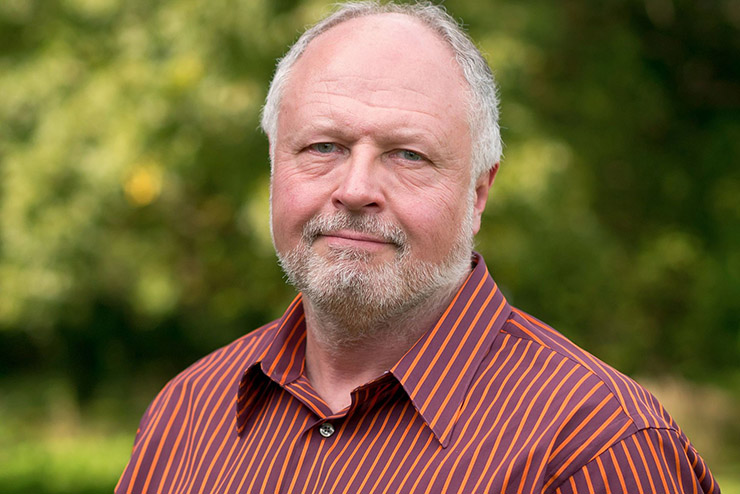
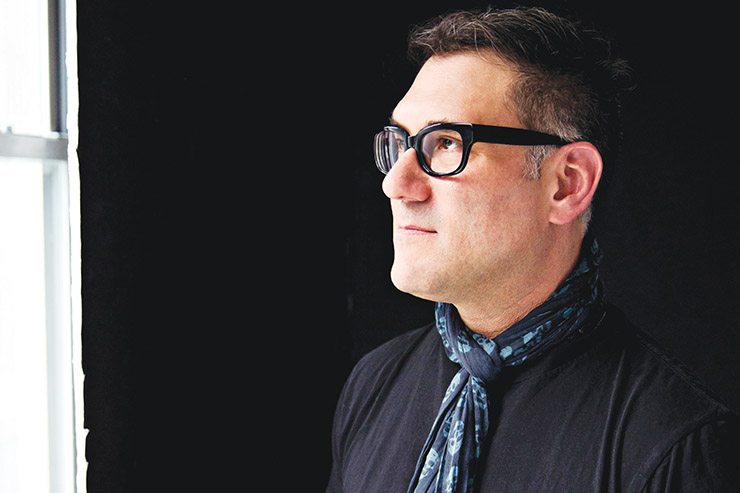
MITCH HOROWITZ was raised in a world of Bigfoot stories, UFO sightings, and Carlos Castaneda books. He grew determined to find the truth behind it all – and today is a PEN Award-winning historian and the author of Occult America and One Simple Idea: How Positive Thinking Reshaped Modern Life.
Mitch cares deeply about outsider spiritual views, particularly with regard to the esoteric, supernatural, and occult. He has written on everything from the war on witches to the secret life of Ronald Reagan for a wide range of publications. The Washington Post says Horowitz “treats esoteric ideas and movements with an even-handed intellectual studiousness that is too often lost in today’s raised-voice discussions.”
“Many academics and journalists simply cannot wrap their minds around the principle that you can study an arcane topic without propagating it,” Mitch noted recently in an on-line article. He continued by pointing out that the “false choice to ‘take it or leave it’ is perhaps the most limiting factor in how people view the world. It makes it difficult to discuss esoteric topics….”
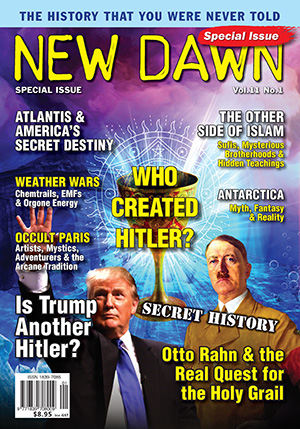
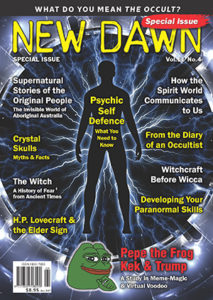
New Dawn magazine asked Mitch to share his thoughts on the theme of Special Issue Vol 11 No 4.
NEW DAWN (ND): What do you mean by the Occult?
MITCH HOROWITZ (MH): The term itself comes from the Latin occultus, meaning secret. It was adopted by Renaissance thinkers looking for a way of discussing the Greco-Egyptian and other pre-Christian teachings being rediscovered and newly translated, particularly the Hermetic literature. The occult, very simply, is the inquiry into an unseen dimension of life whose forces can be felt on and through us.
ND: Why do people often associate the occult with evil, negative powers, satanism and alike?
MH: That is, in many respects, a leftover from the religious struggles of late antiquity when the ascendant church fathers characterised the pagan powers in maleficent terms, associating them with demonology, which the pagan world had never identified with. It’s human nature to depict one’s theological or ideological foes in terms chosen by the victor, and often negatively.
ND: You’ve written extensively about the influence of occult ideas on modern society. Can you share some examples of how the occult has impacted contemporary America?
MH: In many respects, America’s alternative spiritual culture, and much of its self-help movement, had its earliest roots in occult thought. Consider, for example, the widely domesticated idea of “positive thinking.” The notion that thoughts are causative, and that events and circumstance respond to thought, was very much an occult-mystical principle, and it remained so until the late 19th and early 20th centuries, at which time writers like James Allen and Prentice Mulford reframed these ideas in language that drew less upon Mesmerism and related movements, and more upon Scripture. The language of occult and mystical movements has been rendered into terms that prove acceptable to large swaths of the public. Plus, many current mainstream practices, from yoga to meditation to acupuncture, first entered public awareness from the margins of occult subcultures. It is nearly impossible to meet anyone today who does not know their “sun sign” and something about it. That, in a sense, reflects how deeply occult ideas permeate everyday life.
ND: Much media coverage of the occult is either wildly sensationalist or treats the area with disdain and credulity. Why is this?
MH: A great deal of conformity touches all aspects of our society – this is true in almost every walk of life. Educated people and many people in the media are brought up to believe that occult figures like Madame Blavatsky, if they’ve heard of them at all, were carnival-type characters, whose lives hold nothing of interest for serious people. I’m personally very interested in ESP research, and I work hard to get people in the mainstream media to understand this research, which is almost impossible if they rely upon ‘what they’ve heard’, or the top five Google search results. Misunderstanding of the occult is really just a kind of conformity, and this way of thinking touches all of us.
ND: When examining the broad spectrum of ideas and practises categorised as occult, what is the best approach?
MH: I think it is vitally important to have an ethical teaching at your back, whether the Gospels, the Bhagavad Gita, the Talmud, or another ancient ethical source. Without that, it is very easy to get lost.
Tobias Churton is Britain’s leading scholar in Western esotericism. A film-maker, composer and poet, he recently completed his latest book, Occult Paris: The Lost Magic of the Belle Époque, that examines how Paris, in the closing years of the 19th century, became the locus for the most intense revival of magical practices and doctrines since the Renaissance. The spiritual and occult revival during this important period in Paris deeply influenced many well-known cultural movements, such as Symbolism, the Decadents, modern music, and the “psychedelic 60s.” Its legacy remains with us today.
JOANNA EDWARDS (JE): What makes you want to write books? This is your eighteenth work is it not?
TOBIAS CHURTON (TC): I love books. I started my first book when I was eleven. It was an illustrated history of the world. I typed it, which was unusual in those days, certainly for a boy. It’s not bad. Good pictures. I certainly had the idea that we have much to learn from history, and that the past is real, for our reality is already past, and time is a continuum, not a series of fleeting “nows.” That injunction to “Be Here Now” always makes me laugh.
Anyhow, I got from the ancient Sumerians to Rome, at which point I was distracted by schoolwork, or something more involving. I learned that all empires fall. The last words of it were: “Knowledge is the prize we strive to seek.” Rather prophetic. I was somewhat unusual, it transpired. I cared about such things.
When I was twenty and had just finished my Oxford studies, I went to see the retired bishop of Dorchester who was on his last legs in an Oxfordshire country nursing home. I was expecting to be ordained as a priest at some point. He asked me what I wanted to do with my life. I said I wanted to bring important knowledge through from the past, particularly spiritual knowledge that had been forgotten: to be a lamp for the future, which is darkness to us, despite the myriads of journalist-prophets, forever prognosticating on the future. So that’s what I do. I bring the knowledge through. Why so many books? I am aware that the biblical book of Ecclesiastes warns that “of making many books there is no end,” and that “all is vanity.” Well, someone preserved his book, didn’t they? You have to “labour while it is yet day.” Or as the little working creatures in The Flintstones used to say: “Somebody’s gotta do it” – or, more often: “It’s a living!” Writing is a way of life. So once you have a life, all you need is the “way” and the “truth,” which appear from living sincerely according to your gifts, and sticking to it, whatever the passers-by say. St. Paul taught that a little piece of wood saved the world. That’s where our paper comes from.
JE: What gave you the idea to write Occult Paris?
TC: In the “closing overs” of writing Gnostic Mysteries of Sex I investigated again a few of the beliefs of the remarkable Frenchman, Joséphin Péladan, who died towards the end of World War One, after a long fall from fame. The more I thought about some of his ideas, the less eccentric they appeared to me, and the wiser he became in my mind, despite an awful, longstanding reputation as a showman, dandy and eccentric. He used to wear medieval costume and had hair like Jimi Hendrix! When one thinks about it, much medieval costume was very practical and gracious, and certainly more attractive than the “casual” pseudo-sportif garments whose opacities currently pock the skin of the Western world.
Anyhow, I thought of a biography of Péladan, and then after much consideration, decided to take on the whole movement of which he was a part. I also wanted to write another book that was about the deep bond between Art and spirituality, and Péladan was preoccupied with that relationship, though he did not act alone. He was part of a quite extraordinary community of painters, magicians, spiritual writers, novelists, composers, poets and journalists. They comprise the essence of what came to be called the “Belle Époque” that lasted from the end of the Franco-Prussian War to World War One which wrecked almost everything. We’ve still never really “got over” that destruction – as I used to feel when I was taken to see the Anzac Parade through Melbourne when I was a boy in Australia.
I wanted to show how the Symbolists in Art, the Occultists, the Decadent Movement, and two of my favourite composers worked together to change profoundly the spiritual and aesthetic landscape. I wanted to show how the whole thing actually operated, for the first time in one book. Obviously I’d like people to be inspired by the possibilities, which are still valid and real, and realistic too.
JE: This is a very sumptuous, attractive work. Apart from its handsome appearance and high production values, who would find this book interesting?
TC: Do you like Art? Do you want to know what it’s really about? Are you interested in Magic, and want to know more about what makes things and people magical? Do you like French culture at any point, and want to know an amazing story that has been obscured by superficial readings of its outflow? Are you interested in Theosophy, Rosicrucianism, Spiritualism, the regaining of ancient powers of mind and sensibility? Are you interested in the social progress that existed before world war erupted? Are you attracted by the high zones of the Beautiful, the True and the Good? Do you like a fascinating story that has never been told in quite this way before, that has lots of material in it you won’t find anywhere else; unpublished documents and insights aplenty? Do you want something meaty, and moving and, hopefully, inspiring and grand? Yes? Then you ought to find this book of interest. It shows the inner landscape of some of the finest creative minds of our species. That they nearly all happen to be French is perhaps an accident merely of geography! The messages are universal. When is an image a symbol?
JE: What are we to understand by the word “occult”?
TC: This word has had quite a history! There must be something about its shape and sound. It used to be a perfectly respectable word and interest in Edwardian times. The Sixties saw it begin to be sensationalised around Dennis Wheatley-inspired movies. It means “hidden,” in the sense of something “occulted” by something else. So it is close to “esoteric” (the inside); one has to go a bit deeper than the appearance of things. There are qualities and energies that are not apparent. Science has revealed a great many “invisible powers,” and the history of occultism is entwined around the origins and development of science. The aim of “occultism” is to restore lost powers.
The philosophy of “Occult Paris” as I call the period, is a concerted attempt to correct the fallen image and powers of Man. The philosophy of Martinès de Pasqually and Louis-Claude de St Martin was important, as was Fabre d’Olivet. The latter believed that most history was just superficial: mere events without inner meaning. So the occult is in fact not about hiding, but revealing that which has been obscured or hidden. Spiritual powers in particular. In French it’s all so much easier, where the word “ésprit” means both “spirit” and “mind.” In the 20th century we tend to think of “mind” as being a phenomenon of brain, rather than the other way around. It’s a chicken and egg thing. In Hebrew, “spirit” means “breath,” in the sense of what is apparent when a being is alive: invisible life force; we can feel it, but we cannot see it. We’re talking about the essential life of things that are animated – and “animated” comes from the Latin “anima” which we translate as “soul.” All these “things” are intertwined; they are not objects, but they are perceptible.
JE: Were there other occult movements going on in the world at the time?
TC: The French movement has been called an “Occult Revival,” so while there were existing occult sodalities in England, America, Germany and elsewhere from the 1870s to World War One, much that had existed before had faded or disappeared, and the French movement was particularly vital, integrated and influential, and inspired a great deal of what has followed.
We might recall that the founder of the British Golden Dawn went to Paris to “set up shop,” and Aleister Crowley’s occult career really gets going in Paris – a place to which he returned, and eventually chose as his home. The key period was the decade of the 1880s and it’s no accident that the Parisian Kabbalistic Order of the Rose-Croix was founded in 1888, the same year as the Hermetic Order of the Golden Dawn, in London. The Golden Dawn came out largely from the experience of Anna Kingsford’s “Hermetic Society” and Anna Kingsford cut her “occult” teeth in Paris, with Lady Caithness before moving to London.
The Theosophical Society was founded in New York, of course, in 1875, and was of interest to most of the key figures of Occult Paris at least for a time, though Gérard Encausse (“Papus”), Stanislav de Guaita and several other key figures deferred from the Theosophical emphasis on Indian spiritual philosophy. And, of course there was the whole world of esoteric Freemasonry, with which the movement was also deeply connected. Paris was the main heartbeat, without a doubt.
Madame Blavatsky loved being in Paris with her friend, Lady Caithness, whose almost incredible salons in the avenue de Wagram were so potent an influence. It was there that Jules Doinel’s Gnostic Church was born, whose branches reach into the present time, despite its difficult, sometimes scandalous, beginnings. If you want to understand modern esotericism, you need to get a grip on Occult Paris; it was a fountain.
JE: Why was Paris so central to the movement?
TC: That is one of those difficult questions, since the phenomenon is established and it’s difficult to imagine it not having happened, so we have hindsight, which has its own logic. However, in the book I venture some accounts of what made Paris in this period an almost inevitable spark-point for a new Hermetic movement. It has a great deal to do with the history of France after the Revolution of the 1790s severed France from much of its former certainties. I deal with this political aspect in the book, and it’s fascinating, because we see similar things happening in other post-revolutionary societies.
Paris after the Franco-Prussian War moved towards the modern era with a heavy and conscious awareness of the importance of the Arts – this was perhaps Paris’s particular virtue at the time. There were sexual liberties explored (mostly by foreigners) in Paris with a flavour unique to the city, a kind of aesthetic pornography. We still think of the word “erotic” as having a kind of “French” flavour. The Last Tango must be in Paris. The confluence of social liberties, bourgeois hegemony, modernisation, political uncertainty, the attraction of the place for artists, the lack of a stable religious life, the arrival of Polish émigrés, often with messianic beliefs, and the pre-existence of revolutionary spiritualisms (such as Éliphas Lévi’s Transcendental Magic), all combined with other movements of the time, and insights coming from hither and thither.
When it comes down to it, it is hard to escape the conclusion that while the circumstances were propitious, it was the appearance of certain personalities at key points that made it all possible. The “Decadent” movement already through Baudelaire had given birth to the notion of a “Satanic” salvation path, of going into the depths, of voluntary renunciation of bourgeois certainties and comforts to purge the stain from the diamond truth. And there was much of the industrial materialist “modern” to react against. It was a poetic movement: a rediscovery of a counter-philosophy to encroaching materialism and destructive vulgarity.
JE: Are there any women involved in the story?
TC: I have mentioned Lady Caithness, whose idea of the “Fourth Revelation” and the spiritual revelation of women, and the female priesthood, was extremely prescient and powerful. She has been almost forgotten but really you cannot think of female spiritual equality in the modern world without paying her generous tribute. I hope I do this adequately. I have mentioned Helena Blavatsky, of course. It’s nice to see her in a more enriching context than we are used to. Anna Kingsford was the woman who most inspired Samuel Mathers. Indeed, it was probably her death that precipitated the Golden Dawn’s formation, with all its contemporary offshoots. She was a remarkable lady, and quite extreme; she apparently used magic in an effort to bring men who she felt were a danger to animals to a deserved end! Before Albert Schweitzer, she had the idea of “reverence for life” as an essential spiritual and cross-denominational precept. These women were revered and listened to by men eager for spiritual inspiration.
However, the predominant idea of the period, and which Péladan in particular promoted, was the revolutionary idea of Androgyny – which we saw flower to a curious extent among the hippies in the 60s and 70s – an idea which had clear Gnostic antecedents. The primal creative power in Hermeticism is “bisexual,” and becomes divided only in manifestation. It was also another good idea “pour épater les bourgeoises.” There is no doubt that in 1964 the Beatles’ long hair had more revolutionary shock value than their music, great as it was.
JE: Are Rosicrucians involved in the story?
TC: Certainly. A very important strand. I was able to research the existence of a continuity of the Rosicrucian impulse, active in Toulouse, France, in the early 19th century, with roots in the Cagliostro period in the late 18th century. That was fascinating, and will come as a revelation to those interested in Rosicrucian origins and developments. Péladan had his brother’s initiation into the Toulouse Rose-Croix as a foundation for his extraordinary Order of the Catholic Rose-Croix, the Temple and the Graal. Péladan’s movement has tended to be dismissed as a purely aesthetic fantasy of his, but I show that it has roots in far older “Rosicrucian” traditions. We also see how it is Péladan’s outlook that has influenced the whole “Priory of Sion” legend. No Péladan; no Dan Brown, you might say! I also show who the “Martinists” were and where they came from, and why the strand is so pivotal.
JE: Is it true that you have included composers Claude Debussy and Erik Satie in your story? Why?
TC: It has been a longstanding disgrace that Debussy continues to be described as an “Impressionist.” He hated this idea in his lifetime, but that has done nothing to prevent this travesty being reprinted on a myriad record and CD covers! It’s nonsense. As one Symbolist writer said: “The ceiling of Impressionism is too low.” Debussy was influenced deeply by the Hermetic understanding of Nature, shared among key writers known as “Symbolists” who tried to get to divine knowledge reflected in Nature, but whose source transcended appearances. I show how Debussy’s attendance at Bailly’s shop for “Independent Art” in the rue de la Chaussée d’Antin was a critical part of his personal and musical development, as was his personal relationship with Erik Satie. I demonstrate the esoteric construction of many of Debussy’s most well known compositions, and show why Satie’s “Gnossiennes” is plainly of Gnostic inspiration. This will be a gem for musicologists with minds willing to be opened. It also helps give us the essential “Gnostic soundtrack,” and show that Gnosis is a truly creative impulse well beyond the borders of conscious esoteric interest. If you want to scale the heights, you must get into the depths, and drink deep.
JE: What lessons can the Occult Movement teach us about today and the future of humankind?
TC: How to be sensitive to Nature in its fullest sense; how to become a more divinely-tuned individual; how to find a path of interior self-realisation; how to develop the spiritual faculty of imagination; how to overcome religious and denominational differences. The benefits are practically limitless for we are talking essentially about the recovery of the original image of Man, and what it means to be a true Artist, that is to say, a Magician, and that Art is of God and encompasses all things. And my book shows how it has already happened, to inspire our best endeavours with full knowledge.
JE: Do you think we should have lessons on Esotericism in schools?
TC: I do; and the sooner the better.
JE: Do you think it likely?
TC: Change is possible; that is the essence of magic.
Joanna Edwards is Head Teacher of a Church of England Cathedral School in England. Tobias Churton’s Occult Paris: The Lost Magic of the Belle Époque is available from all good bookstores.
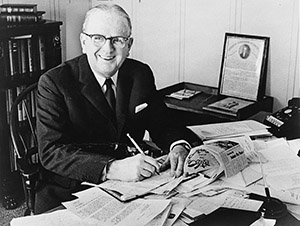
Believe in yourself! Have faith in your abilities! With sound self-confidence you can succeed. – Dr. Norman Vincent Peale, Trump family pastor, inspiration to President Donald J. Trump & the Father of ‘Positive-Thinking’
US presidents have long spoken of their religious faith. Ronald Reagan and George W. Bush referred to the Bible and openly identified with Evangelical Christianity. Even Hillary Clinton made no secret of her commitment to liberal Protestant Christianity stating, “I am a person of faith. I am a Christian. I am a Methodist.”
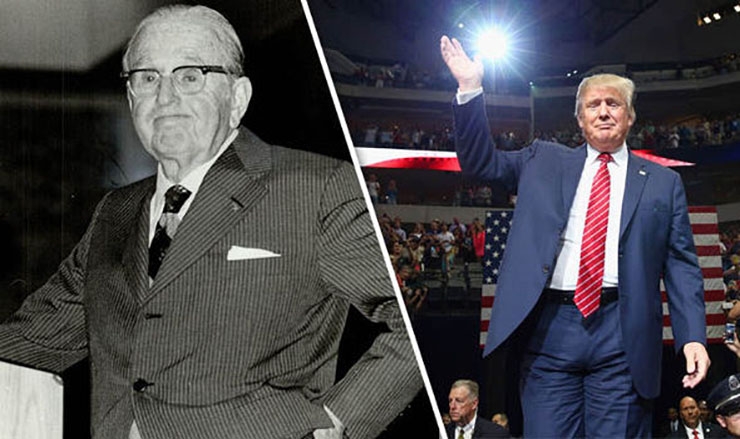
America’s 45th president Donald J. Trump is different from his predecessors and his Democrat opponent. President Trump has spoken of attending the New York City congregation of the Reverend Dr. Norman Vincent Peale. A dynamic preacher and author, Rev. Peale has been called “one of the 20th century’s most powerful figures” and the “father of Positive-Thinking.” “I still remember his sermons,” Trump said in July 2015. “It was unbelievable. And what he would do is he would bring real-life situations, modern day situations into the sermon. And you could listen to him all day long. When you left the church, you were disappointed that it was over. He was the greatest guy.”
So who was Norman Vincent Peale, what did he preach, and how have his ideas impacted America’s new president? We asked James Wasserman, a keen observer of American religion and respected author on the Western Mystery Tradition, to share his insights.
NEW DAWN (ND): Who was Norman Vincent Peale, the maverick Christian minister Donald Trump describes as “one of the greatest speakers” he’d ever seen?
JAMES WASSERMAN (JW): Norman Vincent Peale (1898–1993) was the long-lived author of The Power of Positive Thinking, first published in 1952. (The 2015 edition from Simon and Schuster proclaims five million copies have been sold.) Peale was the foremost voice for what might be called Christian New Thought, having interwoven the idea of biblical faith with “the right to happiness.” This is a uniquely American appreciation of man’s place in the grand cosmic scheme, what Thomas Jefferson (1743–1826) identified in the Declaration of Independence as the unalienable right to “the pursuit of happiness.” Jefferson stated we were endowed with that right by our Creator – allowing for no equivocation as to the legitimacy of the source of happiness. Jefferson further suggested that the duty of the State is to protect the Natural Rights of the People.
Norman Vincent Peale
Peale is an appealing writer and must have been an appealing figure as well. He took over a ramshackle church in New York City, the Marble Collegiate Church on 5th Avenue and 29th Street in 1932, during the Great Depression, and turned it into one of the most successful ministries in the city, America, and the world. He made extensive use of the media of the day: including radio, TV, magazines, pamphlets, and books. New Thought scholar Mitch Horowitz calls Peale the founder of “the most influential self-help philosophy of the twentieth century.”
Peale, a 33° Freemason, was the Trump family pastor and young Donald regularly attended his services. Peale officiated at his first marriage, the weddings of both his sisters, and the funerals of Donald’s parents. The first chapter of Peale’s classic is called “Believe in Yourself,” a message Trump apparently took to heart and which may have allowed him to survive the almost universal waves of hatred directed at him by politicians of both parties, media mavens and their designated talking heads, and the assembled glitterati of the entertainment industry.
ND: How does Rev. Peale’s philosophy of ‘positive-thinking’ differ from both ‘born-again’ Evangelical Christianity and the liberal wing of American Protestantism?
JW: Peale was unapologetically both a Bible-based Christian and a political conservative. An American patriot, he supported the Republican Party and many of its candidates, being quite the Manhattan renegade for that! However, his writings and philosophy are clearly aligned with New Age beliefs. He advocated for the belief in the ability of properly directed thought to improve health and produce material improvements in daily life, rather than just the more intangible and ‘spiritual’ benefits sought by other Christian movements.
For example, Evangelical Christianity is more accepting of pain and punishment as a corrective for the imperfection of Creation – the world as the Valley of the Shadow of Death, the scene of the Trials and Tribulations of Life through which the soul of the religious aspirant must pass on its way to Perfection in the Afterlife, God’s Kingdom for the Righteous.
The Liberal Protestant is, in my opinion, more committed to being a liberal than a Protestant. Liberal Protestants are similar to left-wing Jews who support the anti-Israel policies of the Democrat Party, or pro-abortion Catholics who disdain the ignorance of their pope.
Peale felt the Earth was to be enjoyed through right-thinking and ethical balance. Man was empowered to be God’s custodian on this planet, as noted in Genesis. Peale also made clear that our creative mental ability is so powerful it must be well-regulated in order not to produce unwilled negative results in the lives of those who fail to appreciate its import.
ND: So Norman Vincent Peale’s ‘positive-thinking’ is virtually synonymous with New Thought? What are the origins of New Thought? And how does it connect with the ‘Law of Attraction’ widely popularised in recent years in The Secret, etc…
JW: The New Thought Movement is particularly rooted in America. There have been European luminaries among its proponents, but it is an indigenous philosophy that shares the ‘can do’ spirit on which this country is based. Its most immediate roots are among the New England Transcendentalists, especially Ralph Waldo Emerson (1803–1882). Emerson was a prolific writer and lecturer, an ordained clergyman, a scholar of Indian spiritual thought, Buddhism, Zoroastrianism, and Hermeticism. Having openly reached into the Wisdom of the East for spiritual sustenance, he is credited with having influenced the American religious broadening of the nineteenth century and beyond, to include Mormonism, Psychism, and New Thought. Emerson is referenced by name in Peale’s work.
On the other hand, the Transcendentalists were hardly New Thought proponents. Their high-minded idealism went far beyond the earthly concerns of New Thought. But Emerson’s brand of religious and spiritual experimentation opened a series of options to America in which many contemporary trends could manifest. The mid-nineteenth century was the time of Eliphas Lévi, Edward Bulwer-Lytton, Madame Blavatsky, P. B. Randolph, the flourishing of Freemasonry (and the concomitant scandals associated with some of its excesses), the establishment of alternative utopian communities, the rise of Spiritualism, and the publicising of psychic phenomena. Even Abraham and Mary Todd Lincoln were believed to have sought communication with their deceased son in White House séances. Emerson’s efforts helped foster the explosive burst of religious creativity of the time.
Mitch Horowitz dates the first of the actual New Thought proponents to the 1830s in the person of Phineas P. Quimby in Maine. Quimby’s most noted disciple was Mary Baker Eddy, the founder of Christian Science. Her singular obsession with mental influence controlling physical events was the most extreme denial of physical reality within the New Thought movement.
Wallace D. Wattles (1860–1911) was the direct precursor of the Law of Attraction teachings made popular by The Secret. I remember when Destiny Books opened its publishing doors in the mid-1970s. Among its first titles was a mass market paperback version of Wattles’ Financial Success, now retitled The Science of Getting Rich and still in print. Wattles was also a social reformer who ran for political office as a socialist before his death. He was joined in his idealism by Elbert Hubbard, Ralph Waldo Trine, and Ernest Holmes (1887–1960). Holmes started the Church of Religious Science in Los Angeles in 1932 and was the author of The Science of Mind, a vastly influential text in the canon of New Thought. Holmes was the direct link between Dr. Peale and New Thought. Peale read Holmes in the early 1920s, just before entering the School of Theology at Boston University.
At the same time as the New Thought Movement was flourishing, the early twentieth century brought out a number of spiritual teachers whose work lives on today. Foremost among these is, of course, Manly Palmer Hall (1901–1990). His opening of the higher Mysteries of myth, religion, and philosophy to a wider audience continues to resonate in his bestselling books. It is likely he and Holmes crossed paths on the Los Angeles lecture circuit of the day.
ND: Today positive-thinking is universally identified with Oprah, other ‘New Age’ celebrities, and supporters of Trump’s rival for the presidency, Hillary Clinton. Many of them active in a range of progressive social movements. Yet Norman Vincent Peale, the Trump family pastor, as you point out, was a traditional American conservative. He’s even been quoted as saying the choice is between “Christ or Communism” and “Christ or the police state.” Rev. Peale comes across as no friend of progressives.
JW: Communism, the Police State, Sharia Law, Hillary Clinton, and Oprah all share an adherence to a common principle: Collectivism. This is the idea that the interests of the individual are, and must/should be, subservient to those of the group. This pernicious philosophy was enunciated in Europe by Jean Jacques Rousseau (1712–1778) and Georg Wilhelm Friedrich Hegel (1770–1831), the intellectual godparents of Karl Marx (1818–1883). Collectivists assume that the ills of society and the flaws of the human design can be corrected by ‘experts’ – if only they are given enough time and control.
Opposed to all of them are the writings of philosophers like John Locke (1632–1704) the intellectual founder of the concept of limited government. Locke’s philosophy was ultimately embodied in Thomas Jefferson’s Declaration of Independence and the strict binding of government from mischief by the chains of law as outlined in the United States Constitution. Individualism presupposes that the greatest good will come to the greatest number by respecting the inherent Liberty of each person – the unalienable rights we mentioned earlier. Peale’s conservatism and anti-Communism would put him in the individualist camp.
The powers of positive thinking and the link to the universal mind proclaimed by Peale and the New Thought movement seems to me more amenable to Individualism than Collectivism. Although I was born Jewish, I accept the concept of America as a ‘Christian nation’ because I believe the Judeo-Christian tradition is the home of Individualism. Our concept of a human relationship with God is very personal. Abraham was prepared to sacrifice his only son at God’s command. Jesus is constantly speaking to people who must make decisions, accept responsibilities, commit to tasks in their personal lives. This all bespeaks the freedom and necessity to choose.
ND: New Thought, Mind Science, Positive Thinking… This is as you say quintessential American philosophy, a big part of the ‘New Age’. How has this very American worldview shaped Donald Trump? Is he America’s first ‘Positive Thinking’ President?
JW: Pride, common values, culture, and a sense of national purpose are what bring a people together. As Trump said in his inaugural speech, nationalism offers the potential for a transformative and positive reshaping of a society: “At the bedrock of our politics will be a total allegiance to the United States of America, and through our loyalty to our country, we will rediscover our loyalty to each other. When you open your heart to patriotism, there is no room for prejudice.”
While I appreciate differences among our people, I reject ‘diversity’ as a goal in and of itself. I think countries should welcome those who embrace the dominant national identity. For example, my grandparents fled the Russian pogroms at the beginning of the twentieth century. But once arrived here, even though none of them spoke English, they became Americans. Their kids taught them English as they learned it in school. No multi-culturalism in those days! My grandparents contributed to the economy and strength of their new homeland. And they influenced their grandchildren to love America as a beacon of light and freedom. Trump’s family had the same dynamics I would expect.
I think Donald Trump’s first inaugural address of January 20, 2017 was remarkable. I have already said that I think his vision of America First is one that can be shared by all countries as an embrace of national self-interest. I think this is one reason Trump is willing to entertain the idea of good relations with Vladimir Putin, clearly a proponent of Russia First, or Benjamin Netanyahu, an Israel First leader. I see nothing wrong with politicians binding themselves to their citizens. To quote the President, “At the center of this movement is a crucial conviction: that a nation exists to serve its citizens.”
But Trump went on to state what I believe is the most important belief of the New Thought movement and the reason Donald Trump will be correctly identified as America’s first New Thought President.
“Americans want great schools for their children, safe neighborhoods for their families, and good jobs for themselves. These are the just and reasonable demands of a righteous public.”
Trump’s profound acceptance of the “just and reasonable demands of a righteous public” is precisely why people like Wattles, Holmes, Peale, and the authors of The Secret tell us it is OK to visualise prosperity and success and the good things of life. As long as we use them wisely – in tune with the cosmic purpose – they are ours for the taking. Crowley used different language (like Trump he is a bit of a provocateur). “Do what thou wilt shall be the whole of the Law.” Crowley later referred to this as “the most sublimely austere ethical precept ever uttered, despite its apparent license.”
ND: You mention the British occultist Aleister Crowley whose life and teachings you have studied and written about for more than four decades. You also have a long personal involvement with Crowley’s magickal orders – even described as a ‘founding father’ of the modern O.T.O – as documented in your 2012 book In the Center of the Fire, A Memoir of the Occult. Do you believe Donald J. Trump is an example of Aleister Crowley’s teachings of Thelema (Will)?
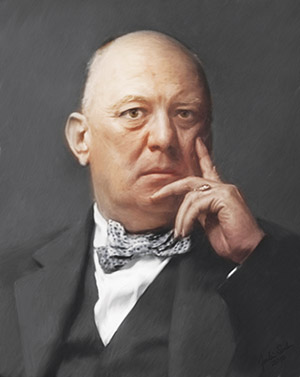
Aleister Crowley
JW: You ask if I consider Trump an example of Thelema and the law of Do what thou wilt. (And you seem unconcerned that I could be tarred and feathered by the majority of modern Crowley supporters who are as progressive in their politics as the liberal Protestants we discussed earlier!) But my answer is yes. I listen to Trump and observe him in action, and he seems every bit the creative, take-no-prisoners example of a person who is living his own inner truth despite the cackling and caterwauling of his detractors. I watch his speeches and detect his love for his supporters and America. I see him with his family, and I know for all his brashness, arrogance, and bull-in-the-china-shop personality, that here is a man who understands the second part of our Thelemic equation, Love is the law.
ND: Aleister Crowley proclaimed the dawn of a new age he called the ‘Aeon of Horus’, which would overturn outdated, ossified codes and beliefs. This New Aeon, while offering humanity unprecedented opportunities for self-realisation and self-actualisation, would also be marked by terrible conflicts, strife and upheavals of all kind. Where is humanity today in relation to the incoming ‘Aeon of Horus’? Do you see the election of outsider Donald Trump as a significant part of this period of transition into a new age?
JW: The Aeon of Horus was announced in The Book of the Law, received by Aleister Crowley in 1904. Extending some 2,000 years, the New Aeon or Aeon of the Child supersedes the previous period of the Aeon of Osiris or Aeon of the Father. Crowley pointed out in 1938 some of the characteristics of this New Aeon, “Superficially, they appear appalling. We see some of them already with terrifying clarity. But fear not!” The disruption of virtually all norms would refresh the opportunity for the self-discovery of the human race.
Crowley noted various psychological, biological, and cultural changes as part of this Aeonic shift. “Observe for yourselves the decay of the sense of sin, the growth of innocence and irresponsibility, the strange modifications of the reproductive instinct with a tendency to become bisexual or epicene, the childlike confidence in progress combined with nightmare fear of catastrophe, against which we are yet half unwilling to take precautions.”
Noting contemporary trends and “infantile cults” in politics, pacifism, health crazes, occultism, sentimentalised religion, and the pop culture of his day, he concluded, “We are children.”
Crowley raised a point that bears repeating to understand the rise of Donald Trump as the antithesis of the collectivist Obama and his defeated successor: “Above us today hangs a danger never yet paralleled in history. We suppress the individual in more and more ways. We think in terms of the herd. War no longer kills soldiers; it kills all indiscriminately. Every new measure of the most democratic and autocratic governments is Communistic in essence. It is always restriction. We are all treated as imbecile children… they won’t trust us to cross the roads at will.”
Every day in America – and more and more in Europe – citizens are rejecting this elitist bunch of self-proclaimed know-it-alls whose policies seek to destroy centuries of Western culture and national identity in the name of the chimera of “internationalism.”
I hope Trump accomplishes the goals he has set forth of rebuilding the nation state. If he is able to succeed as a leader, America will retain its design as a Thelemic country whose long-lived written Constitution enshrines the principle of the sacred Liberty of the Individual as its sovereign goal. We shall certainly see.
(I must add the disclaimer that I speak for myself. Sadly, most of those associated with the formal Thelemic movement hold leftist and “progressive” political positions.)
ND: In your book The Secrets of Masonic Washington you detail the Masonic influences on the birth and development of the American Republic. You show that in the New World, free of monarchy and aristocracy, the ideas of the Enlightenment were able to flourish. Do you think the values and vision of America’s Founding Fathers can be revived today under a Trump presidency?
JW: I do. I find it interesting that Trump is a builder, like Solomon in the Bible and the Freemasons whose vision and principles built America. Trump is the ultimate pragmatist. I wish he had a more ideological mindset that would place philosophy above the deliberative process, but I think he has good instincts. And good influences around him to steer him away from potential overreaches. I also believe he sincerely loves this country. When I heard him say, “We do not seek to impose our way of life on anyone, but rather to let it shine as an example for everyone to follow,” I thought even Thomas Jefferson might not have said it better. Humility, love of Liberty, and the role of the Creator in the pursuit of our national destiny are values I believe are shared by the Founding Fathers, Dr. Peale, and President Trump.
If America can come together under a President Trump, it seems to me that every day, in every way, we’ll get better and better as a nation and a world!
James Wasserman’s revealing article ‘Crowley & Trump: A Magickal Connection?’ accompanies the above interview. It is available by purchasing this issue.
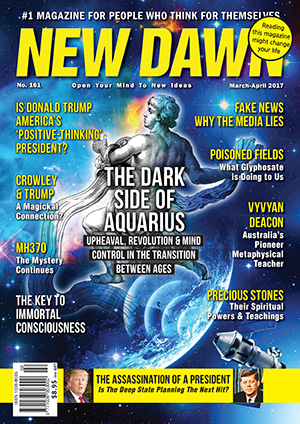
[alert type=”general” dismiss=”no”]This article was published in New Dawn 161.[/alert]
[alert type=”success” dismiss=”no”]If you appreciate this article, please consider subscribing to help maintain this website.[/alert]
A question frequently put to me by newcomers to magical practice is whether there is a reliable way of distinguishing subjective experience from what exists independently of their perception of it. In other words, how can they be sure that what they witness during a particular ritual, even when it impinges on their surroundings, is something other than the product of their own – or the group’s – creative imagination.
It is a question some magical orders are reluctant to answer or at times even deign to consider. In them may lurk the fear that once they acknowledge the subjective nature of any phenomena associated with their work, that immediately devalues it. And the new recruit, persuaded it’s all in the mind, may then drift away.
After all, if you’re after mental magic, it’s far less hassle (and a lot more fun!) to watch Derren Brown strut his stuff than spend hours in an airless, incense-filled room, sporting fancy dress and mouthing incantations.
Or perhaps the question is avoided because it can never be satisfactorily answered, if only because, as with much else in occultism, there is no clear-cut answer to be had.
For even if the imposing figure of, let us suppose, a venerable Druid were to turn up during a rite associated with the Celtic mysteries, his appearance, while seeming to be objectively real, might nevertheless be the projection of an image inside the leading celebrant’s head and telepathically conveyed to everyone else.
On the other hand the selfsame figure might well be the real thing, an inhabitant not (or no longer) of our three-dimensional world but briefly granted access to it thanks to our magical efforts. So not surprisingly, when asked by a student how to distinguish which of the two he is, I’ve often been hard put to answer.
A further complication is that entities – and let’s stick to these for now, though ritual can generate a variety of other phenomena – which are the constructs of the human mind can, once created, assume a life of their own. Well, perhaps ‘life’ is not the right word for what they enjoy is, strictly speaking, only a similitude of life, since they are of synthetic origin and, as such, animated by the vital energy they draw from living beings. To that extent theirs is what might be called a vampiric existence.
Dion Fortune spoke of such entities several times, having by her own, perhaps obsessive, account been the unwilling recipient of their attentions. And by coincidence it was her husband, T. Penry Evans, then married to his second (and not at all occult minded) wife, Anne, who first talked to me about them.1
Not yet in my teens, I had been introduced to magic and encountered – the details are unimportant – an entity whose nature and intentions he thought it prudent to investigate. For him there were two questions to be answered: had the entity been visualised beforehand by me (or suggested to me by my then mentor, a friend of both Dr. Evans and my father); and would it return permanently to where it had come from after being ritually banished. The answer to the first was no and the second, happily, turned out to be yes.
To Dr. Evans this demonstrated that the entity was not mentally connected to me in any integral way. It had, in other words, an independent life of its own and so, to return to where we started, was objectively real and not the product of human imagining.
Contrast this with the tulku created by the well-known explorer Mme. Alexandra David-Neel. In her book, With Mystics and Magicians in Tibet she describes how during her time in that country she set about creating from her thoughts a fat and jolly monk who, initially at least, was content to do her bidding. Others in her group could see him and he even performed small chores when requested.
But over time his appearance coarsened and his demeanour became less benign, so much so that his alarmed creator resolved to put an end to the experiment. It was no good attempting to banish him, as was successfully done in my case, because the creature had emerged from – and been sustained by – her own self.
She had no choice but to re-absorb it into her ethero-astral bodies, exactly as Dion Fortune claimed to have done on one occasion when she involuntarily created a version of Fenris, the wolf–fiend of Norse mythology. According to both women the process is extremely distressing.2
These induced thought forms are, I suspect, the correct explanation for those materialised spirits – a contradiction in terms but never mind – that used to be a feature of spiritualist seances. Or at least of those seances where the apparitions on display were not fabricated from regurgitated cheese-cloth or masticated lavatory paper. (It is noteworthy that the sudden decline in this kind of seance coincided with the invention of infra-red equipment and miniature cameras capable of taking pictures in the dark.)
That genuine materialisation did occur from time to time is, however, likely. One of my compatriots, Jack Webber, was especially prolific, as was – on those occasions when she didn’t cheat – the eminent Scottish medium, Helen Duncan. (I attended one of her seances as a small boy while staying with an eccentric aunt in South Wales but that story belongs elsewhere.)
I am satisfied that in seances of this kind, the phantoms that used to turn up and, it must be said, were identified as true likenesses of their dear departed by those attending the performance, were in fact their own thoughts exteriorised in a way similar to what occurs in magical operations.3
The difference, however, is that in the latter everything is structured and deliberate, as well as under strict control. And the forms themselves are more subtly built, requiring nothing so crude as the ectoplasm extruded by mediums from their bodies. (Only in a rarely attempted and extremely intimate operation, one I have been privileged to witness, might a substance resembling ectoplasm be involved. I refer here to the creation of a so-called magical child.)4
Anyway the point I am making is that in trying to decide what is objectively real per se and what, though apparently real, is mind-generated and essentially dependent on its creator, the Penry Evans test seems to me valid. And since first learning of it many years ago, I have come across another of my own which, though less reliable, is not without merit.
I discovered it in the 1980s when asked to participate in an attempt to save the life of a man desperately ill in New York. The order to which he belonged followed an Egyptian tradition with which I was familiar. Indeed, they had come across it from hints contained in a book I had previously written.5
You will not expect me to disclose further details, but I can reveal – and many of you will understand why – that the rite reached its climax with a dramatic (and, I still recall, extremely beautiful) psycho-sexual conjunction involving the lower and higher realities present that afternoon.
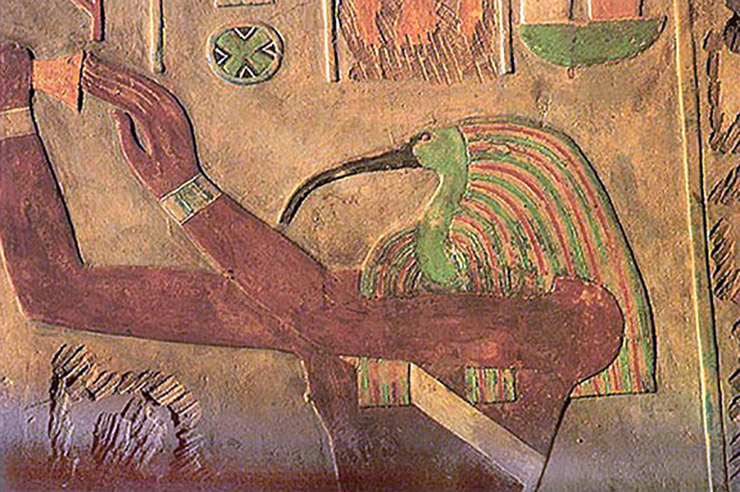
The operation over, I undertook to keep vigil at the sick man’s bedside – only to fall asleep, I regret to say, before scarcely an hour had passed. When I woke up, it was to find the room infused with a pale green luminosity, strangely iridescent yet at the same time curiously still. And at the end of the bed, arms folded, stood two dark-skinned Egyptians who, to my huge disappointment, resembled nothing other than extras in one of those technicolour epics, set along the Nile, that used to star Burt Lancaster (or was it Charlton Heston?). They just didn’t look right. Not right at all. Small wonder that I closed my eyes and fell asleep again.
I am pleased to report that the patient survived. Indeed by the next morning all vestiges of what had purportedly been a terminal illness were gone. Only later, did he tell me how, in a state of what he took to be delirium, he had watched two Egyptian hierophants bestow a blessing on him.
And that’s how I came to realise that the Egyptians I took to be fake were for that very reason something other than the product of my imagination. For had I simply imagined them, I’d have come up with something far more plausible, at least in my eyes, than the pair I’d observed. (To me, as I said, these looked as if they’d just stepped out of central casting.)
And that’s how I came to realise that if one is unsure whether something one has seen is imagined or objectively real, the more its appearance diverges from what you would have expected, the more likely it is to be independent of you. It may not work every time. But it’s worth remembering.
Does any of this help the newcomer I mentioned at the beginning? Perhaps just a little. The separation between the subjective and objective in magical practice is in any case always slightly blurred. So, too, is the division between a “higher” reality and that “lower” (or vibrationally more limited) one we currently occupy.
Our supreme task as occultists is to reconcile the two. Initiates know beyond doubt that only when that happens will duality beget the One whose conquest of Time is destined to bring about the apotheosis of our race. And, with it, the ultimate redemption of the world.
But that heady prospect carries us far beyond our starting point. Naturally, we should never lose sight of it but neither should we neglect the basics of our craft. Above all, questions put to us by newcomers, however naive or irritating, should on no account be side-lined or dismissed, even if, as with the one discussed here, we can offer no hard and fast answers.
Of late I have become increasingly concerned about the tendency among some contemporary esoteric orders (fortunately a minority) with high-falutin names and grandiose pretensions, to lose themselves in lofty speculation or indulge in ceremonial which, like that of Freemasonry, looks hugely impressive but is bereft of magical vitality.
Magic requires a lot of hard graft. And it requires answers, even if only provisional ones, to a lot of awkward questions. Let us not forget it.
This article first appeared in Mandrake Speaks Ezine. Sign up to their mailing list here: http://mandrake.uk.net/blog/ Mandrake Publishers web site located at www.mandrake.uk.net.
[alert type=”general” dismiss=”no”]This article was published in New Dawn 98.[/alert]
[alert type=”success” dismiss=”no”]If you appreciate this article, please consider subscribing to help maintain this website.[/alert]
Footnotes
1. Dr. Evans came from Llanelli in South Wales and had married Dion Fortune in 1927. (He died, I think, in 1958 or 1959.) He was acquainted with a friend of my father’s, a magician – about whom I have spoken elsewhere – who subsequently introduced the two men to each other. Both shared an interest in springer spaniels and, of all things, the commercial potential of soya beans. Strangely enough, Dion Fortune or, as she then was, Violet Mary Firth, had been born in Llandudno, my mother’s birthplace, and the two sets of parents had been on friendly terms. Out of consideration for the second Mrs. Evans, however, this coincidence was not mentioned, at least not to my knowledge, when she and her husband called on us during a stay in Aberystwyrh.
2. Dion Fortune’s ordeal is described in her book Psychic Self-Defence (1930). Mme. David-Neel’s account is calmer. In it she describes how her little monk resisted all attempts to remove him. “My mind-creature,” she writes, “was tenacious of life” (With Mystics and Magicians in Tibet, Penguin, London, 1936, pp. 283-4, re-issued by the same publisher as Magic and Mystery in Tibet, 1971). In total she spent fourteen years in Tibet, enduring great hardship but fortified by the practice of magic which, as she would reveal years later, included Tantric sexual rites. She died, aged 101, in 1969.
3. The materialised forms are said to not only resemble the deceased but to speak like them as well, referring to matters known only to them and whichever sitter they’re addressing. (In the case of Mrs. Duncan’s revenants, the conversation was sometimes conducted in a variety of languages.) In all such cases, however, little that is new or original is said, as one would expect if these are merely thought projections or, as Mme. Blavatsky and others maintain, “astral shells.”)
4. It will be recalled that Aleister Crowley claimed to have performed the same operation. So, apparently, did Alex Sanders, though he also stated that the infant immediately took up residence on the Inner Planes, later communicating in the manner of a spirit guide. Mrs. Duncan – never one to be outdone – likewise had her spirit babies. By all accounts her entranced self would frequently stroll about the seance room with a small white bundle – yelling its heart out – clasped against her bosom. Sometimes she even carried a baby on each arm! There was also a parrot (named Bronco) that put in a guest appearance from time to time.
5. David Conway, Magic: An Occult Primer (Cape, London 1972, subsequently The Complete Magician, Aquarian Press, various editions). There is also some background information in Secret Wisdom: The Occult Universe Explored (Cape, 1984, new edition – Secret Wisdom: The Occult Universe Revealed, Vega/Chrysalis, London 2002).
This article was published in New Dawn 98 (Sept-Oct 2006)
Richard Smoley and Jay Kinney need no introduction to New Dawn readers. After successful careers as editors of Gnosis (1985-1999), the highly respected US journal of esoteric knowledge, in 1999 Richard and Jay published Hidden Wisdom: A Guide to the Western Inner Traditions to much acclaim (in May 2006, a revised edition of Hidden Wisdom incorporating new material and insights,was released).
Richard Smoley has contributed numerous articles to New Dawn magazine, many of which can be found on the New Dawn website.
In the following interview, Richard Smoley talks about Hidden Wisdom, spirituality, and the esoteric traditions….
There seems to be a huge resurgence in interest in the hidden side of the Western tradition lately. There’s so much talk about Gnosticism, the Masons, the Templars, the hidden teachings of Jesus. What’s behind it all?
Well, until fairly recently the story of Western religion was pretty much taken for granted. The Bible was seen as an accurate historical record, and the story the churches told about themselves was taken as the truth. But more and more people have come to see that isn’t the whole story.
Over the last 200 years paleontologists came to realise that the earth really hadn’t been created 6,000 years ago. New Testament scholars took a closer look at the Gospels and decided that the life of Jesus they portrayed contains a lot of myth. Today archaeologists are saying that Moses couldn’t have led the children of Israel to freedom from Egypt in the land of Canaan, because Canaan was an Egyptian province at that time. The supposedly magnificent Jerusalem of King Solomon was probably a hill village with maybe 200 or 300 people. And so on.
Much of this is not exactly news. “The quest for the historical Jesus,” as Albert Schweitzer famously called it, goes back to the 19th century. But it’s only in the last generation or so that this knowledge has begun to reach a widespread public. It’s led people to ask what was really going on back then. And it’s fueled a lot of speculation about the religious history of the West. Much of this speculation is pretty wild, but it shows that people are eager – maybe desperate – for some answers about their past that isn’t mostly propaganda.
So what is this hidden truth? Was it true, for example, that Jesus was married to Mary Magdalene and that they had children?
I’ve never seen any proof of this that seemed even remotely conclusive. There is a strange, fragmentary passage in a text called the Gospel of Philip saying that Jesus was very fond of Mary Magdalene and used to kiss her often on the mouth. The other disciples got jealous and said, “Why don’t you love us the way you love her?” And Jesus replies, “Why don’t I love you the way I love her?” The answer presumably being obvious.
But the Gospel of Philip is very late. Most scholars date it to the third century CE. As such, it can’t be trusted as a terribly accurate historical source. All I can say is that there are legends, and it’s known that legends naturally accumulate around powerful figures. You only need look at the strange hagiography that’s congealed around Elvis Presley to see how this happened in very recent years. So the story of Jesus being married to Mary Magdalene is not something I personally would put any faith in.
We may never know what happened in the time of Christ, how much of our information is factual, how much of it is suspect. For example, the Gospel in the Bible that is considered to be the most historically accurate is the Gospel of Mark. Strangely enough, the last page of this Gospel is missing. It was lost in antiquity, probably soon after it was written. What you find in the Bible – and most versions have these – are several different endings, all of them supplied later. This missing part of Mark would have told what happened after the Resurrection. Was this lost accidentally, or did somebody tear out the page and replace it with something more politically convenient? We may never know. And yet ultimately the hidden truth about our past is not some collection of buried facts.
Then what’s the point of your work?
I do think there are buried truths, what in the title of our book Jay Kinney and I have called “hidden wisdom.” But it’s not factual knowledge as such. One of the key concepts in our book is gnosis, which is a term that’s bandied about a lot these days. Gnosis is knowledge, but knowledge of a very special kind. It’s not factual knowledge, not knowledge of something, but rather an inner awakening, an inner illumination. It’s quite similar, I would say, to what Eastern traditions often call enlightenment.
Viewed in this way, the Bible becomes a story, not about people who lived in an increasingly remote past, but about our own inner awakening. In this way it becomes much more interesting and much more immediate. The story of Exodus is not about the liberation of several tribes of people from literal slavery, but about liberation from inner slavery. The story of Christ is not so much about a man, however remarkable, who lived 2,000 years ago, but about a process that begins in us as we awaken.
But this just sounds like allegorising to me. People have been doing this for centuries. And it’s all very nice and good, but it doesn’t seem to have much to do with hard, cold facts.
And what would facts prove? For example, the conventional Christian view is that Jesus literally rose from the dead. Not so long ago, I read a book about witchcraft in southern Africa, written by a very prosaic and down-to-earth British doctor who practiced there in the days of colonialism. He told this story of a chieftain who was dead and buried – and whose death he himself as a physician had verified. And he witnessed a ceremony in which this same chieftain was resurrected, sat on his throne, and ate a meal.
Of course you can play the skeptic and doubt that this really happened. But beyond a certain point, what difference does it make? Would you believe something like that even if you saw it? Or would you laugh it off and tell yourself you just imagined it? People do this all the time with experiences that go past their concepts of reality. It’s that much harder to either accept or reject miracles that may or may not have happened thousands of years ago.
Speaking of witchcraft, do you cover that topic in Hidden Wisdom?
Yes, as a matter of fact we do.
What is witchcraft about?
Most people who call themselves witches are not Satanists. They are not cranky old ladies in black who live at the edge of town; nor are they playing at being Sabrina or Samantha Stevens. They are laying claim to what they call the “Old Religion” – the pagan tradition that thrived in Europe before Christianity.
Witchcraft, Wicca, Neopaganism – these are all terms that loosely encompass a number of highly individualistic groups and people, not all of whom see things in the same way. In fact, they take many different forms. But one key thing they have in common is a reverence for the forces of nature, conceived as spiritual powers in their own right, and the belief that we can work with these powers consciously and creatively. Similarly with the powers of the mind.
What you’re talking about is magic – not the sleight-of-hand type but the occult type. In your experience, does this kind of magic work?
Not always, and not usually very well. But not for the reasons you might expect. From my experience, I’m convinced that these forces are real. But they’re difficult to master. It’s very hard to do anything like that that somehow doesn’t backfire or simply fail.
Why?
It’s not like a scientific experiment. In a scientific experiment, if you’re going into a lab to bombard subatomic particles or inject substances into some rat, your state of mind has very little to do with the results. In fact, it shouldn’t. A scientific experiment has to be replicable. Your report has to be like a cookbook recipe that a scientist on the other side of the earth can follow.
Magical work is exactly the opposite. The state of mind you’re in, your concentration and your will – not only at the conscious but at the subconscious levels are the all-important factors, far more than whatever procedures you might use. And very few have the will and concentration to accomplish results anything like what they want.
So is magic dangerous?
Well, take the typical teenager who starts to dabble in such things. Either nothing happens, or the kid starts to get some results. He or she then usually gets scared and drops it right away. Very few are going to take magic to the point where they are going to get any effective results at all. If you do – and for some it is a true spiritual path – then your motivation becomes the question. Are you doing this for disinterested reasons – to form a link between heaven and earth, so to speak? Or are you just trying to find a shortcut to wealth and power? If it’s the latter, you may as well drop magic and take up stock brokering or politics or something that’s much more likely to achieve your aims. And if you’re doing anything for purely selfish motives, whether it’s magic or trading stocks, you will probably regret it eventually.
What about the Kabbalah? That’s something we’re hearing a lot about lately.
We have a chapter on it in Hidden Wisdom. Essentially the Kabbalah is the mystical tradition behind Judaism. It goes back to antiquity, but it took its present form in medieval times, in the twelfth and thirteenth centuries. By the time of the Renaissance, Christian intellectuals became interested in it, and after about 1500 it became incorporated into the general esoteric heritage of the West.
Just now I mentioned serving as a link between heaven and earth. For many Kabbalists, this is the essential point of the enterprise. We are the only beings – at least the only ones we know of – who are capable of being aware of both the visible and invisible realms, and some Kabbalists say that this is our function here on Earth, to serve as a link between the two.
By the way, “Kabbalah” comes from a Hebrew verb meaning “to receive.” And it means receiving in two ways. One is receiving the teachings as handed down over time, which is why Kabbalah is sometimes translated as “tradition.” But it’s also a matter of receiving spiritual impulses and translating them into action in this world. Apparently kabbalah is the word used in modern Hebrew for TV reception.
What do you think of the pop versions of Kabbalah that are out there now?
I don’t have a lot of direct experience of them. But generally speaking, you can say that the pop versions of any spiritual tradition are likely to be pretty watered-down. Zen and yoga, for example, were originally very intense and austere disciplines, but in the form in which they’ve made it to the public, they’re very bland and trite.
It’d be easy to jump to conclusions about this fact, to deride all these things as mere vulgarisations. So they may be. But they do serve an important function. In the first place, they communicate some key ideas to the general public that aren’t likely to make it any other way. To take one fairly obvious example, it’s become almost a cliche to talk about living in the present, “the power of now,” and so on. But to be aware in the present is actually a very profound (and quite difficult) practice. It’s interesting, and I think, beneficial, to have these ideas out there, even if they’re often in rather a cliched form.
You keep using the word “esoteric,” and that seems to be a central concept in your book. What does “esoteric” really mean?
It comes from a Greek root that means “further in.” To really understand what these teachings are about, you have to go further into yourself. You have to look past the surface of your social identify, your bodily desires, and see what’s beneath. This may take you very deeply into yourself, and at some point you realise that what you really are is something very small and silent. It is nothing you can see, because it’s always what sees. St. Francis said, “What you are looking for is what is looking.” If you understand this point, a lot of highly cryptic mystical texts become remarkably clear.
There is no end point to this process of going “further in” – none that I’ve ever seen in my own experience or from what I can tell of others’ experience. There’s always further to go.
Where do you see these traditions going in the 21st century?
That’s a very difficult question. There is a long, intricate, and poorly understood process by which esoteric ideas eventually make themselves public property. Things that were communicated only under the strictest secrecy 50 or 100 years ago can now be found in self-help bestsellers – for example, the simple truth that you are not your conditioning. It sounds obvious to say this now, but in the past it would have been a piece of knowledge that would have been communicated privately, often obliquely, possibly through some sacred rite of initiation.
Some may decry this popularisation as a profanation of sacred knowledge. I don’t see it that way. Rather I see that over a very long period of time, humanity begins to accept certain truths and makes them its own. These are first known only to an extremely small vanguard – an elite, if you like, although I know that’s a dirty word these days. Gradually these ideas are disseminated and become common knowledge.
Now if this so-called elite is doing its job, it won’t try to squirrel away its discoveries and keep them for itself. Rather, it will keep disseminating its discoveries in whatever form that makes most sense in the context of the times. It will also keep moving forward and trying to make new discoveries.
If much of what was previously hidden is now in the public domain, where do these traditions have to go?
I don’t have a clear answer to that at present. Much of it will depend on how much the mainstream religions will digest these insights. At this point esoteric teachings are often used as little more than marketing techniques. The rabbi talks about Kabbalah to get people back to the synagogue, or the Christian churches try to unearth some half forgotten contemplative tradition as a way of presenting an alternative to, say, Buddhist meditation.
Will it go past this point? Possibly; possibly people will go on soon to the next new thing. Even so, out of all those numbers, a few actually do see beyond the surface and decide to go “further in” themselves. They become the esotericists of the next generation, and the chain continues.
[alert type=”general” dismiss=”no”]This article was published in New Dawn 98.[/alert]
[alert type=”success” dismiss=”no”]If you appreciate this article, please consider subscribing to help maintain this website.[/alert]
Interview courtesy of Quest Books and copyright 2005 by Richard Smoley. Hidden Wisdom: A Guide to the Western Inner Traditions is available from all good bookstores & online retailers. Richard’s website is http://www.innerchristianity.com.
 ND: Much media coverage of the occult is either wildly sensationalist or treats the area with disdain and credulity. Why is this?