New Dawn – World's Most Unusual Magazine

Category: Secret Wisdom

  • Homage to Pan: Rosaleen Norton – The Witch of Kings Cross

    Homage to Pan: Rosaleen Norton – The Witch of Kings Cross

    From New Dawn Special Issue 3 (June 2007)

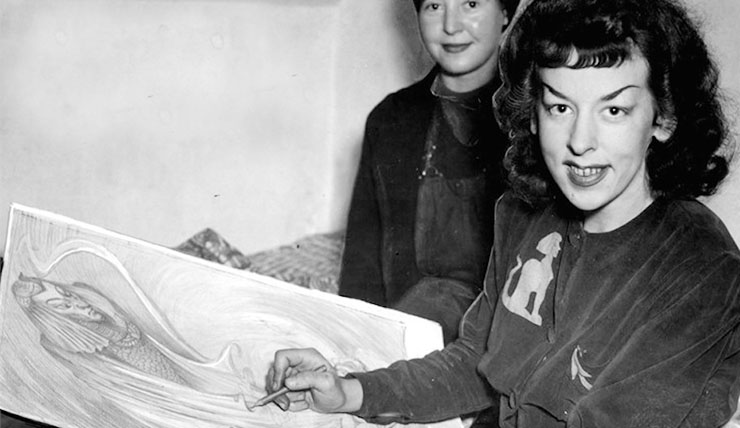
    Rosaleen Norton (1917-1979) has been described as Australia’s best known witch. She was a controversial and ‘colourful’ character in Sydney’s Kings Cross district during the 1950s and 1960s and was known to the public as an eccentric, bohemian witch-lady and artist. She wore flamboyant, brightly coloured blouses and vivid bandanas, puffed on an exotic engraved cigarette holder, and plucked her eyebrows so that they arched in a somewhat sinister curve. Norton also claimed certain distinctive body markings that she possessed were a sign that she was “born a witch.”

    Slight in build with curly black hair and a smile that revealed irregular teeth, Norton always had something of a magnetic presence that made her stand out in the crowd. The publication of her limited edition art book The Art of Rosaleen Norton in Sydney in 1952 – which also contained poems by her lover Gavin Greenlees – aroused considerable media controversy. Norton’s publisher and sponsor, Walter Glover, was charged in Sydney with releasing an obscene publication and copies sent to New York were confiscated and burnt by US Customs.

    During this period of extensive media publicity Rosaleen Norton became known in the public mind as an artist whose provocative paintings of half-human, half-animal forms were even more controversial than Norman Lindsay’s risqué nude figures. Norton depicted naked women wrestling with reptilian elementals or flying on the backs of winged griffins, gods who were both male and female, and demonic forms with menacing claw-tipped wings. During the 1950s Norton’s controversial paintings and drawings seemed to embody a deep-seated pagan impulse and ran counter to orthodox religious sensibilities.

    Norton’s Background

    Rosaleen Norton was born in Dunedin in 1917, the third of three sisters. Her father, Albert, was a captain in the merchant navy and a cousin of composer Vaughan Williams. The Nortons migrated from New Zealand in 1925 and settled in the Sydney suburb of Lindfield. As a teenager Norton was expelled from high school because of her allegedly “depraved nature” which her headmistress claimed “would corrupt the innocence of the other girls.” She then studied for two years at East Sydney Technical College under the sculptor Rayner Hoff. During this time she became interested in studying everything she could find about witchcraft, sorcery and magic and she was soon well versed in the occult writings of notable magical practitioners like Dion Fortune, Aleister Crowley and Eliphas Levi. In 1940, at the age of 23, she began to experiment with self-hypnosis as a means of inducing automatic drawing.

    Norton was already familiar with the trance methods of the Surrealists and especially admired the work of Salvador Dali and Yves Tanguy who, like the other artists in their movement, had explored techniques of encouraging the subconscious mind to manifest its visionary contents. Sometimes the surrealists drew rapidly so that forms came through unimpeded by the intellect. Others experimented with drugs or documented their dream experiences with great detail in order to develop a greater knowledge of the ‘alternative reality’ of the subconscious mind.

    Norton found that she could shut off her normal consciousness by means of self-hypnosis and could transfer her attention to an inner plane of awareness. As she noted in a lengthy interview conducted in an interview with the psychologist L.J. Murphy at the University of Melbourne in 1949: “These experiments [with self-hypnosis] produced a number of peculiar and unexpected results… and culminated in a period of extra-sensory perception, together with a prolonged series of symbolic visions.” Norton spent several years after this studying various systems of occult and mystical thought, including Buddhist and other examples of Eastern literature as well as standard works on Kabbalah, Theosophy and Western magic.

    During this period Norton also began to focus more specifically on the magical forces associated with the Great God Pan, whose spirit she felt pervaded the entire earth. Her studies had taught her that the ancient Greeks regarded Pan as lord of all things – symbolising the totality of the elements and all forms of manifest being. He was therefore, in a very real sense, the true god of the world. Pan was a maintainer of the balance of Nature and also had at his command an invisible hierarchy of lesser spirits who could help him in his work of ruling and sustaining the earth.

    Norton painted a large-scale interpretation of Pan, complete with horns, pointed ears, cloven hooves and musical pipes, and mounted it on the wall of her Kings Cross flat, where it effectively became the focal point of her magical altar. She also conducted magical ceremonies dressed in a tiger-skin robe to honour his presence, and would often experience him as a living reality when she entered a trance state. Meanwhile, her art continued to reflect the entities she encountered in her visions, including a variety of devilish creatures, half animal-half human pagan deities, and various supernatural motifs.

    The Gods, In Their Own Right

    Many occultists have drawn on Swiss psychoanalyst Carl Jung’s concept of the ‘collective unconscious’ to explain their relationship with the archetypal forces of the mind. Jung believed that at a deep, collective level of the psyche lay a rich and potent source of sacred archetypal imagery, and that these numinous forms provided the very basis of religious and mystical experience, irrespective of the cultural context involved. In other words, gods and sacred mystical images were really an extension of the universal human experience.

    A number of occultists have rejected this view, however, claiming instead that the gods live apart from the collective minds of humanity and are not merely projected ‘thought-forms’. Rosaleen Norton agreed with this latter perspective. For her, the gods existed in their own right. She believed she was able to encounter Pan, Hecate and Lucifer, not as extensions of her own consciousness, but as mythic beings from a higher plane of reality who would grace her with their presence if it pleased them, and not subject to her will. She believed she had discovered some of the qualities of these gods within her own temperament, and that this provided a sense of natural affinity. This made their invocation much easier and more effective than would have been the case had there not been some sort of innate bond. Norton maintained that she entered the realm of the gods on the astral planes – an inner world of spirit accessed through magical trance – and that on different occasions the gods would reveal different dimensions of their own magical potency.

    Rosaleen Norton regarded Lucifer, for example, not so much as an embodiment of ‘evil’ as humanity’s natural adversary. He bound and limited man when it appeared that he was growing too big for his boots. He tried to trick man, not out of malice but with the positive intent of exposing the limitations of the ego and revealing the essential falseness of man’s pride in his own existence. Rosaleen also regarded Pan as a very significant deity for the present day, a force in the universe which protected and conserved the natural beauty and resources of the environment. For her, Pan was alive and well in the anti-pollution lobbies and among the Friends of the Earth!

    Hecate, on the other hand, she felt to be more imposing – an often frightening, shadowy goddess flanked by cohorts of ghouls and night-forms, a dealer in death and a purveyor of curses. But there was a magical bond to be found here too. Norton regarded magic and witchcraft as her protection and an inspiration in a hostile, ungenerous world. However, her own brand of witchcraft hardly brought her abundance. She lived simply, with few possessions, and certainly without any measure of wealth. If ever she cursed people with “witch current,” she said, it was a means of redressing the balance of events – a legitimate use of the magical art.

    Rosaleen Norton’s paintings show a certain similarity of style to those of Norman Lindsay, for whom she occasionally posed as an artist’s model. But while for Lindsay the world of the supernatural could only offer decadent and exotic themes for his art-making, for Norton this realm was a perceptual reality – and this is very much reflected in her work. There are fire elementals, ablaze with light; devils with dual banks of eyes, indicative of their different planes of perception; cats with magical awareness; horned beings with sensual cheeks and a strange eerie light playing on their brow.

    Norton maintained that her art arose as the result of the direct magical encounter. Energies filtered through her, she said, as if she were a funnel. She transmitted the current during a state of self-induced hypnotic trance. If the gods were alive in her, her artistic skills would then allow these gods to manifest, in varying degrees, in her drawings and upon her canvases. Norton always denied that she portrayed the totality of the god. She could depict only those qualities the god chose to show. The gods existed in their own right, on a plane far removed from the everyday world of human consciousness – but were directly accessible to her through her techniques of magical trance.
    Was Norton a Satanist?

    During her colourful career as the ‘Witch of Kings Cross’ Rosaleen Norton was frequently accused of being a Satanist. When she exhibited her paintings and drawings at the Apollyon and Kashmir coffee-shops in Kings Cross during the 1950s, both locations were described in the tabloid press as the haunt of the “Devil’s cult” and on occasions visitors to these coffee-shops would mischievously request a cup of “bat’s blood.”

    When New Zealand migrant Anna Hoffmann claimed in September 1955 that she had attended a Black Mass with Norton in Kings Cross, the story was featured with sensationalist headlines on page one of a daily newspaper. Even though Hoffmann’s charges were later found to be fabrications and Hoffmann herself was jailed for two months and described as a “menace” by the presiding magistrate, the image of Norton as a ‘Satanist’ or ‘Devil-worshipper’ persisted during the 1950s, and even up into more recent times. For her own part, Norton went to great lengths, both during media interviews and sometimes also during various court proceedings, to explain that the “horned god” Pan was a pagan deity from the tradition of ancient Greek mythology and that her practice of witchcraft had no connection with the Christian Devil. Nevertheless, it is easy to see how members of the public may have misconstrued Norton’s occult imagery in the conservative social climate of post-World War Two Australia.

    Norton was unquestionably drawn to the ‘night’ side of the psyche and she herself described her art in those terms. Black Magic, one of several controversial artworks exhibited at the University of Melbourne in 1949, and against which charges of obscenity were subsequently brought, could certainly cause offence to any practising Christian, with its imagery of bestial lust, a winking nun, and a bare-breasted woman mounted on a crucifix. However, while many of Norton’s paintings and drawings feature provocative and irreverent subject matter, it is quite another matter to assume they promote a Satanic perspective.

    When Norton was accused in the popular media of overseeing blood-sacrifice rituals during a “Kings Cross Black Mass” she was both upset and offended by the remarks. Norton had always had a strong affinity with Nature, and with animals in particular, since her early childhood. As visitors to her apartment invariably attested, Norton was always accompanied by numerous pets, including cats, lizards, frogs, turtles and mice, and she always maintained that she would never cause animals harm. The very notion of ritualistic, Satanic ‘blood sacrifice’ was completely abhorrent to her. The evidence provided by her own artistic work and comments made to the popular press and in journalistic articles strongly suggests that while Norton was unquestionably both pagan and “heathen,” and often provocative in her presentation of “images of the night,” she was not a practising Satanist in the literal sense. Her witchcraft cult in Kings Cross included altars dedicated specifically to Pan and Hecate, and her coven rituals made no reference to the Christian Devil.

    So how can we sum up the magical personality of the ‘Witch of Kings Cross’? Rosaleen Norton was a colourful bohemian eccentric, a gifted trance-magician and a controversial visionary artist who developed her occult persona during a conservative period of Australian history when the populace at large was unsympathetic to the pagan beliefs she espoused. Most did not understand her ritual homage to the Great God Pan and branded her simplistically as a Devil-worshipper – a distortion of her actual perspective. When Norton’s limited edition art book was withdrawn from sale in 1952 on a charge of obscenity it was only allowed back into the marketplace when two “offending” erotic magical images had been blacked out. So Rosaleen Norton can be seen as a perennial ‘occult outsider’, an urban misfit in post-War Sydney. Nevertheless, she remains one of Australia’s most significant esoteric figures and can be considered a precursor of the more recent worldwide neo-pagan revival. She was also a competent mystical poet. Norton regarded the following poem, Dance of Life, as an expression of her personal magical credo:

    In the spiral horns of the Ram,

    In the deep ascent of midnight,

    In the dance of atoms weaving the planes of matter is Life.

    Life spins on the dream of a planet,

    Life leaps in the lithe precision of the cat,

    Life flames in the thousandth Name,

    Life laughs in the thing that is ‘I’.

    I live in the green blood of the forest,

    I live in the white fire of Powers,

    I live in the scarlet blossom of Magic,

    I live.

    [alert type=”general” dismiss=”no”]This article was published in New Dawn Special Issue 3.[/alert]

    [alert type=”success” dismiss=”no”]If you appreciate this article, please consider subscribing to help maintain this website.[/alert]

    © New Dawn Magazine and the respective author.
    For our reproduction notice, click here.
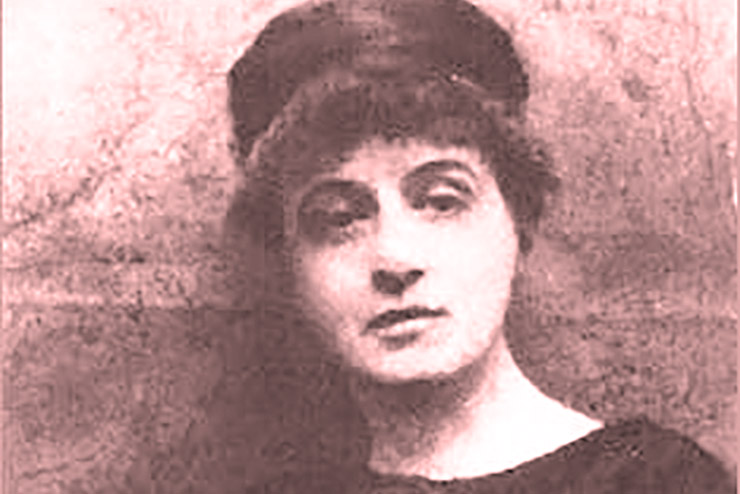
  • Maria de Naglowska, A Herald of the New Era

    Maria de Naglowska, A Herald of the New Era

    From New Dawn 135 (Nov-Dec 2012)

    When Winston Churchill called Russia “a riddle wrapped in a mystery inside an enigma,” he could as well have been describing a daughter of Russia named Maria de Naglowska. She was a poet, a journalist, a translator, an author, an occultist, and a mystic (the latter perhaps most of all), but few know anything about her. Those who have ever heard of her probably know her as the translator of P.B. Randolph’s Magia Sexualis1 (which she did far more than translate).2 Others, who have shown more curiosity about her, will say that she was a Satanist (not true, though it is an impression that she fostered).3 It has taken many years to get any reliable facts about her life, partly because she told different stories about herself.4 Her most important writings were published in very small editions (now almost impossible to get) and never translated into English. Consequently, this woman whose works should occupy a significant place in the history of Western religion, is now practically unknown, especially in English.

    Maria de Naglowska was born in St. Petersburg in 1883, the daughter of a prominent Czarist family.6 She went to the best schools, and got the best education that a young woman of the time could get. She fell in love with a young Jewish musician, Moise Hopenko, and married him against the wishes of her family. The rift with Maria’s family caused the young couple to leave Russia, going to Germany and then to Switzerland. After Maria had given birth to three children, her young husband, a Zionist, decided to leave his family and go to Palestine. This made things very difficult for Naglowska, who was forced to take various jobs as a journalist to make ends meet. While she was living in Geneva she also wrote a French grammar for Russian immigrants to Switzerland. Unfortunately, Naglowska’s libertarian ideas tended to get her into trouble with governments wherever she went. She spent most of the 1920s in Rome, and at the end of that decade she moved on to Paris.

    While in Rome Maria de Naglowska met Julius Evola, a pagan traditionalist who wanted to reinstate the pantheon of ancient Rome. Evola was also an occultist, being a member of the Group of Ur and counting among his associates some of the followers of Giuliano Kremmerz. It is said that Naglowska and Evola were lovers. It is known, at least, that they were associates for a long time. She translated one of his poems into French (the only form in which it has survived), and he translated some of her work into Italian.

    While occultists give a great deal of weight to Naglowska’s relationship with Evola, it is clear that there must have been other influences. Some believe that she was influenced by the Russian sect of the Khlysti, and some believe that she knew Rasputin (whose biography she translated). Maria, though, gave the credit for some of her unusual ideas to an old Catholic monk whom she met in Rome. Although Maria said that he was quite well known there, he has never been identified.8

    Maria said that the old monk gave her a piece of cardboard, on which was drawn a triangle, to represent the Trinity. The first two apexes of the triangle were clearly labelled to indicate the Father and the Son. The third, left more indistinct, was intended to represent the Holy Spirit. To Maria, the Holy Spirit was feminine. We don’t know how much was the monk’s teaching and how much was hers, but Maria taught that the Father represented Judaism and reason, while the Son represented Christianity, the heart, and an era whose end was approaching. To Maria, the feminine Spirit represented a new era, sex, and the reconciliation of the light and dark forces in nature.

    It is mostly this idea of the reconciliation of the light and dark forces that has gotten Maria into trouble, and caused her to be thought of as a Satanist. Maria herself is partly responsible for this, having referred to herself as a “satanic woman” and used the name also in other ways in her writings. Evola, in his book The Metaphysics of Sex, mentioned her “deliberate intention to scandalise the reader.”9 Here is what Naglowska herself had to say about it:

    Nous défendons à nos disciples de s’imaginer Satan (= l’esprit du mal ou l’esprit de la destruction) comme vivant en dehors de nous, car une telle imagination est le propre des idolâtres; mais nous reconnaissons que ce nom est vrai.

    We forbid our disciples to imagine Satan (= the spirit of evil or the spirit of destruction) as living outside of us, for such imagining is proper to idolaters; but we recognise that this name is true.

    In 1929 Naglowska moved to Paris, where she got the unwelcome news that she would not be given a work permit. Deprived of the ability to be employed in a regular job, she would have to depend on her own very considerable survival skills. She began work on the book for which she is best known today, her “translation” of Magia Sexualis,10 by Paschal Beverly Randolph. This work by the American hermetic and sex theorist is known only in Naglowska’s “translation.” I have put the word “translation” in quotation marks because it is really a compilation. Only about two-thirds of the work can be identified as being from Randolph. The rest is from sources only beginning to be identified, or from Naglowska herself, and the organisation of the material is clearly her contribution as well.

    While Naglowska was working on Magia Sexualis, she began giving lectures or “conferences” on an original teaching of her own. She called it the Doctrine of the Third Term of the Trinity. Her “conferences” were at first often held in cafés. The proprietors of these venues were pleased with the influx of patrons and often gave Maria free food and coffee. In a short time her following grew to the point where she could afford to rent a large, bare room, which held thirty to forty people11 for her private meetings.12 It was thus that Maria survived.

    Maria’s income was supplemented by her publishing endeavours. After the 1931 publication of Magia Sexualis, Naglowska turned to writing original works. One of these, Le Rite sacré de l’amour magique, a metaphysical novelette apparently containing elements of her own life, was published as a supplement to her street newspaper in early 1932, having earlier been serialised there.13 The little newspaper, to which she and other occultists contributed, was called La Flèche, Organe d’Action Magique. It was the public voice of her magical group, La Confrérie de la Flèche d’Or.

    Later in 1932 Naglowska published La Lumière du Sexe, recently published in English as The Light of Sex.14 In 1934 she published Le Mystère de la Pendaison, or The Hanging Mystery.15 These two books were required reading for even First Degree initiation into Naglowska’s magical group,16 and contained all of the doctrine of her new religion, the Third Term of the Trinity, and much of its ritual. They are thus of paramount importance for understanding Maria de Naglowska and her teaching. They are also, unfortunately, quite rare, having been originally published in small editions of about five hundred copies. To my knowledge, the recently published translations are the first that have been made of any of Naglowska’s original works into English.

    Naglowska is said to have been very psychic. She predicted the catastrophe of World War II,17 and in 1935 she foresaw her own death.18 Knowing that she was going to die, she refused to reprint The Light of Sex and The Hanging Mystery, which had both sold out. She told her followers that nothing would be able to be done to spread her teachings for two or three generations. She went to live with her daughter in Zurich, and it was there that she died, at the age of 52, on 17 April 1936.

    Maria was influential among the Surrealists, and they seem to have influenced her own writing. Naglowska’s sessions are said to have been attended by the avant-garde and the notorious of the time, including Man Ray, William Seabrook, Michel Leiris, Georges Bataille, and André Breton. Jean Paulhan, for whom L’Histoire d’O was written, is also said to have attended. I have not yet been able to trace these often-made claims to reliable, original sources, so for the present they should be regarded as hearsay. We know, however, that surrealist poet and painter Camille Bryen was a member of Naglowska’s group,19 as the writer Ernest Gengenbach appears to have been, and it seems significant that one of the best studies of Naglowska was done by another surrealist, Sarane Alexandrian.20 Maria’s French was impeccable and her style clean and powerful, but she used words in a symbolic, highly idiosyncratic way. Shortly before she left Paris, she told her disciples that her teachings “would need to be translated into clear and accessible language for awakened women and men who would not necessarily be symbolists.”21 Taking this as my directive, I have added extensive explanatory notes to the English translations of her books.

    Due to the small editions and her refusal to reprint them, plus her early death and the unfortunate arrival of World War II, Maria’s influence seems hardly to have extended beyond Montparnasse. This is now changing. With the perspective granted by time we can see that Naglowska was an important mystic of the twentieth century. At the very least she deserves a place in the history of religion for having achieved within the Western tradition the full, non-dualistic realisation typified by the major Upanishads. In so doing, she has bequeathed to us a vision that, while idiosyncratic, is also powerful and uplifting.

    [alert type=”info” dismiss=”no”]If you appreciate this article, please consider a subscription to New Dawn magazine.[/alert]

    A Naglowska Reader

    The Doctrine of the Third Term of the Trinity

    The Divinity is triple: the Father, the Son, and the Mother.

    The Father is the setting out, or the fall, from the Origin toward the level of division and multiplicity.

    The Son is nostalgia and the will to universal redemption, combated by the Adversary inherent to His nature: Satan.

    The Mother is the return toward the Origin, after the definitive combat and the reconciliation in the Son of His two opposing natures: the Christic nature and the satanic nature.

    The Son detaches himself from the Father and divides himself in two: He is double.

    The Mother proceeds from the Father and the Son, and contains both of them: She is triple.

    Only the Father is homogeneous.

    The three aspects of the Trinity – the Father, the Son, the Mother – are successive in time, but simultaneous in their Eternal Presence in the regions that are not involved on the level of division and multiplicity.

    The succession – Father, Son, Mother – is justified thus:

    The Father is the Male principle, which accomplishes the act of negation of the Unique Spirit; it is love oriented toward the flesh.

    The Son is the principle of the second negation, that which in the flesh rejects the flesh; it is love oriented toward the unreal, the love of the infertile heart. The Son is neither Male nor Female: he is on this side of the two divine sexes. He is, because of that, beyond sexed beings.

    The Mother is the reestablishment of the Male principle in the inverse sense: She affirms the Unique Spirit, and her love, taking rise in the flesh, is oriented toward spiritual realisation. She consoles and glorifies the Son, for She makes concrete the dream of sublime purity in multiple life. The Mother pacifies the combat between Christ and Satan, in leading these two contrary wills onto the same path of unique ascension. The Mother proceeds from the Father and from the Son, and is successive to them in temporal subordination, because negation is not converted to affirmation except by means of the second negation.

    When the work of the Mother is accomplished, that of the Father recommences, for the three aspects of the Divine Trinity are repeated endlessly.

    In human history, the three divine phases are reflected in the form of three types of religions, which succeed each other constantly, determining three types of civilisations, which we find in the cycle – or triangle – to which we belong in these three religion-civilisations: Judaism, Christianity, and the religion of the Third Term, being announced now.

    The symbol of Judaism – a religion of the Father – is the rod hidden in the ark. Its ethic protects reproduction of the species.

    The symbol of Christianity – a religion of the Son – is, on the one hand, the cross, and on the other, the sword: renunciation of the sex act and scorn for life. But in the shadow of the Christ, the worshipers of Satan make divine the womb of the woman in secret orgies, which maintain the dynamism of the march forward. The white mass of the transubstantiation is thus attenuated by the black mass of the re-dynamisation of the flesh, which, without that, would become anaemic.

    The symbol of the third religion – the Religion of the Mother – is the arrow launched toward heaven. The golden mass, which it will establish, will glorify the real love of the flesh, in order to release from the latter the renovating and ascendant spirit, which will make all things new upon the earth.

    Blessed are those who shall assist at this mass.

    Get the issue this article appears in

    * * *

    A Selection of Favourite Naglowska Quotations

    The doctrine of the Third Term of the Trinity recognises and honours the Only Living God: Life.

    Each particle of the visible world is not a part of God (= Life), but a complete symbol of the latter.

    Don’t exaggerate anything. Be calm and well disposed. Develop within yourself the great virtue of the heart: balance.

    Having given each animal, each plant, each element its name, Adam would have destroyed the world if, in the night that followed that day of words, God (=Life) had not pulled out a rib to oppose him with the woman: Eve!

    O Disciple! Today woman has found the way. The key of the great secret has been unveiled to her who has been able to repulse the maleficent gift of reason and only let shine in herself the pure light of intelligence.

    Disciple, you who wish to listen to us, learn this: “temptations” come from God and not from Satan.

    New wine needs to be poured into new glasses.

    No man can carry within himself the root of his life. Like the foliage of a tree, we all depend on a single root, which is common to us all and from which no one can make themselves independent, without dying definitively and without causing a more or less considerable hurt to the entire human plant.

    God cannot die, because in His Essence He is Life, Life that manifests, grows, and changes. The visible world exists because of that.

    The skeptic is limited. He does not grasp the deep sense of things, because he only wants to fix his attention on the exterior surfaces. The deeper reality escapes him because of this.

    The new sun has barely risen in the shadows that surround us, and the Divine Mother, Humanity, is starting to give birth.

    Now, my friend, an answer can be sufficient, but it can never be perfect, for no one can form an adequate idea of the Truth, because it is never what it will be tomorrow.

    One cannot give anything to mankind if the time for the gift has not come.

    But at the last minute, and when the pain is at its peak, a woman will openly proclaim where the plagues and calamities are coming from. She will place her foot on the head of the Serpent and will remove from its unclean mouth the tail that it has been biting for so long. Then the Light of Sex will flash forth and peace will reenter the spirit of mankind.

    Woe to the perverse and perfidious men who, with their vile smile and their lips bathed in abject drivel, still hinder the holy sacrifice of the Golden Mass.

    What is dead belongs to death and what is living belongs to life, and if you confuse the future with the past, you create confusion on the paths where building is to be done.

    To penetrate into the heart of the mysteries, everything must be considered in its symbolic sense, and Man, whose three sacred points (the Three Angles) are found respectively in the head, in the heart, and in the organ that one does not name because one is ignorant of its light, symbolises, in himself, the totality of Life (= God).

    Being caprice and dance and gaiety, He is what He is…

    We are not going toward Unity, we are Unity, since the origin which never was.

    You can’t return to your mother’s womb to come out again with a new name, but you can plunge yourself back into the woman who receives you with love, to draw from her the light that you are lacking.

    But the very thing that was a fault can become, must become, redemption.

    Blessed are those who watch in the dark hours of the night of the ages.

    There will then be no more, in the mystic music, of the sombre allusions that bend the crowds to the ground, and the golden petals, trembling above the tapers, will be a sign of love, joyous for all.

    We shall deliver ourselves then to the new Mass not, as before, veiled like penitents, but as beautiful flowers of a splendid garland, each leaf of which breathes the sun.

    The beautiful time, the new era, the rebirth of the light upon earth, must be our creation.

    [alert type=”general” dismiss=”no”]This article was published in New Dawn 135.[/alert]

    [alert type=”success” dismiss=”no”]If you appreciate this article, please consider subscribing to help maintain this website.[/alert]

    Footnotes

    1. P. B. Randolph, Magia Sexualis, trans. Maria de Naglowska (Paris: Robert Télin, 1931). English translation forthcoming in 2012 from Inner Traditions International.
    2. Magia Sexualis has survived only in Naglowska’s French translation. It is composed of several works written by Randolph (notably The Mysteries of Eulis, and Seership) plus material from other sources, probably including Naglowska’s own ideas. Naglowska greatly improved the style and organisation of Randolph’s material.
    3. This question has been well covered in Appendix B of The Light of Sex.
    4. The “alternate” versions can be found, for example, in René Thimmy, La Magie à Paris (Paris: Les Éditions de France, 1934), 69-71. Also in Sarane Alexandrian, Les Libérateurs de l’amour (Paris: Éditions du Seuil), 186-7, which is more reliable. The most reliable version, though, is that in Marc Pluquet’s La Sophiale: Maria de Naglowska, sa vie – son oeuvre. (Montpeyroux: Éditions Gouttelettes de Rosée, n.d.), 3-6.
    5. Maria de Naglowska, The Light of Sex (Rochester, Vt.: Inner Traditions, 2011).
    6. I have drawn most of the details about Naglowska’s life from the short biography titled La Sophiale, written by her favourite student, Marc Pluquet. It is, by far, the most reliable source.
    7. Pluquet, La Sophiale, 3-6.
    8. Maria de Naglowska, “Mon chef spirituel,” La Flèche, Organe d’Action Magique 10 (February 15, 1932), 2-3.
    9. Julius Evola, The Metaphysics of Sex (New York: Inner Traditions International, 1983), 261.
    10. Randolph, Magia Sexualis.
    11. According to Pluquet in La Sophiale, there were only 30-40 people in the hall when it was full, and the overflow stood in a baie vitrée, or glassed-in bay, which separated the hall from the entrance. The hall in question was the old Studio Raspail at 46 Rue Vavin (not to be confused with the present cinema on Bd. Raspail). The building now houses an Italian restaurant that has a capacity of 120 seats. The space may have been enlarged, or it may not. The low divider that formed the baie vitrée is still there, but it no longer seems to have glass over it. It would take a sizable crowd to fill the space and still have overflow standing in the entryway. On page 14 Pluquet states that all of these “conferences” were taken down in shorthand by a certain Mr. Dufour. Unfortunately, these shorthand notes have not yet surfaced.
    12. Pluquet, La Sophiale 8,14.
    13. Maria de Naglowska, Le Rite Sacré de l’Amour Magique (Supplément de La Flèche Organe d’Action Magique, Paris: 1932). An English translation of this work, The Sacred Rite of Magical Love, was published by Inner Traditions International in February 2012.
    14. Maria de Naglowska, The Light of Sex.
    15. An English translation, Advanced Sex Magic: The Hanging Mystery Initiation, was published in 2011, by Inner Traditions, International.
    16. Pluquet, La Sophiale, 12.
    17. Maria de Naglowska, “Avant la Guerre de 1936,” La Flèche Organe d’Action Magique 20 (January 15, 1935): 3.
    18. Pluquet, La Sophiale, 14.
    19. Ibid., 7.
    20. Alexandrian, Les Libérateurs de l’amour, 185–206.
    21. Pluquet, La Sophiale 14.

    © New Dawn Magazine and the respective author.
    For our reproduction notice, click here.

  • Toxic Prayer: Be Careful What You Ask For…

    Toxic Prayer: Be Careful What You Ask For…

    From New Dawn 114 (May-June 2009)

    You might be under the impression that authors choose the titles of their own books. That isn’t true – at least not always. If the publishers don’t like the title, they will change it.

    Such was the fate of a book published in 1997 by the noted mind-body researcher Larry Dossey, M.D., author of Healing Words and Prayer Is Good Medicine. Dossey had written on a provocative subject: if thoughts and prayers have the power to heal, do they also have the power to harm? He called his book Toxic Prayer, but the publishers, Harper San Francisco (now Harper One), were extremely uncomfortable with this title. They feared a backlash from fundamentalist Christians, who, they imagined, would take up arms against the idea that any kind of prayer could ever be harmful. After an anxious discussion that went all the way to the top of the company’s hierarchy, another, safer, though more flavourless title was chosen: Be Careful What You Pray For…You Might Just Get It.

    Whether the decision was a wise one or not (controversy sells books, after all), the whole story raises an awkward issue: is prayer a morally ambiguous force? Can it be used to curse as well as bless? If so, how?

    Of course it depends upon what you mean by prayer. In the conventional monotheistic view, prayer is addressed to the one true God (or sometimes his subordinates, such as Mary or the saints or the angels). Since God is all-good, he will either grant this request if it is beneficial or ignore it if it isn’t.

    This belief, although engagingly simple and clear, begins to erode if we also accept the idea that thoughts have power in and of themselves. By this view, a thought, whether positive or negative or neutral, has effects that can be felt in the psychic dimension and sometimes physically as well. This perspective, which takes us out of the sphere of religion per se and into that of magic, provides a far more equivocal picture of prayer.

    Magic and Invocation

    Magic, wrote the notorious twentieth-century occultist Aleister Crowley, is “the Science and Art of causing Change to occur in conformity with Will.” This definition, while correct up to a point, is too general to be entirely adequate. If I move a coffee cup around my table with my hand, I am effecting change in conformity with will, but no one would claim that that is magic as such. Magic has to do with effecting change by occult means – that is, by means invisible to ordinary sight and inadmissible by ordinary consciousness. If I were to move the same coffee cup around the table without touching it, this would start to look like magic, since the cause of the movement, whatever it is, cannot be seen.

    There are many forms of magic, ranging from sleight-of-hand (that is, using the standard tricks of stage magicians) to suggestion to more genuinely paranormal means. The boundaries between these categories – like the boundary between prayer and magic – are fluid and permeable, but generally we can say that occult magic is believed to work through two principal methods.

    The first has to do with spirits. Most occultists believe that there are unseen creatures inhabiting dimensions of reality that intersect with our own: these beings are variously known as spirits, elementals, angels, demons, devas – the lore has countless names for them. According to the magical world view, it’s possible to engage with these creatures. The magicians of the Renaissance, for example, evoked certain spirits using occult rites. If these spirits were approached the right way (through seals, signs, rituals, invocations, and so on), it was believed that they could be beseeched or, more often, forced to obey the magician’s will. The moral status of these spirits was ambiguous – they were often thought to be demons – but that could prove an advantage when there was dirty work to be done.

    Here is one invocation, of a spirit called Mirael. Taken from a fifteenth-century manuscript of necromancy found in Munich, it is designed to make someone lose his mind: “May Mirael enter into your brain and dissolve and destroy all wisdom, sense, discretion, and thought. I conjure you, Mirael, by all the princes and elders, and by all that you wish to do, that for as long as it pleases me you will flow through the person I look upon and daze him, and that he lose everything that he does not recognise. Otherwise I shall cast you into the depths of the sea so that you shall not escape for eternity.”

    As unsavoury as these practices may sound, they are universal or practically so. Here is another example, this one from the other end of the world. Max Freedom Long, the redoubtable investigator of the Hawaiian form of shamanism known as huna, discusses the death prayer as practiced by the shamans or kahunas: “To become able to use the ‘death prayer’ a kahuna had to inherit from another kahuna one or more ghostly subconscious spirits. (Or he might, if sufficiently psychic, locate subconscious spirit or ghosts, and use hypnotic suggestion to enslave or capture them.)”

    Once a kahuna had some of these spirits under his will, he would offer them food and drink so as to imbue them with mana or vital force and then give them very specific instructions about what to do with this energy. They might, for example, be told to find a given person and enter his body or attach themselves to it. Once they had done this, they would suck up the victim’s vital force. When the victim died, the spirits would return to their master, further strengthened by having absorbed the dead person’s mana.

    Spirits thus require an infusion of energy or life force. There are a number of ways of supplying it. In ancient times the method of choice was blood sacrifice; as the victim’s blood spilled, the vital force would, as it were, evaporate so that the spirits could consume it.

    Homer’s Odysseus describes a sacrifice he has made: “When I had prayed sufficiently to the dead, I cut the throats of the two sheep and let the blood run into the trench, whereon the ghosts came trooping up from Erebus – brides, young bachelors, old men worn out with toil, maids who had been crossed in love, and brave men who had been killed in battle, with their armour still smirched with blood; they came from every quarter and flitted round the trench with a strange kind of screaming sound that made me turn pale with fear.”

    How The Death Prayer Works

    While blood sacrifice is much less common today than it was in antiquity, it is still used, for example, in Santería, Voudun, and other religions of African origin that are practiced in the Caribbean Islands and South America.

    To show how the death prayer works, Long tells of a young Irishman who went to Honolulu and worked as a taxi driver. He became involved with a Hawaiian girl, who then ended her engagement with a Hawaiian boy. The girl’s grandmother, not trusting the young Irishman’s intentions, tried to break up the affair, but without success.

    One day, writes Long, the Irishman’s feet “went to sleep.” The pricking numbness that afflicted his feet gradually crept up his body, making him unable to move. The young man did not believe in magic or death prayers or any such nonsense, so he called in conventional American doctors. They were unable to help him. The numbness had spread to his waist by the time an old doctor who had practiced in the islands for many years was summoned. He recognised the symptoms of the death prayer, and making inquiries of the patient, soon learned about the girl and her grandmother. The doctor paid a visit on the grandmother, who said, “Well, I know nothing about the matter and I am no kahuna – as you know. But I think that if the man would promise to take the next ship for America and never return or even write back, he might recover.”

    The doctor tried to explain the situation to the still-unbelieving Irishman. Although he resisted at first, finally the patient was persuaded to take the grandmother’s advice. The same day he was able to walk again, and that evening he caught a Japanese ship headed for the West Coast of the US.

    How do the kahunas themselves see this whole process? Kahana, a Hawaiian ana’ana priest (priest of the dark forces), explained in an interview: “You are releasing the spirit from this encasement so it can go and get cleansed and purified and come back. It’s time to take it out.”

    One detail in Long’s story raises an issue that has long been disputed: does the victim have to believe in these powers in order to be susceptible to them? Dossey cites one researcher who contends that in such cases, “the victim, family members, and all acquaintances must accept the ability and power of the hexer to induce death. This belief must be commonly held with no exceptions.”

    Long’s story contradicts this claim. The victim did not believe in such things and continued to scoff at them even as he was dying; moreover, nobody even told him that the death prayer had been aimed at him. Attempting to write off such effects purely as a matter of suggestion would then be inaccurate (although it is easier for scientists to accept, since they feel obliged to dismiss actual occult causes from the outset). Indeed Michael Harner, the noted scholar of shamanism, observed that the Jivaro shamans of South America prefer the victim to be unaware of the psychic attack, because then he would take no measures to counter it. “Distant hexing is a security measure,” he told Dossey in conversation.

    [alert type=”info” dismiss=”no”]If you appreciate this article, please consider a subscription to New Dawn magazine.[/alert]

    Creating Thought Forms

    Working with spirits is one time-honoured way to cause harm; another way is closely related to it. This second approach involves sending not spirits but thought forms – mental images infused with vital energy that can thus make their effects felt in the physical world. The difference between the two methods is in the tools: a spirit is usually regarded as a living, more or less conscious entity, whereas a thought form is the creation of a human mind and has no independent existence.

    Admittedly, the line between these two types of magic can be a thin and wavering one. In his Meditations on the Tarot, a contemporary classic of Christian esotericism, Valentin Tomberg writes that this method of creating a thought form is precisely how you create a demon.

    As with all generation, that of demons is the result of the cooperation of the male principle and the female principle, i.e., the will and the imagination, in the case of generation through the psychic life of an individual. A desire that is perverse or contrary to nature, followed by the corresponding imagination, together constitute the act of generation of a demon.

    A term used in the occult literature for such entities is egregor or egregore, a term supposedly derived from the Greek gregoreuein (“to watch, to stay awake”). One famous instance of the creation of an egregor is related by Alexandra David-Neel, a Frenchwoman of the early twentieth century who penetrated the then-forbidden country of Tibet to learn its occult practices. By dint of intense meditation, she was able to generate the form of a monk that took on a quasi-autonomous existence and even made its presence felt to other people. When the entity started to make a nuisance of itself, David-Neel had to devote another several months of intense meditation to destroying it.

    Harming by means of thought forms does not necessarily require the generation of quasi-autonomous psychic entities. Dossey mentions the case of a patient of his, a woman afflicted with chronic fatigue syndrome. The woman was domineering and manipulative while her husband was extremely unassertive. He had always resented his wife; after she fell ill, he started to hate her.

    One night, after a bitter argument, the husband stormed out of the house; when he returned, he found his wife dead. The man was overcome with guilt, convinced that his hatred had killed his wife. He refused to enter psychotherapy and instead joined an extremely conservative fundamentalist church, where he was able to assuage his conscience by believing that her death was the will of a wrathful God.

    Psychologists sometimes employ the term magical thinking. This involves the belief that an inner wish or emotion somehow caused an effect that later happened in reality. A four-year-old child, for example, may hate his brother and wishes he were dead. The brother then dies; the child then believes that somehow he was the cause of the death. It is a version of the old logical fallacy Post hoc, ergo propter hoc: “After this, therefore because of this.”

    Clearly not every case of misfortune can be traced to someone else’s negative thoughts, even if that person really did have those thoughts. Nor is it absolutely clear what the determining factor might be, but it very likely includes the intensity of the desire. A passing irritation that leads a person to say, “I wish he were dead!” probably does not have much effect in most cases. But when the thought is fed and nurtured with intense emotional energy, even unintentionally, it can begin to gain power. The man who thought he had killed his wife had probably directed a huge amount of hatred at her.

    I once had a curious experience in this regard myself. A number of years ago I lived next to neighbours who were causing me a great deal of disturbance with their noise. I had spoken to them about it, but it did no good except to change the source of the noise: their rock band practicing in the garage was supplanted by dogs who got on their roof and barked obnoxiously at everything. I felt the negative energy accumulating in myself, and although I intended no harm to them – I merely wanted them to stop disturbing me – a strange thing happened one day. I put a letter in their mailbox asking them yet again to deal with these issues; it was the only time I ever did that. Then I drove to work as usual and was gone for the rest of the day, only getting back late in the evening. The next morning I noticed something strange: a tall tree that had been directly next to their mailbox was gone. Neighbours later told me that a truck had hit the tree that day, and it had to be taken down.

    There is, of course, no way that I could prove that my thoughts had this entirely unintended effect, but I had never put anything in their mailbox before and never did again. The coincidence was disturbing, and I had the uncanny feeling of being at psychic war with these neighbours; moreover I began to feel an intense psychic charge around my house. A few months later, not wanting the situation to escalate any further, I solved the problem by moving away.

    Thus thought forms, in order to have power, need not have energy directed consciously at them; they can receive this force even when it arises spontaneously and unintentionally. But like spirits, these thought forms do require some energy or vital force in order to operate.

    The Dangers Posed by Toxic Prayer

    Having briefly surveyed some powerful though unsavoury occult practices, what practical lessons can we draw? In the first place, wishing for harm to someone else is remarkably common; one poll indicated that 5 percent of American surveyed had done it (and we have to assume that this is a low figure, since it only accounts for those who were willing to admit as much). In the second place, it is remarkably dangerous. Indeed magical practices of any kind are dangerous, even when one’s intention is reasonably pure; almost invariably something goes awry, producing results that are not exactly what you might have wanted. Occult magic is rather like trying to sculpt something out of nitroglycerin – a sloppy but also highly explosive material.

    The problem is compounded when one is working with an intent to harm. It is extremely difficult, perhaps impossible, to create a thought form or invoke a spirit and remain totally disconnected from it. Thus if you are creating something negative, you can be sure that it will return to you in some form or another, just as in huna the spirits return to the kahuna after they have consumed a victim’s energy. And they are not always easy to control when they are aroused, even by their supposed master.

    To illustrate this point, Max Freedom Long tells another story, which happened to his mentor and informant about huna, an American scientist named William Tufts Brigham. During a trip to the Mauna Loa volcano to collect native plants, Brigham found that one of his servants, a twenty-year-old boy, started to fall ill. Although there was ostensibly nothing wrong with him, he began to waste away and, like the Irishman, lost feeling in his legs. The boy believed that he was being prayed to death, and Brigham’s servants, who regarded him as a great kahuna, begged him to send the spirits back to the one who had launched them.

    “This is perhaps the easiest thing an amateur magician could be called upon to do,” said Brigham. “The spell had been initiated and the trained spirits sent out. All I had to do was to put up the usual big arguments to talk the brainless things over to my side…. I stood over the boy and began to advance arguments to the spirits. I was smoother than a politician. I praised them and told them what fine fellows they were…. Little by little I worked around to tell them how sad it was that they had been made slaves by a kahuna instead of being allowed to go on to the beautiful heaven that awaited.”

    Finally, mustering a supreme concentration of power and will, Brigham let out a tremendous roar. Soon the suffering boy felt better, and in an hour he was up and eating. Later Brigham learned that the kahuna who had sent the curse had neglected to cover himself with the usual occult protection, and by the next morning he was dead.

    Much the same is true with thought forms of the more impersonal variety. To begin with, the thought form, in order to have any effect upon the recipient, must find some resonance in him or her.

    The Theosophists Annie Besant and C.W. Leadbeater write: “In cases in which good or evil thoughts are projected at individuals, those thoughts, if they are to fulfil directly their mission, must find, in the aura of the object to whom they are sent, materials capable of responding sympathetically to their vibrations.” Otherwise the thought form will bounce off. “That is why it is said that a pure heart and mind are the best protectors against inimical assaults…. If an evil thought, projected with malefic intent, strikes such a body, it can only rebound from it, and it is flung back with all its own energy; it then flies backward along the magnetic line of least resistance, that which it has just traversed, and strikes its projector; he… suffers the destructive effects he had intended to cause to another.”

    The Best Protection

    These observations go far toward answering the final and perhaps most pressing question connected with toxic prayer: how do you protect yourself against it? A positive mindset is a good start, so purging thoughts of hatred, judgment and violence from your mind is a necessity. It’s also helpful to clear away negative thoughts that are aimed at yourself: recognise that thoughts of your own weakness, inferiority, vulnerability and sickness are poisons and rid yourself of them. If this kind of thinking has been a lifetime habit, it may prove difficult to break, but even the smallest efforts can bring results and will also create a momentum that gradually builds.

    For those with some ability at visualisation, some of the standard forms of occult protection can be useful. The most common is probably envisaging yourself as surrounded by a sphere or ovoid form of white light. But the exact technique you use is probably less important than the clarity and power you bring to the thought, so you will probably do best by experimenting which methods work for you. Conventional prayers can also be employed, such as the Lord’s Prayer, which after all includes the petition “Deliver us from evil.” Again, the specific form of the prayer is not as important as whether it arouses a powerful and positive emotional response in yourself.

    Perhaps the chief thing to remember is not to fear. Fear is a negative emotion and weakens you far more than it strengthens you, and it is probably no coincidence that the cultures in which psychic attack is most common are those pervaded by fears of black magic. For this reason, a healthy, grounded, common-sense mindset may be the best protection of all.

    [alert type=”general” dismiss=”no”]This article was published in New Dawn 114.[/alert]

    [alert type=”success” dismiss=”no”]If you appreciate this article, please consider subscribing to help maintain this website.[/alert]

    Sources

    Anonymous [Valentin Tomberg], Meditations on the Tarot: A Journey into Christian Hermeticism, Translated by Robert A. Powell, Warwick, N.Y.: Amity House, 1985

    Annie Besant and C.W. Leadbeater, Thought Forms, Adyar, Madras, India: Theosophical Publishing House, 1978 [1901]

    Aleister Crowley, Magick in Theory and Practice, New York: Castle, n.d.

    Alexandra David-Neel, Magic and Mystery in Tibet, New York: Dover, 1971

    Larry Dossey, Be Careful What You Pray For…You Might Just Get It, San Francisco: Harper San Francisco, 1997

    S.E. Hertel, “Kahuna Ana’Ana: The One Who Walks in Darkness”, Gnosis 14 (winter 1990), 30-33

    Homer, The Odyssey, Translated by Samuel Butler, http://classics.mit.edu/Homer/odyssey.html; March 10, 2009.

    Richard Kieckhefer, Forbidden Rites: A Necromancer’s Manual of the Fifteenth Century, University Park, Pa.: Penn State Press, 1997

    Max Freedom Long, The Secret Science Behind Miracles, Santa Monica, Calif.: DeVorss, 1948

    Richard Smoley, “Man as God and Creator”, Gnosis 28 (summer 1993), 56-60

    © New Dawn Magazine and the respective author.
    For our reproduction notice, click here.

  • Gnostic Mysteries of Sex: An Interview with Tobias Churton

    Gnostic Mysteries of Sex: An Interview with Tobias Churton

    From New Dawn Special Issue Vol 10 No 3 (June 2016)

    Tobias Churton is one of today’s most visible and prolific writers on the Western esoteric tradition. He first came to the attention of the public in the UK in 1987, with the release of a four-part television series called “Gnostics.”

    Since then he has written nineteen books, including Gnostic Philosophy, The Invisible History of the Rosicrucians, and biographies of William Blake, the seventeenth-century British esotericist Elias Ashmole, and Aleister Crowley. He holds a master’s degree in theology from the University of Oxford and is an honorary fellow of the University of Exeter in the UK. His website is tobiaschurton.com.

    Churton was featured in a New Dawn interview that I conducted in 2005 (see New Dawn 91). In November 2015, I conducted another e-mail interview with him, this time focusing on his recent book Gnostic Mysteries of Sex: Sophia the Wild One and Erotic Christianity.

    RICHARD SMOLEY (RS): Your latest book is called Gnostic Mysteries of Sex. Could you start by briefly sketching out who the Gnostics were?

    TOBIAS CHURTON (TC): Not all Gnostics called themselves by the name, but it is a name attached by orthodox Church leaders from the second to the fifth centuries CE to leaders and groups of spiritual deviants from orthodoxy who regarded their experience or “knowledge” (Greek: gnosis) as a superior aspect of salvation to that of other Christians. Since Gnostics prided themselves on originality, personal revelations, and esoteric insights, their views on any number of doctrines vary considerably, but they share some speculative doctrines in common.

    The first and most fundamental is that the universe perceptible to the senses derives from a deformation of spiritual being into something unintended by the source of being. This unknowable “Father,” knowledge of whom Jesus brings to the gnostic, is called the “Depth” – as in an unfathomable ocean or abyss. The material universe results from a primal catastrophe: a fall from ideal into relative being. In this deformation drama, sparks of divine seed have become alienated in an unfamiliar realm and experience pain and longing. Insofar as the universe is imperfect, it is the work of a Demiurge or “fashioner,” working with relative, not absolute being. This being knows no higher than himself, like the classic egotist. Sometimes identified with the Elohim (“God” or “gods”) of Genesis, the creator of the world is regarded as the enemy of Man as a spiritually conceived being, opposed implacably to Man’s enlightenment. “Lord of this world,” the maker senses there’s something special about Man. Man has something within him. The master of matter is jealous of this spiritual substance and, while incapable of understanding it, wants it, and failing that, determines to keep fallen Man ignorant of it, lest Man escape from the world’s finite grip and become free.

    The hylic or material being (the earthly Adam), belonging to the sensual universe, dies with it, for the material universe is constrained by time, unlike spirit, which is eternal.

    The only means of escape is realisation of divine origin and destiny – gnosis. This means to be spiritually awake, able thereby to see beyond the universe and the Demiurge. To effect realisation, Christ descended to earth, appearing as mortal flesh, to summon the awakened spirits and raise the weak by awakening the dormant psyches of the soulful, but lost, children of divine Wisdom (Sophia). Gnostic writers present Jesus as an esoteric philosopher holding the keys to the door to eternity, for which the world rulers conspire to destroy him and those who follow him.

    The Gnostics presented sometimes highly intelligent twists on every aspect of established Gospel teaching. From alleged secret sources, they created an esoteric religion of wide-ranging meaning and applicability to Man, seen as being in existential distress. Gnosis has nothing to say to those comfortable with and in the world as it is.

    Moral teachings among Gnostics vary widely, for in their view state of mind is of vital significance and superior in essence to actual conduct. There were somewhat contradictory streams of interpretations in Gnostic thought and practice, and their enemies were not scrupulous in delineating greater or lesser factors, since all Gnostics were deemed a mortal threat to orthodox faith. Gnostics were, generally speaking, indifferent to religious authorities, and their radical individualism became intolerable to the growing monarchic episcopacy of the Catholic or Orthodox church.

    Brilliant enemies of gnosis, such as Tertullian in the late second to mid-third centuries CE, simply dismissed Gnostics for trying to turn the “saving faith” into philosophy, that is, something conformable to Socratic reasoning. This is not altogether fair, since the Gentile Church had from its beginnings been required to express its doctrines to people who used philosophy to justify religious practices. One thinks of St Paul in the Areopagus (Acts 17:16–34). After all, the Jewish faith never explained why the universe was created in terms philosophically explicable to the existential condition of human life. God willed it and thought it good, whether men could see it, or like it, or not. It is also important to recognise that a dominant stream of gnosis served essentially as a magical religion that sought God in the lowest effects as well as the highest causes. That is to say, the divine spirit or pneuma was not only scattered in Man for some Gnostic schools, but hidden in the recesses of Nature: such insights vitalised alchemy. The divine seed has been sown everywhere, as gnostic alchemists, or “Hermetists,” maintained.

    Contemporary Western esotericism and its historical antecedents are impossible to conceive of without the Gnostic phenomenon of late antiquity. Insofar as esotericism still thrives, so does gnosis, though mediated, as ever, in diverse forms, including philosophy of religion.

    RS: One of the most fascinating figures in your book is Simon Magus. Could you say a little about him and his views on sex?

    TC: He is fascinating, isn’t he? This Samaritan magician gets a nasty walk-on part in Acts, and contradictory accounts of him appear in patristic and sundry apocryphal works. He was obviously a major threat to the apostolic efforts of the primitive Church. Just why is not altogether clear, especially from Acts, where he tries to buy the power of the Holy Spirit. This is telling, in its way, of the style of the magician. He recognised the Holy Spirit experience as a psychic phenomenon that could be induced if you knew the trick: nothing new to a magician for whom what we today call hypnosis was a stock in trade.

    Acts does not mention the crucial detail that Simon was accompanied by a whore, Helen (= the “torch”), whom he saved from a Tyrian brothel to be his consort. Groups of Gnostics worshipped them both, at least by the second century, and it became established in that century that he was the first Gnostic heretic and that all the Gnostic streams derived from him. As for his teachings, or rather alleged teachings (we have no first-century evidence for his specific doctrines), we have fascinating accounts in the second-century writings of the orthodox Christian Hippolytus.

    I may be the first to have realised that while Hippolytus’s accounts of Simon’s doctrines try to trash them as absurd Greek philosophy, Hippolytus’s accounts nevertheless transmit – probably without Hippolytus even realising it – a fairly complete system of sexual magic, expressed in symbols. What Hippolytus misunderstood as philosophy was, I think, the basis for working magical practice.

    Simonian doctrine takes the view that sex has magical potential: it could be “redeemed” as a means to make supermen and superwomen. Looking at Simon anew was one of the most exciting things I discovered when writing the new book, and it became a real mind-opener: shocking perhaps, but definitely revelatory. It is no surprise that Simon had a work attributed to him called The Great Revelation. More intriguingly, he seems to have had some important link to John the Baptist.

    [alert type=”info” dismiss=”no”]If you appreciate this article, please consider a subscription to New Dawn magazine.[/alert]

    RS: A main theme in your book is the connection between sex and enlightenment. How did the Gnostics see this relation?

    TC: This is too big a question to be adequately dealt with in a magazine interview; the answer represents the substance of the book. Very briefly, the Gnostic understanding of sex is informed by the Platonist view that in the eternal world, there is a unity of substance. The eternal world, or world of the aeons, provides the eternal “ideas” that are used to fashion a copy or reflection of it and to make it manifest under the finite conditions of time and space. Those eternal characteristics are deformed and dissolved in the process or drama of pure radiant spirit descending into “darkness.” In order to create, we must move from one, unity, to two: reflection and manifestation. All reflection involves a measure of distortion.

    Therefore, to manifest the divine mind, as Divine Wisdom (in the form of Lady Sophia) precociously endeavours to do imperfectly in Gnostic systems (creating the Demiurge in the process), is to make distortion inevitable. The idea of harmonious syzygies of divine powers becomes unbalanced through the act of creation. When this principle is linked to the existence of men and women, we note that the perfect Man, like God, is, in Gnostic thought, androgynous, containing masculine and female characteristics in perfect harmony.

    In the sphere of manifestation, this harmony is lost, and man and woman appear separate and at odds. But gnosis can initiate the return to harmony. Gnostics made much of the Genesis story that Adam’s rib became the basis for woman, especially since it was extracted when Adam was asleep. Sleep, to a Gnostic, means the cosmic and spiritual unconsciousness or amnesia characteristic of material consciousness. Man and woman become each other’s tempters in the world of nature. This antipathy is reflected in the first human progeny, Cain and Abel, who are immediately opposed – opposition leading to the primal murder.

    Following the logic of androgyny as being the original human form in the spiritual sense, it followed that perfected sexual union could become a sacramental and spiritual pre-enactment of the ultimate destined unity of the Gnostic spirit, restored to the Pleroma or “Fullness” of the Godhead. The mutual infusion of male and female enacts and prefigures the apocatastasis, the restoration, or what Gnostics called “the healing of the passions of matter”: the return to the One.

    Obviously such sexual communion was a dedicated spiritual act. Interpretations of this essential dynamic of Gnostic sex varied very widely, but one can see echoes in the later theories associated with Hindu and Buddhist Tantric traditions. Enlightenment comes from manifestation and glorification of the divine seed. This seed is identified in many Gnostic traditions as the pneuma or spirit. In some groups, this identification was taken perfectly literally, but it is a feature I found to be of relevance to all Gnostic traditions, whether libertine or ascetic (the twin poles of Gnostic sexual morality).

    I think much that I have found will shock and perhaps awe those used to the contemporary “soft” exposition of Gnostic thought and practice. Not least is my discovery of the identity and origin of the Gnostic feminine archangel called Barbelo; it should change minds considerably, given time.

    RS: The Gnostics seem to have encompassed a wide range of attitudes toward sensuality, ranging from complete asceticism to a kind of hedonism. What inspired these differing stances?

    TC: The body is the locus both of union and disharmony. It is mortal and it contains, even imprisons, the immortal pneuma or spirit, which needs awakening. Since the body is mortal, what flesh does with itself may have no ultimate significance. Its role is strictly that of a vehicle of spirit.

    The body is linked to the lower worlds, so the Gnostic can afford to despise it, or, alternatively, use it for the spirit’s purposes. Gnostics, especially the followers of Carpocrates and those within the Sethian tradition, tended to believe that the spirit was so superior to flesh that flesh could not damage it. According to Irenaeus, these Gnostics said that the spirit is like gold: it can be mixed with dung but come up shining. On the other hand, the orthodox teaching was that acts of the body tarnish the spirit, injure it, and so such acts are culpable; moral choices indicate spiritual cleanliness or the lack of it.

    Gnostics of radical persuasion gave these kinds of teachings their own twists. Being radical in the face of the world for them meant turning the follies of matter and its creator on their heads: flouting decencies indicated that one had seen through the façade of conformity to the Demiurge’s spiritually destructive way, the false “God of the law.” The Law governed flesh, not spirit, for the governor of spirit is the heavenly Father, and the heavenly Father is not, in Gnostic thinking, the author of the Law. They took – or twisted – this idea from the liberty Paul offered to the redeemed Gentile: free of the Law through grace and, insofar as practicing spiritual love with conscience, a “law unto himself” (Romans 2: 10-15). So, in short, some Gnostics used sex as a weapon against the Demiurge and his order, and regarded such behaviour as heroic.

    There also appears to have been a movement that gained force in the third century and flourished in the fourth and fifth centuries called encratism (from the Greek enkrateia, meaning self-restraint). Encratite streams of gnosis advocated strict asceticism, bodily continence, and the maintenance of the seed in purity, as ordinarily understood. Sethian Gnostics, on the other hand, believed that sexual substances were changed in status when they were treated as sacraments, as bread and wine could be changed into body and blood of Christ by elevated intention. The book deals with all these complexities and sorts them out, I think; many are put in context for the first time. The subject remains highly charged, as it is so fundamental, and the basic issues are deeply relevant to us today, as we attempt to find a universal morality with spiritual authority behind it.

    RS: Catholic Christianity became increasingly puritanical over the centuries. It finally reached the point where it viewed all sex as bad to one degree or another. What inspired this trend?

    TC: We find encratism in the monastic movement with the third-century Egyptian Pachomius and his many followers, who persist to this day. Encratism’s essential fear of sex became critical in the final formation period of Catholic doctrine and is very much still with us, though finding itself greatly opposed by powerful commercialisation of the libido, and radically changed social mores. Originally seen as a heresy (by Clement of Alexandria, for example), encratism eventually triumphed over much of the Catholic and Orthodox churches, creating a two-tier morality: one for clergy, monks, and nuns, and one for the rest who were to aspire to the renunciation characteristic of the classes of the saved.

    Sex was the battleground. Curiously, Isaac Newton and others believed that encratism originated among Gnostic groups, on the basis of the ascetic wing of that “movement.” I rather think that encratism was a doctrine that insinuated itself through all the churches, including the Gnostic assemblies, eventually splitting and arguably dissipating the Gnostic ferment.

    There appears to have been a mood that hit the Roman Empire in the second century, a waning of the lamp, so to speak, when many considered having been born into this world a liability. In such a mood, it was not difficult to take on the widespread Christian doctrine that sin entered the world through the sin of Adam, transmitted every time a child was born. It was not difficult to conclude that by abstaining from procreation and sex, one was effectively contributing to the saving of souls, since it was deemed that lust conditioned most, if not all, births. Some countered that birth gave the opportunity for Christ and his Church to show God’s saving love. But this was, and is, something of a sop to comfort ordinary nonclerical Church members, while providing continued employment for the “sexless” pastors of the procreating sheep.

    RS: One part of your book I found particularly interesting was the discussion of the resurrection of the physical body as seen by different early Christian sects. To all appearances the apostle Paul specifically denied the idea of the physical resurrection, but a couple of centuries later it was a heresy not to believe in such a thing. Could you talk a bit about this process?

    TC: Paul inspired many Gnostics with his words that flesh and blood cannot inherit eternal life (1 Corinthians 15:50). It gave them fuel for the thought that only the destiny of the divine pneuma, spirit, mattered. The body had no part in salvation. However, the major heresiologists (Irenaeus, Tertullian, Hippolytus, Clement of Alexandria) considered it one of the Gnostics’ chief heresies that they regarded the body as being of no significance in salvation. So although the orthodox circles might have respected the writings of Paul, there was clearly a stronger tradition that the resurrection of the body, prefigured by Christ, was axiomatic, and supported in Old Testament prophecies such as that of the vivification of the valley of dry bones in Ezekiel. It was much more important to them than I think Christians today can possibly comprehend.

    As I say in the book, no one who accepts cremation really believes in the resurrection of the body, even though the Christian liturgy still explicitly refers to the resurrection of the body and the life everlasting. Now we know that cremation has only become acceptable recently in the Church’s history. Many modern Christians seem to share the priorities of the Gnostics nowadays where the body is concerned. That is, they don’t expect their flesh to be resurrected.

    Gnostics regarded the orthodox picture of Jesus’s body on the cross as “false vision.” The true body of Christ was spiritual. Rather – referring to the blindness of those without gnosis – it was “their man” who “they” nailed to the cross; it was in fact “their man,” their idea and their awareness of what they thought man was, that was seen being crucified. The enemies of Christ put themselves to death. The “lord of this world” defeated himself, as St Paul taught, for the “lord of this world” did not know the ancient secret of the Demiurge’s ultimate destruction by the secret processes of divine redemption. As Gnostics saw it, the real man, the spiritual, “living Jesus” was in reality above all that, high above the place of the skull (“Golgotha”) or “earth,” and was laughing at “their” folly, not so much laughing at the men who could not see spiritual reality, the crucifiers and blind onlookers, but the Demiurge himself, he who had thought in his jealousy he could frustrate the essential work of Christ by getting the powers-that-be to nail up Jesus of Nazareth to “their cross.” As the Gnostic Gospel of Philip has it: Jesus came “crucifying the world.” You see, there is a great subtlety to Gnostic doctrine here, and missing it makes it very easy for unsubtle orthodox evangelical minds simply to say that Gnostics were wicked because they denied that the Saviour suffered on the cross, and that therefore there is no salvation in gnosis. It’s not that simple.

    It is fascinating that today a key Gnostic doctrine has become accepted by most Christians in some way or other, even if they resort to Paul’s other doctrine of a “spiritual body” raised incorruptible. All this says a great deal. There may be more to the relation of “spirit” and “flesh” than we understand properly; certainly such debates used to enliven conferences of 1890s spiritualists in a manner we should definitely find strange today, but perhaps the wheel has turned and we must look again at what is meant by “body.”

    RS: There are many discussions of the sexual techniques of the Gnostics, but most of them are rather vague. What were they doing sexually, and what did they think it would accomplish?

    TC: One notable thing about my new book is that I have been able to locate actual techniques used by different Gnostic sodalities, and comparisons are made in technical detail between kundalini yoga, various Tantric practices, and the practices of Gnostic groups, especially Sethian, Simonian, and Valentinian groups. Understanding may have been vague before, Richard, but not so now. The Gnostics appear to have transmitted explicit practices of what, since Theodor Reuss’s time in the early twentieth century, esotericists have called “sexual magic” or “magick.” The Gnostic claims of some modern esoteric groups now have a greater basis in fact, I think.

    RS: Some Gnostic sects were accused of having a sacrament in which sexual fluids such as semen and menstrual blood were consumed. And in fact many magical traditions attribute considerable power to these substances. Do you think there is any truth to this idea?

    TC: Not for me to say. That is the belief of some persons. I describe what some Gnostics believed and practised and leave judgement to the reader’s interest and experience. I would simply offer these questions: Is the occult power of any substance in the substance itself, or in the way it is conceived? Or could it be that power lies in the relation between substance and mind? When pagans saw, or heard of, the Catholic eucharist, they could only conclude that eating the Saviour’s flesh and blood constituted gross cannibalism. The Gnostics of course had their own take on this, and it is revealed in the book.

    RS: You discuss William Blake and a tradition of sexual magic that he may have been heir to. Could you talk a little about Blake and how he fits into this theme?

    TC: I was very interested in the relation between Blake’s riddle in his epic poem Jerusalem (not the hymn called by that name):

    I give you the end of a golden string

    Only wind it into a ball

    It will lead you in at heaven’s gate

    Built in Jerusalem’s wall

    And Andrew Marvell’s poem “To his Coy Mistress,” written in the 1650s, a century and half earlier. In both there are clues to a powerful sexual magic, or mysticism if you prefer, consistent with Blake’s belief that the New Age would be characterised by the refinement of sensual knowledge, by which he was undoubtedly informed by the idea of an explosively sexual gnosis, which nonetheless had to be approached in a guarded form lest it be debased by debased minds.

    This is the perennial problem with esoteric sexual doctrines. They have been kept secret to try to prevent their perversion. Of course the enemy always thinks such matters are perverted, but that may only indicate the debasement of their own minds. Spiritual things are spiritually discerned.

    RS: To get more personal: what do think the connection is between sex and spirituality? Can sex really be used to move toward enlightenment?

    TC: At least in the fields enjoyed by readers of New Dawn, who doesn’t share this interest? We are sexual beings. We are, in essence, spiritual beings, if not actually, then at least in potentia. Sex is the means of creation. From one, two, from two: all. Spirituality raises the created to its highest potential, in theory.

    However, since you ask about my personal outlook, I rather accept that morality is not as relative as some antinomian Gnostics averred, and to understand the Ten Commandments seems to me to be a first vital step on the road to understanding divine love. We may approach spiritual things best with purity of mind, though I don’t think that means quite the same thing as puritanism of mind. In a sexual context, the Golden Rule might incur some moral debasement: do unto others as you would have them do unto you. Some folk want things done to themselves I think other folk might best avoid, or be protected from!

    Put in stark terms as you have – “sex used to move toward enlightenment” – well, I don’t really understand what that means. If I want “enlightenment,” I may go to the source of illumination. “Sexual magic,” as I understand it, is a discipline that is not for the foolhardy, or for anyone in search of a quick rush. In some ways, it may seem a very long way indeed up the hill, and clearly for most people it is far too long, difficult, and treacherous a process. There are abundant risks. But if the alternative to accepting that possibility is the idea that sex is a really bad thing and we’d be holier and safer without it, or that it’s solely for procreation, well, I think that’s pretty mechanical, uninteresting, and joyless.

    When we were young, was not sex an intimation of heavenly things? And did we not spoil it all as time went on and innocent romance turned to selfish lust? True marriage gives us a way back to the first intimation, so long as we understand what is really meant and implied by the word union. The Valentinian Gnostics really invented romantic, spiritual love, though as I show in the book, it was surprisingly different to what we might think when we hear those words today.

    Man is all potential, and precious little realisation. Gnostics give us a clue to what might be, perhaps even to what ought to be. Can we learn anything from their convictions, as well as their alleged errors? I think we can.

    Further reading: Gnostic Mysteries of Sex by Tobias Churton.

    [alert type=”general” dismiss=”no”]This article was published in New Dawn Special Issue Vol 10 No 3.[/alert]

    [alert type=”success” dismiss=”no”]If you appreciate this article, please consider subscribing to help maintain this website.[/alert]

    © New Dawn Magazine and the respective author.
    For our reproduction notice, click here.
  • American Gurus & the Search for Enlightenment: An Interview with Arthur Versluis

    American Gurus & the Search for Enlightenment: An Interview with Arthur Versluis

    From New Dawn 154 (Jan-Feb 2016)

    Until recently the academic world paid almost no attention to the Western mystical and esoteric traditions. If any scholars strayed into these areas, they did so gingerly and apologetically, often feeling the need to sneer at these currents as a way of safeguarding their reputations.

    This situation began to change in the 1980s. A small group of academic scholars in mainstream universities began to pay serious attention to esotericism as a formative part of the Western spiritual and intellectual culture.

    Arthur Versluis (left) is one of the central figures in this development. Chairman of the department of religious studies at Michigan State University in the US, he has helped form a community of academics that share these interests. He is the founding president of the Association for Esoteric Studies, the leading academic research group in the US in this field, and founder of the online journal Esoterica.

    Versluis’s books include The Secret History of Western Sexual Mysticism: Sacred Practices and Spiritual Marriage (2008), Magic and Mysticism: An Introduction to Western Esotericism (2007); The New Inquisitions: Heretic-Hunting and the Intellectual Origins of Modern Totalitarianism (2006); Restoring Paradise: Esoteric Transmission through Literature and Art (2004); The Esoteric Origins of the American Renaissance (2001); Wisdom’s Book: The Sophia Anthology (2000); Wisdom’s Children: A Christian Esoteric Tradition (1999); and American Transcendentalism and Asian Religions (1993).

    His 2014 book, American Gurus: From Transcendentalism to New Age Religion, traces the rise of spiritual teachers outside the folds of religious traditions. Many of them claim to teach various forms of instant or immediate enlightenment.

    In October 2015, I conducted an e-mail interview with Versluis to discuss American Gurus.

    RICHARD SMOLEY (RS): One of the main themes of American Gurus is a phenomenon called immediatism. Could you talk a little bit about that?

    ARTHUR VERSLUIS (AV): Immediatism refers to a religious assertion of spontaneous, direct, unmediated spiritual insight into reality (typically with little or no prior training), which some claim is enlightenment. It refers to a claim of a “pathless path” to religious enlightenment, because the immediatist says “away with all ritual and practices!” and claims that direct spiritual awakening or enlightenment is possible at once, without meditation or years of guided praxis. In American Gurus, I show that an immediatist approach to enlightenment is deeply embedded in the contemporary religious scene, and is fundamentally a modern New Age phenomenon with some historical antecedents.

    RS: How has this quality of immediatism played itself out in the America of the last 150 years?

    AV: As I said, immediatism as discussed in the book is really a phenomenon of the last several decades. Of course, some antecedents are visible in Anglo-European American literature in much earlier authors. I argue that if contemporary American immediatism has a single ancestor to whom it owes the most, that figure is Ralph Waldo Emerson. In the book, I show that Emerson is much more deeply influenced by Platonism than is usually acknowledged today, and further, I discuss his work in terms of Emerson’s own gnostic experience. Literary critic Harold Bloom was right when he said that in American literature, the titanic figure is Emerson, and one can measure American literature as being before and after Emerson. Of course, Bloom wants to cordon off the term Gnostic to refer to the world-rejecting perspective attributed to it by Hans Jonas and those who follow his existentialist, early-twentieth-century interpretation of “Gnosticism” in late antiquity. However, in my usage, gnosis and gnostic have only their generic implications of one who claims direct spiritual insight, a “gnostic” being someone who experiences gnosis, or illumination. Emerson is the archetypal American figure in this regard.

    But strictly, speaking, Emerson is best described as a Platonist, whereas immediatism discussed in the latter half of the book is a contemporary or relatively recent New Age phenomenon based to a considerable extent, though by no means exclusively, in Neo-Advaitic Hinduism, or what is known as the “satsang movement.”

    RS: You contrast immediatism with Platonism. What are some of the main differences between the two?

    AV: Platonism, like Buddhism and Hinduism, includes contemplative practices and rituals. As I show in my new book Perennial Philosophy [see excerpt, ‘Leaving the Cave’, on page 60], Platonism centres on the contemplative ascent and illumination, and although it does not exclude the possibility of immediate illumination without praxis, it also certainly is not based in that. Immediatism, on the other hand, typically represents a claim that one does not need practices or ritual, but simply needs to be in the presence of a guru, or, sometimes, that one needs to do nothing at all. Immediatism is quite attractive in a New Age consumerist marketplace because it doesn’t ask anything in particular of us, but tells us that we’re “always already” “enlightened.”

    RS: Which of these do you feel more in sympathy with?

    AV: My admiration for and understanding of Platonism continues to grow. Plotinus is an extraordinary figure, whose work Enneads should be read by everyone in the West who feels called to an inner life. But Platonism is not like Buddhism, which has so many available teachers and gurus, as well as a wide range of practices and traditions.

    RS: One figure that you discuss at length is Robert Anton Wilson. Both in Wilson and the Discordian movement there’s obviously a great deal of spoofing going on. Where do you think the joking stops and the serious message begins? Could you comment on Wilson’s work a little and say why it’s significant?

    AV: Robert Anton Wilson is an entertaining figure, and of course Discordianism and variants of or like it are often quite funny. I think one of the more interesting connections mentioned in the book are the links between Wilson and various magical practitioners, authors, and groups, including Christopher Hyatt, Lon Milo DuQuette, and others who might be grouped roughly in the category of “left-hand” magic. In fact, one of the other authors in a volume Wilson contributed to says directly “We are Black Magicians.” I think Wilson’s work needs to be understood in the context of overcoming monotheistic and other forms of what he would call “programming” as well as in the context of going beyond dualities, but as an individualist and a spiritual anarchist. He specialises in semantic disorientation toward those ends.

    RS: Could you comment about William S. Burroughs and his relation to this tradition?

    AV: Burroughs is quite different from many of the other figures discussed in the book. He rejects traditional religions, and offers instead what he calls a “Magical Universe” full of gods and demons in conflict. His magical world is harsh, demonic, characterised by paranoia, and could be described as a kind of cosmic confidence game. He is a somewhat sinister and fascinating figure. I’d suggest readers take a listen to the Bill Laswell album that includes Burroughs reading passages from his novel The Western Lands to get a sense of his unmistakable voice. Critical accounts of his work have not fully taken into account his occultism, for the most part. But his work represents more of a reference point in the book, not a main subject.

    RS: Could you talk a little bit about the Traditionalist Frithjof Schuon and the kind of Sufism that he came to embrace?

    AV: The book really doesn’t focus on Schuon or Traditionalism, but rather mentions them in passing as a reference point. Broadly speaking, I think Traditionalists would dismiss many of the more recent figures discussed in the book as spiritually harmful and deluded. I think it’s pretty clear that Schuon and his circle emphasise spiritual practices and thus aren’t immediatist in the way that, say, Andrew Cohen might be.

    RS: Another figure you discuss is Peter Lamborn Wilson, who has embraced what he regards as a radical, heretical Islam. What would you say are some of the most significant things about Wilson and his work?

    AV: I know Peter – we published my conversation with him in JSR: Journal for the Study of Radicalism a few years back. I talk to him from time to time. He is one of the liveliest intellects I know, a voracious reader, and full of interesting and surprising ideas. I think the radical, antinomian aspects of some offshoots of Sufism both influenced and appeal to him. He is fundamentally what I call a spiritual anarchist, and a real American character.

    RS: At the end of your book you discuss a number of self-styled enlightened masters ranging from Andrew Cohen to Franklin Jones (Adi Da) to Ken Wilber. You mention that teachings of love and compassion seem more or less absent from their discourse. Could you say a little bit about why?

    AV: In the last chapter, I quote Georg Feuerstein’s critique of some of the guru figures you mention. He argues, as do a number of others, that it’s possible to believe one has reached the end of a spiritual path when one actually has only gone partially down it, for instance. It might well be that some people who claim enlightenment have realised something, but have not gone through all the stages as described, for instance, in Buddhist descriptions of the stages leading to enlightenment. Lama Surya Das refers to such claims, cleverly, as “premature immaculation.” One can’t discount the possibility of less charitable interpretations as well, of course.

    Get the issue this article appears in

    RS: One of the most striking conclusions in your book is that the whole immediatist strain in American spirituality could be viewed as part of the absorption of Asian religions, notably Hinduism and Buddhism, in American culture. Many of the self-styled enlightened masters seem to have an affinity for the Hindu Advaita tradition in particular. Could you suggest why this might be?

    AV: One of two epigraphs for the book as a whole is a remark by pollster George Gallup, Jr., who observed, “Americans want the fruit of religion, but not its obligations.” I think there’s a lot of truth to that, and it does help explain why what’s called “Neo-Advaita” Vedanta is popular; it tends to require only that one show up for satsang, or an audience with a Neo-Advaitic guru. But there’s a larger frame, which is the emergence of the New Age movement more generally. The basic idea of a “New Age” is that it just happens to you; it is fundamentally more passive and consumerist than based in traditional practices. It lends itself to spiritual consumerism.

    RS: How do you believe these impulses – notably the influence of Asian religions – will develop in our civilisation in the time to come?

    AV: This is really an interesting question to explore. Asian religions in America, in particular Buddhism and Hinduism, but also Taoism and others, are becoming acclimated, but also are beginning to be Americanised and, more broadly, Westernised. Thus there are a number of practitioners and teachers who see themselves as maintaining the essence of the religious tradition, but at the same time adapting it to the modern American or Western context. Of course, one argument is that some of them, for instance, many Neo-Advaitin teachers, have so essentialised the tradition as to have created something else, which critics argue is diminished into a variant of New Age consumerism. And that is the argument that may often be wielded. But one also has to recognise that as Asian religions become rooted in the West, especially the gnostic initiatory lineages, it is inevitable they also adapt and are adapted to new and very different cultural contexts. An example of this would be the German teacher of Zen Buddhism and mysticism, Willigis Jäger. Another would be B. Alan Wallace, who has a Ph.D. in religious studies and is also a teacher of Tibetan Buddhism. And there are many others, in different traditions. This phenomenon will continue to develop, I’m sure – it is arguably the most important religious development in the West since the emergence of Protestantism.

    American Gurus: From Transcendentalism to New Age Religion (Oxford University Press, 2014) is available from all good bookstores and online sellers. Professor Arthur Versluis has a website at www.arthurversluis.com.

    [alert type=”general” dismiss=”no”]This article was published in New Dawn 154.[/alert]

    [alert type=”success” dismiss=”no”]If you appreciate this article, please consider subscribing to help maintain this website.[/alert]

    © New Dawn Magazine and the respective author.
    For our reproduction notice, click here.