New Dawn – World's Most Unusual Magazine

Category: Secret Wisdom

  • Ritual Magic in Theory & Practice

    Ritual Magic in Theory & Practice

    Several years ago I decided to do an evening-long introduction to ritual magic at the New York Open Center, one of the city’s best-known gathering places for mind, body, and spirit activities. Soon before it was about to start I told myself, with some surprise, “My God! I’m about to do ritual magic with a bunch of people who have walked in off the streets of New York!”

    Despite my apprehensions, the evening went off well. Power was raised, channelled in a certain direction, and then the ritual was closed. The only negative result was a comment I got back on a feedback sheet from a participant, who said she was shocked that I did not begin the ritual by invoking the holy archangels of the four directions (usually given as Michael, Gabriel, Raphael, and Uriel).

    The person who complained was both right and wrong. In ritual magic, it is essential to create a sacred space to work in. But it is not essential to do this by invoking the four archangels specifically. In fact there are many ways to do it. Invoking the archangels is part of the Western tradition of high magic, particularly as handed down by the extremely influential Victorian occult society known as the Hermetic Order of the Golden Dawn. Here is another, quite different way to create a sacred space, from the Native American medicine man Rolling Thunder (known as “RT” to his friends), as described by one of his students:

    We started a fire in the fire pit and formed a circle around it, warming ourselves in the chilly weather. RT pulled out a pouch of Five Brothers Tobacco, pure tobacco with no artificial ingredients. He passed the pouch around, each of us taking a little bit of tobacco in our hands. RT then led us in a prayer, starting out with Father Sun, Mother Earth, Grandmother Moon, and All Our Relations. He would include “the East where the Sun rises, to the South where the heat comes from, to the North where the cold comes from, and to the West where the sun sets.” RT would vary the order and the wording from time to time, just to maintain our attention.1

    This is somewhat simpler than a lengthy invocation and visualisation of archangels. The version I used in the ritual in New York was simpler still; at the outset I simply asked the participants to visualise a pillar of light in each corner of the room.

    This anecdote illustrates two basic concepts of ritual magic: (1) it is important to create a sacred space in which to work; and (2) there are many methods for accomplishing the same purpose. While many people associate the word “ritual” with something rigid and formalised, ritual magic, practiced at its best, is neither. Rather it’s a flexible system, with enough structure to give form to one’s intention, and with enough pliability to give the practitioner a great deal of leeway in actual practice.

    In my brief description of the New York ritual, I mentioned another important part about ritual magic – raising power. No one knows what power is (used in this sense), and at the same time everyone knows what it is. We cannot say whether it is a form of electromagnetic energy, the life force known as chi, or something quite different from either of these. But all of us have experienced its effects, and, moreover, all of us have raised it ourselves, usually without knowing what we are doing.

    Remember the last time you entered a room in which an argument was about to break out. Although probably nothing was different about the air or the lighting or any of the physical aspects of the room, you undoubtedly noticed a feeling of tension and perhaps danger in the atmosphere. This tension becomes even more palpable if the room is silent, and the pressure that you feel to dispel it becomes extremely intense. One way of dispelling it is to express it somehow, and if the tension is not too strong, it can be broken when someone simply speaks. At other times, it erupts in an argument or even a physical fight.

    Another example is the classic situation of the teenage dance. At the outset the boys are ranged at one end of the hall, the girls at the other. Everybody is too shy to begin dancing, and again an extreme amount of tension accumulates in the room. Finally one courageous couple breaks the tension and begins to dance. The energy starts to flow. It is expressed through dancing (and perhaps later on, sexually).

    Most of the time this raising of power is completely unintentional and undesired. Its presence causes a great deal of discomfort, and depending upon an individual’s personality type, he may try to get rid of it by giving in, arguing, or simply leaving. The magician, by contrast, wants to raise this power. But he (or she) chooses to do it only in certain circumstances and for specific results.

    The raising of power partially explains another feature we have seen in ritual magic – the creation of a sacred space of some kind. It can be done, as we have seen, by marking out the four directions; traditional magicians have also done it by drawing a geometric figure, such as a circle or a pentagram, with the point of a wand or a sword in the space around them. The actual shape does not matter as much as building an invisible sanctuary where certain forces are kept in and stray influences are kept out.

    I’ve said that the magician raises power for specific intention, and in this context it’s important to note that power in this sense, like the Force in the Star Wars films, is morally neutral. It can be used for good or evil or for that matter mixed ends. Using it for good purposes – such as healing or blessing or cleansing – is known as white magic. Using it for harmful purposes, such as cursing or coercion, is black magic. These terms are well-known; a less familiar one is grey magic, which is done for mixed motives. In all likelihood few magicians probably practice grey magic intentionally, although most have probably done so without entirely realising it. I personally would characterise doing a magical ritual to find a lover as grey magic; doing a ritual to make a specific person fall in love with you would be closer to black magic, since it intentionally interferes with the free will of another person.

    All these reflections lead to some questions: Does ritual magic work? If so, how? And since practicing magic for selfish ends is at best morally ambiguous, why do it at all?

    The Astral Light

    To look at how magic works, it’s helpful to understand a concept that has fallen into disuse in recent years but still occupies a central place in Western magic: the astral light. Esoteric texts from the Renaissance and early modern era often refer to it as the anima mundi, or “the soul of the world.”

    “God is light,” the Bible tells us (1 John 1:5). Esotericism regards this image as a specific and accurate picture of reality. This light pervades the universe; there is nowhere and nothing it is not, but it is modified, its purity and intensity are filtered and diluted, as it proceeds through various levels of manifestation. Esoteric theory holds that this light reaches us on earth only after passing through the zones of the stars and planets, whose influences it absorbs; hence its name.

    Astral light must not be confused with physical starlight. It is a subtle matter, imperceptible to the five senses and to the implements of science. “It is the common mirror of all thoughts and forms,” writes the nineteenth-century French magus Éliphas Lévi, “the images of all that has been are preserved therein and sketches of things to come, for which reason it is the instrument of thaumaturgy and divination.”2

    To form a more or less accurate picture of this light, one need only ask, what is the substance of a thought? Neurochemical responses, a scientist may say. While that may be true up to a point, we don’t experience these images as neurochemical events; we experience them subjectively as images and forms. In this latter form, they can be said to be made up of astral light.

    A more topical analogy comes from the world of computers. Hardware, software, and networks together form cyberspace, a dimension that, while in no way separate from the workings of computers, seems to obey its own laws and possess its own reality. This resemblance between the apparently outmoded world of the occult and the sophisticated ideas of cutting-edge science has not gone unnoticed: Silicon Valley is a hotbed of interest in the esoteric, and computer aficionados sometimes speak of cyberspace as a kind of bardo – a term used in The Tibetan Book of the Dead to designate the astral plane.

    The fine matter of the astral light is also believed to form the subtle or “astral body” of humans, giving literal force to the words of Shakespeare’s Prospero: we are indeed “such stuff as dreams are made on.” Shakespeare probably meant these words metaphorically; he was saying that we are frail, transitory, ephemeral. But then so are dreams and mental images.

    This is not to say that the astral light is itself a frail substance; occultists consider it indestructible. But this subtle matter does not hold shapes well. Dream figures constantly shift form, and even before our waking eyes mental images rise and fall like waves. For this reason some esoteric teachings figuratively refer to this substance as “water.” Under most circumstances, practically none of the thoughts or images formed in this “water” ever come into physical manifestation; there is not enough force behind them to make that happen. Hence, the central aspects of occult magic has to do with forming, holding, and energising a shape composed of astral light. If enough power and skill are used in its creation, the image will sooner or later manifest in the physical world.
    [alert type=”info” dismiss=”no”]If you appreciate this article, please consider a subscription to New Dawn magazine.[/alert]

    Manifestation

    In theory the process sounds simple enough, and in a way it is, but it is not so easy to accomplish. To begin with, in order to manifest in the physical world, an image must have a steady, consistent form in the mind’s eye. In practice, however, few things are more difficult to achieve, since it is notoriously hard to hold an image in one’s mind for all but the briefest time. This may be partly due to a lack of mental discipline, but it also reflects the nature of the astral light itself. It is fluid and slippery; trying to hold it is like trying to grab water with one’s bare hands. Much of magical practice consists of moulding this elusive substance. Hence magical training emphasises, above all else, mental concentration and will.

    Look at some object near you. Now close your eyes and try to visualise it. Then open your eyes again, and compare your mental picture of the object with the object itself.

    If you’re like most people, you’ll find some discrepancy between the object and your picture of it. You may find that you were able to imagine some parts of it better than others, or that you could imagine it as seen from one angle but not from another. You’ll probably find not only that it’s hard to keep your mind on the same picture, but that it’s difficult to create an entirely accurate image even of an everyday object right in front of you.

    One part of magical training is intended to hone the skill of visualisation. The magician may begin by taking extremely simple objects or forms – geometric shapes, for example, like triangles and circles – and attempting to visualise them. Later on, the aspirant may be able to proceed to more complicated things like three-dimensional objects. A piece of fruit, an orange, for example, is a good thing to use, since one can imagine not only its appearance, but also its taste, smell, and texture.

    Visualisation and imagination form only one aspect of the discipline. The second and equally important part is the conditioning of the will. The mind is not likely to enjoy concentrated imagination at first; it will probably rebel and drift on to its ordinary worries and fantasies. The only way to train it is to constantly bring it back to the object.

    Such work is often tedious, and the beginner may be able to practice for only a few minutes a day before concentration gives out. Gradually, however, these practices will achieve their end. The act of constantly bringing the mind back to the object, despite boredom or frustration, begins to form a small core around which the will can constellate. And the will is the magician’s principal tool.

    So far this procedure resembles the “creative visualisation” described in many books. Creative visualisation, however, generally doesn’t go past this point. Nothing more may be needed: sometimes the greatest hurdle lies in simply formulating a clear goal. But often the enterprise requires some sacrifice: an additional investment of vital energy to literally give life to the desired image.

    This brings us back to the need to raise power. For a process of ritual magic to be complete, it must have a clear and specific form in the mind of the practitioner – and enough power must be directed toward it to ensure it manifests.

    This does not always happen. To cite another personal experience, about fifteen years ago I was on a retreat with a group holed up in a country house in Derbyshire, England, learning to practice magical techniques. One of the chief things taught was raising power, which was done by having the group (of about a dozen people) channel mental energy in a certain direction. Throughout most of the retreat this power was directed to an actual sink – a drain in the floor of one of the utility rooms. The reason for doing this was quite clear. We were learning to raise power, but this power could not be allowed to float around in the atmosphere. It would create enormous tension (and there was tension enough anyway); given enough momentum, it would start to cause mayhem. So for training purposes the power was directed to the ground – it was literally “earthed.”

    Such was the practice for most of the retreat, but toward the end each of us was allowed to raise power and direct it toward whatever we wished. We all took turns: we sat in a room on our own while the other members of the group directed power toward us. When it came to be my turn, I decided to channel this power toward realising a particular project I had in mind at the time.

    But it was no good. I could not focus the power in the direction I wanted; it felt as if it kept slipping and sliding away from me. I tried to recoup my efforts more than once, but soon the time was up. The whole experience had the depressing quality of a premature ejaculation.

    Where did the failure lie? I certainly felt power being sent in my direction; that was not the problem. And the project I was developing was clear enough in purpose and intent. Rather the failure came from my own will. Although I did my best to work with the power through the exercise, there was some level at which I was not interested enough in this project to make it manifest.

    It was, as a matter of fact, a book project, and it came as no surprise to me a few weeks later when I learned that all the publishers to whom my agent had submitted the project rejected it. None of this was especially tragic; all writers have projects that they come up with and never manage to materialise; in fact, these generally far outnumber the successful ones. But the whole experience taught me something about the nature of will.

    Will, as I’ve said, is a chief characteristic of the ritual magician, and from my experience, I would say that the will is in many ways as subtle and elusive as the astral light itself. Where exactly is my will? In my superficial wishes and desires? In my gut? In the deep and inaccessible reaches of my heart? I would say that for the will to be truly effective, it must lie in, and encompass, all these parts of one’s being; if one is conflicted or ambivalent, the results will be nil.

    All this helps to answer a question that was posed earlier: Does ritual magic work? It does work, but it is a subtle and difficult process that requires a great deal of training and mastery – and especially self-knowledge – in order to succeed.

    The Importance of Ritual

    Ritual magic, as practiced in the West, is an elaborate and somewhat cumbersome discipline. Fully devoted practitioners devote an enormous amount of effort to making and obtaining robes, wands, swords, cups, talismans, incense, and other appurtenances of the magician’s craft. Are these necessary? They are – nearly every ritual of any kind requires some kind of paraphernalia – but the complexity and elaborateness of these things can vary greatly. Purists among magicians tend to say that tools that the practitioner makes himself, from scratch, are the ones that have most power. And from what we’ve already seen in this article, we can understand why. Power follows attention. And something that has had a great deal of effort and attention directed toward it, even if it is crudely executed, is likely to have more power than a more polished object that has been manufactured.

    Is ritual necessary in order to make one’s will manifest? After all, if it’s simply a matter of raising power and focusing it on an image, what need is there for a ritual at all? Can’t it be done by thought power alone?

    In fact, it can; and that is the theory behind creative visualisation and what some portions of the New Age world call “manifesting.” In these techniques it’s enough to work exclusively through thought power – if the will is strong enough. These practices differ from prayer in that they don’t necessarily invoke the favour of God or a god in order to operate; rather it is a matter of simply using certain universal (though little-known) occult laws. They differ from ritual magic in that no physical operation is necessary.

    Given all this, the reason for practicing ritual magic is twofold: in the first place, ritual magicians are drawn to this kind of activity. For them the more inward and sedentary acts of prayer and meditation may seem a little bloodless. There is a certain satisfaction to be gained from making and wielding magical implements in a way that’s perhaps not very different from the reasons people sometimes prefer to build their own bookcases or brew their own beer. This may seem fairly obvious, but it is not trivial. There is a part of the mind that will not take anything seriously that it cannot see or touch, and ritual magic is meant to address – and involve – this part of the mind.

    The second reason is both grander and more abstract. Man, it is said, is a bridge between worlds. He is the only creature that we know of who is capable both of extending his mind to sublime and mystical levels of experience and of doing and acting in physical reality. Some esoteric teachings would go so far as to say that this is our function as human beings, and that many of our sufferings and discontents occur because we have forgotten it. In light of this idea, we can see how ritual magic can be valuable and effective in its own right, quite apart from whatever apparent results it might achieve. It enables the magician to serve as a conduit between the higher and lower worlds, and to assist in the work of unifying them.

    There is a great deal about ritual magic that I haven’t been able to discuss in an article of this length – divination, for example, which in its many forms attempts to take a kind of reading of the patterns in the astral light in order to find out what is likely to happen in the physical world. (The Tarot and the I Ching are two common methods used by magicians today to do this.) Nor have I been able to explore the issue of raising and interacting with spirits – invisible entities that, under the right circumstances, can communicate with us and can also have an effect in the physical world. These are large and important subjects in their own right, and serve to indicate that ritual magic, practiced in the West for centuries, retains its fascination and its power.
    [alert type=”general” dismiss=”no”]This article was published in New Dawn Special Issue Vol 7 No 2.[/alert]

    [alert type=”success” dismiss=”no”]If you appreciate this article, please consider subscribing to help maintain this website.[/alert]

    Footnotes

    1. Sidian Morning Star Jones and Stanley Krippner, Ph.D., The Voice of Rolling Thunder: A Medicine Man’s Wisdom for Walking the Red Road, Bear & Co., 2012, 6.
    2. Éliphas Lévi, Transcendental Magic: Its Doctrine and Ritual, trans. A.E. Waite, 1896; repr., Bracken Books, 1995, 15.

    © New Dawn Magazine and the respective author.
    For our reproduction notice, click here.
  • 2012, the Apocalypse  & the End of the Age

    2012, the Apocalypse & the End of the Age

    Cultures that view themselves as waning are usually those most likely to tap into doomsday scenarios, especially when the world’s end is followed by universal renewal.

    – Prof. Anthony Aveni, American anthropologist & astronomer

    An Apocalypse (Greek: ἀποκάλυψις apokálypsis; “lifting of the veil” or “revelation”) is a disclosure of something hidden from the majority of mankind in an era dominated by falsehood and misconception, i.e. the veil to be lifted…. By extension, apocalypse can refer to any End Time scenario, or to the end of the world in general.

    – Wikipedia (www.wikipedia.org)

    In 1997, a former reporter with the Wall Street Journal, Michael Dronin, wrote The Bible Code, based on the notion that hidden messages are embedded in the Bible. Not surprisingly, considering the uncertainty of the times, The Bible Code quickly became a best seller. Using a numerological system said to be derived from Jewish mysticism and facilitated by computer technology, Drosnin searched for signs of the ‘End Times’ and discovered the years 2006 and 2012 are of special importance. According to Dronin’s Bible Code system in 2012 the Earth will be hit by a devastating comet.

    In Dan Brown’s mega best-selling fictional tale, The Da Vinci Code, his lead character Robert Langdon, in answer to a question about ‘the end of the world’, explains:

    “Many religions speak of the End of Days. It refers not to the end of the world, but rather the end of our current age – Pisces, which began at the time of Christ’s birth, spanned two thousand years, and waned with the passing of the millennium. Now that we’ve passed into the Age of Aquarius, the End of Days has arrived.”

    For Dan Brown and many others we’re not talking about an ‘end of the world’ with all its connotations of the destruction of humanity or the planet, but the transition from one age to another. Bible scholars support this view pointing out that often when the Gospel writers mention the ‘world’, the original Greek word used is ‘aion’, meaning age, or system of things. The biblical ‘end of the world’ refers not to the destruction of all life on the planet but to the conclusion of an allotted period of time, or a system of things. The end of the zodiacal Age of Pisces and the transition to the new Age of Aquarius is marked by a change in consciousness.

    The Swiss psychologist C.G. Jung took an interest in the zodiacal ages and concluded we now live in an ‘End Time’ period, the transition from Pisces to Aquarius. Not long before his death in 1961, Jung experienced a series of visions of a future great catastrophe. His long-time associate, Marie-Louise von Franz, claimed Jung saw a worldwide conflagration occurring around the year 2010. Students of Mayan prophecy will be sure to note the close proximity of 2010 to the end date of the Mayan calendar.

    Michael Dronin, Dan Brown, and Carl G. Jung – three very different writers – but their speculations about the ‘End Times’ have gained considerable attention in the Western world.

    Less than a century ago, in the aftermath of the carnage and upheaval of the First World War, many of Europe’s most astute thinkers and writers concluded the Western world was in its death throes. They took the rationalism and materialism engulfing Europe in the first decades of the twentieth century as inevitable symptoms of the slow ‘decline of the West’. Many shared Oswald Spengler’s conviction, persuasively set forth in his 1918 book The Decline of the West, that Western civilisation was in an unstoppable process of spiritual and cultural disintegration.

    The great French writer and Noble Prize winner Romain Rolland was amongst those who believed Europe was dying and that the only hope for the world lay in Asia. The celebrated French novelist and adventurer André Malraux also looked to Asia for inspiration. After his first journey to South East Asia in 1923 he openly attacked the sterility of materialistic Western culture, and in the following years he devoted himself to the radical nationalist uprising against Western imperialism that was developing in Indo-China.

    A half a century earlier in 1888, the redoubtable Madame H.P. Blavatsky penned a controversial expose of the Catholic Jesuit order for an issue of her Theosophical journal Lucifer. After documenting the conspiratorial activities of the Jesuits, Madame Blavatsky left her reader in little doubt about the coming show down between the East and the West:

    “There is a prophecy in the heathen East about the Christian West, which, when rendered into comprehensible English, reads thus: ‘When the conquerors of all the ancient nations are in their turn conquered by an army of black dragons begotten by their sins and born of decay, then the hour of liberation for the former will strike’. Easy to see who are the ‘black dragons’. And these will in their turn see their power arrested and forcibly put to an end by the liberated legions. Then, perhaps, there will be a new invasion of an Atilla from the far East. One day the millions of China and Mongolia, heathen and Mussulman, furnished with every murderous weapon invented by civilisation, and forced upon the Celestial of the East, by the infernal spirit of trade and love of lucre of the West, drilled, moreover, to perfection by Christian man-slayers – will pour into and invade decaying Europe like an irrepressible torrent. This will be the result of the work of the Jesuits, who will be its first victims, let us hope.”

    One hundred years after Blavatsky penned these apocalyptic words, ‘decaying Europe’ which for centuries thanks to ‘the infernal spirit of trade and love of lucre’ had plundered the lands of Asia, Africa, and the Americas, found itself challenged by fast rising new global powers. The creation of the European Union and the absorption of the former socialist East European states were not enough to stop spiritual and cultural paralysis overtaking lands once identified as the ‘Christian West’.

    For much of the twentieth century the United States led the Western world. With the end of the British Empire after World War Two, American economic, social and cultural values steadily became almost synonymous with the ‘West’. Today in 2012 the United States desperately strives to maintain its ‘New World Order’ of global dominance. At home the United States is in major social and economic trouble. In a country where the wealthiest 5% control 60% of the nation’s wealth, many find themselves in agreement with the late American novelist Kurt Vonnegut who remarked just before his death, “Working people have no leverage whatsoever. I’m trying to write a novel about the end of the world. But the world is really ending!”

    The decline and fall of Europe and the USA may look like the end of the world. “This is going to be just like the Book of Revelation said it was going to be – the end of the world as we knew it,” the late Hunter S. Thompson wrote back in 2003.

    The Apocalypse and the ‘End Time’ loom menacingly on the horizon. But is it really the ‘end of the world’ or are we witnessing the end of a civilisation that long ago reached its high point and now is in rapid decline? The Piscean Age which dominated the world for roughly the last two thousand years, represented by the Christian West, is quickly fading as we experience the first influences of the coming Aquarian Age. These are tumultuous and challenging times, pregnant with great possibilities, both constructive and destructive. Though an atheist, André Malraux predicted that “the third millennium will be spiritual or there will be no third millennium.” In the end this remains the only guarantee of a future worth living.

    [alert type=”general” dismiss=”no”]This article was published in 2012 New Dawn Collector’s Edition.[/alert]

    [alert type=”success” dismiss=”no”]If you appreciate this article, please consider subscribing to help maintain this website.[/alert]

    © New Dawn Magazine and the respective author.
    For our reproduction notice, click here.
  • A Way to Live: The Path of Self-Knowledge

    A Way to Live: The Path of Self-Knowledge

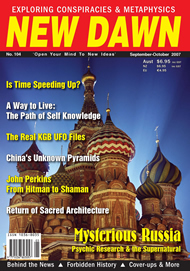
    From New Dawn 104 (Sept-Oct 2007)

    For all the scarcity in the world, one thing we never seem to be lacking is advice. We’re constantly deluged with exhortations of one sort or another – for diet, exercise, health, wealth, happiness, spiritual illumination. Of course these pieces of advice often conflict.

    The question then becomes, whose advice do we take? There are few, if any, sources of authority that have not been called into doubt: church, society, government, the media, even the grand edifice of science itself. Consequently we’re thrown back on ourselves as the final arbiters of our own decisions, and while this may give a sense of freedom, that very freedom can feel dizzying and disorienting.

    In putting together some brief suggestions about how to live one’s life, I’m making no claim to grand success or touting myself as a model, but having looked at many of these things from the perspective of the Western esoteric traditions, I can at least offer a few thoughts.

    To my mind, there is one and only one universal and inflexible commandment that is to be applied at all times and in all situations: it is the old Greek axiom inscribed in Apollo’s temple at Delphi, Gnothi seauton: “Know thyself.” This exhortation has many levels of meaning. At the most basic level, it calls us to understand the truth about ourselves and our actions in daily life – such as knowing how many cups of coffee you can drink without facing insomnia tonight, or recognising how far you can be trusted (or trust yourself) in a delicate moral situation. Could you spend a weekend alone with your best friend’s spouse and keep everything above board? Maybe you can, maybe you can’t.

    Knowing yourself in this relentlessly honest way, making what the Twelve-Step programs call “a searching and fearless moral inventory of ourselves,” is necessary not only for freeing oneself from addiction but for facing the challenges of day-to-day life as well. It calls for a merciless honesty in realising all one’s weaknesses and limitations – but without the insane and compulsive guilt that often results from such realisation. It does little good to moan, like the more fanatical Christian saints or characters in Dostoyevsky’s novels, about how you are the most wretched sinner on earth, particularly since in all likelihood the truth is that you are no better and no worse than anyone else.

    This realisation may be deflating (we all want to excel and will choose to excel in our sins if we lack any alternative), but it’s also freeing. Furthermore, it leads to the next dimension of knowing yourself: having compassion. The French have a saying: Tout comprendre, c’est tout pardonner: “To know all is to forgive all.” This is applied to ourselves as well. Christ urges us to be “wise as serpents and harmless as doves” (Matt. 10:16). In one sense, this verse means that in order to live in any truly meaningful way, we have to see ourselves with two eyes: one of remorseless honesty, one of forgiveness and compassion. If we lack one or the other, life soon goes out of balance. Compassion without honesty becomes a license for anything; honesty without compassion breeds pathological guilt.

    Given these principles, how are we to apply them to everyday life? Let’s begin with our relationship to the body. Not so long ago, what was healthy was (or seemed) reasonably clear: a balanced diet, regular exercise, moderation in (or abstention from) use of alcohol or tobacco. Today, on the other hand, we’re deluged with claims that any number of things in our daily lives are bad for us. There is probably no food product that hasn’t been hailed by one source as a cure-all and damned by another as a poison. Fruits and vegetables? Laced with pesticides. Meat? Riddled with antibiotics and hormones. Water? Polluted. Even organic products have come under suspicion. If we took all these claims seriously, we would be unable to let a single morsel pass our lips.

    Claims about what’s healthy are often equally preposterous. I was amused, for example, by a study conducted by Harvard University several years ago. It showed that men who ate more than ten servings of tomatoes a day had a 35 percent reduced risk of prostate cancer. Even if we grant that the study was sound, who is going to eat ten servings of tomatoes a day? Probably if you did, the harm done to your stomach by the acid in the tomatoes would probably more than outweigh the benefits to your prostate. And this is merely one item. If you multiplied this sort of claim for everything on the market, it would require a Gargantuan diet to protect yourself from all illness – and then, of course, you would have to deal with obesity.

    I make this point at such length because health (of which nutrition is, of course, merely one aspect) in many ways has become a preoccupation, even a neurosis in contemporary society. The American esotericist Manly P. Hall once said that there is a type of person that confuses God with vitamins. This kind of confusion is partly the handiwork of the mass media – for whom sensationalistic claims are the very lifeblood – but we are most susceptible to it if we remain disconnected from ourselves.

    What can you eat, and what can’t you eat? The answer varies wildly from person to person. Some people need meat; others find it loathsome or nauseating. Some people can drink alcohol; others ought to stay away from it at all costs. The same goes for coffee or tobacco or almost any item you can put into your mouth. As for residues and contaminants, we have to face the issue with common sense. There is no way of avoiding them all. The most sensible approach is notice what adverse effects any given product has on you and act accordingly, while staying away from products that have extremely high risks associated with them.

    Even so, it’s important to remember that scientific reports and media broadcasts all have this in common: they are talking about generalities and probabilities. There is nothing wrong with this in itself; it is how science thinks. But we ourselves are not generalities or probabilities; we are individuals, and what applies to people as a whole may not apply to us.

    Again, of course, this can turn into a license for anything. A man may destroy his health through smoking while insisting that he, unlike everyone else, can smoke without harm. But you can cut through a great deal of this nonsense (inner and outer) with a certain amount of self-knowledge and inner honesty. Self-knowledge naturally includes a knowledge of the body, and this does not so much mean knowing the body as an abstract anatomical object as knowing how the body feels, even from moment to moment. Someone who is attentive in this way is far more likely to have a clear picture of what is good for her and what isn’t. It will be much easier for such a person to be able to connect, say, a feeling of late-afternoon fatigue with a skimpy breakfast eaten several hours earlier. Consequently, it will be far easier to fine-tune your diet according to what you really need rather than what the books and magazines say you need (advice that, in any case, usually turns out to be contradictory).

    I could say much the same things about any other health-related issue – exercise, sleep, medicine. But let’s go on and suppose that your investigations reveal that you need to make some changes in your way of life. In order to accomplish this, you will again need a certain amount of self-knowledge to know what will work and what won’t. Take exercise. Many people admit that they could use more exercise, but the vast majority of these do one of two things: procrastinate (the spiritual teacher G.I. Gurdjieff once observed that the sacred quality of hope had in modern man deteriorated into a noxious disease called “tomorrow”) or launch into some regimen that they have almost no chance of maintaining in the long run. If you’ve spent the last twenty years in front of the television, it makes very little sense to declare by fiat that from now on you will work out for two hours a day. You will probably quit within the week. Someone who is both more serious about exercise and more honest with himself might start with ten minutes a day. Ten minutes a day, after all, is better than nothing, and it has a far greater chance of remaining enjoyable or at any rate manageable to someone who is just beginning. Notice also the element of compassion: rather than inflicting exercise on yourself like a punishment, you are introducing it into your life in a kind and thoughtful way. As the regimen becomes more of a habit, you can expand it, and maybe after a few years (we are, after all, talking about a long-term change in life habits) you will find yourself working out for two hours a day.

    It doesn’t take a great deal of imagination to extend these principles into most areas of your life. In the case of finances, for example, say you realise you need to save more money. How much, really, are you going to be able to save from month to month? It’s far better to aim for a more modest amount that you will be able to sustain rather than to put away a huge chunk that you will only need to dip into a month or two from now. Some changes may be astonishingly easy to make; others require more patience and skill.

    When you begin to examine these dimensions of life through the lens of self-knowledge, you will almost certainly find resistance of one kind or another within yourself. Looking through my own life, I’m constantly amazed by what forms resistance takes and where it manifests. The most obvious types have to do with things I find unpleasant – doing a dirty job, delivering a message the other person will not want to hear – but often I find myself curiously resistant to doing things that on the face of it require no unpleasantness at all – sometimes even something as simple as returning a phone call from a friend. Beyond a certain elementary point it’s useless to analyse why I don’t feel like making the call. What’s more important is simply being aware of the resistance and consciously going past it to do what you need to do.

    All of this may seem obvious enough, but there is another, subtler dynamic going on. It’s one that, for example, I have almost always found to be involved in procrastination of any sort (procrastination being merely one form of resistance). The need to accomplish something, when it runs up against inner obstacles, creates a curious cycle: the energy that you would have devoted to the task starts to feed the resistance, so that you finds yourself going around in circles. I need to make the phone call; I don’t want to; the fact that I don’t want to makes the task seem larger and more obnoxious than it is; which in turn makes me want to do it even less; and so on. I have known people who have tied up practically their entire lives this way. Sometimes the task does indeed turn into something daunting, as is the case with hoarders, who find themselves so buried in clutter that an entire day of cleaning will hardly make a dent in it.

    Where does the solution lie? In his book Skillful Means: Gentle Ways to Successful Work, the Tibetan lama Tarthang Tulku writes:

    Once we understand how we escape from our difficulties and fears, we can resolve to change this pattern. The next time you encounter a problem and find yourself looking for a way around it, you can make a conscious decision to redirect your energy, to go into your problem and find a solution. Although you may at first feel a resistance to doing this, the positive feelings you will gain from honestly facing work and life will strengthen your ability to meet future challenges directly, and you will increase your incentive to grow.

    When we honestly evaluate our motivation, our attitudes, our strengths and weaknesses, we begin to see a deeper side to our nature from which we can draw a vital energy that lends real meaning to our lives.

    Tarthang Tulku speaks of gaining energy as a result of facing resistance. This is an important point. You may literally feel that there is a subtle wall of energy between you and your task, and you almost find yourself bouncing off it as if it were a force field. All of this is, of course, your own creation, and you can pierce through it simply by “honestly facing work and life” and plunging in. My own experience with this leads me to formulate it in what may be a strange way: when I confront the task, it sometimes feels as if I am somehow slicing into this wall of resistance.

    The good news is that “slicing into” the resistance immediately begin to free up the energy that was bound up in it; it is as if some subtle membrane that was keeping things bottled up has burst and the energy is now free to circulate into the task itself. As a result, simply overcoming the resistance can give you much of the energy you need to accomplish the job.

    These are, I realise, only rather brief indications of a process that individuals need to explore for themselves. Usually it’s easiest to do this in the context of an esoteric school of one sort or another, where tasks are often set up to create this kind of resistance and to teach the student how to overcome it. One of the most common techniques is to give a student a job he or she is not particularly good at. The intellectual is sent to carpentry; the businessman is told to paint a picture; the dreamer is given financial accounts to reckon. Indeed one of the functions of esoteric schools is precisely to teach the skills of overcoming resistance to the pupils. Finding one’s way in daily life with only a few indications is a harder task, but with luck it can be accomplished.

    Whether it takes place in the context of an esoteric school or in an ordinary office, this overcoming of resistance again takes us back to knowledge. You can only overcome resistance if you see it. A friend of mine who was interested in the spiritual side of animal training was trying to teach her dog not to bark. “To stop a dog from barking,” she said, “you first need to make it aware it’s barking.” So it is with resistance: to overcome it, you must first see that you’re caught up in it. If you avoid this realisation through excuses, self-justification, blaming other people, and so on, you have lost before you begin.

    Because awareness is so important to all aspects of inner growth, it’s usually made a central point of many esoteric teachings. Gurdjieff called it “self-remembering”; the Buddhists call it “mindfulness”; whatever the name, the process is more or less the same. You are to see yourself, and you are to see yourself as you are now, not in some past or future that is in any event largely the creation of your own imagination. To do this requires conscious presence, and there are many ways of practicing this on a day-to-day basis.

    So far I’ve been speaking of self-knowledge in a comparatively external sense: seeing clearly one’s own strengths and weaknesses in daily life and coping with them as a builder has to cope with defects in a site or materials. This kind of knowledge is not to be despised; it can add tremendously to one’s efficiency and productivity. But it assumes that you know what your work is, and for many people this remains a highly vexing issue.

    Get the issue this article appears in

    The answer, I believe, lies in a concept for which there is no word in English. In Sanskrit it is called svadharma, and it roughly means doing one’s own duty. The classic text that discusses it is the Bhagavad-Gita, one of the greatest of the Hindu sacred scriptures, written probably between the fifth and second centuries BCE. This book forms a part of a much larger whole, the titanic epic known as the Mahabharata, which culminates in a great war between two rival clans, the virtuous Pandavas and the corrupt Kauravas. One of the greatest warriors among the Pandavas is Arjuna, and his charioteer is Krishna, the incarnation of the god Vishnu. As the lines are drawn up for the decisive battle, Arjuna sees his relatives and some of his closest friends on the opposing side. He knows that enormous numbers of them will be slain, and he loses heart. He turns to Krishna and says he does not want to fight; he has no appetite for the power or glory that victory would bring.

    Most of the Bhagavad-Gita consists of Krishna’s reply. It contains philosophy and cosmology as well as directions for yogic practice, but all of this centres on Krishna’s urging Arjuna to fight. Arjuna is a Ksatriya, a member of the warrior caste, and it is his duty – his dharma – to take part in the battle. Krishna goes so far as to say: “Better one’s own duty [to perform], though void of merit, than to do another’s well: better to die within [the sphere of] one’s own duty: perilous is the duty of other men.”

    The word for “one’s own duty” here is svadharma. It is not a moral duty in the ordinary sense: rather it is the duty that is embedded in your deepest self. No one else can do the job that you were created to do. Liberation consists not of inaction or withdrawal from the world but of performing your duty selflessly and without attachment to results. Arjuna’s dharma is to fight in this monumental battle, which has more than a political or even moral function. It is destined to bring an end to the age and to restore a corrupt cosmic order.

    People learn their svadharma, their special functions, in many different ways and at many different times of life. One person knows hers from childhood; another discovers it only in middle age. It is revealed by still, small voices and by visions on the road to Damascus, but also sometimes in a career aptitude test or by answering an ad in the classifieds. It may remain steadfastly the same, a ridgepole upon which one’s entire life depends, or it may gradually change and shift as time and circumstances change. In any event, it has a single core feature: you have (or come to have) the unshakable sense that this function, whatever it is, is why one exists, is what you were created to do.

    For the Hindus, svadharma is intimately intertwined with svabhava, one’s own being, the core of one’s essence. To know your own work is to know your own being; you can’t understand one without the other. For some, this function may involve wealth and position; for others, modest and humble circumstances. It may call one person onto the magnificent stage of history and may require another to spend his life in obscurity. In any case, to know one’s task is in a very profound sense to know oneself.

    Such a perspective leads us very deep into the recesses of our own nature, and as we make this journey of self-knowledge, we paradoxically go past the self as it’s conventionally conceived – the ego, the street-level personality. Ultimately we move toward our true nature, what we may call the “true I,” which Christianity calls the spirit or the kingdom of God, which Hinduism calls Atman or the Self, and which is known in countless other traditions under countless other names. The Hindu sage Sri Ramana Maharshi went so far as to say that simply following the question “Who am I?” as far back as possible in oneself will lead to enlightenment.

    Strictly speaking, however, one can never, perhaps, truly know oneself. This is simply because what one is, the “I am” at the core of one’s being, the Self, is always that which knows. “The Kingdom of the Father is spread out upon the earth, and men do not see it,” says Christ in the Gnostic Gospel of Thomas. Men do not see it because it is the very principle in them that sees. The path to this realisation is, it would seem, an endless one, not because progress is impossible but because progress, if it is real, always opens up new horizons and new directions to move in.

    [alert type=”general” dismiss=”no”]This article was published in New Dawn 104.[/alert]

    [alert type=”success” dismiss=”no”]If you appreciate this article, please consider subscribing to help maintain this website.[/alert]

    © New Dawn Magazine and the respective author.
    For our reproduction notice, click here.
  • Secret Teachings Reborn: The Mysterious Life of Manly P. Hall

    Secret Teachings Reborn: The Mysterious Life of Manly P. Hall

    This article was published in New Dawn 96 (May-June 2006)

    The late nineteenth and early twentieth centuries saw an explosion of spiritual teachers and impresarios dealing in “secret wisdom.” Their ranks included hacks and frauds – as well as more than a few genuine scholars of esoteric traditions. Most have vanished from memory, their writings a historical footnote.

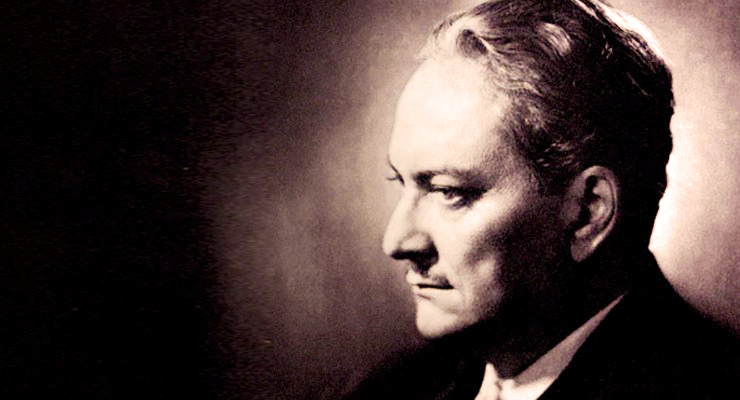
    There exists one distinct figure, though, whose movement and teachings not only survived his passing but are even experiencing a revival in our day. His name is Manly P. Hall. While few academicians will ever know of him, Hall was among the twentieth century’s – and perhaps any century’s – most commanding and unusual scholars of esoteric and mythological lore. Yet the source of his knowledge and the extent of his virtuosity can justly be called a mystery.

    While working as a clerk at a Wall Street banking firm – the “outstanding event” of which involved “witnessing a man depressed over investment losses take his life” – the 28-year-old Hall self-published one of the most complex and thoroughgoing works ever to catalogue the esoteric wisdom of antiquity, The Secret Teachings of All Ages. Hall’s Secret Teachings is almost impossible to classify. Written and compiled on an Alexandrian scale, its hundreds of entries shine a rare light on some of the most fascinating and little-understood aspects of myth, religion, and philosophy.

    Today, more than seventy-five years after its initial publication, the book’s range of material astonishes: Pythagorean mathematics; alchemical formulae; Hermetic doctrine; the workings of Kabala; the geometry of Ancient Egypt; the Native American myths; the uses of cryptograms; an analysis of the Tarot; the symbols of Rosicrucianism; the esotericism of the Shakespearean dramas – these are just a few of Hall’s topics. Yet his background betrays little clue to his virtuosity.

    A Man Unknown

    Hall was born in Peterborough, Ontario, in 1901 to parents who would shortly divorce, leaving the young Manly in the care of a grandmother who raised him in Sioux Falls, South Dakota. He had little formal schooling. But there was a spark of some indefinable brilliance in the young man, which his grandmother tried to nurture in trips to museums in Chicago and New York.

    Tragedy struck early, when his grandmother died when he was 16. Afterward, a self-styled Rosicrucian community in California took him in. At age 19, suspicious of the community’s claims to ancient wisdom, Manly moved on his own to Los Angeles where he began a precocious career in public speaking – first giving an address on reincarnation in a small room above a bank in Santa Monica, and soon rising to the rank of minister at a liberal evangelical congregation called The Church of the People.

    Word spread of the boy wonder’s mastery of arcane and metaphysical subject matter. He attracted benefactors and eventually began travelling the world in search of hidden wisdom. Yet Hall’s early letters from Japan, Egypt, China, and India are, in many respects, fairly ordinary: They contain little of the eye-opening detail or wonder of discovery that one finds in the writings of other early twentieth-century seekers encountering the East for the first time. More often they read like prosaic, if somewhat sensitive, linear travelogues of their day.

    Like a bolt from the blue, however, one is astounded to discover a short work of immense power from the young Hall – a book that seems to prefigure that which would come. In 1922, at the age of 21, Hall wrote a luminescent gem on the mystery schools of antiquity, Initiates of the Flame. Though brief, one sees in it the outline of what would become The Secret Teachings of All Ages. On its frontispiece, Initiates of the Flame boldly announces: “He who lives the Life shall know the Doctrine.”

    The short book goes on to expound passionately and in detail on Egyptian rites, Arthurian myths, and the secrets of alchemy, among other subjects. Feeling the power and ease in its pages, the reader can almost sense the seeds of greatness that were beginning to take hold in Hall’s grasp of esoteric subjects.

    The Secret Teachings Born

    Hall soon returned to America, where he tried his hand at banking – though he found his true path in the beaux arts Reading Room of the New York Public Library. Entering this cavernous space today, it is not difficult to picture the large-framed, young Manly P. Hall surrounded by books of myth and symbol at one of the room’s huge oaken tables. Like a monk of the Middle Ages, Hall copiously, almost superhumanly, pored over hundreds of the great works of antiquity, distilling their esoteric lore into his volume.

    By the age of 28, having pre-sold subscriptions for nearly 1,000 copies (and printing 1,200 more), Hall published what would become known as “The Great Book” – and it has never gone out of print since.

    Indeed, Hall is an exception to most of his contemporaries as someone whose work is actually building in influence today. In its day, the Secret Teachings was expensive, hefty, and cumbersome. As a result, the book spent much of its existence as an underground classic. In late 2003, however, the Secret Teachings found new life in a reset and redesigned “reader’s edition,” which has sold a remarkable 40,000 copies in less than three years.(For further details, see “Bringing the Secret Teachings Into the 21st Century” by Mitch Horowitz at www.lapismagazine.org). A little-known 1929 companion volume by Hall, called Lectures on Ancient Philosophy, has also been recently reissued.

    After publishing his magnum opus, Hall opened a campus in 1934 in the Griffith Park neighbourhood of Los Angeles called The Philosophical Research Society (PRS), where he spent the rest of his life teaching, writing, and amassing a remarkable library of esoterica. A self-contained property designed in a pastiche of Mayan, Egyptian, and art deco styles, PRS remains a popular destination for LA’s spiritually curious.

    Following Hall’s death in 1990, PRS barely survived simultaneous legal battles – one with Hall’s widow, who claimed the group owed her money, and another with a bizarre father-son team of con artists who, in the estimation of a civil court judge, had befriended an ailing, octogenarian Hall to pilfer his assets. The Los Angeles Police Department considered Hall’s death sufficiently suspicious to keep it under investigation for several years.

    Secret Wisdom, Practical Wisdom

    For all his literary output, Hall revealed little about his private life. His most lasting record is a frequently trite, unrevealing childhood memoir called Growing Up with Grandmother (in which he refers to his guardian as “Mrs. Arthur Whitney Palmer”). As an adult, Hall’s close relations were few. He did not marry until well into middle age, in a union some surmise was never consummated.

    Hence, when Hall disclosed something about his background, it was purposeful. He wrote this in a PRS newsletter in 1959: “As a result of a confused and insecure childhood, it was necessary for me to formulate a personal philosophy with which to handle immediate situations.”

    Here was someone with a tremendous interest in the arcane philosophies of the world, in the occult and metaphysical philosophies, but he wasn’t fixated on immortality, or a will to power, or on discovering keys that unlock the universe. Rather, he was focused on harnessing inner truths in a very practical way. How, he wondered, could such ideas lend clarity to daily life?

    We’ll take a byroad that steers us in another direction before returning to this point. Our byroad involves one of the most famous novels in history, Mary Shelley’s Frankenstein. The work has many facets, among them a portrait – not sympathetic, but not as unsympathetic as one might suppose – of the European occult in the Enlightenment era. The portrait comes in the character of a young Victor von Frankenstein, a budding scientist torn between the occult teachings that drew him to science as a child and the prevailing rationalism of his teachers. Victor confides his interest in the great alchemists and occult philosophers, such as the Renaissance-era magus Cornelius Agrippa, but his professors dismiss him with complete condescension.

    One day in his room, Victor ponders the unbridgeable gap between his magical visions and the scholasticism of his peers:

    I had a contempt for the uses of modern natural philosophy. It was very different when the masters of science sought immortality and power; such views, although futile, were grand; but now the scene was changed. The ambition of the inquirer seemed to limit itself to the annihilation of those visions on which my interest in science was chiefly founded. I was required to exchange chimeras of boundless grandeur for realities of little worth.

    In a sense, Victor spoke for generations of occultists when describing his ideal of boundless grandeur, immortality, power, and visions. (And who wouldn’t sympathise with the rebellious young Victor – whose dreams and ambitions, while hopeless, exist on a grand scale – versus the certainties of his crusty professors?)

    An occult scholar born at the cusp of the twentieth century, Manly P. Hall signalled a different kind of ideal. Hall told of “a personal philosophy with which to handle immediate situations.” After Hall’s death, a reporter in the Los Angeles Times noted, “Followers say he believed in reincarnation and in a mixture of the Golden Rule and living in moderation.”

    For Hall, the very act of writing The Secret Teachings of All Ages was an attempt at formulating an ethical response to the age he lived in. While the book is at times speculative and some of its sources are limited by the constraints of their era, it is the only codex to esoteric ideas that treats its subject with total seriousness. Contemporaneous works, such as The Golden Bough, regarded indigenous religious traditions as superstition – interesting museum pieces worthy of anthropological study but of no direct relevance to our current lives. Hall, on the other hand, felt himself on a mission to re-establish a connection to the mystery traditions at a time when America, as he saw it, had given itself over to the Jazz-Age materialism he witnessed at his banking job.

    “After I thought the matter over,” he wrote a few years before his death, “it seemed necessary to establish some kind of firm ground upon which personal idealism could mingle its hopes and aspirations with the wisdom of the ages.”

    In this sense, the prodigious scholar achieved more than a cataloguing of esoteric truths. He turned the study of occult ideas into an ethical cause.

    [alert type=”general” dismiss=”no”]This article was published in New Dawn 96.[/alert]

    [alert type=”success” dismiss=”no”]If you appreciate this article, please consider subscribing to help maintain this website.[/alert]

    © New Dawn Magazine and the respective author.
    For our reproduction notice, click here.
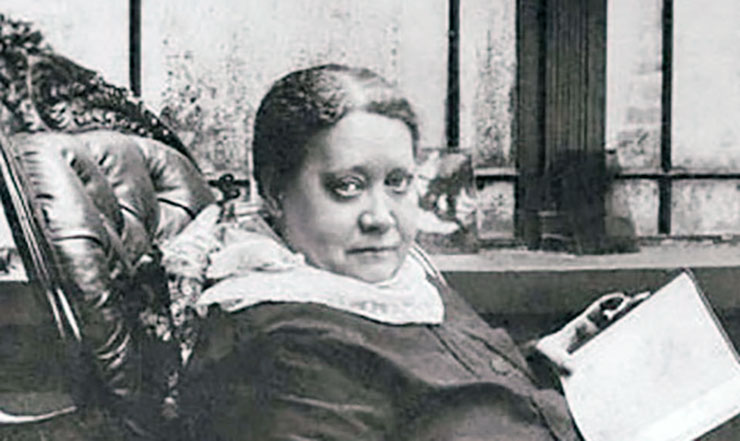
  • The Inscrutable Madame Blavatsky: An Interview with Gary Lachman

    The Inscrutable Madame Blavatsky: An Interview with Gary Lachman

    This article was published in New Dawn 137 (Mar-Apr 2013)

    I was in search of the unknown…
    – Madame H.P. Blavatsky (1831-1890)

    Gary Lachman is one of today’s most intelligent and prolific authors on the world of the occult. He started out in the 1970s in the New York rock scene as one of the original members of the groundbreaking New Wave band Blondie. In 1996 he moved to London, where he established himself as a full-time writer, contributing to publications such as Fortean Times, The Guardian, and The Times Literary Supplement.

    Since 2001 he has produced a steady stream of books, including Turn Off Your Mind: The Mystic Sixties and the Dark Side of the Age of Aquarius; The Secret History of Consciousness; A Dark Muse: A History of the Occult; and Politics and the Occult: The Right, the Left, and the Radically Unseen. In recent years he has published biographies of major esoteric figures including P.D. Ouspensky, Emanuel Swedenborg, Rudolf Steiner, and Carl Jung.

    I first came to know Gary in the ’90s, when he was a frequent contributor to the now-defunct Gnosis magazine, for which I was editor. Although we’ve been in constant touch over the years, the last time I saw him in person was in 2006, when he was in New York to be inducted into the Rock and Roll Hall of Fame as part of Blondie. We had a long conversation over lunch that led to his book Politics and the Occult. In 2012 Gary published Madame Blavatsky: The Mother of Modern Spirituality, a biography of the pioneering nineteenth-century spiritual figure H.P. Blavatsky (also known as HPB). In January 2013 I conducted an e-mail interview with him about the book and about Blavatsky.

    RICHARD SMOLEY (RS): To begin with, could you say a little bit about who H.P. Blavatsky was for those who aren’t familiar with her?

    GARY LACHMAN (GL): Helena Petrovna von Hahn was born in 1831 into a family of the lower Russian nobility. Around her eighteenth year, she fled a brief and unconsummated marriage to an older man, Nikifor Blavatsky, and embarked on what by all accounts was a twenty-odd-year-long global quest for secret knowledge, triggered by her reading of her great-grandfather’s occult library and her own mystical experiences. During this time, she said, she met her Master Morya in London, who charged her with a mission: to reach Tibet, where she would be tutored in the control of her psychic abilities. She surfaced in New York City in 1873, where she lived in a woman’s cooperative on the Lower East Side. A meeting with Colonel Henry Steel Olcott led to a lifelong Platonic relationship, and in 1875, she, Olcott, and William Quan Judge founded the Theosophical Society. The rest is history.

    RS: What made you choose her as the subject of a biography?

    GL: I had already written studies of Ouspensky, Jung, Swedenborg, and Rudolf Steiner. As I argue in the book, HPB was a seminal influence on practically the whole of modern spirituality and esotericism. All of my work is centred on the idea of an evolution of consciousness, both in the individual and in culture at large. It seemed to make sense to take a new, fresh look at someone who kick-started a whole movement dedicated to this idea. Also, it struck me that much of what we think we know about HPB was really a myth, made up of hearsay and misperception, repeated for more than a century. I can’t say I’ve told the truth about Blavatsky, but I’ve tried to point out what others haven’t.

    RS: What influence does Blavatsky continue to have on the current spiritual scene?

    GL: Well, the Theosophical Society, in its many different forms, continues today. Much of what we think of as New Age really has its roots in Blavatsky’s early work. Tibetan and Mahayana Buddhism, as we understand it in the West, for example, emerged from her and her early followers. W.Y. Evans-Wentz, who collected the funerary texts we know as The Tibetan Book of the Dead, was a Theosophist, and much of his work is informed by Theosophical ideas. Also, our contemporary interfaith and multifaith sensibilities, our striving toward a broad religious tolerance, has its roots in Blavatsky’s belief that all the major religions have their source in an ancient, ‘secret’ doctrine. She was very much ahead of her time.

    RS: There is a broad spectrum of opinion about Blavatsky. On one end there are those who regard her as a fraud pure and simple. On the other end are those who see her as a much-maligned saint. Where would you place yourself on this continuum?

    GL: Well, I don’t see her as a fraud or as a saint, so I guess I am in the middle, or rather, perhaps ‘above’ this either/or opposition. In the book I refer to a concept I borrow from the novelist Hermann Hesse. In an essay on Dostoyevsky, Hesse speaks of what he calls ‘Russian Man’, who is an antinomian character, “an hysteric, drunkard, criminal, poet and saint, all wrapped up in one.” Think of Rasputin, the ‘holy devil’. HPB was what we call a ‘trickster’, although that is something of a cliché. She wasn’t above mystical high jinks when she felt it was necessary – or when she got exasperated with the sanctimonious devotees who often wasted her time. But she was also a deeply spiritual, I would even say religious, moral character; I liken her to the Russian startzi – deeply spiritual individuals who gave off a kind of spiritual electricity. But she didn’t wear this on her sleeve.

    RS: After having done so much research on Blavatsky, do you personally believe that her alleged occult powers were genuine?

    GL: I keep an open mind about her powers. For one thing, I’ve had enough anomalous experiences to accept that the standard ‘scientific’ view of reality simply doesn’t cover all the bases, things like precognitive dreams, telepathy, and very convincing synchronicities. Of course, some of the things claimed about HPB – materialising teacups and other items – do seem impossible. But I point out in the book other examples of similar abilities. I look at a few of the most well known examples, and, given what we know about them – and we can only go by the accounts that have come down to us – I try to see how she could have faked them – if she did. Of course, because I can’t see how she could have faked the teacup or some other ‘materialisation’, doesn’t mean she couldn’t have. But I did rack my brain quite a bit about it, and I think I covered every possible angle. So my take is that, yes, they are incredible, but perhaps not impossible. I mean, look at what science tells us about dark matter, dark force, super strings, and n-dimensions. That seems pretty incredible too. Were her ‘phenomena’ important? That’s a different question.

    RS: Blavatsky made much of her connection with the hidden Masters Morya and Koot Hoomi, as well as other Masters. Some take these to be actual men endowed with superhuman capacities who guided her in her path and in the creation of the Theosophical Society. Others say they are figments of her imagination. What’s your own position on this issue?

    GL: Blavatsky’s Masters seem to me to be composed of several different things. There was the ‘mysterious Hindu of my dreams’ that came to her in her earlier life, and more than once saved her life – at least that was the story she told in her later years. Then there was the idea of ‘unknown superiors’, high-ranking individuals in the Rosicrucian Freemasonry her great-grandfather practised. Reading of these mysterious powerful but ‘hidden’ men, Blavatsky became committed to finding them and to realising the vision of a progressive, united Europe they championed. The Theosophical Society was her way of trying to make their goal of a universal fraternity come true. Then there were the actual men and women she encountered in her quest for knowledge; people like herself who were pursuing a similar quest. She considered many of these ‘Masters’ – a title of respect and gratitude. But of course the most significant Masters were Morya and Koot Hoomi, flesh-and-blood men who had mastered their own psychic powers and who taught her how to master her own. Whether they had the powers she claimed is still up for debate, but I believe they did exist. HPB lived out a myth and she saw these people as embodiments of the inner guides she believed were helping her on her path. So the Master she knew from her childhood dreams and the Master she met in London in 1851 may not have been the same actual person, but for her we can say that they fulfilled the same role.

    RS: In your book you allude to unseen hands that work behind the scenes of history. Do you think there are such forces, and if so, how did they use Blavatsky?

    GL: I’m not sure about the ‘hidden hand’ version of history – and the phrase ‘hidden hand’ comes from the esoteric scholar Joscelyn Godwin. That idea is a kind of staple of occult history, and also of our contemporary conspiracy consciousness. In one sense I’m not partial to it – I think we need to solve our problems ourselves, rather than expect a saviour, either some ‘inner circle’ of humanity or benevolent aliens or extradimensional beings or Mayan calendars, to do it for us. But on the other hand, given the dominance of the ‘rational’ view that history is meaningless, or, at best, the result of purely material forces, I think the idea of something at work ‘behind the scenes’ can be positive. At least it posits some meaning or intelligence at work. But the notion of some cabal of advanced individuals, holed up in the Himalayan fastness – or at the centre of the earth, or in the Arctic – does seem a bit de trop. I tend to see the idea as a metaphor for the evolutionary urge. But then perhaps there are angelic beings who drop us hints from time to time.

    RS: Could you tell us a bit about Blavatsky’s major works, Isis Unveiled and The Secret Doctrine?

    GL: In the book I say that I am more partial to Isis Unveiled than to The Secret Doctrine. One reason is that Isis Unveiled is often overlooked compared to her other major work. I think it is a remarkable achievement. It is one of the first occult compendiums, a fascinating, if often exhausting, collection of what esoteric and occult literature and philosophy was available at the time. It is the source of so much of what we see as ‘alternative’ literature today. In a way it is like Charles Fort’s books, only much better-written and containing more cogent argument. Basically, with Isis Unveiled Blavatsky tried to resurrect the Hermetic wisdom, which had been in eclipse since the 1600s. If nothing else she deserves credit for formulating the first philosophical – not religious – criticism of Darwinian evolution in it; credit for this is usually given to Samuel Butler (author of Erewhon), who wrote a remarkable series of books attacking Darwin in the 1870s and ’80s. Unfortunately these are forgotten today, but their arguments are still quite pertinent. (Someone should send copies to Richard Dawkins.) But Blavatsky got there ahead of Butler by a few months. She should be recognised in the history of ideas for this.

    The Secret Doctrine is a kind of bible of esoteric and occult thought. It presents a full scale esoteric history of humanity and the universe, and presents the occult wisdom that Blavatsky says she learned during her tutelage in Tibet. It has more of a ‘carved in stone’ character than Isis Unveiled and has given rise to numerous offshoots, some good, some not so good.

    RS: The Secret Doctrine presents an elaborate alternative history of human evolution, with references to things like Atlantis and Lemuria. What do you personally make of this history?

    GL: I found it most profitable to read HPB’s occult history as a gigantic sci-fi or fantasy epic, a modern mythology, something along the lines of, say, Olaf Stapledon’s ‘future histories’ Last and First Men and Starmaker. I felt the same about Rudolf Steiner’s similar readings of the akashic record. I also think, though, that while the details in both Steiner’s and Blavatsky’s readings of Atlantis and Lemuria and so on can seem frankly unbelievable, the general sense of an earlier form of consciousness they present has much of value. With most such spiritual visions – William Blake’s can fit in here, as can Jung’s as depicted in The Red Book – we have to sift through what is personal, what is simply the unconscious being creative, and what may be a symbolic presentation of our actual spiritual reality. At the same time, there is much cogent argument for the idea that civilisations existed well before what we considered the beginning of history. In fact, the ‘official’ accounts are regularly pushed further and further back. Will archaeology eventually prove HPB was absolutely right? I doubt it. But it may and probably will show that she was right in saying that we aren’t the first ones to spend time on our planet.

    RS: One criticism that is frequently levelled at Blavatsky was that she was a racist, and that her views on what she called the ‘Aryan root race’ inspired Nazism and similar ideologies. Where does the truth lie on this issue?

    GL: Basically, although some of HPB’s remarks about race break the cringe barrier and are unacceptable to us, she was no more racist than what the prevailing sensibilities of the time accepted. Sadly, her remarks about root and subraces in The Secret Doctrine inspired some proto-Nazi characters in Austria and Germany – if you can call what they did with her brief remarks ‘inspired’. We can’t hold her responsible for that, or for any other appropriation of her ideas by less tolerant characters. In a sense, HPB is in the same position Nietzsche was in when the Nazis appropriated some of his work – he was in no way racist, nor was he a war monger, but Nazi hacks presented him in this way. It wasn’t until serious scholars repaired his reputation that he was cleared of any Nazi taint. The same needs to be done for HPB, and if I’ve helped in this effort, I am glad. I saw no evidence of Blavatsky being personally racist, and indeed, she abandoned her white, European privilege to live with Hindus and Sinhalese during her time in India and Ceylon (Sri Lanka). She was more anti-European, even anti-white, we can say, given her remarks about the British Raj and the Christian missionary movement. Some have called her anti-Semitic, but what this really means is that she had little fondness for the Judeo-Christian religion. One forgets that her central mission was the founding of a universal fraternity, regardless of race, creed, sex, or colour. One also forgets that she had much more influence on Gandhi than she did on Hitler. Gandhi found his life’s work through his contact with Theosophy.

    RS: Could you say a little bit about the Theosophical Society and its place in twentieth- and twenty-first-century spiritual currents? What influence does it continue to have?

    GL: Well, I’m not a Theosophist and am not associated with any Theosophical group, so I can only speak of what I’m aware of peripherally, as it were. But the Theosophical Society in its different forms – there are quite a few different incarnations of it – is still alive and kicking. I know here in London the Theosophical Society is a centre for a wide-ranging series of talks, lectures, and other activities, all linked to the themes of spirituality, consciousness, and ‘lost knowledge’. There is quite a lively Theosophical presence on the Internet, with several different sites devoted to different aspects of Theosophy in general and Blavatsky in particular. My book itself seems to have stimulated some discussions. So I think it will continue to maintain an important place in the ‘alternative’ world. What I have found with practically all of the movements or groups associated with the people I’ve written about – Steiner, Swedenborg, Ouspensky, etc. – is that they are all looking for ways to reboot themselves, to attract a wider, younger audience, to make themselves more inclusive. I think this is also paralleled in the broader, outer world. I’ve been involved with some art events in Europe and England at major museums and galleries that have had spirituality at their centre, and Theosophy is a frequent element in these. In fact, I am supposed to be involved in a major retrospective of the work of the Swedish Theosophical painter Hilma af Klint in Stockholm later this year. I think in general the official world is starting to see what many of us have been aware of for years: that esotericism has had a much bigger influence on the modern world that we realise.

    RS: What are your own views of human evolution, particularly as it relates to the current era? What do you think is happening with the human race as a whole at this stage of the game?

    GL: As I say, pretty much all my work is focused on the idea of an evolution of consciousness. My view is informed by the work of people like Colin Wilson, Owen Barfield, Jean Gebser, and others; I write about it at length in my book A Secret History of Consciousness. In a general sense, I think we are seeing the beginning of the breakdown of the kind of scientific reductionism that has been the dominant mode of consciousness for the last four centuries. This doesn’t mean that a neon sign will rise up over the horizon announcing the start of a new age. It doesn’t work like that, and we shouldn’t look for signs of this change in the news. Changes in consciousness don’t necessarily mean immediate changes in society or the world. All work begins with the individual. But I do think that in the last century or so, more and more people have realised that science, or rather, scientism, is simply no help when it comes to the big questions, such as ‘What is this all about?’ Science is very good on know-how but useless on ‘know why’. The Higgs boson can’t tell me why I exist and what I am supposed to do now that I’m here. For a long time we went along with the notion that if science can’t answer these questions, then they are nonsense. But that doesn’t work any more. The main challenge is for us to understand how our own consciousness works, not try to explain it away, as much contemporary neuroscience and philosophy of mind have tried to do. Science can’t tell me the meaning of my life, and the established religions – which once were able to satisfy this need for meaning – seem no longer capable of it. I think the answer lies in ourselves, in our own minds. I think HPB would have agreed.

    Gary Lachman’s biography of the pioneering nineteenth-century spiritual figure H.P. Blavatsky is titled Madame Blavatsky: The Mother of Modern Spirituality (352 pages, Tarcher 2012). It’s available from all good bookstores. Gary Lachman’s website is www.garylachman.co.uk.
    [alert type=”general” dismiss=”no”]This article was published in New Dawn 137.[/alert]

    [alert type=”success” dismiss=”no”]If you appreciate this article, please consider subscribing to help maintain this website.[/alert]

    © New Dawn Magazine and the respective author.
    For our reproduction notice, click here.