New Dawn – World's Most Unusual Magazine

Category: Secret Wisdom

  • Beyond Tantra

    Beyond Tantra

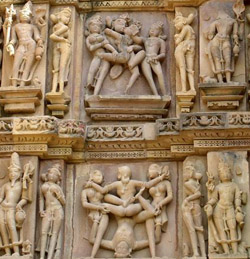
    “It’s all sex nowadays” my mother used to grumble after an evening in front of the television. Even her favourite nature programmes, she moaned, were increasingly obsessed with it. Much the same might be said about Tantra. Or, at least, about what currently passes for Tantra, something which to many people today means little more than sex with fancy trimmings. 

    No surprise then that among the first ‘tantrik’ sites to appear on Google is one that markets books on sexual techniques, as well as performance-enhancing potions like – currently on special offer – tiny pots of nipple sensitising cream. True, there’s a token reference to Tantra’s origins in India but it’s the “get your kit off” message that counts. My mother wouldn’t approve. And neither, frankly, do I.

    What offends me is not so much the sexual free-for-all – each to his own as far as I’m concerned – but the attempt to glamorise, even sanctify it by calling it Tantra.

    After all, Tantra is first and foremost a spiritual practice by which the self aspires to merge with the energies that sustain or, rather, constitute, the universe. It is a means of becoming one with the Whole, of escaping from the illusion of separateness that determines how we experience the phenomenal world around us. Sensitised nipples have precious little to do with it. (And anyway a dab of Vaseline does the job, if you’re curious.)

    The word Tantra is Sanskrit for ‘weave’, a term used to indicate that a particular text has been composed according to an orderly pattern (samhita). Others prefer to believe it points to secret teachings ‘woven’ into the Vedas, the thread visible only when teased out by a scholarly commentator or qualified guru. This interpretation, though appealing, is undermined by evidence that before being taken up by Hinduism, Tantra was already a feature of Buddhist practice, later becoming associated with Mahayana Buddhism in particular. (There the feminine principle, sakti, has long been held in high esteem.) This might also explain its early adoption by the Vajrayana (Sk. “Diamond Vehicle”) sect of Tibet, one that borrowed heavily – again significant perhaps – from that country’s indigenous religion (Bön).

    Yet the true origins of Tantra almost certainly pre-date all of these and are rooted in the ancient practice of Yoga, especially in what later became Hatha Yoga, so called because it is the path (Sk. marga) of effort and discipline, both essential if the body and its vital energies are to be brought under control. Appropriately enough, one of the early names given to Tantrik teaching – Agamas or ‘What has come from before’ – may be an acknowledgement of its great antiquity.

    Not all Hindu teaching is sympathetic to Tantra, with many scholars, especially more recent ones, uneasy with its intentionally blunt language (Sandhya-bhasha) and overtly erotic symbolism. At times even its defenders sound apologetic, pleading that, for want of anything better, it is at least a convenient path to mystical experience in the current Dark Age (Kali-yuga),1 a period when our race is woefully lacking in spiritual refinement. (Held to have started 5,000 years ago or, as others maintain, following the death of Krishna in 3120 BCE, the Dark Age is scheduled to last for 430,000 years so there’s lots more of it ahead.)

    With the advent of Kali-yuga we are said to have lost our ability to see beyond the illusory appearance of things (maya), something traditionally expressed as the loss of our Third Eye or Eye of Siva. This symbolic organ is depicted in art as a lotus blossom, the sun, a snake or a star and set in the middle of the forehead, though some occultists maintain, none more forcibly than Mme. Blavatsky, that the Third Eye was, literally, just that. Today, the pineal gland is claimed to be its only anatomical remnant.

    Hinduism accommodates two kinds of Tantra, that of the right hand (Dakshinacara) and that of the left (Vamacara). The first, regarded as the more respectable, favours a metaphorical interpretation of the erotic language found in the texts, while the second, often dismissed as ‘black’ magic, adopts a more literal approach, treating what it finds as a practical guide to attaining enlightenment. Only the latter approach need concern us.

    As was said earlier, Tantra is not about sex. Well, not just about sex. Its spiritual element – ‘psychical’ may be a better epithet – is at least as important as the physical. In any case the two are complementary. More than that, they are inter-dependent for only when acting together – physical act and spiritual intention – will they induce awareness of the unity subsisting between the conditional world and the absolute reality on which it depends.

    Nowhere is this togetherness more sublimely realised – here comes the sex – than in the act of coition, that synergic conjunction (Paramsiva or the union of Siva and Sakti) of two individuals or, better still, two creative polarities.

    As for the erotic techniques described in tantrik literature or even in the teach-yourself manuals peddled on the internet, their purpose is to facilitate this beatific outcome by means of, inter alia, breathing exercises, tactile stimulation and, most famous of all, delayed orgasm or, on occasion, the disciplined retention of semen.

    Above all, however, recourse is had to the goddess Sakti herself, the initiatory and dynamic expression of divine power. (The name itself means nothing less.) As the “Princess who sleeps at Brahman’s gate” the goddess is dormant inside each of us under the guise of Kundalini, the Serpent Power coiled three and a half times around the Muladhara chakra at the base of the spine.

    Aroused from its slumber, Kundalini can be persuaded to ascend the spinal column – or, more correctly, spiral through the citrini nadi of its subtle equivalent (Sushumna) – like a jet of blue flame, shedding sparks in its wake, red on one side, yellow on the other.2

    Passing rapidly through the next five chakras, it brings each of them into harmonious and tuneful life – the first syllable of Kundalini (the word itself denotes a coil of rope) means ‘sound’ – until at last its cosmic fire ignites Sahasrara, a supernumerary chakra and the noblest of them all, immediately transforming that glorious, thousand-petalled lotus into the marriage bed of Siva and Sakti. It is their divine coupling, mirrored in our own, that facilitates our release (moksha) into the ineffable bliss of absolute being.

    A similar bliss is accessible through magical practices, particularly those with an overtly sexual component. For that reason the latter are often referred to as Tantra, proof again of how the word has become synonymous with sex. And true enough, the methods of sexual arousal available to the magician are often similar to – because copied from – those of the tantrika. (They have, after all, proved their worth over time.) Even so it may be misleading, no matter how convenient, to describe sexual magic as tantrik because there is one important, indeed fundamental, difference between the two.

    To grasp it we need to remind ourselves that for Vedic scholars, phenomena and form enjoy no real existence (avastu). Our awareness of them is merely the accidental reaction of our senses to a reality, itself imperceptible, which is nothing less than the creative self-projection of Brahman.3

    Over time this emphasis on the “otherness” of what is truly real (and, as such, a manifestation of God’s inviolable Oneness) led to the view that the phenomenal world, product of our faulty perception, could not be other than inferior to what lay beyond it. After all, was it not the imperfect, because conditional, aspect of what is immutable and absolute? And so the notion grew that the world of matter was somehow debased and, as such, unworthy of being cherished or respected on its own terms.

    Such a notion is not confined to Hinduism. Closer to home we come across it in much Christian thinking, both orthodox and (to a far greater extent) heretical, while the neo-Platonists – to whom Western magic owes much – were, like the Manicheans, particularly infected by it. The celebrated Plotinus summed up their views by dismissing matter as “the primary evil.”

    We have always to remember, therefore, that while Tantra indulges the body and the senses, it does so with the aim of transcending both. Because of that, all the tantalising foreplay and eventual orgasm, however incidentally enjoyable, are simply means to an end, devoid of any ultimate value themselves. A way of escape from the snares of conditionality, they facilitate a brief triumph of mind over matter.

    For the magician by contrast, matter is inherently sacred. Far from being a route to the Absolute it is the route by which the Absolute becomes real and present – even palpable – to us. For that reason the aim of Magic is to exploit the sacramental nature of matter, treating it (in the language of St. Augustine, as modified by St. Thomas Aquinas) as the outward and visible sign of an inward, divine and efficacious grace.

    From this it follows that for the magician the sexual act is no longer the means to an end but correctly understood, the end itself. Through it, with it, in it, a higher, unconditioned reality manifests itself in terms appropriate to our environment. Tantra, by contrast, requires us to ‘liberate’ ourselves from that environment before the same reality is met. At the risk of labouring the point: for Tantra it is through matter that we strive to touch the Absolute; for Magic it is through matter that the Absolute touches us. Matter is the Absolute in posse.4

    It should be emphasised that sexual activity is not an indispensable constituent of magical practice. (Like Tantra, Magic is not, definitely not, ‘all sex’!) Readers who feel ill at ease with it or, as must happen to us all, no longer up to it, need on no account despair! But those who have at some time or other been privileged to participate in this type of work will be aware of its tremendous efficacity.

    My own first experience, following hints so discreet it took months to work them out, occurred when I was fifteen and introduced me – too soon, I sometimes think – to matters which (if my memory serves me well) are deemed in some sections of the Ordo Templi Orientis  (O.T.O) to belong to the arcana of the VIII and IX. Ten years later in a crowded warehouse deep within the meat-packing district of Manhattan (now gentrified beyond recognition) I watched dumbstruck as a veritable phantasmagoria of mighty beings were lent form and substance by the tremendous power inherent in what Verlaine called “ce divin phosphore.”5 Indeed, I have only to recall that occasion to be made giddy by the memory of it and, more importantly, to have again at my disposal (for such was the purpose of the undertaking) the ‘phosphoric’ energy simultaneously generated in the theurgic fervour of that night.

    But of course there’s no need to cross the Atlantic for such experiences. Members of the gentlest, least pretentious Wiccan group will have experienced something of the kind – and of comparable worth – each time the Goddess deigns to bless them with her presence in the quiet of the night.

    On all such occasions the aim is not to gratify the senses – however gratified they are in the process – but to permit the physical to make explicit the spirituality implicit within it. This requires of us an immense act of will, something that again distinguishes Magic from Tantra. There, you may remember, the participant’s will, like the rest of his individuality, is dissolved in a supra-mundane reality where all differentiation has ceased. The magician, on the other hand, applies his will – and such should be his highest ambition – to effect changes that help advance the evolution of the world.5 His is above all an act of love. Of love freely exercised in accordance with his true will, a concomitant of that divine will which sustains the dynamic reality, perceptible and imperceptible, of which we are at once the part and the whole: verum est…. quod superius est sicut quod inferius et quod inferius est sicut quod superius, ad perpetrando miracula rei unius.

    Unlike Tantra, which uses the ‘below’ to embrace the ‘above’, Magic, sexual or otherwise, enables the magician, loyal to the Thrice Great Hermes, to embrace the ‘above’ in the ‘below’.

    And by so doing, he sanctifies the world.
    [alert type=”general” dismiss=”no”]This article was published in New Dawn 110.[/alert]

    [alert type=”success” dismiss=”no”]If you appreciate this article, please consider a contribution to help maintain this website.[/alert]

    Footnotes

    1. According to the Puranas there are four successive ages within each maha-yuga of 4,320,000 years. Kali-yuga is the fourth and darkest of the current Maha-yuga, its predecessors (Krita or Satya, Treta, and Dvapara) each marking a progressive decline in the moral, spiritual and physical condition of mankind. Another Puranic tradition speaks of time divisions known as kalpas, divisible into fourteen manvantaras each consisting of 71 maha-yugas, though the duration does seem to vary. Each manvantara is governed by a different Manu, our present one (the “post-Atlantean” as some occultists call it) being in the custody of Vaivasvata (Sk. “Child of the Sun”) whose responsibilities include the ethno-cultural progress of mankind. (Manu – Sk. “Man” – is another term for the Purusha or Paradigmatic Man, comparable to the Hebrew Adam Kadmon.)

    2. Usually the red flames occur on the left side (ida) in men, the right (pingala) in women but variations occur as, for instance, when the sexual activity is other than heterosexual. Solitary activity by either sex may produce a brilliant mix of red and yellow flames on both sides, often suprasensibly ‘visible’ to observers. Alas, some esotericists condemn masturbation in terms worthy of those stern Victorian moralists who claimed it led to blindness and insanity. There are also lurid warnings from certain Jewish authorities that onanism (and nocturnal emissions) are induced by Lilith, the first Eve, who then uses the spilled seed to manufacture bodies for the demons in her charge. No less devilish are the incubi and succubi – I always forget which of them does what – who feature prominently in accounts of the witch trials.

    3. The creative impulse (Brahman) is other than the “divine Nothingness (ahava), which alone is God. Referred to in the Upanishads as Neti, neti (‘not this, not that’), the featureless nature (nirguna) of God was cleverly expressed by Crowley as God=0. None of which should be taken to mean that God is the negation of everything (in itself impossible since it presupposes a positive ground), but, rather, that God is the absence of ‘something’. And in this case the ‘something’ is ‘existence’ as opposed to ‘non-existence’. Yet by denying existence to God, neither Crowley nor Hindu thinkers call in question the fact that God is. For them existence is secondary, the product of God’s self-awareness, manifesting itself – the Vedas speak of an effulgence of cosmic light (hiranyagarbha) – in the dualistic world of “becoming” (Crowley’s 0=2), of which we are part. (The Kabbalah, of course, teaches much the same, as did the Neo-Platonists, albeit in a typically complicated manner.)

    4. In the impending New Age this same principle – that matter is the vehicle of spirit – will be of particular significance to those who encounter the Lord of the Aeon himself, end product of the equation already quoted (note 3): 0=2=1. Outwardly human, inwardly – or in the Thomistic sense, ‘substantially’ – divine, His person will become a valid object of devotion. For out of this Divine Child, as the liturgy of the A.O.M (II) proclaims, there gushes forth the solar light that vivifies creation, microcosmic equivalent of that greater light, more incandescent than a million suns, that is His true, unmanifested self. Especially inimical to the New Aeon are the secret forces currently responsible for the growth in fundamentalist religion and, paradoxically, novel and belligerent forms of scientific dogmatism.

    5. The location in Washington Street with animal carcasses stacked on the pavement and in surrounding buildings – there was a pervasive odour of fat and stale blood – may not have been accidental. For as Dion Fortune observed in her book, Sane Occultism, “…blood being a vital fluid, contains a large proportion of ectoplasm, or etheric substance. When shed, this ectoplasm rapidly separates from the congealing blood and thus becomes available for materialisations.” Several psychic researchers, notably the less-than-reliable Harry Price, have observed that physical phenomena are more prevalent during seances conducted when the (female) medium is menstruating. (It may be for this purpose that the use of blood is recommended in certain magical operations.) Luckily, for those who, like me, are of a squeamish disposition, the power of creative visualisation, known in Yoga as Kriyasakti, works just as well.

    © New Dawn Magazine and the respective author.
    For our reproduction notice, click here.
  • C.W. Leadbeater: Saint or Sinner?

    C.W. Leadbeater: Saint or Sinner?

    This article was published in New Dawn 96 (May-June 2006)

    Rare is the man or woman whose controversy in life outlives their death into the next century. But such were H.P. Blavatsky and C.W. Leadbeater, the founder and promoter, respectively, of Theosophy. Their legacy of notoriety and fame are generated less by the unorthodox, even heretical ideas they espoused with such unrepentant vigour during an era of Victorian sensibilities, than their outrageous personal behaviour which, even today, would have gotten them both into deep trouble. But of the two, Charles Webster Leadbeater was the most influential Theosophic spokesperson of the twentieth century, the man who some now regard as the true founding-father of the so-called “New Age” movement.

    At a time when Western civilisation was almost exclusively Christian, he boldly presented an alternative spirituality based on the psychic powers innate in all human beings, obviating the need for any priestly intermediaries in a direct (or virtually direct) personal relationship with the Compassionate Mind that organises all Creation. To best achieve that gnostic awareness, teachers like himself and an occult college of elusive (if mostly invisible) Masters from the higher planes of existence exist to serve the nobler spiritual aspirations of man. It was an unlikely stance taken by an established English clergyman locally renowned for his devotion to conventional religion.

    Born in 1854, Leadbeater was a twenty nine year-old Anglican priest when he was welcomed into the Theosophical Society by Helena Petrovna Blavatsky, who celebrated his membership as a personal triumph over mainstream churchmen, with whom she was at logger-heads. “I was revenged,” she later recalled. Leadbeater’s defection stemmed from his restless dissatisfaction with contemporary Christianity, particularly as it was preached in Britain. He felt it had ossified over the centuries into a meaningless repetition of traditional ceremonialism that extinguished the original enlightenment initiated two thousand years ago by Jesus.

    To India With Madame HPB

    In Theosophy, whose followers strove to penetrate the mystical truth they believed was at the core of every religion, he found the authentic mystical experience he sought. They convinced him that a synthesis of Buddhist and Hindu beliefs combined with exercise of mankind’s innate psychic powers could elevate our species to its godlike destiny. Madame Blavatsky warned him, however, that attaining the lofty spiritual illumination he desired was no easy matter. She urged him to address a personal letter to the Master Kuthumi, a usually invisible entity of great wisdom who chose to interact with mortal men of particular promise.

    In his missive to this profound spirit, Leadbeater asked if he should go to India for enlightenment. Madame Blavatsky alone knew how to put his request before the Master, so it was entrusted to her. A response was promptly received in the affirmative, and the former church official set out with Madame Blavatsky, who undoubtedly forged the letter, the envelope of which, in fact, had been stamped with a London postmark indicating the very neighbourhood where she resided at the time. Nonetheless impressed, Leadbeater and his dowdy mentor sailed across the Eastern Mediterranean, through Suez, and into the Indian Ocean.

    While on board, Madame Blavatsky put her enthusiastic follower through a series of exercises meant to humble his spirit, all the better to strengthen him for the transformation ahead. As part of this preparatory regimen, she had him walk around the deck of the steamer carrying a chamber-pot brimming with human waste, something the other passengers could never forget. Nor, apparently, did Madame Blavatsky. In later years, she alluded to his on-board performance by addressing him as “W.C. Leadbeater.”

    Once at Adyar, the Theosophical headquarters located outside Madras, his unquestionable abilities as a writer and speaker combined with his impressive physical appearance as a kind-eyed, wise-bearded teacher. Even so, years were to pass before he gained the clairvoyant insight that was later to make his fame. How he acquired it was recounted by Leadbeater after he became Theosophy’s most articulate spokesman. He recalled his stay in 1885 at the Adyar headquarters, which was virtually empty, the Society having fallen on hard times. Until then, he said:

    I possessed no clairvoyant faculty, nor had I ever regarded myself as at all sensitive. I remember that I had a conviction that a man must be born with some psychic powers and with a sensitive body before he could do anything in the way of that kind of development, so that I had never thought of progress of that sort as possible for me in this incarnation, but had some hope that if I worked as well as I knew how in this life I might be born next time with vehicles more suitable to that particular line of advancement.

    One day, however, when the Master Kuthumi honoured me with a visit, He asked me whether I had ever attempted a certain kind of meditation connected with the development of the mysterious power called kundalini. I had of course heard of that power, but knew very little about it, and at any rate supposed it to be absolutely out of reach for Western people. However, He recommended me to make a few efforts along certain lines, which He pledged me not to divulge to anyone else except with His direct authorisation, and told me that He would Himself watch over those efforts to see that no danger should ensue.

    I worked at it for forty-two days, and seemed to myself to be on the brink of the final victory, when the Master Himself intervened and performed the final act of breaking through which completed the process, and enabled me thereafter to use astral sight while still retaining full consciousness in the physical body — which is equivalent to saying that the astral consciousness and memory became continuous whether the physical body was awake or asleep. It must not for a moment be supposed, however, that the attainment of this particular power was the end of the occult training. On the contrary, it proved to be only the beginning of a year of the hardest work that I have ever known. He would make a vivid thought-form, and say to me: “What do you see?”

    And when I described it to the best of my ability, would come again and again the comment: “No, no, you are not seeing true; you are not seeing all; dig deeper into yourself, use your mental vision as well as your astral; press just a little further, a little higher.”

    The result achieved is assuredly far more than worth while, for it leads directly up to the union of the lower and the higher self and produces an utter certainty of knowledge based upon experience which no future happenings can ever shake.2

    Thus enlightened, Leadbeater was credited with discovering Jiddu Krishnamurti, who was staying at the Theosophical Society’s headquarters with his family for some months. They met while walking along the private beach that formed part of the Adyar complex. Leadbeater declared to his companion Ernest Wood that the boy would become a great spiritual teacher and speaker. He also told Wood that Krishnamurti was in all probability to become the “Vehicle” for the coming “World Teacher” in the incarnational pattern of Moses, Buddha, Zoroaster, Christ, and Muhammad. Leadbeater personally supervised the raising of Krishnamurti, under conditions occasionally less than tender. Annoyed at the young man’s habit of sometimes staring with a blank expression into vacant space, with mouth open, he reprimanded Krishnamurti by striking him violently on the chin, an act of violence that spoiled the hitherto “blessed relationship” between them.

    Australia

    Thereafter, the temperamental tutor departed for Australia, settling in Sydney in 1914, where he felt particularly called to fulfill some as yet ill-defined mission. His instinct was correct, judging from the profound public success he enjoyed there. Attendance at his lectures swelled with overflow crowds of people to whom the ancient principles he described so beautifully were entirely new. For all the accusations of his critics, it was chiefly Charles Leadbeater, in the tradition of his predecessor Madame Blavatsky, who introduced the contemporary Western world to the age-old spiritual ideas of the East.

    In Sydney, he became a leading member of the Liberal Catholic Church. A flurry of booklets, manuals, and full-length books flowed from him in a spate of creativity that brought the Theosophical Society much-needed prestige, income and membership in the tens of thousands.

    As his modern biographer, Gregory Tillett, writes in The Elder Brother:

    The range of his writings, and the wealth of material that flowed from his prolific pen, was vast. Some forty volumes, even more pamphlets, and for much of his life probably five or six journal articles a week constituted his literary output. The modern occult revival owes more to him than to anyone else; his concepts and ideas, his popularising of occult and Theosophical terms and principles, run through all modern works on these subjects.

    Leadbeater’s written words were as successful as those he spoke, and his readership was truly international. A sampling from his very many published materials provides a glimpse of his active mind: “The Astral Plane: Its Scenery, Inhabitants and Phenomena”; “The Aura: An Enquiry into the Nature and Functions of the Luminous Mist Seen about Human and Other Bodies”; “Invisible Helpers: A Story of Helping at Night the So-called ‘Dead’ by Those Who Are Still in the Land of the Living”; “Dreams: What They Are and How They Are Caused”; “Thought-Forms: A Record of Clairvoyant Investigation”; “Man Visible and Invisible: Examples of Different Types of Men Seen by Means of Trained Clairvoyance”; “The Other Side of Death: Scientifically Examined by Clairvoyant Observation and Carefully Described”; “Guardian Angels and Other Unseen Helpers”; “The Perfume of Egypt and Other Weird Stories”; “The Life After Death, and How Theosophy Unveils It”; “To Those Who Mourn: Solace for Bereaved Person based on Principles of Evolution and Reincarnation”; “Vegetarianism and Occultism: On the Effects of Meat Eating and Slaughter of Animals”; “Australia and New Zealand as the Home of a New Sub-race”; “The Hidden Side of Christian Festivals”.

    As author Alvin Boyd Kuhn observed in Theosophy: A Modern Revival of Ancient Wisdom:

    He wrote elaborate descriptions of these things in a style of simplicity and clearness. He asserted that such powers enabled one to review any event in the past history of the race, inasmuch as all that ever happened is imprinted indelibly on the substance of the Astral Light or the Akasha, and the psychic faculties of trained occultists permit them to bring these pictures under observation. With the same faculties he asserted his ability to investigate the facts of nature in both her realms of the infinite and the infinitesimal. For years he stood as perhaps the world’s greatest ‘seer,’ and in books dealing with Clairvoyance, Dreams, The Astral Plane, The Inner Life, The Hidden Side of Things, etc., he labored to particularise and complement Madame Blavatsky’s sweeping outline of cosmic evolution and human character, as given in The Secret Doctrine.

    Scandal and Seership

    At the height of Leadbeater’s renown, however, serious moral charges were brought against him. As Nevill Drury and Gregory Tillett explain in their authoritative study of the occult in Australia, “the police undertook an investigation into Leadbeater and his relationships with his pupils, although Leadbeater himself would not be interviewed.

    The official conclusions of the enquiry were that there was no evidence to sustain any charge, however the officers undertaking the investigation were satisfied Leadbeater did have a sexual relationship with at least some of his young male pupils, although he denied this. He did not deny habitually sleeping with his pupils, or sharing his bath with them. The precise details of Leadbeater’s sexual relationship with his pupils, and his occult teachings of these matters remain one of the mysteries in his life.3

    Many of Leadbeater’s public pronouncements were igniting no less heated controversy, both inside and outside the Society. He stated that mankind originated on the Moon, eventually came to Earth several hundred thousand years ago, and is destined to some day leave this world, resettling on the planet Mercury. Mars, he said, was a pleasant place inhabited by human beings not much unlike ourselves, though more spiritually and intellectually elevated, and go around like Buddhist monks, bare-footed and dressed in common robes. In the midst of this balderdash, there nevertheless appear flashes of apparent psychic insight. For example, Leadbeater stated that Mars,

    is a smaller planet than the Earth and more advanced in age, and was in much the same condition as is the Earth at the present time; that is to say, there was much more water than land on its surface. Now it has passed into comparative old age, and the water surface is far less than that of the land. Large areas of it are at present desert, covered with a bright orange sandwich giving the planet the peculiar hue by which we so readily recognise it.4

    In his book The Masters and the Path, Leadbeater told of a secluded ravine in Tibet, where ancient records documenting an otherwise forgotten prehistory were preserved at an occult “museum” staffed by initiates of the Great White Brotherhood. “The museum houses images of every type of man which has existed on the planet,” he wrote, “from gigantic, loose-jointed Lemurians to pygmy remains of even earlier and less human races.”

    More than sixty years after the publication of The Masters and the Path, American scientists found suggestions of unusual early human habitation at Liang Bua, a “cool cave” in the local Manggarai language, extending 130 feet into a hillside on Flores, a remote Indonesian island east of Java and northwest of Australia. They eventually revealed a virtually complete human skeleton unlike any they had ever seen. Beginning in September 2003, excavators undertook the laborious task of reassembling and identifying each of its bones in a Jakarta laboratory. Thirteen months later, the restored skeleton represented “a fundamentally new being,” according to Joseph B. Verrengia, science writer for the Associated Press, “a discovery that could rewrite the history of human evolution. It would be the eighth species in the Homo category.”

    Homo floresiensis, or Flores Man, declared George Washington University anthropologist Bernard Wood, “is arguably the most significant discovery concerning our own genus in my lifetime.” The proportionally formed adult female stood just three feet tall, weighed no more than fifty-five pounds, and had a brain less than a third the volume of a modern human’s, small even for a chimpanzee. Although far smaller than any member of the genus Homo, her brain was complexly convoluted, suggesting a higher level of intelligence that belied its grapefruit size.

    Dean Falk, a paleoneurologist at Florida State University, declared that the creature’s brain “has features I’ve not seen in anything this size.” She was not “some kind of ‘freak’ that we just happened to stumble across,” added Richard G. Roberts from Australia’s University of Wollongong, but an example of the first-known human dwarf species, as additionally confirmed by six other specimens found in the Liang Bua cave. They range in age from 9,500 to 12,000 years old, although the best-preserved skeleton belonged to a woman who lived 18,000 years ago. Nicknamed “Hobbit” after J.R.R. Tolkien’s Lord of the Rings trilogy, she inhabited a real-life Middle Earth populated by giant tortoises large enough to ride, midget elephants no bigger than ponies, and monster rats the size of full-grown black Labrador hunting dogs.

    Leadbeater’s “pygmies of even earlier and less human races” had become anthropological reality.

    But it was his outspoken views on World War One that most divided his audiences. He seemed to contradict the concepts of humanity and compassion forming the bedrock of their faith, so much so, members, particularly new recruits and originally sympathetic followers, left the Theosophical Society in droves. The stampede of the disaffected had been prompted by Leadbeater’s uncharacteristically brutal remarks:

    I am stating the facts based on knowledge and not on supposition when I say that it is actually a kindness to these ruffians [common German soldiers] to kill their bodies, for in that way we save their souls from this madness; we actually help in carrying out the training which will show them that they must not again let themselves be misled and hypnotised as they have been at this time. They are simply dangerous wild beasts who must be sent back into the savage tribes to which they belong.5

    Leadbeater’s listeners were utterly divided by such comments, unsure he was speaking from a higher compassion or from his own, deeply engrained Tory conservatism. In any case, it seems strange that the founder of today’s New Age movement should have been almost totally forgotten by its modern followers. Throughout the early twentieth century, he was a father figure of global reputation, despised and revered by millions. Routledge & Kegan Paul, the publisher of Leadbeater’s biography, asked:

    Is he the world’s greatest occultist and psychic? Or the worst sort of charlatan and con-man? These widely ranging views of Charles Leadbeater were current in his lifetime and even now, years after his death in 1934, he remains a controversial icon even for Theosophists. His disciples hailed him as the greatest seer of their age. His enemies attacked him as a fraud or worse. Yet, he has exerted great influence on modern ideas about the occult.6

    Clearly, the controversy his life set in motion has not yet abated.

    [alert type=”success” dismiss=”no”]If you appreciate this article, please consider subscribing to help maintain this website.[/alert]

    Footnotes

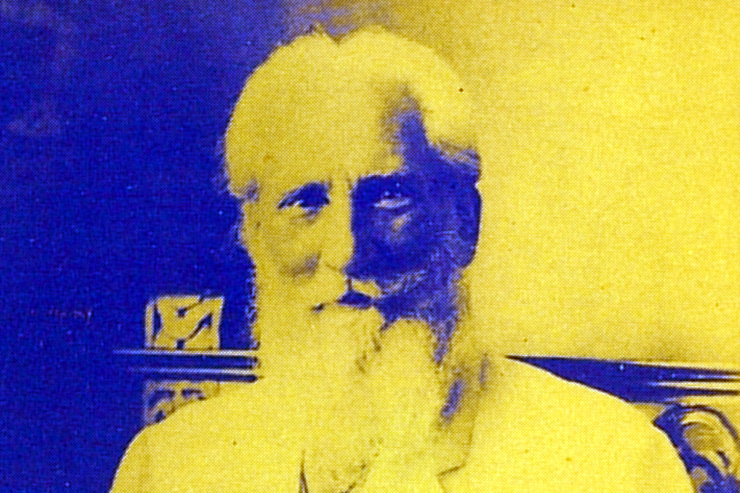
    1. Artist’s impression of C.W. Leadbeater which adorned the cover of a 1973 edition of his book The Inner Side of Christian Festivals published by the St Alban Press.
    2. “The Third Object of the Theosophical Society”, Adyar Pamphlet Number 184, Adyar, India, 1930.
    3. Other Temples, Other Gods: The Occult in Australia, Nevill Drury and Gregory Tillett, Hodder & Stoughton Australia Pty Ltd, 1982
    4. The Inner Life by C.W. Leadbeater, Madras, India:  Theosophical Pub. House, 1912.
    5. The Hidden Side of Christian Festivals by C.W. Leadbeater, as quoted in The Elder Brother: A Biography of Charles Webster Leadbeater by Gregory Tillett.
    6. The Elder Brother: A Biography of Charles Webster Leadbeater,  Routledge & Kegan Paul Books, 1982.

    © New Dawn Magazine and the respective author.
    For our reproduction notice, click here.
  • With Our Thoughts, We Make the World

    With Our Thoughts, We Make the World

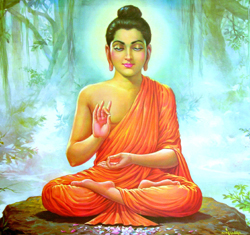
    What we are today comes from our thoughts of yesterday, and our present thoughts build our life of tomorrow: Our life is the creation of our mind.
    – Buddha

    Those of us who grew up in the 1980s were, quite unknowingly, absorbing a healthy dose of Eastern mysticism when we watched the wonderful Japanese television series “Monkey” every weekday evening at 6.30pm. For all of the colour and movement and occasionally risqué language that appealed to my childish mind, I was also, perhaps, taking to heart the wonderful précis of Buddhist philosophy that made up the introduction to each episode: “With our thoughts, we make the world.”

    This is a quote from “The Dhammapada,” that exquisitely brief text that provides the reader with all of the main ideas to be found across all of the schools of Buddhism. In fact, it is the very first verse of that most fundamental book. It is the construct that informs the Buddhist world-view – all of this, that we so keenly call “reality,” is a product of thought, and so it can be influenced by the shape of our thoughts, and we can begin to craft a new reality through disciplining our process of thought and directing it towards wiser outcomes.

    Volition and free-will were the points of divergence between Buddhism and the other religious systems of the ancient world, which tended to favour notions of fate and pre-destination. The Buddha taught that karma provided us with conditions only. In every single moment we are free to choose a wise thought and do a wise action. Buddhism is brutal in its advocacy of personal responsibility. Such a point of view seems strikingly modern and rational, though perhaps slightly politically incorrect in this more feeling age.

    It is the rigorous control of thought, its careful disciplining, that grew to become the central practice of Buddhist practitioners. Samantabhadra, the Universal Worthy Bodhisattva, is the patron saint of meticulous religious training in the world of Mahayana Buddhism. He imposed upon himself the almost-impossible task of honouring the Buddha in each and every thought. If his thoughts were filled with the Buddha, so must his actions and words be inhabited by the goodness of the Awakened One. Look after the thoughts, and the actions will take care of themselves.

    In the Western tradition there emerged, as well, the notion that one’s actions reflected one’s spiritual wellbeing. The way a person looked and spoke was seen by Emanuel Swedenborg as evidence of habitual reflection: either on the beauties of heaven or the torments of the natural world. Much later, the great teachers of New Thought in the twentieth century saw the spiritual importance of thought control, teaching that the thoughts were our channels to God, and so should be as perfect, loving and happy as possible.

    We perhaps fool ourselves that our thoughts can be allowed to stray and our lives will not be affected. Gossip, habitual negativity, judgement and constant criticism can seem fun when we are engaged in them. We can justify them, or elevate them, priding ourselves on our cynicism and critical capacities. But the Buddha was aware that all that we thought was, in fact, the sum total of our life’s experience – we cannot know goodness and happiness if we do not allow our thoughts to cultivate those qualities. He recognised that it requires discipline and the conscious application of energy to direct our minds into positive directions. Without such care we can slide into destructive patterns. To watch over the mind, he said, is conducive to happiness.

    All that we are is the result of what we have thought. If a man speaks or acts with an evil thought, pain follows him. If a man speaks or acts with a pure thought, happiness follows him, like a shadow that never leaves him.
    – Buddha
    [alert type=”general” dismiss=”no”]This article was published in New Dawn 131.[/alert]

    [alert type=”success” dismiss=”no”]If you appreciate this article, please consider a contribution to help maintain this website.[/alert]

    © New Dawn Magazine and the respective author.
    For our reproduction notice, click here.
  • Illuminati Hell Or Aquarian Heaven?

    Illuminati Hell Or Aquarian Heaven?

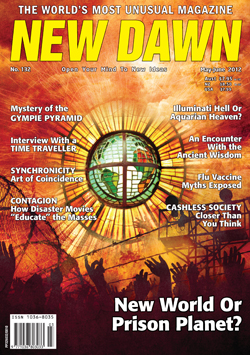
    From New Dawn 132 (May-June 2012)

    In March 1991, Random House published The Seeker’s Handbook – The Complete Guide to Spiritual Pathfinding (TSH). The book was carefully timed to serve the need it defined, a need I identified in the social-spiritual trends of that moment: namely, the need for orientation to, and clarification of, the options presented in the New Age movement (NAM), loosely known as alternative spirituality.

    The dawn of the 1990s saw that movement peaking. My intention with this book was to offer a pathfinding tool, something like an intellectual compass for navigating through the huge array of books, teachers, programs, and practices that had been proliferating massively since the 1960s.

    To that end, I proposed the metaphor of the labyrinth to describe the multiple winding pathways facing modern truth-seekers. I also suggested that in our time, due to the very multiplicity of options for spiritual development – everything from Baha’i to Buddhism to body work, from alchemy to zen – the task of pathfinding itself becomes an art. Sorting out what principle, program, or person you are going to follow in undertaking a spiritual practice to guide your life is on its own terms a challenging practice, regardless of which practice you finally adopt! This observation is as true now, I would say, as it was when I wrote the book.

    The Hermetica

    It has not always been so, of course. I dedicated a long section of TSH to describe “how the radio came to the beach.” That is to say, how it developed historically that Western society today faces such a vast range of options for self-development along spiritual, metaphysical, and mystical lines. Without going back beyond the Dark Ages to the destruction of the Mysteries – another investigation, covered at length in Not in His Image – I came forward from the Renaissance. The key event that laid the foundation for today’s eclectic New Age spirituality was the discovery of a sheaf of writings entitled the Hermetica. The Lexicon of 1,000 entries in TSH defines Hermetics:

    From Greek, Hermes, equivalent to the Egyptian Thoth, the God of writing, calculation and the sacred arts. Loosely, the body of technical and inspirational teachings believed to be derived from the secret schools of the Egyptian Mysteries. Specifically, the corpus of thirteen rare manuscripts introduced into Europe in the 15th century, which opened the way to independent spiritual seeking in the West, especially through disclosure of the concept of theogeny.

    The inception of New Age spiritual pathfinding happened in an almost single-handed way due to the influence of a Florentine nobleman, Cosimo de Medici (1389-1464). When he received the Egyptian manuscripts, Cosimo deemed the “ancient wisdom” preserved therein to be of higher value than the Bible, and predating Moses. He instructed Marsilio Ficino, appointed by him to head the Florentine Academy of Arts and Sciences, to translate the Hermetica from Greek into Latin for the edification of the trendy Italian intelligentsia of his court. In that single act, Cosimo initiated a chain of events that led ultimately to the New Age movement of today.

    TSH summarises sixteen key themes of the modern alternative spirituality, contrasted to conventional faiths such as Judaism, Christianity (Roman, Protestant, and Orthodox), and Islam: 1. ancient wisdom, 2. Gaia, goddess revival, 3. shamanism, 4. masters, 5. planetisation, 6. channeling, 7. holistics and healing arts, 8. East/West studies, 9. martial arts and the warrior path, 10. paranormal reality and psychic powers, 11. reincarnation, 12. earth changes, 13. service and group effort (Aquarian idealism), 14. metahistory (parallel or secret history), 15. para-physics, chaos/complexity theory, physics of consciousness, 16. co-creation.

    In the context of this essay, the final theme has a telling import. In the ultimate sense, it could be said that the Hermetica introduced two closely linked themes into Western society, and from this dyad all other aspects and ramifications of the New Age outlook are generated. These themes are co-creation, “you create your own reality,” and theogeny, “you become as gods, knowing good and evil.” Theogeny is a made-up word I propose, not to be confused with theogony, meaning an account of the origin and genealogy of the gods – as found in Hesiod’s poem, Theogony, for instance. Theogeny means “the birth or genesis (-geneos) of divine potential (theo-) in the human species.” The assertion of this god-like potential and the call to cultivate it, is the hallmark of New Age philosophy and ethics at its best. It is also the key point of heresy that distinguishes alternative spirituality from conventional faith.

    Not Illuminati

    Gnostics of the Mysteries designated the root of human potential by the Greek word nous, “divine intelligence,” basis of the term noetic. The Mystery Schools were a network of regional campuses where illumined teachers called telestai, “those who are aimed,” taught a vast range of sciences, arts, and vocations. These illumined teachers were most certainly NOT illuminati-type psychopaths bent on mind control and social engineering. They were dedicated teachers who had attained an advanced realisation of the nature of consciousness (noesis) and the consciousness of nature (epitomised in a living being, the goddess Sophia, also called Sapientia). In Fragments of a Faith Forgotten, Theosophic scholar G.R.S. Mead restated “the persistent tradition in connection with all the great Mystery-institutions was that their several founders were the introducers of all the arts of civilisation… they were the teachers of the infant races [who] taught the arts, the nature of the gods, the unseen worlds, cosmology, anthropology, etc.”

    Mead’s view is echoed by S. Angus, author of The Mystery-Religions: “The Mysteries were the last redoubts of Paganism to fall. Prior to that their adherents were the educators of the ancient world.”

    Today it is widely argued that the Mystery Schools of pre-Christian antiquity were think tanks for the predecessors of the current CEOs of the New World Order (NWO), psychopathic control-freaks who aim to deceive, divide, and enslave humankind. Investigators such as David Icke and Michael Tsarion expostulate endlessly on the nefarious doings of the NWO gang, making them out to be dazzling adepts of occultism who hold the world under their spell. Unfortunately, Icke, Tsarion and others consistently attribute NWO methods and aims to Paganism (grossly and ignorantly equated with Satanism) and the Mystery Schools. Nothing could be further from the truth.

    At this crucial moment in human history, when the moment comes to defeat the NWO agenda, it is a grotesque mistake to associate the globalist psychopaths with benevolent teachers of the Pagan Mystery Schools. There does not exist one shred of evidence linking the latter-day NWO agenda, derived from the Bavarian Illuminati of 1776, to those sacred institutions of education and enlightenment. I have repeatedly emphasised that self-styled detectives of the NWO agenda, having failed to do their homework, wrongly equate the rites of theocratic empowerment in ancient times with initiatory rites in the Mysteries. But the aim of the Mysteries was connection with the Great Goddess, Sophia, embodied in the earth, not social engineering under the insane presumptions of theocracy. Failure to make this distinction has mislead many investigators, not to mention those who uncritically follow them.

    The fact that some modern (alleged or self-declared) Illuminati might attribute their origins to the Mysteries does not mean it is so. In reality, the distinguishing mark of the Illuminati today is the patent error, not to say insanity, of their views on themselves, their power, and their origins! The Illuminati represent the extreme distortion of human egotism toward behaviours of psychotic deviance that threaten all life on earth. That behaviour identifies the Illuminati, regardless of what principles and pretensions are assigned to them, and no matter what ancient pedigree they attribute to themselves. That behaviour is what has to end right now if humanity is to survive and thrive in an “Aquarian” world based on social enlightenment, harmony with nature, and mutual aid.

    NWO Endgame

    Many developments unfolded after the Renaissance, leading to the New Age movement (NAM) as it stands today… I cannot possibly summarise even the basic outlines of this trajectory in a short essay. (Readers may consult TSH for a more complete treatment.) Suffice it to say that the NWO agenda, if it is to be defeated, has to be seen as it relates to the New Age agenda. One must ask, how are the two related? Both present visions for a global or planet-wide society, but obviously two extremely different conceptions of such a society. Or are we considering one vision in two different guises? It has been argued that the NAM, especially in the visionary scheme formulated by Theosophists Madame Blavatsky and Alice A. Bailey, is nothing but a disingenuous program to sucker people into the NWO nightmare of globalist mind control, disguised as a vast spiritual awakening, guidance by a spiritual elite, the unity of all religions, etc.

    The prospect of one world religion would indeed fit into the globalist plan for planet-wide centralisation and domination by a self-elected elite, but was the recent historical version of the NAM platform, following Blavatsky and others, originally conceived with that intention in mind?

    Does the Illuminati hell of globalist tyranny, implemented in the style that combines 1984 and Brave New World, incorporate for its purposes the pernicious lure of an Aquarian heaven on earth? One could debate endlessly on this touchy issue. To do so would open up enough rabbit holes to occupy a team of 1,000 researchers for decades. For instance, how would you determine if the Lucis Trust – established by Alice A. Bailey to further the aims of the Himalayan Masters of the Great White Brotherhood (GWB), “the externalisation of the hierarchy” – due to having its offices at the United Nations, is accessory to the UN plan for world domination, bureaucratic tyranny, destruction of national sovereignty, elimination of personal and civil rights, etc? In other words, how can you prove that the hierarchy of Himalayan Masters, alleged to be the “elder brothers” of humanity who guide its long-term evolution, are not backing the NWO? Or that the GWB, whether or not it is a fiction (as I strongly suspect), is not being used as a psyop to that end? I assure you, anyone undertaking these issues will have one hell of a task to sort out the players, real and fictional, and define the agendas at play, not to mention the strategies for implementing those agendas.

    So, allow me to propose a shortcut to determine if the global endgame of the NWO is working in lockstep with the supposed social idealism and religious syncretism of the NAM. The entire tentacular mess of speculations surrounding this topic can be resolved by considering this question: How do the NWO gang view those two key themes of co-creation and theogeny, compared to the views and assumptions of New Agers on the same matters? If these two views coincide and complement each other, we can infer that NWO orchestrations of social evil are indeed cooperating with NAM principles, perhaps by deliberately co-opting them, or merely due to contamination, guilt by association. It remains then for people who place themselves in alignment with New Age idealism to see through their own naiveté and abandon their views, or, if possible, reclaim them from co-optation. Let’s consider in more detail the specifics of this little exercise in spiritual discrimination.

    Hijacking Truth

    Around 1904, at the height of the Occult Revival in Europe – a late ramification of the Renaissance recovery of Hermetics and Pagan mysticism – self-styled magus Aleister Crowley declared a code for the Aeon of Horus, his version of the Aquarian Age: “Do what thou wilt shall be the whole of the Law. Love is the law, love under will.” A great deal has been made of this banal proposition, as if it were a cosmic revelation of sorts. Crowley himself has been ridiculously idolised by a cult following, including David Bowie and many other denizens of the entertainment world – as if such attention whores need a mystical pretext for their egomania. Crowley was a sadistic, manipulative narcissist whose delusions of grandeur far exceeded actual skill in the magic arts – though his delusions were to prove highly contagious. The Book of the Law, channeled by his wife Rose Kelly, is endlessly cited as a lofty declaration of magical empowerment. In fact, the above words present nothing more than a hijacking and distortion of the Wiccan Creed: “An it harm none, do as ye will.” Significantly, Crowley dropped the crucial qualification, “an it harm none.” Hence, his thelemic law of magic comes across as an unqualified call for narcissistic indulgence, regardless of how it affects others.

    The hijacking of the Wiccan Creed, and its perversion by exclusion of crucial syntax, exemplifies how self-serving psychopaths twist genuine and benevolent alternative spiritual principles to evil ends. Wicca is a genuine and benevolent path of alternative spirituality and Gaian ethics, closely aligned to the animist path of shamanism common to indigenous cultures around the world – known crudely as “nature worship.” But whatever is potentially correct for humanity in New Age philosophy can readily be twisted against human benefit. Almost everything for social control proposed under the NWO agenda today can be evaluated by asking how it adopts and perverts some principle of the New Age movement, or a truth drawn from indigenous wisdom. This is especially so for the two seminal principles that come to definition via Hermetics around 1500: co-creation and theogeny.

    Consider theogeny first: correctly understood, this is cultivation of the divine potential inherent to the human species. But hijacked and perverted, it turns into the theocratic con of the ruling elite who take themselves for gods on earth, superhuman rulers of the world. This is a vivid example of a NAM concept perverted into a NWO imperative. Clearly, the behaviours generated by those who enact this delusion will be destructive to the world at large, and ultimately to themselves. So it goes with one of the major trends of the NWO agenda, epitomised in the toxic insanity of transhumanism.

    Now consider that other key theme, co-creation. According to Hermetic sciences rooted in the Mysteries, co-creation meant the process of humanity achieving its divine potential by working with nature, via alchemical collaboration. Alchemists of genuine achievement, distinguished from the many charlatans, regarded themselves as heirs of the Hermetic sciences. In that spirit, they advised: “Nature performeth her operations gradually; and indeed I would have thee do the same: let thy imagination be guided wholly by nature. And observe according to nature, through whom the substances regenerate themselves in the bowels of the earth. And imagine this with true and not with fantastic imagination.” (The Art of Goldmaking, 17th Century)

    In the Mystery School tradition, which might be considered the most reliable basis for genuine alternative spirituality in our time, co-creation went hand in hand with theogeny. The initiates of the Mysteries taught that humankind has been endowed with god-like potential (divine faculties, not divine identity) so that we can develop it within the setting of the divine experiment on this planet, the laboratory of nature. Clear enough, and that is about as cogent as it gets, perhaps – but what do the NWO psychopaths contrive when they hijack and pervert this proposition? They construct ecofascism as the cover for their program of looting nature and keeping all the spoils for themselves.

    Ecofascism is a kind of false flag attack on nature, blaming humanity for posing a lethal threat to the environment and then demanding that humans pay for the crime of breathing. This ploy is an insidious perversion of the “Great Work” of co-creation: create a unique human reality on earth, an Aquarian utopia, by working in harmony with nature. Note that this principle so stated avoids the narcissistic assumption that “you (alone) create your own reality.” The assertion that we as a species create reality by using the power of imagination cooperatively with nature is a premise of the Sophianic vision of the Mysteries, recovered today in Planetary Tantra. The notion that anyone creates their own reality alone, without interaction with nature and collaboration with other people, is a narcissistic delusion of the New Age.

    Discrimination

    It may appear that I have tackled the daunting issue of how NWO schemes relate to New Age principles, including the Aquarian ideal, in a somewhat general and roundabout manner. But it would be impossible to make a satisfactory analysis of particulars in an essay of this length. Also, as I said, the number of rabbit holes to explore would be prohibitive even to a large team of investigators. Normally, I favour the inductive method of Socrates: argument from individual to general cases. But with the tricky and ambiguous issue of NWO/NAM overlay, the grasp of generalities is essential and favours sorting out the details and particulars of the larger picture.

    In my analysis, principles and proposals of New Age or Aquarian Age spirituality may be adopted to the NWO agenda, but they can also remain free of that association. It depends wholly on who is trafficking in these principles and proposals, and for what purposes. To observe that ecofascism is a hijacked perversion of the alchemical principle of co-creation, does not mean that alchemists were predecessors of the current ecofascist scam. To observe that Gnostics taught theogeny, our endowment of divine potential, does not mean that Gnostics were forerunners of transhumanism and cybernetic immortality. To observe that Wiccans revere nature as a living presence does not mean that they are accessory to the insane scheme to depopulate the world on the phony pretext of unburdening Mother Earth. Deep ecology also asserts that nature has an intrinsic value on its own, regardless of it uses for human purposes. As I show in Not in His Image, this position is closely aligned to the Sophianic vision of the Mysteries, holding the earth as the embodiment of a divine being, the wisdom goddess. Any of these legitimate propositions can be perverted to the NWO agenda of domination by the elite, but that does not mean they were originally conceived to support such an agenda.

    Let’s get these issues straight on general principles. Then we will be all the more prepared to interpret particular issues and instances in which the NWO agenda appears to draw from alternative spirituality, Wicca, Gnosticism, and Pagan culture.

    In conclusion, I might add my personal view that the danger posed by NWO appropriation of alternative spirituality, including shamanism and indigenous wisdom, is amplified by the cowardice and naiveté of New Agers who refuse to look social evil in the face. Cocooned in their white-light jump suits of magical thinking, New Agers and other fantasists, including proponents of “The Secret,” persist in narcissistic con-games that blind them to the perversions of human nature to be seen in the NWO predators. But the god-complex of the NWO psychopaths and the self-fulfilling deification of NAM drones, are two poles of the same festering narcissistic disease. Whether the NWO control-freaks are using New Age idealism or not, the vast majority of New Agers are so lacking in discrimination, not to mention basic savvy for social observation, that they would not even know if their precious ideals were indeed being played in that manner. That ignorance is the real and present danger inherent to the New Age movement, making it the possible and plausible accessory to insidious agendas of social manipulation and mind control.

    Ultimately, the two socio-historical trends leading toward the NWO hell and New Age heaven might converge, which would be a huge victory for the globalist psychopaths. To prevent such a horrific development, one paramount skill has to be mastered by those who embrace the New Age philosophy of Aquarian idealism – the skill of discrimination.

    [alert type=”general” dismiss=”no”]This article was published in New Dawn 132.[/alert]

    [alert type=”success” dismiss=”no”]If you appreciate this article, please consider subscribing to help maintain this website.[/alert]

    © New Dawn Magazine and the respective author.
    For our reproduction notice, click here.
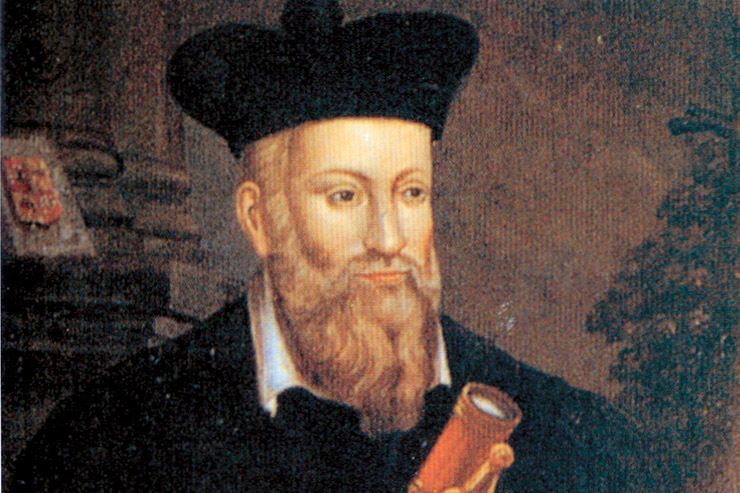
  • Nostradamus: Prophet of Hope

    Nostradamus: Prophet of Hope

    The jury is still out on the millennial prophecies of Michel Nostradamus, the French master physician, astrologer and Kabbalist of the sixteenth century. Many regard him as the greatest prophet in Western history, while others find his predictions, especially those concerned with our own era around the second millennium, irrelevant or simply too deep or too equivocal to interpret successfully.

    Did he predict war or peace for our time? Did he foresee a coming Utopia or a descent into a Dark Age? The end of the world or a Golden Age a thousand years long? The appearance of a great spiritual Teacher or an Anti-Christ? These are the confronting questions that inevitably arise when considering the work of this famous Renaissance seer.

    I believe the key to Nostradamus’ undoubted genius and equally undoubted capacity for paradox lies in the breadth of his religious affiliations, which, astonishingly, embraced all three Semitic religions: Judaism, Christianity and Islam. Without acknowledging this secret propensity for religious syncretism, regarded as heretical even in our own free thinking day, it is difficult to throw any light on the contradictions inherent in Nostradamus’ work. His religious beliefs simply cannot be left out of any in-depth evaluation of his prophetic legacy: they made him what he was, a mirror laid to the very heart of our polarised, suffering civilisation.

    A true child of medieval Provence, the home of chivalric poetry and mysticism, Nostradamus was born in 1503 in Saint-Rémy-en-Provence of Christianised Jewish parents, was brought up as a committed Christian and died as one in 1566 in the small town of Salon-en-Provence.

    At an early age his two grandfathers, who preserved in secret their Hebrew religious and cultural traditions, gave him a comprehensive classical education in literature, history, herbal medicines, Greek philosophy and a range of languages, as well as the ‘celestial science’ – astrology – in which he took a deep and abiding interest. As well, his two Jewish mentors clandestinely introduced the boy to the Judaic esoteric culture. He learned the occult arts and sciences forbidden by the Church, and acquired a knowledge of alchemy and the Jewish Kabbalah, the latter a mystical initiatic system of ten levels of consciousness akin to Hindu Kundalini Yoga. Yet he is believed to have remained at the same time a loyal son of the Christian Church.

    Later, for fear of the Inquisition, Nostradamus burned the old Jewish family books on Kabbalistic magic that he had acquired from his grandfathers, along with other occult texts on alchemy, hermeticism and Chaldaean and Assyrian magic. But his most secret religious affiliation linked him to a belief-system that at that time was virtually unknown in Europe and its presence in his life was therefore to remain safe from discovery for almost five hundred years.

    Not until the most recent decades has modern Western research discovered that this remarkable Jewish doctor and occultist, trained in Hebrew wisdom, was not only deeply committed to both Judaic and Christian principles but was also a member of a Sicilian Sufi brotherhood loyal to Islam. A true man of the Renaissance, Nostradamus secretly believed in the underlying unity of the three religions, and his prophecies yield their deepest meaning only on this basis.

    Nostradamus’ Prophetic Genius

    Nostradamus’ life has been chronicled from a variety of different perspectives by a great number of commentators. What emerges most clearly from these studies is confirmation that his prophetic genius owed much to this hidden background of wide-ranging religious connections. The principle of syncretism lies at the very heart of Sufism and was evidently espoused by the doctor. He was the very embodiment of a universal theosopher, a prophet without dogmatic or theological boundaries who would foreshadow and greatly influence the coming explosion of Renaissance universalist thinking. Nostradamus’ academic training was to reinforce this unusual spiritual breadth.

    In Europe at the end of the Middle Ages, plague, famine and superstition were rife, men of enlightenment few. Nostradamus was one of those few. He attended the prestigious universities of Avignon and Montpellier where he qualified with high honours as a doctor of medicine and philosophy, and became renowned as a ‘plague’ doctor who effected amazing cures in times of severe pestilence. He was also an adviser to royalty and a deeply learned writer of philosophical works, as well as writing a book on food and cosmetics.

    During his wanderings through Europe after the death of his wife and two children from the plague, Nostradamus came into contact with an underground network of ex-Jewish occultists practising Hermetic and Kabbalistic magic, and gained training from them. This, allied to natural clairvoyant abilities, led to his dedication to the prophetic art. His cryptic book of prognostications, Prophéties, has vied with the Bible for being continuously in print since it was first published in complete form by Benoit Rigaud in 1568.

    In the first part of the book, which was called Centuries and written in 1555, Nostradamus attempts to describe his method of divination. It is that of the fourth-century neo-Platonist Iamblichus, whose reprinted book was published in Lyons only a few years before Centuries was written, and had no doubt been perused by Nostradamus. A bowl of steaming water is laid on a tripod placed in the prophet’s study at the top of his house. He works at his magic practices while the household sleeps.

    Sitting alone at night in secret study, it rests solitary on the brass tripod. A slight flame comes out of the emptiness… (Century 1 Q1) The wand in the hand is placed in the middle of the legs of the tripod. He sprinkles with water both the hem of his garment and his foot. Fear, a voice runs trembling through the sleeves. Divine splendour; the God sits nearby. (Century 1 Q11).

    Nostradamus notes that fear, dread, accompanied the parting of the veil that revealed daemonic powers; but tells us that when the God came and sat invisibly beside him, fear departed. In this picture of divine collaboration in a herculaean human task there is something very moving. The God has often been interpreted as the magician’s own god-given gift, but it is more likely to have been the invisible presence of a higher being who accompanied him in order to give comfort, reassurance and guidance. For there is no doubt Nostradamus was treading a wild, uncharted path outside tradition, and an emissary from higher realms might well have been sent to companion him… as he himself apparently believed.

    20th Century a Key Period

    In the preface to Centuries, written in the form of rhymed quatrains grouped in hundreds, Nostradamus discusses his clairvoyant visions of the future in revolutionary terms. In them he foresees “great events, sad and prodigious and calamitous adventures approaching in due time,” events that would, however, precede, or perhaps accompany, a great transformation in humanity’s level of consciousness and spiritual understanding. His apocalyptic intimations clustered around the twentieth century, “the Century of the Sun,” and predicted the rise of new mystical teachings leading to radical changes in our traditional religious beliefs before 1999 – as indeed we are surely now seeing.

    Nostradamus saw the twentieth century as humanity’s rubicon, a pivotal moment in history yielding a unique crisis of choice, of decision – a century of paradox in which enlightenment would spring from the deepest tribulation. He is often accused of being a prophet of doom, but if his prophecies are contemplated from a spiritual perspective, Nostradamus brings us a message of sublime hope. In biblical times seers like the doom-laden prophet Jeremiah were often killed for their pains, their messages rejected; but today the essentially ethical and optimistic philosophy at the core of Nostradamus’ predictions can strike a deeply positive chord in his readers. Right choices bring blessings, he is saying, out of pain comes spiritual regeneration.

    After many wanderings after the death of his family, Nostradamus became a successful doctor of the plague in Marseilles and was rewarded with large sums of money by the government of the city. He then remarried and set up a medical practice in Salon, where he lived and worked for the rest of his life. When many of his published predictions came true, Nostradamus became famous in his own lifetime and won the patronage of France’s then Medici royal family, Henri II and his consort, Queen Catherine de Medicis. At the Queen’s behest the prophet travelled to Paris to cast the horoscopes of her six Valois children.

    Yet as an ex-Jew and a radical thinker suspected of dubious supernatural practices, he lived all his life as a stranger in society and in danger of the displeasure of the Church of Rome. Surviving by various stratagems in a violent and unforgiving century, he worked against a background of forbidden Jewish and Islamic mysticism and the threat of Inquisitorial persecution. It is in this context of religious tyranny and repression that Nostradamus’ enigmatic visions must be understood. At first he determined not to publish them for fear of a public backlash, but later understood that the Church’s hold on the minds and hearts of its people would one day give way to a new climate of religious freedom, and this gave him the heart to go public.

    Because of foreseeing the advent of the common people, I decided… [to declare] in dark and cryptic sentences the causes of the future changes of mankind.

    So the seer wrote in the preface to Centuries dedicated to his son César, in celebration of a coming age of democracy – an age of freedom from the tyranny of the Inquisition. His words were an expression of the longing Nostradamus felt for a future time of intellectual and moral liberty in which advanced views like his own would be vindicated.

    Because if the present kingdoms, sects and religions were to see the future kingdoms, sects and religions to come, and see how diametrically opposed they are to their pet fantasies, they would condemn that which future centuries will know to be true…

    Although the prophet was forced to mix up his verses and present them out of their proper order as a means of obscuring their message, so avoiding the attention of the Inquisition, they have nevertheless time and again been found to present uncannily accurate forecasts of historical events over the ensuing centuries, and never more so than in those of the climactic twentieth century that would usher in a new millennium.

    Interpreting Nostradamus’ Predictions

    Some of the Centuries have proved to be indecipherable as predictions, but Erica Cheetham, one of Nostradamus’ most respected modern translators and interpreters, notes how fascinating she found it to be, while reading the Prophéties for the first time, to come across so many familiar names and historical events. “Names such as Hitler, Napoleon, Franco, Pasteur sprang to the eye. There were many dates too…”1 The prophet accurately predicted that the city of London would be destroyed by fire in 1666, he foretold the violent end of the French monarchy and the assassination of the two Kennedy brothers in recent times, and many more famous historical events.

    Subscribing to the Chaldaean astrological tradition fashionable in his era, Nostradamus’ prophecies were concerned with a time frame of seven thousand years, spanning what he called the Age of Man. Jean-Charles de Fontbrune, a modern authority on the prophet, believes that by counting five thousand years from Adam to Christ, the seer arrived at 1999 as the end of the seventh millennium and the climax of a great evolutionary cycle.2 Actually, says Fontbrune, according to biblical chronology the prophecies end with the conclusion of the Piscean age, approximately CE 2000. And according to Cheetham, there are indeed many indications in the text that Nostradamus seemed to see the period around the second millennium as the possible date of Armageddon in the form of a Third World War, and perhaps the end of the world, although he sometimes contradicts this. In any case, projected throughout the prophecies in shadowy outline, Cheetham glimpses the idea of a great polarisation of good and evil at the beginning of the third millennium, and a stark choice for humanity.

    In common with the Book of Revelation and with the mystical ideas of the Renaissance then incubating in Europe, Nostradamus foresaw in the twentieth century the advent of democracy and the resultant transformation of consciousness that would bring in sweeping new religious reforms and a new, more enlightened dispensation for humanity. At the same time, the seer was not blind to the terrible downside of the twentieth century and acknowledged that it would be a most fateful and afflicted century in which to be born. The historian Barbara Tuchman notes its phenomenal parallels to the calamitous fourteenth century with its plagues and famines, which she qualifies as a “violent, tormented, bewildered, suffering and disintegrating age… when there was no sense of an assured future.”3 In the sixteenth century Nostradamus predicted of the twentieth “evil century” that its final quarter would be “filthy, pestilent and violent,” and would culminate in unprecedented catastrophes.

    Cheetham, like many other researchers, has exclusively focused on these negative aspects of the prophecies: our great plagues such as the AIDS epidemic, famines and floods, appallingly destructive wars, the decline of the Catholic church and the resurgence of militant Islam. She sees little light penetrating this gloomy picture of a civilisation on the edge of destruction, and links it to the coming of the series of Anti-Christs predicted by the seer. With the increasing incidence of earthquake activity, spreading deserts and political malfeasance, it will be a time of great calamity for humanity and even for the planet itself, a time of death – and yet, in the view of Fontbrune, of new life from the East. For according to his interpretation of the prophecies, many spiritual leaders would arise at the threshold of the second millennium to give warning of the disasters to come and would simultaneously bring hope to the world with their new religious teachings.

    Before these [apocalyptic] events, many rare birds will cry in the air, ‘Now! Now! And some time later will vanish.

    According to this prediction, then, a window of spiritual opportunity will open in the millennial era, but for a time only.

    Fontbrune notes that a full two-thirds of Nostradamus’ prophecies are devoted to this millennial theme of apocalypse and spiritual rebirth. In fact, he believes that the great French magus and doctor of medicine wrote his quatrains in the sixteenth century for the express purpose of depicting the twentieth, knowing that “his text would be expounded and understood only in the century which was the focus of his vision” – the century of the common people. Nostradamus shared the hopes rife in Renaissance circles of the time, of an end to feudalism and religious bigotry, hopes that were closely bound up with the spiritual Solar principles from the past which still dominated the worldview of Europe’s esoteric luminaries.

    In the symbology of the old Sun temples whose influence had once dominated the entire planet, the sun, birth, life and the brilliant energies of the daytime were identified with the East, while twilight, the moon, death and the shadows of the afterworld were identified with the West. In Minoan Crete new life was brought into the temples by the eastern gate, while the dead were carried out through a western portal and ferried across a stream to the necropolis built on the western side of the city; and these principles reigned throughout pagan times and passed in secret into Christendom, largely through Gnostic channels.

    The same esoteric symbolism played its part in the conviction held by Renaissance astrologers that, however dark the end of the millennium might be, a new and wondrous epoch surely shone on the eastern horizon, promising the rise of new nations, new democratic and utopian principles and a new spirit of religious liberty. It is significant therefore that in Nostradamus’ prognosticative scheme the Solar sign should have fallen precisely to that century that has seen the burgeoning in the Pacific region of new civilisations and ideologies, and that in some of these cultures we are witnessing the birth of the most creative concentration of clairvoyance and spirituality, of egalitarian idealism – however distorted in form – to be found at any time in history. The Pacific lands – China, eastern Siberia and Russia, North and South America, Japan, Indonesia, Malaysia, New Zealand, Australia – while by no means immune to geological disasters, may well represent the most viable cradles of new life, new acculturation, in the millennia to come.

    Nostradamus prophesied that the twentieth century would see developments in keeping with its Solar sign, which signifies material expansion and power but as well wisdom, the Christ as Logos, the Solar Word; the whole body of Hermetic-Kabbalistic knowledge inherited from the ancient world; inner harmony and integration. Another authority on Nostradamus, John Hogue, suggests in his first book on the subject that this spiritual knowledge foreseen by Nostradamus shows similarities to Hindu Tantra.

    [Nostradamus’] Hermetic mysticism… has many parallels with the Eastern school of Tantra or Shivaic Hinduism, which saw the universe as a divine play or dance of paradoxes.4

    The Teacher from the East

    Hogue notes further that in the midst of world cataclysms and wars, Nostradamus predicted that a great spiritual teacher, a man from the East, would be born who would become the scourge of outworn religions and the revelator of spiritual mysteries the world over. The quatrains dealing with the “long-awaited one,” the sage from the East mentioned in C10 Q 75, Hogue believed might possibly refer to the coming of Maitreya, the fifth Buddha.5 The quatrain says: “He will appear from Asia, [and be] at home in Europe, one who is issued from great Hermes.” “He will fly through the sky, the rains and the snows and strike everyone with his rod [of Hermes, of enlightenment]. (C10 Q 75, C2 Q29)

    As has been said, while at the same time professing Christian beliefs, Nostradamus’ Sufic initiation was one of the most important keys to his genius. Hogue tells us that, like so many of the Renaissance scholars and mystics who never disclosed the source of their exceptional talents, the Provencal prophet succeeded in keeping secret his membership in a Sufi brotherhood. Although he was familiar with all the occult systems of magic and self-transformation then known and with the writings of Iamblichus, the alchemists Paracelsus and Cornelius Agrippa, Pythagoras and the Kabbalistic Keys of Solomon, the main source of the seer’s grasp of Tantra and the trance techniques that underlay his prophetic visions was the Sufis he met during his travels in Sicily.

    The island of Sicily had been a strong centre of Islamic mystical activity since the thirteenth century, when the Templar Crusaders brought back to it much of the Saracens’ wisdom acquired in the East. It was in Sicily that Nostradamus would have learned the secrets of ‘magic and alchymia’ and the ‘ministry of angels’ on which his visions depended, and would have understood the correspondence between the sephirothic ‘rays’ of the Kabbalah and the human chakras. Proficient in Sufic alchemy, few would have been more familiar than he with the Sufi-inspired ‘Rose garden of the philosophers’, the alchemical-tantric work that gave symbolic instructions for the union and transformation of inner energies. By uniting the two opposing archetypes of the psyche, the Solar king and the Lunar queen (the mind and the heart), the practitioner, so it was said, was led to the ultimate goal, the birth of the ‘divine child’ of enlightenment.

    “The flame of a sect shall spread the world over…” So Nostradamus foresees in a letter to Henry II of France. He speaks of a new religious consciousness which culminates in a new religion during the final decade of the twentieth century, and of “the rose [appearing] upon the middle of the world… Then at the time of need the awaited one will come late.” (C5 Q96). Fontbrune has identified the rose symbol with socialism, a valid enough interpretation; but a mystical association for the rose is contextually also probable. As we shall see, in the Sufi terminology with which Nostradamus was familiar the rose is the symbol of Tantra and the fire of kundalini, of spiritual love. The rose was an important chivalric icon in the Sufi-inspired occult societies of the time, as it was later to be in Rosicrucianism.

    One of the most influential and widespread of the Sufi Orders was the Qadiri Order, probably a vital influence in Nostradamus’ life. Founded by the followers of the so-called Rose of Baghdad, an eleventh-century Sufi from Central Asia named Abdul Qadir el-Gilani, it taught a dervish technique leading to ecstatic trance states and specialised in the science of psychic states. It invested its initiates with extraordinary psychospiritual powers that were said to put them in touch with angels. In the Qadiri Order, as in Rosicrucianism, the rose symbol figured prominently.

    The rose, lily and lotus are traditional symbols of the chakras, and in the Qadiri Order the rose (ward in Arabic) was an emblem and symbol of the rhyming word wird, which referred to the ecstatogenic dervish method practised by its members to open the heart chakra.6 The rose symbol also had a sexual connotation much employed in the chivalric romances of the time, linking it with the love energy of the heart awakened by initiation, and many illustrations in Rosicrucian literature were to feature angels, roses and lions, the latter the Solar animal of the zodiac.

    The rose symbol entered the Christian mystical stream with the cult of chivalry, whose secret message of initiation, dedication and metamorphosis informed every aspect of medieval culture. It would appear in England in the red cross of St. George, in the Order of the Garter, in the rose windows of European cathedrals and in a certain grade or set of Masonic rituals. In alchemical parlance it symbolised the fiery spiritual energy released during the transmutations of the magus’s laboratory. The symbol of the rose may therefore be seen as virtually synonymous with Sufism, as with Rosicrucianism also. And so when Nostradamus refers to the rose taking the centre of the world stage, he may well be making a highly significant statement about the new role of Sufism in modern times as the bearer of a specifically mystical and esoteric type of spiritual awakening.

    Not all researchers agree on this point, however.

    The Riddle of the Three Anti-Christs

    Nostradamus mentions three negative influences or Anti-Christs in the course of his work, the third to be expected before the millennium (C8 Q77); and some writers, Erica Cheetham among them, identify this definitive figure of evil with the man from the East, “the long-awaited one” who will visit the Western nations by air. For Hogue the man from the East is a spiritual avatar, whereas for Cheetham he is the third Anti-Christ, bearing with him to the West what she sees as “dangerous” and “pernicious” cults that have broken away from the mainstream religious traditions. Coupling this evil guru figure with the current rise of occultism and the spread of esoteric New Age cults, she regards many of “these so-called covens… as worshipping Satan as their God.”7

    Cheetham is not the only scholar to take a negative view of the New Age counter-culture that deviates from traditional religious teachings, whatever their hue. Frithjof Schuon, a Sufi metaphysician who belongs to the austere modern school of Neo-Traditionalists, gives little comfort to those looking forward to a new spiritual paradigm as part of the reforming agenda of the future. Sacred tradition, Schuon insists, belongs to an immutable, everlasting, incorruptible and unchanging order. If it is abandoned today in the hope of better things to come, it is not because it has outlived its usefulness or because people no longer understand its language, but because they don’t wish to understand.8

    Cheetham would agree with this traditionalist viewpoint. There is, she contends, a demonic aspect to our present era, “a malevolent side to all these [psychic] happenings, very often desired by those who dabble in them.”9 Unlike Hogue, she therefore interprets Nostradamus’ twentieth-century predictions as giving biblical warning that many evil cults, offspring of the Anti-Christ, will undermine civilisation and its traditional religions around the time of the millennium.

    Here we encounter once again the extreme polarisation that seems to accompany everything to do with Nostradamus’ forecasts centring on the second millennium – yet another instance of the many symptoms of terminal social crisis and transformation that are today clustering around the Mayan calendar end date in 2012. The Quechua shamans of Peru refer to the time period between 2002 and 2012 as “Pachacuti,” “the time when everything is turned upside down and reality is restructured.”10 At such a time, and it is now upon us, humanity is confronted with the paradox that “the path toward extinction is very likely also the path toward a more enlightened state.” Nostradamus seemed to be well aware of this paradox.

    Yet neither the text of his Renaissance prophecies with their emphasis on Hermes, the Greek god of wisdom, nor his reverence for his family’s magical and occult background which furnishes the basis for his prophetic gifts, offer likely grounds for Cheetham’s interpretation of C10 Q75 as a warning about the satanic nature of the cults arising in the Century of the Sun and beyond. Indeed, as a closet Sufi Nostradamus was the least likely of all the occultists of his day to denigrate in his prophetic writings the very sects he was helping to bring into being. Rather, there is much in the Centuries to suggest that he may have had access to the ancient star charts preserved by the Arab scholars of Cairo and known to the medieval poet Dante, and that as a Sufi astrologer as well as a Judaic and Christian philosopher he was aware of the very positive spiritual trends that would flower in our epoch.

    Alberto Villoldo, a long-time student of Quechuan shamanism, speaks of another Quechuan belief, one that may throw light on the strange paradoxes of the present time. The shamans say that at the time of Pachacuti there may be a break between Homo sapiens and what Villoldo refers to as an emerging new species, Homo luminous. We are reminded here of today’s ‘Indigo Children’. 

    As a species begins to collectively realise that it is dying out, an inner mechanism, possibly built into the blueprint of the DNA, begins to create the next level of being, a new species.11

    Are we, then, undergoing, or about to undergo, a mutation of the race? And was Nostradamus aware of this possibility nearly five hundred years ago? If so, it would explain why his more enigmatic utterances clustered around the second millennium continue to baffle commentators with their profoundly prescient and yet ultimately elusive significance. Was the prophet unwilling to reveal the full extent of the transformation that may await our species?
    [alert type=”general” dismiss=”no”]This article was published in New Dawn Special Issue 4.[/alert]

    [alert type=”success” dismiss=”no”]If you appreciate this article, please consider subscribing to help maintain this website.[/alert]

    Footnotes:

    1. Erica Cheetham, The Final Prophecies of Nostradamus, Macdonald & Co., London, 1989, p.7.

    2. Jean-Charles de Fontbrune, Nostradamus: Countdown to Apocalypse, Pan Books, London, 1983.

    3. Barbara Tuchman, A Distant Mirror, Macmillan, London, 1979.

    4. John Hogue, Nostradamus and the Millennium, Bloomsbury, London, 1987.

    5. John Hogue, Nostradamus: New Revelations, Element, Shaftesbury, Dorset, 1993.

    6. Ernest Scott, The People of the Secret, Octagon Press, London, 1983, p.257.

    7. Cheetham, op. cit., p.38.

    8. Frithjof Schuon, “No Activity Without Truth” from The Sword of Gnosis, ed. Jacob Needleman, Routledge & Kegan Paul, London, 1986.

    9. Cheetham, op. cit., p.38.

    10. Jay Weidner and Vincent Bridges, The Mysteries of the Great Cross of Hendaye, Destiny Books, Rochester, 1999, 2003, p.392.

    11. Ibid., p.392.

    © New Dawn Magazine and the respective author.
    For our reproduction notice, click here.