New Dawn – World's Most Unusual Magazine

Category: Secret Wisdom

  • Quest for the People of the Secret

    Quest for the People of the Secret

    From New Dawn 74 (Sept-Oct 2002)

    A persistent legend originating in the East tells of hidden locations on the Earth where there exists certain groups of individuals with both exceptional powers and highly perfected character and consciousness. From these secret locations, they influence the whole of humanity and are known variously as the Hierarchy of Adepts, the Great White Lodge, the Secret Chiefs, the Great White Brotherhood, the Masters, or The People of the Secret.

    In the biblical legend of the Three Wise Men from the East, we find one of the earliest spiritual archetypes and one of the best known written references to this Eastern legend. Researchers have openly argued the Eastern influence in Biblical writings for the best part of the twentieth century, but the appearance of the mysterious three wise men in the Gospel of Matthew is perhaps the first and most obvious example of Eastern legend in early scripture. Described as “men who studied the stars”, these travellers, “came from the east to Jerusalem” to meet the infant messiah.

    …Herod called the visitors from the east to a secret meeting and found out from them the exact time the star had appeared.1

    Herod consulted his own high priests and teachers of his kingdom on this matter to no avail, and afforded the three wise men great respect and reverence in requesting a private meeting with them. Little else is said of the men before they returned to their homeland following a warning by an angel that it was dangerous to cooperate with Herod. The concept of three mysterious teachers is an older element of Eastern culture certainly in circulation prior to and throughout the time of Jesus.

    In the 19th century, the French diplomat Louis Jacolliot wrote a number of remarkable works on the ancient legends of India during his posting in the East. During this time, he uncovered the Legend of the Nine Unknowns. According to this legend, a secret society of these Nine Unknowns was created by the Indian Emperor Asoka in 273 BC, in an attempt to encapsulate all human knowledge of the time, and ensure that it was governed by those incapable of misuse. Apparently the martial art of Judo is the result of a “leak” from the physiological teachings of the Unknowns.

    Researchers traced the transmission of this legend through Talbot Mundy, the English novelist who travelled extensively through India. It is thought that portions of this legend filtered through to the West during the Crusades from various secret and semisecret Islamic traditions. Perhaps this legend had an influence on the foundation story of the Knights Templar, an order begun by nine knights who have since been revered as holders of the knowledge of the ancients.

    The Hidden Directorate

    The term “Hidden Directorate” was coined by British author Ernest Scott in his classic work The People of the Secret, in which he makes a strong argument for the reality of an assembly or hierarchy of adepts. Initially, the book reads like a history of occult and esoteric tradition, eventually becoming more complex by presenting very clearly, and at times quite influentially, an alternative “theoretical history” of the world’s spiritual heritage.

    In tracing the tradition of esoteric thought throughout time, it is possible to find a pattern of movement in certain groups and individuals. This movement seems to be working in a particular direction concerned with freeing the consciousness of humanity. Scott’s work operates from certain premises.

    Firstly, History is not the equilibrant of chance and hazard. The plan for human history was written long ago, and is monitored constantly. Part of this process is ensuring that certain gains are attained to ensure the balance and evolution of man and life as a whole, the direction of which is “the Will of God.” The responsibility for this process on Earth lies with an intelligence called the Hidden Directorate. Below this level, members of ordinary humanity are in touch with the Directorate, and may at times share its consciousness.

    This group of advanced human individuals is what has been referred to as the Hidden Executive. It is the reality behind all legends of ‘masters’ and ‘initiates’ from earliest historical times to the present.2

    Scott claims the existence of several centres employed by the Executive, one of which is, or was, in Afghanistan, and corresponds to the legend of the Markaz or “Powerhouse.” Those under a chain of command from the Afghanistan centre have been known as “Sufis,” and from this base and others around the world, the Executive works to implement the overall plan of the Directorate.

    The aim of this process is to instigate the patterns and intellectual movements that will orient people to higher evolutionary states. Scott asserts that this unified theory of history is impossible if our search is limited to the “visible shadows and not the invisible substance”.

    The concept of a Hidden Directorate guiding the affairs of mankind can itself be traced as a subtle thread throughout the world’s spiritual and esoteric heritage. The early civilisations of Greece acquaint us with Mount Olympus, home to the pantheon of hidden Gods who constantly meddle in the lives of unfortunate mortals. Homer’s epic work, The Illiad, depicts how the war between the Greeks and the Trojans was decided by a war in Heaven, and the death of the epic hero, Achilles, was also determined by the same divine judges. Prior to these oral legends, another was recorded in stone and considered one of the oldest pieces of literature in history. Entitled The Epic of Gilgamesh, it relates the story of a true epic king, Gilgamesh, and clearly outlines the effect of an unseen divine community upon the daily life of the king and his people.

    Many researchers have wrongly likened the Hidden Directorate to subversive societies like the Illuminati. Rather than being an exterior, politically-oriented centre for control, the Directorate is more concerned with the inner dimension of human development, which may or may not be discernible to the general mind.

    By reintroducing the theory of “ancient wisdom guarded by hidden custodians or Masters”, Scott argues for a benevolent group that maintains a key influence over people of the world’s cultures, implanting key ideas and initiating experiences, “in a sacred, secular, or whatever context is required for the time, place and people.”3 They exist for the good of humanity and exist to override the sinister forces keeping man from achieving his true spiritual potential and right.

    It is important to understand that the Directorate seeks not to control, but to direct or influence humanity. Due to the higher natures apparent in man, he cannot be blindly lead, only prompted into action by creating certain opportunities at certain times, and implanting particular ideas. The power of man’s free will cannot be overrun.

    The French poet and esotericist Maurice Magre writes in the epilogue of his book The Return of the Magi:

    There have been men whose names are unknown because they cared little for fame, and truth radiated from them without knowing it. There have been revealers who were unaware of the revelation that was in them; modest sages who mingled their wisdom with their daily life… We have all of us met, at least once in our lives, one of these unheralded initiators, and received from them a priceless gift, by a kindly word, a certain look of sadness, a sincere expression in the eyes.4

    Sufism

    Sufism is a term originally used by Western orientalists to describe the mystical path of Islam, otherwise called tasawwuf by Muslims. In reality, this tradition existed long before Islam and forms a foundation for much of the world’s collective religion and ancient thought. The Directorate itself is part of many Sufi legends including those throughout Tibet involving the mythical inner kingdom of the planet known as Shambhala. Scott argues that the Sufi influence is a common thread connecting the entire history of Europe, and that its beginnings can be traced from Spain and from the Middle East.

    By the early eighth century, Cordoba, Spain, saw several schools of Sufi Initiates forming under the cover of Islam. Working in a fashion similar to the Western mystics during the later Inquisition, these individuals walked a fine line to heresy, occasionally crossing that line into the view of officialdom.

    As a result there were numerous Sufi martyrs, including Mansur el Hallaj (858–922) who claimed the importance of Jesus as a member of the chain of Initiates. He openly taught Sufi concepts, and was eventually dismembered alive by the Muslim Inquisition. As he died, he prayed for the souls of his murderers.

    Despite their persecution by the growing Muslim establishment, the Sufis continued an unbroken line of their wisdom and methods in a careful transmission between different secret brotherhoods or orders. Known as Tariqas, these groups acted as caretakers of the continuous line of knowledge.

    During this time a particular work arrived in Spain from Basra, and is known as the Basra Encyclopaedia. Held by the Sufi initiates, it is a coded written book of all world knowledge. It arrived in the first half of the 11th century either through the Sufi known as El Majriti, or his pupil, El Karmani. The encyclopaedia was chiefly concerned with the inner development of man, and the forms of knowledge that could develop in Europe. The actions of the underground Sufi movement in Spain preceding the 12th century was the first strategic effort from the Directorate to inject influence into Europe.

    Objectives of the Directorate

    It would seem that the movement of the Directorate involved five clear objectives. The first was quite obviously the injection of an intellectual component into the heart of Europe. This end was achieved through increasing philosophical and intellectual speculation through the advancement and appearance of Eastern mathematics. Another instrument was the introduction of the Kabbala into the Western consciousness around the year 1000.

    The developmental secret hinted at by the alchemists was incorporated into many forms from painting to architecture, and the true nature of the Gothic cathedrals as blueprints for human alchemy became realised in certain quarters. These elements continued to be reproduced as part of an esoteric tradition through various esoteric schools. Aspects of secret cathedral design remained a busy focus of research, particularly the complex structures left throughout key points of Europe.

    It is beyond doubt that some very significant material was introduced under the eyes of the official Church authority and that unwittingly they even approved much of this material, completely unaware of the hidden nature contained. An example was the commission of El Greco to paint “Burial of Count Orgaz” for the Catholic Church. Appearing to be another devotional work, it contains a few notable differences separating it from the usual.

    Its composition can, however, be dissected to show reincarnation concepts, something like the equivalence of consciousness and sexual energy and the plurality of ‘I’s’ in a human personality. These are not concepts which an ordinary clerical sponsor would have approved had he known of them.5

    The second objective was the establishment of certain modalities that could support the dissemination of knowledge on the basis of initiation. The instruments of modality were various, but survived in what would be now called Illuminism and Freemasonry, which combined as one of the most influential forces on world politics.

    It is claimed that Illuminism was injected into Europe from the school of Ibn Masarra (883–931) in Cordoba, a centre of underground Sufi teaching, while Freemasonry derives from the Knights Templar, a particularly powerful order that enabled Sufism to travel from the East to Europe through interaction with pilgrims and mystics in the Holy Land. They were initiated in rituals originally from the school of Hiram Abif, the builder of Solomon’s Temple, where they acquired their namesake. The order was later condemned and their leader burned alive in 1314 as a heretic. The Templars were the prototype for nearly every esoteric society to come afterwards.

    The publication of the mysterious Rosicrucian document Fama Fraternitatis in 1614 saw the open suggestion of the existence of certain “unknown superiors” or “Brothers of the Rosy Cross” who live and work in secret and yet direct much of the spiritual destiny of the world. Becoming part of the core belief system of many Western esotericists, this concept and the associated transmissions from these “hidden masters” melded with diverse strands of existing legend, and by the nineteenth century the foundations for a major unfolding of the adeptic myth were laid. The philosophy as a movement was accelerated through the efforts of Theosophy, without which the entire myth would probably have remained forever in obscurity.

    Much later in modern times, organisations like the Hermetic Order of the Golden Dawn did a great amount to further the Directorate’s goals throughout the West. In an age where magic attracted many of the keenest minds of the day, the Golden Dawn was a virtual melting-pot of personalities. The self-styled leader, MacGregor Mathers, claimed to be in direct contact with the Secret Masters, and used this influence over the majority of his followers including the poet W.B. Yeats and a young Aleister Crowley. In many ways, this order was a catalyst for the introduction of thousands into the area of Eastern magic and philosophy.

    The third objective of the Directorate was the introduction of a subtler shade to the concept of love, which recovered the dying mystery tradition of female or goddess reverence. This concept of love was introduced through the Troubadour movement of the Middle Ages. While restoring the feminine element lost in Pauline Christianity, it also recovered the traditions of pagan and, in particular, Egyptian thought, creating the Cult of Virgin Mary. This cult continues to be suppressed to all extents by the Catholic Church. The appearance of statues of the Black Madonna is another permutation, which implicitly suggests the Mary/Isis, and hence the Horus/Jesus concept of shared heritage and myth. In many ways, these statues are indicators of various awakened communities and the Sufi realisation that all true religions are one.

    The fourth objective was to establish a “psychokinetic technique whereby certain individuals, working perhaps in pairs, could increase their level of conscious energy.” This was enabled through the appearance of the technique of alchemy which, under the guise of base metal transmutation, outlined the course for the transmutation of the soul and increasing the level of conscious energy.

    The Transmittants

    The last objective of the Directorate for the Middle Ages was the act of securing an immediate development through specific individuals who have the ability to influence their society and its future for the good of humanity. These men chosen by the Directorate were capable of making a deep impression on their age, and they contributed material that had a quality of persistence in various guises through many centuries.

    The earliest alchemists were probably “knowers”. They had learned techniques which gave them access to an enhanced level of awareness. From this level they knew the inner content of religion. They discovered that all true religions are one.6

    These men were concerned with achieving particular evolutionary gains in the 12th and 13th centuries, regardless of whether they operated under the cover of Islam or Christianity. To declare that Christianity and Islam contained an inner truth overlaid by dogma and politics would have been considered heresy, and as Scott argues, these men “knew they had to build a bridge, but it so happened that bridge-building was illegal. The bridge builders had to pretend they were engaged in some other activity – like digging holes in the road. Not unnaturally, the holes were incomprehensible to their contemporaries and have remained largely so ever since.”7

    One of these individuals may have been Albertus Magnus, the Count of Bollstadt (1206–1280) and one of the earliest European alchemists. He refused to believe that knowledge ended with Aristotle, and was one of those challenging and ambivalent intellects that sought to break out of any conceivable cage that may limit its movement. His independent thought and liberated writing did much to raise his name across Europe, drawing numerous young, hungry scholars to his personal teaching. One such scholar was Thomas Aquinas.

    Legend has it that Magnus over the course of thirty years constructed a “talking head” and a complete artificial man. Idries Shah claims that “making a head” is a Sufi code phrase for a particular method of inner development, keeping with the stories of Magnus’ apparently obsessive attention to occultism, and his otherworldly powers of the mind. He is said to have commanded “instantaneous hypnotism”, an example of which is the story of his dinner party to whom he invited a minor royal family of Europe. It was mid-winter and he held the party in open air. When his guests entered the yard, the snow disappeared, the grass grew green and fruit appeared on the trees. As soon as the glorious dinner was finished, the perfect scene vanished, and the party found itself shivering and covered in snow. Clearly an extremely adept alchemist, his strange abilities and coded writings eventually earned him a wide regard. Throughout his time, Magnus was spoken of as holding a great amount of hidden knowledge in his grasp that seemed a great burden to him. It has been suggested that this knowledge may have been passed onto his pupil, Thomas Aquinas, later Saint Thomas Aquinas.

    Aquinas left university in Naples, much to the annoyance of his family, to join the same order of Dominican monks that his teacher Magnus was a part. For the next three years, he studied under Magnus and emerged “a philosopher and alchemist.” In 1256 he travelled to Paris, where he attained the seat of Master of Paris University.

    He began his post with the aim of assembling all world knowledge into a single encyclopaedia, quite similar to the Sufi Basra Encyclopaedia. He considered that both Reason and Faith were concerned with the same object. The former starts with sense-data and attains to a knowledge of the existence, goodness and will of God. The latter rests on revelation. Each requires the taking into account of the knowledge arrived at by the other. The Church took a quick and decisive stand against this notion, feeling “Rationalism” had gone too far in the European mindset and education system.

    Aquinas’ writings were condemned by the Church, particularly by the Bishop of Paris and two successive Archbishops of Canterbury. The basic concepts of Aquinas, namely that the human soul is “a single substantial form of the human body” was viewed as an attack on doctrine. The sorest point, however, was that the writings implicitly suggested a system, inspired by and derived from the new translations of Aristotle into the European languages, a self-sufficient view of man and the universe, not reliant on the teachings of the Church. This was probably the single most important reason for the suppression of Thomas Aquinas that followed, but not before he managed to inject the Sufi impulse into European thought and education.

    Both Magnus and Aquinas were engaged, it seems, in a perilous exercise of hunting with hounds and running with hares.

    They probably knew, because of their contact with a genuine esoteric source, that “known” truth and theological dogma need not, by any means, coincide. They were probably engaged in trying to reintroduce the original developmental force of Christianity, while gently diluting the organisational accretions which had all but smothered it.8

    If men like Magnus and Aquinas were in touch with an aspect of the Directorate, they would be capable of generating the effect required on their contemporaries and environment. Historically, it would seem that the effort failed. Yet behind the scenes much must have been achieved. “There is evidence that at the deepest levels of Sufi secrecy there is a mutual communication with the mystics of the Christian West,” says Idries Shah.

    Contemporary with Aquinas was Roger Bacon (1214–292). Renown for his eccentricity and genius, he wore Arab dress at Oxford and was considered to “make women of devils and juggle cats into costermongers”. He is also remembered as one of the greatest intellects of the period.

    After becoming a Franciscan monk in 1247, his views on almost everything brought him into conflict with the established cleric. He had in mind the formation of a vast encyclopaedia of all world knowledge, and in a secret letter to the Pope suggested that the Church should centralise this enterprise. This pattern suggests that one of the strongest elements of Sufi evolution is the realisation of this “World Encyclopaedia”, begun in Basra. This is argued as the platform from which the Directorate is planning the next stage of action for future centuries. Apparently in this instance, the Pope misunderstood the letter and thinking that the encyclopaedia already existed, expressed his interest in seeing it. Bacon then decided to write it himself.

    He worked diligently without the knowledge of his superiors, and in an amazingly short period of time he produced three monumental pieces, the Opus Major, Opus Minor and Opus Tertium. Each outlined a scheme for research and experimentation in languages, mathematics, optics, alchemy and astronomy. The Pope, Clement IV, died in 1268 before reading the works, taking with him Bacon’s dream of introducing the esoteric and natural sciences to the universities of Europe.

    Bacon professed to believe that the totality of human knowledge and possibilities was contained in the Bible; but unlike his contemporaries he did not believe that the Bible was an open book. To understand it, a certain kind of inner study was necessary and this involved a knowledge of alchemy, astrology and magic.9

    Bacon was quite clearly engaged in secretly building a bridge between the outward and exoteric side of Christianity and its true esoteric nature that was disappearing under the weight of dogma. He was clearly on dangerous ground, eventually paying for his views with a 14 year prison sentence in his own monastery.

    He openly cited the teachings of the Sufi master Suhrawardi, in particular his work “Wisdom of Illumination.” Suhrawardi claimed that his philosophy was that of the inner teaching of all the ancients – Greek, Persian and Egyptian.

    It was the science of Light and through it man could attain to a state about which he could not normally even dream. Bacon repeated this claim and declared that the same secret had been held by Noah, Abraham, the Chaldean and Egyptian masters, Zoroaster, Pythagoras, Socrates and the Sufis.10

    Many researchers recognise that Bacon was in touch with some genuine esoteric source, and like Nostradamus and Odhar centuries later, Bacon was subject to strange visions and prophecies in which he described in the plainest possible detail the motor car, the aeroplane, submarine and the cantilever bridge, and numerous other inventions which are only making sense to us now. His visions and inventions are still secretly discussed throughout the modern world.

    The Search for the Source

    The legend of the Directorate is one of those few lasting for countless centuries, in a surprisingly unchanged form. While it has moved throughout cultures, great and obvious care has been taken to assure careful and clear transmission. Offering great implications for the world, it actually offers many more for the individual. In its Sufi leaning and origin, it presents perhaps the closest form of a unified world religion, and a definite course for the realisation of humanity’s potential. It may be that matters will never be more explicit than they are now, and that a successful search for a Source, as Scott says, is – and always has been – the minimum price of admission.

    [alert type=”general” dismiss=”no”]This article was published in New Dawn 74.[/alert]

    [alert type=”success” dismiss=”no”]If you appreciate this article, please consider subscribing to help maintain this website.[/alert]

    Recommended Reading: People of the Secret by Ernest Scott, Meetings With Remarkable Men by G.I. Gurdjieff, In Search of the Miraculous by P.D. Ouspensky, The Templars and the Assassins by James Wasserman, The Sufis by Idries Shah.

    Footnotes

    1. Gospel of Matthew, GN Bible (New York: Collins, 1976)
    2. Ernest Scott, The People of the Secret (London: Octagon Press, 1983).
    3. Richard Holmes Jr, Critique Magazine
    4. Maurice Magre, The Return of the Magi, trans. Reginald Merton (London: Sphere Books, 1975), pp. 223-24.
    5. Scott, p.119
    6. Scott, p.123
    7. Scott, p.123
    8. Scott, p.118
    9. Scott, p. 121
    10. Scott, p. 121

    © New Dawn Magazine and the respective author. For our reproduction notice, click here.
  • Christianity: The Ultimate Secret

    Christianity: The Ultimate Secret

    From New Dawn 84

    Today there is an unprecedented thirst for the innermost secrets of Christianity. The quest for these lost teachings drives the plots of best-sellers like The Da Vinci Code and Holy Blood, Holy Grail; it is discussed in major newsmagazines; and it is the subject of intense speculation and debate among believers and nonbelievers alike. What are these secrets? What difference might they make to our lives today?

    Sometimes the hidden truths of Christianity are described in terms of suppressed facts about Jesus’s life. One of the most popular at present is the idea that he was married to Mary Magdalene and even had children with her. Some say Joseph of Arimathea brought these children to Britain after Christ’s death.

    There are some intriguing hints of these ideas in the written texts. In one apocryphal Gospel, for example, Jesus is described as kissing Mary Magdalene frequently on the mouth. The other disciples become jealous and start to grumble, “Why don’t you love us as you love her?” Jesus turns to them and says, “Why don’t I love you as I love her?” – the answer, presumably, being obvious enough.

    But there is, of course, no real proof that Jesus was married to Mary Magdalene or that they had children. And even if it could be proven, what difference would it really make? What would it matter even if their descendants had survived to this day? The bloodline would have been so diluted over the course of two thousand years that the connection would be extremely tenuous in any event.

    Consequently, while speculations about Christ’s private life may fascinate us as we are fascinated by gossip about celebrities, in the end it can be little more than an entertainment. If these are the ultimate secrets of Christianity, they are rather disappointing.

    Sometimes, however, these hidden truths are portrayed in another light. In a recent article on Jesus and the lost Gospels, the American newsmagazine Time observed that, according to Gnostic teachings, Christ’s task was to transmit a “special wisdom” that confers spiritual liberation. Unfortunately, as the article goes on to say, this wisdom “is alluded to but not spelled out” in Gnostic texts.

    While the Time article is correct in saying that this wisdom is not spelled out in the Gnostic texts, the knowledge has by no means been lost. It has been preserved in the esoteric tradition of Christianity, which has survived in an unbroken line from Christ’s day to the present. It can be found in obscure texts, oral teachings – even in the canonical Gospels when they are read at a level beyond the merely literal.

    These truths have, it is true, become obscured and concealed, for a number of reasons, some good, some not so good. But before I can explain why they came to be hidden for so long, let me spell out briefly what, I believe, the essence of this wisdom is. It’s not particularly difficult to understand, although it will be somewhat easier to grasp if you have some meditative experience.

    Discovering the True “I”

    The best way to introduce it is by means of a simple exercise. Sit comfortably, in a relaxed but alert position. Have your back as straight as possible; you can prop yourself up with pillows against the back of a chair if you like. Let your attention settle down, and, to the best of your ability, allow the ordinary preoccupations of your day to subside.

    Look around the room you are sitting in. It may or may not be familiar; that does not matter. Only be sure to cultivate a sense of the presence of yourself as you sit in your chair. This is where you are; around you, outside you, is the visible and sensible world.

    Now close your eyes and bring your attention to your body. Be aware of your sensations – the breath, perhaps, or the beating of the heart, or the feelings in your back as it presses against the chair. If you pay attention, you can catch a glimpse of two things: an experience, a muscle sensation, say, and an “I” that is experiencing it.

    Go deeper still, to the river of thoughts, images, and emotions that are probably coursing in front of your mind. You may try to stop the flow of this stream of consciousness, as it has sometimes been called. Probably you will fail. The thoughts and images, memories, ideas, speculations, plans will most likely continue whether you want them to or not.

    In this realm also you can observe two things: an “I” that is experiencing and something that is experienced. As you continue, even your most intimate feelings and desires will pass before you like images on a screen. If you can remain both relaxed and alert (admittedly a difficult balance), you may have a sense of something very quiet and small in you. It seems to have no power, no volition of its own, yet it is that in you which is constantly awake and experiences all that passes for your life. In the strictest sense, you cannot even observe it, for it is actually that which observes. If you look for it, you find that it continually recedes further and further, for there is no limit to this “I” that experiences. You can follow this thread of consciousness back for as long as you like, but you may find this exercise to be of value even if you can only do it for a few seconds.

    What Is the Kingdom of Heaven?

    If you read the New Testament carefully, you will notice that the synoptic Gospels – Matthew, Mark, and Luke – often refer to a mysterious entity known as “the kingdom of heaven” or “the kingdom of God.” Christ describes it in parables, likening it to a mustard seed, to leaven, to a treasure hidden in a field. In John, on the other hand – long known to be the most “esoteric” of the Gospels – Christ does not speak in parables. Instead he describes the kingdom of heaven by using “I am” statements: “I am the door”; “I am the true vine”; “I am the way, the truth, and the life.” You will also remember from Exodus, when Moses encounters the Lord in the burning bush, that the highest name of God is “I am that I am.”

    These texts point to the same truth that you may have experienced while doing the exercise above. The kingdom of heaven is that in you which says “I.” This is not the ordinary ego, with its bundles of agendas, desires, and loathings. In its purest, most naked form, this true “I” is consciousness – a consciousness that we share with the entire universe, animate and inanimate. So when Christ says, “I am the way, the truth, and the life,” esoterically speaking, he is saying, “‘I am’ is the way, the truth, and the life.” “I am” is the door through which we must proceed to enter the kingdom – that is, to recognise and understand this truth experientially.

    The inner Christian tradition has a name for this experiential recognition: it is called gnosis, or “knowledge” in the true sense. Although gnosis is often regarded as something rather mysterious, as you can see, the fundamental insight behind it is comparatively simple. Understanding it doesn’t require vast amounts of learning or scholarship. But there are a number of things that interfere with this recognition, which suggests why this truth is so frequently lost and so frequently needs to be discovered anew.

    Remember Christ’s parable about the kingdom of heaven being “like unto a treasure hid in a field” (Matt. 13:44). In terms of the exercise above, the consciousness, the “I” that is fundamentally you, is buried in a “field.” This is the field of your own experience – your thoughts, emotions, feelings, your pleasures and pains. You become identified with this experience, forgetting that there is something beyond it – the experiencer, the “I” that is eternal and undying and immune to all destruction and decay. But if you remember the truth of what you are – or rather of what this “I” is – you unearth the treasure from the field. And as the parable goes on to say, that is worth the price of everything else put together.

    Death and Resurrection

    It is written that “God loved the world.” Like God, consciousness, this “I” that stands at the back of each of us, witnessing and experiencing our lives through us, loves the world it has made. It loves this world so much, in fact, that it rushes forth to unite with it, becoming lost in the process. In the Gnostic Gospels, this is likened to a pearl that is lost at the bottom of the sea. But the most famous metaphor for this process forms the central drama of Christianity: death and resurrection.

    When the “I” is submerged in and identified with its own experience, this is, esoterically, known as death. In Genesis God tells Adam that if he eats of the fruit of the Tree of Knowledge, he will surely die. This doesn’t refer to physical death, but to the “death” of consciousness in the darkness of its own experience. The passion, death, and resurrection of Christ portray this process allegorically. The God-man is crucified. He suffers all sorts of pain and indignities, and finally perishes in an ignominious fashion. But in the end it does not matter, because he rises again in a glorified form.

    This is Christ’s story. It is our story as well. We are crucified on a cross known as time and space. We pass through life, which often seems to offer no end of sorrow, pain, and humiliation. And in the end we die. But in fact nothing that is real or true about us dies. The true “I,” the consciousness that is the only real and eternal part of us, goes on to live in a new and different form.

    This is a universal truth, so it has always been known. The ancients before Christ expressed it in the form of mystery religions. While we don’t know exactly what went on in the Eleusinian or Dionysian mysteries, we do know that in essence they were about death and resurrection. Here the great mystery of the death and rebirth of consciousness was expressed in ritual form. As the great esoteric visionary Rudolf Steiner pointed out, with the coming of Christ, what had been conducted secretly, in the mystery religions, was now carried out publicly and in full view. And the “good news” of this truth was proclaimed to all nations.

    The Truth Hidden

    Ironically, as this truth was proclaimed far and wide, its essential meaning came to be submerged. Rites like the mass were instituted to commemorate the passion of Christ, but it was forgotten that Christ’s own passion was to remind us of our own situation.

    As the spiritual master G.I. Gurdjieff pointed out, “The Christian church is a school concerning which people have forgotten it is a school. Imagine a school where the teachers gives lectures and perform explanatory demonstrations without knowing that these are lectures and demonstrations; and where the pupils or simply the people who come to the school take these lectures and demonstrations for ceremonies, or rites, or ‘sacraments,’ i.e., magic. This would approximate to the Christian church of our times.”

    But why did this happen? How did the central message of Christianity come to be so thoroughly occluded for so long? This happened for several reasons. In the first place, the insight toward which this article has been pointing is not always that easy to grasp. It can be difficult for consciousness to look back upon itself, especially since, as I’ve suggested, this true “I” can never be seen, because it is always that which sees. As St. Francis of Assisi put it, “What you are looking for is what is looking.”

    Moreover, now as in the past, people by and large tend to want an external religion, an external God who controls their destinies and can damn them or, being duly appeased, save them from damnation. This is not really an accurate picture of the human condition, but people tend to fall back on it because it’s easy to grasp. It was even more so in the formative times of Christianity, when religions of all sorts – at least in the West – were preoccupied with coaxing the gods through sacrifice. When Christianity came onto the scene, it was almost immediately recast in the same terms. Christ’s passion, death, and resurrection were seen, not as a reminder of the deepest truth about ourselves, but as an appeasement of a petulant deity. Two thousand years later, it’s clear that this model does not make any sense, but people haven’t managed to find anything plausible in its stead. That’s why it’s time to reintroduce and restate these central truths.

    Another issue has to do with the social role of religion. Religion has two functions in society, which don’t always jibe well with each other.

    In the first place, it’s meant to help individuals make contact with the higher dimensions of their own being. In the second place, it serves as a guarantor of the social order. Since societies can’t afford to have policemen watching over everyone’s shoulder at every moment to make sure they behave, they have found it helpful to install an internalised policeman into the human psyche. This policeman usually takes the form of an all-seeing God who watches our every move and keeps an elaborate tally of our good and bad deeds, for which we will be recompensed accordingly in the afterlife.

    Unfortunately, the notion of an external God who rewards and punishes, while it is a convenient way to oil the wheels of the social order, tends to interfere with personal experience of the divine. People are led to feel guilty and unworthy. Like Cain after murdering Abel, they hide from the voice of God.

    Archons and Conspiracies

    These reflections have led some people to view the social and political order as a massive conspiracy whereby a privileged few manipulate the psyches of the masses in order to retain their position at the top. Although it’s certainly true that in many ways the social order is run by and for the benefit of comparatively few individuals, it has never seemed plausible to me that they manipulate these social mechanisms in the way they’re sometimes portrayed. Human beings, in their unenlightened condition, are simply social mammals – and mammalian societies have pecking orders. While those at the top may benefit from their position, it doesn’t follow that they’ve created the system or even understand it particularly well. They’re simply fighting to stay on top. This is no less true of the pope or the president of the United States than it is of an alpha male in a pack of wolves.

    Speaking of conspiracies, I might point out that certain esoteric Christian texts, notably those categorised as Gnostic, refer to a corrupt and wicked cosmic order. This evil system goes far beyond mere political and economic conspiracies. As the Epistle to the Ephesians puts it, “we struggle not against flesh and blood, but against principalities and powers, against the rulers of the darkness of this world, against spiritual wickedness in high places” (Eph. 6:12). The Gnostic texts speak of entities known as archons or “rulers.” These entities, which have peculiar names like “Oblivion” and “Deficiency,” are sometimes portrayed as inimical angels that bar the way to the paradise of union with God. Is there any truth to this concept?

    As sometimes happens, the truth may be both more and less terrifying than it seems at first glance. Certainly it would be disheartening to believe that evil archangels, with powers far surpassing those of mere humans, lurk over us to keep us incarcerated in our little pen in the cosmic order. It may be more dismaying still to realise these archons exist, not in the spiritual stratosphere, but within the very structure of our minds and brains.

    The archons of Gnostic mythology resemble what the philosopher Immanuel Kant called the “categories.” These are basic modalities – such as space, time, quantity, and causality – by which the human mind structures its own experience. These categories shape our experience of the world, because this is how our brains work. At the same time, the world isn’t really this way; it’s just the way we experience it. From this insight, Kant concluded that the world as it is in itself is unknowable: we will always be limited by the construction of our own minds.

    Esoteric traditions of both East and West would agree with Kant that our customary ways of seeing are limited and constrained. But they don’t agree that we are stuck here. By attaining gnosis, also known as enlightenment, we can free ourselves from the world our brains have made and see a higher reality.

    Some accomplish this realisation spontaneously: it comes unbidden and unsought, a gift from heaven. These events are real enough; you only need open a book like William James’s Varieties of Religious Experience to come across many examples of them. But this kind of instantaneous realisation doesn’t occur for most of us. We require systems of spiritual training and practice to liberate ourselves from that subtle and invidious master known as the human mind. Meditation is one of the most universal methods for achieving this end, because in most of its forms meditation stills the consciousness and helps it to cut loose, even if only for a few moments, from the constraints of ordinary experience.

    In this way, we can begin to make that most difficult journey, which leads us away from the world we know to the world as we can know it, and on which faith is only the first step toward knowledge.

    [alert type=”general” dismiss=”no”]This article was published in New Dawn 84.[/alert]

    [alert type=”success” dismiss=”no”]If you appreciate this article, please consider subscribing to help maintain this website.[/alert]

    © New Dawn Magazine and the respective author. For our reproduction notice, click here.
  • Wise Men From the East: Is There a Secret Brotherhood of Masters Who Direct the Spiritual Progress of Humankind?

    Wise Men From the East: Is There a Secret Brotherhood of Masters Who Direct the Spiritual Progress of Humankind?

    From New Dawn 91 (Jul-Aug 2005)

    There is a strange and persistent legend that probably originates in the East. It proposes that in some hidden locations on the Earth (generally the highlands of Central Asia, particularly Tibet, although other sites, such as the Andes and even some mountains in the US, such as the Grand Tetons and Mt. Shasta, are mentioned at times), there exists a group of persons who possess both exceptional powers and a highly perfected character and consciousness. They are known variously as the Hierarchy of Adepts, the Great White Lodge, the Great White Brotherhood, the Masters, or simply the Hierarchy.

    While most sources emphasise the Eastern (particularly Indian and Tibetan) nationality of these persons, Western embodiments of the legend are not unknown. Some have suggested that portions of this legend travelled westward during the Crusades or even earlier and that their sources are thus primarily to be found in secret and semisecret Islamic traditions.

    Beginning with the publication of the mysterious Rosicrucian document Fama Fraternitatis in 1614, the existence of certain “unknown superiors” or “Brothers of the Rosy Cross” who live and work in secret and yet direct much of the spiritual destiny of the world became a part of the beliefs of many Western esotericists.

    To these transmissions may be added diverse strands of legends connected with Arabian poetry, wise men wandering among the troubadours, the fabled kingdom of an adept priest-king named Prester John in Africa, alchemical masters of an elusive and potent aspect led by Elias Artista, as well as the Templars and the esoteric Freemasons. By the 19th century, the foundations for a major unfolding of the adeptic myth were laid. This unfolding took place by way of the Theosophical movement, without which the entire myth would probably have remained forever in obscurity.

    Blavatsky and Her Masters

    The position of current wisdom about the Masters is well-stated by one of the better popularisers of esoterica, Richard Cavendish, who calls it “a glamorous simplification of the tradition common to both East and West from time immemorial, of the searching spirit who asked: ‘Master, what shall I do to inherit eternal life?’”1

    This question, of biblical origin, is not without poignancy. As Jesus was regarded as a master of things relating to the life beyond earthly existence, so the Theosophical tradition of the last 130 years has looked to personages of superior insight and power to assist mortals in gaining consciousness of a greater life. Not only did it proclaim the existence and availability of such personages, but it also regarded them as the fount and origin of its teachings.

    In one of the very first academic treatises on the subject, published in 1930 in a series sponsored by Columbia University, Alvin Boyd Kuhn wrote:

    Theosophists tell us that before the launching of the latest “drive” to promulgate Theosophy in the world, the councils of the Great White Brotherhood of Adepts, or Mahatmas, long debated whether the times were ripe for the free propagation of the secret Gnosis; whether the modern world… could appreciate the secret knowledge, without the risk of serious misuse of high spiritual forces, which might be diverted into selfish channels. We are told that in these councils it was the majority opinion that broadcasting the Ancient Wisdom over the Occidental areas would be a veritable casting of pearls before swine; yet two of the Mahatmas settled the question by undertaking to assume the karmic debts of the move, to take the responsibility for all possible disturbances and ill effects.2

    These two Mahatmas eventually became known as Morya and Koot Hoomi (or Kut Humi), and their contact person par excellence was Helena Petrovna Blavatsky.

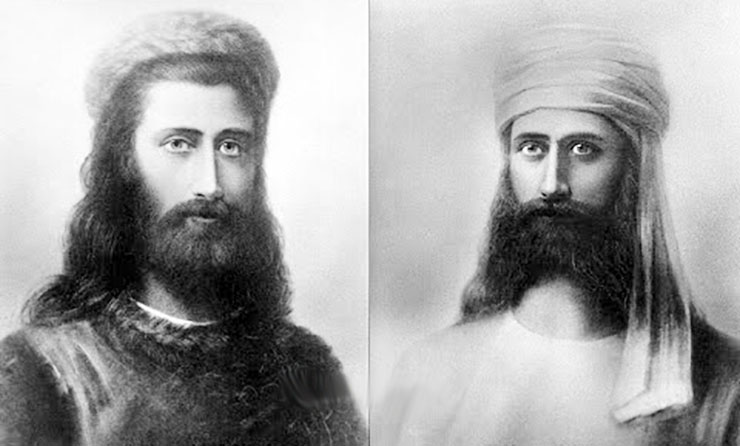
    Koot Hoomi (or Kut Humi), one of Mme. Blavatsky’s Masters, has been identified by the researcher K. Paul Johnson with a Sikh spiritual leader, Sirdar Thakar Singh Sadhanwalia.
    Koot Hoomi (or Kut Humi), one of Mme. Blavatsky’s Masters, has been identified by the researcher K. Paul Johnson with a Sikh spiritual leader, Sirdar Thakar Singh Sadhanwalia.

    The story of the colourful, controversial, erudite, and intuitive Mme. Blavatsky has been told many times, most recently and accurately by Sylvia Cranston.3 The issue of her involvement with her adeptic inspirers has also been thoroughly investigated by a most valiant researcher, K. Paul Johnson.4 Johnson’s work merits some comment here because in certain ways it represents a novel development of the treatment of the subject. It is Johnson’s thesis that the Adepts and Mahatmas of Blavatsky were all historical figures living in her lifetime, for whom she found suitable disguises in mysterious personae and a set of equally mysterious pseudonyms, under which they entered the mythos of Theosophy and of all modern occultism.

    According to Johnson, Morya was a Maharajah of Kashmir by the name of Ranbir Singh, while Koot Hoomi is identified with a Sikh spiritual leader, Sirdar Thakar Singh Sadhanwalia. Johnson also identifies other adeptic figures of Blavatsky’s, such as “the Chohan” (or Maha Chohan) and the “Master Djual Kul” (later publicised by Alice Bailey), with Sikh and Muslim gurus and leaders of the time.

    The Living Masters

    It is not without interest that Johnson should pick so many Sikh personages as the models for Blavatsky’s occult Masters. The variety of Indian spirituality that is most comparable to modern Theosophy is perhaps the Sant tradition, which some scholars regard as a close relative of Western Gnosticism. This tradition has been allied with the Sikhs since the time of Guru Nanak in the 16th century. Its latest embodiment, the Radhasoami movement, had just appeared on the scene in Blavatsky’s time in the person of Shiv Dayal Singh (1818-78), who was well-known in Indian religious circles and certainly came to the attention of the Theosophists.

    The Sant tradition has innumerable doctrinal similarities to Theosophy, including the teaching of the “living masters” who are the chief agents of the initiatory redemption of their followers.5 It is regrettable that in spite of recognising the Sikh connection, Johnson failed to trace it to the Sant tradition, where he might have found a far more valuable model for Blavatsky’s concept of the Masters. The subject is still in great need of exploration. We shall do so briefly here.

    Mahatma Morya, according to K. Paul Johnson, was a Maharajah of Kashmir by the name of Ranbir Singh.
    Mahatma Morya, according to K. Paul Johnson, was a Maharajah of Kashmir by the name of Ranbir Singh.

    For a Westerner the term “saint” denotes a person in whom the ordinary human virtues have been exercised to a heroic degree. The ancient Greeks may be credited with having first established a category of humans known as heroes, who stood between mortals and the immortal gods. The Sant tradition recognises persons of a similar kind. They are usually called sants (“saints” or “men of truth”) or satgurus (“true teachers”). Such persons have merged their own spiritual core with the Supreme Identity to the extent that they are no longer subject to any illusion or any sense of ego apart from the Divine.

    As one contemporary researcher says, “What we are confronted with in the [sat]guru is a classic hierophany: a profane object which manifests the sacred.”6 The satguru is an embodied being, a human, not a disembodied god or angel and for this reason is known as a “living master.” Neither is it sufficient in this tradition to follow a teacher who has died:

    According to the Sant tradition… one must follow a living guru. It is said that past Sants cannot take the soul back to God. This is due to two main reasons: (1) the original message of the Sants is believed to be misconstrued after the Sant passes away, while the teachings of a living Sant are pure and charged; and… devotion to one’s guru aids one’s spiritual progress; (2) it is believed to be easier to love someone alive and tangible than someone who has been dead for centuries.7

    Let us compare this with some statements concerning the Theosophical Mahatmas. According to Blavatsky,

    A Mahatma is a personage who, by special training and education, has evolved those higher faculties and has attained that spiritual knowledge, which ordinary humanity will acquire after passing through numberless series of reincarnations during the process of cosmic evolution… The real Mahatma is then not his physical body but that higher [mind] which is inseparably linked to the [spirit] and its vehicle.8

    We also have statements to this effect from what would appear to be the Mahatmas themselves. During Blavatsky’s residence in India after 1879, the Anglo-Indian journalist A.P. Sinnett became interested in her teachers. In 1880 he instituted a correspondence with Morya and Koot Hoomi. The replies to Sinnett’s letters have been preserved in the British Museum in London and have also been published in book form. In one of these letters, Koot Hoomi writes:

    An adept – the highest as the lowest – is one only during the exercise of his occult powers… Whenever these powers are needed, the sovereign will unlock the door to the inner man (the adept), who can emerge and act freely, but on condition that his jailer – the outer man – will be either completely or partially paralysed.9

    Allowing for certain differences in psychological orientation, such a statement could have readily come from a “living master” of the Sant tradition.

    Adepts Embodied and Disembodied

    These considerations leave little doubt that Blavatsky’s mysterious teachers were regarded as living human personages, albeit of a highly unusual order. At the same time it is also necessary to recognise that along with the mythos of the embodied Masters another mythos played an important part in the development of the idea of the adeptic Hierarchy. This was 19th century Spiritualism, a movement that attracted great numbers and much publicity in its day.

    Today Spiritualism is largely confined to the practice of attempting contacts with rather nondescript spirits. Professed Spiritualists are not very numerous and their social and intellectual standing is on the whole unremarkable. Yet another kind of Spiritualism has become much more prominent: the phenomenon of channelling. Here we primarily find attempts to disseminate occult information, often pertaining to humanity or the cosmos as a whole. Channellers in general do not have the personalistic preoccupations of Spiritualists, who often seem largely concerned with the exploits of their dead relatives in non-physical realms. Channellers’ utterances are frequently doctrinal, prophetic, even at times archetypal.

    It would be fair to say that Spiritualism has always possessed two sides, one personalistic and consequently shallow, the other revelatory and touching upon the numinous. The origins of the Theosophical adeptic myth are connected with the latter. At the time of the founding of the Theosophical Society in 1875, there was a spirit entity who made frequent appearances in Spiritualist gatherings in America and England and who identified himself as “John King.” Blavatsky seems to have thought quite highly of this entity and said he was in some way connected with her adeptic superiors.

    Although for some years she engaged in an uneasy cooperation with the Spiritualists and had been ordered to break with them by her superiors in 1875, her relationship with “John King” remained close. Eventually she identified him squarely as a messenger of the adepts who inspired her to found the Theosophical Society.10 It would seem that a disembodied spirit – and one who was, moreover, active in Spiritualist séances – could be an associate of the embodied adepts, who generally disapproved of the Spiritualists and their “spooks,” as Blavatsky called them.

    Another interesting episode inspired the launching of a major esoteric revival in French occult circles which still exists and has spread to several continents. Blavatsky had a friend living in France who was quite influential in the occult revival there. Her maiden name was Mary, Lady Caithness, and she was married to the Duc de Pomar. She resided in a large palace in Paris, complete with an ornate chapel in which occult activities were carried out.

    In the fall of 1889, a former Catholic seminarian, high-grade Freemason, and visionary poet named Jules Doinel was visited in this chapel by the spirit of the Cathar Bishop Guilhabert de Castres accompanied by the spirits of other medieval Cathars. The spirits, speaking through a seeress, commissioned Doinel to revive the Gnostic Church, of which he became the first Patriarch. Detailed instructions for the organisation of the Gnostic Church were given to Doinel at this time. This event marked the beginning of the Eglise Gnostique Universelle (Universal Gnostic Church, also known under other names), which became closely associated with the Martinist Order under Papus. The church has many branches in France, Haiti, and other countries.11

    Doinel’s founding of the modern Gnostic Church may be taken as an instance of a certain kind of adeptic inspiration, not entirely unlike that of Blavatsky, and possibly even known to her. Yet the messages here profess to come from disembodied beings who are of a different order from the entities encountered at most séances. As such they may be likened to some of the more valuable forms of contemporary channelling such as A Course in Miracles.

    The notion of spiritual guides who might or might not be associated with each other in some sort of mystical fraternity became widely accepted in many quarters. Even C.G. Jung, who was skeptical about many aspects of Theosophical and related teachings, was not immune to such ideas. In his Memories, Dreams, Reflections he wrote at great length about a mysterious “phantasy figure” whom he called Philemon and from whom he received much instruction. He also recounted a conversation he had with a “highly cultivated elderly Indian, a friend of Gandhi’s,” who, after informing Jung that his own guru was Shankaracharya, the long-deceased founder of Vedanta, went on to say, “Most people have living gurus. But there are always some who have a spirit for a teacher.” Jung said he was immediately reminded of Philemon.12

    A curious convergence between the Theosophical lore of embodied Masters and the channelling phenomenon occurred in 1972, when the British painter and medium Benjamin Crème, greatly influenced by Alice Bailey’s modified version of the Theosophical hierarchy of the Masters, began to channel messages stating that the appearance of the Lord Maitreya was imminent. (Maitreya, who is regarded in Buddhism as the coming Buddha, has been incorporated into the Theosophical hierarchy; early in this century Jiddu Krishnamurti was said to be Maitreya’s vehicle.) Crème fixed 1982 as the year of the reappearance of Maitreya. It was foretold that the event would be accompanied by various technological miracles, including the use of all public media in the world by the returning savior. Although the phenomenon failed to occur, devotees are still undaunted.

    Secret Directorate or Archetypal Myth?

    In the biblical legend of the Three Wise Men from the East we have an archetypal prefiguration of the myths and speculations about the mysterious adepts who are involved with the fate of the world. The term “Secret Directorate” was coined in this regard by British author Ernest Scott, who, drawing primarily on Islamic sources, has made an impressive plea for the reality of an assembly of men known in some Middle Eastern circles as the “Friends of God” or “People of the Secret.”13 Although the Theosophical dispensation of esotericism may have brought the subject into prominence, even now, when Theosophy functions mainly as a “grandfather movement” to innumerable teachings and organisations, the idea of the Adepts is far from outmoded.

    In this still quite vital idea of a hierarchy of adepts, we are faced with a mystery that no one has succeeded in solving. Recent efforts, such as K. Paul Johnson’s, have shed light on a few dark corners but have failed to illumine the whole subject. While new dimensions have been opened up, others remain obscure. The following thoughts are offered as feeble attempts to penetrate the mystery.

    First, is there evidence that the events of cosmic or terrestrial development, particularly the affairs of humankind, are subject to direction by a hierarchy of superhuman intelligences and that these intelligences have made contact with humanity at certain times? The answer, it would seem, is no. The sorrowful course of history, the fierce expressions of a “blind world-creating will” (to use Schopenhauer’s words) do not intimate the handiwork of such intelligences. If there is an “inner government” or a “secret directorate,” it would have to be a rather ineffectual one.

    By the same token, it is possible that some people possessing a high form of gnosis may indeed labor in concert, not as a hierarchical government but as a band of enlightened and compassionate helpers. Some of the statements purporting to have come from such personages (notably in connection with Blavatsky) would point to this possibility. Notions of godlike, omniscient beings pulling the strings of history from their secret residences may be inspiring to some of us, but they have little warrant in reality. Certainly Blavatsky’s Masters never claimed to be of that species. (Schools of occultism, such as the Alice Bailey movement or the descendants of the “I Am” movement of the 1930s, who insist most strenuously on the deific and all-powerful of such beings are generations removed from the original impulse of these teachings.)

    On the other hand, the image of the adept, whether as a living master or as a disembodied spiritual instructor, carries definite connotations of what might in Jungian terms be called an archetypal being. Some might counter that such a description is tantamount to substituting one mystery for another. Still it is undeniable that behind all science and mysticism, behind all the approaches of West and East, there is but one area of reality and realisation: the human psyche. Whatever preternatural realities might make themselves known to us, they must do so by way of the psyche or else go unnoticed.

    The psychic reality of archetypes may thus be taken to be of great relevance to the subject at hand. Archetypes possess many of the characteristics of numinosity, authority, and commanding power attributed to the Adepts. When indicating to her disciples how they might come closer to the greater mysteries of being, Blavatsky once stated that she “could tell them how to find those who will show them the secret gateway that opens inwardly only.” Is it so difficult to imagine that those who open such inner gateways must dwell at least in part, if not wholly, in the inward recesses of the psyche?

    And if the assembly of archetypal being resides largely within us and not in the Himalayas or on some secret plateau in Afghanistan, might it not also be present in the immediate environment of our lives? Certainly some have thought so. One was the French poet and esotericist Maurice Magre, who, in the epilogue of his book The Return of the Magi, wrote:

    There have been men whose names are unknown because they cared little for fame, and truth radiated from them without knowing it. There have been revealers who were unaware of the revelation that was in them; modest sages who mingled their wisdom with their daily life… We have all of us met, at least once in our lives, one of these unheralded initiators, and received from them a priceless gift, by a kindly word, a certain look of sadness, a sincere expression in the eyes.14

    It is in this direction that we might direct our inquires if we desire the greatest reward. Be that as it may, the myth of the adeptic assembly may still have secrets to disclose that might benefit us beyond measure.

    The article first appeared in Gnosis: A Journal of Western Inner Traditions, Vol.36, Summer 1995, and is reproduced here by the kind permission of the author.

    [alert type=”general” dismiss=”no”]This article was published in New Dawn 91.[/alert]

    [alert type=”success” dismiss=”no”]If you appreciate this article, please consider subscribing to help maintain this website.[/alert]

    Footnotes

    1. Richard Cavendish, Encyclopaedia of the Unexplained: Magic, Occultism, and Parapsychology (London: Routledge, 1974), p. 286.
    2. Alvin Boyd Kuhn, Theosophy: A Modern Revival of Ancient Wisdom (New York: Henry Holt & Co., 1930), p. 2.
    3. Sylvia Cranston, H.P.B.: The Extraordinary Life and Influence of Mme. Helena Petrovna Blavatsky, the Founder of the Theosophical Movement (New York: Jeremy P. Tarcher/Putnam, 1992).
    4. K. Paul Johnson, The Masters Revealed: Mme. Blavatsky and the Myth of the Great White Lodge (Albany, N.Y.: State University of New York Press, 1994) An earlier version of this work was In Search of the Masters: Behind the Occult Myth (South Boston, Va.: Privately published, 1990).
    5. Andrea Grace Diem, The Gnostic Mystery: A Connection between Ancient and Modern Mysticism (Walnut, Calif.: Mt San Antonio College Press, 1992).
    6. Ibid., p. 24.
    7. Ibid., p. 25. Emphasis here and in other quotes is in the original.
    8. H.P. Blavatsky, Collected Writings, vol. 6 (Los Angeles: Blavatsky Writings Publication Fund, 1954), pp. 239-41.
    9. A.T. Barker, ed., The Mahatma Letters to A.P. Sinnett, second edition (London: Rider & Co., 1948), p. 180.
    10. C. Jinarajadasa, ed., The Golden Book of the Theosophical Society (Adyar, Madras, India: Theosophical Publishing House, 1925), pp. 15-16.
    11. Massimo Introvigne, Il Ritorno dello Gnosticismo (Carnago, Italy: SugarCo Edizioni, 1993), pp. 106-08.
    12. Aniela Jaffe, ed., Memories, Dreams, Reflections by C.G. Jung (New York: Vintage Books, 1965), p. 184.
    13. Ernest Scott, The People of the Secret (London: Octagon Press, 1983).
    14. Maurice Magre, The Return of the Magi, trans. Reginald Merton (London: Sphere Books, 1975), pp. 223-24.

    © New Dawn Magazine and the respective author.
    For our reproduction notice, click here.
  • The Mystery of Iniquity: Does Evil Exist or Do Bad Things Just Happen?

    The Mystery of Iniquity: Does Evil Exist or Do Bad Things Just Happen?

    On June 10, 1991, a cover story appeared in Time magazine on the topic of evil. The author, Lance Morrow, did not argue for a particular thesis and did not reach any conclusions. What he did, however, was in a sense more important. He began by stating three propositions:

    God is all-powerful.

    God is all-good.

    Terrible things happen.

    Citing several sources, Morrow said that you can match any two of these propositions, but not all three. You can declare that there is an all-powerful God who allows terrible things to happen, but this God could not be all-good. On the other hand, there might be an all-good God who lets terrible things happen because he does not have the power to stop them; thus he is not all-powerful.

    This analysis might easily have been stated by a Gnostic of the first three or four centuries of the Christian era, or for that matter by a contemporary Gnostic, such as the present writer. Not that Gnostics were the only ones who recognised this uniquely monotheistic predicament. The supreme medieval luminary of Catholic theology, St. Thomas Aquinas, admitted in his Summa Theologiae that the existence of evil is the best argument against the existence of God. If the concept of the monotheistic God is to be accepted, then the issue of evil has no viable explanation. Conversely, if evil exists, then the monotheistic God as presented by the mainstream religious traditions cannot exist.

    Whence Cometh Evil?

    Throughout history, religious traditions have accounted for the existence of evil in a number of ways. In primeval times, the undifferentiated nature of human consciousness allowed people to say that both good and bad come from the Divine. Thus archaic shamans would not have found it difficult to say that good and evil are visited upon human beings by the Great Spirit. In the more sophisticated context of Sumero-Babylonian traditions, it was believed that the gods amused themselves by creating terrible things – freakish beings, evil demons, and horrible conditions for human life.

    To employ a psychohistorical rationale, one might say that when people did not yet possess a differentiated consciousness (which we may equate with the conscious ego), it was relatively easy for them to envision God or the gods as being like themselves, so that the coincidence of good and evil was part of their nature. More advanced spiritual traditions have inherited some of this attitude; thus in mystical Jewish theology we find the notion that God partakes of both good and evil tendencies (yetzirim).

    With the growth of consciousness, the mind begins to differentiate between the beneficent and the malefic sides of being. The tension induced by trying to hold a God concept that unites good and evil becomes unbearable, so that it becomes necessary for the mind to separate the two. The notion of radical dualism thus arises. The most prominent example is that of Zoroastrianism. Here the true and good God, Ahura Mazda (sometimes called Ormazd), possesses a divine antagonist known as Angra Mainyu (Ahriman). The two are engaged in a perennial cosmic struggle for supremacy. Although Ahura Mazda is supreme and his ultimate victory is assured, as long as creation endures Angra Mainyu will continue to fight him and bring suffering into the world.

    A sophisticated but very impersonal view of evil and its origins can be found in the great religions that originated in India. Most of these imply that evil is part of the unenlightened state of existence, and that the cause of evil is ignorance (avidya). If one attains to a transformed or enlightened consciousness and thus rises above all dualities, one is liberated from karma and from all other conditions in which evil plays a role. Whether such liberation inevitably leads to the cessation of incarnate existence is not always clear, but it is clear that life as one has known it ceases, and with it evil ceases also.

    The fourth category is that of classical monotheism as found in mainstream Judaism and Christianity. As some of the other traditions ascribe the existence of evil to God, a malign counter-God, or human ignorance, this position ascribes the origin of evil to human sin.

    The creation myth of the mainstream Judeo-Christian tradition, with its story of the Garden of Eden and of the curious events that are said to have transpired there, forms the foundation for this view. This belief holds that the transgressions committed by the first human pair brought about a “Fall” of creation, resulting in the present state of the world. The sin of the original pair passed by inheritance to all members of the human race, who are born corrupt, afflicted by the weight of this “original sin.” Such evils as we find in this world, including natural disasters, plagues, and the ruthlessness of the food chain, are all somehow part of the momentous consequences of the Fall.

    As some scholars, notably Elaine Pagels, have pointed out, these mythologems inevitably exercise a profound influence on the cultures founded on them. Even in a secularised age like our own, the powerful shadow of such beliefs continues to cast a pall on our minds. One may wonder how differently our history would have proceeded had the guilt of the Fall not been present to oppress the souls of men and women in our culture!

    The Gnostic View

    All spiritual traditions acknowledge that the world is imperfect; they differ only in how they believe this happened and in what is to be done about it. Gnostics have always had their own views of these matters. They hold that the world is flawed not because of human sin, but because it was created in a flawed manner.

    Buddhism (regarded by many scholars as the Gnosticism of Asia) begins with the recognition that earthly life is filled with suffering. Gnostics, both ancient and modern, agree. Suffering is indeed the existential manifestation of evil in the world. Although humans, with their complex physiology and psychology, are subject to torments of a singularly refined nature, the fear, pain, and misery of all other creatures is evident as well. To recall St. Paul’s insight, all creation groans and travails in pain. Yet Gnostics have not been inclined to attribute such misfortunes to the sin of the first human pair. They reasoned that it makes much more sense to say that the world has not fallen but was made in a sadly imperfect manner to begin with. To put it in slightly more abstract terms, evil is part of the fabric of the world we live in; it is part and parcel of the existential reality of earthly life. If indeed there is a creator of this reality, then it is assuredly this creator who is responsible for the evil in it. Since, for the monotheistic religions, this creator is God, the Gnostic position appears blasphemous to conventional believers, and is often viewed with dismay even by those who consider themselves unbelievers.

    The Gnostic position may need to be considered in the light of the historical roots of the tradition. According to most contemporary scholars, Gnosticism originated in the Jewish religious matrix (probably in its heterodox manifestations) and then came to ally itself with the Jewish heresy that became Christianity.

    Thus the Gnostics were confronted with the image of the monotheistic God in the Old Testament and its adaptations in the New Testament. They faced a God who was often capricious, wrathful, vengeful, and unjust. It was easy for them to conclude that this flawed God might have created a world in his own flawed image. The greatest of all questions the Gnostics asked was this: is this flawed creator truly the ultimate, true, and good God? Or is he a lesser deity, who is either ignorant of a greater power beyond himself or is a conscious impostor, arrogating to himself the position of the universal deity?

    The Gnostics answered these questions by saying this creator is obviously not the true, ultimate God, but rather a demiurgos (“craftsman”), an intermediate, secondary deity. This Demiurge whom they equated with the deity of the Old Testament was the originator of evil and imperfection in the world.

    Thus the apparent blasphemy of attributing the world’s evil to the creator is revealed as originating in the Gnostics’ confrontation with the monotheistic God. Kindred movements, such as Hermeticism, did not face this predicament: being pagans, the Hermeticists did not inherit the dark, ambivalent figure of the Old Testament God, so they were able to adopt a less harsh position. (Ironically, today many people tend to favour Hermeticism over Gnosticism for this very reason.)

    Many have tried to evade recognition of this flawed creation and its flawed creator, but none of their arguments have impressed Gnostics. The ancient Greeks, especially the Platonists, advised people to look to the harmony of the universe, so that by venerating its grandeur they might forget their own afflictions as well as the innumerable grotesqueries of ordinary life. “Look at this beautiful world:” they said; “see its superbly orderly way of functioning and perpetuating itself, how can one call something so beautiful and harmonious an evil thing?” To which Gnostics have always answered that since the flaws, forlornness, and alienation of existence are also undeniable, the harmony and order of the universe are at best only partial.

    Those influenced by Eastern spirituality have at times brought up the teaching of karma whereby one’s misdeeds generate misfortune later in life or even in another life as explaining the imperfection of the manifest world. Yet a Gnostic might counter that karma can at best only explain how the chain of suffering and imperfection works. It does not tell us why such a sorrowful system should exist in the first place.

    Qualified Dualism

    As we noted earlier, one way of explaining the existence of evil was radical dualism, of which the Zoroastrian faith is a possible example. The Gnostic position, by contrast, is not of a radically dual nature; rather it might be called “qualified dualism.” In a simplified form one might define this position as declaring that good and evil are mixed in the manifest world; thus the world is not wholly evil, but it is not wholly good either. If the evil in the world should not blind us to the presence of good, neither should the good blind us to the reality of evil.

    Here we might resort to the approach that was most favoured by the Gnostics themselves – the mythological. (The power of this method has been rediscovered by such contemporary figures as C. G. Jung and Joseph Campbell.)

    Myths telling of the commingling of good and evil in creation predated the Gnostics. One of these tales is the Greek myth of Dionysus. When this god was torn apart by the Titans, Zeus came to his aid and blasted the malefactors with a thunderbolt. The bodies of both the Titans and Dionysus were reduced to ashes and mixed. When all sorts of creatures, including humans, rose from these ashes, the divine nature of Dionysus was mingled with the evil nature of the Titans. Thus light and darkness are at war with each other within human nature and in the natural world.

    The Gnostics had their own myth about the origins of good and evil. They began by speaking of a boundless, blissful fullness (Pleroma) that dwells beyond all manifest existence. The Pleroma is the abode of and constitutes the essential nature of the true, ultimate God (alethes theos).

    Before time and memory, this ineffable fullness extended itself into the lower regions of being. In the course of this emanation, it came to manifest itself in a number of intermediate-deities who were rather like great angels endowed with enormous talents of creativity and organisation. Some of these beings, or demiurgoi, became alienated from their supernal source, thus becoming replete with evil tendencies.

    Thus the world-creating will was tainted with self-will, arrogance, and the hunger for power; through the works performed by these alienated agencies, evil came to penetrate creation. Ever since then, as the Gnostic teacher Basilides reportedly said, “Evil adheres to created existence as rust adheres to iron.” As one of these created beings, the human entity partakes of the nature of his flawed creators. The human body, being a material creation, is subject to disease, death, and various other evils; even the soul (psyche) is not free from imperfection. Only the spirit (pneuma), deeply hidden within the human essence, remains free from the admixture of evil and tends toward the true God.

    Such mythic statements can convey insights in a fashion that is not possible through other methods of communication. At the same time it must be admitted that these myths were formulated long ago and far away and so may profit from certain amplifications and clarifications within a contemporary context.

    Contemporary Conclusions

    Terrible things do happen, as the Time essay stated. The world is filled with evil, with grotesque horror and universal suffering. Fiendish humans, often possessing great power, torment and slay others daily. The history of the twentieth century offers much proof of rampant wickedness in the world. Believers in the monotheistic God and/or in karma often tell us that this does not matter all that much, because in the final analysis evil really promotes good. They seem to be saying that evil is not really evil at all, but good masquerading in an unpleasant disguise. Yet this kind of topsy-turvy argument is an affront to all those who have looked evil in the face. To present this argument to survivors of the Holocaust or the Gulag or the killing fields would be insulting as well as ridiculous. For these victims, evil is evil, and all else is but an evasion.

    Moreover many terrible things happen that are in no way due to human volition. While the perversities of the human condition are responsible for some of the suffering in this world, much of it is not our fault. Frequently, however, we believe that it is. Yet, whether occasioned by the myth of Adam and Eve or by the propaganda of some trendy folk today who make out humans to be the sole villains in the environment, the cultivation of guilt in the human mind is no remedy for evil. On the contrary, guilt usually begets more sorrow in the long run. Let us be done with this self-flagellation and try to mitigate the evils over which we have some control while remembering that it is beyond our powers to eradicate misfortune altogether.

    Like the world, humans are a mixture of good and evil. Just as it is impossible to exorcise evil from the fabric of creation, so we cannot entirely get rid of it in ourselves. If human schemes and techniques were able to eliminate evil from human nature, they would have succeeded in doing so long ago.

    This is why so many spiritual traditions teach the need for redemption from outside. Every spiritual tradition worth its salt has always possessed a soteriology – a teaching about salvation. Gnostics ancient and modern do not perceive liberating gnosis as a do-it-yourself project. We cannot purify or psychoanalyse evil away by our own strength. The Messengers of Light recognised in the Gnostic tradition, such as Jesus, Mani, and others, have always been envisioned as the great facilitators of salvation. Their salvific mission is to enable the consciousness of the individual to experience gnosis. An early Gnostic source, Excerpta de Theodoto, defines this gnosis as the knowledge of “who we were, what we have become; where we were, whereinto we have been thrown; whither we hasten, whence we are redeemed; what is birth and what rebirth.”

    Many have noted the similarities between these Gnostic teachings and those of Hinduism and Buddhism. In all of these traditions, insight into the origin and nature of the manifest world is seen as liberating us from it and its evils, reuniting our spirits with transcendental reality. Unlike the great Eastern religions, however, Gnosticism specifically identifies the root of all evil as the faulty creation brought about by spiritual agencies of limited wisdom and goodness.

    The Gnostic view of the human condition thus also differs from the modern secular view. Gnostics do not share the assumption of many in our culture that there is a purely naturalistic and humanistic remedy for evil.

    Contemporary Gnostics for the most part agree with the fundamental insights of their ancient counterparts. Do modern Gnostics believe in the Demiurge? Do they believe in Messengers of Light? Do they regard such ideas as metaphysical truths or as mythologems hinting at more subtle and mysterious realities? The answer is that some Gnostics may believe these things more in a literal sense, while others may believe them symbolically; still others may hold a mixture of both views.

    What matters is not the precise form of these teachings but their substance. And this is clear enough. It speaks of the reality and power of evil, of its fundamental presence in all of manifest existence. It declares that while we may not be able to rid the world or ourselves of evil, we may and indeed will rise above it through gnosis. And when the task of this extrication is accomplished, then we shall indeed no longer fear the noonday devil or the terror that walks by night.

    This essay appeared in Gnosis: A Journal of the Western Inner Traditions, Winter 1999, and is reproduced here by permission of the author.

    You can find out more about the Lumen Foundation which published Gnosis by visiting http://www.lumen.org/index.html

    Dr. Stephan A. Hoeller has produced a series of recordings on metaphysical related subjects including Gnosticism. For further details, visit http://bcrecordings.net/store/
    [alert type=”general” dismiss=”no”]This article was published in New Dawn 96.[/alert]

    [alert type=”success” dismiss=”no”]If you appreciate this article, please consider subscribing to help maintain this website.[/alert]

    © New Dawn Magazine and the respective author.
    For our reproduction notice, click here.
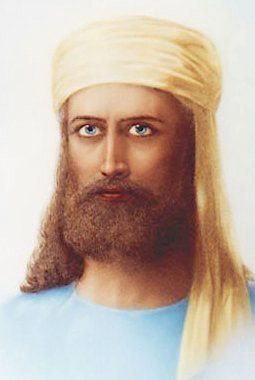
  • The Necronomicon

    The Necronomicon

    From New Dawn Special Issue 9 (Sept 2009)

    In 1977, America had barely heard of Iraq or of Saddam Hussein. The first Gulf War was more than a decade away; the second, more than twenty-five years away. The attacks on the World Trade Centre in New York City – the first during the administration of American President Bill Clinton, the second during the administration of George W. Bush – were likewise in the distant and unimaginable future.

    In New York, those of us who lived there were consumed with news of the Son of Sam killings: a spate of cultic serial murders that thrummed the nerve endings of the “city that never sleeps.” There is a reason for this metropolitan insomnia. Dangers lurk in the darkness of our dreams. Like characters in a Freddy Krueger film, we are afraid to close our eyes lest our nightmares prove fatal.

    But seeds were being sown like dragon’s teeth in that forgotten decade of the 1970s. The Soviets invaded Afghanistan, and the contours of the twenty-first century were being drawn like a blueprint for Armageddon. With the end of the Afghan conflict came the rise of the Taliban, and eventually of Osama bin Laden. A “mad Arab,” indeed!

    Yet in 1977 the attention of a relatively small number of occultists had been drawn to a document whose spiritual focus was the country now known as Iraq but known to its author as Babylon. That the single-most influential occult text of the last three decades should have been a grimoire whose origins are to be found in the ancient civilisations of Iraq may be proof enough of its supernatural origins. Like Aleister Crowley’s Book of the Law and its prophetic utterances concerning the 1940s and the 1980s, the Necronomicon gave us a panicked and desperate warning about the dire consequences of opening the Gate: a Gate that had been opened before, in Iraq.

    Of course, H.P. Lovecraft had “invented” the Necronomicon, and thought little of those who were absolutely certain that it existed in reality. So much ink has been spilled already (much of it by myself!) in claims and counter-claims concerning the book’s authenticity that it would be tiresome to repeat those charges, or to defend them, here. There has also been a concerted attempt to “unmask” me and reveal my “true” identity. The assumption seems to be that revealing my identity will go some distance towards proving or disproving the Necronomicon’s authenticity. Like many such assumptions, it is based on a false premise. Is a search for Thomas Pynchon’s home address a viable strategy for determining the worth of Gravity’s Rainbow? Even then, the analogy falls apart since Pynchon is undoubtedly the author of that encyclopedic novel, and not merely the editor. But what if “Thomas Pynchon” was the author’s nom-de-plume, like George Sand or one of Stephen King’s many aliases? Would that disqualify Gravity’s Rainbow as a major literary work of the twentieth century?

    In any event, the story of the Necronomicon and its discovery is told at length in my Dead Names. Much supporting documentation is provided, and anyone with a genuine desire to prove the facts of the case need only begin with the references given there. Rather, I would prefer to speak of the mysterious nature of the text, in deference to the theme of this issue of New Dawn magazine.

    In Gates of the Necronomicon, I write of the nature of magic and the occult. We agree that there is a world we can see, and a world we cannot see; and that actions that take place in the world we see can influence events in the world we can’t see, and vice versa. The former is called magic. An example of the latter is astrology, or divine intervention, or even “coincidence.” There is a point of tangence between these two worlds which is referred to by many cultures as a “gate.”

    The word “Babylon” refers to a Gate: bab-ilu, or “gate of the gods.” The science of sacred space may have had its first written origins here, for Babylon was a Gate and the city of Cutha was also a Gate: a Gate to the Underworld, the site of a massive necropolis and a city sacred to Nergal, the God of War. I have suggested that the infamous Lovecraftian term Cthulhu may, indeed, refer to Cutha and its associated realm of the Dead.

    We know there is a world we cannot see because of death itself. If no one died, if all were immortal, there would be no recognition of an afterlife and thus no “other world.” It is death that provides us with a glimpse of other possibilities and which motivates us to do what we can to postpone death as long as possible so that we may discover the true nature of the afterlife: so that we may have dominion over it or at the very least communication with it. In ancient times, that task was given to the magician, the sorcerer, the shaman, the occultist.

    With the scientific revolution came the division between science and spirituality. The Church had famously attacked scientific discoveries because they contradicted biblical statements. The scientists thus were forced to extricate themselves from ecclesiastical bondage, but not before a group of scientists tried mightily to integrate the two. One need only think of Elias Ashmole or Isaac Newton to understand the degree to which spiritual men struggled with the task of using science to understand theology, and vice versa. The noble art of alchemy is one of the most obvious attempts to explain the one with the other. Today, quantum mechanics and the movement known as quantum consciousness is a modern attempt to accomplish the same mission.

    With these latest discoveries, we come to see that the “gate” can be accessed through our own physiologies. The microtubules that are part of our brain’s neurological system may represent the physical means of reaching through to other realities and are, according to proponents of quantum consciousness theories, quantum computers. They may provide a biological link to such quantum phenomena as non-locality, among others. There is evidence to suggest that they are involved in information processing and communication on a scale far beyond our “rational” imaginings, but known only too well to those who Walk the Gates.

    Thus, the Lovecraftian characterisation of the “Mad Arab” may be explained by using this model to amplify what so many since then have insisted: that to attain altered states of consciousness one needs to go temporarily insane. One needs to break down the superstructure of social expectations and norms in order to “see” clearly that which society has deemed harmful, or evil, or unclean. Kenneth Grant has understood this quite clearly and has expressed this in a detailed manner in his many books that unite Lovecraftian concepts with Hindu Tantra and western ceremonial magic. He has understood the connection between the Necronomicon and these extra-dimensional workings of the dark magicians who travel in unknown manner to unseen realms.

    That all of this may be linked to human DNA and the legacy of our ancient ancestors going back to prehistoric times is another field of conjecture. The chanting of ancient Sumerian and Babylonian incantations may stimulate long-buried memories of rituals that took place among the ziggurats and shrines of Mesopotamia and what is now Iraq. The invasions of Iraq, the intense bombings, and the looting of the museum in Baghdad may have activated these sacred spaces and contributed to a growing sense of unease around the world as the old gods – dead but dreaming – are shaken violently awake from their millennial slumbers. Conversely, the summoning of these dark forces by priests and magicians Walking the Gates may have resulted in the desperate attempt by the western world to control and “pacify” the lands of ancient Mesopotamia and Babylon as the ancient deities struggled to proclaim their existence on the earth.

    That there is a link between the Necronomicon and today’s Iraq is not in question. The Necronomicon and its Babylonian mythos was published in 1977, long before Iraq made international headlines on a daily basis. Thus the connection between the two can only be a supernatural one, however we define that term. It may be a result of the discovery of the text; or the discovery of the text might have been a prediction of what was to occur. Either way, there is a message encoded in the rituals and concepts of the Necronomicon. The message may reveal a solution to the conflict in the Middle East. Or it may be that the Middle East conflict is a metaphor for a deeper spiritual struggle – a jihad – taking place within our own hearts and minds as our modern sensitivities wrestle with our ancient instincts.

    Get the issue this article appears in

    However we characterise it, a Gate has been opened. It has physical and biological components as well as purely spiritual or psychological ones. Indeed, at this level, there are no differences among these various parameters for understanding the world. It will take determination, skill, and a little madness to confront the demons that are slithering through the narrow window of opportunity like those that preceded the goddess Ishtar when she ascended from the Underworld.

    The last thirty-two years have seen tremendous advances made in science and technology, as well as a renaissance of occultism and other spiritual practices. I am proud of the contribution made to this effort by the Necronomicon and by its many and varied practitioners around the world.

    Good hunting!

    [alert type=”general” dismiss=”no”]This article was published in New Dawn Special Issue 9.[/alert]

    [alert type=”success” dismiss=”no”]If you appreciate this article, please consider subscribing to help maintain this website.[/alert]

    © New Dawn Magazine and the respective author.
    For our reproduction notice, click here.