“The new magi [wizards] establish their art and realise social upheavals. They specialise in geopolitics, mass science, and they subjugate the elements; they tame the Atlanticist Leviathan, and they fatten up the continental Behemoth.” – A. Dugin & S. Kuryokhin
In their 1995 ‘Manifesto of the New Magi’, Aleksandr Dugin and Sergey Kuryokhin set forth provocative statements calculated to realise a complete mystical transformation of society.
Reflecting on the influence of the ‘Manifesto of the New Magi’ in his interview with Charlie Nash for New Dawn magazine, Aleksandr Dugin explained that in the mid-1990s “the people around Kuryokhin and myself were artists, painters, musicians and filmmakers. They were a minority… totally countercurrent [to] the mainstream liberal tendency that surrounded us.” Adding “the influence of [the] New Magus was on one hand, very limited. Very small. But on the other hand, it was read by the [social] elite, the leading people. Many of them were perplexed.”
The idea for such a Manifesto can be found in the Russian avant-garde of the 1920s, among artists and writers like Kandinsky, Malevich, Mayakovsky, Bely and Yesenin.
Sergey Kuryokhin, noted Dugin, was always up to date and “didn’t accept the main moral line, didn’t accept post-modernity as the answer. For him, it was a question. And those who still, in Russia or outside, have the same position, for them the ‘Manifesto of the New Magi’ is still a source of inspiration.”
“Because new magic, the new magi,” the Russian professor emphasised, “is not only about some group existing in Russia,” but remains attractive “to all those who share the main principles.”
Manifesto of the New Magi By Aleksandr Dugin & Sergey Kuryokhin —
1. We are facing a crisis of art, a lack of vitality, and the domination of pure mechanicalism. Post-Modernism – the very syndrome of degeneration – is itself deformed. Interest in art today is either tackiness (theatre, cinemas, and rock concerts), or das provozierte Leben (“the provoked life” in Gottfried Benn’s words), that is the occupation of a narrow and closed circle of “vampiric intellectuals” who have completely lost all orientation, but have not lost the need for food, social status, and vanity.
2. We are facing a crisis of politics, a lack of thought and fresh ideology, and the degeneration of politics since the splash of Perestroika. Politics has totally lost all logic and life. Politics today is either a pathological conjunction (in the centre) or a pathological caricature (in the periphery). Politics is always and everywhere equally uninteresting.
3. The critical low points in the degeneration of art and politics have now been reached simultaneously, all at once. This is not always how things go, but it is the case now. The lowest points of the two sinusoids have coincided.
4. In such moments in the cycle of decline, a new impulse must be acquired for development, one which lies generally outside the sphere of the process itself. Sometimes politics spurs art, and vice versa. But now both spheres are in decline. Impulse must be sought elsewhere.
5. This new realm is MAGIC. Magic is not events, things and objects but causes; magic does not simply describe but actively operates. Magic precedes art and politics. Art and politics became autonomous only upon being detached from their magical source. This source has not disappeared but merely slipped away to the periphery from where it exerts indirect influence. Secret societies, lodges and orders have governed history and inspired artists.
6. Indirect influence has not been sufficient as politics and art forgot the necessity of constantly appealing to magic. Only the direct, total replacement of art and politics with MAGIC can save the situation.
7. Today’s politicians and artists have outlived themselves. Nothing can save them. They are incapable of nourishing themselves with magic and liveliness. They ought to be written off and discarded. They are totally uninteresting. A new type should replace them.
8. This new type is not a politician or artist dealing with magic, but the NEW MAGUS engaged in politics and art.
9. All forms of art and all political ideologies have their occult parallels in operative magic. Paintings emerged as worldly depictions of the gods and symbolic signs. Political ideologies are secular expressions of metaphysical and religious doctrines, e.g. capitalism is, according to Max Weber, secularised Protestantism, while socialism and fascism are variations of Indo-European, Aryan traditions in which, according to Georges Dumézil, there is no caste of merchants. The source has gradually been lost sight of. With modern politicians and artists, we are dealing with incurable, inveterate idiots. The degree of talent and ideological success now directly depends on degree of acquaintance with occult doctrines.
10. This fact must be recognised and accepted as an inevitability.
11. Instead of a separate art, separate politics, and separate magic, a new synthetic discipline should be introduced, that of MAGIC, which directly establishes its own politics and its own art. The new hermeneutics is that historical context and aesthetic peculiarity should be discarded: it all comes down to occult paradigms. Goethe and Breton, Lenin and Churchill, can all be boiled down to magical paradigms (of the Masonic-Occultist and Hermetic-Rosicrucian bent) which they represented. All the rest can be discarded. Along with the new art and new politics will come a new approach to the study of art and a new political science.
12. The new scholars of art and the new political scientists will not be separate people from the new artists and new politicians. They will be one and the same figures. And these figures will be none other than the NEW MAGI.
13. Art thus becomes not the imitation of ritual or the imitation of the manufacture of fetishes, amulets, and idols, but the ritual itself, the manufacturing of amulets, fetishes, and idols.
14. Politics thus becomes not the captured “remake” of collective orgies or the realisation of vague indirectly perceived metaphysical projects, but the direct myth-making and occult architecture of the masses.
15. All of this is carried out and conceptualised by the NEW MAGI.
16. Magic is an operative science. It demands real results, real metamorphoses – of objects, phenomena, and the operator. MAGIC is an experimental science that does not allow “obscurantism” and demagogy. The result, not the project, is the aim. Without concrete “eidetic realisation,” there is no magical act. If everything remains essentially as it was before the magical act, then we are dealing with either failure or charlatanism. Idiots and intellectuals shall not pass.
17. The NEW MAGI affirm their art and carry out social coups. They specialise in geopolitics, large-scale science, and subjugate the elements; they tame the Atlantic Leviathan and feed the continental Behemoth. The minimum social scale of the NEW MAGIC is a country, people, state, or legions of human masses. Ascetics and marching bands of degenerate sects are of no interest to anyone. The NEW MAGIC deals with the phenomenon of the GIGANTIC, the GIGANTIC-NEW (a la Martin Heidegger).
18. Our aims will become clear only when people begin to participate in our practice, actively or passively, as subjects or objects. Magic solves all gnoseological problems through Praxis (like Marxism).
19. From the outside, the crisis of art and politics may seem to be something objective. But do not build illusions, for it was organised by US in order to clear the path for the NEW RACE, the race of magic kings.
20. We operate with abysses. For us, the invisible has its own geography. Black is not simply the absence of light, but a huge gamut of shades which earthly optometry has not even dreamed of.
Myth for us – except in exceptional cases of extreme degradation and the secularisation of tradition and culture – is not the fiction of primitives, superstition, or misunderstanding. Instead, myth is a concise expression of the highest sacred truths and principles, which are “translated” into a specific language for worldly life to the extent that such is practically possible. Myth is sacred truth expressed in popular language. Wherever the preconditions for a myth’s understanding disappear, the mythical content must be discarded for another to take its place.
The contradictory processes of de-mythologisation and re-mythologisation were not unknown to ancient civilisations, in which old myths were sometimes destroyed (de-mythologisation) and replaced with new myths (re-mythologisation). In other words, the processes of de-mythologisation and re-mythologisation are mutually conditioned and dependent processes. They do not call into question the very foundation of traditional mythical associations; rather, they keep them eternally current and alive.
Dangerous Intuitions
In Greece, the process of de-mythologisation reached its complete and radical peak after Xenophanes (565–470). This was not followed by any process of re-mythologisation, it was the consequence of a total de-sacralisation and profanation of culture, whose result was the extinguishing of the mythical and the awakening of historical consciousness, in which man ceases to see himself as mythical and instead begins to understand himself as a historical being. This is a phenomenon that has analogies in two moments in history: the first was the process of de-mythologisation brought by early Christianity.
For the first Christian theologians, myth was the opposite of the Gospel, and Jesus was a historical figure whose historicity the Church Fathers proved and defended to the unbelieving. This was contrasted by the process of re-mythologisation of the Middle Ages which saw a whole series of revitalisations of ancient mythical content, often conflicting and irreconcilable, ranging from the Grail myths to the myth of Frederick II, eschatological myths in the era of the Crusades, and various millenarian myths. Such was, without a doubt, the re-actualisation of mythical content and their “dangerous intuitions” which transcend their causes and serve as evidence of the very presence of mythical forces within the historical world, which no process of de-mythologisation is capable of destroying or extinguishing.
The Consumer Mythology: The Midnight of History
Another example of the radical process of de-mythologisation was that brought by the Enlightenment era to its peak in the “technological universe.” This is the direct expression of the degradation and decline of modern man, who is no longer a mythical or historical being but merely a “consumer” within the “consumerist and technocratic civilisation,” or simply an “appendix” to the technological universe. The heroic impulse of man as a mythical being, or even a historical being, was extinguished. The destructive forces of de-mythologisation constantly purged and expunged mythical components from the domain of consumerist civilisation and human memory in general, exterminating the “dangerous intuitions” harboured within them. Within the technological universe, which is only the final stage of the fall of (modern) man, the human horizon is finally closing because here man has only one power and only one freedom: the power to spend and the freedom to buy and sell. This freedom and this power testify to the death of man (as known by myth and history) because within the universe of technology and the consumer civilisation anything that transcends this “animal of consumption” cannot exist. “The death of art” spoken of by the historical avant-garde was simply a consequence of the death of man, first as a mythical being, then as a historical being.
Of course, the process of de-mythologisation can never be completed for the simple reason that destruction does not touch the mythical forces themselves. They continue to appear and return through history, whether under the guise of the “historical” or as something opposed to history. This is also true for the one-dimensional universe of the technocratic utopia. As a result, in the consumer civilisation, real mythical components are replaced by mythical simulacra, by self-sown sub-cultural ideologies and the “myths” of the consumer mythology whose heroes are comic book figures such as Superman. But the exhaustion of the long and destructive processes of de-mythologisation does not mean a return to mythical time. The German author Ernst Jünger wrote in his At the Wall of Time:
We are standing at the midnight of history, the clock has struck twelve and we look ahead into the darkness, where we see the contours of future things. This view is followed by fear and heavy premonition. Things we see or think that we can see still do not have a name, they are nameless. If we address them, we do not intuit them accurately and they escape the noose of our control. When we say peace, it could be war. Plans of happiness turn into murderous ones, often overnight.
In short: “Rough incursions, which in many places convert historical landscapes into elementary ones, hide subtle changes of a more aggressive kind.”
At the Dawn of History
Ernst Jünger’s At the Wall of Time conveys much about the transition of myth into history, about the moment in which mythical consciousness is replaced by the historical. History, of course, has not existed as long as man has historical consciousness and rejects as non-historical the vast spaces and epochs of “pre-history” – whole peoples, civilisations, and countries – because “some person or some event must have very specific characteristics that would make them historical.” The key to this transition, according to Jünger, is provided in the work of Herodotus through which man today “passes as through a land illuminated by the rays of dawn”:
Before him (Herodotus) there was something else: mythical night. That night, however, was not darkness. It was more of a dream, and it knew of a different connection between people and events than that of historical consciousness and its selective forces. This brings rays of dawn into Herodotus’ work. He stands on top of the mountain that separates day from night: not only are there two epochs, but also two types of epochs, two types of light.
In other words, what we call history is the moment of transition from one mode of existence to something quite different. This is the time of the shift of two cycles which we cannot identify with a change of historical epochs – the matter in question is a profound change in the very existence of man. The sacred in the manner of previous epochs retreats, ancient cults disappear, and in their place come religions which soon afterwards become historical or anti-historical, even when they trigger events and historical plots. The Crusades called by the Western Church deepened divisions and schisms, and eventually gave birth to the Reformation, which began with religious enthusiasm and the desire to return to “biblical beginnings,” only to end with a historical movement which opened the way for the unhampered development of industry and technology unconstrained by the norms of (Christian) tradition and free from human hopes and desires.
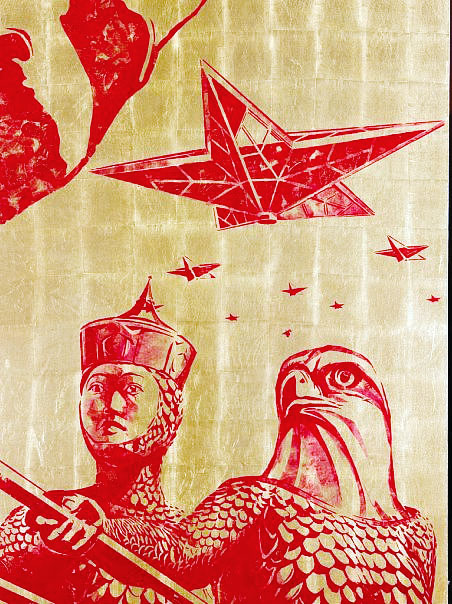
Artwork by Alexey Belyaev-Guintovt
The Grimace of Horror
The historical world, the outlines of which we can find in Homer and which were shaped by Thucydides, reached its zenith somewhere at the end of the 19th and beginning of the 20th century with unclear boundaries in time and space. But upon clear consciousness of its laws and regulations, it started to collapse and the vast edifice of history became unstable, signifying penetration by hitherto unknown foreign forces. These forces have a Titanic elementary character, first seen in technological disasters which claimed hundreds of thousands of victims and then in the cataclysmic events of the 20th century, in the world wars and revolutions in which millions were killed and crippled. The release of nuclear energy, radiation, and the environmental destruction that enormous areas were exposed to, the daily toll in blood, whether it was sacrificed to “progress” in peacetime conditions or as a direct consequence of military intervention and conflicts, represented something that emerged out of the framework established by the historical world.
Of course, history did not end there, as was expected by Marx or Fukuyama. Rather, what really became apparent is the acceleration of historical time, which condenses events and shortens the distances between key turning points of history. The point, however, is that those forces which we have called historical do not operate alone, and man’s role in these events is fundamentally changing: he is no longer able to act on an equal footing with the gods, to follow them, oppose them, or even subdue them as is represented in myth. As was still the case in the mature historical era, he is no longer an active participant in history guided by passions or his own will. Instead, he now becomes the plaything of something unknown, involved in events that surpass him, against his will and outside of his ideas.
The expression of cheerful self-confidence is gradually replaced by a grimace of horror. Man, who until yesterday considered himself a sovereign and master, realises his weakness. The means on which he relied to turn against his creator at the decisive moment prove powerless. Technological systems and social arrangements have their reverse side, their automatic features that do not restrain but encourage destruction, putting man in the position of a wizard’s apprentice who frees forces that he is too immature to handle. Corruption, crime, violence, and terror are consequences rather than causes, and political responses, regardless of colour and sign, do not offer solutions but increase disarray. If the hour of panic had not descended, man would have at least gained awareness of his own downfall.
All of this was unthinkable in the mature historical age because man then was still ruled by himself, and thus history as well. History, therefore, could have no sense of direction other than the one given by man himself, his own deeds and thoughts. Each concept of the “meaning of history” was a concept of the emergence of man, whereas in the classical historical age man did not emerge but simply was. The question of the “meaning of history” was a meaningless question, and it is not found in the works of classical writers from Herodotus and beyond. The question of the “meaning of history,” which is always found outside of man, becomes possible only when the focus of history shifts beyond man himself, whether into the sphere of social or technological relations.
Modern man discovers his weakness too late. His collapse is not to be blamed on myth or history but on none other than the weakness and cowardice of modern man. The world of “civilised values,” and the historical world in general which he created, proves to be much weaker than we have been accustomed to believe – weaker structurally, spiritually, and ethically. At the first sign of alarm, it begins to collapse, revealing what is, in fact, modern man’s inner readiness for capitulation.
This is the “midnight of history” that will soon be replaced by something different; this moment is marked by the spread of Titanic forces demanding sacrifices of blood.
History, let us repeat, has not lasted as long as has man on Earth. But consciousness of this only occurs late within history, perhaps only at its end, when the boundaries of time and space change – on the one hand with the discovery of the distant past of man and lost civilisations, then the past of the planet and the cosmos, and on the other with the discovery of space, of the ocean depths, and the interior of the Earth through archaeological and geological layers in a virtually Vernean way. New perspectives cause dizziness. Pre-history and post-history gain in importance only when history becomes a crumbling edifice. Yet, man’s turn from history towards something that he is not yet able to define or see clearly now resembles escape.
In one way or another, the technological universe and the consumer civilisation will come to an end, in the same way that the classical historical epoch ended with technocracy and totalitarian order in its complete form, which arose not out of courage or strength but out of cowardice, weakness, and fear. It is impossible to say how long this will take. It is also irrelevant whether this will happen due to internal attrition, overreach, disaster, or a combination of all these factors together. But in each of these cases, collapse is the consequence of man’s inability to dwell within the historical world and to rule it as a sovereign-supreme being.
However, the return of myth is not possible in the sense of a return to the state of “pre-history.” Mythological forces remain present, just as they have been during the entire historical period, but they cannot establish the previous state for lack of the necessary preconditions. First and foremost, the “substrate,” the fertile ground, is missing, as modern man is too weak in the spiritual, psychological, and even “physiological” senses.
Together with history, culture and its current meaning gradually disappear as well, remaining a mere instrument of social engineering. In the technocratic utopia, mass culture (as opposed to the culture of the historical period) is just one of the ways for the utopian fantasies and desires of the masses to be channelled. The elite culture, meanwhile, which constantly drifts between conformism and negation, between scepticism and denial, between scepticism and irony and back again to conformism, remains essentially a tool of de-mythologisation and the suppression of the dangerous intuitions contained in myth, thus enabling more or less painless integration into the technological universe under the illusion of free will. The appearance and awakening of dangerous intuitions and dormant archetypes on the margins of the technocratic social mechanism creates a situation of conflict and leads to glitches in its functioning.
In the domains beyond the technocratic utopia, culture will need to take a more traditional role than the one it assumes under consumer civilisation. The disintegration of the historical world in its final stage, which we are witnessing today, allows us to see something out of it.
For much of the historical period, culture was the privileged domain of sacred and mythical forces. This is one of the ways in which mythical forces can penetrate the world again – historically, realising themselves in history, unlike in the technological universe where they usually manifest themselves through the uncontrolled elements of folkloric subcultures and are often distorted to the point of being unrecognisable simulacra of the mythical, not veritable expressions. Such testify more to the eternal and unquenched need of man for mythical content than they represent a sign of the real presence of the mythical.
In the post-technocratic era, culture will be very closely tied to re-mythologisation under the sign of re-recognising and re-awakening true mythical content, the revitalisation and innovation of ancient and traditional forms instead of, as before, their exorcism. The meaning and purpose of de-mythologisation, on the other hand, must be limited to its capacity in traditional societies – to the purification of degenerate “folkloric” mythical forms so that in their place may come forms which veritably represent tradition.
The above text is based on passages from Boris Nad’s first volume of selected works in English, The Reawakening of Myth (PRAV Publishing, 2020), available from PravPublishing.com.
I remember one of my discussions with Brother Michael as if it were only last week. Though it took place in the summer of 1989, a mere 34 years ago! A gifted linguist, he was a private French tutor, Michael taught himself Arabic so he could read the Quran and the works of Muslim mystics. As often happened when we met, our conversation passed seamlessly from the history of Sufism in Australia – Hazrat Inayat Khan’s Australian disciple Baron von Frankenberg and Meher Baba’s 1959 visit – to the spread of New Thought in the country at the start of the last century.
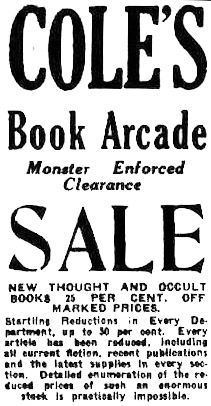
Advertisement in a Melbourne newspaper for Cole’s Book Arcade that highlights “New Thought and Occult Books.” Once the world’s largest bookstore, Cole’s Book Arcade was known as ‘The Poor Man’s University’.
Brother Michael fondly recalled his mother and her parents as dedicated ‘spiritual seekers’, some of his first memories were of being taken to New Thought meetings in 1920s Melbourne. His maternal grandparents were introduced to the ‘Higher Thought’ after attending public lectures by the American ‘Mental Healer’ Dr Frederic Bell, who toured Australia in 1900 before establishing himself in Melbourne for a period around 1906. Dr Bell – billed in the press as the “Prince of Orators, Song Lecturer and Teacher of Practical Occultism and the New Thought” – captivated Australian audiences with his talks on subjects like “Dreams, Visions, Prophecies and Revelations Explained” and “The Prodigal Son from an Occult Perspective.”
New Thought inspired a diverse range of organisations and activities in early 20th century Australia. Michael told how his mother’s family frequented the New Thought Club in Collins Street and avidly read the latest books on ‘practical occultism’ available at the New Thought & Occult Book Store as well as Cole’s Book Arcade, then the world’s largest bookstore. Michael accompanied his mother to Sunday services of the Melbourne New Thought Centre, participating in New Thought-inspired children’s programs. He remembered seeing the influential American New Thought lecturer and writer Dr Julia Seton on her final Australian lecture tour. The founder of the Church and School of the New Civilization in the United States, Dr Seton was a major figure in the development of the New Thought movement from the esoteric and metaphysical point of view.
Spiritual Healers
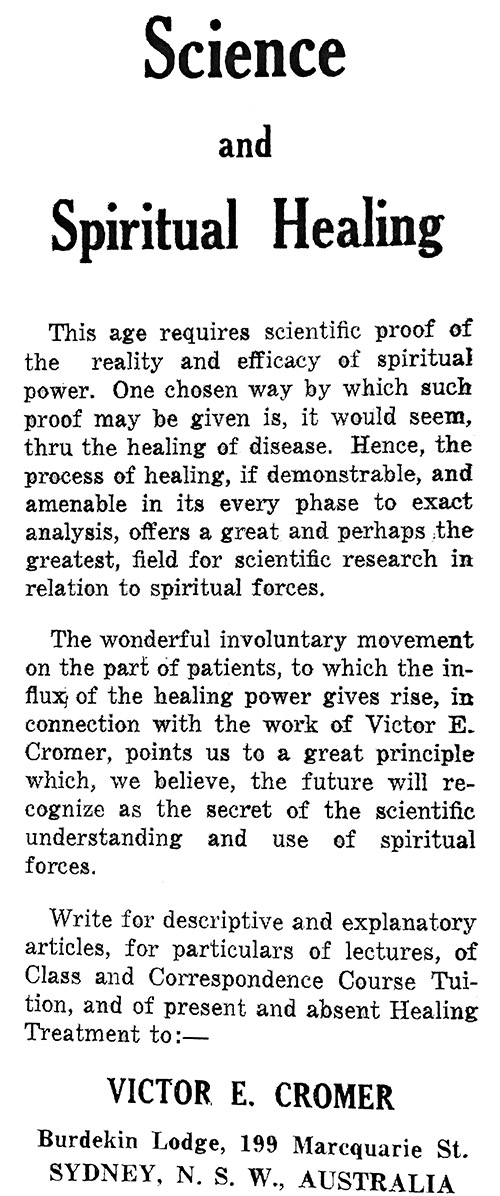
Victor E. Cromer broadcast on Sydney Radio 2GB in the late 1920s, urging his listeners to “tune-in to the spiritual healing power.” His mass healings at Sydney Town Hall attracted large and enthusiastic crowds along with the attention of the mainstream media who ridiculed them as “nothing more or less than mass hysteria.” Consequently the State Health minister was called on to enact legislation “to deal with” Mr Cromer and “all other unregistered healers.”
Michael’s grey eyes, which matched his well-worn three-piece suit, lit up as he recalled a childhood journey to Sydney in 1928 with his grandfather to meet the ‘seer’ and ‘Mental Healer’ Mr Victor E. Cromer. Originally from South Australia, Cromer founded the Spiritual Healing Institute in Burdekin House, Macquarie Street, then Australia’s most prestigious address. Michael’s grandfather credited Cromer’s ‘distant healing’ with curing him of a chronic health condition.
“Grandfather and Mr Cromer were firm friends, old correspondents. They knew each other from when Mr Cromer lived in Melbourne, both having started out in the workers’ movement. Mr Cromer founded the Worker’s Educational Association of South Australia and went to Germany as the Australian delegate to the Socialist International where he met Lenin, Trotsky, and Ramsay McDonald, the future British PM. With the outbreak of the Great War, disillusioned with politics as the best vehicle for social revolution, he gave himself 100% to the higher cause of spiritual revolution, the healing of mind and body through divine power and Higher Thought.”
Michael said his grandfather also subscribed to the publications of another prominent Sydney spiritual healer, Sister Veni Cooper-Mathieson, who lectured weekly at The Truth Centre. A tireless organiser for New Thought, Sister Veni founded several organisations over the years, including ‘The Universal Truth Centre & Metaphysical College’, ‘The Esoteric College’, ‘The Universal Truth Publishing Company’, and ‘The New Thought Book Depot & Library’. The latter was promoted as “the Premier Australasian Centre for the dissemination of Higher Thought, Metaphysical, Occult, Esoteric, Mental Culture, Physical Culture, Health Culture, Dietetic, Humanitarian, and other progressive literature. Our stock of New Thought books is the largest in Australasia.”
In his book A History of the New Thought Movement, Horatio Dresser notes that “the pioneer work of Sister Veni Cooper-Mathieson in Australia began in 1903, under the title ‘The Women’s White Cross Moral Reform Crusade’.” Adding that Sister’s first magazine, The Truth Seeker, was established in January 1905.
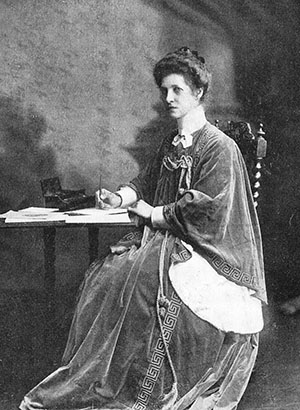
Australian New Thought pioneer, healer and metaphysical teacher Sister Veni Cooper-Mathieson (1867–1943).
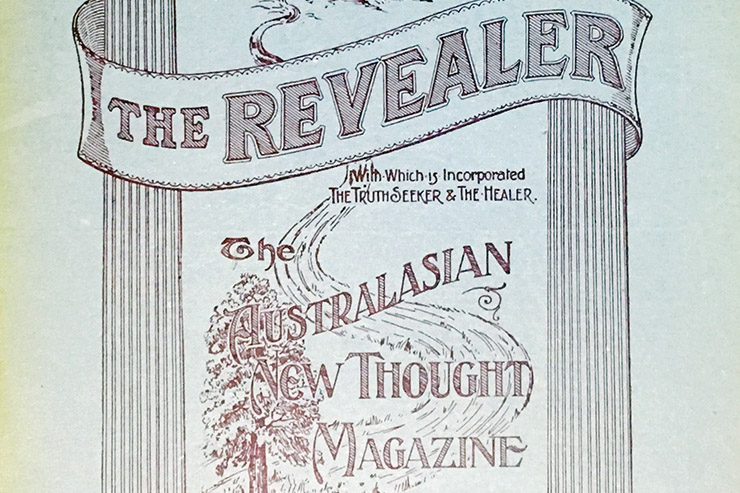
“In April 1909, the Church Universal in Perth, Western Australia, was organized. In December 1914, this church was moved to Sydney, and a Truth Centre was established. The first magazine [The Truth Seeker] was united with The Healer and called The Revealer in 1915.”
Michael had no clear memory of seeing Sister Veni but was adamant that his mother and grandfather would have frequented her Truth Centre during visits to Sydney in the twenties.
By the 1930s New Thought peaked in Australia and started to steadily decline. Popular enthusiasm for spiritual healing soon passed over in favour of the modern wonders of medical science. The impact of secularisation brought a loss of belief in Australia’s divinely ordained destiny. A notion widespread in the years immediately after Federation. No longer seen as the land of which Sister Veni once prophesied:
It is the vision of the Future that reveals to the waiting nations that thou, O! Queen of the South! Thou last of the lands to arise from the sea, shall yet be first in splendour, greatest in wisdom and highest in power and glory. Out of thee shall sons and daughters arise that shall be mighty before the Lord of Life; and from them shall come the seed of the new and regenerate humanity.1
Richard, Duc de Palatine
Richard, Duc de Palatine
Exposed from birth to New Thought, spiritual healing, occultism, and a bewildering array of ‘progressive’ and ‘alternative’ beliefs and practices, no surprise then that when in college, Michael attended lectures of the Psychological Society of Victoria, where he met his future ‘Master Teacher’ Ronald Powell (later known as Rev. Richard, Duc de Palatine). While listening to Powell lecture on Atlantis in November 1940, Michael felt himself transported back to the days of the legendary city!2
Ronald Powell, born in North Fitzroy on 4 July 1916, had himself undergone a profound spiritual experience while in the library of the Melbourne Theosophical Society where he was mysteriously drawn by the “Invisible Presence” to study “the extant writings concerning the Gnostics, Essenes and Secret Mysteries.” By 1944, Powell became convinced “that one day he would cause to be formed a Brotherhood which would partially restore the Sacred Lore and encourage people to prepare themselves for the Illumination and Interior Communion with the God within as practised in the Secret Brotherhoods of all the ages.”3
In 1948, the Invisible Presence directed Ronald Powell, whom Michael had come to know quite well in the post-war years, to sail for England to begin his mission. Powell confided to Michael and his Melbourne friends that his work was not in Australia. Settling in London’s Kensington, Ronald Powell, who legally changed his name to Richard, Duc de Palatine, established the Pre-Nicene Gnostic Church and shortly after the Brotherhood & Order of the Pleroma. Following his Master Teacher’s footsteps, Michael left Australia for England in the 1950s, moving on to France to study with the French Gnostic Church. On his return to Australia, Michael took charge of the Australian branch of the Brotherhood & Order of the Pleroma headed by his old teacher Richard, Duc de Palatine in London.
Fast forward to January 1991, the first Gulf War got underway when the US unleashed Operation Desert Storm with unprecedented airstrikes on Iraq. It was clear that the whole story of the war and the events leading to it were not being presented in the dominant mainstream media. A small group met in the library of the Arab Cultural Centre in Brunswick, Melbourne, to discuss the need for a publication to present the other side of the story. A magazine examining the hidden dimensions of world affairs and a forum for alternative views and ideas neglected in the mainstream media. But what should such a publication be called?
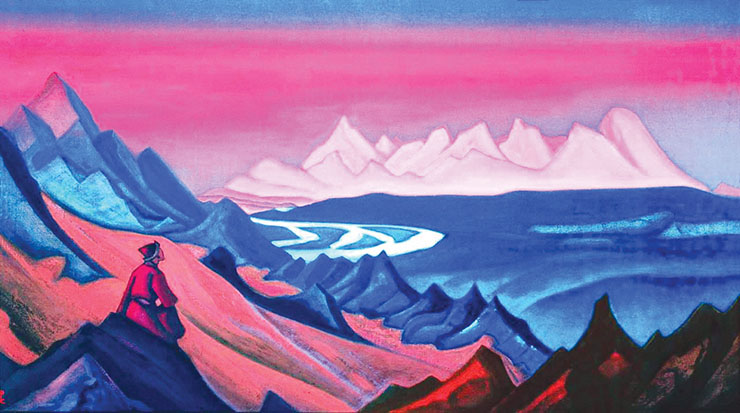
Michael came by unexpectedly, carrying with him a book by Nicholas Roerich. When told we were in search of a name for a new magazine, he quickly turned to a passage in the Roerich book which read, “The East has said that when the Banner of Shambhala encircles the world, verily the New Dawn will follow.”
“That’s your name – the New Dawn,” Michael said with assurance. At the very moment he spoke those words we heard Nina Simone singing Feeling Good on the radio playing in the background, with the refrain, “It’s a new dawn. It’s a new day. It’s a new life for me. And I’m feeling good.” So New Dawn magazine was born.
Before he passed on in 2003, Michael assured us New Dawn magazine would endure for many years, the rightful heir and “flowering in current times” of work commenced by the spiritual pioneers who went before. He left a bequest to New Dawn which included magazines published by Sister Veni Cooper-Mathieson and the writings of Richard, Duc de Palatine, among others.
Is there behind all men that live One all-containing Soul, Where symbols, apt for each one, give A transcript of the Whole?
We are not all the Self we seem; We are twined around with men Who once performed this mortal dream, And dream in us again. – ‘The Silent Land’ by Bernard O’Dowd, Australian socialist & New Thought advocate
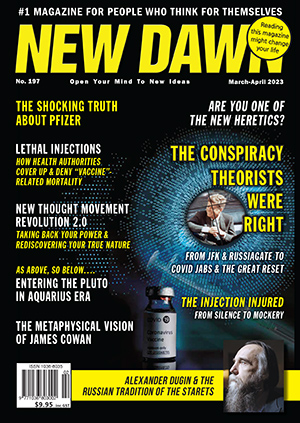
[alert type=”general” dismiss=”no”]This article was published in New Dawn 197.[/alert]
[alert type=”success” dismiss=”no”]If you appreciate this article, please consider subscribing to help maintain this website.[/alert]
Footnotes
1. “Australia! … Land of the Dawning” by Veni Cooper-Mathieson
2. Meeting With A Magus, The Untold Story of Richard, Duc de Palatine & The Brotherhood & Order of the Pleroma, New Dawn Special Issue Vol. 13 No. 2
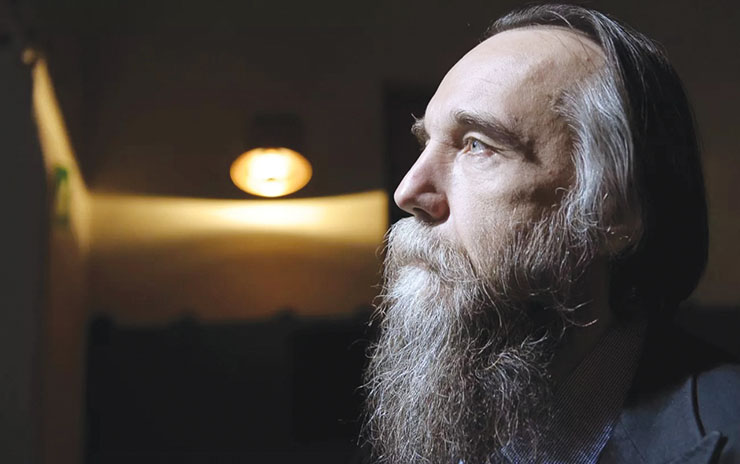
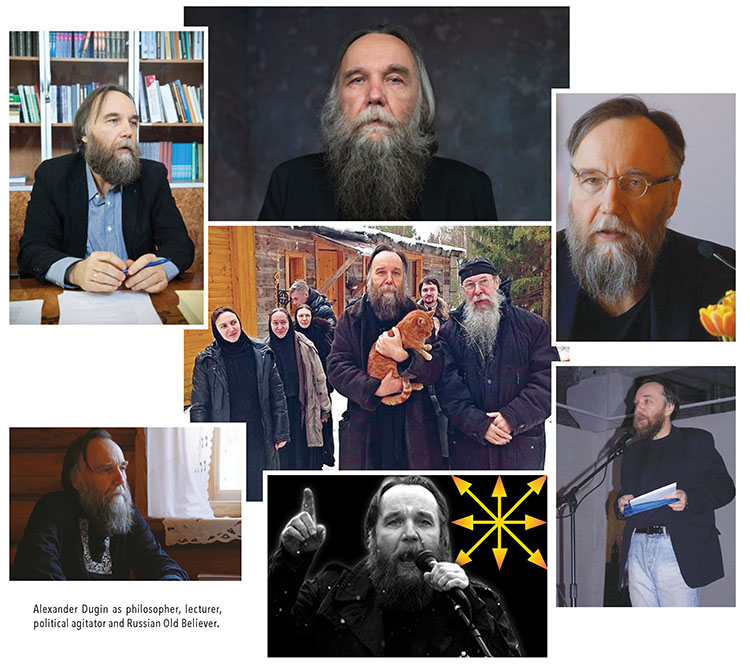
In the Western media, the Russian philosopher and political analyst Alexander Dugin has been labelled variously as a modern Rasputin, a neo-fascist, a reactionary nationalist, an eminence grise of Putin’s Russia and much else. In order to understand where Dugin is coming from, one has to see him in the light of the time-honoured Russian tradition of the starets, the wise elder, a figure who repeatedly appears in Russian history and literature.
In the run-up to elections for the Russian State Duma (parliament) in 1996, one of the contending parties was the relatively new National Bolshevik Party (NBP), whose emblem was a double-headed eagle clutching a wreath enclosing a hammer and sickle and bearing on its breast an image of Saint Michael spearing a dragon – a combination of symbols that, like the party itself, was calculated to defy all the usual political pigeon-holes.
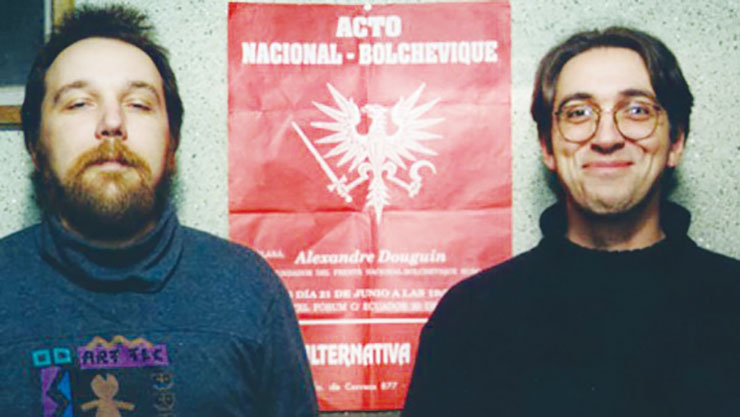
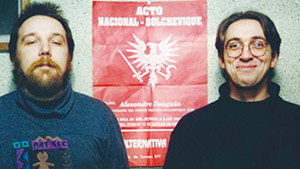
In one St. Petersburg constituency, a rock concert was organised to support the NBP candidate and at the same time to celebrate the memory of the English magus Aleister Crowley. The star performer was Sergei Kuryokhin (1954–1996), an avant-garde composer and virtuoso pianist. The candidate for the Duma was a young man from Moscow named Alexander Dugin (born 1962), who had been active in the Soviet counter-culture and then became a polemical journalist, publisher and political thinker and activist, achieving fame for his controversial writings on geopolitics. A memorable part of the proceedings was when a moment of silence was observed in honour of Crowley’s memory, after which Dugin read a passage from Crowley’s Book of the Law. Dugin won less than one per cent of the vote in the ballot, and he withdrew from the NBP two years later.
Alexander Dugin & Sergei Kuryokhin in the mid-90s.
Evidently, Crowley’s concept of magic appealed to Dugin and Kuryokhin because in the previous year they had issued a remarkable joint declaration entitled Manifesto of the New Magi, divided into 22 numbered paragraphs – 22 being the number of letters in the Hebrew alphabet and of the Tarot trumps. The manifesto called for a new impulse to overcome the fatigue and degeneracy that had overtaken culture and politics in the modern world. The manifesto declared:
“Magic is not events, things and objects, but causes; magic does not simply describe but actively operates. Magic precedes art and politics. Art and politics became autonomous only upon being detached from their magical source. This source has not disappeared but merely slipped away to the periphery from where it exerts indirect influence. Secret societies, lodges and orders have governed history and inspired artists.… Indirect influence has not been sufficient as politics and art forgot the necessity of constantly appealing to magic. Only the direct, total replacement of art and politics with MAGIC can save the situation.”1
Regardless of the somewhat messianic tone of the manifesto, the authors bring out an important point, namely that the way to influence and motivate large numbers of people is not through logic and reason but through symbols, rituals, drama, archetypes and mythical motifs – in other words through what many would call magic.
Russian Egregores
According to the 19th-century French occultist Eliphas Lévi, magic works through what he called the “astral light,” an invisible, subtle field or fluid that connects all things and can be manipulated by the magician to affect people’s thoughts and behaviour and bring about changes in the world. The concept is similar to akasha in traditional Indian thought as well as to Franz Anton Mesmer’s magnetic fluid, and to what Karl von Reichenbach termed the odic force. While the work of Mesmer and Reichenbach was rejected by the mainstream science of their time, certain of their findings have since gained wide acceptance. For example, the phenomenon of hypnotic trance is now generally recognised by the medical profession as an identifiable state that can be induced both in individuals and in groups, although the exact mechanism by which this works is still a matter of dispute. Several scientists, such as the Russian biologist Alexander Gurwitsch (1874–1954), the German biophysicist Fritz-Albert Popp (1938–2018) and the English biologist Rupert Sheldrake (born 1942), have opened up what has come to be termed a field-based approach, arguing that objects in the physical world, both animate and inanimate, possess fields of energy that give all objects their properties and interact with other energy fields. These interacting energy fields are surely consistent with the notion of an all-pervading etheric fluid, whether termed akasha, the astral light or the od.
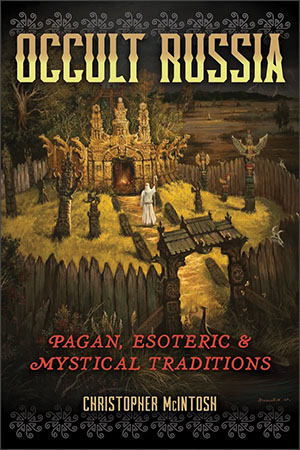
I suggest that in this field – call it what you will – are stored the perennial mythical motifs, archetypes and egregores, or collective thought-forms, of a culture. I also suggest that in Russia the veil between this field and the ordinary, everyday world is unusually thin, with the result that these egregores are more vividly present to the Russian mind than they are in most other cultures. In my book Occult Russia, I have identified a number of these egregores, including the notion of Holy Russia, the legend of the faraway Never-Never Land, the figure of the rustic sage and that of the Woman Clothed with the Sun, as described in Revelation. To these I would add another typically Russian figure, that of the starets. In one sense, the word simply means “elder,” but used in the religious context, it means a revered sage, prophet, holy man and often a wandering pilgrim and preacher. Can we consider Alexander Dugin as exemplifying this tradition, and to what extent?
Dugin as a Starets
The starets is often, but not necessarily, a priest or monk attached to a monastery or religious community. Typically these individuals possess great charisma and attract large numbers of people seeking healing, solace, advice for their problems or forecasts for their future. The figure of the starets overlaps somewhat with the rustic sage and also with the holy fool (yurodiviy in Russian), a man or woman who adopts an apparently crazy manner of living and often blatantly ignores conventions but is intensely devout and has miraculous powers of healing and prophecy. Such a one was the 16th-century Saint Basil, who went about naked even in the coldest of weather. These holy fools were also truth-speakers who in certain ways fulfilled the function of the court jester. They were not afraid to speak unpalatable truths, even to a monarch.
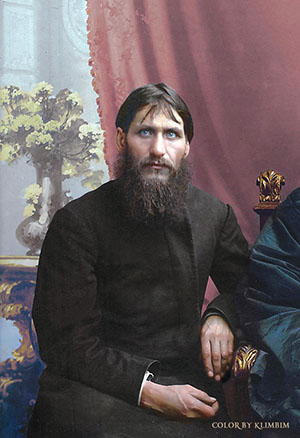
Grigorii Rasputin (1869–1916)
We frequently encounter the starets in the annals of Russian history and the pages of literature. One well-known example from history is Grigorii Rasputin (1869–1916). A whirlwind of a man, part pious visionary, part healer and prophet, part drunkard and reprobate, he is mainly remembered for the way in which he gained the confidence of the royal family, especially the Tsarina Alexandra, on account of his skill in treating the young Tsarevich Alexis, who suffered from haemophilia. On the eve of the revolution, he was murdered by a group of aristocrats, worried by what they saw as his dangerous influence at the court.
Dugin has often been compared to Rasputin, but in fact there is little similarity between them apart from a high degree of charisma. Rasputin was from a peasant family in Siberia and remained illiterate until early adulthood. He was a man of religious fire and piety but not an intellectual. Dugin, by contrast, is a philosopher and a man of immense erudition who comes from a privileged family of the Soviet elite. He is perhaps more readily comparable to another starets, Grigorii Skoworoda (1722–1794), who was born into a Cossack family in a region of the Ukraine that was then part of the Russian empire. Known as the “Russian Socrates,” he was a polymath, philosopher, theologian, composer and much else. After a short teaching career, he became a kind of itinerant sage in the starets tradition.2
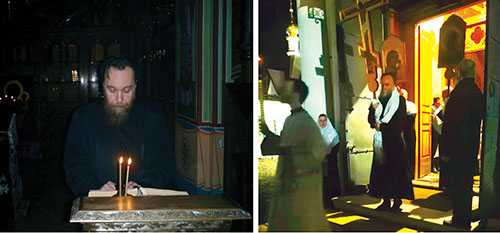
In many cases, a person will become a starets after passing through a wild phase in the early years of their life. This was certainly true of the writer Tolstoy, who became a sort of rustic starets in his old age. It is also true of Dugin, who in the 1970s was a member of the Iuzhinsky circle in Moscow, a group of rebellious young intellectuals who went out of their way to defy convention. After perestroika, he explored a variety of different political movements, from the ultra-nationalist Pamyat to the National Bolsheviks. His spiritual path eventually led him to fully embrace the Orthodox religion in the form practised by the Old Believers, a sect that broke away from the main Orthodox Church in the 17th century over doctrinal issues. He also pursued a varied education, including a period of study by correspondence, obtaining a doctorate in sociology. Subsequently, he held a professorship for a time at Moscow State University. By then he had become a celebrated figure, a scholar who could speak with authority on philosophy, politics, culture and religion, and a charismatic public speaker. He had become, in a word, a starets.
To become a starets is to step into a role that has all the force of the corresponding egregore and centuries of tradition behind it. The starets plays partly according to a collectively prepared scenario, but at the same time brings his own particular style and script to the role. Among the various types of starets, two categories stand out: those who care for the souls of individuals and those who address a large audience and proclaim a grand vision. Dugin belongs to the latter group.
He is unusually many-faceted and multi-lingual. One moment he is discussing Nietzsche, post-modernism or the traditionalism of René Guénon, the next he is talking about mythology, geopolitics or the Eurasian movement. He is also equally at home in an academic setting, in a television studio or on the platform at a political gathering. He can talk in the thoughtful, measured tones of a university professor or hold forth like a fiery Old Testament prophet. Highly eloquent, he can hold an audience spellbound. He is the voice of tradition, patriotism, Orthodox piety, profoundly held values and the time-honoured Russian way as opposed to what he sees as the decadent ways of the West.
This is not the place to go into his ideas in detail – his concept of an emerging Eurasian realm, his notion of a perennial conflict between the land powers and sea powers of the world, and his plea for a fourth political theory to replace communism, fascism and liberal democracy. His words are often disquieting, and one may or may not agree with them, yet they can open up fascinating horizons, as when he talks about his concept of “noomachia” (the battle of minds). Here he amends Nietzsche’s dichotomy between Apollo and Dionysus by adding a third deity, namely the goddess Cybele. In a monumental series of some 27 volumes, he explores how these three types of logos, as he calls them, interact in various ways from one culture to another and can give rise to profound cultural differences.
Dugin, voice of tradition and Orthodox piety, opposes the decadent ways of the West.
Dugin laments the fact that the wisdom of old age is no longer revered as it used to be. In an interview in 2011, he said:
“In a traditional society an older person was considered to be a role model and a normative figure. Human life was seen to develop from an unreasoning and witless childhood through a foolish and not very focused youth to adulthood and, finally, to the ideal of a fully-fledged person, an elder… But a person was called an elder not so much according to their age, but rather according to their spiritual maturity. Everyone aspired to become an elder. Old age was a state of perfection – one grew towards consciousness, towards the spirit. In our time, we see a radical reversal of this. The role model for society is a young person… a teenager… Infantilism, juvenility, adolescence have become the social norm.”
Dugin paints a bleak picture of a future in which the elderly will have lost all social status and there will be no place for a noble and worthy old age, whether religious, spiritual, or simply wise. “As we modernise, we humiliate and trample the old people more and more. The future takes the place of the past, and the past is scrapped.”3
In a society that ceases to value old age, what is to become of the starets? Despite Dugin’s pessimism the tradition of the starets does not seem likely to disappear any time soon.
One famous example from the cinema screen is the character of the monk Anatoly in the film Island, released in 2006. Anatoly is both a starets and a fool for Christ, who drives his fellow monks to despair through his strange behaviour, but in the end is recognised by them as a true holy man. The part of Anatoly was played by the former rock singer Pyotr Mamonov (1951–2021), who converted to Orthodoxy and became a kind of starets himself. His performance, which has been highly praised by Dugin, had an intensity that could only have been achieved by someone who closely identified with the role. It is a very Russian portrayal of a very Russian phenomenon that is still alive and well, as I believe Dugin himself demonstrates.
The spiritual currents and esoteric traditions of Russia are explored in Christopher McIntosh’s new book Occult Russia: Pagan, Esoteric, and Mystical Traditions, available from Inner Traditions.
[alert type=”general” dismiss=”no”]This article was published in New Dawn 197.[/alert]
[alert type=”success” dismiss=”no”]If you appreciate this article, please consider subscribing to help maintain this website.[/alert]
Footnotes
1. Dugin, Alexander, and Sergei Kuryokhin, “Manifesto of the New Magi” in New Dawn Special Issue Vol. 15, No. 3 (2021), 70-71.
2. See Michael Evdokimov, Russische Pilger. Salzburg: Otto Müller Verlag, 1990, 53-56.
3. The text of the interview is posted on vz.ru/opinions/2011/7/21/508970.html, accessed 20 December, 2022.
The world is a silent poem waiting for my mind to render up its promise. – James Cowan .
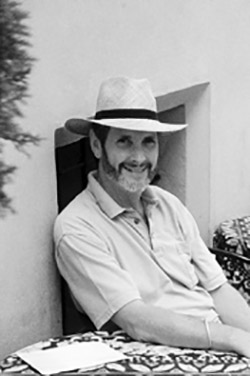
The author, poet, and traveller James Cowan was in pursuit of the metaphysical vision for most of his life. He even attempted to define a new literary genre with it – one that he called metaphysical realism. In his own words, he had been grappling with the concept of metaphysical realism for more than fifty years.
He recognised that the ordinary realist perspective of the world had served us well; but that it had also proved to be one of limitation. James felt that it had ultimately diminished the importance of the imagination. The modern age was seen to be dominated by action and the outward gaze.
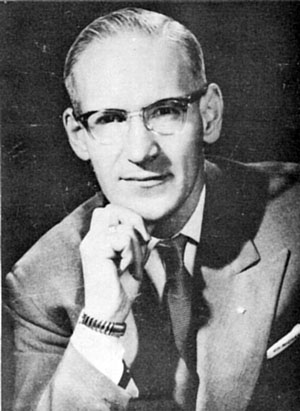
James Cowan (1942–2018)
How the mind works inwardly through the intellect – to contemplate how and why things should be done – was, according to James, being neglected and superseded by the imminently practical. The development of the mind’s inner powers began to mean less and less to modern humanity.
James wrote, “I had to find a way whereby my creative intellect might acquire space in which to operate. I soon understood that my thought needed to contemplate forms that were timeless if I were ever to bring into fruition a more robust form of fictive expression.”1 Words had to be “not simply comprehensible markings on a page” but “photons capable of irradiating the mind of a reader…”2
James felt that he needed a way to access a different form of consciousness. In his own words, he felt he was left with no choice:
I was left with no choice but to find another way of dealing with time in the context of creative fiction. It was then that I made the decision to return to a period in social history when time did not exist as a framework for human existence. I journeyed into Central and northern Australia to begin my encounter with elderly Aboriginal tribesmen in order to understand how they viewed time in the context of their Dreaming narratives.3
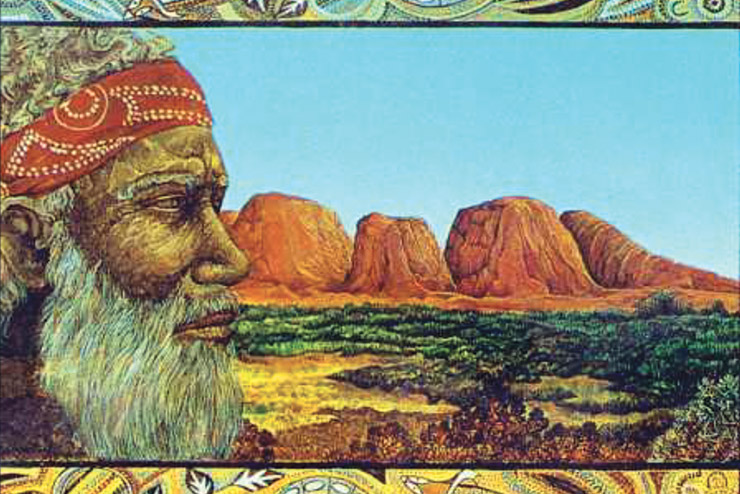
This was how James Cowan began his adventures into the Aboriginal landscapes of the Dreaming. James began to learn from the Aboriginal Elders how myth could be used as a vehicle for metaphysical expression.
Through his Dreaming journeys in the desert, the raw young artist was shown how landscape and language worked in tandem. Words were “more than cerebral” – they also contained the residue of an endlessness that had become embedded into the physical artefacts of our human realm.
James Cowan began to read classic tales as that of Gilgamesh, the Arthurian legends, and early Coptic hagiographies of desert anchorites – realms that were inhabited by the miraculous. The idea was to seek out examples of a timeless construct where the very best of human nature could find experiences to nurture it.
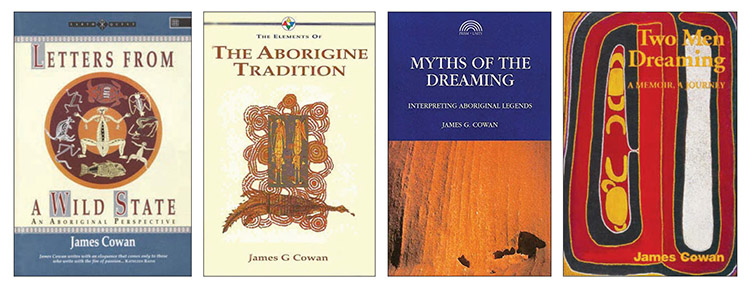
James spent several years living, travelling, and learning from the Aboriginal culture. This culminated in several well-received books, including Letters from a Wild State: An Aboriginal Perspective (1991), The Element of the Aborigine Tradition (1992); Myths of the Dreaming: Interpreting Aboriginal Legends (1994); and Two Men Dreaming: A Memoir, A Journey (1995).
In the 1990s, James spent two years living in Balgo Hills, a remote Aboriginal settlement in the Tanami Desert where he had set up a cultural institute to promote and sell the work of Aboriginal painters.4 James considered the Aboriginal artists of the Balgo Hills to be among the most innovative painters working in Central and Western Australia.
When I asked him why he had chosen to go from the life of a writer to that of an art coordinator, I received an unexpected reply. He told me he had wanted to pay back his debt to the Aboriginal community. What debt? I asked. They had given me their stories, he had said. When an Aboriginal Elder shares with you their story, they are giving something from their community, and they too incur a debt. Their stories are community possessions, their treasures. You cannot treat them lightly. They gave me great gifts over the years, and this debt I feel I must pay back. And I am doing this by promoting their work to the world. It is the least they deserve.
It was a humbling reply. And it was indicative of how James viewed the world. It was not a solid place, peopled by physical objects and remnants. It was a living mythos. And it ran on the power of stories.
During the 1990s James also went to visit the village elders and shamans in the longhouses of Borneo. He saw how these tribes ‘stored’ narratives through the random juxtaposition of storyboards on the floor of their longhouse. These storyboards were “like wafers: on them were a rudimentary script made up of markings.”
Rather than being confined to the rigor of sacred texts, language could be placed in the category of uncertainty. The patterns that were found in nature transcended the literalness of words placed on paper, and myths could find a new dance of life to transmit their secrets.
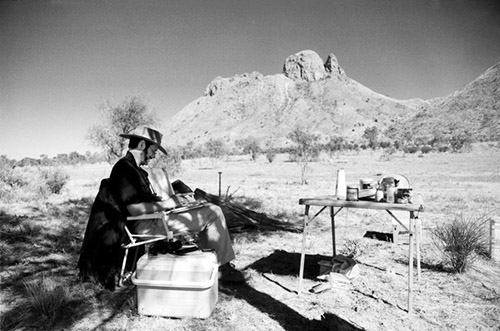
James sitting outside his tent in the outback. Photo courtesy of Kingsley Dennis.
James wrote up his experiences among the natives of northwestern Australia, Borneo, and the Torres Strait Islands in his book Messengers of the Gods: Tribal Elders Reveal the Ancient Wisdom of the Earth (1993).
To further polish his learning, James reread ancient and medieval texts, particularly those associated with the development of early philosophy and theology. He discovered that writers of these periods had developed a way of saying something by referring to what it is not (apophasis). James felt himself at home amongst the medieval writers, many of which stayed with him throughout his life. Writers such as Dionysius the Aeropagite (late 5th–6th c. CE), John Scotus Erigena (815–877), Ibn Masarra (883–931), and John of Ruusbroec (1293–1381).
True language, James felt, should be able to express itself not only in new and exceptional ways but also in a manner that the reader may not be accustomed to. He didn’t wish for thought to be subjected to the constraints of language; and in order to reconstitute a reality of a higher order, he first had to disrupt the current mode of expression. Language was seen as an incantation. This was the aim of James Cowan’s metaphysical realism – to tell a story within a story. And this meant it was necessary to dispense with the objective realism of storytelling.
In James’ writings, telling a good story alone was not good enough. Western materialism, he felt, had exhausted the notion of the unending linear narrative. It was necessary to investigate an inner dimension that is timeless, regardless of whether it goes against literary tradition. James was seeking to capture the essence of the inward event within the experiences of the human condition. And in doing so, he realised that his work may be regarded as subversive for it was willing to go against the grain of what is considered reality.
Yet James Cowan was not the first writer in history to expound metaphysical realism. According to James, metaphysical realism, as a creative method, was first acknowledged by Parmenides in the sixth-century BCE. He had written a philosophic poem, “Way of Truth,”which formulated the principles of logic that continue to govern our thought today. This poem profoundly influenced thinkers such as Socrates, and later Plato, because he paved the way for them to develop a system of logic that we now use.
James felt that Parmenides was the first to present the idea of the way, the path, as a new form of narrative; an idea later shared by Peter Kingsley.5 In Parmenides’ words:
A chariot bore me as far as my heart desired Urging me upon the Way of the Goddess That leads wise men from town to town. On that Way I was hauled by trusty steeds Hitched to a chariot, & driven by maidens. Its axle glowed fiery red in their hubs, heated by Spinning wheels at each end, both emitting sounds Of a panpipe, while the Daughters of the Sun Wishing to transport me into the light, tossed aside Veils from their faces as we left Night’s abode.6
Such writing as given by Parmenides makes the reader aware that there is a way to rise to a certain state of being. And upon this path there is one thing of supreme importance: the human imagination. It is through the imagination that a person can break from the real to venture forth into the realm of the spirit.
James realised that this was the same technique used by Aboriginal Elders, and other natives such as the Iban people, that he had spent time amongst. It is a path that enables the listener/reader to enter into the world that exists within the underlying language. This was the realm of the divine utterance – the very essence of metaphysics. Writing, for James, was a pathway to reach into these ‘divine utterances’ in a bid to understand, and consequently to present, the revelations of transcendent experience through language. James was well aware that he would never fully master this technique. Yet he put his hand to the task.
In 1996 James Cowans’ A Mapmaker’s Dream was published to critical acclaim. I remember James laughing gently as he told me the tale of how his most widely read book came into publication. He said he had sent it to various publishers but none of them knew what to make of it. Saddled with an unusual book, just about every publisher preferred not to take the economic risk, so they put it aside. Except one.
The editor of Shambhala Publications finally gave James a call. He told James how they had read the book, enjoyed it, yet thought it was unmarketable. And so, like every other publisher, they had put the book aside. Yet, a strange thing happened. Each person at Shambhala who had read the book could not stop thinking about it. It would not leave their thoughts. It hung around in their heads, lingering like the vestiges of some peripheral dream. It would not let them go.
Finally, the editor knew the book had to be released. He was on the phone now with James, asking if he would sign their contract. “I’m going away in a couple of days on a journey,” James replied. “Maybe when I get back, I can look over the contract.” There was a pause on the other end of the phoneline. “Too late,” came the reply. “I’ll fly over to Australia tomorrow and you can sign the contract.” James was bemused. As good as his word, the editor at Shambhala Publications flew from America to Australia and handed the contract to James. He signed it, then went off on his trek.
James was not expecting the future success that A Mapmaker’s Dream would generate. The book, being ‘The Meditations of Fra Mauro, Cartographer to the Court of Venice’ (to give its full subtitle) explored a whole world across time and space, and realities that exist within other realities.
In my own PhD thesis, almost fifteen years before finally meeting James, I had quoted from A Mapmaker’s Dream as an opening citation to my chapter on hyper-complexity. I quoted:
“Every man who had ever lived became a contributor to the evolution of the earth, since his observations were a part of its growth. The world was thus a place entirely constructed from thought, ever changing, constantly renewing itself through the process of mankind’s pondering its reality for themselves… No continent or people have turned out to exist except in relation to themselves. Their geographic location has also proved to be deceptive. The inescapable conclusion is that the true location of the world, of its countries, mountains, rivers, and cities, happens to lie in the eye of the beholder.”7
A perfect reflection of our inter-connectivity as a global species: geographic location has “proved to be deceptive.” Our world – that is, our reality – is a place entirely constructed from thought. As such, it is ever changing, and constantly renewing itself. This is our world perfectly described. Everything within it, including ourselves, only exist in relation to one another. Everything thus lies within the eye of the beholder. We are the mapmakers, and we are each living through our dreams.
The story of the world is told more through the languages, thought, and beingness of its characters (us) rather than in the do-ing of the characters. And this was what James reflected in his writings; especially so in A Mapmaker’s Dream which was perhaps his own first full exposition of metaphysical realism. Commercially, it was a success. A success that James was not to repeat in his lifetime.
A Troubadour’s Testament (1998) followed from this.8 The book was another journey: a contemplation of love enacted both outwardly and through the inward gaze. “Solitude is a difficult encampment,” wrote James within its pages. “Its guy ropes grow rigid on frosty mornings.” James was exploring the soul as a solitary substance: “it wanders through space, a lonely at times disfigured star, torn this way and that as it struggles to maintain its course.” James felt compelled to pursue his metaphysical vision through the struggle of the human soul.
His next series of books turned away from fiction towards an outer and interior travelogue of how the human heart and soul endures and finds nourishment through the world: Journey to the Inner Mountain: In the Desert with St. Antony (2001);9Francis: A Saint’s Way (2002); and Fleeing Herod: Through Egypt with the Holy Family (2013).
By this time, James had decamped and left Australia to live in Italy for several years, to absorb the culture, learn the language, and to research the life of Saint Francis. James’ vision was to explore the world through whispers rather than shouts. To probe into the phantasms of the human soul; to trace the movements of an ant’s foot across a black stone in the darkness of night.
According to James, the metaphysical vision is “a rare flower” – Novalis’s blue flower, perhaps? He respected the writings of Novalis, Friedrich Hölderlin, Victor Segalen, Borges, and later, W.G. Sebald. He saw all such writings as seeds that were seeking their cultivation through the reader. James’ own wish in his writings was to create a realm to allow the reader to change places with himself. The reader, he felt, should not be required to remain bound by the limits of his or her world perspective.
James lived the final months of his life as a literary meditation. TheBook of Letters was the last completed full work from James Cowan. It was written during his final months, and he intended it to be his ultimate testimony and love letter to the sanctity of language. Of this book, he said:
It is a pure work, and goes to the heart of our time. We have distanced ourselves from the purity of language, hence the grave time in which we live. The Book of Letters is a cris de coeur for a return to the sanctity of words… my final attempt at genuine metaphysics of language.10
Still, the metaphysical gaze would not rest. James began working on a new composition in the final weeks of his life, which was left almost completed. Within the scarcity of life, James was more concerned with thoughts than with titles. James had no name for the final book he was composing: “The question I next asked myself was: what should I call it?”11
And so, the book became the Liber sin Nomine (a book without name). It was James’ original intention to create a type of spirit-full collection, or sacred “tag-ends of my own thoughts.” In his final days he spoke of the book as an ongoing flow of thoughts and aphorisms. He often referred to it as “my Aphorism book.”
Yet it was more than a humble collection of “tag-ends.” The book became James’ own meditation on death and dying, and the relationship between a sacred life and the passing of that life. Within the book there are various places where James is acutely aware of the nature of his dying body – also, the rebellious behaviour of his body. He states that, “Let there be no mistake: my body has chosen to leave me! I did not give it permission to depart, at least not yet.”12 Here are the words of a heart and mind, an active and alert consciousness, coming to terms with a disintegrating, and dissenting, body: “My body, now, is in violent disagreement with me. It simply refuses to concur with my pre-disposition towards health.”13
The book without name is a reflection on the act of dying. As a person who spent his whole life seeking to unravel the sacredness and mystery of life, James was now the participant in his own passing, and witnessing first-hand the departure from a world he so lovingly, and desperately, sought to embrace.
Ultimately, the writing of this final book was a tool that allowed him to realise his death consciously rather than through an unconscious submission. As within his own writings, James was preparing the mind for new vision, for an extension of consciousness. The metaphysical vision of James Cowan was forever attempting to “cut away dead flesh” in order to get at the essentiality of words and their meaning. And this was perhaps his route to self-revelation.
Readers are encouraged to read the latest posthumous release of the work of James Cowan, One: Parmenides and his Vision (Balgo Hills Publishing, 2022), available from online booksellers.
[alert type=”general” dismiss=”no”]This article was published in New Dawn 197.[/alert]
[alert type=”success” dismiss=”no”]If you appreciate this article, please consider subscribing to help maintain this website.[/alert]
Footnotes
1. ‘Metaphysical Realism in Modern Literature’ (unpublished)
2. Ibid.
3. Ibid.
4. Balgo: New Directions (Craftsman House, 1999)
5. Reality by Peter Kingsley (The Golden Sufi Center, 2003)
6. One. Parmenides and his Vision. Trans. by James Cowan (Balgo Hills Publishing, 2022).
7. A Mapmaker’s Dream (1996). In 1998 Cowan was awarded the prestigious Australian Literature Society’s Gold Medal for this novel.
8. A Troubadour’s Testament (Shambhala Publications, 1998)
9. Later republished as Desert Father (2006)
10. THE BOOK OF LETTERS: A meditation on the alphabet (Balgo Hills Publishing, 2020)
11. Liber sin Nomine (Balgo Hills Publishing, 2020)