New Dawn – World's Most Unusual Magazine

Author: Gary Lachman

  • The Untold Story of Ernst Jünger

    The Untold Story of Ernst Jünger

    From New Dawn Special Issue Vol 14 No 3 (June 2020)

    Ernst Jünger isn’t a name on many English speakers’ lips, although in his home country of Germany he is recognised as one of that nation’s greatest literary figures, if not one of Europe’s. Evidence of this esteem is the Goethe prize Jünger was awarded in 1982 by the city of Frankfurt, which caused something of an uproar, for reasons that will become clear. For English speakers, this would be rather like receiving a Shakespeare prize, if there was an equivalent. 
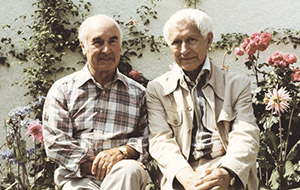
    Swiss chemist Albert Hofmann (left), the discoverer of LSD, with Ernst Jünger (right). Photo credit: www.dla marbach.de

    The one area of English language literature in which Jünger’s name might not be entirely unfamiliar is in the annals of psychedelia. In the 1950s and 60s, Jünger tripped a few times with Albert Hofmann, the Swiss discoverer of lysergic acid diethylamide, or LSD. Hofmann was a fan of Jünger’s writing; his unclassifiable work The Adventurous Heart, first published in 1929 and then in a heavily revised edition in 1938, literally changed Hofmann’s life. Every page of Jünger’s jewelled and gnomic prose in that unusual work made the “miracle of creation” evident to Hofmann, well before his celebrated psychedelic bicycle ride in 1943, which is generally acknowledged as the first consciously taken “acid trip.” In Jünger’s kaleidoscopic collection of observations, dreams, descriptions of flowers, meditations on colour, ruminations on chance, and other seemingly disconnected jottings, Hofmann believed that “the uniqueness and imperishable in every human being was touched upon.” “No other writer has thus opened my eyes.” 

    In 1951, Hofmann had the opportunity to return the favour, opening Jünger’s eyes to the effects of LSD. Jünger later transmuted his experience with Hofmann into literary expression in the elliptic and allusive Visit to Godenholm (1958), which, I suspect, is unique in drug literature in being a fictional account of a psychedelic experience in which no mention of drugs or intoxication appears. In 1970, Jünger’s non-fiction account of his own drug experiences, collected over many years and with many substances, Approaches: Drugs and Intoxication,was published. Like much of Jünger’s huge body of work, it is still awaiting translation into English. Something else that Jünger shared with Hofmann was a long life. Jünger died in 1998 at the age of 102, having been, with other rare distinctions, among the few who could say they saw Halley’s comet twice, a fact he enshrined in his book Twice Halley (1987). Ten years later, Hofmann died at the same age, passing away in 2008.

    The Adventurous Heart introduced two of Jünger’s central themes, which he was to refine and deepen throughout his later work. These were what he called, borrowing from the French, désinvolture, which does not have an exact English translation, and “stereoscopy.” Dictionaries give “disinterest,” “casualness,” and “offhand manner,” as English equivalents of désinvolture, all of which suggest something of what Jünger means. It is for him a detached, disinterested – but not uninterested; the distinction is crucial – perception of phenomena, rather in the way that the philosophical method known as phenomenology approaches its subjects. Fundamentally, it is a way of getting the “self” or ego out of the way, with all its biases and subjectivity, and perceiving things as they appear, in all their complexity, and not simply as agents of our desires. Such an attitude leads, Jünger claims, to a perception of things that is dual, revealing surface and depth, the outer skin and inner heart, simultaneously, hence stereoscopically.

    One element of stereoscopy is an experience of synaesthesia when the senses seem to trade places, and one hears colours and sees sounds. Arthur Rimbaud, a poet whose work influenced Jünger, was prone to this, as evidenced in his poem “Vowels,” in which A is black, E white, I red, O blue, and U green. Not to be outdone, Jünger developed his own colour scheme for vowels, spelled out in his essay “In Praise of the Vowels,” where he argues for a primal correspondence between language and the world, a kind of ur-sprache at the heart of Being.
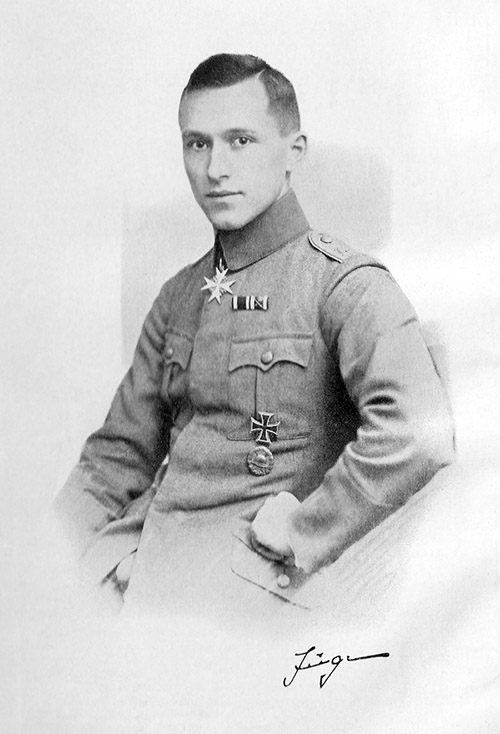
    Ernst Jünger in uniform as depicted in the frontispiece of the 3rd edition of In Stahlgewittern (Storm of Steel) (1922)

    Another central theme to emerge from Jünger’s désinvolture, but in a more political – or really apolitical – sense, was his notion of “the anarch.” This is an individual who, while ostensibly accommodating the demands of society, in essence follows his own laws and values and aims. Unlike the anarchist who openly fights against authority – and hence is still in an “enabling” relationship with it – the anarch works invisibly, under cover, making the minimal surface obeisance, while secretly preparing, if necessary, his escape, a tactic that Jünger portrayed in his major fictional work, Eumeswil (1977). In this admittedly at times obscure dystopian fable – like his contemporary and friend the philosopher Martin Heidegger, Jünger does not make things easy for his readers, although Jünger’s style is nothing like Heidegger’s. Jünger’s protagonist, a historian, observes the currents of power under a future benevolent dictatorship following the collapse of a world state. The kind of cool, detached but engaged observation characteristic of désinvolture is here brought to bear on the machinations of tyrants and the revolutionaries opposed to them. Neither receives Martin Venator’s – Jünger’s protagonist – assent, but he recognises that until things change, they are realities through which he must manoeuvre.

    To say that Jünger’s name isn’t known outside of odd eccentric circles is, of course, an exaggeration. The problem, at least in the English-speaking world, is that the reputation he does have among English critics is based on his earliest work. Jünger’s first book, The Storm of Steel, self-published in 1920, and subsequently released to wide acclaim by a Berlin publisher, is a blistering, gripping, aptly explosive and disturbingly graphic account of his experiences in WWI. It made Jünger famous at twenty-four and became a best-seller and is the work he is still most known for today. Jünger emerged from the war a highly decorated hero, receiving the Iron Cross and the Pour le Mérite, the prized “Blue Max.” He was wounded seven times and can be seen as a German Sgt York, the American infantryman who was equally honoured in the Great War. 

    Living Dangerously

    Yet while most literature to emerge from the “war to end war” focused on its absurdity, loss of life, pain and suffering – think of Erich Maria Remarque’s All Quiet on the Western Front (1929) Henri Barbusses’ Under Fire (1916), and the poetry of Wilfrid Owen, who died in 1918, just before the armistice – Jünger’s account was a celebration of it. Not, as one might think, as a militarist or a nationalist, although to be sure Jünger took a professional interest in military strategy and was indeed a nationalist with a great love of Germany. Jünger’s perspective on war was epic, Homeric, and what a reader finds in his still riveting account is how combat brings out the heroic virtues and intensifies consciousness. It is an account of how, as Ernest Hemingway, another war writer, expresses it, the war made Jünger “feel cool and clear inside,” “when he had done the one thing, the only thing for a man to do, easily and naturally…” Combat, like other “limit conditions,” can free man from, in Colin Wilson’s term, “the robot,” that mechanical part of us that has us live life automatically. Danger, threat, crisis, can loosen the robot’s grip. This is why someone like Jean-Paul Sartre, as ideologically opposed to Jünger as one could get, confessed that he never felt as free as when he was in danger of being arrested by the Gestapo – oddly, he and Jünger were in Paris at the same time. It is also why many Londoners remembered the Blitz as the happiest time of their lives. A paradox, perhaps, but true. Crisis can make us feel more alive – hence the predilection of Wilson’s Outsiders to, in Nietzsche’s words, “live dangerously.”
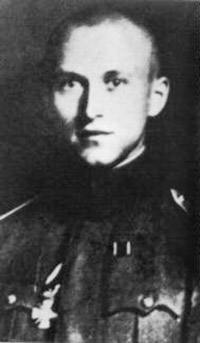
    Jünger during World War I, wearing the House Order of Hohenzollern.

    “Living dangerously,” we can say, is something Jünger did, in different ways. It was a way of embracing “adventure,” something Jünger wanted to do from early on. In his early teens, he joined the Wandervogel, “wandering birds,” a German youth movement that rejected urban life and headed to the country, getting back to nature and off the grid a century before today’s eco-warriors, who are among his readers. More than one historian has noted the similarities between the “wandering birds” and the hippies of the 1960s. Before enlisting at the start of WWI, in 1913, at the age of eighteen, Jünger ran away from his affluent middle-class family to join the Foreign Legion. Travel to exotic lands always excited him – again Rimbaud – and his plan was to abandon the Legion and head for equatorial Africa. He made it to North Africa but was found by legionnaires soon after he went AWOL. Remarkably, his father, a successful chemist, was understanding and promised him a proper “African diversion” – the title of Jünger’s fictional account of his exotic jaunt – upon completion of his studies. Jünger’s youthful excursion set the tone for much of his later life; adult journeys took him around the globe. Yet before his father’s promise could be kept, the adventure of Jünger’s life began. In 1914 the guns of August blazed and Europe was at war.

    After the war the now famous and heavily decorated Lieutenant Jünger studied zoology at Leipzig and Naples and continued his lifelong fascination with entomology; an amateur in the best sense, there are, in fact, more than one species of beetle named after him; his collection later numbered some 40,000 specimens, some of them gathered from the trenches. Around the same time Jünger began writing political journalism, mostly for right-wing, conservative and military journals, among them the Völkischer Beobachter, the Nazi daily newspaper; he later accused its editor of plagiarism when they published an excerpt from his work without permission or credit. Jünger was a stern critic of the Weimar Republic and of democracy in general – too susceptible to demagogues – and was a part of what was known as the Conservative Revolution which included the jurist Carl Schmidt and the historian Oswald Spengler (Schmidt was a Nazi; Spengler poked fun at Hitler). The mechanisation of war he had experienced convinced Jünger that a new age had begun, that of the technological Titans. These were twentieth-century upgrades of dark archaic forces which, like the genie of Aladdin’s lamp, would soon get out of control – a metaphor Jünger unpacked in his disturbing funereal parable Aladdin’s Problem (1983). This meant the end of any cosy bourgeois dream of liberalism and progress. Jünger’s The Worker (1932) envisions a mechanised, technologically driven coming totalitarian state, something along the lines of the dystopian dictatorship of his contemporary Fritz Lang’s film Metropolis (1927). 
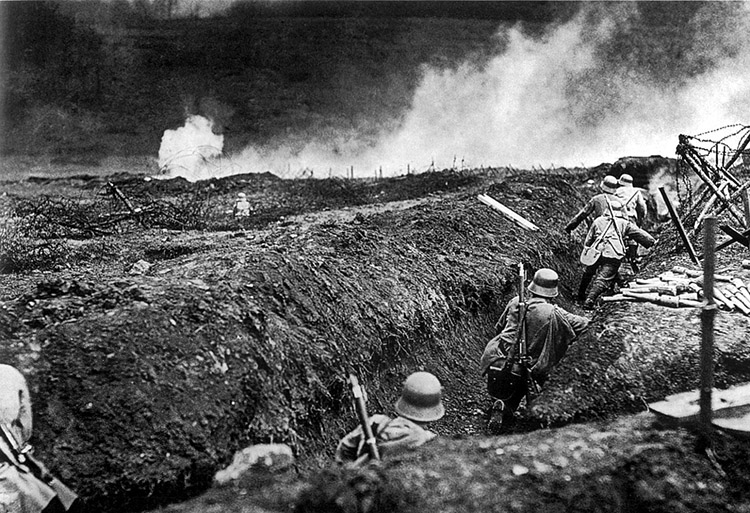
    German Stormtroopers during a trench assault in 1917 France.

    The dictatorship that did come to power had its eye on Jünger. Although he was approached twice by the Nazis and offered a seat on the Reichstag and membership in the gleichgeschaltet (“conformed”) German Academy of Writers, Jünger declined. His political sympathies were on the right, but they did not include thugs and rabble like the Nazis, whom the aristocratic Jünger saw as little more than criminals. During this time Jünger’s acquaintances included Bertolt Brecht and Ernst Toller, two left-wing playwrights, as well as figures on the right, like Schmidt. His friendship with the anarchist Erich Mühsam led to the Gestapo searching his rooms for correspondence. They found nothing – Jünger always covered his tracks – but Mühsam died in a concentration camp in 1934. Jünger’s internal opposition to Hitler took the form of his lapidary political fantasy, On the Marble Cliffs (1939), an exquisitely polished parable of how the serene, contemplative existence of two poetic botanists – Jünger and his brother Friedrich – is destroyed by the dark forces of the Chief Ranger – read Goering – and the tragedy of the ineffectual opposition’s inability to stop his rampage. Although Jünger dismissed the idea that the work was a strict allegory of Nazi Germany – rather of totalitarianism in general, he said – the parallels are too obvious to ignore. The book sold as well as The Storm of Steel, and it is remarkable it was allowed to remain in print.
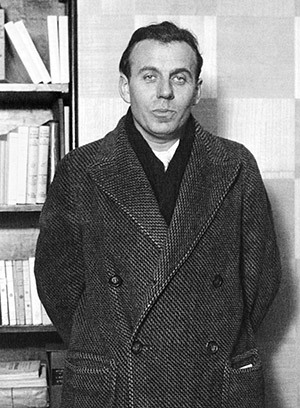
    Louis-Ferdinand Céline (1894–1961)

    With the outbreak of WWII, Jünger was called back to service and promoted to captain. Aside from a gruelling visit to the Eastern Front, for the most part Jünger sat the war out as part of the general staff in Paris where his duties as censor left him with much free time. (This was how he came to be there at the same time as Sartre. Interestingly, another inhabitant of Paris at the time was the Greek-Armenian esoteric teacher G.I. Gurdjieff, whom Jünger mentions more than once in his work.) Jünger became acquainted with many artists and writers living in the occupied city, figures like Picasso, Braque, Cocteau, the anti-Semite Louis-Ferdinand Céline and the fascist writer Robert Brasillach, later executed as a collaborator. Jünger recorded his Parisian adventure in his extraordinary journals, where accounts of treasonous conversation share space with those of his erotic encounters, his dreams, his long solitary walks, and meetings with artists and literati, as well as his attempts to help Jews and others subject to Nazi terror. This work alone confirms that Jünger was a born diarist; the short, aphoristic note or thought was his real metier, not the novel or even the essay. 
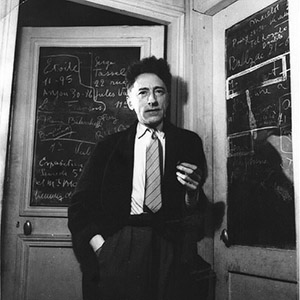
    Jean Cocteau (1889–1963)

    Jünger also found himself orbiting close to the circle of high-ranking military men who were opposed to Hitler and plotted the failed assassination attempt on 20 July 1944. He kept his distance, sceptical of its success. His intuition proved right, and Jünger was supposedly saved from sharing the gruesome fate of the conspirators by Hitler himself, who reportedly said: “Nothing happens to Jünger.” The war hero had exchanged books with the future führer years before, and Hitler respected him; the only other writer to stand up to Hitler, as it were, was the Norwegian Knut Hamsun, although Hamsun, unlike Jünger, was a fan of the Nazis. As we’ve seen, Jünger was also meticulous about evidence. As Jean Cocteau said of him, “Some had clean hands, some had dirty hands, but Jünger had no hands.” Nevertheless, Jünger was forced to retire from service, and the death of his son, sent on a suicide mission in Italy, was felt as retaliation. 

    Toward the end of the war, Jünger circulated a curious utopian text, The Peace (1945), in which he argues for the need of a new Christian age to heal the world’s ills. Throughout WWII, Jünger read the Bible cover to cover, twice, and although it was not until shortly before his death that he converted to Catholicism, here a kind of millenarianism seems to enter his work. Alongside this was the figure of the anarch, who he presages in the character of the “forest fleer,” the theme of The Forest Passage (1951). This is a philosophical excursion diametrically opposed to the ethos of The Worker, a volte-face that Jünger acknowledges divides his work into two periods, what he ironically calls the Old Testament and the New. No longer celebrating the advent of a highly efficient, automated technological dystopia, Jünger now looks to the self-sufficient, incorrigibly independent individual to claim the freedom that is his birthright and which is quickly being absorbed by what Nietzsche, an influence on Jünger, called “the monster, the State.”
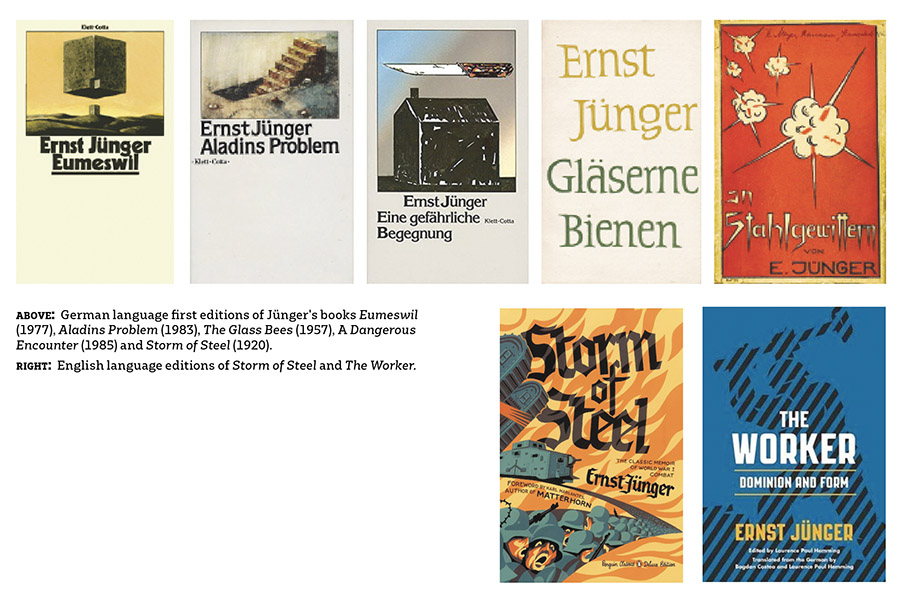
    Like others troubled by the growing pervasiveness of technology into all aspects of life, Jünger turned to science fiction as a means of communicating his concerns; he was, in fact, a great reader of Aldous Huxley, and Brave New World especially. In Heliopolis (1949) – sadly yet to see an English translation – Jünger depicts the political gangsterism and feudal violence of rival powers battling over dominance in a future city of indefinite location. As the “forest fleer” does in The Forest Passage, Lucius de Greer, the protagonist, finally lights out for parts unknown, escaping the authoritarian state. Jünger’s distrust of technology doesn’t prevent him from predicting developments. The “phonophore” that appears in Eumeswil – a kind of sequel to Heliopolis – is a remarkably accurate anticipation of the iPhone. It is, like the iPhone, a multiple-use device, and the possessors of its highest grades have access to functions the lower ones do not. The “luminar” seems a kind of combination internet, Wikipedia, and virtual reality machine, a device that allows its user to “replay” events in history in a kind of 3D, HD display, with which one can participate. 

    Another disturbing anticipation is the kind of animatronics at the heart of The Glass Bees (1957). Here, Captain Richard, a former cavalry officer down on his luck – there is no place for him in the modern world – is forced to take a job at the Zapparoni Works, where a Walt Disney-like techno-savant outdoes nature by creating automated creatures that are superior to the “real thing.” The glass bees of the title extract nectar more efficiently than the originals, who, like many feeling the effect of automation, are put out of business by them. Disney may seem too innocuous an allusion for this usurpation of the real by the simulation, so perhaps Dr Robert Ford of Westworld is more apt.

    Get the issue this article appears in

    Legacy

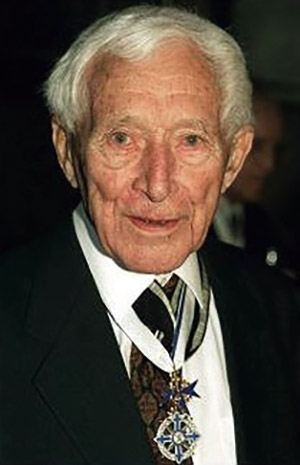
    An elderly Ernst Jünger (1895–1998), wearing both the Pour le Mérite and the Bavarian Maximilian Order.

    Jünger’s defence of personal liberty, nature and the environment, has gained him a younger readership in recent years, especially among the ecological minded generation, as well as among those fascinated by his fastidious articulation of the importance of dreams, myths, poetic and mystical experiences, and other forms of an ancient wisdom sadly in need of a renaissance. He has acquired readers around the world and counted German Chancellor Helmut Kohl and French President François Mitterrand among his fans. He is not to everyone’s taste. As mentioned, controversy broke out in democratic Germany over a right-wing nationalist receiving the Goethe prize. The late literary scholar George Steiner, while calling for more English translations of Jünger’s work, also chides his lapidary sangfroid, his dandy-like aestheticizing of danger, and mandarin unconcern about messy humanity, such expressions of désinvolture serving, for Steiner, as evidence of “an atrophy at the vital centre.” And the attitude of many remains that however Jünger may have opposed Hitler “internally,” his disavowals do not dispel the received misperception that he was a Nazi fellow-traveller, or that his youthful celebration of “battle as inner experience,” the title of a version of The Storm of Steel, prepared a generation for war and inspired it to go to war. His later work, full of mystical significance, poetic insight and an advocacy of a free humanity participating in a living nature, is often conveniently forgotten, while the old accusations are dutifully trotted out, often by leftist critics, unconcerned about their own doubtful ideological heritage. 

    A short essay such as this can only introduce Jünger to readers unaware of him, and unless one reads German, a great deal of his writing – on travel, culture, philosophical and psychological questions, and unusual fauna and flora – will remain unavailable to them. What there is in English is limited, but the major works are there. For readers interested in an unbuttoned Jünger, the series of dialogues he held with his French translator Julien Hervier are also in English. They are a fascinating read, if only for getting a sense of the perspective of a man who survived two world wars, saw Halley’s comet twice, and has a prize in entomology named after him. Not bad for a centenarian anarch.

    [alert type=”general” dismiss=”no”]This article was published in New Dawn Special Issue Vol 14 No 3.[/alert]

    [alert type=”success” dismiss=”no”]If you appreciate this article, please consider subscribing to help maintain this website.[/alert]

    Footnotes

    1. There is in fact a Shakespeare prize, but it leans more toward performance than writing; ironically, it was started in 1937 by the Hamburg merchant Alfred Toepfer as an expression of his love for England and his advocacy of a united Europe, incidentally a dream of Jünger’s as well. WWII scotched that idea, and the next prize wasn’t awarded until 1967.
    2. Oddly enough, I started writing this article on 16 April and put the finishing touches on it today, the 18th. Tomorrow, the 19th, is “Bicycle Day,” a worldwide celebration of Hoffman’s original wigged out ride. https://blogs.scientificamerican.com/cross-check/tripping-in-lsds-birthplace-a-story-for-e2809cbicycle-daye2809d/ 
    3. Albert Hofmann, LSD: My Problem Child, Tarcher Books, 1983, 145-46
    4. Ernst Jünger Visit to Godenholm (Edda Publishing, 2015) translated by Annabel Moynihan. This edition contains remarkable illustrations by the artist Fredrik Söderberg.
    5. I write about Jünger’s stereoscopy in Lost Knowledge of the Imagination.
    6. For an interesting discussion of Jünger’s ideas about language, especially the alphabet, see Richard Firmage The Alphabet Abecedarium, Bloomsbury, 2000.
    7. Although they are radically different books written by very different writers – who nonetheless share several common interests – Jünger’s first book shares with that of Colin Wilson, The Outsider, the status of being the one that superficial critics know and which coloured the subsequent reception of their later works. In both cases, negative assessments of their first and most well-known work led to most of their later work being misrepresented or ignored.
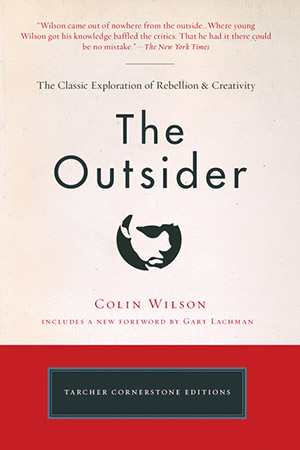
    8. Ernest Hemingway, “Soldier’s Home,” quoted in Colin Wilson, The Outsider, Tarcher Perigee, 2016, 36
    9. The unorthodox Marxist-Kabbalist Walter Benjamin, Jünger’s contemporary and ideological opponent, was also associated with the Wandervogel.
    10. Ernst Jünger African Diversion, John Lehmann, 1954, translated by Stuart Hood.
    11. Recently translated into English. Ernst Jünger A German Officer in Occupied Paris The War Journals 1941-1945 (Columbia University Press, 2019), translated by Thomas S. Hansen and Abby J. Hansen.
    12. George Steiner, Introduction to Ernst Jünger, On the Marble Cliffs (Penguin Modern Classics, 1983), translated by Stuart Hood, 14
    13. Julien Hervier, The Details of Time: Conversation with Jünge, Marsilio Publishers, 1995.

    © New Dawn Magazine and the respective author.
    For our reproduction notice, click here.
  • Meditations on Valentin Tomberg: Tarot, Spirituality, Mysticism, Hermeticism & the Occult

    Meditations on Valentin Tomberg: Tarot, Spirituality, Mysticism, Hermeticism & the Occult

    From New Dawn 184 (Jan-Feb 2021)

    The twentieth-century esoteric philosopher Valentin Tomberg was born in 1900 in St. Petersburg to a Russian father and an Estonian mother. Little is known about his early life; indeed, Tomberg seems to have gone out of his way to draw as little attention to his life as possible. As his editor and translator Robert Powell remarked, Tomberg himself “attached no significance whatever to the biographical details concerning him.”1 In fact, the main reason he is known today is that he is recognised as the author of a remarkable book, Meditations on the Tarot, that was and still is published anonymously. Ironically, the very steps Tomberg took to obscure his identity led to a great deal of interest in it.

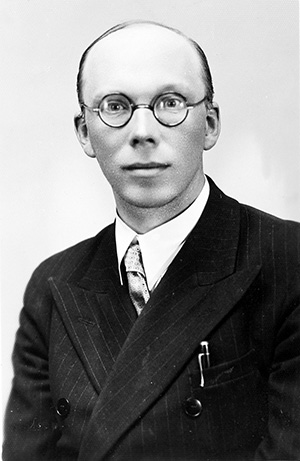
    Valentin Arnoldevitch Tomberg (1900–1973). Photo: National Archives of Estonia

    What we do know about him is that by his late teens he had become deeply interested in Theosophy and the spiritual philosophy of Vladimir Soloviev, as well as in the more mystical aspects of the Russian Orthodox Church. 

    Russia in the early twentieth century was a remarkable time for a young man with spiritual interests to come of age. Soloviev, Russia’s first philosopher, who has found a new reader in Vladimir Putin, was one of the major philosophical and religious figures of a period in Russian history known as the Silver Age. This stretched from around 1890 to 1917, the year of the Bolshevik revolution, a historical eruption that devastated Tomberg’s family, as it did many others. 

    As I show in my book The Return of Holy Russia, the Silver Age was a time of deep interest in and almost obsession with religion, spirituality, mysticism and the occult, and it produced a powerful surge of creativity in literature, music, philosophy, and art. For a young man of Tomberg’s inclinations, having his spiritual awakening at this time no doubt made an impression on him that remained for the rest of his life.

    A New Cultural Epoch

    Although Madame Blavatsky, one of the founders of the Theosophical Society, was Russian, her focus on Eastern sources of wisdom, continued by her successors, alienated many Russians, who were deeply Christian. Tomberg was one of them, and soon after joining the Theosophical Society he left, turning his allegiance to the work of Rudolf Steiner. 

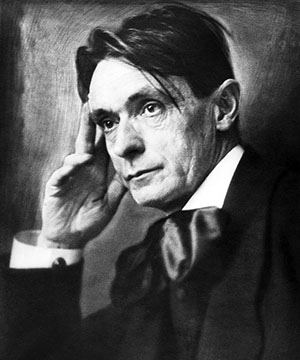
    Rudolf Steiner

    Steiner was immensely popular in Russia in the years leading up to the revolution, his highly Christianised version of Theosophy – which he would soon rechristen Anthroposophy – appealing to the generation of “God Seekers” that characterised the Silver Age. As I show in my book, both Steiner and the God Seekers had great hopes for a new “cultural epoch” to emerge from Russia at this time. In the view of Steiner and others, including Soloviev, Russia was charged with the mission of uniting the scientific knowledge of the west with the mystic intuition of the east, their integration giving birth, it was hoped, to a new creative consciousness that would transcend the limits of its parents.

    Sadly, this marriage between east and west was precluded by the revolution and, as we know, something radically different emerged from Russia. Lenin’s adamantly anti-spiritual ideology put paid to any notion of a new “cultural epoch,” and the chaos of the revolution cost Tomberg dearly. His family’s fortunes were lost, as were his father – who had a position in the czar’s government – mother, and brother. One story has it that during the chaos, Tomberg’s mother ventured into the streets. She never returned, and Tomberg later found her and their dog, both shot dead and tied to a tree. Like many who escaped the terror, Tomberg was unquestioningly anti-communist for the rest of his life.

    Upstart Anthroposophist

    In 1920, Tomberg made his way to Tallinn, Estonia. From there, he wrote several letters to Rudolf Steiner, asking if he could become his student. His letters went unanswered; it is unclear if Steiner ever read them or simply ignored them. Steiner’s silence evidently did not put Tomberg off Anthroposophy; in 1925, the year of Steiner’s death, Tomberg joined the Estonian branch of the Anthroposophical Society, eventually becoming its secretary-general. But friction soon appeared between Tomberg and the society; he was too individual a mind to remain merely a good anthroposophist. 

    Throughout the 1930s he wrote many articles for Anthroposophical journals, on a variety of subjects; many had to do with what Steiner called “the return of Christ in the etheric,” and the “mission” of different nationalities. Tomberg claimed that these articles were informed by an experience he had in 1931 when he was put in contact with the “angelic world.” This, no doubt, set him further apart from his fellows, and eventually he was asked to leave the society. At around this time he had also tried to find a place for himself at the Goetheanum, the society’s headquarters in Switzerland, but was denied this by Steiner’s widow.

    In 1938, Tomberg moved to Holland; after the Nazis invaded in 1940, he joined the resistance. His relations with the Anthroposophical Society in Holland ran into the same problems as before. It seems the essence of the trouble was that Tomberg’s esotericism was even more Christocentric than Steiner’s; if you know Steiner’s work, you’ll know this is no easy feat. After the war, Tomberg moved to Cologne where he earned a degree in jurisprudence and became deeply engaged with Catholicism. It is unclear if he actually converted, but he become alienated from the Russian Orthodox Church because its leadership had seemed sympathetic to Hitler.

    In 1948, Tomberg moved again, this time to England, where friends found him work with the BBC as a translator; he was a polyglot and would later monitor Soviet broadcasts. In 1960 he retired, devoting himself to study and writing. He died in 1973, from a heart attack while on holiday with his wife and their son in Majorca. Aside from his early essays, practically all his work appeared only after his death, and one work in particular was designed by Tomberg himself to appear in precisely that way.

    The work in question is Tomberg’s magnum opus, Meditations on the Tarot, subtitled “A Journey into Christian Hermeticism.” This was first published in French – the language in which it was written – in 1980, seven years after Tomberg’s death and nearly twice that long after the work’s completion, which Tomberg noted as 21 May 1967, the “Festival of the Holy Trinity.” German and English translations soon followed, but it was not until 2002 that a full English edition appeared through a mainstream American publisher, bringing Tomberg’s work to a wider reading public, albeit still a marginal one with a taste for the arcane and esoteric. It was also at this point that it became known Tomberg was the author of this work. And although by now his authorship is well known, as mentioned the book is still published anonymously, as was Tomberg’s wish.

    Letters From Beyond the Grave

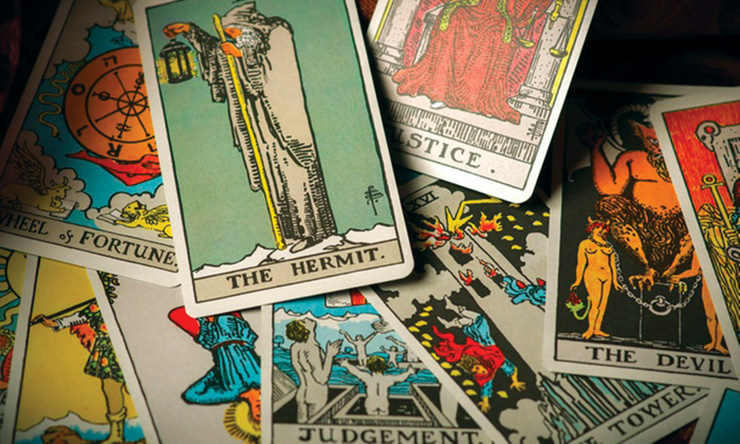
    Meditations on the Tarot consists of twenty-two “letters to the Unknown Friend,” sent “from beyond the grave,” dispatched, that is, well after Tomberg’s death. The reason for these tardy communiques is that Tomberg wanted to mute any personal element in them, to have the reader of these letters focus on their message, not on the messenger. Tomberg himself insists that he has “said more about himself” in these letters than he “would have been able to in any other way.”2 The unknown friend to whom Tomberg is writing is the reader, and Tomberg’s letters are long, discursive, deeply pondered and occasionally meandering essays on the twenty-two trumps of the Tarot, filled with references to Steiner, Teilhard de Chardin, Bergson, Nietzsche, Gurdjieff, the Corpus Hermeticum, Catholic dogma, and many other writers, philosophers, mystics, and saints. (I should point out that the Meditations run to more than 600 pages.) Tomberg’s letters do not touch upon the divinatory character of the Tarot. Nor does he relate the trumps to the usual astrological or cabbalistic correspondences, as do most books on the Tarot, although both Cabbala and astrology make appearances.3 Instead, the Meditations are illuminating, insightful, and not infrequently baffling excursions into the meaning of the symbols presented in the trumps, which Tomberg tells his unknown friends are arcana

    Arcana

    Arcana, Tomberg tells us, are more than secrets, which are merely facts that are hidden from us, or allegories, which are figurative representations of abstract ideas. Arcana are “authentic symbols,” “magic, mental, psychic, and moral operations” that can awaken “new notions, ideas, sentiments and aspirations,” and which require more than an intellectual understanding for their power to be felt.4 

    One way of recognising authentic symbols, and of differentiating them from mere signs, Tomberg tells us, is that they have the power to “conceal and reveal their sense at one and the same time according to the depth of meditation” one reaches in their contemplation.5 A sign is nothing more than an indicator of what it points to. An arrow pointing to a door shows you the way out, but it does not share in you taking it. A symbol participates in the reality it presents, and its meaning, when grasped, should have an almost visceral effect on us. That is, it should affect us in such a way that it effects a change in our consciousness, our awareness, adding not only an intellectual knowledge but offering an existential encounter with hitherto unknown dimensions of Being. It introduces us to a bit of reality of which we were unaware.

    This “transformational” power of symbols lead Tomberg to speak of the trumps as “enzymes” that enable us to be “fruitful in a given spiritual domain.” The trumps “ferment” the knowledge necessary for spiritual experience. This is why Tomberg speaks of them as “spiritual exercises,” whose aim is “to awaken from sleep… deeper layers of consciousness.”6 They are definite encounters with esoteric realities, through which we, the unknown friends, are changed. 

    In this way, the trumps are similar to great works of art. According to Tomberg, the symbols of the Tarot should have the same effect on us as the “archaic torso of Apollo” had on the poet Rilke when he saw it while living in Paris. In its presence, Rilke knew that he “must change his life.”7 A true encounter with the Tarot’s symbolism, Tomberg tells us, should make us feel the same. His aim is to get us to think Hermetically, to allow the rich symbolism of the trumps to reach into our imagination and trigger our faculty for seeing connections between things which we would otherwise ignore. For Tomberg, the essence of Hermeticism is the ability to perceive “the totality of things,” “the One, the All,” as the ancient alchemists called it, the deep, underlying unity at the heart of the multiplicity of Being.

    The French Connection

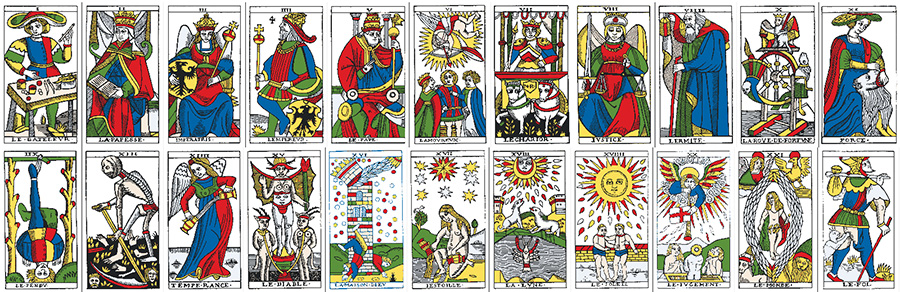
    I should point out that Tomberg is writing in the French tradition of the Tarot – he bases his letters on the Tarot de Marseilles – and that this connection brings in the central theme of the book: to show how Roman Catholicism is an indubitable repository of Hermetic wisdom. Hence the subtitle, “A Journey into Christian Hermeticism.” Understandably, this may be sufficient reason for some unknown friends to forgo that journey. Yet we need not accept Tomberg’s thesis in order to profit from his book. 

    Valentin Tomberg used the Tarot de Marseilles, a pattern from which many subsequent tarot decks derive.

    I can respect the high regard Tomberg has for Catholicism, without agreeing with him that “the more one advances on the way of free research… the more one approaches the Church.”8 After much spiritual searching, the author of these meditations found a home in the Catholic church, but that does not mean that for us to learn from him we must take up residency there too. What strikes me as most important about the Meditations is not the arguments Tomberg makes for, say, the Ten Commandments as instructions in Hermetic philosophy or his belief that the fundamental virtues of the Christian faith – obedience, poverty and chastity – are the sine qua non of any esoteric pursuit, ingenious and thought-provoking as they are. We can embrace these dicta, take them with as many grains of salt as needed, or simply reject them. What strikes me as important about Tomberg’s Meditations for the non-Christian reader is the way Tomberg approaches the Tarot, his understanding of what we can call a Hermetic “way of knowledge.”

    Christ and Hermes

    Having said this, a look at history shows that Christ and Hermes are not such strange bedfellows as we may think. For a time during the Renaissance, Hermes Trismegistus, the legendary founder of the tradition which bears his name, was seen as a figure of equal importance with Christ, and vigorous attempts were made to incorporate the Hermetic teachings, found in the Corpus Hermeticum, into Catholic dogma.9 In France there is a long tradition of a kind of “Catholic occultism,” reaching back to the nineteenth-century French mage Eliphas Levi, and leading on to characters like the eccentric Saint-Yves d’Alveydre and his disciple Gérard Encausse, who wrote under the pseudonym Papus; all three turn up in the Meditations. It is also true that there is a long tradition of literature on the Tarot in French. Indeed, it was Levi himself who first hit on the idea of linking the twenty-two trumps with the twenty-two “paths” on the Cabbalistic Tree of Life, a correspondence that is at the heart of practically all modern magic. 

    Hermetic Syncretism

    This linkage has subsequently been discredited, and most modern historians of the Tarot accept that there is no historical connection between the Tarot and the Cabbala.10 Nor, for that matter, does there seem to be one with Egypt, which many occultists regarded as the Tarot’s source, seeing it as the so-called “Book of Thoth,” the Egyptian god of magic with whom Hermes Trismegistus is associated. 

    Yet for all his historical inaccuracy, Levi’s inspired howler has proved remarkably effective for the many occultists who have worked with his ideas. These include the members of the Hermetic Order of the Golden Dawn and its most notorious associate, Aleister Crowley, as well as their many epigone. This seems to suggest that purists, who eschew such “romantic” notions as Levi’s and reject much that has accreted around the Tarot as nonsense, ignore the syncretic, synthesising character of Hermeticism. This was with it from the start, ages ago, when Thoth met the Greek god Hermes in ancient Alexandria, their fusion creating the “thrice great” one. This syncretic approach continued during the Renaissance when figures like Pico della Mirandola and others developed the notion of a “perennial philosophy,” which allowed for a Christian Cabbala – “culturally appropriating” a radically Jewish tradition – and, as mentioned, even a Christian Hermeticism. In this light, Levi seems merely to have done what Hermetic thinkers had been doing all along.

    Analogy

    Although Tomberg is aware of the historical appearance of the Tarot in the late Middle Ages – he does argue, though, for a kind of “archetypal” link to an Egyptian source; Jung makes many appearances throughout the book – a similar syncretic approach is taken in his Meditations. This makes perfect sense. For Tomberg, Hermeticism itself is a synthesis of magic, gnosis, mysticism, and philosophy, and its aim is not to supplant science or to uncover new facts, but to perceive the facts we already possess from a different perspective, and to infuse them with an additional depth, the kind of depth we discover through our encounter with the arcana of the Tarot. 

    For Tomberg, analogy is the fundamental mode of acquiring knowledge in the Hermetic tradition, which proceeds through a process of synthesising the known and the unknown. The “open recognition of the relationship of all things and beings has engendered an exactly corresponding method of knowledge,” he writes.11 That method is analogy, through which the “sympathy of all things” becomes apparent, not as a concept, or an idea or belief, but through a perception of it “in action” as it were, through the “fermenting” effect of the symbolic “enzymes” produced by our meditations on the trumps.12

    This transformative effect is perhaps best seen in the Magician, the trump that Tomberg says is “the key to all the other Major Arcana.”13 By understanding and performing the “spiritual exercise” the Magician presents, Tomberg tells us that we will be able to work our way through to the knowledge and experience contained in the arcana that follow. As I do not have space to more than touch on some of the insights that the Magician presents, I trust the unknown friends that read this article will be encouraged to accept Tomberg’s invitation to journey with him and perform some of these spiritual exercises themselves. 

    Concentration Without Effort

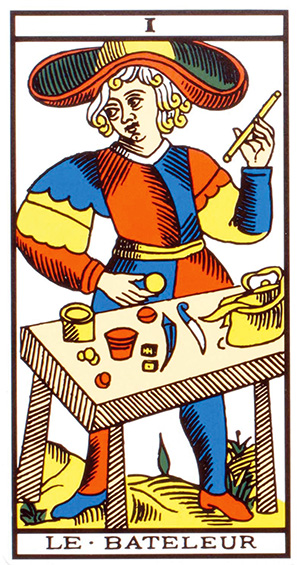
    The Magician, Tarot of Marseilles

    The spiritual exercise of the Magician, Tomberg tells us, is aimed at developing two essential abilities, necessary for any successful Hermetic work. They are “concentration without effort” and “turning work into play.”14 

    “Concentration without effort” – what he also calls “active relaxation” – is achieved, Tomberg tells us, when we can direct our attention to whatever occupies us, without the constant chatter of the care-ridden ego leading our minds elsewhere. When we can achieve an inner silence, free from the distractions of thought – the basic requirement of any inner work – the kind of concentration that would usually cost strenuous efforts can be reached “effortlessly.” 

    As an example, Tomberg suggests a tightrope walker – an aptly symbolic choice. He is certainly concentrating on his actions; if he wasn’t, he would fall. But Tomberg asks: “Do you believe that his thought and his imagination are occupied with what he is doing?”15 The tightrope walker does not “calculate” or “plan” his next step because he has shifted his consciousness from his head – the worrying ego – to what Tomberg calls his “rhythmic system,” which possesses an intelligence of its own, the “intelligence of the heart” I have written about elsewhere.16

    This shift from head to heart, Tomberg says, is symbolised by the lemniscate, or horizontal 8, that is formed by the Magician’s hat. This is the symbol of infinity, but, Tomberg tells us, it is also the symbol of “eternal rhythm,” the natural “flow” – as the psychologist Mihaly Csikszentmihalyi calls it – that our ever-worrying mind interferes with. When we have quieted our inner monologue, we can enter this flow. If we think of the “concentration without effort” we achieve when we are deeply “into” a book we are reading, we can get an idea of what Tomberg means. Our concentration is so focused we forget our surroundings. Yet it requires no effort at all; in fact, we enjoy it.

    This is the arcanum of “transforming work into play,” which is a result of achieving this kind of concentration.17 When we enter the “zone of perpetual silence,” we can not only concentrate our consciousness “effortlessly;” any task we may be obliged to perform can become a source of delight.18 Because we can draw from a “secret and intimate respiration,” he “who finds silence in the solitude of concentration without effort, is never alone.”19 

    He or she is never alone, because the Magician who has achieved this has “attained harmony and equilibrium between the spontaneity of the unconscious… and the deliberate action of the conscious,” the “I” or ego.20 The Magician symbolises a state that is the “synthesis of the conscious and the unconscious,” or, as I have suggested, between our left and right brains.21 Tomberg says this is equivalent to what Jung speaks of as “individuation,” which can result in what Marie-Louise von Franz calls “conscious spontaneity,” a paradoxical state in which one is “consciously active and still spontaneous,” in which the conscious and unconscious minds have an equal say.22

    Get the issue this article appears in

    Tulpas and Egregores

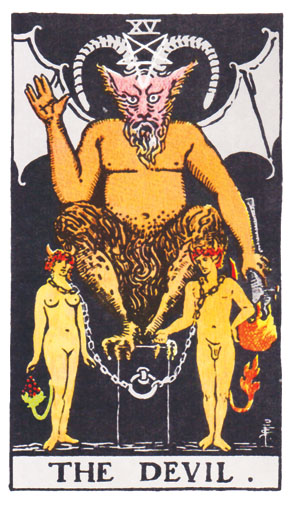
    This brief account of Tomberg’s interpretation of the Magician should give the reader an idea of what he may find if he dips into the Meditations. One other trump that I should at least mention is the Devil, the theme of Letter XV. This trump, Tomberg tells us, introduces us to the secrets and dangers of what he calls “counter-inspiration.” It presents a warning about the “intoxication” we experience when we become aware of our own power to “engender demons.”23 The demon before whom the man and the woman stand enchained, Tomberg tells us, is one of their own making. It is a result of their misuse of the powers of will and imagination, the Magician’s tools in trade.

    The Devil, Rider-Waite Tarot

    The specific demons Tomberg speaks of are tulpas and egregores. Tulpas are part of the esoteric psychology of Tibetan Buddhism. They are thought-forms created by a single individual, through prolonged efforts of visualisation. Eventually, after much mental work, the tulpa can take on a life of its own, much to the dismay of its creator. As I point out in my book, Dark Star Rising: Magick and Power in the Age of Trump, both the traveller Alexandra David-Neel and the occultist Dion Fortune had experiences creating tulpas, and both write of their difficulties in regaining control of and eventually dissolving them.24 

    An egregore – which means “watcher” in ancient Greek – is a thought-form brought into existence by a group. As Tomberg tells us, there are no “good” egregores, only “evil” ones.25 They can be “engendered by the collective will and imagination of nations,” Tomberg writes, but the aims of an egregore are always selfish, centred exclusively on gaining power and growing stronger at the expense of its creators. Once brought into existence, an egregore is harder to “dissolve” than a tulpa, given that it is the work of a group. This can be a cabal of occultists, or a political party – hence their inclusion in Dark Star Rising, which looks at the resurgence of a kind of “occult politics” in recent times. This seems to have raised its head during the run-up to the 2016 US presidential election and has remained on the scene since. It has also been at work in Russia. 

    Should we take tulpas and egregores seriously? A good question. Tomberg certainly did, and as he tells us, the Devil is one trump we should clearly keep an eye on.

    [alert type=”general” dismiss=”no”]This article was published in New Dawn 184.[/alert]

    [alert type=”success” dismiss=”no”]If you appreciate this article, please consider subscribing to help maintain this website.[/alert]

    Footnotes

    1. Robert Powell, introduction to Valentin Tomberg, Lazarus Come Forth! (Great Barrington, VT: Inner Traditions, 2006) p. ix.
    2. Anonymous, Meditations on the Tarot (New York: Tarcher/Penguin, 2002) p. ix.
    3. The question of where and with whom Tomberg studied the Tarot is an interesting one. He speaks of a work, The Sacred Book of Thoth – The Major Arcana of the Tarot, by an “engineer” named Schmakov, published in 1916 which was “twice as large as Oswald Wirth’s” book on the Tarot (p. 590). He also says he read Ouspensky’s The Symbolism of the Tarot (1917). He tells his unknown friends that after the Bolshevik revolution, and presumably before going to Estonia, he became friends with members of a group of esoteric students that had been led by a mathematics professor, Gregory Ottonovitch Mebes. Mebes was the author of a book, The Course of Encyclopaedia of Occultism that is said to have influenced Tomberg. In 1926, Mebes was sent to a gulag, where he died. The group had been dispersed by the revolution, but the members he met “transmitted all they knew and recounted everything concerning the work of their group” to Tomberg. (Ibid.) The group seemed to have studied the Tarot in the traditional French way, relating it to Cabala, magic, astrology, etc. Tomberg says that through the “forty-five years” of his own study, he has “surpassed” what he learned from them and that throughout the Letters – aside for one exception – he does not draw on it. Another esoteric thinker who wrote about the Tarot, Mouni Sadhu, is said, like Tomberg, to have been in contact with members of this group, and influenced by Mebes’ book. Some have seen similarities between Sadhu’s The Tarot (1962) and the Meditations, which the link with Mebes may explain.
    4. Ibid. p.4.
    5. Ibid.
    6. Ibid. p. 91
    7. https://poets.org/poem/archaic-torso-apollo 
    8. Ibid. p. 283
    9. See my book The Quest for Hermes Trismegistus (Edinburgh: Floris Books, 2011) pp. 154-56.
    10. Robert M. Place, The Tarot (New York: Tarcher/Penguin, 2005) p. 73.
    11. Anonymous p. 12.
    12. Ibid. p. 4.
    13. Ibid. p. 3.
    14. Ibid. p. 8.
    15. Ibid. p. 9.
    16. Gary Lachman, Lost Knowledge of the Imagination (Edinburgh: Floris Books, 2017) pp. 52-53.
    17. Anonymous p. 11. This is an arcana evidently known to Mark Twain, who makes good use of it in Tom Sawyer. There the wily Tom convinces his friends to paint a fence because he pretends to be enjoying it. Yet the trick is really on Tom because his friends actually do enjoy it; they have transformed work into play, by telling themselves it is play.
    18. See my article “Getting Beyond the Robot” in New Dawn 182 (Sept–Oct 2020).
    19. Ibid.
    20. Ibid. p. 20.
    21. Gary Lachman, The Secret Teachers of the Western World (New York: Tarcher/Penguin, 2015). In this book I argue that such a harmony is at the heart of the western esoteric tradition.
    22. Marie-Louise von Franz, Alchemy (Toronto: Inner City Books, 1980) p. 238.
    23. Anonymous p. 401.
    24. Gary Lachman, Dark Star Rising: Magick and Power in the Age of Trump (New York: Tarcher Perigee, 2018) pp. 90-92.
    25. Ibid. pp. 419-20.

    © New Dawn Magazine and the respective author.
    For our reproduction notice, click here.
  • Return of The Mind Parasites: Lovecraft, Wilson, & Phenomenological Science Fiction

    Return of The Mind Parasites: Lovecraft, Wilson, & Phenomenological Science Fiction

    From New Dawn 188 (Sept-Oct 2021)

    In 1959, while staying at the farmhouse of an old friend, the British existentialist Colin Wilson came across a book seemingly designed to attract his attention; the fact that it was the only one in the house practically ensured that it would. Its title was The Outsider and Others and its author was H. P. Lovecraft, the American pulp horror fiction writer from the pages of Weird Tales, who in recent time has been promoted to the rank of a Penguin Modern Classic. Wilson had never heard of Lovecraft but his own first book, the one that had made his name as an “angry young man” a few years back, was called The Outsider, so naturally he was interested. 

    Wilson’s book was an account of modern alienation and the extreme mental states of creative individuals trying to overcome it. Lovecraft’s brand of “eldritch,” “grotesque,” “nameless” horror – these are only a few of his hyperbolic adjectives – seems far away from the angst and la nausée of existentialism, and yet appearances can be deceiving. Wilson took the mouldy volume off the shelf – it was published in 1939, two years after Lovecraft’s death – its yellowing pages almost crumbling at his touch, and settled down to read. Before turning in that night Wilson knew that he had come across an “outsider” indeed. If anyone fit the bill of the isolated, alienated man of genius, loathing the mediocrity of the modern age, Lovecraft did.

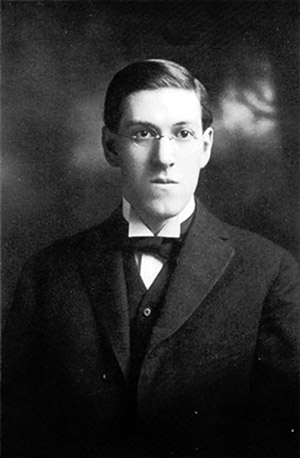
    H. P. Lovecraft, circa 1915.

    Wilson was so taken with Lovecraft that reading him inspired one of the books in his “Outsider Cycle,” in which he attempts to provide the foundation of what he called a “new existentialism,” to replace the dreary rive gauche version of Sartre and Camus, and the gloomy Schwarzwald meditations of Professor Heidegger.1 Wilson believed that all three had taken a wrong turn at Edmund Husserl, the founding father of phenomenology, out of which existentialism emerged. The books in Wilson’s “Outsider Cycle” methodically spell out his objections to what had become a philosophy of meaninglessness and despair, in an attempt to regain existentialism’s original object: the vision of freedom. In outsider figures like Blake, Nietzsche, Gurdjieff, and others, Wilson had discovered experiences of a “Yea-saying,” affirmative consciousness that Sartre and the others had left out of their analyses. Central to his analysis of these moments of “affirmation” was Husserl’s dictum that consciousness is intentional. It is not the passive recipient of sense impressions impinging from without, but an active reaching out to reality, in order to grab it with the talons of the mind. It was this, Wilson believed, that the old existentialists had lost sight of.

    Wilson’s book, The Strength to Dream (1962), a study in what he called “existential criticism,” focused on how different writers used the imagination to present their values, their vision of the world. He started with Lovecraft and were he alive to have read it – which is entirely possible; he would only have been in his early seventies – Lovecraft would no doubt had been gratified that he was taken seriously, and perhaps not a little bemused at the literary company he was keeping. Wilson put him in the context of W. B. Yeats, August Strindberg, and, perhaps surprisingly Oscar Wilde, as agents of what he called “The Assault on Rationality,” writers who reject the everyday world and create an alternative more to their liking. Yet Lovecraft might not have been amused at Wilson’s assessment of him as “that man of dubious genius” who “carried on a lifelong guerrilla warfare against civilisation and materialism,” and who was a “somewhat hysterical and neurotic combatant.”2 

    Aside from his atrocious style, filled with phrases like “black clutching panic” and “stark utter horror” – Lovecraft always had a bad habit of overwriting – what repelled Wilson about Lovecraft was his “soured romanticism.” He was a man so revulsed by the triviality of modern life, it seemed, that he reminded Wilson more of the Düsseldorf mass murderer Peter Kürten, who dreamed of blowing up whole cities, in fantasies of revenge against the inequities of life, than of his tragic predecessor, Edgar Allan Poe.3 Lovecraft never engaged in any of the violent acts that filled Kürten’s horrific career, but his tales of ancient evil and exiled gods – Cthulhu and Co. – returning to their lost domain – planet Earth – were, Wilson believed, the literary and psychological equivalents of Kürten’s brutal assaults on “society.” Both, Wilson argued, were engaged in acts of ressentiment against a world that negated them.

    Wilson’s estimation of Lovecraft, however, increased over time, helped by a visit to Providence, Rhode Island, where Lovecraft spent most of his short life. Wilson was a visiting lecturer at Brown University and took the opportunity to read Lovecraft’s letters and other works held in the library. His interest eventually led to a correspondence with August Derleth, the man more than anyone else responsible for Lovecraft being known at all today. After Lovecraft’s death Derleth became his literary executor and through his Arkham House Press kept Lovecraft in print. Derleth had read Wilson’s criticisms of Lovecraft and thought he had been unfair. Wilson was open enough to Derleth’s comments to revise some of his remarks about Lovecraft for the American edition of the book. Yet Derleth still felt Wilson had short changed Lovecraft. In a letter to Wilson he wrote, “If you’re so critical of Lovecraft, why don’t you write a fantasy novel, and see whether it’s any good…”4

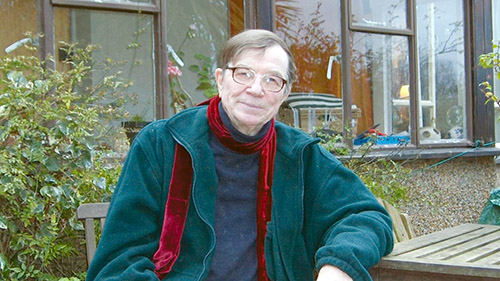
    The English writer, philosopher and novelist, Colin Wilson (1931–2013)

    Wilson Takes Up the Challenge

    Not one to ignore a challenge, Wilson brooded on the idea. His interest was not in terrifying people as Lovecraft’s had been. It was, in fact, more along the lines of the sort of quasi-science fiction Lovecraft was writing towards the end of his life, in stories like The Shadow Out of Time. With its vision of ancient alien races sending their consciousness out into the depths of time and space, this produces more a sense of awe than a shudder – something we find in H.G. Wells and Olaf Stapledon, two other writers with a “cosmic” point of view. Wilson’s own vision was that of a consciousness free from time, able to rise above the “triviality of everydayness” that revulsed Lovecraft (the phrase is Heidegger’s) and become aware of the “reality of other times and places,” and not only of the one in front of your nose. 

    It was while working on his Introduction to the New Existentialism (1966)that Wilson came upon an idea that would give the old Lovecraftian theme a new twist. Lovecraft’s fellow Weird Tales writers all added to Lovecraft’s Cthulhu Mythos, inventing gods, ancient races, lost cities, and, most effectively, fictional texts such as Lovecraft’s Necronomicon, that give the tales a flavour of authenticity. But Wilson’s contribution wouldn’t be another god, like Clark Ashton Smith’s Tsathoggua, although he will draw on this, nor a forbidden text like Robert E. Howard’s Unaussprechlichen Kulten, nor will his protagonists meet their doom in a ruined temple on some unknown South Pacific island. Wilson’s monsters would come from somewhere else. They would come from the mind.5

    Wilson’s first foray into what we can call “phenomenological science fiction,” The Mind Parasites (1967), came on the back of a series of novels in which Wilson used the constraints of genre fiction for philosophical purposes.6 His first novel, Ritual in the Dark (1960), is an existential thriller about a sexual killer, and could best be described as Jack the Ripper meets the Brothers Karamazov in duffle-coated early 1950s London. It works out in fictional form some of the themes of The Outsider. This was a practice Wilson continued with detective novels (Necessary Doubt (1964)), psychological crime thrillers (The Glass Cage (1966)), erotica (The Sex Diary of Gerard Sorme (1961)), and later with espionage, police procedural, soft porn, and, as we will see, science fiction.

    Wilson’s engagement with Lovecraft led to several works, some serious attempts at using Lovecraft’s themes for philosophical purposes, some, like his contributions to the Lovecraft sendups The Necronomicon (1978) and The R’lyeh Text (1995) more tongue in cheek pastiche than anything else.7 The two novels I look at here, The Mind Parasites and its follow-up The Philosopher’s Stone (1969), are Wilson’s masterpieces in the genre. In them Wilson managed to put into gripping fictional form the essence of his “new existentialism,” and the insight that would inform his decades long investigation into the occult and paranormal, his search for “Faculty X,” the ability of the human mind to free itself of the constraints of time and space and occupy “other times and places.” 

    Wilson wrote another science fiction novel, The Space Vampires (1976), that uses some Lovecraftian ideas – sadly it was made into the dreadful film Lifeforce (1984) – and his later epic Spider World series(1987-2002)is his attempt at a Tolkienesque fantasy. Yet it is in The Mind Parasites and The Philosopher’s Stone that Wilson managed to find, to my mind at least, the perfect balance between the ideas and a narrative to convey them. The books are, borrowing a title from Alfred North Whitehead, “adventures of ideas.” Like the late novels of H.G. Wells, that Wilson, against critical opinion, rated highly, they are compelling because of Wilson’s ability to make the ideas come alive. The reviewer who said of his work that he had a “narrative style that can make the pursuit of any idea seem exciting detective work” knew what he was talking about.

    The Mind Parasites

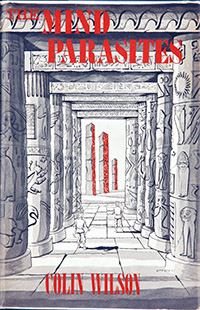
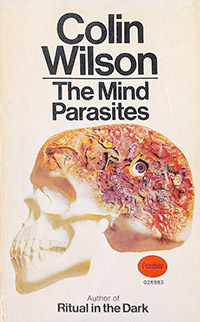
    First edition hard cover of The Mind Parasites.

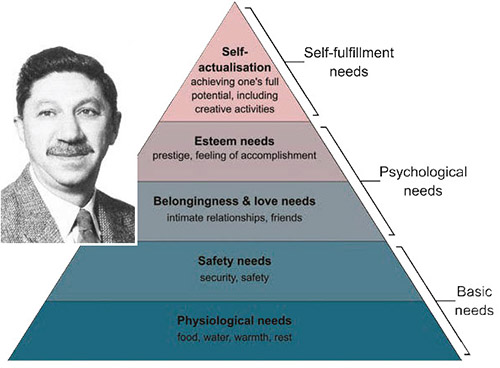
    The Mind Parasites begins in 1994 – the future for its first readers, the past for us – when the archaeologist Gilbert Austin learns that his friend, the psychologist Karel Weissman, has committed suicide. The death, of course, was enough to shock him. But suicide? “It was impossible.” Weissman “had not an atom of self-destruction in his composition.” What could have driven him to take his own life? It was true that the suicide rate had increased considerably over the years. But Weissman was a follower of the humanistic psychology of Abraham Maslow (who shares billing with Husserl in the new existentialism). It was unthinkable. What made him do it? 

    The answer to that, Austin suspects, could be found in the collection of papers Weissman left behind. Yet before Austin can attend to them, his own work takes him to Turkey where he and his colleagues make an incredible discovery. Strange figurines of an unknown origin lead them to tunnel below the surface only to discover a huge block seventy feet long two miles underground. It is the remains of a cyclopean city, a metropolis built by giants eons ago… 

    First edition paperback of The Mind Parasites.

    Yet these allusions to the Great Old Ones and Elder Gods of Lovecraft’s mythos are really a red herring, for the truly evil creatures – who, borrowing from Clark Ashton Smith, Wilson calls the Tsathogguans – are not, like Cthulhu, resting in sunken R’lyeh, waiting to be awakened, but inhabit a much more intimate space: that of the mind. Austin discovers why his friend had killed himself: he had become aware of psychic vampires that have been bleeding human consciousness dry for the past two centuries, and they had got rid of him… Just as they had got rid of the generation of creative geniuses, the Romantics, who Wilson sees as the first sign of a new stage in the evolution of human consciousness.

    Wilson’s The Outsider sought to answer the question why so many creative individuals of the 19th and early 20th centuries either died young, went mad, committed suicide, or in some way came to a bad end. Nietzsche, Baudelaire, Ibsen, Keats, Shelley, Kleist, Novalis, Poe; this list, chosen at random, could go on. These men and others, lesser known, experienced eruptions of the imagination unlike anything that had been seen before. The poets of the previous age said that the “proper study of man is man.” The Romantics disagreed and sought to embrace the entire universe. The ecstasies they experienced convinced them that men were really sleeping gods. Yet when they returned to earth from their ecstatic excursions, they were struck by the banality of the world they were forced to inhabit, and their inability to revive the vision of inner freedom and space, the “bird’s eye view” over space and time. Self-pity, depression, weariness set in. Baudelaire compared the poet to the albatross: when aloft, the bird’s great wings enable him to soar gracefully, yet on land they are encumbrance, tripping him up. This brutal world was not meant for such noble creatures, and so many of them succumbed.

    Wilson’s mind parasites are an allegory of how the mind can collapse on itself, of how easy it is for it to slip into existential despair and a self-produced insanity. In The Outsider Wilson relates several experiences of what Swedenborg called “vastation,” a total emptying out of any sense of meaning, of any reality propping up your existence. One night on the desert, meditating on the reality of history, and on the knowledge of that reality housed within his mind, Gilbert Austin becomes aware that within his own consciousness, there is a universe as strange and unknown as the one he gazes out on at the stars… the essence of the Romantic vision. It was then that something odd happens. Austin catches a glimpse of “some alien creature” in his own mind. He then discovers that his friend Weissman had had the same experience. Weissman’s research into the growing suicide rate uncovered a disturbing fact: the human race was losing its power of self-renewal. “For more than two centuries now,” Weissman reports, “the human mind has been constantly a prey to energy vampires.” 

    Around the turn of the eighteenth century, a kind of change came over the western mind: the powerful optimism of the early Romantics – Beethoven, Goethe, Blake – is followed by a gloomy pessimism, a despair the mind parasites feed on. “The artists who refused to preach a gospel of pessimism and life-devaluation were destroyed.” Some individuals, like the Marquis de Sade, were completely in the vampires’ control. Pessimists, like Schopenhauer, lived to a ripe old age. Nietzsche, the life-affirmer, goes mad. Men may really be gods, but it is in the parasites’ interest that they never find this out. Those who suggest as much are quickly done away with…

    Having become aware of the parasites, Weissman is a threat to them, so they attack him with waves of depression and despair until he can stand it no longer and kills himself. When the parasites discover that Austin is aware of them, they try the same tactic. But in the meantime he has learned of Husserl’s work in phenomenology and of the central insight that consciousness is intentional. In one of the most remarkable battle scenes in all literature, a campaign that takes place entirely within the mind, Austin fends off the waves of suicidal emptiness and cosmic despair until his increased powers of intentionality rout the parasites.8 Now that their cover is blown, it is all out war.

    The rest of the novel relates Austin’s gathering together a team of other intellectuals – psychologists, historians, scientists – who become the human race’s vanguard against the parasites. Through mastering Husserl’s phenomenological techniques, they learn how to direct their intentionality as if it were a laser beam of consciousness. One by-product of this is that they all become psychokinetic, their consciousness able to reach out and “grab” the world in a very literal way. Their psychokinetic powers are enormous. In an attempt to unite the world against the parasites, they use their combined mental energies to disintegrate the “Kadath block” on live television, claiming it was destroyed by the parasites. When they discover that the parasites have a base on the moon, they decide the only way to rid humanity of these deadly pests is to move the moon out of its orbit. Wilson’s use of the moon as the source of mankind’s afflictions is a nod to Gurdjieff, who saw “sleeping humanity” as “food for the moon.” He also makes use of the theories of Hanns Hörbiger, enamoured by Hitler, about the different moons the earth has had in the past. 

    By the end of the novel, not only have Austin and his colleagues got rid of the moon, they have fended off a race war, prompted by the parasites, who glut themselves on the negative energies given off. The discovery of the ancient cyclopean city that started the book is of relatively minor importance compared to the revelatory insights into consciousness the team has achieved. At one point in the story, Austin becomes aware of other intelligences, benevolent ones, out in space, beyond the orbit of Pluto. He and his colleagues ride off, not into the sunset, but in the direction of that distant planet, their spaceship propelled by the powers of their minds… They are eager to join the other “policemen of the universe,” and to learn exactly how powerful a consciousness free of the parasites really is. Their mysterious voyage becomes a myth for future exploration into the vastness of existence, inner and outer.

    Get the issue this article appears in

    The Philosopher’s Stone & Relationality

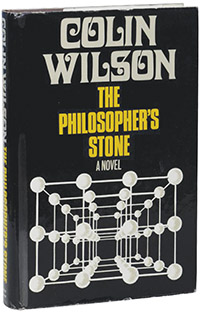
    First edition hard cover of The Philosopher’s Stone.

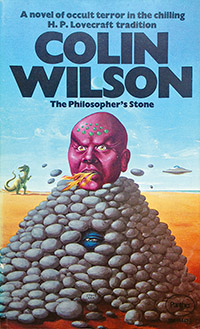
    In The Mind Parasites Wilson explores the possibilities inherent in Husserl’s intentionality. In The Philosopher’s Stone it is another power of consciousness, relationality, Wilson’s own coinage, that takes centre stage. Readers of Wilson’s little book Poetry and Mysticism (1968), written at the behest of the poet Lawrence Ferlinghetti for his City Lights imprint, will recall that in it Wilson’s speaks of “duo-consciousness” and of what he calls the “web-like” character of consciousness, when thoughts and recollections spread out and link together, forming a kind of “net” of awareness. In The Philosopher’s Stone the relationality of consciousness leads to what Wilson calls “time-vision,” the ability to look into the past as if through a telescope. If in The Mind Parasites the heroes discover their psychokinetic powers, in The Philosopher’s Stone it is psychometry, the ability to know the past of an object simply through touch, that Wilson’s heroes discover they possess. It is through this that the protagonists become aware of the Great Old Ones, brooding in some dimension outside our own, waiting for their chance to return

    First edition paperback of The Philosopher’s Stone.

    But again, they are a red herring. The real subject of the novel is once again consciousness; this time, its potential to slow down and even to stop the aging process. In Back to Methuselah, Bernard Shaw argued that human life is too short to make any good use of it; humans needed to live to at least three hundred in order to mature. Wilson took up Shaw’s challenge as to how this could be done. His answer: the fountain of youth – or at least of immortality – lay in the prefrontal lobes of the brain.9

    In search of a phenomenological elixir vitae, Wilson’s hero, Howard Lester, discovers that the “value experiences” of the psychologist Aaron Marks (Maslow’s “peak experiences”) seem able to slow down our biological clocks. He arrives at this insight after his research leads him to conclude that, statistically, philosophers, composers, scientists, mathematicians – anyone who makes a practice of trying to view life objectively, and not through the gauze of their emotions – live longer than other people. He discovers that the source of the “VE” are the brain’s prefrontal lobes, its most evolutionarily advanced part. Through a series of experiments introducing a minute quantity of “Neumann alloy” into their own prefrontal lobes, Lester and his colleague, like Gilbert Austin and his team, discover unknown powers of consciousness. Their “relationality,” the intuitive glue that spreads across reality like the ripples on the surface of a deep, still pond, increases enormously, until they are able to use their imagination to peer into time. 

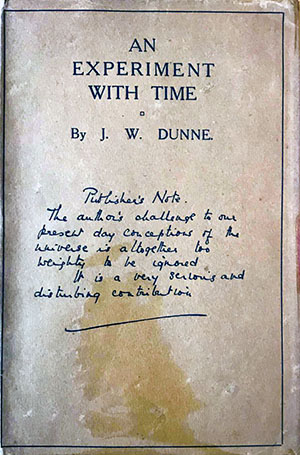
    Wilson has a long section in which Lester, sinking into a state of “contemplative objectivity,” finds himself in sixteenth century London, rather as Charlotte Ann Moberly and Eleanor Jourdain, authors of An Adventure (1911), found themselves transported to the Versailles of Marie Antoinette. This is a time travel novel with a twist. Actual, physical time travel, the kind his hero H. G. Wells wrote about in The Time Machine, Wilson argues, is an absurdity. There is no “time” to travel through; “time” is a word we use to refer to process, and to think of “process travel” is nonsense. But the mind is not limited by the logic that constrains physical reality, as J.W. Dunne, author of An Experiment With Time (1927), discovered with his “precognitive dreams.” Just as Dunne was able to see into the future, Wilson’s phenomenological alchemists, in search of their own philosopher’s stone, can turn their vision to the past. The imagination, Wilson said, is “the ability to grasp realities not immediately present.” The past isn’t present, but it is a reality, and through their increased powers of relationality – awareness of the connectedness of everything – Wilson’s heroes can imaginatively grasp it.

    One result of this new faculty is proof that Francis Bacon was really the author of Shakespeare’s plays. Another is that K’ tholo – Lovecraft’s Cthulhu – was one of the founders of human civilisation. Another is that the Great Old Ones are not dead, only sleeping, but their influence can be felt. They have erected barriers to the heroes’ time-vision which prevents them from reaching far enough back into the past to solve the mystery of… but that would be telling. En route the reader learns the truth about Stonehenge, the Maya, the Voynich Manuscript – a Wilsonian standby, that surfaces in more than a few places – poltergeists and much more. 

    Wilson said that the aim of his writing was to get people to think. His novels are more fables or parables, than the kind of character analysis we associate with most modern fiction, which sticks obsessively to “everyday” consciousness and its trivial concerns. They share this character with the late novels of Wells, which use the barest structure of a novel for didactic purposes. Readers who find ideas exciting will find Wilson’s – and Wells’ – didactic fictions breath-taking. (“I apologise for sounding didactic,” Wilson’s hero says at one point. “It is impossible to say anything that is not commonplace without sounding didactic.”) I have read them a number of times yet each time I discover new things and come away exhilarated. If, as Wilson says, “close-upness deprives us of meaning,” his phenomenological fictions are cable cars to the heights, to the “bird’s eye view,” that enables us to enter that inner universe from which we can view the outer one with “contemplative objectivity.” “The will feeds on enormous vistas,” Wilson tells us. “Deprived of them, it collapses.” In The Mind Parasites and The Philosopher’s Stone the reader will find vistas enormous enough to feed his will no end.

    Footnotes

    1. The Outsider (1956), Religion and the Rebel (1957), The Age of Defeat (The Stature of Man in the US) (1959), The Strength to Dream (1962), Origins of the Sexual Impulse (1963), Beyond the Outsider (1965), and Introduction to the New Existentialism (1966).
    2. Colin Wilson, The Strength To Dream (London: Abacus, 1979) p. 1.
    3. Colin Wilson and Pat Pitman, Encyclopedia of Murder (London: Arthur Baker, 1961) pp. 326-335.
    4. Colin Wilson, The Mind Parasites (Rhinebeck, NY: Monkfish Press, 2005) p. xvii.
    5. Wilson admits to being inspired by the science fiction film Forbidden Planet (1956), in which Walter Pidgeon portrays Morbius, a scientist who has increased his mental powers through contact with the technology of an ancient, more highly evolved race. He was unaware that he was at the same time increasing the power of his unconscious mind. Because of this he releases “monsters from the Id.”
    6. Recently the book has been the object of some renewed interest, seeing Wilson’s allegorical creatures as the possible agents of our contemporary malaise. See www.awakeninthedream.com/articles/mind-parasites-of-colin-wilson 
    7. Wilson also contributed two shorter works, “The Return of the Lloigor,” in Tales of the Cthulhu Mythos, ed August Derleth (Sauk City, WI: Arkham House, 1969) and “The Tomb of the Old Ones” in The Antarktos Cycle, ed Robert M. Price (Oakland, CA: Chaosium Publications, 1999).
    8. I can only mention here that in another novel, The Black Room (1971), an espionage tale set around the effort to defeat a sensory deprivation chamber, Wilson works out the same ideas.
    9. This was before Wilson became aware of the significance of “split brain” psychology surrounding the left and right cerebral hemispheres, which he will write about in Frankenstein’s Castle (1981) and Access to Inner Worlds (1983).

    © New Dawn Magazine and the respective author.
    For our reproduction notice, click here.
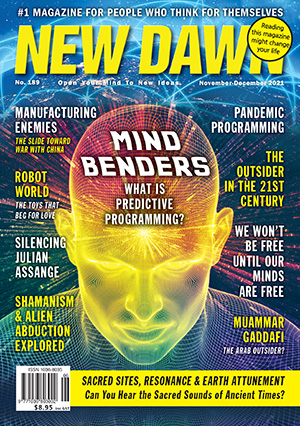
  • The Outsider in the Twenty-First Century

    The Outsider in the Twenty-First Century

    From New Dawn 189 (Nov-Dec 2021)

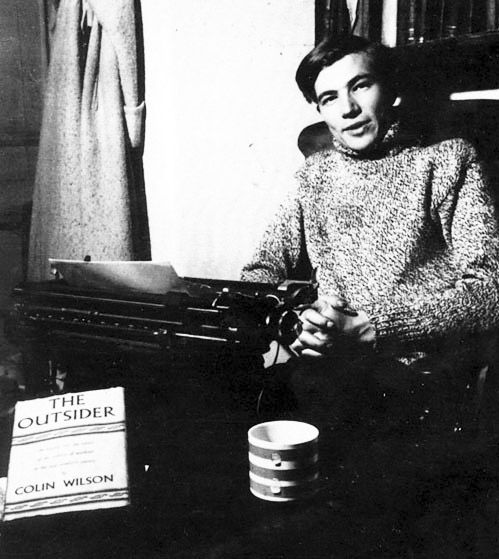
    In his debut book, The Outsider, the twenty-four-year-old British existentialist Colin Wilson (1931–2013) made his first attempt at analysing a character he felt was peculiar to our age, or at least to that of the mid-twentieth century, when the book appeared. 

    In the midst of the buttoned-down, conforming 1950s, published in the same year as Allen Ginsberg’s Howl (1956)and a year before Kerouac’s On the Road (1957), Wilson’s “inquiry into the nature of the sickness of mankind in the mid-twentieth century” was the surprise bestseller of the season. Prestigious reviewers like Philip Toynbee, Cyril Connolly, J. B. Priestley, Edith Sitwell and others tripped over themselves, heaping praise upon the duffle-coated, polo-necked young Midlands genius, who had “walked into literature as a man walks into his own house.” 

    True, his investigation into the tortured lives of Nietzsche, Nijinsky, T.E. Lawrence (“of Arabia”), Van Gogh, and other creative individuals, straining against the banality of the modern world and their own psychological barriers, made for some heady holiday reading. But it was the summer of the Angry Young Men, and for a time, Wilson’s Outsider was in the news as much as Elvis Presley and James Dean, two rebels of a different sort.

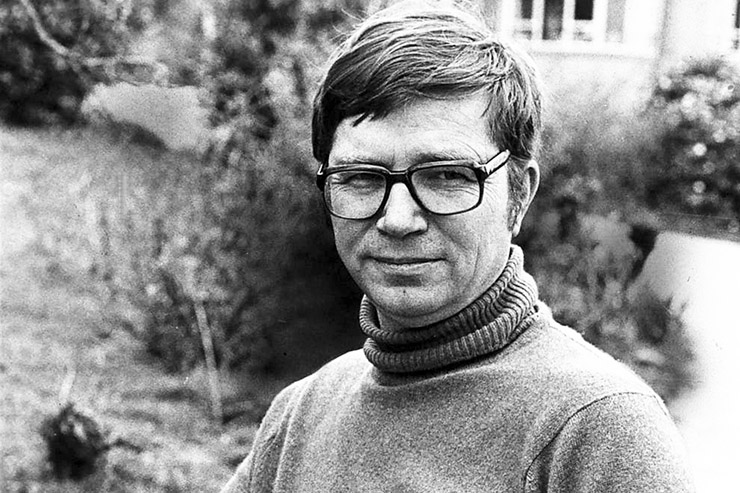
    The twenty-four-year-old British existentialist Colin Wilson basks in the glory of his debut bestselling book, The Outsider. He was later discarded by the intelligentsia of the day – which only proved his point and made him the quintessential voice for Outsiders. 

    As Wilson described him, his Outsider was someone with a pressing hunger for meaning and purpose in a world that was seemingly bent on denying him these.1 In the Middle Ages these individuals may have found a place in the church, which at that time still took such hunger seriously. 

    But in our modern – now post-modern – society, geared toward comfort, security, and conformity – what Wilson diagnosed in a later book as “other directedness” – there was no place for these individuals. They could find no home for their creative energies, and because of this, many of them came to a bad end. Nietzsche went insane, as did Nijinsky. Van Gogh killed himself. Lawrence committed a kind of “mental suicide,” retreating into anonymity as a private in the RAF, after the hollow celebrity following his Arab campaign. Many other Outsiders succumbed to drugs or alcohol or depression; only the strongest among them were able to break through the “fallacy of insignificance” and reach the source of “power, meaning, and purpose” within them. As one of Wilson’s Outsiders, the poet William Blake, put it in his Proverbs of Hell: “When thought is closed in caves, then love will show its roots in deepest Hell.” As Wilson’s many studies of “criminal Outsiders” show, when creative energy is frustrated, it turns upon the world before turning upon itself.

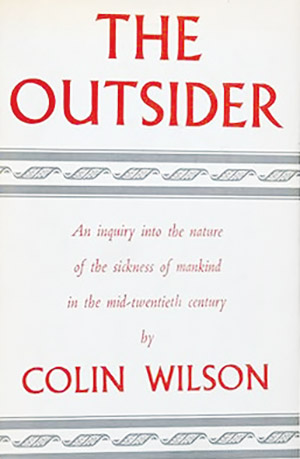
    Hardcover first edition of Wilson’s The Outsider.

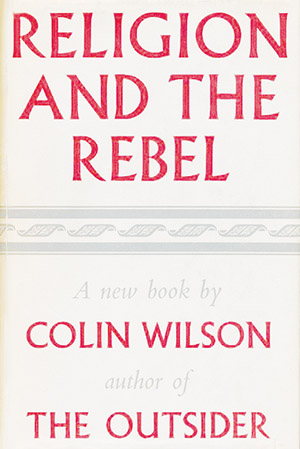
    Outsiders, Wilson wrote in Religion and the Rebel, his follow-up to The Outsider, “appear like pimples on a dying civilisation.” In his most savage attack on the “lack of spiritual tension in a materially prosperous civilisation,” Wilson said that “the heroic figure of our time” was “the man who, for any reason at all, felt himself lonely in the crowd of the second-rate.” Ours was a time of “cheapness and futility, the degrading of all intellectual standards.” In response, the Outsider could be “a maniac carrying a knife in a black bag, taking pride in appearing harmless and normal to other people,” as the sex-murderer Austin Nunne in Wilson’s first novel, Ritual in the Dark, does. Or he “could be a saint or visionary, caring for nothing but one moment in which he seemed to understand the world, and see into the heart of nature and of God.”

    Hardcover first edition of Wilson’s Religion and the Rebel.

    The Wilson of The Outsider and Religion and the Rebel was convinced that western civilisation was in decline, and indeed, one of the thinkers whose work he looks at in Religion and the Rebel is Oswald Spengler, author of the monumental The Decline of the West. Yet even here, Wilson’s pessimism is more emotional than intellectual and may have been fuelled by the critical volte-face he received when the initial celebrity of The Outsider faded, and the intelligentsia decided that they were wrong about the “messiah of the milk bars.” 

    By the time he had finished writing Religion and the Rebel, whatever anger Wilson had felt, had been expressed. He later came to feel that his “world-rejection” and attack on a “sick civilisation” was a bit much, although he understood them to be necessary steps in the Outsider’s attempts to know himself, to become, in Nietzsche’s phrase, “who he is.” The later books in Wilson’s “Outsider Cycle” offer a patient, detailed, wide-ranging analysis of contemporary culture, philosophy, science, and psychology from the point of view of the Outsider’s peculiar challenge: to find a means of triggering the “visionary faculty,” the moments of “yea-saying” and “affirmation” that free him from his paralysis, and show him his true place, as one of civilisation’s creators, not its misfits.

    The 2016 edition of The Outsider (TarcherPerigee)

    Wilson died in 2013, at the age of eighty-two. In the years following his debut, he produced an enormous number of books on a wide range of subjects and an equal number of essays, articles, reviews, lectures, and introductions to the work of others, myself included. He remained upbeat and positive, even during the difficult years following a stroke that left him practically paralysed and unable to read or speak. He is one of the most optimistic voices in the literature and thought of the past two centuries, although his optimism isn’t based on ignoring the reality of a world shot through with pain and suffering, the “chaos” of which the Outsider sees “too deep and too much,” as much of our “mind, body, and spirit” “positivity” is. He saw the world without a blindfold and took it neat, if I can mix my metaphors, maintaining the “bird’s eye view” that looked out on distant horizons of meaning, to the end.

    Wilson died just on the cusp of the world getting, well, strange – or at least stranger than it had been. He passed away before Brexit, before Trump, before Covid-19, before Conspirituality, before the climate crisis became impossible to deny, and before the general ontological and epistemological crises that I talk about in some of my books set in, although these were indeed on their way. 

    A middle-aged Colin Wilson.

    A few years after his passing, my book about Wilson, Beyond the Robot: The Life and Work of Colin Wilson, appeared. As it turned out, my publisher had the rights to The Outsider and thought the time was right for a new edition, to which I contributed a new foreword. So the two books appeared at the same time. I was, of course, happy about this. But I admit I wondered if The Outsider would appeal to contemporary, younger readers, to whom names like Sartre, Camus, Hesse, and Dostoyevsky may not ring the same bells as they did for my generation and that of Wilson’s earliest readers. 

    Do Outsiders Still Exist?

    Is existentialism anything more than a topic on someone’s philosophy exam these days? In our post-everything world, do Outsiders still exist, and do their challenges mean anything? If there are Outsiders out there, what are they doing?

    Wilson’s answer to this, I believe, would be yes, Outsiders are still around. And I think he would add that they have never had it so good.

    The Outsider’s problem is freedom. Not political or social or economic or sexual freedom – all of which are, of course, important. The kind of freedom that obsesses the Outsider is an inner freedom, a kind of inner expansiveness and deepening, that lifts him out of the confines of the present, and the limitations of his own personality, and makes him aware of the potentialities of life of which he is usually unaware. It is essentially a widening of consciousness and a strengthening of its grip on reality. Freedom, for the Outsider, is equivalent to reality. His moments of freedom are moments when he is more in touch with reality, and not the pasteboard substitute which he usually takes for that elusive commodity. 

    Yet, although these moments reveal to him a world of overwhelming meaning and complexity, of infinite interest, they are fleeting and no sooner is “reality” glimpsed, and he loses sight of it. This is why in The Occult, Wilson defined the central obsession of his work as “the paradoxical nature of freedom.” 

    Why is freedom paradoxical? Because when our freedom is threatened, its value becomes indubitable, and we will fight tooth and nail to preserve it. Yet, imperceptibly and involuntarily, once our freedom is secured, we begin to “de-value” it. It becomes subject to what Wilson calls “the indifference threshold,” a kind of automatic loosening of our grip on the reality of our freedom or any of our real values. We “take it for granted” and may even come to feel our freedom is a burden, something to endure until something distracts us from it, like the latest pablum on NetFlix. Hence Erich Fromm’s once-influential book Escape From Freedom and Sartre’s dour one-liner telling us that “man is condemned to be free.” 

    Dominant .005% & Self-Actualisers

    Wilson’s subsequent body of work can be seen as an attempt to arrive at a method of inducing these moments of inner freedom, what the psychologist Abraham Maslow, on whose ideas Wilson draws, called “peak experiences,” moments of sudden, “absurd” joy and well-being. And we can also see Wilson’s work as a characterological study of the kind of people Maslow called “self-actualisers,” who are prone to peak experiences, and who share many traits with Wilson’s Outsiders, and with another demographic type, individuals whom Wilson calls the “dominant .005%.” All three have a need for this inner freedom in a way that most of their contemporaries do not, although in one way or another, we all have an appetite for this inner expansiveness, even if we satisfy it with the simple expedient of a glass of wine and a film. 

    But for these peculiar individuals it is a need as absolute as the need for food and other basic necessities. In fact, it is often greater than the need for these; more than one Outsider has faced starvation and poverty in his quest for the widening of inner space, just as more than one has succumbed to alcoholism or drug addiction in his pursuit of it. 

    Wilson tells us that the need for this inner freedom is an expression of what he calls the “evolutionary appetite,” the urge to grow, absorb experience and develop, and use our freedom, however clumsily, to gain more freedom. Wilson’s Outsiders and “dominant .005%,” and Maslow’s “self-actualisers,” are people driven by a compulsion to evolve, to gain deeper insight into and control over the mechanism of their own consciousness. And Wilson believed that since the nineteenth century, when Romantics first opened the gates to “inner worlds,” the number of people feeling this compulsion has grown.

    Nevertheless, when The Outsider first appeared, the number of people interested in inner freedom was still relatively few. As Wilson soon discovered, because of his focus on existential questions – questions, that is, about meaning – and disregard for political and social ones, he was quickly branded a “fascist” by his left-oriented, “socially conscious” contemporaries. Yet it was with The Outsider and books like Kerouac’s The Dharma Bums and other Beat productions that the widespread popularity of a kind of grassroots “spirituality” began, with the importation of Zen and other forms of “Eastern wisdom” into the west. By the mid-1960s, the taste for lux ex orient had fused with the burgeoning psychedelic movement and “counterculture” to form a generation of “seekers,” dissatisfied with the increasingly materialistic character of modern life. The Outsider was in no small part responsible for the Hermann Hesse craze of the late 60s and early 70s, which numbered an adolescent me among its many adherents. By the end of the mystic decade, the beatniks who had been vaguely “on the road,” were now moving in a more purposeful direction, on a “journey to the East,” the title of a short novel by Hesse.

    By now, the strange, threatening, “revolutionary” character of the “mystic Sixties” has become thoroughly domesticated, with yoga centres, “mind, body, spirit” emporiums, meditation classes, New Age bookshops, online Tarot readings, and any number of other “mystical” enterprises available at a click on the internet. Needless to say, not all of this is of equal value; a great deal is rubbish. Wilson’s generous view would be that yes, much of what is available today on the internet is junk and one must discriminate, but on the whole it is a good thing. Better a glut than a famine. And in any case, what differentiates the Outsider from his fellows is that he is “capable of a seriousness, a mental intensity, that is completely foreign to the average human animal.” Such a seriousness will have no problem separating the wheat from the chaff. The Outsider’s challenge requires him to ignore 99% of the chatter around him, to dismiss the noise and focus on the signal. 

    Obstacles & the “Indifference Threshold”

    Wilson came to see that ultimately the greatest obstacle to the Outsider “becoming who he is,” to finding a means of expressing the creative energies within him, is himself. Not society, not the government, not the bosses, or his friends, but his own tendency to self-pity and laziness. He needs to overcome his own neurotic self-division, to arrive at a discipline that focuses the mind so that his grip on reality remains firm. He needs to find a way to avoid the “indifference threshold” that allows him to take his freedom for granted. 

    Wilson came from a working-class background and before his debut worked at dozens of menial and manual labour jobs. More than once he pointed out that compared to how things were for many of his Outsiders, people today have secure, comfortable lives. The welfare state, nationalised medicine, and other safety nets are in place. They may not catch everyone, but compared to earlier times, the general standard of living today means that most of us live practically like royalty of old – better, with the internet and other tech at our fingertips. 

    He points out that optimists, like himself, and two of his literary heroes, Bernard Shaw and H.G. Wells – socialists both, I might point out – tend to come from difficult backgrounds. They are forced to “pull their cart out of the mud” from an early age and so are less inclined to give way to despair. Pessimists tend to come from comfortable backgrounds and are spoiled and lazy. Wilson’s bête noire, Samuel Beckett, famously spent most of his time in bed because it struck him that there was no reason to get out of it. No wonder many of the characters are paralysed or in other ways unable to move. That his nihilist, absurdist plays were awarded the Nobel prize for literature is a sign, Wilson believed, that we have come to accept his pessimistic conclusions – “there is nothing to be done” – as given. 

    Maslow also pointed out that adverse conditions are often more favourable to “self-actualising” than comfortable ones. We are at our best when we are “up against it” when meeting a challenge. Calls for government support for the arts may be the sociological equivalent of giving fertilizer to weeds. 

    Wilson’s most important discovery in his analysis of the “indifference threshold” is that crisis or inconvenience seems to stimulate the mind out of its lethargy when even “positive” inducements fail to do the trick. We all know how difficult it is to cheer someone up if they are in a bad mood; even the most pleasant things won’t do it. Yet, more often than not, if suddenly faced with some difficulty they can overcome, the bad mood vanishes and the grumpy individual is now happy. The inconvenience has awakened his will, with the paradoxical outcome that a real problem cheers him up. 

    Wilson’s Outsiders instinctively know that “the comfortable life causes spiritual decay just as soft sweet food causes tooth decay.” That is why so many of them followed Nietzsche’s advice and “lived dangerously.” Wittgenstein gave away a fortune to live as a schoolteacher in some Austrian backwater. Sartre never felt as free as when he was working for the resistance and could be arrested by the Gestapo. Another example that Wilson often gives is of the writer Graham Greene, another pessimist. 

    Waking Up with Russian Roulette

    As a teenager, Greene was so bored that he took to playing Russian Roulette to relieve his ennui. A minute before almost blowing his brains out, the world seemed so uninteresting that the only thing Greene could think of doing was killing himself. Yet, when he heard the hammer fall on an empty chamber, suddenly the world was positively exploding with meaning and interest, so much that the idea of killing himself seemed an absurd joke. Wilson points out that we have created civilisation to overcome inconvenience and eliminate crisis. Must we point a gun to our heads to enjoy it?

    What had happened? According to Wilson, the prospect of blowing his brains out caused Greene to involuntarily concentrate, to, as it were, make a fist with his mind and thereby strengthen his grip on reality. When he heard the hammer hit the empty chamber, he relaxed and was suddenly overwhelmed by the reality that in his boredom he was ignoring. The meaning and interest of which he suddenly became aware were always there, but Greene was on the wrong side of the “indifference threshold” and so could not see them, just as a colour-blind person is oblivious to a blazing sunset, or a deaf person to the birdsong accompanying it. The process ran like this: sudden total concentration, then – completely relaxation. (As Doctor Johnson pointed out, the thought of one’s imminent hanging concentrates the mind wonderfully, an insight shared by the philosopher Heidegger and the esoteric teacher Gurdjieff.) 

    Wilson points out that the poet Wordsworth explained to his friend Thomas De Quincey how he wrote his poetry. One evening Wordsworth had his ear to the road, listening for the mail cart, when he suddenly caught sight of a star, which struck him as extraordinarily beautiful. He then told De Quincey the secret of his poetry. It was that whenever he concentrated on something that had nothing to do with poetry – like listening for a mail cart – then suddenly relaxed, the first thing he saw always struck him as beautiful.

      Wilson realised that not only had Wordsworth revealed the secret of his poetry, he also hit on a means of inducing peak experiences. Readers of Wilson will know that all his work is essentially aimed at spelling out the significance of Wordsworth’s observation, and of developing methods of putting it into practice.

    Maslow’s Hierarchy of Needs

    Colin Wilson drew on psychologist Abraham Maslow’s (1908–1970) “hierarchy of needs” theory.

    What of the characterological types, Maslow’s self-actualisers, Wilson’s Outsider and his “dominant .005%”? Maslow believed that our need to grow, to develop – what Wilson calls our “evolutionary appetite” – is as basic as our need for food or sex. He developed what he called a “hierarchy of needs” to help understand human motivation. At the bottom is the need for food. Once this is satisfied, our need for shelter, a home of some sort, kicks in. When we have achieved this, we feel a need to share it with someone, that is, for love – and sex. The next need to awaken is what Maslow calls the need for “self-esteem,” the good opinion of others. These first four needs Maslow called deficiency needs; they are for things we lack. At the top of his hierarchy, Maslow put the need to “self-actualise,” to “become who we are,” to make real our potentials, to use our creativity and intelligence. This is a need to use what we have.

    Maslow believed that we all have these needs. But toward the end of his life, he was troubled by the observation that not everyone reaches the top of the hierarchy. That is, not everyone self-actualises. Many people seem happy to remain at the self-esteem level and do not feel the need to be creative. In Wilson’s terms, they do not feel the pangs of the “evolutionary appetite” so painfully as his Outsiders do. Nevertheless, a substantial percentage of the population do feel them and work toward “actualising” themselves.

    Wilson’s “dominant .005%” share some characteristics with Maslow’s “self-actualisers.” Wilson learned from the writer Robert Ardrey, author of The Territorial Imperative, that “dominant” individuals make up 5% of all animal groups. This is also true of humans. The human dominant 5% comprises politicians, pop singers, sports figures, film stars, television personalities, high profile academics, successful businessmen, internet influencers – just about everyone who displays “natural” leadership qualities and has “push” and “drive” and perhaps a bit of talent; it also includes not a few criminal types. 

    Wilson discovered an interesting thing. This dominant 5% does not include the most dominant characters. They make up only a minute fraction of the population, .005% perhaps. These individuals share something with Maslow’s self-actualisers, just as the dominant 5% share something with his “self-esteemers.” Both the self-esteem oriented individual and the dominant 5% need other people; the one for his good opinion of himself, the other to express his dominance. Without others, they are lost. The ruthless businessman is not so impressive without his anxious underlings, just as a pop star without ogling crowds seems absurd. Without those around him patting his back, the self-esteemer is at a loss. Yet both the self-actualiser and the .005% are free of this liability. In fact, for both, other people are often a problem.

    The .005% and “self-actualisers” pursue creative activities for their own sake, for the sheer challenge and joy of it, for the inner expansion that accompanies creative work of any kind. Yes, the artist wants his paintings seen, the writer his books read, and the musician his music played and appreciated. But they do not paint, write, or compose for that reason, at least the real artist, writer, or composer doesn’t. They are less influenced by their personal needs than they are by impersonal ones, i.e., the urge to grow beyond their personalities, into the realms of objective meaning and reality. Into, that is, that reality that the Outsider glimpses in his moments of power and strength.

    In his study of crime, Wilson makes some interesting use of Maslow’s hierarchy of needs, seeing it as a way of understanding the changing character of murder over the centuries. I can’t go into detail about this here, but the basic idea is that in the twenty-first century we have entered a strange era in which the self-esteem murder – the murder in which the killer “becomes somebody,” with his name in the news – common to the late twentieth century, has shifted into murder as a warped form of creativity, the strange seemingly “motive-less murder.” This, indeed, seems a rather dark way of recognising a society’s psychological growth. But I think we can apply the same idea in a perhaps less gruesome area, that of social media. 

    Get the issue this article appears in

    An Evolutionary Leap?

    I submit that, at least in the developed world, society as a whole has entered the self-esteem rung on Maslow’s hierarchy and that the evidence for this is social media. Here we compete for “likes” and “friends,” and draw attention to ourselves in any way possible, hoping to stand out for a few moments in the “stream” of everyone else doing exactly the same thing. Otherwise mediocre personalities become “influencers” and Instagram stars at the tap of a phone. Yet this may be a good sign. Because if Maslow is right, it means that there are quite a few self-actualisers out there who are too busy satisfying their evolutionary appetites to bother tweeting about it or to ask for their friend’s approval. Along with the .005%, they are quietly working away at “becoming who they are” and aren’t concerned if anyone knows about it. They are Outsiders whether they have ever read Wilson or not.

    I also believe that just as elementary particles no longer in contact with each other continue to behave as if they were – through the miracle of quantum entanglement – and just as neurons in the brain involved in the same operations fire at the same time, although they are not contiguous, the people making up Maslow’s self-actualisers, Wilson’s .005% and Outsiders, spread out all over the planet, act, in someone unknown to them, in a similar manner. They may not know each other – most likely they are too busy to get acquainted – but their individual actions may add up to something that transcends their individual situation. And that may be the evolutionary leap that Wilson firmly believed was on its way.

    [alert type=”general” dismiss=”no”]This article was published in New Dawn 189.[/alert]

    [alert type=”success” dismiss=”no”]If you appreciate this article, please consider subscribing to help maintain this website.[/alert]

    References (books by Colin Wilson):

    The Occult (London: Watkins Books, 2015)
    The Outsider (New York: TarcherPerigee, 2016)
    Religion and the Rebel (London: Aristeia Press, 2017)
    The Age of Defeat (London: Aristeia Press, 2018)

    Footnote

    1. I should point out that Wilson had originally sketched a chapter of the book dealing with female Outsiders, but this had to be scrapped. It does exist in pamphlet form, Outline of The Female Outsider (Abraxas Collector’s Series 1), although its availability is uncertain. Feminists would do well to read it, as in it they will discover an unexpected ally.

    © New Dawn Magazine and the respective author.
    For our reproduction notice, click here.
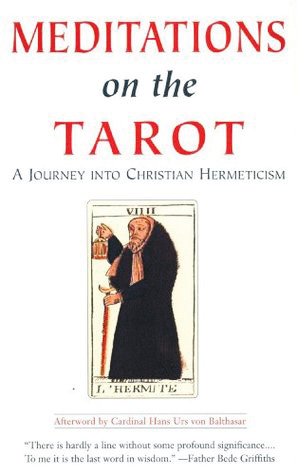
  • Destiny Calling: Experiments with Dreaming, Time & Synchronicity

    Destiny Calling: Experiments with Dreaming, Time & Synchronicity

    From New Dawn 181 (Jul-Aug 2020)

    This article about synchronicities and precognitive dreams was originally published in Quest magazine in 1997. At the time I wrote it, I didn’t have access to the dream journals I mention in it, and so had to rely on memory. Since then I have retrieved the journals from Los Angeles – where they were slumbering in storage – and at present am working on a book about dreams, time, and the strange relationship between. This article can serve as a taster for the full-length treatment to come.

    Since around 1980, I have kept, more on than off, a dream journal. Some years are less accounted for than others, but on the whole I have a fairly well-stocked entry book for what was going on in my sleeping mind over the last seventeen years.

    J. W. Dunne (1875–1949) 

    I began the journal after reading an amazing book, An Experiment with Time, by J. W. Dunne. In it, Dunne, an aeronautics engineer,tells how he discovered that he could dream the future. One night heawoke from a dream in which he had been arguing with someoneabout the time. He said it was 4:30 a.m. In the dream Dunneassumed, with the strange logic of dreams, that his pocket watchmust have stopped; he reached for it to check, and found that it had. He then woke up.

    A curious sort, Dunne decided to see what time it “really” was. He found his pocket watch and looked: it had stopped at precisely 4:30. Dunne assumed he must have noticed this earlier, forgotten it, also forgotten to wind the watch, and dreamed about it. He wound the watch and went back to bed. When he woke later, he assumed he’d have to fix the time, since he had no idea what time it was when he wound the watch the night before. When he checked the watch against a clock, he was surprised to discover it was correct. The watch had stopped at 4:30 a.m.

    More odd things happened. Lying in bed one morning, Dunne found himself wondering what time it was. He tried an experiment. He closed his eyes and “fell into one of those semi-dozes in which one is aware of one’s situation” – what we’d call a “hypnogogic state” – and concentrated on knowing what time it was. He saw an image of his watch, poised in front of him. It said two and a half minutes past eight (Dunne is meticulous with details). He opened his eyes and reached out for his watch. His vision was correct: the time was two and a half minutes past eight.

    Not long after, Dunne had a dream in which he was in Egypt, near Khartoum. He saw three men approaching from the south, dressed in ragged army uniforms, very much like those of the soldiers he had recently been fighting in the Boer War in South Africa. In the dream he wondered why they should travel on foot from the bottom of the continent to the top, and asked them. They replied that was precisely what they did. The next morning he saw a news headline: “The Cape to Cairo: Expedition at Khartoum,” over a story describing the expedition he had dreamed about.

    First edition of An Experiment with Time.

    But perhaps the most thrilling dream was of the eruption of Mont Pelee on the island of Martinique in 1902. Dunne dreamed he was on an island, and that cracks and fissures had opened under his feet. Steam escaped from these openings, and in the dream Dunne realised that the island was about to explode. He knew he had to escape, and tried to help the 4,000 people he knew would be killed. The next morning the newspaper carried a story about the disaster. Dunne was off on the number of people lost; it was 40,000, not 4,000. But this discrepancy proved a key to his experience. When reading of the disaster, Dunne had hastily read that 4,000 people had been killed. It was only later that he went back and saw that he had misread the newspaper. Dunne realised that he wasn’t dreaming about the actual events – the volcano or the expedition – but about his reading about them in the morning paper. He had dreamed the future, but it was his own, specific future – in which he misread the number in the newspaper.

    This led Dunne to believe that what he was experiencing was, odd as it sounds, “normal.” He hadn’t developed some strange power to see the future; our ideas about time, he believed, were wrong. We usually think of time moving in a definite order: past, present, future. Dunne’s dreams were giving him his usual experience but in a different order. After studying many dreams, Dunne concluded that they were made up of a mixture of past and future events. We usually don’t notice this because, for one thing, we easily forget our dreams, and for another, we usually pay very little attention to our experience.

    Dunne went on to write a series of interesting books in which he developed his philosophy of “serialism,” a somewhat complicated metaphysic of different “times,” each encompassing the other. While making for fascinating reading, Dunne’s theory leaves us with an infinite regression of “selves,” each one, as it were, looking over the previous self’s shoulder. Dunne argued that the only way we can notice that one time is different from another is for there to be a consciousness outside of the two times and able to compare them. So, Time 1 is everyday time of past, present, and future. Time 2, which includes Time 1, is the time of dreams, where the future mixes with the past and present. Time 3 looks at Time 2 and compares it to Time 1, and so on until we arrive at the ultimate timekeeper, God, who is aware of all times simultaneously. The vision is inspiring but, to me at least, unsatisfying. If you think of the infinite reflections we get when we hold one mirror up to another, you’ll see what I mean.

    After reading Dunne’s books, I decided to keep a dream journal. I had been interested in dreams already through reading C. G. Jung and had occasionally written down unusual ones. And I had been interested in the strange character of time through reading the Russian philosopher P. D. Ouspensky. In Tertium Organum, New Model of the Universe, and his novel, The Strange Life of Ivan Osokin, Ouspensky, like Dunne, started from the recognition that our usual ideas about time are inadequate. Ouspensky explored the idea of eternal recurrence – the notion that our lives repeat over and over again. Ouspensky believed this was responsible for déjà vu, and speculated on a six-dimensional time. Time is strange, Ouspensky knew, and like Dunne he felt that our usual account of it was sadly inaccurate. Other writers followed, including T. C. Lethbridge and J. B. Priestley.

    Lethbridge is best known for his work with pendulums, but in his last years he wrote about “Dunne type dreams.” Priestley called himself a “time haunted man,” and was influenced by both Dunne and Ouspensky. His reflections on time and dreams can be found in his books Man and Time and Over the Long High Wall. He also wrote plays based on Ouspensky’s theories – Time and the Conways and I Have Been Here Before.

    Future Dreams

    Having said this, I should mention that I don’t have a theory to account for “future dreams.” Dunne’s serialism doesn’t satisfy me. Ouspensky’s speculations on the fourth, fifth, and sixth dimensions offer more to go on, but I think they are a beginning, not an “answer.” To tell me I dream the future because time is six-dimensional is fine, as long as you also tell me how that answers it. Unfortunately, when I discuss this with friends, I usually get an answer similar to this, which suggests to me more a disinclination to take on the difficult business of thinking than a sure grasp of the metaphysics of temporal displacement.

    What I first discovered in following Dunne’s example is that he was right: bits of the future did turn up in my dreams, but nothing as thrilling as a volcano (although they did turn up later). What came through were trivial items. I dreamed of playing a red guitar. I didn’t own one, nor did I know anyone who did. But later that day, through a chance meeting, I wound up at someone’s apartment, and this acquaintance handed me a red guitar, asking me to “check this out.” I started strumming and only then remembered I had written about this in my journal that morning. I dreamed of sitting cozily with an attractive woman I knew slightly; I chalked that one up to Freudian wish fulfilment until, again through a chance connection, I found myself in a more intimate setting than I would have expected with the woman in question. Similar dreams followed, enough to convince me that something more than mere coincidence was at work here.

    One of my earliest “future dreams” proved to be a “vision” of an event that took place months later. I had dreamed of riding on the back of a motor scooter with someone I didn’t know through an unfamiliar neighbourhood. The landscape was hilly, with palm trees and other vegetation not native to Manhattan, where I was living at the time. In a particularly memorable part of the dream, we were passing large trucks with the words “cosmic consciousness” painted on the side. An odd enough dream to begin with, but then, months later, I found myself on the back of a Vespa, riding with a newly made friend through the Silverlake district of Los Angeles, to where I had just moved from Manhattan. We passed the hills I had seen in the dream, also the palm trees. But in place of the trucks, something else was there. As we passed a street with the same name as my friend – I remember pointing it out to him – I remembered the dream. Suddenly I was hit with a strong dose of déjà vu, and a feeling that walls of some sort had just fallen, and that my awareness of things expanded in all directions: a close enough description of a snippet of “cosmic consciousness” to get me thinking about what exactly was going on. Around the same time as this “waking” event I had a very powerful lucid dream – these are dreams in which we know we are dreaming – featuring the same friend that generated the same odd feeling of expanded awareness.

    Two things came from that dream: the realisation that some future events appear “distorted” – or “symbolically,” depending on how you look at it – in dreams, and that the recognition that “you have dreamed this” is accompanied by a peculiar sensation and emotion. The dream was, as it were, fulfilling its own prophecy: I had dreamed about cosmic consciousness, and remembering the dream when in the same situation in waking state produced a sensation of expanded awareness. Ouspensky said certain kinds of knowledge aren’t available unless we’re in the right emotional state. I had begun my experiment in a spirit of scientific objectivity but soon saw that I couldn’t treat dreams as we do other objects of study. They aren’t dead specimens, as many “scientific” dream researchers seem to regard them. To understand them fully, a certain emotional warmth, much as we direct toward people, is necessary.

    In the years that followed I collected more “future dreams.” Certain patterns emerged, as well as more characteristics that Dunne didn’t mention. My reading of Jung had made me aware of the psychological value of dreams, their meaning as indicators of what Jung called the “individuation process,” an approach to dreams apparently unfamiliar to Dunne. This meant that I began to think not only of the puzzles of time and consciousness that “future dreams” present, but also what these glimpses meant for me. Two books deal with related phenomena from this perspective: Ray Grasse’s The Waking Dream [1996] and Victor Mansfield’s Synchronicity, Science, and Soul-Making [1995].

    Some of the patterns dealt with time itself. The dreams came in cycles. There would be several in a week, then none for a few months, then another flurry. Some of the most spectacular related to films. During a period of intense Jungian study, I dreamed about a film of the old 1930s pulp character the Shadow – not unusual for a reader of Jung. I knew of no such film and, though I had been a great fan of the pulp revival in my youth, I hadn’t thought of this character in years. In the dream, the Shadow appeared as a two-dimensional figure on a wall, then popped out and became three-dimensional. I had this dream in 1990. In 1994, I went to see the film The Shadow, starring Alec Baldwin, and saw exactly what I had seen in my dream. Sometime before, a friend who was working on Francis Coppola’s version of Dracula had invited me to a screening. A few nights before, I had a frightful nightmare in which I rescued a woman friend from some gruesome face in a strange, Hieronymous Bosch-like village. Wolves hung upside clown on crosses, fires burned, throwing up blood-red shadows and thick, black smoke, and foul-looking characters waded through arms, legs, and other body parts, carrying axes and pikes. It was a charnel house, something out of one of Emanuel Swedenborg’s hells. Truly evil. I went to the screening and saw what I had dreamed: the film begins with a scene of Vlad the Impaler’s handiwork – crucified wolves, fires, blood and gore. In both instances the “feeling” was there, what I started to call the “timeslip.”

    Synchronicity Cloud

    Along with emotionally charged dreams, there were many about trivial, everyday matters. I would be standing at a street corner and notice a car pass by and realise I had dreamed this the night before. I dreamed of a fountain, with terracotta steps rising on either side. In the dream, this was somewhere in Italy. That day, by chance, I got a lift from a friend into Hollywood and decided to get out a few blocks from my destination and walk the rest of the way. When I got out of the car, there were the fountain and steps; it was not Italy, but Sunset Boulevard. And the feeling. Not exactly déjà vu, but an odd mixture of this and another sensation described by Ouspensky, from his studies with Gurdjieff, called “self-remembering.” Jungian friends “explained” my dreams as “synchronicities.” I had no doubt they were, but didn’t see how calling them this rather than “coincidence” told me anything about how they happened.

    I noticed that certain psychological conditions seemed, if not to cause the dreams, at least to accompany them more than others. States of tension or, conversely, of great interest and happiness seemed to be preferable to an even keel. Tension produced an uncomfortable feeling that the membrane separating dream from reality – shaky distinctions at best – had been perforated. Situations in which I would hear, metaphorically, the Twilight Zone theme would produce a feeling that I was “dreaming” while awake, and it took some effort to keep up appearances and not turn tail. It seemed then that the dream feeling was seeping into my waking life and that my consciousness consisted of a muddle of the two. Conversely, when happy, alert, and expectant, I would find synchronicities popping up almost a dime a dozen.

    Once, on a weekend trip to San Francisco, it was as if I had stepped into a “synchronicity cloud.” Not only had I dreamed several small events of the day, but I found myself bumping into coincidences left and right. For example, I had been reading Edgar Allan Poe’s stories and had just read about a particular character with an unusual name. I looked up at the building I was standing in front of: the same name was emblazoned across the storefront. Several similar things happened. Likewise, at the start of a move to Europe, I was waiting for my flight at JFK airport, reading The Glass Bees by the German writer Ernst Junger, himself a connoisseur of dreams and psychic phenomena. The hero was describing how, during his military training, his cavalry sergeant had taught him the value of learning how to fall by deliberately arranging a slip from the saddle. The moment I read this, I looked up to see a large man fall flat on his back.

    I mention synchronicities because, although some of my “future dreams” were clearly related to my psychological development, many weren’t. Jung defines synchronicities as “meaningful coincidences,” having to do with our “individuation,” our growth and maturity. I mentioned volcanoes earlier. Several years ago, I woke from a dream in which my ex-wife and I were with her uncle in Japan. He was helping us escape from a flood of lava and urging us to hurry. I had never met her uncle nor been to Japan; I also hadn’t heard about the volcano that had erupted there that week until after the dream. Synchronicity? But what had volcanoes in Japan to do with my psychological growth? Again, a few years ago, I dreamed of tremendous explosions and devastated landscapes; only later that day I realised it was August 6, the anniversary of Hiroshima, something I hadn’t remembered until then. Some “future dreams” were perhaps telepathic; my ex-wife may have been in rapport with her uncle in Japan, and I may have picked up her intuition, but she didn’t mention it to me, nor was she aware of the volcano. In any case, this seems to me a case of synchronicity with no particular meaning for me. Yet some other dreams clearly did have meaning. One night I dreamed of a man’s face directly in front of mine; it was nasty, and he was shouting. That night I went to an outdoor concert at the Hollywood Bowl. There was a misunderstanding about my seat, and I lost my temper with an usher; naturally enough, he replied in kind. Only later did I realise his was the face in the dream. Had I been more aware, I could have avoided a foolish argument.

    The Invisible Writing

    But my most striking dreams are ones in which I feel some “intelligence” is communicating with me, giving guidance and advice. With these, I’m convinced something not “myself” is at work. I dreamed of dancing in a circle of Tibetan monks. We were passing a ball of yarn back and forth; when the ball came to me it began to unravel. We held onto the edges and danced; the yarn opened up and a beautiful mandala appeared. I woke feeling that something extraordinary had happened. That day, in the bookstore I managed, a colleague told me he had found a picture of me in my past life. I laughed as he pulled out a copy of Alexandra-David Neel’s Secrets of Tibetan Yoga and showed me the back cover. There was a photo of a pudgy, cherubic monk with round glasses, the kind I wore. I hadn’t mentioned the dream. The friend said this meant I should take up Tibetan Buddhism. I thought it meant I was on the “right path” already.

    One last dream. At the same bookstore I made a habit of putting books aside, thinking I might buy them. One was The Invisible Writing, Arthur Koestler’s autobiography. Koestler wrote of how he had abandoned the “scientific” materialist outlook of his youth while waiting to be shot as a prisoner during the Spanish Civil War. To pass the time in his cell, Koestler worked out the mathematical proof that there is no highest prime number. He became so absorbed in this that he had a kind of mystical experience; only a small nagging at the back of his mind distracted him. “Oh, yes,” he remembered, “I may be shot tomorrow. Is that all?” Koestler then realised he had been wrong to think the reality of the world could be found in the Marxist rationalist thought he had been trained in, the visible proofs of history, economics, and sociology. Reality lay in what he called “the invisible writing,” the intuition, poetic and mystical. The experience changed his life. He left Marxism and devoted himself to exploring human creativity and the meeting points of science and mysticism.

    At the time I found Koestler’s book, I was facing a crisis: I had to decide whether to carry on with a PhD program or take a chance on writing, as I had always wanted to do. The doctorate would mean security, a job, prestige, but it would also mean letting go of my unorthodox interests, such as future dreams, and becoming a “serious” scholar. I decided not to buy the book. That night I dreamed that I returned to the store and bought The Invisible Writing. Wish fulfilment? But “bought” in slang means to accept, to believe. The dream was telling me to buy more than the book; it told me to “buy” the idea of “the invisible writing,” a point that came home literally when I borrowed a biography of Jung that night and opened it at random to a chapter describing his ideas about dreams as messages from a hidden self. The chapter’s title? “The Invisible Writing.” I didn’t finish graduate school.

    The above article originally appeared in Quest: Journal of the Theosophical Society in America, Vol 85, Issue 12.

    Gary Lachman’s new book is Dreaming Ahead of Time: Experiences with Precognitive Dreams, Synchronicity and Coincidence, available from all good bookstores and online retailers.

    [alert type=”general” dismiss=”no”]This article was published in New Dawn 181.[/alert]

    [alert type=”success” dismiss=”no”]If you appreciate this article, please consider subscribing to help maintain this website.[/alert]

    © New Dawn Magazine and the respective author.
    For our reproduction notice, click here.