New Dawn – World's Most Unusual Magazine

Author: Kingsley Dennis

  • Unidentified Spectres: How Suppressed Secrets are Used as Paranormal Control Mechanisms

    Unidentified Spectres: How Suppressed Secrets are Used as Paranormal Control Mechanisms

    From New Dawn Special Issue Vol 17 No 4 (Aug 2023)

    What could paranormal phenomena control? I suggest that it is human belief that is being controlled and conditioned.
    – Jacques Vallee

    The human mind does not operate within a unified wholeness but rather through the fragments of a piecemeal story. These fragments are constantly rearranged to tell a different story according to the dominant narrative. The arrangement of these fragments of storytelling form part of the generally unknown or suppressed mechanisms and processes of the deliberate management and conditioning of human consciousness. One of these lucrative sites of targeting is through the medium of the paranormal; this is also a secret realm of the infliction of trauma upon the individual and collective mind.

    In past eras, this has been maintained through narratives of myth, legend, mystic-themed paradigms, occultism, and the sustained secrecy of certain ‘secret societies’.

    The thoughts, beliefs, and opinions that were ‘available for use’ within the social collective of the masses have always been limited by regulation. For such a long time, information came from localised sources and was heavily governed by those same sources.

    However, as the general level of conscious awareness rises, the control systems also become more complex and sophisticated. Not only do such conditioning mechanisms operate through well-known social-cultural institutions – education, politics, law, the media, and many more (as have been well-documented) – they also work more stealthily through paranormal phenomena.
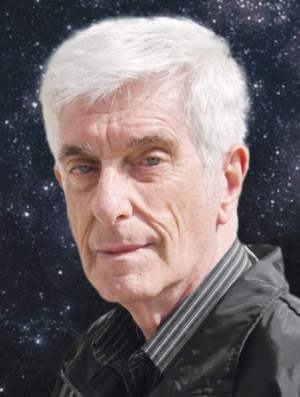
    Jacques Vallee

    As the author, scientist and paranormal investigator Jacques Vallee stated: “I propose the hypothesis that there is a control system for human consciousness… Human life is ruled by imagination and myth. These obey strict laws and they, too, are governed by control systems… What could paranormal phenomena control? I suggest that it is human belief that is being controlled and conditioned.”1

    Over an extended period of time, new mythologies are formed and planted into mass human consciousness, functioning as conductors controlling human beliefs, ideas and ideals – which then develop into ideologies. These modulating factors then gain a controlling influence over the relationship between human consciousness and physical reality.

    Such mechanisms have been in force throughout a great span of human history and operate to manipulate human minds by sources largely external to us. These are deliberate attempts to diminish our sense of reality, making people more suggestible and open for programming and creating a psychic numbness that restricts the range of human perception.

    Recently, such programming has been applied to paranormal, metaphysical, and spiritual phenomena and experiences.

    Socio-Spiritual Engineering

    Socio-spiritual engineering can be regarded as a form of ‘culture-making’ prevalent throughout many cultural events and iconic movements. Some of these strategies were developed and implemented through high-level institutes establishing themselves as credible social enterprises (such as the Tavistock Institute in the UK).

    The structures that uphold physical reality (including belief structures) are diametrically positioned against phenomena that may substantiate a spiritual or metaphysical reality. That is, the tangibility of the physical domain and the intangibility of the metaphysical realm are not only placed in opposition, but their potentials are fragmented. This once clandestine method operates so that phenomena and events are orchestrated to break down the wholeness or credibility of each realm. In this, the ‘unidentified spectre’ plays the perfect role.

    Mysterious or so-called unexplained phenomena act as a direct challenge to the established consensus reality or narrative. Consensus reality is the ultimate secret society, with most people unaware of its existence or that they have been inducted as members. To introduce rapid programming and psychological fluctuations into the mass mind, it is best to maintain a series of ‘anomalies’ within the system that can be utilised to create episodes of fragmentation and disassociation. This is when spectres are brought out from behind the veil.

    Mystification has long been a highly effective weapon of psychological warfare. Such elements have also played into the creation of myths as a form of social engineering. Social myths and mystification can be used as channels for the directing of, and influence of, the human psyche and psychic energies. Manipulated and/or controlled events have the power to affect and influence both the conscious and the unconscious mind.

    This can be utilised to create a split between what we are told to believe through our conditioning and what may be experienced in the metaphysical realm. This discrepancy can create a rift in the human psyche and fragment our ‘sense of reality’, which can then sow the seeds of psychological imbalance.

    Paranormal phenomena can be exploited to create an ambiguity that produces a state of ‘deferred closure’. That is, because the conditioned rational mind cannot create a closure (i.e., there is no ultimate solution), this creates dissonance. This dissonance is further reinforced through the dissemination and circulation of alternative and differing answers that, while promising to satisfy, end up confusing the human mind by not allowing a consistent view of reality. This produces a state of ‘closure-starvation’ that will likely persuade a person to accept an explanation offering closure relief.

    This procedure of mind programming and manipulation utilises aspects of the ‘secret’ and the ‘suppressed’ to create further programs within consensus reality. The medium of psycho-spiritual phenomena allows conditioning to be implanted more deeply and directly, bypassing much of the conscious mind. In this way, methods of psychological splintering and trauma can be employed. The fact that such implanting can occur with relatively no knowledge or awareness of it shows how little we know about the psychic world of the human being.

    In recent years there has been a significant shift in people’s belief patterns regarding the concept of the paranormal. The external layering of the dominant consensus reality works upon the meta-logical level and seeks to program the conscious mind of the individual and the collective. Yet the subconscious (collective) mind is influenced more upon the metaphysical level (as was well known to Carl Jung). And in this space, many of our mythological structures have been changing and/or reprogrammed – especially by introducing various psychic phenomena.

    Life experience in consensus reality is often programmed through ritual, the intentional design and correspondences of symbols, words, and coordinated actions. It is ceremonial action performed according to a prescribed order. Humanity, for the most part, is immersed within a medium of ritual. Rituals are manipulated practices to obtain a defined outcome. The spectres and spooks that keep popping up in our cultures most likely represent the agents of subterfuge and deception.

    Through socio-spiritual engineering, it becomes increasingly difficult to distinguish between the imaginary, the deception, the quasi-reality, and the lesser reality, as people’s reality tunnels are continuously manipulated. Without most people’s awareness, fragmentation and splintering of the human psyche is in effect. What is often perceived as one’s general reality is actually a controlled environment fragmented and stitched together through narratives, stories, and conditioning programs that serve to exert a metaphysical uncertainty and imbalance within many unsuspecting minds.
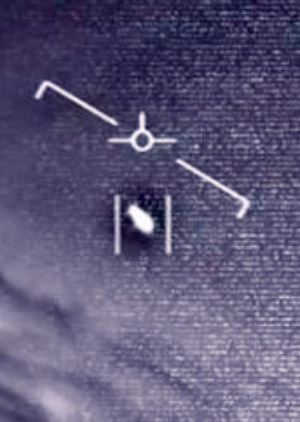
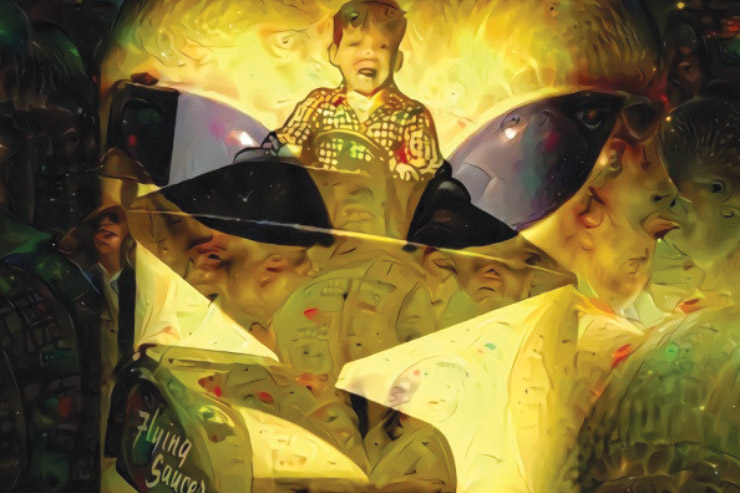
    Paranormal phenomena, such as the UFO spectacle of the last seventy years or so, allow the more transcendental part of the human psyche to intervene and ‘rescue’ us from mundane reality by ‘abducting’ us into its realm. This realm is real enough, albeit a dissociated one. In this way, certain paranormal and/or psycho-spiritual encounters and experiences – whether ‘real’ or not – may serve as a form of initiation into a type of social trauma. This trauma acts on a subtle level, integrating itself into the socio-cultural psyche in a way that splinters the wholeness of the collective mind without pushing it beyond the bounds of social functionality. In this way, says Jasun Horsley, UFO encounters and alien abduction experiences “may be a way for some of us to allow such traumatic material into our awareness in a more ‘magical’ (transcendental) guise.”2

    Voices of authority, such as national governments, have been heavily involved in manipulating how psychic phenomena are presented to the public, especially regarding UFOs. For their part, they have been officially denying its existence while at the same time covertly leaking stories confirming that UFOs do exist. This form of ‘subliminal contradiction technique’ has massively increased in the last few years as many top-level sources, including the Pentagon, have gone on record to disclose UFO activity.
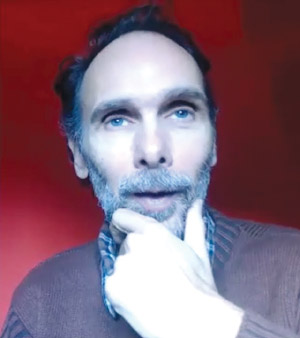
    Jasun Horsley

    Further, in what can be seen as another form of cognitive programming, the United States authorities have begun to refer to UFO phenomena as Unidentified Aerial Phenomena (UAP) in an attempt to control the new phase of the narrative. These forms of ongoing denial, followed by bouts of official or ‘unofficially leaked’ disclosure of suppressed secrets, create a subconscious contradiction that establishes an extreme form of cognitive dissonance within the public mindset. This ongoing inconsistency between two beliefs does not resolve but solidifies uncertainty and dissonance through well-placed subliminal contradictions.

    When a subliminal contradiction is accepted without initial resistance, the critical faculty is deactivated, leaving the mind vulnerable and receptive to suggestion. If, at any later point, an official admission claims to give the ‘official version’ of UFO events, then the general public is more likely to accept it with the relief that an answer has finally been found. This ‘relief’ comes as a ‘resolution response’ within the programmed mind.

    UFO phenomena is slyly blended here with psychic, paranormal, and metaphysical aspects to colonise and reprogram the ‘spiritual’ domain. These are cunning manoeuvres as many people tend to confuse psychic experience with spiritual attainment. The tendency to willingly indulge in certain psychic or paranormal experiences may work to strengthen false spiritual programming rather than strengthen the inner self.

    There is a great need and/or longing within the human condition to access non-visible realms, transcendental states, and similar experiences. This longing, or need, can be a weakness if a person does not show discernment. Belief and imagination can easily be flipped into ideology, insecurity, and doubt.

    In recent years, especially, there has been a dramatic rise in insecurity alongside paranormal and psycho-spiritual activity. This is the perfect recipe for splintering the collective psyche and exercising subtle programs of conscious and unconscious trauma.

    A Traumatised Reality

    Modern societies tend to go through a form of psychological reorganisation of the social system, now and again, which acts as a form of recalibration to keep the social realm from settling down too much.

    Whether we are aware of it or not, trauma has always been incorporated into the ‘norm’ in human society, from medical birthing procedures, random acts of violence, institutionalised madness, authoritarian fear strategies, population indoctrinations, religious-cult programming, conditioned education, and more. All these elements combine to create variations upon a divided consciousness. Carl Jung referred to this state as dissociation which acts as a polarising force against psychic integration.

    The human psyche is already fragile and hence vulnerable to further triggers toward dissociation. It is suggested that these triggers have been arriving through paranormal experiences; the top of the list is the ‘extra-terrestrial issue’ and UFO phenomena.

    This is significant given that there has been a recent increase in UFO-related material within mainstream media. Once regarded as a subject of mainstream ridicule or avoidance, major news outlets (in the US especially) have been carrying reports about ‘credible’ verified sightings. There is speculation that this sudden rise in mainstream reporting (orchestrated through intelligence agencies) belongs to an engineered propaganda operation for preparing the collective mindset for a new ‘paranormal narrative’. That is, another ‘reality-tunnel’ is being constructed for mass release.

    For a long time, the subject of ‘aliens’ belonged to a historical lineage of phenomena that included fairies, ‘little people’, nature spirits, djinns, demons, etc. Jungian psychoanalyst Donald Kalsched notes that the word ‘daimonic’ comes from daiomai, which means to divide, and that it originally referred to moments of divided consciousness. Kalsched studied trauma in relation to mytho-poetic manifestations and psycho-spiritual development. Triggers from the mytho-spiritual realm, which includes paranormal experience, can cause a fragmentation of the consciousness (especially in less-grounded individuals). In this case, the external event fuses with a person’s inner psychological state. As Kalsched notes: “The full pathological effect of trauma requires an outer event and a psychological factor. Outer trauma alone doesn’t split the psyche. An inner psychological agency – occasioned by the trauma – does the splitting.”3 Jung referred to these states as ‘splinter-psyches’ where one of the splinter complexes, after the initial trauma, attempts to protect the regressed part like a guardian. This may prevent further psychic integration as the psyche cannot fully integrate or process the experience. The person may try to re-enact or regain the traumatic experience as a way of gaining closure. This may explain some of the obsessive behaviour of paranormal experiencers after the event to keep searching for repeat experiences.

    The nefarious agenda of psycho-spiritual programming through metaphysical events is that these ‘inhibited programs’ bypass the conscious mind almost immediately and attach themselves to the parts of the subconscious. That is, the programming bypasses the usual gatekeepers of our minds. Once these mechanisms are in place, they can then be activated whenever there is a need to trigger a part of the collective psyche.

    The UFO phenomenon has been gradually sown into our cultural soils for at least the past seven or eight decades. At the same time, the seeds of trauma have scattered throughout various extra-terrestrial contact experiences. It is possible that the ‘alien question’ has been developed as a form of programming to mimic spiritual realities on the psycho-physical level and so prepare the way for something even more traumatic.

    The French mystic-philosopher Rene Guenon wrote several books warning that increased materialism and physical trappings will lead to a “solidification of the world,” resulting in “fissures” opening up through which “infra-psychic” forces can enter.4 These forces, amongst others, impact the human psychosphere and rewire our internal programming.

    There may indeed be some physical brain rewiring going on. As infamous UFO contactee Whitley Streiber says: “If you actually wanted people to increase the use of the right brain, then stressing them would be a way to do it. If you apply trauma in the right way, what you are actually doing is reengineering the brain.”5

    Get the issue this article appears in

    The unidentified spectres presented to us as ‘suppressed secrets’ may trigger an expansion of consciousness and be a vehicle for traumatic brain programming. Jasun Horsley questions whether splitting the human psyche could be a way of allowing or letting through certain ‘hostile forces’ that may be a part of the shadow psyche. These shadows might then be materialised, or at least experienced, by the psyche as material phenomena.6

    Letting through these unidentified spectres may be just some of the secret programs operating to splinter the collective human psyche and steer it further away from psychic integration and wholeness.

    Interestingly, much of metaphysical phenomena is classed as part of the ‘new paradigm’ and suchlike, as if these elements are part of a new reality consciousness. And yet the very notion of paradigms – and hence, the concept of a ‘new paradigm’ – is an alternative emergence from within existing structures.

    As such, metaphysical phenomena and experiences may serve to deceive if they are utilised for simply rearranging the pre-existing furniture of our minds rather than breaking out of these programmed reality-boxes. This deception causes people to believe it is a ‘new reality’ when in fact it is yet another layer within the multi-faceted Matrix.

    Another aspect to consider is that metaphysical experiences tend to take the experiencer away from their bodily presence. As the metaphysical and paranormal threads become increasingly woven into the mainstream narrative, we may be witnessing a new programmed reality unfolding that requires a subconscious rejection of the body.

    Is the controlling program now intent on rejecting the bodily-physical as part of the rising human-machine narrative? In this, and so much more, we must apply our perceptive awareness and discernment as never before. The Game is On. 

    For more on this subject, check out the author’s book The Inversion: How We Have Been Tricked into a False Reality, available from all good booksotres.

    [alert type=”general” dismiss=”no”]This article was published in New Dawn Special Issue Vol 17 No 4.[/alert]

    [alert type=”success” dismiss=”no”]If you appreciate this article, please consider subscribing to help maintain this website.[/alert]

    Footnotes

    1. Vallee, Jacques (2015), The Invisible College: What a Group of Scientists Has Discovered About UFO Influences on the Human Race, Anomalist Books, 199
    2. Horsley, J. (2018), Prisoner of Infinity: UFOs, Social Engineering, and the Psychology of Fragmentation, Aeon Books, 135
    3. Kalsched, Donald (1996), The Inner World of Trauma: Archetypal Defences of the Personal Spirit, Routledge, 14
    4. See Guenon’s The Crisis of the Modern World, and The Reign of Quantity and the Signs of the Times
    5. Cited in Horsley, Prisoner of Infinity, 104
    6. Horsley, Prisoner of Infinity, 223

    © New Dawn Magazine and the respective author.
    For our reproduction notice, click here.

  • The Metaphysical Vision of James Cowan

    The Metaphysical Vision of James Cowan

    From New Dawn 197 (Mar-Apr 2023)

    The world is a silent poem waiting for my mind to render up its promise.
    – James Cowan .

    The author, poet, and traveller James Cowan was in pursuit of the metaphysical vision for most of his life. He even attempted to define a new literary genre with it – one that he called metaphysical realism. In his own words, he had been grappling with the concept of metaphysical realism for more than fifty years.

    He recognised that the ordinary realist perspective of the world had served us well; but that it had also proved to be one of limitation. James felt that it had ultimately diminished the importance of the imagination. The modern age was seen to be dominated by action and the outward gaze.

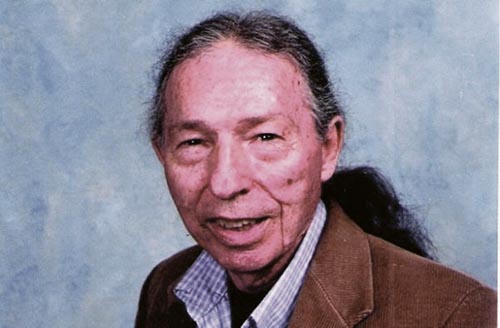
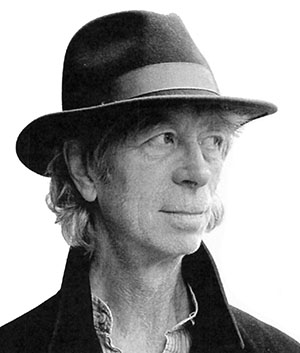
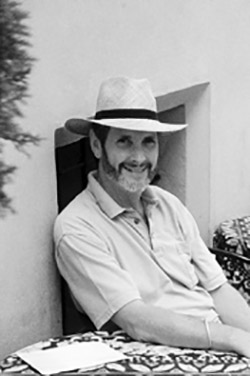
    James Cowan (1942–2018)

    How the mind works inwardly through the intellect – to contemplate how and why things should be done – was, according to James, being neglected and superseded by the imminently practical. The development of the mind’s inner powers began to mean less and less to modern humanity.

    James wrote, “I had to find a way whereby my creative intellect might acquire space in which to operate. I soon understood that my thought needed to contemplate forms that were timeless if I were ever to bring into fruition a more robust form of fictive expression.”1 Words had to be “not simply comprehensible markings on a page” but “photons capable of irradiating the mind of a reader…”2

    James felt that he needed a way to access a different form of consciousness. In his own words, he felt he was left with no choice:

    I was left with no choice but to find another way of dealing with time in the context of creative fiction. It was then that I made the decision to return to a period in social history when time did not exist as a framework for human existence. I journeyed into Central and northern Australia to begin my encounter with elderly Aboriginal tribesmen in order to understand how they viewed time in the context of their Dreaming narratives.3

    This was how James Cowan began his adventures into the Aboriginal landscapes of the Dreaming. James began to learn from the Aboriginal Elders how myth could be used as a vehicle for metaphysical expression.

    Through his Dreaming journeys in the desert, the raw young artist was shown how landscape and language worked in tandem. Words were “more than cerebral” – they also contained the residue of an endlessness that had become embedded into the physical artefacts of our human realm.

    James Cowan began to read classic tales as that of Gilgamesh, the Arthurian legends, and early Coptic hagiographies of desert anchorites – realms that were inhabited by the miraculous. The idea was to seek out examples of a timeless construct where the very best of human nature could find experiences to nurture it.

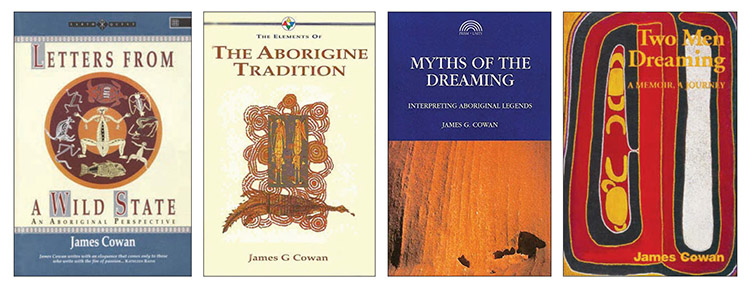
    James spent several years living, travelling, and learning from the Aboriginal culture. This culminated in several well-received books, including Letters from a Wild State: An Aboriginal Perspective (1991), The Element of the Aborigine Tradition (1992); Myths of the Dreaming: Interpreting Aboriginal Legends (1994); and Two Men Dreaming: A Memoir, A Journey (1995).

    In the 1990s, James spent two years living in Balgo Hills, a remote Aboriginal settlement in the Tanami Desert where he had set up a cultural institute to promote and sell the work of Aboriginal painters.4 James considered the Aboriginal artists of the Balgo Hills to be among the most innovative painters working in Central and Western Australia.

    When I asked him why he had chosen to go from the life of a writer to that of an art coordinator, I received an unexpected reply. He told me he had wanted to pay back his debt to the Aboriginal community. What debt? I asked. They had given me their stories, he had said. When an Aboriginal Elder shares with you their story, they are giving something from their community, and they too incur a debt. Their stories are community possessions, their treasures. You cannot treat them lightly. They gave me great gifts over the years, and this debt I feel I must pay back. And I am doing this by promoting their work to the world. It is the least they deserve.

    It was a humbling reply. And it was indicative of how James viewed the world. It was not a solid place, peopled by physical objects and remnants. It was a living mythos. And it ran on the power of stories.

    During the 1990s James also went to visit the village elders and shamans in the longhouses of Borneo. He saw how these tribes ‘stored’ narratives through the random juxtaposition of storyboards on the floor of their longhouse. These storyboards were “like wafers: on them were a rudimentary script made up of markings.”

    Rather than being confined to the rigor of sacred texts, language could be placed in the category of uncertainty. The patterns that were found in nature transcended the literalness of words placed on paper, and myths could find a new dance of life to transmit their secrets.

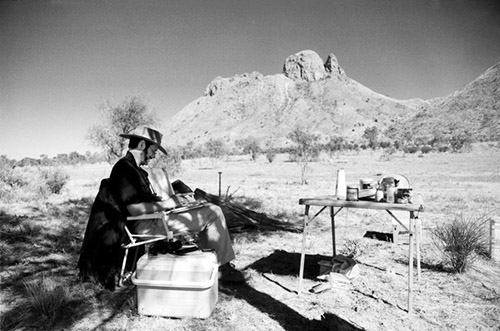
    James sitting outside his tent in the outback. Photo courtesy of Kingsley Dennis.

    James wrote up his experiences among the natives of northwestern Australia, Borneo, and the Torres Strait Islands in his book Messengers of the Gods: Tribal Elders Reveal the Ancient Wisdom of the Earth (1993).

    To further polish his learning, James reread ancient and medieval texts, particularly those associated with the development of early philosophy and theology. He discovered that writers of these periods had developed a way of saying something by referring to what it is not (apophasis). James felt himself at home amongst the medieval writers, many of which stayed with him throughout his life. Writers such as Dionysius the Aeropagite (late 5th–6th c. CE), John Scotus Erigena (815–877), Ibn Masarra (883–931), and John of Ruusbroec (1293–1381).

    True language, James felt, should be able to express itself not only in new and exceptional ways but also in a manner that the reader may not be accustomed to. He didn’t wish for thought to be subjected to the constraints of language; and in order to reconstitute a reality of a higher order, he first had to disrupt the current mode of expression. Language was seen as an incantation. This was the aim of James Cowan’s metaphysical realism – to tell a story within a story. And this meant it was necessary to dispense with the objective realism of storytelling.

    In James’ writings, telling a good story alone was not good enough. Western materialism, he felt, had exhausted the notion of the unending linear narrative. It was necessary to investigate an inner dimension that is timeless, regardless of whether it goes against literary tradition. James was seeking to capture the essence of the inward event within the experiences of the human condition. And in doing so, he realised that his work may be regarded as subversive for it was willing to go against the grain of what is considered reality.

    Yet James Cowan was not the first writer in history to expound metaphysical realism. According to James, metaphysical realism, as a creative method, was first acknowledged by Parmenides in the sixth-century BCE. He had written a philosophic poem, “Way of Truth,”which formulated the principles of logic that continue to govern our thought today. This poem profoundly influenced thinkers such as Socrates, and later Plato, because he paved the way for them to develop a system of logic that we now use.

    James felt that Parmenides was the first to present the idea of the way, the path, as a new form of narrative; an idea later shared by Peter Kingsley.5 In Parmenides’ words:

    A chariot bore me as far as my heart desired
    Urging me upon the Way of the Goddess
    That leads wise men from town to town.
    On that Way I was hauled by trusty steeds
    Hitched to a chariot, & driven by maidens.
    Its axle glowed fiery red in their hubs, heated by
    Spinning wheels at each end, both emitting sounds
    Of a panpipe, while the Daughters of the Sun
    Wishing to transport me into the light, tossed aside
    Veils from their faces as we left Night’s abode.6

    Such writing as given by Parmenides makes the reader aware that there is a way to rise to a certain state of being. And upon this path there is one thing of supreme importance: the human imagination. It is through the imagination that a person can break from the real to venture forth into the realm of the spirit.

    James realised that this was the same technique used by Aboriginal Elders, and other natives such as the Iban people, that he had spent time amongst. It is a path that enables the listener/reader to enter into the world that exists within the underlying language. This was the realm of the divine utterance – the very essence of metaphysics. Writing, for James, was a pathway to reach into these ‘divine utterances’ in a bid to understand, and consequently to present, the revelations of transcendent experience through language. James was well aware that he would never fully master this technique. Yet he put his hand to the task.

    In 1996 James Cowans’ A Mapmaker’s Dream was published to critical acclaim. I remember James laughing gently as he told me the tale of how his most widely read book came into publication. He said he had sent it to various publishers but none of them knew what to make of it. Saddled with an unusual book, just about every publisher preferred not to take the economic risk, so they put it aside. Except one.

    The editor of Shambhala Publications finally gave James a call. He told James how they had read the book, enjoyed it, yet thought it was unmarketable. And so, like every other publisher, they had put the book aside. Yet, a strange thing happened. Each person at Shambhala who had read the book could not stop thinking about it. It would not leave their thoughts. It hung around in their heads, lingering like the vestiges of some peripheral dream. It would not let them go.

    Finally, the editor knew the book had to be released. He was on the phone now with James, asking if he would sign their contract. “I’m going away in a couple of days on a journey,” James replied. “Maybe when I get back, I can look over the contract.” There was a pause on the other end of the phoneline. “Too late,” came the reply. “I’ll fly over to Australia tomorrow and you can sign the contract.” James was bemused. As good as his word, the editor at Shambhala Publications flew from America to Australia and handed the contract to James. He signed it, then went off on his trek.

    James was not expecting the future success that A Mapmaker’s Dream would generate. The book, being ‘The Meditations of Fra Mauro, Cartographer to the Court of Venice’ (to give its full subtitle) explored a whole world across time and space, and realities that exist within other realities.

    In my own PhD thesis, almost fifteen years before finally meeting James, I had quoted from A Mapmaker’s Dream as an opening citation to my chapter on hyper-complexity. I quoted:

    “Every man who had ever lived became a contributor to the evolution of the earth, since his observations were a part of its growth. The world was thus a place entirely constructed from thought, ever changing, constantly renewing itself through the process of mankind’s pondering its reality for themselves… No continent or people have turned out to exist except in relation to themselves. Their geographic location has also proved to be deceptive. The inescapable conclusion is that the true location of the world, of its countries, mountains, rivers, and cities, happens to lie in the eye of the beholder.”7

    A perfect reflection of our inter-connectivity as a global species: geographic location has “proved to be deceptive.” Our world – that is, our reality – is a place entirely constructed from thought. As such, it is ever changing, and constantly renewing itself. This is our world perfectly described. Everything within it, including ourselves, only exist in relation to one another. Everything thus lies within the eye of the beholder. We are the mapmakers, and we are each living through our dreams.

    The story of the world is told more through the languages, thought, and beingness of its characters (us) rather than in the do-ing of the characters. And this was what James reflected in his writings; especially so in A Mapmaker’s Dream which was perhaps his own first full exposition of metaphysical realism. Commercially, it was a success. A success that James was not to repeat in his lifetime.

    A Troubadour’s Testament (1998) followed from this.8 The book was another journey: a contemplation of love enacted both outwardly and through the inward gaze. “Solitude is a difficult encampment,” wrote James within its pages. “Its guy ropes grow rigid on frosty mornings.” James was exploring the soul as a solitary substance: “it wanders through space, a lonely at times disfigured star, torn this way and that as it struggles to maintain its course.” James felt compelled to pursue his metaphysical vision through the struggle of the human soul.

    His next series of books turned away from fiction towards an outer and interior travelogue of how the human heart and soul endures and finds nourishment through the world: Journey to the Inner Mountain: In the Desert with St. Antony (2001);9 Francis: A Saint’s Way (2002); and Fleeing Herod: Through Egypt with the Holy Family (2013).

    By this time, James had decamped and left Australia to live in Italy for several years, to absorb the culture, learn the language, and to research the life of Saint Francis. James’ vision was to explore the world through whispers rather than shouts. To probe into the phantasms of the human soul; to trace the movements of an ant’s foot across a black stone in the darkness of night.

    According to James, the metaphysical vision is “a rare flower” – Novalis’s blue flower, perhaps? He respected the writings of Novalis, Friedrich Hölderlin, Victor Segalen, Borges, and later, W.G. Sebald. He saw all such writings as seeds that were seeking their cultivation through the reader. James’ own wish in his writings was to create a realm to allow the reader to change places with himself. The reader, he felt, should not be required to remain bound by the limits of his or her world perspective.

    James lived the final months of his life as a literary meditation. The Book of Letters was the last completed full work from James Cowan. It was written during his final months, and he intended it to be his ultimate testimony and love letter to the sanctity of language. Of this book, he said:

    It is a pure work, and goes to the heart of our time. We have distanced ourselves from the purity of language, hence the grave time in which we live. The Book of Letters is a cris de coeur for a return to the sanctity of words… my final attempt at genuine metaphysics of language.10

    Still, the metaphysical gaze would not rest. James began working on a new composition in the final weeks of his life, which was left almost completed. Within the scarcity of life, James was more concerned with thoughts than with titles. James had no name for the final book he was composing: “The question I next asked myself was: what should I call it?”11

    And so, the book became the Liber sin Nomine (a book without name). It was James’ original intention to create a type of spirit-full collection, or sacred “tag-ends of my own thoughts.” In his final days he spoke of the book as an ongoing flow of thoughts and aphorisms. He often referred to it as “my Aphorism book.”

    Get the issue this article appears in

    Yet it was more than a humble collection of “tag-ends.” The book became James’ own meditation on death and dying, and the relationship between a sacred life and the passing of that life. Within the book there are various places where James is acutely aware of the nature of his dying body – also, the rebellious behaviour of his body. He states that, “Let there be no mistake: my body has chosen to leave me! I did not give it permission to depart, at least not yet.”12 Here are the words of a heart and mind, an active and alert consciousness, coming to terms with a disintegrating, and dissenting, body: “My body, now, is in violent disagreement with me. It simply refuses to concur with my pre-disposition towards health.”13

    The book without name is a reflection on the act of dying. As a person who spent his whole life seeking to unravel the sacredness and mystery of life, James was now the participant in his own passing, and witnessing first-hand the departure from a world he so lovingly, and desperately, sought to embrace.

    Ultimately, the writing of this final book was a tool that allowed him to realise his death consciously rather than through an unconscious submission. As within his own writings, James was preparing the mind for new vision, for an extension of consciousness. The metaphysical vision of James Cowan was forever attempting to “cut away dead flesh” in order to get at the essentiality of words and their meaning. And this was perhaps his route to self-revelation.

    Readers are encouraged to read the latest posthumous release of the work of James Cowan, One: Parmenides and his Vision (Balgo Hills Publishing, 2022), available from online booksellers.

    [alert type=”general” dismiss=”no”]This article was published in New Dawn 197.[/alert]

    [alert type=”success” dismiss=”no”]If you appreciate this article, please consider subscribing to help maintain this website.[/alert]

    Footnotes

    1. ‘Metaphysical Realism in Modern Literature’ (unpublished)
    2. Ibid.
    3. Ibid.
    4. Balgo: New Directions (Craftsman House, 1999)
    5. Reality by Peter Kingsley (The Golden Sufi Center, 2003)
    6. One. Parmenides and his Vision. Trans. by James Cowan (Balgo Hills Publishing, 2022).
    7. A Mapmaker’s Dream (1996). In 1998 Cowan was awarded the prestigious Australian Literature Society’s Gold Medal for this novel.
    8. A Troubadour’s Testament (Shambhala Publications, 1998)
    9. Later republished as Desert Father (2006)
    10. THE BOOK OF LETTERS: A meditation on the alphabet (Balgo Hills Publishing, 2020)
    11. Liber sin Nomine (Balgo Hills Publishing, 2020)
    12. Ibid.
    13. Ibid.

    © New Dawn Magazine and the respective author.
    For our reproduction notice, click here.
  • What has Gotten into Our Minds? The Psychosis of the Modern World & the Search for the Self

    What has Gotten into Our Minds? The Psychosis of the Modern World & the Search for the Self

    From New Dawn 177 (Nov-Dec 2019)

    …in the darkness charlatans are easily mistaken for sages.
    – Chantal Delsol

    There’s something fundamentally wrong with how the world is right now. Don’t you see it – feel it? We are a species with noble character, with a great spirit, and with a sacred soul. In our hearts we wish only for the betterment of all people; for love and justice and communion. And yet what we see going on in the world is nothing less than complete madness. We have to say it exactly as it is – there is a sickness going on, and this pathogen is spreading on a vast scale.

    We live in a world where economic greed overrides all other factors. Nations, corporations, and individuals commit horrendous acts that include impoverishment, deprivation, psychological and physical torture, and even murder, just for financial gain. We behave horrendously toward each other; there is constant bullying and harassment upon all social and cultural levels. Violence is endemic across the globe, and pharmaceutical corporations would rather turn a profit than support health and well-being. Governmental bodies and agents participate in drug trafficking on a huge scale in order to both make money as well as promote addiction amongst the masses. Rich individuals and corporations hide their money through illegal offshore schemes rather than contribute to the welfare of their communities. People in high office consistently abuse, harass, and violate people within their power as a sign of their high status. The health of the planet and its natural environment is constantly mistreated and polluted; again, mostly for the sake of economic gain. And the list goes on.

    We have entered the third millennium, and we pride ourselves on being an inventive and intelligent species. We have probed off-planet and have allegedly placed people on the moon. We are now planning trips further afield into the solar system and of having people live on the planet Mars. We are an incredibly creative and compassionate species. So, what is wrong? Why do so many people so much of the time adhere to thinking and ways of behaviour that is nothing short of insanity? Why is everything so seemingly upside-down?

    The reason, I propose, is that we are not living within our right minds. That is, we have ‘lost’ our minds to a collective psychosis that seeks to imbue us with a traumatic mind. This is no flight of fantasy. There are indeed indigenous and wisdom teachings that tell of a mental force that exists in the collective consciousness field that came to usurp our minds. Various traditions refer to these nefarious mindsets as wetiko, predators, archons, Ahriman, the flyers, and more. They speak of how an ‘alien mind’ has entrapped and traumatised the human collective mind.

    Another side of this story is that as a global species, we are also projecting the wounds of our collective unconscious out into the world. This is both a traumatic as well as cathartic process. Perhaps it is necessary – a collective cleansing of our unconscious traumas and of the shadows that lurk in the dark recesses of our minds – to prepare our species for the next phase of our evolution? What we can be sure about, without a doubt, is that we are amidst a great, historical transition. At this time, two major issues confront us: the seeming madness of the modern world, and the need to find meaning within it.

    What’s Going On?

    The question we are confronted with is a collective one, and it concerns us all. Why are so many of us, our fellow humans, behaving so badly? And not only badly, but in a way that is detrimental to our own well-being. It would seem more than strange, verging on the insane, that any creature would wish to deliberately harm its own environment and support systems. Yet for us humans, we have the significant added factor of being conscious of our actions, and self-conscious in our reflective understanding. So, again, we ask – what has gotten into our minds?

    Modernity (and post-modernity) has given us the perspective that anything that is important lays external to us. The attitude of this ‘modern mindset’ to the external world has largely been one of hostility – we have been conquering the external world for the greater part of recent history, instead of mastering our own inner nature. Whatever we project externally eventually becomes our sense of reality; therefore, if we have inherited a corrupted collective mind, then we are projecting a tarnished collective reality. Modern life has attempted to reinterpret the human condition, and this has resulted in a separation from our need to seek essential inner meaning in our lives. Progress may alleviate some of our suffering and pains, yet it shall never compensate for the lack of fulfilment we feel inside, for this requires metaphysical or transcendental nourishment.

    Any notion of the spiritual, or the metaphysical, is often considered not essential to our daily life, and we are taught to dismiss it. Modernity’s task was thus seen as freeing us from the illusions of transcendence. And in its place, we have been conditioned (a.k.a. programmed) with a form of thinking opposing a genuine path of human psychic development. In this regard, I now consider the hypothesis that a mental infection (a psychosis) has entered the collective human mindset.

    I examine this proposition from four different cultural contexts: indigenous Native American, western psychology, Central American shamanism, and European theosophy. And I have given it my own name – the Wounded Mind. First, I turn to the indigenous Native American tradition.

    The Wetiko Virus

    Jack Forbes, Native American scholar and activist, studied this disease of the mind, concluding it “is the greatest epidemic sickness known to man.”

    Jack Forbes (1934–2011), a Native American scholar and activist, long considered this question of what has gotten into the human mind – and came up with an answer for it. After long study, he came to the conclusion that humanity is suffering from a specific disease, a psychosis:

    For several thousands of years human beings have suffered from a plague, a disease worse than leprosy, a sickness worse than malaria, a malady much more terrible than smallpox… whatever we call it, this disease, this wetiko (cannibal) psychosis, is the greatest epidemic sickness known to man.1

    Wetiko is a Cree term (windigo in Ojibway, wintiko in Powhatan) that refers to an evil person or spirit which terrorises other creatures by means of terrible acts. And in Forbes’ view, the great tragedy of humankind is that our history for the past two thousand years has largely been a tale of the psychosis of the “wetiko disease” as he calls it. He goes as far back as to include the Egyptians, Babylonians, and Assyrians as cultures that helped to spread the wetiko disease throughout the Middle East. Afterwards, it was the Macedonians and Greeks under Alexander who spread it still further until it finally landed in the lap of the Roman Empire who, according to Forbes, really expanded the wetiko infection.

    What he is saying here is that this psychosis is a particular mindset that took form as certain hierarchical cultures and civilisations began to grow. And in order to maintain control, power, and to further bloody expansion, this mindset was deliberately cultivated, encouraged, and then developed as the dominant perspective and narrative. In fact, it was a crucial perspective that had to be propagated in order to maintain all status quo power structures within a developing culture. To not adhere to this specific mindset almost certainly meant annihilation and eradication in the face of other competing cultures (as was the case with Forbes’ inherited Native American ancestral cultures).

    Forbes’ view is that the wetiko disease has so corrupted European thinking that wetiko behaviour is now regarded as the very fabric of European culture and the pursuit of progress. And in order for the ruling few to maintain stable power and order, they must convince, persuade, or condition the masses within their society/civilisation to either believe and support the same, or at the very least not to rebel against it. The functioning of our modern societies has been derived from this operation of providing a dominant mindset – or social narrative – and manipulating its collective consent through coercion or, as is now more the case, persuasive propaganda.

    Forbes comes to the conclusion that a developed society takes the wetiko desire for power and channels it into creating highly disciplined and rigid structures that over the years have managed to conceal their controlling mechanisms through institutionalised conditioning. These institutions then go on to create an established ‘pecking order,’ or hierarchical status, between people. This ranking social status system continues to exploit the general population through more socially ‘normalised’ means. Innocent or non-conscious wetikos can also be co-opted into this system of behaviour through allurements such as grants, support, employment, etc., which entices them into the illusion of individual freedom and personal power. Like any other pathogen, the wetiko virus tries to infect and feed upon others by reinforcing its own corruption of the human mind.

    The predatory nature of wetiko can lurk under almost any guise and is most prevalent in such slogans as ‘patriotism’, ‘profit-seeking’, and ‘protecting our way of life’. We could say that we have seen recent examples in ‘you’re either with us or against us’. The wetiko mindset assimilates itself through intensive propaganda programs designed to perpetuate its own self-serving values. In the end, many of our national cultures have become pervaded by myths, narratives, and entrained thinking patterns that perpetuate a wetiko society. Yet what if such a mindset is not only preserved within particular cultures but is available to be assimilated through a species collective mindset? This is the question posed by the psychoanalyst and psychologist Carl Gustav Jung.

    Jung’s Collective Unconscious

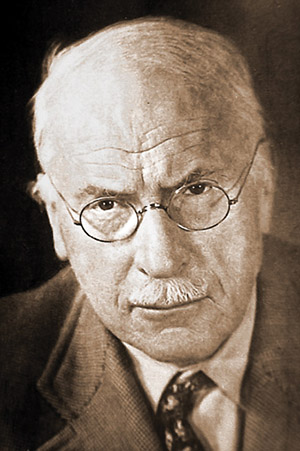
    According to Carl Gustav Jung, Hell represents, among every culture, the disturbing aspect of the collective unconscious. The wetiko pathogen may have infected the field of humanity’s collective unconscious.

    Jung was perhaps the first psychologist to fully realise that what we see playing out upon the global stage is largely a projection, or symptom, of the unconscious psyche of humanity. Jung considered that this collective unconscious does not develop individually but is inherited. That is, we inherit a ‘psychic life’ that is filled with ‘occurrences’ that stretch back to earliest beginnings. What if a psychosis, such as the wetiko pathogen, has already invaded this psychic stratum and now manifests as a disturbance in the field of humanity’s collective unconscious? We could very well be dealing with a psycho-pathogen – that is, a mind virus – that infects our individual minds from the underlying collective realm.

    This collective psychosis functions as a field phenomenon, and as such it underlies the entire collective field of nonlocal consciousness. The danger here is that each person can potentially be infected by the psychosis simply by not being mindful of their thoughts. Before we know it, we are having malicious or angry wetiko-like thoughts, which then could easily manifest into actual behaviour. Who at one time or another hasn’t had a mean or nasty thought? The question is – did this thought originate within us, or did it enter from without? Since the mind virus pathogen – which I refer to as the Wounded Mind – is a nonlocal phenomenon, then it is possible we all are infected with it to varying degrees. Or, it may be more accurate to say that this mind has us. And the worst of it is that most people will be unconscious and unwitting carriers of this pathogen. As Jung said, “Wars, dynasties, social upheavals, conquests, and religions are but the superficial symptoms of a secret psychic attitude unknown even to the individual himself.”2

    If we take the modern analogy of computing, then it is similar to how a virus would enter our computers and install malware or change the coding. Such a mental pathogen would act in the same way by installing its own malware program in our minds. For most of the time we are unaware of it, as it acts alongside our own ‘normal’ mind until a time when it takes over almost completely. Over time our own mental make-up – our psychological state – would adapt the foreign ‘invader’ and assimilate it into its own functioning as a way of normalisation. In other words, we would eventually come to consider it as our mind.

    Don Juan’s Alien Mind

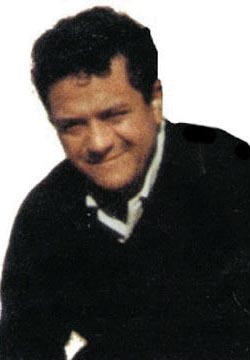
    Carlos Castaneda (1925–1998)

    There are wide-ranging accounts throughout shamanic and anthropological literature about how people are vulnerable to psychic invasion and predatory ‘energy forces’. In recent times, perhaps no-one has been as openly explicit as the teachings given by don Juan through the books of Carlos Castaneda. Later in the series of books, when Castaneda is more experienced and matured into the shamanic path, don Juan reveals some ‘truths’ to him regarding the nature of the predators. Don Juan explains that there are “outside forces” that impose control upon us. These ‘predators’ imprison human beings and make us docile. When Castaneda protests against this, don Juan explains that:

    In order to keep us obedient, meek and weak, the predators engaged themselves in a stupendous maneuver – stupendous, of course, from the point of view of a fighting strategist. A horrendous maneuver from the point of view of those who suffer it. They gave us their mind! Do you hear me? The predators give us their mind which becomes our mind. The predators’ mind is baroque, contradictory, morose, and filled with the fear of being discovered any minute now… Through the mind, which after all, is their mind, the predators inject into the lives of human beings whatever is convenient for them.3

    According to don Juan, an ‘alien’ presence, or energy, has infiltrated the human mind. That is, when ‘we’ are thinking, or ‘having’ thoughts, we are in effect manifesting – or being influenced by – a corrupted mind that is “baroque, contradictory, morose” and filled with fear. When we connect and engage with the collective unconscious, or the collective mindset, are we, in fact, tapping into a psyche that, in the words of Jung, stretches “right back to the earliest beginnings”? Yet those beginnings may also include the ‘alien mind’ of the predator.

    As a species, humanity accesses a collective unconscious mind that forms the basis of our thinking patterns and our behavioural traits. If an element of psychosis, trauma, a dominating narrative – i.e., wetiko, predator – has infiltrated this collective mental field then it is a very real possibility that we too have inherited what I call the Wounded Mind. It also raises the question of what type of civilisation or society would such a parasite-predator psychotic ‘mind’ wish to create?

    The answer to this may lie with a form of twentieth-century theosophy that was put forward by the Austrian philosopher and mystic Rudolf Steiner.

    The Coming of Ahriman

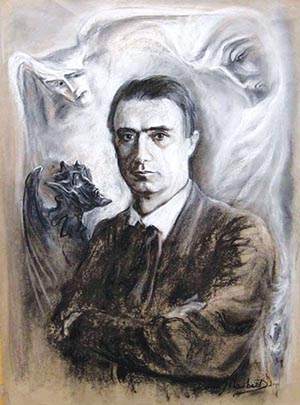
    Painting of Rudolf Steiner (1861–1925) displays the spiritual forces at work on humanity including that of the Ahrimanic presence which seeks to bind us to matter.

    In the writings of Rudolf Steiner in the early part of the twentieth century, he makes mention of an entity he calls Ahriman. For Steiner, this Ahriman is a supersensible being that wishes to distract humanity from aligning with its evolutionary potential. In order to accomplish this, it seeks to influence the minds of humanity in order to develop along a specific path; one that aligns with its own needs rather than that of humanity’s.

    The conditions that the Ahrimanic presence wishes to create includes the following: a materialistic, mechanical conception of the universe; a rational-materialistic based scientific dogma; an economic view of social dynamics and systems; a strong feature of nationalism and national identities; the popularity of separatist party politics; the prevalence of fundamentalism in religious dogma; and the dominance of an arid, dry intellectual culture.4 It would appear that this Ahrimanic presence has been quite successful so far!

    Steiner was also explicit in stating that the most dangerous aspect of Ahriman is for this presence to go unrecognised for it seeks to be hidden (similar to the predators). Steiner, in one of his lectures, stated: “…think of everything that presses us down upon the earth, that makes us dull and philistine, leading us to develop materialistic attitudes, penetrating us with a dry intellect, and so on: there you have a picture of Ahrimanic powers.”5

    The Ahrimanic powers, we are told, have a firm intention to get the human domain, as well as the earth, into their sphere of power, and to make human beings dependent upon their control. Again, it sounds eerily familiar. Steiner tells us that Ahriman intends to conceal from us that modern intellectual, rationalistic science, is a great illusion, a deception. The idea, apparently, is to keep us all so dulled with our materialistic paradigms that we have no inclination or urge to go seeking for knowledge concerning “soul and spirit in the cosmos.”

    The Ahrimanic powers use everything at their disposal to seed discontent, disarray, and conflict. They manipulate notions of heredity – family, race, tribe, peoples – to create confusion and division. Through these class structures, they enforce the dominant cultural paradigm of economic and material needs. Steiner warns his listeners that the “Ahrimanic incarnation” will be greatly advanced if people fail to develop an independent life of the spirit.

    Get the issue this article appears in

    A Few Words of Recognition

    In all the examples described here – indigenous Native American, western psychology, Central American shamanism, and European theosophy – we have had a glimpse of the proposition of what I term the Wounded Mind. The source of this trauma, however, is still unclear and open for debate. It may be either a collective psychosis of civilisation, a predatory invasion, a devolutionary impulse/presence, or a combination of these. Or else it may be something other but with similar aspects. Yet whatever may be the root cause, it is still quite clear that a traumatic presence lingers within the collective psyche of humanity, and it needs to be recognised for what it is – and expelled.

    Perhaps the traumas we are seeing inflicted upon the world today are part of this expulsion – a sort of public exorcism. In the end, we will need to curtail these ‘foreign impulses’ in order to evolve toward a better future for us as a human species upon this planet.

    Kingsley’s book Healing the Wounded Mind: The Psychosis of the Modern World and the Search for the Self (Clairview Books), is available from here and all good bookstores.

    [alert type=”general” dismiss=”no”]This article was published in New Dawn 177.[/alert]

    [alert type=”success” dismiss=”no”]If you appreciate this article, please consider subscribing to help maintain this website.[/alert]

    Footnotes

    1. Jack D. Forbes, 2008 (rev). Columbus and other Cannibals, Seven Stories Press, xvi
    2. Cited in Meredith Sabini (ed), ed. 2008. C.G. JUNG on Nature, Technology & Modern Life, North Atlantic Books, 188
    3. Carlos Castaneda, 1999, The Active Side of Infinity. Thorsons, 220
    4. R. Steiner, 2009, The Incarnation of Ahriman: The Embodiment of Evil on Earth, Rudolf Steiner Press
    5. Ibid, 1

    © New Dawn Magazine and the respective author.
    For our reproduction notice, click here.
  • Psycho-Power: ‘Automaton Conformity’ & ‘Freedom’ in a Post-COVID World

    Psycho-Power: ‘Automaton Conformity’ & ‘Freedom’ in a Post-COVID World

    From New Dawn 186 (May-June 2021)

    The role of biopower from the last century onwards represented a shift into forms of ‘disciplinary power’ over people, as I have discussed in previous New Dawn articles.1 

    The move into industrialisation necessitated a form of bodily discipline to adapt workers to the manner of machinic production. Now that modern societies across the globe are transitioning from industrial to digital life, power is no longer solely over the ‘docile body’ but intra-body – the genetic, programmable cellular life – as well as the conscious life of a person. Disciplinary power was all about training the body, subjecting it to drills and rules. However, now control over the ‘docile body’ is expanded to include control over the ‘docile psyche’ – to reach into, influence, and steer the psyches of the population. 

    Brought about by the COVID-19 pandemic and infecting governments worldwide, this new reign of biopower seeks to secure its dominion through a combination of a carefully controlled “administration of bodies,” a calculated “management of life,” and a persistent “programming of consciousness.”2 In the words of Jose Delgado, a professor of neurophysiology at Yale University and a famed mind control researcher: we are shifting into a psychocivilised society.3 In psycho-power, the human being is the target site, including their conscious and unconscious thought patterns. 

    To frame human life under a reign of comprehensive biopower, State authorities must also render conscious life under its rule. The contents of an individual’s mind is another aspect of our existence and, as such, also is to come under State jurisdiction. For all human life born into this world, the State automatically assumes the power to dictate the conscious thought of that new life. This means not only external control over an individual’s body but also techniques to interiorise this control – both mentally (conditioning, programming) and biologically (health treatment, vaccination, etc.). 

    As the reign of biopower continues to unfold, the situation may be increasingly managed so that each person is limited in how they make health decisions. I refer to this as a form of psycho-power that, aligned with the biopower agenda, seeks dominion over external and internal realms through the rhetoric (or double-talk) of claiming to represent the power of well-being. The result will be less ‘well-being’ and more control of the human being. The very process of how we determine human well-being is at the core of what is transpiring. 

    New ‘Consensus Reality’

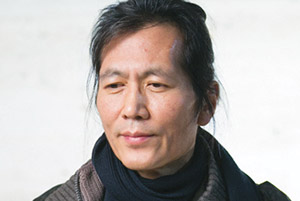
    I propose that biopower is transforming into a control system for human consciousness. The current biological ‘state of emergency’ is forcing people, on a global scale, to accept previously unimagined ideas to the point where the human psyche is tested to its limits. A new narrative is being established and seeded into mass human consciousness. This new ‘consensus reality’ imposed on the world attempts to colonise our private senses. It propagates a new shared affinity of conditioned thought. And yet, this is more likely to cause dissonance than cohesion. The question of freedom, especially freedom of thought, is now bringing forth its own forms of constraint and generating new forms of coercion. German-Korean philosopher Byung-Chul Han has stated this new form of power, emerging from post-industrial capitalism, is psycho-politics.

    Byung-Chul Han

    Under psycho-politics, those being ruled think they act freely, but in fact they act in accordance as directed by the rulers. The individual’s apparent freedom is exploited as they are carefully guided – nudged – to make the right choices through precise control of the psyche. 

    In turn, we direct our frustration back on ourselves. As Han notes, people are less liable to revolt when they are depressed: “Psychic maladies such as depression and burnout express a profound crisis of freedom. They represent pathological signs that freedom is now switching over into manifold forms of compulsion.”4 

    Current forms of biopower do not overtly interfere with the human psyche in a systemic fashion, but it has prepared the groundwork for the newly emerging biology of control to gain influence over the intra-space of the human psyche.

    New forms of modern governance, being put into place right now, will manage and exploit a ‘psycho-power’ technology of domination. What we are witnessing, and Han agrees, is the emergence of a new form of psycho-governance. Governance imposed not only by traditional nation-state bodies but also through the harnessing of technology to influence the human mind and how people think. This system will employ digital technologies and the digital-surveillance architecture as its dominant, pervasive medium of control. 

    Further, psycho-power is not about controlling the past but about manipulating memory so that the present can be forged anew. The new consensus reality is already erasing pre-pandemic history. We can sense this already occurring. The world, pre-2020, now seems like a bygone age. It is surprising how many people readily accustomed themselves to the ‘new normal’ with its biosecurity regulations. 

    Another point is that within the new biopower regime, emotions are actively encouraged and often deliberately targeted and heightened. This is in contradistinction to earlier disciplinary societies where emotions were considered distractions from orderly and mechanical functioning. The “Fourth Industrial Revolution (4IR),” as the World Economic Forum labels it, is about a new functionality – a digitally-managed gameboard of simultaneous disruption, diversion, and entanglement. As part of this increased emotional engagement, certain ‘technologies of the self’ are promoted.

    ‘Self-Optimisation’ in the 4IR

    With more and more people working from home, we can only imagine how practices for ‘self-optimisation’ are going to be peddled even more than previously. These may include online motivational retreats, digital management workshops, Zoom personality seminars, etc. All designed and pushed to make people operate more efficiently within the system, like a cog in a machine. Within such a system, weak points are targeted and ‘worked on’ to gain increased ‘efficiency and performance’. 

    We would do well to remember that the ‘good self’ is not the same as living the ‘good life’. It is more likely that under the new system of psycho-power, the ‘good self’ will be exploited in the increasingly corporate-aligned ‘Consciousness Industry’. Being fed on a carefully formulated diet of ‘Positive Thinking’ teachings can actually distract a person from deeper self-directed interior examination. Sophisticated techniques of ‘self-optimisation’ will be forged to manipulate people for optimal engagement and participation in the new consensus – rather than its opposite of self-empowerment for individual emancipation and sovereignty. As Han notes, constantly ‘working’ on oneself, as per the self-improvement industry, can become a new form of work ethic: “Now, instead of searching out sins, one hunts down negative thoughts.”5 

    Italian philosopher Franco Berardi takes an even stronger position. In his perspective, a new fascism is arising as people become subsumed in their own panic and a psychological “depressive rage of impotence.”6 The once prevalent will to power, he says,has now been replaced by impotent rage. 

    Berardi sees a psychopharmacological addiction and disorientation as the new despondency – a form of confused passiveness amidst mental mayhem, within which dwells an impotent desire for revenge. It is a sign of painful irony that in an age of impotence, as Berardi calls it, human fertility is rapidly declining and looks set to diminish even further. As the grip of psycho-power continues to imprint new patterns on human thinking, this ‘impotent rage’ feeds into a rising social architecture of human ‘unfreedoms’.

    Unfreedoms & (In)Securities

    With the lockdowns of 2020 continuing into 2021, many people are finding it very difficult to endure enforced confinement in their homes, cut-off from social engagements and networks. It has caused great personal unrest and psychological discomfort as people were previously accustomed to what they considered a life of ‘freedom’ and leisure. What is now surfacing is that many people harbour unconscious fears about the risks of freedom. 

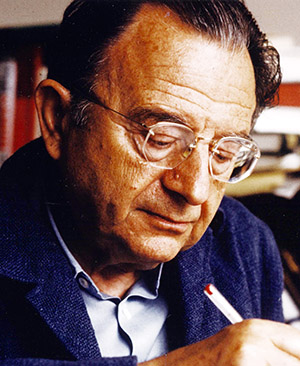
    Erich Fromm (1900–1980)

    The German-born philosopher and social psychologist Erich Fromm spent most of his life trying to understand freedom in relation to the human condition. Fromm posited that a struggle for freedom is a dynamic between the interior world of an individual and external institutions and systems. Under the prevailing pandemic of personal fears of social isolation and uncertainty, people have willingly given up freedoms and empowered outside agencies. Eventually, this leads to people becoming instruments in the hands of powers external to them. The alternative is seeking a form of self-independence based on personal trust and belief. However, this form of self-belief is constantly undermined by institutions in the modern world. 

    Fromm says that when individuals attempt to become more independent and self-reliant, they also become more isolated from social systems, which creates fear of isolation. Similarly, the new consensus reality is attempting to strengthen a dependency upon external systems – through the fear of the virus – biosecurity. This dependency is either compelled by triggering people’s fears (through heightened narratives of risk) or enforced through regimes of biopower and psycho-power strategies. 

    Fromm noted we are fascinated by power wielded outside ourselves yet are blinded to the condition of our inner restraint in the form of compulsions and fears. These individual and social conditions make for the suppression of human life and its tendency for control and management. 

    I suggest that underneath governmental and State forms of psycho-power is an agenda to manipulate people’s fears about the risks of freedom. People are more liable to turn to authoritarian systems to provide a ‘safe freedom’, especially within the heightened environment of biosecurity risks. In his Fear of Freedom, Fromm proposes that our inherent, often unrecognised, fear of personal freedom and self-independence results in the following escape mechanisms:

    Automaton conformity: changing one’s ideal self to conform to a perception of society’s preferred type of personality and losing one’s true self in the process; Automaton conformity displaces the burden of choice from self to society. 

    Authoritarianism: giving control of oneself to another. By submitting one’s freedom to someone else, this act removes the freedom of choice almost entirely.

    Destructiveness: any process that attempts to eliminate others or the world as a whole, all to escape freedom.7

    Fromm saw that people turned to external dependencies as a way to save themselves from being crushed by their unprocessed fears. He wrote: “Because we have freed ourselves of the older overt forms of authority, we do not see that we have become the prey of a new kind of authority. We have become automatons who live under the illusion of being self-willing individuals.”8 

    This “new kind of authority,” to operate under psycho-power, is an insidious form of power that literally gets into peoples’ heads and gives them the “illusion of being self-willing individuals.” Under this new regime, people willingly comply and place themselves under external control. Most people ‘believe’ they are already free, as ‘self-willing individuals’, but in fact they are complying with society’s consensus narrative. This is what Fromm called automaton conformity, which eventually leads to the condition of authoritarianism. The only other alternative is Destructiveness – a rage to eliminate others or the world.

    Under psycho-power, humans are to be constantly reminded they are open to attack – the risk of infection – at any time. Anyone who internalises the emotions of derivative fear will more willingly respond to a perceived ‘threat’, even in the absence of a genuine threat. Such behaviour is self-managed – internally programmed – and precisely what psycho-power seeks. 

    Today, power is no longer solely exercised through the façade of political institutions – it has shifted into the extraterritorial space beyond boundaries, nations, laws, visibility, and accountability. Under the new regime of psycho-power, the only form of security is inclusion. By excluding yourself from the over-arching systems of social management, you bring increased risk upon yourself and your loved ones. 

    Inclusion and exclusion are significant factors in psycho-power. As with disease outbreaks, there is a division between the ‘infected’ (excluded) and the ‘healthy’ (included). This will be brought into stark effect with the imminent introduction of health passes and vaccine passports. Psychological programming by mainstream media generates the required fear of exclusion from state-sponsored health security (biosecurity). The ingenuity of psycho-power will likely be its production of ‘security anxiety’ (playing on people’s fears) in which the collective public mindset is further conditioned with feelings of insecurity, strengthened by relentless repetition by politicians and the media. Insecurity begets increased state security – a self-fulfilling cycle. The state of being in security (insecure)requires our willing compliance. 

    Erich Fromm was prescient in recognising that a hugely influential, almost secret, power is exercised over the whole of society that conditions our ways of thinking and how we perceive reality. Today, I refer to that ‘almost secret’ power as an expression of psycho-power. 

    The peril of the moment is that many people continue to live under the illusion of thinking they are self-willing individuals. Despite this state of affairs, every individual really does have personal agency and the power of sovereignty. But we can only perceive the truth of our power if we extricate ourselves from the emerging new consensus reality that incorporates biopower, biosecurity, and increasing narratives of unfreedom. 

    Kingsley Dennis’ new book on this topic is Hijacking Reality: The Reprogramming & Reorganization of Human Life, available in paperback and ebook from online booksellers.

    [alert type=”general” dismiss=”no”]This article was published in New Dawn 186.[/alert]

    [alert type=”success” dismiss=”no”]If you appreciate this article, please consider subscribing to help maintain this website.[/alert]

    Footnotes

    1. See New Dawn 183, Nov-Dec 2020
    2. See New Dawn 184,  Jan-Feb 2021
    3. Jose Delgado, Physical Control of the Mind: Toward a Psychocivilised Society, 1969
    4. Byung-Chul Han, Psycho-Politics: Neoliberalism and New Technologies of Power, Verso, 2017, 2
    5. Ibid, 30
    6. Franco Berardi, The Second Coming, Polity Press, 2019, 11
    7. Erich Fromm, The Fear of Freedom, Routledge & Kegan Paul, 1960
    8. Ibid., 177

    © New Dawn Magazine and the respective author.
    For our reproduction notice, click here.
  • The Struggle for a Human Future in the Age of COVID-19 & Electronic Totalitarianism: An Interview with Jeremy Naydler

    The Struggle for a Human Future in the Age of COVID-19 & Electronic Totalitarianism: An Interview with Jeremy Naydler

    From New Dawn 182 (Sept-Oct 2020)

    Jeremy Naydler, Ph.D., holds a doctorate in theology and religious studies, and is a philosopher, cultural historian and gardener who lives and works in Oxford, England. 

    He has long been interested in the history of consciousness and sees the study of past cultures – which were more open to the world of spirit than our own, predominantly secular, culture – as relevant both to understanding our situation today and to finding pathways into the future. 

    His longstanding concern about the impact of electronic technologies on our inner life and on our relationship to nature has found expression in his book In the Shadow of the Machine (Temple Lodge 2018) and in his new book Struggle for a Human Future: 5G, Augmented Reality and the Internet of Things (Temple Lodge 2020).

    KINGSLEY DENNIS (KD): You have said that the biggest threat of technology is not from the apparatus itself but from its corruption of the human essence. What is the major threat of technology against the human essence?

    Jeremy Naydler

    JEREMY NAYDLER (JN): This is something Heidegger wrote about in his seminal essay, ‘The Question Concerning Technology’. He said that technology encourages us to adopt an instrumental relationship to the world, so we tend to see things as means to our own ends rather than as ends in themselves. If that becomes our default mode of relating to the world then that reduces us as human beings. We lose our reverence for nature, we lose our openness to the fundamental mystery of existence, and our sense of the sacredness of life. Then our hearts become hardened. Rather than living in wonder, we find ourselves cut off from spirit, and that is how we lose touch with what it means to be human. This is because to live humanly is at the very least to live with our hearts open to the mystery of existence. I would also say that freedom belongs to the human essence, and the more sophisticated technology gets, the more it tends to undermine our freedom. By freedom I mean the capacity to live by the ideals, aims and values that we have ourselves adopted, rather than having them imposed on us. One of the effects of the technologisation of our lives is that we are more and more hemmed in and forced to conform to a machine-dominated world, with the result that our ability to act freely is compromised. 

    KD: You seem to imply that technology is opposing the natural cosmic order or flow of evolution. In what way is technology in opposition to the cosmic order?

    JN: I wouldn’t want to say that all technology places us in opposition to the cosmic order. There are many technologies that don’t have the devastating effects that we have seen produced by more recent technological developments. It was really with the scientific and industrial revolutions that we collectively embarked upon a course that has led to our “falling out of the Tao.” Our human activities have increasingly been commandeered by the power of our modern technologies, and this is because we have surrendered to an unremittingly instrumentalist attitude, which tells us that the more efficiently we can exploit nature, the better. And so our technologies lead us even further into imbalance. How can anyone look at what is now occurring in the world today and not know that we are rebelling against the cosmic and natural order? 

    KD: Your own research considers what you call the “shadow sides of technology.” Are these ‘tech shadows’ in any way representative, or a projection of, our own human shadows?

    JN: When we consider the digital revolution, and the process of miniaturization that electronic technology has gone through, we can see how incredibly useful it has been to us. The computer and the smartphone have become indispensable for most of us, if we are to function in the contemporary world. But we also need to see that these technologies play into our weaknesses. They cannot really satisfy our deeper yearnings. Rather, they tend to distract us away from what is living within ourselves as our deeper purpose, and instead we fall prey to our more superficial desires. There is the shadow! Or one of the shadows.

    We are all so hungry, but what are we actually hungry for? We can so easily misunderstand our own inner yearnings. We must keep asking: What is it that will really satisfy us? I don’t think it is the next seductively designed iPhone or smartwatch. The “feel good” factor of the shiny new device doesn’t last long, because in the end it is just a thing. And while this technology certainly enables us to do so much more than we can do without it, it does not in itself satisfy the deeper hunger that lives in the soul. 

    KD: In your most recent book you refer to the “infrastructure of electronic totalitarianism.” Would you say that our current global civilisation is shifting into a form of techno-totalitarianism?

    JN: I fear this is what is happening, and it has been accelerated in recent months by the way governments all over the world have responded to the global coronavirus pandemic. There is grave danger that in different countries – even those with long democratic traditions – citizens become adjusted to living under a state of emergency that then becomes normalised. We have very quickly become habituated to the drastic limitations placed on our freedom by our governments, under the pretext of protecting the public from a fatal infectious disease (which it turns out is not nearly as fatal as at first predicted). Then the armoury of state surveillance, electronic tracking and tracing, cashless transactions, immunity passports and so on, is brought to bear on us. 

    Because of the global nature of the pandemic, there has been a degree of harmonisation in the responses of governments to it. Global organisations like the UN, the World Health Organization (WHO) and the WEF (World Economic Forum) are key players influencing governments. There is now an attempt backed by the WHO and the UN to create a global legal framework for dealing with the pandemic. While this may seem perfectly reasonable, it makes me feel uneasy. I can foresee a situation in the future when if you haven’t been vaccinated then you will not be permitted to travel abroad. And that could well be the least of what is in store for us.

    The Italian philosopher Giorgio Agamben, who has been an outspoken critic of the Italian government’s response to the pandemic, has warned that we are rapidly moving to a situation in which we may all find ourselves controlled far more effectively than under any of the old fascist and communist totalitarian regimes of the mid-twentieth century. And that is thanks to the electronic infrastructures that have already been put in place, and are being constantly upgraded, in so many countries all over the world. 

    KD: You also state that the electronic ecosystem will enable machine-organism hybrids to usurp natural organisms as part of an extension of human control over nature. To what extent does such technology represent a ‘replacement of nature’? 

    JN: I will give you an example, which is not exactly a machine-organism hybrid, but it is a machine that is mimicking a living organism and has been designed specifically to take over the functions of that particular creature. The creature is the honeybee, which has suffered an enormous decline over the last few decades. As it is vital for the pollination of many different crops, the decline of the honeybee has caused much concern. 

    There is a great deal of evidence that points to the use of insecticides, especially neonicotinoids, as adversely affecting bees, which is hardly surprising given that they are insects! But bees are also highly electro-sensitive, and many studies also point to the saturation of the atmosphere with electromagnetic fields as another significant factor in their decline. What better solution to the problem of honeybee decline than to design a “robot bee” to replace the honeybee? It won’t be susceptible to either of these pollutants, so we can use it without having to worry about its health or the possibility of it going extinct, because we will be able to mass produce them. A robot bee won’t sting us either. Over the last decade various laboratories around the world, one of which is based at Harvard in the USA, have been developing different “robobee” designs, to make an artificial creature that can replace the real one. (But will it make honey? I don’t think so!) 

    What you see here is the technological mentality aggressively stepping into nature and, instead of us taking the measures needed to reduce the threats to the honeybee population, their plight is seen as an opportunity to make a new commercial product that will replace them. This is just one example. It is by no means the only one, in which technological innovations are being designed to replace living creatures. 

    KD: You ask in your book whether people are prepared the make inner development (the ‘inner turn’) a part of their life. Is the ‘inner turn’ the only way to counteract the encroaching dominance of technology?

    JN: What I notice both in myself and in others, especially since the use of mobile phones and then smartphones became so widespread, is that they take on the role of “the constant companion,” to whom we turn for comfort and reassurance, almost as if they are our best friends. Sherry Turkle wrote a book in 2005 called The Second Self, in which she explored the psychological role of our digital devices, and how we have come to constantly refer to them. We can feel our whole lives are somehow “in them,” and as we live our lives online more and more, if we lose them or they crash it can seem like a devastating loss. Some people Sherry Turkle interviewed said that when their device crashed it felt as if they had lost their lives! It was like a death. 

    That is why it is so important that we keep making the inner turn. In the world’s sacred traditions, there is the figure of the inner companion, sometimes pictured as our guardian angel, or the Sufi “inner friend of the soul,” or the Christ within. Building our relationship to this transcendent inner figure is an important part of the work of spiritual development. It teaches us to remember that there is a higher level of ourselves, the “immortal within the mortal person,” which we have to keep trying to connect with. By no means easy! But you can see how our digital devices can supplant this far more important task, presenting to us a counterfeit “second self” or “inner companion” in place of the authentic one. If we can work on building up the connection with our true “inner friend,” then we become inwardly strengthened and less beholden to the technology. 

    KD: You made an intriguing reference to how Rudolf Steiner regarded electricity as light in a fallen, degraded state. There is the suggestion here that electricity is to Lucifer what Light is to the Sacred Source. Is the enveloping ‘electrosmog’ a way to sever humanity’s connection to its sacred Source?

    JN: Steiner had many extremely interesting things to say about electricity. And one of them was that it should be regarded as light in a sub-material state. That is, it is light that has fallen below the level of nature, into what he termed “sub-nature.” For this reason he warned us to be very wary of building our whole culture on the basis of electricity, because its tendency is to draw us away from nature and to pull us down into sub-nature. 

    One of the purposes of the rollout of 5G is to strengthen the “global electronic ecosystem,” which our computers, large, small and tiny, all function within. But the more we live our lives through our electronic technologies, the more we become alienated from the natural world. The electronic ecosystem becomes a kind of rival to nature’s ecosystems, in the sense that it is the environment in which we spend more and more of our time, never more so than in these last pandemic months. But if the world we feel most safe in is the world mediated by the light of computer screens, then what happens to our relationship to sunlight, not to mention the flowers and trees, the wind and rain? 

    It is important to consider how the light of the computer screen differs from sunlight. What lives in sunlight? Steiner said it is the garment of the cosmic Logos. In saying this, he was reiterating an old teaching. In the Psalms we find God described as wrapping around himself a garment of light. I can’t go into this further here. I devote a chapter to it in my book. All I will say is that the garment of light that the divine is wrapped in is not, and simply cannot be, the light that emanates from the computer screen.

    KD: If Artificial Intelligence (AI) and electricity are two sides of the same phenomenon, then AI could be regarded as a manifestation of an energy in a ‘fallen state’. Would you consider AI therefore to be a manifestation of what Steiner calls the Ahrimanic forces?

    JN: When we consider what kind of intelligence is referred to by the phrase “Artificial Intelligence,” it resolves into an entirely quantitative concept. It is something entirely measurable, and it is measured by the number of “calculations per second” that a machine is able to perform. Computers perform logical operations extremely fast and can therefore be programmed to produce any number of different outputs. This can give the impression that our machines are incredibly clever, much cleverer than we are, but this is a type of intelligence that excludes any real understanding. They don’t really know what they are doing. It is intelligence without consciousness. It is mere cleverness in a meaning-vacuum. It is totally soulless.

    What is it, then, that is manifesting in this type of extremely clever, but utterly cold and soulless intelligence? Could one say that it is the manifestation of a spiritual being? If so, what kind of spiritual being could it possibly be? One way of answering this is to observe what kind of affect the use of Artificial Intelligence has on us in our daily lives. How do you feel, for instance, when in order to do something online you are required to enter all these details in dialogue boxes and drop down menus, and then you have to tick this box and that box, and prove that you are not a computer by interpreting some illegible script. And if you get one single detail wrong, you have to go back and in some cases start the whole process again. I personally experience a sense of constraint, as I am forced to conform to the alien requirements of these algorithms. It feels like I am encountering something fundamentally anti-human here. 

    It is in these small everyday experiences of interacting with this intelligence that we begin to sense the nature of what it is we are dealing with. I think it is better not to rush in with naming it, but rather try to observe as closely as we can what we are experiencing, as if we are dealing with a person, and then build up a picture of the “Who?” behind the AI. Through personifying in this way, we learn to recognise its signature in many different aspects of life. We are constantly encountering it, and we can see it too in the much bigger trends and tendencies that are occurring in the world.

    KD: You have stated that one of the challenges we face today is to “overcome our collective de-sensitisation to these subtle life-forces.” What do you mean by this?

    JN: Modern urban living has de-sensitised us to nature. The digital revolution has accentuated this. To attune yourself to the life-forces in nature, you have to spend a lot of time outside, in the elements, in different light conditions, in sun and in rain. You have to spend time with plants, and in relationship to the soil, to bugs, to the birds and to countless other creatures. And much of this time needs to be spent not doing anything. Just being open, and open to Being. It is what Heidegger talked about when he said “openness to Being” defines the human essence. Just to be present to what is there. In this way, we begin to overcome our collective de-sensitisation to the subtle life-forces in nature. 

    KD: As succinctly as possible, how do you view the short-term future for humanity and life on this planet?

    JN: There’s an extremely powerful trend today in which many human beings are caught up. Many, it seems, feel they don’t really belong to the planet anymore, and are drawn increasingly into the new electronic world that has recently announced that it is an “ecosystem” in its own right! The implication is that it can offer a habitat for the human soul. It doesn’t require great insight to see that the more time people spend online, the more they withdraw their allegiance to the planet. 

    One of the most powerful symptoms of this withdrawal of allegiance to the planet is the fantasy of literally abandoning the Earth and colonising Mars. This fantasy has gripped the minds of some very rich and influential people, for example the billionaire entrepreneur Elon Musk and celebrity scientists like Brian Cox and the late Stephen Hawking. It is symptomatic of a kind of renunciation of our responsibility to the beautiful Earth on which we live. I think this inner renunciation has already taken place for many people, aided and abetted by their online lives, and this is why the fantasy of abandoning the Earth and leaving it to its fate seems so attractive.

    This points to the crying need to take far more seriously our responsibility for nature, recognising that this Earth is where we as humans belong. It is to this Earth that our primary loyalty must lie. To shoulder this responsibility is also to shoulder the heavy weight of guilt, pain and despair that so many of us feel when we read, or see images, of the unceasing devastation that we are collectively inflicting on the Earth and our fellow creatures. 

    However, we need to get over the paralysing effect this has on us and look to see what we can do to heal nature’s wounds. We can join campaigns, of course, sign petitions and try to shop more carefully, but we should also attend to what is closest to us, so we stand more firmly on the Earth. Every garden, every plot of land, no matter how small or modest, is a point of contact with nature. It invites us to tend and care for it, to help to build up the life-forces in it. And if we don’t have a garden, then we can still make a point of walking in nature, even if it’s the local park, and give our attention to the daily miracles that abound. This giving of our attention to nature is absolutely crucial, because through it we root ourselves in the Earth. 

    Many of us feel trepidation for the future, but this feeling alone is not particularly helpful. We need to gather our strength to meet the future with equanimity and make it our daily practice to live with positivity and hope. And we need to know that the quality of our consciousness of nature is in itself a gift that each of us can bestow. If we can live with greater awareness and appreciation of the wisdom and beauty that surrounds us, that itself will make a difference. 

    Struggle for a Human Future: 5G, Augmented Reality and the Internet of Things by Jeremy Naydler is available from all good bookstores and online sellers.

    [alert type=”general” dismiss=”no”]This article was published in New Dawn 182.[/alert]

    [alert type=”success” dismiss=”no”]If you appreciate this article, please consider subscribing to help maintain this website.[/alert]

    © New Dawn Magazine and the respective author.
    For our reproduction notice, click here.