Much of New Thought is about manifesting your will. It’s far more helpful to do this if your will is in alignment with your own higher nature. This exercise is designed to help you accomplish this aim. It may be read aloud and recorded, or one person may read it to another or to a group if that is helpful.
Sit in a comfortable but erect position, free from disturbances, so that you can be as relaxed and alert as possible. You may want to begin with a prayer to God or to whatever Higher Power you find suitable for guidance in this particular situation (e.g., work, love, finances, etc.). Close your eyes and allow your attention to come to the breath. Simply let it flow in and out, without any desire to change it in any way.
As the breath relaxes into a steady rhythm, allow your attention to come to the sensations of the body. Feel your feet on the floor, your back against the chair, your hands and arms – whatever part of the body presents itself to your attention. You may start to feel sensation as a kind of subtle current that flows where it wills throughout your body. (If not, however, that’s also fine.)
Then allow yourself to sense your body as a whole, in a single moment. (This may require some concentration if you’re not an experienced meditator.) Let your attention rest for a moment on the solar plexus – the point at the centre of the body just below the rib cage.
Now bring your attention to the heart. You may feel it beating, or you may not. What’s important is that you centre your attention there. As you continue to feel the heart, some emotions may come up. Allow your attention to come to these, and do your best to watch them attentively but dispassionately, even if they are somewhat intense. (Emotions, by the way, aren’t thoughts or physical sensations; they’re feelings like love or hate or fear or joy.) You may be surprised to see that pleasant and unpleasant emotions can follow one another quite quickly, without any apparent reason. Watch them but do not cling to them or push them away.
Let your attention now come to the thoughts and images that are passing across the screen of the mind. Again, watch them alertly without either clinging to them or pushing them away. Whether they’re pleasant or unpleasant, simply let them come and go. After a few minutes of watching the thoughts, become aware of the watcher, the silent witness in you that is observing all this experience. Ask yourself where in you it is. For many people, this witness feels as if it is in the centre of the head, a couple of centimetres behind the eyes (which is why this is called the Third Eye). But you may have a sense of it elsewhere, such as in the heart or solar plexus.
Pretend that this silent watcher is looking up through the crown of your head almost as if it were peering through the opening of an astronomical observatory. In your mind’s eye visualise a point of light, like a star in the night sky, say some four metres directly overhead. This point of light represents your higher Self. Rest your attention on this point of light for at least two or three minutes.
Now turn your attention to the situation that concerns you. Ask, ‘What is my will in this situation?’ You can also look up (in your mind’s eye) at the point of light and ask, ‘What is thy will?’ Make a firm resolution in your mind to see the truth in the situation, not what you want or what you imagine it to be. If you’re feeling great fear or anxiety, breathe it out.
Allow the answer to come as it will. Note your responses precisely and objectively. (You may find it helpful to make notes after the exercise is finished.) When you have received the information you need, let the exercise drop and return your attention to the sensations of the body for a minute or two. Then let the exercise drop completely and return to your ordinary state of consciousness. You may find it helpful to stamp your feet a little to ground yourself again. If you feel disoriented or ‘out of it’ as a result of the exercise, a bite of food or a beverage may be helpful.
Make a conscious decision to remember what you have willed at least once daily, and also at least once daily take some action, large or small, to bring this will into realisation. You will know for yourself what the actions are to be.
The idea that consciousness is evolving is one of the most important doctrines of the New Age. But is it true?
Over the long term, the answer seems obvious. Even the stupidest of humans is far more intelligent and sophisticated than a trilobite. Although materialists have skirted the conclusion that evolution has a direction – and that this direction is toward greater complexity – they have not managed to shoot it down.
The New Age idea of evolving consciousness is a little different. Many advocates of the new paradigm insist that human consciousness has gotten more sophisticated within historical times, and that it is destined to make another grand leap. It’s a harder case to argue.
It was H.P. Blavatsky, founder of the Theosophical Society, who first introduced the idea of evolving consciousness in the late nineteenth century. The basic theory of evolution as propounded by Darwin was already well known, but it had not been connected with consciousness in any important way.
In her magnum opus, The Secret Doctrine, Blavatsky made this connection. Indeed she went further. She held that not only humans and all organic life, but everything in the cosmos, down to the smallest atom, was perpetually evolving over the course of boundless eons toward a goal of unimaginable perfection.
Blavatsky was a bit more cautious about the evolution of human consciousness. While she propounded the allegedly ancient and secret doctrine of the Root Races, whereby humans would eventually develop supernatural capacities, she did not see this as coming any time soon. According to Blavatsky, the present, Fifth Root Race – encompassing practically all of humankind currently on earth – was going to be around for a while.
Nevertheless, Blavatsky set the stage, and it is interesting, though difficult, to try to figure out how much she influenced twentieth-century advocates of creative evolution such as Henri Bergson and Pierre Teilhard de Chardin.
The man who may be most responsible for the idea that human consciousness has evolved within historical times, and is making a transition to a new stage, is the Swiss philosopher Jean Gebser. In his masterwork, The Ever-Present Origin, published in 1949, Gebser outlined a development of civilisation in five stages: the archaic; the magic; the mythical; the mental; and the integral. Gebser’s argument is hard to summarise, but he essentially said that the shifts between these phases meant a change in human consciousness, even in how we view spatial dimensions. The “mythical” stage, the age of classical antiquity, was conceptually “spaceless.” The new “integral” consciousness is, by contrast, “space-free” and “time-free.”
Gebser’s arguments do not always hold up well. For example, he said that the dawn of the mental stage of development – which included the discovery of perspective in art – started in medieval times. A crucial moment was the Italian poet Petrarch’s ascent of Mount Ventoux in southern France in 1336. This, Gebser claimed, was the first time that anyone ever climbed a mountain solely to see the view. As such, it was “the discovery of landscape.” Unfortunately for Gebser’s theory, Petrarch himself said he had been inspired by the ascent of a mountain in Greece by King Philip of Macedon in the fourth century BCE. (Gebser tries, unconvincingly, to explain why Petrarch’s climb was so revolutionary and Philip’s was not.) Besides, perspective painting had been practiced in Greco-Roman antiquity.
Gebser is not well-known in the English-speaking world, but he has been very influential, largely through the works of the American philosopher Ken Wilber, whose “integral philosophy” was inspired by Gebser and by such figures as Arthur Koestler, Sri Aurobindo, and the American guru Adi Da (Franklin Jones).
If we want to decide whether consciousness is evolving and has evolved within living memory, it might be good to consider what consciousness is. For Gebser, it was “wakeful presence.” In my work, especially The Dice Game of Shiva, I have defined consciousness as the relation of self to other. To take a simple example, you are in your bedroom. You are awake. You see the furniture, the walls, the pictures. They are other, and you are you. Then you fall into a deep sleep. There is no longer a sense of self and other; you are no longer aware of your surroundings. You are unconscious.
What, then, is higher consciousness? What makes one kind of consciousness higher, or more evolved, than another?
In his book When Beliefs Fail: Toward a Psychology of Hope, Jim Stempel sets out a clear and engaging argument for the evolutionary perspective. He says: “The goal of spiritual growth is actually quite simple. It is complete awareness, the capacity to understand all of reality as well as ourselves…. Thus we enlarge our worldview until it incorporates everything.” To use the language of my theory, consciousness evolves as our view of the other, that is the world, expands.
Thus it would seem that consciousness has evolved. For a medieval peasant, the world was his village. The people in the village five or ten miles away were remote and menacing; they may as well have been extraterrestrials. Today we log into a computer and learn about places on the other side of the world in almost no time. Presto! Our worldview is enlarged. That means our consciousness is higher, more evolved.
But it is not so simple. In the first place, not everybody believes in these great strides in cognitive evolution. The twentieth-century French philosopher René Guénon, for example, argued that, far from evolving, we have devolved from an ancient state of pristine integrity. We are now living, Guénon said, in the “reign of quantity,” the last and most pathetic stage of the Hindu Kali Yuga, the Age of Darkness. Technological advancement, and the materialistic mentality that goes with it, is a symptom of this degeneracy.
Is Guénon wrong? Is it right to equate higher consciousness with technical sophistication and the expanded view of the world that results from it? As desperately as Western civilisation wants to believe this, it is not obvious, and it may not be true.
One counterexample is Tibet. The material culture of Tibet has always been primitive, even barbarous. It has no technological sophistication and has had no interest in developing it. Nevertheless, Tibet developed an extremely sophisticated and profound understanding of the nature of consciousness that the West is only now beginning to grasp. Can we say our consciousness is higher, more evolved, than the consciousness of Tibetans?
The twentieth-century spiritual teacher G.I. Gurdjieff also ridiculed the idea that the consciousness of modern humanity has evolved. His masterwork, All and Everything: Beelzebub’s Tale to His Grandson, one of the strangest and greatest books of the twentieth century, has as its stated objective “to destroy, mercilessly, without any compromises whatsoever, in the mentation and feelings of the reader, the beliefs and views, by centuries rooted in him, about everything existing in the world.” And one of the most important of these ideas to be rooted out is the delusory belief in progress. The 1,200 pages of Beelzebub argue that modern humans are not superior, but inferior, to those of ancient times, and material progress has hastened their deterioration.
Gurdjieff taught that modern man is in a state of waking sleep, a low-grade hypnosis. Part of this sleep involves dissociation: the body walks through its daily routines while the mind ponders grievances of the past, and fantasises about the future. We are like Mr. Duffy in one of James Joyce’s stories, who “lived a short distance from his body.”
Practically everything about present-day life helps increase this dissociation. You are well-informed about the latest world crisis, but are you aware of what is going on in your own being? Very likely your body and your emotions do not care in the slightest for all of the momentous events that make your mind so agitated. Probably, in fact, these other parts of you are bored by your fixation on a computer screen and would just as soon be out for a walk, or doing nothing at all.
So the grandiose claims of “evolution,” “integral consciousness,” and so on, do not stand up very well. Of course there are people today who have attained high states of consciousness, just like the mystics of old. But do we have any reason to believe they are any more common today than they ever were?
On the other hand, I myself have as much difficulty with the proclamations of degeneracy as I have with the proclamations of evolution. It is not so simple. It is never so simple. In many ways, humanity has advanced; in other ways it has regressed. While I think it is foolish to praise indigenous peoples as the repository of all wisdom, they often seem to have preserved inner powers and abilities that have been lost to trendy smartphone addicts.
As always, there are currents and countercurrents, and there is no good reason to single out one of these and proclaim it the inevitable wave of the future. We have already had too many inevitable waves of the future, and they have usually been dead ends. It is probably wrong to claim that humanity is retrogressing, but when someone launches into optimistic jabbering about “evolution” and the “new paradigm,” it may be well to think about these lines from the Tao Te Ching: “The ancient masters were subtle, mysterious, profound, responsive. The depth of their knowledge is unfathomable.” It is hard to say that about humans today.
[alert type=”general” dismiss=”no”]This article was published in New Dawn 147.[/alert]
[alert type=”success” dismiss=”no”]If you appreciate this article, please consider subscribing to help maintain this website.[/alert]
Sources
Jean Gebser, The Ever-Present Origin, translated by Noel Barstad & Algis Mickunas, Ohio University Press, 1985 G.I. Gurdjieff, All and Everything: Beelzebub’s Tales to His Grandson, Dutton, 1964 Jim Stempel, When Beliefs Fail: A Psychology of Hope, Chrysalis, 2001
One of the most compelling themes of current times is Gnosis – the idea of a transcendental knowledge that, like enlightenment, liberates the individual from bondage to the world of suffering. While Gnosis and Gnosticism were long relegated to the archives of memory as heretical and obsolete aspects of early Christianity, over the last few generations their ideas have resurfaced, displaying an unforeseen power and resonance.
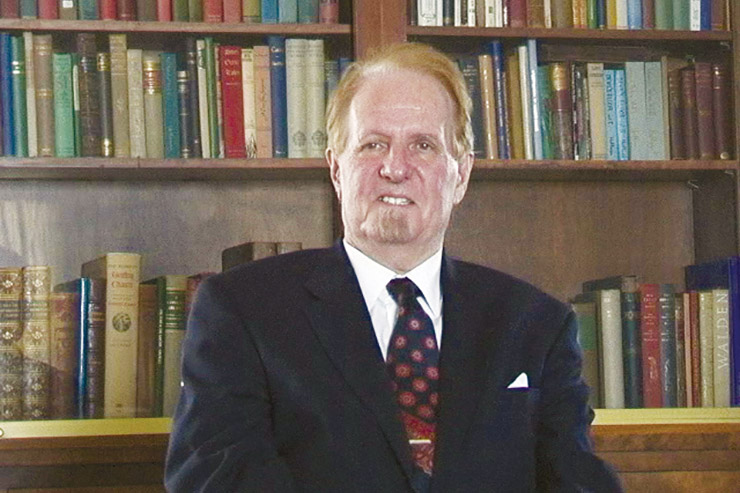
Stephan A. Hoeller is among the leading proponents of this revitalised Gnosticism. Born a Hungarian nobleman in 1931, he was exiled from his native country after World War II. He came to the United States in the early 1950s and in the decades since has attracted a small but influential nucleus of students of esotericism. He has delivered scores of lectures to organisations such as the Theosophical Society and the Philosophical Research Society in a number of nations, including Australia and New Zealand.
Hoeller is the author of several books, including Gnosticism: New Light on the Ancient Tradition of Inner Knowing (2002); The Fool’s Pilgrimage: Kabbalistic Meditations on the Tarot (2004); Jung and the Lost Gospels: Insights into the Dead Sea Scrolls and the Nag Hammadi Library (1989); and The Gnostic Jung and the Seven Sermons to the Dead (1982). Among other accomplishments, Hoeller’s work ties the Gnostic stream to the ideas of the Swiss psychologist C.G. Jung.
Hoeller is also a major figure in the independent sacramental movement. This loose collection of churches and societies is based on the apostolic tradition as carried on by bishops, many of whom have left the Catholic Church or other Christian bodies and who have consecrated bishops and ordain priests on their own. Hoeller was ordained to the priesthood of the American Catholic Church by Bishop Lowell P. Wadle in 1958, and to the Gnostic episcopate by Richard, Duc de Palatine (born Ronald Powell) in 1967. Today Hoeller is presiding bishop of the Ecclesia Gnostica in Los Angeles. For more information on his work, including his lectures, visit his website www.gnosis.org.
This interview, conducted by e-mail in November 2013, focuses on Gnosticism and Hoeller’s connection to the Australian born ‘wandering bishop’ Richard, Duc de Palatine.
Richard Smoley (RS): You have been an eloquent spokesman for a revitalised Gnosticism in our time. Could you say briefly what the features of this Gnosticism are?
Stephan Hoeller (SH): Gnosticism is not a belief system in the accustomed sense, and therefore it is not easy to describe its features as you ask. The Gnostic tradition has no single prophet or founding revelator; rather it is based in the mystical experiences of a number of visionary individuals. These mystical experiences were generally characterised by these seers as “Gnosis,” a concept denoting salvific knowledge arrived at by superintellectual means. Since those partaking of Gnosis were diverse in their individual backgrounds, it has occurred to some scholars that it might not be accurate to subsume them under the appellation of Gnostics. Still, as the late foremost scholar of this field, Professor Marvin Meyer, has proven, there were some mystic seers in the early centuries A.D. who called themselves by the name “Gnostic,” and this name became a description for the teachings they left behind.
In reality, the teachings of the various Gnostic teachers have a great deal in common. It is therefore quite possible to perceive a body of recognitions that is generally present in all the Gnostic schools of past and present. In my book Gnosticism: New Light on the Ancient Tradition of Inner Knowing (2002) I presented a fourteen-point summary of such Gnostic tenets, which I shall repeat here in an abbreviated form:
There is an original and transcendental spiritual unity from which emanated a vast manifestation of pluralities.
The original spiritual unity (the Fullness) did not create anything; rather the creation of the manifest universe was accomplished by spiritual beings of limited power and moral stature. These entities have a vested interest in the separation of humans from the unity (God).
The universe of matter and mind, while it emanated originally from the unity, has become alienated from its source and now largely serves the lower creators, or rulers (archons). The human being, in contrast to other creations, possesses a divine spark, which is capable of being awakened and liberated by Gnosis.
The ultimate unity has not abandoned the sparks of its own essence but periodically sends forth messengers whose function it is to awaken the slumbering units of divine consciousness by stimulating the experience of Gnosis in humans. Among these messengers we find the Divine Sophia; Jesus Christ, the Logos of God; the holy prophet Mani; and others. The ultimate objective of these messengers is the arising of salvific knowledge (Gnosis) in human beings, who thus come to freedom from embodied existence and return to the ultimate unity.
RS: The Gnostic worldview has often been criticised as pessimistic and world-denying. How would you respond to this claim?
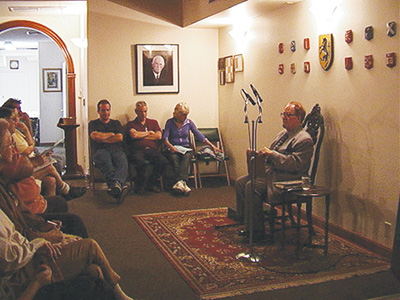
Dr. Stephan Hoeller delivers a lecture at Ecclesia Gnostica, 3363 Glendale Blvd., Los Angeles, CA 90039, United States
SH: The accusation that Gnostics are world-hating pessimists was first voiced by the heresy-hunting church fathers of the early centuries A.D. It was false then, and it is false now. Most religious systems recognise that the world is imperfect, as indeed do Gnostics. The difference between the Gnostic position and others concerns the origins of this imperfect state of the world. Judeo-Christian orthodoxy places the blame on human beings: their original sin came to corrupt not only humans themselves, but all of creation. Gnostics, on the other hand, have always held that the world did not fall but was created in a grossly imperfect way to begin with.
Professor Gilles Quispel, the late, great scholar, was wont to tell the tale that when observing the destruction of a British fighter plane over Holland in World War II, he had the sudden insight: “Valentinus the Gnostic was right: earthly life is tragic.” Gnostics, like Buddhists, recognise that earthly life is filled with suffering, cruelty, and impermanence. I have noted on occasions that we live in a gigantic slaughterhouse cum cafeteria – all forms of life kill and consume other forms to nourish themselves. Some creatures exhibit behaviour that is not related to stilling their hunger. Cats play cruelly with their prey. Some insects kill and eat their mates while copulating; indeed cannibalism is rampant among many species. Natural disasters bring much suffering and death in their wake. On the other hand, Gnostics have always felt that humans can attain to freedom from this suffering world by attaining to Gnosis, that is, a higher kind of consciousness, which allows the liberated Gnostic to soar above this tragic world.
I must admit that many humans have a strong need to perceive life as in some sense benign and potentially happy. It is also evident that this need cannot be met if we do not experience a salvific change in consciousness, which allows us to perceive a greater, happier reality beyond the world of matter and sense. A secular person without access to such a liberating state of consciousness has one of two choices. The first involves looking the dark face of the world in the eye, while the second is what has been called “living in denial.” The Gnostic has a third possibility: being liberated by Gnosis.
[alert type=”info” dismiss=”no”]If you appreciate this article, please consider a subscription to New Dawn magazine.[/alert]
RS: In your book Gnosticism you cay that the Gnostic cosmology has meaning from both a psychological and a cosmic point of view. Could you explore this issue a little?
SH: The cosmo-conception of the Gnostic tradition truly can be applied both externally and internally, and none of these interpretations need to cancel each other out. The Gnostic myth of the emanation of the divine essence, followed by the creation of physical and psychic reality by the lower creating entities, is to me a plausible explanation of the origin of the world. All such explanations – even the so-called scientific ones – are in reality mythical, and this myth is as meaningful as many others, and more meaningful than some.
The modern depth psychologist C.G. Jung has come to the conclusion that the Gnostic cosmology may also be seen as a psychocosmology. The various regions of being such as the original unity (Fullness), the various aeonial regions, and ultimately the physical world with its malign archons can be seen as the collective and personal unconscious, the consciousness of the ego, and the functions of consciousness respectively, while the mighty messengers of light can be seen as archetypes proceeding from the collective unconscious. Once again, we may need to keep in mind that the external and internal applications of the Gnostic myth need not exclude each other.
As noted, this understanding of the Gnostic myth comes to us chiefly from Jung, whom I see as the greatest Gnostic of our time, and about whose teachings I wrote my book The Gnostic Jung and the Seven Sermons to the Dead, which is regarded by many as a pioneering study of the relationship of Jung and Gnosticism.
RS: From an esoteric point of view, what would you say is happening with humanity today?
SH: Speaking of Jung, it is no doubt known to many that his mysterious and long-awaited book Liber Novus (The Red Book) has been published at last. One of the principal disclosures to be found in this work is Jung’s belief that the Age of Aquarius is upon us, that significant changes in the consciousness of humanity are taking place, and that more of the same may be expected in the future. The “Aeon of Aquarius,” as Jung calls it, will eventually bring great psychological changes in its wake, amounting to a new religious consciousness which will differ greatly from the religious consciousness of the Piscean Age. It will manifest primarily in a new God-image that was very important to the ancient Gnostics and that in various ways has made its appearance throughout history in the esoteric tradition.
Two thousand and some years ago a new religion constellated itself in the Mediterranean region. With that religion came a new myth of redemption, centred in the image of Jesus, the Saviour God. Now Jung is telling us in The Red Book that the Aeon of Aquarius is upon us, and with it comes the new God-image of the God within. This image is of course none other than the God to whom St. Paul referred as “the Christ in you, our hope of glory.” It is also the indwelling Christ affirmed and venerated in the Gnostic tradition.
There is no doubt that Jung saw in the new Gnostic Renaissance, which began with the discovery in 1945 of the Nag Hammadi library, a manifestation of his own prophecy in the then still secret Red Book. The connection of Jung’s prophecy with the tradition of Gnosis is unmistakable.
In his Red Book, Jung stated clearly that the task of the present and near future was “to give birth to the ancient in a new time,” and he clearly meant the Gnostic tradition is in fact that ancient thing to which he and others were giving birth.
I have spent a very large portion of my adult life studying and commenting upon the work of Jung and the Gnostic sacred writings. I should say, then, that humanity today is experiencing the rebirth of Gnosticism, and its principal God-image is being born in a new time. The esoteric as well as the exoteric implications of this process are momentous.
RS: Unlike many figures in the world of alternative spirituality, you have been critical of the environmental movement. Could you discuss why?
SH: The environmental movement, as I have come to observe it, is indeed a hybrid thing with many facets, some of which are not pleasing to me. If this movement would concentrate its attention on practical measures in improving the environment, I would look upon it with favour. I have resided for sixty years in one of the largest, and consequently greatly polluted, cities of the US, namely Los Angeles, California. In the early years of my residence here, the atmosphere was filled with an unwholesome mixture of smoke and fog, called “smog.” With the aid of various measures, the cooperative efforts of public agencies and private industry have improved the air in my city to a very great extent. Similarly, many helpful measures have been undertaken in the area of trash collection, recycling, and the like. These actions were performed as practical tasks to benefit humans in the city.
We need to keep in mind that “environment” means “that which surrounds.” The next question is “Whom does it surround?” To which the answer is “Humans!” Here, I feel, is the crux of the issue. According to my understanding of the philosophy of Gnosticism, the human is a very important being on this earth because it is in the human that the divine spark resides, and it is this spark that is to experience Gnosis. Therefore it is important that we should have a fair environment for the human. On the other hand, the environment is not an all-important thing in and of itself. The material creation within which we live is a creation of the archons. When we begin to worship the environment, we worship a flawed creation. We need to cultivate our consciousness and with it make intelligent decisions about ourselves and about the environment. Large portions of the environmental movement have become pantheistic nature worshippers, often viewing humanity as a curse upon the world – a title I would like to reserve for crocodiles, bedbugs, and the AIDS virus, to mention but a few.
There is much reverential talk in some esoteric circles about “the one life.” I would rather concentrate on “conscious life” and keep in mind that much life in this world is sordid, malign, unsavoury, and even evil.
RS: Your spiritual lineage, I gather, comes from the “independent sacramental” line, sometimes called the line of “wandering bishops.” Could you tell us a little about this tradition and how it relates to your own work?
SH: The lineage you refer to is that of the apostolic succession. As far as we can ascertain, most of the Gnostic schools in ancient times participated in the apostolic succession. They wrote, in the words of the Gospel of Philip, “The Lord anointed the Apostles and the Apostles anointed us.” Gnostic revival movements such as the French Gnostic Church, revived in the nineteenth century by Bishop Jules Doinel, all availed themselves of apostolic successions, mainly of Roman Catholic and Syrian Orthodox origin.
I was a student and seminarian of the Cistercian order in Hungary. After I left my native land, I seriously considered further training for the Roman Catholic priesthood. What got in my way was Gnosticism, a secret tradition to which I became ever more attached.
RS: I understand that you were consecrated as a bishop by a figure known as Richard, Duc de Palatine. Could you say a little bit about him, his teachings, and his own lineage?
SH: Upon my arrival in the US in the early 1950s, I discovered there were a number of small denominations that were known as “independent Catholic churches.” A somewhat pejorative name that was sometimes applied to the bishops of these churches was “wandering bishops.” After a few years I became a cleric, and eventually a priest, in one of these churches, the American Catholic Church, which possessed a lovely church in Laguna Beach, California. The bishop was a very fine man, Dr. Lowell Paul Wadle.
A number of years later, I met a British bishop, Richard, Duc de Palatine, who was on a lecture tour in the US. Unlike the bishop who ordained me a priest, who was an esotericist but not an outright Gnostic, Bishop de Palatine was a Gnostic and was in contact with the Gnostic churches in Europe. Thus I moved from one bishop to another, which proved prophetic, since my earlier bishop suddenly died a fairly short time thereafter. Thus my career as an openly Gnostic priest began.
Richard, Duc de Palatine, described by Dr. Stephan Hoeller as a learned and charismatic man, is regarded as restoring the Gnostic tradition in the English speaking world.
This gentleman was an Australian by birth and upbringing. He studied at the University of Melbourne and during World War II served in the Australian armed forces. After the war he moved to London, where he became involved in various esoteric and ecclesiastical activities. Somewhat like me, he developed a great interest in Gnosticism quite early in his life. He joined the Theosophical Society in Australia, and I believe he belonged to the Melbourne Lodge, where, many years later, in the 1980s, I was a visiting lecturer myself. While some reference books claim that he had been a priest of the Liberal Catholic Church in Australia, he always denied this.
Richard, Duc de Palatine’s clerical career began in London, shortly after he transferred his residence there. He became friendly with an English independent Catholic bishop, whose secular name was Hugh George de Willmott-Newman, and who was known as Mar Georgius I, bishop of Glastonbury. It was Mar Georgius who instigated that Richard should receive the title Duc (“duke”) de Palatine. There seems to have been a vogue among English independent bishops to receive titles of nobility at that time. Since these titles did not come from a reigning monarch of any country, they were considered somewhat spurious by some. Since I come from Austro-Hungarian nobility myself, with a title that dates back to the eighteenth century, I did not view this peculiar title-mongering with a great deal of favour, but I had more important concerns.
Bishop de Palatine had a small organisation, headquartered in London, which possessed a certain membership in the US. He asked me to take charge of these members, and thus I became his personal representative for the US and the leader of the Los Angeles group of his members. This involved also starting up a Gnostic parish, which I did, and thus since 1959 I have headed a small Gnostic church in Los Angeles. I may say that this turn in my career was really a dream come true, for my great interest in Gnosticism now enabled me to serve this tradition in both a teaching and a priestly capacity.
Thus Richard, Duc de Palatine became my teacher and superior formally in the early 1950s. He was an unusual person; charismatic, learned in certain areas, and – I am a bit reluctant to confess – I found him to be a person with unmistakable occult powers. He was what anciently was called a thaumaturge. I imagine there was a certain similarity between his powers and those of people like H.P. Blavatsky and G.I. Gurdjieff. Since these matters are somewhat private, no more shall be said of them. I served his church as a priest for ten years, after which he consecrated me a bishop.
RS: There is a widespread teaching that speaks of a secret brotherhood that is constantly at work on behalf of human advancement and evolution. Do you personally believe in this concept, and if so, could you explain why?
SH: The notion of such a brotherhood was chiefly publicised by H.P. Blavatsky and her followers, although some ideas of this nature existed in earlier esoteric traditions. The late nineteenth and early twentieth centuries saw much literature that exalted and exaggerated this concept. Names such as “Great White Brotherhood of Adepts” and even “the Hierarchy” came to be applied to it.
As a student of esoteric history, I am aware of the presence of mysterious spiritual beings in the early Theosophical Society. Blavatsky often referred to her gurus, as did some of her successors.
As to my own views on these matters, I freely accept the belief that esoteric teachers frequently have both embodied and also spiritual gurus. (For instance, Jung had a “ghostly guru” called Philemon.) But I draw the line at the idea that these gurus are organised in some sort of formal council that guides and advances the progress of humanity. In my view, this is a distortion of the data. One could also say that in view of the many frightful wars, holocausts, and gulags of recent history, the alleged beneficent efforts of such a brotherhood appear to have been singularly ineffective.
RS: There seem also to be many forces that are working against human evolution and advancement. Could you comment a little on these? Do they have any relation to, say, the Gnostic concepts of the Demiurge and the archons?
SH: The presence of forces that oppose human spiritual freedom was widely recognised by Gnostic teachers. Such forces are frequently personified as the archons, headed by the Demiurge of this world. Mythically, these beings are represented as entities who have been alienated from the ultimate divine source of the All, and who regard themselves as the proper overlords of creation and of humanity. A descriptive mythologem would be to see them as slave masters who wish to keep human souls in bondage, and who therefore try to prevent the liberation of human souls by Gnosis.
It may be useful to mention that this view is not in the nature of a Gnostic demonology. The archons and the Demiurge are not so much evil as they are of limited consciousness; they do not recognise a reality superior to their own. (Gnostics stated that it was the Demiurge who exclaimed: “I am the only God and there are no other Gods beside me!”) These beings have fabricated a flawed creation and are determined to keep human souls confined therein.
Fortunately, the domain of these beings is not universal. Mingled with the dark features of demiurgic creation, we find elements coming from the original Godhead, elements which have remained relatively free from corruption. Therefore, the manifest creation contains both light and dark. We walk on the checkerboard of the cosmos, which has been called the “tasselated pavement” in certain initiatory orders.
As for myself, I believe neither in a great white brotherhood of benevolent adepts nor in a menacing assembly of evil black magicians, but rather in forces of unconsciousness opposed by forces of liberating consciousness. All of these may be personified or not. Among these forces we laboriously wind our way to the summit of salvific Gnosis.
You can learn more about Gnosticism and the work of Bishop Dr. Stephan A. Hoeller at the website of the Ecclesia Gnostica, www.gnosis.org/eghome.htm. Dr. Hoeller’s extensive library of lectures – on Gnosticism, Jung, Alchemy, Consciousness, Religion, & much more – are available for download from www.bcrecordings.net.
[alert type=”general” dismiss=”no”]This article was published in New Dawn 143.[/alert]
[alert type=”success” dismiss=”no”]If you appreciate this article, please consider subscribing to help maintain this website.[/alert]
It is one of the most familiar and reassuring lines in scripture: “The Lord is my shepherd.” But when you think about it, the metaphor is a disturbing one.
It’s true that a shepherd looks after his sheep. But he also shears them and kills them and eats them. Does the God we adore act totally with our best interests at heart, or are we a species of livestock that he uses for his own ends?
Voices have occasionally uttered doubt, not about the existence of the gods, but about their beneficence. The ancient Gnostics said that the real god of this world was the Demiurge, a second-order being who mistook himself for the true God. The spiritual teacher G.I. Gurdjieff told a parable about a lazy shepherd who got tired of having his sheep run off, so he hypnotised them into thinking they were men or lions. Then they no longer ran off but stayed around so that he could shear or kill them as he liked. (Again we encounter a shepherd, this one more explicitly malevolent.)
Gurdjieff does not say who this shepherd is. His main point is that man, in his state of waking sleep, is at the mercy of forces that may well not have his best interests at heart – forces that will extract energy from him regardless of his wishes.
This parable is from an early period of Gurdjieff’s teaching; in his later period, epitomised in his magnum opus All and Everything: Beelzebub’s Tales to His Grandson, he portrayed the universe in a more beneficent light. But there are plenty of others who have cast doubts on the motives of the spiritual powers that control our lives.
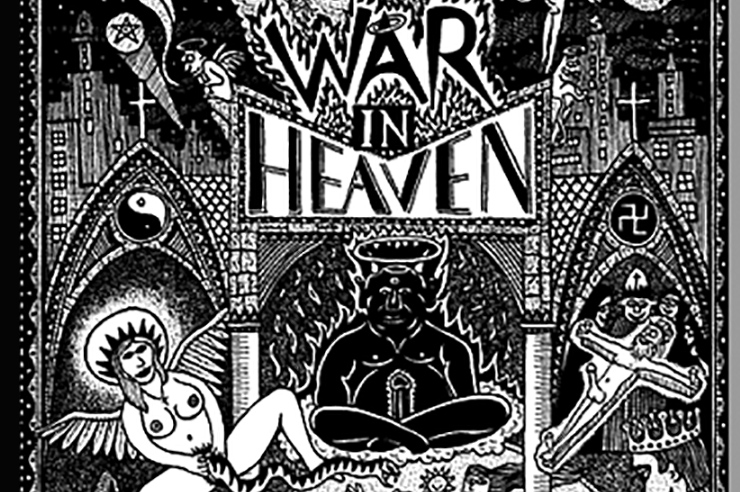
One of the weirdest is found in a book called War in Heaven by Kyle Griffith. Originally it appeared in 1988. It has never been published in a conventional sense; I first read it years ago when I was editor of the esoteric journal Gnosis and there was a spiral-bound copy lying around the office. Today it can be downloaded for free at www.bibliotecapleyades.net/vida_alien/warinheaven/warheaven-III.htm.
Comparatively little is known about Griffith himself. From my sources, I gather that he lived in the San Francisco Bay Area in the 1980s, the time when he put his book together.
From a certain point of view, War in Heaven may look mad; from another, it is strangely compelling. I have read it three times over the years. While I’m not prepared to take its claims at face value, I find them both haunting and disturbing.
Griffith’s vision allegedly derives from his telepathic communication with some spirits who say they are associated with the Invisible College. This was the name of a seventeenth century English coterie that was devoted to esotericism, philosophy, and the nascent discipline of science; it is usually seen as a precursor to the Royal Society. Unlike the scientifically minded gentlemen of Britain, the Invisible College of Griffith’s vision consists of disembodied spirits who claim to have inspired the Rosicrucian and Freemasonic movements of the early modern era; more recently, they were behind the civil-rights movement in America and the psychedelic revolution of the same period.
All of these movements were designed with one end in mind: to break the hold of the Theocrats.
The Theocrats, in the cosmology of War in Heaven, are parasitic astral entities who devour the souls of the recently deceased. The normal course of the soul’s evolution involves repeated reincarnations on earth. But these incarnations, as we well know, can be extremely unpleasant at times. The Theocrats have avoided this disagreeable option by maintaining a semiperpetual existence on the astral plane, fed by the souls they eat. Their strategy is simple. When a naïve soul has died, they greet it on the other side by proffering illusory welcomes into a fake heaven, populated with familiar religious figures and loved ones. When the soul has strayed into their trap, it is devoured.
To make this vision even more disturbing, Griffith (or his guides from the Invisible College) contends that practically all of what we think of as religion is nothing more than a Theocratic ruse.
The stages of this religious development, as portrayed in War in Heaven, bear some examination. The first stage was essentially shamanism. This is a crude and primitive form of religion – from the Theocrats’ point of view, that is, not from ours.
Shamanism, we are told, fosters individual psychic development, and as such, it is of limited value to the predatory Theocrats, who benefit much more from the collective trance that conventional religious worship produces. As a result, the Theocrats had to refine and update their methods of mind control.
Second-stage religion was a dead end. It involved large-scale human sacrifice. And history shows that civilisations that had such practices came to a bad end soon. Ancient Carthage, the great rival of Rome for domination of the Mediterranean, was one example. When the Romans decisively defeated Carthage, they razed the city and sowed the ground with salt. Salt is traditionally a substance used for purification, and some have said the Romans did this to cleanse the land from all the human sacrifice that had taken place there. Aztec civilisation, which in many ways was superior to its European contemporary, was another example: for all its might, it was destroyed by a few hundred Spanish adventurers on horseback.
“The third stage of Theocratic religion,” Griffith writes, “involves mass animal sacrifices. Although they prefer human souls, Theocratic spirits can nourish themselves off the astral souls of lower animals to some extent.”
If this were true, it would cast a weird but revealing light on what I have characterised in the accompanying article as the religions of the Age of Aries. They were so obsessed with animal sacrifice – which otherwise seems to be rather a pointless activity – because the Theocrats wanted it.
“However,” Griffith adds, “the astral tissues of animal souls aren’t very compatible with the astral souls of the Theocrats, so they are not a good food source.” To solve this problem, the Theocrats invented fourth-stage religion – the religions that most of the world knows today. Here “Theocrats use religious mind control to delude souls into deliberately putting themselves under Theocratic control after death, thinking they are entering ‘eternal bliss in Heaven’ or ‘union with the Godhead’.” These religions are essentially those of what in the accompanying article I have called the Age of Pisces.
By this view, the gods people worship – whether they are called Christ or Allah or Krishna – are nothing more than parasites on the astral plane who keep themselves nourished by souls of the innocents they prey on. Originally the Buddha was different; he experienced a genuine awakening and thus showed little respect for the traditional Vedic gods of his culture. But his later followers, who distorted his teaching into a religion based on faith in Buddha, became subservient to the Theocrats.
Oh, and by the way: “The Theocrats want religious believers to feel guilty every time they feel sexual desire or enjoy any ‘pleasures of the flesh’. The guilt literally addicts them to attending church services that subject them to religious mind control.”
There have been few more disturbing portraits of the religious history of humanity than this.
To deliver the hapless beings of the human race from this dire situation, certain advanced souls from other planets came to the astral atmosphere of Earth a few centuries ago. They, along with some enlightened human souls who have managed to avoid the Theocrats, constitute the Invisible College. While the Theocrats have been sending telepathic suggestions to their unsuspecting followers on this plane, saying that all you have to do is believe in the Theocratic gods and trust them, the Invisible College has been transmitting the opposite message: to avoid worship and above all to think for yourself. They inspired the Rosicrucian and Masonic movements of the seventeenth and eighteenth centuries, as well as the accompanying impulses toward democracy, freedom of thought, and even atheism. After all, it is better to believe in no God at all than to open yourself up to a parasitic astral deity.
According to Griffith, much of the 1960s counterculture was stimulated by the Invisible College. LSD, rock concerts, and similar gatherings were designed to create a different kind of trance – one that would telepathically open people to the idea they should think for themselves.
But the story does not stop there. This effort has led to a reaction by the adversary – “fifth-stage Theocracy,” which “employs electronic mind control instead of religious mind control, and… can enslave people who subscribe to belief systems other than those of organised religion.” Some groups originally inspired by the Invisible College are co-opted by the adversary. Griffith writes, “Every new rock group starts out with a few normal protest or love songs. Then they get swallowed by a group mind controlled by fifth-stage Theocrats, and from that point on all their songs sound as if they were written by the same person.”
It’s not possible here to go further into Griffith’s bizarre but fascinating vision. But there are some things that keep me from dismissing it entirely. The first is the collective madness of the human race – its pathological desire to rage and destroy, its hatred of its benefactors and its insane worship of its most vicious victimisers. There is a point beyond which we cannot explain this by mere mammalian aggression – which, as a matter of fact, does not have such destructive properties in other mammals. Psychology and sociology have no explanations for this mass insanity and show little interest in finding them. If there were such entities on the astral plane trying to control and manipulate us as Griffith says they are, this behaviour would at least be comprehensible.
Another is the powerful collective urge toward what Gurdjieff called the “waking sleep” of man. It is true that, in the West at any rate, mass hypnosis by low-grade religion is losing its hold. But no sooner has this happened than we see a whole new series of mechanisms for putting people back to sleep – the “electronic mind control” that Griffith mentions. It is very hard to go into a public place and see people bewitched by their laptops and smartphones without wondering if something like this is going on.
I don’t think War in Heaven offers a total explanation for the human condition, but I suspect that it has a measure of truth. There do seem to be invisible forces that, for reasons that are difficult to determine, benefit from the collective waking trance of humanity.
Griffith concludes his work with a quasi-apocalyptic vision of the End Times. It is close enough to the End Times as portrayed by Christianity that I have trouble taking it at face value. And while I suspect there are low-grade spiritual entities that very much resemble the Theocrats described here, I am not so convinced that they explain everything about human religious aspiration.
In any case, Griffith and his invisible mentors have some advice for keeping out of Theocratic control. In the first place, make a conscious effort to develop your own psychic powers during this life. In the second place, “read accounts of point-of-death experiences and learn to recognise the common tricks that the Theocrats use to enslave the unwary after death.” In other words, those accounts of near-death experiences are true – but they’re not to be taken at face value. That’s probably a sound rule of thumb for all spiritual experiences – no matter how good or bad they seem.
[alert type=”general” dismiss=”no”]This article was published in New Dawn 142.[/alert]
[alert type=”success” dismiss=”no”]If you appreciate this article, please consider subscribing to help maintain this website.[/alert]
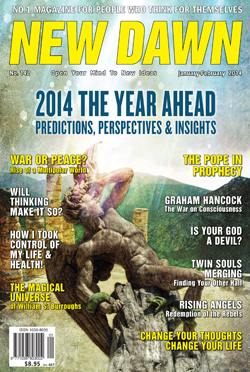
This article was published in New Dawn 142 (Jan-Feb 2014)
Much of today’s writing about spirituality is loaded with nonsense. Often it consists of little more than wild speculation, shoddy reasoning, and the repetition of a few stale truisms.
A very small number of writers and editors have climbed above this morass to combine spiritual depth with intellectual acumen and literary polish. Mitch Horowitz is one of them. A writer and publisher of many years’ experience with a lifelong interest in man’s search for meaning, he is vice-president and editor-in-chief at Tarcher/Penguin in New York and the author of the acclaimed book Occult America: White House Séances, Ouija Circles, Masons, and the Secret Mystic History of Our Nation. His website is mitchhorowitz.com.
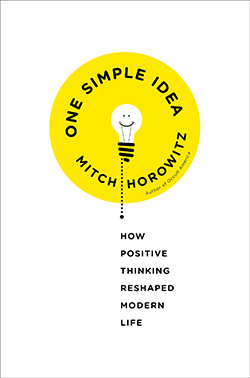
Horowitz’s latest work, published in January 2014, is One Simple Idea: How Positive Thinking Reshaped Modern Life. It is a wide-reaching and insightful history of the mind power movement and how it has changed contemporary society. In November 2013, I conducted an interview with him by e-mail about this book.
__________________
Richard Smoley (RS): Your book is entitled One Simple Idea. Could you tell us what this one idea is?
Mitch Horowitz (MH): The idea is the very American concept that thoughts are causative – which later came to be called “the power of positive thinking.” This notion has appeared, with varying degrees of orthodoxy and literalism, at different times throughout human history. New Englanders in the 1830s and 1840s used this idea to launch a vibrant culture in “mental healing,” in which trances, prayer, and affirmations were seen as a means to heal the body.
During much of the nineteenth century allopathic or mainstream medicine in America was in an abysmal state. The traditional medicine of the day often relied on painful and dangerous regimens of bloodletting, weeping wounds, draining of bodily fluids, and ingestion of toxins and harmful narcotics. Mental healing was seen as a gentler alternative.
By the late nineteenth century, experimenters in mental healing began asking what other powers the mind might possess. The mental healing culture came to believe that our thoughts could influence or shape our personal experiences, extending to matters of wellbeing, success, and, finally, money. This principle of mind power has traversed the cultural landscape, reshaping much of our religion, therapy, and ideas of self-help.
RS: The story of positive thinking, as you describe it, begins in the eighteenth and nineteenth centuries. Do you see any precedents for this approach in earlier forms of philosophy or occultism?
MH: You can find threads of the mind-power thesis within Egyptian-Greek Hermeticism, within certain strands of Neoplatonism, within elements of Idealism, Transcendentalism, and Swedenborgianism – and, significantly, within some of the experiments launched by students of the eighteenth century Viennese occult healer Franz Anton Mesmer. Mesmer believed that all of life was suffused with an invisible energy called “animal magnetism.” He theorised that if you placed a subject into a trance state – in a practice later called hypnotism – the patient’s “animal magnetism” could be manipulated to produce bodily cures. Mesmer’s students in Paris refined the master’s ideas: They edged away from Mesmer’s theory of an ethereal bodily fluid and believed that it was the mind itself that was bringing about the cures. Mesmer’s best students formed our earliest conceptions of the subconscious mind, which they believed not only could produce healing but, under certain conditions, could bring on displays of clairvoyance, telepathy, and even astral travel. The tumult of the French Revolution cut short many of these experiments – but the ideas of mesmerism began travelling to the United States. In the early decades of the nineteenth century, Americans – who love remaking ideas and finding new and broader ways of using them – took the mind-power thesis even further. American experimenters came to see the mind as a tool of metaphysical power that could be used for attracting and influencing circumstances.
RS: One of the central figures in your story is Phineas P. Quimby. Could you tell us about who he was and why he was so important?
MH: Quimby was one of the earliest and most impactful founders of New England’s mental cure scene. He was a nineteenth century clockmaker who spent most of his adult life in Maine. In the early 1830s Quimby suffered from tuberculosis, which was worsened by the side effects from harmful treatments, such as mercury ingestion. One day Quimby took a raucous horse-and-buggy ride in the Maine countryside and unexpectedly found that the excitement of the ride lifted the symptoms of his tuberculosis. Quimby marvelled at the effects of his mood on his body. He believed that this private insight revealed a mind-body connection – and searched for a theoretical model to confirm it. That confirmation arrived for him in 1836 when lecturers began visiting Maine extolling the ideas of mesmerism. Quimby believed that mesmerism revealed the connection between mind and body. He worked the rest of his life as a mental healer, refining and applying various methods, especially arousing the confidence of a patient in his ability to recover. Quimby was extremely influential on the New England scene until his death in 1866.
RS: One of Quimby’s disciples, Warren Felt Evans, introduced the concept of the New Age in a book of his called The New Age and Its Messenger, published in 1864. Could you talk a little bit about how the positive-thinking movement shaped the New Age?
MH: Evans was among a circle of Americans who were dedicated to the ideas of the eighteenth century Swedish mystic and scientist Emanuel Swedenborg. Swedenborg believed that earthly events mirrored and were controlled by laws and events in the spirit world. In Swedenborg’s view, the material and spirit worlds formed a continuum. When figures such as Quimby and Evans began experimenting with mental healing, they believed they were, in effect, channelling and applying cosmic laws. The early mental healers did not possess a psychological vocabulary – they often spoke and thought in religious terms. Hence the ideas of Swedenborg – who described a universe of spiritual laws and influences – made innate sense to mental healers. Evans believed that humanity stood on the brink of a New Age of therapeutic spirituality – of whom the “messenger” was Swedenborg. The founding idea of New Age spirituality, as articulated by Evans and his contemporaries, was the philosophy of mind power. This later came to be called positive thinking and New Thought.
RS: In the early generations, the positive-thinking movement centred on healing. Around the turn of the twentieth century, it shifted toward “prosperity thinking” and the attainment of material success. Why did this change come about?
MH: The early twentieth century French hypnotherapist Émile Coué observed that the, “French mind prefers first to discuss and argue on the fundamentals of a principle before inquiring into its practical adaptability to every-day life. The American mind, on the contrary, immediately sees the possibilities of it, and seeks… to carry the idea further even than the author of it may have conceived.” This was the pattern for most of America’s spiritual experiments, and it highlights the transformation of mental healing into the prosperity gospel. American enthusiasts came to believe that the mind could improve health – and they began seeking ever-greater ways of applying the mind’s power.
The person who first hit upon the idea of using mind-power methods to attract money was actually an English writer and political activist, Frances Lord. She visited America in the late 1880s to take part in the suffragist movement. But Lord also grew interested in mental healing – and she proposed expanding its boundaries to prosperity. Lord wasn’t a “think and grow rich” exponent; rather she believed that if labourers and working people could alter their thought patterns they could balance out economic inequality.
Critics rarely see that the prosperity gospel had its earliest roots in the ideals of the Progressive Era. Lord and her American contemporaries – who included Wallace D. Wattles, a socialist activist and the author of The Science of Getting Rich, and suffragist Elizabeth Towne – believed that the mind could serve as a force for social equity. As the twentieth century opened, the industrial economy produced a mass wave of consumer goods; and at the same time the state of American medicine greatly improved. Hence, money, rather than health, moved to the front of the American mind – and became the focus of the positive-thinking movement.
RS: The positive-thinking movement sometimes seems indifferent to social issues: poor people are poor and sick people are sick because of their own wrong attitudes. Has there been any response to this problem from within the movement itself?
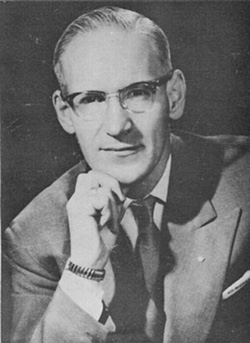
MH: In the positive-thinking movement’s early days, from the late nineteenth to the turn of the twentieth century, it showed deep concern for social issues. Surprising figures adopted the positive-thinking gospel, including black nationalist Marcus Garvey, suffragist Elizabeth Cady Stanton, and many figures that identified themselves as socialists or radicals, such as Ralph Waldo Trine and Wallace D. Wattles. These people believed that the patterns of the mind were one element – and certainly not the only one – in alleviating social oppression; they believed that working people, women, and minorities needed to claim a dramatic new sense of self-worth. That tendency faded as the movement became more geared toward a philosophy of individual advancement. Within today’s New Thought churches you continue to find large numbers of very liberal people. Attendees at New Thought churches include actors, artists, experimenters, gay and lesbian congregants, and many people who work to create social openings. So the core movement has remained liberal in its makeup. However, the popular mainstream literature to emerge from the positive-thinking movement, by authors such as Napoleon Hill, Norman Vincent Peale (pictured above), and Dale Carnegie, evinces almost none of its earliest reformist aims.
RS: The positive-thinking movement is also sometimes criticised for its callousness: since you create your reality with your thoughts, it must be your fault if bad things happen to you. Is this a valid criticism? If so, is there any valid response to it?
MH: It is a valid criticism – and it is one of the problems that I try to deal with in the book, especially in the final chapter, “Does It Work?”, where I explore the failings and efficacy of the movement. In short, I believe that the positive-thinking movement’s embrace of what is called the Law of Attraction was both a theological and ethical mistake, and it overshadowed the movement’s greater promise. I believe that no one should endeavour to frame life as the product of one overarching mental super law. That simply doesn’t square with the personal experience of most sensitive people. We all encounter a mixture of joys and tragedies in life, and these experiences are attributable to myriad and sometimes inscrutable factors – not solely to tendencies or accidents of thought. We live under many laws, influences, and events. However, if the positive-thinking movement can move away from this “mind is all” concept, then we can newly appreciate the movement’s very powerful insights. As has been borne out in many reaches of the sciences, the mind provides a little-understood but persistent and traceable impact across various aspects of existence, from health to relationships to addiction recovery. The impact of the mind can also be seen – most controversially – in the findings of quantum physics. This last point is very contentious, and I try to explore it in an accurate and non-sensationalistic manner in the book.
RS: One little-known figure that you highlight toward the end of your book is Vernon Howard. Could you tell us about him and why you find him interesting?
MH: Vernon Howard was a late-twentieth century spiritual philosopher who I see as probably the most remarkable and unclassifiable figure to emerge from America’s recent metaphysical culture. Howard was loosely a part of the positive-thinking movement insofar as his books of the 1950s and early 1960s were in the mould of typical New Thought literature in which you were counselled to use your mind to attain influence, prosperity, and power. But in the mid-1960s, Howard underwent a remarkable spiritual maturation. From that point until his death in 1992 he produced an extraordinary output of writings and talks that distilled the core principles of the world’s ethical and religious philosophies. Howard taught that we live from a false, conditioned nature, which prods us to seek conventional modes of success, which, in turn, prop up our ego and self-image. This puts us on a constant cycle of seeking recognition from a world filled with people who are themselves frightened and desperately seeking approval, and who often lash out in hostility to cover their fears.
If we can see through this painful predicament, Howard wrote, we can experience a sense of our true nature, which emanates from what we call God. We experience this true self when we reach the limits of our conditioned responses to life. No other figure that I have encountered possessed a voice as practical and vivid – or an intellect as piercing of human foibles – as Howard’s.
RS: In your book, you posit Ronald Reagan as a kind of culmination of the positive-thinking movement, in both good and bad ways. Could you talk a little about how Reagan fits in with this movement, how it shaped his politics, and how the movement has shaped American politics today?
MH: Reagan is a continual mystery to journalists and biographers because he seems to them to possess no internal barometer or motivating influence. Many observers have wondered about his inner nature, about what made him tick psychologically. My contention in the book is that Reagan, to be fully understood, must be seen as a product of the positive-thinking culture. The core assumptions and phraseology of positive thinking are at the back of much of his personal philosophy. Reagan also reflects many of the movement’s strengths and weakness: He was capable of continually reconceiving of himself at different times in life to meet the challenges that he faced, and it gave him a surprising resilience and adaptability when climbing out of near-poverty as a young man and when confronting the new realities of US-Soviet relations during the Gorbachev era, during which Reagan dramatically shifted from flinty cold warrior to global peacemaker. Yet it could also contribute to an unnerving blindness in matters of policy, when Reagan would emotionally fixate on a single fact, story, or anecdote and use it to buttress sweeping political convictions, such as the belief in widespread welfare fraud or in the efficacy of the Star Wars missile defence system.
In the political realm, Reagan ushered in an age where presidents had to sing praises to the limitless potential of the American public. In President Obama’s 2011 State of the Union address he declared, “This is a country where anything is possible.” That was a direct echo of Reagan, who routinely described America as a nation where “nothing is impossible.”
RS: Even if you grant that the mind has the power to shape reality, it’s also true the mind has many facets that are not accessible to the conscious ego. What level of mind is actually shaping reality, and how can we have access to it?
MH: That’s a very intriguing question. We have a strange habit of putting a name on concepts – such as “ego” or “unconscious mind” – and then thinking we have identified a clearly definable thing and can proceed to talk about it as though we all agree upon it, as if it were an apple tree. Yet we know very little about the mind and its agencies. We can’t even agree on what produces the so-called placebo effect and how it works, though for more than a century medical researchers have tracked the persistence of some kind of physical relief related to mental expectancy. One of the things I argue in the book is that we do seem to be able to enter an exquisitely sensitive and suggestible state where mental properties are heightened. This is sometimes called the hypnagogic state, experienced in the period just before drifting off to sleep or awakening, or in times of deep relaxation or comfortable sensory deprivation. Émile Coué, and others who worked with affirmations to recondition the mind, believed this hypnogogic state possessed unique potential for autosuggestion or self-hypnosis. I won’t go into the data here, but serious psychical researchers have also detected what appear to be heightened instances of clairvoyant perception and telepathic conveyance in subjects during this state.
It’s difficult to place precise labels on what is occurring at such times but there does seem to be a state of relaxation from which the mind is unusually receptive – and which may point to the mental-emotive condition from which we can produce or revise self-conceptions, and maybe do something more.
RS: All things considered, how much truth do you see in the “one simple idea” of positive thinking?
MH: As I’ve suggested above, and as I explore in the book, I am convinced that the mind harbours some shade of influence, not only in matters of self-worth but also in circumstances of outer life, as well. I believe that our repeated thoughts – when held with determination and emotional conviction – can evince a shade of influence on external events. This is a very delicate claim, which presents more questions than answers. But I believe that if we look historically across broad disciplines – from psychology to medicine to the physical sciences – and if we consider, with care and discretion, the empiricism of personal experience, we find ourselves facing an ever-broadening conception of the mind’s influence.
Historically, the modern assessment of the mind’s reach continually broadens and never recedes. The mind is, of course, one factor among many under which we live. We are affected by environment, chance, physiology, economy, and accident. But grappling with this idea – that the mind, like other factors, produces a shade of practical impact on our experience – can help deepen and expand our sense of ourselves, and our questions about what it means to be human.
For further discussion of New Thought and its history, see New Dawn 142.
One Simple Idea: How Positive Thinking Reshaped Modern Life by Mitch Horowitz (Crown 2014) is available from all good bookstores and online retailers in hardback and on Kindle.
[alert type=”general” dismiss=”no”]This article was published in New Dawn 142.[/alert]
[alert type=”success” dismiss=”no”]If you appreciate this article, please consider subscribing to help maintain this website.[/alert]