New Dawn – World's Most Unusual Magazine

Category: Articles

  • Where Did Christianity Really Come From?

    Where Did Christianity Really Come From?

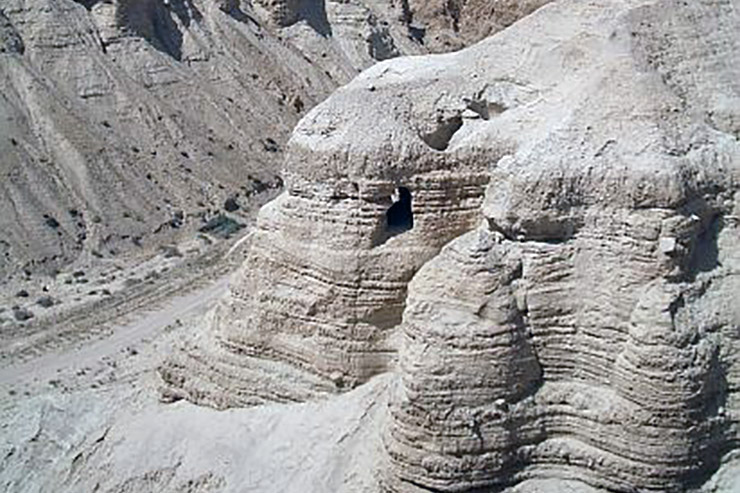
    This article is a brief examination of the nature and historical roots of the Qumran community that lived and worked on the western shore of the Dead Sea around 150 BCE to 68 CE and the connections that may be discerned between it and the preaching of John the Baptist, the ministry of Jesus, and the origins of Christianity. It looks through the eyes of scholars like Jozef Milik, one of the first to discover the nature of the Dead Sea Scrolls and to analyse them in depth, back in the 1950s, and the author’s analysis of the latest research now that translations of most of the Dead Sea Scrolls, discovered near Qumran, have been officially published.My previous book The Mystery of the Copper Scroll of Qumran,1 dealt with aspects of the Dead Sea Scrolls and, more particularly, one of the scrolls that had been engraved on copper by the strange community of Essenes that inhabited Qumran. As a trained metallurgist, the use of copper by a devout Jewish sect, living by the Dead Sea around the first century BCE, had aroused my curiosity – especially as the Hebrew text seemed to be a list of buried treasures that apparently had never been found (see New Dawn No. 80, September-October 2003).

    Identifying the location of some of the treasures described in the Copper Scroll was only one of the claims substantiated in that book; treasures I identified as being in various museums around the world. Furthermore, a detailed analysis arose from my reading of the name of an Egyptian pharaoh encrypted in the text of the scroll – an interpretation confirmed as “not unreasonable” by both Professor John Tait of University College London and Professor Rosalie David of Manchester University.

    The profound conclusion was that the Hebrews must have been present at the court of Pharaoh Akhenaten and the origins of monotheism date back to his time.For my next book I had planned to take a closer look at the Qumran community’s beliefs and way of life, examining how these may have influenced the beginnings of Christianity and its emergence as a daughter religion of Judaism. However, while discussing the project with Jozef Milik, one of the scholars who originally worked on deciphering the Dead Sea Scrolls back in the early 1950s, my research took a strange and totally unexpected twist. Jozef Milik had been the leader of the team of translators based at the École Biblique in East Jerusalem; he had also been, at that time, an ordained Catholic priest.What Monsieur Milik revealed to me, in the course of many intriguing conversations he and I shared about the Essene community, inspired me to write a new book and informs a substantial part of it.

    During my researches I have come across many further pieces of evidence that confirm a connection between a uniquely monotheistic pharaonic period in Egyptian history and the Essenes of Qumran, who lived a thousand years later and a thousand miles distant. As remarkable as this connection may appear to be, to date the relationship has been criticised but not refuted, and a number of eminent scholars have indicated that it begins to explain some anomalies in their own research. As I progressed further along the “Jozef Milik trail,” many more examples came to light that supported my conjectures regarding this link and these have a considerable bearing on early Judaism and the story of Jesus and his epoch.

    The main thrust of the current search, however, was the nature of the people who lived at Qumran between, perhaps, 150 BCE and 68 CE, when their settlement was destroyed by the Romans, the secrets they kept, their relationship to the earliest followers of Jesus, and the incredible revelations of Monsieur Milik. It was not until my third visit, in October 1999, when I returned to present him with a copy of my book on one of the Dead Sea Scrolls, that Jozef Milik started to talk more freely about his early life and work, volunteered his date of birth as March 24, 1922, and told me why he had left the Catholic Church. Ostensibly it was to marry his rather delightful wife, Yolanta, née Zaluska, but there were other reasons, reasons connected with what he had found and interpreted in the scrolls of the Dead Sea. Two hours into our conversation he quietly and almost casually spoke of certain events near Qumran. It was one of those nerve tingling moments; my mind reeled with the impact of what he was saying.

    Those dramatic words of Jozef Milik started me on a journey of discovery to determine how the circumstances at the time of Jesus might confirm or disprove his revelation. It was a quest that was to take me from the cold dampness of a Parisian autumn day to the remote dryness of Egypt, to the holy places of Jerusalem, to an offshore haven on the Isle of Man, to catacombs in Rome, to Washington and New York, to a Gothic building in Germany, and back to the barren shores of the Dead Sea in Israel. As my journeys and investigations progressed, it became increasingly clear that something extraordinary, as yet not revealed, may have occurred at or near to Qumran, and there were others who were party to this knowledge but were not keen for the evidence to become public.

    Qumran

    The Qumran Essenes, a mysterious Jewish sect that suddenly vanished from its habitat by the Dead Sea in Judaea around 68 CE, was a unique community in Jewish history, and in many ways practiced a form of Judaism very different from that being pursued elsewhere in the Second Temple period. No one is certain of the origins of the strange, reclusive sect that wrote and possessed what are now known as the Dead Sea Scrolls. Nor is there agreement as to the degree of influence the sect had on early Christianity, or its relationship to John the Baptist and Jesus. Such is the intensity of feelings about who exactly these Essenes were that it is not uncommon to see professors shouting across conference rooms at each other as they defend their respective pet theories. Whilst there is consensus on many issues, there are also large areas where there are just no accepted answers. Perhaps part of the reason is there are basic misunderstandings with regard to the origins of the community. As archaeologist Magen Broshi, of the Israel Museum, likes to put it: “There are at least ten different theories about the origins and function of Qumran. By definition, nine of them are wrong.” As our story unfolds, it will become increasingly evident that the activities of the Essenes are central to the plot, and of profound significance to Judaism, Christianity, and Islam, as well as many other religions. It is useful to set the scene with a Timeline of Events in the period in question. After the discovery of the Dead Sea Scrolls in the late 1940s and early 1950s, it soon became apparent that the type of Judaism practiced by the authors/possessors of the scrolls – a minority Essene group that numbered perhaps less than four thousand, or 2 percent of the Jewish population – was far more similar to early Christian practices and beliefs than that of any previous group. Previously it had been assumed Christianity emerged out of Pharisaic Judaism. The worry for modern Christian authorities was not so much that they had got their suppositions wrong, regarding which strand of Judaism had given birth to Christianity, but that it was becoming increasingly difficult to distance Christianity from this previously little-known new slant on Judaism, namely Essenism. The first sensational claim relating the Dead Sea Scrolls to Christianity came from a respected Sorbonne University professor, André Dupont-Sommer who wrote in 1950 that he saw Jesus in the “pierced messiah” mentioned in one of the Dead Sea Scrolls: “The Galilean Master… appears in many respects as an astonishing reincarnation of the Teacher of Righteousness.” When who this Teacher of Righteousness really was becomes apparent, it is clear that Dupont-Sommer was quite wrong in his assumptions about the Teacher as “the exact prototype of Jesus.” As an outsider from the predominantly Catholic translation team (he had once been an abbé), Dupont-Sommer was immediately criticised by his peers for jumping to preposterous conclusions. Nevertheless, Edmund Wilson, a respected American literary journalist and columnist for The New Yorker, picked up the theme and subsequently published a book entitled The Scrolls from the Dead Sea, in which he claimed that Qumran, “with its ovens and its inkwells, its mill and its cesspool, its constellation of sacred fonts and the unadorned graves of its dead, is perhaps, more than Bethlehem or Nazareth, the cradle of Christianity.” A few years later John Marco Allegro, the only Methodist among the predominantly Catholic original Dead Sea Scrolls translation team in Jerusalem, broke ranks and claimed that one of the Dead Sea Scrolls included mention of messianic crucifixion and resurrection. He was undoubtedly a brilliant scholar, but his claims became more extreme with the publication of his book The Sacred Mushroom and the Cross in 1970, which claimed Christianity was born out of Jesus’ followers imbibing hallucinatory drugs. In 1979 he went even farther down this hypothetical trail, claiming Jesus was no more than a fanciful legend developed by the Essenes to extemporise on their own Teacher of Righteousness. Allegro conceived of this Teacher figure as an Exodus period Joshua/Jesus incarnate who was killed, or perhaps crucified, by the Israelite Wicked Priest, Alexander Jannaeus, around 88 BCE. Allegro was pilloried by his peers in an open letter to The Times, of London, in 1956, and never really recovered from the personal attacks on his character that followed. Perhaps the record is put right in his daughter’s recent biography of her father published this year.2 In the mid-1980s Robert Eisenman, a professor of Middle Eastern religions at California State University, published a number of works attempting to relate the Qumran Essenes to characters in the Christian Scriptures. One of Eisenman’s ongoing themes has been the idea that James the Just, the brother of Jesus, was the leader of the Qumran-Essene community. When more of the Cave 4 Dead Sea Scrolls material became available in 1991, Eisenman, together with Michael Wise, associate professor of Aramaic at the University of Chicago, continued the theme in their book The Dead Sea Scrolls Uncovered. In this work, they also discuss what they believe is a reference in the Dead Sea War Scroll to a suffering, wounded, and ultimately slain messianic figure. Two journalist protégés of Robert Eisenman, Michael Baigent and Richard Leigh, expanded on Eisenman’s theories in their book The Dead Sea Scrolls Deception, published in 1991. In addition, they accused Catholic authorities and the Vatican of a cover-up conspiracy designed to distance the teachings and beliefs of the Qumran Essenes from early Christianity. The controversies were added to dramatically by an Australian academic from Sydney University, Barbara Thiering. She claimed there had been a complete misunderstanding of the Dead Sea Scrolls. Thiering maintains that the Teacher of Righteousness and his rival the Wicked Priest corresponded to John the Baptist and Jesus. For her, Jesus did not die on the cross but lived on at Qumran after his experience of near death. Some other commentators could not even find a real Jesus in historical terms and suggest he was a fictitious figure culled from Greek myths and pagan legends. The overall conclusion, nevertheless, from sources external to the Christian Scriptures, both literary and archaeological, is that someone who fulfilled many of the biblical claims relating to Jesus really did exist. Furthermore, whatever attributes he possessed, divine or otherwise, they inspired a devoted religious following that eventually grew into a movement whose influence swept the entire world.

    The Messiahs of Qumran

    Two central concepts need to be kept in mind when attempting to understand the motivations behind the beliefs and behaviour of the Essenes, and, more particularly, the Qumran Essenes and their messianic hopes. First, although they put immense store in traditional Hebrew teachings, they followed an apparently aberrational form of Judaism that yearned for and echoed the early days of Mosaic Sinai and which, I maintain, dates back even further to the ancient monotheism of Akhenaten and Jacob. Second, if the early Jesus movement owed a powerful debt to the beliefs practiced at Qumran, which I suggest will become even more apparent from the evidence presented in my new book, then it would not be surprising to find that some of Akhenaten’s teachings and imagery would be transferred across and reflected in the early Jesus movement and later Christianity. It is evident from the Dead Sea Scrolls that the Essenes of Qumran considered themselves an elite messianic group; they had retreated from the fray of the Temple and the priesthood and sought refuge in the wilderness to protect their piety. The opening verses of Isaiah, chapter 40, aptly describe their role:

    The voice of him that crieth in the wilderness, Prepare ye the way of the Lord, make straight in the desert a highway for our God.

    For some of the Essenes, the need to retreat was part of their search for a reaffirmation of the divine covenant given to Moses on Mount Sinai, a quest for the purity and essence of Torah and Hebrew teachings. They looked upon themselves as the ancestral custodians of the “light of truth.” Their fundamental beliefs and manner of practicing their special religion were essentially at odds with the rest of the Jewish community, and they followed an extreme form of ritualistic behaviour and strict adherence to their interpretation of the Law. So who were the Qumran Essenes waiting for? The answer is contained in a number of the Dead Sea Scrolls texts that indicate they were waiting for two, and some scholars read three, messiahs. These messiahs, one priestly and one royal, are given various titles in different scrolls:

    Priestly: Interpreter of the Law, the Star; the Messiah of Aaron, who was of princely descent

    Royal: Prince of the Congregation, the Scepter; the Messiah of Israel; the King Messiah

    In addition, they expected the return of a prophet similar to Moses. Fortunately, there are quite detailed descriptions of these messiahs in a number of the scrolls, so one would assume it should be relatively easy to identify who they were talking about. Unhappily, that is not the case, and conventional scholarship makes little attempt to utilise this information. As Joseph Fitzmyer, professor emeritus at Catholic University in Washington, notes: “It is a surprise to see a priestly figure become part of the Qumran community’s messianic expectations, because there is little in the Hebrew Scriptures itself about a future ‘priest’.” He finds no reasonable explanation for this phenomenon. In fact, I believe both the name of Akhenaten, preserved in the text of the Copper Scroll, and a variation on the name Meryra, his High Priest, as a title for a leader of the Qumran community, reflect this priestly connection, among many other indicators. Another clear example comes from the community’s War Scroll: “And on the banner of Merari they shall write… God’s offerings [and the name of the Prince of Merari]” (4QM).

    A Line of Priests

    The Book of Jubilees, which emanated from the Essenes, makes it quite clear the patriarch Jacob passed his teachings on down through the line of Levi, one of his sons, giving rise to the so-called Levitical priests. Yet these hereditary priests were not, according to the Hebrew Scriptures, appointed as priests until the time of Aaron several hundred years later. At the time of Jacob, there was no Israelite sanctuary or temple of worship, and yet the Dead Sea Scrolls repeatedly insist that priests were appointed at the time of Jacob. The only explanation that makes sense is that there were hereditary priests in Jacob’s time, that there was a place of worship, and that it was almost certainly the Great Temple at Akhetaten, modern day Amarna.

    The Messiah(s) Awaited by the Rest of the Jewish Population

    The generalised Jewish view of the awaited messiah can be understood in terms of the messianic age that the messiah would bring about. The End Days eschatology has essentially two elements: one of material restoration and one of a spiritual utopia. The Jewish concepts differ from Christian ideas of redemption in that they involve the visible world, whereas Christianity envisages a spiritual and personal redemption reflected in the soul. Tracing the quotations in the Christian Scriptures to their assumed original Qumran-Essene and Hebrew Scriptures sources is the flavour of the decade and preoccupies hundreds if not thousands of scholars around the world. Texts like the Dead Sea Scrolls; the Genizah Collection – found in Cairo, Egypt, in the late 19th century; and the John Rylands fragment – the earliest example of text from the New Testament dated to c 125 CE, have stimulated endless debate on the origins of Christianity. Despite the fact that large chunks of the Hebrew Scriptures have been shown to have been based on much earlier Egyptian texts, little attempt has been made to investigate these texts in the light of these blazing neon signs. Although early Christian writers could in theory have obtained some of their information from versions of text in general circulation, it seems likely that much of the Qumran Essenes’ literature from which they were quoting was available only to the Qumran Essene membership. The significance of these correlations is that the early Christians must have had access to sectarian texts with limited circulation and had a much closer relationship with the Qumran Essenes than has previously been acknowledged. Ideas and theology exclusively promoted by the Qumran Essenes, that appear in the Christian Scriptures or Christian practice and are not apparent in other Jewish sources, include: • Belial as a personalised incarnation of the powers of evil • The temple as a metaphor for community • Dualism in terms of light (good) and darkness (evil) • Equating righteousness with the Sun • The demand to keep separate from the way of darkness and to walk in the light • Courts of justice at Qumran and Corinth following the same novel judicial system • A conviction of humankind’s hopeless sinfulness • A humble teacher of justification through grace (recognised by Paul as Christ) • Knowledge of mysteries (creational and eschatological) of God is revealed only to the absolutely righteous • The terms wisdom, knowledge, and understanding used in the same sense • Three cardinal sins of fornication, impurity, greed (which leads to idolatry) • Foolishness and silliness as punishable offenses • An imperative for mutual fraternal correction – that is, the urgent need to make people aware they are sinning and bring them back to the light of goodness • The Qumran community and the Christian Church as the “chosen ones” • Liturgical times of prayer, vigils, quarter-tense (days of fasting and abstinence) coming to the church from Qumran • Tendencies toward monasticism and male chauvinism The possibility that John the Baptist had an association with the Qumran Essenes is for most modern and many early scholars much stronger than they would allow for Jesus. The enigmatic last verse of Luke regarding John living in the desert, as pointed out by l’Abbé René Laurentin, a French authority of the Church Council, makes little sense unless it is saying that John the Baptist was, from his childhood, a member of the Qumran community. The verse becomes clear, asserts l’Abbé, when the testimony of Flavius Josephus, the 1st century CE Jewish/Roman historian, is considered, when he says of the Qumran community it was their custom to adopt “children from others, at an age when their spirit is still malleable enough to easily accept instruction.” (Jewish Wars) John Allegro has also pointed out that the Baptist’s parents were elderly, and when his father died he may have been adopted by the community as it is difficult to envisage what he was doing as a child wandering around in the wilderness of Judaea. The only logical deduction, from all the evidence, is that he spent at least part of his early life at Qumran. John the Baptist’s prime activity was baptism, and this too can be linked to the practices at Qumran where initiates were accepted into the Community with a final ‘graduation’ baptism that confirmed their obedience and spiritual commitment to God. The obvious question to ask is: “What were the origins of baptism?” How did it commence as a religious ritual? The required presence of water in the Tabernacle of Moses indicates the importance of water from a very early time in Hebrew history. That it was also used in religious rites across the Middle East prior to this time is also apparent from various pictorial sources. Its use for baptism as an initiation rite, however, appears to have originated in Egypt. The explanation for John the Baptist’s extension of this ritual, I believe, lies in the same thread that connects religious practices of Akhenaten to those of the Qumran Essenes, as can be seen in the above illustration. Here, in a relief discovered at Amarna dating to circa 1350 BCE, one of Akhenaten’s princesses is seen being blessed as purifying water is poured over her head from a jar held in the hand of a projecting ray from the Aten – the name the Pharaoh gave to his God. Only further external proof can confirm this probability of John’s, and/or other members of the early Jesus movement’s connection to Qumran, and that some kind of extraordinary evidence might be forthcoming would seem unlikely on the face of it two thousand years after the events. That evidence is, however, presented in The Secret Initiation of Jesus at Qumran, published by Inner Traditions, in July 2005.
    [alert type=”general” dismiss=”no”]This article was published in New Dawn 93.[/alert]

    [alert type=”success” dismiss=”no”]If you appreciate this article, please consider subscribing to help maintain this website.[/alert]

    Footnotes:

    1. Published by Inner Traditions International, June 2003. An earlier version, The Copper Scroll Decoded, was published by HarperCollins in June 1999, and under other titles in Italy, Holland, and Japan. 2. Judith Brown, John Marco Allegro: The Maverick of the Dead Sea Scrolls, Wm. B. Eerdmans Publishing Company, 2005.

    © New Dawn Magazine and the respective author. For our reproduction notice, click here.
  • Ancient Civilisations: Six Great Enigmas

    Ancient Civilisations: Six Great Enigmas

    From New Dawn 90 (May-June 2005)

    We stand today at an unprecedented turning point in human history. In recent years two versions of ancient history have formed. One, we shall call ‘alternative’ history, the other we shall refer to as ‘official’ history. The former ponders over a variety of anomalies and tries to make sense out of the corpus of evidence, i.e., the pyramids and timelines, why they were built, by whom and when. The latter conducts digs, catalogues pottery shards, and tries to defend its proposal there are no enigmas, and virtually everything is explained.

    At one point perhaps as late as fifteen years ago these two camps seem to be engaged in an informal dialogue. That all changed after, 1) the Great Sphinx redating controversy caught Egyptologists off guard and, 2) the impact of Chris Dunn’s book The Giza Power Plant: Technologies of Ancient Egypt at the end of the last decade.

    There is no more dialogue and no more polite, gloves on debate. The proponents of ‘official’ history have taken an increasingly political and ideological approach to the issue. They now do little more than offer pronouncements of the historical ‘truth’ on the one hand, and denounce of all those who dare challenge officialdom on the other.In this context we offer evidence that our ‘scholars’, the gatekeepers who control our institutions of ‘higher learning’, refuse to consider.

    The Great Pyramid – Precision Engineering

    This colossal structure, the last of the seven ancient wonders and the largest stone building in the world, still provokes awe, controversy and a plethora of theories that inspire bitter debate to this day. Instead of going over the well-established mysteries, we would like to shine new light on this important enigma that appears out of place in ‘Stone Age’ Egypt.

    The real challenge the Great Pyramid still poses to us in the opening decade of the Third Millennium is the physical plant itself. Theorists have gone on endlessly speculating about how it was built and the metaphysical, cultural and religious significance and/or symbolism behind its construction. Though several authors have offered tantalising possibilities, none have been conclusively proven.

    The mystery remains unsolved.

    To begin with, the massive size – the staggering volume and weight of the building blocks – remain problematic. With an estimated 2.3 million blocks with a weight of about 4 million tons, the pyramid is two-thirds the mass of the Hoover Dam. The sheer size and the numbers of blocks that had to be quarried and moved into place, presents numerous architectural, construction and engineering headaches.

    These issues have been raised time and again, yet are still unsettled. It is time to move on and define the even more difficult issues. We consider the core ‘hard’ problems to be those that reflect precision engineering and assembly line manufacturing accomplished on a massive scale. The primitive tools scenario concocted by Egyptologists does not explain the following tasks:

    1. Creating precision-cut casing blocks weighing 16 tons, fitted together and held by a super-glue mortar that maintained a tight seal forming a nearly seamless shell.

    2. Leveling the 13-acre limestone bedrock base to a degree of accuracy only recently achieved with laser technology.

    3. Squaring the base to True North with minimal deviation.

    4. Excavating the ‘Descending Passage’ 350 feet into solid bedrock at a 26-degree angle while keeping the tunnel arrow-straight for its length.

    5. Bringing the massive 48-story pyramid together around complex internal structures, retaining the true shape to enable the builders to form the apex. (These internal structures include four enigmatic ventilation shafts and a coffer in the King’s Chamber that is too large to have been moved through the opening. It shows evidence of having been cut with a jewel-tip saw.)

    6. Extensive usage of different types of machined granite inside the Great Pyramid chambers.

    The father of modern Egyptology, Sir Flinders Petrie, marvelled at the precision and size of the casing blocks. He carefully measure the blocks and found that “the mean thickness of the joints are .020 and therefore, the mean variation of the cutting of the stone from a straight line and from a true square, is but .01 on length of 75 inches up the face, an amount of accuracy equal to most modern opticians’ straight-edges of such a length.”

    The modern international engineering firm of Daniel, Mann, Johnson & Menendhall conducted a forensic analysis of the Great Pyramid. Their findings are evaluated in an article published in Civil Engineering.

    The pyramid was oriented with its major sides either north-south or east-west. This in itself was a remarkable undertaking, given the accuracy to which it was done, because the Egyptians had to perform the work using astronomical or solar observations – the compass had not yet been invented. The dimensions of the pyramid are extremely accurate and the site was levelled within a fraction of an inch over the entire base. This is comparable to the accuracy possible with modern construction methods and laser levelling.1

    The summary speaks volumes between the lines. The problems with the Descending Passage are numerous. For starters the tunnel is less than 4 x 4 feet, enough for no more than one excavator wielding a hammer-stone at any given moment. How would our proposed digging crew negotiate the space in the suffocating darkness once they had dug down 50 feet and more? In addition how would the 26-degree angle be set and maintained without lights or levels? The lack of carbon deposits on walls and ceiling indicate that torches were not used.

    Once again, Petrie measured the passage and found an amazing accuracy of .020 of an inch over 150 feet and a mere .250 inch over 350 feet of its constructed and excavated length. We submit that this passage with its smooth surfaces, squared shape, and accurate angle could not have been tunnelled with primitive tools and methods.

    The Great Pyramid remains the world’s greatest wonder and ancient enigma. We suggest researchers should pay more attention to these details and ask about the materials used inside the Great Pyramid, especially near the ventilation shafts. We now have two doors blocking a very important shaft, the one that pointed to the star Sirius in 2450 BCE.

    The Origin Of Dogs – Biogenetic engineering

    Now we turn to a mystery that nearly equals the pyramid, though it is a little known conundrum hidden in the mists of remote antiquity. Let us start with a simple question that appears to have an obvious answer: what is a dog? It turns out geneticists in the past decade have shown the answer is not so obvious. In fact, generations of anthropologists, archaeologists and wildlife biologists turned out to be dead wrong when it came to the origins of “man’s best friend”.

    Prior to DNA studies conducted in the 1990s, the generally accepted theory posited that dogs branched off from a variety of wild canids, i.e., coyotes, hyenas, jackals, wolves and so on, about 15,000 years ago. The results of the first comprehensive DNA study shocked the scholarly community. The study found that all dog breeds can be traced back to wolves and not other canids. The second part of the finding was even more unexpected – the branching off occurred from 40-150,000 years ago.

    Why do these findings pose a problem? We have to answer that question with another question: how were dogs bred from wolves? This is not just difficult to explain, it is impossible. Do not be fooled by the pseudo-explanations put forth by science writers that state our Stone Age ancestors befriended wolves and somehow (the procedure is never articulated) managed to breed the first mutant wolf, the mother of all dogs. Sorry, we like dogs too, but that is what a dog is.

    The problems come at the crucial stage of taking a male and female wolf and getting them to produce a subspecies (assuming you could tame and interact with them at all). Let us take this one step further by returning to our original question, what is a dog? A dog is a mutated wolf that only has those characteristics of the wild parent, which humans find companionable and useful. That is an amazing fact.

    Think about those statements for a moment. If you are thinking that dogs evolved naturally from wolves, that is not an option. No scientist believes that because the stringent wolf pecking order and breeding rituals would never allow a mutant to survive, at least that is one strong argument against natural evolution.

    Now, if our Paleolithic ancestors could have pulled off this feat, and the actual challenges posed by the process are far more taxing, then wolf/dog breeders today certainly should have no problem duplicating it. But like the Great Pyramid, that does not seem to be the case. No breeders have stepped up to the plate claiming they can take two pure wolves and produce a dog sans biogenetic engineering techniques.

    The evolution of the domesticated dog from a wild pack animal appears to be a miracle! It should not have happened. This is another unexplained enigma.

    [alert type=”info” dismiss=”no”]If you appreciate this article, please consider a subscription to New Dawn magazine.[/alert]

    Mohenjo Daro – Civil Engineering

    Since indoor plumbing did not arrive in modern societies to any extent until the 20th century, and urban planning has still not been adopted much to this date in history, what we find in the ancient city of Mohenjo Daro is anomalous indeed.

    This city in the Indus Valley was built on a grid system about 4,500 years ago, obviously planned out and drawn up before the first brick was laid. It had houses, some with indoor plumbing, a granary, baths, an assembly hall and towers all made out of standard size bricks. The streets were about eight to ten feet wide on average, and were built with well-engineered drainage channels.

    Mohenjo Daro was divided into two parts; the Citadel was on the upper level and included an elaborate tank called the Great Bath that was made of fine quality brickwork and drains. The Great Bath was 40 feet long and 8 feet deep, a huge public facility by any standards. A giant granary, a large residential building, and several assembly halls were also on this upper level.

    The Great Bath was made watertight by the use of two layers of brick, lime-cement and then finally sealed with bitumen (tar). The bath included a shallow section for children.

    We should wonder how an ancient culture of which nothing is known, not even their language, created this sophisticated city at a point in time many thousands of years ahead of the curve? Civil engineers do not crawl out of thatched-roof huts able to draw up plans for a complex urban environment. We need to address the following question to archaeologists and historians:

    1. Where are the cities that demonstrate the path of urban development, social and technical organisation, leading to Mohenjo Daro?

    2. How do you explain the sudden emergence of a complex society when 99.99% of the rest of humanity were living primitively?

    These issues cannot be brushed aside with some arrogant pretence that the questions have already been addressed and answered by digging up and labelling pottery shards and other artefacts. We have been and are being overly indulgent with our “soft sciences” regarding their cavalier assertions about having all the answers. In fact, they have very few, so why are they throwing stones at independent researchers from behind glass towers?

    Extraordinarily little is known about the Indus Valley civilisation that once spanned nearly a thousand miles with other cities matching the description of Mohenjo Daro.

    We file this under our list of great enigmas and challenge orthodox scholars to prove differently as with the first two of our mysteries.

    We note that the Indus Valley civilisation was contemporary with the Great Pyramid. It is often said this was one of the first three civilisations, having a written script that has never been deciphered. Now we turn next to the mother of all civilisations, Sumer.

    Sumeria – The Source Of Civilisation

    Are we missing something or are our historians looking at our earliest civilisations through a strange and distorted lens? Like Egypt and the Indus Valley, the biblical ‘Land of Shinar’ – the birthplace of Abraham – was a brutally hot, largely barren, empty desert with a mighty river cutting a swath through it. Does this sound like the magnet that would attract late Stone Age tribes to hunker down and pull wonders out of a hat?

    In fact, historians thought Shinar was a piece of biblical fiction until the mid-19th century, but now they know everything about it with complete certitude that we, the unwashed masses, dare not question. Nonetheless, we encourage readers to maintain an attitude of healthy skepticism and dare to question ‘official history’.

    As is the case with the culture that built the cities of the Indus Valley, no one knows who the ancient Sumerians were or where they came from. They called themselves ‘the black-headed ones’ and spoke a strange language that was unrelated to the languages of the Semitic tribes in the region. Some linguists note a similarity between the Sumerian language and that of the Basques, another anomalous culture.

    We find it curious that any primitive peoples would choose the rigours of a hostile desert environment to settle in and build a civilisation. Why not a gentle river in a forested mountain valley? Especially in light of the fact that Sumeria contained very few resources, no forests, no minerals, not even the rocks that were plentiful in Egypt.

    How are we to explain the fact this mysterious culture managed to invent all of the core components of civilisation under such restrictive conditions? It occurs to us that a culture would need minerals like copper, gold, silver and tin immediately available to experiment with over the course of generations in order to create process metallurgy. There is nothing simple or accidental about making the connection between raw ores, the metals they contain, and how to reduce them out of their native state using high heat.

    Nevertheless, the Sumerians not only figured out geology, how to obtained the ore, knew the levels of heat needed and how to build kilns to achieve it, they also took very different metals and created the first alloy, bronze. As metal-smiths were performing these feats, other citizens were apparently creating the wheel, building cities, ziggurats, inventing writing, movable type, the ox-drawn plow, cereal crop agriculture, and advanced mathematics, to mention the most notable of their innovations.

    Something is wrong with this picture. Most human beings were counting using their fingers, if at all, hunting animals and gathering plants for their meals. Yet, we find the Sumerians in classrooms learning the principles of the sexigesimal math system. Yes, the very same 60-base system we use today to keep track of hours, minutes and seconds. This advanced system was the first to reveal that a circle has 360 degrees and can be subdivided using 60, 30, 15, 12, etc., all fractions of the root number.

    Teotihuacán – Anomalous Technical Evidence

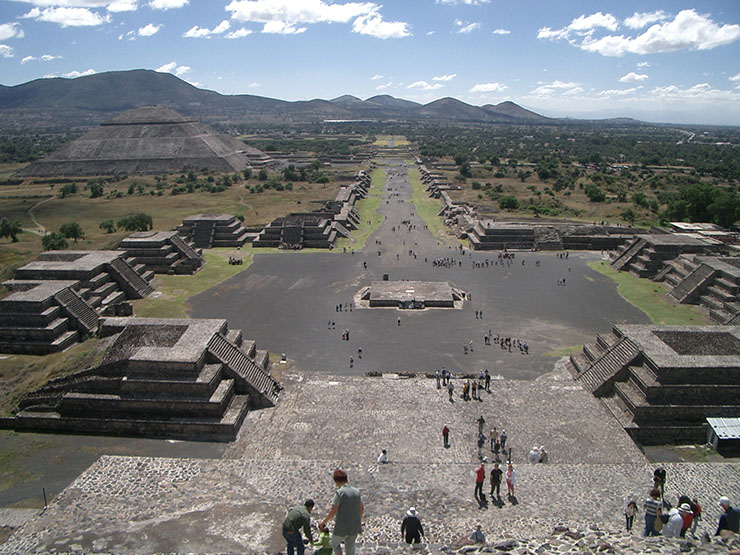
    Teotihuacán, in Mexico, is an immense, even overwhelming archaeological site, oriented along a twin axis. In the 1960s a team of archaeologists and surveyors mapped out the entire complex in great detail. The resultant map revealed an urban grid centred around two principal, almost perpendicular, alignments.

    From the Pyramid of the Moon at the north end, the complex extends south along the Avenue of the Dead beyond the Ciudadela and Great Compound complexes for about 3.2 kilometres. To this north-south axis we must add an east-west alignment that led from a point near the Pyramid of the Sun to a spot of prime astronomical significance on the western horizon.

    Anthony Aveni, an astronomer-anthropologist, discovered that on the day the Sun passes directly overhead in the spring of the Northern Hemisphere (May 18), the Pleiades star cluster makes its first annual predawn appearance. It was at this point on the western horizon that the Pleiades set, and the builders aimed the east-west axis.

    Additionally, the Sun also sets at this point on the horizon on August 12 – the anniversary of the beginning of the current Mesoamerican calendar cycle (5th Sun) – determined by a consensus of academic and independent scholars to have begun on August 12, 3114 BCE.

    It is very clear Teotihuacán was laid out according to a set of alignments that reflected celestial, geographic, as well as geodetic relationships. Walking along the avenue from one pyramid to another, up the steps to the top, and surveying the site from a multitude of angles, one is struck by the sense of being in the middle of some vast geometric matrix.

    Teotihuacán was the first true urban centre in the Americas. At its peak around 500 CE, it boasted a population of an estimated 200,000. George E. Stuart, archaeologist and the editor of National Geographic magazine sums up our ignorance:

    We speak of it with awe, as we do the pyramids of Egypt, but we still know next to nothing about the origins of the Teotihuacános, what language they spoke, how their society was organised, and what caused their decline.2

    As for one the most anomalous of artefacts on the planet, in the 1900s archaeologists discovered a sheet of mica in the upper tiers of the Pyramid of the Sun. This was no ho-hum pottery shard to catalogue and file away in a dusty box, yet that is about how archaeologists treated the find. To anyone with even a smattering of technical knowledge, discovering a large sheet of mica in an ancient pyramid site comes as a shock. In fact, it is one of the great ‘smoking guns’ that turn archaeologists mum.

    Mica is an inflammable and non-conductive mineral that grows in fairly weak plate-like structures. It is not at all useful as a structural building material. NASA uses it as a radiation shield in space vehicles. Mica is also utilised in electronic components and microwave ovens, and it is a good shield for electromagnetic radiation, like radio waves. Like the Great Pyramid, the Pyramid of the Sun has a subterranean cavity under the middle of the pyramid. A large pyramid with layers of thick mica would be an excellent EMI shield.

    Its placement in the complex raises questions that we could only answer today after the development of electronic, atomic and space age technologies.

    Thick sheets of mica were also found by archaeologists about 400 meters down the avenue from the Sun Pyramid, these precision-cut sheets were of considerable size: 27.5 meters square. They were located under a rock-slab floor of a complex now called “the Mica Temple”.

    What possible reason could the builders have had for including a layer of mica in any structure? It was obviously not decorative. To add greatly to the growing mystery, the particular mica used was traced to Brazil. Now we are getting in deep. How would a supposedly indigenous “Stone Age” culture know that mica existed 3200 kilometres away in the jungles of Brazil? Not only that, how did they transport these large sheets over that long distance intact without wheeled vehicles? Surely not via relay teams on foot travelling overland! No large seagoing boats or ports have ever been found in ancient Mexico.

    High Technology In Stone Age Peru

    Lake Titicaca borders Bolivia and Peru in the Andes. The highest large lake in the world, there are many signs it was once exposed to the ocean. Megalithic structures like the Gateway of the Sun in Tiahuanacu, Bolivia, also indicate a long lost past. The gateway was carved out of one solid block, the hard way to make a gate.

    Moving northward near Cuzco, Peru, we find even more large, impressive and mysterious structures. Here we find walls built with complex jigsaw type megalithic blocks similar to the more familiar walls found at nearby Machu Picchu. Some of the megalithic structures contain complex cut-rocks weighing over 100 tons; a few were joined together by bronze clamps. Some of the bronze had obviously been poured in place, a skill not available in pre-Columbian Peru.

    Like Sumer, the high Andes is an unlikely location for Stone Age cities, evidence of advanced technologies, and seminal agricultural discoveries. It is well established that the region around Tiahuanco, at 12,500 feet elevation, had been turned into a highly productive agricultural zone. That was achieved by the building of dikes, dams, canals and raised beds that created microclimates which protected the plants from frost.

    We have attempted to show our planet is full of ancient wonders and mysteries that have yet to be solved. You can find more information as well as our theories on who and what created these enigmas in our books, The Genesis Race (by Will Hart) and Ancient Gods and Their Mysteries: Will They Return in 2012 AD? (by Robert Berringer).

    [alert type=”general” dismiss=”no”]This article was published in New Dawn 90.[/alert]

    [alert type=”success” dismiss=”no”]If you appreciate this article, please consider subscribing to help maintain this website.[/alert]

    Footnotes:

    1. ‘Program Management BC’, Civil Engineering, June 1999, Craig Smith, P.E., www.pubs.asce.org/ceonline/0699feat.html

    2. ‘The Timeless Vision of Teotihuacán’, National Geographic magazine, December 1995

    © New Dawn Magazine and the respective author.
    For our reproduction notice, click here.

  • The Secret Origins of AIDS: Facts, Fallacies & Conspiracy Theories

    The Secret Origins of AIDS: Facts, Fallacies & Conspiracy Theories

    In 2006 the AIDS epidemic was a quarter-century old. Officially starting in June 1981 as a mysterious and fatal disease exclusively found in several dozen young white gay men from New York City and Los Angeles, the disease has already killed 20 million people with 40 million more currently infected with the human immunodeficiency virus (HIV), widely accepted as the sole cause of AIDS. One million Americans are now infected with HIV; and almost half of the new cases are African-American.

    The disease was first uncovered in homosexual men from Manhattan. “Gay cancer,” in the form of Kaposi’s sarcoma skin tumours, was the most striking telltale sign; and drugs, promiscuity, and anal sex were all thought to play a role in the unprecedented suppression of the immune system. It was soon obvious that the disease was not limited to gays: the mysterious agent was in the national blood supply, and an epidemic of AIDS was also uncovered in Central Africa.

    In April 1984 Robert Gallo of the US National Cancer Institute (NCI) announced his discovery of HIV as the cause of AIDS. Subsequently, Luc Montagnier of the Pasteur Institute in Paris filed a lawsuit claiming he had first discovered the AIDS virus at Pasteur, and that Gallo had stolen the French virus after it was sent to his lab for study.

    Twenty-five years later, the origin of AIDS still remains a mystery. The disease is widely believed to have originated in Africa when a primate (monkey) virus “jumped species” to first infect Black Africans. However, it is important to note that this belief is theory, not proven fact.

    Montagnier has wisely cautioned that it is extremely important to distinguish between the ancestral origin of HIV and the actual beginning of the AIDS epidemic. The animal virus ancestor of HIV may indeed be centuries old, but it is obvious that the epidemic itself is new.

    The epidemic did not begin in Africa. The first AIDS cases were uncovered in Manhattan in 1979. At that time there were no reported African cases. In fact, the AIDS epidemic in Africa did not begin until the autumn of 1982 at the earliest.

    How was HIV introduced exclusively into the gay community in the late 1970s? The exclusive introduction of HIV into the homosexual population of New York City is an unprecedented event in the history of medicine. This biologic phenomenon has never been fully explained scientifically. There is certainly no evidence to indicate white gay men were the only people exposed to sexual contact with Africans, particularly at a time when the epidemic did not exist in Africa. Furthermore, it is biologically impossible for a purported sexually-transmitted and blood borne “virus out of Africa” to infect only young, white, healthy men in Manhattan! Yet, the impossible did happen. Despite these facts, we are repeatedly told that AIDS began in Africa, even though the American epidemic began before the African epidemic.

    The mixing of AIDS facts and fallacies has long been apparent to researchers like myself who are convinced that HIV did not come from Mother Nature and “species jumping,” but was most likely introduced via contaminated vaccine experiments exclusively targeting the Black African and the American Gay community.

    Before exploring the man-made theory of AIDS, it is important to note a small but highly vocal group who believes the cause of AIDS is still unknown, that the AIDS blood test is worthless, and that HIV is a harmless virus that is not sexually transmitted. This group, headed by retrovirologist Peter Duesberg and other well-credentialed scientific “dissidents,” believes AIDS is a toxic and nutritional syndrome. They blame AIDS on recreational drug use among gays – and poverty and malnutrition in Africa for the disease.

    As a medical doctor and AIDS and cancer researcher, I am certainly not in accord with this group, but they have been quite successful politically, influencing world leaders like President Thabo Mbeki of South Africa, much to the chagrin of the World Health Organisation. For more information, go to www.google.com and type in “VirusMyth” or “The Perth Group”.

    Genetic Engineering and the AIDS Epidemic

    There is a close connection between the rise of genetic engineering and mixing of viruses in the early 1970s and the outbreak of HIV in the late 1970s. This connection persists in the form of the many unprecedented “emerging diseases” caused by “new viruses” that continue up to the present time.

    In 1970 the discovery of a cell enzyme, called “reverse transcriptase” by Howard Temin and David Baltimore, allowed molecular biologists to detect so-called retroviruses in some animal cancers. It was soon recognised that retroviruses could be found normally in the genes of many animal cells, and that scientists could manipulated these viruses to produce detrimental effects on the immune system. In “species jumping” laboratory experiments, many viruses were transferred between different animal species and were also adapted to human cells.

    As part of President Richard Nixon’s “War on Cancer,” genetic engineering of viruses became an integral part of the now largely forgotten Special Virus Cancer Program, conducted under the auspices of the NCI. Nixon also transferred part of the Army’s biological warfare unit at Fort Detrick, Maryland, over to the NCI, thereby allowing secret biowarfare experimentation to be carried out under cover of bona fide cancer research.

    All this virus transfer and molecular manipulation was a biologic disaster waiting to happen. What would happen if one of these highly dangerous genetic creations escaped from the laboratory into the public sector? This culminated in a historic conference entitled “Biohazards in Biological Research” held at Asilomar, near Pacific Grove in California in 1973. Despite the biologic dangers, it was decided to continue this research.

    By the late-1970s the War against Cancer and the Virus Cancer Program proved a bust with no cancer-causing retroviruses found in humans. The Program was winding down in 1978, at the exact time when government scientists were also enrolling thousands of gay men in New York City to serve as guinea pigs in the hepatitis B experiment that took place that same year at the New York Blood Centre in Manhattan. In 1979 the first cases of AIDS in gay men were reported from Manhattan. Coincidence? I think not.

    Five years later, Gallo, who had worked for the Virus Cancer Program (VCP), “discovered” the retrovirus that causes AIDS; and Duesberg, who also worked for the VCP, continues to declare that HIV is harmless.

    Is there a connection between the laboratory manipulation of primate retroviruses in the 1970s and the outbreak of AIDS? Or did Mother Nature conveniently pick that exact time to jump monkey genes into gay men to spectacularly revive the science of retrovirology and the careers of virologists like Gallo?

    The Gay Vaccine Experiment and the Outbreak of AIDS

    The earliest AIDS cases in America can be clearly traced back to the time period when the hepatitis B experiment began at the New York Blood Centre. The Centre began injecting gay men with multiple doses of the experimental vaccine in November 1978. The inoculations ended in October 1979, less than two years before the official start of the epidemic. Most importantly, the vaccine was developed in chimpanzees – the primate now thought to contain the “ancestor” virus of HIV. Also downplayed is the Centre’s pre-AIDS connection to primate research in Africa and also to a primate centre in the New York City area. The final experimental vaccine was also made by Merck and the NIH from the pooled serum specimens of countless gay men who carried the hepatitis B virus in their blood.

    The New York Blood Centre (NYBC) is the largest independent blood supplier and distributor in the USA. In 1970, Alfred M Prince, M.D., head of the NYBC Laboratory of Virology, began his hepatitis research with chimps housed at LEMSIP (Laboratory for Experimental Medicine and Surgery) in downstate Tuxedo, NY. Until disbanded in 1997, LEMSIP supplied New York area scientists with primates and primate parts for transplantation and virus research.

    Founded in 1965, LEMSIP was affiliated with New York University Medical Centre, where the first cases of AIDS-associated Kaposi’s sarcoma were discovered in 1979. NYU Medical Centre researchers were also heavily involved in the development of the experimental hepatitis B vaccine, and the Centre received government grants and contracts connected with biological warfare research beginning in 1969, according to Dr. Leonard Horowitz, author of Emerging Viruses: AIDS and Ebola (1996).

    In 1974 Prince, with the support of Aaron Kellner, President of the NYBC, moved the chimp hepatitis research to a new primate centre called Vilab II in Robertsfield, Liberia, in Africa. Chimps were captured from various parts of West Africa and brought to VILAB. The lab also prides itself by releasing “rehabilitated” chimps back into the wild. One cannot help but wonder if some of the purported “ancestors” of HIV in the African bush have their origin in chimpanzees held in African primate labs for vaccine and medical experimentation.

    The hepatitis B experiment, which inoculated over 1,000 healthy gay men, was a huge success with 96% of the men developing antibodies again the hepatitis virus. This high rate of success could not have been achieved if the men were immunosuppressed, because immunosuppressed people do not easily form antibodies to the vaccine. The experiment was followed by similar hepatitis B experiments using gay men in Los Angeles, San Francisco, Chicago, Denver and St. Louis, beginning in March 1980 and ending in October 1981, the same year the epidemic became official.

    In the mid-1980s the many blood specimens donated by the gay Manhattan men during the experiment were retrospectively examined for HIV infection by researchers at the NYBC. It was determined that 6% of the specimens donated between 1978-1979 were positive for HIV. By 1984 (the end of the study period) over 40% of the men tested positive for HIV.

    The final fate of all the men in the experiment has never been revealed. However, the blood donated by these men are the oldest HIV-positive blood tests on record in the United States. The full story of this experiment and its aftermath are contained in my two books on man-made AIDS: AIDS and the Doctors of Death (1988), and Queer Blood (1993). One fact is obvious: There was no AIDS in America until the exact year the government began experimenting with gay men.

    There is also a suppressed connection between the outbreak of AIDS in Africa and the widespread vaccine programs conducted by the World Health Organisation (WHO) in the 1970s in Central Africa, particularly the smallpox eradication program. On May 11, 1987, London Times science writer Pearce Wright suggested the smallpox vaccine program could have awakened a “dormant” AIDS virus infection in Africa. Gallo was quoted as saying, “The link between the WHO program and the epidemic is an interesting and important hypothesis. I cannot say that it actually happened, but I have been saying for some years that the use of live vaccines, such as that used for smallpox, can activate a dormant infection such as HIV.”

    This explosive story linking AIDS to African vaccines was suppressed and never appeared in the controlled major American media. The genocidal and depopulation implications of this suppressed story can be found on the Internet by googling “WHO Murdered Africa”, by William Campbell Douglas, M.D.

    Vaccines, Species Jumping and HIV

    There are inherent dangers in vaccine production because vaccines are made on living cells. Contamination with bacteria and viruses are constant problems during the manufacturing process. Laboratory additives used to feed the cell cultures (such as fetal bovine [cow] serum) may also be a source of microbial contamination. Some researchers believe living and killed viruses injected into the body can combine with other viruses normally present in the body, resulting in disease-causing “recombinants.” Vaccines can also contain viral particles, as well as newly recognised tiny bacteria known as “nanobacteria.” Half the 2004 flu vaccine supply was destroyed due to contamination with disease-causing bacteria. The dangers of vaccines are downplayed in an attempt to assure the public that vaccines are safe.

    We are repeatedly told that HIV is the first primate virus to “jump species” and produce an epidemic in humans. But, in truth, the AIDS epidemic is the secondinstance in which a monkey virus has been transferred to humans via vaccines.

    Rarely-publicised is the fact that a cancer-causing monkey virus jumped species a half century ago when contaminated polio vaccines were injected into millions of people, including half the US population of that era. In the early 1960s it was discovered that some lots of polio vaccine manufactured on rhesus monkey kidney cells during the period 1955 to 1963 were contaminated with a monkey virus called SV40 (Simian virus #40). This primate virus was proven to cause cancer in experimental animals. However, to this day, health officials still insist there is no proof that SV40 causes human cancer.

    Despite the lack of government interest, genetic and immunologic studies of SV40 by independent researchers over the past decade indicate this virus is clearly associated with rapidly-fatal cancers of the lung (mesothelioma), bone marrow cancer (multiple myeloma), brain tumours in children, and other forms of cancer.

    Washington Times report (September 21, 2003) states, “Some of the polio vaccine given to millions of American children from 1962 until 2000 could have been contaminated with a monkey virus that shows up in some cancers, according to documents and testimony to be delivered to a House committee Wednesday. The vaccine manufacturer said such claims ‘don’t have any validity,’ and the Centres for Disease Control and Prevention (CDC) agrees.” (See the website: www.sv40cancer.com.) For anyone who still believes vaccine makers and health officials always act in your best interest, I would highly recommend a recently published book titled The Virus and the Vaccine: The True Story of a Cancer-Causing Monkey Virus, Contaminated Polio Vaccine, and the Millions of Americans Exposed by Debbie Bookchin and Jim Schumacher.

    Medical Experimentation and Biological Warfare

    The idea of man-made AIDS is often considered a paranoid belief. Why would scientists introduce a virus to kill millions of people? AIDS experts routinely blame primates and human sexuality for the origin and spread of HIV, but they never consider the possibility that HIV could have originated in an animal cancer virus laboratory.

    The sad truth is that governments and the military do indeed experiment on unsuspecting citizens. And Iraqi bioweapons of mass destruction was one of the reasons used to justify the current invasion of Iraq.

    It is clear that AIDS started as a “gay disease.” However, yet another downplayed fact is that the HIV “strain” in America is different from the HIV strains found in Africa.

    Harvard virologist Max Essex claims the American HIV strain spreads more easily via anal sex; whereas the African strains spread more efficiently via vaginal sex. This could explain why the American epidemic spreads primarily through homosexual activity and anal sex, while in Africa it is primarily heterosexual and spreads through vaginal sex. The “different” HIV strain in America is further evidence that “American AIDS” did not originate in Africa.

    The Relationship Between AIDS and Cancer

    The relationship between AIDS and cancer is also downplayed, along with the connection between the Special Virus Cancer Program and the ensuing outbreak of HIV. In Gallo’s book he readily admits to a relationship between AIDS and cancer, noting that “many people with AIDS develop one or more cancers.” There is now no doubt that HIV can lead to an increased incidence of cancer, particularly Kaposi’s sarcoma, Hodgkin’s disease, non-Hodgkin’s lymphoma, and cervical cancer.

    The purpose of the Virus Cancer Program was two-fold. First, to discover a virus in humans that could cause a form of cancer. Second, to develop immunosuppressive laboratory viruses useful in “making” cancer in experimental animals.

    When Gallo discovered HIV in 1984, he called it a cancer-causing “leukemia/lymphoma” virus. The name was quickly changed to a “lymphotropic” virus, thus obscuring the relationship between the new “gay disease” and cancer. Virologists were quickly convinced that the virus came from primates, and both Gallo and Essex heavily promoted the readily accepted African green monkey origin of HIV. A decade later, chimpanzees (rather than monkeys) became the more favoured origin. The primate origin of HIV was further obscured by titling the virus as a “human immunodeficiency virus” (HIV) , rather than calling it “primate immunodeficiency virus” (or PIV) in humans.

    Is HIV the Sole Cause of AIDS?

    As noted, HIV is believed to be the sole cause of AIDS, although a few AIDS dissidents believe HIV is harmless. Generally disregarded by both groups is the matter of the origin of Kaposi’s sarcoma, the “gay cancer” associated with AIDS.

    In 1994 it was reported that KS is actually caused by a new “herpes-8” virus. KS cases were first discovered in the late nineteenth century; and before AIDS it was a rare form of cancer. Before AIDS, KS was a non-transmissible disease that was never seen in young American men.

    The finding of a new KS virus indicates that two different viruses were simultaneously introduced into gay men when AIDS began in the late 1970s. No rational explanation has been put forth for this bizarre occurrence; and how this “new” virus could cause a gay epidemic of KS has never been explained satisfactorily. Further complicating the “sole cause” of AIDS scenario is the recent discovery of tiny bacterial forms known as “mycoplasma.” Luc Montagnier believes these microbes are important infectious “co-factors” in the development of AIDS, although most AIDS researchers ignore mycoplasma.

    The “Cancer Microbe” Link to AIDS

    Although the precise cause of cancer is unknown, there is a century of microbial research linking certain tuberculosis-like bacteria to cancer. This research is ignored as medical heresy, but my own reported cancer studies indicate that “acid-fast” bacteria indeed exist in common forms of cancer and in Kaposi’s sarcoma.

    I have written extensively about these bacteria in AIDS; The Mystery & the Solution (1984), The Cancer Microbe (1990), and Four Women Against Cancer(2005). Cancer bacteria have characteristics of both bacteria and viruses. There are also similarities to mycoplasma and to newly-discovered nanobacteria, currently considered to be the smallest forms of life and known to contaminate commercial vaccines. Nanobacteria are ubiquitous and may be involved in the pathology of many diseases currently considered of unknown cause.

    Cancer microbe research has been ignored in AIDS and KS. However, Lawrence Broxmeyer, M.D., in AIDS: What the Discoverers of HIV Never Admitted (2003), concludes that the real cause of AIDS is not HIV, but actually tuberculosis-like bacteria. He thinks Gallo and Montagnier found a retrovirus because that was the only thing they were looking for.

    Unlike Broxmeyer, I believe HIV came out of animal cancer research and dangerous vaccine and biological warfare experimentation – and that HIV made its way into vaccines injected into African Blacks and American Gays. If unrecognised cancer microbes are proven to be an unrecognised infectious factor in cancer and AIDS, as I believe they are, this would certainly add to the dangers of genetic engineering of cancer viruses and new bio-warfare agents.

    I believe HIV is essential to produce the immunodeficiency characteristic of AIDS, but I consider HIV plus unrecognised “cancer bacteria” to be the causes of AIDS.

    The Origin of Gallo’s HIV Virus

    Could HIV be related to reported virus-like forms of cancer bacteria? A careful reading of how Gallo “isolated” HIV indicates possible derivation from cancerous cells harbouring unrecognised bacteria.

    Unlike most bacteria which can be grown on artificial laboratory culture media, viruses need living cells to grow and survive. Pulitzer Prize-winning author John Crewdson provides a detailed analysis of the discovery of HIV in Science Fictions: A Scientific Mystery, A Massive Cover-Up, and the Dark Legacy of Robert Gallo (2002), a highly unflattering portrait of Gallo and an account of the lawsuit initiated by the Pasteur Institute, accusing Gallo of stealing the AIDS virus.

    According to Crewdson, HIV was finally isolated in Gallo’s lab by isolating the virus in pooled blood T-cells from ten patients with AIDS. From that brew, the virus was cultured in larger amounts for commercial purposes by growing HIV on “cell lines” derived from the white blood cells (T-cells) of patients with lymphoma cancer. This particular strain of HIV became the basis for Gallo’s patented HIV blood test and the resulting lawsuit.

    Montagnier claimed that he first discovered HIV at Pasteur and when he sent the virus to Gallo’s lab for testing, he believes Gallo stole the virus and made it his own discovery. Gallo repeatedly declared his virus was not the French virus.

    It was eventually proven that Montagnier’s virus somehow made its way into Gallo’s HIV culture. Just as everyone’s fingerprints are different, so too is every HIV virus. Gallo’s virus was molecularly identical to Montagnier’s in every respect. With the intervention of President Ronald Reagan and the French Premier, the lawsuit was settled out of court in 1987 , with the two researchers agreeing to split the royalties from the AIDS blood test.

    Despite all this, the scientific controversy continued, resulting in additional investigations by the National Academy of Sciences and the NIH Office of Scientific Integrity. In 1991, Gallo finally conceded that Montagnier’s virus had most likely contaminated his laboratory and that his AIDS patented blood test was indeed based on the Pasteur virus. In 1992, the National Academy of Sciences’ panel completed its investigation, producing a report critical of Gallo.

    All these scientific irregularities surrounding the precise lab origin of HIV point to serious problems in virology. For example, for several years Gallo was unable or unwilling to admit his virus was identical to Montagnier’s virus, even though they proved as identical as any two HIV virus strains could be. Furthermore, the controversy proves how easily virus laboratories can be contaminated by “outside” viruses.

    One of the contentions of the man-made theory of AIDS is that the experimental hepatitis B vaccine was contaminated with an immunosuppressive AIDS-causing agent and/or the Kaposi’s sarcoma virus. This theory is condemned as conspiracy theory. Certainly the vaccine was unlike any other in that it was made from the blood of gay men who were hepatitis B virus carriers. During the gay experiment at the NYBC there was concern that something was wrong with the vaccine and that it might be contaminated. According to June Goodfield’sQuest for the Killers, p 86, “This was no theoretical fear, contamination having been suspected in one batch made by the National Institutes of Health, though never in Merck’s.”

    Four years before AIDS in 1975, Gallo also reported a “human virus” (HL-23) that subsequently proved to be three contaminating laboratory cancer-causing primate viruses (gibbon ape virus, simian sarcoma virus, and baboon endogenous virus). Gallo claims he has no idea how these animal viruses contaminated his lab. In 1986 Essex also reported a “new AIDS virus” that eventually turned out to be a monkey virus traced back to his own lab. Despite these contaminations, Gallo and Essex both blamed AIDS on monkeys in the jungle and heavily promoted the “out of Africa” origin of American AIDS.

    After AIDS began there were instances where a strain of HIV isolated from a particular AIDS patient inadvertently contaminated HIV specimens from other AIDS patients – and where HIV strains sent to other laboratories accidentally contaminated additional specimens.

    For years Montagnier insisted that Gallo’s virus was isolated from a French patient named Brugiere. In 1991 the two foremost AIDS experts were astonished to learn that Gallo’s strain of HIV actually belonged to a patient named Laillier. Unbeknownst to Montagnier, the “Bru” culture had somehow contaminated the “Lai” culture at the Pasteur lab.

    Is AIDS Genocide Against Gays and Blacks?

    Why is there a blackout of the man-made theory of AIDS in the scientific literature and in the corporate-controlled media? Although some evidence is presented here, it is a fraction of the documentation presented in my two books on the man-made epidemic, and in books by Dr. Leonard Horowitz, and Professor Robert E Lee, and in Dr. Robert Strecker’s video “The Strecker Memorandum”, and in other sources.

    I do not believe the exclusive introduction of HIV into the most hated minority in America was caused by monkeys in the African bush, particularly when AIDS appeared immediately after the gay experiment. Why are primates in the African wild blamed when tens of thousands of captive primates in virus labs all over the world have been injected with infectious viruses and cancerous tissue for more than a century?

    Why were African Blacks targeted? Many Africans and African-Americans believe AIDS is an experiment to rid the world of Black people, as part of a government-sanctioned world depopulation program.

    American gays were the perfect target to test a new retrovirus. A largely homophobic public would easily accept HIV infection in gays, due to their purported promiscuity and drug use. Few people would believe the US government would secretly test biologic agents on its civilians, although there is a well-documented history of secret unethical experimentation extending back to the Cold War of the 1950s which includes the government’s horrendous “radiation experiments.”

    I cannot explain the silence and apathy on these issues from the Black and the Gay communities. People don’t seem to care much about genocide unless their own group is affected; and even so, most people are in denial and don’t want to know about man-made AIDS. Many AIDS activists simply dismiss the man-made theory as a “distraction” which interferes with HIV testing and treatment, and the search for a cure.

    The Secret History of AIDS

    The history of AIDS has been deliberately white-washed to obscure its man-made origin. Knowledge of HIV and other retroviruses came directly out of the little-known and secret Special Virus Cancer Program of the 1970s. More than one virus was introduced into American gays in the late 1970s, and mycoplasma and “cancer bacteria” are additional infectious agents that have been ignored in proclaiming HIV as the “sole cause of AIDS.”

    Secret bio-warfare research co-mingled with bona fide cancer research at the NCI in the decade before AIDS, and that association continues up to the present time. AIDS in America erupted when government researchers began experimenting with gays, using an experimental vaccine developed in primates – the animals purported to contain the “ancestor virus” of HIV. AIDS in America did not come from Africa. HIV occurred exclusively in the gay community because the virus was put there by the “hand of man.”

    Mother Nature wisely separated the species but, in the decade before AIDS, genetic researchers repeatedly violated the “species barrier” by transferring cancer-causing viruses between various animal species, ostensibly to improve our health.

    The man-made theory of AIDS is not based on conspiracy theory. The theory warrants a full scientific investigation – and the secret history of HIV and AIDS needs to come out of the closet.
    [alert type=”general” dismiss=”no”]This article was published in New Dawn 91.[/alert]

    [alert type=”success” dismiss=”no”]If you appreciate this article, please consider a contribution to help maintain this website.[/alert]

    © New Dawn Magazine and the respective author.
    For our reproduction notice, click here.

  • New Dawn Interview With Tobias Churton

    New Dawn Interview With Tobias Churton

    From New Dawn 91 (Jul-Aug 2005)

    Tobias Churton is one of today’s most lively and spirited investigators of that underground stream of the Western tradition known as Gnosticism. He first became interested in the Gnostics while reading for a degree in theology at the University of Oxford in the 1970s.

    Soon after leaving, he became interested in exploring these ideas for television. “I’d got it into my head that there had never been any religious television – only programmes about religion,” he later recalled. “I had written a paper on the subject which recommended a new kind of television for this most neglected area, something on the lines of television, a kind of programme which would enter into the very nature of the religious experience and not simply observe it.” Churton got his opportunity in the mid-1980s, when he produced a series on the Gnostics for British television. To accompany his series, he wrote his first book, The Gnostics, a history of this elusive esoteric movement from early Christianity to modern manifestations in such figures as Giordano Bruno and William Blake, and even in Mary Shelley’s Frankenstein.

    In the years since then, Churton has pursued and deepened his appreciation for the Western esoteric traditions. He was the Founder Editor of Freemasonry Today magazine, and during the last year has published two new books. The Golden Builders: Alchemists, Rosicrucians, and the First Freemasons explores the background of Masonry from its antecedents in the alchemical and Hermetic traditions of antiquity through its modern manifestations. His latest book, Gnostic Philosophy: From Ancient Persia to Modern Times, casts an even wider net, tracing the Gnostic heritage from its roots in Zoroastrianism, Mithraism, and the Essenes to the 20th century magus Aleister Crowley and manifestations of gnosis in pop culture. Churton currently makes his home in Britain.
    – Richard Smoley

    How exactly would you describe gnosis? What does it mean to you?

    How would I describe gnosis? I should like to describe gnosis as the experience of knowing or having intimacy with what we call God. God, the Bible tells us, wishes to be known. The word ‘Gnostic’ – one who has experienced gnosis – was first used as a nickname by those who opposed the whole idea or thought it was all too much for human beings to claim.

    In a way, it really is the most enormous act of cheek to say that one has had experience of God! John’s Gospel for example says that “no man hath seen God at any time.” Hospitals for the mentally sick are full of people who claim the most extraordinary intimacy with powers beyond themselves. In the Gnostic tradition broadly, sanity or peace of mind is a fruit of gnosis. And ‘sanity’ means becoming clean, or ‘whole’ so there is a moral as well as a physical and psychological dimension to be considered. It might be argued that one has got to share in Christ to know God. But clearly there has been gnosis outside of the Christian tradition. So God obviously wants to be known by everyone!

    Gnosis to me personally means receiving a gift – a gift that carries with it certain responsibilities. It’s quite a heavy thing to be lightened – or enlightened! There’s a lot we carry that prevents us from rising and growing in divine knowledge. For me, gnosis means a love of truth, a sensitivity to the magical aspects of life, and above all, a permanent struggle with material consciousness. People would rather see a person burnt than their own money burnt. That, we would say, is only natural. Politicians are adept at appealing to us on this level. Being gnostic does involve an unusual attitude to the natural order. The merely human in us does come under scrutiny – the light shows up the shadows and darkness in us, if you like. Obviously, no one likes being ‘shown up’, so we persecute the light-bringers and hide ourselves behind images of who we think we are. Gnosis is light and, if I may say so, “my burden is light.”

    Is it possible to experience gnosis for oneself?

    I obviously believe it is possible to experience gnosis for oneself. One could hardly experience it for other people! But the experience changes and one might not always be aware that one is experiencing gnosis. It is not a single state. It is not the same as ‘instant satori’. The universe itself is a projection of gnosis, if limited. I should say that if one has no experience of gnosis, one can hardly say one has been truly alive.

    Could you explain a little about the Gnostic schools of antiquity, and what happened to them?

    There were many Gnostic schools in late antiquity, as far as we can tell, surrounding some particular teacher, or the self-proclaimed followers of such a teacher. They had visions, dreams, statements, stances and orders of followers. Some were probably charlatans and some ‘the real thing’, as one would expect.

    The orthodox Christian teachers who made it their business to denigrate and destroy the Gnostic movement in the Church always tended to isolate the teacher. Naming names was a big part of the anti-Gnostic propaganda. Thanks to their efforts, we have some dim records of men like Basilides, Carpocrates, Marcus, Marcion, Valentinus, Simon Magus, Dositheos. The orthodox apologists Irenaeus, Hippolytus, Epiphanius and Tertullian, for example, made it their business to present these Gnostic teachers as demented quacks leading their followers into what Irenaeus called – in about 180 CE – “an abyss of madness and blasphemy.” I don’t know how seriously one can take their presentations of the evidence. It’s a bit like asking George Bush whether he prefers Sergeant Pepper’s Lonely Hearts Club Band to Revolver!

    The Gnostics represented a kind of counter-culture and therefore exposed themselves to persecution and ridicule. You can’t imagine Gnostics wandering around in suits and ties with briefcases talking about real estate values! Some seem to have met in catacombs and private places. There were Gnostics in the first ever monasteries of Saint Pachom in the Thebaid of Egypt. Indeed, it is arguable that the first monastic movement was chiefly inspired by the desire for a place to get away from the world and experience God, i.e.: a Gnostic inspiration. Clearly the monasteries have always had a special role in promoting authentic spiritual life, if usually in secret. The walls had ears.

    Sadly, the British and German Reformations, in attacking the monasteries in the name of the Protestant tendency, tended to throw the baby out with the bath-water, so the position of today’s Gnostic has some kinship with that of the early Christian Gnostics. Where do we go?, they might ask. San Francisco obviously didn’t work for everyone!

    However, as we know from the story of the Nag Hammadi Library, even in the desert monasteries the Gnostics were not safe. Official visitations weeded out the offending literature and condemned it to the flames. Soon the offending Gnostics would meet the same fate. The Church hooked up with the State in the 4th century CE and the true Gnosis was exiled. Just one good reason to keep religion out of politics!

    How did this Gnostic legacy survive after the end of the old Gnostic schools? What sort of heritage did they bestow on our civilisation?

    Thanks be to God, the Gnostic experience and challenge did just survive the end of the Roman eagle’s flight. As one might expect, it survived on the fringes of the old Empire – in Syria, Iraq, Bulgaria, Turkestan and Bosnia – possibly Ireland. Even, for a while, in Mongolia and China. The flame was kept alive through untold numbers of military campaigns, massacres and violent conflicts of kings, sultans, demigods, semi-gods, dictators and emperors. It was carried into the bosom of the Islamic Empire after the 7th century in the form of Hermetic philosophy as an inspiration to science and philosophy – examining God in His works and wonders. The Sabians of Harran – who were not Muslims but Sabians and permitted by the Koran – their role is extraordinarily important in keeping the flame alive.

    The appearance of Islamic mysticism – or rather, gnosis – among the so-called Sufis in the ninth and tenth centuries was highly significant. Magic, philosophy, science, mysticism – in short, human progress, were fostered by the enlightened circles of the Islamic world – always playing, it should be noted, a kind of shadow-boxing game with the hard-line authorities who cared as little for personal experience of the divine kingdom as did the Roman Church in the west.

    The annihilation of the so-called ‘Cathars’ in southern France and northern Italy in the 13th century showed just how far the authorities were prepared to go in attempting to destroy spiritual existence that was not controlled by the status quo – the ever-present authorities we find in every age: the manifest powers of invisible spiritual opposition, as the Gnostic sees it. The Gnostics have been the light of the world and the leaven in the bread. A world without gnosis would be a very dark place indeed. The Gnostic greets the Sun, the ‘visible god’. He or she is first to see the dawn – first, you might say, in the garden of resurrection.

    Some scholars suggest that the term “Gnostic” is too problematic to be valuable, and should be replaced by something else. Do you agree?

    Some scholars, you say, suggest the term ‘Gnostic’ is too problematic and should be replaced. Well, I’m sorry for them. Gnosis itself will always be problematic in this world. The day it fits cosily into some scholar’s dictionary will be the day it has ceased to have power. No, ‘Gnostic’ – like ‘Christian’ – began as a nickname and like all such names should be borne with pride in a blind world. Yes, there are problems of definition. In 1966 there was a Colloquium of scholars at Messina intended to define the term ‘Gnosticism’, but it could not hold the term down. So I, without even the benefit of the Italian sun, cannot do it for you in this interview. The subject could fill a book. There is, however, another tack we can follow. That is, Why should it be defined? Definition – like a census – leads to control. Much better that the Gnostic tradition bears the unique quality of resisting definition! There is no doubt that the issue has been muddied by the activities of the Christian churches that dominate thinking in the West to a greater degree than we perhaps realise.

    When I was a student at Oxford University for example, it took me a long time to realise the full implications of the fact that the Theology courses were run by church leaders chiefly for their benefit. Admittedly, it would have been odd if they had been run by industrial chemists! But the point was that ‘Gnosticism’ for example dealt with a universal experience in terms only of its presence or exile from the orthodox Christian Church. Theologising it denied its root in authentic experience. If we cannot trust our deepest most personal and absolutely authentic experience, what can we trust? Anyhow, it would have been better, I think, in retrospect, to study the entire field of Gnostic philosophy, religion and so on as a stream of its own that interpenetrates – necessarily – with all of the so-called ‘great religions’ of the world.

    One of the interesting things about the orthodox Church – if we may for just a second see the plethora of conflicting bodies as a broad unity – is that it finds it can eventually accommodate everything – everything, that is, except gnosis! By this I mean that Darwin was more or less accepted by the Church of England by the time of World War One. Church leaders – by no means all, I know – made accommodations with Hitler, Stalin and Mussolini and – let’s face it, the Church has pretty well made its peace with the world. Gnostic types do not find themselves in such a comfortable position with regard to the world as it is.

    There are many people who are on the road to gnosis who perhaps do not realise it, who out of love of God and fear of God – and fear of themselves and others – find themselves wasting years in very unsatisfactory Church gatherings which – in the name of God – demand their sacrifice and allegiance. I’ve always found that it was the most selfish groups that preached self-abnegation.

    But to get back to the point, what other tame word could replace the tattered glory and battered bread of the words Gnostic, Gnosis – even that scholars’ word ‘Gnosticism’? Mysticism is too misty. Magick has been bowdlerised and Disneyfied. Spirituality – well! It used to have meaning, now it means anything and probably nothing. It’s only a matter of time before car manufacturers come up with a car that meets your spiritual needs! I really don’t know what people mean when they talk about ‘spirituality’. It’s so vague as to be useful to every pseudo-religious charlatan and greedy politician in the world! When you say ‘Gnostic’, you always have to explain it. And when you do, people are always fascinated, whether they admit it or not! So that’s what we’ve got and we have to make the best of it. Gnosis means knowledge. Get it?

    What do you make of current attempts to revive Gnosticism? What value do they have?

    You ask about recent attempts to revive Gnosticism. This is a difficult question for people like myself who prefer authentic experiences with some real history attached. This is the scholar and antiquarian in me speaking. My path is not your path.

    I don’t believe ‘Gnosticism’ – that word really refers to the Gnostic groups that came into conflict with Christian orthodox authorities in the first five centuries of the known life of the Christian Church – can or needs to be ‘revived’. The patient is not dead – though the world might well be. “The dead are not alive,” as the Gnostic gospel has it, “and the living will not die.” This is my personal favourite among the many great Gnostic logia. The dead are not alive and the living will not die. How true.

    Besides, there are several great authentic Gnostic streams still going strong – though at least one of them is severely persecuted. The Yezidis of northern Iraq, western Iran, Georgian Armenia – that is to say Transcaucasian Kurdestan – have the most unbelievably inspiring tradition. There’s nothing to compare with it in the whole world. It is in a class of its own. The Yezidis have been persecuted cruelly by those in power about them because they are not regarded as “people of a book” as defined – there’s that word again! – in the Koran. They have long been accused of ‘Devil worship’, but that kind of cruelty has been common among oppressors since Jesus was accused of being a devil’s mouthpiece all those years ago. It’s the oldest trick in the book and works because people fear every type of evil – except their own.

    Yezidis are today being attacked and killed in and around Mosul and denied police protection in Georgian Armenia. This is fact.

    The second tradition I was thinking of was that of the Mandaeans of lower Iraq, who claim John the Baptist as a special prophet and have referred, interestingly, to ‘Christ the Roman’. As far as ‘Gnostics’ go, these people are undoubtedly the ‘real thing’.

    When I made the TV series Gnostics in 1985-87, we wrote to the Iraqi Embassy in London, and they denied any knowledge of the Mandaeans. I was worried that they had been wiped out under the last miserable Iraqi regime, but to my delight, I now observe that they have survived – though still having to justify themselves, surrounded as they are by the various Islamic traditions. I think they qualify as Sabians in the Koran and are therefore protected. The wonderful Yezidis, on the other hand, have been persecuted for 1300 years and have no such protection.

    An independent Kurdistan would probably offer these unique and admirable people a future that may otherwise be in jeopardy. This would be a very good thing to come out of the current mess in Iraq. The great powers have been screwing up the Middle East since the fall of the Roman Empire, so one may legitimately question whether the mad, bad game of sharing out the property of the vulnerable will end in our lifetimes. We must hope, have faith and love. Spare some love for the Yezidis – even though most people have probably never heard of them.

    This, to answer your question, would be a good way to care for the Gnostic tradition – the tradition, I should say, of the authentic spirit of man, enslaved in, and by, the world. The love of money is the root of all evil. The way to revive Gnosis, is to be revived by Gnosis.

    Why are people so interested in Gnosticism these days?

    I think people are interested in Gnosticism these days because there is clearly a spiritual vacuum at the heart of our culture. Science and mass production have done much for the outside of the cup, but the inside is empty and cannot be sated by drugs, sex and rock ‘n’ roll. The promised liberation is a brief delight followed by a swift fall. Grace looks away and the victim, must, if he or she be lucky, look within.

    Even in countries which have not been so saturated by big business as we have – where washing machines, central heating and personal stereos and computers might be very welcome – there is a now well-articulated complaint that with all the money and the “promise of freedom and liberty for all” comes a great threat.

    The threat is to the life of the heart and the delicate, invisible life – the thousand links with God – which have kept people alive for centuries in the face of countless dangers and privations. I don’t wish to romanticise here, but one must ask, ‘Who needs the most help?’ The East or the West? Clearly both suffer from poverty – material poverty and spiritual poverty – and, of course there is plenty of material poverty in the West and doubtless spiritual poverty in the East. But can’t we help each other? And thereby help ourselves? But how do we do this?

    Well, Jesus offers a clue: “First clean the inside of the cup.” Clean it? we may cry – most of us don’t even know it’s there! Where is this ‘inside of the cup’? Where is this kingdom of heaven (a kingdom, note, not a democracy!) that is supposed to be “nigh and within” us? Well, the example and uncompromising commitment to spiritual reality is such a strong and powerful river surging through the Gnostic tradition, that it would be extraordinary if our bone-dry world did not desire to take a dip in its life-giving waters!

    Until we sort ourselves out, we can only export our own confusion.

    Could you say a little bit about the Western esoteric traditions as a whole? What is their situation today? What do they have to contribute to our civilisation?

    You have asked me to say a little bit about the Western esoteric traditions as a whole and what they may contribute to our civilisation. The second part of that question is simple. What they have to contribute is civilisation. What is civilisation? It is clearly not power and might or the ability to force change. Otherwise we must rank Attila the Hun and Chingiz Khan as leaders of civilisation! Civilisation really boils down to the ability of a range of people to live in a city, organise themselves and get on with each other without falling into chaos. That which promotes the life of the busy hive may be described as a civilising influence. Civilisation is not then an arbiter of truth but of what works well. However, wise men and women have tended – against the odds – to the ancient conviction that nothing works quite as well as the truth, and that a rotten branch – rotten with corruption – will not even support itself for very long – never mind the burden of civilisation. Truth is good.

    When I think of Western civilisation with all its inequalities of ability and social status, its wide variety of racial and religious types, its sheer density of pulsating human existence, its vulnerability to natural forces, disease, despair, hysteria, false expectation, boredom and so on, I can’t help thinking that organisations like Freemasonry and discreet societies of personal development are important. While corrupting forces always aim to work within the carcass, the healing agents must also work within the fabric of the human hive – not in fearful secrecy but with a modesty and love that is suspicious of fame, vainglory and social attention. The cool breeze works well unseen. This is perennial wisdom. I think the best of the masonic tradition has contributed hugely to understanding of tolerance and barrier-breaking social idealism. Occasionally, we even find a spiritual insight occurring in some of the most stubborn mental material!

    Whatever good men and women try to achieve with this floppy idiot called man, the sincere busy bee is always up against our biological and moral heritage. This inheritance is surely dark enough to make strong men and women weep and give ample reason to despair or take refuge in a cynical stoicism of the type that Gore Vidal, for example, exemplifies with such taste and class.

    There is much to be said for contemporary Rosicrucian societies for introducing people to the world of imaginative spiritual development. Many find insight in the worlds of Theosophy, Thelema and Anthroposophy, for example. This is all well and good, as far as it goes, but human society can be corrosive – even destructive.

    Human beings really aren’t very nice – unless they’re in some kind of love with one another – and even then… well! The divorce rates with all their sad tales of acrimony and greed testify to the fragility of oaths built on enthusiasm and a lottery win. The Psalmist was being simply realistic when he uttered the words: “None is righteous. No, not one.” Involving oneself in groups may stifle the creative and divine spirit. But aloneness can be hard, and loneliness is, as Jimi Hendrix sang, “a drag.” Perhaps we need to revive in some adapted way the concept of the monastery – not, may I stress, that sad alternative, the ‘commune’. The hippies were hip to everything but their own depravity. Peter Coyote and the Diggers would doubtless tell me I just never saw the real hippies. He would be right. Maybe I was one of them – and how often do we see ourselves?

    I suppose in the life of a person, one will, as one puts one’s hand into the hand of God – as much as we may know of Him – for guidance, one will find oneself encountering all kinds of groups and people. No one way works for all people or all occasions. That is how it must be. Those who require absolute certainties will be prepared to believe anything. The One is always present, if unseen.

    Experience shows that there are many hidden veins to the cosmic life of humanity and I – for one – am glad – and have reason to be glad – that they exist. Gnosis is, as I said earlier, a gift. One has to be in the right place to receive it. No organisation can do that for anyone. The Spirit bloweth where it listeth. Heed the Spirit above all – and keep the powder dry!

    Could you talk a little bit about your own background, how you came to be interested in this area, and what meaning it has for you personally?

    You ask about my background. I am an Englishman born in Birmingham – the English Midlands – in 1960, who grew up to believe that something was seriously ‘out of kilter’ in my own dear country and in the world at large. This was something I found in myself as I grew older and travelled about the busy world. I had no special financial or educational advantages, but my father – a railwayman by choice in his later years – said “Seek and ye shall find.” I loved the past and had great respect for the ancients. I was always suspicious of words like ‘modern’ and ‘new’. No one knows the future and if, as someone once said, “the future is a poor place to store our dreams,” then I should say that a dream stored is a dream over. King Arthur will sleep so long as we do.

    I cannot remember when I first became interested in the authentic tradition of spiritual life. It seems to have always been with me. I suppose studying the Gnostics at Oxford in the late 70s made me realise that I was not alone, but there were always shadows and intimations of gnosis in books, films – especially old films (the new stuff is generally too cocksure, superficial and loud to have anything to say worth hearing) – and in music.

    I have often tried to ‘get away’ from Gnosis, rather like Jonah sailing to sea to avoid Nineveh, but I keep coming back to port, whether I like it or not. Often, I don’t like it at all. I’ve spent a fair amount of time in the cold belly of the whale. The world, however, needs this insight, even if for me it now seems an old story. Somehow, it comes alive afresh again with each telling. And I discover so many new aspects to it, each time I willingly return to its study. It makes us wise and makes fools of us. Gnosis means creation because we do what we know. Creation is the fiery dragon whose scolding breath burns away the void and leaves the golden tree. We pick its fruit and create nothing.

    I was lucky (by modern standards) to have both parents and that both parents believed in the individual and believed in the mystery and magick of life, and that they were plain speaking, virtuous and down to earth as well as being receptive to higher influence. That was a gift too. Come to think of it – it’s all been a gift. I’ve done little to deserve such a theatre of sorrow and joy! There’s so much more to do and life is really both too long and too short. We’re here and we’d better make the best of it. Long may She reign over us.

    Could you tell us about your recent books, The Golden Builders and Gnostic Philosophy? What are they about?

    My books The Golden Builders and Gnostic Philosophy took me ten years to write and were continuations of a work begun in 1986 when I wrote my first book, The Gnostics, at the age of 25. You could say that the new books are the considered works of research and experience – an attempt to bring readers of the first book into deeper acquaintance with the extraordinary Gnostic tradition. I was very aware that some terrible books have appeared in the last 20 years which have exploited the whole subject area and confused people with a lot of journalistic twaddle and conspiracy tales. Some have inspired a recent best-selling novel that suggested Leonardo Da Vinci worked with a code that could be understood by an idiot demented by marijuana.

    I wanted to put the record straight. The truth is stranger than fiction and a good deal more interesting. The trouble with fiction is that you can’t live on it; you always want more. Perhaps if you wanted to define the Truth, you might – with tongue in cheek – call it NON FICTION. There is NON FICTION in magick, Gnosis, mysticism and spiritual understanding – but then, I suppose, your readers know this already, or they would not be suffering this interview with a distant star.

    [alert type=”general” dismiss=”no”]This article was published in New Dawn 91.[/alert]

    [alert type=”success” dismiss=”no”]If you appreciate this article, please consider subscribing to help maintain this website.[/alert]

    © New Dawn Magazine and the respective author.
    For our reproduction notice, click here.
  • Earthquakes: Natural or Man-Made?

    Earthquakes: Natural or Man-Made?

    From New Dawn 89 (Mar-Apr 2005)

    Precautions against unconventional arms must be intensified as potential terrorists develop chemical and biological weapons and electromagnetic methods that could create holes in the ozone layer or trigger earthquakes or volcanoes.
    – Former US Secretary of Defense William Cohen speaking at the University of Georgia, 1997

    The devastating tsunami created December 26, 2004 by a magnitude 9.0 earthquake that killed more than 300,000 people on the shores of the Indian Ocean caught the world off guard. It was the largest earthquake since the 9.2 magnitude Good Friday Earthquake off Alaska in 1964, and ties for fourth largest since 1900.

    The earthquake that struck the Indonesian island of Sumatra occurred in a location geologists know is susceptible to powerful earthquakes. The quake occurred along a “subduction zone,” in which the Indian tectonic plate is being subducted, or pulled beneath, the Burma tectonic platelet. The overlying plate jumped upward more than 4.5 metres, lifting the water above it and setting off the tsunami.

    For some, the finger of blame doesn’t point squarely at nature but at top secret military testing in the waters of the Indian Ocean.

    The Egyptian weekly magazine Al-Osboa claimed the earthquake that triggered the tsunami “was possibly” caused by an Indian nuclear experiment in which “Israeli and American nuclear experts participated”.

    An Australian researcher, Joe Vialls, in his article “Did New York Orchestrate The Asian Tsunami?” analyses how easy it would be to deliver “a multi-megaton thermonuclear weapon to the bottom of the Sumatran Trench, and then detonate it with awesome effect.”

    Days after the disaster, Canadian Professor Michel Chossudovsky wrote an article titled “Foreknowledge of A Natural Disaster: Washington was aware that a deadly Tidal Wave was building up in the Indian Ocean”.1 He noted “the US Navy was fully aware of the deadly tidal wave, because the Navy was on the Pacific Warning Centre’s list of contacts. Moreover, America’s strategic Naval base on the island of Diego Garcia had also been notified. Although directly in the path of the tidal wave, the Diego Garcia military base reported ‘no damage’.”

    “With modern communications, the information of an impending disaster could have been sent around the world in a matter of minutes, by email, by telephone, by fax, not to mention by live satellite television,” he adds.

    Others see the catastrophe as a ‘sign of the times’ in which we live, and a portent of what is to come as the Earth and humanity experience even more changes as part of the end of a world cycle.

    Natural Earthquakes

    Natural earthquakes are caused by the movement of tectonic plates over the Earth’s mantle. Sandwiched between Earth’s crust and molten outer core, the vast mantle accounts for 83 percent of the planet’s volume. It is filled with solid rock but, heated by the core and by its own radioactive decay, it circulates like a pot of impenetrable soup. That circulation is the driving force behind the surface motion of tectonic plates, which builds mountains and causes earthquakes.

    The destructive power of an earthquake comes from the momentum gathered when two opposing “faults” or tectonic plates that may have been locked together for decades, suddenly move apart. The result is that solid rock which normally moves only with the passing of geological ages accelerates briefly to 8000 kmh, unleashing huge quantities of energy and creating a shaking movement of up to a metre a second.

    Most people consider earthquakes to be natural in origin, but what if there was such a thing as man-made earthquakes? Well, there are. There is the official version of what constitutes a man-made earthquake, and then there is a body of suppressed research pointing to a more insidious agenda.

    Artificially-Induced Earthquakes

    Officially, there is an area of research devoted to man-made earthquakes. Geologists and seismologists agree earthquakes can be induced in five major ways: fluid injection into the Earth, fluid extraction from the Earth, mining or quarrying, nuclear testing and through the construction of dams and reservoirs.

    In fact, there are officially recorded instances of earthquakes caused by human activity.

    Geologists discovered that disposal of waste fluids by means of injecting them deep into the Earth could trigger earthquakes after a series of quakes in the Denver area occurred from 1962-1965; the periods and amounts of injected waste coincided with the frequency and magnitude of quakes in the Denver area. The earthquakes were triggered because the liquid, which was injected under very high pressure, released stored strain energy in the rocks.

    Man-made earthquakes may seem like something out of the X-Files, and it’s probably only a matter of time before the idea is picked up by Hollywood.

    The plotline of Hammer of Eden, written by best-selling author Ken Follett, revolves around a terrorist group threatening to level San Francisco with a man-made earthquake. When asked by Salon magazine how real is the idea of a man-made earthquake, Follett replied that, “Some of the seismologists told me, ‘There’s no way this could happen.’ But others gave sad little shrugs and said, ‘It’s hard to say. Who knows? Maybe. It’s within the realm of possibly.’”

    Suppressed Research: Tesla Technologies

    Born in Belgrade, Yugoslavia, Nikola Tesla is one of the 20th century’s greatest scientists. A prodigious inventor of electronic devices and pioneer of free energy, Tesla never gained the recognition he deserved because his scientific breakthroughs were deemed too ‘sensitive’ by the corporate and government powers of the day.

    In a book entitled Tesla – The Lost Inventions, a section is headed “Man-Made Earthquake”. It discloses Tesla’s fascination with the power of resonance and how he experimented with it not only electrically but on the mechanical plane as well. In his Manhattan lab, Tesla built mechanical vibrators and tested their powers. One experiment got out of hand.

    Tesla attached a powerful little vibrator driven by compressed air to a steel pillar. Leaving it there, he went about his business. Meanwhile, down the street, a violent quaking built up, shaking down plaster, bursting plumbing, cracking windows, and breaking heavy machinery off its anchorages.

    Tesla’s vibrator had found the resonant frequency of a deep sandy layer of subsoil beneath his building, setting off a small earthquake. Soon Tesla’s own building began to quake. It is reported that just as the police broke into his lab, Tesla was seen smashing the device with a sledge hammer, the only way he could promptly stop it.

    In a similar experiment, on an evening walk through the city, Tesla attached a battery powered vibrator, described as being the size of an alarm clock, to the steel framework of a building under construction. He adjusted it to a suitable frequency and set the structure into resonant vibration.

    The structure shook, and so did the earth under his feet. Tesla later boasted he could shake down the Empire State Building with such a device. If this claim was not extravagant enough, he went on to say a large-scale resonant vibration was capable of splitting the Earth in half.

    An article from the July 11, 1935 issue of the New York American entitled ‘Tesla’s Controlled Earthquakes’, stated Tesla’s “experiments in transmitting mechanical vibrations through the Earth – called by him ‘the art of telegeodynamics’ – were roughly described by the scientists as a sort of controlled earthquake.”

    The article quotes Tesla as saying:

    The rhythmical vibrations pass through the Earth with almost no loss of energy. It becomes possible to convey mechanical effects to the greatest terrestrial distances and produce all kinds of unique effects. The invention could be used with destructive effect in war…

    The January 1978 edition of Specula magazine ran an article describing an incredibly profound phenomenon that could be produced within the Earth by what is called the ‘Tesla Effect.’

    According to the article, electromagnetic signals of certain frequencies can be transmitted through the Earth to form standing waves in the Earth itself. In certain cases, coherence to this standing wave can be induced wherein a fraction of the vast, surging electromagnetic current of the Earth itself feeds into and augments the induced standing wave.

    In other words, “much more energy is now present in the standing wave than the …amount being fed in from the Earth’s surface.” By interferometer techniques, giant standing waves can be combined to produce a focused beam of very great energy. This can then be used to produce earthquakes induced at distant aiming points.

    Tesla expressed grave concerns about the effects of this technology because it is exactly the type of thing that could easily get out of control once it begins vibrating within the Earth – and it could actually cause the Earth to vibrate to pieces.

    Another leading Tesla researcher and nuclear engineer, Lt. Col. Thomas Bearden, lecturing at a Symposium of the US Psychotronics Association (USPA) in 1981, stated:

    Tesla found that he could set up standing waves… in the Earth (the molten core), or, just set it up through the rocks – the telluric activity in the rocks would furnish activity into these waves and one would get more potential energy in those waves than he put in. He called the concept the Tesla Magnifying Transmitter (TMT).

    Bearden goes on to explain how TMTs worked:

    They will go through anything. What you do is that you set up a standing wave through the Earth and the molten core of the Earth begins to feed that wave (we are talking Tesla now). When you have that standing wave, you have set up a triode. What you’ve done is that the molten core of the Earth is feeding the energy and it’s like your signal – that you are putting in – is gating the grid of a triode… Then what you do is that you change the frequency. If you change the frequency one way (start to dephase it), you dump the energy up in the atmosphere beyond the point on the other side of the Earth that you focused upon. You start ionising the air, you can change the weather flow patterns (jet streams etc) – you can change all that – if you dump it gradually, real gradually – you influence the heck out of the weather. It’s a great weather machine. If you dump it sharply, you don’t get little ionisation like that. You will get flashes and fireballs (plasma) that will come down on the surfaces of the Earth… you can cause enormous weather changes over entire regions by playing that thing back and forth.

    HAARP: The Pentagon’s Ultimate Weapon

    In an Arctic compound 450 kilometres east of Anchorage, Alaska, the Pentagon has erected a powerful transmitter designed to beam more than a gigawatt of energy into the upper reaches of the atmosphere. Known as Project HAARP (High-frequency Active Auroral Research Program), the experiment involves the world’s largest “ionospheric heater,” a device designed to zap the skies hundreds of kilometres above the Earth with high-frequency radio waves.

    Why irradiate the charged particles of the ionosphere (which when energised by natural processes make up the lovely and famous phenomenon known as the Northern Lights)? According to the US Navy and Air Force, co-sponsors of the project, “to observe the complex natural variations of Alaska’s ionosphere.” As well, admit the Pentagon, to develop new forms of communications and surveillance technologies to enable the military to send signals to nuclear submarines and to peer deep underground.

    Ever since the existence of HAARP became public, a number of independent researchers have warned the operation has a secret agenda including weather modification, mind control, hi-tech military experiments, and the triggering of earthquakes.

    HAARP transmissions may also be used for the detection and monitoring of electromagnetic or “plasma” phenomena, precursors of seismic activity and tectonic movement. Researchers believe HAARP transmissions are actually being used to activate or trigger exactly the same electromagnetic conditions that can cause tectonic movement.

    Jerry Smith in his book HAARP: The Ultimate Weapon of the Conspiracy, warns many atmospheric scientists working on the secretive military project might be unaware of HAARP’s grave potential to wreak havoc on the Earth. He writes:

    If HAARP is a TMT [Tesla Magnifying Transmitter], and these researchers correctly understand Tesla’s work, we could be in a lot of trouble. It is quite possible that the scientists working on HAARP do not know what they are playing with… Beyond that their ignorance might be compounded if HAARP is indeed a secretive black-ops military project. The military has devised a way of keeping secrets called ‘compartmentalisation’ where each unit knows only what it needs to know… Only the control group knows what’s going on… If there is a control group familiar with TMTs directing the actions of scientists unschooled in Tesla technology, those lower level operatives could be directed to wreak havoc with created weather or manufactured earthquakes….

    The key technology behind HAARP is the brainchild of scientist Bernard Eastlund. Judging from his APTI patent, Tesla was a major inspiration for Eastlund’s ionospheric heater. A New York Times story, dated December 8, 1915, describes one of Tesla’s ideas which are remarkably similar to Eastlund’s.2

    In 1966, Professor Gordon J.F. MacDonald was associate director of the Institute of Geophysics and Planetary Physics at the University of California, Los Angeles, a member of the US President’s Science Advisory Committee, and later a member of the US President’s Council on Environmental Quality.

    He published papers on the use of environmental-control technologies for military purposes. MacDonald made a revealing comment: “The key to geophysical warfare is the identification of environmental instabilities to which the addition of a small amount of energy would release vastly greater amounts of energy.”

    World-renowned scientist MacDonald developed ideas for using the environment as a weapon system and he contributed to what was, at the time, only in the wildest dream of a futurist. When he wrote his chapter, “How To Wreck The Environment,” for the book Unless Peace Comes, he was not kidding around. In it he describes the use of weather manipulation, climate modification, polar ice cap melting or destabilisation, ozone depletion techniques, earthquake engineering, ocean wave control and brain wave manipulation using the planet’s energy fields.

    He speculated these types of weapons would be developed and, when used, would be virtually undetectable by their victims. Is HAARP one such weapon?

    In her book Planet Earth: The Latest Weapon of War, renowned scientist and nuclear activist Dr. Rosalie Bertell says such electromagnetic weapons “have the ability to transmit explosive and other effects such as earthquake induction across intercontinental distances to any selected target site on the globe with force levels equivalent to major nuclear explosions.”

    Her book explains that pulsed, extremely low frequency (ELF) waves can be used to convey mechanical effects and vibrations at great distances through the Earth.

    Such manipulation of the Earth, she states, “has the capability to cause disturbance of volcanoes and tectonic plates, which in turn, have an effect on the weather,” creating storms and torrential rains over an area. Anyone notice the world’s weather has been very strange in recent months?

    Beachings and Seismic Tests

    On November 28, 2004, Reuters reported that during a three day span, 169 whales and dolphins beached themselves in Tasmania, an island off the southern coast of mainland Australia. The cause for these beachings is not known, but Bob Brown, a senator in the Australian parliament, said “sound bombing” or seismic tests of ocean floors to test for oil and gas had been recently carried out near the sites of the Tasmanian beachings.

    According to Jim Cummings of the Acoustic Ecology Institute, seismic surveys utilising airguns have been taking place in mineral-rich areas of the world’s oceans since 1968. Among the areas that have experienced the most intense survey activity are the North Sea, the Beaufort Sea (off Alaska’s North Slope), and the Gulf of Mexico; areas around Australia and South America are also current hotspots of activity.

    The impulses created by the release of air from arrays of up to 24 airguns create low frequency sound waves powerful enough to penetrate up to 40km below the seafloor. The “source level” of these sound waves is generally over 200dB (and often 230dB or more), roughly comparable to a sound of at least 140-170dB in air.

    According to the Australian Conservation Foundation, these 200dB – 230dB shots from the airguns are fired every 10 seconds or so, from 10 metres below the surface, 24 hours a day, for 2 week periods of time, weather permitting.

    These types of tests are known to affect whales and dolphins, whose acute hearing and use of sonar is very sensitive.

    On December 24, 2004 there was a magnitude 8.1 earthquake more than 800 kilometres southeast of Tasmania near New Zealand, with a subsequent aftershock 6.1 a little later in the morning that same day.

    Then on December 26 the magnitude 9.0 earthquake struck leading to the devastating tsunami that killed more than 300,000 people.

    On December 27, 20 whales beached themselves 180 kilometres west of Hobart on the southern island state of Tasmania.

    Interestingly, the locations of the whale beachings over the previous 30 days correlates with the same general area struck by the 8.1 Australian earthquake. The seismic testing also took place in the same area. Then two days after the Australian tectonic plate shifted, the 9.0 earthquake shook the coast of Indonesia.

    There is strong evidence suggesting oil exploration activities have induced earthquakes in the past, although a link is yet to be established in this case.

    A paper “Seismicity in the Oil Field” by Russian academics admit, “Scientists have observed that earthquakes can be triggered by human action…. Some geophysicists, including the authors of this article, believe that if the natural tectonic regime had been taken into account during the planning of hydrocarbon recovery, the earthquakes might have been avoided.”

    This is a sobering admission when we consider that some geologists say the Australian quake was the likely trigger for the Indonesian quake.

    Sign of the Times?

    The death and devastation caused by major earthquakes around the world can only worsen in years to come, as growing urban development and unprecedented population growth compound the lethal effects of natural and, as some researchers claim, man-made seismic hazards.

    With the world’s population nearing an estimated 6.5 billion, there are fewer unpopulated places for quakes to strike. And with ever more people to accommodate, there is more multistoried construction in vulnerable fault zones.

    Frightening and controversial projects like HAARP, with applications ranging from weather modification to mind control, should be of great concern to us all. And most worrying is mounting evidence the US military now has the ability to create earthquakes – the ultimate weapon of war.

    Was the earthquake of December 26 man-made or the result of natural forces? There are many who believe such events are part of a cyclic period of earth changes. Strange weather patterns, an increase in earthquake activity, and natural disasters across the planet, are anticipated at the end of major world cycles.

    Christians often call attention to the Gospel account where Jesus says a sign of the end of the world age would be “earthquakes in diverse places” (Matthew 24:7). Many believe this verse refers to the times in which we live.

    In traditional Hindu cosmology, we are now nearing the end of the Kali Yuga which is the final and most negative of four evolutionary cycles which are Satya Yuga (Golden Age), Treta Yuga (Silver Age), Dwapara Yuga (Bronze Age), and Kali Yuga (Iron Age).

    Similarly, the ancient Greeks traced the lineage of mankind through five successive “ages” or “races” from the “Golden Age” to the present “Iron Age.”

    The Visuddhimagga, a compendium of Theravada Buddhist philosophy, gives further details about the recurring cycles that destroy mankind and cleanse the Earth. The text relates there are 64 world destruction cycles in which the world perishes seven times by fire, and an eighth time by water. This cycle of eight destructions repeats itself seven times, and then at the end of the eighth cycle the final destruction is by wind rather than water. Then the cycle of 64 begins anew.

    Man’s most ancient traditions tell us these cycles reflect the creative process of the cosmos. The memories of a lost ‘Golden Age’, found in all earthly cultures, point to a time in the distant past when harmony and balance prevailed. This harmony is upset during the Iron Age, which is prophesied to end amid a proliferation of inverted spiritual values and rampant materialism, accompanied by devastating natural disturbances.

    Act of man or act of nature, the recent earthquake and tsunami may indeed be another ‘sign of the times’ signalling the last days of the present world order. We do well to recall the words of the gifted French esotericist Rene Guenon:

    This end only appears to be the “end of the world,” without any reservation or specification of any kind, to those who see nothing beyond the limits of this particular cycle;… the end now under consideration is undeniably of considerably greater importance than many other, for it is the end of a whole Manvantara [world age]… this end will itself immediately become the beginning of another Manvantara… if one does not stop short of the most profound order of reality, it can be said in all truth the “end of a world” never is and never can be anything but the end of an illusion.

    [alert type=”general” dismiss=”no”]This article was published in New Dawn 89.[/alert]

    [alert type=”success” dismiss=”no”]If you appreciate this article, please consider subscribing to help maintain this website.[/alert]

    Footnotes:

    1. www.globalresearch.ca/articles/CHO412C.html
    2. www.rense.com/ufo3/tesla.htm

    © New Dawn Magazine and the respective author.
    For our reproduction notice, click here.