New Dawn – World's Most Unusual Magazine

Category: Articles

  • Storming Fort Orthodox: Strategies to Break Through the Bubble

    Storming Fort Orthodox: Strategies to Break Through the Bubble

    From New Dawn Special Issue Vol 14 No 5 (Oct 2020)

    When something dramatic happens, we want an explanation. We want answers to questions like: Why is it happening? Who is responsible? Where is it heading? What does it all mean?

    In the mainstream narrative – the approved orthodox version of events – a clear meaning is always provided, often alongside the news of the dramatic event itself. On the morning of 11 September 2001, even as the events were broadcast of the twin tower explosions, a banner streamed across TV screens: America under attack by Al Qaeda. And: They want to destroy our democracy. 

    This prompt designation of meaning to an event has an important psychological effect. The first plausible explanation someone hears for a dramatic or traumatic event tends to fix in the subconscious and resists displacement by later explanations. That’s why the orthodox mainstream meaning is quickly delivered, repeated endlessly, and reinforced from a variety of angles by various mass media genres – news broadcasts, newspapers, talk shows, interviews, official announcements, comedians, sitcoms, documentaries, etc.

    It is easy to see why followers of mainstream media consider themselves well informed. On any public topic, they know the meaning, and from that framework they discuss this or that development with a sense of knowing what it’s all about. For every story, big and small, the media always gives us a why along with the what.

    The Closed Orthodox Bubble

    The world of the mainstream narrative is, to a large extent, a closed bubble of meanings and beliefs. Its stories and the attached meanings cover the whole scope of ‘what’s important’, and there’s little room for alternative explanations. Contrary explanations from non-mainstream sources are easily dismissed: We already know why that happened. And: Who are you that thinks you know better than the world’s experts? Every explanation that comes from outside the bubble is automatically suspect.

    Because it explains everything, the mainstream narrative naturally defends itself against info-intrusions into its bubble. That is to say, media faithfuls tend to quickly dismiss such intrusions. As if that weren’t enough to keep the bubble sealed, there are specific mechanisms – what we might call info-firewalls – that are ever-present in the orthodox world. 

    For many years now, ever since the JFK assassination, we’ve had the ‘conspiracy theory’ firewall. Any contrary meaning or narrative of events is tagged right away as ‘conspiracy theory’. And conspiracy theorists, as we all have been told in the mainstream world, are a bit unbalanced, have authority issues, tend to be paranoid, need to get a life, etc. Not a place to go for useful information.

    More recently, growing out of events involving Wikileaks and the 2016 US presidential election, we now have a ‘fake news’ firewall. In the middle of the election campaign, Wikileaks released information that should have seen the Clintons and their foundation indicted for serious crimes. This obviously wasn’t going to happen in the real world of Washington politics, and a quick info-fix was needed. Instead of responding to or denying the leaks, they were simply branded with a fresh new term – ‘fake news’ – a term that soon became an all-pervasive meme, automatically applicable to anything that contradicts the orthodox narrative. 
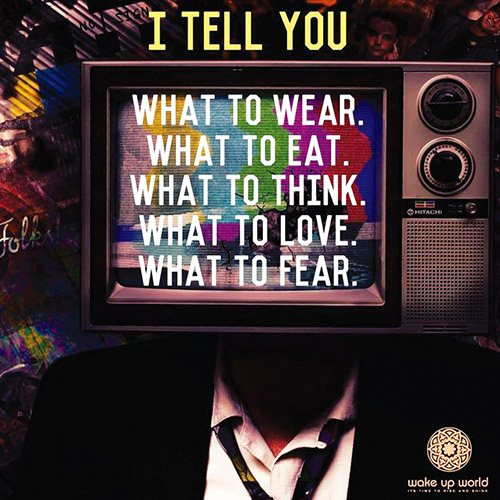
    The orthodox bubble is sealed tight with strong defences against contrary ideas, reinforced by firewall memes. This is why it’s impossible to discuss issues with an orthodox believer if you have a contrary understanding of the meaning behind the events of the day. They don’t want to hear what you have to say because they know it’s either ‘fake news’ or ‘conspiracy theory’. Your attempt at info-intrusion can even be received as an insult, suggesting that the person isn’t well informed and in need of coaching from ‘arrogant you’. 

    Orthodoxy & History Without Meaning

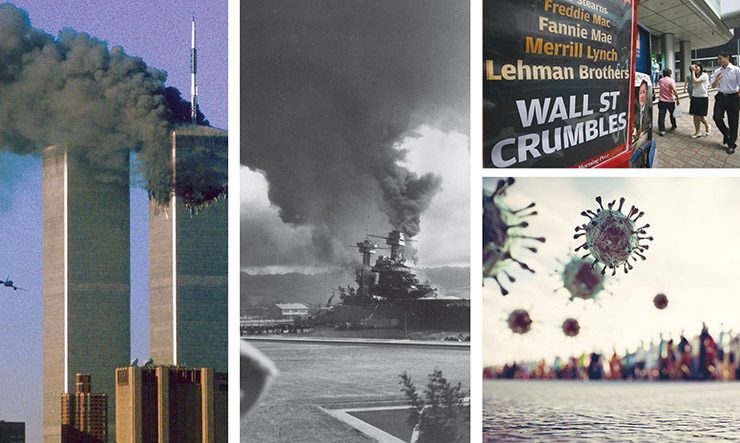
    In the orthodox world, big changes always come as a response to an unexpected crisis (e.g. Pearl Harbor, 9/11, the 2008 GFC, COVID-19). A crisis is identified, given meaning, and changes announced. Another crisis comes along, and again we get big changes. Each crisis comes with its own little meaning story, unrelated to the meaning of the crisis that came before or the one that comes after. Society stumbles along, it seems, always responding to unexpected crises. 

    Each transformation society goes through is given a definite meaning, but no meaning is assigned to the sequence of transformations. There is no path being followed; we are not heading in any direction; there is no meaning in the combined effect of all the changes we’ve gone through. There can be no meaning in society’s trajectory, in the orthodox world, because in that world we know very well that the trajectory has been imposed on us by unexpected random crises. Any suggestion of some kind of direction or path can only be a paranoid fantasy – you are seeing patterns where none exist, like a Rorschach inkblot.

    That’s what we face when discussing anything with orthodox media faithfuls: a sealed-tight limited understanding of the world, including a perspective that sees historical change as a sequence of random events. 

    Fort Orthodox & Implanting of Meaning

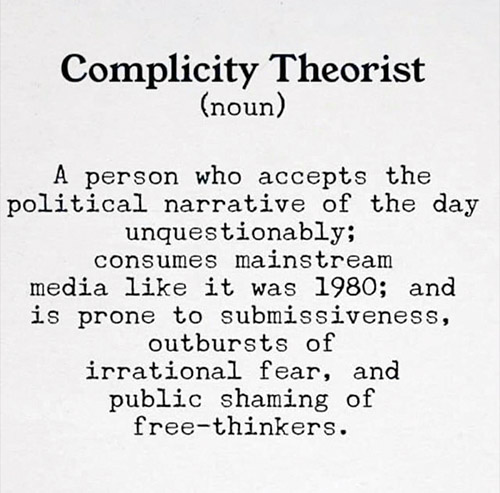
    Fort Orthodox is a solid edifice, and the psyop (psychological operations) mortar binding it all together is control over meaning. That’s why a meaning is declared right away – even if it’s a mystery how they figured things out so quickly. The meaning is repeated endlessly, via multiple info-genres, and kept alive thereafter. No one ever refers back to the events of 9/11 without including mentioning that horrible terrorist attack.

    Declaring a meaning is much easier than trying to prove the truth of that meaning with data and arguments. If every voice in the media repeats with confidence the same meaning, it quickly sinks into the listener that it is something “everyone knows to be true.” Of course, there will also be testimony and evidence presented, but this need not go beyond the cursory. Since people already ‘know’ the meaning, the who & why, they need very little in the way of evidence to feel that the meaning has been adequately verified. Psychologists call this confirmation bias.

    Arguments over evidence have little impact on Fort Orthodox. An articulate orthodox faithful might respond to contrary evidence this way: “Not only has your evidence been debunked, by trusted fact-checkers, but the official story was proven – wasn’t there the 9/11 Commission and some article in Popular Mechanics? I didn’t bother with the technical details myself, no need. The experts are dealing with all that, and I don’t want to talk about it with you.” 

    Thus, the whole power of Fort Orthodox stands on one tactic: prompt implantation of a declared meaning deep into the psyche of the listener, followed by ongoing comprehensive reinforcement. This powerful tactic makes the job of info-propaganda much easier as the believer only looks for verification, rationalisations, but not proof. With meaning firmly and promptly established, the media can focus right away on promoting the subsequent actions required following their declaration of what it’s all about, e.g. terrorist attack, Novichok poisoning, deadly pandemic, etc.
    Open-Source World of the Real

    Whereas Fort Orthodox is a closed bubble of information and meaning, existing outside that bubble is a wider world of open-source information and meaning available from alternative publications and the internet, with a wide variety of explanations. 

    In order to be considered a well-informed citizen in the orthodox world, you need only turn on the TV or open your newspaper and absorb. To become a well-informed citizen of the real world, making use of what’s available open-source, is a much more challenging undertaking. You must rely on your own judgment, discriminate between the wheat and chaff, and make overall sense of what you learn.

    I’ve been doing my best to be a well-informed citizen of the real world, using open sources, for many years now. I’ve found this process to be a journey, never reaching any final ‘land of truth’, but each step on the journey peels away one more layer from the onion of meaning. Not only are there deeper meanings for specific events than those offered in the orthodox world, there are also meanings that tie events together, that reveal directions and paths in society’s trajectory. 

    Real Meaning of Crisis Events

    The declared and implanted meanings found in the orthodox world are among the earliest layers of the onion to be peeled away. Those meanings don’t need to stand up to scrutiny as their means of implantation is based on psychological processes and repetition, not on hard evidence. For example, considering the events of 11 September 2001, if you look closely into the evidence, it becomes apparent that the orthodox meaning – terrorist attack – makes no sense. We have a mountain of evidence in the non-orthodox world.

    There is a standard pattern in the crisis-response scenario. First, a crisis event is declared along with a declared meaning. Then the media reveals steps to be taken in response. This always involves the expansion of government activity into new areas with new initiatives and new powers. The real meaning of each crisis scenario, it turns out, is always the same:

    Who defined the crisis and its orthodox meaning? Those who fashion the narrative. Why did they choose that meaning? For the government to claim the right to specific new powers. Where will this lead? To the exercise of those new powers.

    The crisis event itself is more or less irrelevant to the scenario. The event might be imaginary, invented or engineered (for example, babies cruelly removed from incubators – the Gulf War in 1990, Weapons of Mass Destruction – the Iraq War in 2003, or the Gulf of Tonkin false flag in 1964 – the Vietnam war). The real meaning of a crisis is always the ‘response’. 

    Cross-Bubble Conversations, A Best-Practice Approach

    We have a real world, with real meanings behind events, and an orthodox world, a matrix world, with its illusions maintained by implanted meanings. Implanted meanings are resistant to outside influence, as we have seen, but they are at the same time quite fragile if evidence becomes relevant to the conversation. 

    Conversations – about evidence or about the meaning of events – are nearly impossible across the boundary of the orthodox bubble. Each side sees itself as being well-informed, and the other misinformed. Neither sees the other’s viewpoint as worthy of serious consideration. Both parties in such an exchange feel that their knowledge is not respected, and their attempts to point out obvious facts are dismissed out of hand. Such conversations, if attempted at all, soon sputter to a stop, succumbing to frustration and annoyance.

    In such a conversation, if they can be called conversations, each person feels they have the real facts. But the other side isn’t really listening because they have their own real facts that are more relevant. What each wants from the other is to be heard, for their viewpoint to be given a hearing. 

    If those inside the bubble won’t give your ideas a hearing, triggered as they are by the barrier memes, it is up to you to take the first step, to introduce listening into the conversation.

    The confrontational approach, pushing ideas and facts at the other party, does not work. When challenged, people tend to grasp and hold more firmly to familiar beliefs and truths. We would do better by seeking to understand where they’re coming from and how they see the world. Start by asking questions instead of making claims. If you give their ideas a hearing, it is likely they’ll be willing to hear something about where you’re coming from and how you see the world. 

    We need to recognise that it is quite understandable that an intelligent, critically thinking person can believe they are well-informed in the mainstream world. They get packaged explanations for everything, and they hear the same message from many authoritative voices. Why should they doubt what ‘everyone knows’ to be true? We need to respect that such a person is doing their sincere best to be a well-informed citizen, and we need to include politeness in how we talk to people.

    If you want to get to a place where you might be able to talk about controversial issues, you need to begin by leaving controversy out of the conversation altogether. Instead, the focus needs to be on developing rapport, showing respect for what the other person has to say, and building trust by not being judgmental. This is a process, an investment in relationship building. And the investment is necessary if the conversation is ever to reach more challenging territory – without triggering defensiveness. 
    Undermining Fort Orthodox

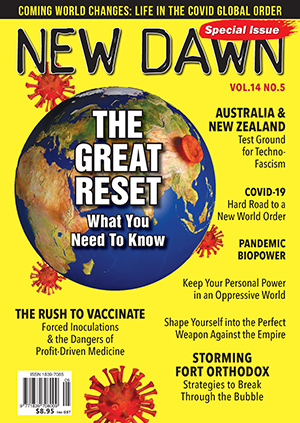
    As long as the orthodox narrative monopolises a critical mass of public opinion, society will be easily led down the garden path to a technocratic dystopia, each step disguised as a necessary response to a dangerous crisis. We are already far down that path.

    Opening a mind to the possibility that all may not be what it seems is the secret. Perhaps this doubt will be shared with fellow orthodox faithfuls. Perhaps a spark of curiosity is raised, and our doubter starts looking around on their own, expanding their info-sources. 

    Many of us already try to wake people up from the all-pervasive narrative. On the internet, people post revelatory articles and jump on comment threads, sometimes risking controversy in conversation. Fort Orthodox remains unshaken by these confrontational approaches. It doesn’t make sense for us to keep doing the same things and expect anything different to happen. 

    If we invest that same energy in pursuing respect-based conversations, we are more likely to succeed in opening minds to non-orthodox perspectives and meanings. 

    Another internet example: Instead of sharing controversial articles or news, to be read mostly by people already on your side, you might comment on an orthodox friend’s posting, acknowledging their point, and asking to hear more about that perspective. If a conversation develops, you might move to video chat. When you can see one another, the conversational process will proceed more efficiently and on a deeper level. 

    Fort Orthodox is strong but vulnerable. Its strength, its implanted meanings, are also its weakness. Those meanings often don’t stand up to scrutiny when examined by an open mind. Each time someone rejects an orthodox meaning that is a micro-quake inside the Fort. If enough of us get enough points across, we generate bigger quakes – and resonance, like what happened to the walls of Jericho. 

    I invite you to give it a try – experiment in whatever way works best for you and see if you can get a conversation going where before there was a pointless confrontation. Don’t expect anything at first, just practice a new way of engaging. 

    [alert type=”general” dismiss=”no”]This article was published in New Dawn Special Issue Vol 14 No 5.[/alert]

    [alert type=”success” dismiss=”no”]If you appreciate this article, please consider subscribing to help maintain this website.[/alert]

    © New Dawn Magazine and the respective author.
    For our reproduction notice, click here.

  • Overcoming The Noble Lie: Great Narratives & Compelling Futures

    Overcoming The Noble Lie: Great Narratives & Compelling Futures

    From New Dawn Special Issue Vol 15 No 6 (Dec 2021)

    If the last two years taught us anything, it’s that humanity is now at its most critical inflection point. We stand at the precipice of a major turning in western civilisation – the culmination of a millennium of human development, seminal events, knowledge, and culture.

    It is undeniable, yet not at all clear, the direction we are headed, or what the future holds, and who will be around to see it come to fruition. We are not seers or prophets and cannot peer into the future, but we can read the signposts of the past and present. 

    We have a wealth of shared experience and a vast living memory – a collective consciousness updated and added to every day. If we search humanity’s archive, we find answers to many of these questions. Those answers have always been available, gleaned from understanding ourselves, our journey as a family, and the human race.

    French novelist Alphonse Karr famously coined the saying, “plus ça change, plus c’est la même chose,” or, the more things change, the more they are the same.

    Yes, we have been here before.

    Let’s step back to the late 19th and early 20th centuries – a time of upheavals and period of great turbulence on many human fronts – politically, spiritually, and technologically. The western world was in the midst of an existential crisis as secularisation brought with it two disruptive forces to the traditional order of knowledge and influence: the rise of the intellectual and mass media. 

    It is perhaps no coincidence that the world finds itself in a very similar impasse approximately a century later, with many of the same conditions present today, only on a much more pervasive level.

    The parallels between then and now are astonishing. This should not be viewed as ‘history repeating itself’ but rather as a more intense interlude of what had already come to pass – only this time events are unfolding at much greater speed, propelled by advances in communication technology on a global scale inconceivable to previous generations. Such changes were equally profound in 1900, as were the transformations that took place across society.

    As the 20th century approached, theology was supplanted by evolutionary science. An ascendant Darwinian authority presided over existential questions like “Who are we?” and “What is man’s purpose?” 

    Undoubtedly, this was a tumultuous time, intellectually and spiritually, with acrimony leading to heated exchanges between clergy and scientists, even leading to violent confrontations. But, with its newfound status, it was inevitable the secular power of Darwinian science would colonise the political and social sciences before giving rise to the sordid science of curative breeding known as eugenics. 

    Recent history leaves no doubt that if left unrestrained by morals and ethics, wanton destruction and incredible suffering are wrought in the name of science and progress. These forces of modernity materialise in today’s advances in genetic engineering that have brought us back to that point once again: humanity faces the dilemma of resisting game-changing advances of technology and innovation or surrendering to it and prostrating at the altar of science and progress.

    We are an entire century into a fully secularised society in the West. Today’s tech gurus, vaccinologists, and public health officials now occupy positions of prestige and command the reverence once reserved for pontiffs, philosophers, and poet laureates. The divine mysteries have given way to the ‘divine’ algorithm, and timeless sublime prose to the transience of the latest epidemiological model – from Gandhi to Gates, Whitman to Whitty, in just a few generations. How else could a man like Dr Anthony Fauci, an 80-year-old career gatekeeper for the transnational pharmaceutical cartel, still occupy the US government’s highest-paid job, and recently voted People Magazine’s “sexiest man alive”? Albert Camus once said, “Nothing is more despicable than respect based on fear.” Indeed, if not for the wave of mass hysteria and fear that swept over the world in February 2020, few would even know of Dr Fauci, let alone revere him as a demigod. On one level, we may be deluded into believing that today’s gaudy exhibitionists are mere frivolities of pure media spectacle, but behind the facade of political celebrity is an unforgiving ideology called technocracy.

    You will often hear the trope that “more people have been killed over religion than anything else.” If only it were true. The 20th century serves as a potent reminder of the misleading nature of that statement, for no other century witnessed the sheer brutality and crimes against humanity on an industrial scale perpetrated in the name of various despotic interpretations of some variant of social Darwinism or political science, reaching levels of totalitarianism never seen before in human history. There are too many examples: WWI, WWII, Nazi Germany, Soviet Russia, Maoist China, Cambodia, Vietnam, Central America, Afghanistan, and Iraq, to name only a few. In almost every instance, the preservation of secular dogma took precedence over the lives and souls of humans who were unfortunate enough to be caught in the crossfire of ‘progress’. Fascism, socialism, communism, neoliberal capitalism – each would justify collateral damage as a means to achieving the goal of transformation or the formulation of a new order.

    In the 21st century, the forces that inherited the mantle of power – the dynastic families and special interests – are preparing the next act in this worldly saga.

    The Grand Narrative

    So often it’s been said that in war, history is written by the victors, who impose what is known as the ‘living memory’ of a nation or people, chronicling a shared experience, generally of collective sacrifice undertaken for the greater good, and paying tribute to the martyrs along the way. These become the narratives that post-war orders and worldviews are built upon, a central pillar around which the reorganisation of society and economies occurs. Without marshalling the “narrative,” a ruling establishment cannot lead and steer society in its direction of choice. 

    What happens in the absence of a bona fide world war? Can elites still construct an equally compelling living memory which the people can rally around? 

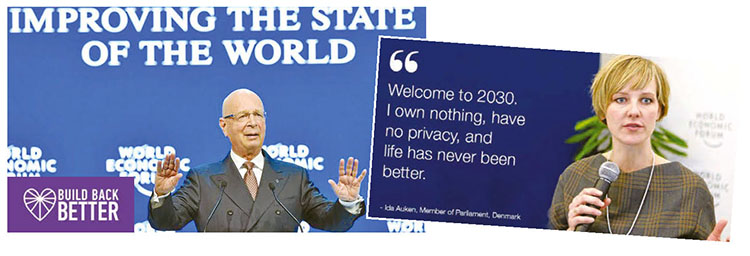
    Grand narrative management is precisely what Klaus Schwab’s World Economic Forum (WEF) has been attempting from the onset of the ‘global pandemic’ crisis. In 2021, the WEF announced its “Great Narrative” initiative, although evidence for this project can be traced much further back through a number of their documents and website presentations.

    People distrust self-appointed elites who are planning the future of society. This internet ‘meme’ – of the ‘real’ Klaus Schwab – circulated on social media.

    To create the requisite living memory, Schwab and the WEF replaced the usual military war piece with the new war on microbes. “The pandemic has revealed the acute need to focus on the future and long-term health of our societies,” said the globalist luminary.

    While the rhetoric sounds innocuous, everything we’ve witnessed over the last 24 months proves beyond any doubt that their hyper-centralised ‘public health’ planning has little to do with the health of the individual and more about how the individual can be more effectively managed to serve the collective, that in turn is to be administered by the new technocracy. The WEF is merely the latest avatar for this elitist ideology whose primary goal is always to meet the ruling oligarchy’s financial and consolidation goals and objectives. This was true 100 years ago as it is today.

    Just as with the global financial crash in 2008, when elites privatised their profits and socialised their losses through gargantuan government bailouts, so too will elites seek to consolidate their baronial individual asset wealth portfolios and privileged asset classes while demanding infinite self-sacrifice for everyone else – all for the greater good, of course. It is also about managing expectations, as the WEF states:

    “The Great Narrative Meeting [in November 2021] is a linchpin of the Great Narrative initiative, a collaborative effort of the world’s leading thinkers to fashion longer-term perspectives and co-create a narrative that can help guide the creation of a more resilient, inclusive and sustainable vision for our collective future.”

    You might be asking: what is their endgame? Put simply, every new world order needs a financial reset, and in the WEF’s Great Reset, the plan is to intentionally overinflate and collapse the current fiat money system, reimagined and replaced by a new globalised economic system backed by a new superficial asset class under the guise of the “financialisation of nature.”

    That plan gained a significant foothold in October 2021 when the Rockefeller Foundation and the New York Stock Exchange announced the creation of a new asset class that will effectively monetise the natural world as well as the processes underpinning all life. All in the name of “sustainability.” The lifeblood of this system will be a new Central Bank Digital Currency (CBDC) which will be fully programmable, meaning that the currency issuer can stipulate how the digital money is spent. 

    This is the highest form of social engineering conceivable and can become the payment mechanism for Universal Basic Income, allowing the government issuer power over what you are allowed to purchase. It could limit your transactions to green spending and ‘carbon-neutral’ activities. It’s also a system designed to eliminate upward mobility unless you gain promotion through the political economy.

    It could lead to the ultimate victory of the technocracy. However, its Achilles heel might be that it seeks to remake the world in such a short space of time, presumably so these masters of the universe can marvel at their ‘remarkable achievements’ in this lifetime – the ultimate act of hubris by these self-anointed stewards of the planet.

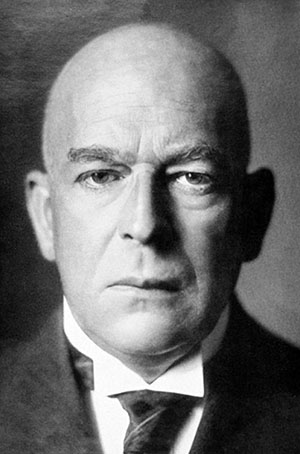
    Oswald Spengler

    When the technocracy movement first emerged in the early 20th century, contemporary thinkers raised the alarm that pseudo-intellectualism and the mechanised worldview augured an eventual collapse of western civilisation. The timeframe wasn’t clear, only that it was inevitable. In his historical literary work, The Decline of the West (1928), Oswald Spengler described the event horizon that eventually consumes all major cultures, and which generally have a limited lifespan of roughly one thousand years. He examined eight major civilisations as examples: the Babylonians, Egyptians, Chinese, Indian, Greco-Roman, Mayan-Aztec, Arabian, and European-Western. He envisioned the West being consumed by its intellectual vortex:

    Today we live so cowed under the bombardment of this intellectual artillery, the media, that hardly anyone can attain to the inward detachment that is required for a clear view of the monstrous drama. The will-to-power operating under a pure democratic disguise has finished off its masterpiece so well that the object’s sense of freedom is actually flattered by the most thorough-going enslavement that has ever existed.

    Now realise what is at stake. The unconstrained vision of Davos elites may become the final revolution within a larger civilisational cycle. The Covid-19 pseudo-pandemic would be one of the catalysing events in this process, followed by global cyberwar, and then finally ending in something more outrageous like a nuclear conflagration before ushering in a New World Order. 

    Such a protracted multi-phased upheaval would mark the end of the main features of modern western civilisation: the post-Westphalian nation-state, the era of enlightenment and rational thought, self-governing democracy and republican forms of government. The world would move into what Zbigniew Brzezinski called a Technetronic Era. Compared to the 20th century, this would more resemble a centralised command and control economy and a highly automated society. In terms of individual rights, it would look like a neo-feudal dark age. 

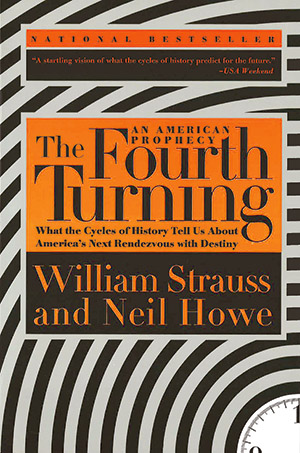
    This cycle was discussed by American writers William Strauss and Neil Howe in their book The Fourth Turning (1997), which illustrated how the development of Anglo-American society is a feature of a much larger centuries-old cycle. Or, as Italian commentator Federico Dezzanidescribes it, “like a snake biting its own tail over the span of a century, Anglo-American societies are born, grow, mature and die, only to rise again and begin a new cycle.”

    The Noble Lie

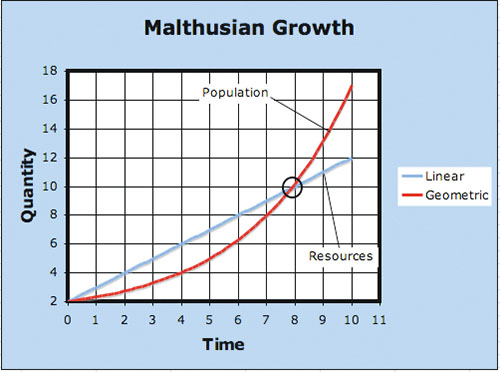
    In the end, it all comes back to Malthus – Malthusianism – which is ultimately the ideological standard hoisted by the likes of Schwab, Bill Gates, Stanley Johnson, Prince Charles, and globalist outfits like the Trilateral Commission. These elites believe that the people must bear the brunt of this epic existential predicament of an overcrowded planet in a state of terminal decline due to man and his industrial exploits, which is said to be driving anthropogenic global warming to the point where Earth will be uninhabitable. To save humanity from itself, we must be forced to accept that there are too many of us, so we play their globalist game of musical chairs. We know what they mean, but they won’t state their intentions openly, not yet anyway. Only it’s not true.

    In Plato’s Republic, in the dialogue of the myth of the metals (social castes), Socrates explains that to maintain order and social continuity, the ruling class must act under the aegis of “the noble lie.” This is based on the belief that from time to time, the ruling class must feed the general populace an ennobling fiction to maintain order and continuity. The noble lie is noble because it benefits the soul of the person who believes it. From an elite’s perspective, this is done for their own good and that they might feel better about their station in life.

    If you think about our living memory, or what happened in the West over the last half-century, it’s been a continuum of such lies, although hardly noble: the assassination of JFK, the Gulf of Tonkin incident, Saddam’s WMDs, 19 Arab hijackers on 9/11, spreading freedom and democracy in Afghanistan, overpopulation, climate chaos, Trump-Russian collusion, Covid-19, the Great Reset, and soon it will be the coming war on China. Each epic yarn spun with the help of a 24/7 mainstream and social media barrage of propaganda and misinformation. By brainwashing the population incessantly, the establishment creates the illusion of a ‘bottom-up consensus’, so much so that the people believe they’ve collectively arrived at a grassroots consensus.

    Drifting out noble lies in the 21st century has become a pretty efficient process with the consensus enforced by digital dragnet: dare oppose any noble liedeployed by the globalist caste for your own good to ‘reimagine’ and reorganise socio-economic systems, and you’re treated the same as a blasphemer in medieval times – silenced, excommunicated, banished from view, and no longer permitted to speak in the public commons. Deplatformed, depersoned, cancelled. 

    At the same time, however, a very real great awakening is also taking hold with a rising level of political and conscious awareness much broader and wide-ranging than anything before in human history. This is a consequence of the same global panopticon wielded against the people by the elites. Such awareness is the prerequisite to ultimate liberation, or as philosopher G.I. Gurdjieff once said, “If you wish to get out of prison, the first thing you must do is realise that you are in prison. If you think you are free, you can’t escape.”

    Which brings us back to the philosophical and existential question: why are we here? What is the purpose of humans on this planet? Darwinian genetic science says we are here to promulgate our genes and advance the species. On a fundamental level, this is what makes us human. But the new green technocracy says this is no longer possible, and we must embrace a higher truth – a new altruism imbued in the Great Reset doctrine. 

    The irony is that collectively speaking, humanity might not survive this new ‘empty planet’ initiative. Elite technocrats will contend that only a planned society modelled after Huxley’s vision of a technocracy organised by functional castes and selective breeding in vitro can save the planet from the alleged existential menace of human consumption and climate change. 

    Whose compelling future is this? Is this not the ‘scientific dictatorship’ that H.G. Wells foresaw, with a global government run by an elite committee of scientists and technocrats who hold the reins of power over every aspect of life and dictate how society is organised and run minute to minute? This is unconstrained totalitarianism. Under such a system, the individual will have no agency, no conscience, and eventually no soul. 

    The last 250 years have been an extraordinary progression from monarchies to democratic nations, in which the state eventually assumed a god-like status. It set the stage for what is heading towards us now: the advent of globalist transhumanism and a one-world unified state.

    Far from being its crowning victory, this crescendo of technocracy and the perversion of ‘progress’ exposes how materialism and the scientific priesthood cannot satisfactorily answer the fundamental questions we’ve asked since time immemorial, those eternal questions and divine mysteries pursued by monks, sages, and sannyasi. The forces of modernity cannot resolve this predicament, so people are left searching for something more grounded – where through the natural world they may also know the supernatural. Once again, people reach for religion and spirituality to find meaning and purpose, including (and not surprising as one may think) the younger generation.

    We should be under no illusion about the challenges lying before us. But even beyond an awareness of what you face, you need to have a vision of a world you wish to live in. Elites have always been adept at occupying the minds of the people with propaganda, and the latest war or catastrophe, so we never settle long enough to formulate our vision of a compelling future. Instead, our vision is mired in a never-ending procession of reactive emotions, leaving us vulnerable to the power of suggestion – and a ‘compelling future’ is instead continually served up to us by our rulers. They create the problem (a noble lie) that elicits our reaction before they present us with a solution to which there is usually no alternative. 

    Make no mistake: the great and the good in Davos are busy designing your ‘compelling future’, and if no other counter-narrative is offered, they will decide your future for you. It’s that simple.

    Qui tacet consentit. Translated: your silence is your consent.

    There is still much work to be done, but the work is never done. Throughout time, this has always been the case. The more things change, the more they are the same.

    [alert type=”general” dismiss=”no”]This article was published in New Dawn Special Issue Vol 15 No 6.[/alert]

    [alert type=”success” dismiss=”no”]If you appreciate this article, please consider subscribing to help maintain this website.[/alert]

    Footnotes

    1. Albert Camus (1963), quote from “Carnets: 1935-1942”
    2. Wall Street’s New Asset Class Will Put Natural World ‘Up for Sale’, https://childrenshealthdefense.org/defender/wall-street-new-york-stock-exchange-natural-asset-company
    3. Federico Dezzani, www.geopolitica.ru/en/article/covid-destruction-institutions-and-beyond
    4. What is a Noble Lie?, https://kenyonreview.org/2007/02/what-is-a-noble-lie/

    © New Dawn Magazine and the respective author.
    For our reproduction notice, click here.

  • Alexander Dugin: International Man of Mystery

    Alexander Dugin: International Man of Mystery

    From New Dawn Special Issue Vol 12 No 1 (Feb 2018)

    The Russian thinker and ideologue Alexander Dugin, who has been working to shape Russian political and intellectual life over the course of four decades, has attracted many supporters and detractors. They are deeply divided, and yet they share one thing in common: both see him as an almost mythological figure. 

    To his enemies, he is a demon: the dark hand behind Putin’s throne, an occult fascist pushing Russia back into totalitarianism and expansionist aggression, with tentacles reaching into the rising populist nationalism of Europe and especially among the American Alt-Right and the Trump administration [2017-2021]. To his supporters, he is a hero for our age: a master of philosophy and the esoteric who is building the foundations for a new sociopolitical paradigm that will provide true freedom for all the peoples of the world and deliver them from the ravages of globalisation and neoliberalism.

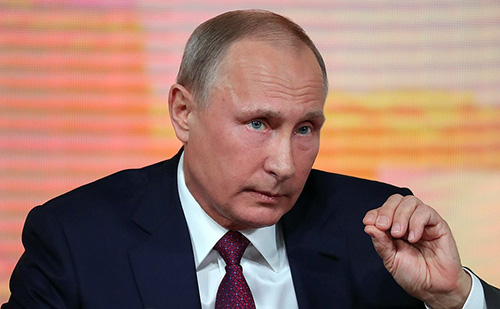
    Russian President Vladimir Putin. Dr Alexander Dugin’s ideas have shaped Russian geopolitical policy but the extent of his influence on Putin is a mystery.

    While my own view of him is more sober and nuanced, I confess that it is closer to that of his supporters, given that I was the one who supervised the publication of the first translations of Dr Dugin’s books into English. I’ve been an avid follower of his work since the late 1990s, when I first discovered Arctogaia, the first website to offer his writings in (crude) English translations made by well-meaning Russian volunteers. When I stumbled across this site, I eagerly read the essays, which were an unusual, but thought-provoking, mix of ideas drawn from the European New Right, Traditionalism, Russian Orthodox mysticism, the occult, runology, geopolitics, Soviet Communism, and anarchism, among others. 

    It seemed that this thinker was interested in all the same things that I was, but which I had never considered combining as he was doing – and which produced some fascinating results. I have long been of the view that the political categories of ‘Left’ and ‘Right’ are unnecessarily restrictive, for instance, and that the way to discover new paradigms beyond neoliberalism lies in something that would draw on both ‘sides’ – and this is something that Dr Dugin was actually doing.

    Indeed, much of the confusion regarding Dr Dugin’s reception in the West stems from his attempt to synthesize many disparate and seemingly contradictory ideas and schools of thought. This is further hampered in the Anglophone world by the fact that, of his many dozens of books and hundreds of articles that have been published in Russian, and which deal not only with politics and philosophy but with topics as diverse as religion, esotericism, anthropology, sociology, and history, only a handful have so far appeared in English translation, leaving enormous gaps for foreign readers. Dr Dugin himself has been attempting to address this problem by presenting a seemingly endless series of websites over the years which present his views and those of his followers, the latest being Geopolitica.ru. 

    Regardless of these efforts, however, many in the media continue to depict Dr Dugin as a force threatening the world. One might be tempted to laugh at such hyperbole until one remembers that the US Treasury Department recently placed him on its list of officially sanctioned individuals.

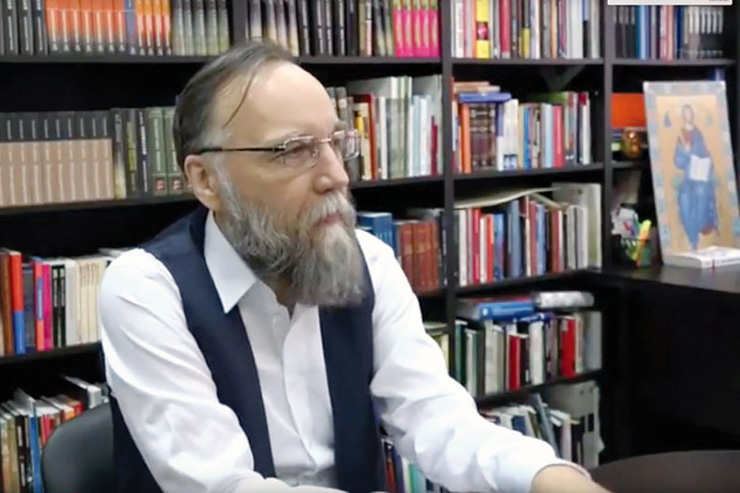
    I’m pleased to say that on the one occasion when it was my pleasure to meet Dr Dugin in person, at a sociological conference in New Delhi in 2012 (the topic of which, interestingly, was “After Western Hegemony”), there was nothing obviously demonic about the man. He wasn’t wearing black (only a casual suit), and there were no FSB agents or familiars following in his wake. Indeed, he was quite mild-mannered, amiable, and soft-spoken. The only thing ‘mystical’ about his appearance was his famous beard – which marks him as a raskolnik, or “Old Believer,” that sect of the Russian Orthodox Church which rejected liberalising reforms that were introduced in the seventeenth century. Contrary to those who claim that Dr Dugin’s professed beliefs are nothing more than a show, I can attest that he was diligently following the fasting days, and while I ordered a normal dinner and beer, he restricted himself to nothing more than some fruits, and offered his prayers before eating. But that evening and into the next day, we had many hours of conversation that, like his writings, traversed the entire spectrum of knowledge, from politics and current events to philosophy and religion. 

    In order to really understand what he is doing, one has to trace the origins of his ideas back to a rather unorthodox interpretation of the Traditionalism of René Guénon and Julius Evola – and to understand that, one must know something about Dr Dugin’s life.1

    Dr Dugin was born in Moscow in 1962 to a father who was a Colonel-General in Soviet military intelligence and a mother who was a medical doctor. In his book Putin vs Putin, he mentions that one of his ancestors was Savva Dugin, an Old Believer who was beheaded for calling for the restoration of the Orthodox Patriarchate and for condemning secular political authority.2 In 1980, while a student at the Moscow Aviation Institute, he discovered Traditionalism, and became embroiled in the tiny Traditionalist subculture which existed in Moscow at that time, having been inspired by those Traditionalist books which, somewhat mysteriously for a Communist-supported institution, had been acquired by the Lenin State Library decades earlier. 

    Given that atheism was still the officially prescribed doctrine of the Soviet Union, these activities were obviously restricted to the subversive underground. Dugin produced the first-ever translation of a Traditionalist text into Russian, Julius Evola’s Pagan Imperialism, in 1981, which was circulated in samizdat form. Dugin also formed a band, Hans Zivers, which in today’s terms would be described as dark neofolk – a single album of this music, Blood Libel, has since been released on CD and on YouTube. In 1983, word of these performances reached the KGB (which condemned them as “mystical anti-Communist songs”). As a result, Dugin was briefly detained, and then expelled from the Aviation Institute. Undeterred, he continued to study Traditionalism, supporting himself with a day job as a street sweeper.

    After a brief foray into politics in the nationalist party Pamyat during the late 1980s – the first party other than the Communist Party that was tolerated in the Soviet Union – Dugin began associating with the school of thought which has been called the “European New Right,” first established by the Frenchman Alain de Benoist, that was (and is) working to establish a true intellectual and political alternative to neoliberalism in Europe. Although an opponent of the USSR during the 1980s, his earliest trips to Western Europe at this time showed him that, as bad as it was, the West was in far worse shape, having lost its deeper sense of meaning and succumbed to the wiles of American-style consumerism and popular culture. This had the somewhat ironic effect of converting him into a late supporter of the Soviet Union. Although Dr Dugin is not, and has never been, a Communist, he came to recognise at this time that the USSR, as flawed and problematic as it was, had at least protected Russia and its satellite states from the onslaught of neoliberalism and nihilism that had overtaken the West in the post-war years. Likewise, he realised that the demise of the Soviet Union meant that the only significant check on American hegemony had been neutralised, and the United States was now more or less free to have its way with the rest of the world.

    During this period, Dugin worked with a number of organisations that opposed the new, democratic Russia that had been brought into being under the auspices of Boris Yeltsin, although in 1993 he began what was to become his defining activity of the 1990s, when he became one of the founders of the National Bolshevik Party (NBP). The National Bolsheviks claimed the legacy of the groups and thinkers which had gone by that name in both Germany and among Russian exiles during the 1920s, who had sought to combine elements of Communism with nationalism and traditional values. In practice, however, the NBP was more of a group of pranksters than a serious contender for political power, and Dugin left it in 1998.

    Eurasia

    In the 1990s Dugin first embraced the school which was to define the next phase of his political activism: Eurasianism. Eurasianism was a doctrine first developed among the Russian émigrés in Europe during the 1920s. It is a complex theory, but it essentially held that Russia is a unique civilisation more closely associated with Asia than with the West.3 Dr Dugin adopted these ideas and furthered them by claiming that a new Russian empire, comprising the same territories which had formerly been incorporated within the Soviet Union, was required in order to form a bulwark against American and NATO hegemony, which threatened not only Russia but the entire world with the imposition of a monoculture based on nothing more than the values of globalisation and the marketplace. The fundamental conflict for Dugin, as it was for many geopolitical thinkers before him, is between the conservative, land-based powers of the ‘World-Island’ of Eurasia and the liberal, maritime-based powers of the United States and its allies.

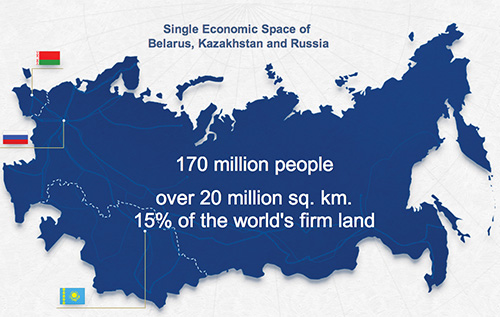
    Dr Alexander Dugin’s vision of Eurasia is believed by many to have inspired the creation in 2015 of the Eurasian Economic Union, an economic bloc of states located primarily in northern Eurasia.

    Toward this aim, in 2001 Dr Dugin established the International Eurasia Movement, the organisation which he continues to lead up to the present. While not uncritical, Dugin has always praised Vladimir Putin as the shepherd who, if he follows the trends he has initiated toward their more radical conclusion, will inaugurate the new Russian imperium. Dugin’s precise relationship with Putin has long been a bone of contention among Russia observers, with some going so far as to claim that Dugin is “Putin’s brain.” While this is certainly an exaggeration, as Dugin has never held any official position at the Kremlin, it is nevertheless true that he has been in the Kremlin’s orbit for many years. 

    When I asked Dr Dugin about this relationship when we met in 2012, he told me that he has been in contact with Putin and there are people at the Kremlin who are interested in his geopolitical ideas, but who don’t have any time for his Traditionalist or philosophical ideas. Exactly how much influence he has exerted is difficult to say, but one can definitely detect some very ‘Duginesque’ language when Putin gives speeches extolling Russia’s role as the guardian of conservative values, or calling for a multipolar world, with many nations – Russia being chief among them, of course, but also including other powerful nations such as China, Brazil, and Iran – sharing hegemony over their respective regions, as opposed to the present order, which is viewed as a unipolar world in which the United States holds sway over the entire globe. Such concepts could be taken straight from Dugin’s writings. Similarly, Putin’s geopolitical strategy in the formation of the Eurasian Economic Union, or in his approach to countries such as Georgia, Syria, and Ukraine, very much bear the marks of Dugin’s geopolitical thinking. How much of this is merely coincidence and how much is actual influence is unclear, but political events of recent years have shown that the trajectory of Russian politics is very much in keeping with Dugin’s own prophecies. 

    Dugin does not see the political order that he is calling for as something that will benefit only Russia, but something that will in fact save all of humanity from destructive, homogenizing forces. And it is here that we end up returning to the Traditionalism with which he began his career. According to the Traditionalists, each of the world’s major religions is a manifestation of a single metaphysical truth, but expressed differently according to the cultural and geographical demands of each people to which it is revealed. No religion can therefore claim to be the “one true faith,” but at the same time, there is a specific religion that is most appropriate for every people and which was created specifically for them. Dr Dugin has expanded the Traditionalist worldview to politics. For him, it is not simply a matter of religion, but also the case that particular political systems and cultural norms are appropriate for each people of the world, and that these elements cannot be transferred from one people to another without either cutting them off from their metaphysical roots, resulting in alienation and decay, or destroying them altogether.

    The political implications of this view should be clear. The United States, using its unprecedented military and economic might, is attempting to export its political and economic systems and its culture to every corner of the globe in the pursuit of a New World Order in which the entire planet will, in effect, become American. (One must hasten to add that Dugin has made it clear in various writings that he does not regard the American people themselves as the enemy, but only the political and economic forces which rule over them, viewing ordinary Americans as being their first victims.)

    This Manichean worldview thus pits America, and those who support it, in a fight to the death against those who oppose it – and for Dugin, unsurprisingly, Russia is at the centre of the opposition to their designs, and ideally, should be coordinating it all. In political terms, this means that anyone who opposes the US should be supported, even when their aims do not precisely align with those of Eurasianism. This is not a war between Left and Right as usually understood, since Dugin favours nations, individuals, and groups from both sides of that divide, but rather as a war between neoliberalism and non-neoliberalism. 

    Trump & the Alt-Right

    In his videos and articles, Dugin has made it clear that he genuinely does think Donald Trump could be the one to banish the globalist elites from Washington, cease America’s overseas military adventures, and reach a new understanding between America and Russia; even if he fails in these efforts, Dugin surely sees him as someone who has thrown the American political establishment into chaos, to the benefit of Russia and other dissenters around the world. 

    As for the Alt-Right, Dugin has made it clear in many of his writings that he rejects racialism (he has maintained there is no objective standard by which to measure the value of one race against another), which is so dear to the Alt-Right, and yet, as already mentioned, the crucial factor for him is only whether a given group is for or against the current neoliberal order. Given that, at least at its best, the Alt-Right represents a rejection of neoliberalism and of the foundations of the American order more generally, it is in keeping with Dugin’s usual doctrine to overlook his points of disagreement with them in the hope they might serve to weaken the grip of neoliberalism over America, and in turn the world. Nevertheless, the efforts of some journalists to paint Dugin as some sort of guru to the Alt-Right is nothing more than propaganda – because of his rejection of racialism, Dugin is much more often disparaged than studied by the denizens of the erstwhile Alt-Right ‘movement’.  

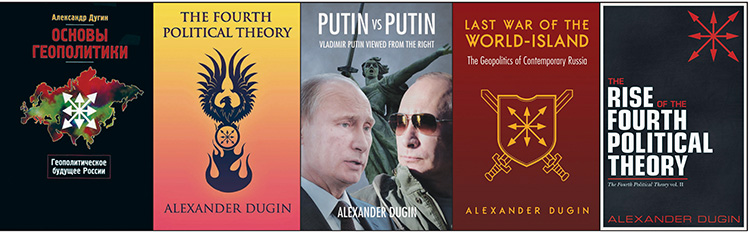
    Several of Alexander Dugin’s works in English, including (on the far left) the cover of his influential The Foundations of Geopolitics: The Geopolitical Future of Russia.

    This article barely scratches the surface of Dr Dugin’s thought in all its facets, but I have attempted to convey something of his overarching worldview. Dugin is not the sort of thinker we are accustomed to dealing with in the Anglophone world – he is more akin to the apocalyptic Orthodox writers of the nineteenth century, such as Vladimir Soloviev, than he is to a typical Western political theorist. Regardless of what one thinks of his views, understanding him offers a unique perspective on Russia’s actions as well as the hopes and dreams of anti-liberal political dissidents around the world. 

    [alert type=”general” dismiss=”no”]This article was published in New Dawn Special Issue Vol 12 No 1.[/alert]

    [alert type=”success” dismiss=”no”]If you appreciate this article, please consider subscribing to help maintain this website.[/alert]

    Footnotes

    1. Much of the following account of Dr Dugin’s early life is summarised from Mark Sedgwick, Against the Modern World: Traditionalism and the Secret Intellectual History of the Twentieth Century, Oxford University Press, 2004, 222-237; the rest is from my own research.
    2. Alexander Dugin, Putin vs Putin: Vladimir Putin Viewed from the Right, Arktos, 2014, 66
    3. An excellent introduction to both historical and present-day Eurasianism was recently published: Charles Clover, Black Wind, White Snow: The Rise of Russia’s New Nationalism, Yale University Press, 2016. The best introduction to Dugin’s own conception of Eurasianism in English to date remains: Alexander Dugin, Eurasian Mission: An Introduction to Neo-Eurasianism, Arktos, 2014.

    © New Dawn Magazine and the respective author.
    For our reproduction notice, click here.

  • The Eurasian Vision: From the End of History to a New Beginning

    The Eurasian Vision: From the End of History to a New Beginning

    From New Dawn Special Issue Vol 15 No 3 (June 2021)

    The Eurasian idea is an open idea. It is open toward both the past and the future – what will happen in the future depends on how we understand and interpret the past. This is a very urgent problem, for we are by all means witnessing the collapse of the current international order, an order which was not really international but rather defined by the order of “one sovereign and one master.” In practice, this was a liberal order, defined by very specific visions and ideas into whose circles we inadvertently moved. Now we are finally free from this. We can take a breath of fresh air with full lungs and start “from scratch.” 

    Of course, this does not really mean starting from nothing. In the 1920s, the foundations for the Eurasian vision were laid by the persistent, quiet, patient work of enthusiasts (such as Petr Savitsky) and, even before, in the works of Danilevsky, Leontiev, and Dostoyevsky. These thinkers outlined a “Copernican revolution of history”: the future is not predetermined, and time does not run linearly. There are no privileged points on the globe, nor is there one privileged time, unless we adopt the axioms of liberal ideology. There is no singular and binding direction of historical development; rather, there are many divergent directions that cannot be compared to one another in terms of stages in the development of a single process. 

    Taken together, Danilevsky believed that these directions make up the richness of history and express the different possibilities of mankind’s development. In fact, every civilisation has its own time, and it draws its own schemata over the course of its development. Only the totality of civilisational paths gives the unique tracing that is the “development of humanity.” The new beginning for world order based on this recognition would correspond to the “other beginning” of which the philosopher Martin Heidegger spoke. 

    Liberal ideology has hitherto prescribed what “progress” is: it is always in the same direction, the only direction allowed. Behind this ideology has stood one world power: the United States of America. There is fundamentally only one world – that is the teaching they preached, a teaching which emerged out of the Enlightenment and quickly spread across the planet. 

    But, if the world is not a universe, then it is, in fact, a pluriverse: there are many worlds. Many of them have been hidden under the illusion of one world: opposite the First World during the Cold War stood the Second (Communist) World, and behind this, somewhere in the shadows, was the Third World (the non-aligned world which is today called the “Global South”). 

    This reality was not all-encompassing: the illusion of “convergence” revealed the reality of many worlds which were, in fact, many different civilisations – the American, the European, the Russian, Islamic, Indian, Chinese, etc. This is the truth that the West failed to grasp. Nor does it understand this today. The West was intoxicated by its victory in the Cold War in 1991, which was supposed to be followed by the “end of history” of which Francis Fukuyama spoke. That was what the West wanted to hear at the moment… And it seemed that all of humanity was obeying its will. 

    Yet, this obedience was only seemingly voluntary. It was backed by the world’s strongest power with its aircraft carriers capable of projecting its military might at “any point on the planet.” Then came the regime changes (of “undesirables” making up the “axis of evil”): colour revolutions, more or less violent coups, open military interventions, the occupation of entire countries… This is what the proclaimed “freedom” boiled down to. This was, however, only the “unipolar moment” in the history of the world. It is finished now. 

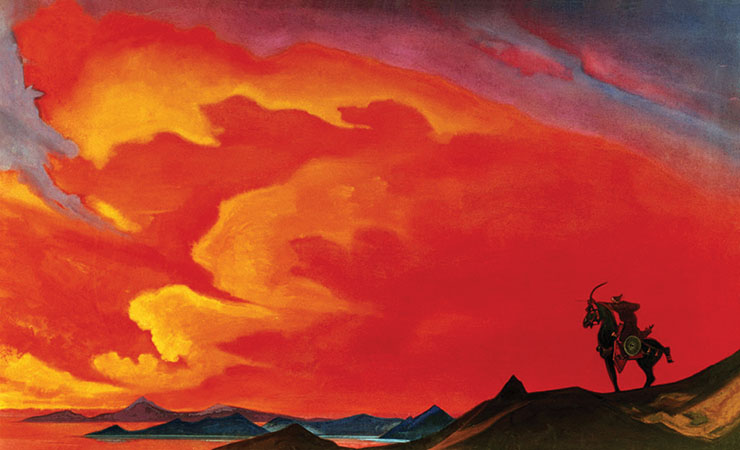
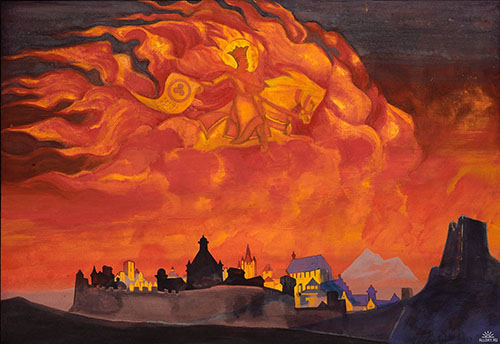
    ‘Armageddon’ by Nicholas Roerich, c.1935

    The End of Western Hegemony

    What’s happened with the hitherto hegemon? The hegemon is “tired” and is no longer capable of dictating to the whole of humanity. At first glance, it seems that all of this has been done by one tiny virus: the coronavirus. This, of course, is not the case. The virus was preceded by a prolonged fatigue, a crisis that has progressed within the West itself since at least the 1970s. 

    First, there was the “retreat of the West” (which is not a civilisation, but rather an ideological construct based on several basic Enlightenment ideas currently holding a certain number of countries together), and today its collapse is underway. The virus only made this crisis visible, and it will not be solved by any monetary measures, nor by ever-new military interventions as the globalists are now demanding. 

    Many are not yet aware of this major change. What about them? That is not our problem. What is important is grasping that the fundamental paradigms for the world of the future are being shaped today – or rather, it would be more appropriate to say, for the worlds of the future, because in such a world there will obviously be no single binding model that would be true for everyone. 

    “Western universalism” was only an illusion. Perhaps it was sweet and appealing to a few countries in which these ideas originated, but it was still only that: an illusion. Living in illusions is ill-advised. The awakening had to come sooner or later. But if it comes too much later, this awakening will be bitter. Today, people are waking up from the “American dream” to discover that it was a well-promoted nightmare and that they can live quite well without it.

    At the same time, this poses a challenge to Eurasia which, after a brief absence, is finally returning to the historical scene. How can this transition be made as painless and with as few victims as possible? In other words, how can it be made known to the hitherto hegemon that it is no longer the hegemon (the one determining the future of all of humanity)? This is no easy task. 

    Today, of course, the hegemon is threatening and rattling its weapons. It is gathering forces for what appears to be a “final showdown” for the “final battle of history.” Will this decisive battle take place at all? It has nothing new to offer. It is only a more militant, slightly upgraded version of the same, with tolerance or its illusion abolished. In its upgraded edition, liberalism is becoming openly totalitarian (having hitherto been so covertly: “If you don’t want to be a liberal, you will be excluded from history” is now “Everyone must be a liberal”).

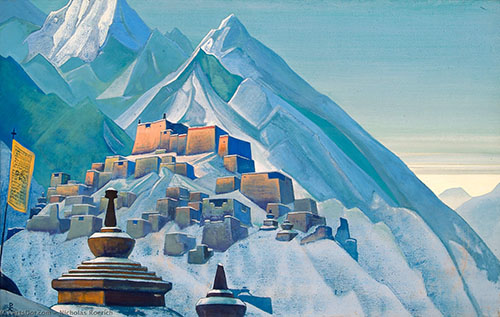
    ‘Tibet, Himalayas’ by Nicholas Roerich, 1933

    Rise of Eurasia

    Meanwhile, new concepts and ideas have taken shape in Eurasia and are quickly being transformed into reality. One of these important projects is the “New Silk Road.” It is, in fact, a very old project that is now being revived, dressed in the new spirit of our times, a project to which the hegemon offers nothing other than interference (the same with the Nord Stream 2 gas pipeline). The hegemon wants quarrels, conflicts, and wars between peoples to thereby impose its dominance. This is how it ruled before. The Russian thinker Aleksandr Dugin has recently spoken of the need to “internationalise peoples” to oppose this hegemony, i.e., nations must not lose sight of the larger whole. They have to look at the much broader picture. This is a fundamental geopolitical reality which we cannot afford to forget. 

    The other reality is that of Eurasia itself. First and foremost, an alliance between China and Russia has taken shape. Integration in different forms is taking effect across the Eurasian continent – integration from which America is to be expelled. The Eurasian Economic Union is the initial form of such, its first incarnation, so to speak. The term “first in history,” however, should be used only with caution because it was preceded by the Soviet Union, before that by the Russian Empire, and still earlier by the empire of Genghis Khan. After all, every real historical project has its reflection in the distant past. The hope remains that for now, this “empire” still in outline develops in the direction of a fully-fledged Eurasian Empire. 

    This process could encourage others on other continents. We could imagine, for example, a Brazilian Empire, sovereign and independent, around which a circle of South American countries would gradually take shape. We could think of African empires or an Islamic caliphate (a true, not a fake one). And we could, in the distant future, imagine a North American Empire, one which would not claim universality for itself and which would express the North American people’s characteristic way of self-understanding, their internal Logos. Every empire, in fact, offers its own answer to the question of what the human being is. The North American people have not yet found a way to understand themselves (there is simply no “American dream”) and have thrown themselves into slavery to false elites in the service of “globalism.”

    Future of Humanity an Open Project

    Either way, the future of humanity is now an open project. Its future actors are defining their places. This is why it is imperative to move away from what the Russian philosopher Aleksandr Dugin calls the “Western codification of consciousness,” which is the custom of looking at the world through Western eyes. The Western cultural, political, social, and economic models are exhausted or have become a burden – an unnecessary, harmful, even dangerous burden. It is important to reassess these models or (if necessary) to abandon them altogether, once and for all, as soon as possible. The Western models for a “mandatory future” should be opposed by our own models of a possible and desirable future. 

    First and foremost, the concept of the nation-state and nationalist state has been overcome. As Rodrigo Sobota remarked, “we cannot forget the fact that the crystallisation of the nation-state as an artificial notion of the specifically Western character has deeply divided us.” The modern nation, reared within the homogenous nation-state and inspired by narrow and exclusive ethnonationalism, is not the same as the people, the community reared by long-standing history and culture, nor is the nation-state the only possible state. Along with the concept of the nation-state, “we must necessarily admit that the ancient Hegelian myth of the state, crystallised as he saw it in the venerable Imperial Germany, is in terminal decline.”

    In today’s globalised world, nation-states, the undoubted product of the 19th century, as well as their firmly fixed borders, are disappearing, and new, supranational, continental or even global entities are being created. These are not merely processes of inevitable “dissolution,” but also processes of creating something new – opportunities for building new relations and ties between peoples. These processes are usually ambiguous in history: it is difficult to determine what is actually collapsing and what is being built. Not everything goes as planned. Processes can be reversed in one direction or another. In the new conditions, both colonialism and anti-colonialism are taking on new forms. Those ideas and concepts, which over the past three or more centuries gave impetus to the “modern West” and enabled its planetary supremacy in a brief historical period, are now exhausted. 

    This is most clearly visible today in the West itself: individualism, liberalism, and utilitarianism no longer ensure superiority – not even material – but are instead turning into obstacles and hindrances. Moreover, they are the reason for the internal collapse and rapid disintegration of Western society and its entire civilisation. All of them belong to the age of the Enlightenment as the fruits of the reason of “enlightened man,” “his majesty the Western European thinker.” It is vain to continue fruitless debates about “values” which are already dead and belong to the irreversible past. Is there a more obvious sign of “internal decay” than this?

    ‘Sophia: The Wisdom of the Almighty’ by Nicholas Roerich, 1932

    Death of the Old, Birth of the New

    We need to build new political, civilisational, and economic structures of continental proportions. We think that empires would be the most suitable for this. When we say “empire,” we have in mind the broadest possible meaning, entities sufficiently elastic and robust (at the same time) to protect their civilisational space from “outside intrusion.” This does not mean that existing nations will disintegrate or disappear within them. On the contrary, by being within them, they will acquire the conditions for normal development. 

    As for where this development will lead them, let the question remain open. “Human” in the plural is “the people,” and every people has its own unique face and character. Every people ought to continue their own particular development, with their own language, tradition, history, culture, and the special heritage which makes them precious and different from others. Empires arise out of the pursuit of this freedom. But this is not “freedom from,” but “freedom for”: freedom for everyone to be who they are. 

    Today, let us repeat, we live in an age of the agony and death of one civilisation – the Western one. This is a time of crisis, an interregnum, of which the great Italian philosopher Antonio Gramsci said: “Crisis consists precisely in the fact that the old is dying and the new cannot be born; in this interregnum a great variety of morbid symptoms appear.” The agonal cramps of one civilisation allow us to sense the contours of the future world. The “new” often comes into the world with birth pangs. There is no way for the sounds and voices of this to be silenced, no matter how hard they try to do so in the West. 

    The death of a civilisation, as a rule, means the birth of a new civilisation, or civilisations, which are in part created over its corpse (in this case, the dead body of the “West”). The new states and new arrangements are not completely “new,” just as “old” civilisations never die completely and entirely. Something will be taken over or inherited and given a whole new meaning and significance in a completely different context, while other things will be condemned to oblivion. The paradigms of new civilisations are built on old foundations. Both the Soviet Union and America, for instance, mysteriously resurrected the concept of empire and thus shaped the bipolar world of the past century. 

    Cultivating All Unique Cultures

    In the first place, this applies to the sphere of culture. Culture is no longer and can no longer be dictated from one centre. We must free culture, or rather cultures, from everything that is outlived, boring, and stereotypical and return cultures to their original meaning. Culture and art are not planetary entertainment for bedtime; culture and art are revelations, awakenings, something that disquiets and moves us to search further for the “new.” Instead of one planetary and commercialised culture, pleasure for the masses, an intoxicating narcotic that always bears the same stamp (“made in the USA”), we will have cultures in the plural. “Yes” to Chinese, Russian, Korean, Greek, French, Finnish, Serbian, and many other cultures – as well as true American culture, a culture that has its own deep roots. “No” to the culture of stereotypes that boils down to faceless imitations, tediously and always repeating the same dilapidated, banal, and now wholly outdated clichés. We must return culture to its original meaning by creating it (anew). And this is, perhaps, our foremost task at the moment. 

    Today we are concentrating our thoughts on the future, on the “new beginning,” while looking back on the past. This is natural and logical. It cannot be otherwise, for everything new “is only a new expression of an ancient, eternal desire,” just as any true “other beginning” is not a mere return to or imitation of the past, but a “new beginning, more primordial than the previous.”

    Boris Nad’s book The Reawakening of Myth is available to purchase from PRAV Publishing (www.pravpublishing.com) and online booksellers. With thanks to Jafe Arnold for the translation.

    [alert type=”general” dismiss=”no”]This article was published in New Dawn Special Issue Vol 15 No 3.[/alert]

    [alert type=”success” dismiss=”no”]If you appreciate this article, please consider subscribing to help maintain this website.[/alert]

    © New Dawn Magazine and the respective author.
    For our reproduction notice, click here.
  • Welcome to Life Inside a New World Order

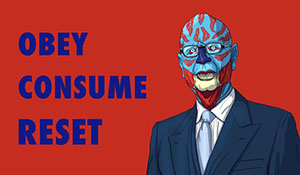
    Welcome to Life Inside a New World Order

    From New Dawn 188 (Jul-Aug 2021)

    We knew the world was changing in radical ways, but we never thought it would happen this fast. 

    In 2015, I penned a feature article for this publication entitled “Oceania Forever: Rise of the Global Police State.”1 After closely following the steady construction of a global control grid after 9/11, it was still difficult to see exactly where it was all going and why. Many of us knew the surveillance infrastructure would be permanent, and there was undoubtedly some speculation of an emerging supranational global government, but still no clear endgame in sight. 

    All that changed in 2020, and many of my previous questions were answered. 

    With the advent of the global pandemic, the global police state had finally received its marching orders.

    Nearly a year later, in 2016, I wrote a follow-up piece in an attempt to visualise what an emerging technocracy might look and feel like – the shape of things to come, underpinned by the technocratic visions of arch globalist Zbigniew Brzezinski. That article, “Technetronic Enslavement: Life Inside the Matrix of Control,” was published in New Dawn 156 (May-June 2016). Since then, my suspicions have been validated and questions answered through the emergence of the globalists’ Great Reset agenda.

    So here we are, a full eighteen months down the road of the Great Plague, and looking around we now see what life is like inside a New World Order.

    No one expected it would come so fast and on such an international scale.

    The shock and awe also signalled the beginning of what looks more and more like a post-democratic era – the ascendency of global fascism with cold technocratic features, orchestrated by an elite cabal of rapacious oligarchs, and remorseless bureaucrats taking their instructions from shadowy cliques of science advisors governing every conceivable aspect of our daily lives… right down to where we are allowed to travel, if we are allowed to work, what we can buy, whether our children can attend school, and even who we are allowed to meet. The level of control even extends to the mandating of masks and what experimental injections we are expected to receive in order to ‘win back our freedoms’ and return to normal life.

    We’re told by our leaders that all of this is necessary and permanent, and that it’s for our safety, and the safety of the collective. The new regime is not just national, it’s global.

    A New Order: Post-Covid Geopolitics

    One thing became clear early on – nearly every government on the planet used the pandemic to tighten its grip on power and its domestic situation and quell any potential uprising or political opposition. Many countries have gone so far as to suspend parliament, delay elections, and impose a semi-permanent state of emergency. 

    Countries more authoritarian, or with one-party systems, haven’t felt the same civil strife as many so-called democratic countries whose citizens might resist the removal of individual rights and freedoms. Still, even in those countries, the level of public compliance to public health policy edicts was almost shockingly seamless.

    Certainly, in a country like China – the alleged epicentre of the pandemic – the government has managed its pandemic policies and lockdowns without too much pushback from the general population. Somewhat surprisingly, countries like the UK and others appeared to take cues from China early on, copying all of its symbolic policy moves, including the use of lockdowns to supposedly ‘stop the spread’ of the virus.

    All of this comes with a very uneasy feeling. Only in preparation for war have we seen this level of rapid societal and economic reorganisation, the shuttering of institutions and services, and suspension of rights. This fact alone is worrying as countries invoked their fusion doctrines, resiliency measures, and international network routes are already prepared for an ongoing global upheaval.

    One of the more disturbing features of the Western-centric narrative has been the scapegoating of China for the pandemic. Western politicians and media pundits accuse China, at the very least, of being responsible for a reckless ‘lab leak’ of an engineered coronavirus out of the Wuhan Institute of Virology, or at worst deliberately releasing a viral bioweapon that has killed three million people and devastated the global economy. Regardless of whether any of that is even remotely true, the reality is that a generation of Westerners are now conditioned to view China with suspicion, or worse, as the enemy.

    A New Cold War and Return to Bipolarism

    Are we being primed for a new Cold War, and if so, what would it look like?

    In some ways, it would be much like the previous Cold War; a perpetual affair characterised by long-term, low-intensity conflict, both abroad (against the enemy) as well as at home (against domestic terrorism), carefully designed to hem in populations on both sides of a new global paradigm. 

    Elites prefer a bipolar world rather than a multipolar one. For starters, a bipolar Cold War is much easier to physically control and administer. More crucially still is the management of intellectual and political life in a bipolar world order. During the US-led post-WWII liberal world order, political thought and philosophy were built up and maintained around a bipolar worldview and predictable power dynamics. It naturally lent itself to a fairly tight cadre of realist academics and intellectuals who fashioned the global political conversation along East vs West, and Capitalist vs Communist ideological discourse. This same intellectual syndicate, led at the time by international relations scholars like Samuel P. Huntington and Francis Fukuyama, declared “the end of history” following the disintegration of the Soviet Union in 1991. The Western liberal and free-market model had prevailed, they proclaimed, and for another few decades, the bipolarists performed a victory lap which ushered in an era led by a neoconservative and neoliberal unipolar phase of US and NATO-led domination of various global regions.

    If a bipolar world order is to return, then it will likely be an Anglo-American led Western alliance vs a Chinese-Russian-led alliance. And like the previous Cold War, there will be a contested or disputed zone somewhere in between that serves as a convenient ‘away’ pitch for a protracted ideological, military and proxy conflict between these two great powers. One way to maintain a bipolar world order, and not allow it to develop into an uncontrollable, unpredictable multipolar world order, is to cripple the countries within the contested zones – in effect, weakening and even destroying emerging tiger economies and emerging markets. The object is not necessarily to bomb them into submission, although the West tried this over the last 30 years. Rather, it is to cripple them through economic sanctions or ‘green’ climate change regulations, preventing their development towards first world nation status. Economically weakening a country allows for the creation of a perpetual state of dependency on aid, resource extraction by foreign powers, leading to continuous political instability and a constant brain drain of its best and brightest who would usually form the vanguard of any future populist movement. This has been the neocolonial formula for managing target nations for much of the post-WWII epoch. 

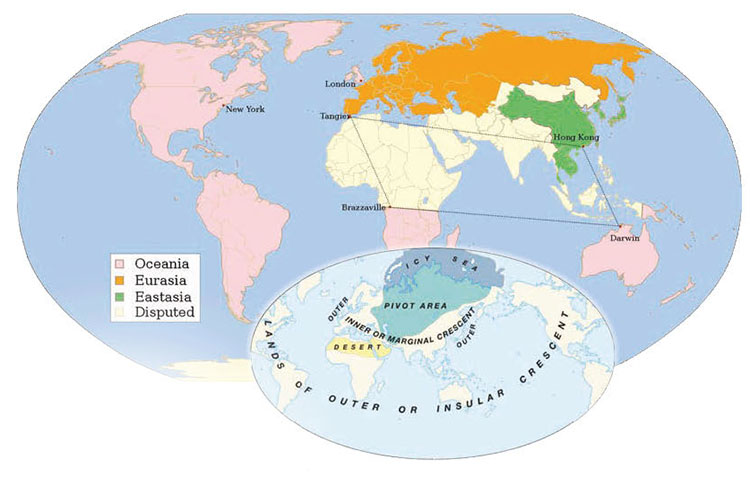
    The three fictional superstates of George Orwell’s dystopian novel 1984 are Oceania, Eurasia, and Eastasia. ‘Disputed territories’ are also indicated.   INSET:  Map of Mackinder’s “World Island” theory with the central focus being the pivot area of Eurasia.

    In the context of present-day China, a variation of this Western strategy would aim to takeover or cripple the nations along China’s new Belt and Road Initiative. We’d see a return to Halford Mackinder’s “World Island” theory which saw the strategic imperative of controlling (or disrupting) a unified Eurasian landmass. This might also extend to the BRICS nations bloc (Brazil, Russia, India, China and South Africa), and also the newly codified “Axis of Resistance” comprising the Islamic Republic of Iran, Iraq, Yemen, Syria, Palestine, and Hezbollah in southern Lebanon. While Belt and Road is global and primarily for the benefit of China and stakeholder nations along those trade and transport lines, its emergence serves as unwelcome competition to the predatory Western internationalist model. This could signal a return to Great Game grand strategy, pitting Western sea power against a Chinese-led operational control of the Eurasian landmass – the chief objective being the disruption of resource acquisition by China, and fracturing high-volume Belt and Road travel and commerce routes. In this new bipolar world order, many geopolitical routes and clusters might eventually become part of a “disputed zone,” not unlike the very one depicted in George Orwell’s geopolitical map in the classic dystopian novel 1984. 

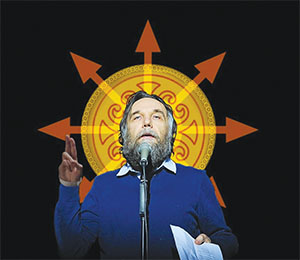
    Russian political analyst and philosopher Alexander Dugin.

    This is not to say that an influential Eurasian geopolitical bloc based on traditional values and norms cannot emerge in the way that Russian political analyst and philosopher Alexander Dugin describes in his numerous treatises, such as The Fourth Political Theory, and Last War of the World-Island: The Geopolitics of Contemporary Russia, to name a few. But if the great powers are intent on preventing the unification of the World Island and forcing the world back into a bipolar paradigm, then it’s likely that Eurasia’s shatter-belt nations, the Middle East and Far East, could once again play a part in a cycle of instability and conflict. 

    What better way to retain a firm grip on order at home and along the periphery of the contested zone than to declare perpetual war. For the elites ruling the Western bloc, a new cold (or warm) war also benefits them with raison d’état at home. Or, as Orwell famously said, “Oceania was at war with Eastasia. Oceania had always been at war with Eastasia.”

    Over the last 40 years, China has been allowed to develop, but only to a point where it does not threaten the global political and cultural stronghold maintained by the Anglo-American control mesh of Five Eyes intelligence and NATO military alliances. From that viewpoint, economic and political gains are acceptable so long as they are confined to Asian wealth creation and prosperity. But the moment those gains are transformed into economic dependence of Western nations on Asian and Eurasian powers like China and Russia – the geopolitical alarm is tripped and the West’s rapid response mechanism springs into action. Western imperialists know that economic dependence would precede political subservience. 

    Their fears may be well-founded, but the reaction can often be counterproductive and negatively impact countries and peoples caught in the middle. Certainly, this was a major source of friction throughout the Cold War (1947–1991), with instability from proxy wars of that period still enduring to the present day. Russia’s Nord Stream 2 natural gas pipeline project is a prime example. The United States and its allies made it a top priority to disrupt the joint Russian-German energy venture that will bring clean and affordable Russian gas to Europe. A series of regime change operations, proxy wars, false flag events, and all-out propaganda, was waged against Moscow to trigger economic sanctions and ultimately derail the pipeline. The thought of Germany becoming dependent on Russia and developing good bilateral relations is the stuff of horrors for the Anglo-American alliance which relies on constant East-West tension to keep NATO relevant and well-resourced as a military confab and extend its commercial interests through Europe and into the former Soviet states. 

    Beyond this, one should be cognizant of the fact that any significant fossil fuel project will be viewed as a direct threat to the global elites’ Great Reset and UN Agenda 2030, and subsequent transition to a New World Order and Fourth Industrial Revolution (4IR).

    The Great Reset is very much a Western and European-led project. After WWII, traditional colonial powers became post-colonial powers and took on self-appointed custodial duties of planetary management, including ‘climate’ and environmental oversight of what they refer to as the ‘global commons’. By all accounts, this is Brzezinski’s great Technetronic era, only much more green in its rhetoric and governance, designed, we’re told, to save the planet by stopping anthropogenic (man-made) global warming, otherwise known as climate change.

    Dangerous Delusions of Malthusianism

    This phase of the New World Order, meant to save humanity from the supposed scourge of CO2, conceals a rather disturbing continuance of an older agenda: population management, rooted in 19th century Malthusian theory, and buttressed by a radical offshoot of Darwinism – a social engineering movement known as eugenics.2 

    Fear of population growth has been with us for a long time, at least since Thomas Malthus’ predictions which later proved wrong as other factors were not taken into account. 

    Thomas Robert Malthus (1766–1834) was an aspiring social engineer who thought the global population would increase geometrically while food production increased arithmetically. What this meant was that humans would be unable to produce enough food to sustain themselves. Fortunately, Malthus was way off on his calculations, but his legacy endures. Historically, wherever you find ‘overpopulation’ discussions, you find eugenicists directing the conversation from the shadows through lavish funding by foundations and civil society organisations, or under the increasingly dubious guise of ‘public health’.

    Two leading Malthusian proponents of recent decades are William Gates Sr, father of Bill Gates, and Stanley Johnson, father of current British Prime Minister Boris Johnson. 

    As head of the world’s largest private abortion chain organisation, Planned Parenthood, and arguably the driving force behind Bill Gates’ obsession with vaccines, Gates Sr imparted on his son the elite responsibility of planetary management of the masses. Beginning in 2020, Bill Gates Jr has been leading the World Health Organization (WHO), the pharmaceutical industry, and an unprecedented intergovernmental effort, to vaccinate the world’s population with the experimental Covid-19 gene-based jab. When asked about safety concerns, Gates dismissed critics saying that the world did not have time to do proper safety testing and that any collateral damage must be priced-in for the “greater good.” Interestingly, before the pandemic, many of Gates’ media appearances focused on global population management.3 

    Stanley Johnson seems to be an even more staunch population reductionist and authored the novel The Virus (1982) about a pandemic threatening to wipe out Europe. He wrote other books obsessing about overpopulation, including the Population Problem (1970), Life Without Birth (1970), and World Population and the United Nations (1987). In one interview, Johnson opined that he would like to reduce the population of Britain substantially, flatly stating, “Britain’s population should be 10-15 million people. That would do us splendidly. It’s a nonsense that we are confronted with 70 million people. But we have been shunted aside by the rise of liberal correctness.”4 To call him a committed Malthusian would be an understatement. It would be useful to know how much of the father’s radical worldview is responsible for son Boris’ enthusiasm for adhering to the UN and World Economic Forum (WEF) Great Reset agenda, adorned with shiny new straplines like “Build Back Better.”

    Woke Technocracy of Build Back Better

    Invariably, eugenics leads directly to another branch of the elite technocracy movement – transhumanism. During this global pandemic crisis, the ascendancy of Big Tech, Big Pharma and BioTech industries has created an extremely soft-landing pad for transhumanist ideas and the fetishization of an endless array of ‘smart’ technologies, the Internet of Things (IoT), and artificial intelligence (AI) applications. These advances are certainly in development, but adoption is a slow and tedious process. Technocrats are taking advantage of Covid to gain a velocity unattainable outside of a staged crisis like a global pandemic. 

    Social engineering, specifically a system of ‘social credit’ scoring, is now ready for implementation in the West. Elite technocrats look enviously at the Chinese social credit system in which citizen behaviour is assigned a score logged on a central database where officials can restrict privileges like air travel, buying property, or taking out a loan.5 This is not unlike Oceania’s citizen scoring system depicted in Orwell’s 1984. The idea may already have gained a foothold in the West through the new ‘Vaccine Passport’ system being aggressively pushed by governments and corporate elites. 

    If allowed to proceed, this biopower tracking regime spells an end to previous universally held liberties like the individual right to bodily autonomy and freedom of movement. The imposition of such a system is a hard break from the post-enlightenment era of constitutional republican and democratic governments, giving way to the tyrannical proclivities of an increasingly powerful ruling class, draping itself under the veil of the common good to do the collective will – which can be fashioned through the relentless application of weaponised propaganda and applied behavioural psychology. The collective will or greater good can be whatever the state deems it to be, through the same process of manufacturing consent as outlined in Noam Chomsky and Edward Herman’s seminal text of the same title.6 The weapons of information warfare used to prosecute wars on foreign soil are now fully deployed against the citizens of Western countries. In this way, Orwell’s dystopian fiction is the playbook for what authorities have done in practice from the beginning of the Covid crisis.

    Founder and executive chairman of the World Economic Forum, Klaus Schwab.

    In this context, we can view Klaus Schwab’s Build Back Better (BBB) clarion call for a Great Reset as a re-consolidation of the Western Hemisphere and its satellite properties in the developing world – and in direct conflict with China’s Belt and Road. BBB is pure woke technocracy and seeks to put a cap on any development which is not ‘green’. 

    However, BBB goes much deeper than many people realise. At this year’s [2021] G7 Summit in Cornwall, England, British PM Boris Johnson raised a few conservative eyebrows when he declared that BBB would mean, “Build back greener, build back fairer, build back more… gender neutral.”

    While this brand of woke identity politics was known to be present in the WEF material, it was still shocking to hear such progressive post-modernist proselytising coming from a Tory PM. This could also be viewed as an attack on the family itself – the fundamental pillar of any community, state or nation. In this regard, the Western-led drive towards a woke reset is an affront to the nation-state and prelude to an amorphous borderless globalist order. Of course, there will be borders, but perhaps only as exclusion zones – and accessible if a global subject is carrying the correct track and trace digital ID or Vaccine Passport.

    What’s important to understand is that this kind of world order was not possible before. Only with new advances in digital technology, data sharing, satellite and surveillance networks, could such an insidious web be implemented.

    Embryonic Global Government?

    As they often say, a global crisis requires a global response.

    The Covid crisis has accelerated the mechanisms required to obliterate the DNA of most sovereign countries through the digital systems used to administrate a new global governance regime. This has been achieved in the following ways – the closure of borders, the normalisation of Covid testing and digital IDs, the demonisation of physical cash and adoption of a cashless society, the final goal being the intentional collapse of the real economy leading to Central Bank-issued digital currency.

    Under a future uniform technocracy, there’s no longer any need for democratic forms of government – only symbolic leadership elections of pseudo-populist figureheads who provide the public with stylistic or nuanced differences in appearance (age, gender, colour or ethnicity) and rhetoric, but no substantial deviation from technocratic prescriptions. Should an ‘elected’ leader pursue any genuine populist or traditionalist policies, they would be summarily removed by the real power centre – the high committee of technocrats. 

    This system will be formally adopted first in the advanced Western regions and then in the developing world. The EU Parliament is the beta test for such a system, with MEPs elected in their respective member states, sent to Brussels, but they have no actual power to propose new laws. Rather, an unelected European Commission (EU civil service) ultimately drafts and proposes legislation, which MEPs are allowed to rubber stamp. Despite the undemocratic nature of the EU, there seems little or no protesting from member states. Under this system, change is not a grassroots or bottom-up political effort but a top-down exercise micro-managed by ‘experts’. To date, this is the closest model of embryonic global government, and they’ve had 30 years to fine-tune it before expanding to other global regions. By definition, it is a functioning technocracy.

    Green World Order

    The Great Reset transition to a Green New Deal and the “financialisation of nature,” paving the way towards automated 4IR, has been exposed in detail by several cutting-edge independent researchers.7 These plans are being hatched at the United Nations and Wall Street level (led by BlackRock), with the new multi-trillion dollar green bond markets, carbon credit trading, and other collateralised green futures and instruments, sold to the public by way of celebrities like Greta Thunberg. 

    Government policies like lockdowns have accelerated this new green economy, not on its own merits but by wrecking the existing economy and squeezing out what are now deemed nonessential businesses and services, and anything that falls foul of the post-pandemic New Normal. This constriction will continue, and governments will print up even more money for corporate bailouts and to pay the burgeoning ranks of the unemployed and underemployed not to work. This is a price worth paying for the globalists because the inevitable inflationary cycles that are now set in motion will only negatively affect the lower and middle classes by robbing them of their savings and purchasing power. The elite and mobile globalist class will not feel the negative economic impact, and in fact have seen record gains for those in the favoured digital and ‘essential’ industries. Thanks to generous government ‘stimulus’ money over the last year, the net worth of the billionaire class grew by a quarter to well over $10 trillion and counting.8

    As the culling of the real economy continues, that number could easily double by this time next year. These are the new robber barons of the early 21st century, the superclass who will have the liquidity and capital to buy up the remaining assets tied to the old economy and invest in and own the ground level of the new green economy. Like the Rockefellers, Morgans, and Carnegies of the last industrial revolution and oil boom, today’s tech lords are set to dominate this New World Order for at least the next 100 years.

    For these global oligarchs, things have never been so good. The New Normal helped solidify their position and wipe out prospective competitors for a generation or more. Schwab and the high priests of technocracy are excited about the destruction brought by lockdowns.

    “Many of us are pondering when things will return to normal. The short response is: never. Nothing will ever return to the ‘broken’ sense of normalcy that prevailed prior to the crisis because the coronavirus pandemic marks a fundamental inflection point in our global trajectory,” opined the WEF leader in his Great Reset manifesto.

    For many, this is a return of feudalism, but on a new global scale. Schwab admits, “We must prepare for a more angry world.”

    The WEF technocrats call for a ‘fair’ Great Reset, run under the new banner of ‘stakeholder capitalism’ and always in the woke spirit of ‘equity’ and utopian-sounding global citizenship. The reality is that the top of this new ‘sustainable’ pyramid will be a hardened corporatist fascist layer dominated by top transnational corporations and government bureaucracies, while the bottom majority will have a collectivist, communitarian system imposed upon them. In the words of the Great Reset proponents, “In the future, you will rent everything” and “you will own nothing and be happy.” That is the future which technocrats are planning for.

    Fascism & Conformity

    After a year and a half, we are left asking ourselves how such an extreme brand of tyranny has been allowed to promulgate so quickly, and with relative ease. The answer to this question may lie in a study of 20th-century fascism.

    The mechanism of control is not necessarily down to flamboyant totalitarian leaders as one might presume. It’s much more subtle and deeper. According to the social psychologist Erich Fromm (1900–1980), the mechanism is found in peoples’ need to exhibit conformity as they harmonise with what he describes as the “authoritarian conscience.”9 The authoritarian conscience in its extreme form, he said, is not about following the commands of a charismatic, authoritarian figure. Morality is determined by conformism. “Virtue is to be adjusted and to be like the rest. Vice, to be different.”

    The Covid crisis, with its tightly-wound government and corporate partnership prosecuting the pandemic, has elevated the virtue of conformity with religious zeal. This is now fully internalised by traumatised members of the public.

    When a person goes against the group, it no longer brings fear of aloneness but also feelings of guilt. Once internalised, it has a powerful hold on people. According to Fromm: “Conscience is a more effective regulator of conduct than fear of external authorities; for, while one can run away from the latter, one cannot escape from oneself nor, therefore from the internalised authority which has become part of oneself.”10

    This explains the power of self-policing behaviour. With individual rights and liberties stripped by the state, the individual is subsumed by the hive. 

    Hundred Years War?

    When US President George W. Bush famously remarked in 2001, “Our war on terror begins with al Qaeda, but it does not end there,” many thought they’d be digging in for a very long haul. Thus far, the global war on terror has spanned some 20 years.

    The stage is now set for a series of new wars.

    We are presently engulfed in a new war against another invisible enemy – a biological war against a virus. Or so we’re told. Whether or not SARS-CoV-2 is the bio-threat the government, media and pharma cartels insist that it is, we can be sure that a real war has been waged on our rights and freedoms. We can predict the prospect of a new global war on bio-terror, and an international bioweapons ‘arms race’ which will drive the new cottage bio-terrorism industry.

    After the biowar, we can already see the rumblings of a new global cyberwar – complete with endless false flag cyberattacks causing untold chaos and unnecessarily stoking up even more geopolitical tension and animosity between the great powers. Note also that Klaus Schwab cryptically warned the world in 2020 that a cyberwar is coming.

    Finally, after the biowar and cyberwar, there remains the final geopolitical spectre, the sum of all fears – thermonuclear war. This could take on a very different tone than the mutually assured destruction (MAD) model that ballasted the US vs USSR Cold War of the 20th century. Today’s world is one of low yield ‘tactical nukes’ which could spark a number of scenarios with unforeseen reactions and outcomes. An asymmetric tactical nuclear war would be more chaotic and likely converge conventional military conflict and continuous cyberwar and bio-threats. Under these circumstances – real or imagined – locking down whole countries and regions as ‘exclusion zones’ could become routine. 

    If the Fourth Industrial Revolution comes to fruition and the AI-run machines challenge the pre-eminence of humans on this planet, this conflict could last for one hundred years.

    Overcoming the Illusion

    These are scenarios based on the foreshadowing that has been broadcast by elites. Some of this, as undesirable as it sounds, could be possible.

    In the end, Great Games and grand strategies are about power – who holds it and who wields it well enough to frighten opponents but still achieve strategic objectives.

    In many different ways, the architects of this chaos have declared war on humanity.

    Whether humanity prevails depends on if we remain human, and that depends on how well we see through the illusion.

    We are here now. This is life inside the New World Order.

    [alert type=”general” dismiss=”no”]This article was published in New Dawn 188.[/alert]

    [alert type=”success” dismiss=”no”]If you appreciate this article, please consider subscribing to help maintain this website.[/alert]

    Footnotes

    1. Oceania Forever: Rise of the Global Police State by Patrick Henningsen, New Dawn 153 (Nov-Dec 2015).
    2. Roles of science in eugenics, https://eugenicsarchive.ca/discover/
    encyclopedia/535eee157095aa0000000256
    3. Bill Gates on Africa’s population boom, www.youtube.com/watch?v=0MMifQvuN08
    4. Zac Goldsmith: climate change pushes other issues off the agenda, www.theguardian.com/environment/2012/jun/06/climate-change-other-issues-goldsmith
    5. The complicated truth about China’s social credit system, www.wired.co.uk/article/china-social-credit-system-explained
    7. For example, the work of Cory Morningstar on www.theartof
    annihilation.com
    8. Billionaire Wealth Hits $10 Trillion For First Time Ever Thanks To Government Stimulus, www.forbes.com/sites/oliverwilliams1/2020/10/06/billionaire-wealth-hits-10-trillion-for-first-time-ever-thanks-to-
    government-stimulous/
    9. Conformism, www.sciencedirect.com/topics/social-sciences/conformism
    10. Ibid.

    © New Dawn Magazine and the respective author.
    For our reproduction notice, click here.