New Dawn – World's Most Unusual Magazine

Category: Articles

  • Psycho-Power: ‘Automaton Conformity’ & ‘Freedom’ in a Post-COVID World

    Psycho-Power: ‘Automaton Conformity’ & ‘Freedom’ in a Post-COVID World

    From New Dawn 186 (May-June 2021)

    The role of biopower from the last century onwards represented a shift into forms of ‘disciplinary power’ over people, as I have discussed in previous New Dawn articles.1 

    The move into industrialisation necessitated a form of bodily discipline to adapt workers to the manner of machinic production. Now that modern societies across the globe are transitioning from industrial to digital life, power is no longer solely over the ‘docile body’ but intra-body – the genetic, programmable cellular life – as well as the conscious life of a person. Disciplinary power was all about training the body, subjecting it to drills and rules. However, now control over the ‘docile body’ is expanded to include control over the ‘docile psyche’ – to reach into, influence, and steer the psyches of the population. 

    Brought about by the COVID-19 pandemic and infecting governments worldwide, this new reign of biopower seeks to secure its dominion through a combination of a carefully controlled “administration of bodies,” a calculated “management of life,” and a persistent “programming of consciousness.”2 In the words of Jose Delgado, a professor of neurophysiology at Yale University and a famed mind control researcher: we are shifting into a psychocivilised society.3 In psycho-power, the human being is the target site, including their conscious and unconscious thought patterns. 

    To frame human life under a reign of comprehensive biopower, State authorities must also render conscious life under its rule. The contents of an individual’s mind is another aspect of our existence and, as such, also is to come under State jurisdiction. For all human life born into this world, the State automatically assumes the power to dictate the conscious thought of that new life. This means not only external control over an individual’s body but also techniques to interiorise this control – both mentally (conditioning, programming) and biologically (health treatment, vaccination, etc.). 

    As the reign of biopower continues to unfold, the situation may be increasingly managed so that each person is limited in how they make health decisions. I refer to this as a form of psycho-power that, aligned with the biopower agenda, seeks dominion over external and internal realms through the rhetoric (or double-talk) of claiming to represent the power of well-being. The result will be less ‘well-being’ and more control of the human being. The very process of how we determine human well-being is at the core of what is transpiring. 

    New ‘Consensus Reality’

    I propose that biopower is transforming into a control system for human consciousness. The current biological ‘state of emergency’ is forcing people, on a global scale, to accept previously unimagined ideas to the point where the human psyche is tested to its limits. A new narrative is being established and seeded into mass human consciousness. This new ‘consensus reality’ imposed on the world attempts to colonise our private senses. It propagates a new shared affinity of conditioned thought. And yet, this is more likely to cause dissonance than cohesion. The question of freedom, especially freedom of thought, is now bringing forth its own forms of constraint and generating new forms of coercion. German-Korean philosopher Byung-Chul Han has stated this new form of power, emerging from post-industrial capitalism, is psycho-politics.
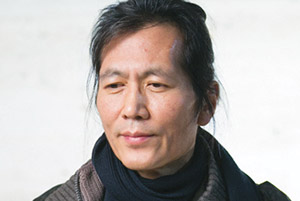
    Byung-Chul Han

    Under psycho-politics, those being ruled think they act freely, but in fact they act in accordance as directed by the rulers. The individual’s apparent freedom is exploited as they are carefully guided – nudged – to make the right choices through precise control of the psyche. 

    In turn, we direct our frustration back on ourselves. As Han notes, people are less liable to revolt when they are depressed: “Psychic maladies such as depression and burnout express a profound crisis of freedom. They represent pathological signs that freedom is now switching over into manifold forms of compulsion.”4 

    Current forms of biopower do not overtly interfere with the human psyche in a systemic fashion, but it has prepared the groundwork for the newly emerging biology of control to gain influence over the intra-space of the human psyche.

    New forms of modern governance, being put into place right now, will manage and exploit a ‘psycho-power’ technology of domination. What we are witnessing, and Han agrees, is the emergence of a new form of psycho-governance. Governance imposed not only by traditional nation-state bodies but also through the harnessing of technology to influence the human mind and how people think. This system will employ digital technologies and the digital-surveillance architecture as its dominant, pervasive medium of control. 

    Further, psycho-power is not about controlling the past but about manipulating memory so that the present can be forged anew. The new consensus reality is already erasing pre-pandemic history. We can sense this already occurring. The world, pre-2020, now seems like a bygone age. It is surprising how many people readily accustomed themselves to the ‘new normal’ with its biosecurity regulations. 

    Another point is that within the new biopower regime, emotions are actively encouraged and often deliberately targeted and heightened. This is in contradistinction to earlier disciplinary societies where emotions were considered distractions from orderly and mechanical functioning. The “Fourth Industrial Revolution (4IR),” as the World Economic Forum labels it, is about a new functionality – a digitally-managed gameboard of simultaneous disruption, diversion, and entanglement. As part of this increased emotional engagement, certain ‘technologies of the self’ are promoted.

    ‘Self-Optimisation’ in the 4IR

    With more and more people working from home, we can only imagine how practices for ‘self-optimisation’ are going to be peddled even more than previously. These may include online motivational retreats, digital management workshops, Zoom personality seminars, etc. All designed and pushed to make people operate more efficiently within the system, like a cog in a machine. Within such a system, weak points are targeted and ‘worked on’ to gain increased ‘efficiency and performance’. 
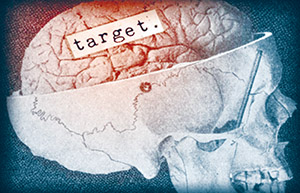
    We would do well to remember that the ‘good self’ is not the same as living the ‘good life’. It is more likely that under the new system of psycho-power, the ‘good self’ will be exploited in the increasingly corporate-aligned ‘Consciousness Industry’. Being fed on a carefully formulated diet of ‘Positive Thinking’ teachings can actually distract a person from deeper self-directed interior examination. Sophisticated techniques of ‘self-optimisation’ will be forged to manipulate people for optimal engagement and participation in the new consensus – rather than its opposite of self-empowerment for individual emancipation and sovereignty. As Han notes, constantly ‘working’ on oneself, as per the self-improvement industry, can become a new form of work ethic: “Now, instead of searching out sins, one hunts down negative thoughts.”5 

    Italian philosopher Franco Berardi takes an even stronger position. In his perspective, a new fascism is arising as people become subsumed in their own panic and a psychological “depressive rage of impotence.”6 The once prevalent will to power, he says,has now been replaced by impotent rage. 

    Berardi sees a psychopharmacological addiction and disorientation as the new despondency – a form of confused passiveness amidst mental mayhem, within which dwells an impotent desire for revenge. It is a sign of painful irony that in an age of impotence, as Berardi calls it, human fertility is rapidly declining and looks set to diminish even further. As the grip of psycho-power continues to imprint new patterns on human thinking, this ‘impotent rage’ feeds into a rising social architecture of human ‘unfreedoms’.

    Unfreedoms & (In)Securities

    With the lockdowns of 2020 continuing into 2021, many people are finding it very difficult to endure enforced confinement in their homes, cut-off from social engagements and networks. It has caused great personal unrest and psychological discomfort as people were previously accustomed to what they considered a life of ‘freedom’ and leisure. What is now surfacing is that many people harbour unconscious fears about the risks of freedom. 
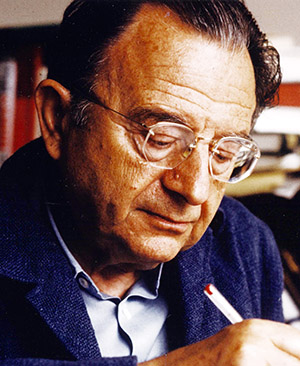
    Erich Fromm (1900–1980)

    The German-born philosopher and social psychologist Erich Fromm spent most of his life trying to understand freedom in relation to the human condition. Fromm posited that a struggle for freedom is a dynamic between the interior world of an individual and external institutions and systems. Under the prevailing pandemic of personal fears of social isolation and uncertainty, people have willingly given up freedoms and empowered outside agencies. Eventually, this leads to people becoming instruments in the hands of powers external to them. The alternative is seeking a form of self-independence based on personal trust and belief. However, this form of self-belief is constantly undermined by institutions in the modern world. 

    Fromm says that when individuals attempt to become more independent and self-reliant, they also become more isolated from social systems, which creates fear of isolation. Similarly, the new consensus reality is attempting to strengthen a dependency upon external systems – through the fear of the virus – biosecurity. This dependency is either compelled by triggering people’s fears (through heightened narratives of risk) or enforced through regimes of biopower and psycho-power strategies. 

    Fromm noted we are fascinated by power wielded outside ourselves yet are blinded to the condition of our inner restraint in the form of compulsions and fears. These individual and social conditions make for the suppression of human life and its tendency for control and management. 

    I suggest that underneath governmental and State forms of psycho-power is an agenda to manipulate people’s fears about the risks of freedom. People are more liable to turn to authoritarian systems to provide a ‘safe freedom’, especially within the heightened environment of biosecurity risks. In his Fear of Freedom, Fromm proposes that our inherent, often unrecognised, fear of personal freedom and self-independence results in the following escape mechanisms:

    Automaton conformity: changing one’s ideal self to conform to a perception of society’s preferred type of personality and losing one’s true self in the process; Automaton conformity displaces the burden of choice from self to society. 

    Authoritarianism: giving control of oneself to another. By submitting one’s freedom to someone else, this act removes the freedom of choice almost entirely.

    Destructiveness: any process that attempts to eliminate others or the world as a whole, all to escape freedom.7

    Fromm saw that people turned to external dependencies as a way to save themselves from being crushed by their unprocessed fears. He wrote: “Because we have freed ourselves of the older overt forms of authority, we do not see that we have become the prey of a new kind of authority. We have become automatons who live under the illusion of being self-willing individuals.”8 
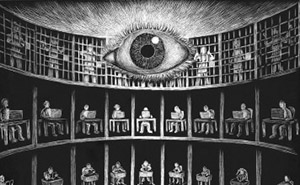
    This “new kind of authority,” to operate under psycho-power, is an insidious form of power that literally gets into peoples’ heads and gives them the “illusion of being self-willing individuals.” Under this new regime, people willingly comply and place themselves under external control. Most people ‘believe’ they are already free, as ‘self-willing individuals’, but in fact they are complying with society’s consensus narrative. This is what Fromm called automaton conformity, which eventually leads to the condition of authoritarianism. The only other alternative is Destructiveness – a rage to eliminate others or the world.

    Under psycho-power, humans are to be constantly reminded they are open to attack – the risk of infection – at any time. Anyone who internalises the emotions of derivative fear will more willingly respond to a perceived ‘threat’, even in the absence of a genuine threat. Such behaviour is self-managed – internally programmed – and precisely what psycho-power seeks. 

    Today, power is no longer solely exercised through the façade of political institutions – it has shifted into the extraterritorial space beyond boundaries, nations, laws, visibility, and accountability. Under the new regime of psycho-power, the only form of security is inclusion. By excluding yourself from the over-arching systems of social management, you bring increased risk upon yourself and your loved ones. 
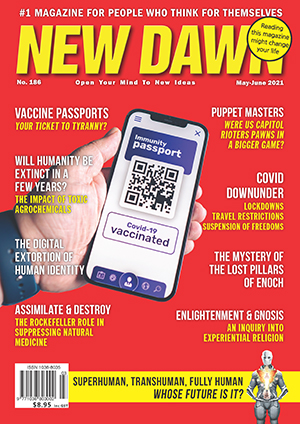
    Inclusion and exclusion are significant factors in psycho-power. As with disease outbreaks, there is a division between the ‘infected’ (excluded) and the ‘healthy’ (included). This will be brought into stark effect with the imminent introduction of health passes and vaccine passports. Psychological programming by mainstream media generates the required fear of exclusion from state-sponsored health security (biosecurity). The ingenuity of psycho-power will likely be its production of ‘security anxiety’ (playing on people’s fears) in which the collective public mindset is further conditioned with feelings of insecurity, strengthened by relentless repetition by politicians and the media. Insecurity begets increased state security – a self-fulfilling cycle. The state of being in security (insecure)requires our willing compliance. 

    Erich Fromm was prescient in recognising that a hugely influential, almost secret, power is exercised over the whole of society that conditions our ways of thinking and how we perceive reality. Today, I refer to that ‘almost secret’ power as an expression of psycho-power. 

    The peril of the moment is that many people continue to live under the illusion of thinking they are self-willing individuals. Despite this state of affairs, every individual really does have personal agency and the power of sovereignty. But we can only perceive the truth of our power if we extricate ourselves from the emerging new consensus reality that incorporates biopower, biosecurity, and increasing narratives of unfreedom. 

    Kingsley Dennis’ new book on this topic is Hijacking Reality: The Reprogramming & Reorganization of Human Life, available in paperback and ebook from online booksellers.

    [alert type=”general” dismiss=”no”]This article was published in New Dawn 186.[/alert]

    [alert type=”success” dismiss=”no”]If you appreciate this article, please consider subscribing to help maintain this website.[/alert]

    Footnotes

    1. See New Dawn 183, Nov-Dec 2020
    2. See New Dawn 184,  Jan-Feb 2021
    3. Jose Delgado, Physical Control of the Mind: Toward a Psychocivilised Society, 1969
    4. Byung-Chul Han, Psycho-Politics: Neoliberalism and New Technologies of Power, Verso, 2017, 2
    5. Ibid, 30
    6. Franco Berardi, The Second Coming, Polity Press, 2019, 11
    7. Erich Fromm, The Fear of Freedom, Routledge & Kegan Paul, 1960
    8. Ibid., 177

    © New Dawn Magazine and the respective author.
    For our reproduction notice, click here.

  • The Struggle for a Human Future in the Age of COVID-19 & Electronic Totalitarianism: An Interview with Jeremy Naydler

    The Struggle for a Human Future in the Age of COVID-19 & Electronic Totalitarianism: An Interview with Jeremy Naydler

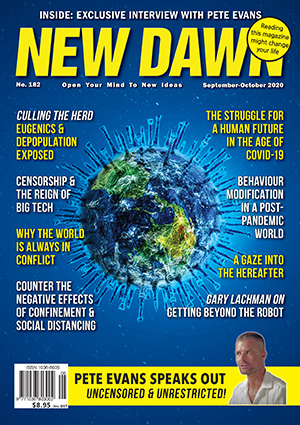
    From New Dawn 182 (Sept-Oct 2020)

    Jeremy Naydler, Ph.D., holds a doctorate in theology and religious studies, and is a philosopher, cultural historian and gardener who lives and works in Oxford, England. 

    He has long been interested in the history of consciousness and sees the study of past cultures – which were more open to the world of spirit than our own, predominantly secular, culture – as relevant both to understanding our situation today and to finding pathways into the future. 

    His longstanding concern about the impact of electronic technologies on our inner life and on our relationship to nature has found expression in his book In the Shadow of the Machine (Temple Lodge 2018) and in his new book Struggle for a Human Future: 5G, Augmented Reality and the Internet of Things (Temple Lodge 2020).

    KINGSLEY DENNIS (KD): You have said that the biggest threat of technology is not from the apparatus itself but from its corruption of the human essence. What is the major threat of technology against the human essence?

    Jeremy Naydler

    JEREMY NAYDLER (JN): This is something Heidegger wrote about in his seminal essay, ‘The Question Concerning Technology’. He said that technology encourages us to adopt an instrumental relationship to the world, so we tend to see things as means to our own ends rather than as ends in themselves. If that becomes our default mode of relating to the world then that reduces us as human beings. We lose our reverence for nature, we lose our openness to the fundamental mystery of existence, and our sense of the sacredness of life. Then our hearts become hardened. Rather than living in wonder, we find ourselves cut off from spirit, and that is how we lose touch with what it means to be human. This is because to live humanly is at the very least to live with our hearts open to the mystery of existence. I would also say that freedom belongs to the human essence, and the more sophisticated technology gets, the more it tends to undermine our freedom. By freedom I mean the capacity to live by the ideals, aims and values that we have ourselves adopted, rather than having them imposed on us. One of the effects of the technologisation of our lives is that we are more and more hemmed in and forced to conform to a machine-dominated world, with the result that our ability to act freely is compromised. 

    KD: You seem to imply that technology is opposing the natural cosmic order or flow of evolution. In what way is technology in opposition to the cosmic order?

    JN: I wouldn’t want to say that all technology places us in opposition to the cosmic order. There are many technologies that don’t have the devastating effects that we have seen produced by more recent technological developments. It was really with the scientific and industrial revolutions that we collectively embarked upon a course that has led to our “falling out of the Tao.” Our human activities have increasingly been commandeered by the power of our modern technologies, and this is because we have surrendered to an unremittingly instrumentalist attitude, which tells us that the more efficiently we can exploit nature, the better. And so our technologies lead us even further into imbalance. How can anyone look at what is now occurring in the world today and not know that we are rebelling against the cosmic and natural order? 

    KD: Your own research considers what you call the “shadow sides of technology.” Are these ‘tech shadows’ in any way representative, or a projection of, our own human shadows?

    JN: When we consider the digital revolution, and the process of miniaturization that electronic technology has gone through, we can see how incredibly useful it has been to us. The computer and the smartphone have become indispensable for most of us, if we are to function in the contemporary world. But we also need to see that these technologies play into our weaknesses. They cannot really satisfy our deeper yearnings. Rather, they tend to distract us away from what is living within ourselves as our deeper purpose, and instead we fall prey to our more superficial desires. There is the shadow! Or one of the shadows.

    We are all so hungry, but what are we actually hungry for? We can so easily misunderstand our own inner yearnings. We must keep asking: What is it that will really satisfy us? I don’t think it is the next seductively designed iPhone or smartwatch. The “feel good” factor of the shiny new device doesn’t last long, because in the end it is just a thing. And while this technology certainly enables us to do so much more than we can do without it, it does not in itself satisfy the deeper hunger that lives in the soul. 

    KD: In your most recent book you refer to the “infrastructure of electronic totalitarianism.” Would you say that our current global civilisation is shifting into a form of techno-totalitarianism?

    JN: I fear this is what is happening, and it has been accelerated in recent months by the way governments all over the world have responded to the global coronavirus pandemic. There is grave danger that in different countries – even those with long democratic traditions – citizens become adjusted to living under a state of emergency that then becomes normalised. We have very quickly become habituated to the drastic limitations placed on our freedom by our governments, under the pretext of protecting the public from a fatal infectious disease (which it turns out is not nearly as fatal as at first predicted). Then the armoury of state surveillance, electronic tracking and tracing, cashless transactions, immunity passports and so on, is brought to bear on us. 

    Because of the global nature of the pandemic, there has been a degree of harmonisation in the responses of governments to it. Global organisations like the UN, the World Health Organization (WHO) and the WEF (World Economic Forum) are key players influencing governments. There is now an attempt backed by the WHO and the UN to create a global legal framework for dealing with the pandemic. While this may seem perfectly reasonable, it makes me feel uneasy. I can foresee a situation in the future when if you haven’t been vaccinated then you will not be permitted to travel abroad. And that could well be the least of what is in store for us.

    The Italian philosopher Giorgio Agamben, who has been an outspoken critic of the Italian government’s response to the pandemic, has warned that we are rapidly moving to a situation in which we may all find ourselves controlled far more effectively than under any of the old fascist and communist totalitarian regimes of the mid-twentieth century. And that is thanks to the electronic infrastructures that have already been put in place, and are being constantly upgraded, in so many countries all over the world. 

    KD: You also state that the electronic ecosystem will enable machine-organism hybrids to usurp natural organisms as part of an extension of human control over nature. To what extent does such technology represent a ‘replacement of nature’? 

    JN: I will give you an example, which is not exactly a machine-organism hybrid, but it is a machine that is mimicking a living organism and has been designed specifically to take over the functions of that particular creature. The creature is the honeybee, which has suffered an enormous decline over the last few decades. As it is vital for the pollination of many different crops, the decline of the honeybee has caused much concern. 

    There is a great deal of evidence that points to the use of insecticides, especially neonicotinoids, as adversely affecting bees, which is hardly surprising given that they are insects! But bees are also highly electro-sensitive, and many studies also point to the saturation of the atmosphere with electromagnetic fields as another significant factor in their decline. What better solution to the problem of honeybee decline than to design a “robot bee” to replace the honeybee? It won’t be susceptible to either of these pollutants, so we can use it without having to worry about its health or the possibility of it going extinct, because we will be able to mass produce them. A robot bee won’t sting us either. Over the last decade various laboratories around the world, one of which is based at Harvard in the USA, have been developing different “robobee” designs, to make an artificial creature that can replace the real one. (But will it make honey? I don’t think so!) 

    What you see here is the technological mentality aggressively stepping into nature and, instead of us taking the measures needed to reduce the threats to the honeybee population, their plight is seen as an opportunity to make a new commercial product that will replace them. This is just one example. It is by no means the only one, in which technological innovations are being designed to replace living creatures. 

    KD: You ask in your book whether people are prepared the make inner development (the ‘inner turn’) a part of their life. Is the ‘inner turn’ the only way to counteract the encroaching dominance of technology?

    JN: What I notice both in myself and in others, especially since the use of mobile phones and then smartphones became so widespread, is that they take on the role of “the constant companion,” to whom we turn for comfort and reassurance, almost as if they are our best friends. Sherry Turkle wrote a book in 2005 called The Second Self, in which she explored the psychological role of our digital devices, and how we have come to constantly refer to them. We can feel our whole lives are somehow “in them,” and as we live our lives online more and more, if we lose them or they crash it can seem like a devastating loss. Some people Sherry Turkle interviewed said that when their device crashed it felt as if they had lost their lives! It was like a death. 

    That is why it is so important that we keep making the inner turn. In the world’s sacred traditions, there is the figure of the inner companion, sometimes pictured as our guardian angel, or the Sufi “inner friend of the soul,” or the Christ within. Building our relationship to this transcendent inner figure is an important part of the work of spiritual development. It teaches us to remember that there is a higher level of ourselves, the “immortal within the mortal person,” which we have to keep trying to connect with. By no means easy! But you can see how our digital devices can supplant this far more important task, presenting to us a counterfeit “second self” or “inner companion” in place of the authentic one. If we can work on building up the connection with our true “inner friend,” then we become inwardly strengthened and less beholden to the technology. 

    KD: You made an intriguing reference to how Rudolf Steiner regarded electricity as light in a fallen, degraded state. There is the suggestion here that electricity is to Lucifer what Light is to the Sacred Source. Is the enveloping ‘electrosmog’ a way to sever humanity’s connection to its sacred Source?

    JN: Steiner had many extremely interesting things to say about electricity. And one of them was that it should be regarded as light in a sub-material state. That is, it is light that has fallen below the level of nature, into what he termed “sub-nature.” For this reason he warned us to be very wary of building our whole culture on the basis of electricity, because its tendency is to draw us away from nature and to pull us down into sub-nature. 

    One of the purposes of the rollout of 5G is to strengthen the “global electronic ecosystem,” which our computers, large, small and tiny, all function within. But the more we live our lives through our electronic technologies, the more we become alienated from the natural world. The electronic ecosystem becomes a kind of rival to nature’s ecosystems, in the sense that it is the environment in which we spend more and more of our time, never more so than in these last pandemic months. But if the world we feel most safe in is the world mediated by the light of computer screens, then what happens to our relationship to sunlight, not to mention the flowers and trees, the wind and rain? 

    It is important to consider how the light of the computer screen differs from sunlight. What lives in sunlight? Steiner said it is the garment of the cosmic Logos. In saying this, he was reiterating an old teaching. In the Psalms we find God described as wrapping around himself a garment of light. I can’t go into this further here. I devote a chapter to it in my book. All I will say is that the garment of light that the divine is wrapped in is not, and simply cannot be, the light that emanates from the computer screen.

    KD: If Artificial Intelligence (AI) and electricity are two sides of the same phenomenon, then AI could be regarded as a manifestation of an energy in a ‘fallen state’. Would you consider AI therefore to be a manifestation of what Steiner calls the Ahrimanic forces?

    JN: When we consider what kind of intelligence is referred to by the phrase “Artificial Intelligence,” it resolves into an entirely quantitative concept. It is something entirely measurable, and it is measured by the number of “calculations per second” that a machine is able to perform. Computers perform logical operations extremely fast and can therefore be programmed to produce any number of different outputs. This can give the impression that our machines are incredibly clever, much cleverer than we are, but this is a type of intelligence that excludes any real understanding. They don’t really know what they are doing. It is intelligence without consciousness. It is mere cleverness in a meaning-vacuum. It is totally soulless.

    What is it, then, that is manifesting in this type of extremely clever, but utterly cold and soulless intelligence? Could one say that it is the manifestation of a spiritual being? If so, what kind of spiritual being could it possibly be? One way of answering this is to observe what kind of affect the use of Artificial Intelligence has on us in our daily lives. How do you feel, for instance, when in order to do something online you are required to enter all these details in dialogue boxes and drop down menus, and then you have to tick this box and that box, and prove that you are not a computer by interpreting some illegible script. And if you get one single detail wrong, you have to go back and in some cases start the whole process again. I personally experience a sense of constraint, as I am forced to conform to the alien requirements of these algorithms. It feels like I am encountering something fundamentally anti-human here. 

    It is in these small everyday experiences of interacting with this intelligence that we begin to sense the nature of what it is we are dealing with. I think it is better not to rush in with naming it, but rather try to observe as closely as we can what we are experiencing, as if we are dealing with a person, and then build up a picture of the “Who?” behind the AI. Through personifying in this way, we learn to recognise its signature in many different aspects of life. We are constantly encountering it, and we can see it too in the much bigger trends and tendencies that are occurring in the world.

    KD: You have stated that one of the challenges we face today is to “overcome our collective de-sensitisation to these subtle life-forces.” What do you mean by this?

    JN: Modern urban living has de-sensitised us to nature. The digital revolution has accentuated this. To attune yourself to the life-forces in nature, you have to spend a lot of time outside, in the elements, in different light conditions, in sun and in rain. You have to spend time with plants, and in relationship to the soil, to bugs, to the birds and to countless other creatures. And much of this time needs to be spent not doing anything. Just being open, and open to Being. It is what Heidegger talked about when he said “openness to Being” defines the human essence. Just to be present to what is there. In this way, we begin to overcome our collective de-sensitisation to the subtle life-forces in nature. 

    KD: As succinctly as possible, how do you view the short-term future for humanity and life on this planet?

    JN: There’s an extremely powerful trend today in which many human beings are caught up. Many, it seems, feel they don’t really belong to the planet anymore, and are drawn increasingly into the new electronic world that has recently announced that it is an “ecosystem” in its own right! The implication is that it can offer a habitat for the human soul. It doesn’t require great insight to see that the more time people spend online, the more they withdraw their allegiance to the planet. 

    One of the most powerful symptoms of this withdrawal of allegiance to the planet is the fantasy of literally abandoning the Earth and colonising Mars. This fantasy has gripped the minds of some very rich and influential people, for example the billionaire entrepreneur Elon Musk and celebrity scientists like Brian Cox and the late Stephen Hawking. It is symptomatic of a kind of renunciation of our responsibility to the beautiful Earth on which we live. I think this inner renunciation has already taken place for many people, aided and abetted by their online lives, and this is why the fantasy of abandoning the Earth and leaving it to its fate seems so attractive.

    This points to the crying need to take far more seriously our responsibility for nature, recognising that this Earth is where we as humans belong. It is to this Earth that our primary loyalty must lie. To shoulder this responsibility is also to shoulder the heavy weight of guilt, pain and despair that so many of us feel when we read, or see images, of the unceasing devastation that we are collectively inflicting on the Earth and our fellow creatures. 

    However, we need to get over the paralysing effect this has on us and look to see what we can do to heal nature’s wounds. We can join campaigns, of course, sign petitions and try to shop more carefully, but we should also attend to what is closest to us, so we stand more firmly on the Earth. Every garden, every plot of land, no matter how small or modest, is a point of contact with nature. It invites us to tend and care for it, to help to build up the life-forces in it. And if we don’t have a garden, then we can still make a point of walking in nature, even if it’s the local park, and give our attention to the daily miracles that abound. This giving of our attention to nature is absolutely crucial, because through it we root ourselves in the Earth. 

    Many of us feel trepidation for the future, but this feeling alone is not particularly helpful. We need to gather our strength to meet the future with equanimity and make it our daily practice to live with positivity and hope. And we need to know that the quality of our consciousness of nature is in itself a gift that each of us can bestow. If we can live with greater awareness and appreciation of the wisdom and beauty that surrounds us, that itself will make a difference. 

    Struggle for a Human Future: 5G, Augmented Reality and the Internet of Things by Jeremy Naydler is available from all good bookstores and online sellers.

    [alert type=”general” dismiss=”no”]This article was published in New Dawn 182.[/alert]

    [alert type=”success” dismiss=”no”]If you appreciate this article, please consider subscribing to help maintain this website.[/alert]

    © New Dawn Magazine and the respective author.
    For our reproduction notice, click here.
  • The Sickness Industry: How Big Pharma Invents Crises & Normalises Dependency

    The Sickness Industry: How Big Pharma Invents Crises & Normalises Dependency

    From New Dawn Special Issue Vol 14 No 2 (Apr 2020)

    The pharmaceutical industry is worth $1 trillion, half of which comes from US-based sales. The alternative health industry, by comparison, is worth just $59bn. Big Pharma bribes doctors, dominates advertising, and drives the anti-natural health narrative. 

    The biggest, multibillion-dollar companies are Pfizer (US), Novartis (Switzerland), Roche (Switzerland), Johnson & Johnson (J&J US), Merck & Co. (US), Sanofi (France), GlaxoSmithKline (GSK UK), AbbVie (US), Takeda (Japan), and AstraZeneca (UK-Sweden). The bulk of their profits come from prescription drugs. Big Pharma kills people in two ways: 1) pricing life-saving drugs out of the market and 2) aggressively marketing potentially dangerous products. 

    It often is cheaper for Big Pharma to break the law and pay fines than follow regulations that hinder profits. Every year at least one major drug company is fined for one or more of the following: bribery, drug safety, false claims, fraud, foreign corruption, off-label and unproven promotion, price-fixing, and violating consumer protection. Since 2000 in the US alone Pfizer has been fined by federal authorities 47 times totalling $4.4bn; Merck 42 times for $3bn; J&J 28 times for $3.4bn; Abbott 25 times for $2.3bn; Novartis 22 times for $1.2bn; and GSK 13 times for $3.9bn.

    Profits are boosted by what Elaine Hollingsworth calls “the sickness industry.” Despite living longer, obesity, depression, dementia, increased cancer and other morbidities mean that Westerners are now less healthy than just a few generations ago. Big Pharma pathologises minor ailments and makes people dependent on drugs instead of encouraging the use of natural alternatives. The crisis of the industry’s influence over the medical profession, from reporting trial results to influencing doctors, prompted the British Medical Journal (BMJ) to launch a “Commercial Influence in Health Initiative” to expose Big Pharma’s deadly influence. 

    “Fictionosis”: From Fake Disease To Fake Journals

    Marketing fake medicine dates back at least to 19th century America when ‘patent medicine shows’ – which promoted products that were neither patented nor medicines – promised cures for fatigue, baldness, and scrofula. Million-dollar enterprises included Ayer’s Hair Vigor and Scovill’s Sarsaparilla. Dr Larry Dossey writes that in the 1900s, medical companies sought “to inflate a common, everyday condition to the level of pathology.” This was the beginning of what the science writer Julie Deardoff calls “fictionosis.” 

    To prove how easy it is to invent new illnesses, doctors Ray Moynihan and David Henry claimed to have discovered a new, potentially fatal, laziness disease: “motivational deficiency disorder.” Data was supposedly supplied by one Dr Leth Argos; a pun on lethargy. Their fake research was published in the BMJ. 

    The term “disease mongering” was coined by Lynn Payer who identified ten methods used by Big Pharma to convince us that we are sick: abnormalising normal conditions; portraying potential consumers as sufferers; identifying common conditions to maximise target audiences; defining conditions as diseases; working with medical professionals to gain credibility; selecting issues; using selective statistics; using endpoint references; implying that technology is risk-free; and devaluing real ailments for which no cures exist.

    In the 1960s, Dr Keith Connors was paid by the drug company CIBA to trial Ritalin. Connors set a precedent for trialling Big Pharma-sponsored drug studies on children via university-affiliated clinics. Connors watched this model get out of control to the point where he called misdiagnoses of Attention Deficit Hyperactivity Disorder (ADHD) “a national disaster.” Journalist Alan Schwarz revealed that although only 5 per cent of US children actually have ADHD, 15 per cent are diagnosed with it. This is largely due to Big Pharma pushing its products on doctors and families. Thirty per cent of all boys in the American South (i.e., the poor states) are misdiagnosed. Schwarz claims that Big Pharma paid “all the top researchers” to publish studies claiming that ADHD drugs are safe. Big Pharma then took the false data from their subsidised studies and constructed advertisements targeted at worried parents. The advert for Adderall XR, for instance, claimed that the drug boosts the child’s grades to match their intelligence. Schwarz says that “[e]very ADHD drug – Adderall XR, Concerta, Vyvanse, Metadate, you name it – has received a formal reprimand from the [US Food and Drug Administration] for false and misleading advertising.” Yet, many remain on the market. 

    Medical ghostwriters do not disclose their paymasters and are paid by companies to influence both policymakers and doctors. Elsie Langdon-Neuner estimates that over 10 per cent of journal publications are ghostwritten. Ghostwriting becomes apparent thanks only to whistleblowers and court orders. Researchers Healy and Cattell discovered 85 academic papers written by drug companies with the author’s name still to be determined. Fifty-five were written by Pfizer, and 30 were either funded by Pfizer or based on Pfizer’s data. Just two articles declared a conflict of interest, and every single one reported positive results. In 1999, Merck introduced the painkiller Vioxx. By 2004 it was withdrawn after being linked to cardiovascular disorders. Merck had previously hired ghostwriters despite having internal knowledge that the drug may increase the risk of thrombus formations.

    Big Pharma has even paid for the publication of fake peer-reviewed journals that report positive results of drug trials without disclosing funding. Elsevier’s Australia office published six such journals between 2000-05: Australasian Journal of General Practice, Australasian Journal of Neurology, Australasian Journal of Cardiology, Australasian Journal of Clinical Pharmacy, Australasian Journal of Cardiovascular Medicine, and Australasian Journal of Bone & Joint Medicine.

    Lobbying: “They Sell Lies”

    The number of deaths caused by alternative medicines and therapies is so small that no generalised statistics have been compiled with the exception of cancer; namely, that complementary cancer therapy patients are reportedly five times more likely to die than allopathic cancer patients. Compare this to the UK alone, where prescription errors kill 20,000 patients a year. In the US, prescription errors kill a quarter of a million. The World Health Organization says that by 2012, 80 per cent of the world’s population was using alternative health therapies, including people in so-called developed countries. Around that time, 400 high-profile Australian doctors and scientists formed Friends of Science in Medicine, a lobby to remove alternative health degree courses from universities. 

    Today, Big Pharma spends $50 billion a year – almost the value of the entire alternative health industry – on advertising and PR. Ex-salesman and former leader of the Nordic Cochrane Centre, Dr Peter C. Gøtzsche, writes: “Drug companies don’t sell drugs, they sell lies about drugs.” He quotes The Lancet as saying that medical journals “devolved into information laundering operations for the pharmaceutical industry.” By 2010, 85 per cent of drug company-funded trials of new medicines yielded positive results for the top five products (e.g., antidepressants), compared to just half for government-funded studies. In Australia in 2017, Lisa Bero of Sydney University’s Charles Perkins Centre found that drug industry-sponsored trials of medicines and equipment were 30 per cent more likely to report favourable results. “Currently, we have no validated way to detect or evaluate these subtle but systematic biases.” Lobbying means that drug prices in Australia are double those of the UK and three times the cost of medicines in New Zealand. By 2017, Australians were paying $500m above the average for seven common drugs. 

    In the US, Big Pharma is the single largest lobbyist, spending over $200m in 2018 compared to electronics and manufacturing companies, and insurance, which spent over $100m each. In 2015, US Congressman Tom Price bought stock in Innate Immunotherapeutics. A year later, he purchased stock in Amgen, Biogen, Bristol-Myers Squibb, Eli Lilly, McKesson, and Pfizer. Price then went to Australia as part of a Congressional visit where he lobbied the government to drop its protectionist measures in the US-led Trans-Pacific Partnership deal. Innate Immunotherapeutics, which has a Sydney office, offered Price a discount on additional stock, making him a $150,000 profit. Price went on to become Donald Trump’s Health and Human Services Secretary. 

    Part of the Big Pharma PR strategy includes funding patient advocacy groups: AstraZeneca’s launch of Breast Cancer Awareness month to boost sales of its Tamoxifen; Pfizer’s association with the Alzheimer’s Association; and Hoechst-Russel’s promotion of the arterial drug Trental via its support for the National Council of Ageing. Additional blurring occurs in the promotion of drugs, including Viagra and Prozac, as lifestyle drugs in which the judgmental competence of the consumer is weighed against that of the qualified physician. As part of their marketing strategy, Australian drug companies engage in so-called asset exchanges with community organisers, patients, and GPs. They anonymously pay speakers to promote the wonders of drugs at conferences, take GPs out to dinner, infiltrate online patient chatrooms, and so on.

    Death and Addiction: “Just Like Doritos”

    By the year 2001, 100 million women worldwide used hormone replacement therapy drugs (HRT), generating $3.8bn for several companies, particularly the US-based Wyeth which dominated the market. In the absence of scientific evidence, the producers of HRT drugs spent billions of dollars on PR groups like HRT Aware and RED Consultancy, promoting HRT as a “cure” for dementia, heart disease, menopause and its symptoms, mood, osteoporosis, sexual function, and vitality. HRT Aware featured women claiming to have improved their careers, overall health, sex lives, and general wellbeing – all thanks to HRT. HRT Aware turned out to be an industry group comprised of oestrogen producers, including Janssen-Cilag, Novo Nordisk, Organon, Solvay, and Wyeth. After the truth emerged in 2002 – that HRT drugs increase the risk of heart disease and double the risk of breast cancer – the drug-maker Novo Nordisk hired the German PR firm Haas & Health Partner to write letters to GPs downplaying the deadly results.

    Consider also America’s opioid (painkiller) crisis. Around 170,000 Americans die annually in accidents: at home, car crashes, workplace injuries, etc. Included in that statistic is 70,000 deaths by drug overdose, meaning that drug overdose is the leading cause of death-by-accident in the US. Nearly seven in ten overdose victims did not die of heroin, crack-cocaine, or ecstasy but from opioids taken illicitly or on prescription. Each year, 18 million Americans misuse prescription drugs, including opioids, antidepressants, and stimulants. Every day, over 5,400 Americans misuse painkillers for the first time. 

    Opioids include carfentanil (an elephant tranquiliser), fentanyl (50 times stronger than morphine), oxycodone (50 per cent stronger than morphine), Tylenol (for head and body aches), and Vicodin (combining hydrocodone and paracetamol). Producers including Purdue Pharma – which “aggressively” marketed OxyContin (spending $200m in 2001 alone) – deliberately targeted doctors serving ethnic minority patients known to be at risk of addiction in de-industrialised areas like Kentucky and Ohio where disaffected communities succumb to “deaths of despair.” One of the big opioid dealers, Mallinckrodt (tax-haven in Ireland), went bust after paying $1.6bn in settlements over its opioid scandal. Between 2006 and 2012, Mallinckdroft flooded the US with 76 billion hydrocodone and oxycodone pills. Ohio-based distributor Steve Cochrane joked: “It’s like people are addicted to these things or something. Oh, wait, people are…” Accounts manager Victor Borelli responded: “Just like Doritos keep eating. We’ll make more.”

    Each year, one in four adults in England alone (12 million people) are prescribed addictive drugs including antidepressants and opioids. At least one million people in England are potentially hooked on painkillers as are 1.4 million Australians. Each year, around 1,000 Australians die of opioid overdose: seven out of ten from pharmaceutical opioids. In 2018, 4.3 million Australians took 39 million prescribed drugs for mental health issues. Indicative of the ease with which physicians diagnose and prescribe, 86.3 per cent of prescriptions came from GPs compared to just over 12 per cent from mental health specialists. The overwhelming majority of prescriptions were antidepressants (over 70 per cent), compared to just 10 per cent for antipsychotics and 5.6 per cent for sedatives and hypnotics.

    Fighting Back

    There’s plenty of action against Big Pharma. Countries from South Africa to Thailand are saying ‘no’ to international treaties that allow giants to monopolise patents and charge unaffordable prices. Big Pharma recognises the public appetite for natural products, hence its effort to corner the market. Accountability journalists like those at ProPublica expose GPs’ conflicts of interest via the “Dollars for Docs” project, such as the 2,500 physicians who received over $500,000 each between 2014 and 2018 from drug and medical device companies (700 of whom received $1m). The money came in the form of consultancy and lecture fees. The Alliance for Natural Health International documents efforts by the so-called Good Thinking Society, Quackwatch, and others, to delete the Wikipedia profiles of natural and alternative health advocates and/or insert potentially libellous material into their bios. Victims include doctors Malcolm Kendrick, Aseem Malhotra, Joseph Mercola, and Nina Teicholz.

    Growing numbers of people are eating more healthily and looking for non-allopathic treatments. The Hartman Group notes that “[p]rogressive consumers are a window in to the future of health and wellness.” The year 2019 saw the biggest growth in herbal dietary supplements in the US in over two decades, totalling $8.8bn. Adaptogens, Ayurvedic, cannabinoid oils, goji berries, and natural cough drops and lozenges are among the bestsellers. 

    Although most GPs are good people who do great work, it is important to also see them as potential proxies for a huge, unethical industry, and learn to distinguish the necessary drugs from the unnecessary ones. 

    [alert type=”general” dismiss=”no”]This article was published in New Dawn Special Issue Vol 14 No 2.[/alert]

    [alert type=”success” dismiss=”no”]If you appreciate this article, please consider subscribing to help maintain this website.[/alert]

    Footnotes

    1. Eric Whiteside, Investopedia, 4 January 2020
    2. Grand View Research, March 2018
    3. Matej Mikulic, Statista, 31 January 2020 
    4. Good Jobs First, “Violation Tracker Industry Summary Page: Pharmaceuticals,” https://web.archive.org/web/20190907170912/https://violationtracker.goodjobsfirst.org/industry/pharmaceuticals
    5. (2013) Take Control of Your Health and Escape the Sickness Industry, published by the author
    6. G. Hulsegge et al. (2013) European Journal of Preventative Cardiology, doi: 10.1177/2047487313485512
    7. www.bmj.com/commercial-influence
    8. See my (2018) Real Fake News, Red Pill Press
    9. Larry Dossey (2006) Explorations, 2(5): 379-85
    10. Chicago Tribune, 9 April 2006
    11. Ibid. See also Ray Moynihan (2006) BMJ 332: 745
    12. Ray Moynihan et al. (2002) BMJ 324(7342): 886-91
    13. Alan Schwarz (2016) Royal Statistical Society 13(6): doi.org/10.1111/j.1740-9713.2016.00979.x
    14. Gareth Cook, Scientific American, 11 October 2016
    15. Elise Langdon-Neuner (2008) Mens Sana Monographs 6(1): 251-73
    16. Bob Grant, The Scientist, 7 May 2009 & Alan Burdick, New Yorker, 22 March 2017
    17. Alex Matthews-King, Independent, 23 February 2018.
    18. Ray Sipherd, CNBC, 22 February 2018
    19. Sarah Schwager, ABC (Australia), 20 February 2012
    20. Peter C. Gøtzsche (2013) Deadly Medicines, London: Radcliffe
    21. F.T. Bourgeois et al. (2010) Annals of Internal Medicine 153(3): 158-66
    22. Quoted in Lucy Cormack, Sydney Morning Herald, 20 February 2017
    23. Stephen Duckett, “Cutting a better deal,” Grattan Institute, 5 March 2017
    24. Karl Evers-Hillstrom, Center for Responsive Politics, 25 October 2019
    25. Robert Faturechi, Business Insider, 1 June 2017
    26. Andrew Edgar (2013) Medical Health Care and Philosophy, 16: 295-304
    27. Lisa Parker et al. (2019) BMJ, 367(l6694): doi.org/10.1136/bmj.l6694
    28. Jocalyn Clark (2003) BMJ, 327: 400
    29. Centers for Disease Control and Prevention (US), “Leading Causes of Death,” no date, National Center for Health Statistics, cdc.gov
    30. Centers for Disease Control and Prevention (US), “Opioid Overdose,” no date, cdc.gov
    31. National Institute on Drug Abuse (US), “Misuse of prescription drugs,” no date, drugabuse.gov
    32. Art Van Zee (2009) American Journal of Public Health, 99(2): 221-27
    33. Sarah DeWeerdt (2019) Nature, s10-s12: doi: 10.1038/d41586-019-02686-2
    34. Scott Higham et al., Washington Post, 19 July 2019
    35. National Health Service (UK), “1 in 4 people take ‘addictive’ medicines, finds review,” 10 September 2019 
    36. Nick Triggle, BBC, 10 September 2019 
    37. Addiction Center, “The Tragedy of Addiction in Australia,” no date, www.addictioncenter.com
    38. National Drug and Alcohol Research Centre, October 2018
    39. Australian Institute of Health and Welfare, “Mental health services in Australia,” 30 Jan 2020
    40. Charles Ornstein et al., ProPublica, 17 October 2019
    41. www.anhinternational.org/2018/12/12/wikipedia-censorship-of-natural-non-drug-therapies/
    42. Forbes, 19 November 2015
    43. Nutraceuticals World, 23 September 2019

    © New Dawn Magazine and the respective author.
    For our reproduction notice, click here.

  • The New Reign of Biopower: The Rise of Control-Biology

    The New Reign of Biopower: The Rise of Control-Biology

    From New Dawn 184 (Jan-Feb 2021)

    It is a tragic fact that humanity has been living amidst a regime of perpetual warfare since known history. From the last 100 years alone, we have seen (amongst many others), two major European world wars, the Korean War, the Vietnam War, the Cold War, the War on Terror, and now the Virus Wars. In line with the unfolding trend of technology, the ‘wars’ are shifting from inter-bodies (between bodies) to intra-body (within bodies). In this current state of ‘perpetual warfare’, there are now attempts to colonise the terrain within our most sacred space – the human biological body. 

    In my previous essay on biopower (see New Dawn 183), I noted there had been a shift from the disciplinary societies as described by French philosopher Michel Foucault toward more fluid networks of biopower control. As Foucault noted, the biopower model functions to tax rather than organise production, and to rule on death rather than to administer life. The older biopower models focused on the exterior modes of enclosure – school, factory, hospital, prison, etc. – whereas what I put forth in this essay is that the new reign of biopower is about gaining access to our interior spaces. Older exterior institutions (school, factory, etc.) have an expiration date – the human being, in contrast, is an ongoing and continuous ‘body’ available for generational control. The new regime seeks an ongoing vested interest in the exterior and interior spaces. These are the reconfigured social-body politics of control – or, the politics of control-biology. The new reign of biopower is concerned with continual modulation, adapting to ongoing events more like a wavelength than a fixed broadcast.

    Psychological warfare in the new biopower reality.

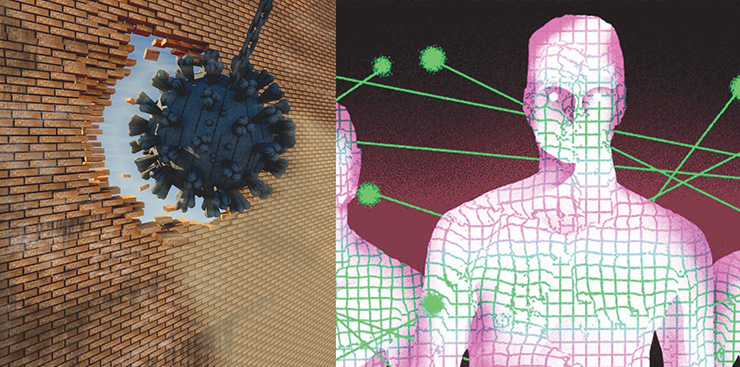
    The ‘virus wars’ (to use their terminology) represent an enemy that attacks and infiltrates not only inter-bodily but especially intra-bodily. Human societies exist in open, not closed, systems. As such, the emerging biopower regimes need to gain access through these porous social-body systems. To gain control, they thus need to have proprietary dominion over an individual’s body, outside and within. We only have to recognise the rise in molecular engineering, genetic manipulations, and pharmaceutical interventions to see how external systems have been increasingly gaining interior ground. 

    The rapid rise in city and nationwide COVID-19 testing stations gives the impression of an open-society granting permission for mobile freedoms – yet they are the facades for the encroaching control systems. As an example of what is to come, Liverpool in the UK began a city-wide ‘mass testing’ program with walk-through and drive-through testing stations set up around the city.1 Liverpool was chosen as the pilot for a new ‘Lateral Flow System’ testing scheme. Broadgreen International School is running a pilot scheme with Public Health England that will: 1) bring in the military to run COVID-19 tests; 2) test children without parental consent; 3) identify each individual with a “unique barcode,” and 4) “isolate” and “secure” anyone who tests positive.2 

    No-one should be complacent under the illusion this is ‘one-off’ mass testing. It potentially represents the beginning of forms of continual control – persistent or ‘perpetual testing’.

    Perpetual Testing, Tracking & Tracing

    The new regimes of biopower are establishing continuous variations of ‘testing,’ with continual iterations of ‘being at risk’. If we are to be continually ‘at risk’, then we have to be perpetually monitored – the two concepts go hand in hand. And in the present age of heightened mobility, we cannot expect a fixed ‘administration of control’. Instead, it will come through the fluid flows of always-on, surveillant tracking/tracing. 

    As I write this, UK Prime Minister Boris Johnson had placed himself in self-isolation after receiving notification from his track-and-tracing app. He stated in a video address, with a tone of deprecating ‘programming’ humour, that: “The good news is that NHS Test and Trace is working ever-more efficiently, but the bad news is that they’ve pinged me and I’ve got to self-isolate.”3

    ‘Track and trace’ record-keeping is now being imposed not only on the hospitality sectors but also places of worship, businesses, and other organisations. For example, governments in Australia are mandating businesses and organisations to collect data on “every person including staff, patrons and contractors entering the premises.”4 Further, any records collected on paper must, by law, be digitised within 24 hours. Similar measures have been implemented by the UK hospitality sector, although not yet across the whole board or fully digitised. Also being implemented is government access to card payment data for tracking people in “coronavirus hotspots,” as announced by the Australian government recently.5 

    In Spain, where this author currently lives, all arrivals into the country from 23 November will need to show certification of a negative COVID-19 test taken 72 hours prior to arrival. Such procedures are likely forerunners to the ‘soon to be expected’ arrival of digital health passports, such as CommonPass which is being trialled by a small number of passengers flying from the UK to the US.6 

    At the G20 summit – an online meeting of heads of state from the world’s 20 largest economies hosted by Saudi Arabia over the 21-22 November weekend – Chinese President Xi Jinping called for a “global mechanism” that would use QR codes to open up international travel.7 As if in direct response to this, a day later (23 November) the boss of Qantas Airways announced that international air travellers would, in the future, need proof they have taken a COVID-19 vaccine to board Qantas flights. He claims it will be a “necessity” once vaccines are available and that it’s going to be a “common thing” in other airlines around the globe.8 As with risk and monitoring, the tracking goes hand in hand with testing. And in order to undergo testing, people must succumb to giving up their biological data. Intra-body data will enter the burgeoning biometric data-machine of huge corporations. 

    In an interview with the Wall Street Journal in October 2020, the US administration’s appointed ‘vaccine czar’, Moncef Slaoui, stated that tech giants Google and Oracle were to “collect and track vaccine data.”9 In a previous interview, Slaoui referred to this tracking “data-driven timeline” as a “very active pharmacovigilance surveillance system.”10 

    This almost real-time biosecurity testing and tracking will soon be necessary for most everyday activities, such as going to a live music concert. Ticketmaster, which merged with Live Nation in 2010 to create the music industry’s foremost concert promotion and ticketing agent, announced in November 2020 that it would check the COVID-19 vaccination status of ticket buyers before issuing passes when live events return in 2021.11 Ticketmaster has been working on developing what they call a system for “post-pandemic fan safety” to verify fans’ vaccination status or whether they’ve tested negative for the coronavirus within a 24 to 72-hour window. Ticketmaster plans to combine the Ticketmaster digital ticket app with third party health information companies like CLEAR Health Pass or IBM’s Digital Health Pass, and testing and vaccine distribution providers. When the person receives their test/vaccine certification via their “health pass company,” the health pass would verify COVID status to Ticketmaster. If all was ‘clean’, Ticketmaster will issue the fan the credentials needed to access the event. On the other hand, if a person tested positive or didn’t have a valid, up-to-date vaccine certificate, they would not receive a ticket. Ticketmaster president Mark Yovich is on record saying that he expects the demand for “digital screening services” will attract a new wave of investors and entrepreneurs to “fuel the growth of a new COVID-19 technology sector” (i.e. biopower capitalism). Marianne Herman, co-founder of a company that focuses on assisting entertainment companies develop COVID-19 strategies, stated: “In order for live events to return, technology and science are going to play huge roles in establishing integrated protocols so that fans, artists, and employees feel safe returning to venues.”12 Welcome to the new biopower capitalism of “integrated protocols.”

    Biopower ‘Good for Business’

    Some major players in healthcare and business have already come together to declare what these “integrated protocols” may likely consist of. The Riyadh Declaration on Digital Health was formulated during the Riyadh Global Digital Health Summit, 11-12 August 2020. It called itself a “landmark forum” for highlighting the importance of digital technology, data, and innovation for “fighting pandemics.” According to their Health Summit webpage: “It aims to bring together leaders of healthcare systems, public health, digital health, academic institutions and businesses in order to discuss the vital role of digital health in the fight against current and future pandemics.”13

    The Lancet medical journal did a feature on The Riyadh Declaration in which a “panel of 13 experts” articulated seven key priorities and nine recommendations “for data and digital health that need to be adopted by the global health community to address the challenges of the COVID-19 pandemic and future pandemics.”14They outline that the first priority for the health and care sectors to adopt is applied health intelligence (HI). According to the report, “HI is used for the surveillance, monitoring, and improvement of population and patient outcomes.” The second priority relates to “interoperable digital technology” and for this technology to be scaled up and sustainable. The third priority is to support the adoption of artificial intelligence. 

    From the nine recommendations, the following are of particular interest: 2) Work with global stakeholders to confront propagation of misinformation or disinformation through social media platforms and mass media; 3) Implement a standard global minimum dataset for public health data reporting; 7) Ensure surveillance systems combine an effective public health response; and 9) Maintain, continue to fund, and innovate surveillance systems as a core component of the connected global health system for rapid preparedness and optimal global responses.

    At the very least, these recommendations sound ominously like the framework for establishing a biosecurity apparatus of a biocapitalist consortium of healthcare businesses, digital health corporations, and governments.15 Do not think for a moment that the average working person will not need to pay for this apparatus. It was recently announced that Deutsche Bank researchers propose a 5% tax for people choosing to work from home rather than the office. The reality, as we know, is that many people will not be given a choice; yet, as per the new report from the German bank, the average person would be “no worse off if they paid this tax” because by working remotely “they save money on travel, food, and clothes.” One of the report’s authors (a research strategist at Deutsche Bank) said: “Working from home will be part of the ‘new normal’ well after the pandemic has passed. We argue that remote workers should pay a tax for the privilege… That means remote workers are contributing less to the infrastructure of the economy whilst still receiving its benefits.”16 In other words, within the new biopower regime, people may not be contributing enough ‘into the system’ if they are working from home – and so must be taxed for the privilege. 

    What we are seeing through this increased regulation and intrusion between and within human bodies is a direct curtailing of human sovereignty. 

    The Question of Human Sovereignty

    The new enclosures are no longer disciplinary institutions (as identified by Foucault) but the fluid flows and networks of inter and intra-body spaces and the new regimes that are arising to govern these social-biological terrains. The individual human body is being fully incorporated into the global body politique. There are no ‘fixed markets’ for biopower; instead, there are flexible networks of exchange. Yet the question remains – who sets the parameters of legal authority on these exchanges? 

    We have truly entered the age of the erosion of biological boundaries. We are all being targeted as possible mobile hosts for our own crippling disease – regardless of the true potency of the viruses – just as a person could be a suspect in the War on Terror. In both cases, the human being has been re-cast as a site of suspicion and risk. The body is now re-classified as a ‘site of weakness’ – which may itself play into a later transhumanism agenda. 

    Becoming ever clearer is that the new reign of biopower will deny us our rights to keep the frontiers of the human body closed. The fundamental right to health (health safety) is being reconstituted as a legal obligation to health (biosecurity).17 This process, overtly and covertly, attempts to reorganise human citizenry in a way to create maximum obedience to institutions of governance and security. This is also a process that will eventually lead to denying each person their individual sovereignty. 

    The rise of biosecurity amid the converging health intelligence (HI), along with tech-based “integrated protocols,” and increased reliance on Artificial Intelligence both within healthcare systems as well as state-sponsored surveillance, all point towards a worryingly cohesive ‘full spectrum dominance’ over human life. It is a biopower-enforced control system not only between bodies and within bodies but also within the human mind. 

    Biopower is also, I propose, a control system for human consciousness. This is confirmed by rapid moves on the internet to censor any information that criticises or is contrary to consensus narratives and programming. A case in point: the UK Shadow Health Secretary Jonathan Ashworth (Labour) is demanding a law be put into effect, with financial and criminal penalties, to “stamp out dangerous” anti-vaccine content online. It is time for all political parties, says Ashworth, “to work with the government on a cross-party basis to build trust and help promote take-up of the vaccine.”18 

    According to a report in the Sunday Times, UK ministers are preparing to launch a massive public information campaign to convince people to get vaccinated. The Times reported that the British Army mobilised the 77th Brigade’s Defence Cultural Specialist Unit to monitor and “counter online propaganda against vaccines.”19 The news report admits the 77th Brigade specialises in creating “behavioural change.”

    The current biological ‘state of emergency’ is forcing people, on a global scale, to accept previously unimagined ideas to the point where the human psyche is tested to its limits. A new narrative is being established and seeded into mass human consciousness. The usual response to anomalous data is to try to fit it into pre-existing parameters of thought – our existing ‘reality boxes’ – to maintain a sense of stability. When the irrational encroaches upon consensus reality, a person is forced to accept the abnormalities as the ‘new normal’ or to undergo critical, often radical, change at a personal level. Which do you think is the easiest, most popular option?

    Polarising events have the result of affecting both the conscious and the unconscious mind. A person can be both consciously and unconsciously torn between what they are told to believe and what actually is. This can easily create a schism in the human psyche and result in further social divisions and polarisations within familial and cultural groupings. This is not the time to be fostering mental, emotional, and socio-cultural dissociations. On the contrary, we should be asking ourselves: what does human sovereignty and empowerment mean to me? The question of human sovereignty applies to each and every one of us. It is not a privilege or a luxury – it is a basic right and necessity. 

    As the reign of biopower continues to unfold, we are going to be seeing – and receiving – many more instances where control-biology situates itself into our daily lives. It is a calculating narrative because, after all, does not everyone wish for good health and well-being? The situation, though, is being managed and coerced into a state where each person will have no choice over how they make their own health decisions. Biopower forces dominion over our external and internal realms through the rhetoric (or double-talk) of representing the power of well-being. The end result is more on the side of controlling the human being, and few people, it seems, have an adequate response to this. Too many people continue to respond as if caught off-guard in the coming headlights. 

    The very nature of how we recognise human well-being is at the core of what is transpiring now. This is the fundamental issue we need to address. It is no longer simply a matter of whether we need to wear masks or not – it is a question of our humanity being masked.

    [alert type=”general” dismiss=”no”]This article was published in New Dawn 184.[/alert]

    [alert type=”success” dismiss=”no”]If you appreciate this article, please consider subscribing to help maintain this website.[/alert]

    Footnotes

    1. https://liverpool.gov.uk/communities-and-safety/emergency-planning/coronavirus/how-to-get-tested/symptom-free-mass-testing/
    2. https://off-guardian.org/2020/11/07/covid19-british-army-to-begin-testing-children-without-parental-consent/
    3. www.bbc.com/news/uk-54956076
    4. www.nsw.gov.au/covid-19/covid-safe/customer-record-keeping
    5. www.smh.com.au/politics/federal/card-payment-data-to-be-used-to-track-people-in-coronavirus-hotspots-20201113-p56eea.html
    6. https://tottnews.com/2020/11/15/commonpass-digital-health-passport/
    7. www.bbc.com/news/business-55039662
    8. www.bbc.com/news/world-australia-55048438
    9. www.wsj.com/articles/the-captain-of-operation-warp-speed-11602278486
    10. www.nytimes.com/2020/10/05/opinion/sway-kara-swisher-moncef-slaoui.html?showTranscript=1
    11. www.billboard.com/articles/business/touring/9481166/ticketmaster-vaccine-check-concerts-plan/
    12. www.billboard.com/articles/business/touring/9481166/ticketmaster-vaccine-check-concerts-plan/
    13. https://rgdhs2020.com/
    14. www.thelancet.com/journals/lancet/article/PIIS0140-6736(20)31978-4/fulltext
    15. The renewed push for a biocapitalism agenda was discussed in my previous essay, ‘Biopower in the Age of the Great Reset’, New Dawn 183. 
    16. www.businessinsider.com/deutsche-bank-working-from-home-tax-staff-workers-businesses-2020-11
    17. See the work of Patrick Zylberman, Tempêtes microbiennes, Gallimard 2013.
    18. www.bbc.com/news/uk-politics-54947661
    19. www.thetimes.co.uk/edition/news/army-spies-to-take-on-antivax-militants-mfzsj66w2

    © New Dawn Magazine and the respective author.
    For our reproduction notice, click here.
  • Enter the Ancient Wisdom: Quest for the Source of Lost Knowledge

    Enter the Ancient Wisdom: Quest for the Source of Lost Knowledge

    From New Dawn 170 (Sept-Oct 2018)

    The Council of Ferrara-Florence, held from 1438 to 1445 in, not surprisingly, the Italian cities of Ferrara and Florence, had as one of its main objectives the possible reunion of the two branches of Christianity, Roman Catholic and Orthodox Byzantine, that had been separated since 1054. Agreement over doctrinal differences was not the guiding principle of the proposed merger. The true motive was realpolitik. The Turk was edging closer to Constantinople, and the Greek Orthodox Church knew it needed help to keep him at bay. When Emperor John VIII Palaeologus decided to put together a crack team of negotiators to plead the Byzantine church’s case, he included among his top men someone from outside the fold, a secular thinker he respected. Some thought this strange. Yet the appearance at the Council of the emperor’s man turned out to be one of the most important events in what we can call the “secret history” of the West.

    Who was this mystery man and why was his participation in the Council so important? It certainly wasn’t because of his ostensible reason for being there. The Council itself was a failure. The two churches did not reunite and less than a decade later, just as the emperor feared, the Ottomans overran Constantinople. Oddly enough, the ransacking of the Byzantine capital by the Turk was itself a major factor in the same secret history for which the Council of Ferrara-Florence set the stage.

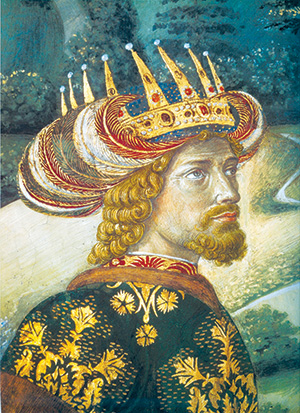
    John VIII Palaiologos, the penultimate reigning Byzantine Emperor, who ruled from 1425 to 1448. 

    The mystery man in question was the Byzantine Neo-Platonic philosopher George Gemistos Plethon. It wasn’t in fact until he attended the Council that he took or was given the name Plethon. This was a variant on the name of a philosopher who was still something of a mystery himself at the time, Plato. Why Gemistos took the name of the father of Western philosophy will become clear as we go along. 

    Gemistos was born in 1355 in Constantinople to a well-off family who had him educated there and in Adrianople. Adrianople at the time was the capital of the Ottoman empire and had become an important centre of learning. Gemistos must have been something of a prodigy; he was said to have accompanied the emperor on a visit to western Europe when he was in his teens and seems to have been primed to become a teacher of philosophy. In this regard, Gemistos was lucky to be born in Constantinople. After the fall of the pagan world and the onset of the Dark Ages, more of Greek philosophy survived in the eastern empire than in the west. What there was of it that he could find, Gemistos absorbed greedily. 

    Gemistos was a passionate lover of the ancient world and devoted student of Plato; in the Aristotelian atmosphere of the Orthodox – and Catholic – church, this held certain dangers. While Aristotle could be harnessed for the church’s purposes, Plato was seen as a threat. But Gemistos’ Platonising also meant that his learning, wisdom, and dialectical skill were highly prized. Hence, the decision of John VIII Palaeologus to send him to the Council. Gemistos was an old man by then – he lived to be nearly 100, amazing for the time – but in many ways it was the defining event of his life.

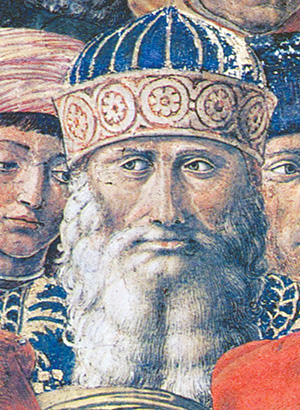
    Byzantine Neo-Platonic philosopher George Gemistos Plethon, as depicted on a fresco painted by Benozzo Gozzoli in 1459, inside the Chapel of the Magi, Palazzo Medici Riccardi, Florence, Italy.

    Gemistos had no appetite for doctrinal disputes; he also had no love of the Catholic church although he did his best to get it on Constantinople’s side. When his services were not needed, he let his companions split dogmatic hairs while he killed time by giving lectures on Plato, Aristotle, and a strange idea that he had retrieved from his studies of a mystical text known as the Chaldean Oracles. This was what he called the prisca theologia, a “primal” or “ancient theology,” the fundamental knowledge of God, that had been revealed to mankind in the dim past, but which had, over the centuries, become obscured. 

    Gemistos believed that the Chaldean Oracles had been written by one of the sages to whom this ancient wisdom had been given, the Persian Zoroaster, who lived in the dim past and who had himself passed this wisdom on to those who came after him. Sadly, Gemistos was wrong about Zoroaster – at least about him being the author of the Chaldean Oracles. Today we are fairly sure that these strange texts were actually written in second-century Rome by a family of magicians and seers known as the Juliani, who used various forms of what we would call mediumship and trance states to produce them. 

    For Gemistos the Oracles were a fount of the primal theology, the ancient wisdom that had been vouchsafed to man before the Flood. Since that time it had been kept and periodically disseminated by what became known as the aurea cantena or “golden chain of adepts,” a lineage of secret teachers whose mission it was to pass on the ancient wisdom to those who could grasp it. Plethon’s own stream of transmission had Zoroaster at the start, with Eumolpus – the founder of the Eleusinian Mysteries – King Minos of Crete, the oracle of Dodona, Chiron, the wisest of centaurs, the Seven Sages, as well as Pythagoras, Plato, Plotinus, and his disciples Porphyry and Iamblichus, following after him.

    Gemistos enjoyed lecturing on the ancient wisdom and its teachers, but as the Council dragged on, he left Florence and returned to his home in Mystras, near ancient Sparta, where he began a kind of “mystery school.” He also devised a plan to reorganise the failing Byzantine empire along the lines of Plato’s Republic, wrote about the need to revive the pagan religions, and produced studies of Neo-Platonism, astrology, Hindu philosophy and Sufism. He seemed to have a premonition of a coming crisis and wanted to preserve what he could of his beloved ancient past. He died in 1452. A year later Gemistos’ premonition proved correct. Constantinople fell, and as the Turk entered the city, scores of Christian Greek scholars fled, selling off their libraries to fuel their departure.

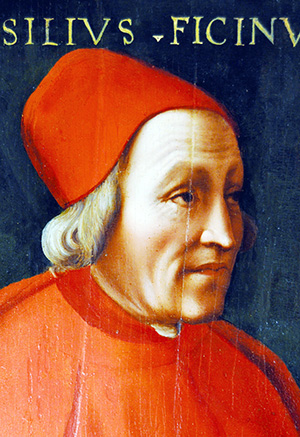
    Marsilio Ficino

    One of the people who had heard Gemistos lecture while he was in Florence was Cosimo de’ Medici, the city’s great power broker. The Byzantine’s words had inspired him. Gemistos’ championing of Plato and, even more, his belief in the “ancient wisdom” of which Plato himself was a student, had fired Cosimo’s soul. So inspired was Cosimo that he decided to revive the Platonic philosophy right there in Florence. The best way to do this, Cosimo saw, was to reopen the Platonic Academy, which had been closed for business since the Emperor Justinian I shut its metaphorical doors in 529, effectively calling time on the pagan world. Luckily for Cosimo, just the man for the job was close at hand.

    Marsilio Ficino (1433–1499)

    Marsilio Ficino was a young Florentine Greek scholar, and after an interview with him, in 1462 Cosimo entrusted to him the newly revived Platonic Academy, putting all he needed for it at his disposal. Along with a villa in the hills above Florence, Cosimo, an obsessive book collector, gave Ficino access to his library. Recently, precisely because of the fall of Constantinople, many items previously unavailable in the west had come on the market, and several works by Plato had been snatched up by Cosimo’s book scouts. Cosimo hoped to read these as soon as possible, so he put Ficino on the job of translating them into Latin. No sooner had the young scholar got down to work than his boss told him to delay that order. Something else, more important than Plato, had come into his possession. Ficino had to put the father of philosophy aside and get to work immediately on this.

    What could have been so important that it forced Plato into the backseat? None other than the Corpus Hermeticum, the collection of mystical, magical, and metaphysical writings that were attributed to the greatest sage of the antediluvian world, Hermes Trismegistus, fabled “thrice greatest Hermes.” Hermes, an even more misty figure than Zoroaster – he is in fact an amalgam of the Egyptian god of magic Thoth and the Greek god of writing Hermes, born in ancient Alexandria – was considered to be even more important or fundamental a secret teacher than the great Persian sage. When Cosimo heard that a collection of these texts had come into his possession, he told Ficino to get them into Latin post haste. By one of those twists of fate that suggest some guiding hand at work, the very catastrophe that Gemistos Plethon, teacher of the ancient wisdom, had tried to prevent, led to perhaps the greatest work in this tradition coming to the mind most ready at that time to appreciate it and, more importantly, to pass it on.

    Ficino put down Plato and picked up Hermes. Soon his Latin translations of these primordial texts were informing the shift in western consciousness that we know as the Renaissance. In school, we are taught that the Renaissance was about the rediscovery of the great works of ancient philosophy, such as Plato’s dialogues, and the birth of humanism, the belief in humanity as something more than a race of wretched sinners. This is true. But as the historian Frances Yates argued in Giordano Bruno and the Hermetic Tradition, it was also as much about the rediscovery of the Hermetic texts, and Ficino’s belief that they presented the very prisca theologia and “ancient wisdom” which Plato and the whole aurea catena had called upon since time immemorial. 

    A rare 15th century edition of the Corpus Hermeticum (translated by Marsilio Ficino)

    Along with informing and inspiring works such as Botticelli’s Venus and Michelangelo’s masterpieces, among others, what is remarkable about the Hermetic Renaissance is that for a time, Hermes Trismegistus was considered a kind of precursor to Christ or at least a very important fellow traveller. There were influential people within the church who argued for the “ancient wisdom” to be incorporated into church teaching. I tell this story, along with that of the Corpus Hermeticum itself, in my book The Quest for Hermes Trismegistus. One product of this sadly unsuccessful attempt to unite the ancient wisdom with Christianity – which devotees of the prisca theologia believed was an expression of the ancient wisdom itself – was what has become known as the philosophia perennis, or “perennial philosophy.”

    The Perennial Philosophy

    This term was coined in 1540 by the humanist, biblical scholar and Catholic apologist Agostino Steuco, to account for the harmony he and many others saw among Christianity, pagan philosophies, and the Hermetic teaching, and which argued that they should be united and not antagonists. This was further extended to include the differences between Protestant and Catholic, Aristotle and Plato, Jew and Christian, and has since come to mean a central timeless spiritual teaching from which all religions, including those of the East, emerge. Steuco’s arguments convinced others, such as François Foix de Candale, Bishop of Aire, who believed that the Hermetic writings should be made canonical, and the Venetian philosopher Francesco Patrizi, who petitioned Pope Clement VIII to have Hermetic ideas taught in Christian schools. Although the notion made some headway, in the end the church insisted that Christianity, rather than being the best or most perfect expression of this perennial wisdom – as its advocates needed to concede – was unique, incomparable, and in a league of its own, and did not need other adepts.

    Although clearly similar and often used interchangeably, there is nevertheless a difference between the ancient wisdom and the perennial philosophy. The difference lies in the ancient wisdom positing a historical revelation, a “giving” of this knowledge to mankind in the dim past, which has subsequently become obscured over time. Hence the Renaissance obsession with the “source” or “fount” of wisdom, which it considered the purest expression of it, rather as a mountain stream is clearest at its source, not muddied as it gets into the lowlands. Hence also the belief that what is oldest is best, and the prestige given to the Corpus Hermeticum, which was believed to have been written before the Flood. For a culture coming out of the Dark Ages, such an appetite for the “real thing” is not surprising.

    For the perennial philosophy, however, the source is not that important because it is always present; it is a-temporal. It does not lie in the vaults of time but in the Eternal Now. We can say it presents an “evergreen wisdom” rather than an ancient one. This is the sense in which it became popularly known and first widely appreciated, through Aldous Huxley’s influential anthology The Perennial Philosophy, which draws on spiritual and mystical texts from all sources – although it must be said that Huxley’s interpretation falls heavily on the side of the East. He also mistakenly credits the philosopher Leibniz with coining the term philosophia perennis. This is understandable, as Leibniz was the first to make it widely known outside the church. 

    Another school likewise associated with that of the ancient wisdom, which is also different from it, and from the perennial philosophy, with which it is also confused – all three are often mixed and matched – is what is known as Traditionalism. Like the ancient wisdom, Traditionalism posits a “primordial” revelation and also believes that this pristine appearance of sacred Truth has over time become obscured. As does the ancient wisdom, it believes that this revelation is at the heart or essence of the great religions. But where they differ is in Traditionalism’s belief that access to this primordial knowledge can come only through strict adherence to one of the great religious traditions. We can see this as a kind of esoteric fundamentalism. René Guénon, the recognised founder of Traditionalism, sought this “true” stream of knowledge first in Hinduism, then in Islam. That said, other important Traditionalists, such as Frithjof Schuon and Julius Evola, took the idea in directions rather different from Guénon’s, and it is not unusual today for contemporary Traditionalists to follow paths not necessarily laid down by the great religions.

    While in its early days, the proponents of ancient wisdom did seek for unity among different beliefs, and adherence to a strict tradition was not part of their method. As in ancient Alexandria, the birthplace of the Hermetic teachings, the Renaissance in which these teachings re-emerged was a melting pot of different ideas and visions, and the synthesis of these was of more importance than any putative purity – see, for example, Pico della Mirandola’s Oration on the Dignity of Man. Hence the syncretism characteristic of Alexandria and of the esoteric and mystical teachings that appeared there. It is one of the ironies of esoteric history that Traditionalism, whose roots can be traced back to Ficino’s version of the aurea catena, came to be known as a vociferous condemner of the Renaissance, and a fierce opponent of the “modernity” to which it gave rise, as well as of the syncretism which it saw as the sign of what it called “counter-initiation.” If we can accept the Renaissance as the time when the notion of an ancient wisdom or lost tradition gained intellectual and cultural momentum, then Traditionalists of the “revolt against modernity” school seem to want to pull away at their own roots.

    Yet that modernity itself undermined its Hermetic foundations. In 1614 the prestige of Hermes Trismegistus declined when the humanist scholar and church historian Isaac Casaubon declared that, based on the Greek in which the Corpus Hermeticum was written, it could not have been “revealed” to mankind in the misty past, but was most likely produced – as we have subsequently come to accept – in Alexandria circa 100-200 CE. At a single blow, the authority of the ancient wisdom and the Renaissance worship of the oldest as best had the rug pulled out from under them. Although Hermetic thinkers like Robert Fludd fought gallantly against it, with Casaubon’s bombshell the Hermetic philosophy quickly lost its street cred. Now the modern, new, up to date and rigorously “scientific” had pride of place. 

    What Happened to the Ancient Wisdom? 

    What happened to the ancient wisdom? For one thing, its links to the philosophia perennis helped in this crisis; if the source of wisdom was ever-present, then fixing it at a one-time-only point in history seems redundant, although its various appearances, at different times and places, could be traced. But perhaps more important, the ancient wisdom went underground. First with the Rosicrucian brotherhood – that mysterious secret society of invisible sages – and subsequently in a variety of forms, which have come down to us as the Western “esoteric,” “mystery,” or “inner tradition,” or, more popularly, “occultism.” This is a body of “rejected knowledge,” jettisoned by the rise of rationalism and, in our time, “scientism,” which insists nevertheless in maintaining its important and indispensable place in the human spiritual economy. In fact, we can say that since the late nineteenth century, the ancient wisdom has been making a fragmentary but persistent comeback, filled with detours, dead ends, and wrong turns, but gaining ground nonetheless. 

    This began with the most influential appearance of the ancient wisdom in modern times, the founding of the Theosophical Society by Helena Petrovna Blavatsky and her colleagues in 1875, and the mammoth texts Blavatsky produced – Isis Unveiled and The Secret Doctrine – to get the wisdom across to the reading public. As in the Renaissance, Blavatsky and Co. believed that the ancients knew quite a bit that had been forgotten; they also believed that at root all religions share the same source and are moving, however clumsily, in the same direction. Science, in its own befuddled way, is too. 

    Blavatsky’s ancient wisdom was global; she found it in the rejected Hermetic tradition, and in the Eastern traditions she did so much to translate to the West. After her, others sought this wisdom too, and brought some of it back from their journeys: Rudolf Steiner from the Akashic Record, Gurdjieff from the Sarmoung Brotherhood, Ouspensky from his search for “the miraculous,” to mention only some of the most insightful and influential of those “seekers of truth” that followed, often literally, in Blavatsky’s footsteps. Today, almost a century and a half later, ancient wisdom, perennial philosophies, and a variety of Traditions crowd the electronic noösphere we call the Internet.

    And what precisely is the ancient wisdom? That would require another article. But I would think that by now the reader would have enough to find out for themselves.

    [alert type=”general” dismiss=”no”]This article was published in New Dawn 170.[/alert]

    [alert type=”success” dismiss=”no”]If you appreciate this article, please consider subscribing to help maintain this website.[/alert]

    © New Dawn Magazine and the respective author.
    For our reproduction notice, click here.