New Dawn – World's Most Unusual Magazine

Category: Articles

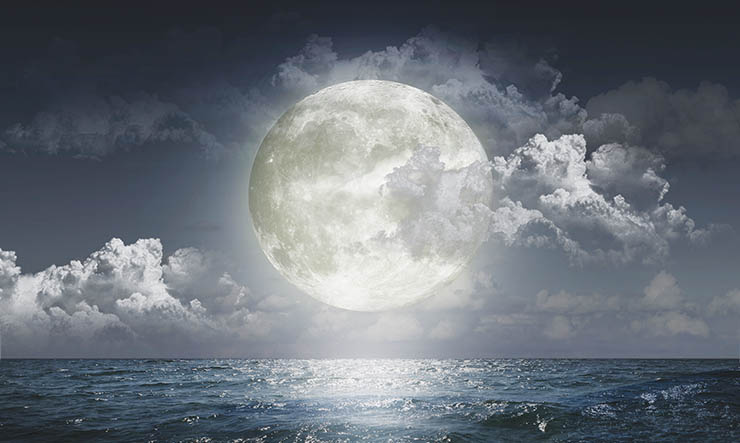
  • The Secret Influence of the Moon: Alien Origins & Occult Powers – An Interview with Louis Proud

    The Secret Influence of the Moon: Alien Origins & Occult Powers – An Interview with Louis Proud

    From New Dawn 143 (Mar-Apr 2014)

    Despite its proximity and influence on planet Earth, our understanding of the Moon – and the mechanism by which it formed – remains incomplete. The Moon is holding out on a number of mysteries that science hasn’t solved. In the past few years there has been a resurgence of interest in the Moon, perhaps due to the fact that we barely understand our cosmic neighbour.

    It is fortuitous and timely that long time New Dawn contributor Louis Proud recently completed his book The Secret Influence of the Moon: Alien Origins and Occult Powers.

    A writer and researcher specialising in paranormal and occult phenomena, Louis’ first book was Dark Intrusions: An Investigation into the Paranormal Nature of Sleep Paralysis Experiences.

    The mysteries of the Moon go far beyond the scientific. To bring us the full picture, Louis has ventured into territory of a more fantastic and metaphysical nature. He delves into the entire gamut of long held theories – popular, esoteric and occult – including alien and hostile forces on the Moon, and its vampiric powers.

    Louis Proud has been interviewed about his book by Jeffery Pritchett of the online radio show The Church of Mabus (www.churchofmabusradio.com), which covers high strangeness in the field of the paranormal.

    JEFFERY PRITCHETT (JP): What inspired you to write your new book, The Secret Influence of the Moon: Alien Origins and Occult Powers?

    LOUIS PROUD (LP): I’d been closely researching the Moon for a number of years, from both scientific and esoteric perspectives, and I wrote the book as an attempt to collate and compile this research. I’ve long been fascinated by the Moon and its mysteries. My interest in the Moon deepened significantly when, many years ago, I first became acquainted with the Spaceship Moon theory. The idea that the Moon is a part-natural, part-artificial world, as stated by this theory, piqued my imagination and made me question all of my preconceptions about the Moon. One of my objectives in writing the book was to see if the Spaceship Moon theory has validity in light of contemporary lunar discoveries. (The theory originated in 1970 and hasn’t been updated since that time.)

    JP: Would you go into why you think the Moon may have alien origins?

    LP: The Moon is an immensely strange object and highly unique within the solar system. Of the four terrestrial planets (Mercury, Venus, Earth, and Mars), Earth and Mars are the only two that possess moons. Mars has two moons: Phobos and Deimos. These, however, are extremely small, whereas Earth’s moon is extremely large. In fact, it’s the largest moon in the solar system relative to the size of its host (Earth). Because of its large size, in addition to other factors, some astronomers think of the Moon as Earth’s twin planet rather than Earth’s satellite. This would make the Earth and the Moon a double-planet system rather than a planet-satellite system. The former model is the one I subscribe to.

    Of course, just because the Moon is odd and unique doesn’t mean it has “alien origins.” In my book, I argue that the Moon has alien origins on account of its numerous artificial characteristics. There’s good evidence, for example, that the Moon is partially hollow. Since, to borrow a quote from Carl Sagan in relation to the moons of Mars, “a natural satellite cannot be a hollow object,” the only way to explain the Moon’s apparent hollowness is if some kind of alien intelligence modified it long ago, perhaps in order to transform it into a suitable habitat.

    JP: Personally do you really think the Moon is home to alien life forms who seek to control humanity?

    LP: Much compelling evidence suggests that the Moon is and has long been inhabited by an alien intelligence, one that is hostile, manipulative, and parasitic towards humanity. The precise nature of this intelligence remains unknown and perhaps unknowable. Whether it is physical, non-physical or somewhere in-between is difficult to say. Personally I believe we’re dealing with something that operates primarily on a non-physical level but can assume physical form when required.

    What led me to this conclusion? First, a small percentage of reports of transient lunar phenomena (TLP) – short-lived lights, colours, and changes in appearance on the lunar surface – exhibit qualities suggestive of intelligence. Certainly not all of these reports can be explained in terms of natural phenomena. (By “natural phenomena” I am referring to such things as lunar outgassing and clouds of dust suspended above the lunar surface by means of electrostatic activity.)

    Secondly, many lunar myths allude to the Moon being inhabited by an alien intelligence. For example, according to the Zulu shaman Credo Mutwa, Zulu lore states that the Moon is not only an artificially-hollowed out planetoid from outside the solar system, it is also the home of manipulative and meddling reptilian beings called the Chitauri (“children of the serpent”). The Chitauri are synonymous with the Nagas of Buddhist and Hindu mythology. The latter are described as a strong and handsome race of half-human, half-serpentine beings of semi-divine status. (Naga is Sanskrit for “serpent.”) Nagas are related to all things watery – lakes, rivers, seas, wells, and so forth. And indeed, there is an ancient and universal belief that the Moon is related to all things watery. (No doubt this belief originated in part from the simple recognition that the Moon governs the tides.)

    Lastly, a number of occult teachings speak of the Moon in purely negative terms and even refer to it as the domain of sinister non-human beings who control and exploit humanity.

    JP: What findings from NASA’s Apollo missions have they concealed?

    LP: It’s clear that much was concealed from the public by NASA regarding what was discovered on the Moon during the Apollo program (and other programs). However, I’m inclined to believe that these suppressed discoveries were primarily geological in nature and relate to the lunar interior more than anything else. Of course, there are compelling rumours that the Apollo astronauts encountered UFO activity both within the vicinity of the Moon and on the lunar surface. A related rumour states that NASA discovered an extraterrestrial base on the far side of the Moon (the side that remains turned away from Earth) during Apollo 8 in 1968. Furthermore, anyone who’s read the work of Mike Bara and Richard Hoagland would be familiar with the theory that the surface of the Moon is littered with spectacular ancient structures in the way of glass domes and so forth. It is claimed these structures were photographed by NASA but that the photographs were either “tampered with” to remove evidence of the structures or never released to the public.

    Let me explain what I mean by these suppressed discoveries being primarily geological in nature. During the Apollo program, the astronauts placed on the lunar surface a network of seismometers (devices that measure and record seismic activity), as part of an effort by NASA to better understand the Moon’s internal structure. By triggering artificial moonquakes – caused by dropping discarded lunar modules (LMs) and other heavy objects on the lunar surface – it was discovered the Moon “rings like a bell” for periods of over an hour. The Moon is, to quote one scientist, “an almost perfect medium for the propagation of seismic waves.” This discovery – plus additional evidence discussed in my book – suggests the Moon is partially hollow. Since the Moon’s apparent hollowness cannot be accounted for naturally, it must have been hollowed out artificially. NASA has long been interested in the Moon’s peculiar internal characteristics, yet has remained suspiciously quiet on these matters. (NASA claims that its entire lunar seismic network was shut down in late-1977, though this could well be untrue.)

    JP: What are some of the many holes in the “Giant Impact” theory about the Moon’s origins and the evidence for a hollow, artificial Moon?

    LP: By far the biggest mystery of the Moon is how it came into being. Prior to the Apollo program, there were three contending theories as to the origin of the Moon. Known as the three classic theories of lunar origin, they are the Fission theory, the Coaccretion theory, and the Capture theory. All three theories were well and truly disproven by the end of the Apollo program. This gave rise, in the mid-1970s, to the Giant Impact theory, which is the theory accepted by most scientists today. The theory states that around 4.5 billion years ago, when the Earth was very young, a Mars-sized planet struck the Earth, producing a cloud of debris that coalesced to form the Moon.

    The Giant Impact theory has a number of major flaws. According to this theory, the Moon is supposed to have formed from a mixture of impactor material and earth material, with the percentage of impactor material far exceeding the percentage of earth material. The Moon and Earth should therefore possess dissimilar oxygen isotope ratios. An object’s oxygen isotope ratio, or signature, gives an indication of where it formed in the solar system. For example, the oxygen isotope signature of Mars is very different to that of Earth. Yet the Moon and Earth have practically identical oxygen isotope signatures. This suggests the impactor shared a similar orbit to the Earth, occupied that orbit for a very long time, yet somehow ended up striking the Earth – a most improbable scenario. To quote British geologist Ted Nield: “[I]t would be extremely unlikely that a wandering impactor would just happen to possess the exact same oxygen isotope profile as the object it hit.”

    Another piece of evidence that puts the Giant Impact theory on very shaky ground is the recent discovery of traces of water in samples from the lunar interior. The samples were found to contain similar levels of water as the Earth’s upper mantle. And yet, according to the Giant Impact theory, the Moon formed at an extremely high temperature and thus ought to be completely deprived of volatiles such as water. How, then, do we explain the presence of water in lunar samples?

    Now for the evidence of a hollow, artificial Moon. That the Moon is a hollow, partly-artificial object was first suggested by scientists Mikhail Vasin and Alexander Shcherbakov, both members of the Soviet Academy of Scientists, in a paper published in July 1970 in the journal Sputnik titled “Is the Moon the Creation of Intelligence?” According to their Spaceship Moon theory, the Moon is a planetoid from outside the solar system that was transformed into a spaceship – hollowed out and fitted with machinery and given a strengthened “hull” – and then flown to Earth and “parked” in orbit.

    While it’s true that the Spaceship Moon theory has numerous merits and helps to explain why the Moon appears to be hollow (and hence not wholly natural), it falls short by failing to account for the near identical oxygen isotope signatures between the Earth and Moon. In my book, I suggest that the Moon formed naturally alongside the Earth (as per the Coaccretion theory) but was later “hijacked” and artificially modified. I refer to this as the Hybrid Double Planet theory – “hybrid” because the Moon is a part-artificial, part-natural world and a “double planet” for reasons already explained.

    JP: Could you go into some of your occult findings regarding the Moon?

    LP: In my book I look at the Moon as it’s dealt with in the Qabalah, and I found this to be an extremely rich area of investigation. The Qabalah is a complex mystical tradition of Jewish origin and is considered the cornerstone of Western esotericism. Central to the Qabalah is the Tree of Life, a glyph that consists of ten spheres, called Sephiroth. Each Sephirah on the Tree of Life is ruled by a particular planet. The Sephirah Malkuth, for example, which corresponds to the physical plane, is ruled by Earth. The Sephirah ruled by the Moon is called Yesod and this corresponds to both the lower astral plane as well as to the etheric plane.

    The etheric is a blueprinting for the physical world and is virtually synonymous with Rupert Sheldrake’s theory of morphic fields, whereas the astral is the realm of emotions, of dreams, of illusions, and of spirits, demons, angels and other entities. The astral knows no bounds. It can be a place of beauty or one’s worst nightmare. The lower astral plane is the lowermost portion of the astral – the part of the astral “closest” to the physical realm – and is said to be inhabited by entities of a truly unpleasant and vampiric disposition. Mediums call them “lower astral entities” or “hungry ghosts” and say they feed off the negative emotions generated by human beings. Although my interest in the Qabalah is purely academic and there is much about it I fail to understand, I find it symbolically interesting that the Moon is related to the lower astral plane as well as to the etheric plane. Whether there truly exists a lower astral plane populated by malevolent, vampiric entities is perhaps beside the point.
    JP: How do you interpret G.I. Gurdjieff’s teaching that “we are food for the Moon?”

    LP: George Ivanovich Gurdjieff (1866?–1949) was a Greek-Armenian mystic, philosopher, and guru who rose to prominence in the first half of the twentieth century. He was born in the Russian-Armenia town of Alexandropol (now Gyumri). His career as a spiritual teacher began in 1912, when he moved to Moscow and started recruiting students. He later moved to France where, at a large country estate, he established an esoteric community of sorts called the Institute for the Harmonious Development of Man. Gurdjieff was something of an enigma and many of his teachings were complex and highly obscure. His teaching that “humanity is food for the Moon” was probably his most obscure teaching of all. Not being a student of Gurdjieff’s “system,” called the Fourth Way, it would be wrong of me to claim that I possess a deep understanding of what he meant by humanity being “food for the Moon.” I have nonetheless tried my best to decipher its meaning. In fact, my book features an entire chapter on Gurdjieff.

    Gurdjieff taught that our so called normal waking consciousness is actually a form of hypnotic sleep, and that our lives are driven by external influences. We’re like boats cast adrift on the sea, being pushed around in whichever direction the wind happens to be blowing us. He actually referred to humans as machines. He said that humanity is controlled by “planetary influences,” of which the most immediate and dominant is the Moon. In accordance with the law “as above, so below,” planetary tension results in tension among people on Earth. Wars and similar events, then, are the result of planetary tension.

    Gurdjieff further taught that all of the planets, including the Moon, are living beings that grow and develop, and like all living beings require sustenance. Because the Moon “feeds” on “organic life on Earth” – of which humanity is a part – “humanity is food for the Moon.” On one level, the teaching refers to humanity being part of a cosmic food chain of sorts, within which the Moon occupies a higher position than humanity. Yet, according to Gurdjeiff, it’s possible to emerge from the state of sleep that dominates our existence and to cease being food for the Moon. This involves freeing ourselves from the Moon’s influence by creating a second Moon – a permanent centre of gravity – within ourselves.

    [alert type=”general” dismiss=”no”]This article was published in New Dawn 143.[/alert]

    [alert type=”success” dismiss=”no”]If you appreciate this article, please consider subscribing to help maintain this website.[/alert]

    © New Dawn Magazine and the respective author.
    For our reproduction notice, click here.
  • “Nothing is Impossible”: Rediscovering The Kybalion

    “Nothing is Impossible”: Rediscovering The Kybalion

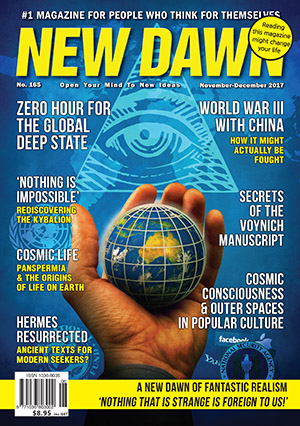
    From New Dawn 165 (Nov-Dec 2017)

    And with the wish the energy was born…
    – Corpus Hermeticum, book I

    I once regarded The Kybalion as little more than a novelty of early twentieth-century occultism. I considered the book a faux-antique work of mind-power philosophy, dressed up in pseudo-Hermetic language and offering a handful of serviceable but not greatly significant ideas of practical spirituality.

    I was wrong.

    This enduring work, which appeared on the American occult scene in 1908 under the mysterious byline “Three Initiates,” has earned its posterity. The book serves as something close to what it claims to be: a “Great Reconciler” of metaphysical, transcendental, and New Thought philosophies.

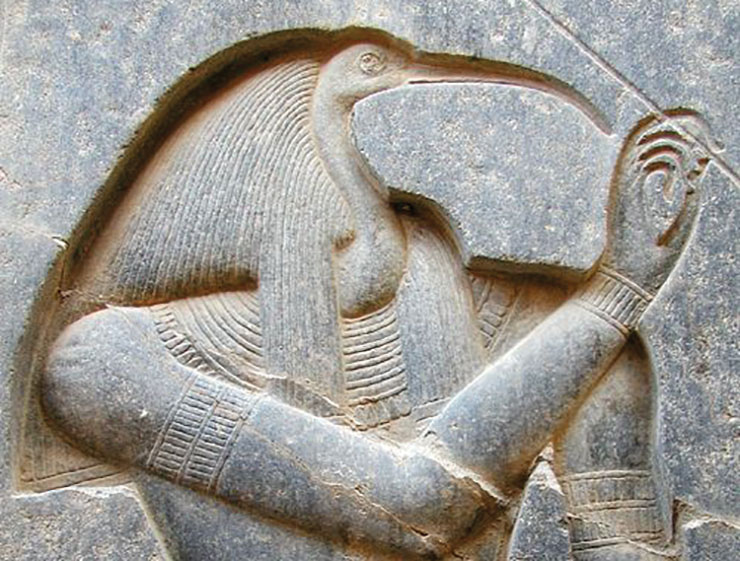
    Although some of The Kybalion’s reference points and formulations are plainly modern, the book can justly be defended as an authentic retention of certain ancient Hermetic ideas. Its author – about whom I’ll say more in a moment – drew upon elements of the Hermetica, a late-ancient collection of Greek and occasional Latin writings attributed to the mythical man-god Hermes Trismegistus, or “thrice-greatest Hermes.” This was a Greek appellation for Ancient Egypt’s god of writing and intellect, Thoth, whom the Greeks venerated above their own Hermes or Mercury. Using Greek literary form, the various and unnamed authors of the Hermetic tracts, not always agreeing among themselves, codified fragments of immeasurably old oral precepts from Ancient Egypt.1

    I should have listened more closely when, almost twenty years ago, a respected religious philosopher, who himself had translated some of the core Hermetic writings, told me of The Kybalion, with his voice low and a gleam in his eye: “There are some good ideas in that little book.”

    Indeed there are – and it took me a long time to rediscover them. It is not always easy to say exactly what brings us back to a book or an idea. I had always orbited around The Kybalion, albeit tentatively; I admired or grew friendly with some of its acolytes and with cultural figures influenced by it; and, finally, in 2017, I returned to the book in full. It was as though a light went on. Maybe my journey is an example of the book’s dictum: “When the ears of the student are ready to hear, then cometh the lips to fill them with wisdom.”

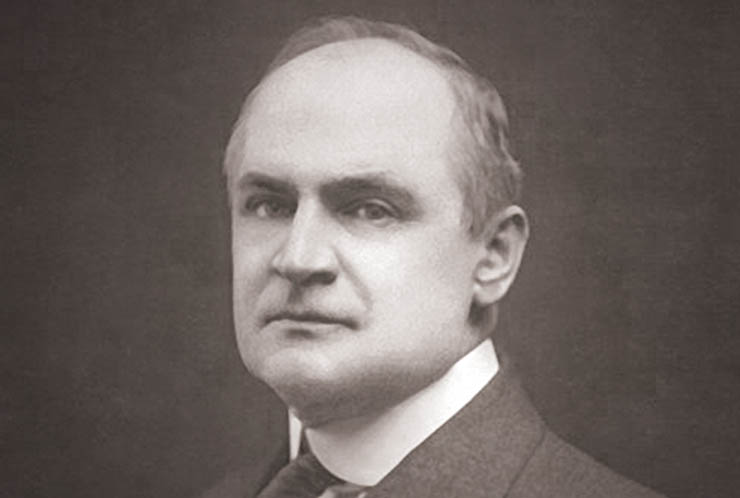
    Before saying more about the value of The Kybalion, let me address the question of its authorship. The identity of the “Three Initiates” has long been a source of speculation and drama; this can serve as a distraction from the book’s greater significance. The Kybalion was written by New Thought philosopher William Walker Atkinson (1862–1932), a remarkably energetic Chicago publisher, writer, lawyer, and spiritual seeker, who deserves to be remembered for this, his greatest work. Atkinson was one of the most incisive New Thought voices of the twentieth century.

    Among the many pieces of evidence, both literary and documentary, that demonstrate Atkinson’s authorship, he acknowledged himself as the sole writer in a 1912 entry in Who’s Who In America. Historical scholars, including Philip Deslippe and Richard Smoley (I also take up the matter in my Occult America), have amply demonstrated that there is no reason to argue with him. This prolific and thoughtful man was the Three Initiates. It should also be noted that in the traditional literature, Hermes Trismegistus addresses himself to three disciples: Tat, Ammon, and Asclepius, which may have been a source of inspiration for Atkinson’s byline.

    Atkinson was also the book’s original publisher at his Chicago-based Yogi Publication Society. The press published its owner’s many influential and not infrequently pseudonymous works, including books under the names of Yogi Ramacharaka and Theron Q. Dumont, as well as Atkinson’s self-bylined works. For generations, the writer-publisher’s diminutive blue hardcovers were a well-loved mainstay of New Age bookstores and served to influence a wide range of occult and metaphysical seekers.

    More important than The Kybalion’s byline is how the book highlights ideas about mind, matter, and thought-creativity, some of which demonstrate authentic resonance with Hermetic antiquity. This is no small matter. The Kybalion is not merely, or at least not only, modern New Thought clothed in ancient garb; rather, the book connects us, however tenuously, to ideas that once motivated seekers from a vastly removed era.

    Deslippe and Smoley have admirably tracked some of Atkinson’s sources; to their work I would add only that Atkinson was a capable surveyor of Victorian-era and Theosophically based translations of Hermetic literature, which is how the corpus was available to early twentieth-century readers. In particular, he would have encountered the translations of G.R.S. Mead (1863–1933), a scholar of ancient mysticism and one-time secretary to Madame H.P. Blavatsky (1831–1891), a figure whom Atkinson revered. The influence of Blavatsky’s 1888 occult opus The Secret Doctrine is evident at several points in Atkinson’s writings. Mead’s 1906 translation of the Hermetica, published two years before Atkinson’s effort, while turgidly worded in late-Victorian prose, and sometimes almost purposely written as if to assume an antique affect, was then one of the few sources of Hermetic ideas in English. With a skilled and discerning eye, Atkinson identified and distilled insights that corresponded to the sturdiest aspects of New Thought, or what William James had contemporaneously called “the religion of healthy-mindedness,” a field in which Atkinson was deeply steeped. The seeker-writer used his considerable curatorial abilities to produce a marriage of ancient and modern psychological insights.

    Atkinson focused primarily on the veritable Hermetic principle that Mind is the Great Creator. According to Hermetic literature, a supreme Mind, or Nous, uses as its vehicle a threefold process consisting of, 1) subordinate mind (demiurgos–nous); 2) word (logos); and 3) spirit (anthropos), concepts that echo, albeit distantly, in Atkinson’s work. The Kybalion is structured around “Seven Hermetic Principles,” which follow from the Hermetic concept of “seven rulers” of nature. Man, we are told in book I of the Corpus Hermeticum, the body of work translated during the Renaissance, “had in himself all the energy of the rulers, who marvelled at him, and each gave him a share of his own nature.”2

    Atkinson is particularly supple in adapting the Hermetic conception of gender, in which the masculine (conscious mind, in Atkinson’s terms, and original man in the Hermetica) impregnates the feminine (subconscious mind to Atkinson, and nature in the Hermetica), to create the physical world.

    Further still – and this is vital to the book’s power and usefulness – The Kybalion ably ventures a theory of mind causality. The book explains why, from a metaphysical perspective, our minds seem to possess formative, creative abilities, and yet, even as we evince powers of causation, we are also subject to limits of physicality, mortality, and daily mechanics.

    As beautifully articulated in Atkinson’s chapter “‘The All’ in All,” the individual may wield traits of a higher manifesting Force – but that does not make the individual synonymous with that Force. Man, the book counsels, may accomplish a great deal within given parameters, including transcendence of commonly presumed limitations, influence over the minds of others, and co-creation of certain circumstances; but the book reminds the idealistic reader that we bump against physical parameters even as we are granted the capacity, within a given framework, to imitate the Power that set those parameters. In this, The Kybalion honours the views of the ancients.

    Atkinson offers compelling philosophical definitions of concepts of rhythm, polarity, paradox, compensation, and “Mental Gender.” In a sense, the philosophy found in The Kybalion is an application of Hermeticism, Neo-Platonism, Transcendentalism, and New Thought. The book also attempts, however fitfully, to correspond its ideas to the early-twentieth century’s nascent insights into quantum mechanics and the “new physics,” which gained currency in the decades immediately following its publication. In this sense, the author exaggerates only slightly when he writes: “We do not come expounding a new philosophy, but rather furnishing the outlines of a great world-old teaching which will make clear the teachings of others – which will serve as a Great Reconciler of differing theories, and opposing doctrines.”

    Get the issue this article appears in

    The overall spirit of The Kybalion can be traced to book XI of the Corpus Hermeticum, in which Hermes is told by Supreme Mind that through the uses of imagination he can discover the workings of Higher Creation: “If you do not make yourself equal to God you cannot understand Him. Like is understood by like.”3 Hermes is told to use his mind to travel all places, to unite opposites, to know all things, to transcend time and distance: “Become eternity and thus you will understand God. Suppose nothing to be impossible for yourself.” Hermeticism teaches that we are granted a Divine birthright of boundless creativity and expansion within the imagination. This teaching is central to the Hermetic philosophy, and its modern re-sounding in The Kybalion.

    Brief in length yet epic in ideas, The Kybalion should be read repeatedly by anyone with an interest in New Thought or practical metaphysics. For the modern seeker, the book can, as its author promises, serve as a source of coherence among various, and sometimes conflicting, modern mystical philosophies.

    Does life grant us second chances? I believe that it does. One of mine arrived in rediscovering this meaningful book. As you enter its pages, I wish you the highest of discoveries and discernment.

    The above is slightly adapted from the Introduction to the Italian edition of The Kybalion.

    [alert type=”general” dismiss=”no”]This article was published in New Dawn 165.[/alert]

    [alert type=”success” dismiss=”no”]If you appreciate this article, please consider subscribing to help maintain this website.[/alert]

    Footnotes

    1. Some historical scholars dispute this notion and posit the Hermetica strictly as an expression of late-Greek philosophy with an Egyptian overlay; today’s consensus view, however, tends toward the Hermetica as a syncretic work, intermingling Hellenic and Egyptian thought. See The Egyptian Hermes by Garth Fowden (Princeton University Press, 1986, 1993).
    2. Hermetica (Far West Undertakings, 1977).
    3. The Way of Hermes translated by Clement Salaman, Dorine van Oyen, and Jean Pierre-Mahé (Inner Traditions, 1999, 2000).

    © New Dawn Magazine and the respective author.
    For our reproduction notice, click here.

  • Aleister Crowley & The Book of the Law: A Magical Encounter in Egypt

    Aleister Crowley & The Book of the Law: A Magical Encounter in Egypt

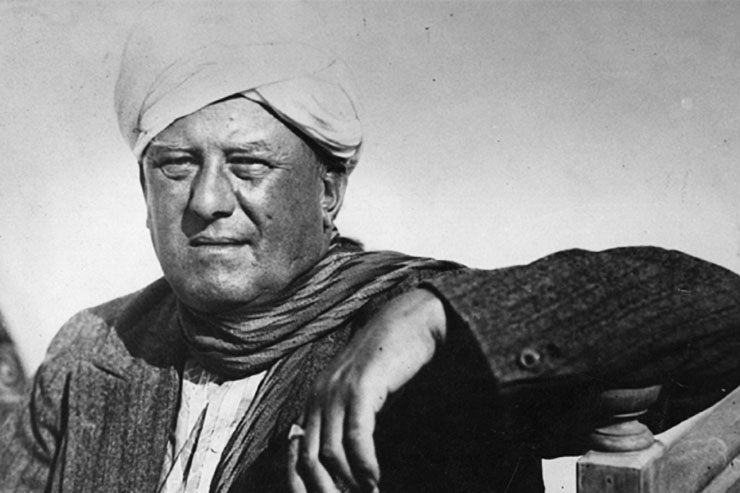
    Aleister Crowley (1875–1947) is remembered as a libertine, philosopher, mountaineer, magician, and supposedly the “wickedness man in the world.” He wrote bad poetry, pornographic books, novels and a vast array of literature.

    He is best known as being an infamous occultist and the scribe of The Book of the Law, which introduced ‘Thelema’ to the world. Crowley was an influential member of several occult organisations, including the Golden Dawn, the A.’.A.’., and Ordo Templi Orientis.

    One of the most enigmatic aspects of Crowley’s life was his receipt of what he believed to be a document dictated by a ‘praetor human intelligence’ known as Aiwazz.

    Crowley studied ceremonial magic for many years, but he felt he had not found the success he was searching for. He and his wife Rose travelled to Egypt where they spent a night in the King’s Chamber of the Great Pyramid. Rose became clairaudient and began to repeat the phrase “They are waiting for you.” Crowley was bemused as Rose was not known for her interest in magic or occultism, and hitherto had shown no signs of psychic ability. But she was insistent, and perhaps more to humour his young wife Crowley invoked the god Thoth and asked a number of test questions.

    Surprisingly, the answers were way beyond his wife’s understanding and showed a level of sophistication that piqued Crowley’s interest, to say the least. The final test involved an image of Horus at a local museum. He asked the communicating being to identify it. Rose very quickly identified various images of Horus, but it was the stele of Ankh-ef-en-Khonsu that she was most drawn to, an artefact known as inventory number 666 (Crowley’s personal number as ‘The Master Therion’). The being not only identified Horus on the stele but caused Rose to explain that the ‘intelligence’ attempting to communicate was not Horus himself but his representative Aiwazz.

    On 8 April 1904, between noon and early in the morning, Crowley experienced a dark and overwhelming presence behind him. It communicated through him a bit like automatic writing and dictated over three days what became known as Liber AL vel Legis or The Book of the Law. The Book of the Law offers a new revelation and the revival of the Egyptian cult of Nuit, Hadit and Horus, of which each of its three chapters are dedicated. It is a sophisticated work with many hidden meanings, numerical codes, and deep insights. Even today it is studied with diligence, and commentaries have been written on it since its first appearance. The Book of the Law heralds a New Aeon beginning in 1904, the ‘Aeon of Horus’; preceding this had been the Aeon of the dying God (Osiris) and that of the mother (Isis). The Aeon following Horus is that of Maat, or truth, and will mark the completion of one great cycle of cosmic time.

    The term Aeon is a little different from the terms ‘age’ or ‘cycle’. Originating within Gnosticism, Aeons were seen as emanations of the divine that mediate between man and the spiritual hierarchy. Using that understanding, we can appreciate that each Aeon is not simply a period of time but a time period under the governance of a certain spiritual force (the current under Horus) and comes with a specific spiritual formula and practice, and its own prophet. In this case, Crowley saw himself as the prophet of the New Aeon of which the religion was Thelema.

    At first, Crowley was unsure how to evaluate the document he had received and left it locked away for quite a period of time. He vacillated between seeing Aiwazz as his personal unconscious or some aspect of his own higher self. Over time Crowley became convinced of the significance of its message and wrote various commentaries as well as ‘receiving’ other ‘Class A’ documents, a term he used for documents received from ‘praetor human intelligences’.

    The Book of the Law calls for the abandonment of all previous religious philosophies, especially taking aim at the three monotheistic religions. It is brutal when it comes to Judeo-Christianity in that it rejects the formula of the dying god with its emphasis on pain, suffering, sexual suppression and guilt. This is replaced with the formula of the divine child Horus whose innocence brings with it sensuality and openness. At the same time Horus is related to the Greek god Mars, the god of war, hence Crowley believed there would be a great period of violence after the start of the New Aeon which would continue until the declaration of the final ‘Aeon of Maat’ at a future date. In Egyptian mythology, Horus also has a dark brother called Set (or Seth) and he represents the soul of the Aeon of Horus: brooding, unpredictable, cold and volatile.

    On a political level, The Book of the Law proposes a form of anarchy with total freedom for the individual but this is matched with total responsibility. When The Book of the Law states “Do What Thou Wilt Shalt be the Whole of the Law” (Liber AL 1:40), it is not exclaiming do whatever pleases you or do what you want, it is saying to follow your true destiny. This destiny comes from finding who you really are; this true self is known as the Will or the Star and the relationship between stars is known as “love,” hence “Love is the Law, Love under Will” (Liber AL 1:57).

    The concepts of Thelema (Will) and Agape (Love) are central to The Book of the Law and both via gematria add to the number 93, hence the significance of this number within the teachings. (The Hebrew spelling of Aiwazz also adds to 93).

    In Ancient Egypt the night sky was considered to be the afterlife, and when someone died they became ‘a star’; each star had its own unique place in the cosmos, its own orbit and its own destiny. These ideals are central to the politics of Thelema where “Every Man and Every Woman is a Star” (Liber AL 1:3).

    It has been claimed the philosophy of The Book of the Law is in many ways elitist. It is based around the concept of ‘Arete’, or excellence, which could be interpreted as meritocracy. While the individual has the potential for total freedom, he must exercise it in the pursuit of finding himself, or as Liber AL (1:42) states “thou hast no right but to do thy will.”

    Kenneth Grant (1924–2011) was one of the most influential and controversial representatives of Thelema during the last century. His publications were prodigious including a series of nine volumes expounding his deep and insightful view of Thelema. Grant came to realise that the rather indulgent hippy view of Thelema so popular in the Sixties and Seventies (Crowley was pictured as one of the people on the Beatles’ Sgt. Pepper’s album cover) sold the vision of Thelema short. He took seriously the non-terrestrial origin of The Book of the Law and began to investigate its antecedents in earlier cultures. He found that the teachings regarding sexuality in Liber AL were not simply calls to ‘have a good time’ but were part of an age old Tantric or yogic tradition demanding great discipline and perseverance. While the general teachings of Liber AL may offer some level of guidance for the average man and women, its inner teachings could be aligned to the esotericism of the Tantras, India and Sumer. Such a teaching continued unseen in the inner chambers of alchemists, magicians, sorcerers and Docteurs of Voudoun.

    This new understanding saw Thelema as a re-instatement of the ancient Typhonian cult of Egypt, and brings us to its significance in any consideration of Egyptian spirituality. Thelema is, in any ways, a unique form of Egyptian polytheism with a highly developed social, political and spiritual philosophy. At its core was a revelation for the New Aeon through a communication with a non-terrestrial representative Aiwazz (among others). This teaching includes both a general and esoteric form, the esoteric showing a clear continuity from the earliest known forms of Tantra (Shaivism) and into Sumer, Egypt and beyond.

    Whatever we are to make of Crowley’s private life – and to be honest even the most sympathetic biographer would suggest his treatment of others left a lot to be desired – The Book of the Law and Thelema represents a fascinating glimpse into the adaptation of an ancient Egyptian ‘religion’ for the modern period.
    [alert type=”general” dismiss=”no”]This article was published in New Dawn Special Issue Vol 8 No 6.[/alert]
    [alert type=”success” dismiss=”no”]If you appreciate this article, please consider a contribution to help maintain this website.[/alert]

    © New Dawn Magazine and the respective author.
    For our reproduction notice, click here.
  • Egypt in the Western Occult Tradition

    Egypt in the Western Occult Tradition

    This article was published in New Dawn Special Issue Vol 8 No 6 (December 2014)

    O Egypt, Egypt, of your reverent deeds only stories will survive, and they will be incredible to your children! Only words cut in stone will survive to tell your faithful works, and the Scythian or Indian or some such neighbour barbarian will dwell in Egypt.

    This haunting passage comes from the Corpus Hermeticum, the celebrated ‘Hermetic’ body of writings, believed to go back to Hermes Trismegistus himself, a semidivine figure associated with the Greek god Hermes and his Egyptian equivalent, Thoth.

    These texts go back no further than the early centuries of the Common Era. The passage above hints at their purpose: to preserve something of the knowledge of Ancient Egypt as its civilisation began to decay. Here is a good place to start when looking at Egypt’s role in the Western occult tradition.

    The Corpus Hermeticum was brought to Italy in the mid-fifteenth century by Greeks fleeing the collapsing Byzantine Empire. The great patron of the arts, Cosimo de’ Medici, had these texts translated into Latin almost immediately. Because scholars thought they went back to Hermes Trismegistus, believed to be a contemporary, and perhaps a teacher, of Moses, they were held in the highest esteem for almost two centuries. When their true date was discovered, they lost much of their prestige, and they have never quite regained it. Nevertheless, they have shaped the Western esoteric tradition in innumerable ways.

    Consider Athanasius Kircher, a seventeenth-century Jesuit who, in the subtitle of Joscelyn Godwin’s recent book about him, was “the last man to search for universal knowledge.” Part of the knowledge he sought was the meaning of the hieroglyphs. Kircher’s interpretation, created out of his own imagination, was almost entirely wrong. But his mistakes are instructive.

    The symbol that he regarded as the key to this knowledge is a human-headed scarab from a bronze tabletop known as the Bembine Table of Isis. The body of the scarab, Kircher says, is the Earth; its wings are the airy sphere; several concentric ovals set in the place of the shoulders are the planetary orbs; the head is Horus, or the Sun; and a crescent above the head is a moon. A winged disk floating nearby is the anima mundi, the “soul of the world.”

    Kircher’s representation reflects, not some genuine knowledge of Egyptian religion, but the system of the Corpus Hermeticum. The Hermetic texts were seen as the embodiment of Egyptian teaching. Their actual relationship to what the Egyptians taught is a much harder issue to sort out, if only because Egyptian religion was multifarious. Scholars used to think they were a mishmash of Neoplatonism, Gnosticism, and early Jewish and Christian mystical teaching. But the title of the main treatise is the Poimandres, a bewildering name that has inspired many fanciful etymologies. Today scholars believe it is a Grecised version of the Egyptian p-eime-n-re or “mind of sovereignty.” At the outset, Poimandres – who is described as an “enormous being” in the Corpus – announces he is the “mind of sovereignty.” There may well be more of Egypt in these texts than people used to think.

    The Corpus Hermeticum was not the only attempt to preserve Egyptian knowledge. Another is a Greek text dating to the fifth century CE, and attributed to Horapollo, a priest of Isis and Osiris. The Horapollo, as it is called, explains the meaning of the hieroglyphs.

    Here is one example. One passage (in a nineteenth-century translation) reads: “When they would represent the universe, they delineate a SERPENT bespeckled with variegated scales, devouring its own tail; by the scales intimating the stars in the universe.” And in fact the image of a snake devouring its tail – the ouroboros – does go back to Ancient Egypt, the first instance being found in a text going back to the fourteenth century bce.

    Whether or not the ouroboros had the meaning given by Horapollo may be moot; it has sometimes been said to symbolise, not the universe per se, but the formless disorder that encircles the universe. In any case, the Horapollo probably reflects some real, though garbled, knowledge of the hieroglyphs. In any event, its interpretation has echoed down through the centuries. Like the Corpus Hermeticum, it shows how Egypt has operated on the Western occult imagination.

    Egypt touched the minds of occultists in other ways as well. The renegade seventeenth-century Italian monk Giordano Bruno harked back to Egypt as a way of reviving and purifying the degenerate Christianity of his time. Bruno’s Egyptian religion has little to do with the Egyptian religion dug up by archaeologists in the last two centuries. Rather it is, again, the doctrine of the Corpus Hermeticum, which in Bruno’s time was still believed to date back to the great age of Egypt. That Bruno wanted to revive the Egyptian religion wholesale may seem eccentric, but it’s understandable in light of the history of the seventeenth century, with its appalling religious warfare. For Bruno, Egyptian Hermeticism was a means of rising above these petty conflicts, a means of fostering tolerance and awakening a higher awareness.

    The Catholic church, which did not see things quite the same way, burned Bruno at the stake in Rome in 1600.

    But in no way has the allure of Egypt waned throughout the centuries. In 1781, the French polymath Antoine Court de Gébelin, in a work entitled Le monde primitif (‘The Primitive World’), said that the Egyptian priests had encapsulated their knowledge in a book of Thoth consisting of visual images. According to Court de Gébelin, this book made its way to Rome and into the hands of the church. When the papal court was removed to Avignon in the fourteenth century, the book was recast into a deck of playing cards, known today as the Tarot. Scholars today are not, for the most part, convinced by this argument.

    The influence of Egypt on the Tarot remains. The Ryder-Waite deck, created in 1910, by far the most popular deck in the English-speaking world, abounds with Egyptian images: sphinxes with breasts; Isis with her crescent moon; the jackal-headed figure of the god Anubis. This is no accident: the deck’s creators, A.E. Waite and Pamela Colman Smith, were both members of the Hermetic Order of the Golden Dawn, an occult order whose symbols and rites were replete with Egyptian imagery.

    By the time of the Golden Dawn, which in its original form lasted from 1888 to 1900, the hieroglyphs had been deciphered by the French Egyptologist Jean-François Champollion, so the Golden Dawn’s picture of Egypt was much more accurate than had been available during the Renaissance.

    One of the most resonant evocations of Egypt came with the 1877 publication of the two-volume Isis Unveiled by the Russian occultist H.P. Blavatsky. Although it took its title from the name of the great Egyptian goddess, Isis was not principally about Egypt. Instead, it argued there was an ancient but unified wisdom tradition that underlay all religions.

    In its way, Isis does present an updated Hermeticism, describing the human makeup in the tripartite fashion of body, soul, and spirit that goes back to the Corpus Hermeticum, the ancient Gnostics, and indeed primitive Christianity. Curiously, in light of Blavatsky’s later teaching, the book denies reincarnation. She would later change or recast her views to support reincarnation. She excused her inconsistency on the (not entirely convincing) grounds that reincarnation was a secret teaching that she had not been allowed to disclose before a certain point.

    Reincarnation itself occupies an ambiguous place in the Western esoteric tradition. Christianity (at least in its conventional forms) has always avoided or repudiated it. In Judaism it is part of the esoteric tradition of the Kabbalah, although until recently it was almost unknown to ordinary Jews.

    Did the Egyptians teach reincarnation? If you ask mainstream Egyptologists, they will generally say no. But Herodotus, the Greek historian from the fifth century bce, says exactly the opposite. In a comprehensive picture of Egypt that can be considered the first anthropological study in human history, Herodotus writes: “The Egyptians were the first to teach that the human soul is immortal, and at the death of the body enters into some other living thing then coming to birth.” He goes on to say: “Some of the Greeks, early and late, have used this doctrine as if it were their own; I know their names, but do not here record them.”

    Here Herodotus probably means Pythagoras, who studied in Egypt and may have learned the doctrine of reincarnation (as well as the geometrical theorem that bears his name) from them. The Corpus Hermeticum speaks of reincarnation as well. Possibly reincarnation was taught among the Egyptians – but only as an esoteric secret passed down orally.

    Reincarnation was an issue that divided the Western esoteric tradition from that of the East. So claimed the founders of an occult order called the Hermetic Brotherhood of Luxor (or H.B. of L.). In 1884 it made its presence known with an ad reaching out to those disaffected with ‘Hindoo Mahatmas’ – an allusion to the hidden Masters that, Blavatsky claimed, were guiding her. The central teachings of the H.B. of L. include a denial of reincarnation, the use of magical and ritual work to attain higher consciousness, and the use of sexual magic as well. The lodge’s use of the name ‘Luxor’ indicates its claim of an Egyptian lineage.

    The H.B. of L. dissolved after only a couple of years because of internal dissention, but it had an influence out of all proportion to its size or lifespan. Its teachings live on in C.C. Zain’s still-extant Church of Light. Some of the H.B. of L.’s sexual magic techniques may have also found their way into Aleister Crowley’s Ordo Templi Orientis.

    Probably the best-known occult order of the twentieth century also traces itself back to Egypt: the Ancient and Mystical Order Rosae Crucis, founded by H. Spencer Lewis in 1915. AMORC has a strong and heavily emphasised Egyptian flavour; Lewis said that it went back to an esoteric lodge founded by Pharaoh Thutmose III in the fifteenth century bce. Today AMORC’s headquarters – Rosicrucian Park in San Jose, California – contains a temple designed with Egyptian motifs as well as an Egyptian museum.

    I could go on much longer. I could, for example, mention the Temple of Set, which in 1975 broke off from Anton Szandor LaVey’s notorious Church of Satan when some members of LaVey’s organisation decided that he was not serious enough about his Satanism. The Temple identifies Satan with Set or Seth, the slayer of Osiris in Egyptian myth. (Despite the similarity of names, scholars do not think the names ‘Satan’ and ‘Set’ are connected, ‘Satan’ coming not from the Egyptian, but from a Hebrew word meaning ‘opponent’.) The Temple of Set does not promote evil per se but advocates “creating an individual, powerful essence that exists above and beyond animal life” (in the words of its website).

    Apart from organisations, there are the many people who are drawn to the mystical side of Egypt through some encounter with its art and architecture. Writers such as John Anthony West, author of The Traveler’s Key to Ancient Egypt, and Normandi Ellis frequently lead tours to Egypt that focus on its mystical and occult aspects. As Ancient Egypt recedes further and further away from us in time, it remains vividly alive in the memory and imagination of the West.

    [alert type=”success” dismiss=”no”]If you appreciate this article, please consider subscribing to help maintain this website.[/alert]

    Sources

    Brian P. Copenhaver, ed. and trans., Hermetica: The Greek Corpus Hermeticum and the Latin Asclepius in a New English Translation with Notes and an Introduction, Cambridge University Press, 1992

    Joscelyn Godwin, Athanasius Kircher’s Theatre of the World: The Life and Work of the Last Man to Search for Universal Knowledge, Inner Traditions, 2009

    Wouter J. Hanegraaff et al., eds., Dictionary of Gnosis and Western Esotericism, Two volumes, Brill, 2005

    Herodotus, Translated by A.D. Godley, Four volumes, Loeb Classical Library, 1931

    The Hieroglyphics of Horapollo Nilous, Translated by Alexander Turner Cory, http://sacred-texts.com/egy/hh/index.htm; accessed Oct. 30, 2014

    David Reigle, “Isis Unveiled: A Perspective”, www.easterntradition.org/isis%20unveiled-a%20perspective.pdf; accessed Oct. 30, 2014

    Richard Smoley, Forbidden Faith: The Secret History of Gnosticism, Harper San Francisco, 2006

    © New Dawn Magazine and the respective author.
    For our reproduction notice, click here.
  • Modern Medicine: The New World Religion

    Modern Medicine: The New World Religion

    From New Dawn 99 (Nov-Dec 2006)

    East Asia and possibly South Asia have strong traditions that offer insight into Western medical and scientific follies, but many parts of the developing world are much more vulnerable. The French author, Olivier Clerc, in his 2004 publication, Modern Medicine: The New World Religion has exposed the complex and confused mix of Christian and Enlightenment forces unleashed on many communities without effective traditional spiritual and scientific defences.

    It is perhaps no accident that Clerc comes from a nation that, like those of East Asia, has sought ways to defend traditional agricultural and food cultures from the dictates of Anglo-American free trade and market forces. France is also a nation with a uniquely strong administrative tradition capable of exercising authority over corporate interests.

    Clerc offers a unique and powerful insight into the way in which contemporary life and thought in developing nations have been perverted by a wicked mix of the power of corporate marketing, the mystique of science and the superstition of religion. He shows how illusion operates at many levels in society and how medicine and religion become entangled and almost inseparable in popular faith.

    The following summary is derived from an outline on the web of Clerc’s book. He shows that illusion and faith are central qualities of Western civilisation, which are distinguished with difficulty. They are capable of destroying spiritual and health wisdom wherever they are found.

    Clerc remarks on how Christian missionaries of the last three or four centuries sought to evangelise ‘primitive people’ by destroying or burning the various cult objects of these people in order to eradicate their religions, superstitions and customs.

    Yet, whether it was conquistadors stamping out Inca culture, the Inquisition stamping out European heresies, or Christian missionaries stamping out Voodoo or other African and Asian religions, the destruction of objects of worship did not prevent the continuation of strongly rooted inclinations, albeit with different qualities.

    Clerc shows that the supposed secularisation of present day society is also just an illusion, with the beliefs and superstitions of Judeo-Christian culture remaining deeply embedded in the modern Western subconscious, becoming identified with many secular aspects of daily lives without people realising it.

    The daily evening television news bulletins, the stars of show-business and sport, humanitarian associations, cults and all sorts of other things in modern life have become the new gods that are venerated or feared. The field of medicine, however, most displays this unconscious transposition of the religious experience and enjoys an astonishing degree of undeserved credit out of all proportion to its actual results.

    While real health regresses and great medical ‘miracles’, such as vaccines and antibiotics, display their limitations, medicine and science have replaced religion as the only certain belief in an uncertain world. Doctors and scientists are seen as the priests of the new religion, delivering through the certainties of science what the old discredited gods were not able to deliver.

    If we can no longer believe in the miracles, the cures and the curses of the old religions, we can certainly believe in the miracles, the cures and the destructive powers of the new science.

    Medicine, like religion, has taken on a saving or messianic role, with qualities that have often characterised the Roman Catholic Church, such as autocracy, centralisation, the control and manipulation of people, censorship, propaganda, total obedience, infallibility, the destruction of heretics and the stamping out of individuality. All has been done for public health and the general good, just as the church acted for mankind’s salvation.

    People, whether within the medico-pharmaceutical industry or outside it, are being subconsciously influenced by deeply rooted myths, fears and superstitions, projected onto the new screens of science and medicine.

    Although medicine sees itself as exclusively scientific and rational with no room for spiritual or human dimensions (such as psychic healers or shamans who are dismissed as charlatans), it organises itself and functions in a way that is intrinsically religious. But, by rejecting a spiritual dimension medicine in fact becomes the toy of the forces and myths it tries to ignore and cannot control.

    Clerc holds that, even though Western society considers itself to be secular, it has remained as Christian as it was a century ago but with two major differences.

    Firstly, it is not aware of it. It fails to recognise that it is still observing the old religious rituals but under a new guise. Secondly, society now lives its religious experiences through secular forms – medical ones in particular – and has transferred its hopes and aspirations from the spiritual world to the material.

    Western medicine has sought to become the new world religion. The specific myths, beliefs and rites of Christianity have been projected over medicine since Pasteur. Physicians have taken the place of priests. Vaccination plays the same initiatory role as baptism and is accompanied by the same threats and fears. The search for health has replaced the quest for salvation.

    The fight against disease has replaced the fight against sin. Eradication of viruses has taken the place of exorcising demons. The hope of physical immortality (cloning, genetic engineering) has been substituted for the hope of eternal life. Pills have replaced the sacrament of bread and wine. Donations to cancer research take precedence over donations to the church. A hypothetical universal vaccine could save humanity from all its illnesses, as the Saviour has saved the world from all its sins.

    The medical power has become the government’s ally, as was the Catholic Church in the past. ‘Charlatans’ are persecuted today as ‘heretics’ were yesterday. Dogmatism rules out promising alternative medical theories. The same absence of individual responsibility is now found in medicine, as previously in the Christian religion.

    Patients are alienated from their bodies, as sinners used to be from their souls. People are still being manipulated by their fears and childish hopes. They are still told that the source of their problems is outside them and that the solution can only come from the outside.

    They are not allowed to do anything by themselves and they must have the mediation of priest-physicians, the administration of drug-hosts, and the protection of vaccine-absolutions. In other words, the secularisation of society happened only on the surface.

    Behind the different structures of medicine and the Church of Rome we find the same fundamental concepts, the same relationships, the same characteristics, the same fears, the same hopes and expectations.

    This substitution of medicine for religion has many unfortunate consequences.

    In medical research, it influences what should be looked for and what can be discovered. Any discovery or theory that is at odds with the overarching orthodoxy is rejected and its authors called heretics. Entire areas of research, as well as promising new lines of approach, are thus disqualified.

    Furthermore, the unconscious need to bring the medical world into ‘religious’ obedience frequently leads to (involuntary) falsifications of results, as became clear with Pasteur’s discoveries. The medical credo takes precedence over reality, which remains unacknowledged if it does not correspond with preconceived ideas.

    Lastly, the hidden religious dimension of modern medicine inhibits the free debating of already fixed beliefs. Dogmatism, irrationality and passions – all characteristic of the religious experience – take precedence over calm and carefully thought out argument.

    The vehemence that led Galileo to be condemned by the Church for his theories, in spite of the scientifically demonstrable facts, is now being used by medicine to reject any thesis that is contrary to its own dogmas. Science has learned its lessons from the Church.

    With the development of science and the rise of intellectualism, the Western world has tried to rationally justify these beliefs, under the cloak of medicine and life sciences and utilising three layers of false consciousness:

    • a core of fears, from which we have learned to protect ourselves by covering it with
    • a layer of beliefs, which make us feel safe (even though those fears have not disappeared), this layer being itself dissimulated under
    • an intellectual varnish, a rational facade, which give us the illusion of having transcended superstitions and beliefs, and which shelters us from our fears, keeping us barricaded behind intellectual knowledge.

    The use of religious fears and beliefs, under a cloak of rationality, for worldly ends has a long and prestigious political history in the West. This includes the prominent figures of the Roman Emperor Constantine and the English King Henry VIII, who each took major institutional initiatives and used the power of the Church to extend their own worldly reach.

    Arguably, much of the success of East Asia in recent years can be explained by spiritual and health traditions that place the emphasis on personal discipline and direct intuitive understanding and develop strong defences against fear, belief and intellectual varnish.

    Moreover, the Confucian, Daoist and Zen (or Chan) Buddhist traditions contrast starkly with the Western political practice of using peoples’ spiritual needs as a political tool. The Falun Gong movement has fallen foul not of communist intolerance but of a long and deep tradition of Chinese political wisdom.

    Clerc emphasises that taking personal responsibility for one’s own health, one’s own inner evolution, and one’s own life at every level, without rejecting any available help or advice, remains the safest and most rewarding attitude. This is hard to separate from the essential teachings that sustain East Asian spiritual traditions.

    Moreover, the practice of refined therapeutic disciplines like qi gong and taiji quan quickly develops for the attentive student sensitivities and dimensions of spiritual, mental and physical awareness. These can be highly effective in shaping and guiding healthy behaviour.

    On the one hand, the student become aware of stretching, breathing, internal and other exercises that help create a general sense of physical well-being and a confidence that ailments can be remedied with appropriate attention.

    On the other, the student is much more conscious of harmful behaviour, excessive pressure, nutritionless food, bad air and other modern realities that are best avoided where possible.

    Overall, the student develops practices of spiritual and mental reflection and calm that are self-empowering and that liberate from the fraudulent seductions exposed by Clerc.

    The gentle but demanding disciplines of qi gong and taiji quan highlight fundamental differences between Eastern and Western approaches to well-being, understanding and consciousness.

    At the physical level, they highlight an Eastern preference for a soft approach that nurtures and explores well-being in a manner that is sympathetic with the natural order of organic life. The Western preference is more often for forms of harsh activity that promise much but do so at the cost of distracting attention from sensitivity and awareness.

    At the intellectual level, they highlight an Eastern concern to remain free from the artificial constructs of the human mind and to retain the capacity to experience reality directly and without the distractions of hidden assumptions or excessive effort.

    The Western preference seems inclined to accept the authority of predetermined structures in ordering reality and to abandon personal independence to mass convictions, whether these be religious, ideological, scientific, rational or physical.

    At the spiritual level, they highlight an Eastern preference for a disciplined, reflective consciousness that empowers the individual with confidence in personal sensitivities and life fulfilment.

    The Western preference seems more disposed to mobilise people in forms of mass conviction with promises of postponed reward of one form or another, while being careless about the ravages inflicted by hidden political and worldly ambitions.

    Chinese qi and Japanese ki, like Indian yoga, disciplines offer a sensitive, realistic and exploratory understanding of and insight into one’s own spirit, mind and body. This, in turn, begins to develop an awareness of the perils of contemporary living and eating customs and expose the dangers of faith in the assertions of modern Western scientific and medical dogma.

    They also equip the practitioner with spiritual, mental and physical tools of defence against the pressures, fashions and distractions that pose as imperatives in modern Western life and lead people into behaviour that has produced today’s epidemic of degenerative diseases.

    In particular, by cultivating an acute and positive consciousness of one’s own natural organic being they nurture an immediacy and directness of perception that transfers to other areas and that strips away many of the confusing artifices that clutter the contemporary world.

    The independent strength, nurtured by these forms of Asian spiritual, mental and physical wisdom, can help explain much of the East Asian region’s unique success in competing with the West in terms of social, economic and health well-being.

    Once Mao Zedong ridded China of its opium plague, the people of East Asia have all worked on building societies as free as possible from the seductive follies that Clerc has identified. The therapeutic and meditative disciplines of traditional Daoist and Chan Buddhist wisdom work to expose and protect against corrosive religious, medical, scientific and other superstitions.

    [alert type=”general” dismiss=”no”]This article was published in New Dawn 99.[/alert]

    [alert type=”success” dismiss=”no”]If you appreciate this article, please consider subscribing to help maintain this website.[/alert]

    The above is reprinted from the section “Transferring Christianity and Science to the Developing World” in Reg Little’s book A Confucian-Daoist Millennium? (Connor Court Publishing, 2006).

    © New Dawn Magazine and the respective author.
    For our reproduction notice, click here.