New Dawn – World's Most Unusual Magazine

Category: Articles

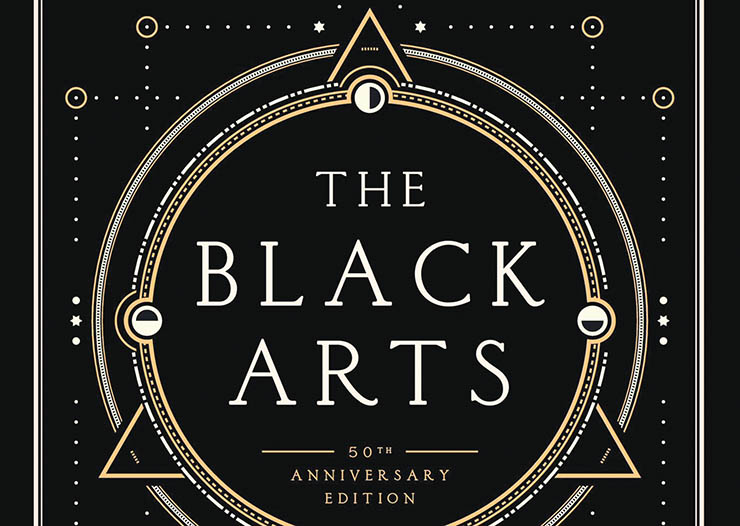
  • The Black Arts after Fifty Years

    The Black Arts after Fifty Years

    From New Dawn Special Issue Vol 11 No 4 (Aug 2017)

    This year marks the 50th anniversary of Richard Cavendish’s classic study of the occult, The Black Arts. The year of Cavendish’s book – 1967 – could be seen as a banner moment for the rebirth of occult and esoteric spirituality in the modern West.

    In 1967, the toy giant Parker Brothers relaunched the Ouija Board, having bought rights the prior year from descendants of manufacturer William Fuld, and sold a record two million talking boards, surpassing sales of its leading game Monopoly, and installing the mediumistic device into playrooms across America.

    As governor-elect of California, Ronald Reagan in January 1967 raised eyebrows by scheduling his inauguration at the perplexing hour of 12:10 A.M., prompting persistent questions – which ran throughout his presidency – over the extent of his and wife’s dedication to astrology. Reagan would admit only that “Nancy and I enjoy glancing at the daily astrology charts in our morning paper.” At that time, about 1,250 out of 1,750 daily papers featured daily horoscope columns, a post-war high.

    In 1967, The Beatles learned Transcendental Meditation (TM) from the Maharishi Mahesh Yogi, indelibly marrying the youth culture to the pursuit of Eastern and esoteric wisdom. The following year, The Beatles’ famous sojourn to the Maharishi’s northern Indian ashram in Rishikesh resurrected the ideal of the Westerner seeking wisdom in the Far East, a template laid in the late 1870s by Russian-born occult explorer Madame HP Blavatsky, who left behind the relatively cushy environs of New York City to move to India, a place then as alien to most Westerners as the surface of another planet.

    Also in 1967, the bestselling biography of psychic Edgar Cayce, Edgar Cayce: The Sleeping Prophet by tabloid journalist Jess Stearn, brought renewed attention to the early twentieth-century medical clairvoyant. Cayce’s popularity was followed by a wave of “channelled” literature – Cayce first used the term channel in the mystical sense – under the names of such other-dimensional entities as Seth, Ramtha, and Abraham.

    This ferment of occult and mystical enthusiasm soon exploded across the culture as Americans were urged to “be here now,” try psychedelics to “tune in” to higher energies, use new practices in yoga and Zen, rediscover native shamanism (or variants of it) in the books of Carlos Castaneda, and shiver over evils, new and ancient, with the shock of the Manson murders, and the popularity of movies like The Exorcist and Rosemary’s Baby.

    Into this atmosphere, British historian Cavendish (1930–2016) launched his enduring and influential study of occult history and practice, The Black Arts. The book won immediate popularity, gaining the affections of Mick Jagger, author Isaac Bashevis Singer, and, well, me, when I first began seriously studying the occult about twenty years ago. I discovered the book on the backlist of the publisher for which I now work, and was immediately enchanted with the green-blue-black psychedelic-goth graphics of the original cover art. At a later date, the book was redesigned in the more ordinary style of a heavy-metal album cover, which hyped up the sinister (serpents coiling from eye sockets of skulls), and played down the mysterious, alluring, and mature. For its 50th anniversary edition, TarcherPerigee has restored the mood of the original, and returned a few missing images to the interior. Mercury, rejoice.

    • • •

    In the minds of many modern people, the occult stands for the sinister and satanic. This is a mistake, historically and spiritually. The term occult comes from occultus, Latin for hidden. Classically speaking, occult philosophy posits the existence of an unseen dimension of life, whose forces are felt on and through us. In the late ancient world, when the temple orders of Egypt, Greece, and Rome, and the folk beliefs and nature-based religions of Europe, were losing appeal to Christianity, the church fathers did what we as humans have always done: labelled the other side, i.e., the historical and theological losers, in terminology of our own liking, in this case as demon worshippers and purveyors of dark sorcery, a characterisation that pre-Christians and pagans had never claimed for themselves. Indeed, for readers who were or are put off by Cavendish’s malevolent-sounding term “black arts” in the title, he quickly explained his choice: “No one is a black magician in his own eyes, and modern occultists, whatever their beliefs and practices, think of themselves as high-minded white magicians” – yet they are driven, as we all are, by the “titanic attempt to exalt the stature of man… this gives it [magic] a certain magnificence.”

    Isaac Bashevis Singer, in a shrewd and admiring critical essay on The Black Arts in Book Week on April 9, 1967, agreed with Cavendish noting: “We are all black magicians in our dreams, in our fantasies, perversions, and phobias.”

    And, to this I would add, in the pursuit of our highest ideals. As Cavendish and Singer detected, we are not very different from the classical magician when we strive, morally and materially, to carry forth our plans in the world – to ensure the betterment of ourselves and our loved ones; to heal sickness; to create, sustain, and, above all, to generate things which bear our markings, ideals, and likenesses. All of this is the expenditure of power, the striving to physically establish our inner drives and images.

    I do not view the search for individual power, including through supernatural means, as necessarily maleficent, and neither, I think, did Cavendish. Historically and psychologically, it is a fundamental human trait to evaluate, adopt, or avoid an idea based upon whether it builds or depletes our sense of personal agency. “A living thing,” Nietzsche wrote in Beyond Good and Evil, “seeks above all to discharge its strength – life itself is will to power…” The difficulty is in making our choices wisely.

    We sometimes deny or overlook this power-seeking impulse in ourselves, associating it with the tragic fate of Faust or Lady Macbeth. It can be argued, however, that all of our neuroses and feelings of chronic despair, aside from those with identifiably biological causes, grow from the frustrated expression of personal power. We may spend a lifetime (and countless therapy sessions) ascribing our problems to other, more secondary phenomena – without realising that, as naturally as a bird is drawn to the dips and flows of air currents, we are in the perpetual act of trying to forge, create, and sustain, much like the ancient alchemist or wizard.

    The ultimate frustration of life is that, while we seem to be granted godlike powers – giving birth, creating beauty, spanning space and time, devising machines of incredible might – we are bound to physical forms that quickly decay. “Ye are gods,” wrote the Psalmist, adding “but yet shall die as princes.” Immortality and the reversal of bodily decline is the one magic no one has ever mastered. The wish to surpass the boundaries of our physicality is behind some of our most haunting myths and parables, from the Trojan prince Tithonus, to whom the gods granted immortality but trapped in a shell of misery and decay for failing to request eternal youth, to the doomed scientist Victor Frankenstein, who sought the ultimate alchemy of creating life only to bring destruction on everyone around him.
    • • •

    In The Black Arts, Cavendish captures the human striving and universality behind the magical search. He also demonstrates virtuosity for explaining ancient and more recent rituals, rites, and esoteric philosophies with splendid clarity. Although he casts a critical eye toward some of the customs he explores, Cavendish never places himself above or in opposition to them. The historian realises that these practices, whether they are to his or your private liking, reflect a basic human need. Nor does the author evaluate his facts from a distant remove. Cavendish, as Singer noted, “does discreetly hint that there may be a kernel of truth in the magicians’ fantastic assertions.”

    First appearing in 1967, The Black Arts narrowly predated (and helped foresee) the explosion of mainstream interest in New Age and spiritual-therapeutic philosophies. The book also arrived just as the modern world was experiencing the rebirth of Wicca or witchcraft, a nature-based religion now officially recognised within the US military (whose service members and veterans may select the pentagram from among more than 65 “emblems of belief”). By many accounts, Wicca is one of the fastest-growing religions in the Western world today. It is not difficult to imagine a cohort of aspiring teen witches among Cavendish’s earliest readers (some of whom probably graduated to his magisterial 24-volume encyclopedia Man, Myth & Magic, which he edited in 1970).

    To learn more about the current occult scene, in its popular and esoteric variants, you can select among dozens of twenty-first century books. Indeed, you will get much more from recent books for having read Cavendish’s. But make no mistake: The Black Arts is much more than a well-timed period piece. It stands nearly alone as a simultaneously comprehensive and inviting guide to the world of pre-modern esoterica. Cavendish performed an epic feat of distillation in this well-sifted compendium. He created vivid descriptions of philosophies that many writers botch, such as Kabbalah (an area where Singer felt the book displayed distinction), European spellcasting, and the messy topic of Satan worship, which is not exactly a tradition so much as a patchwork of historical experiments, foibles, and, not infrequently, frauds.

    Cavendish’s descriptions are so clear that the intrepid reader can use his book, as I admittedly once did, not only as a historical work but also as a guide to practice. If you are bold enough (and I hope it’s boldness and not fickleness or venom) you can try your hand at variants of numerology, astrology, and divination. I believe strongly that to understand the meaning and ideas behind any faith or spiritual practice (by spiritual I mean belief in extra-physicality), a participatory approach is necessary, even if only temporarily. Whether you view the occult critically or sympathetically, and there are grounds for both responses, you will never understand the pull of the religious or occult appeal without getting involved in it. Messy hands are the fee of entry.

    Soon after Cavendish published his study, another writer and journalist, Lewis Lapham, followed The Beatles to the Rishikesh ashram for a firsthand view of their encounter with the Maharishi. Lapham was a progenitor of the “New Journalism” (not a term he claimed for himself), an approach to reportage that included an expressly participatory element. In this vein, Lapham took measure of the charismatic, bearded guru’s influence on The Beatles in a two-part 1968 article for The Saturday Evening Post, “There Once Was a Guru from Rishikesh.” The journalist viewed the Maharishi and his flowered acolytes with immediate suspicion, and regarded them from a sardonic remove. Yet it never occurred to Lapham, who sat in on rap sessions, group meals, and other events, to use the easiest and plainest means available to test his instinct that there was something fishy about the robed man selling bliss: Namely, placing his bottom on a cushion and trying the TM technique. A mantra, if you desire one, is about as easily attained as a learner’s permit to drive – and, indeed, at that particular time and place was much easier.

    In 2017, almost fifty years after his visit, I asked Lapham, a gentlemanly and approachable man, whether he had learned TM in Rishikesh or another time. His reply: “Even in Rishikesh I didn’t practice Transcendental Meditation. The Maharishi furnished me with a mantra, but I failed to employ it as a stairway to the stars.” There was no discernible curiosity toward the thing being judged. This is the opposite of Cavendish’s approach. That intellectual quality in Cavendish – to place his hands (and yours) on the driver’s wheel – is what has given his book its posterity, and won it unlikely dedication from both mainstream literary voices and contemporary occult seekers.

    • • •

    As I have written in my Occult America and elsewhere, occult philosophy is the kernel that gave rise to most of today’s modes of therapeutic and self-help spirituality. Indeed, the idea of an individual spiritual search today now seems like a birthright. This was not always so. During the Renaissance, when occult forms of worship and magic were being rediscovered, translators, artists, and religious scholars began to enunciate the first modern conception of a personal spiritual search, located beyond the parameters of any one congregation or faith. That impulse pulled Thoreau into the woods, set Blavatsky on her globe-spanning search, drew The Beatles to Rishikesh – and lured many readers to this book.

    In the closing pages of Occult America, I identified five spiritual principles with which most modern people agree, even those who are disinclined toward religion. These beliefs came into vogue – and have grown only stronger – in the years of occult ferment immediately following Cavendish. These principles found their earliest sounding in Western life through occult and mystical practices. They are:

    • Belief in the therapeutic value of spiritual and religious ideas.
    • Belief in a mind–body connection in health.
    • Belief that human consciousness is evolving to higher stages.
    • Belief that thoughts, to some greater or lesser measure, determine reality.
    • Belief that spiritual understanding is available without allegiance to any specific religion or doctrine.

    The encounter between modern people and occultism, including many of the practices explored in this book, resulted in a vast morphing and reframing of arcane beliefs from the Old World into the new, boundary-free spiritual culture of our own era. This new spiritual culture is often called the New Age – a term critics use derisively but that I use with respect. New Age spirituality is, quite simply, therapeutic spirituality, and the seeking of self-potential through metaphysical understanding. The New Age extols religious egalitarianism and has, in my view, responded more fully than any other movement in history to the inner needs and personal search of the individual.

    In reading The Black Arts you will discover much more than magical systems from the past; you will also discover ideas that have shaped us as a culture – and that likely reflect aspects of your interior life.

    This article is adapted from Mitch Horowitz’s introduction to the 50th anniversary edition of The Black Arts: A Concise History of Witchcraft, Demonology, Astrology, and Other Mystical Practices Throughout the Ages, available in all good bookstores.

    [alert type=”general” dismiss=”no”]This article was published in New Dawn Special Issue Vol 11 No 4.[/alert]

    [alert type=”success” dismiss=”no”]If you appreciate this article, please consider subscribing to help maintain this website.[/alert]

    © New Dawn Magazine and the respective author.
    For our reproduction notice, click here.
  • Witchcraft Before Wicca: The Cunning Men and Wise-Women of Old

    Witchcraft Before Wicca: The Cunning Men and Wise-Women of Old

    From New Dawn Special Issue Vol 11 No 4 (Aug 2017)

    Today the popular image of witchcraft in the mass media and in books and magazines is largely defined by ‘Wicca’, a form of neo-pagan witchcraft created by a retired English civil servant called Gerald Brosseau Gardner (1884–1964) in the 1940s. It is now established worldwide as a post-modern, ‘nature religion’ with a spiritual emphasis on Goddess worship. Modern witchcraft, however, did not begin with Gardner and it has a hidden history before Wicca. This history has connections with the famous occultist Aleister Crowley and also with Australia.

    From the 1800s onwards there were several revivals of witchcraft in Britain based on historical precedents. These forms of pre-Wiccan witchcraft are variously known today as traditional witchcraft or ‘Traditional Craft’, the ‘Old Craft’ or ‘Elder Craft’, the ‘Sabbatic Craft’, ‘The Nameless Arte’, and ‘The Crooked Path’. There is also plenty of evidence from historical sources, folklore accounts, court cases and, later, newspaper reports in Britain, of the activities of ‘cunning folk’ and other practitioners of folk magic. In popular terminology and belief they were variously known as ‘white witches’, ‘wizards’, ‘sorcerers’, conjurors’, ‘pellars’, ‘planet readers’ (astrologers), and ‘hedge doctors’ (herbalists). These magical practitioners operated widely in both the rural and urban areas of the British Isles and they were consulted by all levels of society from farm labourers to the owners of large country estates.

    These cunning folk or ‘white witches’ offered a wide range of services to their clients. They were popularly believed to possess the Sight (the ability to foresee the future and events at a distance, now called ‘remote viewing’ by parapsychologists), exorcise ghosts and banish spirits and poltergeists, cast spells to attract love and money, locate lost or stolen property and missing people using divination or by consulting spirits, and heal the sick using the ‘laying on of hands’ or herbal remedies. Most importantly, as far as their clients were concerned, they could counter the malefic spells cast by so-called ‘grey’ or ‘black’ witches. In some cases the cunning man or wise-woman acted for the general population and the authorities as unofficial witch-finders. However, all types of witches were believed to be able to cure and curse, hex and heal.

    Although there are obvious similarities with some of the modern magical practices carried out by Wiccans, most of the methods and techniques used by the old-time witches bear little resemblance to those used by the neo-pagan witches who appear today in the press or on television. Often the cunning folk practised dual faith observance and the charms, amulets, prayers and incantations they used invoked Jesus, the Virgin Mary, the Trinity and the company of saints. Psalms were used for magical purposes as spells and they still are in some modern traditional witchcraft circles. With the coming of the new religion of Christianity and the suppression of ancient paganism, objects such as the cross, saints’ medallions and even holy water were widely used by folk magicians because they were believed to possess ‘virtue’ or magical energy and had inherent healing power.

    Christian symbolism was used in folk magic rituals involving psychic protection, counter-magic and healing. Many of the old pagan charms were Christianised and some of the saints took on the earlier attributes of pagan gods and goddesses. Sacred springs previously dedicated to goddesses for instance were re-dedicated either to the Virgin Mary or to female saints such as Winifrede or Bride. Healing charms replaced the names of pagan deities such as Woden, Loki and Thor with God, Jesus and the Holy Ghost. A considerable amount of the old pagan beliefs survived in faery lore. There are many historical examples of witches and cunning folk travelling into a hollow hill, or mountain or visiting a prehistoric burial mound to meet the ‘Queen of Elfane’ (Faeryland). Some mortals entered into ‘faery marriages’ with so-called demon lovers and in return were instructed in herbalism and given the Sight. These gifts were passed down the generations such as in the case of the famous ‘fairy doctors’ or physicians of Mydffai in South Wales.

    This knowledge of magical charms, herbal remedies and secret plant lore was often passed down in families either orally or by the medium of written texts. Many of the cunning folk and witches of the 18th and 19th centuries were literate people and had been educated to a stage where they could read and write. Several of the most famous cunning men or wizards were doctors, schoolteachers, small business owners, or even clergymen. Books on magic, fortune-telling and astrology were available and could be purchased mail-order from booksellers in London who specialised in the occult and pornography. In the 19th century several astrological and occult magazines were published and had a wide readership. There is also evidence of hand-written grimoires or magical manuals circulating among witches and magicians. These were similar to the modern Wiccan ‘Book of Shadows’, except that instead of neo-pagan seasonal rituals they contained spells, charms and recipes for herbal remedies.

    Because it was widely believed that certain of the cunning folk could ‘smell out’ malefic practitioners of the magical arts, several of the famous cunning men were credited with being able to locate or even control the witches living in their neighbourhood. It was only a short step from this belief to the idea that some of these cunning men might also be ‘witch masters’ – the leaders of their local coven. According to Victorian tales, such covens or covines met in the remote countryside at full moon to worship Old Hornie (the Devil) and practise their evil spells against God-fearing folk who were tucked up in bed. These may have been romanticised accounts, but there is evidence that solitary cunning men and wise-women did meet up with others in their locality to practice magic, swap recipes for spells and exchange occult knowledge. It is logical that to avoid prying eyes such clandestine gatherings would be held at lonely spots in the countryside and on the nights that the moon gave the most light.

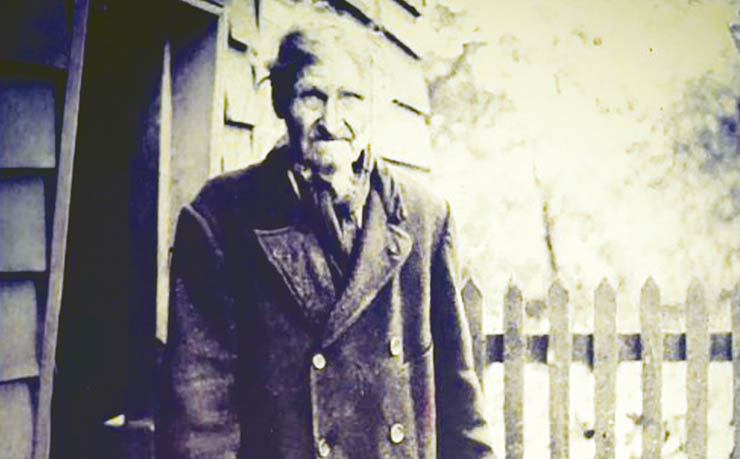
    ‘Old George’ Pickingill

    One of these alleged ‘witch masters’ was the Essex cunning man ‘Old George’ Pickingill (1816–1909), who is also credited with having a role in modern Wicca.1 Pickingill or Pickingale (his surname is uncertain) fitted the stereotyped image of a wizard and was described as “a gaunt, ragged creature, dirty, unkempt, and fierce, with piercing eyes which terrified all who saw him.”2 He was widely feared and respected in the Essex village of Canewdon, where towards the end of his life he lived as a widower and worked as a farm labourer. He was said to possess the Sight, inherited from his Romany ancestors, and could find missing property and see into the future. In addition he had the magical power to summon up elemental spirits to physical manifestation and allegedly would make them cut the hay while he sat in the hedge puffing on his pipe and swigging cider.

    The local farmers feared the power of the old wizard so much that they bribed him with beer and food so he would not curse their animals or farm machinery. His landlord also allowed him to stay rent-free in his cottage. It was said that if Old George pointed his blackthorn walking stick, or ‘blasting rod’, at a person they would be paralysed to the spot. They would only be released when the wizard decided. If Old George stood on the doorstep of his cottage and blew a special wooden whistle he owned, all the witches in the village would be forced to come to his bidding and dance in the churchyard. This suggests he was the Magister or master of the local coven.

    People who passed Pickingill’s tumbledown cottage late at night and looked in through the dust-grimed and cobwebbed windows alleged they saw the old man dancing with his imps or familiar spirits. The ornaments and furniture also joined in the mad dance like the Sorcerer’s Apprentice sequence starring Mickey Mouse in the Walt Disney film Fantasia. When a woman visited Pickingill when he was dying she reported seeing his imps scampering about on his bedcover in the shape of white mice.

    Another source says that Old George was regarded as the ‘Devil incarnate’ by the locals and his family were feared all over eastern England as ‘a race apart’ of witches, warlocks and wizards. It was also claimed that Pickingill was so famous, or infamous, that he was visited by occultists and magicians from all over Europe who sought his advice and instruction.3 When this writer visited Canewdon in 1977 a local resident (then in her seventies) told him that her mother had been a member of George Pickingill’s coven. It apparently consisted of thirteen women with Old George as the ‘Devil’ or male leader. She added that strangers from outside the village and some from ‘far away’ came to consult him because of his occult knowledge and magical powers.

    E.W. Liddell, who was initiated into Pickingill Craft in Essex in the 1950s, has alleged that George Pickingill worked in his early life as a horse dealer and used to travel all around southern England. During this period he allegedly founded nine covens led by priestesses he had specially selected because they had the ‘witch blood’ and psychic or magical powers. It is further claimed that in either 1899 or 1900, while he was a student at Cambridge University, the famous ‘black magician’ Aleister Crowley was briefly involved with one of Pickingill’s covens in Norfolk. His mentor in the Hermetic Order of the Golden Dawn, Allan Bennett, allegedly introduced him to the Craft. It has been also alleged a photograph exists showing Crowley, Bennett and Pickingill together, but it has never emerged into public view.4 Crowley did not last long in the witch coven he joined as he failed to attend meetings. He later told Gerald Gardner, when the two men met in May 1947, that he left because he “refused to be bossed around by a woman.”5

    Gardner further told Crowley’s literary executor and first biographer, John Symonds, that the Great Beast was “very interested in the witch cult, and had some idea of combining it with the Order [the OTO or Ordo Templis Orientis], but nothing came of it.”6 When the writer Francis King met Louis Umfraville Wilkinson, a close friend of Crowley’s who officiated at his funeral service in December 1947, Wilkinson told him Crowley said he had “been offered initiation into the witch cult” as a young man.7

    It was true that Crowley had been interested for many years in establishing a popular neo-pagan nature religion and it is probable that he and Gardner discussed it when they met. Crowley certainly granted the founder of Wicca a charter to establish a lodge of the OTO, although he did nothing about it. It has even been suggested that Crowley might have considered Gardner as his possible successor as the head of the Order after his death. E.W. Liddell claims that Crowley used a technique of “magical recall” to remember the rituals of the old Norfolk coven and he then passed them on to Gardner.8 It is also said that the New Forest coven into which Gardner was initiated in September 1939 was a surviving remnant of one of the Nine Covens.9 Gardner, however, influenced by the theories of Dr. Margaret Murray, author The Witch Cult in Western Europe (1920), was more interested in promoting witchcraft publicly as a Goddess worshipping, neo-pagan, nature religion for the masses. Neither the image of Old George Pickingill as a ‘cunning man’ or the beliefs and practices of traditional or historical witchcraft, fitted with this radical and innovative concept.

    Since Gerald Gardner died in 1964, Wicca, in both its Gardnerian and Alexandrian forms (named after Alex Sanders, the self-styled ‘King of the Witches’) has spread worldwide. It can now be found in the United States, Canada, Europe, Australia, New Zealand, South Africa and even Brazil and Japan. In the 1970s an Australian called Simon Goodman (aka Ian Watts) claimed he had been initiated into what he called ‘Sussex Craft’. This has allegedly been brought over to Australia from a village in Sussex in England and was connected with George Pickingill. From the description of its rites and beliefs it seems to have been closer to historical or traditional witchcraft than modern Wicca. A male Magister or Master led the coven and they exclusively worshipped the Horned God (unlike modern Wiccan covens that are mostly Goddess orientated). The ritual implements used in the circle by the Sussex coven included a stang (forked staff), cauldron, a human skull, and a besom.

    Get the issue this article appears in

    Wicca & Traditional Witchcraft

    What of traditional witchcraft today and the differences between it and modern Wicca? Unlike the average Wiccan, the traditional witch prefers to work outdoors rather than in a cosy, centrally heated, suburban sitting room. For that reason they do not go ‘skyclad’ (naked), preferring robes or cloaks with hoods. This is why traditional groups are sometimes called ‘robed covens’. As one would expect from the fact that they usually work outdoors, the genii loci or ‘spirits of place’, the wights or earth spirits of the land, are very important in their workings.

    The mystical concept of the enchanted or sacred landscape is important, because traditional witches regard themselves as the stewards or guardians of ancient sites such as stone circles, standing stones and burial mounds. They will frequently work their rites on or near the prehistoric trackways that mark the ‘spirit paths’, ‘ghost roads’ or leylines that crisscross the British countryside between these natural power centres. However, they are likely to be less sentimental about the environment than Wiccans. They recognise that nature can be ‘red in tooth and claw’ and that the natural laws are based on ‘the survival of the fittest’.

    Unlike Wiccan covens that are ruled by a High Priestess with her High Priest as consort and initiation is always male to female or female to male, traditional covines are led by a male leader known as the Magister, Master or Devil, who initiates both men and women into the Craft. The female leader is known variously as the Magistra, Mistress, Maid, Lady, Dame, or Queen of the Sabbat. The Magister has a male deputy called the Summoner who is responsible for organising the dates, times and places for the meetings. Some groups also have a Verdelet or Green Man whose task is to teach the other coveners the secrets of the magical powers and healing properties of herbs and plants.

    Within the operative or magical practices of traditional witchcraft one can find the concept of spirit flight (astral projection) to the Witches’ Sabbath, sometimes using the sabbati unguenti or ‘flying ointment’ made from narcotic plants. Techniques of psychic vision, trance, mediumship, ‘true dreaming’ and spirit possession are also used to contact the Otherworld in ways that are allied to ethnic forms of shamanism. Elementals and spirits are summoned and there is communion with the realm of Faerie, the use of familiars, fetches (the witch’s astral double) and spirit guides, shapeshifting into animal form, divination, necromancy, and wortcunning (herbalism).

    Some traditional witches follow old-style dual faith observance using the psalms, working with the company of saints and employing Christian imagery, symbolism and liturgy in a heretical and subversive way. This is akin to similar practices found in voodoo and Santeria in North and South America. In common with the witches and cunning folk of the past, the modern traditional witch can both cure and curse as the need arises.

    Traditional witches approach divinity in either a duotheistic or polytheistic way. The goddess of the witches has both a bright and a dark aspect, often associated with the waxing and waning of the moon. She can be personified mythologically as Hecate, Diana, Frau Holda, Lilith, or the Queen of Elfane (Faeryland). The witch god is also dual-faced as the Lord of the Wildwood, the Green Man and the Oak King in summer and the Lord of the Wild Hunt, Lord of Death or the Holly King in winter. In mythic terms he is represented as Herne, Wayland, Puck or Robin Goodfellow, Tubal Cain, Sylvanus, Lucifer, or the King of Elves. He also appears in animal form as a stag, bull, goat, ram or a black dog. Many traditional witches prefer not to associate their deities with any mythology. Instead they refer to them obliquely as the Old Ones, the Owd Lad and Owd Lass, the Old Man and the Old Woman, the Lord and Lady, the Horned One, the Devil, the Old Dame, or just Him and Her.

    Although a few traditional and hereditary witches (those belonging to a family tradition) have come out of the shadows in recent years, they are more reluctant than Wiccans to seek publicity. They are not likely to appear on daytime television wearing crushed velvet robes, waving knifes and swords and covered in occult bling. In fact they often look surprising normal, wear ordinary clothes and blend into the background. Because they possess a fund of knowledge about the stars, trees, plants, ancient history and the weather, people may just think they have a keen interest in country matters, nature and folklore.

    Wicca obviously attracts many people, especially those seeking a trendy ‘green’ form of spirituality that worships nature. Those who follow the Old Craft today do not regard themselves as ‘nature worshippers’. Many actually do not believe it is a religion per se, and certainly not a ‘nature religion’. Instead they regard it as a mystery cultus offering an ancient heritage of forbidden wisdom and occult (hidden) knowledge. It is a mystical path that leads to spiritual enlightenment and ultimately to gnosis and union with the Godhead. It represents a bright lantern shining in the dark for those dedicated seekers to follow who still seek the ancient Mysteries in the modern world.

    [alert type=”general” dismiss=”no”]This article was published in New Dawn Special Issue Vol 11 No 4.[/alert]

    [alert type=”success” dismiss=”no”]If you appreciate this article, please consider subscribing to help maintain this website.[/alert]

    Footnotes

    1. E.W. Liddell, The Pickingill Papers: Old George Pickingill and the Origin of Gardnerian Wicca (edited and annotated by Michael Howard), Capall Bann UK, 1994
    2. Eric Maple, The Dark World of the Witches, Robert Hale Ltd UK, 1962, 185
    3. Charles Lefebure, Witness to Witchcraft, Ace Publishing USA, 1970, 51-54
    4. Liddell, 21
    5. Jack Bracelin, Gerald Gardner: Witch, Octagon Press UK, 1960, 158
    6. Letter in the Gerard Yorke Collection at the Warburg Institute, London quoted in Professor Ronald Hutton, The Triumph of the Moon: A History of Modern Neo-Pagan Witchcraft, Oxford University Press UK, 1999, 219
    7. Francis King, Ritual Magic in England, Neville Spearman UK, 1970, 140-141
    8. Liddell, 160
    9. Liddell, 23

    © New Dawn Magazine and the respective author.
    For our reproduction notice, click here.
  • Marijuana Reconsidered: An Interview with Dr. Lester Grinspoon

    Marijuana Reconsidered: An Interview with Dr. Lester Grinspoon

    Dr Lester Grinspoon is associate professor emeritus of psychiatry at the Harvard Medical School. He researched the medicinal legitimacy of marijuana prohibition 45 years ago and discovered that an immense chain of lies served as a base for sending millions of people to jail. Since then he’s became an advocate for telling the truth about marijuana.

    PATRICK DEWALS (PD): Can you tell me how you became interested in marijuana?

    LESTER GRINSPOON (LG): Well it began in 1966. During my anti-Vietnam activism I met Carl Sagan and we became very good friends. When I met Carl Sagan I was convinced cannabis was a very harmful drug. Going to his house one day I discovered that he smoked cannabis and so did many of his friends. Now these were not unsophisticated people and I tried to tell Carl that marijuana was harmful, but he joyfully responded that it wasn’t harmful at all.

    With this experience came the idea of writing a paper that summarised the medical scientific basis for marijuana prohibition. At that time [in the USA] marijuana prohibition was leading to the arrest of 300,000 people a year, mainly young people, 89% for simple possession. For me it became important this prohibition was justified. It was in the library of the Medical School I found out that I was completely wrong about the harmfulness of marijuana. Not only was it not harmful, it was remarkably nontoxic, and the drug itself was not causing harm to the user, unlike the policy of arresting people. Some went to prison for possessing it and others saw their career goals compromised.

    I wrote an article about the subject and it was published in the International Journal of Psychiatry. One of the few people who read it was the editor of Scientific American. He asked me to reduce the article so it would fit in his magazine, to be published as the lead article in a coming issue. When my article was published in November 1969, it caused a huge tsunami so to speak that resulted in proposals from three different publishing companies for me to write a book about marijuana. Eventually I wrote my book, Marihuana Reconsidered, which came out in 1971, through Harvard University Press.

    Doing the research for my book, I discovered marijuana was not harmful and I started to understand why people used it, what the attraction was. And I decided, at the age of 42, that I was going to use it as well. It was just too interesting an experience to let go. But I also knew that if the book was successful there would be a good chance I’d be asked to testify before a congressional session or senate committee. Because I didn’t want my own experiences with marijuana to make my testimony less objective, in the view of others, I decided to use marijuana two years after publishing my book.

    And, indeed, I ended up testifying before a senate committee. I remember a big tall senator, who was rather doubtful about all I said, asking me, “Doctor did you ever use marijuana?” and I answered, “Senator, I would be glad to answer that question if you could tell me that if I gave you an affirmative answer would it make you more sympathetic to my answer or less?” He stared at me, “You sir, are being impertinent,” and he walked out the backdoor. Later that day, when I drove home, I said to my wife Betsy, “The time has come,” and sometime that week I experienced marijuana for the first time.

    PD: You said earlier that through researching your first book you came to understand why people use marijuana. What are the reasons people use it?

    LG: Most people are familiar with recreational use. Additional to this use marijuana has an ancient history as medicine. We know that Shen Nung, a Chinese emperor, who lived about 5,000 years ago, used marijuana as medicine. In modern Western medicine we had to wait until the mid-19th century for the introduction of marijuana through an Englishman named William O’Shaughnessy. At that time he worked in Calcutta and observed the indigenous people using marijuana as medicine. He began studies on animals to be sure it was safe and published the studies when he came back to England. Between 1849 – the year O’Shaughnessy published his first paper – and 1900 I came across about 100 critical papers on marijuana as medicine in my review of the literature.

    The third use is the enhancement of a broad range of human activities. Everybody that has used marijuana knows an ordinary meal can taste like a culinary treat and it can enhance sexual experiences. These are enhancements right there on the surface. Once one becomes more experienced with cannabis, they can experience or appreciate phenomena in another way, for example, understand art in a better way, use it for creative purposes or deepen spirituality.

    PD: When you published your first book Marihuana Reconsidered in 1971, which was a controversial book at that time, what were the reactions of your peers and other scholars?

    LG: Yes, there was a lot of reaction. I remember the most significant of all. I was put up for early professorship by my chief at Harvard Medical School. At that time I already had published about 70 papers about schizophrenia and I had some expertise in this domain. When my chief came back from the promotions committee he told me committee members loved my work on schizophrenia but they hated Marihuana Reconsidered because it was much too controversial.

    PD: Even with all the data that you used to support your work?

    LG: Oh yes, I just couldn’t believe it, I said to him, “Controversial, what do they think of the scholarship?” When I was leaving his office my chief said to me, “They asked me to ask you a question, what are you planning to do next?” I said that I was an intellectual and I did not know yet, which was a kind of lie, but that I wanted to have the freedom to go my way. The affair resulted in the turndown of my candidacy for professorship and I had to wait till 1995 to become professor at Harvard, twenty years after my first candidature. In the beginning I was heartbroken but as I was not a professor I skipped a lot of department meetings and other things which meant I had a lot of time to do my own research. Because of the free time I started to become active against cannabis prohibition that was and still is very destructive in American society.

    PD: What can you tell me about marijuana as an addictive substance?

    LG: There are still people who think it’s addictive. They say about 10% of users become addicted. I don’t see it as an addictive substance. Sure you see some people using it all the time, especially many young people, but they do it because they haven’t figured out what to do with their lives. I used it for more than four decades, almost everyday, and when there were times I could not use it I did not encounter any problems…. I don’t believe there is such a thing as marijuana addiction but common people are very concerned when they discover their kid is using marijuana. They will get upset and take him to the psychiatrist. This doctor has no other choice but to diagnose the youngster as marijuana addicted, as is mentioned in the DSM, because without putting a label on the ‘patient’ he will not be reimbursed. People use this data to ‘show’ that 9 or 10% of marijuana users are addicted. I remember that one of my students who smoked marijuana decided one day to stop using it to prove to himself he was not addicted. I thought it was a good idea and I said to myself, let’s stop for 40 days and see how it goes. I had no problem at all. The people who insist marijuana is addictive are on very thin ice.

    PD: Can cannabis cause psychosis or schizophrenia?

    LG: Absolutely not! Schizophrenia is a disorder which one is born with but it doesn’t always manifest itself. It usually starts during adolescence. The one possible connection to schizophrenia is when people who are inexperienced with cannabis start smoking it and become anxious or paranoia which is, of course, uncomfortable. I imagine that with someone who is new to cannabis, it can act as a precipitating event. Many schizophrenics say their psychotic episode started after such a precipitating event. Those events can range from an automobile accident or the death of a loved one. And I can imagine, but I have never seen this, that the naïve use of marijuana can act as a precipitating event.

    PD: What do you know about marijuana in relation to cancer?

    LG: I am glad you bring that up. I hear a lot of people talking as if cannabis can cure cancer, and that worries me. People who are not educated on this will not go to a doctor and decide to miss other treatments and just rely on cannabis. By deciding this course of action, they in fact lose a lot of time because with cancer you need to act as fast as you can. I think you cannot say cannabis cures cancer. However, there are some properties of cannabis that in my view make it very important patients use marijuana alongside modern Western oncological treatment. In the case of chemotherapy, for instance, they can use cannabis to combat the side effects of the treatment such as distressful nausea. Cannabis can help to diminish the size of tumours which is important when the tumour causes an obstruction. It also stimulates appetite, and in vitro it stops cancer cells from spreading, kills cancer cells, leaves healthy cells untouched, and interferes with the blood flow in the tumour. So there are a number of effects showing that marijuana pushes back cancer. This makes it important to use marijuana but with modern medicine. Nobody has proven to me so far that cannabis cures cancer but for sure it is a very good adjunct.

    PD: In Belgium, our minister of health, Maggie De Block, who is a doctor, says you can’t use marijuana as a medicine due to lack of proof. According to her, the only thing useful is Sativex and only for MS patients. What is your comment?

    LG: Let me start with saying that Sativex is marijuana! To say that you could use Sativex and not take marijuana for a similar effect is silly. And to state there is no evidence is nonsense. There are mountains of anecdotal evidence, you cannot deny it. We are used to the idea that medicines come from pharmaceutical companies, after they do double blind tests. But this is a plant, and you cannot patent a plant and have an exclusive license to sell it. That’s why the pharmaceutical companies are not interested in doing expensive tests with marijuana because after positive tests anyone could bring marijuana-based medications on the market.

    PD: Are you saying that marijuana is a great medicine for the people but not for the pharmaceutical companies, for them it is worthless?

    LG: Absolutely! Another reason why you should not worry is marijuana is non toxic. I remember when I had for the first time a patient with Crohn’s disease; even after surgery she was still compromised in her work because of it. I said to her, I don’t know if marijuana will help you but I would try it. If it doesn’t help you it surely is not going to hurt you. And today, if you read the medical literature, it became a very important treatment for people with Crohn’s disease. Some people say to me you should not tell people to use marijuana for this or for that. But that’s silly because it might help you and surely will not hurt you. If it does help you, you are very fortunate because it has no side effects and it will always be cheap.
    [alert type=”general” dismiss=”no”]This article was published in New Dawn Special Issue Vol 10 No 5.[/alert]
    [alert type=”success” dismiss=”no”]If you appreciate this article, please consider a contribution to help maintain this website.[/alert]
    „Dr Lester Grinspoon, a psychiatrist, is a retired professor at the Harvard Medical School and a well published author in the field of drugs and drug policy. He has authored more than 140 articles in scientific journals and twelve books, including Marihuana Reconsidered and Marijuana, The Forbidden Medicine (with Dr James B. Bakalar). Dr Grinspoon currently maintains www.marijuana-uses.com, which chronicles real life stories of people who have had positive “non-medical” experiences with marijuana.

    © New Dawn Magazine and the respective author.
    For our reproduction notice, click here.

  • Unity: The Remarkable Story of Charles & Myrtle Fillmore

    Unity: The Remarkable Story of Charles & Myrtle Fillmore

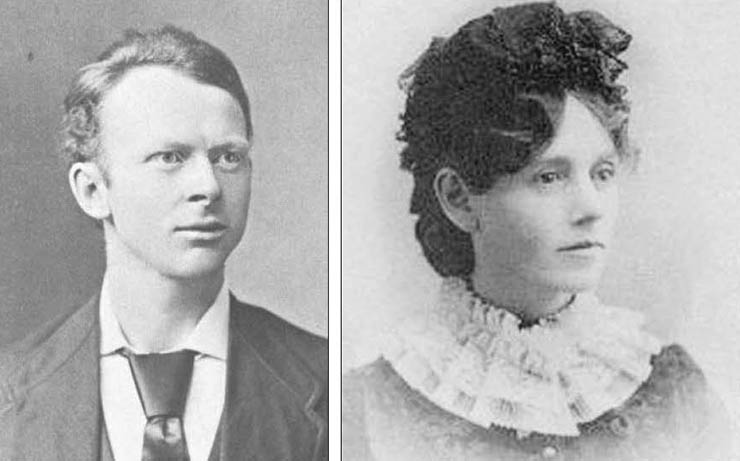
    Myrtle Fillmore was in desperate straits in 1886. Sick from tuberculosis and malaria, her much-younger husband had managed to bankrupt himself in both the mining and real-estate industries. She was so weak that she was incapable of caring for her children, and her aged mother-in-law was added to an already impoverished household as cheap live-in care.

    One evening she went along to see a visiting faith healer, something she always did in the vain hope there might be some way of remedying her situation. Sitting in the lecture hall she heard Dr. E. B. Weeks say something that would change her life forever: “I am a child of God and therefore I do not inherit sickness.”

    Her cure seemed to happen from the moment of hearing this affirmation, and she went home and spent some intense time in meditation and prayer, day after day repeating this simple sentence. Soon she was cured of her illness, and her previously agnostic husband Charles became convinced there was something in this mind-cure business. Together they would go on to form one of the most established and long-lived of the New Thought religious organisations, the Unity School of Christianity.

    Charles himself had been an invalid since he was a small boy. Having fallen on the ice and dislocated his hip as a child, he had been lame ever since. The injured leg was shorter than his other leg, and his hip was frozen in place, incapable of movement. The combined injuries caused him chronic pan, which he bore with great fortitude. It wasn’t, however, until he began to follow his own wife’s lead that he managed to find some degree of relief from his lifelong physical handicaps. He set himself his own regimen of intensive prayer, meditation and affirmation, booking an appointment between himself and God every night that he observed scrupulously. This effort soon bore fruit, and Charles Fillmore could later boast of his own cure through the application of New Thought methods.

    Dr. E. B. Weeks, the metaphysical lecturer who had been Myrtle Fillmore’s unexpected saviour, was a student of Emma Curtis Hopkins, one of the most influential New Thought teachers in history. Hopkins had been a close confidante of Mary Baker Eddy, but had eventually, almost inevitably, fallen out with that strong personality. She re-located to Chicago in 1886 and quietly proceeded to influence generations of writers, teachers and spiritual leaders. Even now, those in the know refer to Hopkins as “the teacher of teachers,” though her name has been eclipsed by her more famous students. The Fillmores became so enamoured of Hopkins that they frequently made the expensive trip to Chicago to study with her, and sponsored her visit to Kansas City.

    While taking part in one of Hopkins’ study groups they were inspired to establish a silent prayer ministry, which was eventually to become Unity, a name also revealed to them under the auspices of Hopkins. It was she who encouraged them in their ministry, recognising in this peculiar couple the energy, curiosity and talent for organisation that would eventually see them spreading New Thought ideas across America. In June 1891 Hopkins ordained them, and later, after they had established their own religious congregation, they would have their own students re-ordain them.

    In 1891 they also caught the attention of a woman who was to become their greatest student and the author of what is seen by many as the textbook of the movement. H. Emilie Cady was a student of Emma Curtis Hopkins, and she started writing pieces for the Fillmore’s journal, also called Unity (and still being published). In 1896 she compiled Lessons in Truth, A Course of Twelve Lessons in Practical Christianity, one of the great classics of the New Thought movement, and a canonical text for all Unity students.

    The Fillmores, by nature open-hearted, had always seen the potential for camaraderie among the different New Thought schools and teachers, and in 1896 they hosted a meeting for like-minded groups from around the country. Charles, busy teaching and developing his new movement, waited until 1909 to publish his first book, the influential Christian Healing. Presented in twelve lessons, this book prefigures the metaphysical theory for which he would become most famous: The Twelve Powers of Man. This set of “spiritual tools” was built around a twelve-fold framework that incorporated the twelve Disciples of Christ and the twelve months of the year. It was set out in a 1930 book of the same name, and is still used by Unity groups as a handy structure of spiritual learning.

    Unity was from the start characterised by its progressive ideas and openness to all people and traditions. Part of its official doctrine is that: “All the sacred scriptures from the world’s great religions can be used to discover truth.” Charles himself had read widely in Eastern religion, as well as among the Western esoteric traditions. His exhaustive knowledge of the Bible lead him to conclude that it and all other canonical scriptures should be read and interpreted metaphysically, not literally. His Metaphysical Bible Dictionary (1931) drew on a lifetime of reading and study, and remains a useful resource for anyone seeking to understand the Bible outside of conservative Christian analysis.

    Even before his conversion, Charles Fillmore had been convinced by a prophetic dream to move his family to Kansas City. This would eventually become the headquarters for the Unity movement, with Fillmore purchasing 58 acres in Jackson County, Missouri, to establish Unity Village. This religious complex, that housed his family along with worship and training facilities, is still thriving today. It is symbolised by the Unity Tower, completed in 1929, which doubles as a reservoir to help supply the complex with its water.

    Myrtle Fillmore, nine years older than her husband, died in 1931, after which Charles married his secretary Cora Dedrick, with whom he worked closely on his later writings.

    The organisation is best known these days for its Silent Unity prayer ministry, once accessed by letter and telephone and these days by filling in an online form, and its long-lived magazine of inspirational readings and affirmations, The Daily Word. In these forms it has touched countless lives, including many people who might not necessarily identify themselves as New Thought practitioners. It also produces a very popular online radio station, all part of this group’s tradition of media engagement and forward thinking.

    The Fillmores initially strengthened their ministry through the judicious publication and distribution of journals and tracts, moving with technological changes to produce well-remembered radio and TV spots which were part of the American popular cultural landscape into the 1980s. Their inspirational late-night TV talks delivered by Charles’ daughter and many other celebrities remain iconic memories for many Americans in their 40s and 50s.

    The great charm and personal conviction of the Fillmores has seen their organisation in good stead, and it has continued to operate through the years more or less free from any taint of scandal. They managed to take the distinctly nineteenth century tone of their great teacher, Emma Curtis Hopkins, and usher it into the twentieth and now into another century. They taught from example, and their teachings have gone on to help countless others properly use their minds and employ the spiritual technologies of prayer and meditation.
    [alert type=”general” dismiss=”no”]This article was published in New Dawn 161.[/alert]
    [alert type=”success” dismiss=”no”]If you appreciate this article, please consider a contribution to help maintain this website.[/alert]

    References

    Hugh D’Andrade, Charles Fillmore: Herald of a New Age

    Thomas E. Witherspoon, Myrtle Fillmore: Mother of Unity

    James Gaither, The Essential Charles Fillmore

    Charles Fillmore, Christian Healing; The Twelve Powers of Man; Metaphysical Bible Dictionary

    H. Emilie Cady, Lessons in Truth, A Course of Twelve Lessons in Practical Christianity

    © New Dawn Magazine and the respective author.
    For our reproduction notice, click here.
  • Medieval Magic & Pharmacy: Not Just “Flying Ointments”

    Medieval Magic & Pharmacy: Not Just “Flying Ointments”

    From New Dawn Special Issue Vol 10 No 3 (June 2016)

    When I first started my investigation into the so-called “witches’ ointment” of the early modern period I was looking for a specific kind of ointment that caused a specific kind of experience – a “flying” experience, as recognised in contemporary popular culture.

    But to delve deeper into the trial records, popular sermons, demonology texts, and medieval pharmacy one will discover not just a flying ointment, but a host of uses for these ointments. Therefore, a more neutral term, like “psyche-magical” (psychedelic + magical) is useful to convey the breadth of experiences available through these concoctions.

    Such magical drug practices (veneficia) included (but were certainly not limited to) entheogenic uses (“generating the divine within”), bewitchment, prophecy, Christo-pagan medical magic, transformations, recreation, and, of course, flying. In short, to address only “flying ointments” in early modern Europe would be akin to referring to all cars in Australia as “Hondas.” Medieval veneficia was just as various as the cars we see on the roads every day. In point of fact, people didn’t even use just ointments: they also employed powerful potions, powders, and fumigations as drug delivery vectors.

    To be sure, people did use these ointments as flying ointments. However, a further breakdown of even the flying ointment is possible. There is strong evidence to suggest that some magical practitioners used these flying ointments in ways that had nothing to do with entheogenic experiences and also in ways that had everything to do with entheogenic experiences! In still other cases, these magical ointments were used entheogenically that had nothing to do with flying. For example, while Dominican theologian Johannes Nider (c. 1375–1438) described a flying ointment used for entheogenic purposes, we must mark that against a report from Abraham of Worms (c. early to mid-15th century) who tells of a Linzian witch who used her flying ointment as a way to astral project leagues away to Abraham’s home town. There is not a trace of entheogenism in Abraham’s chronicle of the event. As further evidence that mindset and drug-use went hand in hand, it is perhaps no surprise that Nider’s description of a witch using an entheogenic flying salve included magical songs and chants, while Abraham’s report of a non-entheogenic use included no magical accoutrements beyond the powerful ointment itself.

    Moreover, entheogenic experiences didn’t just take the form of spiritual flying; in some instances, according to tales from Northern Germany, a salve was rubbed near the eyes to allow a person to see the “inhabitants of the lower world.”

    Beyond the entheogenic practices of common people, Renaissance magicians would fumigate powerful solanaceous psychoactives like henbane and mandrake to produce visions of spirits. Such plants, we are told, were even called “spirits’ herbs,” by magicians – a testament to these substances as used as entheogens in even high culture. On other occasions necromancers, too, would prepare henbane fumigations to call upon the dead. One further case featured a man who inhaled a psychoactive powder so that his “evil spirit” would appear to him. This is not to suggest that only solanaceous plants were used as entheogens.

    There is evidence of a remote bacchanalian kind of heresy in the Cottian Alps that survived into the High Middle Ages, which employed the poisons from toads in their Eucharist. The mixer of the potion, one Bilia la Castagna, would brew her potion on the eve of Epiphany, perhaps suggesting that the drink was meant to induce visions of Christ. The report of Bilia’s brew is invaluable to historians because it describes the toad potion in a way consistent with bufotenine (the active psychoactive in such toads): one man drank too much and almost died; the other congregants who drank a smaller amount revelled in their visions.

    Here we can see clearly the range of spiritual uses and beliefs associated with the entheogenic state, as spiritual flying ointments, as fumigations for inviting spirits into one’s home, as snuffs, as non-flying entheogens, and as Eucharists mixed by some heretics for their ceremonies.

    Beyond the realm of entheogens, the ointments (and potions, powders, and fumigations) were utilised for other forms of medieval psyche-magic as well. For example, a certain kind of mercenary sorcery (“bewitching”), found in both common sorcery and learned magic, might include the surreptitious drugging of a rival or nagging neighbour. To begin in the realm of “low” or “common” sorcery, the spell-caster might place a drug in someone’s food or drink. Then, waiting for the opportune moment for the drug to take effect, she or he would then chant incantations at their victims – the victims, believing that the true power came from the spell-caster, not the drug. Other times, elaborate magical rituals covered the use of the drug, as we see with the dealings of a physician-magician from Gelders. After performing extravagant rituals, he slipped an unfortunate woman a drug, despicably raping her as soon as she fell under its spell.

    Sadly for those living at the time, some trickery didn’t involve grand magical demonstrations at all, but rather relied on only two things: the drug itself, and the gullibility of the victim. For example, Dutch physician Petrus Forestus (1521–1597) warned that charlatans, posing as dentists, would often have an ailing patient inhale the fumes of burning henbane. As the drug took effect, and the victim started to fall into a soporific stupor, the thief would fleece the prey of her or his possessions, taking off shortly thereafter. This seems to have been a common form of thievery in the early modern period.

    But not all non-flying magical drug practices were so dastardly. Some were benevolent, as found in some of the Christo-pagan shamanistic medical magic (yes, that existed!) of the time. Indeed, one of the more interesting realms of this psyche-magic could be found in the private homes of an ailing villager who, unable to afford a university physician, would call upon a local healer instead. What makes this form of shamanistic medicine so unique from other practices in the worldwide entheogenic geography is that it seems it was up to the patient to ingest the drugs, not the healer. Such magical medicinal ceremonies were instrumental in protecting against supernatural disease-makers like elves and goblins. It included the patient taking the powerful hallucinogen henbane, while the healer sung chants over her or his body. It is difficult to imagine the patient not having some supernatural, otherworldly experience with these kinds of stimuli in place.

    Like today, these drugs also had purely recreational uses – a paradigm that goes at least as far back into history as the Old Testament (Genesis 30:14). The word found in both legal and ecclesiastical writing is pocula amatoria, which translates literally into “love cup.” These love cups, of course, weren’t always cups (i.e., potions), but took the form of ointments and powders as well. The most (in)famous additive to these love philters was hallucinogen mandrake. Though, that is not to say that other intoxicants like cannabis, henbane, and opium weren’t also utilised. It’s really anyone’s guess, as the most common description of the ingredients in love potions only mention a venene, a “drug.” The drug was probably different from the ones found in flying ointments, as the point of a love drug wasn’t to fall into a surrealistic dream world, but rather stay awake and vibrant! Thus, drugs like mandrake were used for both lust, and anti-lust purposes, again indicating that the power of the user’s mind was sometimes (though certainly not all times!) enough to sway the magical experience one way or the other.

    But this also depended on who was using the drug. In fact, in a move that turns this entire genus on its head, the same drugs were also used to alleviate sexual tensions! Two authors, Petrus Hispanus and the famous Hildegard of Bingen saw these psychoactives as a way to halt promiscuity in men (turns out, it would take more than magic to cure that!). But their records are important as they show a variety of psyche-magical uses of these drugs. In fact, Hildegard names mandrake specifically in her writings. Only she didn’t think that it served best as a sex promoter, but rather a sex inhibitor, a paradigm that some, like famous Renaissance magician Heinrich Cornelius von Nettesheim, clearly ignored. In fact, the Renaissance magus sung the praises of mandrake as the earlier pagans had: it allowed a person to achieve multiple orgasms! Others, like Cristóbal di Acosta favoured opium as the preferred drug of sexual pleasure, remarking that only stupid people should use it as it sent the imagination on fire! Intelligent and imaginative people, on the other hand, would orgasm too quickly if they took opium and therefore should avoid it.

    Evidence suggests that some practitioners used these ointments for certain types of animal transformations. What that means, or why it was a part of the magical landscape, remains unknown. It has been suggested this has some shamanistic undertones, but the truth is that not every kind of animal transformation had anything to do with shamanism. Other times, perhaps it did; it is really difficult to tell sometimes. Take Finicella, a sorceress who lived in Rome during the early 1400s. A popular preacher named Bernardino of Siena railed against Finicella, not just because of her magical practices, but also that she used a hallucinogenic ointment to imagine that she turned into a cat. While such transformations can be associated with shamanistic endeavours, we really cannot say one way or the other why Finicella used powerful drugs in such a way. Perhaps it was a form of entertainment before movies, radio, and television? In any event, this act of animal transformation was a popular use of magic by at least the mid-16th century. In fact, there are reports from both medical students of the time and common sorceresses using these drugs to imagine they were everything from geese to cows. In this latter example (turning into a cow) a young German girl named Magdalena attempted this magic and also believed that the ointment she used would also allow her to fly to a “witch dance.” Magdalena burned for persuading others to try it: a friend of hers, instead of turning into a cow and flying, experienced a “bummer,” being driven out of her senses.

    Get the issue this article appears in

    Unfortunately, not a single record details why this kind of animal transformation would be a preferable use of intoxicants. Perhaps it was some kind of fertility rite, the animals representing hopeful abundance in the future? This is, of course, mere speculation. All we can say is that this kind of magic apparently was desirable for some individuals.

    While the early modern “witches’ ointment” was surely invented by zealous theologians in the early 1400s as an explanation for the perceived “flight” of entheogenic fertility practices, the magical landscape ran much deeper than just a flying ointment. There were instead a host of ointments, powders, potions, and fumigations used for every kind of magical practice of which we are aware. So while the early modern flying ointment did exist, it is only the surface of a deeper reservoir of drug magical practices. Other kinds of magic, whether transformative, medicinal, mercenary, or otherwise, employed many of the same drugs found in flying ointments. However, the mindset of the person experiencing the effects of these kinds of drugs seems to have made a noticeable difference in how and why these kinds of psyche-magical substances would be interpreted.

    For more on the above, read Thomas Hatsis’s book The Witches’ Ointment: The Secret History of Psychedelic Magic.

    [alert type=”general” dismiss=”no”]This article was published in New Dawn Special Issue Vol 10 No 3.[/alert]

    [alert type=”success” dismiss=”no”]If you appreciate this article, please consider subscribing to help maintain this website.[/alert]

    © New Dawn Magazine and the respective author.
    For our reproduction notice, click here.