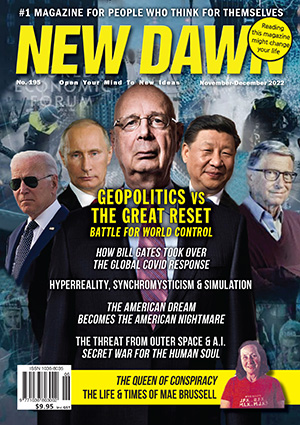
In a series of essays written in 2022, Terry M. Boardman revealed the deeper background to the Ukraine conflict, which he argues is actually a proxy war, an episode in a much longer-lasting war that the West, or more specifically, the ‘Anglosphere’, has been waging against Russia for about 200 years for both exoteric and esoteric reasons. The following extract from his new book looks at the all-important spiritual/esoteric dimension of the conflict.
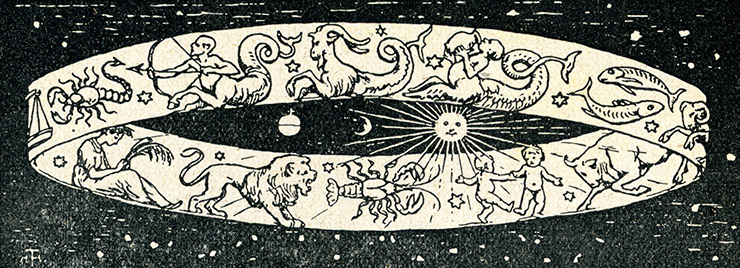
This esoteric aspect has to do with ensuring that the Slavic peoples, and especially the Russians, will not fulfil their potential to become the world’s ‘vanguard culture’ from the mid-fourth millennium onwards, but instead will come under the domination of the English-speaking peoples, whose current ‘vanguard’ status – which has become overwhelmingly driven by materialistic concerns and ambitions – would otherwise come to an end in the mid-fourth millennium (the end of the Age of Pisces).
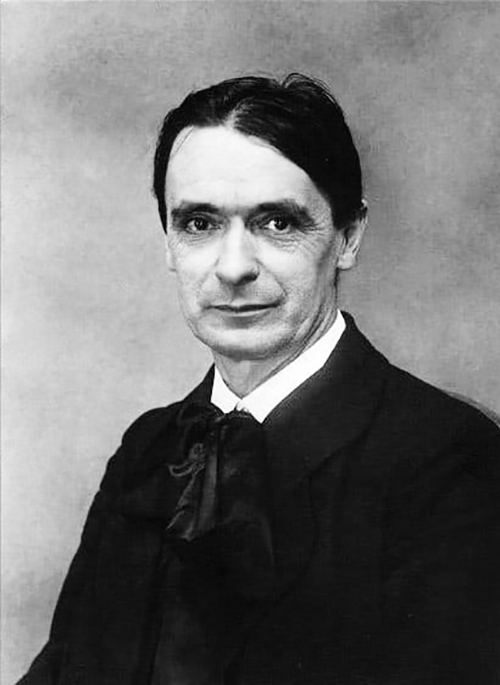
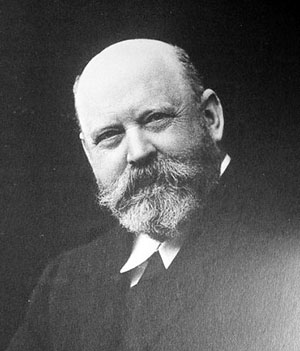
Rudolf Steiner (1861–1925)
What does it mean that the Slavic peoples have the potential to become the world’s ‘vanguard culture’ from the mid-fourth millennium onwards? It means that in what Rudolf Steiner called the Age of the Spirit-Self (the Age of Aquarius), which, according to Steiner, will follow the Age of the Consciousness Soul (the Age of Pisces), the human ‘I’ (the essential self, the spiritual kernel of the human being), in large numbers of individuals, will have learned to see itself and other I’s as spiritual beings.
These spiritualised I’s will then seek to form new communities on the basis not of the old blood ties or traditional religions but out of their own insight. The Age of the Spirit-Self (the Age of Aquarius) will be a new age of community, based on empathy for others, an age of brother-and-sisterhood that we in the West today can hardly even conceive of, just as people in Ancient Greece and Rome would hardly have been able to conceive of our modern Western individualist culture.
But we can see foreshadowings of this future today in the remaining traditional communal behaviours of non-Western cultures, although such behaviour is instinctive and collective, based on blood ties, whereas in the future (Slavic) epoch of the Spirit-Self it will be based on the moral individualism that will have been won as a result of our current (Germanic) Age of the Consciousness Soul.
The seed of this new impulse to new community, new fraternity, Steiner described, is already there in the Slavic peoples, who not only have the impulse to community – which all eastern peoples too have to a greater or lesser degree in comparison with the more individualistic westerners – but the Slavs also have a Christian culture. The native Slavic sense of community has been infused with over 1,000 years of an empathic Christian sensibility, which one can see especially in the unfolding, for example, of village life in Russia, the nature of the mir, a word which translates variously as community, peace, village, world, cosmos. Russian and Slavic literature is permeated with this empathic sensibility.
The English-speaking peoples are a branch of the larger Germanic group of peoples that originated in northern Europe (Scandinavia). From the late fifteenth century onwards, these Germanic peoples gradually replaced the peoples of southern Europe as the arbiters of the destiny of the West. The southern Europeans of the Greco-Roman or Mediterranean region had been those arbiters since the eighth century BC (the Age of Aries) when Greek culture began to flourish and Rome was founded, but from the fifteenth century AD onwards, the military, cultural and economic power of the Italian states, Iberia and France (France straddles both south and north) gave way, chronologically, to that of Switzerland, the Netherlands, Sweden and eventually England.
Rudolf Steiner described in numerous lectures how in the period of just over 2,000 years until the fifteenth century, Europeans – a sizeable minority of them, at any rate – had learned to think for themselves; this was a key achievement in what he called the Age of the Intellectual-Mind Soul. No longer did they feel the gods or God thinking through them or inspiring them; now Europeans felt that they themselves were thinking.
In the following Age of Pisces, from the fifteenth century, the Germanic or northern European epoch, the focus of development is on the individual human will – how human thinking applies the human will and, essentially, how the individual will becomes morally informed and directed by the human ‘I’.
This is a very dangerous phase of development, in some ways rather akin to adolescence in an individual’s development, because its early stage is usually one of considerable confusion, egocentricity and selfishness as well as materialism, a view of life that results from feeling alienated, to a greater or lesser degree, as an individual from the rest of life and the cosmos.
We are only 600 years into this Germanic or northern European epoch, the Age of the Consciousness Soul, as Rudolf Steiner called it, with its American and Australasian offshoots, and though there have been positive signs of growing human maturity over the past 60 years or so, there is still plenty of evidence of a thoroughly egocentric and competitive, materialistic culture in the West, especially in economic life.
Steiner described that the spiritual counterforces – which exist to provide humanity with the resistance it needs to develop inner capacities for love and freedom – desire that these egocentric and competitive, materialistic attitudes and behaviours (which have become extreme in the age of American hegemony since 1945), should continue on into the next epoch of human development, the Age of the Spirit-Self (the Age of Aquarius); indeed, their aim is for human development, in effect, to stop at our present stage. Life on earth would then become so miserable and oppressive that most people would no longer wish to incarnate on this planet, or if incarnated, would soon seek to exit this life. This is the goal of those spiritual counterforces who oppose humanity’s growth and development. If it were achieved, the mission or task of humanity and the Earth would be a failure. Love and freedom would wither in human and social development.
These counterforces, Steiner pointed out, influence the thoughts and actions of those at the helm of the English-speaking countries in the modern age. What is the aim, Steiner asks, of the elite groups, once secretive and only semi-visible, which are operative in the English-speaking world? In January 1917 he said:
They do not work out of any particular British patriotism, but out of the desire to bring the whole world under the yoke of pure materialism. And because… certain elements of the British people as the bearer of the Consciousness Soul are most suitable for this, they want, by means of grey magic [he means the mass media – TB], to use these elements as promoters of this materialism. This is the important point. Those who know what impulses are at work in world events can also steer them. No other national element, no other people, has ever before been so usable as material for transforming the whole world into a materialistic realm. Therefore, those who know, want to set their foot on the neck of this national element and strip it of all spiritual endeavour – which of course lives equally in all human beings. Just because karma has ordained that the Consciousness Soul should work here [in Britain] particularly strongly, the secret brotherhoods have sought out elements in the British national character. Their aim is to send a wave of materialism over the earth and make the physical plane the only valid one. A spiritual world is to be recognised only in terms of what the physical world has to offer.
This last point can be understood in the ways in which, in the West, spiritual practice has been taken over by, or put in the service of, physical aims, e.g. the commercialisation of Christmas and Easter, the turning of Eastern spiritual practices in martial arts and meditation from ways of living into ‘techniques’ of supporting ‘health’ – sport and ‘mindfulness’, and more recently, the creation of alternative worlds in virtual reality, Second Life and the Metaverse, in which individuals can supposedly live out their fantasies.
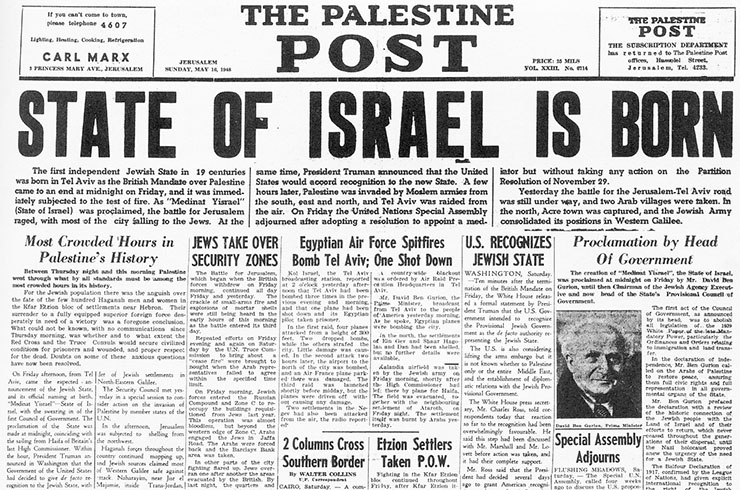
The conflict between Israel and the Palestinians has barely been out of the news since the State of Israel was created in 1948. Few people are aware of the secret wheeling and dealing that went on behind the scenes in the lead-up to the fateful decision of the British government to announce its support for the creation of a Jewish homeland.
The critical events discussed in the following article took place during World War I, the first global conflict in which millions of young men died on the battlefield. Jim Macgregor and Gerry Docherty, authors of the book Hidden History: The Secret Origins of the First World War, have previously appeared in New Dawn, writing about the real power behind the war, the group they identified as “The Secret Elite” – made up of bankers and politicians.
In the following exclusive article, they expose the shocking truth behind the controversial Balfour Declaration that justified the creation of a Jewish homeland in Palestine, and subsequently the State of Israel.
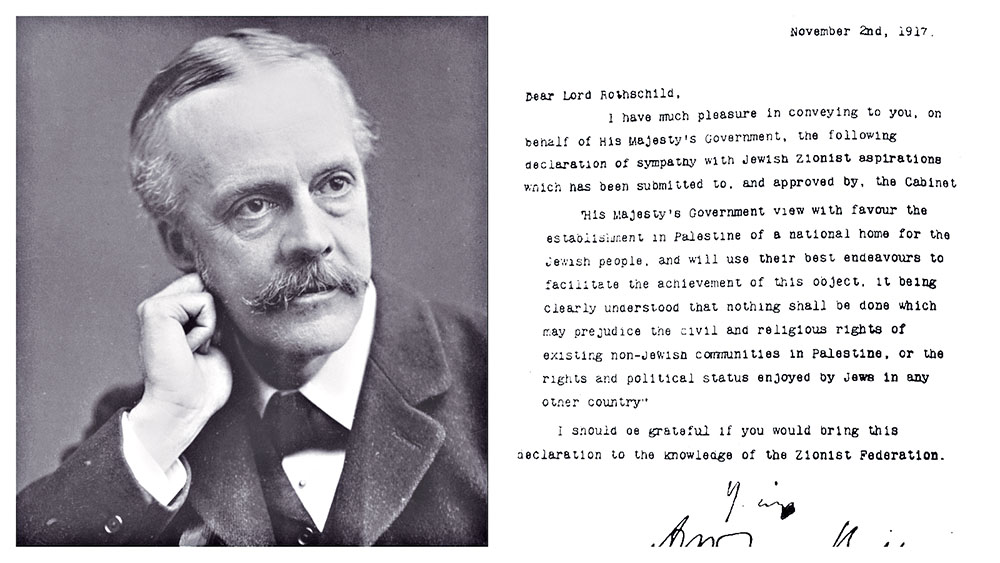
LETTER FROM ARTHUR BALFOUR TO LORD WALTER ROTHSCHILD
Foreign Office, November 2 1917
‘Dear Lord Rothschild,
I have much pleasure in conveying to you on behalf of His Majesty’s Government the following Declaration of sympathy with Jewish Zionist aspirations which have been submitted to and approved by the Cabinet:
His Majesty’s Government view with favour the establishment in Palestine of a national home for the Jewish people, and will use its best endeavours to facilitate the achievement of this object, it being clearly understood that nothing shall be done which may prejudice the civil and religious rights of existing non-Jewish communities in Palestine, or the rights and political status enjoyed by Jews in any other country. I should be grateful if you would bring this Declaration to the knowledge of the Zionist Federation.
Yours sincerely, (signed) ARTHUR JAMES BALFOUR’1
Arthur James Balfour’s letter to Lord Walter Rothschild, the first public statement by the British government during World War I announcing support for the establishment of a “national home for the Jewish people” in Palestine.
The above letter was released by the British Foreign Office and printed in The Times on 9 November 1917.
Why at this critical juncture did the British War Cabinet decide publicly to favour Palestine as a national home for the Jewish people? There was a war on, and it wasn’t going particularly well. What was their purpose? Where did this fit into the Secret Elite’s strategy to crush Germany and advance its globalist ambition? How had it come about that a homeland for one specific religious group appeared on the agenda as if it was a solution to an unstated problem? Even if anyone believed the lie that the Allies were fighting for the rights of smaller nations, why had religious identity suddenly become an issue of nationhood? Had anyone considered giving Catholics such rights in Ireland or Muslims such rights in India? Was the world to be divided into exclusive religious territories? Of course not.
Lord Walter Rothschild
To complicate matters further, one nation (Britain) solemnly promised a national home to what would become in time a second nation (the Jewish State of Israel) on land which belonged to another people (Palestinian Arabs) while it was still an integral part of a fourth (the Ottoman/Turkish Empire).2 In pandering to a relatively small group of Zionists, the Balfour Declaration was bizarre, deceitful and a deliberate betrayal of the loyal Arabs fighting in the desert war against the Turks. Perfidious Albion had rarely plumbed such duplicitous depths.
The absolute destruction of Germany and her Ottoman allies promised to pave the way for a post-war re-drawing of maps and spheres of influence which would advance the Secret Elite’s overall strategy – namely the control of the English-speaking elect over the world. The strategic sands of Arabia and the oil-rich lands of Persia, Syria and Mesopotamia had long been prime targets. These were the first in a number of prerequisites which would shape the Middle East after 1919 to the advantage of Britain in particular. Critically, as a neutral, America had to be very careful about open intervention even after she had entered the war in 1917, and to an extent Britain acted as her proxy in putting markers down for a new world order. It is important to remember that when early discussions about the future of a Jewish homeland in Palestine were in progress, little mention was made of American involvement. The truth is otherwise. America was directly involved in secret intrigues.
So, too, were small but influential groups of politicians and businessmen, English, American, French, Russian, men and women of the Jewish faith spread literally across the world, who supported a growing movement to establish a permanent homeland in Palestine. They were called Zionists. Take care with this term. Initially it included a range of Jewish groups which held different views and aspirations. Some saw Zionism as a purely religious manifestation of ‘Jewishness’. A small but intensely vocal group fostered political ambitions. This latter form of Zionism included those determined to ‘reconstitute’ a national home for their co-religionists. In the words of the former Viceroy of India, Lord Curzon, “a national home for the Jewish race or people” implied a place where the Jews could be reassembled as a nation, and where “they [would] enjoy the privileges of an independent national existence.”3
There were a small number of suggested sites for the proposed new homeland, including one in Uganda, but in the first years of the twentieth century a more determined Zionist element began to focus their attention on the former land of Judea in the Middle East. They spoke of the creation in Palestine of an autonomous Jewish State, a political entity composed of Jews, governed by Jews and administered mainly in their interests. In other words, the recreation of a mythical Jewish State as was claimed to exist before the days of the so-called ‘diaspora’.4 Few voices were raised to ask what that meant, on what evidence it was predicated, or how it might be justified? It was an assumed biblical truth. Not every Jew was a Zionist; far from it, and that’s an important factor which must be borne in mind.
Frequently, historians write versions of history which imply an event ‘just happened’. In other words, they begin at a point that creates the impression there was no essential preamble, no other influence which underwrote the central action. One example is the assassination of Archduke Ferdinand in Sarajevo on 28 June 1914. For generations, school pupils have been taught this murder caused World War I. Such nonsense helped deflect attention away from the true culprits. Another example can be found in the usual interpretation of the Balfour Declaration which has been described as the British Government’s note of approval for the establishment of a national home for the Jewish people, as if it turned up one day on the Foreign Secretary’s desk and was signed like the other items in his out-tray. It has been downplayed, granted but a minor mention in the memoirs and diaries of the politicians who carefully orchestrated its single sentence. The Balfour Declaration was much more than a vague promise made by British politicians under the pressure of war’s contingency. Such a simple interpretation has conveniently masked the international pressures which the hidden powers on both sides of the Atlantic asserted in favour of a monumental policy decision that opened the door to the eventual establishment of the State of Israel.
‘The Zionist Movement’
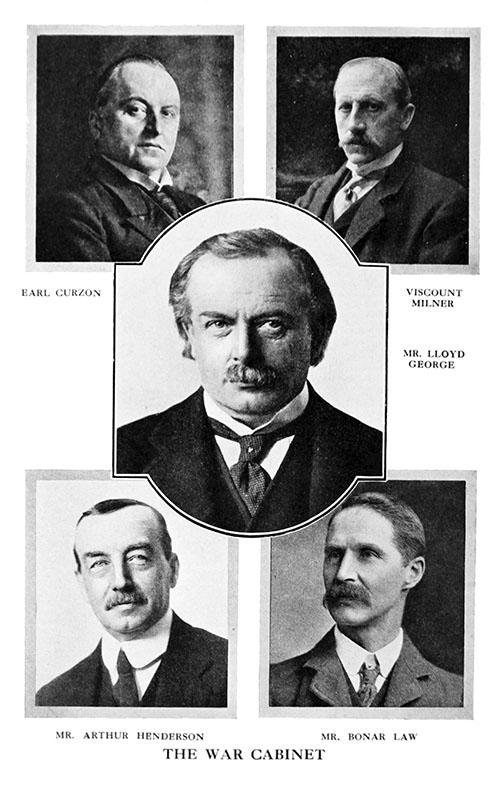
At the 261st meeting of the British War Cabinet on 31 October 1917, with Prime Minister Lloyd George in the Chair, the membership comprised Lord Curzon, Lord Alfred Milner, Andrew Bonar Law, (Conservative leader) Sir Edward Carson, G N Barnes (Labour Party), the South African General Jan Smuts and Foreign Secretary Arthur Balfour. This was the inner-circle formed mainly from the Secret Elite’s political agents to run the war.5 They remained behind the closed doors of 10 Downing Street after other war business had been completed. The military and naval representatives were dismissed before the War Cabinet’s inner cabal proceeded to discuss the on-going issue of ‘The Zionist Movement’. As always, Lloyd George’s War Cabinet secretary, Sir Maurice Hankey, recorded the minutes. This coterie of British imperialists, and Secret Elite members and associates, agreed unanimously that “from a purely diplomatic and political point of view, it was desirable that some declaration favourable to the aspirations of the Jewish nationalists should now be made.”6 To that end a carefully constructed form of words was tabled and the War Cabinet authorised Foreign Secretary Balfour “to take a suitable opportunity of making the following declaration of sympathy with the Zionist aspiration.” It was no co-incidence that some five days previously the editor of The Times had urged them to make this statement.7
Members of the British War Cabinet (July 1917).
Two days after the War Cabinet’s decision, a letter was sent from the Foreign Office to Lord Lionel Walter Rothschild (2nd Baron Rothschild) in London asking that he “bring this Declaration to the knowledge of the Zionist Federation.” It was signed Arthur James Balfour, and henceforth was known as the Balfour Declaration, though it was the product of many more minds than solely that of the British Foreign Secretary.8 Its precise wording was publicised across Jewish communities who hailed the letter as the beginning of a new epoch in their history. Despite the apparent care with which the War Cabinet attempted to lay down conditions to protect non-Jewish communities, in particular the rights of the Palestinian Arabs to whom the country belonged, the event was celebrated by Zionists across the world as a National Charter for a Jewish homeland.9 The genie was out of the bottle.
In truth, the letter was the product of years of careful lobbying in both Britain and America. It was neither a beginning nor an end-point. Though the communication was essentially between the British government and the Zionist Federation in Britain, it had an almost casual feel to it as if it was simply a letter between two members of the English gentry, Balfour and Rothschild. The Declaration was far from casual and much more contrived than a gentleman’s agreement.
By all known processes of law and morality, it was ridiculous. Consider the unprecedented nature of the proposal. Britain held no sovereign right whatsoever over Palestine or authority to dispose of the land.10 As if this would not cause sufficient confusion, the British Foreign Office had already promised parts of Palestine to the French, to the Arabs who owned the land, and finally, to the international Jewish community. Was there ever a better example of the wanton arrogance of the British imperialist ruling class? The very wording of the Balfour Declaration was ambiguous; the conditions set were impossible. What was meant by the phrase, “a national home”? It had no clearly defined meaning in international law. How could a foreign government promise to achieve world-wide approval for a national home for Jews in an Arab country without automatically prejudicing the rights of the Arabs whose ancestors had lived there for thousands of years?11 Its vagueness gave rise to interpretations and expectations which were certain to cause bitter dispute. What was going on?
Secret Discussions
The answer can be found by examining earlier versions of this controversial document and the extent to which Zionists on both sides of the Atlantic strove to nurture and protect it. Far from any notion of their sudden conversion to Zionism, the political drive to establish a Jewish homeland in the sands of the desert, British politicians had been engaged in such discussions for several years. This fact had been conveniently omitted from official histories, memoirs and government statements.
A previous War Cabinet meeting on 4 October 1917 had considered an almost identical draft declaration from Lord Alfred Milner, the most influential leader of the inner circle of the Secret Elite. He included the words “favour the establishment of a National Home for the Jewish Race.”12 The capitalisation of the term National Home was later altered, as was the very Milnerite phrase, “Jewish Race.” Lord Milner was a very precise thinker. While the words National Home implied that the Jewish people throughout the world should have a defined area to call their own, his version favoured “the establishment” of such a place. It did not imply a return to a land over which they had assumed rights. Secondly, Alfred Milner held race in great esteem. He defined himself with pride as a British “Race Patriot.”13 His wording was a mark of respect. Others feared it was a dangerous phrase which might be interpreted aggressively. It clashed with the concept of Jewish assimilation, like Jewish-Americans, and hinted that as a faith group, Jews belonged to a specific race of peoples. Consequently, his version was toned down.
Secretly, the War Cabinet decided to seek the opinion on the final wording of the declaration from both representative Zionists (their phrase) and those of the Jewish faith opposed to the idea of a national homeland. It is crucial to clearly understand that inside the international Jewish community there was a considerable difference of opinion, in favour of and against, this idea of a Jewish ‘homeland’. That these groups were apparently given equal standing suggested the Jewish community in Britain was equally split on the issue. They were not. The number of active Zionists was relatively small, but very influential.
US President Woodrow Wilson, with his “alter ego” Colonel Edward Mandell House (right).
Furthermore, the War Cabinet sought the American President’s opinion on the proposed Jewish homeland in Palestine.14 The minutes of the 245th meeting of the War Cabinet in London revealed that Woodrow Wilson was directly involved in the final draft of the Declaration. So, too, was his minder, Colonel Edward Mandell House,15 and the United States’ only Jewish Chief Justice, Louis Brandeis,16 both of whom telegrammed different views to the British government.17 On 10 September, Mandell House indicated that the President advised caution; on 27 September, Judge Brandeis cabled that the President was in entire sympathy with the declaration. Much can change in politics over two and a half weeks.
As each layer of the onion is slowly peeled away from the hidden inner core of the eponymous Declaration, it becomes apparent that the given story has glossed over key figures and critical issues. There are hidden depths to this episode that mainstream historians have kept from public view and participants have deliberately misrepresented or omitted from their memoirs.
Secret Elite Fully Involved
The minutes of the War Cabinet Committee held on 3 September 1917 show that the earlier meeting had also been crammed with Secret Elite members and associates including Leo Amery, formerly Milner’s acolyte in South Africa.18 Item two on the agenda revealed that “considerable correspondence… has been passed between the Secretary of State for Foreign Affairs [A J Balfour] and Lord Walter Rothschild… on the question of the policy to be adopted towards the Zionist movement.”19 What? “Considerable correspondence” had been exchanged between Lord Rothschild and the Foreign Office; not a letter or enquiry, but considerable correspondence. A copy of one of these letters sent from the Rothschild mansion at 148 Piccadilly on 18 July 1917 has survived in the War Cabinet minutes. What it reveals shatters the illusion that the British government’s promise of support for a Jewish national home in Palestine stemmed exclusively from the Foreign Office under the pen of Arthur Balfour. Lord Rothschild’s letter began:
“Dear Mr. Balfour,
At last I am able to send you the formula you asked me for. If his Majesty’s Government will send me a message on the lines of this formula, if they and you approve of it, I will hand it on to Zionist Federations and also announce it at a meeting called for that purpose…”20
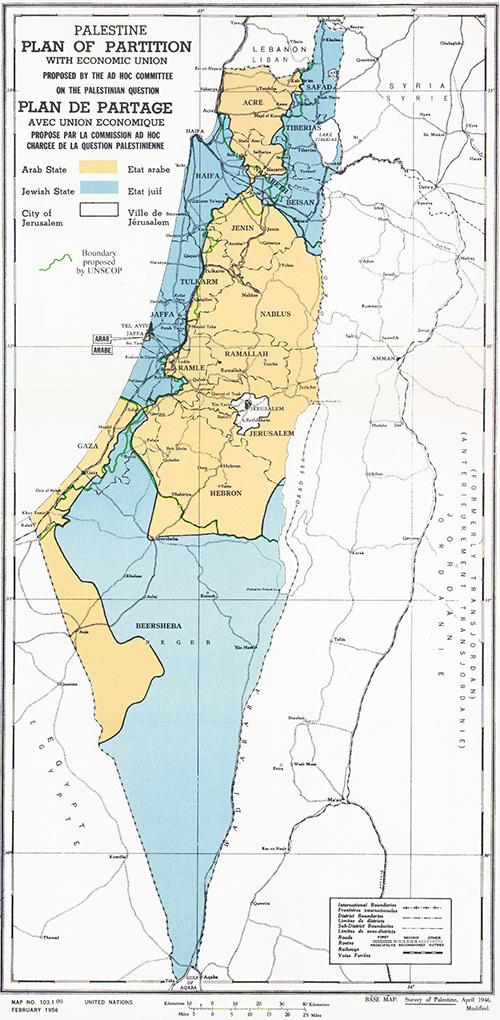
The United Nations General Assembly decided in 1947 on the partition of Palestine into Jewish and Arab states, with Jerusalem to be an internationalised city. Due to the outbreak of hostilities the plan was abandoned.
He enclosed his (Rothchild’s) recommendation for a draft declaration. It comprised two sentences: “(1) His Majesty’s Government accepts the principle that Palestine should be reconstituted as the National Home of the Jewish people. (2) His Majesty’s Government will use its best endeavours to secure the achievement of this object and will discuss the necessary methods and means with the Zionist Organisations.”21
Balfour’s reply “accepted the principle that Palestine should be reconstituted… and will be ready to consider any suggestions on the subject which the Zionist Organisation may desire to lay before them.” What? How do you “reconstitute” a country? It might be interesting to consider the precedent that was being set. Could this mean that one day America might be reconstituted as a series of native Indian reserves or parts of England as Viking territory? Astonishingly, the Zionist movement was invited to dictate its designs for British foreign policy in Palestine.22 This was not some form of loose involvement. It was complicity. Lloyd George’s government, through the war cabinet, colluded with the Zionist Federation to concoct a statement of intent that met their (Zionist)approval. Furthermore, it was agreed that such an important issue, namely the future of Palestine, should be discussed with Britain’s allies, and “more particularly with the United States.”23 This action had all the hallmarks of an international conspiracy.
How many lies have been woven around the design and origins of the Balfour Declaration? Lord Walter Rothschild was the chief intermediary between the British government and the Zionist Federation. In this capacity he had been involved in the process of creating and formulating a new and explosive British commitment to the foundation of a Jewish home in Palestine. More than that, Rothschild and his associates sought to control “the methods and means” by which it would be created.
The Balfour Declaration was part of a process which was not bound by the convenience of time frames that shunts history into segments. Politically it served the Secret Elite ambitions both in the short and long terms. They understood that a pro-British Palestine would protect the vital sea route along the Suez Canal; that a declaration in support of Zionism would unlock the treasures which they desperately needed to crush Germany; that in both America and Britain, young Jewish men would come forward to join the dwindling rank and file in their armies. In all of this it is generally forgotten that unless powerful figures supported the Zionist claims before the war ended and established some vehicle through which they could influence the carving up of the Ottoman Empire, a rapid end to World War I would have been disastrous to their long-term ideals.
In our book Prolonging the Agony, this whole question is carefully dissected to reveal the double-dealing and double standards which were cruelly visited on the Arabs of Palestine, and the rank complicity of the British and American governments. Most pertinently we produce documented evidence that clearly shows the manner in which an early attempt to encourage the Turkish Ottomans to abandon the war in 1917 was stopped dead in its tracks because no basis had yet been established for Zionist inclusion in any post-war settlement.
The Balfour Declaration was no gentleman’s agreement.
Conspiracy – a planning or acting together secretly, usually for a harmful purpose. – Webster’s New World Dictionary
You can only solve a murder by knowing who’s destroying the evidence. – Mae Brussell
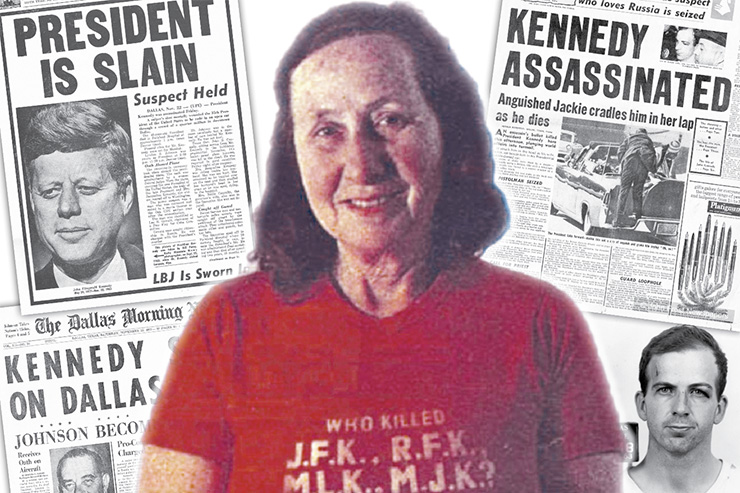
22 November 1963. The shot heard around the world. A beloved president dead. A nation crippled with grief. But for one Beverly Hills housewife and mother of five, it was a day that would become the catalyst for a mind-boggling journey into the shadowy world of lies, deception, cover-ups, conspiracy and murder.
For Mae Magnin, daughter of prominent Wilshire Boulevard Temple Rabbi Edgar Magnin and great-granddaughter of Isaac Magnin, founder of the I. Magnin department stores, the world BKA (Before Kennedy Assassination) consisted of tennis lessons, dance classes, and famous house visitors that included Louis B. Meyer, Jack Warner and Albert Einstein.
A child raised in Beverly Hills affluence, Mae and her family lived well, vacationed often, and were untouched by the Depression. But Mae was different, expressing her empathy for the underprivileged from an early age. A trip to Bombay and Singapore during her teen years exposed her to the overwhelming poverty of the third world.
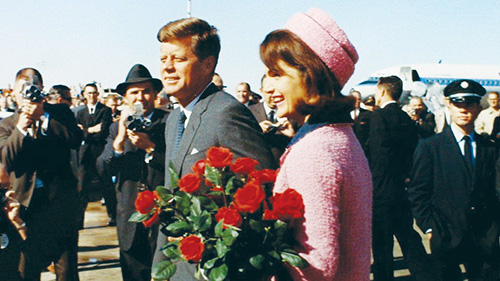
22 November 1963: US President John F. Kennedy and First Lady Jacqueline Kennedy arrive in Dallas.
“I was haunted by the imbalance. I wanted to help people, but I didn’t know what form it would take,” Mae told Paul Krassner of High Times magazine. She attended Stanford University, majoring in philosophy. She had no real goal in life – until the shot heard around the world. Kennedy’s death haunted Mae and, like many others, she didn’t buy the theory that Lee Harvey Oswald was the lone gunman. When Jack Ruby killed Oswald live on television, Mae’s destiny was set in stone.
When Lee Harvey Oswald was instantly fingered as the lone assassin, something didn’t sit right in Mae’s gut. She was a woman, and women, especially mothers, seemed to know that things on the surface often shielded a deeper, darker truth. But with tennis lessons and dinners with friends taking up her social calendar, Mae had never given her intuition and instinct too much thought or energy.
Until now.
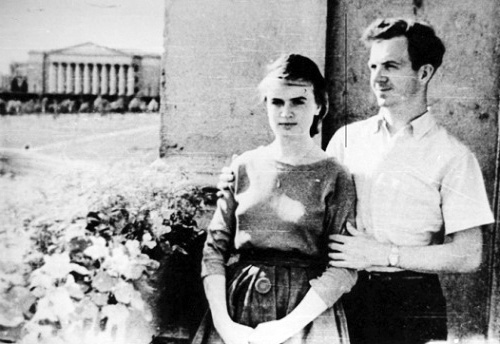
One of the conspiratorial pieces of a jigsaw puzzle that intrigued Mae Brussell: the man who supposedly shot Kennedy, Lee Harvey Oswald, defected to the Soviet Union in 1959 where he was called Alik and married Marina, a young Russian woman (this is a photo of them in Moscow). In June 1962, he returned to the United States with Marina, and eventually settled in Dallas.
The death of Kennedy shocked her just as it did the entire nation, indeed, the world. But it was another event that would transform this wealthy and privileged housewife and mother living the good and easy life into a fierce and fearless crusader for truth and the verifiable title of “Queen of Conspiracy.”
The single incident that launched Mae headlong into the world of conspiracy theory was the murder of Lee Harvey Oswald.
Mae had been married twice. Her first marriage resulted in two sons, and her second marriage to Bill Brussell, when she became Mae Brussell, resulted in three daughters. Shortly before Oswald’s death, Mae’s seven-year-old daughter Bonnie had seen Oswald on TV and said she felt sorry for him. Oswald pled his innocence to the national media, sporting a black eye that he had no doubt incurred from police brutality. Bonnie asked her mom if they could send Oswald her favourite teddy bear. Together, Mae and Bonnie wrapped up the bear and packaged it to send to Oswald. But the bear never got shipped.
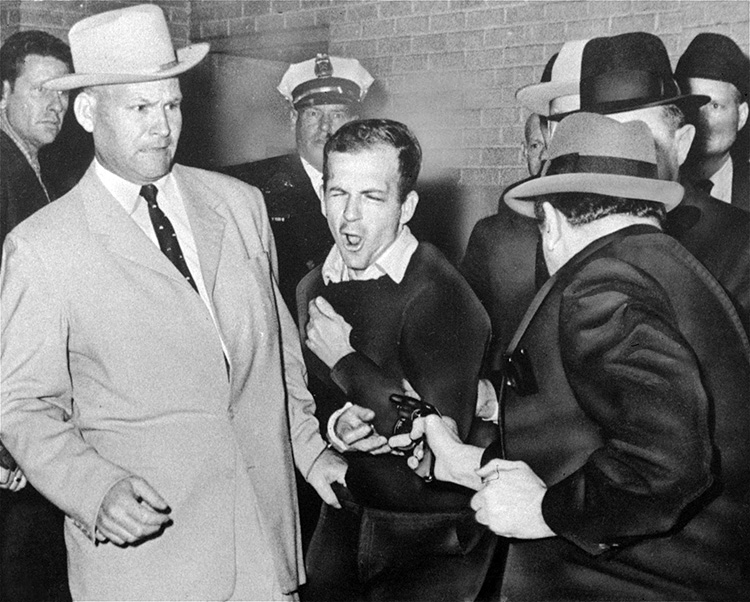
That Sunday Morning, live on national television, a mysterious man named Jack Ruby killed Oswald. Mae watched in abject horror. She knew something was terribly wrong, and that the American people were being lied to.
“Why did they let Ruby in (to the jail) when everyone knew who he was and that he had recently been charged with possession of illegal weapons?” Mae had asked herself, according to a 1971 interview in The Carmel Pine Cone. “Had he been hired to kill Oswald?”
Jack Ruby’s shooting of Oswald – and yes, that’s the actual photo of the event looking like a Hollywood production – and then Ruby’s deathbed confession that he was not part of a conspiracy, looked more and more like one massive conspiracy to Mae and many other independent observers.
Mae’s instinct for questioning authority kicked into high gear and she became obsessed with finding out what was going on behind the veneer of the official announcement that Oswald was the lone killer, and that Ruby had been some great patriot seeking revenge for his beloved country and out to prove that “even a Jew could be a hero,” as he himself had so succinctly put it. She began to worry about what kind of world her children might inherit if these kinds of cover-ups and crimes could occur. That simple question – “What kind of world are we bringing our children into?” served as Mae’s mantra as she began what would become a lifelong quest for truth.
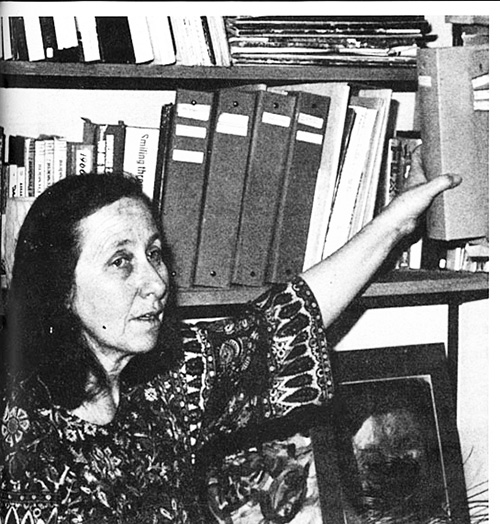
When Mae realised all was amiss, she did what any loving mother would do, if that loving mother happened to be Mae Brussell. She began clipping out any and every newspaper and magazine article she could find on the Kennedy assassination and ongoing investigation. Carefully cross-referencing and indexing her clippings, she launched what would eventually become a massive collection of hundreds of bulging file cabinets and boxes filled with papers and notebooks and documents related to the death of JFK and related conspiracies.
“My concern over who killed John Kennedy was basically selfish,” Mae would tell a journalist. She was doing it for her children, “to find out if there had been a coup – was the United States going fascist?”
As she delved into the Kennedy mystery, one clue led to another, and Mae found herself deep inside a cryptic, shadowy world of people and events connected to one another like the tentacles of an invisible octopus. All evidence on the outside was pointing to the CIA and anti-Castro Cuban exiles, but Mae’s research was disproving that theory daily. In fact, her research was leading her down a dark road that would threaten to destroy everything she as an American held dear.
Mae knew that if she had any chance at all of learning the truth, she had to see exactly what the authorities were concluding. Knowing how important this issue had become to Mae and that she was not the kind of woman to swoon over diamonds or a fur coat, her loving and understanding husband, Bill, decided to present Mae with the perfect Christmas gift – the 26-volume Warren Commission Report that detailed the official investigation of the Kennedy assassination.
Mae Brussell amassed a wealth of newspaper clippings and files on the JFK assassination and other cover-ups.
She became a woman haunted… a woman driven.
“I turned immediately to accounts in the Warren Commission Report of Oswald’s finances and friends – accounts that traced his career from the Marine Corps to Russia and back – his mobility.” Mae’s goal was to focus on Oswald, the patsy, as the entry point to a conspiracy that would at once draw her deeper, yet overwhelm her with its sinister implications.
She poured over the Commission report and the growing files of clippings she gleaned from the eight newspapers she now subscribed to, and other publications she tracked down like a bloodhound. Soon, she was finding links between Oswald, his wife Marina, and a group of wealthy and powerful financiers who literally funded Oswald’s activities. “These were oil people, engineers and security agents,” Mae stated. “It made me wonder…”
Mae spent two years studying the mass of material described in the Commission report, which included the testimonies of over 552 witnesses as well as ten separate volumes of hard facts accumulated by the Commission before the assassination. Among those files were Oswald’s personnel papers from the Marine Corps, the FBI and the State Department.
Although Mae would literally dissect Oswald and his entire life history, she would find that the Commission report was more than lacking. “I found that witness testimony given under oath didn’t match the evidence in the last 10 volumes, and that the Warren CommissionReport quoted as factual witness testimony that they never heard because the Commission members were not present at the hearings and didn’t cross-examine witnesses. No two men ever heard the same thing,” Mae insisted.
These obvious discrepancies fuelled Mae’s conviction and she dug in deeper, noticing oddities throughout her research that others seemed to ignore. Her razor-sharp mind honed in on misquoted witnesses, times and dates that didn’t line up with the “official” explanations, and what she would come to call a “pattern and a rhythm to the questions and a cut-off point beyond which the Commission didn’t go…” But there was just so much material to tackle and so many confusing and conflicting testimonies to tear apart. Mae had to keep her focus if she was going to make any headway on this massive web of misinformation, deception and outright lies.
Oswald, the CIA & Fascists
Oswald was the key – she knew in her gut. Her research eventually led her to some intriguing conclusions involving a small group of people surrounding Oswald who appeared in Dallas just before the assassination and exited shortly afterwards. Many worked in the defence, oil and warfare industries. Who were these mysterious people, with so much access to power, and why were they so interested in a man like Oswald, who never seemed to hold the same job or stay in the same place for long? This was a man, Mae pondered, who had a continuous succession of jobs. He was never unemployed, but he had jobs selected for him.
Mae learned that these mysterious people surrounding Oswald were White Russian fascists,* and that they were part of a bigger network of underground fascists with America as their new stomping ground.
* The 1917 Bolshevik Revolution in Russia led to the exodus of the refugees known as White Russians or white émigrés. Elements of these exiled émigrés later became known as “White Russian fascists” whose aim was the overthrow of the Soviet Communists. Due to Marina Oswald’s background as “White Russian aristocracy” and her links to the CIA, Mae Brussell believed the “White Russian fascists” in the US were connected to JFK’s assassination.
She began corresponding with such Kennedy assassination luminaries as New Orleans District Attorney Jim Garrison (portrayed by Kevin Costner in the movie, JFK) and the mysterious Pentagon big-wig Col. Fletcher Prouty, whose own research was turning up a can of worms, and whose CIA connections made him prime fodder for Mae’s tools of dissection.
But Mae never bought the claims of CIA-backed anti-Castro Cuban involvement and while other researchers and even the authorities were busy focusing on the CIA, Mafia and anti-Castro Cuban connections, Mae’s instinct told her they were wrong.
JFK’s Assassination: An Obsession
While she threw herself deeper into the fray, Mae continued to take care of her five growing children, scuttling off from dance classes to doctors and orthodontists, then off to some school or social event. However, her friendships began to suffer, for Mae was no longer content to sit around sipping expensive teas and talking about the Southern California weather. She had new ideas thundering through her brain, ideas that she dared share with those willing to listen.
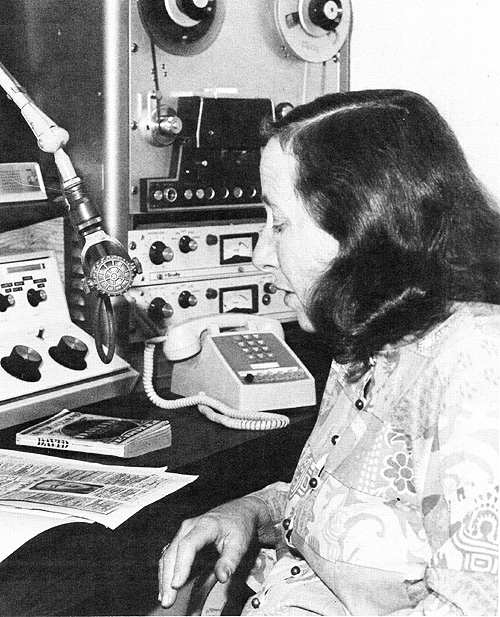
Mae Brussell speaking on her radio program.
The problem was most, if not all, of Mae’s friends were simply not willing to listen. Mae’s obsession with the Kennedy assassination was not appropriate fodder for Beverly Hills social talk. Until then, as she told reporter Jill Wolfson in 1982, the extent of her political knowledge had been just enough to get her through a cocktail party. She began to feel more and more isolated in her newfound world of conspiracies, cover-ups and crimes. Eventually, her research would become her best friend, and her social life would diminish to caring for her family and running essential errands.
Tim Canale, an archivist and researcher who runs Maebrussell.com, Mae’s official website, recalls speaking with Mae’s best friend, Terre, who told him that “going to Mae’s house meant sitting in the living room filled with several huge barrels, each marked with different conspiracy-related topics. We all had to sit and clip newspaper and magazine articles and put them in the appropriate barrels.”
Terre recalled taking Mae to see a re-release of the original film Manchurian Candidate starring Frank Sinatra. During one scene in the movie, Mae took out a notebook and pen and wrote down the names of the books that were on the movie set bookshelves in the background. According to Terre, Mae thought some of the books might be important to her research. This is what it was like to hang out with Mae aka, After Kennedy Assassination.
Mae tried to explain her position in a Playgirl Magazine interview in 1974. “People sometimes wonder how an ordinary housewife like me could get so interested in the John F. Kennedy assassination. But nothing just happens. There has to be a time when you begin to think and feel an emotional climate of caring about people, a nurturing place where you give a damn… That’s where my head was when Kennedy was assassinated. I was worried about my children and what sort of society we were living in where this murder could take place.”
Mae’s obsession would eventually cost her two marriages, including her 17-year marriage to Bill Brussell, the father of her three daughters. But for now, it was not an issue. She was keeping her kids happy and her family intact. Attending cocktail parties and afternoon soirees was just not on her agenda.
She had more important things to do.
Uncovering Deeper Layers
As Mae followed the dotted line between Kennedy’s death, the enigmatic Oswald, the mysterious Jack Ruby, the Warren Commission Report’s sins of omission and error, and her own ever-increasing files of clippings, she watched apprehensively as the tentacles of this one simple conspiracy reached out into directions that even her brilliant, detail-oriented mind could not grasp.
She understood that the Kennedy assassination was a sort of foundational cornerstone that led to many other conspiracies waiting to be uncovered, including the subsequent assassinations of Bobby Kennedy and Martin Luther King, Jr., both of which Mae added to her list of subjects to tackle.
As suspected, she would find links between all three assassinations and the same key players involved in what seemed like an eerie theatre performance that repeated itself over and over, with only the times, locations and the extras changing.
The Warren Commission Report may have been Mae’s first real exposure to a bonafide government cover-up on paper. She had read the report inside and out, and there was little fact to back up the claims of the final summary of the Commission. She knew that the report failed to mention what her own research had uncovered – that Oswald was an intelligence agent used by his superiors.
“Oswald was expendable,” Mae told Playgirl in 1974, “he was a throw-away person… He was framed, defamed, and then murdered.” All Mae could think of was why? What were they all hiding? Who was behind the cover-up and what was the ulterior motive for killing a man so many people adored?
“The discrepancies between the evidence and what was written (in the Warren Report) are staggering,” Mae told Jill Wolfson in 1982. “And what was even more staggering was seeing how the assassination related to other worldly events.”
This intricate web of conspiracy would take up the rest of Mae’s life as she struggled to make sense of it all. She found several connections between the CIA and Germany of the 1920s and 1930s in her studies of the report, mainly via the people who surrounded the key players; witnesses and bit players and friends of the Oswalds, hangers-on who each had a role in the plot to kill Kennedy and who could be traced directly to White Russian fascists and old Germany.
But it wasn’t just the people that connected, it was the events before and after WWII that Mae found fit together like the pieces of a gigantic jigsaw puzzle.
“The murder of John Kennedy was not an isolated world assassination. It was a large plot where people were murdered before him and after him, up until the present date. The sole purpose is to remove any person from office or power who intends to have world peace.” This comment would ring true as peacemakers such as Bobby Kennedy, Martin Luther King, Jr., Anwar Sadat and even Mahatma Gandhi years earlier were downed from the guns of “lone fanatics.” Mae knew better. Nothing about these “lone fanatics” hinted at solitary motives and single-minded agendas. It was all connected.
Mae was so convinced of what she knew that on 29 May 1968 she went to the Monterey Peninsula Airport to meet Rose Kennedy and handed her a note telling her that Robert “Bobby” Kennedy would soon be assassinated. One week later, Bobby was shot and killed at the Ambassador Hotel in Los Angeles, California.
These were Mae’s beliefs after eleven years of research and study, enough, Mae laughed, to gain her the highest degree of any university, had they offered a PhD in conspiracy theory.
That large plot that Mae spoke of took on the form of a huge and ghastly octopus, with tentacles reaching into the highest halls of government, military and business institutions. One of the octopus tentacles Mae followed linked the Kennedy assassination to a very unexpected and utterly terrifying source. Nazis.
As Mae looked deeper, accumulated more, and questioned further, she came face to face with an underground network of Nazis holding great positions of power and influence in the United States, land of democracy and freedom. These Nazis, mainly scientists, military officials, engineers and weapons experts, had been secretly smuggled into the United States after World War II on full knowledge of the CIA, who actually had a hand in getting them safely to US shores.
Project Paperclip, also called Operation Paperclip, was a top-secret government program of integrating Nazi top dogs into American society, and thanks to the power of the Freedom of Information Act, the once classified program was now seeing the public light.
Mae’s research suddenly took a sharp turn to the right, the extreme right, as she realised that the international terrorist network that made up the Axis powers during WWII had effectively gone underground to continue their worldwide campaign of fascist rule even after Hitler was supposedly buried in Argentina (something else Mae contested). The names, tactics and methods the Nazis used in WWII were similar to those Mae recognised from her research into Germany in the 1920s and early 1930s, and now those tactics were being used here in modern-day America.
As a Jew with love for her people’s heritage, this struck Mae at her very core. Were these Nazis, she wondered, here in America just to become wealthy and successful? Or was there something far more sinister afoot? This would become Mae’s central obsession, her life’s mission, her ultimate quest for truth: to prove that the Nazis were grooming political figures to assist them in carrying out a second Holocaust – this time right here in the good old U.S. of A.
The list of countries that the Nazis had an underground hold was mind-boggling, countries where presidential coups and military actions had taken place surrounded by media blackouts, martial law and cries of conspiracy among the dead and dying.
Brazil, Argentina, Peru, El Salvador, the Philippines, Portugal, and Greece. And always, the United States. Mae took to describing the relationship between Kennedy’s death and the Nazis, along with help from the mob and the CIA, as “the Odd Couple Plus One.” She would continue to stumble across evidence of complicity between this triadic odd couple – Nazis, the Mafia and the CIA, again and again and again.
Mae was on her way to solidifying her place at the top of the heap of conspiracy theorists, although this title was offensive to Mae. Friends and followers called her a true political theorist and a brilliant researcher. Mae felt the term “conspiracy theorist” was beneath her. One writer would even label Mae “a modern Sherlock Holmes,” and another “the country’s self-proclaimed top conspiracy yenta, keeping tabs on political goings-on in much the same way that a gossip watches over the neighbourhood.” But Mae was not into gossip, just cold, hard facts, and she had plenty to go around.
The second part of this article, to be published in our next issue, covers Mae Brussell’s foray into a wider web of conspiracies exposed by her ongoing research and contacts.
[alert type=”general” dismiss=”no”]This article was published in New Dawn 195.[/alert]
[alert type=”success” dismiss=”no”]If you appreciate this article, please consider subscribing to help maintain this website.[/alert]
Sources
“The Queen of Conspiracy: The Life and Times of Mae Brussell.” Marie D. Jones. Paranoia Magazine. Spring 2013.
“About Women…” Stephanie Caruana. Playgirl, August 1974.
“The Ballad of Mae Brussell.” Paul Krassner. High Times, September 1991.
“The Mind of Mae Brussell.” Paul Krassner. Oui, May 1978.
“Shots Fired! The Story of Mae Brussell, Queen of Conspiracy.”Marie D. Jones.www.amazon.com/Shots-Fired-Death-Dallas-Conspiracy-ebook/dp/B08RWXZ31M
“The World According to Mae.” Jill Wolfson. San Jose Mercury News, March 1982.
Shortly after 9:00 pm on 27 February 1933, alarm bells clattered in fire stations across Berlin. The Reichstag, the massive glass-domed home of the German parliament, was ablaze. The first fire crews arrived within minutes, and it was immediately apparent that separate fires had deliberately been set throughout the parliament using flammable liquid. Despite their brave efforts, the Reichstag was destroyed. What the firefighters could not know was that they were witnessing thekey event in establishing Nazi Germany and a defining moment of the twentieth century. All of Europe and much of the world, like the Reichstag, would soon be engulfed in flames.
With the Nazi party facing losses to communists at the forthcoming general election six days’ later, Hitler blamed them for destroying the home of German democracy. A young Dutch leftist, Marinus van der Lubbe, would be executed for the crime. A communist revolution, Hitler informed the nation, was imminent, and the Reichstag fire was part of a Bolshevik plan to seize power. The communist vote consequently slumped at the election while the Nazi party’s share increased dramatically to make them the largest party. Hitler seized power, suspended the constitution, and sent communist members of parliament to Dachau concentration camp. Within weeks all political parties in Germany apart from the Nazi party were banned. Historian Professor Antony Sutton relates: “From that point on there was no turning back for Germany; the world was set upon the course to World War II.”1
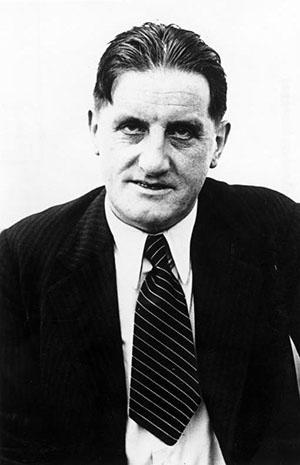
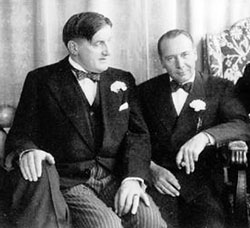
Ernst Hanfstaengl (Putzi) (1887–1975)
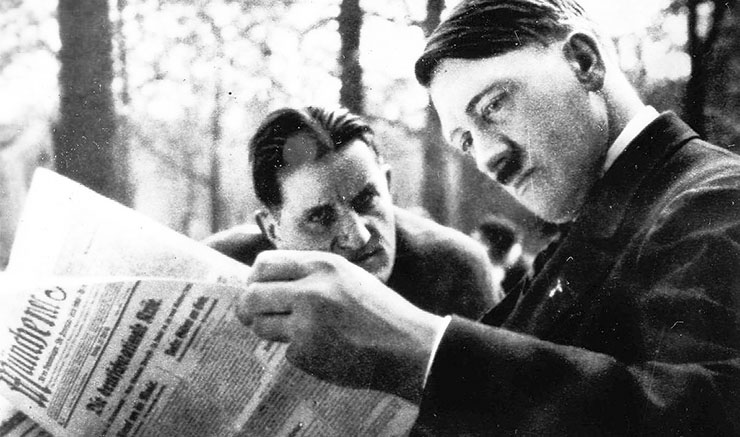
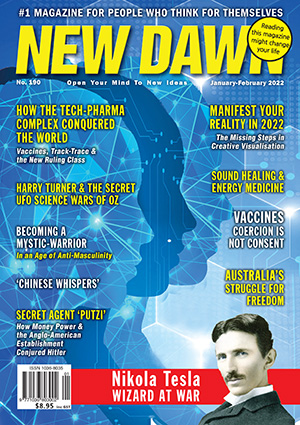
Van der Lubbe was a patsy, and it is clear nearly ninety years on that the fire was deliberately started not by communists but by the Nazis themselves. Astonishingly, the man who deployed the arsonists that night, Ernst Hanfstaengl (known to all as Putzi), was a Harvard University graduate and secret agent of the closely collaborating Anglo-American secret intelligence services. As such, he spent almost 17 years at Adolf Hitler’s side, grooming him for power. Some readers may find that hard to believe but read on and examine the evidence before dismissing it. In his book, Conjuring Hitler: How Britain and America Made the Third Reich, historian Professor Guido Preparata details how the Anglo-American elites funded Hitler and the Nazis throughout the 1930s and armed them to the teeth.
It was an astounding political manoeuvre willingly performed by the Allies to resurrect in Germany a reactionary regime from the ranks of her vanquished militarists… with a view to conjuring a belligerent political entity which she encouraged to go to war against Russia: the premeditate purpose was to ensnare the new, reactionary German regime in a two-front war (World War II), and profit from the occasion to annihilate Germany once and for all.2
We contend it would be a misconception for anyone to think British and American banking and political elites brought Hitler to power because they respected him or his politics or hoped Germany would thrive under him. In reality, the destruction of Germany once and for all as an economic, commercial, and industrial competitor was the goal of this hideous Anglo-American bankers game.
Who was Putzi Hanfstaengl?
Putzi Hanfstaengl was born into an extremely wealthy family in Munich in 1887. Two years later, when Diphtheria brought him close to death, he was saved thanks to three days of round the clock attention from an old family servant. Throughout, she repeatedly crooned, ‘drink, Putzi, please drink Putzi’, encouraging him to take sips of water. The name, a Bavarian term of endearment for ‘little fellow’, stuck throughout his life despite growing to a six-foot-four towering hulk of a man with an enormous head, prognathous jaw, and huge hands.
Putzi and sibs had three governesses and were educated privately at top German schools. He was an accomplished classical pianist, taught by the cream of European musicians. Richard Wagner, Franz Liszt, and Richard Straus had been friends of his parents and grandparents before he was born. Mark Twain was another. Putzi was named after his father’s godfather, Duke Ernst of Saxe-Coburg and Gotha, the brother of Prince Albert, who married Queen Victoria.
Putzi’s mother was American, and he always considered himself half American. Like his father, she came from an extremely wealthy and well-connected family. Several of Putzi’s forebears were famous Union Army Generals and close friends of Abraham Lincoln. His mother’s cousin, General John Sedgwick, fell in the Civil War and is honoured by a statue at West Point. His grandfather, General William Heine, helped carry the coffin at Lincoln’s funeral.
Between 1905 and 1909, the young Putzi attended Harvard, the oldest and most prestigious university in America. He was immediately taken under the wing of his American relative, the famous and well-connected president of the university, Charles William Eliot. Highly popular at Harvard, Putzi regaled his fellow students with fight songs at pep rallies for the football team, songs that would later inspire him to compose Nazi marching songs.
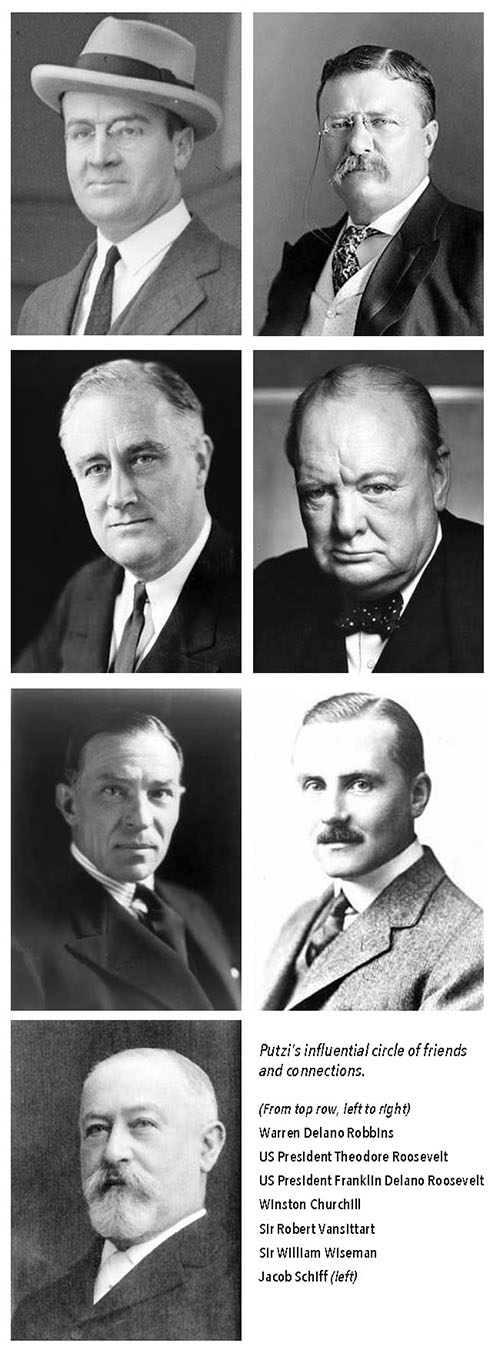
Putzi befriended many important individuals such as President Theodore Roosevelt and future President Franklin Delano Roosevelt, and mixed at Eliot’s home with men at the very top of Wall Street banking such as J.P. Morgan and Jacob Schiff. A close friend of Charles Eliot’s, Jacob Schiff, is known to have funded Trotsky in preparation for the Bolshevik revolution. Putzi regularly played the grand Steinway at White House parties and frequented the President’s summer retreat at Sagamore Hill. This, together with many more famous names, was the undergraduate milieu of Putzi Hanfstaengl.
After graduation, Putzi served for a year in the elite Royal Bavarian Foot Guards. Like the regiment, he was unstintingly loyal to the monarchy. He returned to the US to run the family art gallery on exclusive Fifth Avenue, mixing with famous personalities such as Henry Ford, Charlie Chaplin, Toscanini, and the great Caruso. Unlike many young German Americans, Putzi made little effort to return to Germany when the country went to war in 1914. And, unlike others of German origin, he was never harassed or interned when America entered the war in 1917. Putzi dined every day at the exclusive Harvard Club in New York, socialising there and elsewhere with many international celebrities, leading politicians, and Wall Street bankers. Across the Atlantic, he was a friend of Winston Churchill and other members of the British ruling class. What does it tell us that he associated with Sir Robert Vansittart, a leading figure in the British Foreign Office and Secret Intelligence services?
During his ten years in New York (1911-1921), Putzi also associated with agents of the British secret service operating in the city, including the infamous Aleister Crowley, who was deeply implicated in the false-flag sinking of the Lusitania in 1915. British agents were active there with the consent of the US government and in the closest collaboration with the nascent US secret services. The head of British Secret Intelligence in the US, Sir William Wiseman, was a close friend of banker Jacob Schiff whom Putzi knew well. It was to this closely allied Anglo-American Secret Intelligence network that Putzi Hanfstaengl enlisted during WWI. Despite utterances otherwise, his allegiance now lay very firmly with America and Britain, not Germany.
In late 1921 after spending the greater part of the past 17 years in America, Hanfstaengl, now age 34, gave up his wonderful life there and took his American wife and baby son, Egon, to Germany. Why? What on earth possessed a wealthy, well-connected now-American businessman with a beautiful young wife, Helene, and baby son Egon, to move to a country riven by faction and utterly desolate thanks to the war, raging inflation and widespread poverty? On arrival in Munich, they even found it impossible to get milk for their child. Putzi’s stated reason for going because he felt “nostalgic for his native land” is surely not credible.
The Rise of Adolf Hitler
Adolf Hitler’s background was the polar opposite of the well-bred, highly educated, sophisticated and cultured Putzi’s. Born in Austria, Hitler’s mother was a peasant girl, his father a minor civil servant who was allegedly often drunk and beat him. Sent to local village schools, he showed little interest in education. The teenage Adolf demonstrated an aptitude for art but twice failed to gain a place at the Art Academy. For years he was an unemployed, friendless vagabond living in men’s hostels or sleeping on park benches. The unhappy, angry, and frustrated artist survived by earning a few pfennig’s painting and selling postcards on the streets. Hitler was turned down by the Austrian army as too weak to handle weapons but found a place in the German army during WWI as a dispatch runner. He suffered a shrapnel wound to the leg at the Somme in 1916 and was gassed and temporarily blinded at Ypres in October 1918. When the war ended, he decided to stay in the army for another two years. Awarded the Iron Cross first class for bravery, he proudly wore the medal for the rest of his life. In 1920, Hitler ended six years of military service as a lowly lance corporal. Biographer William Shirer writes:
As soldiers go, he was a peculiar fellow, as more than one of his comrades remarked. No letters or presents from home came to him as they did to the others. He never asked for leave; he had not even a combat soldier’s interest in women. He never grumbled… and was the impassioned warrior, deadly serious at all times about the war’s aims and Germany’s manifest destiny. “We all cursed him and found him intolerable,” one of the men in his company later recalled.3
Hitler re-joined the ranks of the unemployed, rented a tiny, cheap room in Munich where he lived a shadowy existence and took to the beer halls as a political agitator. He was but one of the hundreds of similar rabble-rousers in the political turmoil of post-war Munich. Rare mentions in local newspapers failed even to spell his name correctly. Putzi describes Hitler as being like an awkward “down at heels clerk” or a “suburban hairdresser on his day off.” However, his ability as an orator to incite crowds brought him to the attention of the Allies. Planning to fund and build a reactionary movement in Germany, the Money Power was on the lookout for a suitable reactionary to run it.
Putzi with Truman-Smith
In Munich in 1922, Putzi got the call to action from an old Harvard friend, Warren Delano Robbins. Now second in command at the American Embassy in Berlin, Robbins just happened to be a first cousin of Putzi’s close friend, future President F Delano Roosevelt. The ruling elite’s tentacles were ubiquitous. He would send the embassy’s military attaché, Truman-Smith, to Munich to discuss political events in the city with Putzi. Individuals in such embassy positions are not simply regular bona fide diplomats. To put it bluntly, military attachés act as secret agents and spies, and Truman-Smith was no exception. He arranged for Putzi to attend a beer hall meeting in Munich where an as yet little known 32-year-old called Adolf Hitler would be speaking.
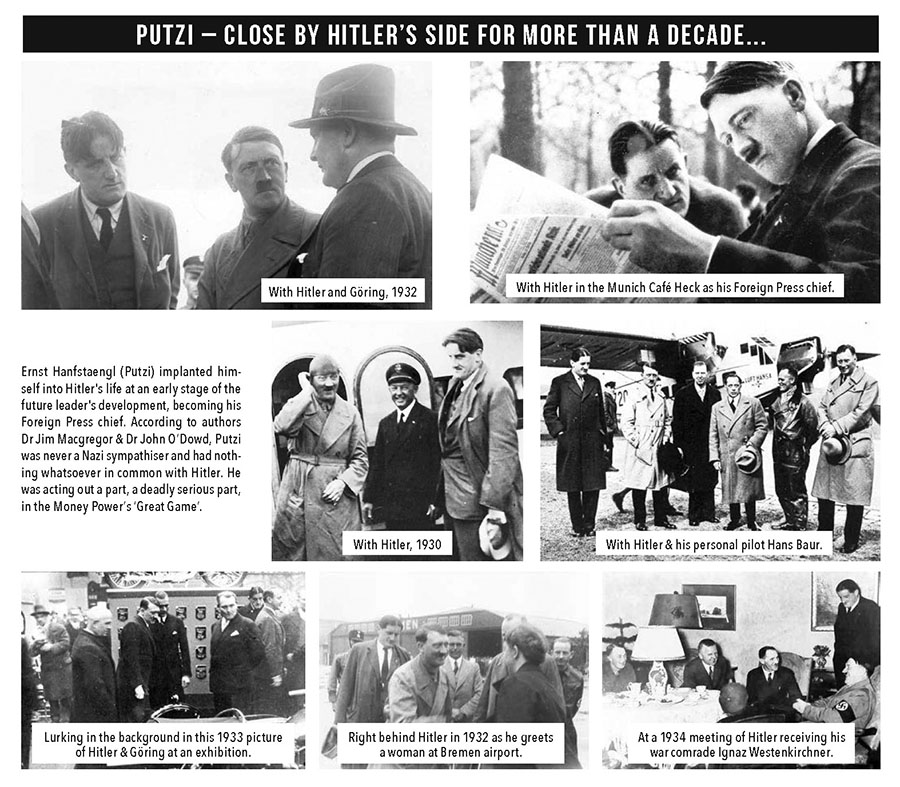
Having clearly been forewarned by Truman-Smith, Hitler shook Putzi’s hand and greeted him warmly when he approached and introduced himself, “Ah, yes, the big American.”4 Putzi feigned Nazi sympathies, inveigled his way into Hitler’s company, and quickly became the otherwise friendless loner’s bosom buddy. It should be understood from the outset that it was a charade. Putzi was never a Nazi sympathiser – probably detested them if truth be told – and had nothing whatsoever in common with Hitler. He was acting out a part, a deadly serious part, in the Money Power’s ‘Great Game’.
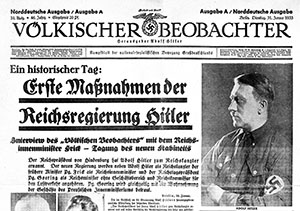
Putzi financially backed the Nazi newspaper, the Volkischer Beobachter.
The ghostwriter of Putzi’s ‘autobiography’, Brian Connell, states that Putzi’s task was “to mould into some statesmanlike form the spell-binding oratorical gifts and immanent potential of Adolf Hitler and make him socially acceptable.”5 Putzi himself relates that Hitler was open to influence and he “felt encouraged to continue exerting all he could.” Putzi ploughed money into the small Nazi newspaper, the Volkischer Beobachter, enabling it to purchase more printing presses, triple its size and increase circulation.
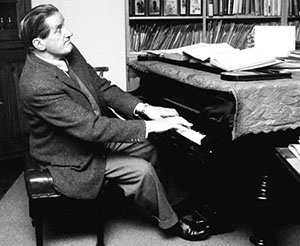
Hitler dined regularly at Putzi and Helene’s home and played on the floor with his godson, Egon. Much to Hitler’s joy, Putzi would hammer out Wagner pieces on the piano. He also played football marching tunes picked up at Harvard.
I explained to Hitler all the business about cheerleaders and marches, countermarches and deliberate whipping up of hysterical enthusiasm. I told him about the thousands of spectators being made to roar “Harvard, Harvard, Harvard, rah, rah, rah!” in unison and of the hypnotic effect… I even wrote a dozen marches or so myself over the course of the years. Rah, rah, rah! became Sieg Heil, Sieg Heil! but that is the origin of it and I suppose I must take my fair share of the blame.6
Much to Hitler’s joy, Putzi would hammer out Wagner pieces on the piano. “You’re the purest orchestra, Hanfstaengl,” the Nazi leader reportedly would gush.
Putzi was close by Hitler’s side for the next decade and more and became his Foreign Press chief, dealing daily with the international media. Hitler was infatuated with Helene, and after dinner would occasionally lie on the sofa with his head on her lap as she stroked his hair. She considered him a ‘neuter’. Court historians dismiss Hanfstaengl’s role as of no significant historical importance. He was little more than Hitler’s piano player, a “court jester and buffoon” ready and willing to entertain him. William Shirer describes Putzi as “an immense, high-strung, incoherent clown” and “an eccentric with a shallow mind.”7 All part and parcel of the Establishment whitewash to conceal Hanfstaengl’s real background as a secret agent.
Putzi’s Role in the Reichstag Fire
On Hitler’s behalf on the night of the Reichstag Fire, the “shallow-minded, incoherent clown” was coordinating and deploying a team of highly specialised Nazi storm trooper arsonists. According to official accounts, Putzi was due to join Hitler and Goering for dinner at Goering’s house in Berlin that evening. Putzi relates in his ‘autobiography’ that he felt “shivery,” wanted to lie down, and phoned Hermann Goering with his apologies. President of the Reichstag, Goering, offered him a bed in the Reichstag president’s palace. The given reason for Putzi being in the palace on the night of the fire rings false, for he owned his own house in Berlin just minutes from the palace.
In all likelihood, Putzi went to the palace that night not because he felt “shivery” but to fulfil the massively important role of overseeing the burning of the Reichstag. How did a specialist team of arsonists with large quantities of flammable fuel gain access to the Reichstag without being seen? Only one door to the building was unlocked after 8 pm, and it was guarded throughout by security staff. Watchmen routinely toured the inside of the entire building just before it closed at 9 pm that evening and saw nothing untoward. No one could gain entry after 9 pm, and no one was seen to enter or leave.
The very reason Putzi was in the palace that night lay in the fact that unknown to all but a select few, an underground passage linked it to the Reichstag directly opposite. In Wall Street and the Rise of Hitler, Professor Antony Sutton relates: “Hanfstaengl directed operations within the Palace, the propaganda apparatus stood ready, and the leaders of the Storm Troopers were in their places.… the scheme was almost perfect.”8 Under Putzi’s direction, the arsonists entered the Reichstag unseen via the tunnel, set multiple fires in the massive building, and returned via the tunnel to the palace. Putzi says he was asleep in the bedroom in the palace when the housekeeper rushed in shouting that the Reichstag was burning. He immediately phoned Goering and Hitler to inform them. In reality, he was calling to say, ‘Job done!’
Putzi & the Beer Hall Putsch
The Reichstag Fire was not the first time Putzi had been centre stage in Hitler’s violent attempts to seize power. Ten years earlier, a major event first brought the little corporal to national and international attention: the famous Beer Hall Putsch. On the bitterly cold evening of 8 November 1923, Hitler and Putzi stuffed pistols in their coat pockets and went to a meeting in the massive Burgerbrau beer keller in Munich. They stood drinking beer to the side of the crowd of 3,000 while the Bavarian State Commissioner, Gustav von Kahr, addressed his audience. 20 minutes into the speech, the audience was startled to hear the deep rumble of heavy trucks and clatter of hundreds of steel studded boots on the streets outside. Dozens of Nazi brownshirts burst in through the doors waving machine guns menacingly, while hundreds more sealed off the streets outside. Hitler handed Putzi his beer stein and, with his bodyguard at his back, strutted through the alarmed crowd towards the speaker. Jumping up on a chair, he silenced the crowd by firing his weapon into the ceiling and shouted: “The national revolution has broken out. This hall is occupied by six hundred heavily armed men. The Bavarian government and the Reich government are deposed. The police and army are now advancing under the banners of the swastika.”
He was lying. When he and his armed gang advanced down the road towards central Munich the following day, the police and army remained loyal to the government. Gunfire was exchanged with several police officers and 16 putschists killed and many wounded. Hitler was pulled to the ground, dislocating his shoulder. Extricated from the bloody scene by bodyguards, he was driven to Putzi’s farm at Uffing, an hour’s drive south of Munich. As prearranged, Helene was waiting there. She tended to Hitler and hid him in an attic bedroom. Putzi says he became separated from Hitler during the melee and escaped over the border into Austria.
The following day, local police were tipped off, and several truckloads of officers duly arrived to arrest Hitler. He allegedly drew his pistol to commit suicide, and allegedly Helene grabbed the weapon. He was taken to Landsberg Prison and charged with high treason. The previously unknown Hitler made the headlines in newspapers across the world.
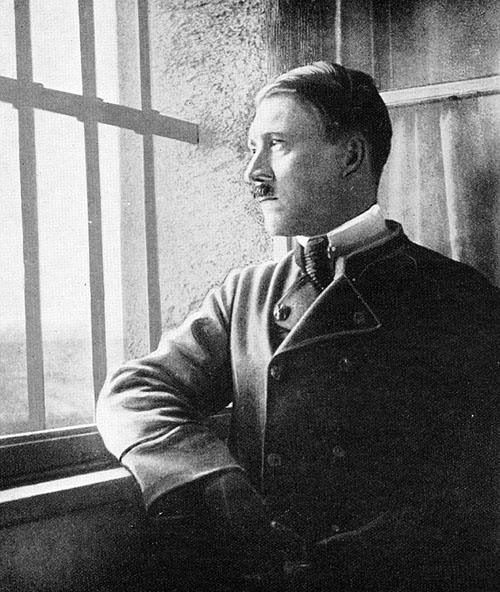
Adolf Hitler in Landsberg Prison (1923).
Putzi returned several weeks later but was never arrested or charged. He regularly visited Hitler in prison over the 11 months he served a five-year sentence. It was in Landsberg that Hitler wrote Mein Kampf (My Struggle) in which he set out his political philosophy and anti-Semitic views. Several authors have suggested that Putzi played a significant part in the proofreading of Mein Kampf, if not indeed the writing. Hitler trusted him implicitly and they remained firm friends throughout his imprisonment. On release, his first port of call was to Putzi, Helene and Egon at their house in Munich.
In Reichstag elections held in December 1924, the radical right-wing parties picked up just three per cent of the votes, and the Nazis appeared to be a spent force. Inflation gradually came under control, bringing a much-needed period of stability to the ravaged country. Chastened by failure, Hitler decided to bide his time and attempt to gain power via the ‘democratic’ route. The Nazi party made little impact at elections over the 1920s, and Hitler entered his ‘quiet years’ at his comfortable home near the Alps. He and Putzi met regularly. During this quiet time, Putzi obtained a degree from Munich University with a thesis on eighteenth-century Bavaria. He was now Herr Doktor Hanfstaengl.
The Wall Street crash of October 1929 was music to the ears of Hitler, for he knew the German people would suffer badly as unemployment rocketed and look for radical solutions. “The Nazis could scarcely have hoped for a more propitious set of circumstances.”9 Hitler, with Putzi at his side, travelled by car or private plane campaigning in cities throughout Germany. As the economy disintegrated through 1930-32, the Nazis steadily gained votes and shared power in various coalition governments. Throughout that time, Putzi was making regular trips to London to meet Establishment figures who allegedly regarded Hitler with benevolence.
Even Lloyd George [Father of the House of Commons and former British Prime Minister] on whom I called, was no exception. He gave me a signed photograph to take back, on which he had inscribed: “To Chancellor Hitler, in admiration of his courage, determination and leadership.”10
This, as we shall see in part two, was part and parcel of the ‘appeasement’ game and duping of Hitler being played out by the British ruling class.
One evening on the campaign trail in Berlin, Putzi made excuses and slipped away for a meeting with an American journalist and secret service agent called John Franklin Carter. Carter came as an emissary from Putzi’s old friend Franklin Delano Roosevelt who was soon to become US President. FDR sent his warm greetings. Aware that Putzi was playing an extremely dangerous game on behalf of the Anglo-American elites and would be tortured and shot if Hitler uncovered the truth, Roosevelt warned him: “If things start getting awkward, please get in touch with our ambassador at once.” Putzi relates: “The message heartened me enormously, and in due course I would do just that.”11
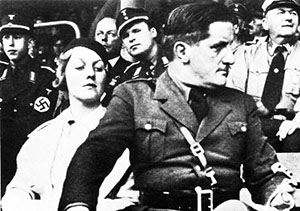
Hanfstaengl and Diana Mitford at the 1934 Nuremberg Nazi party rally.
In April 1932, Winston Churchill and his son Randolph – both friends of Putzi’s – visited Munich and invited him to dinner at their plush hotel. Churchill allegedly discussed the possibility of an Anglo-German alliance with him and was very keen to broach it with Hitler. Hitler, however, declined Churchill’s invitation to dinner. After a raucous evening with Putzi at the piano and the wartime British Minister singing, Churchill wished the Nazi’s success in the elections. Eleven months later, that success would come thanks to the Reichstag Fire.
Part two of this article, published in New Dawn 191, examines the major role played by Putzi’s masters – bankers on Wall Street and the City of London – in financing Hitler throughout the 1930s and building up the German war machine in preparation for the planned conflict with Russia. Franklin Roosevelt’s concerns for Putzi’s welfare became a reality in 1937, and he fled Germany for his life. Roosevelt takes him to Washington as a White House adviser, with a good salary, nice house, servant, and Steinway grand for his entertainment.
[alert type=”general” dismiss=”no”]This article was published in New Dawn 190.[/alert]
[alert type=”success” dismiss=”no”]If you appreciate this article, please consider subscribing to help maintain this website.[/alert]
Footnotes
1. Antony Sutton, Wall Street and the Rise of Hitler, 118
2. Guido Giacomo Preparata, Conjuring Hitler, How Britain and America Made the Third Reich, xvii
3. William Shirer, The Rise and Fall of the Third Reich, 30
4. Ernst Hanfstaengl, Hitler – The Missing Years, 36
5. Ibid, 14-16
6. Ibid, 51
7. Shirer, Rise and Fall of the Third Reich, 47
8. Sutton, Wall Street and the Rise of Hitler, 120
Russia gets into your blood. It got into mine when I studied Russian at the United Nations Language School in New York in the 1980s and 90s while working as a UN information officer, having already learned the basics when I was 19.
I can still hear our teacher Alla coming into the classroom and saying: “Today, my dear students, we going to study our beautiful Russian verbs – first the imperfective and then the perfective verbs.” Who could fail to fall in love with Russian verbs with such a charming teacher? If you happen to read this, Alla, I send you a big wave.
But it was not only the verbs. Other intricacies of Russian grammar intrigued me – rules like “don’t forget that if the verb is negative the noun has to be in the genitive.” And the beautiful Cyrillic alphabet would dance before my inner eyes. Then there was my Russian girlfriend around the same time, who told me that “to sound like a Russian you must smile inwardly when you speak.” Indeed, they do this even when they are conveying something sad or, more likely, sad and funny at the same time – a combination at which the Russians excel.
Russian literature, too, captivated me. I became familiar with Dostoyevsky’s Idiot, Andrei Bely’s extraordinary novel Petersburg and the equally extraordinary Master and Margarita by Mikhail Bulgakov. Reading these works, one becomes aware of the deeply spiritual nature of the Russian soul. Furthermore, these last two authors revealed another side to Russia that intrigued me, namely a strong current of fascination for things magical, esoteric and other-worldly. I decided to go deeper into this domain, and my latest book Occult Russia was the result.
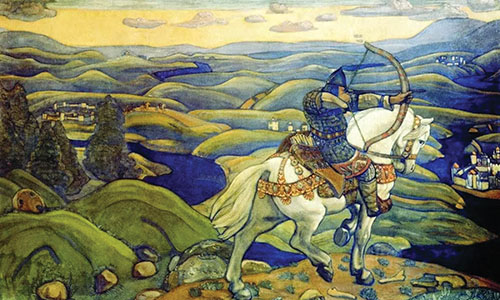
‘Ilya Muromets’ (1910) by Nicholas Roerich.
Of course, I was devastated when the war in the Ukraine began, and I feel deeply for all my Russian and Ukrainian friends. As I write I can only pray that the conflict will not be prolonged. As a stop-press item, I must express my deep outrage and sadness at the death of Alexander Dugin’s daughter Darya who was killed on 20 August 2022 by a car bomb possibly intended for her father. Through this cowardly act, the life of a radiant human being has been tragically cut short. My deepest sympathy goes out to all her family.
I offer the book Occult Russia in the hope that it will contribute to a deeper understanding of the Russian mind and soul. What follows is a foretaste of it, abridged and edited from the Introduction.
• • •
Upon hearing the word “Russia” you may think of military parades in Red Square, the war in the Ukraine, the annexation of the Crimea, gangsters, internet hackers, assassinations of journalists and imprisonment of opposition politicians. This book is not about those things but about a different Russia that is invisible to many people in the West – namely the inner Russia, the Russia of mysticism, myth, magic, the esoteric and the spiritual. Like a vast river, long ice-bound, the spiritual force deep in the Russian soul is moving again. In the wake of the collapse of communism, the Russian people are seeking new – or often old – ways of giving meaning to their lives. This search has given rise both to a revival of ancient spiritual traditions and to a plethora of new movements, cults, sects, -isms and -ologies, most of which would have been banned in the Soviet era. Out of this ferment exciting things are emerging.
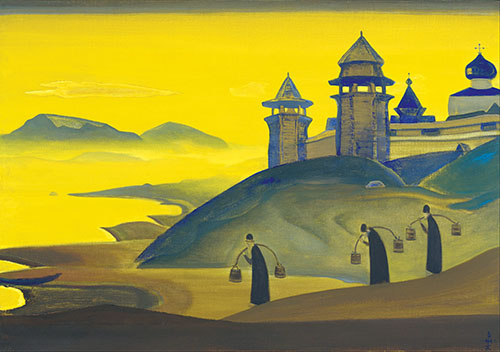
‘And We are Trying’ (1922) by Russian artist and Eurasian mystic Nicholas Roerich.
Today’s spiritual quest in Russia covers an enormous spectrum. Millions are turning or returning to the Orthodox Church, and thousands of new churches are being built. As for alternative forms of spirituality, many people are turning to doctrines such as Theosophy, Anthroposophy and the teachings of Nikolai and Helena Roerich. Another group is turning back to the pre-Christian gods of Russia or to shamanism, often of the variety practiced by the urban intelligentsia. Meanwhile the indigenous pagan communities such as the Mari and the various shamanic peoples of Siberia are enjoying a new lease of life. In Russia the shamanic and pagan traditions have long existed side by side with the Orthodox religion – if not always in peaceful co-existence at least in a modus vivendi that the Russians call dvoeverie (dual faith).
History can be driven by mythical motifs, and this perhaps applies particularly strongly to Russia. One useful term for such a motif is the word “meme,” coined by the British biologist Richard Dawkins in his 1976 book The Selfish Gene. Originally used in the biological context, it has come to mean an idea or notion that spreads like a message through a society, transmitted from person to person or through the media.
A phenomenon with some similarities to the meme, but operating at a deeper level, is that of the egregore, a collective thought-form on the invisible plane, created by many people focusing on the same ideas and symbols. Deriving from a Greek word meaning “watcher,” an egregore can take an infinite variety of forms – an angel or demon, a god or goddess, a hero or heroine, an object of special veneration, a sacred place or a compelling narrative. The concept of the egregore overlaps to some extent with the notion, developed by the psychologist Carl Gustav Jung, of the archetype, an inherited motif in the collective unconscious of humanity. In exploring Russia’s mystical quest we find various powerful memes, egregores and archetypes at work. They include the following:
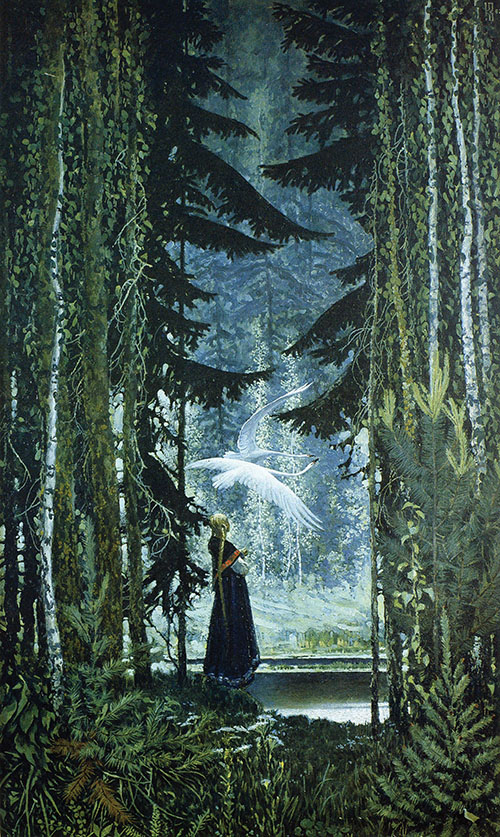
Geese by Konstantin Vasilyev
Holy Russia
The notion of Holy Russia is searchingly explored by Gary Lachman in his book of that title. Deeply engrained in the Russian collective soul is the conviction that Russia has a special spiritual mission. This is reflected in the powerful mystique of the Orthodox Church and the concept of the “Third Rome” – the first Rome being the city on the Tiber, the second being Constantinople and the third and final one being Moscow. All of this has given rise to an egregore of enormous vitality, which has enabled the Orthodox religion to flourish anew after the communist era.
The Warrior Hero
An early example of this figure is the semi-legendary Ilya Muromets, who features in various Russian epics as well as in films, novels and art. Probably a composite of various different people, he appears as a defender of Kievan Rus in the 10th century and in later incarnations he fought the Mongols and saved the Byzantine Emperor from a monster. He eventually became a saint of the Orthodox Church. The role of the warrior hero has also been played by certain real historical figures such as Prince Alexander Nevsky who defeated the Teutonic Knights in the thirteenth century, Tsar Peter the Great, and even Joseph Stalin.
The Never-Never Land
This motif crops up repeatedly in Russian history in various forms and under various names: Byelovodye (Land of the White Waters); Opona, the utopia of peasant folklore; and Hyperborea, the vanished promised land in the north. The Never-Never Land is also thought of as the source of an ancient wisdom tradition that has the power to transform human life if one could only access it.
The rustic sage, Lev Tolstoy, pictured at Yasnaya Polyana, 1908, in the first colour photo portrait in Russia.
The Rustic Sage
This figure is typified by Tolstoy’s character of Platon Karataev, the wise peasant who is a fellow prisoner of the hero Pierre Bezukhov in War and Peace. Tolstoy himself adopted this persona in his later years.
The Holy Fool
Alternatively “fool for Christ,” this term is applied to someone who adopts an apparently mad way of life, marked by great austerity and extreme piety. It can overlap with the concept of the starets, the independent, god-illuminated holy man or woman. It has been pointed out to me by my correspondent Dana Makaridina that there are two kinds of holy fool, namely the blazhennyi (“blessed”) and the yurodiviy (“foolish”). The distinction is subtle. The former are characterised by a state of saintly bliss, whereas the latter are conspicuous by their craziness and weird, antisocial behaviour. Both are associated with freedom, being unconstrained by any social norms and able to communicate directly with God. Dana Makaridina mentions a friend who has had the nickname blazhennyi since childhood because of his strange, otherworldly behaviour. She writes that “now he is an extravagant rock musician and performance artist dealing with topics of freedom and death.”
The New Messiah
Prophets and messiah figures have abounded in Russian history, overlapping somewhat with the starets and the fool for Christ, and they continue to appear in the present day. A typical example is the case of Sergei Anatoljewitsch Torop, an artist and jack-of-all-trades who, in 1991, proclaimed himself to be Jesus Christ returned. Adopting the name Vissarion, he founded a community called the Church of the Last Testament, gathered several thousand followers and established an ecospiritual settlement in Siberia. At the time of writing he is in prison facing a charge of extorting money from his followers and subjecting them to emotional abuse.
The Woman Clothed with the Sun
Joseph Stalin led the Soviet Union from 1922 until his death in 1953
This figure originates in a passage in chapter 12 of the book of Revelation in the New Testament. To quote the King James Bible:
And there appeared a great wonder in heaven; a woman clothed with the sun, and the moon under her feet, and upon her head a crown of twelve stars.
This image of the woman clothed with the sun crops up repeatedly in Russian prophetic writings.
My own perception of Russia has been through different stages. As far as I can remember, the country meant little to me until 1953, when I was nine years old, and one morning at breakfast my father picked up the newspaper and remarked that Stalin had died. I may have asked who Stalin was and been told that he had been the leader of our powerful eastern ally during the Second World War.
Later I absorbed the Cold War propaganda. Russia came to mean the suppression of the Hungarian uprising, defectors from the West like Burgess and Maclean, Khrushchev banging his shoe on the table at United Nations General Assembly, the Cuban missile crisis, the crushing of the Prague Spring, the persecution of dissidents.
At the same time I was fascinated enough by Russia to start learning the language when I was nineteen years old, a process that I resumed in my fifties, by which time I had witnessed the advent of Gorbachev and perestroika, shortly to be followed by the break-up of the Soviet empire and the collapse of communism itself. While these tumultuous changes were going on I visited Russia for the first time in 1991 with an American contingent of very amiable born-again Christians, whose tour group I was able to join through the facilitation of an acquaintance.
A particularly vivid memory of that trip was visiting a Russian Orthodox seminary near Saint Petersburg. On entering the building I found myself transported into another world, marked by candlelit icons, the fragrance of incense and an atmosphere of still reverence. There was a quiet dignity about the priests and seminarists moving about in the dim corridors. One of them, looking startling like the photographs I had seen of the wild-eyed prophet Rasputin, was a young man with long, black hair and a solemn expression, dressed all in black in a sort of peasant’s tunic, trousers, and boots. We were shown to the chapel of the seminary where a service was held, and I began to understand why Madame Blavatsky, non-Christian though she was, always vehemently defended the Orthodox Church.
At the present time, in the wake of the collapse of communism, the Orthodox religion is once again playing a central role in the life of the nation. Churches are full, and thousands of new ones are being built, with the state playing a supporting role. But not everyone is happy with the current situation, and some of the initial post-perestroika religious enthusiasm is waning. Many believers oppose what they see as an increasing tendency towards a merger of state and Church, while people of other persuasions do not want Orthodox Christianity to be imposed on the population.
Visiting Russia reinforced my view that it has a special destiny, as many prophets have predicted. One of them, the German writer Oswald Spengler, wrote in an essay entitled “The Two Faces of Russia” (1922):
The bolshevism of the early years has thus had a double meaning. It has destroyed an artificial, foreign structure, leaving only itself as a remaining integral part. But beyond this, it has made the way clear for a new culture that will some day awaken between “Europe” and East Asia. It is more a beginning than an end.
Thirteen years later Spengler’s vision for Russia was illustrated in a cartoon by the artist Olaf Gulbransson, which appeared in 1935 in a literary-satirical journal originally produced in Munich under the name Simplicissimus, but by then published in exile in Prague under the title Simpl. The cartoon, entitled Melancholia, is a parody of Albrecht Dürer’s famous engraving known under the same title.
In the foreground sits a melancholy Spengler, quill pen in hand, beside an even more melancholy dog and various other objects including an obstetric forceps, perhaps indicating that the New Age in Russia will have a difficult birth. In the background is an image of the New Age itself in the form of a naked young woman riding a rather complacent-looking bear, both framed in a large rising sun. The woman in the background riding a bear symbolises Spengler’s prediction that a new culture will come out of Russia.
Gulbransson’s cartoon appeared in 1935 during a troubled time. Germany had been through a military defeat, followed by the ravages of inflation and depression and then by the Nazi seizure of power in 1933. In Russia the Bolsheviks ruled. Another war was on the horizon. But Gulbransson pictured a bright future coming from the direction of Russia and symbolised by the maiden riding the bear. Between then and now there are certain parallels. The present era is overshadowed by war and by high tensions between Russia and the West. But I believe the maiden riding the bear still carries a hopeful message. J