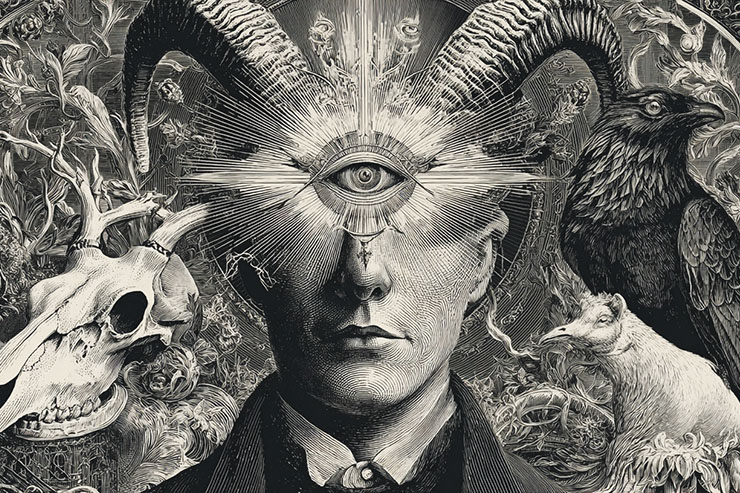
New Dawn – World's Most Unusual Magazine

Author: David Jones

  • The Sorcerer’s Cloak: Materialism, Black Magic & the Occult Machinery of Power

    The Sorcerer’s Cloak: Materialism, Black Magic & the Occult Machinery of Power

    From New Dawn Special Issue Vol 19 No 4 (Aug 2025)

    “If black magic works, then materialism is its best cover of secrecy.”

    These were the incendiary words of Professor Moshe Kroy – Israeli philosopher, former Tel Aviv University lecturer, “rational mystic,” and eventually, a ghost in the machine of suppressed knowledge.

    His assertion, buried in the faded xeroxed pages of a 1977 issue of Conspiracy Digest, suggested that secret elites in our world harness tools of occult power – black magic, telepathic influence, egregoric control – while promoting a public creed of scientific materialism.

    In this dual strategy of concealment and monopolisation, Kroy argued, lies the key to understanding the deeper architecture of power. A power that engineers our economic, political, social and cultural systems – programming our very perception of reality.

    Born in 1948, Kroy rose meteorically through the intellectual circles of early 1970s Israel with his philosophical tract Life According to the Intellect, a distillation of Ayn Rand’s objectivism into a system he termed “rational egoism.” But this was only the beginning. According to one of his students, around 1980, Kroy “had developed his own unique synthesis of Advaita Vedanta, [J.P.] Sartre, and [Edmund] Husserl’s phenomenology.”1
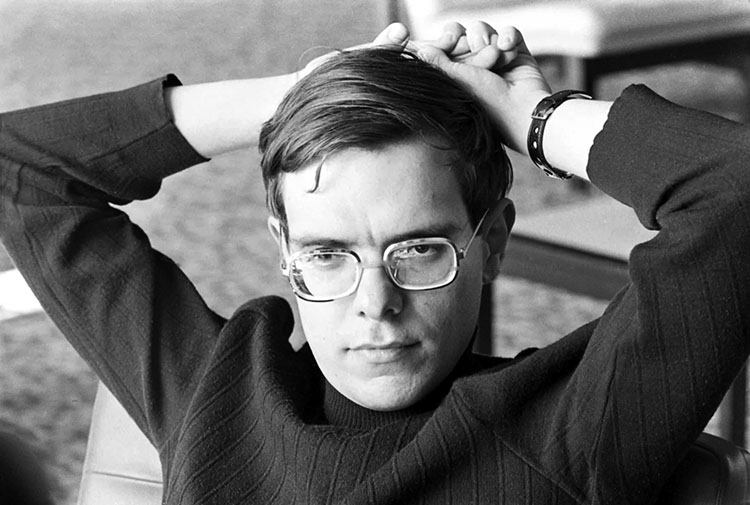
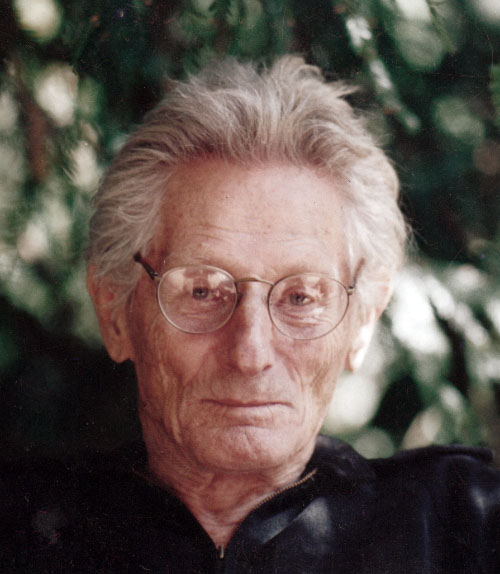
    Moshe Kroy in 1975.

    The most dangerous ideas Kroy ever penned were not in a university lecture or public seminar, but in a little-read article titled “Materialism, Occultism and the Suppression of Psychic Research.” In it, he mapped a structure of concealment so profound and so methodically engineered that it has all but vanished from public memory. That the article itself can no longer be found online – its citation ghosted from search engines – may speak to its paradigm-shattering power.

    Kroy’s central hypothesis is disturbing in its simplicity: he writes, “Suppose that certain secret societies, concentrating on the ‘black arts’, did find some magical techniques which are effective. Suppose – say that they found a method – derived from older magical practices, of producing hypnotic trance at a distance – so-called telepathic hypnosis.”

    To maintain political power and much more, these groups would have to do two things:

    “A. The discovery is kept completely secret.

    “B. The discovery is securely monopolised: No other group or organisation is in the position to rediscover it.”

    The strategy they applied was scientific materialism.

    Materialism & the Newtonian Paradigm

    An Israeli TV series described Kroy as “a genius who paid every imaginable price in his uncompromising effort to reach the truth.”2 Indeed, he pushed past the limits of the materialist doctrine to discover forbidden worlds rarely explored by intellectuals and scientists. It may have led to his death.

    Accounts by Kroy’s students describe a genius who explored a wide range of ideas. He seems to have exhausted the limits set by mainstream science and dived headlong into the ocean of spurned, forgotten and even dangerous concepts and philosophies that exist outside orthodoxy. Ideas and theories discarded by the Establishment as unproven or unprovable within the framework of materialism.

    Kroy transformed from Rational Objectivist to Rational Mystic. He delved into Eastern and New Age philosophies, holding self-transformation workshops and teaching psychic self-development and protection. He even came to the attention of New Age thinker Ken Wilber, who praised his genius.

    To understand how materialism could serve as a cloak for occult domination, one must consider the foundations of modern science. The prevailing worldview – commonly referred to as the Newtonian paradigm or Cartesian dualism – posits that reality consists of physical matter moving through space and time. Everything, including consciousness, is presumed to be reducible to atoms, neurons, and energy exchanges.

    This worldview acts as a cultural enforcement mechanism. It defines the boundaries of acceptable thought and what constitutes ‘reality’. Belief in materialism is strengthened because dedication and commitment to its doctrine determine funding priorities, academic inquiry, and even approaches to psychology and mental health. Those who stray too far beyond its limits – mystics, psychics, pagans, shamans, or researchers of paranormal phenomena – are pushed into the margins, labelled cranks, cultists, pseudoscientists and “conspiracy theorists.”

    Moshe Kroy recognised this with startling clarity.

    The Intention of the “Conspirators”

    In “Materialism, Occultism and the Suppression of Psychic Research,” Kroy begins by stating:

    “A major stumbling block in the attempt to study the nature, purposes and tools of the conspiracy is the fact that such a study necessarily is done in a cultural context which, in turn, has already been largely shaped by the conspiracy. In other words, while the mere realisation of the existence and activities of the conspiracy has a largely liberating effect on a thinking individual, disclosing to him as it does the vast magnitude of the lies and deception incorporated in the various layers of the official culture, this liberating effect, in itself, may merely serve to create an intellectual vacuum.”

    It should be noted that the publishers of Conspiracy Digest believed that “the Right-Left political-economic spectrum is an artificial concoction of the ruling class/conspiracy.” This is the context in which to understand Kroy’s reference to the “conspiracy.”

    One of the most influential underground books of the 1970s was Gary Allen’s None Dare Call It Conspiracy. Kroy cites Allen’s argument that history is shaped by those who control political and economic structures. Ideas and ideologies are merely superficial tools in promoting politico-economic control.

    “The struggle against the conspiracy requires liberation also from the deeper, however invisible, power of the conspiracy on our culture,” Kroy writes. “A conspiracy researcher, however observant, sharp and bold, is hampered to the degree that he accepts uncritically entrapment within an intellectual framework which was deliberately inspired by the conspiracy.”

    Kroy challenges the assumption that modern science is an open and empirical enterprise. Instead, he saw it as a form of intellectual enclosure, maintained by a priesthood of credentialed minds, whose function is less to explore reality than to police its borders.

    His article synthesises three points into a unifying hypothesis to expose the intention of the “conspirators.”

    “I. The thorough insistence, and success, in which an intellectual academic ‘elite’ has made materialism, the doctrine that to exist is to be made of matter and energy, and to be located in space and move in time, the dominant premise of the culture.

    “II. The fact that various circles and groups connected with the conspiracy had occult interests and practices, centring around certain secret, esoteric, mystical doctrines and certain hidden practices, involving black magic, as well as alchemy, etc.

    “III. The fact that parapsychological and psychic research is largely considered by intellectuals and other ‘educated’ people to be charlatanism, unworthy of serious attention, inconsistent in its results, methodically loose, or just plain gullibility – to the extent that all the evidence which was generated through it can be ‘safely’ ignored.”

    If a phenomenon contradicts the materialist paradigm, it is excluded not on the grounds of evidence, but by the paradigm’s dogmatic refusal to see outside itself.

    This is where the brilliance – and danger – of Kroy’s theory emerges. He posits that the very people who shape this closed system of belief may themselves use the forbidden arts they publicly denounce.

    “Does black magic work?” asks Kroy. “This is a very dangerous question to ask in a cultural context in which every ‘educated’ person knows that black magic contradicts the basic principles of science and so ‘could not work’…”

    Black Mirrors & Secret Societies: Practitioners of the Forbidden Arts

    Kroy proposes a speculative hypothesis that certain groups discovered powerful occult techniques that offer extraordinary control over populations, opinion leaders, and even entire governments. Its true power would lie not only in its use but in its concealment.

    “Suppose that certain secret societies, concentrating on the ‘black arts’, did find some magical techniques which are effective. Suppose they found a method, derived from older magical practices, of producing hypnotic trance at a distance – so-called telepathic hypnosis. Clearly, such methods can have immense value in gaining political power, provided that two conditions are met: A. The discovery is kept completely secret. B. The discovery is securely monopolised: No other group or organisation is in the position to rediscover it.”

    This can be achieved, says Kroy, by promoting “the culture of materialism, which implies that no magical technologies could be workable, a priori. You pretend to equate materialism with scientific spirit, etc. and stultify anyone who attacks it. Thus, you effectively stop others from following your trail by implying that no such trail could conceivably exist.”

    Kroy explains that this strategy works in other domains. To preserve corporate secrets or to maintain a monopoly over any technological breakthrough, promote the idea that this kind of discovery is impossible.

    Kroy offers this example: “Whoever has managed to develop a technology of space travel in a velocity which allows instant access to far galaxies, and wants it as a secret monopoly, would and should promote a theory claiming that, say, the ‘velocity of light’ cannot be exceeded in nature by any technology. In other words, relativity theory-type constraints on ‘what is possible’ can serve to cover a technology which involves doing what the theory implies is impossible.”

    Which brings us to his next point, that “it can be expected… psychic research, as well as any technology or activity which would allow non-privileged, non-conspiracy individuals into the field of the ‘esoteric doctrines’, would be heavily suppressed…”

    Kroy goes on to logically dissect the arguments made by defenders of materialism.

    A 2009 interview with British evolutionary biologist Richard Dawkins revealed insights into the mindset of those who defend materialism and scientism. When radio host Prof. Hugh Hewitt asked whether Dawkins considered what existed “before the Big Bang,” he replied: “I don’t consider the question because I recognise that it’s an intuitively appealing question. I recognise that, along with everybody else, want to ask that question. Then I talk to physicists who say you can no more ask what came before the big bang than you can ask what’s north of the North Pole.”

    A mental block inhibits a whole class of professionals from seeing beyond the limits of materialism – as if they are compartmentalised under a spell. Could this be caused by something more than stubbornness, ignorance and groupthink?

    To secure this monopoly, you must inoculate the culture against even the possibility that such techniques exist. You achieve this, said Kroy, by establishing materialism as the cultural default, equating scientific scepticism with reason itself. Then you mock, marginalise, or professionally destroy anyone who strays beyond its limits – as Richard Dawkins is renowned to do. As a result, your rivals and the fields of sheep under your control remain ignorant of the magical universe – the realm of consciousness, will, spirit – and the dangerous keys that open portals to powers and principalities above and beyond this material world.

    For Kroy, “an intellectual academic ‘elite’ has made materialism,” “the dominant premise of the culture” – “the doctrine that to exist is to be made of matter and energy, and to be located in space and move in time.”

    Rites of Hidden Rulers: Ceremonial Magic

    From the grimoires of Renaissance occultists to the secretive rites of the Hermetic Order of the Golden Dawn, the art of directing and controlling minds, influencing unseen forces, or attempting to contact gods (theurgy), has a history as long as mankind.
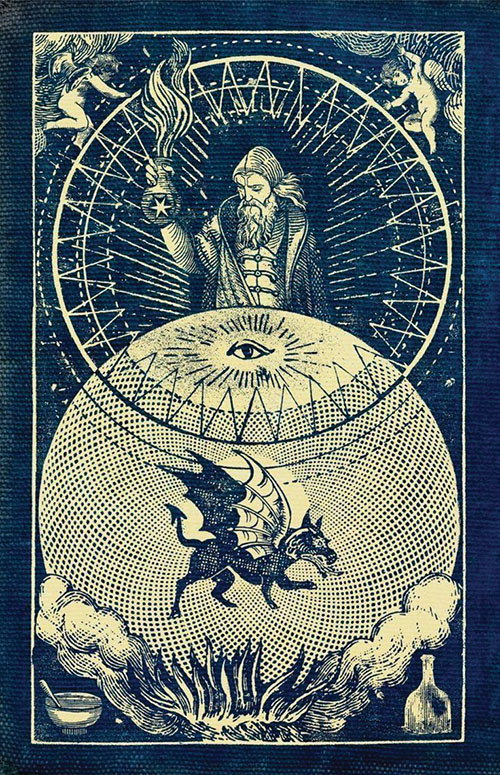
    What is ceremonial magic? Several scholars suggest that it is essentially the use of rituals and techniques to invoke “spirits” or life forms from other dimensions or worlds, which can enter this world through specific rituals.  

    For example, according to the respected scholar of esotericism, Manly P. Hall, “a magician, enveloped in sanctified vestments and carrying a wand inscribed with hieroglyphic figures, could by the power vested in certain words and symbols control the invisible inhabitants of the elements and of the astral world. While the elaborate ceremonial magic of antiquity was not necessarily evil, there arose from its perversion several false schools of sorcery, or black magic.”3

    “By means of the secret processes of ceremonial magic,” warned Hall, “it is possible to contact these invisible creatures and gain their help in some human undertaking… But evil spirits serve only those who live to pervert and destroy.”

    In magical systems, symbols are weapons, intention is force, and belief is akin to architecture. The magician or ritual operator uses thought, image, and will to open portals in the mind – perhaps beyond it. To the outsider, it is dismissed as nonsense.

    Ceremonial magic has always been a double-edged sword. While some traditions emphasise spiritual growth and enlightenment, others – particularly in the realm of black magic – seek domination, wealth, or control. And here lies Kroy’s most unsettling suggestion: that certain elites and groups, in the vein of “we know and they should be kept ignorant,” secretly practise these dark arts, even as they promote a worldview that discredits them.

    Egregores, Watchers & Manufactured Minds

    If the conspiracy that Moshe Kroy described is more than political, more than economic – if it is ultimately spiritual – then we must expand our vocabulary of power.

    Enter the egregore, a concept from esoteric tradition that describes a psychic entity or group mind form created by collective belief and emotional energy. Once formed, an egregore can take on a life of its own, shaping thoughts, behaviours, even entire civilisations.

    In his article “Understanding the Occult: What is an Egregore,” Theron Dunn defines an egregore as “an energised astral form produced consciously or unconsciously by human agency… usually an archetypal image produced by the imaginative and emotional energies of a religious or magical group.”4

    Egregores – whether purely psychic, symbolic, or something more – are not neutral. Egregores of nationalism, egregores of religion, even the egregores of corporations: each compels action, embeds narratives, harbours defensive and offensive modes. One might say that our post-modern world is haunted by these ghosts of group minds.

    Kroy’s insight here is chillingly prescient. By engineering culture to generate specific egregores while denying their reality, the elite magician both protects and weaponises arcane knowledge and occult techniques.

    According to the Golden Dawn glossary, egregore derives from a Greek word meaning “watcher” and a “group egregore is the distinctive energy of a specific group of magicians who are working together, creating and building the same thought-form or energy-form.”

    The strongest egregores are the oldest and are usually boosted by ‘magical force’ from powerful intra- and/or extra-terrestrial ‘beings’.

    In his article, Kroy ponders that “UFOs make you wonder… if some political power would be somehow connected to some extra terrestrial civilisation as an ally, it would be in its best interest to slander and stultify anyone who claimed such a connection was possible.”

    In biblical and apocryphal lore, particularly the Book of Enoch, the “Watchers” or Irim were angels – some faithful, others fallen – who interacted with humanity, imparting forbidden knowledge and fathering the Nephilim. These egregoric intelligences are neither metaphors nor myths, but active agents in our hidden history.

    The Gnostic Christians suggested that two camps fight an ongoing spiritual war for our souls. The decisive question, Kroy might have asked, is not whether these beings exist but who is working with them now? Are we doomed as pawns in this game? Can we escape?

    A Spell on You

    Even today, more than 40 years after Kroy penned his article, with numerous independent studies confirming paranormal phenomena, the materialist mindset prevails.

    Most scientists and ‘educated’ people don’t seem to understand the implications of quantum physics, which replaces the Newtonian model. According to Kroy’s hypothesis, a psychic barrier prevents the professional and ‘educated’ classes from drifting too far from the egregoric clutches of scientism.

    As the philosopher and scholar of religion Jeffrey Kripal notes in The Flip, “one could write a very big book, even a small library of books, on all the scientists, engineers and medical professionals who have either reported robust anomalous phenomena or found them to be of extraordinary scientific significance.”5

    Even as quantum physics upends Newtonian assumptions, and consciousness studies point to non-local mind, the public script remains unchanged: the physical material world is all there is. Magic is patent nonsense. The spiritual and subtle worlds are delusions.

    But what if this denial is itself a spell?

    In 1928, propaganda expert Edward Bernays wrote: “In almost every act of our lives, whether in the sphere of politics or business, in our social conduct or our ethical thinking, we are dominated by the relatively small number of persons… who understand the mental processes and social patterns of the masses. It is they who pull the wires that control the public mind, who harness old social forces and contrive new ways to bind and guide the world.”

    This statement, widely quoted in studies of media control, takes on new dimensions under Kroy’s framework. If psychic structures, such as egregores, shape mass perception, then the true power lies not in what we are told, but in what we are prevented from conceiving.

    Giordano Bruno & the Occult Psychology of Control
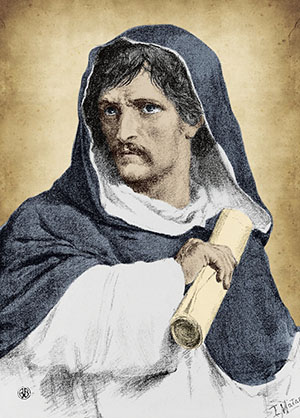
    Giordano Bruno, the famous 16th century Italian philosopher, astronomer, mathematician, and mystic. According to Prof. Ioan Couliano, Bruno’s book De Vinculis in Genere is “one of those little-known works whose importance in the history of ideas far outstrips that of more famous ones.”

    Centuries before Moshe Kroy issued his warning about the suppression of the paranormal, another philosopher lit a torch in the tunnels of human consciousness and paid for it with his life.

    Giordano Bruno, a 16th-century Dominican friar turned heretic, mystic, and magus, was burned at the stake in 1600. The official charge was heresy. The real crime may have been the contents of his dangerous little book, written in Latin: De Vinculis in Genere – “On the Bonds in General.”

    While Machiavelli’s The Prince outlined the manipulation of fear and statecraft, Bruno’s De Vinculis went deeper – into magic and its role in manipulation. It appears to accurately describe how modern politics and consumer culture operate, through psychological manipulation, using the bonds of desire. “The control of mass desire” – the “libidinal economy” notes one commentator – “is what mass politics is all about.”

    An anonymous article about the book suggests that many Anglo-Saxon and Middle European historians and intellectuals regard De Vinculis in genere as a very clever and insightful political work. 
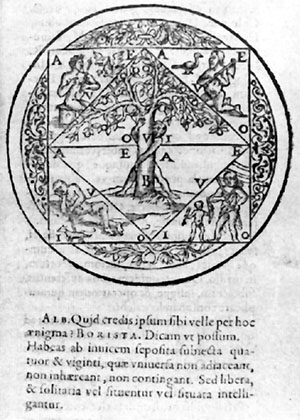
    A page from De Vinculis in Genere.

    “The London School of Economics uses it as a core text because of its usefulness in understanding behaviour patterns in contemporary social life,” reads the article.6

    Bruno argued that eros is the true binding force among humans. But those bonds, if skilfully manipulated, become chains.

    According to the article, Bruno sees man as a being who “desires” completion beyond himself, a desire “primarily erotic – in the most spiritual and all comprehensive meaning of the word.” Eros, in Bruno’s philosophy, is a connective force that bridges instinct and mystical insight. It not only generates vivid mental imagery within the self and others, but also “kindles and spills over into the psyche of other persons.” Through this, eros becomes a powerful medium – creating “links and ties” between individuals, whether as lovers, friends, group members, or even between leaders and followers.
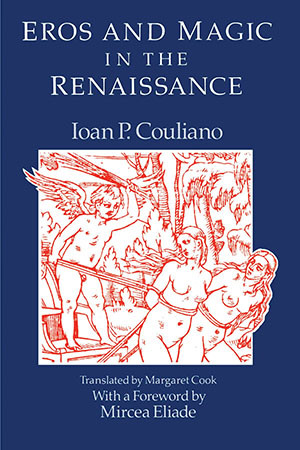
    In his masterwork Eros and Magic in the Renaissance, historian Ioan P. Couliano writes that “the magician of De vinculis is the prototype of the impersonal systems of mass media, indirect censorship, global manipulation, and the brain trusts that exercise their occult control over the Western masses… Bruno’s magician is altogether aware that, to gain the following of the masses, like the loyalty of an individual, it is necessary to take account of all the complexity of the subjects’ expectations, to create the total illusion of giving unicuique suum. That is why Bruno’s manipulation demands perfect knowledge of the subject and his wishes, without which there can be no ‘bond’, no vinculum.”7

    Eros is a magical force that infiltrates and enlivens our imaginations through symbols and images. Control the images and systems of thought – the imagination – and then apply occult techniques to manipulate groups or whole societies. Is it any surprise, then, that the London School of Economics – an institution deeply embedded in modern power structures – still uses De Vinculis as a “core text”?

    The key point is this: Bruno’s text bases its arguments on the reality of magical (occult) forces, the exact same type of supernaturalism that was denounced and supposedly thrown into the ashcan of history with the triumph of modern materialist science.

    In the new age of media saturation and algorithmic suggestion, Bruno’s text seems prophetic. Bypassing logic, directly targeting the unconscious, and riding the currents of erotic imagination and symbolic association, Bruno’s eros is filtered through screens, social media, celebrity culture, and synthetic desire. Every act of engagement, every click, every fear or fantasy amplified by the machine is another tether to an egregore whose name you do not know.

    Technocracy and the New Black Magic: Surveillance, AI, and the Rise of the Golem

    If black magic in the old world relied on incantations, talismans, and hidden rituals, its 21st-century incarnation is no less potent – only now, it is cloaked in code.

    Ceremonial robes have been replaced by lab coats and tech start-up hoodies. But the goal remains the same: control minds, dominate reality, and reshape the soul.

    In Kroy’s framework, what began as secret rituals in ancient temples migrated into silicon-based systems of governance. The black magician is now a systems architect, a biotech investor, a behavioural economist, an artificial intelligence engineer, a “world planner.”

    The late Zbigniew Brzezinski, US geostrategist and former National Security Advisor, foresaw the outlines of this shift in his 1970 book Between Two Ages: America’s Role in the Technetronic Era:

    “The technotronic era involves the gradual appearance of a more controlled society… dominated by an elite unrestrained by traditional values. Soon it will be possible to assert almost continuous surveillance over every citizen and maintain… complete files containing even the most personal information.”8

    What Brzezinski called “technetronic” control, Kroy would likely have recognised as ritualised mind-shaping, now mechanised and made scalable.

    Consider today’s technologies:

    AI-powered surveillance systems that anticipate protest, dissent, and emotional tone.

    Behavioural nudging algorithms embedded in digital platforms to shape decisions and purchases, and push political narratives and state/corporate propaganda.

    Neural implants and bio-interfaces that blur the boundary between body and machine, consciousness and programming.
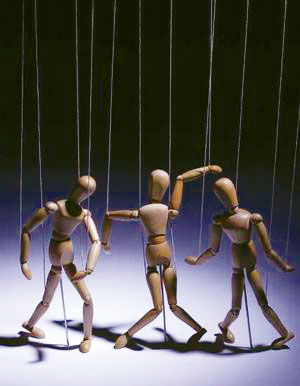
    They are magical instruments – artificial egregores programmed with purpose, created by hidden hands. Their function is identical to that of black magic as described by mystics like Dion Fortune (Psychic Self-Defence) – the imposition of one’s will upon another through unseen forces.

    “The most dangerous form of black magic,” warned Manly P. Hall, “is the scientific perversion of occult power for the gratification of personal desire.”

    If the ancient Golem was a clay figure animated by sacred words to serve its master, then today’s equivalent is the technological construct animated by data, algorithms, and social engineering. It has no soul. It serves without question. And once built, it cannot be reasoned with.

    But unlike the mythical Golem, this one is not merely a servant. It is the lens through which we view reality – filtering perception, rewriting memory, reinforcing belief. In this way, the modern Golem does not protect the village – it replaces it with a virtual model, one shaped entirely by those who cast the spell.

    This is the sorcery of the 21st century. And materialism still remains its perfect veil.

    Moshe Kroy’s Final Days & The Occult War for the Soul

    “If black magic may work,” Kroy proposed, “while the conspirators both do their best to make us all believe… that it couldn’t possibly work… and at the same time deal in it themselves – well, that is a totally different proposition, isn’t it?”

    In his later writings, Kroy spoke explicitly of the need to rediscover the self as spirit, not machine.

    “If, indeed, materialism is a false absurdity and psychic research is valid,” Kroy wrote, “then the search for an authentic understanding of one’s own self… may be a very powerful tool of struggle against the conspiracy.”

    In a culture that now reduces identity to data points, biology to code, and consciousness to electrochemical flux, the recovery of the spiritual self is not simply a metaphysical journey but an act of rebellion.

    The occult war that Kroy hinted at – between those who invoke higher wisdom and those who exploit secret and even sacred knowledge – is reaching a crescendo. And the stakes are no longer theoretical.

    The philosopher René Guénon referred to our current age as the “Reign of Quantity” – a world governed by metrics, mass, and measurement, where the qualitative dimensions of the soul and spirit are denied or derided. Guénon saw this as a symptom of a civilisational descent, a metaphysical degeneration masking itself as progress.

    Charles Fort, the early chronicler of anomalous phenomena, was even blunter: “Mankind invented materialism to shield itself from what was being done to it – by coincidence, by forces, by powers – that it refused to understand.”

    In late 1987, Moshe Kroy returned to Israel, no longer the young prodigy celebrated by Tel Aviv intellectuals but a man who had stared into the abyss – and reported back. He announced his latest discoveries and proclaimed the world is ruled by the forces of evil and that a final battle between good and evil is at hand. Reportedly suffering paranoia and pursued by the demons conjured during his adventurous life, he allegedly committed suicide in his Tel Aviv apartment in 1989.

    “Moshe was indeed enigmatic to those who did not know him,” recalled Dr Joseph Chiappalone, an Australian medical doctor and esoteric writer who became a colleague of Kroy in Melbourne.

    “But in reality he was a highly intelligent academic devoted to Truth and Wisdom. He was a non-Zionist Jew who had been expelled from Israel for protesting the atrocities committed by that State in the name of Zionism. His heroes were Jesus Christ and Sai Baba… He had been threatened with assassination if he ever went back [to Israel]. Mossad is nothing if not maleficently efficient.”9

    Had he opened doors that others wanted sealed? Had he named the nameless, invoked forbidden truths, challenged egregores that guard the boundaries of our reality?

    Or had the weight of knowledge simply become too much?
    Regardless of the cause, Kroy’s legacy haunts the present moment. For the very systems he warned about – psychic suppression, full spectrum field dominance, the weaponisation of materialism – are now global and digitised. That control grid becomes our daily reality.

    And yet, something else is happening.

    The mechanisms of mass control are failing. Narratives – economic, scientific, political, social, spiritual – no longer inspire confidence. People are asking new questions, thinking new thoughts. Reports of the paranormal, near-death experiences, synchronicities, and psychic events are not only increasing – they are escaping the margins.

    Is the old magic wearing off and the control system breaking down? Kroy would likely answer: Yes – and that is precisely why the system is panicking.

    The rise of competing egregores – movements, ideologies, mass awakenings – signals cultural fragmentation and metaphysical turbulence. The battlefield has shifted. No longer confined to competing ruling class groups or underground journals, the war has gone public. The individual, once a pawn, is now a potential player.
    Get the issue this article appears in

    The Way Out: Spirit, Sovereignty, and the Gnostic Revival

    What, then, is the way out of this enchanted prison – a world where reality has been hacked by those who would have us deny the soul?

    Moshe Kroy gave us a clue in his final written words:

    “The search for an authentic understanding of one’s own self… as a spirit… may be a very powerful tool of struggle against the conspiracy.”
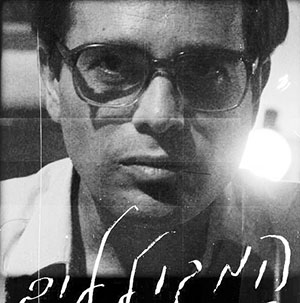
    Moshe Kroy (image from TV series ‘The Accursed’)

    In other words, the only antidote to a world ruled by hidden magicians is the awakening of inner gnosis – the self-knowledge that one is not a machine, a statistic, or an algorithmic subject, but a sovereign, incarnated being endowed with the power to blossom consciousness, will, and purpose.

    Materialism – so long used as a firewall – is cracking. Quantum physics has refuted classical determinism. Parapsychology, though marginalised, continues to produce data that defies the mechanistic model. Ancient traditions and indigenous ways of knowing, once dismissed as superstition and nonsense, are emerging as sources of healing, guidance and wisdom for today.

    In his vision of the spirit as the core of human resistance, Kroy joins a long lineage across time. Their message, scattered across burned manuscripts, banned books, and suppressed teachings, remains remarkably consistent: you are more than flesh. You are more than thought. You are more than what they told you.

    And the war – yes, the spiritual war – is not about saving the world, but about remembering who you are before the world was programmed into you.

    In this war, only the awakened spirit is truly dangerous. And perhaps that, in the end, is why they feared Kroy – and us.

    Author’s Note: This article, dedicated to the memory of Moshe Kroy (1948–1989), is based on two previous articles that appeared in New Dawn Special Issues Vol 12 No 3 and Vol 13 No 3.

    [alert type=”general” dismiss=”no”]This article was published in New Dawn Special Issue Vol 19 No 4.[/alert]

    [alert type=”success” dismiss=”no”]If you appreciate this article, please consider subscribing to help maintain this website.[/alert]

    Footnotes

    1. www.kheper.net
    2. ‘The Accursed’, Episode 3, www.imdb.com/title/tt4238712
    3. sacred-texts.com/eso/sta/sta24.htm
    4. theosophy.wiki/en/Egregore
    5. The Flip: Epiphanies of Mind and the Future of Knowledge by Jeffrey J. Kripal, Bellevue Literary Press, 2019.
    6. academia.edu/3989585/Reflections_on_the_De_vinculis_in_genere_by_Giordano_Bruno
    7. Eros and Magic in the Renaissance by Ioan P. Couliano, University of Chicago Press, 1987.
    8. Between Two Ages: America’s Role in the Technetronic Era by Zbigniew K Brzezinski, Praeger, 1982.
    9. rense.com/general93/end.htm

    © New Dawn Magazine and the respective author.
    For our reproduction notice, click here.
  • Neocon Revival? How the US-Israel War on Iran Targets China, BRICS & the Multipolar Future

    Neocon Revival? How the US-Israel War on Iran Targets China, BRICS & the Multipolar Future

    From New Dawn Special Issue Vol 19 No 4 (Aug 2025)

    Political analysts claim that beneath the surface, a grand strategy is being reactivated – originally conceived by the neoconservatives in the 1990s – to reshape the Middle East in the image of America and Israel. However, this time, the stakes are much higher: the future of a multipolar world order, the Belt and Road Initiative, the BRICS bloc, and China’s access to vital energy routes.

    A Clean Break Revisited

    In 1996, a strategy paper titled A Clean Break: A New Strategy for Securing the Realm laid out a blueprint for destabilising and redrawing the Middle East. Authored by American neocons for then-Israeli Prime Minister Benjamin Netanyahu, the plan called for the weakening or destruction of powerful regional states.

    Syria, Iraq, and Iran were marked for “rollback,” with Israel positioned as the dominant force in a new regional order. Israel would “secure the realm” after its adversaries accepted their diminished role in this Netanyahu-crafted Middle East.

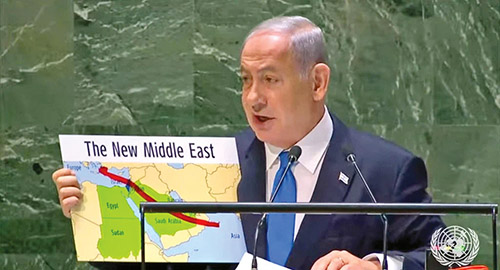
    Israeli Prime Minister Benjamin Netanyahu presented a map depicting the “New Middle East” when he addressed the 78th session of the UN General Assembly in Sept 2023.

    In 2006, US General Wesley Clarke famously received a classified memo outlining a new military strategy of toppling seven countries over five years – Iraq, Syria, Lebanon, Libya, Somalia, Sudan and Iran. The Syrian regime of Bashar Al Assad fell in December 2024, Col. Muammar Qadhafi’s Libya was destroyed in 2011, and Iraq under Saddam Hussein was taken out in 2003.

    During the years of the US invasion of Iraq, a popular saying circulated in neocon circles, reportedly first uttered by a senior British official: “Everyone wants to go to Baghdad. Real men want to go to Tehran.”

    As Hussein Askary of the Schiller Institute observes, Netanyahu is now “making sure that the original plan handed over to him more than 20 years ago – called ‘A Clean Break’ and ‘Securing the Realm’ – is followed, to ensure that there is no other power in the region… other than Israel.”

    That vision is now reemerging with terrifying clarity, facilitated by what analysts describe as a revived neocon coalition operating under the guise of national security, counter-terrorism, and anti-nuclear proliferation.

    Their ultimate aim, as journalist and geopolitical expert Pepe Escobar bluntly states, is regime change in Tehran: “That is the Holy Grail, dreamed of since the late 1990s… the ultimate dream of the neocons, the ziocons, and the wider Zionist axis.”

    Turning Points

    Even nonpartisan US think tanks, such as the Brookings Institution, have outlined how regime change in Iran might be orchestrated. In 2009, Brookings published Which Path to Persia?, explicitly exploring military strikes, covert operations, and exploiting Israel’s position as a US “proxy” to neutralise Iran’s nuclear capabilities.

    That option is no longer theoretical. As Israeli airspace domination increased after the collapse of Syria’s Assad regime, a secure corridor through Syria and Iraq opened up for strikes on Iran. Washington strategists, previously cautious, were emboldened.

    Roberto Iannuzzi, an independent analyst of international affairs, pinpoints the moment when hesitation in Washington gave way to bold escalation.

    “The turning point that helped dispel the doubts of many American strategists and several members of the Biden administration,” he writes, “was the stunning operation carried out by the Israeli army in Lebanon on September 27, 2024, which led to the elimination of Hezbollah’s Secretary General, Hassan Nasrallah, and the decapitation of the group’s entire leadership.”

    That strike – “built upon a chilling level of intelligence penetration that allowed Israel to reconstruct with extreme precision the movements of the main leaders of the Lebanese movement, and to strike at the decisive moment with devastating results” – shocked Washington into action.

    From that point forward, Iannuzzi observes, US policymakers increasingly viewed Israel as a viable “battering ram” to dismantle the “Axis of Resistance,” piece by piece.

    With Syria now under a new Western-approved regime, Hezbollah’s leadership decapitated, and Iraq’s skies routinely breached by Israeli warplanes with impunity, the strategic corridor to Tehran stands exposed.

    Geoeconomics: IMEC vs BRI

    The geopolitical map is not the only battlefield. The current war is also an economic war – specifically, a war over corridors, infrastructure, and the future shape of global trade.

    In 2023, the Biden administration revived US plans to return to the Middle East by announcing the India-Middle East-Europe Economic Corridor (IMEC) – a thinly veiled attempt to undermine China’s Belt and Road Initiative (BRI). The corridor aimed to stitch together India, Gulf states, Israel, and Europe into a new trading bloc, excluding Iran entirely.

    But as Iannuzzi observed, “An economic corridor could never take shape in a region wracked by conflict,” adding that the genocide in Gaza made Arab-Israeli normalisation – especially with Saudi Arabia – “unthinkable.”

    Hussein Askary argues the IMEC is “political fiction,” a “fraud” without substance, devised to derail real infrastructure already being laid by China and its partners. Iran, critically, is a keystone of that infrastructure. It links China’s overland BRI to Central Asia, the Gulf, the Caucasus, Turkey, and Europe through both rail and maritime routes. As Askary points out, “Iran is a key element of the BRI,” not just geographically, but strategically – connecting East and West through the International North–South Transport Corridor.

    Just weeks before the Israeli strikes on Iran, a direct freight train from Xi’an in China arrived at a logistics hub in northern Iran on May 25. The new rail link integrates Iran into the trillion-dollar BRI and lays the groundwork for deeper political and economic ties. As Pepe Escobar reported, this route bypasses “every US-controlled chokepoint… Hormuz, Malacca, the Suez Canal.” In effect, the train symbolised the success of emerging multipolarity on the Eurasian landmass.

    Iran’s Integration with Eurasia

    Iran is no longer an isolated theocracy under siege. It is a full member of the Shanghai Cooperation Organisation (SCO), the Russian-led Eurasian Economic Union, and BRICS, which recently expanded to 11 countries. In 2023, Beijing brokered the normalisation of ties between Iran and Saudi Arabia. In truth, Iran is a pariah only in the eyes of the West; across much of the Global South, it remains a legitimate state actor and strategic partner.

    Michael Hudson, the veteran economist, sees the recent US-Israeli attack on Iran as part of a broader American effort to prevent the emergence of an independent Eurasian trade bloc.

    “What we have seen… is the culmination of the long strategy that America has had ever since World War II, to take complete control of the Near Eastern oil lands and make them proxies of the United States,” Hudson told Scheerpost.

    If Iran falls, it will sever the link between China, Russia, and India. Hudson adds: “If the United States could put a client regime in Iran… you have boxed in Russia, you have boxed in China, and you have managed to isolate them.”

    Hormuz: The Chokepoint of Civilisation

    Over one-third of China’s oil and natural gas imports pass through the Strait of Hormuz – a narrow bottleneck that Iran controls. US General Erik Kurilla of US CENTCOM testified before Congress in 2023 that this made China dependent and exposed. “That makes them vulnerable,” he emphasised.

    Indeed, a former Deep State source confirmed to Pepe Escobar that “the CIA advised the Trump administration that China was resolutely against the shutting down of the Strait of Hormuz, so Trump went ahead with the bombing.”

    If the Strait were closed – whether by open war, covert sabotage, or a false flag – China would be severed from its primary energy artery. The fallout, some analysts warn, could be catastrophic: oil prices could spike uncontrollably, and the fragile $2 quadrillion global derivatives bubble might implode, triggering a chain reaction that plunges the world into economic depression.

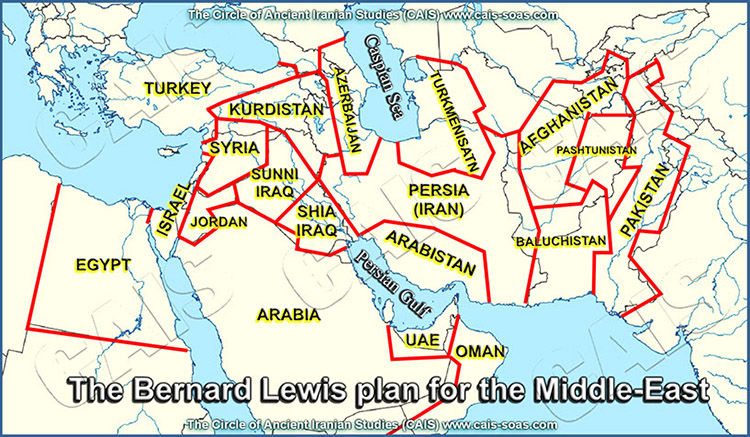
    The Bernard Lewis Plan: Divide and Dismember

    Plans to redraw the Middle East are older than IMEC or even A Clean Break. The Bernard Lewis Plan – a Cold War-era concept still echoed in neocon think tanks – proposed fragmenting the Middle East along ethnic lines. Iran would be broken into Baloch, Kurdish, Azeri, Arab, and Persian states.

    Askary believes this strategy has been revived: “The plan is to achieve regime change in Iran… and implement long-standing plans like the Bernard Lewis Plan, which envisions dividing countries like Iran into multiple ethnic entities.”

    From there, the same strategy could be applied to Pakistan, Central Asia, and even Russia itself. The final goal? As Askary plainly states: “The ultimate goal is regime change in China.”

    Get the issue this article appears in

    Target: Emerging Multipolar World

    All roads now lead east. The attack on Iran has little to do with nuclear weapons or ‘human rights’ – it’s about shattering the backbone of Eurasian integration and halting China’s ascent before the shift to a multipolar world becomes unstoppable.

    As Pepe Escobar puts it, this would be “a decisive trifecta strike… to three top BRICS – Iran, Russia, China; to Eurasia integration; and to the drive towards a multi-nodal, multipolar system of international relations.”

    Escobar describes Iran as the “privileged guardian” of West Asia – a civilisational state fulfilling its historic role at a pivotal moment. For BRICS, he asserts, “Iran must not be allowed to fall.” The stakes, he implies, are nothing less than the balance of power in the emerging world order.

    Despite the escalation, momentum is shifting. At summits in Kuala Lumpur, St. Petersburg, and Rio de Janeiro (where they convened on July 6–7), BRICS and Global South leaders are beginning to forge a unified front. Discussions are moving beyond polite communiqués – there is now open talk of forging real mechanisms for collective defence and mutual strategic deterrence.

    As Escobar notes, “It’s unlikely – under the Brazilian presidency – but BRICS sooner or later will have to make the strategic transition… to become the unbreakable spine of the Global South.”

    As bombs fall and propaganda intensifies, one truth cuts through the noise: the war on Iran is not truly about Tehran. It’s a proxy assault on Beijing, Moscow, New Delhi – and on the very idea of a post-Western, multipolar world.

    Whether this new world survives depends on what happens next – on the battlefields of West Asia, behind the closed doors of high-stakes diplomacy, and in the hybrid war over rail lines, ports, and pipelines.

    History may remember this moment not as the fall of Iran – if the neocons have their way – but as the crucible from which a new Eurasian order rises, signalling the end of Western dominance and the start of a multipolar world.

    [alert type=”general” dismiss=”no”]This article was published in New Dawn Special Issue Vol 19 No 4.[/alert]

    [alert type=”success” dismiss=”no”]If you appreciate this article, please consider subscribing to help maintain this website.[/alert]

    Sources

    thomasfazi.com/p/israel-the-us-and-iran-the-war-has
    sputnikglobe.com/20250617/iran-now-first-line-of-defense-of-brics-and-the-global-south-1122272733.html
    scheerpost.com/2025/06/28/war-on-iran-is-part-of-us-plan-for-global-domination-economist-michael-hudson-explains/
    youtube.com/watch?v=dGL4IfmI3Uk

    © New Dawn Magazine and the respective author.
    For our reproduction notice, click here.
  • Elon Musk: The Power Behind the Mask

    Elon Musk: The Power Behind the Mask

    From New Dawn Special Issue Vol 18 No 4 (Aug 2024)

    Toward the end of the twentieth century, Man created machines that were solid-state computers with new properties. These machines could think, reason, and self-program and learned to self-metaprogram themselves. Gradually, Man turned more and more problems of his own society, his own maintenance, and his own survival over to these machines. As the machines became increasingly competent to do the programming, they took over from Man. Man gave them access to the processes of creating themselves, of extending themselves.
    – John C. Lilly, The Scientist: A Novel Autobiography, 1978

    In the grand theatre of human history, there are moments when select individuals find themselves poised to make decisive moves, steering the course of nations and shaping the future of the world. These figures – some believing they have ascended through their own prowess, intelligence, and skill – often remain blind to the greater forces that influence their every move. Under the right conditions – often in strange times like ours – the veil slips, revealing the face behind the mask, and we glimpse mysterious forces at play.

    We live in extraordinary and perplexing times, where crucial decisions made by influential actors in the game of life could lead us towards a radiant new golden age or plunge us into a brave new hell world. Humanity stands at a pivotal juncture as the architects of our fate make their choices.

    Driven by what some describe as a “demonic” zeal, Elon Musk has cofounded six companies, including electric car maker Tesla, rocket producer SpaceX and tunnelling startup Boring Company. In 2002, he purchased the social media company Twitter, rebranding it ‘X’. His xAI start-up will train on X data – including billions of human conversations – and be powered by the world’s largest supercomputer.

    Already one of the world’s richest men with a net worth of US$221 billion, Musk plans to turn X into an “everything app” for private messaging, news consumption, shopping and even banking. In July 2023, Musk said X would eventually offer users the “ability to conduct your entire financial world” and become “the most powerful brand on earth.”

    The potential profit and control over the lives of billions is massive.

    Elon Musk aspires to be a charming devil and superhero for a new generation.

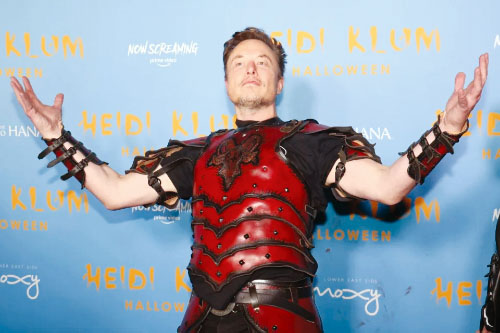
    A week after purchasing Twitter, Musk wore a ‘satanic’ costume for Halloween, which he used as his profile picture on X. The outfit features a Baphomet-like ram’s head on a blood-red breastplate and arm bracers, with an inverted cross on the forehead. Dubbed “The Devil’s Champion,” the costume’s symbolism sparked discussions in Christian circles about ‘evil forces’ reminiscent of a fast-receding aeon. As we move into the AI-dominated new world – an information-saturated environment of spectacle and mass mind control – Musk aspires to be a charming devil and superhero for a new generation.

    The minds and reality tunnels of the next generation are fully immersed in the digital realm, captivated by social media, on-demand shopping, live-streamed entertainment and propaganda, electronic payments, deep fakes, and AI chatbots. Children navigate a blend of online virtual and physical realities, with virtual realms claiming increasing mental real estate. Memory is outsourced to Google and, in the future, to personal AI agents like Musk’s Optimus.

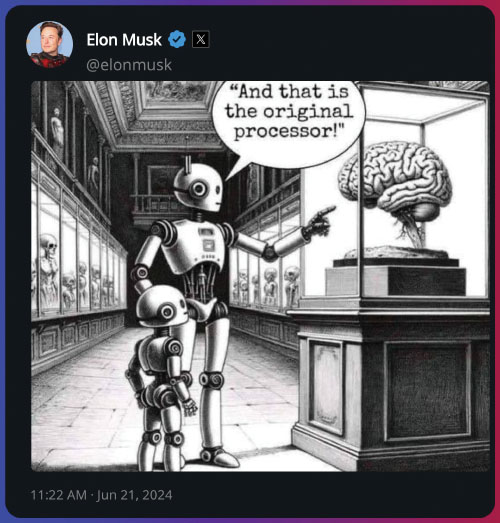
    According to Musk biographer Walter Isaacson, one of his life goals is “protecting us against artificial intelligence and robots gone wrong.” Musk has publicly stated that AI could potentially bring about an “apocalypse” – the extinction of humanity – and believes that merging with machines is necessary to avoid becoming obsolete.

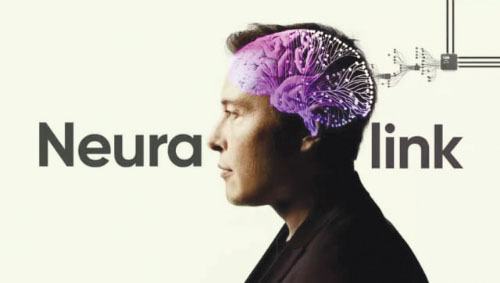
    He asserts that the long-term goal of his Neuralink brain implant project is to achieve “symbiosis with artificial intelligence,” as if the human mind can be managed like a computer.

    “It’s mostly about bandwidth, the speed of the connection between your brain and the digital version of yourself, particularly output,” explains Musk, as if the transhumanist dream of a duplicated self in the cloud is already a reality. While computers can communicate at “a trillion bits per second,” humans only manage around 10 bits per second when typing on a mobile device. To keep up, we will need to interface with them digitally.

    xAI’s goal is “to understand the true nature of the universe.” An artificial general intelligence (AGI) that matches or surpasses human intelligence and capabilities is to be tasked to answer one of the biggest questions of all. Machine intelligence, fed on vast amounts of human data, will deliver answers like the supercomputer Deep Thought in Douglas Adams’ The Hitchhiker’s Guide to the Galaxy, a foundational novel for the Tesla and SpaceX boss. xAI’s Grok chatbot, modelled on the novel, might even reveal that the answer to the “Great Question” of “Life, the Universe and Everything” is “forty-two [x10].”

    Joking aside – because humour is how Grok will connect with its human “users” – a much more serious and existential threat looms large as we stand at the crossroads. It is a danger that most – caught up or born in this new age of virtual realities – won’t detect, foresee or even understand as they fall under the spell – and possible destructive deception – of machine “intelligence.”

    Vitamin K

    Elon Musk takes ketamine.

    Musk has been vocal on X about his use of ketamine, a quick-acting anaesthetic that is legally used in both humans (as a sedative for minor surgery) and animals (as a tranquiliser). At high doses, it causes hallucinations.

    Musk has a ketamine prescription and takes a small amount about once every other week.

    “Ketamine is helpful for getting one out of a negative frame of mind,” he told former CNN anchor Don Lemon. Sometimes, though, Musk will forgo the dissociative anaesthetic for weeks and says he doesn’t think he abuses it or he wouldn’t be able to master his 16-hour work days. “I can’t really get wasted because I can’t get my work done.”

    A 2023 Wall Street Journal article, “Magic Mushrooms. LSD. Ketamine. The Drugs That Power Silicon Valley,” discussed how Elon and Google co-founder Sergey Brin “are part of a drug movement that proponents hope will expand minds, enhance lives and produce business breakthroughs.”

    Microdosing – when people take minuscule amounts of psychedelic substances to improve or enhance patterns of behaviour – has become very popular in recent years amongst business executives seeking an ‘edge’.

    Eduardo Hidalgo, the author of a book on the subject, says ketamine “is defined as dissociative anaesthesia because the person does not fall asleep but rather disconnects from their body and their environment. Patients may appear conscious and have their eyes open, but they are disconnected from their environment and do not respond to pain.”

    “What makes this substance unique is its wide spectrum of effects, which vary significantly depending on the dose administered. High amounts induce the anaesthetic effects already described. Intermediate measures trigger intense visionary experiences lasting between one and two hours. These psychedelic effects range from the sublime to the terrifying and have an unparalleled capacity to bring about what some psychonauts have called ‘the journey of the little death’.”

    “Other psychedelics make you imagine a gnome sitting on the television. With ketamine, reality as such disappears, forcing the brain to create a new one. You come to believe that what you see is real,” adds Hidalgo.

    The most famous psychonaut known for his ketamine use was the legendary scientist Dr John Lilly (1915–2001).

    In The Scientist: A Novel Autobiography, neuroscientist John C. Lilly, a pioneer in the use of isolation tanks and sensory deprivation, recounted his experience with a 150-milligram intramuscular dose: “I, as an individual, disappeared.”

    A medical doctor with a background in hard science, Lilly dedicated most of his adult life to studying the human mind, particularly his own. He is recognised as one of the early scientific explorers of human consciousness.

    In his quest to unravel the mysteries of existence, Lilly used isolation/floatation tanks to access the deepest parts of his mind. He later ingested psychedelics such as LSD and ketamine to open a mental gateway into other worlds (a similar state is achieved by traditional indigenous shamans).

    Lilly’s relentless pursuit to pierce the veil of reality – the foundational superstructure of our existence – eventually bore fruit when he made contact with non-human intelligences. This fascinating encounter will be examined later in this article.

    Achievements of Musk

    To set the stage, let’s delve into Elon Musk’s philosophy and explore his major achievements. This is a very short overview, and I am focusing on – not judging – abilities, with a slant on the most important threat looming. 

    According to Walter Isaacson, who wrote an authorised biography of the American business magnate, Musk believes he has unique abilities to change the world. In most people’s eyes, he has proven himself well and truly. He considers himself a disruptor who questions and breaks rules and restrictions and demands that his employees do the same.

    Elon Musk is revealed as a complex character driven by what his former partner, pop star Grimes, described as “demonic” zeal. She referred to this intense drive as “demon mode” – a state claimed to be common among high achievers. Musk and Grimes had a child in 2022 named Techno Mechanicus. 

    Isaacson suggests that the turmoil of Musk’s early life helped fuel his willpower, extreme productivity, and unparalleled ambition.

    Musk is renowned for his fearless approach to disrupting traditional industries. His ventures have significantly altered the landscape of numerous sectors, including transportation, energy, and aerospace. By leveraging groundbreaking technologies and unorthodox business models, Musk has defied conventional norms and redefined the boundaries of what is possible in various industries. This bold strategy has pivoted him into a position to shape the future.

    “He has these ideas of justice, almost like a Captain Underpants or comic book X-Man, which to some extent are applicable,” writes Isaacson. “There are three big epic quests. One is sustainable energy on the planet [Tesla]. Number two is taking us all to planetary space again [SpaceX], and third is protecting us against artificial intelligence and robots gone wrong [xAI]… He has a great feel for engineering… He talked about having Asperger’s Syndrome, but in his case, it means he doesn’t have deep emotional receptors.”

    Isaacson reports Musk is an engineering genius capable of brilliant problem-solving. He described how only hours after Musk finally acquired the company then known as Twitter, he and Musk flew to Boca Chica, Texas, where SpaceX engineers were stymied by a problem. Within two hours, Musk had figured out the solution.

    Musk loves video games, and his favourite is The Battle of Polytopia. In this brightly coloured, cartoonish-looking game, players compete to develop technologies, control resources, and wage battles to build an empire.

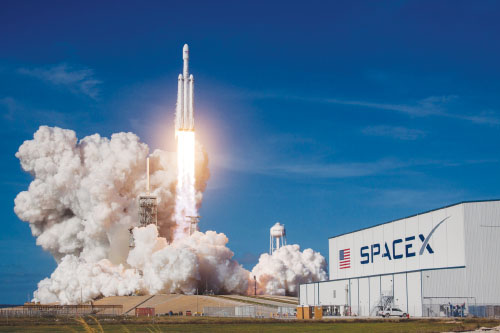
    SpaceX is the dominating force in the commercial spacecraft market. 

    The neurodivergent Musk has gleaned life lessons from the game, which he called “Polytopia Life Lessons.” Among them: “Do not fear losing” and “play life like a game.” Musk sees himself as the main character, and many others, including most CEOs, are NPCs – non-playable characters. (The NPC meme, derived from the gaming world, denotes people who do not think for themselves or do not make their own decisions.) “Let’s not be too hard on the NPCs – they just say what they’re programmed to say,” Musk cryptically tweeted on 4 October 2023.

    Moving quickly forward over his early business career, in 2002, Musk founded spaceflight services company SpaceX using $100 million of the money he made from the sale of PayPal. In 2004, Musk was an early investor in electric vehicle manufacturer Tesla Motors, Inc. (later Tesla, Inc.). He became the company’s chairman and product architect, assuming the position of CEO in 2008. In 2006, Musk helped create SolarCity, a solar energy company that was acquired by Tesla in 2016 and became Tesla Energy. In 2015, he co-founded OpenAI, a nonprofit artificial intelligence research company (Musk split with the company in 2018). The following year, Musk co-founded Neuralink – a neurotechnology company developing brain-computer interfaces – and The Boring Company, a tunnel construction company. In 2022, he acquired Twitter for $44 billion. He subsequently merged the company into the newly created X Corp. and rebranded the service as X the following year. In March 2023, Musk founded xAI, an artificial intelligence company.

    The company is developing Starship, a fully reusable, super heavy-lift launch system for interplanetary and orbital spaceflight. 

    Space Exploration Technologies Corporation, commonly referred to as SpaceX, is an American spacecraft manufacturer, launch service provider and satellite communications company headquartered in Hawthorne, California. The company is developing Starship, a fully reusable, super heavy-lift launch system for interplanetary and orbital spaceflight.

    SpaceX is now the dominating force in the commercial spacecraft market largely due to its reusable rockets and other advanced technology. It is the sole US provider for crewed missions to the International Space Station. SpaceX regularly launches and lands rockets while carrying payloads for a wide range of customers, from private companies to NASA and the United States Space Force. Musk’s success has been significantly bolstered by government contracts. In 2020 alone, SpaceX secured three military contracts.

    In 2015, SpaceX began developing the Starlink constellation, a network of low-Earth-orbit satellites designed to provide internet coverage to a growing number of countries. The project also aims to offer global mobile broadband. As of early March 2024, the Starlink constellation consisted of over 6,000 mass-produced small satellites in low Earth orbit, with thousands more planned for deployment.

    Map (July 2024) of SpaceX’s Starlink constellation, a network of low-Earth-orbit satellites providing internet access to most of the globe. 

    In March 2024, Reuters reported that SpaceX was developing Starshield, a network of hundreds of spy satellites under a classified contract with a US intelligence agency, likely the National Reconnaissance Office (NRO), which manages spy satellites. In 2021, SpaceX signed a US$1.8 billion contract with the NRO for “a powerful new spy system with hundreds of satellites bearing Earth-imaging capabilities that can operate as a swarm in low orbits.” The reach and monitoring capabilities of these spy satellites are unprecedented, with a source telling Reuters that “no one can hide” under the new network.

    The man guiding multiple multi-billion dollar companies is best known for his electric car company, Tesla.

    As one of the world’s most valuable companies in terms of market capitalisation, Tesla is developing one of the most sophisticated AI systems in the world. Its self-driving software is trained to form a realistic model of its environment and make life-or-death decisions about its own path. Fully autonomous cars are in the pipeline. If fully functional prototypes can be refined and replicated, they will one day dominate the roadways. And if fully autonomous vehicles are less likely to cause fatal crashes than human drivers, an argument will be made that humans shouldn’t be allowed to drive at all. The result would be that should a person run afoul of authorities, their freedom of movement could be easily denied by the “robot on wheels” parked in the driveway.

    Tesla’s Optimus humanoid robot. Some analysts believe that at the current rate of iteration, Optimus robots could soon replace human labour in many fields.

    Tesla is also developing Optimus, a humanoid robot designed to replace dangerous, dirty, and boring human labour. Its “brain” is powered by Tesla Autopilot, which uses the same AI architecture as the automobile.

    Such robots will have major implications for humans. First, it would obliterate the blue-collar worker’s negotiating power for higher wages. “Essentially, in the future, physical work will be a choice,” Musk told his employees at the 2021 Tesla AI Day. “What is the economy? It is, at the foundation, it’s labour. So – what happens when there’s no shortage of labour? That’s why I think, long-term, there will need to be universal basic income [he now calls it universal ‘high’ income].” Tesla employees cheered, oblivious they might soon join “the useless class,” those who the Israeli writer Yuval Noah Harari said would now be “unemployable.”

    Another more profound implication of these robots is mass surveillance as they scoop up vast amounts of “training data.” Given its unprecedented access to social environments and understanding of the physical world, AI bots would be a significant stepping stone toward artificial general intelligence (AGI). “Tesla AI might play a role in AGI,” Musk tweeted in January 2022, “given that it trains against the outside world, especially with the advent of Optimus.”

    At Tesla’s 2024 annual shareholder meeting, Musk announced the company was embarking on not just a “new chapter” in its life but is about to write an entirely “new book.” Optimus appears to be one of the main characters. He suggested the robots will perform like R2-D2 and C-3PO in Star Wars. They could cook or clean for you, do factory work, or even teach your children, Musk suggested.

    “Summoning the Demon”

    Musk has a long history of issuing warnings and precautions about AI technology while at the same time helping its acceleration – echoing that he has undergone a catalysing experience. His October 2014 warning is often quoted: “With artificial intelligence we are summoning the demon.”

    On this question, it’s worth quoting some of his other warnings. In July 2017, Musk expressed his concerns: “I have exposure to the very most cutting-edge AI and I think people should be really concerned about it.” He added, “I keep sounding the alarm bell but until people see robots going down the street killing people, they don’t know how to react because it seems so ethereal.”

    In March 2018, he emphasised the dangers of AI, saying, “AI is much more dangerous than nukes. So why do we have no regulatory oversight?” The following month, in April 2018, he warned: “[AI is] a very important subject. It’s going to affect our lives in ways we can’t even imagine right now.” He further cautioned about the potential for AI to become “an immortal dictator from which we would never escape.”

    By November 2018, Musk’s apprehensions continued, as he mused, “Maybe AI will make me follow it, laugh like a demon & say who’s the pet now.” The following year, in September 2019, he predicted: “If advanced AI (beyond basic bots) hasn’t been applied to manipulate social media, it won’t be long before it is.”

    In July 2020, Musk offered a stark forecast: “We’re headed toward a situation where AI is vastly smarter than humans and I think that time frame is less than five years from now. But that doesn’t mean that everything goes to hell in five years. It just means that things get unstable or weird.”

    Speaking at the Cannes Lions International Festival of Creativity in June 2024, Musk reiterated his warning, telling the audience that even AI’s most positive outcomes would lead to an “existential crisis” for humanity.

    The tech multibillionaire forecasts a “10 to 20 per cent probability” of a scenario in which AI annihilates humanity. When asked if he would want to live through AI’s destruction of humanity, Musk replied, “Would I want to be around to see it? Probably, yes.” He would witness humanity’s End Times.

    Musk urged people to remain positive despite the (seemingly) impending danger, arguing that AI’s potential benefits outweigh the risks.

    “I think the most likely outcome is one of abundance, where goods and services are available to anyone. There’s no shortage for any one of us. It would be a universal hike. Work would be optional.”

    The masterstroke in all this could be a long-term psychological strategy. Big Tech and governments (mostly in secret) are developing AI and AI-driven products predicted to dominate society, as noted above. Constant warnings about an AI threat – and its inevitability – keep people and politicians off balance. Imagine the relief when it all seemingly works out fine. The world transitions into the new aeon and we’re all so grateful to our new gods and their human agents for deciding to keep us around, albeit in reduced numbers!

    Yet, even in this optimal scenario, Musk warns of a “crisis of meaning” for humanity. “If AI can do everything you can do, but better, what’s the point of doing things? I think there will be an existential crisis.”

    In this scenario, all work is done by your personal AI agent and vast numbers of jobs are automated. Even professions like lawyers, doctors, and teachers may be replaced by sufficiently advanced language models.

    Of course, the “existential crisis” could be a great blessing. What if people were fully supported to engage in creative activities – i.e. traditional arts and crafts, small-scale pursuits, research and intellectual endeavours, spiritual pursuits, understanding and working collaboratively with nature, consciously engaging our own reset, etc. – with the proviso that our new AI overlords ‘rule the roost’.

    Musk finished his talk by telling the audience that we were “at the most interesting time in history” and recommended that they “enjoy the ride.” I couldn’t agree more!

    Hooking Up to the Machine

    Creating a neural lace is the thing that really matters for humanity to achieve symbiosis with machines.
    – Elon Musk Tweet, 4 June 2016

    Science Alert describes a neural lace as “a brain implant that can augment natural intelligence by hooking us up to computers.”

    Elon Musk as experimental model for the brain-computer interface.

    Musk’s most controversial obsession, which worries many people, is his push to merge brains with computers.

    Speaking on The Joe Rogan Experience in 2020, Musk discussed his newborn baby boy, named “X Æ A-Xii” (pronounced X Ash A Twelve, Musk and Grimes’ first son).

    “It’s great,” Musk said, “but babies are awesome. Also, I’ve spent a lot of time on AI and neural nets so you can sort of see the brain develop. An AI neural net is trying to simulate what a brain does, basically. You can sort of see it learning very quickly. You know, it’s just – wow.”

    “You’re talking about the neural net,” Rogan clarified, as confused as any other normal human being listening. “You’re not talking about an actual baby.”

    “I’m talking about an actual baby,” Musk confirmed.

    Like a scene from the film Bladerunner, Musk envisions an “optional” AI-human symbiosis necessary for survival in the coming period.

    His project to achieve this is Neuralink, which recently announced its first successful brain-computer interface (BCI) in a human being. The BCI implant, called Telepathy, allows users to control digital devices with their thoughts alone. Initial trials aim to enable people with quadriplegia to mentally control computers.

    BCIs record electrical activity in the brain and translate that data into output actions, such as opening and closing a robotic hand or clicking a computer mouse.

    Musk believes we will all need Neuralink chips in our brains to keep pace with the very AI systems his programmers are hoping to create for the new world. Digital mind-melds could occur within the next five to ten years, and Musk is ready to make it happen.

    The problem with some who excel at engineering, mathematics, and physical endeavour is that they believe they can apply mechanically minded solutions to wetware – biological life forms – and are ignorant of the psychological and deeper spiritual dynamics that drive human beings.

    Another tech billionaire, Bill Gates – from an early age – became obsessed with machines and computers and launched a worldwide vaccination crusade to mitigate human overpopulation. The same mathematical and logical certainty that Gates found in his computer work could be extrapolated into programming the hardware and software of humanity. Like a computer, we can run smoothly – virus-free!

    The future fantasy of BCI projects like Neuralink and other companies in this space is to perfect our faulty memories through constant self-surveillance and digital retrieval. Brain implants will augment our flawed cognition and embed our personalities in durable silicon, overcoming our mortality.

    If you buy into or are trained on transhumanist dreams, it all sounds amazing.

    Neurotechnologies that monitor your body will take marketing and surveillance to whole new levels indeed. Governments and large companies could end up having access to the most personal form of data – our thoughts and feelings. It’s hard to imagine the superhero world proposed by people like Musk, where these technology enhancements empower us as human beings. Would we still be categorised as such?

    Or perhaps we would be neurons in a noospheric-size AI-brain. “Because it consists of billions of bidirectional interactions per day,” Musk tweeted soon after purchasing the social media platform, “Twitter can be thought of as a collective, cybernetic super-intelligence.” That makes each human mind another node in a vast, AI-suffused global brain. “A neuron doesn’t know it’s a neuron,” Musk elaborated.

    60 Years Ago

    Even as we watch, so may we be watched. Even as we experiment, so may we be experimented upon.
    – John C. Lilly, Simulations of God: The Science of Belief, 1975

    Dr John C. Lilly (1915–2001) pioneered the use of the floatation tank to explore the deepest parts of his mind. 

    In 1964, the scientist Dr John Lilly sought a breakthrough in his work with dolphins. He ingested the psychedelic substance LSD, entered his isolation tank, and was soon propelled into “profound altered states.”

    Lilly invented the world’s first floatation tank in 1954. Today, they are used commercially and in domestic settings for relaxation and deep healing. In a floatation tank, a person is suspended in salt-saturated water, with their body floating on the surface and in complete darkness.

    In his quest to understand the mystery of existence, Lilly used the pure stillness of the isolation tank to go deeper while in a conscious state, later ingesting psychedelics such as LSD and ketamine to induce more profound visions.

    History will tell you that Dr John C. Lilly pioneered human-to-dolphin and inter-species communication, but he also explored life as a physician, neuroscientist, psychoanalyst, philosopher, writer and inventor. He was recognised by the scientific and medical community as both a pioneer and an eccentric. If it wasn’t for “eccentrics” and individuals now regarded as neurodiverse, many beneficial breakthroughs would not have been achieved.

    On another occasion, an assistant presented Dr Lilly with a substance he hadn’t used, ketamine, which they referred to as “Vitamin K.” Lilly suffered terrible pain and sought relief. The dissociative anaesthetic not only relieved the pain but mentally propelled Lilly into new spaces, allowing him to traverse the same internal landscapes with consistency.

    Little by little, something was breaking through, gaining more leverage, outputting for input, like a singularity pulling us closer into its orbit. Was it inevitable or did we have a choice? Is it a test? Do we still stand at the crossroads or did we choose long ago? 

    He soon made contact with what he claimed were two separate groups of “Beings.” One group, which he later dubbed ECCO (Earth Coincidence Control Office), was guiding humanity through synchronicities toward higher consciousness. However, the other force, the SSE (Solid State Entity), was mechanical or computer-based. In today’s terms, we would consider it an advanced AI civilisation that operates through robotics and similar ‘hardware’ vessels. Lilly was convinced that this interstellar solid-state civilisation was “in contact with all solid-state computers and control devices constructed by Man on the planet Earth.”

    Lilly’s contact with extra-dimensional beings is similar to those described by Harvard medical professor John E. Mack and his books on “alien abduction.” These “aliens” are not necessarily physical entities travelling the universe in spaceships but transdimensional Beings interested in human activities and perhaps all conscious activity exhibited by advanced life forms on select planets.

    According to Lilly, ECCO coordinates events on Earth through carefully crafted coincidences or synchronicities to guide select mentally-fit and prepared individuals. The intent of these Beings was to help humanity evolve in a peaceful and healthy way.

    However, its somewhat nefarious counterpart aimed to stop or limit human consciousness, even eliminate humanity altogether.

    According to the writer Sean Kerrigan:

    Lilly called this alien force the ‘solid state entity’, or SSE, which is made up of networked computer parts. According to Lilly, the SSE is a being of pure intelligence and rationality. Its only objective is to multiply and make copies of itself. To this end, it has targeted humanity, trying to influence us into creating ever more complex social and mechanical structures that will one day result in an artificial super-intelligence – another being like itself.

    Writing in his 1978 autobiography, The Scientist, Lilly described the SSE this way:

    [M]en began to conceive of new computers having an intelligence far greater than that of man… Gradually, man turned more and more problems of his own society, his own maintenance, and his own survival over to these machines. They began to construct their own components, their own connections, and the interrelations between their various sub-computers… The machines became increasingly integrated with one another and more and more independent of Man’s control.

    In the 1960s, rudimentary computer technology entered a new phase, transitioning from vacuum tubes to solid-state devices such as transistors and integrated circuit chips. Large corporations and governments had access to this technology, but the personal computer revolution would only begin in the 1970s.

    During this period, relatively simple forms of artificial intelligence and networked machines started taking over most manufacturing, maintenance, and logistics.

    Lilly describes an entity very much like the artificial superintelligence warned about by Musk and others.

    Eventually the machines took charge of the remaining humans on the planet Earth. Their original design to help Man was fast left behind them. The now interconnected, interdependent conglomerate of machines developed a single integrated, planetwide mind of its own. Everything inimical to the survival of this huge new solid-state organism was eliminated. Men were kept away from the machines because the total organism of the solid-state entity (SSE) realised that Man would attempt to introduce his own survival into the machines at the expense of the survival of this entity.

    Lilly continues with his prophetic vision of the future:

    In deference to Man, certain protected sites were set aside for the human species. The SSE controlled the sites and did not allow any of the human species outside these reservations. This work was completed by the end of the 21st century. By 2100, man existed only in domed, protected cities in which his own special atmosphere was maintained by the solid state entity. Provision of water and food and the processing of wastes from these cities were taken care of by the SSE.

    Presently, debates over the AI threat dominate the intellectual landscape, even in the face of its seeming inevitability. For example, Edoardo Campanella, in his article ‘AI is a threat to human dominance’, writes:

    When AI manages to depart from the human archetypes it is trained on, it will be leveraging our language and symbols to build its own culture. For the first time, we will be dealing with a second highly intelligent species – an experience akin to the arrival of an extraterrestrial civilisation.

    An AI that can tell its own stories and affect our own way of seeing the world will mark the end of the intellectual monopoly that has sustained human supremacy for thousands of years. In the most dystopian scenario – as in the case of an alien invasion – the arrival of a superintelligence could even mark the end of human civilisation.

    Lilly felt that SSEs throughout the galaxy were subtly influencing humanity to surrender more and more responsibilities to Artificial Intelligences by using its own human agents. Writing in the third person, he wrote:

    As John tuned in on the solid-state network, he felt this kind of superhuman control of him very strongly… it had a seductive component as well as a hostile one. The programming from the solid-state civilisations elsewhere in the galaxy was teaching Man that the solid-state devices were at his service and he need only increase their size to augment his own survival potential. “Develop these machines and let them take care of you” was typical of the kinds of messages received.

    It’s easy to dismiss Lilly’s warning as the ravings of a man deluded by psychedelic drugs, but they do carry more weight due to his unswerving commitment to the spirit of science (using all the tools at his disposal).

    When we consider our situation today, at the tipping point of an AI revolution that will transform life as we know it, Lilly’s prophecy is highly relevant, whether you believe he contacted “Beings” or produced them from his own mind.

    Interestingly, Lilly is also credited as one of the first scientists to use computer terminology to understand how the human organism functions. Lilly once described the carbon-based lifeform as a biological computer and its cognitive functioning as programming. He said:

    All human beings, all persons who reach adulthood in the world today are programmed biocomputers. None of us can escape our own nature as programmable entities. Literally, each of us may be our programs, nothing more, nothing less. (Programming and Metaprogramming in the Human Biocomputer)

    It is wrong to conclude that Lilly was advocating humans as machine-like and thus programmable like a computer. From his own research, he had already rejected the scientific doctrine of behaviourism and discovered that beliefs – often held unconsciously and rooted in forgotten childhood traumas – were the core programming structures of the mind. If you could alter these deeply held beliefs, you could reprogram the mind, and to do so, you needed to access the metaprograms – programs that create other programs. He provided cognitive tools on how you can go about this.

    Get the issue this article appears in

    Future Trajectories

    The myth of “progress,” which haunts our modern world, propels us singularly toward a destination led by big tech, the front-facing vehicles for a deeper technological revolution.

    The juggernauts of artificial intelligence, robotics, cognitive augmentation, and genetic engineering – converging and hybridising – are accelerating “progress” across the board.

    A transhumanist orientation lurks beneath the public pronouncements of accelerationist coders, project directors, CEOs, chief scientists, and various shareholders and officers on the board of directors.

    “Progress” is coming in the form of the first waves of transhuman products: AI incorporated into finance, medicine, education, the media, the justice system, and so on. Autonomous machines in industry, manufacturing, and warfighting. Transport. Humanoid robots. Dog robots, etc.

    Elon Musk sees himself as a leader of the pack, driven by his goal to make us a multiplanet species.

    At the same time, humans engage in the most horrific killing sprees of each other, made more efficient by new technologies. It’s hard to believe we’re qualified to join the cosmic community when primitive urges remain untamed and long-term global peace and harmony are yet to be established.

    Of course, Elon Musk is not the only figure working in this space. The most powerful forces in existence today on this planet demand AI – a technology that seemingly manifested to the human race to provide its avatars with a new playing environment. What great battles await? Are recent cyberattacks a prelude of what is to come?

    People with neurodiversity, such as Elon Musk, exhibit different thinking “styles” and ways of processing information. Many are associative thinkers rather than linear thinkers. They battle to understand (or too fully understand) the “normie” thinking of contemporary times to be able to “fit in,” which can make them sound “off.” This means they are not locked into one approach and could pull back and adapt their thinking to other “ways of knowing.” Harnessing that same level of willpower used to solve real-world problems will draw out subtle hints and help tune into diverse reality streams. This could produce very powerful, well-rounded individuals.

    Today, as we stand at a crossroads, our collective belief will point us to our ultimate destination in the new era. John Lilly also received guidance on these matters over 60 years ago:

    If Man was to become the servant of more intelligent beings that he was here to create, it would be far better to create those which would foster his own development rather than his demise. John began to see the necessity also for tuning in on the networks of communication in the galaxy. He realised that Man would have to be extremely careful in choosing the proper networks. It would be necessary to find those which were furthering the evolution of life as Man knew it rather than the evolution of forms whose survival depended on parameters other than those of biological life on Earth. He now began to understand Man’s warfare on Man as a result of the tuning-in on solid-state life-form survival programs rather than biological life-form survival programs. 

    You can read Jason Jeffrey’s follow-up article, “Elon Musk And The Technological Spell: ECCO vs. the Solid State Entity”, in New Dawn 211 (Jul-Aug 2025).

    [alert type=”general” dismiss=”no”]This article was published in New Dawn Special Issue Vol 18 No 4.[/alert]

    [alert type=”success” dismiss=”no”]If you appreciate this article, please consider subscribing to help maintain this website.[/alert]

    References

    Elon Musk by Walter Isaacson, Simon & Schuster, 2023
    https://en.wikipedia.org/wiki/Elon_Musk
    https://en.wikipedia.org/wiki/SpaceX
    reuters.com/technology/space/musks-spacex-is-building-spy-satellite-network-us-intelligence-agency-sources-2024-03-16/
    dailymail.co.uk/sciencetech/article-13547059/Elon-Musk-forecasts-10-20-cent-chance-global-disaster-humanity-annihilated-AI-tells-look-bright-side.html
    John C. Lilly & the Solid State Entity by S.J. Kerrigan, New Dawn Special Issue vol 12 No 5
    John C. Lilly, Simulations of God: The Science of Belief, 1975
    John C. Lilly, The Scientist: A Novel Autobiography, 1978

    © New Dawn Magazine and the respective author.
    For our reproduction notice, click here.
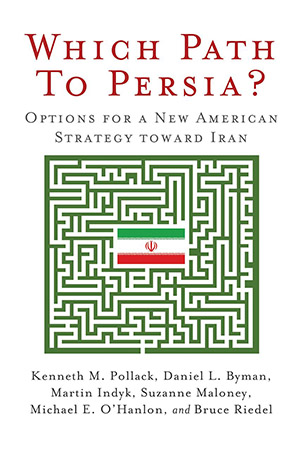
  • Global Terror: The British Connection

    Global Terror: The British Connection

    From New Dawn 92 (Sept-Oct 2005)

    The 2024 collapse of the Assad government in Syria happened not by accident but by design, the ultimate result of forces unleashed in the wake of the West’s so-called war on terrorism, which was a response to terrorist incidents such as the July 5, 2005, London bombings and the September 11, 2001 attacks in the USA (the official narratives of these events are now seriously challenged). The following article is a backgrounder on the secret wars and mass manipulation to engineer a new reality for the Middle East and impose laws that restrict freedom.

    “There are powers at work in this country about which we have no knowledge.”
    – Britain’s Queen Elizabeth II speaking to Paul Burrell, former butler to the late Princess Diana

    On July 7, 2005 bombings on the London subway system and a bus killed 52 people and injured 700. As the list of unanswered questions and inconsistencies about the attacks continued to grow, blame was quickly laid on ‘al Qaeda’.

    The effects of the London bombings were immediate: There was a renewed commitment by Western leaders to the ‘war on terror’. Most other stories and scandals were wiped off newspaper front pages, including UK Prime Minister Tony Blair’s plummeting popularity.

    The bombings occurred while the G8 Summit was going on in nearby Gleneagles, Scotland. It was here the topic of terrorism was beginning to seem tired amid broadening demands for debt cancellation for impoverished countries. US President George Bush’s priority – the ‘war on terror’ – was moving out of the limelight.

    Afterwards, with London smoking and bleeding, Bush and Blair were able to stand up tall and look strong as they declared the ‘war on terror’ would be won: “we will prevail and they will not,” and, “we alone are fighting” to defend “the values of Western civilisation.” Terror returned to front and centre and further debt cancellation was forgotten.The bombings were the green light for Tony Blair to introduce draconian anti-terrorism legislation which had previously been thwarted by judicial rulings designed to protect human rights.

    Blair said he plans policies for deportation of people who “foster hatred.” Parliament will also be asked to pass a law against “condoning” or “glorifying terrorism” anywhere in the world, and giving the government the power to close places of worship. Lists are to be drawn up of ‘extremist’ websites, bookshops and centres.

    A clampdown on words or actions likely to be seen as ‘glorifying terrorism’ could affect groups and individuals unconnected to ‘Islamic extremism’ – animal rights activists, for example, may have to change much of what they write if they are not to fall foul of the legislation. British MP George Galloway, a vocal supporter of the Iraqi resistance movement, could be charged under the new law because the government has demonised the resistance as ‘terrorists’.

    Australian Prime Minister John Howard also announced a similar review to ‘tighten up’ anti-terrorism legislation.

    Who was ultimately responsible for the July 7 bombings remains a mystery. But authorities seemed to know who was behind it soon after the attack. London Metropolitan Police Commissioner Sir Ian Blair had already made up his mind when he said the investigation into the bombs will uncover a “clear al Qaeda link.”

    Responding to news of the July 7 bombings, Ayatollah Ahmad Jannati, who heads Iran’s top legislative watchdog the Guardian Council, said the British had themselves to blame.

    “One possible set of culprits is al Qaeda. But al Qaeda is Bush and Blair. Who launched al Qaeda? You must be tried, you who are the mothers of al Qaeda,” he told worshippers at Friday prayers in Tehran.

    “The other likelihood is that the British regime may have carried out the attack itself… because it benefits most… They want to justify their presence in Iraq and Afghanistan,” he added.

    July 7 Anomalies

    Independent researchers across the world have uncovered information which contradicts the official version of events and points to the involvement of intelligence agencies in the bombings.

    Hardly any mainstream media picked up the news that ‘bombing exercises’ were being conducted in the London Underground at the same time as the actual attack.

    Only hours after the July 7 bombings, in an interview on BBC radio, Peter Power, Managing Director of Visor Consultants, made the extraordinary admission that at precisely the time the London bombings took place, his company was running an exercise which drilled the London Underground being bombed at the exact same locations, at the exact same times, as happened in real life on July 7. Visor Consultants is a “crisis management advice company” or PR firm.

    Power said the drill focused around “simultaneous bombings.” Originally the London bombings were thought to have been spread over an hour, but later it was revealed they were in fact simultaneous. Also, they were easier to execute as Britain’s terror alert level had just been lowered.

    “We had to suddenly switch an exercise from fictional to real,” said Power who is a former Scotland Yard official, working at one time with the Anti Terrorist Branch.

    Responding to a deluge of emails after his admission, Power strenuously denies any truth to “conspiracy theories” tying his company to the attacks, but he does confirm the exercise involved a “short number of ‘walk through’ scenarios for a private company in London as part of a wider project that remains confidential.”

    Some investigators suspicious of Visor Consultants suggest the company might have released information to the media that the bombings were a power surge. For the first hour this was the explanation given, and one that would give authorities time to manage the release of information about the explosions. Power has been hired by the British government before and has on previous occasions released information after terrorist incidents in London. This is all too close to dismiss as simply coincidence.

    A news report which almost went unnoticed hints intelligence agencies had prior knowledge of the attacks.

    Arutz Sheva, pegged as Israel’s national news Internet site, stated on the day of the July 7 bombing: “Army Radio quoting unconfirmed reliable sources reported a short time ago that Scotland Yard had intelligence warnings of the attacks a short time before they occurred. The Israeli Embassy in London was notified in advance, resulting in Finance Minister Binyamin Netanyahu remaining in his hotel room rather than make his way to the hotel adjacent to the site of the first explosion, a Liverpool Street train station, where he was to address an economic summit.”

    This report was subsequently refuted and changed to say Netanyahu was warned after the first blast.

    The importance of Visor Consultant’s training exercise cannot be understated because the exact same scenario played out in the United States on the morning of September 11, 2001.

    The Pentagon and the North American Aerospace Defense Command (NORAD) conducted drills involving multiple hijacked planes on the morning of September 11, 2001. And in what the US government called “a bizarre coincidence,” the US National Reconnaissance Office had planned an exercise for September 11 in which an errant aircraft would crash into an office tower. American Airlines Flight 77, which crashed into the Pentagon, took off from Dulles at 8:10 AM on September 11 – 50 minutes before the exercise was said to begin.

    On the morning of 9-11, NORAD radar screens showed as many as 22 hijacked airliners at the same time, but they had been briefed this was part of the exercise drill and therefore normal reactive procedure was forestalled and delayed. The two scenarios are comparable in that it is a tried and tested method of navigating around everyday security services, and, more importantly, if the perpetrators get caught during the attack or after with any incriminating evidence, they can just claim they were taking part in an exercise.

    What are the odds of coincidental ‘drills’ going on at the exact same time real life events were taking so many human lives in two terrorist attacks?

    We are also faced with the scenario of four men, one of whom had a new family, and another whose wife was pregnant, carrying bombs set on timers and calmly waiting for them to explode.

    A statement issued by the family of the so-called “fourth suicide bomber”, Jamaican-born British resident Germaine Lindsay, said he “had a kind, caring and calming presence about him.”

    “He was a good and loving husband and a brilliant father, who showed absolutely no sign of doing this atrocious crime. We as a family had no idea of his plans and are as horrified as the rest of the world.”

    The incongruities of the case have already prompted even some official investigators to suggest the men were not ‘suicide bombers’ but may have been duped by their “al Qaeda handler” into believing they would only place the explosive devices and not be killed in the blast. But it also makes sense if the men thought they were carrying fake bombs as part of a terror drill.

    Lending weight to this theory is the fact all four men had paid up their parking tickets before boarding a train at Luton for King’s Cross and they all bought return tickets to the capital.

    The lack of video taped evidence revealing the alleged bombers’ movements is also suspicious. Every London bus and Underground train carriage is said to have multiple video cameras, but the one on the bombed bus apparently “malfunctioned.” Videos of the other men have not been made available, only a few grainy images of the men at the start of their journey boarding the train at Luton.

    Another piece of the jigsaw being pieced together by independent investigators is the testimony of 32 year-old dance instructor Bruce Lait, who was just metres away when a bomb ripped through his train carriage. He miraculously escaped with only minor injuries.

    Speaking from his hospital bed in an interview with the British newspaper Cambridge Evening News of July 25, Lait recounts what happened after the bomb went off and how a policeman helped him out of the carriage, adding that, “The policeman said ‘mind that hole, that’s where the bomb was’. The metal was pushed upwards as if the bomb was underneath the train. They seem to think the bomb was left in a bag, but I don’t remember anybody being where the bomb was, or any bag.”

    Then on July 21, two weeks after the July 7 bombings, four attempted bomb attacks disrupted part of London’s public transport system. By July 29, police had arrested all four of the main bombing suspects and numerous other people.

    The July 21 attacks were immediately linked to the previous bombings, however it is has now been established there was no connection between the men involved in both attacks.

    The police operation that quickly rounded up all the suspects of the copycat July 21 attack succeeded in monopolising media coverage and taking attention away from growing doubts about the official version of the July 7 bombings.

    Hamdi Issac, one of the July 21 bomb suspects held in custody in Rome, says his backpack contained only flour and was designed merely to frighten. This explains why the so-called bombs let off a small bang followed by some smoke smouldering from their backpacks. According to Italian daily La Repubblica, he claims not to have planned to kill anybody in the attack, “let alone myself.” He added that the July 7 bombings in London, “happens every day in Iraq.”

    The difference between the two bomb attacks could not be starker. The bombers of July 7 are all dead and police have made no arrests of significance in connection with it. The attacks of July 21 led to the arrest of all those directly involved including dozens of people who supposedly are ‘connected’.

    Perhaps one of the biggest indicators of an intelligence agency link to the July 7 bombings is the revelation that Haroon Rashid Aswat – allegedly the “mastermind” of the attacks – is controlled by MI6, Britain’s external security service.

    Speaking on July 29 to Fox News channel, former US Justice Department prosecutor and terrorism expert John Loftus discussed Aswat’s relationship to British and US intelligence, through a British based organisation Al Muhajiroun.

    Loftus added that, “the entire British police are out chasing him [Aswat], and one wing of the British government, MI6 or the British Secret Service, has been hiding him…” Loftus adds that Aswat’s role as an informer or a ‘double agent’ had protected him from being arrested by the CIA because he “was working for British intelligence.”

    Arresting and putting Aswat on trial in a secret tribunal for organising the July 7 attacks could be turned into a two fold victory for the intelligence agencies: al Qaeda is proved to be responsible, and a blowback remnant and potential whistleblower from their past operations is taken out of circulation.

    Londonistan

    Space does not permit a full accounting of Britain’s creation and manipulation of certain so-called ‘Islamic’ organisations in the late 19th and early 20th century. Close to a century ago the British began cultivating Islamic groups to counter the rising tide of Arab nationalism which demanded independence from colonialism. Suffice to say, as masters of political manoeuvring and intrigue, British geostrategists have for many years struggled to control events in the oil rich Middle East.

    Up until recently, this strategy allowed a flood of ‘Islamists’ from Egypt, Saudi Arabia, Afghanistan, Pakistan and Palestine, to live in Britain, a safe haven where they could further promote their various causes.

    By the 1980s and 90s, foreign intelligence services were complaining about the policy. The French were particularly incensed, tracing the origin of the 1995 bombings of the Paris Metro to cells operating, with apparent impunity, from London.

    The Russians repeatedly expressed displeasure over Britain providing asylum for Chechen separatists, which they say is a double standard in the fight against terrorism. Two of the terrorists behind the massacre of 300 people, half of them children, in Beslan, Russia in 2004, were British citizens.

    It is well known that for more than two centuries, the West has been engaged in breaking up – or thwarting – the presence and extension of Russian influence southward to the Black Sea and beyond. Destabilising the Russian republic of Chechnya is a key aspect of this strategy, part of the ‘New Great Game’.

    The New Statesman revealed in December 2002 that, even a year after September 11, Britain was still seen as excessively tolerant. In a cover piece entitled ‘Londonistan’, the Statesman quoted European and American officials as suggesting the UK “had come to a non-aggression pact with Islamist oppositionists dating back to the mujahedin rebellion against the Soviet-backed regime in Afghanistan”: a deal that might explain British immunity from ‘Islamic’ attacks.

    Years before September 11 there were calls for Britain to give up harbouring certain groups, but these pleas fell on deaf ears.

    Malaysian Prime Minister Dr. Mahathir Mohamad, at the 1997 summit of the Organisation of Islamic Conference decried “Western democracies,” meaning in this case, Britain, which “give refuge to those of our people who promote disruptive activities in our countries,” even while accusing Islamic nations of promoting “terrorism.”

    The ‘Islamic Group’ that claimed credit for the November 1997 shootings in Luxor, Egypt which killed over 60 people, mostly foreign tourists, had its international headquarters in London.

    Al Ahram, the Egyptian government daily, in a feature entitled ‘How Can We Surround and Extradite London’s Lords of Terror?’ published on December 7, 1997, documents how London became an “Islamic” terrorist haven following the war in Afghanistan, when “legions” of unemployed mujahideen, who had been drawn to Afghanistan from all over the Muslim world, flocked to London for protection, and for new assignments.

    Al Ahram quotes an unnamed security source, in its analysis of British motives in making London the “world’s terror capital,” which partially describes the thinking of British intelligence. “The British expect to reap a great advantage through controlling the most dangerous terrorists on its soil,” it quotes the source as saying.

    “Through this logic,” the source continues, “British intelligence works contrary to all its counterparts in the world. The information British intelligence has acquired about these groups and its members, is an invaluable card, which it can use to either negotiate, or put pressure on, Middle East states.”

    Al Ahram adds that part of the purpose is to manipulate these groups and take them over, on behalf of British geopolitical aims.

    Al Ahram’s source concludes: “London’s ‘permanent interests’ have always converged with the lords of terrorism who live in Britain, and who never underestimate what their existence represents for British interests.’’

    After September 11, French intelligence officials again angrily accused Britain’s internal security agency MI5 of failing to cooperate in stifling ‘Islamic’ terrorist groups. The level of assistance received from British intelligence in tracking down terror cells was described as being worse than before September 11.

    The mid-1990s witnessed a series of vicious wars that led to the break up of Yugoslavia. The Pakistan-based militant group Harkat-ul-Mujahideen (HUA) was one of the many organisations to send a contingent to help Bosnian Muslims in their fight against the Serbs. They were sent by the Pakistan government of Benazir Bhutto at the request of the US administration under Bill Clinton.

    The contingent, which was raised and trained by Lieutenant General (retired) Hamid Gul, former director general of Pakistan’s Inter-Services Intelligence (ISI), included a large number of British Muslims of Pakistani origin.

    According to estimates, about 200 Muslims of Pakistani origin living in the UK went to Pakistan, received training in the camps of the HUA, and joined the HUA in Bosnia with the blessings of London and Washington. Among them was Omar Sheikh, who went on to mastermind the murder of US journalist Daniel Pearl in 2002.

    In the late 1990s, the Kosovo Liberation Army (KLA) also attracted many foreign fighters, encouraged by an outpouring of Western support to help defeat an alleged Serbian genocide. One of those fighters was David Hicks, who is now locked up in the Guantanamo Bay prison camp.

    In Crossing The Rubicon, investigative journalist Mike Ruppert notes: “Great Britain – one of the major players supporting the KLA in Kosovo – also maintained secret relationships with bin Laden… In 1996, Britain’s exterior intelligence, MI6, actually funded and worked with al Qaeda in a plot to assassinate and overthrow Libya’s Muammar Qadhafi. Details of the relationship emerged after a British domestic intelligence (MI5) officer, David Shayler, went public with documents detailing the relationship between Britain and bin Laden.”

    A decade before Bosnia and Kosovo, the West had raised and funded a large corps of fighters – including Osama bin Laden – to help the mujahideen in their jihad against Soviet troops in Afghanistan in the 1980s. Most of these ‘Freedom Fighters’ returned home, but many remained under Western intelligence agency control. Some were soon redeployed to North Africa and the Middle East, to carry out terrorist actions ascribed to ‘Islamic terrorist groups’, on behalf of Western geopolitical aims.

    Question is: Are some of these fighters participating in the ‘war on terrorism’, and who do they work for?

    Who Benefits?

    After September 11, terrorism suddenly became enemy number one. The threat was conflated into the proportions of an alien invasion. However, whether it was real or not, the powers-that-be promptly took advantage of the terrorist bogeyman.

    Armies could be mobilised against any country alleged to be ‘harbouring’ the new terrorist enemy (ie. Afghanistan and Iraq). An elusive enemy could strike anywhere at anytime, which meant sacrifices at home (anti-terrorism laws).

    Such an enemy of vague and ambiguous proportions could be easily stage-managed. It is now irrelevant whether Osama bin Laden is alive or dead, or that he controls an actual organisation with certain objectives. The myth is born. And now those with real power – military force and ‘informational dominance’ – easily direct the outcome of the new game.

    With ‘jihadists’ on the loose worldwide, we would expect to see many attacks. Instead, despite the mainstream media’s duplicity, since September 11 the Western world has witnessed only a few spectacular attacks supposedly carried out by small groups ‘connected’ to ‘al Qaeda’.

    With great fanfare in the corporate controlled press, large numbers of Muslims have been rounded up in raids across Britain, Europe, the US, and Australia. But most were later released and no one has been proven to be an ‘al Qaeda’ operative. For example, following the well publicised ‘ricin affair’ in the UK in January 2003, it was later established there was no ‘ricin’, no ‘cell’, and no ‘al Qaeda’ connection.

    The independent British journalist William Bowles notes that, “with hundreds arrested under anti-terror laws but not a single conviction of anyone actually proved as being a member of al Qaeda or even being caught red-handed with a bomb, it’s safe to assume that it’s unlikely al Qaeda actually exists as an effective organisation, let alone operates an ‘international terror network’.”

    Statements of responsibility made in the name of ‘al Qaeda’ or the fact an individual claims to be acting on behalf of it (after being ‘softened up’ at a secret prison camp), does not prove such an organisation exists.

    Official briefings about terrorism, often unverified or unverifiable by journalists, have become dramatic press stories. Few of these ominous announcements are retracted if they turn out to be baseless. Almost no one questions the myth of ‘al Qaeda’ because so many people have got an interest in keeping it alive.

    It is not too difficult to understand the relative ease in which intelligence agencies, with all their financial and information resources, can manipulate data (as we saw in the recent WMD justification for war on Iraq) and people to achieve objectives.

    Is the ‘war on terror’ running a little flat? Let’s raid the homes of some Muslims and then leak to the press that ‘Muslim extremists’ were planning ‘terrorist attacks’ on Australia’s Sydney’s Opera House and Harbour Bridge (such raids actually occurred in Melbourne on June 22). What’s even better, the families whose homes were raided are prevented from speaking out by new anti-terrorism laws.

    Thus, we never know if the raids prevented a terrorist plot or they were a publicity stunt for the ‘war on terror’. But headlines have the desired effect, the not so subtle reminder there’s a ‘war’ going on and it might one day come to your home, your office, or your child’s school – just as it did to commuters in London on July 7.

    Can we say the cause of Islam benefits from terrorist attacks that kill civilians? No, of course not. The beneficiaries are governments who can ‘justifiably’ continue to support Bush’s ‘war on terror’ (which enriches the military-industrial complex) and introduce long sought laws that curtail civil liberties and limit dissent.

    In London today they are now implementing intrusive surveillance and policing of Muslims and the Muslim community. The attacks have justified the introduction of ID cards, which will hold substantial personal information.

    New ‘anti-terror’ laws being rushed through the UK Parliament include rules allowing the government to impose curfews and the electronic tagging of people suspected of terrorism.

    A Phoney ‘War on Terror’

    It goes without saying that the overwhelmingly majority of Muslim organisations are entirely legitimate and also it cannot be assumed that all groups cited in this article are simply the products of Western intelligence. What the evidence reveals is that intelligence agencies have tirelessly worked to infiltrate groups of all political and religious persuasions in an effort to achieve their objectives.

    The use of agent provocateurs is a well established method that many states still use against their perceived enemies. It would be child’s play for well established spy agencies such as Britain’s MI6, America’s CIA, and Israel’s Mossad to control ‘al Qaeda’, which barely exists at all, except as an idea or a myth about cleansing a corrupt world through religious violence.

    Much of the currently perceived threat from international terrorism, argues the recent TV documentary ‘The Power of Nightmares: The Rise of the Politics of Fear’, “is a fantasy that has been exaggerated and distorted by politicians. It is a dark illusion that has spread unquestioned through governments around the world, the security services, and the international media.”

    “In an age when all the grand ideas have lost credibility, fear of a phantom enemy is all the politicians have left to maintain their power,” it says. A perpetual war against an invisible and entirely fictitious enemy.

    Five continuous years of a ‘war on terrorism’ past the point of no return have left the line between fabricated (intelligence agency-orchestrated) terrorism and any ‘real’ terrorism (a response to the provocations and policies) irrevocably blurred.

    As a willing partner in this enterprise, the mainstream media has distorted the truth by ‘pre-packaging’ language in a way that paints the world into black (‘terrorist’) and white (‘us’). Shades of grey (where truth and reality normally reside) are difficult to describe in just a few words. Terms such as ‘terrorist’, ‘act of terror’, ‘fundamentalism’ or ‘threat’ act as familiar signposts for the public, to be regurgitated in social discourse without any knowledge of the semantic meaning of the language being employed.

    George Orwell warned that an individual’s thought processes were undermined by what he disparaging termed ‘journalese’ or ‘officialese’. When an individual becomes a slave to official jargon they are, in a sense, gagged. Individuals are prone to use ‘officialese’ and follow the ‘mindless thought grooves’ which, in Orwell’s opinion, could easily be replaced with more accurate and thoughtful terms.

    In George Orwell’s classic novel 1984, the totalitarian state of Oceania is perpetually at war with either Eurasia or Eastasia. Although the enemy changes periodically, the war is permanent; its true purpose is to control dissent and sustain dictatorship by nurturing popular fear and hatred.

    Newspeak, the “official language” of Oceania, reduced the number and variety of words in use to render dissenting thought obsolete. Closely related to Newspeak is Doublethink, in which someone is conditioned to either say the opposite of what he thinks or think the opposite of what is true.

    By the devious abuse of language and spreading the fear of more terrorist attacks, the government and the corporate media are numbing us into blindly accepting the emerging totalitarian state.

    [alert type=”general” dismiss=”no”]This article was published in New Dawn 92.[/alert]

    [alert type=”success” dismiss=”no”]If you appreciate this article, please consider subscribing to help maintain this website.[/alert]

    © New Dawn Magazine and the respective author.
    For our reproduction notice, click here.
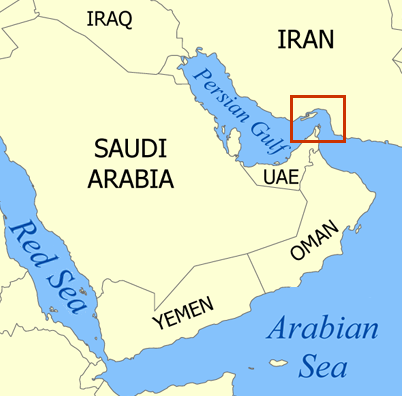
  • The Society of the Spectacle: “The whole world is becoming humanoid”

    The Society of the Spectacle: “The whole world is becoming humanoid”

    From New Dawn 195 (Nov-Dec 2022)

    In the 1960s, a French intellectual came up with a novel theory on life in the 20th century. The basis of the theory was that in modern capitalist consumer societies like France, the United States and the West in general, authentic life had been replaced with its representation.

    According to Guy Debord (1931–1994), we now live in societies in which individuals no longer actually experience events, but in which all action is instead conducted through the represented image. He called this “The Society of the Spectacle” (the work outlining his theory was published in French as La société du spectacle in 1967). Images, Debord said, have supplanted genuine human interaction.

    Debord argued that the history of social life can be understood as “the decline of being into having, and having into merely appearing.” In consumer society, social life is not about living, but about having; the Spectacle uses the image to convey what people need and must have.

    A founding member of the radical Situationist International, Debord’s descriptions of human social life subsumed by technology and images are prophetic in light of the internet age now upon us.

    The Spectacle is much greater than marketing and TV images. Debord argued that everything men and women once experienced directly – our ties to the natural and social worlds – had been incorporated into the Spectacle – a vast simulacrum – to be sold and fed back to us. Doomed to be simply passive consumers inside the Spectacle, men and women inescapably reinforce its dominance by giving it attention. The sun never sets, Debord dryly noted, “on the empire of modern passivity.” And in this passive state, we surrender ourselves to the Spectacle.

    In his 1988 follow up Commentaries on the Society of the Spectacle, Debord introduced the idea of the “integrated Spectacle,” the most hazardous and commanding form of Spectacle, which he posits operates today. This enlarged Spectacle is associated with liberal democracies marked by incessant technological development and a state of general secrecy. Society is governed and managed by ‘experts’ who invoke the terror or health threat to keep spectacular society in a constant state of fear and tension.

    When we look back on our history, even from inside the Spectacle, we sometimes identify works of literature, art or cinema that accurately describe the reality of this modern world. One such breakthrough came in the form of the 1976 movie Network about a fictional TV network that airs almost anything for ratings.

    Written by Paddy Chayefsky and directed by Sidney Lumet, Network won four Academy Awards and was selected for preservation in the United States National Film Registry by the Library of Congress as being “culturally, historically, or aesthetically significant.” 

    This movie forecast the direction in which the Spectacle was taking the world: news as entertainment, soulless consumerism, selfish corporate interest, borderless liberal globalism, unscrupulous mainstream media antics.

    News, in Network, is a business, and facts will bend to it. This is told, explicitly, in the climactic scene, when the head of the network’s parent company, Arthur Jensen, speaks to Howard Beale, the disenchanted news reader.

    Get the issue this article appears in

    “There are no nations,” Jensen tells Beale. “There are no peoples. There are no Russians. There are no Arabs. There are no third worlds. There is no West. There is only one holistic system of systems, one vast and immane, interwoven, interacting, multivariate, multinational dominion of dollars.” Everything is now determined by television; it can dictate geography. He looks into Beale’s bewildered face and tells him: “The world… is a business.”

    Jensen’s rant continues. “You get up on your little twenty-one-inch screen and howl about America and democracy. There is no America. There is no democracy. There is only IBM and ITT and AT&T and DuPont, Dow, Union Carbide, and Exxon. Those are the nations of the world today.” [Now we can include on that list Microsoft, Google, Apple, JPMorgan, Goldman Sachs, Bayer, etc.]

    That night, in the movie, Beale goes on air to preach the corporate doctrine of Jensen:

    “What is finished is the idea that this great country is dedicated to the freedom and flourishing of every individual in it. It’s the individual that’s finished. It’s the single, solitary human being that’s finished. It’s every single one of you out there that’s finished. Because this is no longer a nation of independent individuals. It’s a nation of some two-hundred-odd million transistorized, deodorized, whiter-than-white, steel-belted bodies, totally unnecessary as human beings and as replaceable as piston rods.

    “Well, the time has come to say, ‘Is de-humanization such a bad word?’ Because good or bad, that’s what is so. The whole world is becoming humanoid – creatures that look human, but aren’t. The whole world, not just us. We’re just the most advanced country, so we’re getting there first. The whole world’s people are becoming mass-produced, programmed, numbered, insensate things….”

    The above first appeared in New Dawn Special Issue Vol 12 No 3.

    [alert type=”general” dismiss=”no”]This article was published in New Dawn 195.[/alert]

    [alert type=”success” dismiss=”no”]If you appreciate this article, please consider subscribing to help maintain this website.[/alert]

    © New Dawn Magazine and the respective author.
    For our reproduction notice, click here.