New Dawn – World's Most Unusual Magazine

Category: Articles

  • Voyages Beyond the Body: Unlocking the Secrets of Out-of-Body Experiences

    Voyages Beyond the Body: Unlocking the Secrets of Out-of-Body Experiences

    From New Dawn 205 (Jul-Aug 2024)

    This article arises from the shamanic-styled presentations of Carlos Castaneda, an anthropologist who delivered several best-selling books about his apprenticeship to don Juan Matus. As I have previously written, I also apprenticed to don Juan and have examined this path for several decades, writing about it as Kenneth Smith and Ken Eagle Feather. Out-of-body experience (OBE) is actively cultivated by this lineage of shamans and is one element of dreaming, an in-house term with technical connotations distinguishing it from ordinary dreams.

    In this view, dreaming – including OBE – results from the natural capacities of the human energy body, an arrangement of energy that surrounds and permeates the physical body. As energies cohere (come together) within the energy body, they produce perception and meaning. Change the coherence or cohesion of energy and you change perception. By consciously entering dreaming, you have changed your cohesion by altering the phase or ordering of energy within the energy body.
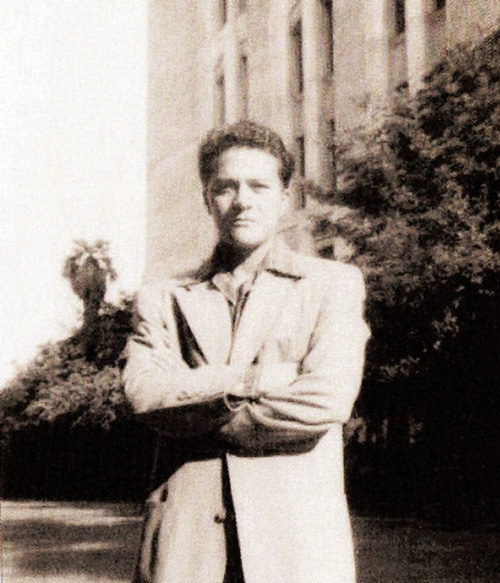
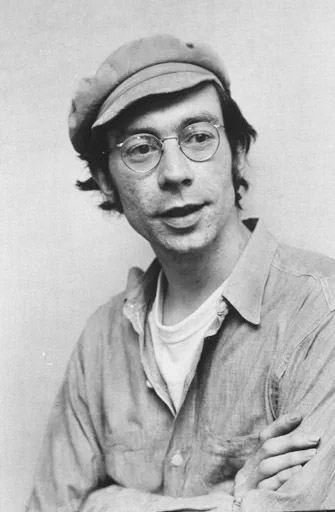
    A young Carlos Castaneda at the University of California. His seminal 1968 book The Teachings of Don Juan: A Yaqui Way of Knowledge, was a major best seller and highly influential text expounding the teachings of a particular lineage of powerful shamans.

    For example, the ordinary experience of daily life represents one phase of cohesion, one coherence of vibrations. OBE reflects a change of phase, a shift in the pattern of energy within the energy body resulting in different perceptions. Throughout the day, we all have minor changes in phase, such as going from home to work. Your home and work environments each have distinct cohesions based on all the elements and conditions that went into forming those environments, and you’ve learned to transition from one to the other – a remarkable feat. A significant shift of cohesional phase results in entirely new events such as OBE, also a remarkable accomplishment.

    To intentionally cultivate OBE, it is helpful to know that it is not only possible but natural. In one study, researchers found that 95 per cent of cultures worldwide report OBEs, with an incidence ranging from 10 per cent of the population to virtually all, depending on the educational conditioning or values of the population. Eighty-nine per cent of those interviewed wanted another OBE, while 78 per cent found lasting benefit. Another indication of the normalcy of OBE, pervasive relaxation was the single, most prevalent element associated with having an OBE.1

    OBE is often discounted by scientists as illusory, with these scientists relating them to temporal-lobe seizures or otherwise abnormal neural (brain) activity. For instance, neuroimaging studies have shown the irregular recognition of body location during OBE to be associated with the temporal and parietal cortex.2 Among their functions, these areas of the brain process information into meaning and sense of spatial location. Based on current knowledge, this anomaly of “irregular recognition” may easily be interpreted as the OBE being a somehow false experience. Yet, wouldn’t one expect different neural patterns resulting from an out-of-the-ordinary experience? Because the focus of attention is outside the physical body, wouldn’t this different localisation of awareness produce different neural readings pertaining to body location? Moreover, since there is specific brain activity that occurs by the ordinary act of walking down a street, by the same rules, shouldn’t this common behaviour be considered illusory?

    Similar dynamics occur with research of near-death-experience (NDE), an event that may include OBE. For example, NDE is often discounted by relating it to temporal lobe abnormalities, including seizures, yet there is little correlation of temporal lobe seizures with NDE accounts. NDEs are also debunked by relating them to the effects of a dying brain. However, NDEs do not necessarily occur near death. As a result, proponents of transphysical phenomena such as OBE and NDE regard these criticisms as forcing data to comply with existing models of perception.3

    If we examine numerous personal accounts the world over of OBE as well as pictures of reality developed by mystics, we open the doors to acknowledging other behaviours outside of ordinary life. Shamans, for instance, typically develop OBE, or at least some type of specialised dreaming, as part of their practices. From this, we can recognise that OBE not only occurs spontaneously but can also be the result of deliberate skill involving the focus and shift of attention. This, in turn, brings about a firm conviction that there is another side to life, that there is another dimension to humans that we can step into and use in practical ways, just as we do in daily life. All things considered, OBE is a natural capacity of human perception. It is just not yet accepted as part of our current reality.

    Stages of developing OBE include entering dreaming where you experience a blackness that is at once heavy and dense, yet peaceful and relaxing. This is akin to meditation. The next step is entering your dreams – lucid dreaming, as it is often called, where you can control the dream. From here, you cultivate OBE where you have additional abilities.4

    OBE is frequently attributed to a flight of imagination, an intense dream, or lucid dreaming. However, a classic OBE carries a set of five characteristics: exteriorisation, form, locomotion, emotions, and environment. Exteriorisation is the projection of awareness where a dreaming body is distant from the physical body and views events from that location. This has been termed astral projection, while these days is more commonly referred to as OBE.

    There is usually a sense of having form of some kind during OBE. Due to conditioned habits, this often resembles the person’s human form. For others, such as those with a shamanic bent and having a power animal, the form might be an animal. It seems the longer the duration of an OBE, or the more frequently a person has OBEs, the form spontaneously becomes a sphere. At more advanced stages, the form becomes a concentrated point of awareness.

    No matter the form, the requirements of the physical and dreaming bodies are different. They have different cohesions, different specifications, if you will. For instance, the physical body needs air, the dreaming body doesn’t. As a result, the dreaming body can travel to deep space or underwater without concern.

    This leads to the next element defining OBE. The dreaming body has the ability of locomotion, of being able to move and change location. This might be within a room, to distant geographic locations, or even to other planets or dimensions. During an OBE I had many years ago, I visited Mars. Travelling from Earth to Mars took only an instant. The journey was a sudden shift in awareness rather than a sense of movement through time and space. Mars was reddish and rocky, just like NASA photos. Hovering about the landscape, I noticed geometric figures of different shapes. Through a telepathic-like process, I was able to briefly communicate with them. The gist of this is that they were lifeforms but foreign to human thinking. The geometric patterns represented energetic configurations of their non-corporeal awareness.

    During other OBEs, I travelled to a world Castaneda describes as being inhabited by inorganic life. Here, I experienced a pitch-black dimension that felt extremely dense and heavy yet unlike the darkness of the initial stages of dreaming. It was as though gravity was significantly greater than on Earth. I was surrounded by pencil-shaped entities filled with soft light of different colours having very low radiation. The nature of time was quite different. It seemed that hours had passed while I was in that region, but when I awoke my clock indicated that just a few minutes had gone by. Castaneda more fully addresses this throughout The Art of Dreaming, where don Juan discusses several aspects related to this dense world.5 
    The visits to Mars and another dimension can be chalked up as resulting from an overactive imagination, trauma, or whatever. However, if we take a hard look at these as being only a minimal reference to many, many other reports worldwide, perhaps we can better redefine what it means to be human.

    Next on the list, the dreaming body has emotions. It is not a dry experience such as found with remote viewing or other psychic functions. A form combined with emotions offers a useful reference to daily life. As a result, there is a correlation of learning that bridges the daily and dream worlds that can significantly accelerate our understanding of consciousness.

    A key difference between dreams and OBE is that during an OBE the environment is stable. During a dream, including a lucid dream, the environment may spontaneously shift. Even in a lucid dream, where control of the dreamscape is more evident, the environment might change, or the person dreaming can intentionally change the environment. During an OBE, the environment remains constant. It is stable. If a person desires a new environment, the dreaming body goes to that location rather than changing the panorama on the spot. This further connects processes of consciousness in daily and dream lives. As a result, dreaming gains the same practical utility of learning and application as found while awake.

    During OBE, you can begin stabilising the experience by relating it to daily life. At first, for instance, you learn control by focusing on a known place, somewhere you’re familiar with, so you have the feel of it to guide your out-of-body travels. It also helps to know your place in your daily world by knowing what kind of life you want to build. Stability in your daily world feeds steadiness in dreaming. Something peaceful and strong balances emotions which carry over into dreaming. Amid this orientation to OBE, know why you want OBE in the first place. Cultivate a strong, balanced focus toward that goal.
    Get the issue this article appears in

    In addition, meditation promotes dreaming as do exercises like disrupting routines, where you interrupt your daily habits. Both loosen cohesion to help you change phase. Your focus of energy creates a new cohesion. You then integrate dreaming and OBE into your daily life and vice versa to develop your sense of reality and expand consciousness in general.

    Overall, OBE accelerates learning by offering new experiences, environments, and perspectives to draw you out of a slumber. You eventually gain a sense of flow, of directed movement of energy toward a goal. This is not unlike that of an athlete hitting the zone for optimal performance. It comes from finding a relaxed, centred, purposeful pace in daily life. You may even find yourself going through an ordinary day as though it were a dream, a minor shift in phase that delivers powerful results because you’ve altered your relation to your world.

    Dreaming, including OBE, is “simply” a way to become aware of more human capacities and acknowledge there’s more to life. But don’t constrict your newfound awareness to OBE. Dreaming helps awaken other perceptions such as seeing a luminous world of energy in which the energy body is part. And while OBE often requires an unyielding effort to initially produce, you also need to ease up and enjoy life to gracefully allow changes in phase that yield new experiences and enhance your life.

    Kenneth Smith’s book, Power Up Your Energy Body: Out-of-Body Experience & Expanding Consciousness, is available from online bookstores.

    [alert type=”general” dismiss=”no”]This article was published in New Dawn 205.[/alert]

    [alert type=”success” dismiss=”no”]If you appreciate this article, please consider subscribing to help maintain this website.[/alert]

    Footnotes

    1. Gabbard, Glenn O and Twemlow, Stuart. With the Eyes of the Mind: An Empirical Analysis of Out-of-Body States. New York: Praeger, 1984, 27-39. 
    2. Blanke O, et al. “Out of body experience and autoscopy of neurological origin.” Brain, 127, 2004, 243-258. 
    3. Kelly, Edward F and Kelly, Emily Williams. Irreducible Mind: Toward a Psychology for the 21st Century. Lanham, MD: Rowman & Littlefield Publishers, 2007, 531-535.
    4. Smith, Kenneth. Power Up Your Energy Body: Out-of-Body Experience & Developing Consciousness. Wilmington, NC: EB Dynamics, LLC, 2024, 127-131.
    5. Castaneda, Carlos. The Art of Dreaming. New York: HarperCollins, 1993.

    © New Dawn Magazine and the respective author.
    For our reproduction notice, click here.
  • Introducing the Field of Psychedelic MindMelds

    Introducing the Field of Psychedelic MindMelds

    From New Dawn Special Issue Vol 18 No 6 (Dec 2024)

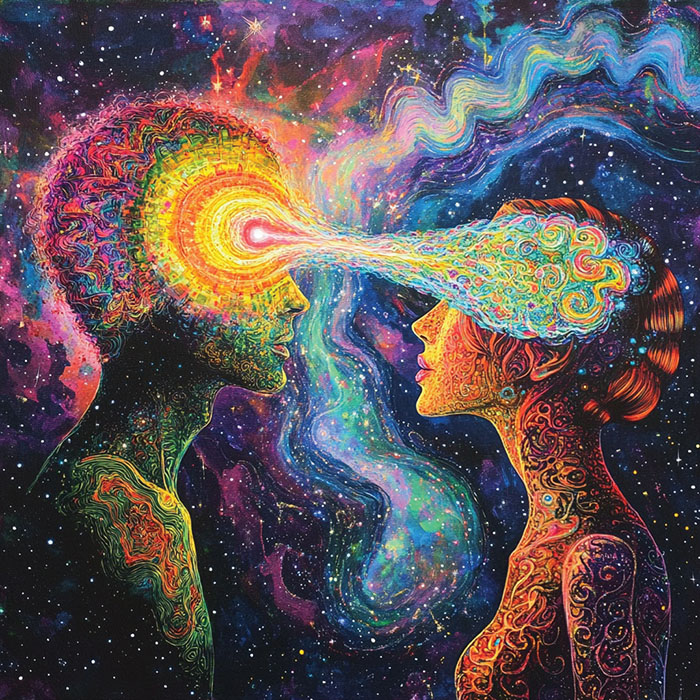
    My wife asks, “Can I enter your brain?” We are in the middle of a magic mushroom trip. With a smile and glint in my eye and on the backbone of long-established trust, I respond with a “Yes.” Immediately, my head bowls over. Even though my eyes are open, my vision is filled with complex, swirling rainbow fractals. Her consciousness is in my brain! I am filled with glee and her love. She energetically penetrates my lobes. My wife’s simple thought of ‘entering my brain’ was actioned when I agreed to her request. We were now sharing consciousness in a telepathic mindmeld.

    Little has been written on using psychedelics to manifest psi abilities. While shamanic traditions take the skilful use of psychedelic plant medicines to enhance their psi abilities for granted, mainstream Western society is generally oblivious to such possibilities.

    There are several possible reasons for this lack of awareness.

    First, the illegal status of psychedelics for the past several decades has severely restricted usage, never mind research into psychedelic psi. Second, Western religions and their cultural influences typically identify such explorations of consciousness as demonic or occult, both major taboos. Third, atheists, inculcated by dominant Western cultural materialist beliefs, deny psi abilities are a possibility and are consequently not interested. Underlying this third reason is the arrogance of the industrialised world towards what shamans have shared through the millennia of what they see as the nature of reality and what humans are innately capable of. Fourth, many people fear exploring consciousness, particularly their unconscious, and especially using psychedelics to do so. The remaining balance of folks are more simply unaware of the general potential of psi and psychedelics.

    But light is beginning to shine on what is possible when using higher doses of psychedelics like ayahuasca, LSD, and magic mushrooms to purposefully induce psi effects. To help in this effort, I offer insights into the power of thought forms and provide some introductory techniques for attaining psi effects when using psychedelics.

    The fields of Out-of-Body and Astral Projection have developed a great depth of knowledge about the power of our thoughts in shaping our experiences in nonordinary states of consciousness. These insights can be applied to psychedelic states. With proper understanding and wisdom, one can cultivate the skilful use of thought to manifest internally projected realities, including psychic powers.

    The Out-of-Body and Astral Projection literature tells us how to reprogram our subconscious mind with thoughts to leave the body at will and explore multiple dimensions or planes through either meditative trance states or dream states. When we leave the body and our conscious awareness moves away from the physical body and physical reality, the more our thoughts and emotional states create the reality we inhabit. Thought and emotion become action and form. Think of these elements existing on an energetic continuum, influencing each other and what is experienced when out of the body. As such, unconscious thought and emotion can manifest as chaotic and challenging experiences, but purposeful thought becomes a tool to create one’s reality consciously, including influencing one’s emotional state. Below, I briefly explore the contribution of thought and emotion to out-of-body states.

    When out of the body, thought, or mental matter can, consciously and unconsciously, create the reality that is perceived visually and direct the course of the journey direction. Based on one’s beliefs and biography, including cultural background, visualised energetic experiences usually manifest as familiar objects of awareness. For example, when meeting a higher discarnate being, a Christian may see Jesus, while a Buddhist could see Buddha. This is not to say that the “real” Christ and Buddha cannot present themselves or that the discarnate being can’t be seen in its original form. Still, a person’s cultural background usually manifests in their view of the energetic beings they meet and the realms they enter.

    Mental matter can go a step further. With stability and focus, one can choose, for example, a specific destination to travel to. Concerning the physical world, this ability is often called remote viewing. When leaving the body but travelling around the physical realm, reality appears similar to the physical world. But at this level of journeying, there are limits to the influence of thought. While the astral body can be mentally directed to do things like pass through physical objects such as walls or fly, one cannot usually change the nature of an object or the attributes of the world, like the colour of the sky.

    As one’s consciousness moves further away from physical reality, one can enter dimensions or planes of the collective unconscious and the archetypal. In these cases, the thought forms of millions of living and passed humans, possibly billions in some cases, create all-encompassing thought-based realms. Here, too, there is little capacity to change the realities one enters, whether it be a Christian heaven or hell or the heaven or hell from any of the world’s other main religions.

    However, when one moves beyond realms created in the collective unconscious, skilful people can enter spaces where they can create worlds of their own. At this fount of creativity, one can manifest fantastic crystal castles in the clouds, adorned by the rainbow light from three different suns, shaped as double-tetrahedrons. The adept can create such powerful thought forms that they are lasting and can be visited by others when out of the physical body. Other examples of directing out-of-body experiences are manifesting the best feast you have ever eaten or having the best sexual encounter you have ever had. This is the power of thought form.

    At the same time, emotions have a powerful momentum that can shape thought expression in the journey and become action. We all hold all possible personality traits and emotional states within ourselves as a mosaic of seeding potentialities. However, as individuals with unique biographies, we have our dominant patterns of emotional states. These states are often a mix of negative and positive energies. Because some emotional states can have stronger momentum than others and may not be easily influenced by thought, they can profoundly influence the context and environment of the journey. For example, someone who consistently struggles with anger may be more likely to process it by manifesting an aggressive bear or angry bogeyman who confronts them or chases them down a chaotic city street during a thunderstorm. On the other hand, someone abiding more in a calm, loving awareness may be transported to a heavenly realm and engage with angelic beings.

    Most people are unaware of how chaotic their minds are. Buddhists refer to the untamed mind as the monkey mind. Where there is no steering of thoughts, the mind jumps haplessly around from branch to branch like a monkey in the loud and busy jungle of the unconscious. With training and experience, one develops skills to be more purposeful in the journey, where intention more clearly becomes intent, and intent immediately becomes reality and action.

    Let’s look at some examples of what can be achieved using thought forms during a psychedelic session. For over fifteen years, I have engaged in psychedelic mindmelding, the telepathic sharing of physical and psychic energies and consciousness. Mindmelding is commonly discussed in the Out-Of-Body literature. It is the primary means of communication between discarnate beings where energies are shared telepathically and information is exchanged instantly.

    When two humans mindmeld and share physical and psychic content, a telepathic link is established between their minds and bodies, manifesting a co-creative and shared experience. The dyad experiences its “interbeingness.” There can be an empathic or intuitive sharing of emotions. The joint exploration of emotional processes can induce psychic expansiveness, process energetic traumas stuck in the mind and body, enhance cognitive fluidity, and creatively lead to attitudinal changes and greater internal harmony. The communion can lead to physical and mental healing and regeneration. The mindmeld can go even further to a complete sharing of consciousness where shared visions and exploration into other dimensions and realms are possible. At its most extraordinary profundity, when the borderlands of super-consciousness are breached in the mindmeld, both participants can find themselves in non-dual states of consciousness. Here, there is no distinction between one another – both participants are absorbed in unity consciousness.

    To attain such states of telepathy, one must meditatively engage with one’s partner. In my book, The Psychedelic Mindmeld: Telepathically Exploring Shared Consciousness, I describe detailed techniques and thought forms for manifesting telepathic states, emphasising a safe set and setting.

    Much more is possible for higher psychic attainment, whether in the mindmeld, or when going alone in a psychedelic session. What psi states can be achieved using thought forms? The list is long and varied. Below, I briefly summarise what appears in the literature from the traditions of shamanism, Eastern wisdom yogic traditions, and out-of-body and astral projection. The list of psychic abilities includes:

    Astral projection or out-of-body experience; automatic writing; bilocation; clairvoyance; channelling and mediumship; healing; levitation; materialising objects; precognition and prophesy; psychic surgery; psychometry; remote viewing; retrocognition; shapeshifting; telekinesis or psychokinesis; telepathy; time travel; and xenoglossy.

    While I have not experienced all of these abilities, I have my favourites. I have connected to past lives and my future self and interacted with varied different beings, including plant intelligence. I have channelled the souls of the dead. I have contributed to healing others, sometimes using x-ray vision, bilocated into the bodies of others (and had others in me). I have sometimes experienced being different animals (though not physically shapeshifting). There have been journeys to the cellular level, travels to other dimensions and planets, including connecting to the archetypal energies of planets, the moon, and the Sun, journeys to the Akashic Library where I connected to past and future events, connections to the zeitgeist of whole human populations in various countries, and embodiment of various mythical archetypes. My body has been filled with divine heavenly light and bliss. I have telepathically shared consciousness to travel with others to other dimensions and planes and interact with discarnate beings. And, finally, but most rewarding, is visiting heavenly realms and entering nondual states of consciousness.

    These experiences sometimes occurred intentionally using thought forms. But often, they occurred without conscious intent, instead with the guidance of spiritual guides or through the grace of the Divine. So, not all psychic ability flows from conscious intent, but using one’s mind purposely makes it more likely.

    To attain psychic states during a psychedelic session, it is helpful to plan to work with particular thought forms beforehand. Be mindful and strategic. Before sessions, one can repeat several longer and more complex affirmations or intentions. However, the trick is to focus on only one specific thing while in the session. When formulating specific thought forms, use simple language and a short sentence. It is essential to be clear and directive in the thought form you choose to manifest. Examples are: “Show me a past life” or “Spirit guide, reveal yourself.” Don’t hesitate to ask your spirit guides for help, saying something like, “Show me what I need to learn for my highest evolution.”

    There is much more. You can be specific about the emotional state you want to enter. You can specify a destination on earth or elsewhere you want to journey to. If you go to the Akashic Library, go with a specific question you want answered. You can state an intent to visit a person, alive or dead. Try asking how you can be of the most valuable service to others. When engaged in healing work, state the health issue or body part and then, “Healed to completion now.”

    If you are floundering or struggling with confusion during a session, use direct commands like “Clarity now!” “No illusions!” or “Raise my vibration now!” If you are caught in fear, try, “There is nothing to fear because I am infinite. I am eternal. All experience is God manifesting itself, and I am that.”

    Because remembering the otherness and vastness of what can occur in a session when it ends can be challenging, it can be valuable to affirm you will recall everything. Try, “My memory shall recall everything from this session.” Then, consciously put the effort into writing down the session’s events immediately afterwards.

    Get the issue this article appears in

    The most potent experience to manifest is the loving light of God, the Divine, or Source, whichever word and concept resonates best for you. Opening a heavenly portal can help. To do this, call in God’s holy angels, ask for their help, and open the heavenly portal. Then try using a statement like, “Take me to the heavens.” To enter emotional states of bliss, try “Loving awareness, now,” “Heavenly bliss, now,” or “I am infinite and have God’s loving light in every single cell in my body.”

    To work towards being adept in manifesting your reality in psychedelic states, train yourself in thought control using various meditation techniques. Pre-program your subconscious mind with mantras and well-chosen, succinct thought forms. Practice keeping your body completely still, which contributes to hypnogogic states and is a strong base for manifesting psi abilities. Work with different breathing techniques to centre yourself. There can also be a need to clear the negative and traumatic energies trapped in your physical body to journey to higher planes and more effectively work with thought forms, which can be accomplished through repeated psychedelic sessions, meditation, physical yoga, and other similar modalities, dream yoga, psychotherapy, and different types of physical energetic healing and massage work. Keep your body healthy with exercise and a predominantly plant-based diet; avoid toxins like alcohol. Try using trance-inducing music with a strong, positive, energetic signature during sessions.

    A word of caution. When working with the psyche and psychic states of consciousness using psychedelics, beware of ego-inflation, fantasy and delusion, psychological projection, manifesting the negative, and working with unprocessed trauma.

    In closing, journey purposefully and safely with gratitude, patience, and perseverance. Trust in your intuitive guidance and ability. Remember, you can access all of the universe because you are a finger on the infinite hand of God. Know that the inner healer is within you, and your higher self is your most trusted guide.

    Like my wife’s spontaneous wish to enter my conscious experience, you may open a portal into a psychic experience with your name on it.

    I wish you the best in your explorations of consciousness.

    For more insights and techniques, check out my book, The Psychedelic Mindmeld. I also highly recommend books on out-of-body experience by William Buhlman, Kurt Leland, and Robert Monroe. 

    Wade Richardson’s new book The Psychedelic Mindmeld: Telepathically Exploring Shared Consciousness is available from Inner Traditions.

    [alert type=”general” dismiss=”no”]This article was published in New Dawn Special Issue Vol 18 No 6.[/alert]

    [alert type=”success” dismiss=”no”]If you appreciate this article, please consider subscribing to help maintain this website.[/alert]

    © New Dawn Magazine and the respective author.
    For our reproduction notice, click here.
  • Matgioi – Warrior Metaphysician

    Matgioi – Warrior Metaphysician

    From New Dawn 207 (Nov-Dec 2024)

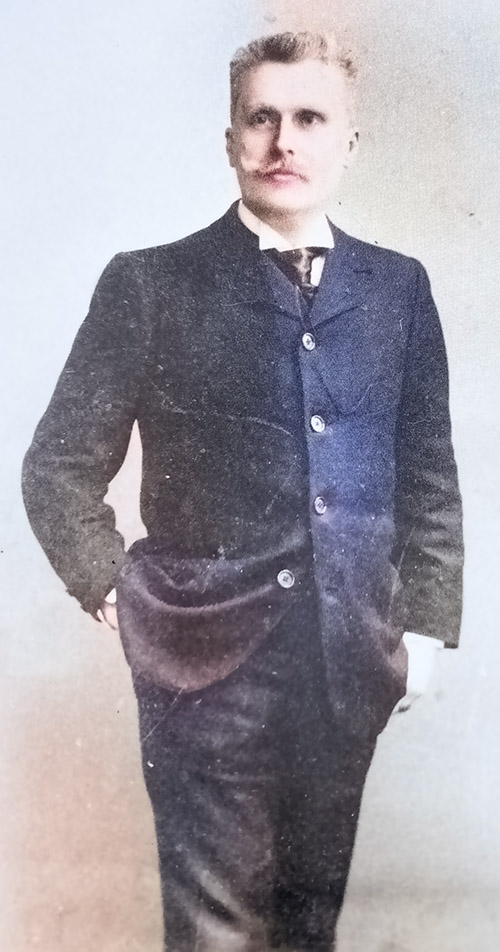
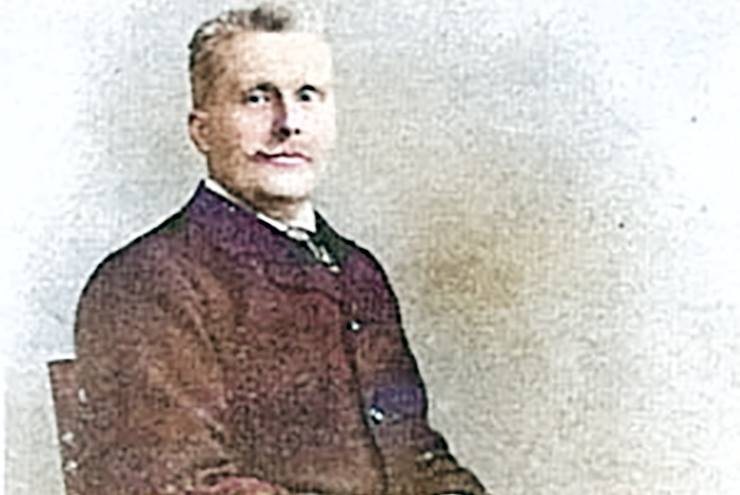
    One could not wish for a better example of the Kshatriya or warrior path than Albert, Comte de Pouvourville (1861-1939). He was born an “army brat” in a minor aristocratic family, richer in honours than in land or wealth. They lived in Lorraine, facing the ever-present threat of German invasion. Albert’s childhood was overshadowed by the Franco-Prussian war and France’s humiliation (1870). As he recalls, he learnt to read from the daily orders of the imperial camp at Châlons, and shot at his first paper targets with General Saussier’s pistols. As the eldest son, there was no doubt he would follow the family’s patriotic path to revenge.

    Albert, Comte de Pouvourville

    A different world opened to Albert at his high school in Nancy, where his classmates included Stanislas de Guaita, Maurice Barrès, and Paul Adam. They formed a clique of aesthetes and poets, all destined for literary or political fame. Albert’s best friend Guaita would become a pillar of the French occult revival; Barrès, a popular novelist and right-wing politician; Adam, an anarchist and leader of the Symbolist school of literature. 

    After this inspiring interlude, Albert attended the academy of Saint-Cyr, a breeding ground of France’s generals. He distinguished himself by all-round brilliance and absolute intolerance of authority. This persisted in his first military posting, where his father kept him from its worst consequences. Eventually, Albert took the historic leap of anarchic warriors and joined the French Foreign Legion.

    Posting to Vietnam

    He was posted to Indochina (then called Annam, now Vietnam), where the colonists held a fragile balance between European traders, mandarin and peasant classes, Chinese interference, brigands and pirates. Corruption and violence were the order of the day. Sickly horrors awaited those sent up-country to map the jungle and pacify its denizens. Thanks to his Saint-Cyr training, Albert had better surveying skills than anyone in the colony and used them to prepare the territory for roads, forts, and telegraph. During his first tour of duty, he collected enough material for three books describing his campaigns and criticising colonial policy. He was sure that he could have run things much better.

    Arrogant he may have been, Albert had a natural sympathy with the Annamite people and respect for their ways. On his second tour of duty, he commanded a native militia corps and crushed a pirate gang that had massacred scores of civilians and soldiers alike. He writes impassively of scenes one would rather not read about. Always curious, he studied the Annamite executioner’s technique of striking between the cervical vertebrae and felt confident that he could do it if required.

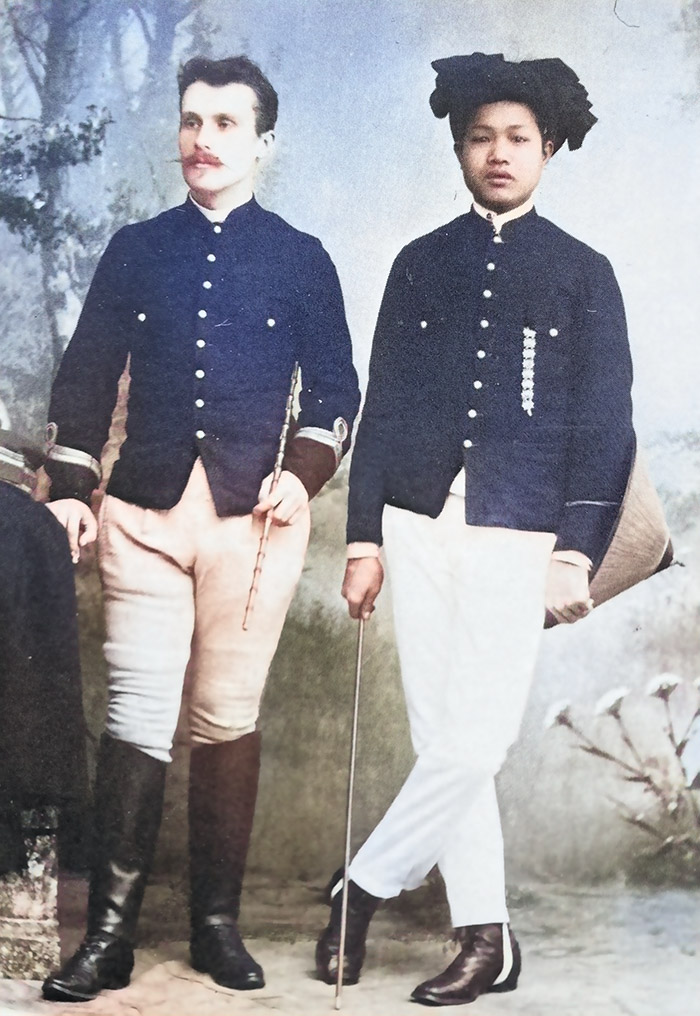
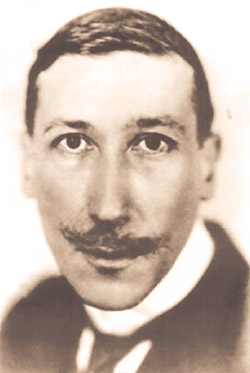
    Matgioi with Nguyen Van Cang.

    He also made friends with a village chief and physician, who authorised his younger son Nguyen Van Cang to join the militia under Albert’s personal care. The document was written in classical Chinese with interpolations in Vietnamese script. Albert became competent, up to a point, in both languages. The Annamite chief instructed him in Daoist philosophy and, in some sense, initiated him into a secret society. What actually happened is obscure, the narratives mixing fact with fiction. But it sufficed for Albert to pass forever after as a Daoist initiate. He took the Chinese name of Matgioi, meaning “eye of day,” under which he published the relevant works, while Albert de Pouvourville continued his parallel career as novelist and colonial expert.

    Matgioi’s third and final tour, ending in 1892, was more cultural than military. The resulting book on the arts and crafts of the region showed both an aesthete’s eye and a scientist’s attention to techniques and materials. It also contained the germ of the Traditionalist or “Perennialist” doctrine of art, as later preached by A. K. Coomaraswamy and Titus Burckhardt. This rejects the Western exaltation of the artist’s originality, style, and character in favour of the anonymous craftsman who aims for perfection in timeless forms endowed with spiritual symbolism.

    Devotion to Opium

    Matgioi’s time in Indochina, barely adding up to four years, yielded a mass of memoirs, novels, and cultural, geographical, and statistical studies. It also gave him a lifelong devotion to opium, on which he later ranked as a scientific expert. His nephew Guy de Pouvourville had childhood memories from the 1930s of his uncle’s extreme caution in admitting visitors and the odd smell permeating his house. Matgioi maintained that opium, properly prepared and used, protects one from most diseases and has no ill effects if kept within sensible limits: never more than fourteen pipes a day.

    Another advantage of opium, in Matgioi’s scheme of things, is its anti-aphrodisiac effect. He approves of the Annamite attitude to sex as merely the means of propagating male descendants who will continue the cult of the Ancestors. Thus, “the man dispenses with the passionate longings, the time wasted in love, jealousy, and all the sentimentality in which, among the Whites, woman reigns exclusively.” There is no evidence that he had lovers of either sex. Later, he had a brief marriage which produced one daughter and a quick separation, and in his old age a second wife appears, of whom nothing further is known.

    Occult Revival

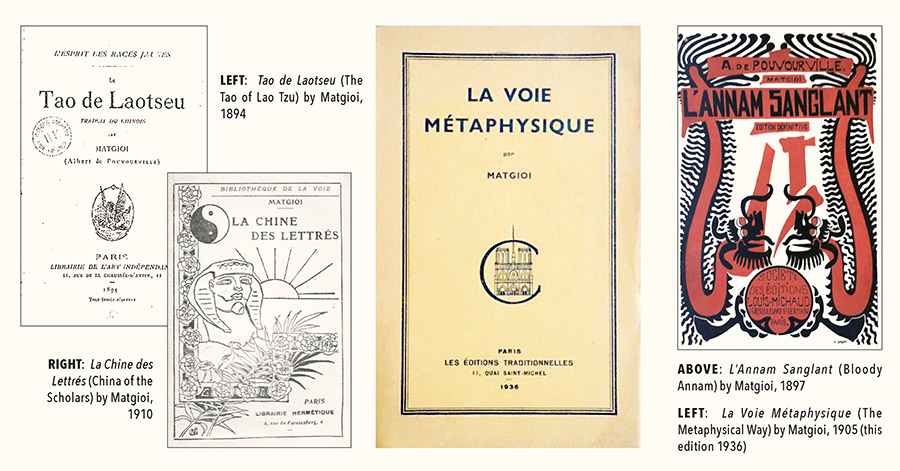
    On his final return from Indochina in 1892, Matgioi found the French occult revival at its height and its informal centre at the bookshop of Edmond Bailly near the Paris Opera. There, one could meet alchemists and kabbalists, symbolist painters, decadent poets, and musicians such as Debussy and Satie. Bailly aimed higher than the popular psychic and spiritualist fads. His publisher’s emblem was a sinister-looking siren with the motto: “Not everyone’s kettle of fish” (Non hic piscis omnium). His journal, La Haute Science (The High Science), presented translations of esoteric classics of all nations and eras. This suited Matgioi’s taste, while his Daoist initiation gave him a unique flair. In 1894, Bailly’s journal published his translation of Laozi’s Daodejing (Tao Te Ching), which credited Nguyen Van Cang, the village chief’s son, as collaborator for the “paraphrase of the Chinese characters.” Matgioi included so many put-downs of previous translators that the editor felt obliged to apologise, saying that they weren’t in the spirit of the journal. According to modern experts, this so-called “exact translation” contains gross errors, and it certainly does not resemble the standard French or English versions. Nonetheless, it shows how the famous text was understood by some educated Annamites given to a Francophone public avid for Eastern wisdom.

    Matgioi turned to Guaita’s friend Papus, the uncrowned despot of Parisian occultism, to publish his subsequent works: a series called “The Spirit of the Yellow Races.” This treated such themes as opium, Chinese medicine and poisons, popular ideas of the afterlife (mostly hellish), and Daoist secret societies. Meanwhile, “A. de Pouvourville” turned out novels and reportage set in Indochina. The most successful, Annam Sanglant (Bloody Annam), reached its 45th thousand by 1933. It is a superbly decadent work, glamorising the rebel as a superior and spiritual being, combining luscious description with gruesome violence, and promoting opium as the panacea for all ills.

    Guaita’s death in 1897, aged only 36, was deeply felt by Matgioi and the whole esoteric community. The following year, Pouvourville put his rebellious past behind him and joined the French Colonial Institute, probably alongside secret work for the intelligence services. Given his family origin, he moved easily in establishment circles. There are hints of returns to Indochina and missions to North African colonies. Like Guaita, Pouvourville left no progeny, and whatever documents survived after WWII seem to be lost now.

    Matgioi returned to the esoteric scene in 1904, directing his own journal, La Voie (i.e. “The Way” of Daoism). At last, he realised the project inspired by his Annamite master: “confronting the Truths of East and West with one another, which are really only one.” It would be a trilogy: La Voie Métaphysique (The Metaphysical Way, based on the Yijing), La Voie Rationnelle (The Rational Way, based on the Daodejing), and La Voie Social (The Social Way, based on Confucius). The first two were issued in monthly instalments, then as books in 1905 and 1907. The third volume never appeared.

    Paris in the 1890s seethed with cults, conventicles, and tiny churches with huge claims. One of these, the Universal Gnostic Church, originated at a séance in 1889, on the instructions of the spirit of a medieval Cathar. Gnosticism claimed to be the true Christianity, distorted and persecuted by the Roman church. This suited the anticlerical Matgioi, who was consecrated as “Simon, Bishop of Tyre and the Orient.” Together with “Théophane, Bishop of Versailles,” he wrote a short doctrinal book called “The Secret Teachings of Gnosis” (Enseignements secrets de la Gnose). Like his Daoist work, it reframed traditional wisdom in modern terms. These included concepts such as Being and Non-Being, Universal Possibility, the nature of the Demiurge, the equivalence of death and birth, and the contrast of the Primordial Tradition with its distortions by “revealed” religions. All this offered “a practical doctrine, in the sense that it seeks to influence men and guide them, through multiple transformations, towards what it knows to be their final and excellent end.”

    The Metaphysical Way & Yijing

    Matgioi’s biography opens some revealing windows into his times, both in Indochina and Paris. His writings are another matter. Are they worth reading, much less translating? In the case of The Metaphysical Way, I have no hesitation. It is a forbidding title. But if one is looking for solutions to the enigma of life, as I was when I read it fifty years ago, it can be a landmark and even a lifeline.

    My attention was first caught by mention of Matgioi in René Guénon’s Les États multiples de l’Être (The Multiple States of Being), which I was translating. La Voie Métaphysique was my first introduction to Daoism, apart from a friend who started each day by casting the I Ching, as it was known then. Matgioi’s approach could hardly have been more different. His interest is not in divination but in the Yijing as the earliest witness to the Primordial Tradition, as old as humanity. 

    According to Matgioi’s understanding of prehistory, which was derived from esoteric sources such as Fabre d’Olivet and Theosophy, humanity originated in central Asia. Climate change, or mere curiosity, caused it to descend to the plains, where it divided into the four races, distinguished by skin colour. Aeons later, the mythical Chinese emperor Fuxi (Fo-Hi) adapted the Tradition by giving it a geometrical expression. The straight line represents “active Perfection,” which in theistic terms is God’s own nature; the broken line, “passive Perfection,” which is the manifested universe. Their combination yields the system of the 64 hexagrams of the Yijing. None of this has anything to do with an anthropomorphic God but the impersonal process by which universes are governed. Here, I will summarise the conclusions to which his study of the Yijing and his Daoist initiation led him.

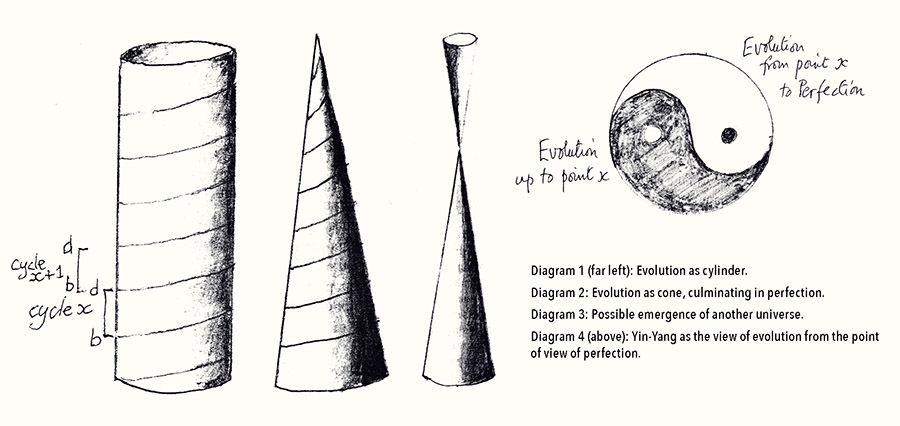
    There is nothing special or privileged about Humanity. It is one of the universe’s innumerable forms, and earthly humanity is but one modification of that form. From our point of view, the human form is one of a multitude of others through which we pass. The process can be symbolised by a spiral inscribed on a cylinder (diagram 1). Each turn of the spiral represents one life, for example, that of an earthly man or woman. It begins with birth, which is, in fact, death to our previous and lower state (the preceding turn). It ends with death, which is birth into our next and higher state. The rising pitch of the spiral symbolises the Law of Harmony or “The Good,” which governs the evolutionary process on every scale – personal, collective, planetary, cosmic, and universal.

    In geometry, a cylinder projected to mathematical infinity becomes a cone. This is the more appropriate symbol for the evolutionary process (diagram 2). At its vertex, in Daoist terms, is the Will of Heaven, which draws the universe to its ultimate Perfection and reabsorption. Matgioi leaves open the question of whether, once that is attained, another universe begins. If so, its symbol would be the double cone (diagram 3).

    The Yin-Yang symbol (diagram 4) is like a slice through the evolutionary cylinder. It symbolises our present state, the dark half representing our emission from Perfection, the light half our future reintegration therein.

    There is no freedom or chance in this grand process of universal evolution. Humans are not free to choose either their birth or death. But the human state is unique in one respect: between those limits, the Will of Heaven is not felt. Consequently, humans do have freedom, which they can use for better or worse. This alone is the locus of good and evil, along with their repercussions in this or a future life. Since evil does not exist as an independent entity, no punishment can be eternal. All beings are eventually destined for Perfection.

    What joins our successive lives, these turns on the spiral of our evolution, is the Personality, a completely distinct entity. It is immortal, containing an indefinite number of individuals whose births and deaths do not affect it. It absorbs them all, the heritage of former cycles, and nothing of them is absolutely lost. All positive acts and emotions contribute to its ultimate goal of unity. This also ensures that personalities which were emotionally close will remain so in future cycles, as they were in past ones.

    These metaphysical studies have a practical corollary. Our current state as humans gives us the freedom to conform to the Will of Heaven. If we rely on its principle, disengage from passions, and rationally weigh the consequences of each act, then every step we take – every effort, thought, even dream – is part of our inevitable spiral ascent to the Centre and the Truth. 

    One can see from this summary that Matgioi’s is an optimistic philosophy, in contrast to Traditionalists like Guénon who dwell with good reason on the negative aspects of humanity’s current state. Whereas they emphasise the devolutionary cycle of four Ages or Yugas, Matgioi takes the broader, evolutionary view, symbolised by the rising turns of the spiral. Each turn would then comprise an entire Yuga cycle, its components apparently declining as they accelerate, but each cycle being “higher” than the previous one. This would be the macrocosmic equivalent of the individual’s life, which is, in a sense, a decline from the Golden Age of infancy to debility and death, but for whom death to this state is immediate birth into a higher one. Incidentally, there is no support here for the Yuga theory invented for political purposes by Sri Yukteswar Giri (see my article “When Does the Kali Yuga End?” in New Dawn 138.)

    Guénon & Matgioi

    René Guénon

    Having mentioned Guénon, I return to his role in Matgioi’s biography. In 1908, a group of Martinists held a séance in which the spirit of Jacques de Molay, last Grand Master of the Templars, manifested. He commanded that the Order of the Temple be renovated and headed by René Guénon. The young philosopher had already attracted attention by joining every possible esoteric, occultist, or Masonic group in Paris, and he consented – if, indeed, he did not precipitate the whole affair. The new Order’s first session of automatic writing produced a flood of information that included themes and even titles of Guénon’s future books, including The Multiple States of Being and The Symbolism of the Cross. The following year, the Gnostic Church, in which he was “Palingénius, Bishop of Alexandria,” started a monthly journal, La Gnose, under his direction. Just as La Voie had pre-published Matgioi’s books, so La Gnose served for Guénon’s. It also presented the Archéomètre, the great posthumous work of Saint-Yves d’Alveydre, and articles on Islamic esotericism by Ivan Aguéli, a Swedish painter who had been initiated in Egypt into a Sufi order. Matgioi contributed an article on “The Metaphysical Error of Sentimentally-Based Religions.”

    Guénon, like Saint-Yves, claimed to have received teachings from mysterious Hindus. Together with Matgioi’s Daoism, Aguéli’s Sufism, and a Gnostic approach to Christianity, the foundations were being laid for a Traditionalist movement dedicated to the transcendent unity beyond the diversity of exoteric religions. Theosophy had been proclaiming this for thirty years, but the Theosophical Society was riven by squabbles and scandals following Blavatsky’s death. The new movement, which soon forgot its spooky origins, preferred to go straight to the ancient sources and the symbols of a primordial wisdom.

    Matgioi later reflected on his Daoist initiation with a humility that other pretenders would do well to heed:

    Beside certain incidental but still valuable notions, I mainly acquired the certitude of my imperfections, my ignorance, and my unworthiness. This, it seems, is the first step of wisdom. I greatly fear that I have not risen to others. But this poor ascent has nevertheless been extremely useful in my existence: it has given me defiance of the ego and disdain for the universe. (Chasseurs de Pirates! 1928, p. 185)

    Get the issue this article appears in

    Matgioi’s Writings Post-WWI

    The First World War effectively ended the French occult revival and with it Matgioi’s metaphysical works. He remained all the more active as a writer on colonial and military studies, beginning even in the heat of the war with close analyses of its progress. His fiction ranged from pirate and spy stories to prophetic visions of the next war. These were aimed at a popular audience and published in cheap “pulp novel” format. 

    By 1934, after the re-arming of Germany and the Nazi ascent to power, another war seemed inevitable. This time, it would not be fought by infantry in trenches but in the air, in tanks, and with unheard-of weapons that scientists, to their shame, were already inventing. This was the subject of his epic novel, published during 1934-35 under the authorship of “A. de Pouvourville, de l’Institut Colonial.” The first six parts were called La Guerre Prochaine (The Coming War), the following twenty-four parts L’Héroïque Aventure (The Heroic Adventure). It appeared in weekly instalments of 96 pages, promising “three hours of the most gripping reading.” The lurid covers and illustrations show ray guns, “navigyres,” “aquatanks,” “Z-rays,” and other fantasies of Art Deco science fiction. Germany is the eternal enemy; France the ultimate victor, allied with Mussolini’s Italy, Czechoslovakia and, in a minor role, Britain. A separate novel, Griffes Rouges sur l’Asie, depicts the coming Communist takeover of Asia, but Pourvourville’s future war, with a sad lack of foresight, takes place exclusively in the European theatre. It concludes with the upstart Chancellor “Heizler” crushed by a Berlin mob and a peace conference in Rome under the presidence of the Pope.

    Was Matgioi, like that other warrior-author Ernst Jünger, turning Catholic in his old age? One wonders, for in 1934 he also published a book about Saint Theresa of the Child Jesus (1873-1897). Affectionately known as “The Little Flower,” Theresa represents an emotional Christianity for which Matgioi had always shown contempt. Guénon, when he heard about it, said that if Pouvourville was still alive, Matgioi was certainly dead! My interpretation is that with war clouds gathering, the ageing author felt a responsibility to his compatriots. His futurist epic warned readers of popular war stories, largely young and male, who would soon be on the front lines. The book on Theresa addresses devout Catholics in their own style, preparing them to face suffering with confidence in France’s protectors: Saints Genevieve, Clotilde, Joan of Arc, and Theresa. Now that the war has come and gone, those works are mainly of historical interest, while The Metaphysical Way, true to its subject, is a timeless contribution.

    Thanks to Dr. Jean-Pierre Laurant, first authority on Matgioi, for his guidance in the world of Parisian esotericism and his indispensable work Matgioi, un aventurier taoiste (Paris: Dervy, 1982), and to Dr. Davide Marino for his later discoveries and friendly advice.

    The author’s translation of Matgioi’s masterwork, The Primordial Tradition of Ancient China: The Esoteric Foundation of the I Ching and Chinese Cosmology, is published by Inner Traditions. Order your copy here.

    [alert type=”general” dismiss=”no”]This article was published in New Dawn 207.[/alert]

    [alert type=”success” dismiss=”no”]If you appreciate this article, please consider subscribing to help maintain this website.[/alert]

    © New Dawn Magazine and the respective author.
    For our reproduction notice, click here.
  • The Neverending Storygame: Decoding the Simulation Through the Ancient Wisdom Tradition

    The Neverending Storygame: Decoding the Simulation Through the Ancient Wisdom Tradition

    From New Dawn 210 (May-June 2025)

    Some conflicts can only be resolved by divine intervention, and so after arguing with your most stubborn intellectual jousting partner about “simulation theory” – the notion that earthly reality is some sort of cosmic computer program – you find yourself in a deserted part of town on a rainy night, the lone customer in a metaphysical shop smelling of incense and old books. 

    An old book is precisely what you need, you tell the bearded proprietor, and not just any book. One that contains the “secret doctrine” of the ancients, a book with all the answers. 

    “Is there such a breviary,” you ask, “revealing all to those who wish to see?”

    “There is,” the old man responds, withdrawing a vellum volume from behind the counter. “I keep one aside for anyone who asks.” 

    “I’m afraid I wouldn’t be able to afford something as magnificent as this,” you say as the book vibrates in your hands. 

    “Oh, but this book is free to anyone who requests it!” the proprietor says. “There are limitless copies, and yet it is worth more than all the riches in the world.”

    At home, you retire to your study, light a candle, and pour a glass of wine. The first thing you notice is the weighty tome is only half-written; half the book is blank. And then, across a manic midnight and into the wee small hours, you read its pages and begin to see. Not the physical reality seen by your eyes but the invisible reality behind it. 

    The mysterious book begins by asking what the great star we call the Sun has in common with the blood flowing through our veins, the special significance of the orbital path of Venus, and what video games have in common with the supreme deity men call by the name God.

    Without the Sun, the book explains, Earth would not exist. It is the starting point, the bringer of light and life, the envoy of the simulation-creation. As we orbit the Sun, which causes the four seasons, its fiery rays come down and lift the water from the sea, which returns to Earth in the form of rain, which causes the foliage to grow, creating oxygen for our atmosphere. 

    An unseen fifth element makes it all possible, a quintessence that simulation-theory eggheads call the “god particle,” forever eluding their understanding. In the human body, the blood acts similarly to the fifth element operating outside it. We breathe in air, charging the bloodstream with oxygen which our central “sun,” or heart, pumps to all the parts of the body, taking from the blood what it needs to fulfil its function. 

    Now let us look at the path of Venus as seen from Earth (see image on the left). The so-called fairest sight in nature, the third brightest object in the sky after the Sun and Moon, appears like a glimmering five-pointed diamond, six months of the year at dawn and six at dusk. The ancient wise men used geometry to trace its trajectory from season to season, year to year, and discovered that over the course of eight years, the path of Venus around Earth forms a mandala shape, or what we call sacred geometry, despite the fact that both planets are in constant motion.

    No atheist vs. believer modern-human argument will ever settle matters of this sort. If you don’t look at the path of Venus and immediately and intuitively understand that the reality in which you exist has been crafted down to the tiniest detail, then you probably wouldn’t be reading this. But you are, so let us explore “simulation theory,” a recent buzzword of Silicon Valley types who are highly adept at staring through the proverbial positivist microscope to perceive the workings of things but who’ve completely lost sight of the big picture and great master-key of occult philosophy: analogy

    When video game technology became sufficiently sophisticated, what did humans do? They invented open environments for a character controlled by the player’s will because there’s no game without free will. The game world is then filled with trials against antagonistic forces and the possibility of failure because nothing would happen without obstacles and opposing forces. Each victory brings upgraded powers, leading to a final destination written by the game’s author. 

    According to ancient doctrines, everything in the universe follows the same laws and patterns, like an immense multidimensional paisley in which each part is a microcosm of the larger to which it is attached. 

    So yes, you’re in a simulation. Of course you are. This is the great secret known to all the world’s spiritual traditions. Only when man became intoxicated by his machines did he lose sight of the fundamental fact that in his own sphere of action here on Earth – aided by will, reason and intelligence – man is a mirror of his simulation author – a creator, transformer, and builder of worlds.

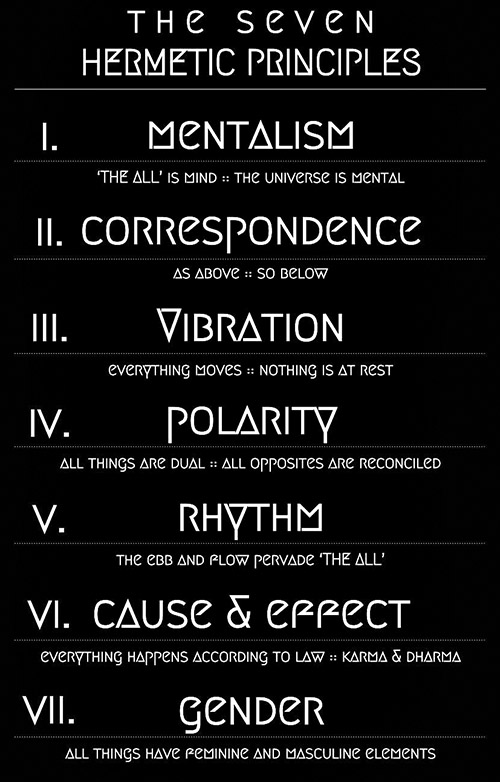
    A gust of wind blows the window open, letting in the silvery moonlight. You decide to leave it open, and the cool night breeze sharpens your mind as the mysterious book reveals the laws governing the reality-construct in which you find yourself, drawing on an excellent summary from the 1908 book The Kybalion. The seven Hermetic laws governing creation are:

    Mentalism – This is the most relevant to exponents of simulation theory, as it means the universe is based not on matter but consciousness. At the atomic level, what appears to you as solid matter is mostly empty space, and all of Earth will be vaporised when the Sun becomes a red giant billions of years from now. 

    Where will the solid matter go? It will be transformed into a different form of energy that can ultimately be traced back to that mysterious fifth element. 

    Correspondence – Everything in the cosmos exhibits the same pattern, from seasons to civilisations, galaxies to snail shells.

    Vibration – Everything is forever in motion.

    Polarity – Everything presupposes its opposite: life/death, spirit/matter, good/evil.

    Rhythm – The pendulum is always swinging; day is racing to night, the tide goes in and the tide goes out, you inhale and then you exhale. 

    Cause & Effect – Perceived effects come from higher causes.

    Gender – Everything is based on two opposing principles, one active, the other receptive, which come together in the act of creation.

    These are just the laws that run the simulation world. 

    Before revealing what happens in this world, the book with all the answers explains the primordial energy running the whole thing. Consider the proverb about blind men inspecting an elephant. Each can touch a single part – trunk, tusks, ears, enormous scaly body – but cannot see the whole and so thinks an “elephant” is the one part he can grasp. Likewise, the primordial energy of the cosmos has various overlapping ways of being known, and traditional doctrines employ the following terms:

    The quintessence or prima materia is the building block of everything in the universe, which modern science calls Dark Energy

    The primordial generative androgyne “dragon” is felt in the solar plexus and genital region as a dual serpentine energy. Some metaphysical schools refer to this as chaos or undifferentiated energy. 

    The pneuma is a thin vibration detectable in pranayama or sacred breathing; the word means breath and offers direct experience of something like living Spirit. 

    The Great Magical Agent or Universal Plastic Medium, to use two terms employed by Eliphas Levi, is the combination of intelligent spirit acting on the dragon, which consciousness experiences as a kind of viscous material. It’s something like active imagination or magic, and what we use to create possibilities assessed by reason and put into action on the material plane by the will

    The Astral Light is something like what psychology calls the collective unconscious. Levi seems to use it interchangeably with the dragon, quintessence and prima materia, but given his references to it as “saturated with images” and “nature’s imagination,” it appears Astral Light best describes not primordial energy but the archetypal realm of consciousness. 

    In astrology, this is associated with the planet Neptune, whose gravitational energy comes to us at a very high vibration and is likely the place from which artists receive inspiration. Although the ancients could not see this planet, they could feel its frequency above the seven planetary “metals” that power human life. It is the divine realm where ancestral archetypes roam in a kind of living fantasia. It’s no coincidence that the same planet and deity are associated with the unseen world beneath the sea, which is why Gustav Holst wrote an eerie chord progression for Neptune in his 1914 suite “The Planets.” 

    The numen is the Roman concept of divine presence beyond any god or archetype, something like the watchful eyes of the Supreme Author of the simulation. The term means “to nod” and is likely where we get the term “a wink and a nod,” expressing another level of reality to that which is perceived. 

    To spiritual initiates who find their way to the metaphysical dimension, all the unexplainable synchronicities and serendipities in earthly life are experienced as fleeting nods of the higher powers. The Latin term gives us the English word “numinous,” meaning supernatural. 

    Get the issue this article appears in

    Modern humans – say, those whose frame of reference is based on the scientific rationalism and social institutions of the past three centuries – who ponder simulation theory are too smart for their own good or what esotericists would call “intelligently stupid.” They will never crack the code of the reality they inhabit because their human ego – necessary for the trial of earthly incarnation but an impediment to spiritual knowledge – is too wedded to their material intelligence or sense of reason. They will always be a scientist-subject looking at metaphysical reality as an object, unable to transcend the dichotomy and enter the idea-world they behold in their minds. 

    To paraphrase The Upanishads, the simulation is not anything you can see but rather that by which you can see. It’s like asking a fish to explain water from a scientific point of view when water is the very thing in which it lives and which gives it life. A fish’s reality-construct is taken for a given. They do not think about their cosmos – water – only what happens in it, such as eating, spawning, and avoiding predators. 

    The mysterious book has now prepared you for the next revelation, for beyond the laws, principles and primordial energies that drive the simulation reality-construct. What actually happens in it? 

    We are not in a static universe of rigid rule; the seven Hermetic laws taught us that. Everything is in motion, everything has its season. There are various races, gods and archetypes; myths and legends; literature and fairy tales; civilisations that achieve greatness and then fall to barbarian hordes. There are also innocuous humans whose lives are as cogs in the great turning wheel, and there are geniuses, kings, mages and sages who are completely differentiated and distinct, and who possess powers of intelligence, wisdom and creativity that seem to come from another dimension.

    The three shots comprising the last 30 seconds of the 1937 fairy tale film Snow White give us a hint, for they are a visual distillation of ancient doctrines revealing the analogy of how human life and the overworld overlap – the Hermetic dictum from the Emerald Tablet is “As above, so below” – and how archetypal symbols are ever at work in man’s imagination, the medium – or Astral Light – through which human consciousness interacts with divine consciousness.

    As dawn begins to break, you close the magical book of secret wisdom, unable to absorb anymore. 

    We’ll reopen it in the next issue of New Dawn, in part two, when the sacred science – the ultimate field of study for man, the highest challenge, the absolute endeavour – begins to come to life. 

    Christian Chensvold is the author of the new book Gothic Olympus, available from https://arktos.com/product/gothic-olympus/. When a mysterious inheritance leads Julien Stanwyck from the hazy clubs of New York to the absinthe-glowing cabarets of fin-de-siècle Europe and the ruins of a family château, a drama of infernal torments and divine fury rattles the cage of the modern world.

    Gothic Olympus launches the reader into the phantasmagoric odyssey of one man’s mission to reawaken the old gods and defy the onslaught of demonic collectivism and matriarchal tyranny. It follows Julien Stanwyck’s alchemical transformation from a pale, scrawny, angry young man into an Olympian sovereign who conquers death with the sword of Achilles, wins a goddess for a bride through initiation into the Mysteries of Sex, and travels through earthly and celestial realms to fulfill his destiny.

    A mythopoetic allegory for the twilight of Western Civilization between the Belle Époque and the present dystopia, Gothic Olympus detonates the postmodern abyss through a pulse-pounding concoction of dark humor, occult wisdom, and virile spirituality, weaving Julius Evola’s revolt against the modern world with elements of steampunk, dark fantasy, and Decadence. Through the magic mirror of Stanwyck’s trials and adventures, Gothic Olympus is a riveting tale of heroism, a summons to metaphysical awakening, and a daring vision of the greatest force the world has ever known: European man’s imagination. Order here: https://arktos.com/product/gothic-olympus/.

    [alert type=”general” dismiss=”no”]This article was published in New Dawn 210.[/alert]

    [alert type=”success” dismiss=”no”]If you appreciate this article, please consider subscribing to help maintain this website.[/alert]

    © New Dawn Magazine and the respective author.
    For our reproduction notice, click here.
  • Yankees vs Cowboys

    Yankees vs Cowboys

    From New Dawn 206 (Sept-Oct 2024)

    Most talk you hear these days about the deep state – the interlocking network of multinational corporations, government bureaucracies, and nongovernmental institutions that holds the reins of political and economic power in today’s industrial societies – treats it as a monolithic presence with the discipline of a Nazi division goosestepping past the review stand at a Nuremberg rally. Most of that talk also treats the deep state as omniscient and omnipotent, possessed of knowledge and power so all-encompassing that all its opponents can do is grumble on online forums. 

    There are plenty of reasons why the deep state wants to project these images of itself into the collective conversation of our time. I trust nobody is naïve enough to think, however, that an interest in factual accuracy has any place among those reasons. No ruling class in all human history has ever been that unified, that well-informed, or that powerful – though every ruling class in all human history has tried to make its opponents think that all these things are true. 

    Let’s begin with the obvious. The people who make up the interwoven hierarchies of the deep state aren’t robots or mindless minions. Nor are they nice people. They have clawed their way to their current positions of power in the savagely Darwinian environment of a modern bureaucratic state, in which backstabbing and betrayal are a way of life and a moment’s weakness or kindness is usually fatal. They have climbed a ladder in which each rung is reached by trampling on the faces of less successful rivals. 

    Those at the summit of the deep state are constantly intriguing against each other while fending off attempts by those immediately below them to unseat them and take their place. Those below them face the same struggle with peers and subordinates while simultaneously trying to climb the ladder to the next level. Will they set aside their rivalries to defend the system against its enemies? Yes, but only when this works out to their personal advantage. Give them a chance to better their position at the expense of their superiors or the system as a whole, and they’ll take it. This is one of the reasons that systems like theirs always eventually fall. 

    They face another lethal vulnerability, one that counterculture philosopher Robert Anton Wilson traced out mordantly in his writings: communication is only possible between equals. It’s worth taking a moment to see how this works. Imagine a hierarchy, like any of those that make up the deep state. At every level, you have a superior who lords it over a number of subordinates and whose job tenure and prospects for promotion depend on pleasing his own superiors and keeping his subordinates in line. 

    Now suppose that a piece of information has to make its way up the hierarchy from the people at the bottom, who have direct experience of what is happening, to the people at the top, who have the power to make decisions. At every level, the subordinates have a strong incentive to tell the superior what the superior wants to hear, whether or not it happens to be true. If one subordinate suffers from a sudden lapse of self-interest and tries to pass on an unpalatable truth, the others can be counted on to treat this mistake as a vulnerability to exploit, tell the superior what he wants to hear, and undercut the erring subordinate. Repeat this same process ten or twenty times as the piece of information makes its way from the bottom to the top, and the chance of any of it coming through intact is minimal at best. 

    Now imagine what happens when a piece of information has to go in the other direction, from the top to the bottom. At every level, a similar dynamic applies because the superior has a strong incentive to tell the subordinates what the superior wants the subordinates to believe, whether or not it happens to be true. Apply both these processes at the same time – and they’re both constantly in operation in every hierarchy – and you end up with a situation in which the upper levels of the hierarchy are serenely detached from the actual state of affairs and the orders that come down from above display a more than schizophrenic detachment from reality. 

    If this reminds you of life in today’s Western industrial societies, that’s no accident. The weird disconnect between the pronouncements of politicians and business leaders and the realities that the rest of us encounter is not just a matter of dishonesty on the part of the ruling class. (Of course, they’re lying through their teeth, but it’s more than that.) The people at the summit of the deep state have no clue what’s happening in the world. All they know is what they’re told in their elaborate daily or weekly briefings, which are massaged by whole armies of subordinates who have every incentive to tell them nothing except what they want to hear. 

    These two factors – the constant struggles for power within the ruling classes and the toxic effect of power relationships on communication – form the realities of life in any hierarchical society. They are among the core reasons why empires fall and civilisations crumble, and they explain the explosive political realities surrounding the rise of Donald Trump in today’s America. 

    The Yankee-Cowboy War

    The crucial role of conflict within the deep state was the central thesis of one of the forgotten classics of alternative politics, The Yankee and Cowboy War: Conspiracies from Dallas to Watergate (1976) by Carl Oglesby. The first president of Students for a Democratic Society (SDS), the most influential American radical group in the mid-1960s, Oglesby was forced out of the group because he rejected Marxism and argued instead for an alliance between radical youth and democratic populists. After his expulsion, he devoted time to researching the assassination of John F. Kennedy (JFK) and the deep structure of political and economic power in the United States. 

    In The Yankee and Cowboy War, Oglesby mapped out the hidden terrain of American power from the Second World War to the election of Jimmy Carter. He showed that beneath the apparent unity of the deep state in those years, a bitter conflict raged between two factions of the ruling class – the old east coast establishment (“Yankees”), oriented toward Europe and drawing their power and wealth from control over international finance, and the new rich of the Florida-Texas-California corridor (“Cowboys”), more interested in Asia than in Europe, and drawing their power and wealth from fossil fuels and the military-industrial complex. 

    Carl Oglesby (1935-2011)

    Oglesby argued that the war in Vietnam was a Cowboy project. When Yankee scion JFK edged out Californian Richard Nixon in the 1960 election and began to move against Cowboy interests, reorienting US foreign policy away from the Pacific Basin, the Cowboy faction treated this as an existential threat. JFK’s assassination, which put the Texan Lyndon Johnson in power, was their response: a coup d’etat against the Yankee faction that handed the levers of power to the Cowboys and signalled full speed ahead for the Vietnam adventure. Yet the Cowboys had no realistic grasp of conditions on the ground in Vietnam. Meanwhile, the Yankee faction responded by fostering antiwar activism on college campuses and using the mainstream media to trip up the Cowboys at every turn. The turmoil of the Sixties was one inevitable result. Another was the coup against Richard Nixon.

    That was the story as far as Oglesby traced it in his book. The rest of the tale is easy enough to outline. Ronald Reagan’s two terms as president marked the triumph of the Cowboys. From that point until the rise of Donald Trump, every US president had a close connection to the Cowboy faction. Notice, however, that the Bush family was an old Yankee family which had relocated to Texas and made connections with the Cowboy elite. This same pattern was underway across the Yankee faction as the old aristocracy cut deals with the new. Meanwhile, the fossil fuel and defence industries became fully integrated with international finance as Cowboy families made their own journeys in the other direction. 

    Frontispiece of the 1977 edition of Carl Oglesby’s book The Yankee and Cowboy War, which dissects a clandestine struggle within America’s power elite, spotlighting the rivalry between the “Yankees” and the “Cowboys.” Written with a particular focus on the role of intelligence agencies, Oglesby’s work connected the JFK assassination and Watergate, framing them as part of this broader elite conflict. His concept of “clandestinism” suggests that conspiracy is an intrinsic part of political power. Oglesby’s theories remain relevant today, reflecting the ongoing tensions between globalism and nationalism in US politics.

    Hillary Clinton was one more interchangeable part from the same bin, raised in an east coast political family but married to a rising Sun Belt politician. Her two terms in the White House were expected to continue policies that had been welded in place for forty years. What neither she nor anyone else in the ruling class had noticed, however, was that the United States was lurching toward an explosion. 

    A Time For Caesars

    Writing more than a century ago, German historian Oswald Spengler anatomised the way that this crisis is playing out. In the history of every high culture, there comes a point at which the ruling class sinks into a kleptocratic stupor in which the last traces of effective leadership give way to a blind pursuit of personal enrichment while the hierarchies through which the ruling class enforces its will become so baroquely complex that no meaningful information can make its way to the top at all. Even if the society is swarming with secret police, that does little since the information gathered by the ordinary working Joes who staff the secret police has less than a tossed coin’s chance of getting to decision-makers. 

    A society in this condition can no longer cope with the challenges that it faces. This is what drives the process that Spengler called Caesarism. Julius Caesar was a high-ranking member of the Roman Republic’s deep state, as insanely rich, financially corrupt, and morally depraved as any of his peers – it was a running joke in Rome during his time that he was every woman’s husband and every man’s wife. Unlike the other members of the senatorial class, however, he realised four things. The first was that the entire Roman system faced disaster if its ruling class continued its kleptocratic feeding frenzy; the second was that ordinary Romans would rally around anyone who took the levers of power away from the ruling class; the third was that some elements of the ruling class would do the same; and the last was that if he took advantage of these things, he could seize unparalleled power. 

    As history shows, he was right. This is why after a cabal of senators assassinated Caesar, the Roman people rose up and drove the assassins and their allies out of Rome. It is why Caesar’s nephew Octavian and his close ally Mark Antony crushed the senatorial party in the war that followed. It is also why, once Octavian and Mark Antony turned on each other and Octavian won, he had himself installed as Augustus, first emperor of Rome, to the wild cheering of Roman crowds. 

    Donald Trump is not Julius Caesar. Nevertheless, the same pattern that put Caesar in power gave Trump his first term in the White House and seems likely to give him a second. The American ruling class, Yankee and Cowboy factions alike, long ago forfeited the trust and respect of the American people. More recently, they have become hated, and in the last few years, they have come to be despised. That opens the way for the same overturning of the political establishment that Caesar began and Augustus completed. 

    A very large number of Americans – quite possibly a majority at this point – are sufficiently disgusted by the antics of their self-anointed leaders that anyone who takes the levers of power away from them can count on robust public support. Significant figures among the rich and influential can be expected to rally around any such project. If Trump did not exist, in other words, someone else would have done the same thing he did – and if he is removed, there’s no shortage of others ready to take his place. 

    The End of Empire

    The revolution from within that Julius Caesar and Augustus carried out in ancient Rome is even more likely in today’s America because the American empire that emerged out of the Second World War is running on fumes. Dependent on distant countries for essential resources, burdened with a vast bureaucratic sector and an economy so riddled with graft and incompetence that it can no longer accomplish such basic tasks as providing munitions for its proxy wars, the United States is stumbling toward terminal crisis. 

    The ongoing war in Ukraine is a glaring example. When that began in February 2022, the United States and its allies placed their trust in punitive economic sanctions, which were expected to cripple the Russian economy and force Russia to its knees. Apparently, nobody in Washington DC considered the possibility that other nations interested in undercutting the US empire might have something to say about that. Of course, that was what happened. China, which has the largest economy on Earth in terms of purchasing power, extended a middle finger in the direction of Washington DC and upped its imports of Russian oil, gas, grain, and other products. So did India, currently the third largest economy on Earth, as well as more than a hundred other countries. 

    For many decades, the threat of being cut out of international trade by US sanctions was the big stick Washington DC used to threaten unruly nations that weren’t small enough for a US invasion or fragile enough for a CIA-backed regime change operation. Two years ago, that big stick turned out to be made of balsa wood and snapped off in Joe Biden’s hand. The result is the first shockwave of a massive rebalancing of global wealth that is already transforming the world. 

    Until the era of the European global empire, the economic heart of the world was in East and South Asia. India and China were the richest countries on the planet, and half a dozen other nations, from Japan to Iran, were also major economic powers. The great age of European conquest temporarily diverted much of that wealth to Europe, impoverishing Asia in the process. That began to break down with the collapse of European colonial empires after the Second World War, but some of the same arrangements were propped up by the United States thereafter. Now, those are coming apart, and Asia is rising in response. By next year, in terms of purchasing power, four of the five largest economies on the planet will be Asian. The fifth is the United States, and it may not be on that list for much longer. 

    The consequences will reshape the lives of everyone on the planet, but their impact will be especially harsh here in the United States. Roughly five per cent of the human race currently live in the United States of America. That very small fraction of humanity, until quite recently, got to enjoy about a third of the world’s energy resources and manufactured products and about a quarter of its raw materials. That didn’t happen because nobody else wanted these things. It happened because America’s global empire funnelled a disproportionate share of the planet’s wealth to one nation. 

    As those arrangements break down, the five per cent of us in the United States will have to go back to living on about five per cent of the planet’s wealth, as we did before 1945. If we still had the factories, the trained workforce, the abundant natural resources, and the thrifty habits we had back then, that would have been a wrenching transition but not a debacle. The difficulty, of course, is that we no longer have those things. The factories were shut down in the offshoring craze of the 1970s and 1980s, when the imperial economy slammed into overdrive, and the trained workforce was handed over to malign neglect after that. 

    Get the issue this article appears in

    We still have some natural resources, but nothing like what we once had. The thrifty habits? Those went whistling down the wind a long time ago. In the late stages of an empire, exploiting flows of wealth from abroad is much more profitable than trying to produce wealth at home, and most people direct their efforts accordingly. The result is the typical late imperial economy, with a governing class that flaunts absurd levels of paper wealth, a parasite class of hangers-on that thrive by catering to the very rich or staffing the bureaucracies of the deep state, and the vast majority of the population impoverished, sullen, and unwilling to lift a finger to save their so-called leaders from the consequences of their own actions. 

    It is still possible for the United States to pull out of its current power dive. “Possible,” however, is not the same thing as “easy.” Our government, most of our corporations, and a great many of our wealthier citizens have run up debts so gargantuan that they can never be paid off. A federal debt default is a certainty sooner or later. So is the bankruptcy of most large American corporations, especially in the FIRE (finance, insurance, and real estate) sector. US troops will have to come home from the hundreds of overseas bases where they currently prop up proxy regimes of various kinds. US allies in Europe and the island fringes of East Asia will have to make their own arrangements for defence. Very little in global affairs will remain unchanged. 

    There is no evidence that Donald Trump, the circle of upper-class dissidents that surrounds him, or the cheering crowds that attend his rallies understand all this. Trump seems to realise, however, that the United States can no longer afford its global military footprint, its gargantuan government bureaucracies, or the attitudes that justify these and cater to the vast lumbering dinosaur of the deep state. Such policies are inevitable sooner or later – and the sooner they take place, the more it will be possible to salvage from the smoking rubble of the American experiment. 

    [alert type=”general” dismiss=”no”]This article was published in New Dawn 206.[/alert]

    [alert type=”success” dismiss=”no”]If you appreciate this article, please consider subscribing to help maintain this website.[/alert]

    © New Dawn Magazine and the respective author.
    For our reproduction notice, click here.