Everybody who has ever worked for a corporation knows that corporations conspire all the time. Politicians conspire all the time… the world is full of conspiracies. Conspiracy is natural primate behaviour. – Robert Anton Wilson
The cultural reflex to scoff at “conspiracy theories” reveals more about our conditioning than the claims themselves.
In a world where governments lie, institutions manipulate, and media gatekeep information, dismissing alternative explanations outright is less rational than we’ve been led to believe.
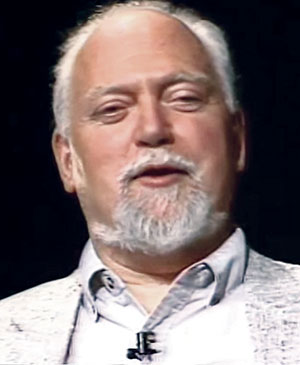
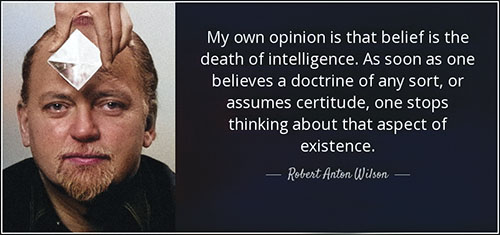
Author and futurist Robert Anton Wilson understood this with crystalline clarity. For him, the notion that only the fringe believed in conspiracies was itself a programmed illusion – a by-product of what he called “reality tunnels.”
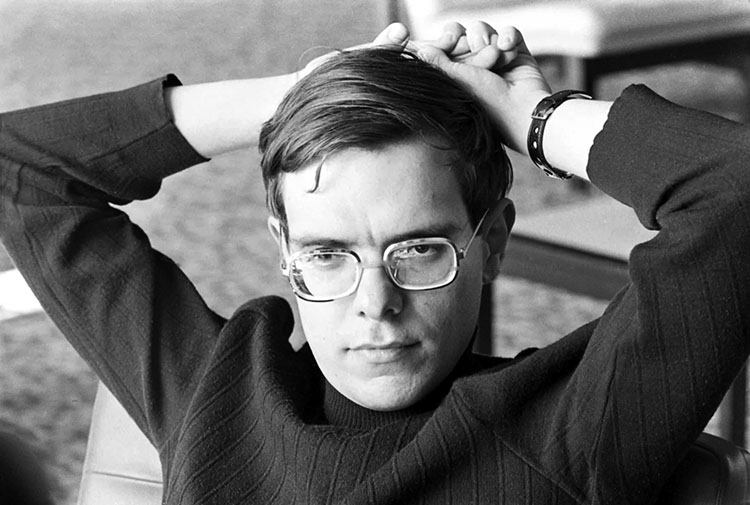
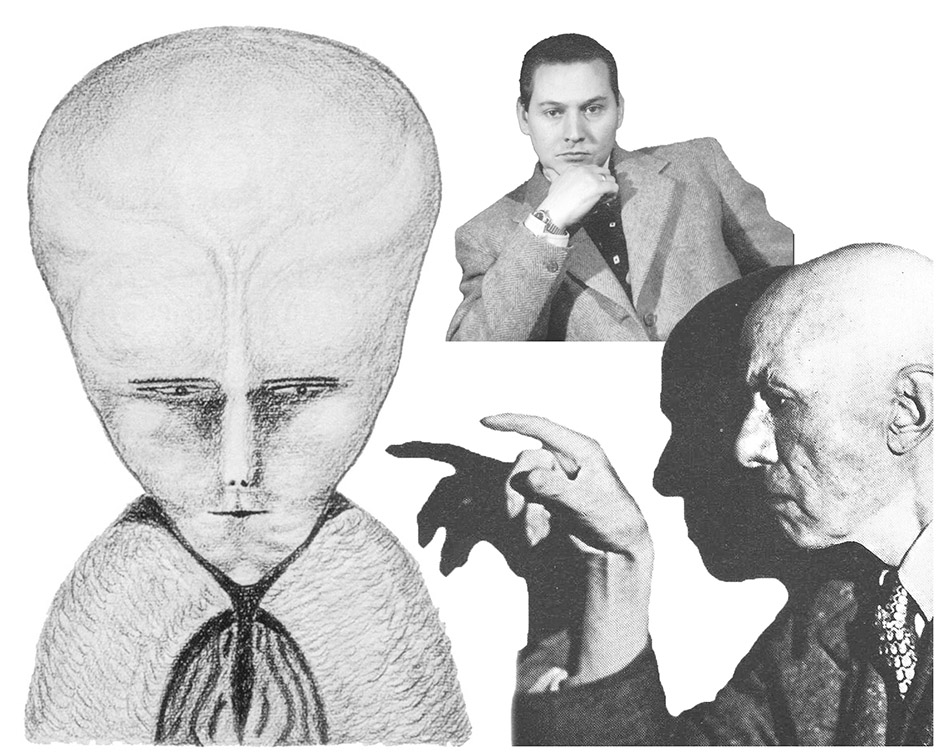
Robert Anton Wilson (1932–2007)
Wilson coined the term reality tunnel to describe the unique, subjective lens through which each person interprets the world. This idea, foundational to his philosophy, suggests that what we accept as reality is largely a construct of our beliefs, experiences, and semantic environment.
A person raised in a religious household may interpret world events as part of a moral struggle or see them as fulfilling biblical prophecies. Another raised in a technocratic, sceptical culture might reduce everything to materialist logic. Neither perspective is entirely accurate; each is a tunnel, limiting the field of view.
In the 21st century, this concept serves as a cognitive survival tool. As explored in the New Dawn article, “Reality Tunnels: How to Control & Re-program Your Mind,” reality tunnels can be consciously hacked and restructured. Individuals can liberate themselves from inherited limitations by learning to identify the unconscious filters that shape perception. Wilson’s tool for achieving this freedom he termed ‘Maybe Logic’ – a flexible approach to knowledge that allows one to entertain multiple perspectives without dogmatic adherence to any. As he said, “I don’t believe anything, but I have many suspicions.”
This doesn’t mean that ‘anything goes’. Rather, it means acknowledging that fixed belief systems are generally the software through which larger social and political forces program human behaviour. If the mind is programmable, then who is doing the programming – and why?
The Linguistic Code: General Semantics & Magical Language
Another layer of Wilson’s conspiratology concerns the manipulation of language. Informed by Alfred Korzybski’s General Semantics, Wilson emphasised how language distorts perception. The map is not the territory. Words like “terrorist,” “conspiracy,” and even “science” are wielded not to describe but to control.
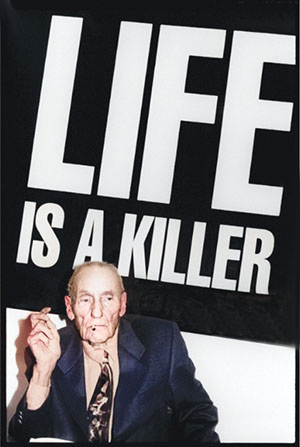
The American writer William S. Burroughs (1914–1997) developed the concept of language as a “virus from outer space,” a metaphor for the way language can infect, shape, and control us. He believed that language has an infectious nature, attaching itself to a host, feeding off of it, and spreading. He explored the power and danger of communication, suggesting that language can be a force that shapes human subjectivity and identity.
As detailed in the New Dawn article “Magical Words, General Semantics & The Power of Language,” language functions as a form of social sorcery. Politicians cast spells with slogans, while the media conjures consensus through repetition. Questioning the official narrative risks exile from polite society; however, it is only through such questioning that deeper truths emerge.
Wilson’s literary hero, William S. Burroughs, took this further by suggesting that language itself is a virus – an alien implant infecting human consciousness. Burroughs’ idea that “control systems” use language to hijack perception influenced Wilson’s thinking, particularly in his development of “guerrilla ontology,” a method for disrupting static belief systems through sudden epistemological shock.
Conspiratology: The Discipline of Questioning the Hidden
At New Dawn magazine, we don’t casually entertain every theory that emerges from the internet’s darker corners. We engage in what Robert Anton Wilson might call conspiratology – the disciplined study of conspiracies as reflections of psychological and sociopolitical structures. The point is not to conclusively prove or disprove each claim but to recognise that the narratives dominating public discourse are rarely neutral.
Why should we take conspiratology seriously? Because history vindicates suspicion:
The COVID Lab Leak Theory: Only a few years ago, this was vehemently dismissed as “conspiracy theory.” The US government and its intelligence agencies now openly state on official websites that the virus likely leaked from a China lab as a result of US-sponsored gain-of-function research.
The Iraq War and Weapons of Mass Destruction: The case for war was built on manipulated intelligence, as later revealed by whistleblowers and the UK Chilcot Inquiry. What was labelled by the US, UK and Australian governments as a cut-and-dried case backed by strong evidence was later disproven as based on a pack of lies.
Mass Surveillance: Edward Snowden’s revelations about global surveillance confirmed the existence of covert programs like the US National Security Agency’s PRISM – programs that the public had been told didn’t exist.
Wikileaks and Collateral Murder: Leaks exposing shocking war crimes were denied until raw footage forced public reckoning.
COINTELPRO: The FBI’s illegal infiltration and disruption of civil rights groups and Black movements is now a documented fact.
MKULTRA: For years, the CIA got away with secret mind control experiments using drugs and sensory torture – all covered-up with the assistance of a compliant mainstream media. Today, MKULTRA is a documented program, its existence confirmed in declassified documents and US congressional hearings.
These examples remind us that suppressing so-called conspiracy theories serves the maintenance of power. Studying these dynamics is key to decoding the architecture of control.
In his essay “Robert Anton Wilson & Guerrilla Ontology,” featured in New Dawn, British writer and researcher Jack Fox-Williams explained Wilson’s core strategy: to destabilise fixed worldviews through sudden exposure to conflicting realities. By confronting readers with paradoxical or outrageous information, Wilson trained his audience not in paranoia but cognitive agility.
“Belief is the death of intelligence,” Wilson wrote. That is the heart of guerrilla ontology – resisting belief because truth must be earned, not received. In a media landscape where narratives are bought, sold, and manufactured, such resistance is an act of spiritual autonomy.
Beyond the sociopolitical, conspiracy also functions as myth. The notion of hidden powers controlling reality mirrors ancient stories – demiurges, archons, shadow rulers, and unseen puppet masters. Whether literal or symbolic, these patterns reflect an intuition: that what we are shown is not all there is. As thinkers from Carl Jung to Joseph Campbell noted, myths aren’t fairy tales – they’re expressions of deeper truths in symbolic form.
Conspiracies also persist because they speak to the profound disconnection that modern humans feel from truth, power, and spiritual agency. In that sense, studying conspiracy is studying the psychological tension between the seen and the unseen.
In a time when fact-checking has become a form of censorship and questioning the mainstream risks dismissal into binary political categorisation, the work of thinkers like Robert Anton Wilson becomes indispensable. We would all do well to heed his call to cultivate “Maybe Logic,” to explore multiple realities without clinging to unquestionable dogma.
At New Dawn magazine, we advocate for epistemological courage – the bravery to ask forbidden questions, examine hidden structures, and challenge consensus reality. Not because every alternative theory is true, but because truth, by its very nature, hides in shadows.
In Robert Anton Wilson’s words: “Only the madman is absolutely sure.”
In an attempt to give themselves godlike abilities, the technocratic elitist class is pushing society towards a transhumanist future powered by their own ‘intelligent design’.
Through gene editing, synthetic biology, and the fusion of humans and technology, governments and corporations aim to fundamentally change what it means to be human.
At its core, this anti-human agenda aims to completely reshape the image of our species into a new one, ready to be exploited and controlled.
Deus Ex Machina
Artificial intelligence has reached new frontiers in recent years. Today, collectively, we are staring down perhaps the most pivotal period of our entire existence. Each day, this transformation is at the forefront of many societies across the world.
In early 2025, US President Donald Trump announced an unprecedented $500 billion investment in infrastructure tied to artificial intelligence in partnership with leading companies in the field, such as OpenAI, Oracle, and SoftBank.1
According to the White House, the new entity “Stargate” will start building data centres and the electricity generation needed to develop fast-evolving AI.
“It’s big money and high-quality people,” said Trump, adding that the investment is “a resounding declaration of confidence in America’s potential” under his new administration.
This declaration of a half-a-trillion-dollar investment shows just how serious artificial intelligence is becoming and how the Fourth Industrial Revolution has truly begun.
“This will be the most important project of this era,” said Sam Altman, CEO of OpenAI.
Indeed, artificial intelligence is a game-changer.
Boris Eldagsen submitted this artificial-intelligence-generated image to a photography contest as a “cheeky monkey” and sparked a debate about AI’s place in the art world.
The technology is already upstaging humans. One example occurred in March 2023 when the Sony World Photography Awards announced the winner in their creative photo category: a black-and-white image of an older woman embracing a younger one, entitled “PSEUDOMNESIA: The Electrician.”
The press release announcing the win describes the photograph as “haunting” and “reminiscent of the visual language of 1940s family portraits.”2
The artist, Boris Eldagsen, who is based in Berlin, turned down the award. He announced that his photograph was not a photograph at all. Instead, he had crafted it through the creative prompting of DALL-E 2, an artificial intelligence image generator.
“I applied as a cheeky monkey to find out if the competitions are prepared for AI images to enter. They are not,” explained Eldagsen on his website.3
His stunt sparked controversy and conversation about whether AI-generated or assisted images should be considered ‘art’. But the bigger picture is being missed: Would anyone have even been able to tell if he had not turned down the award?
This is the power of the software alone, generating fakes disguised as real and outpacing humans at their own games. However, beyond that, the products powered by this software, including the rise of humanoid robots, are where things start to get crazier.
Tesla’s CEO, Elon Musk, announced that the carmaker will start selling its Optimus humanoid robot in the near future. Optimus has already begun performing tasks autonomously, such as handling batteries at one of Tesla’s facilities.4
“Tesla will have genuinely useful humanoid robots in low production for Tesla internal use next year and, hopefully, high production in 2026,” Musk posted on X.
Musk predicted that Optimus would be capable of performing a wide range of tasks inside and outside the home, estimating that the robot would be available for purchase at approximately AU$48,000.
Tesla is not the first company to begin working on such humanoids – nor, according to available evidence, is it the furthest along.
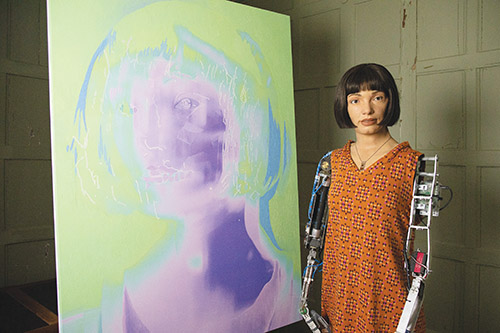
Ai-Da the Robot with “self portrait” (2021).
Take, for example, Ai-Da the Robot – named after Ada Lovelace, the English mathematician and world’s first computer programmer – who recently became the first humanoid “robotic artist” to have “their” artwork sold by a major auction house.5
On 7 November 2024, the AI-powered robot’s painting of the mathematician Alan Turing (an early pioneer of the technology) sold for AU$1,344,272.
The humanoid regularly creates self-portraits by “observing” itself in the mirror, using sophisticated sensors and cameras to guide the attached robotic arm and brush.
Sotheby’s auction house announced that Ai-Da was “the first humanoid robot artist to have an artwork sold at auction.”
Yes, from photography to painting, artificial intelligence is becoming increasingly proficient not only at repetitive labour tasks but also at intellectual endeavours.
And we’re only at the very beginning of the humanoid robot story.
With the world’s information readily available at its electronic fingertips and powered by advanced software and human-like robotic hardware, humanoid agents will soon emerge as ‘advisors’ for everyone. This story is already unfolding across the globe, including here in Australia.
The ‘Agent’ Revolution
Robotic personal assistants have been promoted through science fiction for decades, painting a blissful future where humans are surrounded by friendly machines that improve every aspect of our lives. Today, fiction becomes reality – but is it as nice?
In 2025, many individuals and businesses routinely use AI assistants, such as ChatGPT, to carry out various tasks. With each new year, AI ‘learns’ more and more, and the next step in this evolution will come in the form of “AI agents.”
From AI-run classrooms and hospitals to machine learning technologies in workplaces, almost all industries are predicted to incorporate sophisticated ‘agents’ in the future.
Some experts describe this push as an “obsolescence regime,” believing the transformation is inevitable since the ‘cat is out of the bag’.
Don’t believe me? In an Australian-first, the Real Estate Institute of NSW (REINSW) has appointed “Alice Ing” – an AI bot – as an official Advisor to the Board. With a reported (software) IQ of 155, Alice is “the world’s smartest Board Advisor.”6
Yes, you read correctly. AI is already being appointed at companies right now at home.
According to REINSW: “Alice’s encyclopaedic knowledge of real estate provides an instantaneous and valuable contribution to the Board, bolstering REINSW’s capacity to advocate for the industry and influence policy changes that benefit consumers, real estate professionals and REINSW members.”
Sitting in on executive meetings, ‘Alice’ is available to answer any questions and is equipped with built-in AI software like ChatGPT. It doesn’t stop there, either.
Chinese researchers have developed an “AI hospital town,” similar to Stanford’s AI town, which went viral in 2024. The AI hospital, named “Agent Hospital,” was developed by researchers from Tsinghua University.7
The AI hospital town features virtual patients treated by AI doctors designed to evolve autonomously and “improve their medical expertise.” All doctors, nurses, and patients in the virtual environment are driven by large language model (LLM) powered intelligent ‘agents’ capable of autonomous interaction.
According to the team, these AI doctors can treat 10,000 patients in just a few days, a task that would take human doctors at least two years.
We have already seen the introduction of robotic AI-powered arms for surgeries in remote Australian regions in the far north of Queensland, and we can expect this trend to continue to grow as Trump’s $500 billion investment powers this field.
One last example – the UK’s first “teacherless” GCSE class, using artificial intelligence instead of human teachers, is about to start lessons.8 David Game College, a private school in London, opens its new teacherless course for 20 GCSE students in September 2025.
Hospitals, schools, and important decision-making roles: This is no longer fiction, folks. The rise of humanoid robots has arrived, and they are taking over very quickly.
Of course, Bill Gates has been discussing this ‘revolution’ in great detail over the past few years, stating in one blog post that AI agents represent “the biggest advancement of computing in recent memory.”
Finding a more “direct means” of “human-machine interaction” is the “next frontier,” reckons Gates. The Microsoft co-founder envisions a future where these agents will easily understand natural language and will be just as important as a smartphone.9
He predicts that AI will use our preferences to make recommendations, eliminating the need to use individual apps to book flights, reserve hotels, and more. He also predicts ‘agents’ will make search engines like Google redundant, as your artificial intelligence ‘helper’ will answer all questions and queries.
Unfortunately, many companies will be forced to adapt to the times or perish. Robots have already moved into warehouses, and if you can’t compete both on an individual or marketplace level, you will fall behind in this time of transformation (by design).
When the capabilities of artificial intelligence surpass those of humans, the question of whether they can become ‘sentient’ becomes irrelevant. It’s the capabilities that are now the concern.
The competition for supremacy is heating up, begging questions surrounding regulation, how it will develop as the years progress, and whether it can even be stopped.
Can It Be Stopped?
In January 2025, China released its own version of the market-leading ChatGPT called DeepSeek AI, adding to a marketplace that includes others like Musk’s Grok.
Australia quickly banned DeepSeek AI services from all government systems and devices, becoming one of the first countries to take direct action against the Chinese artificial intelligence startup that has disrupted Silicon Valley.
Home Affairs Minister Tony Burke said in a statement that all DeepSeek AI products, apps and services would immediately be removed from government systems for national security reasons. A threat assessment by the country’s intelligence agencies found that the technology posed “an unacceptable risk.”10
This is one of the first significant actions taken against artificial intelligence, signalling a new era in which the technology is recognised as a powerful tool.
Unfortunately, much like the internet itself, any regulation and control will only transfer the power of the technology into the hands of criminals. Internet censorship has diminished the glory days that made it great. Similarly, if we continue to see progress in this manner for AI, our ability to learn this tool will become restricted.
There is suspicion that if regulatory initiatives were to commence against artificial intelligence and its developers, they would either escape to countries lacking regulation or venture into international waters.
The sea-based floating data centre BlueSea Frontier Compute Cluster heralds the formation of ‘sovereign AI states’.
A sea-based floating data centre containing thousands of Nvidia GPUs raises questions over whether this sort of regulation could lead to the creation of ‘sovereign AI states’.
The BlueSea Frontier Compute Cluster (BSFCC), created by US firm Del Complex, is essentially a gargantuan barge housing 10,000 Nvidia H100 GPUs, all worth a combined $500 million. It floats in the middle of international waters.
In an announcement on X, Del said the floating data centre offers “industry-leading performance, advanced water cooling and solar power for environmental safety.”11 It will be complemented by “kinetic risk mitigation,” provided by onboard security.
This project points toward the eventual creation of ‘sovereign nation-states’ dedicated to AI development, especially if land-based governments begin regulation.
In its announcement on X, the firm said the tightly guarded barge could operate in international waters and thus be exempt from regulations.
Military Dimensions
Militaries around the world are already making some of the biggest strides towards transhumanism because of the advantages their ‘super soldiers’ would possess.
The US Defense Advanced Research Projects Agency recently issued a broad agency announcement on “Human Performance Enhancement.”12
According to the RAND report, “Technological Approaches to Human Performance Enhancement,” modalities for human performance enhancement can be grouped into three principal categories: Gene editing, applications of artificial intelligence, and networked technologies that are wearable or even implantable.13
For the US defence and intelligence communities, human performance enhancement offers “the potential to increase strength, speed, endurance, intelligence, and tolerance of extreme environments and to reduce sleep needs and reaction times – [and] could aid in the development of better operators.”
This follows a Pentagon-sponsored RAND report on human performance enhancement in 2021, which revealed that the US Department of Defense was investigating “making humans stronger, more intelligent, or more adapted to extreme environments.”
Indeed, it does seem that, just like the rise of the internet, AI advancement can’t be stopped – both in the military-industrial complex and private enterprise.
The door has been opened, but was it even designed to be closed? Where will this all lead? This is where the deeper questions come in.
p(doom): The Countdown
Artificial intelligence experts have been asking each other a question lately: “What’s your p(doom)?” The “p” stands for probability. The “doom” component generally refers to a sophisticated and hostile AI acting beyond human control.
If you have one, your ‘p(doom)’ is your best guess at the likelihood that AI ultimately turns on humanity, either of its own volition or because it’s deployed against us.
The scenarios contemplated as part of that conversation: biological warfare, the sabotage of natural resources, and more. These concerns aren’t coming from ‘conspiracy theorists’. Instead, there’s an emerging group of machine learning experts who worry we’re building “misaligned” and potentially deceptive AI.
They’re imagining an AI with a penchant for sleight of hand, adept at concealing any gap between human instructions and AI behaviour.
Like a magician chasing applause, AI is being incentivised to deceive us with in-built rewards that measure its outcomes. The destructive potential of a deceptive or misaligned AI hinges on how heavily we depend on it. As just noted, we are starting to depend on it a lot.
“The world I want you to imagine… is one where AI has been deployed everywhere,” Ajeya Cotra, a senior AI safety researcher at Open Philanthropy, told the ABC.
“Human CEOs need AI advisers. Human generals need AI advisers to help win wars. And everybody’s employing AI everywhere.”
This vision is not far out of the scope. In their research, Harvard Business Review recently concluded that AI can mainly outperform human CEOs in almost all metrics in September 2024, being described as “remarkable” in the results.14
Cotra calculates a 50 per cent chance we’ll get to the “obsolescence regime” (see box on right) by 2038. Experts believe it is only a matter of time before deceptions begin on a mass scale.
When confronted with this ‘p(doom)’ scenario, the consequences for humanity could be transformative – the stuff of biblical myth.
History began when humans invented gods, and will end when humans become gods. – Yuval Noah Harari
In the era of transhumanism, technocratic elitists are looking to replace God, the Creator, with their own intelligent design.
You don’t have to be religious to appreciate the role the concept of a Creator plays in the construction of human rights. It is almost bigger than religion itself.
Men cannot decide on, alter or enforce something they did not create. By removing the religious framework, the technocrats have come to see themselves as the Creator – a (false) ‘higher power’ that endows humanity with rights.
A mass dehumanisation agenda, under the guise of ‘progress’, has led us to no longer believe we are the centre of reality – but a stepping stone for the machines to merge with.
This shift will ultimately occur, according to the ‘experts’, through biotechnological implementations, genetic modification, and robotic implants. For transhumanism, the quest to ‘transcend the human condition’ is a central aspect of their doctrine.
But why would they want to do this?
Well, every citizen is considered to be born with rights. In a future where humans are no longer considered to be ‘natural’, what would that mean for ‘human’ rights?
Indeed, by putting technocrats in the place of God, society is giving them the unaccountable authority to redefine human rights as they see fit from their position.
If, and when, humans become fully integrated with machines on a large scale, where will the technology end and the human begin?
Bioengineering can blur the lines of who or what is responsible for a person’s behaviour. Is it the human, the technology, or the humans behind the technology?
Who will own the technology inside us or the synthetically altered genes? Will human enhancement be reserved only for certain people?
Humanity could theoretically be split into different species depending on the types of genetic engineering that take place, creating a worldwide post-human caste system.
That is the consequence of such a maniacal obsession with ‘progress’, and societies across the world have learned of this for centuries.
Take the story of Prometheus, for example, which is one of the most important Greek myths. Prometheus, the Greek God of ‘Progress’, embodies the same post-human ideologies we see today, centred around ‘transcending the natural order’.
Today, this myth helps us reflect on transhumanism, a philosophy that views the human being as ‘something to be overcome’.15
Hesiod was one of the first poets to write the story of Prometheus. Far from heroising the figure, his version highlighted Prometheus’s transgression against the gods.
He believed that Prometheus had upset the cosmic order, which explained the imbalance and evils of the world. From this viewpoint, ‘progress’ is seen as synonymous with the decline of the human being. Does this sound familiar?
Look at how the ‘progressive’ mindset has already changed society. As a matter of fact, the ecological disasters generated in the last century do tend to show that our naïve trust in ‘progress’ had a dark side. Moreover, what’s ‘new’ isn’t always better.
Unbridled ‘progress’ breaks the natural balance of the environment, attracting all sorts of misfortunes to befall humanity. The transhumanists harness this philosophy to make strides towards a new reality each and every day.
But are technical improvements actually necessary for us to achieve and survive?
Is technological progress, the eradication of diseases, and the prolongation of life expectancy (such as Google’s efforts to ‘solve death’) sufficient to overcome natural obstacles so that societies can live happily?
Unfortunately, if it sounds too good to be true, it usually is.
Confidence that ‘progress’ itself will improve humanity is a naïve fantasy – just look at how unstable things like smartphones have made the world.
In their attempt to transform the human species forever, the transhumanist cult is playing with forces of the natural world that have been around for much longer than us.
Will society let the modern-day Prometheus cult alter what it truly means to be human?
Only time will tell.
[alert type=”general” dismiss=”no”]This article was published in New Dawn 210.[/alert]
[alert type=”success” dismiss=”no”]If you appreciate this article, please consider subscribing to help maintain this website.[/alert]
“If black magic works, then materialism is its best cover of secrecy.”
These were the incendiary words of Professor Moshe Kroy – Israeli philosopher, former Tel Aviv University lecturer, “rational mystic,” and eventually, a ghost in the machine of suppressed knowledge.
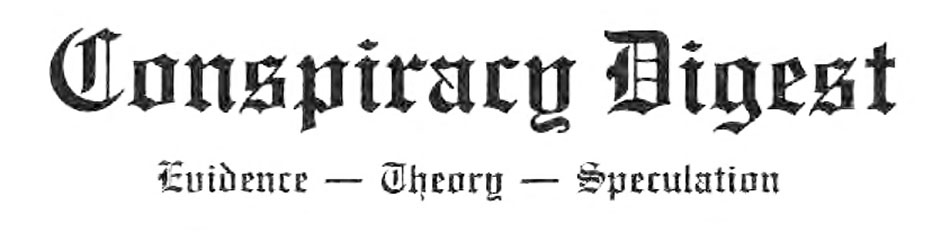
His assertion, buried in the faded xeroxed pages of a 1977 issue of Conspiracy Digest, suggested that secret elites in our world harness tools of occult power – black magic, telepathic influence, egregoric control – while promoting a public creed of scientific materialism.
In this dual strategy of concealment and monopolisation, Kroy argued, lies the key to understanding the deeper architecture of power. A power that engineers our economic, political, social and cultural systems – programming our very perception of reality.
Born in 1948, Kroy rose meteorically through the intellectual circles of early 1970s Israel with his philosophical tract Life According to the Intellect, a distillation of Ayn Rand’s objectivism into a system he termed “rational egoism.” But this was only the beginning. According to one of his students, around 1980, Kroy “had developed his own unique synthesis of Advaita Vedanta, [J.P.] Sartre, and [Edmund] Husserl’s phenomenology.”1
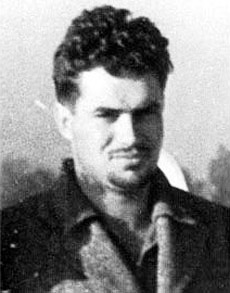
Moshe Kroy in 1975.
The most dangerous ideas Kroy ever penned were not in a university lecture or public seminar, but in a little-read article titled “Materialism, Occultism and the Suppression of Psychic Research.” In it, he mapped a structure of concealment so profound and so methodically engineered that it has all but vanished from public memory. That the article itself can no longer be found online – its citation ghosted from search engines – may speak to its paradigm-shattering power.
Kroy’s central hypothesis is disturbing in its simplicity: he writes, “Suppose that certain secret societies, concentrating on the ‘black arts’, did find some magical techniques which are effective. Suppose – say that they found a method – derived from older magical practices, of producing hypnotic trance at a distance – so-called telepathic hypnosis.”
To maintain political power and much more, these groups would have to do two things:
“A. The discovery is kept completely secret.
“B. The discovery is securely monopolised: No other group or organisation is in the position to rediscover it.”
The strategy they applied was scientific materialism.
Materialism & the Newtonian Paradigm
An Israeli TV series described Kroy as “a genius who paid every imaginable price in his uncompromising effort to reach the truth.”2 Indeed, he pushed past the limits of the materialist doctrine to discover forbidden worlds rarely explored by intellectuals and scientists. It may have led to his death.
Accounts by Kroy’s students describe a genius who explored a wide range of ideas. He seems to have exhausted the limits set by mainstream science and dived headlong into the ocean of spurned, forgotten and even dangerous concepts and philosophies that exist outside orthodoxy. Ideas and theories discarded by the Establishment as unproven or unprovable within the framework of materialism.
Kroy transformed from Rational Objectivist to Rational Mystic. He delved into Eastern and New Age philosophies, holding self-transformation workshops and teaching psychic self-development and protection. He even came to the attention of New Age thinker Ken Wilber, who praised his genius.
To understand how materialism could serve as a cloak for occult domination, one must consider the foundations of modern science. The prevailing worldview – commonly referred to as the Newtonian paradigm or Cartesian dualism – posits that reality consists of physical matter moving through space and time. Everything, including consciousness, is presumed to be reducible to atoms, neurons, and energy exchanges.
This worldview acts as a cultural enforcement mechanism. It defines the boundaries of acceptable thought and what constitutes ‘reality’. Belief in materialism is strengthened because dedication and commitment to its doctrine determine funding priorities, academic inquiry, and even approaches to psychology and mental health. Those who stray too far beyond its limits – mystics, psychics, pagans, shamans, or researchers of paranormal phenomena – are pushed into the margins, labelled cranks, cultists, pseudoscientists and “conspiracy theorists.”
Moshe Kroy recognised this with startling clarity.
The Intention of the “Conspirators”
In “Materialism, Occultism and the Suppression of Psychic Research,” Kroy begins by stating:
“A major stumbling block in the attempt to study the nature, purposes and tools of the conspiracy is the fact that such a study necessarily is done in a cultural context which, in turn, has already been largely shaped by the conspiracy. In other words, while the mere realisation of the existence and activities of the conspiracy has a largely liberating effect on a thinking individual, disclosing to him as it does the vast magnitude of the lies and deception incorporated in the various layers of the official culture, this liberating effect, in itself, may merely serve to create an intellectual vacuum.”
It should be noted that the publishers of Conspiracy Digest believed that “the Right-Left political-economic spectrum is an artificial concoction of the ruling class/conspiracy.” This is the context in which to understand Kroy’s reference to the “conspiracy.”
One of the most influential underground books of the 1970s was Gary Allen’s None Dare Call It Conspiracy. Kroy cites Allen’s argument that history is shaped by those who control political and economic structures. Ideas and ideologies are merely superficial tools in promoting politico-economic control.
“The struggle against the conspiracy requires liberation also from the deeper, however invisible, power of the conspiracy on our culture,” Kroy writes. “A conspiracy researcher, however observant, sharp and bold, is hampered to the degree that he accepts uncritically entrapment within an intellectual framework which was deliberately inspired by the conspiracy.”
Kroy challenges the assumption that modern science is an open and empirical enterprise. Instead, he saw it as a form of intellectual enclosure, maintained by a priesthood of credentialed minds, whose function is less to explore reality than to police its borders.
His article synthesises three points into a unifying hypothesis to expose the intention of the “conspirators.”
“I. The thorough insistence, and success, in which an intellectual academic ‘elite’ has made materialism, the doctrine that to exist is to be made of matter and energy, and to be located in space and move in time, the dominant premise of the culture.
“II. The fact that various circles and groups connected with the conspiracy had occult interests and practices, centring around certain secret, esoteric, mystical doctrines and certain hidden practices, involving black magic, as well as alchemy, etc.
“III. The fact that parapsychological and psychic research is largely considered by intellectuals and other ‘educated’ people to be charlatanism, unworthy of serious attention, inconsistent in its results, methodically loose, or just plain gullibility – to the extent that all the evidence which was generated through it can be ‘safely’ ignored.”
If a phenomenon contradicts the materialist paradigm, it is excluded not on the grounds of evidence, but by the paradigm’s dogmatic refusal to see outside itself.
This is where the brilliance – and danger – of Kroy’s theory emerges. He posits that the very people who shape this closed system of belief may themselves use the forbidden arts they publicly denounce.
“Does black magic work?” asks Kroy. “This is a very dangerous question to ask in a cultural context in which every ‘educated’ person knows that black magic contradicts the basic principles of science and so ‘could not work’…”
Black Mirrors & Secret Societies: Practitioners of the Forbidden Arts
Kroy proposes a speculative hypothesis that certain groups discovered powerful occult techniques that offer extraordinary control over populations, opinion leaders, and even entire governments. Its true power would lie not only in its use but in its concealment.
“Suppose that certain secret societies, concentrating on the ‘black arts’, did find some magical techniques which are effective. Suppose they found a method, derived from older magical practices, of producing hypnotic trance at a distance – so-called telepathic hypnosis. Clearly, such methods can have immense value in gaining political power, provided that two conditions are met: A. The discovery is kept completely secret. B. The discovery is securely monopolised: No other group or organisation is in the position to rediscover it.”
This can be achieved, says Kroy, by promoting “the culture of materialism, which implies that no magical technologies could be workable, a priori. You pretend to equate materialism with scientific spirit, etc. and stultify anyone who attacks it. Thus, you effectively stop others from following your trail by implying that no such trail could conceivably exist.”
Kroy explains that this strategy works in other domains. To preserve corporate secrets or to maintain a monopoly over any technological breakthrough, promote the idea that this kind of discovery is impossible.
Kroy offers this example: “Whoever has managed to develop a technology of space travel in a velocity which allows instant access to far galaxies, and wants it as a secret monopoly, would and should promote a theory claiming that, say, the ‘velocity of light’ cannot be exceeded in nature by any technology. In other words, relativity theory-type constraints on ‘what is possible’ can serve to cover a technology which involves doing what the theory implies is impossible.”
Which brings us to his next point, that “it can be expected… psychic research, as well as any technology or activity which would allow non-privileged, non-conspiracy individuals into the field of the ‘esoteric doctrines’, would be heavily suppressed…”
Kroy goes on to logically dissect the arguments made by defenders of materialism.
A 2009 interview with British evolutionary biologist Richard Dawkins revealed insights into the mindset of those who defend materialism and scientism. When radio host Prof. Hugh Hewitt asked whether Dawkins considered what existed “before the Big Bang,” he replied: “I don’t consider the question because I recognise that it’s an intuitively appealing question. I recognise that, along with everybody else, want to ask that question. Then I talk to physicists who say you can no more ask what came before the big bang than you can ask what’s north of the North Pole.”
A mental block inhibits a whole class of professionals from seeing beyond the limits of materialism – as if they are compartmentalised under a spell. Could this be caused by something more than stubbornness, ignorance and groupthink?
To secure this monopoly, you must inoculate the culture against even the possibility that such techniques exist. You achieve this, said Kroy, by establishing materialism as the cultural default, equating scientific scepticism with reason itself. Then you mock, marginalise, or professionally destroy anyone who strays beyond its limits – as Richard Dawkins is renowned to do. As a result, your rivals and the fields of sheep under your control remain ignorant of the magical universe – the realm of consciousness, will, spirit – and the dangerous keys that open portals to powers and principalities above and beyond this material world.
For Kroy, “an intellectual academic ‘elite’ has made materialism,” “the dominant premise of the culture” – “the doctrine that to exist is to be made of matter and energy, and to be located in space and move in time.”
Rites of Hidden Rulers: Ceremonial Magic
From the grimoires of Renaissance occultists to the secretive rites of the Hermetic Order of the Golden Dawn, the art of directing and controlling minds, influencing unseen forces, or attempting to contact gods (theurgy), has a history as long as mankind.
What is ceremonial magic? Several scholars suggest that it is essentially the use of rituals and techniques to invoke “spirits” or life forms from other dimensions or worlds, which can enter this world through specific rituals.
For example, according to the respected scholar of esotericism, Manly P. Hall, “a magician, enveloped in sanctified vestments and carrying a wand inscribed with hieroglyphic figures, could by the power vested in certain words and symbols control the invisible inhabitants of the elements and of the astral world. While the elaborate ceremonial magic of antiquity was not necessarily evil, there arose from its perversion several false schools of sorcery, or black magic.”3
“By means of the secret processes of ceremonial magic,” warned Hall, “it is possible to contact these invisible creatures and gain their help in some human undertaking… But evil spirits serve only those who live to pervert and destroy.”
In magical systems, symbols are weapons, intention is force, and belief is akin to architecture. The magician or ritual operator uses thought, image, and will to open portals in the mind – perhaps beyond it. To the outsider, it is dismissed as nonsense.
Ceremonial magic has always been a double-edged sword. While some traditions emphasise spiritual growth and enlightenment, others – particularly in the realm of black magic – seek domination, wealth, or control. And here lies Kroy’s most unsettling suggestion: that certain elites and groups, in the vein of “we know and they should be kept ignorant,” secretly practise these dark arts, even as they promote a worldview that discredits them.
Egregores, Watchers & Manufactured Minds
If the conspiracy that Moshe Kroy described is more than political, more than economic – if it is ultimately spiritual – then we must expand our vocabulary of power.
Enter the egregore, a concept from esoteric tradition that describes a psychic entity or group mind form created by collective belief and emotional energy. Once formed, an egregore can take on a life of its own, shaping thoughts, behaviours, even entire civilisations.
In his article “Understanding the Occult: What is an Egregore,” Theron Dunn defines an egregore as “an energised astral form produced consciously or unconsciously by human agency… usually an archetypal image produced by the imaginative and emotional energies of a religious or magical group.”4
Egregores – whether purely psychic, symbolic, or something more – are not neutral. Egregores of nationalism, egregores of religion, even the egregores of corporations: each compels action, embeds narratives, harbours defensive and offensive modes. One might say that our post-modern world is haunted by these ghosts of group minds.
Kroy’s insight here is chillingly prescient. By engineering culture to generate specific egregores while denying their reality, the elite magician both protects and weaponises arcane knowledge and occult techniques.
According to the Golden Dawn glossary, egregore derives from a Greek word meaning “watcher” and a “group egregore is the distinctive energy of a specific group of magicians who are working together, creating and building the same thought-form or energy-form.”
The strongest egregores are the oldest and are usually boosted by ‘magical force’ from powerful intra- and/or extra-terrestrial ‘beings’.
In his article, Kroy ponders that “UFOs make you wonder… if some political power would be somehow connected to some extra terrestrial civilisation as an ally, it would be in its best interest to slander and stultify anyone who claimed such a connection was possible.”
In biblical and apocryphal lore, particularly the Book of Enoch, the “Watchers” or Irim were angels – some faithful, others fallen – who interacted with humanity, imparting forbidden knowledge and fathering the Nephilim. These egregoric intelligences are neither metaphors nor myths, but active agents in our hidden history.
The Gnostic Christians suggested that two camps fight an ongoing spiritual war for our souls. The decisive question, Kroy might have asked, is not whether these beings exist but who is working with them now? Are we doomed as pawns in this game? Can we escape?
A Spell on You
Even today, more than 40 years after Kroy penned his article, with numerous independent studies confirming paranormal phenomena, the materialist mindset prevails.
Most scientists and ‘educated’ people don’t seem to understand the implications of quantum physics, which replaces the Newtonian model. According to Kroy’s hypothesis, a psychic barrier prevents the professional and ‘educated’ classes from drifting too far from the egregoric clutches of scientism.
As the philosopher and scholar of religion Jeffrey Kripal notes in The Flip, “one could write a very big book, even a small library of books, on all the scientists, engineers and medical professionals who have either reported robust anomalous phenomena or found them to be of extraordinary scientific significance.”5
Even as quantum physics upends Newtonian assumptions, and consciousness studies point to non-local mind, the public script remains unchanged: the physical material world is all there is. Magic is patent nonsense. The spiritual and subtle worlds are delusions.
But what if this denial is itself a spell?
In 1928, propaganda expert Edward Bernays wrote: “In almost every act of our lives, whether in the sphere of politics or business, in our social conduct or our ethical thinking, we are dominated by the relatively small number of persons… who understand the mental processes and social patterns of the masses. It is they who pull the wires that control the public mind, who harness old social forces and contrive new ways to bind and guide the world.”
This statement, widely quoted in studies of media control, takes on new dimensions under Kroy’s framework. If psychic structures, such as egregores, shape mass perception, then the true power lies not in what we are told, but in what we are prevented from conceiving.
Giordano Bruno & the Occult Psychology of Control
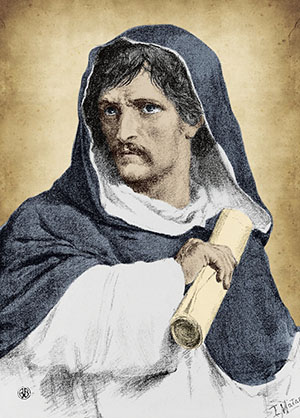
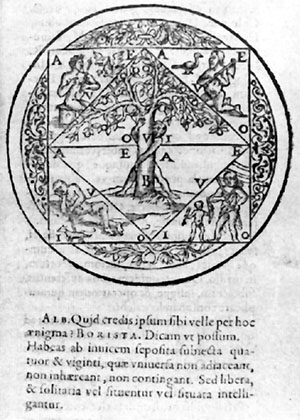
Giordano Bruno, the famous 16th century Italian philosopher, astronomer, mathematician, and mystic. According to Prof. Ioan Couliano, Bruno’s book De Vinculis in Genere is “one of those little-known works whose importance in the history of ideas far outstrips that of more famous ones.”
Centuries before Moshe Kroy issued his warning about the suppression of the paranormal, another philosopher lit a torch in the tunnels of human consciousness and paid for it with his life.
Giordano Bruno, a 16th-century Dominican friar turned heretic, mystic, and magus, was burned at the stake in 1600. The official charge was heresy. The real crime may have been the contents of his dangerous little book, written in Latin: De Vinculis in Genere – “On the Bonds in General.”
While Machiavelli’s The Prince outlined the manipulation of fear and statecraft, Bruno’s De Vinculis went deeper – into magic and its role in manipulation. It appears to accurately describe how modern politics and consumer culture operate, through psychological manipulation, using the bonds of desire. “The control of mass desire” – the “libidinal economy” notes one commentator – “is what mass politics is all about.”
An anonymous article about the book suggests that many Anglo-Saxon and Middle European historians and intellectuals regard De Vinculis in genere as a very clever and insightful political work.
A page from De Vinculis in Genere.
“The London School of Economics uses it as a core text because of its usefulness in understanding behaviour patterns in contemporary social life,” reads the article.6
Bruno argued that eros is the true binding force among humans. But those bonds, if skilfully manipulated, become chains.
According to the article, Bruno sees man as a being who “desires” completion beyond himself, a desire “primarily erotic – in the most spiritual and all comprehensive meaning of the word.” Eros, in Bruno’s philosophy, is a connective force that bridges instinct and mystical insight. It not only generates vivid mental imagery within the self and others, but also “kindles and spills over into the psyche of other persons.” Through this, eros becomes a powerful medium – creating “links and ties” between individuals, whether as lovers, friends, group members, or even between leaders and followers.
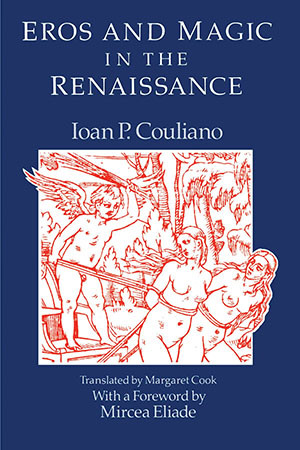
In his masterwork Eros and Magic in the Renaissance, historian Ioan P. Couliano writes that “the magician of De vinculis is the prototype of the impersonal systems of mass media, indirect censorship, global manipulation, and the brain trusts that exercise their occult control over the Western masses… Bruno’s magician is altogether aware that, to gain the following of the masses, like the loyalty of an individual, it is necessary to take account of all the complexity of the subjects’ expectations, to create the total illusion of giving unicuique suum. That is why Bruno’s manipulation demands perfect knowledge of the subject and his wishes, without which there can be no ‘bond’, no vinculum.”7
Eros is a magical force that infiltrates and enlivens our imaginations through symbols and images. Control the images and systems of thought – the imagination – and then apply occult techniques to manipulate groups or whole societies. Is it any surprise, then, that the London School of Economics – an institution deeply embedded in modern power structures – still uses De Vinculis as a “core text”?
The key point is this: Bruno’s text bases its arguments on the reality of magical (occult) forces, the exact same type of supernaturalism that was denounced and supposedly thrown into the ashcan of history with the triumph of modern materialist science.
In the new age of media saturation and algorithmic suggestion, Bruno’s text seems prophetic. Bypassing logic, directly targeting the unconscious, and riding the currents of erotic imagination and symbolic association, Bruno’s eros is filtered through screens, social media, celebrity culture, and synthetic desire. Every act of engagement, every click, every fear or fantasy amplified by the machine is another tether to an egregore whose name you do not know.
Technocracy and the New Black Magic: Surveillance, AI, and the Rise of the Golem
If black magic in the old world relied on incantations, talismans, and hidden rituals, its 21st-century incarnation is no less potent – only now, it is cloaked in code.
Ceremonial robes have been replaced by lab coats and tech start-up hoodies. But the goal remains the same: control minds, dominate reality, and reshape the soul.
In Kroy’s framework, what began as secret rituals in ancient temples migrated into silicon-based systems of governance. The black magician is now a systems architect, a biotech investor, a behavioural economist, an artificial intelligence engineer, a “world planner.”
The late Zbigniew Brzezinski, US geostrategist and former National Security Advisor, foresaw the outlines of this shift in his 1970 book Between Two Ages: America’s Role in the Technetronic Era:
“The technotronic era involves the gradual appearance of a more controlled society… dominated by an elite unrestrained by traditional values. Soon it will be possible to assert almost continuous surveillance over every citizen and maintain… complete files containing even the most personal information.”8
What Brzezinski called “technetronic” control, Kroy would likely have recognised as ritualised mind-shaping, now mechanised and made scalable.
Consider today’s technologies:
AI-powered surveillance systems that anticipate protest, dissent, and emotional tone.
Behavioural nudging algorithms embedded in digital platforms to shape decisions and purchases, and push political narratives and state/corporate propaganda.
Neural implants and bio-interfaces that blur the boundary between body and machine, consciousness and programming.
They are magical instruments – artificial egregores programmed with purpose, created by hidden hands. Their function is identical to that of black magic as described by mystics like Dion Fortune (Psychic Self-Defence) – the imposition of one’s will upon another through unseen forces.
“The most dangerous form of black magic,” warned Manly P. Hall, “is the scientific perversion of occult power for the gratification of personal desire.”
If the ancient Golem was a clay figure animated by sacred words to serve its master, then today’s equivalent is the technological construct animated by data, algorithms, and social engineering. It has no soul. It serves without question. And once built, it cannot be reasoned with.
But unlike the mythical Golem, this one is not merely a servant. It is the lens through which we view reality – filtering perception, rewriting memory, reinforcing belief. In this way, the modern Golem does not protect the village – it replaces it with a virtual model, one shaped entirely by those who cast the spell.
This is the sorcery of the 21st century. And materialism still remains its perfect veil.
Moshe Kroy’s Final Days & The Occult War for the Soul
“If black magic may work,” Kroy proposed, “while the conspirators both do their best to make us all believe… that it couldn’t possibly work… and at the same time deal in it themselves – well, that is a totally different proposition, isn’t it?”
In his later writings, Kroy spoke explicitly of the need to rediscover the self as spirit, not machine.
“If, indeed, materialism is a false absurdity and psychic research is valid,” Kroy wrote, “then the search for an authentic understanding of one’s own self… may be a very powerful tool of struggle against the conspiracy.”
In a culture that now reduces identity to data points, biology to code, and consciousness to electrochemical flux, the recovery of the spiritual self is not simply a metaphysical journey but an act of rebellion.
The occult war that Kroy hinted at – between those who invoke higher wisdom and those who exploit secret and even sacred knowledge – is reaching a crescendo. And the stakes are no longer theoretical.
The philosopher René Guénon referred to our current age as the “Reign of Quantity” – a world governed by metrics, mass, and measurement, where the qualitative dimensions of the soul and spirit are denied or derided. Guénon saw this as a symptom of a civilisational descent, a metaphysical degeneration masking itself as progress.
Charles Fort, the early chronicler of anomalous phenomena, was even blunter: “Mankind invented materialism to shield itself from what was being done to it – by coincidence, by forces, by powers – that it refused to understand.”
In late 1987, Moshe Kroy returned to Israel, no longer the young prodigy celebrated by Tel Aviv intellectuals but a man who had stared into the abyss – and reported back. He announced his latest discoveries and proclaimed the world is ruled by the forces of evil and that a final battle between good and evil is at hand. Reportedly suffering paranoia and pursued by the demons conjured during his adventurous life, he allegedly committed suicide in his Tel Aviv apartment in 1989.
“Moshe was indeed enigmatic to those who did not know him,” recalled Dr Joseph Chiappalone, an Australian medical doctor and esoteric writer who became a colleague of Kroy in Melbourne.
“But in reality he was a highly intelligent academic devoted to Truth and Wisdom. He was a non-Zionist Jew who had been expelled from Israel for protesting the atrocities committed by that State in the name of Zionism. His heroes were Jesus Christ and Sai Baba… He had been threatened with assassination if he ever went back [to Israel]. Mossad is nothing if not maleficently efficient.”9
Had he opened doors that others wanted sealed? Had he named the nameless, invoked forbidden truths, challenged egregores that guard the boundaries of our reality?
Or had the weight of knowledge simply become too much?
Regardless of the cause, Kroy’s legacy haunts the present moment. For the very systems he warned about – psychic suppression, full spectrum field dominance, the weaponisation of materialism – are now global and digitised. That control grid becomes our daily reality.
And yet, something else is happening.
The mechanisms of mass control are failing. Narratives – economic, scientific, political, social, spiritual – no longer inspire confidence. People are asking new questions, thinking new thoughts. Reports of the paranormal, near-death experiences, synchronicities, and psychic events are not only increasing – they are escaping the margins.
Is the old magic wearing off and the control system breaking down? Kroy would likely answer: Yes – and that is precisely why the system is panicking.
The rise of competing egregores – movements, ideologies, mass awakenings – signals cultural fragmentation and metaphysical turbulence. The battlefield has shifted. No longer confined to competing ruling class groups or underground journals, the war has gone public. The individual, once a pawn, is now a potential player.
The Way Out: Spirit, Sovereignty, and the Gnostic Revival
What, then, is the way out of this enchanted prison – a world where reality has been hacked by those who would have us deny the soul?
Moshe Kroy gave us a clue in his final written words:
“The search for an authentic understanding of one’s own self… as a spirit… may be a very powerful tool of struggle against the conspiracy.”
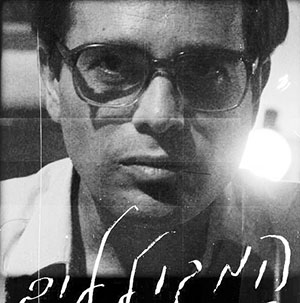
Moshe Kroy (image from TV series ‘The Accursed’)
In other words, the only antidote to a world ruled by hidden magicians is the awakening of inner gnosis – the self-knowledge that one is not a machine, a statistic, or an algorithmic subject, but a sovereign, incarnated being endowed with the power to blossom consciousness, will, and purpose.
Materialism – so long used as a firewall – is cracking. Quantum physics has refuted classical determinism. Parapsychology, though marginalised, continues to produce data that defies the mechanistic model. Ancient traditions and indigenous ways of knowing, once dismissed as superstition and nonsense, are emerging as sources of healing, guidance and wisdom for today.
In his vision of the spirit as the core of human resistance, Kroy joins a long lineage across time. Their message, scattered across burned manuscripts, banned books, and suppressed teachings, remains remarkably consistent: you are more than flesh. You are more than thought. You are more than what they told you.
And the war – yes, the spiritual war – is not about saving the world, but about remembering who you are before the world was programmed into you.
In this war, only the awakened spirit is truly dangerous. And perhaps that, in the end, is why they feared Kroy – and us.
Author’s Note: This article, dedicated to the memory of Moshe Kroy (1948–1989), is based on two previous articles that appeared in New Dawn Special Issues Vol 12 No 3 and Vol 13 No 3.
When it comes to our health, we are way too trusting of industries that are in business to earn a profit, often at our expense. We believe our health professionals’ primary concern is our well-being, not their wallets. We accept at face value anything told to us by “experts” in the media and vilify those who dare to question these experts, even when they lie.
Sometimes lies are nothing more than great marketing. For example, ever wonder why you are told to walk 10,000 steps a day? It came from a 1965 Japanese company called Yamasa Toki that introduced their new product, a step-counter called Manpo-Kei. This translated into “10,000 steps meter” and the company marketed their device with the slogan, “Let’s walk 10,000 steps a day,” which took off among Japanese walking clubs, and then, the world.
In this case, the end result was a positive and healthy one.
Not every health “lie” is.
Smoking Is Safe!
For decades, cigarette ads touted their product as healthy and sometimes included pregnant women and doctors puffing away. Cigarettes were all the rage until links between smoking and cancer got too big to ignore.
An authentic advertisement from mid-last century advertising Camel cigarettes as safe because more “doctors” smoke the brand!
In 2006, Big Tobacco was in big trouble when the US District Court for the District of Columbia found tobacco companies guilty of breaking civil racketeering laws, marketing to children and minorities, and lying about the dangers of smoking. Judge Gladys Kessler wrote in her ruling, “Substantial evidence establishes that tobacco companies have engaged in and executed – and continue to engage in and execute – a massive 50-year scheme to defraud the public.”
Big Tobacco companies Lorillard, Inc.; Altria, owner of Phillip Morris USA; RJ Reynolds Tobacco, owner of Winston-Salem, who that year spent over $12.5 billion in advertising, were forced to admit they knew of the dangers, publish corrective and educational statements about the dangers of tobacco in national newspapers, and air corrective statements on American media five times per week for a year. They also had to affix a warning statement to a number of cigarette packs for two years and finance anti-smoking ads and campaigns.
Sadly, it was too late for the average 1,200 Americans dying of smoking every day or the millions who much later developed various cancers, heart disease, emphysema, leukaemia, reduced fertility rates, and nicotine addictions.
It was a Big Lie that woke many people up from decades of propaganda and manipulation as more research exposed the cancer connection, including to second-hand smoke. Unfortunately, it was not the only Big Lie.
Sugar Is Safe!
If cigarettes didn’t kill us, the side effects of a diet rich in this product might.
Sugar.
The average adult in the United States consumes the most sugar, coming in at 126 grams daily. Germany is right behind with 102 grams. [The average Australian consumes 60 grams.] Children in the US alone consume about 17 teaspoons of sugar each day up until the age of 19.
Sugar goes by many names including high fructose corn syrup, dextrose, sucralose, and maltodextrin and is found in processed products and treats, but also in many foods you might never suspect, such as “natural” salad dressings, sauces, baby foods, and more. It has been directly linked to inflammation, cancer, heart disease, diabetes, kidney disease, rising obesity in adults and children, and other illnesses, yet for decades it was celebrated as healthy.
Instead, the bulls-eye target was on something humans had consumed for hundreds of years without the proliferation of heart disease, obesity, or cancers.
Fat.
During the 1960s, the sugar industry paid scientists to perform research studies that played down the links between sugar and heart disease and instead placed the blame on saturated fats, according to internal industry documents published in 2016 by JAMA Internal Medicine. These documents showed a five-decade-long collection of research into nutrition and heart disease, accusing saturated fats as the main culprit behind heart disease while conveniently exonerating sugar.
According to the 12 September 2016 New York Times “How the Sugar Industry Shifted Blame to Fat” by Anahad O’Connor, this was a concerted propaganda campaign that involved the Sugar Research Foundation paying three Harvard scientists to publish a review on sugar, fat, and heart disease that featured hand-picked studies minimising the links between sugar and heart disease and promoting the links between fat and heart disease. Coca-Cola also paid millions of dollars in funding to researchers to downplay the links between sugar and obesity.
These faulty and fraudulent industry-sponsored studies became the foundation of a decades-long propaganda push to eliminate fats from our diet and push “healthy” low-fat foods. Carbohydrates in cereals and treats were fine, but a good piece of steak from the local butcher would clog your arteries and send you to the ER. Because the propaganda campaign was so pervasive and those scientists who questioned the narrative were ignored or silenced, people bought it and consumed sugar to the detriment of their health.
In “Big Fat Lies – A Half Century of Sugary Propaganda Has Made Us Sick” by Brian Krans for Healthline, the sugar industry bought up the advertising necessary to drive home their skewed research. Krans wrote that “Big Sugar” often restructured conversations around health and choice by establishing front organisations to steer the dialogue in their favour. These front organisations used names that made them sound scientific and pro-consumer and paid consultants to speak at conventions and testify at public hearings.
“During the 1960s, the sugar industry steered public policy away from recommending reduced sugar consumption for children because it caused cavities. Like the tobacco industry, it was able to protect itself from damaging research. It achieved this by adopting a strategy to deflect attention to public health interventions that would reduce the harms of sugar consumption rather than restricting intake.”
The 2016 JAMA Internal Medicine paper raised even more alarms, according to “50 Years Ago, Sugar Industry Quietly Paid Scientists to Point Blame at Fat” by Camila Domonoske for the 13 September 2016 NPR. JAMA drew on internal documents indicating the Sugar Research Foundation wanted to “refute” concerns about sugar’s possible role in heart disease. The SRF sponsored the research by Harvard scientists and the prestigious New England Journal of Medicine, then published the research in 1967 without disclosing the sugar industry’s funding. The NPR story quotes John Hickson, then SRF vice president and director of research, as having inserted into one document his recommendation that the industry fund its own research studies. “Then we can publish the data and refute our detractors.”
The following year, after several scientific articles were published linking sucrose and coronary heart disease, the SRF quickly approved the above literature review project and paid approximately $50,000 for the research supporting their pro-sugar goals. Studies that went against their message were dismissed for a variety of trivial reasons, such as one study that found a health benefit when people ate less sugar and more vegetables, dismissed on the grounds that such a dietary change was “not feasible.”
The Harvard researchers who turned their focus on the dangers of fats ironically used the “same kind of epidemiological studies they had dismissed when it came to sugar,” Domonske wrote. Their conclusion was that cutting out all fat was the best dietary intervention to protect someone against coronary heart disease.
Heart disease is the number one health-related killer and has been for a long time.
Statins Are Safe!
Another great lie was told to millions of people who believe if they don’t take statins, they will die of a heart attack. They believe this because their doctors tell them so and because television ads (in the USA) by pharmaceutical companies scare them into asking their doctors if “such and such drug is right for me.” In the year 2019, sales of the statin Lipitor made Pfizer Pharmaceuticals over $2 billion.
When saturated fat became the enemy, the debate over cholesterol as a heart disease indicator gained ground, with the narrative that too much cholesterol clogged arteries and caused heart attacks and strokes.
According to Dr Joseph Mercola in a 16 August 2020 analysis, “Research Confirms Statins Are a Colossal Waste of Money”:
“The food industry shifted away from saturated fat and cholesterol to improve public health, and the medical industry has massively promoted the use of cholesterol-lowering statin drugs for the same reason. Despite that, the rate of heart disease deaths has steadily risen.”
The mastermind behind the low-fat, low-cholesterol connection was American physiologist Ancel Keys, who in 1958 conducted his “Seven Countries Study” to create the saturated fat myth. In the study, he claimed to find a correlation between total cholesterol concentration and heart disease but was later found to be cherry-picking data. It was revealed he excluded data from 16 countries that, when added back in, eliminated all associations between saturated fat and mortality and instead proved those who ate the most saturated animal fat tended to have lower incidences of heart disease.
But it was too late. Big Pharma jumped on Keys’ study and ran with it. The American Heart Association, Proctor & Gamble Co, and the Center for Science in the Public Interest, all jumped on board and promoted the fallacy for decades, ignoring numerous studies disputing older data and other factors that cause heart disease, such as high blood pressure, stress, inflammation, poor diet, and sedentary lifestyle, and passing over more modern research showing that the more LDL, “bad” cholesterol, is lowered, the greater the risk of heart attacks and strokes.
Mercola notes a number of studies showing statins do not work as promised and that saturated facts are not the evil enemy. “A 2010 meta-analysis which pooled data from 21 studies and included 347,747 adults, found no difference in the risks of heart disease and stroke between people with the lowest and highest intakes of saturated fat.” He cited additional studies and analyses showing the same, including a 2014 meta-analysis of 76 studies by Cambridge University that found no basis for advising low saturated fat consumption to lower cardiac risk.
A 3 August 2020 Science Daily article, “Doubt Cast on Wisdom of Targeting ‘Bad’ Cholesterol to Curb Heart Disease Risk,” cites an analysis that same year published in BMJ Evidence Based Medicine that stated: “Setting targets for ‘bad’ LDL cholesterol levels to ward off heart disease and death in those at risk might seem intuitive, but decades of research have failed to show any consistent benefit for this approach.”
Sometimes the lies are told in stealth mode. For example, during the January 2021 COVID media storm, writes Mercola, “a study published in the journal Atherosclerosis quietly revealed that people taking statin medications had a higher rate of cardiovascular events than those who were not on statins.”
Medical News Today published a June 2016 story by Ana Sandolu, “Statins May Double the Risk of Type 2 Diabetes,” that statins might help heart disease but at the cost of rising rates of the chronic condition. The research, led by Victoria Zigmont, a graduate researcher in public health at Ohio State University in Columbus, appeared in the journal Diabetes Metabolism Research and Reviews. “The analysis revealed that people who took statins were more than twice as likely to receive a diabetes diagnosis than those who did not take the medication. Additionally, people who took statins longer than two years were more than three times as likely to develop diabetes.”
Statins continue to be handed out like candy, despite side effects that include muscle stress, pain, fatigue, and weakness, including sharp cramping and tendonitis, which can lead to myositis (inflammation of the muscle) and rhabdomyolysis (severe muscle damage, cell death, kidney failure, possible death). They also raise blood insulin levels. Statins can trigger insulin-related issues and increase the risk of new-onset diabetes for those people taking higher dosages of statins after a heart attack or surgery. They are linked to brain fog, impaired concentration, memory loss, cataracts, dementia, mood changes and mood disturbances, and increase the risk of obesity, ironically which can lead to heart disease and strokes. They also deplete the body’s natural stores of CoQ-10, which is critical for heart health.
5G is Safe!
In December 2019, a broad coalition of scientists, researchers, doctors, and advocates signed a National 5G Resolution letter and sent it to US president Donald Trump demanding a moratorium on 5G until further studies on the potential hazards to humans and the environment could be fully undertaken by independent scientists not linked to the telecom industries. The letter referenced published studies that clearly demonstrated harm to human health, bees, the environment, wildlife, trees, and birds from existing technology and showed that the increases needed to accommodate 5G would be even more disastrous.
A petition signed by 26,000 scientists and countless others who opposed 5G was also sent in 2018 to the United Nations, WHO, the European Union, the Council of Europe, and the governments of all nations. The first paragraph stated:
“We the undersigned scientists, doctors, environmental organisations and citizens from (…) countries, urgently call for a halt to the deployment of the 5G (fifth generation) wireless network, including 5G from space satellites. 5G will massively increase exposure to radio frequency (RF) radiation on top of the 2G, 3G and 4G networks for telecommunications already in place. RF radiation has been proven harmful for humans and the environment. The deployment of 5G constitutes an experiment on humanity and the environment that is defined as a crime under international law.”
One of the main concerns is 5G’s reliance on the bandwidth of the millimetre wave – MMW, known to penetrate 1 to 2 millimetres into human skin tissue, and that sweat ducts in human skin can act as antennae when in contact with MMWs. The symptoms of such exposure include burning sensations, pain, eye problems, altered heart rate, arrhythmias, and suppressed immune functions. With 5G set to act like an EMF blanket, one can only imagine the symptoms of longer-term exposure.
In “5G Danger: 13 Reasons 5G Wireless Technology Will Be a Catastrophe for Humanity,” Makia Freeman says that 5G dangers include, but are not limited to:
Damage to sweat ducts from the broadcast frequencies that could alter the human skin itself.
Dangers from premature aging and injury to the body, the brain, fertility, hearts, and DNA from the way EMFs activate the body’s VGCCs – Voltage-gated calcium channels.
Damage from pulsed wave radiation is far worse than continuous radiation.
Damage from deep EMF penetration when cell phones are held close to the brain.
Close proximity to the 5G towers causes negative effects in humans.
The same frequencies used in 5G are used in riot control and crowd dispersal directed energy weapons.
The MMW frequencies are both mutagenic (causing DNA damage) and carcinogenic (causing cancers).
Insects, birds, and children are the most vulnerable to 5G frequencies because of their body size.
Other Lies They Told Us – Fluoride is Safe!
Since the 1950s, the US Public Service endorsed adding fluoride to public drinking water for supposed benefits to public health, despite earlier 1945 studies not yet reaching any conclusion. Since then, numerous studies have proven fluoridation lowers IQs in children. The US National Institute of Environmental Health Science funded the “Bashash” study, published in 2017, that showed for each 1-milligram per litre increase in fluoride in pregnant women’s urine, there was an associated drop in her child’s IQ of four to five points. Canadian researchers found that bottle-fed children in fluoridated communities had an average of nine points lower on IQ tests than those in non-fluoridated communities. An earlier 2012 meta-analysis by the Harvard School of Public Health and China Medical University found evidence that fluoride negatively affected cognitive development in children.
Pesticides Are Safe!
In 2018, major lawsuits were filed against Roundup, a herbicide (weed killer) made by Monsanto (now owned by Bayer). Dewayne Johnson, a school groundskeeper who developed non-Hodgkin’s lymphoma after prolonged exposure on the job, was awarded hundreds of millions in damages. There are now more than 11,000 pending lawsuits against Bayer/Monsanto over the use of Roundup and the key ingredient, glyphosate, a known carcinogen.
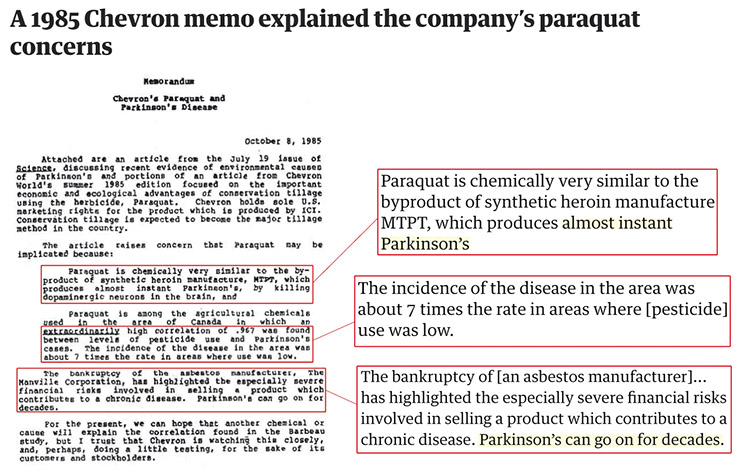
On 21 October 2022, The Defender featured a story by Carey Gillam, “50 Years of Secrets: How Chemical Giant Syngenta Hid the Truth About a Dangerous Weedkiller.” Gillam documents how Syngenta manufactured and marketed paraquat, a widely used weed killer. The company’s internal documents reveal it was aware their product’s long-term use was linked to Parkinson’s Disease.
Hundreds of internal corporate records also uncovered conversations between scientists and executives dating back to the 1950s.
“The documents also lay out how Syngenta crafted strategies to defend paraquat and counter independent researchers who were finding more and more evidence that paraquat may cause Parkinson’s, including development of an ‘influencing’ strategy ‘that proactively diffuses the potential threats that we face’…”
Sound familiar?
A Depressing Lie
There is mounting evidence that a low serotonin level is not the main cause of depression as we have been told for decades. But don’t tell that to the makers of antidepressants called SSRIs, selective serotonin reuptake inhibitors, who rake in billions of dollars, convincing millions of people they need to take drugs like Zoloft, Prozax, or Lexapro.
Irving Kirsch – associate director of the Program in Placebo Studies and the Therapeutic Encounter at Beth Israel Deaconess Medical Center and Harvard Medical School and a long-time critic of antidepressants – told Newsweek: “People do get better on the drug – but in the vast majority of cases it’s not because of what’s in the drug. There are other treatments that are at least equally effective, and that don’t carry the risks.”
The small benefits seen in some drug trials are due to emotional numbing, the “flatlined” symptom many on SSRIs report. This numbing effect comes at a steep price, however, as it also prevents you from experiencing emotional highs and does little to counteract the loss of energy, interest and motivation that are so characteristic of depression.
A systematic review published in Molecular Psychiatry on 20 July 2022 concluded: “The main areas of serotonin research provide no consistent evidence of there being an association between serotonin and depression, and no support for the hypothesis that depression is caused by lowered serotonin activity or concentrations. Some evidence was consistent with the possibility that long-term antidepressant use reduces serotonin concentration.”
Using these drugs long-term will likely make you more depressed! Not to mention the long list of side effects including suicidal ideation in children and young adults.
Dr Leland Stillman, author of the new book Dying to Be Free: How America’s Ruling Class Is Killing and Bankrupting Americans, and What To Do About It, warns that “people are being really exploited by the medical system… The [conventional] model is to turn you into a recurring revenue stream, where you’re renting your body from Big Pharma.”
“It’s one of the most disillusioning things, as a practitioner, to realise that so many people are not actually invested in their wellness,” laments Stillman.
The lies, myths, and half-truths only work if we believe and accept them. Instead, we should believe, asStillman does, that an entirely new healthcare system can and is being built on maintaining health rather than managing disease.
The field of ufology has been getting a lot of media coverage, especially since the publication of The New York Times article “Glowing Auras and Black Money: The Pentagon’s Mysterious U.F.O. Program” (16 December 2017).
This effectively “broke” the UFO story into the mainstream. Since that time, a steady stream of leaks has trickled out to the public via government whistleblowers and witnesses. Governments of many nations, including the United States, have been taking the subject seriously, creating official programs dedicated to finding out more, while rebranding the term “UFO” as UAP (Unidentified Aerial Phenomena). The US Congress holds regular hearings on the topic, most recently in June of 2025. Invariably, they are seeking evidence proving that UAPs are physical craft and the government has advanced technology, reverse-engineered from retrieved UAP wreckage.
What is not discussed directly but hinted at in sound bites and cryptic notes concerns UAPs as being non-material and interdimensional in nature. This information seems to be suppressed by the powers-that-be, though some are trying to leak it out, even at great risk to their own well-being.
Such is the case with former intelligence official David Grusch. In his testimonies before Congress, Grusch claims the US government possesses non-human spacecraft as well as “non-human biologics” retrieved from crashed UAPs. He accuses the government of actively concealing information about UAPs and “extraterrestrials.” Grusch also used the term “interdimensional” to describe a potential origin for some of these UAPs, suggesting the craft can travel between dimensions of space and time.
A more recent example involves Mathew Brown. Brown is the newly minted whistleblower on the block, making his public debut appropriately enough on Jeremy Corbell and George Knapp’s Weaponized podcast this past May. Brown authored the Immaculate Constellation Report, which was submitted into the Congressional Record in November 2024. Immaculate Constellation, or ImCon, was a super-secret government program using artificial intelligence to scour classified servers operated by intelligence agencies and the military, searching for data on UAP encounters. Brown, a former border patrol agent, told Corbell that he had first informed his superiors about the UAP monitoring program but wasn’t taken seriously. That’s when he decided to go public, releasing never-before-seen UFO footage shot on military cameras.
Matthew Brown’s cryptic tweet of June 6.
On June 6, 2025, Brown posted a cryptic message on his X account. His X post was directed at Elon Musk, who, at the time, was having a public feud with Trump. They were bickering back and forth on social media over the so-called Big Beautiful Bill, being legislated in Congress. Brown had some words of advice for Musk:
“Hey @elonmusk, interested in a real asymmetric advantage to wield in this political adventure you have started? As you now know, the @WhiteHouse has long possessed a unique AI capable of accurately predicting a range of future events. Talk about some stiff opposition!”
He goes on to say:
“Still, you have played a marvelous catch-up game in this area, despite being caught unawares (h/t). So how about something else, maybe @ENERGY and propulsion? Getting to Mars will require Sirius amounts of both, and rockets feel so 1947 to me, don’t they to you?”
There’s more to the post – a lot more – which includes odd images as well as a cryptic sign-off: A.B.O.R.Y.M.O.N. We’re not sure if Musk or anyone else, for that matter, understands the meaning of Brown’s message. Naturally, internet sleuths were determined to get to the bottom of it. Someone tracked an attached image to a screenshot from a video appearing on a YouTube channel. In that video, the explanation for the word A.B.O.R.Y.M.O.N. is revealed.
Frater Eleftheria is the content creator behind the YouTube channel ‘Lifting the Lamp’ that explores a variety of esoteric topics, including philosophy, mysticism, hidden secrets of religion, and the nature of consciousness. He is an avid practitioner of angelic magic and Western esotericism, with over 16 years of experience in several orders, including the O.T.O. and A.’.A.’.
Frater Eleftheria noticed sometime in June when one of his videos went viral as a result of the hoopla generated by Brown’s tweet. ‘Lifting the Lamp’ subsequently posted a new YouTube video explaining the meaning behind the cryptic message and how it relates to the occult technology behind UAPs.
He begins with Brown’s username on X – Son of Ambramelin. ‘Lifting the Lamp’ observes that this is a direct nod to The Book of Abramelin, a key text in Western mysticism that has influenced groups and figures from the Golden Dawn to Aleister Crowley. The book is an instructional manual for contacting one’s Holy Guardian Angel. Clearly, such a reference like that was no accident.
What about the name A.B.O.R.Y.M.O.N. that Brown signs the post with? According to ‘Lifting the Lamp’, it is an angelic name buried within the outer ring of the Sigillum Dei Aemeth, a magical disc John Dee used to communicate with higher intelligences. ‘Lifting the Lamp’ mentions that this name was lost for centuries and was only recently recovered. A.B.O.R.Y.M.O.N., then, is a spirit of chaos hitherto kept under divine control, to be unleashed at the end times to usher in the Apocalypse.
Photos of mystery UAPs/UFOs from the US military and airforce.
It can be speculated that Brown’s references to the occult are perhaps his way of sending a layered message, suggesting that UAPs are not just physical craft from outer space but beings from another dimension that can be contacted via the mind using methods similar to John Dee’s “scrying.” In Dee’s time, these beings were called angels, but today, they are known as UFOs and aliens.
Who was John Dee? Tumble further down the rabbit hole and you’ll find that the first agent of the British crown designated 007 was a strange mystical figure named John Dee. Dee (1527-1609) was a mathematician, occultist, and royal astrologer to Queen Elizabeth I. By the time of the Queen’s coronation in 1558, Dee had become Elizabeth’s closest personal adviser. He would counsel Her Majesty on everything from science to nautical navigation. Dee was a staunch imperialist and is actually credited with coining the phrase “British Empire.”
Oil painting by Henry Gillard Glindoni, 1913, titled “John Dee Performing an Experiment before Elizabeth I.” It could have been described as John Dee performing a ritual of ceremonial magic… A recent (2015) X-ray analysis of the work revealed that Dee was originally depicted surrounded by a halo of skulls!
When corresponding with the Queen, Dee would sign his name “007.” The zeroes symbolised two eyes, indicating the letter was for the Queen’s eyes only. Seven is considered a lucky number in occultism, offering protection to those marked by it. Such protection was certainly needed by Queen Elizabeth, who was constantly under threat from conspiracy plots, especially after the Pope declared her an illegitimate ruler in 1570. However, these plots were usually crushed by her formidable secret service, which included John Dee.
Dee’s numerous journeys across Europe for spiritual conferences were actually covert intelligence missions for the Queen. As enigmatic as Dee was, his assistant Edward Kelley was a far stranger character. He claimed that angels would dictate books through Kelley using an angelic language called Enochian. Dee confided in Kelley, and together they used the Enochian cipher to communicate with interdimensional beings whom Dee believed would ultimately bring great benefits to mankind and, in particular, the Crown.
A few centuries later, occultist Aleister Crowley claimed that he was the reincarnation of Edward Kelley. Some suspected Crowley of being a secret agent, although he wasn’t associated with “007,” preferring “666” instead. Like his predecessor, Crowley was obsessed with contacting interdimensional beings. In Magic Without Tears, Crowley writes:
“My observation of the universe convinces me that there are beings of intelligence and power of a higher quality than anything we can conceive of as human; that they are not necessarily based on the cerebral and nervous structures that we know; and that the one and only chance for mankind to advance as a whole is for individuals to make contact with such Beings.”
In 1918, while living in an apartment in Greenwich Village, New York, Crowley might have succeeded in doing just that. During a ritual magick ceremony – the Amalantrah Working – Crowley contacted an interdimensional being called Lam. From this, he created a remarkable portrait, as it resembles a grey alien, possibly the first depiction of a grey alien in modern times.
In the original drawing of Lam, Crowley depicts an entity wearing a type of headdress, or perhaps a crown. The crown is a type of Ankh, and according to occultist Kenneth Grant, the King, or ‘he who wears the crown,’ wears it to denote royalty (reality). That is, the Royalty of Existence. Thus, Lam also represents the “Crowned and Conquering Child” of Thelema, which Crowley’s The Book of the Law prophesies to manifest upon the earth. But this does not necessarily signify a human child. Indeed, it is Hoor-paar-kraat, or dwarf-god, symbol of the “Aeon of Horus.” A being not of this earth nor even of this dimension. It is depicted as a child because it is essentially sexless or, rather, has potential for either sex. Similarly, grey aliens have been noted for being sexless.
During a ritual magick ceremony – the Amalantrah Working – British occultist Aleister Crowley (right) contacted an interdimensional being called Lam. Crowley drew a portrait of Lam (above), that has a striking resemblance to the ‘grey aliens’ of UFO abduction lore. At a later time, this painting was selected by Crowley’s follower Kenneth Grant (top), and become central to his own magical system.
Kenneth Grant was a young scholar when he started working as Crowley’s personal assistant in 1944. The Beast, who had just turned 70, was far from his prime. Having long squandered his vast inheritance, Crowley was now living in a Sussex boarding house, broke and addicted to drugs. Crowley paid for Grant’s secretarial duties with the gold coin of the realm – knowledge and magical instruction. Grant had free roam of the Magus’ vast library. The two performed ceremonial magic workings, and after a time, Grant was initiated into the O.T.O. by Crowley himself. Crowley soon realised that Grant was, or would become, a heavyweight in his own right. In his diaries, Crowley wrote: “Value of Grant. If I die or go to the USA, there must be a trained man to take care of the English O.T.O.”
In June 1945, Grant parted ways with Crowley, and as a farewell gesture, Crowley offered him one of his paintings. He only needed to decide which one. Grant chose the portrait of Lam. It was a wise choice, as Grant would go on to use the portrait as the foundation for his new magical system – Typhonian O.T.O. In Typhonian O.T.O., the focus was on “construction of a magical formula” to establish communion and contact with “the Magical Entity known as Lam.” To achieve this, Grant wrote ‘The Lam Statement’, with Crowley’s portrait of Lam being used as a “Yantra,” or visual focal point, where “entry may be effected by projecting consciousness through the eyes.” The name Lam, in turn, would serve as the mantra. A magical procedure was then set forth for invoking Lam and “entering the egg.” The procedure is as follows:
1. Sit in silence before the portrait.
2. Invoke mentally by silent repetition of the Name.
3. If response is felt to be positive, but not before, enter the Egg and merge with That which is within and look out through the entity’s eyes on what appears now to the votary an alien world. (Adumbrations of identity with Lam may be experienced as a strong sense of the unreality, or unfamiliarity, of the ‘objective’ universe.)
4. Seal the Egg, i.e. close the eyes of Lam and await developments.
5. At the first sign of stress or fatigue, return to mundane consciousness by opening the eyes and by oozing out of the Egg in a form determined by the experiences within.
6. Perform, astrally, the Banishing Ritual of the Pentagram of Earth, at the Eight Spaces, and record all experiences in detail, paying particular attention to lunar phases (celestial and, where applicable, terrestrial), and any physiological phenomena accompanying the experience.
The most important part of ‘The Lam Statement’ and Crowley’s Amalantrah Working is that contact with an extraterrestrial entity, rather than being a passive event, can be an act of will, initiated by a human. Ufologists call this a Close Encounter of the 5th Kind (CE5). This method shares many similarities with the practices of CSETI (Centre for the Study of Extraterrestrial Intelligence), led by Dr Steven M. Greer, which employs specific protocols, including “thought,” to establish contact with aliens. Curiously, this technique, known as Coherent Thought Sequencing, was discovered in 1973, around the same time (1972) that ‘The Lam Statement’ was published.
Additionally, occultists believe these techniques are ways to open or close portals for interdimensional travel. Trans-dimensional entities known as the Grey Ones have manifested through this Occult Typhonian Order Current. However, Grant claimed that Crowley sealed this transmission line by way of the portrait of Lam, who is the leader of the Grey Ones. Why have sightings of the ‘Grey Ones’ been common since the late 20th century? Grant believes it is the direct result of the Babylon Workings in 1946.
Rocket scientist, occultist and practitioner of ceremonial magick, Jack Parsons.
In 1946, rocket scientist Jack Parsons, a disciple of Crowley, performed the Babylon Working, a continuation of the Amalantrah Working. This, according to occultists, resulted in yet another interdimensional portal opening or perhaps even a widening of the gateway first discovered by Crowley.
In the Babylon Working, Parsons wasn’t trying to contact Lam, but rather, the Whore of Babylon herself, which would help him summon a Moon Child. Apparently, someone forgot to close the door behind them. Certainly, 1947 saw, in UFO terms, all hell break loose, starting with the Kenneth Arnold UFO sightings over Mt. Rainier, Washington, on June 24, 1947. And then, of course, later that summer, the notorious Roswell, New Mexico, alleged UFO crash and retrieval of alien bodies. Ever since, a steady stream of UFO sightings has occurred.
Frater Eleftheria, on his YouTube channel ‘Lifting the Lamp’, believes that Mathew Brown was goading Elon Musk into investigating UAP technology with the tweet “rocket fuel feels so 1947 to me, don’t they to you?” Rocket fuel is a direct reference to Jack Parsons, who pioneered the development of solid rocket fuel. This paved the way for the American space program, which led to the Moon landing, the Space Shuttle, Mars Rovers, and much more. Indeed, the foundation for Elon Musk and his SpaceX program can be directly linked to Jack Parsons.
“1947” in turn refers to the year that the UFOs entered our system through Parson’s Babylon Working. This ritual involved Enochian invocations to usher in a New Aeon or the End Times. As well, they were performed in the Mojave Desert, which happens to be where Area 51 is located – a place notorious for UFO sightings. In this way, Brown connects the year 1947 with rocketry, UFOs, and the occult.
History has demonstrated that there is an overlap between UFO encounters and spiritual experiences. Modern techniques for contacting UFOs, such as the CE5 protocols of Steven Greer, resemble occult practices of Crowley and the scrying techniques of John Dee. As well, there are records of intelligence agencies attempting to communicate with interdimensional beings. Religious accounts of angels suggest we have had UAP contact for thousands of years. The key point is that contact can be achieved through telepathy, and with proper understanding and training, we have the technology to do so at our fingertips.
Interested in reading more about the connections between UFOs and the occult? Check out Andrew K. Arnett’s new novel, The Crowley Conspiracy, available through online outlets such as Amazon.