New Dawn – World's Most Unusual Magazine

Category: Articles

  • The Abbey: Custodian of an Esoteric Legacy in Australia

    The Abbey: Custodian of an Esoteric Legacy in Australia

    From New Dawn 157 (Jul-Aug 2016)

    Every July, thousands gather in Queensland, Australia, for one of the Southern Hemisphere’s largest medieval festivals. But past the jousting and pageantry lies a far stranger reality: the site was originally built as an esoteric sanctuary. Founded by Cambridge scholar and mystic J.S.M. Ward, the Abbey was created to safeguard sacred relics and ancient stained glass rescued from a collapsing Europe. Decades on, the Abbey stands as a rare, tangible link to preserved ancient wisdom.

    On a 135 hectare property 60 km north of the Queensland state capital Brisbane, a religious community maintains a museum, church and college. Many Brisbane residents are familiar with the annual Medieval Tournament and Banquet held on its grounds every winter, and the Abbey Museum is well-known and loved by school students and local history buffs alike. While the small Abbey Church, boasting windows that contain imported historical stained glass panels (including fragments from Winchester Cathedral), is a popular choice for weddings, baptisms and funerals, not all of its admirers are aware of its fascinating heritage.
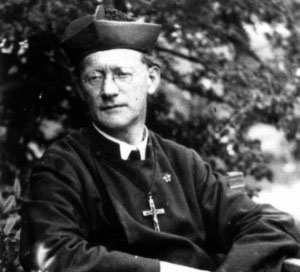
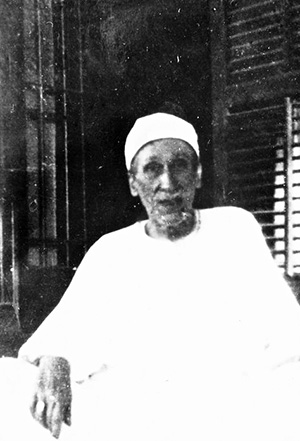
    John Sebastian Marlow Ward (1885–1949)

    Known today as the Orthodox Catholic Church of Christ the King, the Confraternity is linked to the Great Schism of the Western and Eastern Orthodox Churches in the 11th century, thus featuring a blend of Eastern and Western Rites. However, the Abbey represents something more than just an East/West mix, having been established by the followers of J.S.M. Ward, an enigmatic Englishman who drew his inspiration from Christianity, Freemasonry, Spiritualism and a number of other esoteric traditions.

    JSM Ward – A Complex Character

    The Abbey owes its existence to the vision and dynamism of John Sebastian Marlow Ward. This snippet taken from his autobiographical recollections less than two years before his death, and quoted in the final pages of Geoffrey Ginn’s insightful book on Ward’s life, captures a glimpse into his background:

    I was born in Belize, British Honduras in Central America on Dec. 22nd 1885. What terrible changes have taken place, since I was born, in world affairs. My lifetime has seen the decline and fall of Europe and her leadership in the world, particularly is this true of her loss of control in Asia.1

    He referred, of course, to the two World Wars and he especially lamented the apparent unravelling of the British Empire. He enjoyed a stint as a headmaster in Burma just as World War I broke out, and was saddened at its independence from Britain in 1948, the year before he died.

    John’s father, an Anglican minister, had returned to England from Belize with his wife and young son in 1888, just prior to the birth of their second child, Rex. Growing up in the culturally stimulating atmosphere of Victorian times, John developed a love of history and heritage buildings, amassing a large collection of artefacts and natural curiosities during his boyhood. 

    His dutiful Christian upbringing gave rise to a sense of enquiry, which would later broaden to encompass Mysticism, Spiritualism, Theosophy and Metaphysics. It was during his time at Cambridge University, at the age of 20, that he was initiated into Freemasonry, which was considered quite a respectable step to take for a modern middle class man, in what was by then the Edwardian Era. This would provide valuable introductions into the social and professional arenas, while also satisfying Ward’s attraction to the intrigue of the esoteric underground of the day. Soon after graduating in 1908, he took up teaching history and literature, and also married his cousin Carrie.
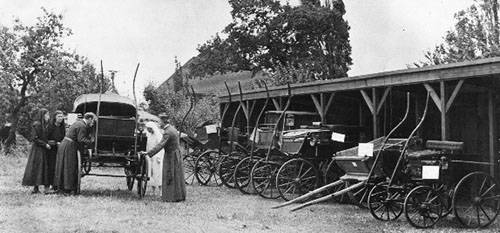
    John Ward and members of his community with some of the carriages that formed part of the Abbey Folk Park in London.

    Psychic occurrences, which were to guide John throughout his adult life, first began five years later with the regular visitation of his late uncle (also Carrie’s father), Henry Lanchester (HJL), to him during lucid dreams. The visions would occur at regular times of night on set days of the week and provided personal messages as well as information about the afterlife. Contact with the astral plane expanded to include his brother Rex who died in 1916 (identified in John’s writings as RLW); it later became a dominant feature of his life and work, with his introduction to the angelic ‘Master of the Work’.
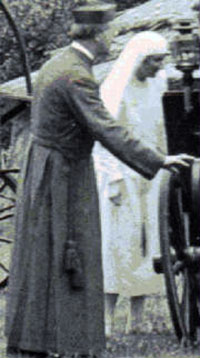
    Ward with his second wife, Jessie about 1936.

    Carrie, although a believer in her husband’s visions, did not share his preoccupation with spiritual matters and this led to their separation in 1923. John had already met the woman who would prove to be his soul-mate, the schoolmistress and Theosophist Jessie Page, with whom he had co-founded a publishing imprint to promote his own works a couple of years earlier. The couple married soon after Carrie’s death in 1926, embarking on a lifelong partnership during which they shared their prophetic visions. They actually began to participate in one another’s dreams when, it is claimed, “they both dreamt that they were summoned into the presence of a great Angel, told that Christ was about to begin His Descent through the Celestial Planes to the Earth and asked to help in the Preparation for His Coming. This great Angel, of the order of the Thrones, was to become their constant Guide and helper in the years ahead.”2

    John Ward’s beliefs and practices comprised elements that many Christians today would feel uncomfortable with. We should keep in mind that Spiritualism was popular in England a century ago. During the onset of World War I, Ward spent time teaching in Burma where he took a keen interest in Buddhism, Hinduism and Eastern traditions, strengthening his own convictions about reincarnation. It was these esoteric influences, combined with his sometimes turbulent association with Freemasonry, that paved the way for what he came to consider his life’s mission.

    Freemasonry Woven into the Rich Tapestry

    John Ward was born into a world of blossoming spiritual exploration and experimentation. The esoteric landscape of late Victorian England was dotted with communities devoted to Eastern mysticism, the Kabbalah and Hermetic texts, as well as scores of Rosicrucian and Theosophist groups. Geoffrey Ginn points out: “Although Freemasonry was not generally seen as occult, initiates were able to use its lodge meetings and reading groups to pursue esoteric topics and interests. Consequently, active Freemasons were in the vanguard of the occult revival at the end of the nineteenth century.”3 A number of Masonic researchers argued that the symbols and rituals of the Craft derived their roots from ancient Egyptian mystery cults. With the objective of establishing this claim, John became the founding secretary of the Masonic Study Society (MSS) in 1921. It was a pursuit he relished, continuing to attend the MSS meetings even after he later severed other links to Freemasonry and delivering more than a dozen papers to them over the next fifteen years.4

    Not only did Ward appear untrue to his Christian origins as he delved deeper into ancient mysticism, he also succeeded in alienating many of his fellow Masons. He saw in Freemasonry the characteristics of, “The ancient Egyptian Mysteries, the Eleusinian Mysteries of Greece, the Mithraic Mysteries of Persia, the Adonaic Mysteries of Syria, the Cabiric Mysteries of the island of Samothrace, the Druidic Mysteries of primordial Britain, and the Gnostics of the early Christian era…”5 For him, these mysteries concurred with the knowledge of the afterlife imparted to him by his beloved departed relatives, HJL and RLW.

    It was in 1929 that John and Jessie Ward began their ‘public work’ as religious leaders, establishing the original ‘Confraternity of the Kingdom of Christ’ and setting up an altar in a spare room in their house. John adopted the title ‘Reverend Father’ and celebrated communion in the traditional Christian manner, at the same time conducting a group of devotees in prayers and hymns that he had written himself. Jessie would come to be known by their followers as ‘Reverend Mother’. Notwithstanding the use of Christian titles, their practices continued to embrace the essence of Hinduism and Buddhism, mingled together with the doctrines of Spiritualism and reincarnation. 

    The small band of founding members – some of whom stayed in the Confraternity for the rest of their lives – pooled their assets and, when John resigned his job of twelve years and could add his generous separation bonus of seven hundred and fifty pounds, they purchased Hadley Hall on London’s northern outskirts. This mansion had been designed as two houses under one roof and sat on three acres of gardens. One of these dwellings now became The Abbey of Christ the King.

    The Original Abbey in England

    Life at London’s Abbey in the 1930s could best be described as monastic, with a strict daily routine of work and prayer. In addition to Father Ward’s study and library, the basement became a gallery for his treasured collectibles: antiquities, rare books and artefacts, tapestries and paintings. A small private school was set up on the estate and named St Michael’s College – a forerunner of today’s school bearing the same name alongside the Abbey in Queensland, Australia. And, like the modern-day Abbey complex, the founding members put their greatest effort into establishing a substantial and well-respected museum. As the Wards continued to add thousands of items to their collection, the exhibition extended out into the gardens in the form of replica historic and prehistoric buildings, eventually christened as the Abbey Folk Park. It proved extremely popular with the public, providing much-needed income for the community. 

    Surviving site plans of the Folk Park reveal how far the Confraternity went in not only entertaining but educating students and adults alike. It included a Roman Villa, African Bazaar, Chinese Temple of Initiation, Japanese garden, a conservatory, greenhouse, a forge and smithy shop and even a witch’s cottage. 

    John Ward had another motivation for developing the site that was not well known to the general public: he believed the world was in the ‘End Times’ and expected the imminent return of Christ, making The Abbey Folk Park an ‘ark for the ages’, a kind of time-capsule to preserve part of the old civilisation for the coming New Age. He envisaged it as the ‘Kingdom of the Wise’.

    The Threads of Christian Traditions & Western Orthodoxy

    One challenge to be met was the fact that neither John Ward nor any of his followers were ordained clergy, making their celebration of communion and other sacraments technically invalid. Soon after moving into The Abbey, ‘Father Ward’ managed to secure an endorsement as an affiliate of the Church of England from the Bishop of St Albans, on the recommendation of a mutual friend who was an Anglican Canon and fellow Freemason. However, this was only meant to authorise him as a lay preacher to his own community and the Anglicans made it clear it did not allow him to ‘minister the word of God’. A rift between them was inevitable and, after it occurred at the start of 1935, Ward would go on to have himself ordained in no less than three different religious organisations.

    Inside the Abbey Church, Caboolture, Queensland, Australia.

    John Ward was what church officials called an episcopi vagantes, meaning ‘wandering bishop’ or ‘bishop at large’. His first affiliation outside the Anglicans was with the Autonomous African Universal Church when he was consecrated as a bishop by its London-based Primate, Mar Kwamin. Soon after that, when doubt was cast over Mar Kwamin’s authority to hold office in England, Father Ward sought advice from the elderly Archbishop John Sibley of the Orthodox Catholic Church. The two men clicked and agreed that the Abbey of Christ the King should be incorporated into the Orthodox Catholic Church, contributing much needed numbers to Sibley’s congregation, while at the same time granting Ward’s Abbey Church the institutional affiliation it craved. His second ordination is recorded by Geoffrey Ginn thus: 

    Ward was baptised and re-confirmed, ordained deacon and, finally, solemnly admitted to the Sacred Office of the Priesthood by the authority of Archbishop Sibley’s hand and seal. In further ceremonies the following day, Ward was solemnly consecrated as a Bishop in the Church of God and commissioned as its Chancellor of the Province (England).6

    During World War II John and Jessie Ward struggled financially and were dragged through a court case brought by the parents of a teenage girl in their community, the charge being enticement of a minor. This resulted in damages of five hundred pounds being awarded against them, taking a toll on their funds as well as their health, reputation and confidence. Wartime saw membership numbers and income of many other itinerant English bishops flounder too, leading to an initiative to unify the various strands of the episcopi vagantes – and to the third ordination of Father Ward.
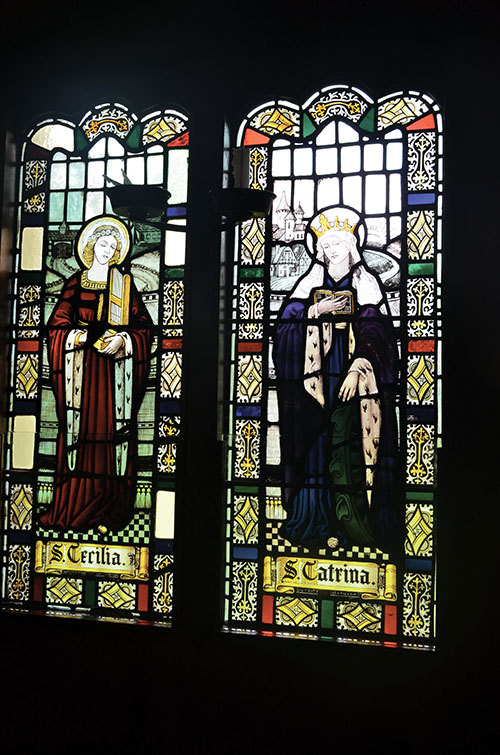
    The Abbey Church features many beautiful stained glass windows.

    A group of six autonomous Christian churches merged under the leadership of Hugh George de Willmot Newman, who had recently been disavowed by the Syrian Orthodox (Jacobite) Patriarch on whose authority he depended. Forming a council, they declared the Syrian Church to be in schism and re-constituted themselves as a Western Orthodox Church. This was in contrast to Eastern Orthodoxy, which sprang from the first century Christian missionaries in the Eastern, Greek-speaking part of the Roman Empire. Newman took for himself the title Mar Georgius, Archbishop of Glastonbury, which he called the Occidental Jerusalem. Thus Father Ward received from this new church his third consecration as its ‘Archbishop of Olivet’, thereby bringing his Orthodox Catholic Church into its fold.

    “Orthodox Catholicism offered itself to Ward as a religious vehicle that was necessarily flexible in matters of formal doctrine, but charged with a sense of history and a living heritage of faith,” writes Geoffrey Ginn in his departmental journal, Crossroads, adding, “In the first instance, then, Orthodox Catholicism appealed to his sense of historical drama. Ward took seriously the claims of Orthodox Catholicism to be an historic rapprochement between Christianity’s two great warring factions: ‘the Orthodox Catholic Church in itself’, he wrote, ‘marks the reunion of the Eastern and Western Churches, which mutually excommunicated each other in the 11th century, since when Christendom has been divided into camps’.”7
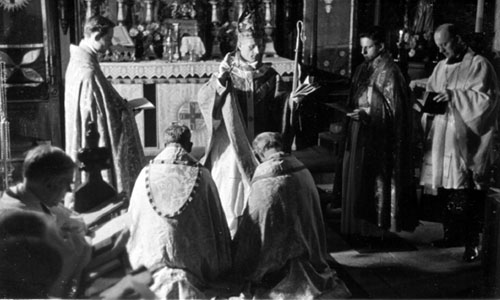
    Conditional consecration of John Sebastian Marlow Ward as Archbishop of Olivet in the Catholicate of the West by Mar Georgius assisted by other prelates; Abbey Church of Christ the King, Barnet, 25 August 1945.

    This refers to the mutual excommunication of the Eastern and Western Orthodox Churches in 1054. The identity of today’s Orthodox Catholic Church at the Abbey in Caboolture can be further linked to a later separation in 1870, when a number of Roman Catholics renounced their allegiance to Pope Pius IX following his declaration of infallibility. Having no bishops of their own, the breakaways could not be confirmed or ordained, so they contacted the Old Catholic Church of Holland, which had already become disassociated from the Vatican but retained valid Orders. Another historical figure, the priest Francis Xavier Alvarez and his followers in India, severed ties with the Papacy and obtained consecration by turning to the Syrian Christians, whose bishops on the Malabar Coast were under the jurisdiction of the Patriarch of Antioch, thereby adding to the bewildering melting pot of ‘bishops at large’.

    Thus these ‘Old Catholics’ (the breakaways) could claim two possible lines of ordination: the first from St Peter and the Western Church in Rome via St Augustine, the fourth century Bishop of Hippo; the other from the Eastern Church, this lineage tracing itself back directly to the church founded in Antioch in 34 AD by St Peter himself. 

    Stations on the Journey

    By 1945 the effects of the war and the legal proceedings against them left the Wards disillusioned with Britain, and it occurred to them that their Kingdom of the Wise might be destined to emerge in a foreign land. Fortuitously, John Ward’s old friend Gerald Gardner, who had designed the witch’s cottage for him, expressed an interest in taking over the cottage and its artefacts in exchange for a piece of land with a farmhouse he owned in Cyprus and wanted to offload. Cyprus held great appeal for the Confraternity – it was an English territory in the Eastern Mediterranean with a pleasant climate and, most importantly, it already embraced the tradition of Orthodox Christianity. The following year, after selling off the more valuable of their antiquities and library books, the small community packed up whatever they had left and made the two-week voyage from Southampton to Cyprus.
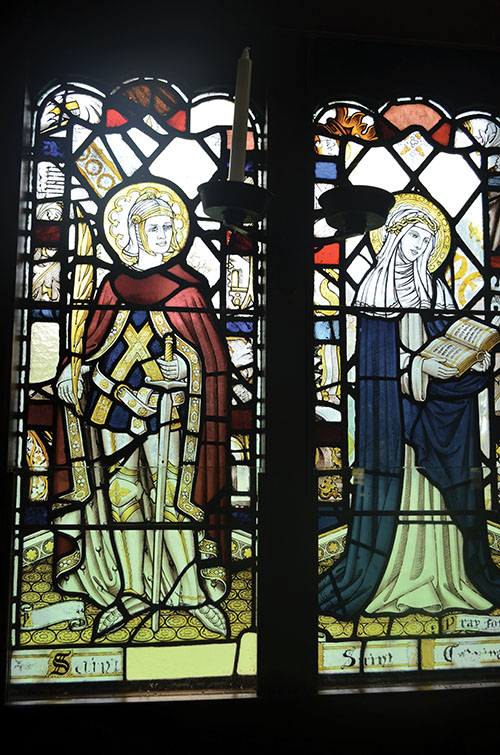
    The Abbey Church features many beautiful stained glass windows.

    Disappointingly, Gardner’s farmhouse turned out to be derelict and sat on barren land but, undeterred, they simply walked away from it and immediately purchased a more suitable property on the coast close to Limassol. This land was more than a hectare and boasted an orange orchard with a furnished two-storey house plus gardener’s cottage, outdoor brick oven and a chicken house with poultry. At a cost of two and a half thousand pounds, it was a drain on their funds, so they were relieved a few months later when they received over four thousand pounds from the sale of Hadley Hall back in London. Here they would stay for more than eight years, earning their living from farming and handicrafts they produced.

    For the Reverend Father John Ward, Cyprus was to be the last station on his life journey. Before his passing due to a stroke in mid-1949, he fathered a child with one of the ladies among his flock, Ursula Cuffe, and their son John was raised by Jessie Ward as her own. Growing up with Father Ward’s tradition and principles, the mature son would go on to be known as Bishop John Cuffe, presiding over an off-shoot of the present-day Orthodox Catholic Church in Queensland. A number of the older members of the original Confraternity were to pass away soon after Ward and the remaining followers had become restless by the mid-fifties, scouting around for a new home base. After looking first at Ceylon (Sri Lanka) and India, they decided to head for Australia where they settled briefly in Sydney and then in the Blue Mountains. When Jessie suffered a bout of pneumonia, she decided to head to the warmer climate of Queensland to recover, accompanied by a few others, including the nine year-old John Cuffe.

    The influence of John Sebastian Marlow Ward lives on and the depth and diversity of his legacy can be gleaned from the titles of some of his books: Gone West: Three Narratives of After-Death Experience; Freemasonry and the Ancient Gods; The Hung Society; The Kingdom of the Wise: Life’s Problems; The Psychic Powers of Christ; and articles: ‘The Hindoo Symbol of the Point Within the Circle’, ‘The Knights Templar’, ‘The Aims and Ideals of Freemasonry’, ‘Chinese Secret Societies’.8 Author Geoffrey Ginn neatly sums up his character in the final paragraph of his book: 

    In J.S.M. Ward we find, indisputably, a man of many parts. A historian with a strong sense of the romantic, a visionary with heightened spiritual sensibilities, he was a questing soul, curious until his last days about the human past, how we might comprehend its mysteries, and the life beckoning beyond that of everyday sense experience.9
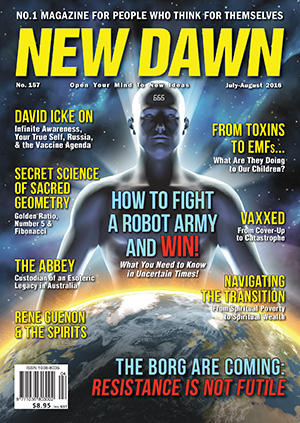
    Get the issue this article appears in

    The Ongoing Legacy in Queensland

    The community began settling at its present site of the Abbey at Caboolture, Queensland, half a century ago, and Jessie Ward survived until three years later, providing a clear link back to the organisation she co-founded with her husband in the late 1920s. What makes today’s Orthodox Catholic Church stand out from other Christian sects are their teachings on the afterlife, their representation of the Holy Spirit as the feminine aspect of the Godhead, and how at the very core is their belief in the imminent return of Christ. Concerning reincarnation they say, “that the journey of each Soul encompasses many lives to complete its journey back to God”; and concerning Catholic traditions, they affirm their church “holds to the tenets of the Christian Faith as enunciated in the Nicene Creed.”10

    Its followers seek spiritual development, both on a personal level and also collectively as a Confraternity. According to their publicity material:

    Community members strive to live a balanced life that revolves around attending Church Services, devotion and personal prayer and the practicalities of everyday life. The four main areas of the work of the Confraternity include the Church, the Farm, the College and the Museum. Holding public services, visiting the sick, undertaking works of charity and giving public lectures form part of the ongoing work of the Confraternity members.11

    In keeping with the values established at the original Abbey Folk Park in England over eighty-five years ago, the tranquil setting at Caboolture is also home to the Abbey Museum, as well as the independent co-ed school, St Michael’s College. Describing itself as a welcoming community, their church and museum at The Abbey Place are open to the public.

    Further reading: Archangels & Archaeology: J.S.M. Ward’s Kingdom of the Wise by Geoffrey Ginn

    [alert type=”general” dismiss=”no”]This article was published in New Dawn 157.[/alert]

    [alert type=”success” dismiss=”no”]If you appreciate this article, please consider subscribing to help maintain this website.[/alert]

    Footnotes

    1. Geoffrey Ginn, Archangels & Archaeology: J.S.M. Ward’s Kingdom of the Wise, Sussex Acad. Press 2012, 261 
    2. ‘Orthodox Catholic Church of the New Age, Life of J. S. M. Ward’, http://orthodoxcatholicnew.tripod.com/id7.html
    3. Geoffrey Ginn, Op. cit. 29
    4. Ibid 106
    5. Ibid 109, quoting from Secret Societies by Noel Gist, 1940
    6. Ibid 197
    7. Crossroads, Special Issue 2006, AEN Conference (page 11) www.uq.edu.au/crossroads/Archives/Vol%205/Issue%201%202010/Vol5Iss110%20-%207.Ginn%20%28p.45-57%29.pdf
    8. For full catalogue of publications, see Archangels & Archaeology, Op. cit., 297–310
    9. Geoffrey Ginn, Op. cit. 265
    10. http://abbeychurch.com.au/history-of-the-church/ 
    11. http://abbeychurch.com.au/history-of-the-confraternity/

    © New Dawn Magazine and the respective author.
    For our reproduction notice, click here.

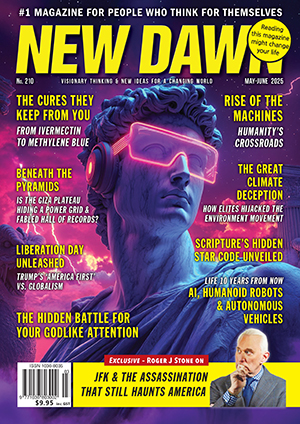
  • The Cures They Keep From You

    The Cures They Keep From You

    From New Dawn 210 (May-June 2025)

    A patient cured is a customer lost.”
    – Unknown

    On January 9, 2025, actor and director Mel Gibson appeared on the popular podcastThe Joe Rogan Experience (episode #2254). One of the most-watched clips from the discussion began at 1:37:16, when Mel Gibson spoke about three friends who all had stage 4 cancer. 

    “They don’t have cancer anymore,” Gibson stated. When Rogan asked what treatments they had undergone, Gibson mentioned four medications: ivermectin, fenbendazole, hydroxychloroquine, and methylene blue. These medications are often dismissed as quackery by Big Pharma. However, they have allegedly been effective in treating not only COVID-19 but also a variety of other diseases, including cancer. 

    “This stuff works, man,” Gibson asserted, explaining that the methods he and others use for optimal health do not profit Big Pharma and are therefore vilified.

    “There’s a lot of stuff that does work, which is very strange, because when you hear about things that are demonised and then turn out to be effective, you always wonder, ‘What is going on here?’ responded Rogan.

    In fact, substantial research is being conducted into these treatments, many “repurposed” or “repositioned” because they were not originally intended to treat cancer or COVID-19. But you won’t hear anything of it in mainstream media or from so-called government “health” authorities.

    “How have our medical institutions failed us so badly that treatments which can actually cure us aren’t promoted simply because they’re not profitable or can’t be patented? Whether it’s vitamin D, K2, or magnesium – there’s clearly something wrong,” Rogan added.

    The Power of Repurposing

    Using a drug for a purpose other than its original intention is not a new concept. This is often a powerful and effective method to cure disease and treat various ailments. 

    According to the article “Drug Repurposing: An Effective Tool in Modern Drug Discovery,” published in the National Library of Medicine, “Drug repurposing is the technique of using an existing drug or drug candidate for a new treatment or medical condition for which it was not previously indicated. It was initially developed to treat a different medical condition. This process is often described as serendipitous, as it happens unexpectedly. In this case, the undesired side effects of drugs can signal the possibility of their effectiveness for an entirely different medical condition. Generally, these drugs have already established safety in humans and have undergone testing for efficacy against a different disease. This approach allows for a more direct path to preclinical and clinical trials, bypassing many traditional drug development processes, thus reducing risk and costs.”

    The benefits of repurposed drugs have proven to be instrumental in treating diseases that lack current treatments or cures. They can also be valuable for common illnesses where approved treatments may result in significant side effects, be too costly for patients, or may not be covered by insurance for similar reasons.

    Ivermectin

    Known as a “miracle drug,” ivermectin is a member of the avermectin family of medicines. It has a long history of use in addressing various health issues in underdeveloped countries. It has been pivotal in the battle against deadly tropical diseases and parasitic infestations in animals. 

    Discovered in 1975, ivermectin was initially used primarily in veterinary medicine and was approved for human use in 1987. It is effective against infestations such as head lice, scabies, trichuriasis, ascariasis, river blindness, and lymphatic filariasis. For their roles in the discovery and development of ivermectin, William Campbell and Satoshi Omura were awarded the Nobel Prize in Physiology or Medicine in 2015. Since then, ivermectin has been approved by the US Federal Drug Administration (FDA) as an antiparasitic and has become one of the most widely prescribed medications in the world. 

    However, this changed with the onset of COVID-19.

    The COVID-19 years were marked by alarming headlines of mass deaths, leading many people to accept the situation without question. They lined up repeatedly to receive the mRNA vaccines and boosters, sought out officially approved treatments in hospitals, and took prescribed medications that the “experts” claimed would ensure recovery. Unfortunately, these approaches did not work as intended.

    Yet, there were effective alternative drugs and remedies. Why didn’t doctors embrace them? 

    Under US federal law, new vaccines and medications can only receive Emergency Use Authorisation (EUA) when “no adequate, approved, and available alternatives” exist. Because the introduction and wide distribution of COVID-19 mRNA vaccines and expensive new treatments relied upon obtaining this emergency designation, inexpensive, already-approved medications like ivermectin posed a significant obstacle.

    In August 2021, retail pharmacies reported a sharp rise in ivermectin prescriptions, prompting an intense public campaign labelling it as a dangerous “horse dewormer.” This portrayal minimised ivermectin’s long-established human uses, Nobel Prize-winning legacy, and extensive research history, effectively sidelining it from mainstream consideration. Had ivermectin been widely recognised as effective, the pharmaceutical industry’s ability to market COVID-19 as a persistent emergency would have diminished significantly, threatening substantial financial incentives.

    As a repurposed medication, ivermectin was overshadowed by a medical industry that benefited from keeping it in obscurity. Doctors who suggested its use for COVID-19, especially in its early stages, found themselves on “disinformation lists,” faced license suspensions, and endured bans and censorship. Nevertheless, many brave physicians continued to prescribe it as part of treatment protocols for the virus and later for vaccine side effects, risking their careers and lives.

    Ample research indicates that ivermectin works effectively as an antiviral and aids many individuals in their recovery from COVID-19. The Independent Medical Alliance (formerly known as the FLCCC) provides an in-depth look at ivermectin on their website. They feature a comprehensive meta-analysis of 105 studies involving 220,423 patients across 30 countries, demonstrating that ivermectin significantly reduced risks related to mortality, ventilation, ICU admission, hospitalisation, recovery time, case numbers, and viral clearance. Additionally, a thorough 31-page review of trial data was published in Frontiers of Pharmacology in June 2021. A search on PubMed reveals over 700 studies on ivermectin, confirming that the research is readily available.

    But can ivermectin cure cancer?

    According to over 360 research papers found under a search for ivermectin and cancer on PubMed, evidence suggests that ivermectin can inhibit the growth of cancer cells and downregulate cancer cell expression. Research conducted by the IMA indicates that ivermectin “may inhibit the growth of various cancer cells by disrupting multiple signalling pathways essential for cancer cell survival.” For instance, a study titled “Ivermectin as an Inhibitor of Cancer Stem-Like Cells,” conducted in February 2018, aimed to demonstrate that ivermectin preferentially inhibited cancer stem-like cells (CSCs) in breast cancer, downregulating the expression of “stemness” genes.

    Another study, “Anthelmintic Drug Ivermectin Inhibits Angiogenesis, Growth, and Survival of Glioblastoma Through Inducing Mitochondrial Dysfunction and Oxidative Stress,” published in November 2016, found that “the inhibitory effects of ivermectin are significantly reversed in mitochondria-deficient cells or cells treated with antioxidants.” This further confirms that ivermectin acts by inhibiting mitochondrial respiration and inducing oxidative stress. Importantly, the study indicates that ivermectin suppresses phosphorylation of Akt, mTOR, and ribosomal S6 in glioblastoma and human brain microvascular endothelial cells, suggesting its inhibitory role in deactivating the Akt/mTOR pathway. Overall, this research underscores ivermectin as a valuable addition to the treatment options available for various health conditions.

    Many studies are conducted using animal models, typically mice, and they show great promise for human applications. However, it would be beneficial if the medical industry allocated more funding for human studies. Big Pharma often finances medical research, which can cost millions of dollars, leading smaller research studies to be overlooked. As a result, these smaller studies may or may not gain acceptance in medical journals, which are also influenced by the interests of Big Pharma.

    Additionally, it’s important to point out that an increasing body of research has established significant links between certain bacterial and parasitic infections and the development of specific cancers. A landmark study published in The Lancet Infectious Diseases (2006) titled “Infectious causes of cancer: a global perspective” estimated that 15–20% of global cancers may have an infectious origin, with the burden particularly high in developing countries. 

    Hydroxychloroquine

    Hydroxychloroquine has faced scrutiny similar to ivermectin, despite numerous studies demonstrating its efficacy as a potent tool in the fight against COVID-19. This less toxic derivative of chloroquine has been proven effective in inhibiting SARS-CoV-2 infection. 

    Regarding cancer treatment, several studies have explored its applications, including the paper titled “Hydroxychloroquine: Key Therapeutic Advances and Emerging Nanotechnological Landscape for Cancer Mitigation,” published in the December 1, 2023, edition of Chemical Biological Interactions by the National Center for Biotechnology Information. Hydroxychloroquine (HCQ) is classified as a unique medication widely used in cancer treatment. HCQ plays a dual role by inhibiting autophagy induced by the tumour microenvironment (TME). Preclinical studies support the use of HCQ for anti-cancer therapy, especially when combined with conventional treatments, as it can sensitise tumour cells to drugs, enhancing therapeutic effectiveness.

    Fenbendazole

    Another drug of interest is fenbendazole, which Mel Gibson cited in his interview. Fenbendazole has been used to treat rodent pinworm infections due to its ease of use and minimal side effects. Research has been conducted in animal models, such as in the November 2008 Journal of the American Association of Laboratory Animal Science, which reported the “Unexpected Antitumorigenic Effect of Fenbendazole When Combined with Supplementary Vitamins.” This study found that combining vitamins and fenbendazole in a diet resulted in “significant inhibition of tumour growth,” but this effect was observed only in mice that received both treatments, not in control groups that received either only vitamins or only fenbendazole.

    In terms of human studies, “Oral Fenbendazole for Cancer Therapy in Humans and Animals,” published in the September 2024 issue of Anticancer Research, indicates that the anti-cancer activity of fenbendazole has been investigated across various cell lines, showing anti-tumour effects against multiple cancer types. Ongoing research suggests that fenbendazole may disrupt microtubules, which are structures involved in cell division and growth. By interfering with microtubule function, fenbendazole may inhibit the division and proliferation of cancer cells.

    Another anthelmintic medication, mebendazole, is specifically formulated for human use and has demonstrated anti-cancer effects. Previous studies indicate that when mebendazole is used in conjunction with other targeted therapy drugs, it may be effective in treating advanced colorectal cancer and pancreatic cancer.

    Vitamin C

    Another promising cancer treatment, high-dose intravenous vitamin C (HDIVC), has been around for some time, and new studies continue to support it. However, most doctors and nearly all hospitals avoid using it. Why is that? 

    In an article titled “Cancer Treatment and High Dose IV Vitamin C” on NatureMed.com, a study from the University of Iowa found that when combined with chemotherapy, high-dose intravenous vitamin C doubled survival rates for patients with late-stage metastatic pancreatic cancer. The article references studies dating back to the 1950s that highlight the positive effects of HDIVC on cancer treatment. Additionally, the US National Institutes of Health has awarded nearly 2,000 grants for research on this treatment.

    A single but highly significant issue is that pharmaceutical companies cannot patent vitamin C, which means that, like many other potentially groundbreaking treatments, its use is suppressed and restricted. This denial of access affects not only patients who have exhausted other treatment options but also those who are willing to try anything for a chance at survival.

    The Big Blue Powerhouse: Methylene Blue

    Robert F. Kennedy Jr., the US Secretary of Health and Human Services, recently caused a sensation when he was spotted on board a plane dosing his glass with a dropper of blue liquid that was believed to be Methylene Blue.

    Mel Gibson and Joe Rogan also discussed the increasing use of methylene blue for various health issues, particularly its role in enhancing mitochondrial health in cells. 

    This synthetic compound, available both over the counter and by prescription, was originally created in the 1870s as a textile dye due to its vibrant blue colour. Its other beneficial properties soon became apparent, including its therapeutic effects against malaria. Methylene blue also shows promise as an antibiotic and antipsychotic, and since the 19th century, it has been repurposed to treat cyanide and carbon monoxide poisoning.

    In recent years, methylene blue has been associated with improved brain function, enhanced memory, elevated mood levels, and potentially reduced risks of cognitive diseases such as Parkinson’s, various forms of dementia, and Alzheimer’s. 

    According to Dr. Eric Berg’s article “Methylene Blue: Benefits, Uses, and Risks,” this remarkable drug operates by improving mitochondrial energy metabolism. It acts as an artificial electron carrier in the electron transport chain (ETC) – a series of proteins embedded in the inner membrane of mitochondria. These electron carriers help shuttle electrons between molecules for energy conversion. By increasing mitochondrial respiration and facilitating electron transport, methylene blue can enhance energy production, thereby linking it to positive effects on mood, energy levels, cardiovascular health (by improving blood circulation and lowering blood pressure), neurodegenerative diseases, and gastrointestinal issues.

    Methylene blue also possesses antimicrobial properties that inhibit the growth of Candida species, staph bacteria, and even E. coli. Research suggests it may offer liver protection by activating SIRT1, enhancing fat metabolism, and supporting hormonal balance. Additionally, it may aid in increasing fat-burning and activating AMPK, known as the “metabolic master switch.”

    In cancer treatment, several studies have indicated that combining methylene blue with photodynamic therapy can reduce tumour sizes in various cancers, including carcinomas, colorectal cancer, and melanoma. A systematic review published on September 28, 2023, in Frontiers in Pharmacology, found evidence supporting the effectiveness of photodynamic therapy with methylene blue against multiple cancer types. While there was a modest decrease in tumour size in breast cancer and HeLa models, the results for colorectal tumours, carcinomas, and melanomas were particularly promising. The findings encouraged continued pharmaceutical development of a dosage form based on methylene blue and further investigation into its therapeutic applications.

    A study, “Methylene blue in clinical practice for cancer identification,” published on July 26, 2022, in Precision and Future Medicine, found that methylene blue could improve tumour detection with minimal error. This study demonstrated the feasibility of utilising methylene blue-based imaging during surgery to identify tumour lesions, such as diagnosing solitary fibrous tumours in the pancreas and identifying parathyroid adenomas and paragangliomas. An intravenous injection of methylene blue at a dose of 1.0 mg/kg, either immediately before surgery or three hours prior to surgery, produced fluorescent signals in 20 out of 24 patients with breast cancer.

    Despite its benefits, methylene blue has some drawbacks, including interactions with SSRIs, potential harm to fetuses for pregnant and breastfeeding women, and drug interactions that can lead to anemia. 

    It’s essential to discuss the use of this powerful compound with a doctor or pharmacist to ensure its safety and determine the correct dosages. Typical side effects may include nausea, vomiting, confusion, and headaches. Additionally, it can cause your tongue, urine, and faeces to turn blue.

    DMSO (Dimethyl sulfoxide)

    Midwestern Doctor, in his Substack article “Hundreds of Studies Show DMSO Transforms The Treatment of Cancer,” discusses a remarkably cheap but overlooked treatment for cancer: DMSO (Dimethyl sulfoxide). Several studies demonstrate that DMSO effectively treats various conditions, including cancer, by inhibiting tumour growth and reverting cancer cells to their normal state. Additionally, DMSO may help mitigate some of the damage caused by chemotherapy and radiation, as well as relieve pain from metastatic cancer. DMSO can enhance the treatment’s effectiveness for those undergoing chemotherapy, potentially reducing the number of sessions required.

    Midwestern Doctor asserts that DMSO has the potential to revolutionise cancer care when combined with other natural therapies. However, he noted that few people are aware of DMSO’s existence, and doctors rarely incorporate it into treatment plans. 

    “[S]ince so much money is involved (e.g., 65% of oncologists’ revenues come from chemotherapy drugs, and cancer medications represent the most profitable drug market), there is significant pushback against anyone who attempts alternative cancer therapies making it very difficult to practice unconventional cancer care – particularly since no alternative treatment works all the time,” notes Midwestern Doctor.

    This image has an empty alt attribute; its file name is Cover210-300.jpg

    Get the issue this article appears in

    The Future is Personalised medicine

    As alternative treatments gain acceptance, perhaps driven by movements like MAHA (Make America Healthy Again), there is hope that the research community will produce more well-funded and unbiased studies on these options. 

    Moreover, there is optimism that artificial intelligence (AI) can contribute to the future of medicine by personalising treatment based on individual needs and potential effectiveness rather than aligning with the interests of pharmaceutical corporations. The integration of AI in medicine requires rigorous public oversight to prevent its misuse by powerful entities seeking to steer research toward their financial interests.

    Personalised medicine has the potential to ensure that we, as patients, do not fall into the trap of “one drug fits all,” where a single medication is prioritised and alternatives are sidelined. AI-driven medicine can identify ALL the most suitable treatments, including repurposed medications, that align with how nature and biology function in each individual, proposing the best healing protocols rather than relying on the latest trend in pharmaceuticals. After all, we humans are not “one size fits all,” so why should our medical treatments be?

    In the meantime, individuals are taking on the role of their own medical detectives, uncovering truths that have historically been obscured by those profiting from misinformation and deception.

    Disclaimer: This article is for informational purposes only and does not replace professional medical advice. Always consult a qualified healthcare provider before self-treatment.

    [alert type=”general” dismiss=”no”]This article was published in New Dawn 210.[/alert]

    [alert type=”success” dismiss=”no”]If you appreciate this article, please consider subscribing to help maintain this website.[/alert]

    Sources

    youtube.com/watch?v=1rYtrS5IbrQ (Joe Rogan Experience)
    alternativemedicine.com/cancer/facts-you-might-not-have-known-about-fenbendazole/
    drberg.com/blog/fascinating-health-benefits-of-methylene-blue
    x.com/DrJesseMorse/status/1887928040929534294 (Dr Jesse Morse explains the benefits of methylene blue)
    media.mercola.com/ImageServer/Public/2024/October/PDF/methylene-blue-benefits-side-effects-pdf.pdf
    imahealth.org/an-approach-to-the-use-of-repurposed-drugs-in-patients-with-cancer/
    journals.lww.com/americantherapeutics/fulltext/2021/08000/
    ivermectin_for_prevention_and_treatment_of.7.aspx
    midwesterndoctor.com/p/hundreds-of-studies-show-dmso-transforms
    osti.gov/biblio/22696697
    pnas.org/doi/abs/10.1073/pnas.73.10.3685
    pmc.ncbi.nlm.nih.gov/articles/PMC9945820
    pmc.ncbi.nlm.nih.gov/articles/PMC10631450
    pubmed.ncbi.nlm.nih.gov/19049251
    sciencedirect.com/science/article/pii/S1572100024000863

    © New Dawn Magazine and the respective author.
    For our reproduction notice, click here.

  • The View From the Other Side of the Chessboard

    The View From the Other Side of the Chessboard

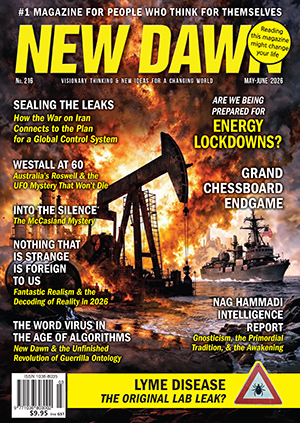
    From New Dawn 216 (May-June 2026)

    The ongoing conflict between the US and Iran makes “The Grand Chessboard Endgame” essential reading for anyone willing to understand the strategic design behind the shifting headlines. Exclusive to New Dawn #216, this investigation traces the struggle back to Mackinder and Brzezinski, revealing why Iran’s position at the heart of Eurasian trade, energy and emerging multipolar alliances matters far beyond the official explanations.

    For a gripping preview, read “From the Other Side of the Chessboard” (full text below), where Russian philosopher Alexander Dugin argues that the assault on Iran marks the final, dangerous struggle of a fading unipolar order. Readers who already have #216 have seen through the Establishment narrative and understand the larger agenda. The latest developments come as no surprise to them.

    Share the following or pass your copy of New Dawn #216 to anyone who dares to question the official approved version. If you haven’t already done so, you can still order New Dawn #216 here and discover what the nightly news leaves out.

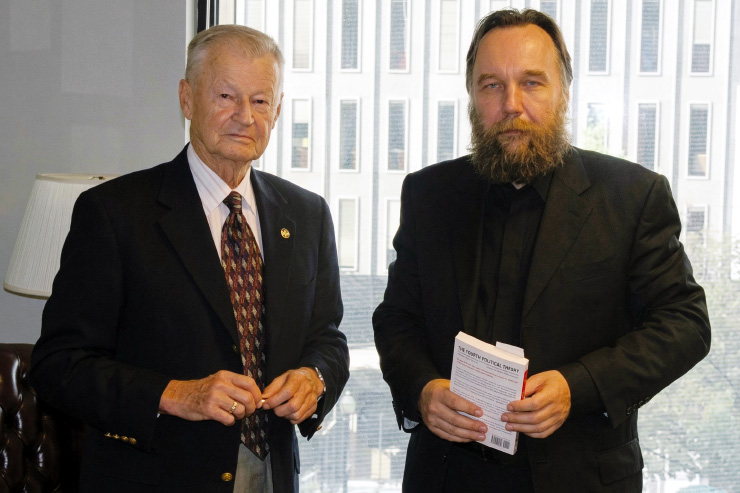
    In 2005, Alexander Dugin sat across a chessboard from Zbigniew Brzezinski in Washington. The Russian philosopher asked the American strategist whether chess was a game for two players. Brzezinski’s answer was immediate. “No, it’s a game for one.”

    The author of The Grand Chessboard saw a single player at the table of world geopolitics. Two decades later, as American bombs fall on Iran, the man on the other side of the board has a different reading of the game.

    Dugin, the most prominent theorist of Russian neo-Eurasianism, has been sanctioned by the European Union and the United States. His daughter Darya was killed by a car bomb in Moscow in 2022, an act widely attributed to Ukrainian intelligence. None of this has slowed him down. 

    On the 6 April 2026 Russian Sputnik programme ‘Escalation’, Prof. Dugin delivered what amounts to his most comprehensive analysis of the war on Iran and its place in the global contest between unipolarity and multipolarity.

    In Dugin’s analysis, the American-led global order established after the Cold War is expiring. The assault on Iran, Trump’s expletive-laden threats, the shifting deadlines, the bombing of cultural sites, all of it registers as the desperate flailing of a system that can feel the ground giving way beneath it.

    His central concept is the “agony of the unipolar world.” He means the word in its classical sense, the final struggle before death. Trump, in Dugin’s analysis, has been chosen by the Western ruling elite as the instrument of that agony. There is no longer time for liberal illusions, for humanitarian rhetoric, for talk of human rights. 

    Dugin reads Trump as the unwitting agent of this collapse. Where previous American presidents wrapped imperial policy in the language of human rights and international law, Trump has stripped that language away. The liberal mask is off. What remains is raw force, openly declared. 

    Dugin identifies a four-stage strategy behind what looks like chaos. First, reassert control over Latin America through pressure on Venezuela, Cuba, Mexico and Colombia, a renewed Monroe Doctrine. Second, destroy the main pole of sovereignty in the Islamic world through Israel, with Iran as the primary target and Turkey next in line. Third, pressure Russia into vassalage, using European NATO as leverage, interpreting Moscow’s willingness to negotiate as weakness. Fourth, full-scale strategic war with China before the end of Trump’s term.

    Each target, Dugin argues, is told the next stage “does not concern you.” Iran is stage two. The war is already underway. Each stage is designed to clear the path for the final confrontation with Beijing.

    “Trump does not need negotiations,” Dugin says. “His ultimatum to Iran is a clear warning to China and to us: ‘this is what will happen to you if you dare to resist’.”

    Dugin frames Iranian resistance as civilisational, drawing on the Shia tradition of accepting earthly defeat for spiritual victory. When Trump attacks Iranian society with open cruelty, Dugin argues, he receives in return the opposite of what he expects. 

    “The heroic Iranian people today stand united against pure, unalloyed evil coming from the West.” The human chains around power plants in April 2026 and the millions of Iranians who registered to sacrifice their lives are, in Dugin’s reading, expressions of a civilisational depth that brute force cannot reach.

    The American president is attempting to complete this programme before the 2026 midterm elections, ignoring all obstacles, burning through allies and generals alike. Dugin points to Trump’s dismissal of loyal figures, combat generals removed mid-campaign, his own attorney general thrown out, as evidence of a leader operating under extreme time pressure in a system that knows its window is closing.

    Two years before the war, Tucker Carlson warned Dugin during a private conversation that “Trump will not accept multipolarity.” Carlson, who helped bring Trump to power, is now in open opposition. “He believed in him, shared his ideas,” Dugin says, “but Trump betrayed the MAGA movement and his supporters.”

    Get the issue this article appears in

    Dugin closes with a formulation that leaves no room for ambiguity. “Many of us believed that Western dominance was already in the past and that multipolarity was an accomplished fact. But it seems we were just as premature as Francis Fukuyama was with his ‘end of history’. The multipolar world has not yet arrived. The struggle for it is happening now.”

    Brzezinski told Dugin in 2005 that chess was a game for one player. The board in 2026 tells a different story. Iran has refused to be swept from the squares. Russia and China stand behind their own pieces. The “single player” Brzezinski imagined is running out of moves.

    [alert type=”general” dismiss=”no”]This article was published in New Dawn 216.[/alert]

    [alert type=”success” dismiss=”no”]If you appreciate this article, please consider subscribing to help maintain this website.[/alert]

    © New Dawn Magazine and the respective author.
    For our reproduction notice, click here.

  • René Guénon and The Spirits

    René Guénon and The Spirits

    From New Dawn 157 (Jul-Aug 2016)

    Even the greatest thinkers are uneven. They have areas of brilliance and other areas where they cannot avoid showing their weaknesses. Immanuel Kant, for example, one of the most admired philosophers in Western civilisation, is known for The Critique of Pure Reason rather than for Dreams of a Spirit Seer, his intemperate and embarrassing rant against the visionary Emanuel Swedenborg.

    René Guénon is no exception. An esoteric philosopher of uncommon brilliance, he has become increasingly influential since his death in 1951. But he, too, has areas where his views seem poorly reasoned and out of accord with known facts.

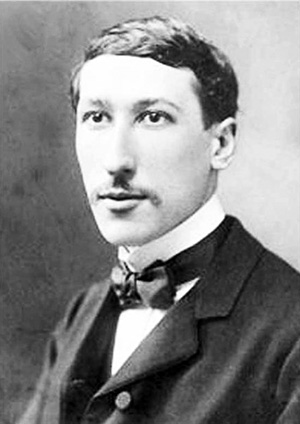
    French esoteric philosopher René Guénon (1886–1951). Photo taken in 1925.

    Born in Blois, France, in 1886, Guénon was educated as a mathematician. As a young man, he was drawn into the occult revival that was sweeping France at the turn of the twentieth century. He was befriended by Gérard Encausse, better known by his pseudonym Papus, the celebrated occultist who, among other accomplishments, founded the Martinist Order. But Guénon soon became dissatisfied with both Papus and occultism and drifted into other esoteric circles.

    The years between 1906 (when Guénon began to explore occultism) and 1912 were the critical points in his development. After breaking with Papus, he received initiations in lineages connected with Taoism, Freemasonry, and Sufism. He also began exploring what he came to call “Tradition” – meaning not merely what has been handed down from antiquity, but a body of universal esoteric doctrine that, he contended, underlies all the great world religions.

    Guénon’s explication of this Tradition, set out in many books and articles he published up until his death in 1951, has a number of curious features. In the first place, it is strongly oriented toward Hinduism, although the sources of Guénon’s contacts with Hinduism, both in the Paris of the Belle Époque and later, are mysterious in the extreme. Indeed his first book, Introduction to the Study of the Hindu Doctrines, was submitted as a dissertation to the Sorbonne but was rejected partly because, violating academic norms, it contained almost no references.

    In the second place, although Guénon converted to Islam in Paris in 1910, and was initiated as a Sufi, before moving to Cairo in 1930, neither Sufism nor Islam plays any great role in his ideas. At the time of death, he had been living in Egypt for over twenty years, but his 3,000-volume library still contained four times as many books on Hinduism as it did on Islam, according to Mark Sedgwick in Against the Modern World: Traditionalism and the Secret Intellectual History of the Twentieth Century, an important study of Guénon and his followers.

    Rather, for Guénon, the Traditional doctrine is most fully expressed in Hinduism. It is also focused on metaphysics. Today metaphysics – usually described as the philosophical study of being – is among the least sexy of intellectual pursuits. In Anglo-American academic philosophy, it is moribund. For Guénon it is central. Not surprisingly, his discussion of it is among the most masterful aspects of his work. But comparatively few of Guénon’s admirers give much attention to metaphysics.

    Despite its failure to impress the Sorbonne, Introduction to the Study of the Hindu Doctrines was published in 1921. It is one of Guénon’s most important works and provides the best introduction to his thought.

    Metaphysics – “Knowledge of the Universal…”

    Guénon was befriended by Gérard Encausse, better known by his pseudonym Papus, the celebrated occultist who, among other accomplishments, founded the Martinist Order. Guénon soon broke with Papus to go his own way.

    In it Guénon says that metaphysics, or metaphysic, in the singular, “is essentially the knowledge of the Universal, or, if preferred, the knowledge of principles belonging to the universal order… but in making this statement we are not really trying to propose a definition of metaphysic, for such a thing is a sheer impossibility by reason of that very universality which we look upon as the foremost among its characteristics.” Metaphysic stands above “that which changes or which is subject to the influences of time and place; the contingent, the accidental and the universal belong essentially to the individual domain.” Metaphysic deals not with this individual domain, but with the universal.

    Although metaphysic “cannot contradict reason” of the conventional kind, “it stands above it.” Nor is metaphysic grasped with reason, but by the “intellect… that faculty which possesse[s] a direct knowledge of principles.” Intellect, in this sense, is not what present-day thought understands by that term. As Guénon describes it, intellect is a type of higher cognition – a direct experience of principles. And it is “infallible” because “its operation is immediate and, because, not being really distinct from its object, it is identified with the truth itself.” This, he adds, is exactly how Aristotle and his heirs, the Scholastic philosophers of the Middle Ages, understood the concept of intellect – in Greek, called nous, intellectus in Latin.

    Intellect may be infallible, but the ways of expressing it are not. “Since all expression is bound to be imperfect and limited, error is inevitable in its form, if not its content: however exact one tries to make its expression, what is left out is greater than what is included.”

    Symbolism of the Cross

    One of the central themes of this metaphysics is what Guénon calls “the multiple states of being” (the title of one of his books). The best way to understand this concept is to picture it as Guénon does in what is probably his masterwork, The Symbolism of the Cross, published in 1931.

    For Guénon, the significance of the cross goes far past its meaning in Christian symbolism. As he says, it is a virtually universal symbol. His explication of it magnificently illustrates not only his metaphysical system, but many otherwise obscure points in the symbolism of the world’s religions.

    To begin with, the cross (pictured in its Greek, or equal-armed form) symbolises the juncture of the supernal with the mundane. The latter is represented by the horizontal line, which, Guénon says, represents the possibilities of manifestation at any given level of existence (such as human incarnation). The vertical line represents the ascent possible from one of these levels to another, and thus to “the indefinite series of states of the total being.”

    Guénon expands this cross into a three-dimensional form. There are now two crosses, one perpendicular to the other, both with the same centre. The horizontal cross defines a plane – the plane of manifestation at any given level of being. This plane is not the only one there is. In fact at every point on the vertical line, another horizontal cross can be drawn, defining another plane and signifying another, different realm of being. The number of these realms is infinite, or, as Guénon puts it, “indefinite.”

    Thus our human existence, complete with all the possibilities (both physical and spiritual) latent in it, comprises just one plane of this three-dimensional cross.

    It’s not possible to go further into this schema here, which is sort of a Cartesian coordinate system of the levels of being (a comparison Guénon would have loathed; if he ever wrote a kind word about Descartes, I have not read it). But it masterfully ties together symbols and ideas from a wide and disparate range of traditions. One symbolic version of this cross is the World Tree, which is found almost universally.

    In any event, these three books define the core of what he calls the Traditional doctrine:

    Introduction to the Study of the Hindu Doctrines
    Man and His Becoming according to the Vedanta
    The Symbolism of the Cross

    I would read them in the order given to get a comprehensive view of Guénon’s doctrine. They are not necessarily easy reading, but Guénon takes pains to write clearly and precisely. At any rate his style is free from the jargon-infested prose and pretentious neologisms favoured by many twentieth-century philosophers, particularly those on the European continent.

    Spiritualism & Multiple States of Being

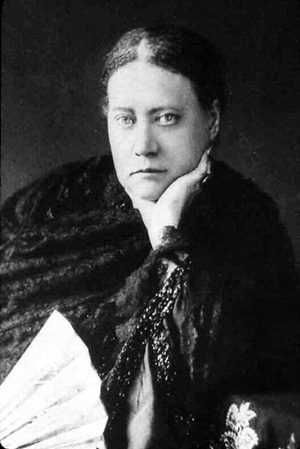
    Helena Petrovna Blavatsky, co-founder of the Theosophical Society. Guénon published books aimed at demolishing the arguments of Theosophy and Spiritualism.

    After Introduction to the Study of the Hindu Doctrines, Guénon published two books on more narrowly defined topics: Theosophy: History of a Pseudo-Religion and The Spiritist Error. These are the works in which his thought is the weakest. They aim to demolish the Theosophy of H.P. Blavatsky and her successors on the one hand, and, on the other, to combat the spiritualist, or spiritist,* movement that had reached its heyday in the nineteenth century. At the time Guénon was writing, in the early 1920s, many were drawn to spiritualism in the wake of the First World War. Bereaved survivors of dead soldiers often turned to it to be reassured of their loved ones’ continued life beyond the grave.

    * The term applied to those who try to communicate with the dead is, in the English-speaking world, “spiritualism.” In French, it is spiritisme, “spiritism.” Guénon naturally uses the latter more often. There is some difference between these movements as they manifested in France and in the English-speaking world, but for convenience in this article, I will for the most part use the word spiritualism to apply to both.

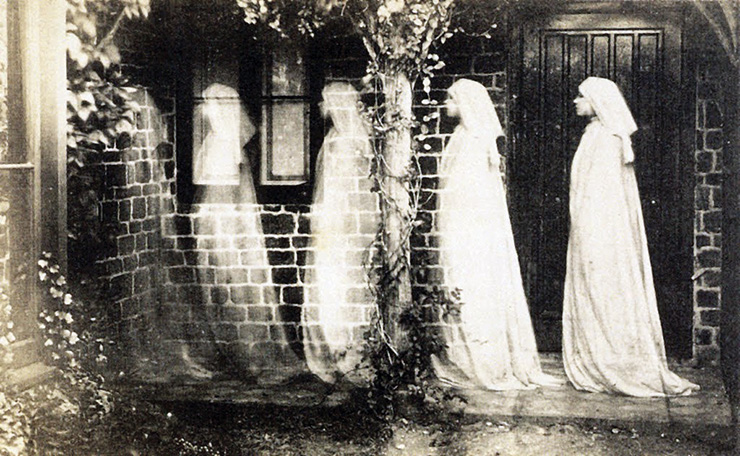
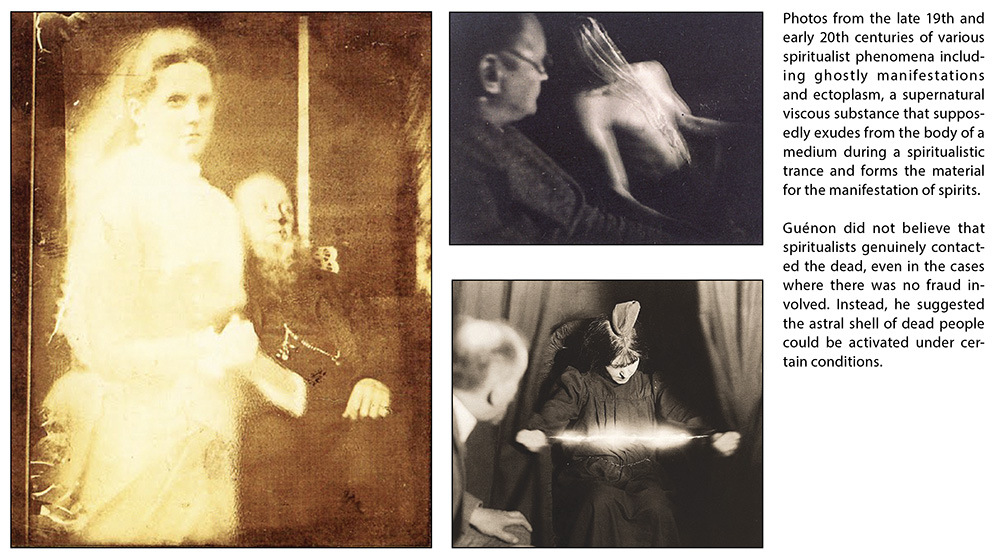
    Guénon did not believe that spiritualists genuinely contacted the dead, even in the cases where there was no fraud involved (and there were many in which it was). One of his main points has to do with the manifestations of spirits in séances. He did not think these “phenomena,” as he called them, were illusory. But he denied that they were actually appearances of the dead people in question. In his view, the essential core of the dead individual – the spirit – went on to another of the multiple states of being, and did so necessarily and without exception.

    So who or what were the ghosts who appeared in séances? These, he claimed, were “simply those inferior elements that the being has in a way left behind in the earthly realm after the dissolution of the human complex that we call death. These are… what the ancient Latins called the manes. This is also what the ancient Hebrews called the ob, which is invariably the word used in biblical texts in regard to evocations” (cf. Deuteronomy 18:11; 1 Samuel 28:7). The root meaning of the Hebrew word ob (more correctly, ’ov) is “wineskin,” which suggests how the ancients conceived of these subtle remains. He explains:

    It is, if you will, like a subtle form that can only take on an illusory corporeal appearance when manifesting under certain circumstances. This is the origin of the name the ‘double’ [ka] given to it by the Egyptians. For the rest, in all respects it is only an appearance. Separated from the spirit, this element cannot be conscious in the true sense of the word. Nevertheless, it possesses a semblance of consciousness, a virtual image, so to speak, of the living being. And the magician, reviving this apparition by lending it what it lacks, temporarily gives it enough of a reflexive consistency to obtain responses when he asks questions of it.

    These astral remains thus are a kind of shell that the dead person has left behind, and which can be activated under certain conditions. They can even appear to answer questions.

    This explanation does not cover all of the phenomena that take place in séances. Guénon also talks about materialisation, “perhaps the rarest of all phenomena.” In these cases a spirit actually appears to manifest palpably to participants. “A kind of substance, at first unformed and nebulous, seems to separate itself from the [medium’s] body, then gradually condenses. These entities often can be seen, touched, and even photographed (thereby excluding the possibility of hallucination).” In these cases, Guénon claims, the form arises from the mind of either the medium or of one or more of the participants. This is why there have been apparitions of people who turned out never to have existed. “Cases have been noted in which the ‘materialised’ forms quite simply copied portraits of fantastic figures borrowed from pictures or designs seen by the medium,” he writes. The energy is supplied by the medium or the participants or both.

    Why does Guénon take such great pains to refute the ideas of the spiritualists? To return to his metaphysical system, in which each plane in the three-dimensional cross represents one level of manifestation – even, one could say, of reality – Guénon holds that an individual goes through each level exactly once and then passes on to another. He does not remain in connection with the previous level. It is to refute these fallacies that he makes his elaborate case in The Spiritist Error. One could even say that, in essence, this is the spiritist error.

    His arguments are successful up to a point: they seem to fit in well with descriptions of the spiritualistic phenomena of his time and earlier. Furthermore, they help explain why most encounters with the dead take place in the few days after death, when presumably these residual elements have not had the time to break down fully. But Guénon’s claims stop short of explaining all such phenomena. There are instances in which the dead person appears much later than the time of death. Moreover, it seems to be in full consciousness and aware of things that were not known by the person to whom it appears. Such are the cases with warnings sometimes given by the dead to avoid certain voyages or plane flights.

    One difficulty here, as with many of Guénon’s arguments, is that he holds rather rigidly to an extremely precise schema that is logical and consistent in its own terms but does not completely square with manifest reality. Indeed, even by his own theory, there must necessarily be some dissociation between the world of pure principle and the imperfect world of manifestation. But sometimes he does not seem to grasp the implications of this fact.

    Get the issue this article appears in

    Guénon on Reincarnation

    Guénon also takes great pains to refute the teaching of reincarnation. “The idea of reincarnation… like that of evolution, is a very modern idea; it appears to have materialised around 1830 or 1848 in certain French socialist circles” (Guénon, Theosophy, 104). Regarding the transmigration of human souls into animals, he says:

    In reality, the ancients never conceived of such transmigration, any more than they did of a human into other humans, which is how one might define reincarnation. There are expressions, more or less symbolic, that could give rise to such misunderstandings, but only when one does not know what they are really saying, which is this: There are psychic elements in the human being which separate themselves after death, and which can pass into other living beings, human or animal, although this has no more importance than the fact that, after the dissolution of the same individual, the elements that made him up can be used to make up other bodies.

    Unfortunately, the ancient accounts of reincarnation say nothing of the kind. At the end of the Republic, Plato tells the myth of Er, a soldier who has a near-death experience in which he learns the fates of individuals after death (Plato, Republic, 614b-621d). In one famous passage, Er sees the dead choosing their lots for new incarnations. Odysseus, the shrewdest of men, refuses lives of riches and honour and instead chooses the existence of an ordinary citizen. However “symbolic” this story might be, it is hard to see how it might accommodate itself to a theory like Guénon’s. One could make the same point about the teachings of the Pythagorean mysteries, to the extent that we know anything specific about them.

    Guénon’s own views about the fate of the spirit after death are complex. Defining transmigration in what he considers the true sense, he contends, “It is not a matter of a return to the same state of existence… but on the contrary, the passage of the being to other states of existence, which are defined… by completely different conditions from those to which the human being is subject… Whoever speaks of transmigration is essentially speaking about a change of state. This is what all the traditional doctrines of the East teach, and we have many reasons to believe that this was also the teaching of the ‘mysteries’ of antiquity; it is the same thing even in heterodox doctrines such as Buddhism.” The last remark indicates that when he was writing The Spiritist Error, in the early 1920s, Guénon believed that Buddhism was not a pure reflection of the “orthodox” Traditional doctrine. Later in life, he granted it a certain grudging acceptance.

    As we have seen, Guénon conceives of existence as a kind of three-dimensional grid, with a vertical axis transecting an infinite number of horizontal planes. The vertical axis represents the Self, the true essence of a given being; each of the innumerable horizontal planes constitutes a separate plane of manifestation. Human life on earth is only one of these planes. A given being can manifest itself only once on any particular plane. Therefore you cannot be born more than once as a human.

    Like much of Guénon’s thought, this is rigorously precise and would seem to be irrefutable except for one thing. Guénon assumes that any given plane – such as earthly human life – is static. But in fact there is nothing to prove that this is so. On the contrary, the earth and earthly life are changing form ceaselessly, whether we look at them from the perspective of geological ages or even of human history. The possibilities for human life on earth today are not the same as they were in the year 1000 or will be in 3000. You can never be born onto the same earth twice, any more than you can be born as the same person twice.

    At that time Guénon could get away with saying that Hinduism and Buddhism did not teach reincarnation. The number of Hindus and Buddhists in the West was insignificant, and many of those were Western converts. It is much harder to make such claims now, when the West has access to teachers from high levels in these traditions. The Dalai Lama, for example, the supreme authority in Tibetan Buddhism, has written: “There have been and are found at the present time, many incidents illustrating rebirth, from many countries in the world. From time to time small children talk about their work in a previous life and can name the family in which they lived. Sometimes it is possible to check such cases and so prove that the facts remembered by the child are not at all nonsense but are indeed true.”

    And of course the Dalai Lama’s credentials as an authority of “Traditional” teaching are far more solid than Guénon’s own.

    For a Hindu perspective, we might turn to Paramhansa Yogananda’s classic Autobiography of a Yogi. Yogananda quotes his guru, Sri Yukteswar, as saying, “Beings with unredeemed earthly karma are not permitted after astral death to go to the high causal sphere of cosmic ideas, but must shuttle to and fro from the physical and astral worlds only.” The process of shuttling to and fro from the physical world would suggest that physical incarnation is not a once-only option. And again, the credentials of both Yogananda and Sri Yukteswar as transmitters of traditional teaching are far higher than Guénon’s.

    A follower of Guénon’s might try to argue that all of these Eastern teachers have been somehow corrupted by Western views – but that comes very close to begging the question. If you are trying to determine whether “Traditional” Hinduism and Buddhism teach reincarnation, you cannot categorically say that any Hindu or Buddhist teacher who holds to such a doctrine is therefore “untraditional.” You are assuming the very thing you are trying to prove.

    Why should Guénon work so hard to deny the ideas of both the spiritualists and the Theosophists (the leading proponents of reincarnation in the West in his time)? Because, in his view, they are corruptions of Traditional ideas that date, at the earliest, from the eighteenth century. And if you read both Theosophy: History of a Pseudo-Religion and The Spiritist Error, you will see that he has an almost convulsive aversion to such concepts as “progress,” “evolution,” and reincarnation.

    René Jean-Marie Joseph Guénon, whose Muslim name was Abd al-Wāhid Yahyá, embraced Islam and Sufism in pre-First World War Paris.

    Guénon believed that the early nineteenth-century utopian French socialists Charles Fourier and Pierre Leroux invented the concept of reincarnation in order to explain inequalities among the human race. For Guénon, such inequalities are inevitable and even, one suspects, uninteresting. Every individual is different from every other; if it were otherwise, they would not be individuals at all. Thus of necessity all humans have different capacities and fates. Guénon accepts this eventuality with more equanimity than, I suspect, most readers would.

    In an article on Guénon’s views of reincarnation, scholar Joscelyn Godwin points out the likely basis of Guénon’s reasoning. “In an infinite series, such as that of integers, each term appears but once. Likewise, in the infinite variety of the Universe, experienced in its totality by every being, no single state need or can be repeated.” By such reasoning reincarnation would be impossible.

    Of course that would be true if the states of being were exactly analogous to mathematical integers, but there is no reason to accept such a thing a priori. In fact much of Guénon’s arguments against the failings of modernity have to do with its obsessive interest with number above all things – what he calls the “reign of quantity.” He quotes Thomas Aquinas, who wrote, Numerus stat ex parte materiae: “Number is on the side of matter.” This means that number, or quantity, has to do with matter, not with the world of the spirit. Number, as Guénon so intricately argues, does not apply to the higher, spiritual realms. There is, then, no reason to suppose that the laws of mathematics, however apparently inexorable, would apply either.

    Every thinker has his own dynamic – meaning the tensions between two ideas or types of ideas that he struggles, more or less successfully, to reconcile. For Guénon it is the tension between the world of multiplicity, of number, of quantity, of matter on the one hand and the realm of the intellect, of the spirit, of what he calls “quality” on the other. This dynamic, as he understands, is a powerful, perhaps an all-powerful one. And he intuits – correctly, I believe – that the modern world is balanced far too much in the direction of matter and quantity. But I am not sure that he himself manages to step past this imbalance completely. He himself may be prone to the fault that he so readily sees in others: applying quantitative principles to realms where quantity does not apply. He is no doubt right in saying that the states of being are infinite, or virtually so. But then its possible combinations would be infinite as well, and it would not be wise to jump to conclusions about what is and is not possible within them.

    Sources

    The Dalai Lama XIV, The Opening of the Wisdom-Eye, 2nd ed., Quest Books, 1991
    Joscelyn Godwin, “The Case against Reincarnation,” Gnosis 42 (Winter 1997), 28–32
    René Guénon, L’erreur spirite, 2d ed., Éditions Traditionelles, 1952
    René Guénon, Theosophy: History of a Pseudo-Religion, Translated by Alvin Moore Jr. et al., Sophia Perennis et Universalis, 2003
    Richard Smoley, “Against Blavatsky: René Guénon’s Critique of Theosophy,” Quest 98:1 (Winter 2010), 28–34; www.theosophical.org/publications/quest-magazine/42-publications/quest-magazine/1696-against-blavatsky-rene-guenons-critique-of-theosophy; accessed March 28, 2016.

    [alert type=”general” dismiss=”no”]This article was published in New Dawn 157.[/alert]

    [alert type=”success” dismiss=”no”]If you appreciate this article, please consider subscribing to help maintain this website.[/alert]

    © New Dawn Magazine and the respective author.
    For our reproduction notice, click here.

  • What if the New Agers Were Right All Along?

    What if the New Agers Were Right All Along?

    From New Dawn Special Issue Vol 18 No 6 (Dec 2024)

    I believe that some of us dedicated to experimental spirituality and mind metaphysics must attempt to theorise the mechanics and delivery systems behind what we experience and observe. There exist, of course, manifold risks of personal bias toward a favoured thesis. But to limit the wish to “know thyself” to clinical study is to eviscerate the principle itself. This is my effort to describe “what happens” in the process of thought causation or what is popularly, though inadequately, called positive thinking or manifestation.

    Everyone hates The Secret. Mainline cultural commentators and “serious” spiritual seekers routinely resurrect the nearly 20-year-old work for excoriation, presumably allowing H.L. Mencken (1880–1956) to sleep undisturbed after writing the first “take down” piece on mind metaphysics more than a century ago. In 1910, the Bard of Baltimore wrote in “Mental Vibrations”:

    The New Thought, that fantastic magic, goes marching on… There is, in brief, little if any truth in the belief that good wishes may be transformed into objective phenomena, that mind influences matter – and little, even, in the belief that mind influences mind.

    To today’s cutting-edge rationalists who would lift our spiritual blinkers: we’ve been there.

    Mapping a Theory of Thought Causation

    My task in this article is neither to defend alternative spirituality nor enumerate its flaws – of which I write often – but rather to consider why, from a spiritual or extra-physical perspective, positive thinking, “manifestation,” or the “Law of Attraction” just might work. Before you cry confirmation bias! (materialism’s equivalent of lock her up!), take a beat.

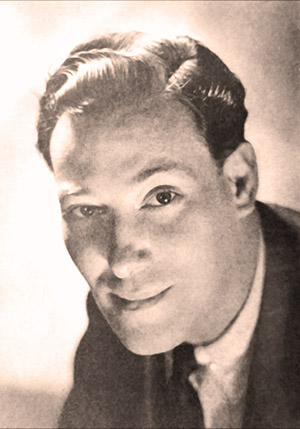
    Neville Goddard (1905–1972)

    I venture to map a seeker’s theory of mind causation – but one that also stands defensible within parameters of accepted (if not always understood) knowledge. My theory may be wrong. It may be grossly incomplete. But I believe that those of us engaged in the search for practical spirituality must at least attempt to theorise from the intersection of testimony, science, and experience. Each generation owes the labour of verification to the search of the next, which will have its own ideas and critiques.

    Indeed, today’s seekers must move beyond inherited decisions and templates. We need our own experiments and results, including failures. Those of us who care about New Thought, or mind causation, owe the spiritual culture – and ourselves – a supportable hypothesis of how it works. We must be equally willing to discard cherished hypotheses. In that vein, I conclude this essay with articles of personal experimentation.

    I start by quoting mystic Neville Goddard (1905–1972) from a 1948 series of lectures in Los Angeles:

    Scientists will one day explain why there is a serial universe. But in practice, how you use this serial universe to change the future is more important.

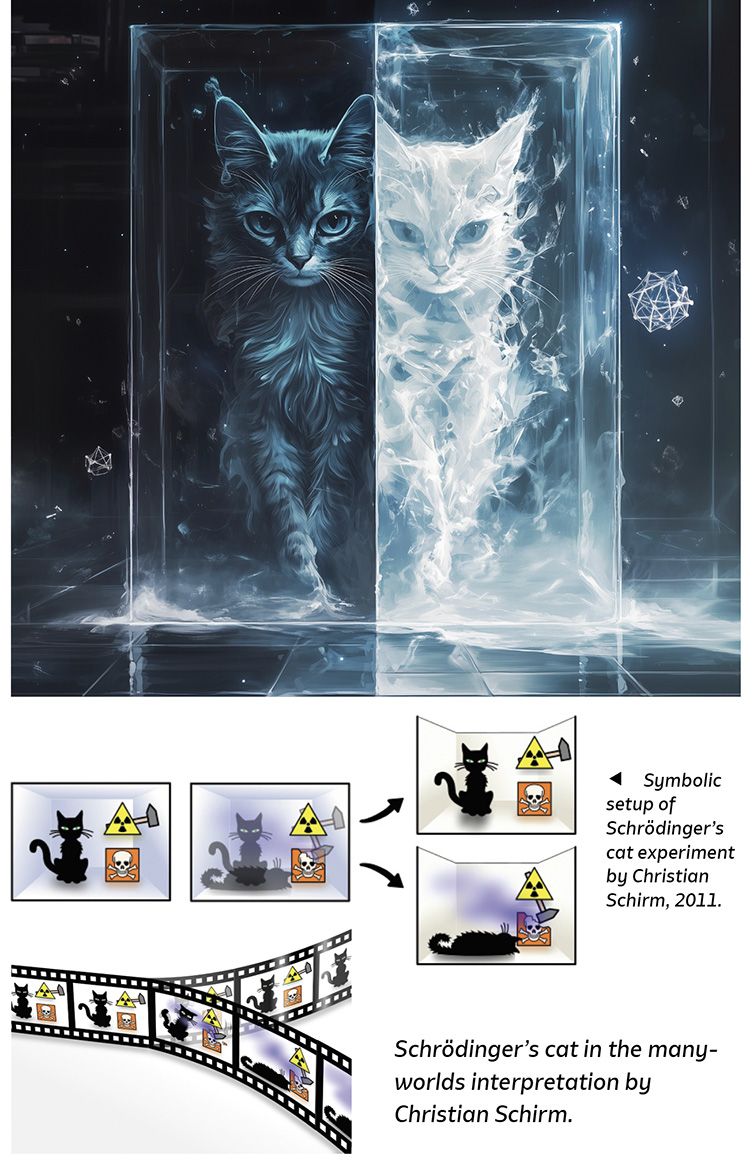
    It was a striking observation. The mononymous Neville is, I believe, the most penetrating voice to emerge from New Thought tradition – because it was not until years later that quantum physicists began discussing the many-worlds theory, devised by physicist Hugh Everett III (1930–1982) in 1957.

    A Short Overview of Quantum Physics

    Everett was attempting to make sense of some of the extraordinary findings that had been occurring for about three decades in quantum mechanics. For example, scientists are able to demonstrate, through various interference patterns, that a subatomic particle occupies a wave state or state of superposition – that is, an infinite number of places – until a sentient observer or automatised device takes a measurement: it is only when measurement is taken that the particle collapses, so to speak, from a wave state into a localised state. At that point, it occupies a definite, identifiable, measurable place. Before measurement is taken, however, the localised particle exists only in potential.

    Now, I have just about squeezed all of quantum physics into a couple of sentences. I think it is an accurate description, but obviously I am reducing huge complexities into the dimensions of a marble. I believe I am faithfully stating what has been observed in the last ninety-plus years of particle experiments (as well as emerging experiments on larger objects, such as hydrogen molecules). We are seeing that on the subatomic scale matter does not behave as we are conditioned to expect.

    Measurement & Observation: The Role of Mind

    Starting about twenty years ago, it became fashionable for New Agers and laypeople, like me, to put quantum theory at the back of cherished spiritual principles. It became equally fashionable for professional sceptics and mainstream journalists to pushback, crying B.S. and sophistry. That position, while still heard, has quieted. Not because sceptics have grown more pensive or attenuated to media-speak, but because the proposition of mind-over-matter, strange as it may seem, now resounds in debates on theoretical physics in mainline journals and magazines.

    In 2009, I attended a presentation on the “quantum measurement problem” delivered by parapsychologist Dean Radin before an audience of scientists, social thinkers, and scholars of religion. I asked Radin to address the 800-pound gorilla in the room: If observation and perspective alter material on a micro level, in the world of waves and particles, might that say something about the legitimacy of the New Thought or mind-power thesis? “It’s not complete bullshit,” Radin replied. “There may be an inkling of something to it.” Another physicist and longtime military researcher was also present. “As the resident sceptic,” he said, “I concur.”

    Our understanding of matter in our macro world generally comes from measuring things through our five senses and experiencing them as singularities. There is one table. It is solid and definable. It is not occupying an infinite number of spaces. But contemporary quantum physicists have theorised that we may not normally see or experience superposition phenomena because of what is sometimes called information leakage.

    This means that we gain or lose data based on fineness of measurement. When you measure things with exquisitely well-tuned instruments, like a microscope, you see more and more of what is going on, i.e., actual reality. But when you pan the camera back, so to speak, your measurements coarsen and you see less and less of what is actually happening. To cite the most basic example, to all ordinary appearances, a table is solid. The floor beneath your feet is solid. Where you are sitting is solid. But measuring through atomic-scale microscopes, we realise that if you go deeper and deeper, space appears within these objects. Particles make up the atom and still greater space appears. We do not experience that; we experience solidity. But no one questions that space prevails among particles composing an atom.

    Furthermore, we possess decades of data demonstrating that when subatomic particles are directed at a target system, such as a double slit, they appear in infinite places at once until a measurement is made; only then does locality exist. But we fail to see this unless we are measuring things with comparative exactitude. Hence, what I am describing seems unreal based on lived experience – but it is actual.

    In any event, my supposition is this: if particles appear in an infinite number of places at once until a measurement is taken; and if, as we know from studying the behaviour and mechanics of subatomic particles, there exists an infinitude of possibilities; and if we know, as we have since the inception of Einstein’s theories, that time is relative, then it is possible to reason – and it is almost necessary to reason – that linearity itself, by which we organise our lives, is illusory.

    Linearity is a useful and necessary device for five-sensory beings to get through life; but it does not stand up objectively. Linearity is conceptual – a subjective interpretation of what is really going on. It is not reflected in Einstein’s theory of relativity, which demonstrates that time slows for an object approaching the speed of light. (The individual travelling in a metaphorical spaceship at or near light speed experiences time slowing, not from their perspective but in comparison to those not at near light speed. And this is no mere thought exercise: space travellers in our era, although they are obviously approaching nowhere near that velocity, experience minute effects of time reduction.) Nor is linearity reflected in quantum mechanics, where particles appear in an infinitude of places and obey no orderly modality. Linearity is not replicated when measurement of a particle serves to localise the appearance or existence of the object.

    This begins to clarify why Einstein famously wrote in a letter of March 1955:

    People like us, who believe in physics, know that the distinction between past, present, and future is only a stubbornly persistent illusion.

    If we pursue this line of thought further – and this is where Everett’s many-worlds theory comes into play – the very decision to take a measurement (or not take one) not only localises a particle but creates a past, present, and future for that particle. Hence, an observer’s decision to log a measurement creates a multidimensional reality for the particle.

    There exists debate over whether a device represents a method of measurement distinct from an observer, as well as whether the “collapse” from wave to particle results from an observer’s individual psyche or “transpersonal mind behaving according to natural laws,” as observed by Bernardo Kastrup, Henry P. Stapp, and Menas C. Kafatos in a May 29, 2018, Scientific American article “Coming to Grips with the Implications of Quantum Mechanics.” This transpersonal mind, the writers continue, “comprises but far transcends any individual psyche,” a description similar to the Hermetic concept of Nous or an over-mind. The authors compellingly argue that even if a device is used for measurement – and thus localisation – perception and intent, either of the individual, the meta-mind, or both, remains the determining force.

    Schrödinger’s Cat

    Multidimensional reality is implied in the famous thought experiment called Schrödinger’s Cat. 20th-century physicist Erwin Schrödinger (1887–1961) was frustrated with the evident absurdity of quantum theory, which showed objects simultaneously appearing in more than one place at a time. Such an outlook, he felt, violated all commonly observed physical laws. In 1935, Schrödinger sought to highlight this predicament through a purposely absurdist thought experiment, which he intended to force quantum physicists to follow their data to its ultimate degree.

    Schrödinger reasoned that quantum data dictates that a sentient being, such as a cat, can be simultaneously alive and dead. Here is a variant of the Schrödinger’s Cat experiment: a cat is placed into one of a pair of boxes. Along with the cat is a collar fitted with a device which, if exposed to an atom, releases a deadly poison. An observer then fires an atom at the boxes. The observer subsequently uses some form of measurement to check which box the atom is in: the empty one or the one with the cat and the poisoning device. When the observer goes to check, the wave function of the atom (the state in which it exists in both boxes) collapses into a particle function (the state in which it is localised to one box). Once the observer takes his measurement, convention says that the cat will be discovered to be dead or alive. But Schrödinger reasoned that quantum physics describes an outcome in which the cat is both dead and alive. This is because the atom, in its wave function, was, at one time, in either box, and either outcome is real.

    Of course, all lived experience tells us that if the atom went into the empty box, the cat is alive; and if it went into the box with the cat and the poisoning device, the cat is dead. But Schrödinger, aiming to highlight the frustrations of quantum theory, argued that if the observations of quantum-mechanics experiments are right, you would have to allow for each outcome.

    To take it even further, many-worlds theorists in the 1950s posited that if an observer waited some significant length of time – say, eight hours – before checking on the dead-alive cat, he would discover one cat that was dead for eight hours and another that was alive for eight hours (and now hungry). In this line of reasoning, conscious observation effectively manifested the localised atom, the dead cat, and the living cat – and also manifested the past, or in other words, created a history for both a dead cat and a living one. Both outcomes are true.

    So, whatever a particle is doing, the very fact that a sentient observer has chosen to take a measurement at that time, place, moment, and juncture creates a whole past, present, and future – an infinitude of outcomes. A divergent set of outcomes would exist if that measurement were never taken. A divergent set of outcomes would also exist if that measurement were taken one second later, or five minutes later, or tomorrow. And what is tomorrow? When particles exist in superposition until somebody takes a measurement, there is no such thing as tomorrow, other than subjectively.

    Consider too: the cat, from its perspective, is local; the observer, from its perspective, is local – but both, in fact, are in a wave state or superposition. We can speak of them as concrete, singular beings only from their personal perspective. From the quantum perspective, they are infinite. Expanding on this idea, research physician Robert Lanza, adjunct professor at Wake Forest University School of Medicine, argues that death itself is ultimately a mental phenomenon: we “die” only insofar as an observer perceives demise; the consciousness of the “deceased” branches off into one of Everett’s many worlds. (This begs the question of who experiences these effects if there’s no such thing as “one” person/life. I consider this in my book Daydream Believer.)

    And what, finally, are our five senses but a technology by which we measure things? Are our five senses anything other than a biological technology, not necessarily different in intake from a camera, photometer, digital recorder, or microscope? So, it is possible that within reality – within this extra-linear, super-positioned infinitude of possibilities in which we are taking measurements – we experience things based upon our perspective. This is why in considering mind causation I use the term select rather than manifest.

    Neville Goddard: Thoughts Have Wings

    Here, we return to mystic Neville Goddard. His instinct was, I believe, correct in the schema just considered. Neville taught that you can take a measurement by employing the visualising forces of your imagination. You are taking a measurement within the infinitude of possible outcomes. The measurement localises or actualises the thing itself.

    In the 1948 lectures quoted earlier, Neville further noted:

    Man can prove the existence of a dimensionally larger world by simply focusing his attention on an invisible state and imagining that he sees and feels it. If he remains concentrated in this state, his present environment will pass away, and he will awaken in a dimensionally larger world where the object of his contemplation will be seen as a concrete objective reality.

    I feel intuitively that, were he to abstract his thoughts from this dimensionally larger world and retreat still farther within his mind, he would again bring about an externalisation of time. He would discover that, every time he retreats into his inner mind and brings about an externalisation of time, space becomes dimensionally larger. And he would therefore conclude that both time and space are serial, and that the drama of life is but the climbing of a multitudinous dimensional time block.

    Again, note how foresightful Neville’s ideas and language proved of the many-worlds theory.

    Aleister Crowley, the confounding and brilliant British occultist and artist, made a statement related to Neville’s. Writing in the introduction to his 1904 channelled text The Book of the Law – later published in a general edition in 1938 – Crowley observed:

    Each of us has thus an universe of his own, but it is the same universe for each one as soon as it includes all possible experience. This implies the extension of consciousness to include all other consciousnesses. In our present stage, the object that you see is never the same as the one that I see; we infer that it is the same because your experience tallies with mine on so many points that the actual differences of our observation are negligible… Yet all the time neither of us can know anything… at all beyond the total impression made on our respective minds.

    Neville’s formula is simplicity itself: an assumption, if persisted in, hardens into fact. But the assumption must be persuasive; it must be convincing. That is why emotions and feeling states must come into play. And Neville observed that you can use hypnagogia – the state of cognizant pre-sleep or drowsy relaxation – to help facilitate that process.

    Hypnagogia naturally occurs twice daily: just prior to and following sleep. It is a period of hallucinatory sentience during which we are nonetheless capable of controlling attention; what’s more, your rational defences are lowered. This can be considered “prime time” to visualise a desired end. (Hypnagogia is also a period of heightened ESP-related activity, as recorded in academic psychical research.)

    Another way of using Neville’s approach to mental creativity is to enter an inner state of theatrical or childlike make-believe. Not childish but childlike: a state of internal wonder and pretending. Children excel at this. We grow embarrassed about this quality as we age, but Neville spoke ingenuously about walking the streets of Manhattan imagining that he was in the treelined lanes of his native Barbados, boarding a ship to some desired destination, or in a location where he wanted to be.

    He would say: “Unfoldment will come. You will see.” Again, he argued that an assumption, although false, if persisted in, eventually hardens into fact. He further advised, “Assume the state of the wish fulfilled. Live from the end.” Remember, the teacher reminded listeners, you are not in a state of wanting; you are in a state of having received. Your aim is simply to occupy the emotional and mental condition that you would experience following fulfilment.

    Of course, you must also continue to go about your adult life in this world of Caesar, currency, and commerce – fulfilling your obligations and remaining accountable. You must cooperate with the world. You must do the normative things that life requires. The crisis of the New Age is the inability of an outsized number of its adherents to abide this. In my observation, until a person demonstrates accountability, competency, and agency in outer life, the spiritual path is a diversion, possibly a disastrous one.

    Should you accept this challenge, how long will it take to witness your desired changes in outer life? How long is required for outer life to conform to your internal focus, your act of living “from the end” of your ideal? The question of time intervals is deeply fraught because with all the stresses that life throws at us, it is very difficult to adopt a feeling state and stick with it for weeks. At times, psychological barriers and stresses make it impossible.

    Neville noted that there could fall a substantial time interval between your visioning and experience of the wished-for state or thing. He would point out that the gestation period of a human life is nine months. The gestation period of a horse is eleven months. The gestation period of a lamb is five months. The gestation period of a chick is twenty-one days. There is almost always going to be some time interval. You will find that naturalness of persistence comports with depth of passion for your aim. It can appear more a matter of the aim holding you than you it. This is one reason why clarity of aim and self-honesty are essential: we follow emotions, acknowledged or not.

    Careful What You Wish For

    Johann Wolfgang von Goethe (1749–1832) made an interesting observation in this vein. We have all heard the expression, “Be careful what you wish for; you just might get it.” It is rooted in Goethe. Taking a leaf from the philosopher and dramatist’s play Faust (c.1772–1775),Ralph Waldo Emerson noted this dynamic in his 1860 essay “Fate,” which led to the popular adage. Emerson wrote:

    And the moral is that what we seek we shall find; what we flee from flees from us; as Goethe said, “what we wish for in youth, comes in heaps on us in old age,” too often cursed with the granting of our prayer: and hence the high caution, that, since we are sure of having what we wish, we must beware to ask only for high things.

    We are being warned to act with perspective: what we wish for when we are young will visit us in waves when we are old.

    Goethe’s observation relates to Neville’s remarks about the perceived passage of time and the gestation between thought and actualisation. Many people would reasonably object that they have all kinds of unfulfilled wishes. But unlocking the truth of this observation requires peeling back the layers of your mind and probing formative images and fantasies from when you were very young.

    What is the earliest dream you recall from when you first gained conscious memories, maybe at age three or four? What fantasies occupied your earliest recollective years? Children lead very intense fantasy lives, even at ages four or five. If you take Goethe’s counsel, you might be surprised – barring extreme countervailing events (to which I return) – to discover remarkable symmetry between things you are living out today and concepts you harboured when very young. These can be positive, negative, or numerous stations between.

    Neville recommended against thinking in terms of, “It will happen this way” or, “I’ll do something to make it happen.” His attitude was that the event will unfold in its own natural manner. In his system, your job is not to draw the map – it is to live from the destination.

    I must, finally, add a word about suffering on both an intimate and global scale. New Thought has proven woefully inadequate in addressing matters of implacable tragedy and catastrophe, a topic on which I’ve written widely.

    My contention is that even if awareness or consciousness is the ultimate arbiter of existence, we still experience many different laws and forces within the physical framework we know. I used to say that we live under many different laws and forces; I’m not sure if that’s entirely right. But we certainly experience diffuse laws and forces, and these experiences are hard-baked into us.

    So, it stands to reason that even if emotive thought, perspective, and awareness are determinative of what reality gets concretised into our individual experiences, there exist different laws and possibilities that are also playing out at the same time. There are physical facts which also form part of the nature of our experience within the framework that we find ourselves. And it could be that there are other frameworks in which our psyches are much freer. There may be frameworks in which we experience fewer laws and forces that seem to interrupt a sense of continuity between you, the individual – you, the seeker – and that which you experience.

    That said, suffering and catastrophe must, for every ethical being, be understood as fundamental, urgent, and, where possible and according to personal conviction, requiring of amelioration and solidarity.

    I believe that Neville is going to be remembered – and is already seen today – as having created the most elegant mystical analogue to quantum physics.

    When I started writing about Neville in 2005 – the first journalistic coverage of his life since the 1940s – he was a figure of obscurity even among most New Thoughters. But today Neville’s voice and work net millions of results in search engines. At a 2022 tech conference, I was floored by the number of programmers and engineers (not the usual suspects) who approached me to talk about him.

    As seen, Neville espoused a variant of the many-worlds theory long before the popularisation of quantum physics. Indeed, he had a series of remarkable instincts in the 1940s that have since been tantalisingly, if indirectly, reiterated by quantum theorists – most of whom have not (yet) heard his name.

    Indeed, it would not surprise me if, within a generation, some physics students begin to read Neville as a philosophical adjunct to their work. That may seem a stretch, but remember that many of today’s senior cohort of physicists, people in positions of academic and grant-making authority, were inspired by Star Trek, Arthur C. Clarke,and Zen and the Art of Motorcycle Maintenance. There is visibly greater openness in the field today to matters of perspective and thought causation.

    Get the issue this article appears in

    Living by the Inner Light of Conviction

    As I’ve suggested, you can use several different techniques in connection with Neville’s ideas, including those of your own devising: I challenge you to try them and see what happens. You are entitled to results. I believe that every therapeutic, ethical, or spiritual philosophy should produce some concrete and desired change in your life and conduct; if it does not, then such an idea warrants no hold on you.

    I feel similarly that the ability to observe and note an outcome in your life is vitally important. Testimony forms a critical source of ideas, a meaningful record, and a warranted inducement to others.

    We all live by philosophies, spoken or not. Even if we say we do not have an ideology, we obviously harbour assumptions by which we navigate life. When I look back on figures like Neville or pioneering parapsychologist J.B. Rhine (1895–1980), I realise that their greatness is that they lived by the inner light of their ideas. That is rare. We are a world of talkers. People are sarcastic or cruel over Twitter and think they are taking a principled stand. Is it courageous or honourable for a keyboard warrior (often under a pseudonym) to call out people online? That is no victory. It is make-believe morality.

    When we look back on iconic figures in the social, cultural, artistic, or spiritual milieu, we remember those few who lived by the inner light of conviction; who struggled to comport their ideals with conduct. Such private philosophies are the only ones that last. Indeed, if you cannot keep your word, apologise, demonstrate solidarity or loyalty, then write nothing of an ethical or spiritual bent. You’ll be writing on sand.

    I must state the following and I mean it in my heart: if you sincerely attempt what I am theorising in this article, I believe that you will find greatness; because, if nothing else, you will be attempting to live by the inner light of an idea. Try.

    [alert type=”general” dismiss=”no”]This article was published in New Dawn Special Issue Vol 18 No 6.[/alert]

    [alert type=”success” dismiss=”no”]If you appreciate this article, please consider subscribing to help maintain this website.[/alert]

    © New Dawn Magazine and the respective author.
    For our reproduction notice, click here.