New Dawn – World's Most Unusual Magazine

Category: Articles

  • The Return of Pete Evans: Why Health is the Ultimate Act of Rebellion

    The Return of Pete Evans: Why Health is the Ultimate Act of Rebellion

    From New Dawn 209 (Mar-Apr 2025)

    After being cancelled for challenging the officially-approved COVID narrative, Pete Evans is back with New Dawn magazine to discuss the potential for individual and collective change in a shifting world. He believes that good health, achieved through great food, is a pathway to this transformation. His latest book, Healthy Food for Healthy Kids, is a guide to delicious, paleo- and keto-friendly meals that kids will love.  

    I caught up with Pete for another interview, our first in a post-COVID world. We discussed what that period meant to him, his focus moving forward, the election of Donald Trump, and more.

    ETHAN NASH (EN): Thank you for joining me again. It feels like the perfect time to catch up with everything happening right now in the world. You can almost feel a shift of energy in the air, particularly in the United States, and I want to get to all that.

    But I wanted to start by tying a knot around the COVID-19 period – not so much by talking about what happened or the topic itself, but more by discussing yourself and your role in it all.

    We first spoke in 2020, when you were censored and banned from social media. We spoke again in 2022 when the borders had just been opened, and it was still a bit of a weird period.

    Today, every time I see a post online, a mainstream media article about you, for example, I notice an overwhelmingly positive response.

    Despite how the media has treated you, the Australian public genuinely sees you as a legend for standing up for what you did. You were the first major personality in this country to take a stand against the suppression of free expression, and with everything that’s come out since then, many feel you were on the right side of history.

    How much has your life changed since then? And when all is said and done, looking back, how will you remember that period of your life?

    PETE EVANS (PE): Thank you for the kind words. I think everybody will look back through this period from their own lens and what it meant to them individually and perhaps collectively if they choose to go down that path.

    For me personally… I often say I didn’t have a choice, which is false because we all have a choice in everything we do. I chose to speak out, and I knew there would be some ramifications in doing so. Financially, popularity-wise, career-wise.

    It’s a paradox because I didn’t really feel like I had any other choice, even though I have free will. I guess I was guided by my intuition and gut feeling – a feeling that this was the perfect time for me to hold the torch, along with others, and illuminate what I believed was going on.

    Part of me felt it was vitally important to show others that it’s okay to express yourselves in ways when intuition guides you – and not be fearful of the possible ramifications. I’m not speaking so much about COVID or the agendas you have covered in-depth, but more so from a deeply personal point of view when it comes to relationships.

    For instance, in a loving relationship as husband and wife… is it okay to express what you desire in a relationship? Can you feel safe expressing yourself to your parents, your children, your work colleagues, or your boss in a way that you trust yourself when it needs to be spoken? 

    If we look at the foundations of long-term regenerative health, one of the things that comes up for a lot of people is bottling emotions away for fear of upsetting others – that can cause dis-ease.

    This was one of my motivations for speaking out because I knew there would be retaliation. 

    I feel that for each of us to have long-term health – physical, emotional, spiritual, and mental – we must not fear to express ourselves authentically with love, compassion, empathy, and sympathy. 

    What I found was, if we’re talking about me speaking out publicly during that period…. one of the most common responses I received was, ‘I wish I was brave enough’ or ‘I wish I had the courage to do what you’re doing, but I’m fearful of this, that, and the other.’

    It also represented for others an opportunity to express themselves in ways that they felt they needed to express themselves. I’m still here – I’m living and breathing, they didn’t lock me up – and I was prepared to be locked up if that was what the journey called for.

    I knew the consequences and the potential. I had to consider all the possible scenarios… locked up away from family and the potential of being taken out was the craziest sort of conspiracy I had, which I expressed to Liz Hayes on 60 Minutes in our interview.

    I was prepared for all of those things because I consciously decided that this was something I felt passionate about. I’m grateful I listened to my intuition and my gut – that I could go on a journey and be that person for myself. And if other people resonated with it or not? Great if they did, great if they didn’t. 

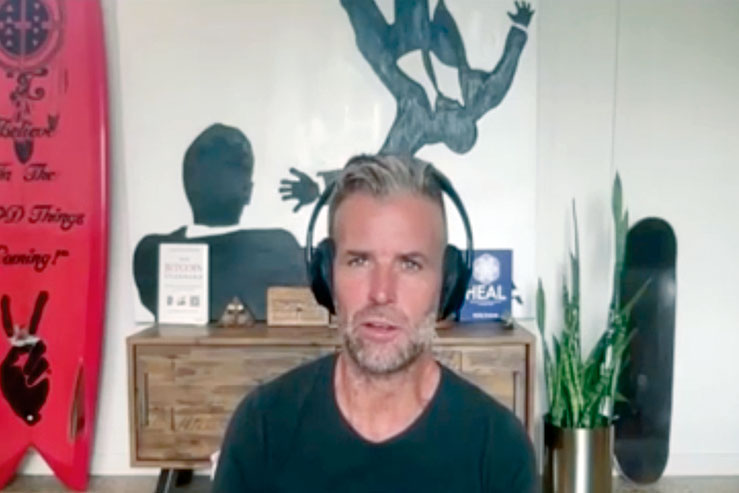
    Pete catches a wave. Image courtesy of Pete Evans.

    EN: Very well said; thank you for sharing. Moving to something a little more recent now: As I said earlier, there seems to be a shift in the air right now. 

    The last time we spoke, after the 2022 lockdowns, I asked you a question about navigating the storms ahead. You gave a very eloquent answer about how storms are just a part of changing seasons. As such, there’s also sunshine, rain, hail, and so on. You spoke on learning to embrace the journey, so to speak. 

    Today, with Donald Trump having been elected and Robert F. Kennedy Jr. (RFK) tipped to gain greater influence and ignite change, the rumblings are daily.

    Following up on your previous analogy of changing seasons, do you feel that we’re potentially entering a sunnier season of the current timeline?

    PE: Perhaps, perhaps. Again, it comes down to an individual’s perception of reality and what they deem to be ‘sunny days’. I dare say there would be a lot of people that are like, ‘wow, look what is happening and has happened’ – and they have hope. 

    The other day, a mate sent me a message: ‘Oh, I hope Trump and Kennedy do this’. And I wrote back: ‘Well, I don’t like to use the word hope’.

    In that context, I don’t need Trump or Kennedy to do anything for me. Waiting and hoping for other people to do things that will impact our lives is a source of disempowerment. I’m not even a huge fan of the words optimism or pessimism, either, because it’s sort of like hoping and waiting that things will get better. 

    Can we not take full ownership and responsibility of our human potential on a minute-by-minute, hour-by-hour, day-by-day, week-by-week, or season-by-season basis? No matter what the season, why do we need to have certain expectations met for us to feel content, safe, or trust in ourselves? Why do we wait for external figures to create this safety for us? 

    Don’t get me wrong, I’m stoked that Trump’s back in and I’m stoked about Kennedy playing a role in the new administration. Maybe by the time this interview is published, he might well be confirmed or not. But I’ll be pleased whether he is or isn’t, regardless, because I trust in every decision that’s playing out on this chessboard of life. It really depends on where our focus lies.
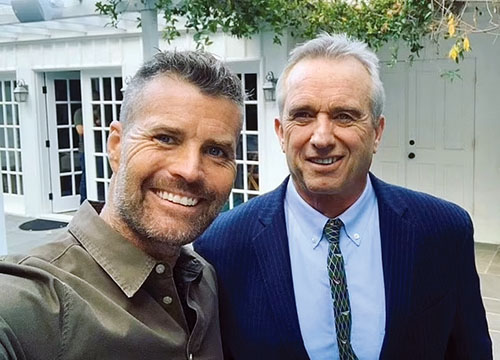
    Pete with Robert F. Kennedy.

    You know, you could be completely oblivious of Donald Trump and Robert Kennedy, Jr. and live a beautiful, peaceful, contented, full experience, regardless of what those men or other people in positions of so-called power do over the coming weeks, months, years, or decades.

    That’s where I like to hang out as much as possible: watching the game unfold. The political games, the bureaucratic games, I find them all quite entertaining. However, I’m not tied to any specific outcome. You know, I love reading fantastic novels that have plot twists you don’t expect. It fascinates me how someone can create a scenario, or twist, or change of season so quickly – and what will come from that shift?

    We can’t hold on to these expectations of what we think must happen. I’ve learned in this life to set an intention for what you desire or wish to see in the world, but then let it go as well. And that isn’t to say that we aren’t wonderful manifesters. We’re also co-creators with every other individual on the face of the planet. I really love the mystery and surprise elements of the game being played, which I choose to observe in those various scenarios. 

    And I’m always open for the curveball that may or may not come. 

    For the last two years, I’ve been reading many Isaac Asimov’s novels from the 40s, 50s, 60s, 70s and even the 80s on the potential applications for robotics and AI.

    I’m fascinated by it because there are so many parallels to what he was writing about decades ago and what’s happening now – and all the possibilities that can spring from this. He’s discussed much of this in his books, and I find it fascinating that just now, I went on social media, and the truth movement is up in arms over the mRNA shot. I love that. 

    To speak out is to express yourself. But at the same time, I’m not willing to throw human ingenuity out because of a potential fear of something we still don’t fully understand. I’m curious to see how these things go. Obviously, if by next year they announce, ‘All right, we’ve got the cure for cancer and an mRNA vaccine, and everyone will be tested and we’ll provide this to you’ – I would likely be very, very vocal again.

    Again, it does not address what I believe should be the foundational principles of long-term regenerative health, which is not overlooking our emotional belief systems. A greater focus on that and diet could have profound implications for the medical and health systems in the coming decades. 

    Who knows if they’ll get there in my lifetime? I’m so excited about everything that’s currently coming to the surface for us to intelligently debate, ponder, contemplate, consider, and even reject. Yeah, I’m excited!

    EN: It’s sure to be a fascinating few decades ahead. It’s an incredible time to be alive. In the magazine, we’ve explored the parallels between early science fiction and the direction the world is taking, particularly regarding artificial intelligence. Like you, I observe from a distance, and many people are definitely invested in the ‘redemption arc of Donald Trump’. From your point of view, do you see anything similar unfolding in Australia in the coming years? Perhaps some push for a political or health revolution? We’d love to hear your thoughts on this, and would you consider being part of something like that if it happened here? 

    PE: I see good people out there in the system – some of the senators, for instance, that you may have interviewed or seen over the past few years. I resonate with what some of them are saying. But it seems they face these almost impenetrable walls because the system has been designed to create these walls that, perhaps, aren’t ready to be broken down just yet.

    I could be wrong; I’d like to be wrong about this. But how long would it take to either rebuild or dissolve some of these walls into a new direction… without actually creating new impenetrable walls? It’s a very deep question that I don’t have a definite answer for. 

    My observation is that America ‘holds the key’, so to speak. What happens over the next four years, depending on who takes over after Trump, will be the proof of the pudding. What ripple effect will we see throughout the rest of the world? 

    And will Australia be second in line, third in line, tenth, or one hundredth in line to feel the ripple effect? I’d love for the ripple effect to be felt here very, very quickly – but whether that happens or not remains to be seen. 

    That doesn’t mean we can’t start taking steps now, though. I see individuals stepping up to the plate for the right reasons, and each person has to figure out if they’re willing to go in and bang on those walls. I’ve thought about the potential of my role in this game, and there’s still a big question mark for me about how I can use my expression to achieve the most impact.

    I still feel that, at this particular point in time, food is vitally important for massive amounts of change. We’ve discussed this before in our prior interviews, so I won’t go there again, but I feel like that seems to be where I’m best suited for my so-called celebrity or fame, and, obviously, knowledge, wisdom and experience in the art of cooking and nutrition. 

    Politics doesn’t really call to me. When I think about it, I can’t see a future there. I haven’t seen any future in it so far, and looking ahead, I still don’t see it. 

    EN: What does the future hold for Pete Evans?

    PE: I have a book coming out with Robert F. Kennedy Jr.’s Children’s Health Defence in the coming weeks, and I’m planning a tour in the States in March [2025]. We’re organising influential people with large audiences so I can share the message of food as medicine and food as poison, depending on what you choose to take into your body. 

    What if we educated people on how to eat delicious, budget-friendly food for themselves and their families, cultivating a deep belief in self-nourishment through the simple acts of shopping and cooking for oneself and then enjoying that food mindfully? If we could inspire people to prioritise food as one of their top values in life, understanding that it could add decades to your life and life to your decades…

    Then, we would probably never have to spend money fighting the multinational food corporations or the FDA, trying to get food dyes or additives out of food. Because once people are educated about healthy eating, they would never shop in that section of the supermarket anyway. That business would, by default, go bankrupt or have to adapt. 

    It’s about focusing on inspiring change because the single greatest act of rebellion against all of the agendas and systems is to be healthy. Once you are healthy, you no longer are a part of medical system, the pharmaceutical system, the multinational food system, the big agricultural system, and the list goes on and on.

    I spoke with RFK Jr. the other day and I said: ‘How about we set up a government website to Make America Healthy Again and include a couple of thousand recipes of mine?’ I thought, my name doesn’t need to be associated with it; I can remain anonymous – but the recipes should be there. We could even bring in America’s top chefs, the ones that people love and know – because they rejected Jamie Oliver when he came over to teach Americans to avoid sugar – so why not approach it cleverly with American chefs preparing nutrient-dense, beautiful, non-inflammatory food. We could even offer it to Americans for free and create a cooking school, teaching people how to cook and hang out. Essentially, create this beautiful database that people can access anytime. 

    I said: ‘How inexpensive would that be to create, and how inspiring could it be for a government agency to offer?! A guide that doesn’t abide by the dietary principles that are currently prescribed by dietary associations in the Western world, as we know they’re completely wrong – in my opinion, even criminal – and rather just inspire people to nourish themselves?’ He loved the idea. Now that I’ve set that intention, will that happen? 

    At the end of the day, it’s up to the individual to decide whether to explore these issues, and I would never force it on anybody. I would never force everyone to eat this way. If you want to eat junk food, I respect your decision; fantastic, good for you. I love free will, but at the same time, I think better, more trustworthy information would be really nice to have available. 

    I’m 51 years old, and I’ve been eating this way for 15 years. According to health authorities, I should be sick, my bones should be brittle, and I probably shouldn’t even be here – because, in their opinion, I’m ‘depriving myself of the most essential foods on the face of the planet’. 

    Yet, as a 51-year-old, I surfed today for two hours, and I’d say I’m in the best physical, mental, emotional, and spiritual shape of my life. My intention is for that to grow, strengthen, and evolve until the day I pass away from old age or an injury. I don’t see myself in a hospital bed on life support or having cancer, heart disease, Alzheimer’s, or dementia – that’s not part of my life plan. My life plan is to age gracefully with wisdom and strength until it’s time to go and not be in any pain or suffering. 

    Again, that’s my belief, and how do we cultivate these beliefs? We cultivate these beliefs through the potential of understanding what is possible.

    If you read mainstream media, you would potentially believe that after the age of 30, it’s all downhill and your health will decline. ‘You should be on this pharmaceutical, and this vaccine, and this trajectory’. In America, on average, every adult is on four pharmaceuticals. It doesn’t have to be like that. I know it can change. Can we get to that point? I believe you can individually. Can we achieve that collectively? I’m not sure if that will occur in my lifetime. Perhaps, perhaps not. That’s once again, part of the mystery.
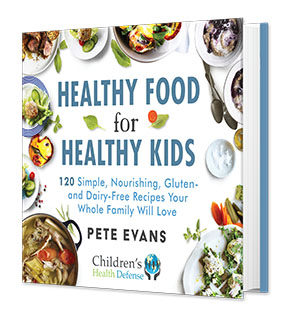
    EN: Your new book, Healthy Food for Healthy Kids, features 120 fantastic budget-friendly recipes. So, if your suggestion for a health database doesn’t come to fruition on a US government website, people can still access this valuable information. You certainly have the expertise and experience to make a real impact in food and health. 

    Before wrapping up, I wanted to touch on another potentially game-changing alternative that has really grown, which I notice you post about often, and that is cryptocurrency. Could you share your thoughts on how this might influence the future unfolding before our eyes?

    PE: I feel like Bitcoin has manifested as a tool for long-term wealth because we know what inflation and fiat currency are about – taking and devaluing in a centralised manner – basically theft. I came across Bitcoin about five years ago, and I’ve spent thousands of hours studying it. Bitcoin and health principles go hand-in-hand because it’s about self-accountability, self-responsibility, and self-sovereignty. The two mirror each other beautifully, so I’m intently wanting to work in and be seen in that space. There are hundreds of millions of Bitcoiners around the world, and to potentially inspire them regarding food and nutrition would be great.

    A lot of people I’ve interviewed in that space are some of the healthiest and smartest people, and they already have that dialled in. So, there seems to be a correlation between Bitcoin, health, and nutrition – but I haven’t seen a chef bridge the Bitcoin and health worlds. That’s only come up for me in the last month, so I’m pondering and contemplating the best way of bridging those two at the moment.

    If you haven’t studied Bitcoin, I would highly recommend people read The Bitcoin Standard as a bare minimum to understand how governments and medical institutions are very similar to the banking industries. To understand the history of money – what money is, what currency is, what value is – I got to it all quite late, but it’s been one of the greatest experiences I’ve had over the last five years. Learning about Bitcoin has taught me so much – so much more than I thought – and I think that’s always a good thing when you learn. When I learned about cooking, I thought cooking was just about cooking delicious food. Would you believe there’s also a nutritional aspect to it that most chefs don’t really take into consideration?

    I’m sorry to generalise there, but we weren’t taught about nutrition when we did our apprenticeship. Doctors who go to college to study medicine do eight hours maximum on nutrition, which is crazy. In the same way, I was never really taught about finances and money. 

    Once you see it, you can’t unsee it. It will be interesting to see what plays out over the coming decade in the Bitcoin and finance space with central bank digital currencies – whether they get off the ground or not. As you said, it’s an amazing time to be alive.
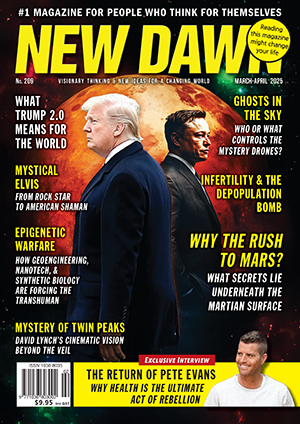
    Get the issue this article appears in

    EN: Is there anything else you would like to leave the readers with?

    PE: I truly love what you and the others at New Dawn are doing. It’s always a great read, and I’m stoked that you guys are expressing yourselves creatively.

    It’s my deep belief that our purpose on this earth is to express ourselves creatively through whatever brings us joy and cultivates our passion, and to love unconditionally. It’s great to see you and others doing that through your medium, so thanks for providing the space to share.

    Visit peteevans.com for more great content from Pete Evans. His new book, Healthy Food for Healthy Kids: 120 Simple, Nourishing, Gluten and Dairy-Free Recipes Your Whole Family Will Love, is now widely available in bookstores, online and physical. You can also explore Pete’s documentaries, podcasts, vodcasts, and more by visiting evolvenetwork.tv. X: @peteevanschefx

    [alert type=”general” dismiss=”no”]This article was published in New Dawn 209.[/alert]

    [alert type=”success” dismiss=”no”]If you appreciate this article, please consider subscribing to help maintain this website.[/alert]

    © New Dawn Magazine and the respective author.
    For our reproduction notice, click here.
  • America at the Crossroads: Trump’s High-Stakes Battle Against Systemic Collapse

    America at the Crossroads: Trump’s High-Stakes Battle Against Systemic Collapse

    From New Dawn Special Issue Vol 19 No 2 (April 2025)

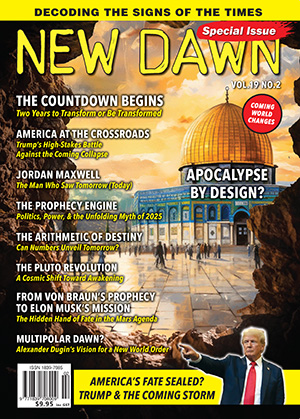
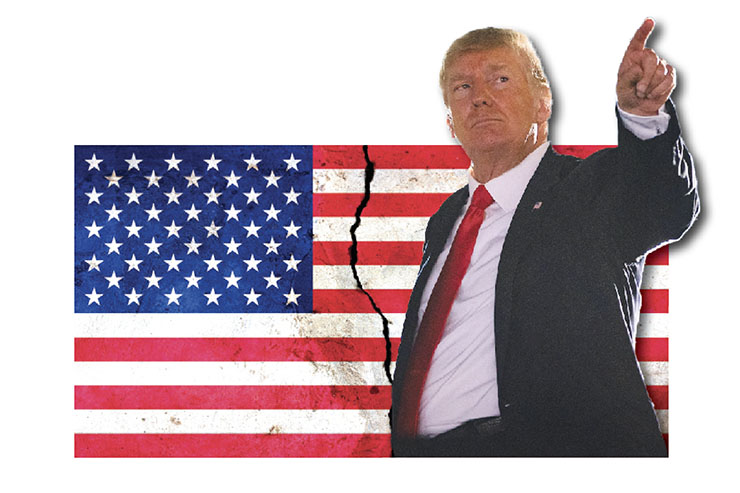
    As I write these words, Donald Trump has been President of the United States for just over a month. Most of the voters who put him into office are delighted by what his administration has accomplished so far. The exceptions are those who don’t think he’s done enough to slash the permanent bureaucracy of Washington, D.C., or those who are disappointed that arrests and trials haven’t happened yet.

    His opponents in the bureaucracy, the corporate media, and the classes that support the former status quo in the United States are yelling in predictable outrage, but the sound and fury has so far signified very little. Trump’s quick action against USAID, which funded most of the protests and legal challenges that made his first term so difficult, seems to have dealt a body blow to the opposing side.

    Outside the circles of Trump’s supporters and opponents, however, a great many people seem to be baffled by the speed at which Trump’s administration is moving and the unexpected nature of some of his initial targets. Even among his supporters and opponents, not many people seem to have grasped the logic of his moves or the agenda that lies behind them. Now, of course, quite a bit of that lack of comprehension comes from the bad habit, common on all sides of today’s politics, of treating complex struggles as though they were third-rate Star Wars knockoffs.

    Most of us are wearily familiar with this habit. No matter who’s speaking and how much privilege they have, the side they favour is always supposed to be the heroic rebel alliance and the side they detest is just as inevitably the evil empire. Approaching anything from so simple-minded and cartoonish a perspective as this is a good way to be blindsided by the obvious.

    Donald Trump is no more the Emperor Palpatine than he is Luke Skywalker. Instead, he’s a smart and ambitious member of the American ruling elite who saw an opportunity, took advantage of it, and – like so many people in the last decade – was radicalised by the dysfunctional and abusive behaviour of a system in terminal crisis.

    Most people recognise that the industrial nations of the West are in trouble. Few have grasped just how deep that crisis goes, much less come to terms with the consequences. Donald Trump appears to be one of the exceptions. Whether he’s had the necessary insights or simply listens to people who have done so, he’s taking actions that only make sense if the predicament of our time is understood clearly. To grasp that, however, we’ll need to glance over some theory.

    The Threat of Catabolic Collapse

    As I explained two decades ago in my paper “How Civilizations Fall: A Theory of Catabolic Collapse,” the reason civilisations fall is a direct consequence of the process through which they rise. Societies of every kind grow by building up what economists call “capital.” This simple word embraces every product of economic activity that can be used to foster more economic activity. Obviously, a factory building is capital, and so are the tools inside it, whether hand tools on workbenches or industrial robots and the computer system that runs them. Roads are capital, so are the vehicles that drive on them, and so are the oil wells, refineries, pipelines, and petrol stations that keep those vehicles fuelled.

    Capital also takes less concrete forms. A trained workforce is capital, and so are the hospitals where children are born, the schools where they become productive members of society, and all the other things they need to reach adulthood and join the labour force. Scientific laboratories are capital, so is the knowledge that comes out of them, and so are the libraries, journals, and websites that make that knowledge available. Markets are forms of capital, and so are the practices and ways of thinking that make them work. So, it bears noting, are bureaucracies.

    Anything can be capital as long as it can be used directly or indirectly to produce more wealth. Of course, capital can be used efficiently or inefficiently. It can even fail to produce any wealth at all if it’s poorly managed. It remains capital as long as it can be used to produce wealth. Again, bureaucracies come to mind here.

    The downside of capital is that it has to be maintained, and maintaining it requires the same inputs as the production of new capital. In this way, the cost of maintaining existing capital competes with all the other requirements of economic life, from putting food on tables to research that might open up new possibilities for the future. When the burden of maintaining existing capital becomes heavy enough, societies face a stark choice between abandoning some of their existing capital and going under.

    This choice becomes even more difficult when economic activity depends on something other than capital: in the terms I used in my essay, resources. Like the word “capital,” the word “resources” here covers a lot of territory. It includes everything that comes into the economic process from outside. Fossil fuels and metal ores belong in this category, obviously enough. In addition, and crucially, the resource base for a society includes things produced by economic activity in other societies if those things are brought into the resource base by some means other than fair trade. The plunder seized by conquering armies becomes part of their nations’ resource base. So does wealth seized by less obvious means – for example, the transfer of wealth from client states to an imperial nation through the latter’s control of the global reserve currency.

    What makes resource dependence a trap is that most resources are unsustainable, and the more concentrated and valuable they are, the more unsustainable they tend to be. Conquering armies can only plunder a kingdom so many times before there’s nothing left to loot. An imperial nation that uses its currency to extract wealth from client states will find itself in the same predicament, though it takes a little longer. Fossil fuels and metal ores deplete as they are extracted, and the costs of continued extraction climb steadily while the output falls.

    Steady economic growth thus requires the replacement of resources with capital. Farmers found this out centuries ago when they discovered that they had to maintain their soil to keep it fertile; in terms of the model we’re using, they turned a resource into capital and got sustained yields in exchange for paying the maintenance costs of the soil. In exactly the same way, we provide tax credits for families with children rather than importing slaves from conquered nations; the workforce of a nation is a form of capital and has to be maintained.

    Relying on capital rather than resources is thus a strategy with a long shelf life, but it has costs. Relying on resources is cheaper in the short run, but once the resource base is depleted, the society that takes that route is in deep trouble. It can only maintain economic activity by treating its capital as resources, cannibalising it in order to keep the economy going a little longer. The result is catabolic collapse – the process by which falling societies consume their capital in the process of going under.

    That’s what the United States is facing today.

    On the Brink of Catabolic Collapse

    A society that has become dependent on extracting resources from outside itself rather than using its own carefully managed capital to drive economic activity has few options once the limits to resource extraction start to bite.

    The first thing almost every society tries in this situation is to find new resources to exploit. That attempt can be made through territorial expansion as when an empire that has drained all the portable wealth from its existing provinces conquers a neighbouring kingdom not yet stripped of wealth. It can be made through technological innovation, as when the invention of the steam engine turned coal from a mildly useful fuel to the essential energy source of an age.

    The quest for new resources can be pursued in other ways, but all of them have a fatal drawback: the law of diminishing returns. Sooner or later, the empire conquers and loots every kingdom within reach – which was what happened to the Roman Empire. Sooner or later, for that matter, the scientific thought of every civilisation runs up against its own limits and those of its environment, and it becomes harder and harder to replace natural resources as fast as they’re being used. This is an important part of what’s happening to industrial society today. Each of the other options has similar drawbacks.

    When the quest for new resources fails, catabolic collapse comes within sight. The next step failing societies take, once resource intake starts falling off, is to neglect to pay the maintenance costs for whatever existing capital is considered expendable. That frees up wealth for more crucial needs, but it always brings costs of its own. Nor is the leadership of a failing society necessarily a good judge of what capital is actually expendable.

    Crisis arrives when declining resource inputs and malign neglect of capital maintenance combine to send the economy into a crash dive. Facing disaster, few elites can resist the temptation to cannibalise existing capital as though it were a resource base. This simply postpones the inevitable for a little while at the cost of making the decline more severe.

    As crisis follows crisis, more and more of the society’s capital gets used up in the struggle for survival, leaving a dwindling capital stock to support all other economic activity. This is the process that turns thriving societies into small communities of shell-shocked survivors huddled in the ruins of an earlier age. It’s the process that turned the Roman Forum into a goat pasture and left the great Mayan cities to be overgrown by the jungle.

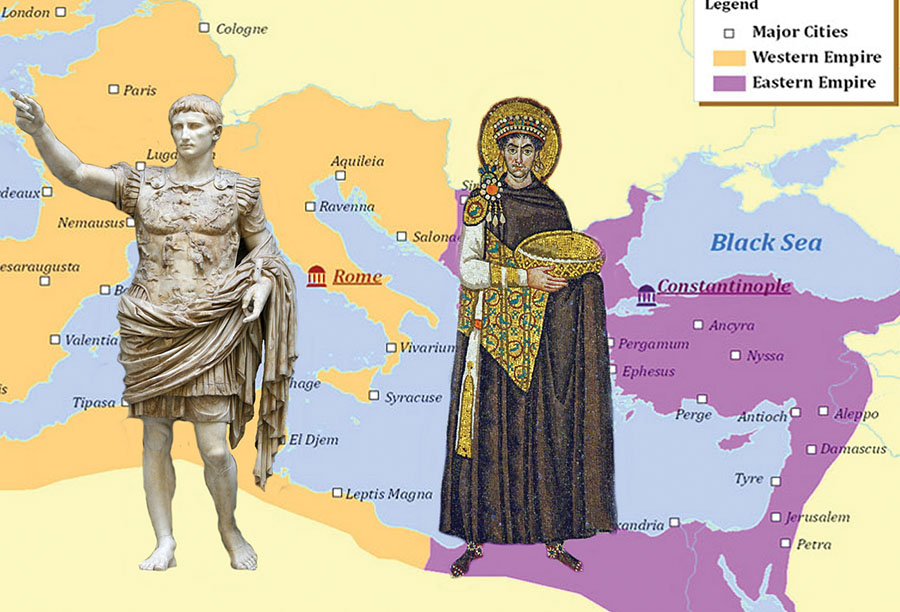
    The eastern half of the Roman Empire survived the crisis that overwhelmed its western half by cutting it loose, abandoning all the capital in that half of the empire, including the city of Rome itself. It survived for a thousand years after Rome fell.

    As a society approaches catabolic collapse, only one strategy works to pull out of the dive before it’s too late. A very large amount of capital has to be abandoned as quickly as possible, slashing maintenance costs and freeing up the remaining capital for productive uses. This is how the eastern half of the Roman Empire survived the crisis that overwhelmed the western half. By cutting loose the western Empire, which had most of Rome’s threatened borders, and abandoning all the capital in that half of the empire – including the city of Rome itself! – the eastern half, which accounted for most of the economic production, freed up enough of its own capital to survive for a thousand years after Rome fell.

    This, in turn, is what Donald Trump and his administration are trying to do in the last inglorious days of America’s imperial adventure.

    The End of American Empire

    The United States came out of the Second World War in a position of unique global power. Unlike any of the other major combatants, it had kept its homeland secure from bombing raids or outright invasion; its industries accordingly dominated the global economy, and its abundant natural resources gave it even more economic clout; in 1950, it bears remembering, the United States produced more crude oil than the rest of the world put together. That position of power made it easy for American elites to use the wartime Bretton Woods agreements to make the dollar central to global trade and impose a form of “stealth imperialism” on most of the rest of the planet. So vast was the flood of resources this brought into the American economy that for most of the second half of the 20th century, the 5% of the global population that lived in the United States consumed one-quarter of the world’s energy input and natural resources and one-third of its manufactured products.

    The history of the last fifty years has been shaped by the unravelling of those arrangements. The reasons for that unravelling would have been painfully familiar to any Roman statesman. Attempts to get more resources for the US by invading Iraq, for example, worked no better than the Roman attempt to get more resources by invading Parthia. Malign neglect accordingly spread through the American economy as maintenance costs of capital were neglected: the dismal state of US roads and bridges, the shameful condition of its educational system, and the ragged but ongoing declines in measures of public health are among the symptoms of this process.

    As the third decade of this century began, the only viable option for the long term was for the United States to get out of the empire business, jettison its imperial commitments overseas, cut the gargantuan bureaucracy that had grown up around its imperial project, and retool its economy to live within the means of its still bountiful territory. Unfortunately, this was not something the elite groups in control of the US political system were willing to consider. Even more unfortunately, they thought they had an alternative: the conquest of Russia.

    That has been the subtext to American and European elite manoeuvrings in eastern Europe for decades, especially since 2014 when the US and its allies staged a coup in Ukraine, overthrew its elected government, and put in a new government hostile to Russia. Look at the publications of American and European defence think tanks and you find the plans for all this, complete with maps showing the weak and vulnerable successor states into which Russia was to be partitioned. Those successor states would then be absorbed one after another by the European Union so that Russia’s lavish natural resources could be plundered efficiently by Western multinational corporations and used to prop up the failing American imperium.

    Western defense think tanks envisioned the Ukraine war as a pathway to Russia’s collapse, with its territory fragmented into weak successor states. Instead, their miscalculation strengthened Russia, bringing it closer to victory. This geopolitical failure set the stage for Donald Trump’s inevitable triumph in the 2024 US election.

    The fatal weakness of the plan became clear in the months after the Russo-Ukrainian war broke out in 2022. Western elites assumed that they were still dealing with the brittle mess that Russia had become in the immediate wake of the Soviet Union’s fall. Their expectations were fatally past their pull date. After initial fumbles, the Russian military found its feet and settled into a war of attrition, the kind of conflict at which Russian forces have always excelled. Meanwhile, even with lavish subsidies from the West, the Ukrainian forces failed to mount strategically effective counteroffensives and were driven back across the Donbass by the Russian onslaught.

    That, more than anything else, made Donald Trump’s victory in the 2024 election inevitable. The policies set in motion by the Washington establishment under Obama and pursued with increasing desperation under Biden have failed. Accordingly, a substantial faction of American elites turned to the one remaining alternative and rallied around Trump. The changes now underway in Washington, D.C., and around the world are the first steps in the massive realignment that such a change, of course, requires.

    Get the issue this article appears in

    The Struggles Ahead

    The task facing the Trump administration in the months ahead is roughly twofold. The first and easiest half consists of trimming the US federal government to a size that can be sustained by the more limited budget of a post-imperial America. To some extent, this is made easy by the sheer scale of fraud, corruption, and misuse of funds in Washington, D.C., and also by the metastatic growth of administrative staff in federal bureaucracies, most of which can be cut without the least impact on the actual functions of government.

    What the political slang of an earlier time called by the endearing label of “pork” – that is, expenditures that benefit politicians and their cronies rather than serving any useful purpose – also make up a huge share of the federal budget. Eliminating pork from the budget altogether is almost certainly out of reach, but it can be trimmed substantially. All of this will free up wealth that can be used to maintain and rebuild the nation’s neglected capital.

    The more challenging half of the work consists of the retreat from overseas empire. The most obvious target for cutting here is out of reach for reasons rooted in domestic politics. The nation of Israel only survives because it is propped up by lavish US subsidies, but the United States has a larger Jewish population than any other country on earth, and the American Jewish community is well-organised enough to have an outsized effect on elections. Until and unless that changes, subsidies for Israel will remain sacrosanct in Washington, D.C.

    America’s other erstwhile allies lack that protection. Western Europe is especially vulnerable, partly because its nations no longer have large émigré communities in the United States that identify with the “old country,” partly because the elites of the western European nations remain overcommitted to the failed project in Ukraine, but also because of those same elites’ shrill hostility to Trump and his policies. At a time when the EU no longer has access to cheap Russian resources and is losing its neocolonial grip on sub-Saharan Africa, alienating the leadership of the US is not exactly a smart move for the EU, but no law of nature requires politicians to make good decisions.

    One way or another, the age of the US global empire is ending. If the Trump administration succeeds in its project, that end may be much less traumatic for American citizens than it would otherwise be. At the same time, that project faces robust opposition in the United States and abroad, and its success is not guaranteed. Therefore, the next few years are guaranteed to be a tumultuous time with an uncertain outcome for America and the world.

    [alert type=”general” dismiss=”no”]This article was published in New Dawn Special Issue Vol 19 No 2.[/alert]

    [alert type=”success” dismiss=”no”]If you appreciate this article, please consider subscribing to help maintain this website.[/alert]

    © New Dawn Magazine and the respective author.
    For our reproduction notice, click here.
  • Magic and Awakening

    Magic and Awakening

    From New Dawn 68 (Sept-Oct 2001)

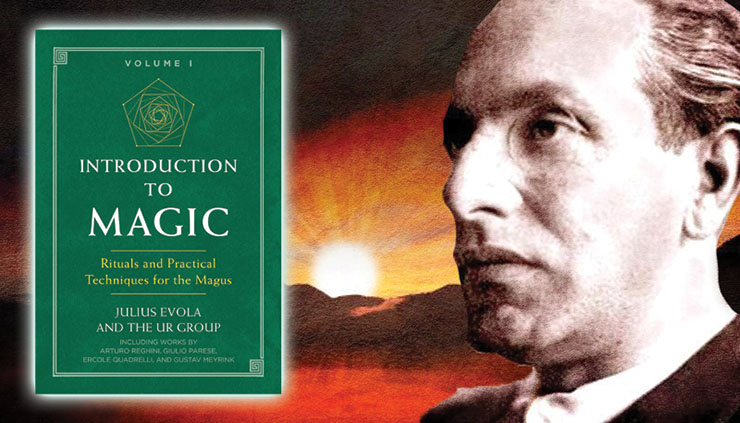
    New Dawn No. 68 (Sept-Oct 2001) featured Jay Kinney‘s review of Julius Evola’s Introduction to Magic Vol 1. This was one of the earliest books penned by Evola that was translated into English and published by a major publishing house.

    Magic (or Magick, as it is sometimes spelled, in order to distinguish it from stage magic) is a word fraught with dubious connotations. It summons up images of robed figures, surrounded by clouds of incense, standing within magical circles, and conjuring demons to do their bidding.

    Even in the magical system that has achieved widest renown, that of the Hermetic Order of the Golden Dawn, magic is associated with complex Qabbalistic rituals, Egyptian god forms, and arcane tools and talismans. Such things are sure to send the average good citizen scurrying in the opposite direction, as quickly as possible. Even for those who are inclined toward the esoteric and spiritual, magic remains the preserve of a few self-chosen magi who have a strong attraction to the arcane.

    Still, there are no lack of books presenting magical systems. Dion Fortune, W.E. Butler, Aleister Crowley, Israel Regardie, William Grey, Franz Bardon, David Griffin, and others have authored numerous tomes to whose teachings one could easily devote a lifetime. Why, then, should we pay any attention to yet another book called Introduction to Magic? The answer is that this new work in hand is unlike any other book on magic previously published, as difficult as that may be to believe.

    Julius Evola, the principal contributor to Introduction to Magic, is a figure of some controversy within esoteric circles. Born in 1898, the vital years of his twenties and thirties coincided with Fascism’s reign in Italy, and Evola’s stance toward Fascism – although critical and adversarial at times – was sufficiently positive to make him persona non grata in liberal European circles. However, as tempting as it may be to dismiss past historical figures according to present value judgments, Evola deserves to be judged on his own terms, in his own time. With that in mind, let us take a closer look at the magical system put forth in Introduction to Magic.

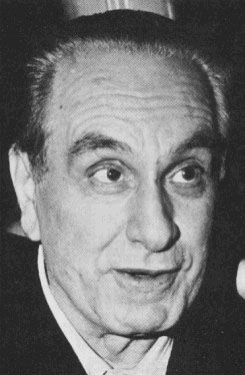
    Julius Evola (1898-1974)

    Introduction to Magic is the first of three volumes collecting articles from the Italian esoteric journal UR, published between 1927 and 1929. Evola was the journal’s foremost author, but he was joined by prominent figures in the Italian esoteric scene, such as Arturo Reghini, Giulio Parese and Ercole Quadrelli. All of UR’s writers published under pseudonyms, for the stated reason that “their individual selves count for nothing, because everything valid they can offer now is not of their own creation or devising, but instead reflects a collective and objective teaching.”1 This harks back to such seminal works as the Rosicrucian Manifestoes, or the more recent Meditations on the Tarot, whose authors chose anonymity so as not to distract from the message of their texts.

    The message of the UR Group was as follows: there is a capacity inherent in Man to raise consciousness above the call of the body and the distractions of the mind; a capacity that can lead to an immortal awareness. The means to this awareness is through a rigorous discipline wherein the transitory ego is shed, and the individual consciousness is wedded to the Eternal. In so doing, one passes beyond the conventional notions of Good and Evil, to a place where, in Gustav Meyrink’s words, only “truth” and “falsehood” exist. To know this is not a matter of intellectual knowledge, but of spiritual experience, i.e. of gnosis.

    Introduction to Magic doesn’t merely describe this system, but offers meditative techniques that can lead to the concrete acquisition of the consciousness it describes. In so doing, accounts are offered of what one will encounter – accounts that have the strong ring of truth. In other words, the UR Group was sharing knowledge based on their own experience, not just generalisations or suppositions. And here we approach the core of the UR Group’s unique approach, which raises important questions.

    Most other magical systems presuppose an “other”, be it God or gods and goddesses, to which the magus pays homage or, at least, subordinates his operations. The tendency of the ego to usurp the expanding consciousness, is conventionally kept in check by the reminder of the ego’s diminutive stature in relation to the Divine.

    The UR approach de-emphasises such “others,” focusing instead on the transcendence of the ego by a greater impersonal Self which may itself become Divine. This admittedly dangerous operation requires a resoluteness of will that cannot be abandoned. As “Abraxas” (Quadrelli) notes:

    Once you have begun, you must go all the way, since an interruption leads to a dreadful reaction, with the opposite result. You can easily understand why: at every step you take, an increasingly higher quantity of swirling energy is arrested and pushed upstream; having been excited and provoked, it is filled with tension. As soon as you give up, it will come crashing down upon you and sweep you away.2

    Obviously, this is an approach that will appeal to very few. And the UR Group’s philosophy assumed as much. Quadrelli described the difference between the vast majority of mankind and the initiated few who followed such a path:

    On this side are ignorant people, lacking Knowledge, pale, passive, intoxicated, whose lives are still outside and on this side of the Waters. On the other shore you will find virile men, heroic souls, awakened to disgust, to revolt, to the Great Awakening; having left one shore behind, they dare face the current and the undertow, being led by their ever more firm, unshakable will. Once there, they are known as ‘Survivors of the Water,’ ‘Walkers on the Waters,’ the ‘Holy Race of the Free,’ ‘The Conquerors,’ ‘The Lords of Life and Salvation,’ ‘The Radiant Ones.’ They are the ‘Dragon slayers,’ the ‘Dominators of the Bull,’ ‘Consecrated to the Sun,’ those who have been transformed through Ammon’s power and Wisdom.3

    In defining such a gap between the many and the few, the UR Group implied a spiritual hierarchy that Evola was to elsewhere define explicitly. Taking his lead from Hinduism, Evola affirmed the value of a traditional caste system, (typically composed of the castes of Priest-ruler, aristocratic warrior, merchant, and worker). Society should be ruled by those of the highest spiritual attainment, with all others finding their proper places in the social hierarchy. Such sentiments stand in stark contrast to the modern conception of democracy, which assumes the right of every individual to an equal voice in the direction of society.

    Evola was still working out these ideas at the time of the UR Group project, and his increasingly uncompromising defense of “Tradition” was one factor in the group’s fragmentation after only three or four years of collaboration.

    Western Magic & Hermeticism

    The best known exponent of ritual magic, Aleister Crowley, defined magic as “the Science and Art of causing Change to occur in conformity with Will.”4 Dion Fortune revised this definition to that of “causing changes in consciousness at will.”5 The object of all magic, according to Crowley, is “the uniting of the Microcosm with the Macrocosm.” Stated another way, “the Great Work is the raising of the whole man in perfect balance to the power of Infinity.”6 While the UR Group would not disagree with this objective, their means to achieving it stood apart from that of Crowley, Fortune, and most other magicians.

    Most Western Magic is based on the coupling of Hermeticism and the Qaballa. Hermeticism, with its doctrines of the four elements (earth, wind, water, and fire), and of correspondences between “above” and “below” (i.e. the Macrocosm and the Microcosm), became systematised in the art of Alchemy. Qaballa (or Kabbalah) was the mystical tradition within Judaism, which contributed the concepts of four Worlds, a series of Divine emanations arranged in the glyph of the Tree of Life, and a hierarchy of Divine Names, Angelic intelligences, and so on, with which the Qaballist might interact.

    The magic of the UR Group, however, is wholly Hermetic. There would seem to be two reasons for this. First, the leading UR members, particularly Evola and Reghini, were proponents of a return to Roman and Greek tradition. Evola considered “Hermetico-alchemical knowledge” to be “the most direct and legitimate link to the unique, primordial Tradition.”7 The preoccupations and values of Judaism and Christianity run perpendicular to pagan values of heroism, strength, and honour.

    Second, in its stated goal of self-Deification, the UR teachings had little use for the concept of Deity, beyond that of a potential within certain favoured individuals. The UR work gives high value to Transcendence, but it is the transcendence of the initiate over the pull of earthly bonds, of the supra-human over the merely human. Thus the UR teachings have far more in common with Nietzsche or with Buddhism, than with the Judaeo-Christian religions with their subordination before an external God.

    Nevertheless, the UR Group didn’t narrow its cosmology to the sort of psychological reductionism that sees God or the gods as symbolic figures thrown up by the Collective Unconscious or as mere person-ifications of human capacities. Various essays in Introduction to Magic refer to Beings, entities, and forces that the Magus may encounter along the path. But these are conceptualised as manifestations of two polarising tendencies within the Cosmos: non-human forces that lead either to a degenerative Chaos or to a higher Order. The initiate, according to the UR Group, must distinguish between the two and align himself only with energies and intelligences leading toward the higher Self.

    While Evola and the UR Group placed themselves on the side of Order and high spiritual aspirations, their goal of human Deification led them to see conventional mystical notions, such as “merging with the One” or submission of the Ego to God, as manifestations of a downward pull leading the individual away from his ascent to the Divine. In one essay, Evola appropriates René Guénon’s concept of the “counter-initiation” in characterising Theosophy, Spiritualism, and other “sentimental” movements as “Satanic” impulses.

    This is highly ironic in that the UR perspective has more than a passing resemblance to the so-called Satanism of the contemporary Temple of Set. According to Stephen E. Flowers, “the ultimate aim of Setian philosophy is an active, aware and potent state of relative immortality for the isolate, individual psyche. This is achieved through a system of magic…”8 This is not the time or place to enter into a discussion of whether the Setian definition of the “individual psyche” has more in common with the accepted notion of the ego or with the UR Group’s divinised Self. Suffice it to say that both systems aim at the willed immortality of the initiate, independent of the body, and in contradistinction to the “right-hand path” of mainstream religion or mysticism.

    The perspective put forth in Introduction to Magic, and by Evola in his other writings, raises the question of whether gnosis, (or awakening or liberation, as it is usually referred to in the book) only occurs within the familiar framework of morality. Most mystical and esoteric paths counsel a fidelity to the moral values of the religions of which they are expressions. The saints or mystics who are the exemplars of such paths are generally praised for their piety, compassion, and self-sacrifice; the implication being that spiritual awareness goes hand in hand with “goodness.” The Buddhist figure of the Bodhisatva, who vows to continue to incarnate until all beings have been liberated, as well as the figure of Jesus Christ, who Christian dogma tells us “died for our sins,” are the accepted models for earnest spiritual seekers.

    Evola and the UR Group fly in the face of such norms. Their magical system makes almost no mention of how a would-be magus should comport himself towards others. There are no exhortations to live for the sake of others or to help those who are less advantaged. There are only repeated statements of the need for courage, steadfastness, clear vision, and singleness of purpose on the magical path. Time and again, the reader is reminded of the relativity of “Good and Evil” from the vantage point of the accomplished initiate. At best, the UR system might be characterised as morally neutral, at least by conventional standards.

    Yet it is clear from the authority of the book’s instructions, and the first-person accounts that are included, that the members of the UR Group achieved heights of consciousness that bear the mark of gnosis. Here was a group of Italian esotericists whose loyalties lay with ancient Rome, who were associated with the extreme Right, and who considered the majority of the human race to be asleep and worthy only of being led by an enlightened few. Could it be that they developed a potent system for the advancement of spiritual awareness that works? This is the challenge that Introduction to Magic raises for its readers and which each reader will have to answer for himself.

    Introduction to Magic: Rituals and Practical Techniques for the Magus by Julius Evola and the UR Group is available from the publisher Inner Traditions. The complete Introduction to Magic series is also available.

    Footnotes

    1. Preface to Introduction to Magic, p. xxv.2. Abraxas (Quadrelli) in Introduction to Magic, p. 20.3. Abraxas (Quadrelli) in Introduction to Magic, p. 19.4. Aleister Crowley, Magick in Theory and Practice, p. xii.5. Dion Fortune, quoted by W.E. Butler in Magic, Its Ritual, Power and Purpose, p. 12.6. Aleister Crowley, Magick in Theory and Practice, p. 4.7. Julius Evola, The Hermetic Tradition, p. xvii.8. Stephen E. Flowers, Lords of the Left-Hand Path, p. 241.

  • Mystical Elvis: From Rock Star to American Shaman

    Mystical Elvis: From Rock Star to American Shaman

    From New Dawn 209 (Mar-Apr 2025)

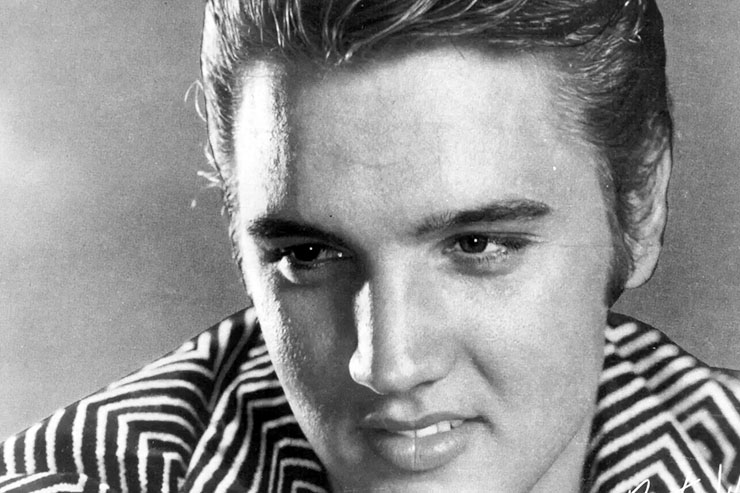
    Elvis Presley remains one of culture’s greatest icons and solo pop stars today. At best, he’s viewed as an innovative, profoundly talented performer who led rock music into the heart and psyche of Western (and parts of Eastern) culture. At worst, he’s a symbol of American excess and consumerism, the musical version of McDonalds or Mountain Dew. 

    As music critic Bill Holdship said: “Elvis is loved, and he is hated. He was a genius, a fraud. A saint, the devil. The king, the clown. Even more than when he was alive, Elvis has come to symbolise everything great and everything hideous about America.”

    Regardless of one’s view of Elvis’s legacy, most consider the entertainer a mainstream figure. His idiosyncrasies and quirks were publicly known and never concealed, yet idiosyncrasies and quirks are an accepted part of being a mainstream entertainer.

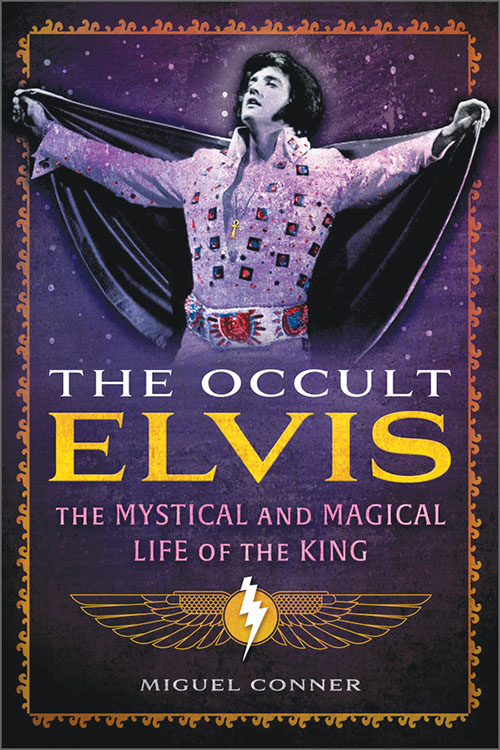
    However, it might be shocking for many to know that Elvis was deeply immersed in all manner of alternative spirituality. In my book, The Occult Elvis, I propose that the King of Rock’n’Roll was arguably the greatest magician of modernity, regardless of how one defines “magic” (performative sleight of hand, consciousness manipulation, reality-bending, co-creation with the universe, etc.). More importantly, he was the chief American Shaman and the eternal egregore of the postwar American Dream.

    Elvis was so mystical that he went from a musical star to interacting with the very denizens of the stars. Keep in mind that this research avoids the countless tabloid stories about Elvis that were ubiquitous in the eighties and nineties (the fake news before fake news). The findings come from those close to Elvis: Priscilla, family, the Memphis Mafia, and intimate friends and colleagues.

    In short, you’ll find that this ain’t your grandma’s Elvis.

    Elvis the Seeker

    Elvis grew up in a Pentecostal family and community, which partly means that as a child, he was taught less about God and more about how to experience God. It’s no secret that Pentecostal and various Black churches in the Depression Era paralleled ancient Mediterranean religions’ shamanistic/mystery school vibe. Instead of being possessed by Dionysus, the attendee was invaded by the Holy Spirit for transformation and healing. That was the life of young Elvis. Furthermore, as a youth, he was always curious about metaphysics and the meaning of life.

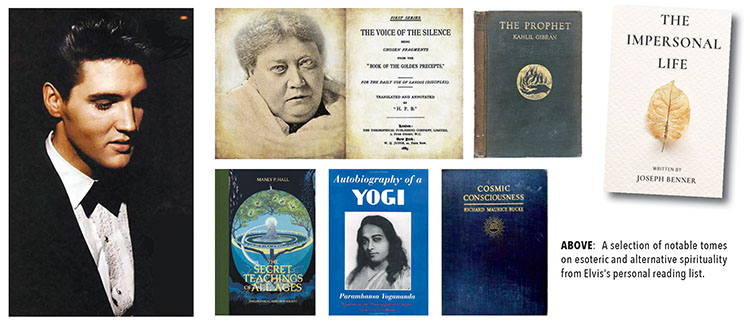
    His Protestant beliefs began to waver after he had conquered the world as history’s first and greatest rock star. In the late fifties, Elvis began to expand his spirituality, dabbling with aromatherapy, embracing Eastern modalities, and speculating that reincarnation was a theological possibility. The Bible was still his go-to inspiration, but The Prophet by Kahlil Gibran came in second. Why the shift when the world had given him fame, money, and adoring fans? Wasn’t he the epitome of the conservative alpha male curried for the general public? There are two reasons, and both have to do with trauma, that great puncturer of belief systems:

    Evangelical leaders turned on him in the mid-fifties. His own pastor stated that he was caught in a web spun by Satan, and the country’s most famous preacher, Billy Graham, doubted Elvis’s faith. These allegations wounded Elvis, and he began questioning the authenticity of Christian pastors and church structures.

    The death of his mother, Gladys, in 1958. The shock of losing a person he loved more than anyone in the world sent him down a spiral of despair and reflection, and it didn’t help that he would spend the next two years in the army in faraway Germany.

    Nevertheless, it wasn’t until a third crisis that the floodgates of the occult opened. The predicament was years later, in 1964, when Elvis had morphed from a performer to a successful movie star yet was disillusioned by his career, life, and relationships. Why did he feel empty if he had reached the mountain top of stardom? Did he have a higher purpose, or was his destiny to become yet another washed-up celebrity eventually? 

    Larry Geller was Elvis Presley’s personal hairstylist and spent two hours a day with The King of Rock from 1964 until his dying day on 16 August 1977.

    As they say, when the student is ready, the master will appear. In a series of fortuitous events, Elvis met Larry Geller, a hairdresser for many Hollywood celebrities and a profoundly experienced esotericist with vast arcane knowledge. What started as a haircut evolved into a master/student relationship.

    Geller first introduced Elvis to The Impersonal Life by Joseph Benner. Deeply moved by its nondualist message, it became his favourite book. The work taught him that the ego is an illusion that must be transcended to uncover one’s true nature. Benner encouraged readers to release limiting beliefs and focus on their divine essence, the “I AM” presence, enabling connection with universal consciousness. Any individual can manifest their highest, divine potential. Elvis realised for the first time that the concept of the “Universal Christ” was present in everyone, further understanding that all religions share a common faith in God’s message.

    With the concept of the Universal Christ (or Christ Consciousness, as it is known in current times), Elvis was freed from the dogmas of fundamentalist Christianity. With Geller at his side, he explored a galaxy of alternative spirituality. He studied influential nineteenth and twentieth-century occultists, including H. P. Blavatsky, Manly P. Hall, G. I. Gurdjieff, and P. D. Ouspensky. He became a devotee of the Indian yogi Paramahansa Yogananda. He learned and applied esoteric practices such as sex magic, meditation, astrology, and numerology. He gained a workable understanding of Kabbalah, Gnosticism, Theosophy, and various Eastern mystical traditions.

    Knowledge is power, as they say, and power grew from Elvis, translating into extraordinary abilities. From his Pentecostal background, Elvis always believed in healing and other miracles (and he and his family had a gift for these abilities, indicating some genetic witch line). Elvis continued his healing abilities – from removing Priscilla’s headaches with a touch to curing cancer in his backup singer with prayer – fueled by the perennial wisdom of different traditions. Soon, he began to manipulate the weather, telekinetically move objects with his will, read minds, and astral travel. To him, these abilities were not the end-all of his quest, as Yogananda’s teachings said, they were merely indications one was getting closer to enlightenment. That’s what mattered to him the most.

    Elvis’s embrace of the occult extended to other arenas, such as conspiracy theories, parapolitics, secret societies, and more (isn’t that what always happens when one goes down the rabbit hole of what is possible? Asking for a friend, Terence McKenna, Philip K. Dick, William Burroughs, and other modern magicians?)

    This evolution, naturally or perhaps supernaturally, led Elvis to beliefs and eventual encounters with extraterrestrials.

    Close Encounters of the Elvis Kind

    Today, we live in a time where the UFO and the angel, the saucer-hunter and the priest, are deeply intertwined. From government reports to Ancient Aliens on the History Channel, the many ideas of extraterrestrials are no longer fringe but rather conventional. As with his other ideas and practices, Elvis was ahead of the curve. 

    In the sixties, Elvis concluded that the imagery (which he sketched) in Ezekiel surely must be alien technology. He loved Erich von Däniken’s Chariot of the Gods. He was familiar with The Book of Enoch and read The Urantia Book, two constant favourites for blurring the lines between extraterrestrials and angelic visitations. 

    He and Geller would have been right at home conversing with Philip K. Dick or a UFO Discord group. 

    Elvis experienced three direct UFO encounters (in between two major mystical experiences). While driving through the New Mexico desert on Route 66 from Memphis to Los Angeles, he and his entourage witnessed a bright disk streaking across the night sky. The UFO descended but abruptly halted, made a right-angle turn, and accelerated until it vanished from their eyesight.

    “That object maneuvered like a flying saucer,” Geller said afterwards.

    Elvis remarked, “It’s ridiculous to think we’re the only life with millions of planets in the universe.”

    “If they want to tell us something,” Geller said, “Why don’t they land on the White House lawn or the Pentagon and contact our leaders instead of visiting an occasional individual out in the boondocks in the middle of the night?”

    “I’ve thought about that,” said Elvis. “Maybe they don’t want to cause panic, plus they want us to evolve spiritually by giving us a chance to make our own decisions. They’ll work quietly behind the scenes, influencing us without appearing to.” 

    “And how will they do that?” Geller asked.

    “By the power of their minds,” Elvis answered, “which must be vastly superior to ours, or they couldn’t be flying across the sky.”

    Elvis and Geller would also have been right at home before a US government hearing on UAPs or participating in a podcast about how aliens are the reason humanity hasn’t extinguished itself in nuclear fire.

    The other two extraterrestrial encounters occurred in his Los Angeles and Graceland homes in Memphis, respectively. Elvis wasn’t alone on each occasion and was far more filled with curiosity and wonder than any dread. The details are in my book and how Elvis perhaps saw himself as more than an earthling but part of an alien federation. 

    His father, Vernon, claimed that when Elvis was born, a blue light appeared above their home in Tupelo, Mississippi, halting suddenly and freezing everything in the area. What is the alien stork dropping off a stranger in a strange land or a cosmic herald as happened with the births of Julius Ceasar, Genghis Khan, Jesus, and other historic figures?

    Elvis fan Wanda June Hill believed in the former. During a late-night conversation, Elvis once revealed to her that he wasn’t from this planet. He mentioned encountering “light form” men who predicted his future, including his interest in karate and his iconic white suits in Las Vegas. Towards the end of his life, he spoke of a “blue star planet,” referring to Jupiter and its advanced civilisations. He claimed his true home was Jupiter’s 9th moon. At one point, Hill alleged that his eyes glowed and an aura surrounded him.

    Hill’s testimony falls closer to the tabloid genre and many of today’s radical social media posts. However, when coupled with Elvis and his communing with space entities, there’s a strong argument that something fantastic kept happening to the King of Rock n’Roll.

    Get the issue this article appears in

    Caught in a Karmic Trap

    As most know, Elvis led a tumultuous life that ended when he was only forty-two. His spiritual peaks, meditation breakthroughs, and supernatural experiences were sandbagged by too many bouts of drug addiction, unhealthy living, and other poor life choices. 

    As I write in the book, Elvis was doomed as soon as the alien blue light descended on his home, his life paralleling many shamans across the globe that end their lives as broken, drug-addicted savants – the Wounded Healer trope we find even beyond Indigenous cultures. Elvis, as America’s Shaman, fell into that category, unable to battle his demons even as he exorcised so many demons in his millions of fans across decades – and even today. Carrying the spiritual weight and sins of a tribe is not easy, and the spirit world is replete of dark things that go bump in the astral flight. 

    Perhaps he returned to Jupiter’s 9th moon or has reincarnated as an internet conspiracy buff in some small town in Idaho. Wherever he is, Elvis has earned his rest. His past incarnation was not only of a history-changing figure but also of a person who was a deep seeker who wanted more than anything to find a sacred purpose and commune with higher forms of consciousness.

    Miguel Conner’s new book The Occult Elvis: The Mystical and Magical Life of the King is available from all good bookstores.

    [alert type=”general” dismiss=”no”]This article was published in New Dawn 209.[/alert]

    [alert type=”success” dismiss=”no”]If you appreciate this article, please consider subscribing to help maintain this website.[/alert]

    © New Dawn Magazine and the respective author.
    For our reproduction notice, click here.
  • March on Fiume

    March on Fiume

    From New Dawn No. 21 (Sept-Oct 1993)

    “To die is not enough.”
    – D’Annunzio

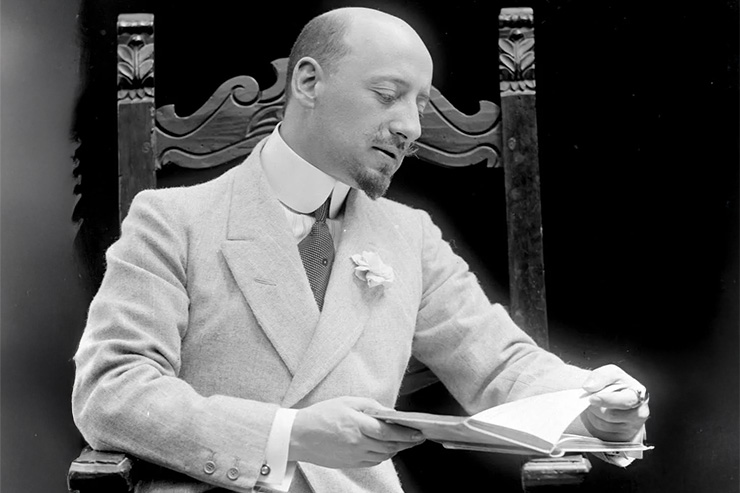
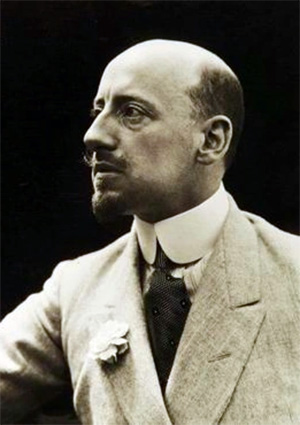
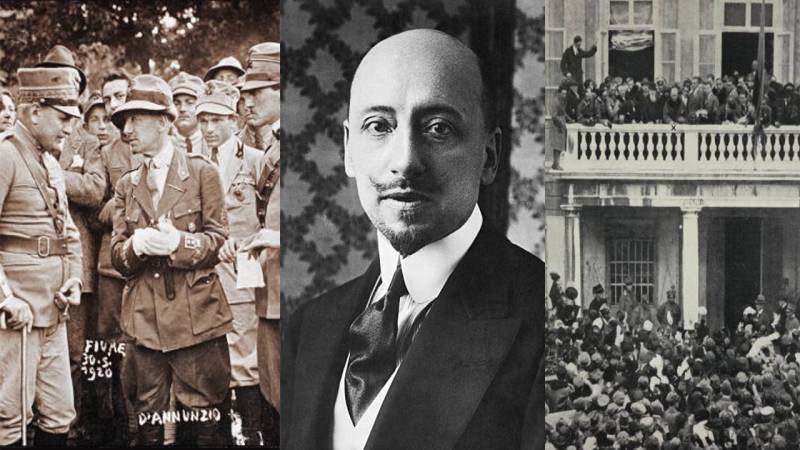
    When pressed about his political allegiance, Gabriele D’Annunzio (1863-1938) refused to commit himself. “My undertaking may seem rash and alien to my art and style of life,” he wrote to his publisher, “but… people must realise that I am capable of doing anything.” After his election to Italy’s Chamber of Deputies he showed his contempt for the parliamentary circus by rarely attending the sessions, and behaving unpredictably when he did. Nicknamed “the deputy of beauty”, D’Annunzio watched the parliamentary debates as an artist rather than a participant. Originally elected to the Chamber as a ‘rightwing’ nationalist, he had no trouble crossing the floor to vote — and sit with — members of the ‘extreme left’.

    Plagued by creditors, D’Annunzio settled in France in 1910 to concentrate on his writing and art. Since the 1890s he had enjoyed mass appeal and on returning to Italy in 1915 he was greeted by some one hundred thousand admirers. A strong supporter of Italy’s involvement in the First World War, D’Annunzio, aged fifty-two, volunteered for active service in the trenches. A daring aviator, he led bombing raids, losing an eye in an aeroplane accident. In a final act of heroism, as the war drew to a close, he flew as far as Vienna and there dropped propaganda pamphlets from his aeroplane.

    At the Peace Conference of 1919, Italy claimed the port of Fiume on the grounds of self-determination. Little aroused the indignation of so many Italians as much as the question of Fiume. The US, Britain and France argued that Fiume be included in Yugoslavia and occupied the port. A group of young army officers begged the war hero D’Annunzio to seize Fiume for Italy. On September 12 he marched from Rome at the head of a thousand black shirted legionaries; the Allied troops withdrew and D’Annunzio, who announced his intention of remaining in the city until it was annexed by Italy, assumed control of the port city as the ‘Commandante’.

    Within a few weeks some seven thousand legionaries and four hundred sailors had joined him. They saw in D’Annunzio a heroic alternative to the sedentary parliamentarians they despised. For them the Commandante’s Fiume became “the symbol of a moral, political and social rejection of the entire established order.” The legionaries called for the freedom of all oppressed people and viewed with interest the Soviet experiment in Russia. They were open to an alliance with the syndicalists, anarchists and Socialists. D’Annunzio established contacts with Sean O’Kelly, the future President of Ireland, who then represented Sinn Fein in Paris; with the Egyptian nationalists; and with the Soviet government. Lenin referred to D’Annunzio as one of the only revolutionaries in Italy.

    In asserting the independence of Fiume, Gabriele D’ Annunzio denounced the big powers, especially British imperialism:

    “Fiume is as invincible as she has ever been. True, we may all perish beneath her ruins, but from these same ruins the spirit will rise again strong and vigorous. From the indomitable Sinn Fein of Ireland to the Red Flag which unites cross and crescent in Egypt, rebellions of the spirit, catching fire from our sparks, will burn afresh against the devourers of raw flesh, and the oppressors of unarmed nations. The voracious Empire which has possessed itself of Persia, Mesopotamia, New Arabia and a greater part of Africa, and yet is never satisfied, can, if it so wishes, send its aviator-murderers against us, just as in Egypt it was not ashamed to massacre insurgents, who were armed with nothing more than sticks.”

    Many of D’Annunzio’s emblems were later taken over by Mussolini. The legionaries’ black shirts derived from the tunics of first world war shock troops. Garibaldi, the father of modern Italy, had made all Italians familiar with the idea of a coloured shirt as a symbol of a liberating cause. Even the word Fascio, from which is derived Fascism, meaning “group” or “association” (literally “bundle”), had long been used by the Italian leftwing. In 1872 Garibaldi had founded a Fascio Operaio, and in 1891 an extreme leftwing group was set up known as Fascio dei Lavoratori.  

    For fifteen months the Commandante held out against Allied protests and an Italian government blockade. Then on 24 December 1920, “the Christmas of Blood” as D’Annunzio called it, 20,000 troops moved against D’Annunzio’s 3,000.

    While it lasted, the short lived Free State of Fiume, under the direction of  Commandante D’Annunzio, stood as a heroic, passionate revolt against mediocrity. For in the words of D’Annunzio:

    “Blessed are the youths who hunger and thirst for glory, for they shall be satisfied.”

    Gabriele D’Annunzio

    By HAKIM BEY

    “Everything in life depends upon the eternally new. Man must either renew himself or die.”
    – D’Annunzio

    Gabriele D’Annunzio, Decadent poet, artist, musician, aesthete, womanizer, pioneer daredevil aeronautist, black magician, genius and cad, emerged from World War I as a hero with a small army at his beck and command: the “Arditi.” At a loss for adventure, he decided to capture the city of Fiume from Yugoslavia and give it to Italy. After a necromantic ceremony with his mistress in a cemetery in Venice he set out to conquer Fiume, and succeeded without any trouble to speak of. But Italy turned down his generous offer; the Prime Minister called him a fool.

    In a huff, D’Annunzio decided to declare independence and see how long he could get away with it. He and one of his anarchist friends wrote the Constitution, which declared music to be the central principle of the State. The Navy (made up of deserters and Milanese anarchist maritime unionists) named themselves the Uscochi, after the long-vanished pirates who once lived on local offshore islands and preyed on Venetian and Ottoman shipping. The modern Uscochi succeeded in some wild coups: several rich Italian merchant vessels suddenly gave the Republic a future: money in the coffers! Artists, bohemians, adventurers, anarchists (D’Annunzio corresponded with Malatesta), fugitives and Stateless refugees, homosexuals, military dandies (the uniform was black with pirate skull-&-crossbones — later stolen by the SS), and crank reformers of every stripe (including Buddhists, Theosophists and Vedantists) began to show up at Fiume in droves. The party never stopped. Every morning D’Annunzio read poetry and manifestos from his balcony; every evening a concert, then fireworks. This made up the entire activity of the government. Eighteen months later, when the wine and money had run out and the Italian fleet finally showed up and lobbed a few shells at the Municipal Palace, no one had the energy to resist.

    D’Annunzio, like many Italian anarchists, later veered toward fascism — in fact, Mussolini (the ex-Syndicalist) himself seduced the poet along that route. By the time D’Annunzio realized his error it was too late: he was too old and sick. But Il Duce had him killed anyway — pushed off a balcony — and turned him into a “martyr.” As for Fiume, though it lacked the seriousness of the free Ukraine or Barcelona, it can probably teach us more about certain aspects of our quest. It was in some ways the last of the pirate utopias (or the only modern example) — in other ways, perhaps, it was very nearly the first modern TAZ [Temporary Autonomous Zone].

    I believe that if we compare Fiume with the Paris uprising of 1968 (also the Italian urban insurrections of the early seventies), as well as with the American countercultural communes and their anarcho-New Left influences, we should notice certain similarities, such as: — the importance of aesthetic theory (cf. the Situationists) — also, what might be called “pirate economics,” living high off the surplus of social overproduction — even the popularity of colorful military uniforms — and the concept of music as revolutionary social change — and finally their shared air of impermanence, of being ready to move on, shape-shift, re-locate to other universities, mountaintops, ghettos, factories, safe houses, abandoned farms — or even other planes of reality. No one was trying to impose yet another Revolutionary Dictatorship, either at Fiume, Paris, or Millbrook. Either the world would change, or it wouldn’t. Meanwhile keep on the move and live intensely.

    Excerpted from Hakim Bey’s T.A.Z. The Temporary Autonomous Zone, Ontological Anarchy, Poetic Terrorism

    [alert type=”general” dismiss=”no”]This article was published in New Dawn No. 21 (Sept-Oct 1993).[/alert]

    [alert type=”success” dismiss=”no”]If you appreciate this article, please consider subscribing to help maintain this website.[/alert]

    © New Dawn Magazine and the respective author.
    For our reproduction notice, click here.